
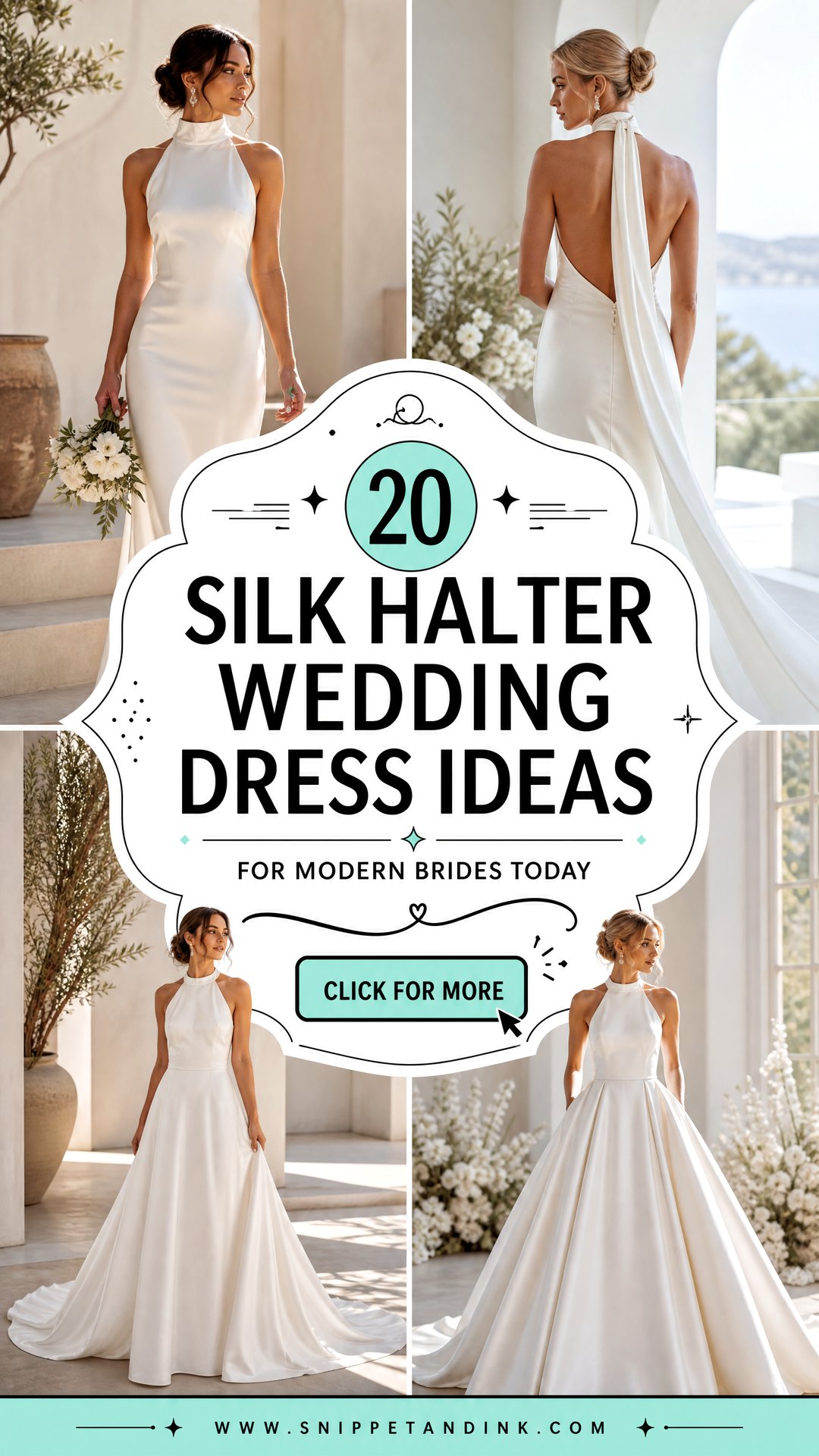
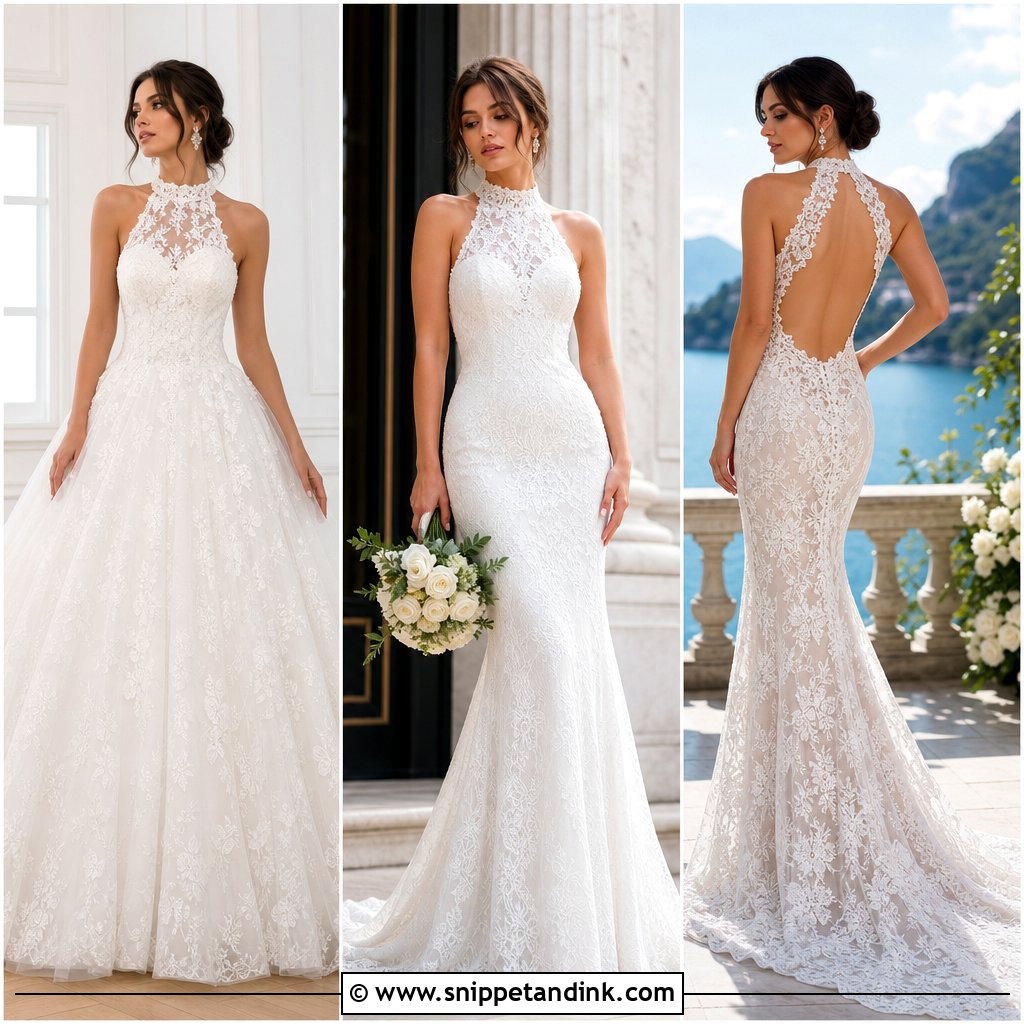
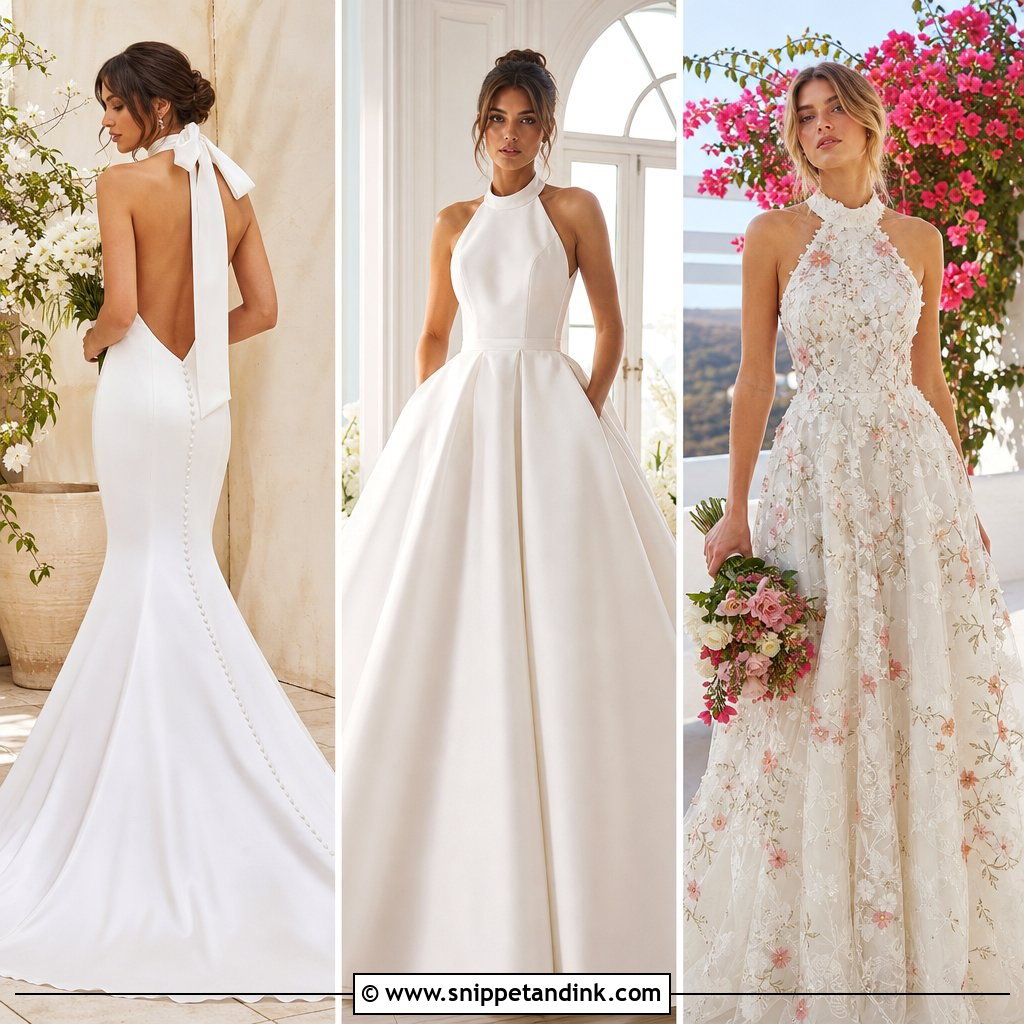
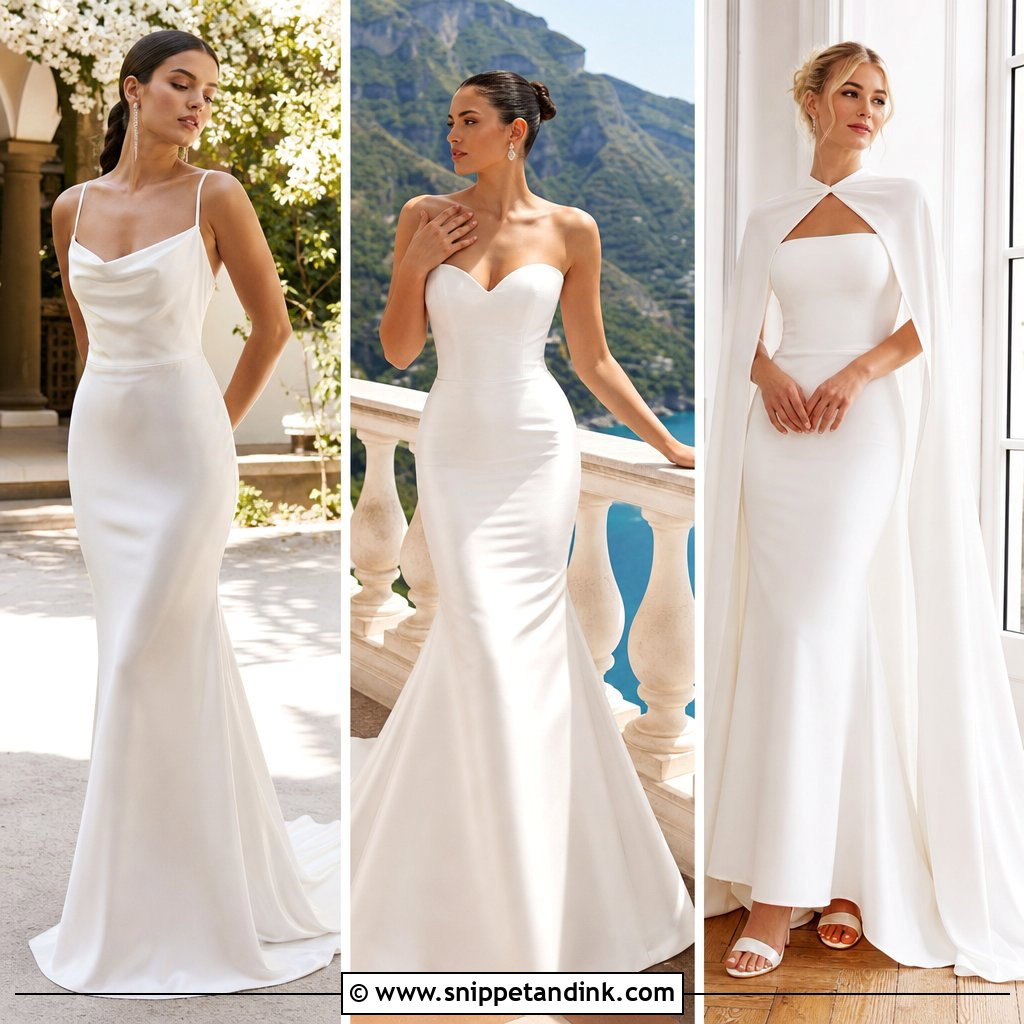
A silk halter wedding dress anchors at the back of the neck and leaves the shoulders bare, so the whole gown hangs from one point instead of two straps. That changes how it fits, what you wear underneath and how your hair should sit. Halters show up in almost every fabric and shape now, from bias-cut slips to sculpted high necks, plunging fronts, oversized bows and long trains. Before choosing, think about your venue, the season and how much support your bust needs, because that last point rules some halters out for some brides. Keep jewelry quiet around the neck. Below are twenty variations, with what I’d look for in each when you try it on.
Support Under a Halter Strap and a Low Back
This is the question I get at every halter appointment, and it’s worth answering before you shop. A halter leaves no room for a standard bra, and the lower the back drops, the fewer options remain. The best answer is usually built into the dress.
- Sewn-in cups. Most bridal seamstresses can add moulded cups to a lined bodice, so you wear nothing extra.
- Boning and a waist stay. Side boning plus an inner band at the waist anchors the bodice to your ribs, so the neck strap isn’t holding everything up.
- Adhesive bras. Fine for smaller busts and short events. On a hot day or over many hours of dancing, adhesives can lose their grip.
- Low-back convertible bras. These reach only a moderately low back; a back that drops near the waist rules them out.
If you need real lift, I’d steer you toward a halter with a structured bodice and wide straps rather than a bias slip. Bring whichever option you choose to the very first fitting, since the neckline is shaped around it.
Does a Halter Suit Broad or Narrow Shoulders?
Both, with different cuts. A high halter with straps that sit wide on the neck draws the eye inward and suits broad shoulders well. Narrow or sloping shoulders look balanced in a halter whose straps start closer to the edge of the shoulder, or in a cut-in style that shows more of the upper arm. A thin halter tie on very broad shoulders can make them look wider, so that’s the one combination I’d avoid.
1. High Neck Silk Halter Wedding Dress
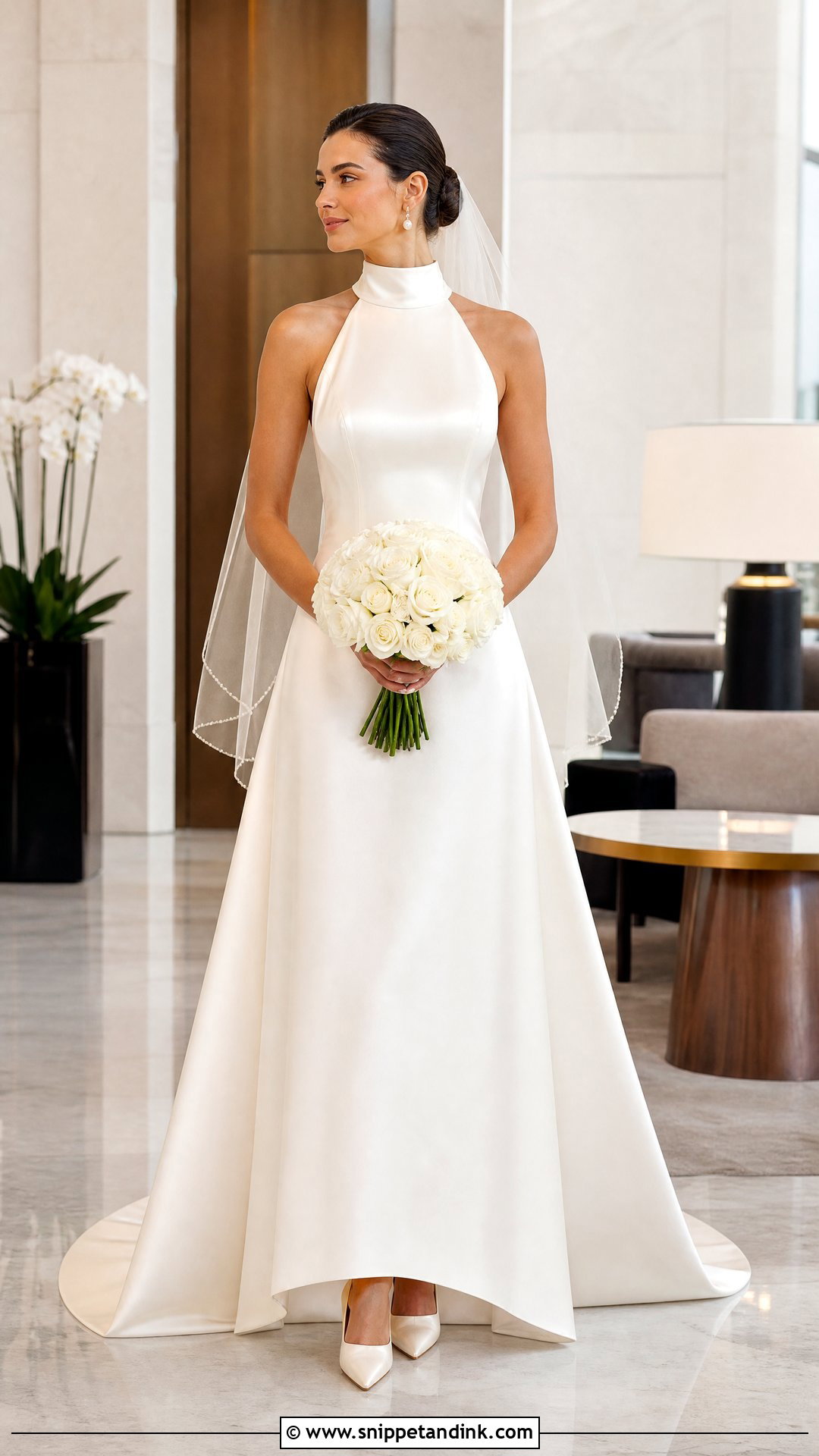
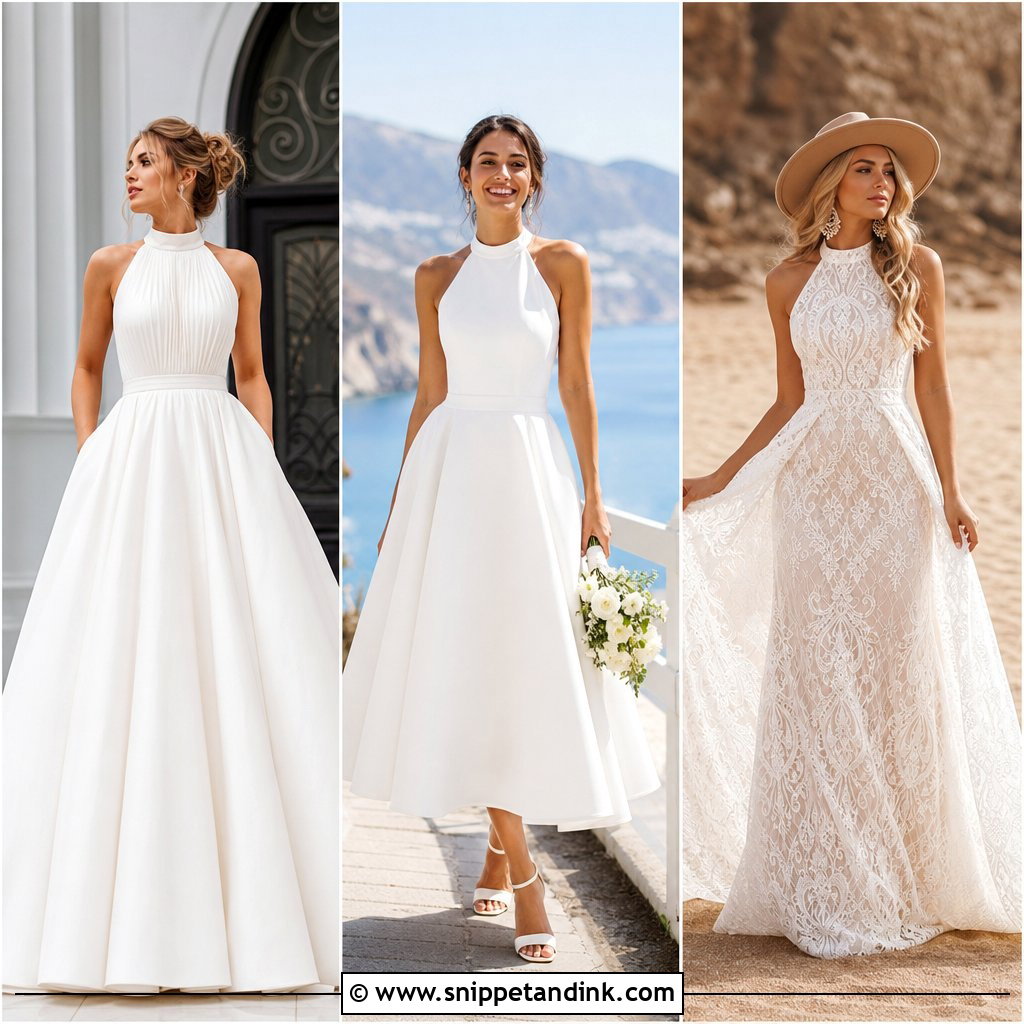
Clean and formal, this is the halter I’d show first to a bride who wants no embellishment at all. Ivory satin with a softly fitted bodice, a defined natural waist and an A-line skirt does the work. The high neck frames the shoulders, and a low or open back keeps it from feeling buttoned up. Pearl drops, a sleek chignon and pointed pumps are enough. One thing to watch: a high satin collar shows every pull, so it needs to be fitted with your head held naturally, not with your chin lifted for the mirror. A fingertip veil and a structured bouquet of white roses suit a hotel or museum ceremony.
2. Open Back Silk Halter Wedding Dress
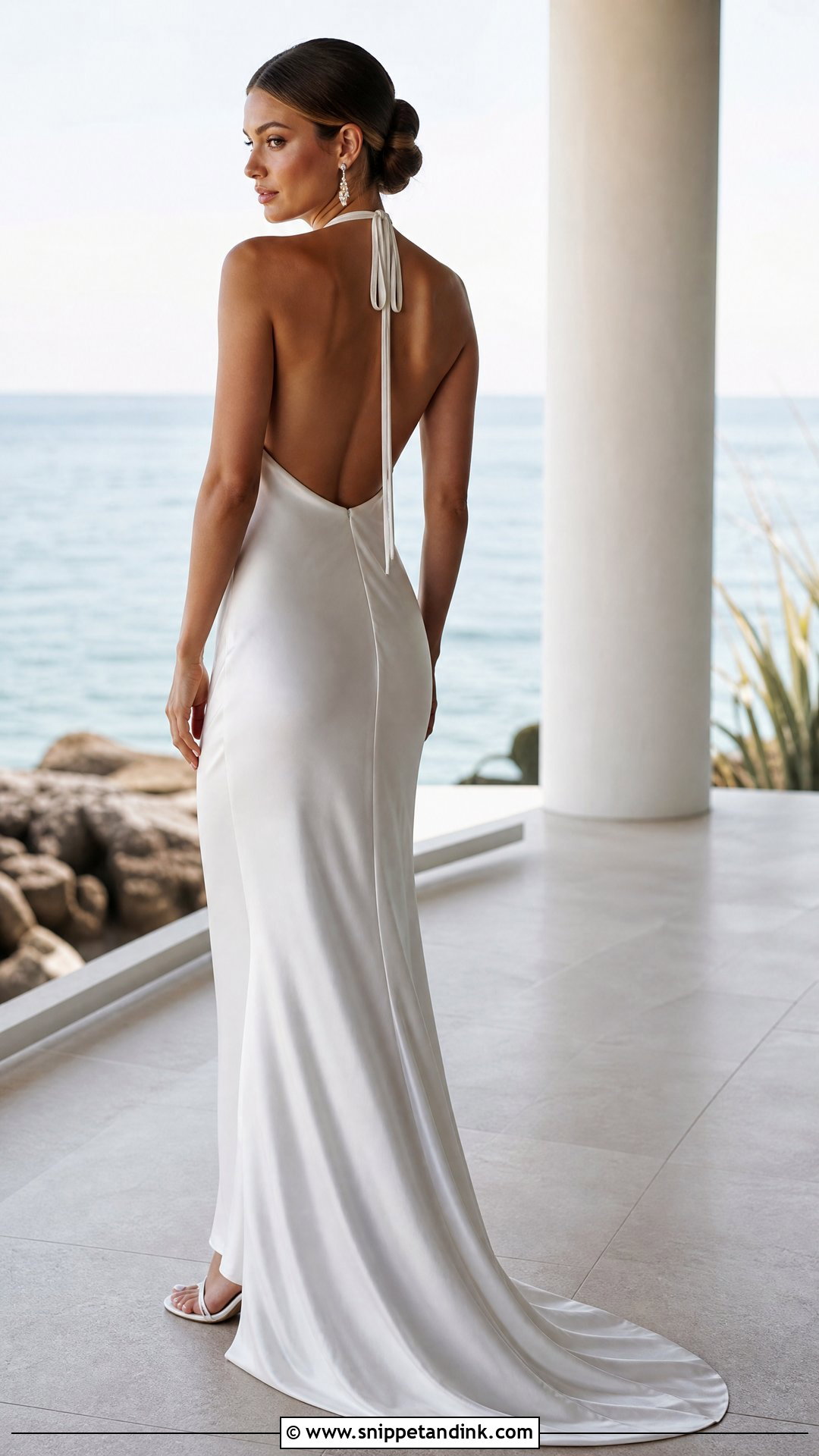
The front is modest; the back drops away. That surprise is the appeal. Charmeuse cut close to the body, narrow neck ties, a low curved back and a soft sweep train make the shape, finished with crystal earrings, a low bun and strappy sandals. Skip a front necklace. A back necklace works if it’s secured to the gown with a small thread loop, otherwise it swings and twists. Here’s the practical bit: the lower the back, the less a regular bra is an option, so plan your support before you fall for the deepest cut. A chapel veil for the ceremony, then off for the reception.
3. Bias Cut Silk Halter Wedding Dress
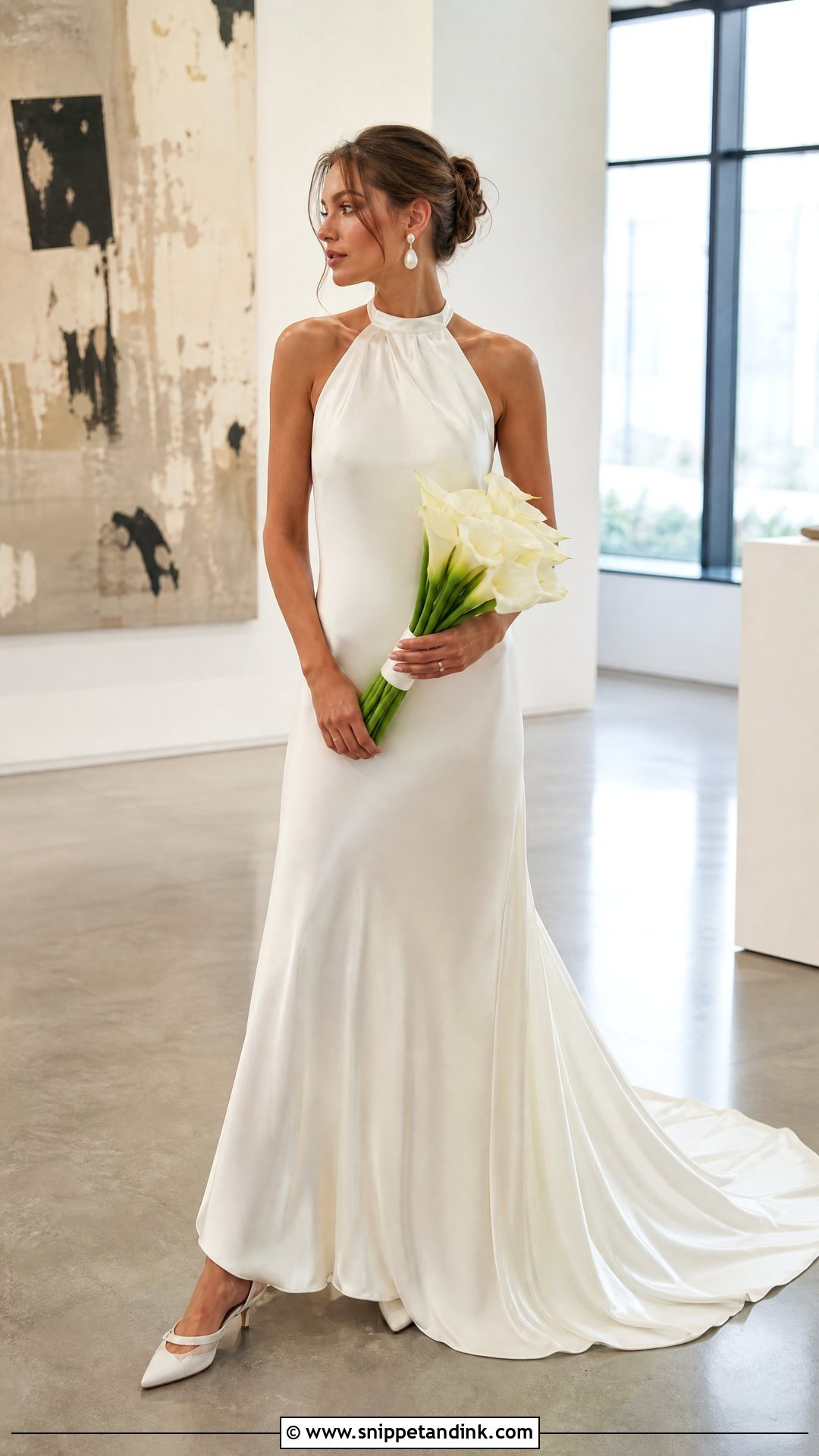
Bias cut means the silk is cut diagonally across the grain, which is what lets it cling and swing over the body without darts. It’s also why it’s the least forgiving dress here. Every curve and every edge of underwear shows, and alterations are delicate because bias fabric stretches as it’s sewn. I’d only choose it with a good lining and a seamstress who has worked with bias before. A softly gathered neckline, slim skirt and short train, styled with sculptural earrings, low slingbacks and a twisted bun, suit coastal venues and intimate dinners. A small bunch of calla lilies keeps the line long.
4. Silk Halter Wedding Dress With Bow Back
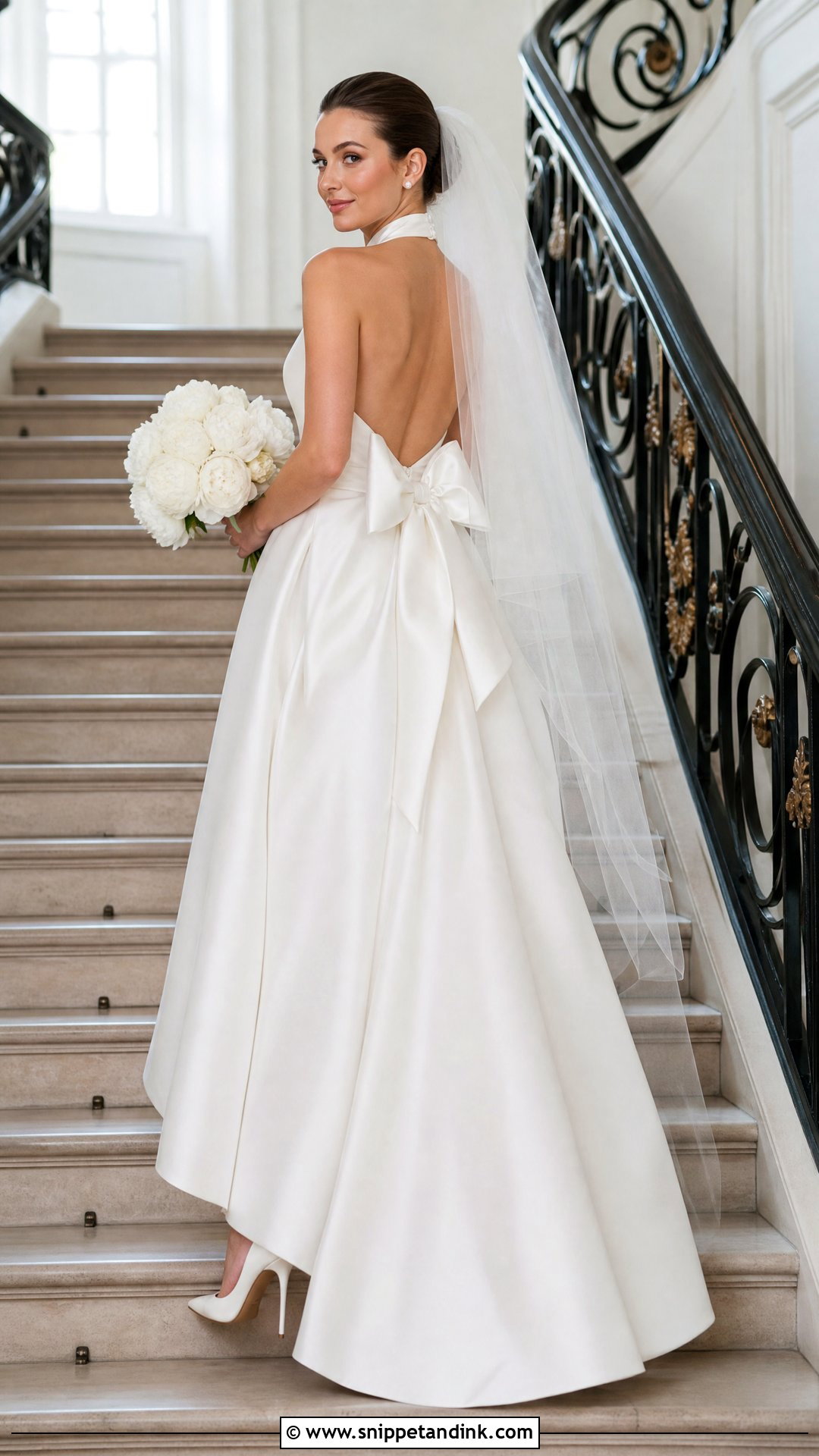
A big bow changes a simple halter from minimal to romantic in one detail. Smooth satin, a fitted bodice, a full A-line skirt and an open back with the bow at the waist or the nape are all it takes. Then stop. Pearl studs, a clean bun and pointed satin heels, plus a veil without lace edging so nothing competes with the back. A large bow needs inner structure or it droops by evening; ask whether it has interfacing or a stiffened core. A round bouquet of peonies echoes its shape, and the gown holds its own on a grand staircase.
5. Plunging Silk Halter Wedding Dress
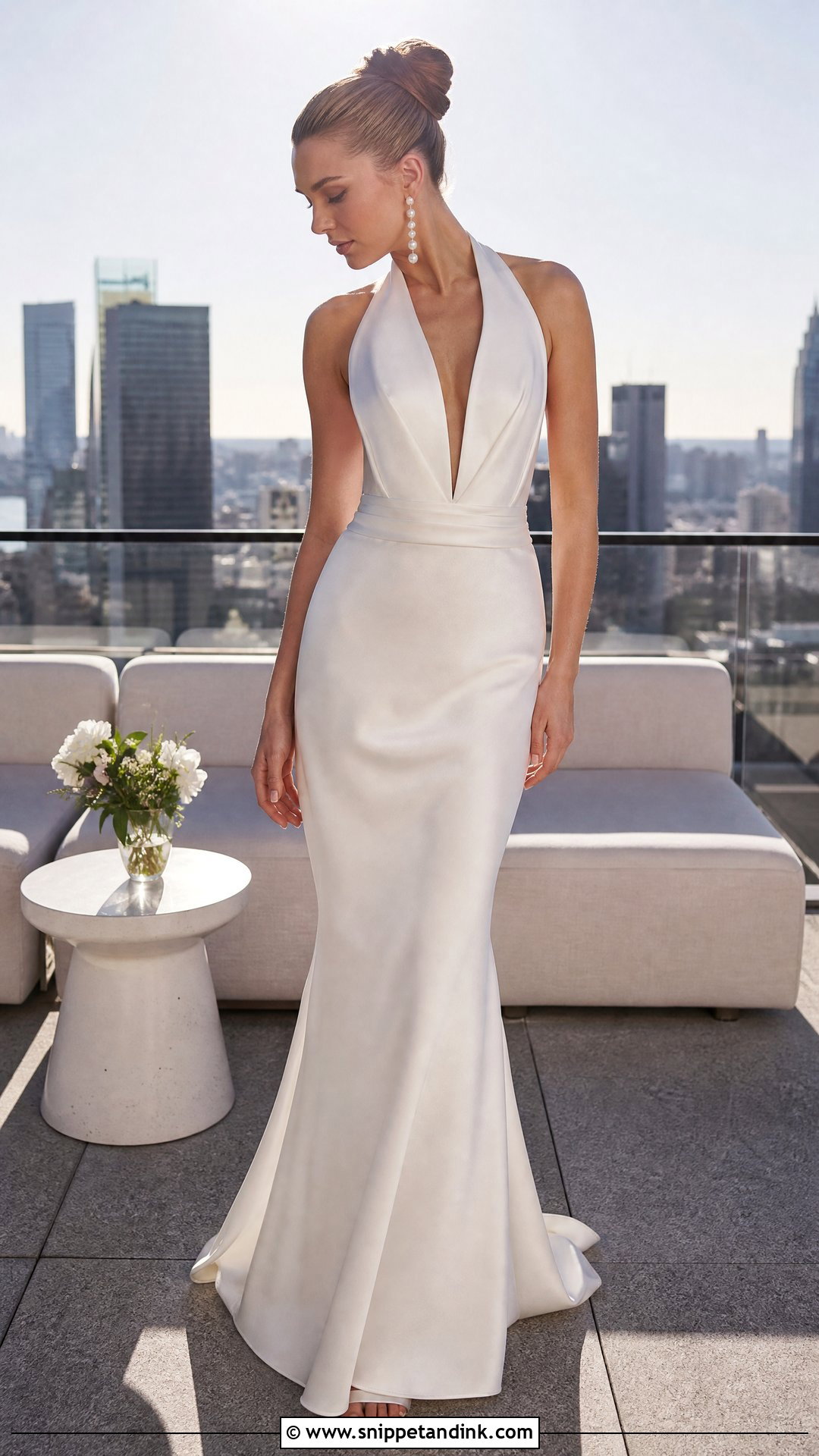
A plunging V-neckline on a halter looks bold and lengthens the torso, but it’s only comfortable if the bodice is engineered for it. I look for wide halter straps rather than thin ties, sheer nude mesh or a hidden panel between the bust, and boning at the sides. Without those, the neckline gapes when you lean forward to sign the register. Long pearl earrings, a smooth ponytail or high bun and minimal ankle-strap heels keep it clean, with a sheath or lightly flared skirt. It belongs on a rooftop or at an evening reception in the city.
6. Cowl Neck Silk Halter Wedding Dress
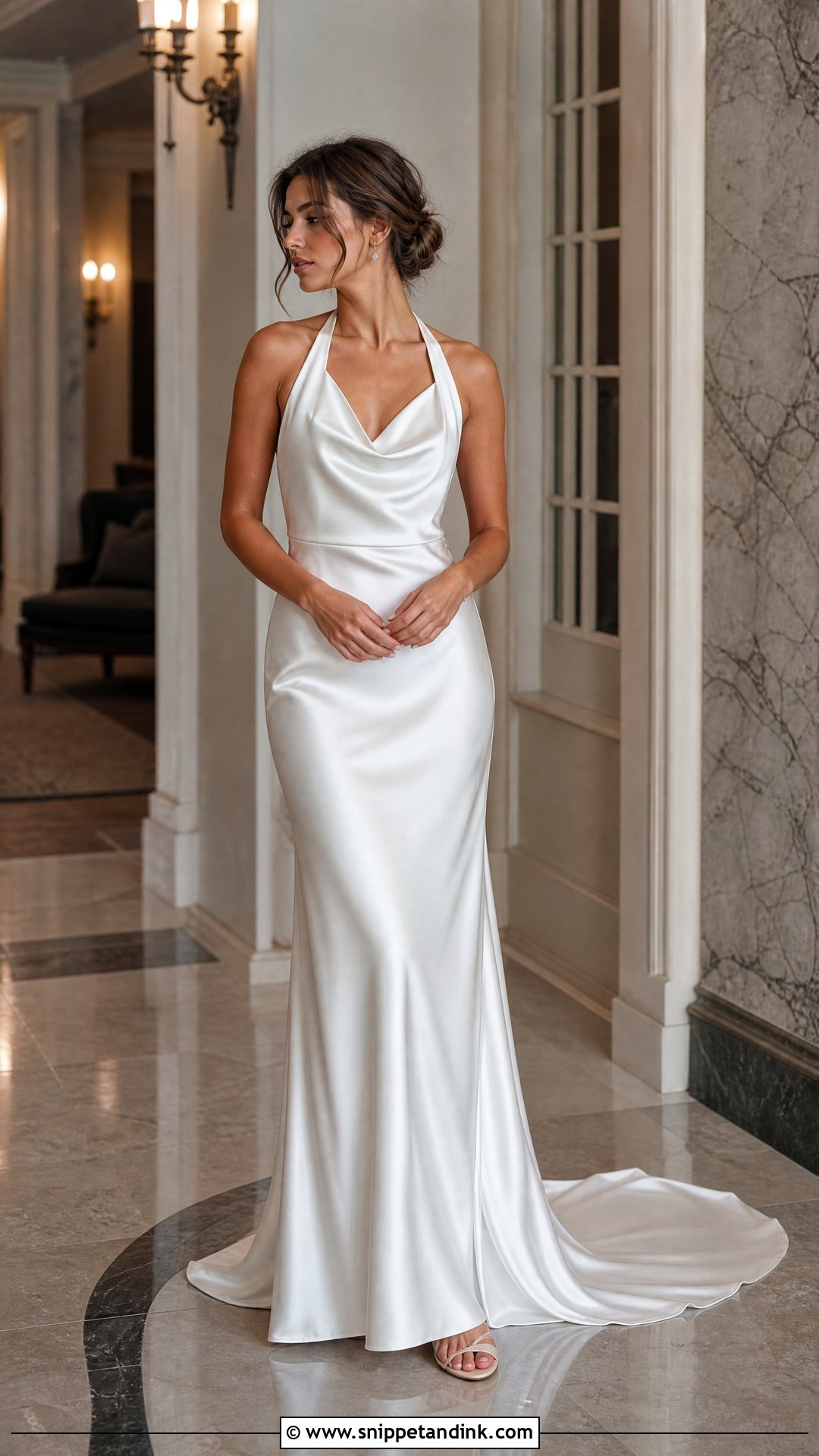
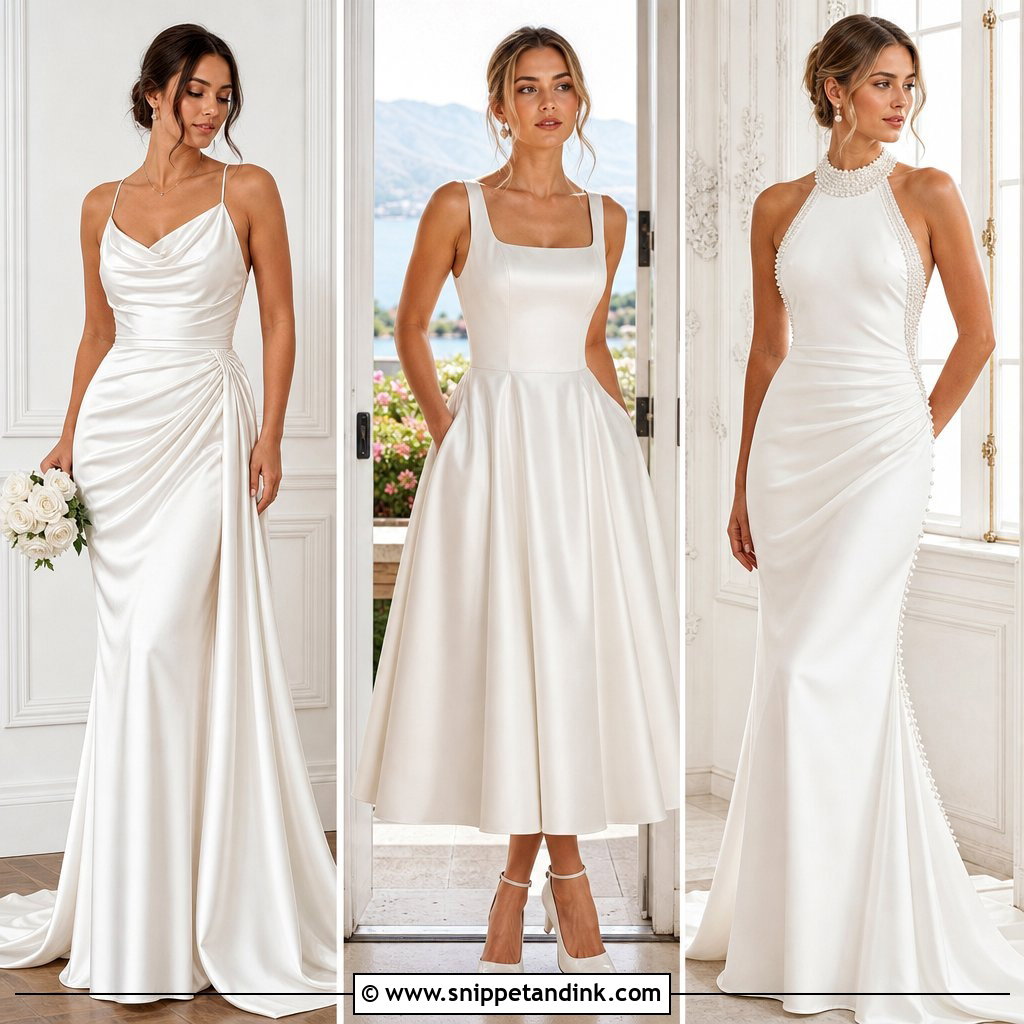
A cowl halter drapes softly across the collarbone instead of hugging the neck, which gives it that 1930s Hollywood feel. Satin with a fitted waist, a column skirt, a low back and a short train hold the shape. Small diamond studs, a slim bracelet and kitten-heel sandals keep you comfortable all evening. The drape is cut on the bias, so it can fall open more than expected when you bend; a tiny hand stitch or a weight sewn into the fold keeps it in place. A loose low bun shows the neckline. Wear a light cathedral veil for the ceremony and switch to a single pearl pin afterwards.
7. Silk Halter A-Line Wedding Dress
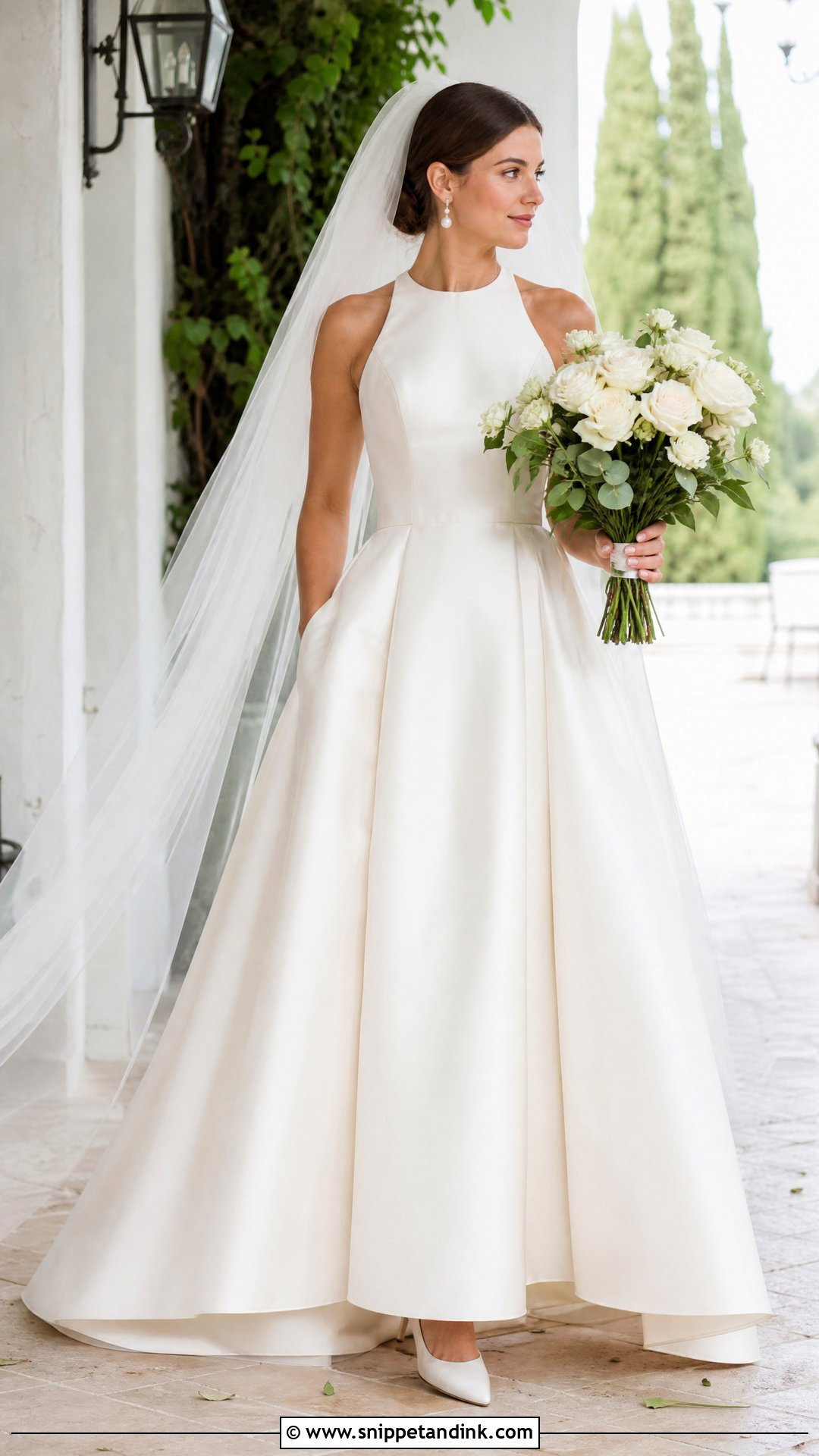
Want a halter with the ease of a fuller skirt? Go A-line. A fitted high-neck bodice, a defined waist, practical pockets and a gently structured faille or dupioni skirt give you room to move and a formal outline. Pearl clusters, a classic chignon and block-heel pumps are steady choices, with a simple chapel veil. Dupioni has a slubbed texture that’s part of its charm, but it creases more than faille, so factor in a steam on the morning. Keep the bouquet medium and the shoes plain; the skirt already has volume. It moves easily from a daytime ceremony into the evening.
8. Silk Halter Column Wedding Dress
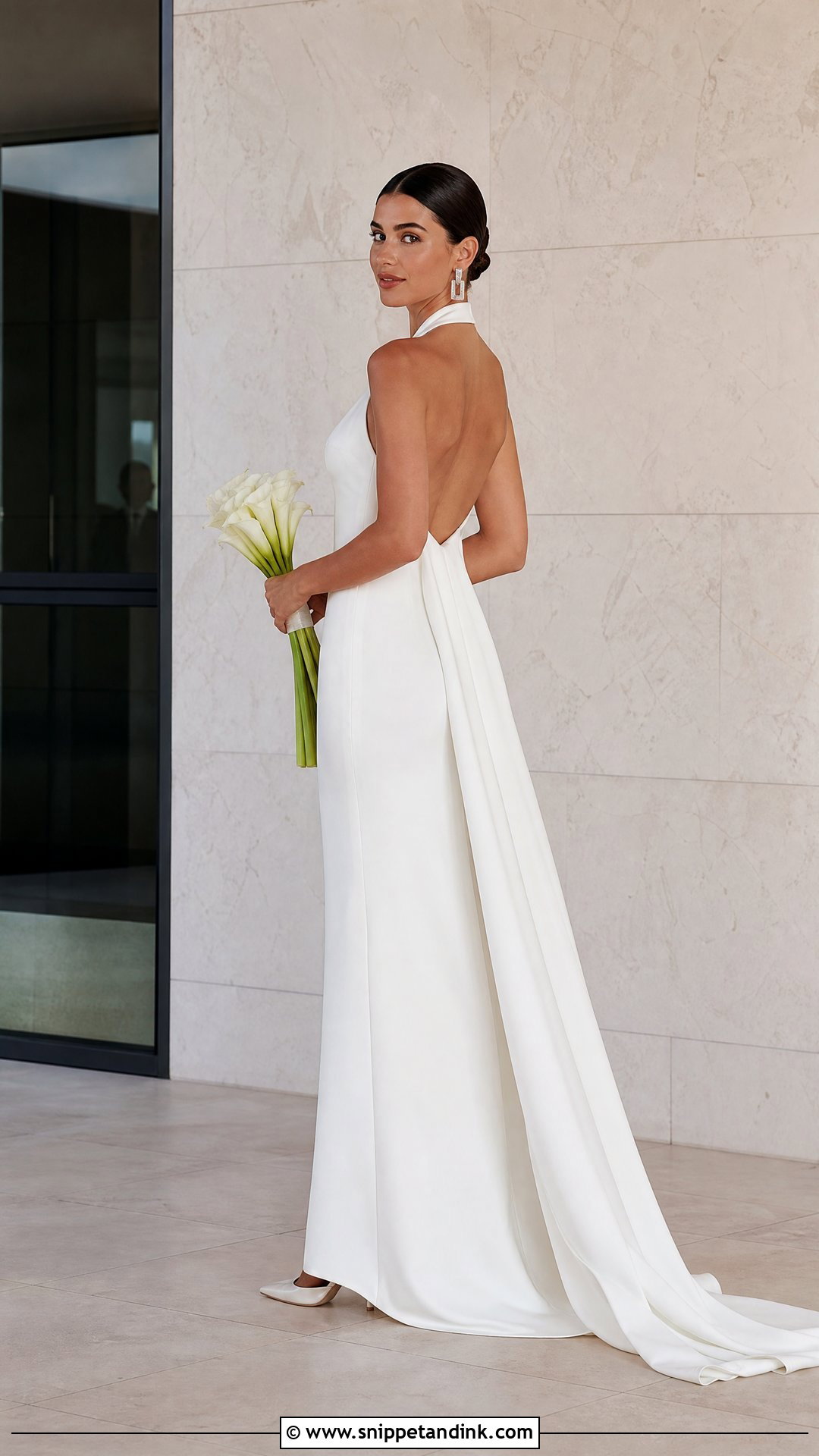
Column halters look streamlined because nothing interrupts the line from neck to hem. That only works with substantial crepe or heavy satin; thin silk shows every seam. A softly defined waist, an open back and a detachable train add ceremony. Geometric earrings, a sleek centre-parted bun and pointed mules or low pumps finish it, with a narrow bouquet of orchids or callas. Columns have little room at the hem, so walk a few steps and climb a stair in it. If your stride is cramped, a small back vent or kick pleat fixes it without changing the look. It suits black tie and a city courthouse equally well.
9. Silk Halter Mermaid Wedding Dress
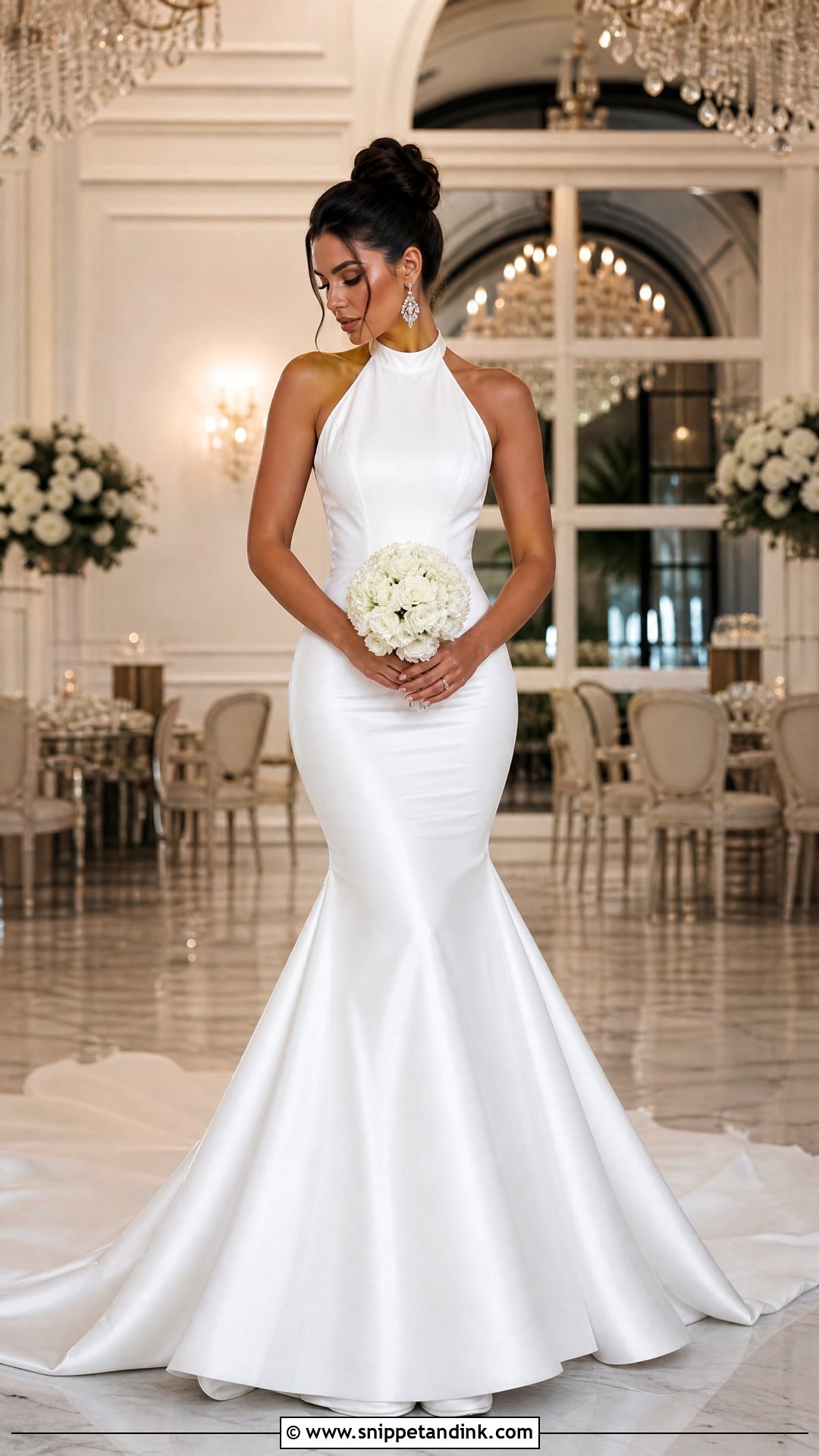
A mermaid halter is dramatic and demanding. The bodice frames the shoulders, follows the torso closely and flares at the knee; satin or Mikado has enough body to hold that flare. Crystal drops, a high polished bun and platform sandals hidden under the hem keep you comfortable. Since a halter carries weight from the neck, a heavy flared skirt can drag the collar backward over a long day, so I ask for a waist stay inside to take the load. A long plain veil and a compact bouquet keep the fitted waist visible. Give it room: a ballroom or large hotel space, not a narrow aisle.
10. Silk Halter Slip Wedding Dress
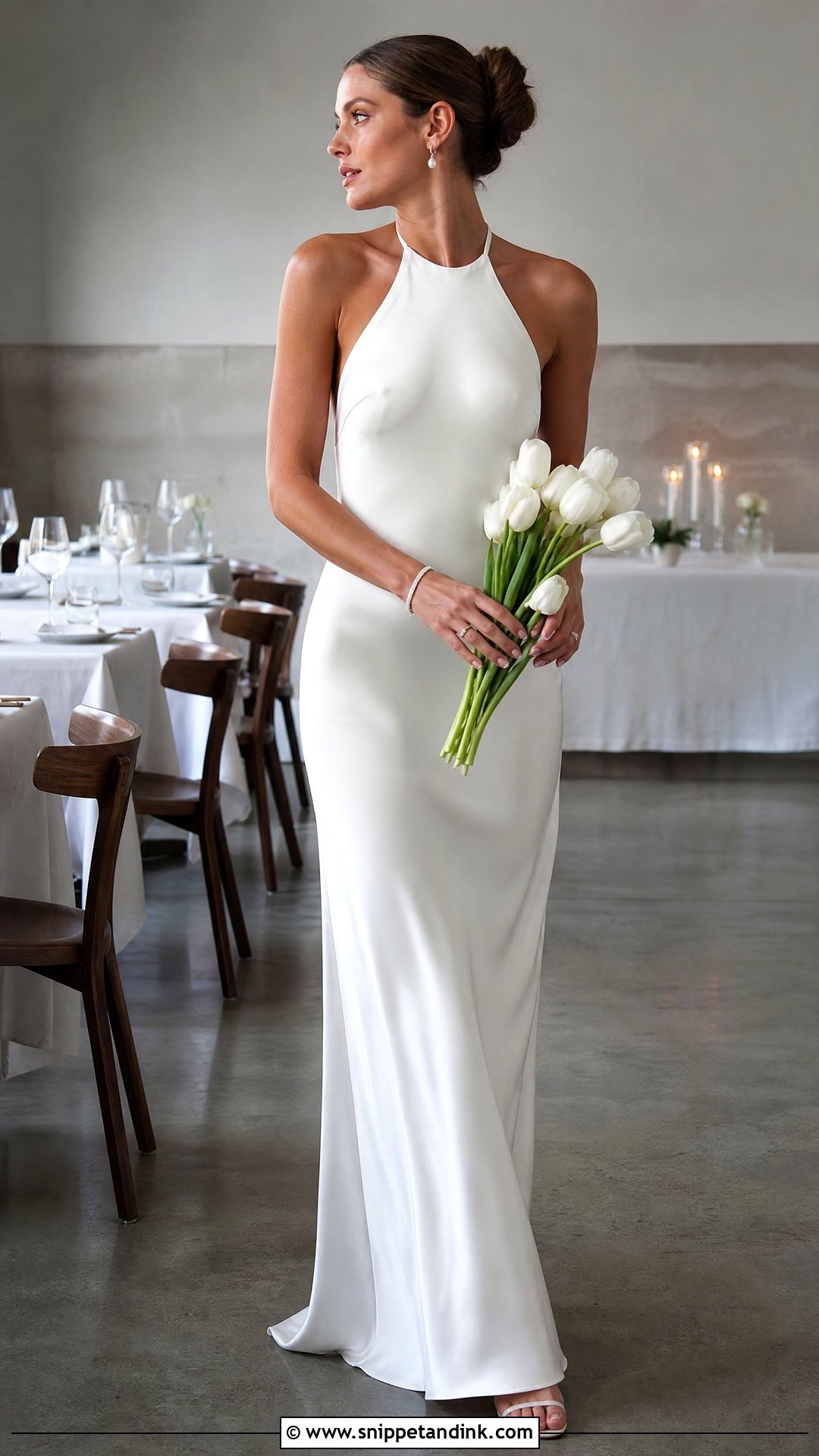
Simple doesn’t mean unfinished, but a slip leaves no room for a sloppy fit. Double-layered charmeuse matters here because a single layer is see-through under flash. A narrow halter neckline, softly defined waist, low back and fluid skirt make the dress; pearl earrings, a fine tennis bracelet and barely there sandals finish it. A neat bun reads more formal, and loose waves more relaxed. A sheer cathedral veil or light silk wrap adds coverage for a religious ceremony. I’d suggest it for small weddings and destination dinners, and for the bride who would rather have no beading or lace at all.
11. Draped Silk Halter Wedding Dress
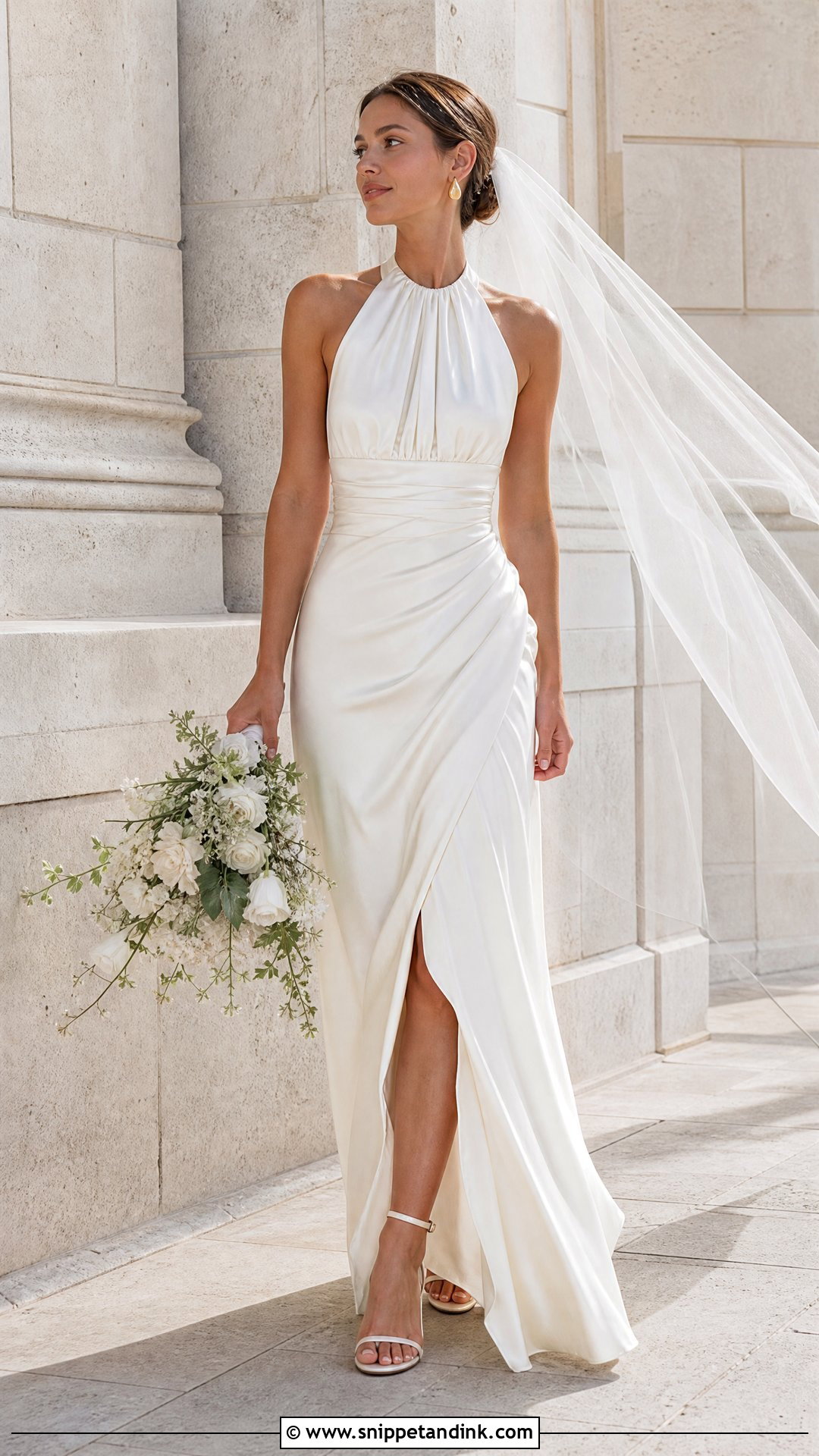
Draping can give a silk gown definition with no sparkle or embroidery. Gathered fabric across the bodice, gentle ruching at the waist and an asymmetric skirt drape create movement while the silk stays the focus. Brushed gold earrings, a sleek low bun and simple heeled sandals suit it, with a soft fingertip veil and a loose bunch of white and pale blush flowers. Drapes are only as good as their stitching. Ask for the folds to be tacked to the lining by hand, then move around at the fitting. If a fold slips, it will slip more after six hours of hugging and dancing.
12. Silk Halter Wedding Dress With Keyhole Neckline
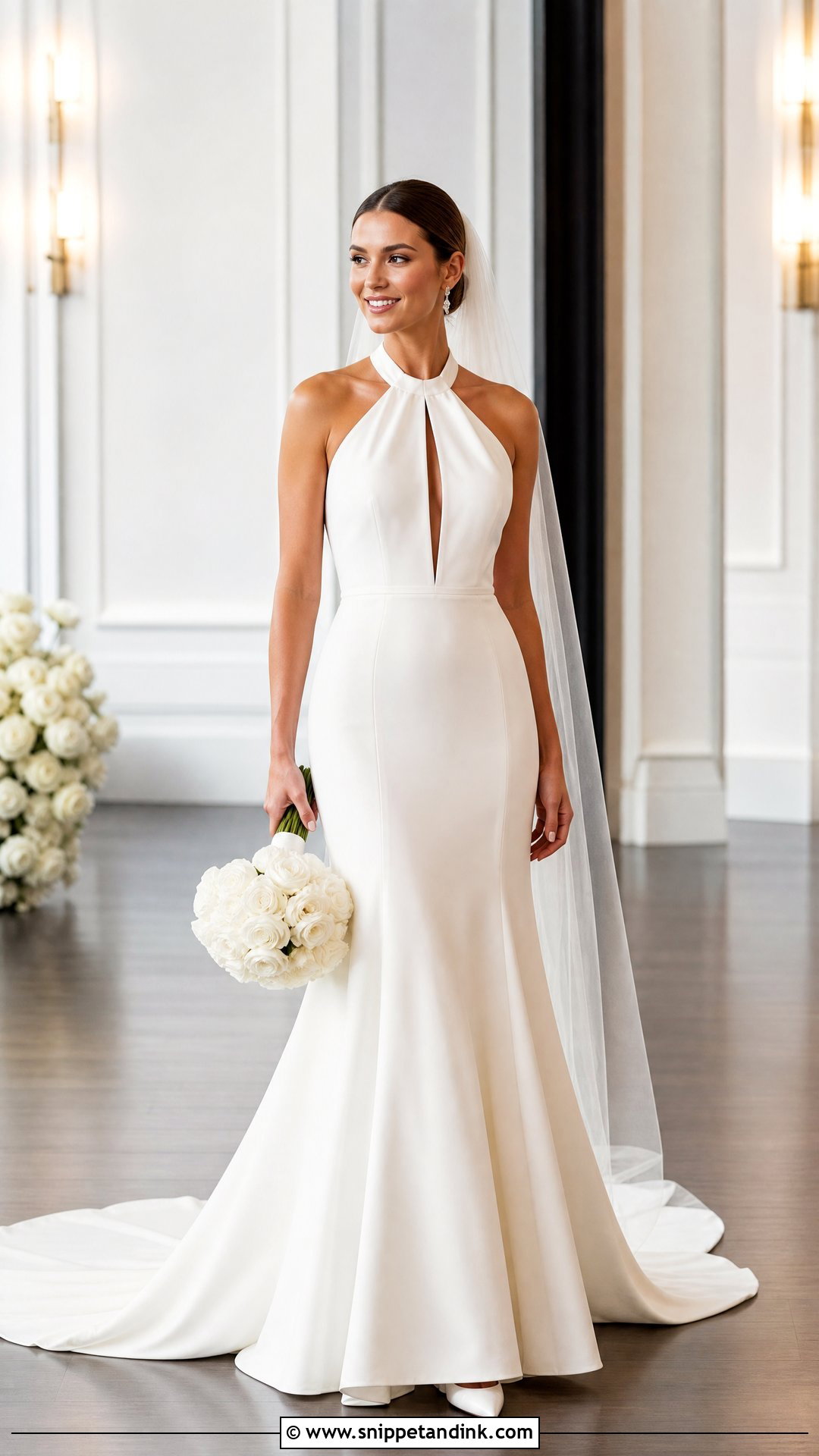
A keyhole adds a small, modern opening to a covered halter. Crepe or satin with a narrow vertical slit at the chest, a supportive halter band, a fitted waist and a gently flared skirt give the shape. Decide how much the keyhole reveals while sitting, not just standing; openings widen when you’re seated and the fabric relaxes. Slim drop earrings, a low twisted chignon and closed pumps finish it. Skip the necklace, as a pendant will fall into the opening. A plain-edged veil and a structured bouquet complete it. It sits neatly between a fully covered bodice and a deep plunge.
13. Silk Halter Wedding Dress With Side Slit
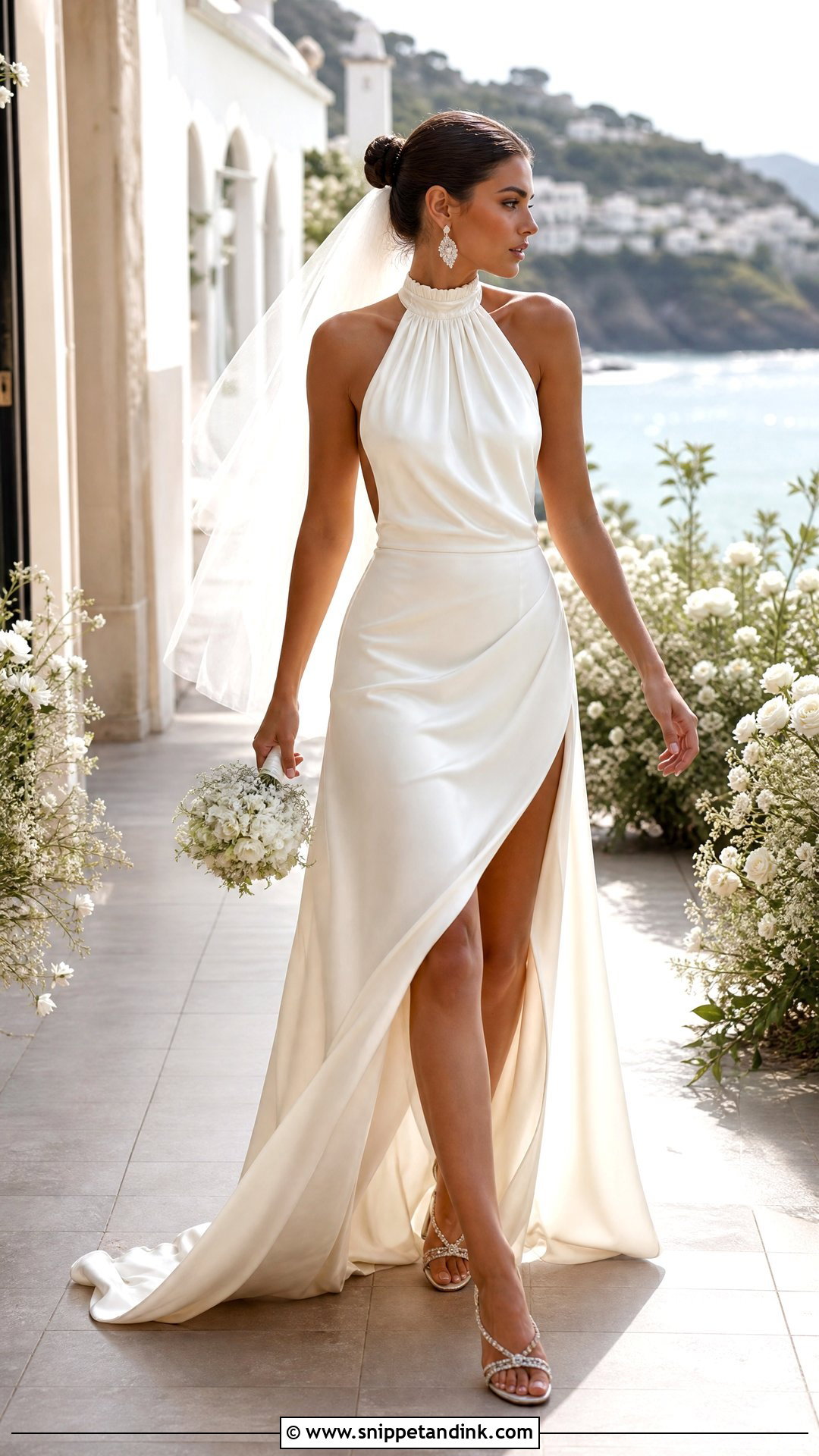
A side slit shows your shoes and frees your legs. A floor-length halter with a gathered high neck, a fitted waist, an open back and a slit at a comfortable height does both. Embellished ivory sandals or sleek metallic heels suit it, with statement earrings, a smooth updo and a small clutch later on. A medium veil keeps it bridal. Slits creep open when you sit, so sit cross-legged and walk briskly at the fitting; a small stitch at the top of the slit is the usual fix. I’d wear it for warm-weather weddings, coastal settings and lively receptions.
14. Silk Halter Ball Gown Wedding Dress
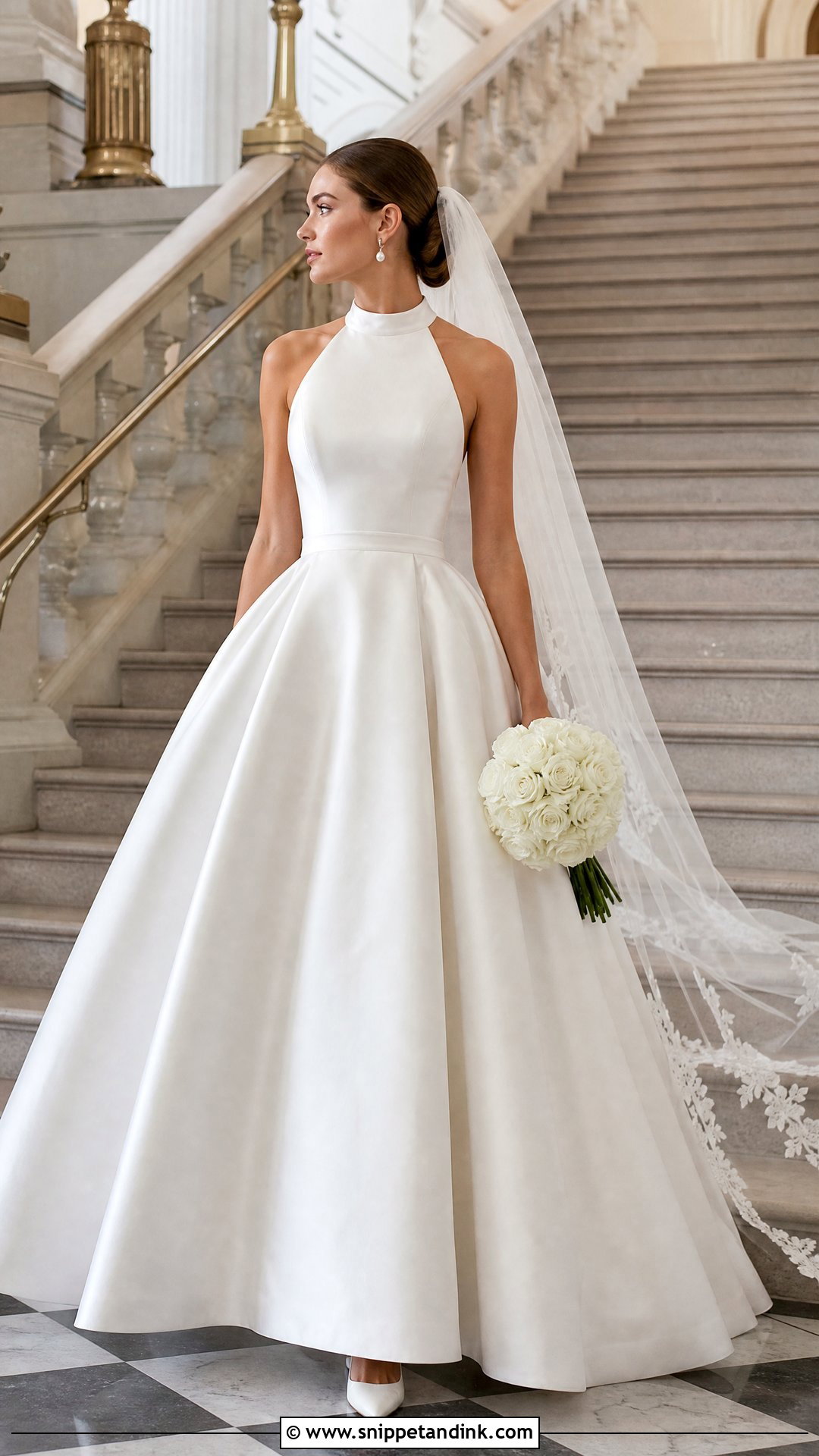
A silk halter ball gown pairs a modern neckline with full traditional volume. Wide halter straps matter more here than in any other style, because a big Mikado or faille skirt is heavy and a thin tie at the neck can’t carry it. A fitted bodice, defined waist and sweeping skirt make the entrance. Pearl drops, satin pumps and a cathedral veil keep it classic, with a smooth chignon so the hair doesn’t fight the neck. Ask about bustle points and practise going through doorways and into a car. The skirt takes more room than you’d expect.
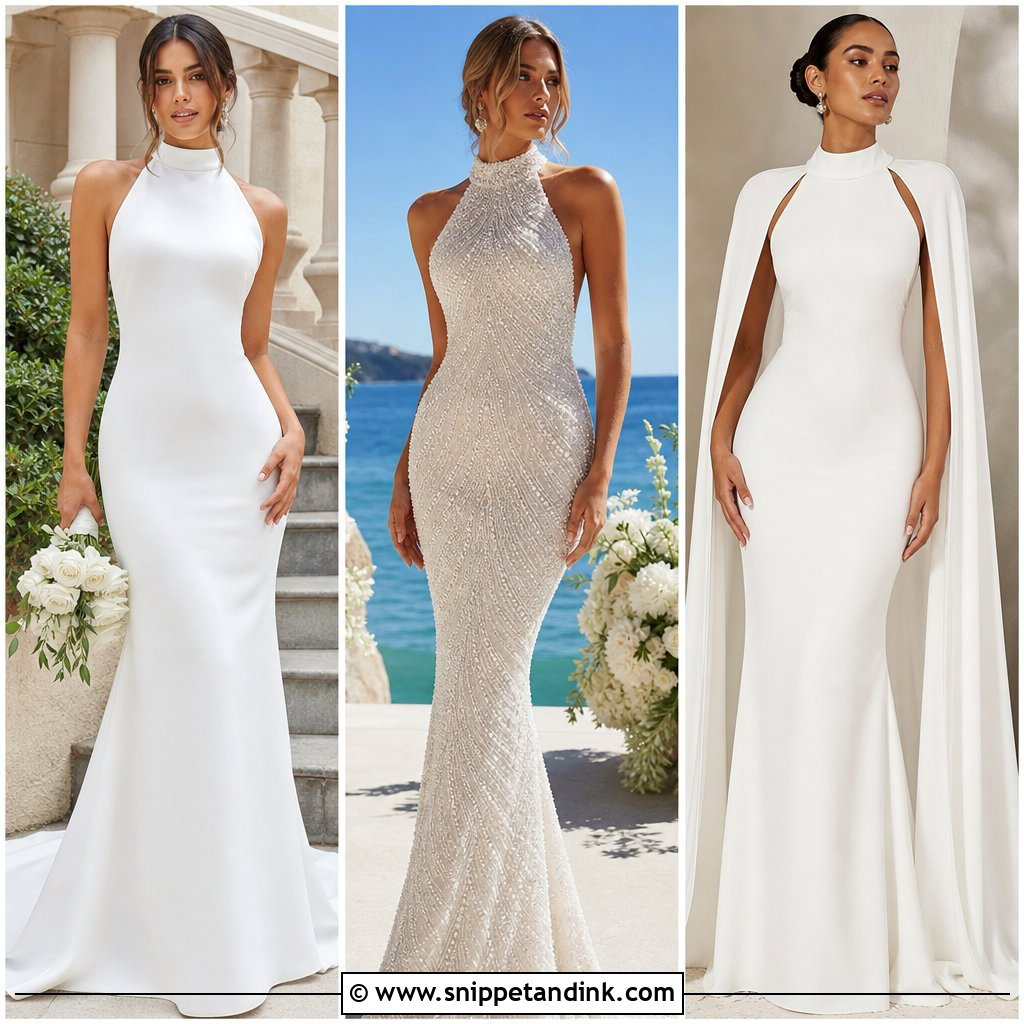
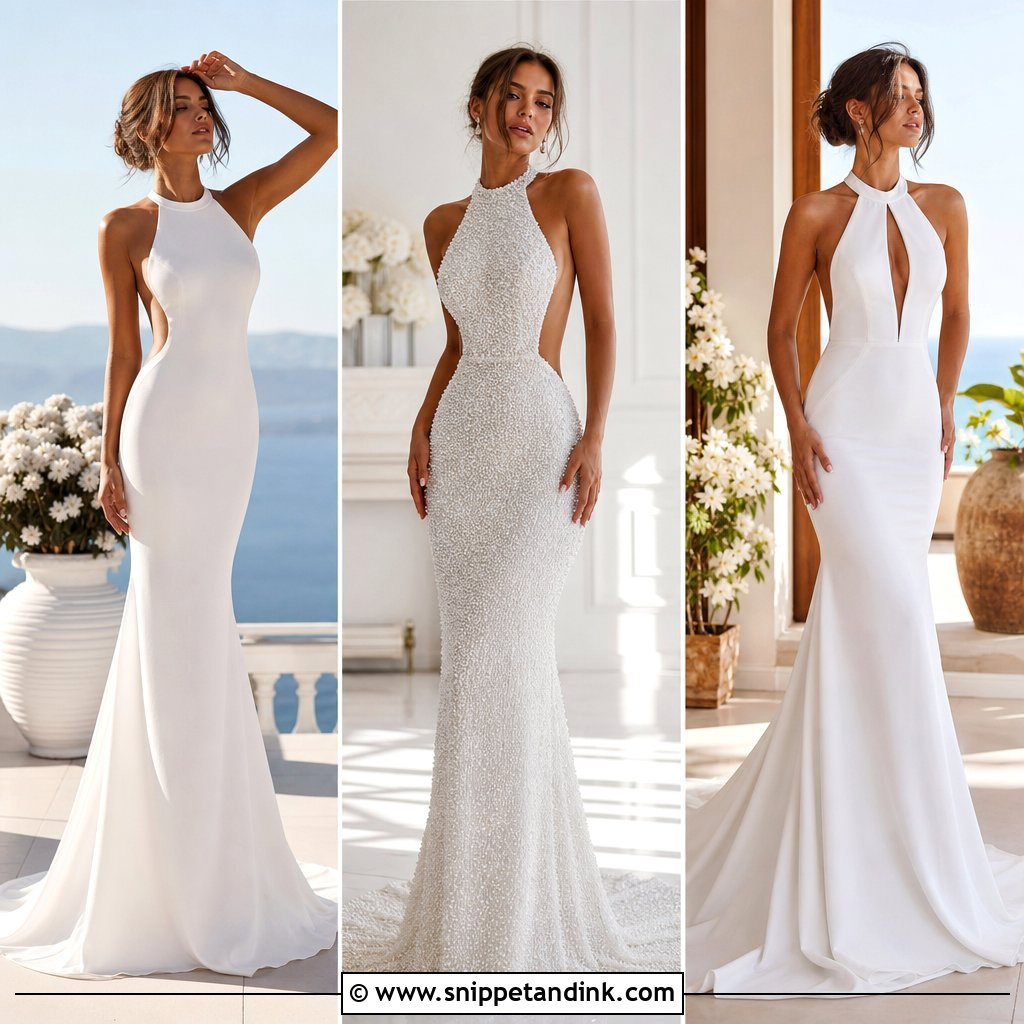
15. Silk Halter Wedding Dress With Neck Scarf
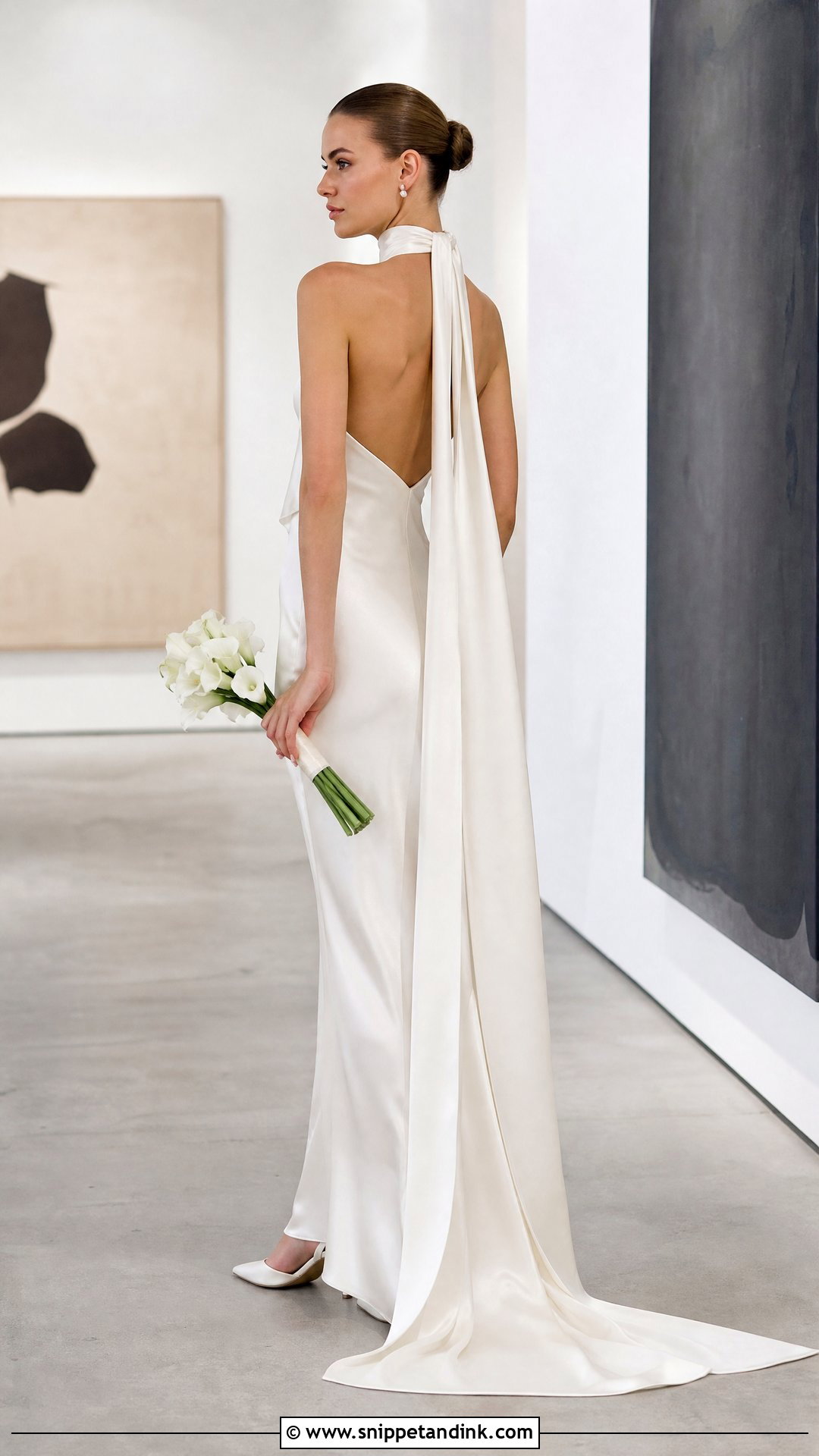
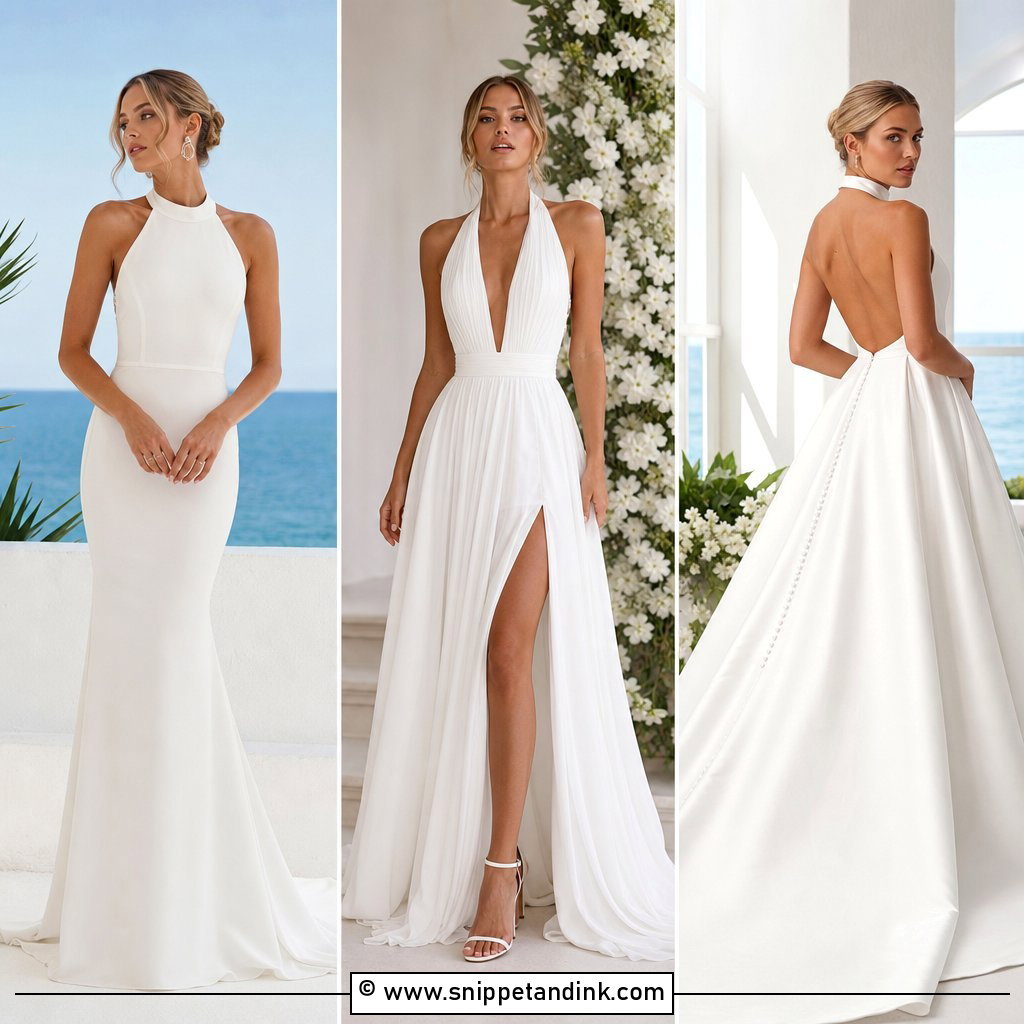
Long neck ties that wrap and trail down the open back turn a slim halter into something fashion-led. The scarf moves when you walk, which is lovely in motion. Keep jewelry to studs, a polished bun and pointed slingbacks, and if you wear a veil, make it plain so it doesn’t tangle with the ties. I’d check two things: that the scarf is light enough not to pull the neckline back, and that the tails end above the hem so you can’t step on them. A narrow bouquet of white flowers keeps the proportions slim for a gallery or city venue.
16. Silk Halter Wedding Dress With Crossed Straps
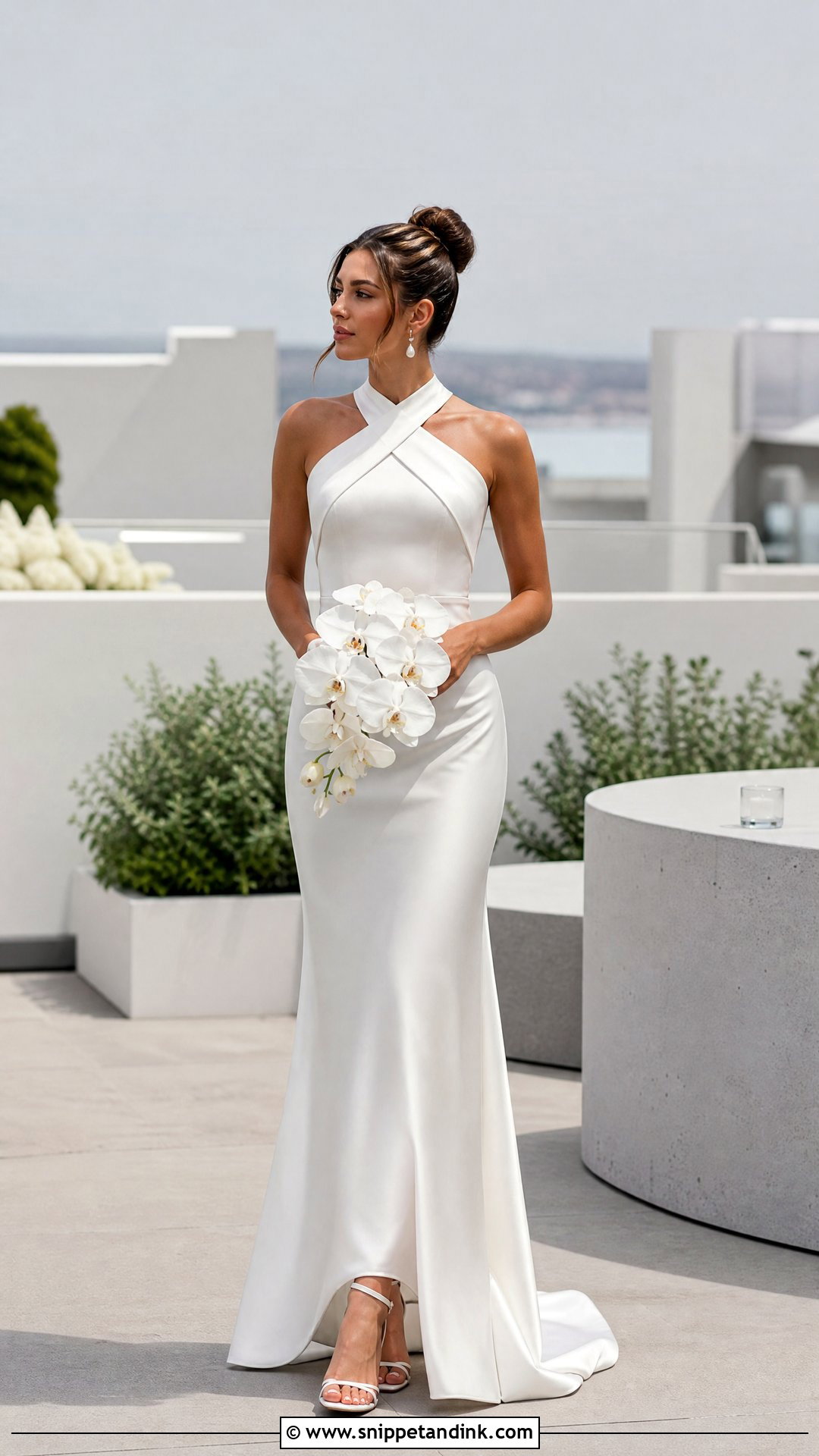
Crossed straps add graphic lines at the neck. Look for broad straps crossing above the bust, a secure fitted bodice, open shoulders and a sleek skirt with a modest train. Small hoops or pearl drops, a high bun and slim ankle-strap sandals are enough; the neckline already has plenty going on, so keep the veil and bouquet simple. Where straps cross, they can press a ridge into the skin at the back of the neck. Wear the dress for half an hour at the final fitting and ask for the cross to be padded or moved if it bothers you.
17. Silk Halter Tea Length Wedding Dress
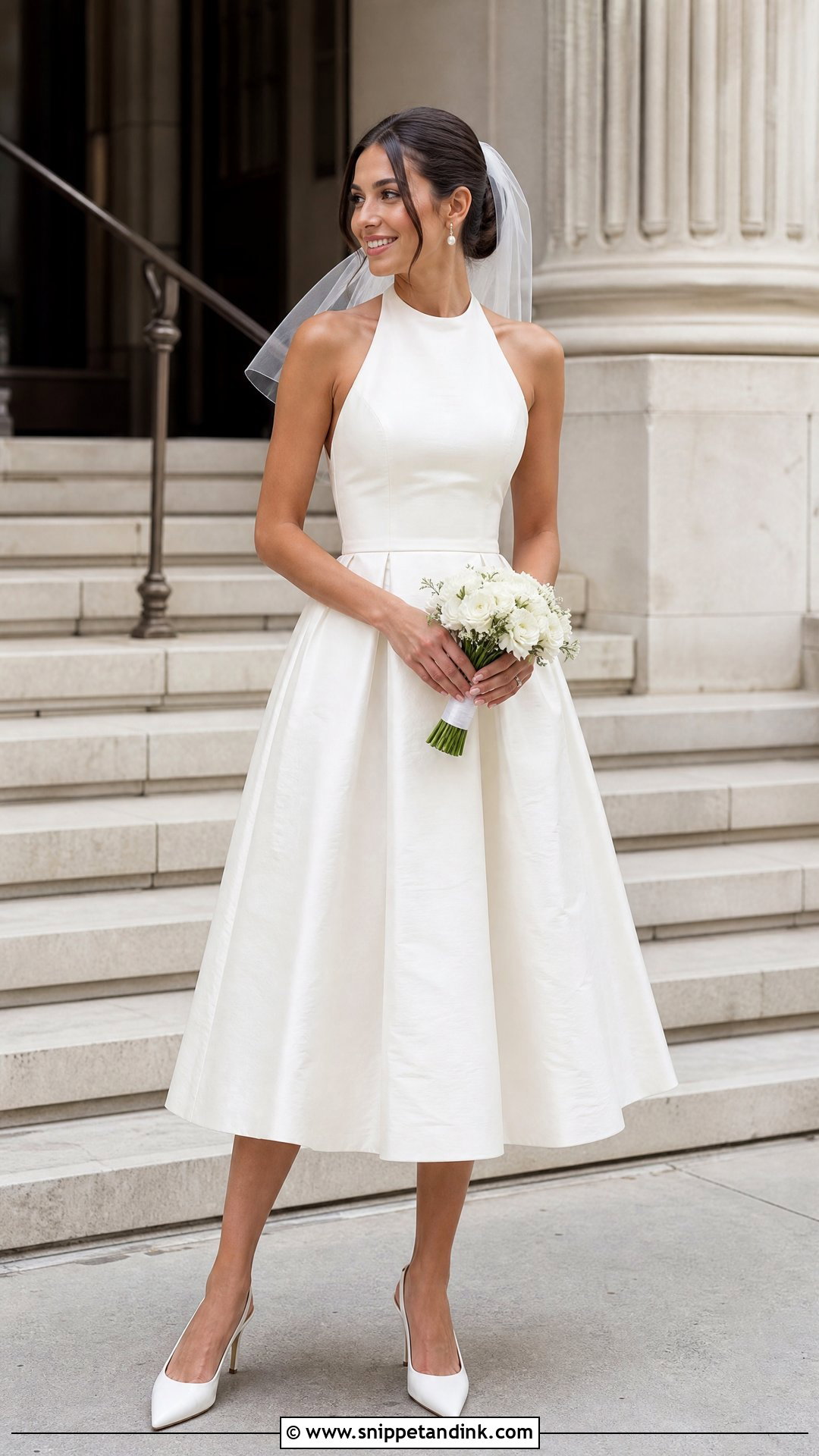
Tea length makes a halter playful. A fitted bodice with a neat high neck and a softly flared skirt ending between knee and ankle, in dupioni or faille, holds its shape well. Pointed slingbacks, pearl earrings and a short veil or a structured bow headpiece suit the length, with a small bouquet so the shoes stay visible. It’s easy to walk, greet guests and dance in, which is why I suggest it for courthouse ceremonies, restaurant weddings and second looks. A tailored ivory jacket covers the shoulders for a cool church or evening, then comes off for the party.
18. Silk Halter Wedding Dress With Cape
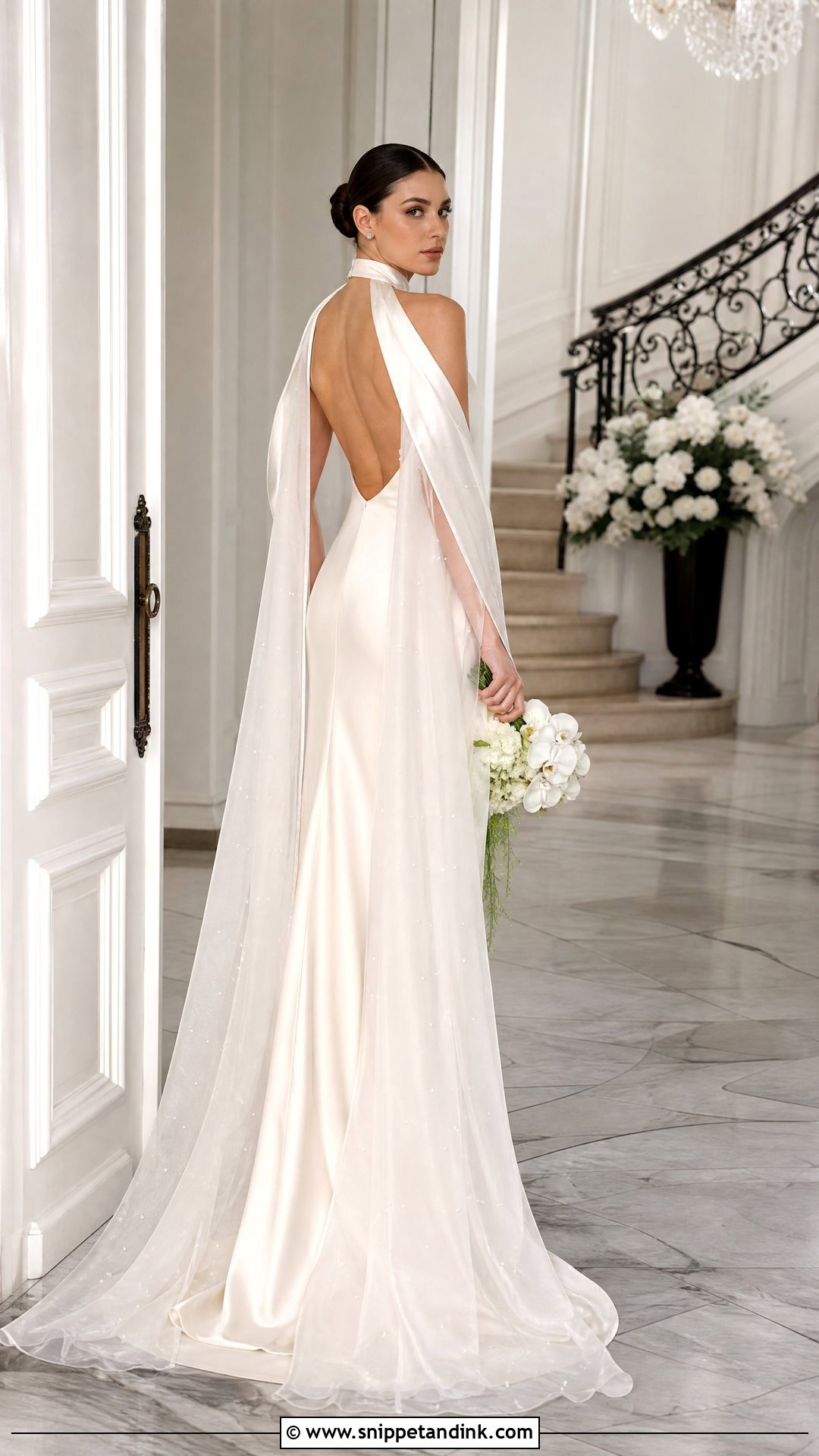
A detachable cape adds grandeur for the ceremony and leaves when you’re ready. Start with a column or A-line gown with a clean high neck and an open back, then add a sheer floor-length cape fixed near the shoulders. The fixing points are the trick with a halter, since the cape mustn’t hang from the neck strap and pull it backward. Hooks set into the bodice at the shoulder blades work better. Crystal studs, a sleek bun and satin pumps finish it, with a restrained bouquet. Remove the cape after the ceremony for a lighter reception look, and it doubles as a warm layer in cooler seasons.
19. Champagne Silk Halter Wedding Dress
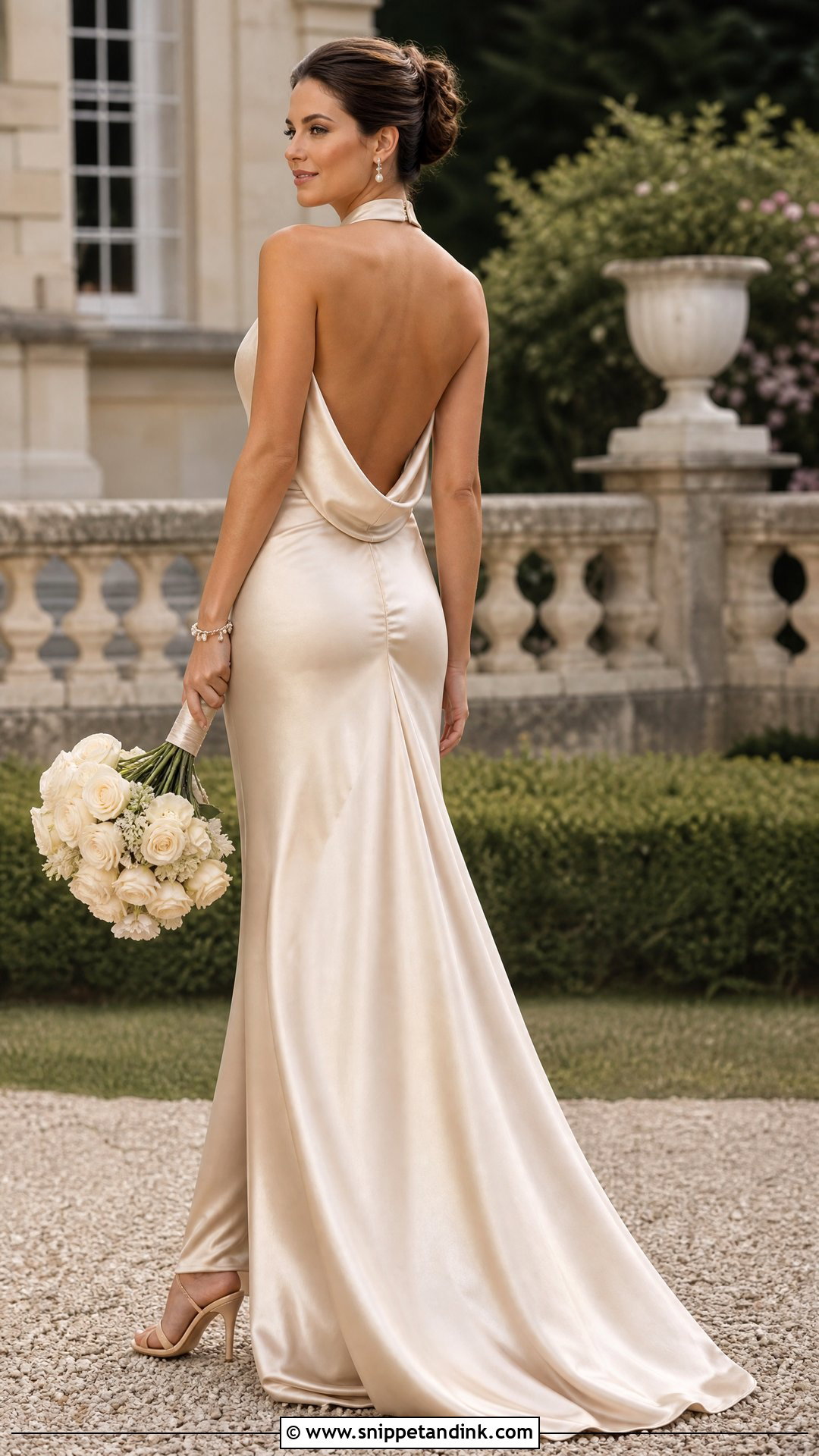
Champagne silk is warm without losing its bridal look, and it flatters olive and golden skin tones particularly well. A halter with a draped bodice, low back and gently flared skirt shows the colour across a large area. Pearl earrings, soft gold heels and a fine gold bracelet suit it, with a polished updo or smooth waves. Choose cream roses and pale greenery rather than stark white flowers, which can make the gown look dull beside them. View the silk in daylight and under warm indoor light before ordering, as the undertone shifts in photographs. Candlelit ballrooms show it at its best.


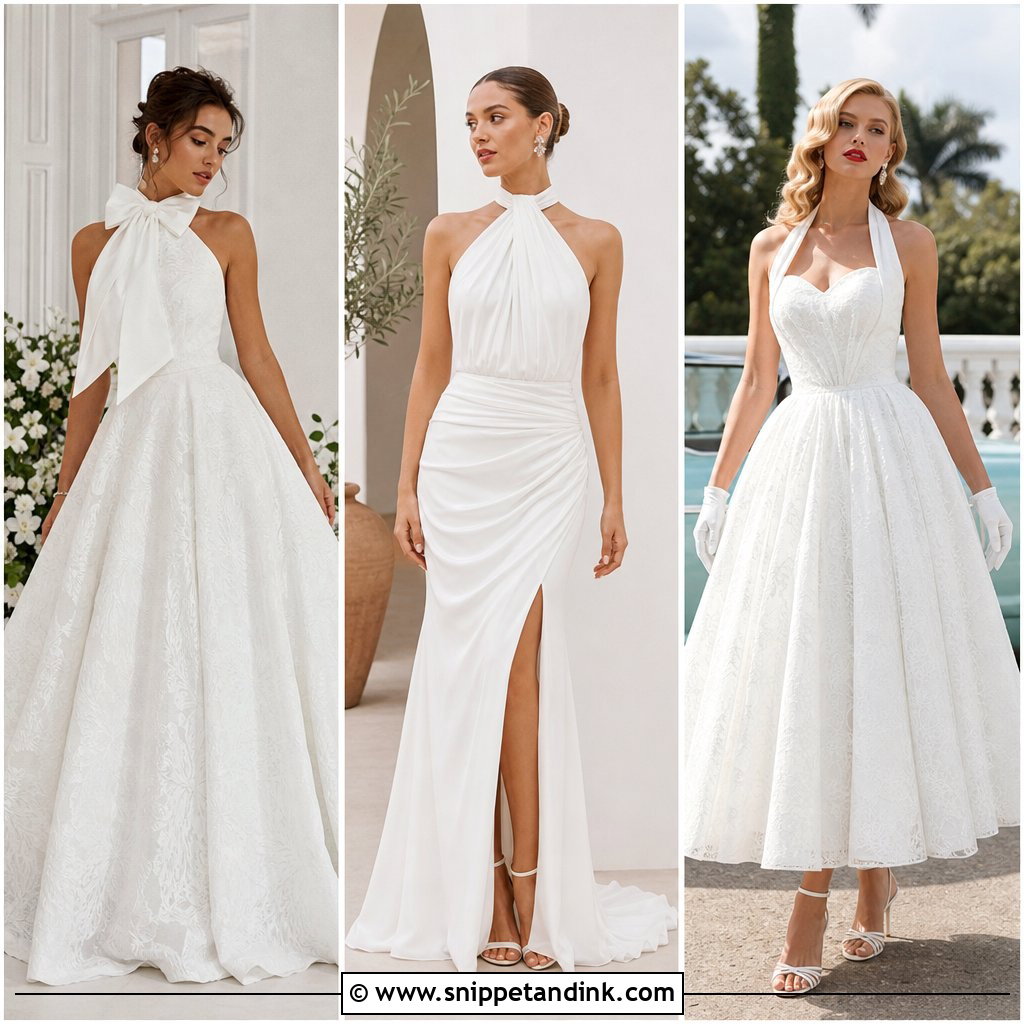

20. Silk Halter Wedding Dress With Detachable Train
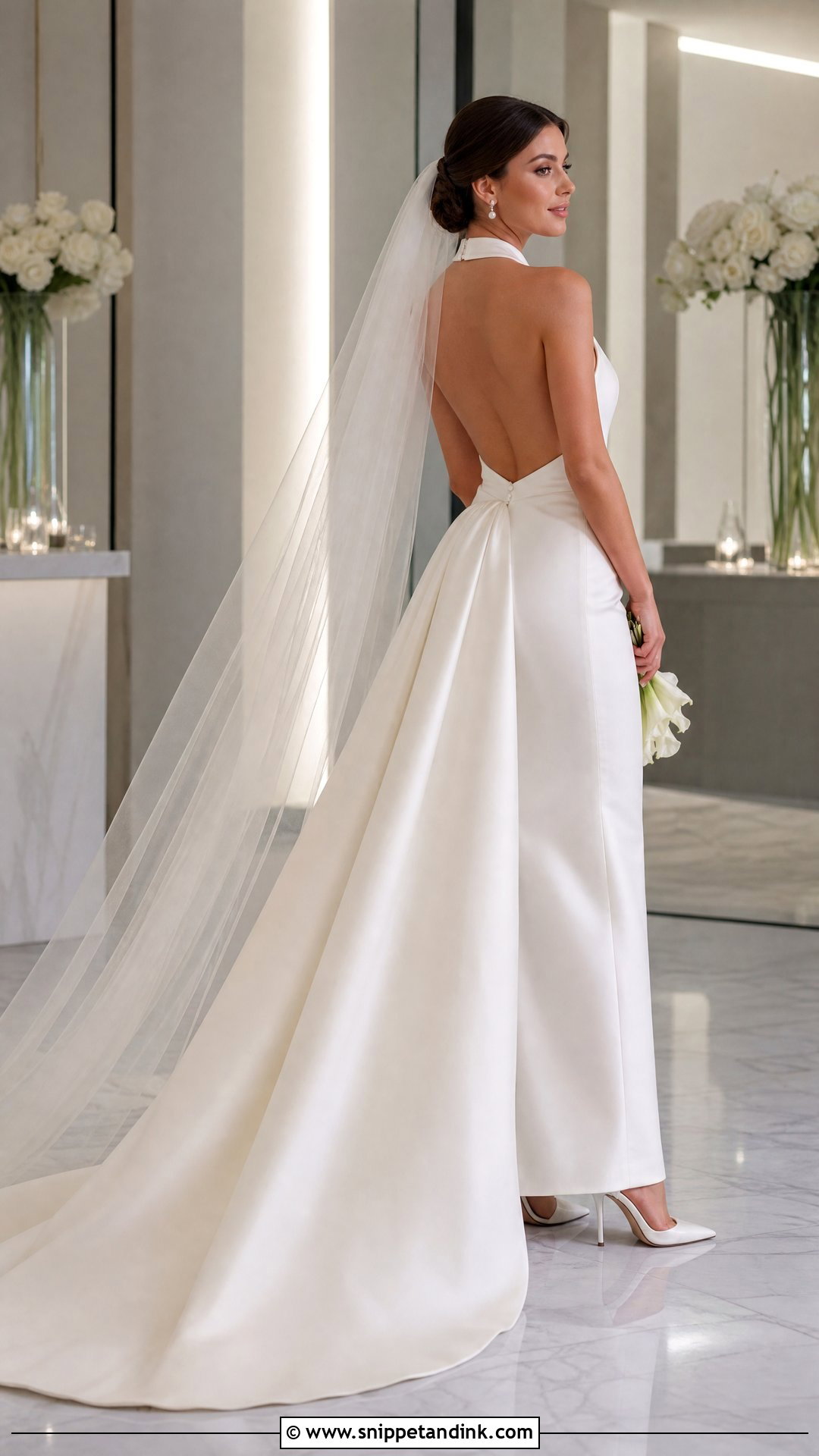
One gown, two looks. A sleek column or fitted sheath halter with a defined waist and open back carries a removable overskirt or train in matching silk, fastened discreetly around the waist. For the ceremony, add pearl drops, a smooth chignon, pointed pumps and a simple veil. After photos, the extra layer comes off for dinner and dancing. The join at the waist must lie flat once the train is gone, so check the bare gown at the fitting too. Show your helper how it fastens well before the day. It’s a good choice if you love drama but would rather buy one dress than two.
Hair Up, Hair Down and the Veil Behind a Halter Tie
Because the strap fastens at the nape, hair and halter share the same small space. Long hair worn down covers the tie and the open back, which hides what most brides chose the dress for. I usually suggest an updo, a low bun set just above the fastening or a sleek ponytail.
Veils need a little planning too. Pin the comb above the bun or into the crown, not at the nape, so the veil falls clear of the knot or button instead of catching on it. A heavy cathedral veil pulls backward on the hair, and through the hair on the strap, so lighter tulle is more comfortable. When you try the gown, bring a hair tie and a clip and put your hair up roughly, because a halter looks completely different with the neck showing.
One Neckline, Twenty Ways to Wear It
Halters can be slips, columns, ball gowns or tea-length party dresses, and the right one is the dress that supports you and lets you move through the ceremony and reception. Try several necklines, back depths, silk weights and train lengths before deciding. Smooth silk shows fit problems more than textured fabric, so budget time and money for alterations. Then keep the styling light around the neck: earrings, shoes, a veil and a hairstyle that leave the halter line clear. Whichever shape you pick, the halter is the detail people will notice, so let it be the one strong note.
You'll Like These Ideas:





Leave a Reply