
There are no rules about what a bride over 50 should wear, only questions about fit, fabric and how you want to feel walking in. I dress a lot of women in this chapter, and what they want is rarely coverage for its own sake. They want a gown that sits right, lets them hug people and dance, and still looks like a wedding dress in the photos. Below you’ll find lace sleeves, crepe sheaths, tea lengths, champagne tones, suits, jumpsuits and minimalist shapes, each with the shoes and accessories I’d put with them.
The Foundation Under the Gown Decides How It Fits
Most of the fit problems I see at a first appointment are not the dress at all. They come from a bra that has lost its lift, a strap that cuts in or shapewear that rolls at the waist. Bodies change after 50: the bust may sit lower, the waist may soften, the upper arm may want more cover. A good gown handles all of that, but only if you shop in the right underpinnings.
- Get properly measured for a bra a few weeks before you start trying on gowns, and wear it to every appointment.
- Ask whether a gown can take sewn-in cups or a built-in corset. Many can, and it frees you from straps and back bands showing.
- Choose smoothing shapewear in a bonded, no-seam fabric that stops above the knee. Long-line pieces that grip the thigh roll up when you sit.
- Bring the exact pieces to your first alteration fitting. Changing undergarments later can shift the hem and the bust line.
I also look at arm coverage as a choice, not an obligation. If you want it, a sheer sleeve, a capelet or a jacket all add it without hiding your shape. If you don’t, nobody has the right to tell you otherwise.
1. Lace Sleeve Wedding Dress
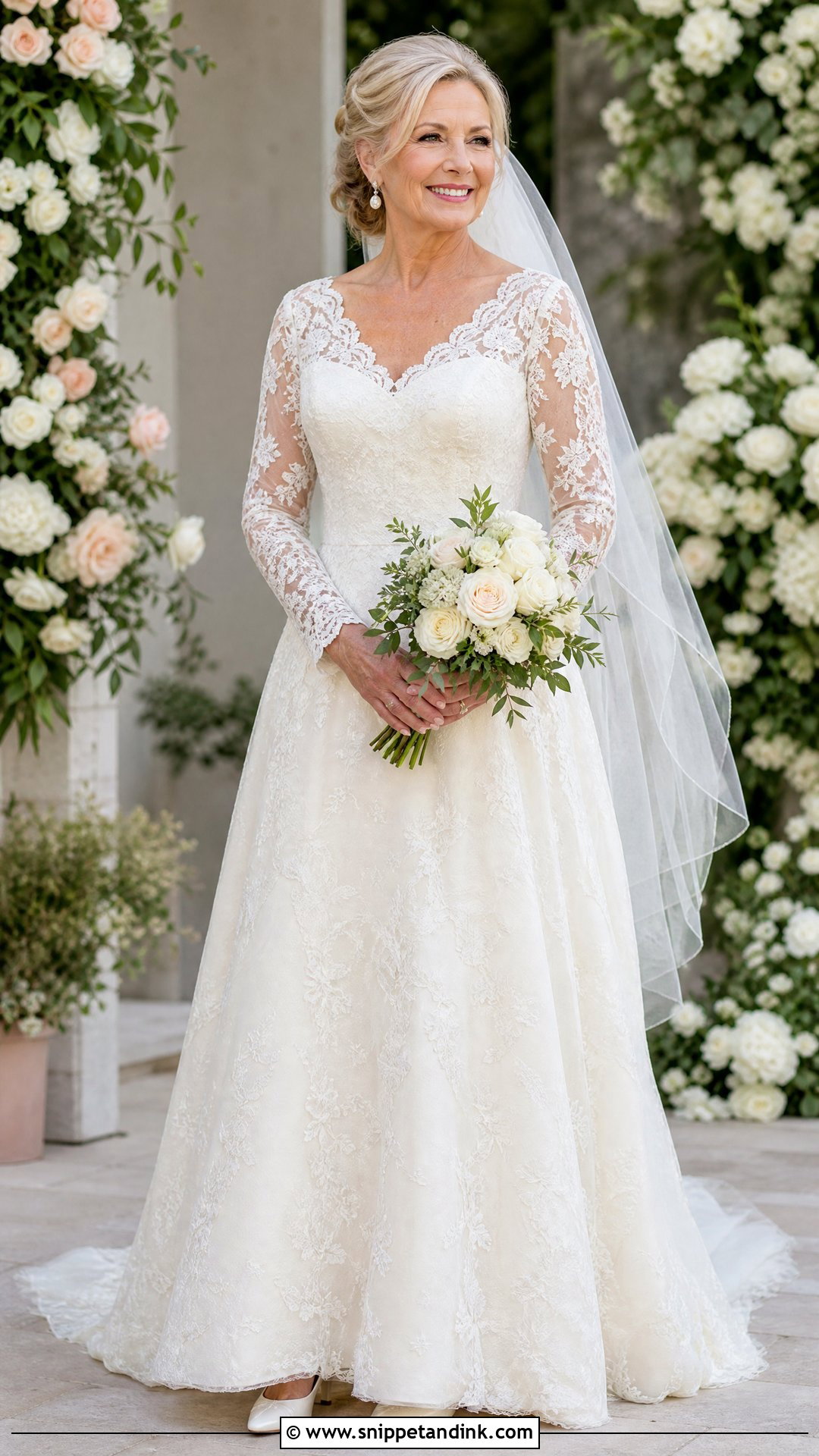
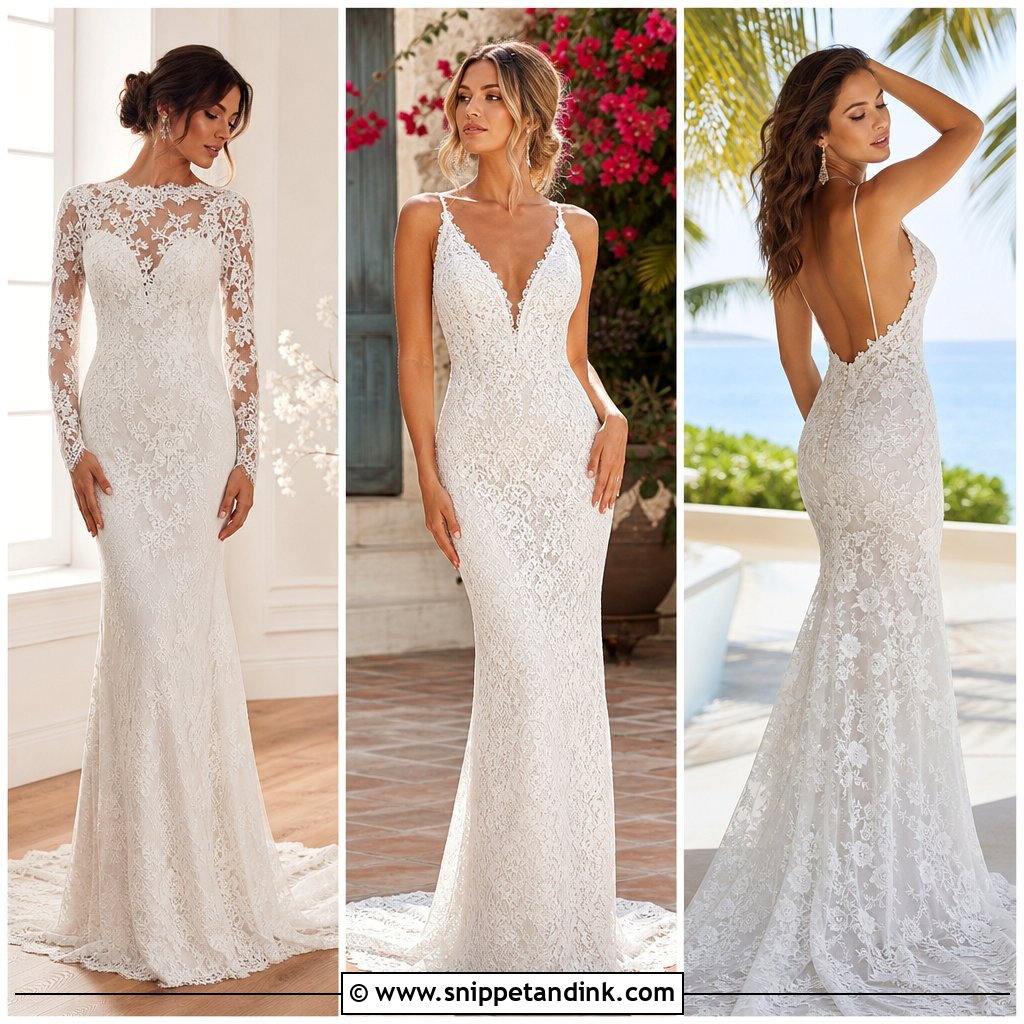
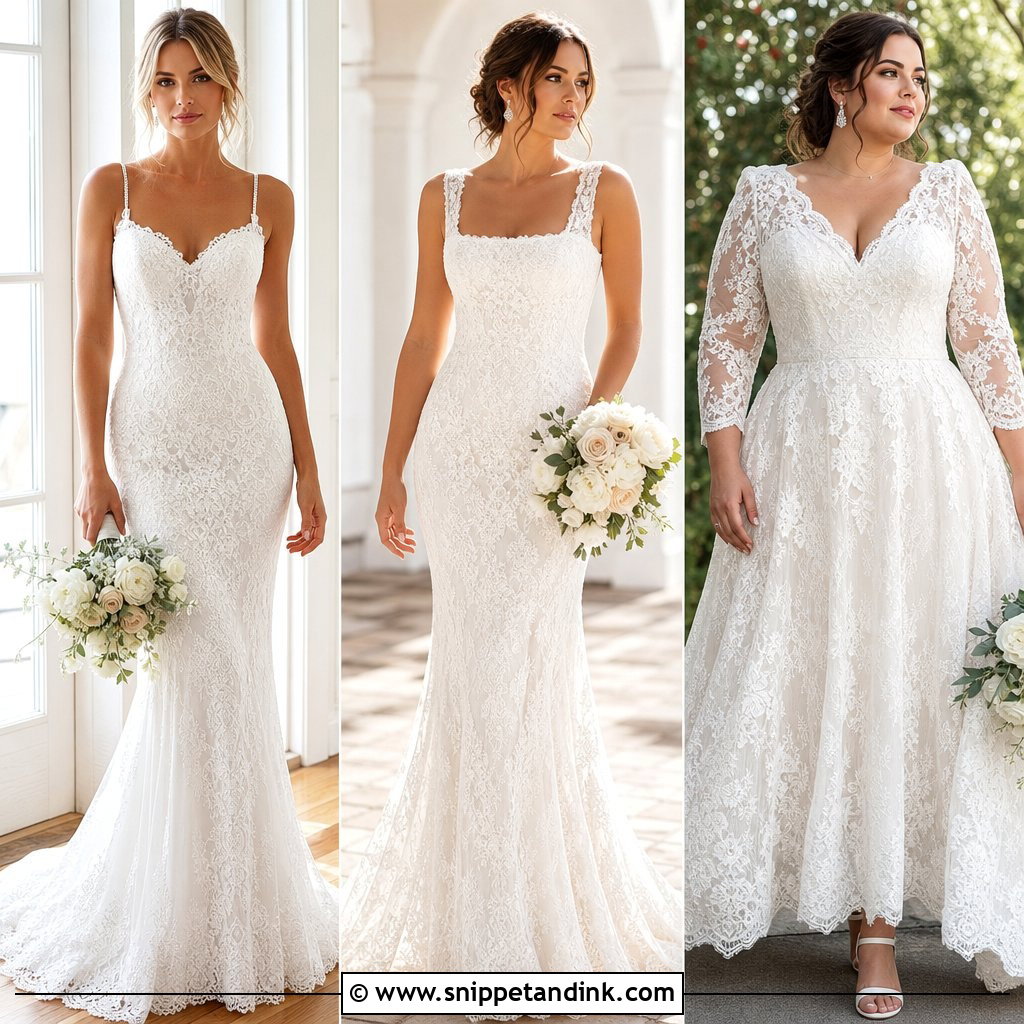
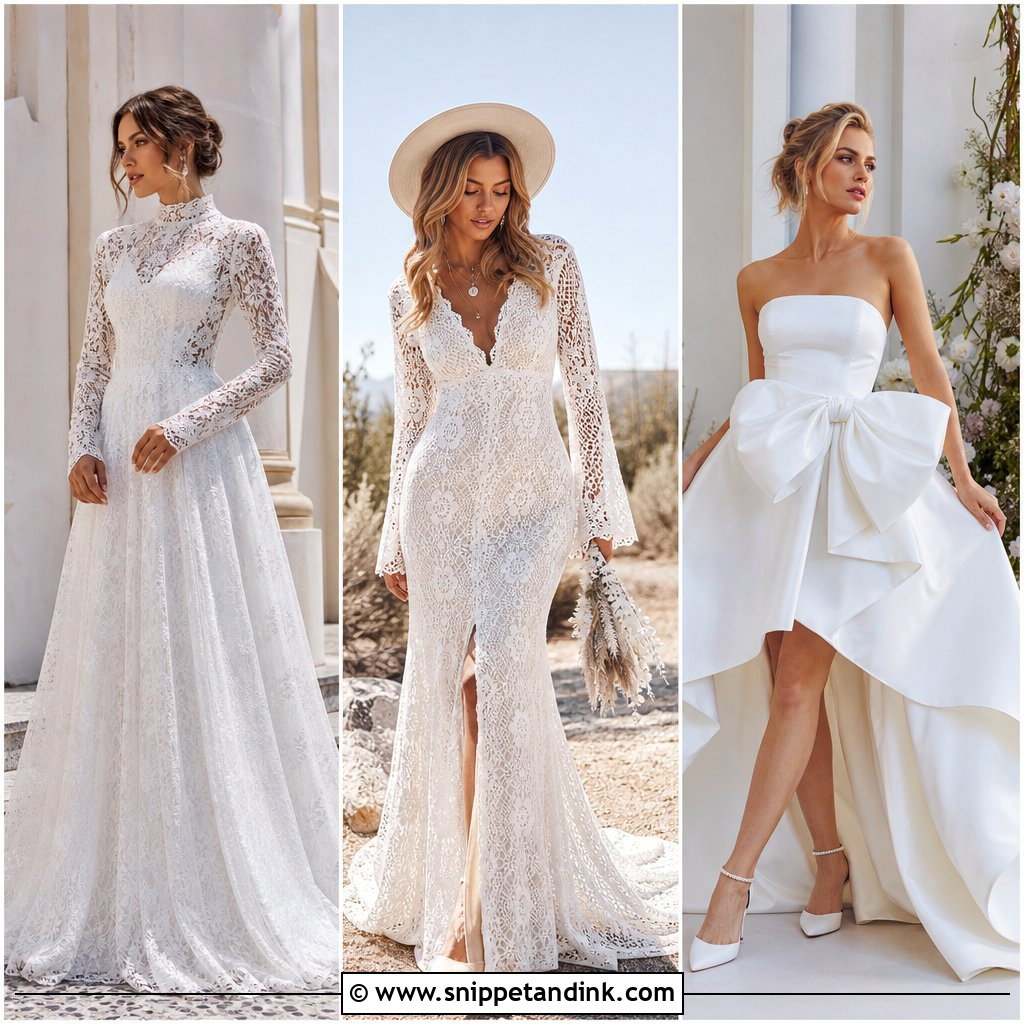
Long lace sleeves give coverage without weight, as long as the lace is fine and the sleeve is lined in a skin-tone mesh rather than left scratchy. I’d put them on a fitted bodice with an A-line or a gentle sheath skirt. Ivory, soft white or champagne lace usually sits warmer against the skin than bright white. The fitting point I watch is the armhole: if it’s cut too low, you can’t lift your arms to hug anyone without the whole bodice shifting. A scalloped neckline, low block heels, pearl earrings and a simple veil finish it for a garden or afternoon ceremony.
2. Tea Length Wedding Dress
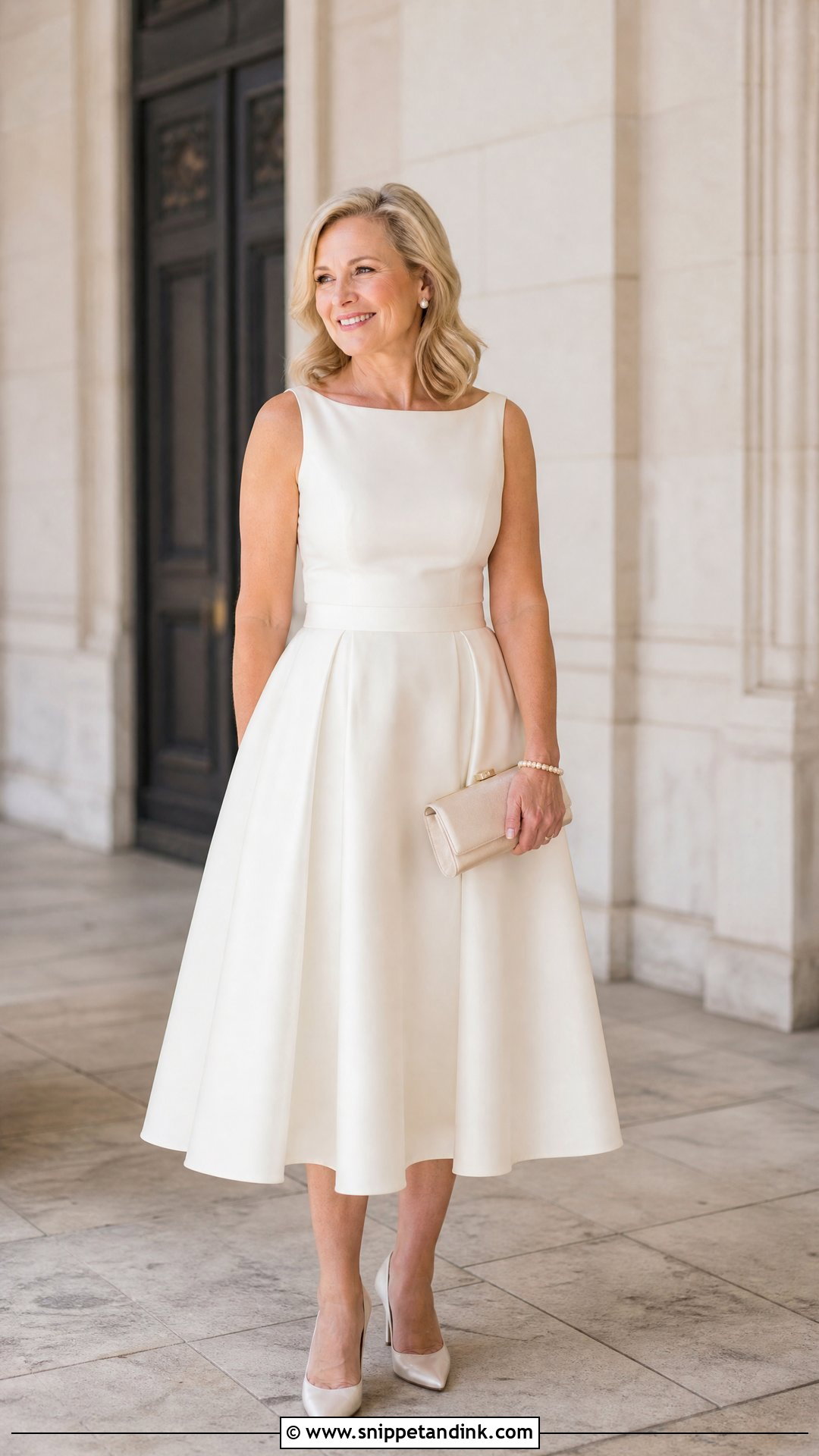
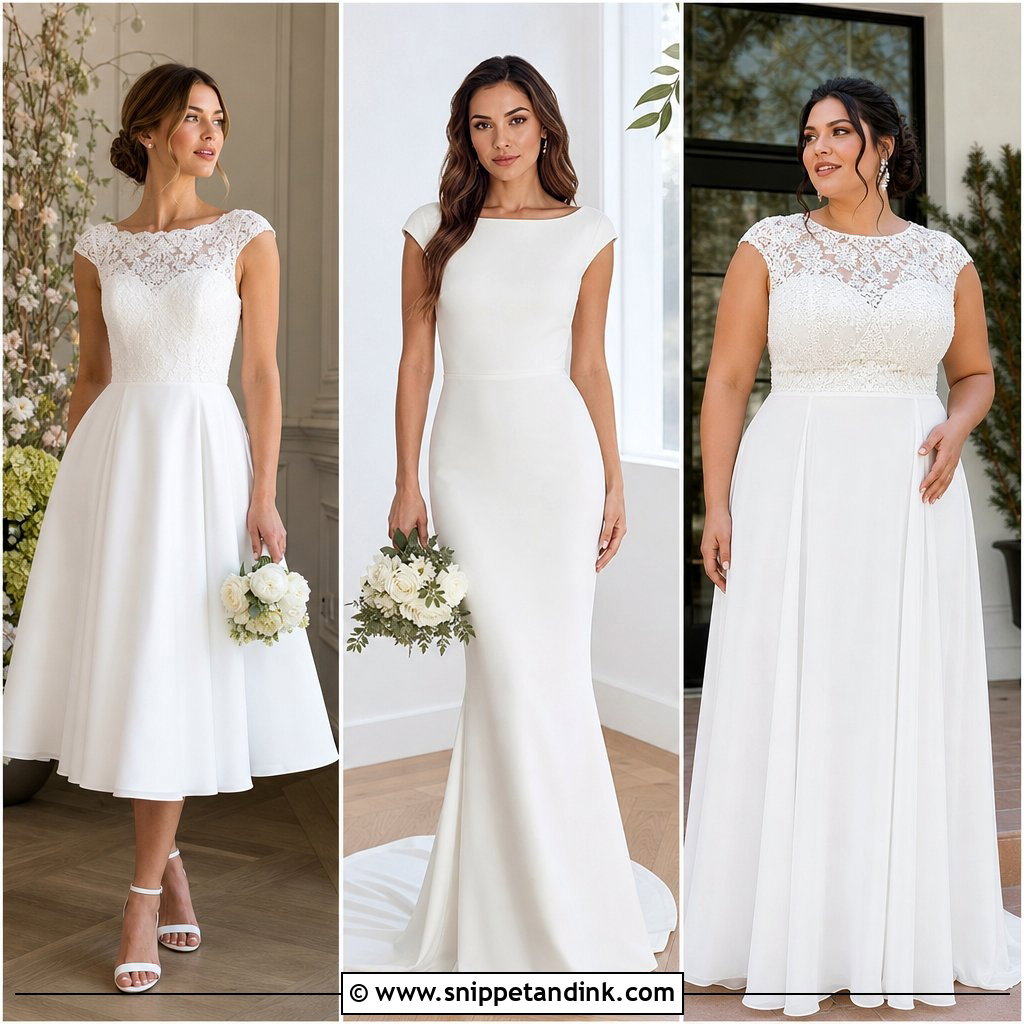
Tea length is the most freeing hem I know, falling between knee and ankle so you can walk, greet and dance without lifting a skirt. Your shoes become part of the outfit, so satin pumps, embellished flats or low kitten heels are worth choosing with care. A fitted waist, bateau neck and soft full skirt keep the proportions balanced. I suggest it often for courthouse weddings, intimate receptions, second weddings and daytime ceremonies. A cropped jacket or short gloves bring a gentle vintage note.
3. Crepe Sheath Wedding Dress
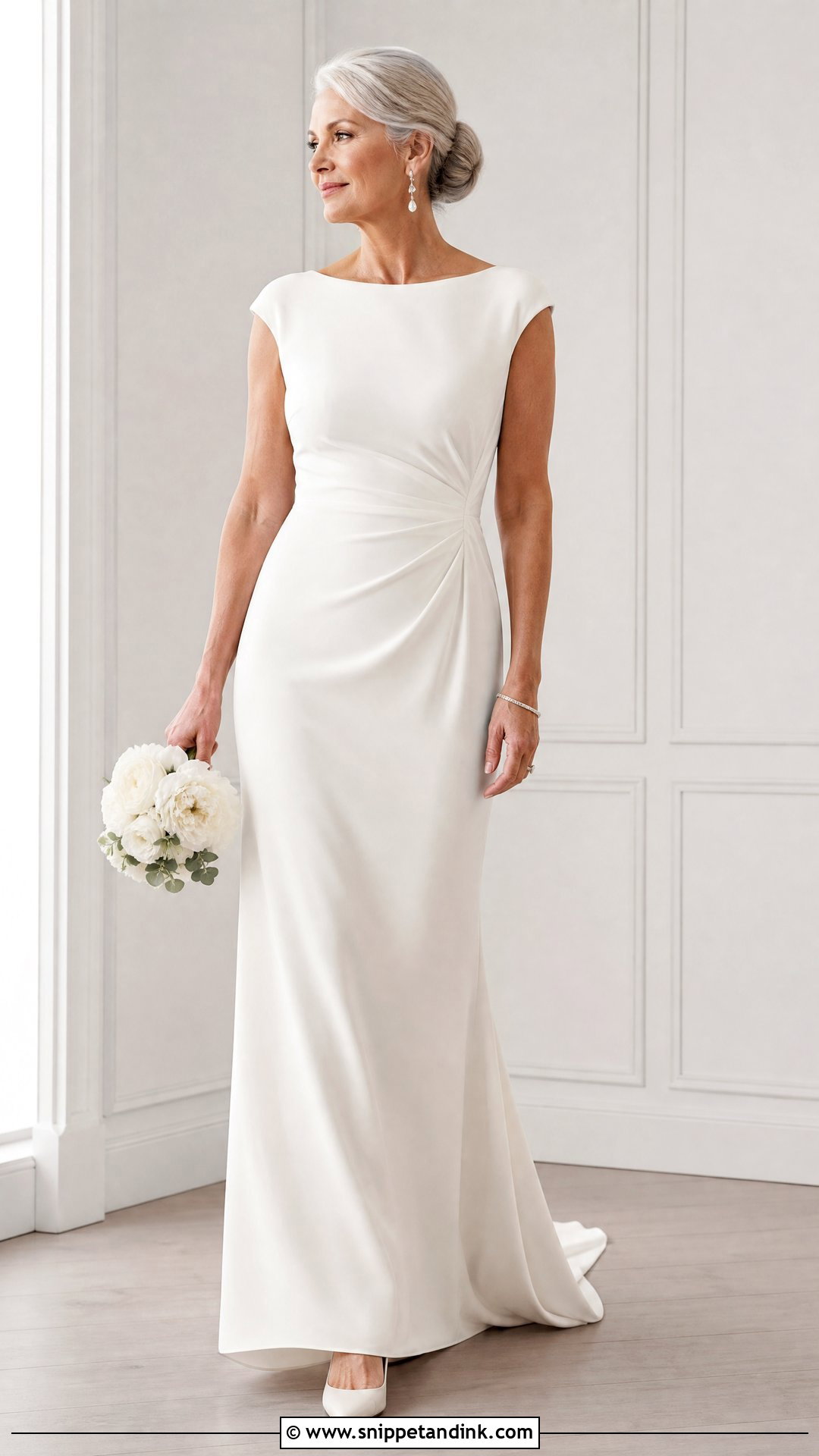
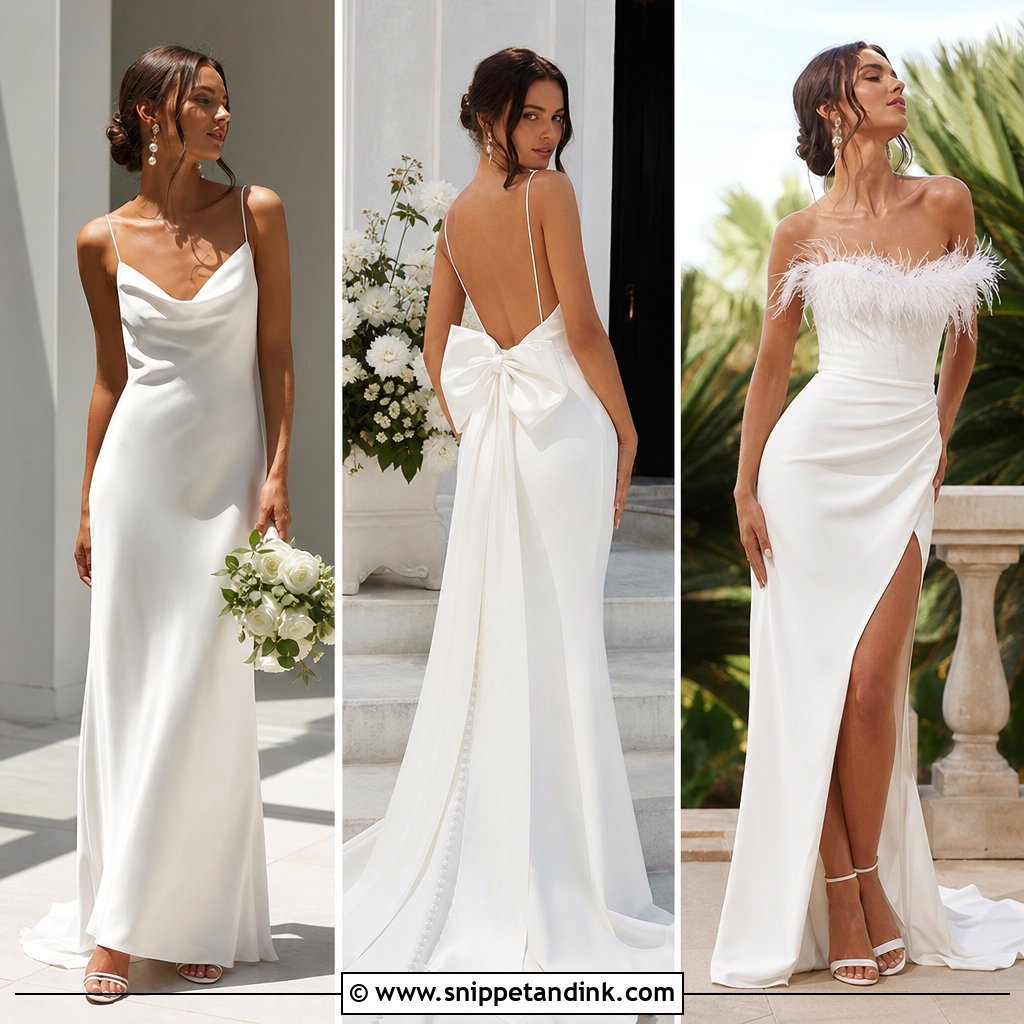
Crepe is my favourite fabric for a clean line, because it has enough body to skim the figure without clinging, and it barely creases. A crepe sheath wedding dress with subtle seaming, a soft V and a defined waist flatters a lot of shapes. The thing to check is the weight: thin crepe shows every line underneath, so ask for a double layer or a proper lining. Pointed heels, drop earrings and a sleek low bun suit it. For more coverage, a matching crepe capelet or longline jacket keeps the tailoring intact.
4. A Line Wedding Dress
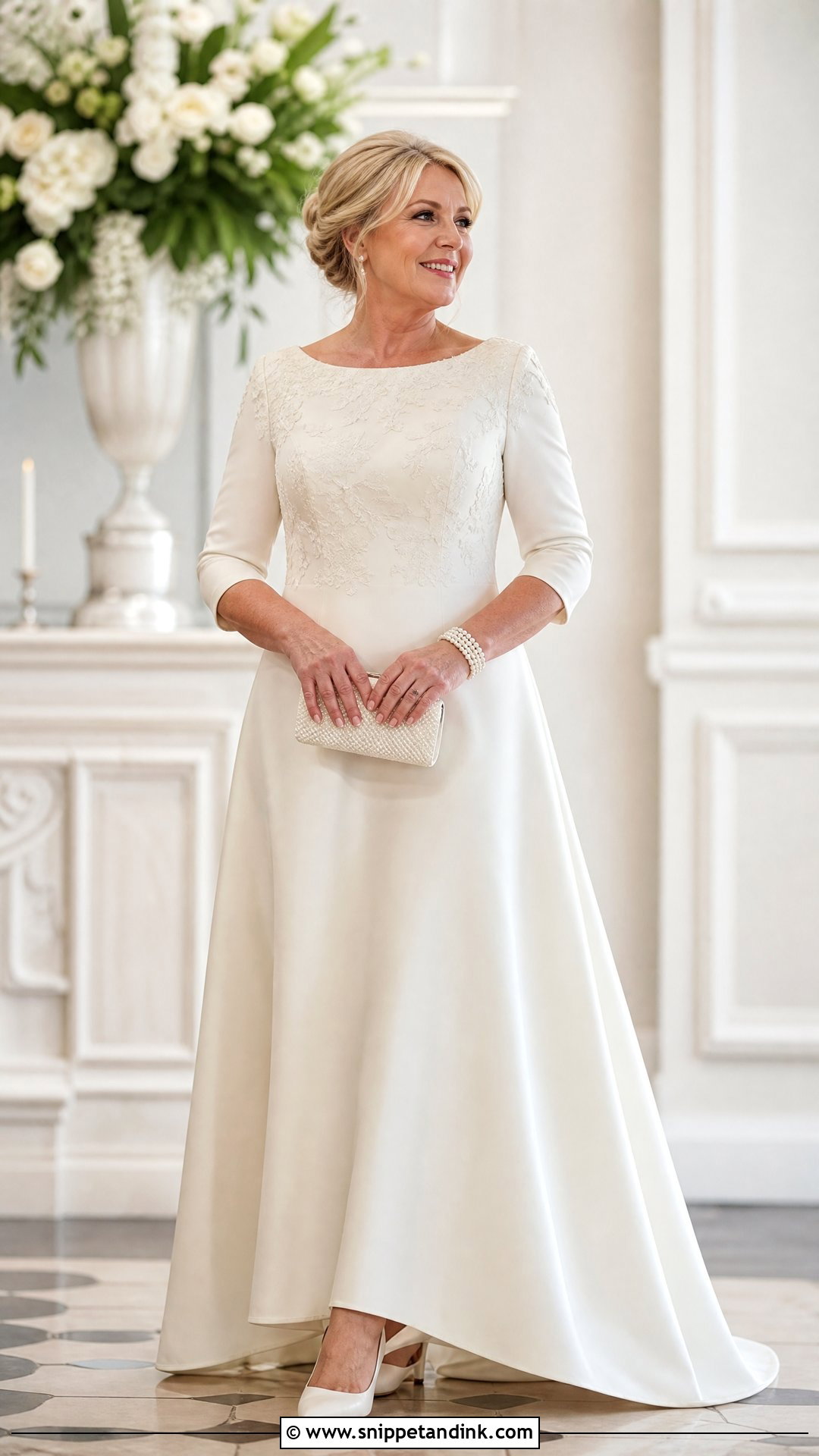
If you’re not sure where to start, start with an A-line. The fitted top and gently flared skirt give shape without clinging, and it suits a hotel ballroom as easily as a backyard. Satin and crepe read more formal, organza and lace softer. A portrait neckline or three-quarter sleeve adds grace while staying comfortable. I’d finish it with medium heels, a structured clutch and very simple jewelry, then let the fit do the work.
5. Champagne Wedding Dress
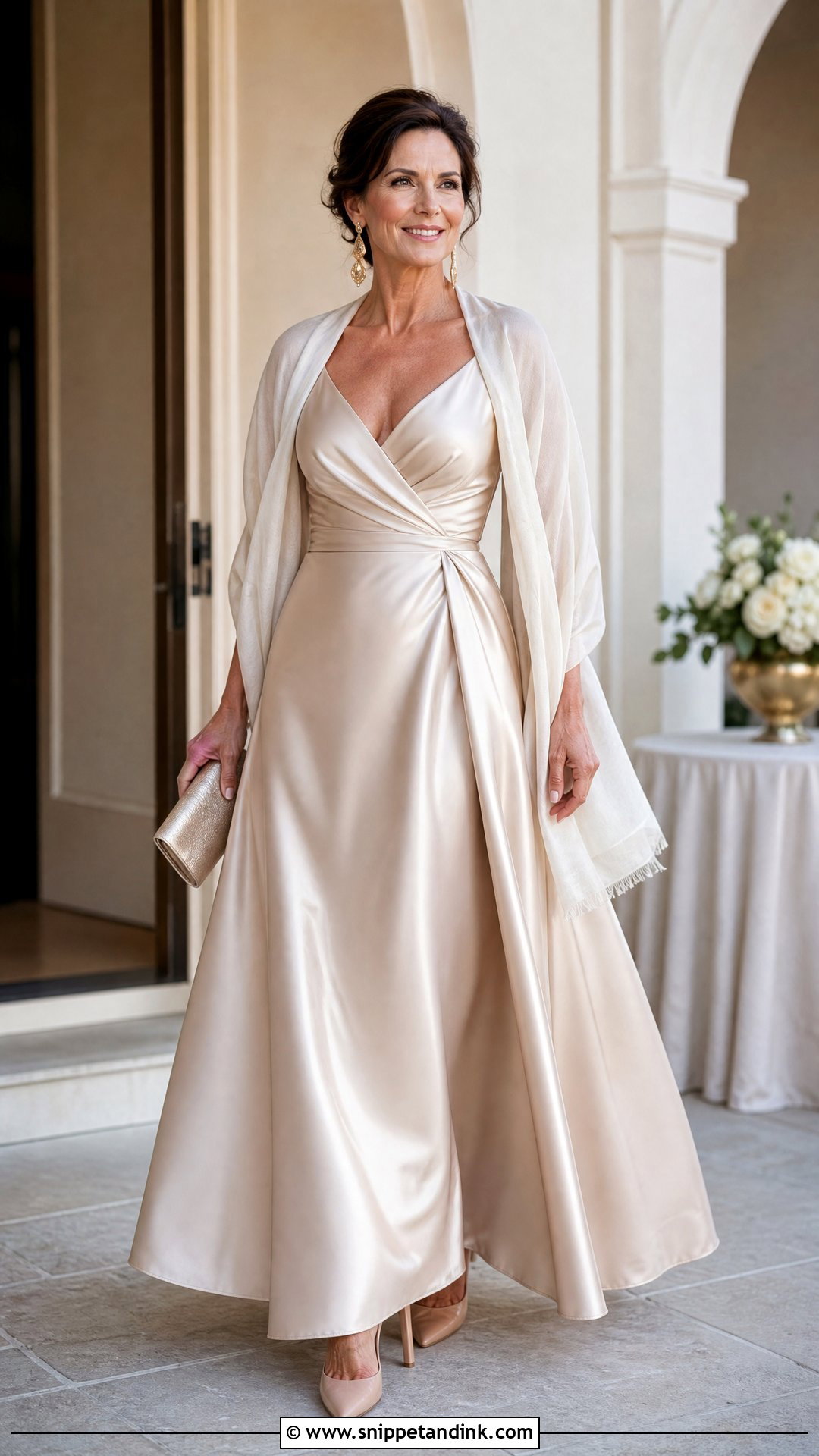
Champagne solves the problem of bright white looking harsh against skin that has changed tone over the years. The golden undertone warms the face and gives the gown an evening polish while still reading as bridal. Hold the fabric under your chin in daylight before you commit; some champagnes lean pink, some grey, and only one will suit you. A satin A-line, lace sheath or beaded column all work. Nude heels, gold jewelry and an ivory wrap tie it together for sunset, fall or restaurant weddings.
6. Ivory Satin Wedding Dress
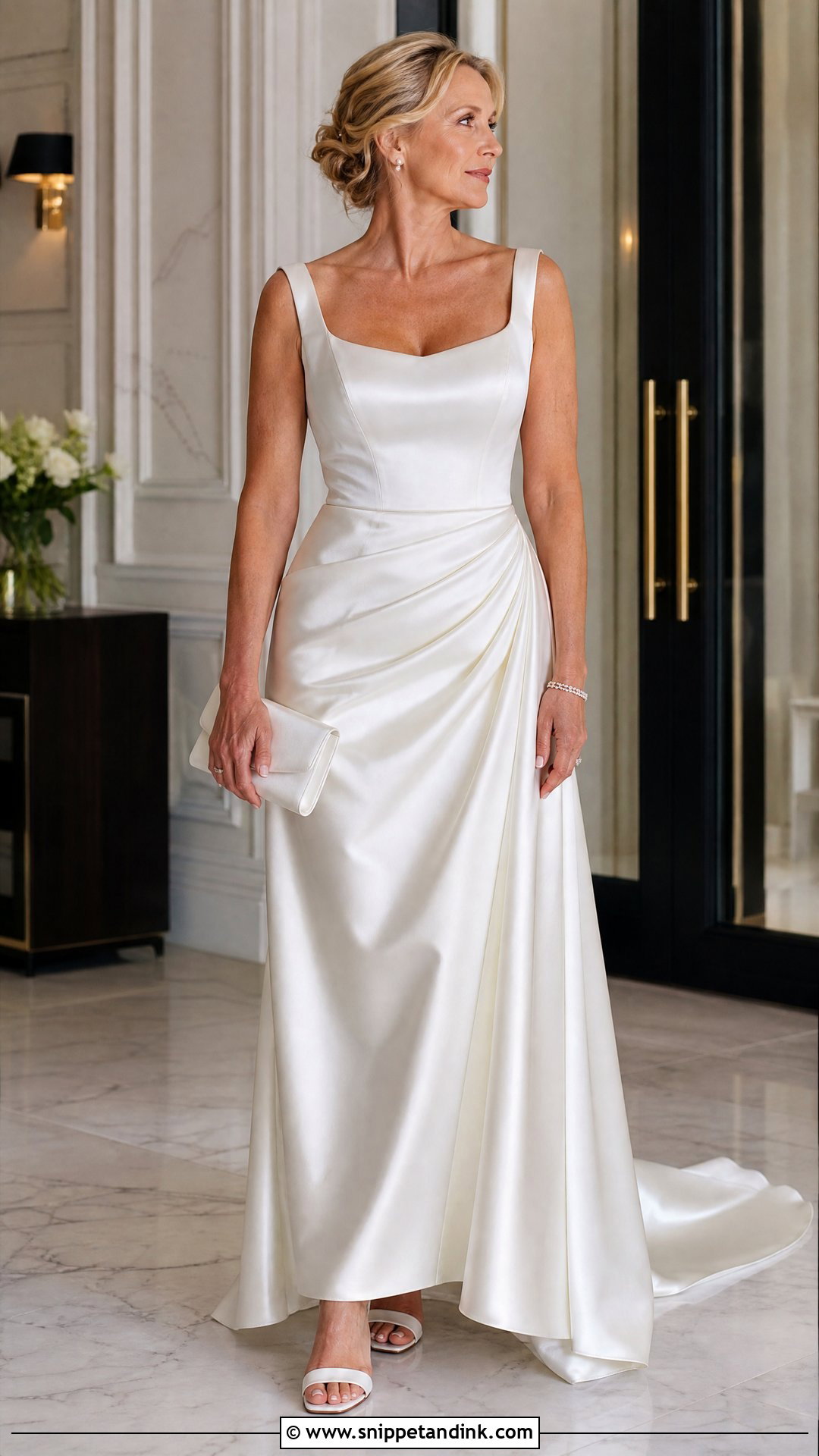
Satin is smooth, rich and unforgiving in equal measure. It reflects light, so even a plain cut feels luxurious, but it also shows every seam, bra edge and crease from sitting. That’s why I’d choose a heavier duchess or crepe-backed satin with a structured bodice, a soft draped waist or a bateau neckline. Pearl studs, a satin clutch and comfortable block heels keep it classic. Want arm coverage? A satin gown with sleeves or a tailored bolero both work well at a hotel wedding or formal dinner.
7. High Neck Wedding Dress
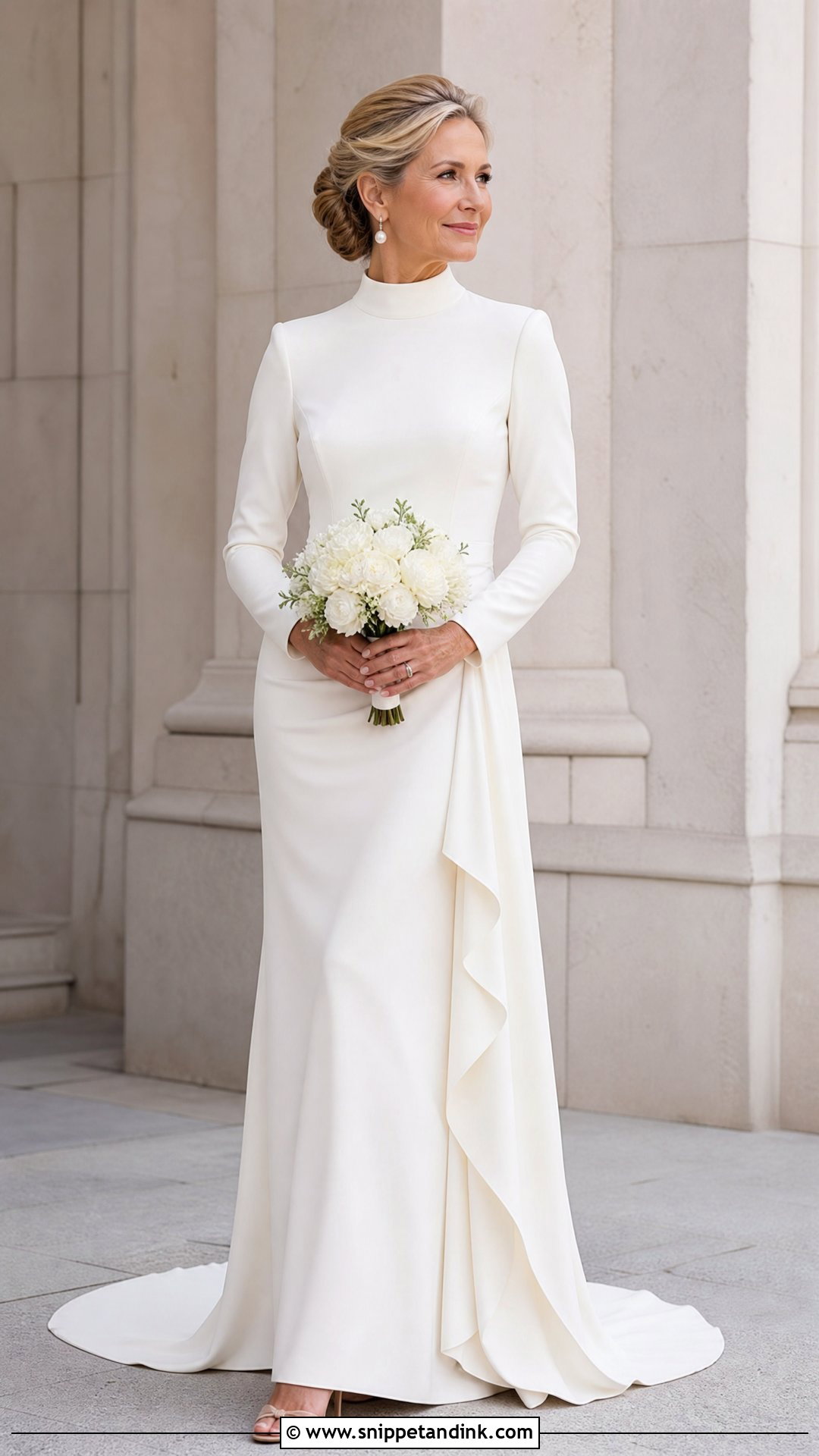
A high neck draws the eye up to the face and makes a long, composed line through the upper body. It suits lace, crepe or satin, with long sleeves, cap sleeves or none at all if the cut is clean. Keep jewelry to earrings only; a necklace fights the neckline. The fitting detail that matters is the closure at the back of the neck, which should sit flat without pulling when you turn your head. A smooth updo and simple heels suit city ceremonies and formal venues.
8. Off Shoulder Wedding Dress
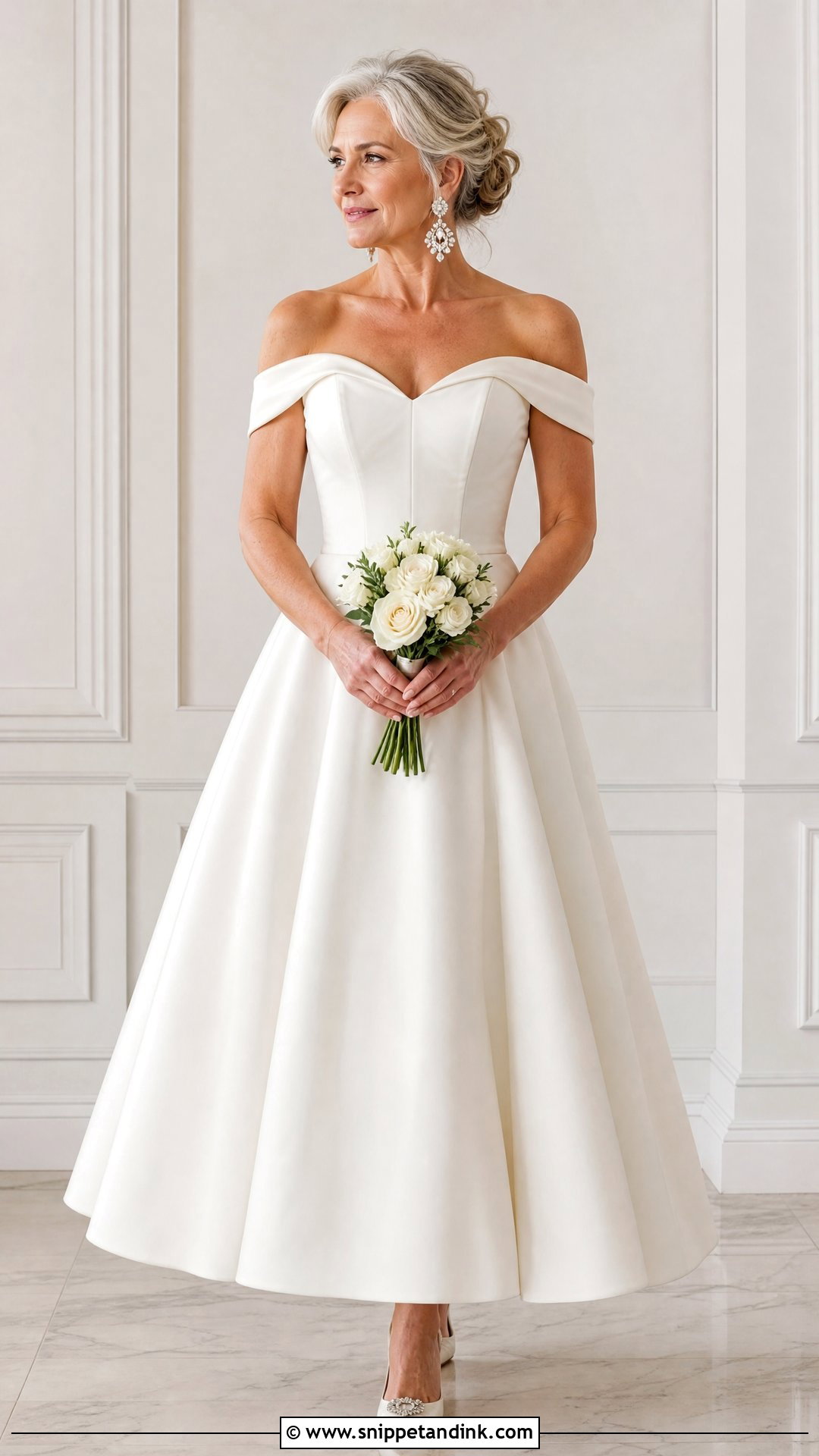
Off-the-shoulder can work at any age when the sleeve covers the upper arm and the bodice is properly boned so the neckline stays put. A structured bodice with an A-line skirt, a soft crepe sheath or lace with gentle sleeves all do this well. I’d test it by hugging someone at the fitting; if the neckline climbs or slips, it needs a waist stay. Choose either a delicate necklace or statement earrings, not both. It suits elegant indoor weddings, coastal venues and evening ceremonies.
9. Three Quarter Sleeve Wedding Dress
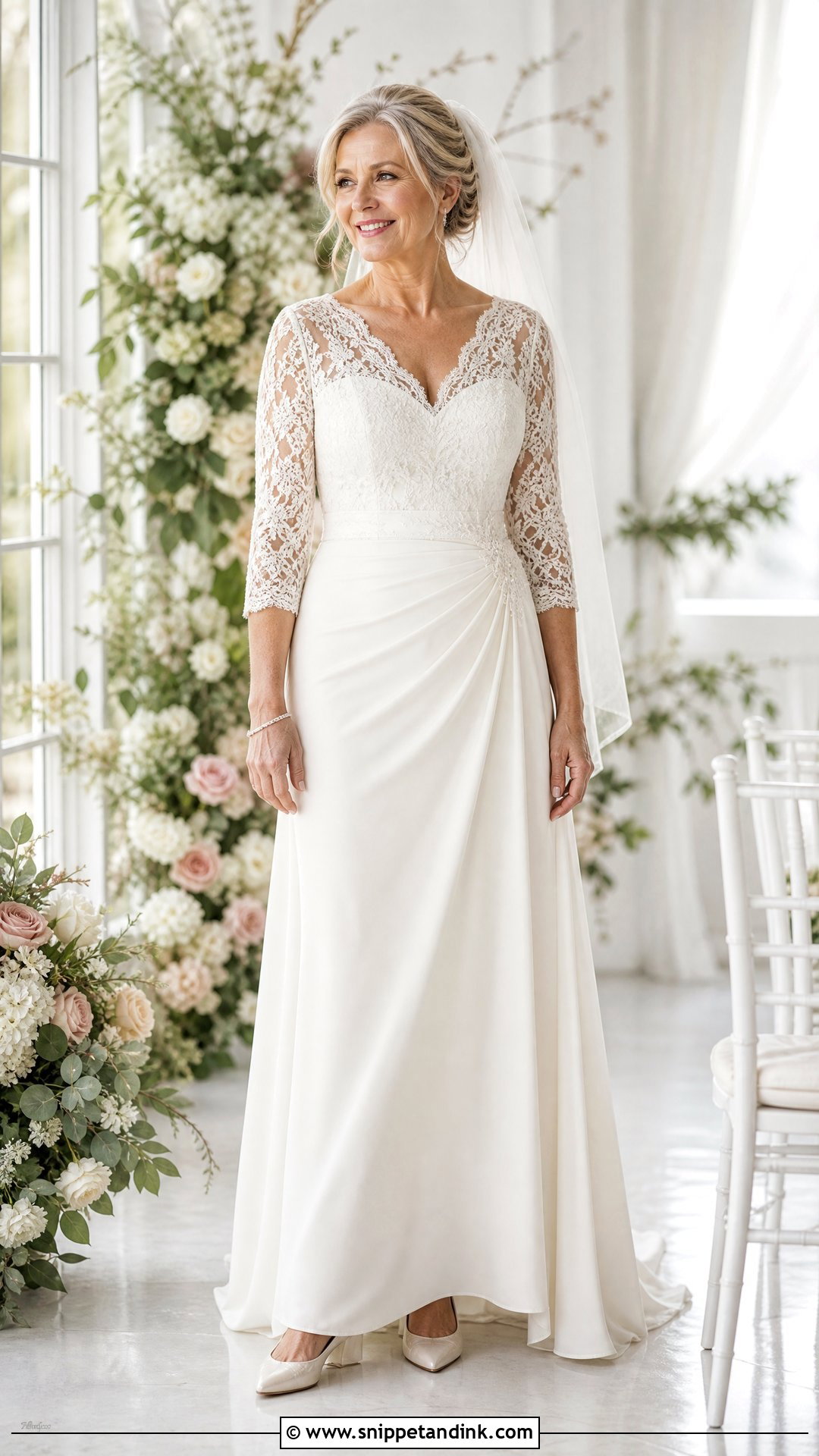
Three-quarter sleeves are the practical middle ground, covering the upper arm while leaving your wrists free for rings, a bracelet and handshakes. They also draw the eye toward the waist. Lace, crepe or soft tulle sleeves all suit a clean A-line or sheath. I’d add low heels, one small bracelet and a classic veil. Because the arm is partly covered, it carries comfortably from spring through fall and indoors year round.
10. Beaded Wedding Dress
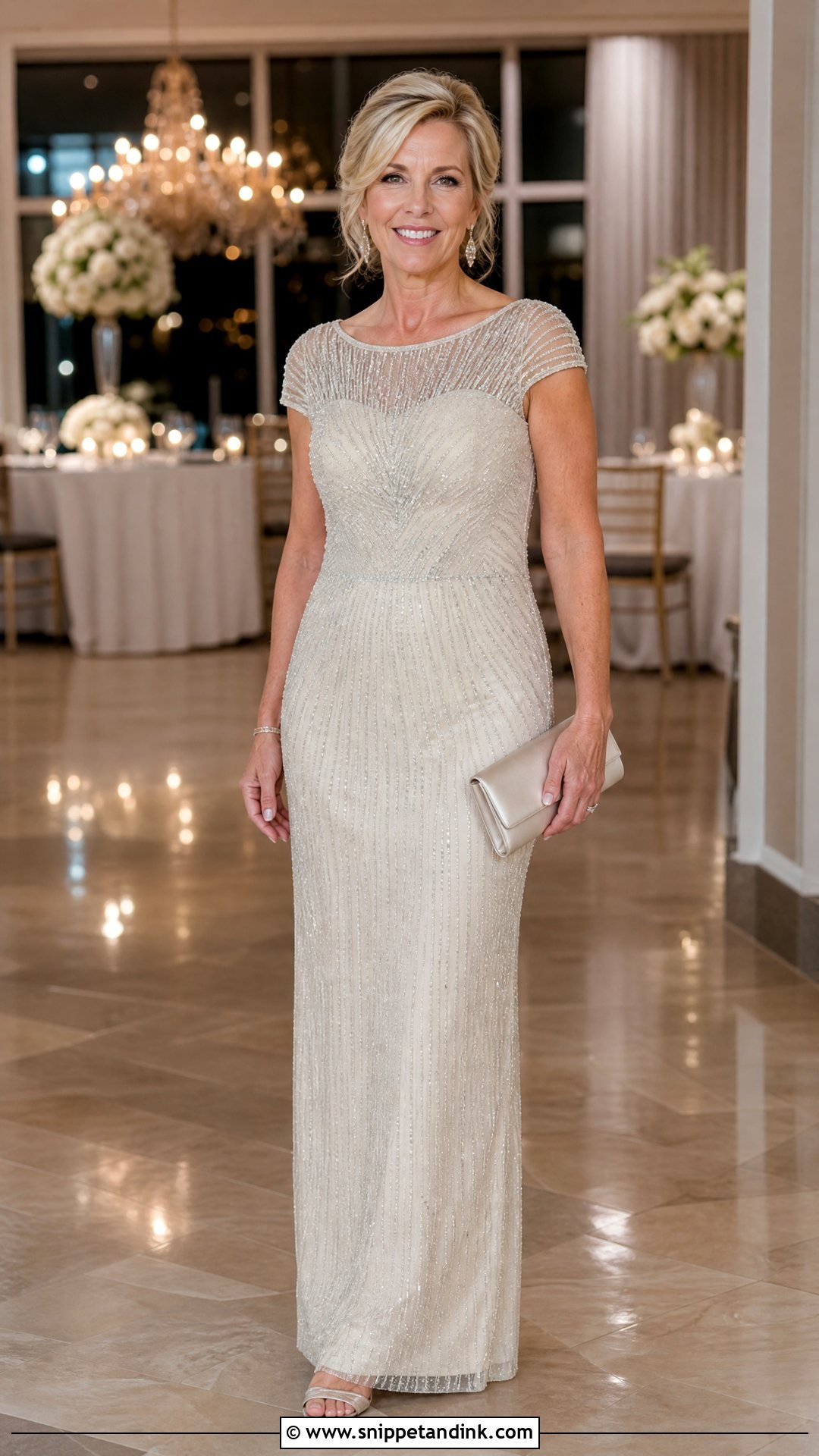
Sparkle reads more refined when it is placed rather than scattered. Look for beadwork at the neckline, sleeves, waist or bodice, on a column, sheath or soft A-line. One honest drawback: heavy beading adds real weight and can scratch the inner arm, so check the underside of any beaded sleeve. Silver, pearl, champagne or ivory beads keep it bridal. Metallic heels, a satin clutch and understated earrings balance it at an evening or candlelit reception.
11. Chiffon Wedding Dress
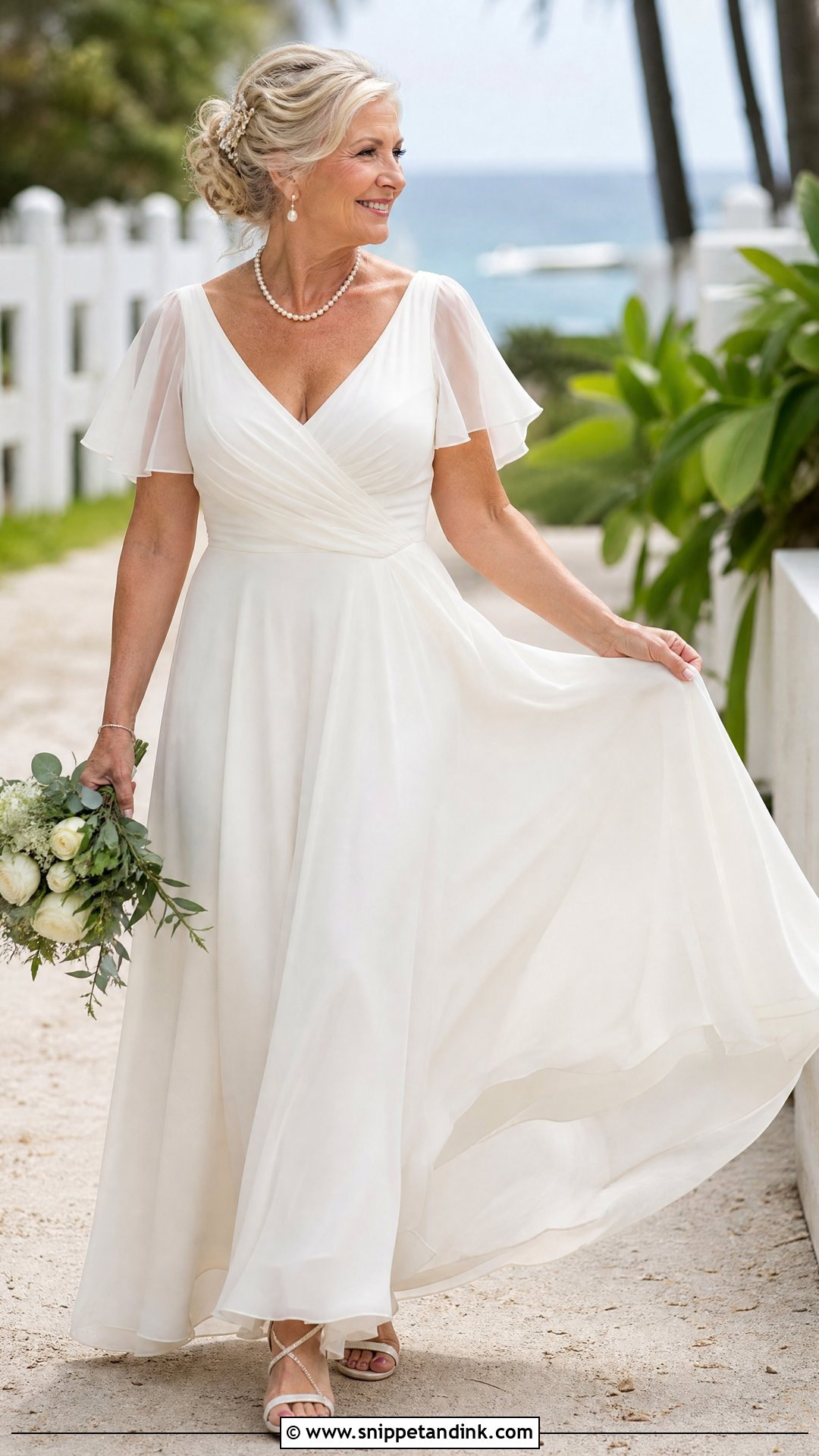
Chiffon floats over the body, so it covers without adding bulk and stays comfortable through a long, warm day. A chiffon A-line with flutter sleeves, a wrapped bodice or an empire waist moves easily. I’d make sure the gown has a firm inner bodice, because chiffon alone gives no support at all. Strappy low heels, pearl jewelry and a delicate comb suit beach, garden or destination ceremonies, and any relaxed reception where you plan to be on your feet.
12. Wedding Dress With Jacket
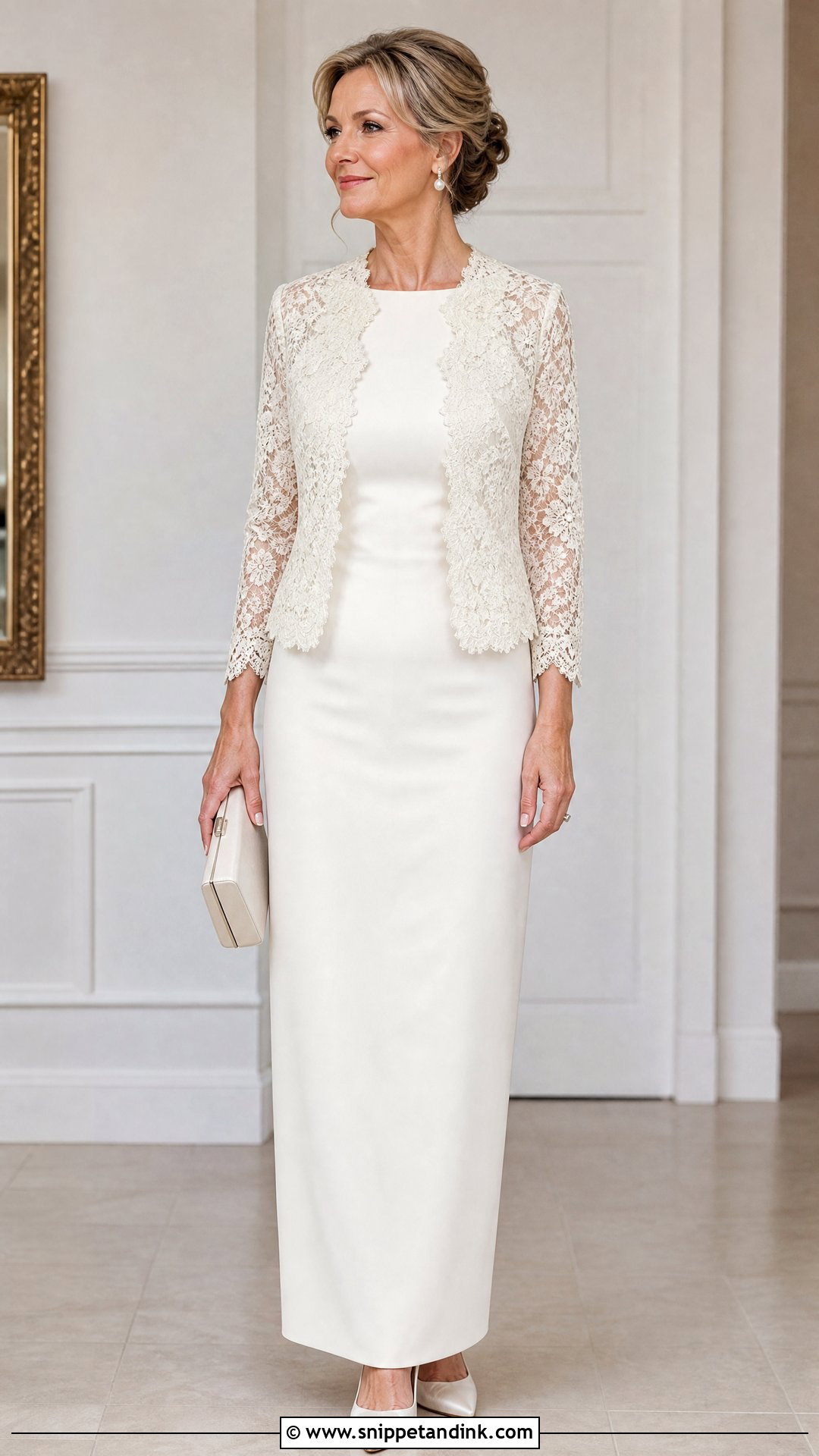
A wedding dress with jacket gives you two outfits in one. The jacket covers you for the ceremony, then comes off for dancing. A lace jacket, satin bolero, crepe blazer or embroidered topper all pair well with a simple sheath or A-line underneath. Make sure the jacket is cut for the dress, not bought separately and hoped for; the shoulder line and length need to sit together. Matching heels and a structured clutch finish it for cooler weather or a formal venue.
13. Wedding Pantsuit For Bride
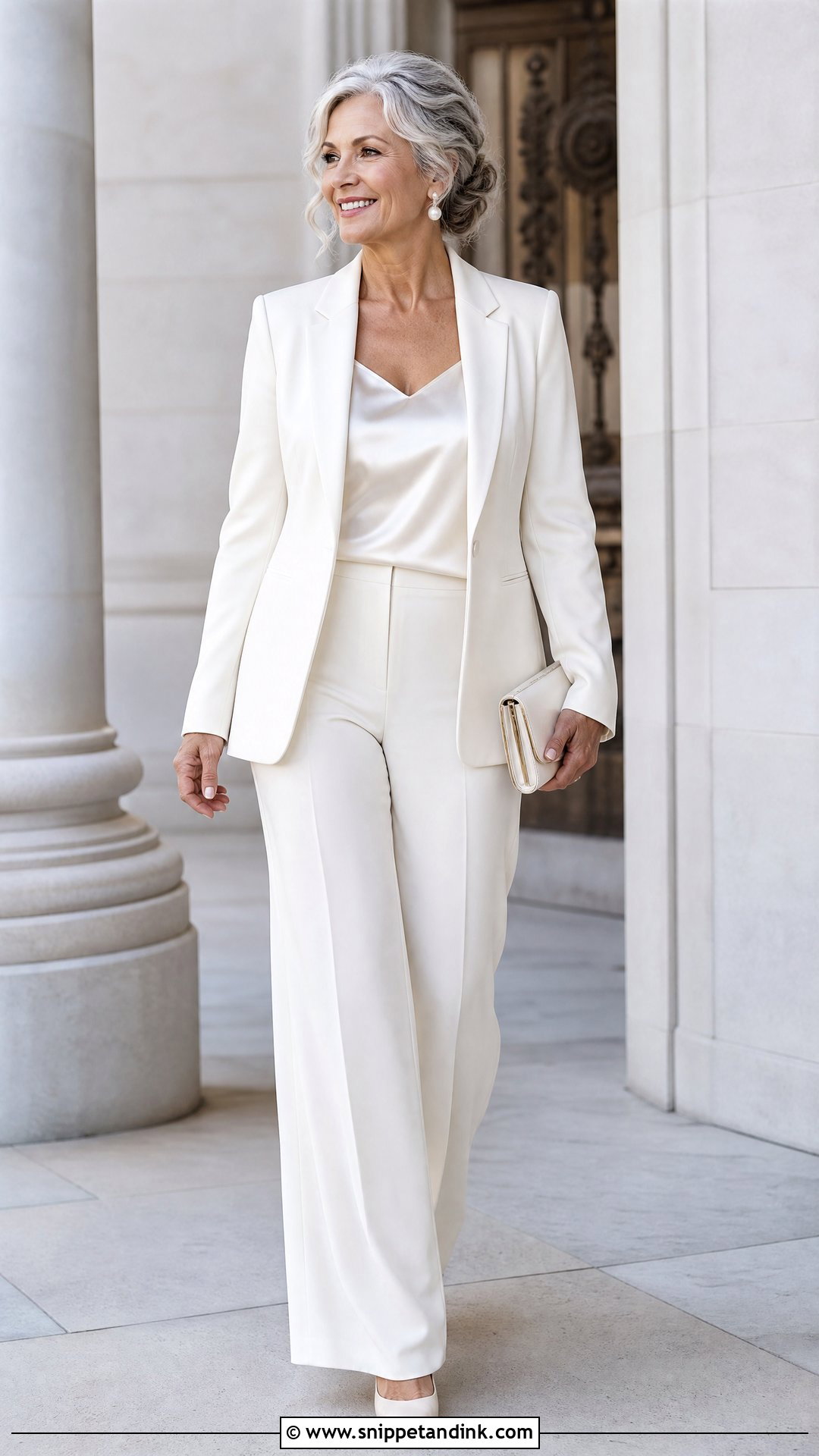
A well-cut ivory suit can feel every bit as bridal as a gown, and many women feel more like themselves in one. Look for wide-leg trousers, a softly structured blazer and a satin camisole or lace shell beneath. Tailoring is everything: trousers should be hemmed to your exact heels and the blazer shoulder should end at your shoulder bone. Pointed heels, pearl earrings, a sleek clutch and a small veil or hair piece add the bridal note. I’d suggest it most for courthouse, city and modern receptions.
14. Bridal Jumpsuit
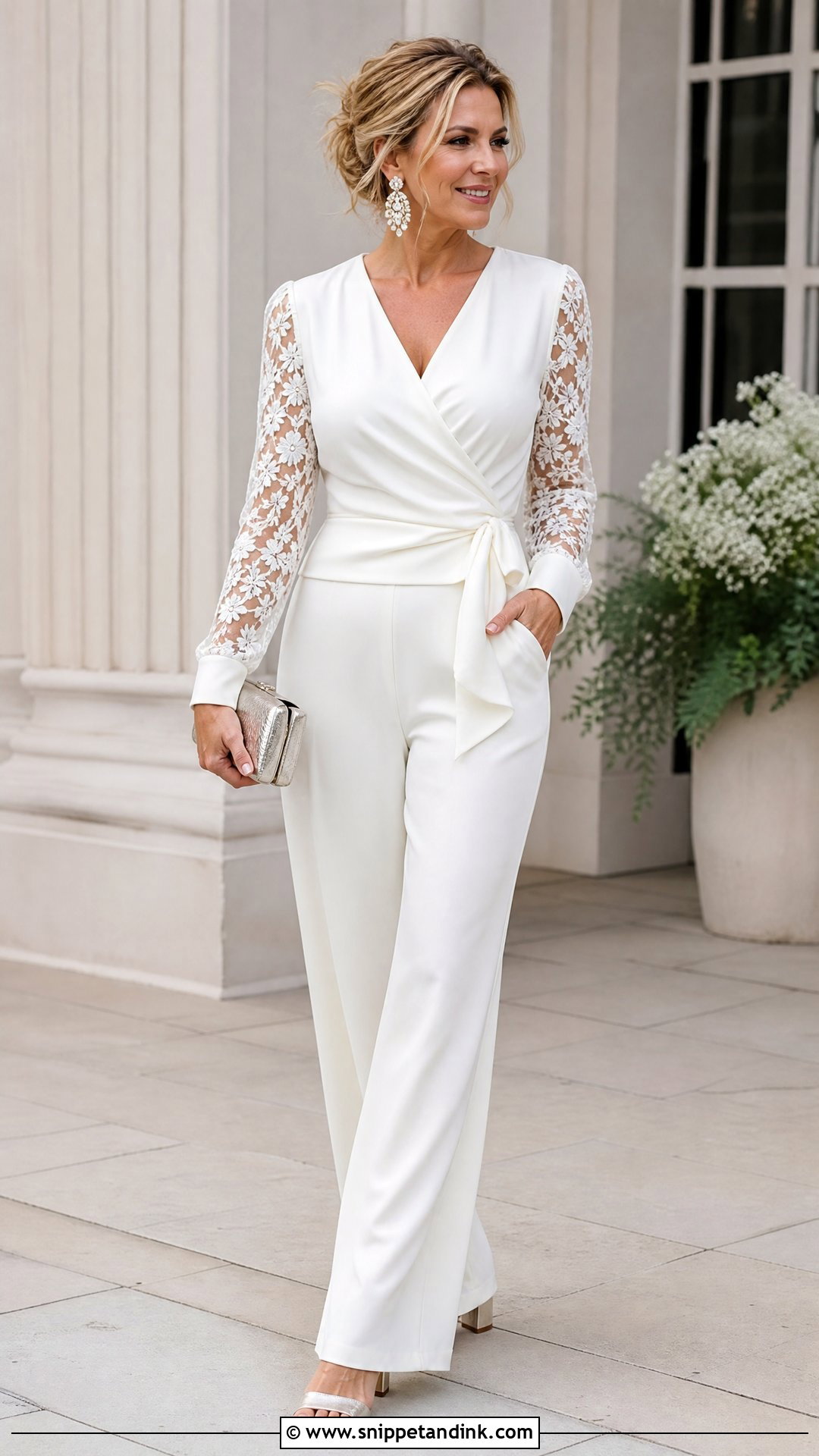
Jumpsuits give you the movement of trousers with the flow of a skirt, especially in a wide leg. Look for a wrap bodice, lace sleeves, a cape overlay or a defined waist in ivory crepe, satin or a soft matte fabric. Check the rise when you sit; a jumpsuit that’s too short in the body pulls at the crotch and shoulders all evening. Block heels, a metallic clutch and statement earrings finish it. It suits a civil ceremony, a second wedding, a destination celebration or a change for the party.


15. Simple Wedding Dress
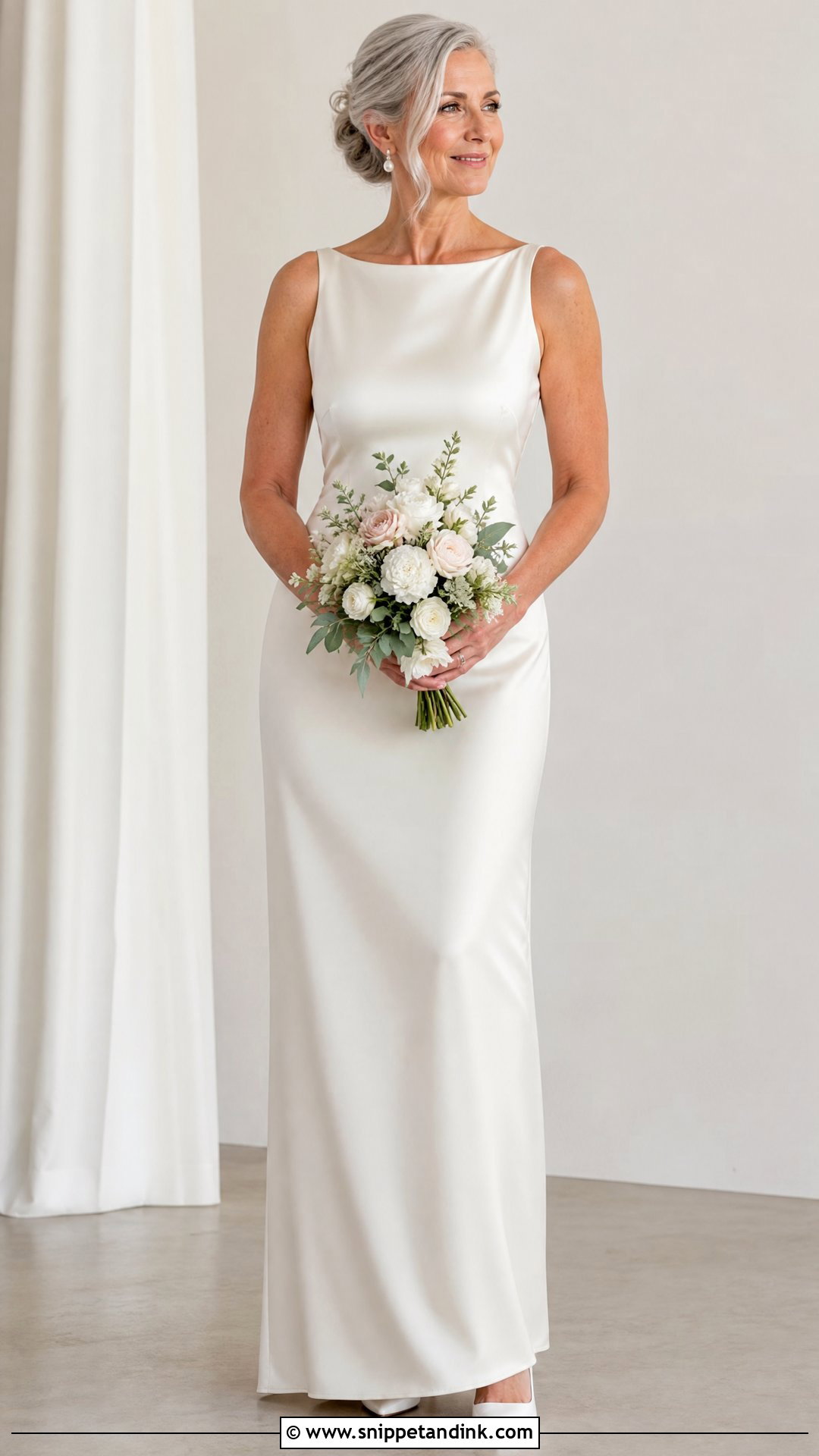
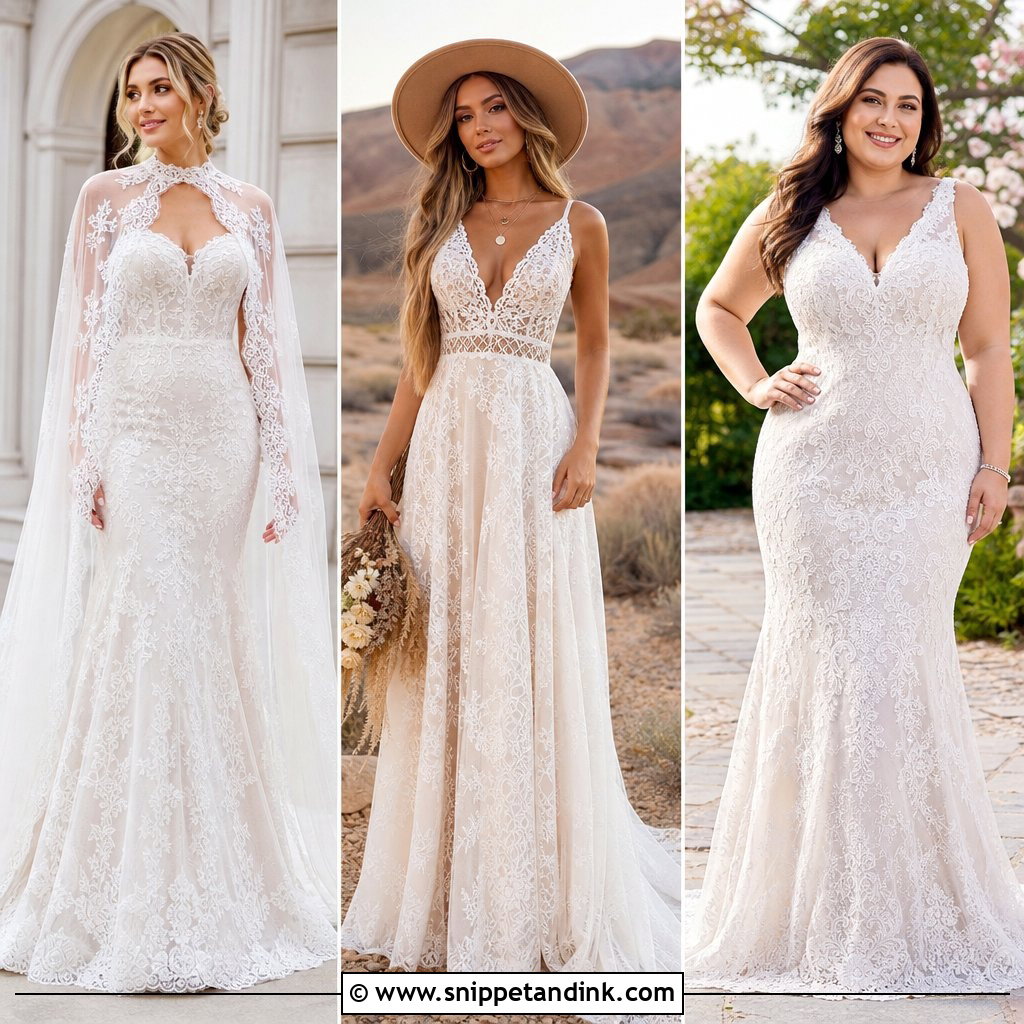
Plain gowns hide nothing, which is exactly why fit and fabric matter so much in them. Clean fabric, a sharp fit and a flattering neckline look more expensive than heavy decoration ever does. A minimalist sheath, soft A-line or satin column with subtle shaping is a blank canvas you can push toward classic with pearls, modern with sculptural earrings or romantic with a lace veil. Comfortable heels and a clean bouquet complete it, and it suits almost any venue.
16. Floral Lace Wedding Dress
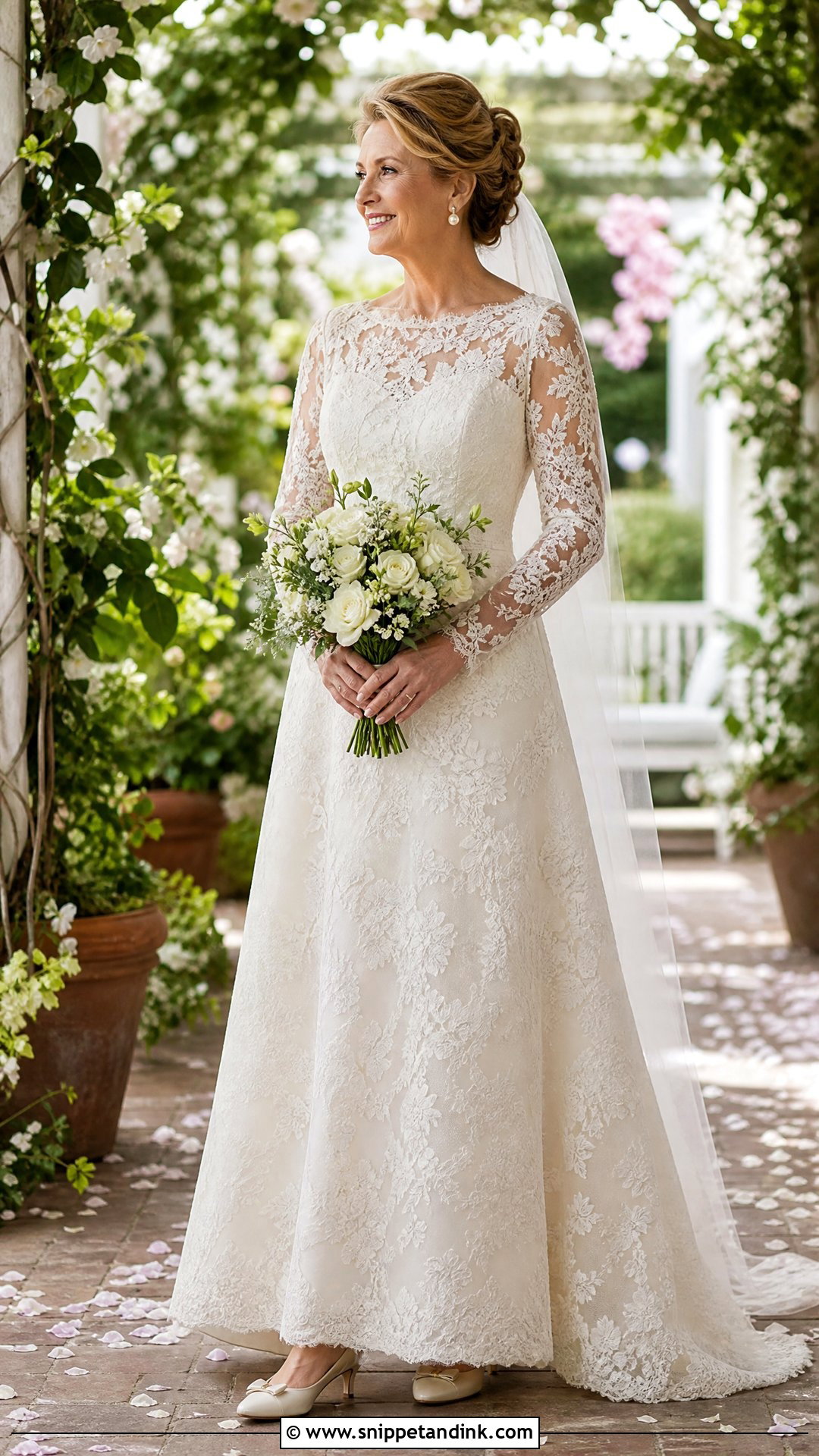
Floral lace brings texture and softness, and on a grown-up silhouette it looks refined rather than girlish. Long sleeves, a V-neck, an A-line skirt or a lined sheath all carry it well. I’d look for lace with motifs scaled to your frame; very large flowers can overwhelm a petite bride, tiny ones can look busy on a taller one. Ivory, cream or blush undertones add warmth. Pearl earrings, low heels and a veil or comb suit garden and spring ceremonies.
17. Midi Wedding Dress
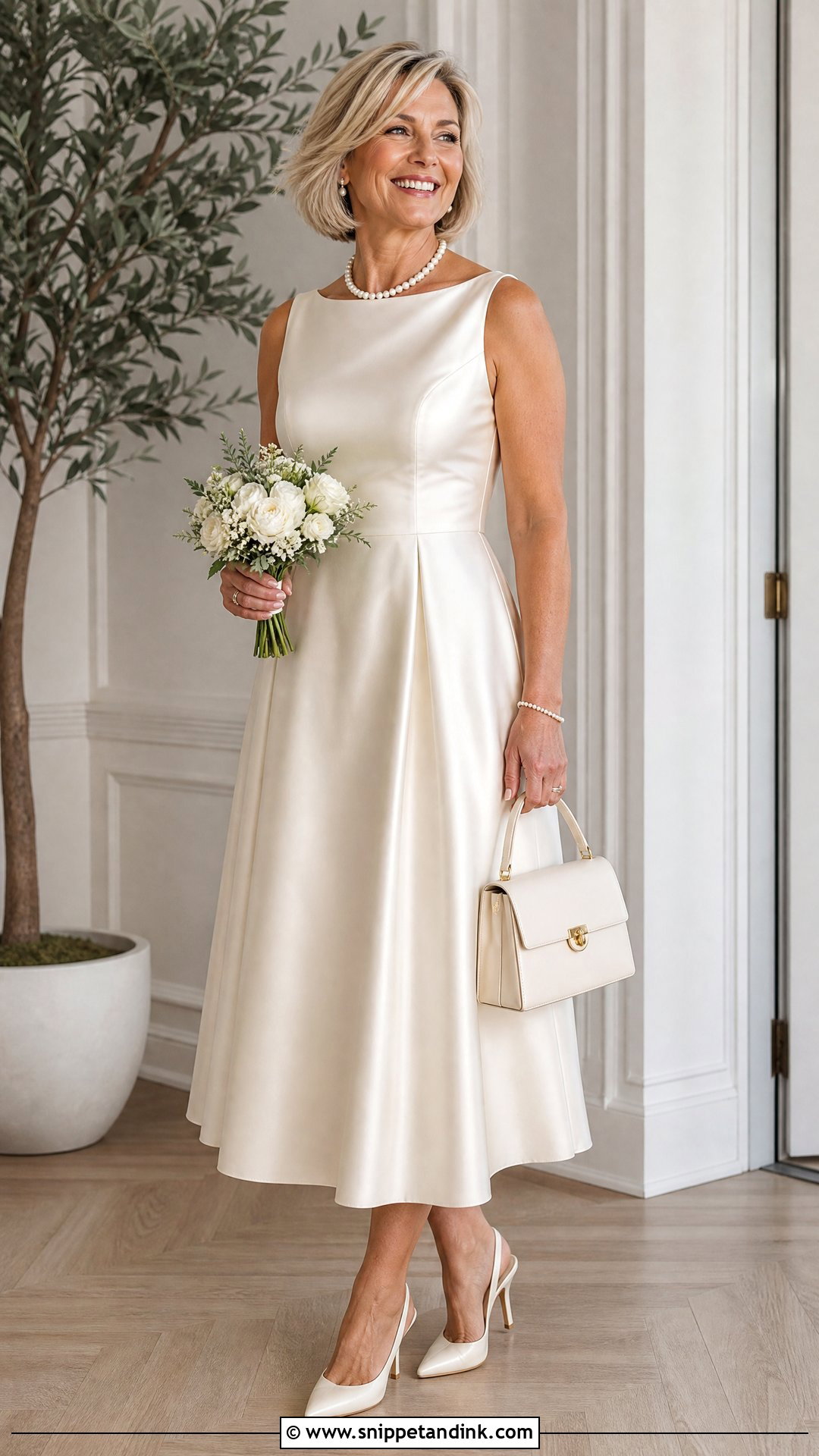
A midi lands below the knee and above the ankle, which reads more grown-up than a short dress and shows a little movement as you walk. A satin midi, lace midi or crepe wrap sets the level of formality. Slingbacks, pointed flats or embellished pumps all work; I’d try the dress on with each, because the right shoe changes where the hem seems to fall. A small bouquet, pearl necklace and structured bag finish it for courthouse ceremonies, brunch receptions and small weddings.
18. Ball Gown Wedding Dress
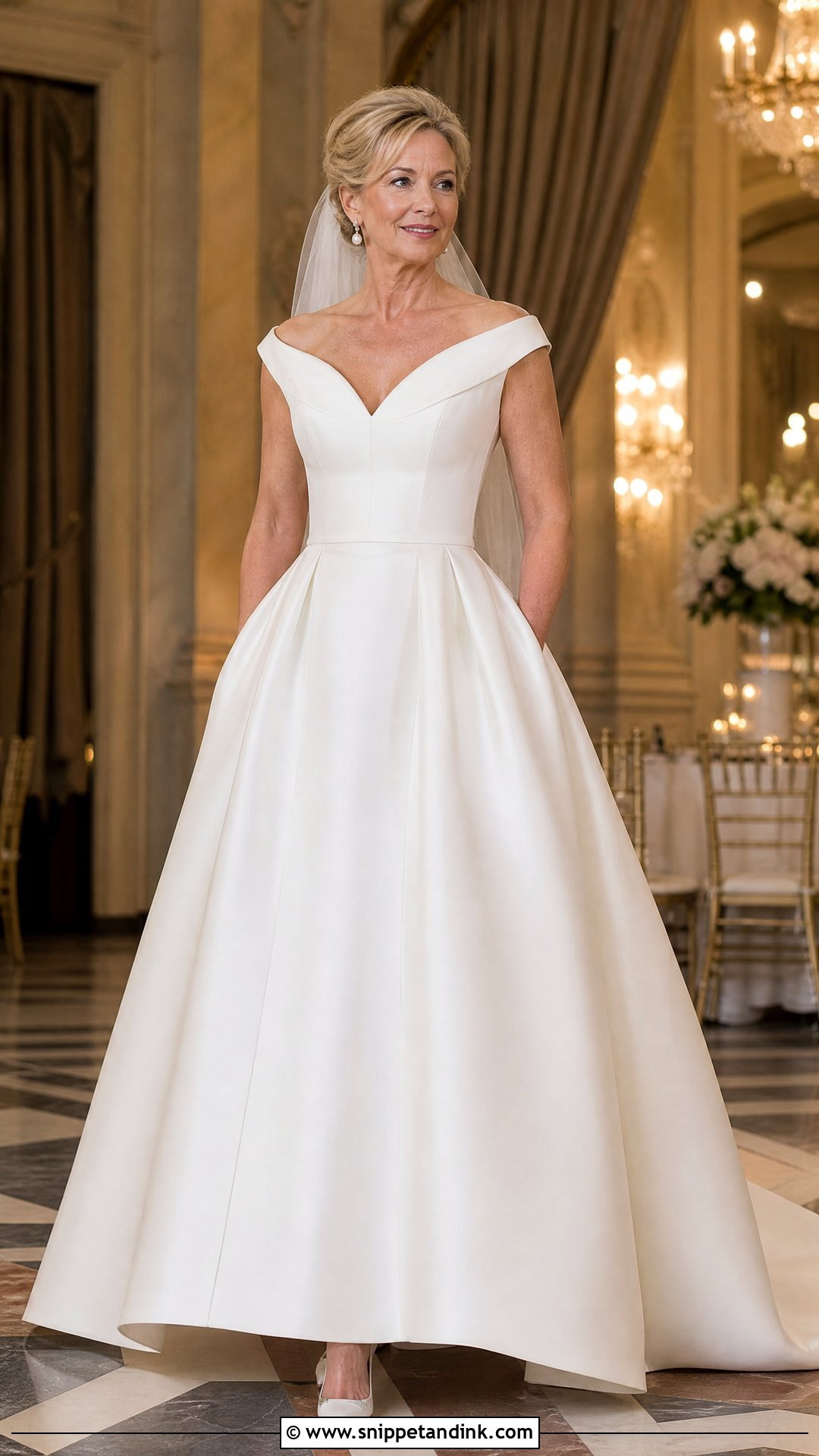
A ball gown is still yours to wear if you want the full moment. The trick is choosing one that feels elegant rather than heavy: a structured bodice over a smoother skirt in soft satin or light organza, not layers of stiff petticoat. A bateau neckline, off-shoulder bodice or lace sleeves keep it classic. Ask how much the finished gown weighs and stand in it for twenty minutes at the salon. Pearl earrings, a simple veil and comfortable heels hidden under the skirt suit a formal venue or grand reception.
19. Column Wedding Dress
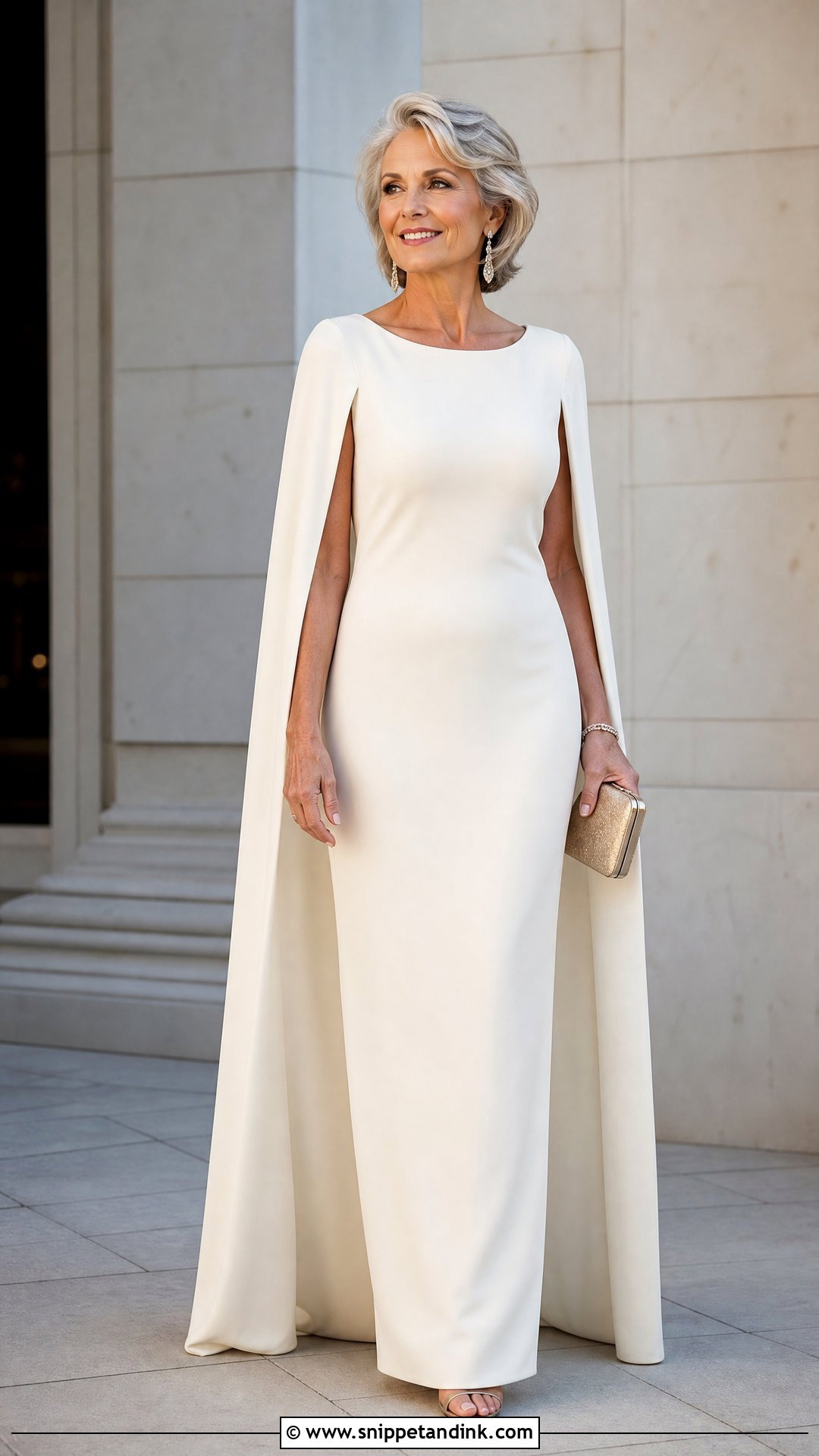
A column runs straight from shoulder to hem, less fitted than a mermaid and slimmer than an A-line. Crepe, satin and soft lace all work, and a cape, long sleeves or a high neck make it particularly polished. The one thing to check is the walking room; a column needs a slit or a kick pleat, or every step on stairs becomes a shuffle. Sleek heels, drop earrings and a polished clutch suit city weddings, evening ceremonies and restaurant receptions.
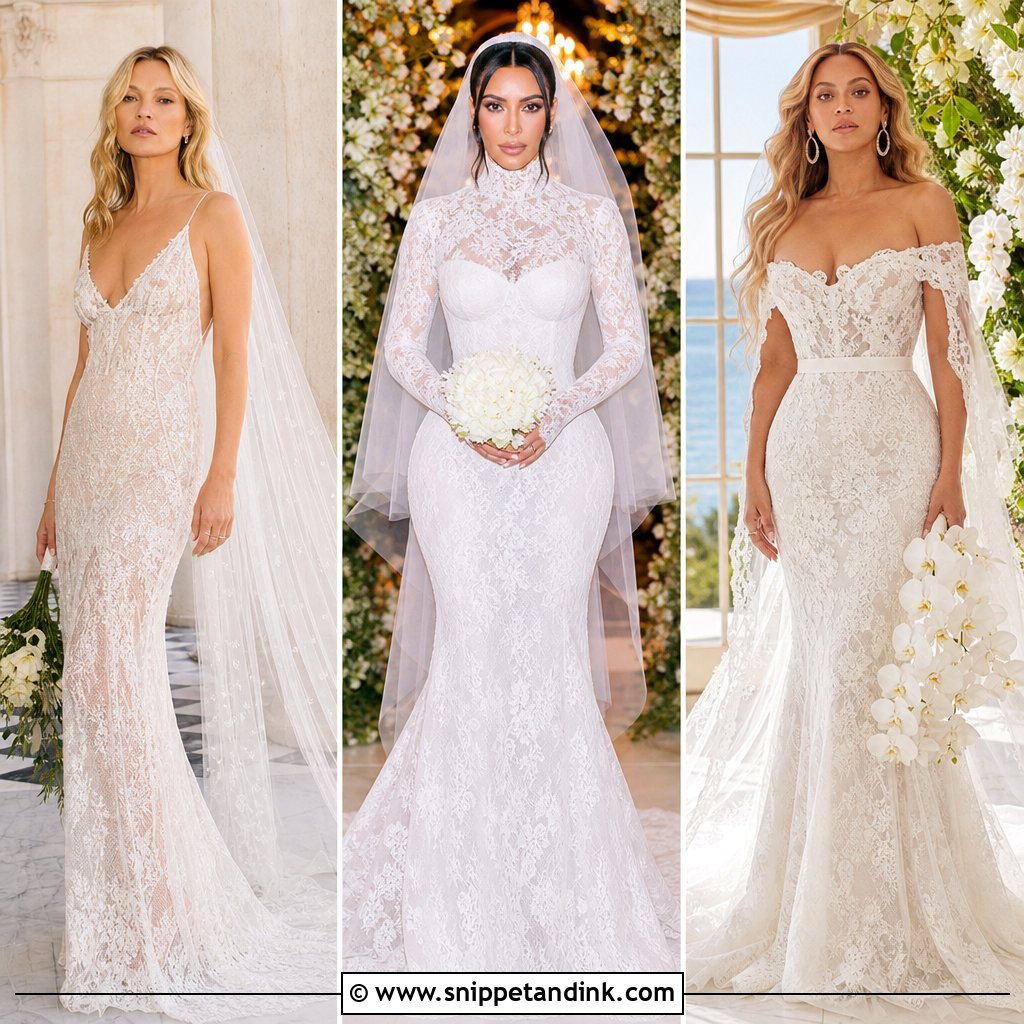
20. Wrap Wedding Dress
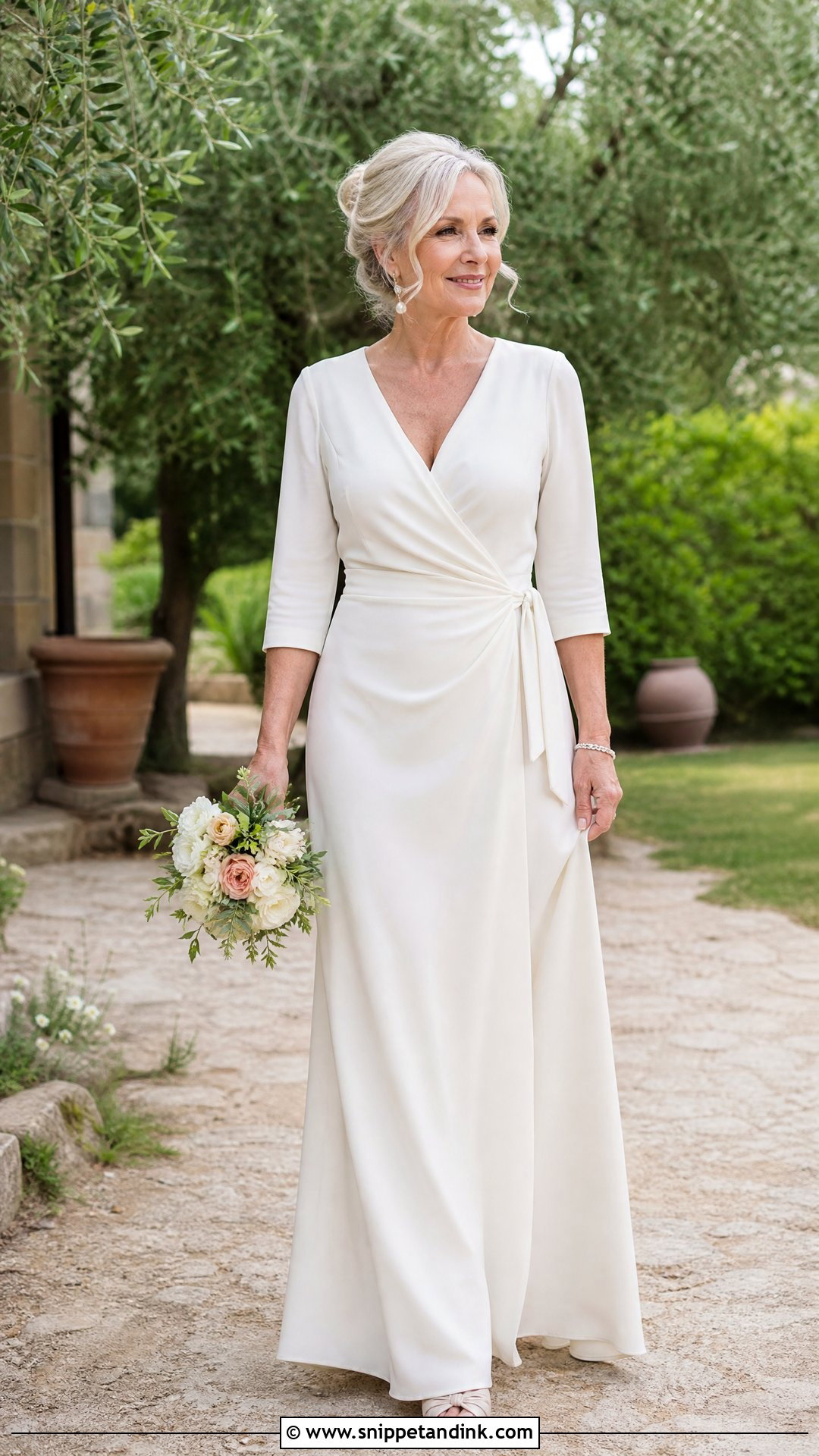
Wrap dresses define the waist and adjust to the body, which makes them comfortable and forgiving. A soft V-neck wrap in crepe, satin or chiffon creates a graceful line through the torso. My caution is the neckline gap: a wrap can open when you lean forward, so ask for a hidden snap or a modesty panel. Flutter, three-quarter or long sleeves add coverage. Low heels, pearl earrings and a delicate bracelet suit relaxed, outdoor and smaller weddings.
21. Blush Wedding Dress
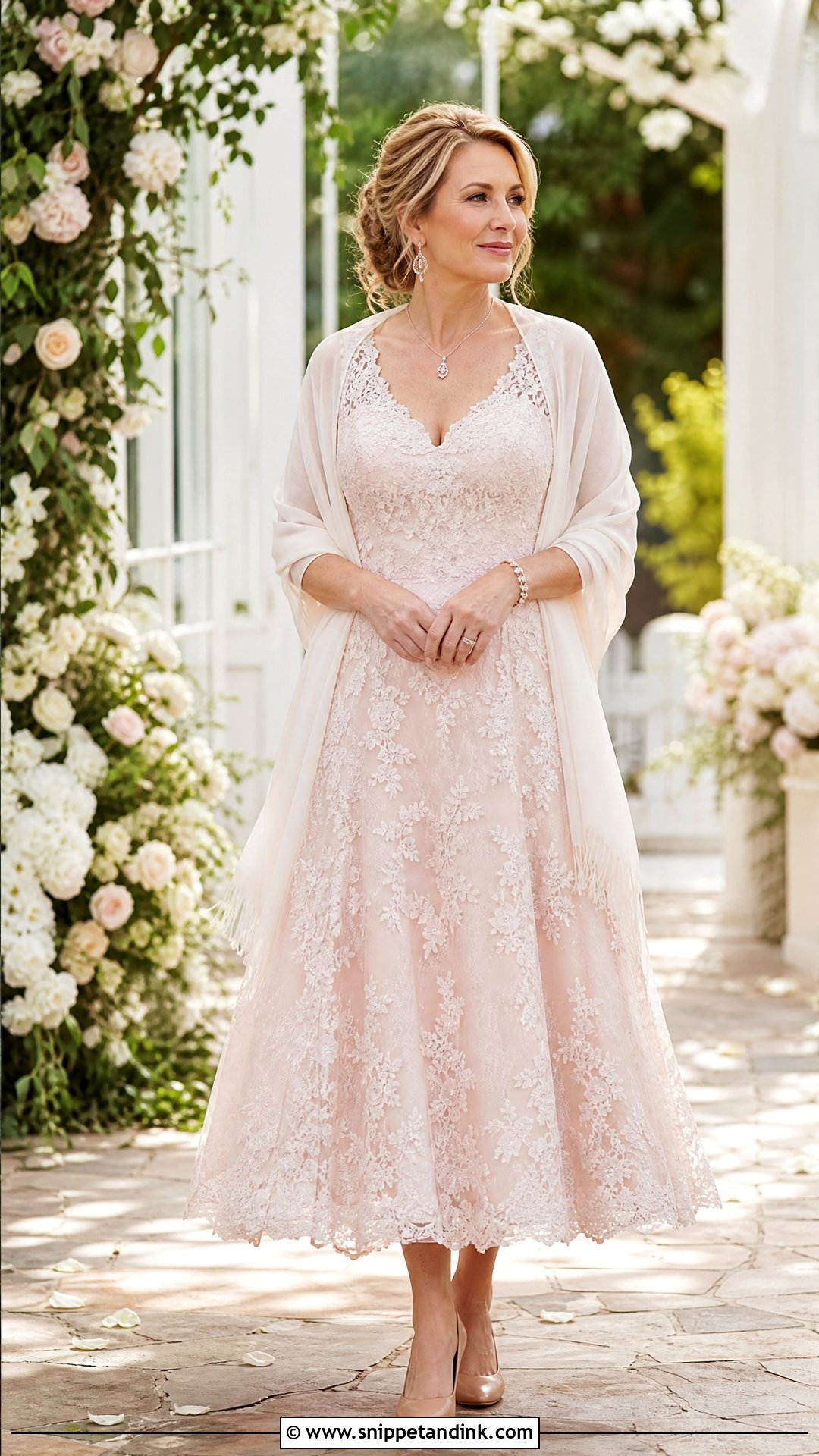
Blush adds warmth without asking anyone to read it as a bold colour. In lace, chiffon, tulle or satin, it looks soft and refined, whether as an A-line, an embroidered sheath or a tea length. Test it against your complexion; very pale blush can wash out fair skin, a slightly deeper rose often looks fresher. Nude heels, rose gold jewelry and an ivory wrap complement it, and a fresh, natural makeup look keeps the colour feeling deliberate.
22. Cape Wedding Dress
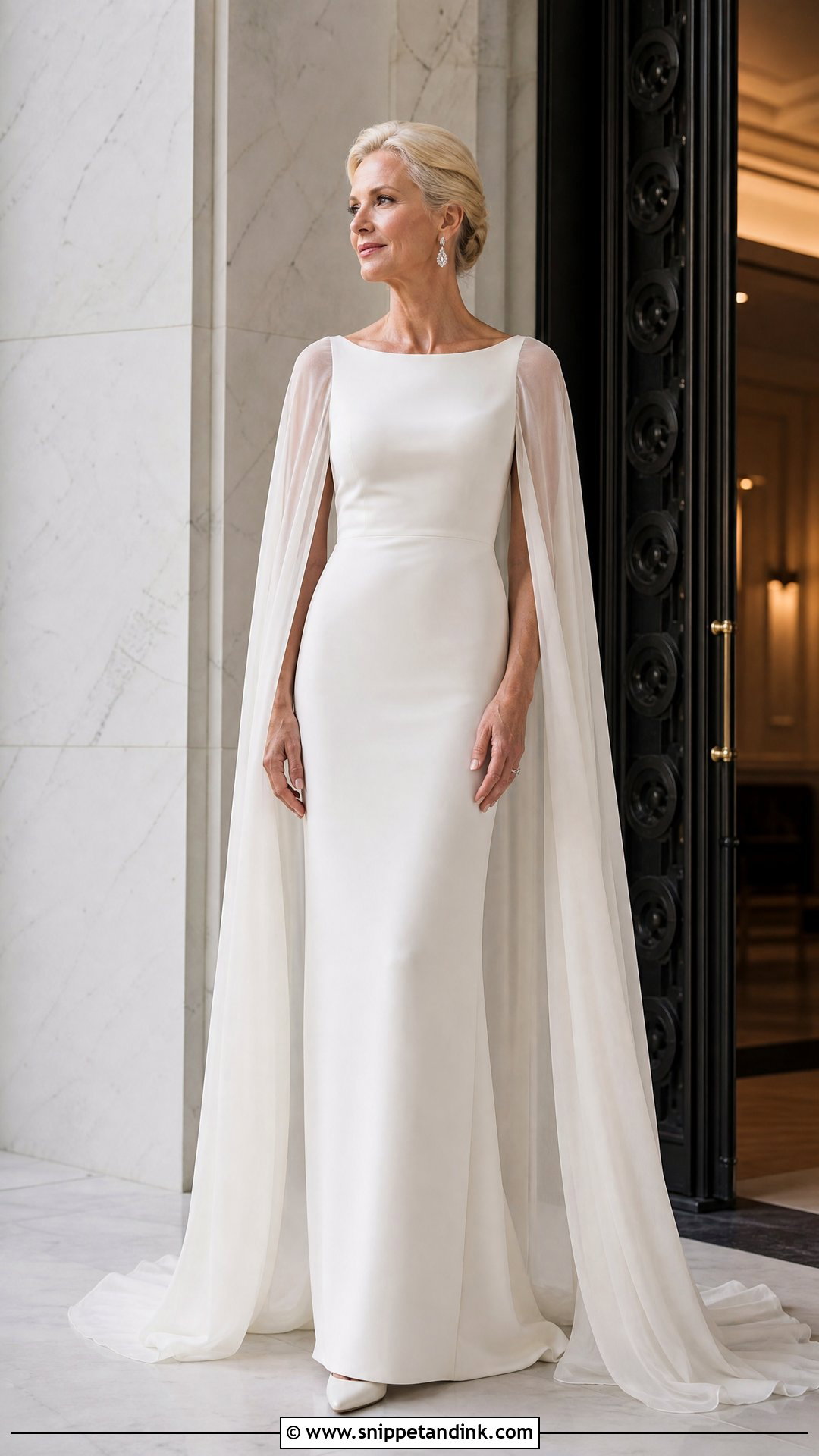
A cape wedding dress gives movement from the shoulders and arm coverage without a long veil or train. A sheer cape, lace capelet, crepe cape or full-length detachable one can match the ceremony’s formality. Keep the gown underneath simple, a sheath or column, and the hair clean so the cape stays the focus. I’d test the cape fastening by sitting back in a chair; if it pulls at the neck, it needs re-anchoring at the shoulder. It suits formal entrances, winter weddings and city venues.
23. Boho Wedding Dress
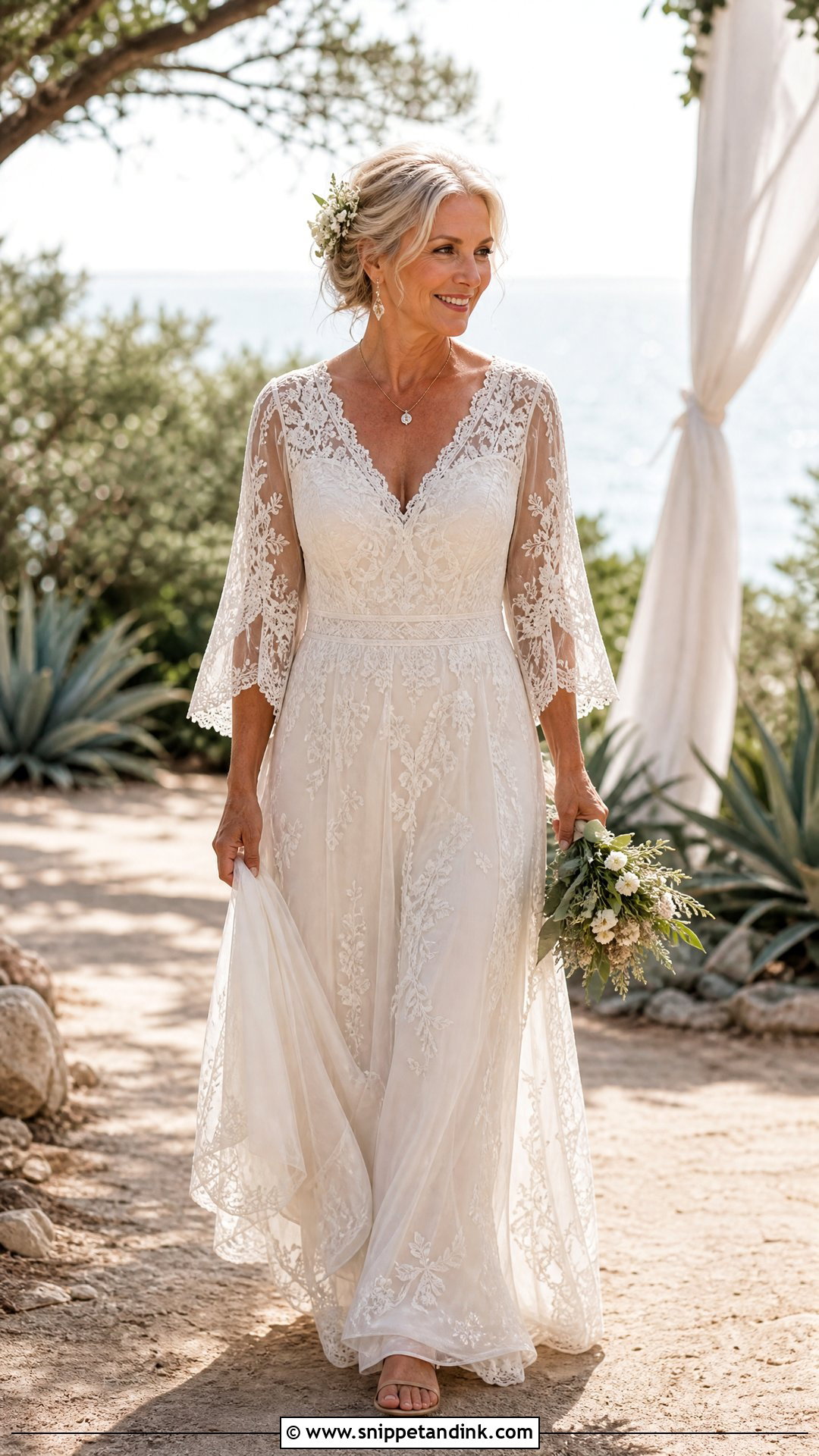
Boho at any age is about quality, not costume. Soft lace, flowing sleeves, a comfortable waist and a moving skirt work best, with clean lining and natural texture. Ivory lace, soft chiffon and subtle embroidery all suit it. Skip anything too fringed or too crochet-heavy; the gown should feel relaxed, not like a festival outfit. Low sandals, a small floral hairpiece and simple jewelry suit beach, garden and desert weddings.
24. Second Wedding Dress
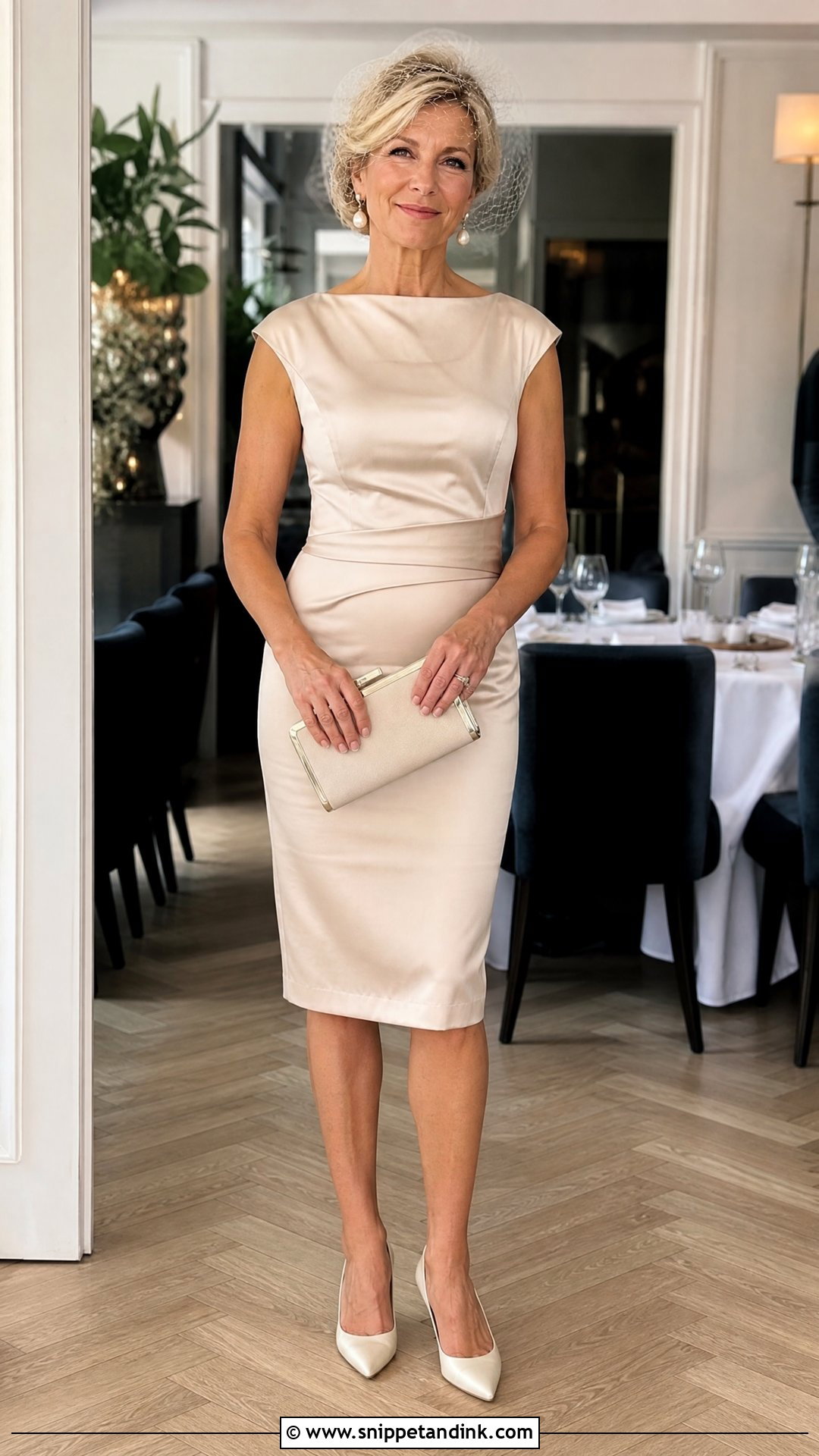
For a second wedding, the dress can be whatever fits this chapter. Many women choose something less traditional, but that doesn’t mean plain: a champagne sheath, an ivory midi, a lace pantsuit or a soft satin gown can all feel special. I start by asking about the venue, the time of day and how formal the celebration will be. Accessories then carry the bridal feel without drama: pearl earrings, a small veil, satin shoes or a structured clutch. Dress more personally, not smaller.
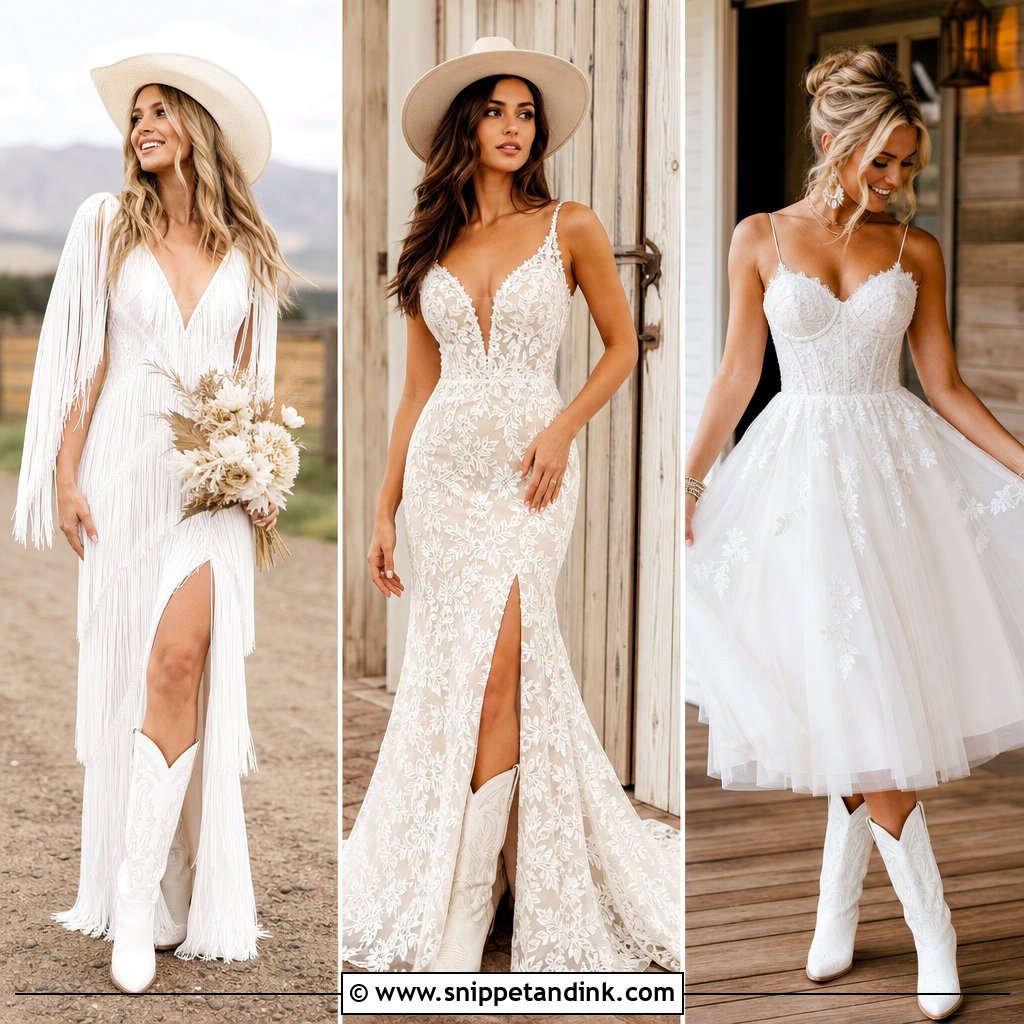
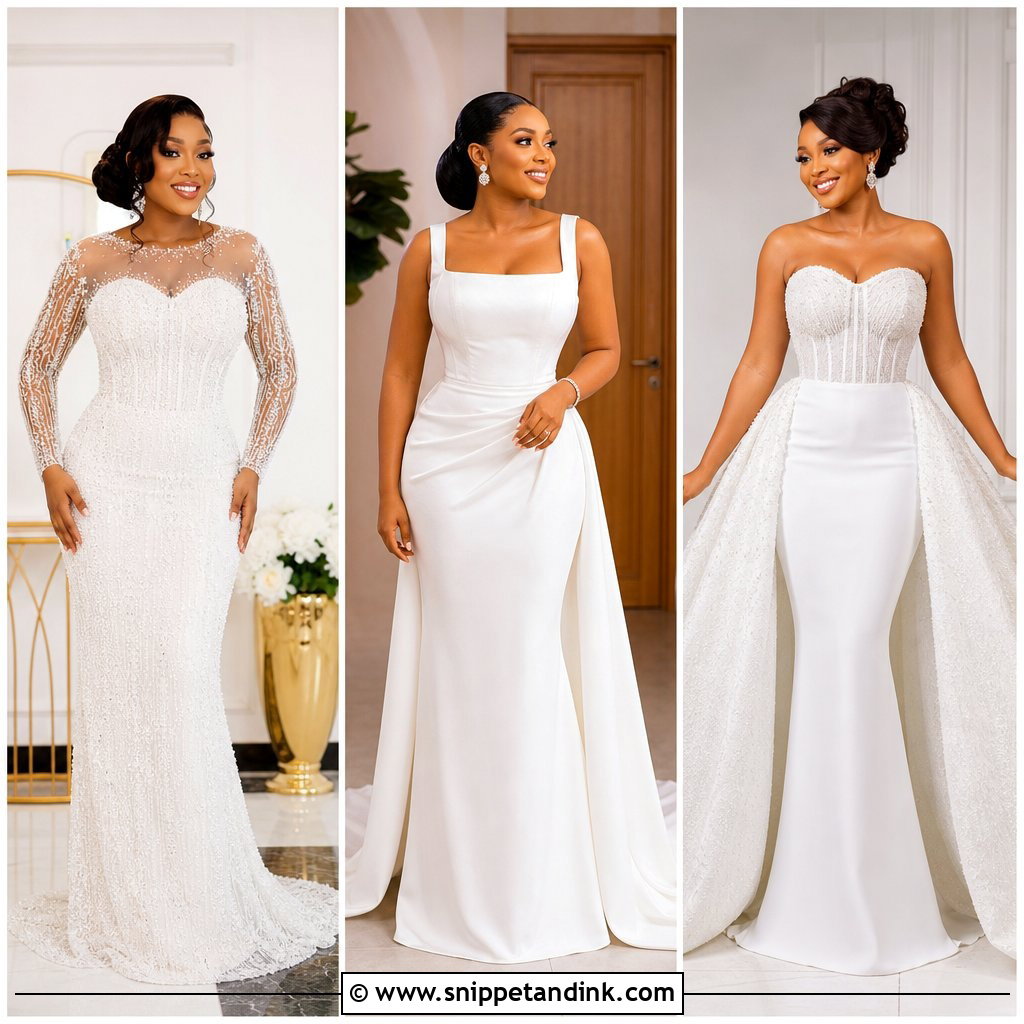

25. Courthouse Wedding Dress
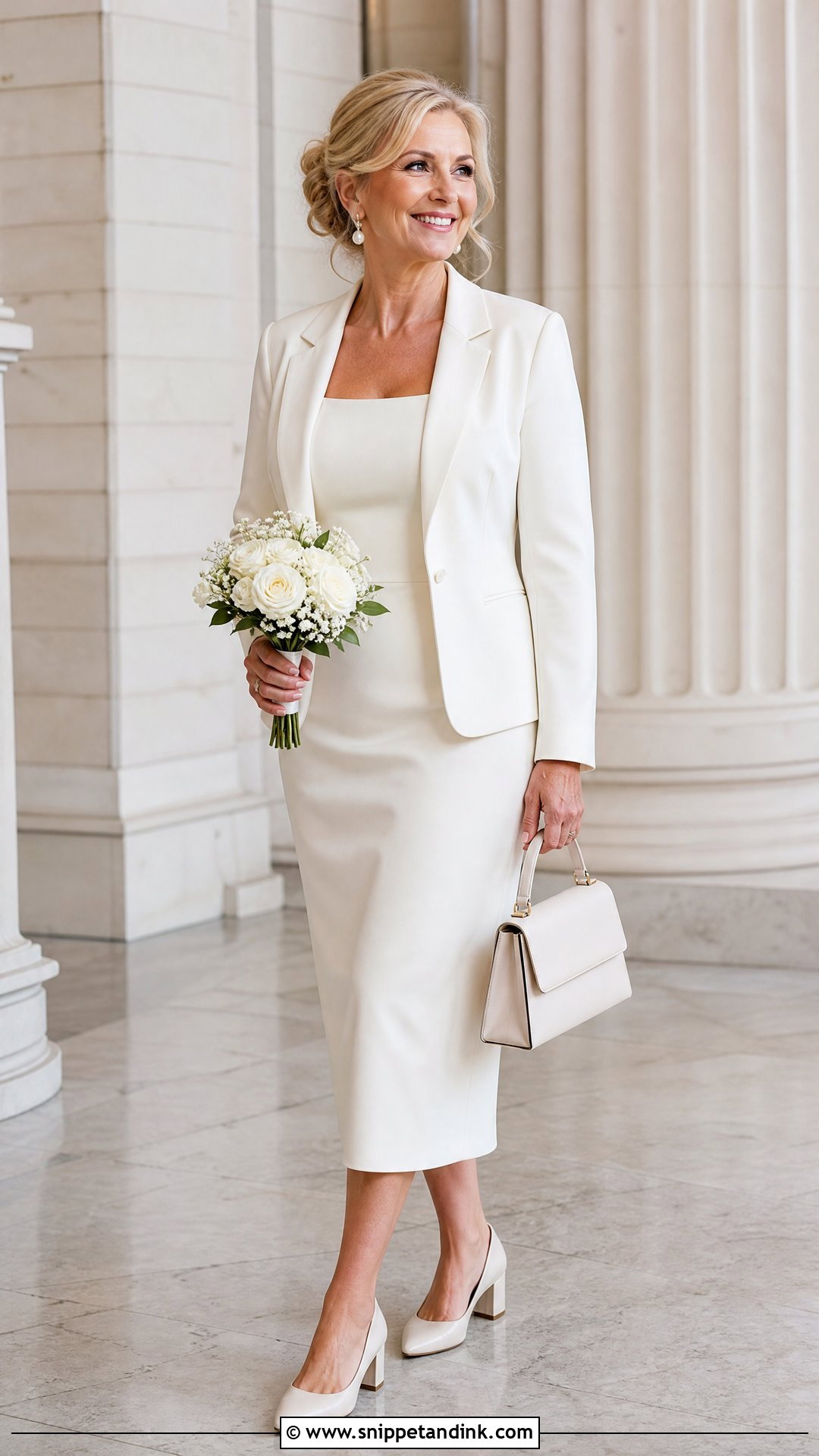
Courthouse ceremonies are short, often involve stairs and security, and usually end with a meal. That calls for something polished and easy to move in: a tailored midi dress, sleek sheath, tea length or ivory pantsuit. Focus on fit and accessories. A blazer, pearl earrings, low heels and a small bouquet make it instantly wedding-ready. Soft white, ivory, champagne, blush and pale blue all look right under the flat light of a registry office.
Silver Hair, Warm Skin and the White That Actually Suits You
Bridal white is not one colour. Bright or optic white has a blue cast, soft white is gentler, ivory leans cream, and champagne or nude tones carry gold or pink underneath. Hair and skin both change undertone with time, so the white that suited you at 30 may not suit you now.
I hold swatches under a bride’s chin by a window, no makeup on. Silver or white hair often looks crisp with soft white or a pale grey-toned ivory, while very yellow cream can make silver hair look dull. Warmer skin usually glows in ivory and champagne. If a white makes you look tired in daylight, the camera will see it too.
Shopping Outside the Bridal Salon, and How Far Ahead
Bridal salons order most gowns made to measure, and that usually takes several months, followed by alterations over a few more weeks. If your wedding is sooner, look at ready-to-wear: eveningwear and occasion departments, tailored suiting and designer midis often have refined pieces in ivory and champagne that need only light alteration. Sizing there runs closer to everyday sizes than bridal sizing does, which many women find a relief.
Whichever route you take, leave time for at least two fittings and book a seamstress who works with bridal fabrics. A ready-to-wear dress taken in properly at the waist and shoulders can look as considered as any gown ordered from a salon.
Dress for the Woman Walking In Today
The right dress after 50 is the one that fits you now, lets you move and makes you feel like yourself. Lace sleeves, tea lengths, crepe sheaths, pantsuits, jumpsuits, capes and soft colour all look bridal when the cut is right. Focus on fit, fabric and movement, then bring your underpinnings and shoes to every appointment. Formal or casual, intimate or modern, the women I dress in this chapter tend to know their own taste better than any rulebook does.
You'll Like These Ideas:




Leave a Reply