
Ball gowns are the shape most brides picture first: a fitted bodice and a full skirt that takes up the room. The current versions vary far more than that outline suggests, with sculpted corsets, sleeves, square necklines, dimensional lace, clean satin and soft color. Basque waists, oversized bows, floral appliqués and detachable pieces make the traditional shape personal. The catch with all that volume is living in it, so a gown has to let you sit, move and celebrate as well as look grand. The twenty below run from minimalist ceremonies to formal ballrooms, across seasons, body types and comfort needs, and for each one I’ve noted what I check at fittings.
Over Bustle, French Bustle or Ballroom Bustle for a Heavy Skirt
Any ball gown with a train needs a bustle, and the style should suit the fabric, not just the look. I decide it at the second fitting, once the hem is set, because the bustle points depend on exactly where the skirt falls.
Over bustle
The train is lifted over the outside of the skirt and fastened with hooks or buttons. It’s quick, easy for a bridesmaid to learn, and suits lighter tulle and organza. On a heavy satin train it can look a little bunched at the back.
French or under bustle
The train is tucked underneath and tied with numbered or color-coded ribbons inside the skirt, which gives a draped, layered back. It suits satin and mikado well. It takes longer to do, so whoever handles it should practise at the final fitting while the seamstress is there to correct them.
Ballroom bustle
The train is lifted and fastened all round so the hem looks even, as though there had never been a train. It uses the most points and takes the most work, and it’s the one I suggest for a heavy, full skirt when you want the cleanest line for dancing.
Whichever you choose, ask how many points it uses. A heavy train hung from too few hooks can pull them loose halfway through the reception.
1. Strapless Satin Bridal Ball Gown
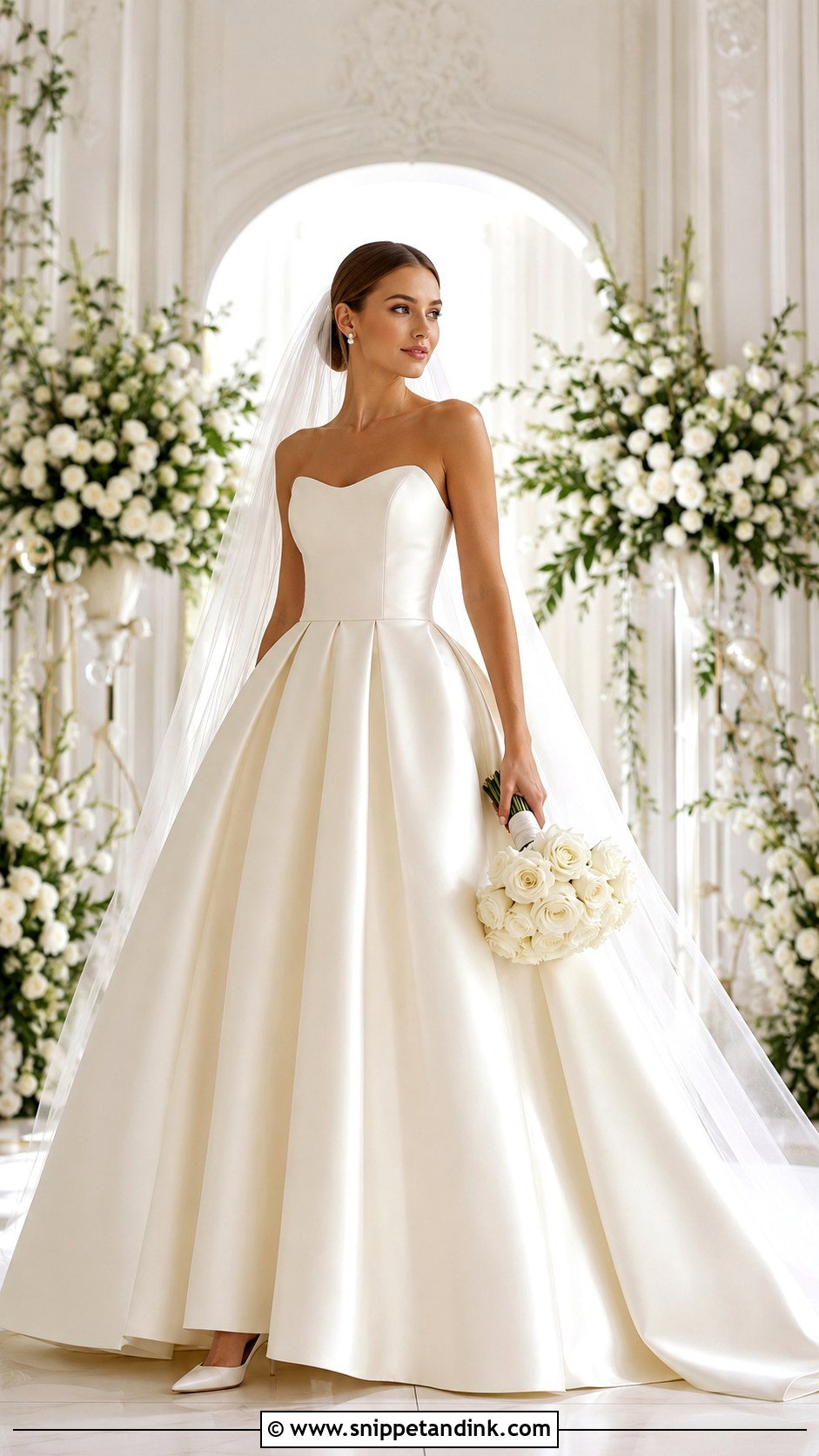
Strapless satin is the cleanest version of the shape, and it depends entirely on the bodice. I look for internal boning and a waist stay, because a strapless top on a heavy skirt is held up by the fit at the waist, not by the bust. A full pleated skirt in satin or Mikado holds its shape without embellishment. A cathedral veil, pearl studs, pointed ivory pumps and compact white roses complete it, with a low bun to keep the neckline clear. At fittings, raise your arms, sit and walk around before agreeing it’s finished. And ask about hidden pockets, which satin skirts carry well.
2. Lace Long Sleeve Bridal Ball Gown
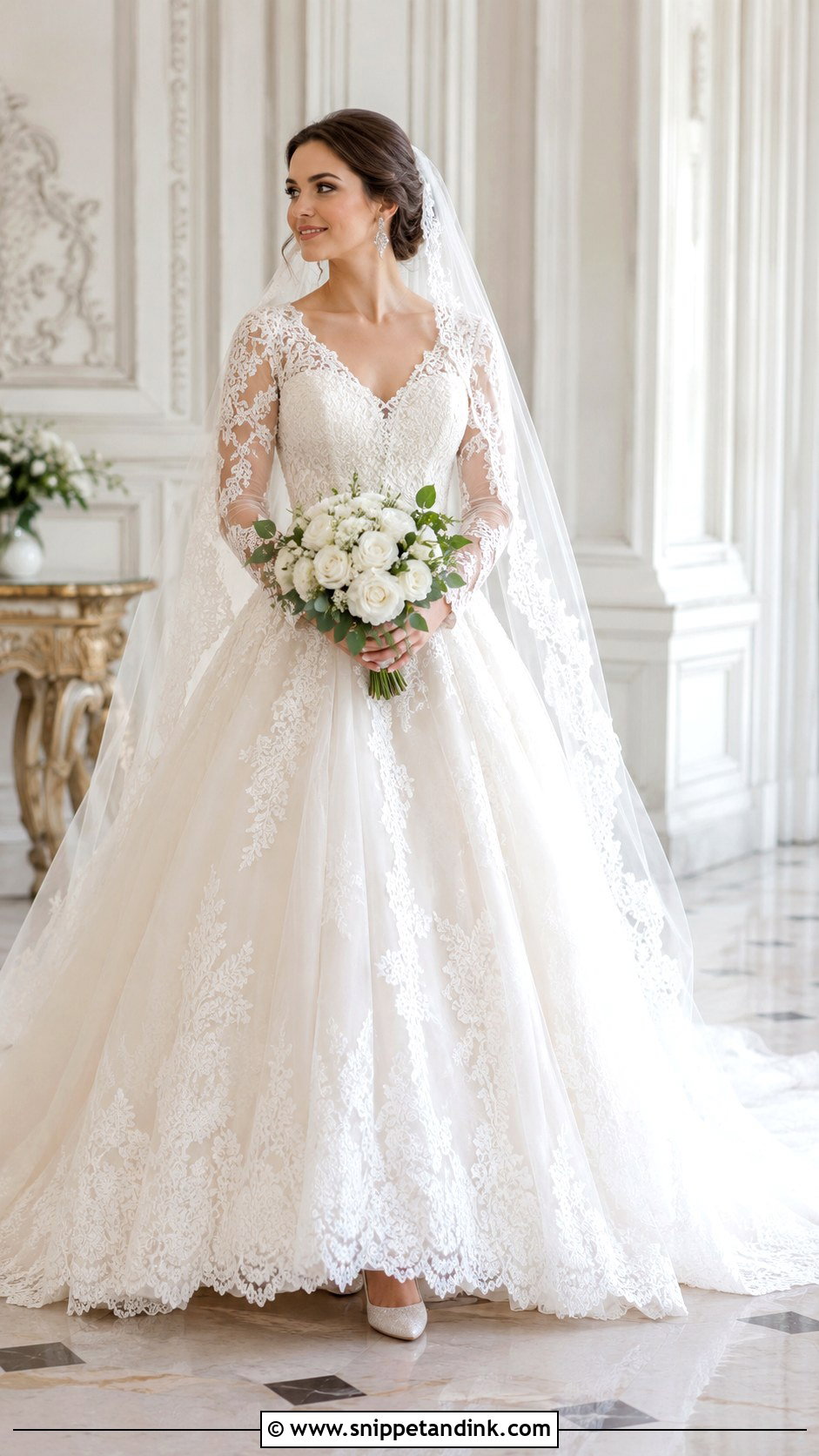
Lace sleeves bring softness and coverage to all that volume. I’d look for a lined or illusion bodice, fitted sleeves and motifs that flow from bodice to skirt rather than stopping abruptly at the waist seam. A modest V-neck or bateau neckline keeps the top light against the full skirt. A lace-edged veil, crystal drops, closed-toe pumps and a loose white-and-green bouquet finish it, and a simple updo keeps long hair off the sleeves. Fall, winter and formal indoor weddings suit it. Test the elbows and shoulders properly. Sleeves cut too tight restrict hugging, dancing and lifting a glass, and lace has little give to fall back on.
3. Basque Waist Bridal Ball Gown
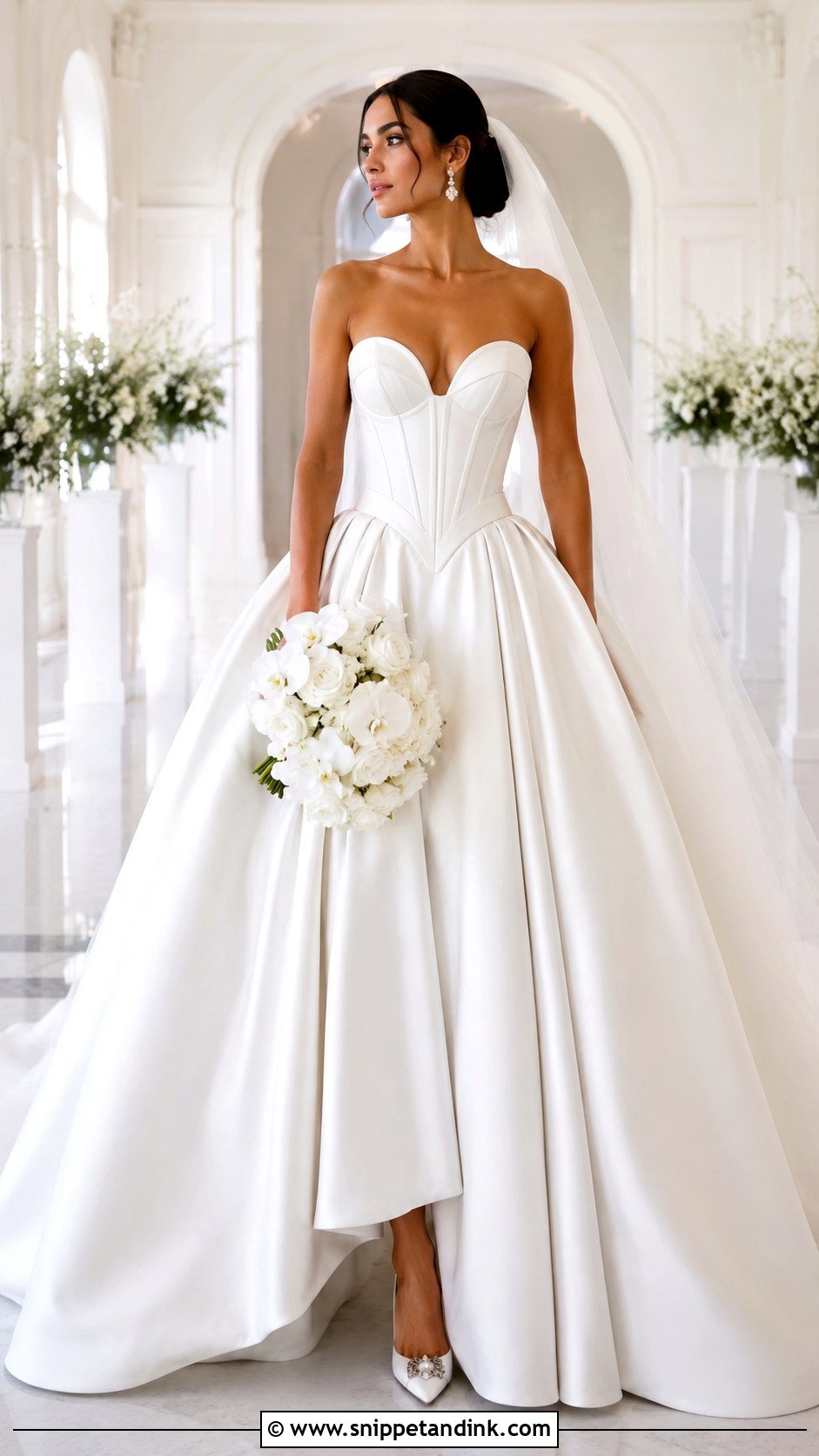
A Basque waist bridal ball gown stretches the torso and sends the skirt out from a sharp V. It sits best on a corset bodice in smooth satin, tulle or lace-covered fabric, with a sweetheart, scoop or gently pointed strapless neckline echoing the waist. A long plain veil, delicate earrings, satin heels and a neat white bouquet finish it; keep the jewelry back so the construction stays in charge. The tailoring is exacting. The point of the V must lie flat when you sit, so I ask the seamstress to check the boning, hip placement and skirt seam from every side and with the bride in a chair.
4. Off Shoulder Bridal Ball Gown
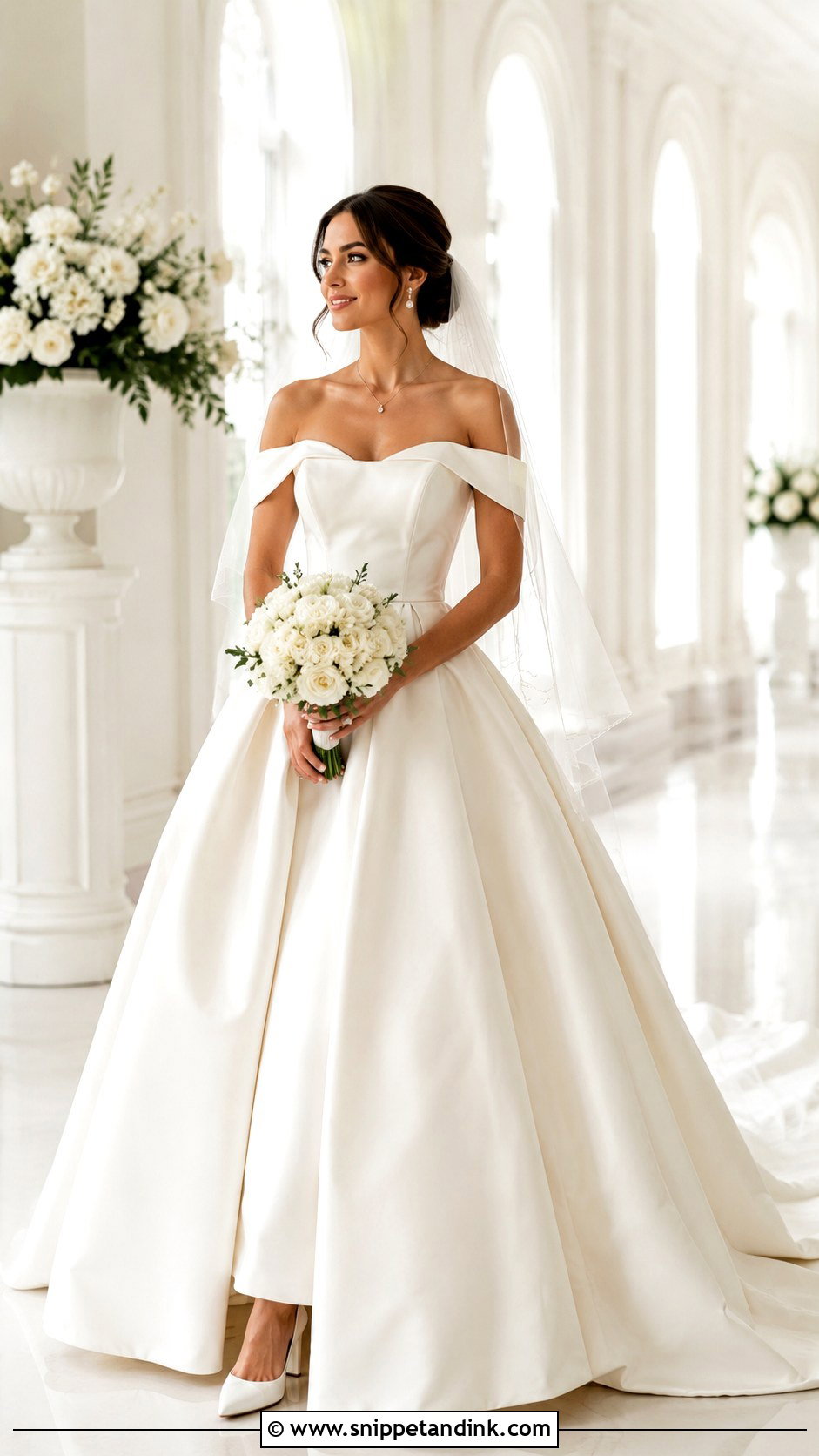
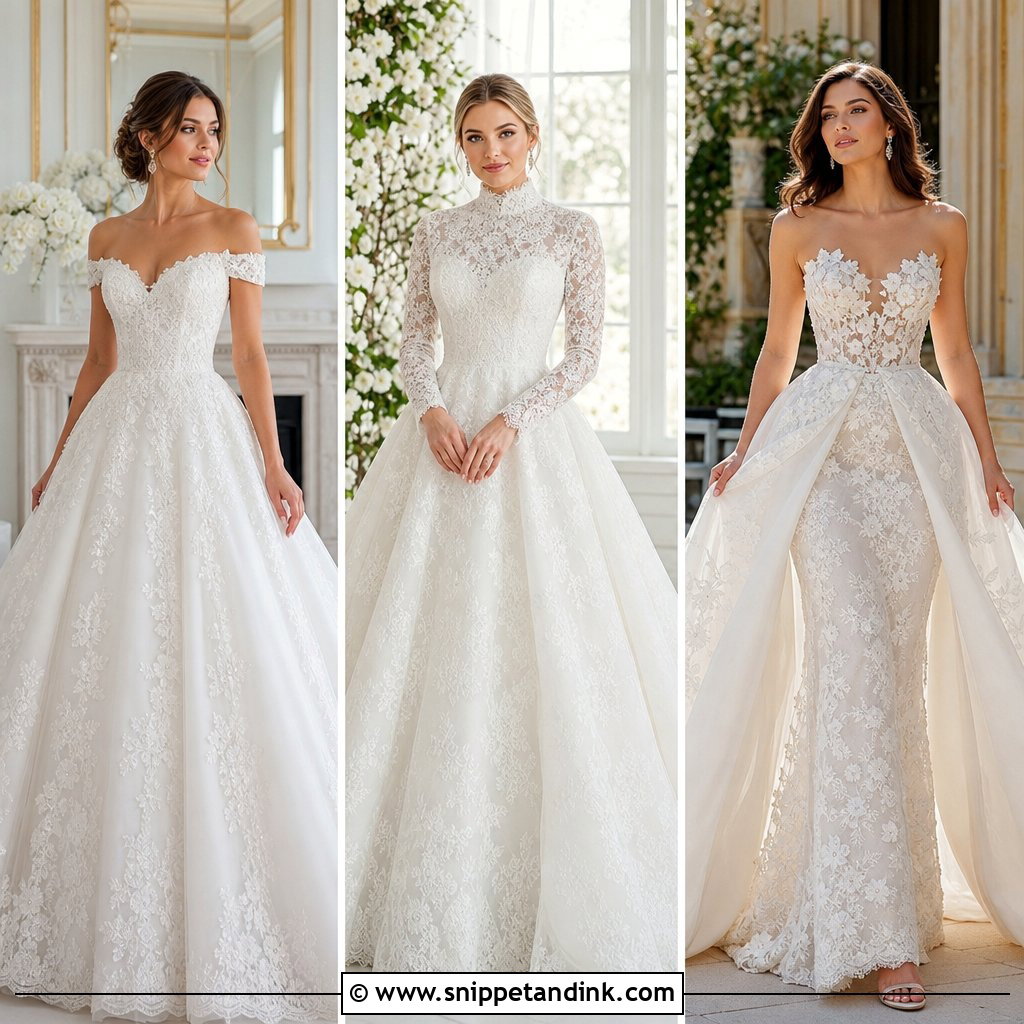
Off-shoulder bands frame the collarbone while the full skirt keeps all its grandeur. Soft draped bands look romantic; structured satin cuffs look architectural. Set them on a fitted bodice, with the skirt starting cleanly at the natural or slightly dropped waist. A fingertip or cathedral veil, a fine pendant, pearl earrings and comfortable block-heel pumps complete it, and a half-up style keeps the shoulders visible. The honest drawback is movement, because fixed off-shoulder bands stop you lifting your arms much above chest height. Detachable bands solve it, letting you take them off before the dancing starts.
5. Sweetheart Corset Bridal Ball Gown
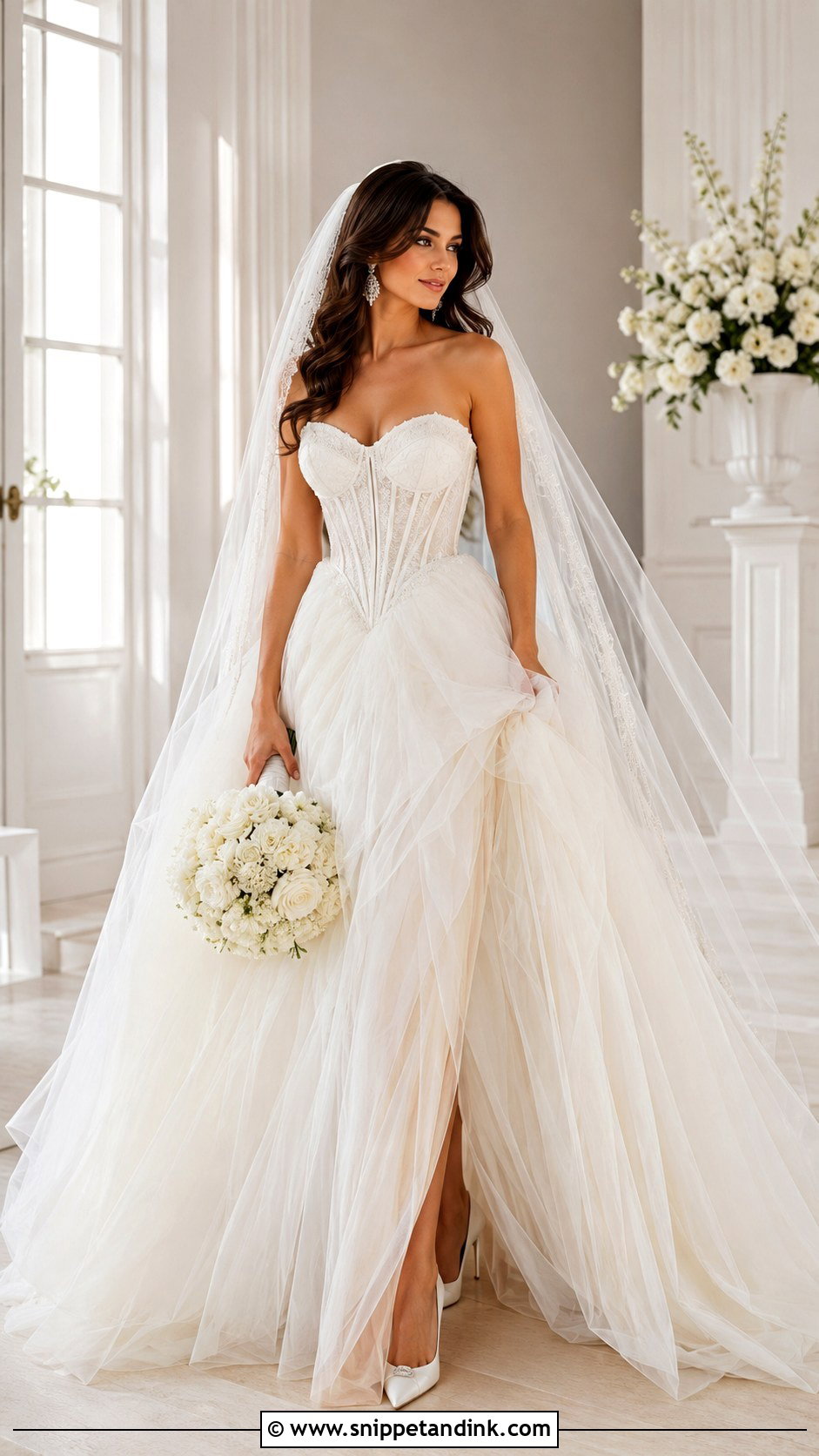
The curved neckline of a sweetheart corset bridal ball gown draws attention to the upper body and pins down the waist. A good corset supports without squeezing, with boning that follows your torso. Exposed boning looks modern; covered boning reads traditional. A layered tulle skirt keeps it airy against the fitted top. A chapel veil, small crystal earrings, ivory heels and a rounded bouquet finish it, with soft waves or a low textured bun. During alterations I check two things: that the cups sit exactly at your bust, and that the back closure lies flat. A lace-up back gives some leeway if your measurements shift in the final weeks.
6. Square Neck Bridal Ball Gown
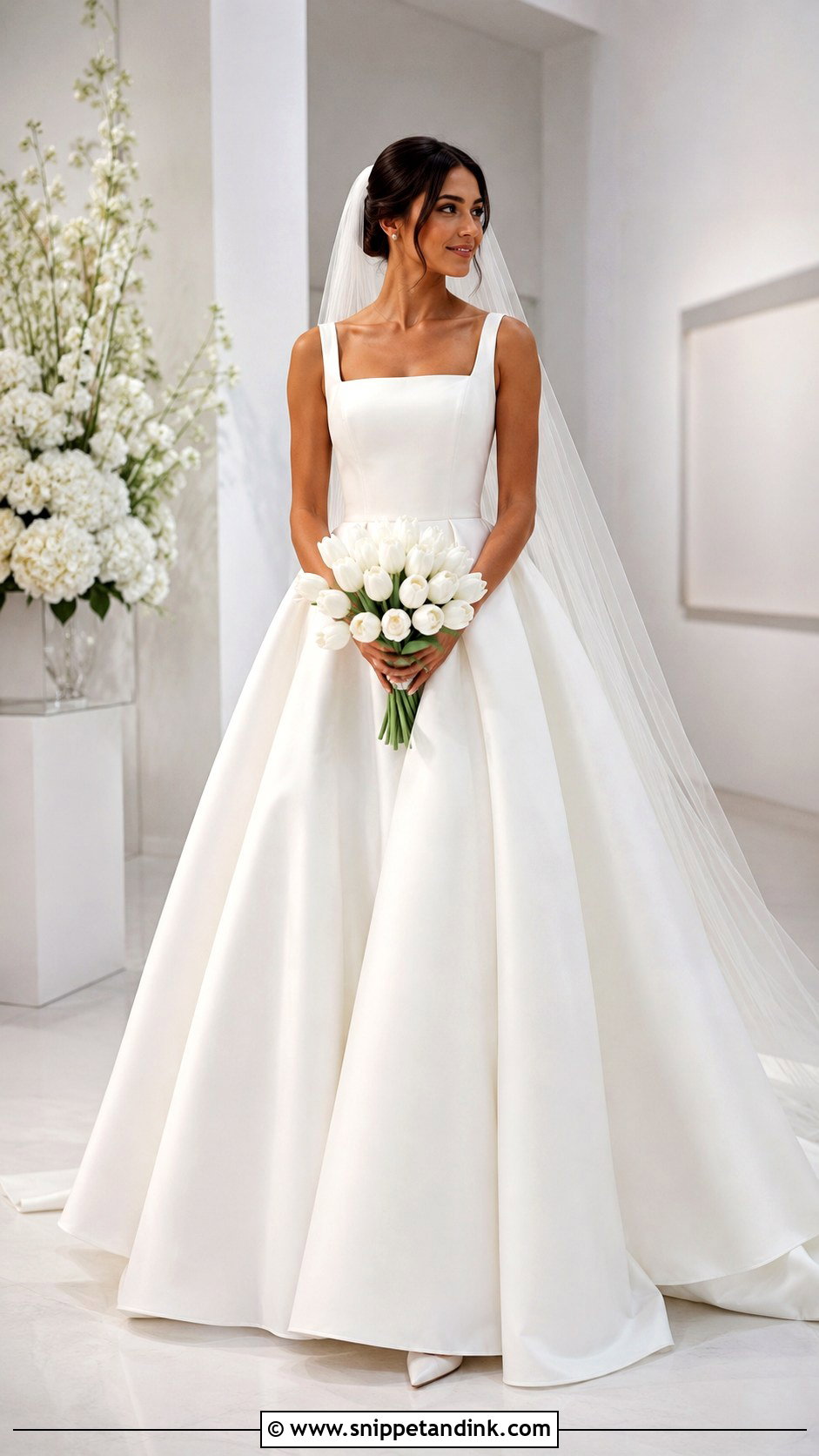
Square necks give a full skirt a modern frame with a hint of history. Wide straps or fitted sleeves add security, which makes this a good route for brides who don’t trust strapless. Mikado gives a crisp finish; floral lace softens it. A simple tulle veil, short pearl earrings, pointed pumps and white tulips or calla lilies keep it understated, and a sleek bun shows off the neckline. My fitting checks are the corners, which shouldn’t gape when you lean forward, and the straps, which should stay put without digging into the shoulders when you hug someone.
7. High Neck Lace Bridal Ball Gown
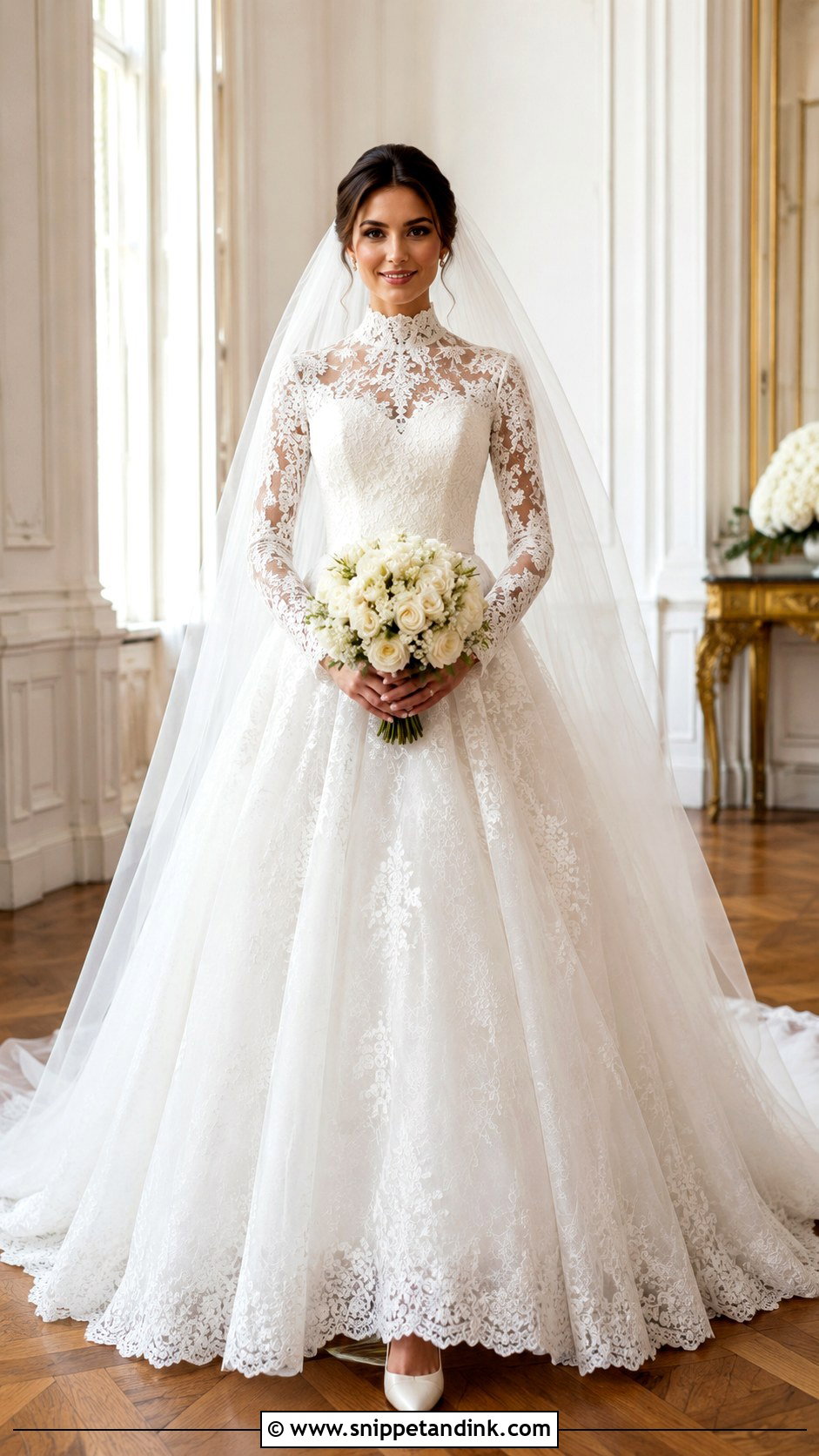
High-neck lace gives elegant coverage, and the trick is keeping the top half light enough to balance a full skirt. Illusion lace across the neck and sleeves does that, with a lined bodice for comfort. Pick a skirt with controlled volume and appliqués that thin out toward the hem. A plain cathedral veil set beneath a low bun, small studs, satin pumps and a loose white bouquet complete it, with no necklace. When you try it on, turn your head, look down at your shoes and lift your arms. A collar that feels fine facing forward can press against the throat the moment you look down at the rings.
8. Mikado Bridal Ball Gown With Bow
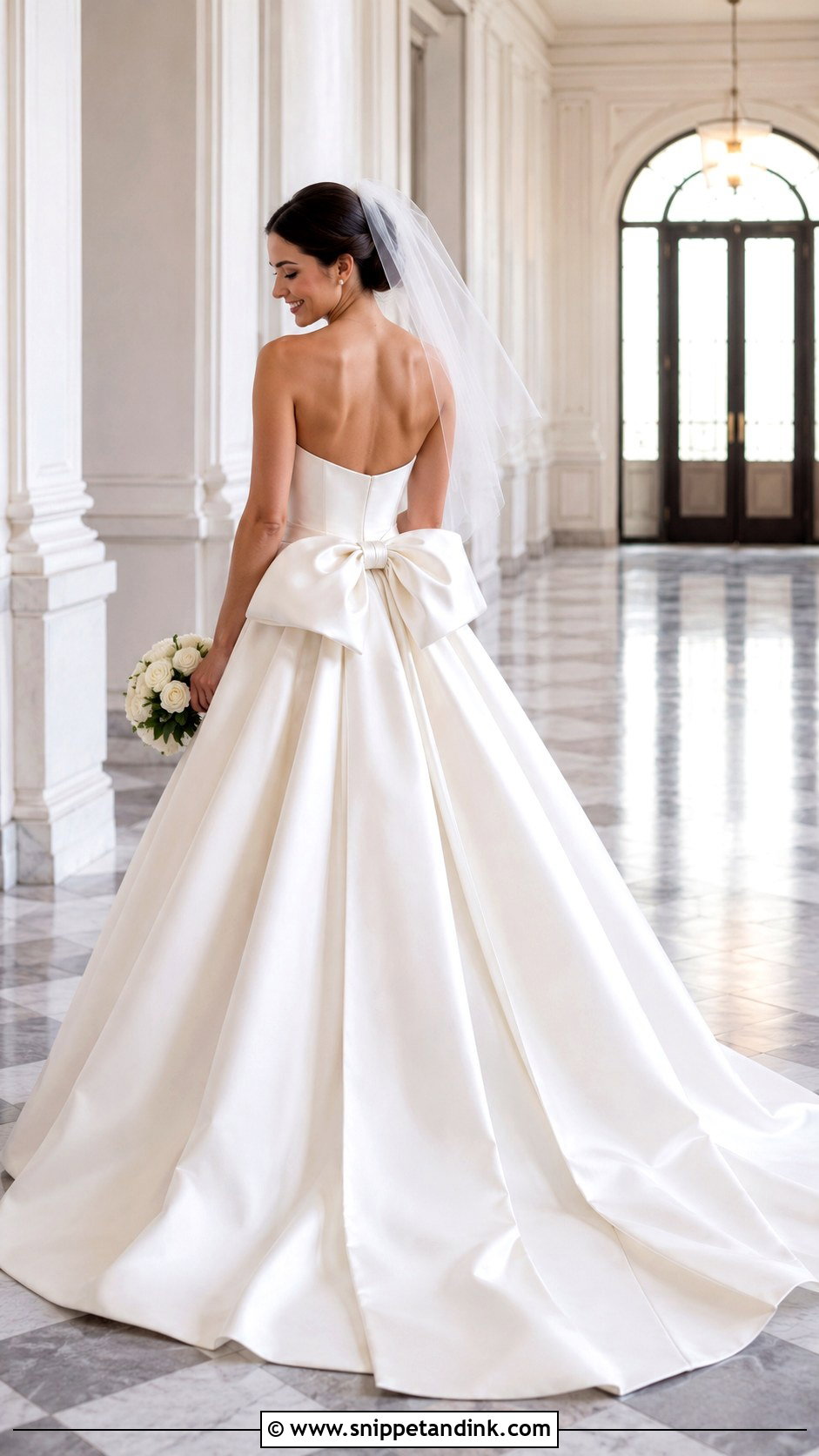
Mikado’s stiffness keeps the bodice smooth and the skirt sharply defined. Add an oversized back bow and the ceremony itself becomes the moment, since guests see your back for most of the service. The bow can sit at the waist or run into long tails over the train. Keep everything else restrained: a strapless or bateau neckline, a plain veil, pearl studs, ivory pumps and a compact bouquet, with a sleek updo so the bow stays visible. A detachable bow can come off later. Check how the bow and the bustle interact, because bow tails often sit right where the bustle points need to go.
9. Floral Tulle Bridal Ball Gown
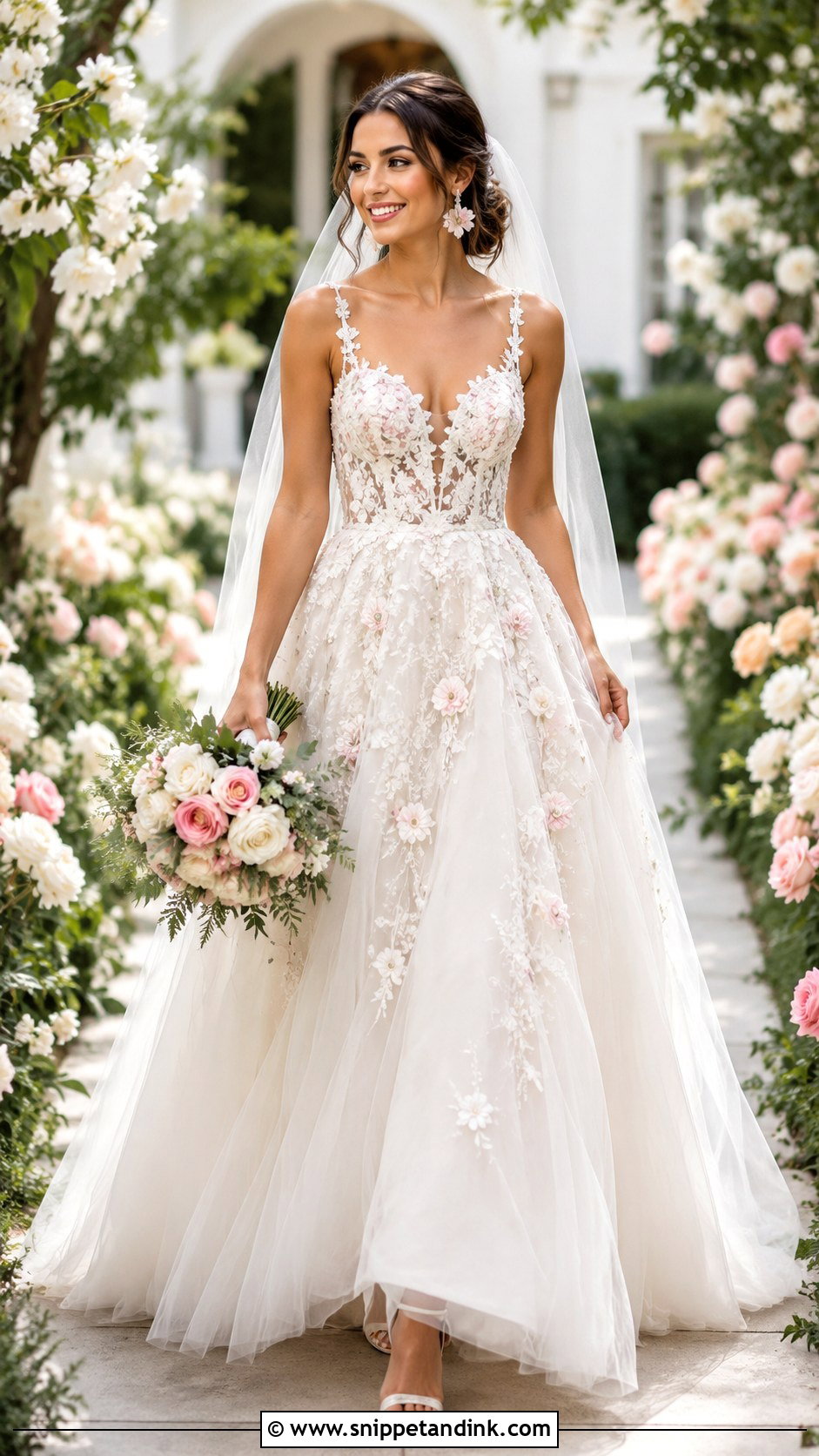
Floral tulle is the softest take on the shape. Embroidered flowers or appliqués should cluster on the bodice and drift down the skirt; that placement defines the waist and stops the full skirt looking crowded. A neutral lining keeps it classic, while a pale blush lining makes the flowers stand out more. A light veil, floral earrings, slim ivory heels and a garden-style bouquet finish it, with loose waves or a relaxed low bun. Raised appliqués catch on things, so check the inner arm and where the veil falls. A smooth underskirt lets the tulle move without extra bulk.
10. Beaded Bridal Ball Gown
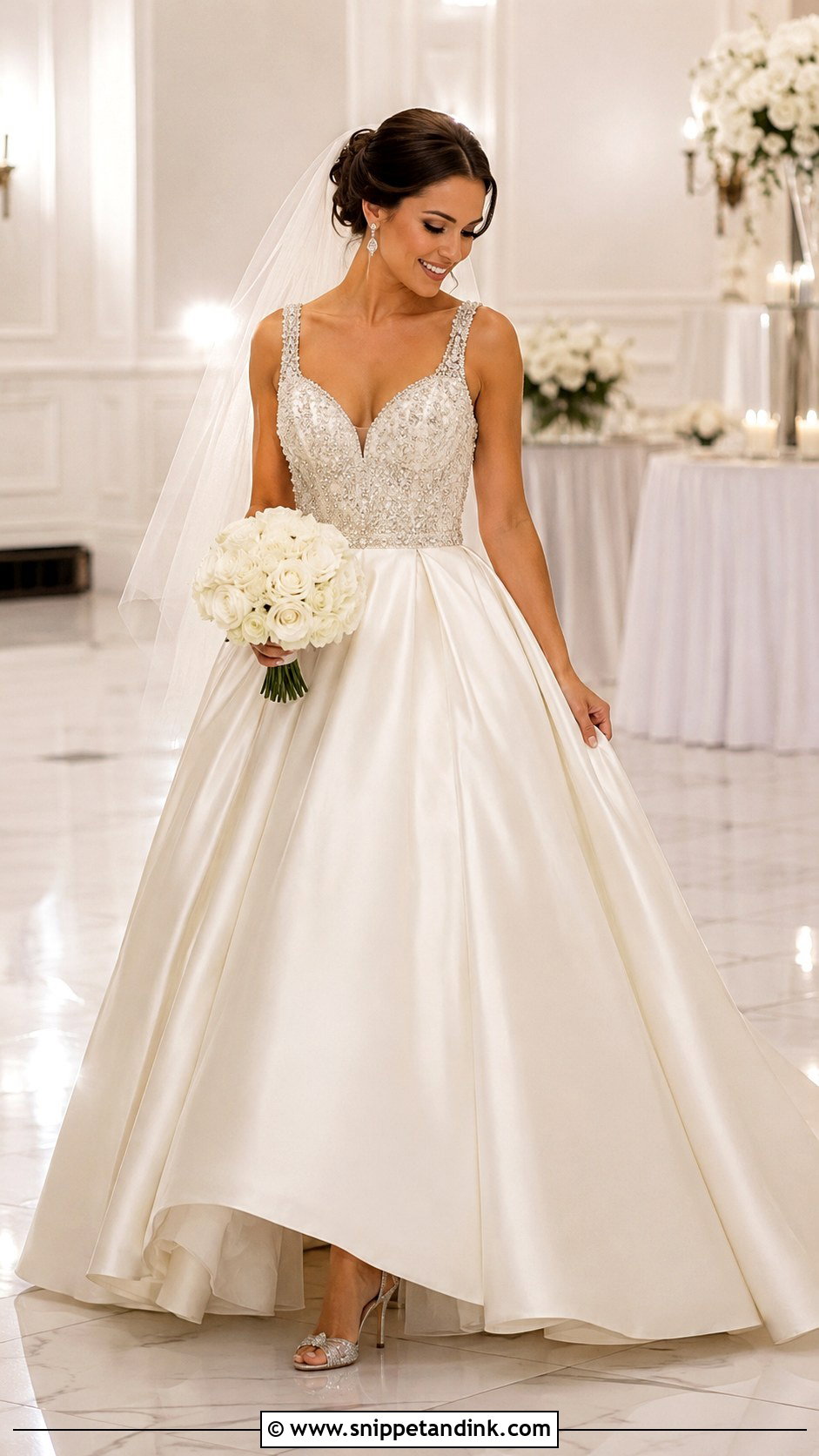
Beading belongs at evening and very formal weddings, where artificial light gives it something to catch. I’d keep the beadwork on the bodice, neckline or waist and leave the skirt in plain satin or soft tulle, because a fully beaded ball skirt gets very heavy. Crystal earrings, metallic ivory heels, a sheer unembellished veil and a tidy white bouquet finish it, with a polished bun or smooth waves. Wear the sample for a good while before deciding, since the weight builds over time. Feel the underarm edges for rough beads and ask whether extra lining there can protect your skin without changing the fit.
11. Pearl Bridal Ball Gown
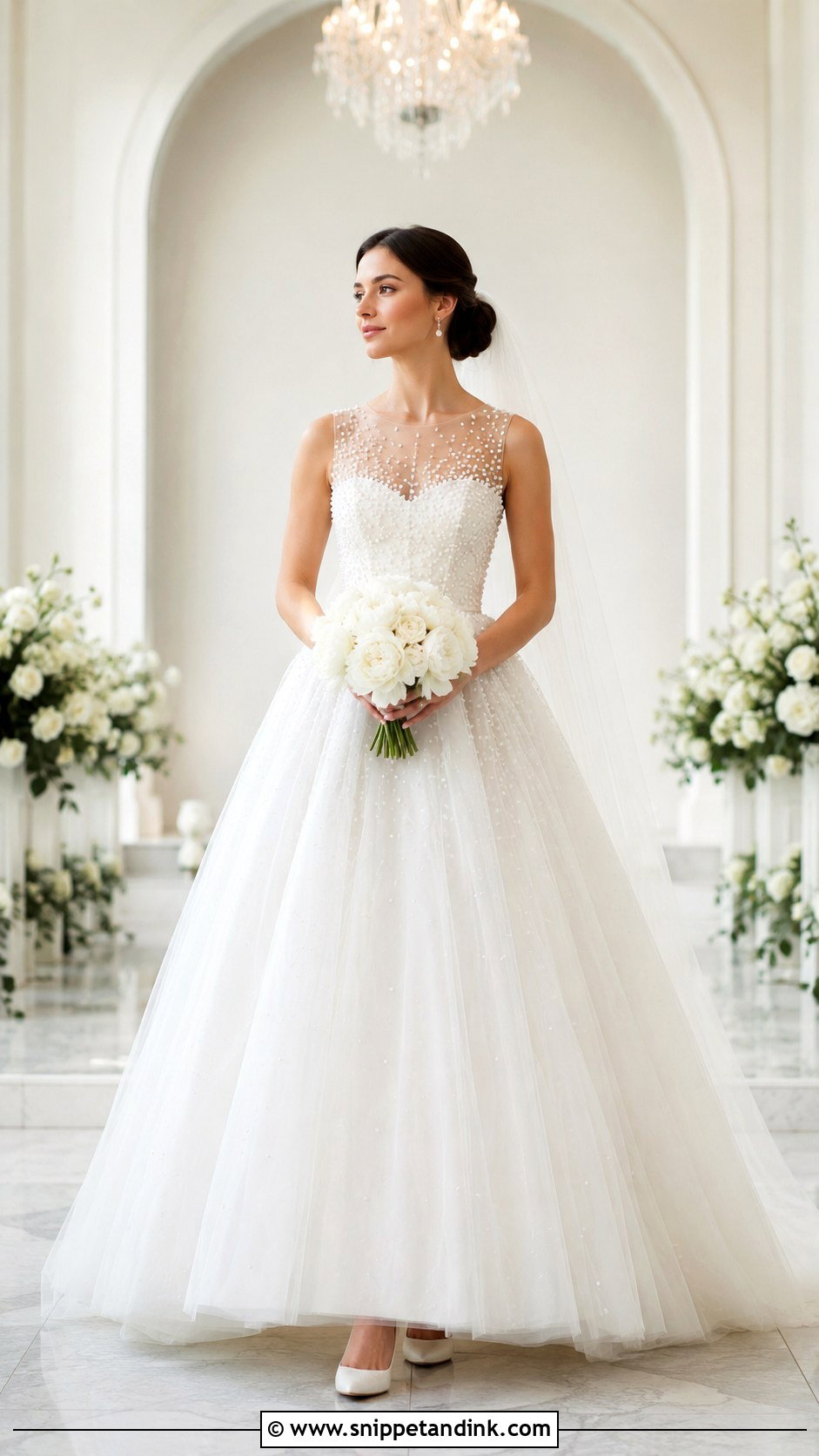
Pearls give a soft glow rather than the sharp flash of crystal. They can be scattered across an illusion bodice, run along the neckline or thicken gradually over a tulle skirt. With detailed pearl work, keep the neckline simple and the waist clearly defined. Pearl drops, a plain veil, satin pumps and white peonies or roses complete it, and a low chignon stops hair snagging on the beads. Before buying, ask how the pearls are attached. Tightly packed pearls add real weight, and loosely stitched ones may need reinforcing before alterations begin. The pearls at the cuffs and hips take the most knocks, so I check those first.
12. Minimalist Bridal Ball Gown
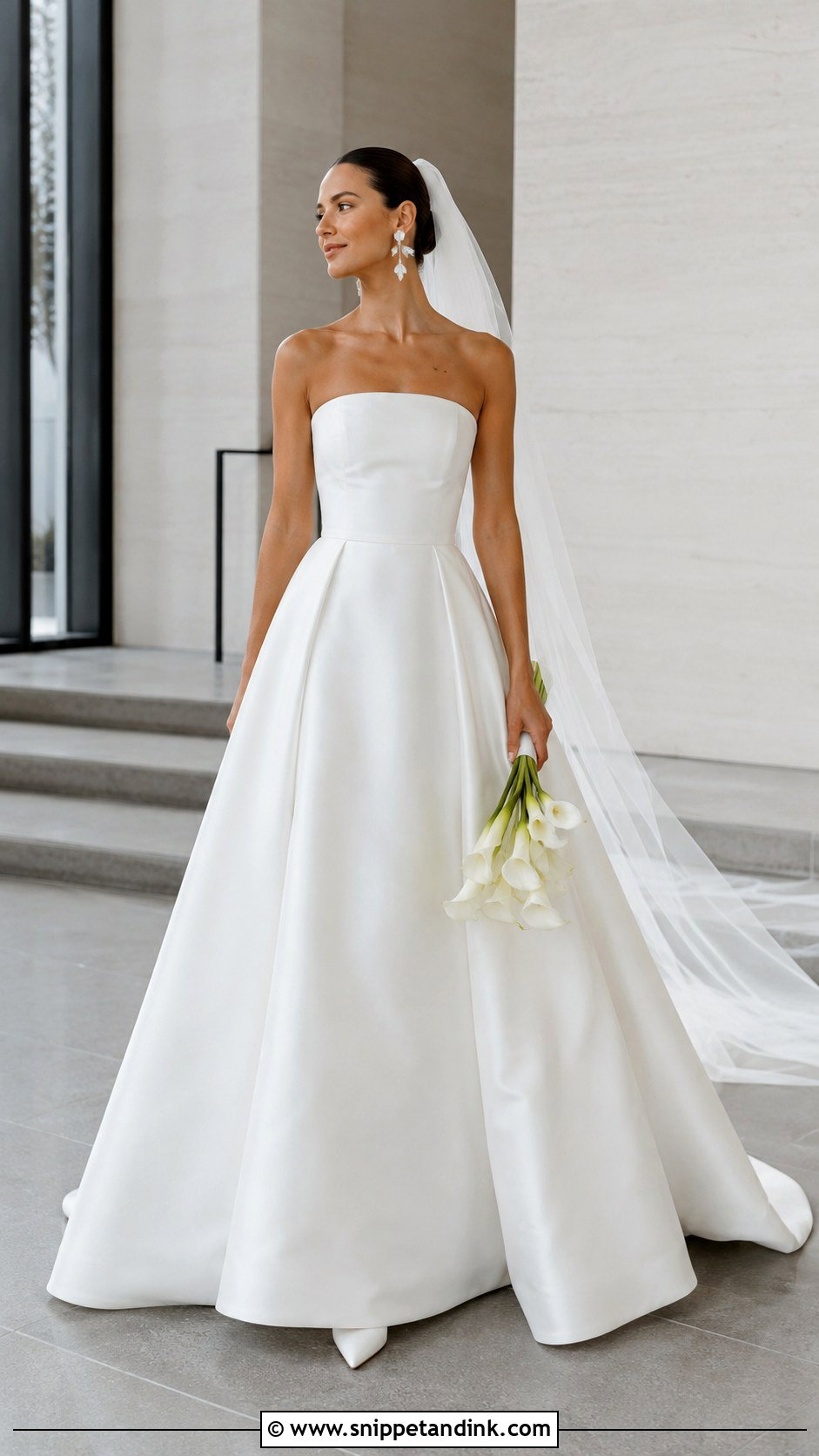
Can a dramatic ball gown still feel understated? It can, when the drama comes from cut and fabric rather than decoration. Smooth satin or Mikado with a fitted bodice, a clean neckline and a skirt shaped by pleats does it. A long raw-edge veil, sculptural earrings, pointed pumps and calla lilies finish it, with a center-parted bun or glossy ponytail. Small details like covered buttons, hidden pockets or an asymmetric fold add interest quietly. Plain fabric hides nothing, so I inspect it in daylight for puckered seams and creases. Pressing and precise alterations matter more here than on any other gown in this list.
13. Vintage Lace Bridal Ball Gown
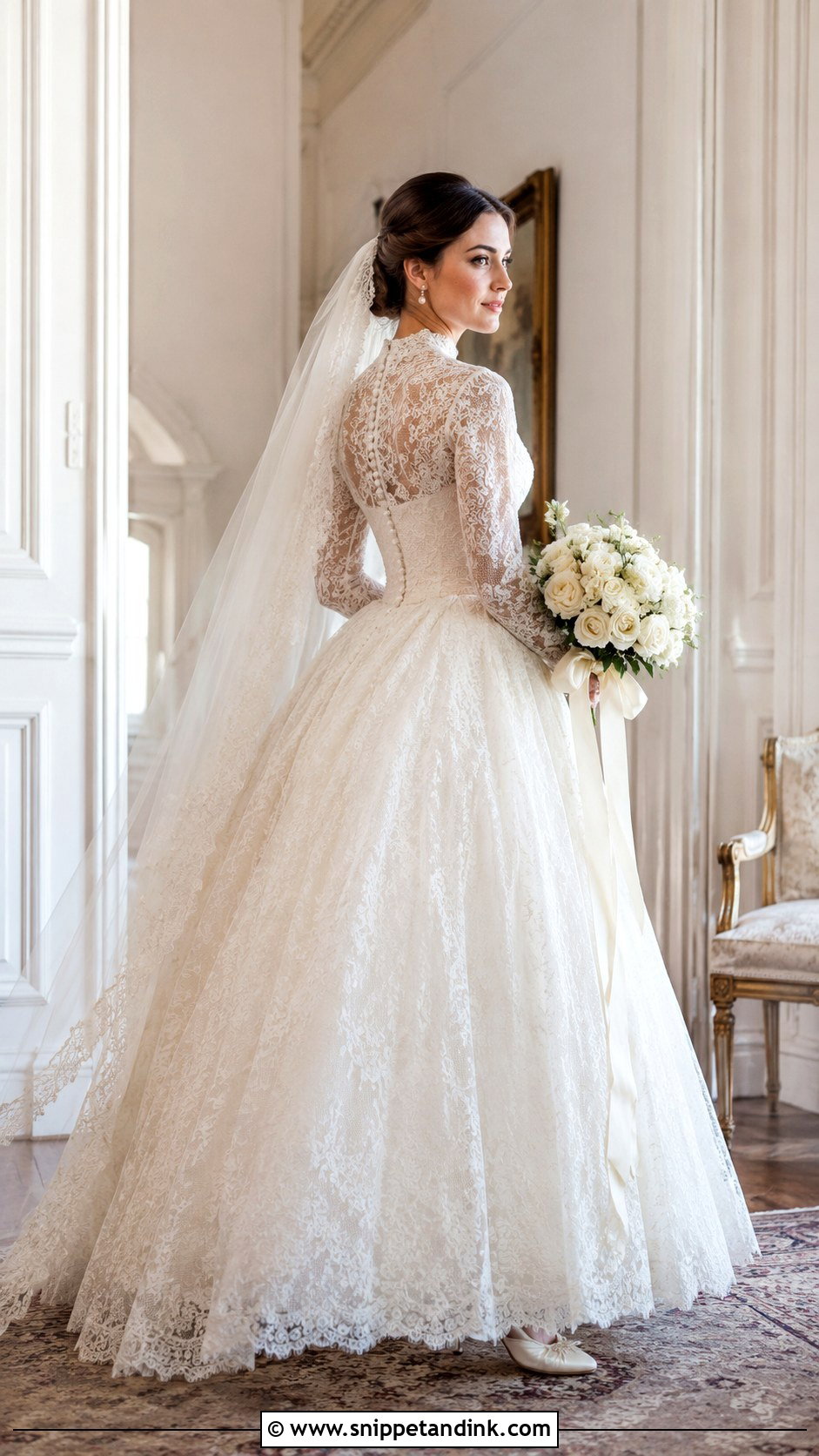
Vintage lace pairs a full skirt with details borrowed from earlier eras: a fitted lace bodice, covered buttons, a softly curved waist and long sleeves with fine cuffs. Chantilly-style lace looks light; heavier floral motifs feel more formal. A lace-edged veil, pearl earrings, rounded-toe shoes and a bouquet tied with ivory ribbon complete it, with pinned waves or a low bun. I’d pick one or two period details rather than all of them, or it tips into costume. Old lace is often fragile and has usually mellowed in color, so if you’re adding a family piece, compare it with the gown in daylight before committing.
14. Royal Bridal Ball Gown With Cathedral Train
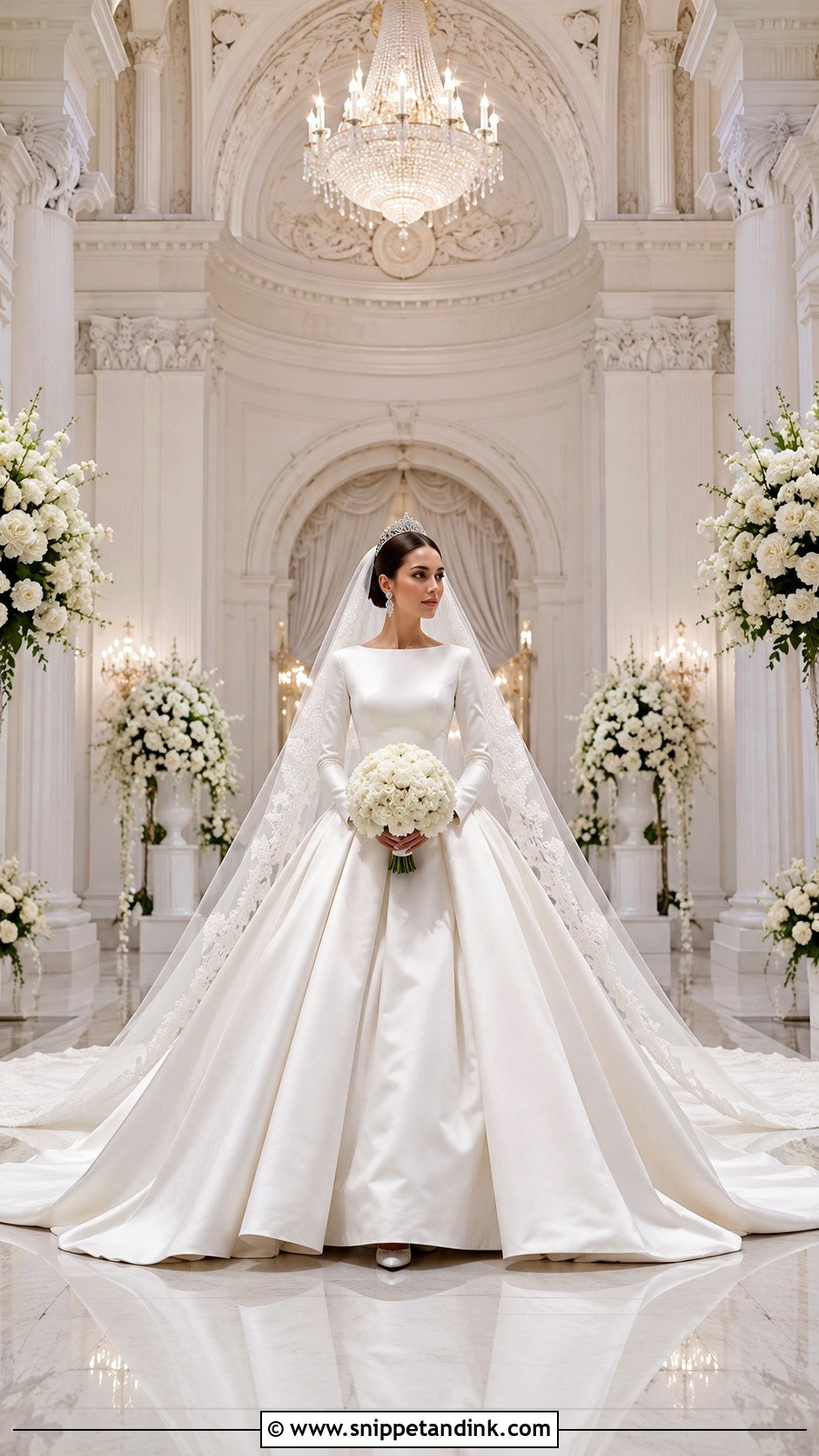
A cathedral train gives the most ceremony impact of anything here, and the most logistics. Start with a structured bodice, a defined waist and a substantial satin or lace skirt that can carry the train’s length. Long sleeves, an off-shoulder neckline or a simple strapless top can all work. A cathedral veil, refined earrings, closed-toe pumps and a symmetrical white bouquet finish it, with polished hair. Then plan. Confirm the aisle is wide and long enough, practise turning at the altar, and choose a strong bustle for the reception. Name one person whose job is laying the train out before photos and the entrance.
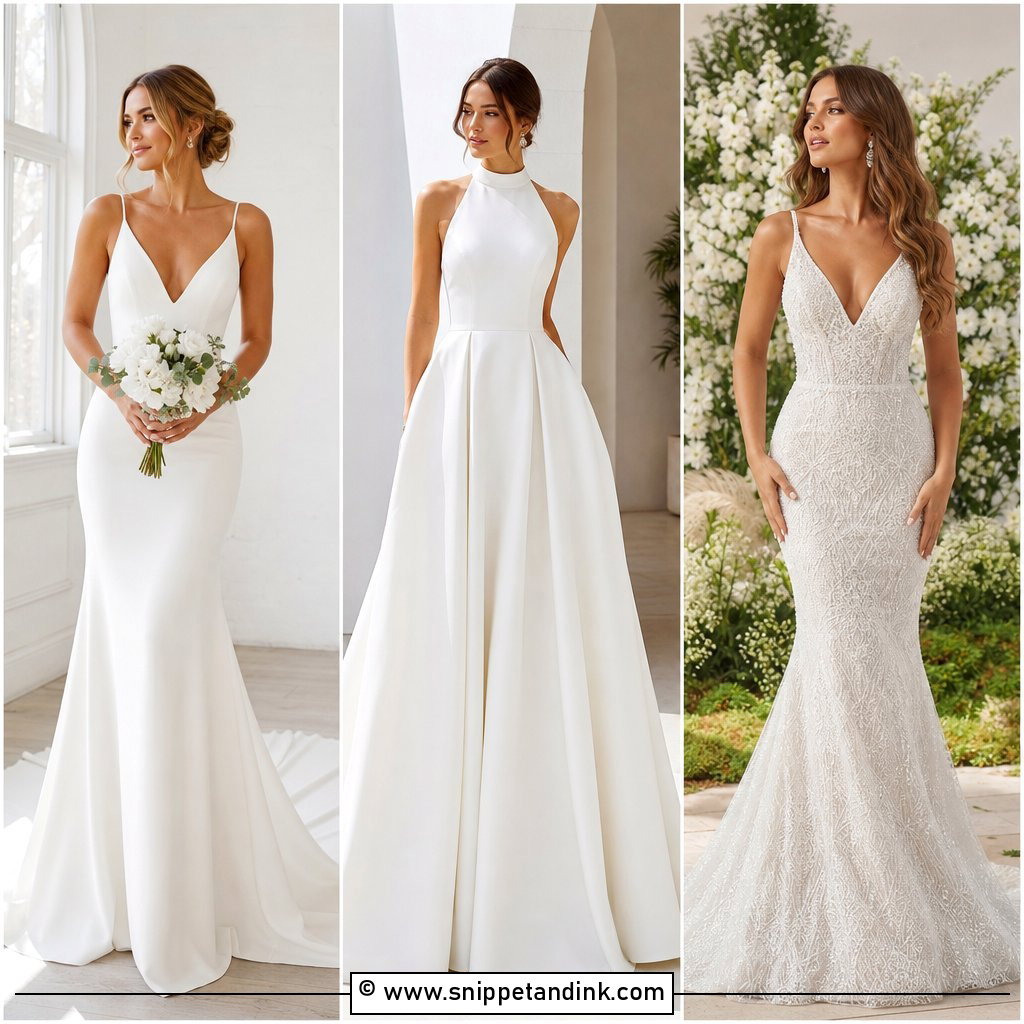
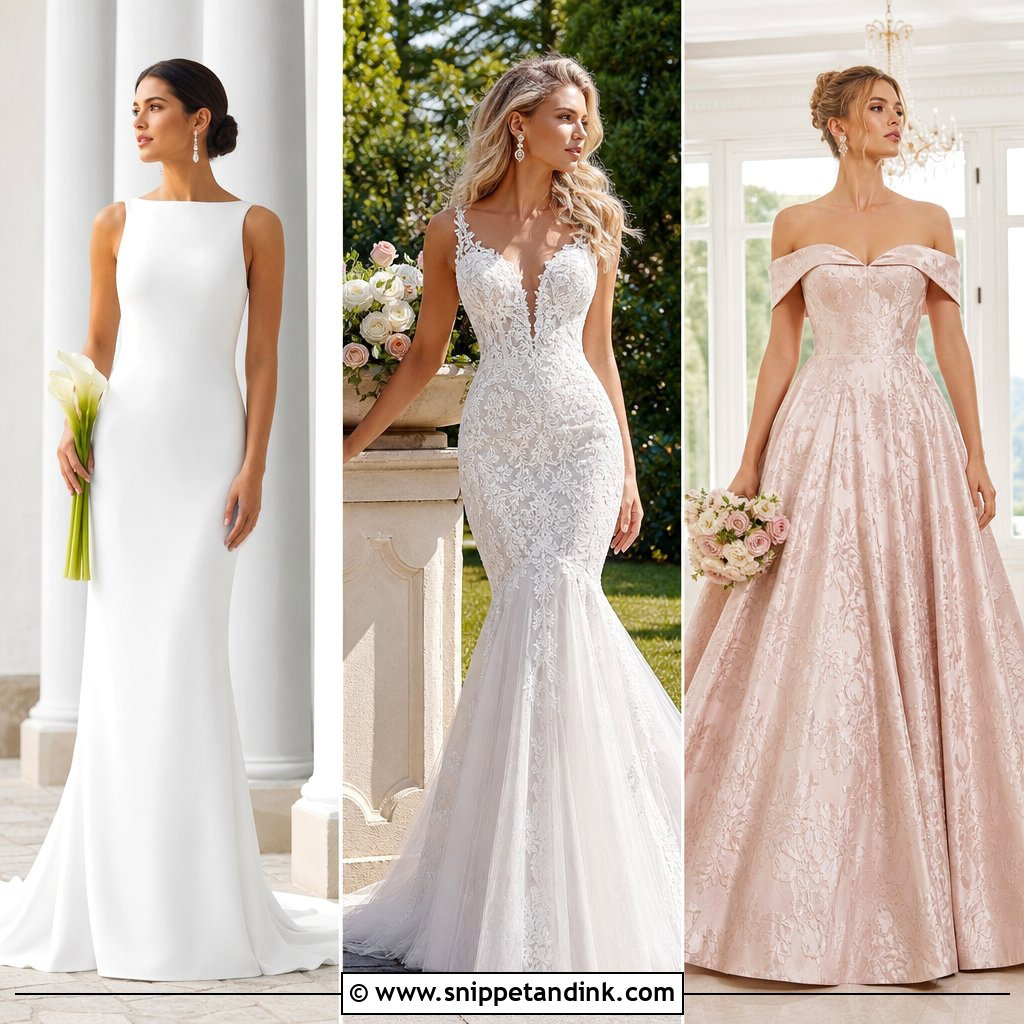
15. Modest Bridal Ball Gown With Sleeves
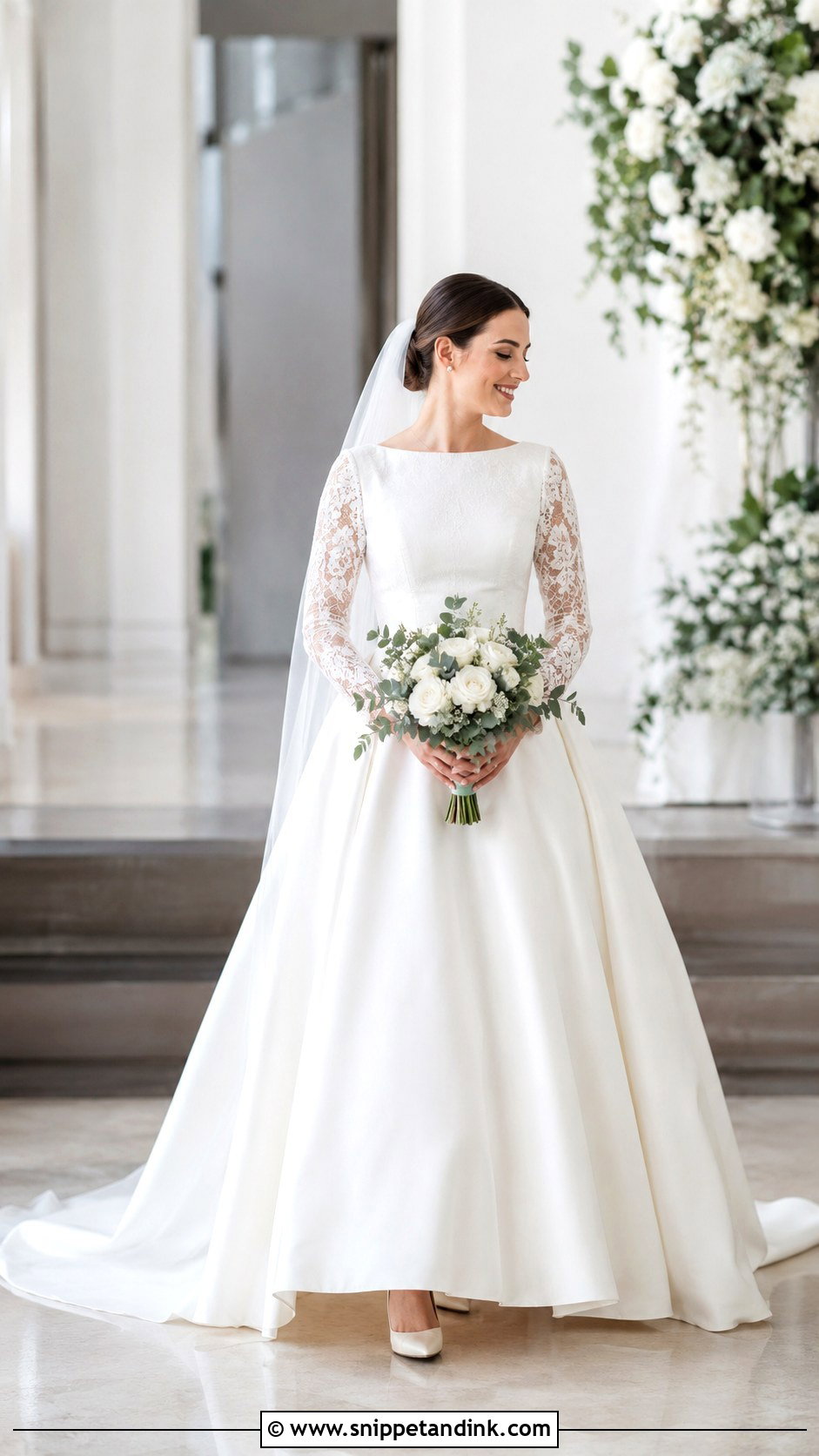
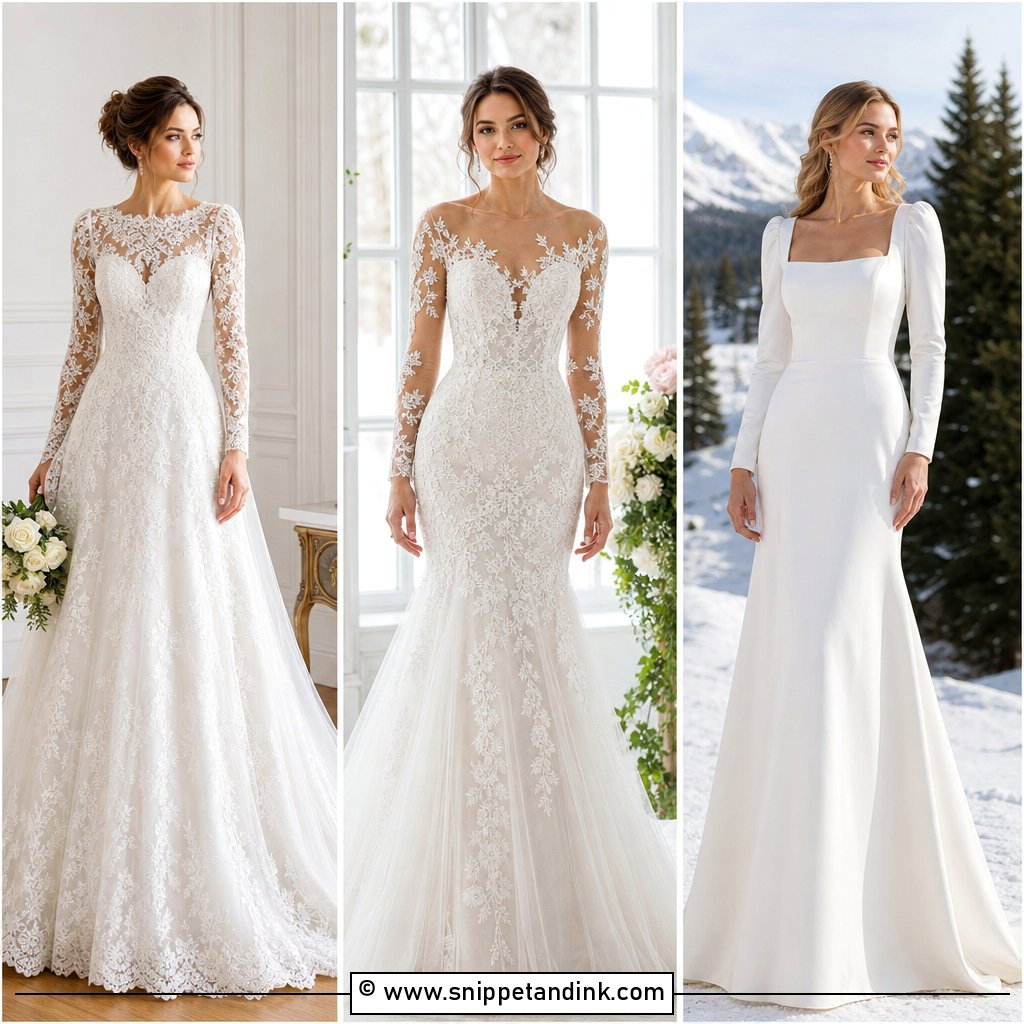
A modest bridal ball gown can give full coverage and still feel light. Look for a lined bodice, full-length sleeves and a bateau, jewel or modest V-neckline, with a defined natural waist and a flowing satin or tulle skirt. A simple veil, small earrings, closed-toe heels and a soft white-and-green bouquet finish it. Lace sleeves add detail; plain crepe or satin sleeves look cleaner. I always check opacity under strong light, because some linings that look solid in the boutique turn sheer under a photographer’s flash. The neckline should stay put when you bend, and the sleeves must let you move freely.
16. Plus Size Bridal Ball Gown With Corset Bodice
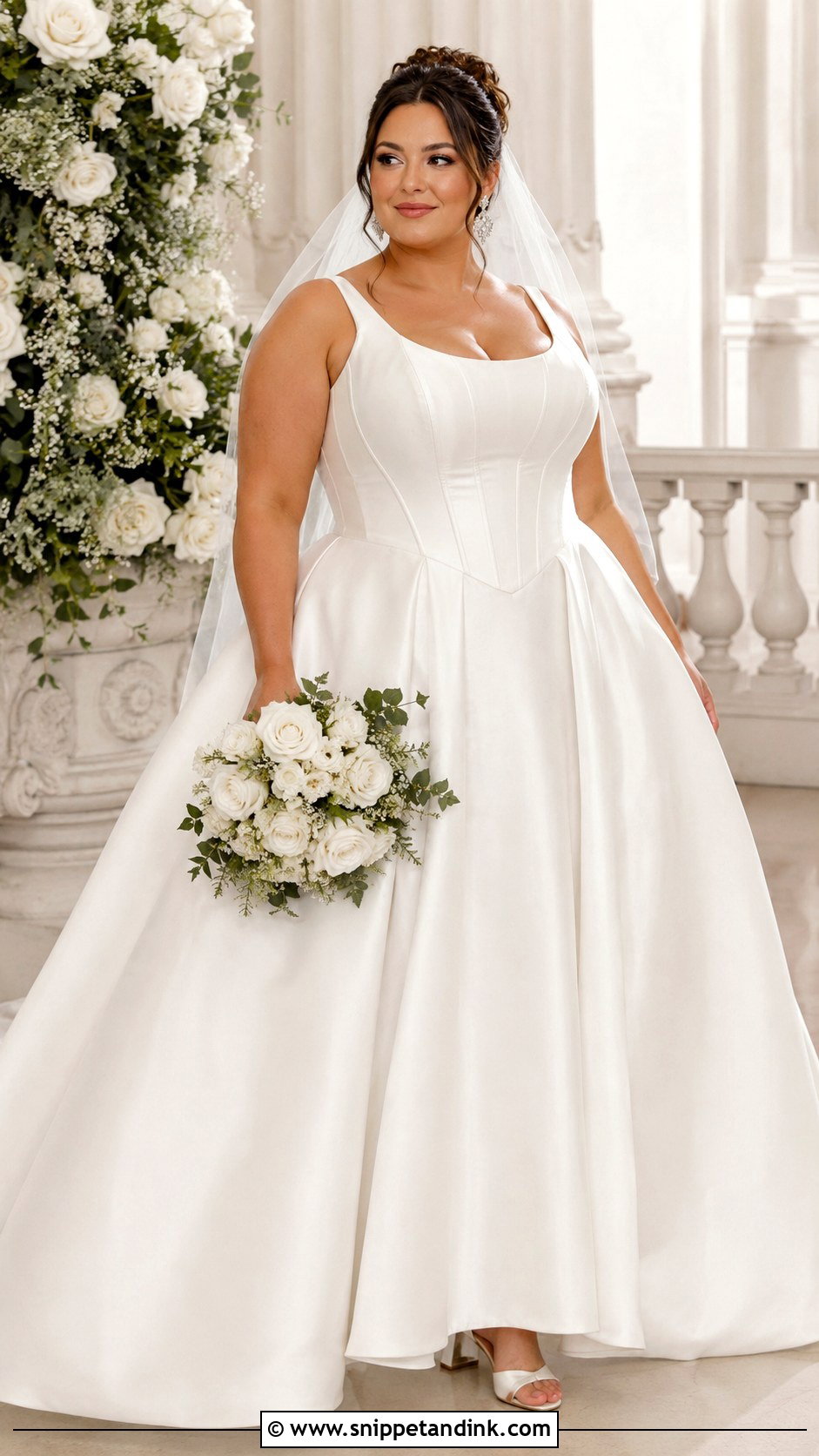
A corset bodice is one of the most supportive structures a plus-size bride can wear under a full skirt, and when it’s properly built it gives a clear, balanced shape. Wide-set straps, a secure strapless line or detachable sleeves can be chosen for comfort. A Basque or natural waist can both work, depending on where each lands on your body. If you want lighter movement, go for smooth volume rather than many layers. A medium-length veil, supportive heels, statement earrings and a bouquet scaled to the gown finish it. Ask the salon to pull samples close to your size, since a small sample clipped at the back tells you very little. Cup placement, internal structure and a comfortable closure matter far more than the size on the label.
17. Petite Bridal Ball Gown With Clean Lines
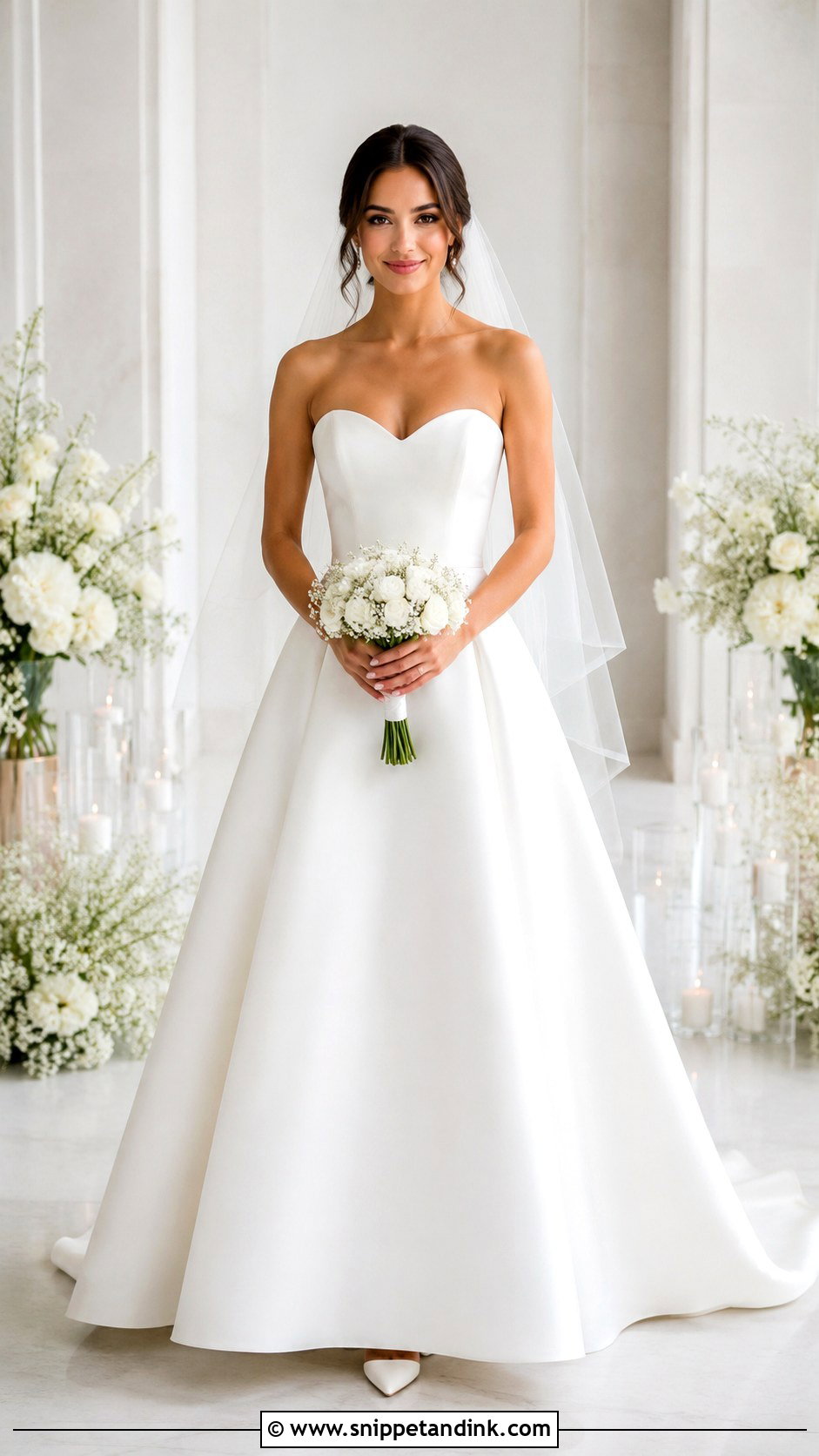
Ball gowns can work on a petite frame when the volume is controlled and the lines run vertical. Choose a fitted bodice with a natural or slightly raised waist, little embellishment and a skirt that widens gradually from the hip. A V-neck, square neck or narrow sweetheart lengthens the upper body. A lightweight veil, delicate earrings, pointed heels and a small structured bouquet finish it, with lifted or swept-back hair. Hemming is the trap. Shortening a decorated skirt can cut through lace borders or scallops, so the edging sometimes has to be removed and re-applied. Ask whether the gown can be ordered in petite proportions or with a shorter hollow-to-hem measurement.
18. Detachable Sleeve Bridal Ball Gown
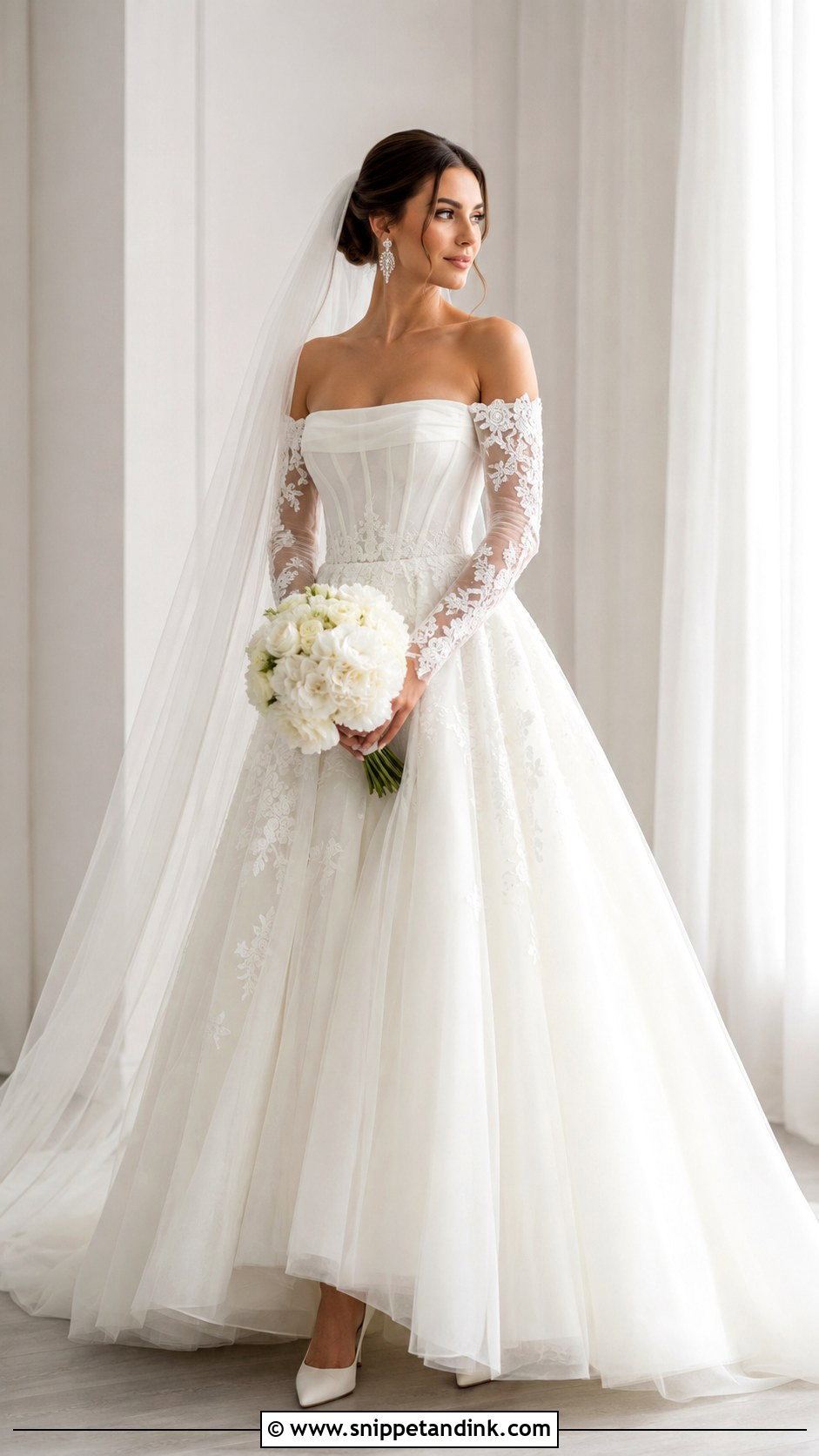
Detachable sleeves turn one gown into two looks. Fitted lace sleeves, draped off-shoulder bands or sheer puff sleeves go on for the ceremony and come off for a strapless reception. The bodice then has to hold everything up alone, so it needs real structure under that full satin or tulle skirt. Style the ceremony with a long veil, earrings, ivory pumps and a formal bouquet, then swap to a shorter veil or hair piece. Attachments should be discreet and secure, leaving no snaps or loops on show once removed. Practise taking them off, and keep them afterward in a labeled garment bag.
19. Champagne Bridal Ball Gown
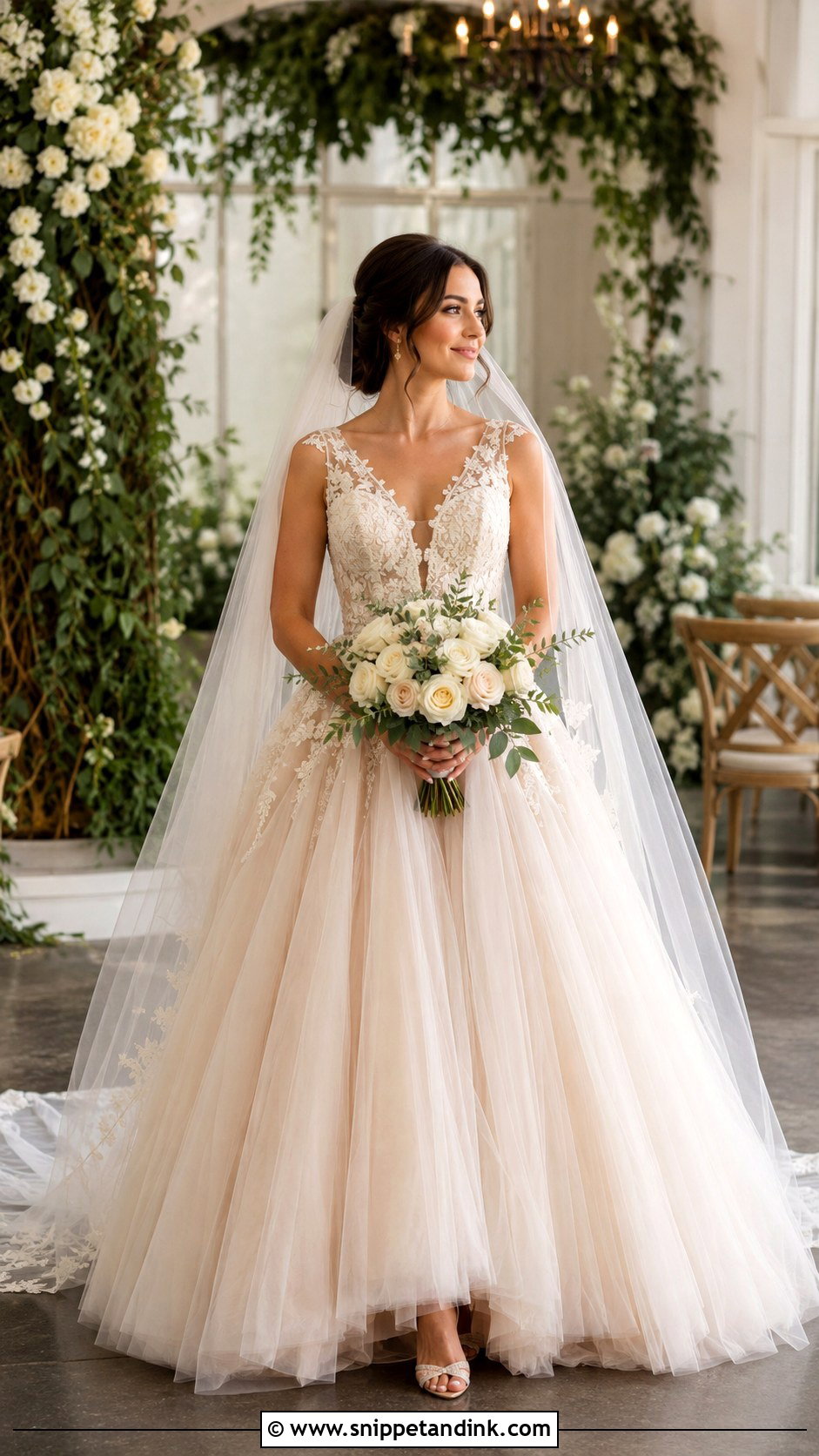
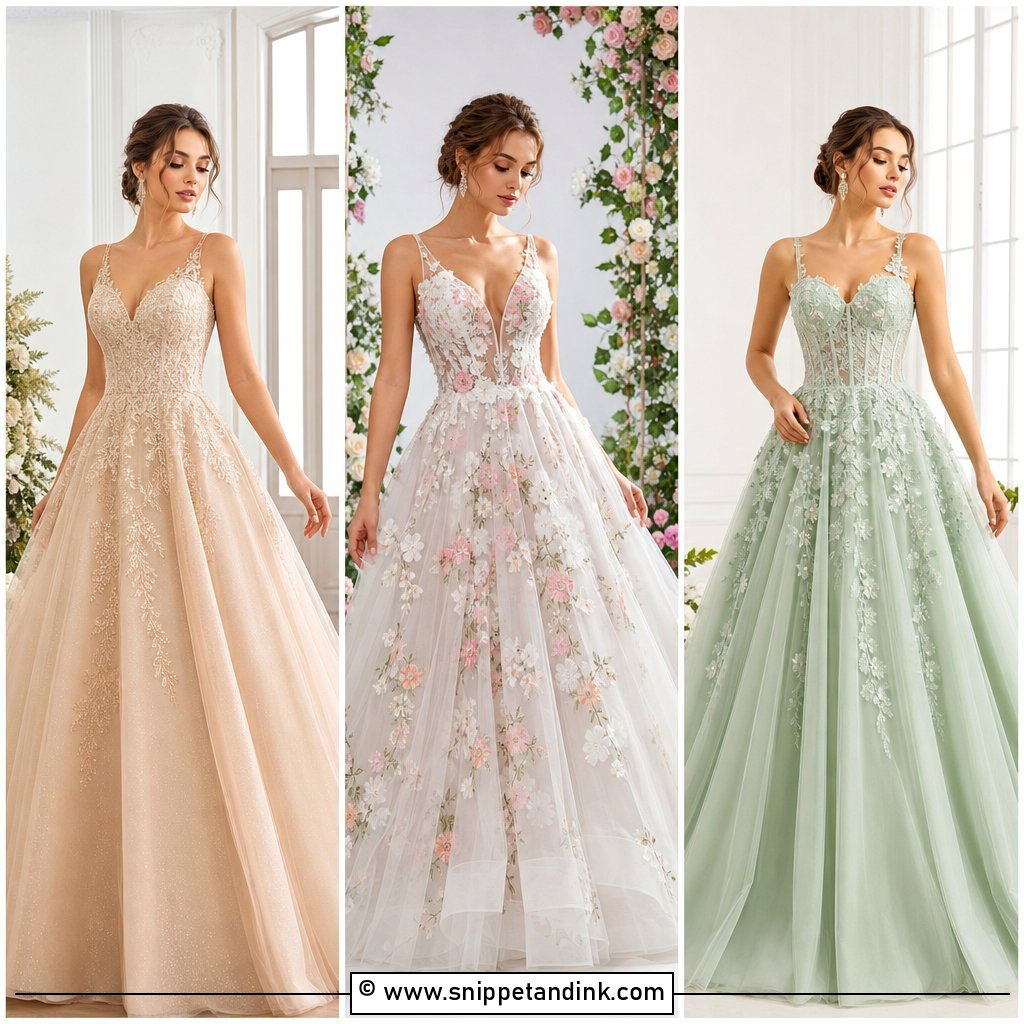
Champagne adds gentle warmth under ivory lace, floral embroidery or soft tulle. Choose the shade in daylight. Champagne can read beige, gold or blush depending on the light, and it shifts again against different skin tones. Ivory or pale metallic shoes, delicate gold earrings, a sheer neutral veil and cream flowers with greenery complete it, with soft waves or a low bun. Match the accessories to the dress instead of assuming bright white will work; a stark white veil can make champagne look dingy beside it. Bring swatches when you choose your veil and shoes.
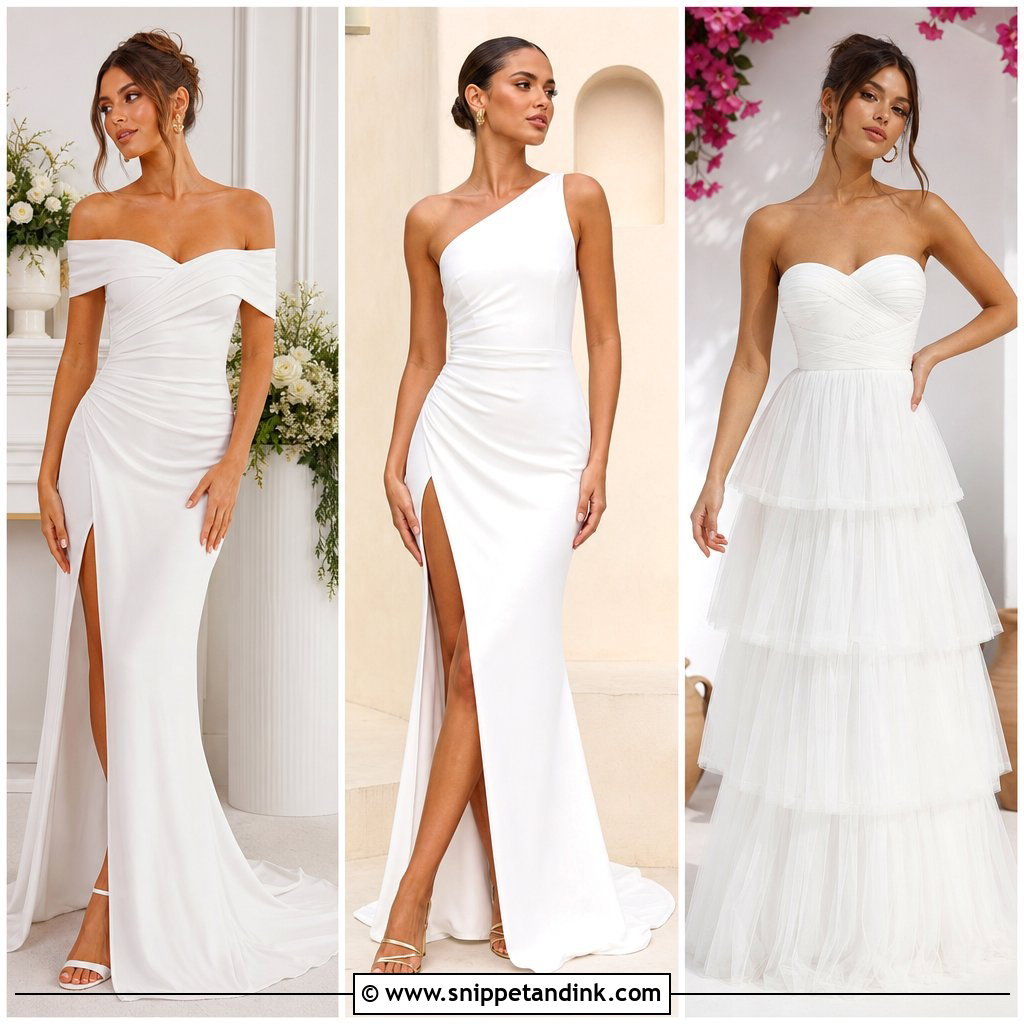


20. Bridal Ball Gown With Detachable Overskirt
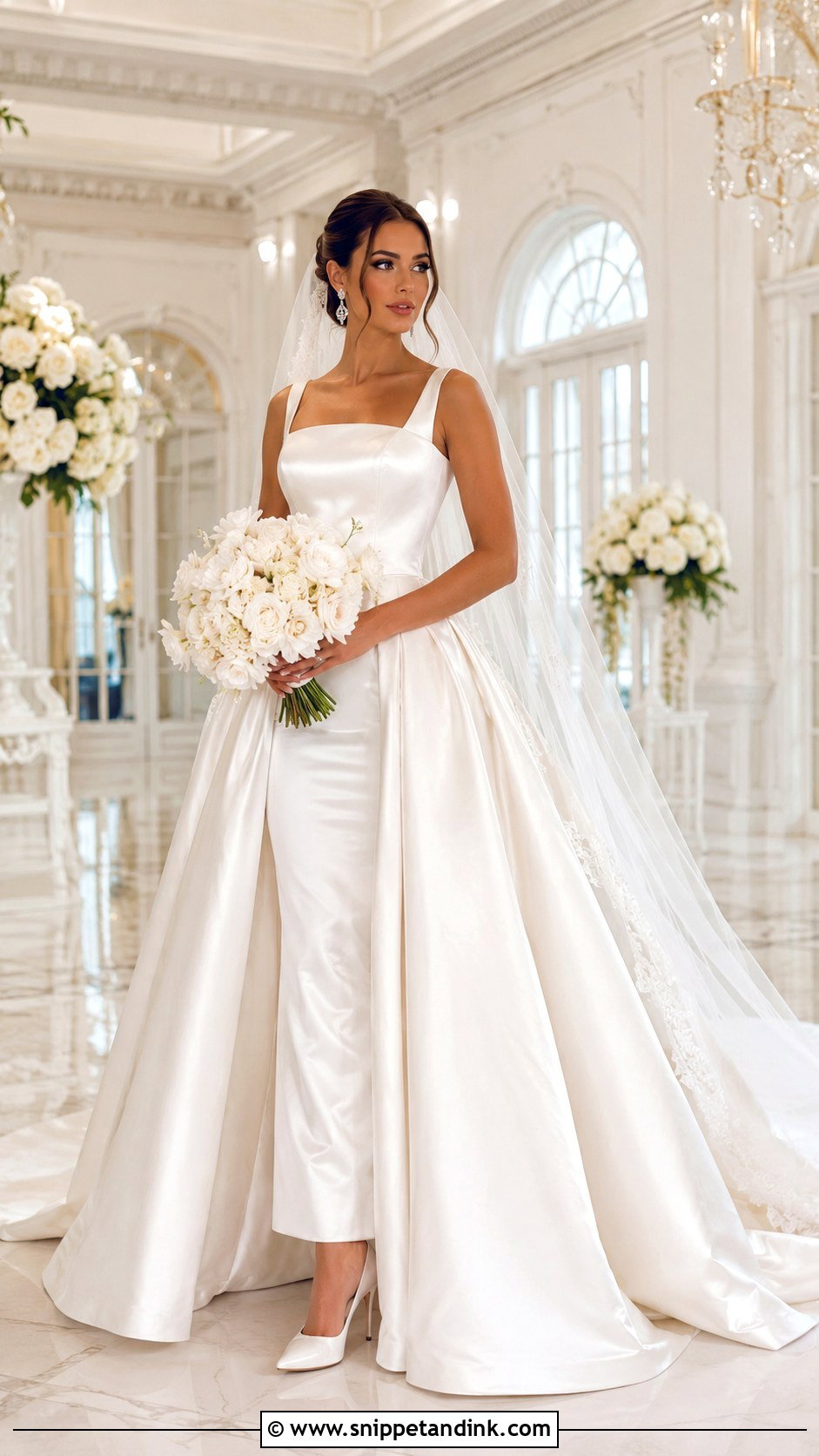
A detachable overskirt gives full volume for the ceremony and a lighter shape for the reception. Start with a fitted inner gown, such as a slim A-line or column, and add a full satin, organza or tulle overskirt at the waist. The outer layer should look like part of the design rather than an afterthought, which mostly comes down to matching the fabric exactly and hiding the waistband well. A cathedral veil, polished earrings, elegant pumps and a formal bouquet finish the ceremony look; afterward, switch to a smaller hair piece. Practise detaching and reattaching it, and give one trusted person the job on the day.
Car Doors, Restrooms and Buffet Lines in a Ball Gown
Full skirts are wonderful until you need to get somewhere in one. These are the everyday moments I talk brides through at the final fitting, because nobody thinks about them until the day.
- Cars: sit down onto the seat backwards first, then swing your legs in while someone gathers the skirt in after you. Book a car with a wide door and plenty of space in the back.
- Restrooms: face the toilet instead of sitting the usual way, so the skirt can be gathered in front of you, or have a friend hold it from behind. Some brides wear a slip made to bundle the skirt up for exactly this.
- Stairs: lift the front of the skirt a few inches with both hands and keep your eyes on the step, not the camera.
- Seating: ask for a chair without arms at the top table, because a full skirt fights armrests all evening.
- Eating: lay a napkin over the bodice and keep the skirt tucked under the table edge, away from sauces and spilled wine.
The petticoat changes all of this. A hooped petticoat holds the silhouette well but swings up when it bumps into something, while a layered tulle crinoline squashes more easily into tight spaces. Sit in both before deciding which one goes under your gown.
A Full Skirt You Can Still Sit, Turn and Dance In
A good ball gown pairs volume with support, movement and details that feel personal. Clean satin reads modern, while lace, pearls, appliqués and beading bring texture. Corsets and Basque waists give definition, sleeves and higher necklines add coverage, and detachable pieces turn a ceremony gown into a reception look. Test whatever you choose by walking, sitting, turning and raising your arms, look at the fabric in more than one kind of light, and book alterations early. Minimalist, romantic, vintage or regal, the right one is the gown you can wear all day without thinking about it.
You'll Like These Ideas:



Leave a Reply