
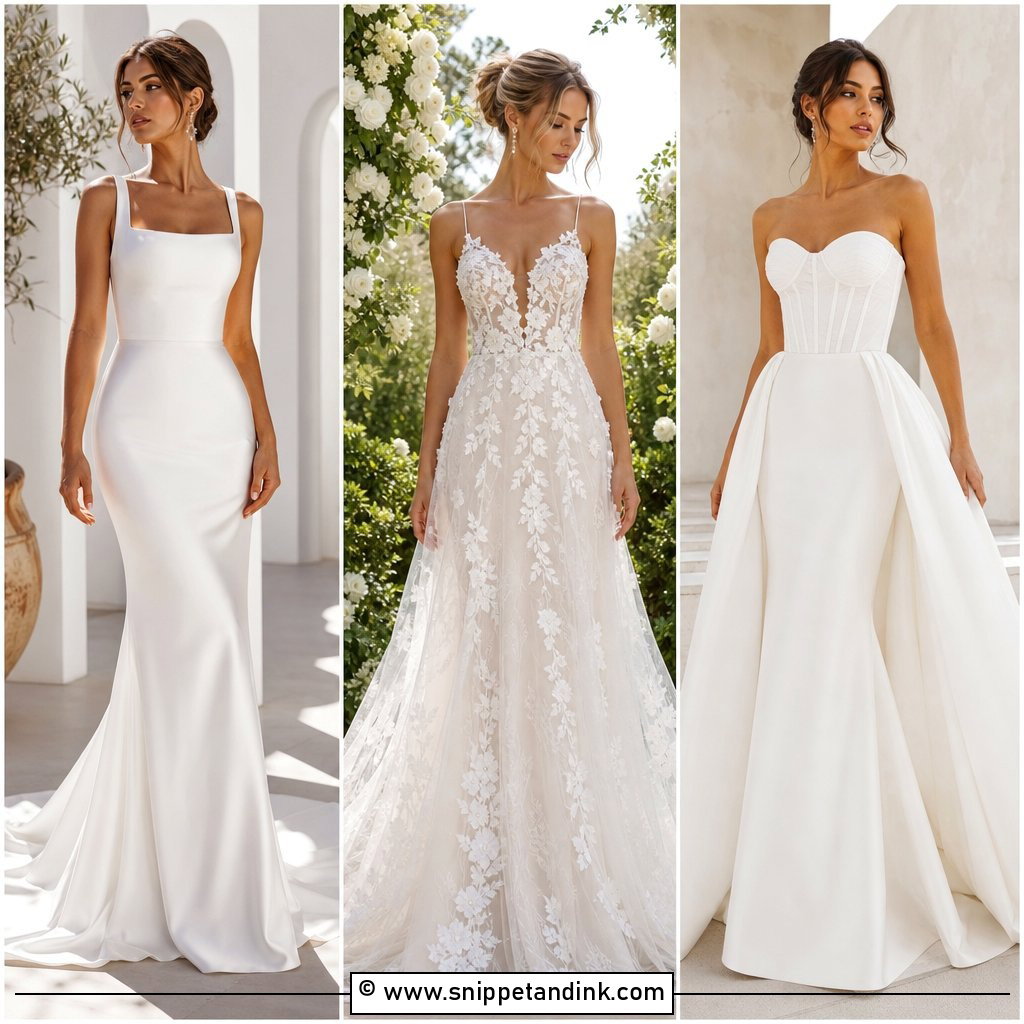
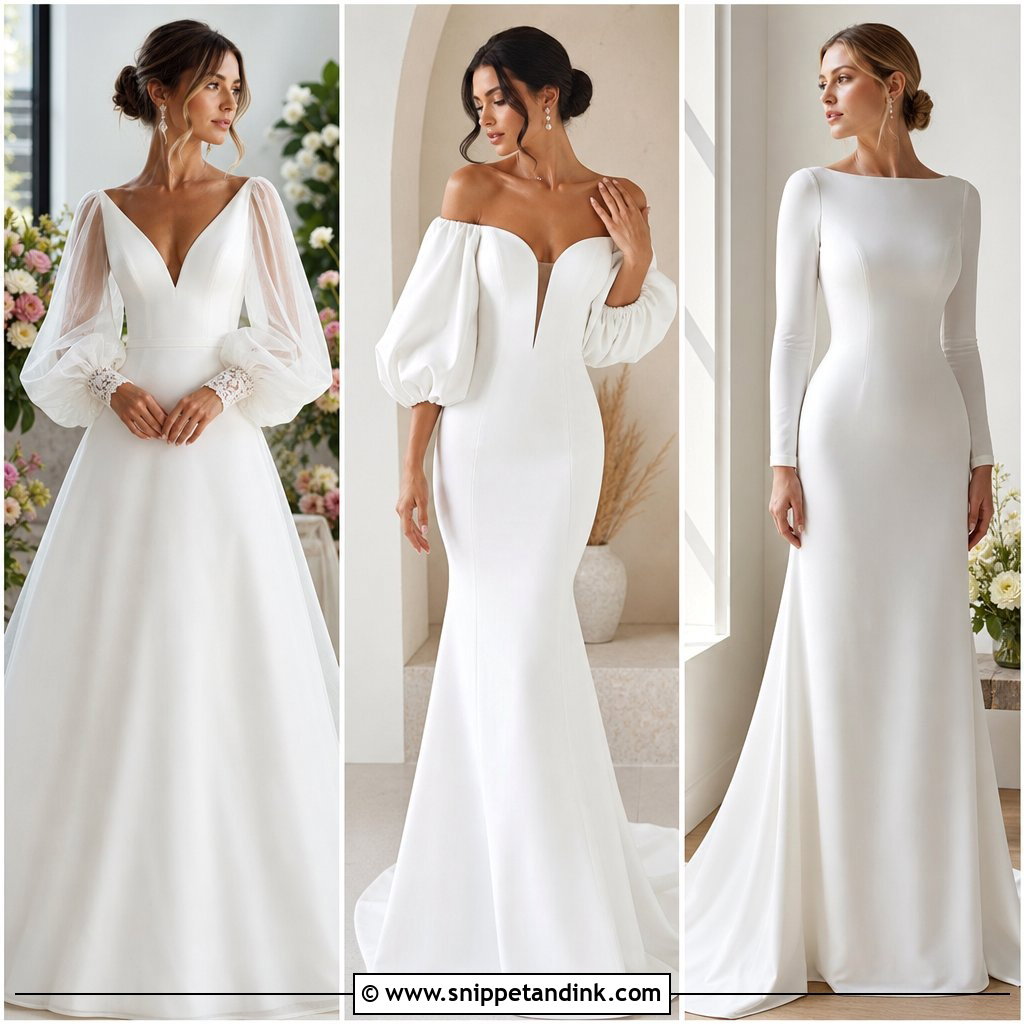
2026 gowns have more personality than any season I can remember. Sculpted corsetry sits next to renewed lace, there’s real volume again, and at the other end you’ll find fluid minimal sheaths and some genuinely odd shapes, bubble hems and padded hips among them. Lace, bows moved to the front, jewelled surfaces and inventive draping turn up everywhere. Trends are a good starting point, but comfort, venue and season still decide whether a gown works. For each of these twenty I’ve noted how I’d style it, plus the one thing I watch for when a bride tries it on.
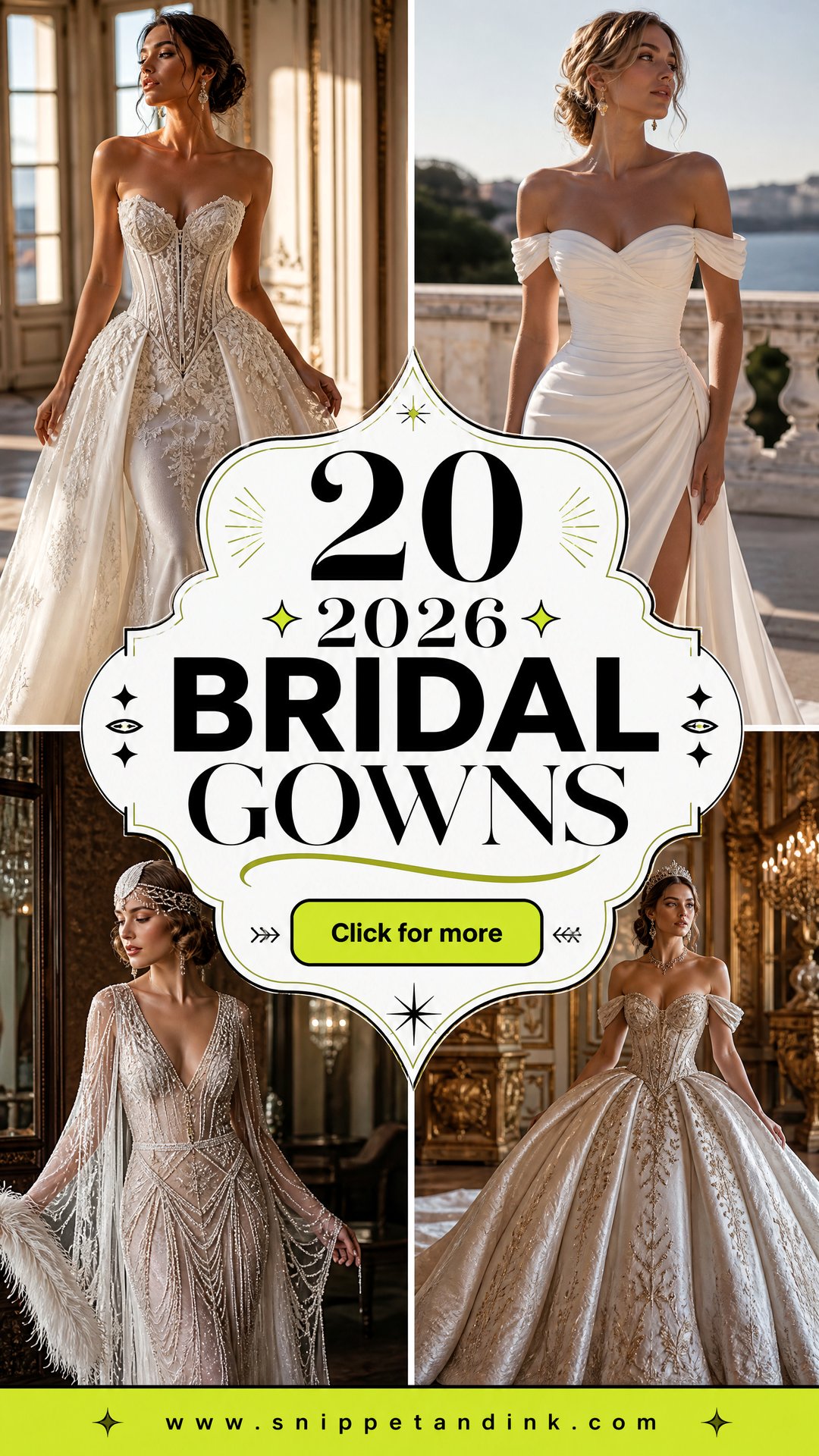
Your Appointment Is the Place to Gamble on a Bubble Hem
Several of these 2026 shapes look strange on a hanger and completely different on a body. The only way to know is to try them, and a few small choices make that appointment far more useful.
- Wear smooth, skin-toned underwear and bring a strapless bra. Corsetry and sheer bodices can’t be judged over a patterned bra.
- Bring shoes close to the height you’ll wear. A two-inch difference changes where a basque point or a bubble hem falls.
- Ask the consultant to pull one style you didn’t choose. I always do this, and it’s often the one that wins.
- Remember that samples are a set size and clipped to fit. If a sample is too small to close, ask for one nearer your size before judging support.
- Sit down, raise your arms and walk across the room in every serious contender. Sculpted hips, halters and front bows reveal their problems only when you move.
Keep the group small, too. Two or three people whose taste you trust will help you more than a crowd with competing opinions.
1. Basque Waist Bridal Gown
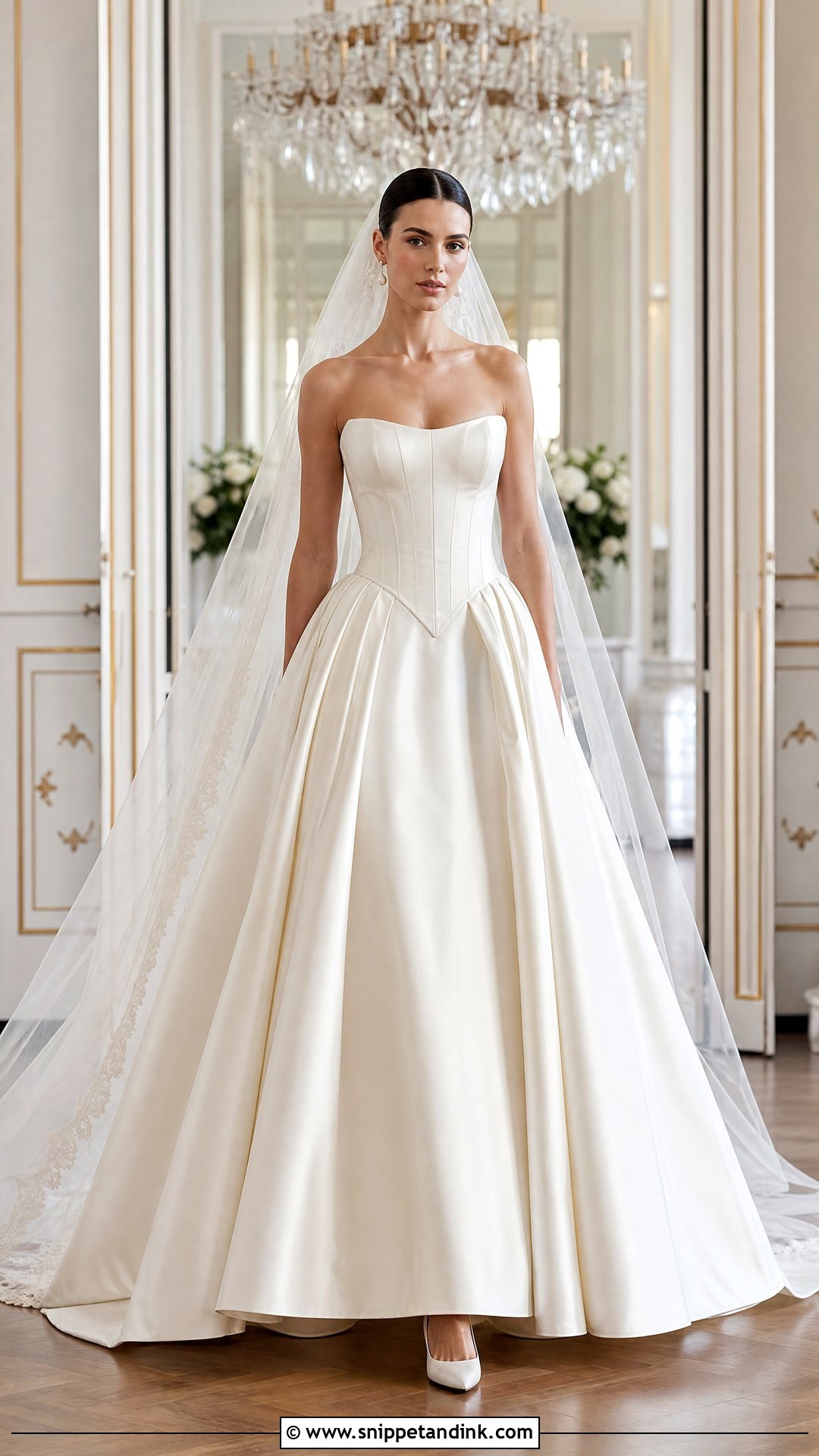
A basque waist bridal gown points its waistline down into a V, which lengthens the torso. For 2026 it’s usually built on a structured corset bodice over a full satin or mikado skirt, and the firm boning does the supporting. A clean strapless neckline looks modern; lace panels and fine straps soften it. I check the point twice at alterations, once walking and once seated, because a basque that’s a fraction too long presses into the tops of your legs every time you sit. A cathedral veil, pearl drops and pointed ivory pumps complete it without fuss.
2. Lace Ball Gown Bridal Gown
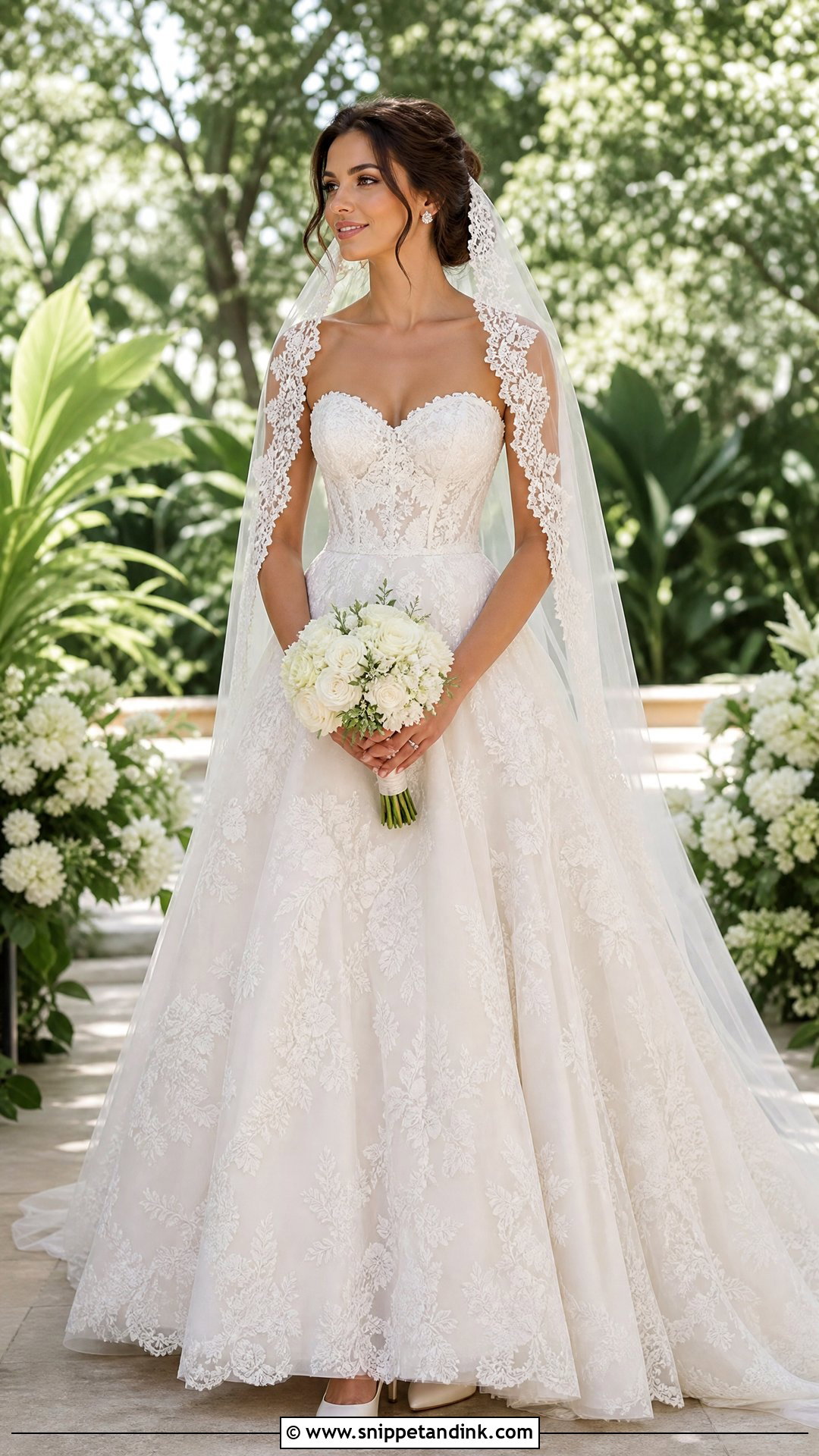
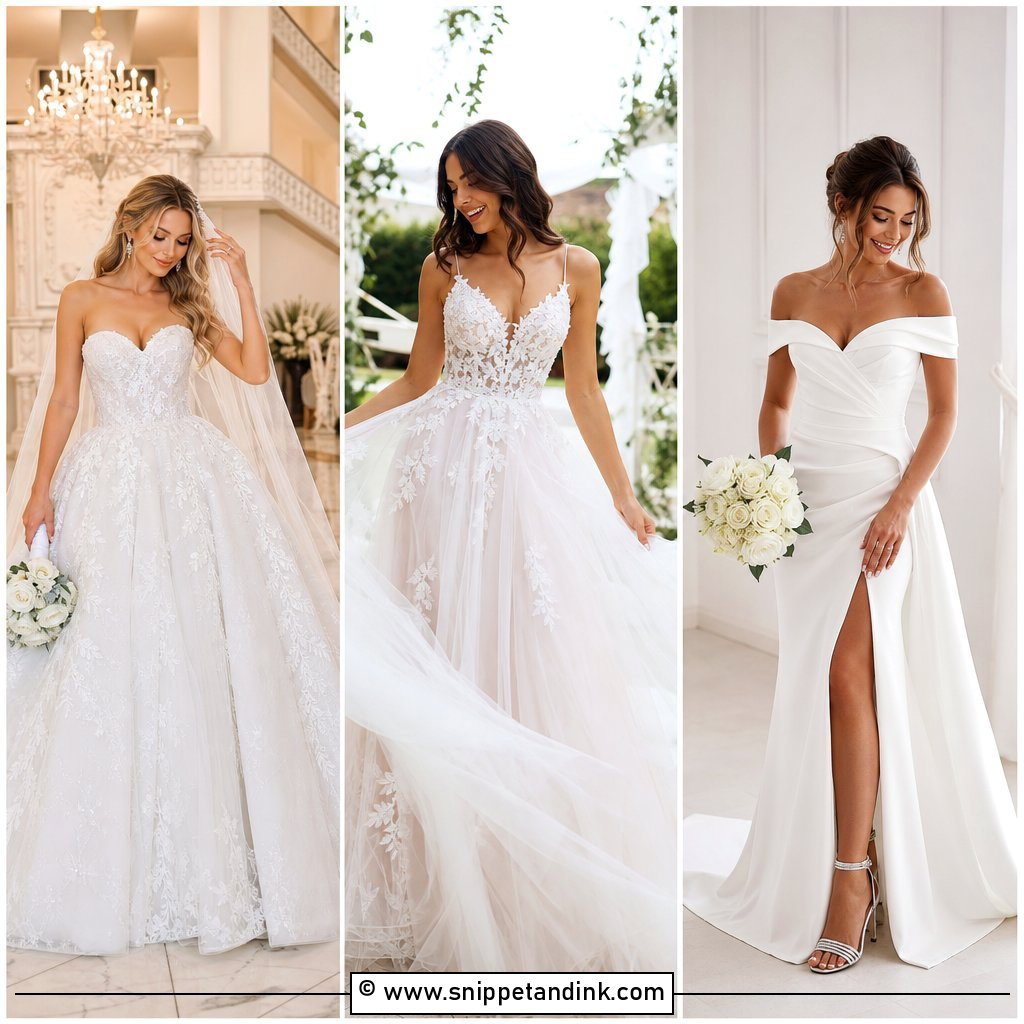
Lace ball gowns came back with real variety this year, from fine layered lace to chunky crochet-style patterns. What separates a good one from a cheap one is placement. The motifs should flow from the bodice across the waist seam and down the skirt, so the dress doesn’t look cut in half. A scoop, sweetheart or off-the-shoulder neckline balances all that volume. Block-heel pumps hidden under the hem will save your feet, and a lace-edged veil with simple studs keeps the detail consistent. Carry a streamlined bouquet. It suits a formal room as easily as an evening garden.
3. Cat-Eye Neckline Bridal Gown
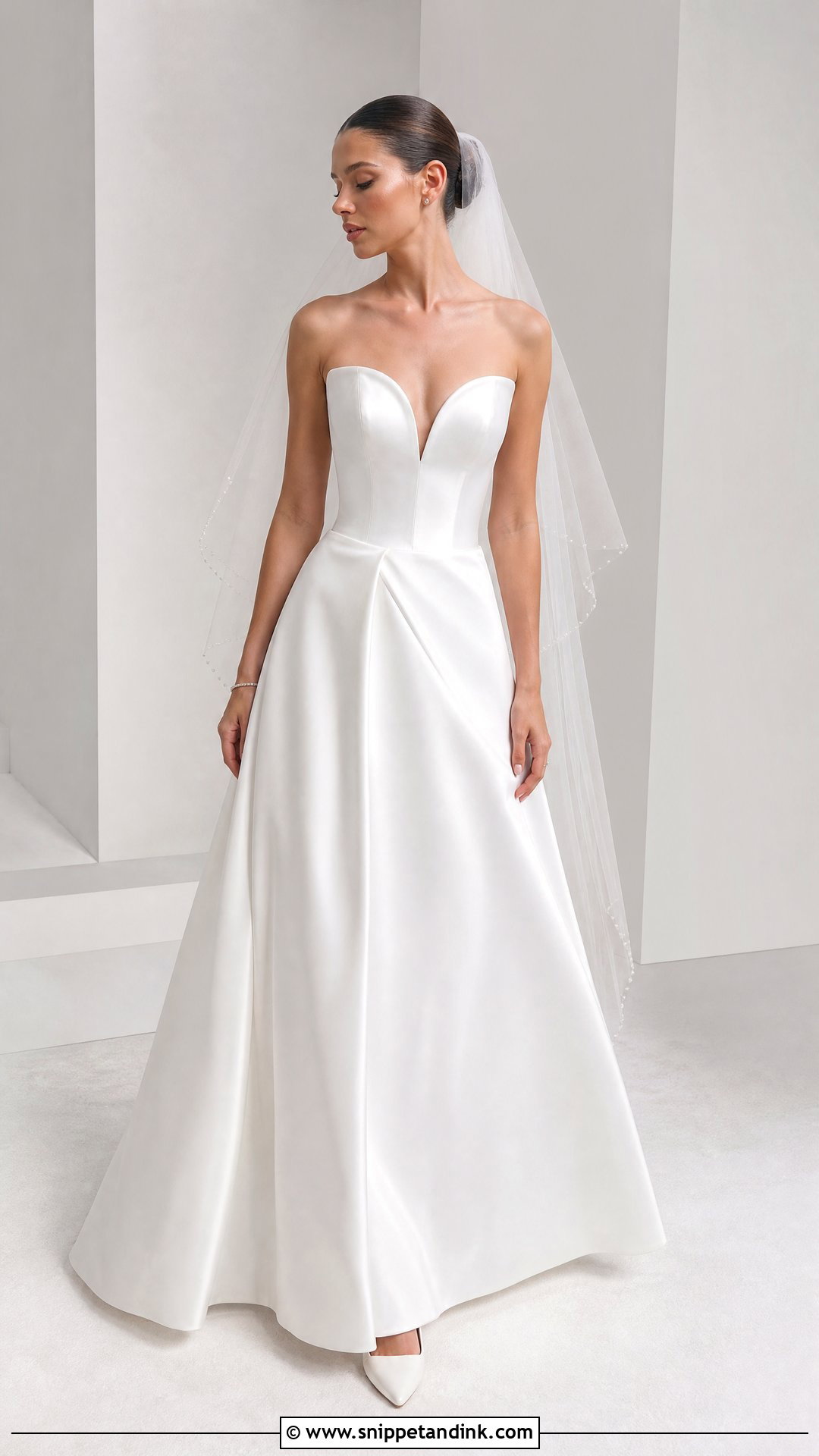
The cat-eye is the sharpest strapless neckline of 2026: each side of the bust curves up to a point, framing the collarbones like a pair of wings. It’s only as good as its structure. I check both points from the side and from above, because if the corset isn’t fitted tightly to the ribs, the points tip forward when you bend. An A-line satin skirt keeps the line clean. No necklace, just small diamond studs and a slim tennis bracelet. A sleek low bun, fingertip veil, closed-toe pumps and a structured mini bag finish it.
4. Front Bow Bridal Gown
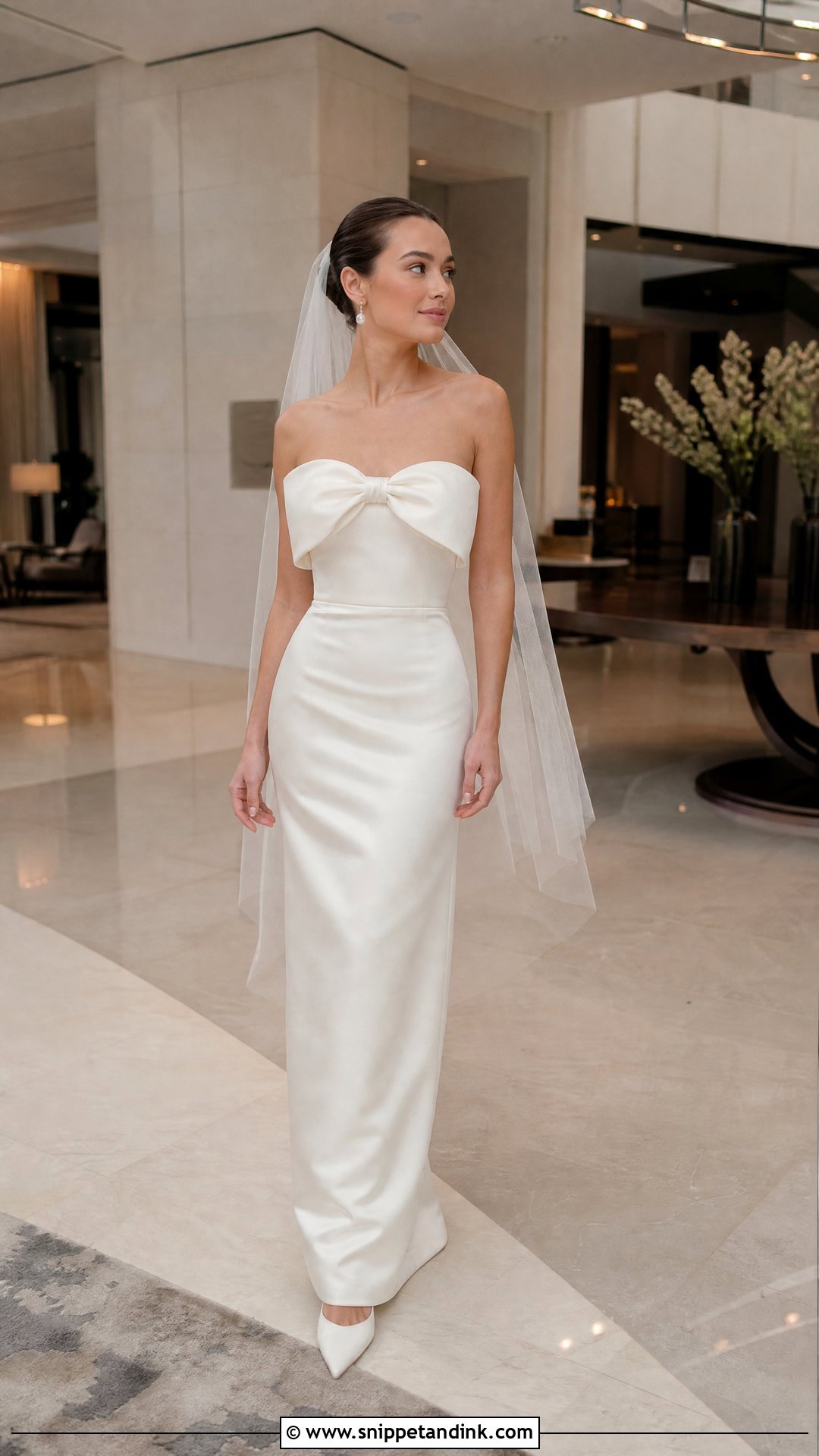
Bows have moved from the back to the front: onto bodices, waistlines and the fronts of skirts. My rule is one bow, placed with intent. At the neckline of a satin column it looks modern; at the waist of a tulle A-line it’s softer. A bow near the bust makes a necklace redundant. Pearl earrings, a plain veil and pointed pumps are enough. The practical question is weight, since a large satin bow can drag a neckline down over the evening, so I check it’s anchored to the bodice structure and not just the outer fabric. A detachable version gives you a cleaner reception look.
5. 3D Floral Bridal Gown
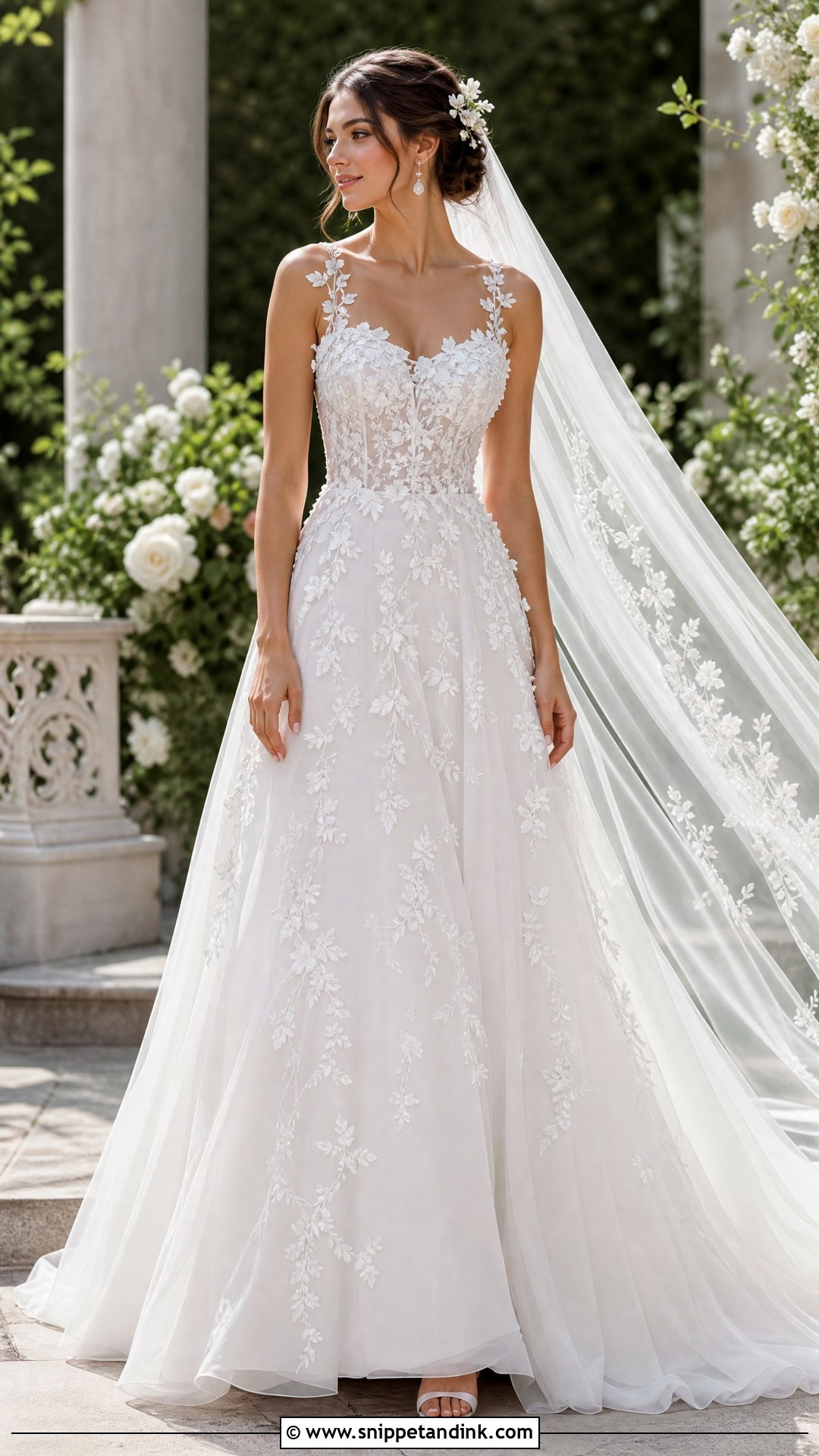
Dimensional flowers look most natural when they’re densest at the bodice and drift down a tulle or organza skirt. That shapes the waist without smothering you. For a garden wedding, soft ivory blooms with small pearl centres and embroidered leaves are hard to beat. A chapel veil, floral hairpins and understated sandals are plenty; raised appliqués already add enough depth. The flowers nearest your arms will rub and catch the veil, so I always ask the bride to swing her arms and hug before she commits. Fall 2026 collections paired these florals with corsetry, full skirts and mixed textures.
6. Bubble Hem Bridal Gown
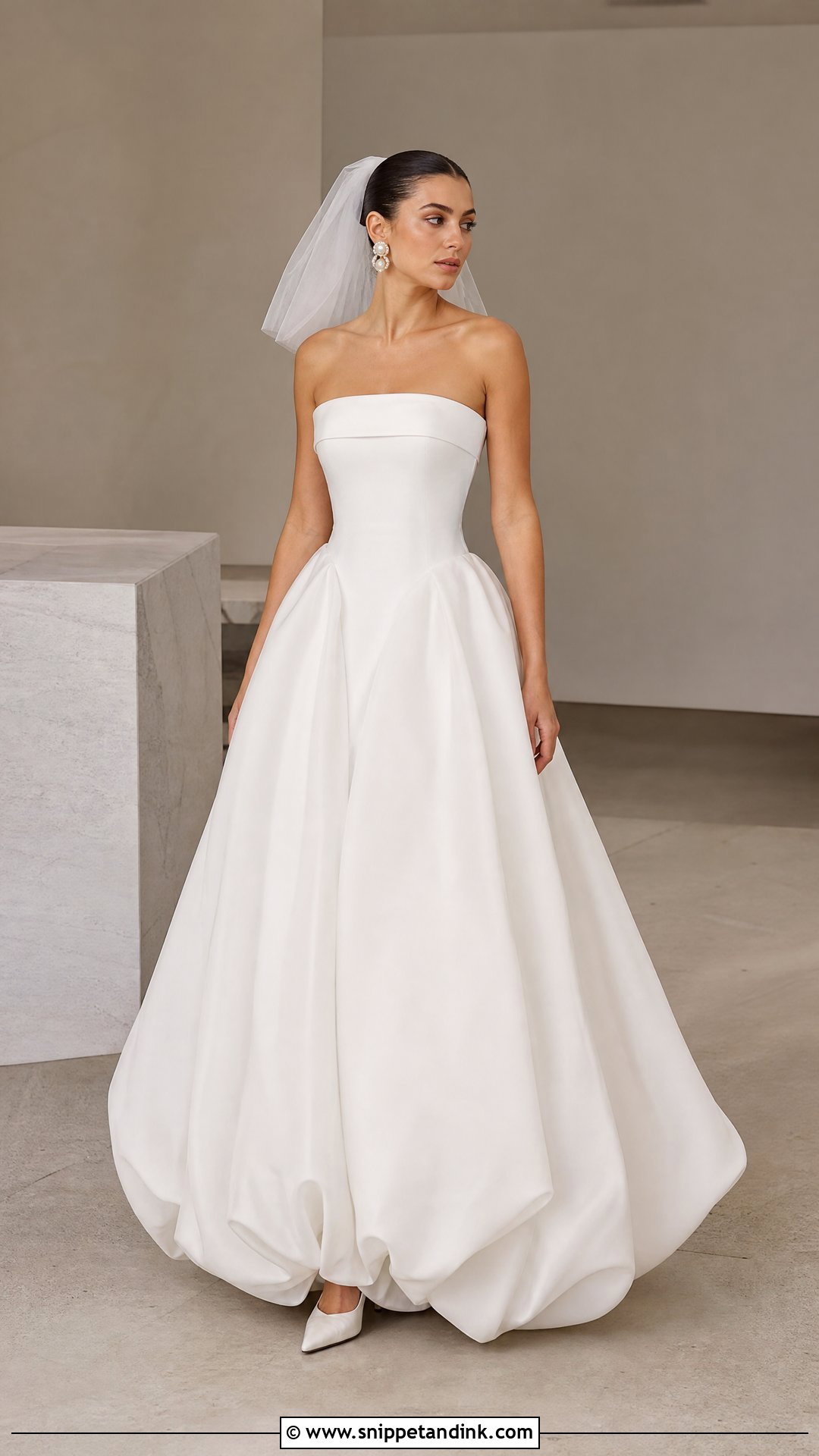
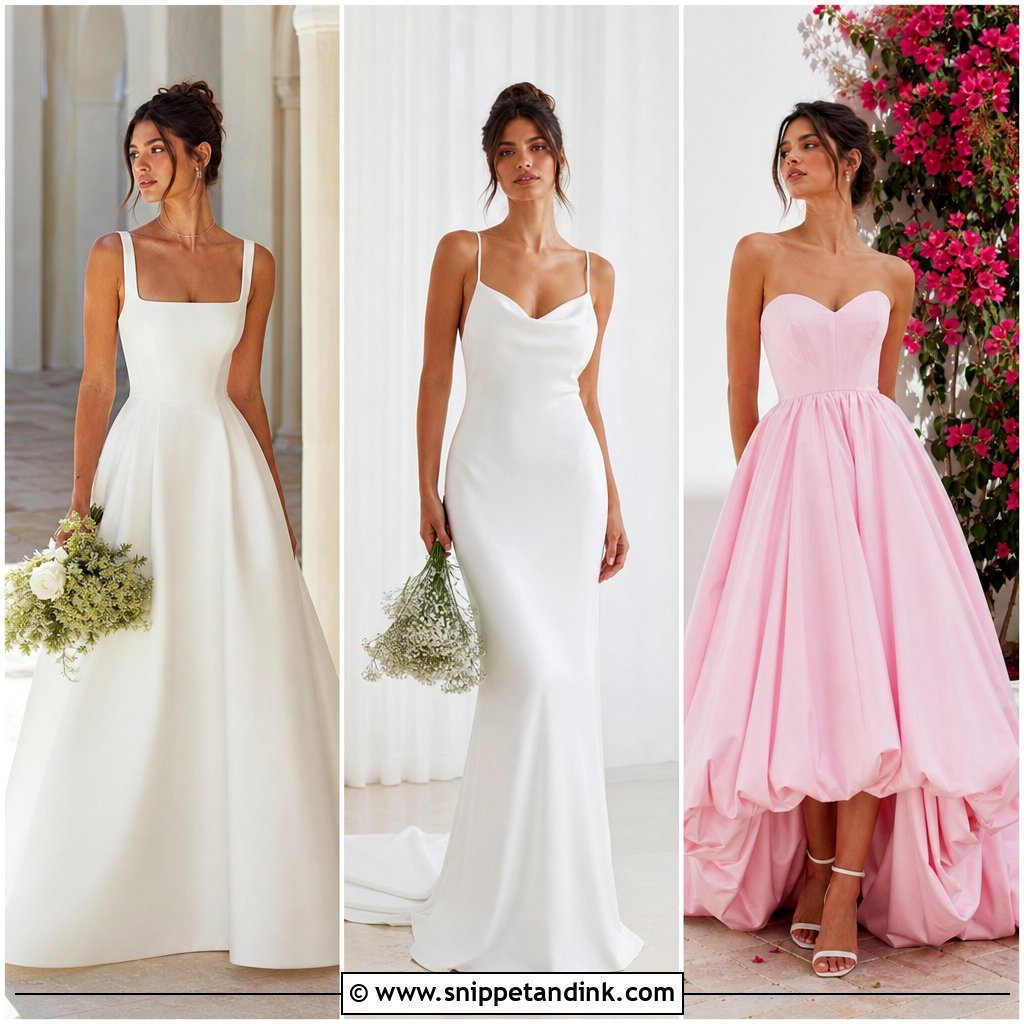
A bubble hem is the most surprising shape on this list. The skirt is tucked back in at the bottom, giving a rounded, slightly sculptural volume without heavy petticoats. In full length, over a fitted strapless bodice and soft organza, it reads as dramatic rather than costume. Both short and long versions appeared in the Spring and Fall 2026 seasons. Because the hem curves inward, it shortens your stride. Test it on stairs and in a brisk walk; if your feet feel caged, the internal support needs adjusting. Sculptural pearl earrings, sleek pointed pumps, a compact bouquet and a short veil or hair bow keep the mood playful.
7. Sleek Satin Column Bridal Gown
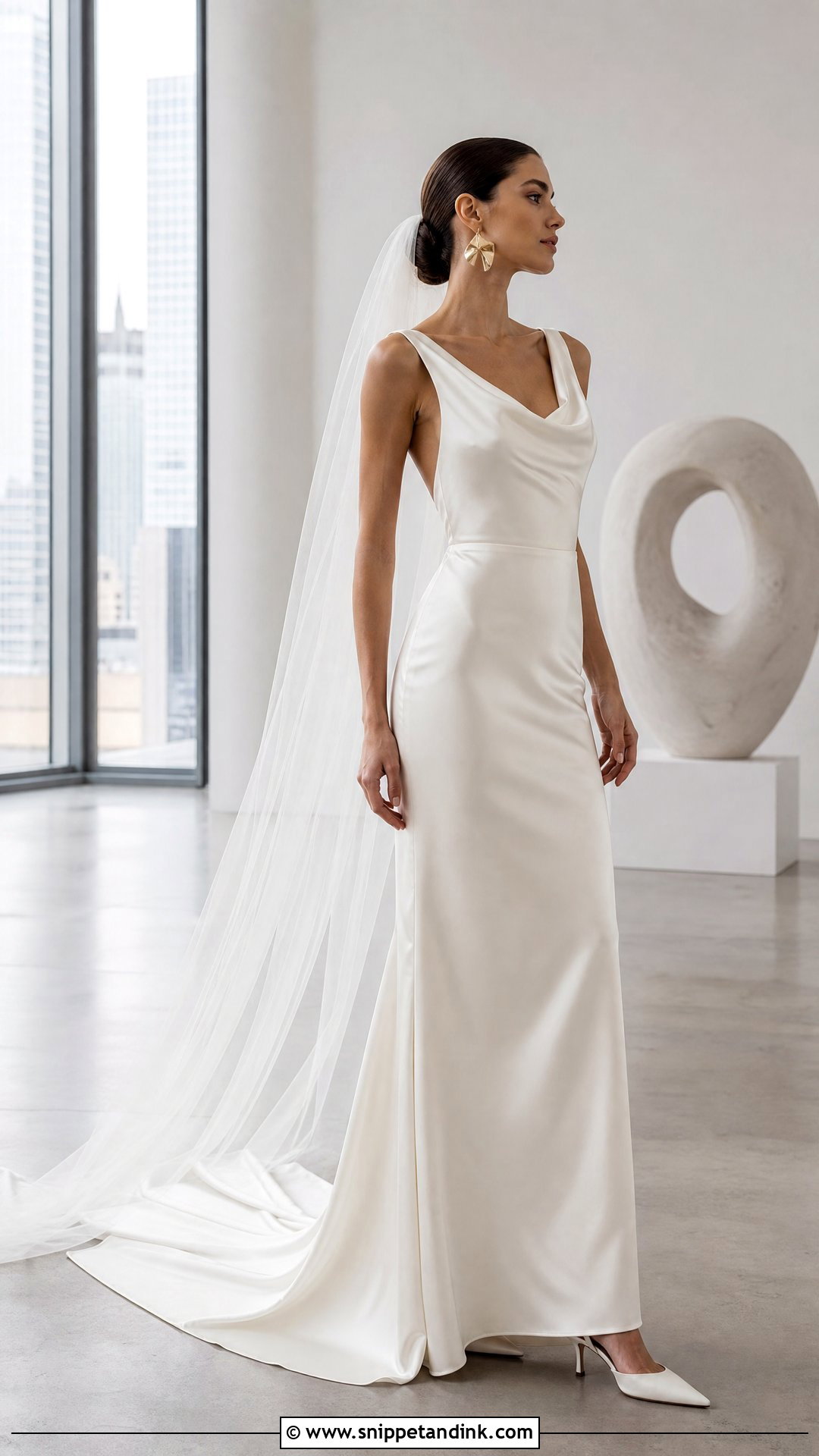
A satin column is quiet until the light moves across it. A softly draped neckline, defined waist and skirt that falls close without clinging are all it needs, perhaps with an open back or an angular train. Fall 2026 leaned into this restraint with fluid fabrics and cowl necklines. Glossy satin shows every uneven line, so I fit it over the exact underwear and check the side seams under strong light. A long sheer veil, sculptural earrings, pointed slingbacks and a small satin clutch finish it. Modern hotels, lofts and galleries suit it best.
8. Jeweled Corset Bridal Gown
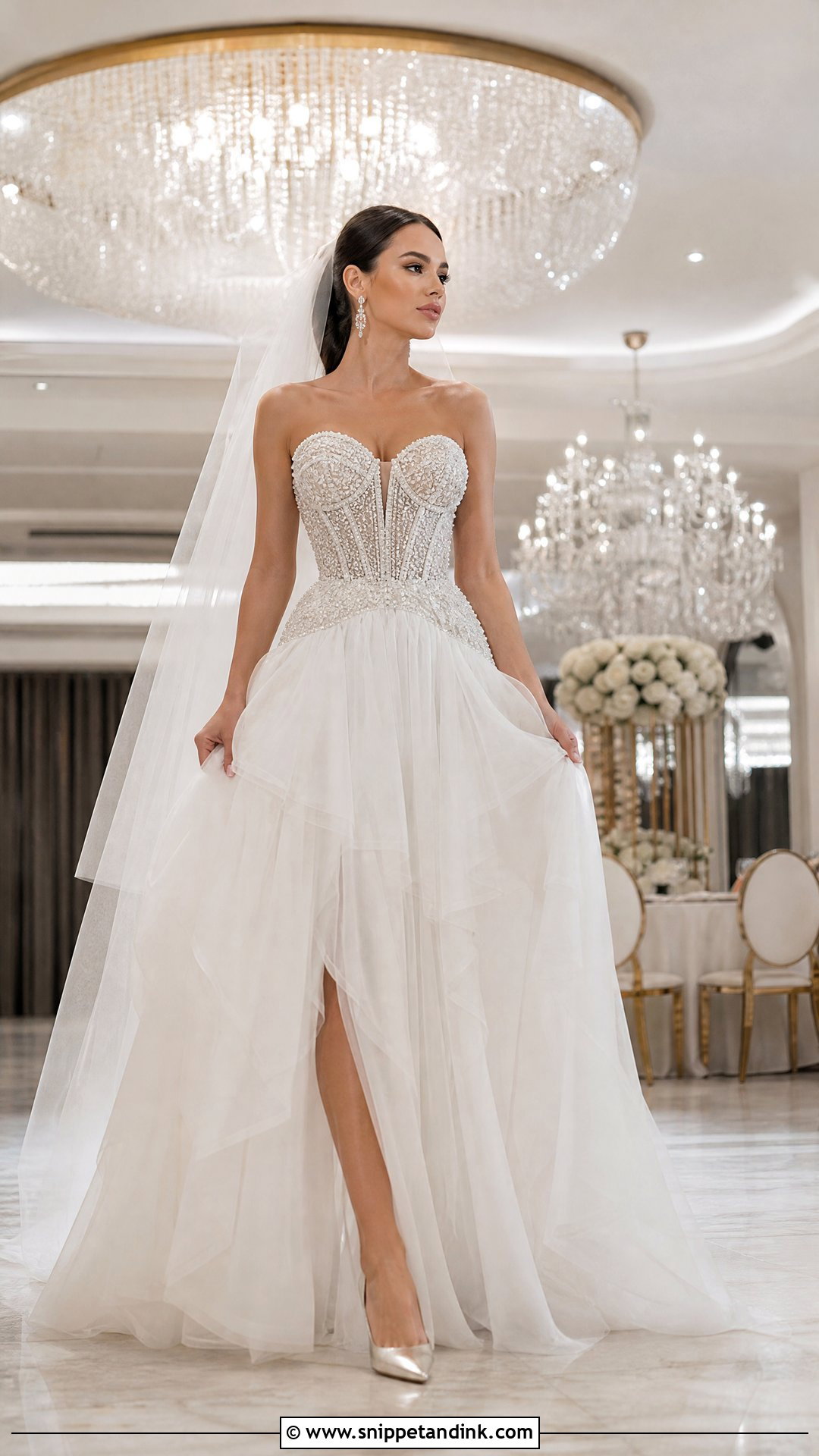
Jewelled corsets were one of the strongest directions of Fall 2026, from a scatter of pearls to bodices covered in stones. The skirt should calm things down: plain satin or soft tulle. When shopping, I tilt the bodice under a light and run my fingers along the underarm. Stones should be evenly set, firmly attached and smooth where your arms rest, or they’ll scratch by the first dance. Small crystal earrings, metallic ivory pumps and a sheer unbeaded veil suit it. Skip a necklace unless the neckline leaves plenty of open skin.
9. Off-the-Shoulder Bridal Gown
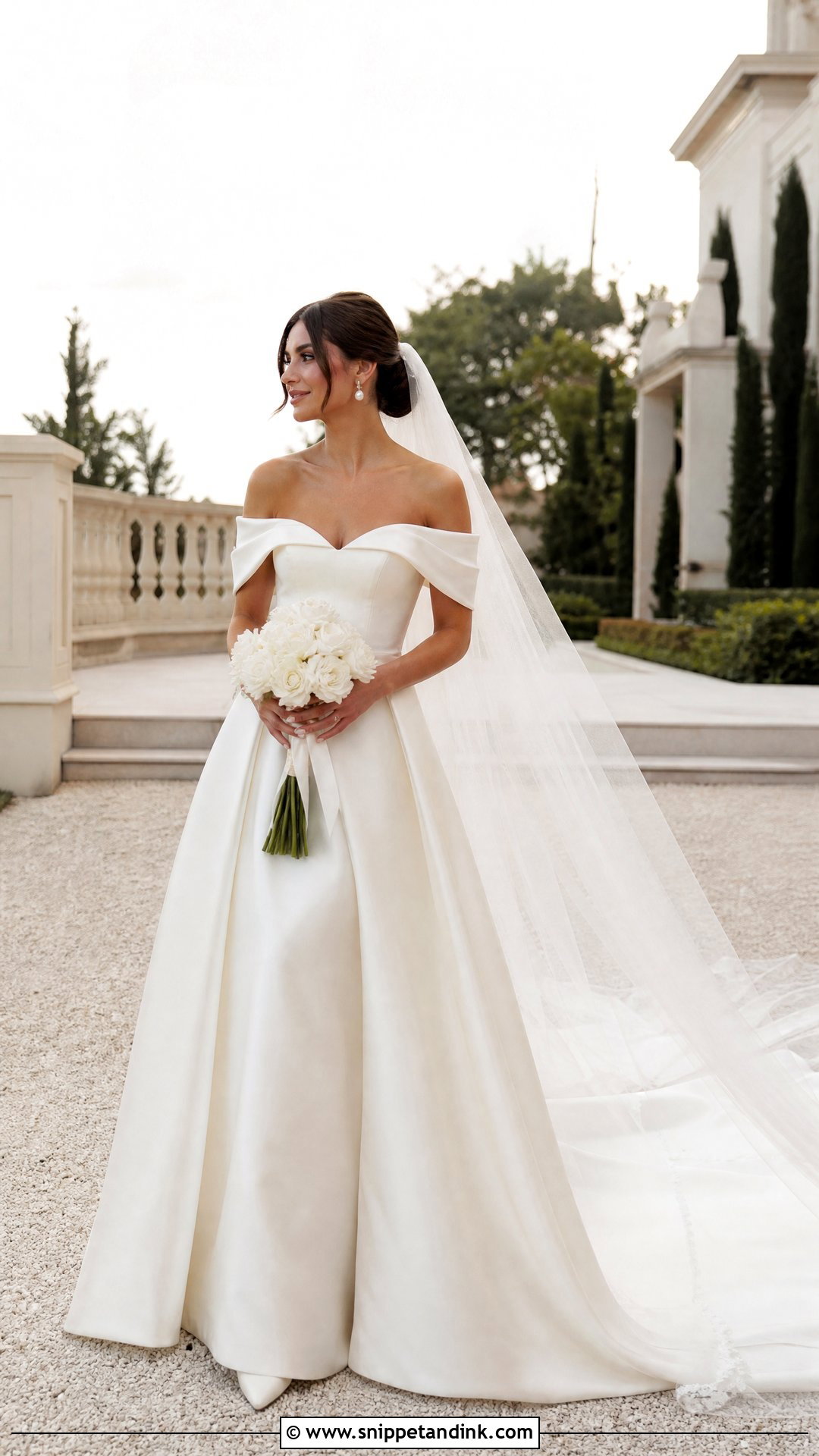
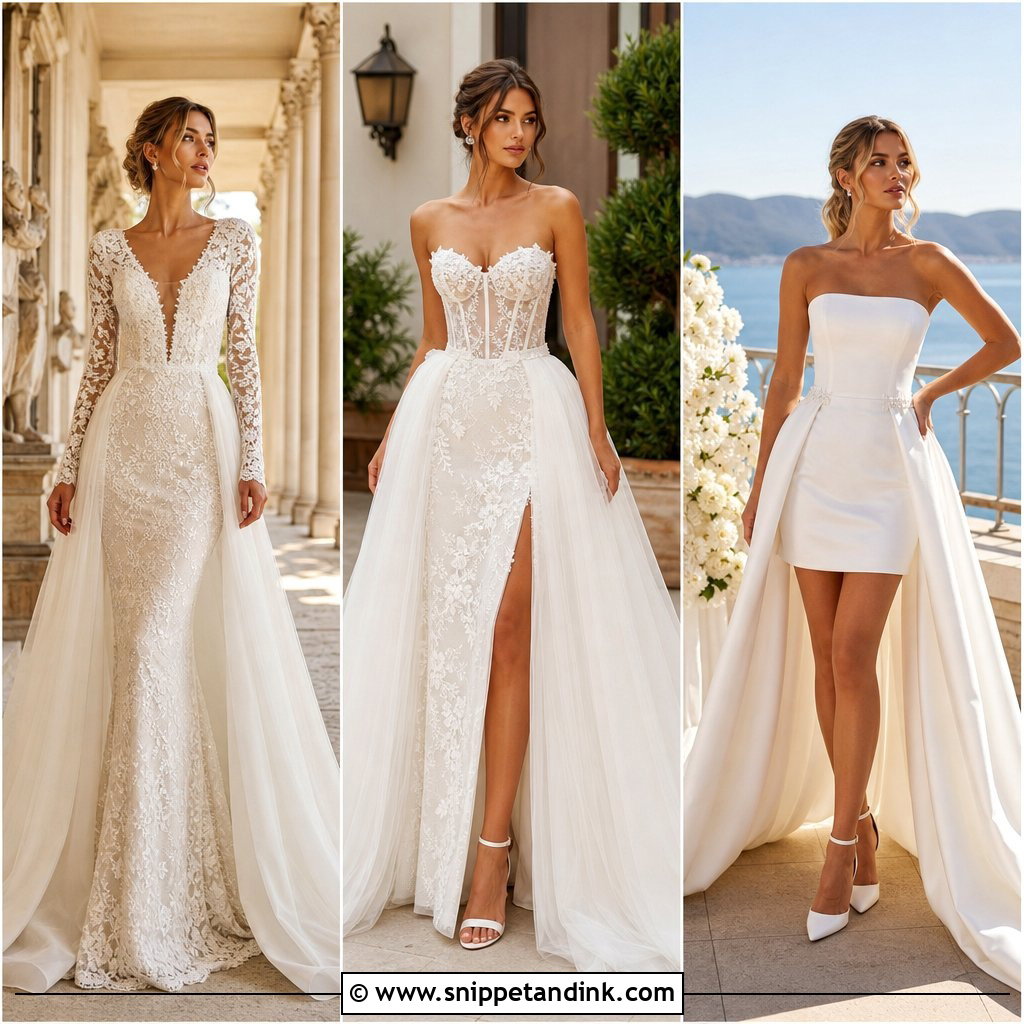
Draped off-the-shoulder sleeves frame the face and collarbones, and in 2026 they often detach to reveal a strapless bodice for the reception. Satin keeps it formal; lace softens it. The support has to come from the bodice, never from the drapes, so I ask brides to lift their arms, hug and sit before I approve the fit. A fitted bodice over a structured A-line skirt balances the shoulders. A low chignon, pearl earrings, a cathedral veil and closed-toe heels complete it. Avoid a wide necklace that competes with the line.
10. Halter Neck Bridal Gown
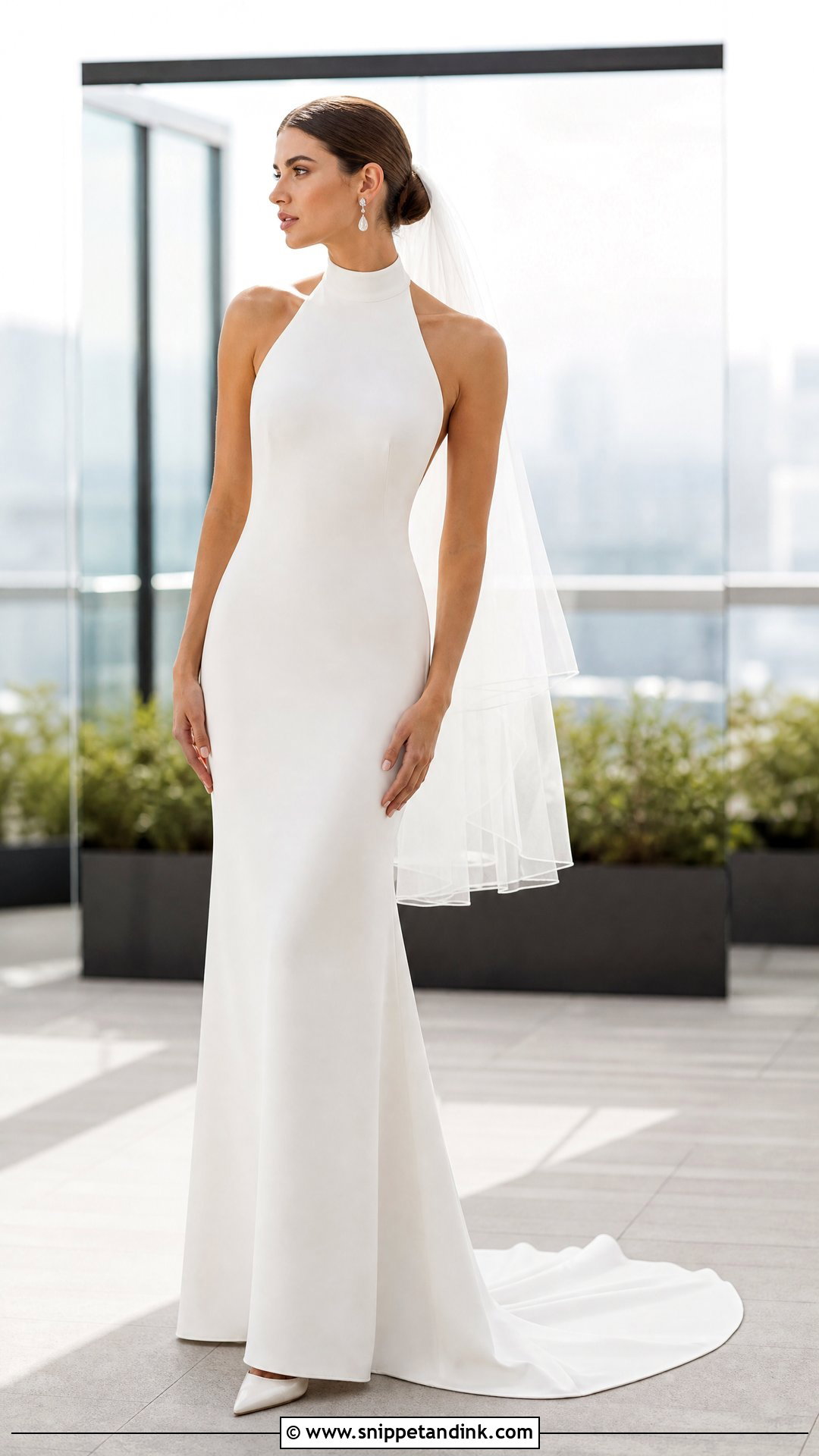
Halters pull attention upward and leave the back bare, which is a good trade on a slim crepe sheath. Several Fall 2026 collections showed exactly that: a high halter front, an open back and a narrow train. The weak point is the neck strap. If it’s carrying the bust, it will ache by evening, so for brides who need support I look for hidden cups, reinforced side seams and a closure wide enough to spread the pressure. A sleek bun, statement earrings and pointed heels suit it. Set a light veil below the bun so the back stays visible.
11. Victorian High-Neck Bridal Gown
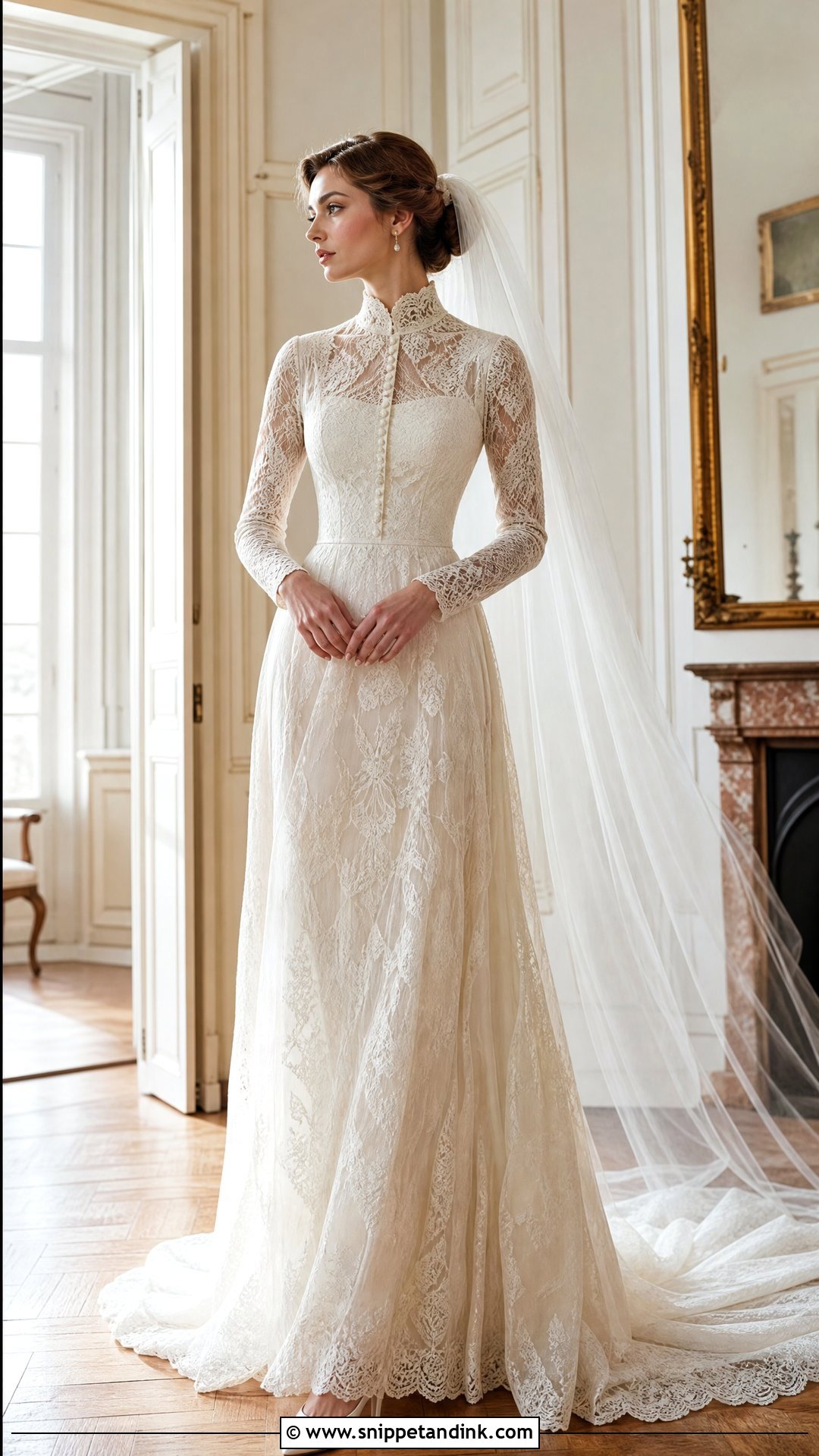
A high lace collar, long sleeves and covered buttons give a Victorian feel; a partially lined neckline lets the lace pattern show against the skin. Fall 2026 put these collars next to regal corsetry and other historical details. The risk is looking like a costume, which is why I pair it with very current accessories: minimal pearl earrings, satin pumps and a plain tulle veil. A neat low bun keeps the collar visible. Lace at the throat can itch after hours of turning your head, so ask for soft backing and smooth inner seams.
12. Accentuated Hip Bridal Gown
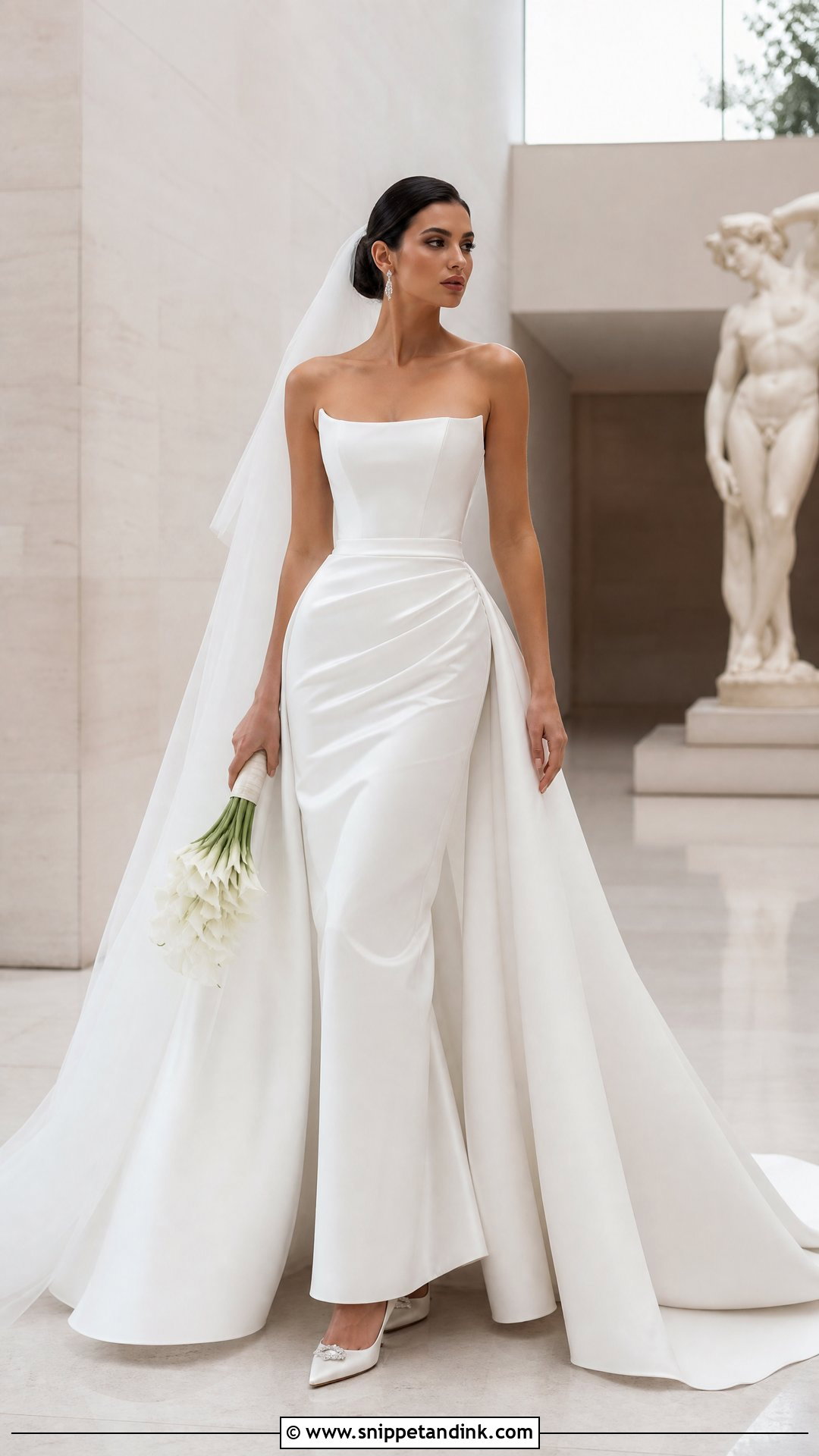
This is the most editorial shape here. A gown with sculpted hips exaggerates the hourglass with side draping, padding or a detachable overskirt, and 2026 collections played with waterfall skirts and historical volume to get there. The waist must be sharply defined and the fabric smooth, otherwise it looks accidental. Skip belts entirely. Walk and sit in the sample before ordering, because you’ll need space between chairs and down the aisle. Simple drops, a plain veil, pointed heels and a narrow bouquet keep the silhouette readable. A removable hip piece gives you freedom for dancing.
13. Tiered Tulle Bridal Gown
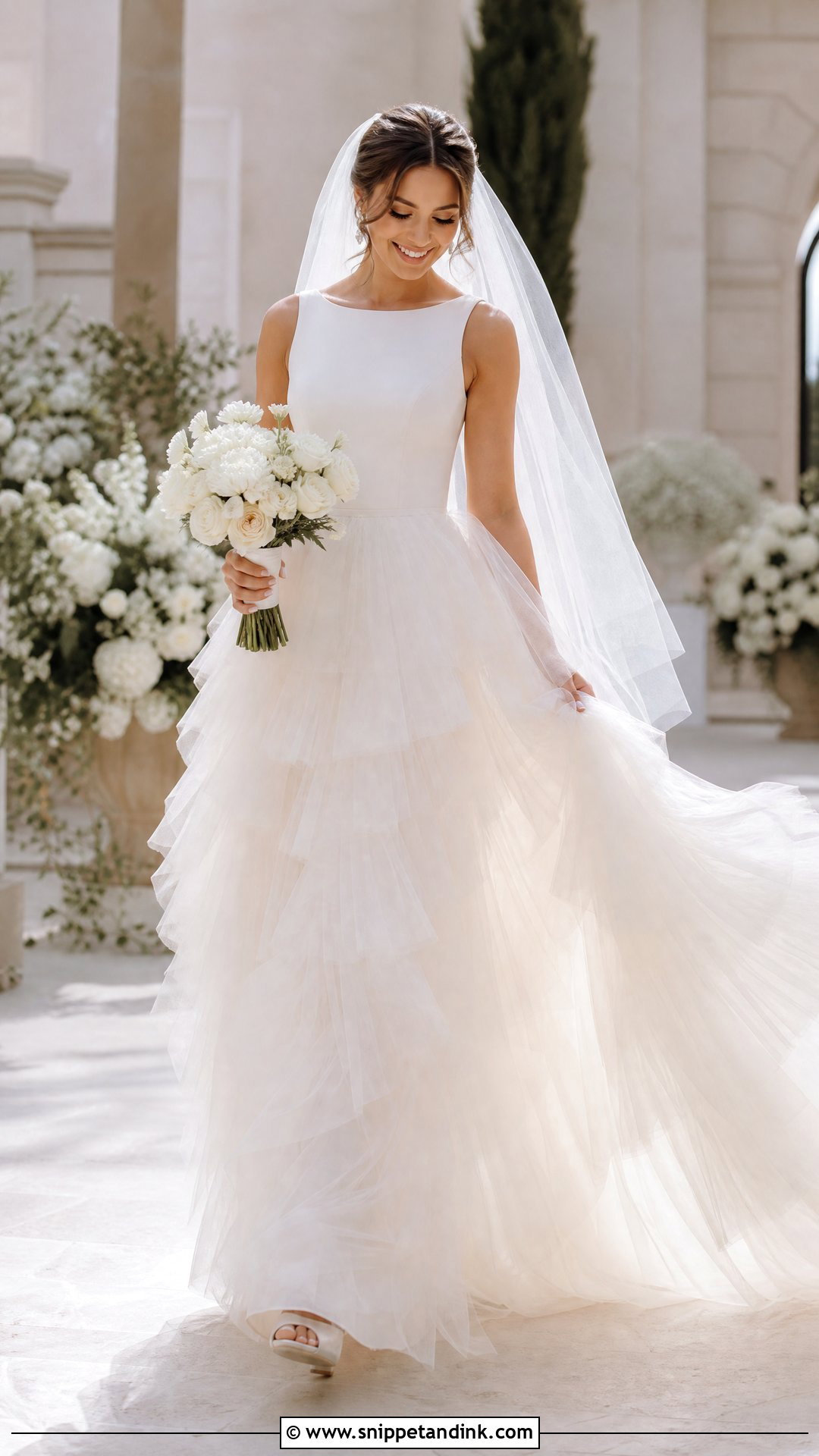
Tiered tulle floats when the bodice stays simple and fitted. Soft cascading tiers look romantic; crisp horizontal layers, the wedding-cake skirts of Fall 2026, look bolder. Ask whether the tiers can be bustled without crushing them, as that’s where many tiered gowns struggle. Lightweight netting and finished edges keep the skirt airy rather than stiff. A plain fingertip veil, delicate earrings and stable block heels under the skirt suit it. A structured bouquet gives contrast against the soft fabric.
14. 1950s-Inspired Bridal Gown
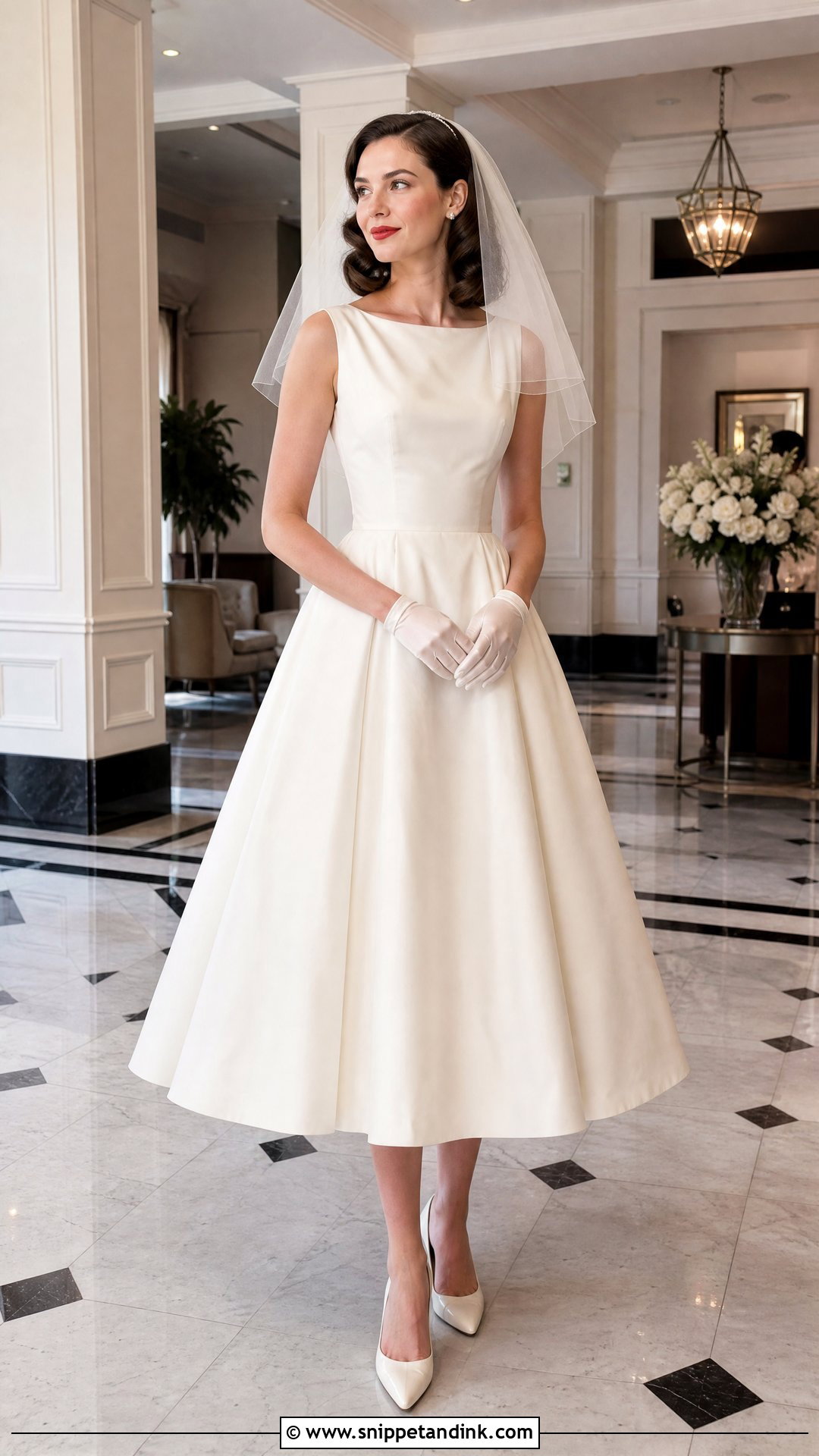
Fifties glamour is all waist and neckline. Silk faille, satin or mikado hold the sweep of the skirt, in tea length or full length, and a portrait neckline or wide off-the-shoulder collar carries the vintage mood. Fall 2026 echoed the era with emphasised waists, bows and jewelled accents. Tailoring has to be precise here; a structured fifties bodice that’s even slightly loose looks borrowed. Pearl studs, pointed pumps, short gloves and a shoulder-length veil suit it, with a waved bob or a chignon. At tea length, embellished shoes are your chance for personality.

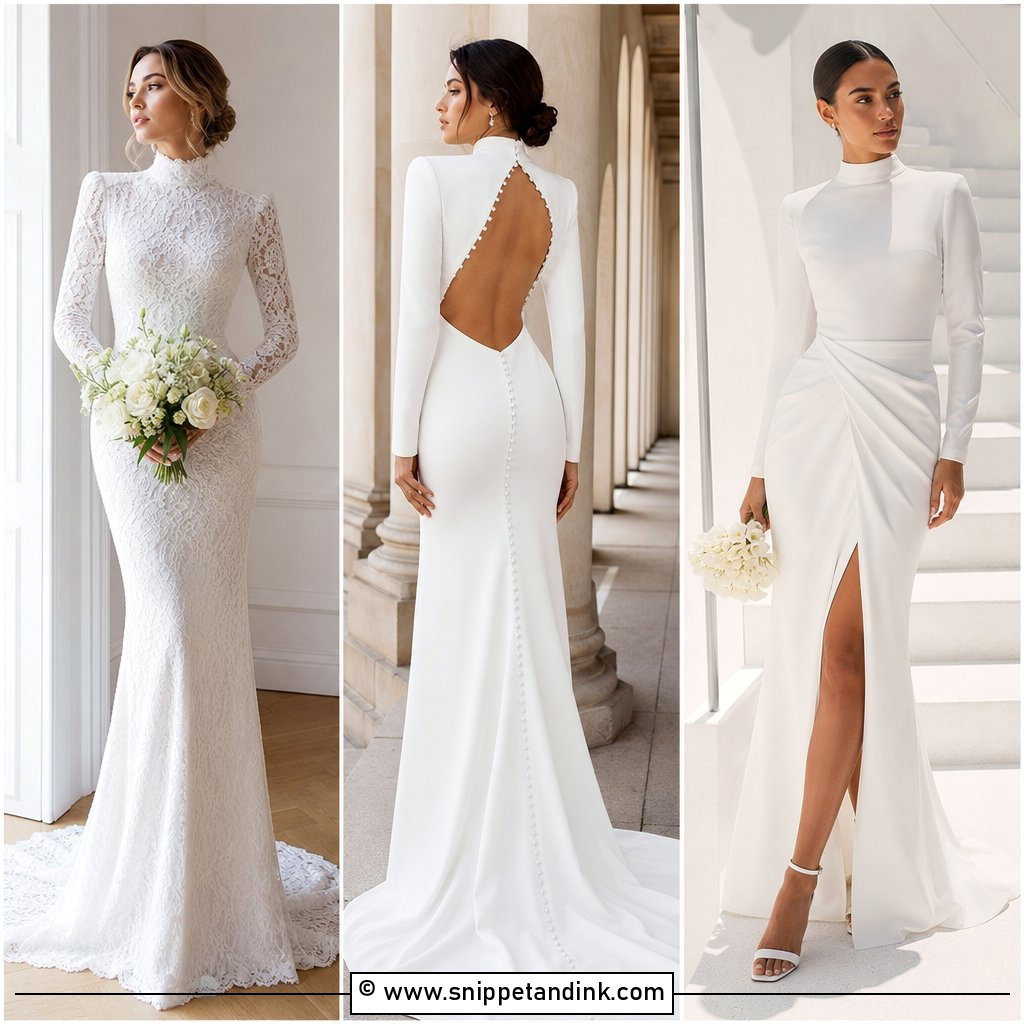

15. 1920s-Inspired Bridal Gown
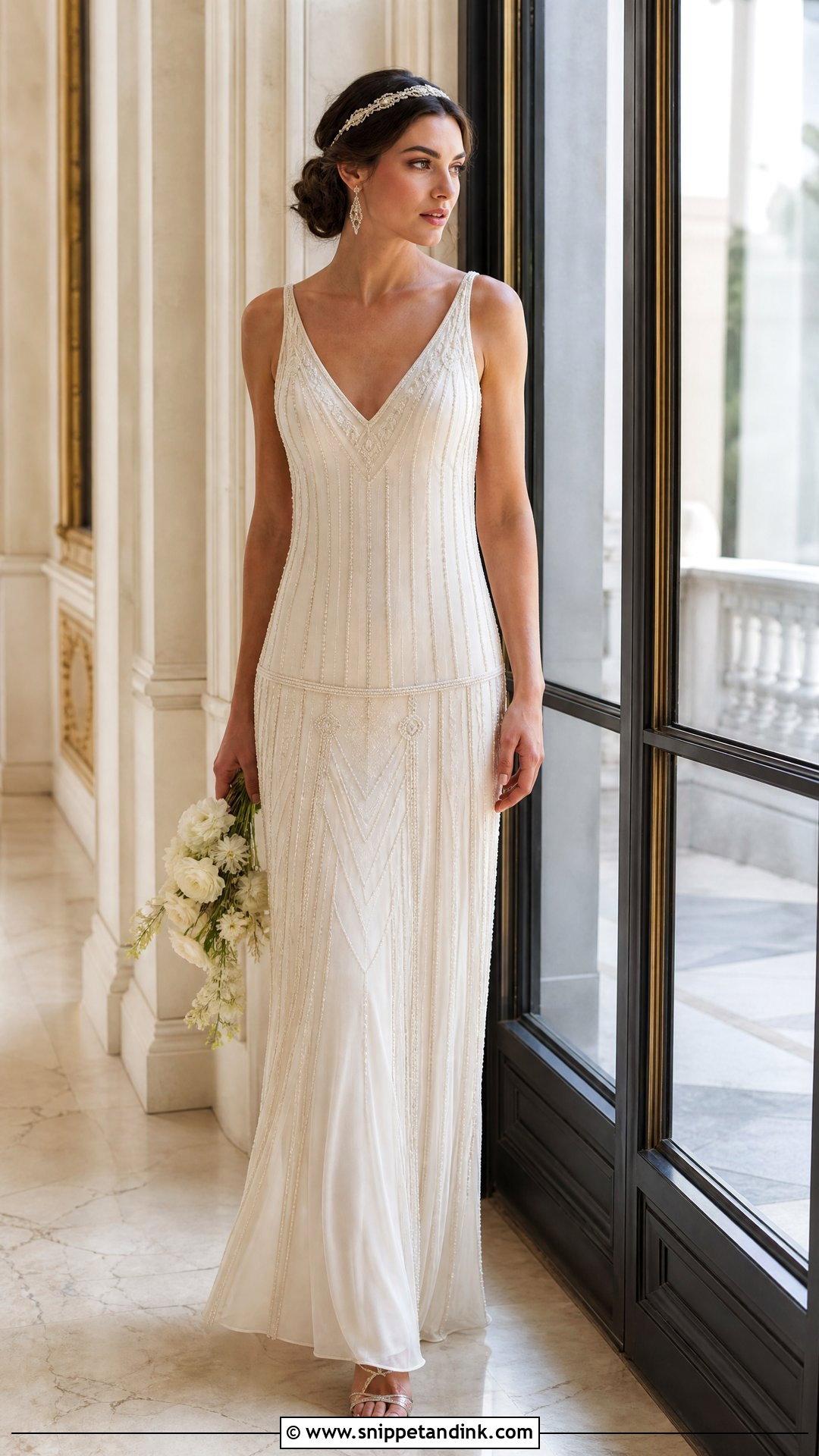
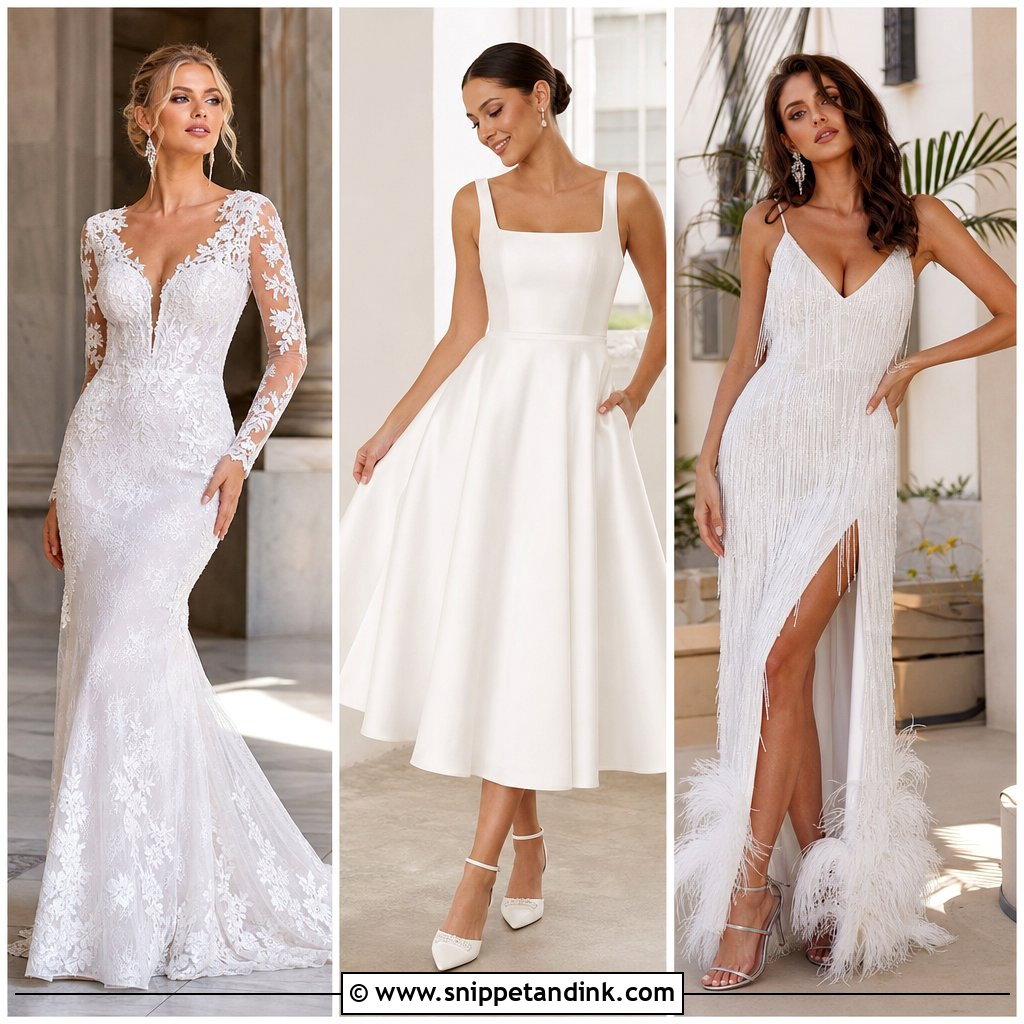
The twenties shape is the opposite of a corset: a bias-cut sheath or lightly dropped waist in fluid silk, crepe or satin. Fall 2026 offered it as a counterpoint to big ball gowns. A little beadwork, scalloped lace or fine fringe adds movement. A cathedral veil usually swamps this softer line, so I’d choose shoulder length or skip it in favour of a slim headband or jewelled comb. Delicate earrings and metallic ivory sandals finish it. Bias cut needs an experienced fitter; it stretches as it hangs, so the hem is set last.
16. Feather Trim Bridal Gown
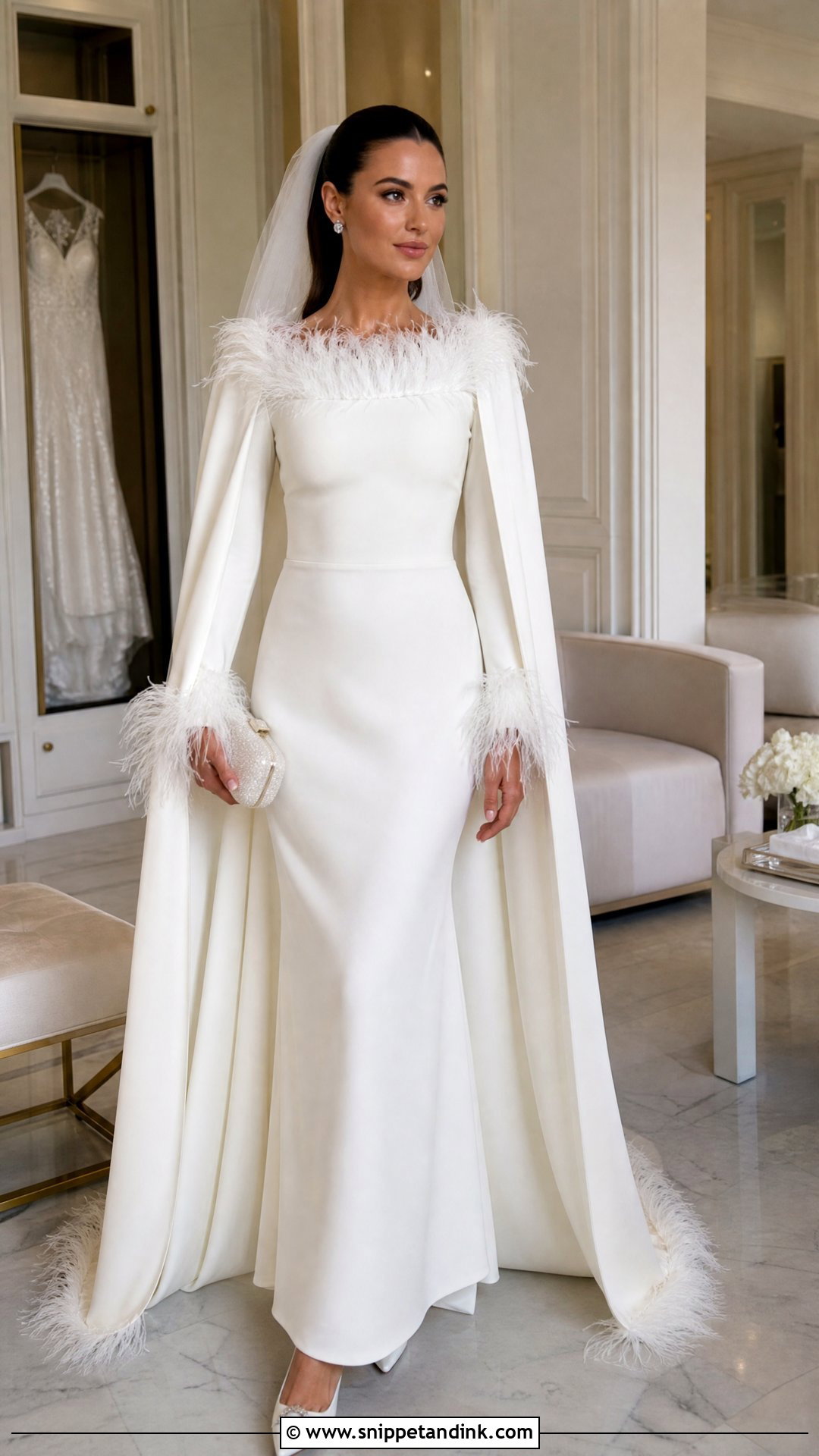
A little feather trim goes a long way. On a fitted crepe or satin gown, I’d keep it to the neckline, cuffs or hem. Feathers appeared across 2026 on gowns and on matching outerwear. They’re fragile: they crush in a garment bag, tangle with veil tulle and wilt in humidity. Ask the salon how to store and steam them, and keep the steamer at a distance. Detachable cuffs, a removable cape or an overskirt give you an easy switch before dancing. Crystal studs, sleek heels, a compact clutch and a simple veil suit it.
17. Bridal Gown With Skinny Scarf
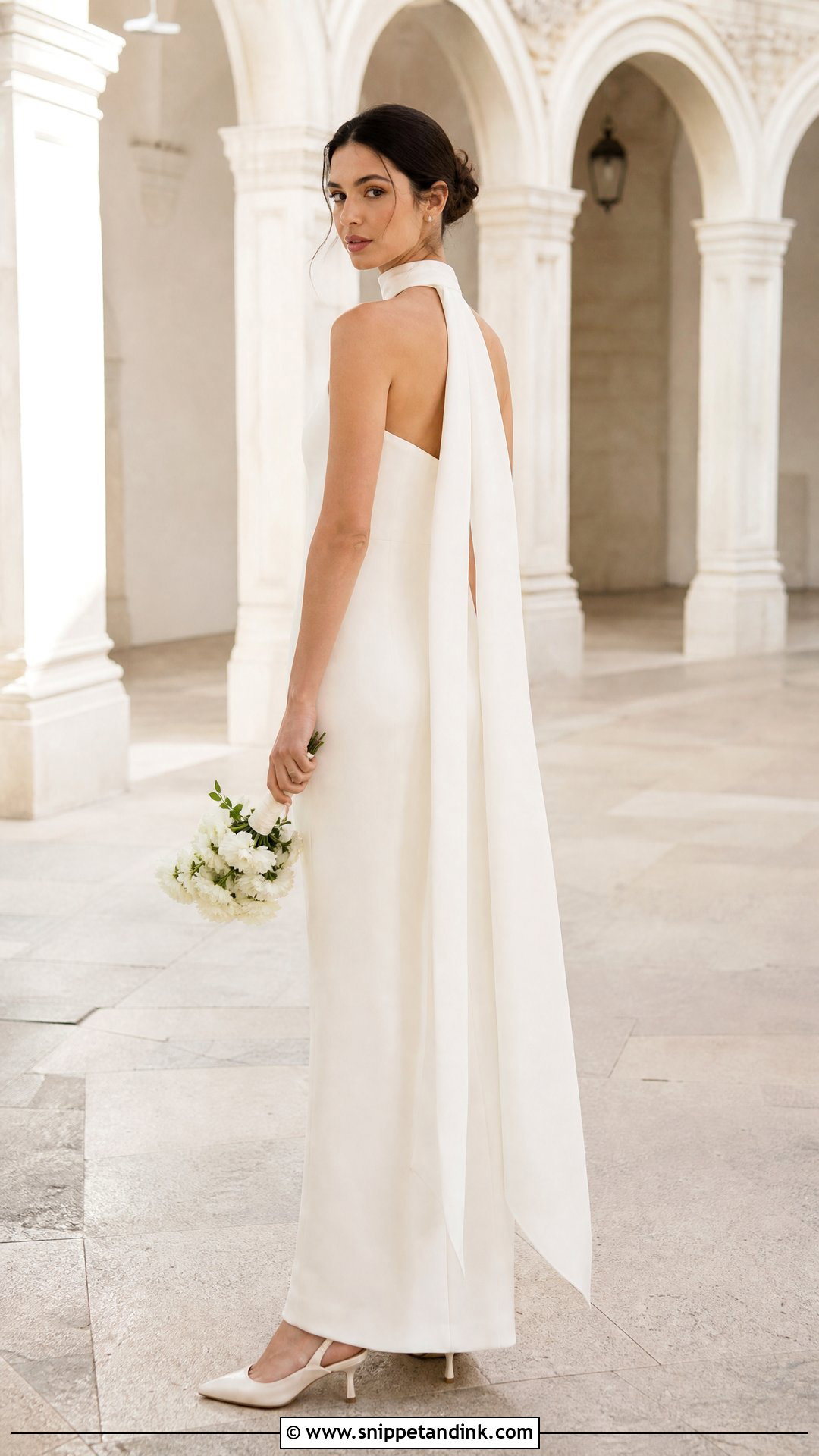
A skinny scarf is the most low-key trend here, and one of my favourites. On a silk crepe column, a matching scarf wrapped once at the neck and trailing down the back moves like a veil but feels lighter. Fall 2026 collections used fabric neckpieces in just this way. Secure it with a small hidden stitch or a pin at the back, or the first gust outdoors will unwind it. No necklace. Small earrings, a low bun, pointed slingbacks and a compact bouquet suit it, and removing the scarf for dinner gives a quieter reception look.
18. Pleated Organza Bridal Gown
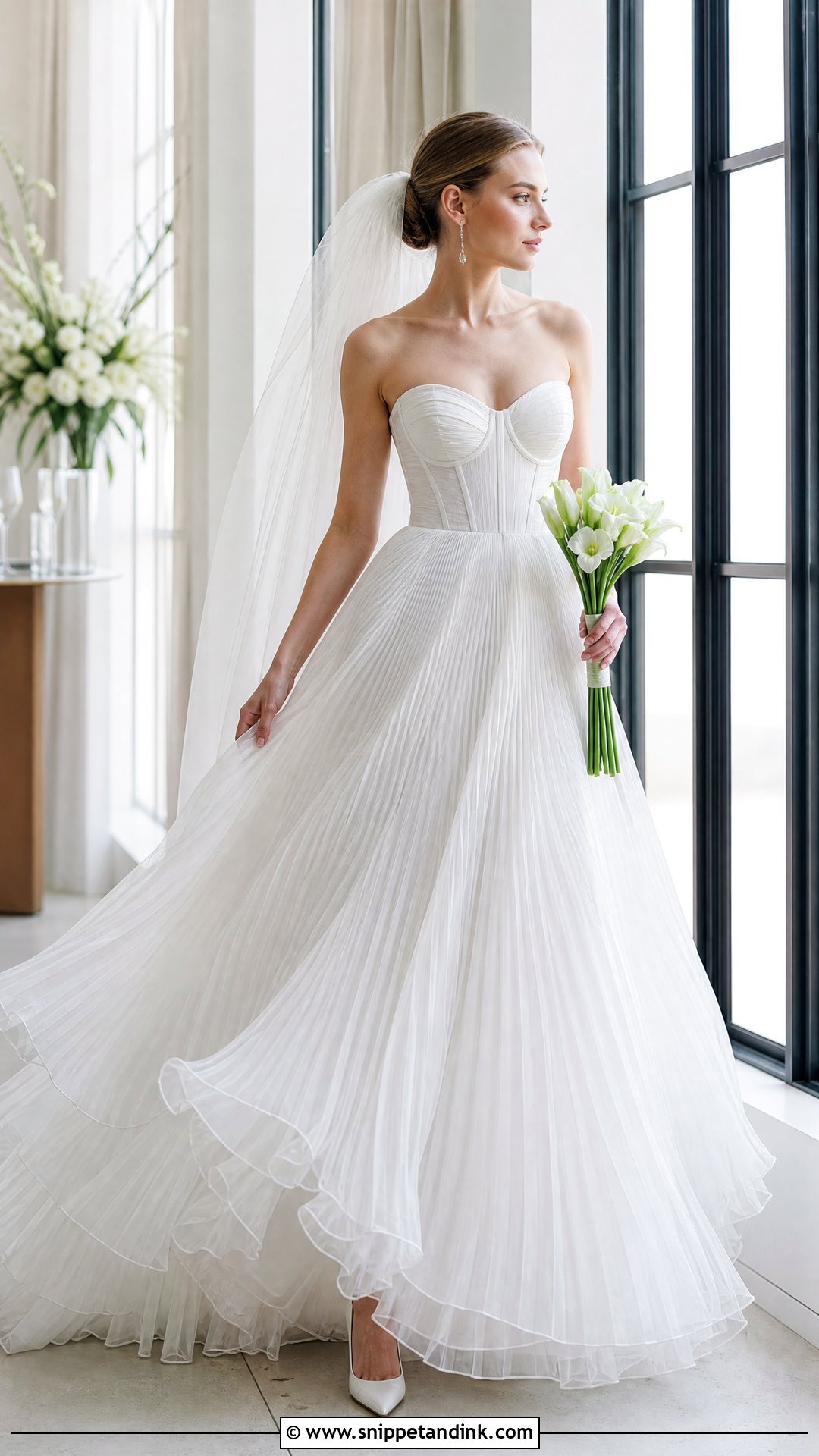
Fine accordion pleats add texture without embroidery. Over a pleated organza A-line skirt, a corset bodice gives just enough structure; Fall 2026 put mini pleats alongside exposed corsetry and contrasting fabrics. The vertical lines lengthen you, and they come alive when you walk. They also lose definition if a steamer is held too close or the skirt is packed carelessly, so ask the salon exactly how to press and transport it. The hem must be adjusted so the pleats stay even all the way round. A plain veil, small drops and satin pumps keep the rest airy.
19. Contrasting Fabric Bridal Gown
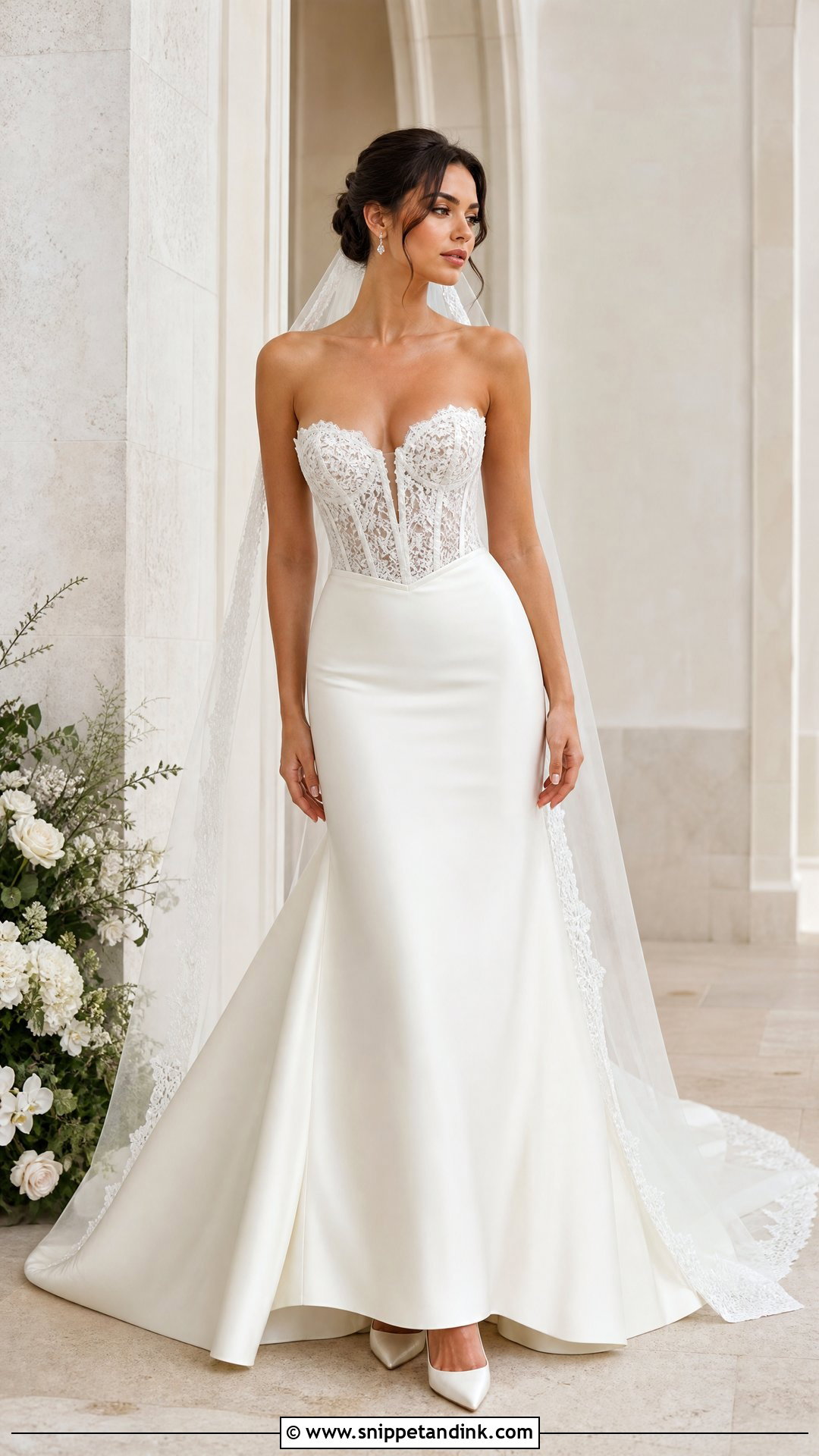
Two fabrics in one gown give a simple silhouette depth. Matte crepe above glossy satin is subtle; lace with smooth mikado is more romantic. For a 2026 take, try a sheer corseted top with an opaque structured skirt and a clean waist seam. Contrasting materials ran right through the Fall 2026 collections. My caution is colour. Two whites in different fabrics reflect light differently, and a mismatch shows clearly in flash photos, so look at the dress under daylight and under indoor bulbs. Match the veil to the lighter fabric, and keep earrings and pointed ivory shoes minimal.


20. Regal Corset Ball Gown
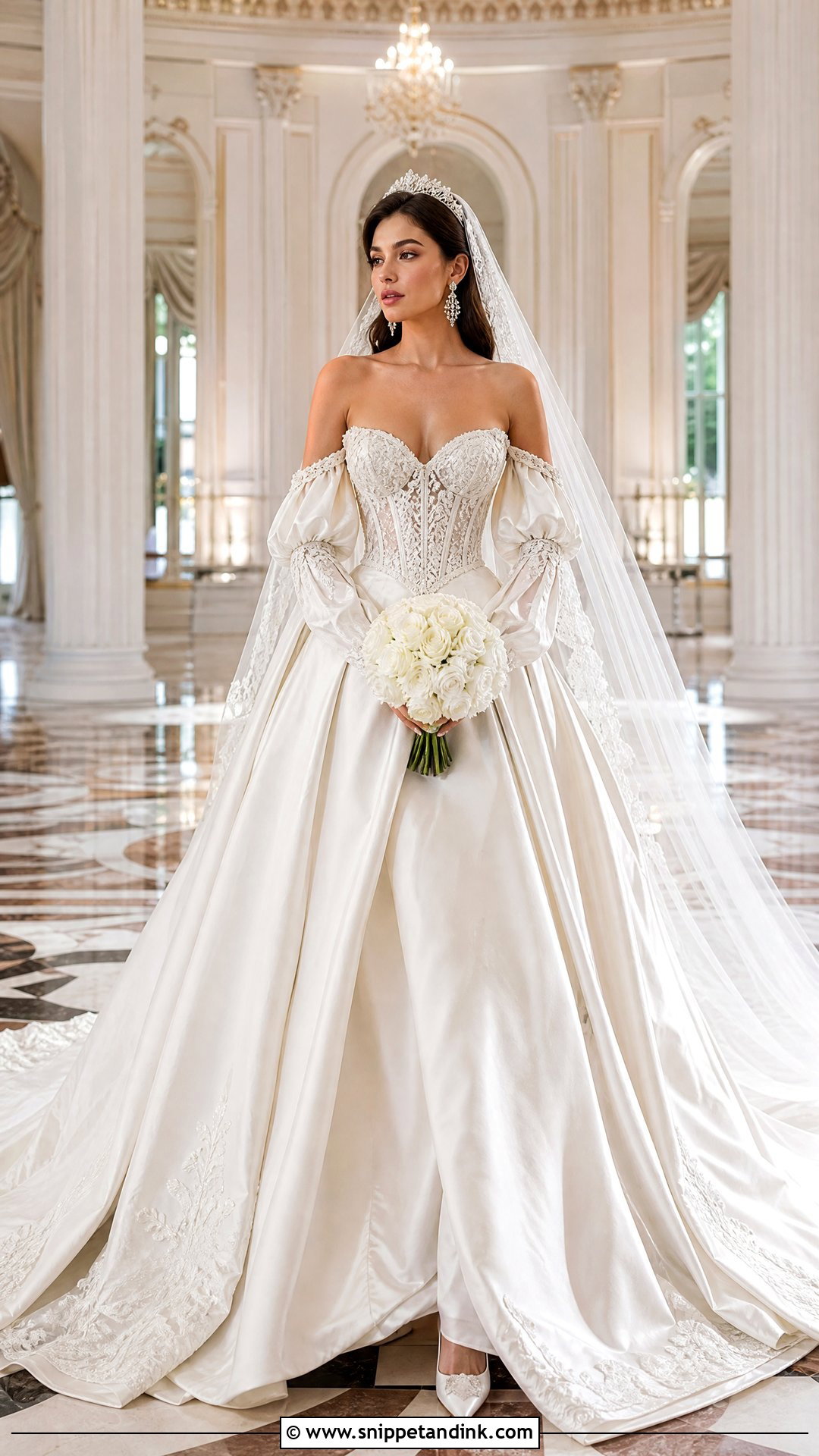
A regal corset ball gown is built for an entrance. A structured bodice with visible seaming, a low waist and a full skirt on lightweight petticoats, in brocade, satin or embroidered fabric, carry the formal mood. Fall 2026 drew heavily on historic corsetry and royal references, with off-the-shoulder necklines, jewels and volume. With that much skirt, internal construction is everything: the corset must spread support evenly and the bustle must hold all night. A cathedral veil, crystal earrings, elegant pumps and a classic bouquet suit it. Skip a tiara if the gown is heavily embellished.
Flying a Feathered, Pleated or Jewelled Gown Abroad
Many of the most fragile details in this list belong to the gowns brides most want to take to a destination wedding. A little planning keeps them intact.
Never check a wedding dress in the hold. Call your airline before you fly and ask how they handle a gown as cabin baggage; some will let you use a closet, while others expect it folded into the overhead bin. Pack the bodice with acid-free tissue so corsetry keeps its shape, fold the skirt as few times as possible, and use a breathable garment bag rather than plastic.
Each detail needs its own care. Pleated organza should be folded along its pleats, never across them. Feathered pieces travel best in a separate box where nothing presses on them. Jewelled bodices need tissue between the layers so stones don’t scratch the fabric or catch on each other.
When you arrive, hang the dress straight away in a cool room. I’d book a local steamer or bring a travel steamer, and give the gown at least a day to relax before anyone touches it with heat.
Trends Fade Faster Than Good Tailoring Does
2026 doesn’t have one defining trend. It runs from minimal satin columns and relaxed vintage sheaths to sculpted corsets, three-dimensional flowers and grand ball gowns. I’d start by asking how you want to feel, then match that to your venue, season and how much you’ll move. Try at least one shape you’d never pick from a photo; bubble hems and halters surprise people. Don’t choose a detail only because it’s new. A well-tailored simple gown will outshine a poorly fitted fashion piece, and you should be able to walk, sit and dance in whatever you choose.
You'll Like These Ideas:








Leave a Reply