
Cinnamon is the flavour I get asked about most once the leaves start turning, and I understand why. Guests know it before the first bite, it smells like home when the cake is cut, and it suits a barn, a garden, a brunch reception or a sleek indoor room equally well. It can go rustic with apples and caramel, romantic under flowers, or tailored inside a smooth buttercream tier. It partners easily with vanilla, brown sugar, maple, pear, pumpkin, carrot, honey and cream cheese. What follows are the twenty cinnamon cakes I’d actually build, with notes on how each one bakes, slices and holds up on the day.
Cassia or Ceylon? Tasting for the Right Kind of Warmth
Most supermarket cinnamon is cassia: bold, slightly hot, the flavour of cinnamon rolls. Ceylon is softer, sweeter and a little citrusy. Neither is better, but they give very different cakes, and a spice level that suits one guest list can overwhelm another. I ask couples which one they want before we finalise a recipe.
How I’d judge a cinnamon tasting
- Taste the sponge alone first, then with its filling. Cream cheese and caramel both mute spice, so a cake that tastes strong on its own can be just right assembled.
- Ask how old the tasting cake is. Spice flavour settles and deepens overnight, so a day-old sample is closer to what guests will eat.
- Take a second bite a few minutes later. Cassia builds, and what was pleasant on the first forkful can feel hot by the third.
- If you’re mixing tiers, taste the cinnamon tier last so it doesn’t dull your palate for the vanilla.
1. Cinnamon Wedding Cake With Cream Cheese Frosting
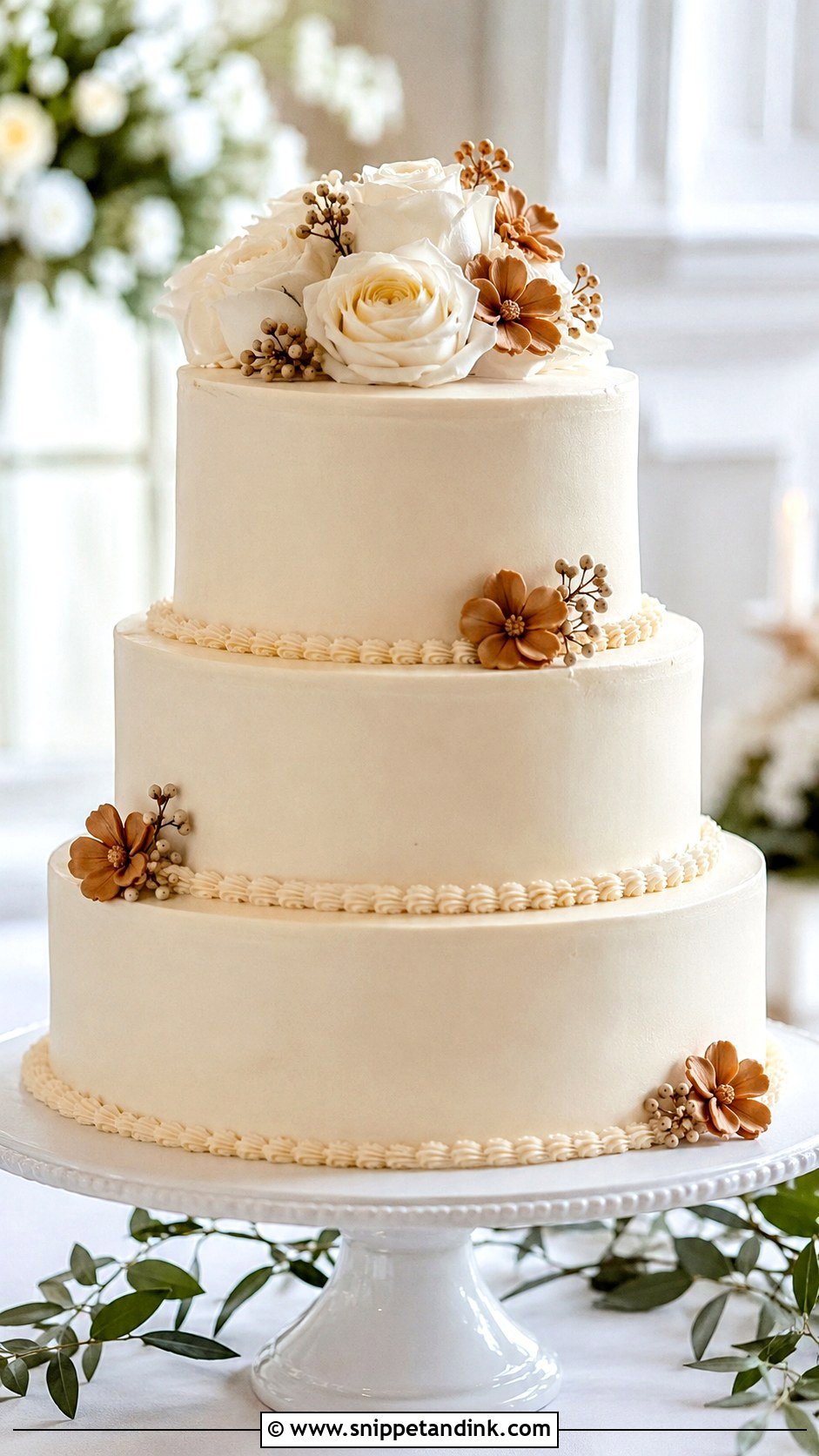
Cream cheese frosting over cinnamon sponge is the pairing nobody argues with: the tang cuts the spice and stops the cake tasting sugary. It suits two or three tiers with smooth ivory sides, light piping and a few flowers, or a thin cinnamon-coloured ribbon at each tier base. One thing I tell every couple: true cream cheese frosting is soft. It won’t hold razor edges, and it needs to stay cool. For a warm venue I often fill with cream cheese and coat the outside in a firmer buttercream. A brown sugar filling deepens the flavour if you want it to taste more like a bakery classic.
2. Apple Cinnamon Wedding Cake
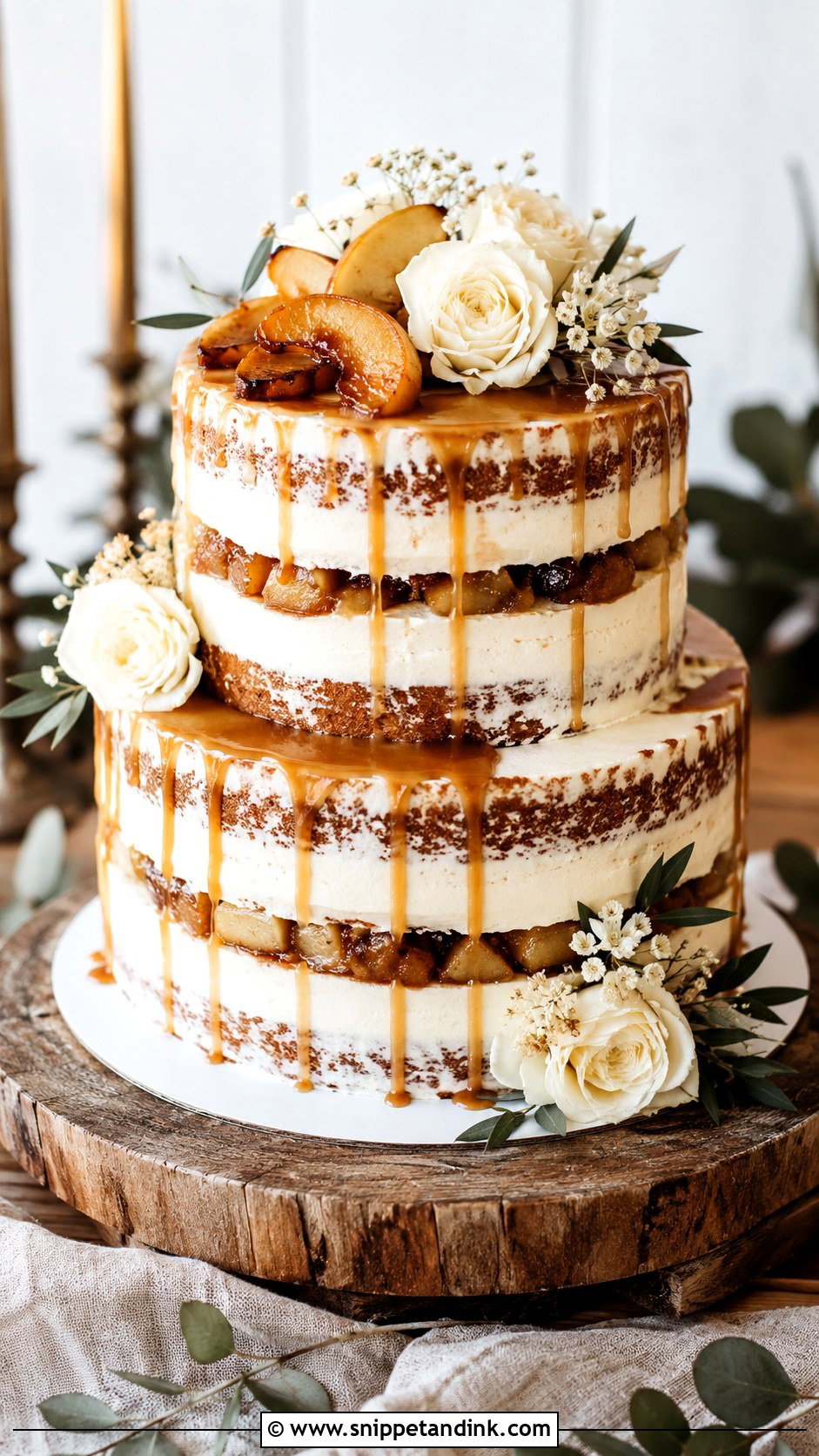
An apple cinnamon wedding cake tastes seasonal but can look as formal as you like. I fill the layers with apple compote, apple butter or small soft-cooked apple pieces, and I always pipe a stiff buttercream ring around each layer first. Without that dam, the fruit’s juice pushes outward and you get a bulge or a weeping seam by the reception. Outside, keep it clean in vanilla buttercream or go semi-naked. Thin apple slices go brown once cut, so I either brush them with lemon or use dried apple chips instead, plus a little caramel and small ivory flowers.
3. Cinnamon Roll Wedding Cake
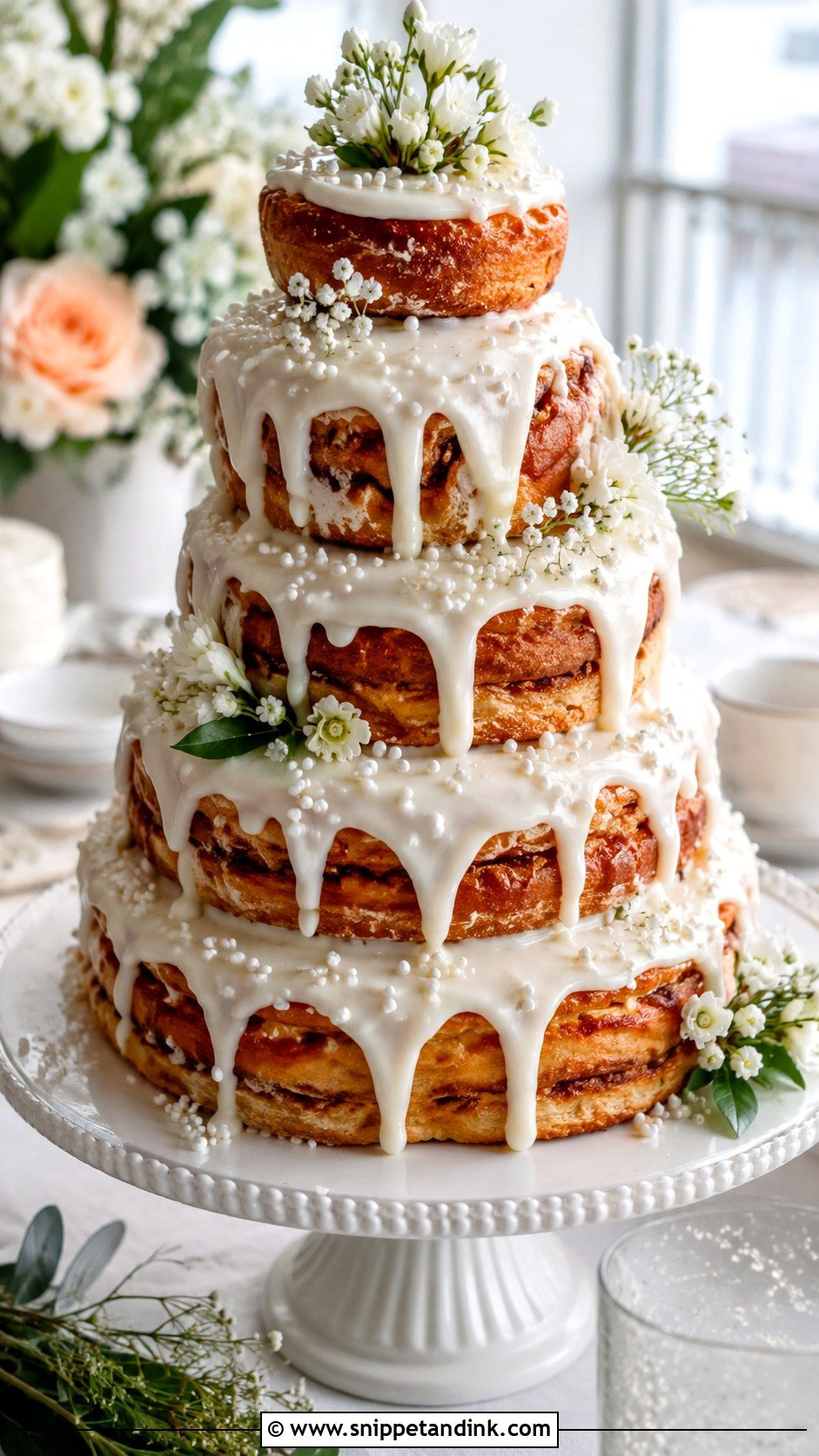
A cinnamon roll cake sounds casual, but it can be built into a proper tiered shape. I bake the swirl right into the sponge layers so each slice shows the spiral, then finish with cream cheese glaze and soft buttercream, leaving the edges slightly exposed so guests see what it is. The swirl layers are tender and don’t love being stacked tall, so I keep this one to two or three tiers with good internal supports. A small cutting tier on top gives you the photo moment. Brunch weddings and relaxed barn receptions suit it best.
4. Brown Sugar Cinnamon Wedding Cake
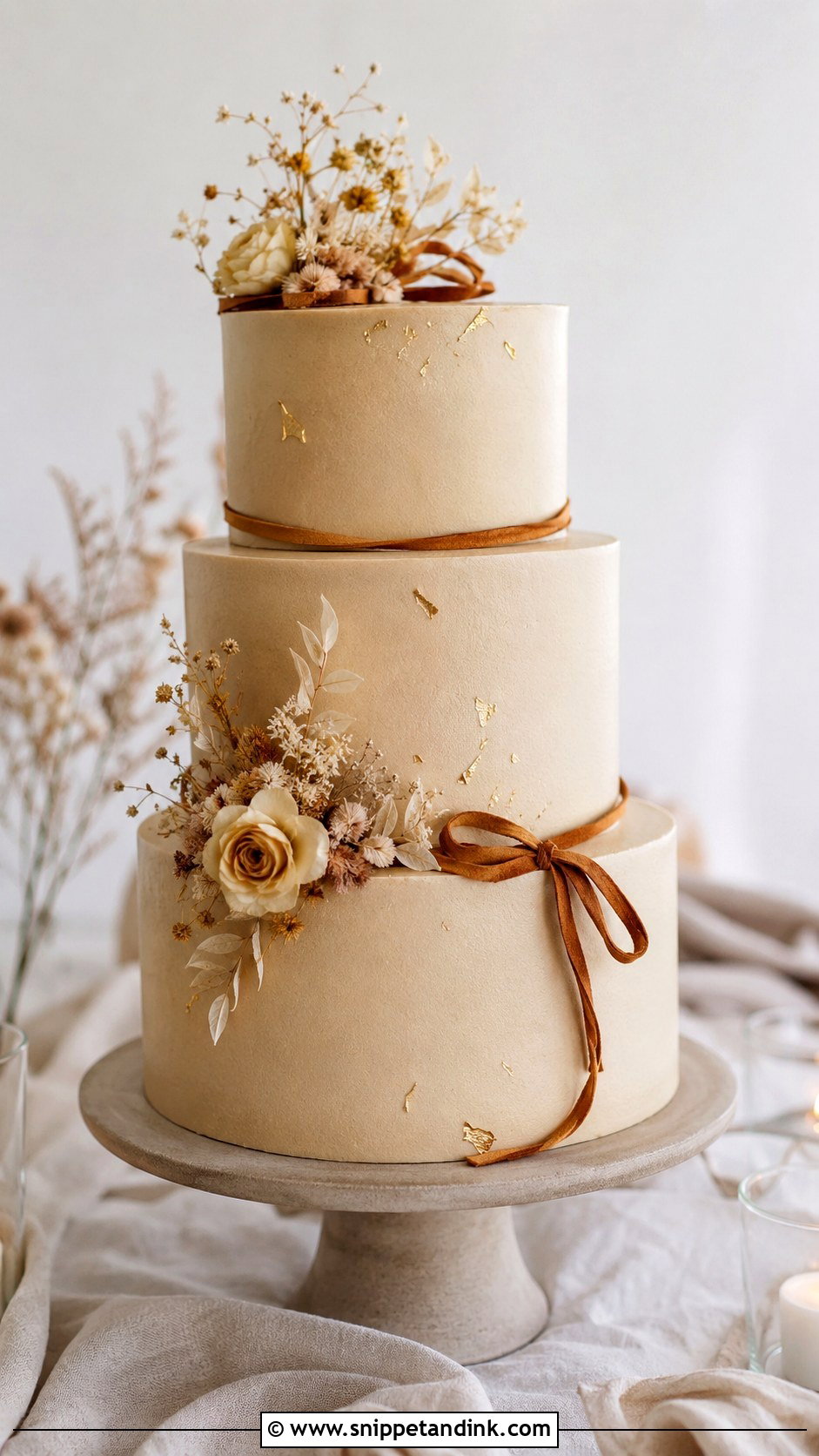
Brown sugar adds molasses depth, so this cake tastes richer and rounder than a plain cinnamon sponge, and the spice reads cozy rather than hot. It’s moister too, which helps if the cake is cut late in the evening. I pair it with vanilla buttercream, whipped cream cheese or salted caramel filling. Dress it modern, in smooth beige buttercream, or rustic with texture and dried florals. It’s also my favourite way to sneak cinnamon into a mixed-flavour cake, as one tier beside vanilla, chocolate, carrot or maple.
5. Cinnamon Spice Wedding Cake
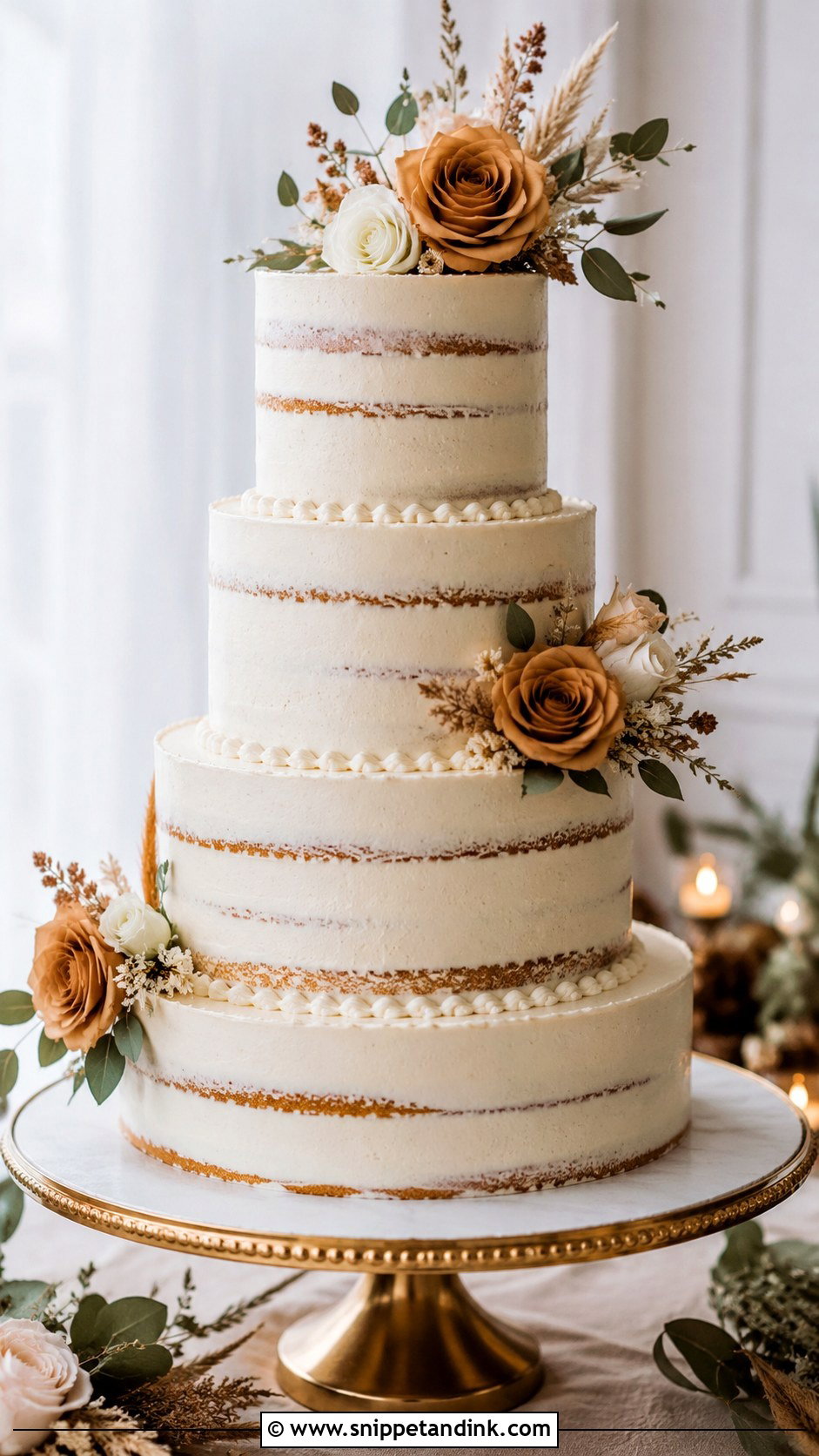
Spice cakes go wrong when the warming spices fight each other. Alongside cinnamon, I add nutmeg, ginger, clove or allspice in small, measured amounts; clove especially can turn medicinal if it’s heavy-handed. The cake should taste warm, not heavy. Cream cheese frosting is the natural partner, though vanilla bean buttercream keeps it lighter. Ivory or caramel-toned flowers, or a simple piped border, are enough decoration. It belongs at autumn and winter weddings, but with a fresh floral design it works any month.
6. Maple Cinnamon Wedding Cake
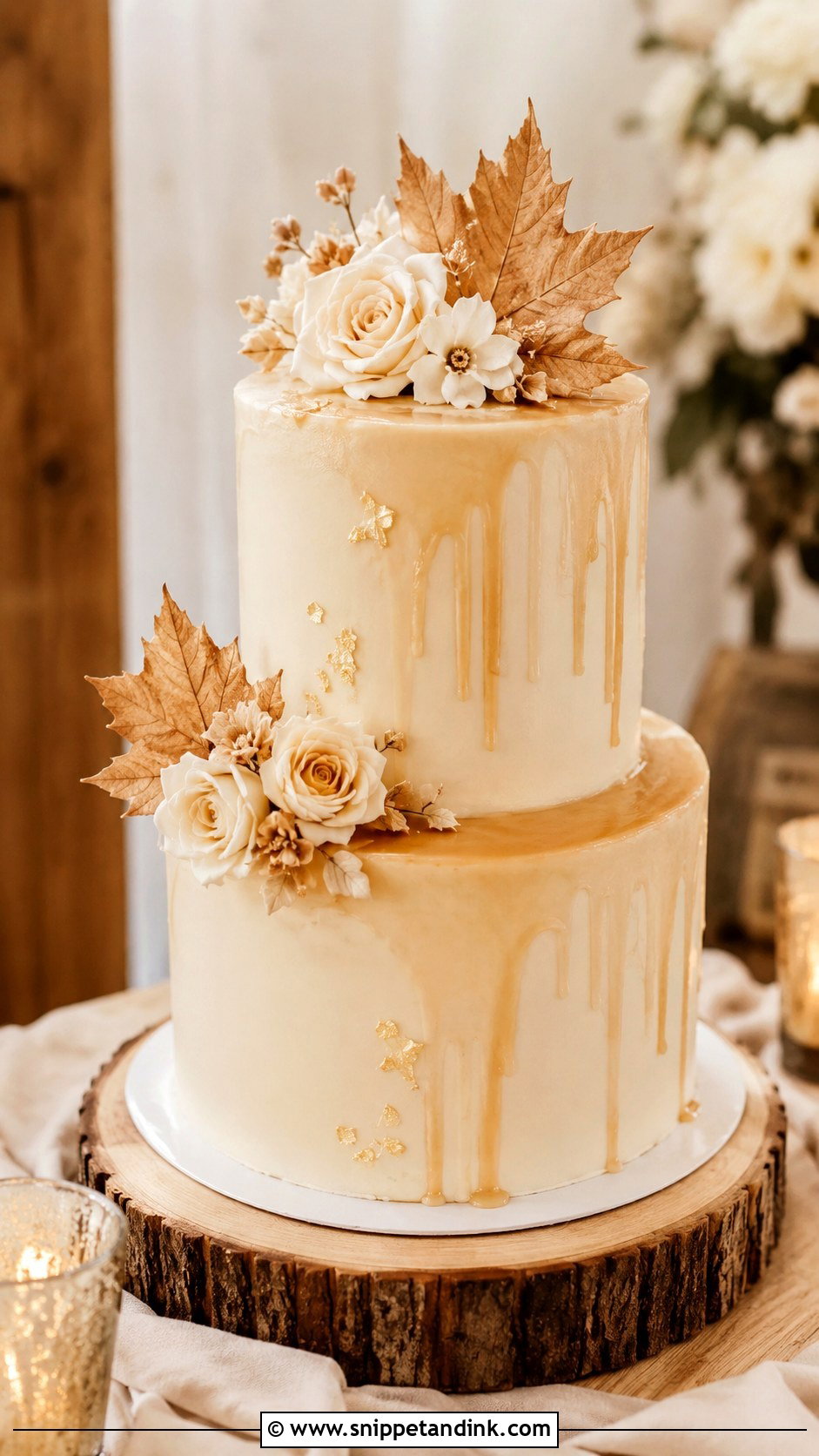
Maple and cinnamon share the same warm, toasty register, so they sit together without either one taking over. I use maple buttercream, maple cream cheese or a thin maple syrup soak between layers. The soak needs a light hand: too much and the bottom of each layer turns sticky. Outside, a smooth ivory finish with gold accents keeps it formal, and small dried flowers or sugar leaves add warmth. It’s at home in a barn, up a mountain or at any autumn reception.
7. Carrot Cinnamon Wedding Cake
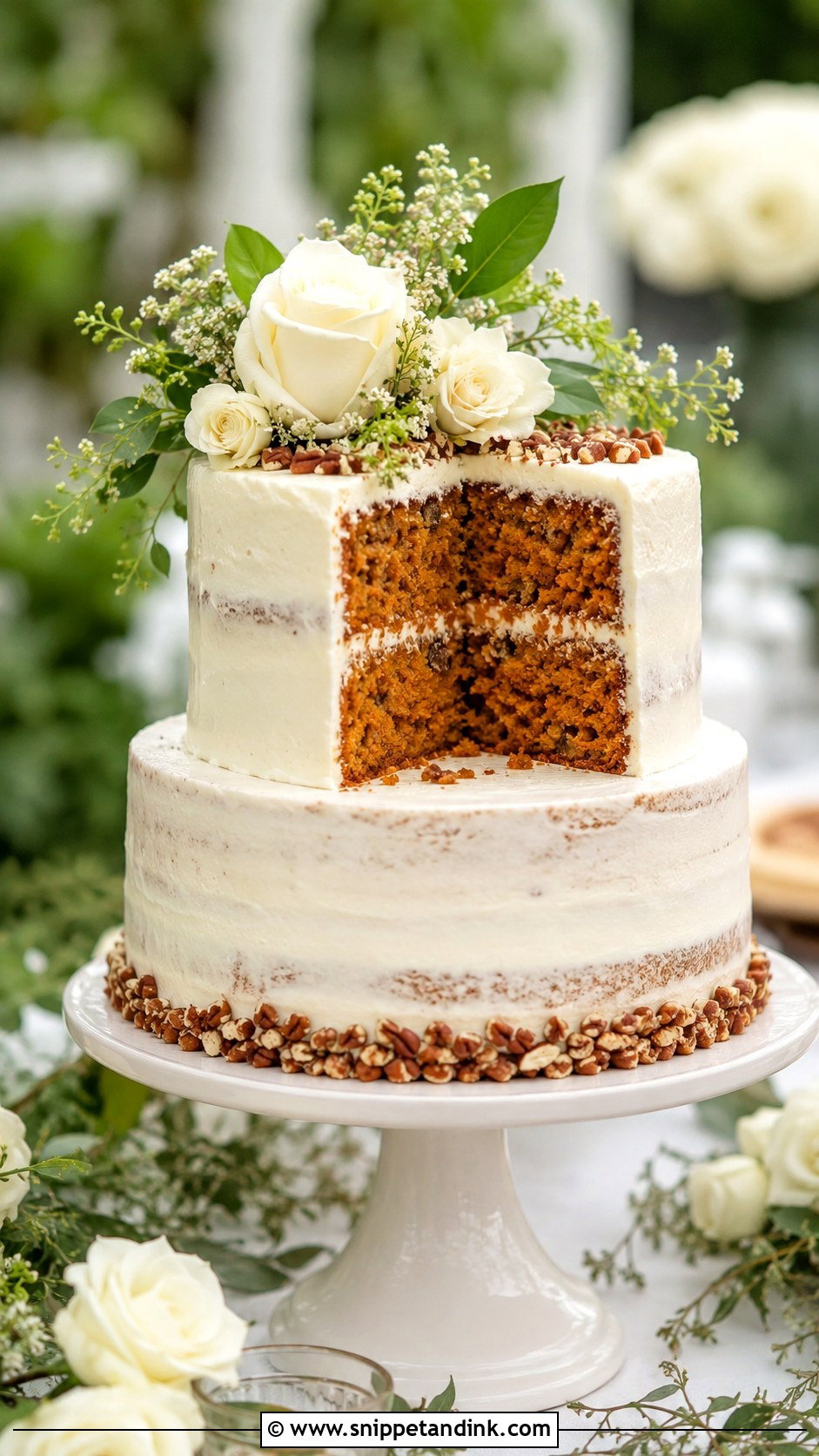
Carrot cake already carries cinnamon, so this is a flavour most guests feel they know. Grated carrot, nuts, pineapple or raisins (your call) keep the crumb dense and moist, which is why it slices cleanly even late in the night. Ask your guests’ allergies early if nuts are going in, and consider a nut-free tier. Cream cheese frosting is traditional and needs little extra decoration; smooth or lightly textured sides with soft flowers, greenery or chopped nuts at the base are enough. Spring garden weddings suit it as well as autumn ones.
8. Pumpkin Cinnamon Wedding Cake
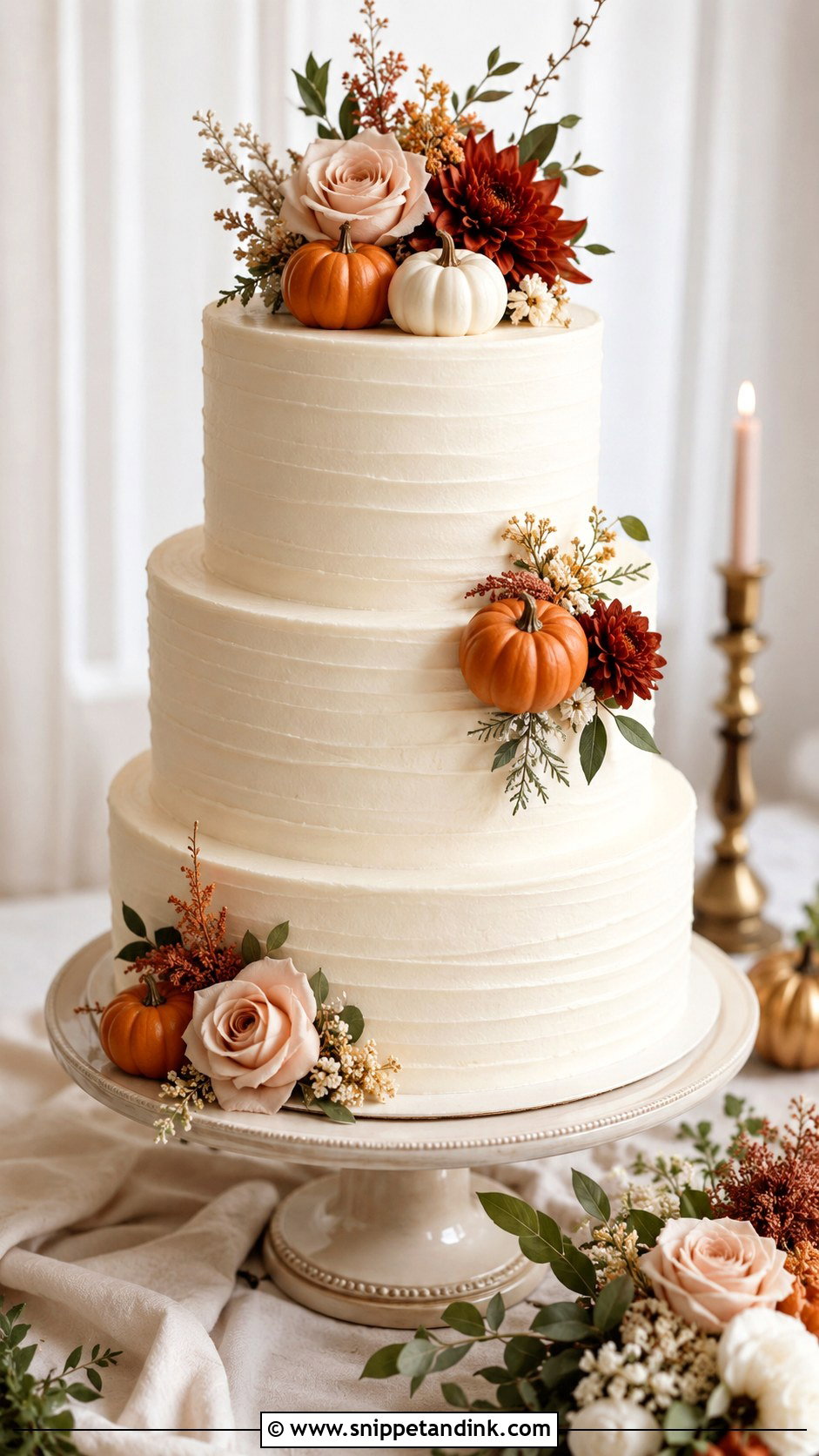
Pumpkin cinnamon wedding cake is one of the moistest sponges I bake, thanks to the purée, and that moisture means it needs firm supports and a well-chilled crumb coat before stacking. Cream cheese, cinnamon buttercream or vanilla bean frosting all suit it. For design, I steer couples toward ivory with caramel, rust or blush flowers rather than orange decorations, so it reads wedding instead of harvest festival. Semi-naked sides on a gold stand with simple flowers give a warm, romantic table.
9. Vanilla Cinnamon Wedding Cake
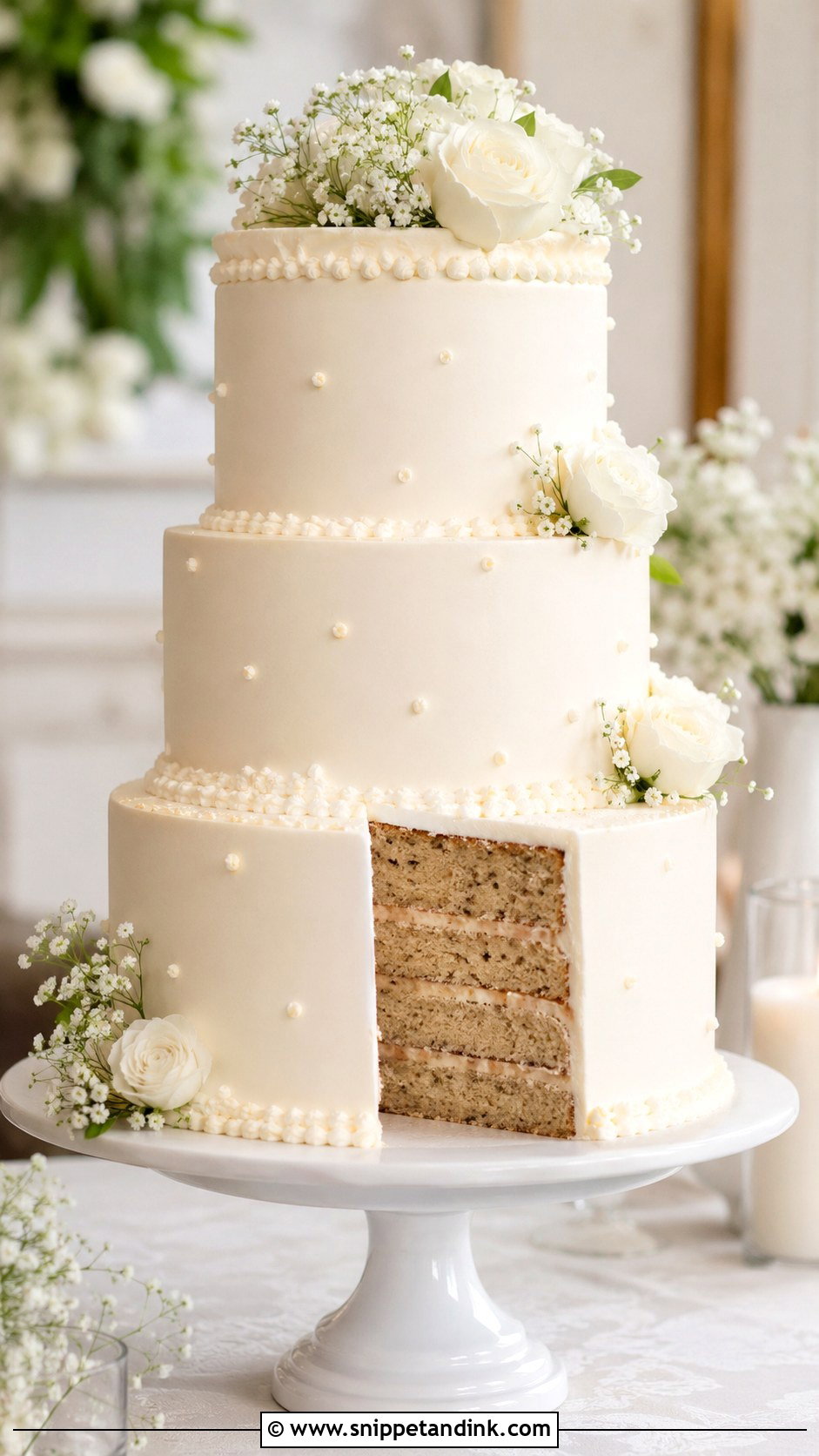
Vanilla tames the spice, which makes this the cinnamon cake I’d suggest for a guest list running from small children to grandparents. It tastes familiar and light, just warmer than plain vanilla. I use vanilla bean buttercream outside and either a cinnamon cream filling or a thin brown sugar swirl through the layers. Finish it smooth and white with pearl details, fresh flowers or soft piping, and it fits a ballroom as comfortably as a garden.
10. Honey Cinnamon Wedding Cake
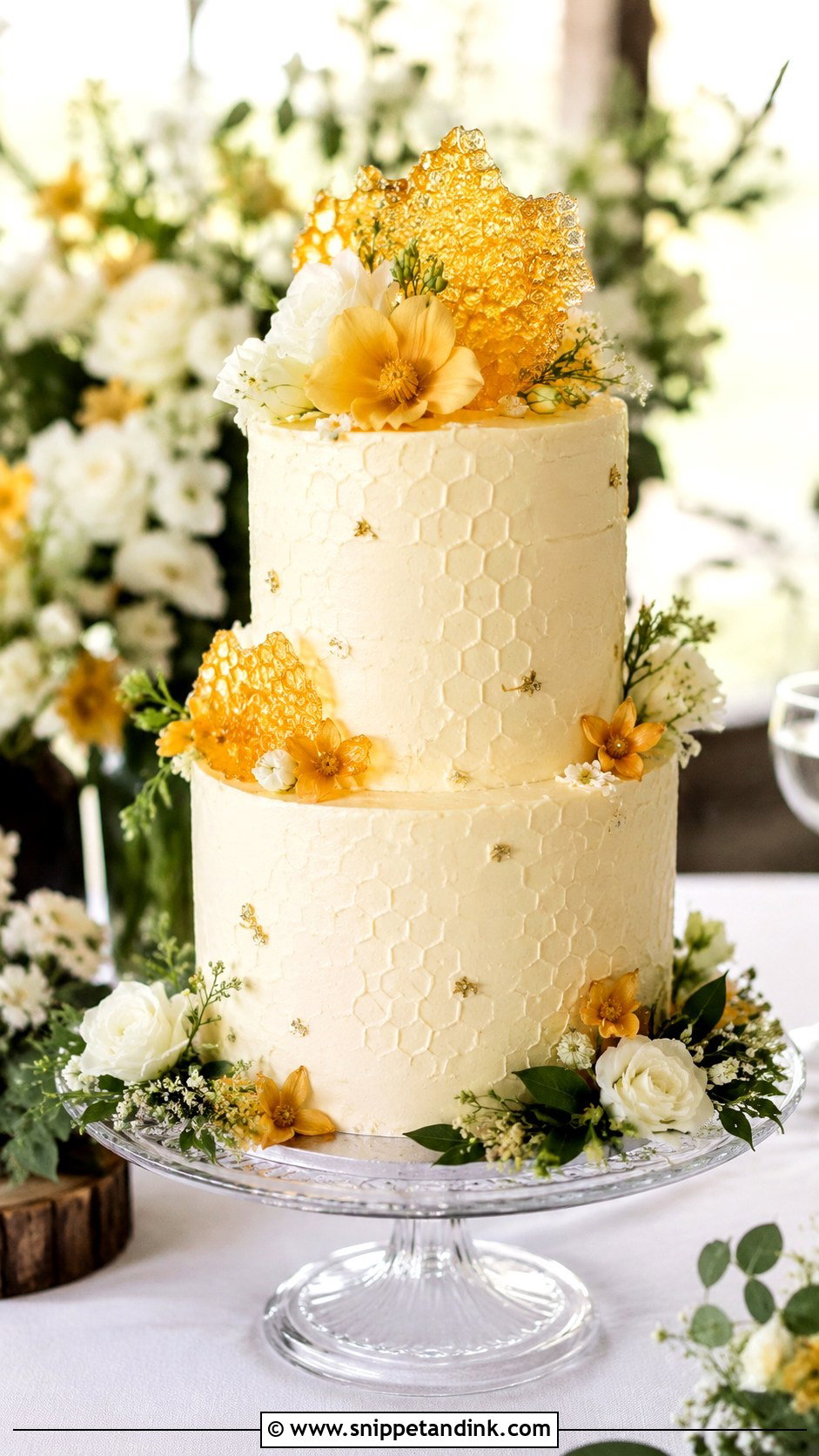
Honey is a quiet flavour, and it’s easy to lose it under cinnamon, so I keep the spice gentler here and let the honey come through as a soft floral sweetness. Honey sponges also stay moist for longer, which helps when the cake is cut late. A whipped cream cheese frosting or honey buttercream balances it. Honeycomb-pattern texture, tiny edible flowers or a little gold leaf suit it. For a filling, honey mascarpone or light vanilla cream. Mascarpone is delicate in heat, so for late-summer outdoor weddings I’d lean on buttercream.
11. Pear Cinnamon Wedding Cake
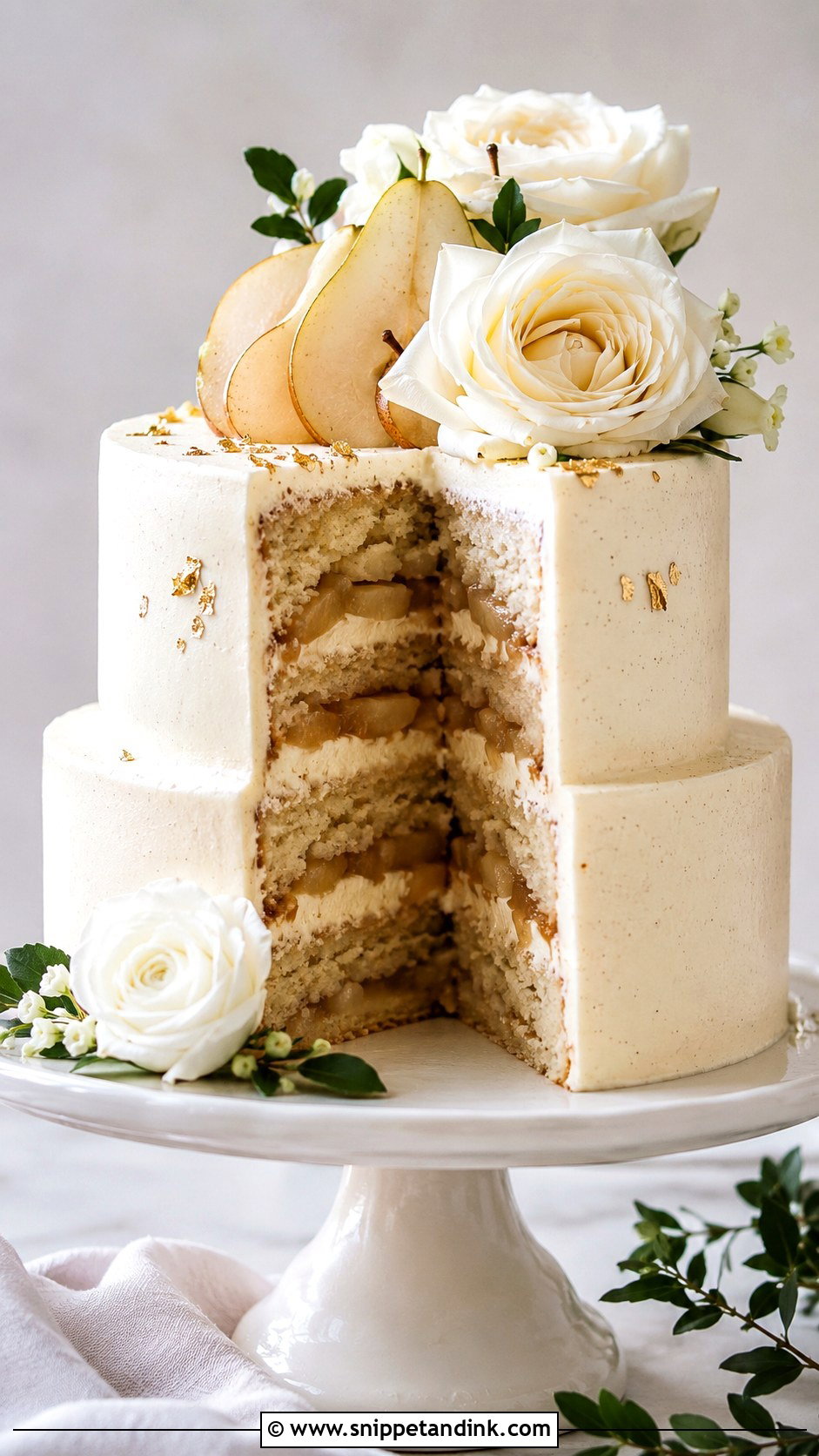
Pear is softer than apple and more grown-up, and it lets cinnamon play a supporting role. I use pear compote, pear butter or thin poached pear between the layers, with a buttercream dam so the juice stays put. Outside, smooth ivory buttercream with minimal flowers keeps it polished. Gold leaf or white roses lean modern; a few thin slices of poached pear lean romantic. It suits a thoughtful seasonal menu at an intimate reception.
12. Cinnamon Caramel Wedding Cake
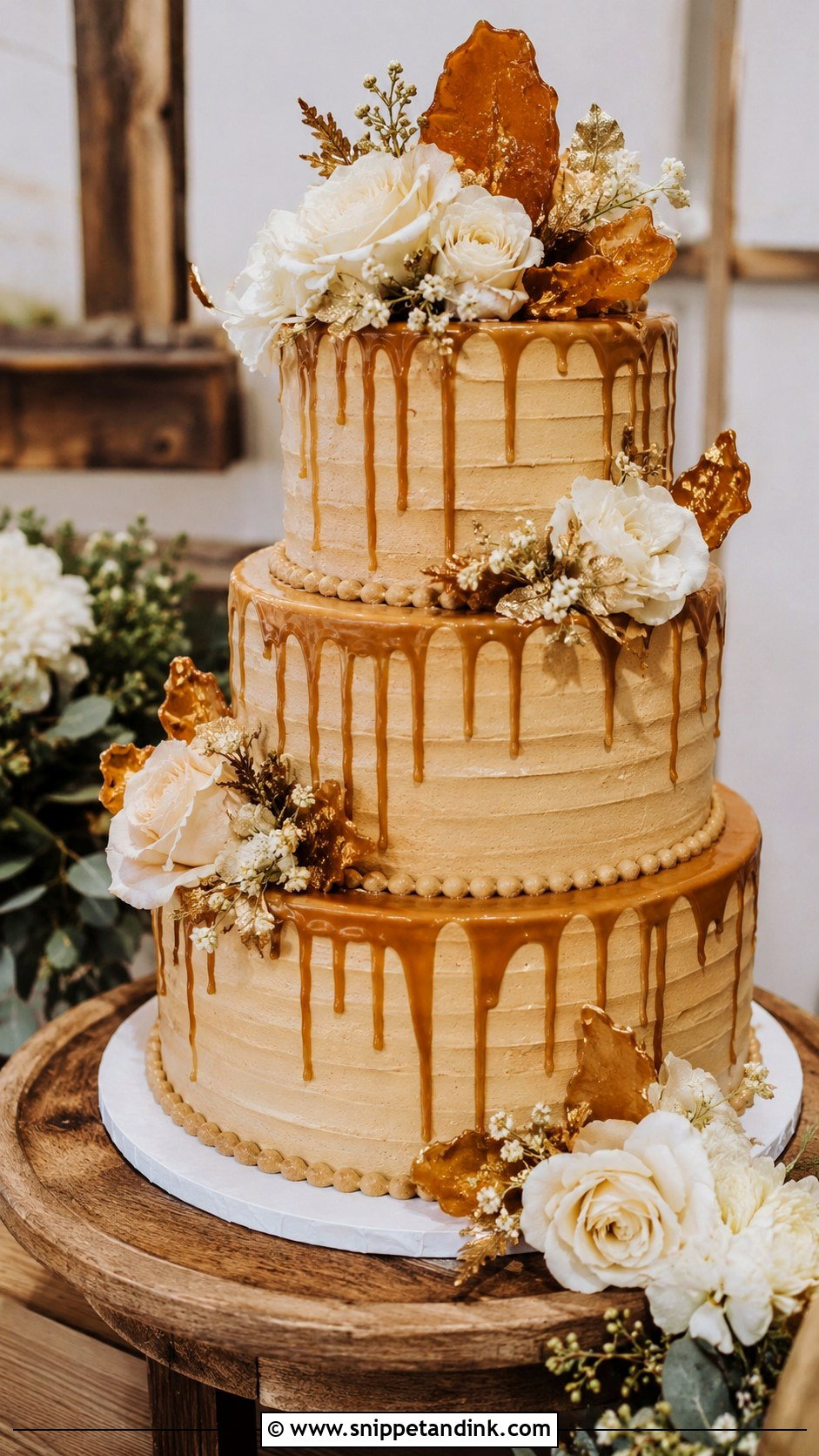
Caramel turns cinnamon cake into the dessert guests go back for. I layer the sponge with caramel buttercream, dulce de leche or salted caramel. The drip is the part I control carefully: caramel has to be at the right temperature and the cake chilled, or it runs straight down to the board. A neat controlled drip looks deliberate; a pour looks messy. Ivory flowers, small gold details or cinnamon-toned blooms finish it. Rustic venues and warm-flavour dessert tables suit it best.
13. Cinnamon Buttercream Wedding Cake
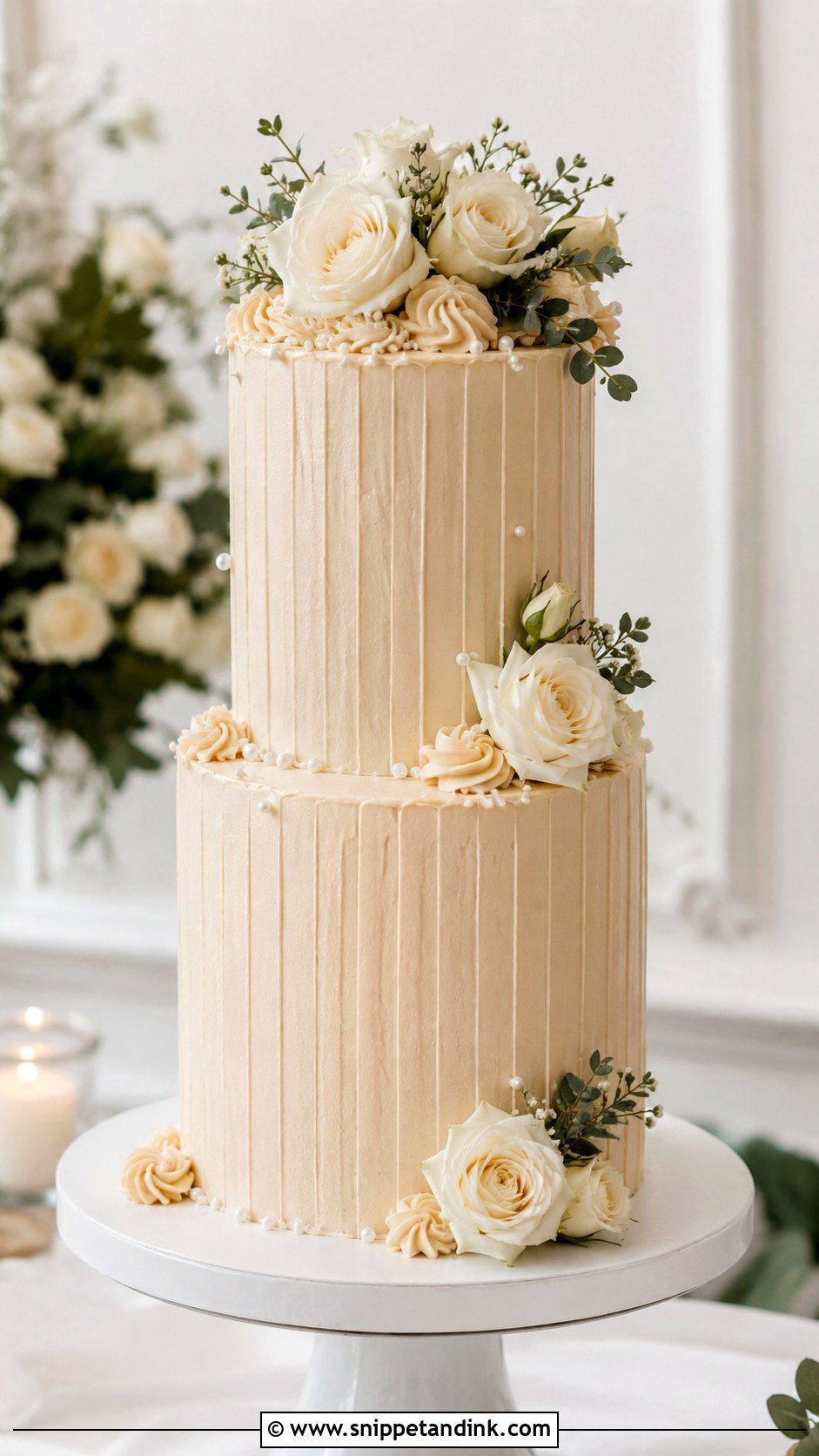
Putting the cinnamon in the frosting, rather than the sponge, is a gentle way to warm up a traditional cake. Underneath can be vanilla, spice, brown sugar or cinnamon sponge. I bloom the cinnamon in a little warm butter first so it doesn’t leave a gritty texture in the buttercream. The result tastes balanced rather than strongly spiced. Smooth, lightly textured or piped, in soft beige with ivory flowers on a clean stand. Change the flowers and palette, and the same cake works in any season.
14. Naked Cinnamon Wedding Cake
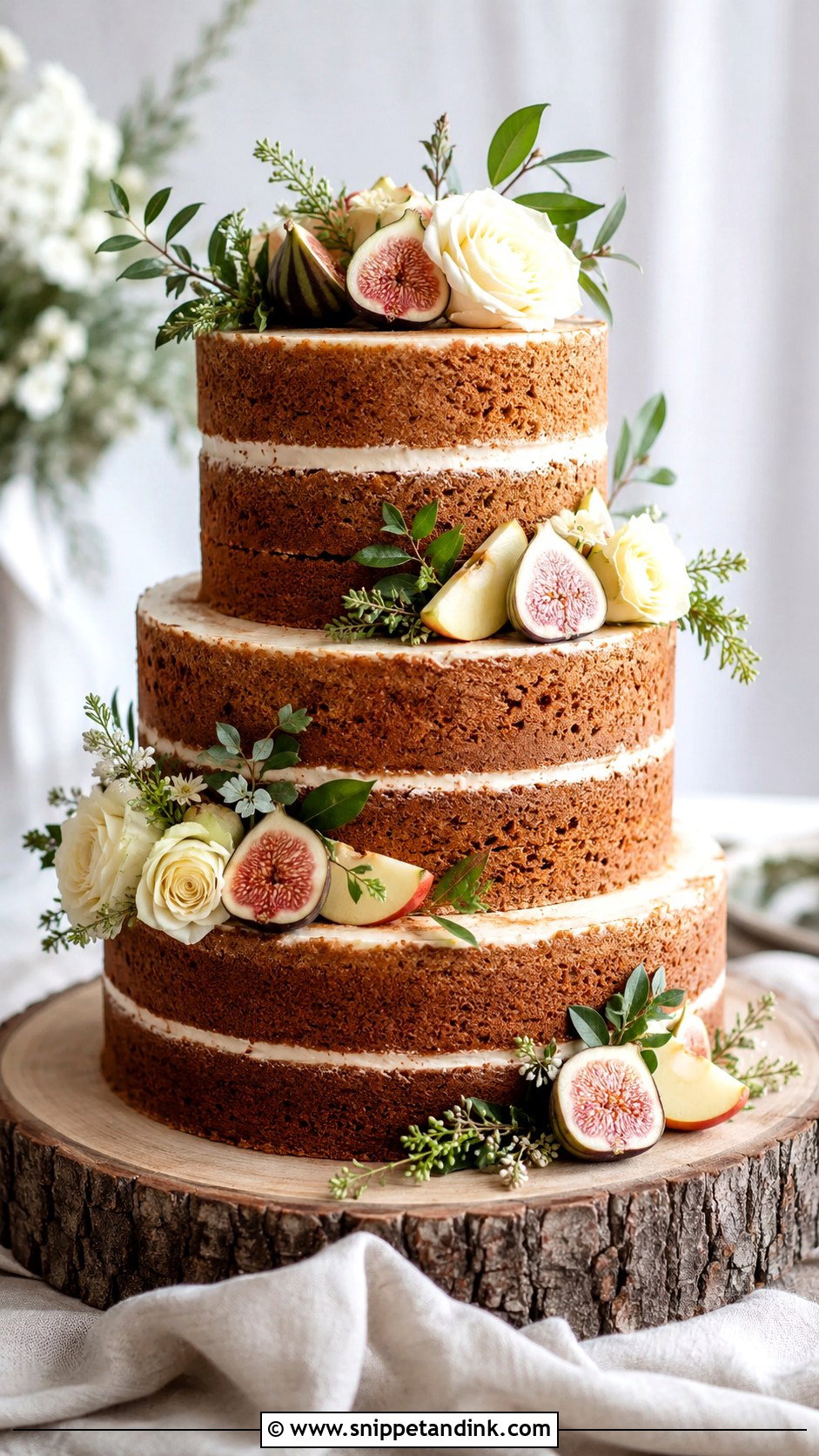
A naked cake shows off the cinnamon sponge’s warm colour, but it has one weakness I always mention: with almost no frosting to seal it, the outside dries faster. I brush each layer with syrup and assemble as close to the event as I can. Fill with cream cheese, cinnamon buttercream, apple compote or caramel. Dress it with fresh flowers, greenery, figs, berries or apple slices to match your season. It suits barns, gardens and outdoor receptions, and couples who want the cake to look handmade.



15. Semi Naked Cinnamon Wedding Cake
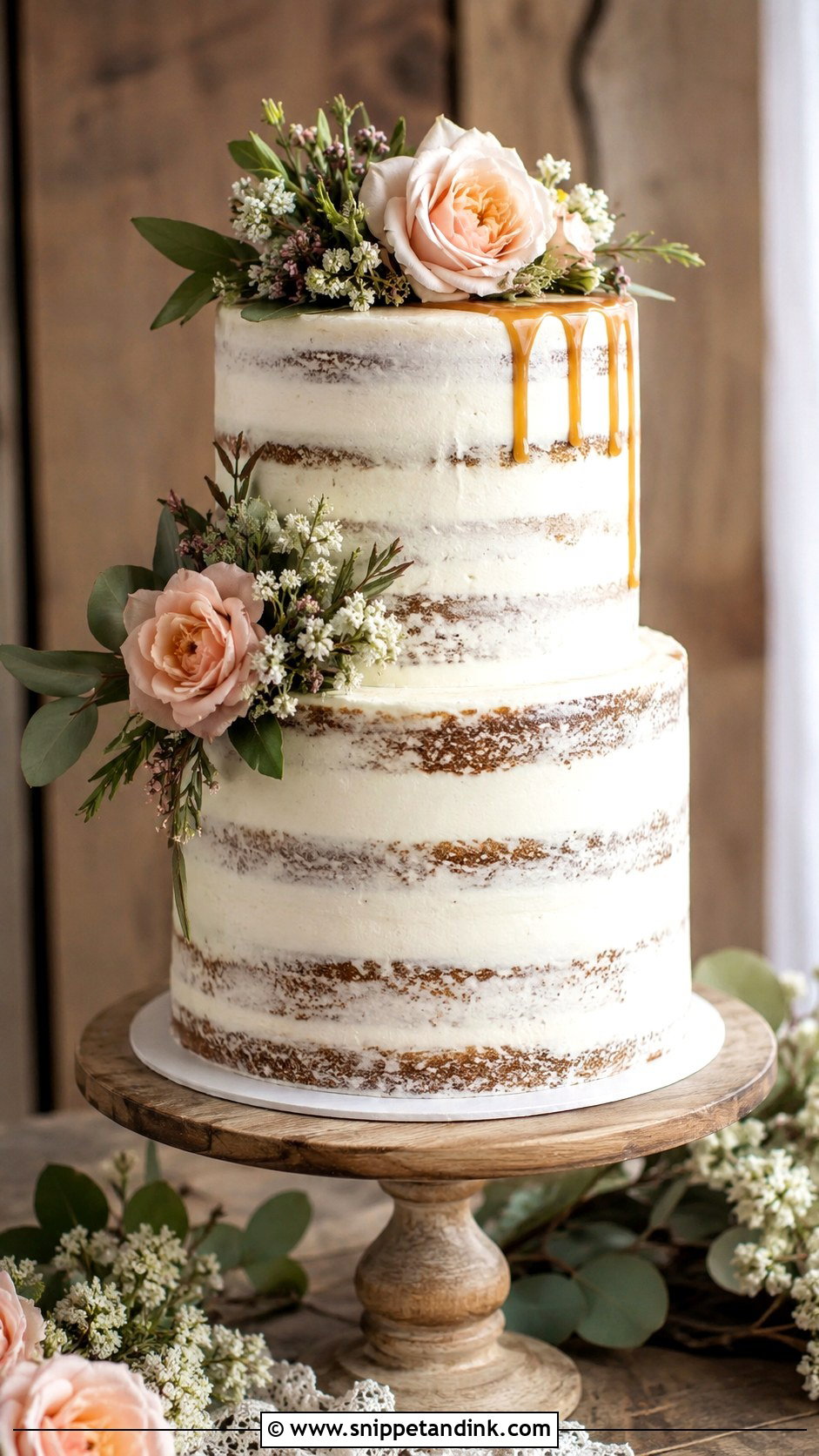
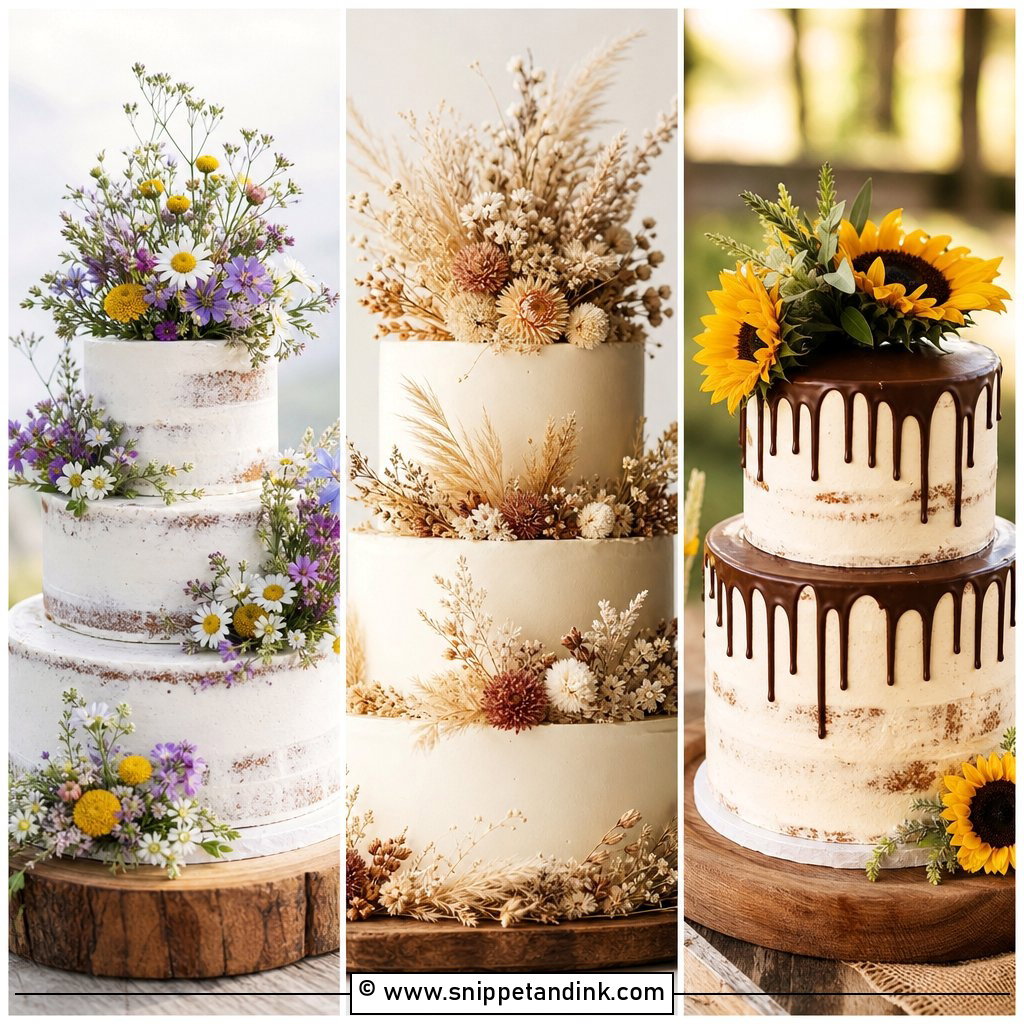
Semi-naked is my usual recommendation when someone loves the naked look but worries about it drying out. The frosting is scraped thin, so the cinnamon sponge peeks through in patches, but the cake is still sealed. Cream cheese frosting, vanilla buttercream or cinnamon buttercream all work. Add fresh florals, small greenery and perhaps a light touch of caramel around the tiers. Country venues, gardens and smaller autumn celebrations suit it.
16. Tiered Cinnamon Wedding Cake
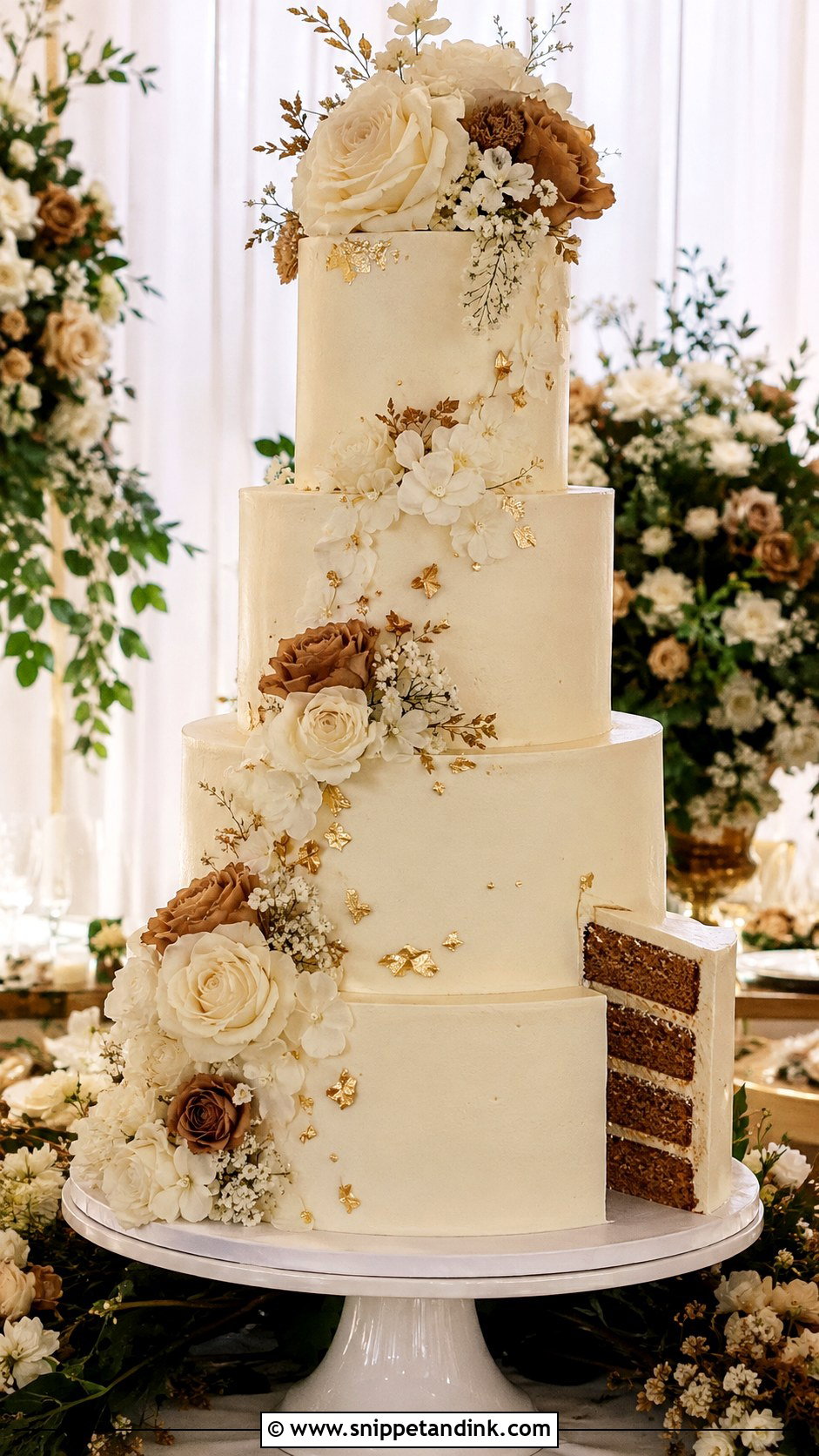
For a large guest list, tiers give you height and presence, and three or four of them make a proper centrepiece. You can bake every tier in cinnamon or mix in vanilla, carrot, apple or maple, which I often recommend so guests have a choice. Every tier above the base sits on its own board with dowels underneath; dense spice sponges are heavy, and that support is what stops a lean. A smooth white buttercream finish keeps it classic, with cascading flowers or small gold accents for interest.
17. Rustic Cinnamon Wedding Cake
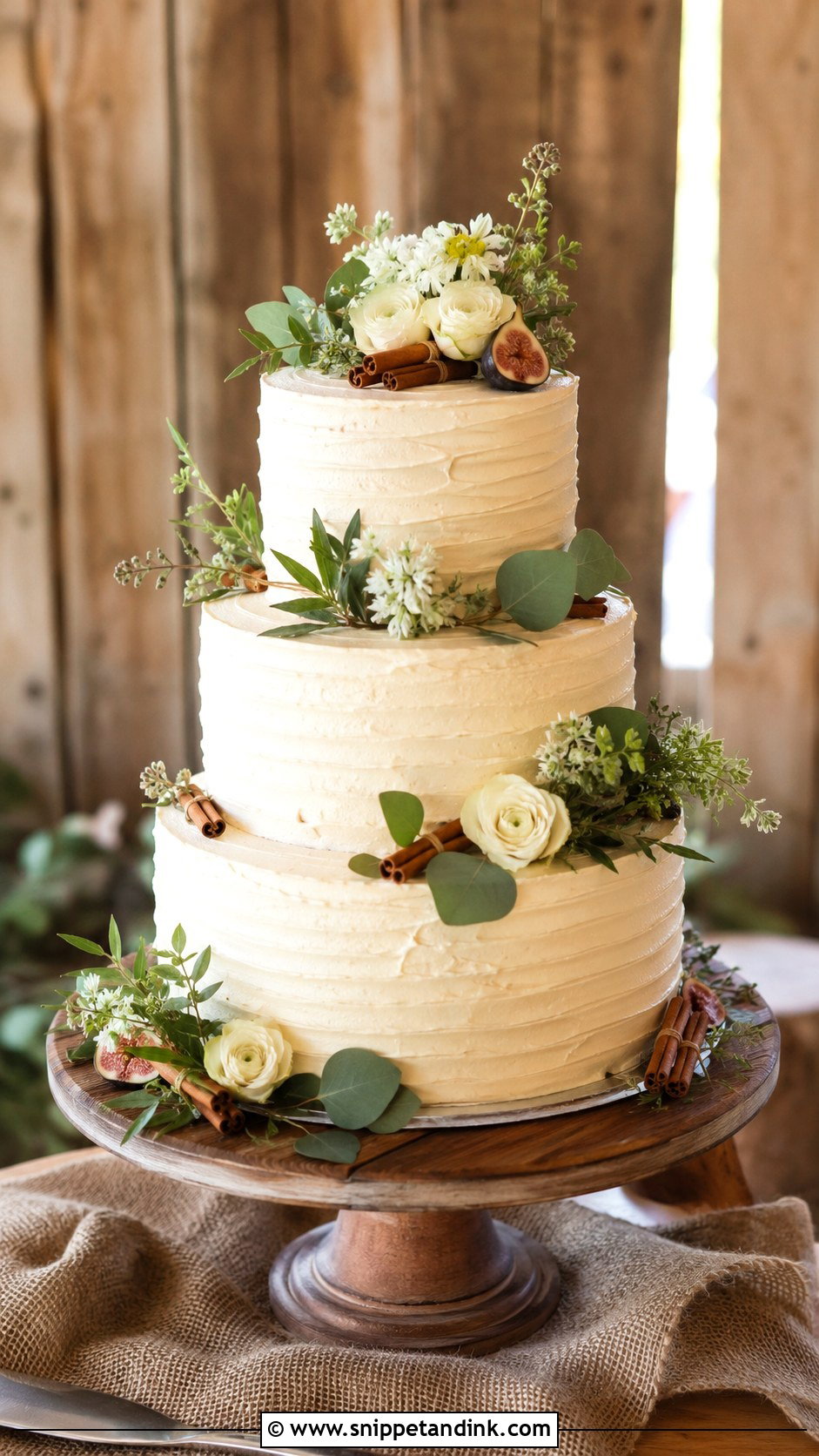
Rustic cinnamon wedding cake belongs beside wood tables, greenery and natural textures. Underneath, cinnamon spice, apple cinnamon or brown sugar cinnamon with cream cheese or vanilla buttercream. Outside, textured frosting, a semi-naked finish or simple buttercream ridges. Decorate with flowers, figs, apples or a few cinnamon sticks, and tell your caterer the sticks are decoration only, so nobody serves one on a plate. The aim is cozy, not cluttered: three or four accents, not twelve.
18. Floral Cinnamon Wedding Cake
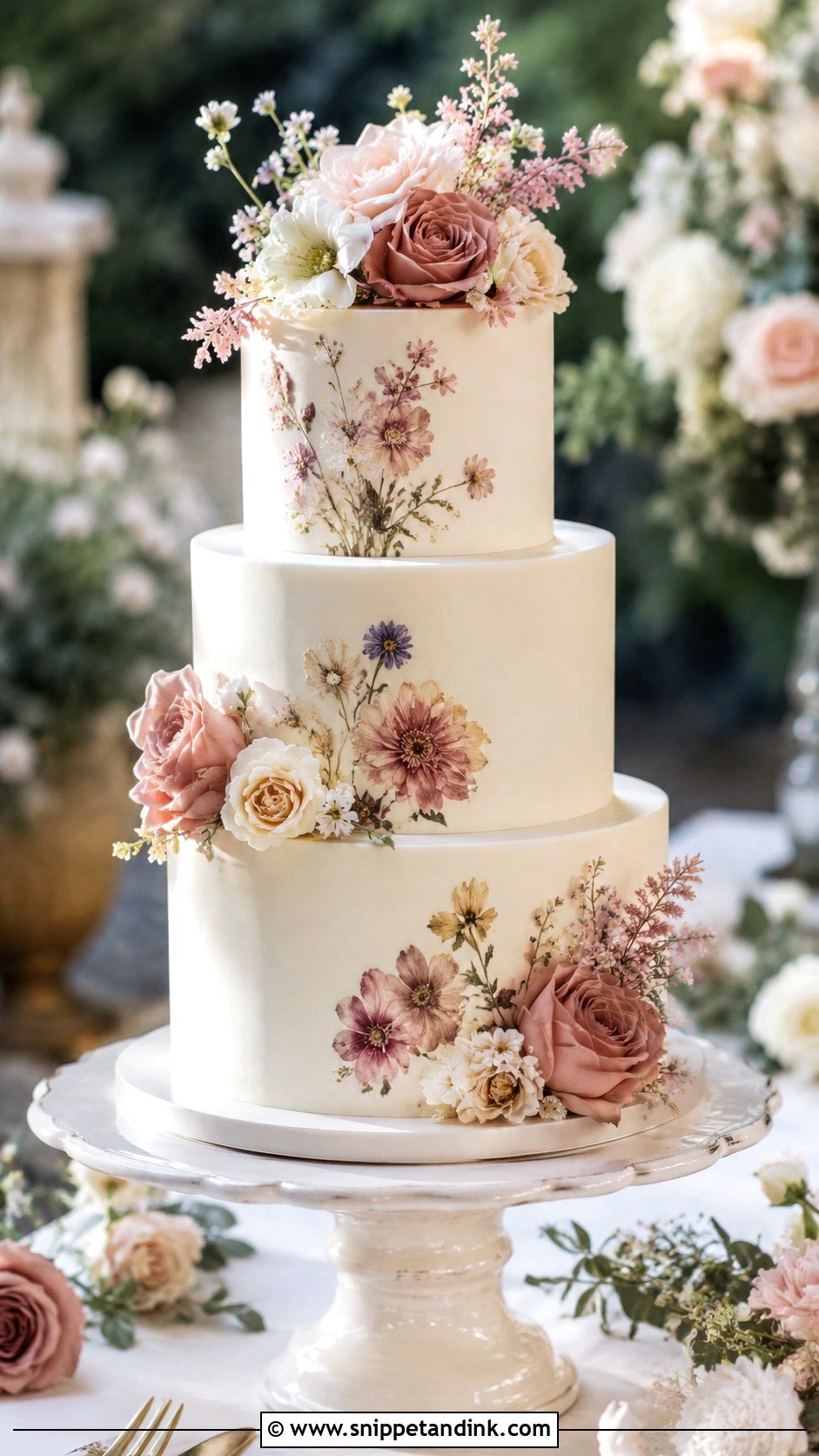
Flowers soften cinnamon’s cozy character into something romantic. Blush, cream, dusty rose, caramel or soft terracotta blooms set against smooth ivory frosting give a warm palette. Inside, cinnamon vanilla, cinnamon spice or cinnamon honey, depending on how bold you want it. If you use fresh flowers, they need to be pesticide-free and kept off the cake surface with wrapped stems or a barrier; I’d ask your florist and baker to coordinate. Pressed edible petals and buttercream flowers avoid that issue entirely.
19. Small Cinnamon Wedding Cake
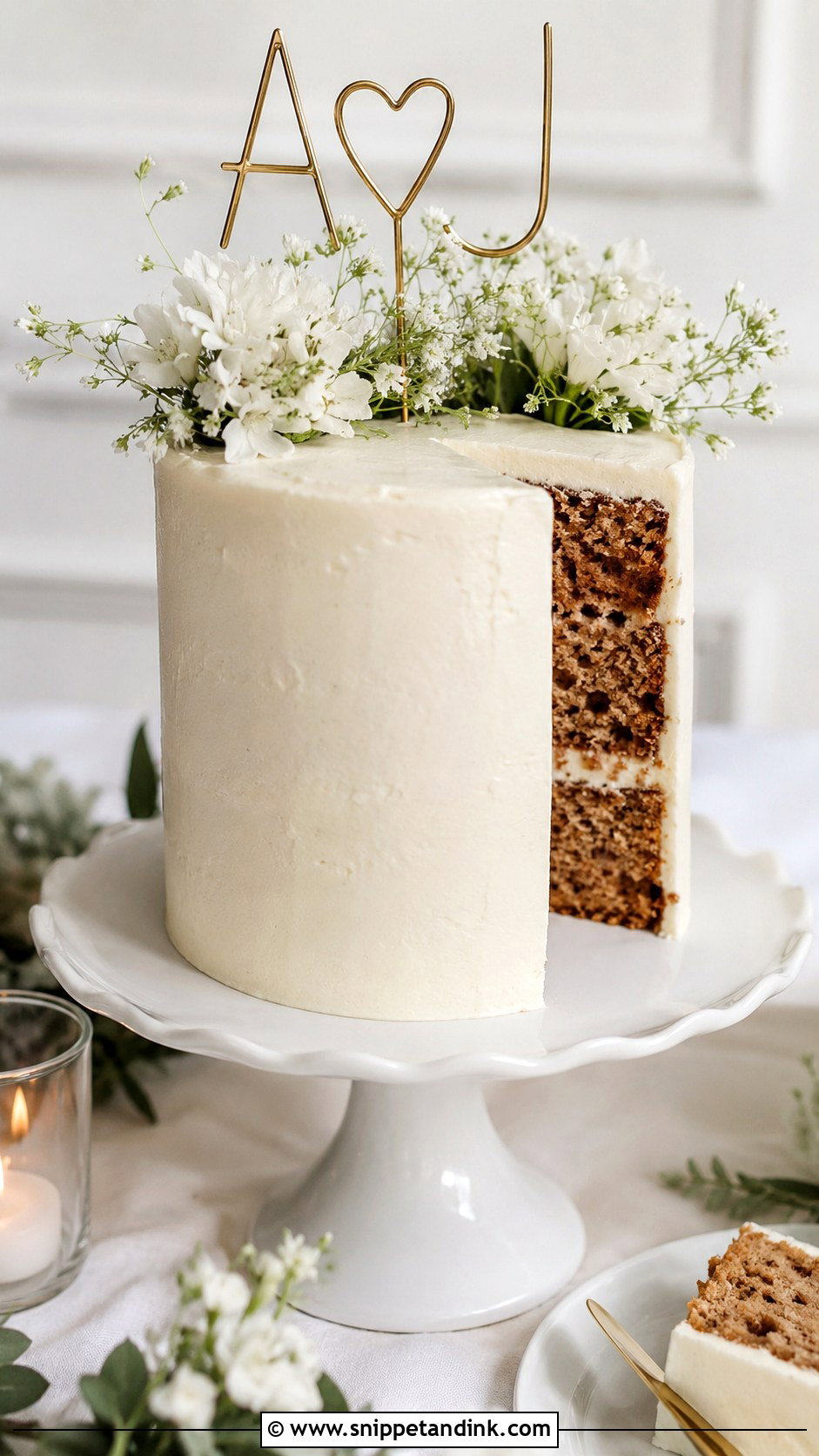
Small cakes are where I’d push a stronger flavour, because everyone gets a modest, considered slice. A single or two-tier cinnamon cake suits elopements, micro weddings, courthouse celebrations or a reception with other desserts. Use cream cheese, cinnamon buttercream or vanilla bean buttercream with fresh flowers, a simple topper or a touch of caramel. With so little cake, finish matters: sharp edges and a good stand do more than extra decoration.


20. Cinnamon Sheet Wedding Cake
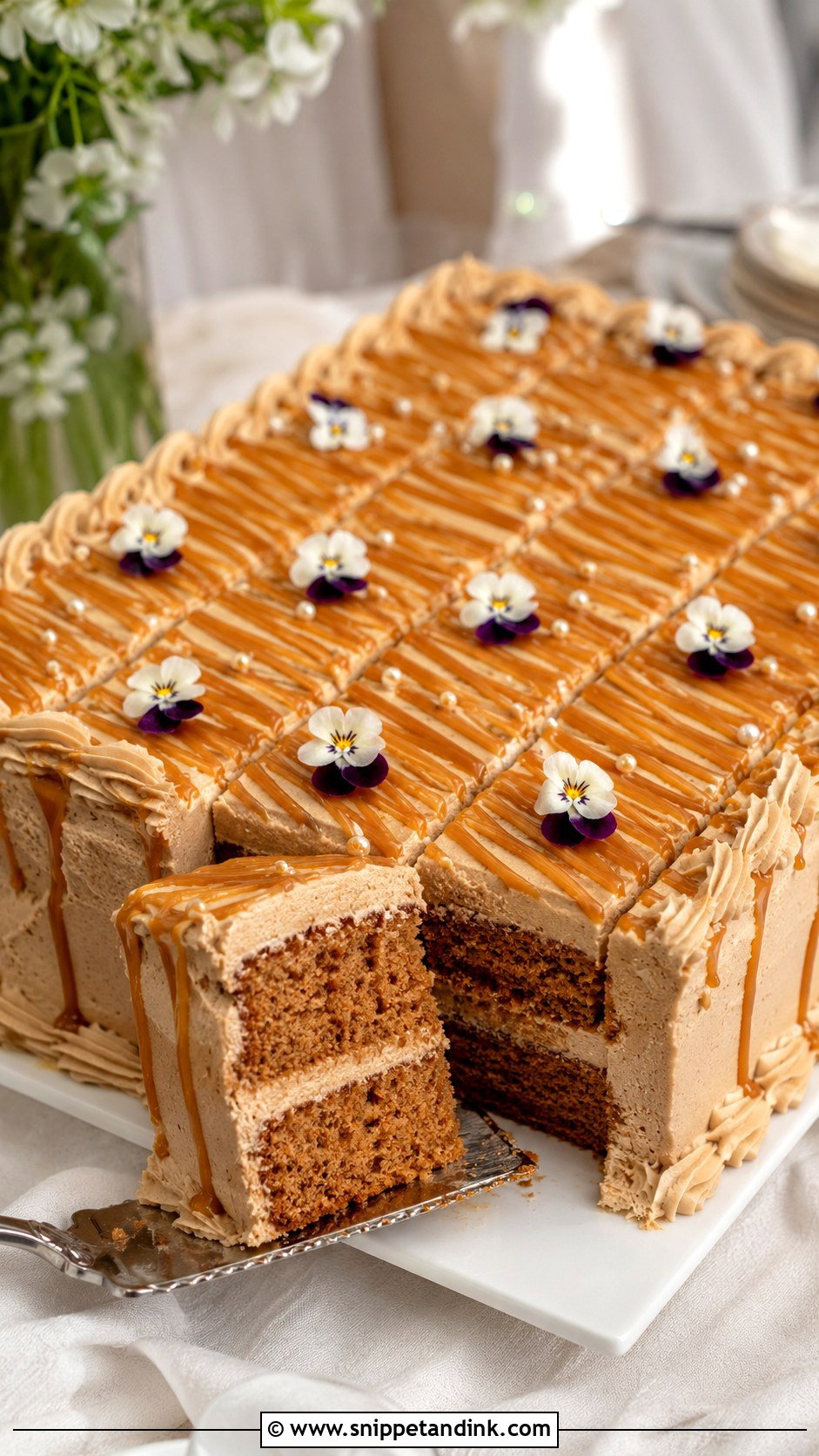
A cinnamon sheet wedding cake is the budget move I respect most. Display a small cutting cake and serve guests from sheet cakes in the kitchen, or style the sheet itself for a relaxed reception. Cream cheese, brown sugar buttercream or a vanilla glaze all suit it, with piped borders, edible flowers, caramel drizzle or small floral clusters on top. Sheet cakes also cut into neat, even squares faster than tiers, so service moves quickly at backyard, brunch and large weddings.
Cream Cheese Frosting Runs on a Clock
So many cinnamon cakes lean on cream cheese, and it’s the frosting that causes most of my day-of worries. It’s softer than buttercream, slumps in warmth and needs refrigeration. A barn in early autumn sun can be far warmer than it feels to guests. I agree with the venue that the cake stays chilled until a set time before display, and I’d be cautious about leaving a cream cheese cake out in heat for more than a few hours. Your baker will give you their own limit.
- For outdoor or warm venues, ask for cream cheese as the filling only, with a stable buttercream or ganache on the outside.
- Plan the cutting earlier in the evening rather than last thing, so the cake isn’t standing in a warm room for hours.
- Make sure someone at the venue knows the cake goes back in a fridge after cutting if it isn’t all served.
Spice sponges do have one advantage here: they’re dense and moist, so they forgive a long day better than a light vanilla sponge. The frosting is the part to protect.
Let Cinnamon Support the Cake Instead of Shouting Over It
Cinnamon is a flexible flavour that can go rustic with naked layers, polished with smooth buttercream, seasonal with apple or pumpkin, or romantic with flowers and ivory frosting. The skill is in the pairing, so cinnamon supports the cake instead of drowning it: cream cheese brings tang, caramel adds richness, fruit adds freshness, vanilla keeps it light. From a tall tiered centerpiece to a small cutting cake backed by sheet cake, it’s a flavour guests remember long after the plates are cleared.
You'll Like These Ideas:






Leave a Reply