
A beach cake has two jobs, and the second one is the hard part. It has to look like it belongs to the place, with island flowers, fruit, shells or a sweep of sea colour, and it has to stay standing in heat, humidity and a sea breeze for an hour or more before anyone cuts it. Most of my design conversations for coastal weddings start with the weather, then move to flavour: coconut, passion fruit, mango, lime, pineapple and vanilla all suit warm evenings far better than a heavy chocolate. The ideas below run from barefoot elopements to resort ballrooms, and each one comes with what I’d watch for when making it.
How Buttercream, Fondant and Fresh Fruit Cope With Sun and Sea Air
Before we talk about shells and hibiscus, it helps to know how each finish behaves near the water, because that decides which designs are realistic for your venue.
Buttercream
All-butter buttercream starts to soften on a warm afternoon and slides in direct sun. Meringue-based versions are silkier but no tougher. Bakers who do a lot of outdoor work adjust their recipes for heat, and a textured finish such as waves or combed lines hides a little softening far better than razor-sharp smooth sides.
Fondant
Fondant doesn’t melt like buttercream, but humidity makes it tacky and condensation makes it sweat. A cake covered in ganache under the fondant holds its shape best. Hand-painted details can bleed if the surface gets wet.
Fruit, flowers and chocolate
Cut fruit weeps and dries within a few hours. Fresh flowers wilt fastest when the stems are short and the air is hot. White chocolate decorations soften before almost anything else. All three go on as late as possible, ideally at the venue.
My honest rule: if the cake will sit outdoors in daylight, choose sugar flowers and a textured buttercream or a ganache-and-fondant cake, and keep it in shade until about thirty minutes before cutting. If the reception is in an air-conditioned room, you can choose almost any design here.
1. Tropical Flower Wedding Cake
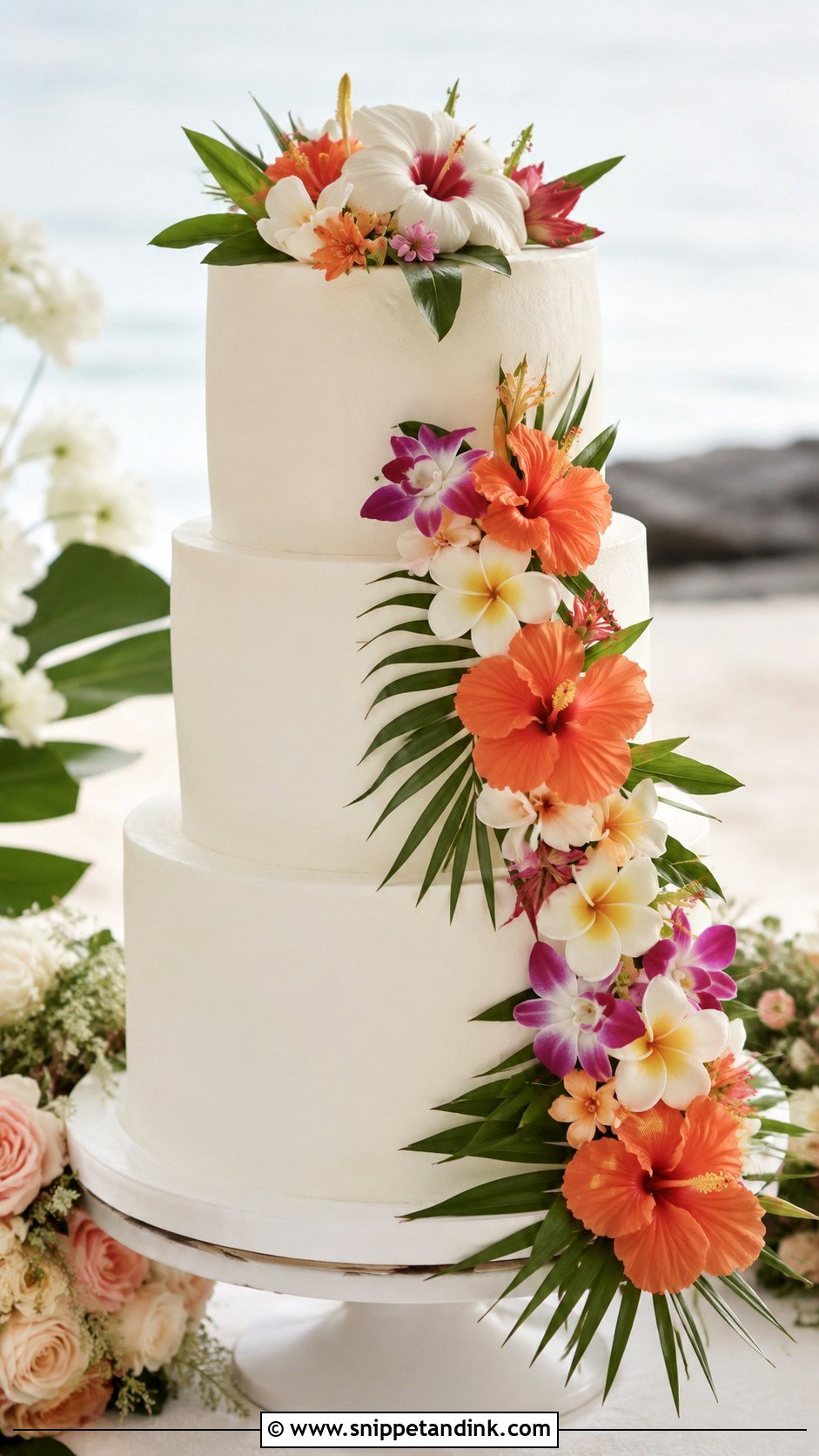
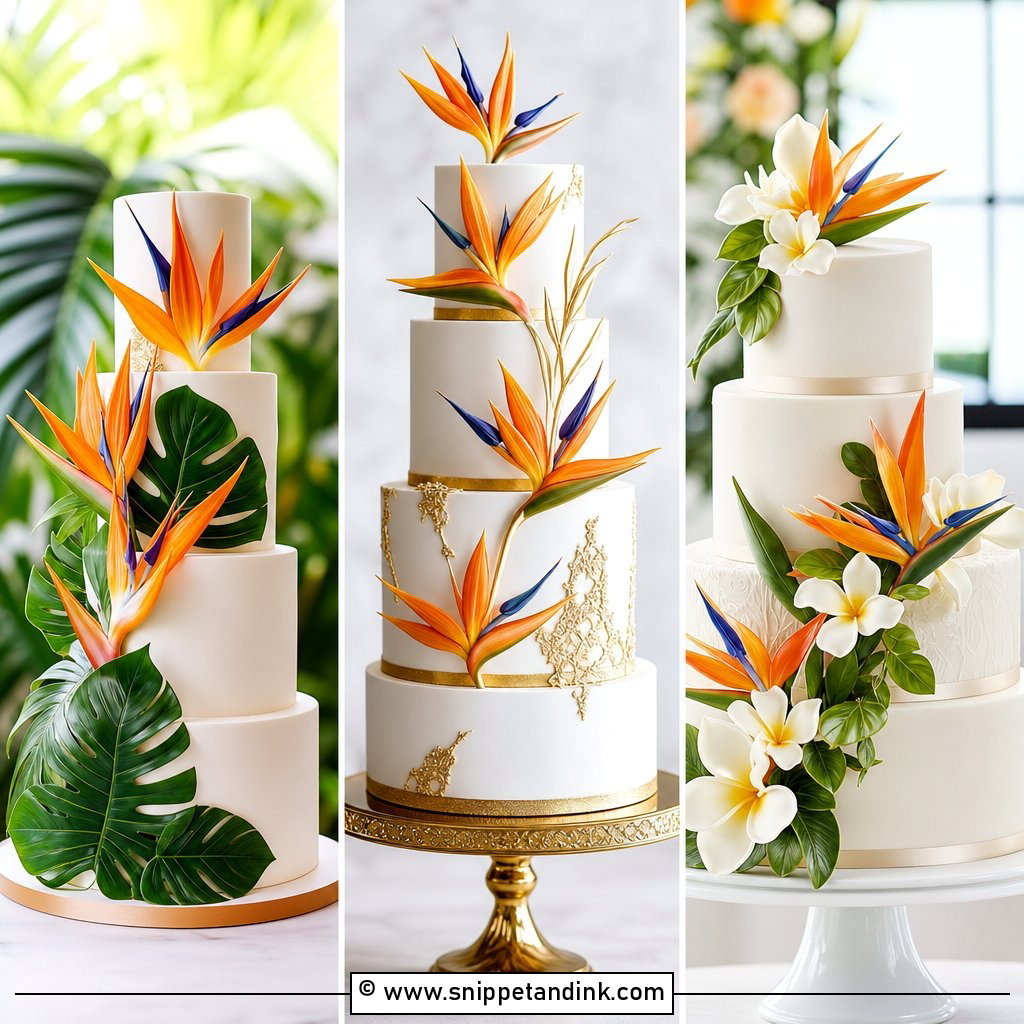
Flowers are the quickest way to make a classic tiered cake feel tropical, and they show up best against a plain white or ivory finish. Hibiscus, orchids, plumeria, bougainvillea, and anthurium all carry that island colour. Here’s the part couples rarely hear: several of these aren’t food-safe. Anthurium and plumeria in particular should never touch frosting directly, so fresh stems need wrapping and a barrier, or I make the blooms in sugar instead, which also means they won’t wilt in the heat. I arrange them on a loose diagonal, so they look like they drifted down the tiers, over coconut, vanilla or passion fruit layers.
2. Seashell Wedding Cake
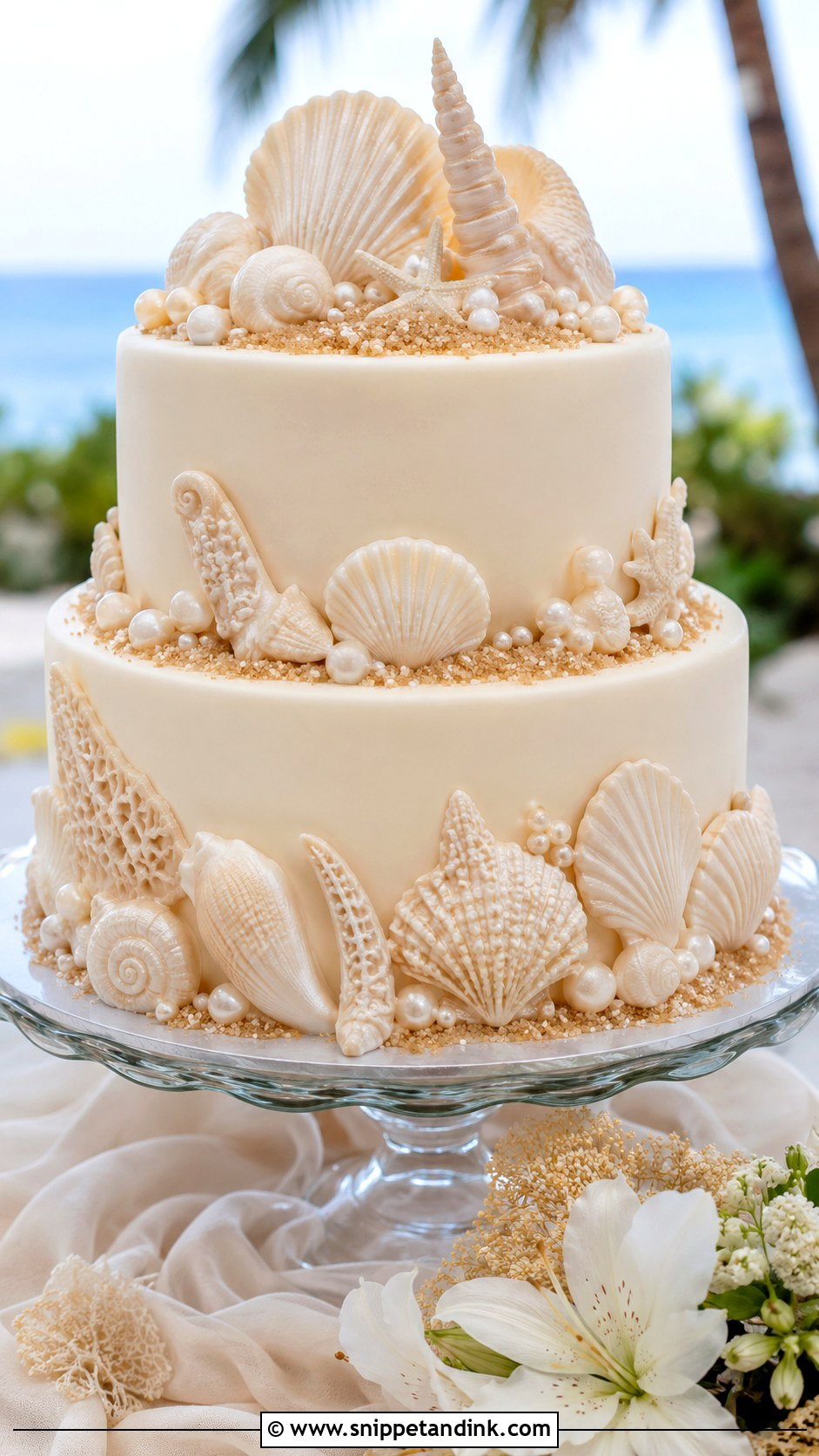
Shells look refined when there are fewer of them than you think. I mould them in white chocolate, fondant or modelling paste and dust them in pearl, sand, blush or champagne, then place a small cluster at the base of a smooth buttercream tier. White chocolate shells are the ones to be careful with outdoors, as they soften faster than sugar paste. A border of light brown sugar works as edible sand, and a few sugar pearls finish it. Coconut, almond or vanilla bean sponge sits nicely under this design, from a two-person elopement to a large resort reception.
3. Ocean Wave Wedding Cake
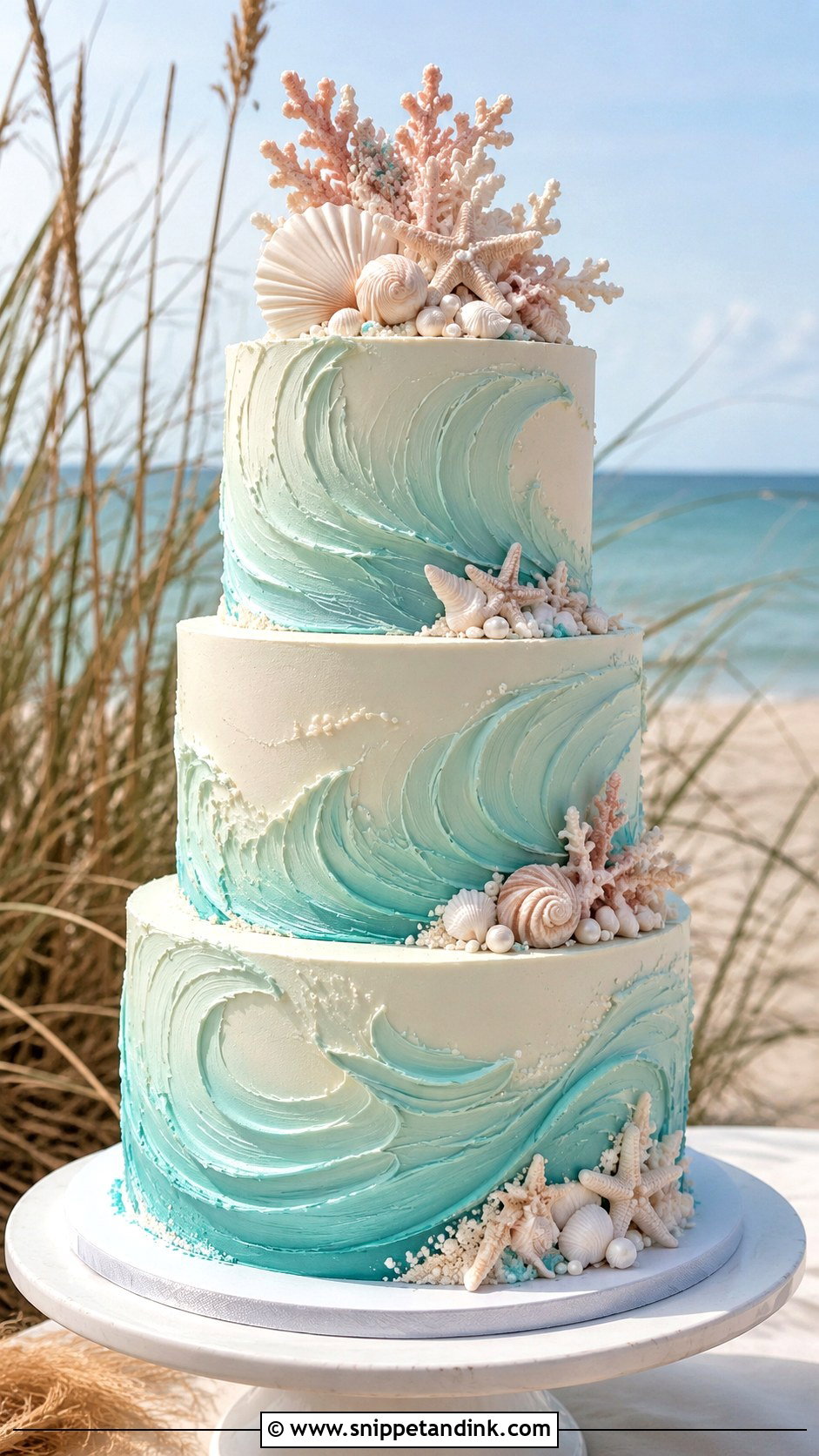
Here the frosting itself becomes the sea. I sweep soft blue, aqua and seafoam buttercream around the tiers with a palette knife, building the wave in two or three tones so it has depth rather than one flat blue. Keep the strokes shallow for a formal reception or pull them into higher crests for a relaxed party. Textured buttercream is actually a smart pick for heat, because a small slump hides in the waves where it would show on a sharp smooth edge. Finish with a few sugar shells or pearls. Lemon, coconut and vanilla keep it bright.
4. Palm Leaf Wedding Cake
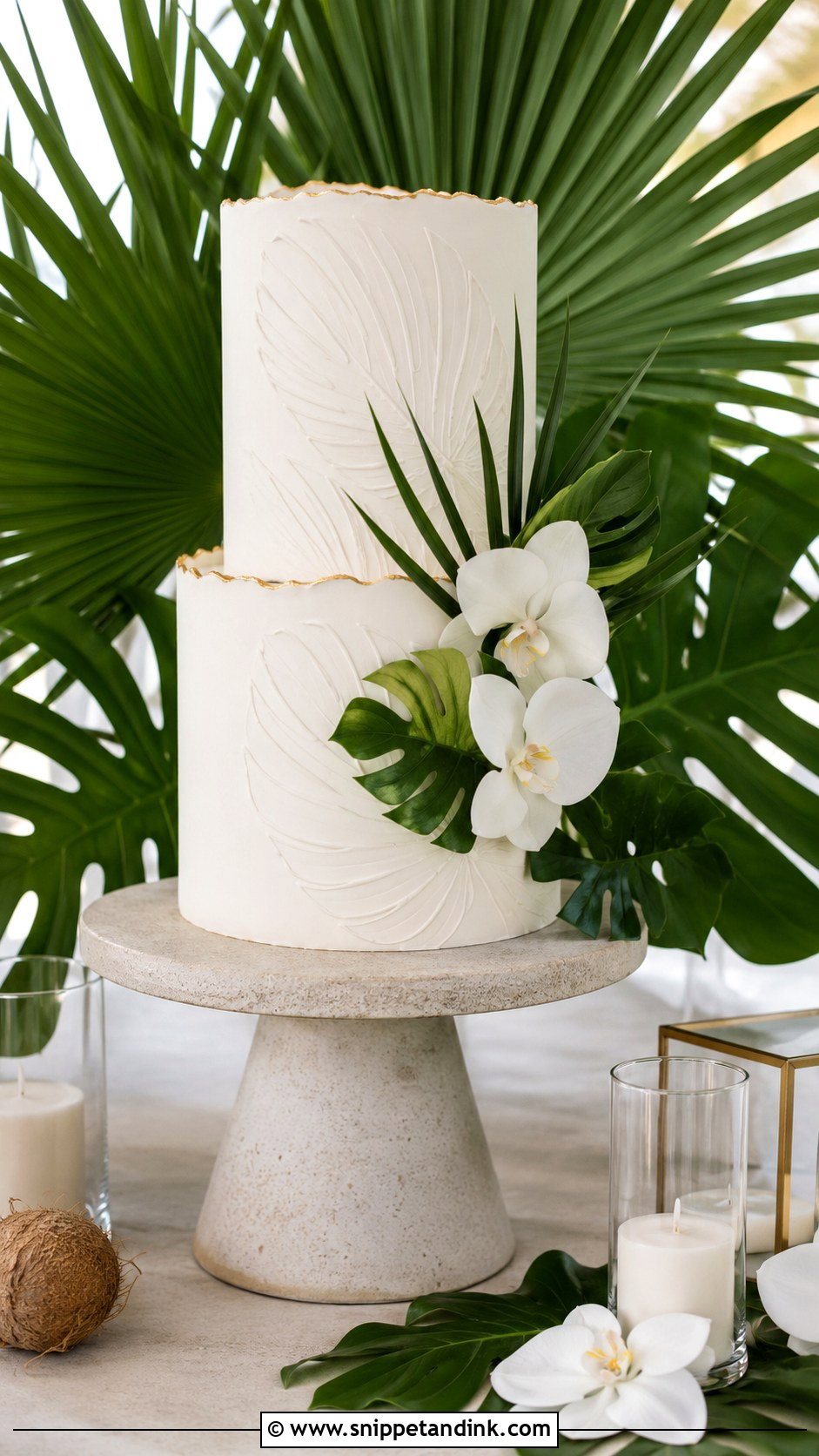
Palm and monstera leaves give you tropical without a single shell or anchor. Large fan palms and monstera frame the tiers, and their bold outline reads clearly in photos against white fondant or smooth buttercream. If the leaves are real, they come from a florist who hasn’t sprayed them, and I wash and wrap the stems before they go near the cake. One or two white orchids soften the greenery. Coconut lime, guava or vanilla layers suit it, and a fine gold edge or hand-painted green leaves on the fondant gives a more finished look.
5. Coconut Wedding Cake
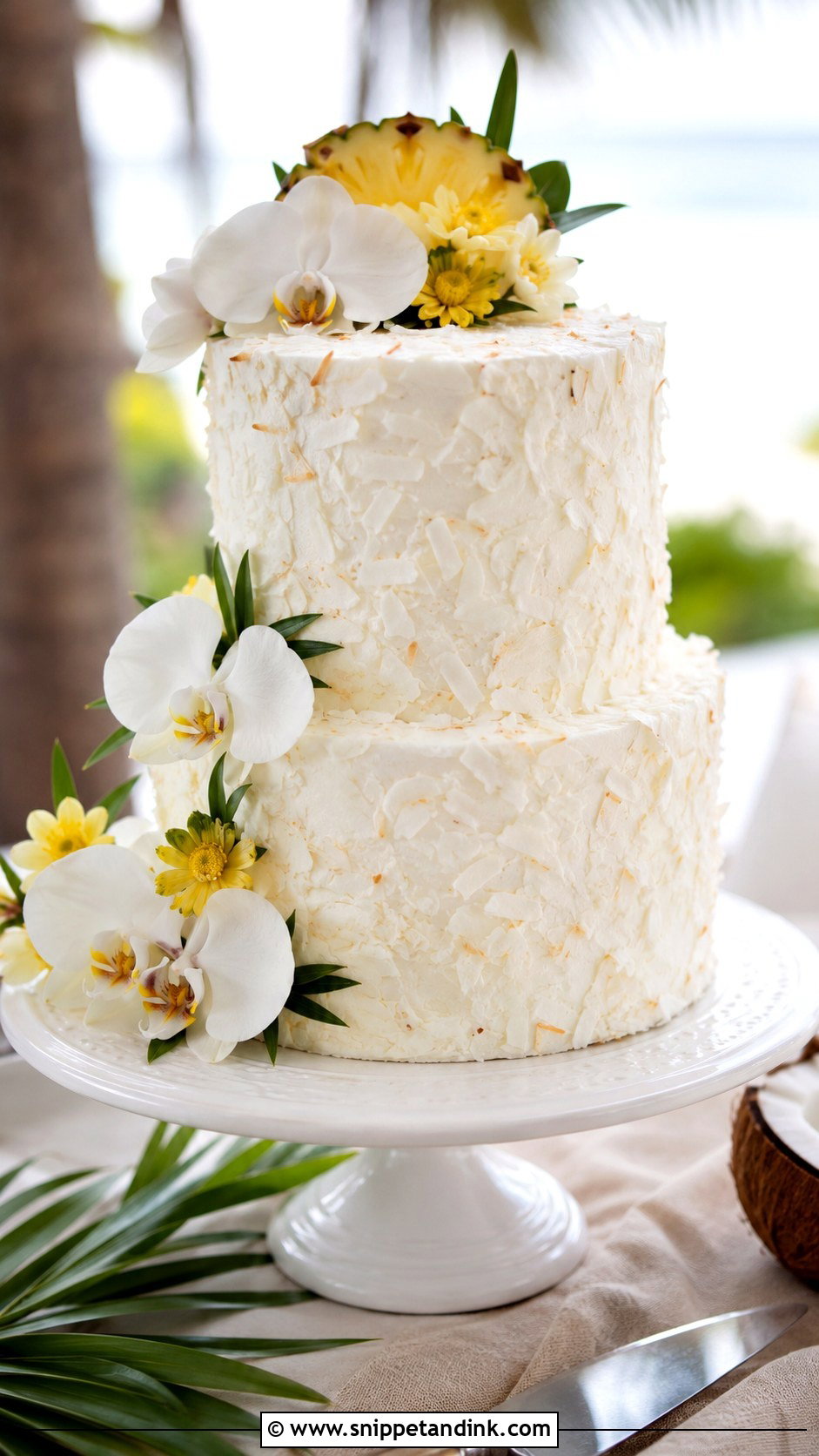
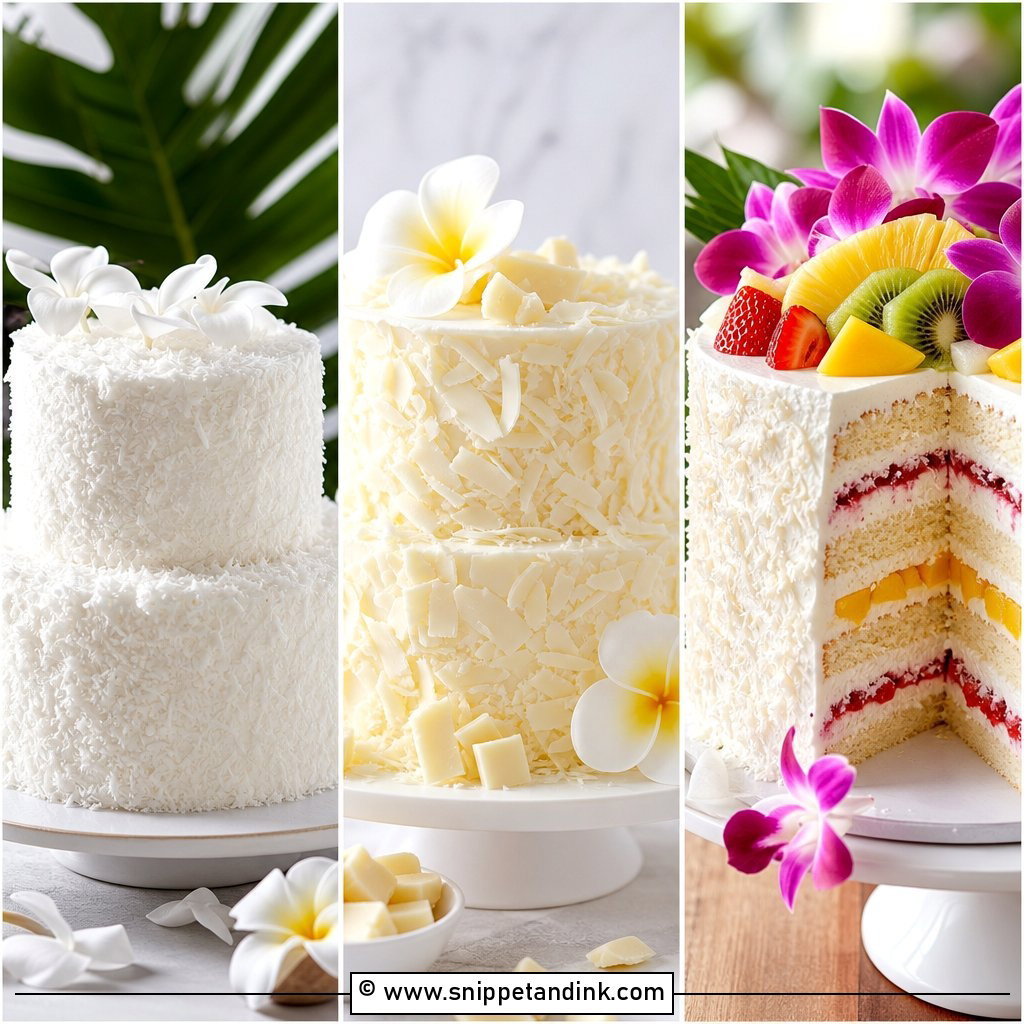
A coconut wedding cake is the flavour I suggest most often for the coast, partly because it tastes of the setting and partly because the decoration can stay simple. Pressing coconut flakes into white buttercream gives a snowy, textured finish that also disguises any softening in the heat. Orchids, white roses or pineapple flowers dried from thin slices add colour. Inside, it loves a sharp partner: lime curd, pineapple, mango buttercream or passion fruit cream. For a daytime ceremony, this is the cake I’d put money on.
6. Pineapple Wedding Cake
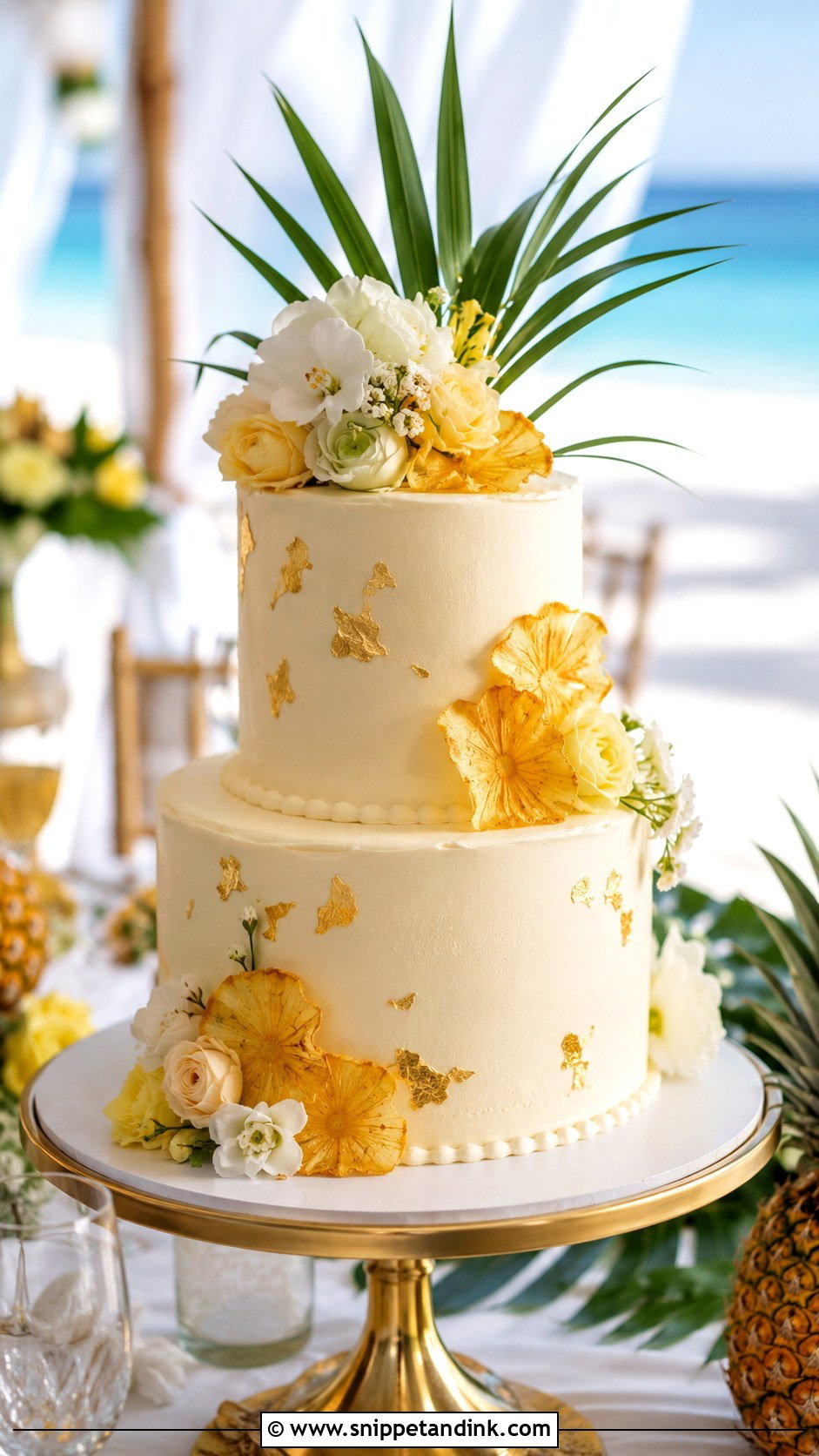
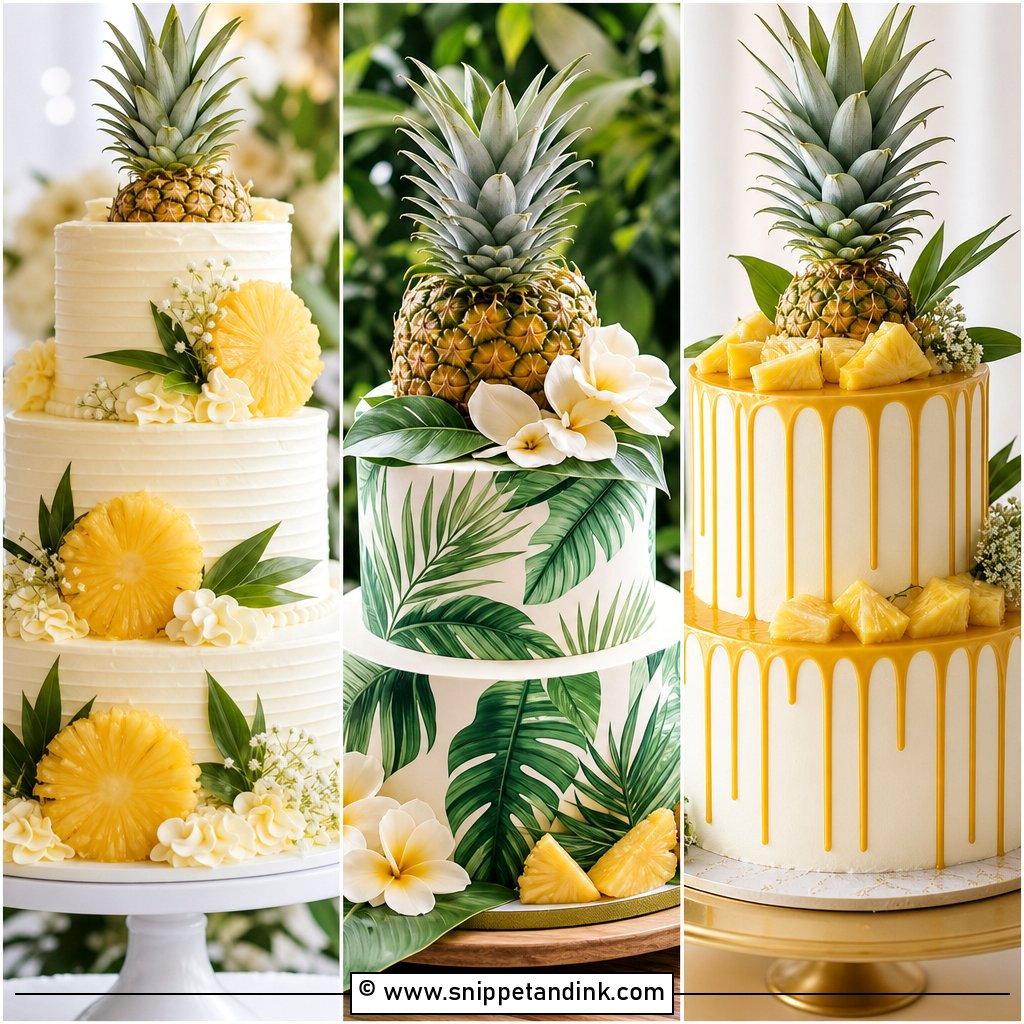
Pineapple can tip into novelty fast, so the design trick is restraint. Dried pineapple flowers, golden slices or a soft yellow buttercream wash on white tiers look grown-up; a carved pineapple-shaped tier usually doesn’t. One technical warning from the kitchen: raw pineapple contains an enzyme that breaks down gelatine and dairy, so a fresh pineapple filling can turn a cream layer watery overnight. I cook the fruit into a compote first. Pineapple sponge with coconut buttercream, or vanilla with that cooked filling, pleases almost every guest.
7. Mango Wedding Cake
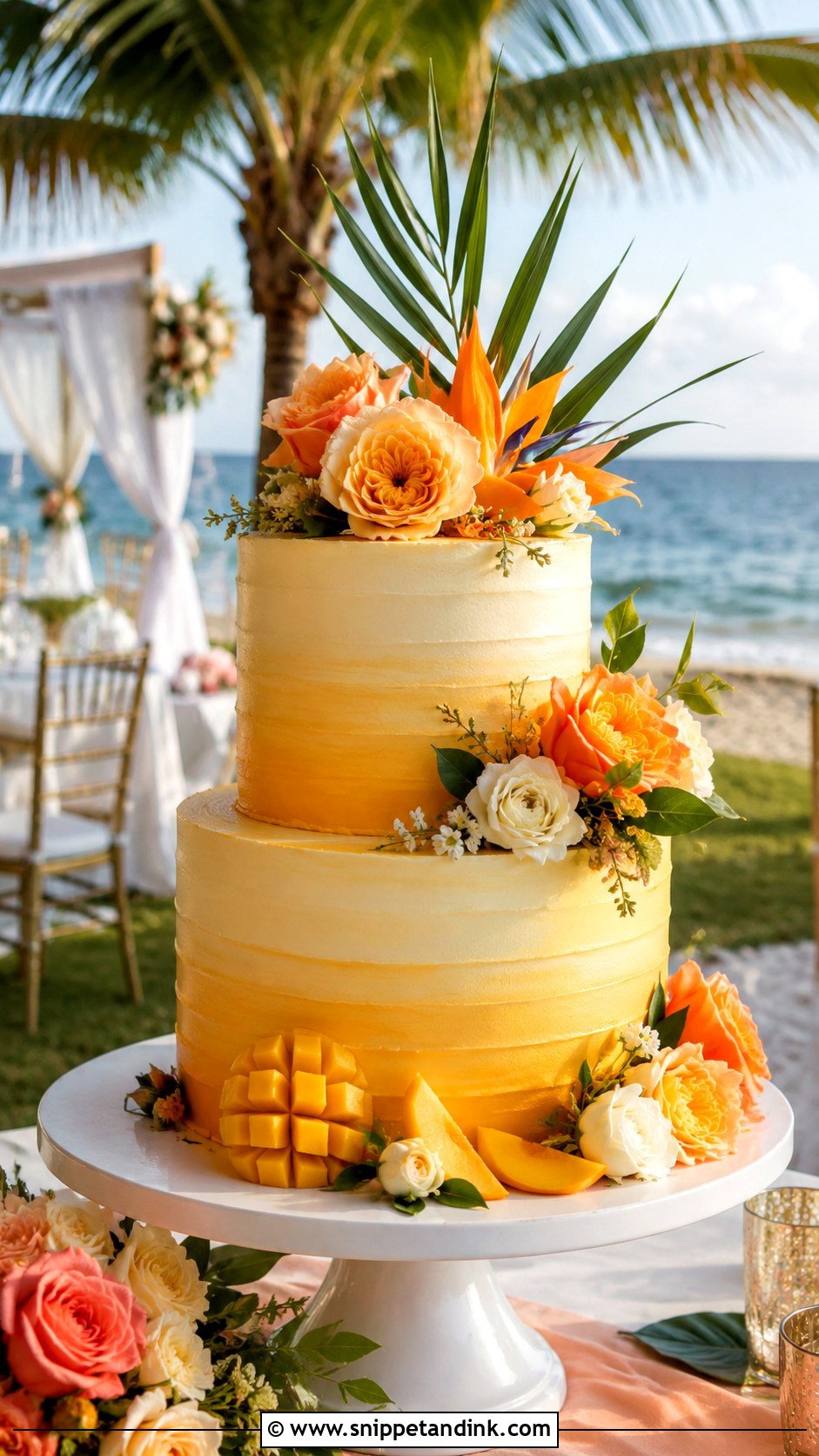
Mango gives a mango wedding cake two possible moods: pale and soft with a mango-tinted buttercream, or bold with orange-yellow fruit and a sunset ombré. The flavour is juicy and fresh, and a mango curd between white sponge layers is a lovely surprise when the first slice comes out. Fresh mango on the outside is best added at the venue, as cut fruit weeps and dulls within a few hours in warm air. It also pairs with coconut, lime and passion fruit, and those golden tones match the light at a sunset reception.
8. Passion Fruit Wedding Cake
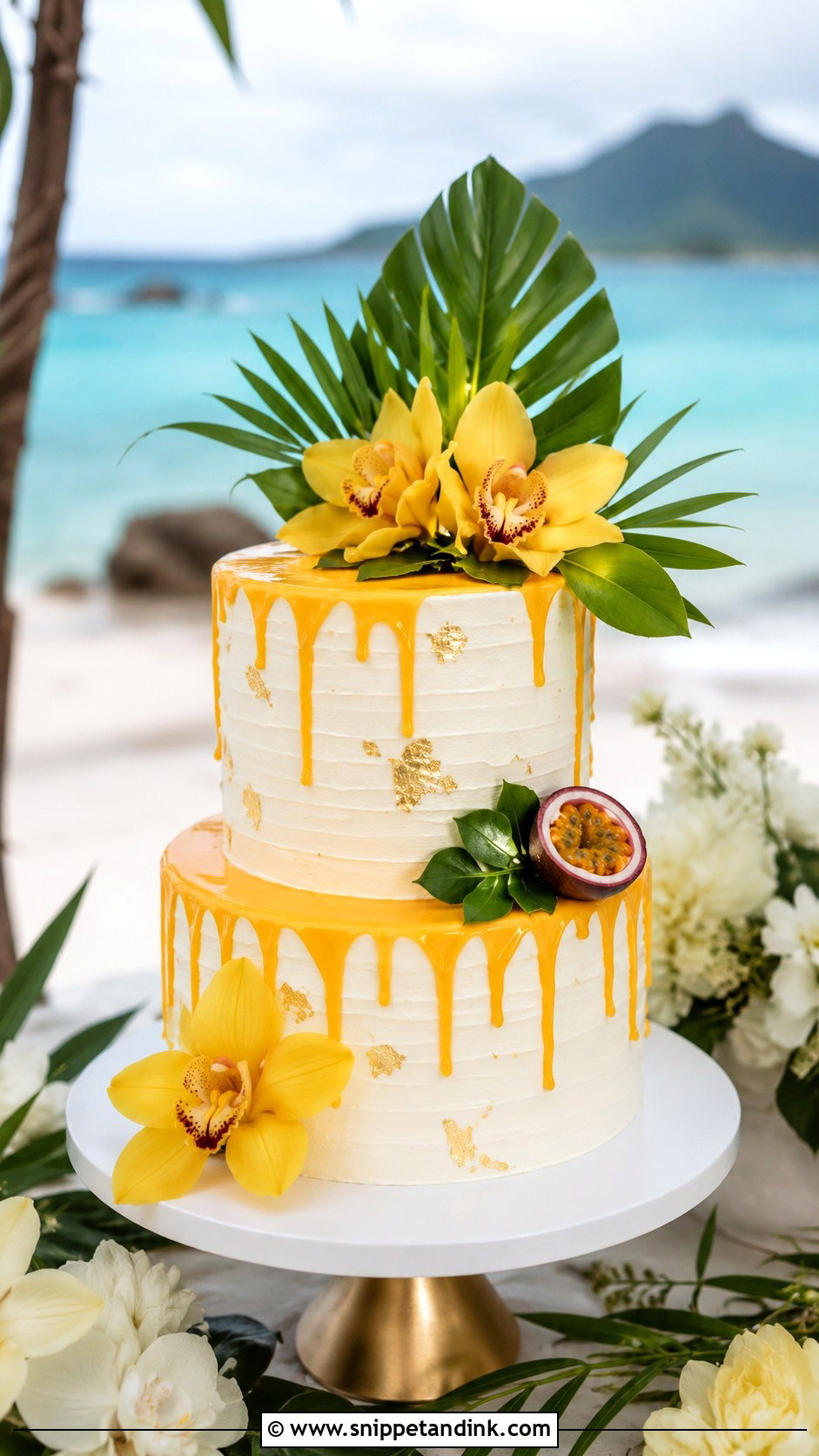
Passion fruit is the flavour I use to rescue a sweet cake in hot weather. Its acidity cuts straight through buttercream, so guests actually finish their slice. I fold passion fruit curd between vanilla, coconut or almond layers and keep the outside white, with a glossy yellow passion fruit glaze or a few soft flowers. Drips need a steady hand and a chilled cake, otherwise they run too far in the heat. It’s a good middle ground for couples who find vanilla dull but don’t want anything strange.
9. Tropical Fruit Wedding Cake
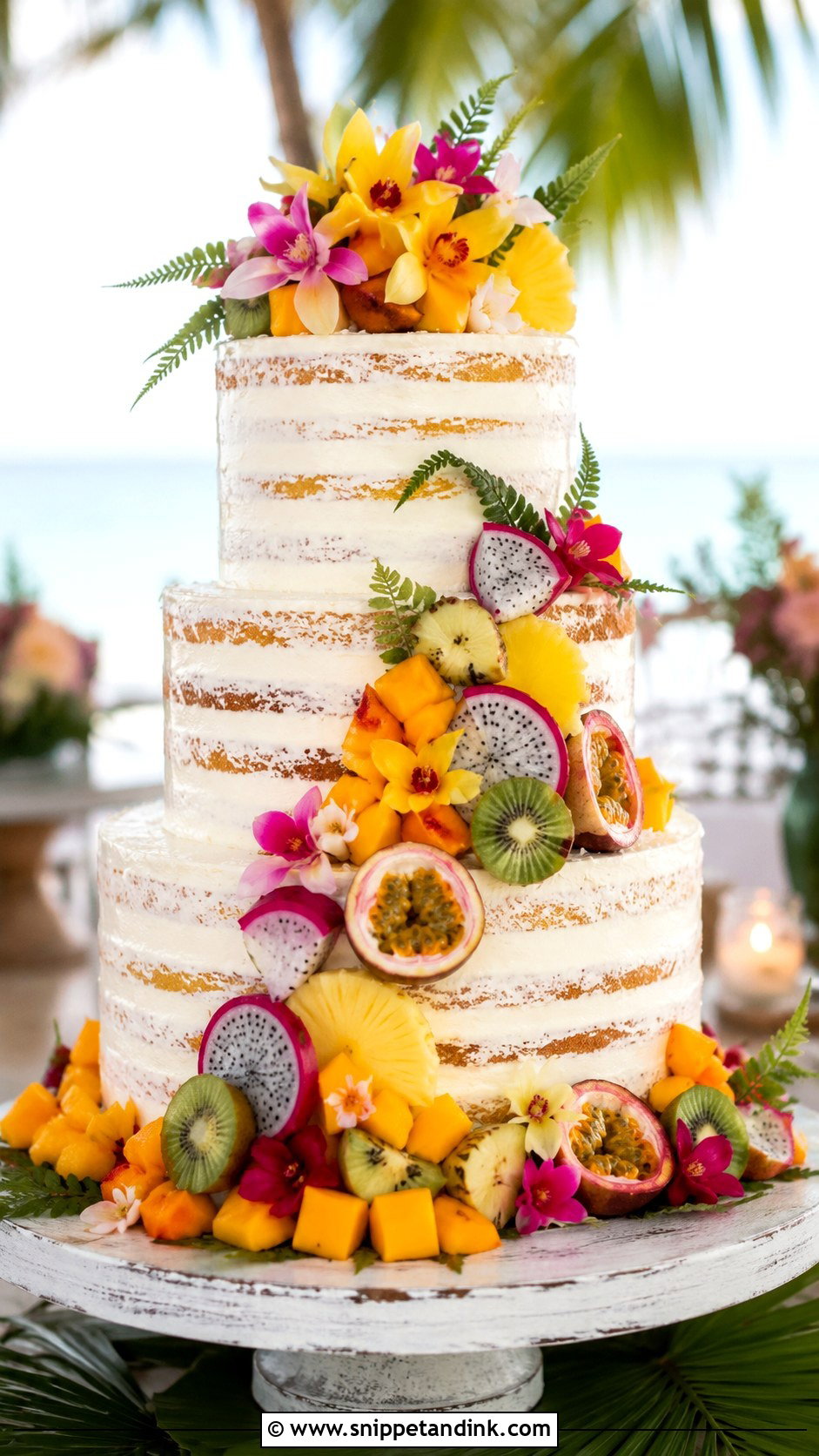
A tropical fruit wedding cake lets mango, pineapple, kiwi, dragon fruit, passion fruit, papaya and berries do the decorating, either in a clean cascade or a ring around each tier. Fruit is the most perishable decoration there is, so I dress the cake on site as late as possible and brush the cut faces with a thin glaze to slow drying. Keep the frosting plain behind it. Semi-naked, whipped or smooth buttercream all work, with vanilla, coconut or citrus sponge. Brunch weddings and destinations with good local produce are where this shines.
10. Beach Sunset Wedding Cake
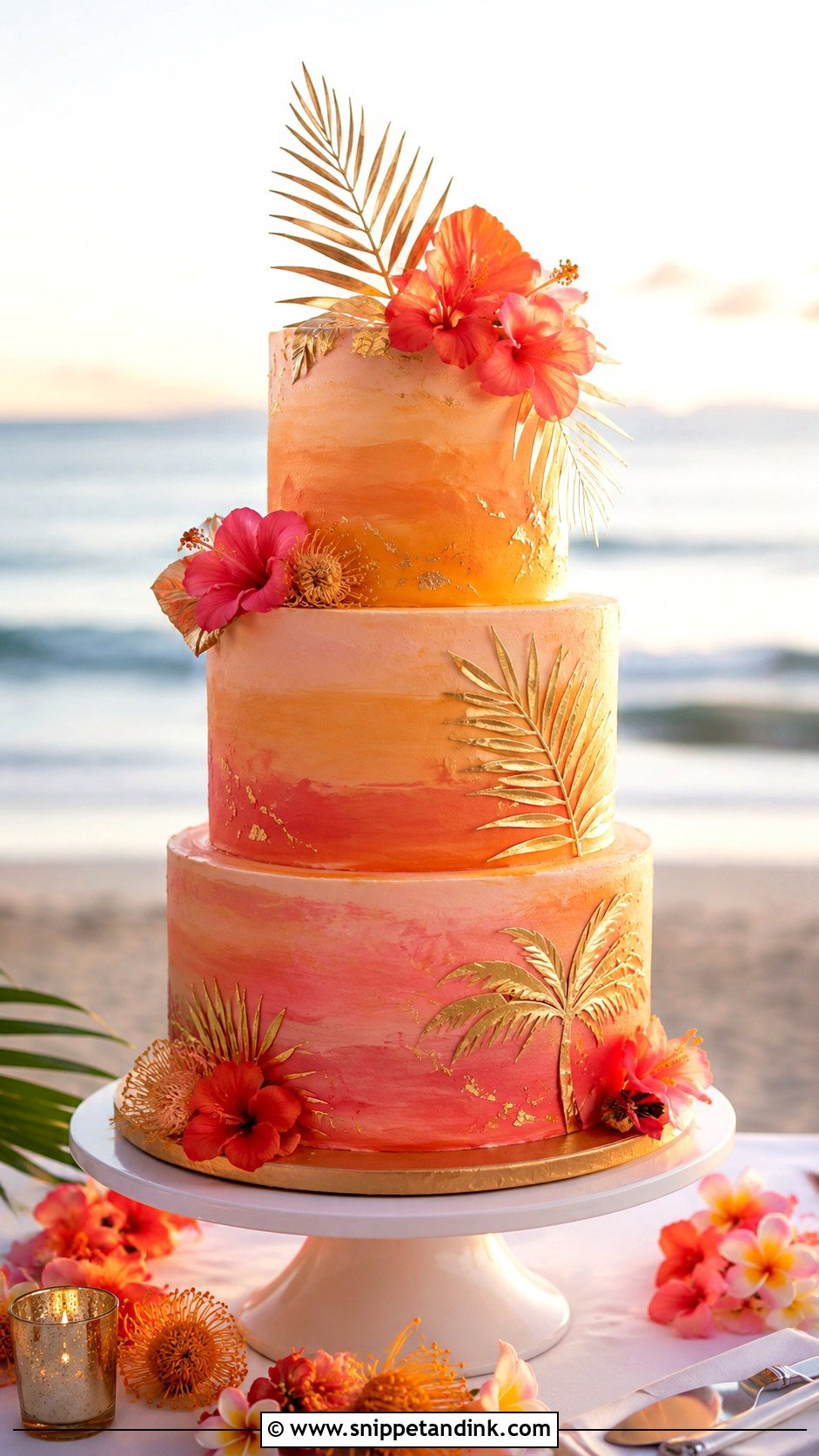
Sunset cakes rely on colour blending, and the most common failure is too many colours. Pick one family, say coral to peach to soft gold, and blend it across the buttercream so each shade fades into the next. The finish can be smooth or brushed like a painted sky. Palm-leaf silhouettes in dark green or black, a few small flowers or a gold topper complete it. Mango, passion fruit, vanilla or coconut inside keeps it consistent. By the water at dusk, the cake picks up the same light as the sky behind it.
11. Blue Ombre Wedding Cake
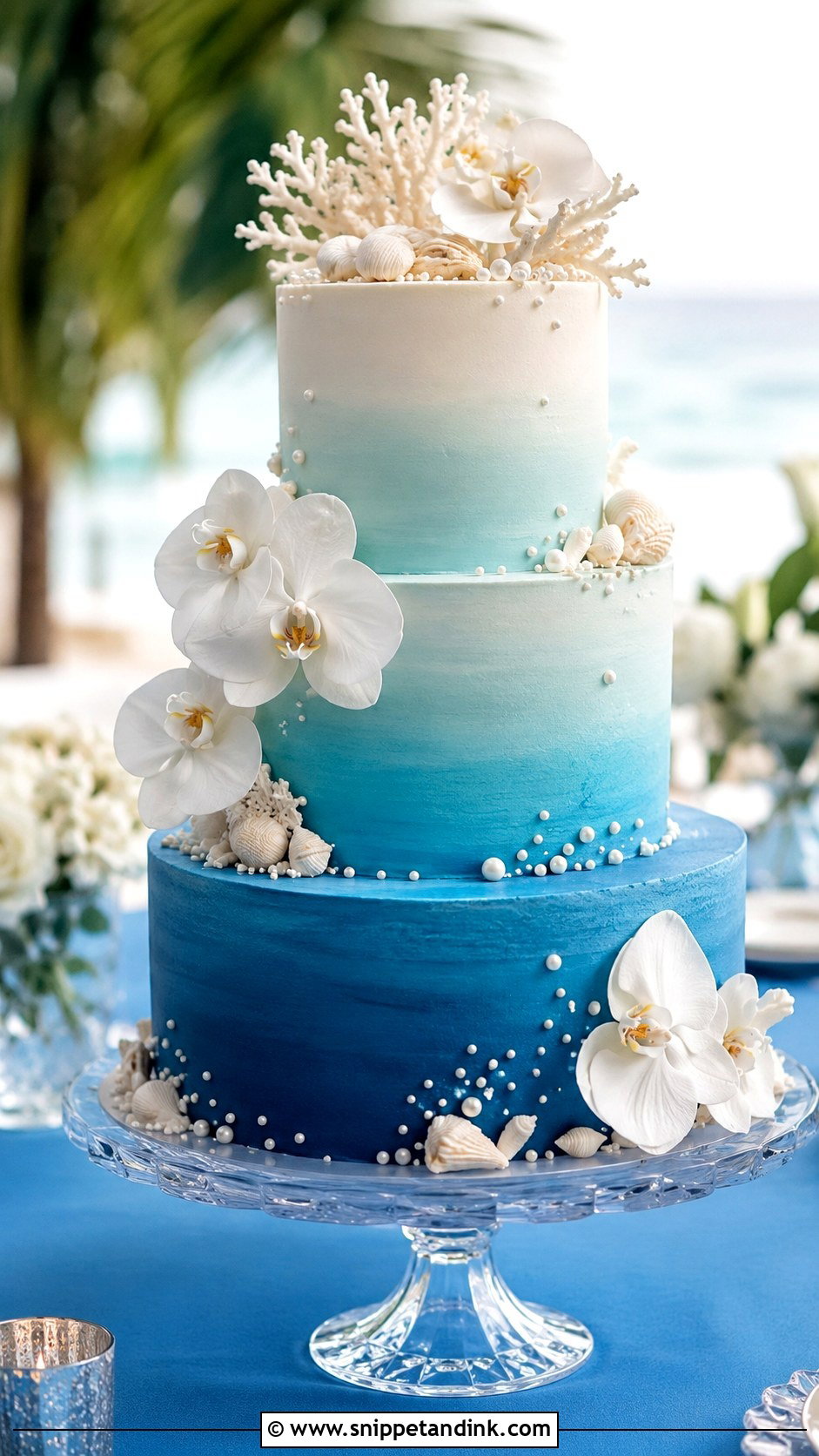
Blue ombré fades from white at the top to pale aqua, turquoise or deep sea blue at the base. Blue is a tricky colour in buttercream, since the yellow of the butter can push it toward green. I use a whiter buttercream base or a touch of violet to correct it before tinting. Smooth sides look modern; textured sides add movement. White flowers, sugar pearls, coral or tiny shells finish the coastal feel, over vanilla, lemon, coconut or almond sponge. The darkness of the bottom tier sets the mood, from quiet to dramatic.
12. Coral Wedding Cake
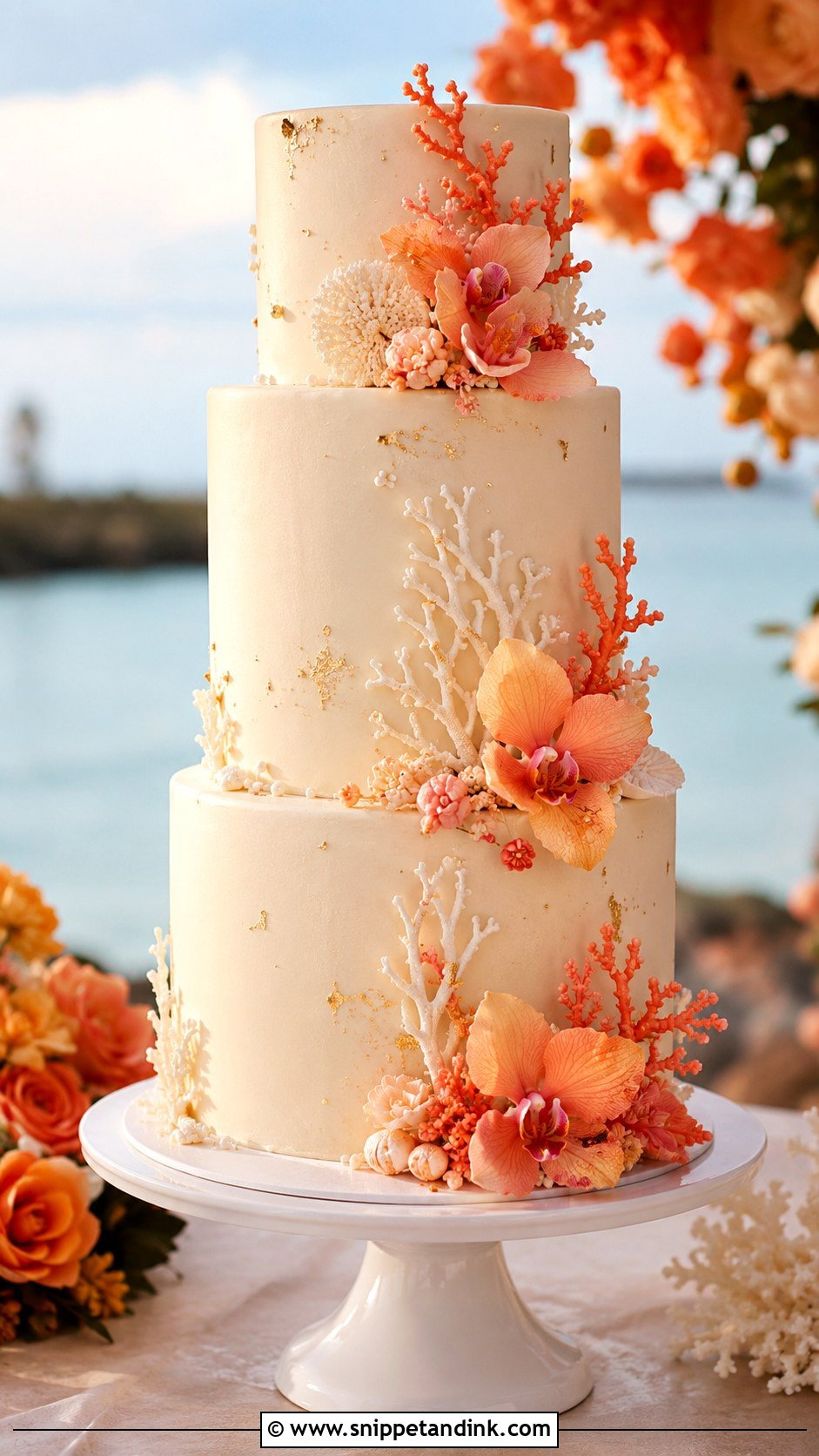
Coral works as a frosting colour, a flower colour or a sculpted sugar decoration, and the third is where it gets interesting. On a white cake, coral orchids, hibiscus or roses feel bright without shouting. For an underwater mood, I add small coral reef sugar pieces in soft pink or peach, piped or modelled so they stay light. Balance them with sand, ivory or gold. Coconut, guava, mango or vanilla layers suit it, and coral tones flatter skin and sky in sunset portraits.
13. Hibiscus Wedding Cake
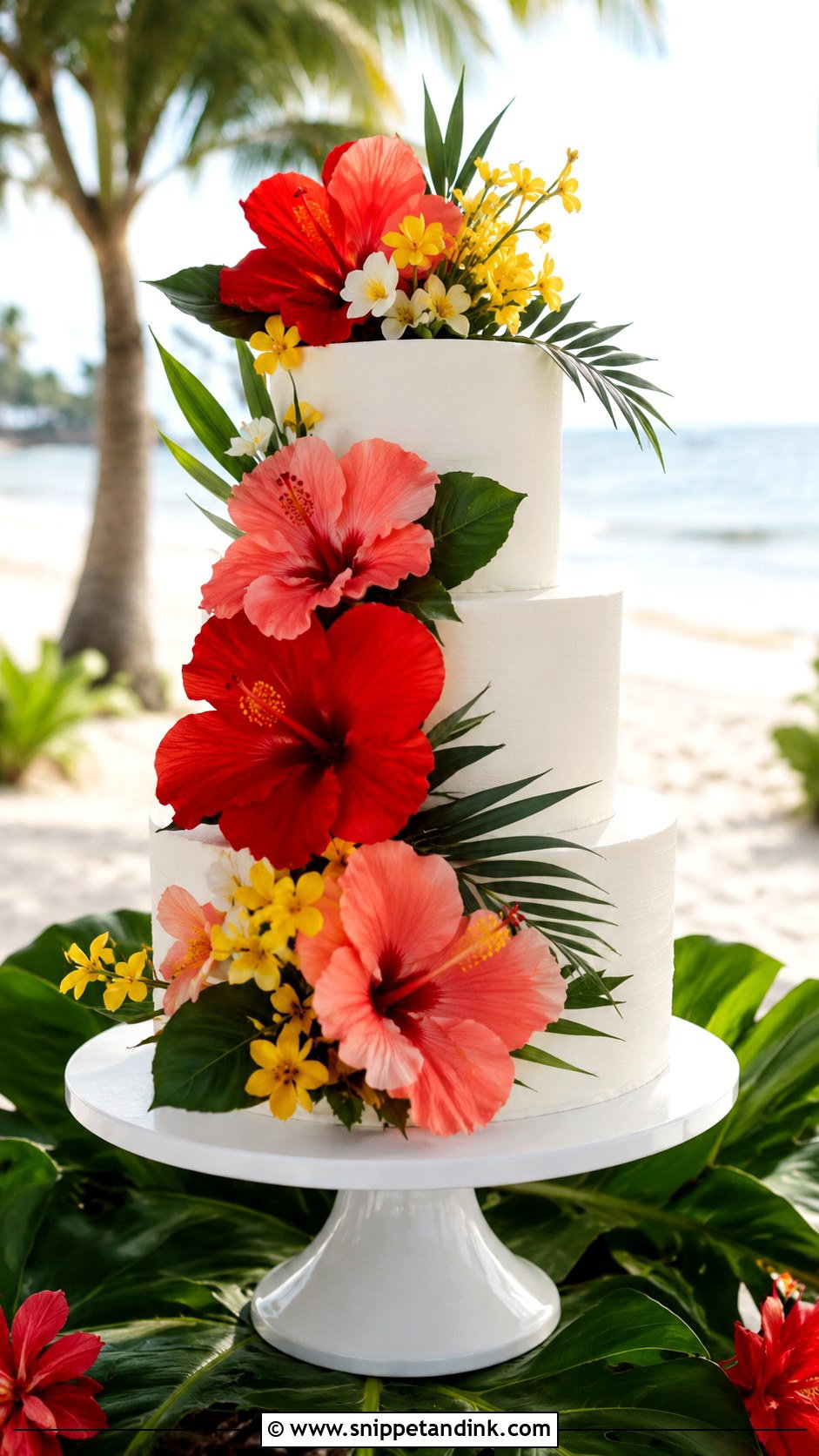
Hibiscus makes the biggest tropical statement with the fewest flowers, because one bloom covers so much of a tier. Red, coral, pink, yellow and white all exist, so it can follow almost any palette. Fresh hibiscus wilts within a few hours once cut, which is why I make them in sugar for an outdoor reception; a sugar hibiscus can also be shaped wide open in a way a real one won’t hold. Lush versions combine them with palm leaves and orchids, minimal ones use two or three oversized blooms. Coconut, lime, pineapple and passion fruit fit underneath.
14. Orchid Wedding Cake
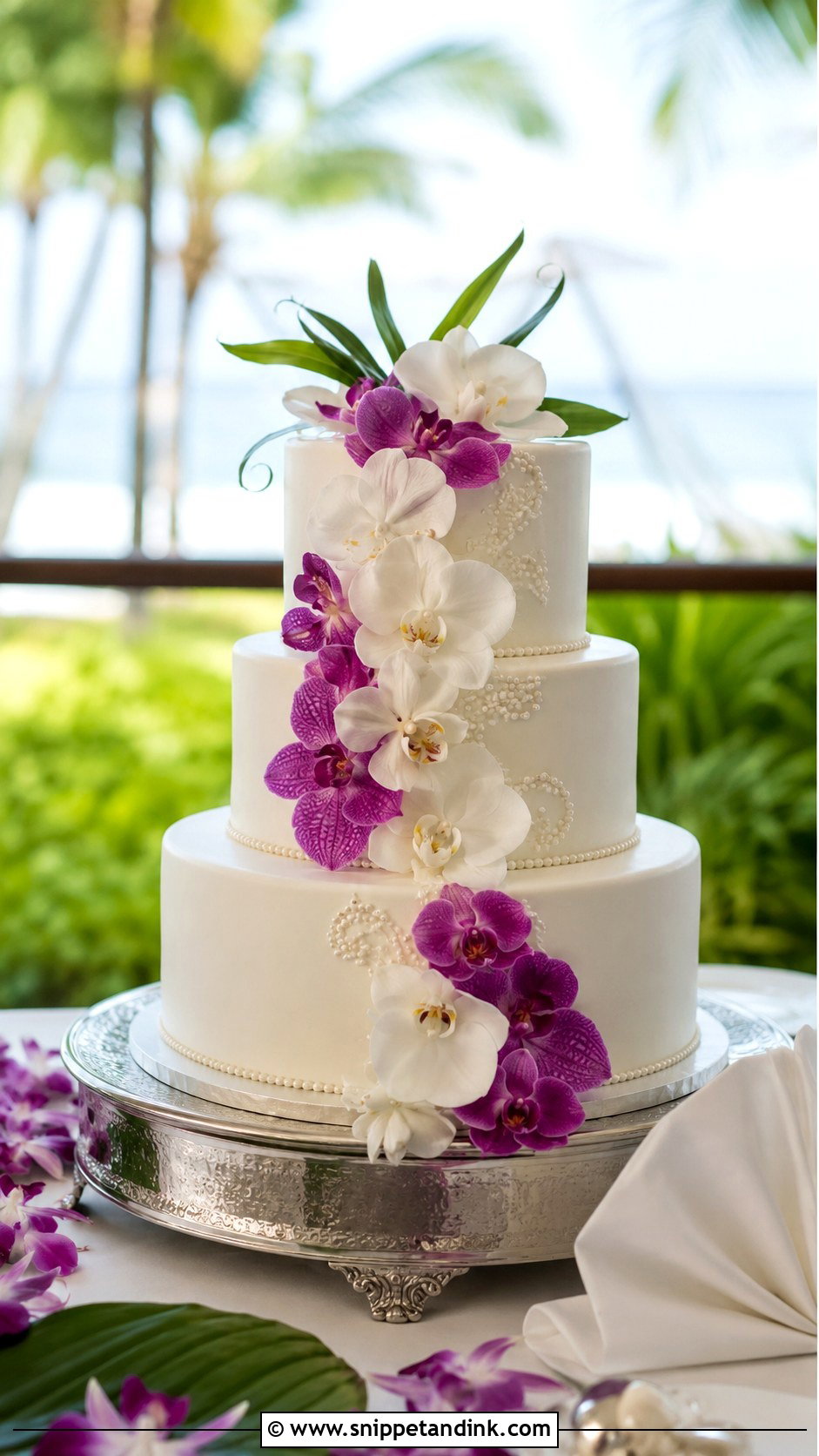
Orchids move a beach cake toward formal. White, purple, blush or green blooms in a gentle cascade look sharp against smooth fondant or polished buttercream. Dendrobium orchids are the variety cake makers usually reach for, since they’re among the few sold as food-safe, but even they should come from a pesticide-free grower. An all-white cake with orchids reads like a luxury resort; soft watercolour detail adds personality. Vanilla bean, coconut, almond or guava layers suit it, at a hotel reception or a coastal garden ceremony.
15. Plumeria Wedding Cake
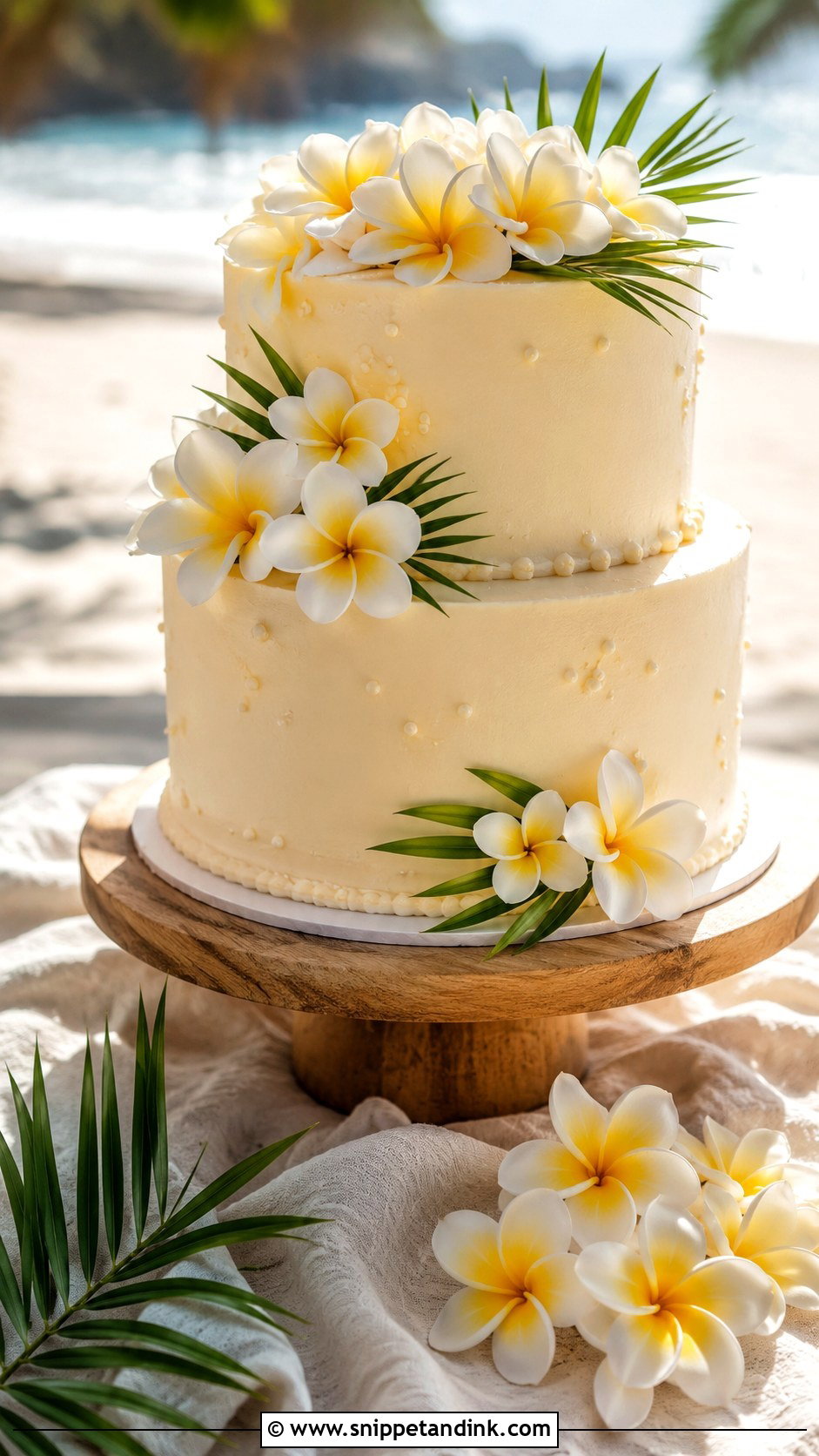
Plumeria sets the island mood at once. White petals with yellow centres look classic, pink or coral plumeria adds colour. They belong around the base, along one side or between tiers. Real plumeria has a milky sap that irritates skin and shouldn’t touch food, so on my cakes they’re sugar, or fresh with sealed stems sitting on a barrier. A smooth buttercream background keeps attention on the flower shape. Coconut, banana, pineapple or vanilla sponge goes well, and the whole thing has the relaxed warmth that suits an intimate beach wedding.
16. Monstera Leaf Wedding Cake
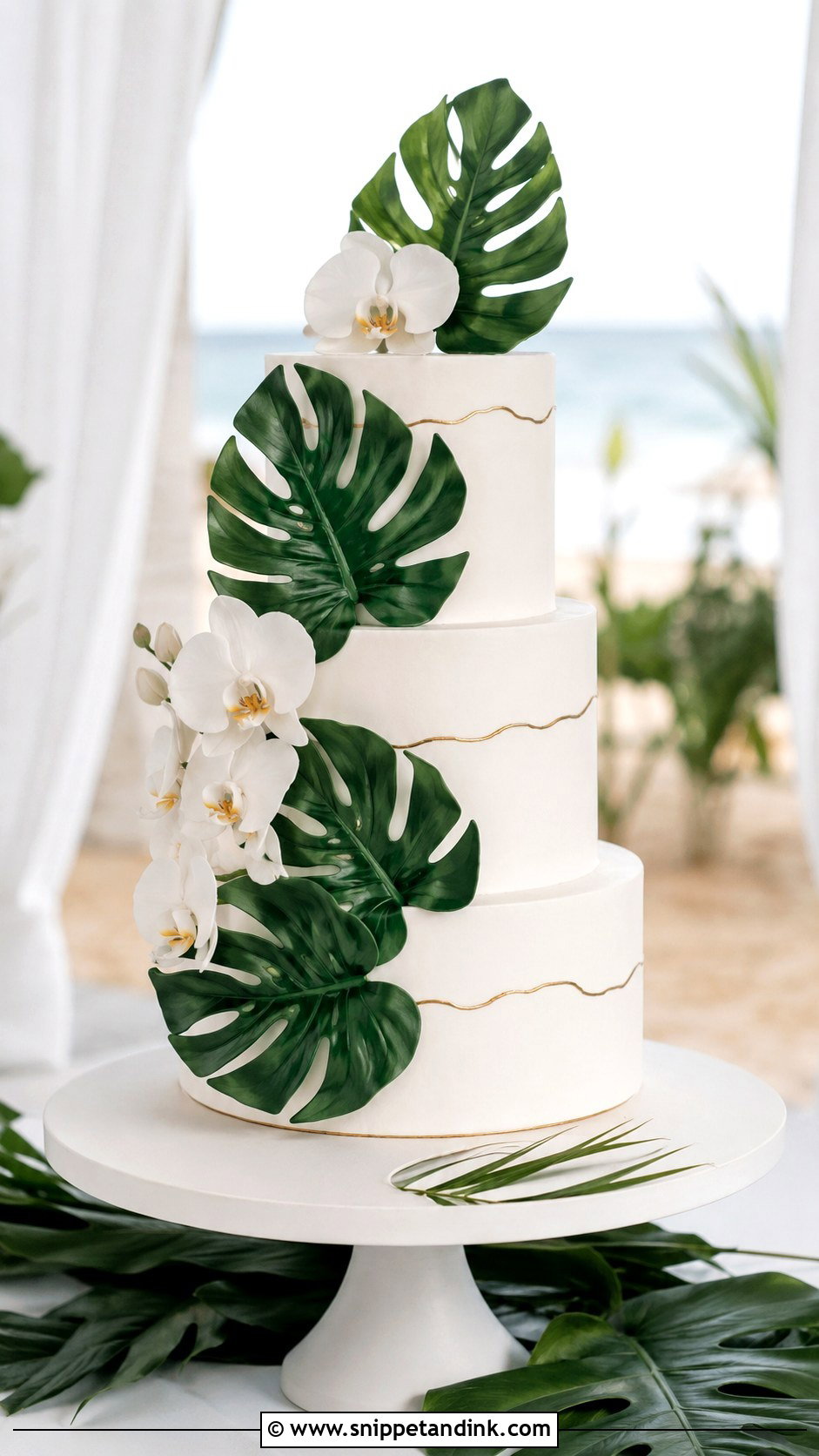
A monstera leaf wedding cake is graphic and modern, because the split leaf has such a strong outline even on a plain white cake. Real leaves, painted leaves, wafer paper or sugar all work; wafer paper is light and holds its shape, but it curls in humidity, so for a beach I’d lean on sugar or paint. A tall clean cake with one dramatic cluster looks modern, while orchids or anthurium added beside the greenery make it fuller. Coconut lime, guava, vanilla or banana layers suit greenery-loving couples.
17. Beach Boho Wedding Cake
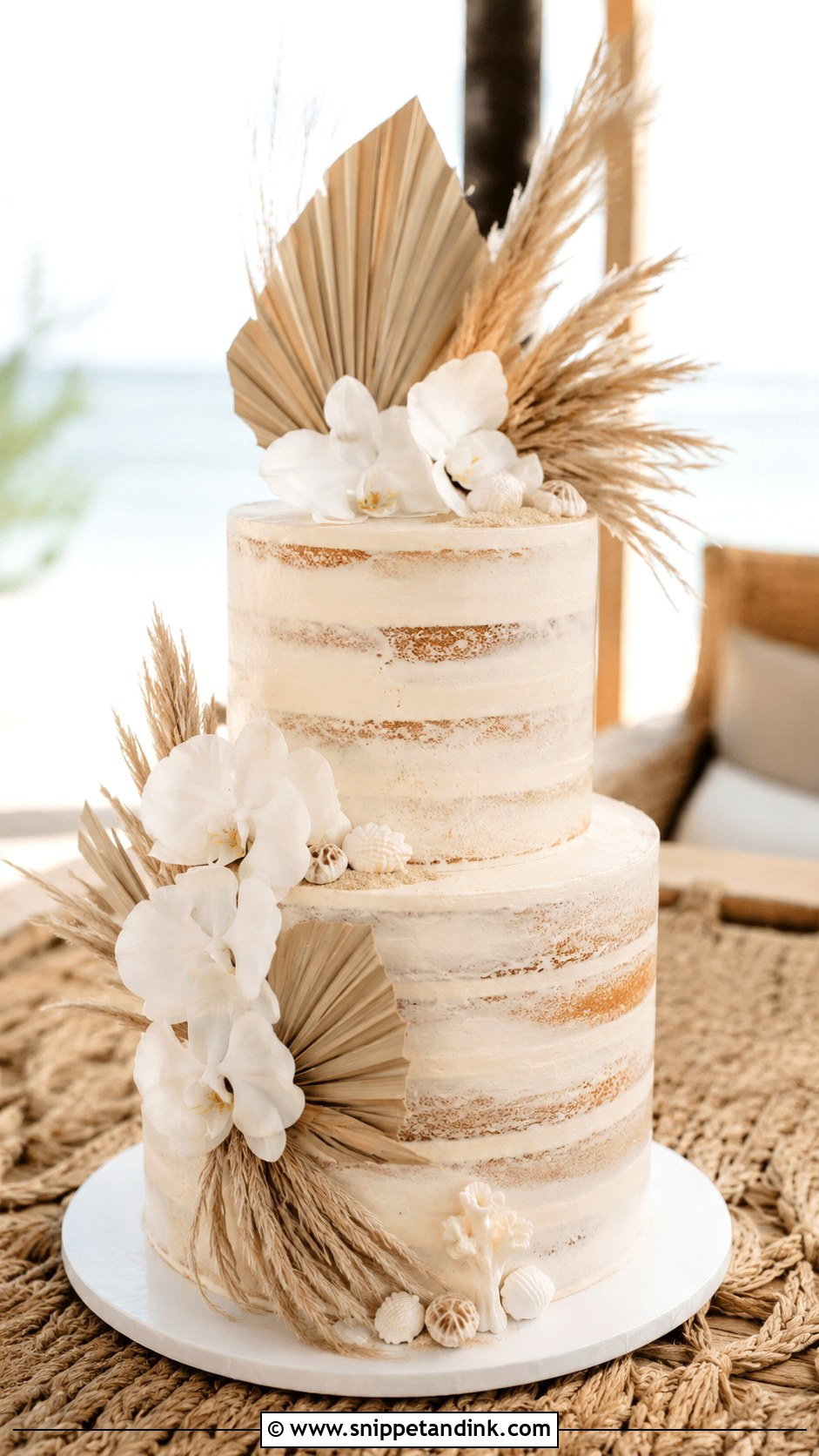
Beach boho is about texture: pampas grass, woven stands, dried palms and a semi-naked or lightly combed buttercream. Dried elements are practical here, since they don’t wilt, though pampas sheds, so I keep it on the stand rather than on the frosting. Neutral flowers, soft orchids or a few sugar shells add the coastal hint. Stay in ivory, beige, sand and muted peach. Honey, almond, banana, vanilla or coconut sponge all suit it, at a barefoot ceremony or a small destination dinner.
18. Minimal Beach Wedding Cake
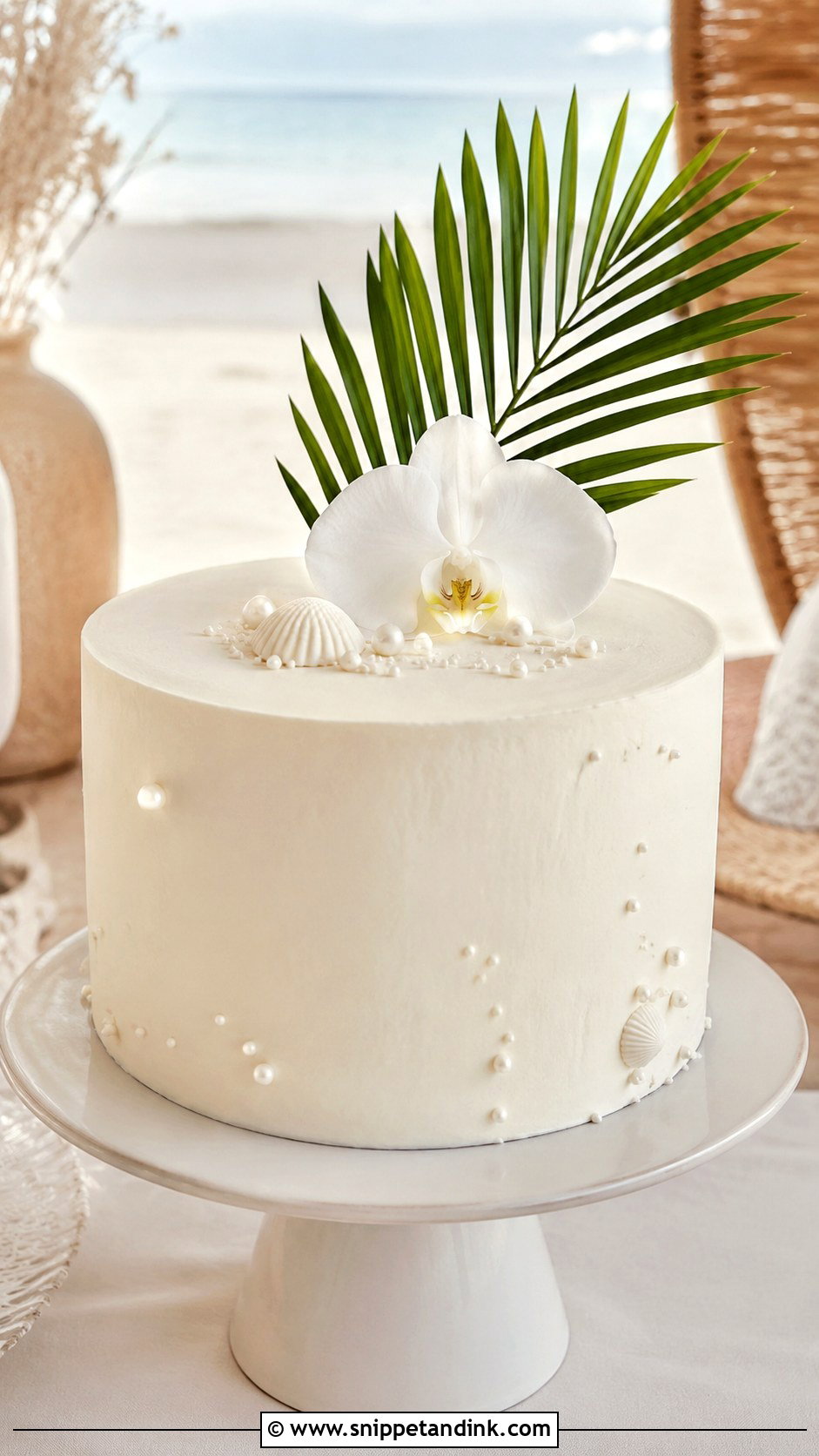
Minimal cakes leave nowhere to hide, so they’re harder to make well than they look. Smooth white buttercream or fondant has to have perfectly sharp edges and straight sides, and in humidity that’s real work. The decoration is one thing: a single palm leaf, one orchid, a few pearls or a small shell cluster. Vanilla, coconut, lemon or almond keeps the flavour light. It suits modern beach weddings, waterside elopements and small resort dinners, and it sits happily on almost any table style.
19. Gold Tropical Wedding Cake
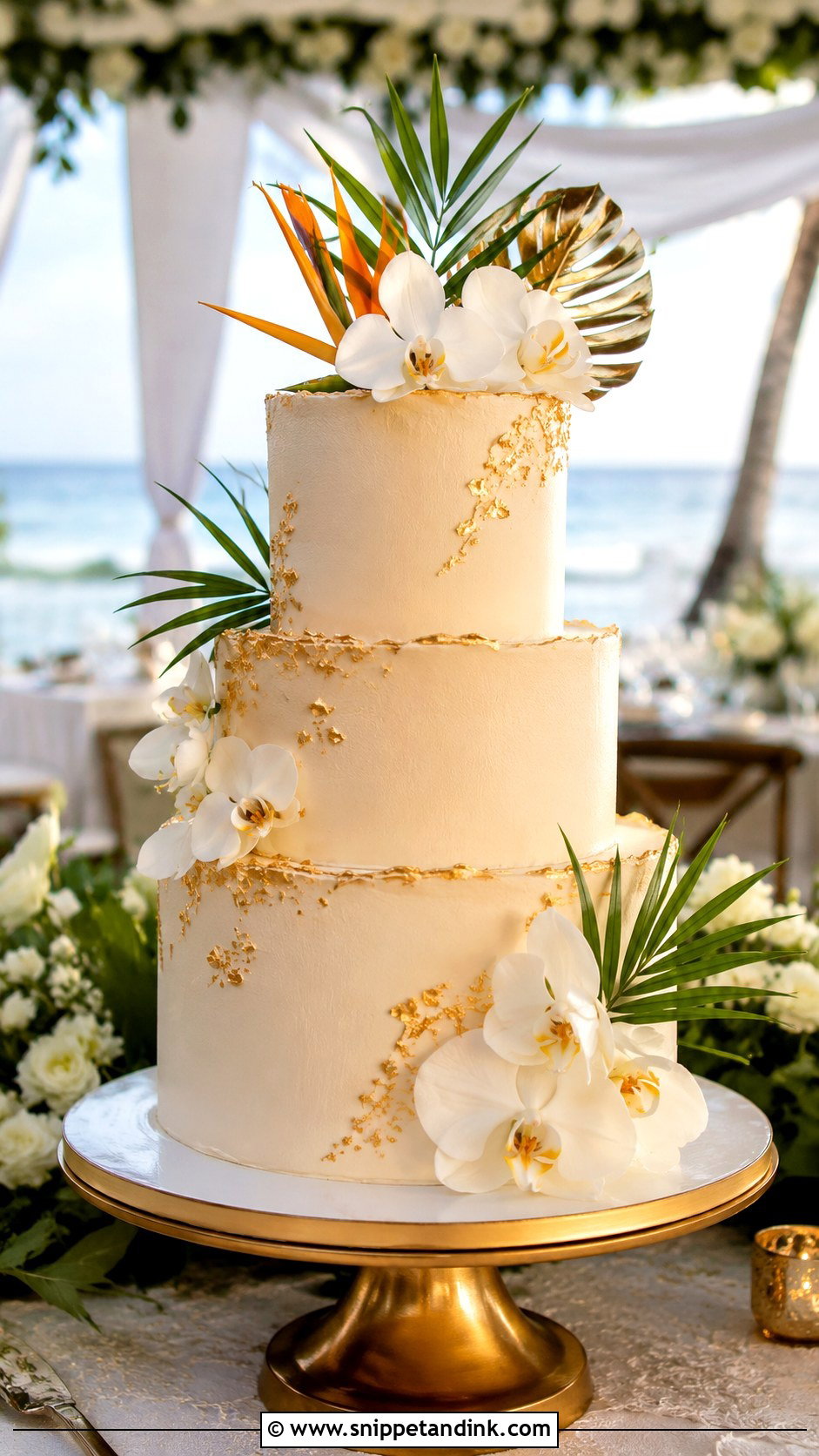
Gold leaf, painted edges or fine metallic lines dress a beach cake up for evening. I’d pair gold with ivory buttercream rather than bright white, since it reads warmer under candlelight. Leaf is applied in small pieces and sits better on fondant than on buttercream, where it can crack as the frosting softens. Tropical flowers, palm leaves or white orchids keep it tied to the setting. Coconut, vanilla bean, passion fruit or almond suit it. A little gold goes a long way; a fully gilded tier looks more casino than coast.


20. Naked Tropical Wedding Cake
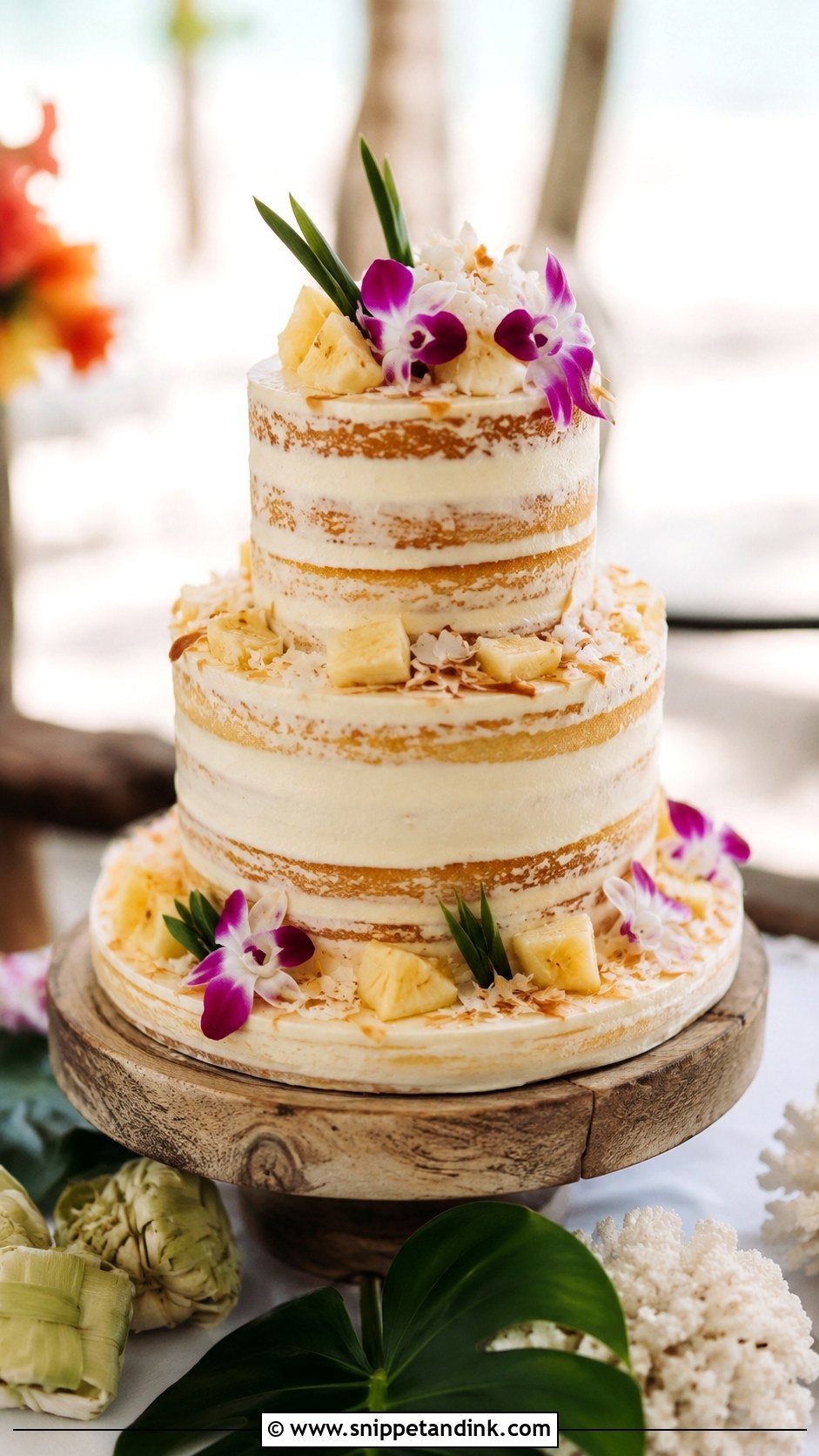
A naked cake shows its layers through a thin scrape of frosting, and that’s exactly its weakness at the beach. With so little coating, exposed sponge dries quickly in sun and wind, so I brush every layer with syrup and keep the cake covered until the last moment. Even layers and neatly piped fillings matter here, because everyone can see them. Fruit, orchids, greenery or coconut flakes add colour. Vanilla, coconut, banana, pineapple or lemon all work, and with less frosting the sponge flavour carries the whole cake.
21. Buttercream Beach Wedding Cake
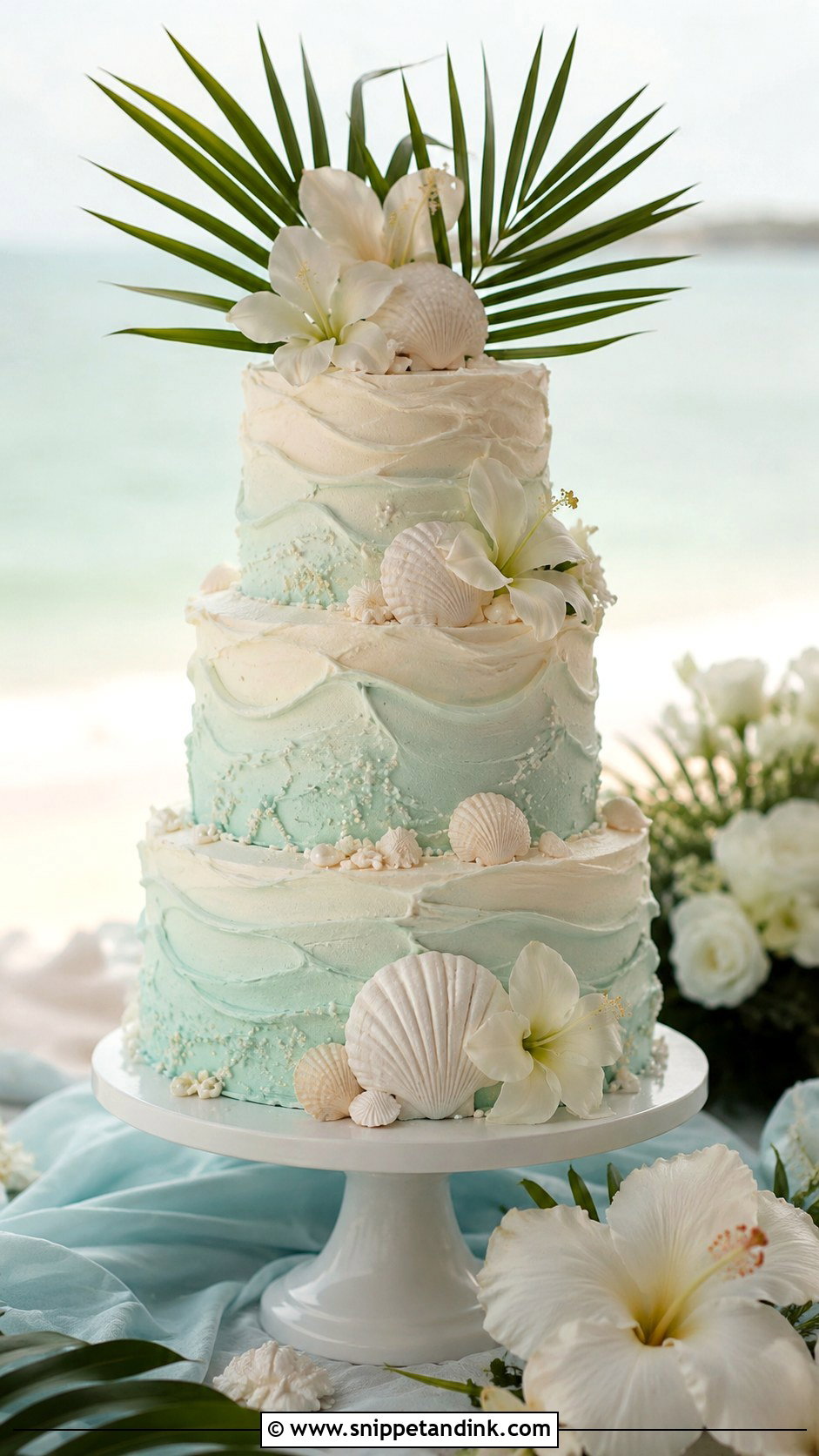
Buttercream gives you texture choices that fondant can’t: smooth, brushed, ruffled or swept into waves, and most guests prefer its taste. The type matters in heat. A buttercream made only with butter softens noticeably on a warm afternoon, so for an outdoor reception I adjust the recipe for stability and plan for the cake to stay in shade or indoors until it’s time. Ivory, sand, seafoam or pale blue suit the beach. Coconut, vanilla, lemon, almond or mango fillings work, and your baker should tell you exactly when it should come out for display.
22. Fondant Beach Wedding Cake
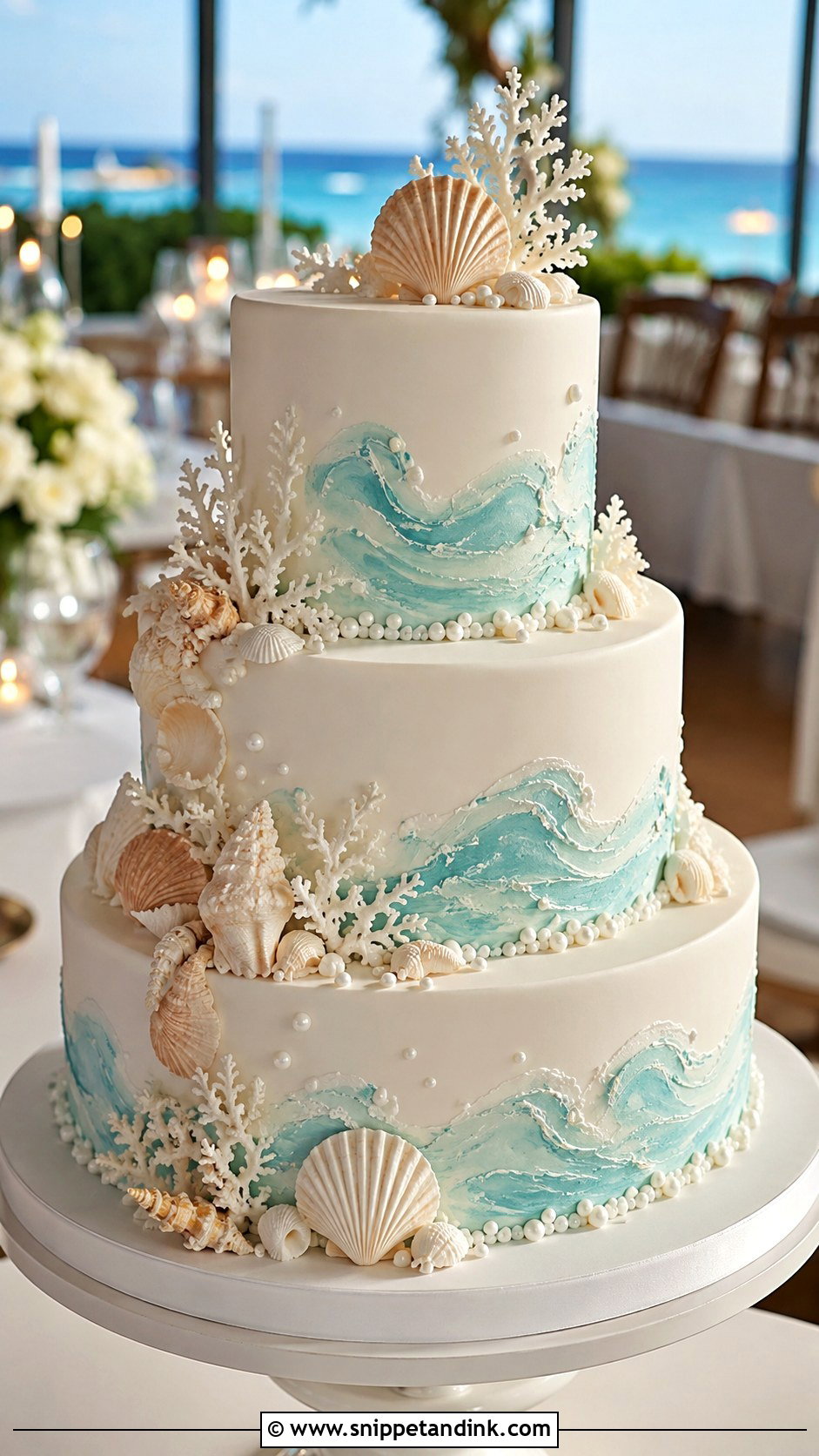
Fondant gives a crisp, formal surface and is the best canvas for sculpted shells, coral, palm leaves and painted waves. It has one quirk near the sea: move a chilled fondant cake from air conditioning into humid air and it sweats beads of water. I let it come up to room temperature in its box before unpacking. Under the fondant I use ganache rather than buttercream, which gives a firmer base in heat. Ivory with pearl shells, blue watercolour waves or a cascade of sugar orchids all look polished, over coconut, passion fruit, vanilla or guava sponge.
23. Small Beach Wedding Cake
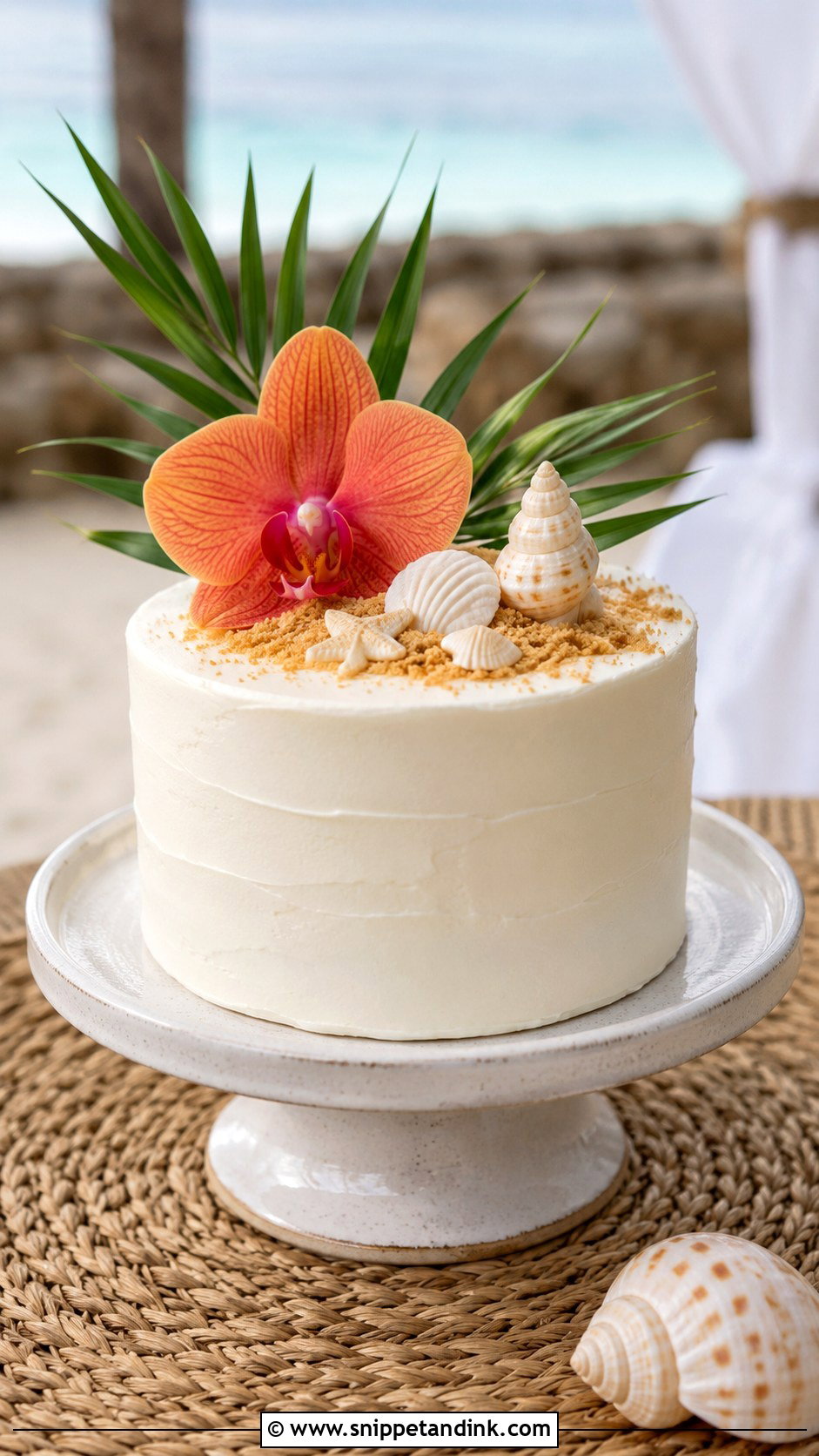
Small cakes need one strong detail rather than a scaled-down version of everything. For an elopement, a one- or two-tier cake with a single flower cluster, buttercream waves, a shell border or a palm-leaf topper looks complete. Coconut lime, vanilla mango, lemon or pineapple all feel celebratory. Put it on a raised stand with a few beach flowers or a woven runner, so it has presence. Being smaller also frees budget for better finishing: hand-made sugar flowers or a premium filling.
24. Two Tier Tropical Wedding Cake
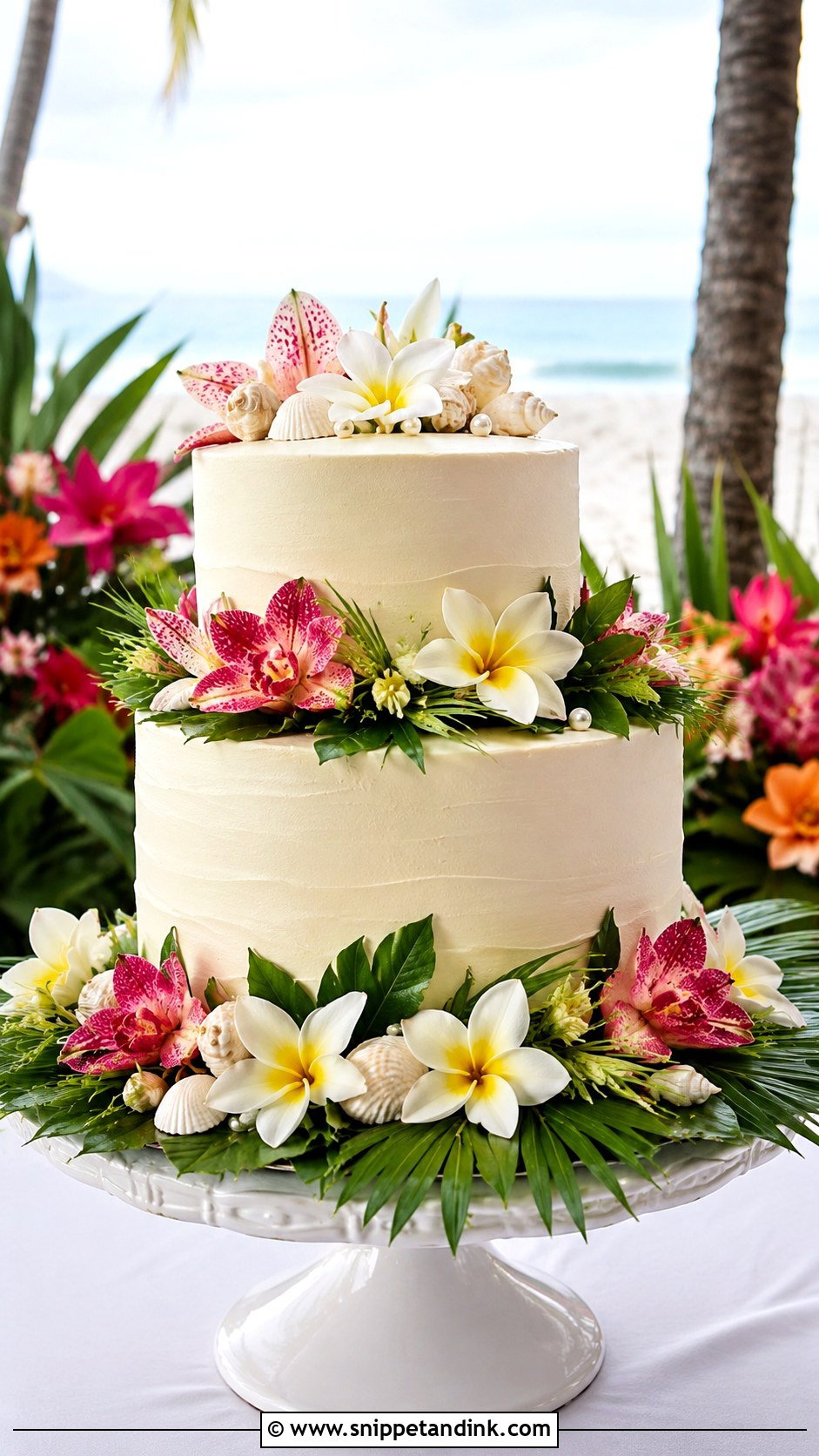
Two tiers is my favourite size for destination weddings. It’s tall enough for flowers, fruit or ocean detail, and, crucially, it can often travel fully assembled in one box with a central dowel, which removes most of the risk on bumpy roads. I usually keep the top tier plain and concentrate decoration around the join and the base. Palm leaves, orchids, plumeria, shells or fruit all fit. Coconut, vanilla, passion fruit and mango fillings suit a beach menu, and cutting it serves a smaller to medium guest list.

25. Three Tier Beach Wedding Cake
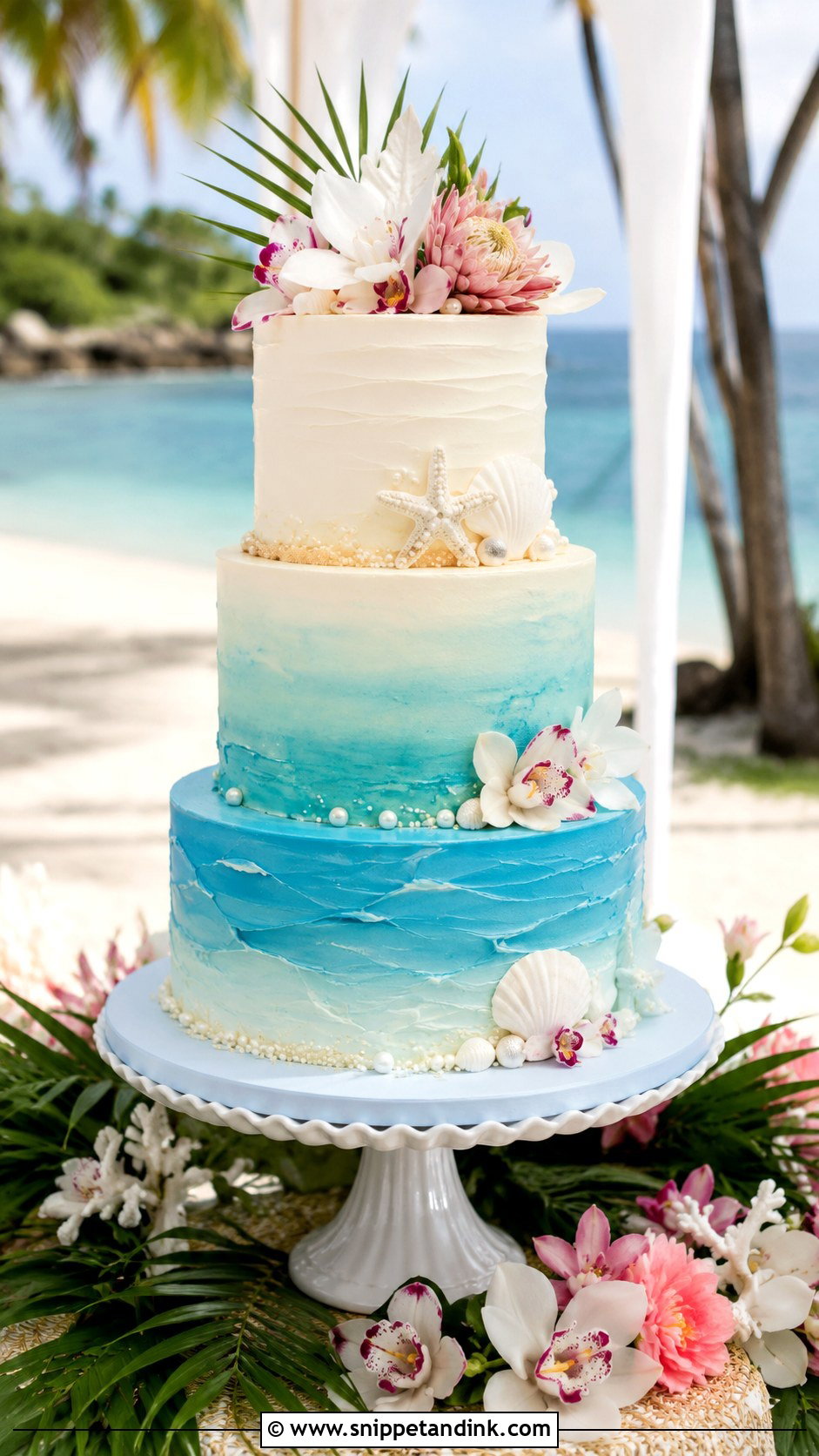
Three tiers turns the cake into the focal point of a seaside reception and gives room to combine ideas: perhaps a blue ombré bottom tier, smooth ivory in the middle and flowers near the top, or plain white with palm leaves and shells on a soft diagonal. Structurally, it needs internal supports and boards in every tier, and I almost always transport the tiers separately and stack on site. Coconut, vanilla, mango, guava or passion fruit fit the setting. Choose it for a larger guest list where the dessert table needs height.
Getting a Tiered Cake to an Island Venue in One Piece
At a destination wedding, delivery is usually the riskiest part of the cake’s life. Sand tracks, ferry crossings and resort service corridors are not kind to stacked tiers. Here is what I ask of every coastal job before agreeing to a design.
- How far is the drive, and what’s the road like? Anything over a short, smooth drive and I stack the tiers on site instead of in the kitchen.
- Is there a cool room or a fridge big enough for the cake box at the venue? Without one, the design needs to be heat-tolerant from the start.
- Where exactly will the cake stand, and at what time will the sun reach it? A table that’s shaded at noon can be in full sun by four.
- Who’s supplying fresh flowers, and are they unsprayed? I need to know before I finalise which blooms go on the cake.
- Is there a sturdy table? A wobbly folding table on sand is a common cause of a leaning cake.
Lead times are longer for destinations too. Good local bakers at popular resorts book up well in advance, so start enquiring several months out, and earlier for peak season. If you’re hiring someone you’ve never met, ask for photos of cakes they’ve delivered at outdoor venues, not just studio shots, and ask whether a tasting box can be posted or arranged at a sister location.
Finally, decide who cuts and serves. In heat, a cake left on display after the cutting photos loses its shape fast, so ask the caterer to take it back to the kitchen straight after and portion it there.
Start With the Forecast, Then Pick the Flowers
The cake that works at the beach is the one designed for your actual venue and weather, not necessarily the biggest or brightest. For a formal evening, orchids, smooth fondant, gold or a clean tiered cake suit the room. For a barefoot afternoon, buttercream waves, fruit, a naked cake or boho texture feel right. Save the designs you love, then bring your baker three facts before anything else: whether the cake will be inside or outside, the time it goes on display, and how far it travels. Every good decision about frosting, flowers and fillings follows from those.
You'll Like These Ideas:







Leave a Reply