
Autumn is my favorite season to bake for, mostly because the pantry gets more interesting. Caramel, brown butter, spice, maple, apple and pear all suit a wedding cake, and the colors move toward rust, burgundy and copper. It’s also a season that asks more of the cake than people expect: warm September afternoons, cold barns at night and fruit that browns once it’s cut. Some of my favorite fall details are figs, pears, copper tones, pressed leaves and dark blooms. Here are twenty cakes for barns, vineyards, estates and ballrooms, with what I watch for in each.
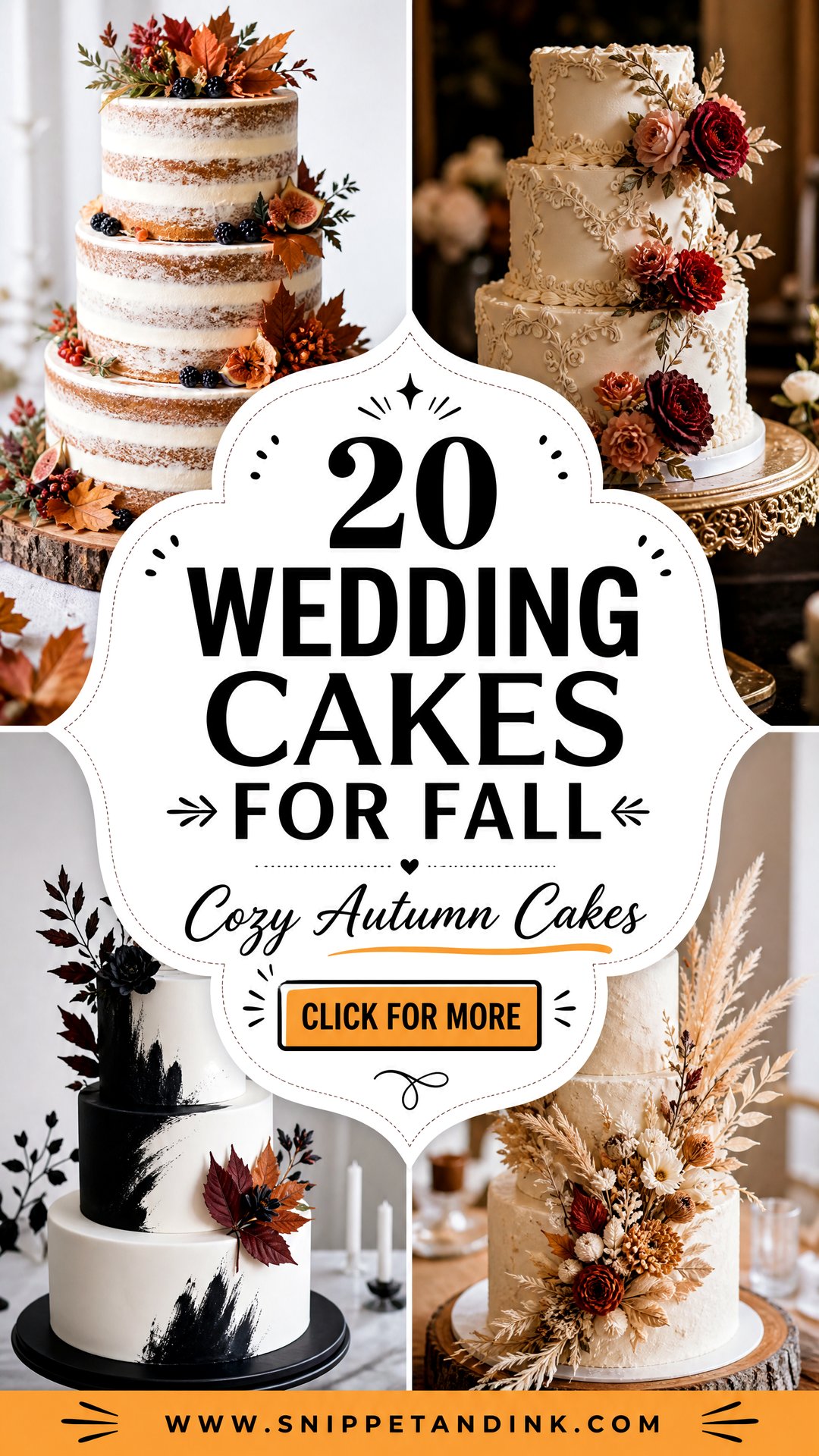
Fresh Fruit on a Fall Cake Has a Short Shelf Life
Half the cakes below carry fruit, and fruit keeps changing after it leaves the market. I plan decoration around what each one does once it’s cut, washed or left at room temperature.
- Figs: whole figs last the day; halved figs weep and slump within hours, so I cut them on site.
- Pears and apples: cut flesh browns quickly. I use small whole fruit, poached pears or slices brushed with a light glaze.
- Blackberries and grapes: their juice bleeds into white buttercream. They go on last, often on a tiny disc of fondant.
- Supermarket apples are often waxed, and most fruit has been handled, so everything gets washed and dried well before it touches frosting.
Sugared fruit, rolled in egg white or syrup and caster sugar, holds up longer and catches the light, though it softens in damp air. If the cake will stand for a long time before cutting, I’d lean on sugar fruit or whole fruit around the base instead.
1. Rustic Fall Wedding Cake
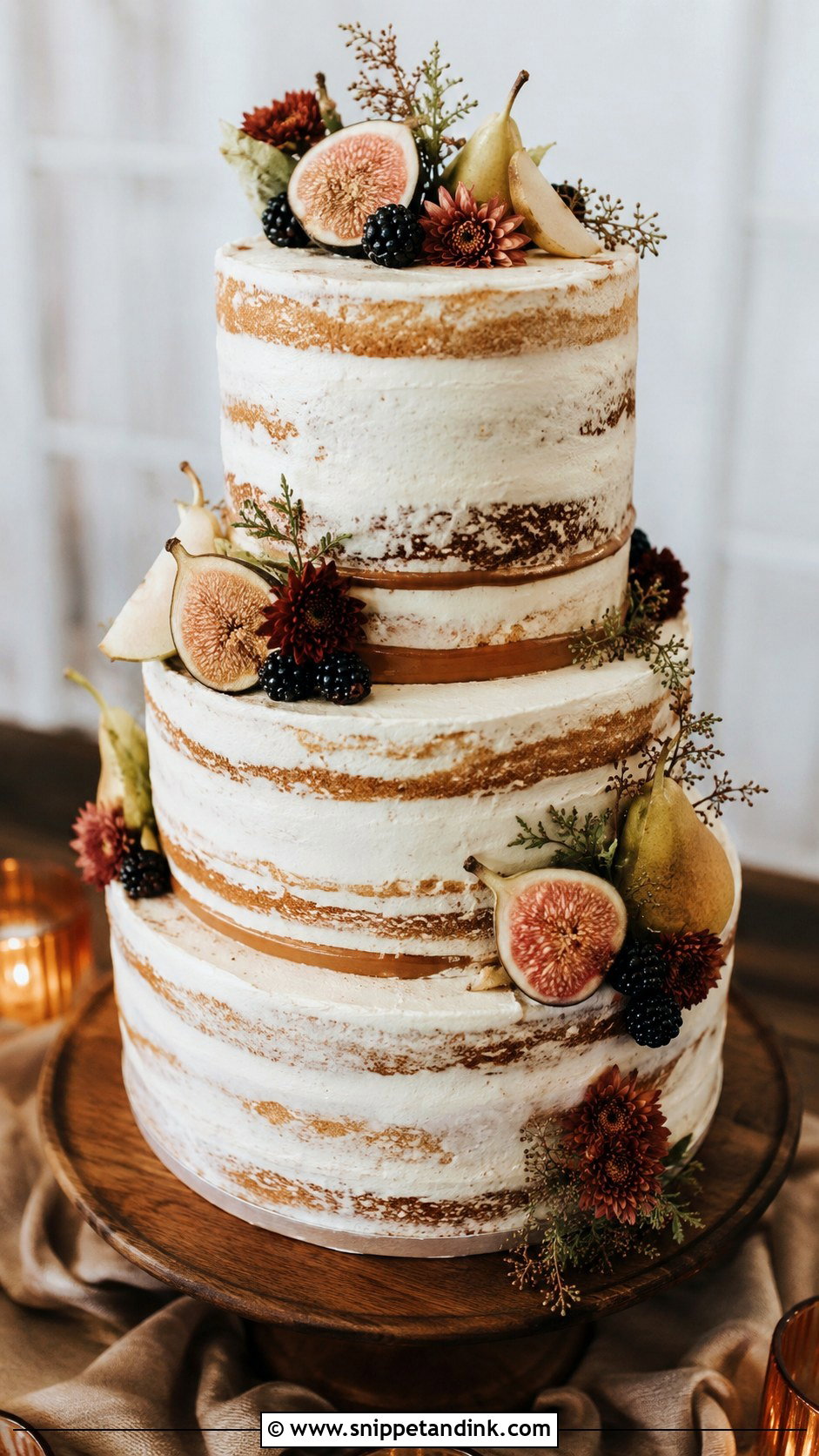
Rustic cakes in autumn usually mean a semi-naked finish with golden sponge showing through, a caramel filling and fruit or small flowers on the tiers. The exposed sponge dries faster than a fully frosted cake, so I brush each layer with syrup and set the cake out late. A slightly rough scrape of buttercream looks handmade rather than unfinished. Figs, pears and small berries work well as decoration. A wood stand grounds it in a barn or lodge, though keep candles a safe distance from the buttercream.
2. Fall Wedding Cake With Flowers
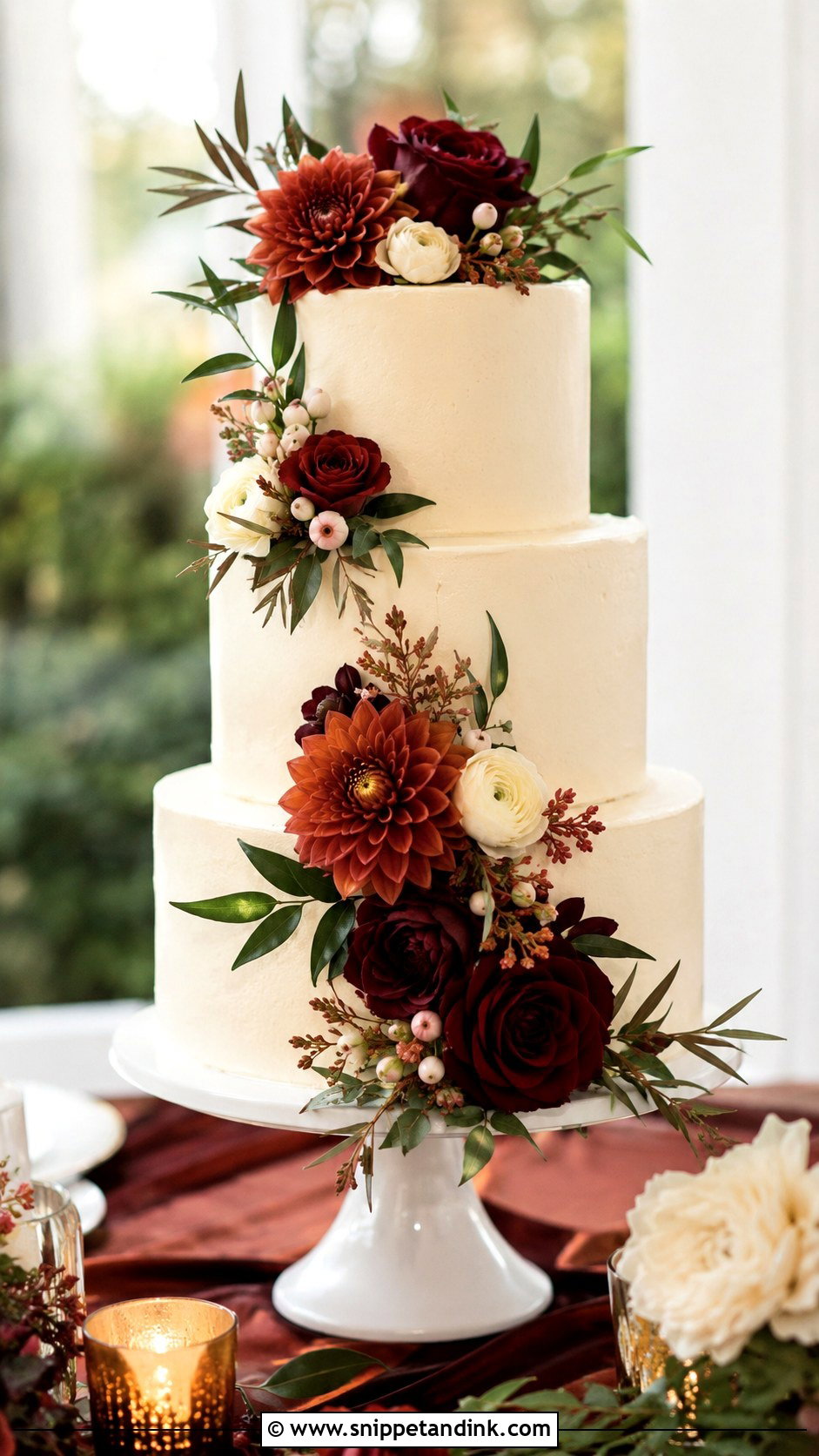
Fall flowers give a cake its color story: rust, burgundy, mauve, golden yellow and deep plum against white or ivory buttercream. Roses, dahlias and ranunculus are the ones I’m happiest placing near a cake, wrapped and on picks. Chrysanthemums are everywhere in autumn, but they’re not food-safe, so they sit on a barrier or stay off the cake. Pressed edible flowers give a softer, flatter look. Your florist and baker need to agree on exactly which stems go where, ideally in writing.
3. Simple Fall Wedding Cake
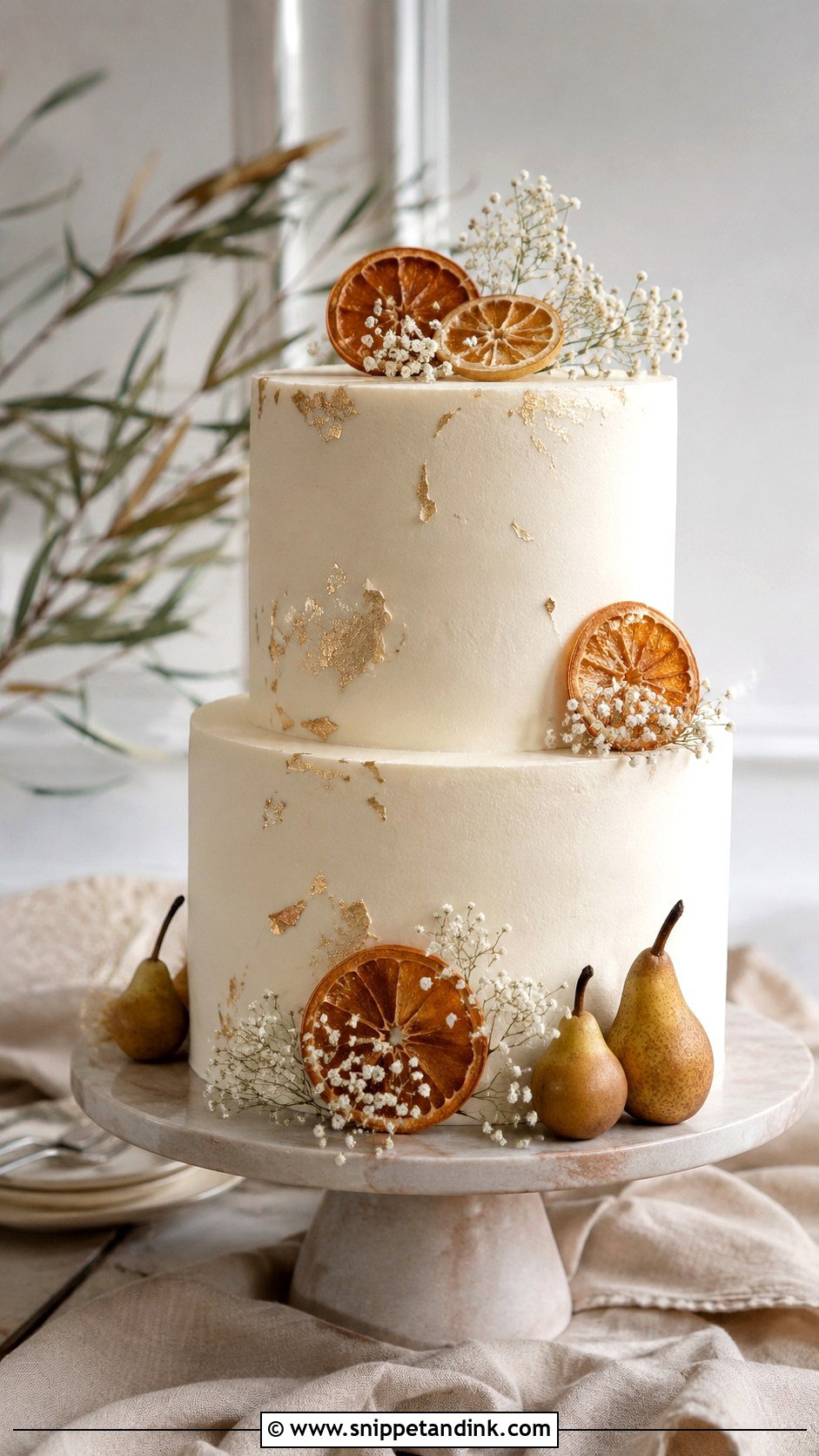
Simple is harder than it looks, because a plain cake shows every bump. I start with smooth ivory buttercream or fondant and add one or two seasonal touches: a few dried orange slices, a tiny pear, a fleck of gold leaf or a small flower cluster. Dried citrus is decorative and leathery to eat, so it gets lifted off before cutting. With so little going on, the tier proportions and the finish carry the design. It suits a city loft as easily as a country reception.
4. Fall Wedding Cake With Leaves
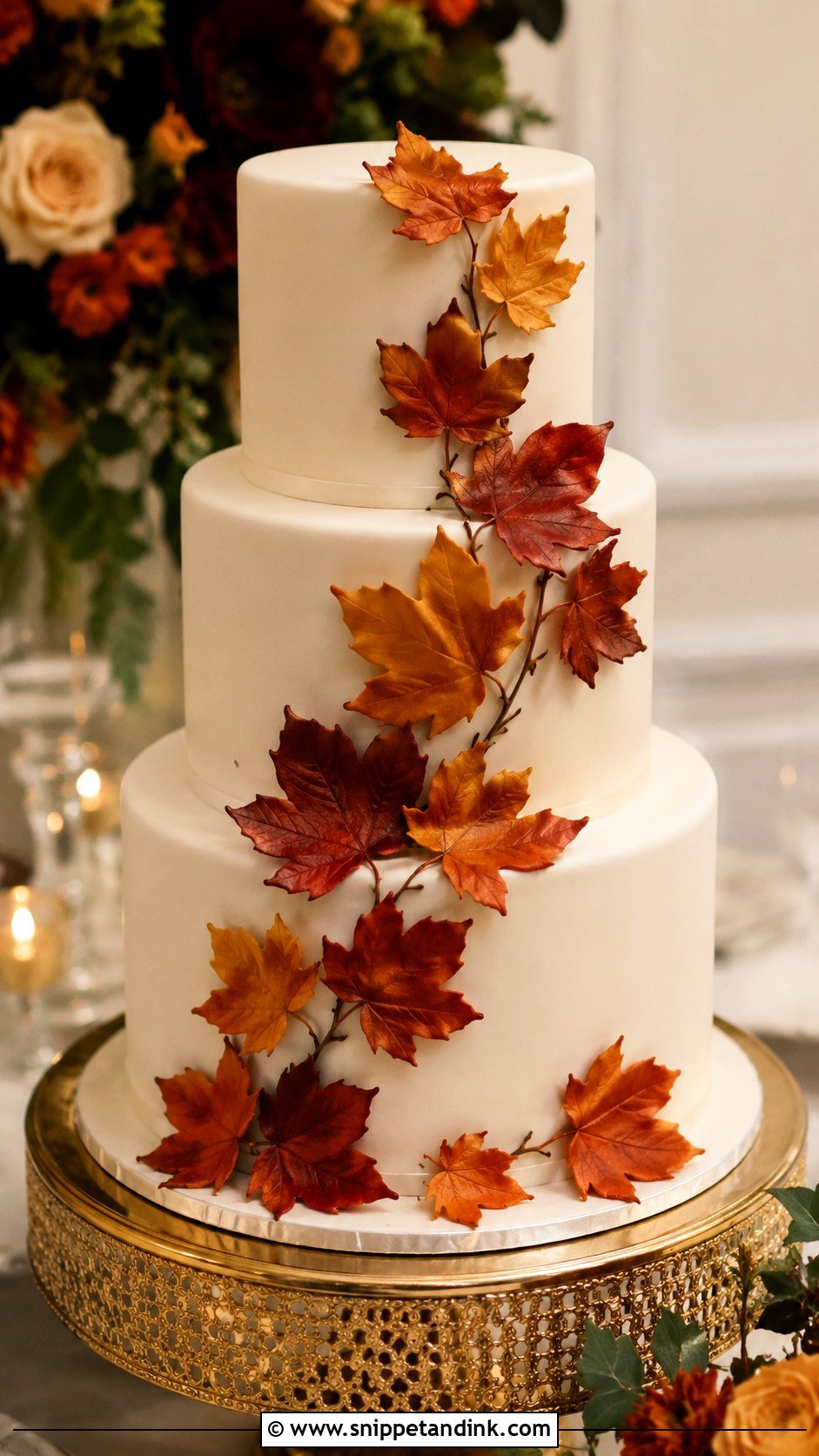
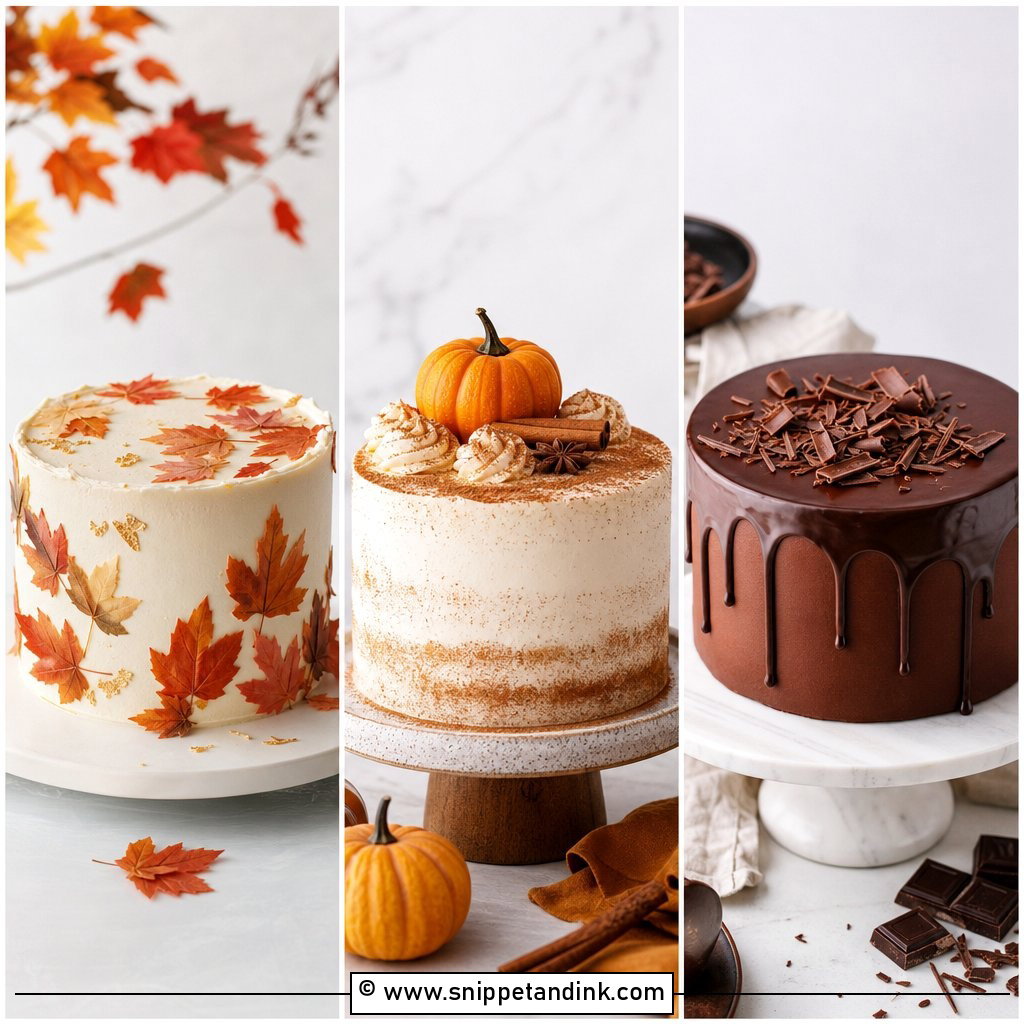
Leaves read as autumn instantly, which is exactly why I’d use them as an accent rather than a covering. Sugar leaves, painted wafer paper leaves, pressed edible leaves or fondant maple leaves trailing down one side keep it graceful. Wafer paper is light and flexible but softens in humidity, so on a damp day I’d choose sugar or fondant. Amber, copper, terracotta and deep red sit well on ivory frosting. A classic tiered shape keeps it from looking like a party cake.
5. Pumpkin Fall Wedding Cake
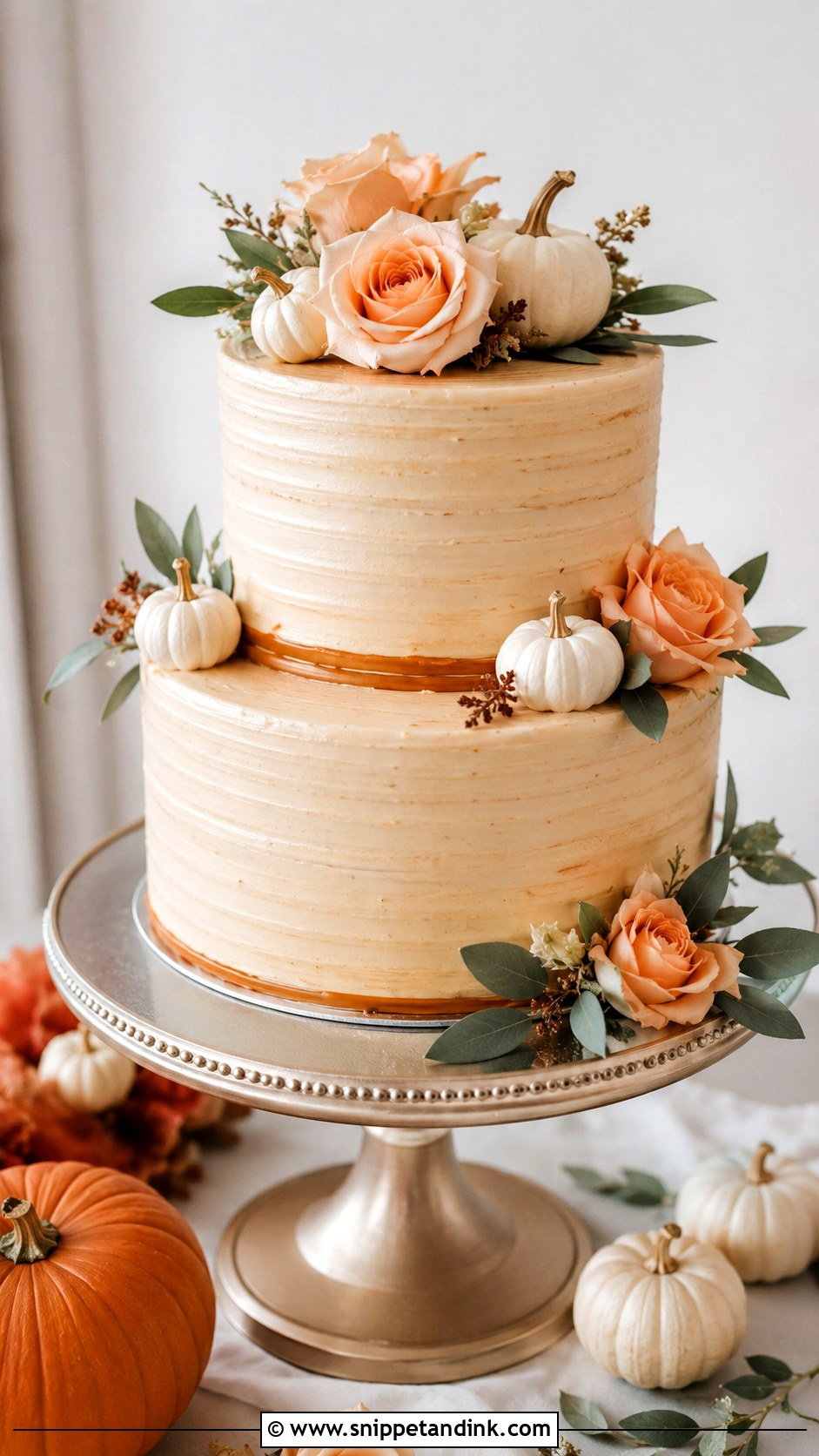
Pumpkin spice cake is moist and dense, which makes it heavier than a vanilla sponge of the same size, so I support those tiers more carefully. Cream cheese frosting is the natural partner, but it’s soft, so I use it as a filling and coat the outside in a firmer buttercream at warm venues. Bright orange tips a cake toward Halloween; champagne, ivory, sage, caramel and dusty rose keep it wedding-like. A few tiny white pumpkins finish it, and it fits October and November menus well.
6. Caramel Apple Wedding Cake
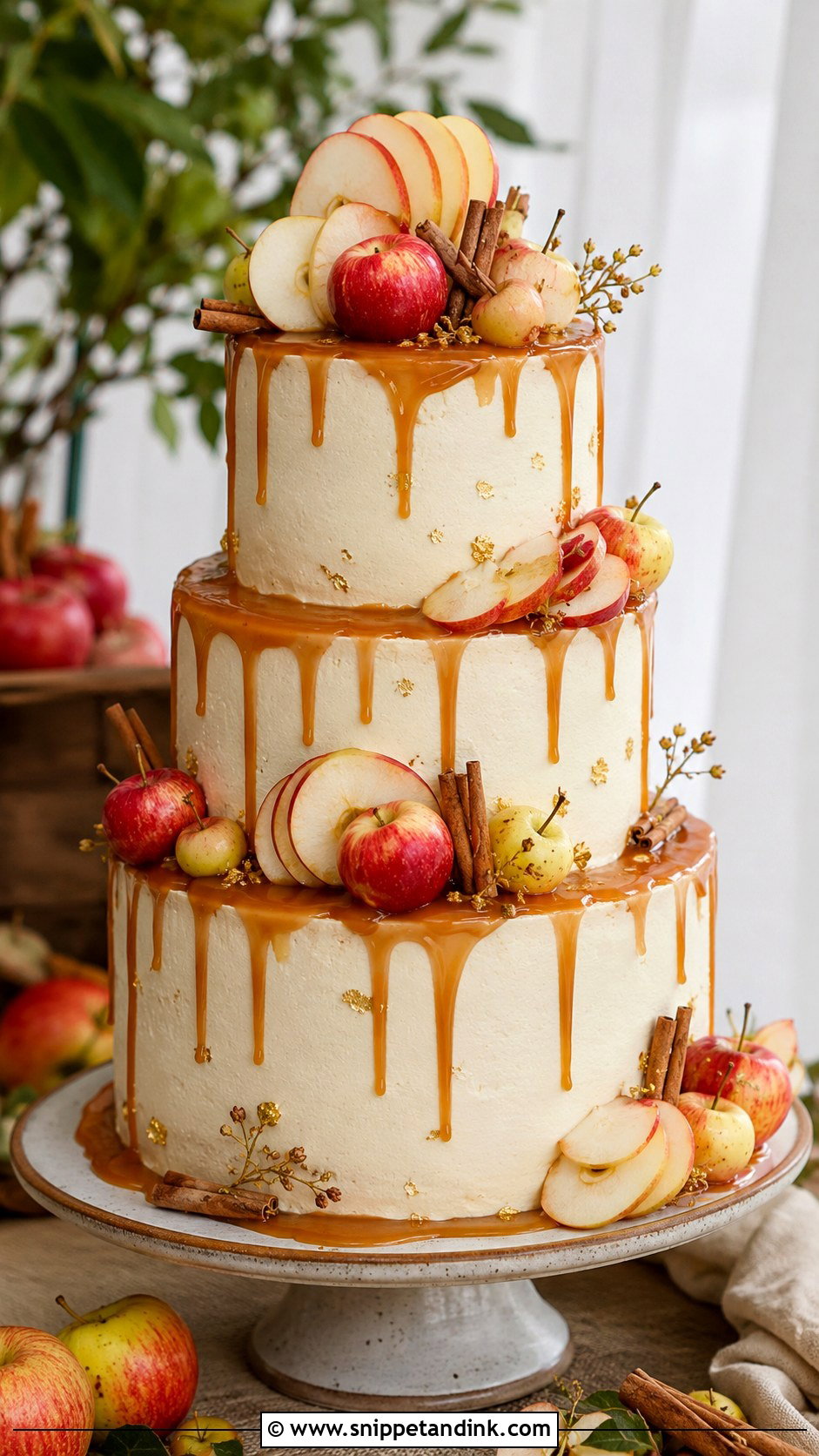
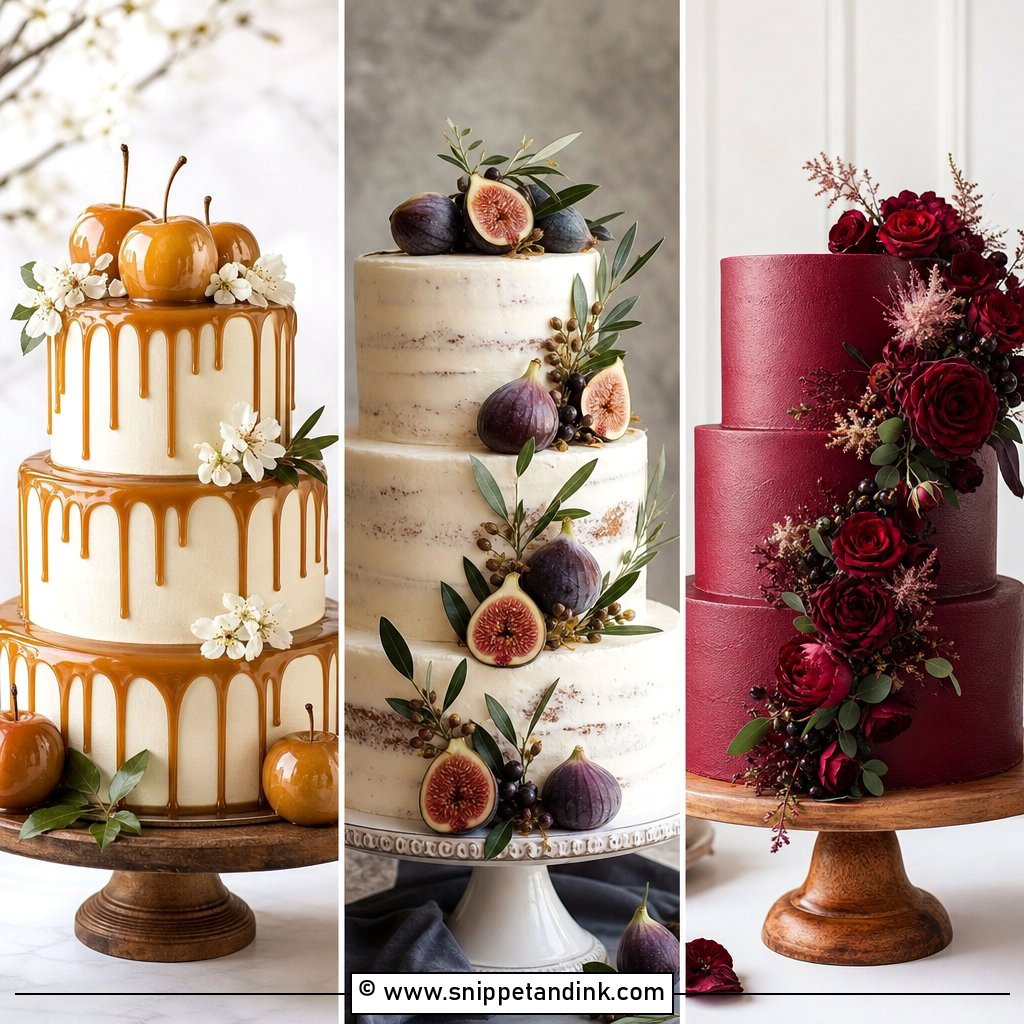
A caramel apple wedding cake pleases nearly everyone. Inside: apple spice cake, cinnamon filling and brown sugar buttercream. Outside, a soft ivory or pale caramel frosting with a caramel drip. The drip needs the cake well chilled and the caramel just warm, or it runs to the board. Fresh apple slices brown quickly, so I use small whole apples, cinnamon sticks and a little gold leaf instead. It sits naturally at orchard weddings and receptions with cider on the menu.
7. Chai Spice Wedding Cake
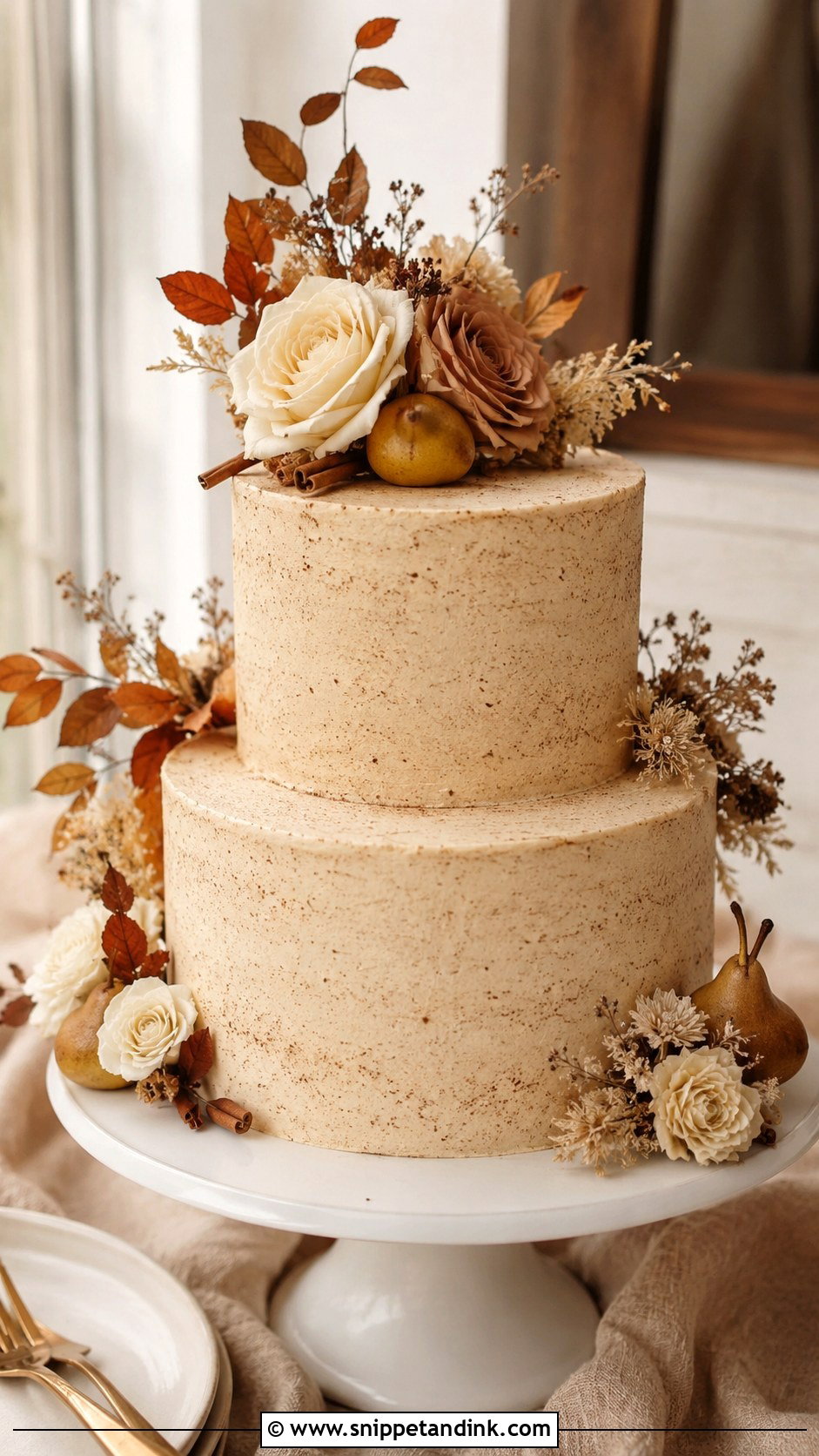
Chai brings cinnamon, cardamom, ginger, clove and black tea, and the trick is steeping the tea and spices into the milk or butter so the flavor runs through the sponge rather than tasting dusty. Vanilla or brown butter frosting rounds it out. I keep the outside soft and modern: cream buttercream, a light texture and dried florals in tea-colored shades, plus a few pears or figs at the base. It’s a good pick for guests who don’t care for pumpkin or chocolate.
8. Chocolate Fall Wedding Cake
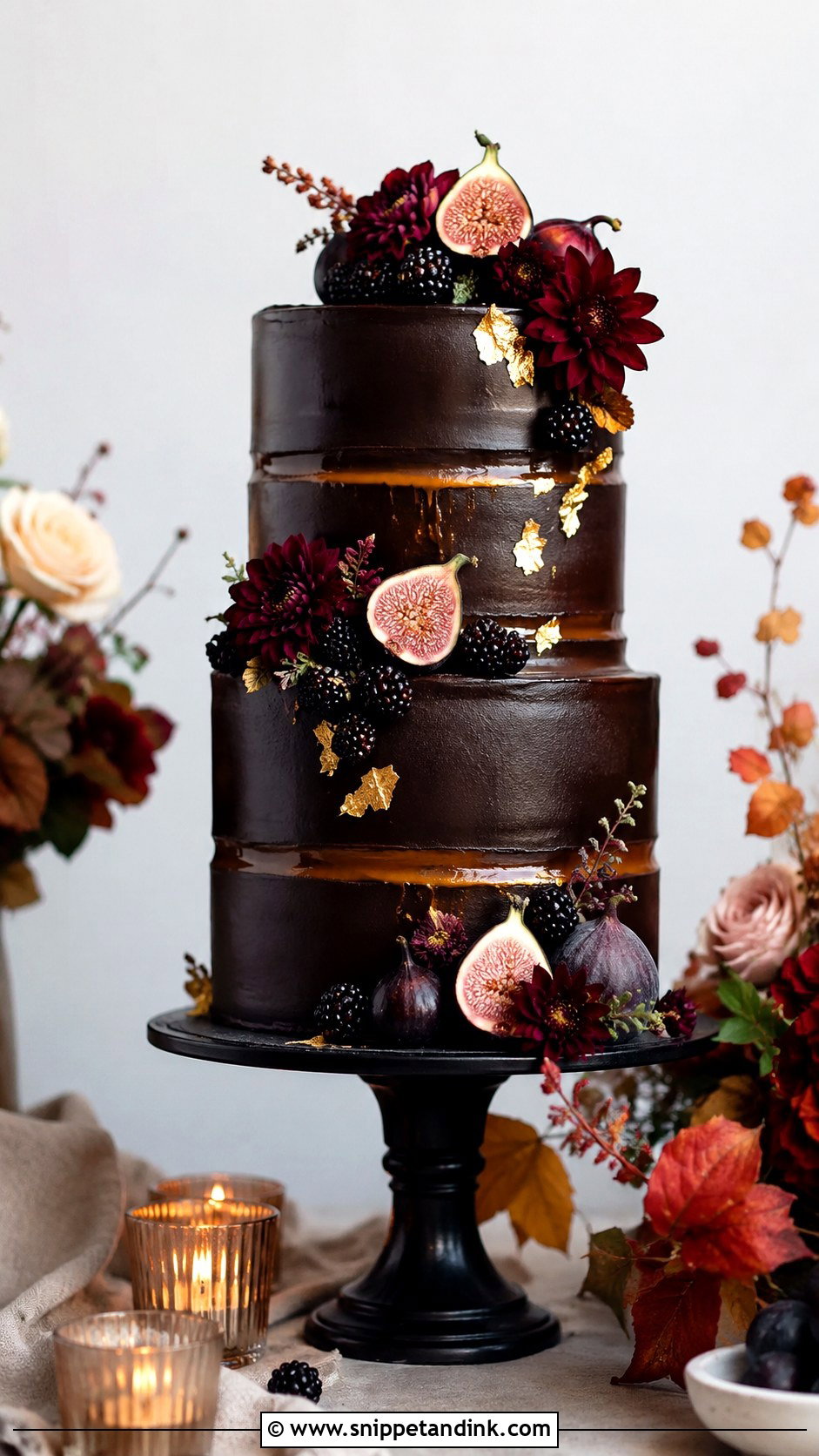
Chocolate suits cooler weather because ganache sets firm and glossy without the heat fighting it. Dark sponge with espresso or salted caramel filling feels special enough for a wedding. For decoration I use blackberries, figs, burgundy flowers or a hint of gold, and I set berries on at the venue so their juice doesn’t streak the ganache. One ivory tier with a chocolate drip adds contrast. It suits evening receptions, candlelight and dark linens with warm metallic touches.
9. Burgundy Fall Wedding Cake
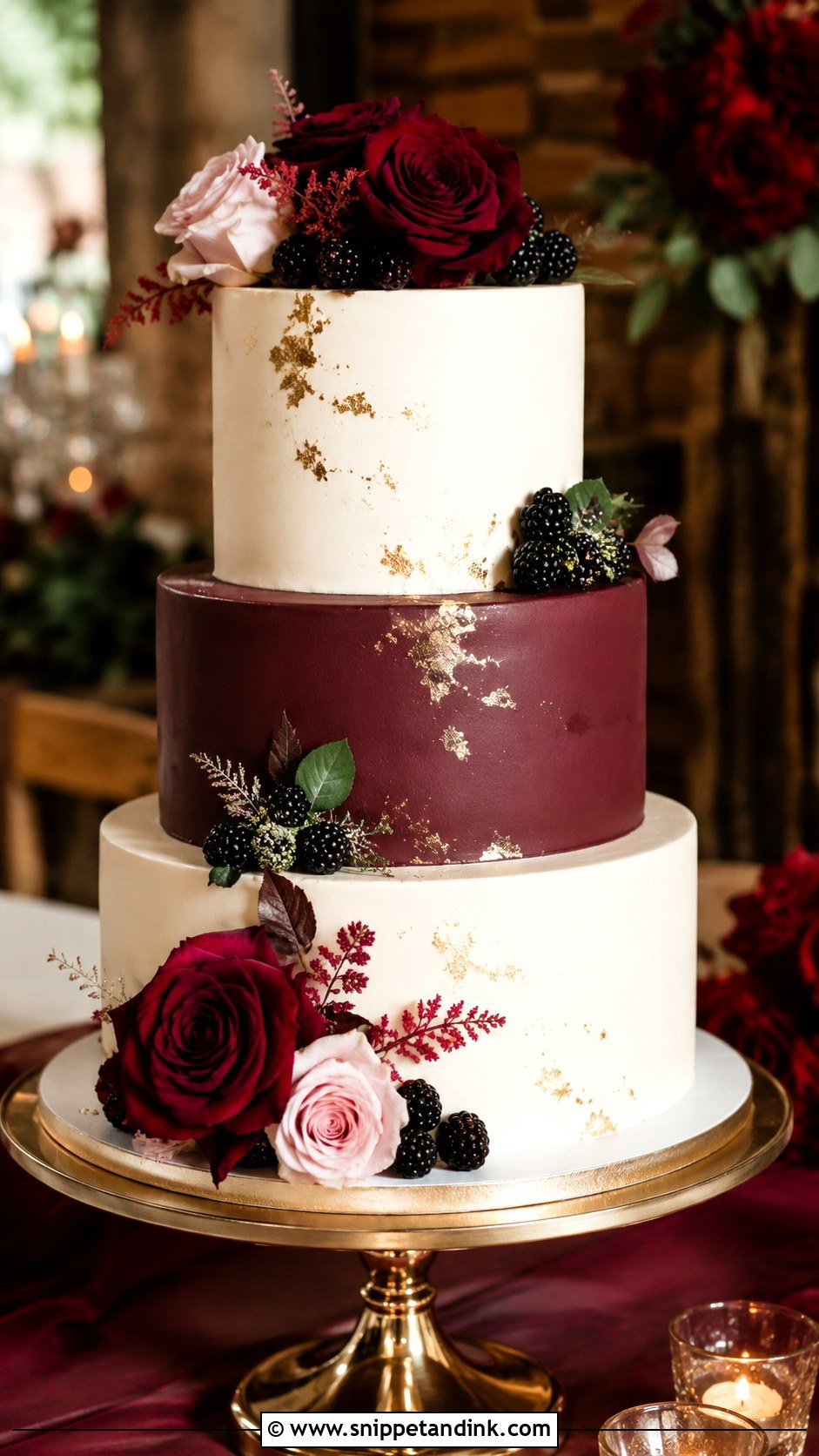
Burgundy is a color I handle carefully. Getting buttercream that deep takes a lot of gel color, which can turn bitter, so I build it on a chocolate or tinted base and let it develop overnight; the shade keeps darkening as it rests. Often I’d rather bring burgundy in through roses and blackberries on an ivory cake, or a watercolor wash on one tier. It pairs with blush, gold, rust and deep greenery. Use one or two dark accents, not all of them, for ballrooms and vineyard receptions.
10. Terracotta Fall Wedding Cake
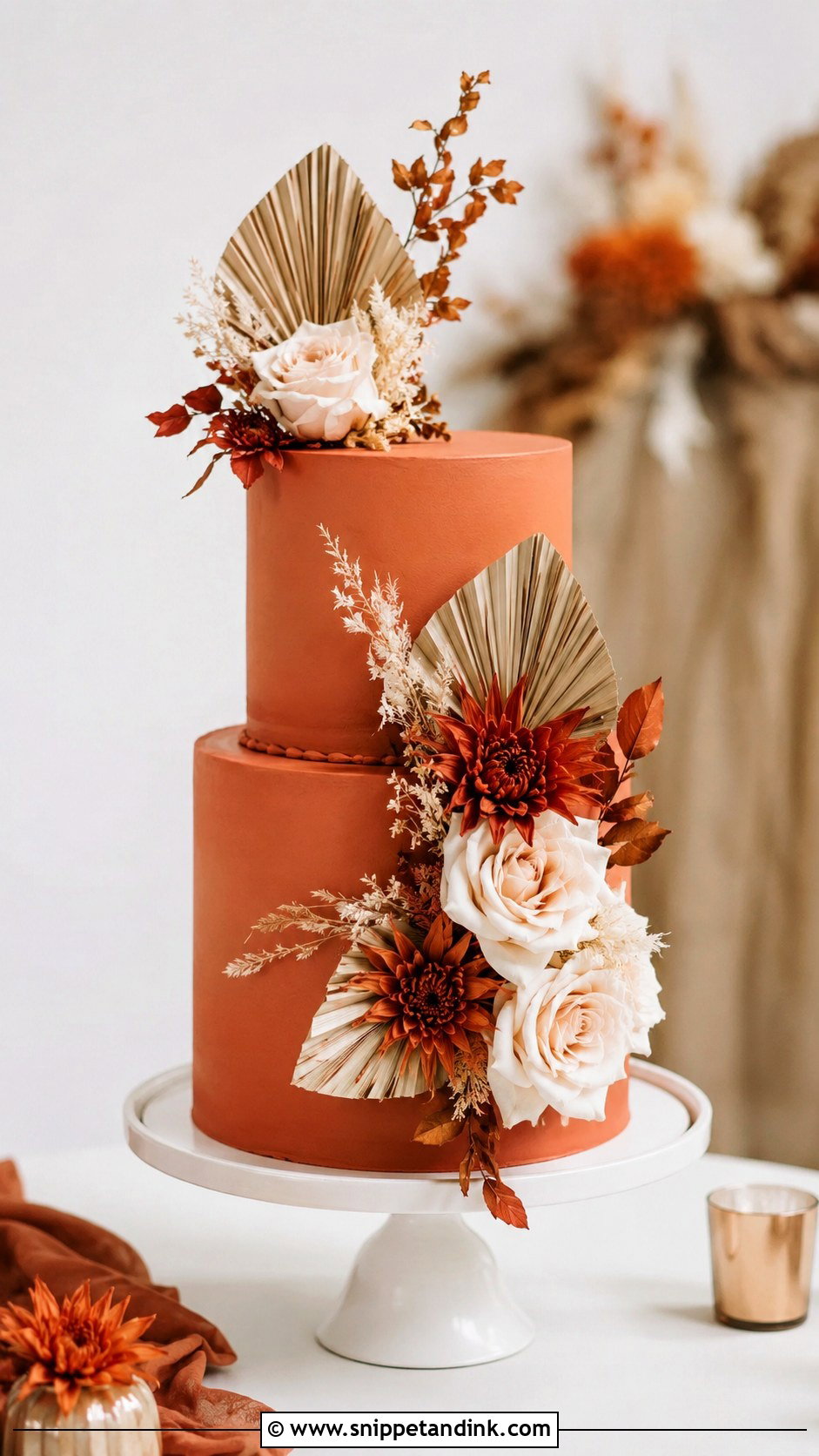
Terracotta is easier to mix than burgundy and gives an earthy, modern warmth, whether it covers one tier or the whole cake. Smooth sides and minimal decoration suit it best. Dried palms, cream flowers, rust roses or a little copper sit well alongside. Dried palms are decorative only, so they go on a barrier. It fits desert, boho and modern venues and says autumn without a single pumpkin or leaf. Spice, vanilla bean, almond and caramel keep the flavor approachable.
11. Naked Fall Wedding Cake
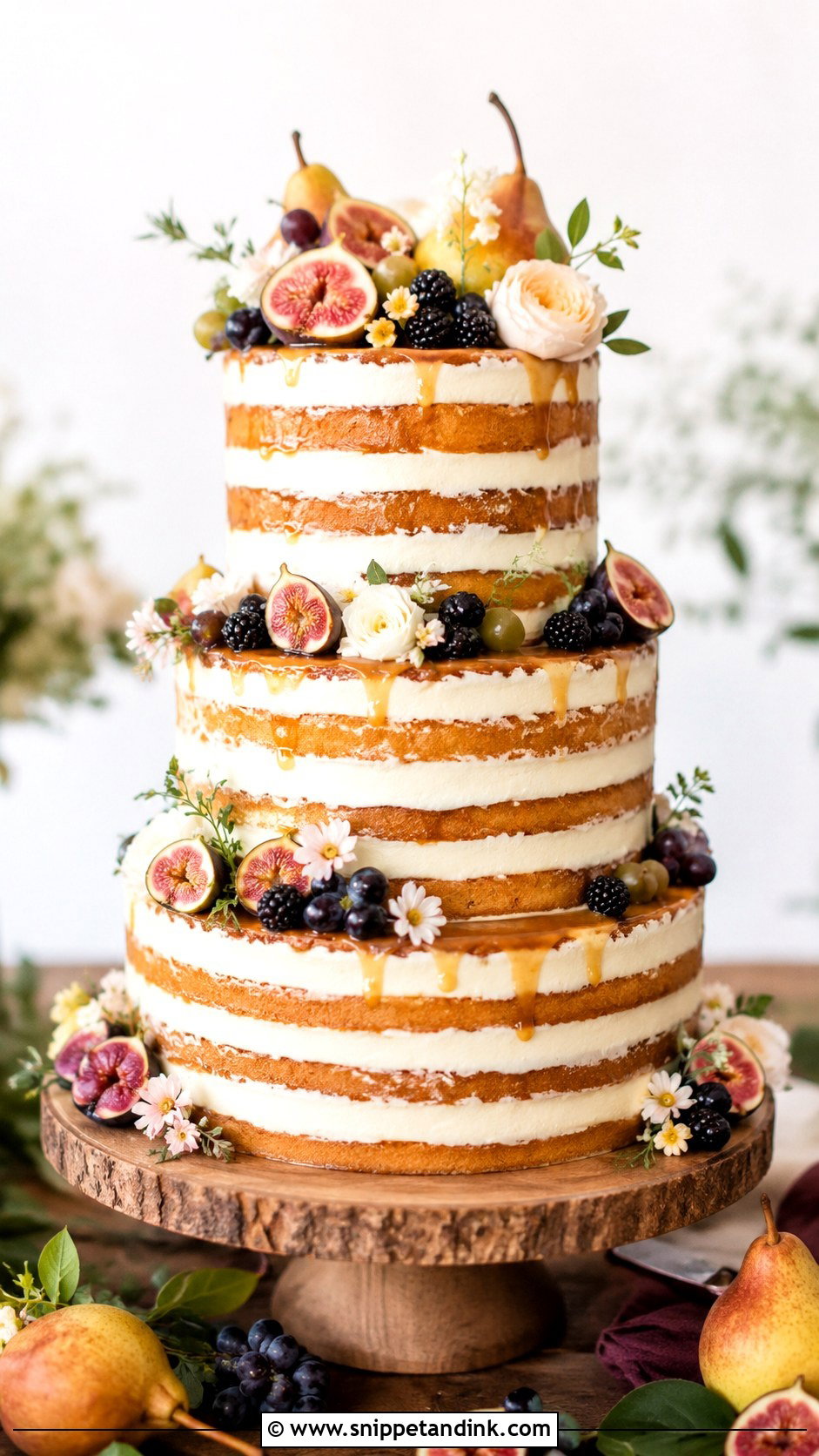
Naked cakes are the most exposed cake I make, with no coat to hold moisture in. Autumn air is often dry, so I syrup every layer, wrap the cake until the last minute and set it out late. Fillings do a lot of the work here: vanilla buttercream, caramel, apple compote, maple cream or cinnamon frosting. Figs, blackberries, pears, grapes and small flowers tucked between tiers make it feel generous. A wood slice or vintage pedestal suits relaxed receptions.
12. Gold Fall Wedding Cake
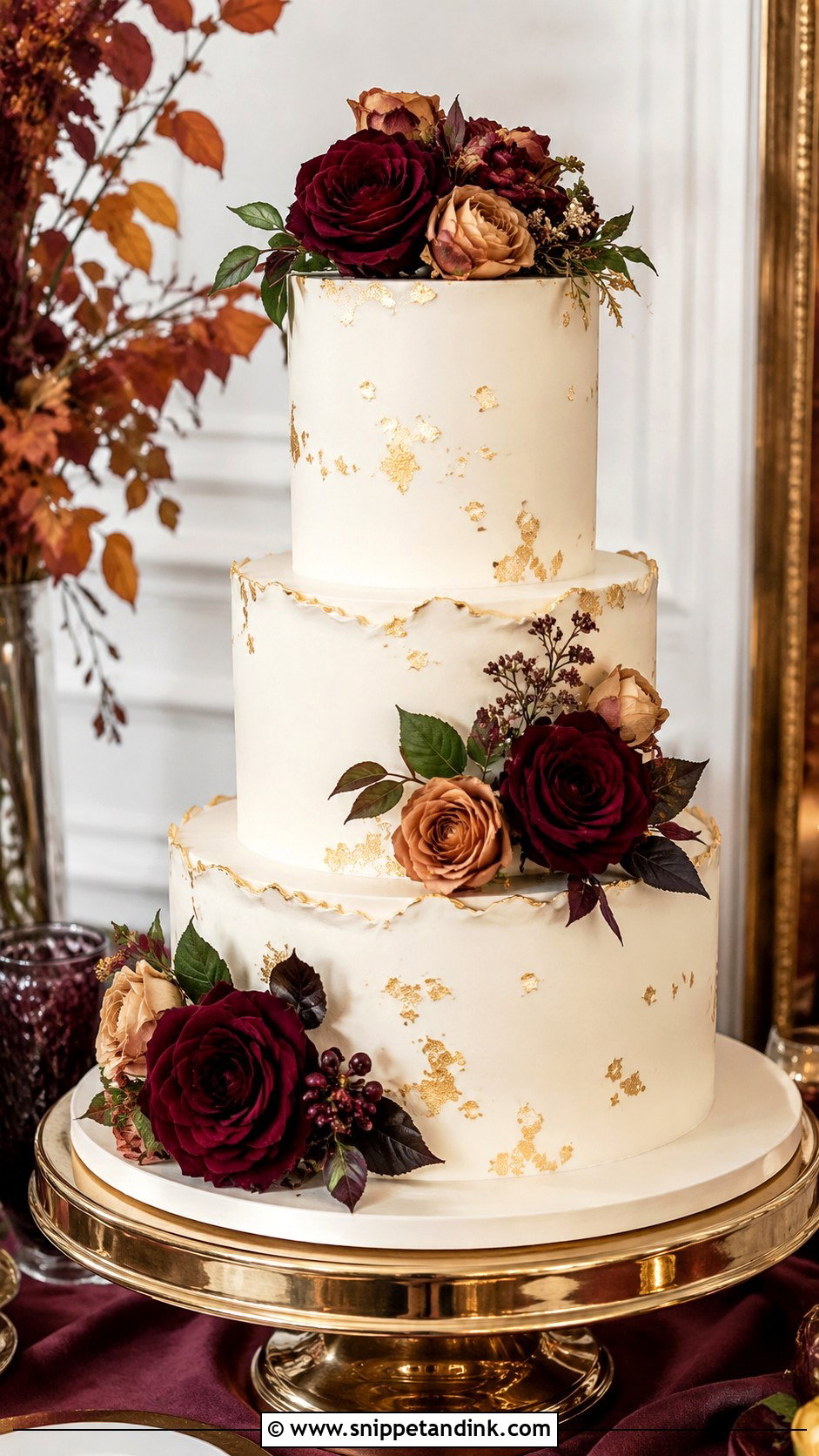
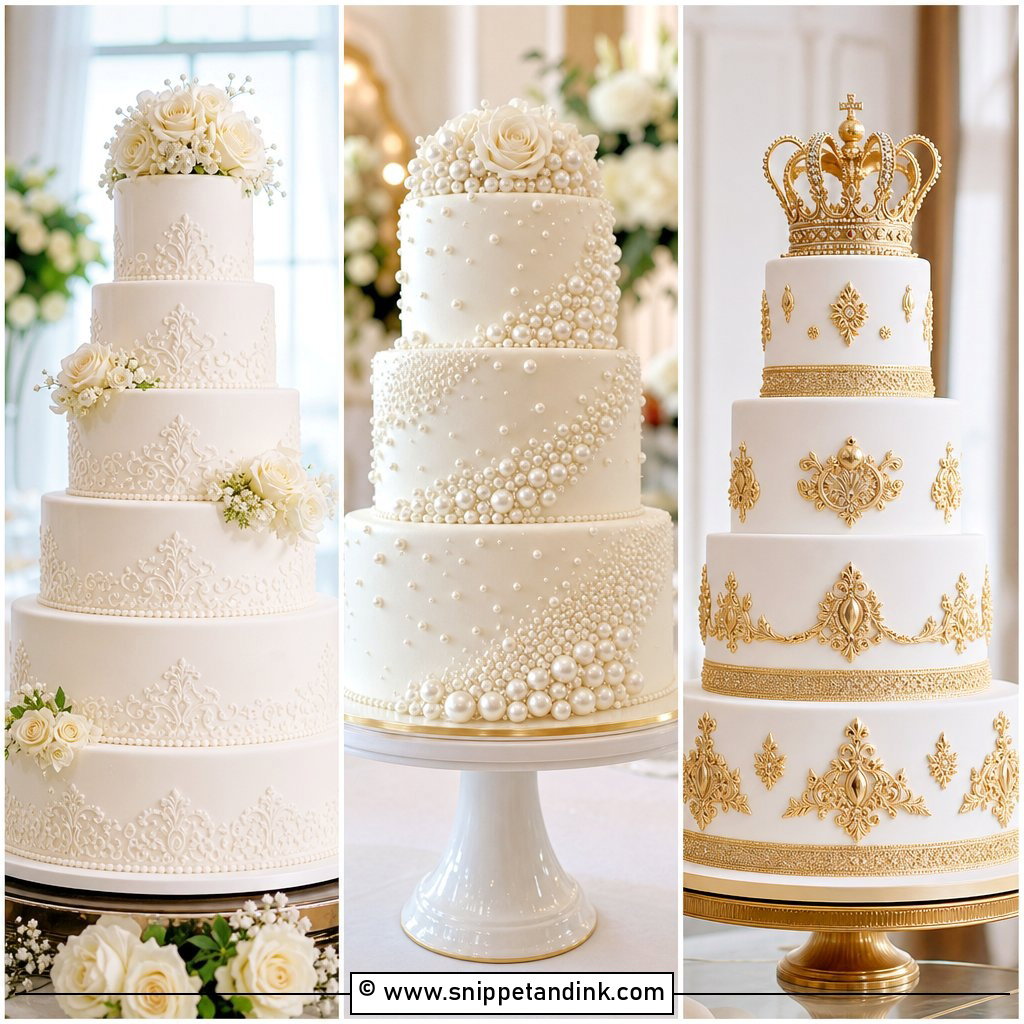
Gold in autumn looks warm rather than icy, especially beside caramel tones and burgundy flowers. Gold leaf, a painted edge, metallic brushstrokes or one full gold tier all work, but I’d keep it to one technique per cake. Ask whether the gold is truly edible, as many lustre dusts are labelled for decoration only. Ivory frosting, dried grasses and deep green leaves complete it for estate venues and candlelit evenings. Vanilla bean, champagne, brown butter and salted caramel all suit it.
13. Fall Wedding Cake With Figs
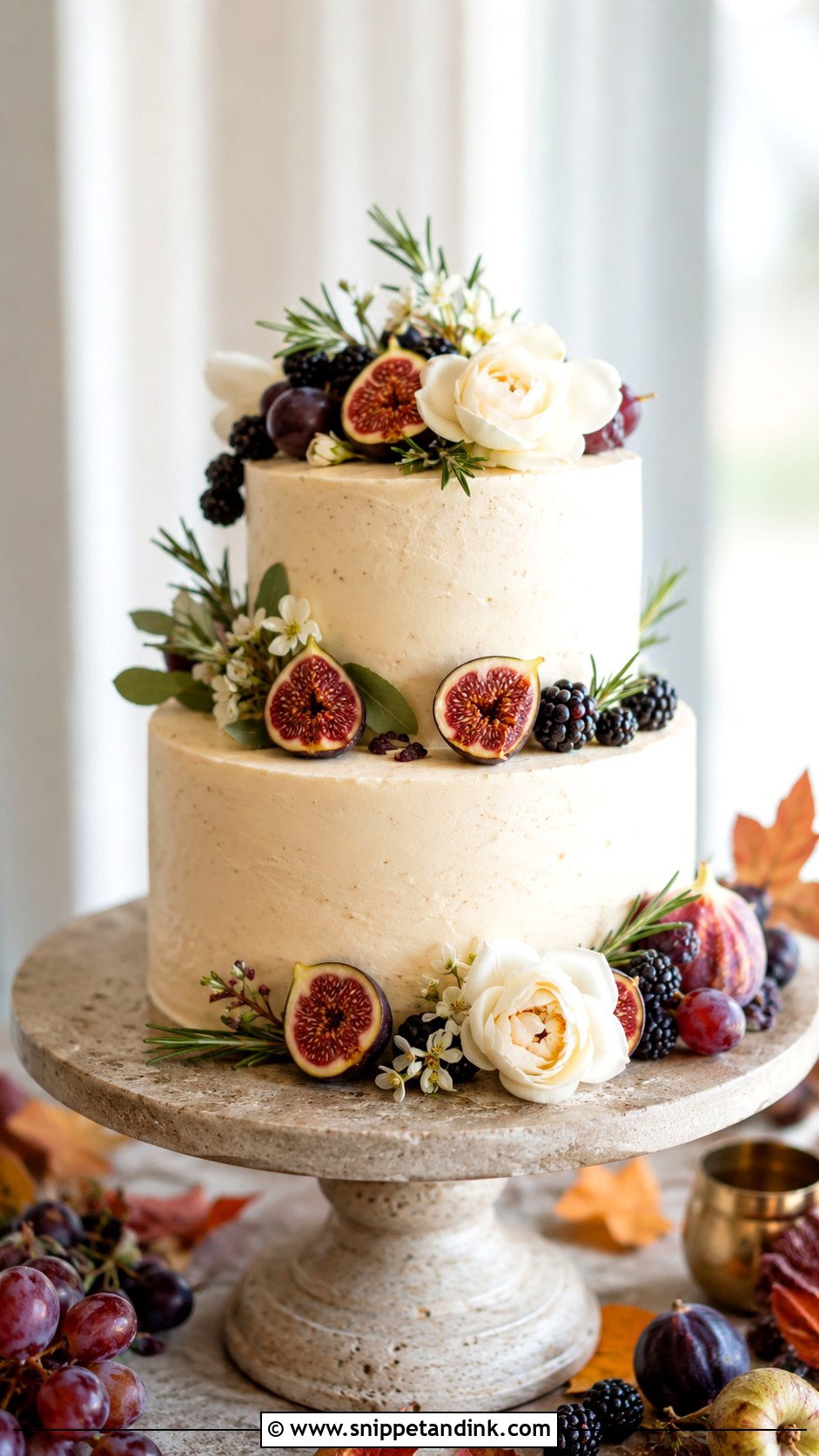
A fall wedding cake with figs gets its color from the fruit: deep purple skin and a jewel-red center. Cut figs weep and soften within a few hours, so I halve them on site, close to the reception, and keep whole figs for the base. They look right on ivory buttercream, chocolate ganache or caramel frosting, grouped with grapes, blackberries, pears or rosemary. Place them in clusters on two or three tiers, not every one. Honey, almond, pistachio or spice cake inside.
14. Pear Fall Wedding Cake
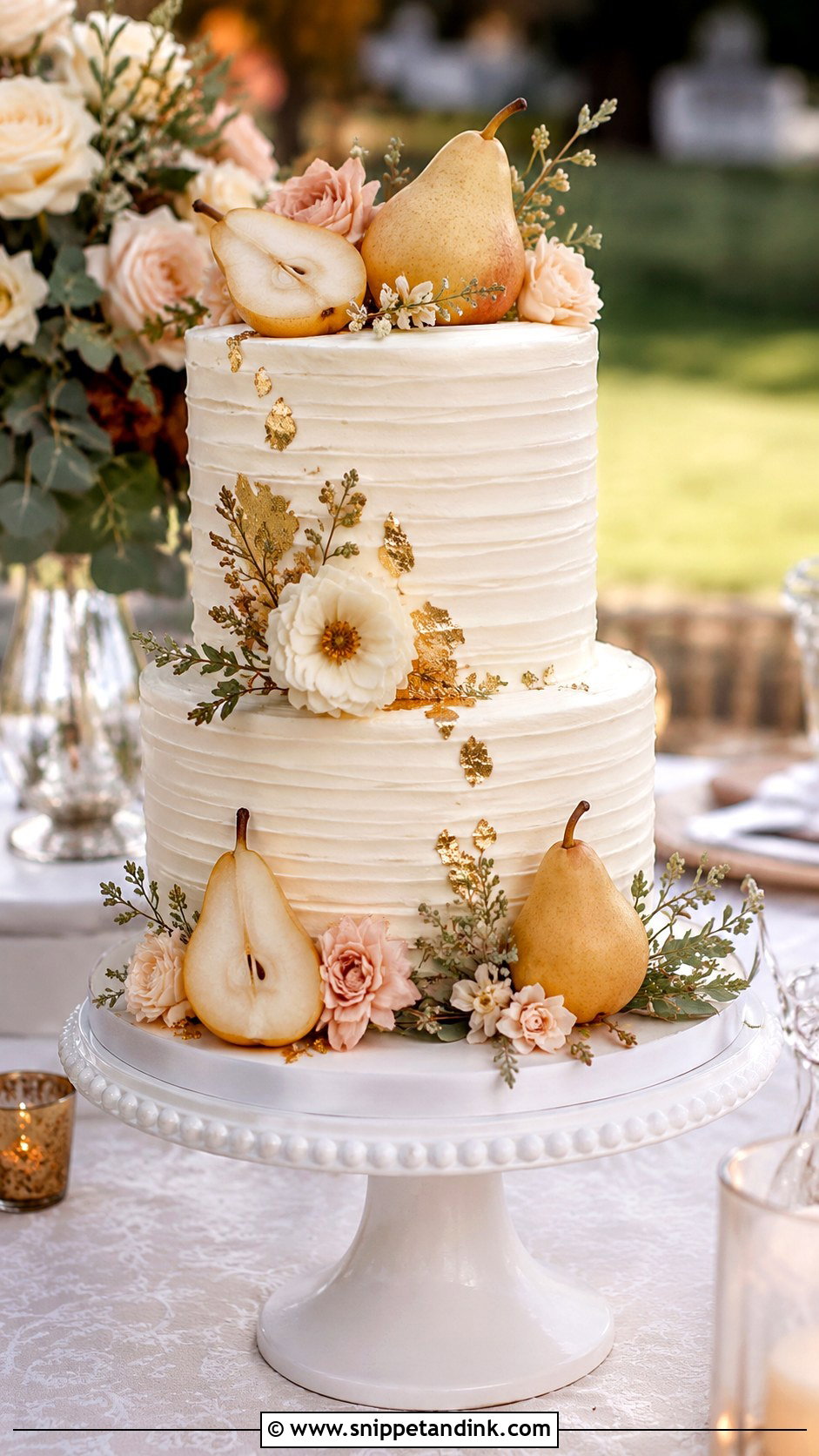
Pears have a gentle flavor and a shape that does most of the decorating. Cut pear browns fast, so on the outside I use whole small pears or poached halves, which hold color better than raw slices. Inside, pear compote or pear buttercream pairs with vanilla, almond, honey or spice sponge. Smooth ivory frosting, pale gold and a few cream or blush flowers keep it understated. It suits garden weddings and outdoor dinners on a mild evening.



15. Maple Wedding Cake
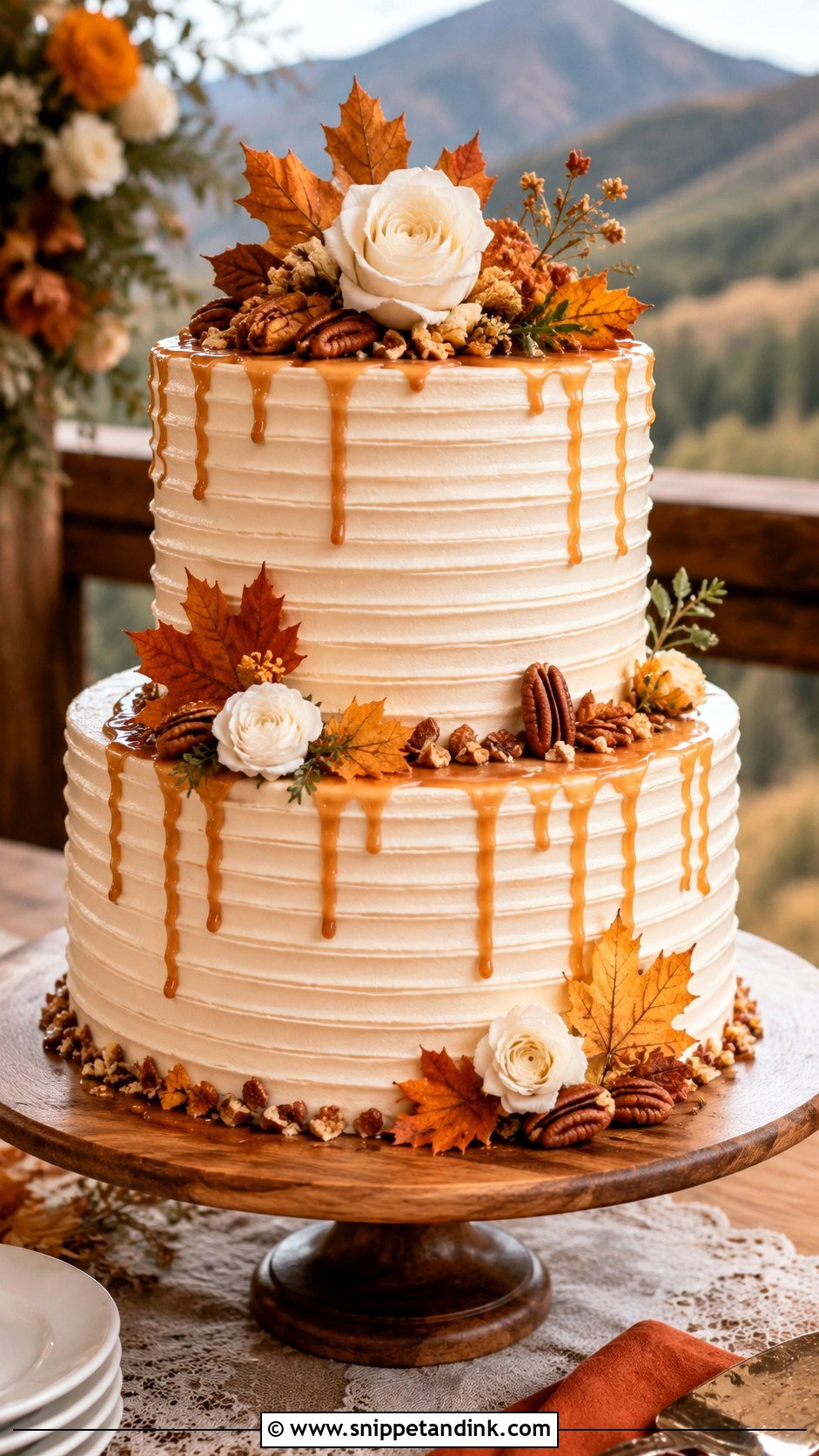
Maple flavor bakes out more than people expect, so I reduce real maple syrup for the frosting and boost the sponge carefully to keep it from tasting only of sugar. Brown butter frosting, toasted pecans or a light caramel drizzle all suit it. Pecans mean a nut allergy question, so I’d keep them on the outside and label it. Cream frosting with soft ridges and a few leaves around the base looks right in mountain lodges and barns. Ask for a creamy, not cloying, filling.
16. Vintage Fall Wedding Cake
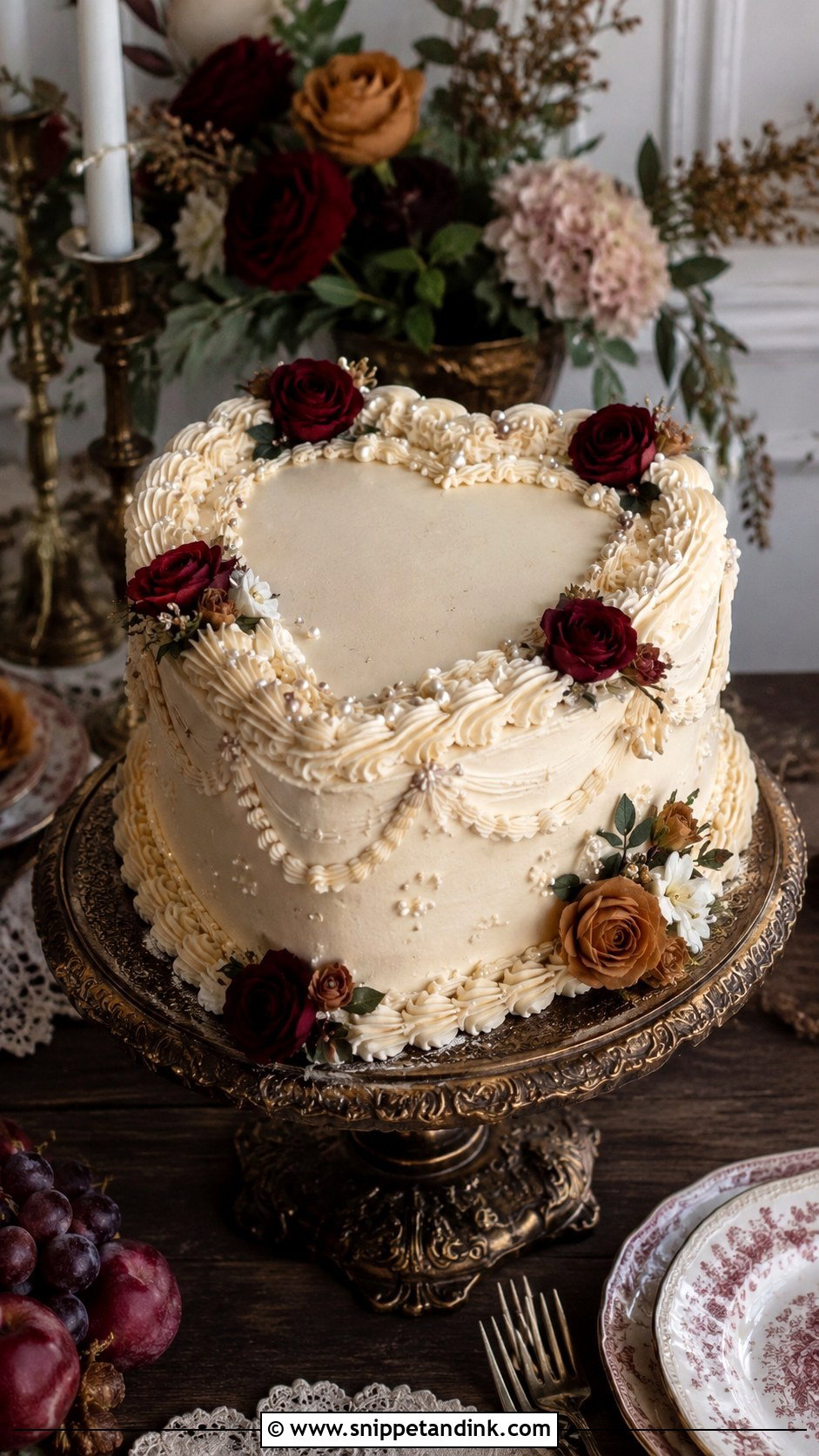
Vintage piping in fall colors is a nice twist on a style usually done in pastels. Lambeth borders, shells, pearls and small floral clusters look richer in ivory, champagne, caramel, rose or burgundy. Overpiping takes a stiff buttercream and a lot of hours, so the price reflects the work more than the size. A heart-shaped cake suits a small wedding; tiers feel more formal. Vanilla, red velvet, spice or chocolate inside, and it fits restaurant receptions and vintage dresses.
17. Black And White Fall Wedding Cake
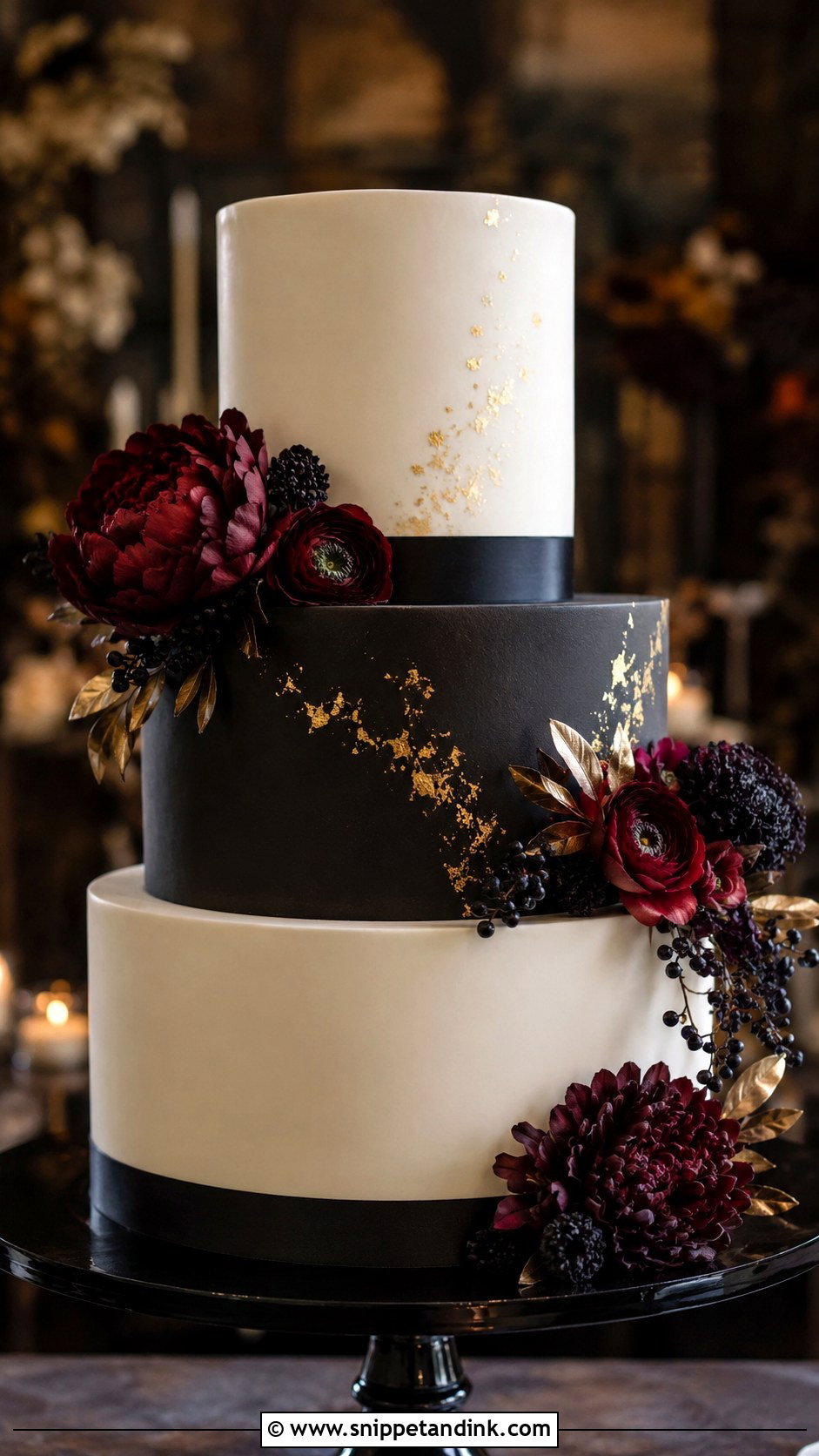
Black and white turns seasonal with burgundy flowers, dark berries, gold or a few dried grasses. A white base with black ribbon, black piping or one matte black tier gives the contrast. Black buttercream and fondant take a lot of color and can stain mouths, so I prefer black on a ribbon, a painted line or a display tier. Dark chocolate, vanilla bean, espresso or almond suit the drama. Keep the decorations controlled for a formal evening or a gallery venue.
18. Fall Wedding Cake With Dried Flowers
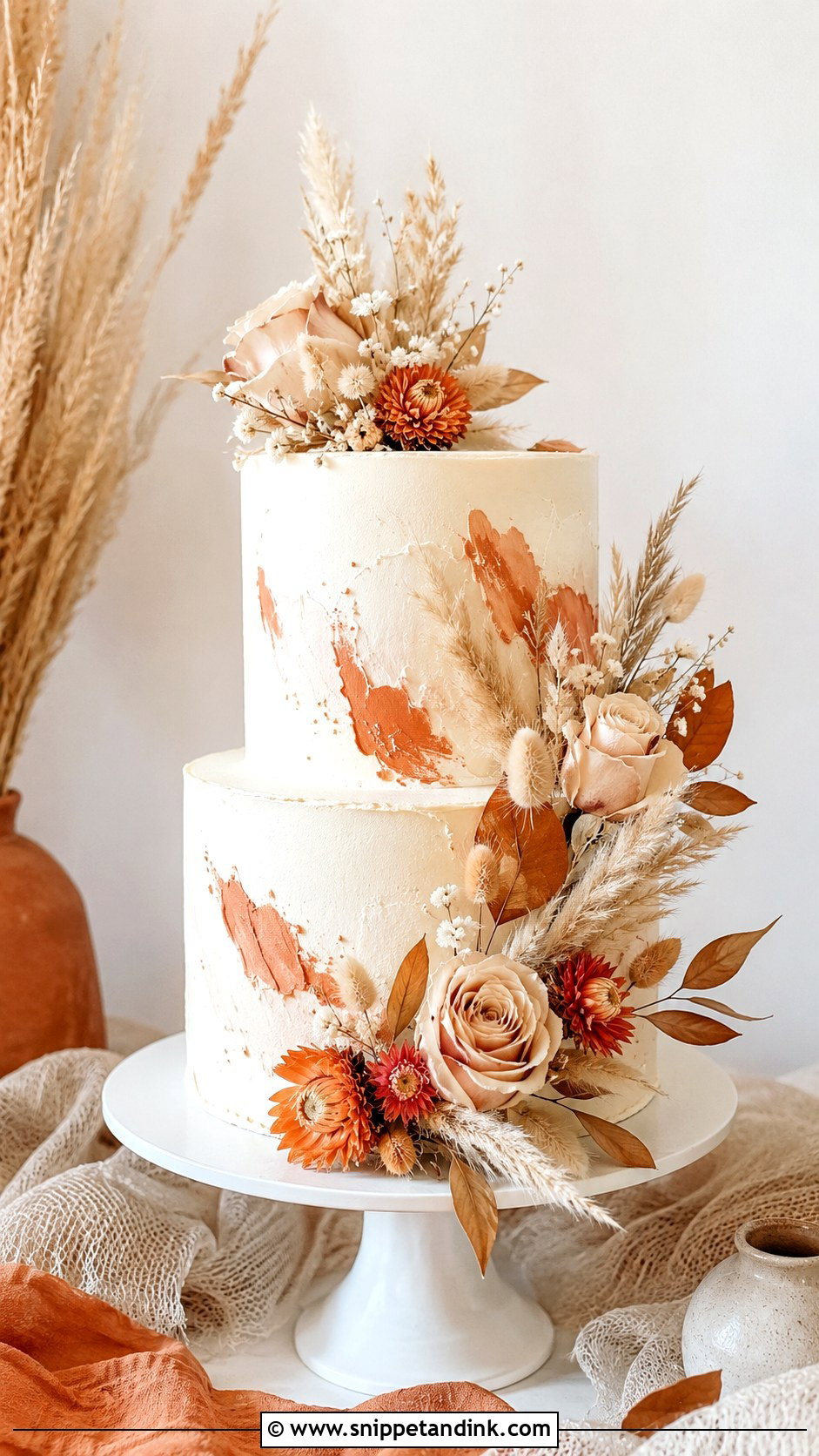
Dried flowers are a sensible choice in autumn, when some fresh blooms get harder to source. Pampas, bunny tails, preserved roses, dried palms, strawflowers and small dried leaves add texture and a natural color. None of them are food-safe, and many are dyed or sprayed, so they sit on a barrier or on picks, never pushed into the frosting. Smooth ivory buttercream, terracotta accents, or a semi-naked finish all pair well. A white stand or linen-covered table keeps it clean for boho, rustic or modern weddings.
19. Fall Wedding Cake With Cupcakes
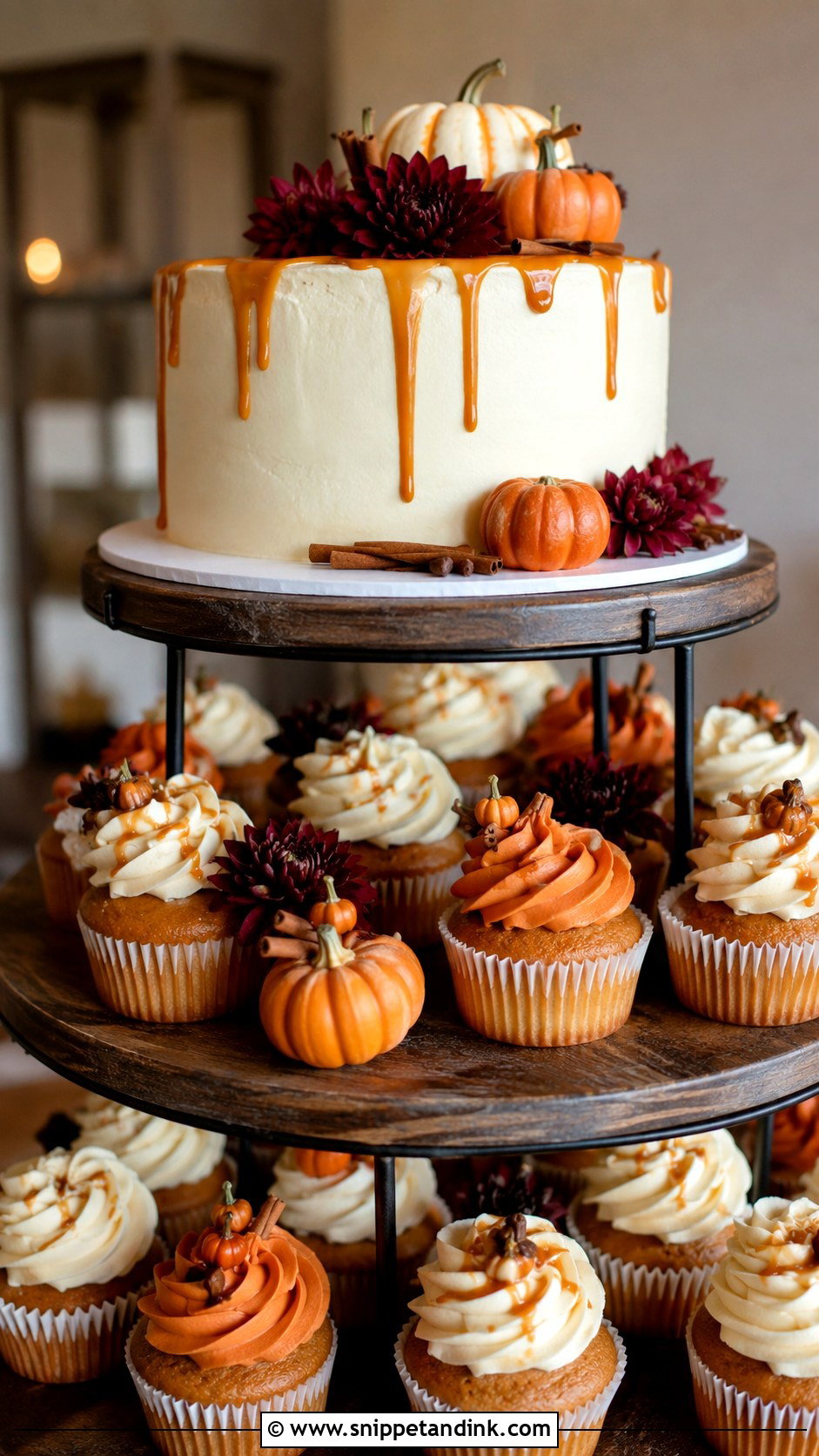
A fall wedding cake with cupcakes gives you a cutting cake on top and easy servings below. Fall flavors suit cupcakes well: pumpkin spice, caramel apple, chai, maple pecan and chocolate ganache. I’d stop at three, or the stand looks patchy. Keep the frosting in your wedding palette, maybe ivory, caramel, burgundy, sage or terracotta. It’s practical for larger weddings, since guests just take one, and it offers variety without several big cakes.



20. Small Fall Wedding Cake
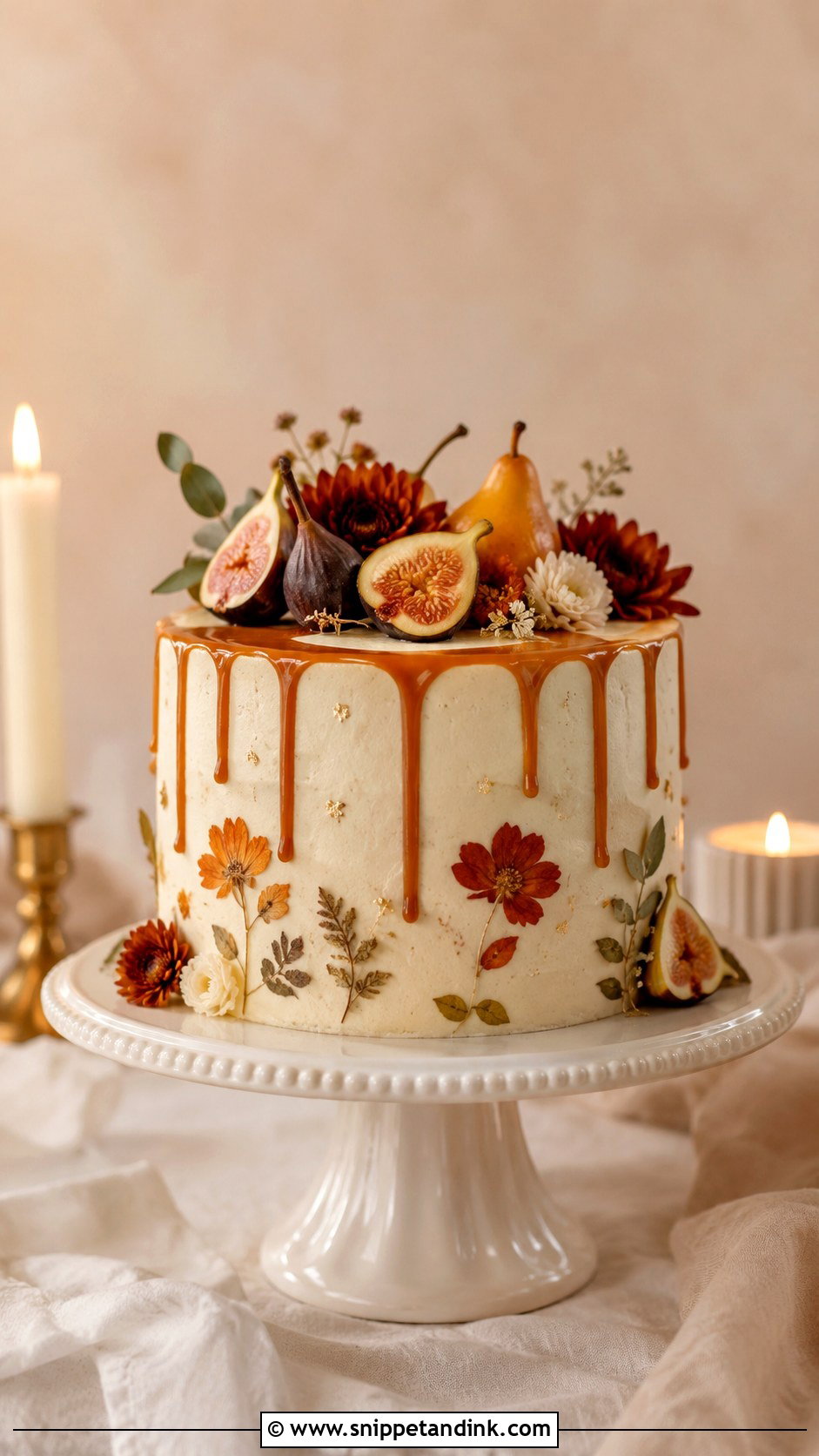
Small cakes are ideal for elopements, courthouse weddings and micro receptions, and with fewer slices every detail counts. One or two tiers with smooth buttercream, a caramel drip, pressed flowers, figs or pears, or a small arrangement on top look finished. Pick a confident flavor (spice, chocolate, almond, pumpkin or maple) so each slice is memorable. Set it on a good stand with candles, linen and seasonal fruit at the base, and it holds its own beside any grand tiered cake.
Moving a Cold Cake Into a Warm Barn
Fall venues swing in temperature. A barn can be chilly while you set up and warm once a hundred people are dancing, and a cake that comes straight from a cold fridge into a warm, humid room will sweat. On fondant that shows as beads of water and dull patches; on dark colors it can leave streaks.
How I handle it
I let the cake come up in temperature inside its closed box, so condensation forms on the box rather than the cake. The table goes away from heaters, fire pits and sunny windows, which are common at autumn venues. For an outdoor reception on a warm September afternoon, I’d choose ganache under the finish and keep cream cheese fillings for a cooler date.
Give your baker the venue’s heating setup and the expected evening temperature. It sounds small, but it tells us which frosting to use, how late we should deliver and whether the cake needs a cool back room to wait in. If the venue can’t offer one, a smaller display cake with kitchen cake kept in the caterer’s fridge is often the safer plan.
September Heat or November Chill Changes the Cake
Autumn gives a cake designer rich colors, warming flavors and natural textures to work with. A semi-naked cake goes rustic, burgundy flowers go romantic, terracotta goes modern, and gold leaf on ivory goes formal. Pumpkin, pear, apple, maple, chai, figs and chocolate make it taste of the season too. Match it to your venue, menu and flowers, and plan for the weather on the actual date, since an early September heatwave and a frosty November evening ask very different things of the same cake.
You'll Like These Ideas:








Leave a Reply