
I think of Rustic wedding cakes as the honest end of wedding baking: you can see the crumb, the fruit is real and the frosting shows the hand that spread it. That honesty is also why they’re harder than they look. A smooth fondant cake hides a lot, while a semi naked one shows every dry edge and every thin layer of filling. The twenty cakes below run from barely frosted to fully dressed, and for each one I’ve added what I’d actually check before I bake it for a barn, a ranch or a back garden.
Your Venue Photos Tell a Baker More Than Pinterest Does
Inspiration pictures show me the look you want. Photos of your venue show me whether that look will survive. Before I quote for a rustic cake, these are the details I ask for:
- A photo of where the cake table will stand, including nearby windows, doors and heaters.
- Delivery time, cutting time and whether there’s a fridge or a cool room on site.
- Your final guest count, plus how many people will actually eat cake if there’s also a dessert bar.
- The florist’s flower list, so I can match colours and flag anything unsafe near food.
- Any allergies or dietary needs, since a vegan or gluten-free tier changes the recipe and the structure.
With that, I can tell you honestly if a naked cake will last in a summer marquee or if textured buttercream is the safer choice. Most couples find the answer changes their shortlist.
1. Semi Naked Rustic Wedding Cake
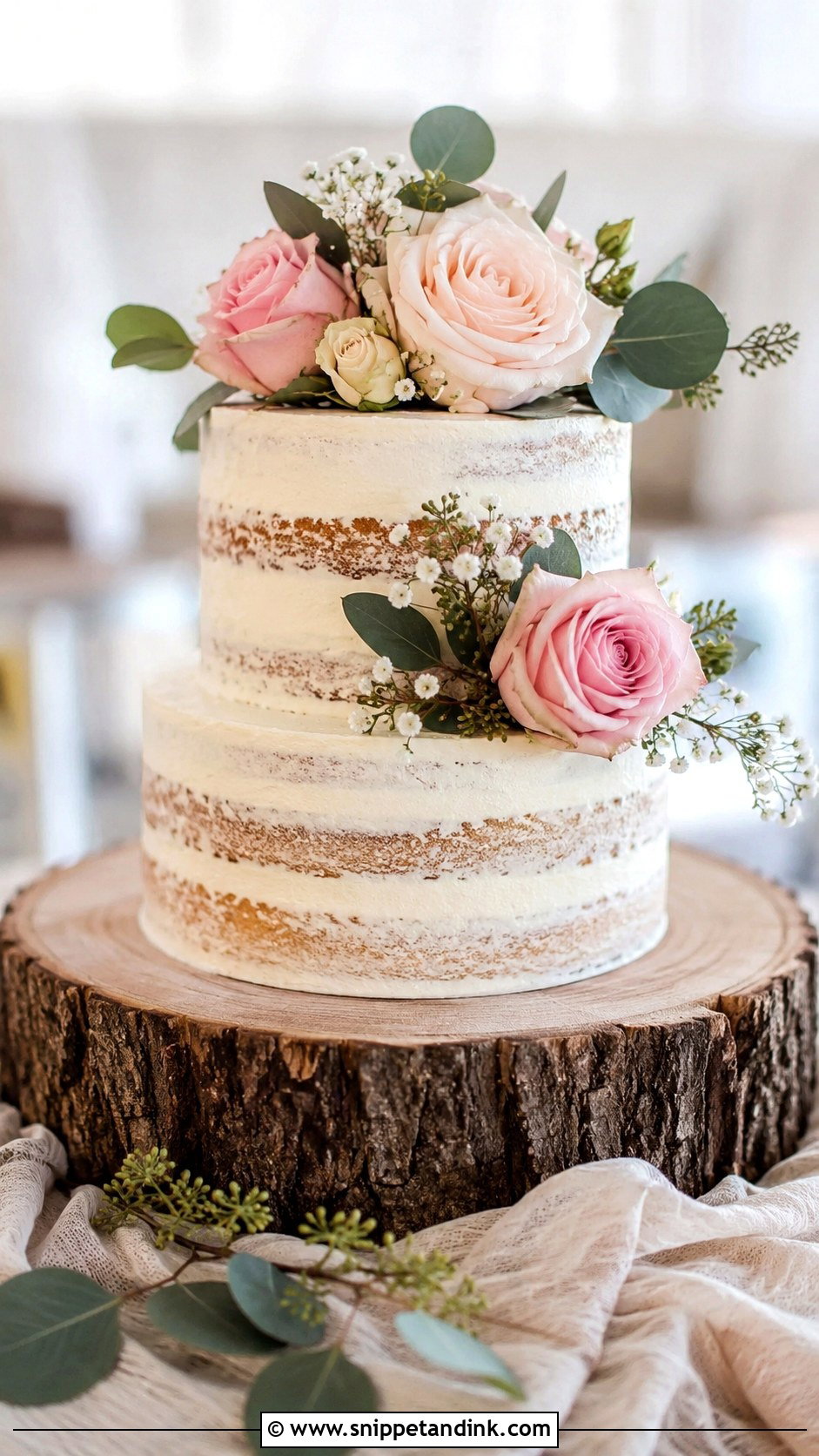
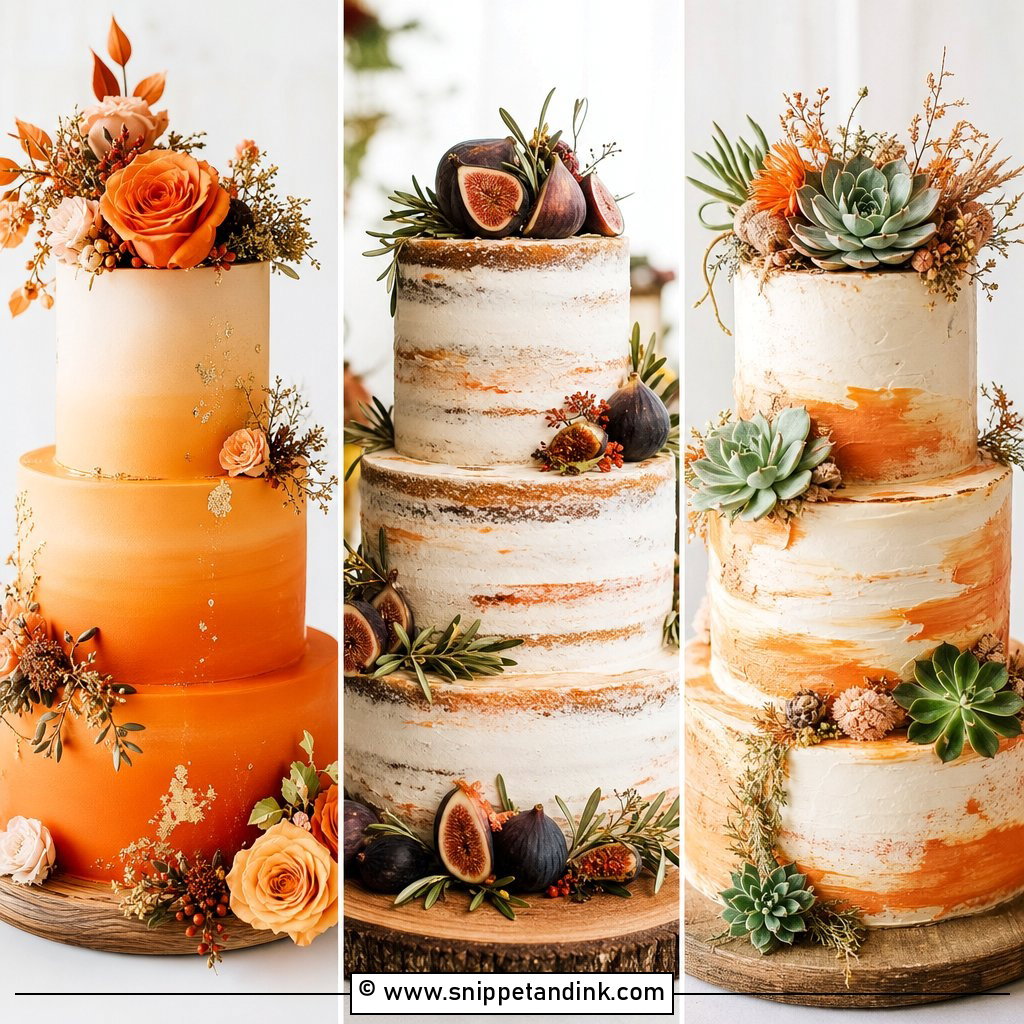
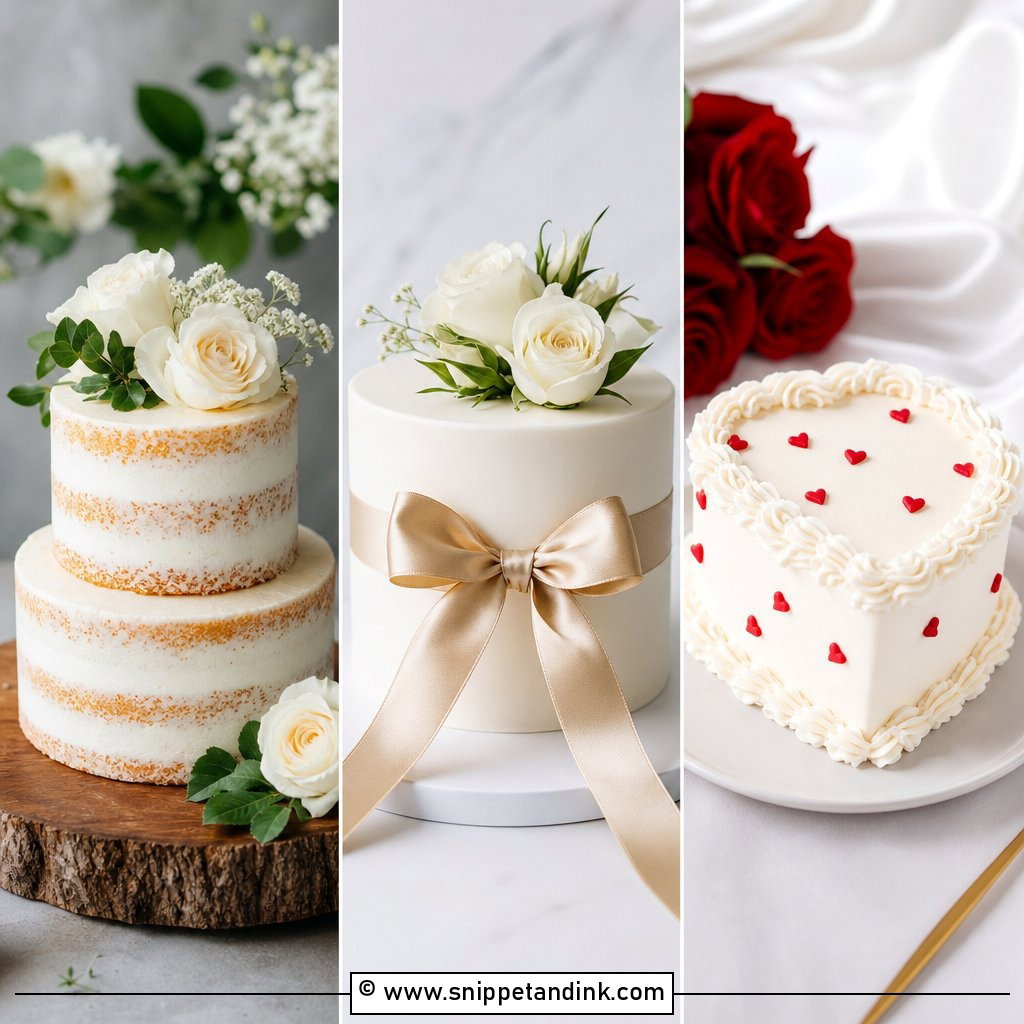
Most of the semi naked cakes I make start the same way: generous filling, a full crumb coat, then a bench scraper pulled round the chilled tier to take most of it back off. What’s left fills the gaps and seals the edges just enough. Vanilla, almond, lemon and spice sponges look best through that thin veil because they have a golden, even crumb. Baby’s breath is a common finish, but it’s mildly toxic, so if you want it I wrap it and keep it on a barrier. Roses and seasonal blooms on a wood stand are the safer route.
2. Rustic Buttercream Wedding Cake
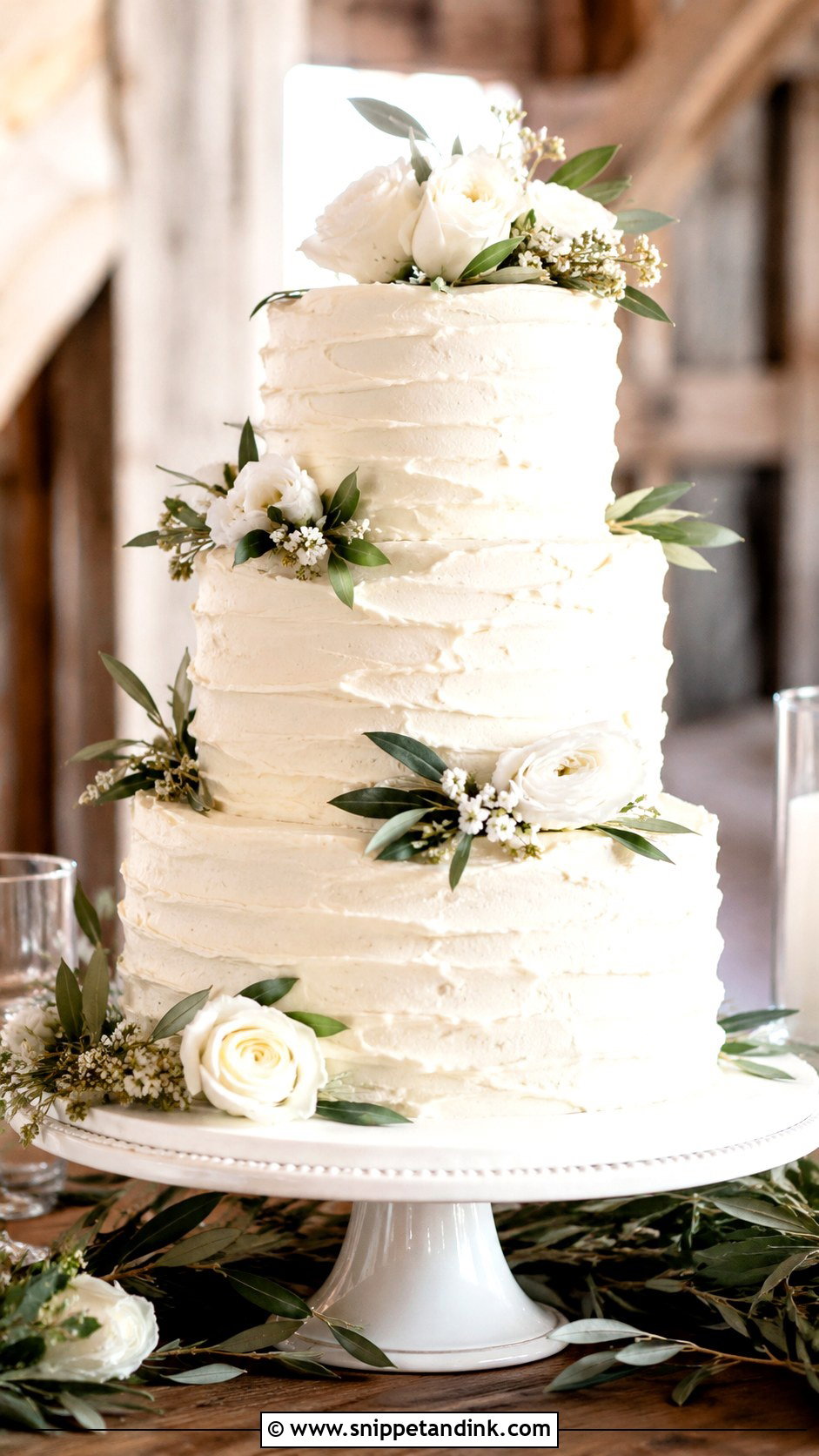
Textured buttercream is my default suggestion for a reception where the cake will stand for hours, because the sponge stays completely sealed. I spread it with a palette knife or the back of a spoon, and the soft ridges catch the light from the side, so a window or candles behind the table really show it off. Ivory reads as classic; sage, blush or a warm biscuit colour makes it more current. A few flowers or a simple topper are all it needs.
3. Two Tier Rustic Wedding Cake
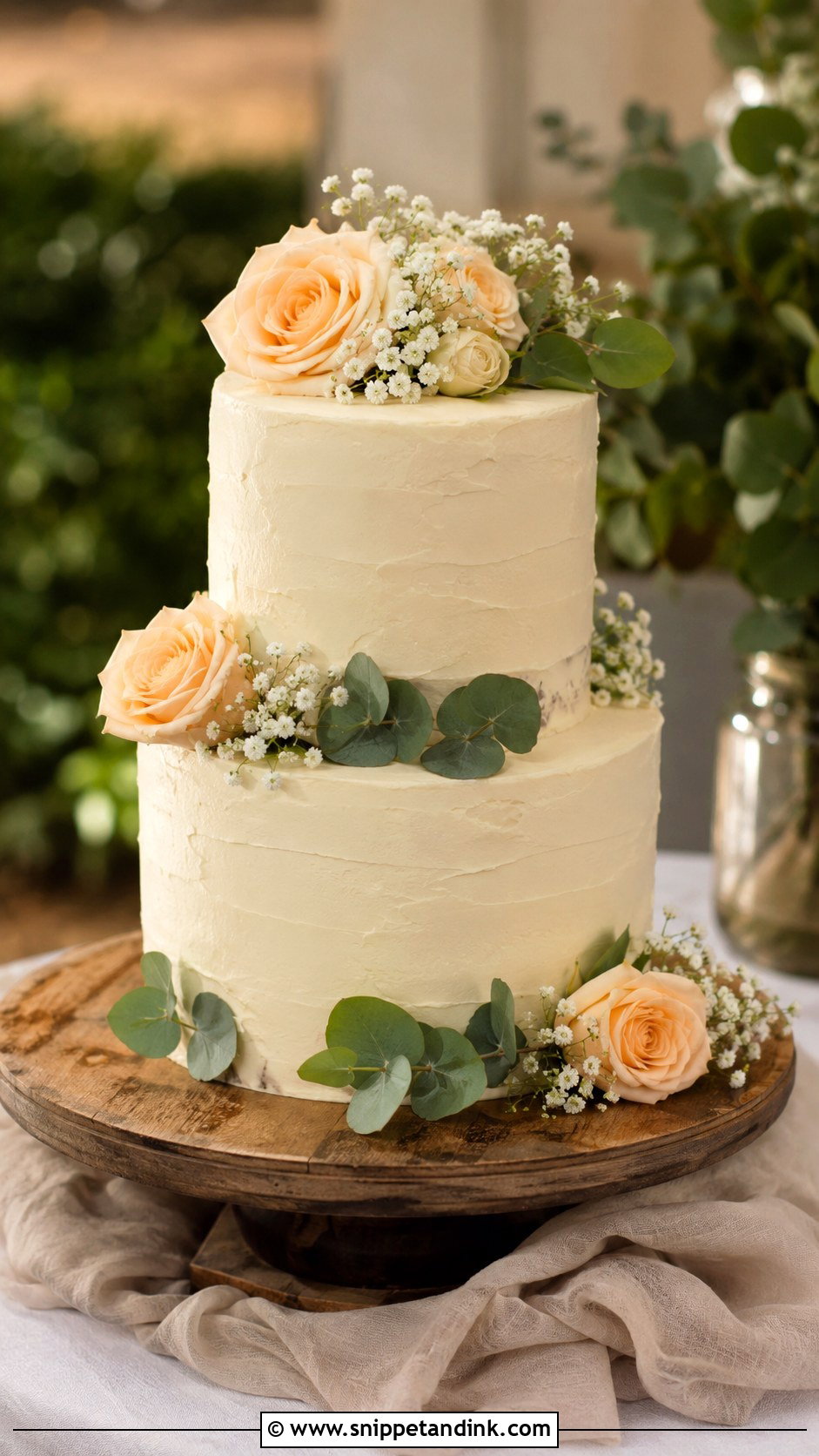
Two tiers suit elopements and smaller guest lists, and they’re the size I can carry myself up a narrow staircase or across a field without a second pair of hands. Fresh flowers tucked into the gap between the tiers make the cake look taller and fuller than it is. Berries, figs or small herb sprigs add colour. Put it on a raised stand, whether wood, ceramic or a vintage pedestal, because a short cake sitting flat on the table disappears in photos.
4. Three Tier Rustic Wedding Cake
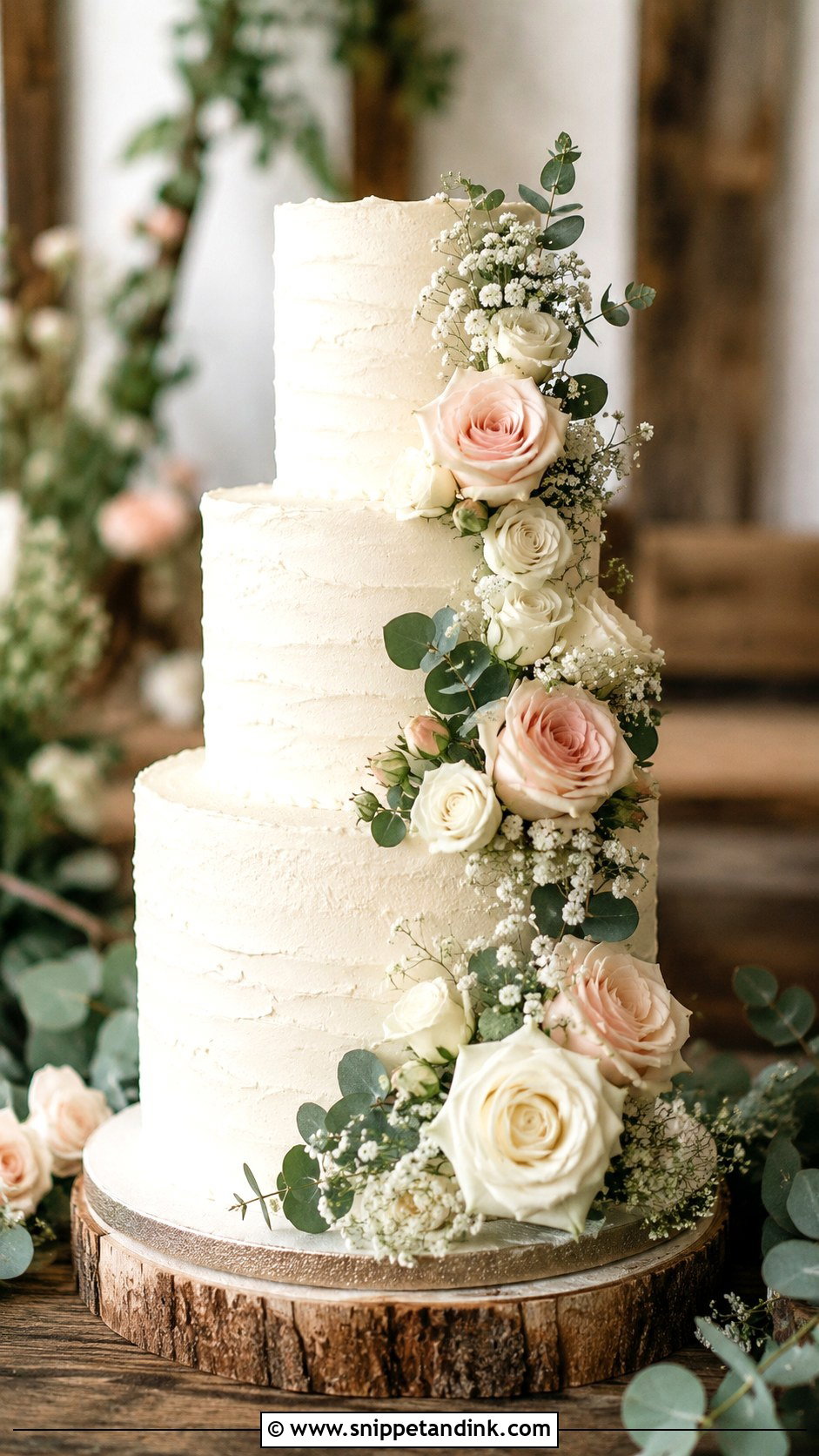
A three tier rustic wedding cake gives a vineyard or tented reception a proper focal point. With that much weight, the support is what I think about first: boards and dowels in every tier, and a central dowel if the cake travels stacked. Keep the finish rustic with semi naked sides or loose buttercream rather than fondant. A cascade that starts at the top and drifts down one side looks natural; flowers wrapped evenly around every tier start to look formal again.
5. Rustic Wedding Cake With Fresh Flowers
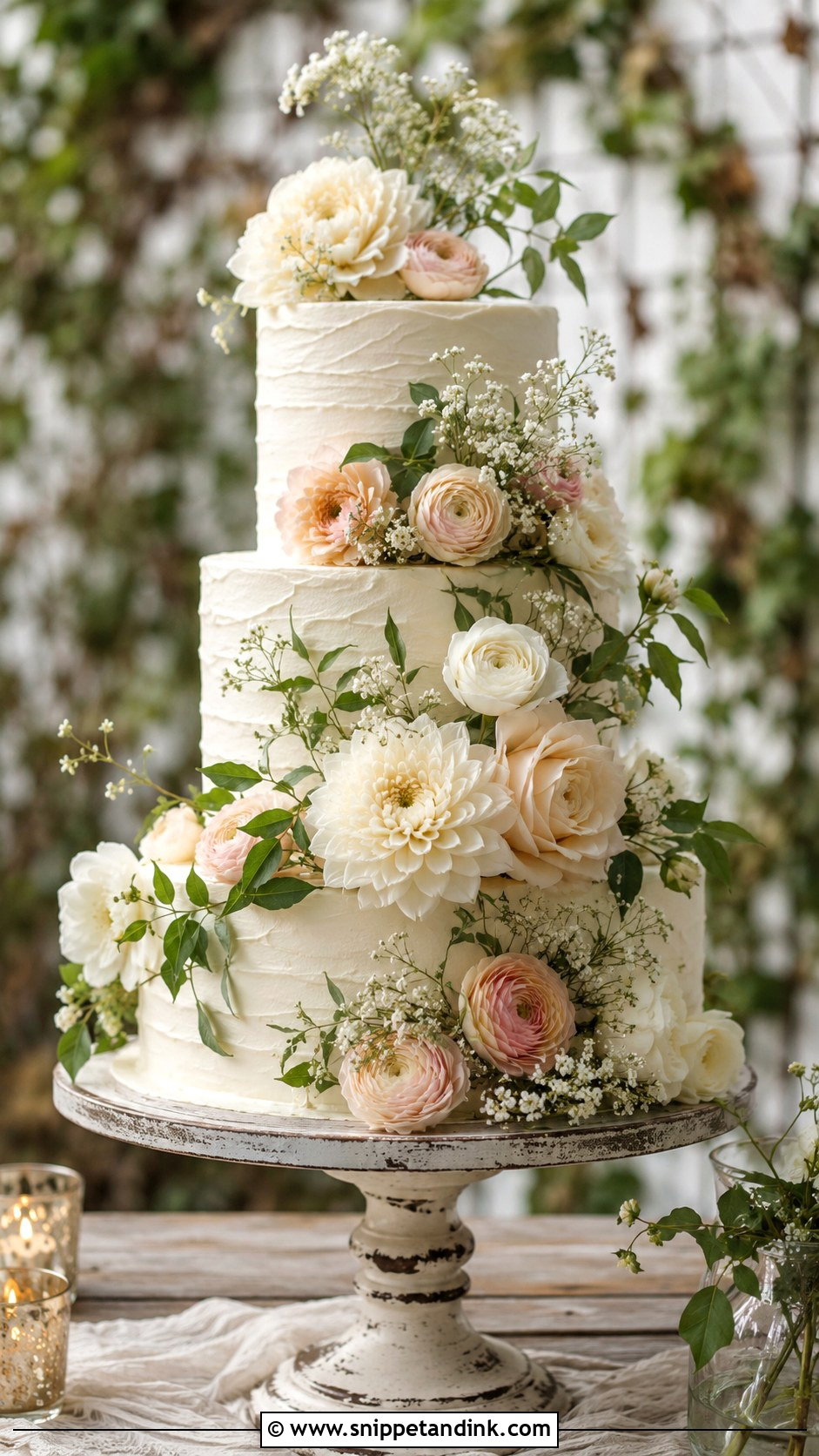
Flowers are the quickest way to link the cake to the bouquet and centrepieces, so I always ask to see the florist’s list. Roses, ranunculus, dahlias, daisies and small wildflowers all work in their season. Clusters on top, blooms tucked between tiers or a gentle cascade are the three usual placements, and I pick one rather than doing all three. The frosting underneath should stay plain. Every stem gets wrapped and put into a pick before it touches the cake.
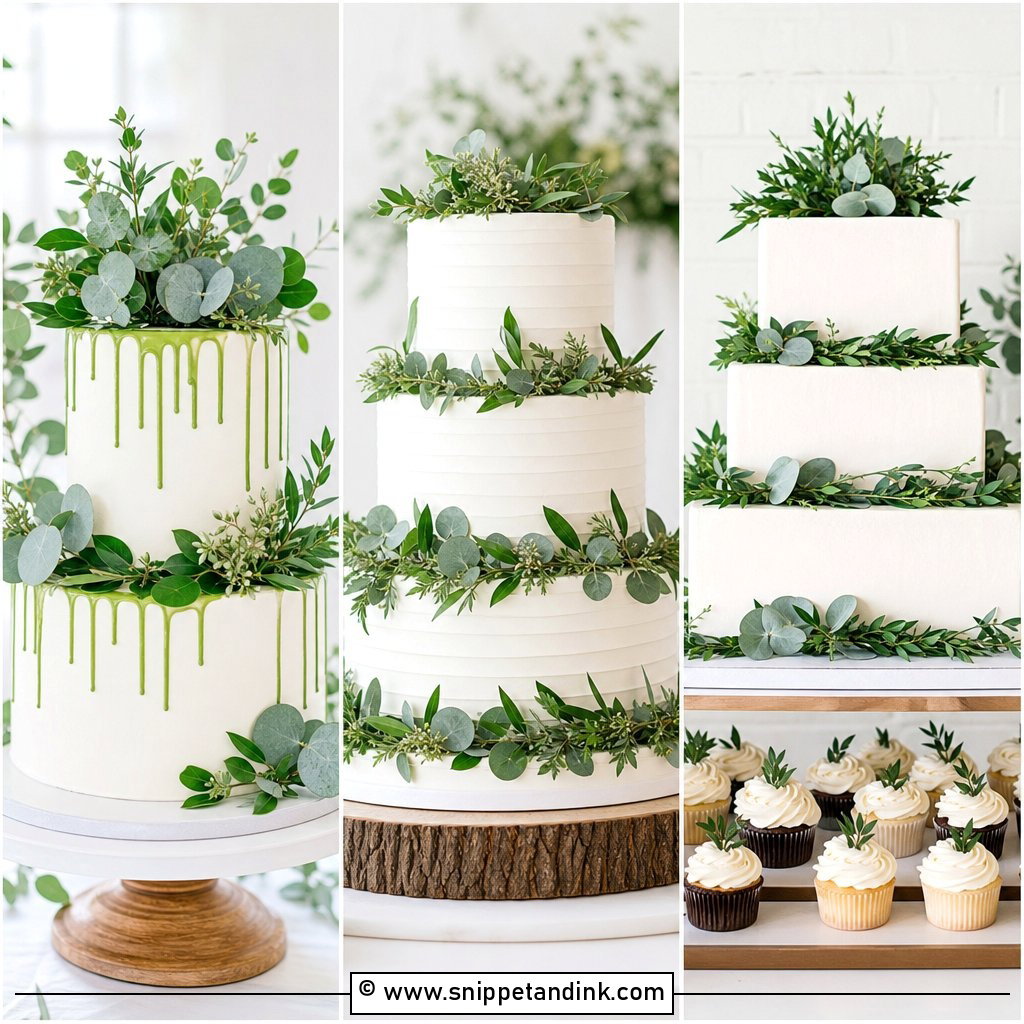
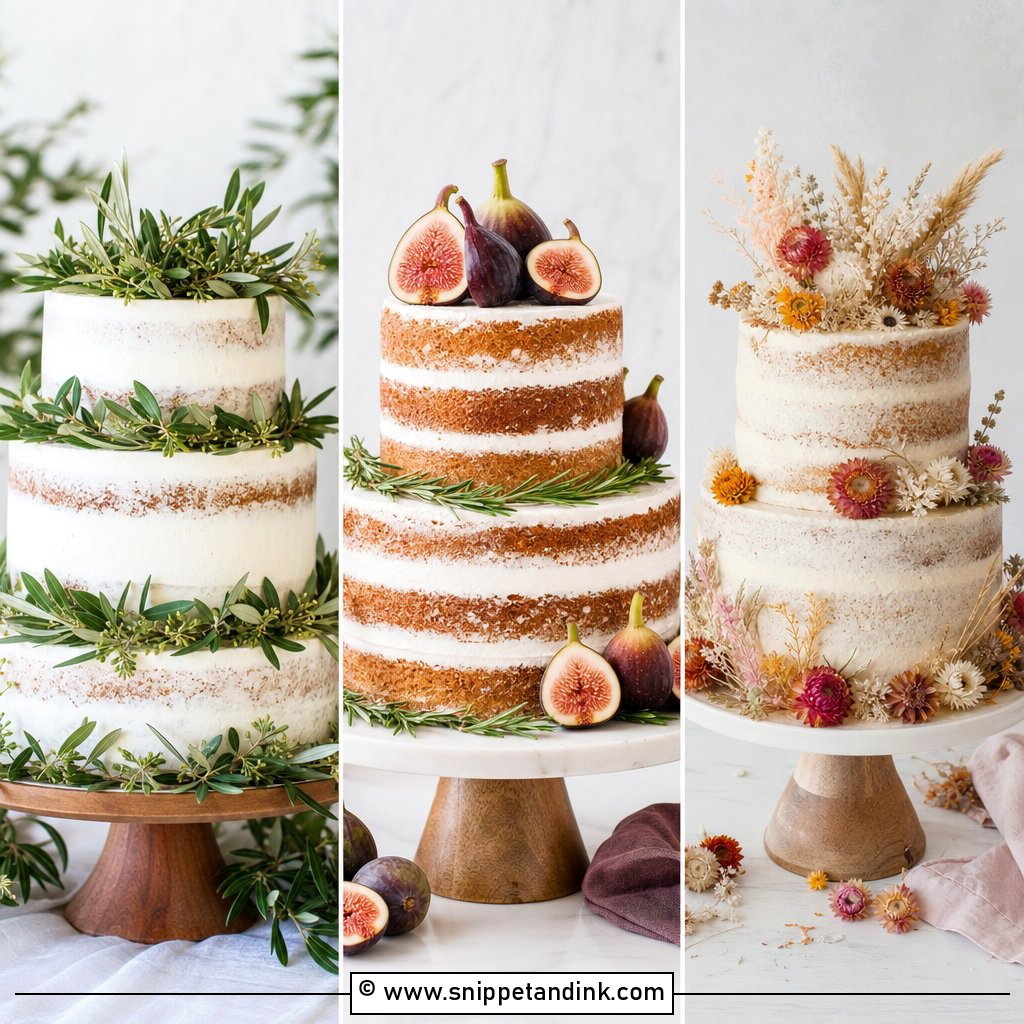
6. Rustic Wedding Cake With Greenery
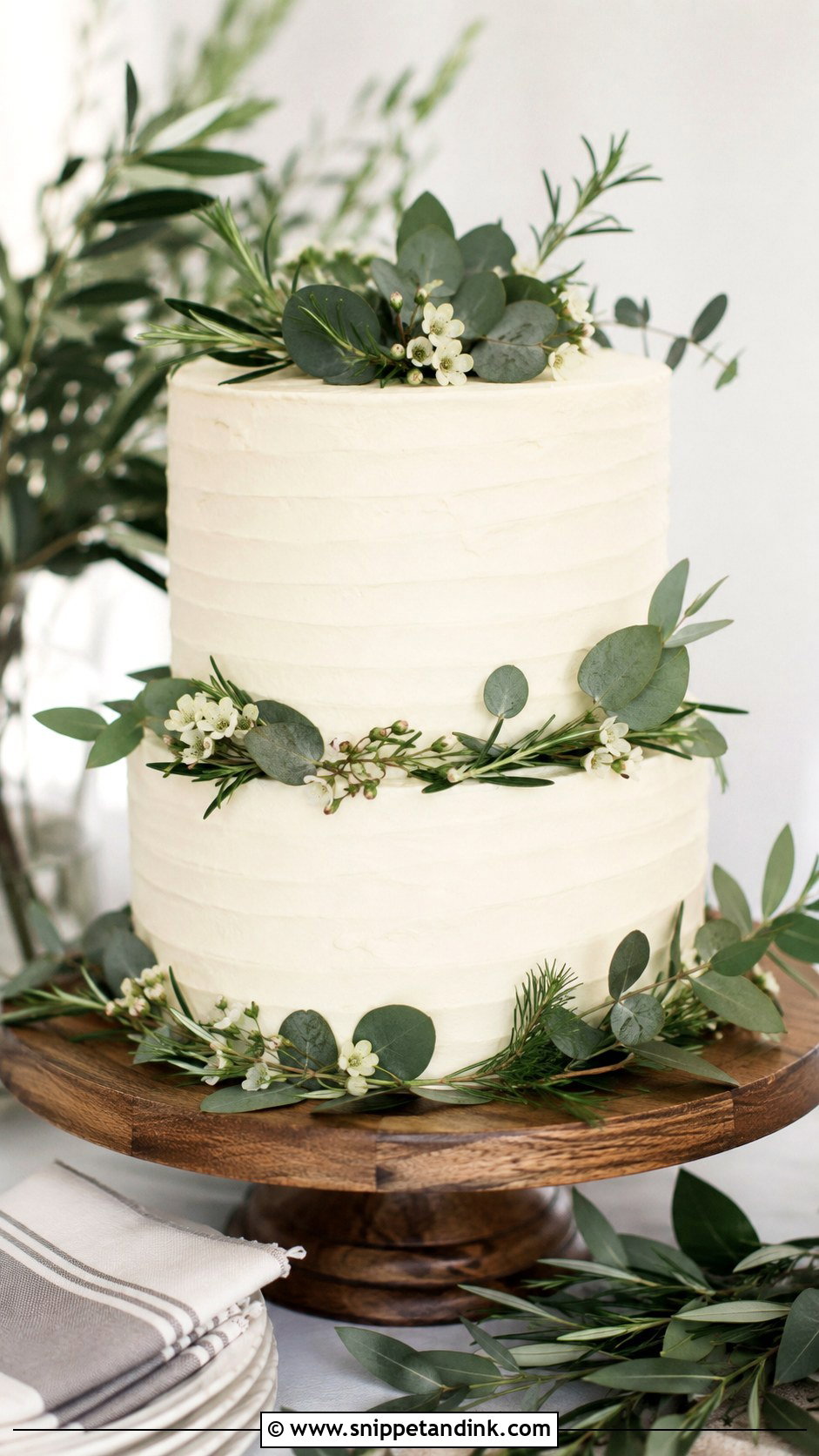
Greenery is a good fit if flowers feel like too much or the budget is tight. Olive branches, rosemary, ferns and trailing vines sit lightly on a tier and look right in any month. I’m careful with eucalyptus because it isn’t edible, so it gets a barrier underneath. White buttercream, a semi naked finish or a beige-toned icing all suit it. Less is better here: a crescent of leaves on two tiers looks considered, while foliage wrapped round every tier hides the cake.
7. Rustic Wedding Cake With Wildflowers
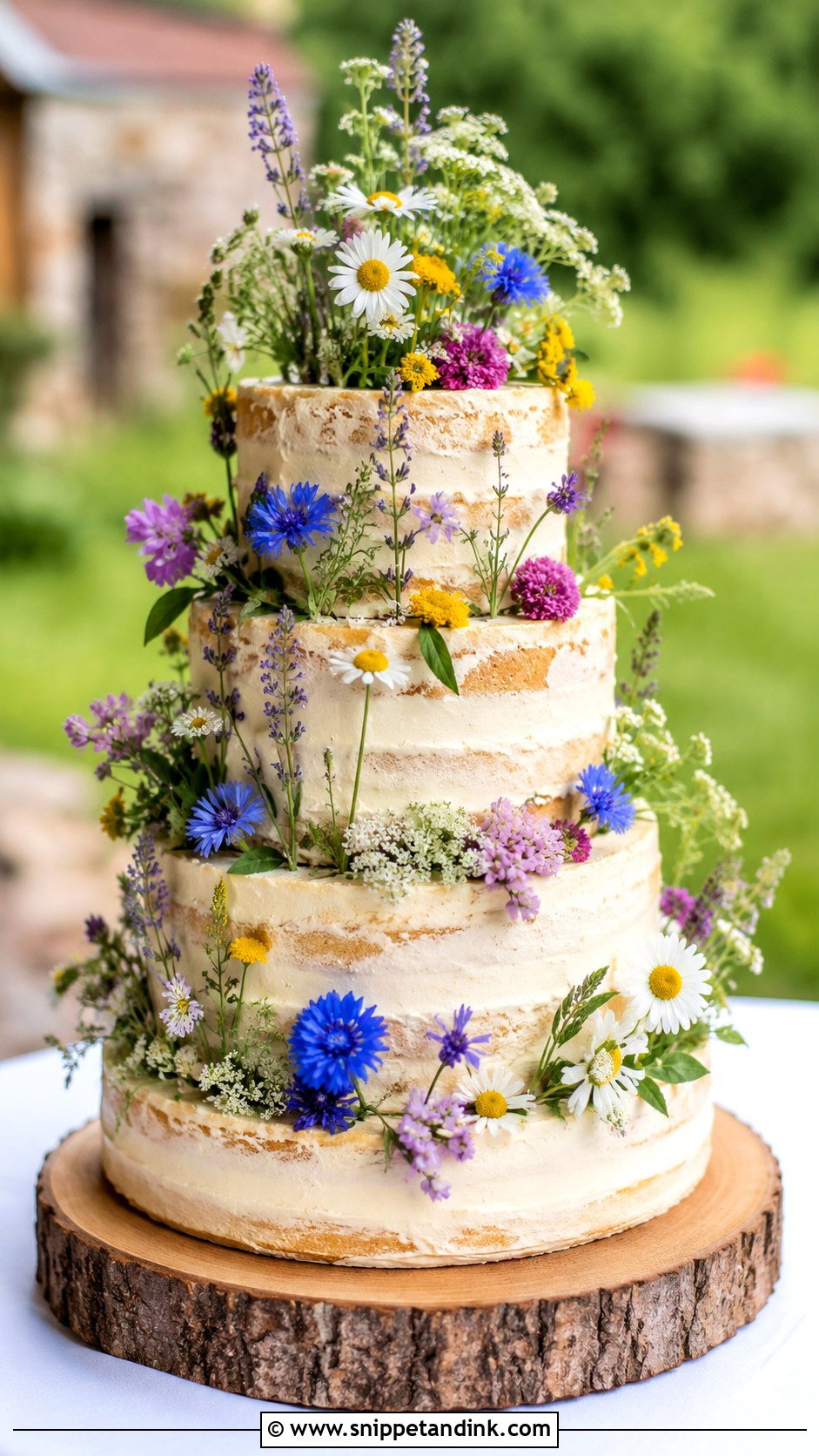
The trick with wildflowers is making them look gathered rather than arranged, which takes more care than it sounds. I work with small blooms in a loose palette of pink, yellow, pale blue and white, set at slightly different heights so nothing lines up. Many of them wilt fast once out of water, so they go on as close to serving time as I can manage. A semi naked or textured base makes them look like they belong; on a sharp, smooth cake they look stuck on.
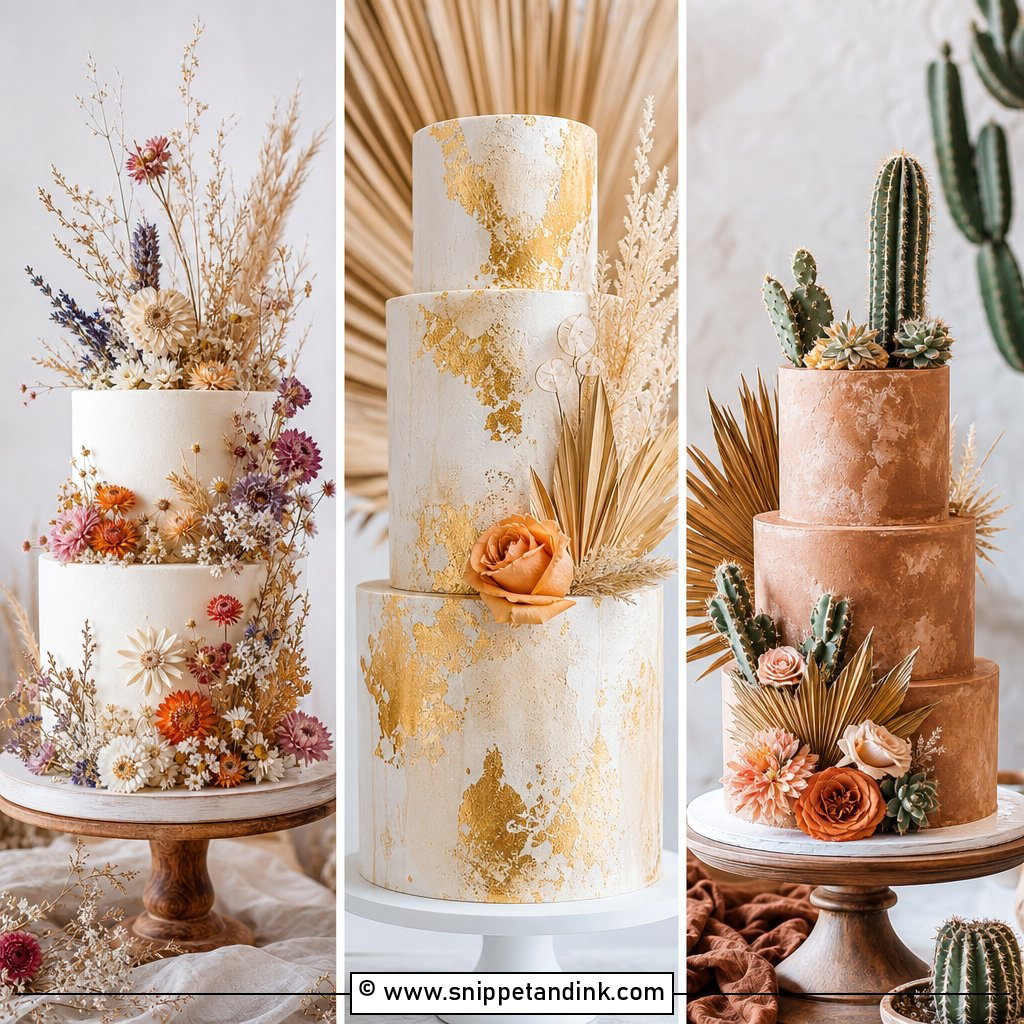
8. Rustic Wedding Cake With Dried Flowers
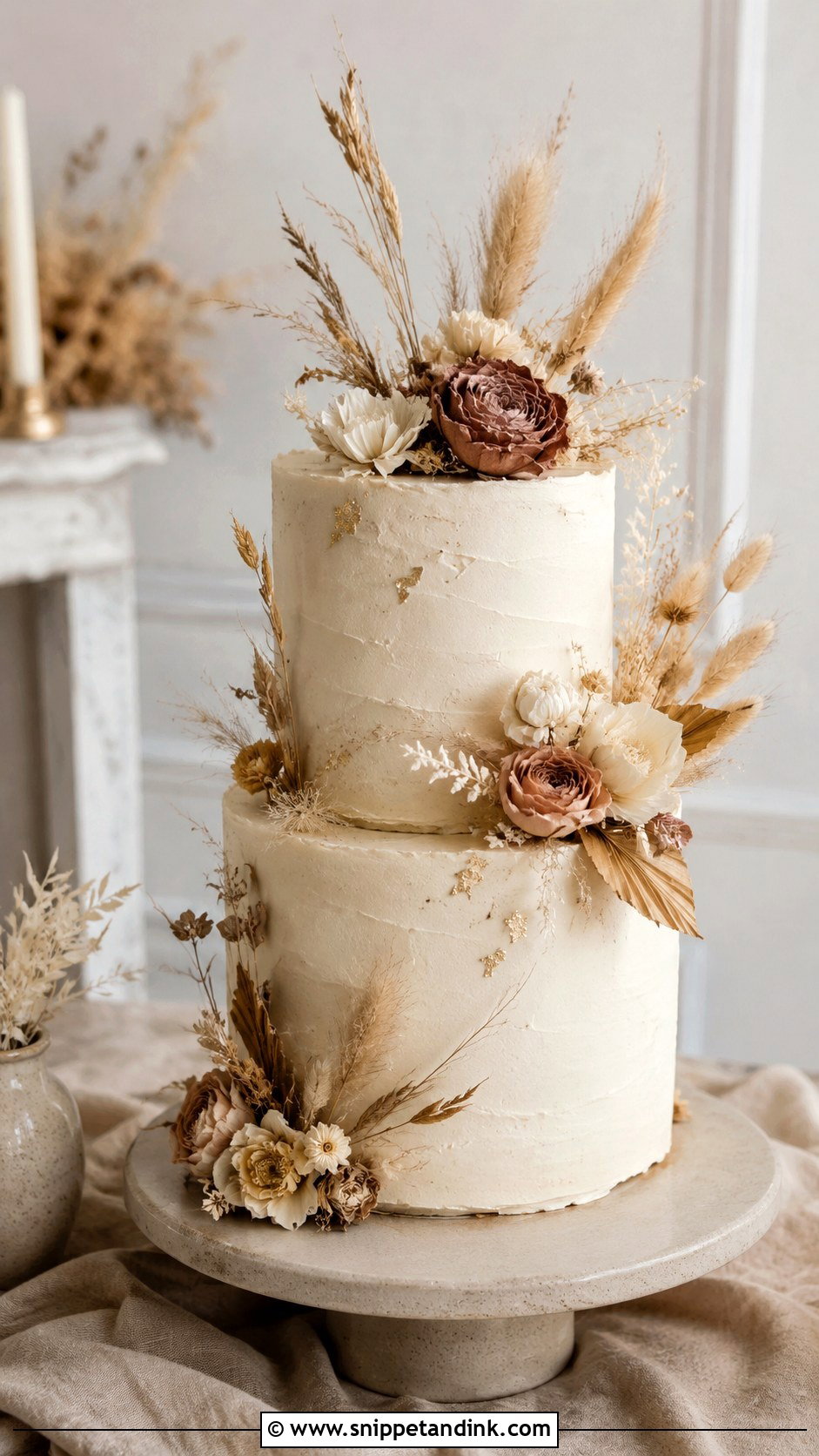
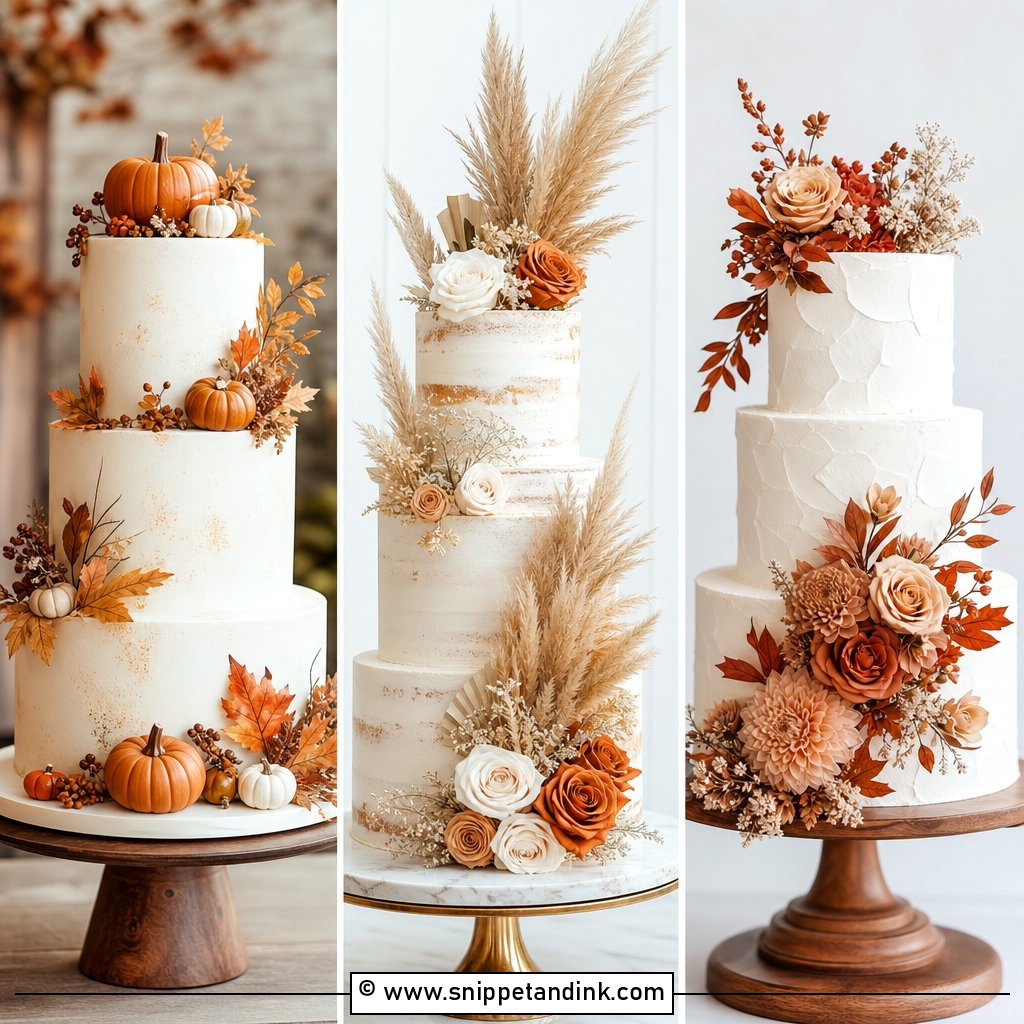
Dried flowers last through a long reception without wilting, which is their real advantage. Pampas grass, dried roses, bunny tails and wheat suit boho, desert and autumn weddings, and they look warm against ivory or caramel-toned buttercream. They do need handling with care, though: many are dyed or sprayed, and pampas sheds fluff onto everything nearby. I place them on picks or a barrier and keep the arrangement to one side. A few fresh blooms soften the dryness.
9. Rustic Wedding Cake With Berries
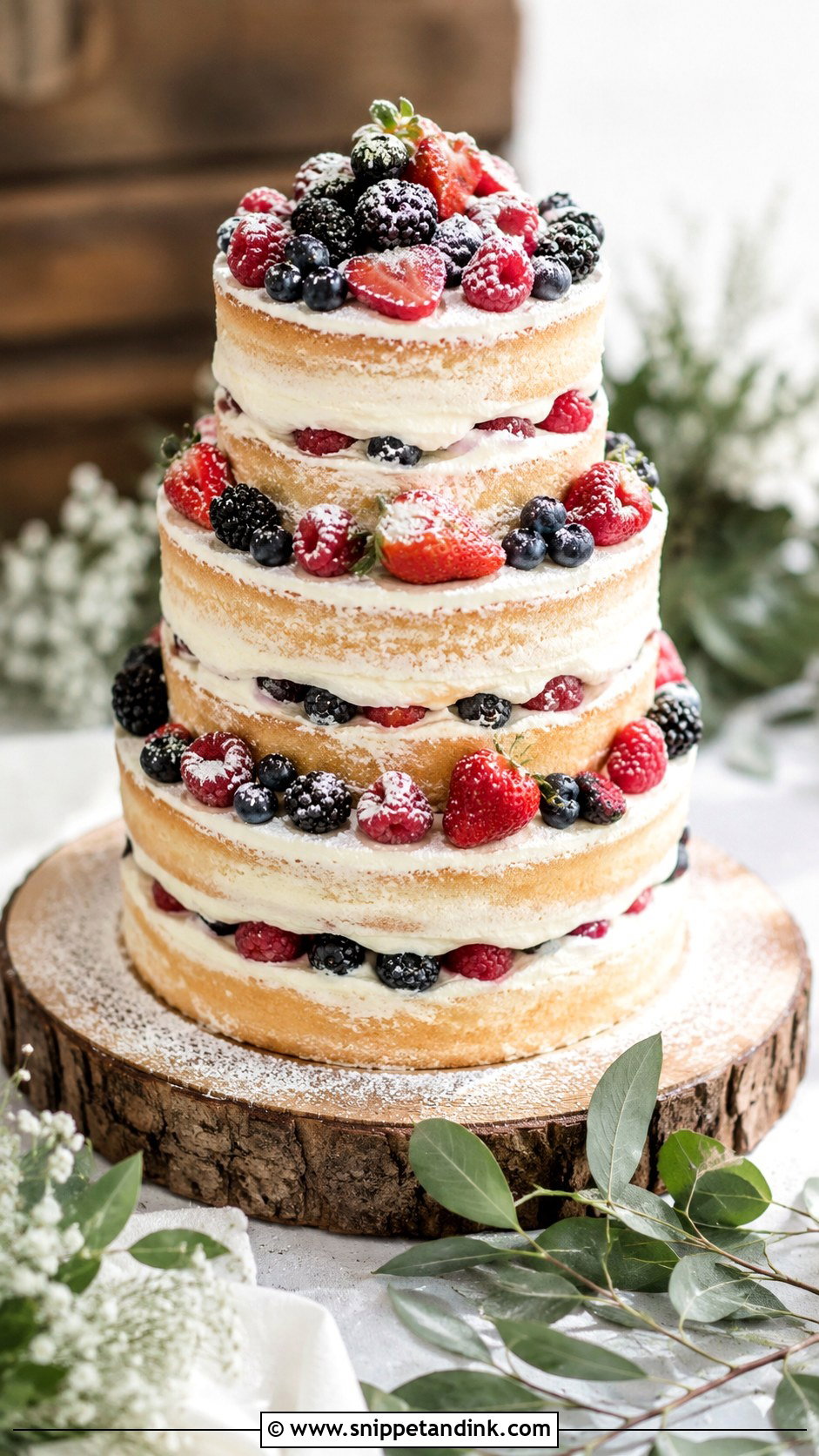
Berries are my go-to when a couple wants colour without flowers. Raspberries, blackberries, blueberries and currants hold their shape on a cake; cut strawberries leak juice into buttercream within a couple of hours, so I use them whole or keep them for the filling. On a semi naked cake the fruit can sit between layers as well as on top. Darker berries carry the look into early autumn. A dusting of icing sugar goes on at the venue, right before guests see it, or it dissolves into the fruit.
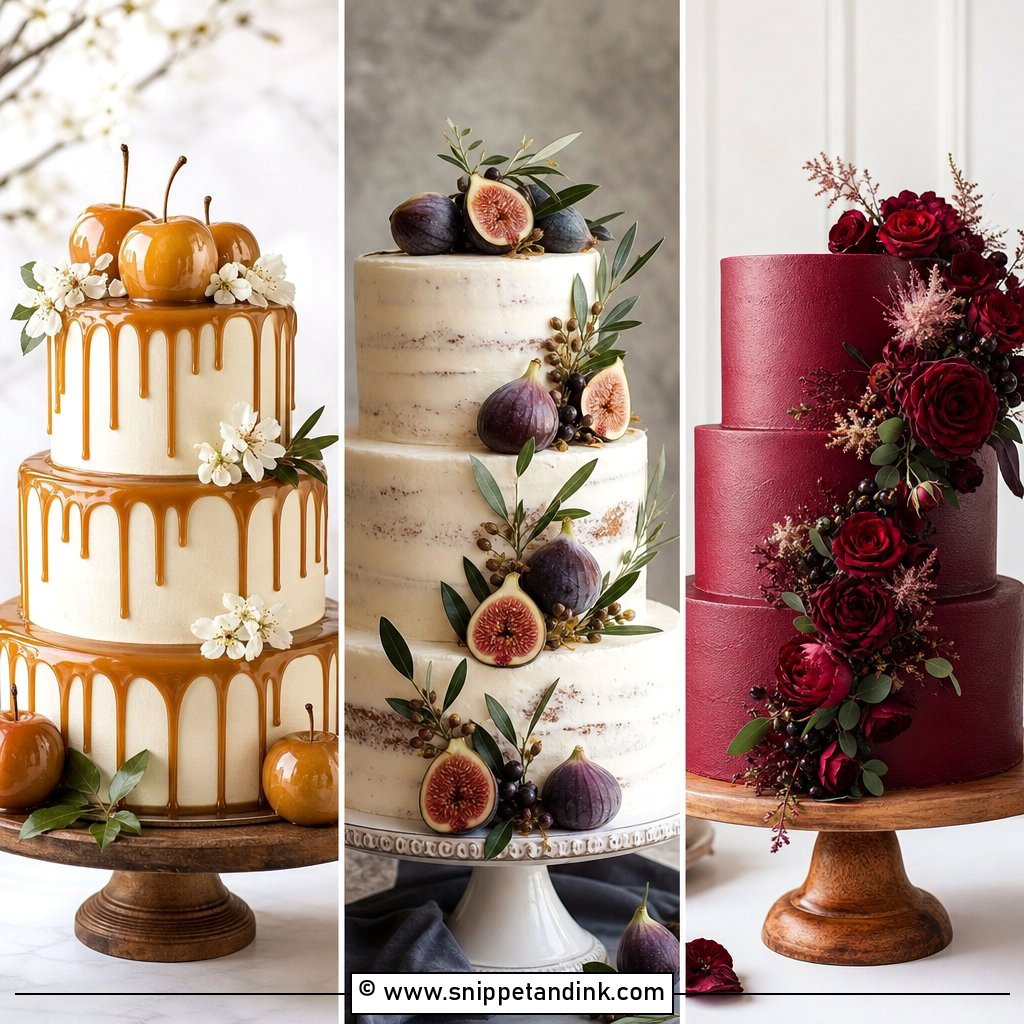
10. Rustic Wedding Cake With Figs
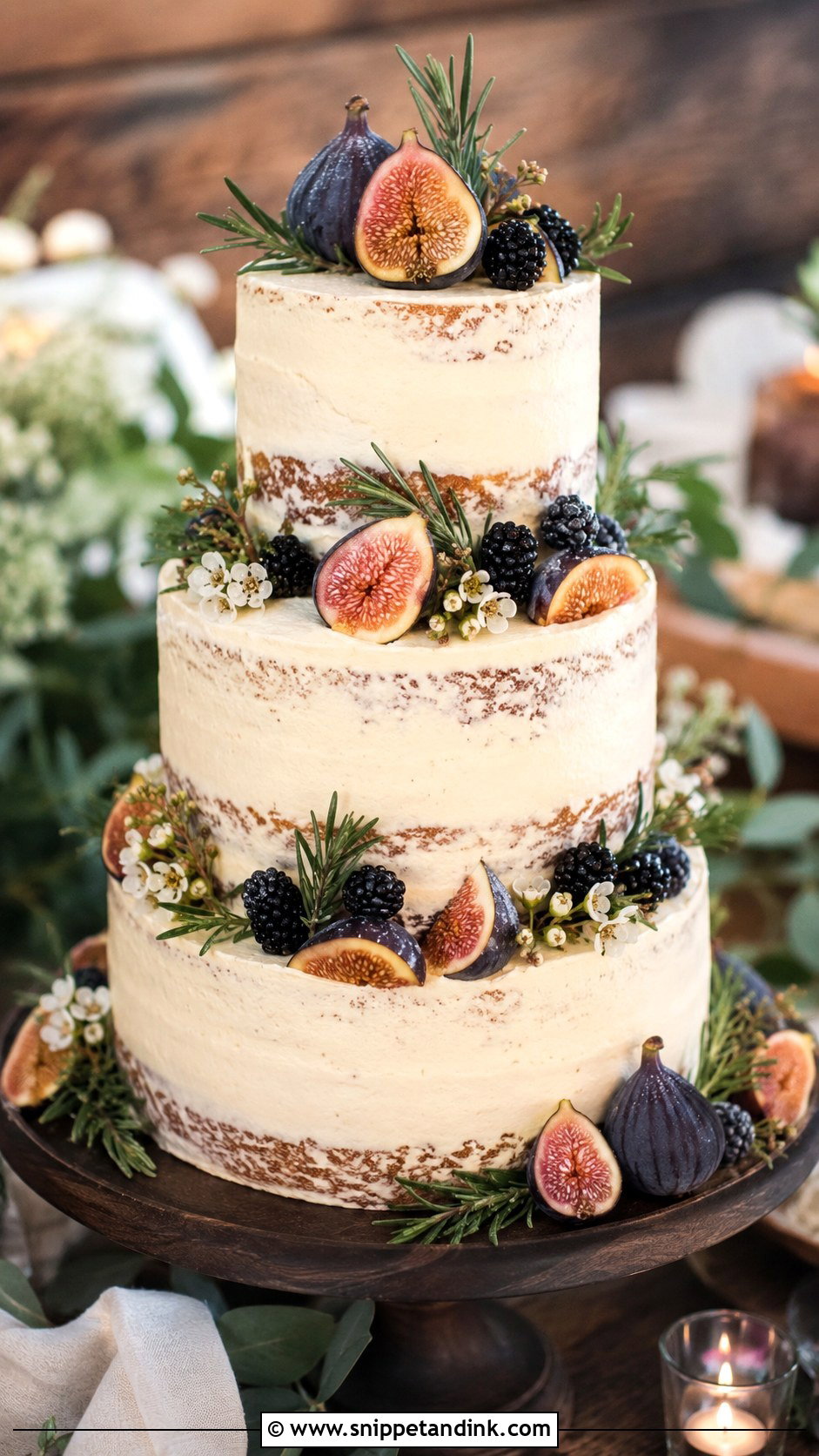
Figs bring that deep purple and rose colouring with almost no effort, especially when a few are halved to show the centre. I cut them on site and glaze the cut faces, because exposed figs dull and weep quickly. They pair well with honey, spice, almond and olive oil sponges, and rosemary or thyme sprigs fill out the arrangement. A vineyard dinner or a late summer reception in warm neutrals is where this cake looks most at home.
11. Rustic Wedding Cake With Sunflowers
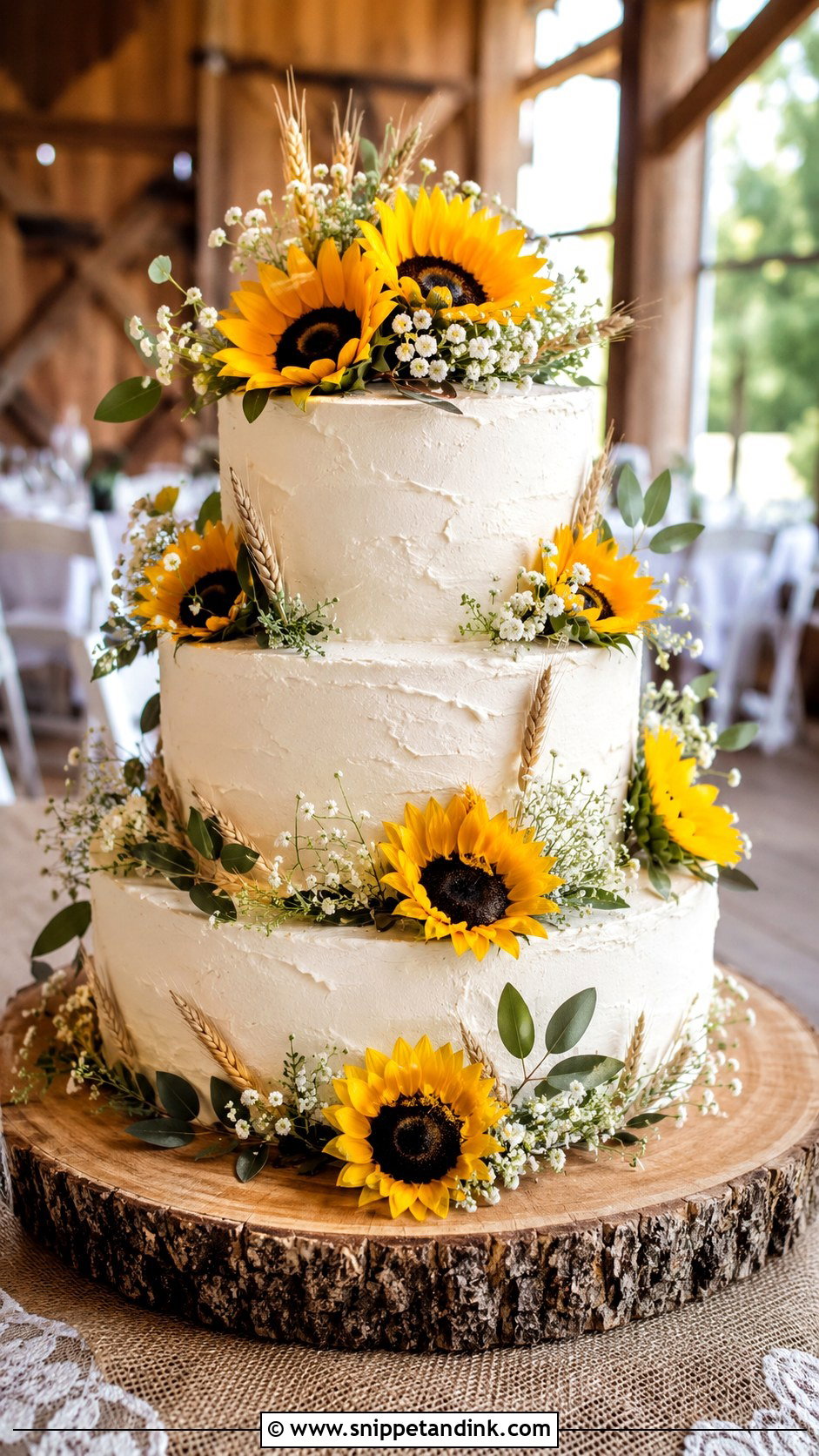
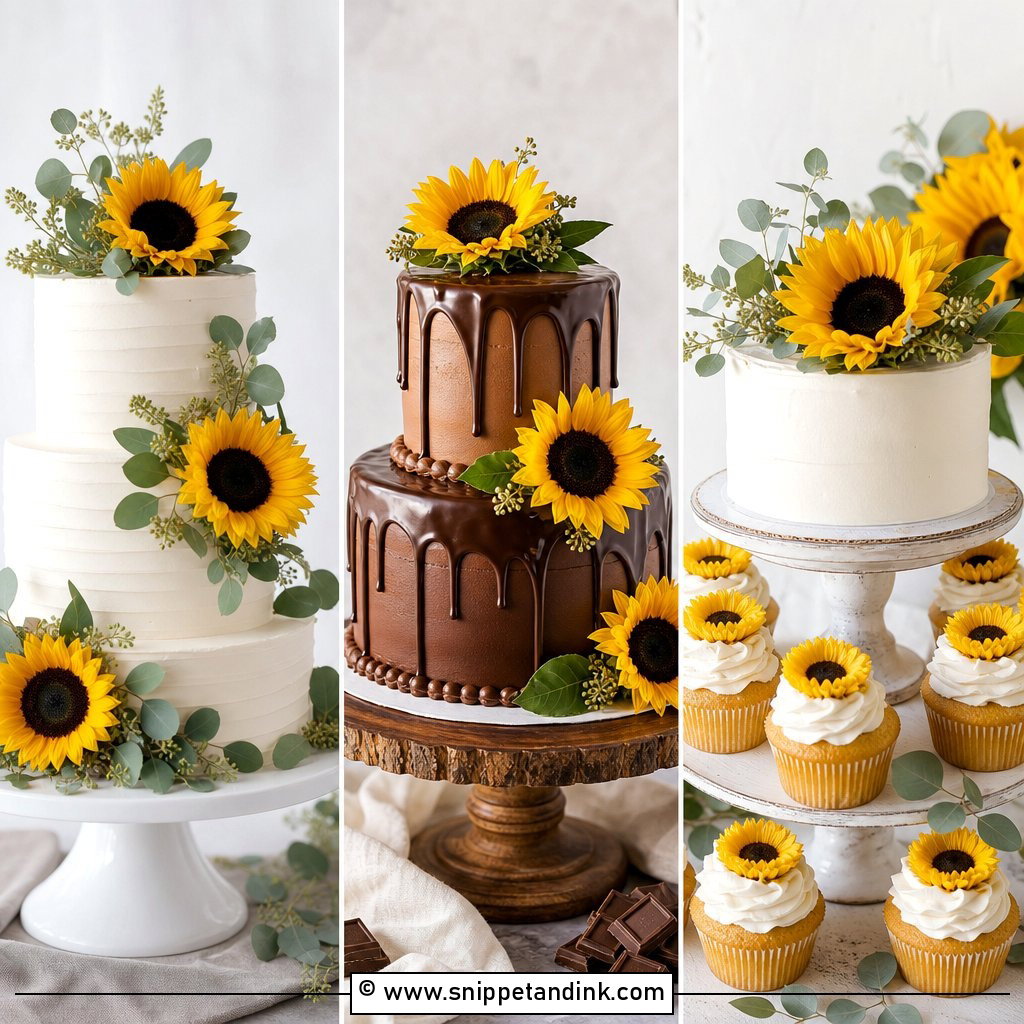
Sunflowers do the work of a dozen smaller flowers, so I usually only need three or four. They suit a white buttercream or semi naked cake with tan sponge showing through, and wheat stems or small daisies stop the yellow from feeling flat. Their stems are thick and full of sap, so I trim them short and wrap them well. Late summer through early autumn is their season, which lines up nicely with barn and farm weddings.
12. Rustic Wedding Cake With Lavender
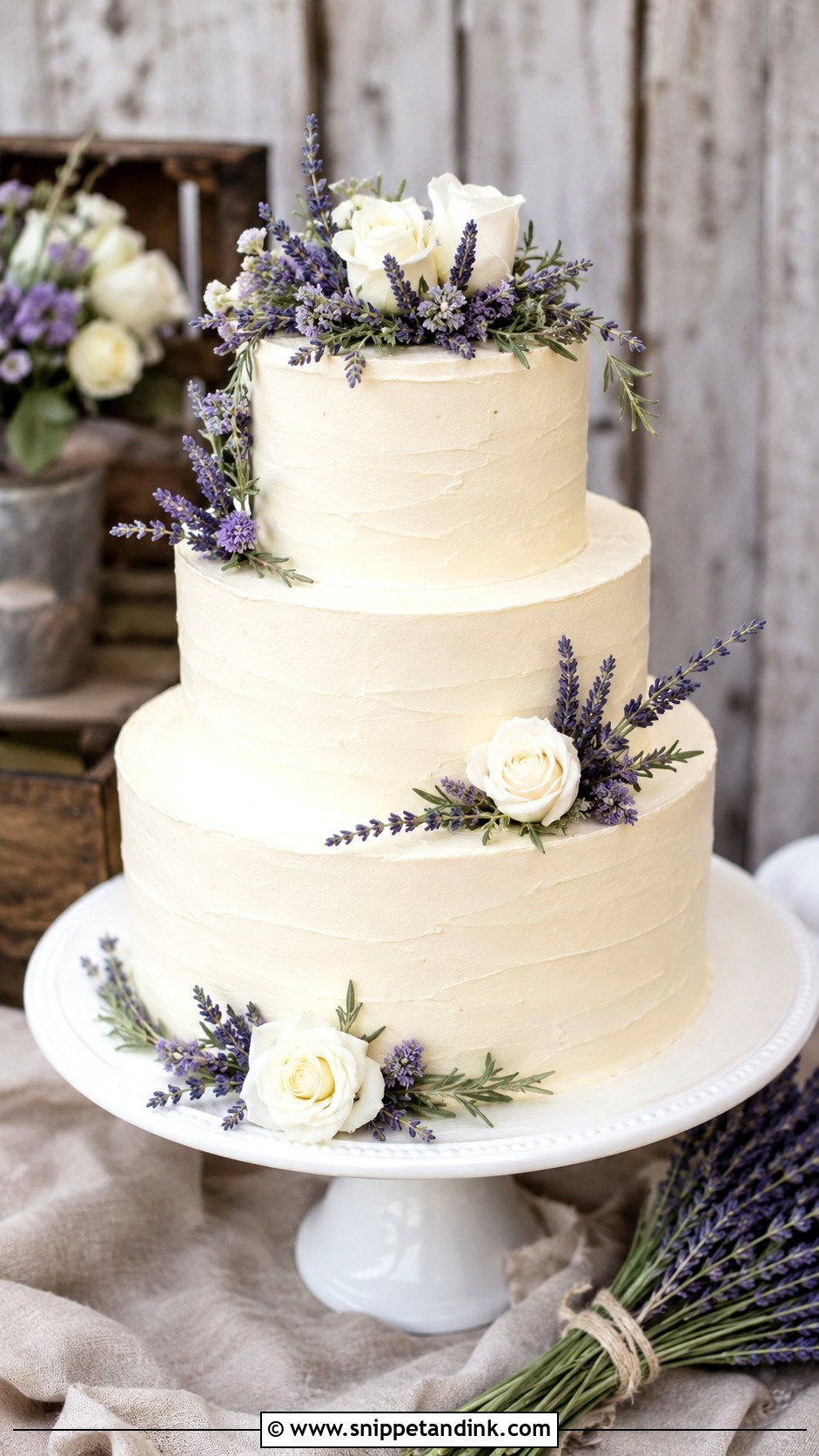
Lavender adds colour without clutter. I use short sprigs against ivory buttercream or semi naked layers, sometimes with a few white roses. Lemon, vanilla, honey and almond suit it as flavours; if you want lavender in the cake itself, culinary lavender has to be used in tiny amounts or it turns soapy, which is something I’d always test at a tasting first. A plain wood stand or a white ceramic pedestal keeps the look calm.
13. Rustic Wedding Cake With Burlap And Lace
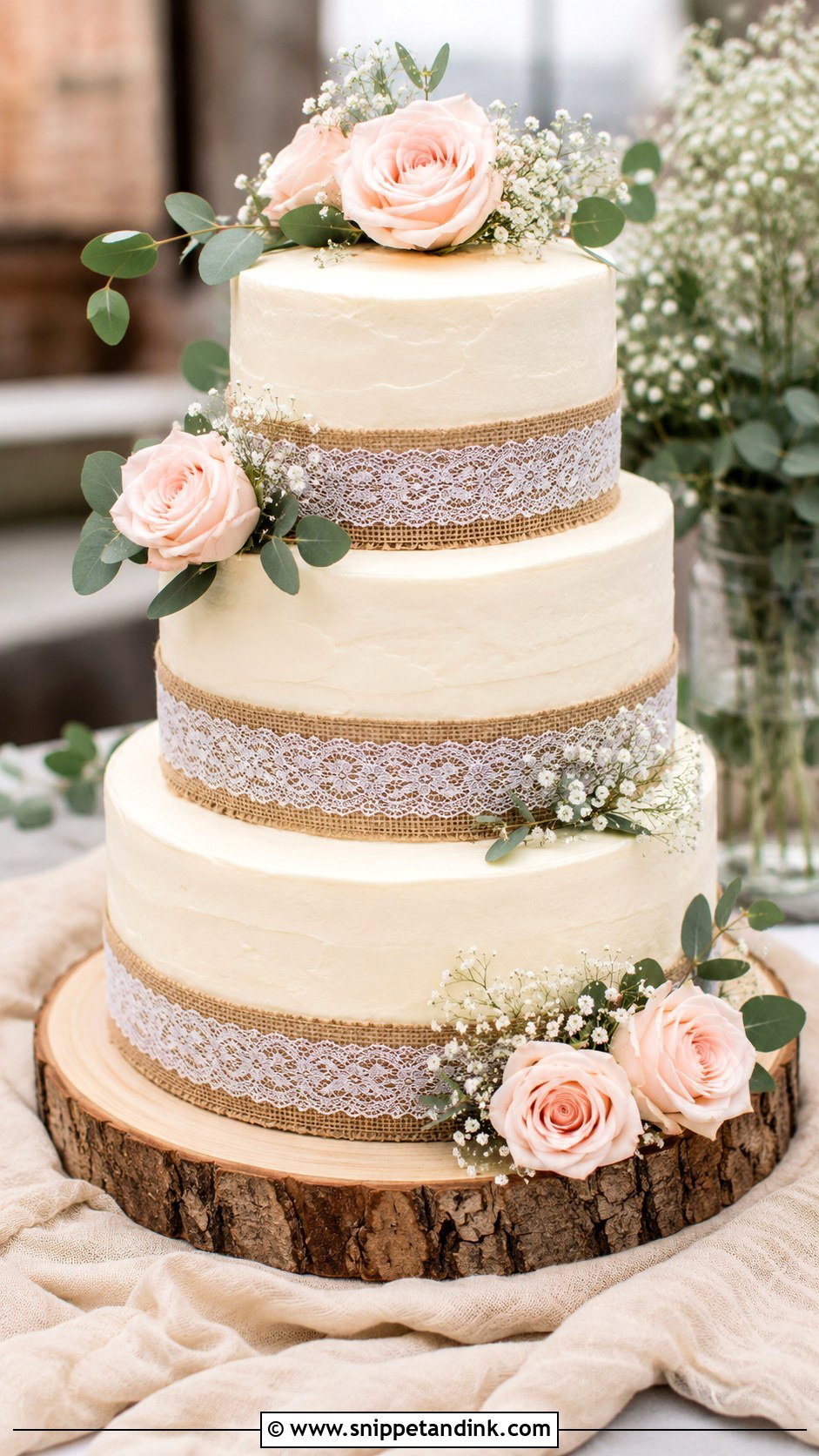
Burlap gives texture and lace softens it, so the pair works when the cake is kept simple underneath: white buttercream, ivory fondant or a semi naked finish. I wrap a narrow band round each tier, never a wide one, because wide burlap makes a cake look squat. It’s a fabric, not a food material, so I always line it with food-safe ribbon so the fibres stay off the frosting. This one suits barns and vintage-themed receptions best.
14. Rustic Wedding Cake With Wood Cake Stand
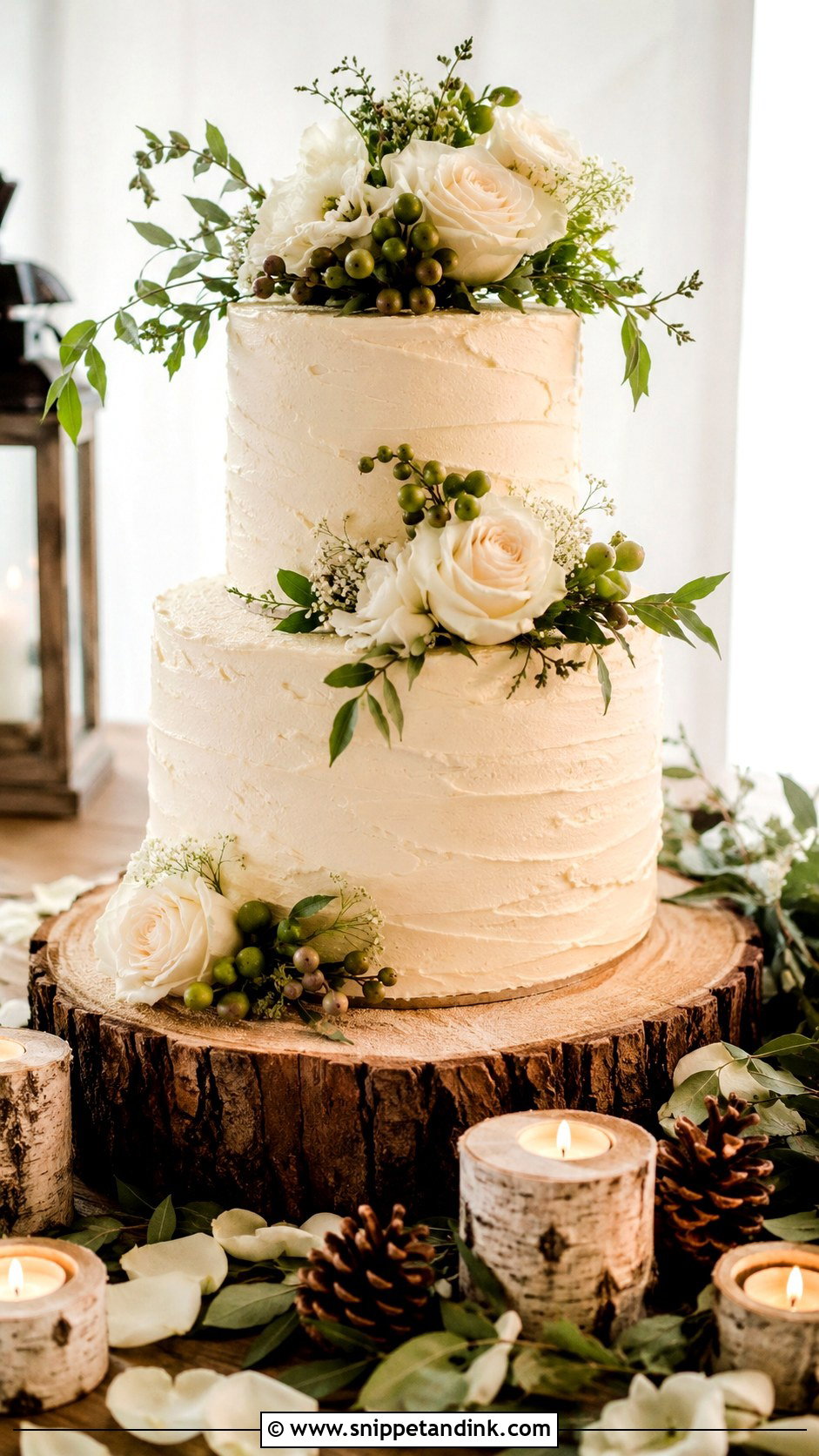
A wood slice stand does half the decorating for you, which is why I suggest it so often for barns, forests and back gardens. Check that it’s sealed and level before the day. Raw slices can be uneven, and even a slight tilt shows on a tall cake. Place a cake board or a round of food-safe paper between wood and sponge. Semi naked or textured cakes look right on it, and candles and loose petals around the base build a complete cake table without much spend.

15. Rustic Wedding Cake With Caramel Drip
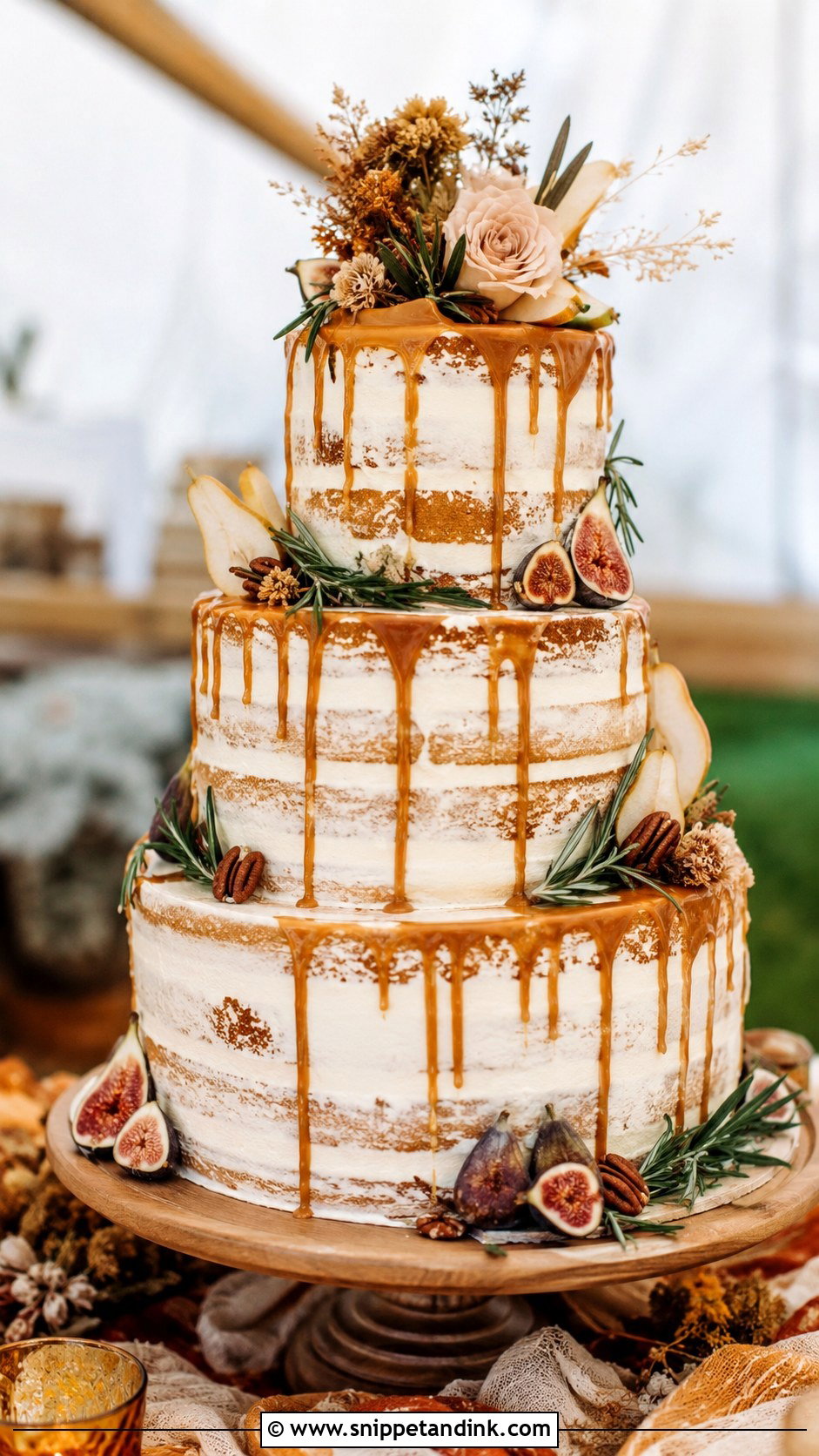
Caramel drips stay soft longer than chocolate ones and keep creeping in a warm room, so I pour them thicker and onto very cold tiers. They look rich over ivory buttercream or a spice or vanilla sponge, and they suit autumn tables in warm neutrals. Finish with figs, pears, apples, pecans or a little rosemary. Let some drips run longer than others. For a summer afternoon outside, I’d choose a different finish.
16. Rustic Wedding Cake With Chocolate Drip
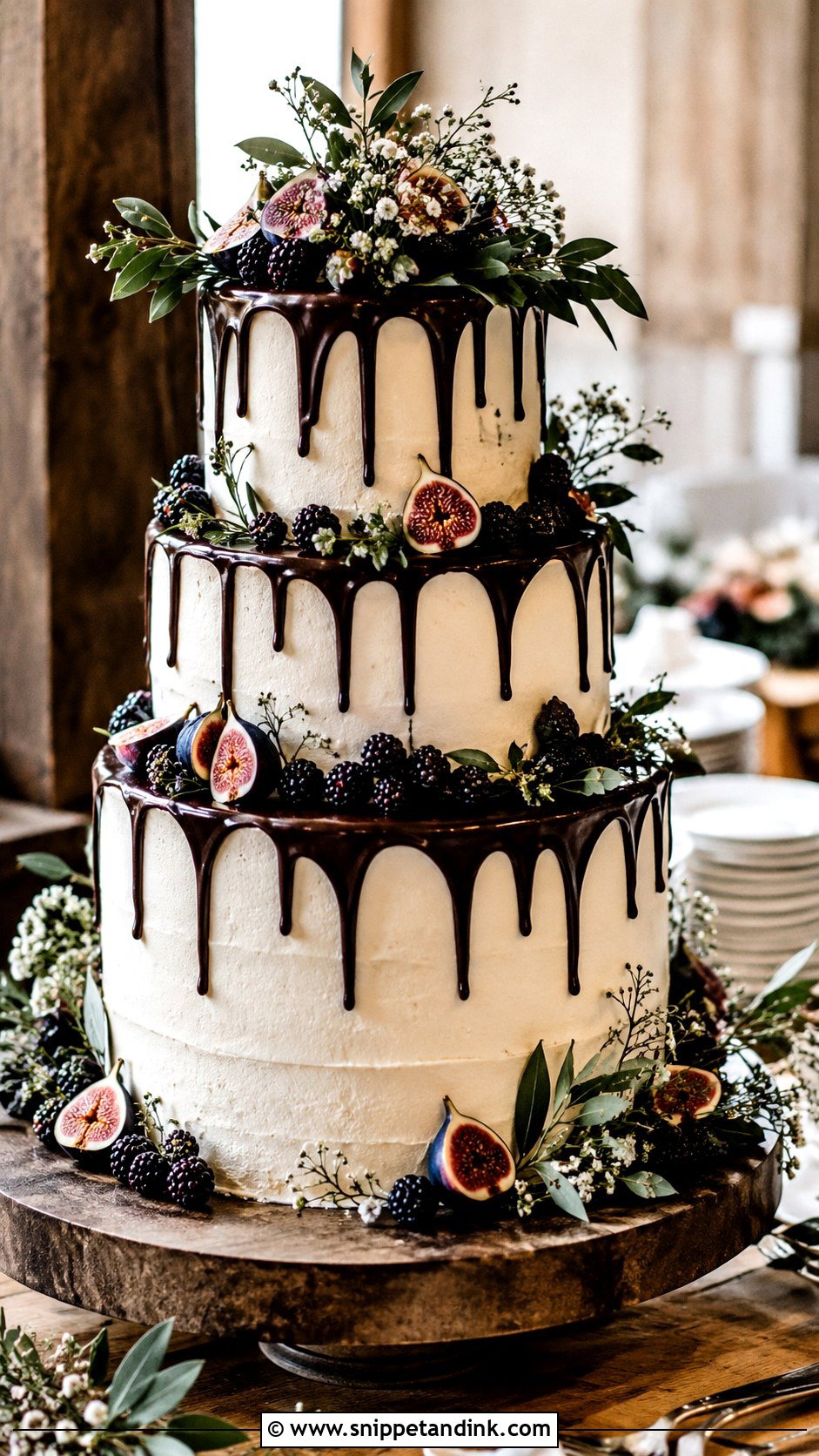
Chocolate ganache drips set firmer than caramel, so this is the drip I’d pick for a warmer reception. Dark ganache over pale buttercream gives strong contrast, and it pairs with chocolate, mocha, vanilla or almond sponge. Berries, figs and a little greenery keep it looking like a wedding cake rather than a birthday one. It suits evening, autumn and winter receptions, where a dark cake under candlelight looks rich rather than heavy.
17. Rustic Wedding Cake With Pressed Flowers
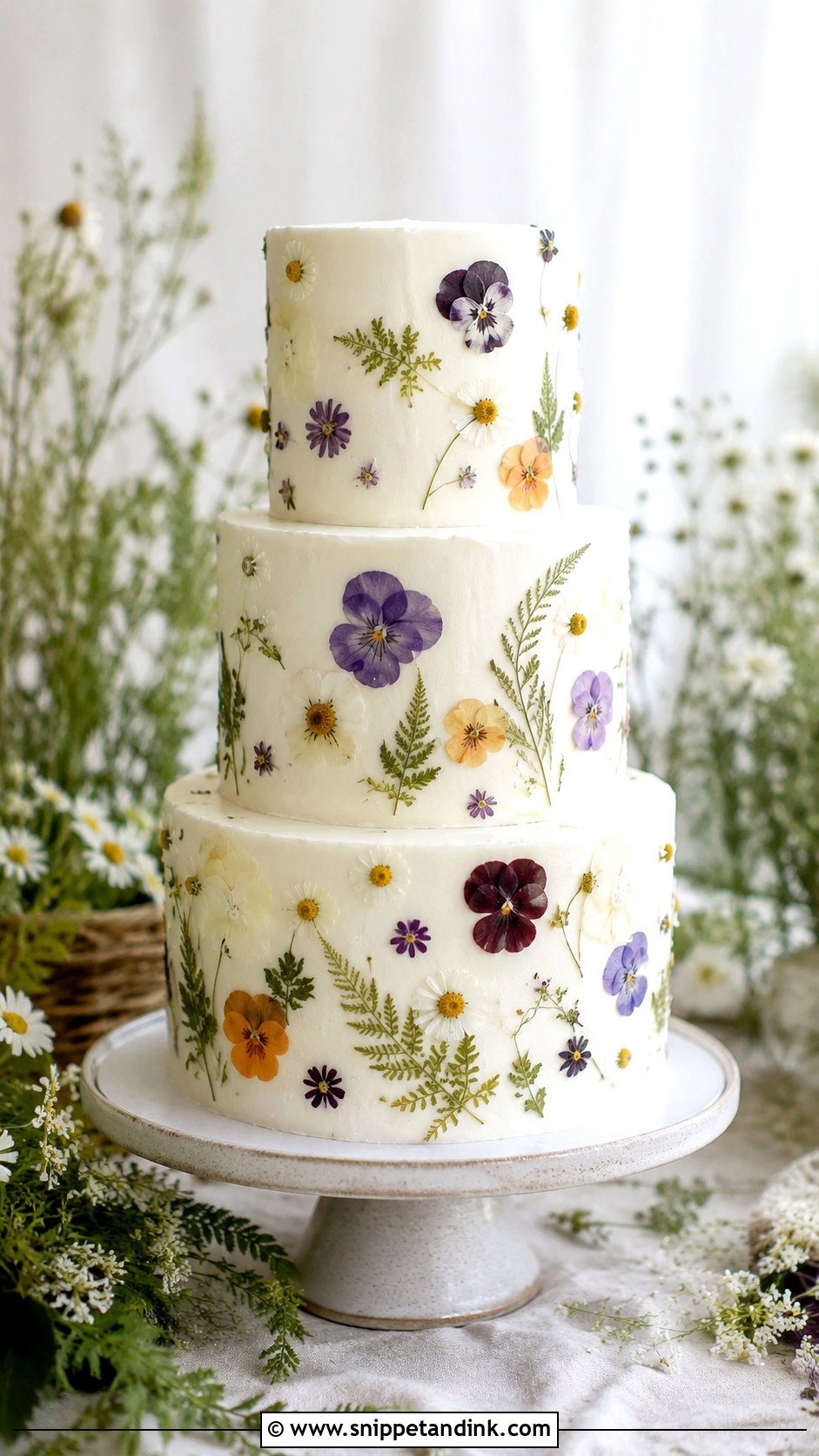
Pressed flowers lie flat, so they give a botanical look without height and they travel well. They need a smooth surface, so I use firm, chilled buttercream or a thin fondant layer and fix each petal with a little piping gel. I buy edible flowers grown for eating, such as violas, pansies and small daisies, rather than pressing florist stock. Two or three colours from your palette look like a garden scrapbook; ten look like confetti.
18. Rustic Wedding Cake With Cupcakes
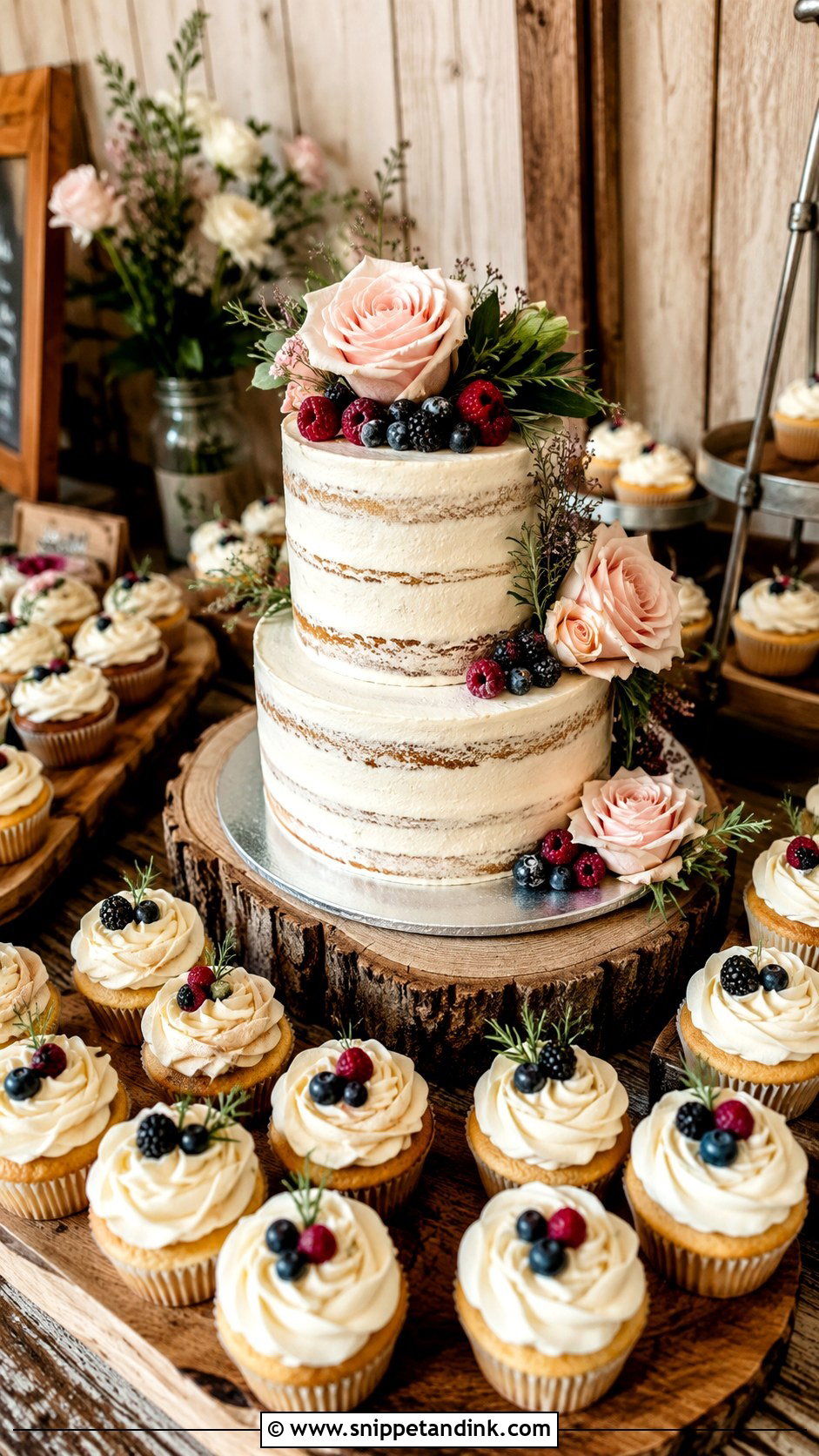
Pairing a small cake with cupcakes is one of the most practical setups I offer. A rustic wedding cake with cupcakes keeps a one or two tier cake for the cutting while guests help themselves to the rest, so there’s no wait for the caterers to slice. I match the cupcakes to the cake with the same frosting and decoration. Wood trays and tiered stands make a layered display. Cupcakes in buttercream do sweat in heat, so keep them in shade until the last moment.
19. Rustic Wedding Cake With Wooden Topper
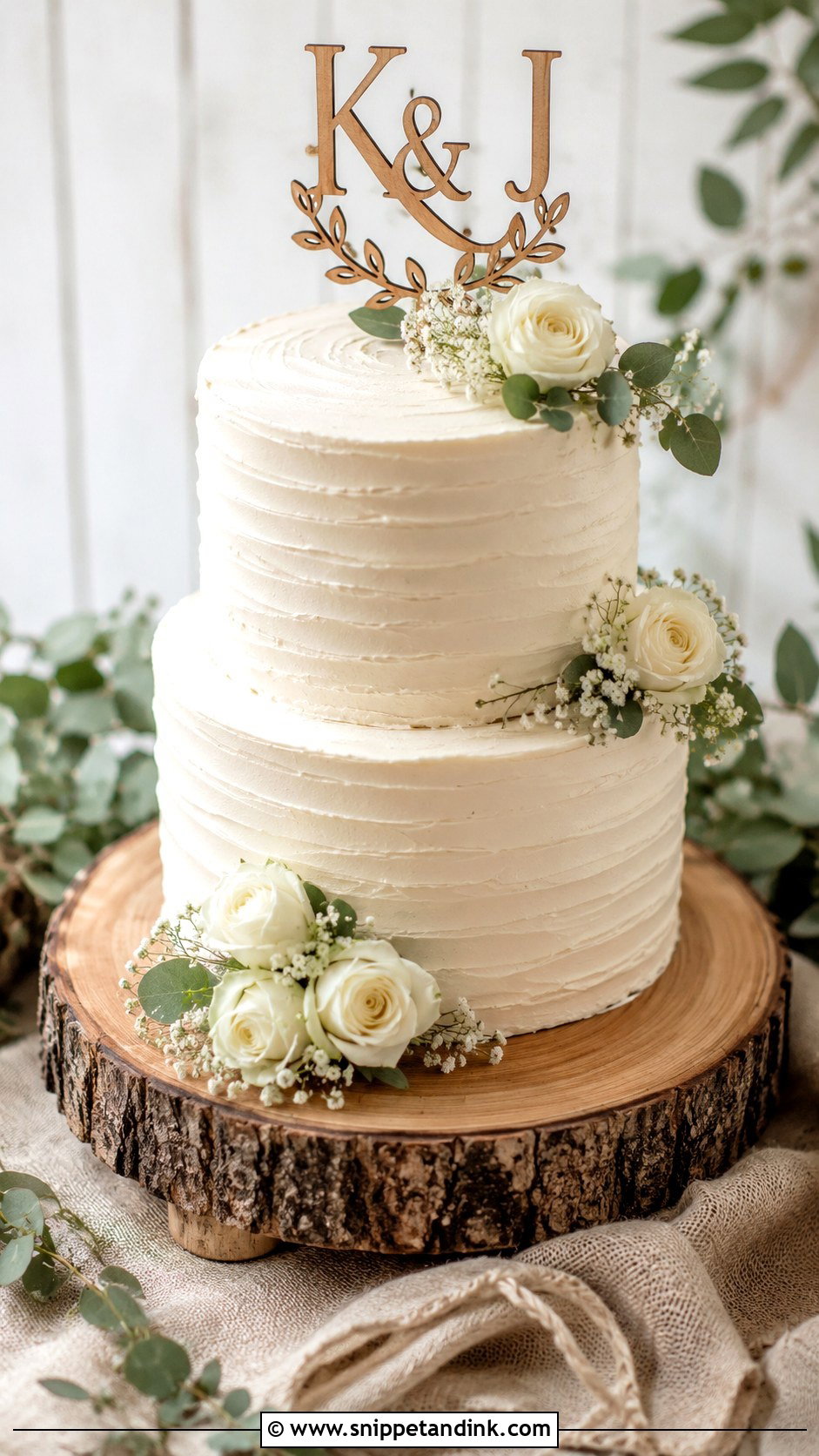
A wooden topper with names, initials or a small heart adds a personal note without clutter. The two problems I see are size and stability. A topper that’s too wide for the top tier looks like a sign, and a heavy one tips over in soft buttercream. I ask for the topper a week ahead, check the spikes are long enough, and wrap them in food-safe film. A few flowers round its base make it look part of the cake.




20. Rustic Wedding Cake With Fruit
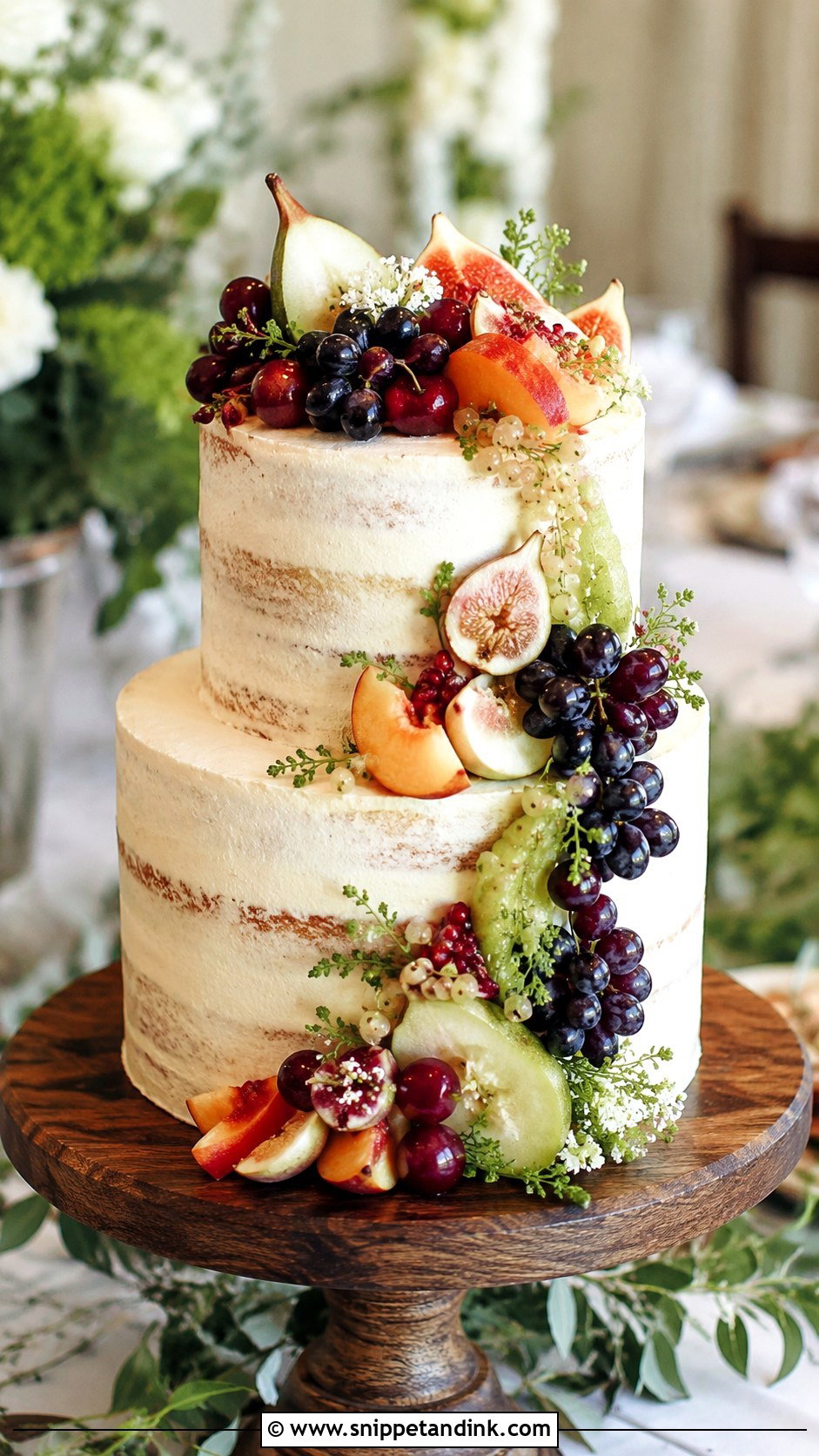
Fruit lets the season decorate the cake: peaches and cherries in summer, pears, grapes and pomegranate in autumn, citrus slices in winter. I choose fruit that holds up out of the fridge. Apples and pears brown once cut unless they’re brushed with lemon or glaze, and grapes and pomegranate seeds stay bright for hours. Fruit can sit on top, trail down one side or gather round the base; pick one. It suits family-style receptions and long garden tables especially well.
How Many Slices Does a Rustic Cake Really Give?
Rustic cakes are often ordered too small, because a semi naked tier looks bigger than it is. Wedding slices are cut narrower than party slices, usually about one inch wide and two inches deep from a tier roughly four inches tall. As a rough guide, round tiers give something like this, though bakers and caterers cut differently:
- 6 inch tier: around 12 wedding slices
- 8 inch tier: around 24
- 10 inch tier: around 38
- 12 inch tier: around 56
Taller tiers give more, and caterers who cut generous portions get fewer. If your guest list outgrows the cake you love, a plain kitchen cake in the same flavour, kept out of sight and sliced alongside, costs less than adding a tier.
Dried Stems and Pampas Near Frosting
Dried flowers look clean, but many are bleached, dyed or sprayed to hold their colour, and none were grown to be eaten. I never push a dried stem straight into a tier. Each one goes into a food-safe pick, and pampas is trimmed and shaken out well before setup so loose fluff doesn’t end up on guests’ plates.
Which Rustic Finish Suits Your Reception?
Rustic cakes are meant to show the hand that made them, so small imperfections are part of the look. What matters is the planning behind them: how long the cake stands before cutting, how warm the room gets, which flowers are safe and how many servings you really need. Decide those first, then choose between exposed layers, textured buttercream, dried botanicals or a caramel drip. Take the cakes you save from this list to your tasting and talk them through with your baker.
You'll Like These Ideas:





Leave a Reply