
A single tier is the cake I enjoy making most, because there’s nowhere to hide. Without height or stacking to carry the design, the finish, the flavour and one well-placed detail have to do all the work. It also keeps you clear of a huge dessert table budget, and it suits micro weddings, courthouse ceremonies, backyard receptions and dinners for twenty. Below are twenty one-tier designs I’d happily put my name to, with notes on how each finish behaves in a warm room, what it pairs with and when I’d talk a couple out of it.
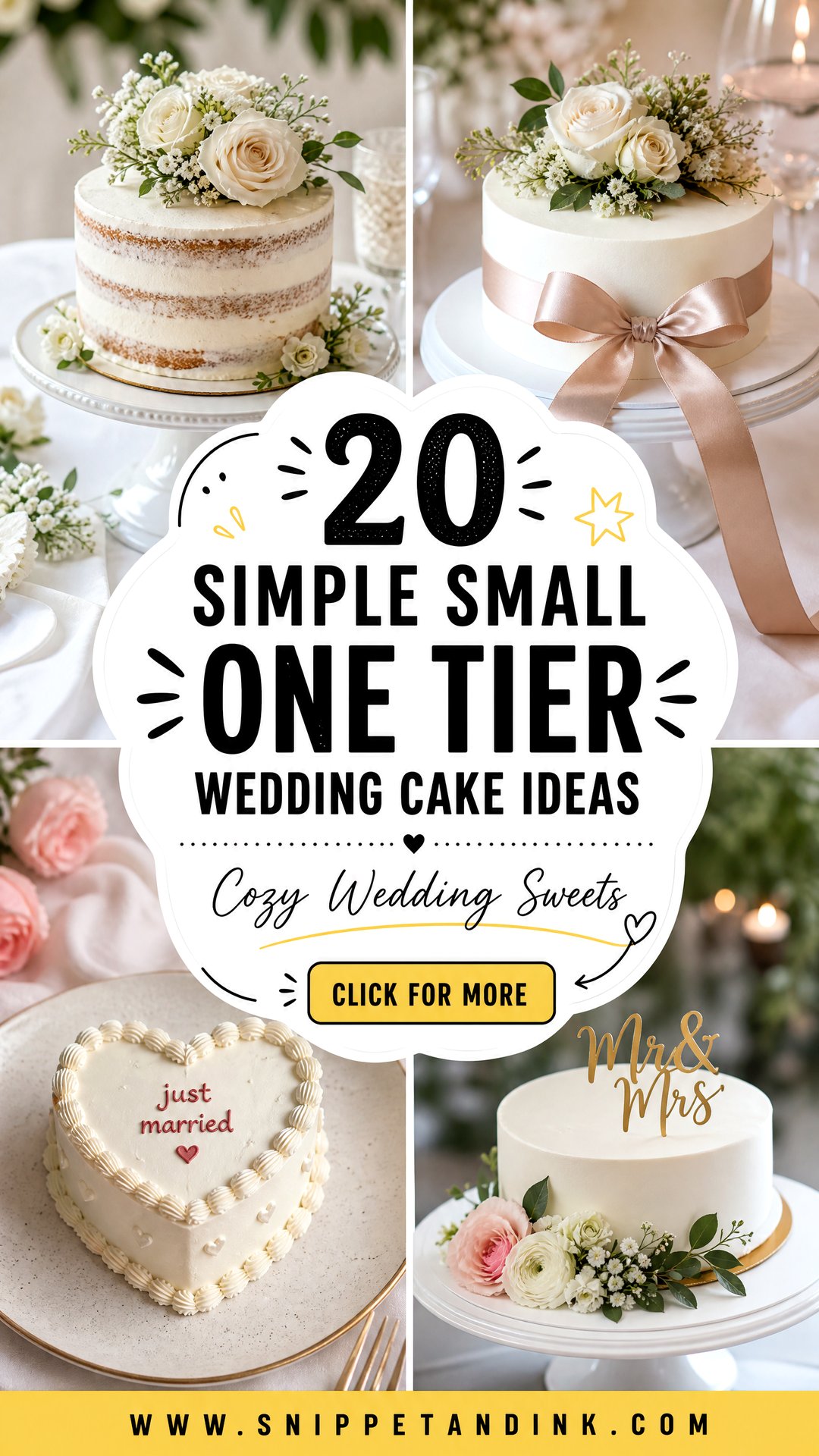
How Many Guests a Single Tier Really Serves
The first question I ask about a one-tier cake is the guest count, because the answer decides the size before anything else. Wedding portions are cut as narrow fingers, roughly one inch by two inches, much smaller than a birthday slice. On a standard four-inch-tall round, those portions work out approximately like this:
- 6 inch round: about 10 to 12 wedding portions
- 8 inch round: about 20 to 24 portions
- 10 inch round: about 35 to 38 portions
These numbers vary by baker and by how evenly the caterer cuts, so treat them as a guide. If you need more servings without more width, ask about an extra-tall tier of six inches or more, which adds portions while keeping the cake small on the table. Tall tiers need internal supports and a board halfway up, so they cost a little more.
For bigger guest lists, I often suggest a small display tier for cutting plus a plain kitchen cake in the same flavour, kept out of sight and sliced for serving. Guests can’t tell the difference on the plate.
1. Simple White Buttercream Wedding Cake
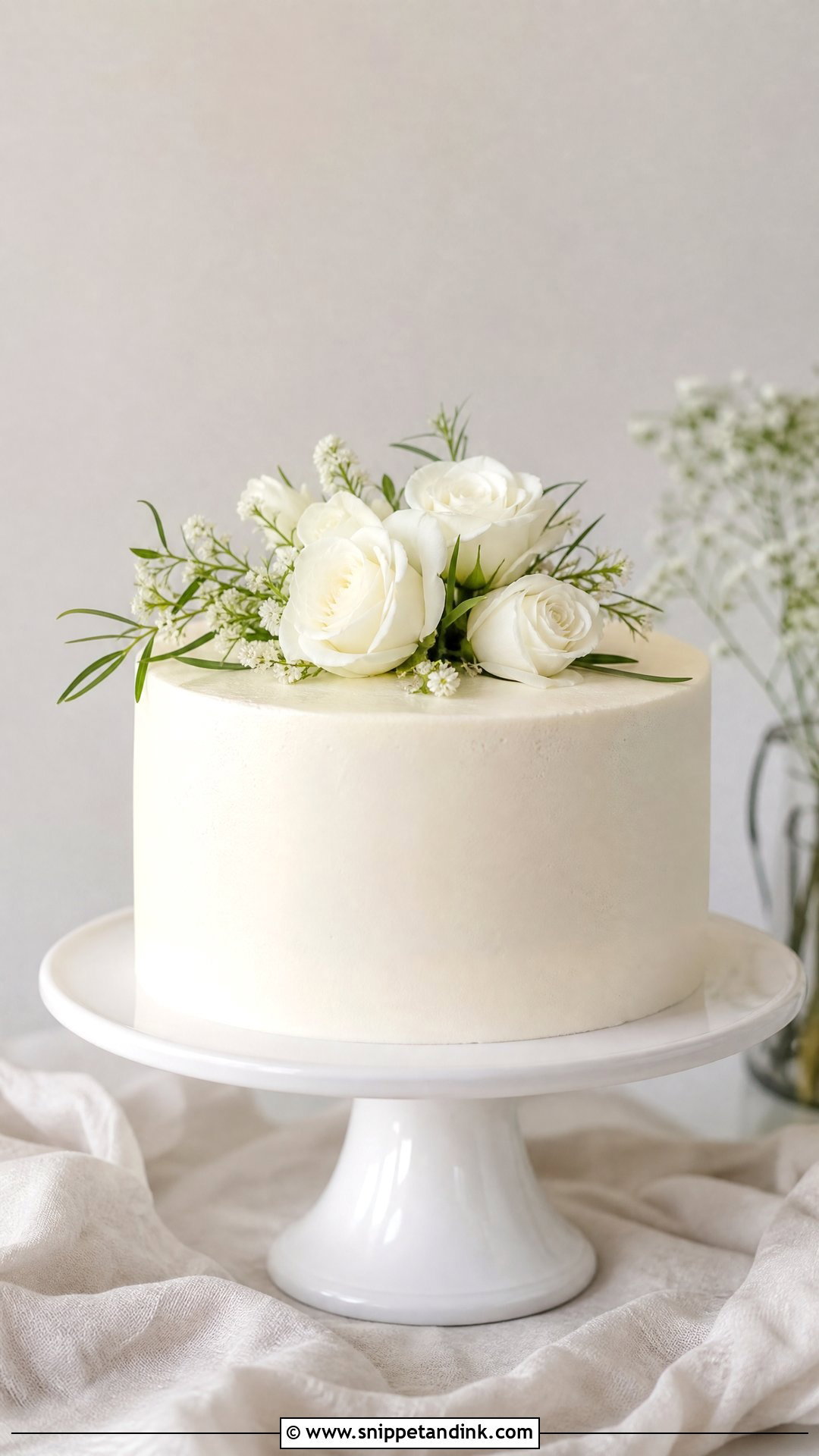
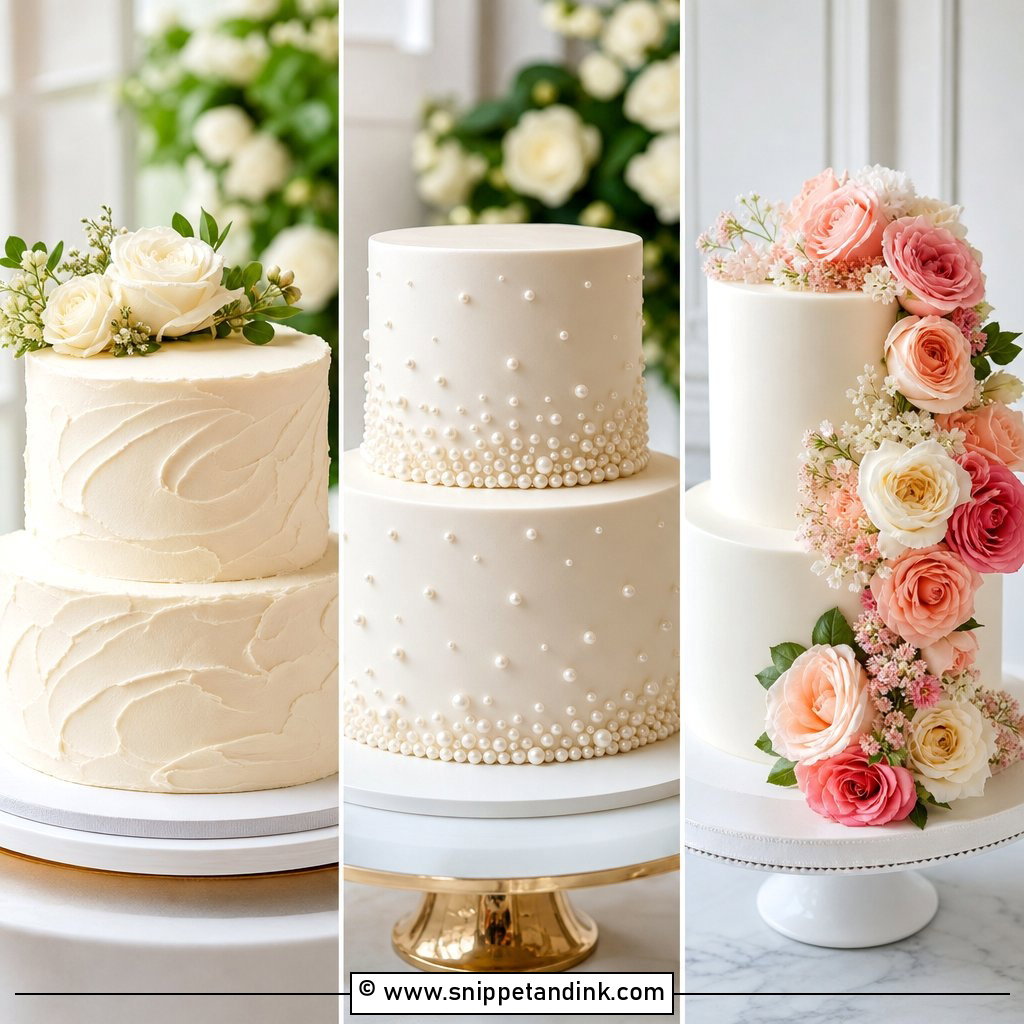
Smooth white buttercream is harder than it looks. Getting sharp edges means chilling the cake between coats and finishing with a hot scraper, and that crisp line is what makes a plain cake look deliberate rather than unfinished. Leave the top bare, or add a small cluster of white roses or greenery. I like it on a ceramic stand or a vintage cake plate. Vanilla bean, almond, lemon and white chocolate all sit happily under a white finish; a dark crumb can shadow through a thin coat, so chocolate needs a heavier crumb coat.
2. Small Wedding Cake With Fresh Flowers
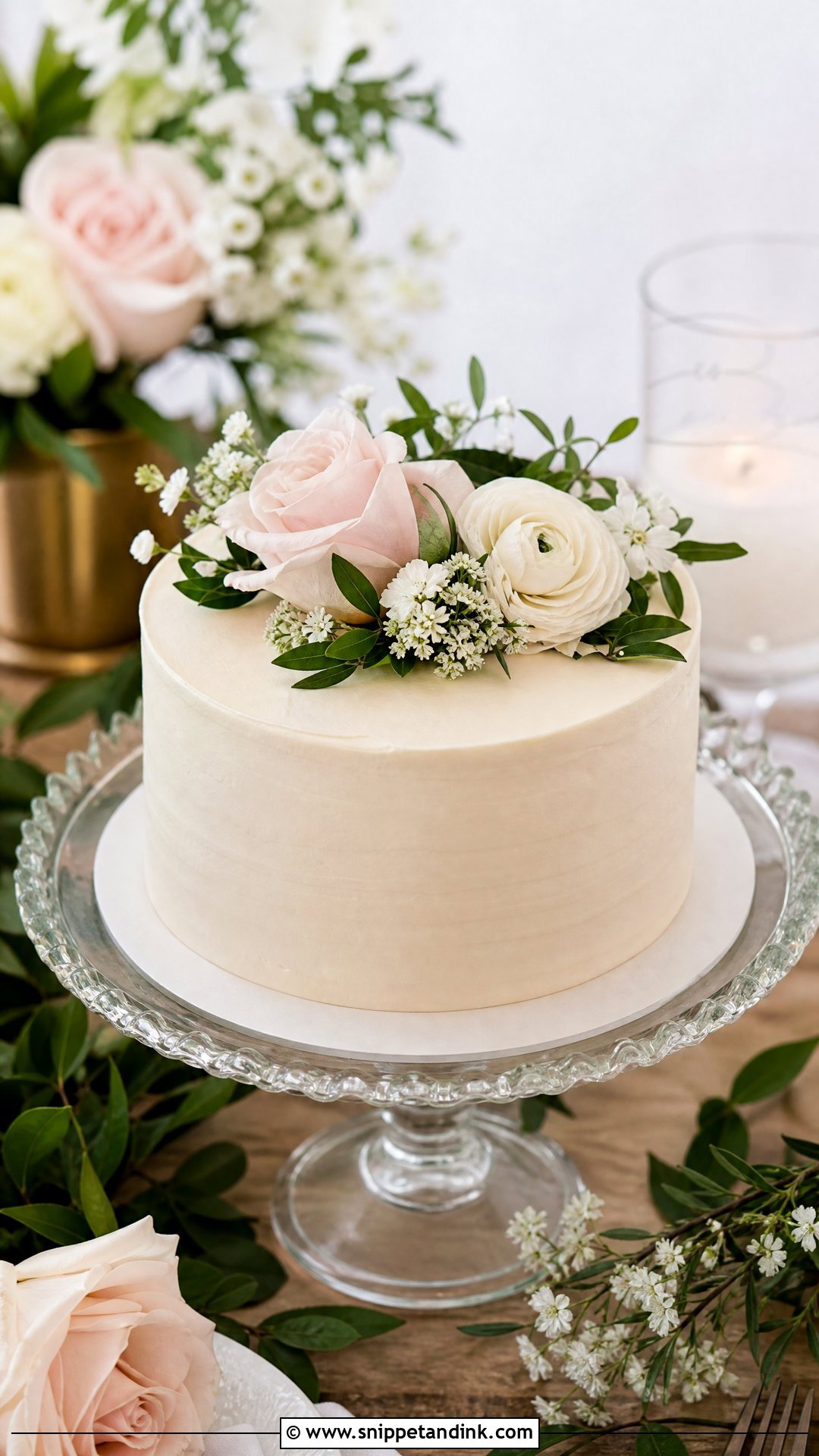
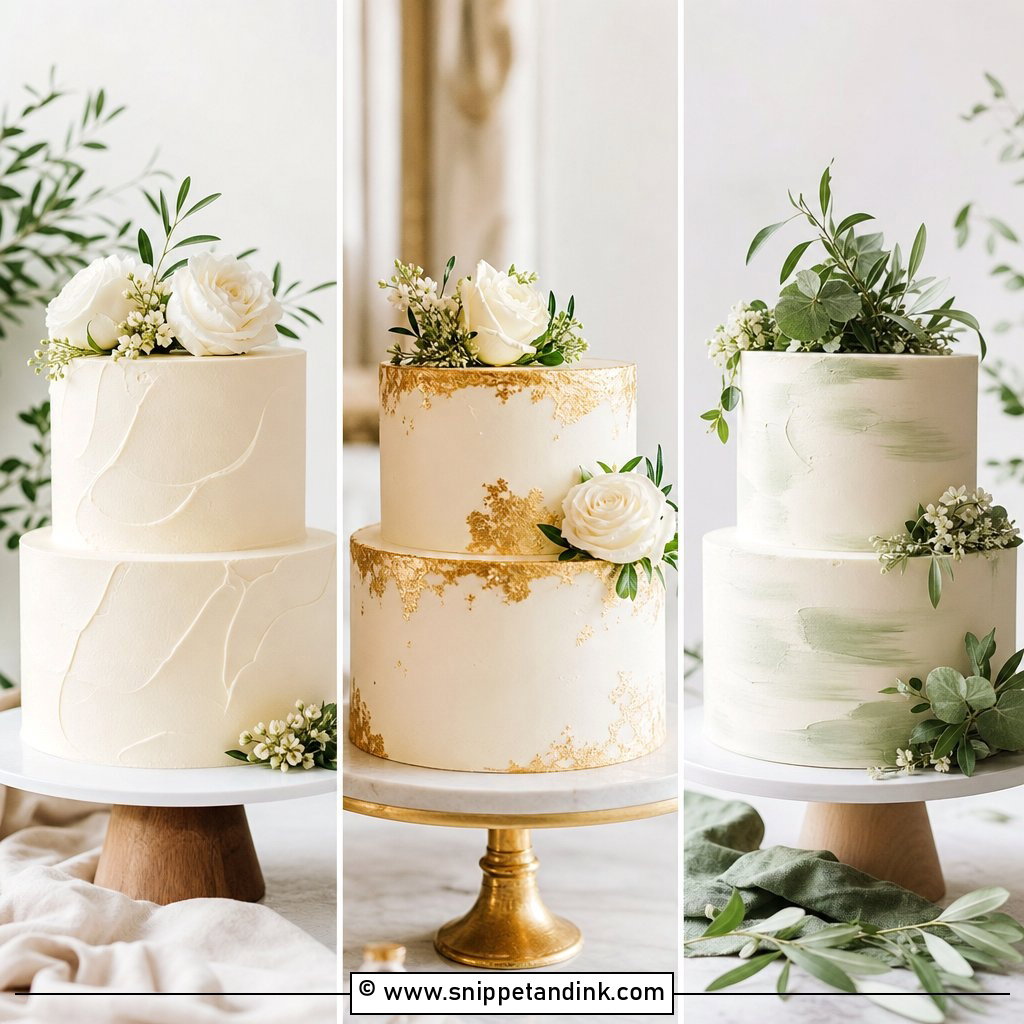
On a small cake, fewer flowers almost always look better. A few blooms on top, a cluster tumbling down one side, or a half-moon around the base is enough; cover more and the cake disappears under the arrangement. Matching them to the bouquet ties the table together. Every stem that touches the cake should be pesticide-free and either wrapped in floral tape or set into a food-safe pick, so no sap or water reaches the buttercream. Ivory, pale blush and sage frosting show flowers off as well as white does.
3. One Tier Wedding Cake With Greenery
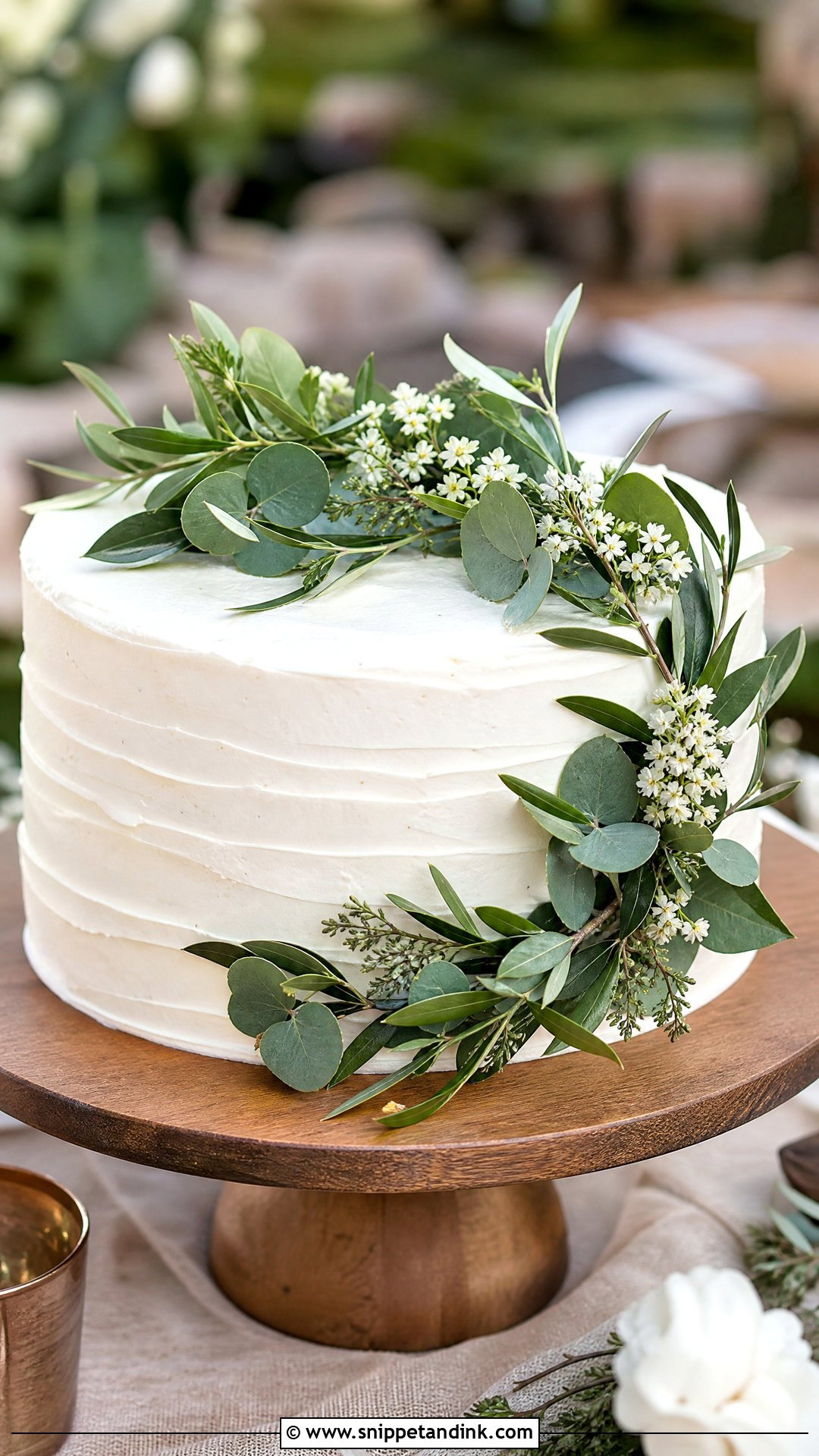
Greenery is my suggestion for couples who like flowers but not the cost or the fuss. Eucalyptus, olive, rosemary and small fern fronds give shape without much colour. Rosemary is the one I reach for first, because it’s edible and smells lovely when the cake is cut. Eucalyptus is not food-safe, so it should sit on a barrier or only around the base. A smooth ivory finish looks refined; a lightly textured spatula finish feels handmade and hides small marks from transport.
4. Small Naked Wedding Cake
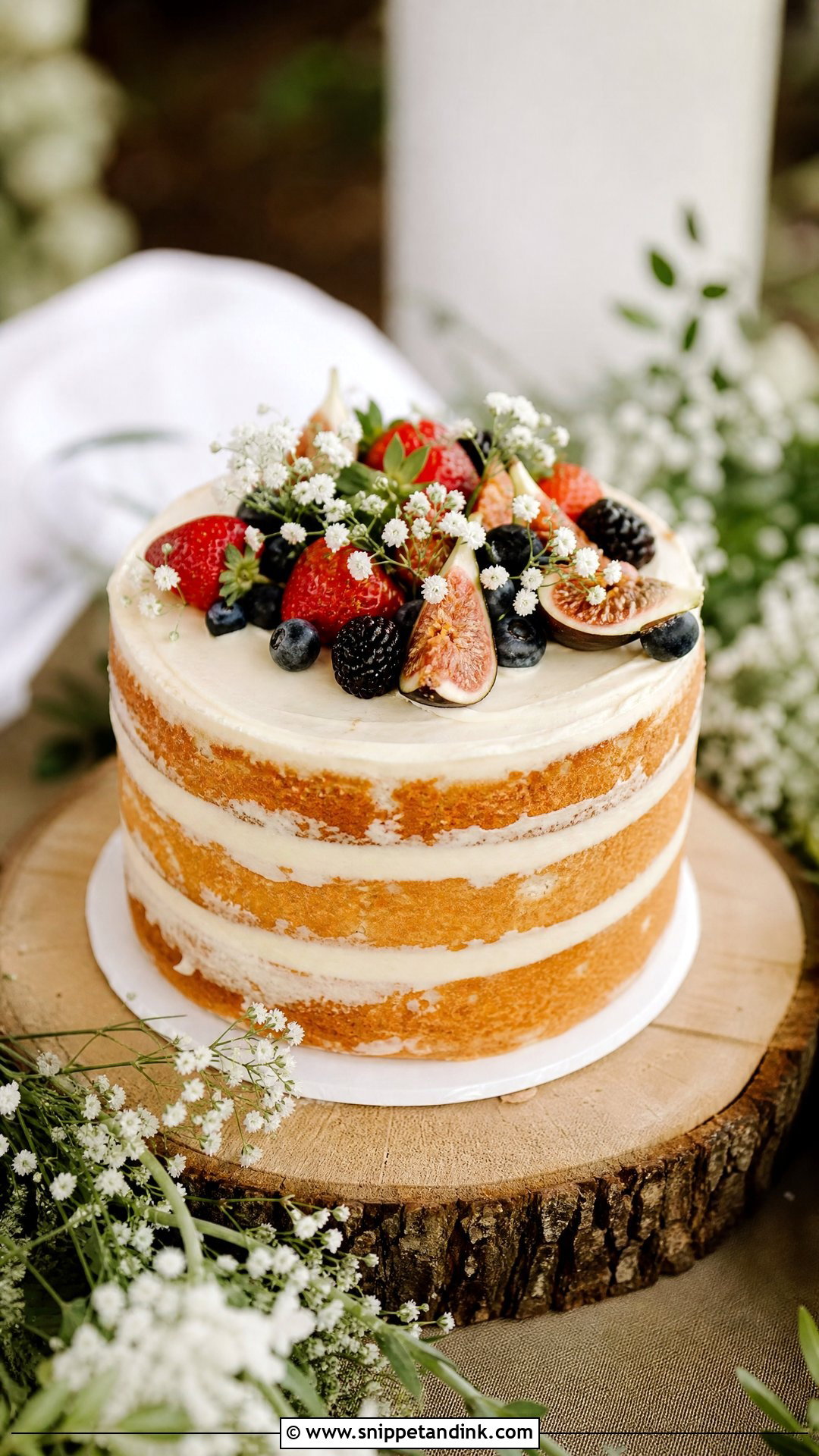
A small naked wedding cake shows every layer, so the bake itself has to be flawless: level layers, even filling, no domes. The exposed sponge dries faster than a frosted one, which is why I brush naked cakes with a light syrup and assemble them as close to the event as possible. Vanilla, almond, carrot, lemon and spice sponges all suit it. Finish with berries, figs, small flowers or a dusting of icing sugar. Outdoors in direct sun, I’d choose semi naked instead; a fully bare cake starts to crust within a couple of hours.
5. Semi Naked Wedding Cake
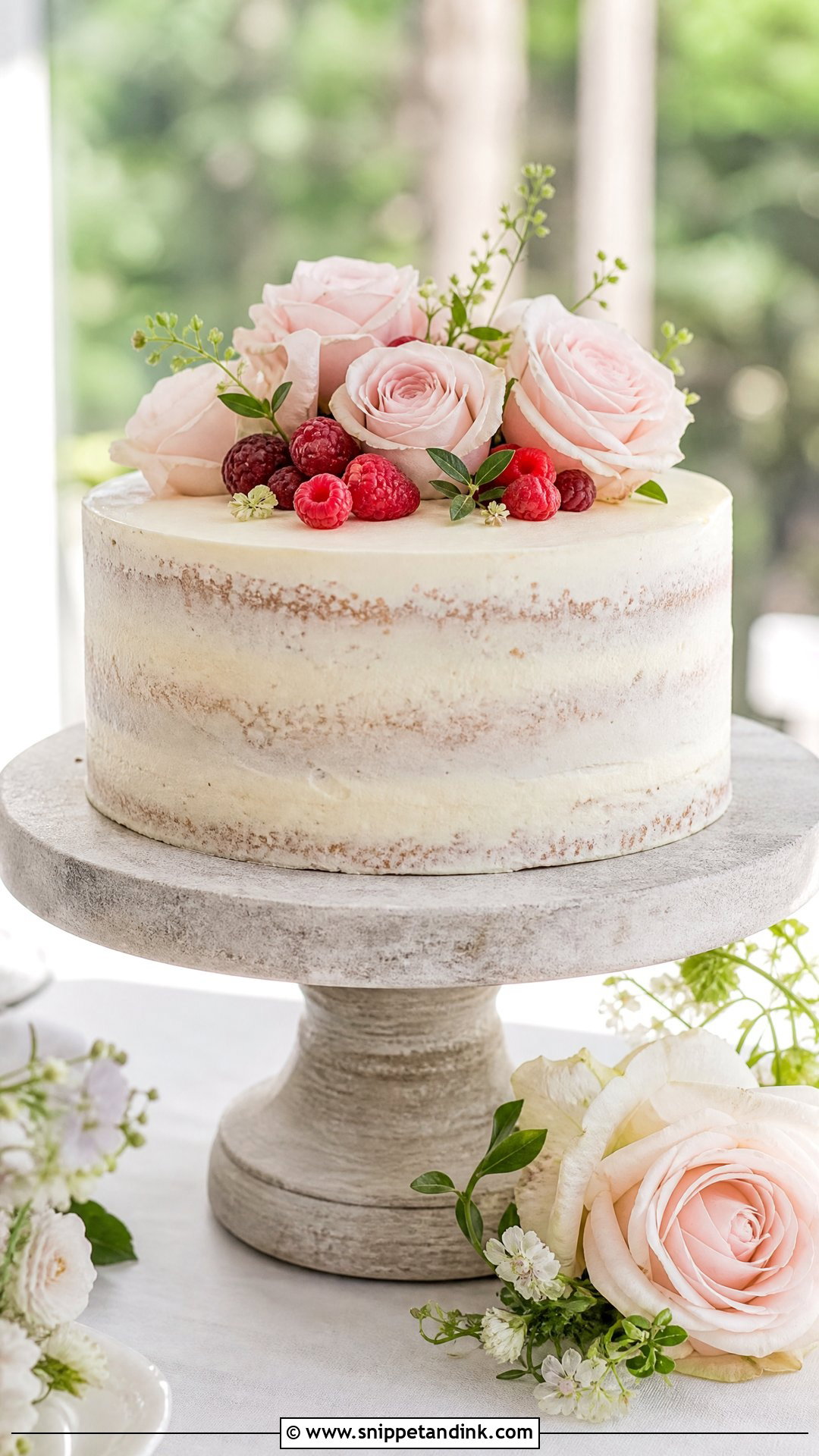
Semi naked is the compromise I recommend most often. A thin scraped coat lets the layers peek through but seals in moisture far better than a fully naked cake. It’s forgiving, too, since a small dent from the drive disappears into the texture. Flowers, berries or herbs all work as toppers. Vanilla, lemon, almond and brown sugar sponges are the flavours I’d pair with it.
6. Small Wedding Cake With Pearls
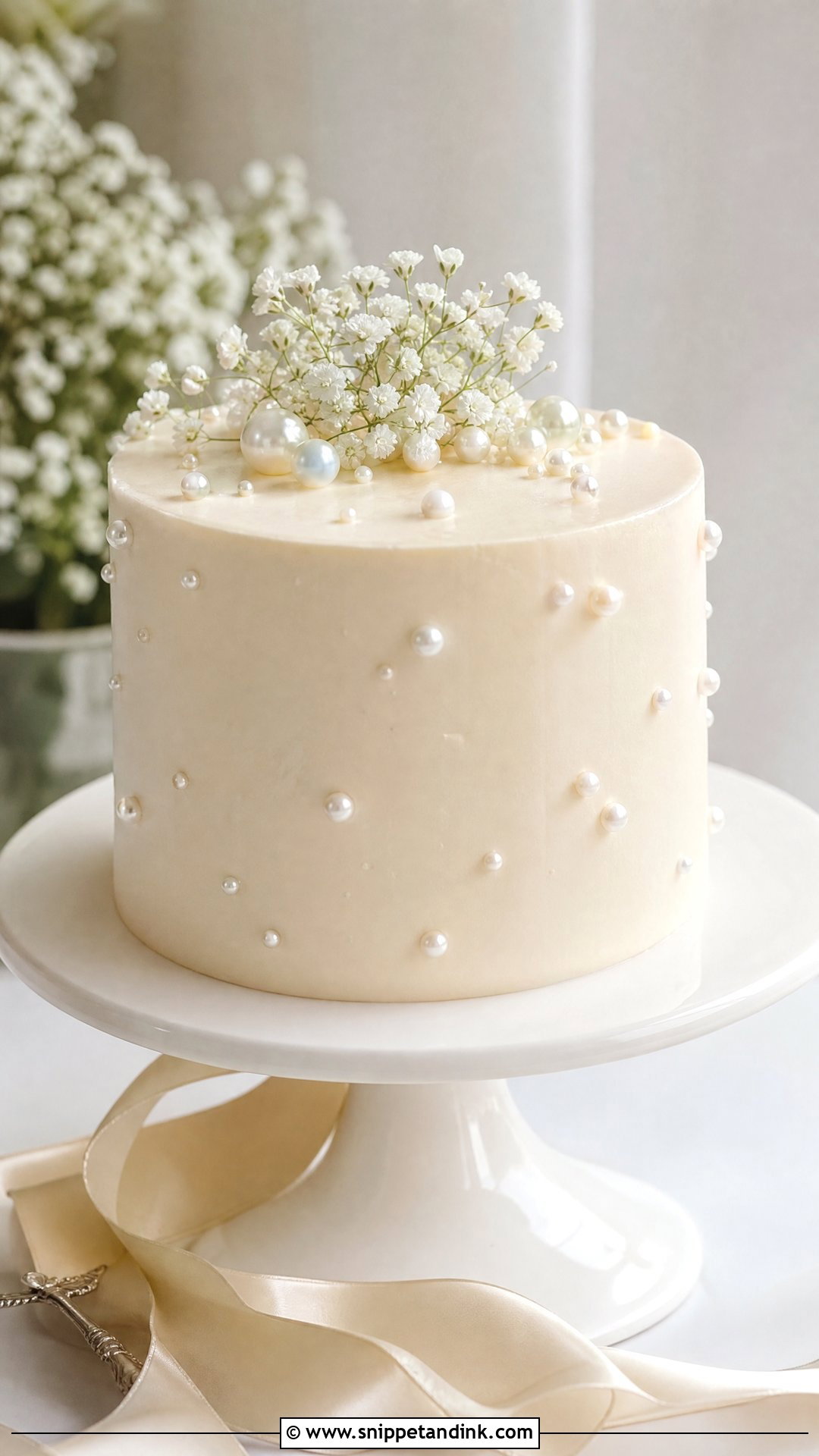
Sugar pearls catch candlelight in a way few other decorations do. Scattered evenly, they look classic; clustered near the base, they feel more modern; set along a piped border, they turn vintage. I place each one with tweezers onto slightly soft buttercream so it beds in and doesn’t roll off. They go well with ivory, white, champagne and blush. Keep everything else quiet, because pearls plus flowers plus ribbon gets busy on a single tier.
7. One Tier Wedding Cake With Ribbon
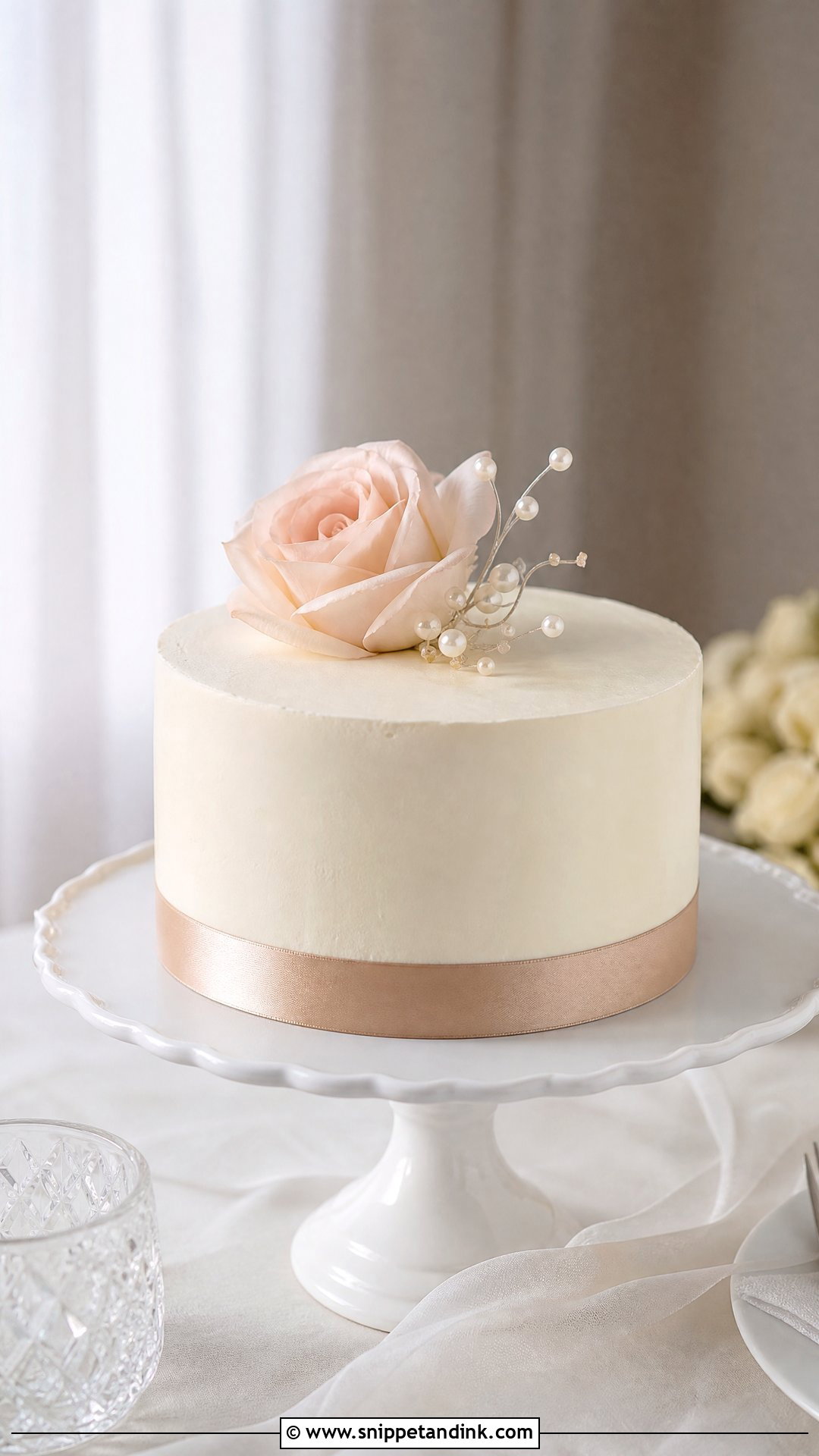
Ribbon is the easiest way to tie a cake to the bridesmaid dresses or invitation colours. Butter in the frosting will stain fabric ribbon within an hour, so I line it with a strip of clear food-safe acetate or wrap it after the cake has been chilled firm. Blush ribbon on white reads romantic, champagne on ivory reads classic, and black or dusty blue gives a modern edge. A single small floral accent on top is all the cake needs alongside it.
8. Small Wedding Cake With Gold Leaf
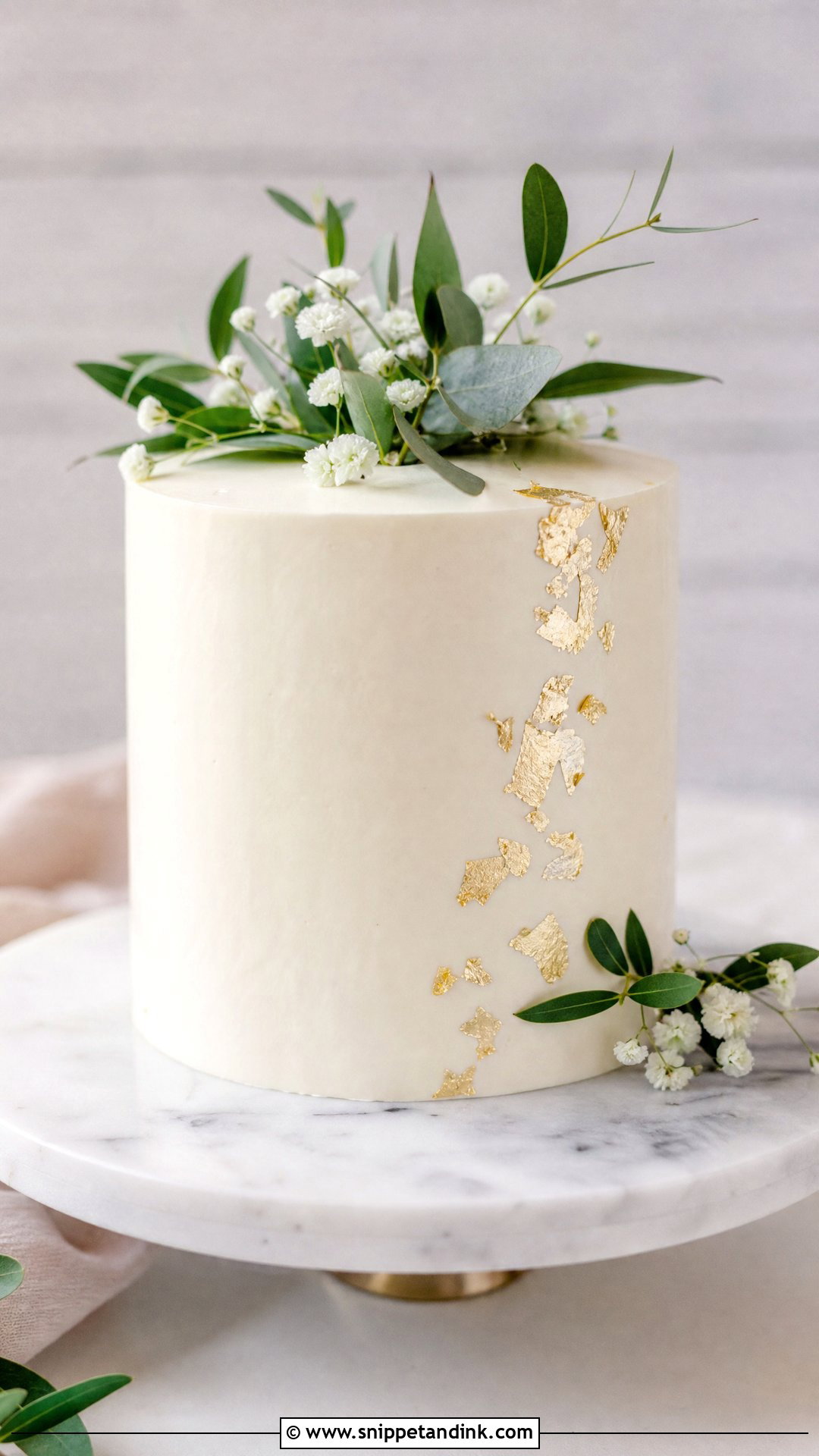
Edible gold leaf is so thin it lifts on a breath, so I apply it with a dry brush onto chilled buttercream rather than soft frosting, where it smears. A few torn pieces along one side or around the base look more modern than a solid band. It shows best on white, ivory, blush, peach or pale green, and pairs with simple flavours such as vanilla bean, almond or lemon. Because it’s so eye-catching, the cake needs little else. Ask for real edible gold, not lustre dust labelled non-toxic, which is decorative only.
9. Small Wedding Cake With Pressed Flowers
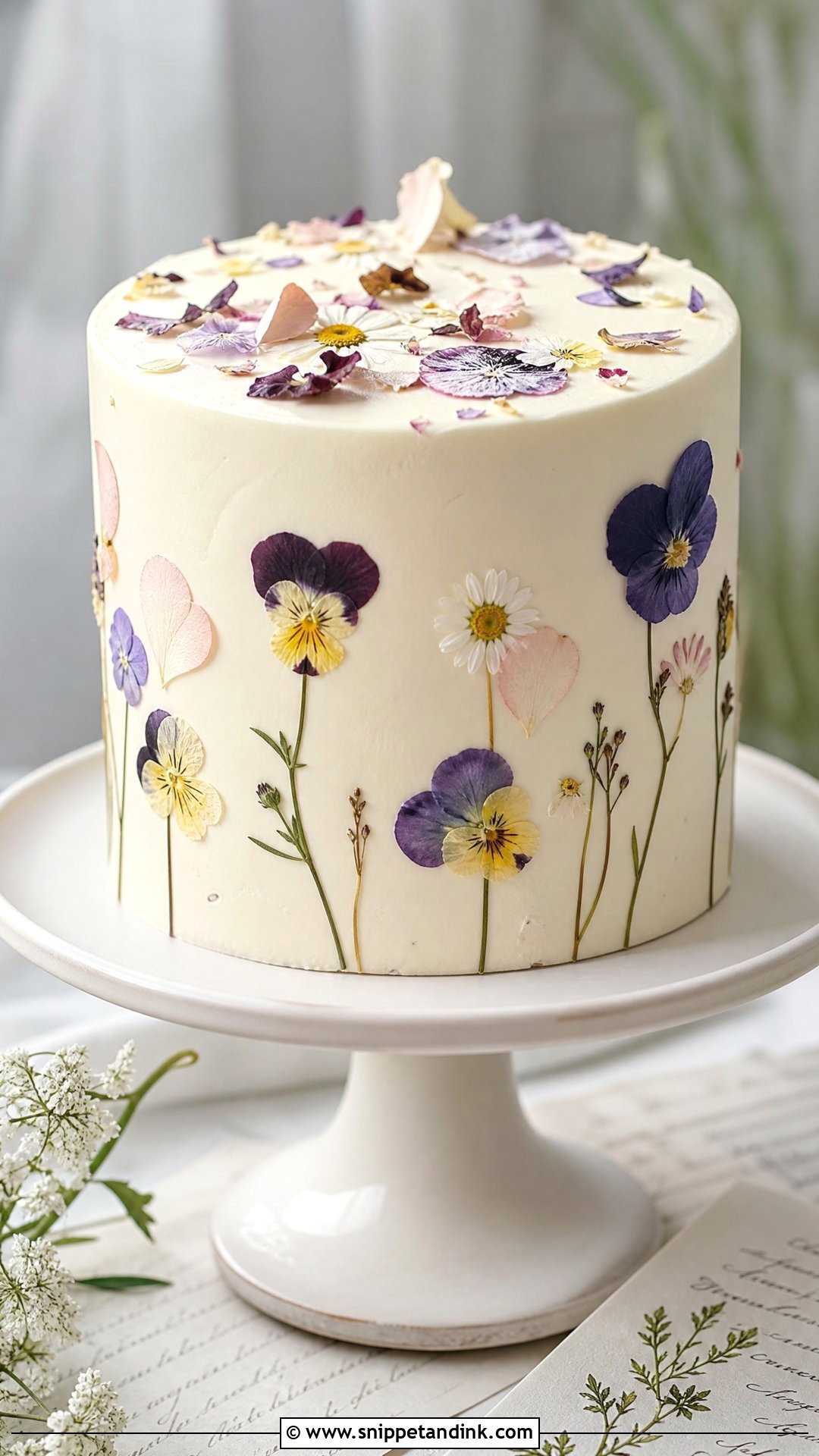
Pressed flowers lie flat, so they give colour without adding height, which suits a cake meant to stay low and neat. They should be edible varieties pressed specifically for food, such as violas, pansies or cornflower petals, not dried craft flowers. I press them gently into smooth white or ivory buttercream once the cake is chilled. Pastel petals look delicate; a mixed wildflower scatter is cheerier. A clean piped edge on top finishes it.
10. Small Wedding Cake With Buttercream Flowers
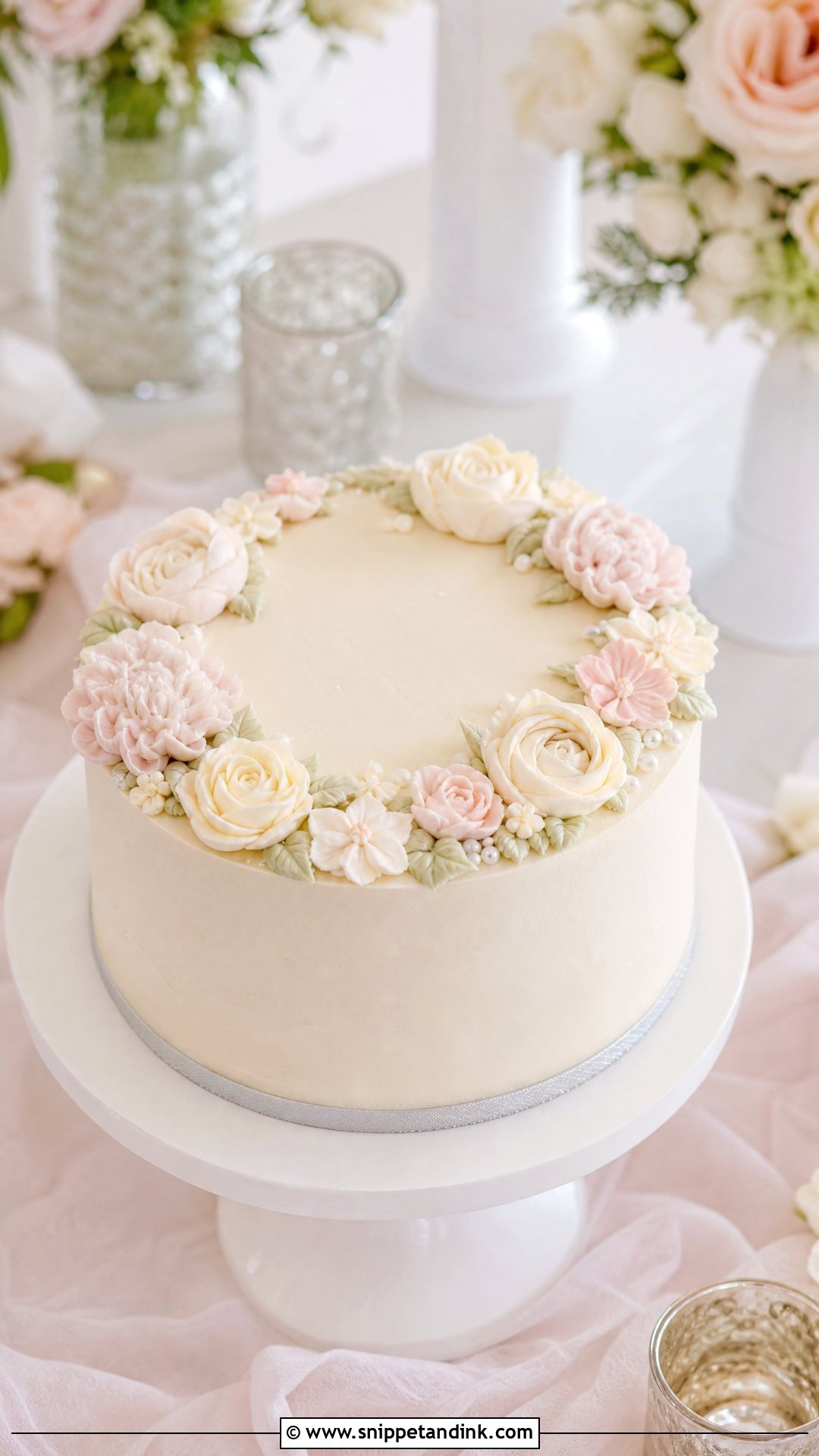
Piped buttercream flowers are fully edible and can be tinted to any palette. Roses, peonies, daisies and small blossoms around the top edge suit a single tier. The thing couples don’t expect: buttercream flowers soften in a warm room much faster than the cake under them, so they’re best piped with a stiffer, crusting buttercream and kept in the shade. Pastel flowers on white feel romantic; tone-on-tone ivory is subtler. Leave gaps between them so each one reads clearly.
11. Small Vintage Wedding Cake
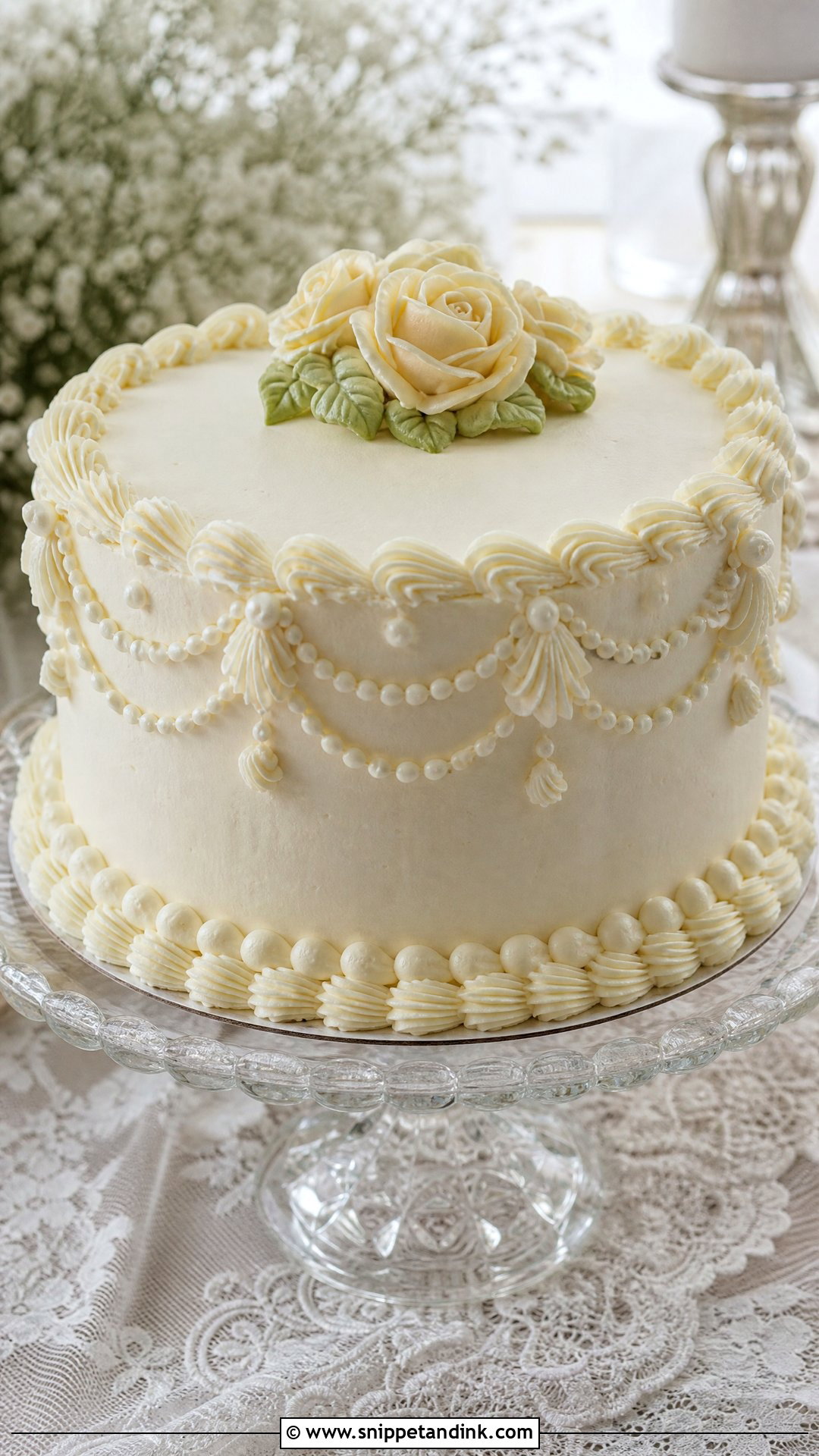
Vintage piping is the style that’s come back hardest, and it suits one tier because the scale stays manageable. Shell borders, tiny dots, ruffles and Lambeth-style piping all build in layers, so it takes longer than its size suggests; give your baker plenty of notice. White is classic, and ivory, blush, pale blue or butter yellow give a retro feel. A small heart topper, cherries or pearls finish it. Balance matters most: heavy swags on a small cake look top-heavy.
12. Small Heart Wedding Cake
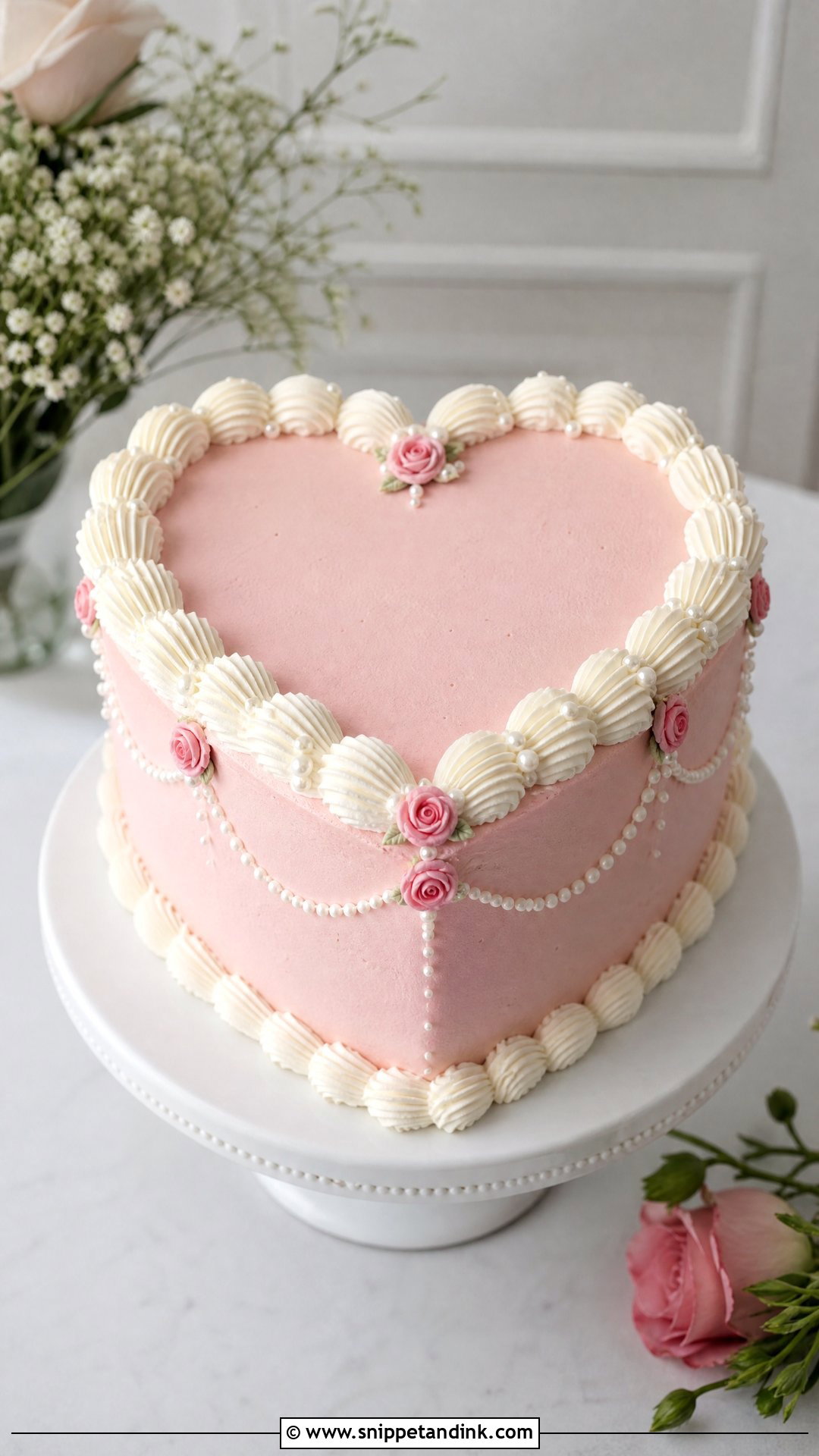
A heart shape gives a small cake personality before any decoration goes on. Smooth buttercream keeps it modern; piped borders make it vintage. White with pearls, blush with tiny roses, or ivory with a short piped message are my favourite combinations. Hearts are trickier to cut evenly, so I tell couples to plan for slightly fewer servings than a round of the same width. They suit courthouse weddings, elopements and bridal brunches especially.
13. Small Wedding Cake With Fruit
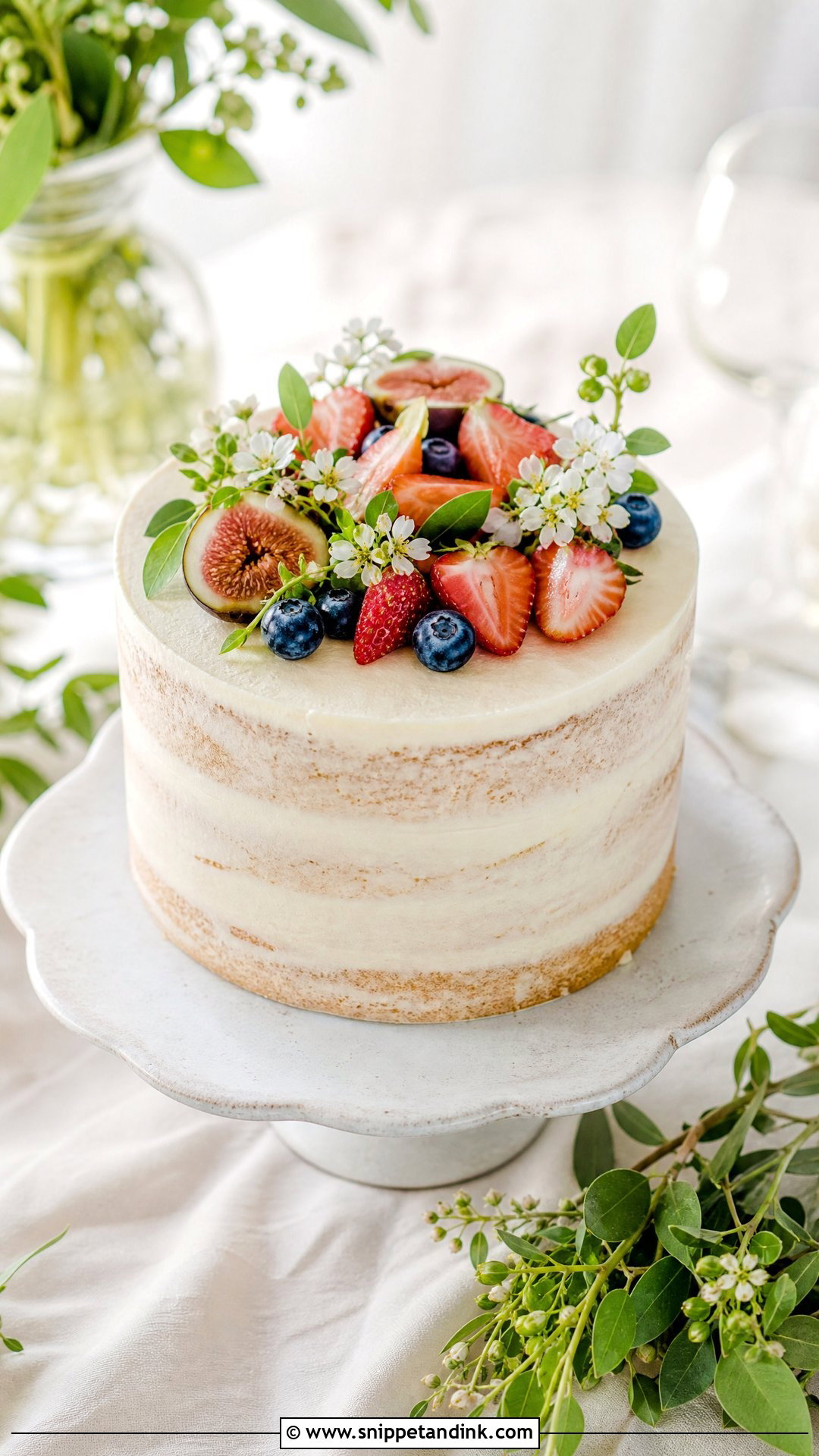
Fruit does the decorating and brings flavour, but it needs care. Cut fruit weeps juice onto buttercream within an hour or two, so I use whole berries, halved figs or citrus slices patted dry, and add them as late as possible. A smooth or semi naked finish lets the fruit be the main feature. Strawberries, raspberries and blueberries suit summer; figs and blackberries look rich in autumn. Candied orange or lemon slices hold up better than fresh ones on a hot day.
14. Small Lemon Wedding Cake
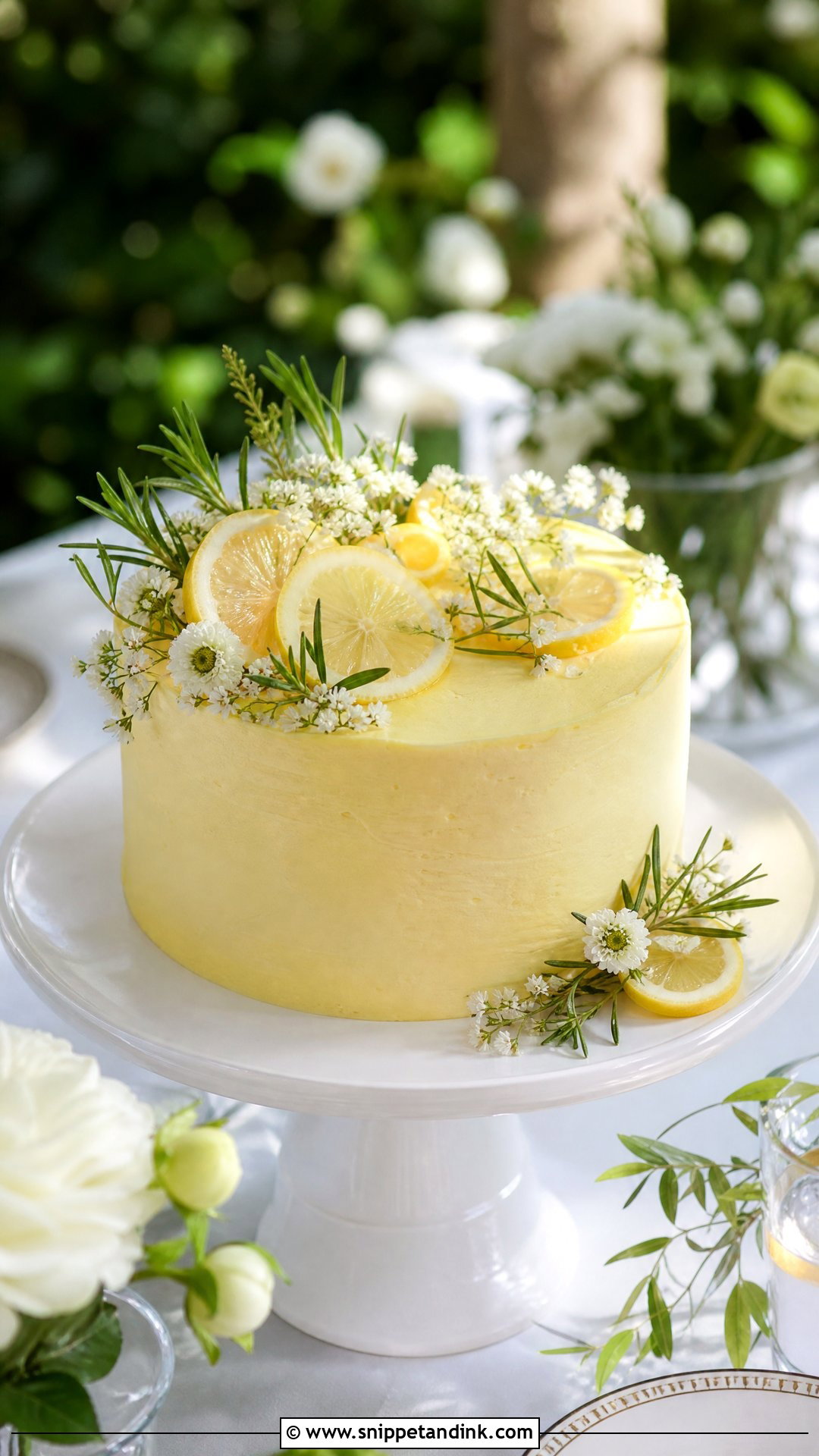
Lemon is the flavour I suggest when a couple says chocolate feels too heavy for a summer afternoon. Pale yellow sponge, sharp lemon curd and a light buttercream are bright without being sweet. Curd fillings need a buttercream dam piped around each layer so the curd doesn’t seep out and bulge the sides. Keep the outside white or soft yellow, with tiny lemon slices, white flowers or a few sprigs of greenery.

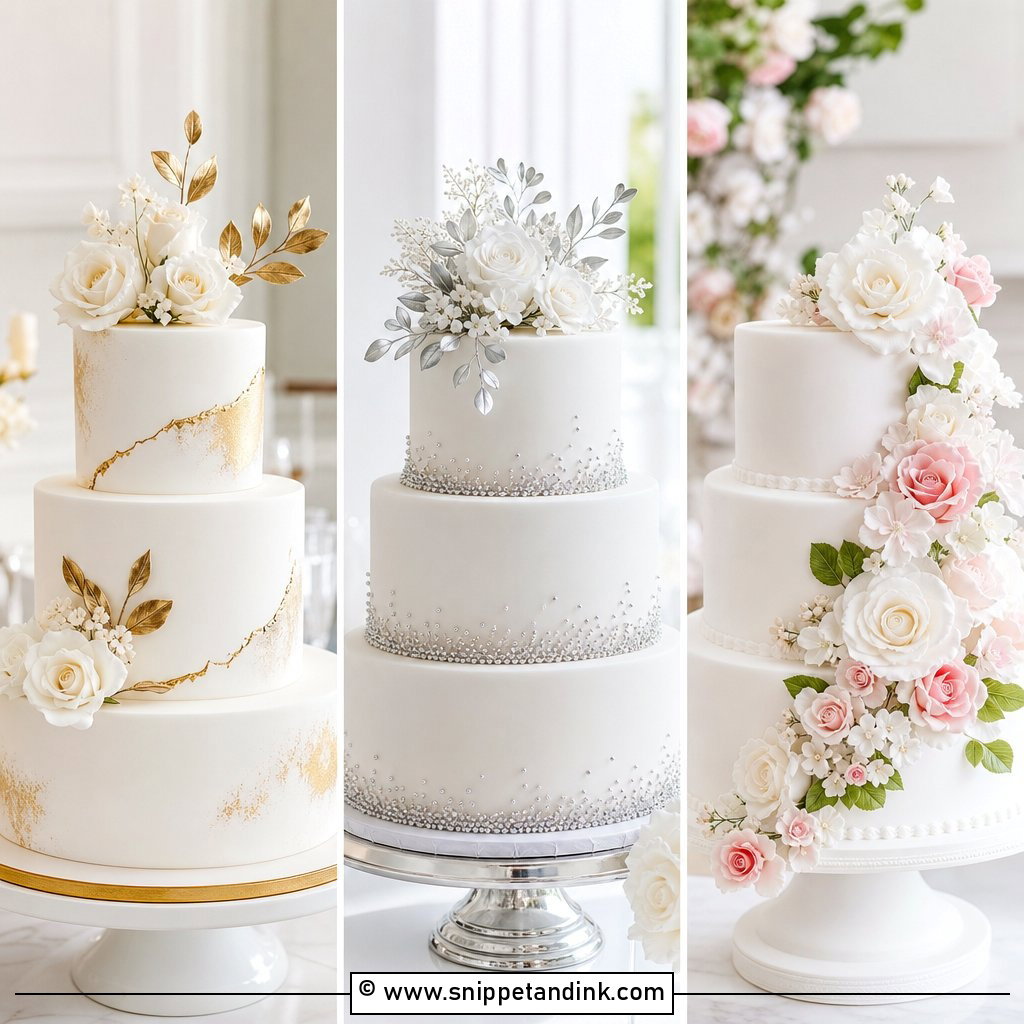
15. Small Chocolate Wedding Cake
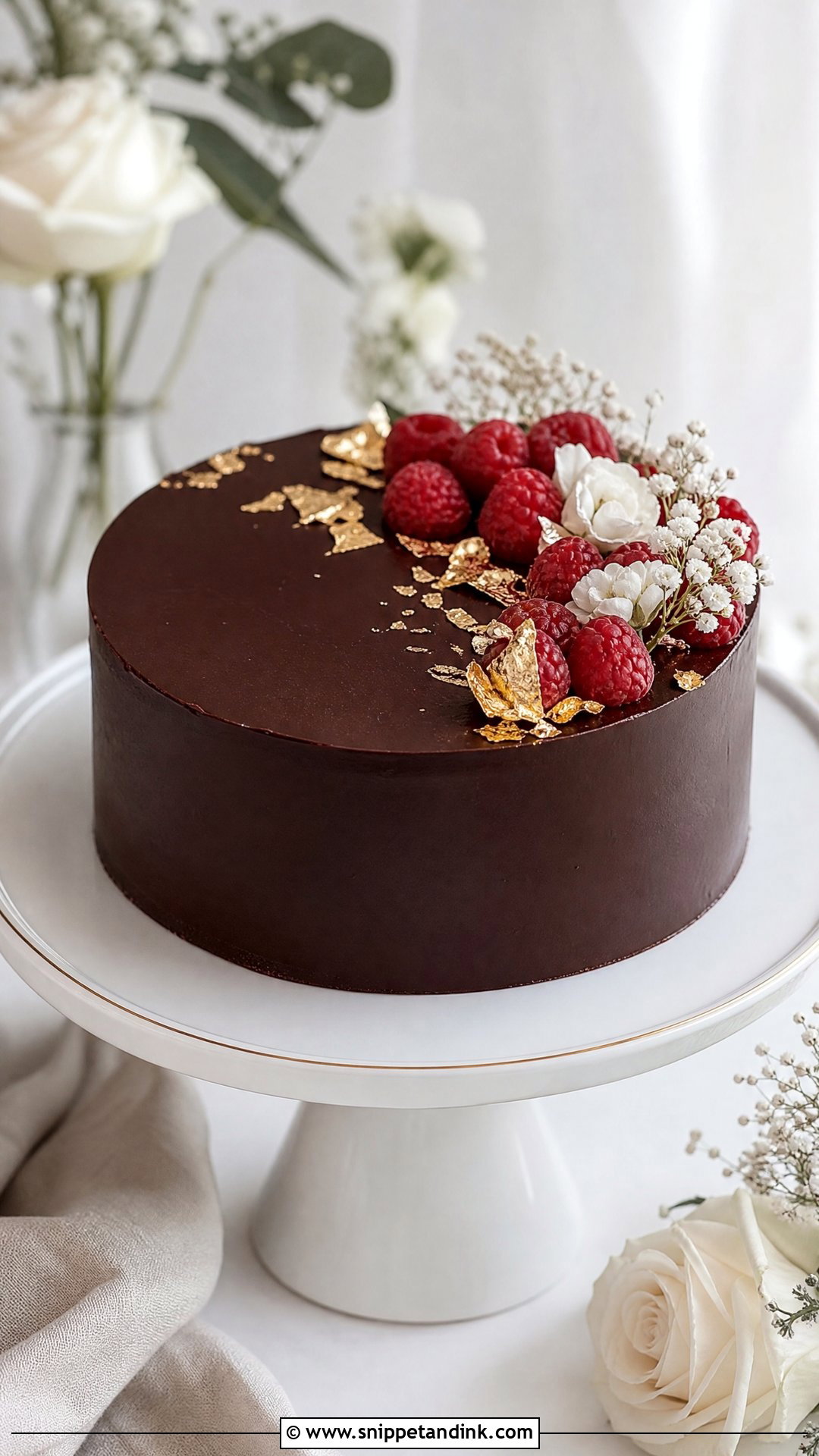
Chocolate looks dramatic and formal when it’s finished well. A ganache coat sets firmer than buttercream, so it holds sharp edges and travels better in warm weather, which is a real advantage outdoors. Dark sponge, ganache or cocoa buttercream all work. Fresh berries, white flowers, gold leaf or a clean piped border lift it for a wedding table. I’d present it on a white stand, so the dark cake has some contrast around it.
16. Small Red Velvet Wedding Cake
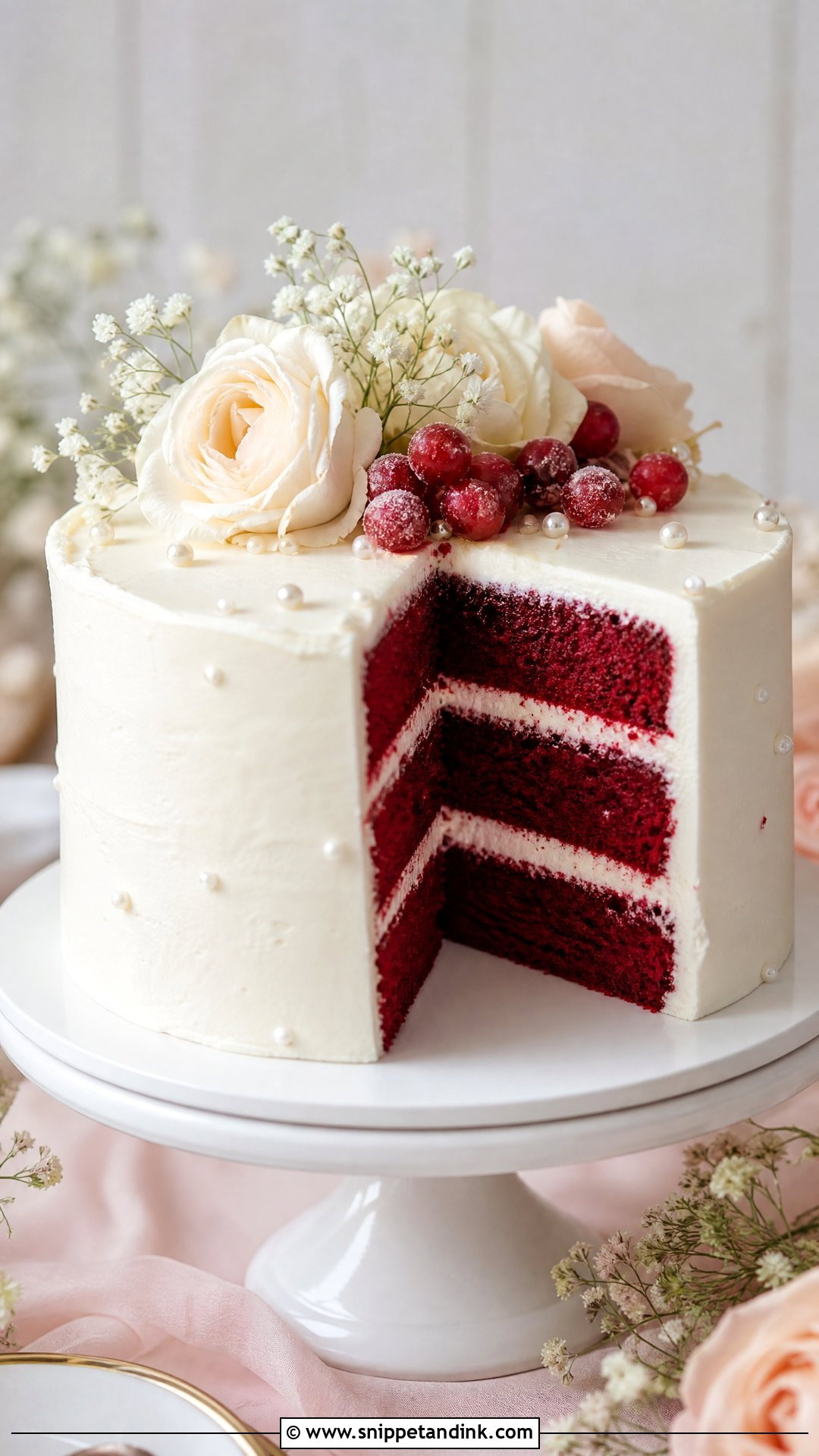
Red velvet earns its place at the cutting moment, when that deep red interior against cream cheese frosting shows in the slice. Outside, smooth white frosting keeps it classic, with small red berries, ivory flowers or a fine pearl border. Cream cheese frosting is soft and needs refrigeration, so it’s not my choice for a long outdoor display. If the cake has to sit out for hours, I’ll fill with cream cheese and coat the outside in a firmer buttercream.
17. Small Wedding Cake With Drip
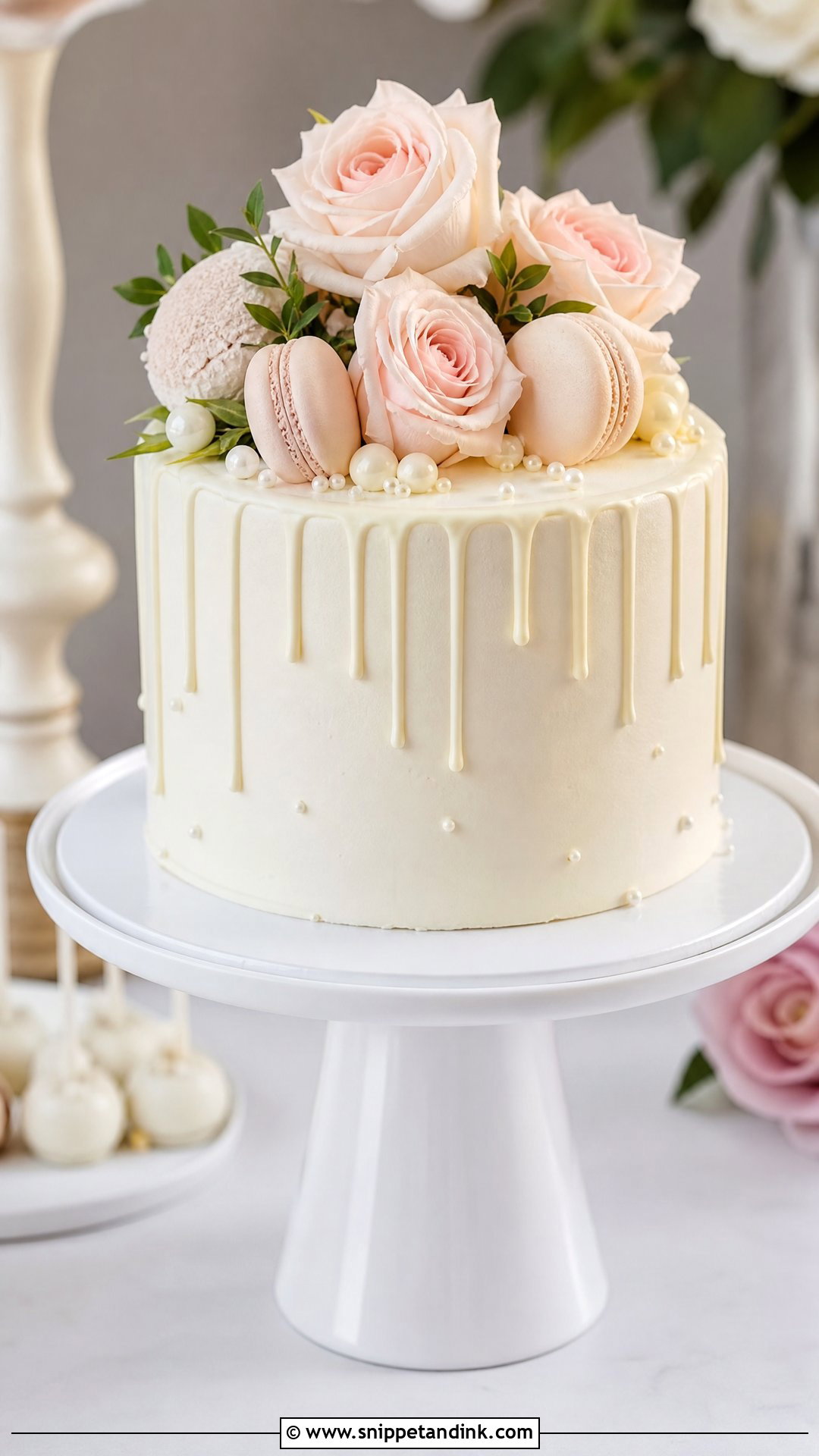
Drips go wrong when the ganache is too warm: it runs straight to the board. I test one drip on the back of a chilled cake first, then work around. White chocolate drip over ivory buttercream looks subtle; caramel feels warm and rustic. For a wedding I keep the drips short and evenly spaced. A few flowers, berries or macarons on top add height without crowding.
18. Small Rustic Wedding Cake
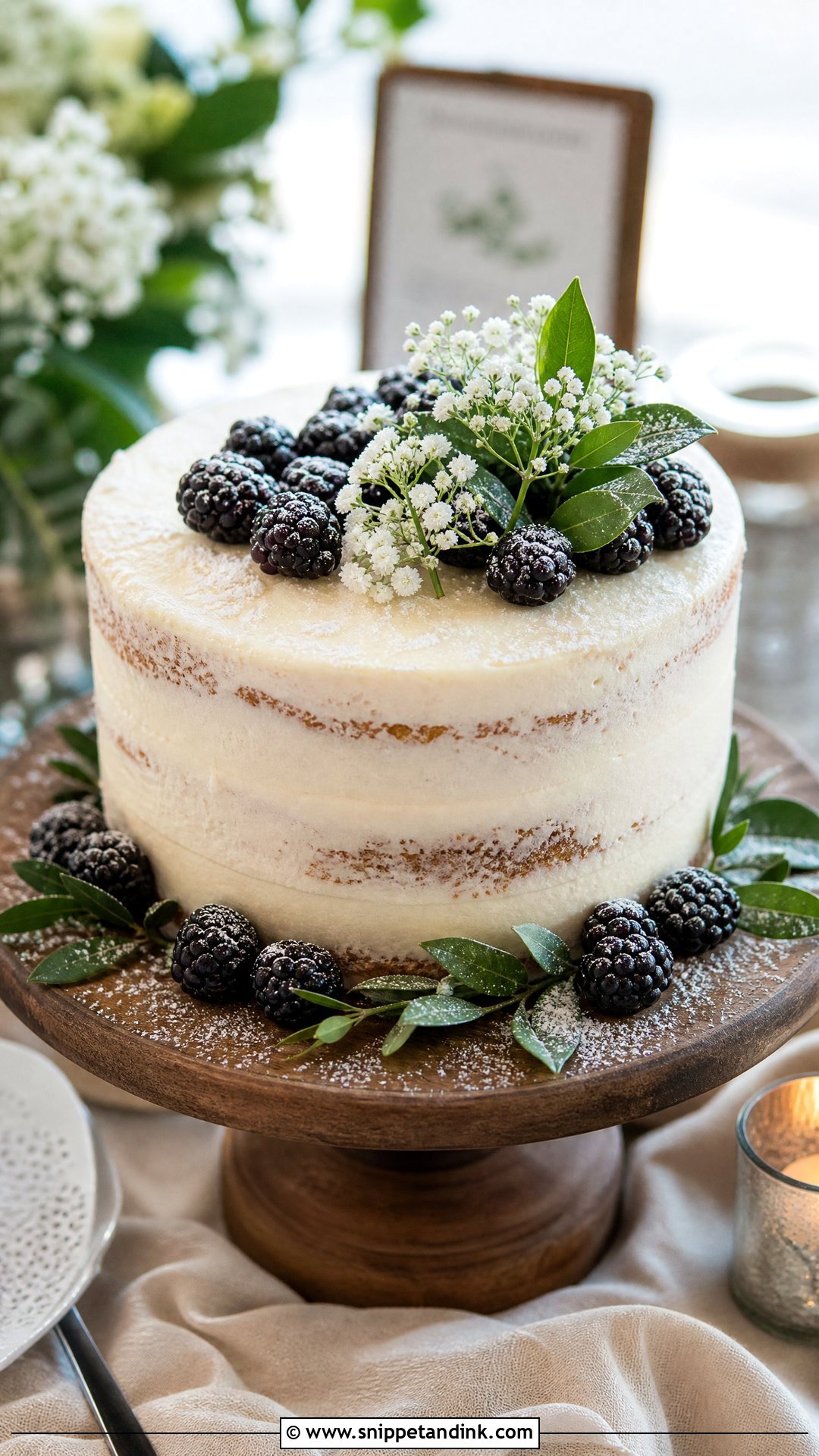
Rustic is about texture: semi naked sides, rough swirls, greenery, berries and small neutral flowers. Vanilla, spice, carrot, almond and honey sponges all fit. A wooden stand or a linen cloth completes it for backyard, barn, mountain or garden receptions. My one warning is that rustic still needs good structure underneath; a rough finish can’t rescue a cake that leans. Let the edges stay soft and the colours natural, and you’ll get a cake that feels homemade in the best sense.
19. Small Modern Wedding Cake
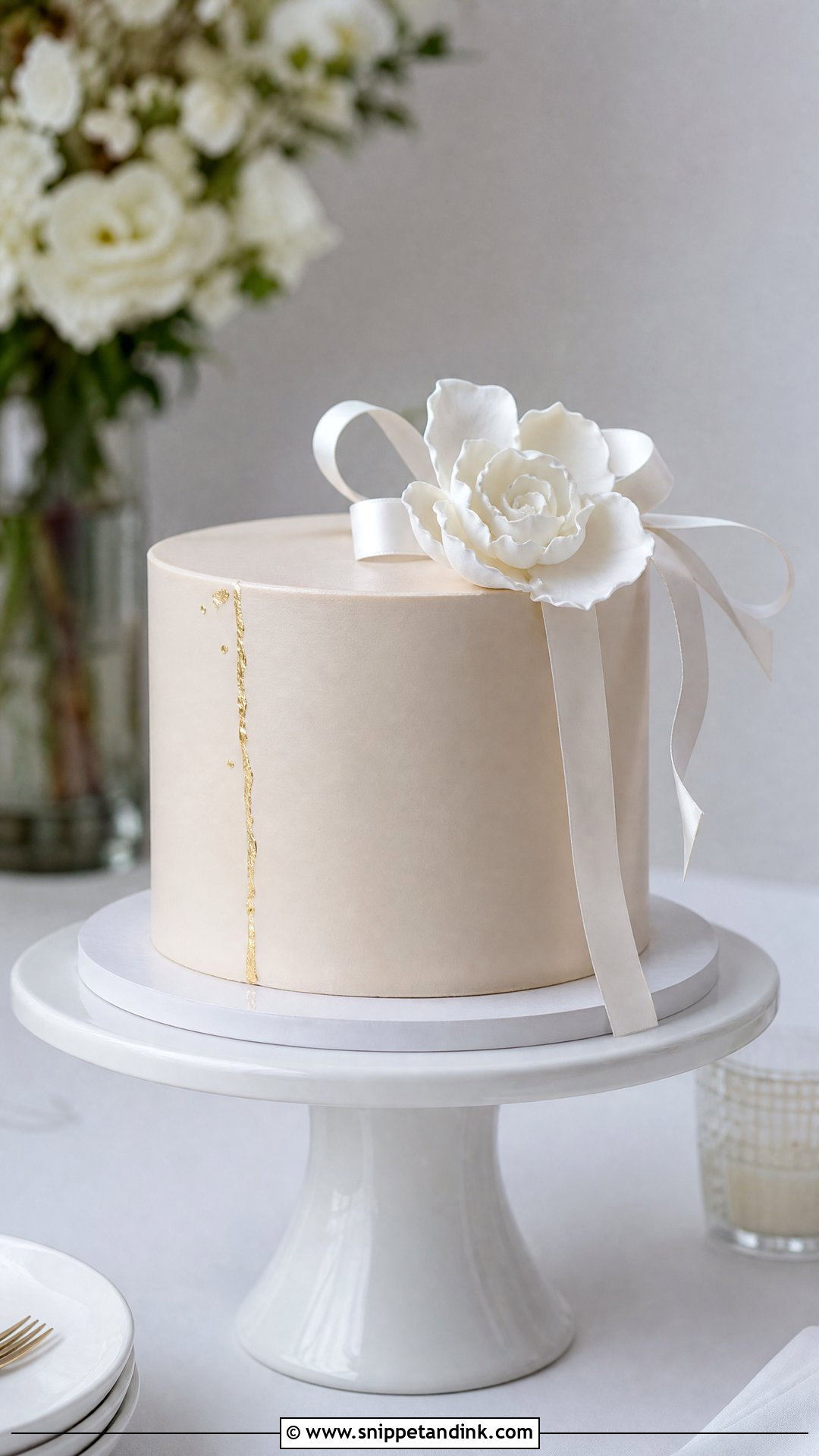
Minimal cakes are all about precision. Sharp edges, a perfectly level top and one statement element, such as a single sugar flower, a fine gold accent, a monochrome ribbon or a textured frosting panel. White, ivory, taupe, sage and blush suit a modern palette. Sugar flowers can be made weeks ahead and kept as a keepsake, which is a nice bonus. Set it on a sleek pedestal with a plain background for city, restaurant and gallery receptions.

20. Small Wedding Cake With Cake Topper
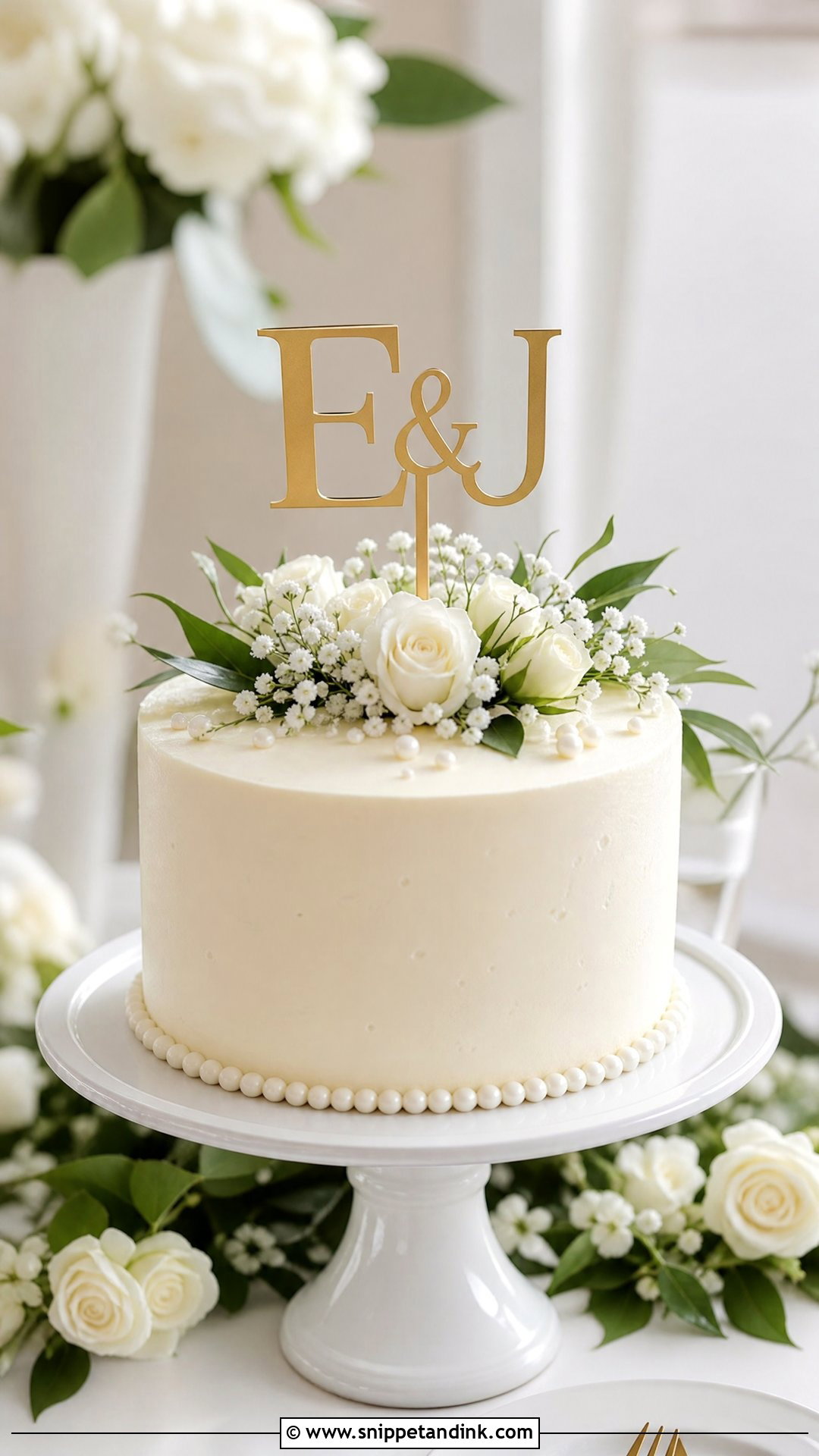
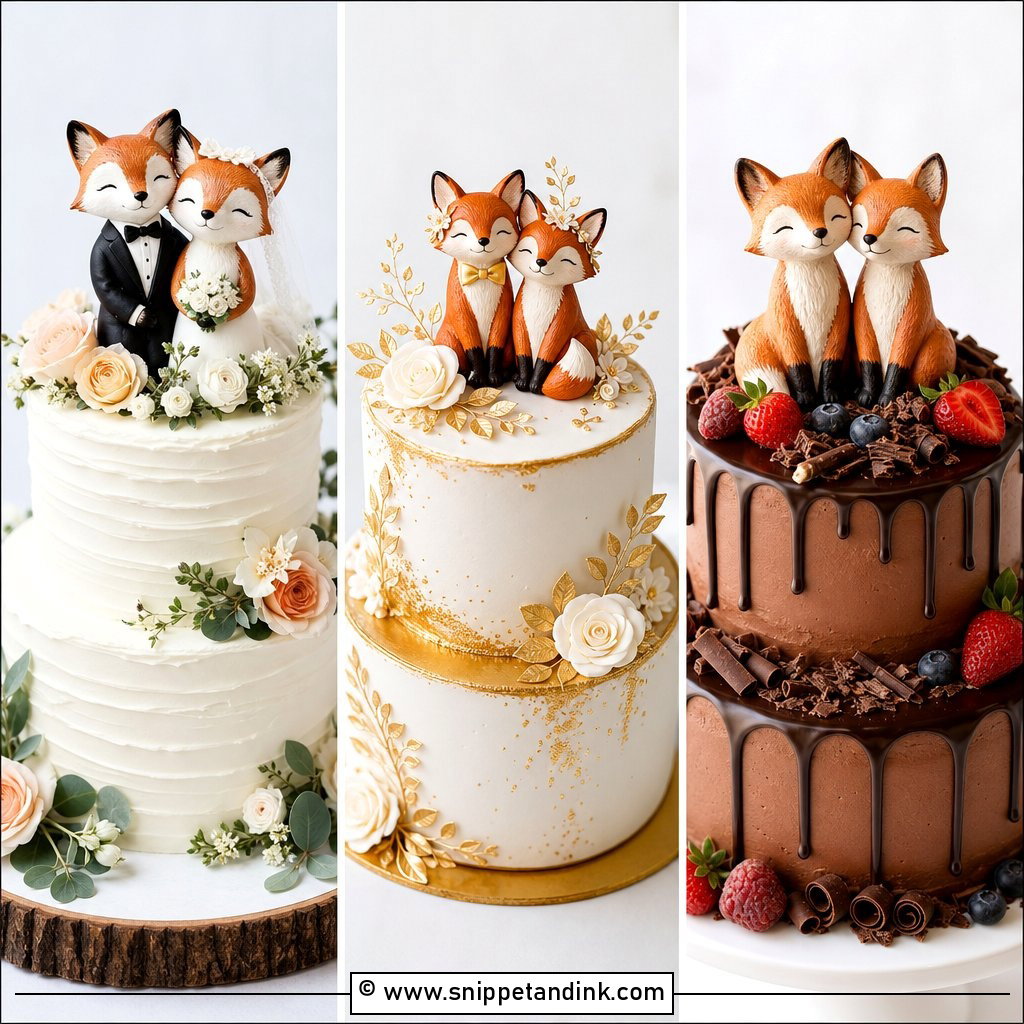
A topper turns a plain single tier into something personal. Initials, a surname, a short phrase or a fine floral topper all work; it just needs to suit the mood of the day. Proportion matters more than people think: a topper wider than about two-thirds of the cake looks top-heavy, so measure the cake diameter before ordering. Acrylic and wooden toppers need clean, food-safe spikes, or a barrier where they enter the cake. White or ivory is the easiest base, though blush, sage and pale blue are pretty too.
Getting a Small Cake From the Car to the Table Intact
A single tier is the easiest cake to move, which is part of why it suits backyard and restaurant weddings where there’s no proper cake room. Still, most of the damage I’ve seen happens in the last twenty minutes.
- Keep the cake chilled until it leaves. Cold buttercream is firm and resists fingerprints and bumps.
- Carry it flat on the floor of the car, never on a seat, which slopes. A non-slip mat under the box stops it sliding.
- Air conditioning on, windows up. A sunny car heats up fast even on a mild day.
- Set it up away from windows, heaters and the buffet lamps. Buttercream starts to soften quickly in warm air, and fresh cream fillings shouldn’t sit out much more than a couple of hours.
- Add fresh flowers, fruit and gold leaf on site, last, once the cake is on its stand.
When to Order and What to Taste
Small cakes don’t need months of production, but bakers book by date, not by cake size, so a popular Saturday can fill a long way ahead. I’d get in touch as soon as your date and venue are fixed. Ask to taste two or three sponges with their fillings, and check how the finish you want will cope with your venue’s temperature. A good baker will tell you honestly if a naked cake or cream cheese frosting won’t last through an outdoor afternoon.
One Tier, One Clear Idea
One tier asks for one clear idea. If your day is classic, smooth white buttercream with pearls, ribbon or fresh flowers will carry it. If it’s relaxed, a naked cake, fruit, greenery or a rustic finish fits. For something modern, gold leaf, sharp edges, a neat drip, or a bold chocolate or red velvet flavour will do it. Pick the detail you love most, let it take the lead, and leave everything else simple. That restraint is what makes a small cake look intentional.
You'll Like These Ideas:




Leave a Reply