
Ask me what makes a wedding dress age well and I’ll give you three things: proportions that suit your body, fabric with enough weight to hang properly, and detail used sparingly. Everything below follows those rules, from structured satin ball gowns to lace, crepe, chiffon and silk. I’ve paired each dress with the shoes, veil and hair I’d put with it at a styling appointment, and noted who it suits and where it tends to go wrong. Some are formal and grand, others quiet and simple. None depends on heavy decoration, which is usually the first thing to look dated in a photograph.
Matching Veil Length to the Dress and the Aisle
The veil is the accessory that changes a classic dress the most, and it’s often chosen last and in a hurry. I pick the length by looking at where the eye should stop on the gown.
- Shoulder or elbow length suits detailed bodices, high necks and tea-length dresses, because it ends before the interesting part starts.
- Fingertip length, ending around the hands when your arms hang, works with almost every A-line and is easy to wear all evening.
- Chapel length brushes the floor just behind you and pairs naturally with a chapel train or a plain skirt that needs some ceremony.
- Cathedral length extends past a long train and needs a long aisle; in a small register office or a garden with gravel paths it becomes a nuisance.
If the back of your dress is the best part, as with pearl buttons or a low V, choose a sheer, raw-edge veil so the detail shows through. A heavily trimmed veil over a heavily trimmed dress makes both look busier. Pin it at the trial with your hairstylist, since the comb needs to sit firmly in the style you’re actually wearing.
1. Satin A-Line Wedding Dress
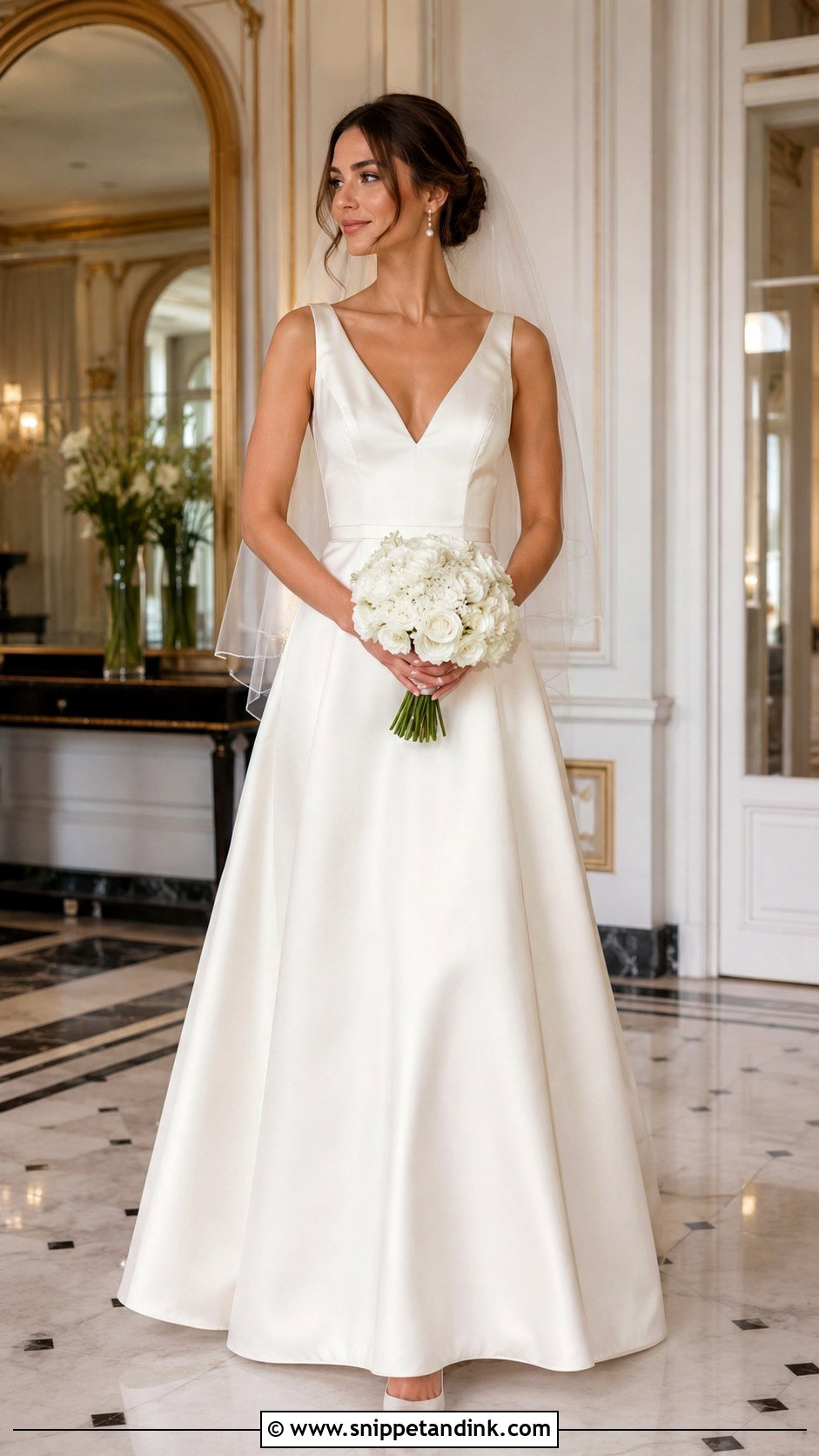
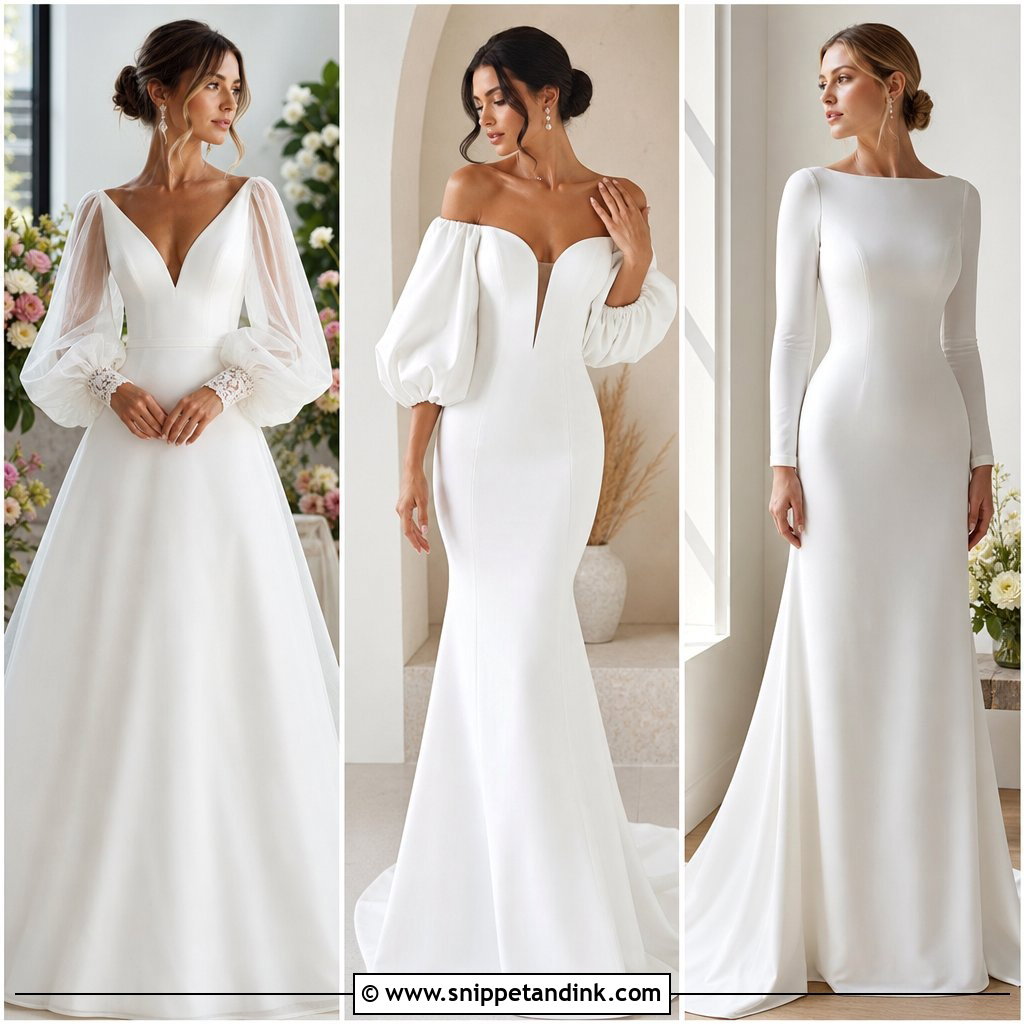
Smooth fabric highlights every seam, so a satin A-line is only as good as its tailoring. I look closely at the side seams and the waist; any ripple there catches the light. Matte satin is understated, a gentle sheen is more formal. Wide straps or a soft V suit the fitted bodice, and the skirt falls gradually away from the waist so you can walk freely. A slim satin waistband adds definition if you want it. Pointed ivory pumps, pearl drops, a fingertip veil and a structured bouquet of white flowers complete it for a ballroom, hotel or garden.
2. Long Sleeve Lace Wedding Dress
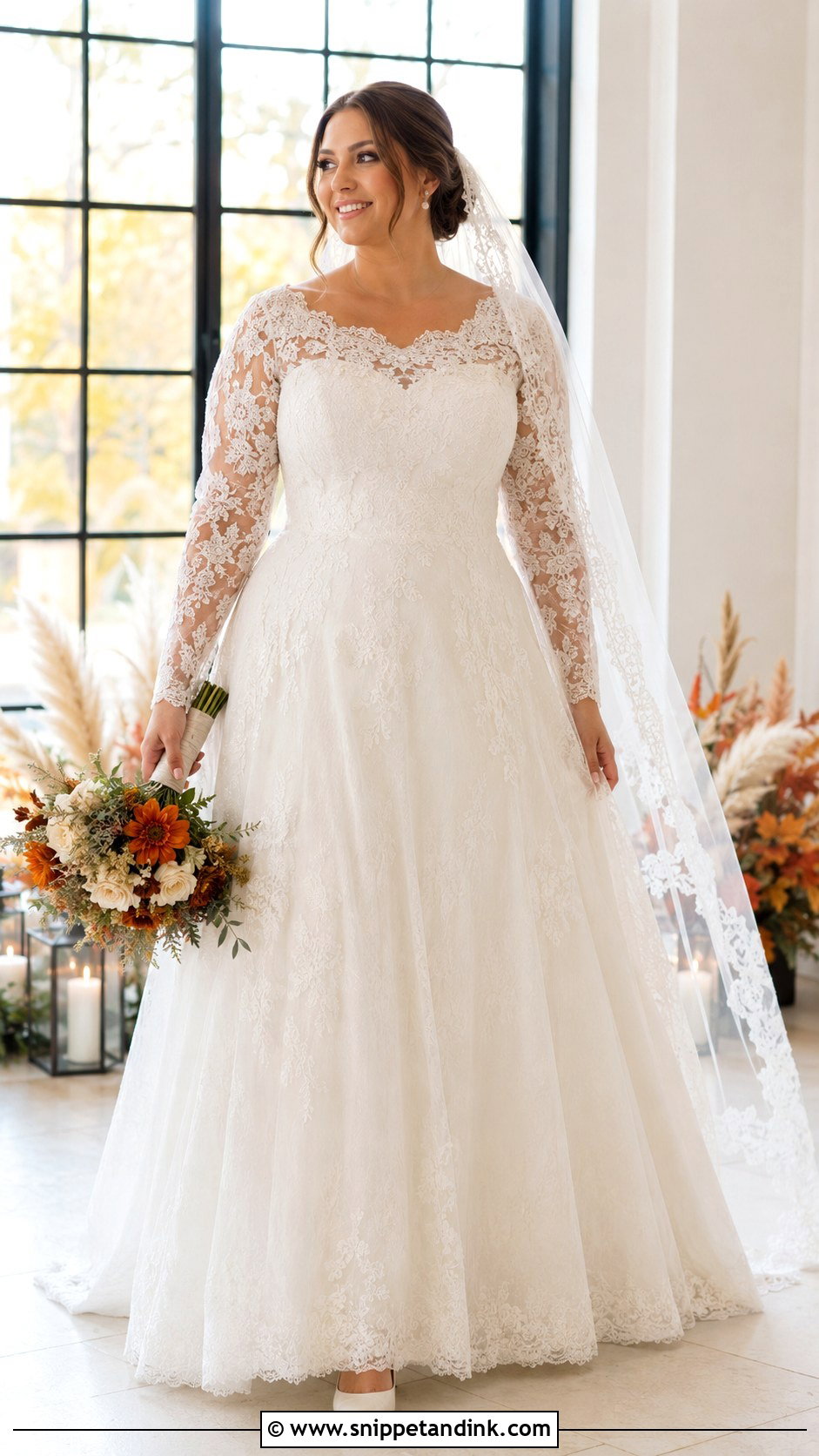
Lace sleeves are a comfort question before they’re a style question. Cuffs that grip the wrist or elbows that bind make you aware of the dress all evening, so bend your arms and reach forward at the fitting. Ivory lining under white lace reveals the pattern more clearly and softens the contrast. A bateau, scoop or modest V stops the lace looking crowded. If your veil has a lace edge, make sure the pattern complements the dress rather than fights it. Pearl studs, satin pumps and a simple low bun are all it needs, and it’s a sensible choice for cool months or air-conditioned rooms.
3. Strapless Ball Gown Wedding Dress
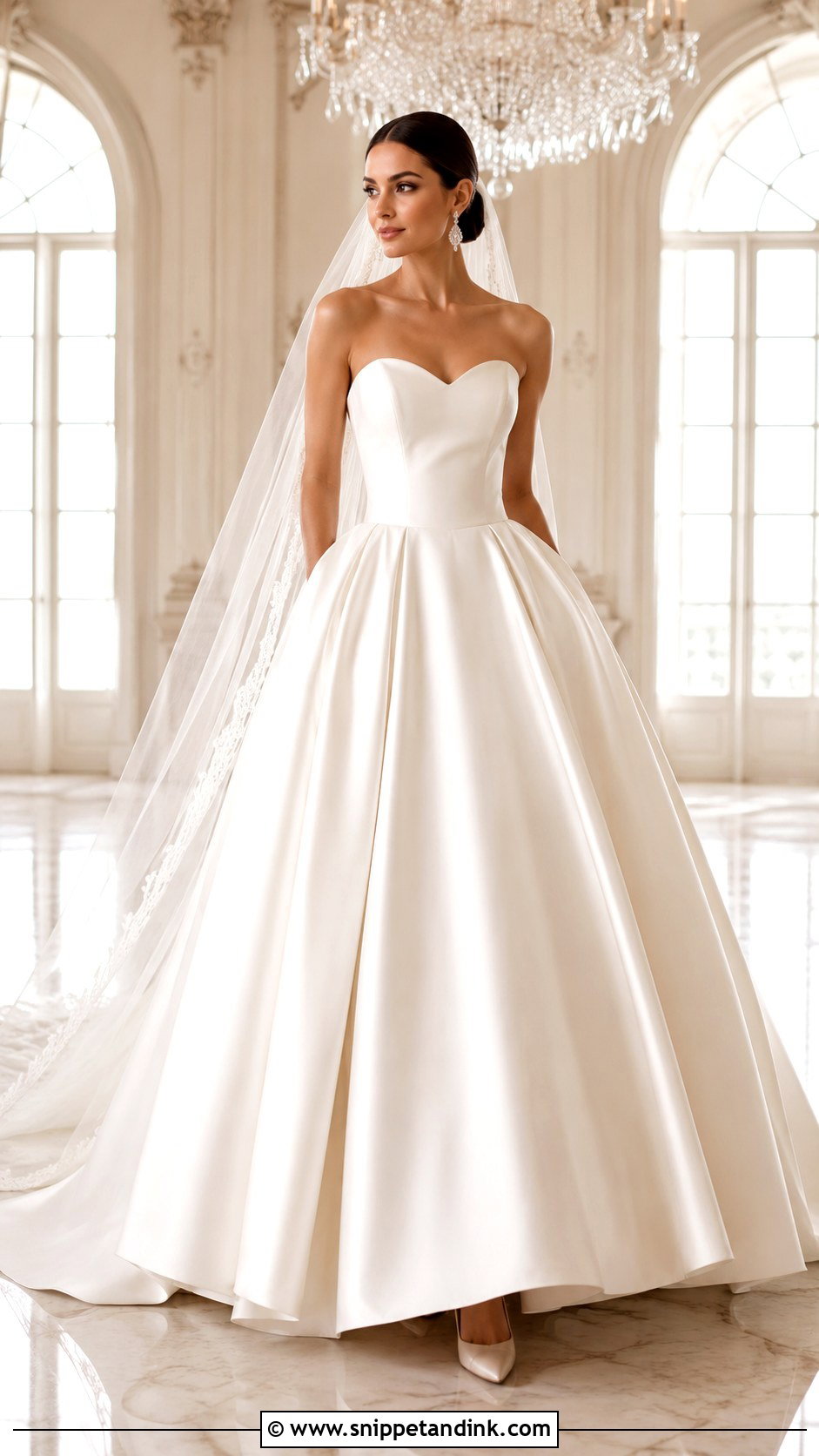
The test of a strapless ball gown is whether you stop touching the neckline after ten minutes. If you’re hitching it up, the internal structure isn’t doing its job, and that needs fixing at the fitting, not on the day. A straight neckline looks crisp; a gentle sweetheart shape softens it. Satin, mikado and silk blends give the skirt body. On a petite frame I’d keep the volume controlled rather than piling on layers; taller brides can carry a fuller skirt and a longer train. A cathedral veil, small sparkling earrings, a sleek updo and closed-toe pumps finish it.
4. Off-the-Shoulder Mikado Wedding Dress
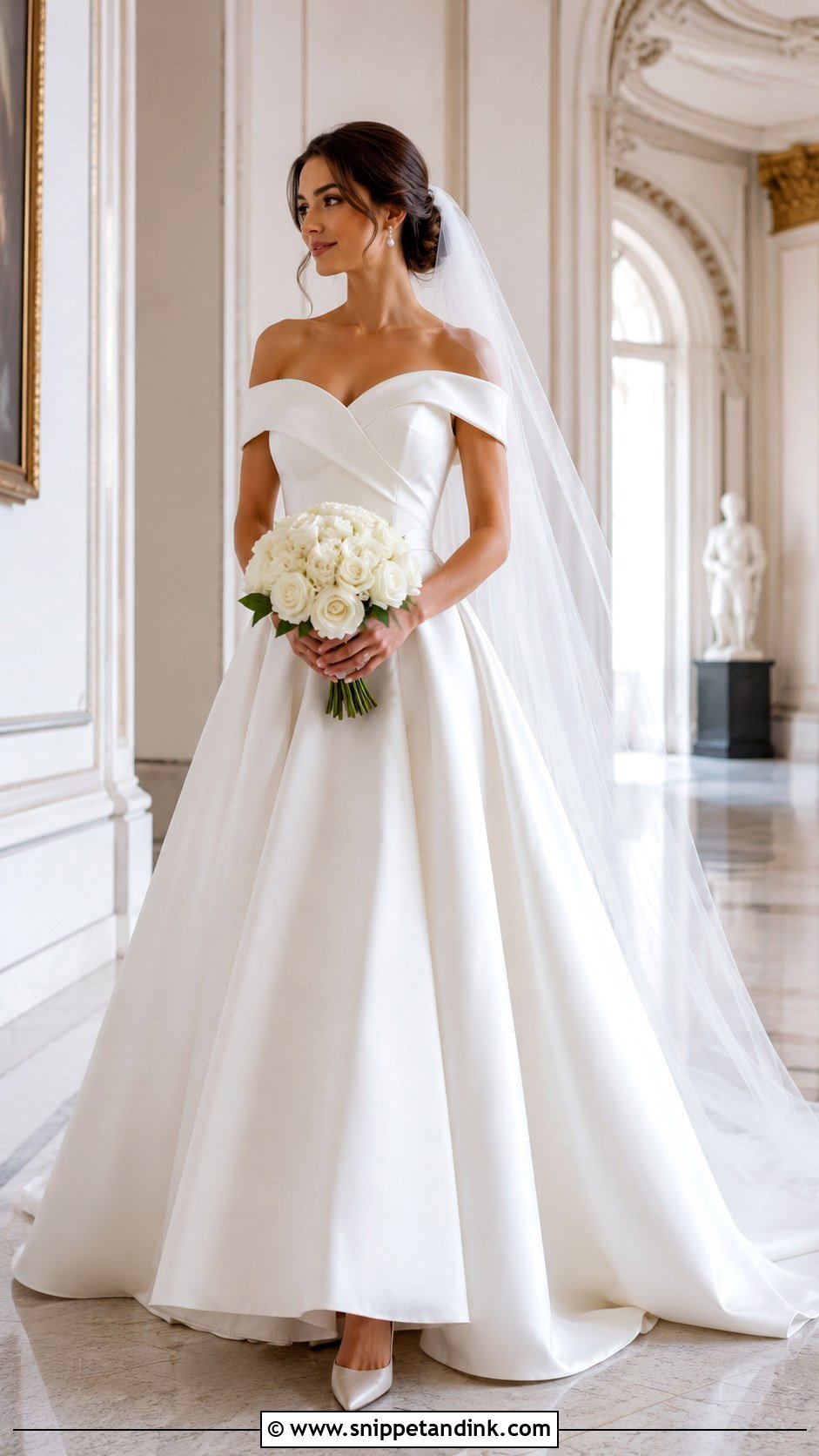
An off-the-shoulder Mikado wedding dress uses the stiffness of the fabric to make a sculpted fold around the collarbones. That same stiffness is why internal boning matters: mikado can’t stretch, so the sleeve band must be placed precisely or it will stop your arms rising past shoulder height. Ask the seamstress to check you can lift your arms, sit and hug comfortably. The neckline is the focal point, so skip the necklace. A neat chignon, pearl earrings, a plain chapel veil and pointed satin heels keep everything else quiet.
5. High Neck Crepe Wedding Dress
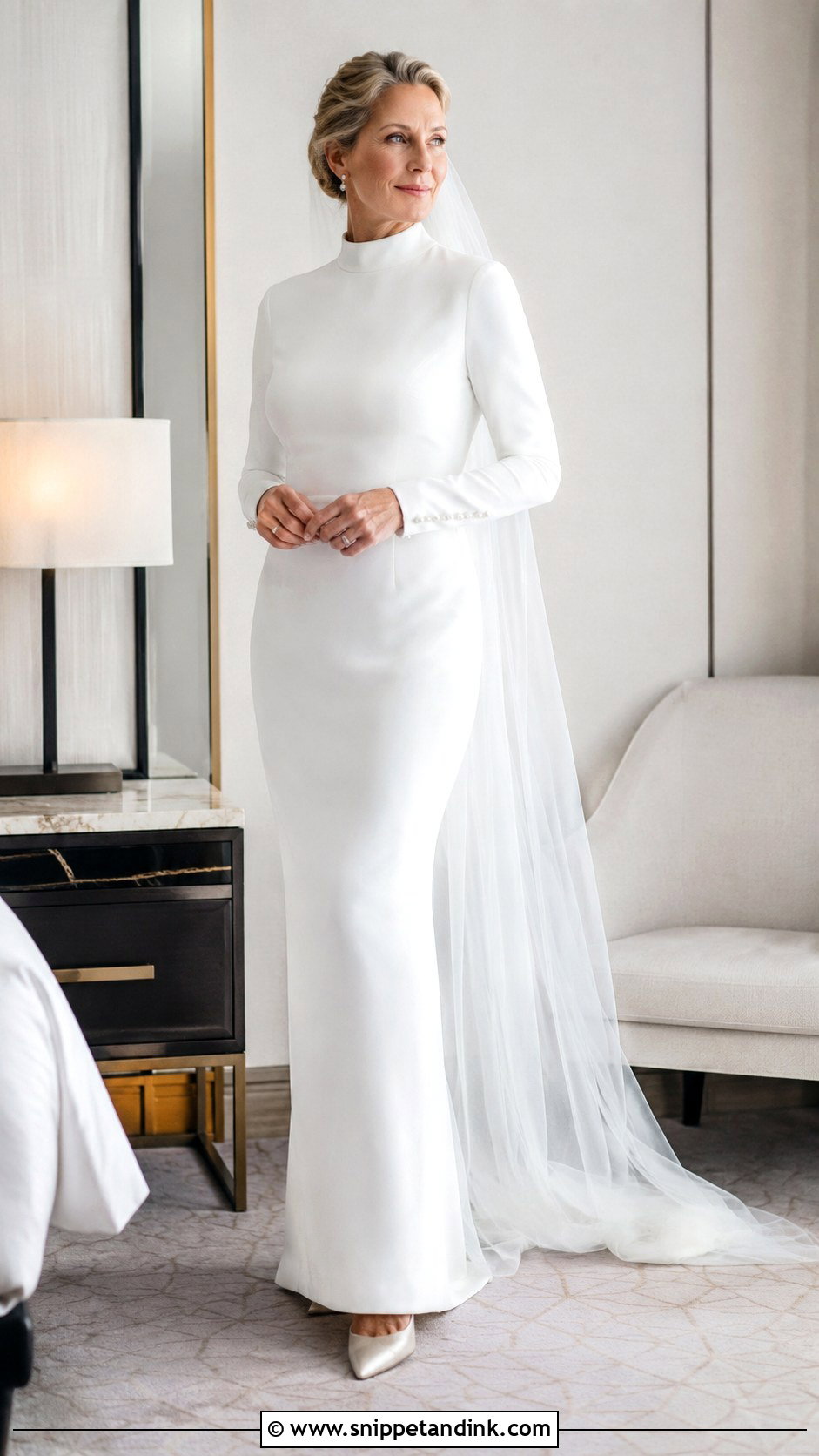
Crepe drapes close to the body, so a high-neck crepe gown shows the quality of your undergarments as much as the dress. Princess seams or subtle waist shaping keep it from looking severe. A sheath or soft A-line skirt keeps the line long. Pearl buttons add a small traditional detail. Wear your hair low to highlight the neck and shoulders, with a plain tulle veil at chapel or fingertip length. Pointed pumps and a few calla lilies or white roses suit modern hotels and city venues. I’d always try this one in daylight before buying.
6. Square Neck A-Line Wedding Dress
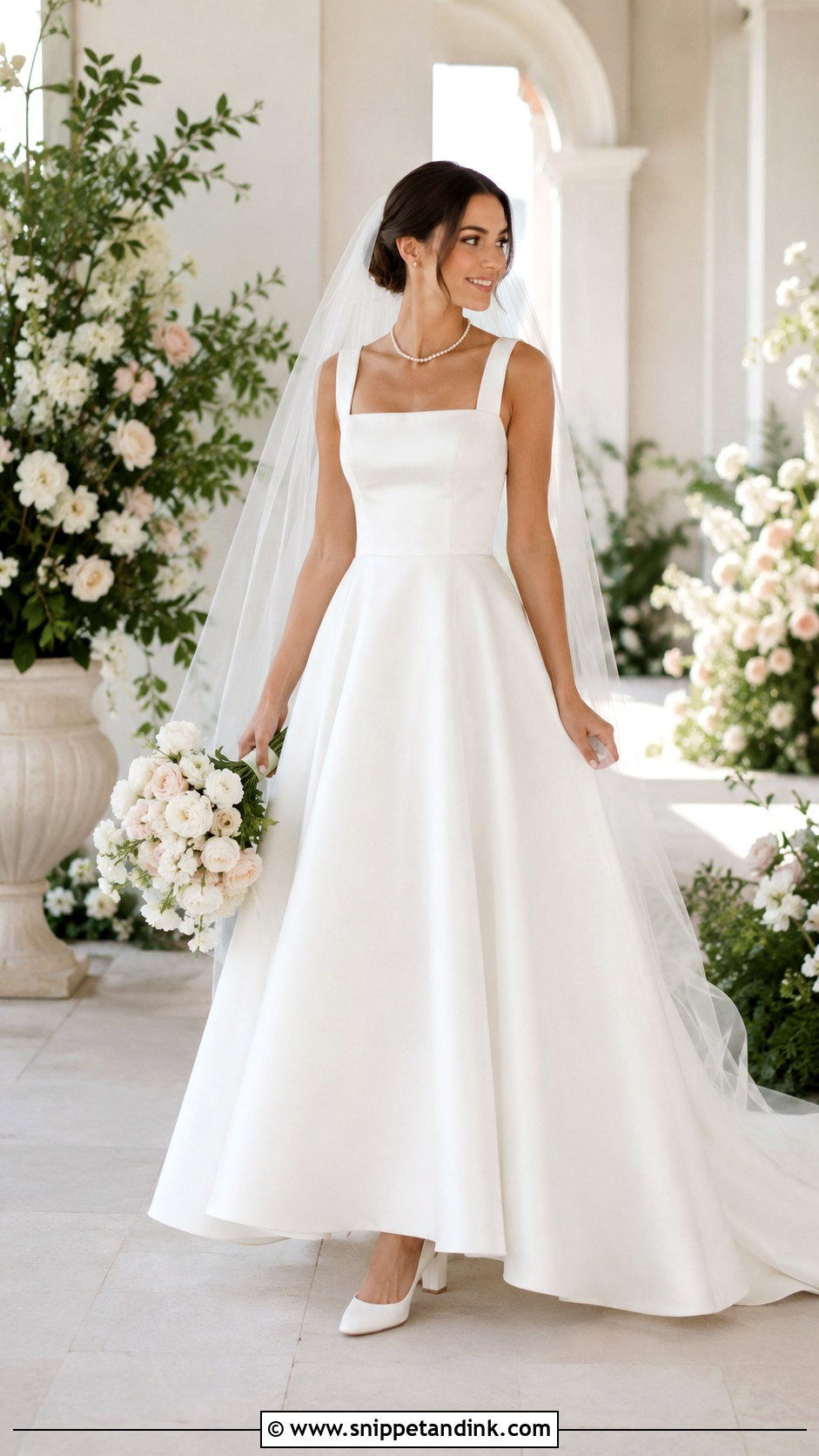
Strap length is what makes or breaks a square neckline. If the straps are even a little long, the neckline tips forward and the corners gape; a little short, and the bodice rides up. Get them adjusted while you wear your actual undergarments. A fitted bodice in satin, crepe or lace with an A-line skirt keeps it classic. This neckline welcomes a single strand of pearls. Low block-heel pumps make for comfortable walking. A waist-length or gathered fingertip veil suits the straight lines, and hair can go up, half-up or in waves tucked behind the shoulders.
7. Sweetheart Neckline Ball Gown Wedding Dress
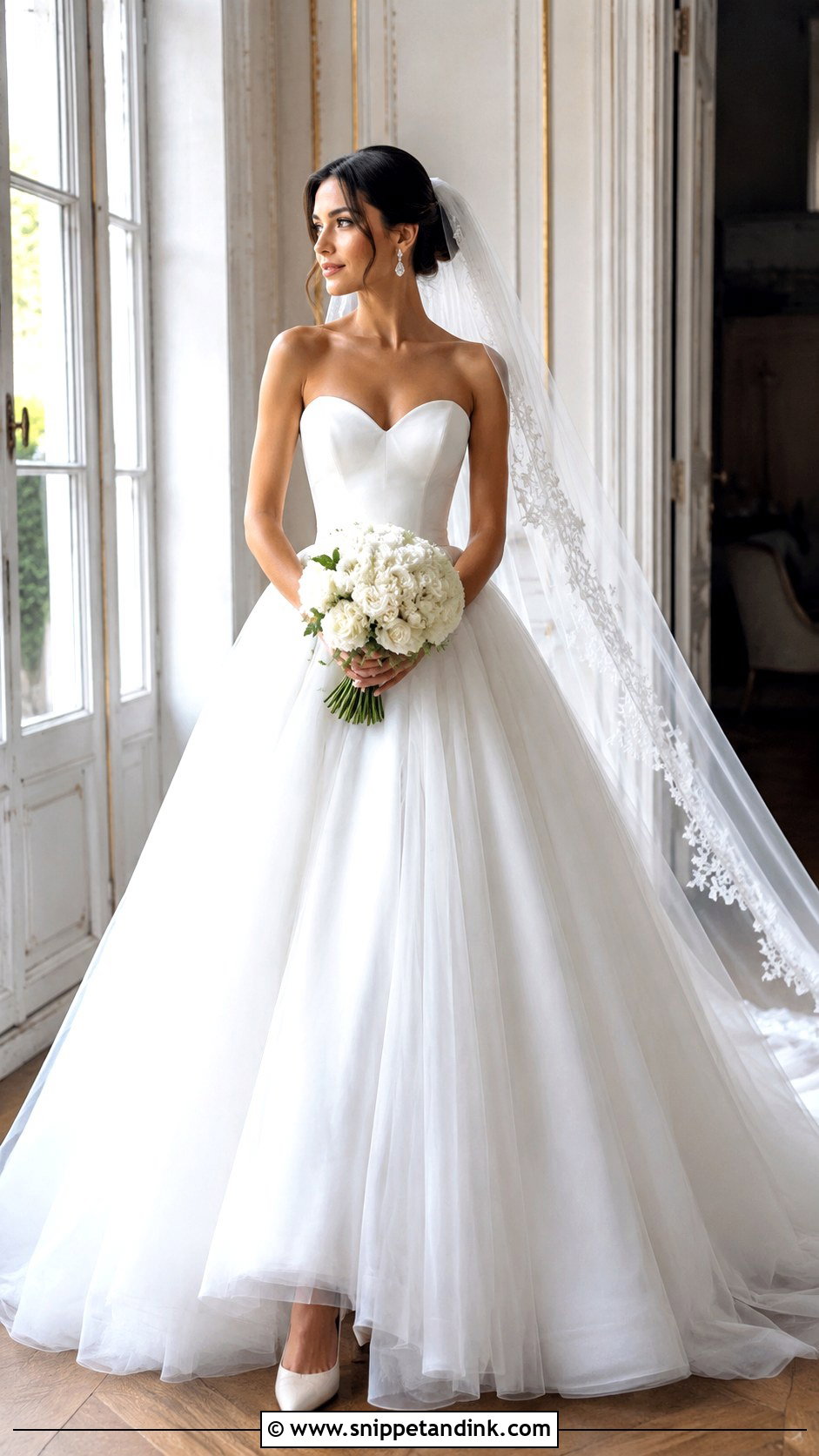
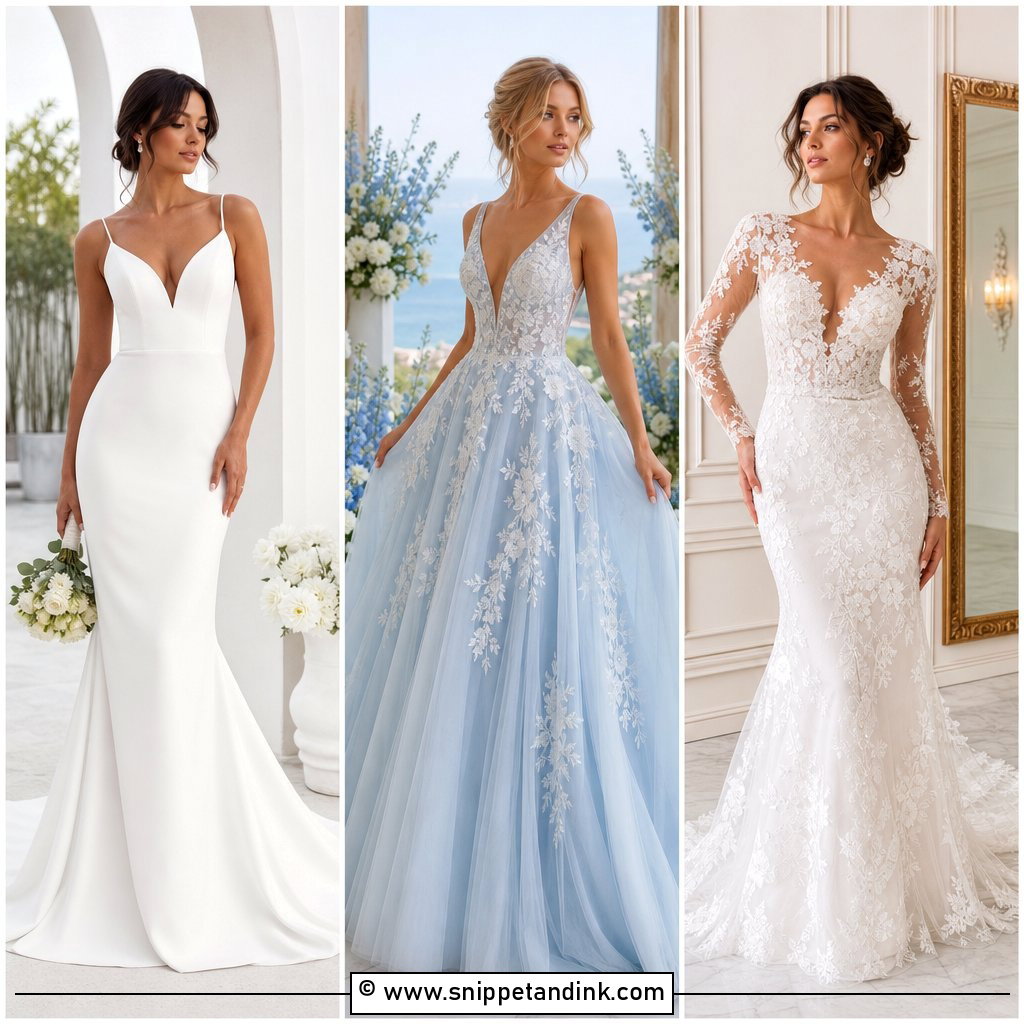
A classic sweetheart curves gently, it doesn’t plunge. The deeper the dip, the more modern and the less timeless the gown looks. Supportive boning and cups set at the right height keep the neckline secure; I check by having the bride bend forward to pick something up. Satin feels regal and layered tulle lighter. A defined waist seam or narrow belt marks the change from bodice to skirt. A cathedral veil, teardrop earrings, ivory pumps and a loose chignon suit it, and detachable straps or a sheer lace topper add coverage for a religious ceremony.
8. Cap Sleeve Lace Wedding Dress
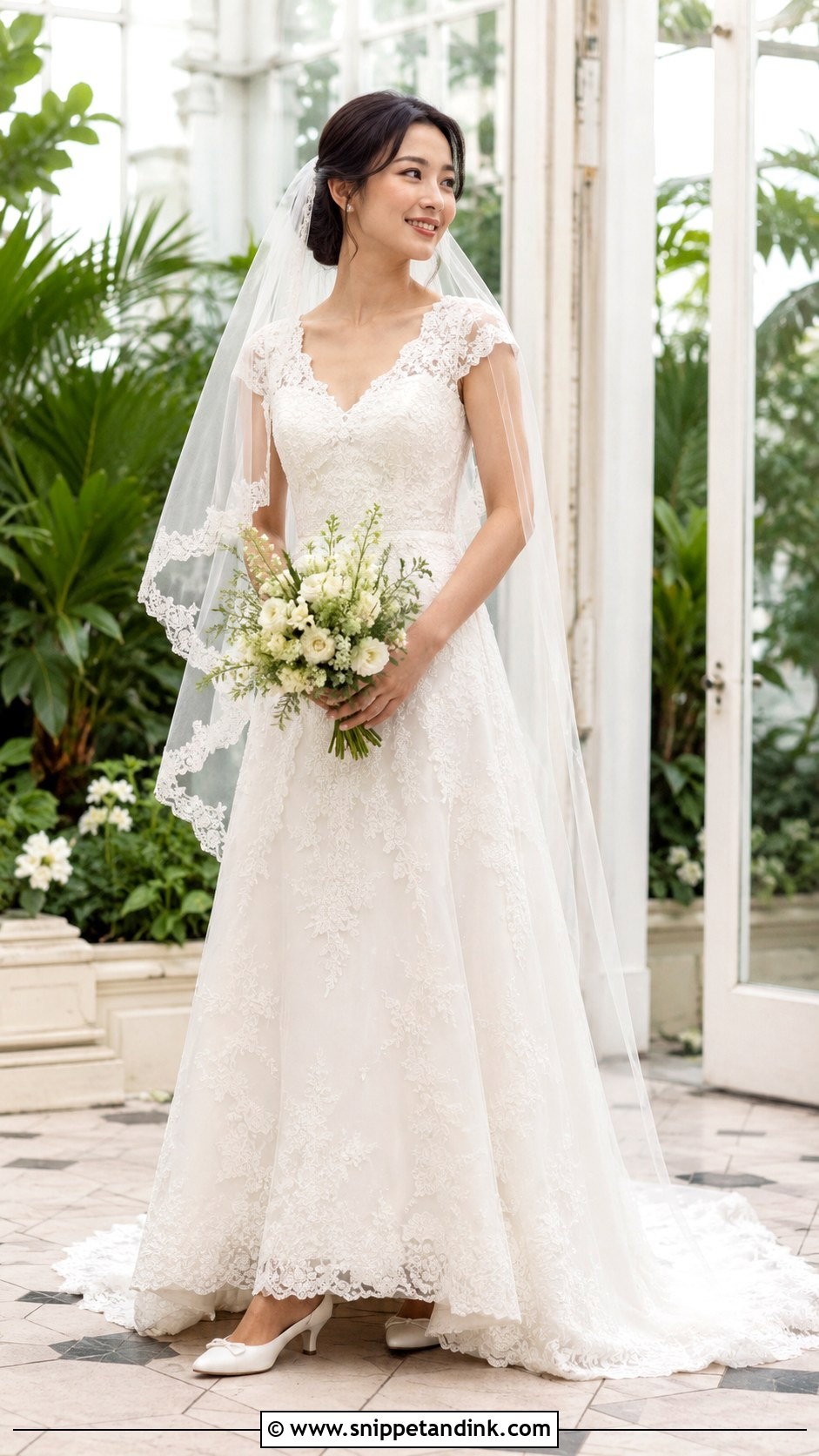
A cap sleeve lace wedding dress gives a little shoulder coverage without the weight of a full sleeve. The sleeve should follow your shoulder, not cut across the top of the arm; when it cuts in, it makes the arm look wider in photographs. A fitted lace bodice with a chiffon, tulle or satin A-line skirt is the classic pairing. A V-neck lengthens the torso, a bateau covers more. When lace already covers the neckline, sleeves and bodice, keep accessories simple: pearl studs, a lace-trimmed fingertip veil and satin kitten heels.
9. Boat Neck Satin Wedding Dress
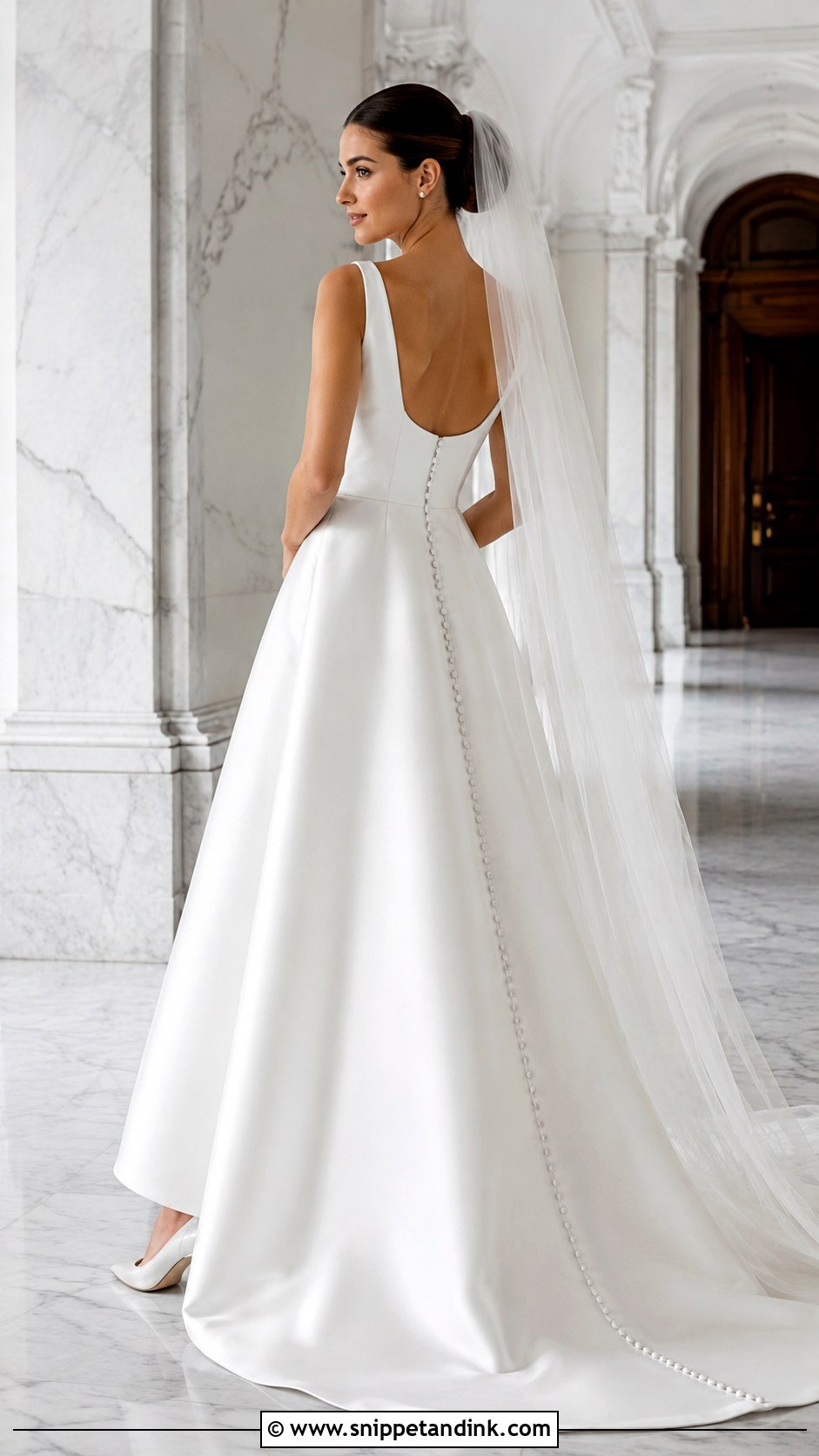
With a boat neck satin wedding dress, the shoulder fit is the whole dress. The neckline should lie flat from one shoulder point to the other; if it slips, pulls or folds, the shoulders need adjusting before anything else. Clean satin without beading shows off the construction. A low back with covered buttons gives interest behind while the front stays restrained. Short or three-quarter sleeves add coverage. Leave the neck bare and wear pearl or crystal studs, pointed pumps and a plain tulle veil under a neat bun.
10. V-Neck Chiffon Wedding Dress
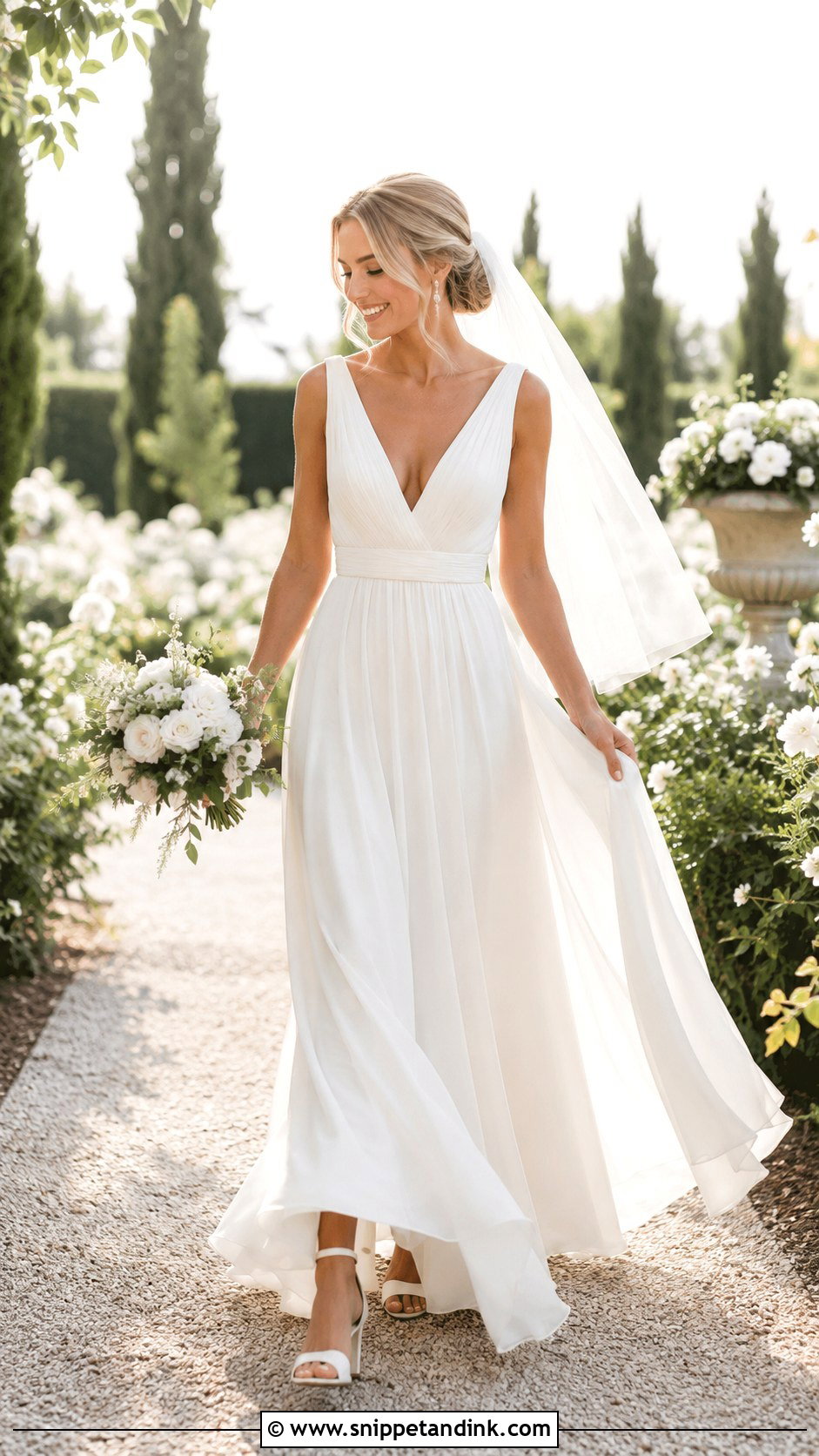
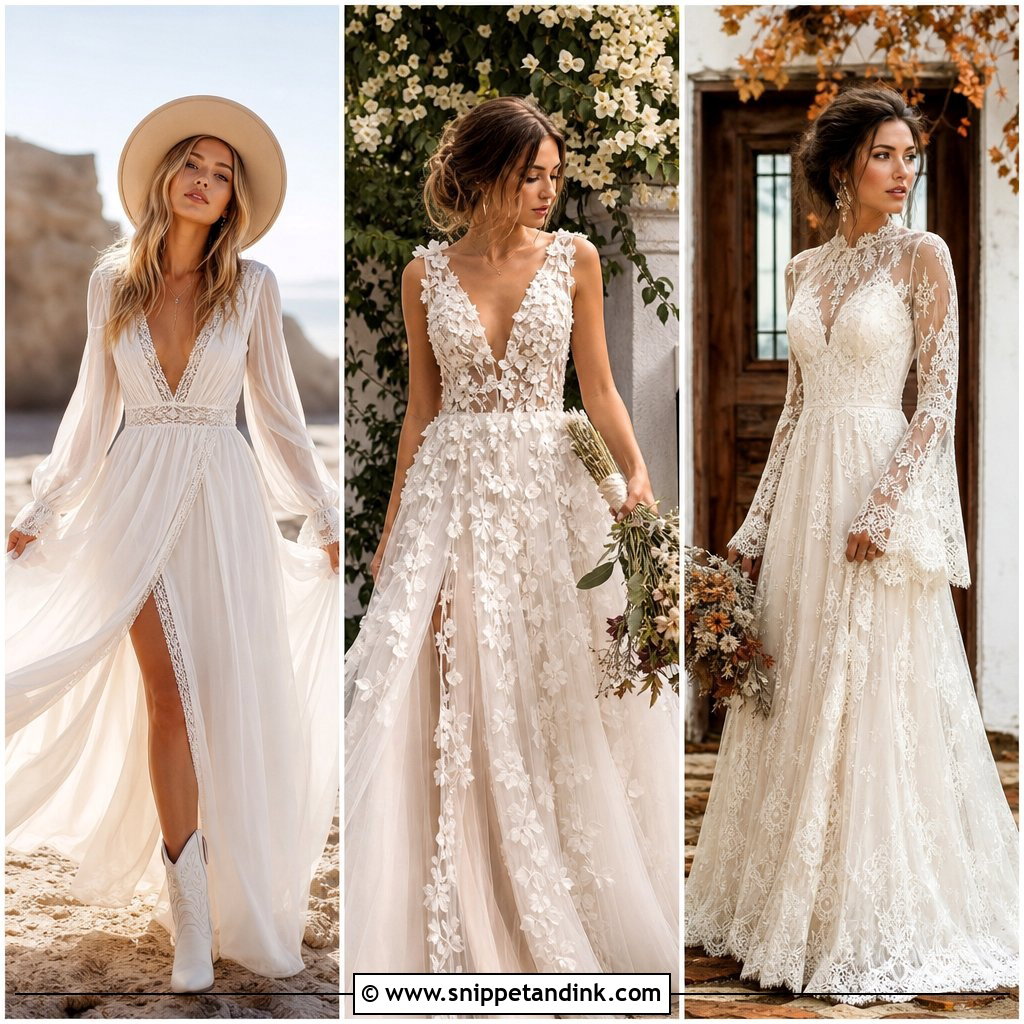
Chiffon is light enough for heat and outdoor ceremonies, and it moves with the slightest breeze. It’s also slightly transparent in strong sun, so look at the gown outside and under indoor lights before you commit; a fully lined skirt solves most of it. A V-neck needs a lined bodice and supportive straps so it stays in place when you bend or dance. An empire or natural waist can flow into a gathered A-line skirt. Low block heels, delicate drops, a light fingertip veil and soft waves suit the mood. Carry a loose bunch of white flowers and greenery rather than a heavy bouquet.
11. Minimalist Column Wedding Dress
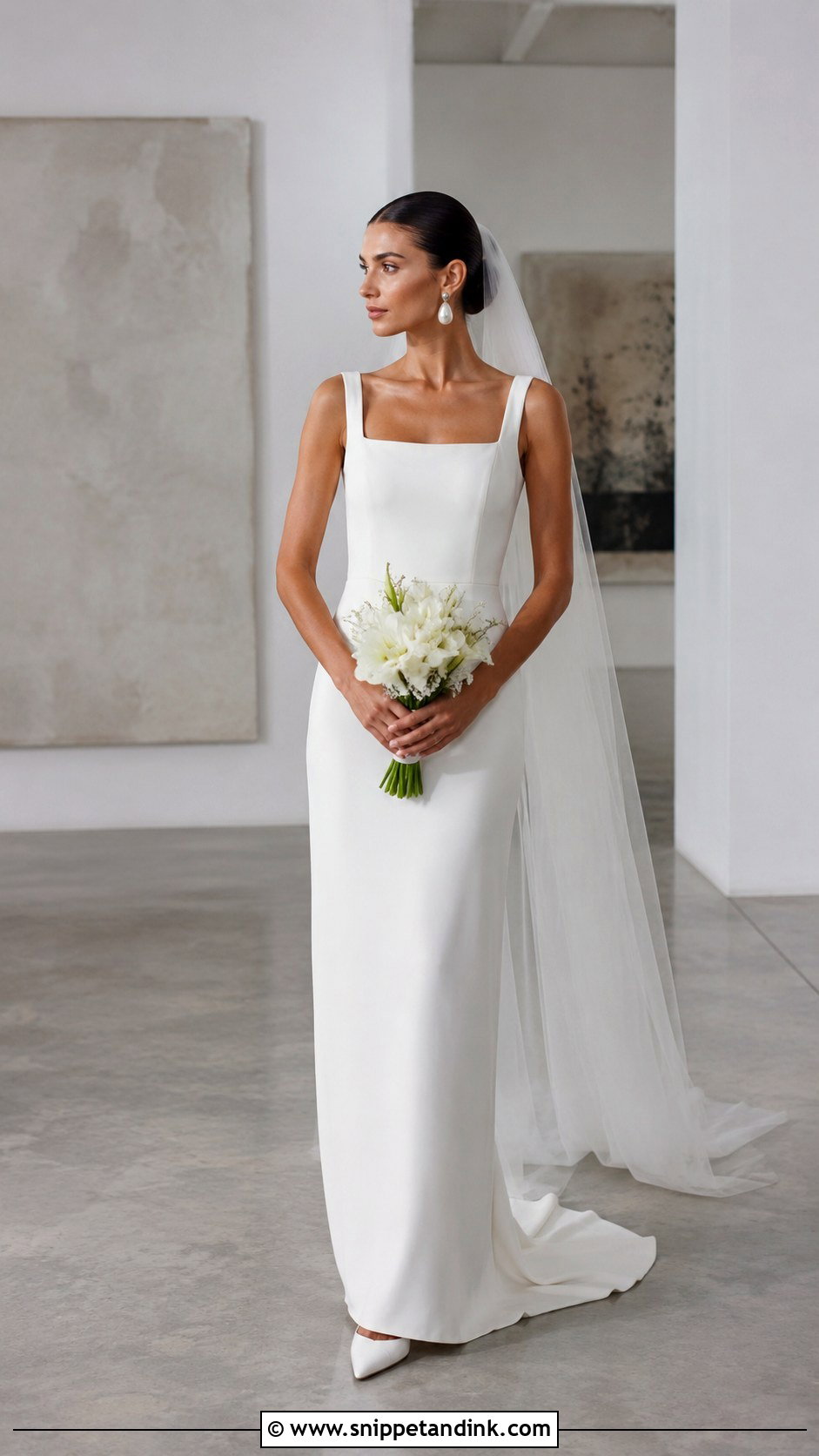
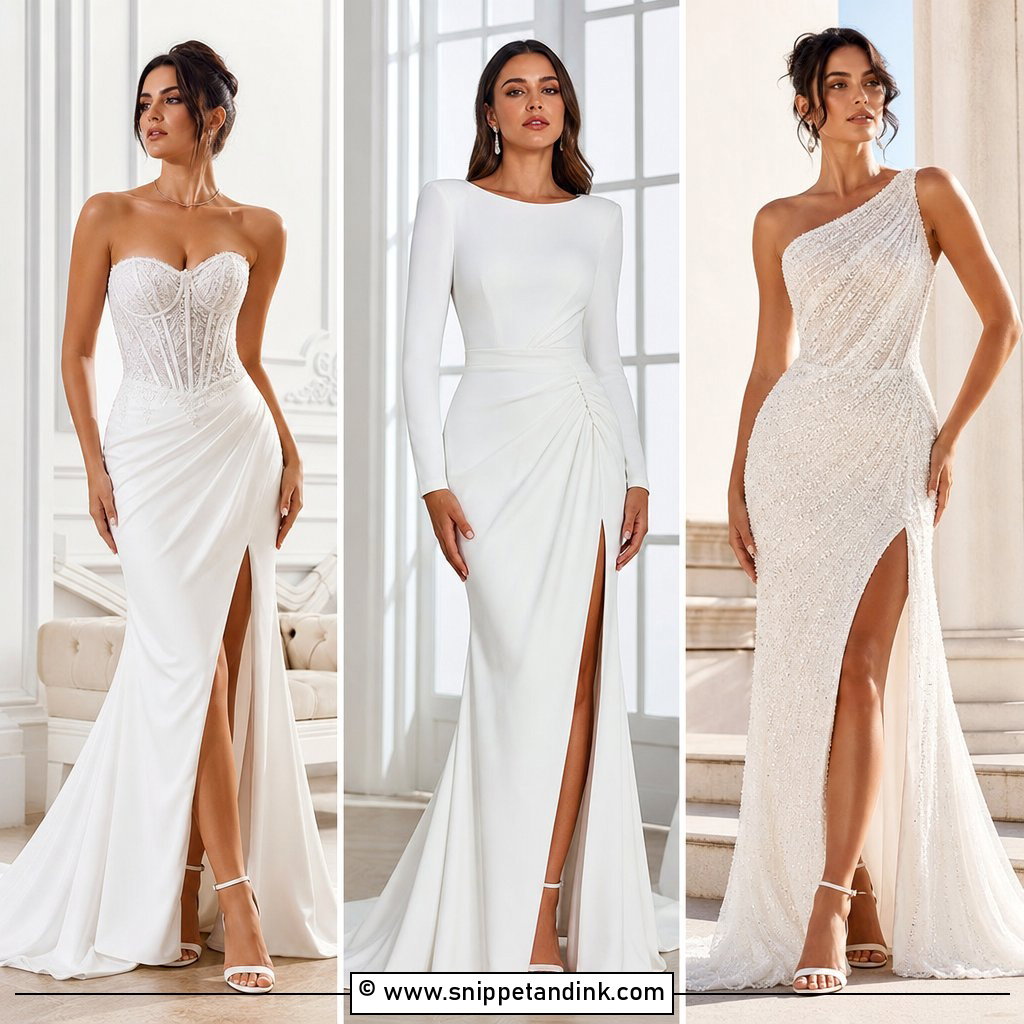
A column dress has no volume to distract the eye, so fit is everything. It should skim the body rather than squeeze it. Crepe, silk or matte satin give enough weight for a smooth vertical line, and curved seams and a defined waist give shape. A back slit is not optional; without one you’ll be taking tiny steps all day. High, square and simple V necklines all work. Pointed pumps, sculptural pearl earrings, a long plain veil and a sleek bun complete it, and a tailored cape or detachable long sleeves add coverage for the ceremony.
12. Fit-and-Flare Lace Wedding Dress
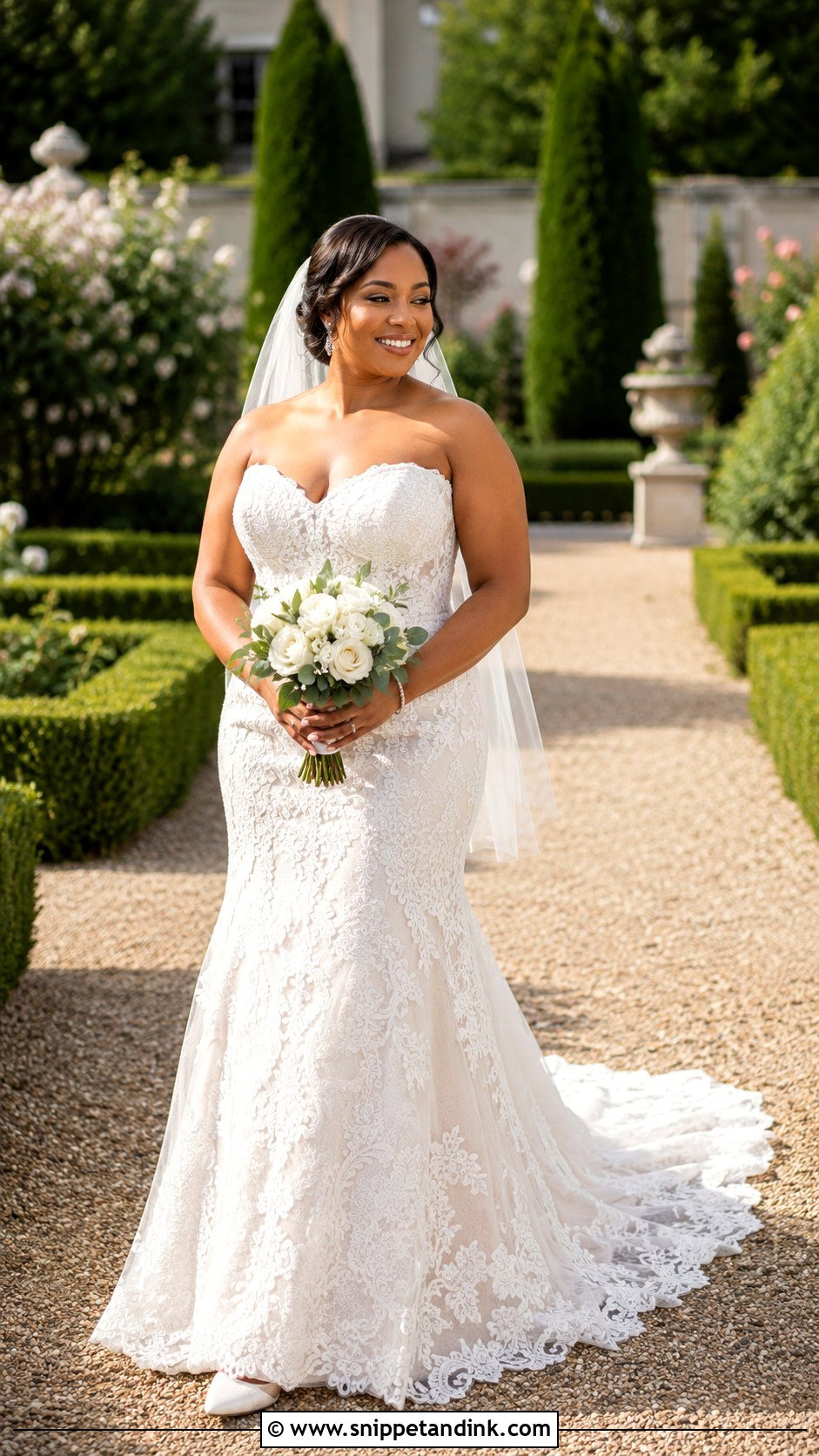
For a fit-and-flare that won’t date, I’d start the flare above or around the knee rather than low on the calf. A low flare looks dramatic, but it limits your stride and dates more quickly. Floral lace over a tonal lining gives texture without harsh contrast. Walk, sit and climb stairs at the fitting, and check that the lining doesn’t twist beneath the lace overlay as you move. A chapel train adds formality without the effort of a long one. Simple earrings, a single-layer veil and closed-toe heels, with hair swept back to show the lace neckline.
13. Empire Waist Wedding Dress
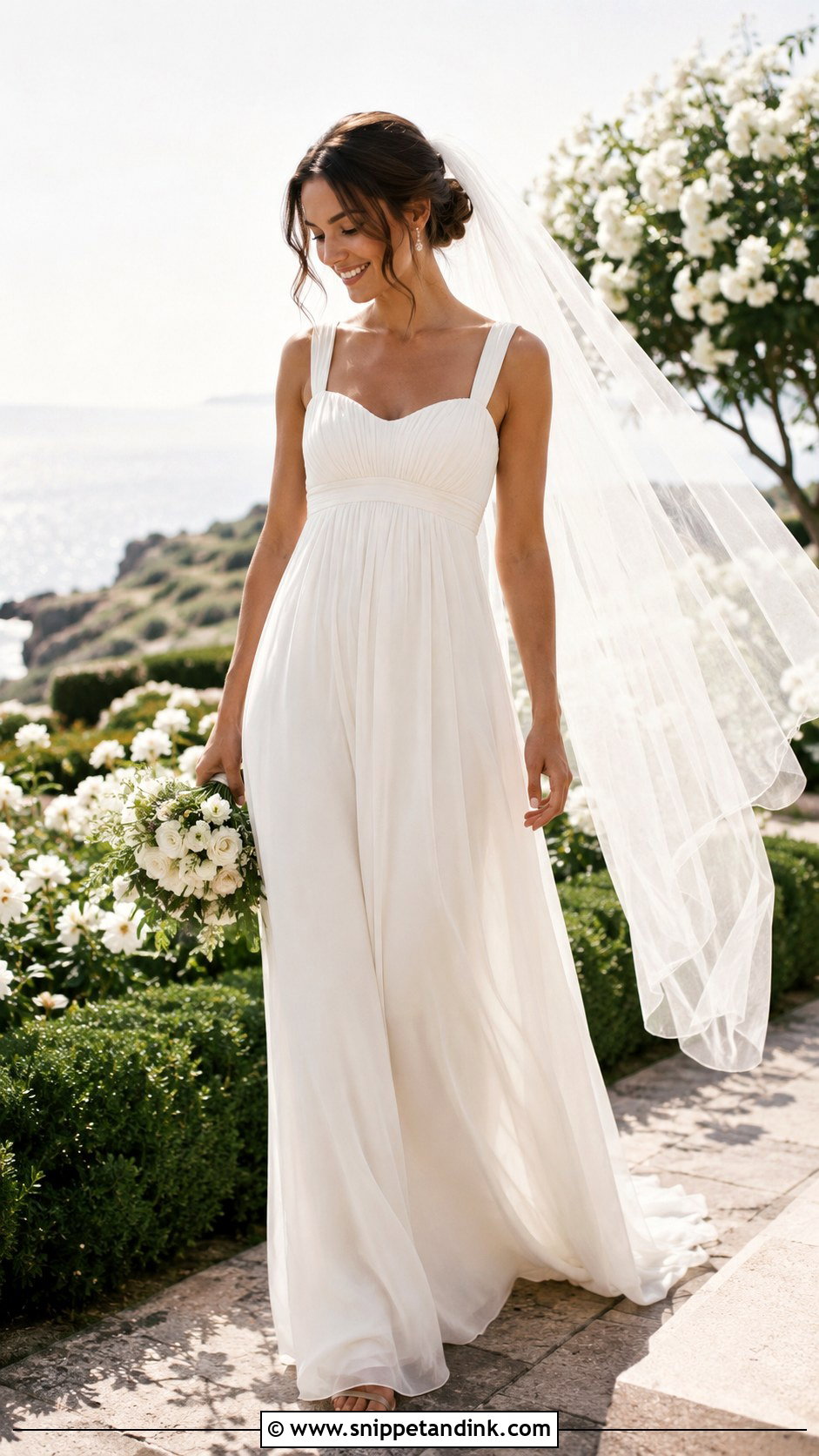
An empire waist sits just below the bust and lets everything below fall loosely, so there’s plenty of room through the middle. It’s a forgiving choice in hot weather or if you’d rather not feel anything at your waist. Silk chiffon, georgette and light crepe avoid bulk. A gathered bodice with wide straps or short sleeves balances the coverage. Avoid thick belts or heavy trim right under the bust, which break the long line. Hem it so the fabric floats just off the floor in your shoes. Delicate earrings, low sandals or pumps, a flowing fingertip veil and loose waves suit it.
14. Basque Waist Ball Gown Wedding Dress
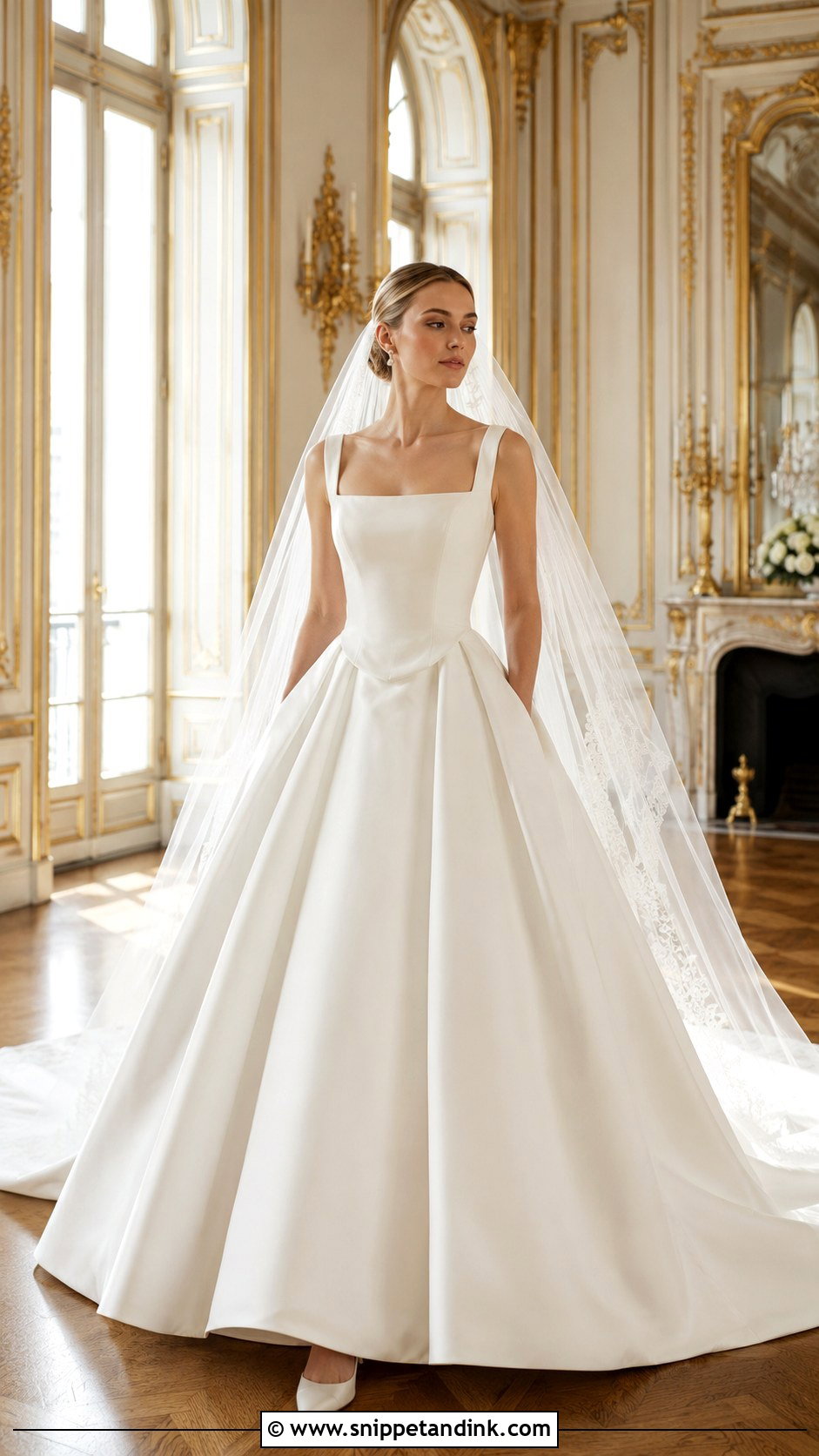
A basque waist ball gown drops the bodice below the natural waist in a point or curve, which lengthens the torso above a full skirt. Its success depends on torso length. Shorter torsos usually need a softer, shallower point so it doesn’t dig in when sitting; longer torsos carry a deeper basque well. Structured satin or mikado keeps the lines clean. A scoop, square or off-the-shoulder neckline balances it. Keep the bodice plain or use lace that follows the waistline, and finish with a cathedral veil, pearl studs and satin pumps.
15. Tea-Length Wedding Dress
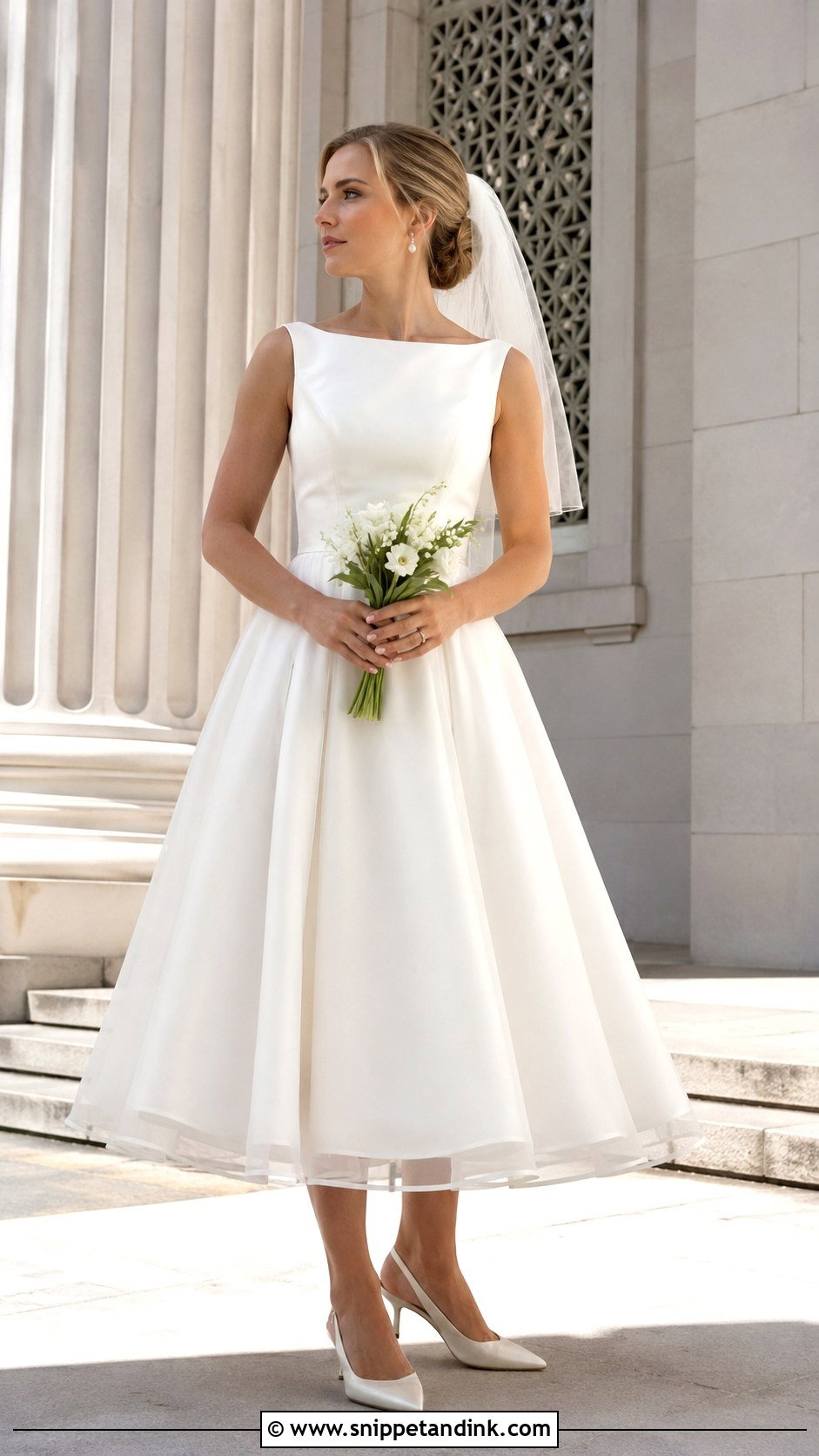
Tea-length dresses put the ankles and shoes on show, so the shoes need to look right from the side as well as the front. The hem sits between knee and ankle. A fitted bodice with a bateau, sweetheart or square neckline and a softly flared skirt keep it bridal. Satin, lace and structured organza hold the shorter shape. Too much skirt fullness tips this into costume, so I’d keep it modest. Pointed pumps, slingbacks or polished ballet flats, pearl earrings and a short veil finish it for a courthouse wedding, garden venue or small formal celebration.
16. Three-Quarter Sleeve Wedding Dress
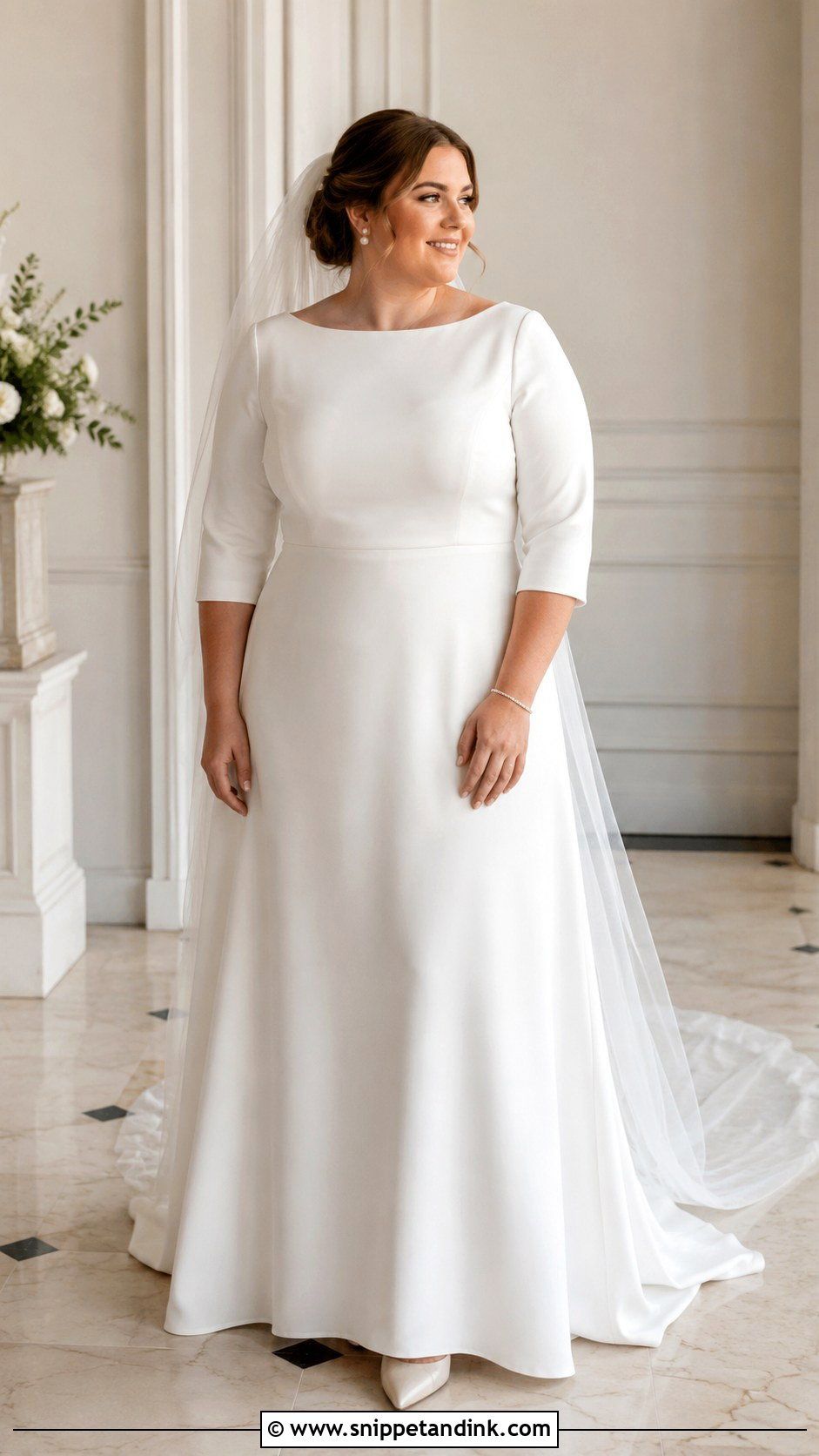
Three-quarter sleeves stop just below the elbow, leaving the wrists free, which looks lighter than full sleeves and makes holding a bouquet and a glass easier. Bend your elbows and raise your arms when you try it on; the sleeves shouldn’t pull across the shoulders or bunch at the inner elbow. Lace sleeves with a satin A-line skirt, or a complete crepe gown, both work. A bateau or modest V complements the sleeve length. A slim bracelet suits; a chunky cuff competes with the sleeve edge. Pearl earrings, pointed pumps, a chapel veil and a low bun or side-parted waves complete it.
17. Illusion Neckline Wedding Dress
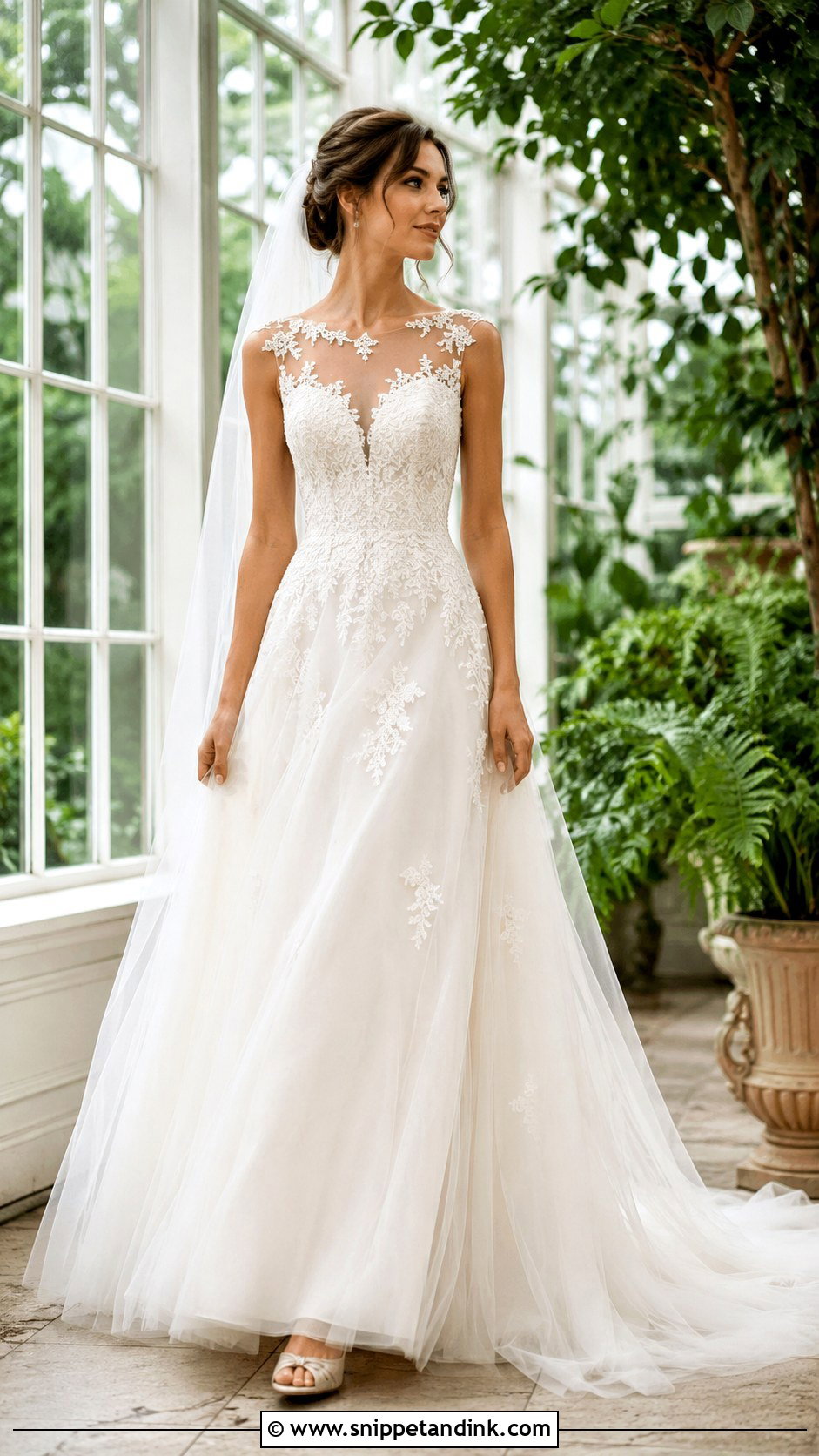
The mesh in an illusion neckline must match your skin tone. Too pale or too dark and it reads as a panel rather than disappearing, especially under camera flash. It should also lie flat across the chest and shoulders; sagging there usually means the shoulders or armholes need taking in. Pair it with an A-line or fit-and-flare skirt in satin, tulle or lace. Choose a plain veil so the appliqué on the dress isn’t competing. An updo keeps the neckline visible and stops hair rubbing against the fine mesh. Small earrings and satin heels are enough.
18. Pearl Button Back Wedding Dress
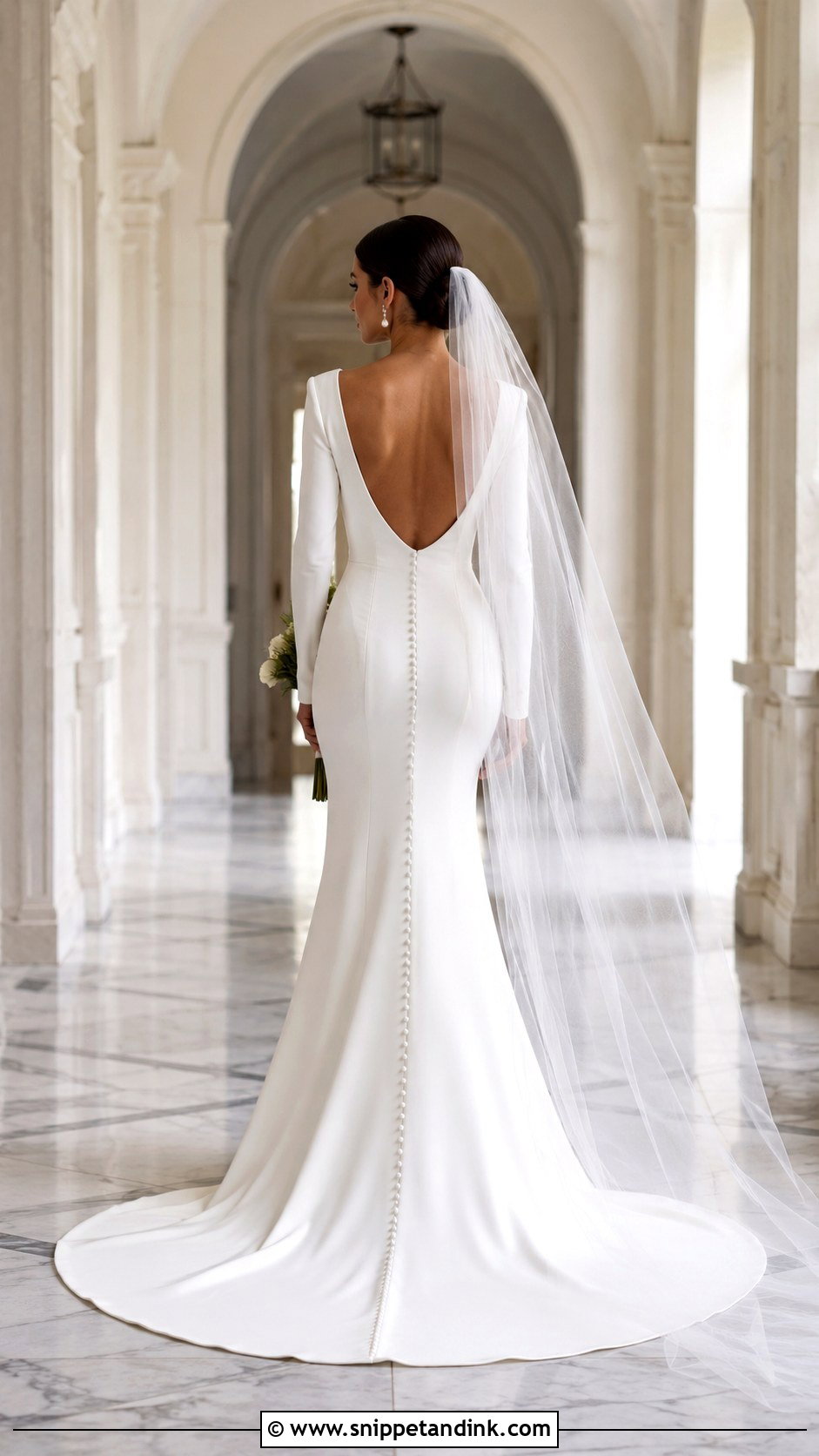
A row of pearl buttons down the back is one of the details guests see most, since they’re looking at your back during most of the ceremony. Satin A-lines, crepe sheaths and lace ball gowns all carry it, with buttons running from neck to waist or onward to the train. Ask whether they’re functional or decorative over a hidden zip; a zip saves a lot of time getting dressed. The back should lie smooth between closures with no pulling. A sheer veil shows the button line, and a secure bustle protects the lower buttons later. Pearl earrings, a low bun and pointed pumps complete it.
19. Cathedral Train Wedding Dress
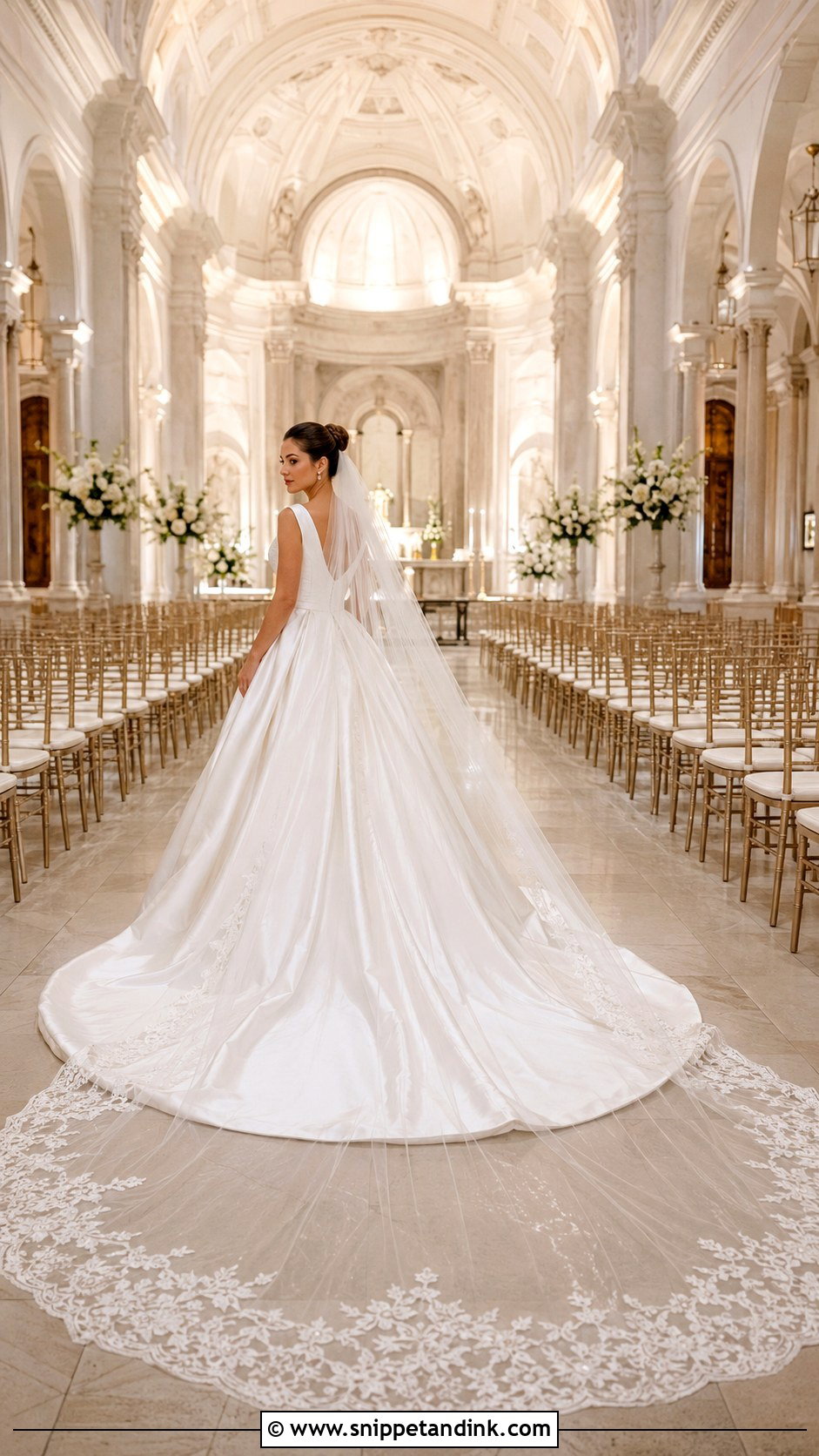
A cathedral train makes a grand entrance, but think about the practical side before falling for it: the length of the aisle, the car you’ll travel in and how crowded the room will be. Keep the bodice simple so the length doesn’t feel excessive, with a fitted waist and clean neckline. A satin ball gown, lace A-line or long-sleeve crepe all suit it, and a cathedral veil can mirror the train. You’ll need a well-made bustle for walking and dancing later, and an attendant who has practised fastening it. Supportive closed-toe heels, delicate earrings and a polished updo finish it.




20. Silk Slip Wedding Dress
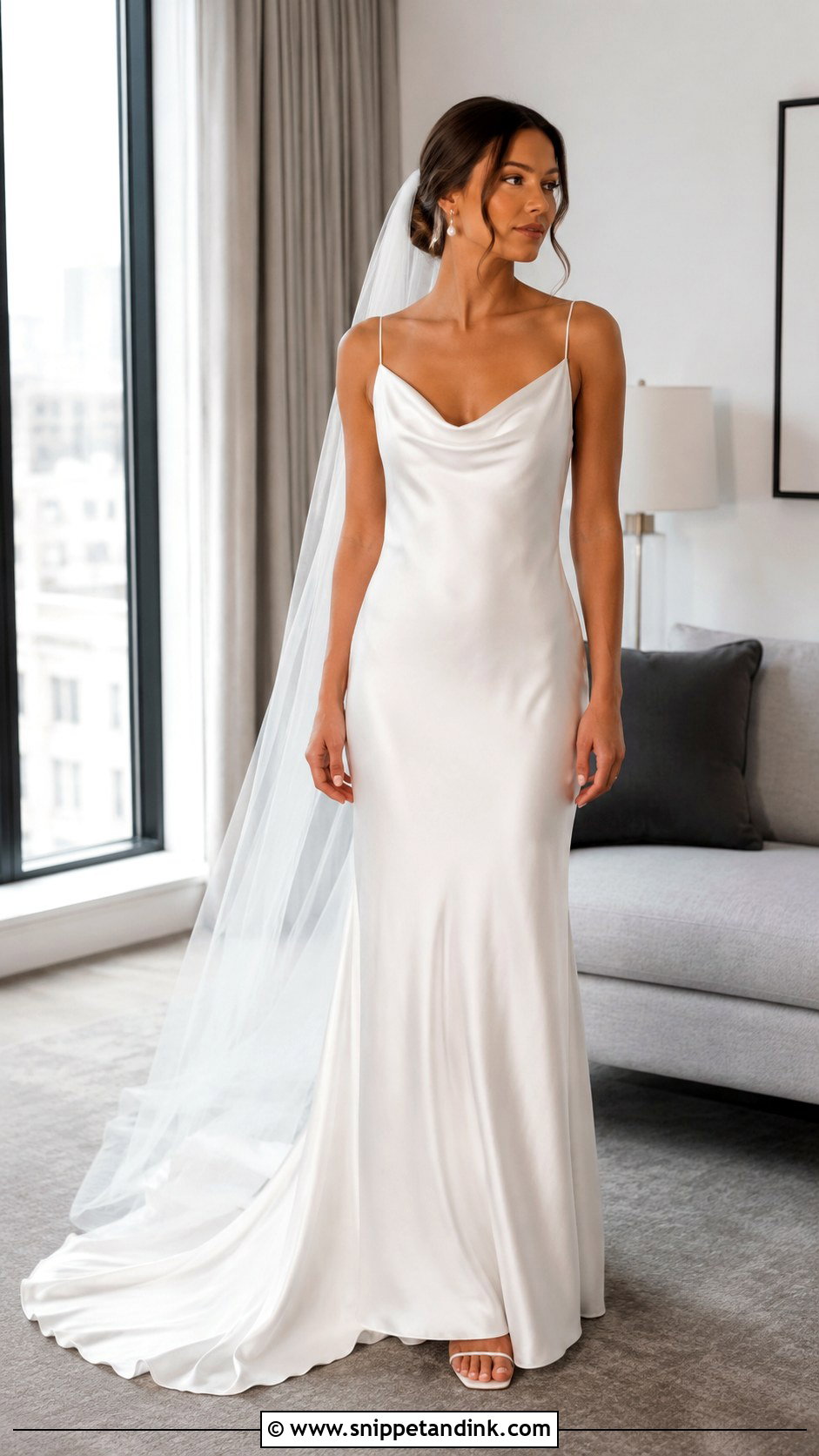
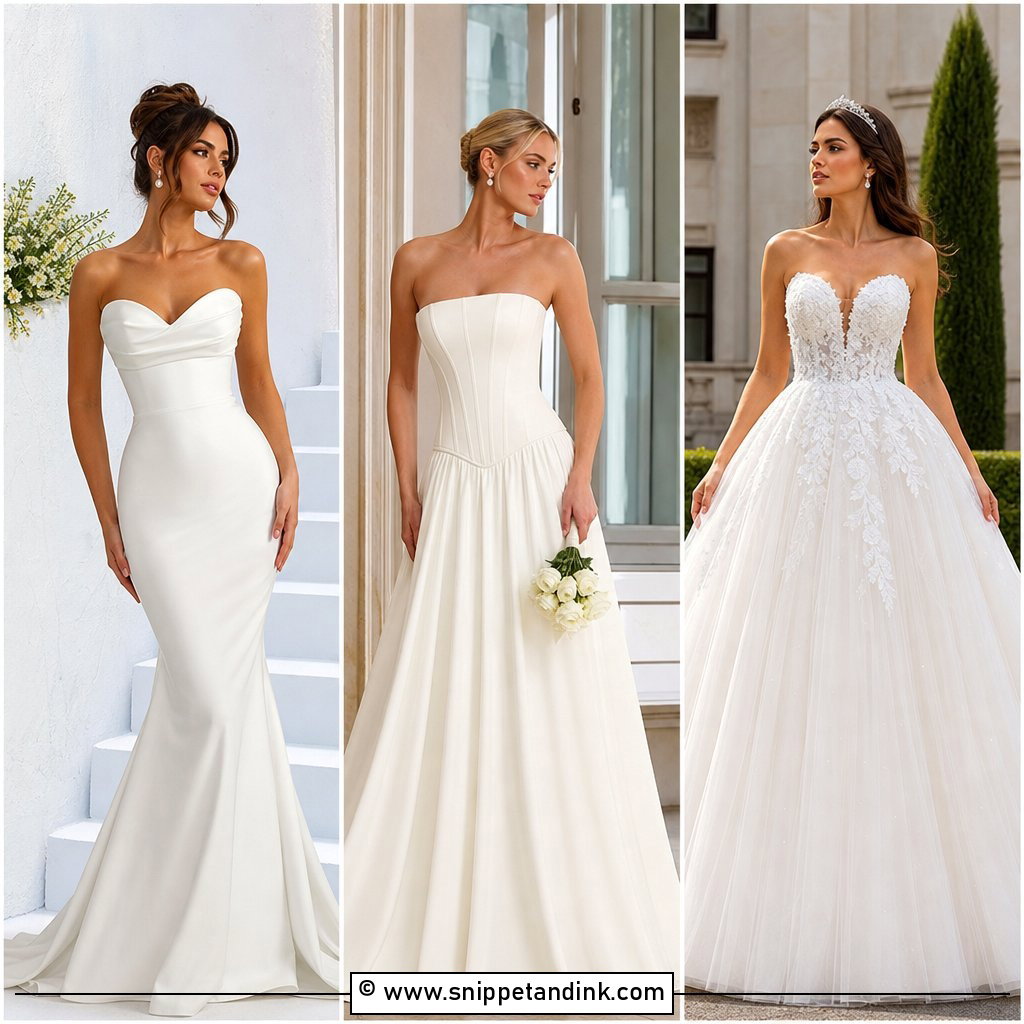
Silk slips need substantial fabric. Thin silk clings to every curve and shows any ridge, while a heavier silk satin with a smooth lining drapes gently. A cowl, modest V or square neckline frames the upper body, and wider straps give support; add a sheer silk cape for coverage. Smooth, laser-cut undergarments matter. If the dress is cut on the bias, let it hang for a day or two before the final hem, because bias-cut fabric drops as it settles, and check the hem with your wedding shoes on. Delicate sandals, pearl drops, a long plain veil and a low bun or glossy waves suit it.
The Last Hour Before You Leave: Getting Into the Dress
Getting into a structured gown takes longer than most brides plan for, and the morning schedule rarely allows for it. Give yourself at least thirty minutes for the dress alone, and more for loop-and-button backs, which can take a while to fasten without a button hook.
A dressing order that saves trouble
- Finish hair and makeup first, wearing a button-front shirt so nothing goes over your head.
- Put on undergarments and shoes before the dress, since bending to fasten a strap afterwards creases the bodice.
- Step into the gown rather than pulling it over your head, with someone holding the skirt off the floor.
- Fasten from the bottom up, then check the neckline sits correctly while you breathe normally.
- Add the veil, earrings and bouquet last, and do a final check from behind.
Choose one person to handle the dress all day, ideally someone who came to your final fitting and knows how the bustle and any detachable pieces work. Eat something before you get dressed; it’s far easier than trying to eat in a fitted bodice.
Fit Turns a Good Gown Into Your Gown
The gown worth choosing is the one you stop noticing once you have it on. Try several shapes, including ones that don’t match what you pictured, and look at movement, support, fabric weight and how the dress looks from behind and in profile. Good alterations turn a dress that fits into one that feels made for you. Choose accessories that support it rather than compete. Lace, satin, crepe, chiffon or silk, a well-fitted classic gown will still look right when you open the album years from now.
You'll Like These Ideas:









Leave a Reply