
A dress stays classic when its details come from good construction rather than from a passing trend. Lace sleeves, satin ball gowns, tea-length hems and beaded Art Deco gowns have all been worn by brides for generations, and they still look right in a modern ceremony. You don’t need to copy one decade. Pick the details that flatter your body and suit your venue, then finish with the small things that make old bridal style work: pearl buttons, a well-fitted veil, gloves if you like them, and shoes you can stand in. Below are twenty-five gowns I’d happily dress a classic bride in, with what I watch for in each.
Can Your Mother’s Gown Be Reworked for You?
Brides who love classic dresses often have one waiting in a box at home. A family gown can usually be adapted, but some changes are easy and others aren’t, and it helps to know which before you fall in love with a plan.
Usually possible
- Taking in the bodice and side seams, since there’s fabric to remove.
- Removing sleeves, adding a new neckline or swapping a high collar for a lower one.
- Shortening the hem or removing a train.
- Adding lace, beading or a sash from new fabric chosen to blend in.
Often difficult
- Letting a gown out. Older dresses rarely have much seam allowance, and the hidden fabric may have faded to a different shade than the outside.
- Repairing silk that has split along fold lines.
- Matching yellowed fabric exactly with new material.
Take the dress to a seamstress who handles vintage work before deciding anything, and have it cleaned by a specialist first so you see its true color. Give yourself plenty of months; reworking an old gown takes longer than altering a new one, because each step is careful handwork.
1. Long Sleeve Lace Wedding Dress
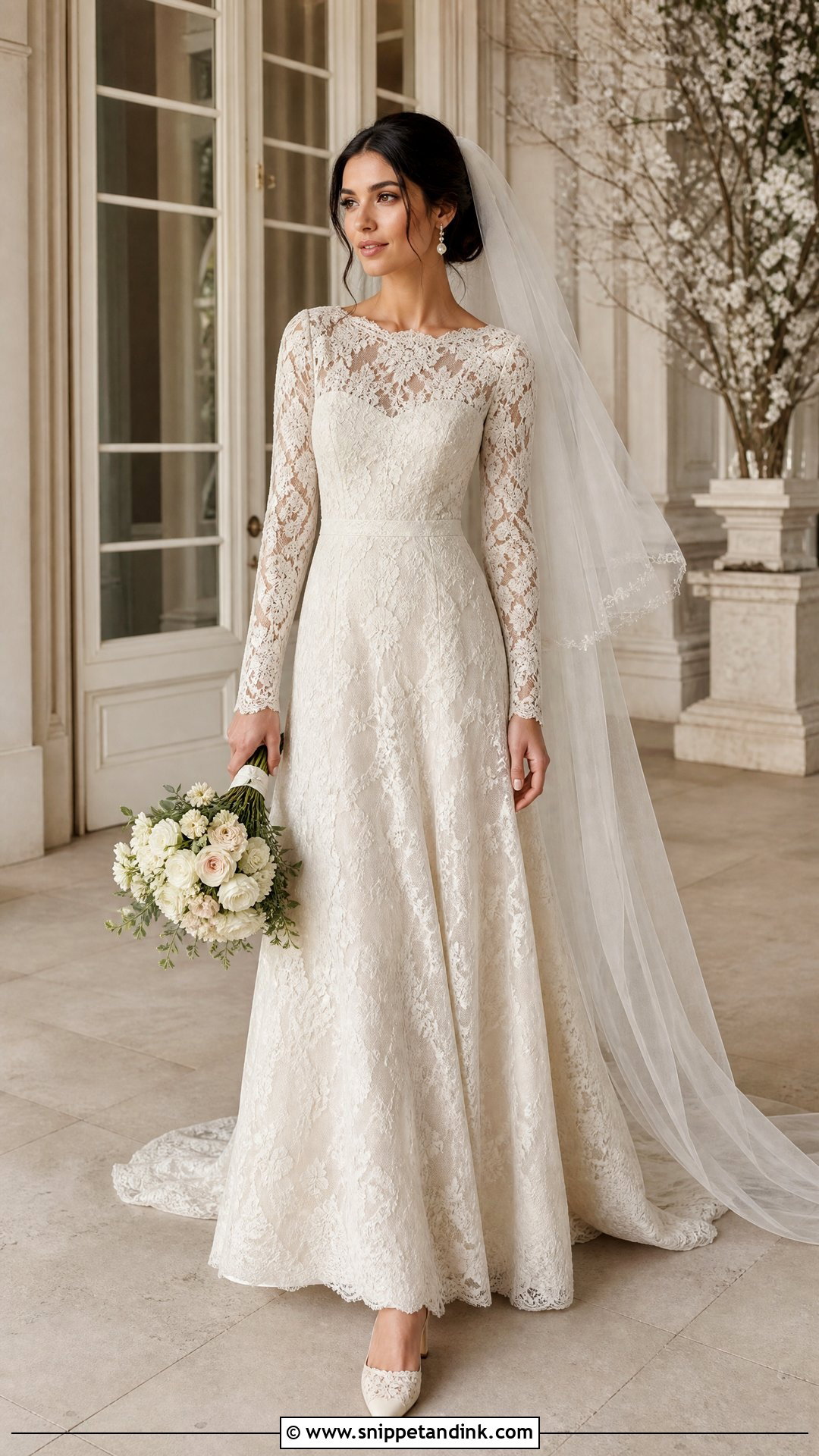
Chantilly lace is fine and flat, so it lies smoothly over a fitted lining, which is why it suits long sleeves better than chunky guipure. A high neckline reads regal; a deep V softens it for a more current bride. I pair it with pearl drops, a low bun and a fingertip veil so the lace stays the focus, plus ivory pointed pumps or delicate ankle straps. Fall and winter weddings suit it, and in a garden it gives coverage without feeling heavy. Check the cuffs. Lace sleeves often come long, and they should stop at the wrist bone, not cover your ring hand.
2. Tea Length Wedding Dress
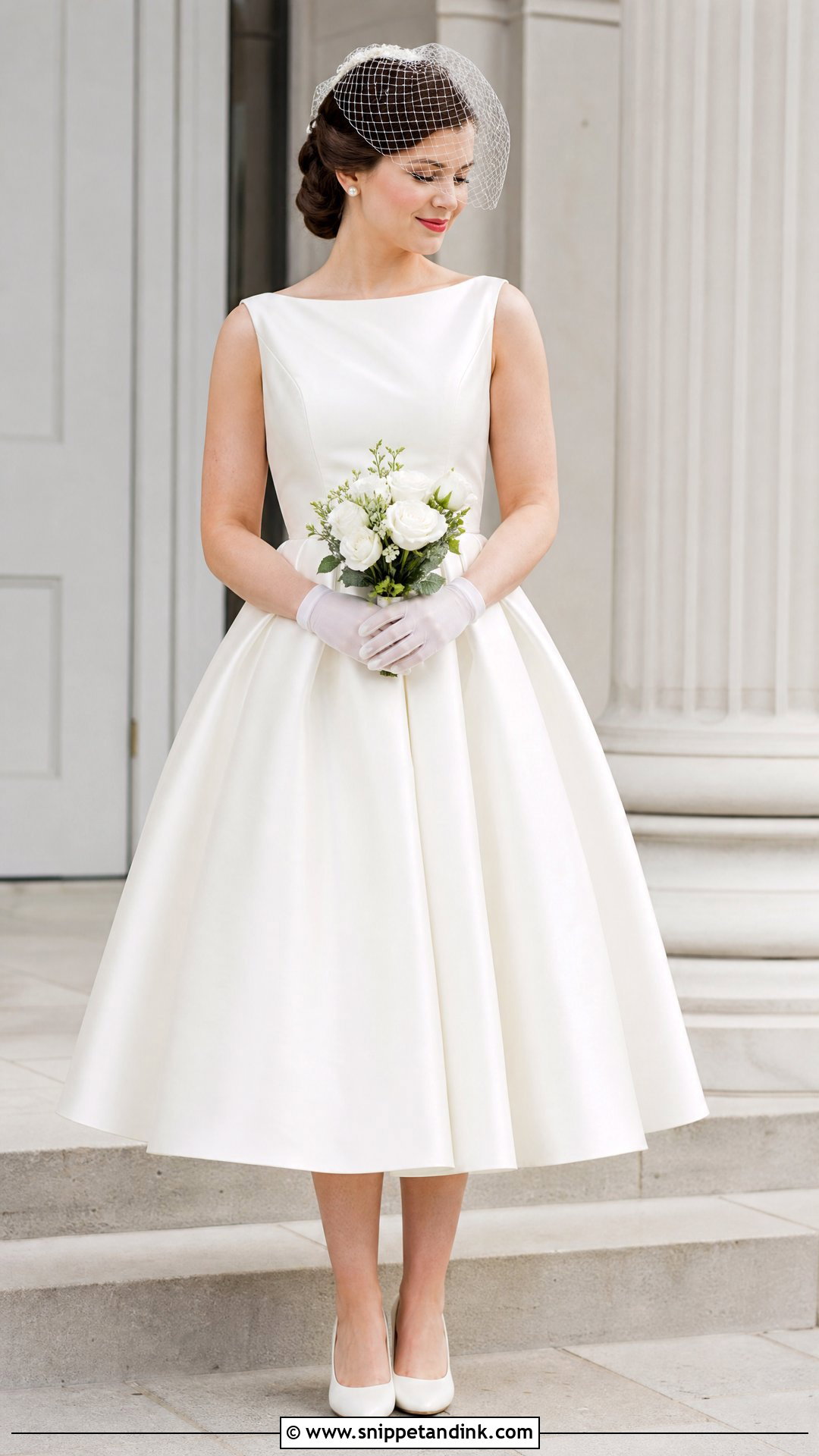
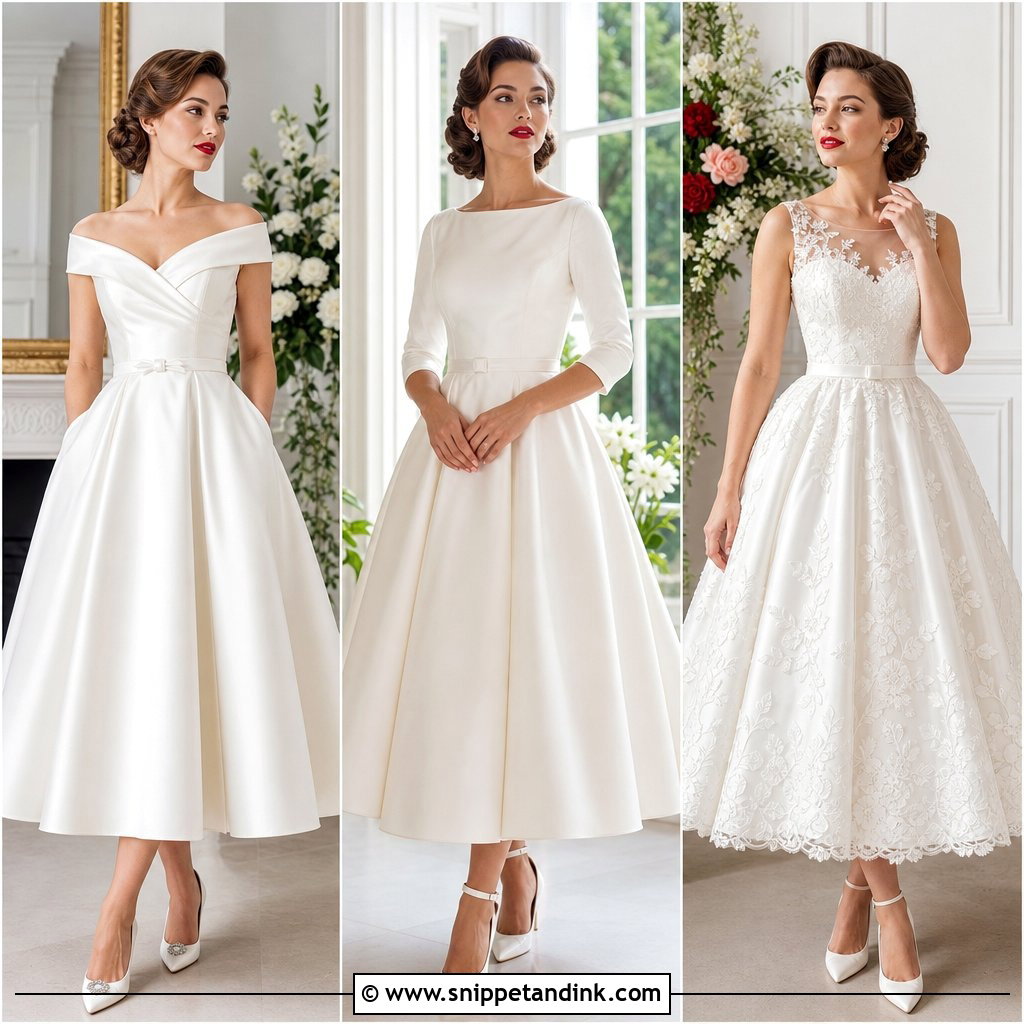
Tea length is the most practical vintage hem I fit. The skirt clears the floor, so no bustle, no trodden hem, no train to manage on a dance floor. A structured bodice, narrow waist and full skirt give the 1950s charm without full formality. Because the hem shows the shoes, they become part of the look: satin block heels, short gloves, pearl studs and a birdcage veil make it fully retro. It works at a courthouse, a brunch reception or as a second dress. Try it sitting; a full skirt at this length can ride above the knee in seated photos.
3. Satin Ball Gown Wedding Dress
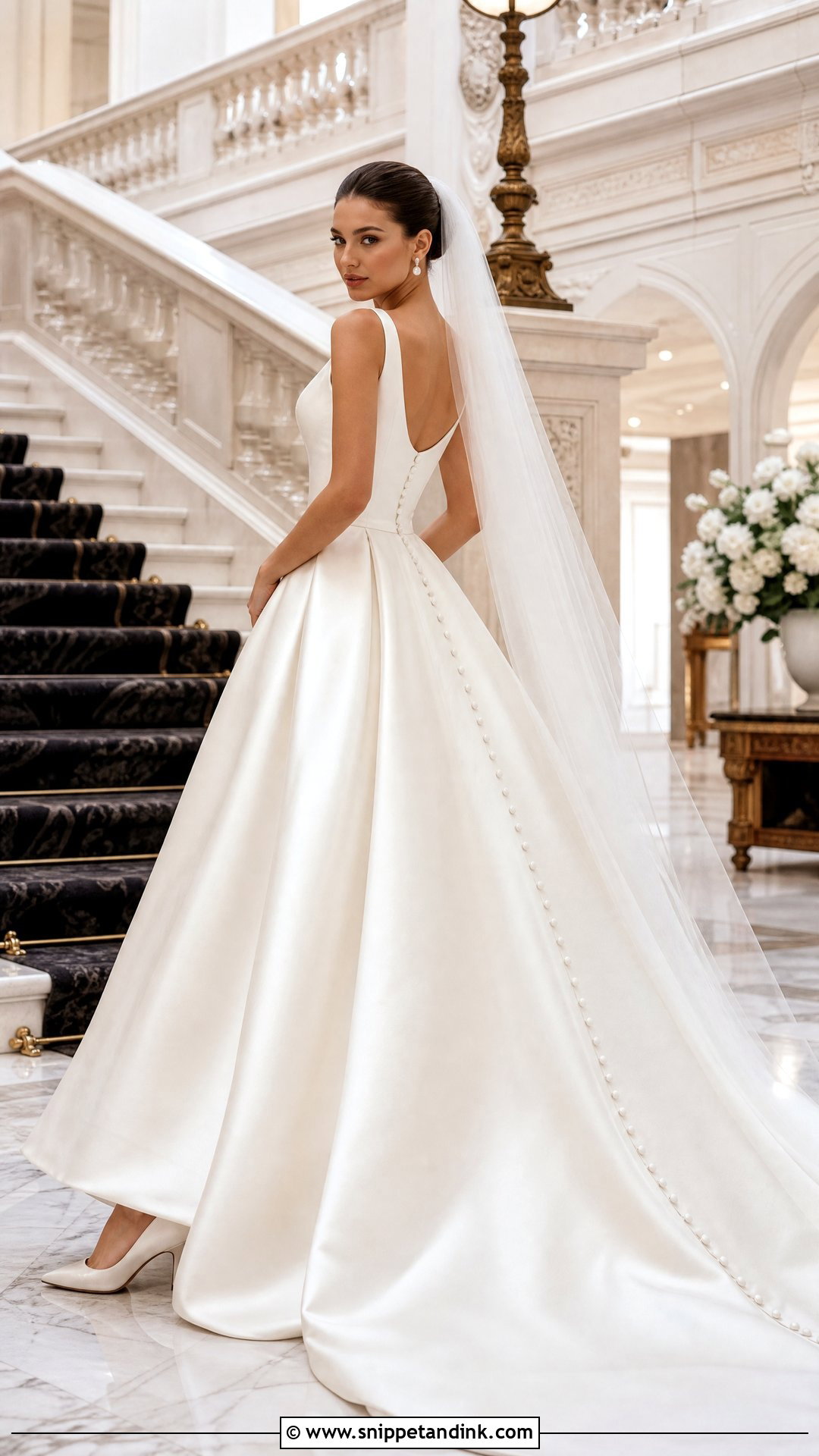
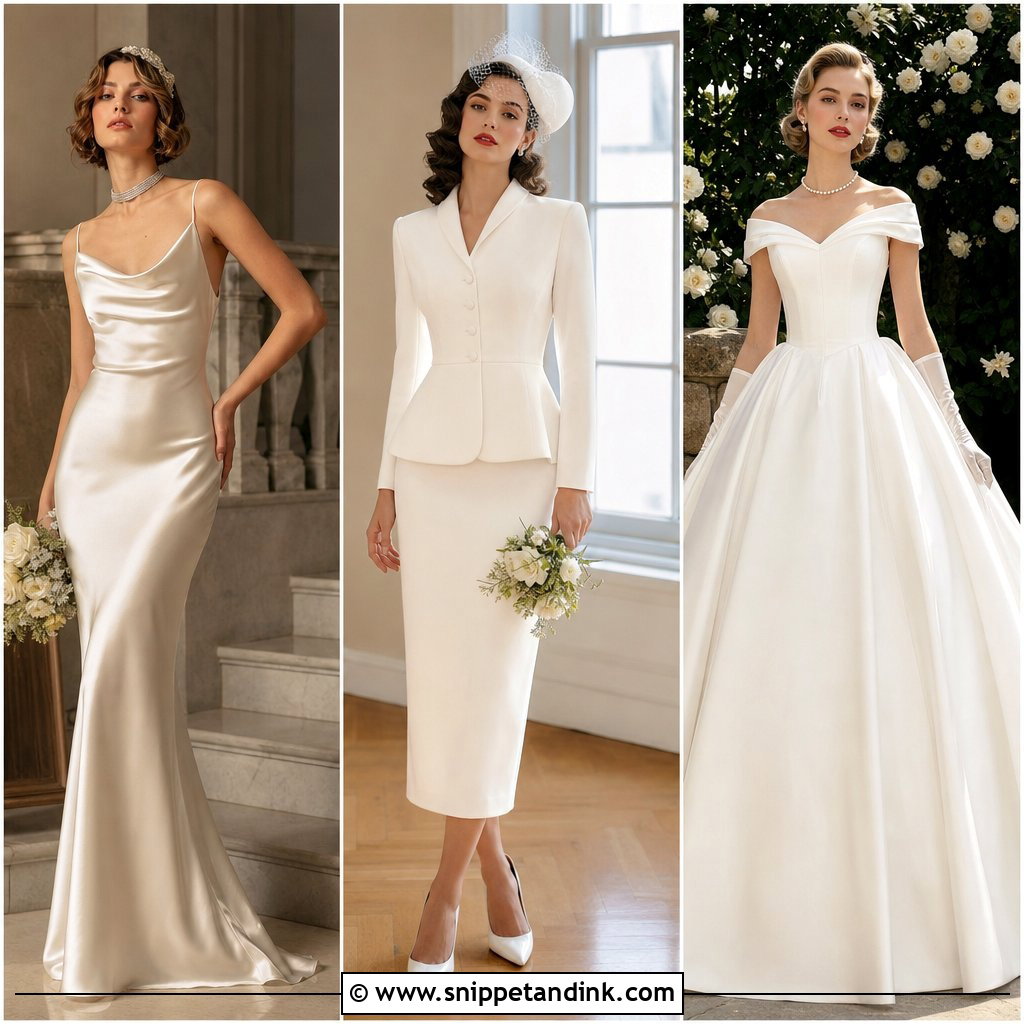
Satin ball gowns are heavier than most brides expect, and the weight sits on the waist, so a well-built inner corset or waist stay makes a real difference to comfort. Covered buttons, a portrait neckline, a basque waist or soft pleating give the old Hollywood feel. Keep jewelry restrained: pearl earrings, a structured updo, satin heels and a plain cathedral veil. Satin shows handprints and water marks, so I tell brides to keep a clean white handkerchief nearby and hands away from the skirt after eating. Formal venues and black-tie evenings are its natural setting.
4. Beaded Art Deco Wedding Dress
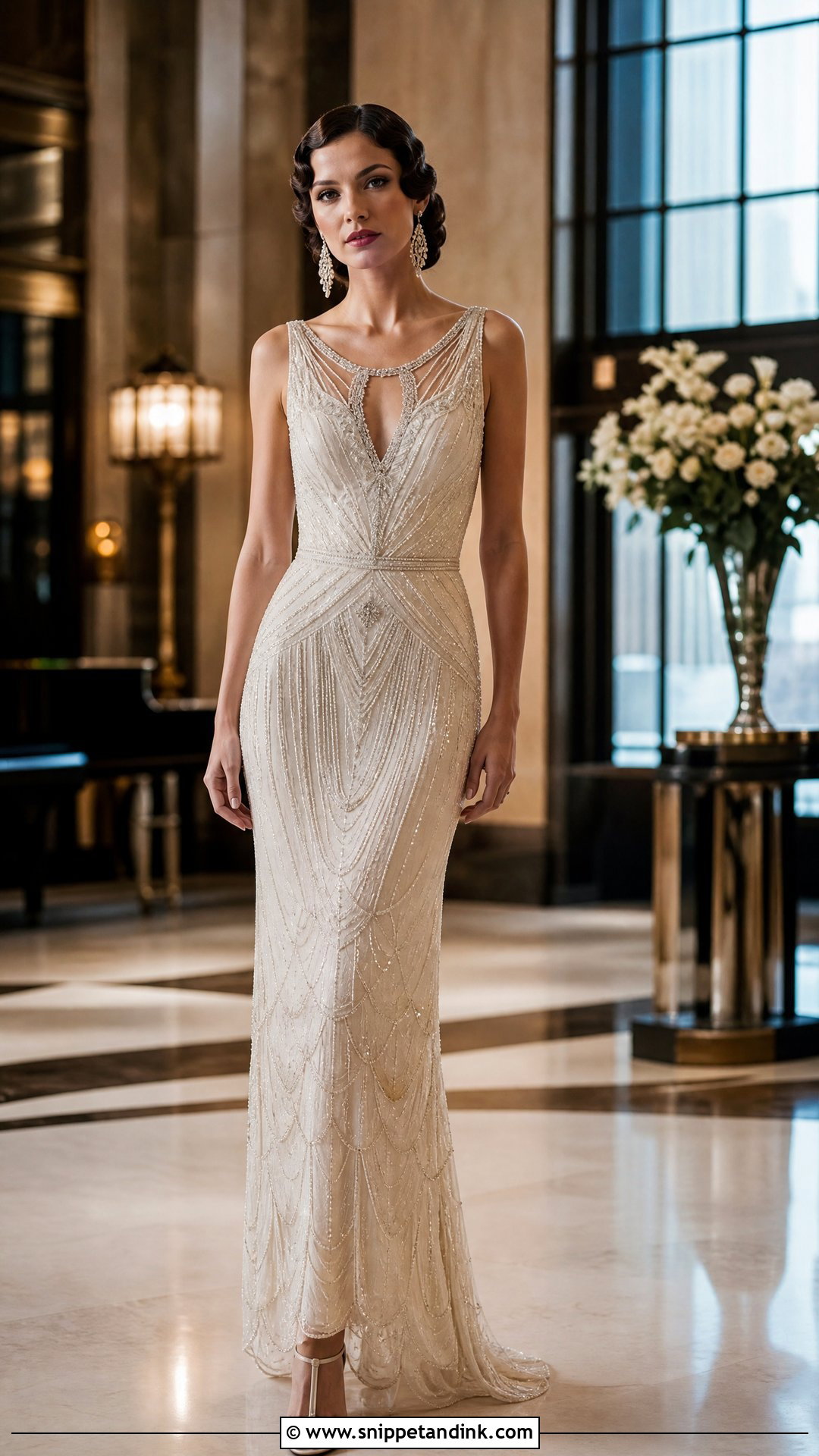
Geometric beadwork on a slim column is pure 1920s, and it moves well because the shape is narrow. Ivory or champagne tones keep the beading soft rather than flashy. Sheath, column or lightly flared skirts all suit it. T-strap heels, crystal earrings, a sleek finger-wave style and a jeweled comb are enough; the gown already sparkles, so keep the bouquet minimal. I’d avoid this for anyone hoping to sit cross-legged or lounge, because beaded skirts snag on chair edges and on lace from other guests’ outfits. Evening city weddings suit it best.
5. High Neck Wedding Dress
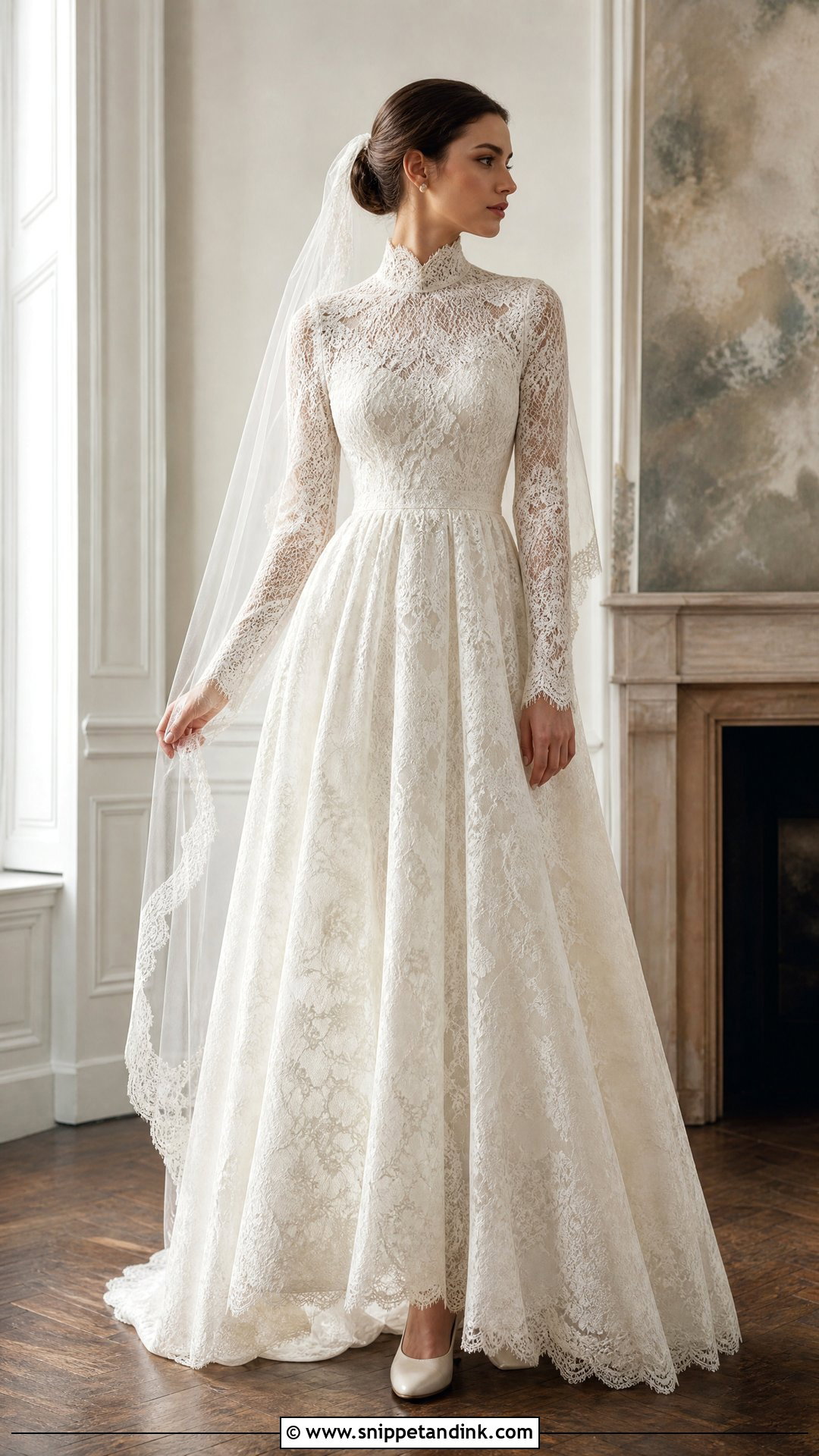
High necks change posture. Brides stand taller in them, which is part of why they look so composed in photos. Lace, crepe, satin or tulle can all work, depending on how structured you want it. Long sleeves give an Edwardian feeling; a sleeveless high neck reads cleaner and more modern. Pearl studs, a low chignon and closed-toe heels keep it polished, and a long veil softens the neckline. The one thing I check: the closure at the back of the neck. A hook that sits right on the hairline will catch on an updo all day.
6. Off Shoulder Lace Wedding Dress
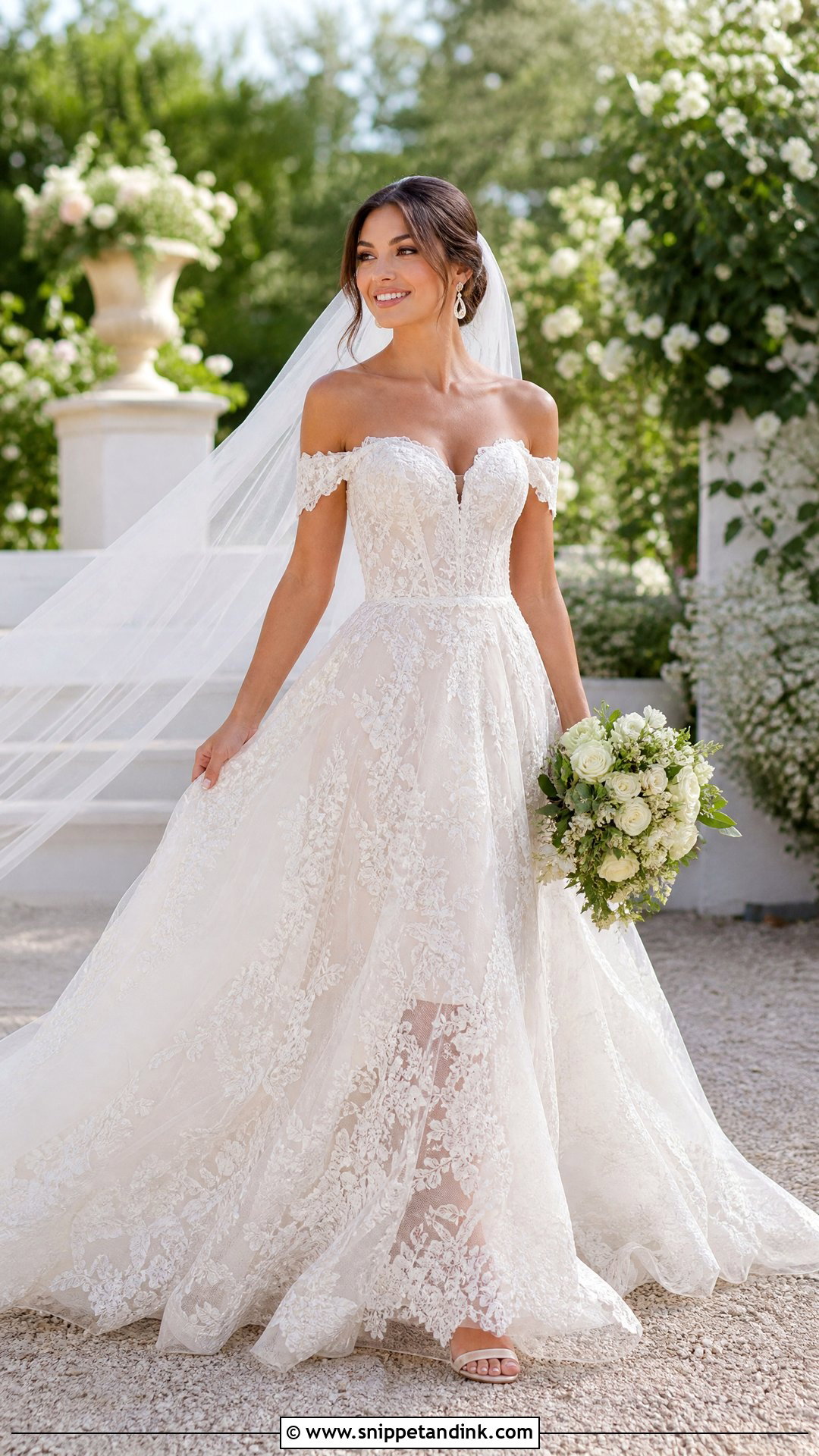
Off-shoulder lace needs a bodice built to stay up on its own, since there’s no strap doing the work. I always check for interior boning and a grip strip along the neckline before a bride commits. A mermaid shape is dramatic; an A-line is easier to move and sit in. With the collarbone showing, choose either a delicate necklace or statement pearl earrings, not both. A loose updo, ivory heels and a sheer veil finish it. Raising your arms will lift the neckline, so practice your first-dance hold in the fitting room.
7. Cap Sleeve Wedding Dress
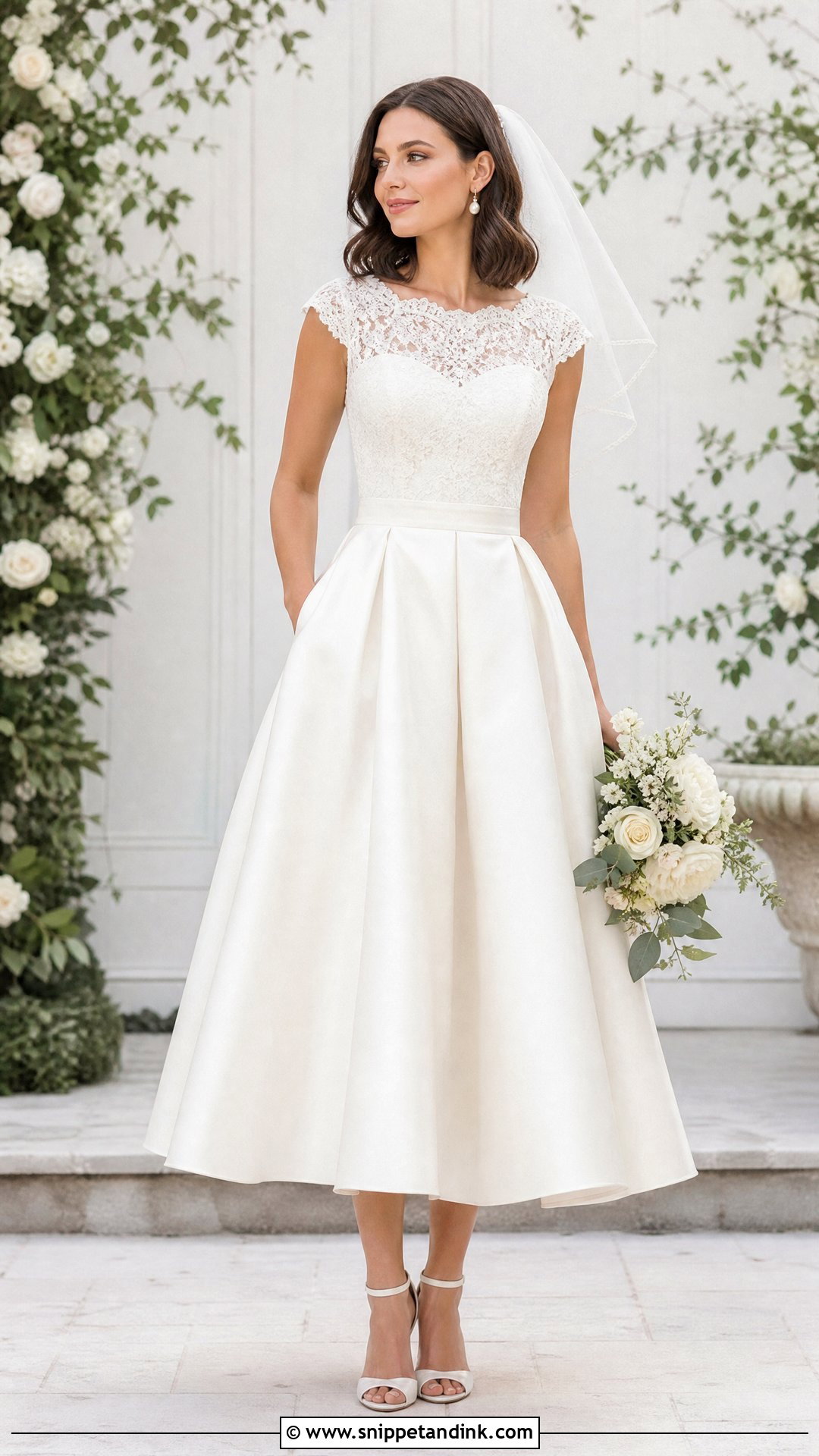
Cap sleeves give a little coverage over the shoulder without restricting movement, as long as they’re cut with enough room at the back. When the cap is too tight across the back, you’ll feel it the moment you hug someone. The 1940s and 1950s feel comes through with lace or satin and a fitted waist. An A-line skirt balances the shoulders on most figures. Pearl earrings, soft curls, ankle-strap heels and a simple bouquet suit it, with a short or shoulder-length veil.
8. Drop Waist Wedding Dress
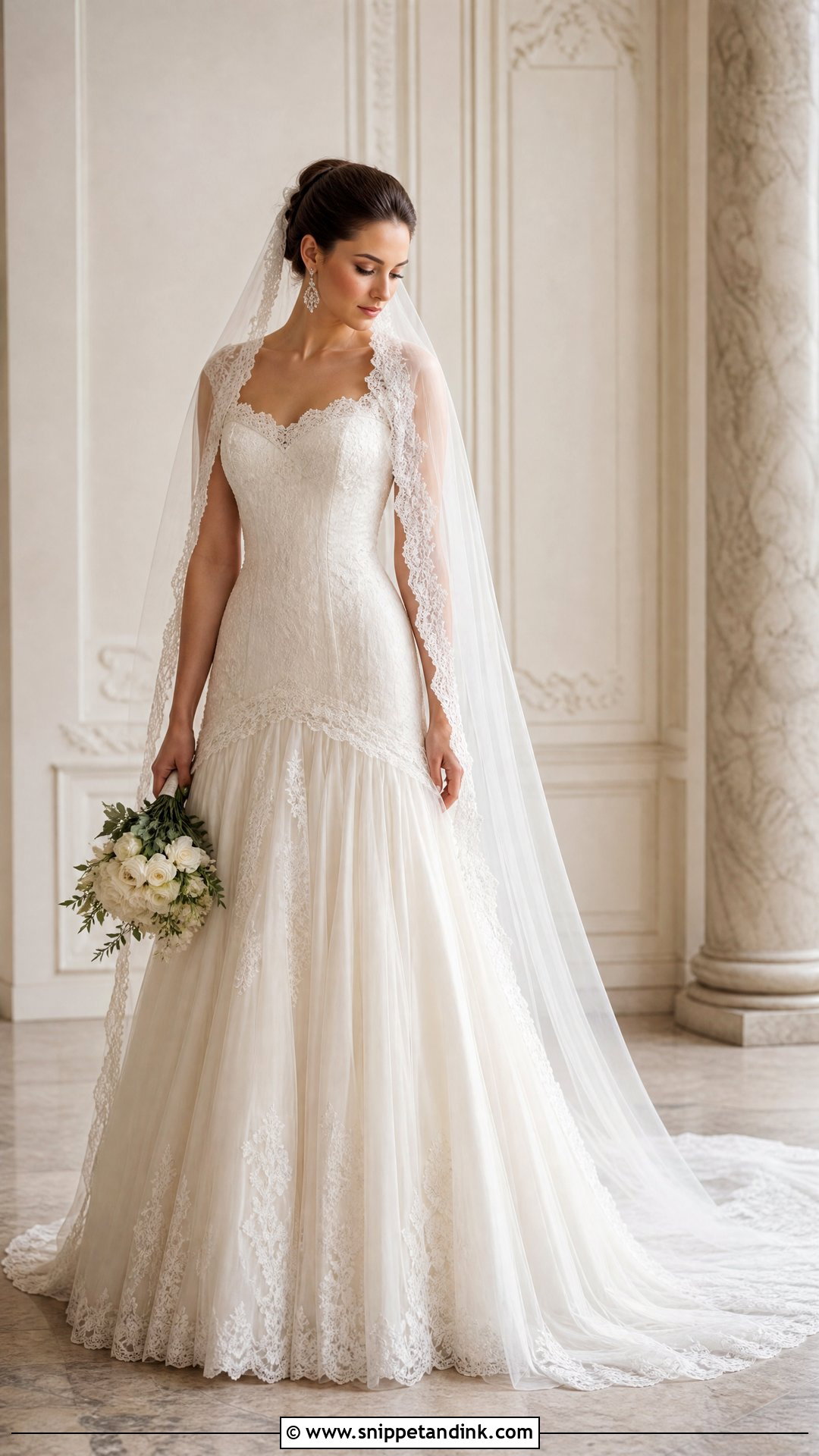
Where the drop waist lands is the whole decision. Sitting at the hip bone, it lengthens the torso gracefully; a few inches lower and it can shorten the legs. I mark the seam with pins while the bride stands in her heels and check it in a full-length mirror from a distance. Slim and beaded reads 1920s; tulle and lace make it romantic. Soft waves, small crystal earrings and slim heels keep it elegant, and a lace-trimmed veil adds one more vintage note.
9. Corset Bodice Wedding Dress
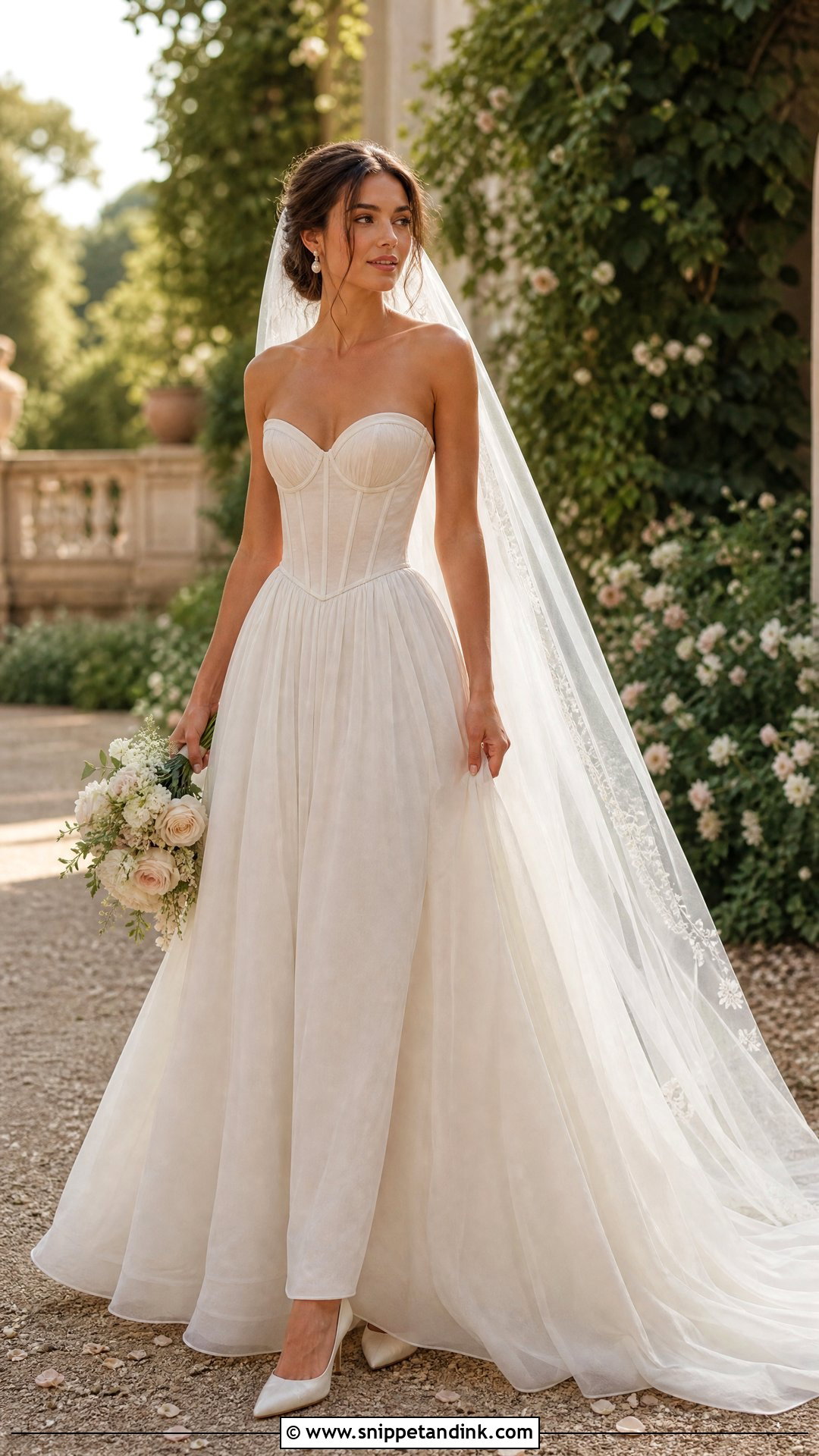
A corset bodice should be fitted with the bride’s full breath in mind. I ask brides to sing a line or two in the fitting room, because if the bodice is too tight to sing, it’s too tight to eat in. Visible boning, a sweetheart neckline, a lace-up back or soft satin cups give the historical structure. If the back laces, ask for a modesty panel behind the lacing so no skin gap shows. Pair it with an A-line, tulle or satin skirt. Pearl earrings, a long veil and elegant pumps are enough, and a soft hairstyle balances the structure.
10. Victorian Sleeve Wedding Dress
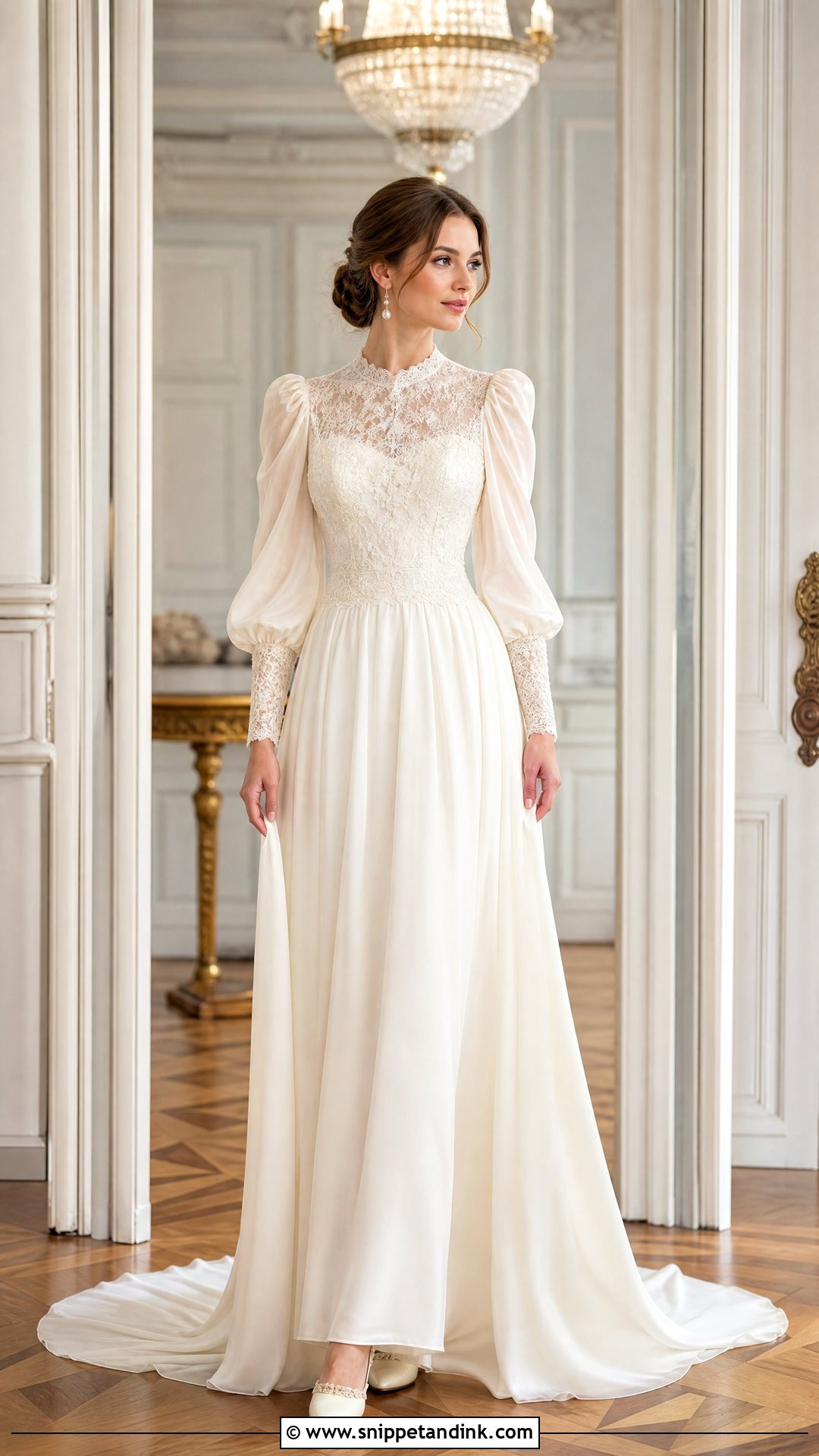
Puffed, bishop or wrist-fitted, the sleeves on a Victorian sleeve wedding dress carry the drama, so everything else should be calmer. I’d pair them with a clean bodice or a softly flowing skirt rather than layering detail on detail. Lace, tulle or organza balance the volume well. A center-part updo, pearl earrings and ivory heels keep it focused, and a long veil suits a simple back. Big sleeves take up space in photos with family; ask your photographer to give you a little extra room in group shots.
11. Silk Slip Wedding Dress
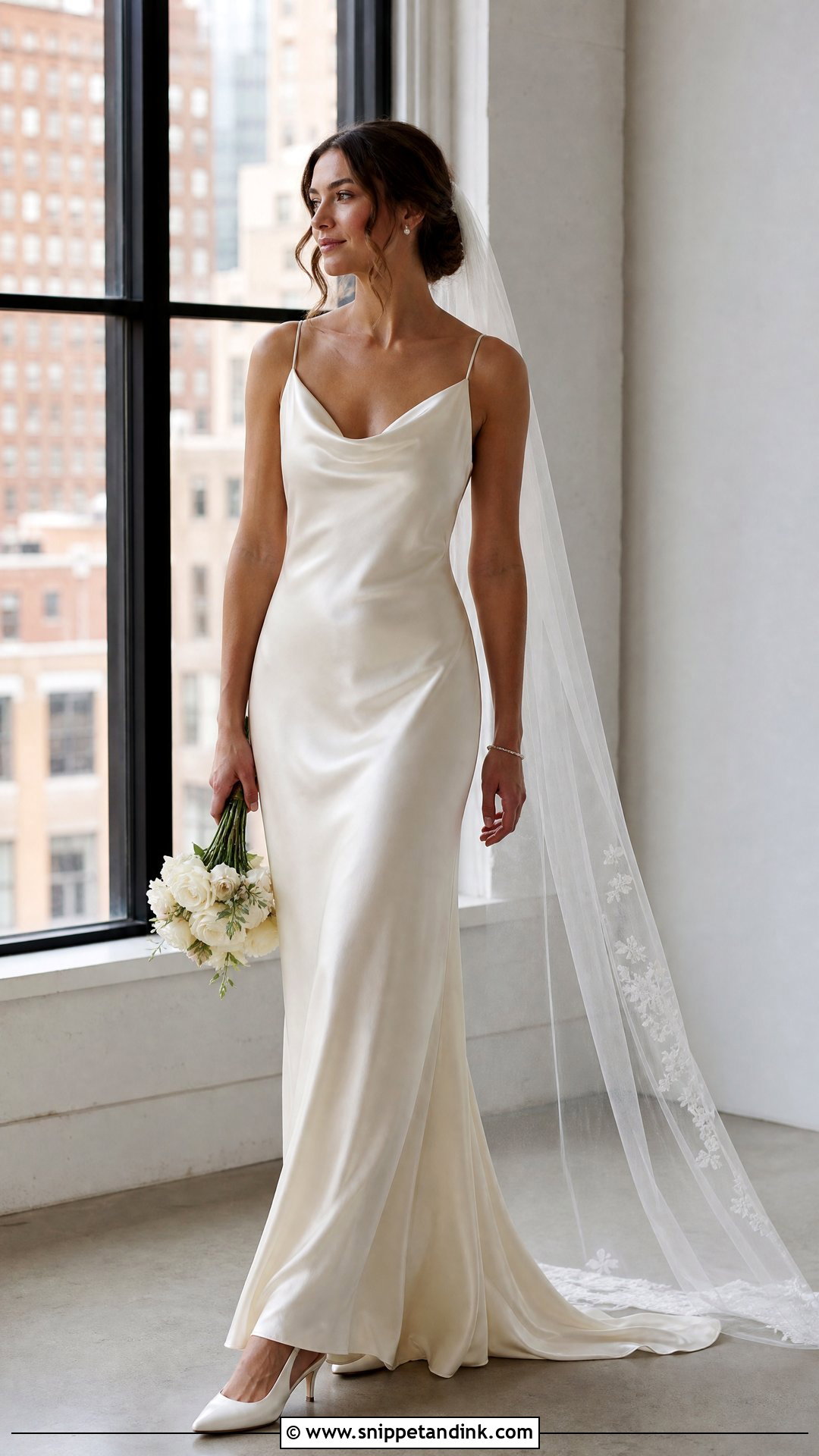
Silk slips are the most revealing dresses I fit, not in cut but in how honestly they show the body. A cowl neckline, bias cut or low back is all the detail it needs, in ivory, pearl, champagne or cream. Underwear has to be planned from the first fitting. Slingback heels, pearl studs, a fine bracelet and a sheer veil keep it quiet, and a lace bolero or satin wrap adds warmth in cooler weather. Silk also marks with water, so carry tissues rather than wiping a spill with a wet napkin.
12. Pearl Embellished Wedding Dress
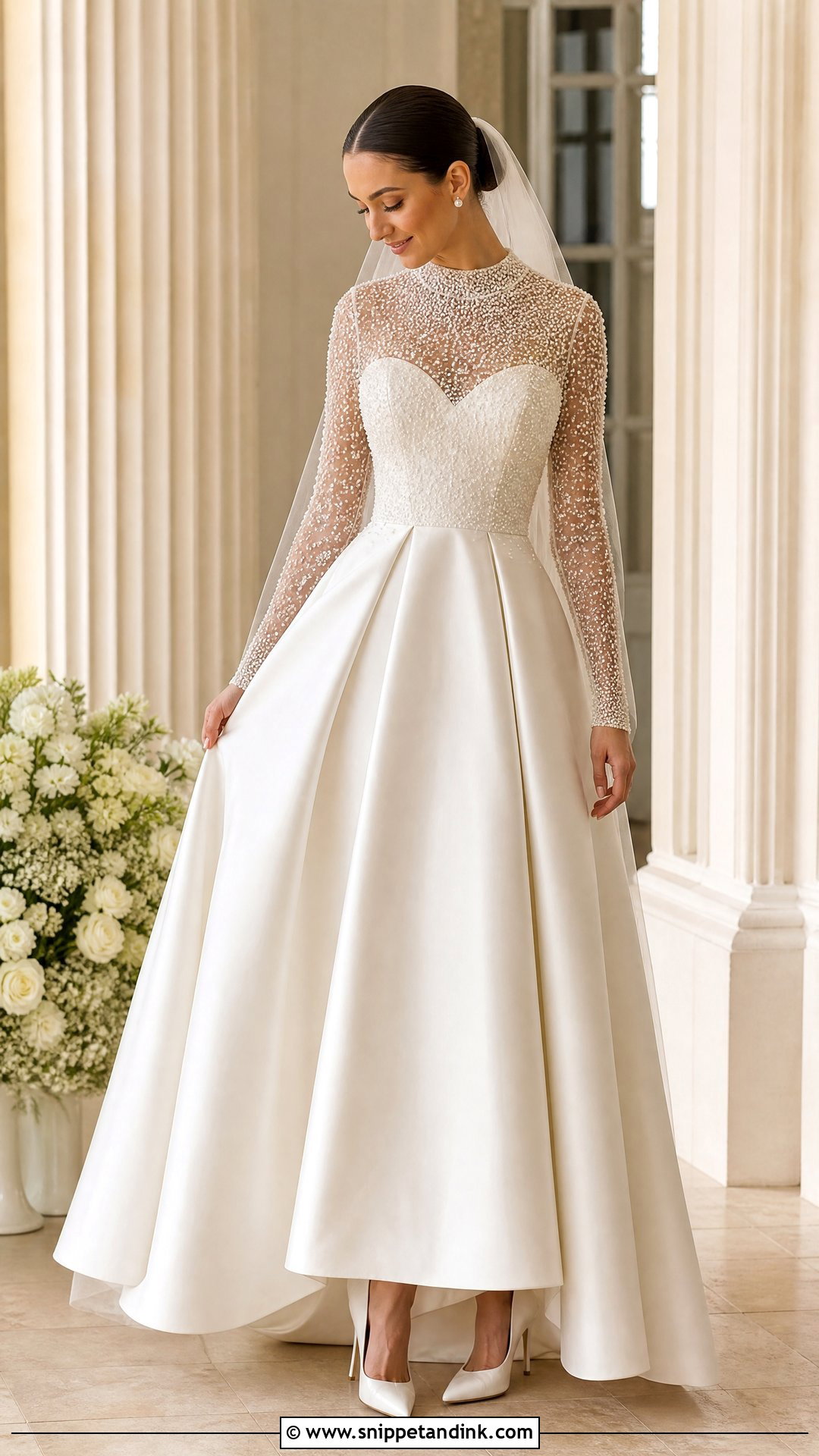
Pearls give a soft glow rather than sparkle, and they sit beautifully under candlelight. They can scatter across the bodice, sleeves, neckline or veil. A fitted sheath feels glamorous; an A-line is more romantic. Because pearls add texture, keep accessories to pearl earrings, satin heels and a sleek bun. A heavily pearled gown wants a plain veil, while a simpler gown can take a pearl-edged one. Glued-on pearls are a weak point, so I ask whether they’re sewn on before a bride buys.
13. Lace And Satin Wedding Dress
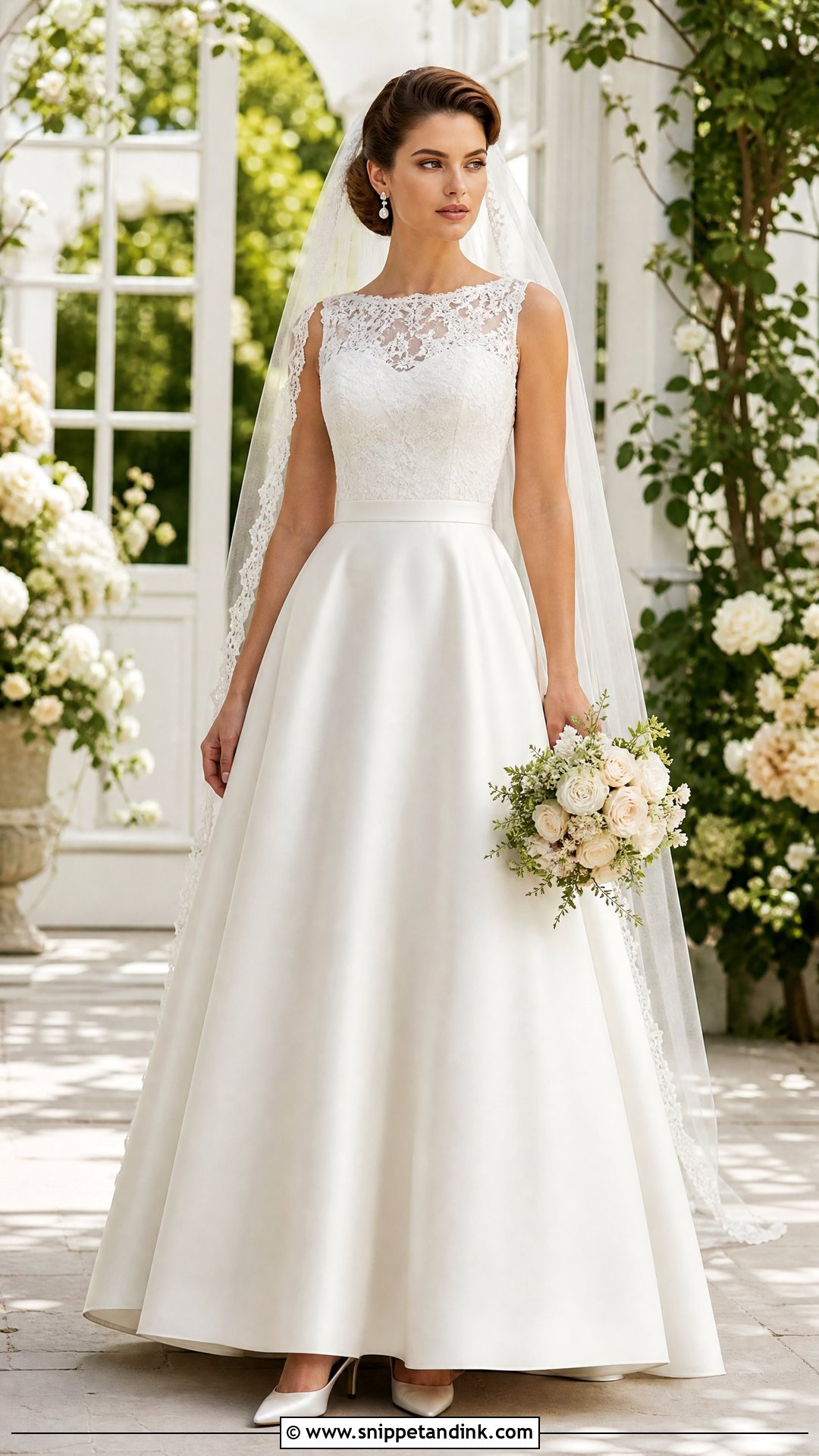
Lace on top and satin below is my most-recommended combination for brides who can’t decide between soft and structured. The lace draws attention up toward the face, and the satin gives the skirt weight and a clean fall. The join at the waist needs to be neat; a ridge there shows in every side photo. Pearl earrings, ivory heels and a veil with a narrow lace edge suit it, with a low bun or soft waves. It fits almost any venue, indoors or out.
14. Champagne Wedding Dress
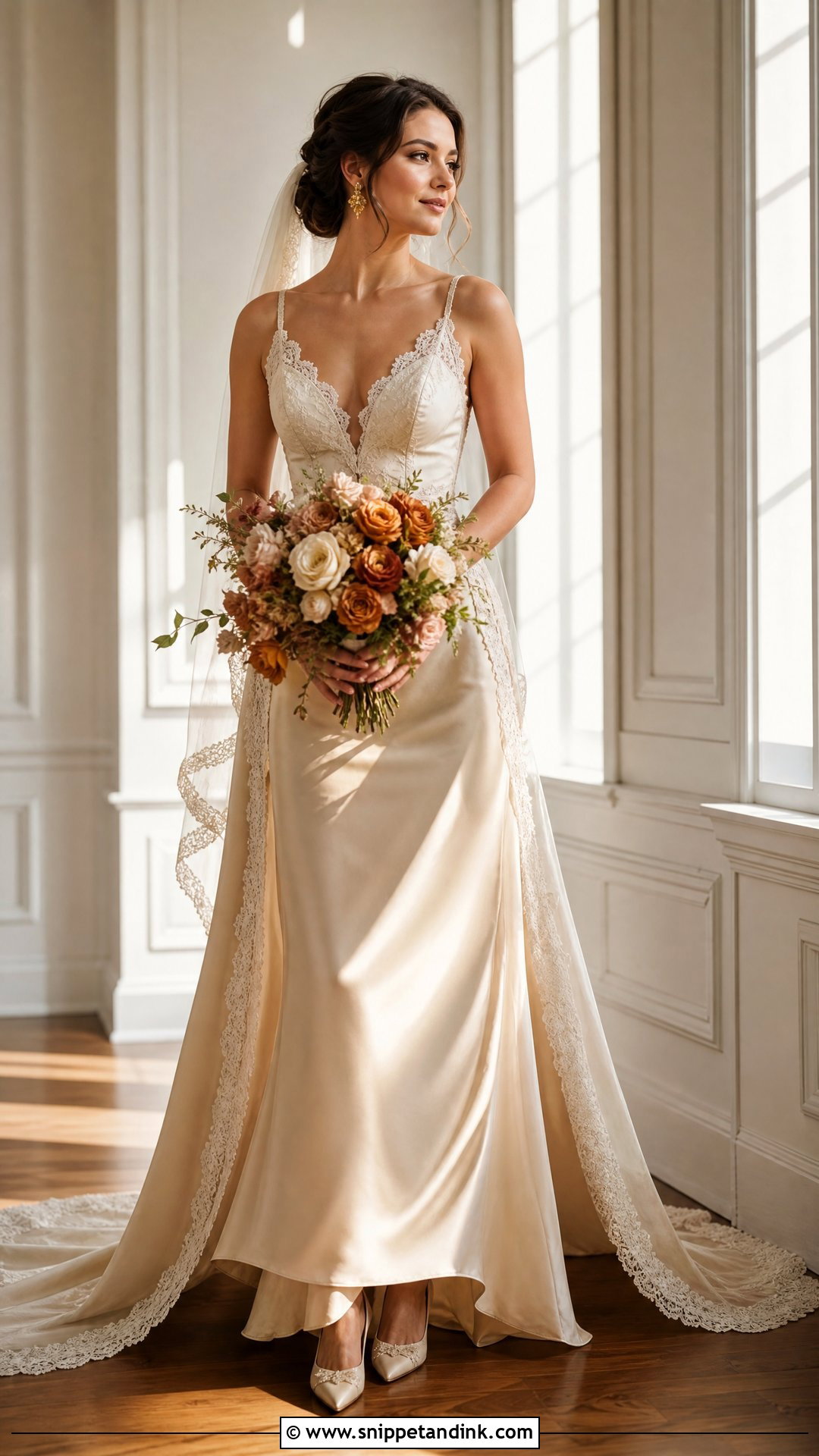
Champagne flatters many skin tones, but not all of them in the same shade. Fair skin with yellow undertones can look washed out next to a very gold champagne, so I hold several swatches to the bride’s face in daylight before choosing. The soft golden-beige tone works in satin, tulle, lace or beading. Ivory shoes, gold-tone jewelry and a warm bouquet keep it cohesive. Choose a champagne veil for a tonal look or ivory for a little contrast; both are correct.

15. Square Neck Wedding Dress
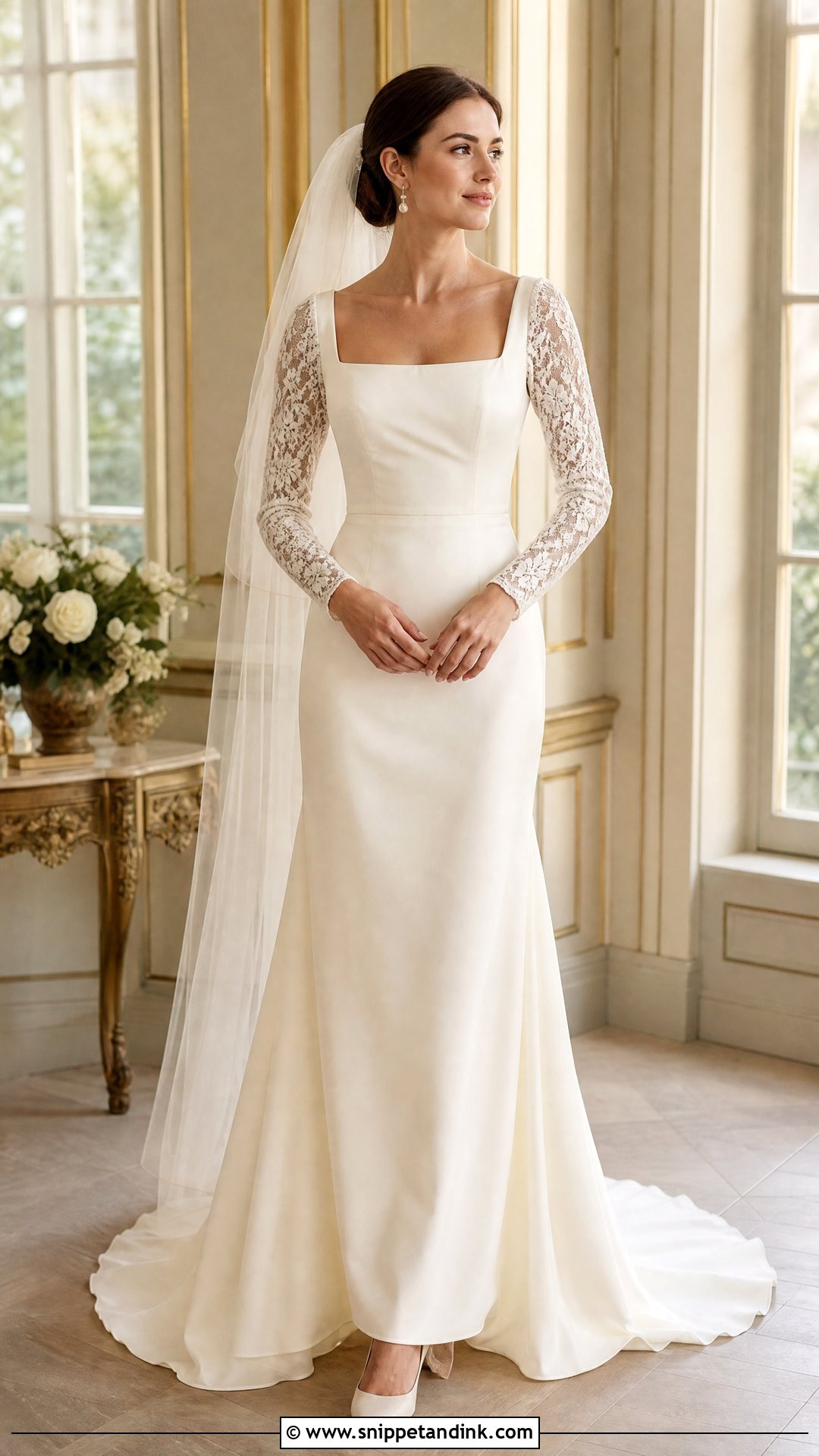
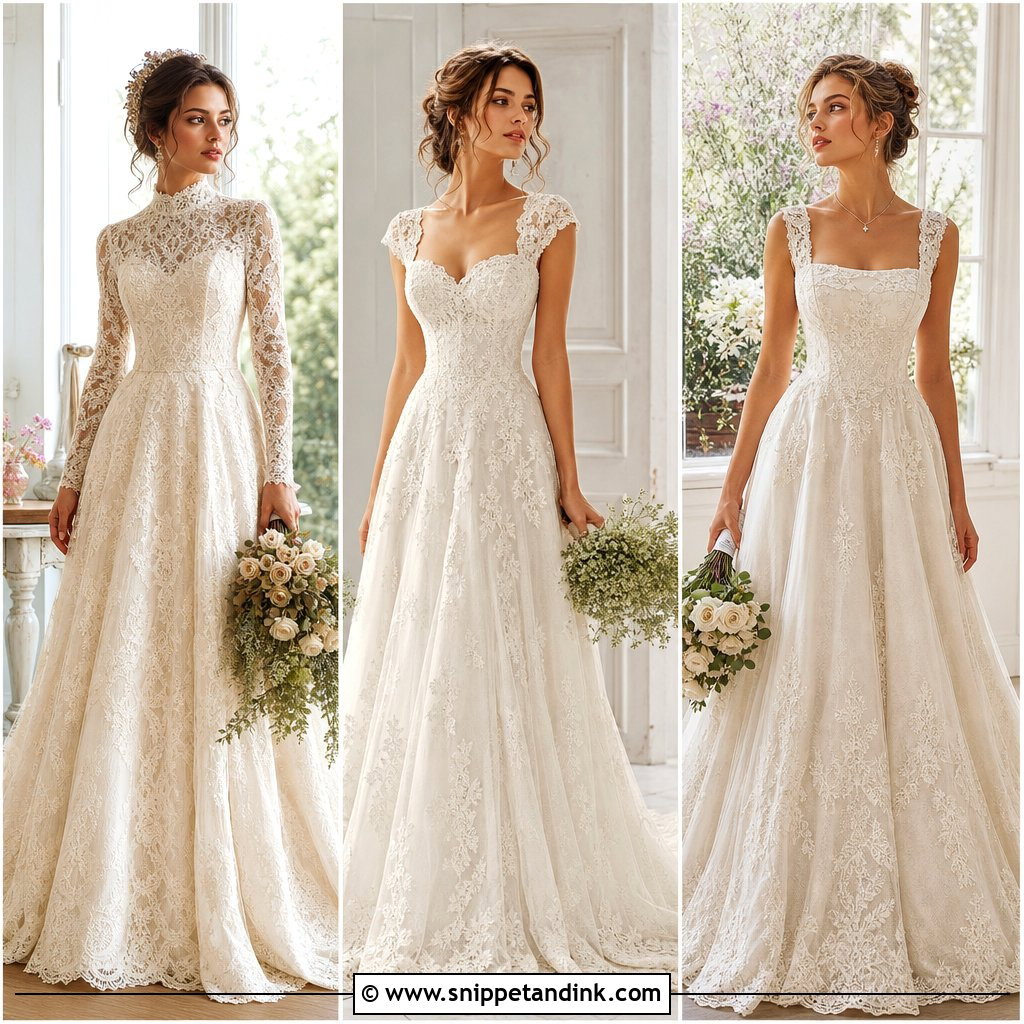
A square neckline frames the shoulders and makes the neck look longer, which suits long sleeves, short sleeves or wide straps. Lace reads romantic, satin formal, crepe minimal. Pearl earrings, a smooth bun and pointed ivory heels keep it clean, and a plain veil leaves the neckline strong. If you want structure without a strapless bodice, I prefer wide straps, because they spread the weight and stay put. Check that both corners are level in the mirror.
16. Illusion Neckline Wedding Dress
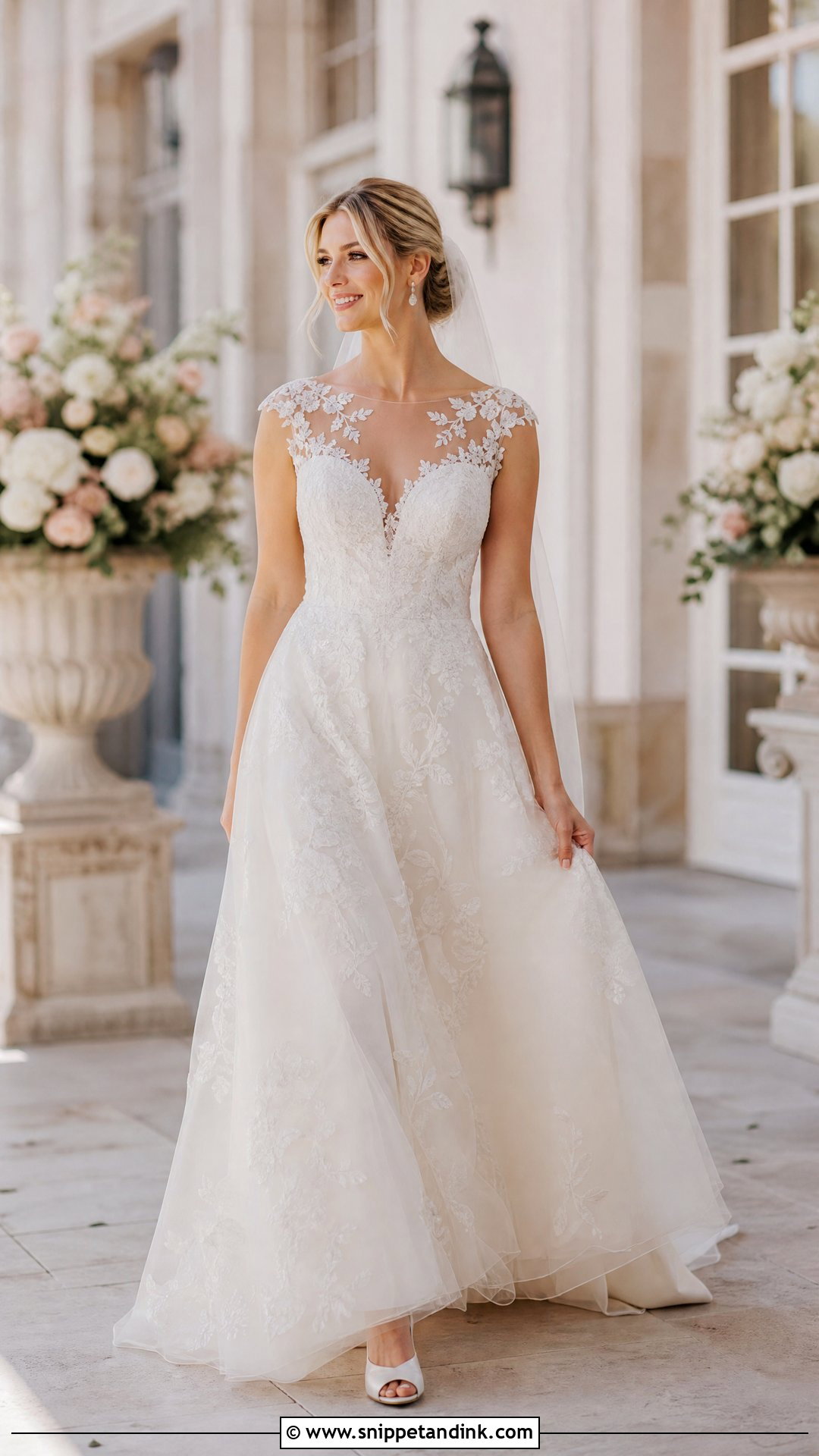
An illusion neckline only works when the tulle disappears against your skin. I hold the mesh against the collarbone in natural light and in flash, since a slight color mismatch turns into a visible band in photos. Lace appliqué, pearls or embroidery on the sheer layer give coverage without weight. A fitted bodice with an A-line or sheath skirt suits it. Keep earrings small, makeup soft and the veil minimal so the neckline holds attention. It’s at its best in close-up portraits.
17. Tulle A Line Wedding Dress
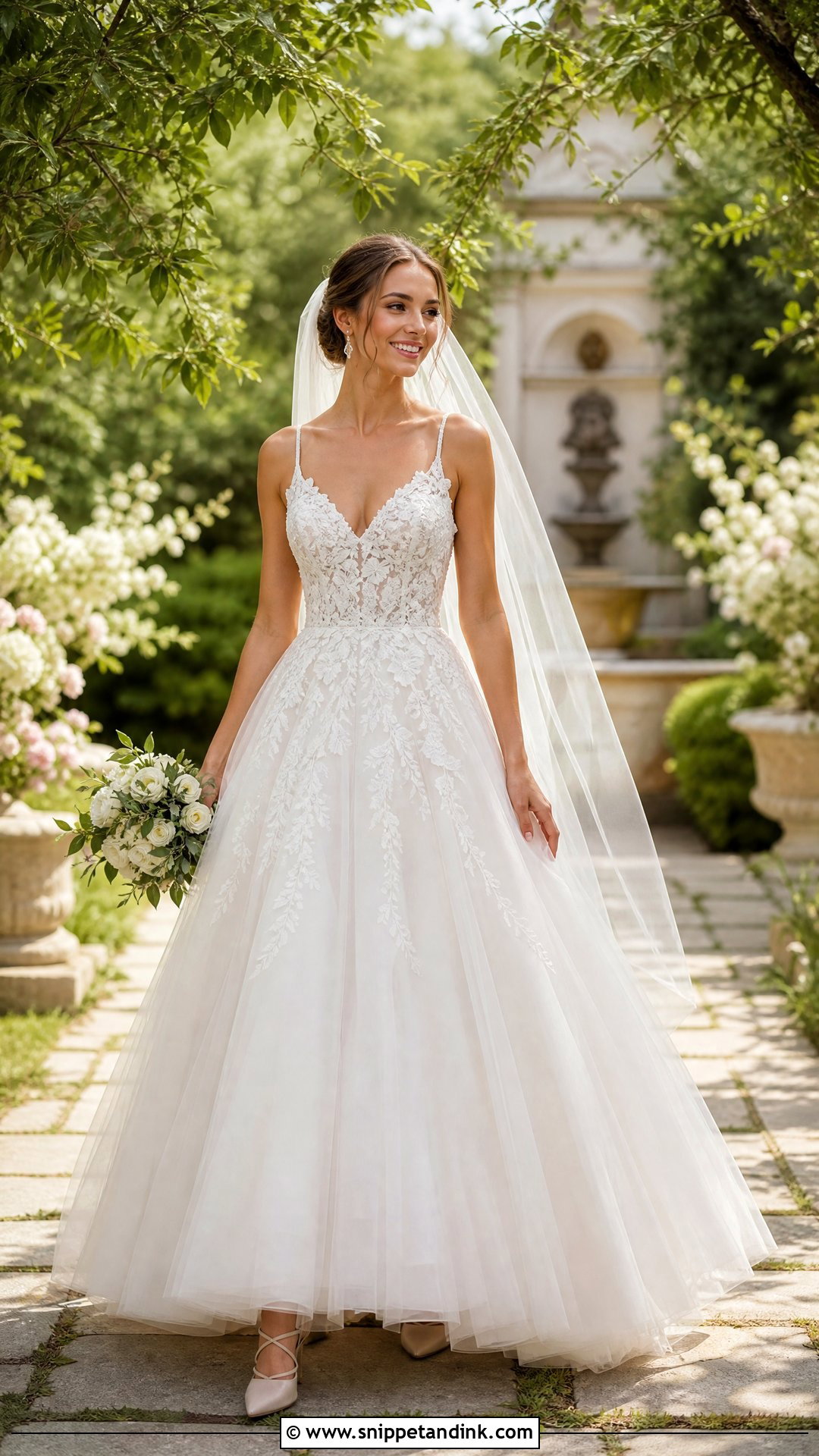
Tulle is light, but layers add up. I count them at the first fitting, because a skirt with many layers holds heat and can feel bulky when you sit. A fitted bodice and flowing skirt define the waist and move easily, and lace appliqué, pearl buttons, a sweetheart neckline or sheer sleeves give the vintage note. Ballet-inspired heels, pearl earrings and a fingertip veil suit it, with a loose updo or soft curls. Tulle snags on rough surfaces, so watch out for wooden benches and stone walls at outdoor venues.
18. Button Back Wedding Dress
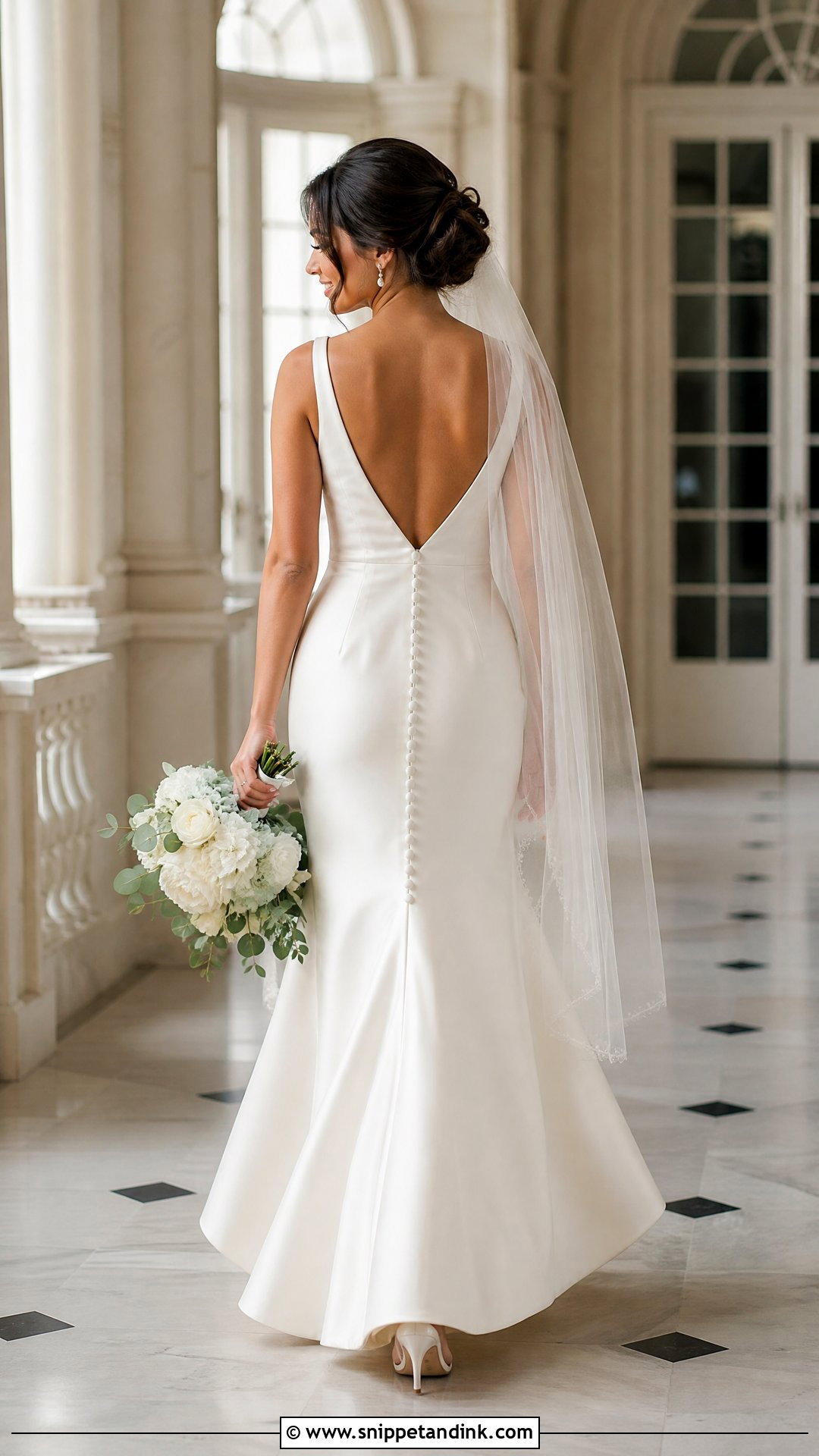
Buttons down the back look wonderful as the bride walks up the aisle, but most covered buttons are decorative, sitting over a hidden zipper. That’s good news on the morning, because doing up thirty loops takes time and steady hands. If yours are real, budget extra dressing time and ask someone calm to fasten them. The detail suits sheath, mermaid, A-line or ball gown shapes. Wear an updo or half-up style so the back shows, with simple earrings, elegant heels and a veil that lifts easily.
19. Lace Mermaid Wedding Dress
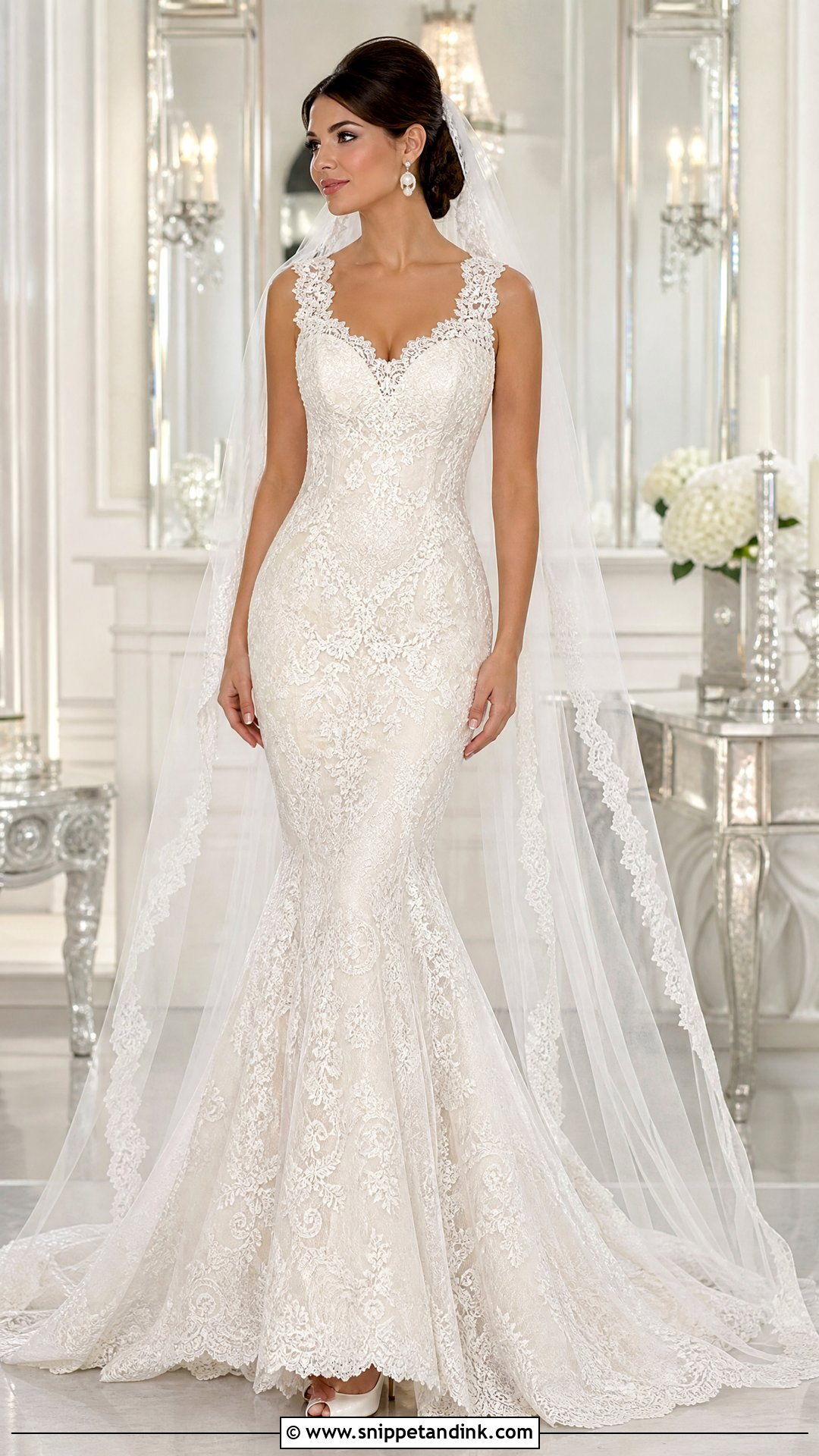
A mermaid flare has to start in the right place. If it sits too high, you’ll waddle; too low and you can’t climb steps. I set it so the bride can walk naturally and kneel if her ceremony requires it. Floral lace, scalloped trim or long sleeves make the shape feel classic. A sleek veil, pearl earrings and heels balance the fitted line, and a bouquet with soft greenery and ivory flowers keeps it romantic. Brides who love a confident, body-skimming shape tend to choose this one.




20. Bateau Neck Wedding Dress
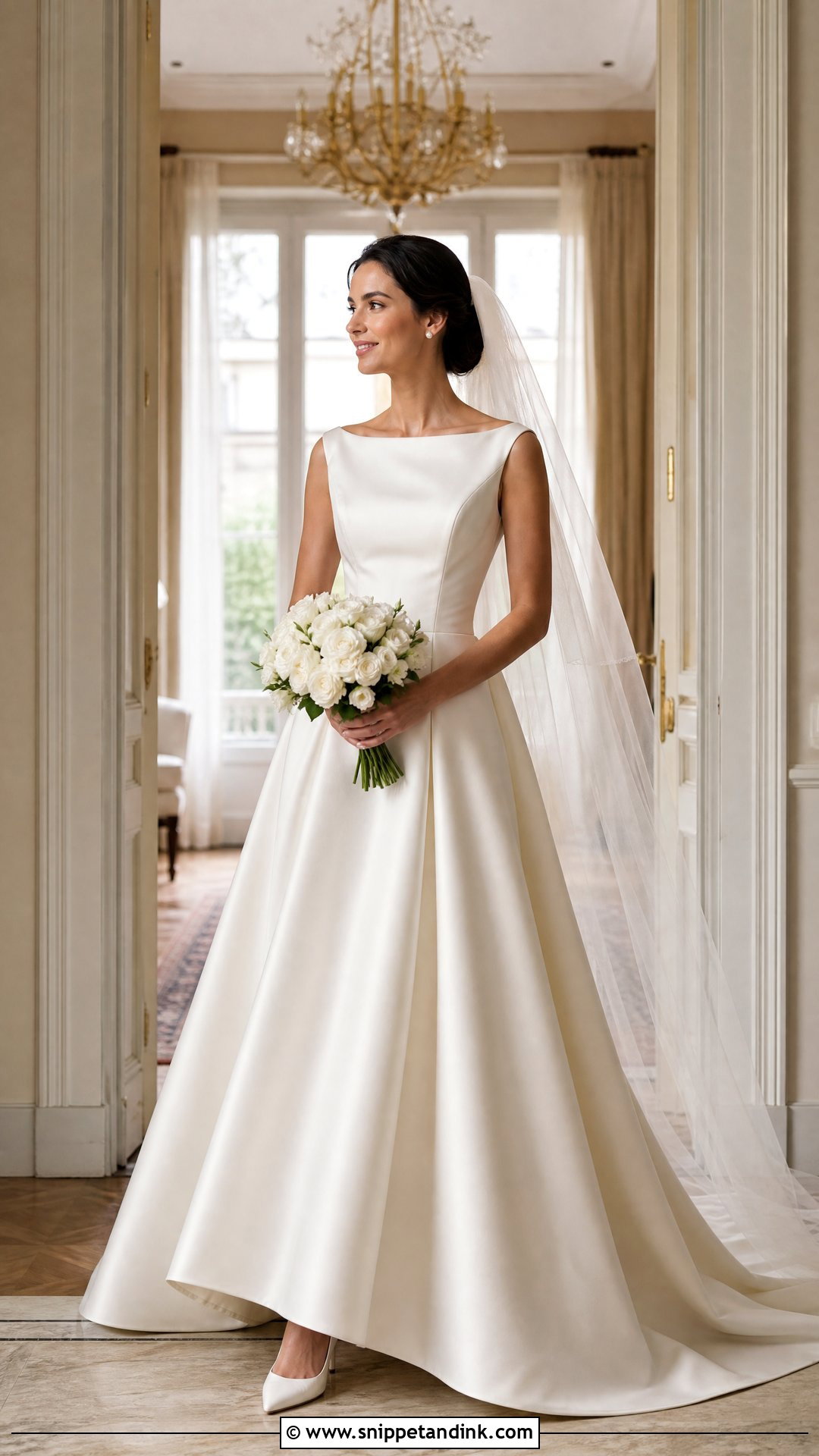
A bateau neckline runs across the collarbone almost to the shoulder points, so it rewards good posture and shows off a long neck. Satin, crepe or lace all suit its clean line. A fitted bodice with a slim skirt is sophisticated; a full skirt brings traditional drama. Pearl studs, a low bun and closed-toe heels finish it, and a long veil adds softness without breaking the neckline. Bra straps are the challenge here, since the neckline sits wide, so plan for built-in cups.
21. Floral Lace Wedding Dress
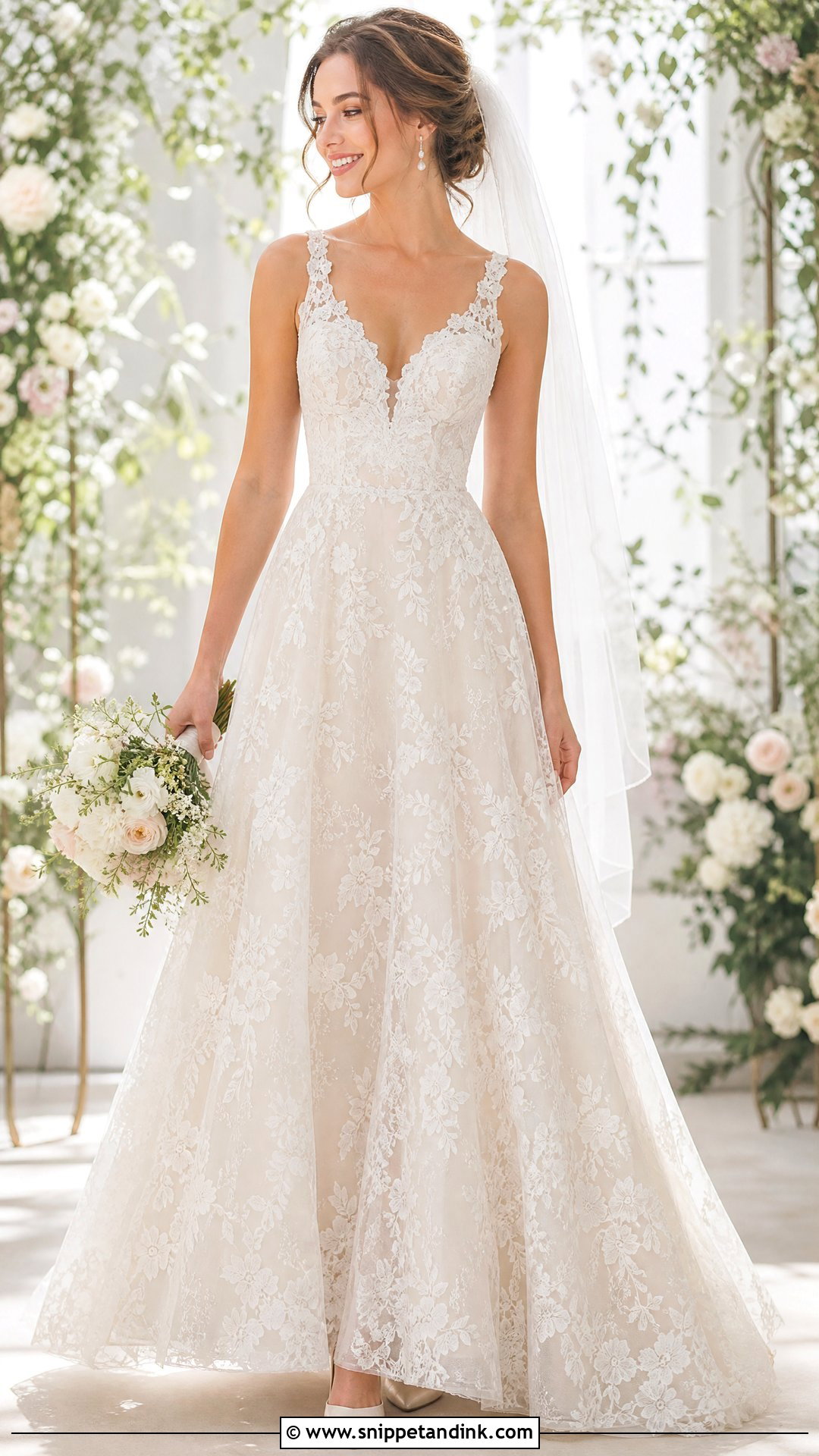
Scale is the first thing to judge with floral lace. Large flowers read bold and can widen a petite frame, while small Chantilly-style lace feels delicate and heirloom-like. Pick a silhouette you’re comfortable in, A-line, sheath or fit-and-flare. Pearl earrings, ivory heels and a veil that doesn’t compete with the lace suit it. With heavy floral texture, keep the bouquet simple and tonal. Spring and garden weddings suit it particularly well.
22. Short Sleeve Wedding Dress
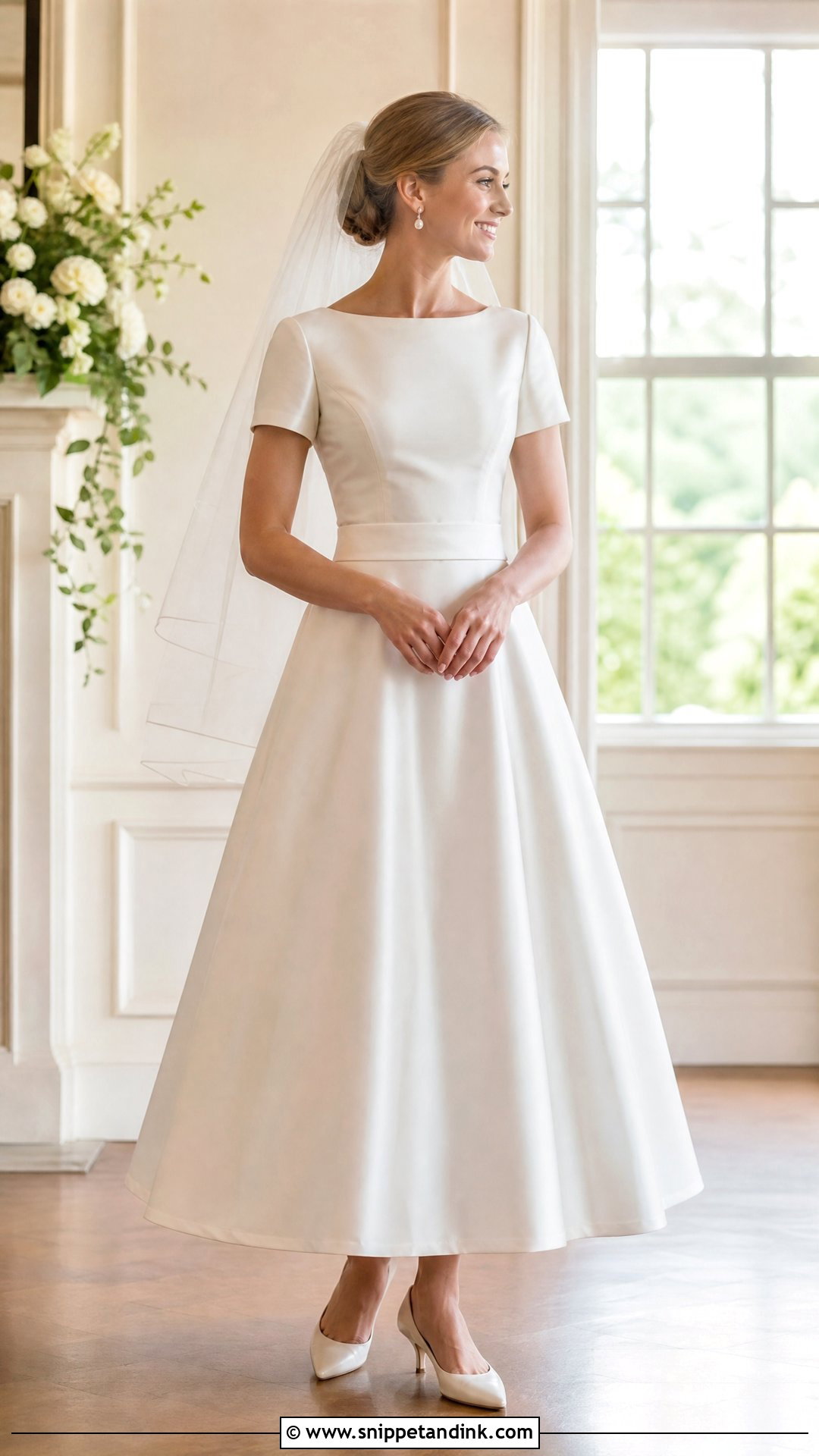
Short sleeves are practical for warm days and still give some coverage. They can be lace, satin, puffed or softly tailored, depending on the decade you want to suggest; a full skirt says 1950s, while a slim satin version says old Hollywood. Pearl earrings, low heels and a soft veil go with it, plus a polished bun or a soft curled bob. The sleeve hem should sit at a flattering point on the arm, which is usually just above or below the widest part, and I adjust it a little in either direction at the fitting.
23. Embroidered Wedding Dress
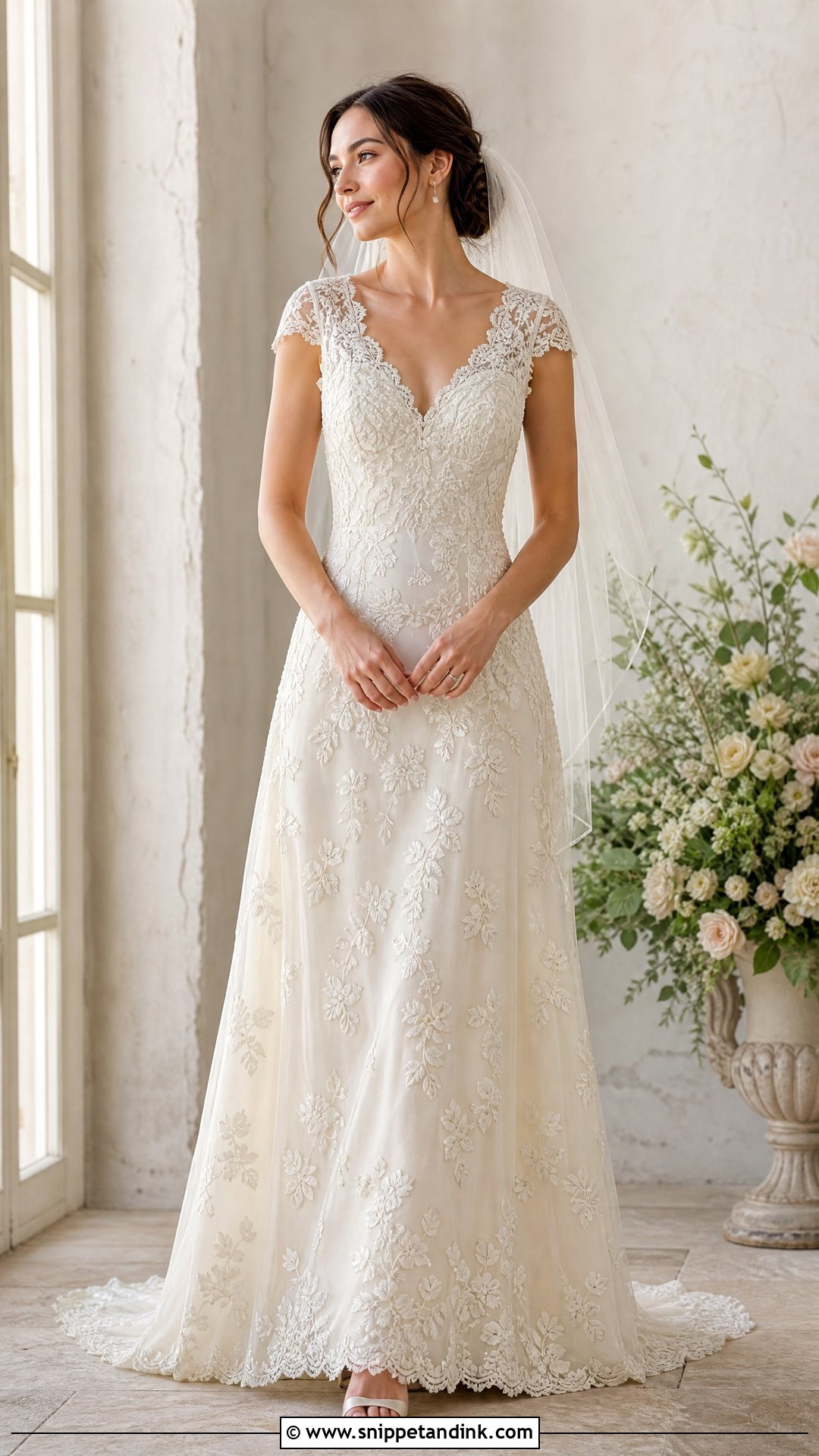
Embroidery makes a plain silhouette look handmade. Ivory-on-ivory is soft and classic; subtle champagne thread adds warmth. Vine patterns and florals both work. Simple heels, small earrings and a clean veil keep the embroidery as the feature, on an A-line, sheath or long sleeve shape. Ask how the embroidery is backed. Stiff backing can make a light fabric pucker around the stitched areas, which shows when the dress is on the body.
24. Vintage Two Piece Wedding Dress
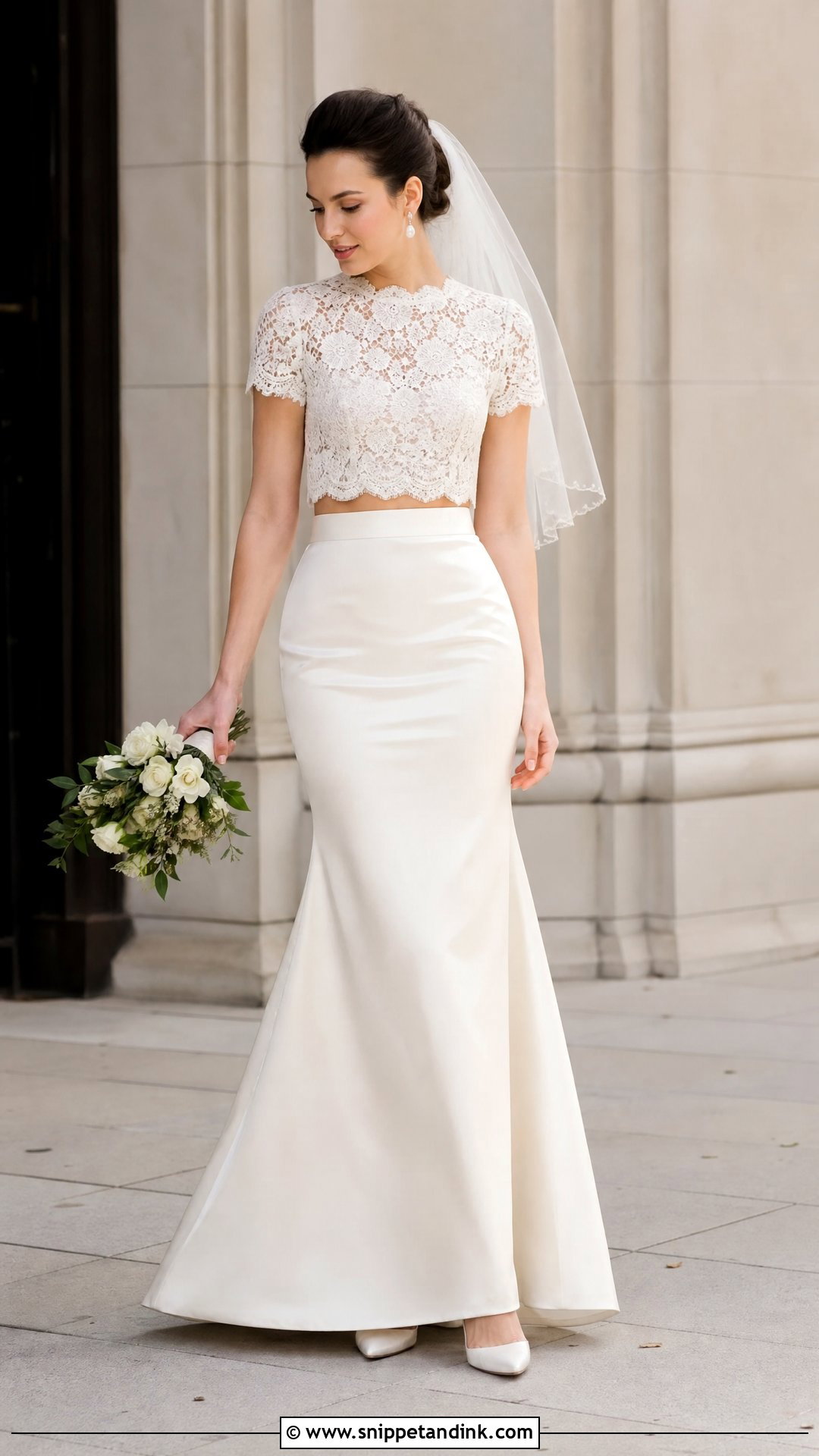
Two-piece outfits feel modern even when each half is vintage. A lace top with a satin skirt, a cropped jacket with a pencil skirt, or a structured bridal blouse over a flowing skirt can all look polished. Keep the palette tonal, because two slightly different whites side by side look accidental. Pointed heels, pearl earrings and a neat veil or hair bow finish it. Courthouse weddings and civil ceremonies suit it, and the separates can be worn again afterward.


25. Vintage Reception Wedding Dress
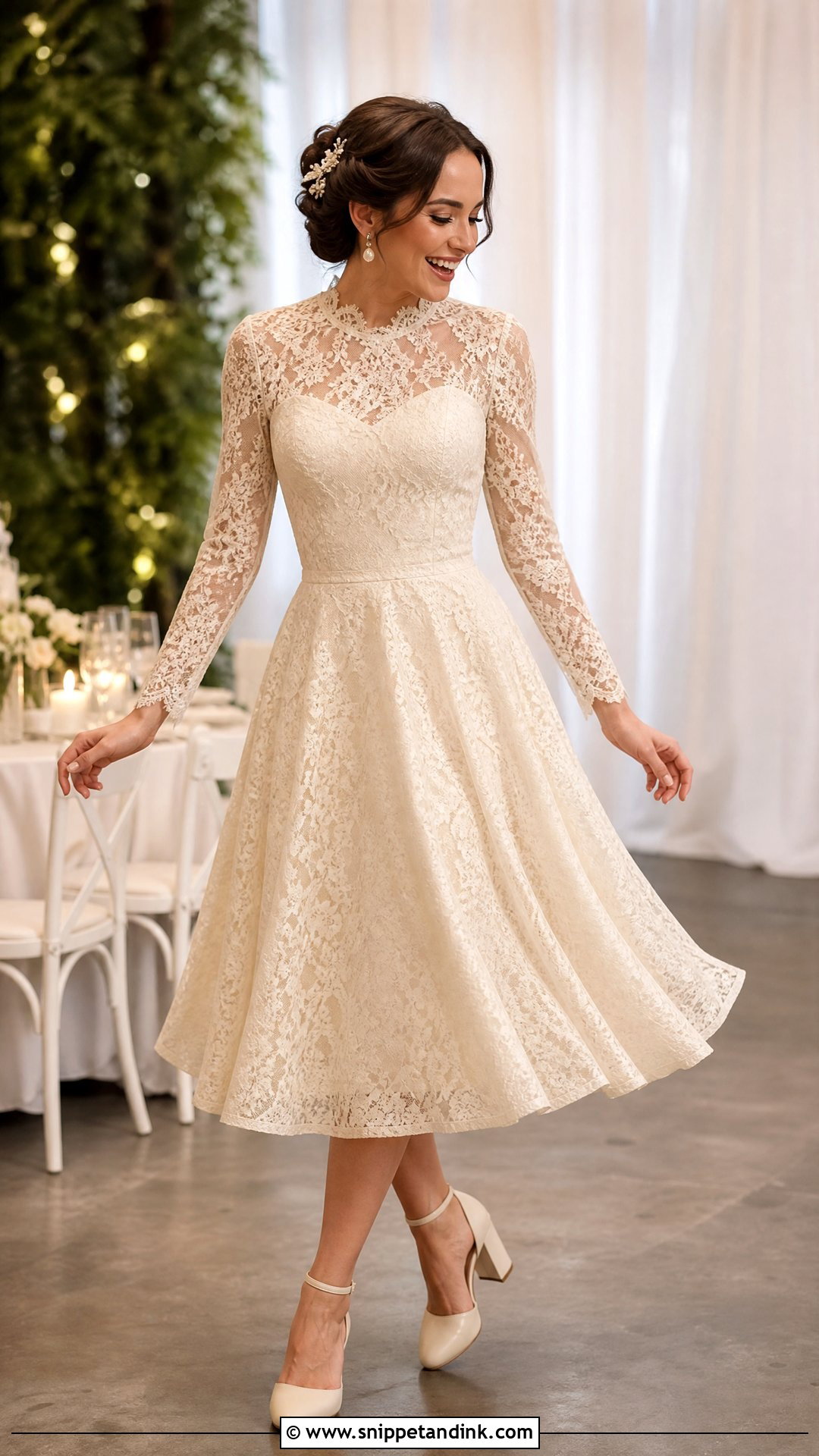
A reception dress is about movement. Tea-length dresses, beaded columns, long-sleeved satin minis and lace midis all work, as long as you can dance and sit freely. I try to keep a thread running from the ceremony gown, the same neckline or fabric, so the change looks planned. Comfortable block heels, pearl earrings and a small hair accessory are plenty, with a short veil or none. Plan where the change happens and who helps you, because it can take longer than people expect.
Bras, Slips and Shapewear Under a Classic Gown
The inside of a dress decides how the outside looks, so I sort underwear before the first fitting, not after. A bias-cut slip or a satin sheath needs smooth, seam-free pieces in a color close to your skin, not white, because white shows through ivory fabric. Strapless and off-shoulder bodices work best with cups sewn into the gown, which a seamstress can add. Full skirts, ball gowns and tea-length styles look better over a light petticoat that keeps the skirt from collapsing against your legs. Bring the exact pieces to every fitting, because changing them later changes the fit.
Gloves and the Ring Exchange
Gloves belong to classic bridal style and they make the ceremony slightly more complicated. Wrist and elbow-length gloves look tidy with short or cap sleeves; opera length suits strapless and off-shoulder gowns. The question is the ring. Some brides take off the left glove and hand it to a bridesmaid just before the vows. Others choose gloves with a small opening along the ring finger seam so the band slides on without removing anything. Practice either method at the rehearsal so it doesn’t turn into a fumble at the altar, and take the gloves off for eating.
Fit and Fabric Outlast Any Trend
Classic bridal style lasts because it’s built on fit, fabric and proportion rather than novelty. Lace sleeves, satin skirts, pearl details, tea-length hems, high necks and soft champagne all come from that tradition. Lean fully into one era or simply borrow a single vintage detail for a modern shape. Let accessories support the dress instead of overpowering it, and choose a gown you’d be happy to see in your photos decades from now.
You'll Like These Ideas:










Leave a Reply