
Pleats give a wedding dress movement and shape without needing beading or lace to do the work. Bridal designers are using them in two very different ways right now: tiny micro-pleats in tulle that shimmer as you walk, and wide, pressed folds in satin that read almost like architecture. Below are twenty pleated gowns, from full ball skirts to slim columns and short reception dresses, each styled with a veil, shoes, jewelry and flowers. The thing I ask every bride to notice first is the scale of the fold. Narrow pleats feel delicate and quiet; wide ones carry drama across a big room. Hold that thought while you scroll, along with your venue and how formal the day will be.
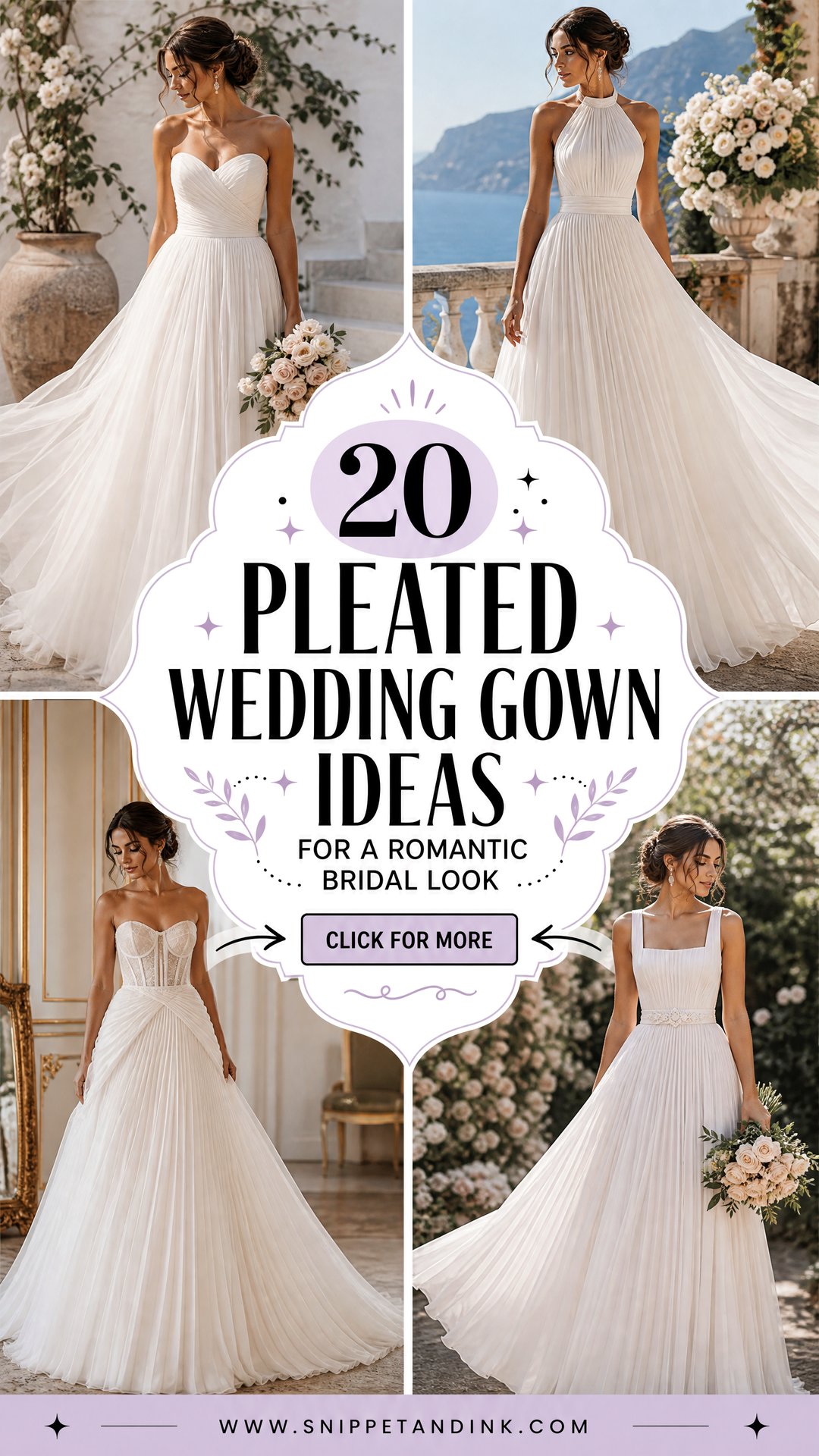
Knife, Box, Accordion or Sunray? Reading the Fold Before You Try It On
Salons use a handful of pleat names, and each one behaves differently once you’re actually wearing the dress. Knowing them helps you predict how a gown will move before you’ve even zipped it up.
- Knife pleats all fold in one direction. They swing crisply and lie flat when you stand still, so they suit tea-length and column skirts.
- Box pleats fold toward each other underneath, building volume at the waist. In heavy satin they look sculptural, but they can crush when you sit for a long dinner.
- Accordion pleats zigzag like a paper fan and stretch open as you move. They flatter slim columns and give a soft ripple.
- Sunray pleats are cut on a circle and fan wider toward the hem, which is lovely in motion and tricky to alter.
Fiber matters as much as fold. Pleats in polyester chiffon or tulle are usually heat-set at the mill and stay put through rain and dancing. Pleats pressed into silk are more fragile and can relax in humid air or under a steamer held too close. If you’re marrying somewhere humid, ask the salon directly how the pleats were made.
1. Strapless Pleated Ball Gown
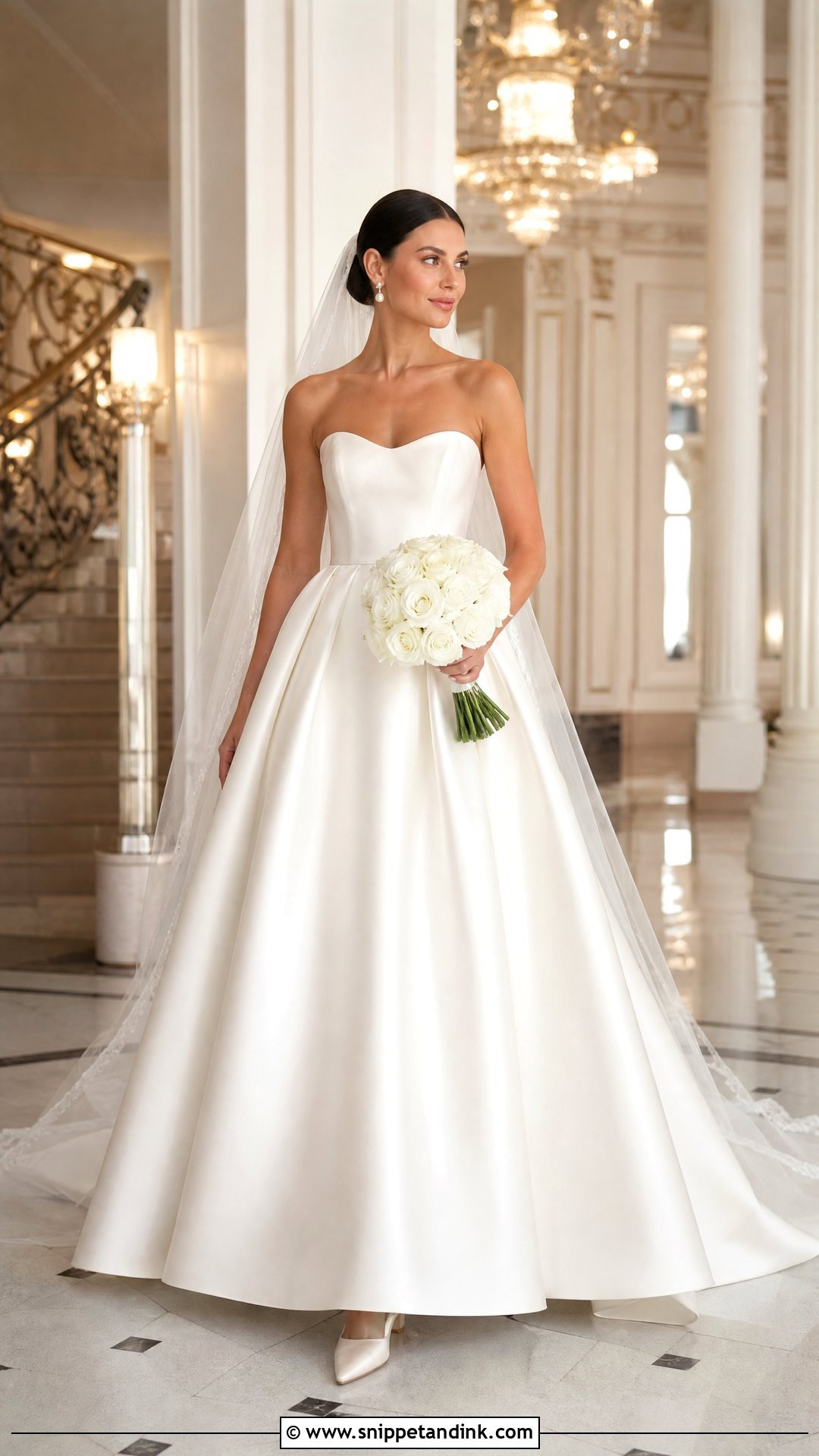
Wide box pleats starting at the waist give a strapless ball gown its volume from the fabric itself, so you need far fewer petticoat layers underneath. Mikado and heavy satin hold those folds best; lighter satins tend to collapse flat by the second hour. On fit, I always check that the curved neckline sits snug when you breathe out, because a strapless bodice that gapes will pull the pleats out of line below it. A cathedral veil, pearl studs and pointed ivory pumps keep the styling classic, and a low chignon leaves the neckline clear. Keep the bouquet compact, roses or calla lilies, so it doesn’t sit on top of the skirt. Ballrooms, museums and grand hotels give this much skirt the space it needs.
2. Sweetheart Pleated Tulle Wedding Gown
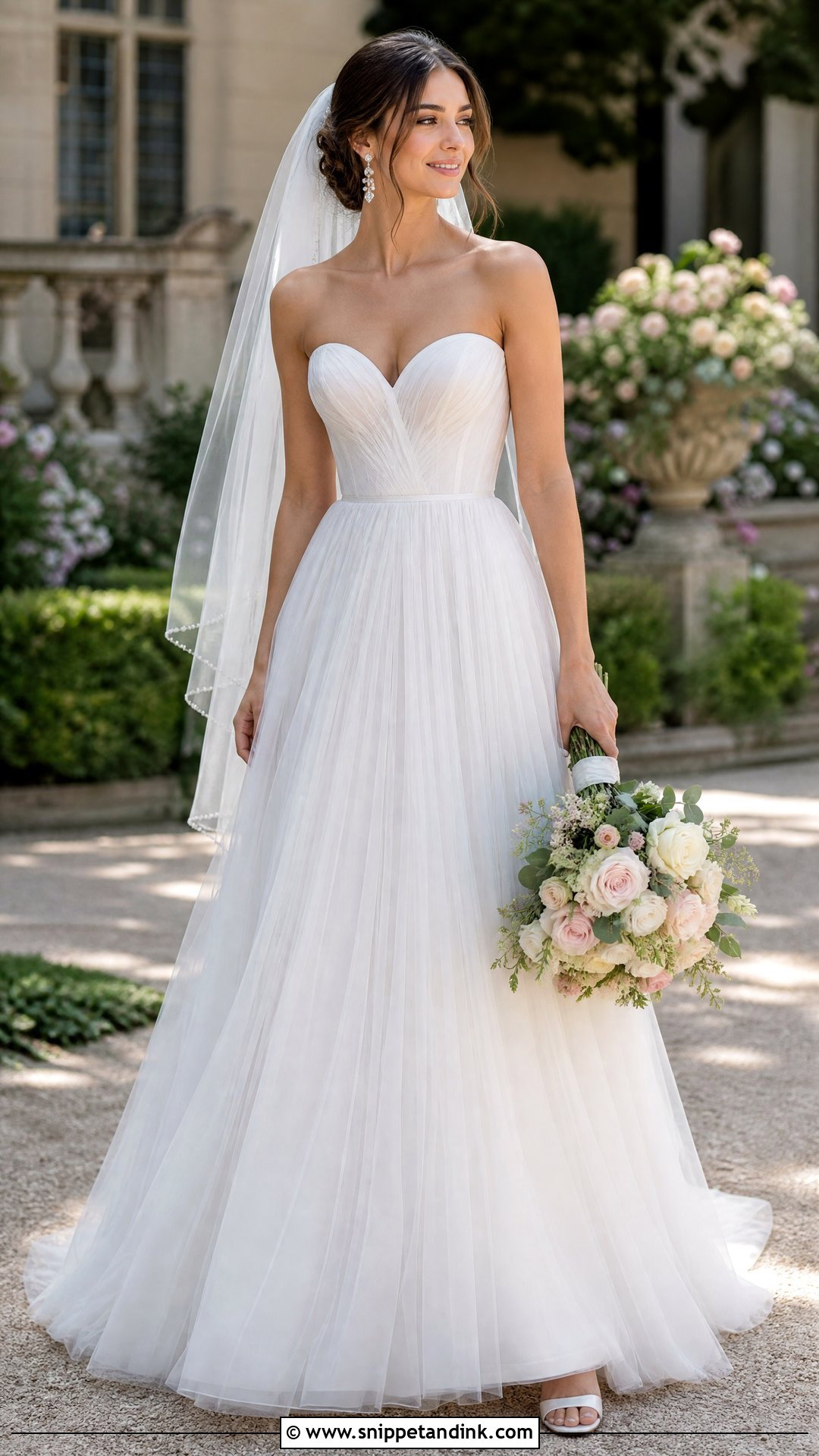
Soft layers of pleated tulle keep a sweetheart gown light even with a corset underneath. The narrow pleated panels on the bodice should follow your shape rather than lie across it, so at fittings I watch the side seams: if the panels twist there, the bodice needs taking in before anything else. An A-line tulle skirt balances the structured top and moves easily down an aisle. I’d pair it with a raw-edge fingertip veil, crystal drops and satin block heels, then loose waves or a soft pinned updo. Ranunculus, sweet peas and pale blush roses add a whisper of color. Gardens and bright rooms let the layered texture show; in a dim venue, tulle pleats mostly disappear.
3. Pleated Halter Wedding Gown
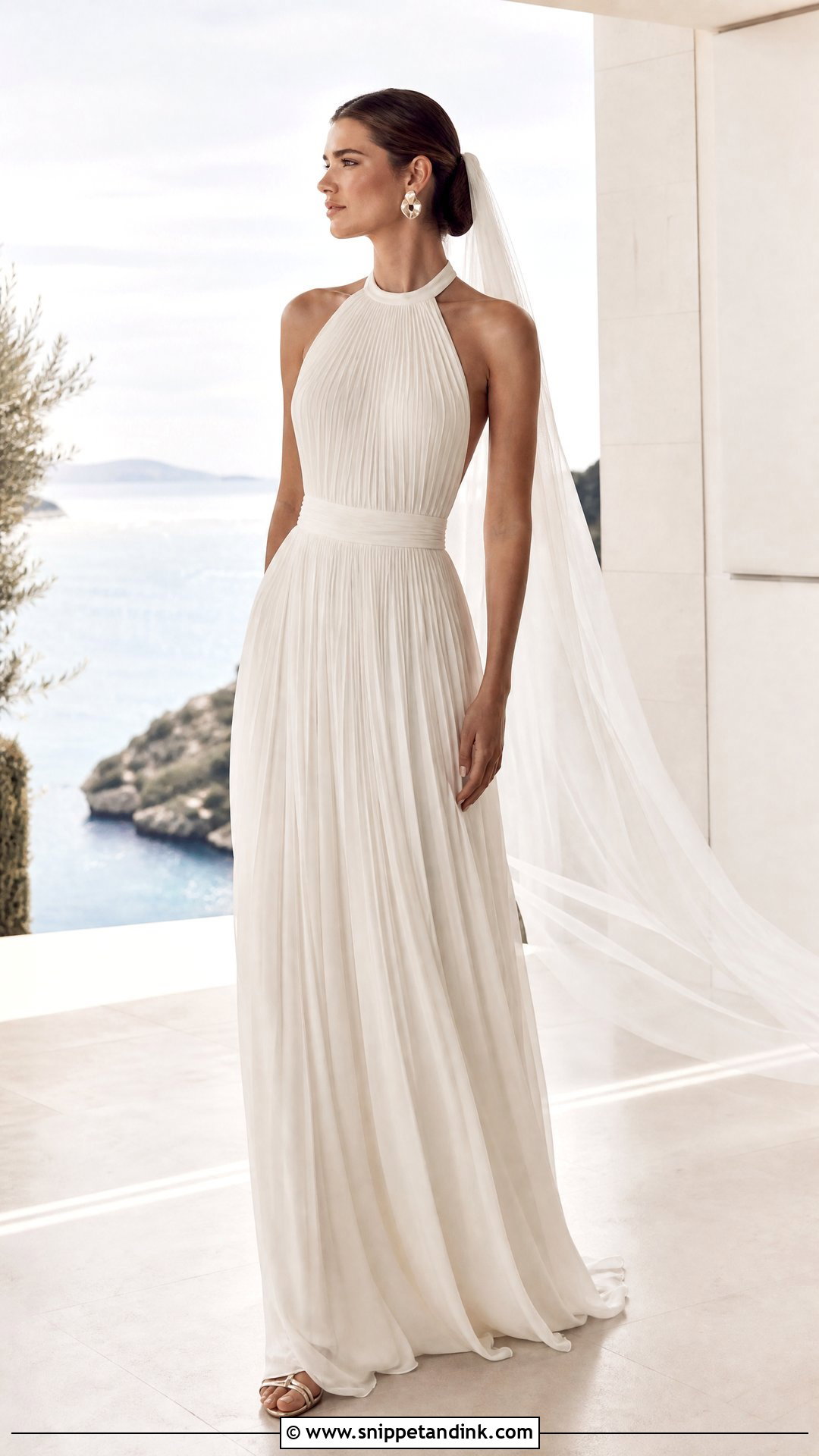
A halter cut with fine vertical pleats is one of the most comfortable bodices I fit, because the weight hangs from the neck strap instead of pressing on the ribs. Fluid chiffon or crinkled silk keeps that high neckline soft, and an open back gives contrast. The catch: a halter strap that’s even slightly tight will give you a headache by evening, so sit and look down at the table during your final fitting. Slim A-line or column skirts suit it. Skip the necklace and wear sculptural earrings, a simple bracelet and metallic ivory sandals, with a long plain veil for the ceremony only. It reads modern at coastal venues, galleries and rooftops.
4. Off-Shoulder Pleated Organza Wedding Gown
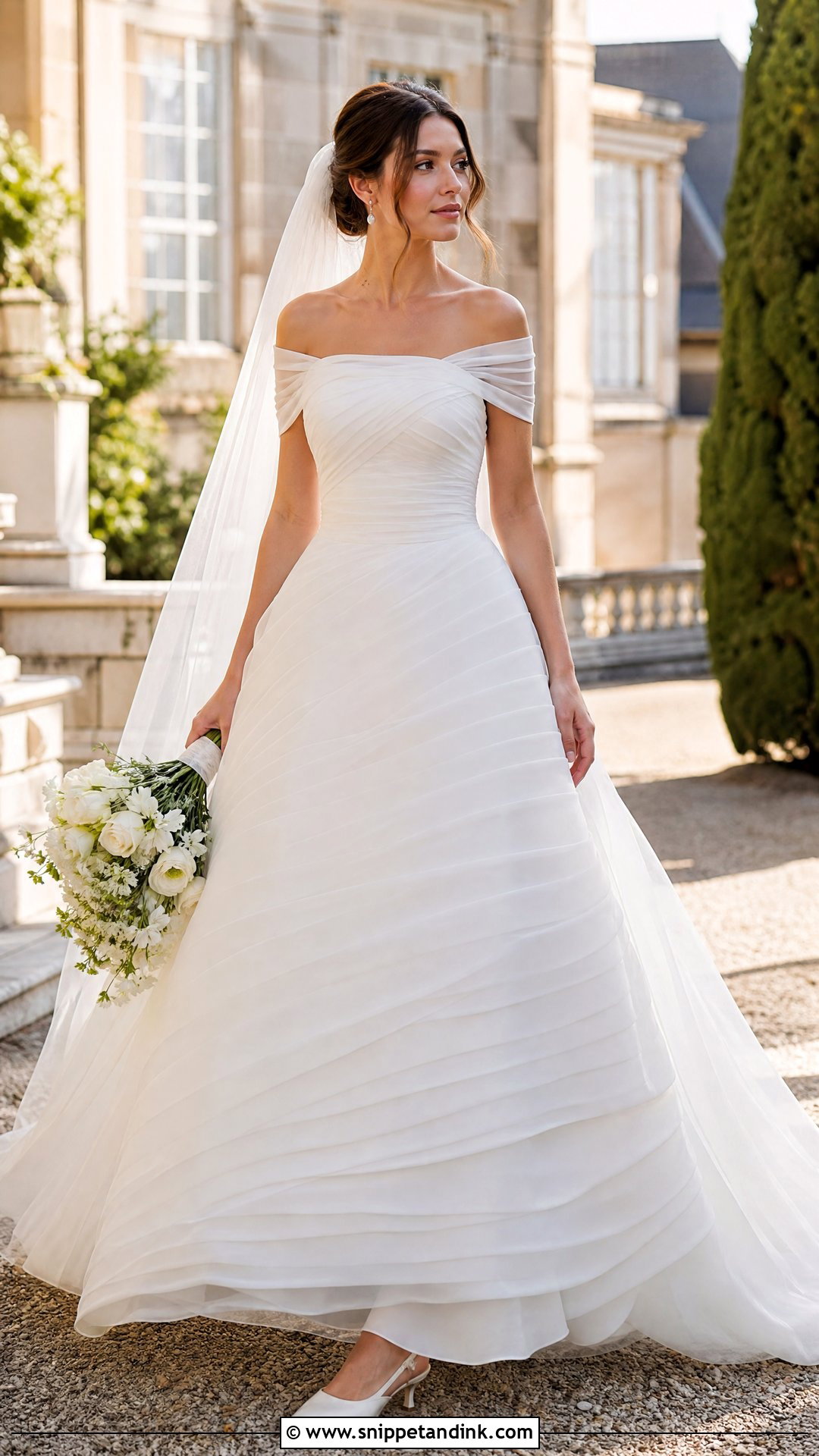
Pleated organza bands wrapping the shoulders look weightless, but they’re the part of this gown that limits your arms. Before alterations are signed off, raise your hands as if hugging someone taller and reach forward as if cutting a cake. If the bands ride up or cut into the arm, ask for a little ease or a hidden elastic channel. A fitted bodice and full A-line skirt stop all that organza from swallowing a petite frame. Pearl drops, a smooth chapel veil and closed-toe slingbacks keep things calm. A relaxed updo shows off the neckline, and a loose bunch of long-stem white flowers fits the airy mood. Bright ceremony spaces and minimal decor suit it best.
5. Basque-Waist Pleated Wedding Gown
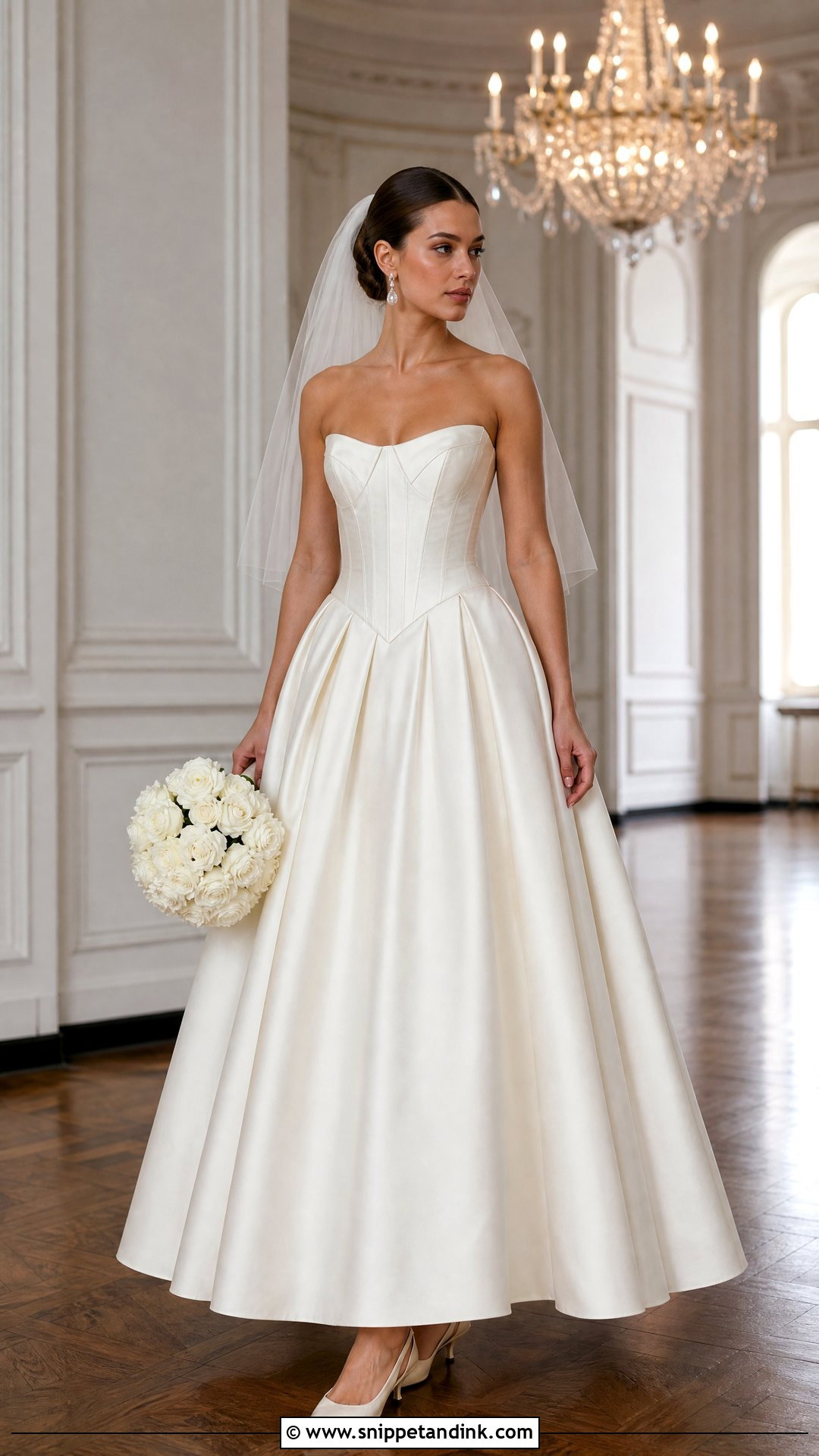
Do you want a defined waist with a bit of vintage formality? The pointed basque line drops below the natural waist into a full skirt, and pleats placed under that point give volume while the bodice stays long and lean. Structured satin or silk faille holds the shape. This is a cut that punishes a rushed fitting: if the point sits a centimeter too high it looks like a costume, too low and it digs in when you sit. Book detailed bodice fittings and try sitting, walking and a few dance steps before you approve anything. A medium-length veil, vintage drop earrings, low pointed pumps and a smooth bun or half-up style suit it, with an oval bouquet of garden roses.
6. High-Neck Pleated Wedding Gown
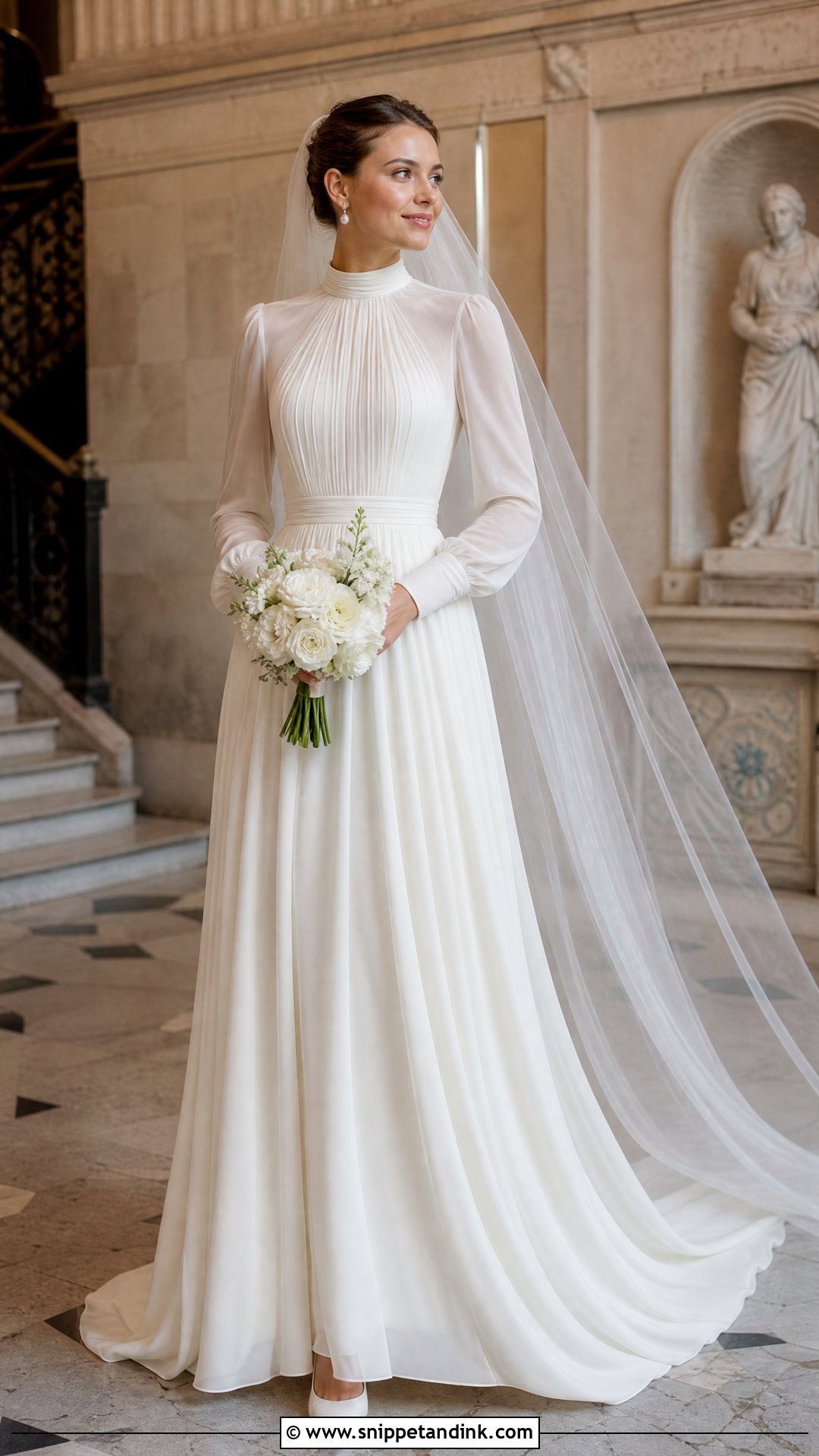
Coverage without heaviness is what fine chiffon or tulle pleats give a high neckline. A softly fitted bodice and a fluid skirt that falls straight to the floor keep it clean. Long sleeves push it toward traditional, sleeveless feels current. Wear a sleek bun so the pleated collar isn’t hidden under hair, pearl button earrings and ivory pumps, and leave the necklace at home. Pin a long veil beneath the bun for a dramatic back view. I find this cut suits cooler months and historic venues best; in a hot marquee, a closed neck of layered chiffon gets warm faster than brides expect.
7. One-Shoulder Pleated Wedding Gown
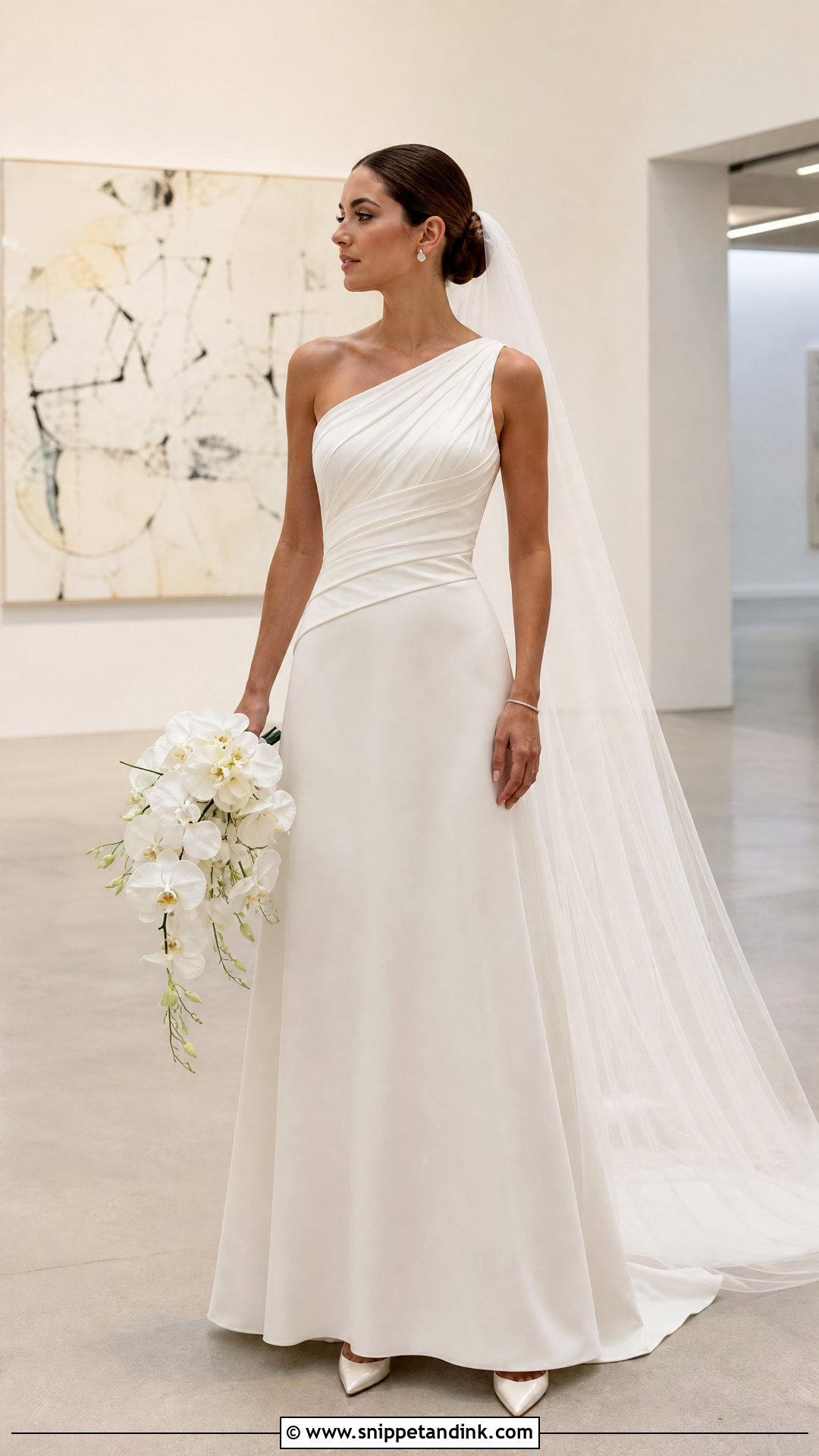
Pleats radiating from a single shoulder across the bodice pull the eye straight to your face, which is why the one-shoulder pleated wedding gown needs so little added. The diagonal line creates movement even over a plain column or soft A-line skirt. Watch the strap during fittings: a one-shoulder bodice can slide toward the bare side as you hug guests, so I usually ask for silicone grip tape or a discreet bra loop inside. Small diamond studs, a slim bracelet and no necklace. A low bun set toward the bare shoulder, sleek satin heels, a sheer chapel veil and a neat bouquet of orchids or callas finish it. It feels at home in city hotels and art spaces.
8. Empire-Waist Pleated Chiffon Wedding Gown
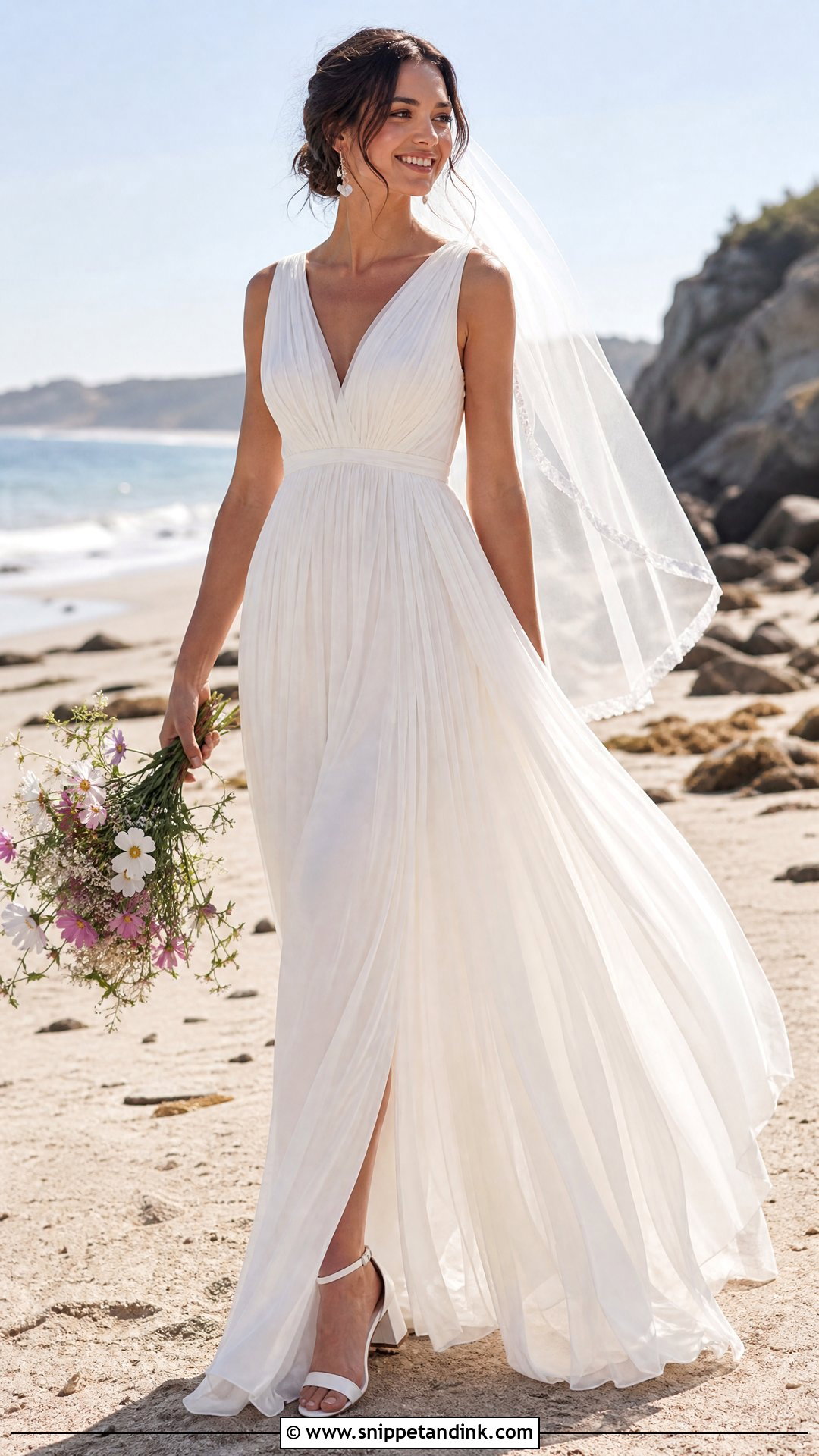
Light catches every fold of an empire-waist pleated chiffon gown as you walk, and the raised waist lets the skirt drop freely from under the bust. That freedom is why I suggest this shape to brides marrying somewhere hot: nothing grips the waist. Check the bodice support honestly, though. A V or square neck needs enough internal structure that you aren’t adjusting it all night. Hold the chiffon up to daylight too, because many pleated chiffons need a slip for opacity. Delicate earrings, low block-heel sandals, a light fingertip veil and soft curls suit it, with cosmos or lisianthus in the bouquet.
9. Satin A-Line Pleated Wedding Gown
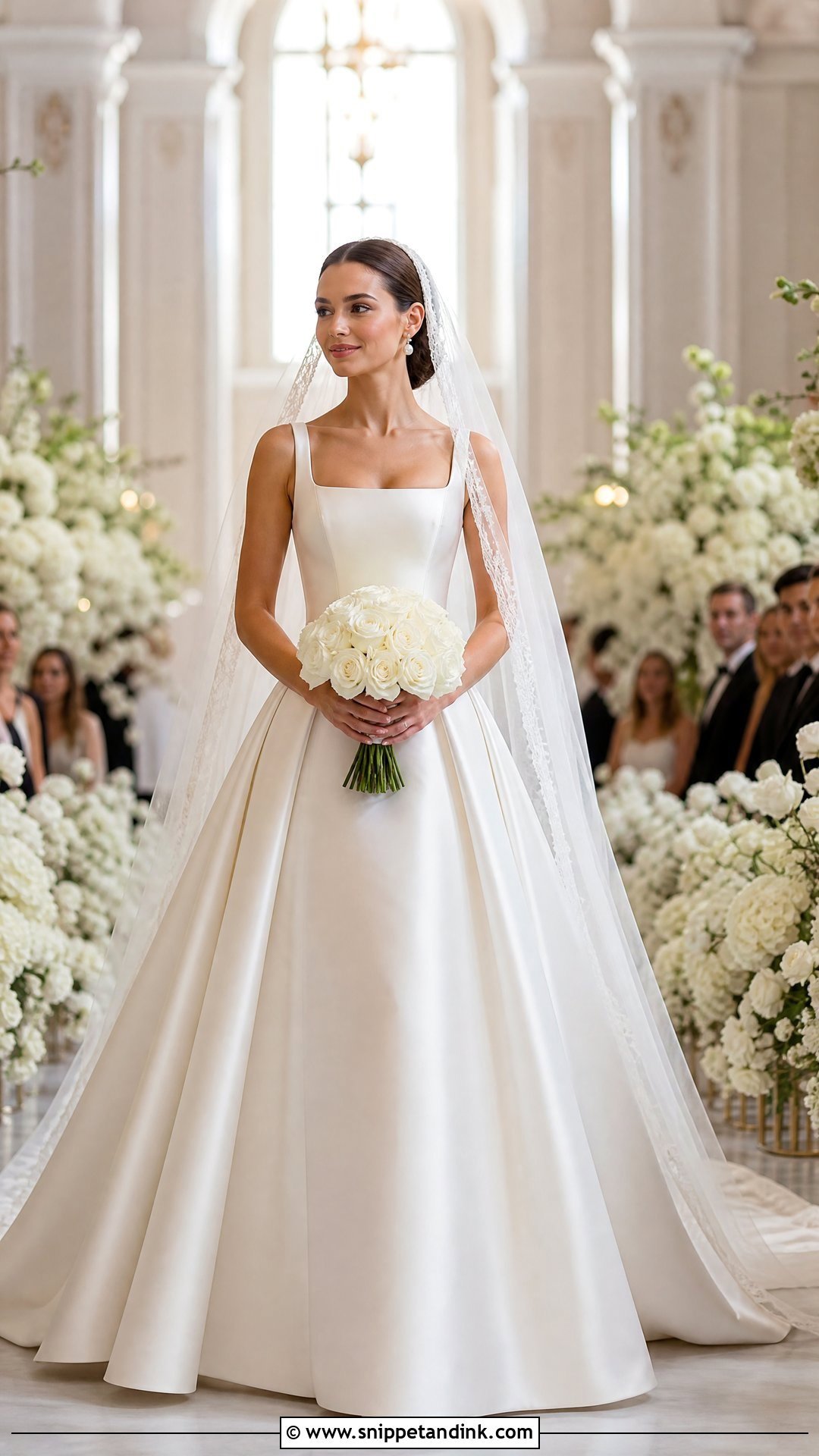
Satin shows a pleat more clearly than almost any other fabric, so a few well-placed folds at the waist of an A-line are enough. The skirt stays easy to wear and the detail still reads from the back of a church. Square and bateau necks keep it classic; a plunge makes it bolder. A simple cathedral veil, pearl earrings, closed-toe satin pumps and a low bun with a round bouquet of white roses keep it clean. One practical warning: satin arrives from the salon with shipping creases that sit right beside the intended folds. Ask your salon exactly how they steam it, and never let a well-meaning relative go at it with an iron the morning of.
10. Pleated Mermaid Wedding Gown
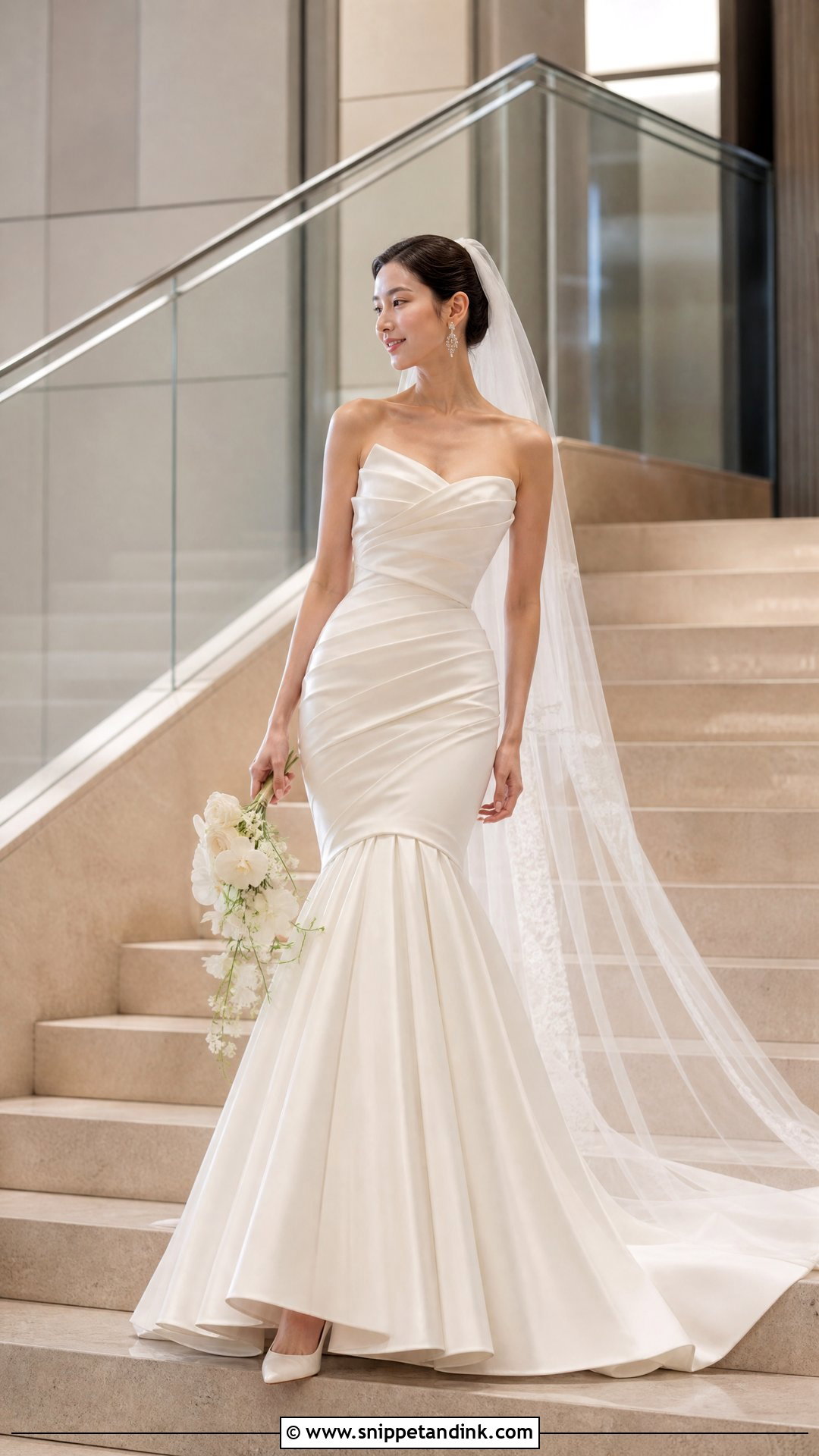
Diagonal pleating across the bodice and hips sculpts a mermaid gown before the skirt flares below the knee. Tulle, organza and satin each change the effect: tulle flares soft, satin flares like a bell. Walk in all three if the salon has them, because the knee is where this silhouette either works or traps you. Climb a step, sit on a chair and try a slow dance turn at every fitting. A narrow chapel veil follows the line instead of hiding it. Crystal earrings, pointed pumps, a small cascade bouquet and a polished updo or sleek side waves match the sculpted finish.
11. Pleated Wedding Gown With Cape
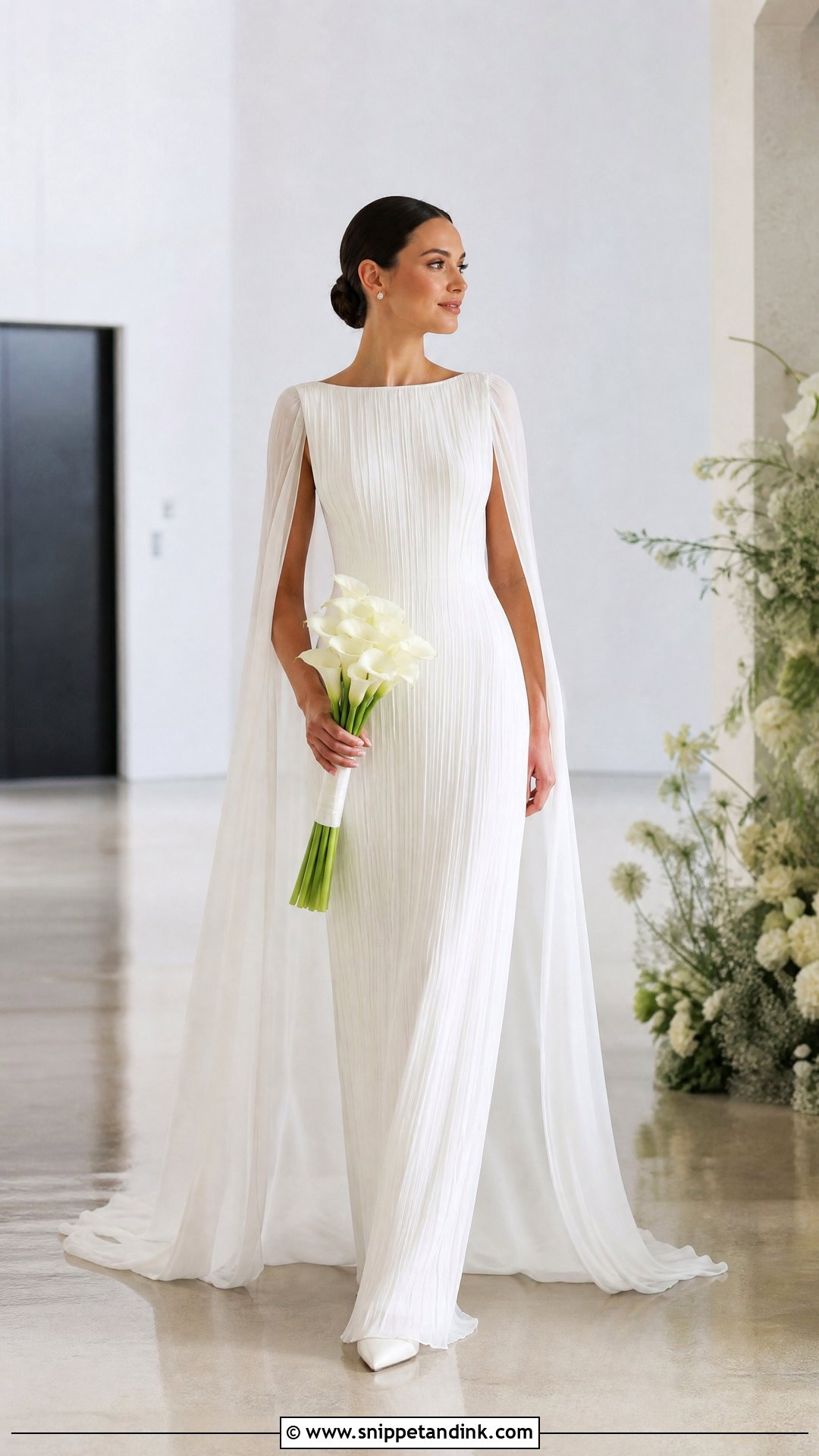
Start with a clean column or A-line covered in fine vertical pleats, then add a cape. A sheer shoulder cape or floor-length chiffon layer moving behind you turns a quiet dress into a ceremony piece. Match the whites carefully: two ivories that look identical on hangers can read as cream and grey side by side in daylight. Minimal studs, sleek pointed shoes and a low bun leave the cape in charge. Carry a narrow bouquet so the front pleating stays visible. I nearly always recommend making the cape detachable, since it catches on chairs at dinner. Long hallways, staircases and open-air venues give it room to move.
12. Long-Sleeve Pleated Wedding Gown
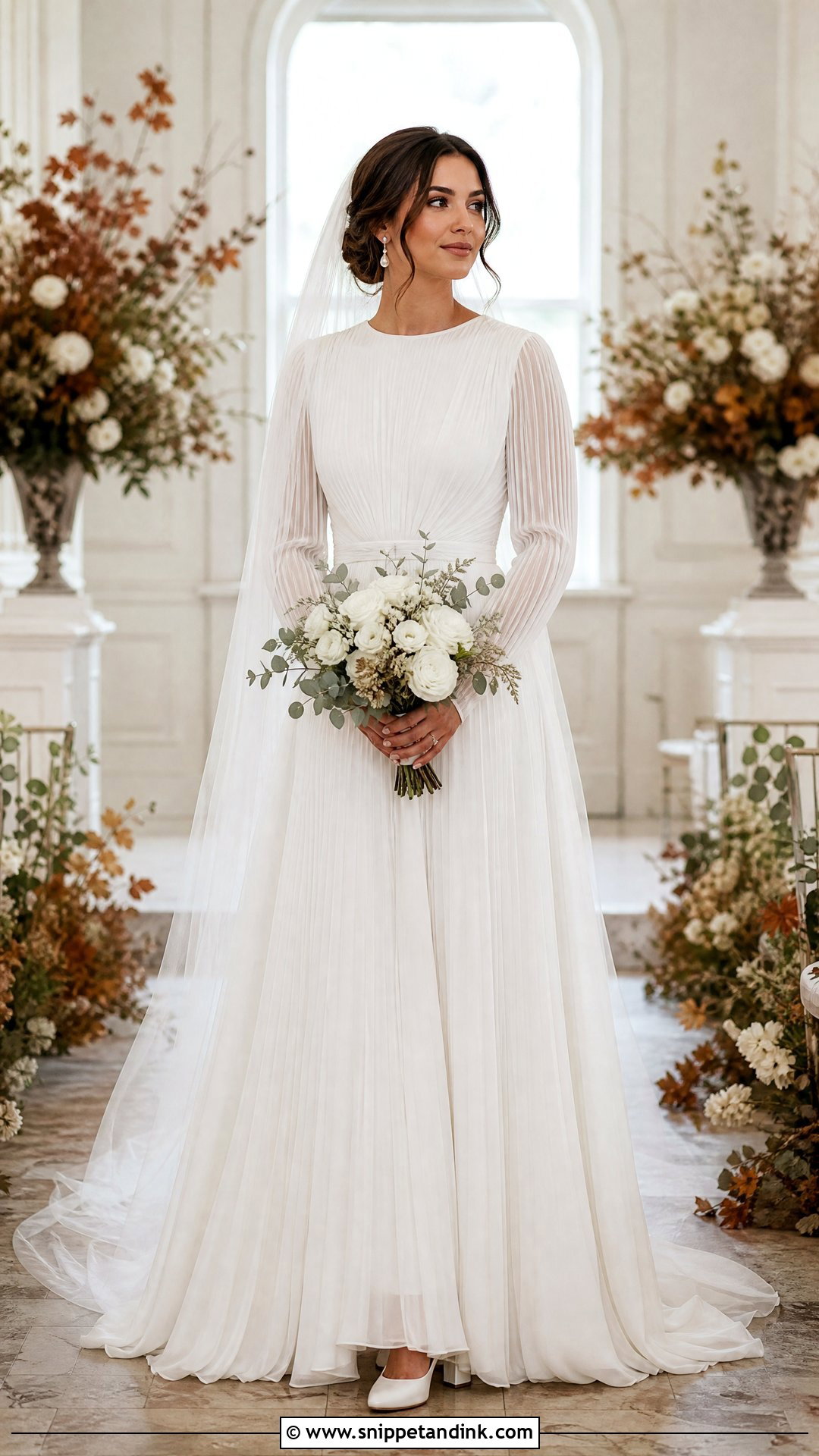
Long sleeves on a pleated gown solve the cold-weather problem without making the dress heavy. Sheer pleated tulle sleeves look delicate; opaque chiffon gives modest coverage. Where I see trouble is at the elbow: sleeve pleats set straight can pull across the shoulder blades when you bend your arms, so at fittings hold a bouquet at waist height for a full minute and see what tightens. A fitted waist and flowing skirt balance the extra fabric up top. A chapel veil, pearl drops and closed-toe block heels that cope with cold stone floors complete it, along with a textured low bun and muted seasonal greenery in the flowers. Fall and winter ceremonies in historic or formal indoor spaces suit it best.
13. Tea-Length Pleated Wedding Gown
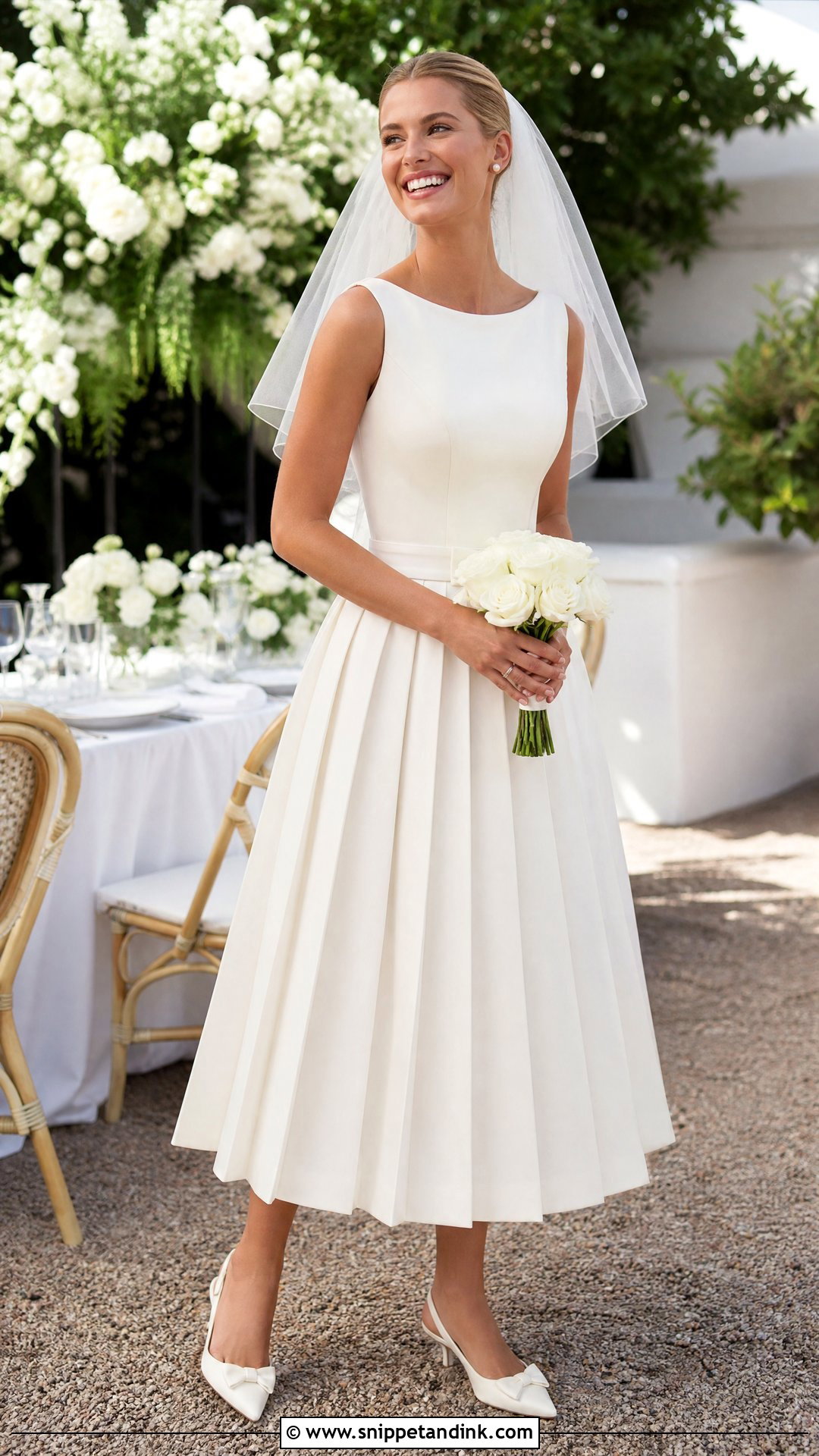
Tea length is the most cheerful way to wear pleats, and the most practical for a courthouse or restaurant wedding. The hem lands between knee and ankle, so knife pleats give a crisp swing and accordion pleats a lighter bounce. Your shoes become part of the dress here: polished slingbacks, bow pumps or block heels. A birdcage veil, short blusher or a simple bow suits the playful proportions, with pearl earrings and a compact bouquet. Always confirm the final hem in the exact shoes you’ll wear. Half an inch changes the whole balance of a shorter dress, and it’s the alteration I see redone most often.
14. Pleated Mini Wedding Gown
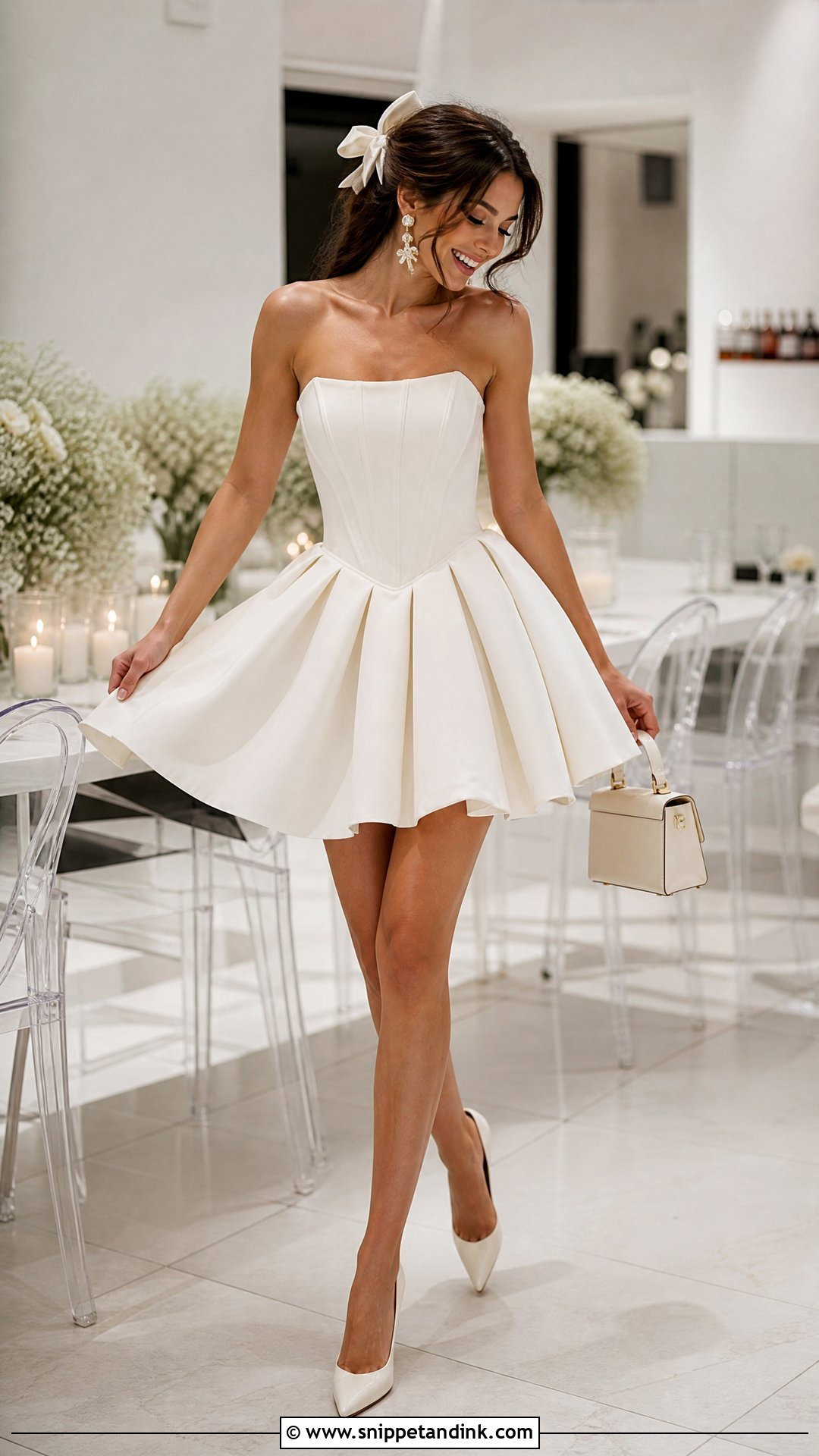
As a second outfit for dancing or the cake cutting, a pleated mini gives you freedom the ceremony gown can’t. A structured bodice with a flared pleated skirt or a slim mini with sculpted folds at the waist both work. Test it seated and with your arms up, since flared pleats lift more than you’d guess when you spin. Pointed pumps, metallic sandals or embellished flats, depending on the dance floor. Swap the veil for a bow, headband or shoulder-length veil, add statement earrings and a neat ponytail. Insist on breathable lining. A mini built only for photos becomes miserable three hours into a reception.
15. Champagne Pleated Wedding Gown
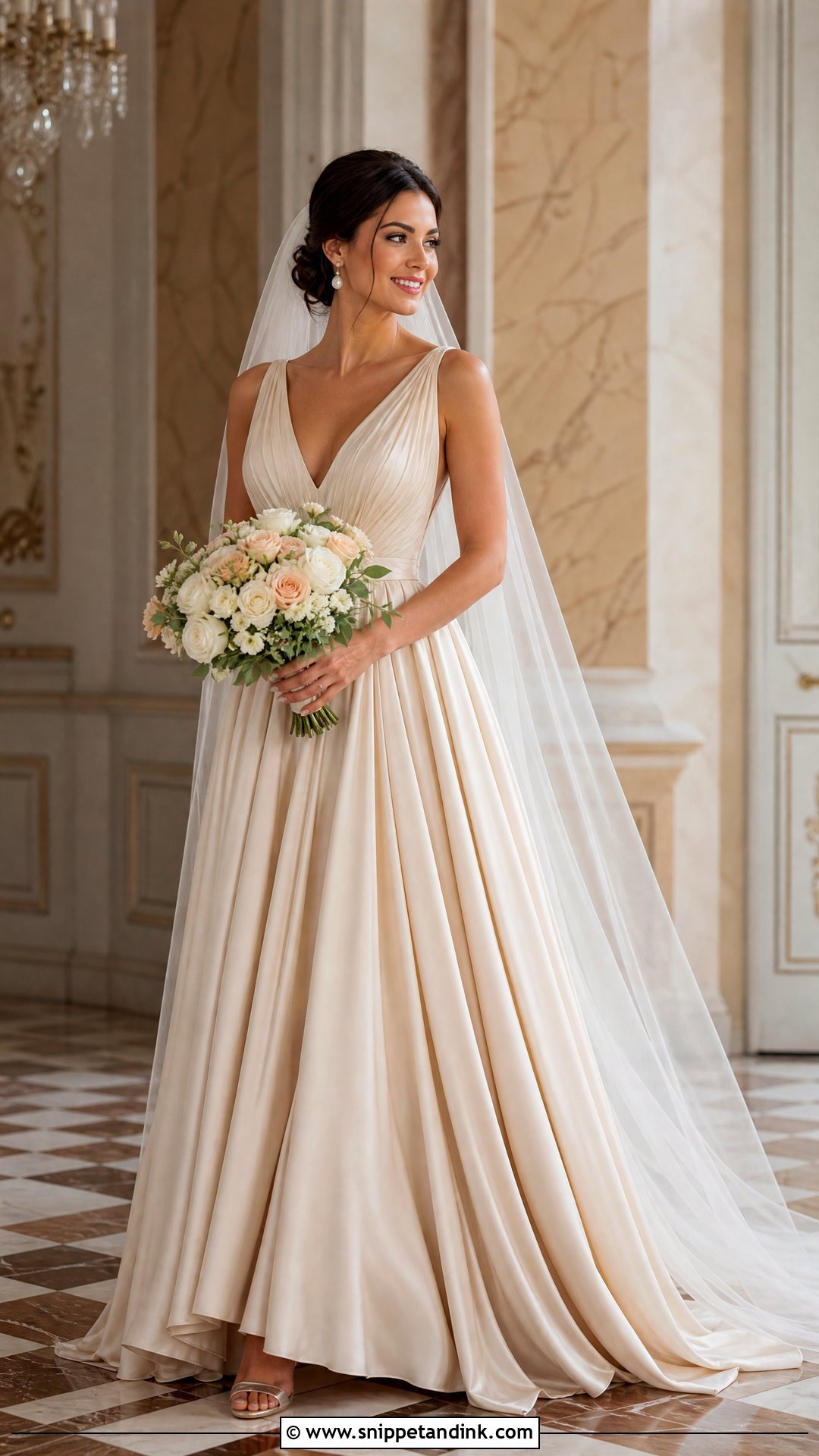
Champagne fabric warms a pleated gown and the folds create natural shifts in tone, especially in silk, satin, chiffon or metallic-thread organza. Keep the silhouette simple so the color and texture lead. The detail people miss is the veil. A bright white veil over champagne reads noticeably cool in photographs and makes the dress look dingy beside it, so ask for a veil dyed to the gown’s undertone. Request swatches before buying shoes or jewelry and look at them by a window and under indoor light. Neutral metallic heels, warm pearls, swept-back hair and ivory, cream and pale peach flowers complete the palette. Evening receptions and candlelit ballrooms flatter it most.
16. Floral Pleated Wedding Gown
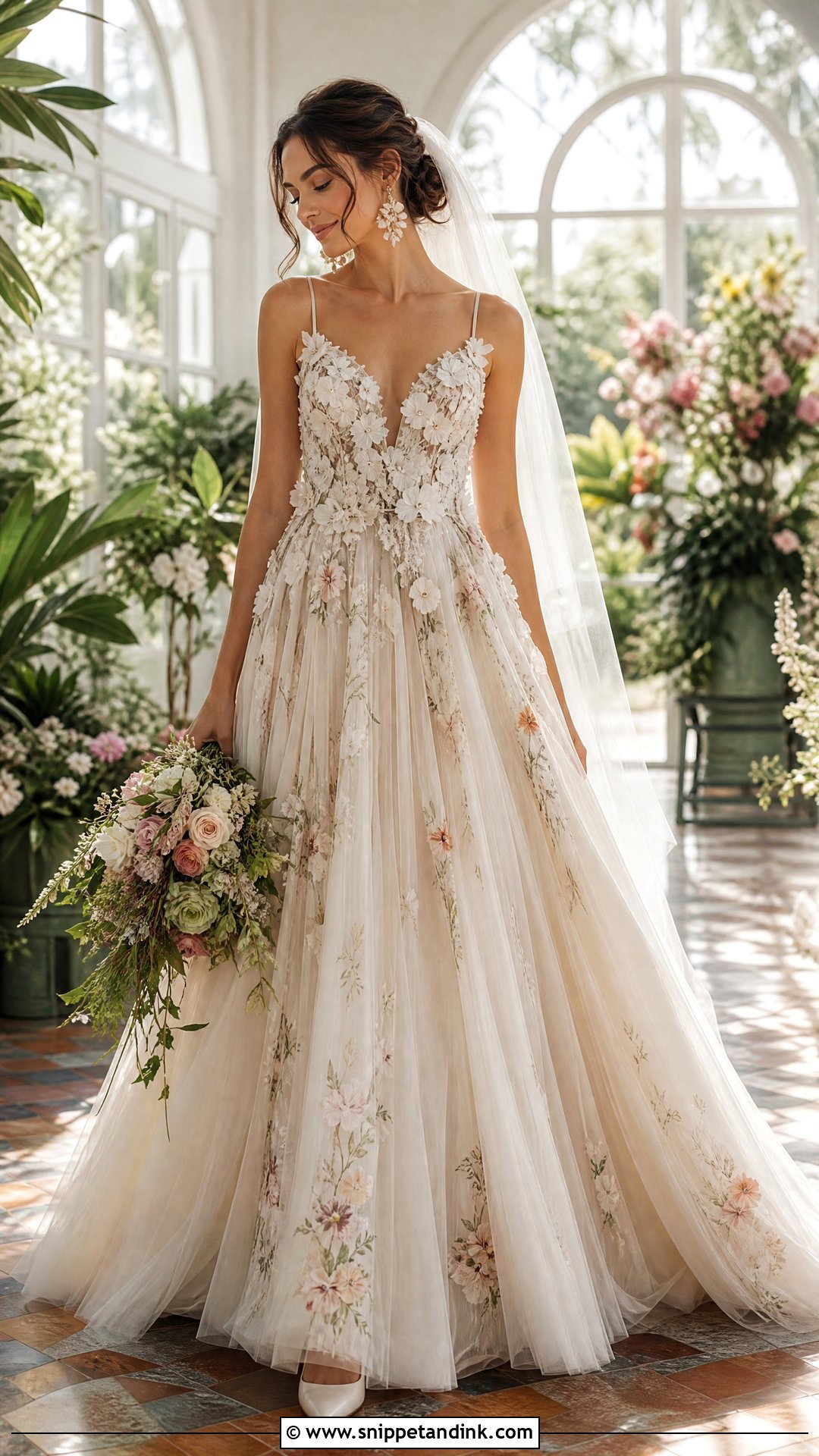
Flowers and folds compete if you aren’t careful. On a floral pleated gown I look for appliqués placed only along the bodice, waist or hem, so the pleated texture still has room to show. A pleated tulle A-line with three-dimensional blooms leans romantic, while printed organza pushes things in an unconventional direction. Raised flowers do snag lace veils, so pair a plain veil, small floral earrings and simple satin shoes. One understated floral pin in a loose bun is plenty. Echo one or two of the gown’s flowers in your bouquet rather than matching all of them. Botanical venues, conservatories and spring gardens suit it.
17. Asymmetrical Pleated Wedding Gown
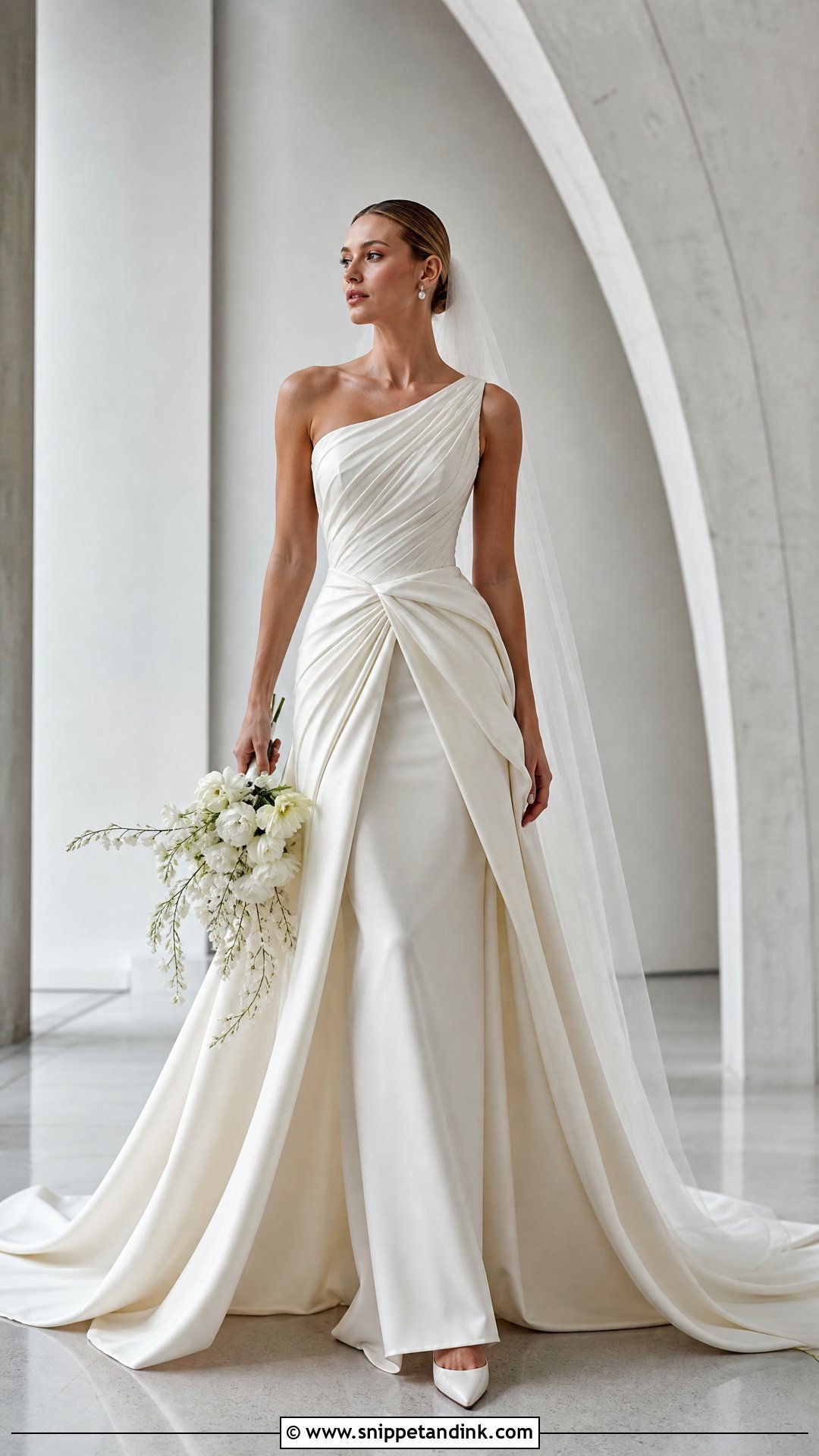
A diagonal neckline, gathered hip or off-center pleated panel makes this gown look different from every angle. Pick one asymmetric feature; two start fighting each other. Sleek earrings, a single bracelet and minimalist pointed heels keep things spare, and a plain veil at the back of a low bun respects the construction. A compact bouquet with an organic shape suits the draping. During alterations, ask your seamstress to pin it while you stand, then check again after you sit and stand back up. Off-center pleats are the ones most likely to drift out of position as you move, and front-only mirror checks won’t catch it.
18. Pleated Column Wedding Gown
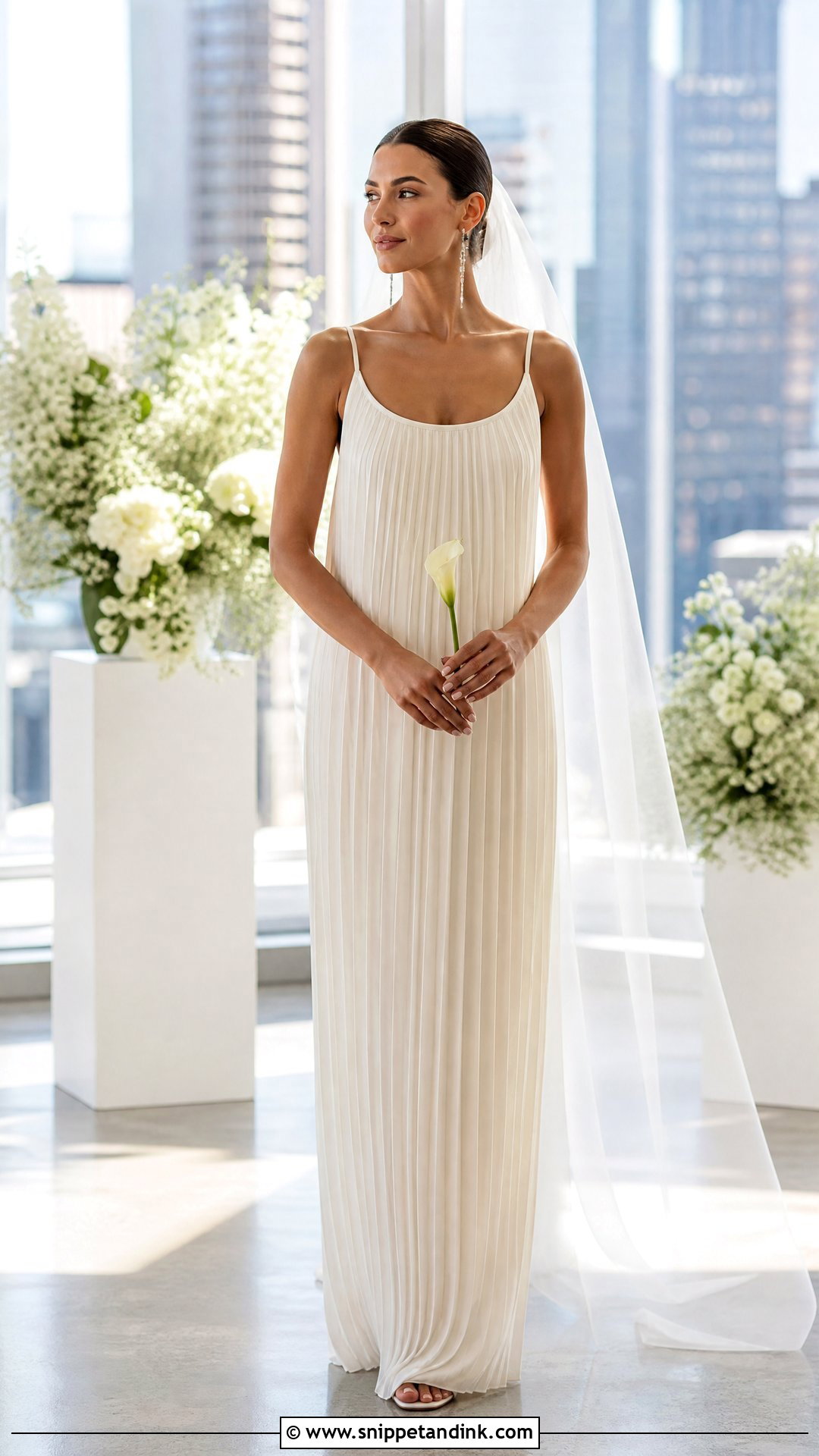
Fine accordion pleats are the reason a column gown can look this quiet and still move. They add life without changing the slim shape. The lining matters more than the outer layer here: a softly fitted slip lets the pleats skim your body, while a tight one makes them cling and split apart over the hips. Cowl, halter, scoop and straight necklines all keep it simple. Delicate drop earrings, barely-there sandals, a long sheer veil and a smooth low knot suit the minimal mood, with a single stem or small posy. Narrow pleats fan open when you sit, so look at the gown seated, from the side, at your fittings. Small ceremonies and destination weddings fit its understated style.
19. Pleated Wedding Gown With Detachable Overskirt
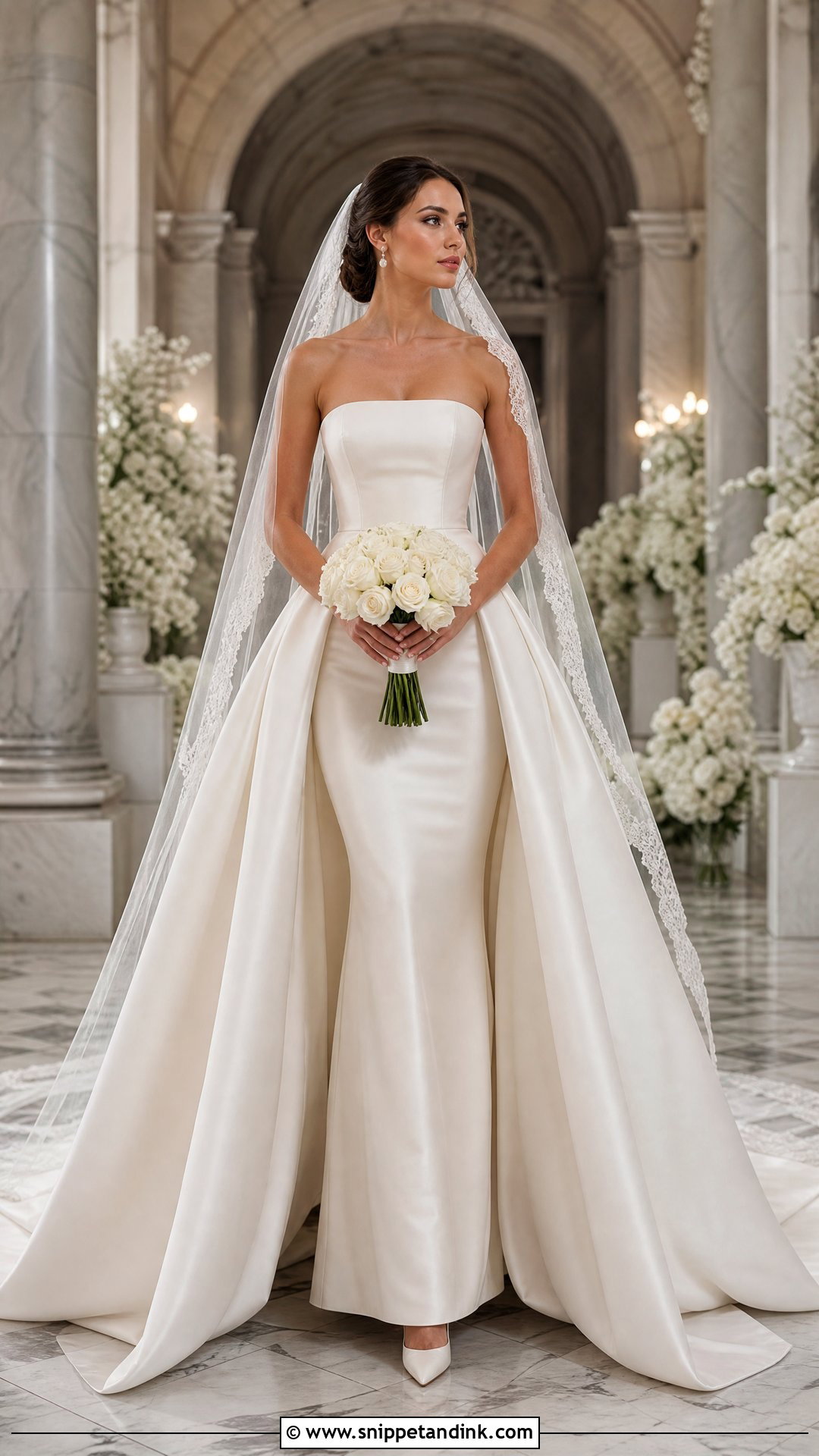
A detachable pleated overskirt gives you two silhouettes with no real outfit change. Wear it over a fitted column, sheath or mermaid for a full entrance, then unhook it for dinner. Satin box pleats look formal and structured; layered organza pleats read softer. Pair a cathedral veil and classic pumps for the ceremony, then switch to a shorter veil or statement earrings later. The fastening is what I test hardest: have the person who’ll remove it on the day practice at your last fitting, because hooks hidden under heavy pleats are fiddly in a dim corridor. Check from every side that the attachment points vanish once it’s on.
20. Square-Neck Pleated Wedding Gown
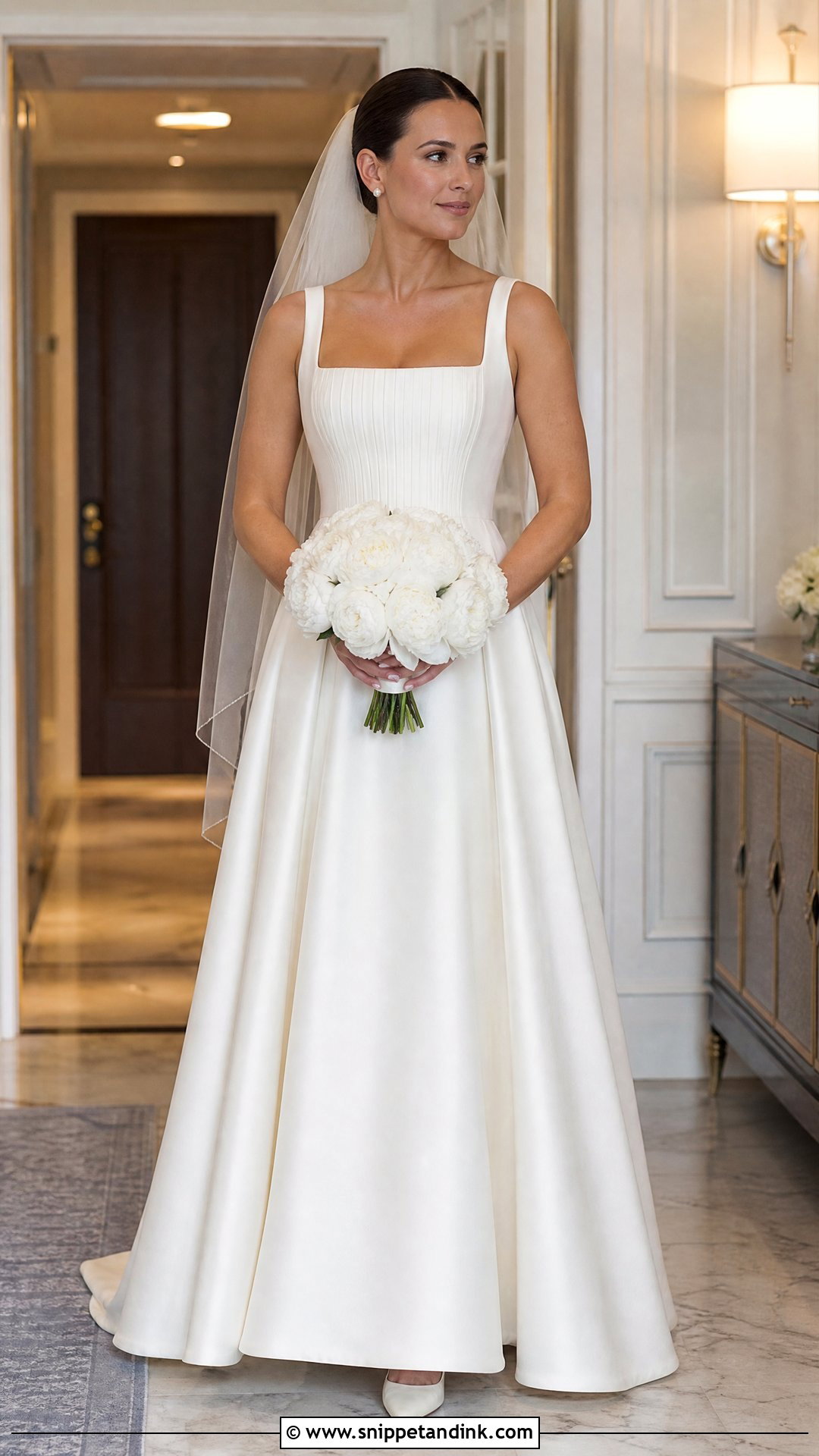
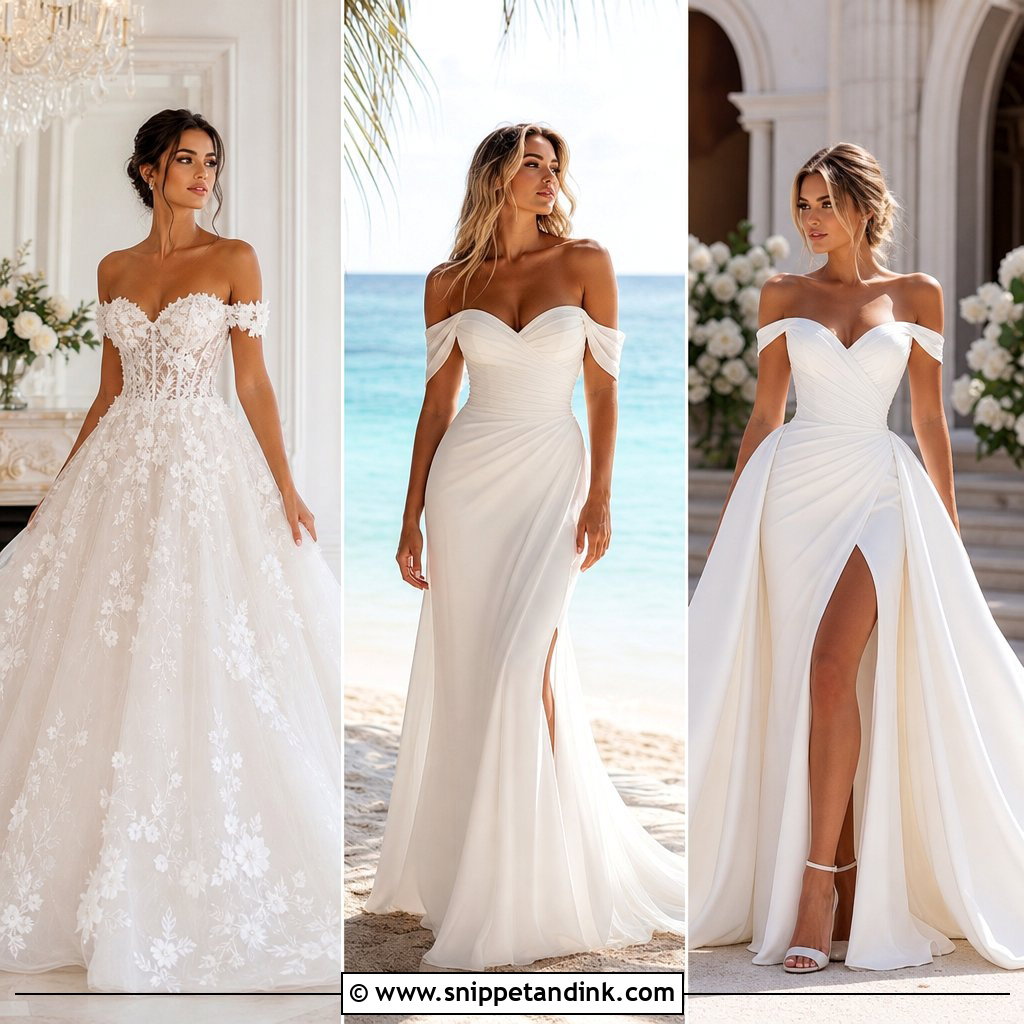
The straight line of a square neckline frames the face and collarbones, and vertical or radiating pleats below it add structure to an otherwise soft dress. Wide straps give support and coverage, narrow ones feel lighter. An A-line skirt keeps it classic; a pleated column is more minimal. Square necks are less forgiving of jewelry than people expect, so stick to pearl or diamond studs and no pendant. A fingertip or chapel veil tucked under a polished bun keeps the neckline crisp, and pointed satin shoes finish the line. Hold a rounded bouquet below the waist so the bodice stays in view. It sits comfortably in a formal hall, a garden or a modern hotel.
Why Alterations on Pleated Gowns Need Extra Weeks
Pleats limit what a seamstress can change quickly. Taking in a pleated bodice often means unpicking and re-folding each panel so the lines still meet at the seams, not simply moving a side seam. Sunray and accordion skirts frequently can’t be shortened at the hem without breaking the pattern, so they’re lifted from the waistband instead, which is slower work. I suggest allowing at least three fittings and starting them roughly two to three months before the wedding, then confirming the timeline with your own seamstress since workloads vary a lot by season.
Ask these at your first fitting
- Are the pleats heat-set or pressed, and can they be steamed safely?
- Will shortening happen at the hem or the waist?
- If the bodice is taken in, will the pleat lines still match at the side seams?
Steaming, Hanging and Traveling With a Pleated Dress
Hang the gown by its inner loops, not the shoulders, so the skirt’s weight pulls the pleats straight. If it needs steaming, work from inside the skirt with the steamer held a hand’s width away, then run your fingers down each fold in the direction it was set. Never press a pleated gown flat on an ironing board.
For travel, keep it in a breathable garment bag and carry it on rather than checking it. Fold the skirt along existing pleats, not across them, and slip acid-free tissue into the bend. After the wedding, tell the cleaner which pleats are pressed silk. Some cleaning processes flatten them, and re-pleating is specialist work.
Small Folds for Intimate Rooms, Big Folds for Ballrooms
A pleated dress earns its place when the texture, your comfort and the room all agree. Narrow folds bring gentle movement to chiffon and tulle, while wide satin or organza pleats build real volume. Once you know your silhouette, pick accessories that let the pleating breathe rather than covering it. Bring your actual shoes and underwear to every fitting, walk and sit in the gown, and look at it under the kind of light your venue will have. Then pick the one you forget you’re wearing after ten minutes. That’s usually the right one.
You'll Like These Ideas:




Leave a Reply