
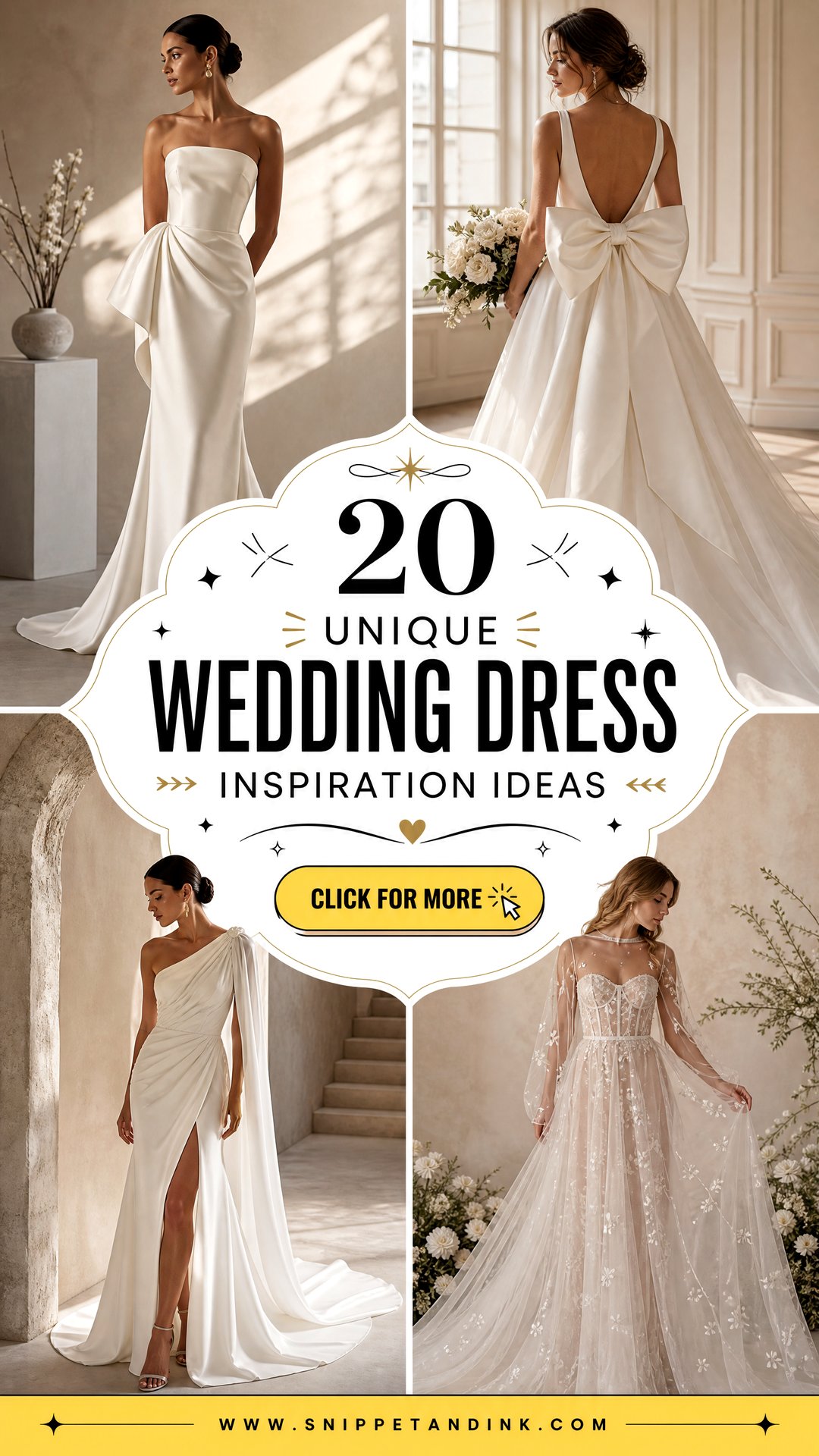
Most brides I meet arrive with a folder of saved pictures and a sense that they want something a little different from the standard strapless ivory gown. Good. A different dress still has to carry you from the aisle to the last song, so my job is to sort the ideas that will work on your body and in your venue from the ones that only work in a photo shoot. Below are twenty ideas, from basque waists and visible corsetry to raised florals, big volume and pieces you can take off later. Alongside each I’ve noted what I check and how I’d finish it, because shoes, veils, jewelry, and hairstyles change a dress as much as the cut does.
Reading an Inspiration Photo Like a Fitter
Bridal campaign photos are made to sell a dress, not to show you how it wears. When a bride hands me her phone, I look past the dress for a moment and ask what the picture is hiding.
- Clips at the back. Sample gowns on shoots are often pinned tight behind the model. A dress that fits like that in a photo may need serious alterations on a real body.
- The pose. Models stand still with one hip out. Look for photos of the same dress mid-stride or seated if you can find them.
- The light. Golden-hour sun warms ivory and makes blush look richer. Under indoor bulbs the same fabric can look flat or yellow.
- The edit. Wind machines, steaming between frames and retouching remove every crease you will have after sitting through a ceremony.
What I want from your photos is the feature you keep coming back to: the neckline, the waist, a sleeve, a texture. Name that feature, and I can find it in a dress that suits your body, even if it looks nothing like the picture.
1. Basque Waist Wedding Dress
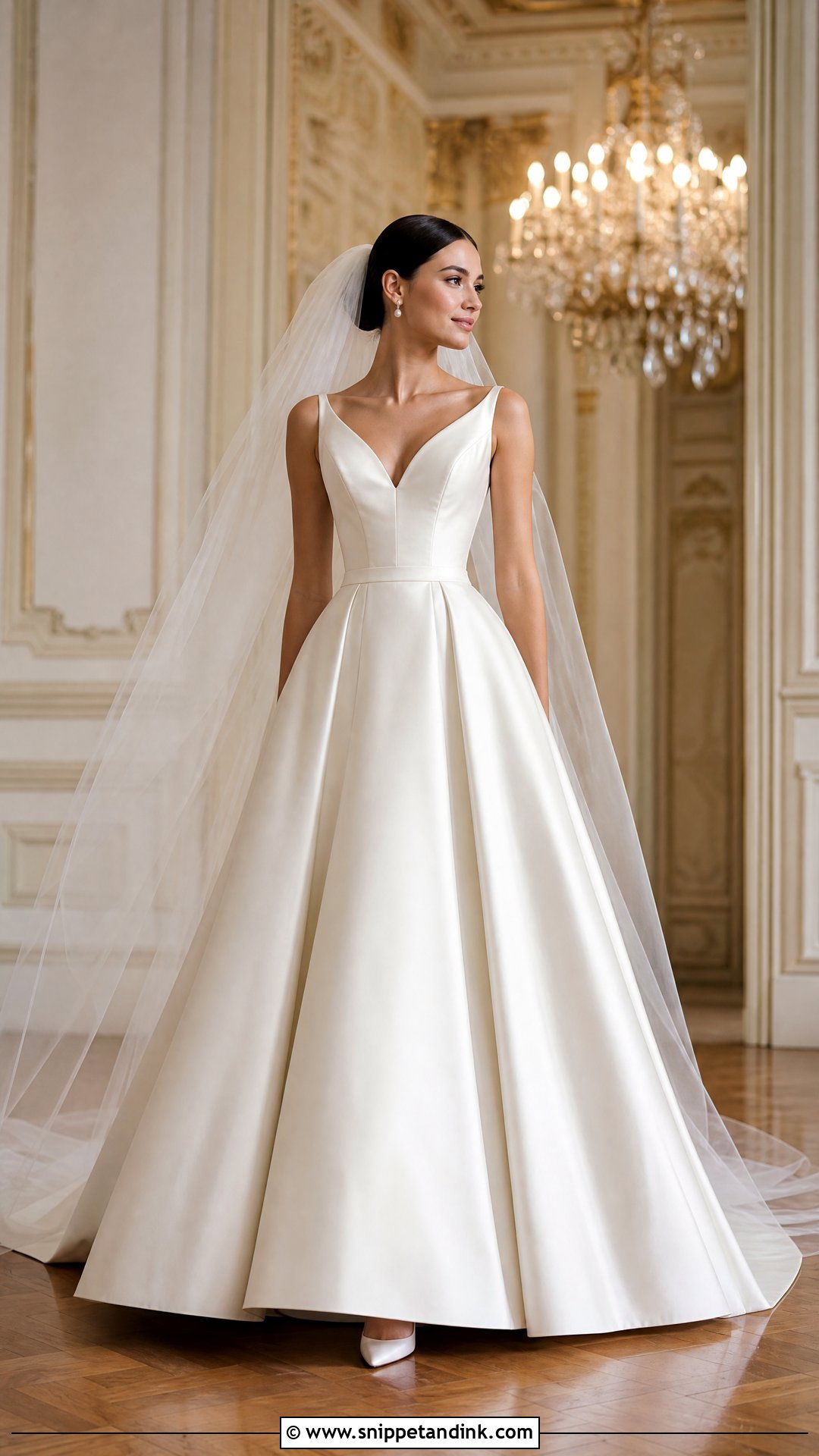
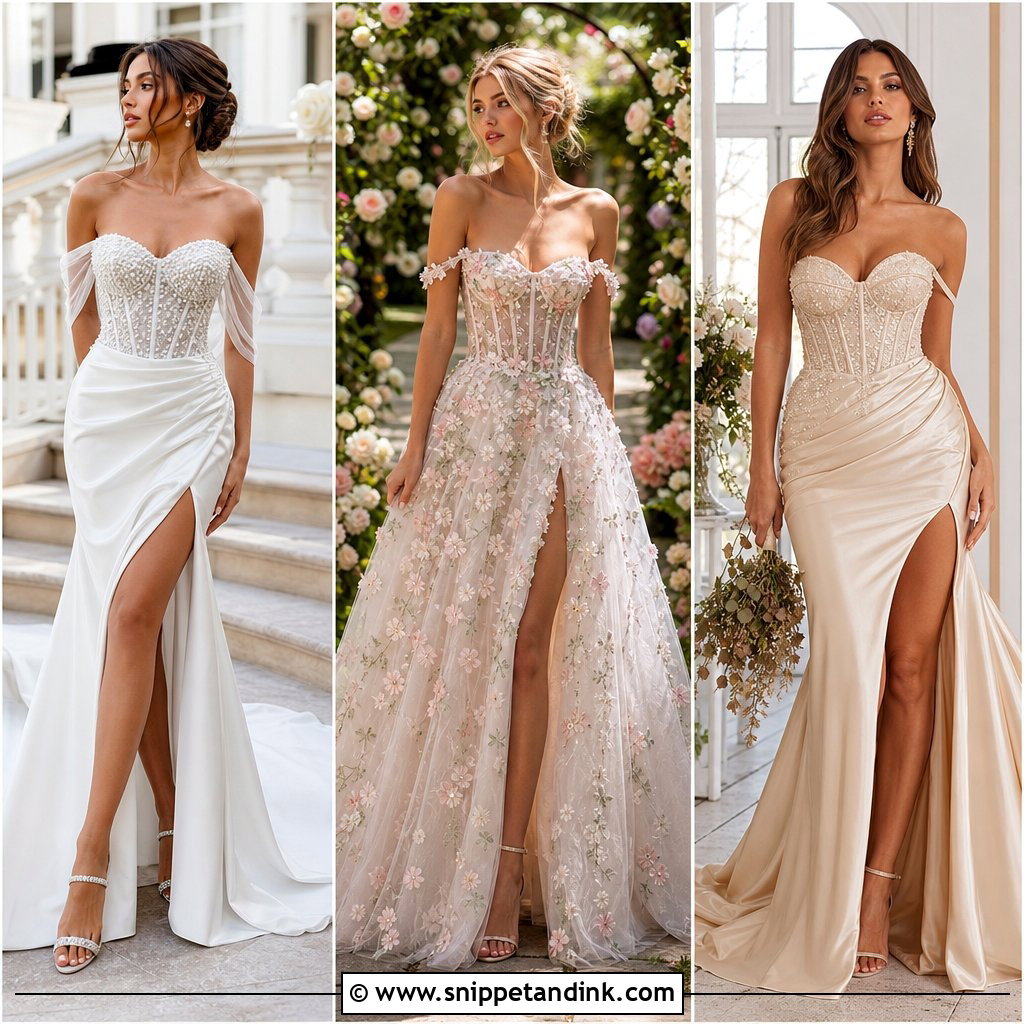
A basque waist wedding dress lengthens the body with a bodice that dips into a soft V below the natural waist. That dip relies on boning, and I’m fussy about it: the bones should follow your shape when you sit, not dig into your hip. I make brides sit, walk and do a slow twirl before signing off. Structured ivory satin keeps it clean, while floral jacquard adds texture. The full skirt brings the drama, so accessories can be small: pointed satin pumps, a cathedral veil, little pearl earrings and a smooth low bun. It’s a fresh take on the princess gown for ballrooms and formal gardens.
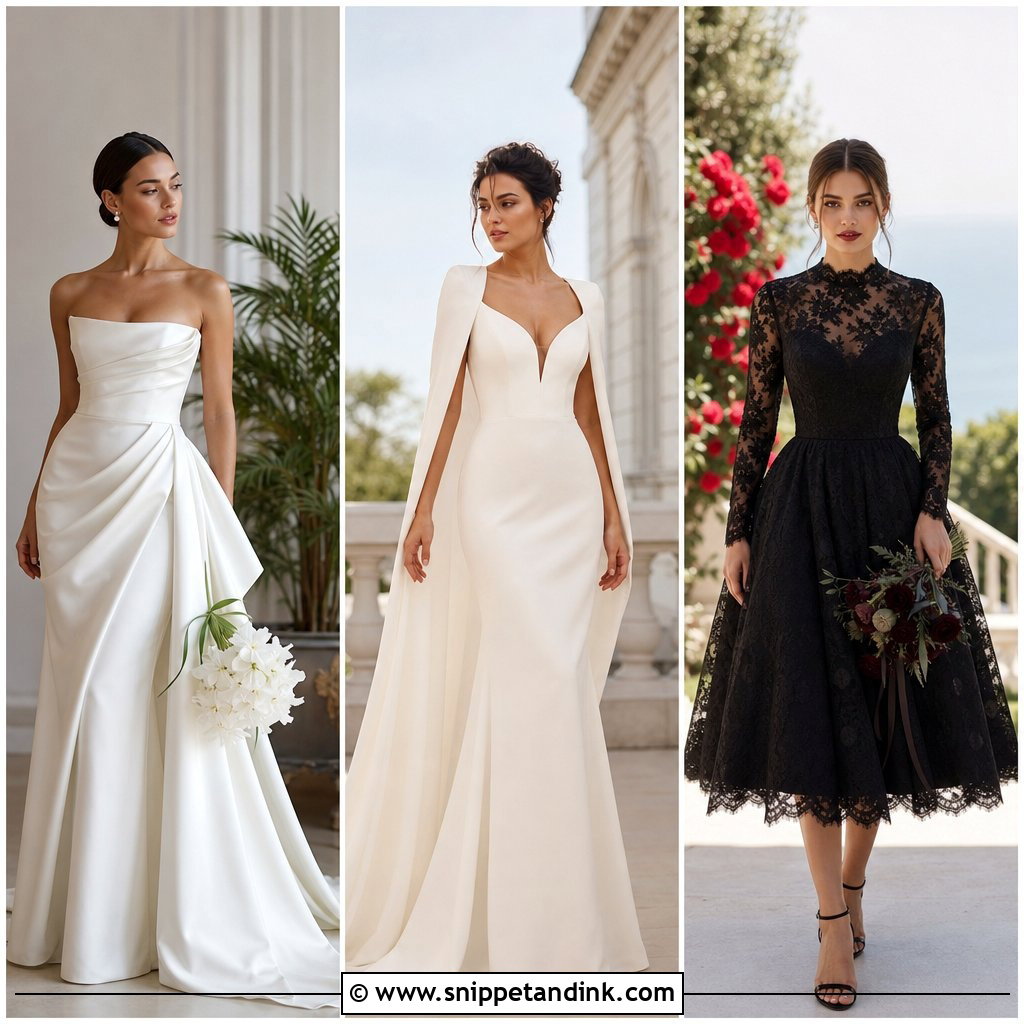
2. Sculptural Satin Column Wedding Dress
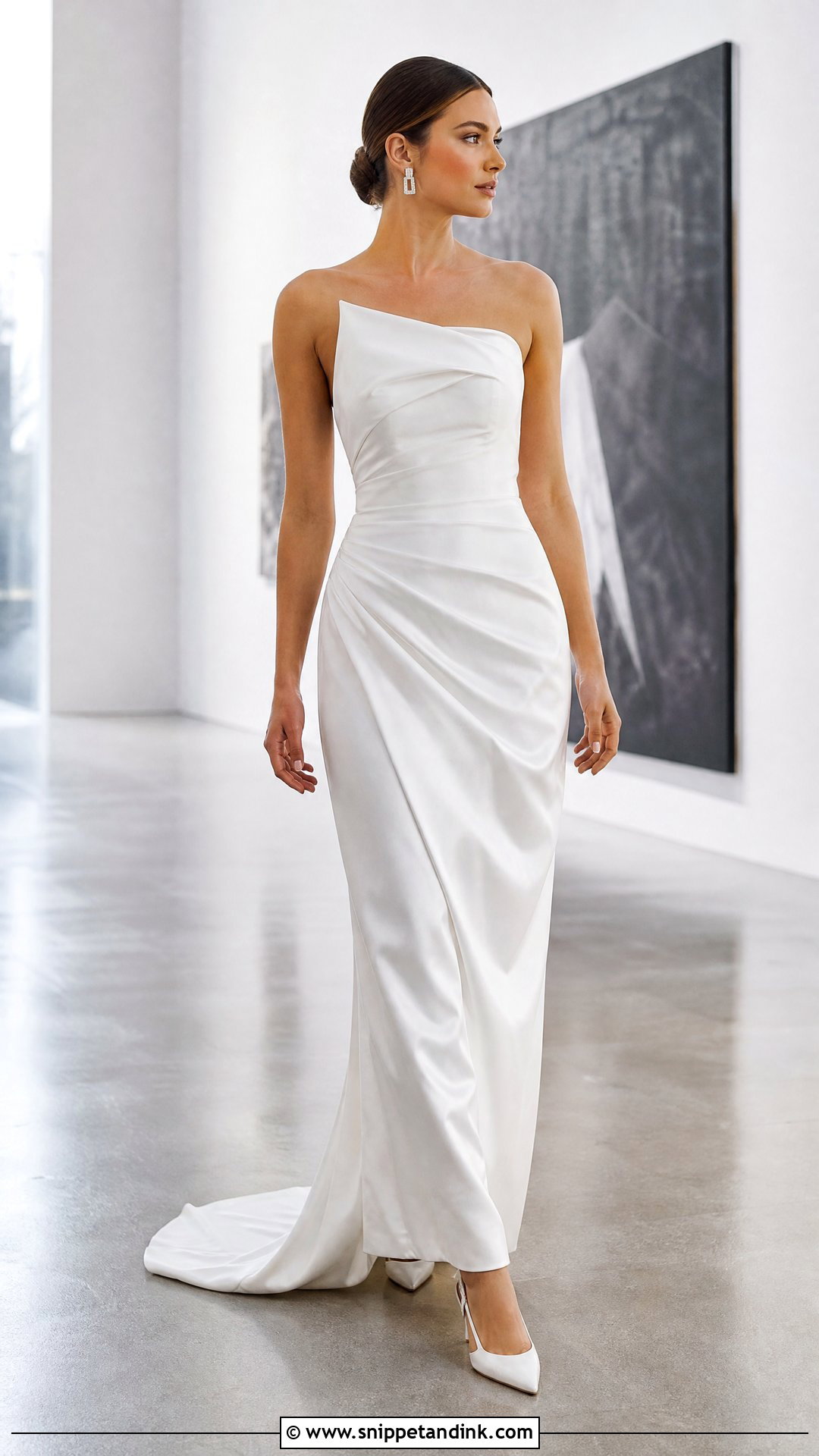
Plain satin becomes interesting once it’s folded and draped. A column with an asymmetrical neckline, a folded bodice or a gathered hip gives dimension without a single bead. Columns sit close, so I check two things: a supportive lining and enough ease through the hips to climb a step without the seams straining. Ivory or soft white lets the construction show. Sleek slingbacks, geometric earrings and a structured clutch suit it, with a polished bun or tucked waves. Put it somewhere architectural, like a museum, rooftop or modern hotel.
3. Three-Dimensional Floral Wedding Dress
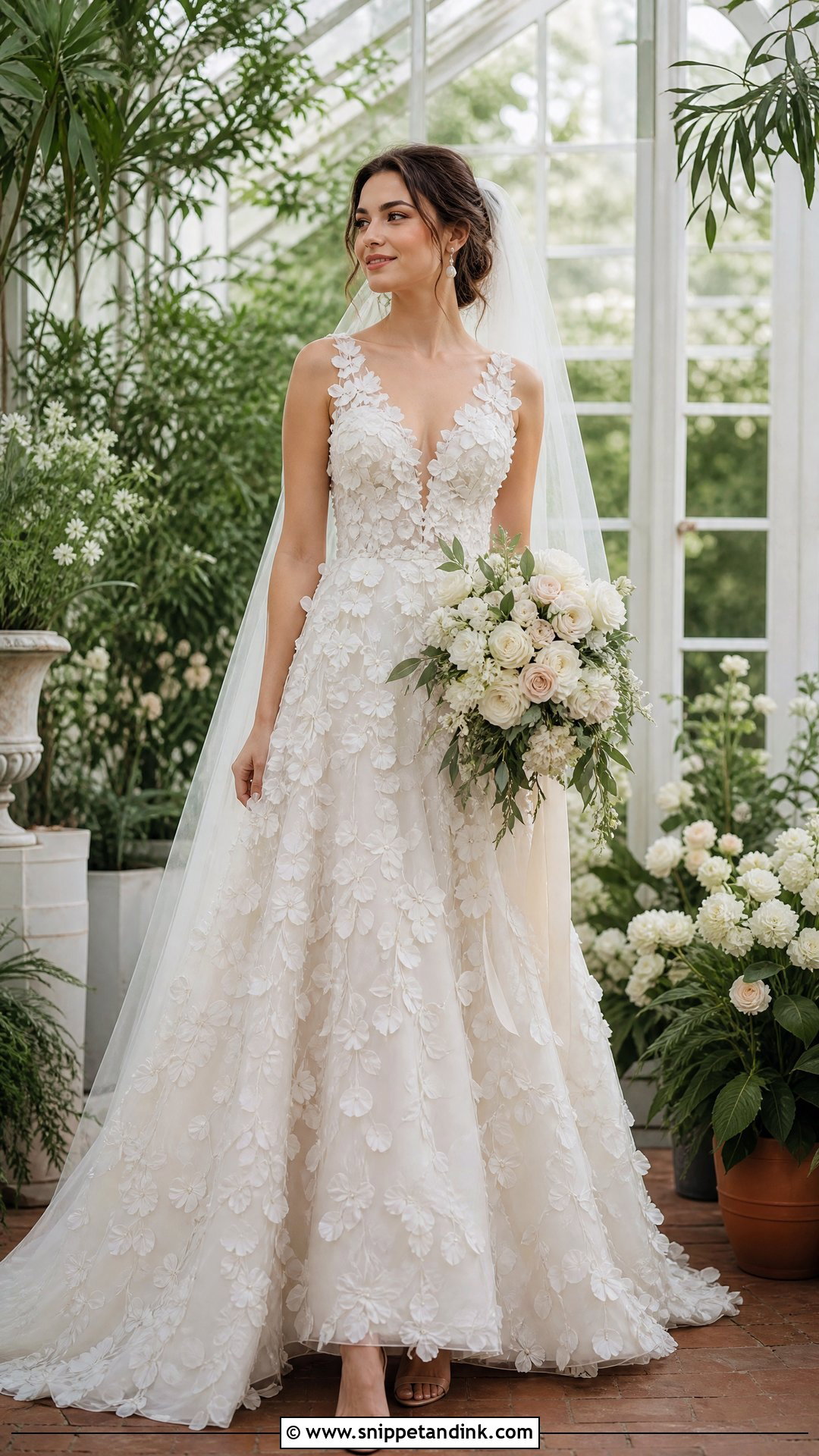
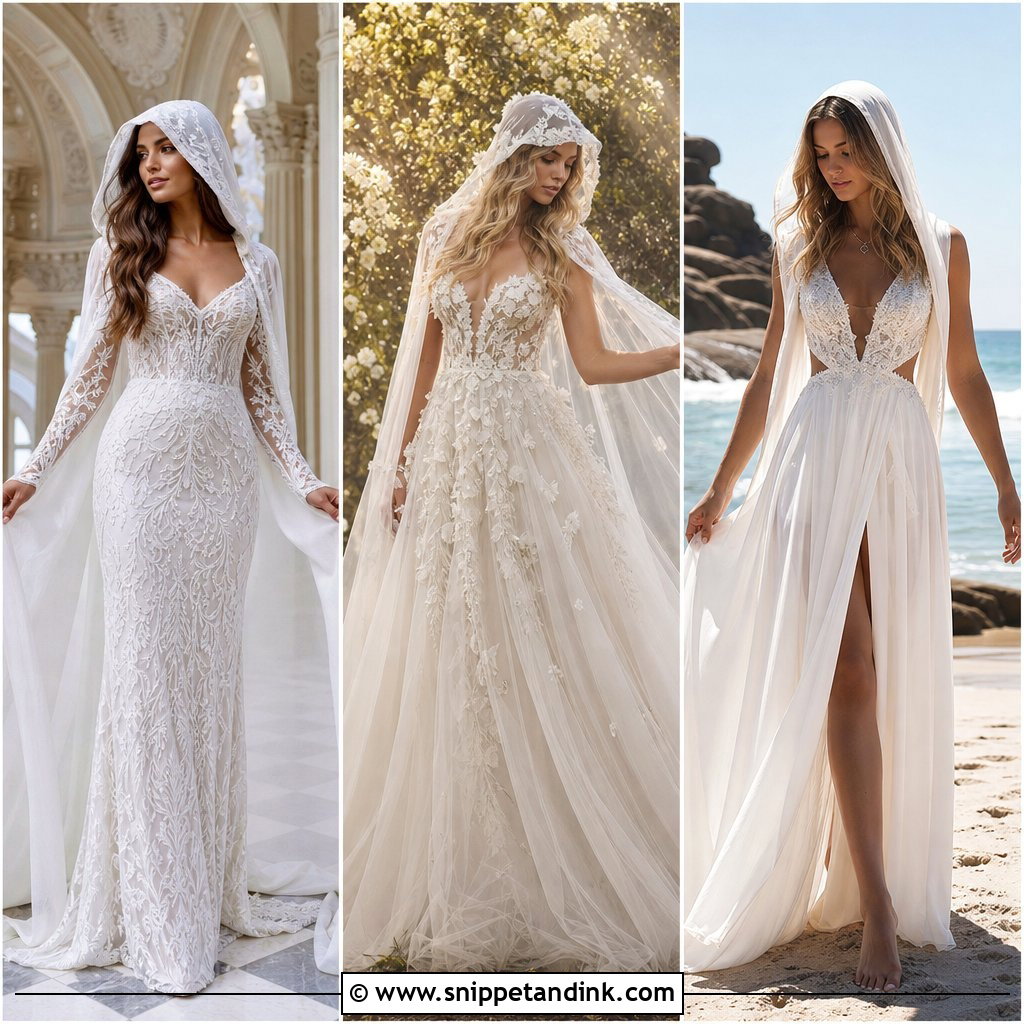
Raised petals across the bodice and skirt give a dress real depth. They come as layered appliques, embroidered petals or fabric blossoms; scattered ones read quiet, dense ones loud. Before buying, I run my hand along the inside of the arm, because flowers near the underarm rub the skin raw over a long day. Pearl drops, neutral ivory heels and a sheer veil with only a narrow edge keep the accessories calm. Soft waves or a loose bun suit the texture. In a garden or greenhouse, ask your florist to repeat one or two of the dress flowers in the bouquet.
4. Corset Lace Wedding Dress
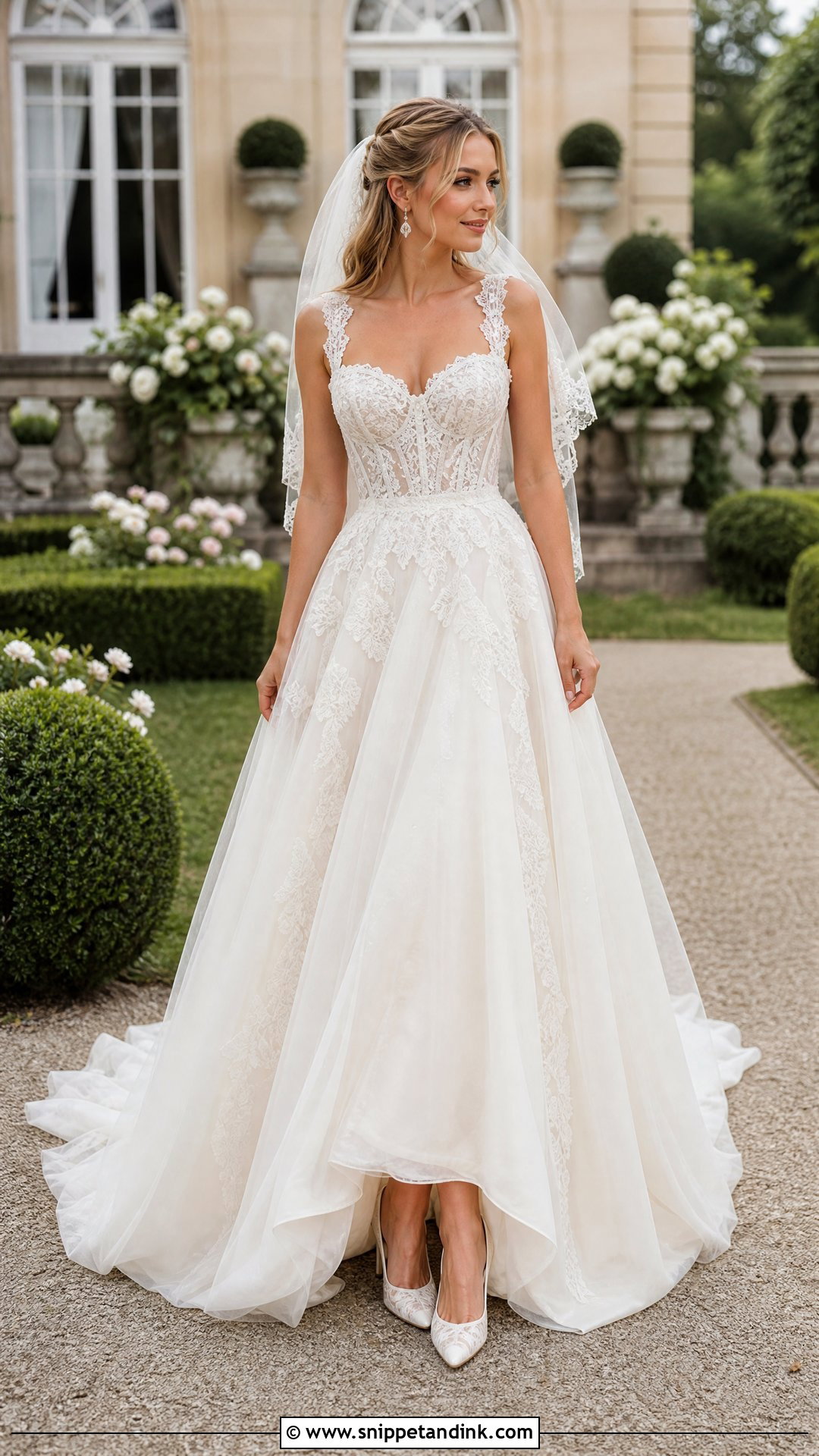
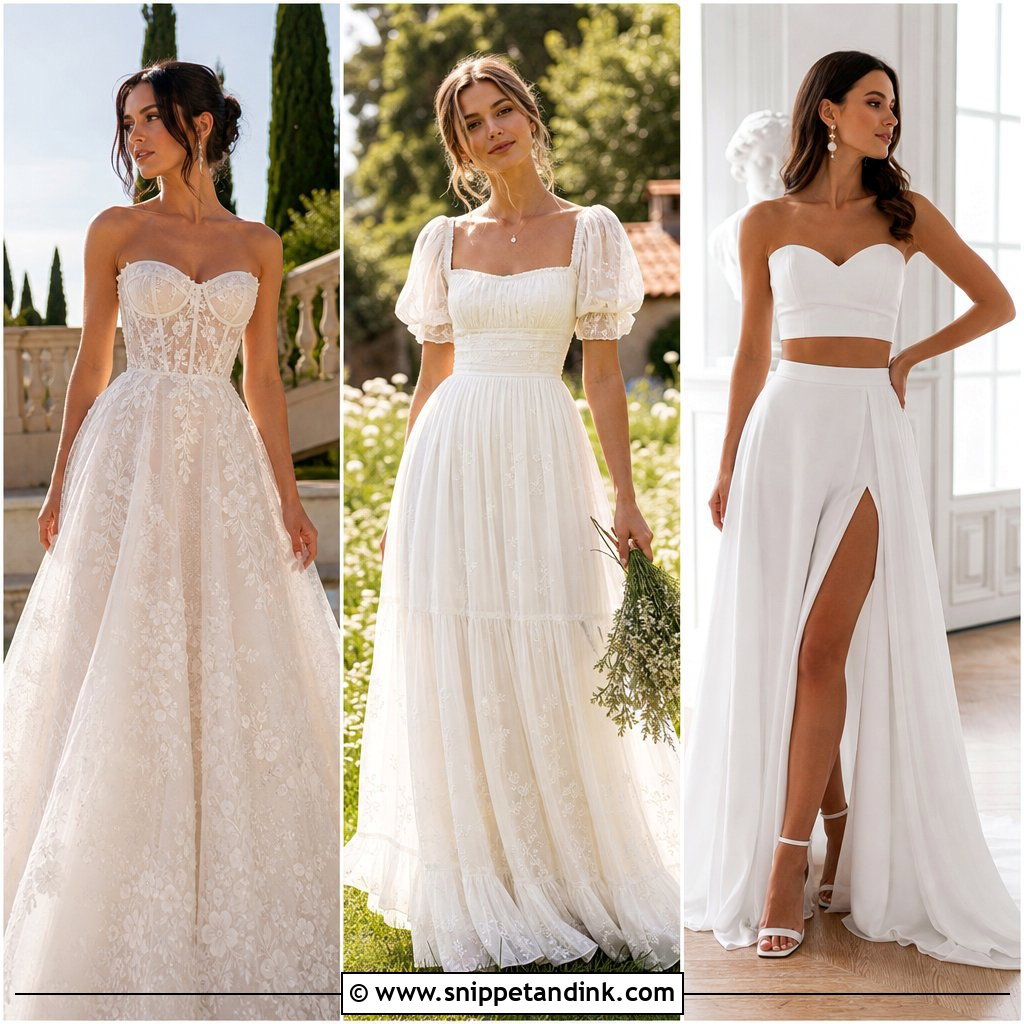
Visible corsetry has to support you, not just look like it does. I look for proper boning, lined cups and a defined waist built into the bodice, rather than a corset that only holds because the laces are pulled tight. Lace over that structure softens it, and a flowing A-line skirt keeps it comfortable. Ask whether the lace pattern is matched across the seams; on a good dress the motifs line up. Lace-trimmed pumps, fine gold or silver earrings and a fingertip veil that doesn’t hide the back lacing finish it. A half-up style shows the neckline while leaving a few soft pieces around the face.
5. Detachable Overskirt Wedding Dress
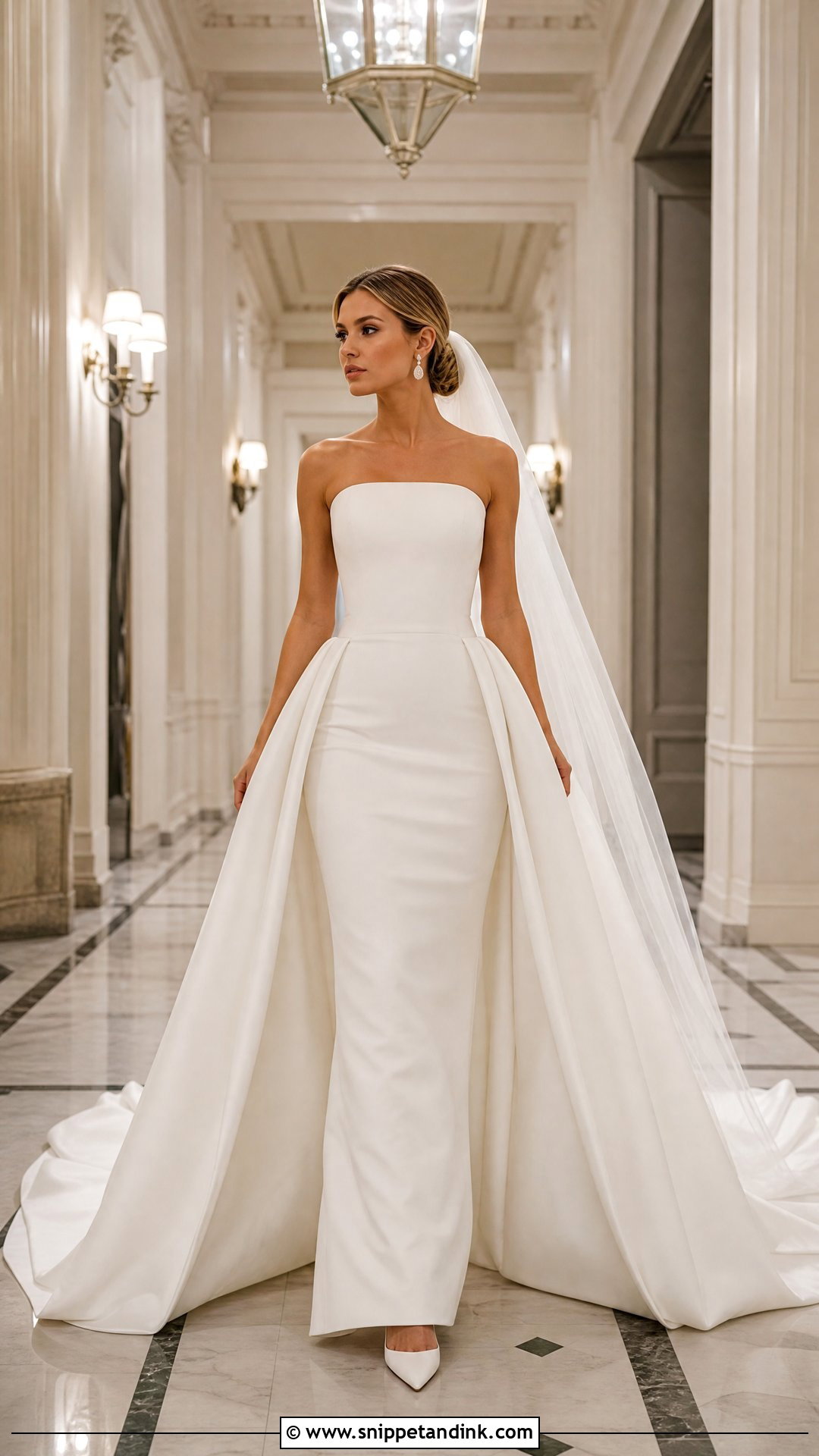
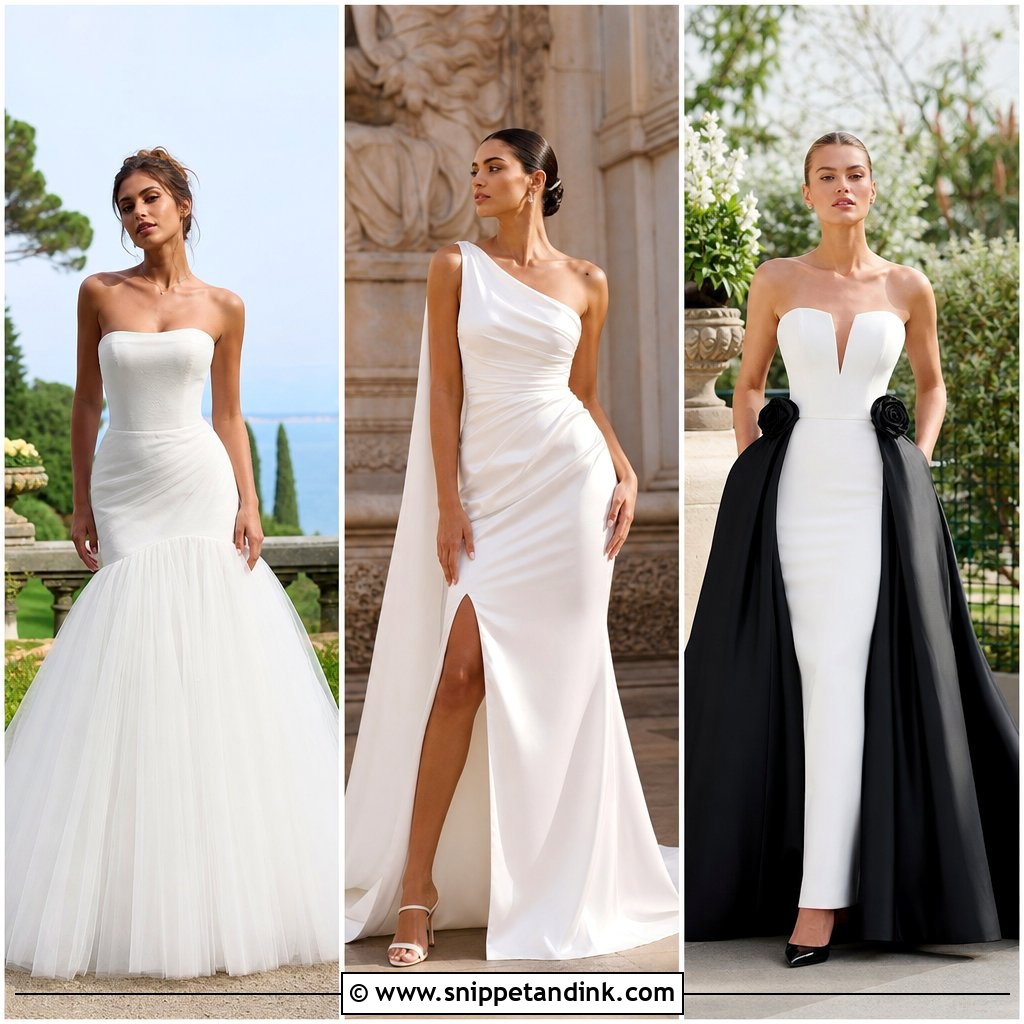
Why pick between a grand ceremony gown and a dress you can dance in? A detachable overskirt wedding dress gives you both. A fitted crepe, lace or satin column carries a big overskirt for the aisle, and the join should hide under a belt, a bow or a well-placed seam. I always do a practice removal with whoever will be helping on the day, and I make sure there’s a hanger and a bag waiting so the skirt isn’t dumped on a chair. Pair the ceremony version with a long veil and classic pumps, then switch to statement earrings and comfortable embellished heels.
6. Pearl Cape Wedding Dress
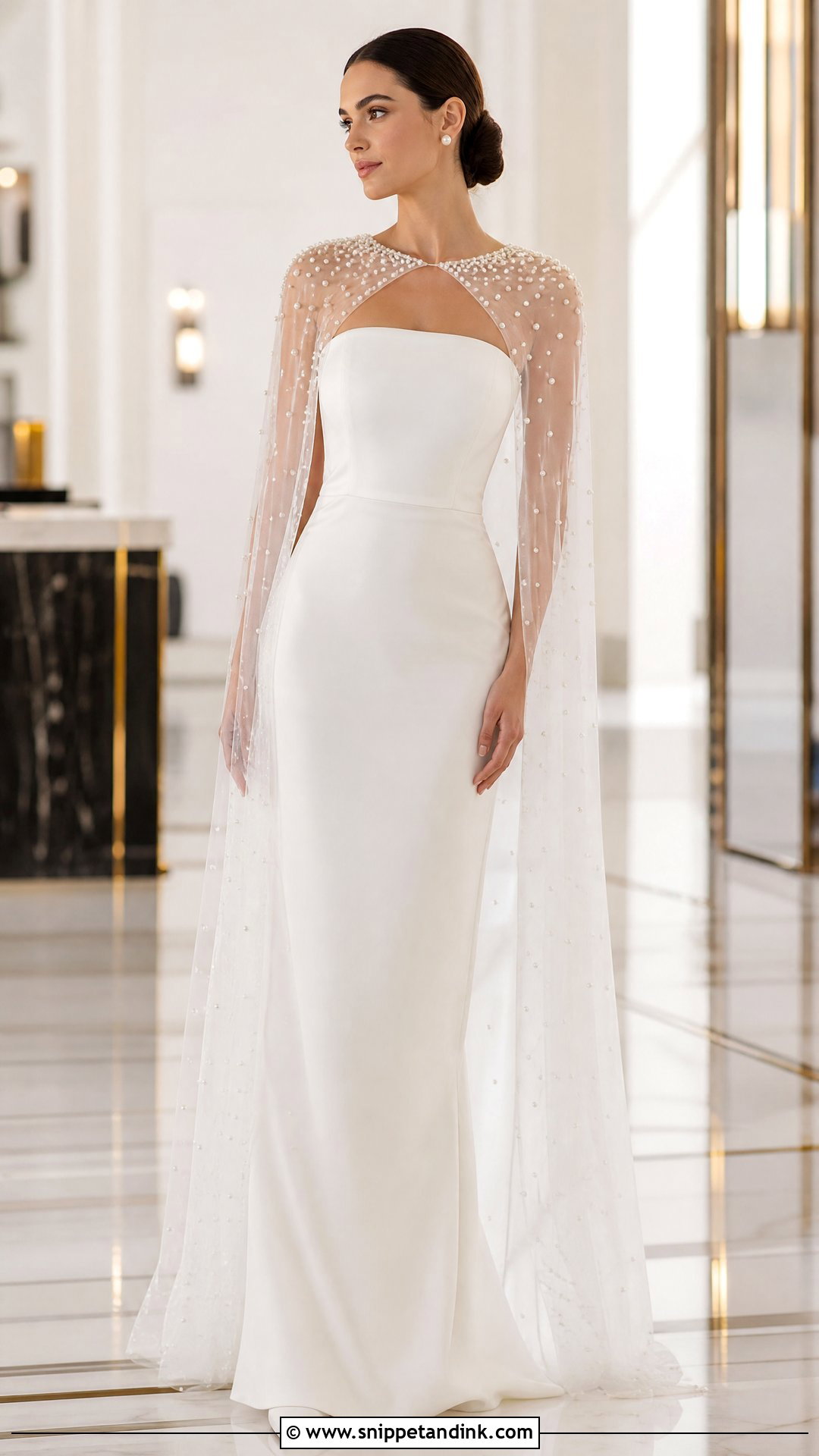
A pearl cape is a clever way to turn a simple gown into something people remember. Start with a clean strapless, square-neck or sleeveless column so the cape stands alone. Evenly scattered pearls give a soft shimmer; graduated clusters at the shoulders make a stronger outline. Weigh it in your hands at the shop. Heavily beaded capes drag backward and pull at the neckline, so the fastening needs to be strong and sit in the right place. Pointed ivory heels, pearl studs and a sleek low bun keep it consistent, and the cape can take the place of a veil indoors.
7. High-Neck Long-Sleeve Wedding Dress
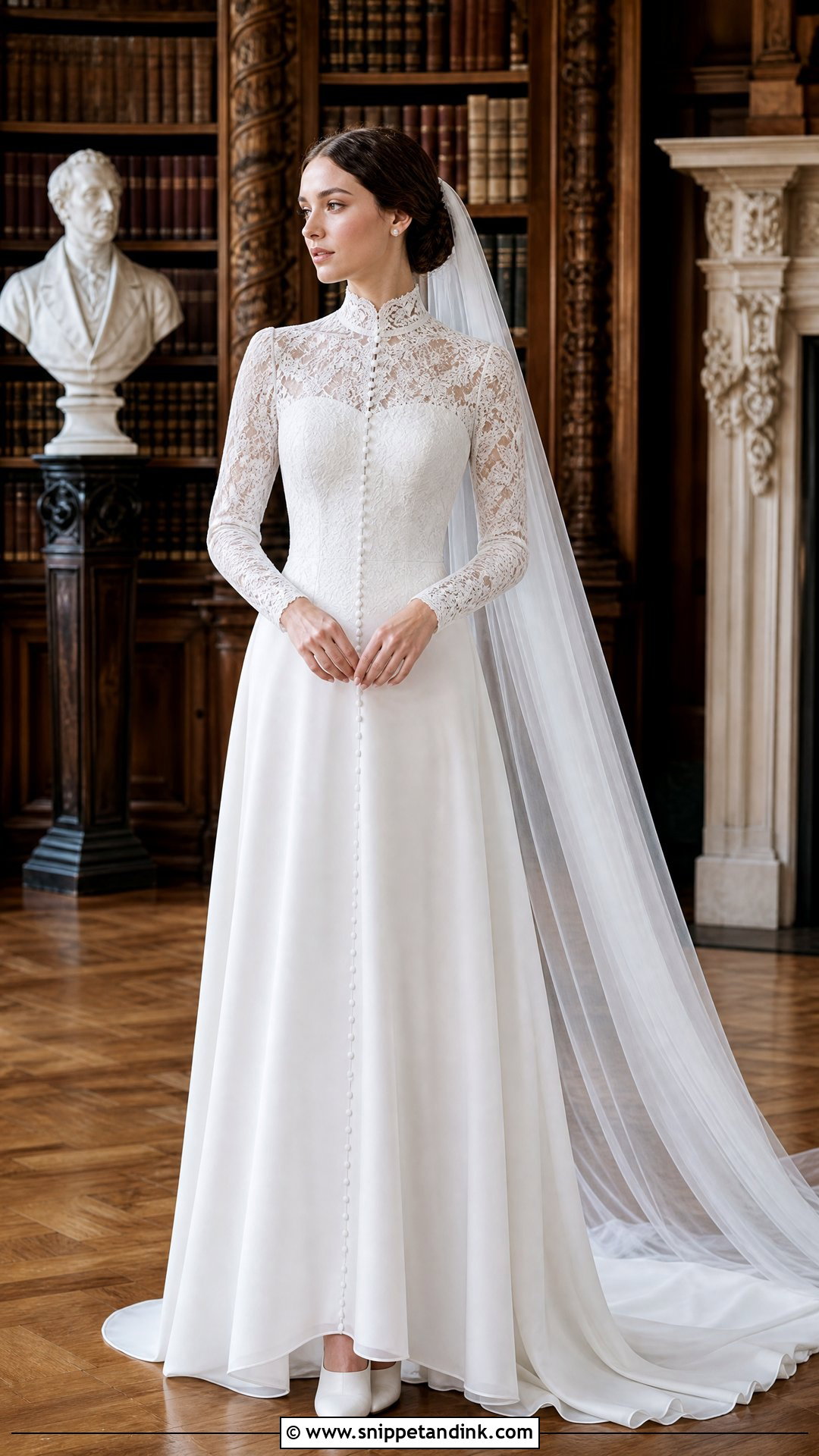
Coverage doesn’t have to look old-fashioned. A high neck and long sleeves feel current when the sleeves are sheer lace over a fitted bodice and a fluid skirt, or when the whole dress is matte crepe with covered buttons from collar to lower back. Lift your arms and turn your head in it. If the sleeves bind or the collar rubs your neck at the fitting, it will be far worse by evening. Closed-toe pumps, small diamond or crystal studs and a low chignon suit it, with no necklace. A long, plain veil contrasts well against detailed lace in autumn and winter.
8. Blush Tulle Wedding Dress
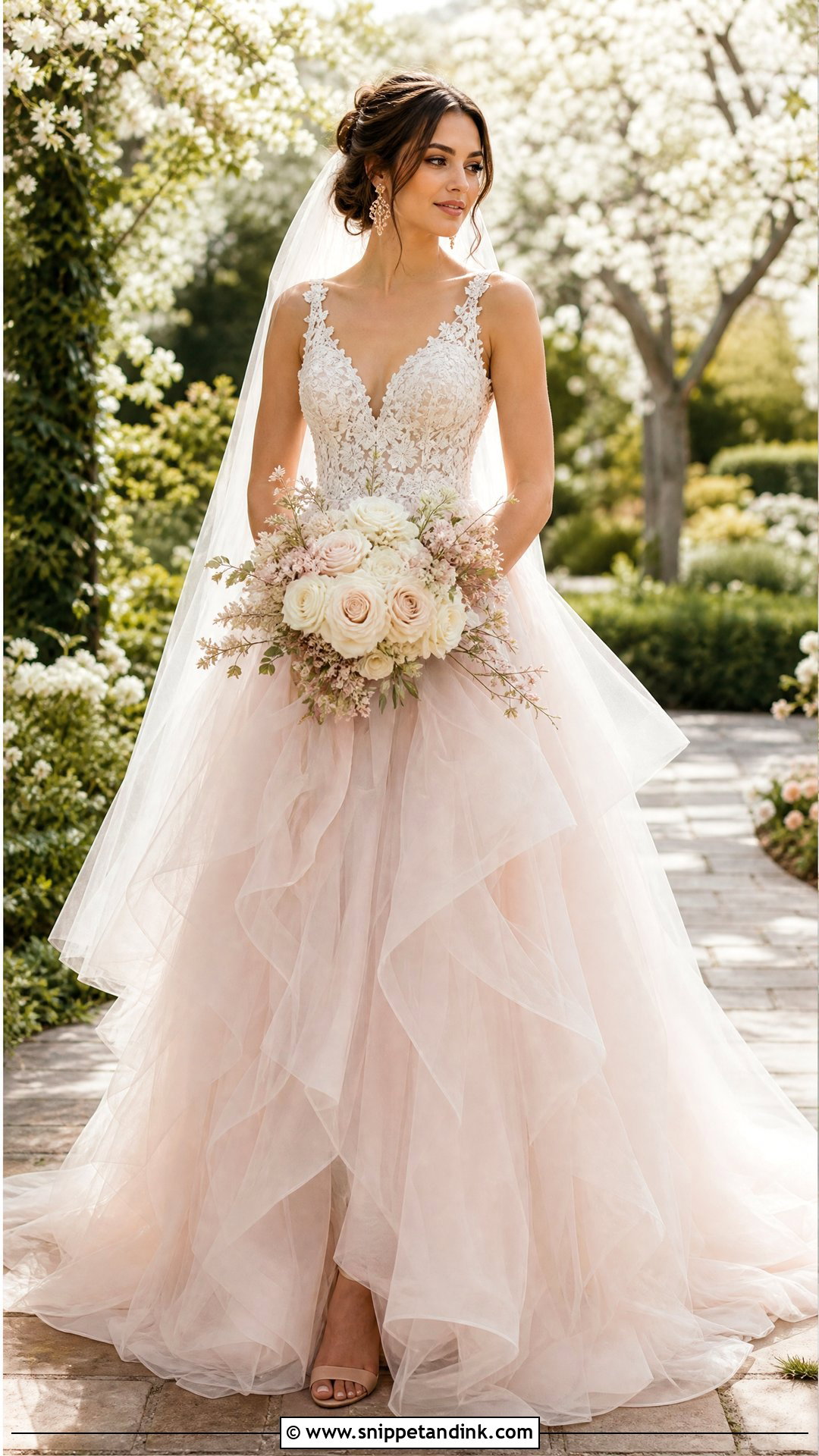
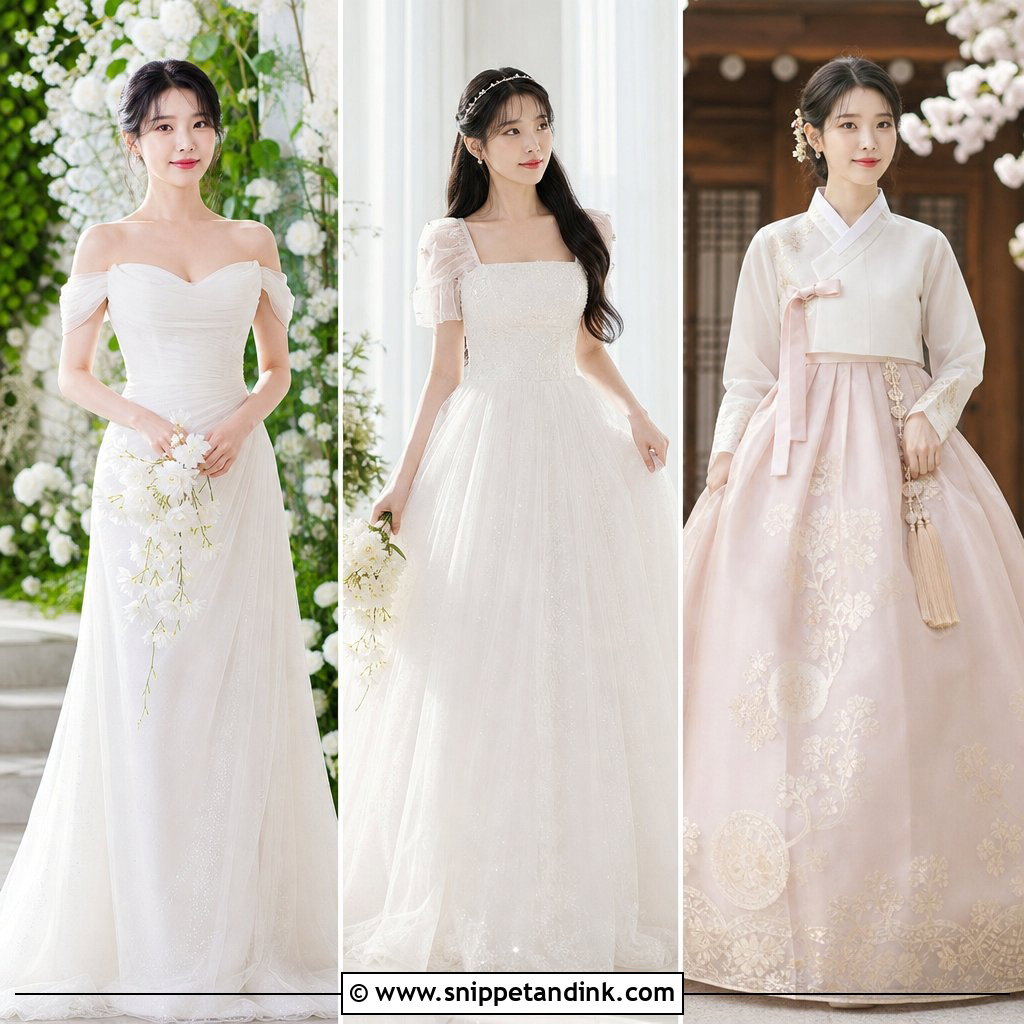
Blush in tulle looks dimensional rather than flat because light passes through several layers. You can go fully tonal or put an ivory lace bodice over a blush lining for contrast. Blush undertones lean peach, beige or cool pink, and they shift between shop lighting and daylight, so I always take a dress to a window before a bride decides. Nude or pale pink heels, rose-gold earrings and a sheer ivory veil let the color show through. A bouquet of cream, dusty pink and soft greens connects the palette. It suits gardens and candlelit rooms equally.
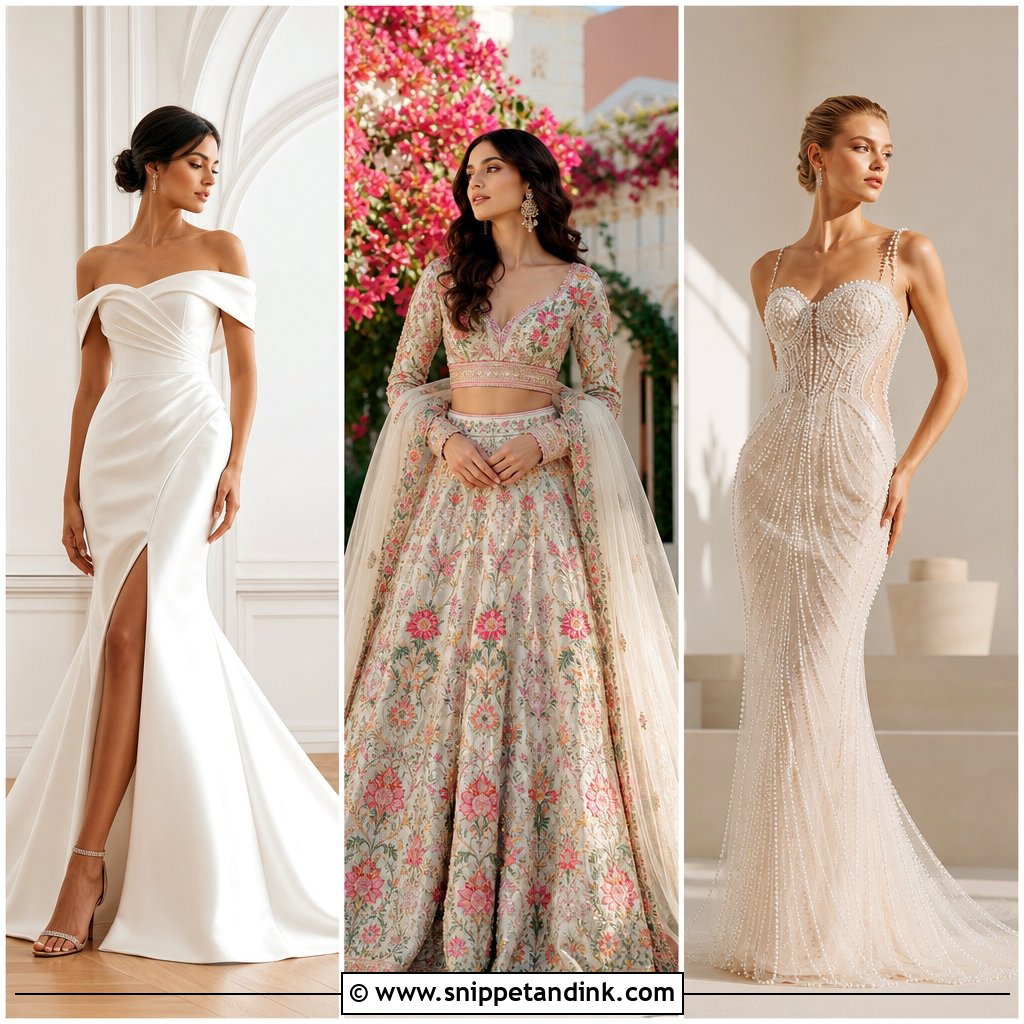
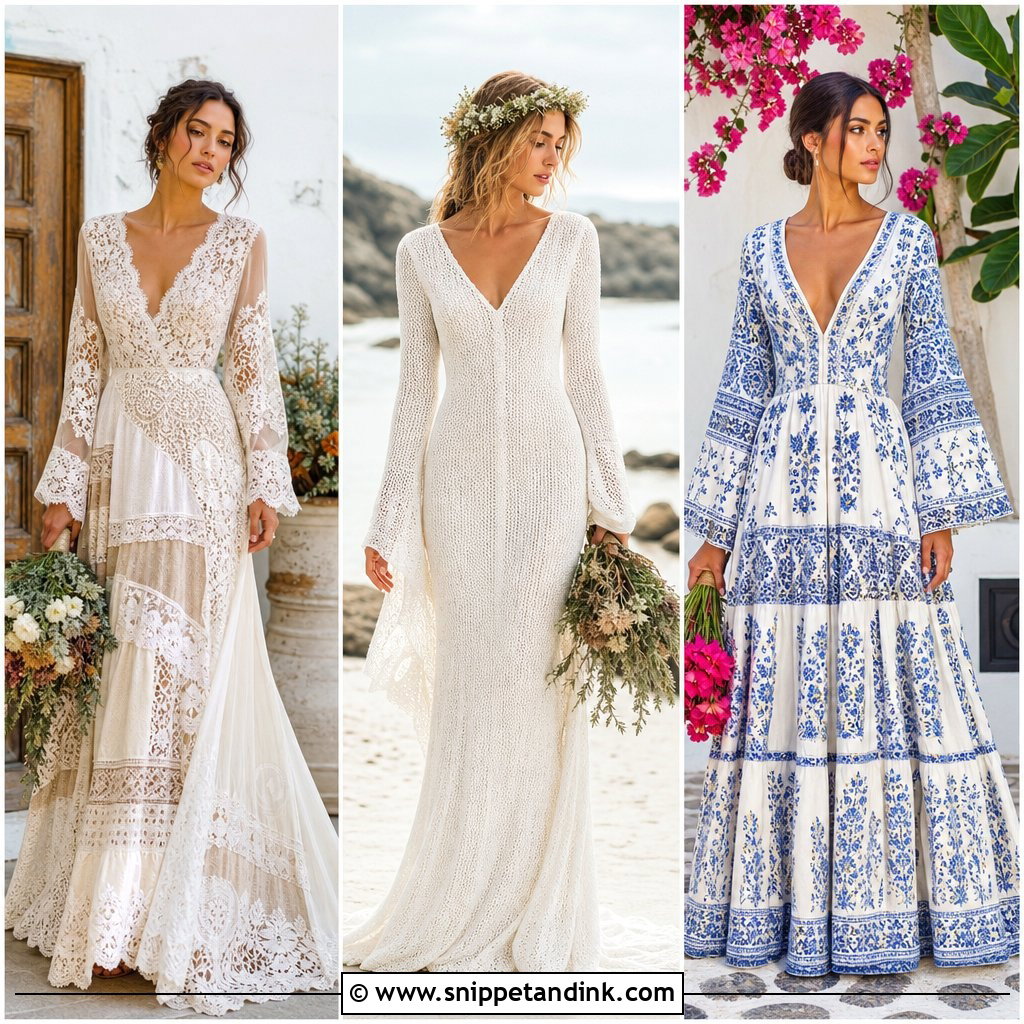
9. Colorful Embroidered Wedding Dress
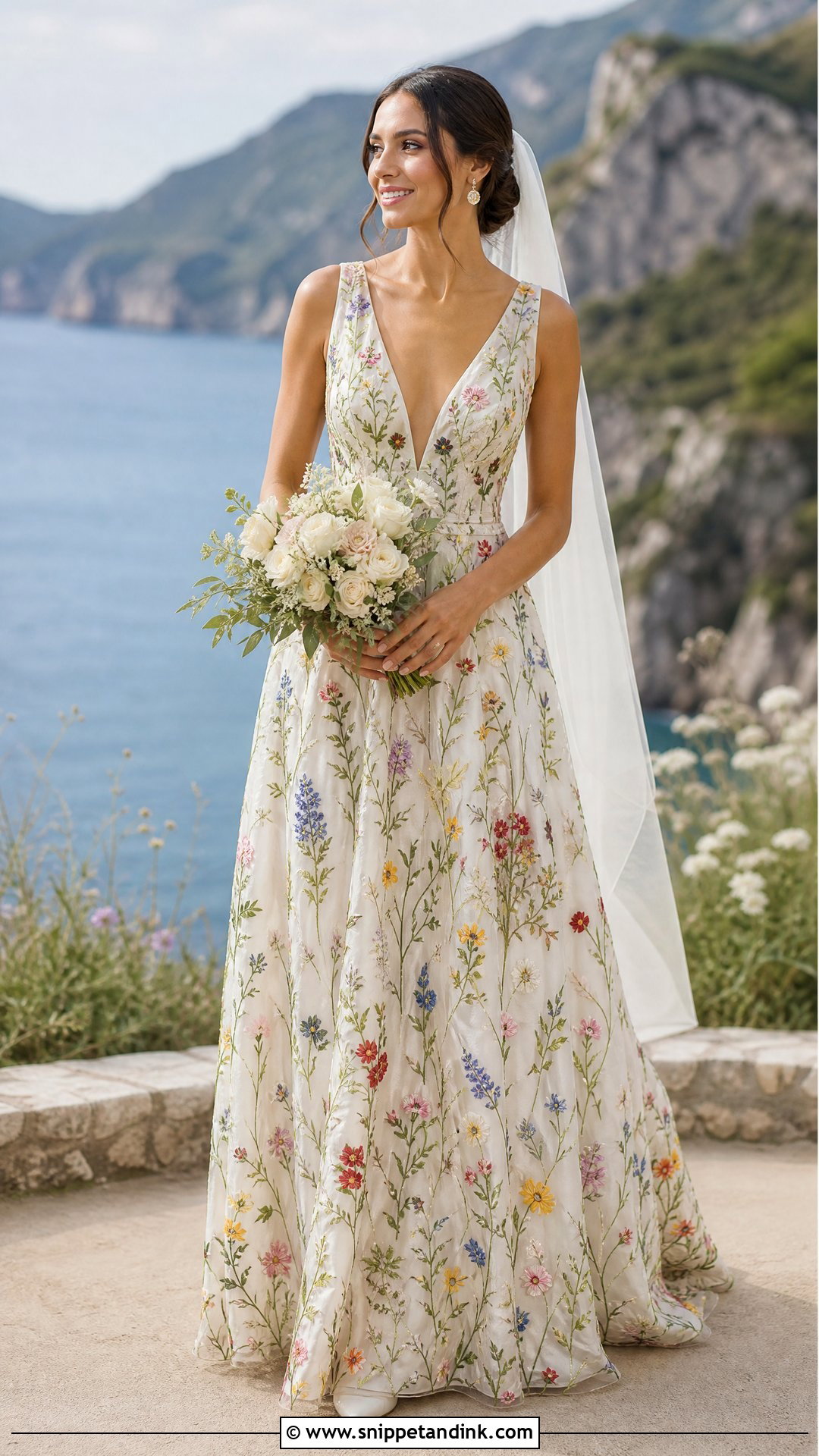
Colorful embroidery turns a gown into a story: botanical vines, wildflowers, birds or regional motifs that mean something to your family. An A-line gives the stitching room to grow from bodice to hem. Hand embroidery takes time, so if you’re commissioning it, ask for the schedule up front and allow extra months. You can also have a date, initials or a symbolic flower stitched somewhere discreet. Choose ivory shoes or one quiet color from the thread, with simple earrings and a plain veil. Keep the bouquet restrained, or it starts competing with the dress.
10. Tea-Length Wedding Dress
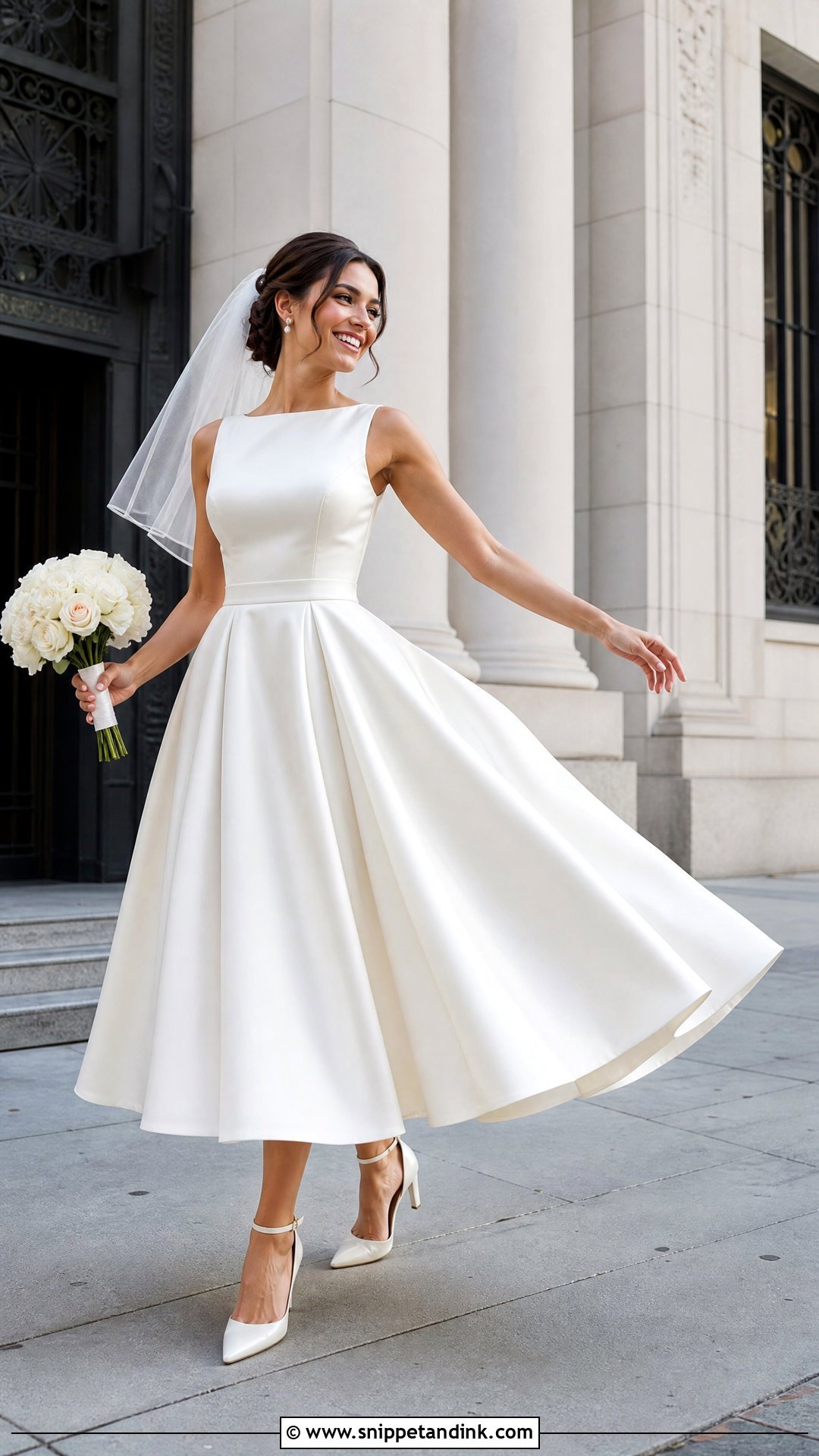
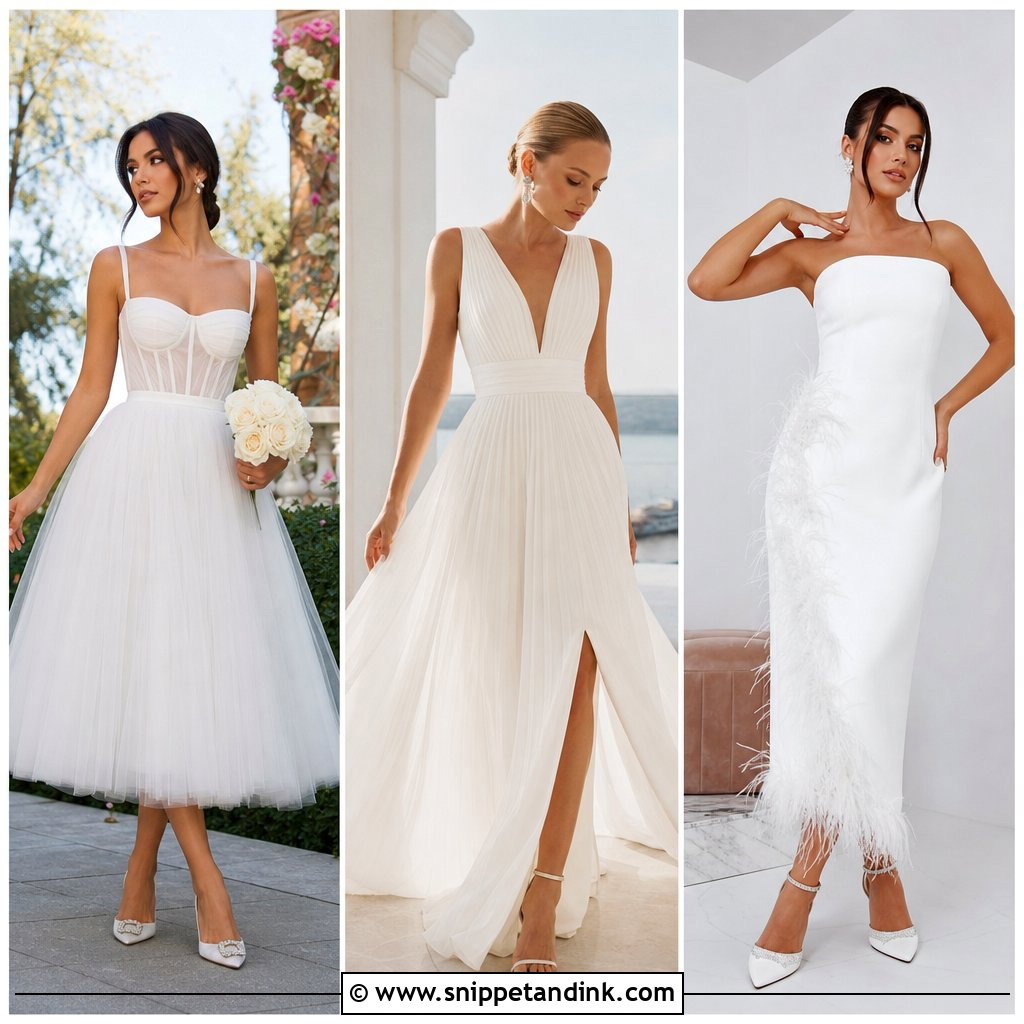
Tea length shows off your shoes and lets you move freely. The skirt ends between knee and ankle, and the exact point is the whole game. I always pin the hem with the wedding shoes on, because a centimetre too long or short changes how the leg looks. Satin or mikado looks crisp; lace and tulle are softer. Ankle-strap pumps, pearl earrings and a short veil or a structured bow suit it, with a neat updo. It’s at home at courthouse ceremonies, restaurant receptions and daytime garden parties, and you’ll dance more comfortably than in a floor-length gown.
11. Bow-Back Wedding Dress
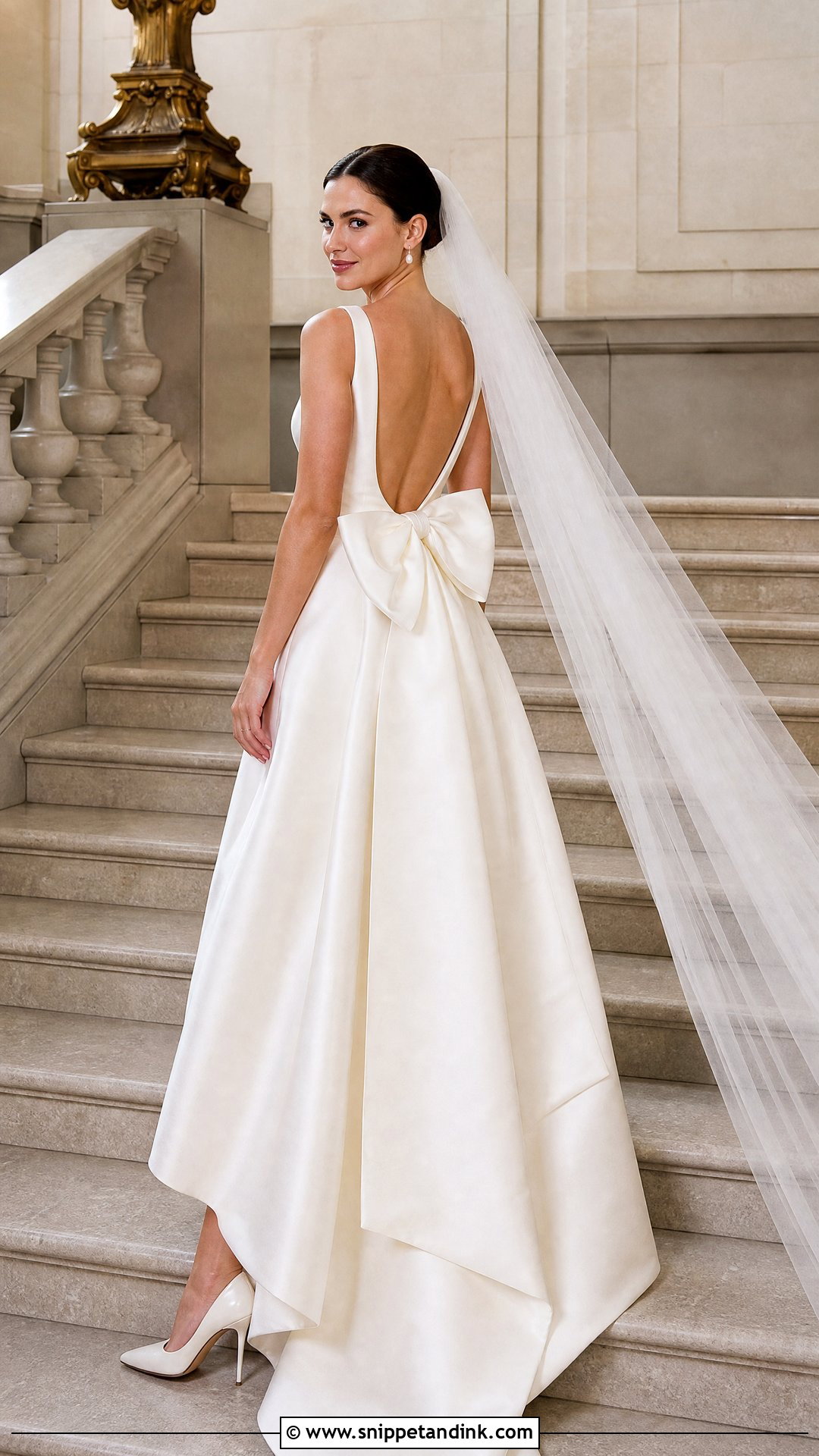
A bow at the back gives you a strong exit up the aisle and a lovely view for the guests behind you. Scale matters: a wide structured bow looks architectural, while long silk tails look softer. Keep the front of the dress plain. The tricky part is the veil, because it either sits above the bow or falls past it, and I always test that overlap in a photo at the final fitting. A removable bow is worth asking for, since you’ll be sitting against it all through dinner. Minimal earrings and pointed pumps keep everything else quiet.
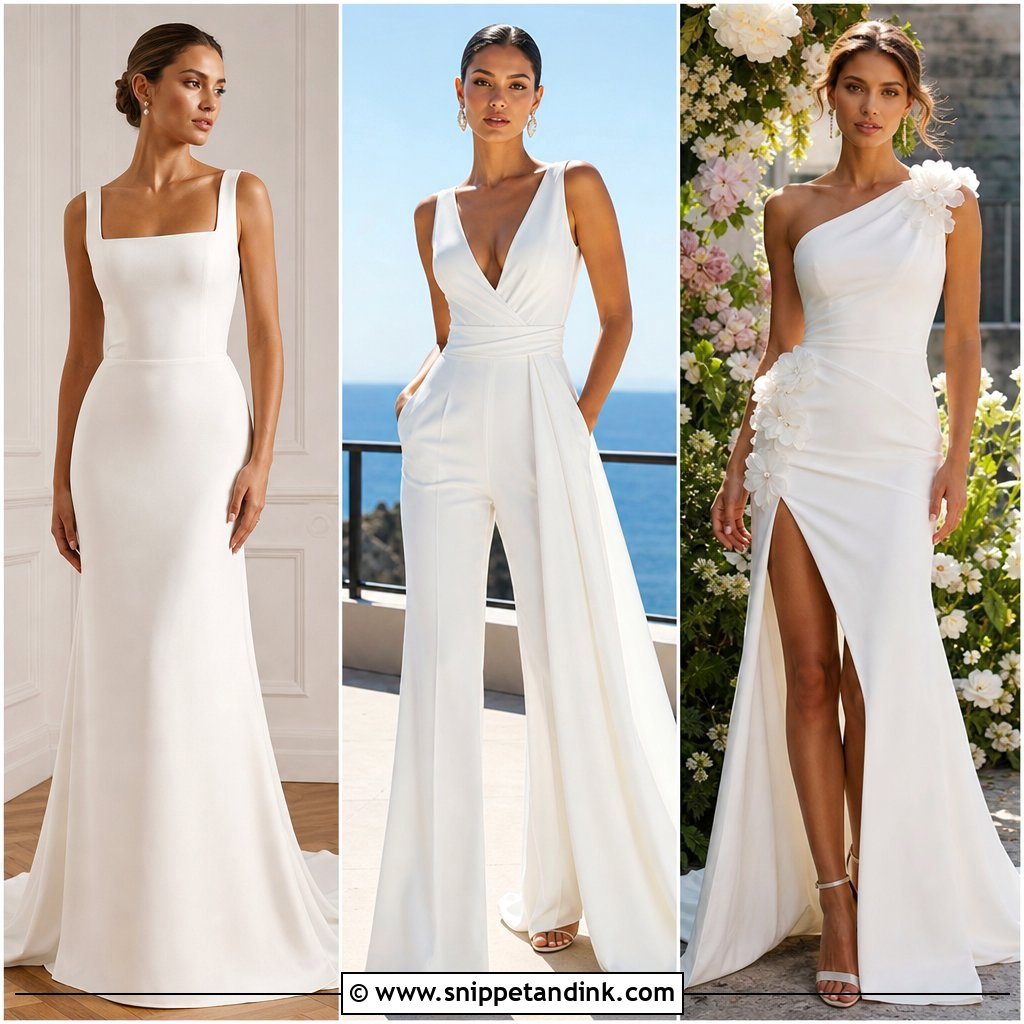
12. One-Shoulder Draped Wedding Dress
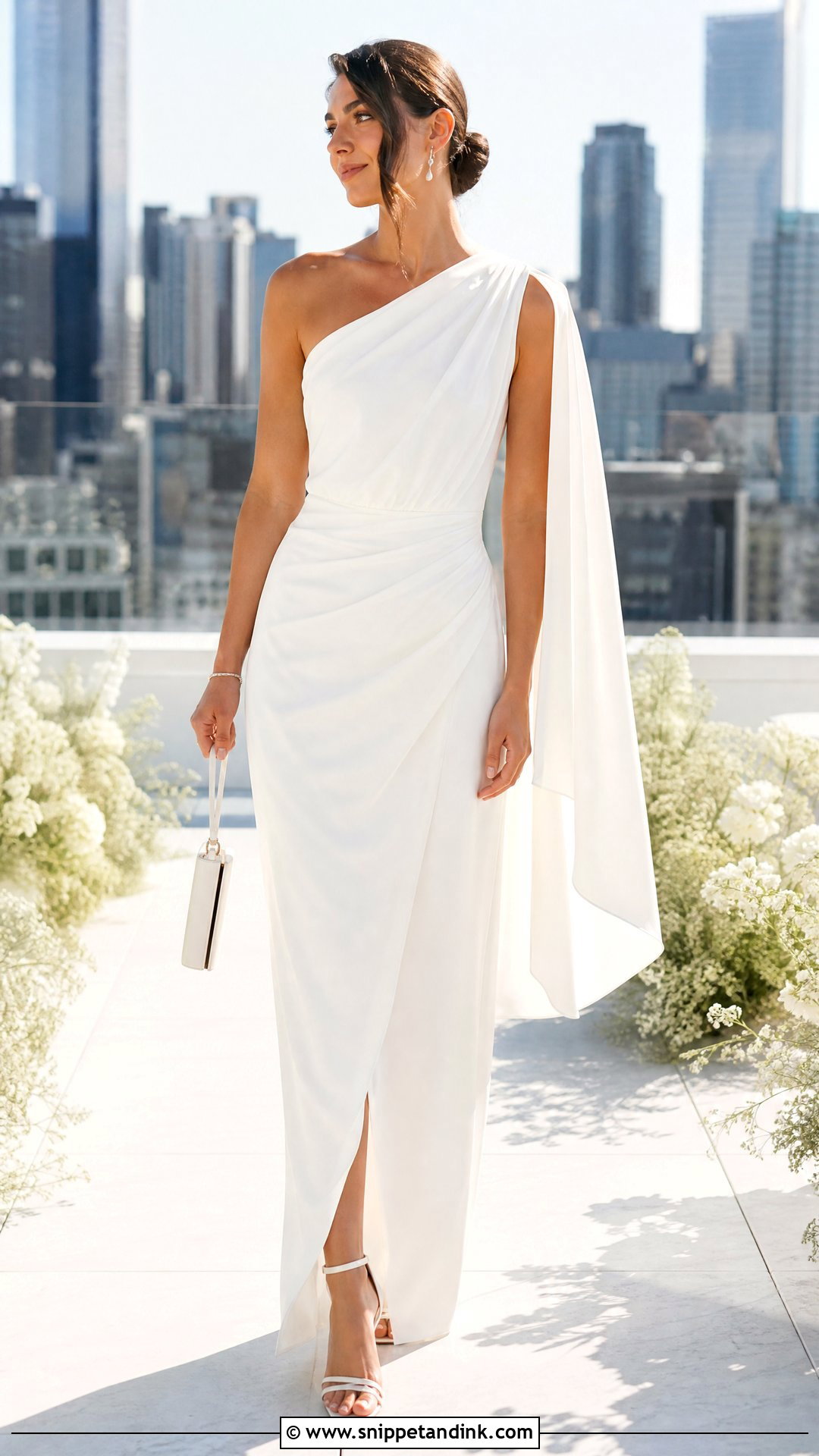
Draped across one shoulder, fluid crepe, satin or silk gives a classical line with a modern lean. A fitted column is sleek; an A-line moves more softly. The bodice has to stay level all day, and on one-shoulder dresses it tends to drift toward the bare side, so internal support and a well-fitted strap are non-negotiable. One statement earring or a pair of simple drops balances the neckline. Strappy heels and a small wristlet work for the reception, with a side-parted bun or tucked waves keeping the shoulder in view.
13. Square-Neck Mikado Wedding Dress
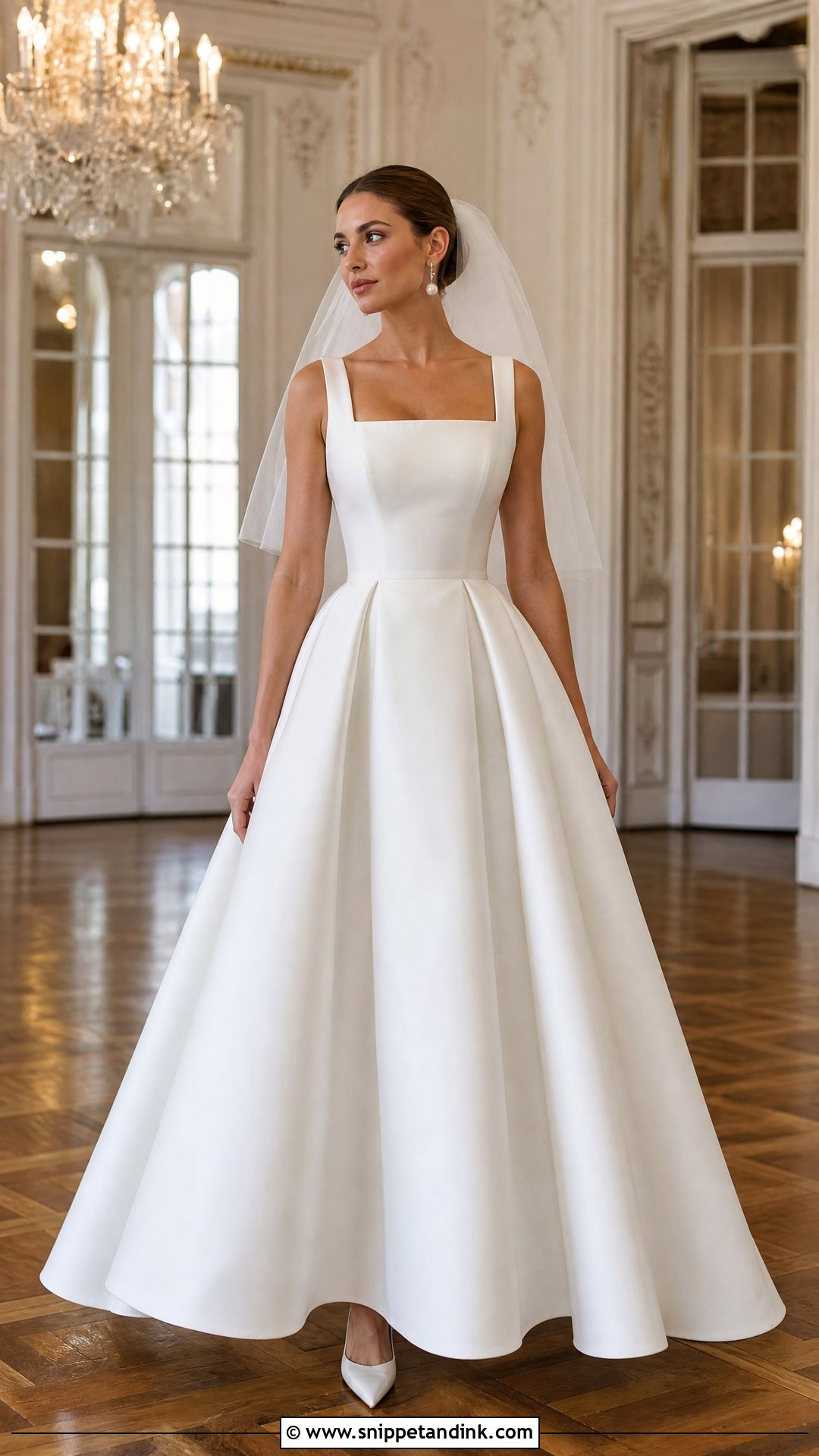
Mikado is a heavy silk or silk-blend with a slight sheen and a lot of body, so it holds a sharp square neckline and a full skirt without help. That weight is also its drawback. In a hot summer venue it’s warm, and I’d think twice before putting a bride in mikado for an outdoor July ceremony. Broad straps support; slender straps look lighter. Pockets, pleats and volume all work well in it. Pearl drops, pointed satin heels and a medium veil with a raw edge finish it, and a polished bun echoes the geometry of the neck.
14. Off-Shoulder Mermaid Wedding Dress
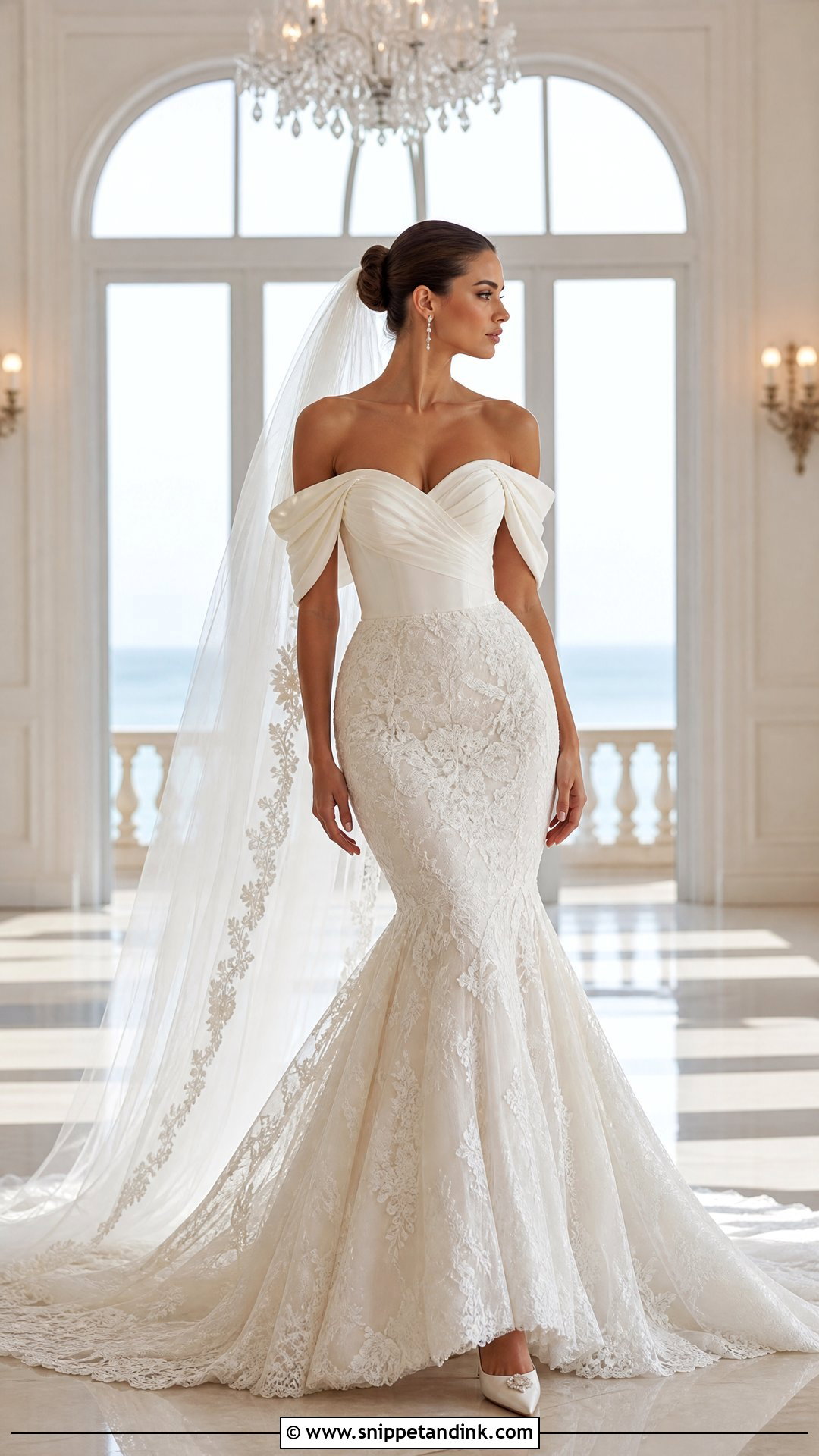
An off-shoulder mermaid is dramatic, and comfort comes down to two points. The bodice must stay up without pinning your arms to your sides, and the flare has to start low enough that you can walk but high enough that you can sit. I ask brides to take full strides and sit before final alterations, because a flare set too low turns every step into a shuffle. Stretch crepe moves most easily; lace or satin looks more formal. Drop earrings, pointed heels and a long veil set low under a smooth bun finish it. No large necklace.
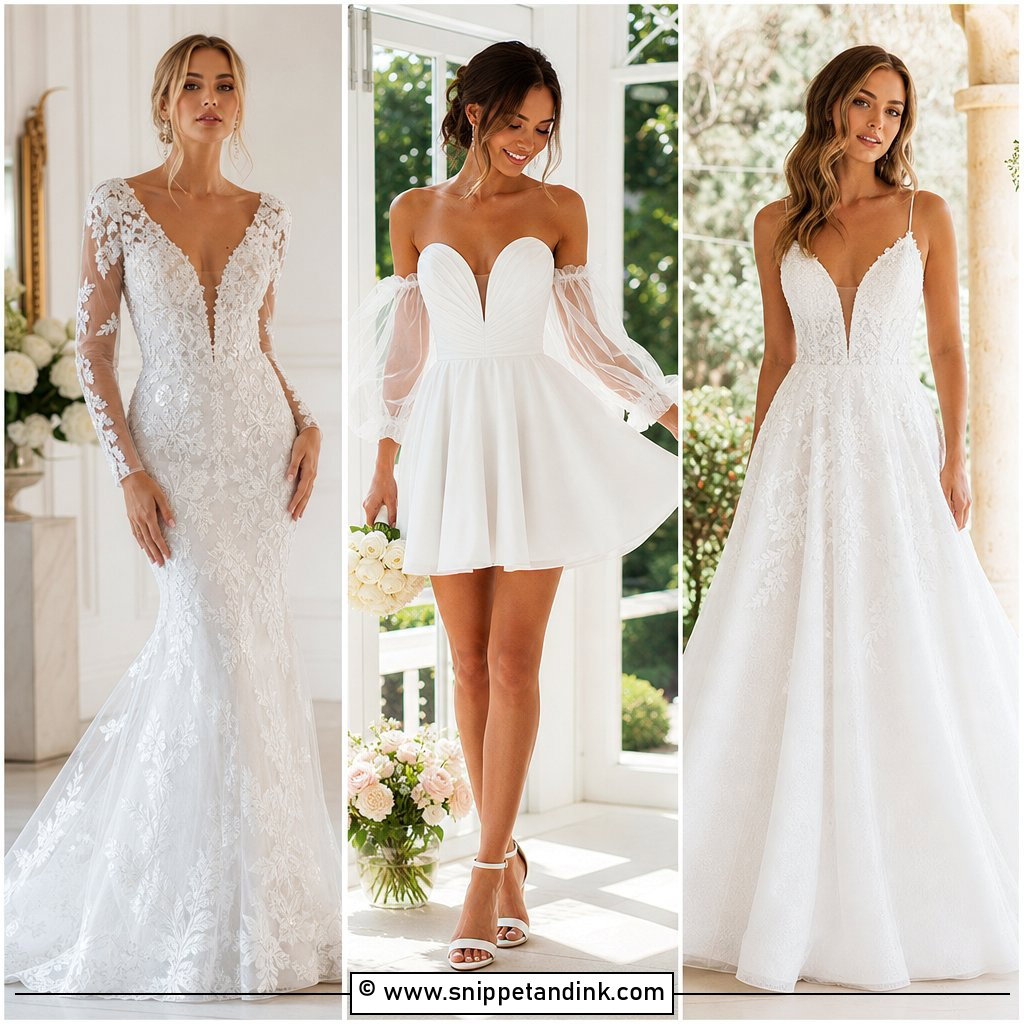

15. Cape-Sleeve Chiffon Wedding Dress
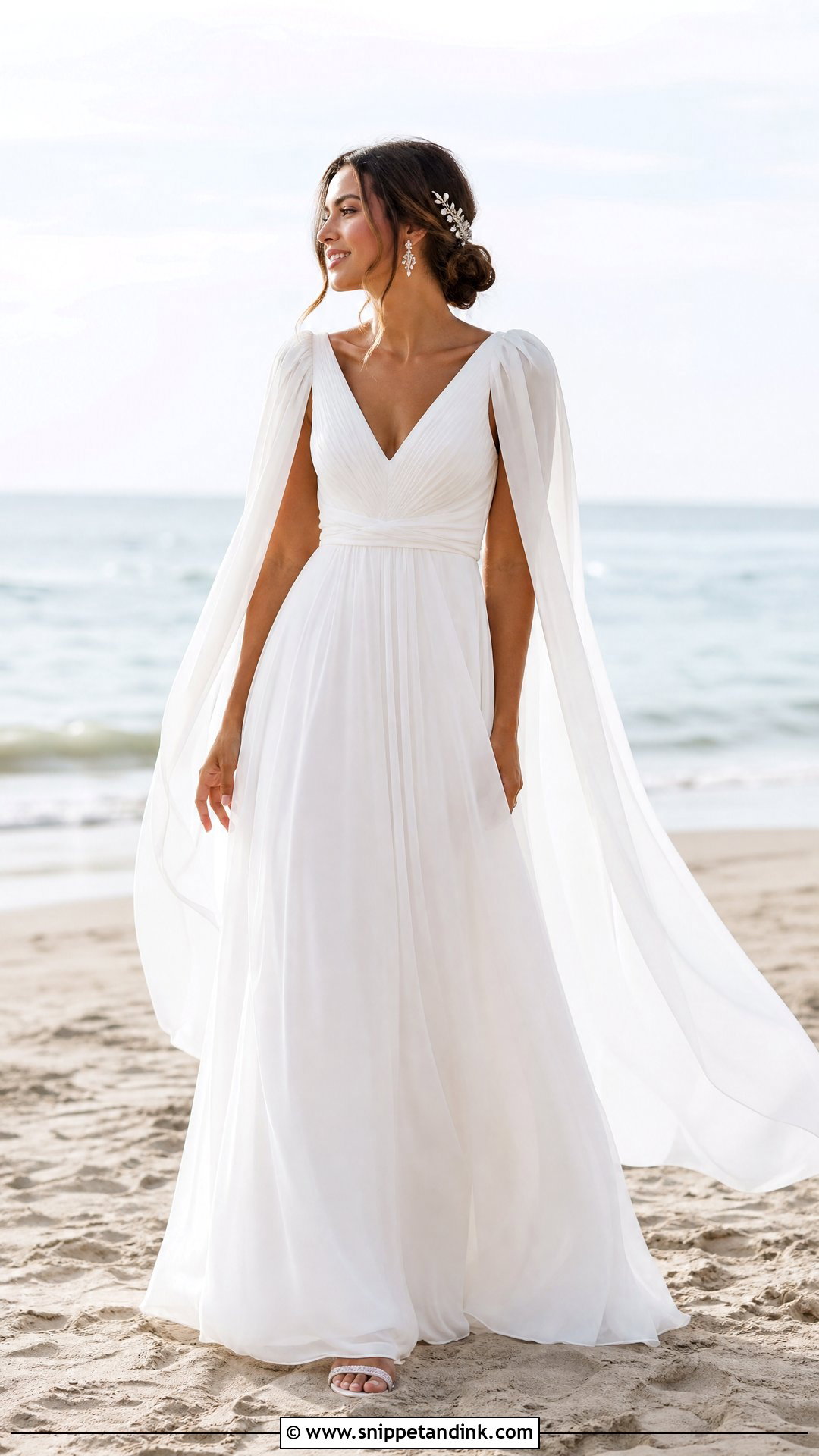
Chiffon cape sleeves fall from the shoulders toward the floor and catch any breeze. You get coverage without the tight fit of real sleeves, which suits brides who find fitted sleeves restricting. Chiffon is often more transparent than it looks in the shop, so check the lining in bright daylight. Outdoors, a slightly weighted hem stops the panels from flying up into your face. A loose low bun keeps the fabric from tangling in long hair. Delicate sandals, small crystal earrings and a narrow headband or comb are all it needs on a beach or in the desert.
16. Vintage Silk Slip Wedding Dress
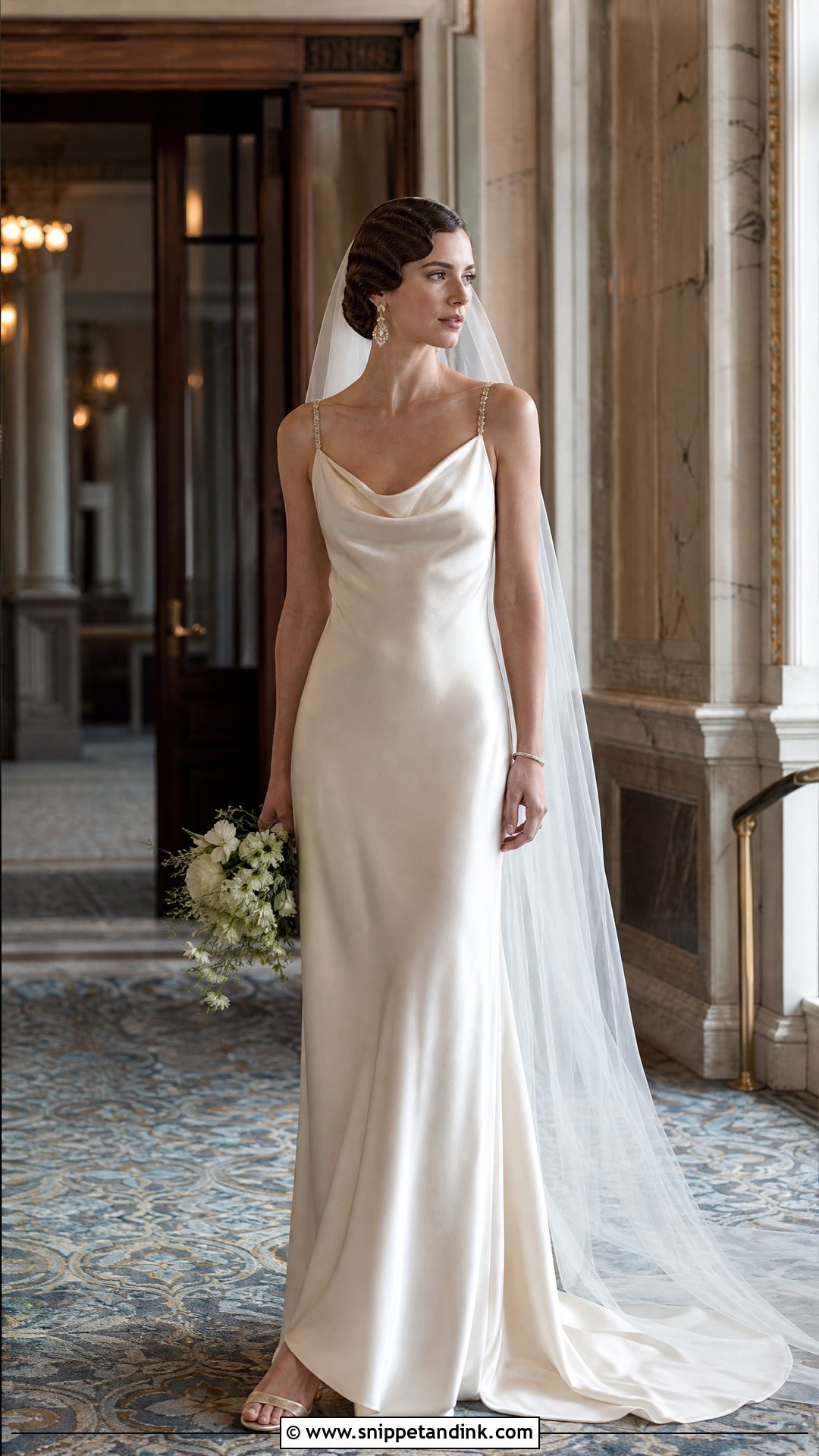
A silk slip with a vintage feel glides over the body instead of gripping it. Look for a bias-cut design with fine straps and small details such as a cowl neck, lace edging or covered buttons. Silk shows water marks and creases quickly, so plan who steams it and how it travels. Smooth, skin-toned underwear is essential, since bias-cut silk reveals every edge. Low satin sandals, antique-style earrings and a sheer chapel veil suit it. Finger waves, a smooth bun or brushed curls give the vintage mood without tipping into costume.
17. Black and White Wedding Dress
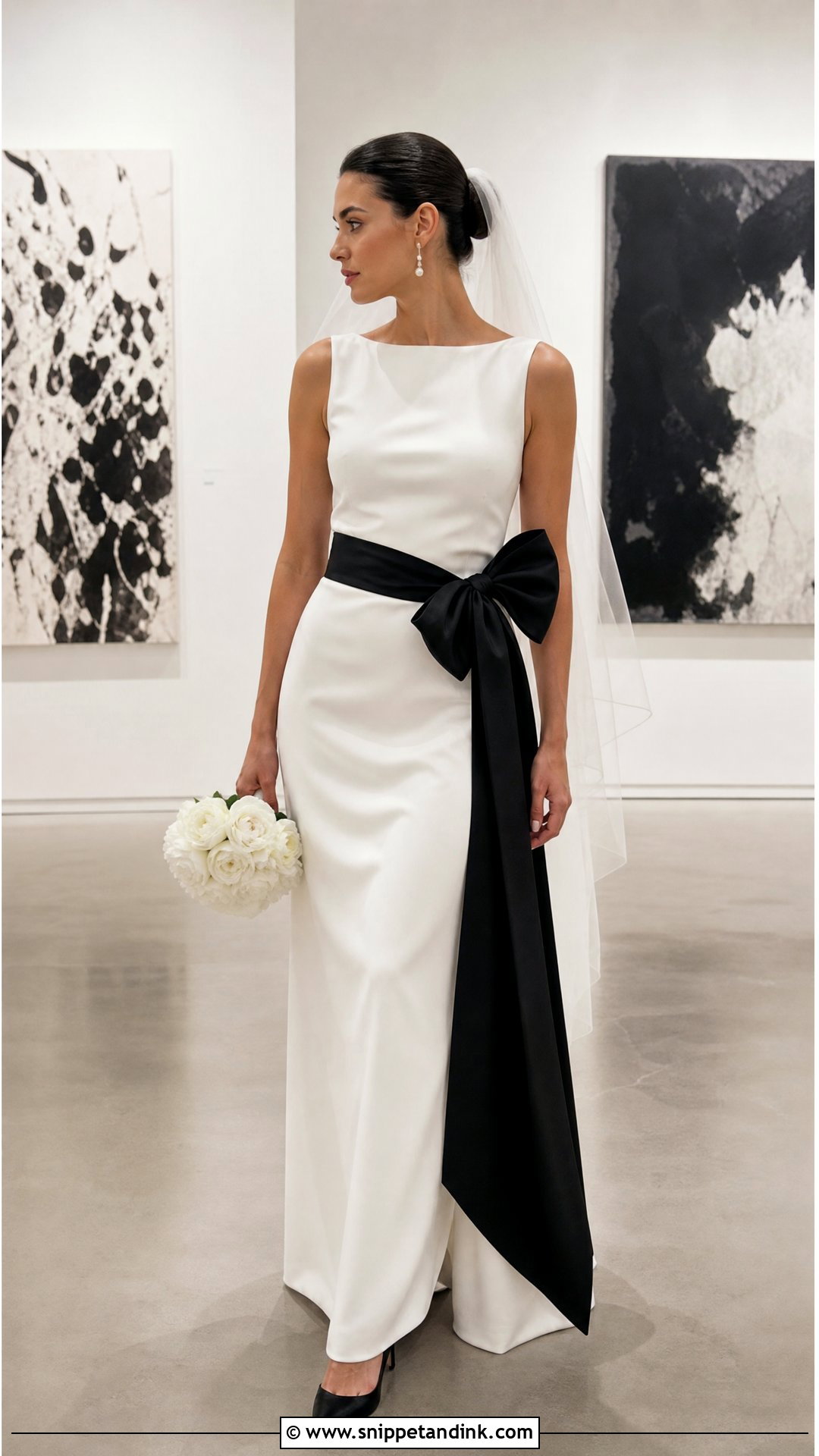
Black on an ivory gown is a confident move. Use it in one place, such as a waist bow, an embroidered pattern, detachable gloves or a narrow trim at the neckline, because several scattered black accents look accidental. Ivory satin, crepe or tulle makes a classic base. Black pumps and simple pearl earrings tie it together. Keep a white veil for the ceremony and swap it for a black hair bow at the reception. Black and ivory together challenge cameras, so I’d mention the dress to your photographer so they can expose for both.
18. Bubble-Hem Midi Wedding Dress
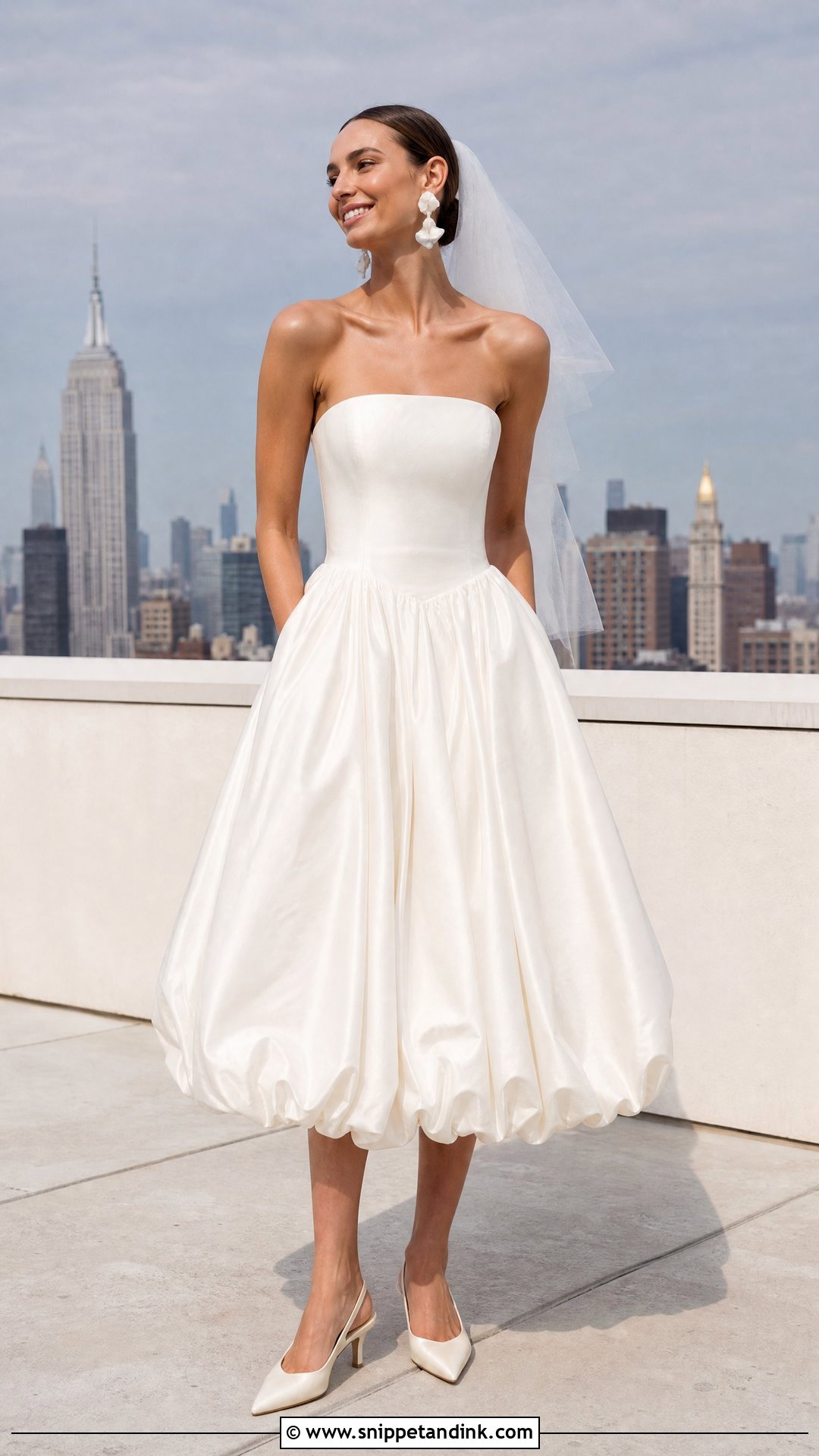
A bubble-hem midi is playful volume without the weight of a ball gown. A fitted strapless or square-neck bodice balances the rounded skirt, which lands between knee and ankle. Satin or structured taffeta holds the curve; softer fabrics collapse. Sit down in it at the try-on, because the bubble can fold awkwardly underneath you. Slingback pumps, sculptural earrings and a short veil or headband keep it light, with a compact bouquet. It works well at a courthouse, a restaurant or as a reception change.
19. Sheer Overlay Wedding Dress
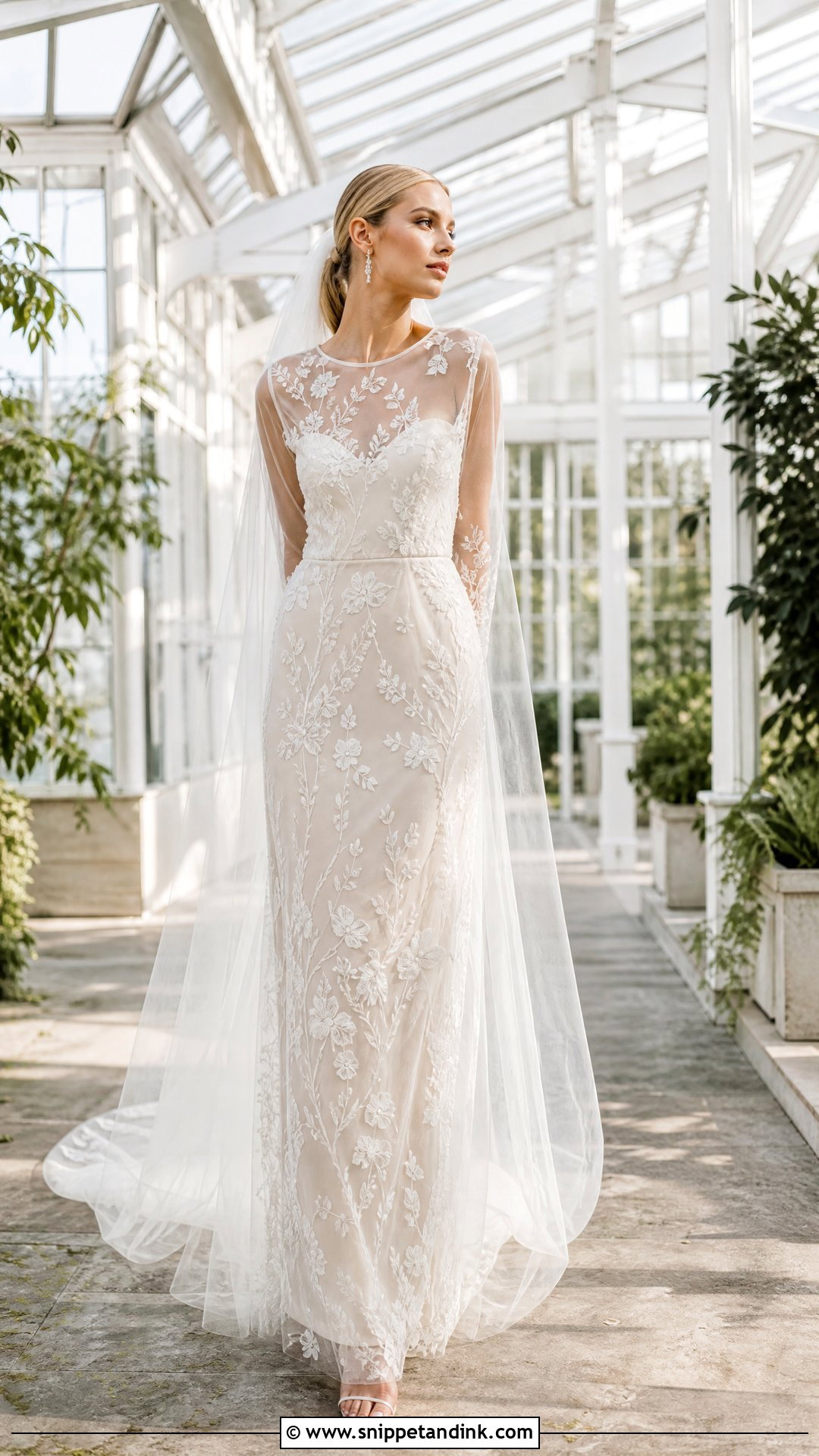
A sheer overlay adds depth to a simple dress: a fitted ivory slip under embroidered tulle, dotted mesh or soft organza. The underslip color changes everything. Ivory reads classic, nude makes the overlay look as if it’s floating on skin, and blush warms the whole gown, so I always try the overlay over two slips if the shop allows it. Minimal sandals, small gemstone earrings and a plain veil keep it calm, with a clean low ponytail or bun. It suits gardens, greenhouses and destination ceremonies.
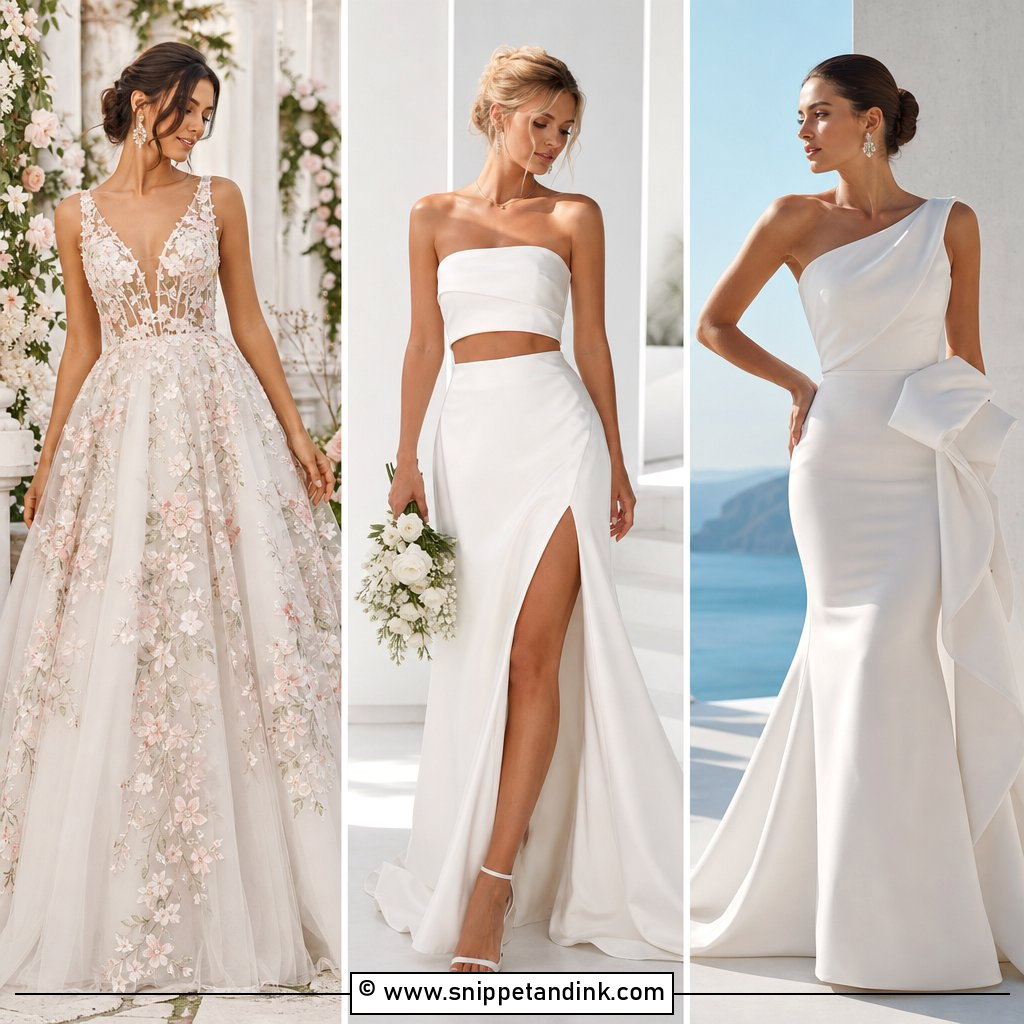



20. Detachable Sleeve Wedding Dress
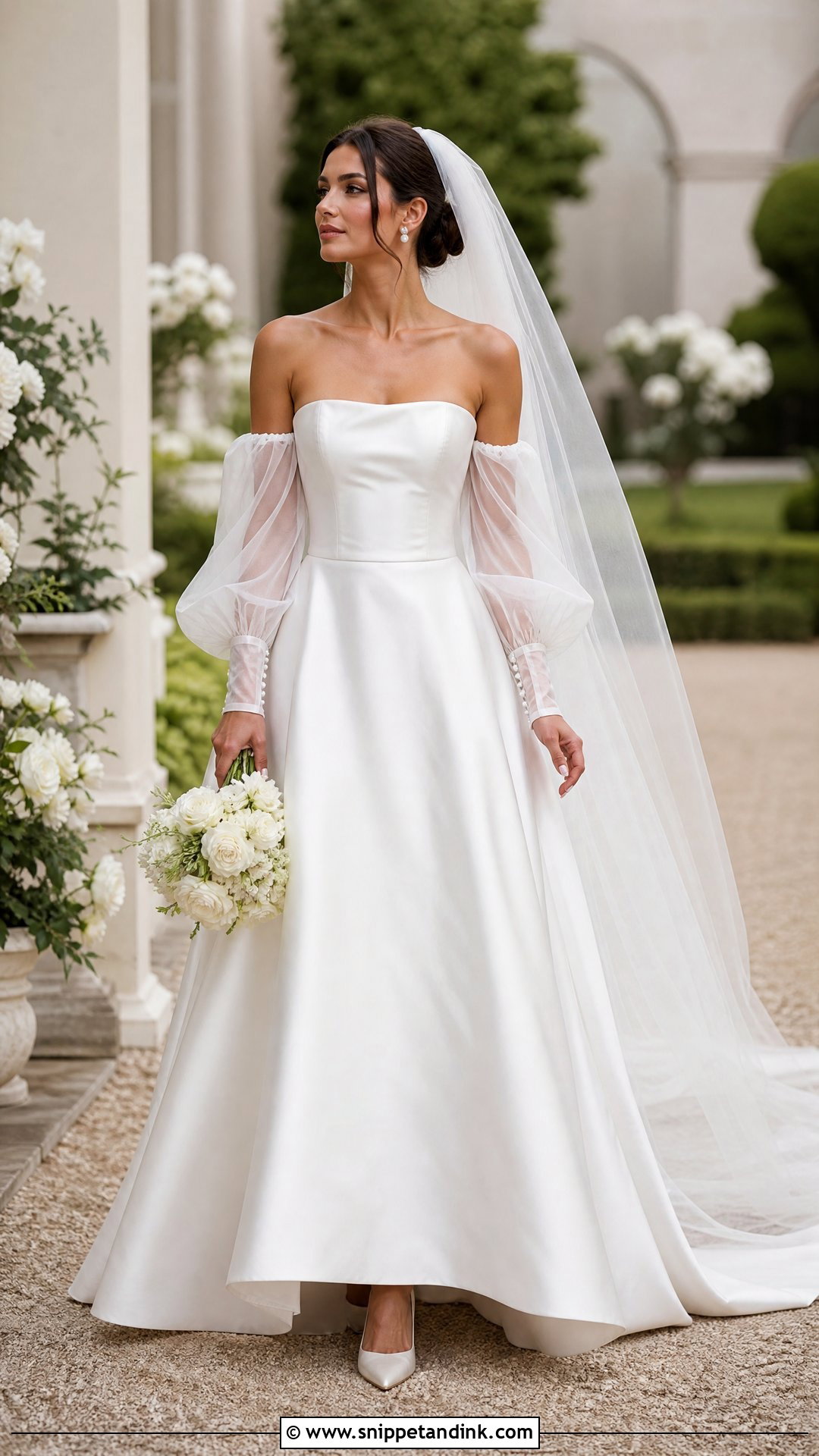
Sleeves that come off let you have traditional coverage for the ceremony and a cleaner neckline later. Start with a strapless or sleeveless satin, lace or crepe gown, then add fitted lace, sheer puff or off-shoulder draped sleeves. The fastenings have to stay hidden while you hug and wave, so test them with your arms up during alterations. Wear a long veil, classic earrings and pointed heels for the ceremony. After the change, add a bracelet or bolder earrings. It’s one of the most adaptable ideas here, suiting almost any season.
How Mikado, Chiffon and Silk Cope With Heat, Cold and Rain
Fabric decides how a dress feels by evening far more than the silhouette does. Here’s how the main fabrics in this list usually behave, so you can match them to your season and venue.
- Mikado and taffeta hold their shape and resist creasing, but they’re warm and don’t breathe much. Better for cool months and air-conditioned rooms.
- Chiffon and organza are light and airy. Chiffon handles summer heat well, while organza crushes if squashed in a car or on a long sit.
- Silk satin feels cool and drapes beautifully, yet it shows water spots, sweat marks and every crease. Keep a scarf over your lap if you’re eating in it.
- Crepe is the all-rounder. It stretches slightly, recovers from sitting and copes with a range of temperatures.
- Tulle and lace are forgiving and hide wrinkles, but they catch on stone walls, brambles and jewelry.
If rain is possible, keep the hem off the ground with a bustle or a shorter length, and have someone hold a clear umbrella rather than a dark one so the photos stay bright. A quick blot with a white cloth deals with most raindrops on satin; rubbing spreads them.
Bring Three Photos to the Shop, Not Thirty
Treat this list as a starting point, not a checklist. Try at least one shape you’d never have picked from a photo, compare fabrics by a window, and move properly at every fitting. Think about the veil, shoes, jewelry, hair and flowers as one outfit. Good tailoring makes a plain gown look expensive, and one distinctive feature is usually enough to make a classic shape yours. The dress you keep should feel comfortable at hour ten and look like you in pictures you’ll show your grandchildren.
You'll Like These Ideas:





Leave a Reply