
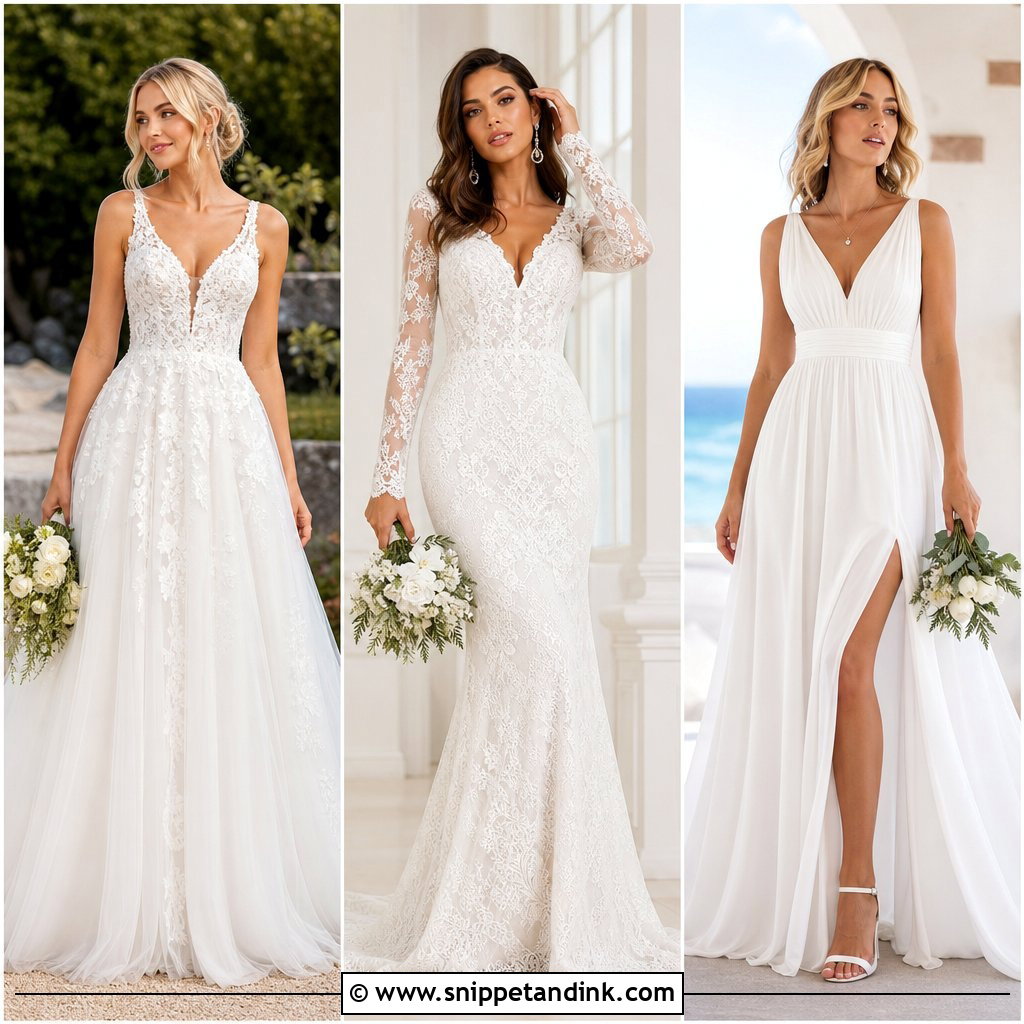
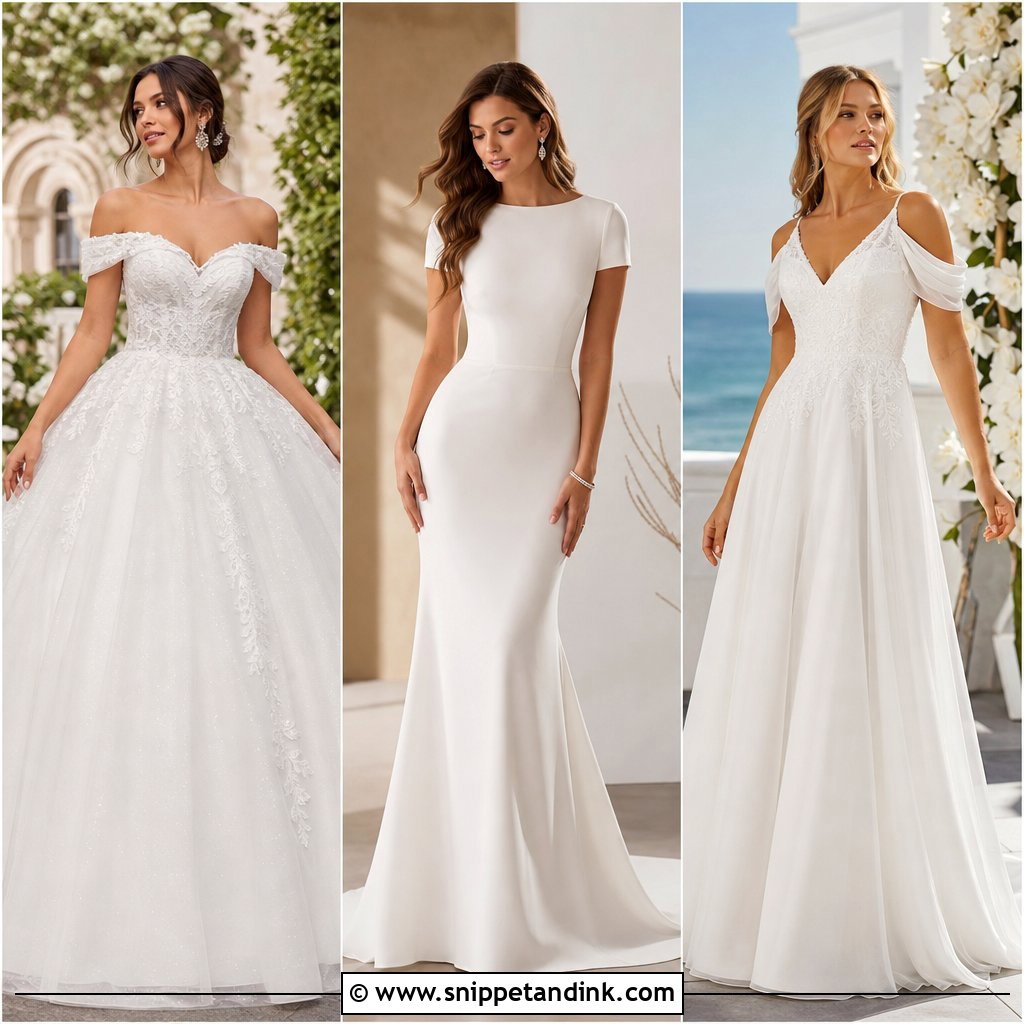
If I had to dress every bride in one silhouette, it would be the A-line. It’s fitted through the bodice and widens gradually from the waist to the hem, so it skims the hips instead of gripping them and gives almost any figure a clear waist. The shape takes nearly any fabric, from plain satin and stiff Mikado to lace and floating chiffon. What changes the mood is everything around it: neckline, waist construction, veil, shoes, jewelry. Comfort counts as much as looks, so I always weigh support, weight, train, and how a gown moves before I’d recommend it. The twenty looks below run from classic sweetheart gowns to modern corset designs.
Where the Flare Starts Changes the Whole Silhouette
Every A-line looks similar on a hanger. On a body, the point where the skirt begins to widen does most of the work, and that’s what I look at first when a bride tries one on.
- At the natural waist: the classic version. It defines the smallest point of the torso and suits most figures, especially hourglass and pear shapes.
- Just below the waist, or a dropped or Basque waist: lengthens a short torso and smooths over the tummy, but it can shorten the legs on a long-waisted bride.
- Just under the bust: technically an empire line, very comfortable and good for petite brides, though it hides the waist completely.
Skirt fullness is the second variable. A soft A-line with one or two chiffon layers drapes close to the hips, while a structured version in Mikado or with a crinoline stands away from them. If you’re petite, a narrower sweep keeps you from disappearing into fabric; if you carry weight at the hips, a skirt that falls clear of them is usually more flattering than one that clings.
1. Sweetheart A-Line Wedding Dress
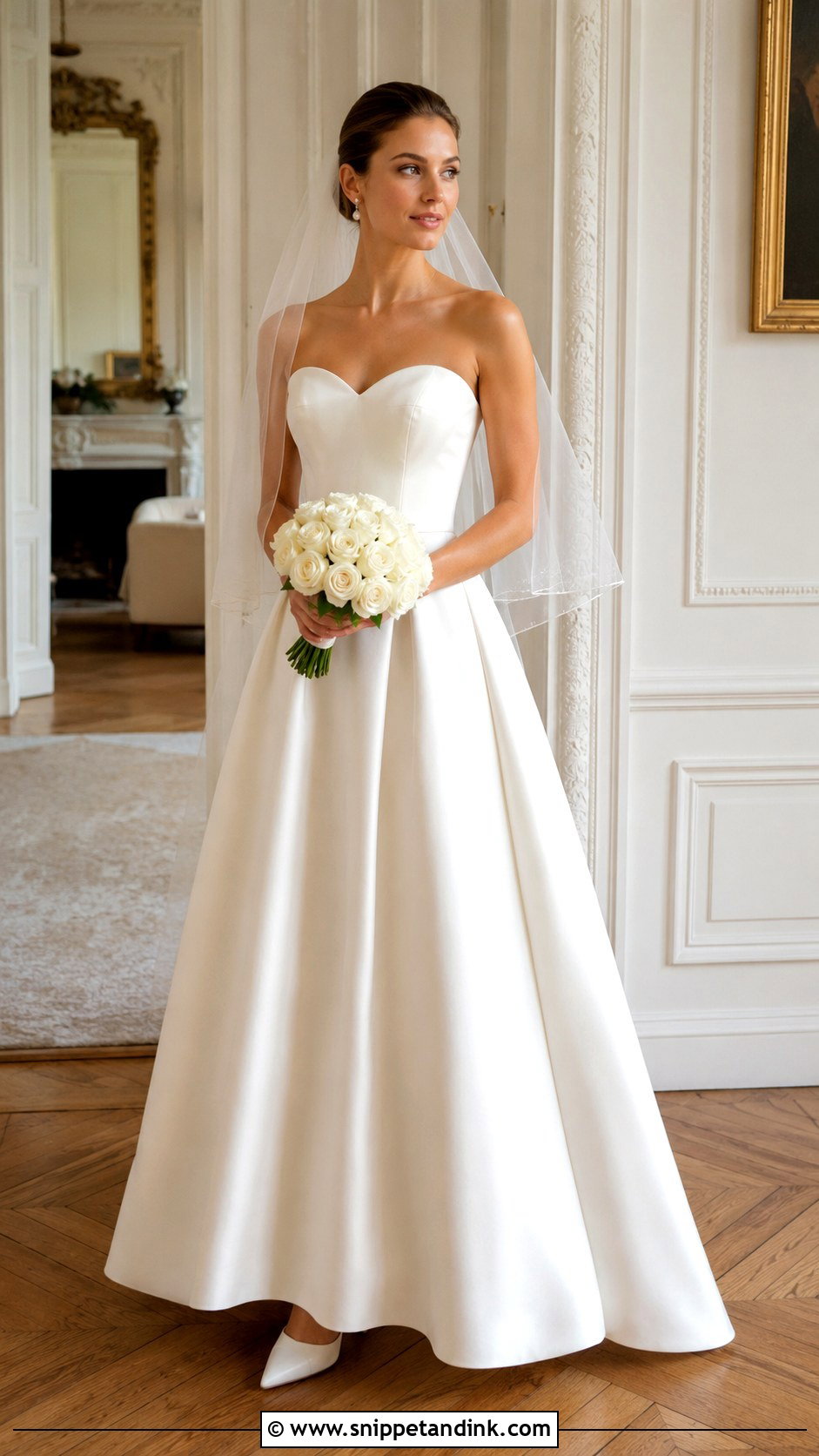
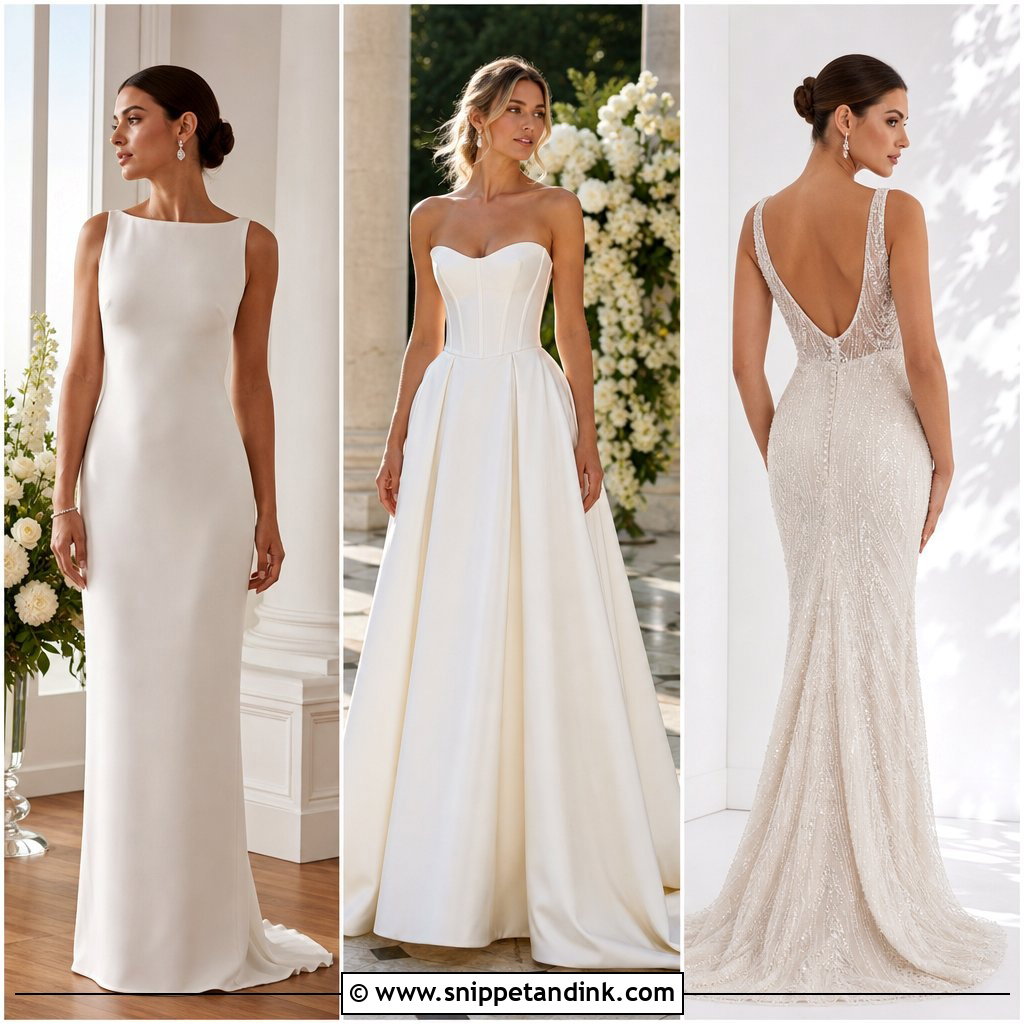
Sweetheart necklines curve over the bust and frame the collarbone, and on an A-line they read romantic without fuss. Choose a smooth satin or Mikado gown with a structured bodice, natural waist, and gentle flare. Mikado is heavier than it looks, so I check that the bodice boning is strong enough to carry the skirt. Pearl drops or a fine pendant are all the jewelry it needs. An airy fingertip veil with a satin edge, pointed ivory pumps, and a small bouquet of white roses keep it classic. Detachable off-shoulder straps in matching fabric add coverage. Finish with a sleek low bun for a ballroom, hotel, or estate.
2. Lace Long-Sleeve A-Line Wedding Dress
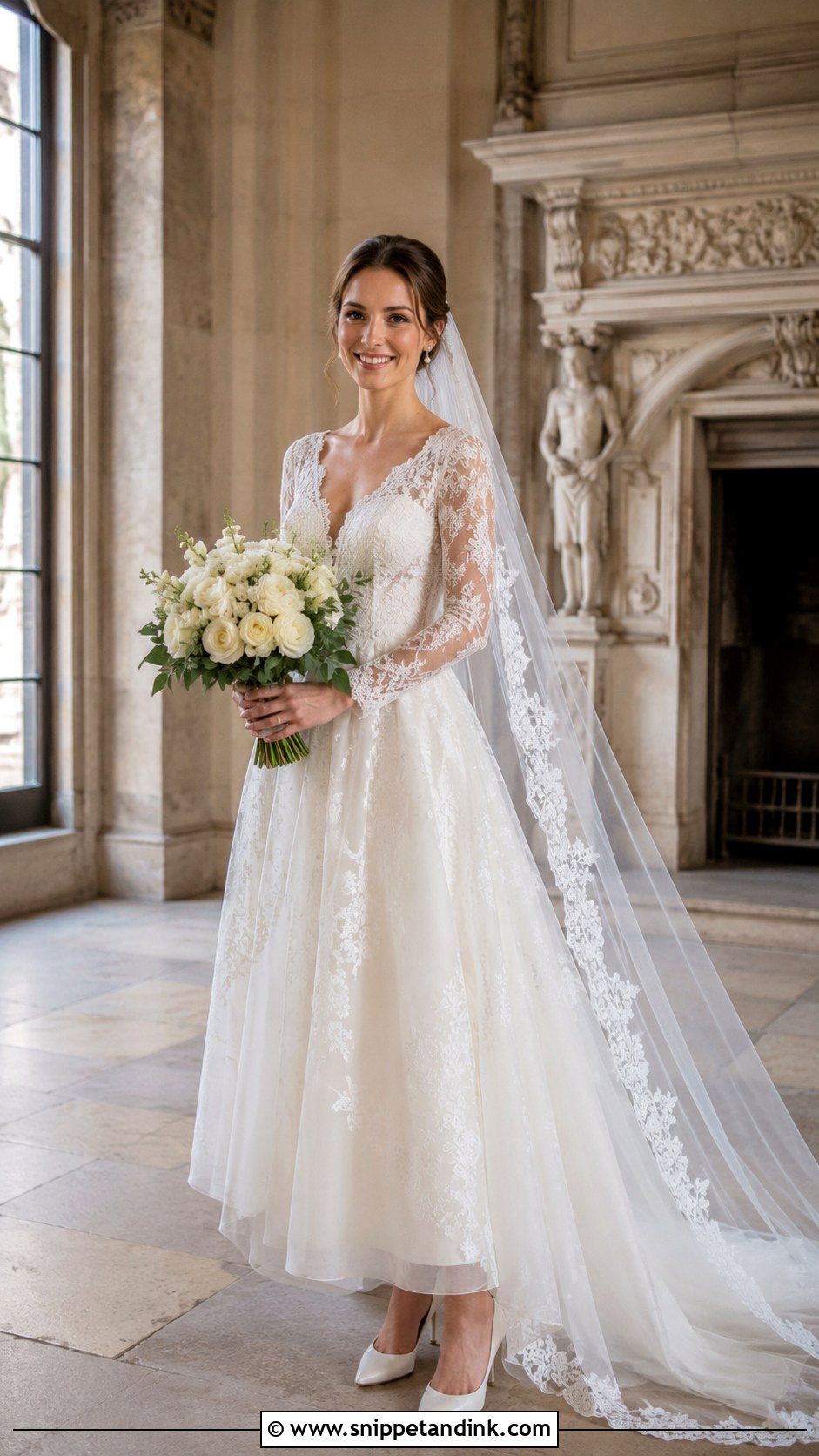
Long lace sleeves are mostly about lining. The bodice lining should be soft against the skin and the sleeve itself unlined, or the arms feel hot and stiff by the speeches. Illusion sleeves with carefully placed appliqués give coverage while keeping the lace looking light. A fitted bodice, a defined waist, and a softly layered skirt suit them. Closed-toe ivory heels, a lace-edged cathedral veil, and small pearl earrings complete the outfit. A loose chignon or soft waves suit the lace. Keep the bouquet relaxed, maybe garden roses and greenery, so it doesn’t compete with the sleeves. Autumn, historic venues, and evening weddings suit this one.
3. Off-the-Shoulder A-Line Wedding Dress
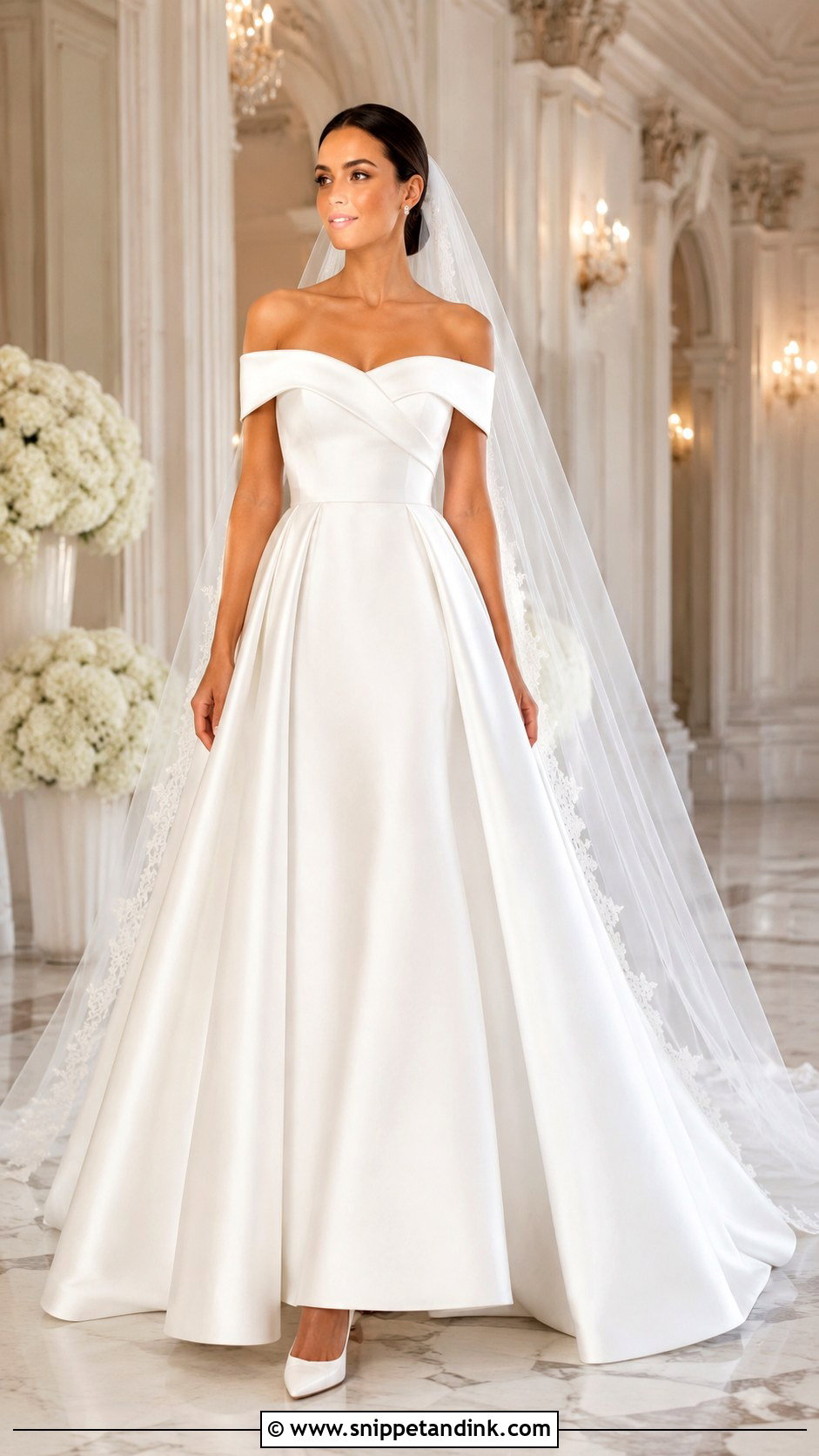
Off-the-shoulder A-lines depend on fabric more than most necklines do. Structured Mikado holds a folded neckline crisply, while soft fabrics tend to slip. Ask for internal support, either boning or a hidden elastic band, so the neckline stays put while you walk, sit, and dance. A clean cathedral veil, crystal studs, and pointed satin heels are enough; the shoulders already lead, so swap the necklace for a slim bracelet. A polished updo keeps the neckline clear and stops hair catching on the sleeve band. Peonies or roses in a compact bouquet finish it for a grand ballroom.
4. Square-Neck A-Line Wedding Dress
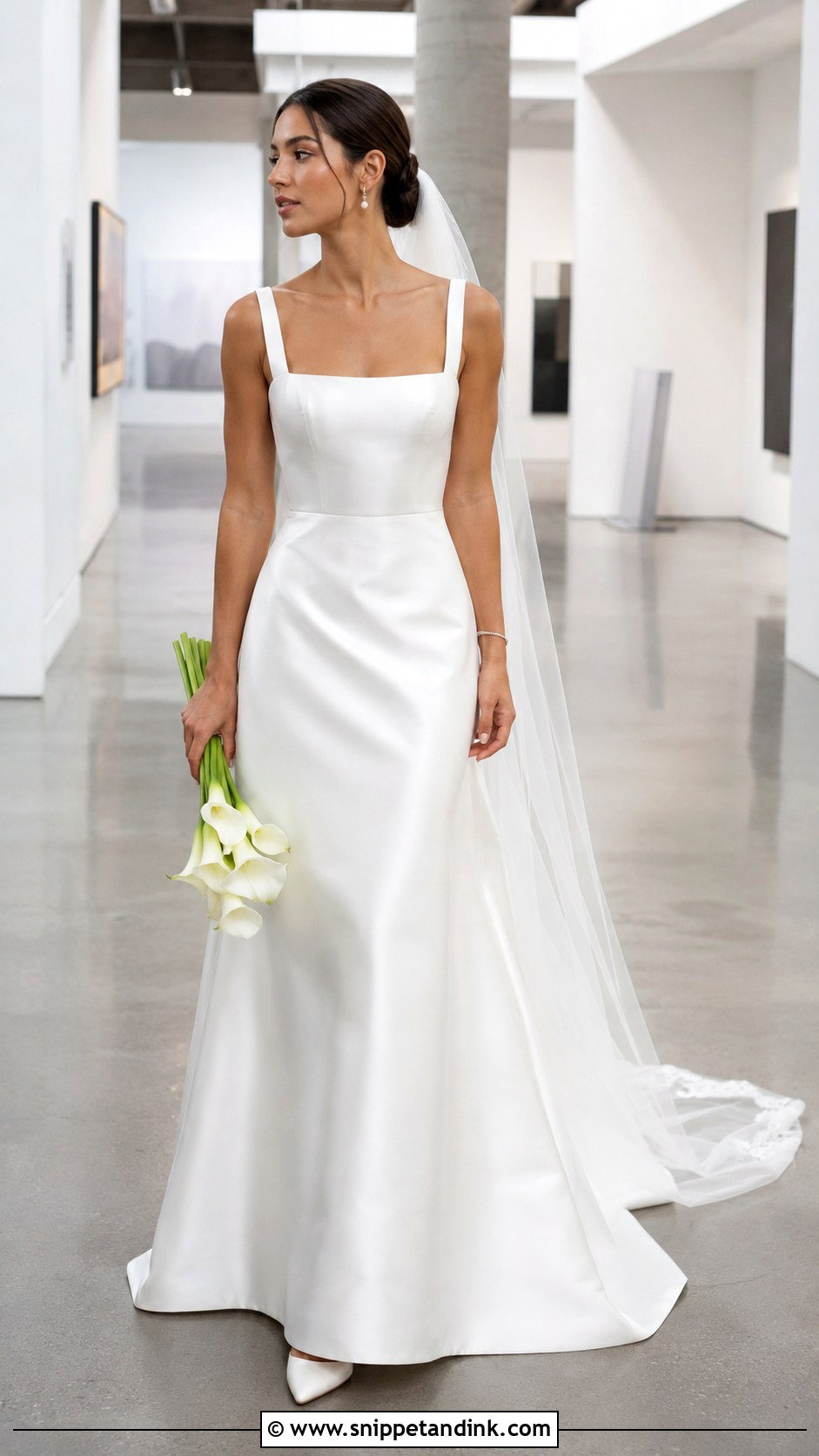
Square necklines suit brides with defined shoulders and a straighter torso; the straight edge echoes the frame rather than fighting it. Choose satin, crepe, or light Mikado with wide straps and a sharply tailored bodice. The tricky part is the corners: if the bodice is even slightly too big, the edges lift away from the chest, so the fit has to be exact. A smooth chapel veil, pearl-and-gold earrings, and low pointed pumps carry you through the night. A center-parted bun is the minimalist option; shoulder-length waves relax it. Calla lilies or tulips suit the clean lines, whether in a gallery, city venue, or courthouse.
5. V-Neck Chiffon A-Line Wedding Dress
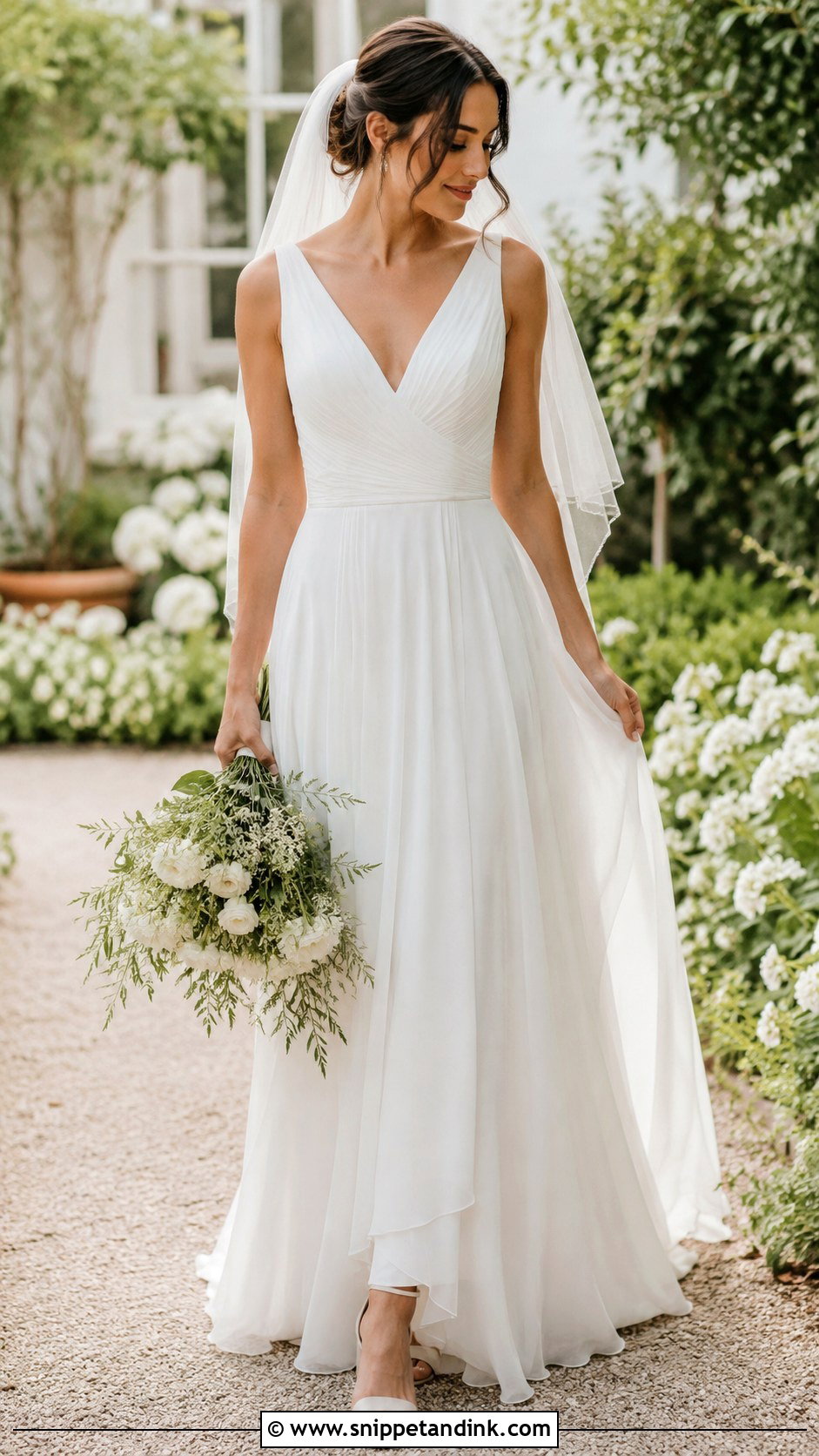
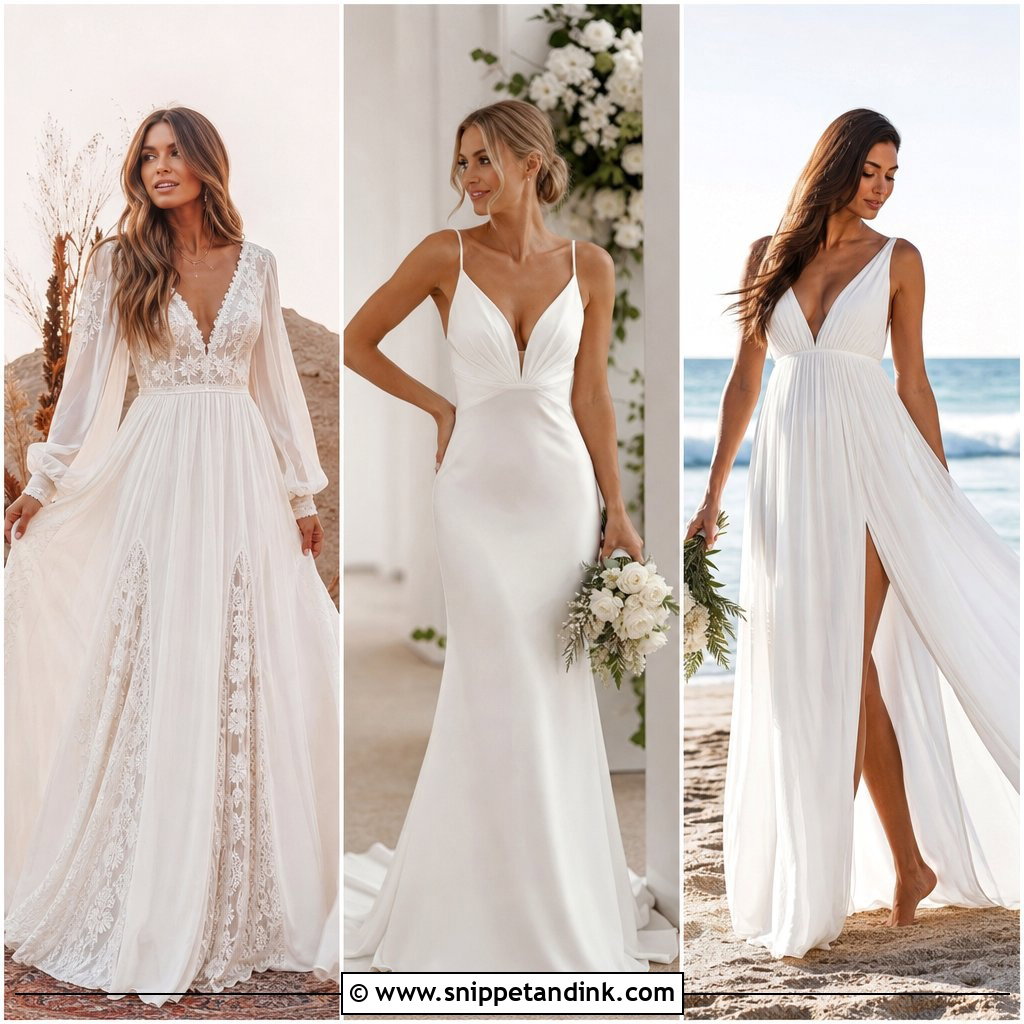
Chiffon A-lines are made for outdoor ceremonies. A softly gathered V-neck bodice with secure straps, a defined waistband, and several light skirt layers moves with every breeze while still giving coverage. On grass, I always suggest block heels or embellished flats, because stilettos sink. A narrow floral comb and fine drop earrings are enough. Skip the heavy veil; a plain fingertip one catches the wind naturally. Chiffon also frays and snags easily, so keep beaded bracelets away from the skirt. A loose bouquet of seasonal white flowers, soft waves, and fresh makeup finish a garden look.
6. Basque-Waist A-Line Wedding Dress
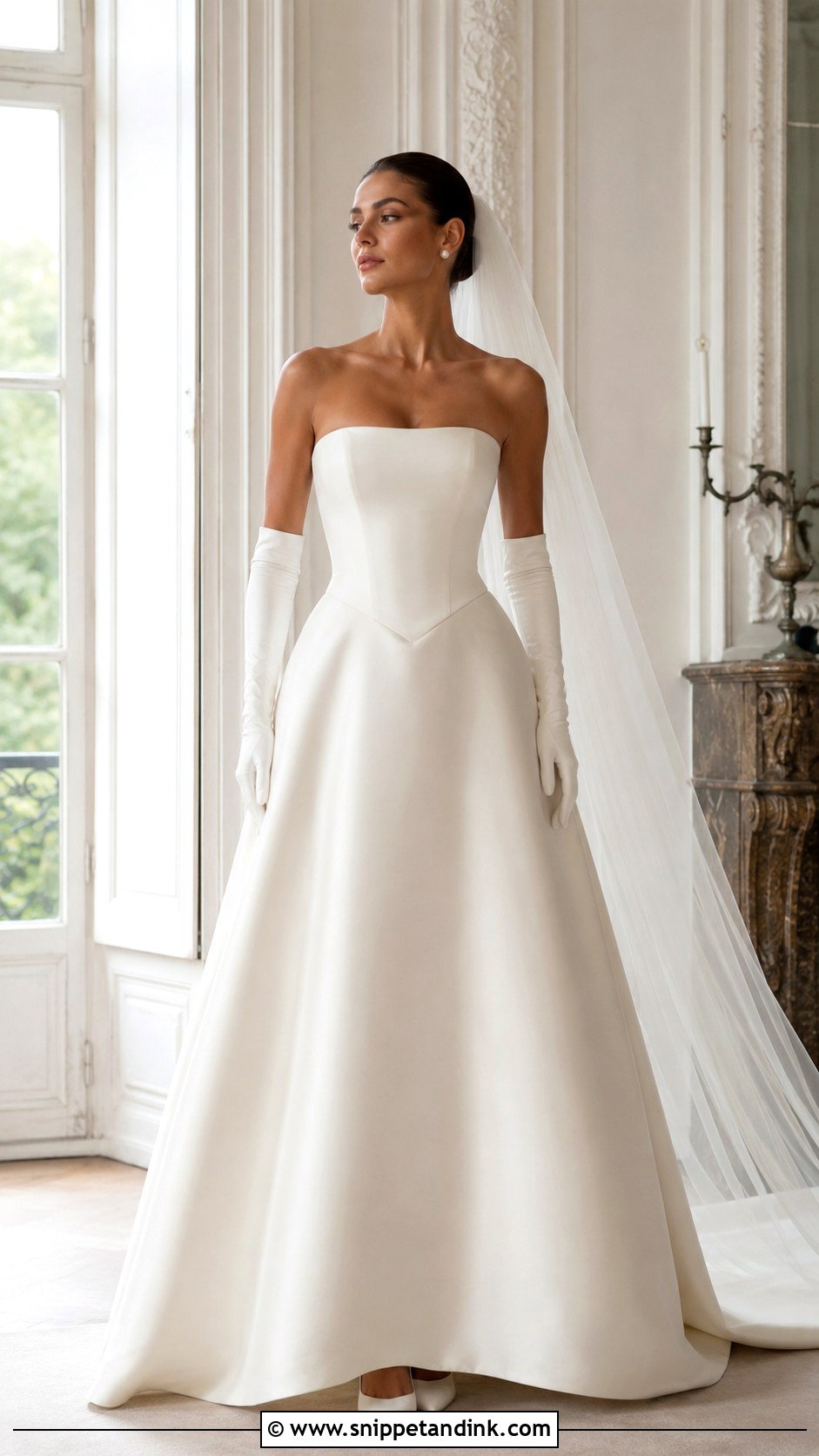
A Basque waist dips into a point or curve below the natural waistline before the skirt flares, which lengthens the torso. It’s a good choice for shorter-waisted brides, and less so for very long torsos, where it can make the legs look shorter. Structured satin or Mikado shows off the architectural construction, with a strapless or gently scooped neckline. Elbow gloves, pearl studs, and sleek ivory pumps lean slightly vintage. A long plain veil keeps the waist visible. A polished bun or sculpted waves and a small round bouquet suit a formal estate.
7. High-Neck Lace A-Line Wedding Dress
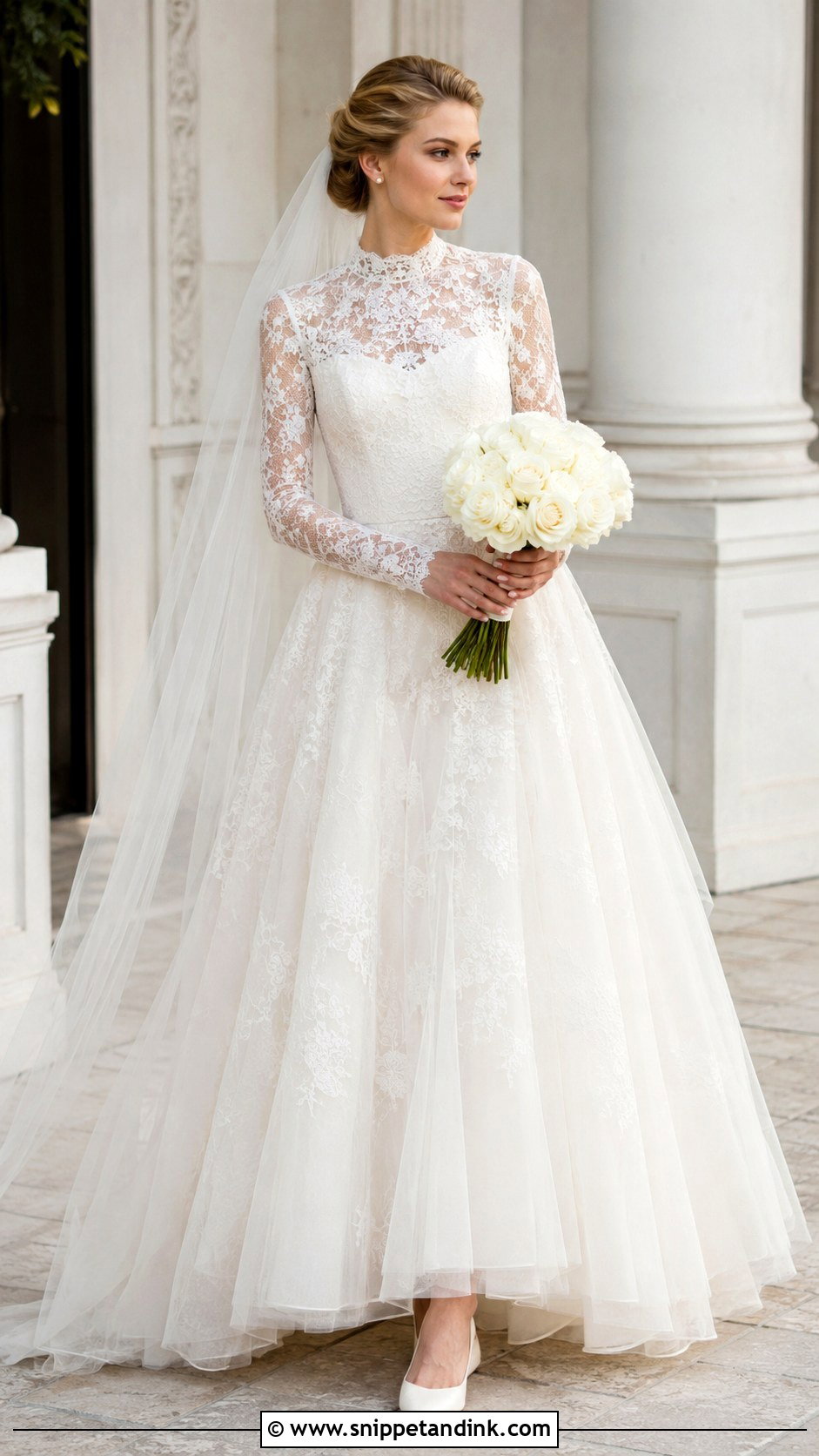
High-neck lace gives vintage character and coverage without much weight, provided the neckline is sheer lace over a lined bodice front. Long or three-quarter sleeves both work. On the skirt, I’d keep lace appliqués scattered over plain tulle so the eye stays on the top half. Wear studs, not drops; dangling earrings tangle in neck lace all day. Closed-toe kitten heels are graceful and practical. Attach a simple chapel veil beneath a low bun to keep the neckline clear. White roses, sweet peas, and restrained greenery suit it for a historic venue, a winter wedding, or a traditional daytime ceremony.
8. Cap-Sleeve A-Line Wedding Dress
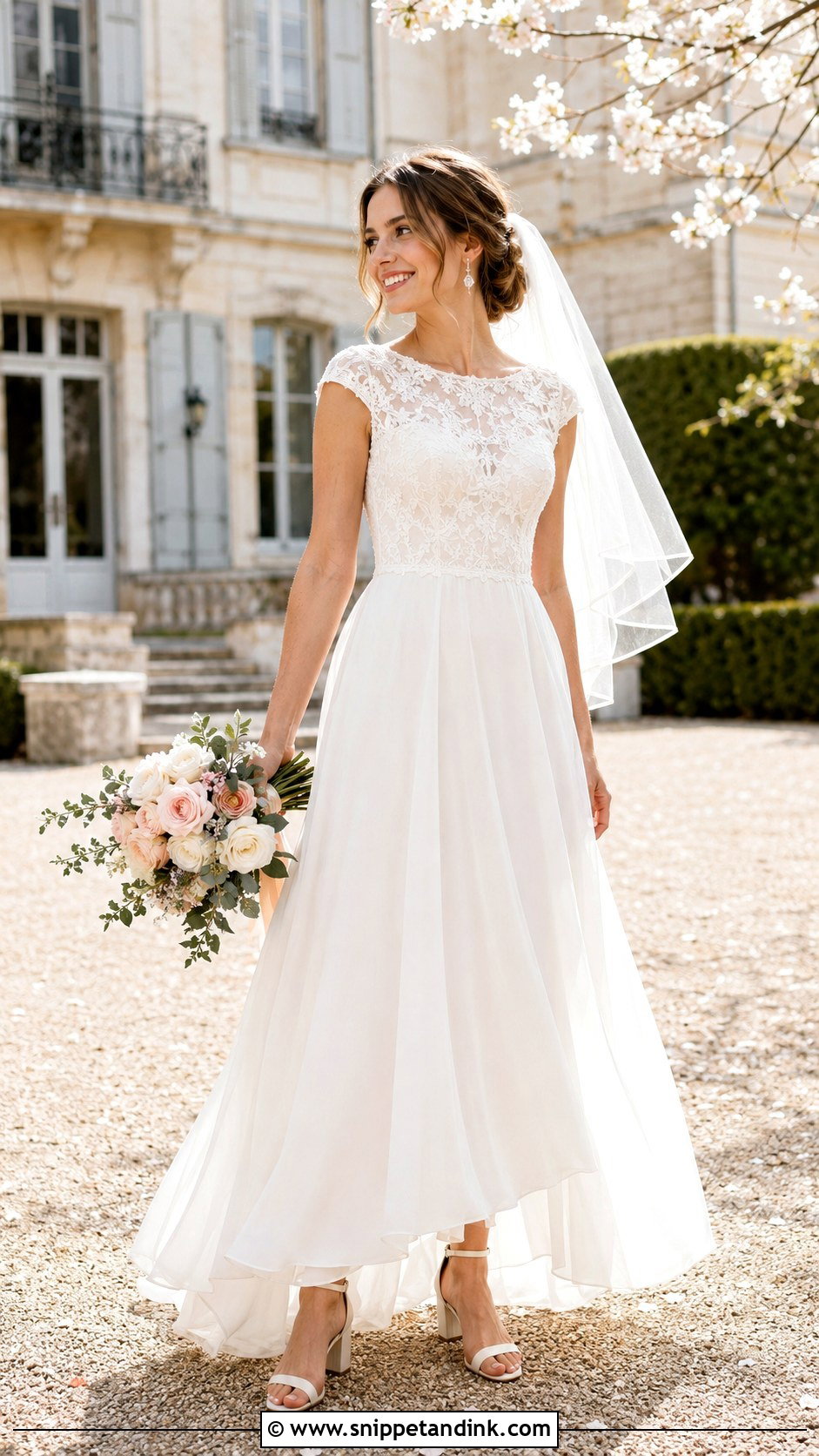
Cap sleeves give the shoulders just a little coverage. Pair a lace or embroidered bodice with a smooth chiffon or tulle skirt so the interest stays near the face. In fittings I have brides reach forward and hug; a tight armhole on a cap sleeve cuts in, and that has to be adjusted during alterations. A waist-length veil, pearl drop earrings, and ivory block heels complete it. Half-up hair shows the sleeves and keeps softness around the face. A medium bouquet of garden roses and ranunculus suits spring gardens, country estates, and small outdoor venues.
9. Illusion-Neck A-Line Wedding Dress
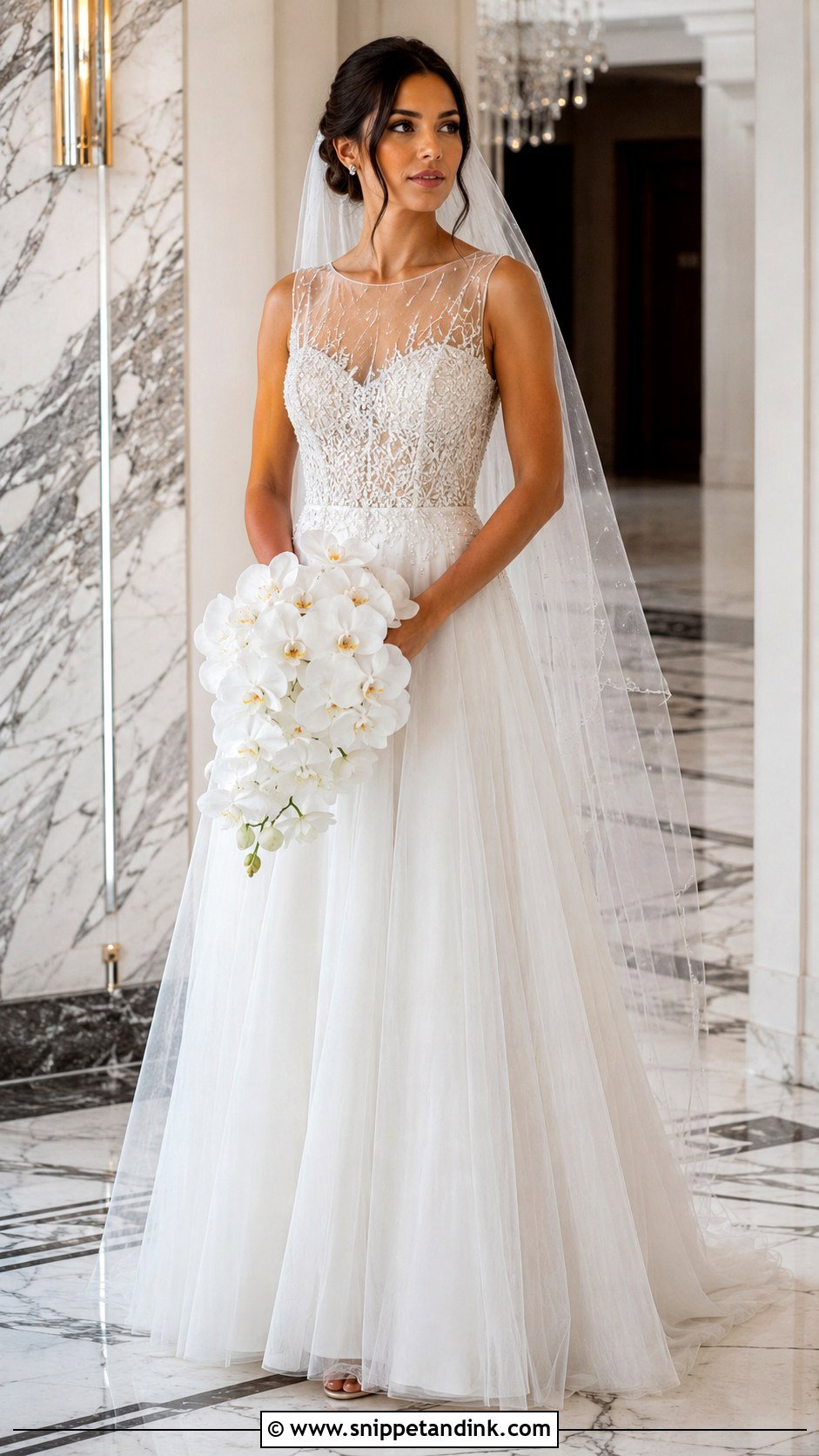
Illusion necklines float lace or beadwork on sheer tulle over a solid sweetheart lining. The mesh needs to match your skin closely, so I always check it in daylight; a mismatched shade shows as a visible band in photos. A plain tulle or organza skirt keeps the overall look from tipping into too much. Crystal studs, metallic ivory heels, and a sheer fingertip veil with minimal edging are enough. A low twisted bun keeps hair away from the beadwork. White roses and orchids in a structured bouquet finish it, ready for an evening wedding or hotel ballroom.
10. Corset A-Line Wedding Dress
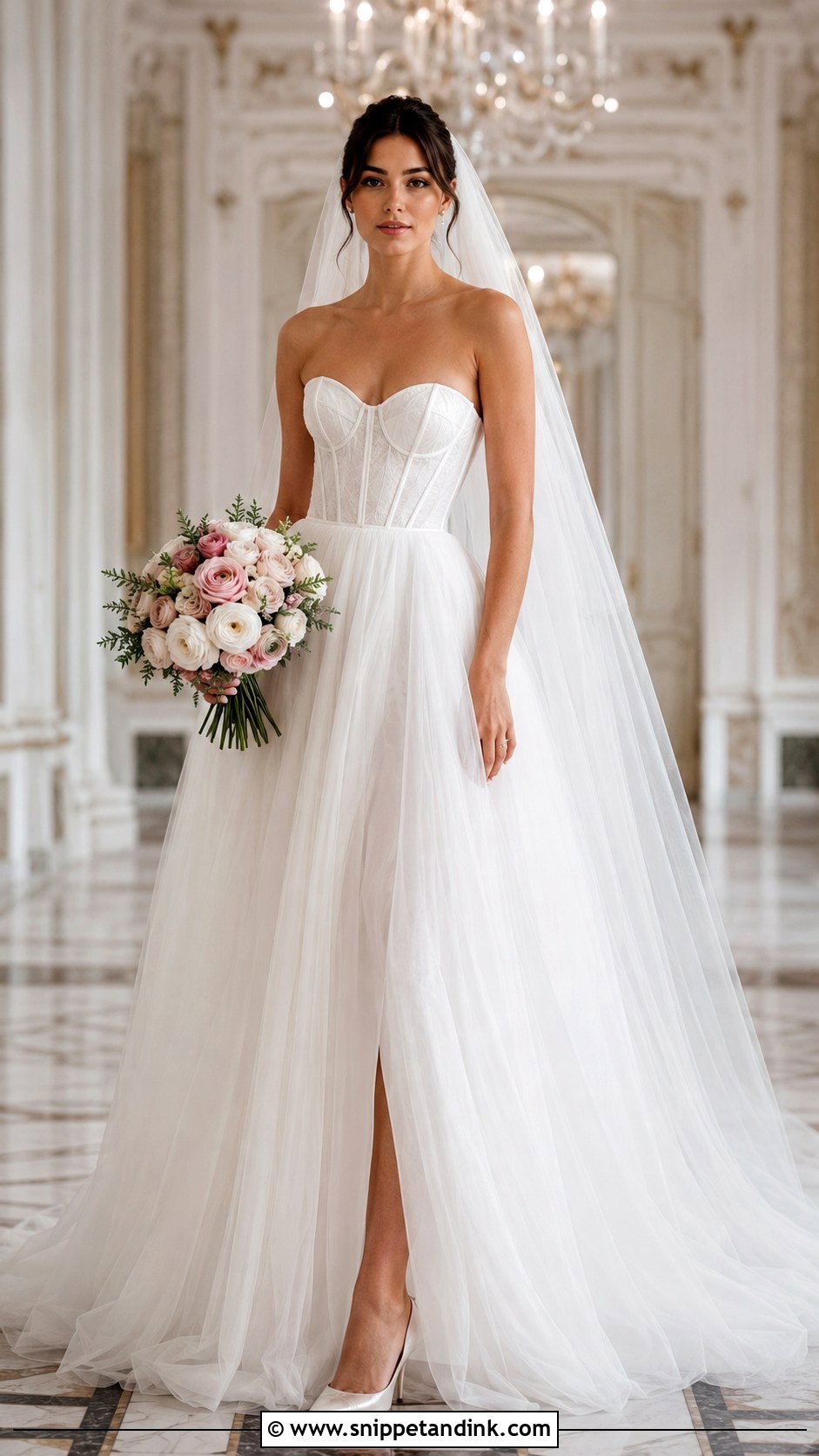
Visible corsetry is about engineering more than decoration. Boning, shaped cups, and either opaque panels or softly lined sections hold the shape, and a layered tulle skirt should start cleanly at the waist, not pile volume onto the hips. Before hemming, I ask brides to sit and raise their arms, because a corset that fits standing can dig under the ribs once you’re seated at dinner. A plain cathedral veil, pointed satin heels, and diamond-style studs keep it clean. A sleek bun shows the construction, and a pink-and-white bouquet softens the strong lines.
11. Boho Lace A-Line Wedding Dress
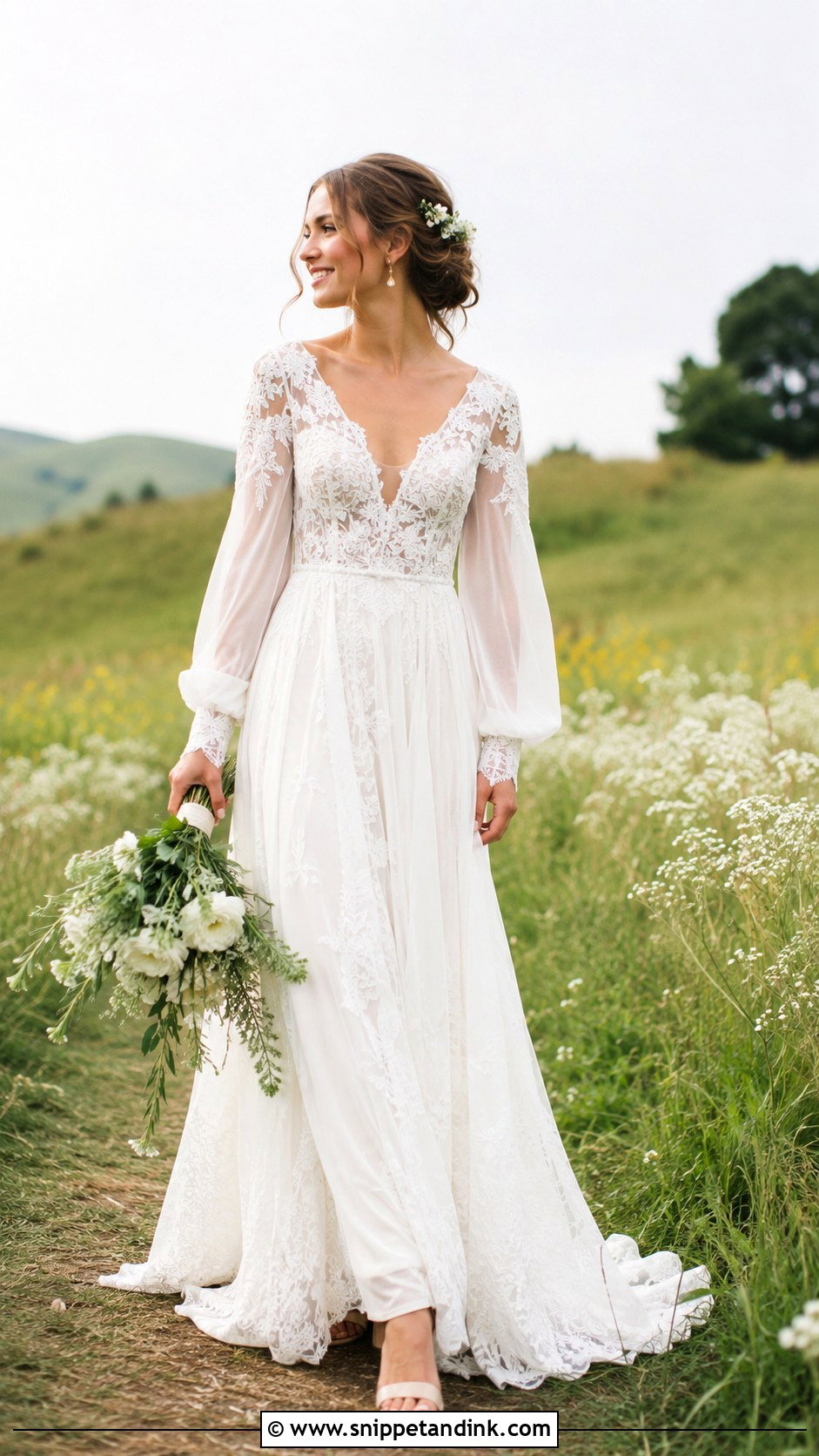
Boho A-lines live or die by the lace. Botanical lace with a comfortable fitted bodice and a fluid lightly lined skirt suits an outdoor wedding; flutter or sheer bishop sleeves add movement. Bishop sleeves gather at the wrist and can drag through food at dinner, so some brides have a loop added to push them up. Neutral block sandals, small gold earrings, and a narrow floral hairpiece suit it. A loose braid, textured updo, or soft waves keep it relaxed. Choose a plain or lightly lace-edged fingertip veil that moves outdoors, with white flowers and grasses for meadows, woodlands, and ranches.
12. One-Shoulder A-Line Wedding Dress
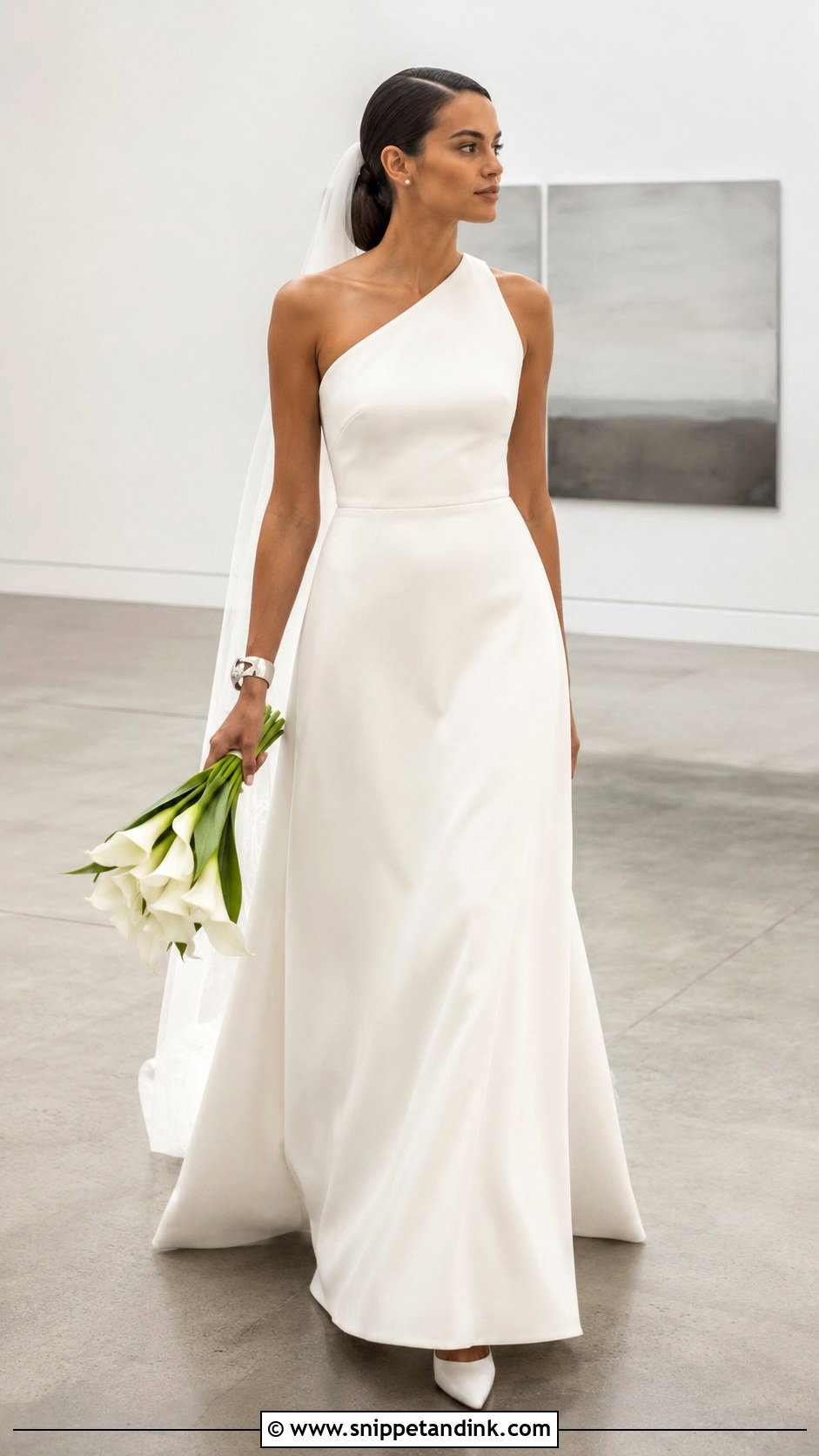
One-shoulder gowns are modern and graphic, and the strap has to be engineered to hold. Without a hidden band or grippy tape on the strapless side, the bodice slowly rotates as you move. Choose smooth satin or crepe with a fitted waist and controlled skirt volume; diagonal draping softens the line into the skirt. Sleek pointed pumps, a sculptural bracelet, and small studs are enough. Skip the necklace. A polished low ponytail or bun keeps the shoulder clear, and a veil pinned beneath the hair falls behind the gown. Calla lilies or orchids suit a city or gallery wedding.
13. Pearl A-Line Wedding Dress
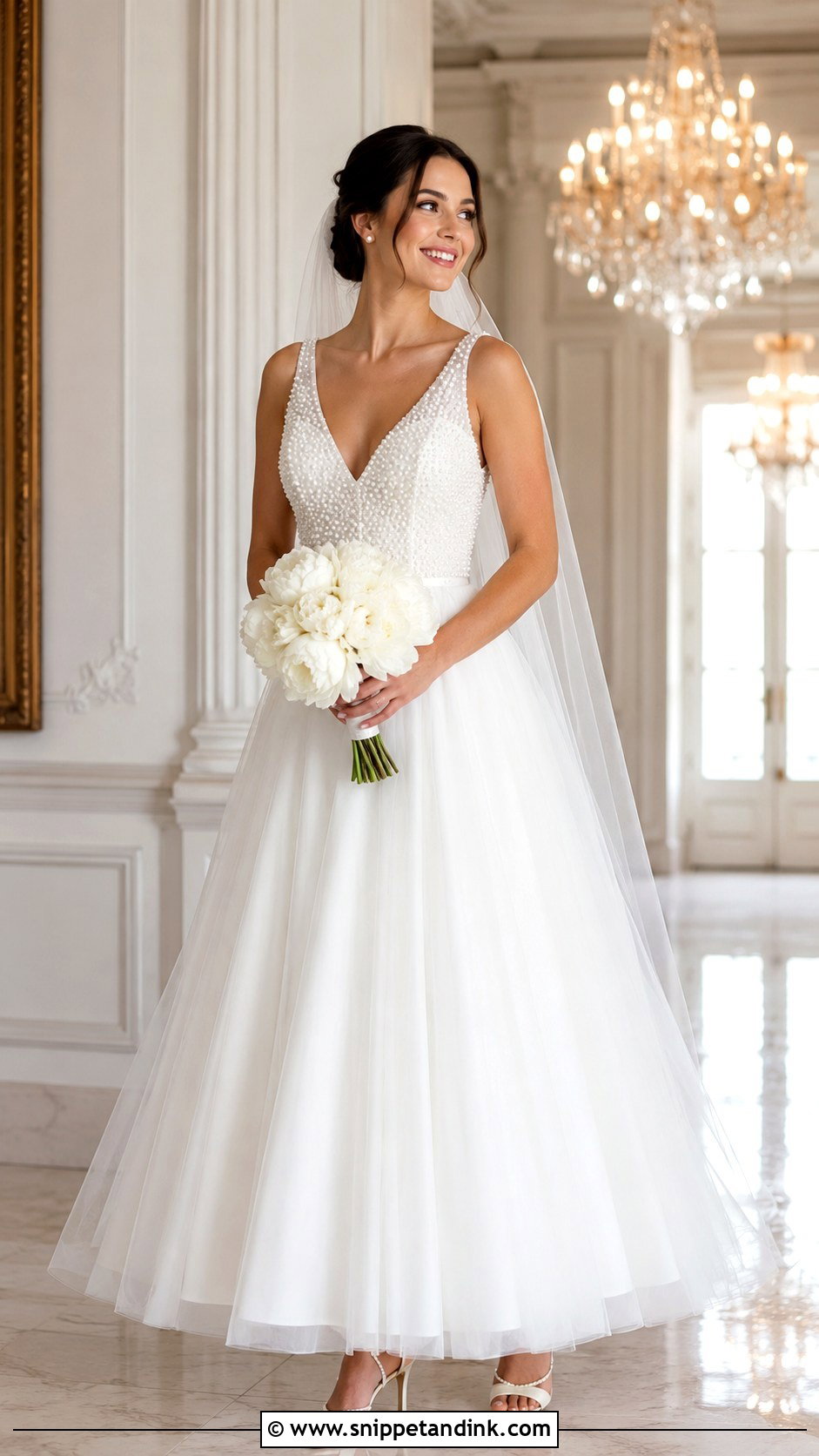
Pearls look best concentrated on the bodice, straps, or upper skirt, with clean tulle below for balance. Before buying, I run my hand over the pearl work inside the arm line; raised beads under the arm rub skin raw over a long day. Check too that each pearl is sewn, not glued. Pearl studs, satin ankle-strap heels, and a plain veil keep the motif from repeating everywhere. A low bun with a few pearl pins echoes it lightly. White roses or peonies tied with ivory ribbon finish it for ballroom ceremonies and formal evening receptions.
14. Floral Appliqué A-Line Wedding Dress
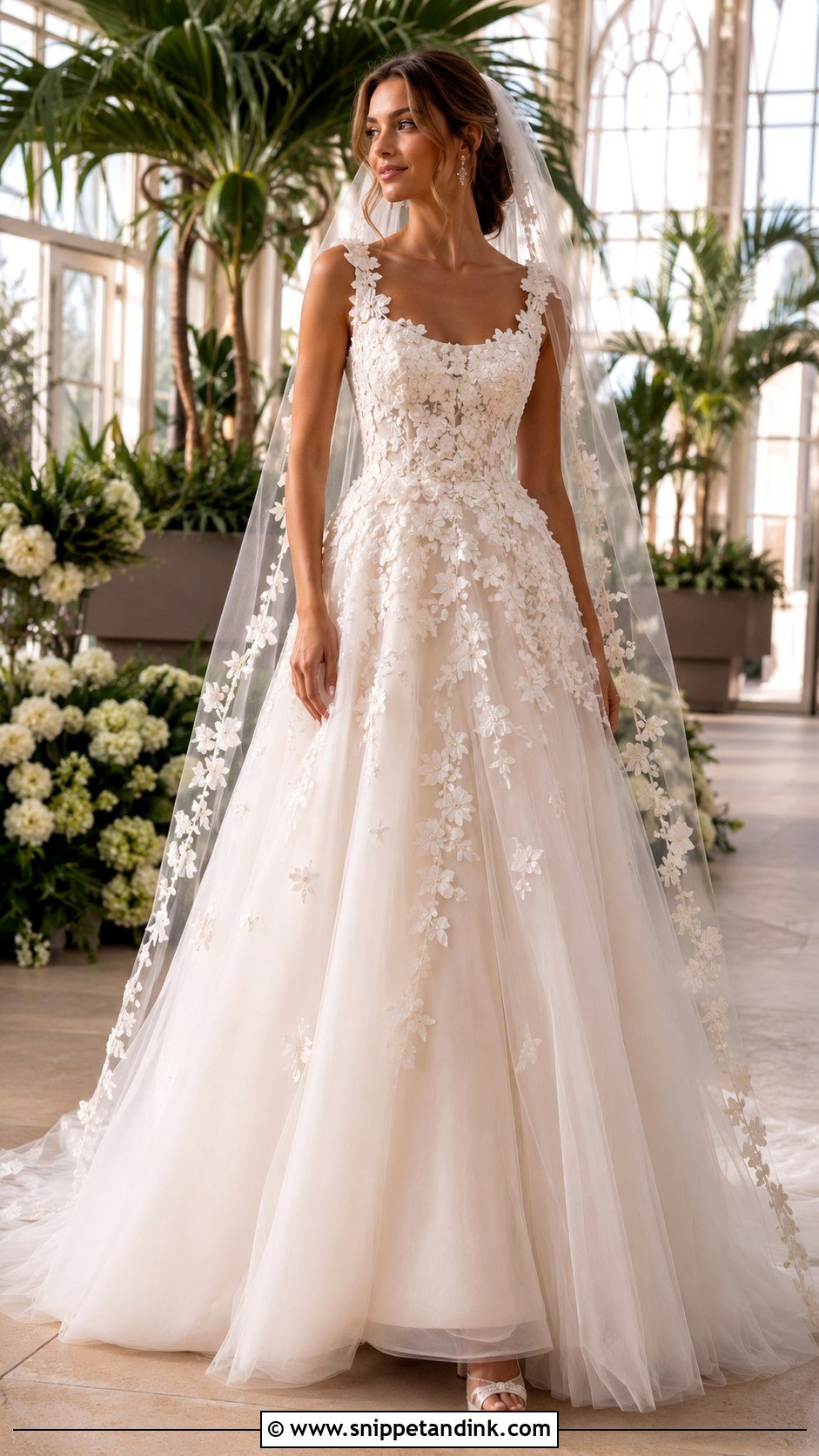
Three-dimensional appliqués work best placed thickly at the bodice and thinning down the skirt, so the eye travels downward instead of seeing a crowded surface. A simple neckline, such as a scoop, sweetheart, or soft V-neck, gives the flowers room. Raised appliqués get crushed in a garment bag, so I always ask how the boutique steams them and pack the gown hanging, never folded. Slim ivory heels, tiny crystal earrings, and a sheer veil with a few matching flowers near the edge complete it. Soft waves or a loose updo suit the mood, with a mostly green-and-white bouquet for spring estates and conservatories.

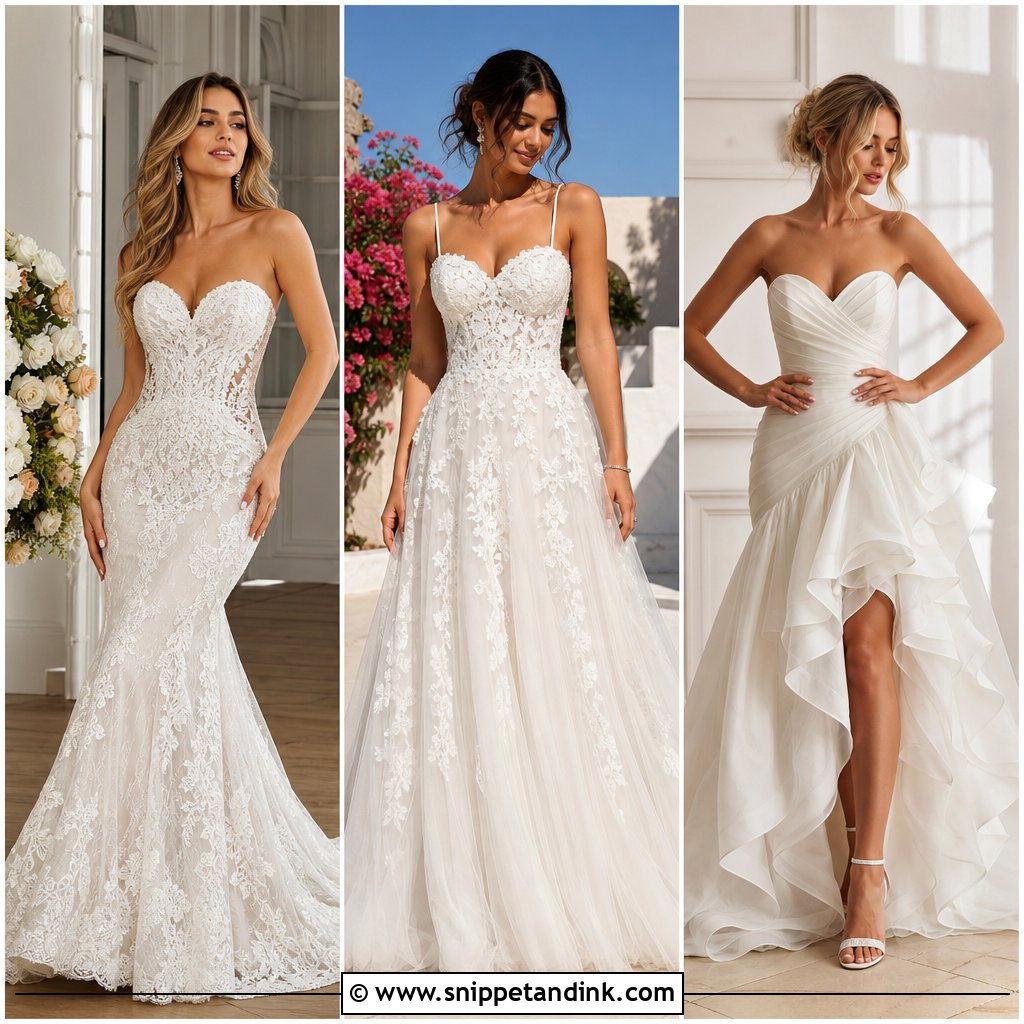
15. Champagne A-Line Wedding Dress
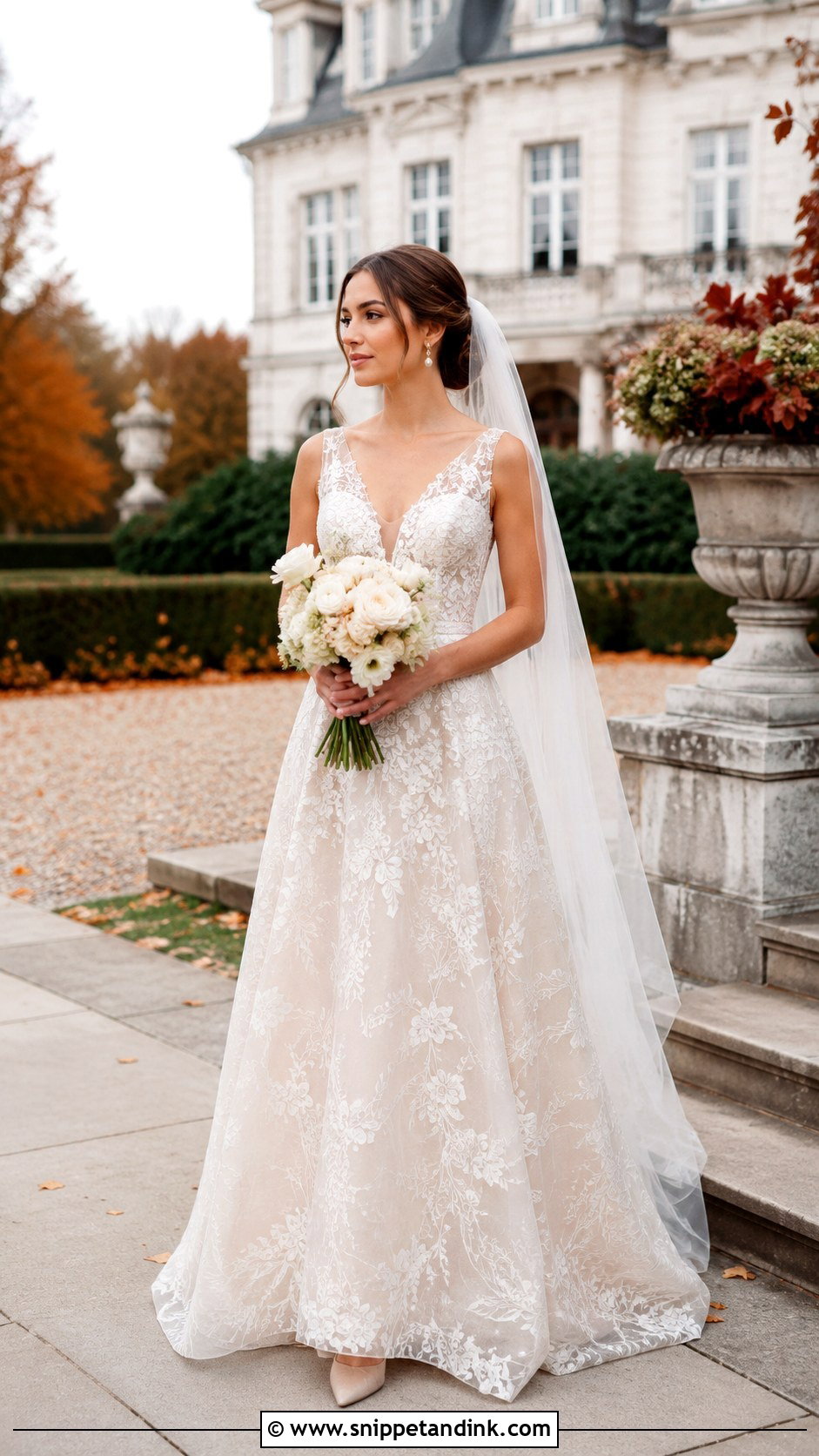
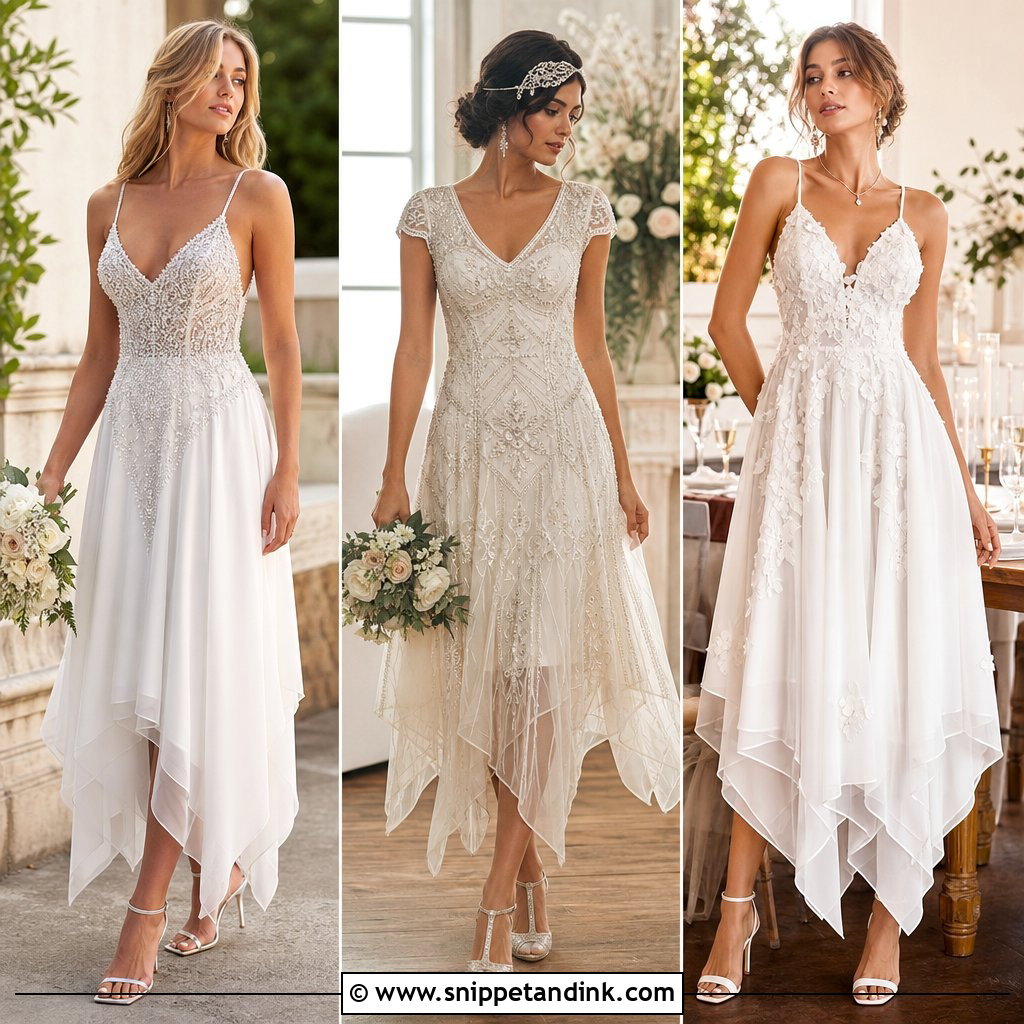
Bright white can wash out very fair or warm skin, and champagne fixes that by adding warmth near the face. Satin looks clean and formal; champagne lining under ivory lace gives a layered effect. Neutral ivory pumps, gold-and-pearl earrings, and a light ivory veil create gentle contrast. A polished updo and warm neutral makeup keep it soft. Cream roses, white ranunculus, and subtle greenery tie the tones together. Look at the gown in daylight and under warm indoor lighting before you decide; champagne can shift toward pink or gold in photos. It sits well in estates and autumn weddings.
16. Plus-Size A-Line Wedding Dress
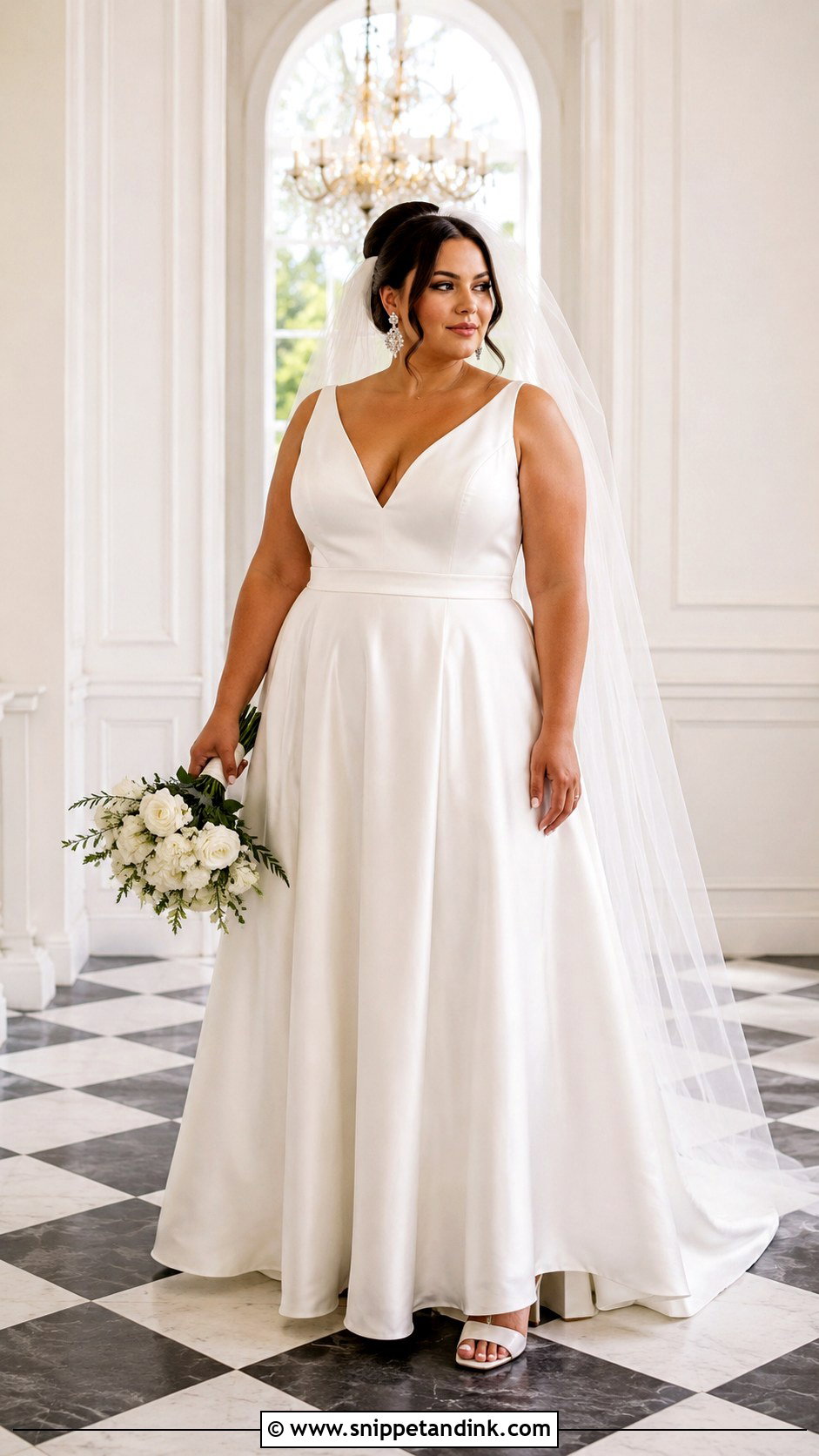
For plus-size brides, the A-line is one of the most comfortable shapes I fit, but construction makes or breaks it. A structured bodice with a well-placed waist seam, comfortable straps, and enough skirt room to walk easily matters more than any neckline rule; V, scoop, sweetheart, and off-shoulder can all work. Supportive block heels, statement earrings, and a veil that matches the train length complete it. A tailored hem and a secure bust fit change both comfort and look. Hold the bouquet low enough that it doesn’t hide the waist. Lace, satin, or chiffon all work if the build quality is there.
17. Tea-Length A-Line Wedding Dress
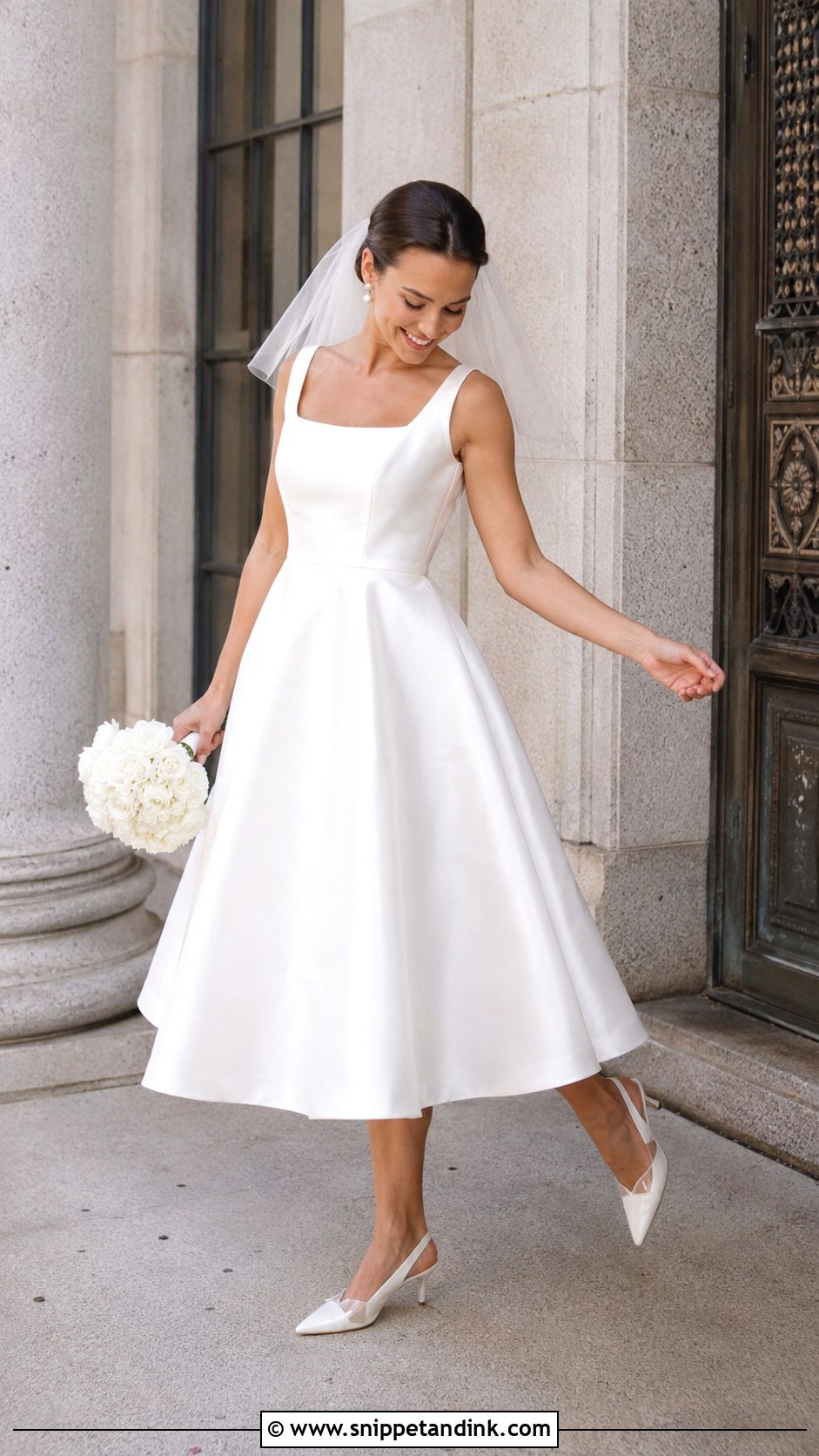
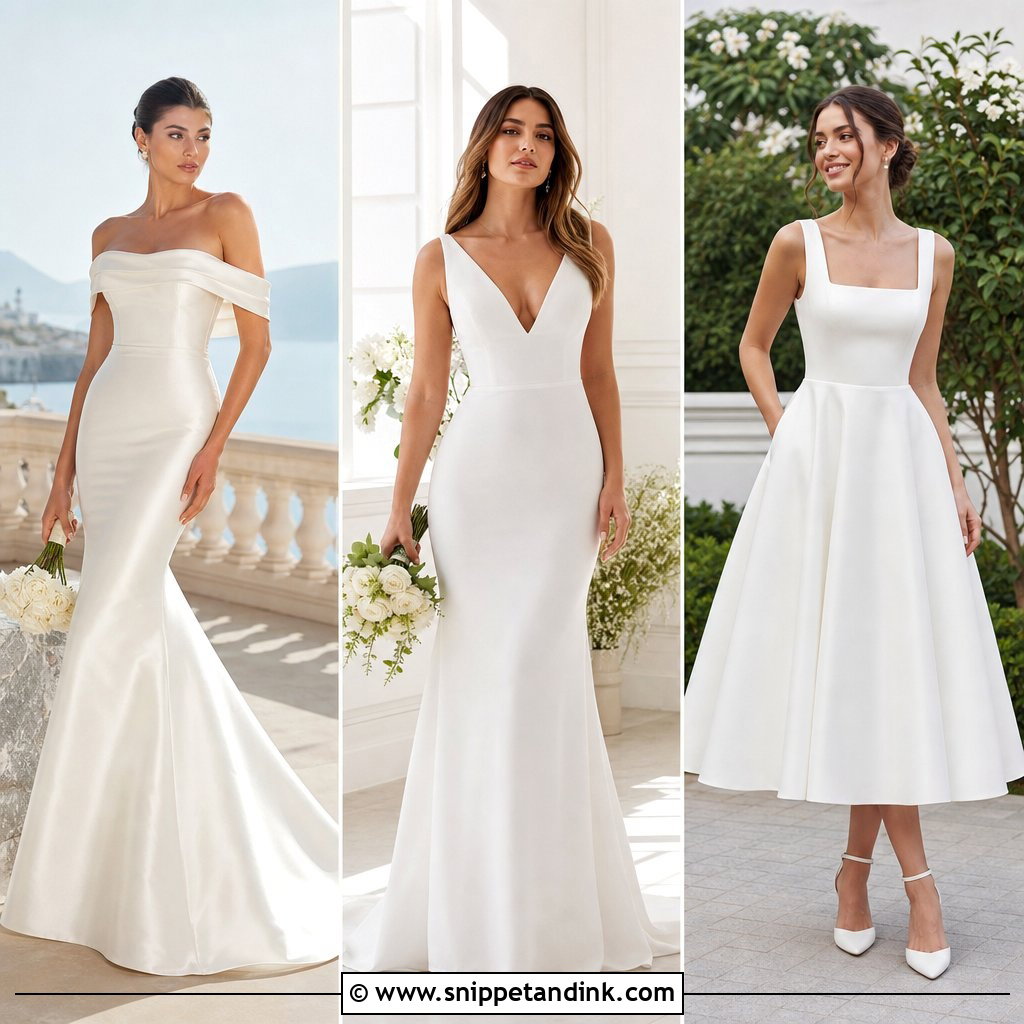
Tea length ends between lower calf and ankle and turns the shoes into part of the outfit. The skirt needs enough structure to keep its shape, or it collapses flat around the calves. Scoop, square, or sweetheart necklines keep it bridal. Pointed slingbacks, embellished pumps, or ankle-strap heels all suit it. Add a short veil, pearl earrings, and a compact bouquet so the proportions stay balanced. A neat bun, waved bob, or half-up style works. Only add a petticoat if you can move freely in it; an itchy one is usually the first thing a bride abandons once dinner starts. Courthouses, small daytime weddings, and second outfits suit it.
18. Winter A-Line Wedding Dress
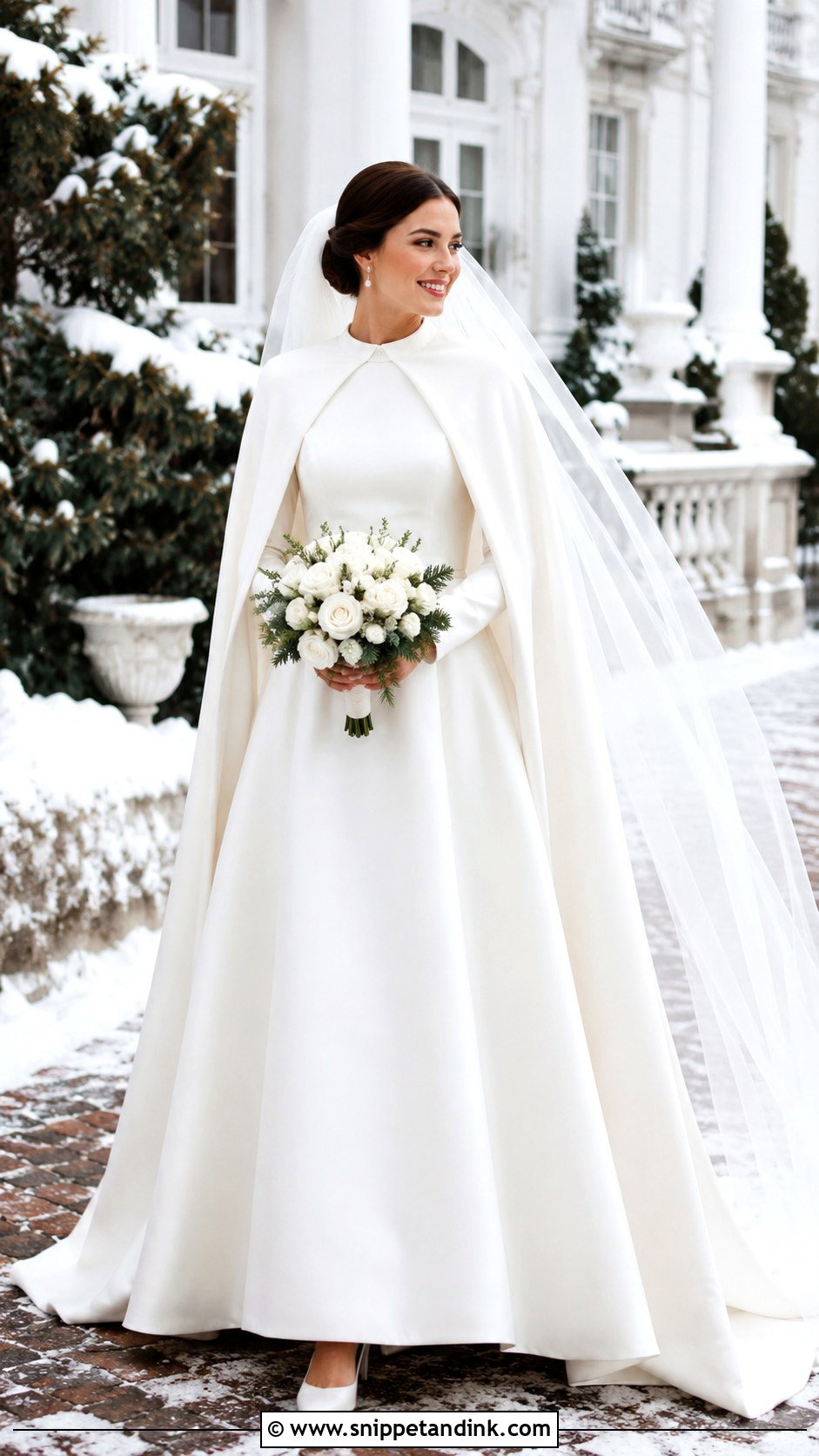
Winter gowns need coverage without bulk. A long-sleeve satin, crepe, or lace A-line with a structured bodice and substantial lining keeps you warmer than you’d expect, and the flared skirt leaves room for a thin thermal slip underneath. Bateau, square, or high necklines feel seasonal. Closed-toe pumps, pearl earrings, and a long veil suit an indoor venue. For outdoor portraits, add a tailored ivory coat, faux-fur wrap, or a clean cape. A smooth chignon survives coats going on and off. White roses with sparing evergreen finish it for hotels, estates, and snowy destinations.
19. Beach A-Line Wedding Dress
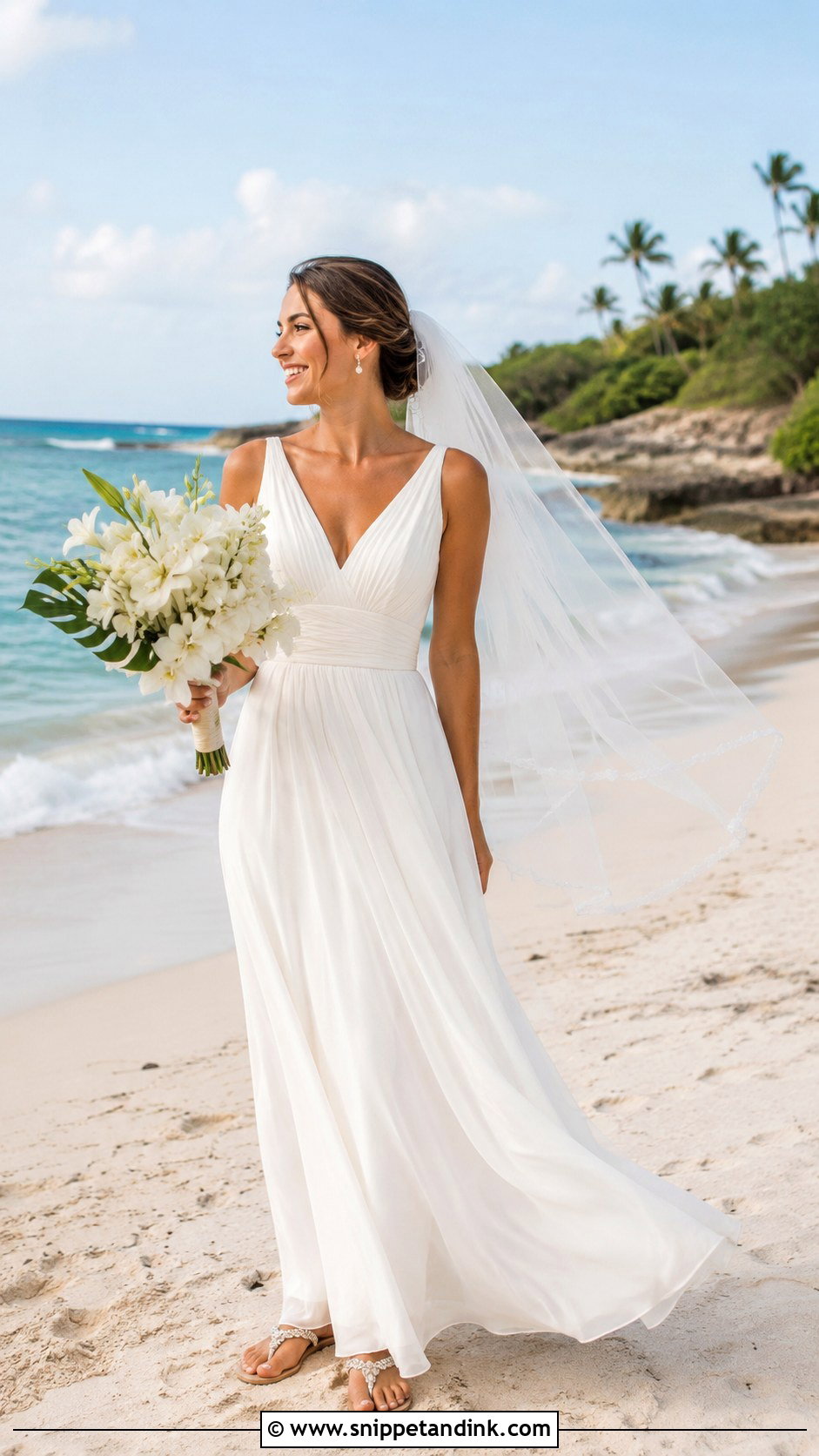
Sand and wind are the two things to plan for at the shore. A beach A-line wedding dress in chiffon, soft tulle, or light crepe with a short train won’t drag half the beach behind it. A V-neck bodice, simple straps, and minimal beading keep it light. Flat embellished sandals or bridal flats are safest; go barefoot only on sand that’s been checked for shells and heat. Secure a light veil firmly under a braid or pinned style, because coastal wind lifts it sideways in every photo otherwise. Avoid heavy underskirts and stiff fabrics. Small earrings and white tropical flowers finish it.
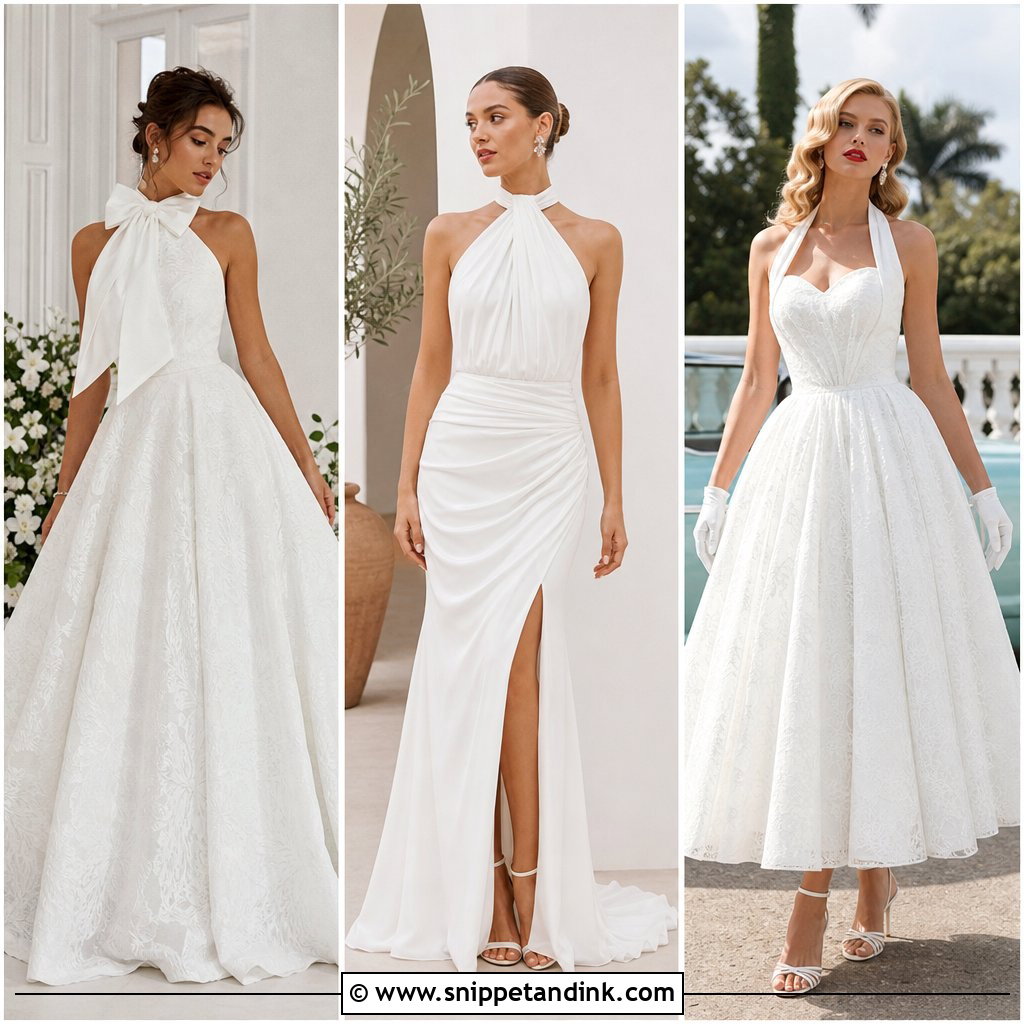
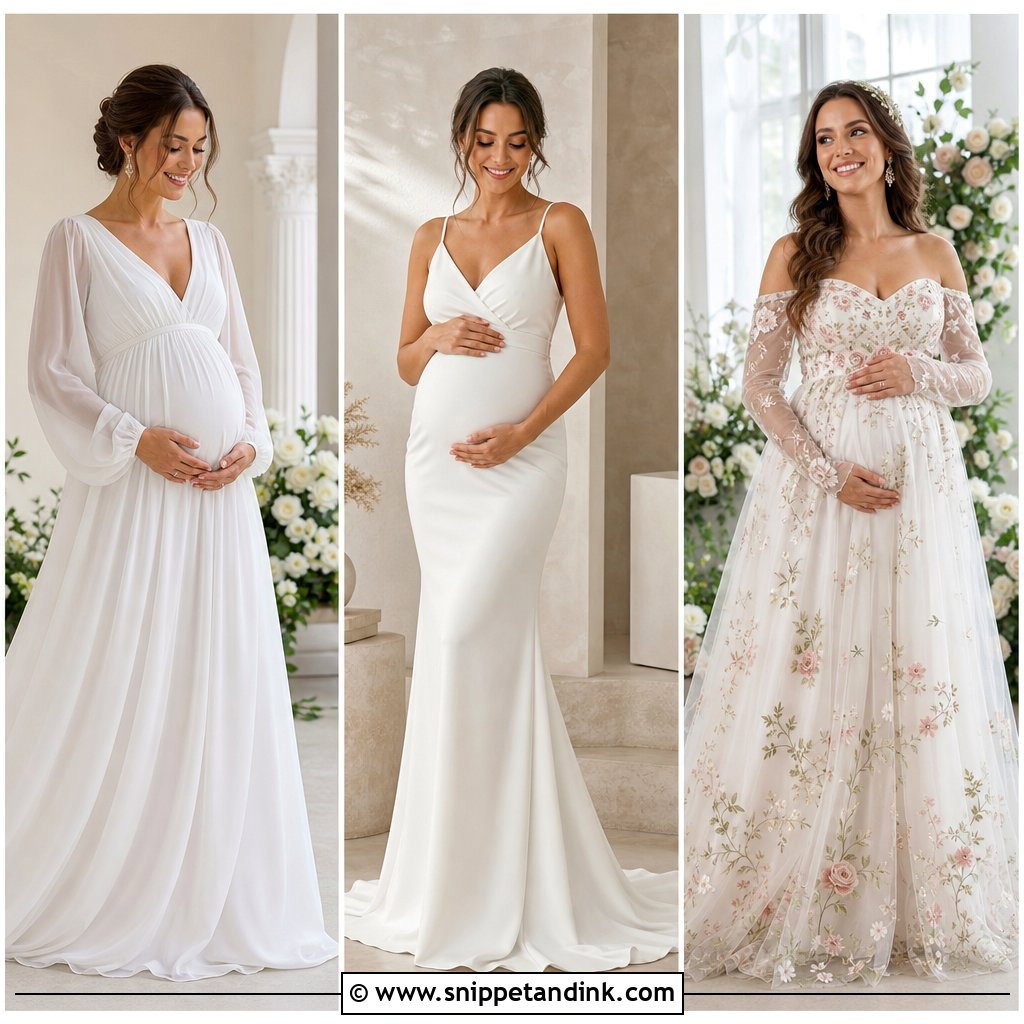


20. Detachable-Sleeve A-Line Wedding Dress
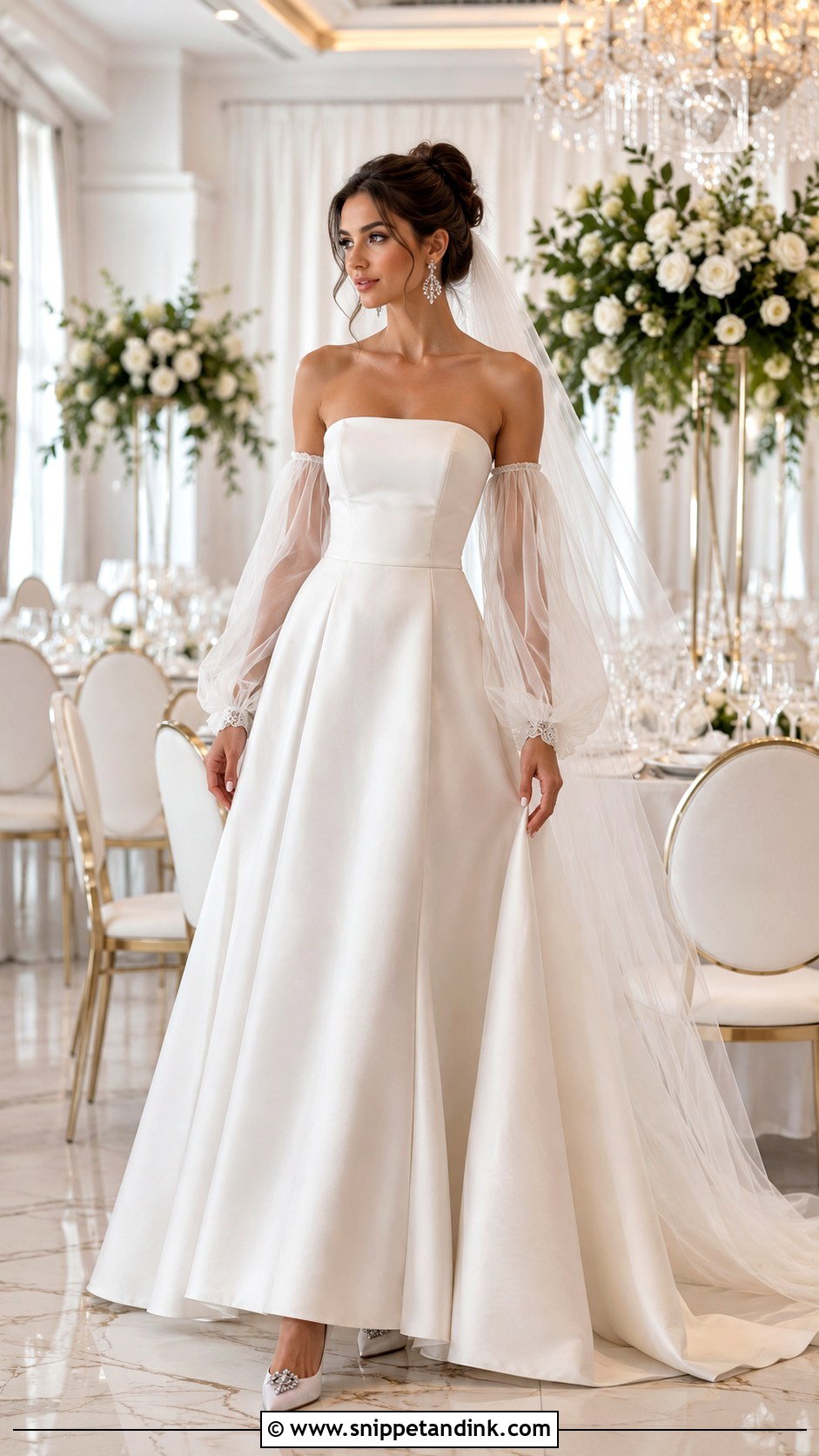
Detachable sleeves give you two looks with one gown. Start with a strapless or sleeveless satin A-line with strong bodice support, then add fitted lace sleeves, draped off-shoulder straps, or sheer bishop sleeves for the ceremony. Remove them for the reception and you can dance freely. The attachment is the weak point; I check that hooks or snaps sit flat and that someone other than the bride knows how to take them off quickly. Crystal earrings, comfortable pointed heels, and a long veil suit the aisle, swapped later for a comb or bow. A low bun or smooth ponytail works with both versions.
Slips, Bras, and Shapewear Decide How Smoothly It Hangs
The wrong layer underneath ruins a good gown faster than anything on top. Bring the actual underwear to your first fitting, not the second, because every alteration is measured over it.
- Most structured bodices have enough support that cups can be sewn in, which often beats wearing a separate strapless bra.
- A smooth slip under satin or crepe stops the skirt clinging to tights or shapewear when you walk.
- Choose shapewear that ends below the waist seam’s lowest point; a band that rolls under a fitted bodice shows on smooth fabric.
- A light petticoat adds lift to tulle, but test sitting in it before you commit.
Bustling the Train Before the First Dance
Any A-line with a sweep or chapel train needs a bustle so you can dance without stepping on it. An over bustle hooks the train up onto the back of the skirt with buttons or hooks; an under bustle, often called French, tucks it underneath with ribbon ties for a softer, rounded drape. Lace and heavy satin usually call for the over bustle, while tulle and chiffon look neater tucked under.
Ask your seamstress to color-code or number the ties, then have a bridesmaid practise at the final fitting. Bustling ten minutes before the first dance, in a dark corner, with no one who has done it before, is how hems get torn.
The Gown You Forget You’re Wearing by Dinner
An A-line can be minimalist, romantic, vintage, glamorous, or relaxed, all depending on fabric and construction. Before you look at a single gown, decide how you want to feel walking in it. Treat the dress as part of the whole outfit, so the veil, shoes, jewelry, hair, bouquet, and any seasonal layers support its best detail. In every fitting, walk, sit, lift your arms, and turn while wearing the complete look. Good tailoring will make a simple gown look more expensive than a complicated one that doesn’t fit. The gown I’m happiest sending a bride out in is the one she forgets she’s wearing by the second hour.
You'll Like These Ideas:





Leave a Reply