
Get the Sketch and Swatch Approved Before Anyone Cuts
Many brides in this church take their gown design and fabric to a minister or the women’s leadership before a tailor starts, and expectations differ between local assemblies. I always plan for that step. It costs nothing to show a sketch early, and it can cost the whole gown to show a finished dress that needs a higher neck or longer sleeves.
What I bring to that conversation:
- A simple front and back sketch showing neckline height, sleeve length and hem length.
- A swatch large enough to hold over your hand. If you can see your fingers through it, the gown needs a lining or a different fabric.
- A note of the head covering style and colour, since some brides change this late and it affects how the neckline looks.
- Enough time. I’d allow two to three months for a tailor-made gown, plus a few weeks for any changes the approval brings.
Once the design is agreed, keep a photo of the approved sketch on your phone. If the tailor suggests a change at a fitting, you can check it against what was signed off.
1. Long Sleeve Satin Deeper Life Wedding Gown
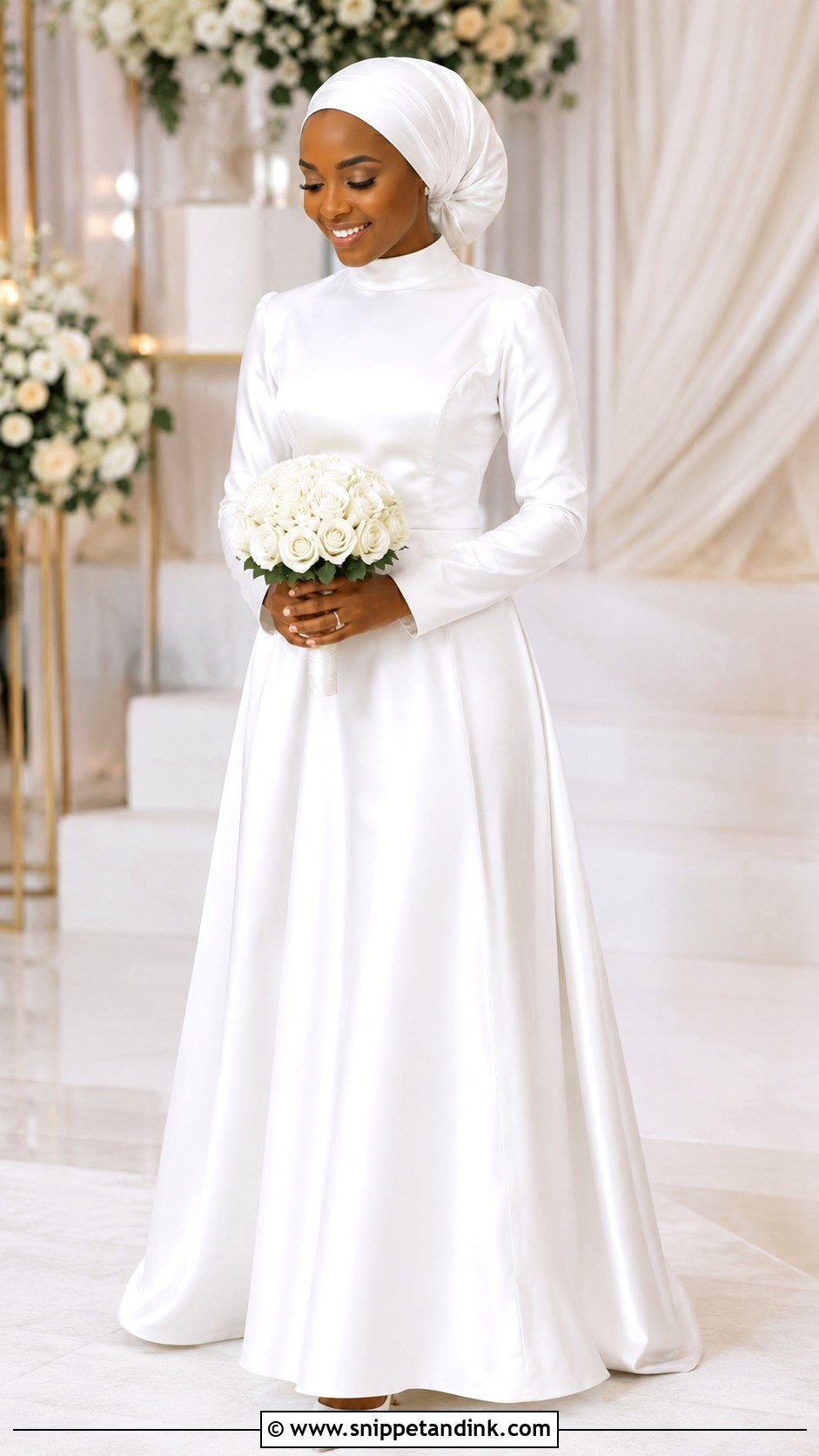
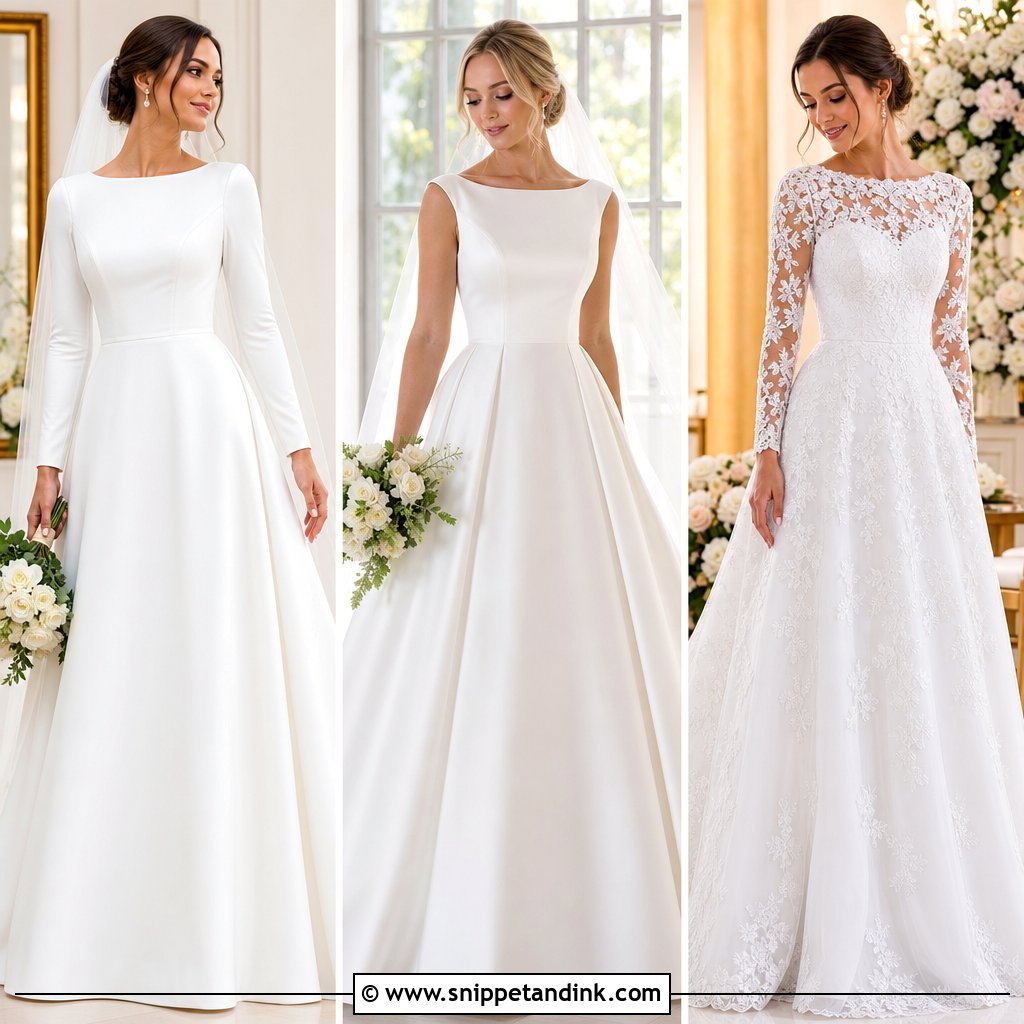
Plain white satin on a simple A-line shows how much a covered gown gets from fabric alone. I’d have it fully lined, with a high round neck, fitted long sleeves and a natural waist, and the skirt falling just below the ankle. Leave real ease in the hip; the bride has to walk, sit and kneel without the skirt pulling tight. A narrow belt in the same satin defines the waist with no beads or metal. Closed-toe pumps at a heel you can stand in for hours, a small bouquet of white roses (silk ones travel better) and a matching satin head covering keep the face clear. Satin catches light on its own, so it never looks bare in photos.
2. High Neck Crepe Deeper Life Wedding Gown
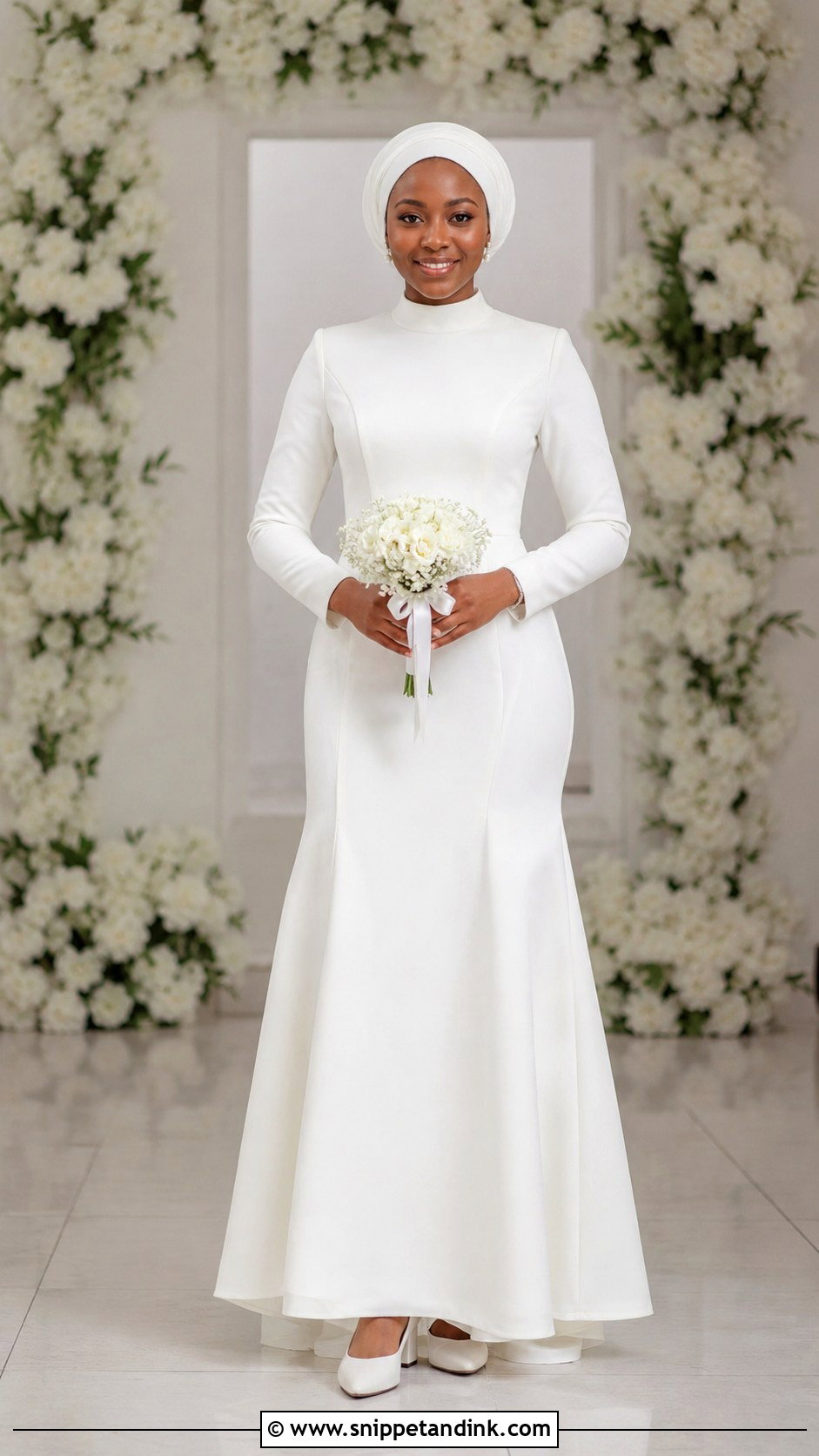
Do you want something that feels current without decoration? Opaque crepe with a high neck is my answer. Its matte surface hides very little in the cut, so princess seams, long straight sleeves and a gently flared skirt have to be precise; in return it never clings. A short row of covered buttons at the back adds interest, as long as the back stays fully closed. Wear it with low block heels, a neat white head scarf and a small bouquet tied with plain ribbon. Without jewellery or a shiny belt, the tailoring has to carry the whole outfit, and in crepe it can.
3. White Midi Deeper Life Wedding Gown
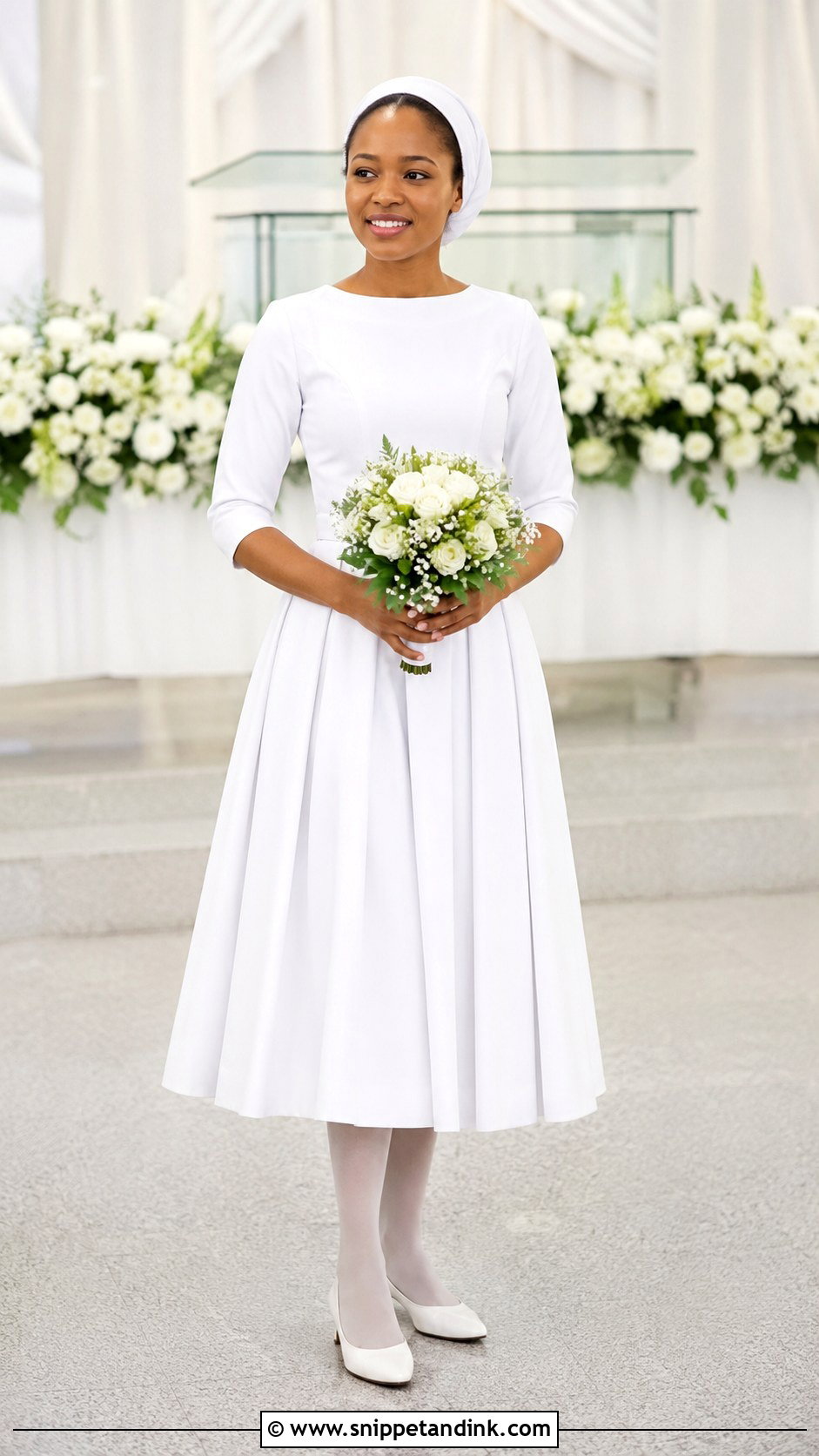
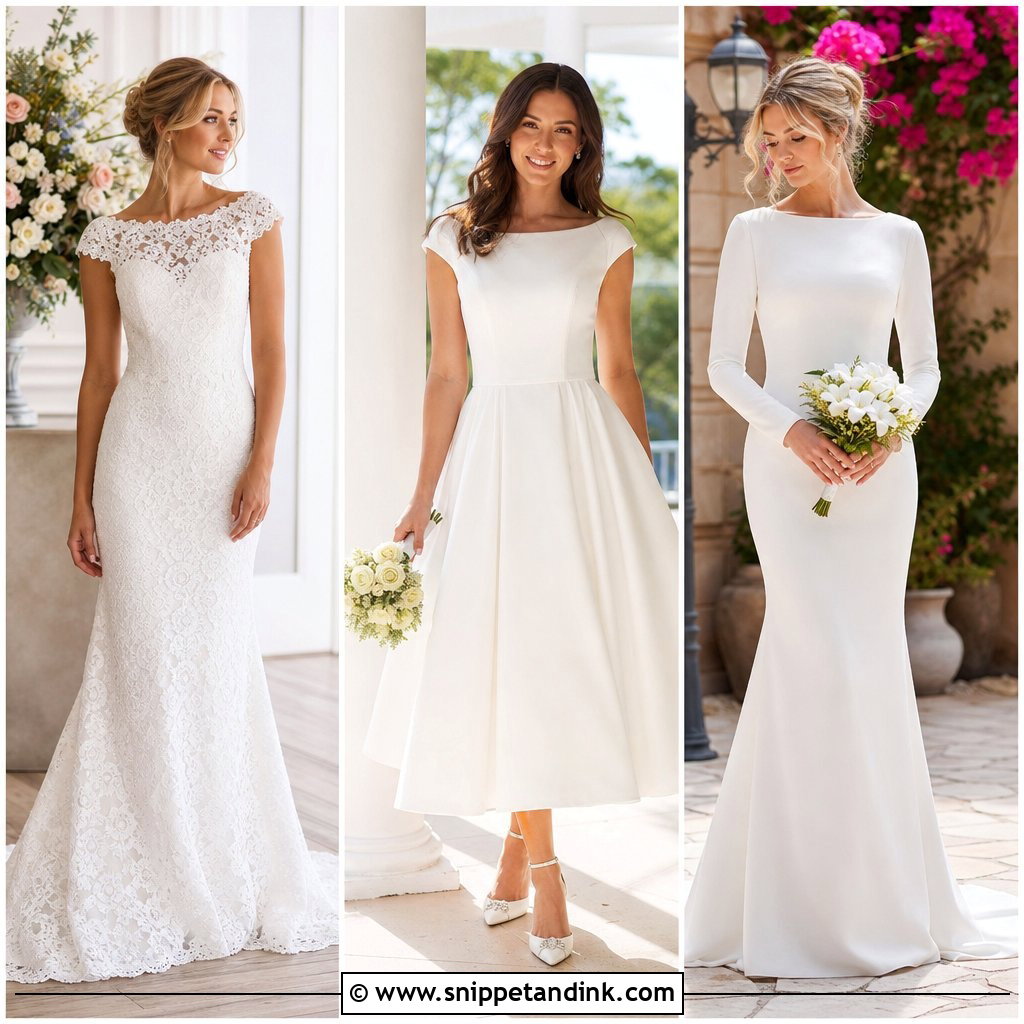
Not every bride wants a floor-length dress, and a white midi wedding gown can be just as appropriate if the hem is right. The test I use is sitting: a hem that reaches the lower calf when standing will ride up a few inches in a chair, so I’d aim nearer the ankle. A high bateau neck, three-quarter sleeves and a softly pleated skirt keep the balance. Cotton sateen or a structured suiting fabric stays opaque and won’t cling. Closed-toe kitten heels, plain stockings, a small fabric head covering and a bouquet of white and pale green flowers finish it. Afterwards, it can be worn again to formal church events with a jacket.
4. Princess Seam Deeper Life Wedding Gown
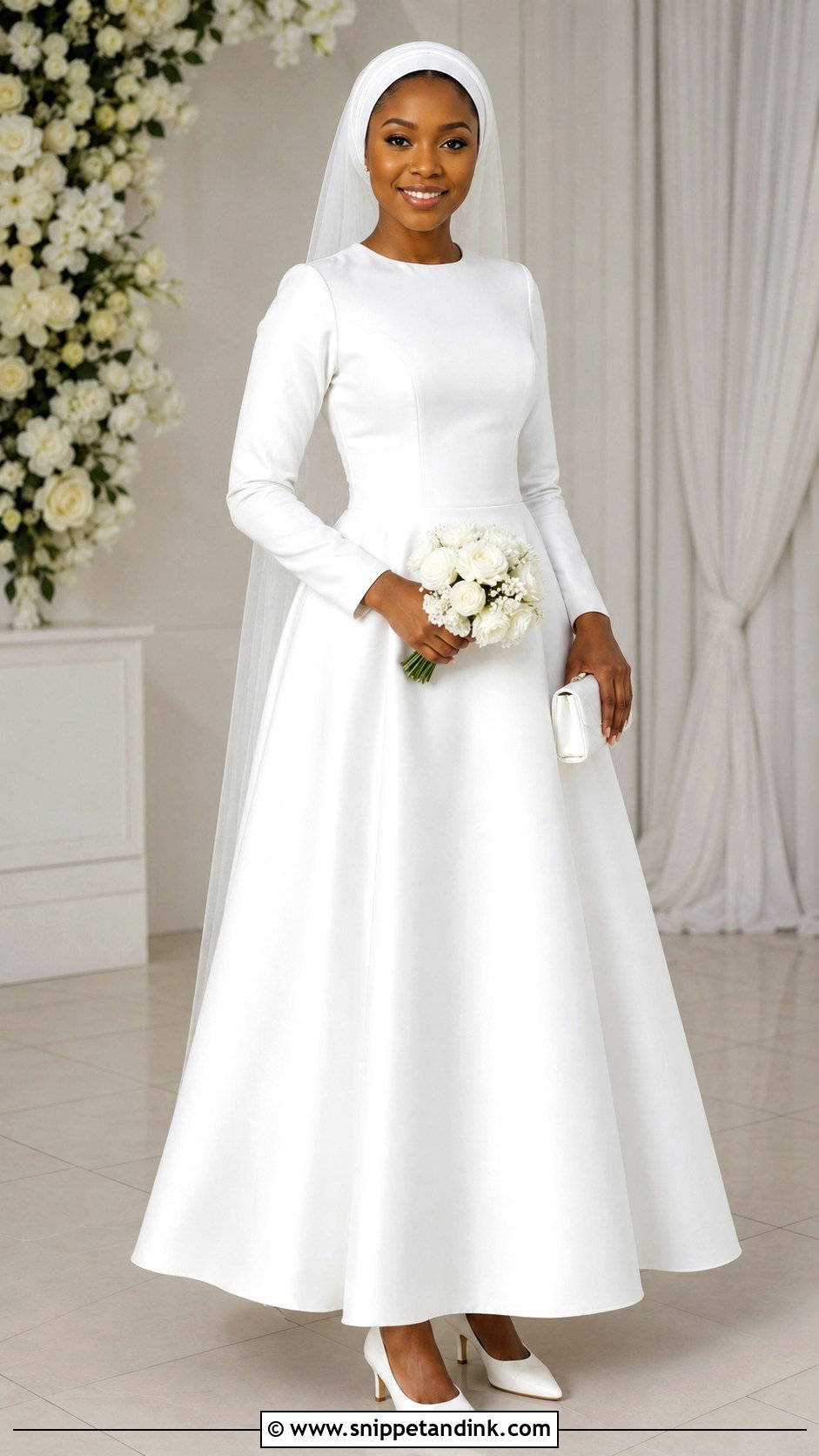
Princess seams shape a gown through long vertical lines rather than tight fitting, which is why I use them so often for modest brides. In opaque matte satin, the seams run from the shoulder through the skirt to a light flare at the hem, with a covered neck and full sleeves. Steer clear of a true mermaid: it restricts walking and puts the attention on the hips. Ask the tailor for comfortable ease through the waist and seat instead. Low pumps, a plain structured head covering, a hand-tied bouquet and a small clutch for tissues complete a tailored but soft look.
5. Bishop Sleeve Deeper Life Wedding Gown
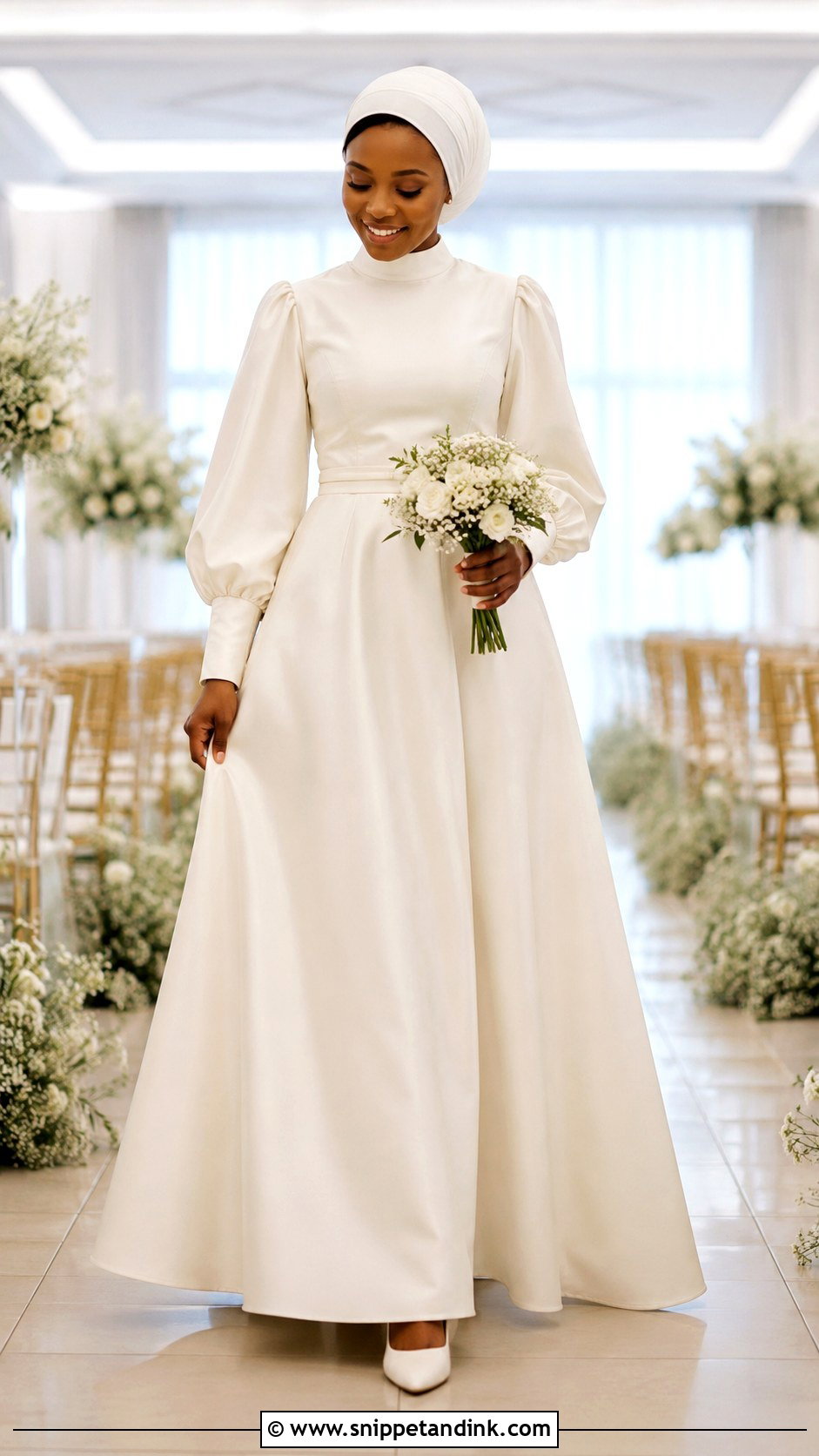
Soft bishop sleeves cover the arm completely and still move when you lift your hands in worship. I keep the volume moderate and gather it into a fitted fabric cuff, because very full sleeves catch on pew ends and bouquet stems. A high round neck, a simple fitted bodice and a flowing A-line skirt keep the rest quiet. Matte satin or lined chiffon both drape well, but hold the fabric up to a bright window before buying; chiffon especially can turn see-through under strong light. A narrow matching waistband, closed-toe flats or block heels, a smooth head scarf and a small white bouquet finish it.
6. Floral Deeper Life Wedding Gown
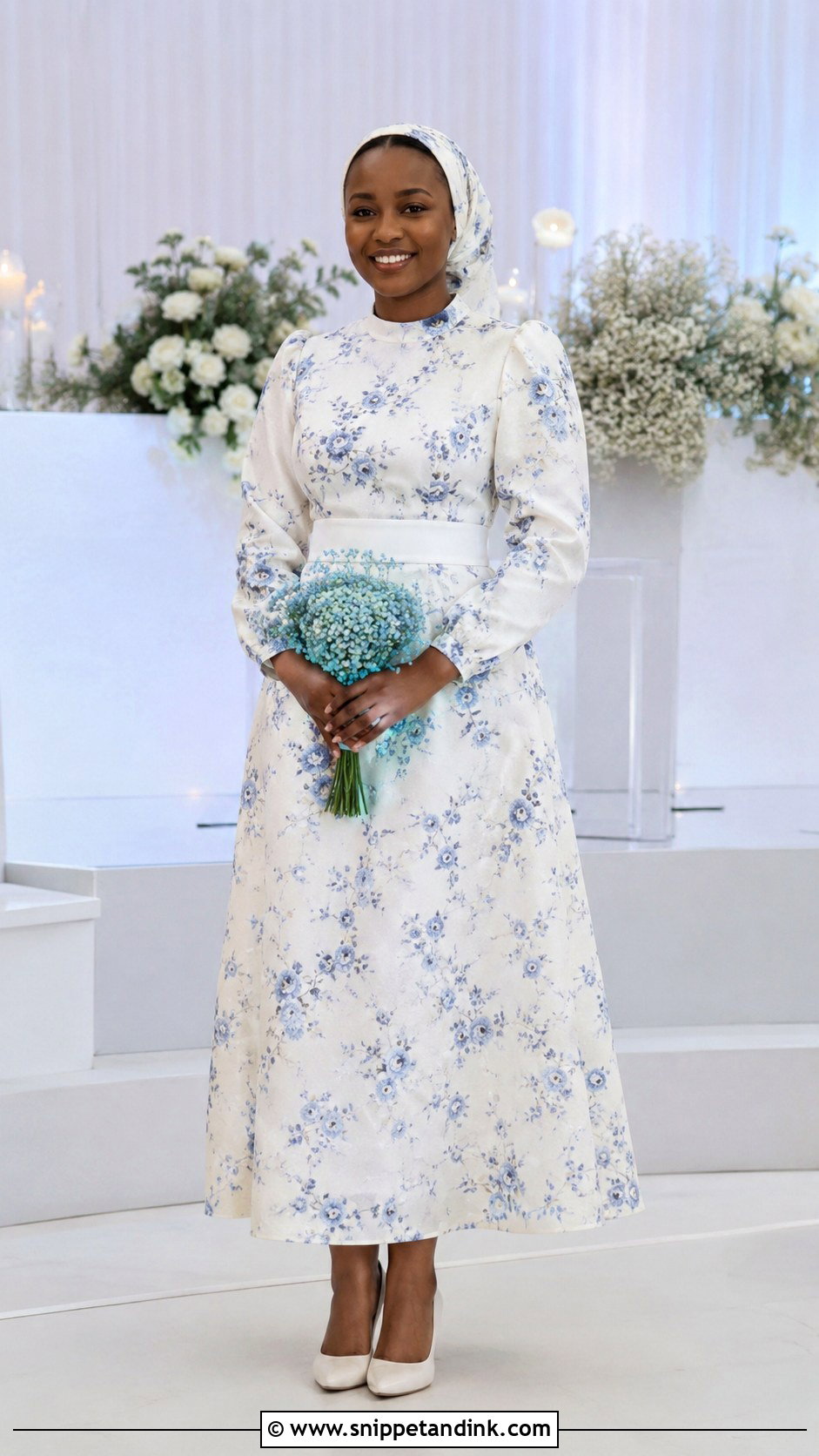
A small printed gown is a gentle way to step away from solid white. Opaque ivory with tiny white, pale grey or muted blue flowers, spaced evenly, keeps the print from shouting. High neck, long sleeves, a defined waist and an ankle-length A-line give full coverage. The print is the detail, so skip trims, braid and fancy fastenings. Plain ivory pumps, a coordinating head covering and a bouquet in one colour lifted from the fabric tie it together. Of all the gowns here, this is the easiest to wear again afterwards, which matters to many brides I dress.
7. Peplum Deeper Life Wedding Gown
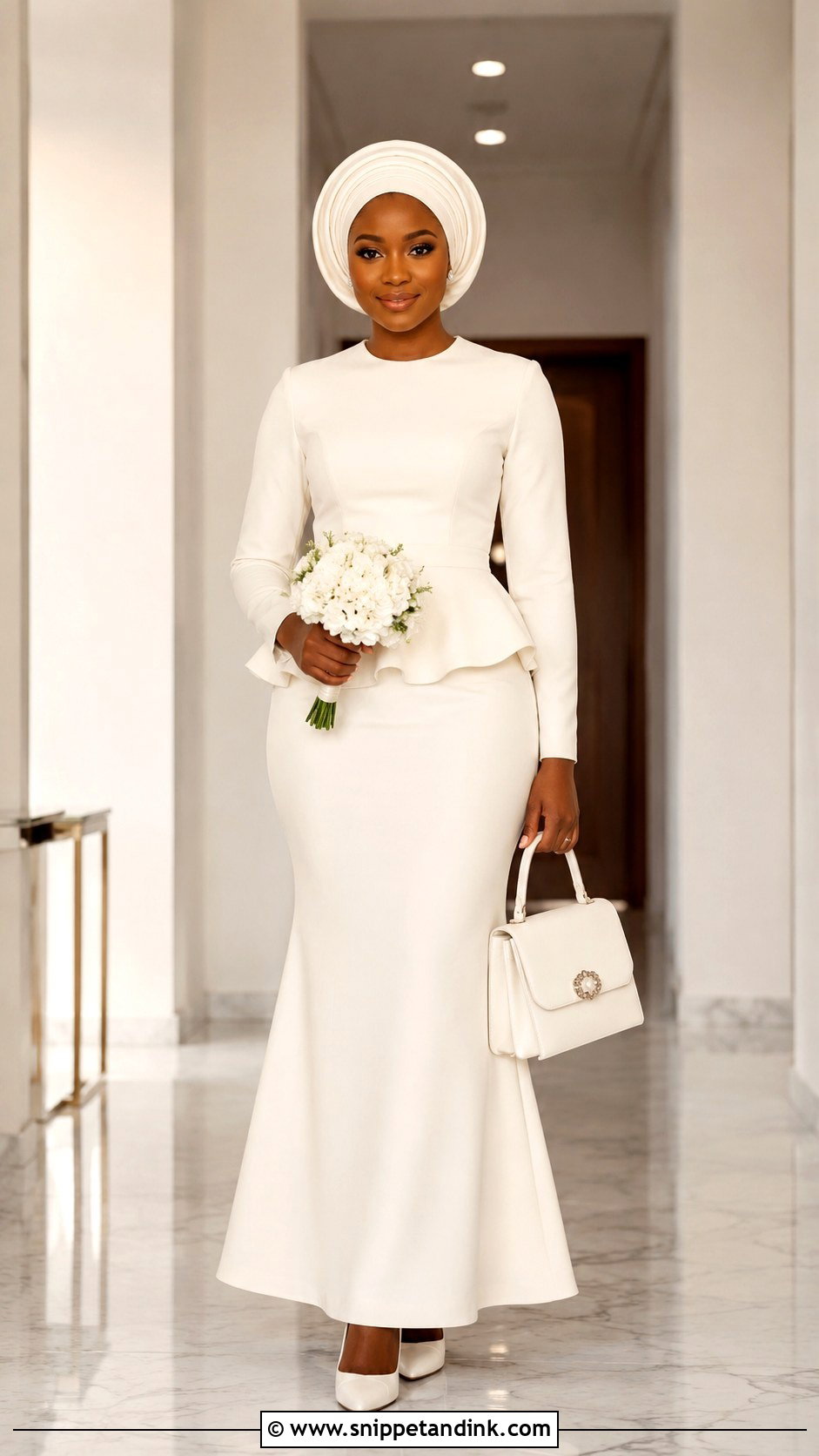
Keep a peplum small and structured. A big ruffled one adds width where most brides don’t want it and looks like a separate top. On a one-piece gown with a covered round neck, long sleeves and enough room across the bust, a short peplum marks the waist, and a straight or softly flared skirt drops to the ankle below it. Ivory crepe, suiting or matte satin all hold that shape. Closed-toe pumps, a structured bag, a head covering in a related fabric and a compact bouquet give a crisp, put-together result.
8. Boat Neck Deeper Life Wedding Gown
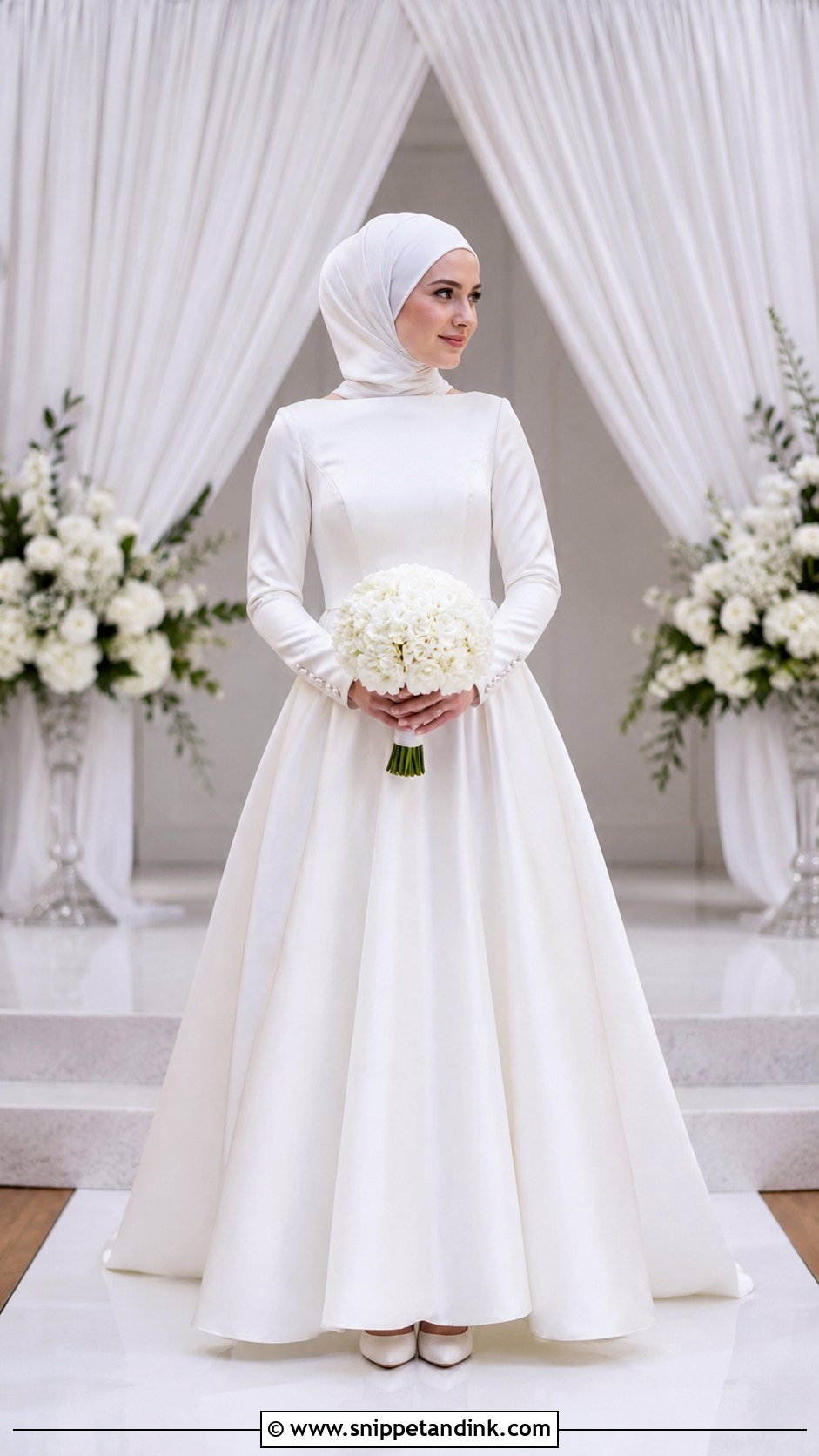
Boat necks drift wide if nobody watches them. I ask the tailor to raise the line close to the base of the neck and keep it narrow, so it frames the face and still covers the collarbones and shoulders when you raise your arms. Fitted long sleeves, a natural waist and a full but controlled skirt follow. Opaque ivory satin with a soft lining is comfortable and looks finished; a few covered buttons at each wrist add a tailored touch. Low closed-toe heels, a plain white head scarf and white flowers with green leaves complete it.
9. Shirtwaist Deeper Life Wedding Gown
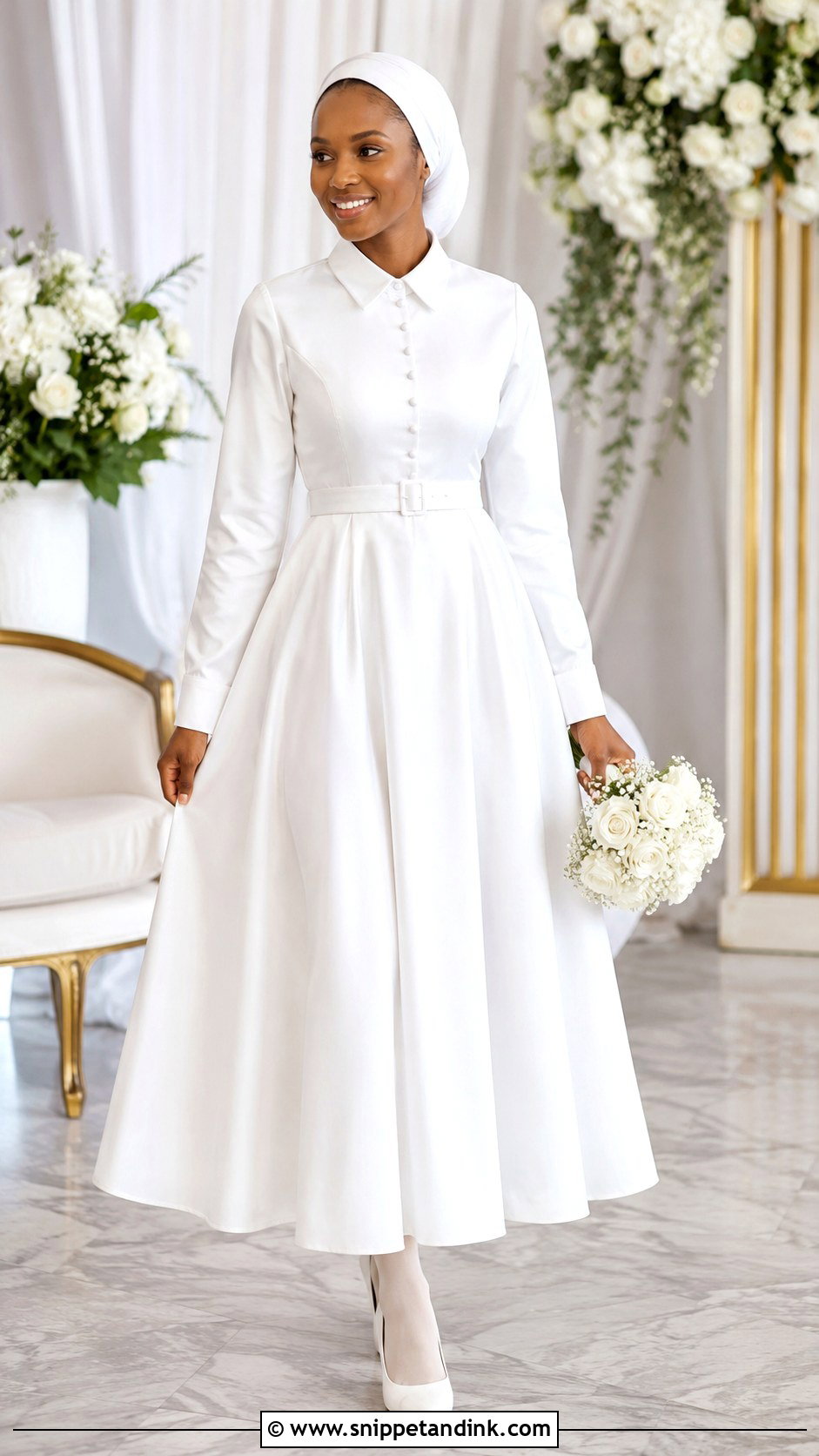
A shirtwaist borrows the shape of a well-made blouse: a modest pointed collar, a fully covered button front, long cuffed sleeves and a flared skirt to the ankle. Covered fabric buttons keep the front clean. For a hot church hall, this is the gown I’d make in breathable cotton sateen or a light suiting, since both hold shape without trapping heat. A matching belt marks the waist. White pumps, plain stockings, a tidy head covering and a round bouquet with a little greenery soften the tailoring. Check the button gaps across the bust while seated; that’s where shirt fronts pull open.
10. Jacquard Deeper Life Wedding Gown
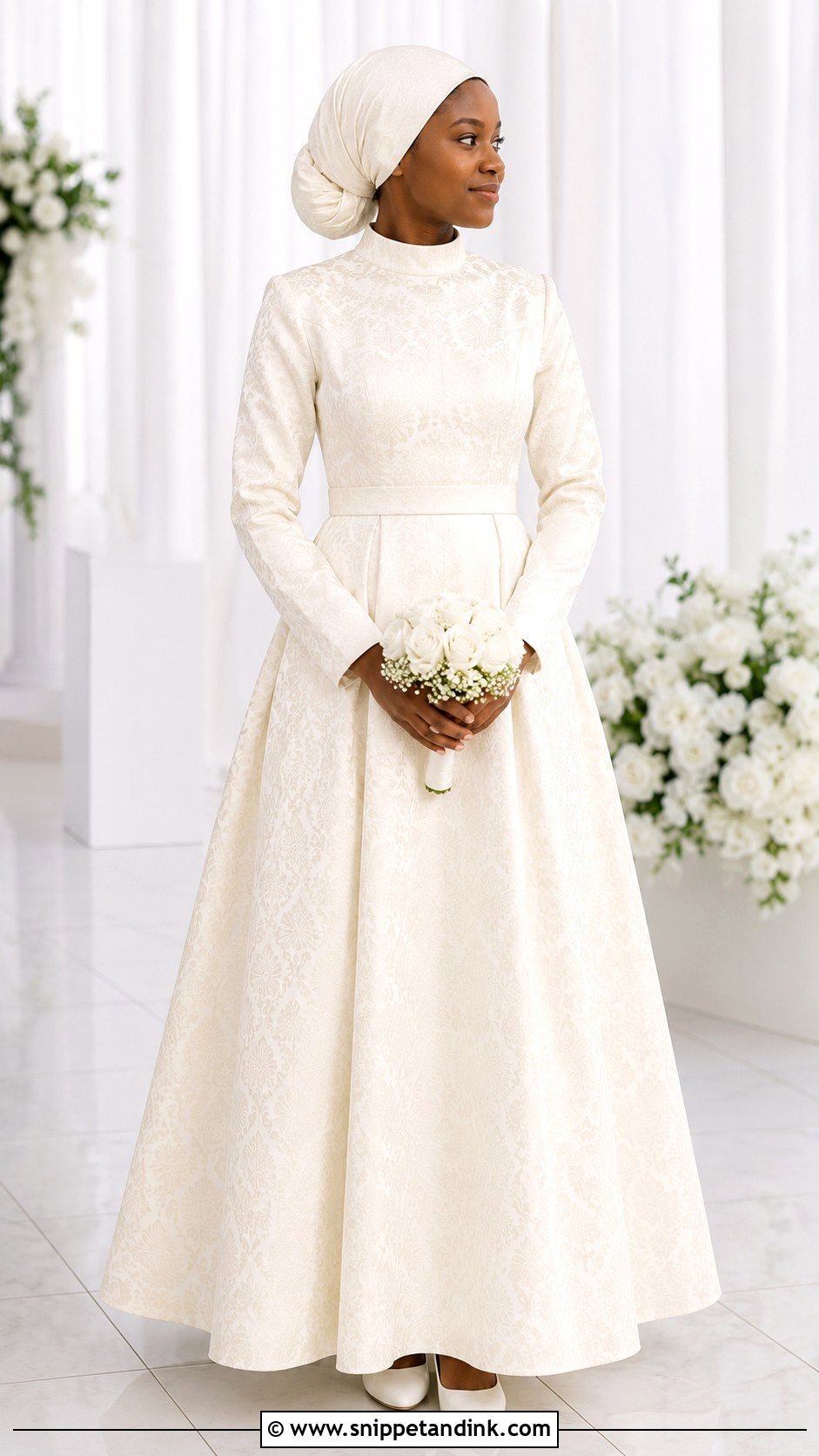
Jacquard puts the pattern into the weave, so you get texture with no lace holes, appliqués or beading. Pick a design subtle enough to show only when light falls across it. A high neck, straight long sleeves and a lightly gathered A-line let the fabric lead. Jacquard can be stiff, so I add ease to the bodice and keep the waist to a clean seam or narrow self-fabric band. Smooth ivory shoes, a plain head covering, white flowers and no patterned bag to compete. From the back of the church it reads formal; up close, the camera picks up the weave.
11. Mock Neck Deeper Life Wedding Gown
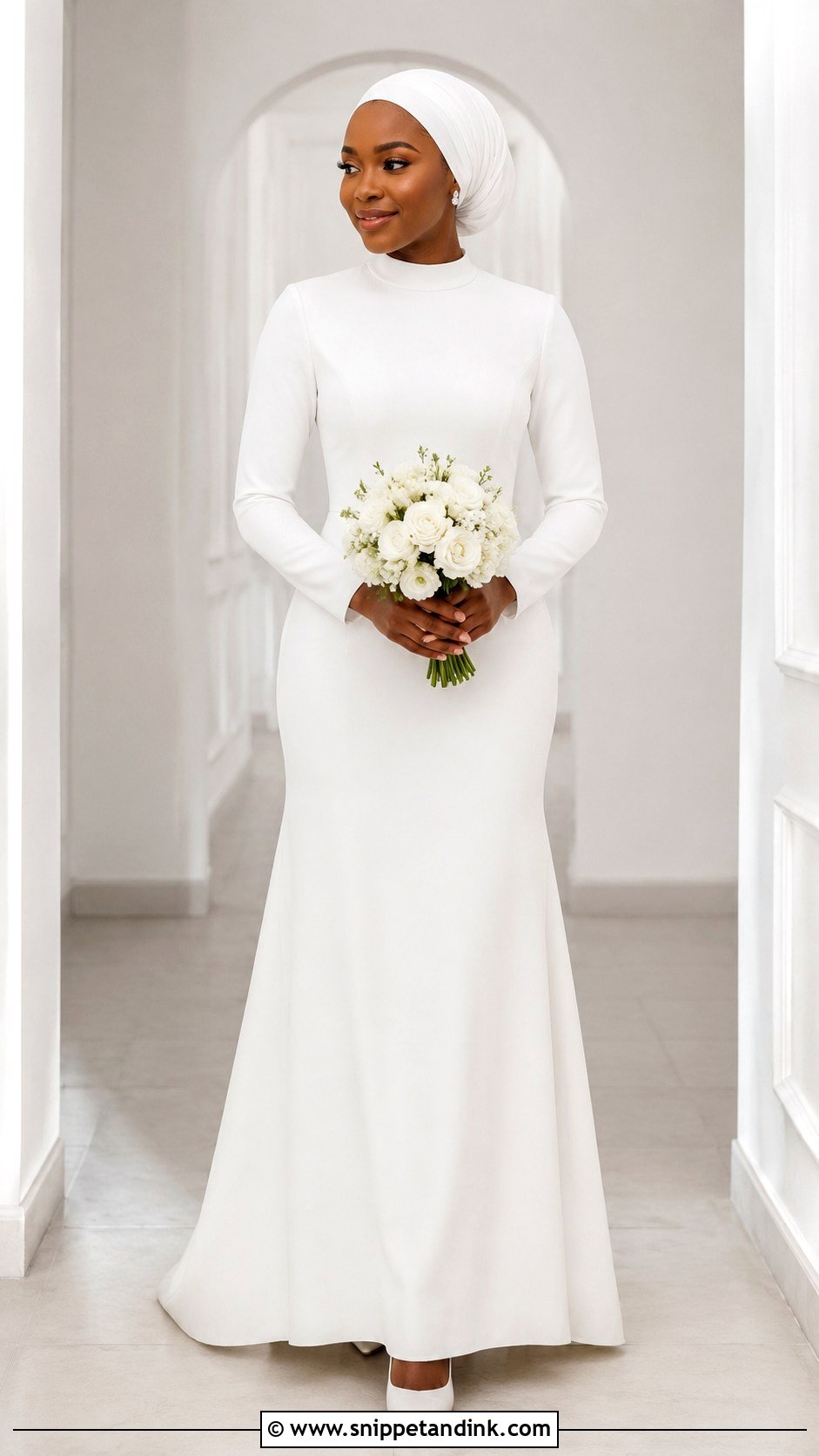
A low mock neck gives secure coverage and a sleek shape, but a collar that’s too high or tight becomes the only thing you think about by the second hour of a service. I leave a finger’s width of room at the throat. Long fitted sleeves, a comfortable bodice and a softly flared floor-length skirt in matte white crepe need no trim, and a hidden back zip keeps the line clean. Closed-toe kitten heels, a head scarf tied neatly behind the collar and a short-stemmed bouquet finish it. Careful tailoring through the shoulders is what makes this one look good.
12. Three Quarter Sleeve Deeper Life Wedding Gown
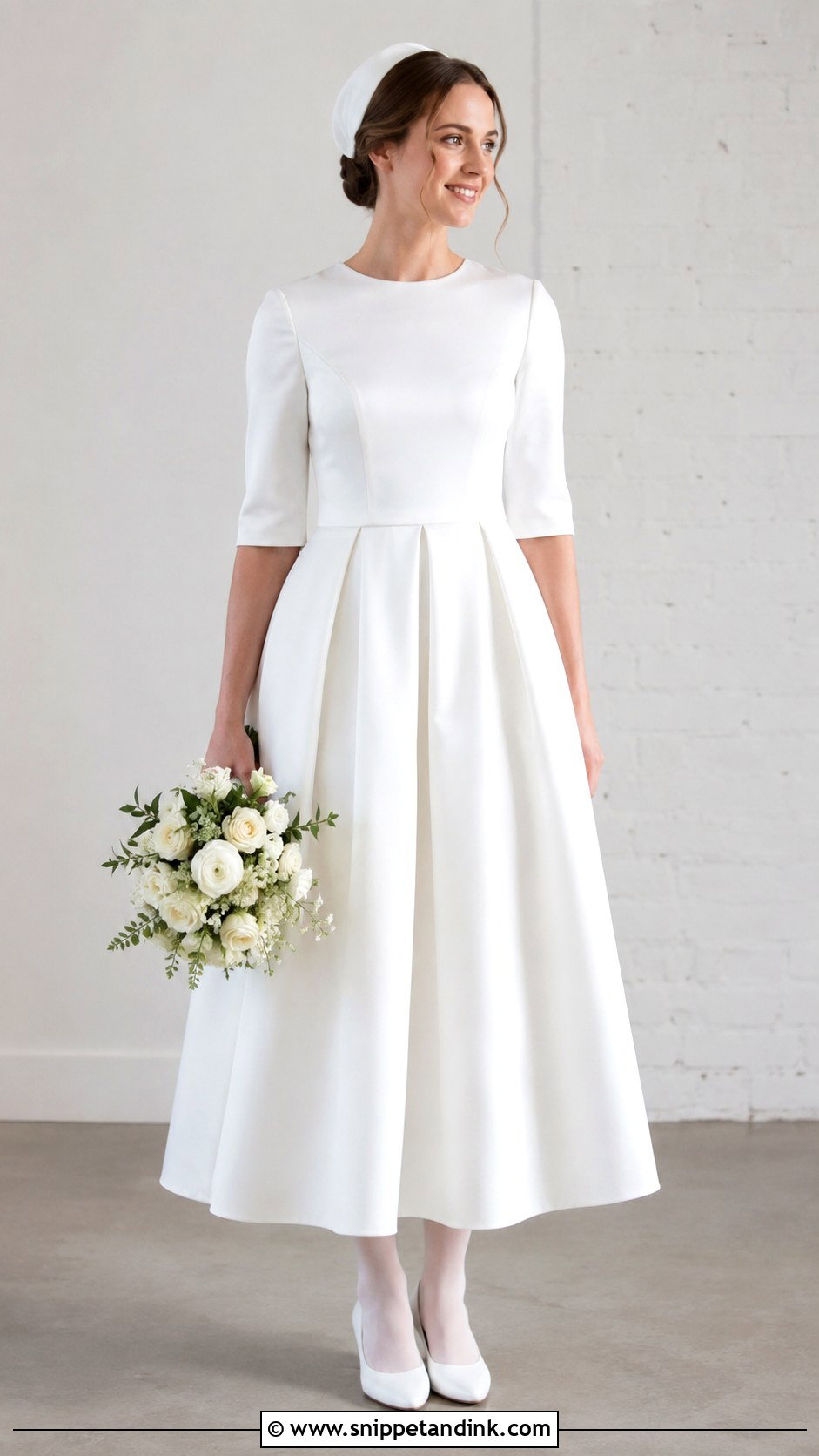
Three-quarter sleeves are the cooler compromise. They stop several inches below the elbow and should sit loose, so air moves. With a high round neck and an ankle-length box-pleated skirt, the shape stays modest and balanced. Cotton sateen or a mid-weight crepe lets the pleats lie flat without bulk. Closed-toe pumps, matching stockings, a small white head covering that keeps the face fully visible and a bouquet tied with ivory ribbon are all it needs. Before choosing shorter sleeves, though, check with your church that they’re acceptable for the ceremony.
13. Wrap Look Deeper Life Wedding Gown
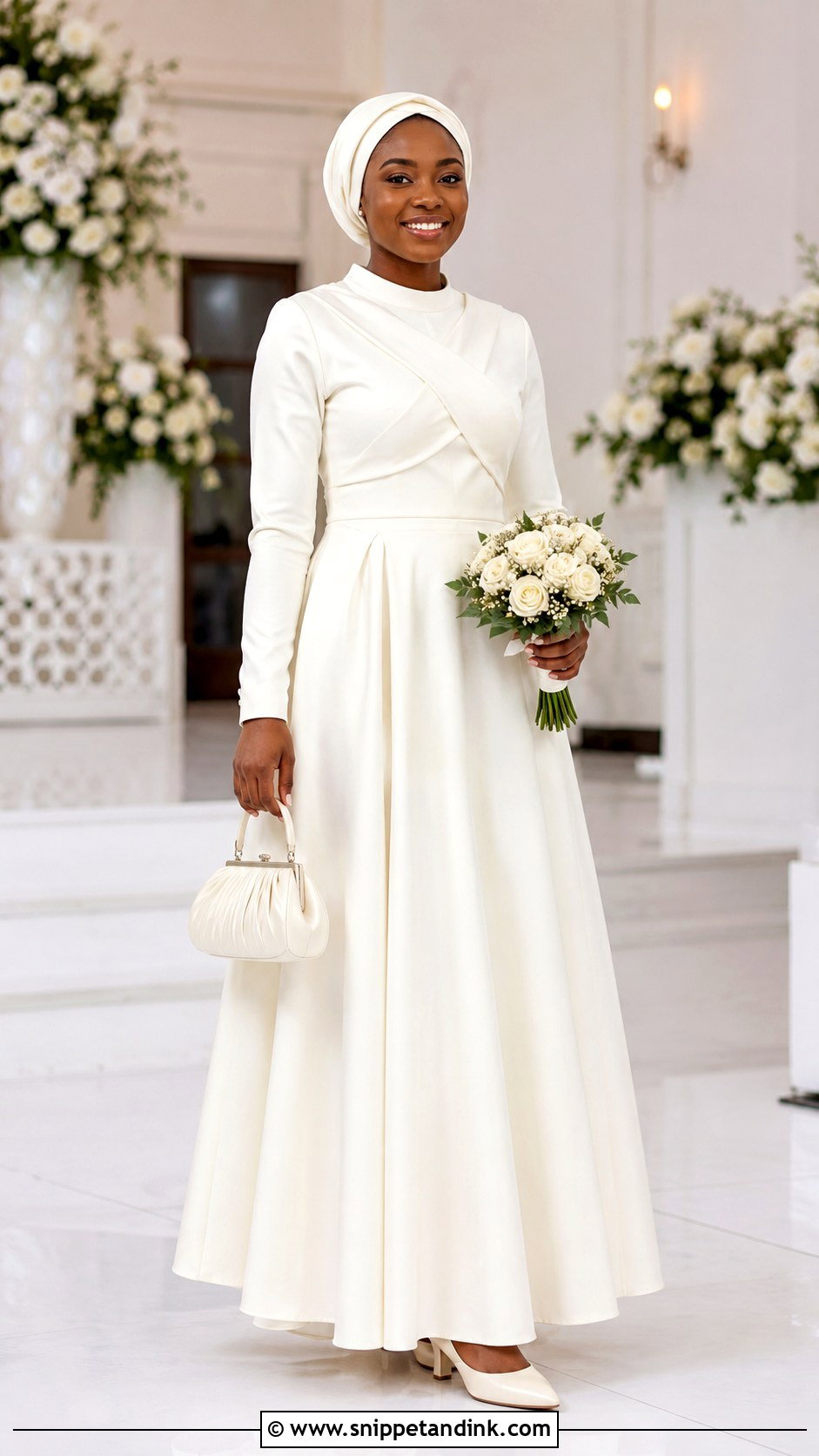
A real wrap dress can open when you kneel, which is why I only recommend the wrap look: overlapping panels stitched in place, with a high inset filling the neckline completely. The waist should be sewn, not tied with ribbons that come loose. Straight long sleeves and an opaque A-line below the ankle finish the shape. Matte crepe drapes across the diagonal lines without shine. Low pumps, a fabric head covering, a small bouquet and a matching bag for the reception keep it simple, and the fixed front means you can sit, bend or kneel without checking it.
14. Basque Waist Deeper Life Wedding Gown
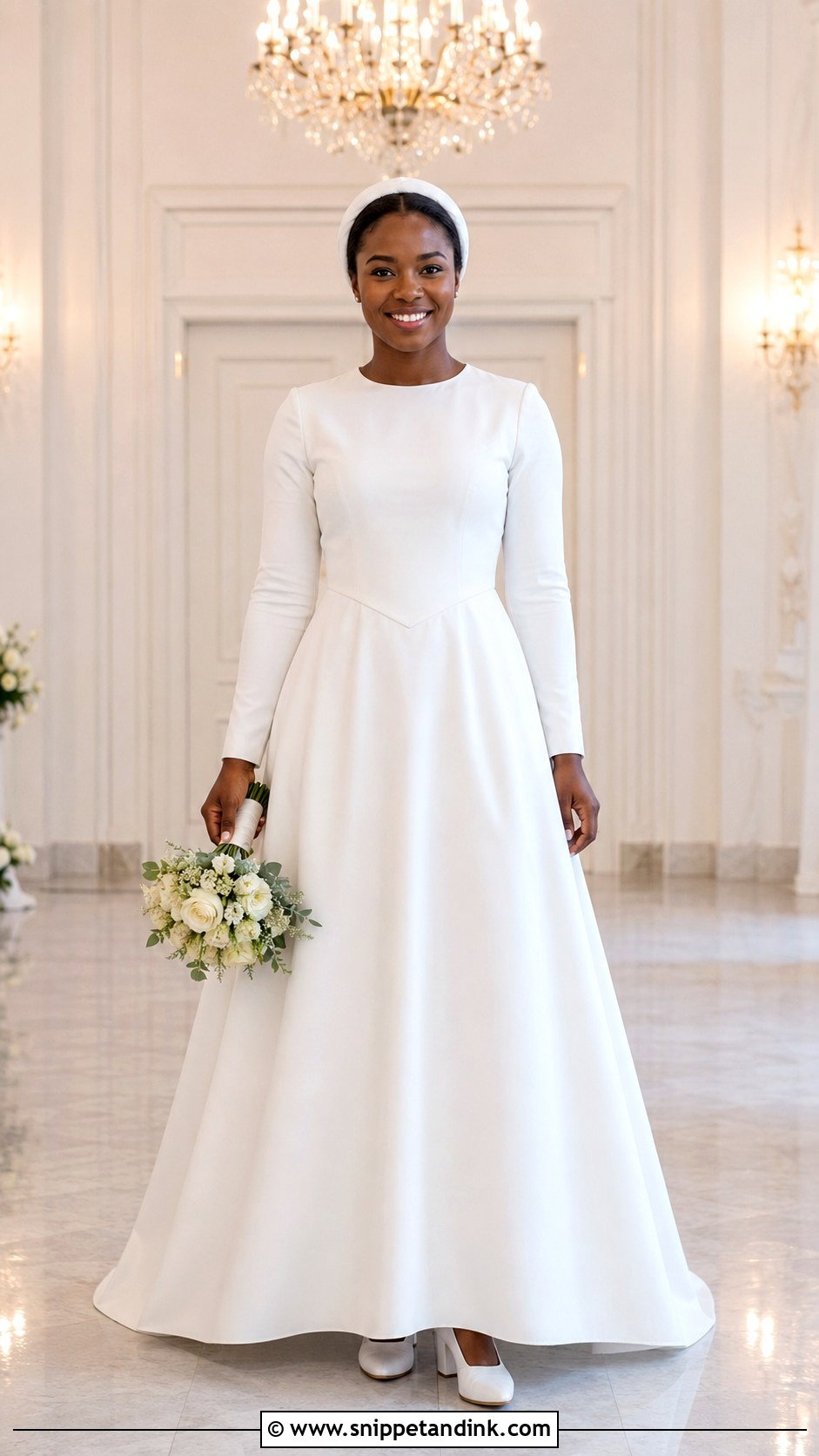
A shallow basque waist, a soft V-shaped seam sitting just over the natural waist, lengthens the torso without the corseted look of a deep one. Above it, a covered round neck, long sleeves and a structured opaque bodice with real ease; below it, a gently full skirt in clean folds. Plain matte satin or smooth taffeta holds the shape alone. Closed-toe block heels, a white head covering and ivory flowers complete it. Avoid heavy underskirts, which widen the silhouette more than most brides expect. I always have this one tested walking and sitting, since the point of the V can dig in when you’re seated.
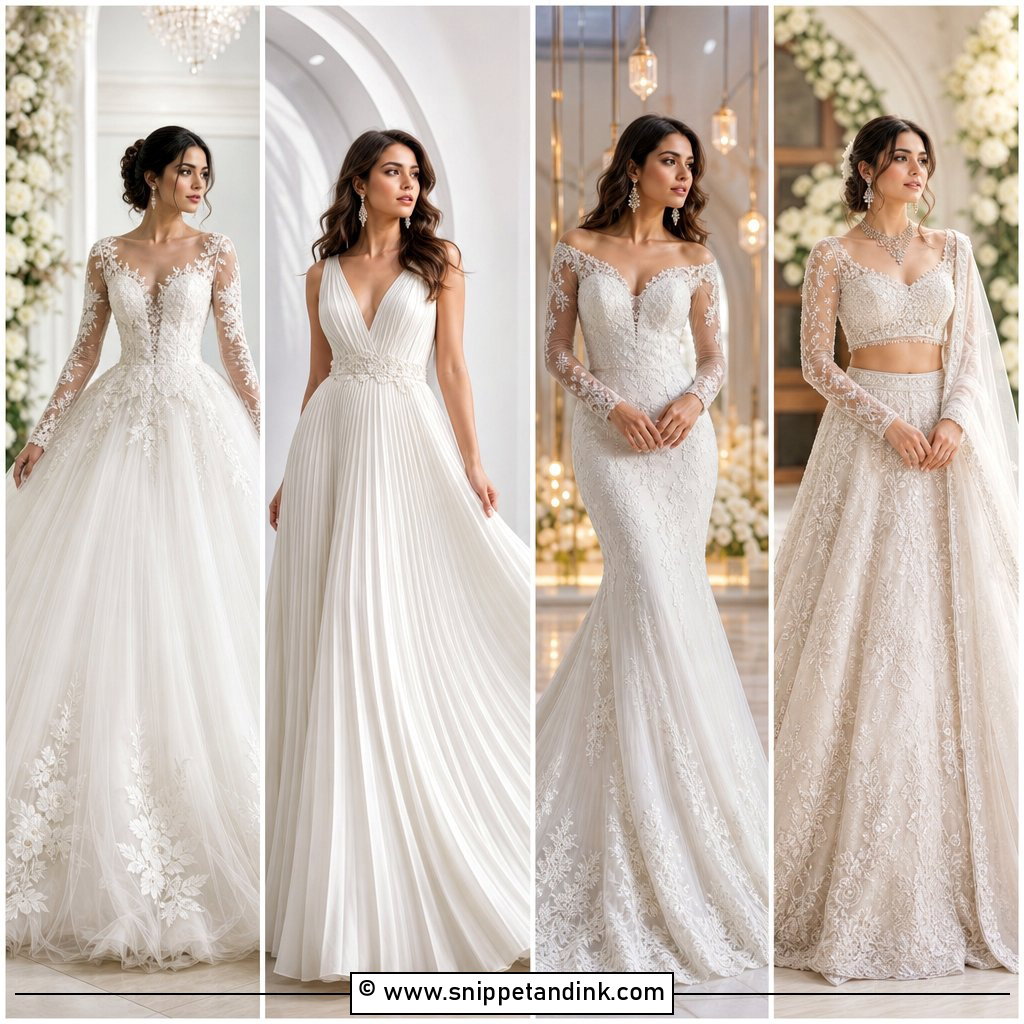
15. Empire Waist Deeper Life Wedding Gown
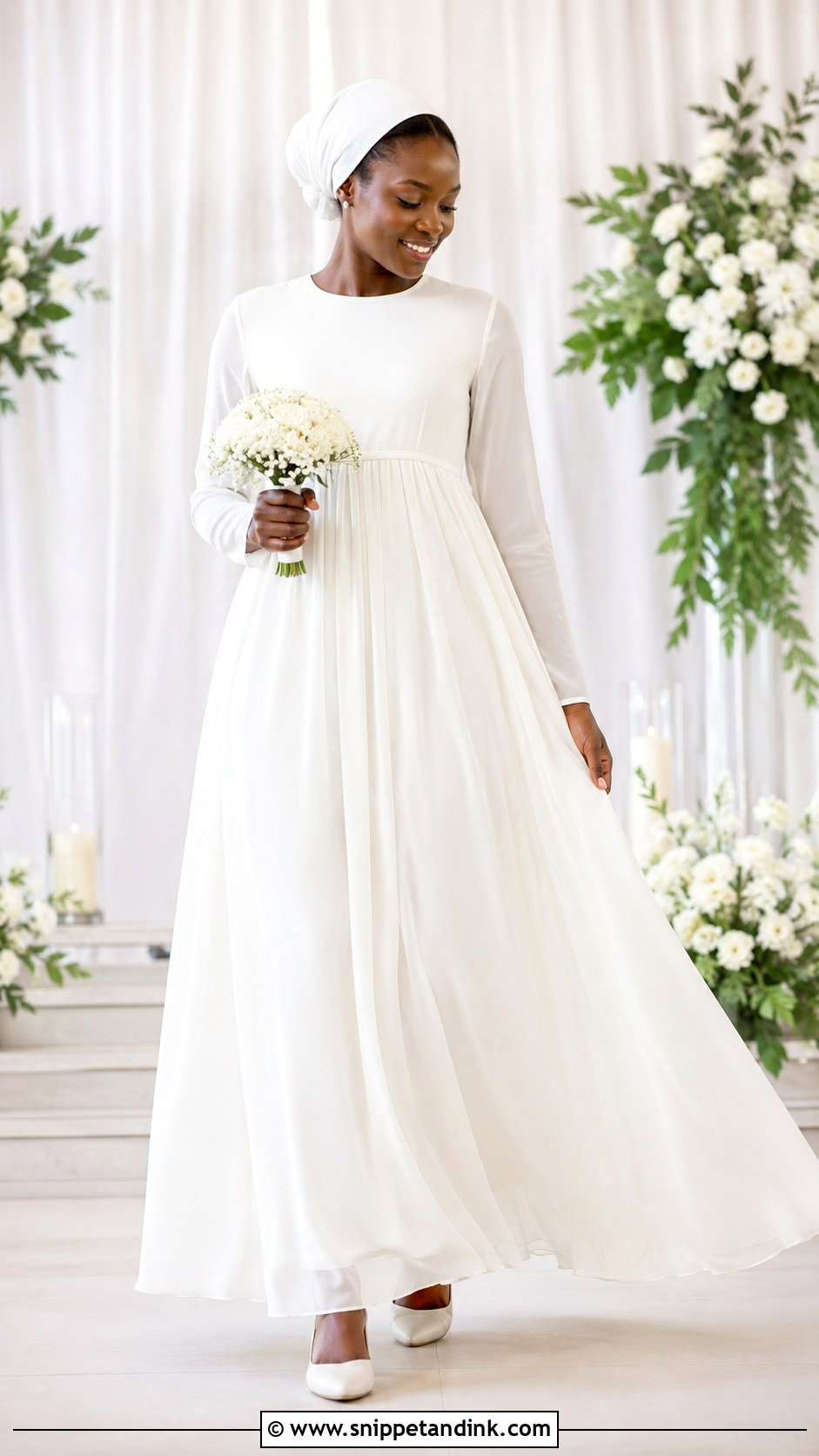
An empire waist sits under the bust and lets the skirt fall straight, so nothing presses on the midsection. The seam shouldn’t be tight. Pair it with a high rounded neck, long sleeves and a fully covered back. Light crepe or lined chiffon gives soft movement, but insist on a substantial lining; thin linings show shadow through pale fabric. Keep the skirt moderately full. Closed-toe flats or low heels, a plain head scarf and a small white bouquet are enough. This shape can also work well for pregnant brides, since a seamstress can let out the side seams close to the date.
16. Pleated Deeper Life Wedding Gown
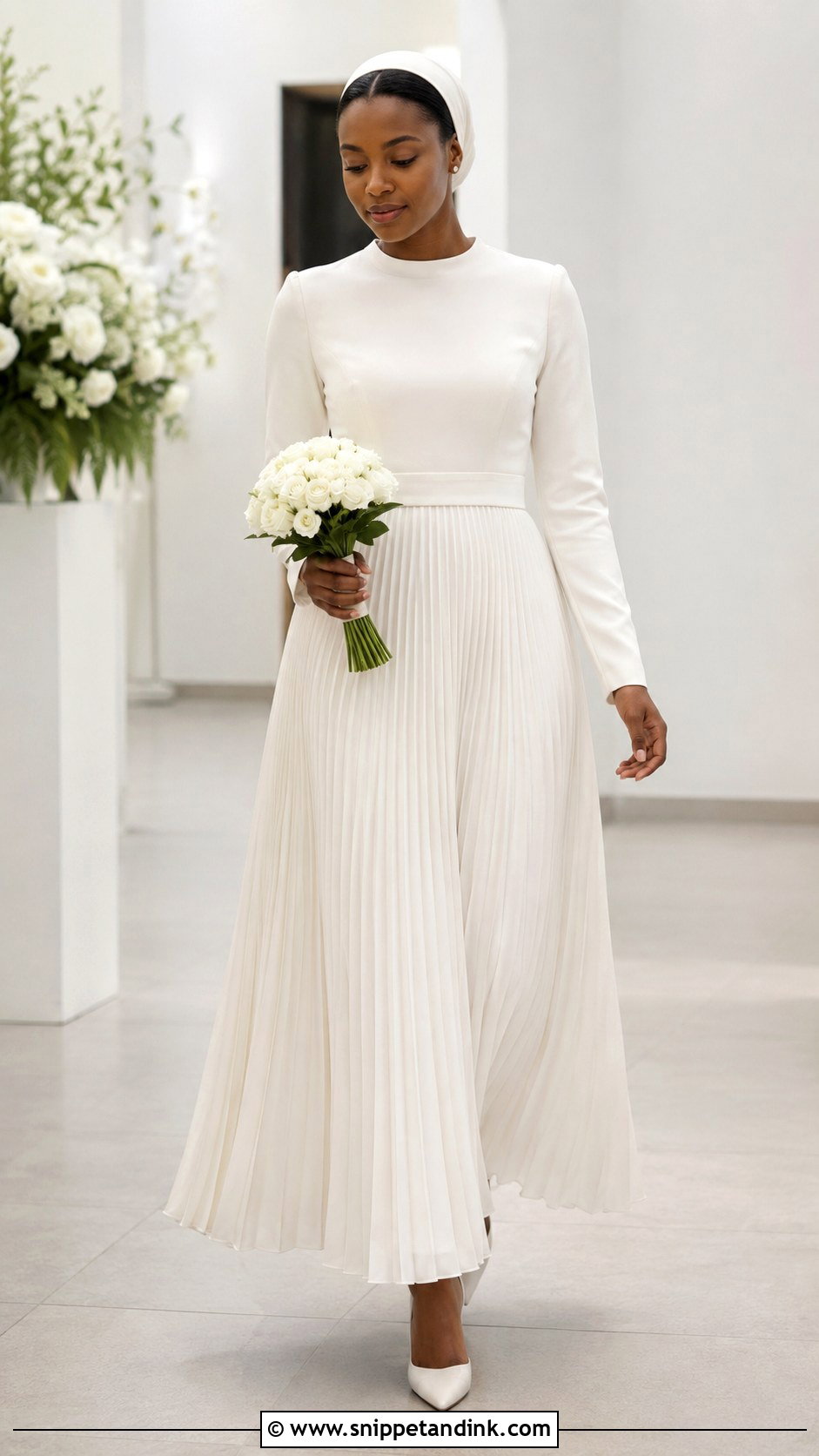
Fine vertical pleats give movement and texture without any attached decoration. I keep them in the skirt only, starting at the waist and running to the ankle, with a smooth bodice, high neck, long straight sleeves and a defined waistband above. Fully lined ivory georgette looks delicate; lightweight crepe is sturdier. Plain closed-toe pumps, a simple head covering and a compact bouquet rather than a cascade. As you walk, the pleats open and close. One practical note: pleated georgette can lose its pleats in a hot steamer, so press it with care the day before.
17. Panelled Deeper Life Wedding Gown
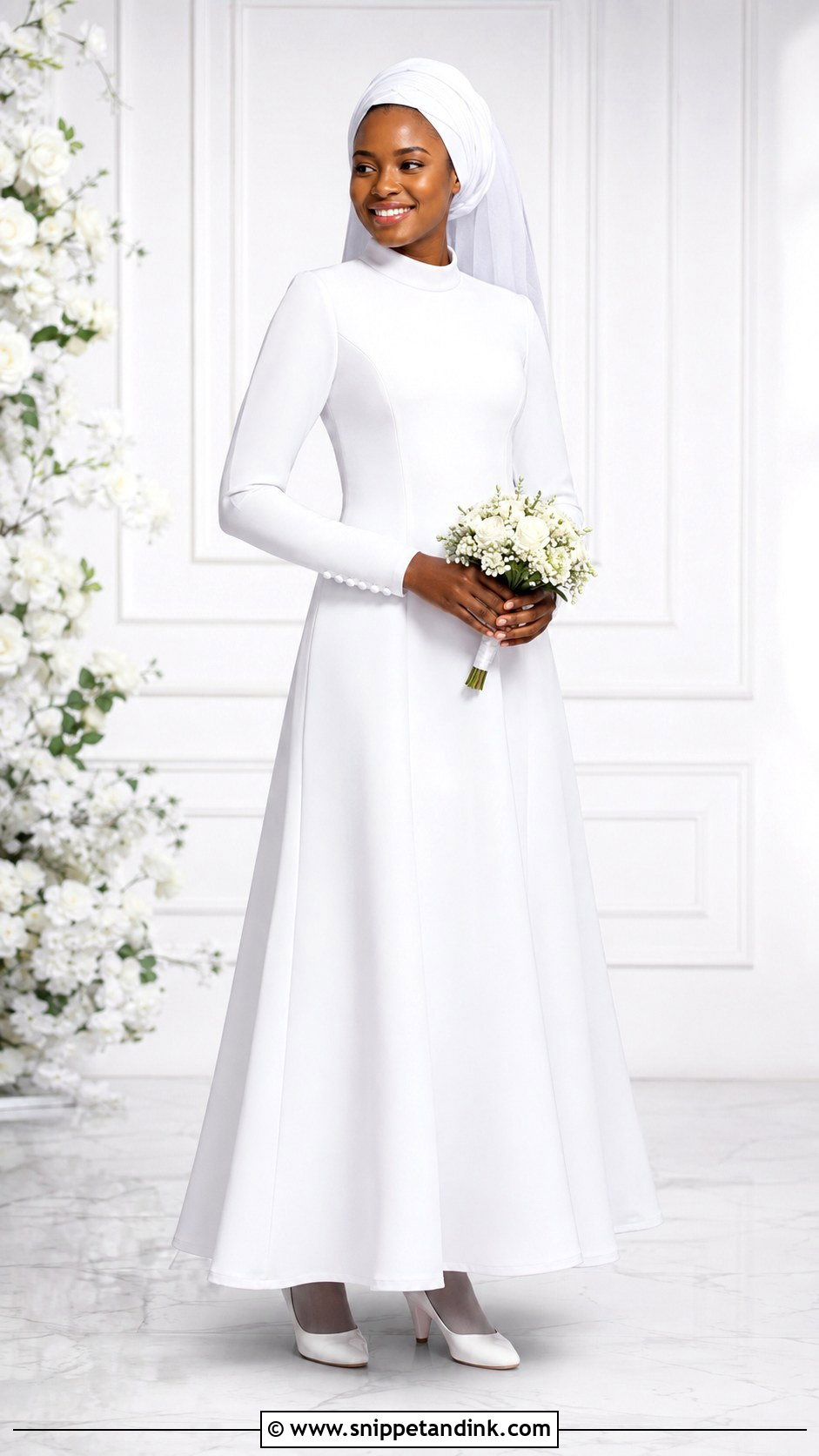
A six- or eight-panel gown shapes the body with long seams instead of gathers or tight fitting. The panels widen gradually from the hip to the hem, so the dress skims rather than clings, with a covered neck and long sleeves above. Opaque white crepe or mid-weight satin lets the seams fall smoothly; a hidden zip and small covered wrist buttons keep the finish neat. White low heels, stockings, a neat head covering and small white flowers. Because each panel can be taken in or let out separately, a good tailor can adjust this cut to almost any figure.
18. Brocade Deeper Life Wedding Gown
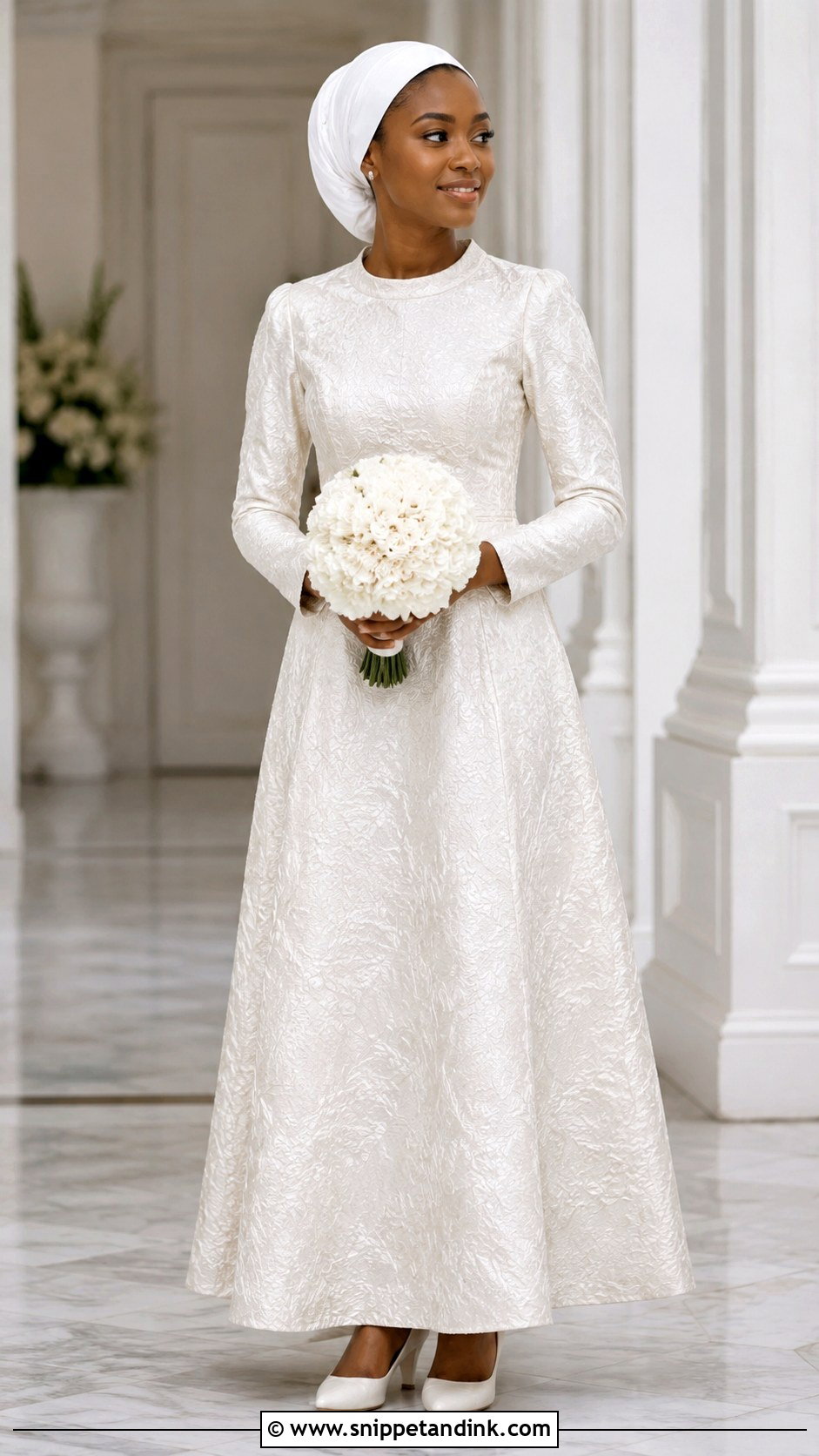
Brocade looks ceremonial because of its woven surface, not because anything is added. Choose a lightweight one in white, cream or pearl, with a small tonal pattern; a bold contrasting motif is much harder to style. Keep the cut plain: raised round neck, long sleeves, natural waist, ankle-length A-line. Brocade has body, so gathers at the waist balloon quickly. Closed-toe ivory pumps, a plain head covering and a bouquet of smooth, rounded flowers balance it. Heavier brocades get warm, so I’d hold the fabric against your arm for a minute before deciding.
19. Pale Blue Deeper Life Wedding Gown
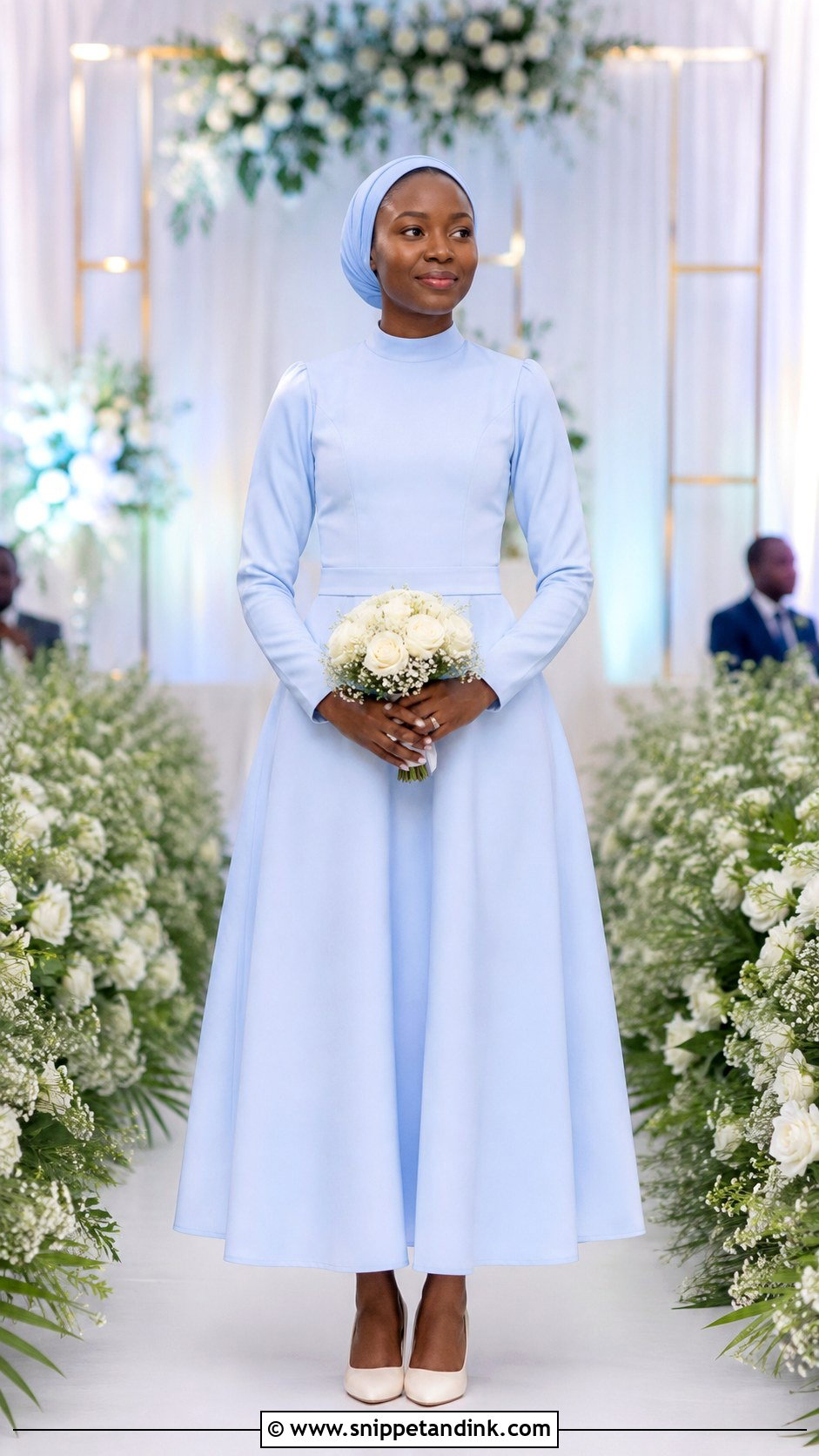
A pale blue gown can be calm and fully formal, especially in a clean matte crepe. Keep the cut simple: high neck, long sleeves, a softly flared skirt to the ankle and a matching waistband. Cream closed-toe pumps and a pale blue head covering, arranged to leave the face open, keep the colour consistent, while a small bouquet of white flowers brightens it. No shiny accessories needed. Before you buy any colour other than white, confirm with your church that it’s acceptable for the ceremony. Asking early is far easier than remaking a gown.

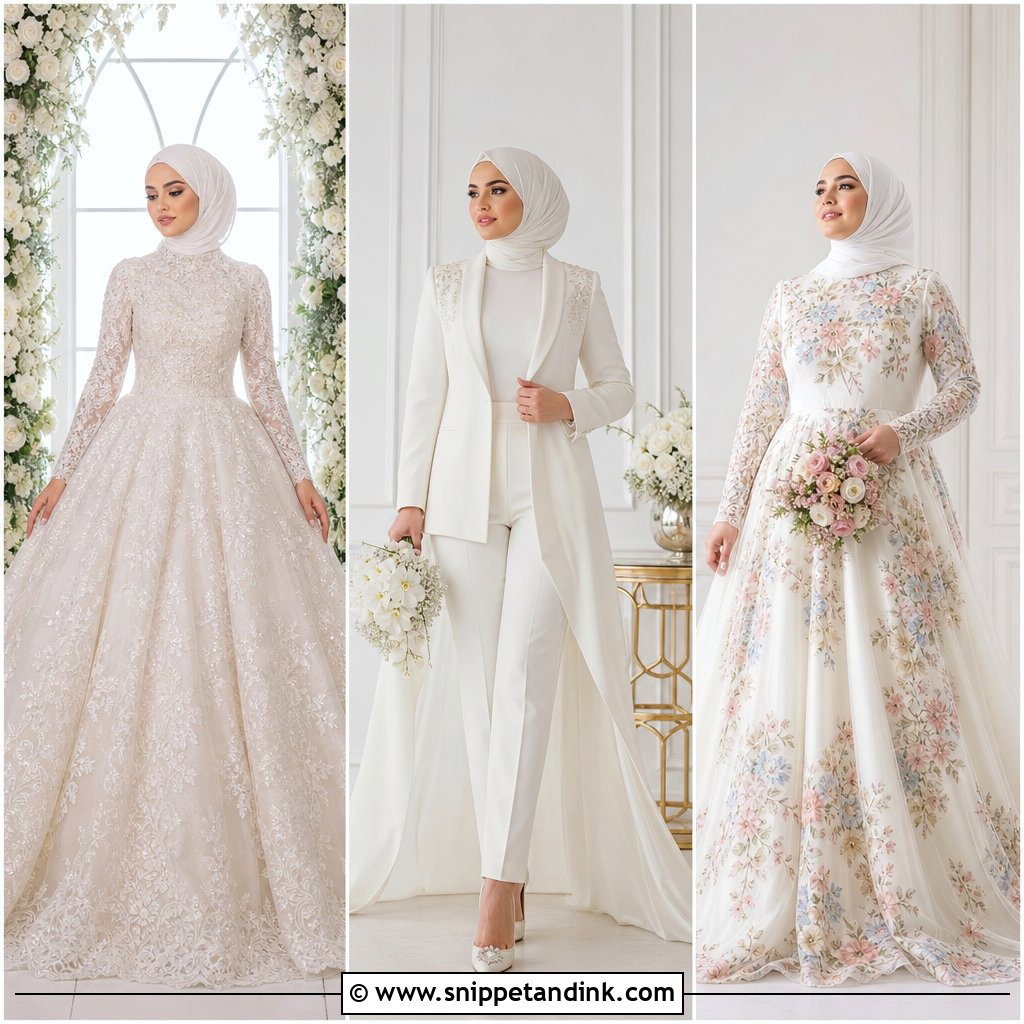
20. Plus Size Deeper Life Wedding Gown
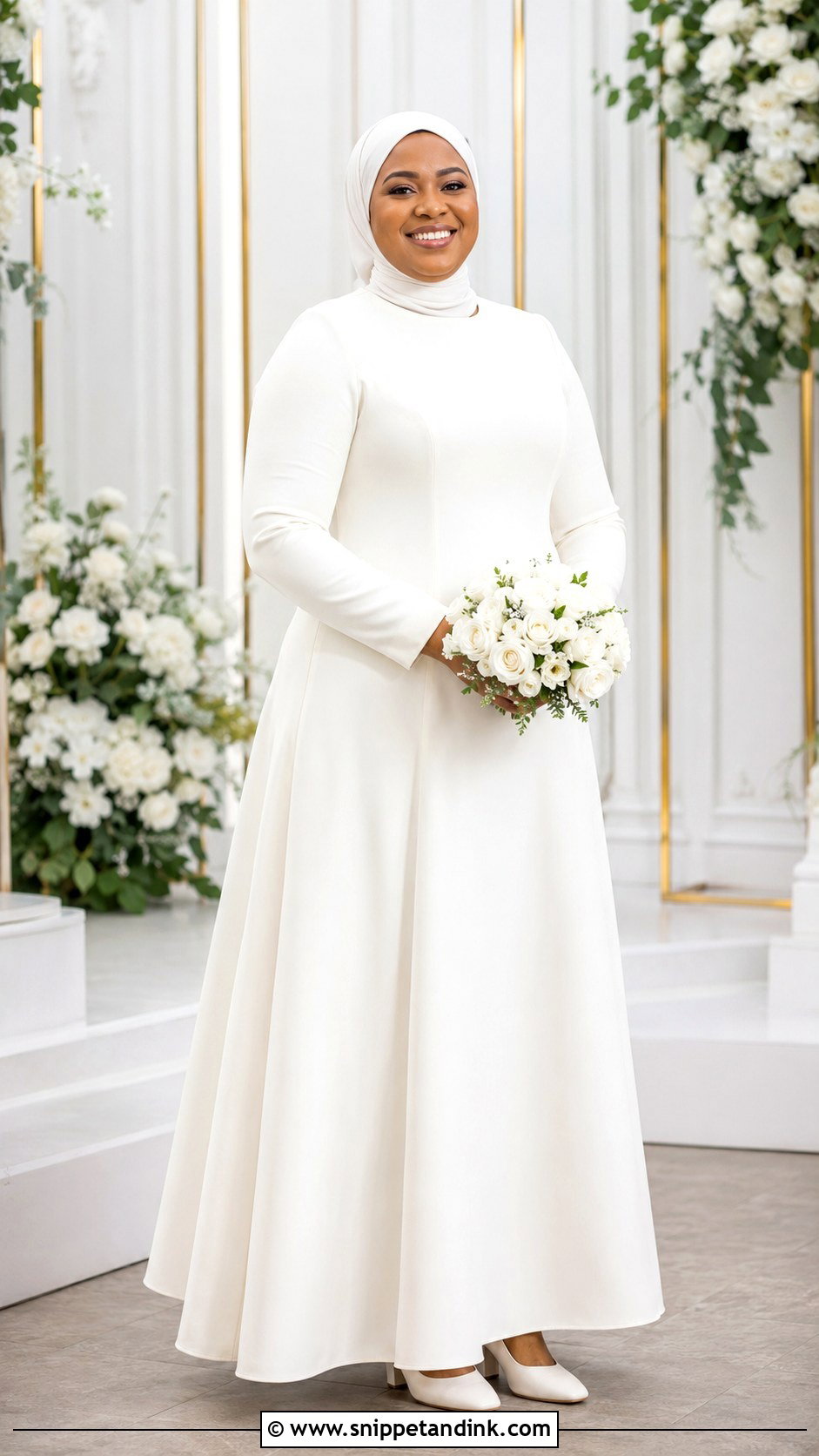
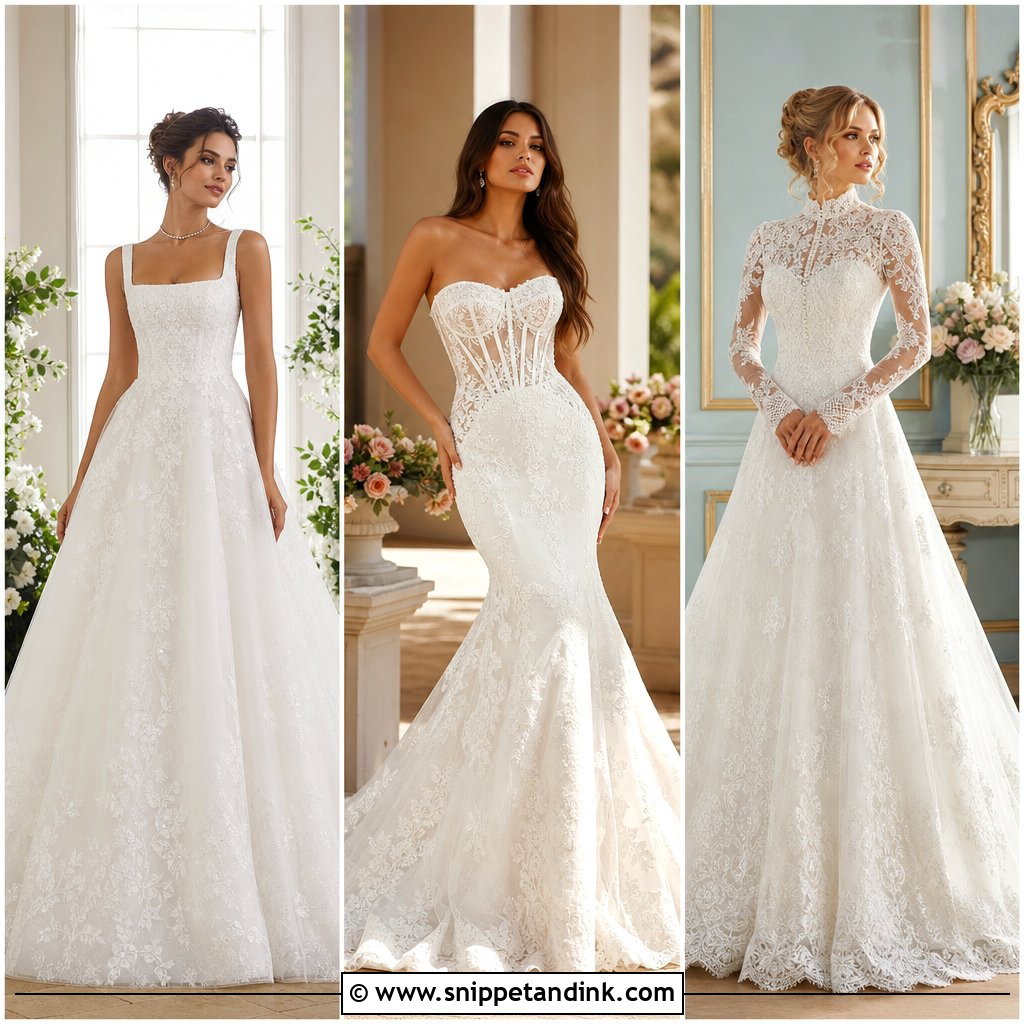
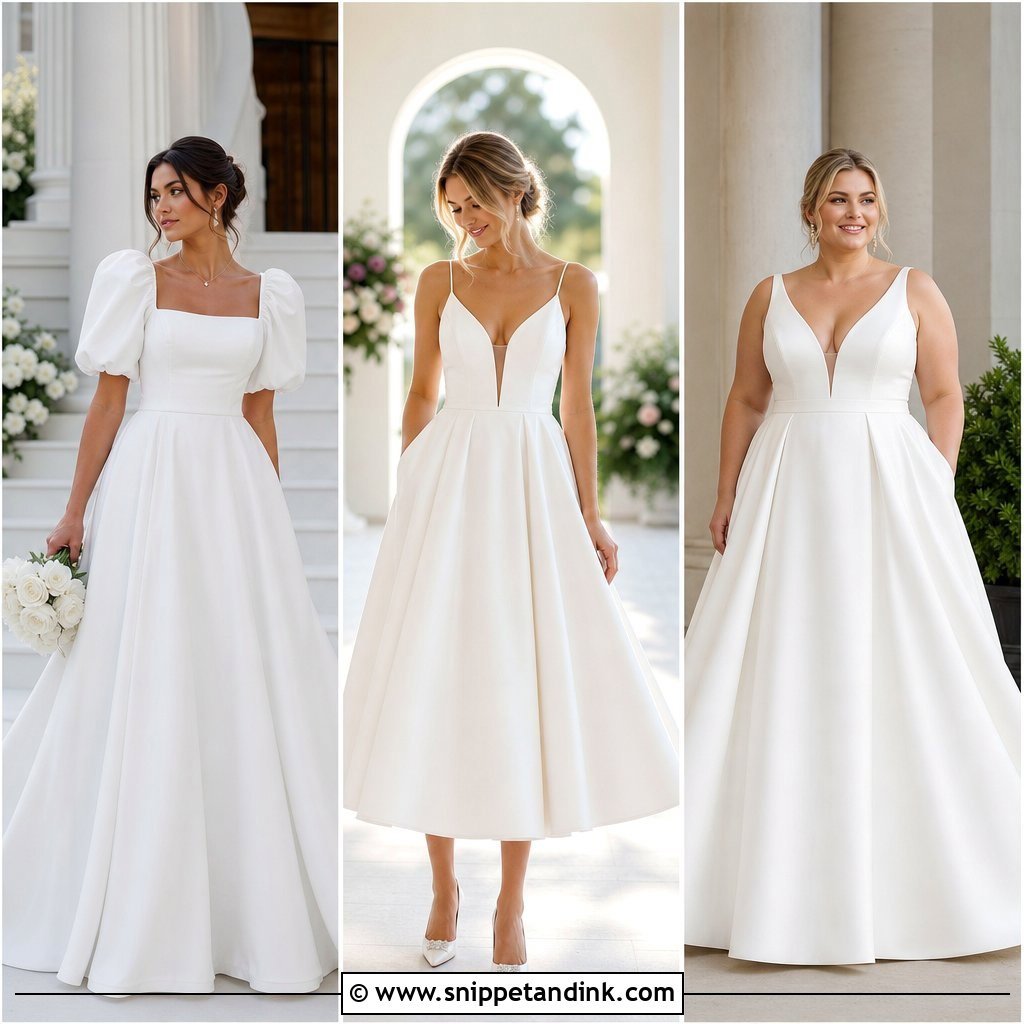
On a plus-size bride, a well-fitted gown always looks better than a loose one meant to hide. A princess-seam A-line in opaque ivory crepe shapes the figure while leaving comfortable ease at the bust, waist and hips. Choose a high rounded neck, long sleeves with enough room in the upper arm, and a skirt falling cleanly to the ankle; a lightly structured lining stops cling. Supportive block heels or cushioned flats, a plain ivory head covering and a bouquet scaled to the gown complete it. Wear your actual undergarments and shoes at every fitting, or the hem and bust will be set wrong.
Will It Stay Opaque When You Kneel in Warm Light?
Covered gowns face tests that open ones don’t. The ceremony is long, the hall is often hot, and there may be moments of kneeling for prayer. I do three checks at the final fitting.
The light test
Stand in front of a sunny window or under a bright lamp and have someone photograph you from behind with a flash. White fabric that looks solid indoors can show the outline of the legs in strong backlight. A cotton or satin-backed lining usually fixes it.
The kneel test
Kneel and rise twice. Watch whether the hem lifts above the ankle at the back, whether the back seam strains, and whether a long skirt catches under your knees. If it does, the tailor can add width at the side seams.
The heat test
Long sleeves in polyester satin get hot quickly. A breathable cotton lining in the bodice and sleeves makes a real difference, and small underarm shields protect the fabric. Pin the head covering with a few hidden pins at the crown and behind each ear, so it stays put through a long sermon and a full reception.
What Makes a Covered Gown Feel Like Yours
A modest wedding gown comes together when coverage, comfort, fabric and tailoring lead every choice. It doesn’t need sheer panels, open necklines, heavy decoration or a long train. Clean seams, opaque fabric, covered sleeves, a sensible hem and a neat head covering do the work. Try the full outfit walking, sitting and kneeling, in your real shoes, and take the fabric and design for approval before anything is made if your assembly asks for it. Satin, crepe, jacquard, brocade or a soft print can all work. Choose the one you’d happily wear through the whole service.
You'll Like These Ideas:



Leave a Reply