
Brides who come to me for a church wedding gown usually want two things that pull against each other: coverage they feel right about, and a dress that still looks like them. Modest bridal collections are far wider than they used to be, with long-sleeve lace A-lines, high-neck satin ball gowns, clean crepe sheaths and proper size ranges, so you rarely have to compromise. Before we pull a single dress, I ask what the church expects, what season it is, and how much moving the day involves, from kneeling at the altar to dancing later. The twenty gowns below are the shapes I reach for most, each with the veil, shoes and fitting checks I’d pair with it.
Turning a Strapless Sample Into a Covered Gown
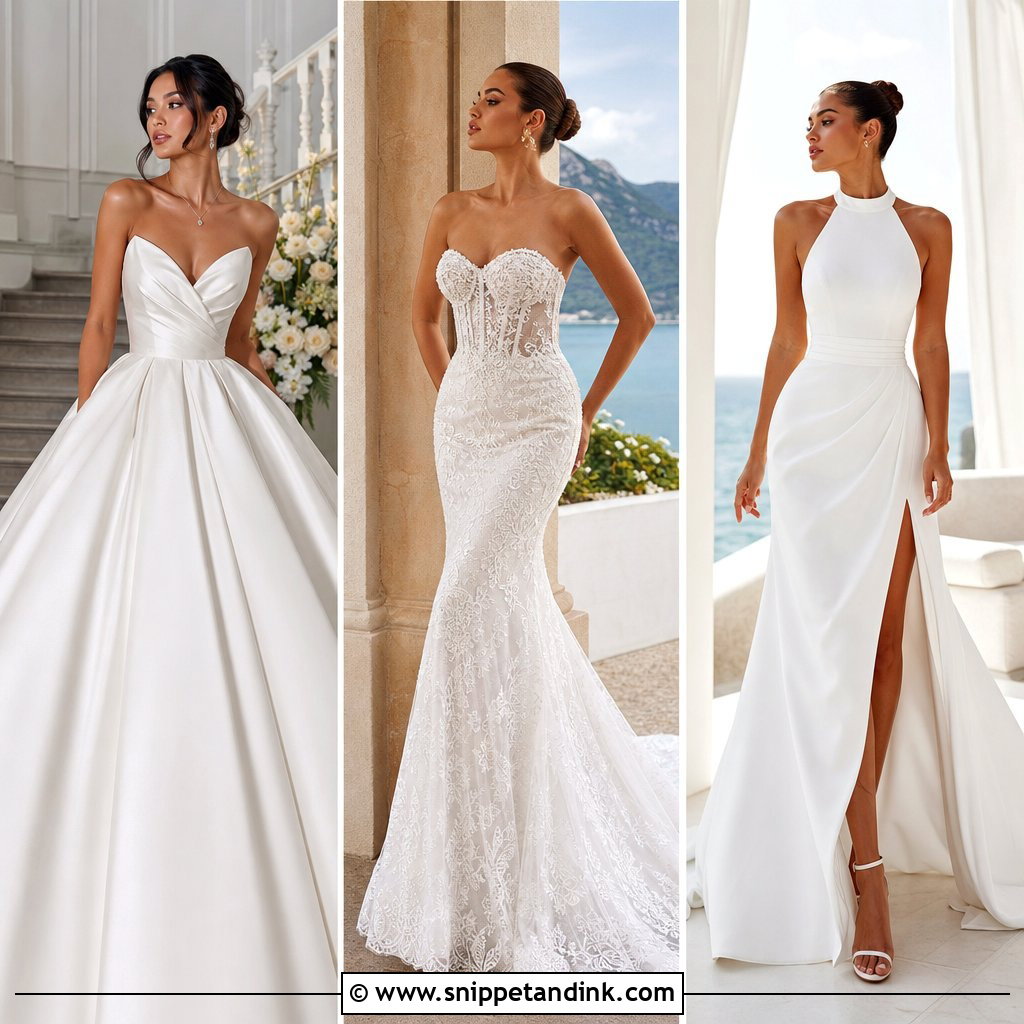
Many bridal salon racks are still heavy on strapless and sweetheart samples. If you fall for one, don’t rule it out. A good seamstress or the designer can usually add coverage, and I’ve learned to ask a few questions before anyone falls in love.
- Can the designer supply matching lace or fabric? Added sleeves or a raised back look far better when the lace matches exactly.
- Is the change made at the factory or by an alterations shop? Factory changes are often cleaner but have to be requested at the time of ordering.
- How much time does it add? Most gowns take several months to arrive, and alterations usually need another two to three months, so changes push you toward ordering earlier.
- Would a separate topper work instead? A lace bolero, a shrug or a removable cover-up lets you wear coverage for the service and take it off for the reception.
Check with your church before you shop
Dress expectations vary a lot between churches and denominations. Some ask that shoulders be covered in the sanctuary, some traditions expect a veil or head covering, and many have no rules at all. A short call to the church office or your officiant before the first appointment saves you from altering a gown you didn’t need to change.
1. Long Sleeve Lace Christian Wedding Dress
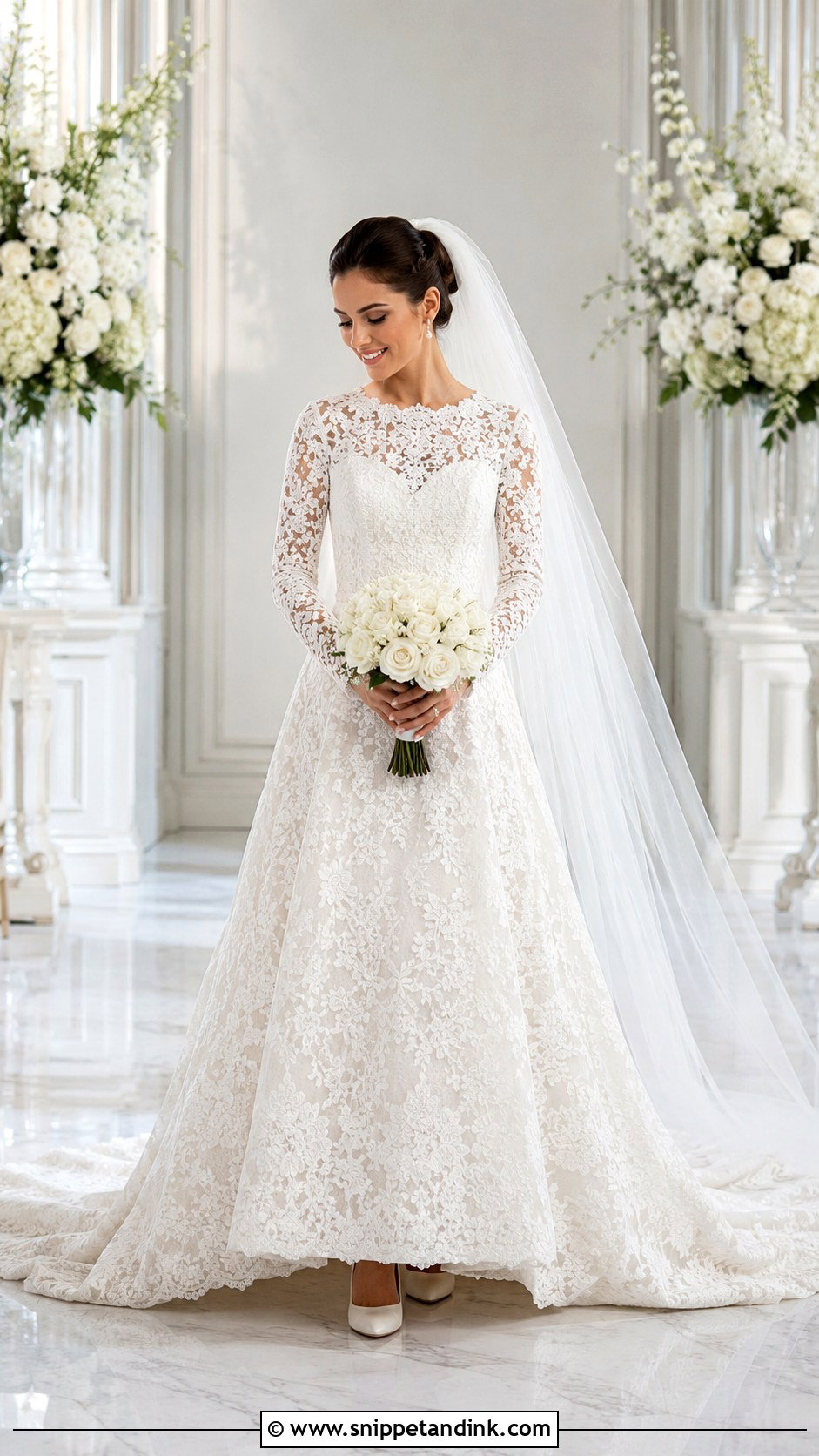
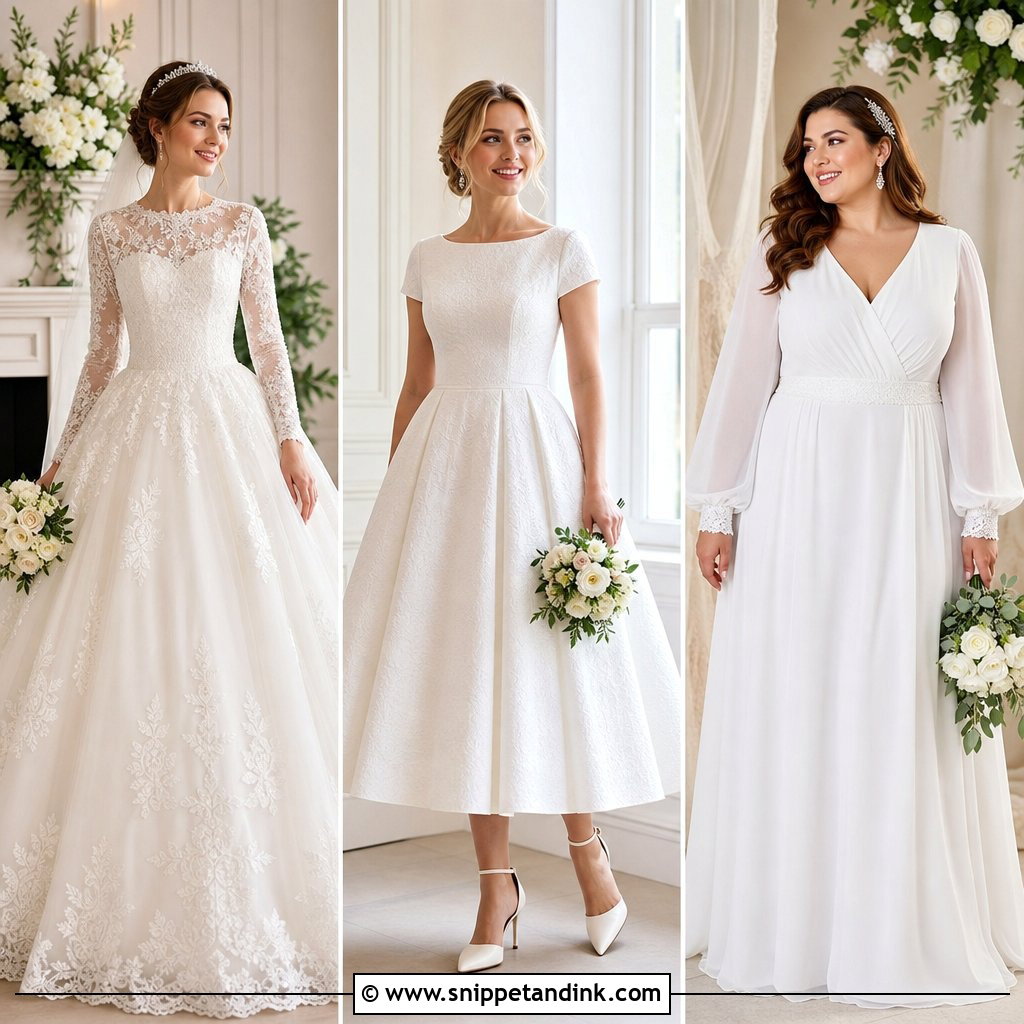
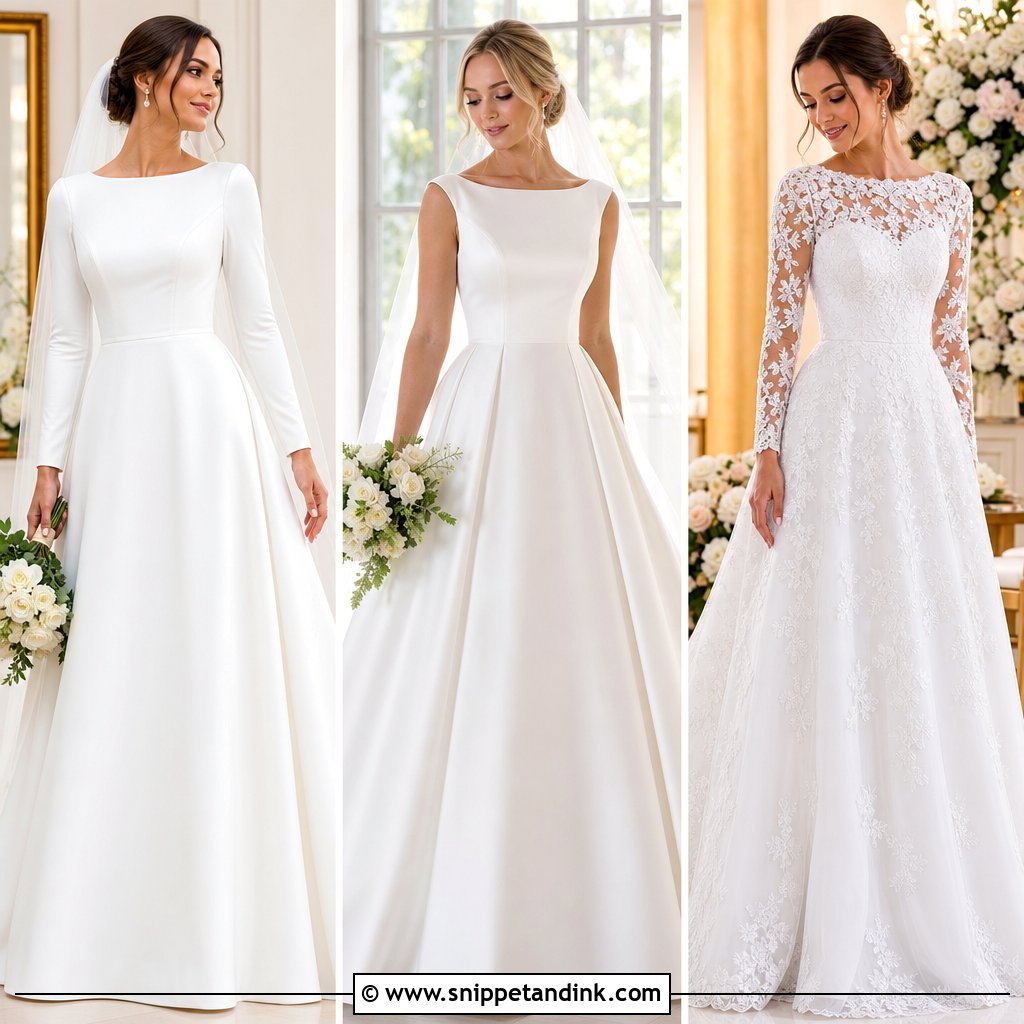
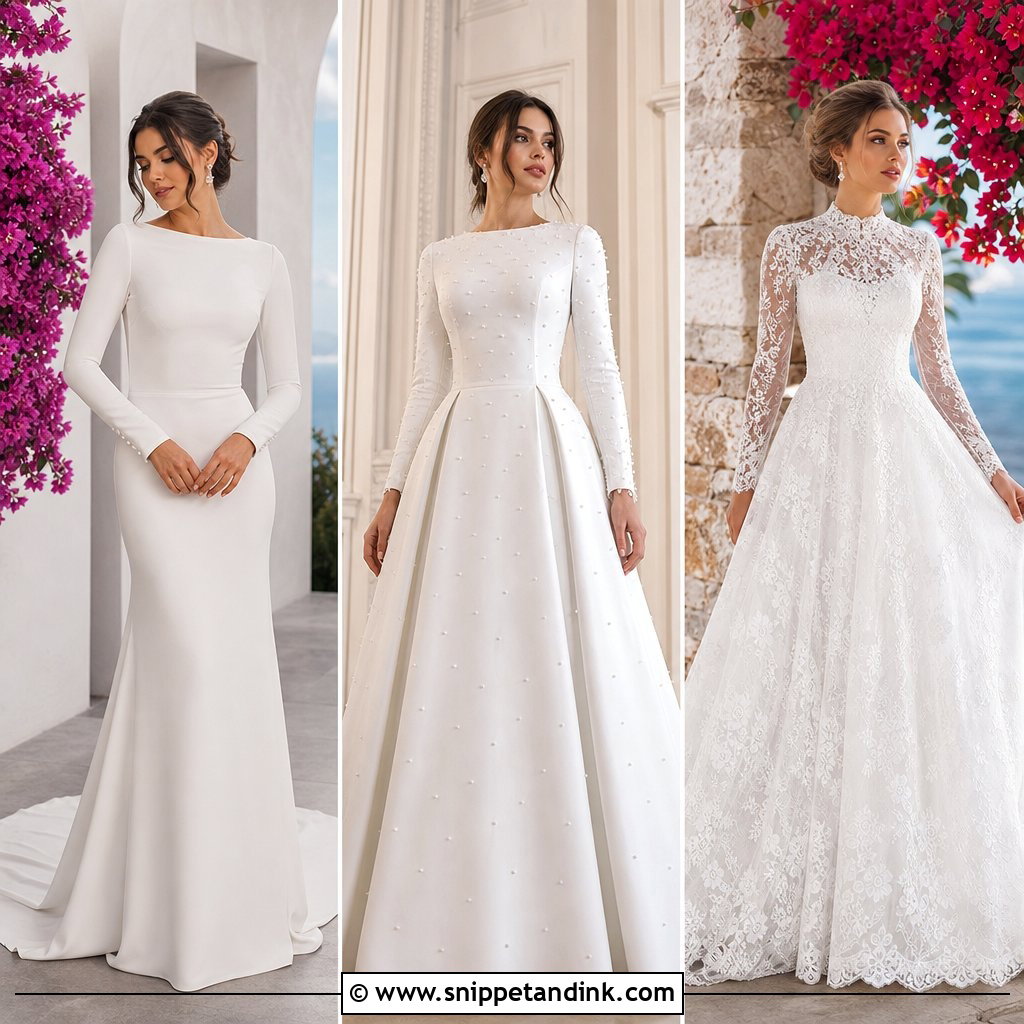
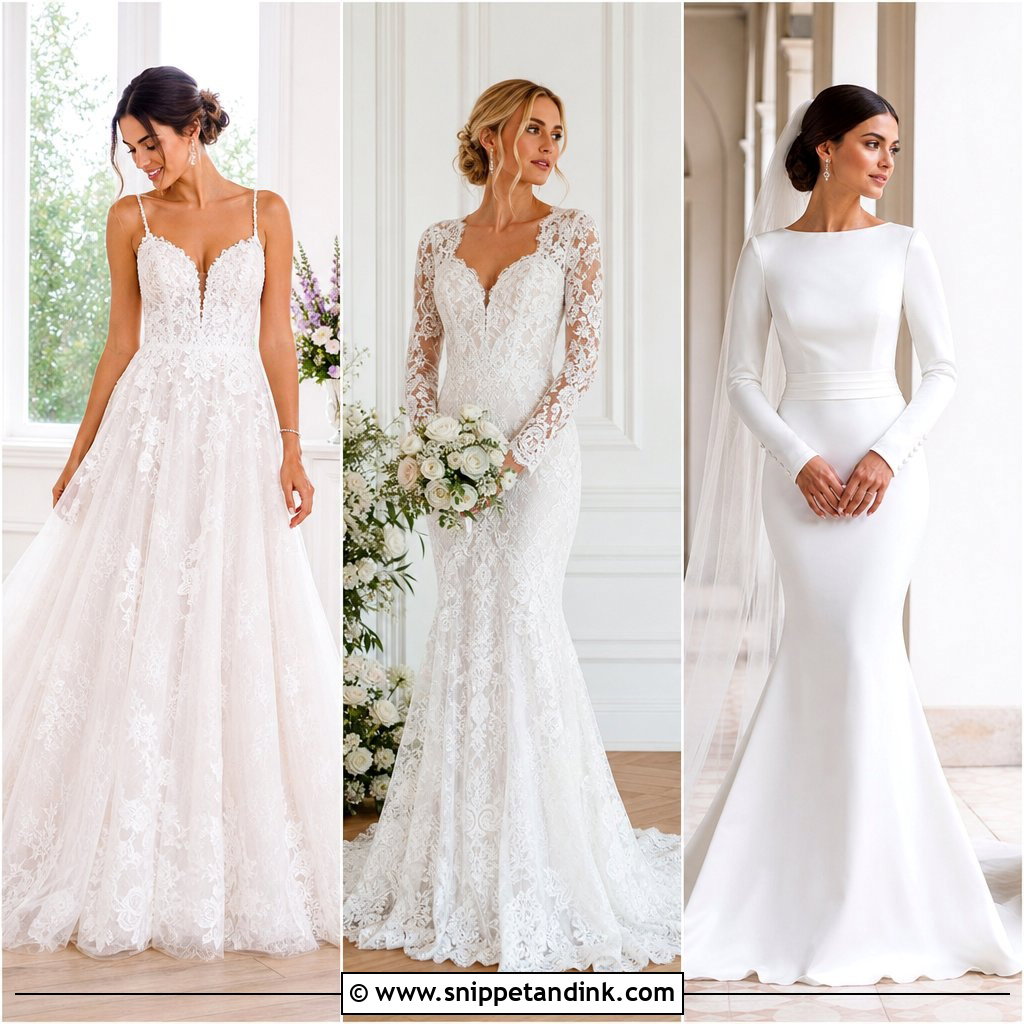
Long lace sleeves on an A-line are the classic church look for good reason: lace gives coverage without bulk. The detail I check first is the lining. Unlined floral lace on the arms can look sheer under church lighting, while a fine satin or crepe lining behind the bodice keeps it opaque. Sleeves should end neatly at the wrist bone; any longer and they’ll fall over your hand during the ring exchange. A jewel neckline, a chapel veil, pearl studs and a low chignon keep the focus on the lace. It suits cooler months and formal indoor ceremonies.
2. High Neck Satin Christian Wedding Gown
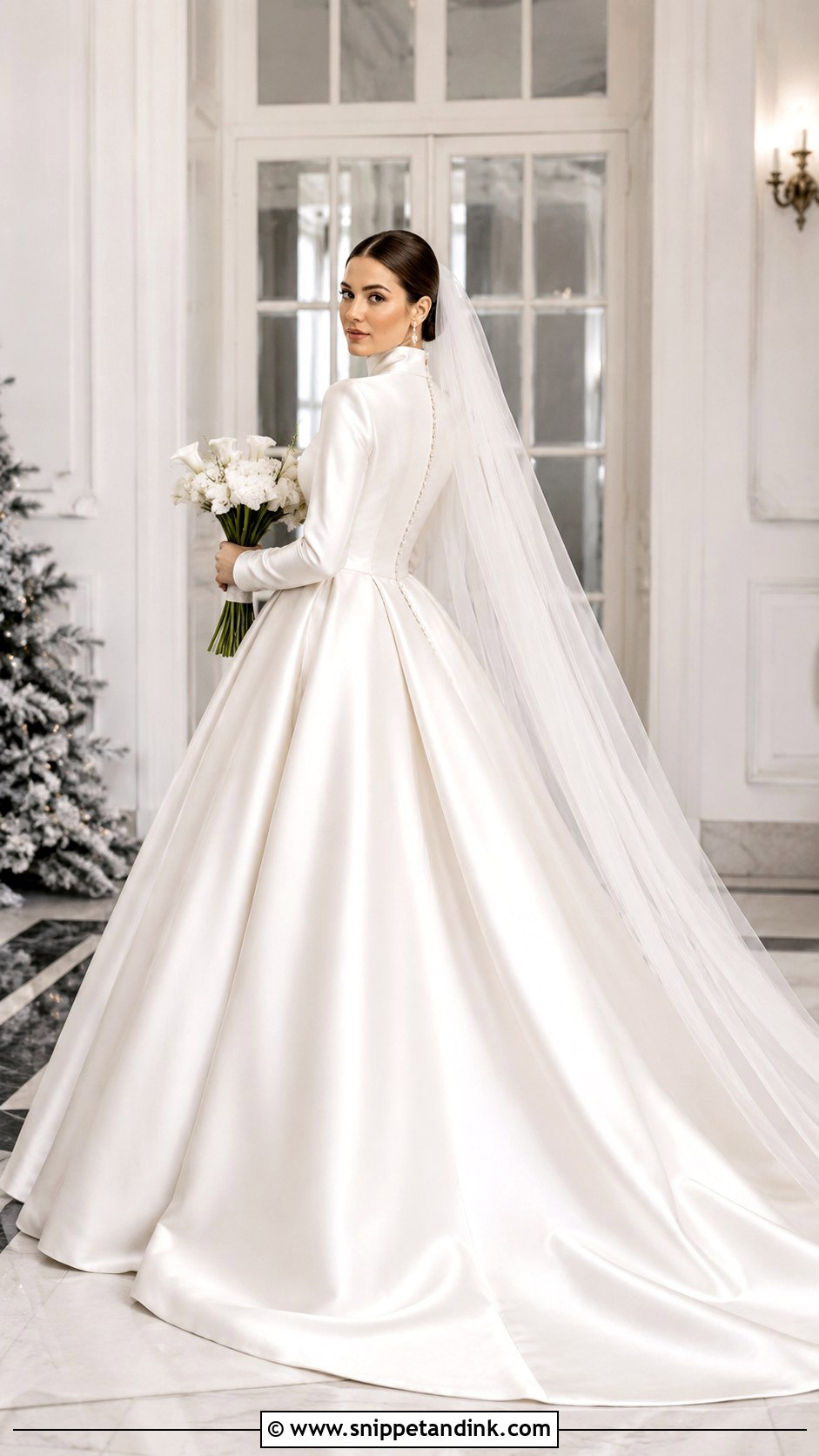
Satin is the fabric that shows tailoring most, so on a high-neck ball gown I spend the fitting on the shoulders and waist. If the shoulder seam sits even a little wide, heavy satin collapses into a fold at the upper arm that every photo will catch. A defined natural waist and covered buttons down the back are all the decoration it needs. Pair it with a plain cathedral veil, small drops and a sleek bun so the neckline has room. It’s a fall and winter gown; in July heat, satin with sleeves gets warm quickly.
3. Modest Crepe Christian Wedding Dress
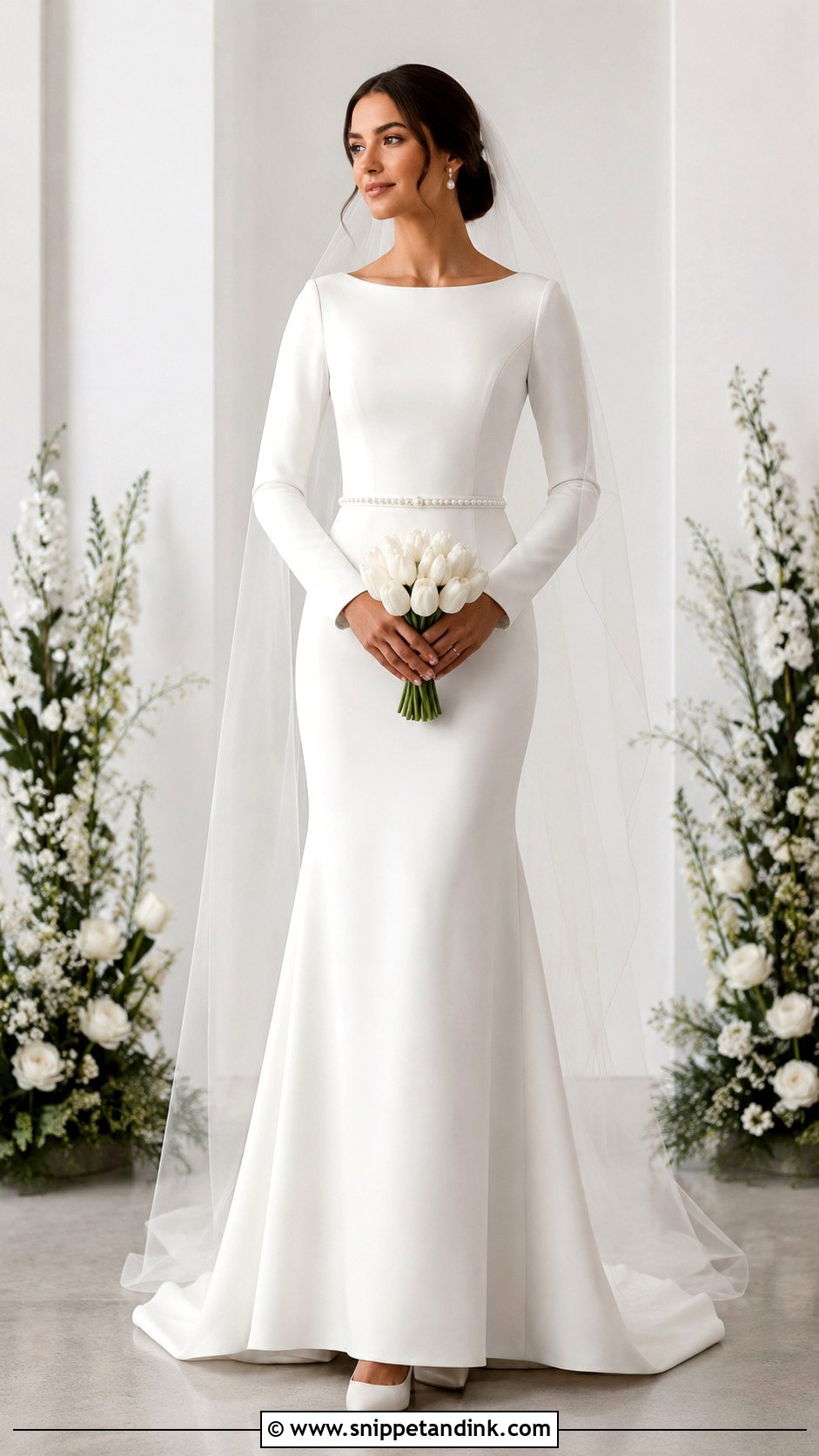
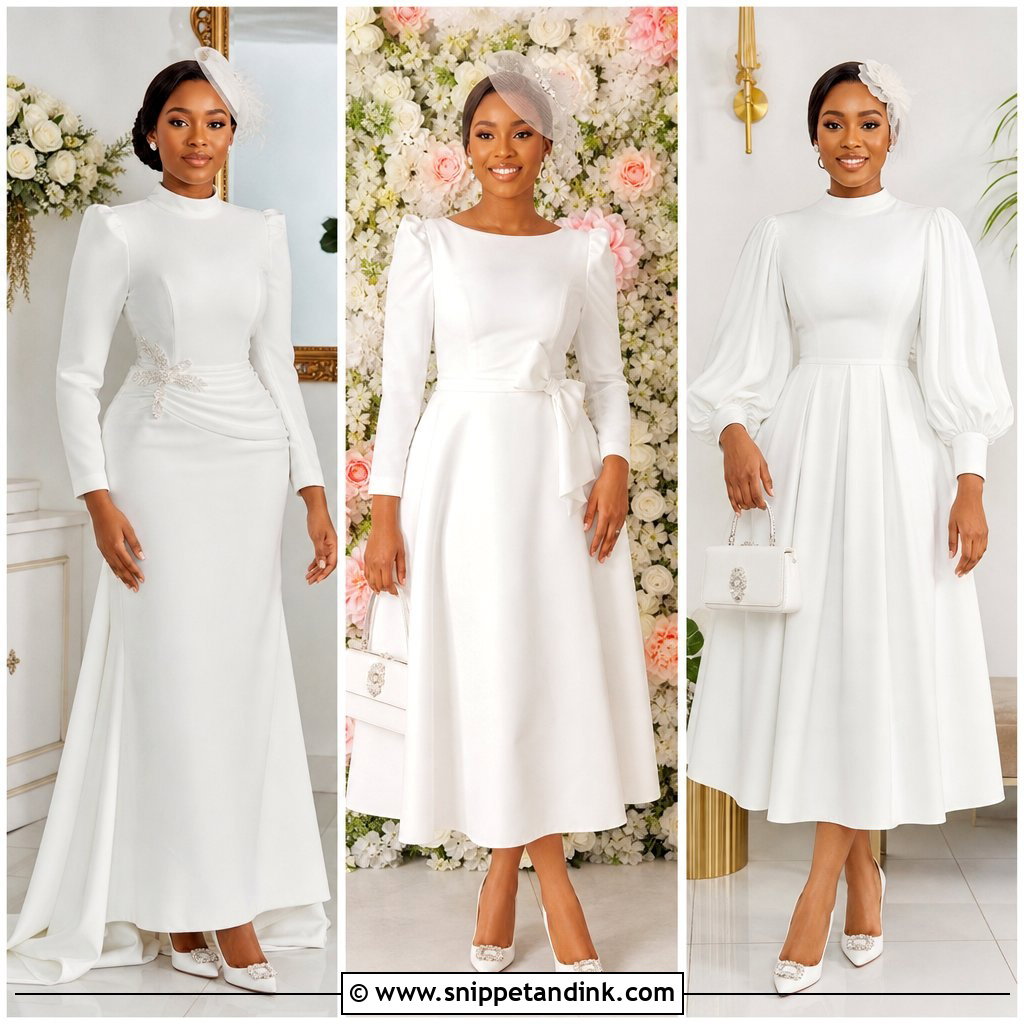
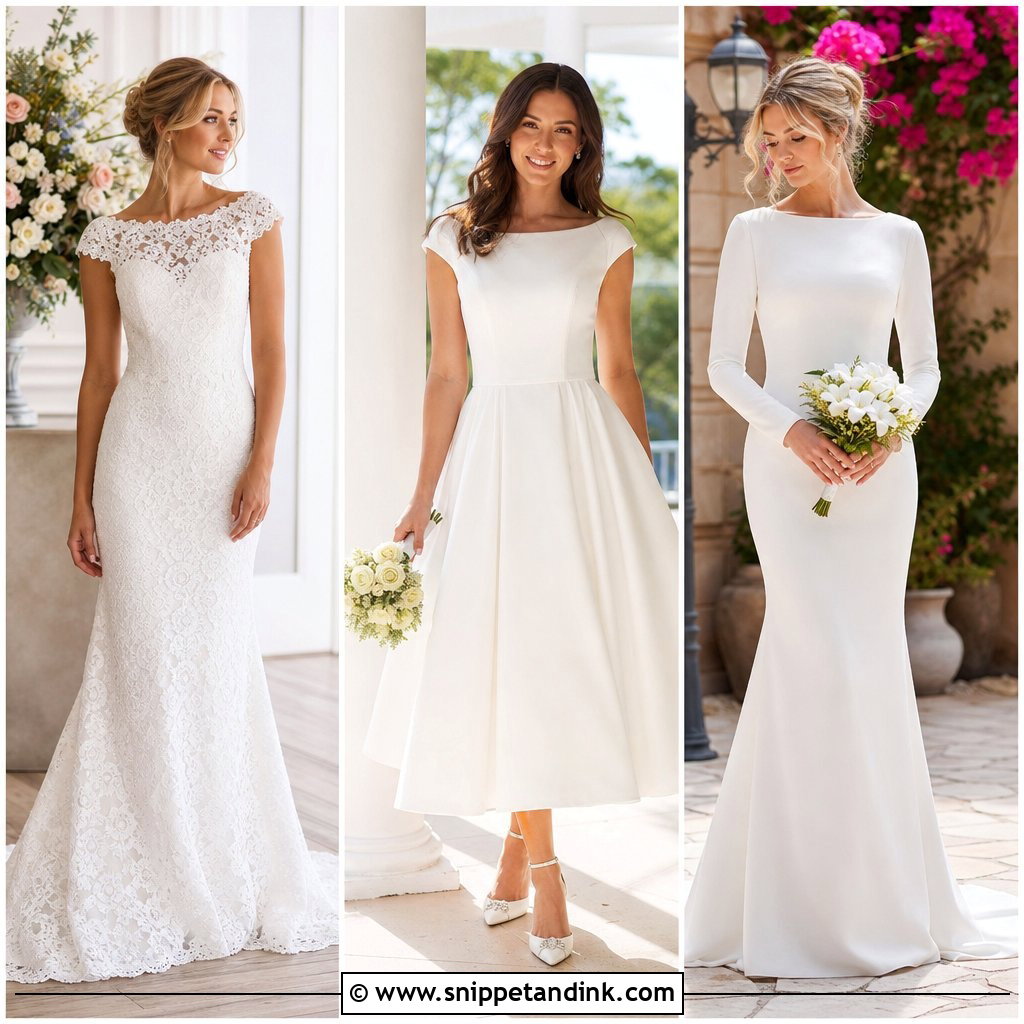
Crepe is my answer for the bride who wants the least fuss. A modest crepe Christian wedding dress in a long-sleeve sheath or soft fit-and-flare has no lace to snag and no volume to manage, and a medium-weight crepe drapes cleanly rather than clinging. Do check the hips in a mirror under bright light, because thin crepe shows every seam and undergarment line. A bateau neckline, a fingertip veil and block-heel pumps keep the line simple. It goes from ceremony to dinner without needing a bustle.
4. Lace A-Line Christian Wedding Gown
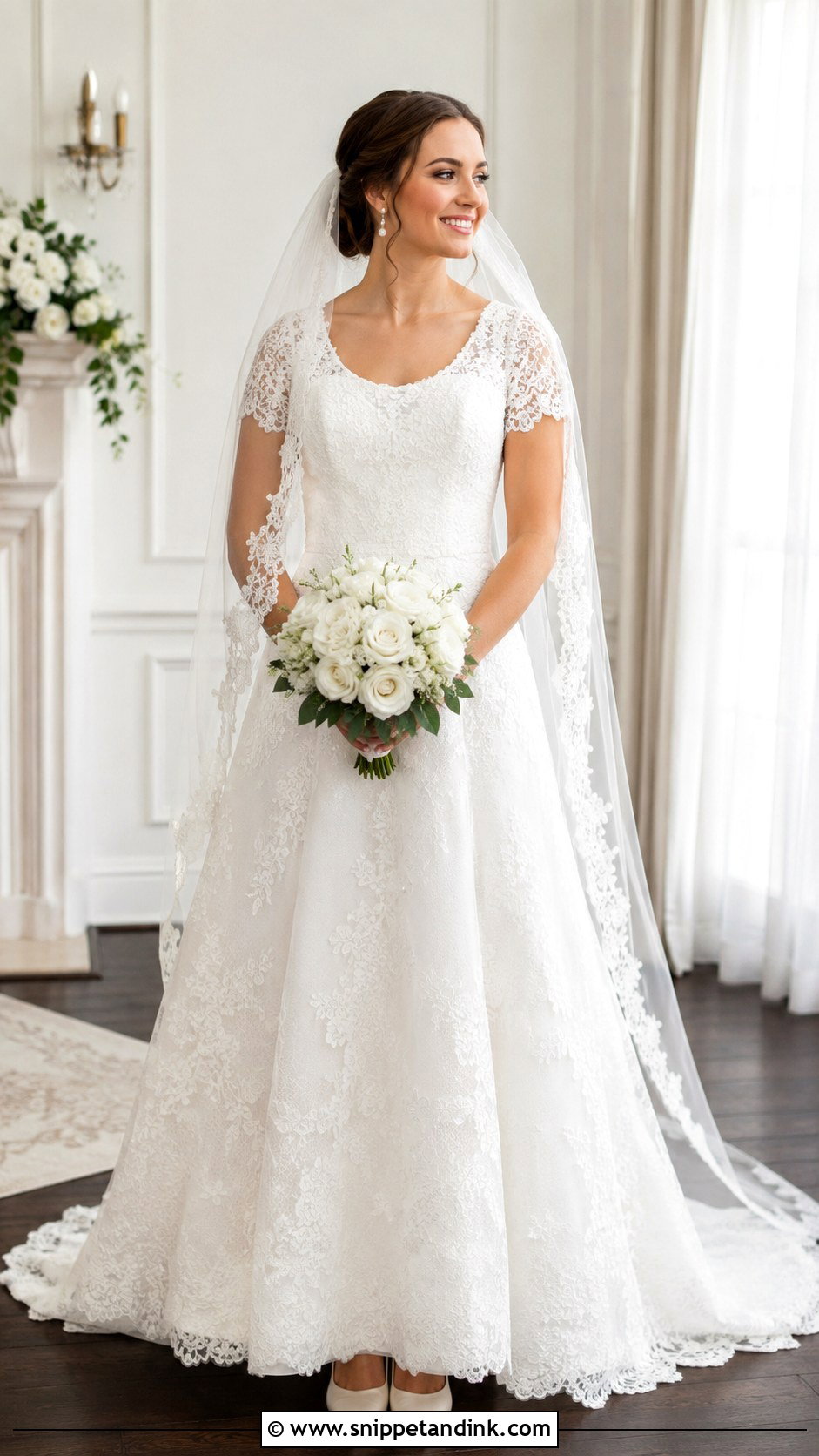
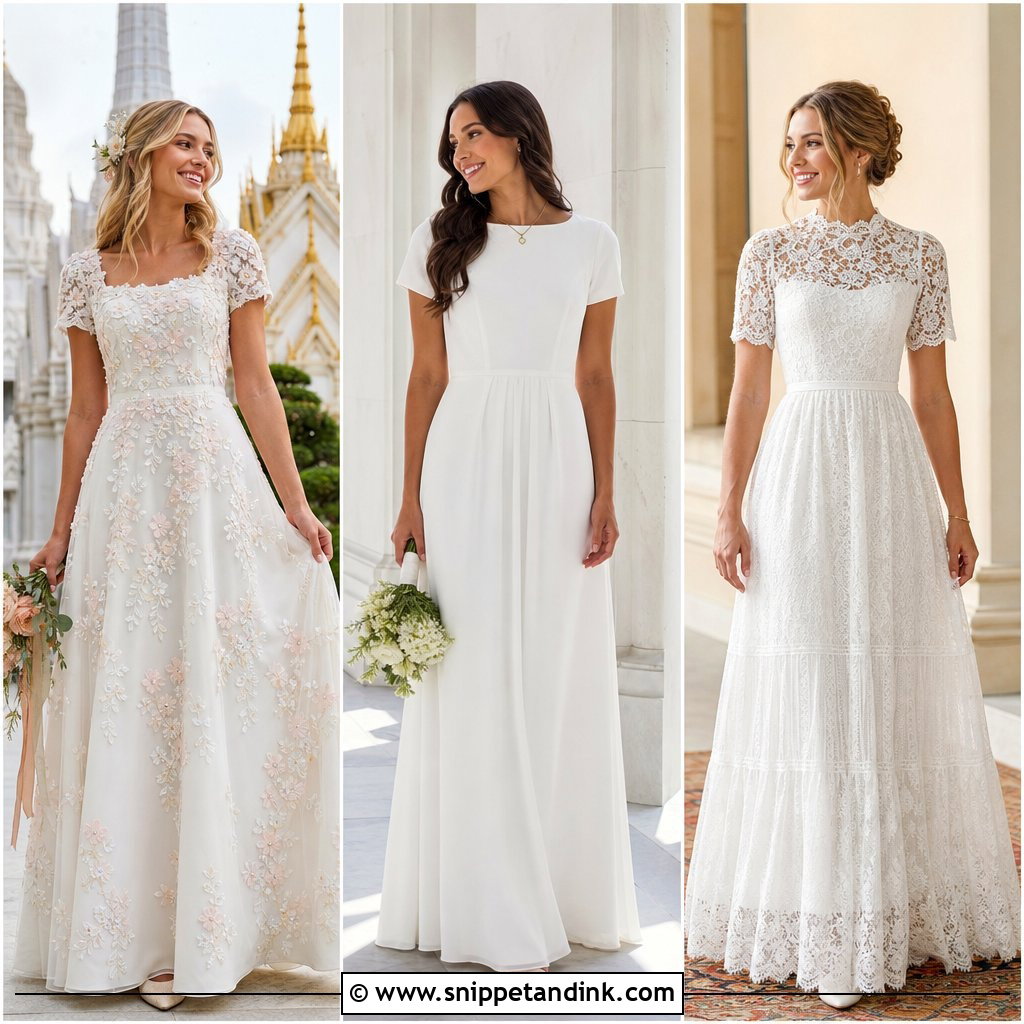
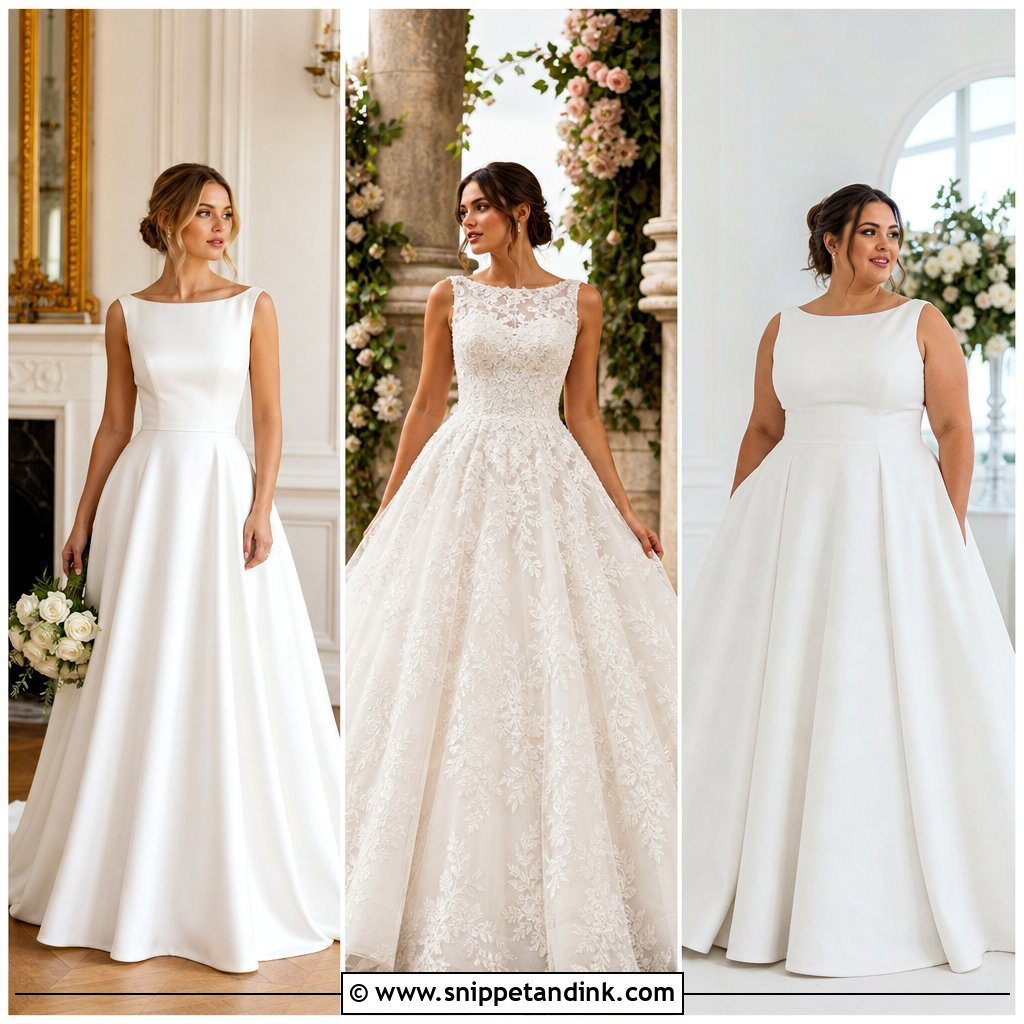
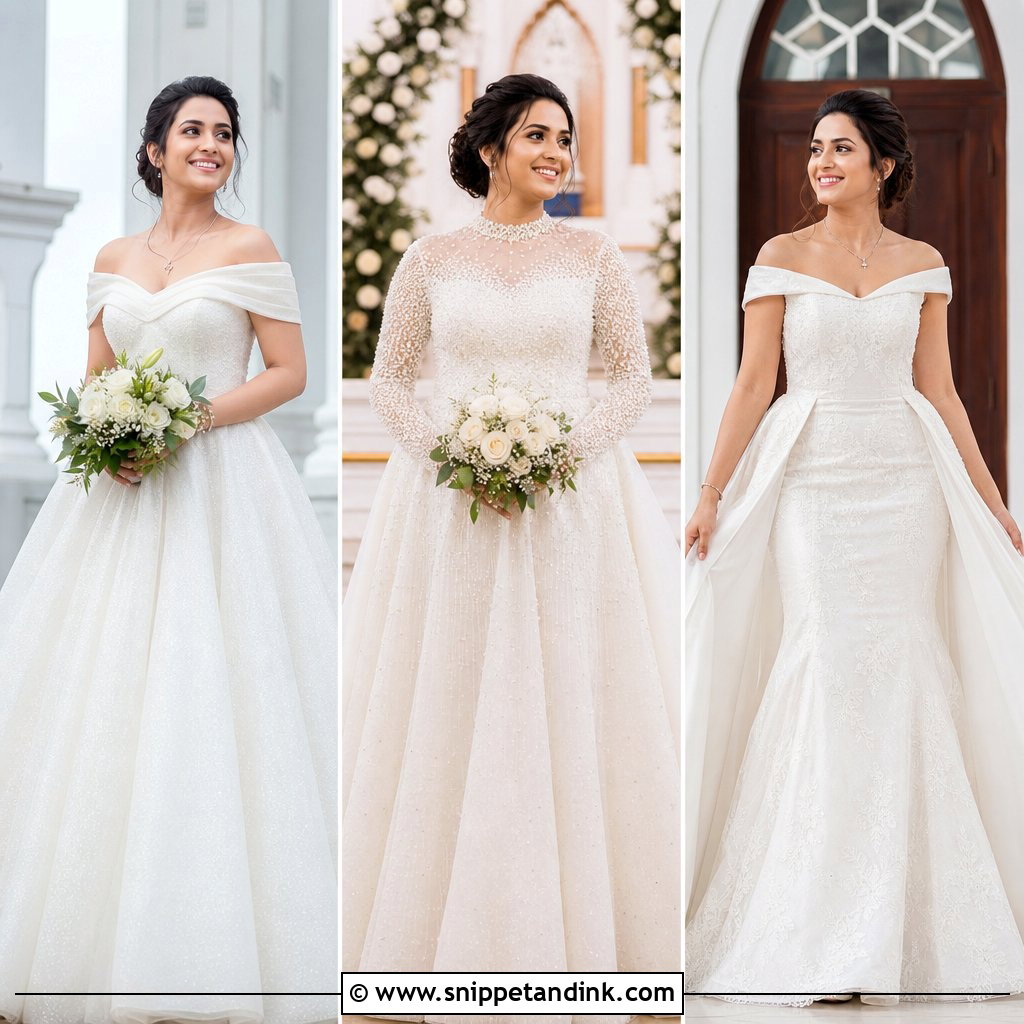
The lace A-line suits more body shapes than any other gown I fit. It nips in at the waist and then falls away from the hips, so you can stand through a long service and still sit comfortably at dinner. Short lace sleeves and a modest scoop neck are the usual starting point, with appliqué drifting onto the skirt. If you need more coverage, a seamstress can often raise the back or extend the sleeves using matching lace, though it’s easier when the shop can order extra from the same lace. A scalloped fingertip veil and a half-up style keep it romantic.
5. Modest Ball Gown Christian Wedding Dress
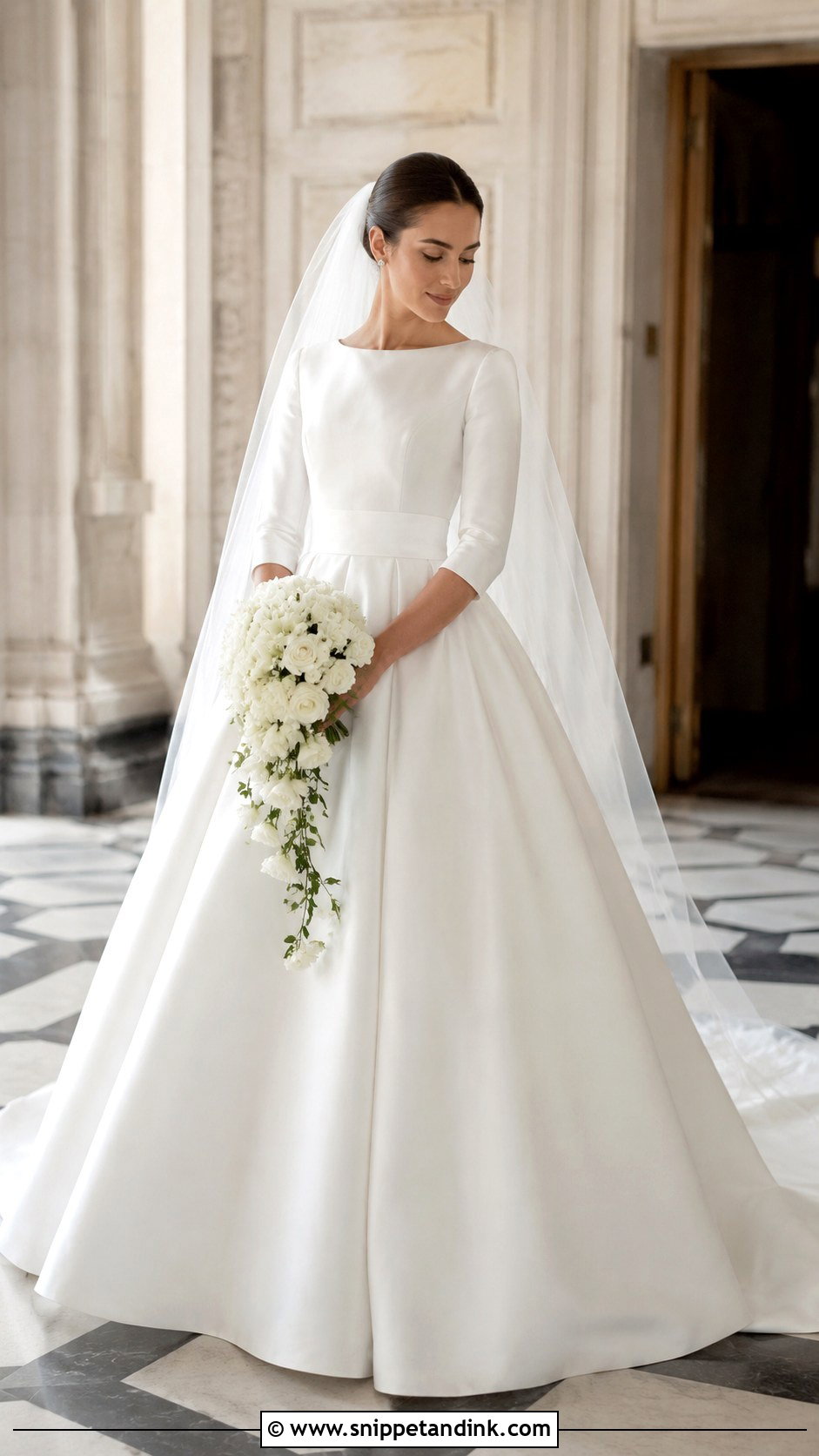
Ball gowns make the walk down a long aisle feel like an event. A fitted bodice with three-quarter sleeves and a full satin or mikado skirt gives the classic shape, and mikado holds volume better than soft satin. Ask about the underskirt. Several layers of stiff tulle can make a gown heavy enough that you’ll feel it by the reception, and a lighter hoop or fewer layers keeps the shape with less weight. Platform heels hidden under the hem and a high bun add height so the skirt doesn’t swallow you.
6. Three Quarter Sleeve Christian Wedding Gown
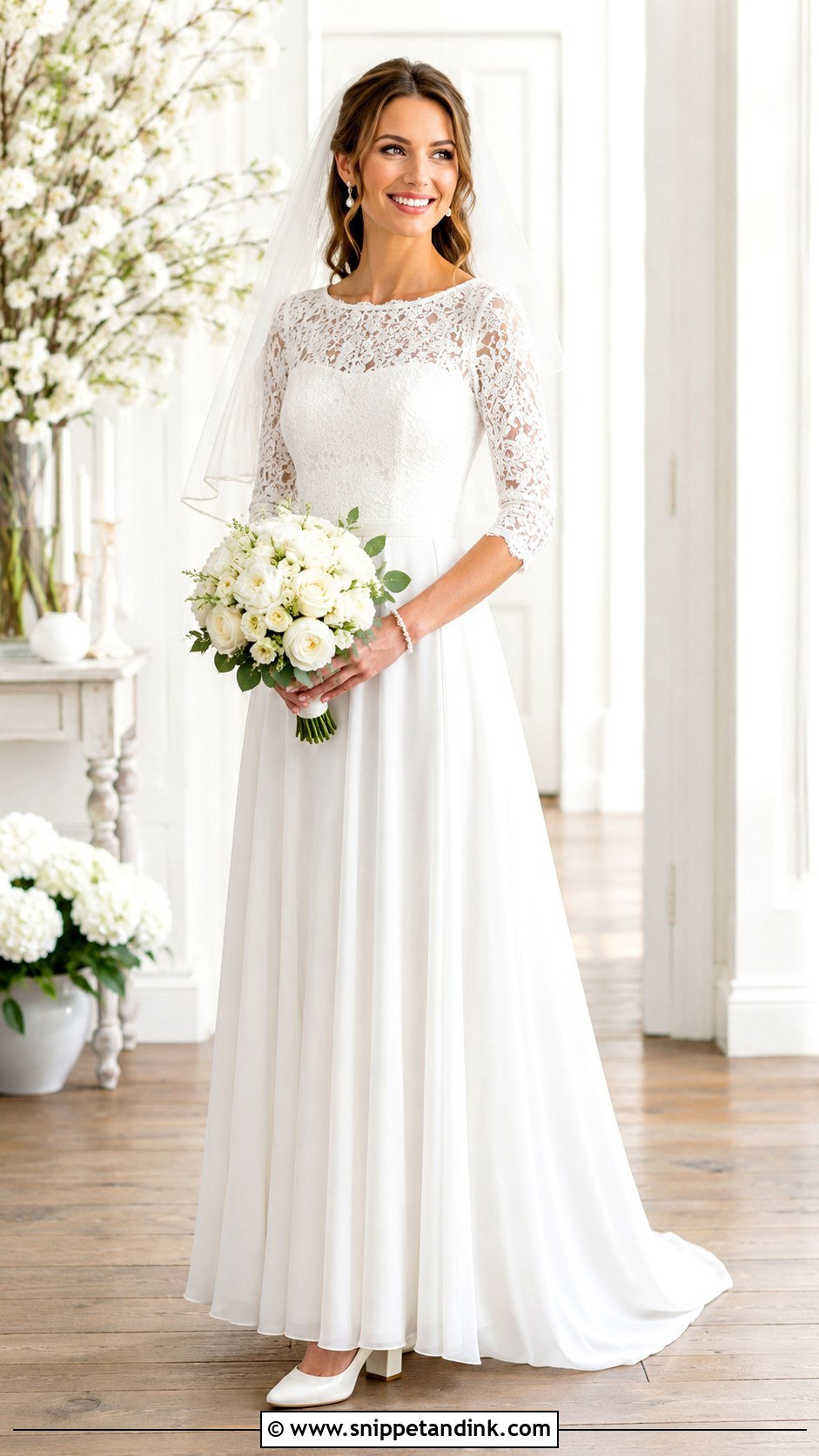
Three-quarter sleeves are my quiet favourite for spring and early autumn ceremonies: they cover the upper arm but leave the wrists free for a bracelet and for holding hands at the altar. A lace bodice over a chiffon A-line skirt stays light. Keep the neckline at a height you’re comfortable with when you lean forward to sign the register. A shoulder-length veil doesn’t fight the sleeve detail, and loose waves pinned behind the ears keep it soft.
7. High Neck Lace Christian Wedding Dress
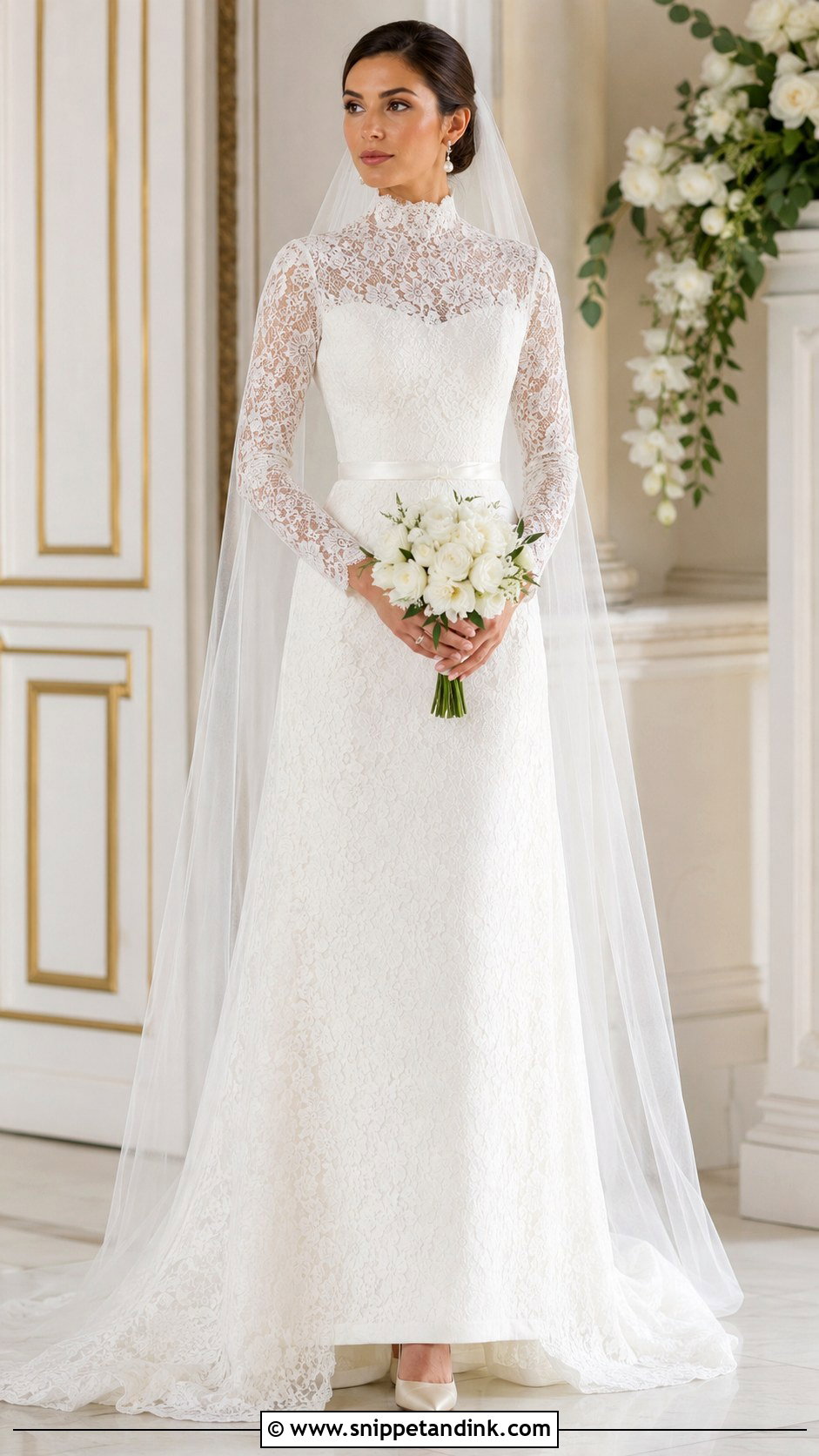
High-neck lace is usually built over a hidden sweetheart bodice, with the lace forming the neckline and sleeves on top. That construction is comfortable, but only if the lace neck isn’t pulled tight. At the fitting, sit down, raise both arms as if hugging someone, and turn your head. If the collar tugs at your throat in any of those positions, it needs easing. A slim A-line skirt, a plain tulle veil and a low chignon keep the lace as the only texture.
8. Plus Size Christian Wedding Gown
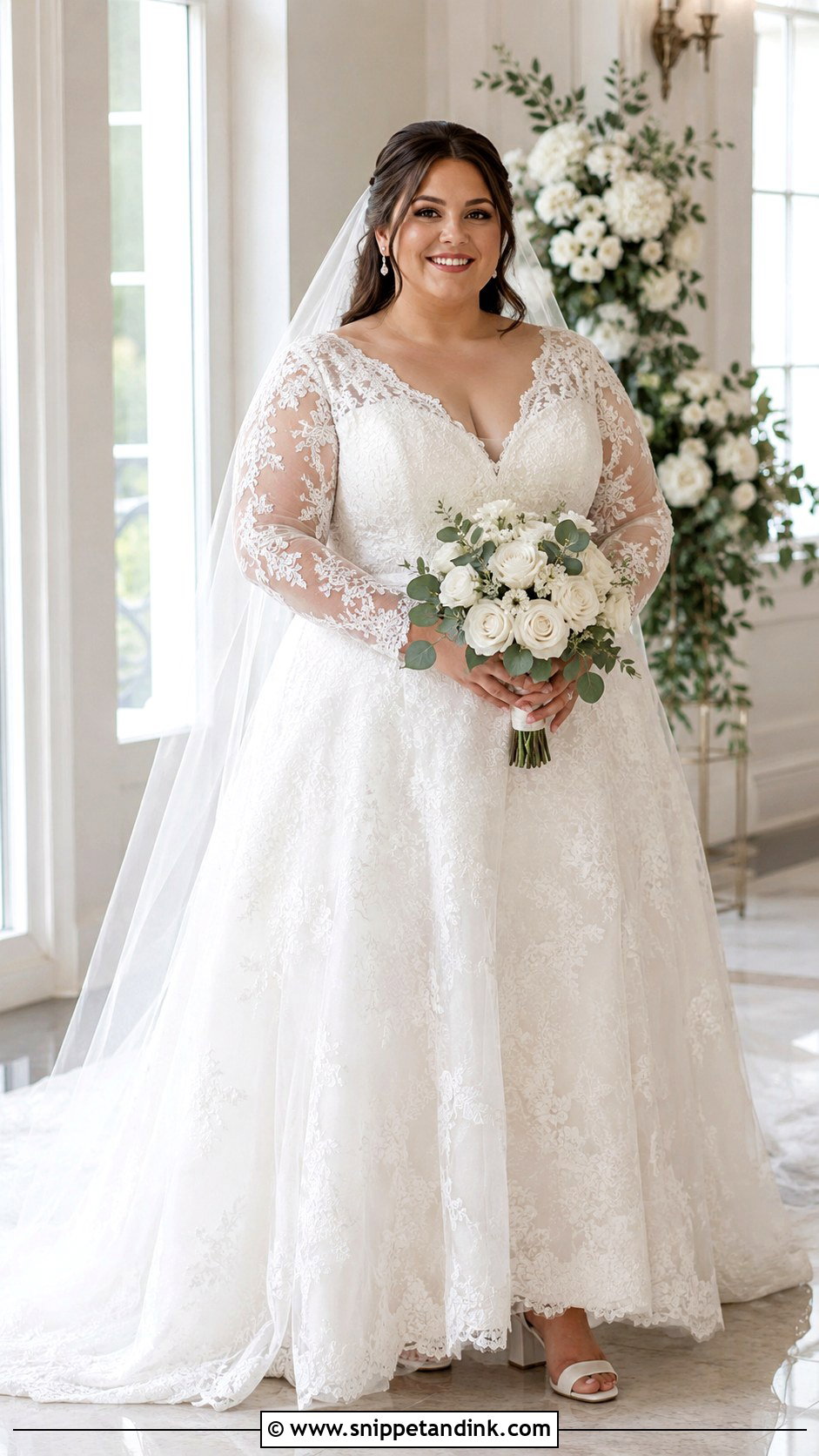
Support is the first thing I talk about with a plus-size Christian wedding gown, before neckline or lace. A structured A-line with a lined lace bodice and sleeves that actually have some stretch makes a big difference to comfort across a long day. Bra and shapewear should be decided before the first fitting, because the dress is altered around them. Ignore any rule about what’s “flattering” and go by how you feel standing and sitting. Ask the salon to bring samples in your size range so you’re not judging a dress clipped onto you.
9. Petite Christian Wedding Dress
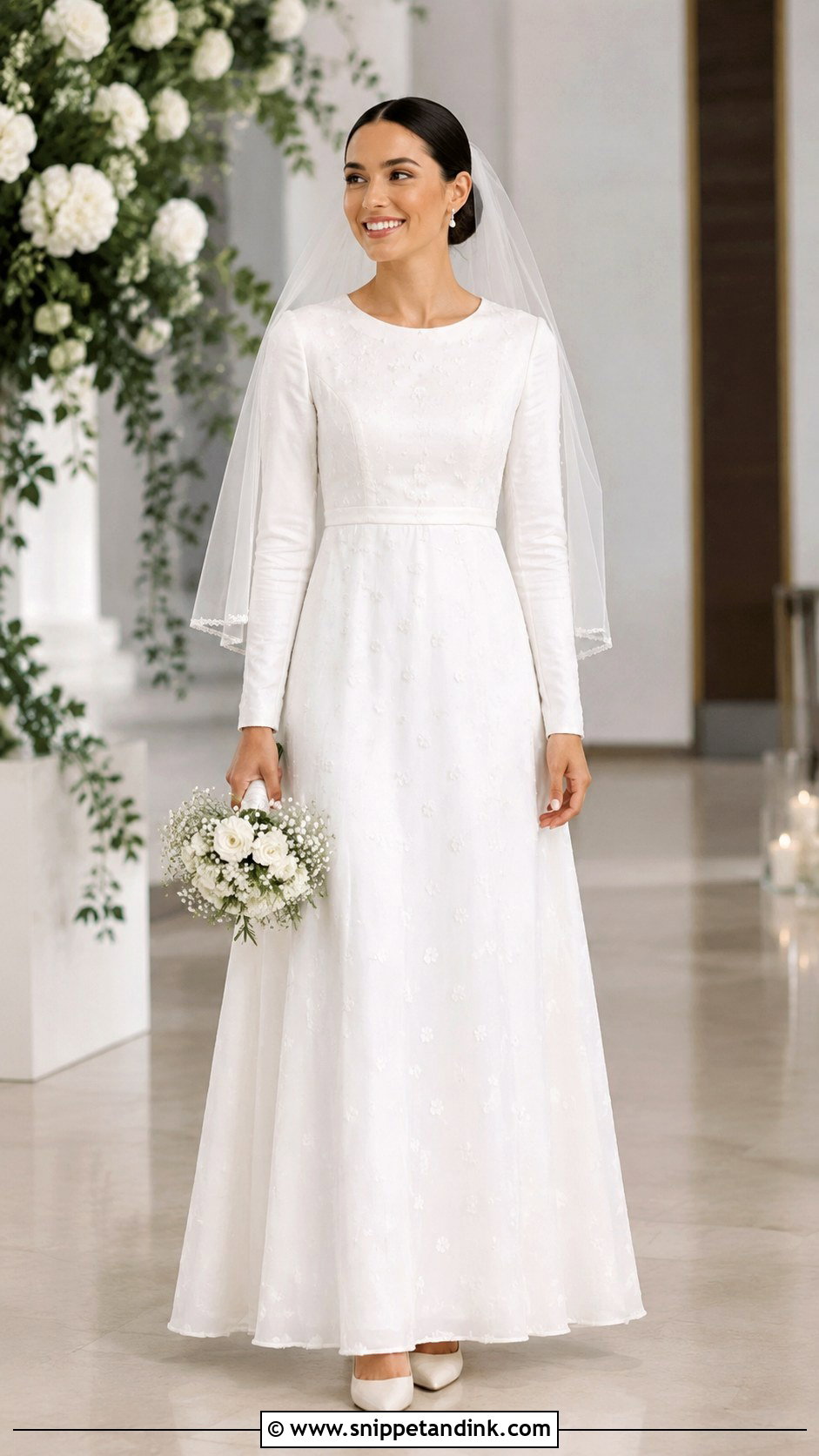
Petite brides tend to get lost in fabric, so I look at scale: smaller lace motifs, a slightly raised waist and a narrow A-line skirt. Vertical seams draw the eye up, and a high scoop neck keeps it modest without chopping the torso. Budget for hemming from the start. Shortening a gown with a lace border or appliqué at the hem isn’t just a cut; the lace often has to be removed and reapplied, so ask how the seamstress will do it before you order. A fingertip veil suits a shorter frame better than a very wide one.
10. Boho Christian Wedding Gown
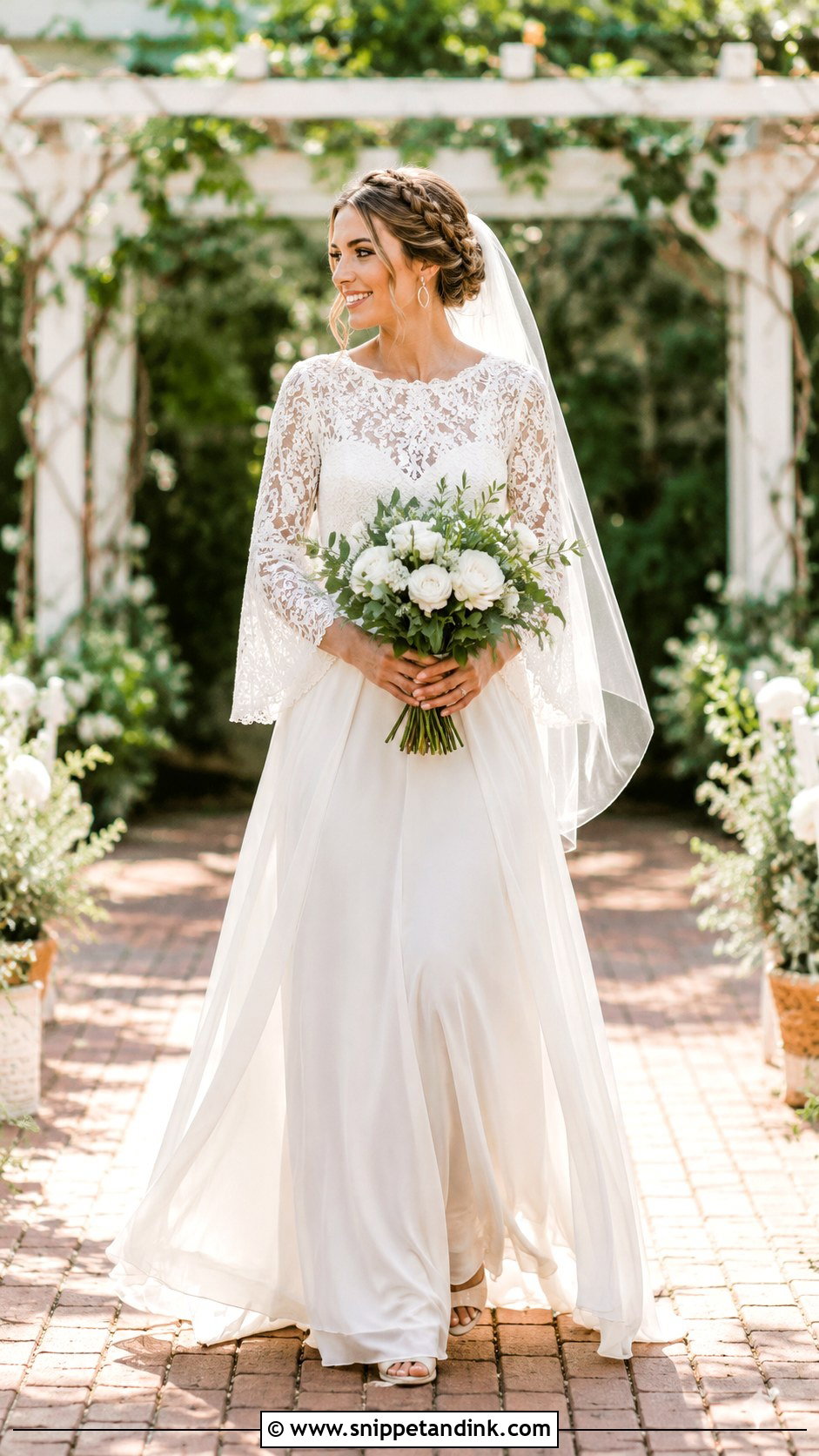
A boho gown should skim the body, never cling, and that loose drape is what makes it comfortable for an outdoor or barn ceremony. Bell sleeves and a chiffon or soft tulle skirt move well in a breeze. Open-work boho lace often has gaps, so if coverage matters, ask for a nude or ivory lining behind the bodice and sleeves. Ivory flats or low block heels are a good idea on grass. A loose braided updo and a natural bouquet keep the scale right for such a light dress.
11. Minimalist Christian Wedding Dress
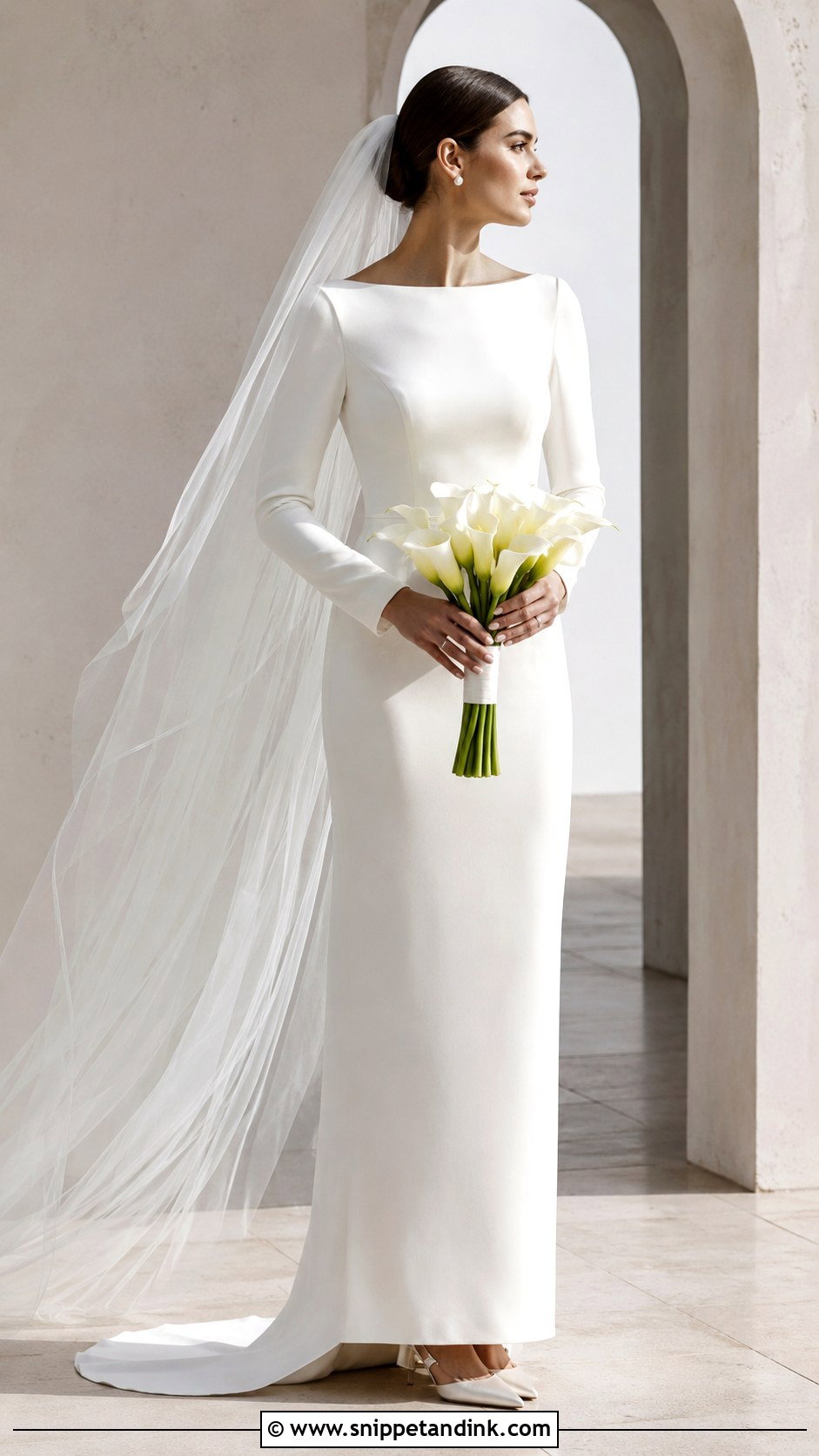
Minimalist gowns are the hardest to get right, because there’s nowhere for a poor fit to hide. Ivory crepe or matte satin with a bateau neckline, long fitted sleeves, a defined waist and a column or soft A-line skirt is the core. The only decoration might be covered buttons or a small bow at the back. I’d budget more for alterations than for accessories with this dress, and check the lining under bright light so nothing shows through. A sheer chapel veil and a sleek centre-parted bun keep it calm.
12. Vintage Christian Wedding Gown
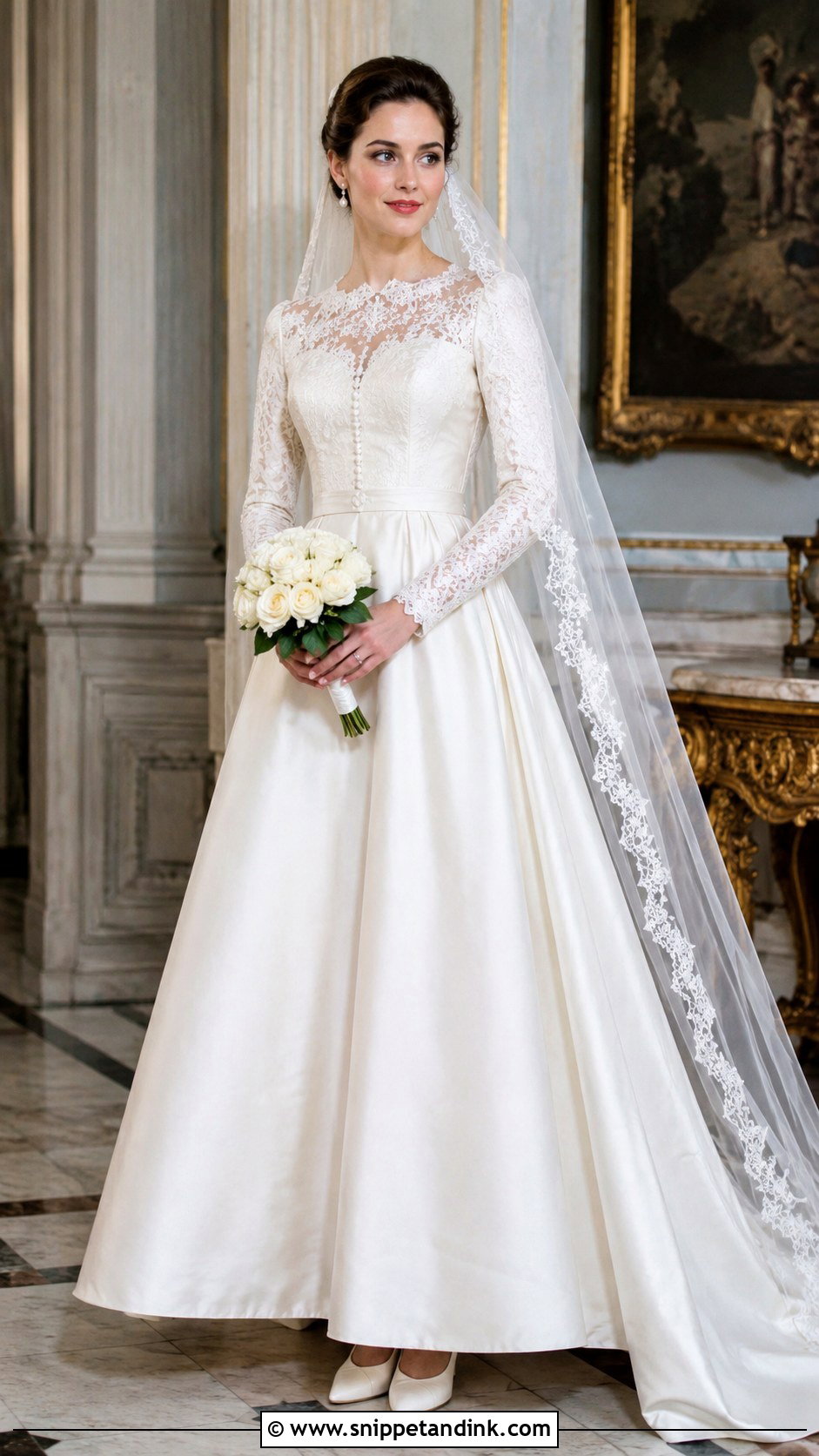
Vintage inspiration works best when one period detail leads. A lace jewel neckline, fitted sleeves and covered buttons already say “heirloom,” so I don’t pile on a birdcage veil, a 1940s roll and a beaded capelet as well. Soft ivory supports the look better than optical white. Modern construction underneath, with boning, proper lining and a good zip, keeps it comfortable. A lace-edged veil and a low rolled updo complete it.
13. Short Sleeve Christian Wedding Dress
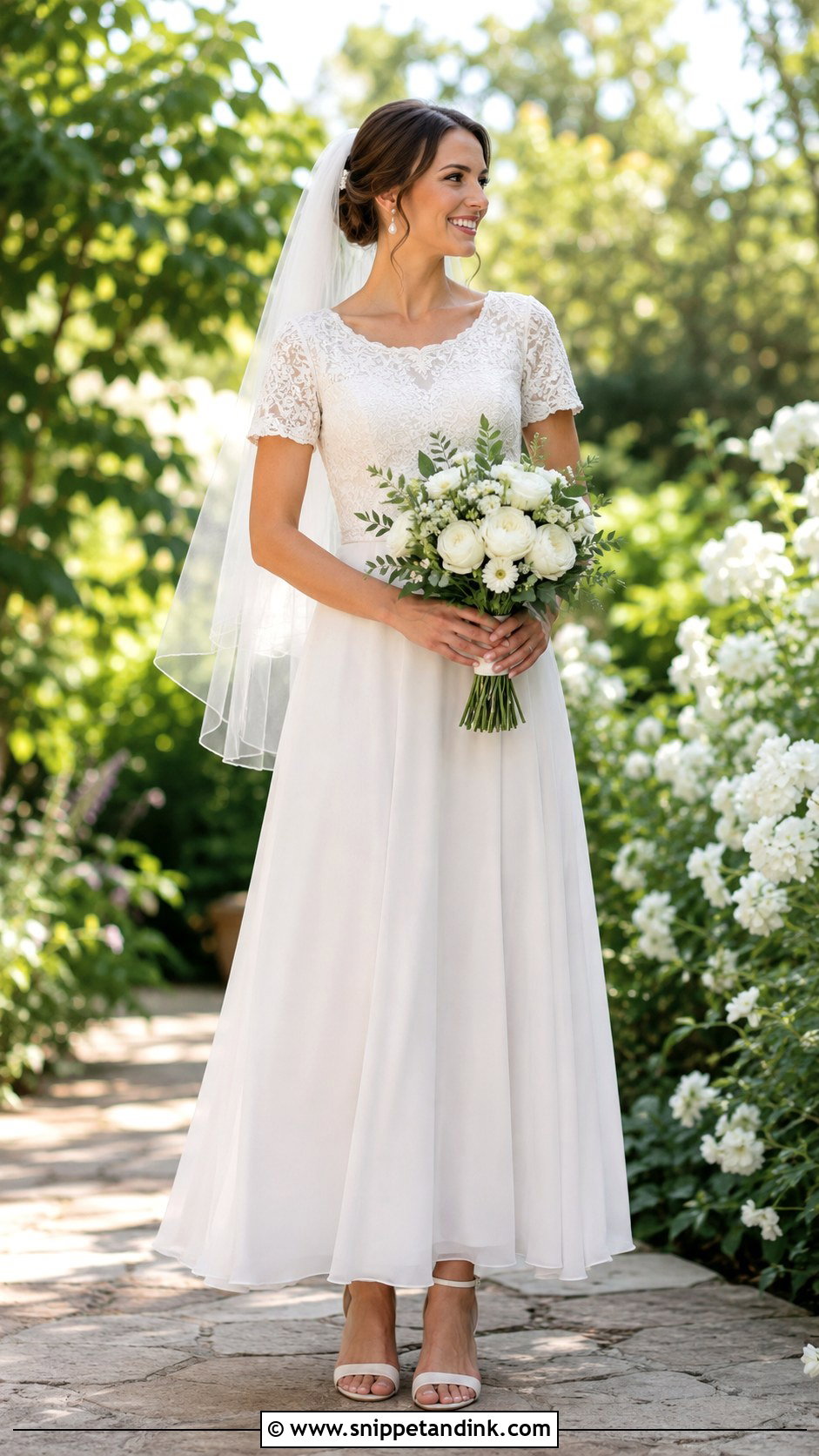
Short sleeves give shoulder coverage without trapping heat, which makes them my usual suggestion for summer church weddings. Lined lace sleeves on a tea-length or floor-length A-line with a chiffon skirt let air move. The common fitting problem is the sleeve opening: lace with little stretch can bite into the upper arm, especially when you lift your bouquet. Have the seamstress check it with your arms raised. Block-heel sandals with an ankle strap are steadier on outdoor paths.
14. Cathedral Train Christian Wedding Gown
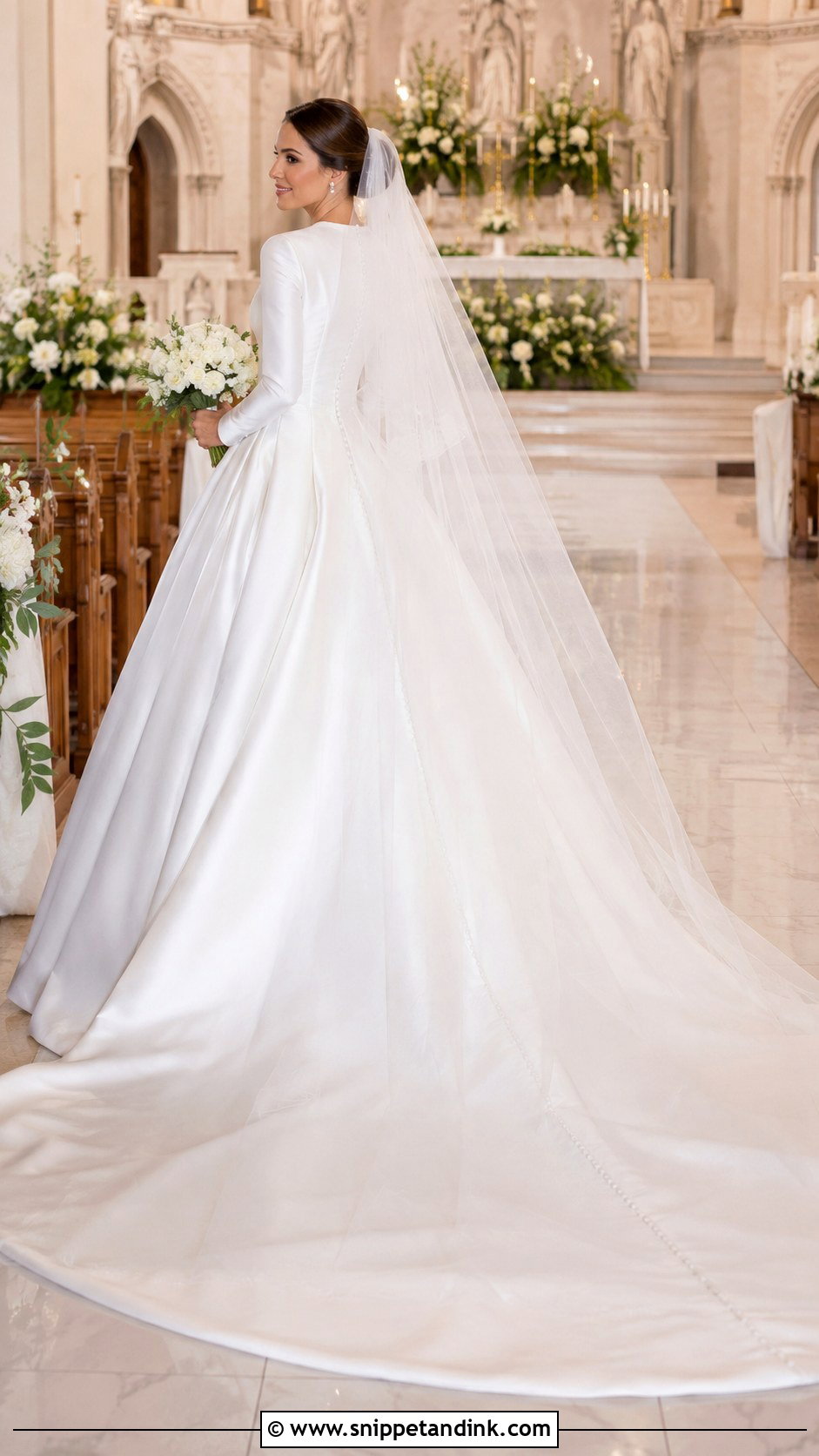
A cathedral train belongs in a long aisle. Mikado or heavy satin holds the train’s shape on the floor, while softer fabrics can puddle. The bustle matters as much as the train; ask your seamstress for a sturdy over-bustle or under-bustle with loops your mother or maid of honour can work quickly, and have them practise once. Walk and turn in the gown before the day, and remember that someone needs to arrange the train each time you stop. A secure updo keeps a cathedral veil anchored.

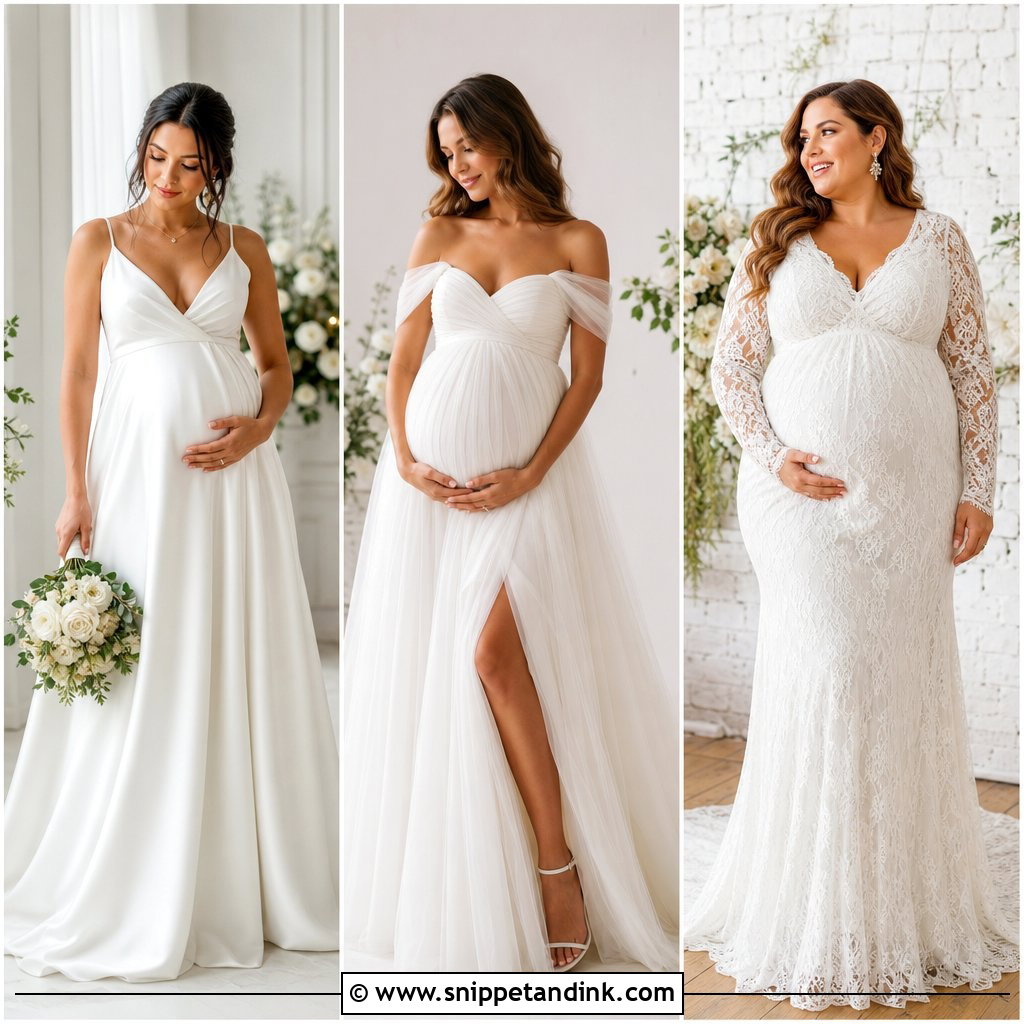
15. Tea Length Christian Wedding Dress
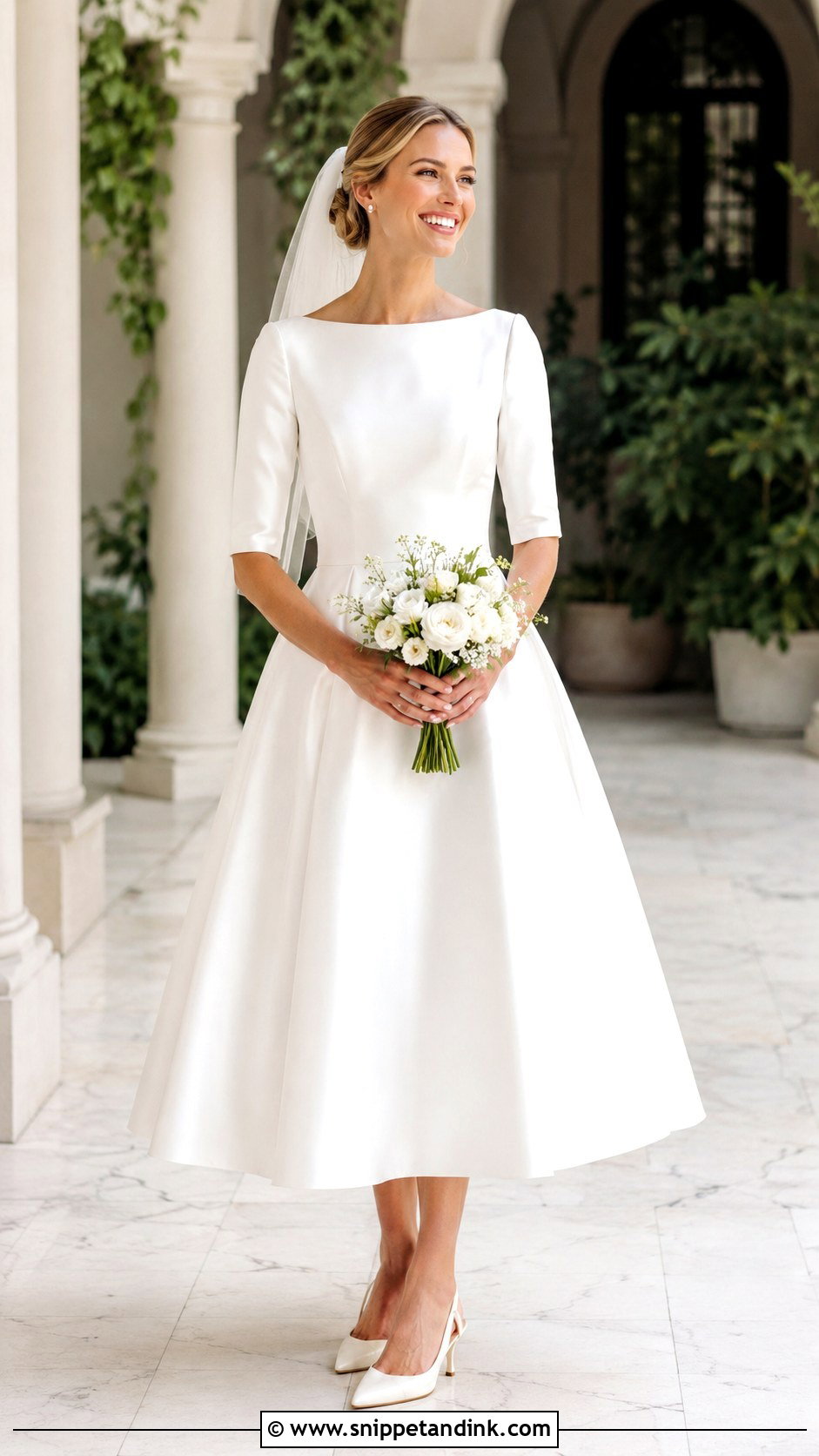
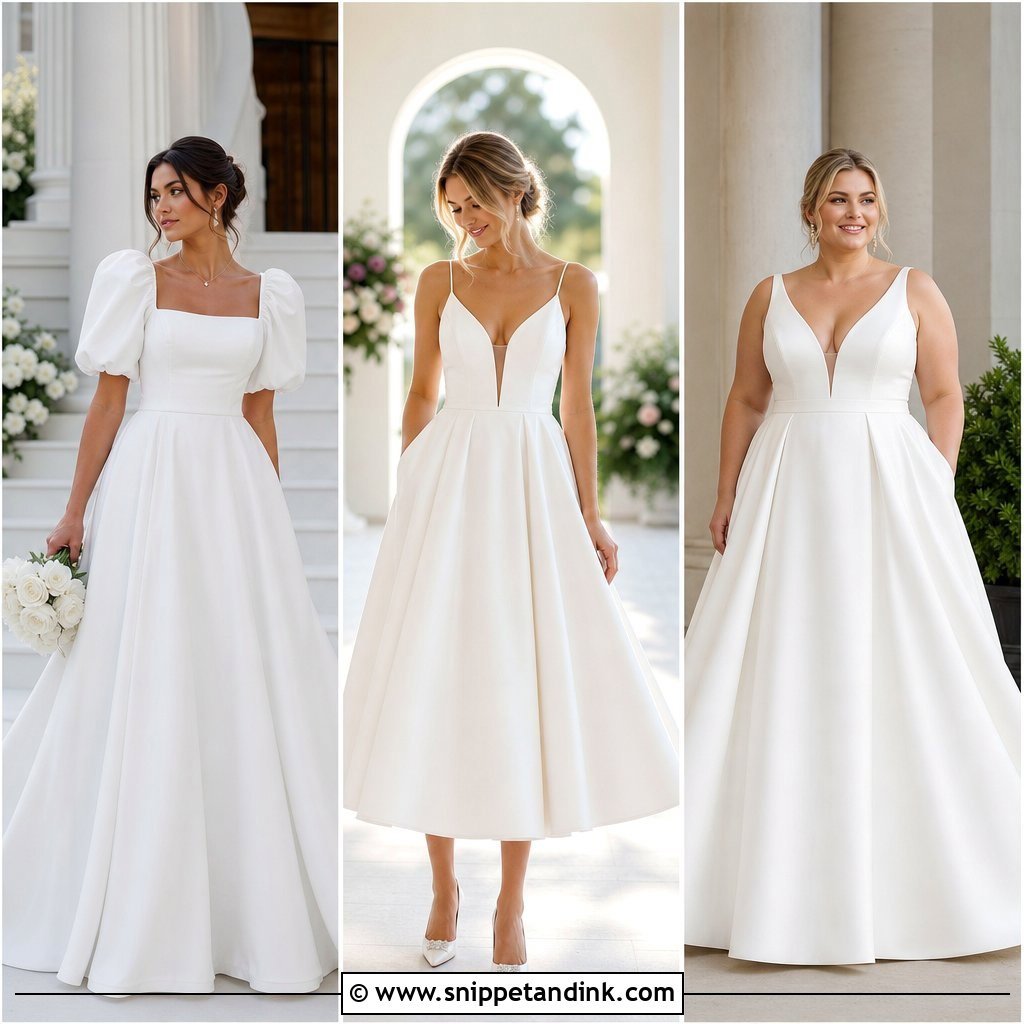
Tea length is a happy, practical choice for a small ceremony, a courthouse service or a day of lots of moving around. A fit-and-flare with a modest bateau neckline and elbow-length sleeves looks polished, and structured satin or layered tulle keeps the skirt full. The hem decides everything here: a couple of centimetres changes the whole proportion, so hem it with your actual shoes on. Since the shoes show, they’re part of the outfit. A short veil and a compact bouquet suit the shorter line.
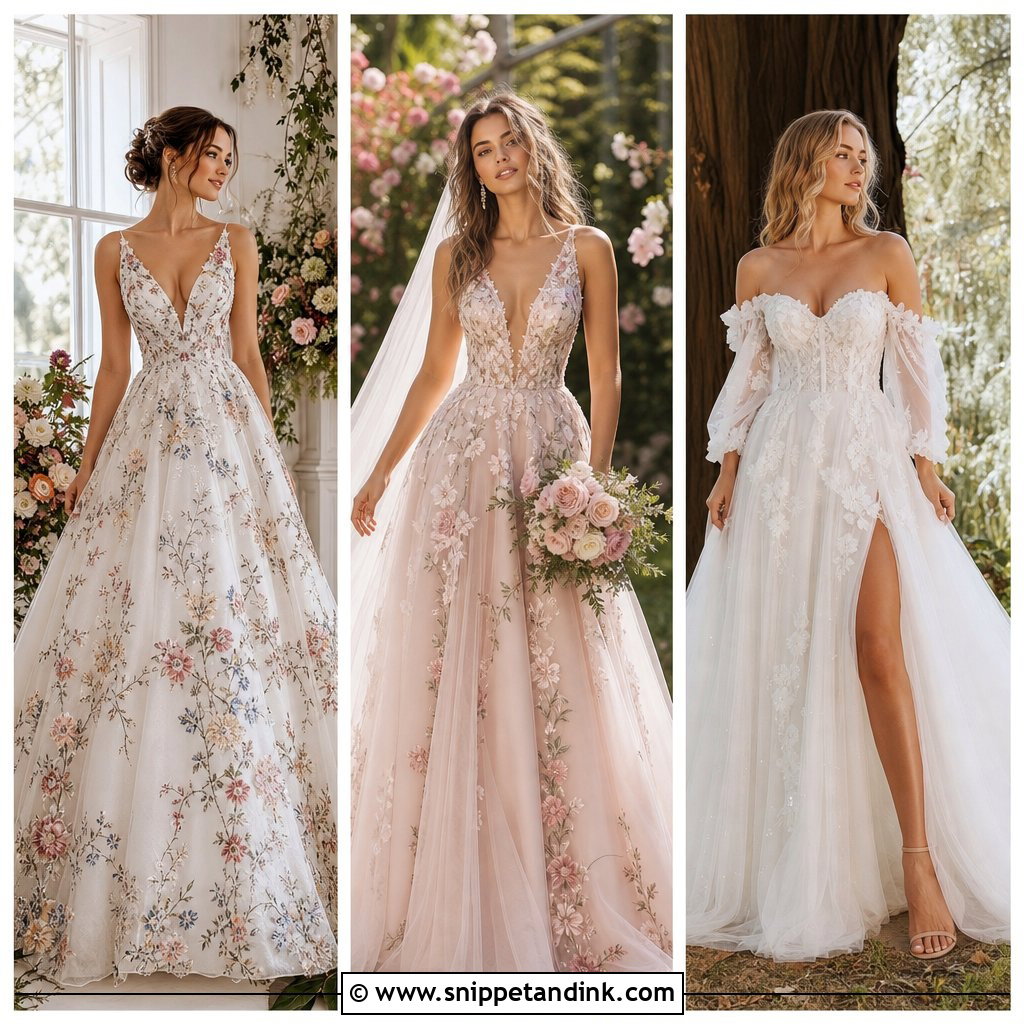
16. Floral Applique Christian Wedding Gown
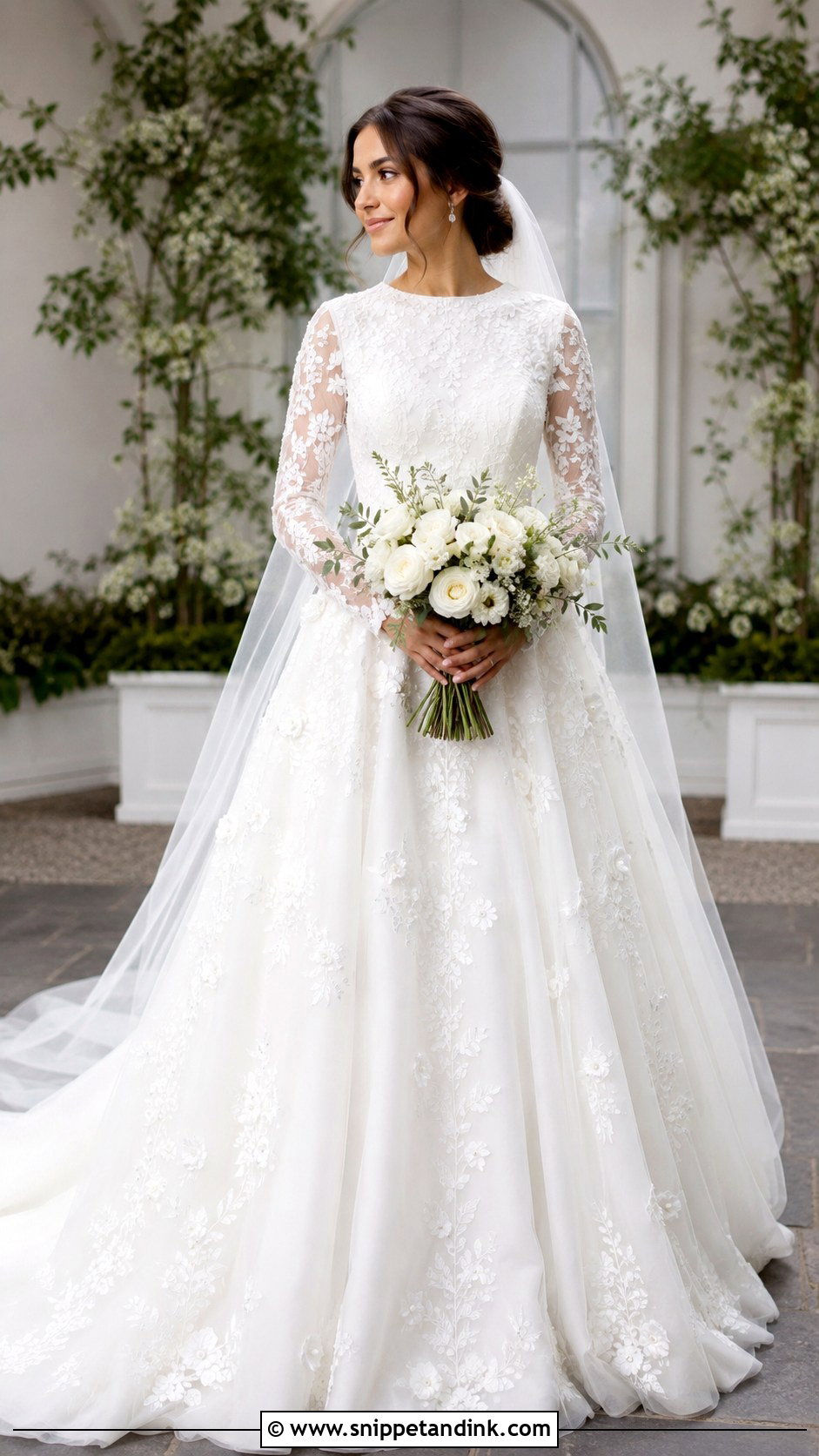
Floral appliqué adds romance without a low back or neckline, and that’s why it suits modest brides so well. The flowers are hand-placed, so alterations can throw them off balance. When the waist, sleeves or hem are adjusted, ask the seamstress to reposition appliqués rather than cut through them. Illusion sleeves backed with matching fabric keep coverage while looking light. A plain tulle veil and plain satin pumps let the flowers stay the focus.
17. Square Neck Christian Wedding Dress
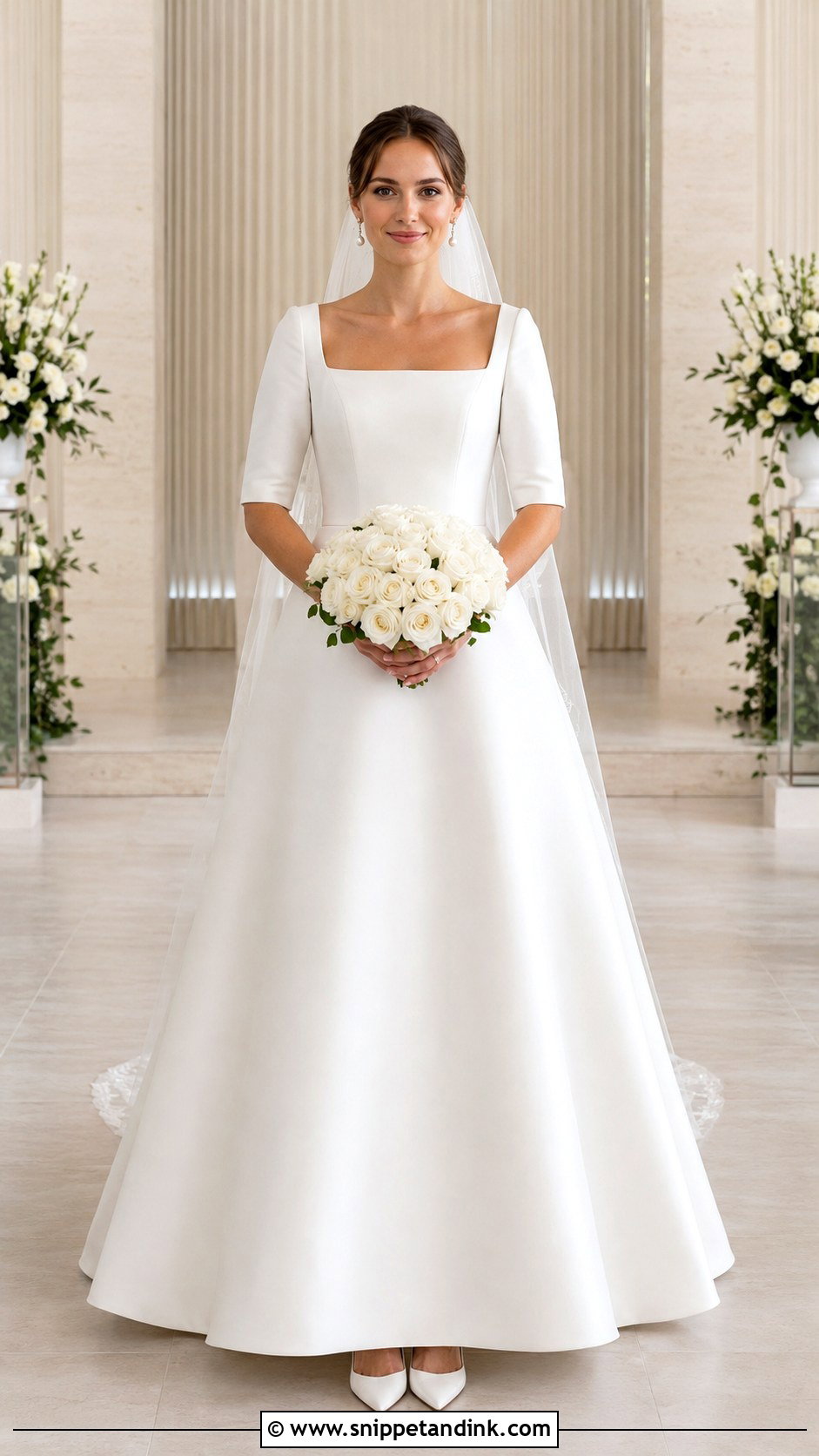
A square neckline frames the collarbones neatly, and it can be raised as high as you like. The weakness of a square neck is gaping. When you bend forward, the straight edge can pull away from the chest, so at the fitting I have brides lean forward and reach for something on the floor. If it lifts, the bodice needs taking in at the top edge. Mikado, crepe or matte satin keep the seams crisp. A centre-parted low bun echoes the symmetry.
18. Chiffon Christian Wedding Gown
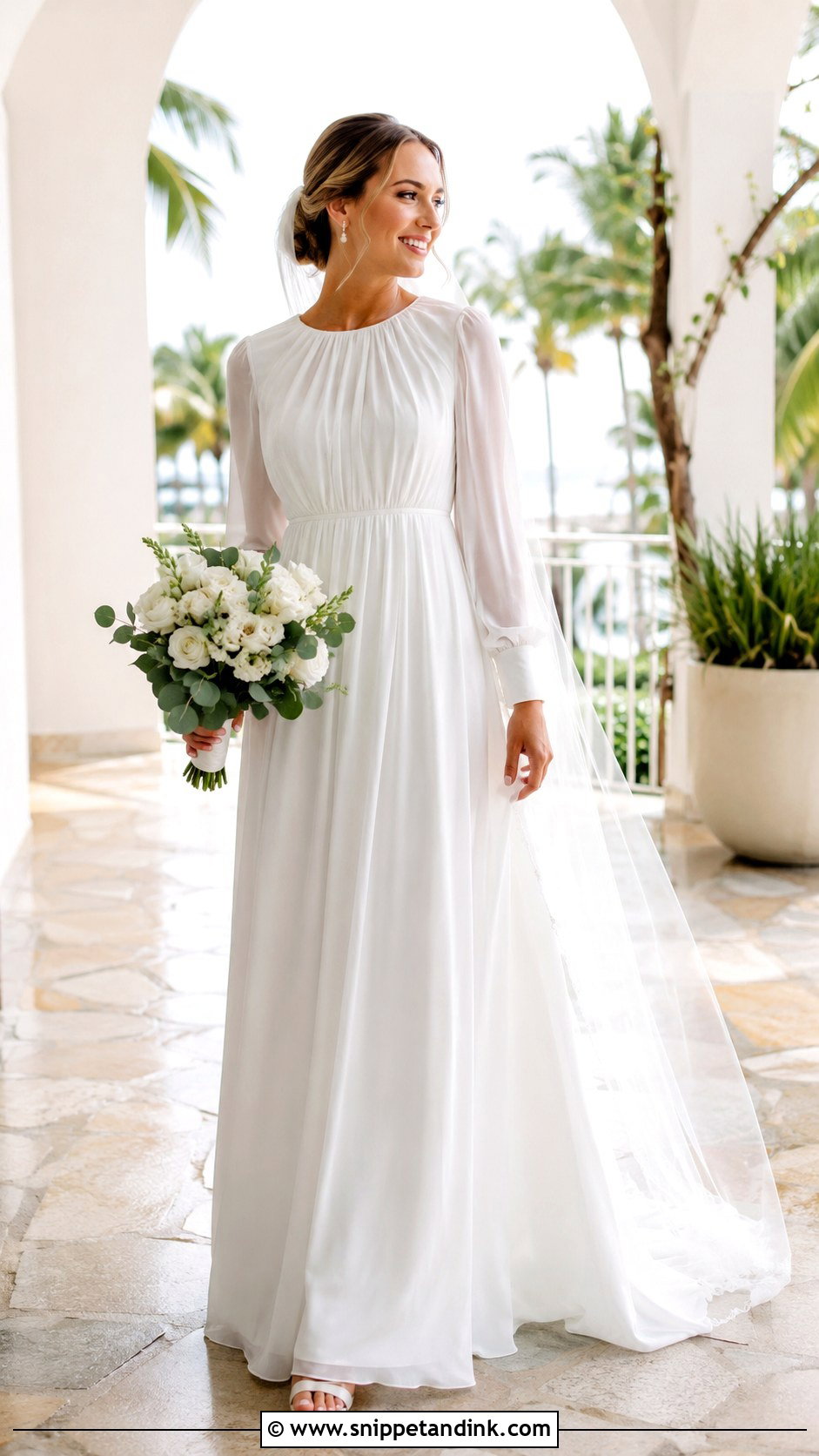
Chiffon is the lightest fabric on this list, which makes it practical for warm climates and destination ceremonies. It also turns see-through in strong sunlight more readily than you’d think, especially at the skirt. Check that there’s at least one full lining layer and wear smooth nude foundations. Sheer sleeves can be lined if you want full coverage. Low heels without buckles or heel caps that catch the hem are worth it, because chiffon snags easily.
19. Beaded Christian Wedding Dress
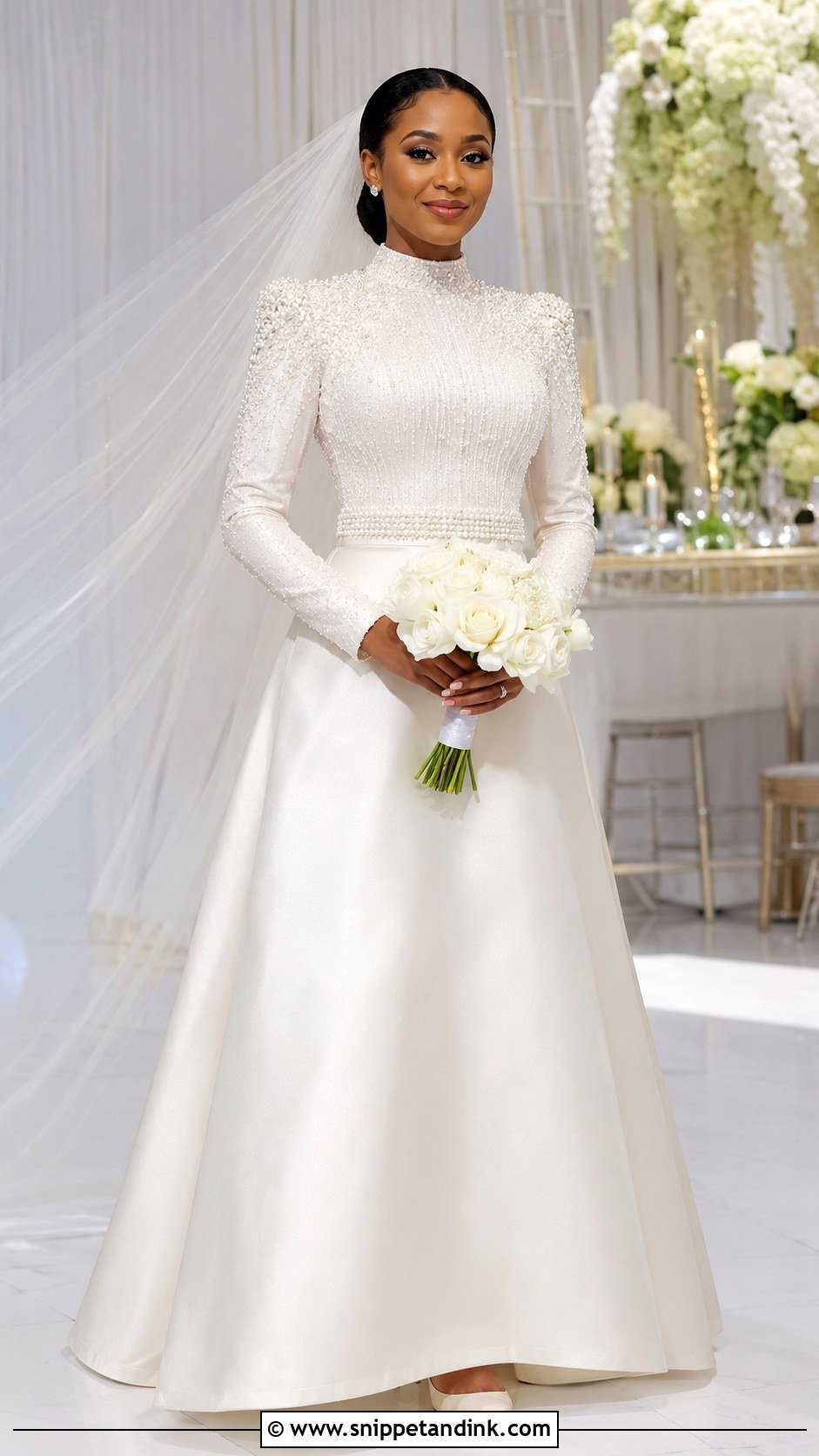
Beading catches candlelight and evening reception lighting in a way lace alone doesn’t, but restraint matters. Concentrate it at the shoulders, waist or cuffs and leave the crepe or satin skirt plain. Turn the sleeves inside out at the fitting. Sharp bead backs and stitching knots on the inner arm can scratch all day, and a seamstress can line over them. Heavy beading also needs a fabric strong enough to hold it, or it drags the neckline down.

20. Princess Christian Wedding Gown
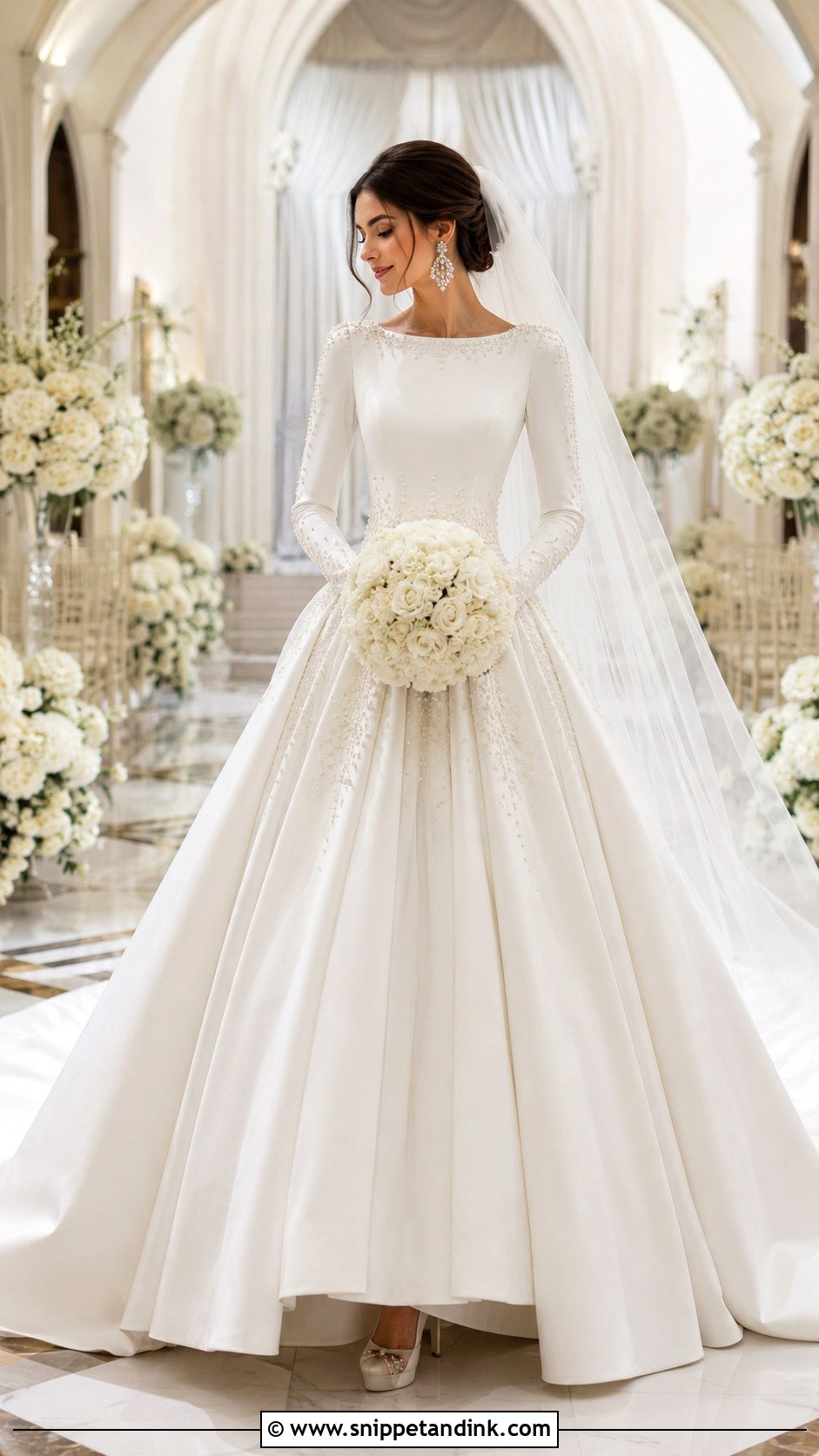
A princess Christian wedding gown is all volume and structure: a satin ball gown with a high scoop neck, long fitted sleeves and a sweeping train. Hidden pockets are a practical extra worth requesting. The fit should be firm through the shoulders and waist so the skirt’s weight is carried by the bodice, not by your shoulders. A polished updo supports a long veil, and platform heels add height under the volume. Carry a full round bouquet in proportion to the skirt.
Your Guests Spend the Service Looking at Your Back
In most church ceremonies, you face the altar for a long time, and everyone in the pews sees the back of your dress. That’s why I pay as much attention to the back as to the front: the button line, how the veil falls over it, and whether the zip or lacing sits flat. A row of covered buttons or a lace keyhole that’s lined for coverage gives guests something lovely to look at.
Kneeling, sitting and standing through a long service
Some services are short; a full nuptial Mass can run an hour or more, with kneeling, sitting and standing throughout. A fitted mermaid or a stiff boned bodice can make kneeling uncomfortable, and big skirts need arranging every time you sit. At your last fitting, kneel on a cushion, stand up without help and sit on a chair. Check where the train ends up and whether the hem catches your heel as you rise.
Altar steps are another quiet hazard. Practise lifting the front of the skirt a few centimetres with one hand while holding your bouquet in the other, and choose shoes with a heel you trust on stone or polished wood.
Comfort at the Altar Counts More Than the Label
Long sleeves and high necks are only one way to dress modestly. Short sleeves, square necks, lined lace and tea-length hems all fit within it too. Weigh fabric against the season, check what your church asks of you, and factor alteration costs into the budget early, since modest changes to a sample often add up. Choose accessories that sit quietly beside the gown’s details. And whatever you choose, wear it through a full rehearsal of standing, kneeling and walking at the last fitting. If it passes that, it’ll carry you through the day.
You'll Like These Ideas:




Leave a Reply