
Covered bridal design has come a long way. High necklines, long sleeves, bateau necks, capes, clean crepe, soft satin, lace and tulle now show up in collections that feel current rather than borrowed from a grandmother’s album. When I style a bride who wants coverage, I spend as much time on how the gown moves as on how much it hides: can she lift her arms, kneel, hug her father and sit through dinner without tugging at a sleeve? The veil, shoes, bouquet, jewelry and hair then finish the picture. From a regal ball gown to a plain column, here are 25 covered gowns and what I would look for in each.
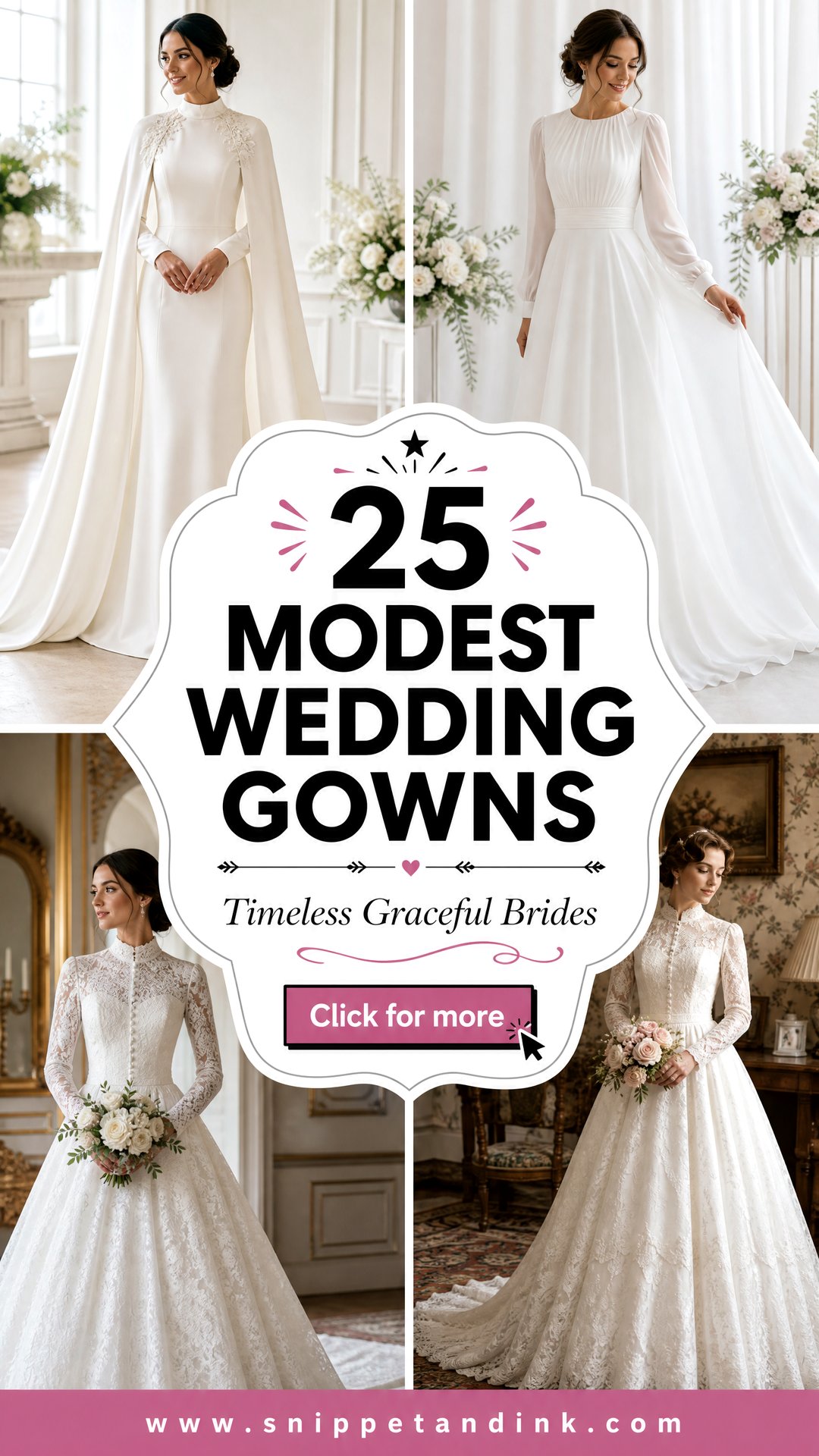
Sitting, Kneeling and Lifting Your Arms at the Fitting
Coverage changes how a gown behaves. A sleeveless dress forgives a tight bodice because your arms are free; once sleeves are attached, every reach pulls on the bodice, the neckline and the back. That is why I run the same movement check with every bride who wants a covered gown, ideally at the first fitting while the seamstress can still change things.
- Raise both arms as if hugging someone taller than you. If the whole bodice lifts, the armholes are cut too low or the sleeves have no ease at the top.
- Sit on a hard chair for a few minutes. Check whether the neckline pulls down at the front, and where the skirt ends if you care about covered ankles.
- Kneel, if your ceremony includes kneeling or sitting on the floor. Fitted skirts and mermaid flares often make this impossible without a hidden slit.
- Bend forward to pick something up. A high neck should stay put; a scoop that gapes here will gape in candid photos too.
- Hold your bouquet at the waist for a full minute, because sleeves that are long enough when your arms hang can ride up to mid-forearm once your elbows bend.
Bring the shoes you will wear and the undergarments you plan to use. A seamstress cannot set a hem or a sleeve length correctly without them, and a different bra changes where a high neckline sits.
1. Long Sleeve Lace Modest Wedding Gown
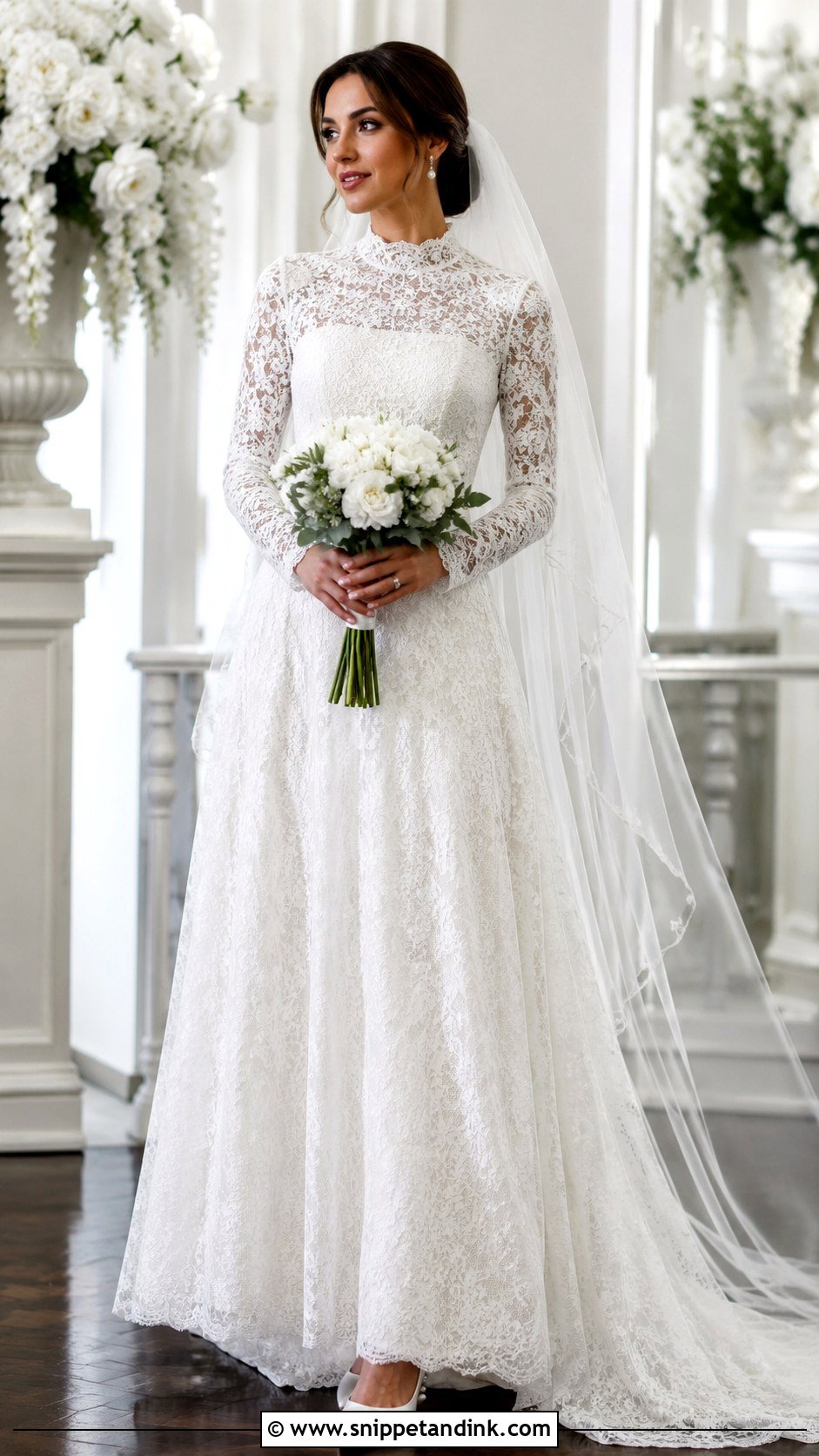
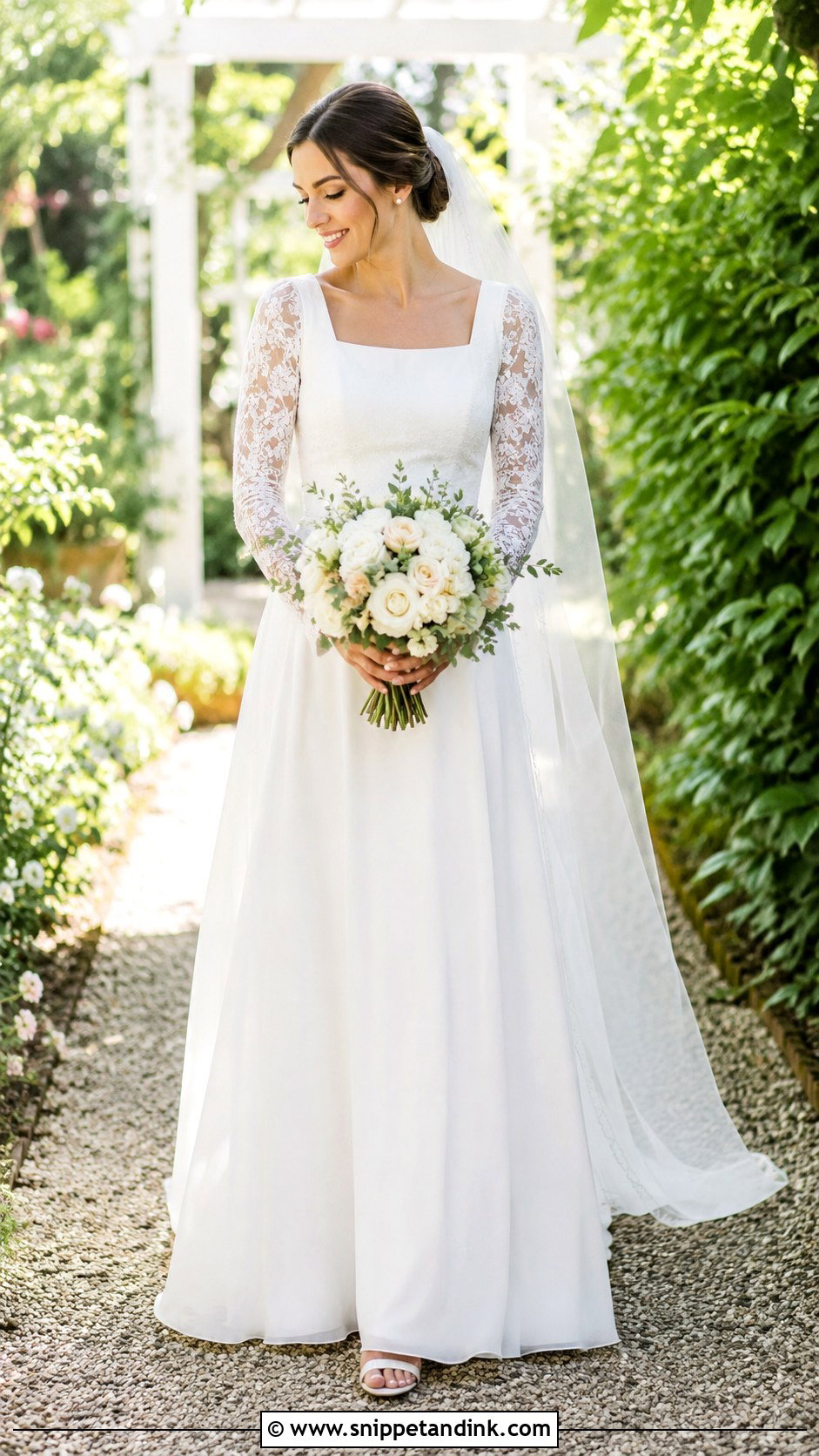
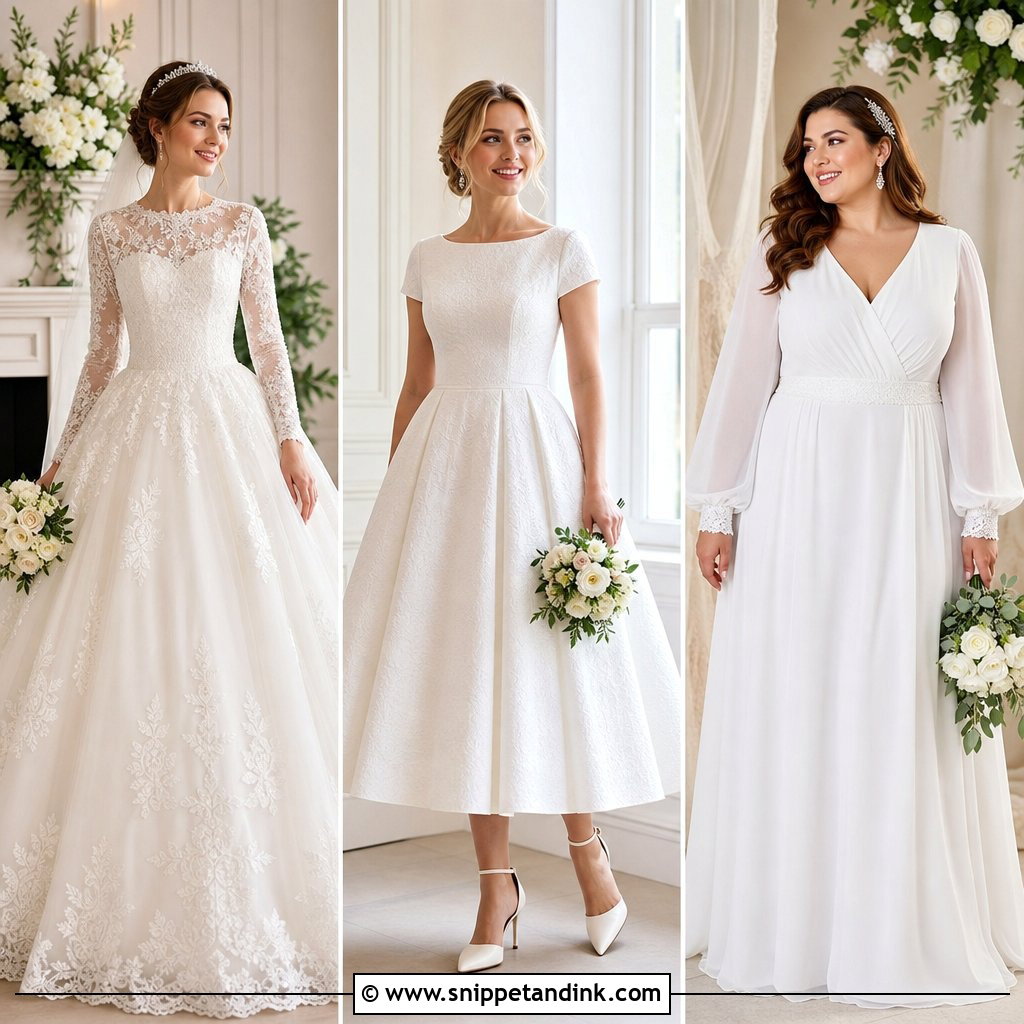
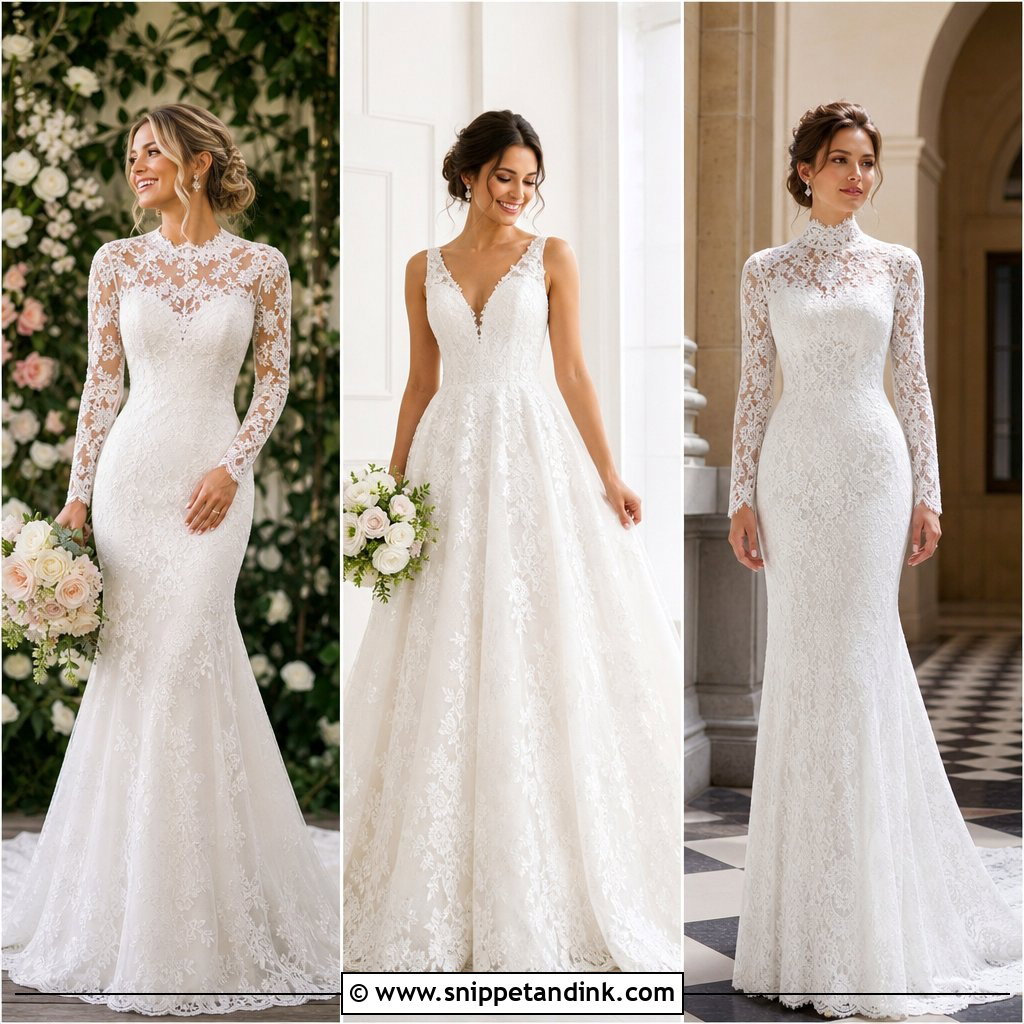
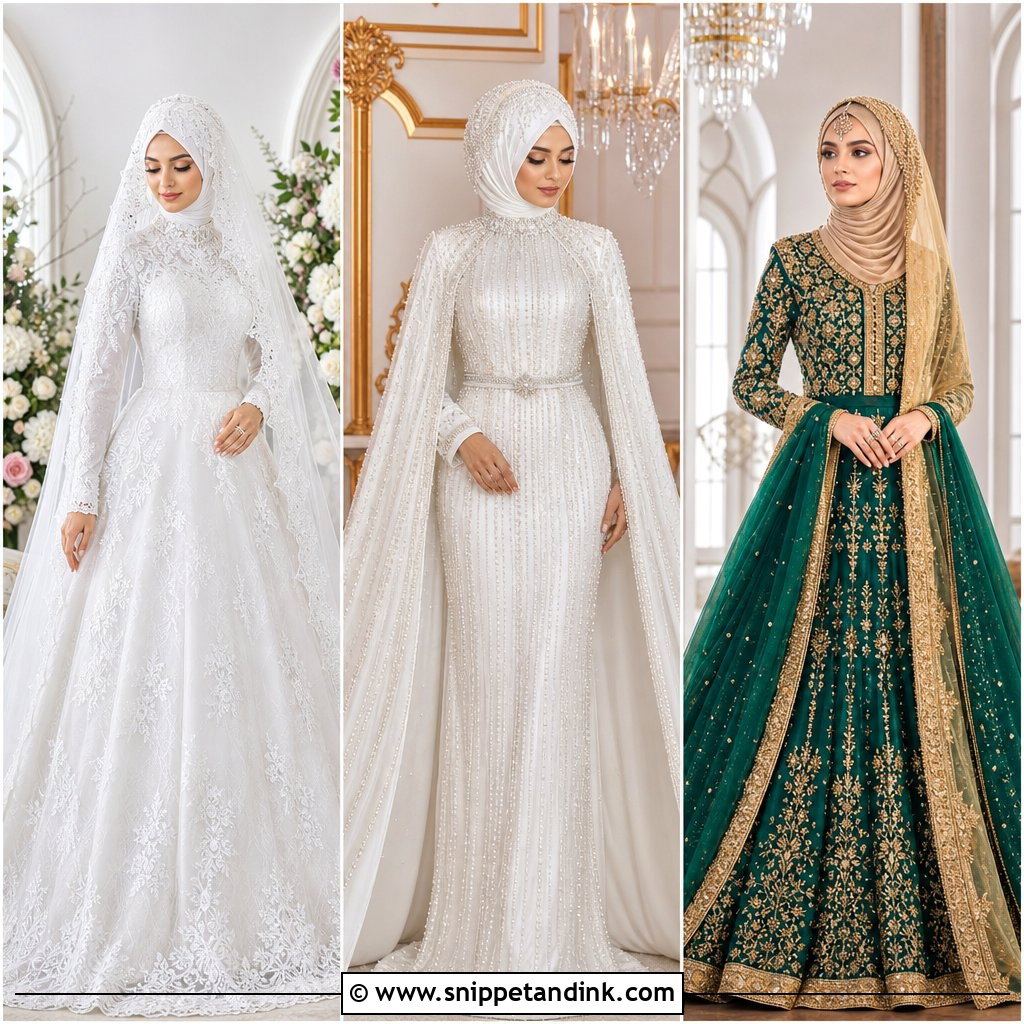
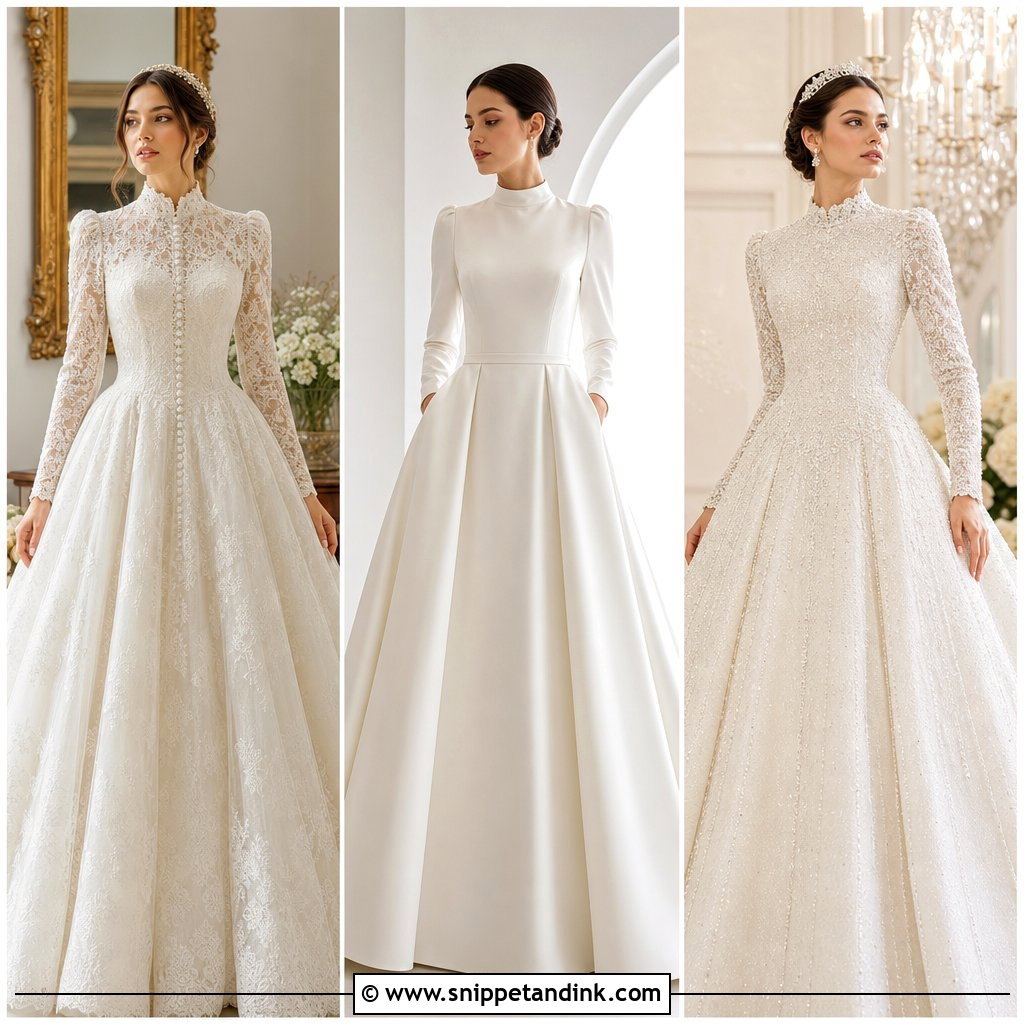
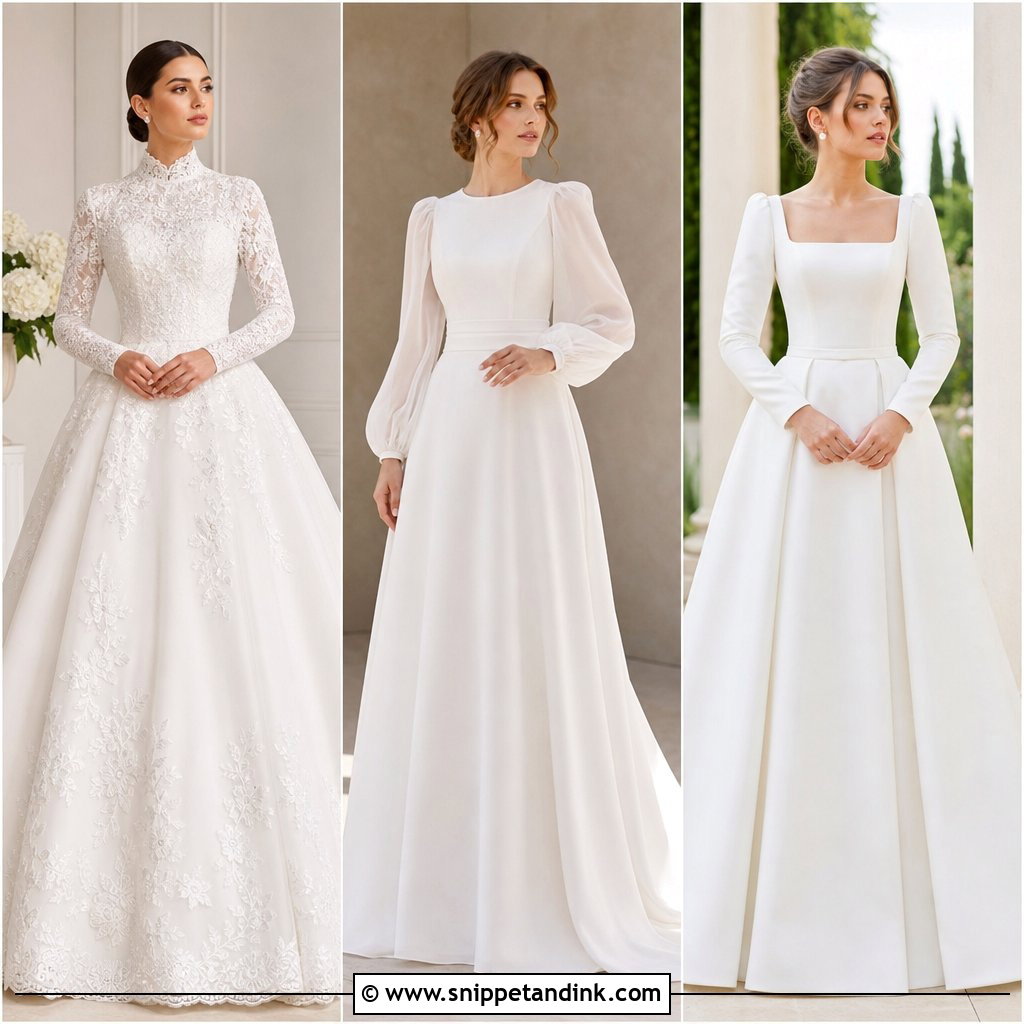
Lace and long sleeves are the pairing most brides picture first, and for good reason: the texture keeps full coverage from reading heavy. Before I let anyone fall for one, I check the sleeve lining. Unlined corded lace can scratch at the inner elbow by the second hour, so I want a soft mesh or stretch tulle underneath. A high neck or a raised scoop both stay modest here. I finish it with pearl earrings, a sheer fingertip veil, closed-toe satin heels and a small white-and-green bouquet so the lace stays the detail people remember.
2. High Neck Satin Modest Wedding Gown
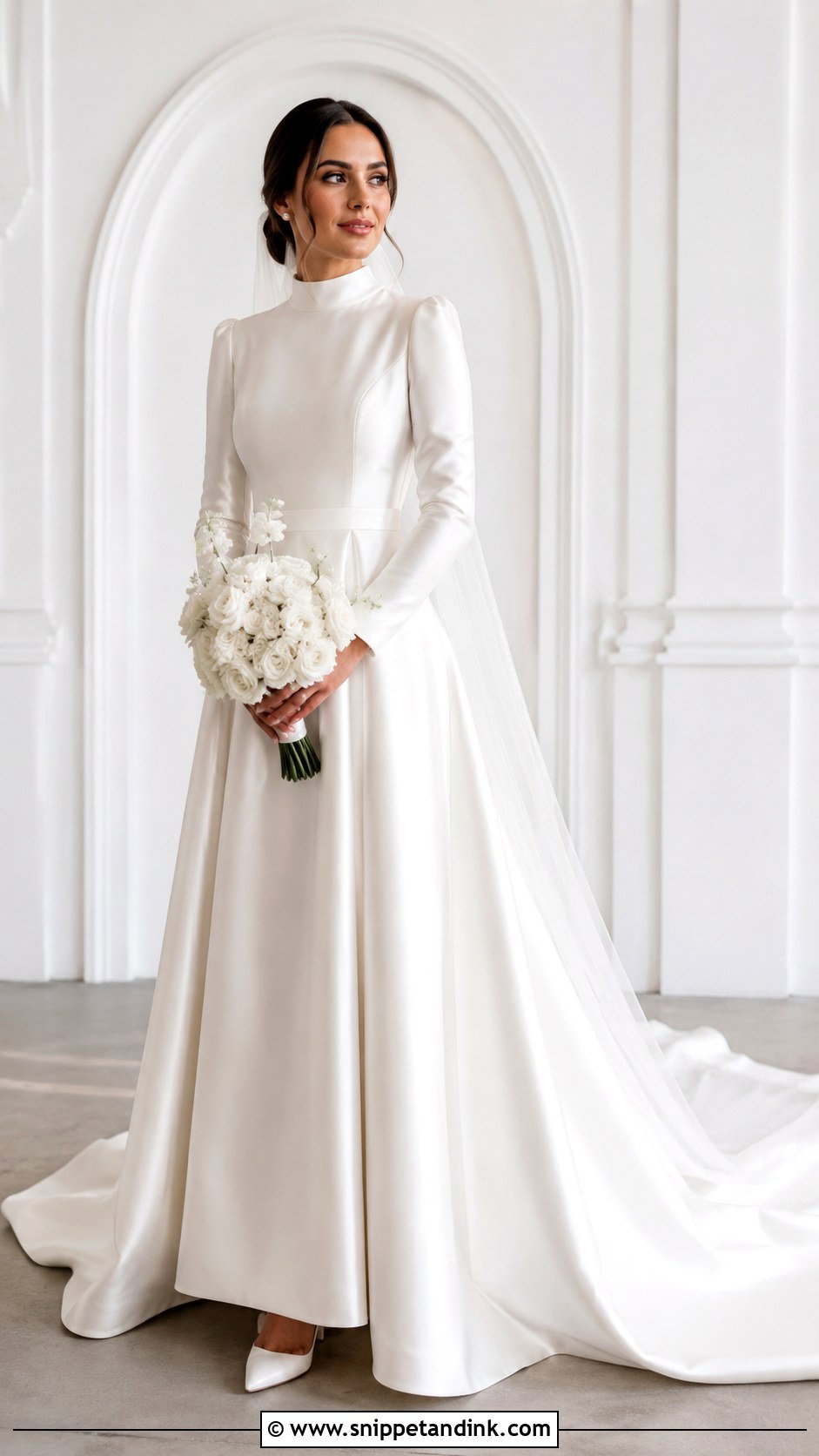
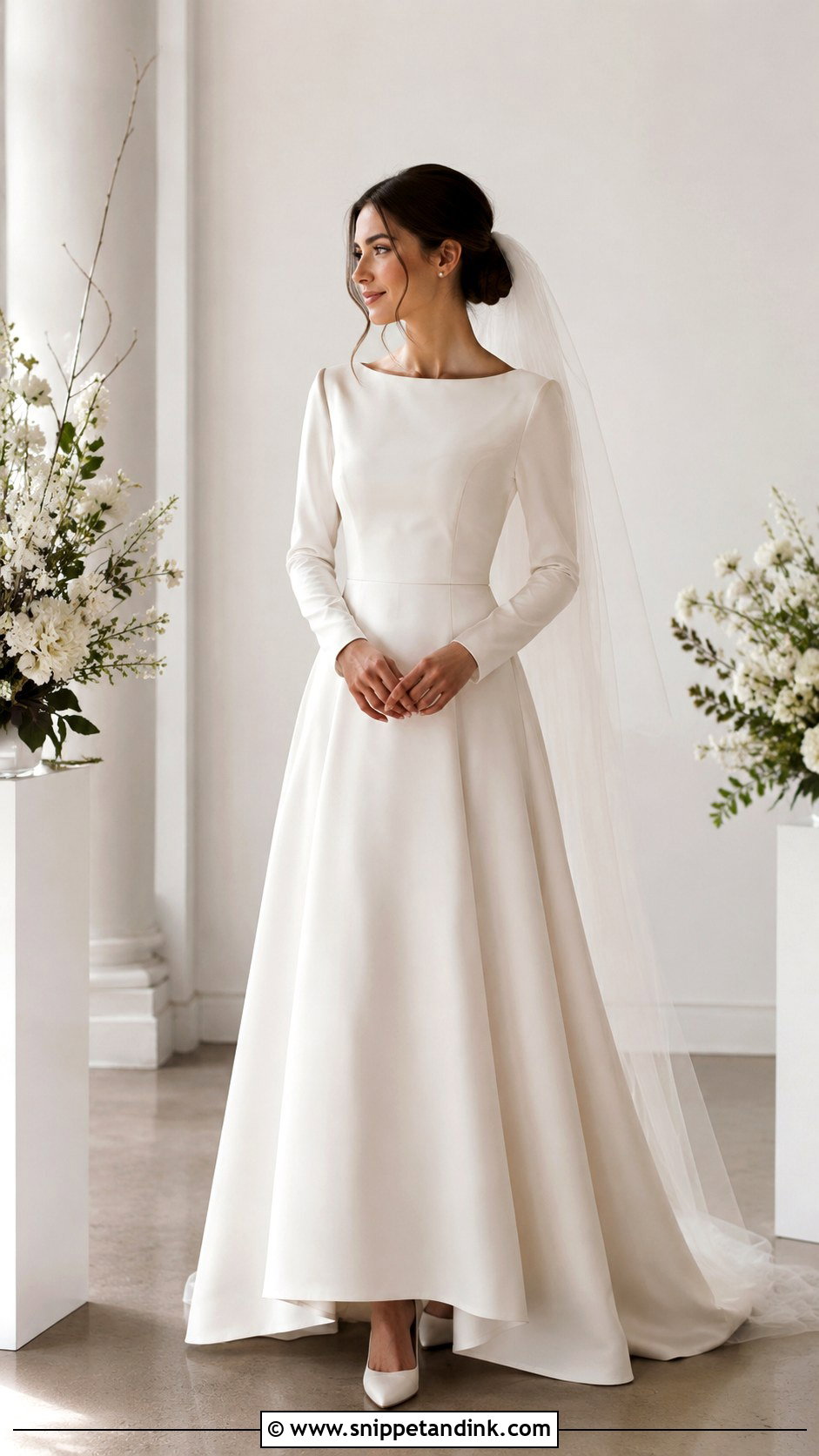
Satin carries its own sheen, so a high neck version rarely needs beading to look finished. A fitted bodice into an A-line skirt marks the waist and still lets you walk freely, with long fitted sleeves and a chapel train for formality. The thing I warn brides about is that satin shows every crease. Sit in it at your fitting for five minutes and look at the lap; a heavier duchess satin recovers far better than a thin polyester one. Keep the rest quiet: pearl studs, a sleek bun, ivory block heels and a structured bouquet.
3. Modest A Line Wedding Gown With Sleeves
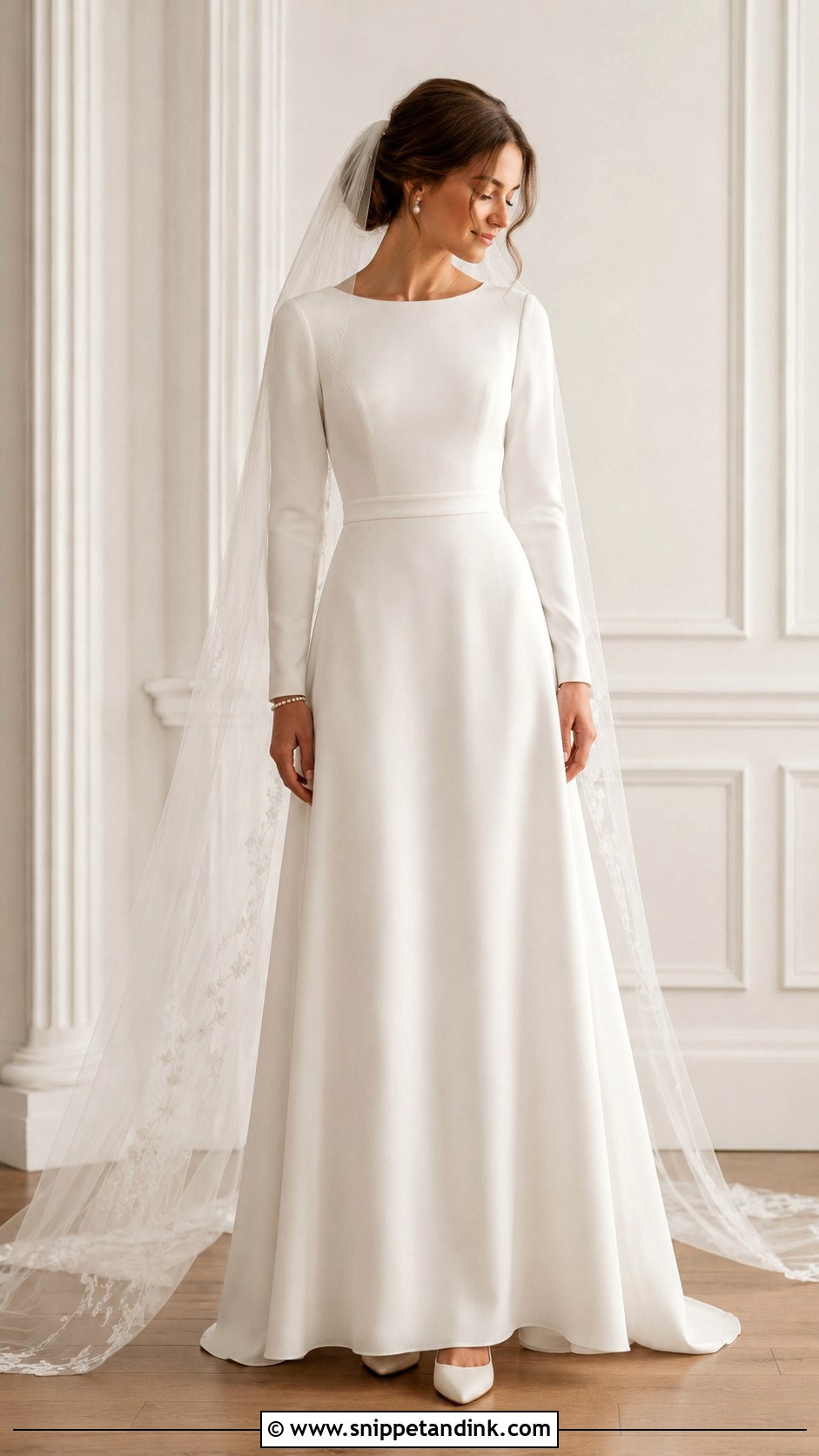
For comfort with coverage, a modest A line wedding gown with sleeves is the shape I reach for first. The skirt skims the waist and falls away from the hips, so walking, sitting and dancing take no planning. Bateau, jewel or a high scoop all keep it covered without looking severe, and crepe, mikado, chiffon or satin hold the cut well. I ask for a little extra room across the upper back when sleeves are long, because that is where an A-line bodice pulls when you reach for a hug. Add a waist-length veil, small drop earrings, low heels and a soft updo.
4. Modest Ball Gown Wedding Dress
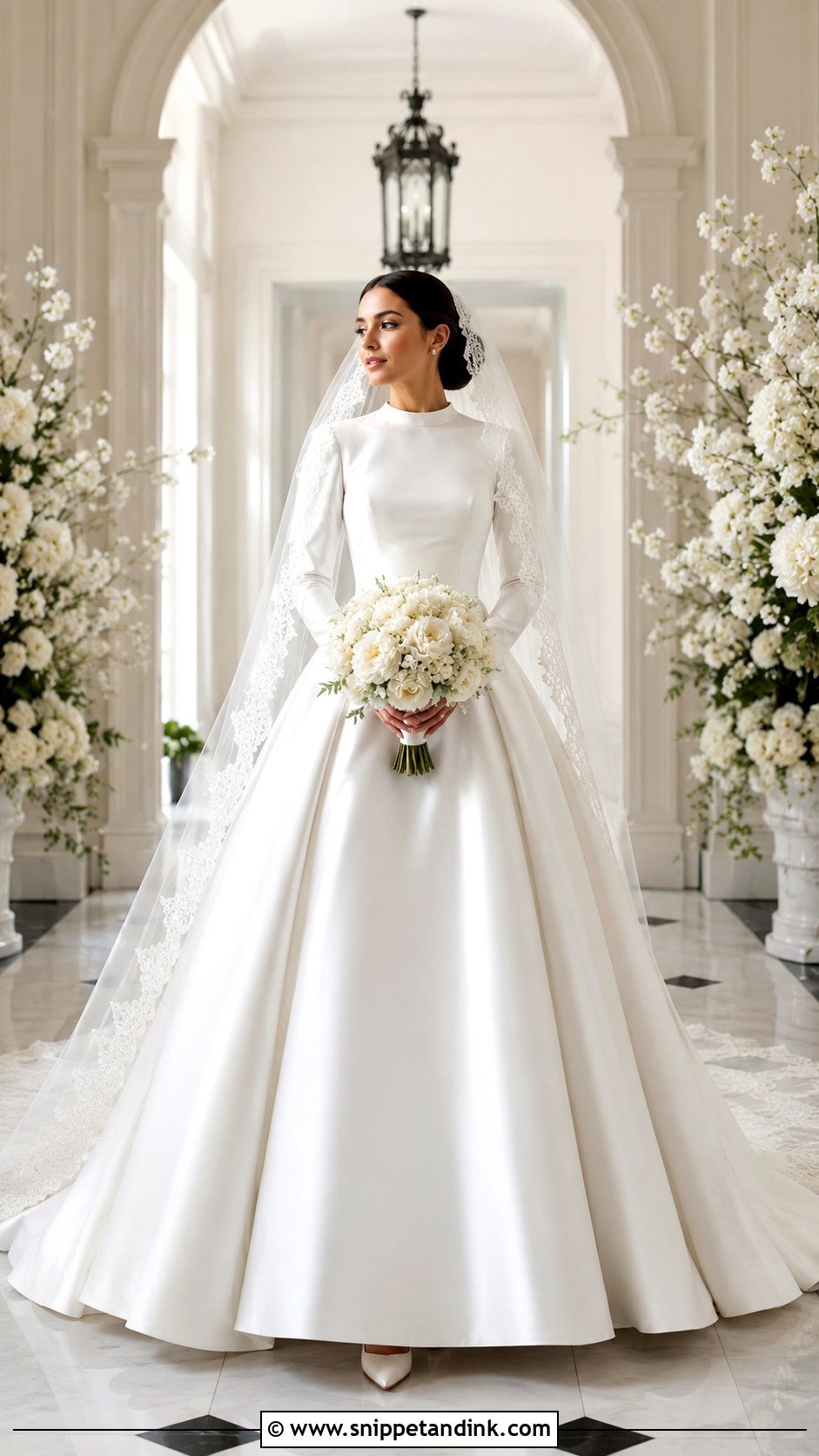
Nothing gives a grand entrance quite like a full skirt with sleeves and a higher neck. The risk is drowning in fabric, so I look for a clearly defined waist and a skirt built over a petticoat that lets your legs move, not one that swings into your shins on every step. Lace appliqué, light beading or clean satin all suit it. A cathedral veil, classic pumps, small earrings and a polished style balance the volume. Practise climbing two steps and getting into a car in it before the day; ball gowns are heavier than they look on a hanger.
5. Modest Crepe Wedding Gown
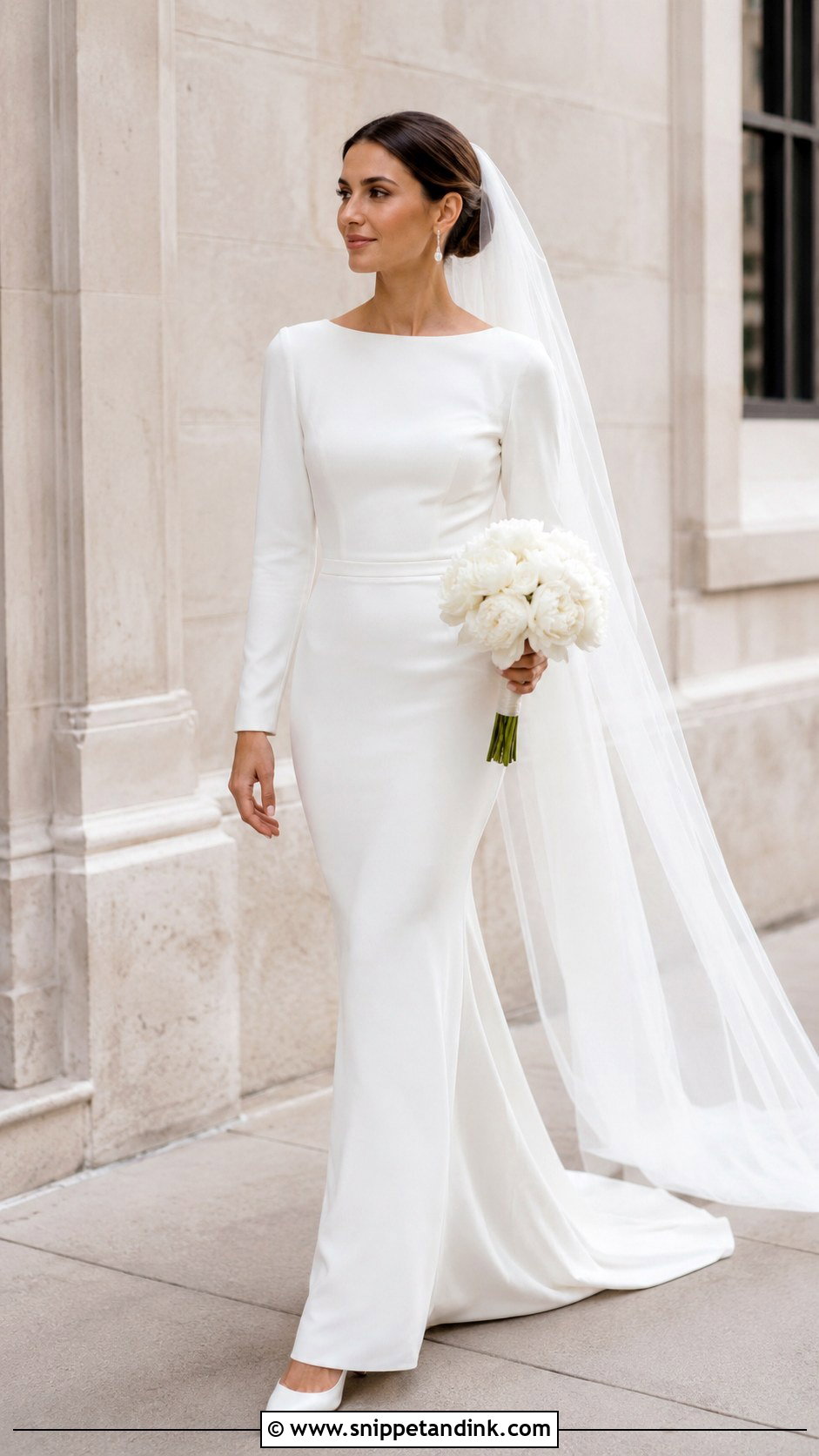
I love a modest crepe wedding gown for brides who like plain lines. Crepe has a soft weight that falls close to the body with almost no shine, which suits column, sheath and fit-and-flare cuts. Long sleeves, a jewel or bateau neck, or a raised square neck give coverage. Here is the honest catch: crepe hides nothing about the fit. Shoulder seams, sleeve length and the waist have to be exact, and I budget an extra fitting for it. Style it with a long veil, pointed-toe heels, a smooth low bun and sculptural pearl earrings.
6. Modest Tulle Wedding Gown
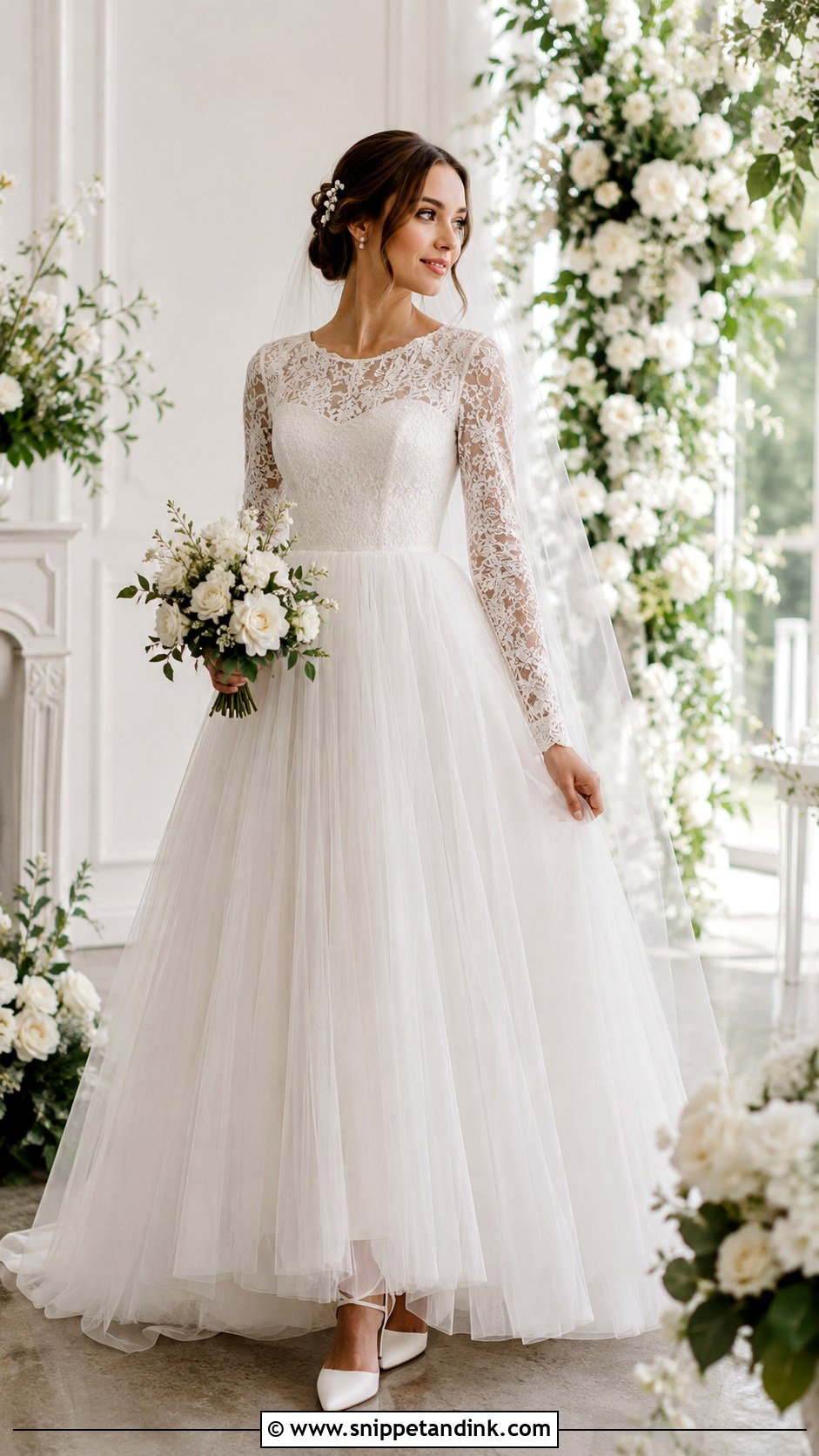
Tulle gives you volume and air without a revealing cut, especially over an A-line or ball gown base. For coverage, a lined bodice and lined tulle sleeves with carefully placed appliqué read soft rather than sheer. I always hold sleeve tulle up to a window at the salon. What looks opaque under shop lights can turn see-through in direct sun, and a second layer of tulle is an easy alteration. A high scoop or bateau neck, ballet-style heels, a delicate veil, pearl pins and soft white blooms finish it.
7. Modest Wedding Gown With Cape
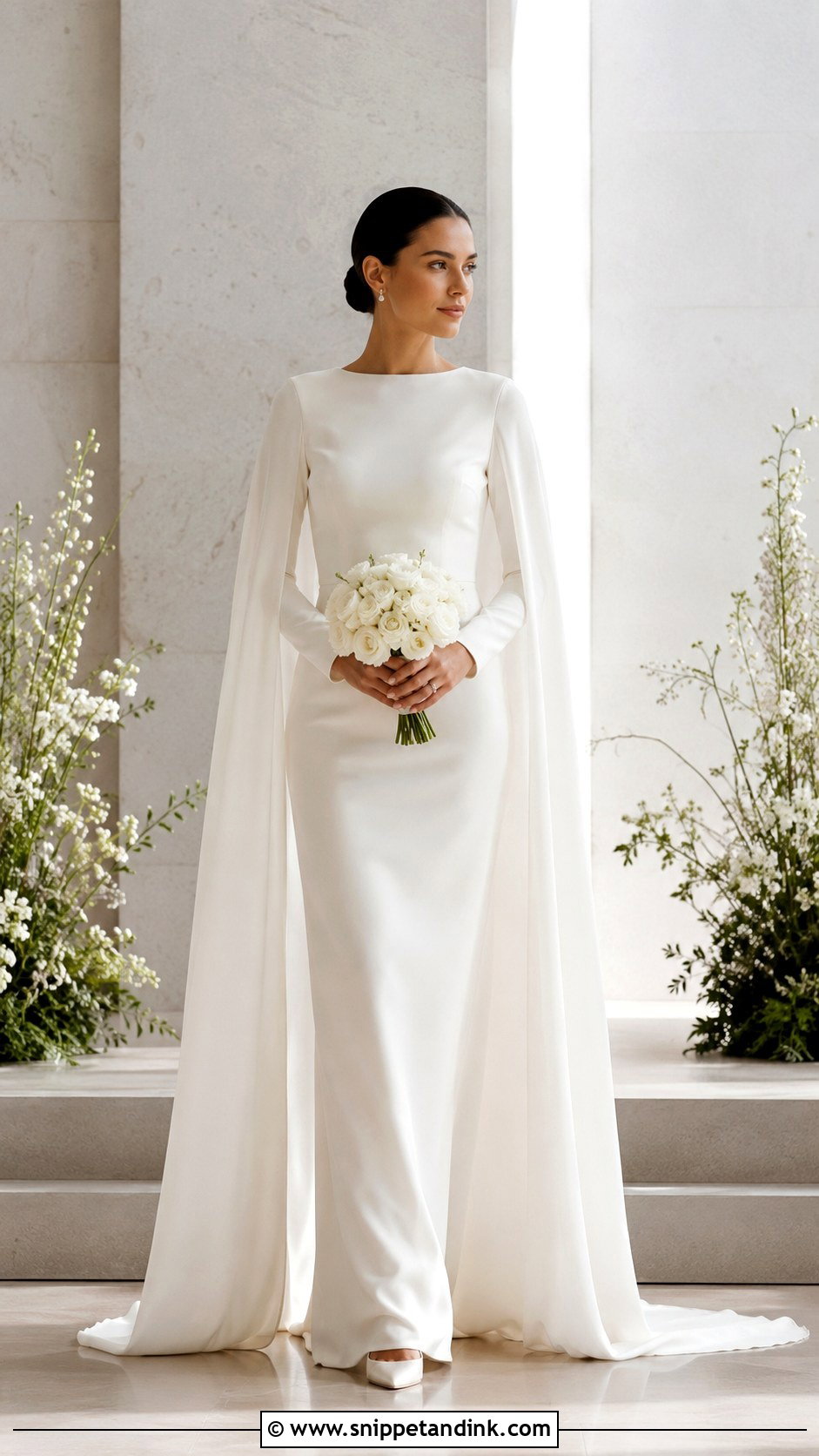
A cape adds coverage and movement in one piece, and it can stand in for a veil entirely. It shows best over a plain crepe, satin or mikado base. Shoulder capes, full-length capes and short capelets each give a different amount of cover, so decide how much you want before you shop. I check one thing every time: how the cape attaches. Snaps or a hidden hook at the shoulder seam let you remove it for dancing; a cape sewn in stays for the whole night. Pair it with sleek heels, small earrings and a neat style so the cape does the talking.
8. Modest Mikado Wedding Gown
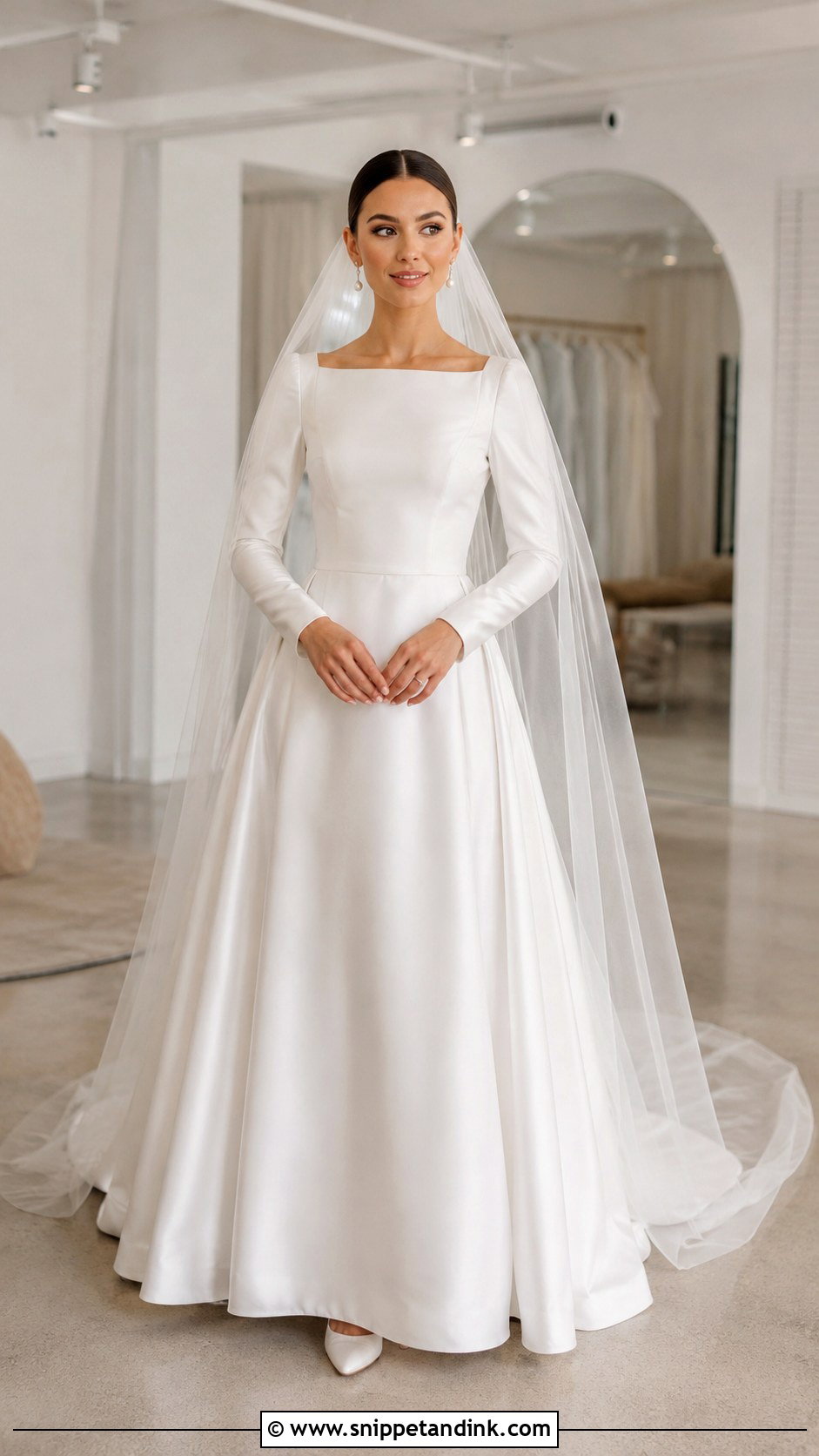
Mikado is a little heavier than most bridal fabrics, which is exactly why it holds a crisp line in A-line, ball gown and tailored cuts. A high square, bateau or jewel neckline paired with long or three-quarter sleeves balances that structure. Because it reads formal on its own, embellishment can stay minimal. Do expect weight; a full mikado skirt can feel warm by the reception, so I steer summer outdoor brides elsewhere. A smooth veil, pointed satin shoes, pearl earrings and a neat bouquet are all it needs.
9. Modest Chiffon Wedding Gown
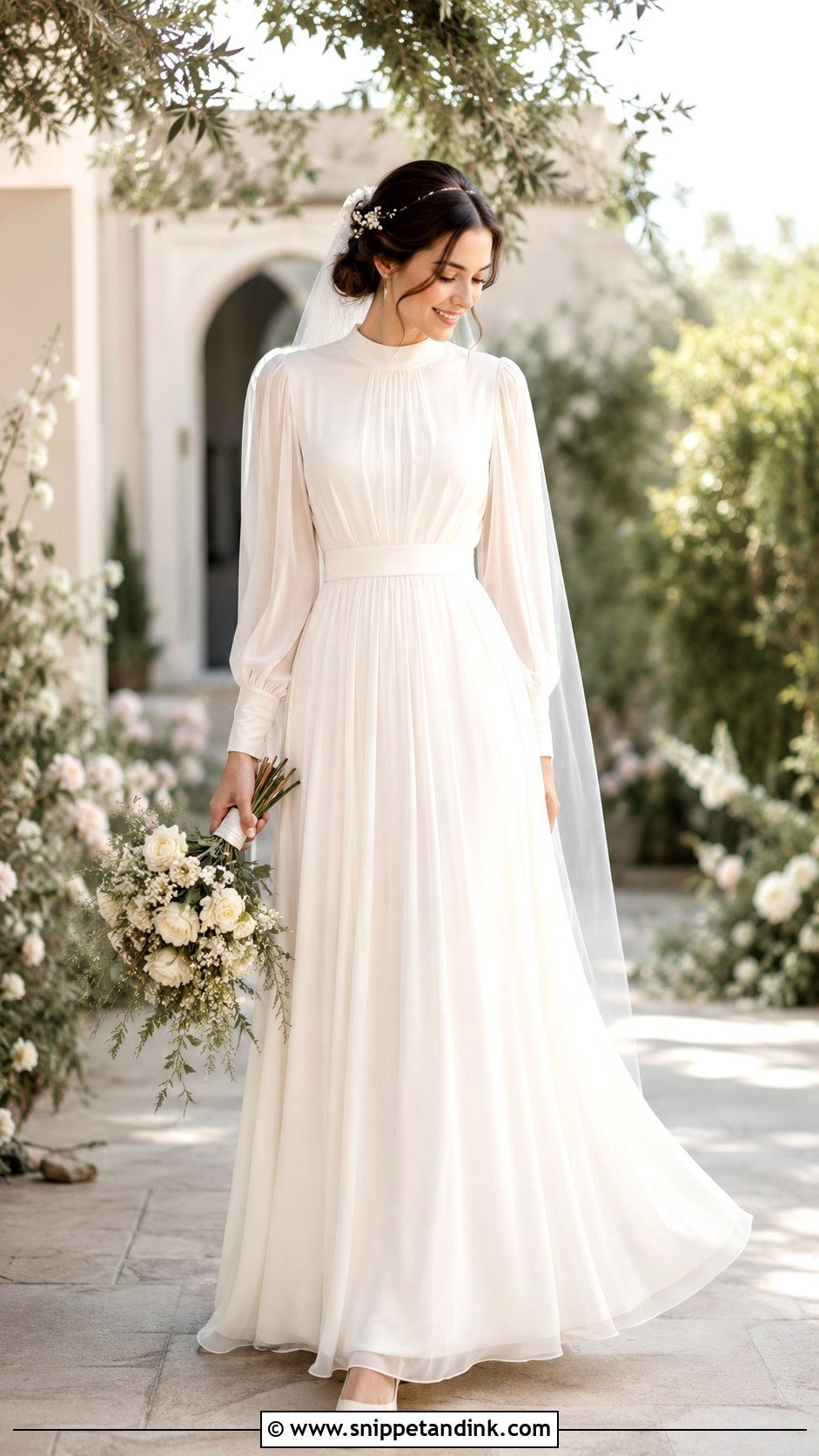
Chiffon is the fabric I suggest when a bride tells me she hates feeling weighed down. It moves with you in flowing A-lines, empire waists and soft layered skirts. Long chiffon sleeves, a lined bodice and a comfortable neckline keep it covered, and a slim belt marks the waist. Chiffon snags easily on bouquet wire and beaded clutches, so I wrap bouquet stems in ribbon. Low heels or bridal flats, a simple veil and small floral pins suit warm-weather and outdoor weddings.
10. Modest Square Neck Wedding Gown
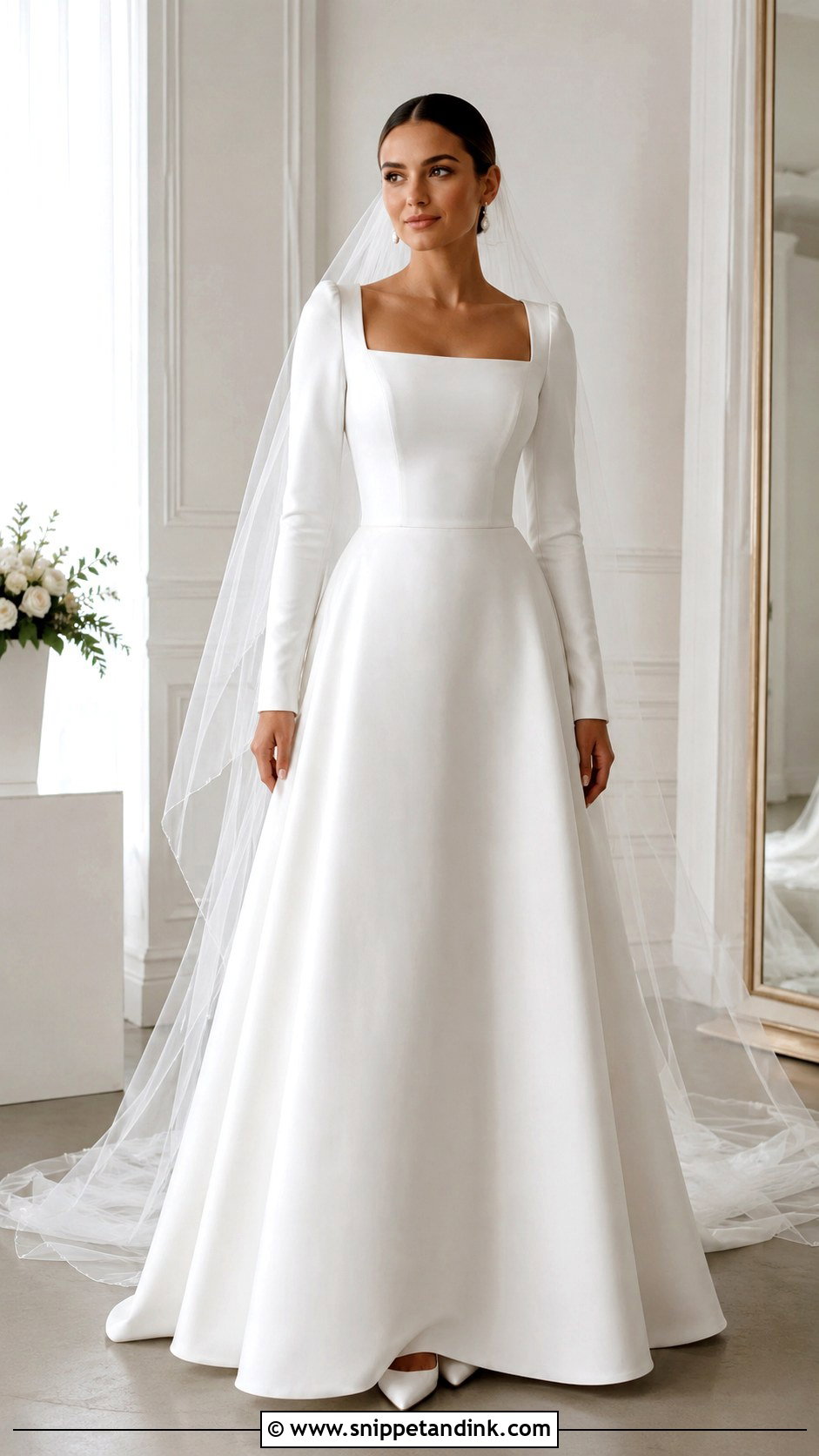
Most square necklines sit too low if you want real coverage, so I specify a raised version and full lining. It frames the collarbone cleanly and offers far more cover than a sweetheart. Sleeves need to sit smoothly at the shoulder point, or the corners of the square start to gape when you lift your arms. Satin, crepe, lace and mikado all hold the angle. Choose an A-line skirt for balance or a column for something sharper, then add pearl drops, a centre-part bun, closed-toe heels and a long veil.
11. Modest Bateau Neck Wedding Gown
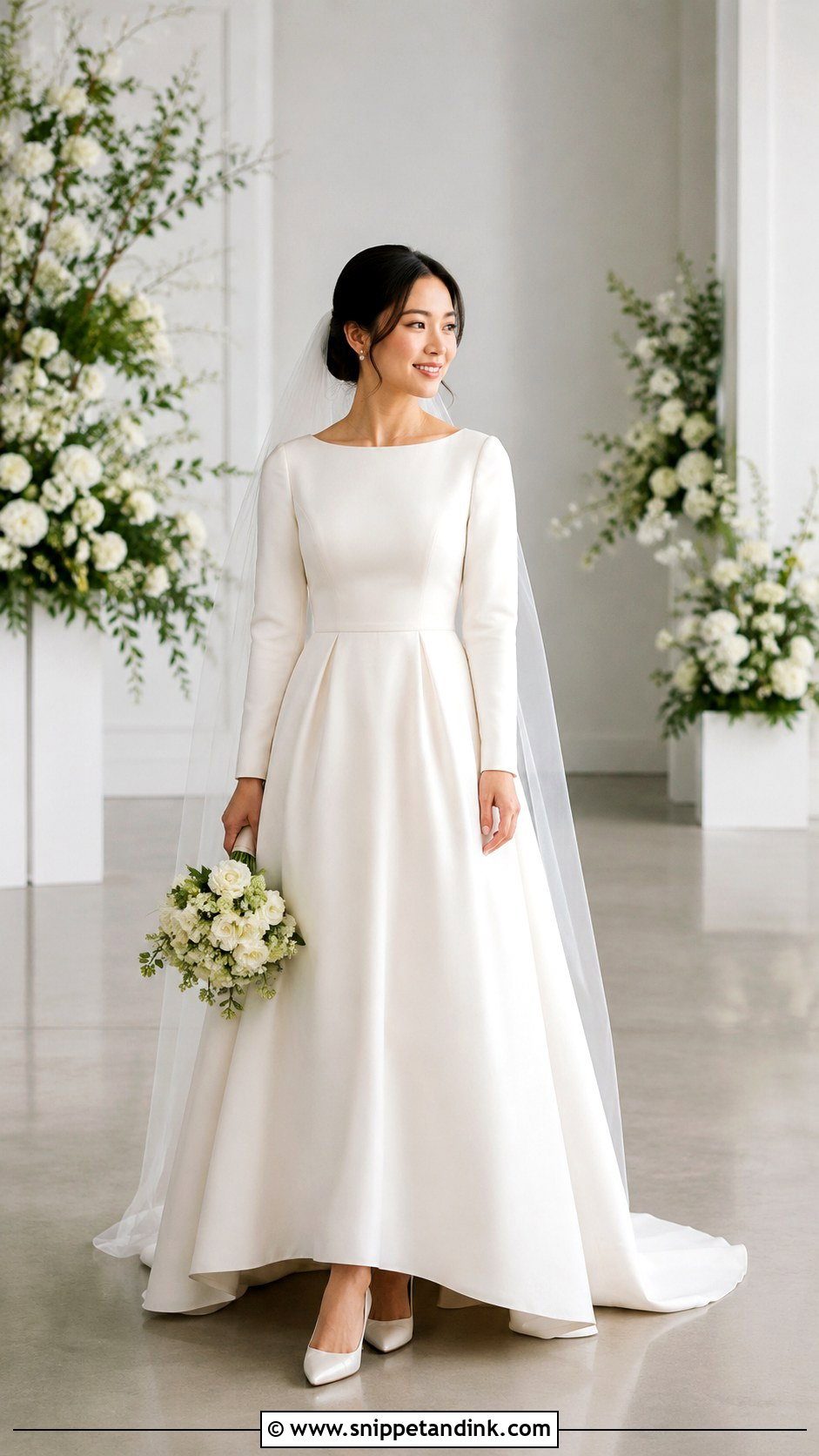
The bateau neck runs straight across from shoulder to shoulder, so it covers the chest completely while still showing the line of the collarbone. It has a vintage feel in lace or chiffon and looks sharp and modern in plain crepe, mikado or satin. Long sleeves, a fitted waist and a flowing skirt complete it. One fitting note: bateau necks can slip off narrow shoulders, and a small elastic strap tacked inside the shoulder seam fixes it. Pearl studs, a low chignon, ivory pumps and a plain veil keep the neckline in charge.
12. Modest Mock Neck Wedding Gown
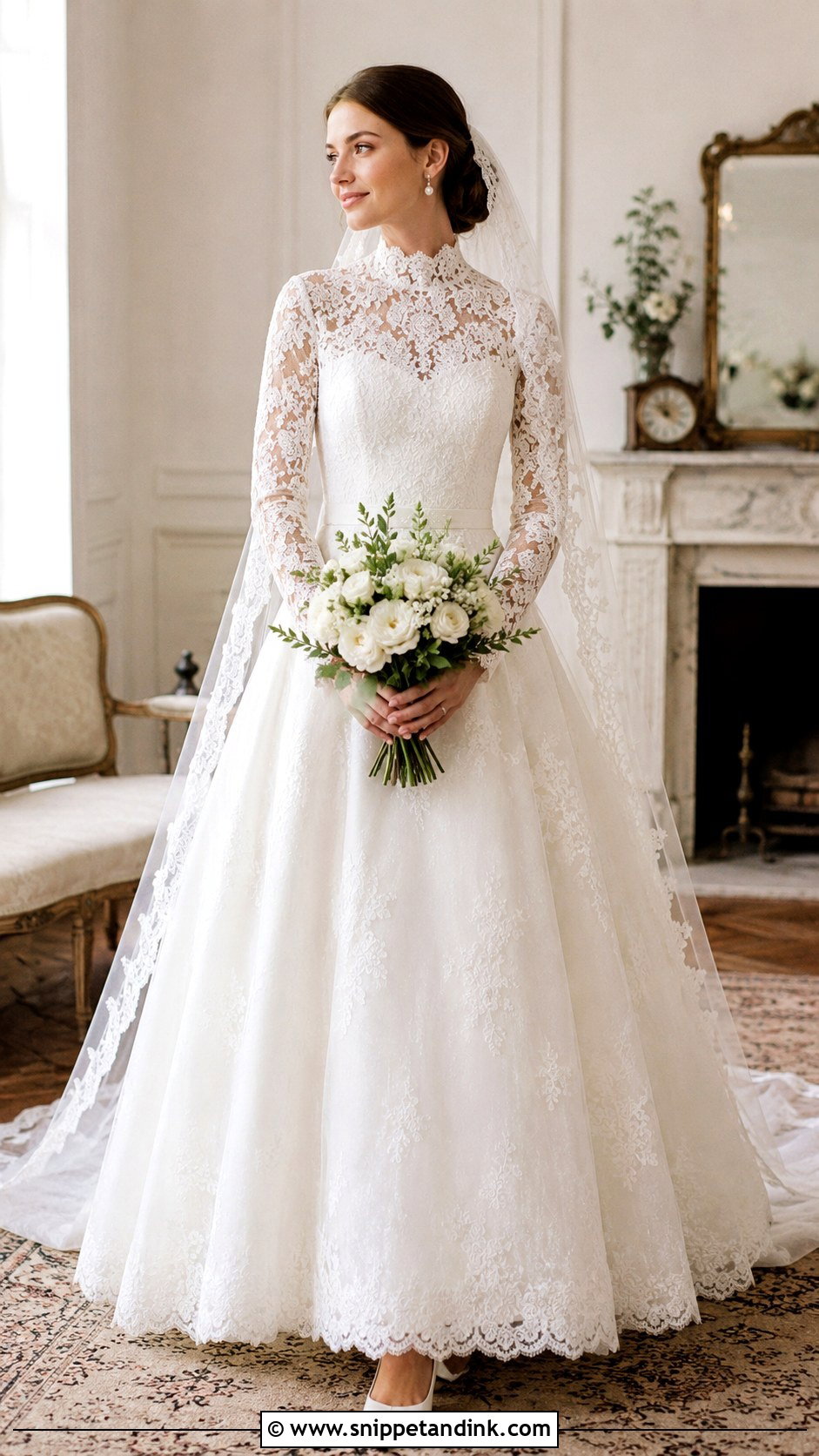
A mock neck sits higher on the throat than any other bridal neckline, giving strong coverage and a very clean line. Long fitted sleeves and a slim crepe skirt make it fashion-forward; lace sleeves or light floral appliqué soften it. I only recommend it to brides who are comfortable with something close at the neck, because a mock neck that is even slightly tight becomes all you think about by evening. Wear a smooth updo, small earrings, pointed-toe heels and a long sheer veil set low at the back of the head.
13. Modest Tea Length Wedding Gown
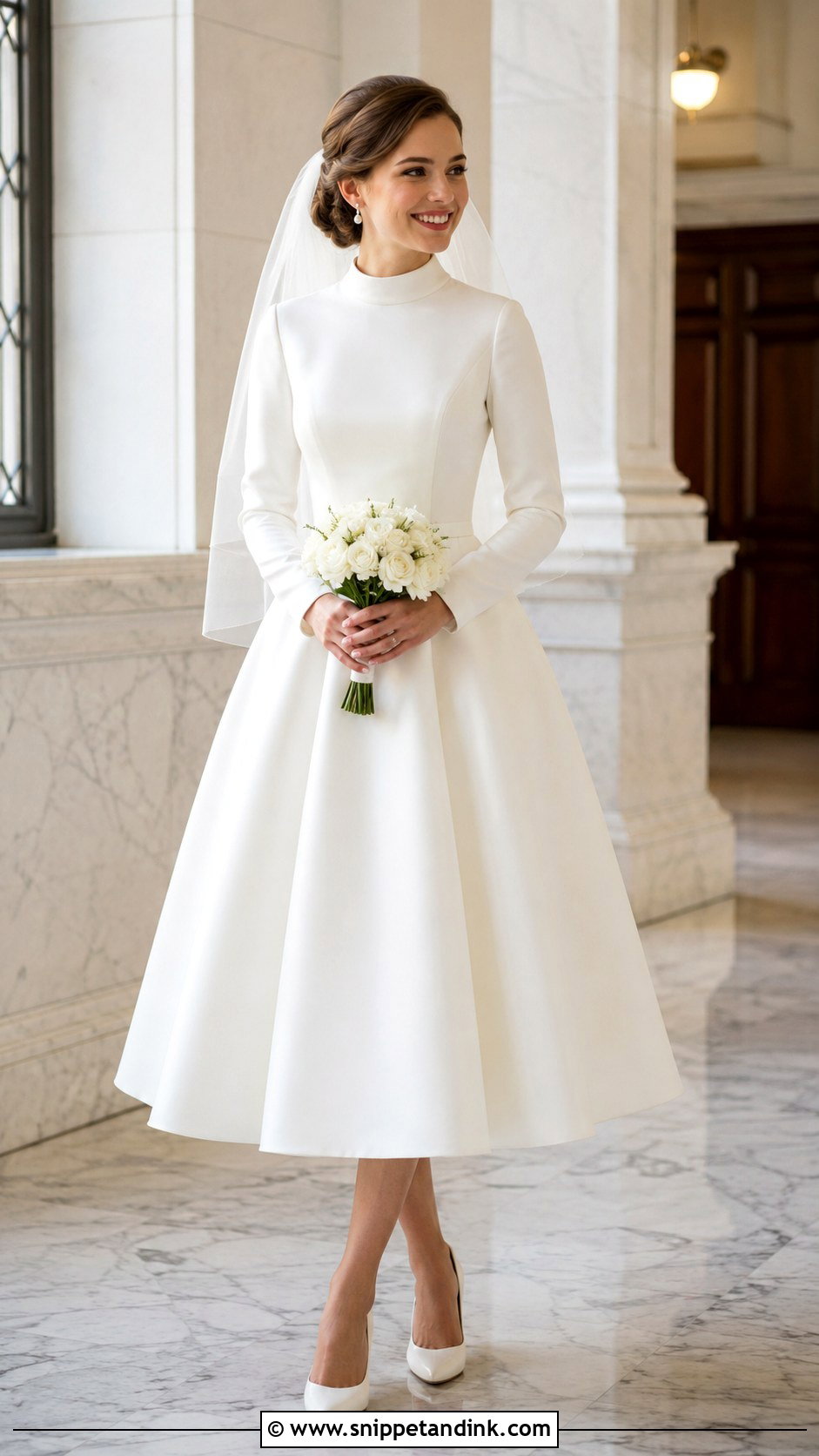
Tea length falls between the knee and ankle, so your shoes become part of the outfit and there is no hem to step on. A higher neck, sleeves and a structured full skirt keep it covered; lace, tulle, satin and organza all hold the length well. If coverage of the leg matters to you, check where the hem lands when you sit, since a full skirt rides up several inches. Closed-toe pumps, pearl earrings, a short veil and a neat bouquet give it a vintage feel, and I like it for courthouse ceremonies, brunch receptions and small weddings.
14. Modest Plus Size Wedding Gown
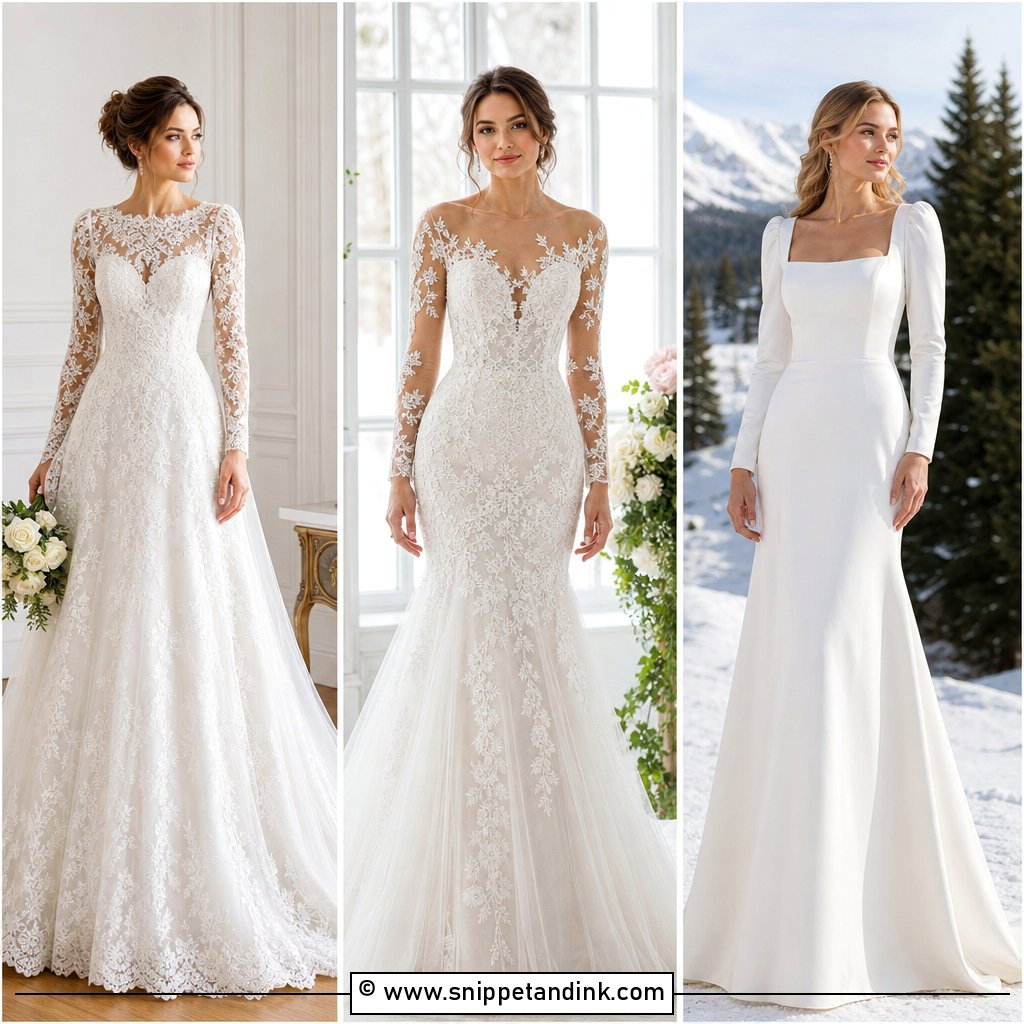
A modest plus size wedding gown has to be built properly inside: boning, a firm waist stay and smooth lining do far more than any outer detail. A-line, ball gown and soft fit-and-flare shapes all work. The fitting point I watch most is the armhole. Sleeves set too low restrict your reach and drag the whole bodice up when you wave, so ask for a higher armhole with a little ease in the upper sleeve. Supportive shoes, a veil in proportion to the gown and jewelry near the face complete it. Coverage here is about comfort and presence, not hiding.
15. Modest Petite Wedding Gown
On a petite frame, proportion matters more than any single detail. A raised waist, slim A-line or plain column adds height, and lighter fabrics avoid swamping you. Long sleeves need tailoring so they finish at the wrist bone instead of bunching. Bateau, jewel or a modest square neck all cover without making the bodice heavy. I pick a veil that flows behind rather than one that builds volume around the face. Comfortable heels, small earrings and a neat style keep the whole look in scale.
16. Modest Mermaid Wedding Gown
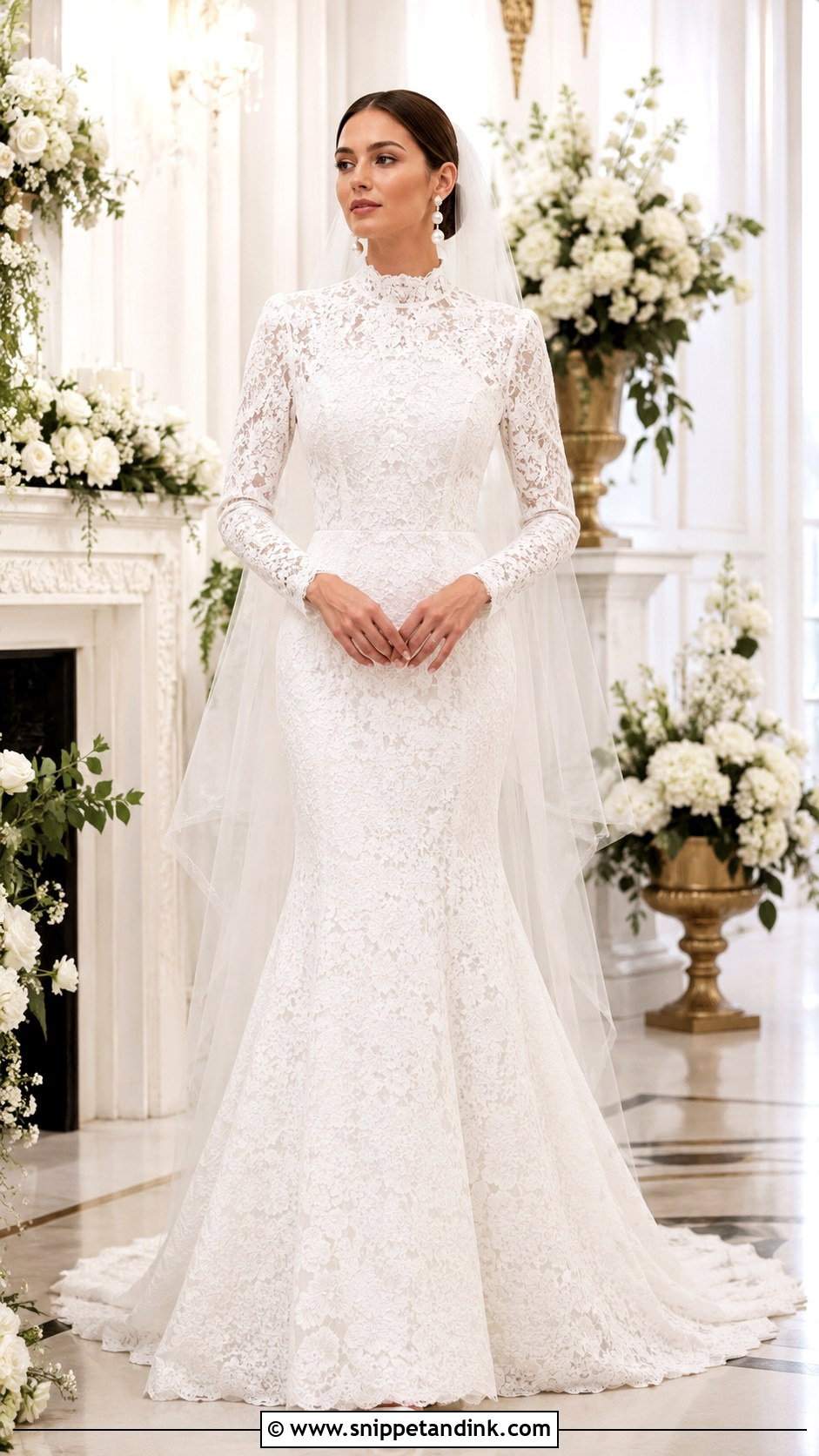
Mermaid gowns follow the body through the bodice and hips before flaring near the knee or lower thigh, so coverage and shape come together. Lace reads romantic and crepe reads sleek. A higher neckline, long sleeves and a supportive fabric keep it refined. My one rule: sit down in it at the salon. If the flare sits too high you will not manage stairs, and if the fabric has no give you will spend dinner perched on the edge of your chair. Choose stable heels, a simple veil and statement pearl earrings.
17. Modest Sheath Wedding Gown
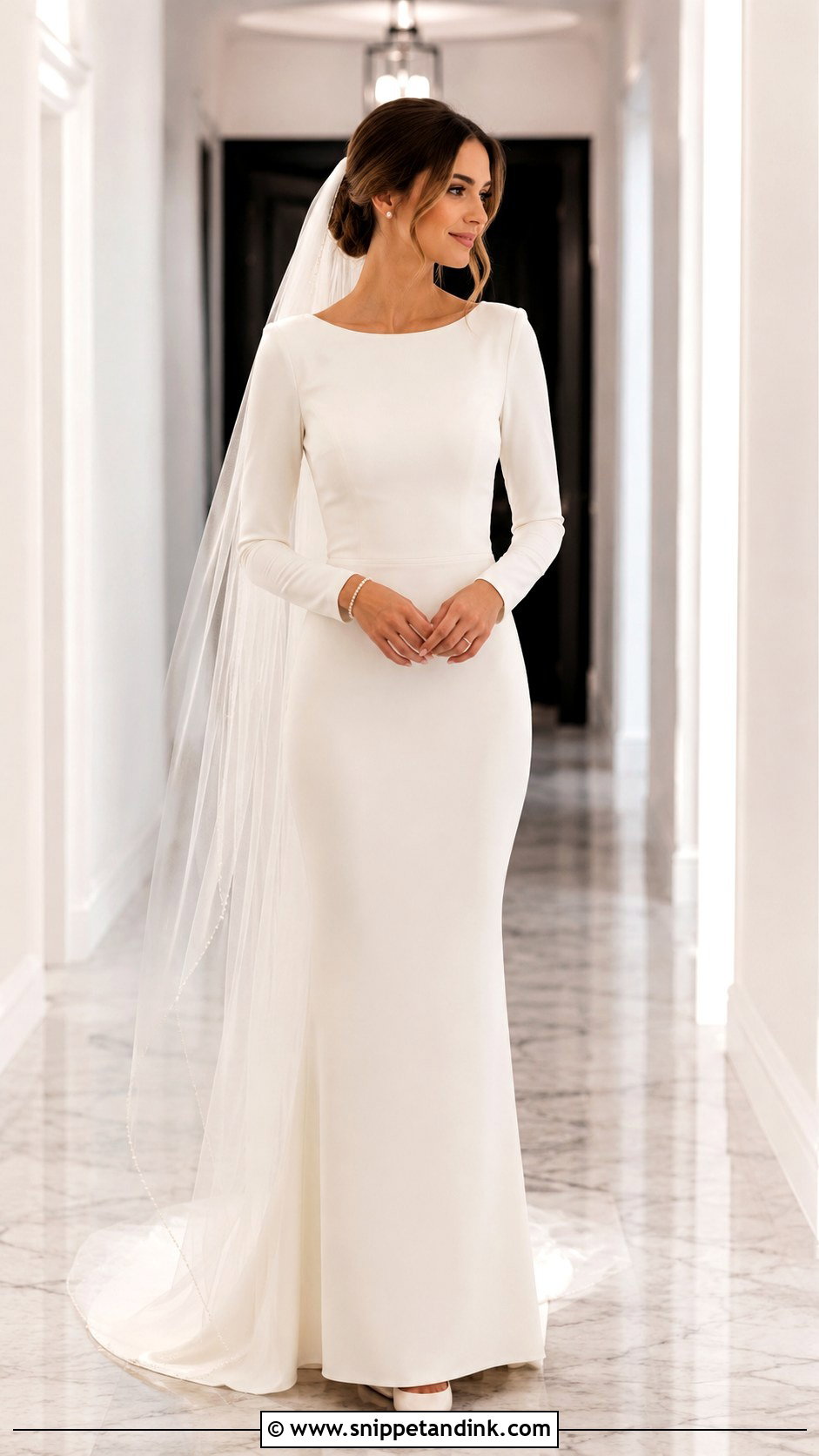
A sheath skims the body without a mermaid’s flare or an A-line’s volume, and it lives or dies on fit. Crepe, lace, satin and chiffon all suit it, with long sleeves, a high scoop or a soft bateau for coverage. Sheaths with sleeves can restrict your stride, so I check for a hidden back slit lined with matching fabric. A detachable overskirt gives you ceremony drama and a lighter shape for the reception. Slim heels, a fingertip veil, a delicate bracelet and a low bun keep it understated.
18. Modest Empire Waist Wedding Gown
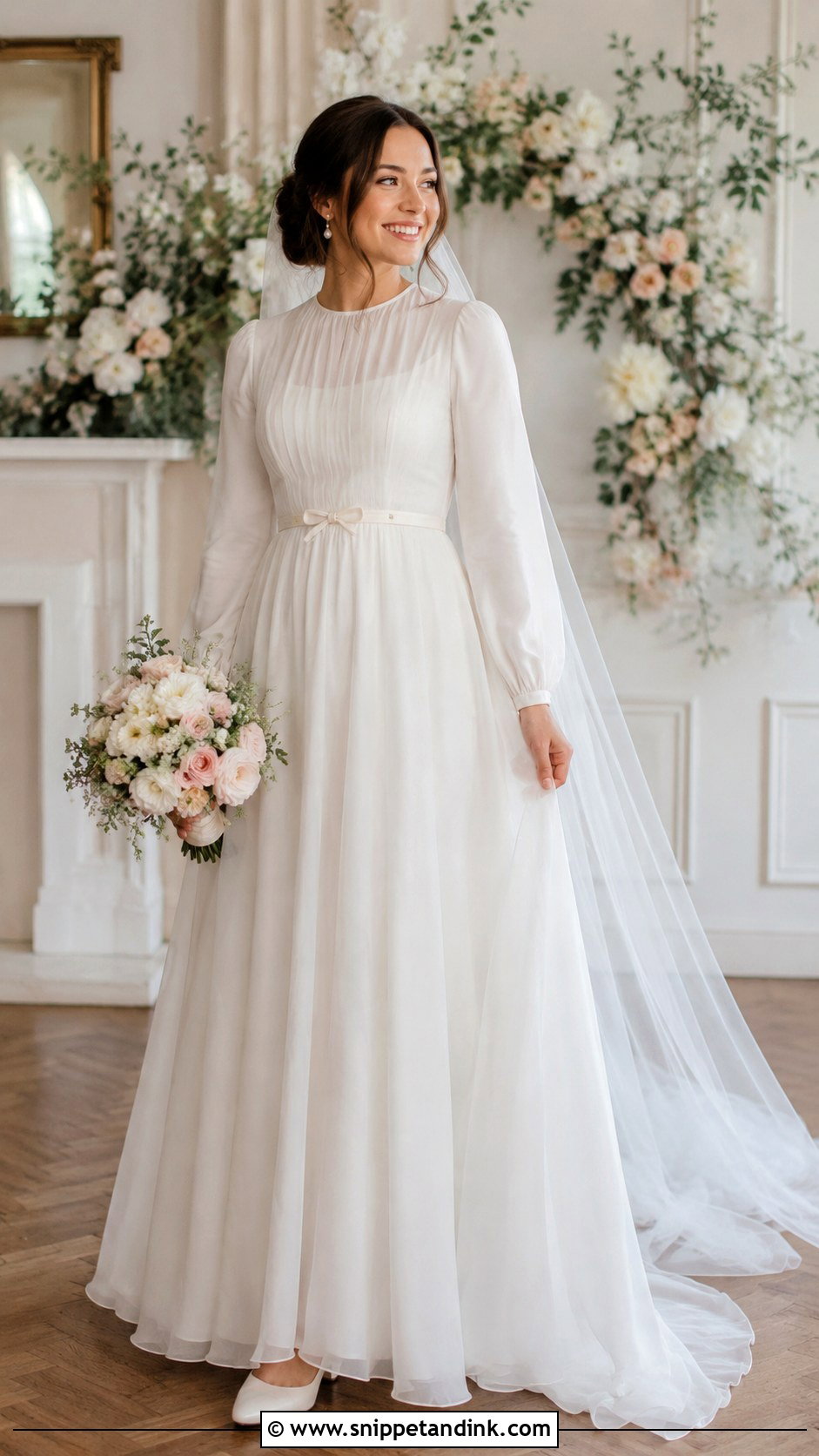
With the waistline raised to just under the bust, an empire gown flows down the body with nothing tight at the middle. That makes it my first suggestion for brides who dread a corset. Chiffon, soft satin and light lace drape best in it. Long sleeves and a higher neck keep it covered, and a narrow ribbon or light beading under the bust marks the shape without bulk. Watch the bust seam at fittings; if it sits even a little low it looks like a slipped dress. Pair with low heels, pearl earrings, a soft veil and loose waves or a relaxed updo.
19. Modest Vintage Wedding Gown
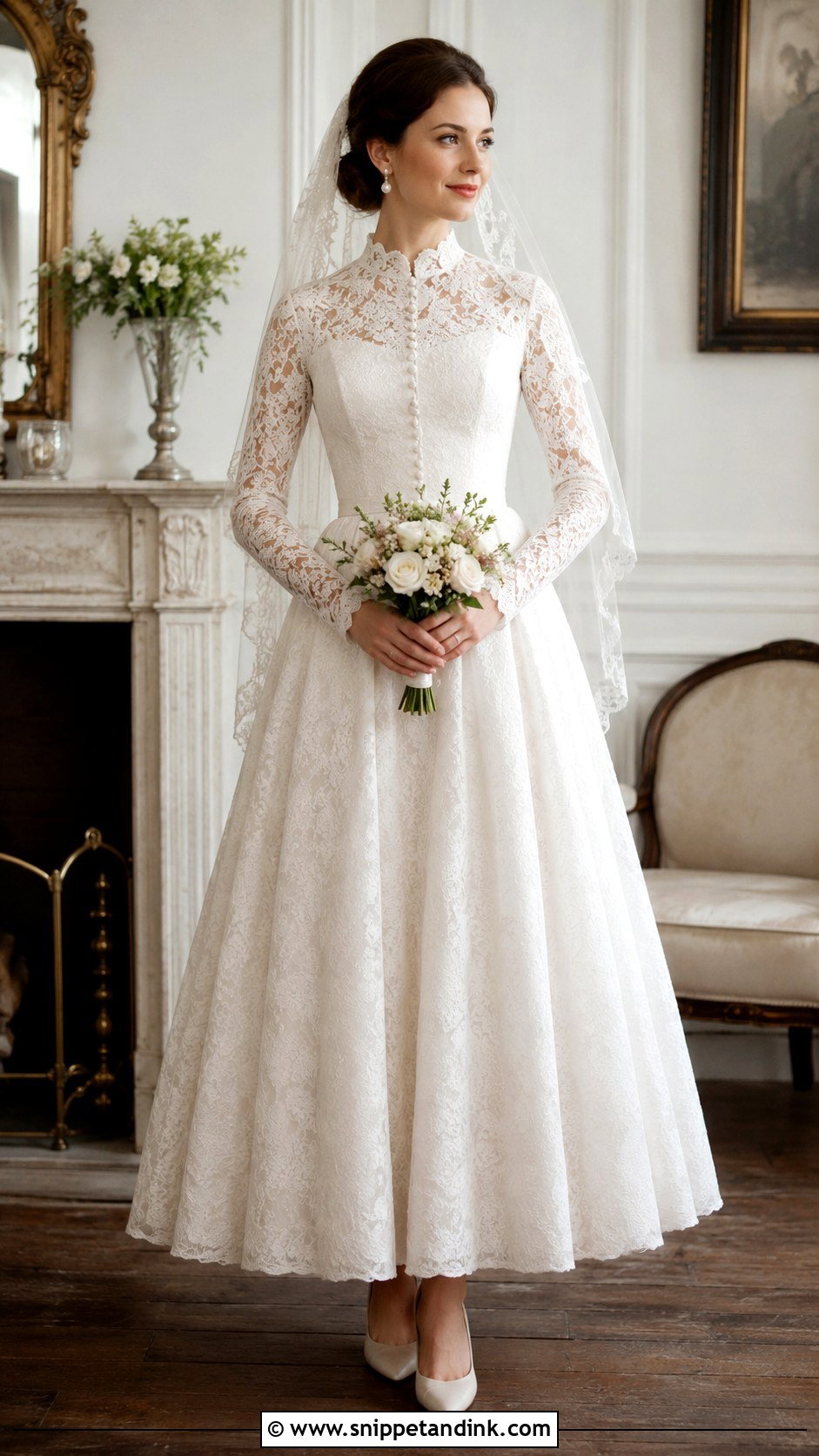
Vintage design brings character: high necks, lace sleeves, covered buttons, soft satin, tea-length or full skirts with delicate details. The trick is keeping it from looking like costume, so I balance older details with clean hair, fresh makeup and few accessories, perhaps a lace veil, pearl earrings and classic pumps. If you buy a genuinely old gown, allow months, not weeks, for cleaning, repairs and alterations. Aged lace can be brittle, and a good seamstress will want to reinforce seams before taking anything in.
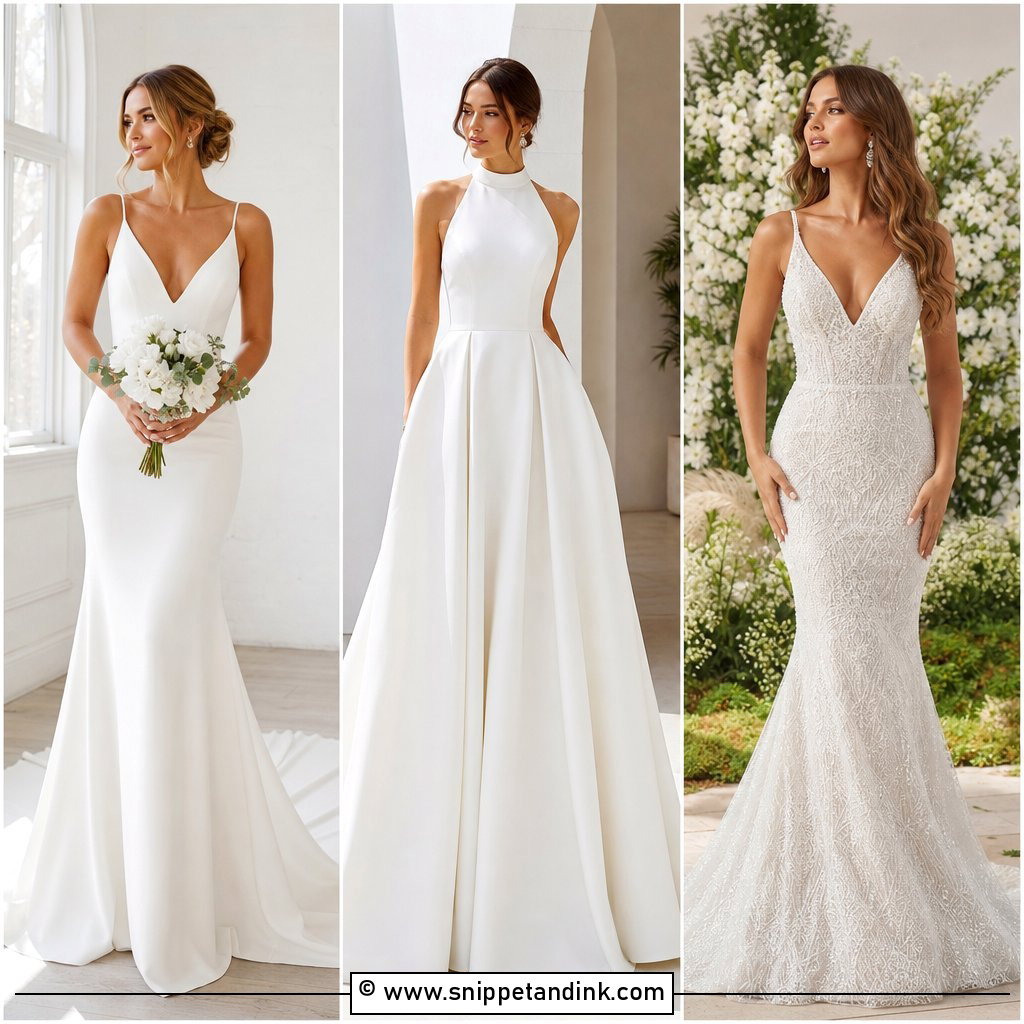
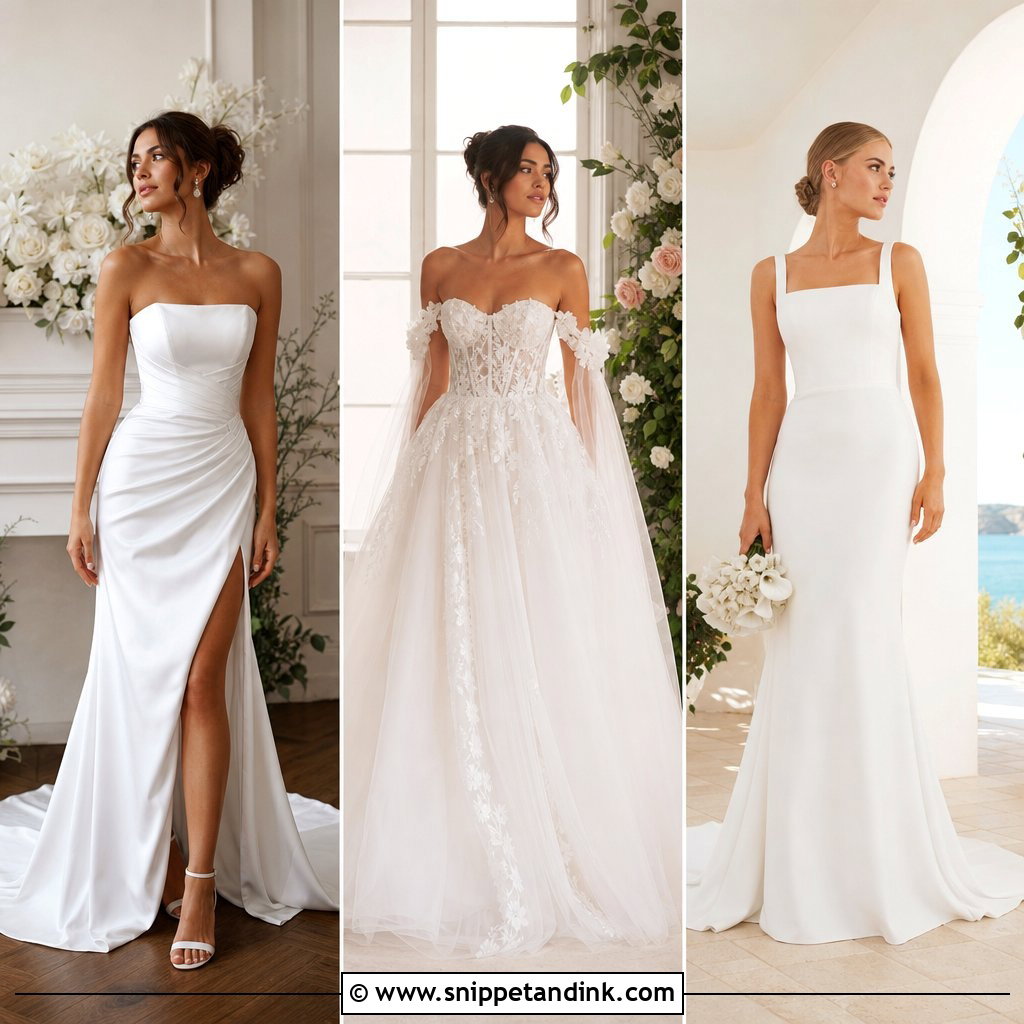
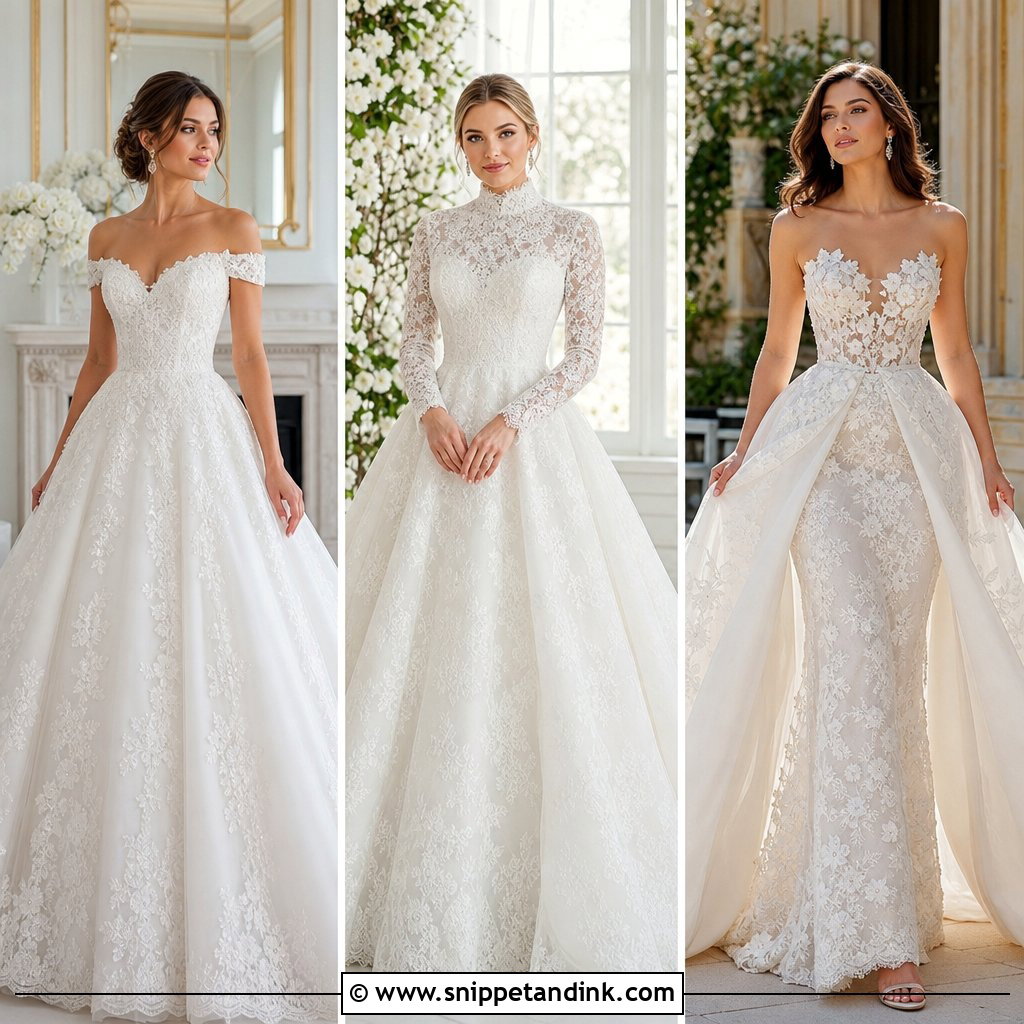
20. Modest Boho Wedding Gown
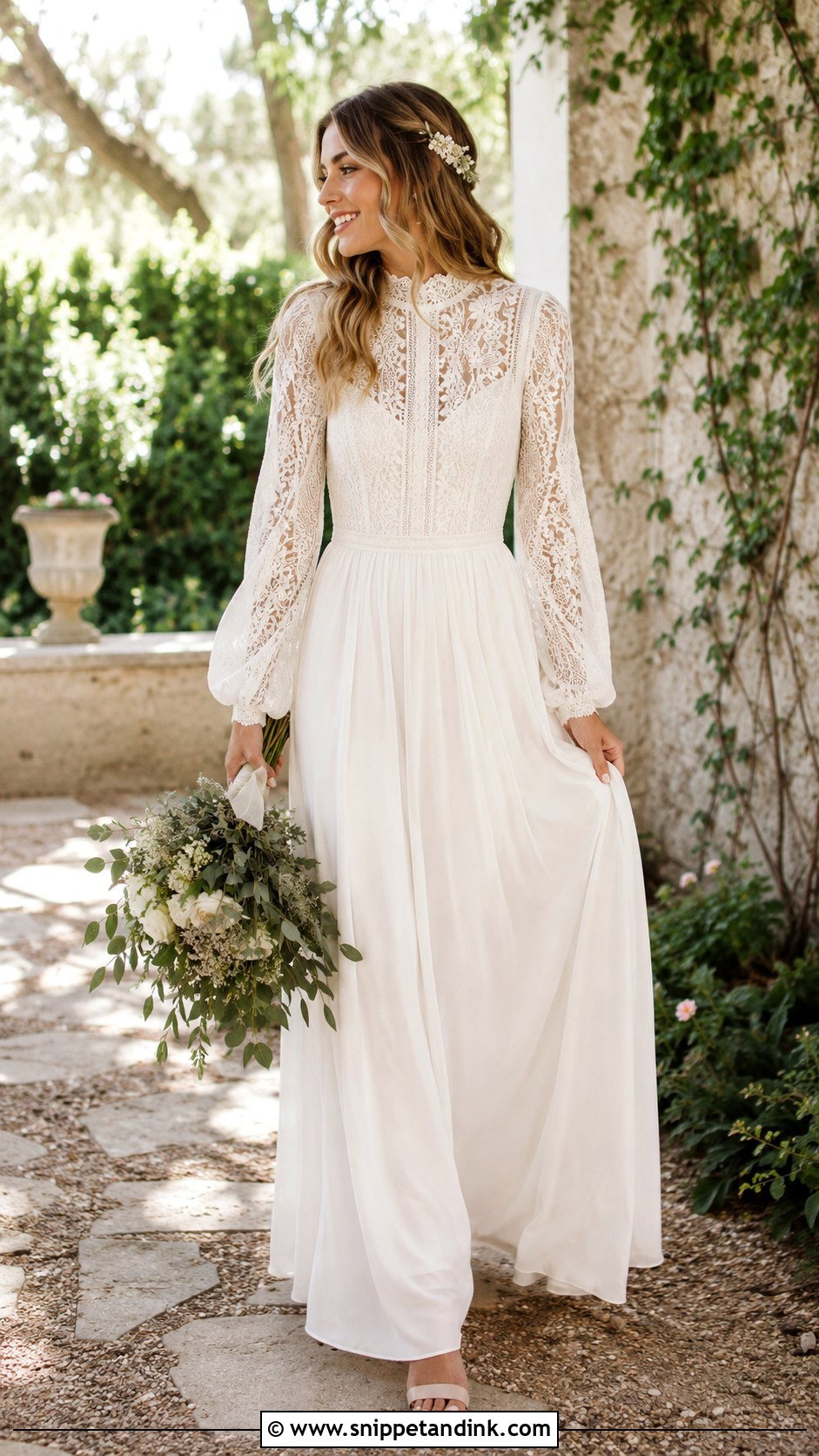
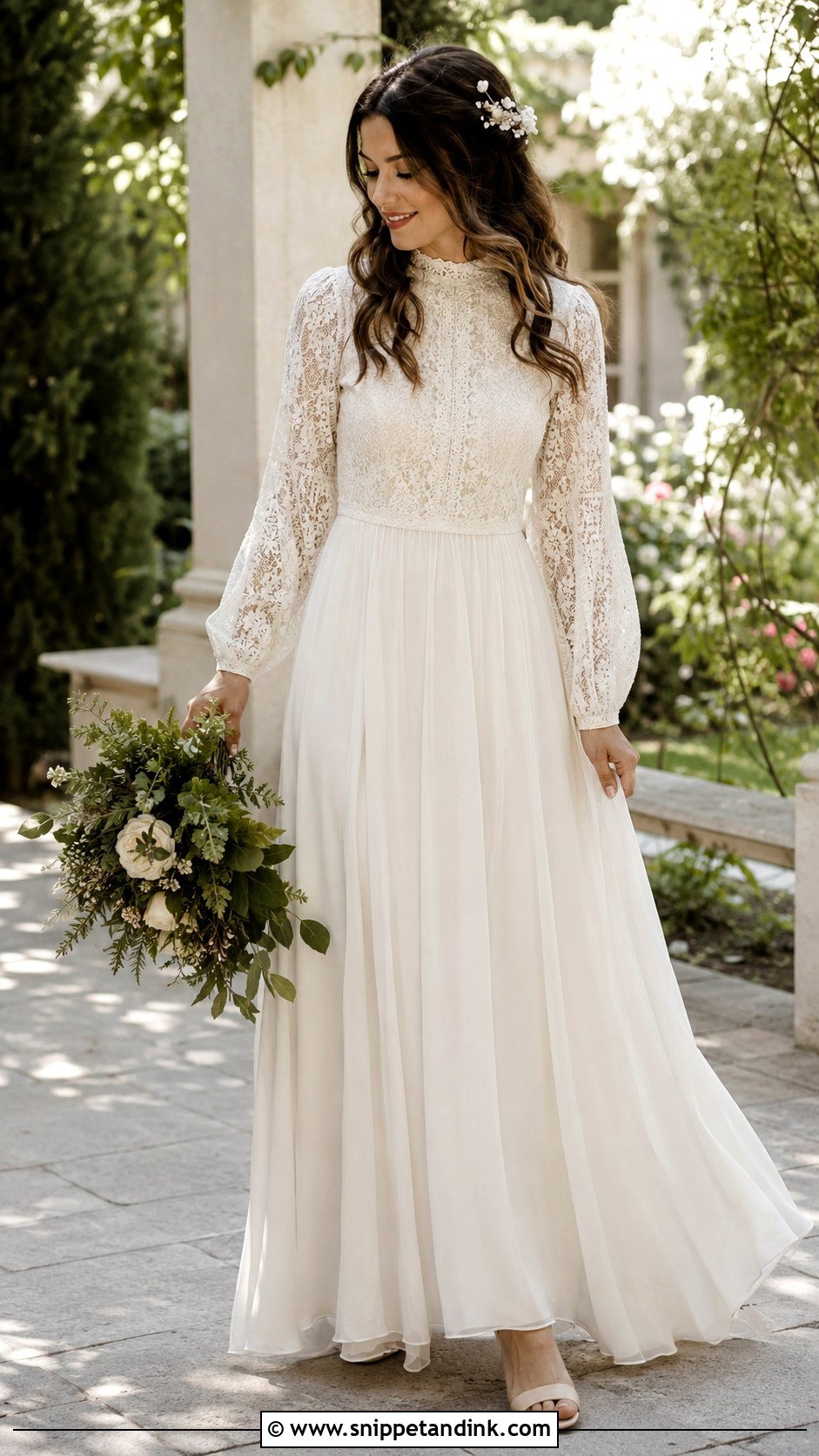
Boho gowns trade sparkle for texture: flowing skirts, lace sleeves, gentle embroidery, cotton lace and crochet-style details. A high neck or lined bodice keeps them covered, and bishop sleeves give that drifting feel. I mention one practical point here. Bishop sleeves gather at the wrist and can dip into food and candle flames, so a tight cuff is worth asking for. Block heels for grass, loose waves, a floral comb and a natural bouquet with greenery suit outdoor and garden venues.
21. Modest Minimalist Wedding Gown
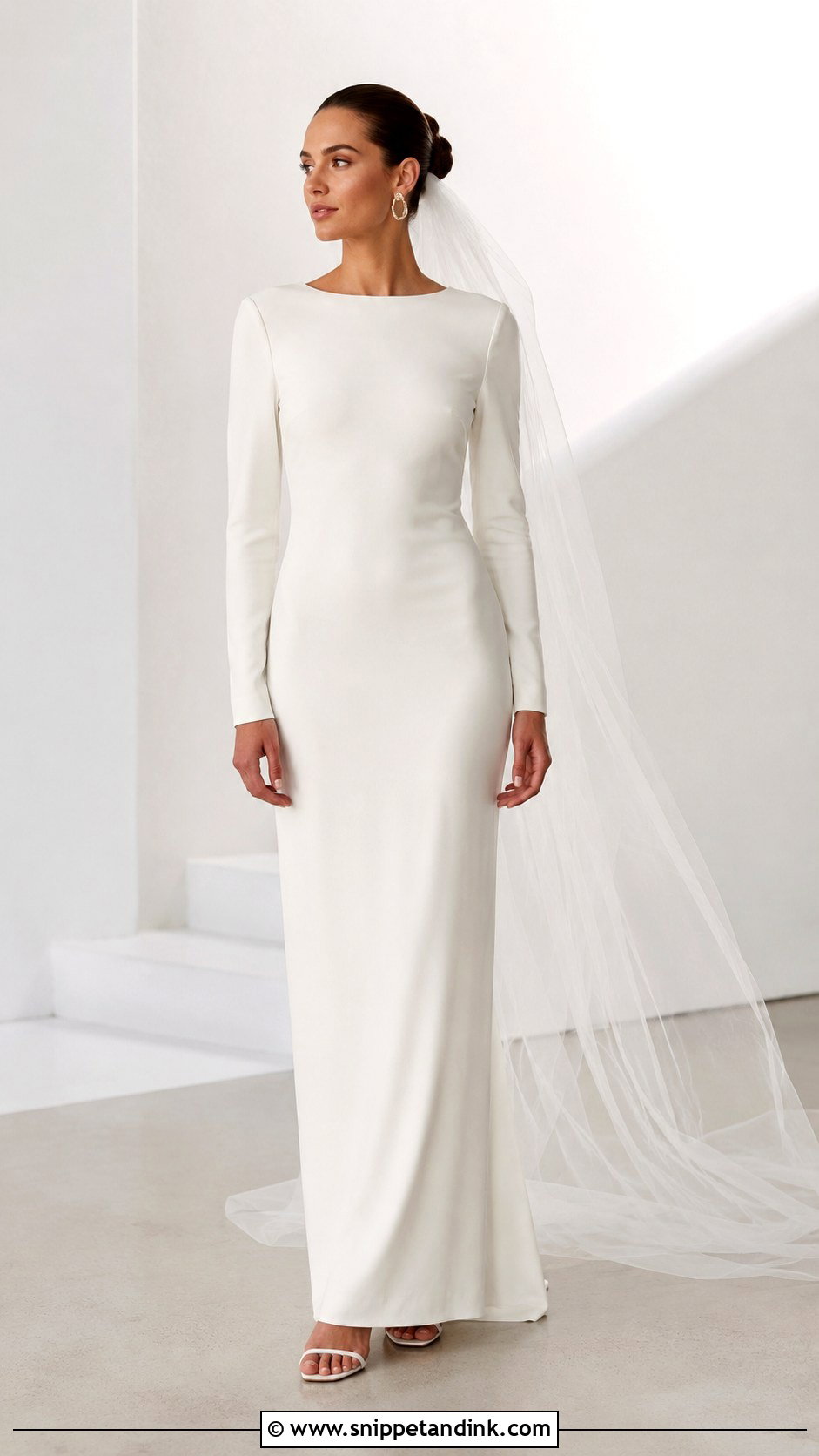
In a minimal gown, the cut, fabric and fit carry everything. Crepe, satin or mikado with a high neck, long sleeves or a clean bateau is the base, and a column, sheath, or A-line silhouette keeps it modern. With no lace or beading to distract the eye, every seam shows, so I treat tailoring as part of the gown’s price. Shoulders, waist, sleeve length and hem must sit precisely. Sculptural earrings, a sleek bun, simple heels and a long veil add softness, and the photos will not date.
22. Modest Beaded Wedding Gown
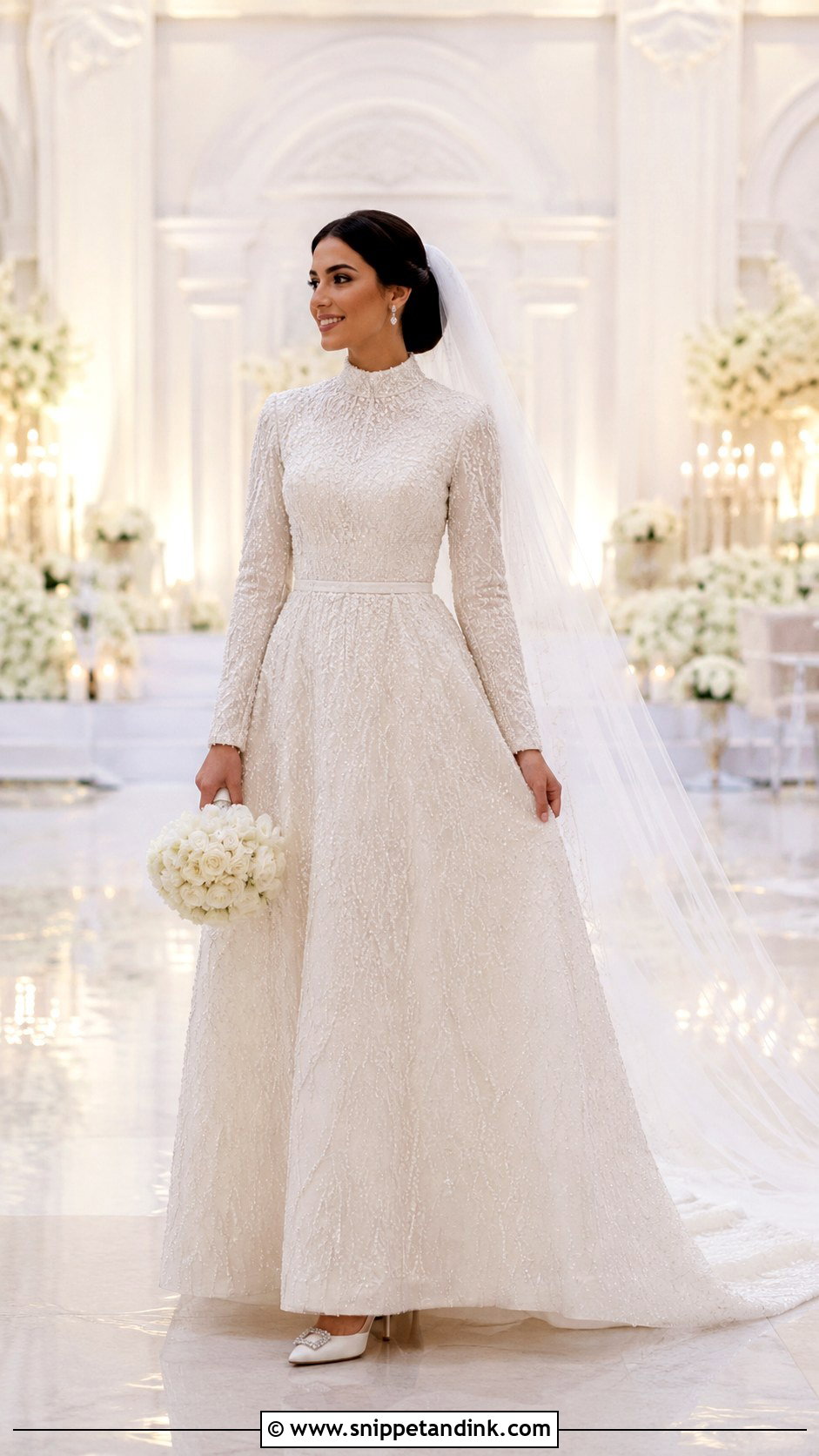
Beading on a covered gown should help the design, not swallow it. Delicate beading down long sleeves, a little sparkle at a high neck or a lightly worked bodice is usually enough. Ask what the beads are sewn onto: heavy beadwork on a fine sleeve pulls it down at the shoulder by the evening. With a lot of shine, keep everything else plain, with small earrings, satin heels, a smooth veil and a clean style. Beading earns its keep at evening receptions, where it catches candlelight.
23. Modest Organza Wedding Gown
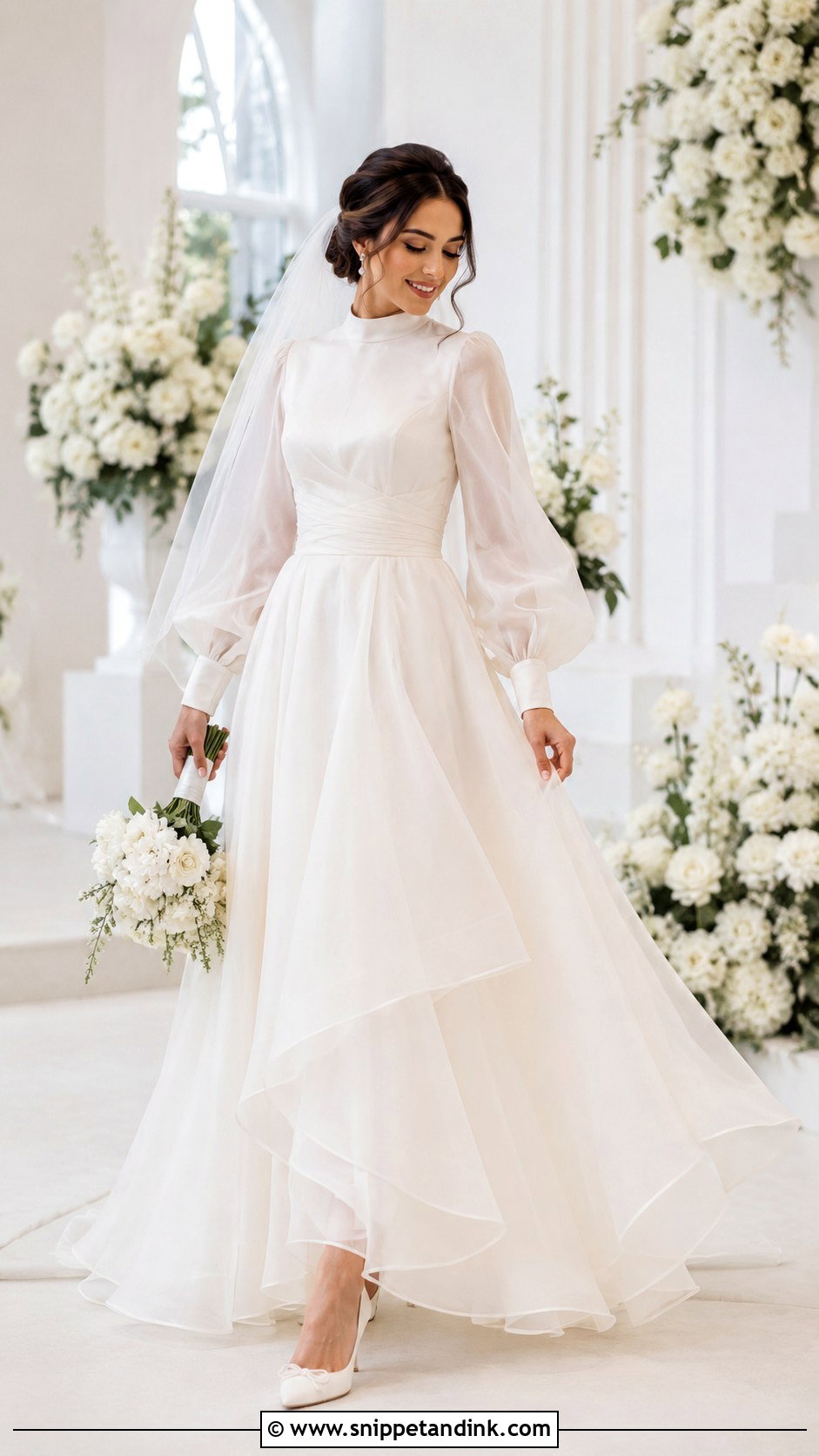
Organza sits between chiffon and mikado: crisper than the first, lighter than the second. It holds full skirts, layered A-lines and puffed sleeves without much weight. A lined bodice, high neck and long sleeves keep it covered. The thing to know is that organza wrinkles sharply and those creases do not fall out, so I steam it at the venue and keep it hanging until the last minute. Minimal appliqué keeps it clean; floral details make it romantic. Finish with pearl earrings, a sheer veil, comfortable heels and a small bouquet.
24. Modest Winter Wedding Gown
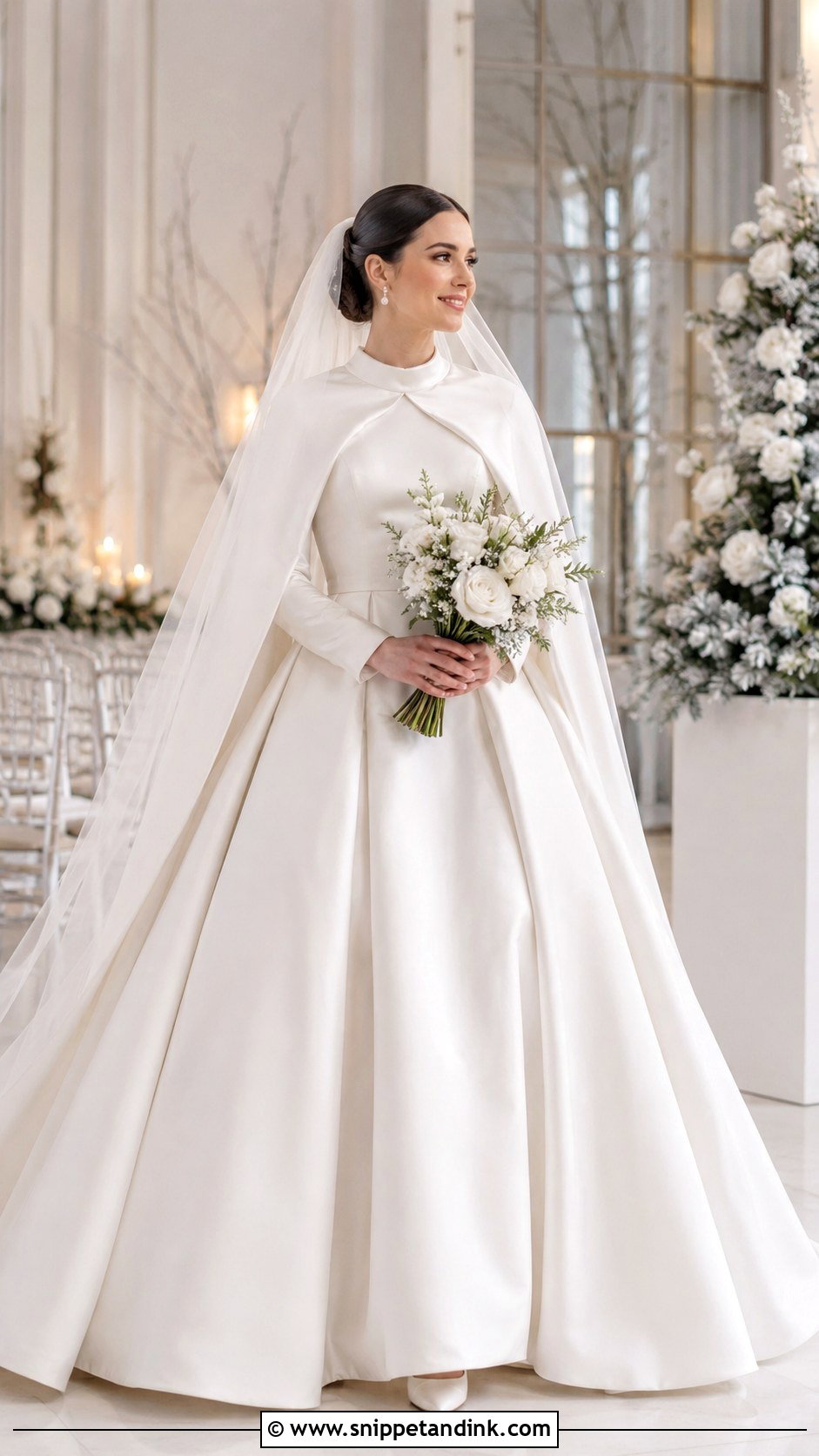
Winter is the easiest season for covered bridal wear, because long sleeves and heavier satin, mikado, crepe or layered lace actually help. A high neck or bateau pairs well with a long veil or soft cape. For outdoor photos at a cold venue, add a faux fur wrap, tailored bridal coat or lined cape. I steer away from thin fabrics that crease badly in a heated car. Closed-toe shoes, pearl earrings and a smooth updo finish the outfit.
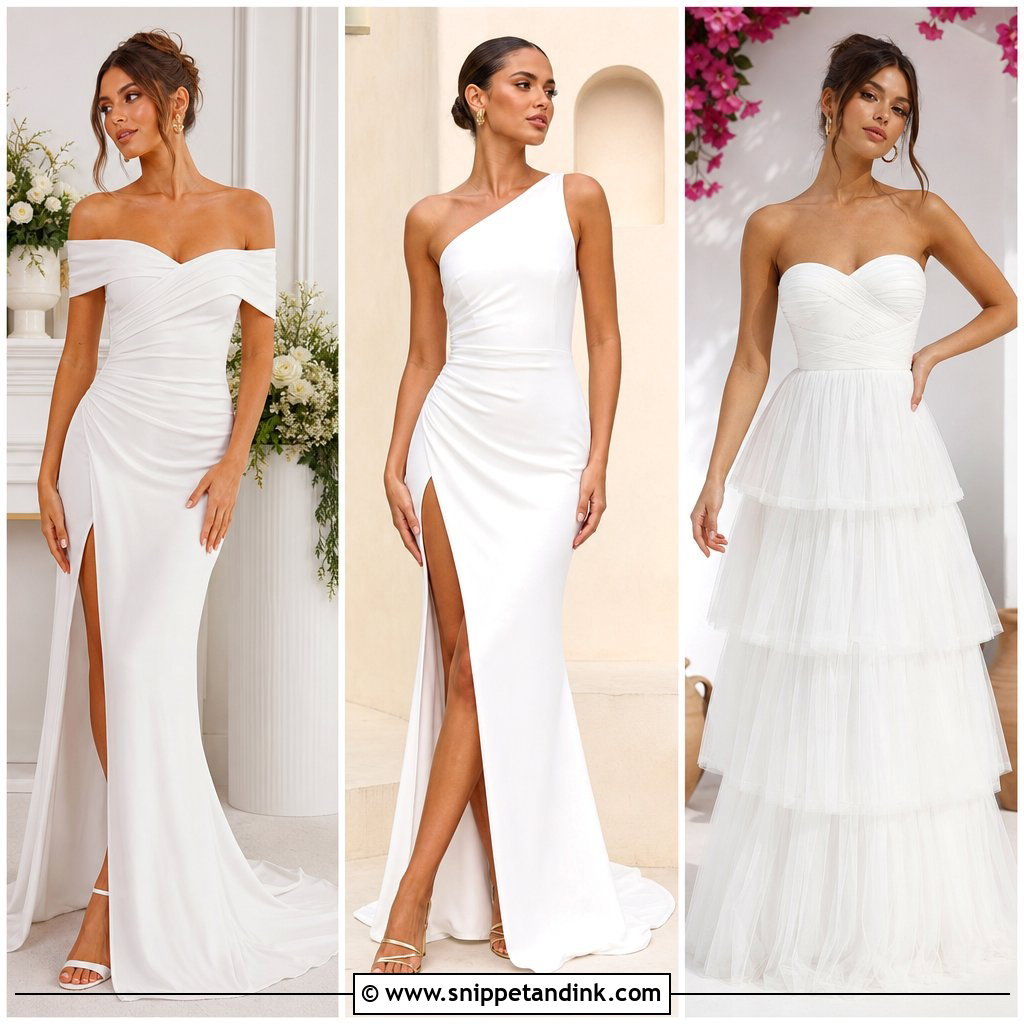



25. Modest Summer Wedding Gown
Summer coverage is a breathing problem first. Chiffon, organza, soft tulle and light crepe keep air moving; lightly lined or open-weave lace sleeves help too, and heavy beadwork is best left for indoor ceremonies. A high scoop, bateau or modest square neck covers without trapping heat. An A-line or flowing sheath is far easier than a ball gown in the sun. I always ask whether the lining is polyester or cotton-blend, because a synthetic lining against the skin is often what makes a covered gown unbearable. Low heels, a light veil, pearl studs and a fresh bouquet complete it.
Adding Sleeves or a Higher Neck to a Gown You Already Love
Plenty of brides fall for a gown that was never designed to be covered. Many of those can be adapted, but I am honest about which changes look built in and which look like an afterthought.
Changes that usually look original
- Filling an illusion neckline or back with a lining of matching tulle or crepe.
- Adding sleeves cut from the designer’s own lace or fabric, ordered from the shop with the gown.
- A separate bolero, topper or cape that comes off for the reception.
Changes I talk brides out of
Raising a deep V or a sweetheart neckline by more than a few inches rarely works, because the bodice pattern was drafted around that shape. Matching satin or crepe from another bolt can also show a slight colour difference in daylight. If your shortlist needs heavy surgery, it is usually better to start with a gown designed covered.
Timing matters too. Ask the shop whether extra fabric can be ordered at the same time as the gown, since it comes from the same dye lot then. Added sleeves and lining usually need an extra fitting, so tell your seamstress about coverage changes at the first appointment rather than the last.
The Gown You Can Kneel, Hug and Dance In
A covered gown is never only about the neckline. Sleeves, fabric, skirt shape, veil, shoes, jewelry and hair all have to agree with each other, and with your venue and the way you want to move. Covered can be romantic, minimal, regal or relaxed, and it never has to feel plain. Try your shortlist on, sit, kneel and lift your arms, and pick the one you forget you are wearing by the second hour.
You'll Like These Ideas:






Leave a Reply