
Most brides who come to me wanting a church-appropriate gown are worried about one thing: that covering up will make them look plain. It won’t, if the coverage is designed into the dress rather than added as an afterthought. A sleeve that was cut as part of the bodice moves with you; a shrug thrown over a strapless gown never quite does. Below are 25 modest wedding gowns I’d happily pull for a Christian ceremony, from lace sleeves and high satin necklines to crepe columns and champagne tones. Read them with your own church, season and body in mind, because the right one has to work at the altar rail as well as in the mirror.
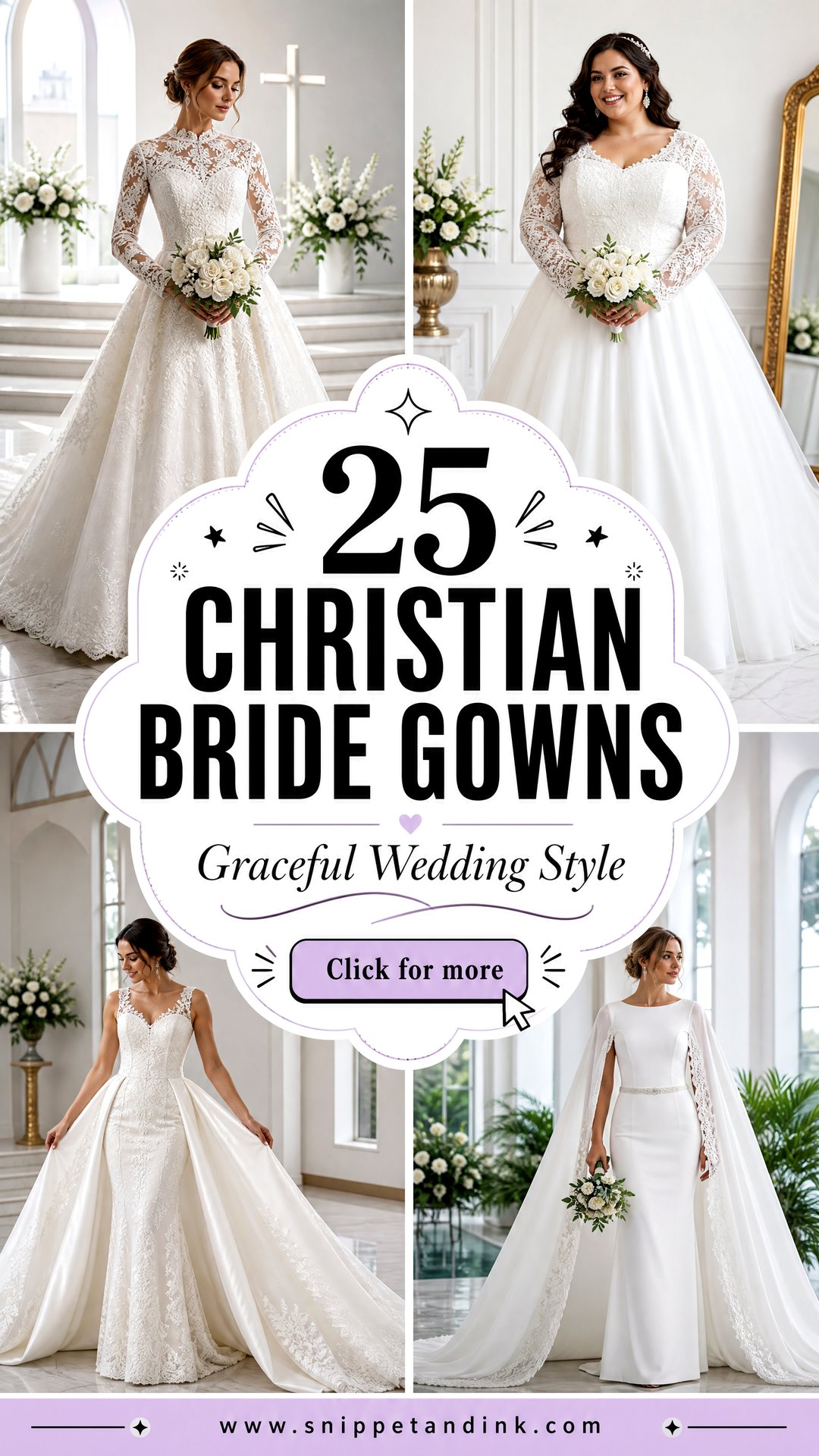
Ask Your Church About Coverage Before the First Appointment
Dress codes vary a lot between denominations and even between individual parishes. Some cathedrals and Orthodox churches expect covered shoulders inside the sanctuary, some ask for no bare back, and many have no formal rule at all. I always tell brides to ask the officiant or the parish office before they shop, because it changes which gowns are even worth trying on.
Once you know the rule, bring it into the fitting room. If shoulders must be covered, a strapless gown with a separate bolero is a workable fallback, but sleeves built into the gown look better and don’t shift. If the back must be covered, look for an illusion panel or a lined lace back rather than a plunge you’ll need to fill later.
Do the ceremony test in the sample
- Kneel on the fitting room floor and stand up again without help.
- Raise both arms as if you were embracing someone at the altar.
- Sit fully back in a chair and check whether the neckline gapes.
- Walk up two steps holding the skirt in one hand and a bouquet in the other.
Any gown that fails one of these tests needs an alteration plan or a different silhouette. It’s much easier to sort this out at the first appointment than three weeks before the wedding.
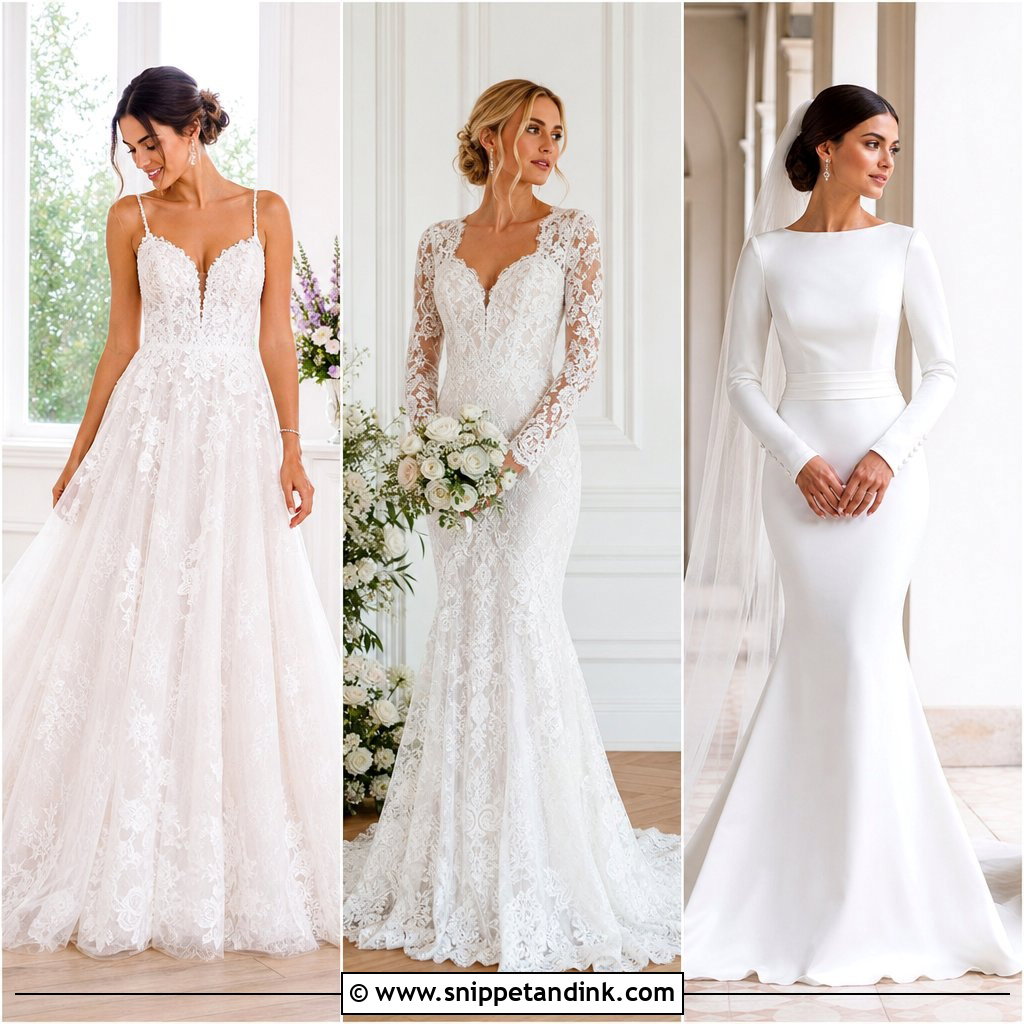
1. Long Sleeve Lace Christian Bride Gown
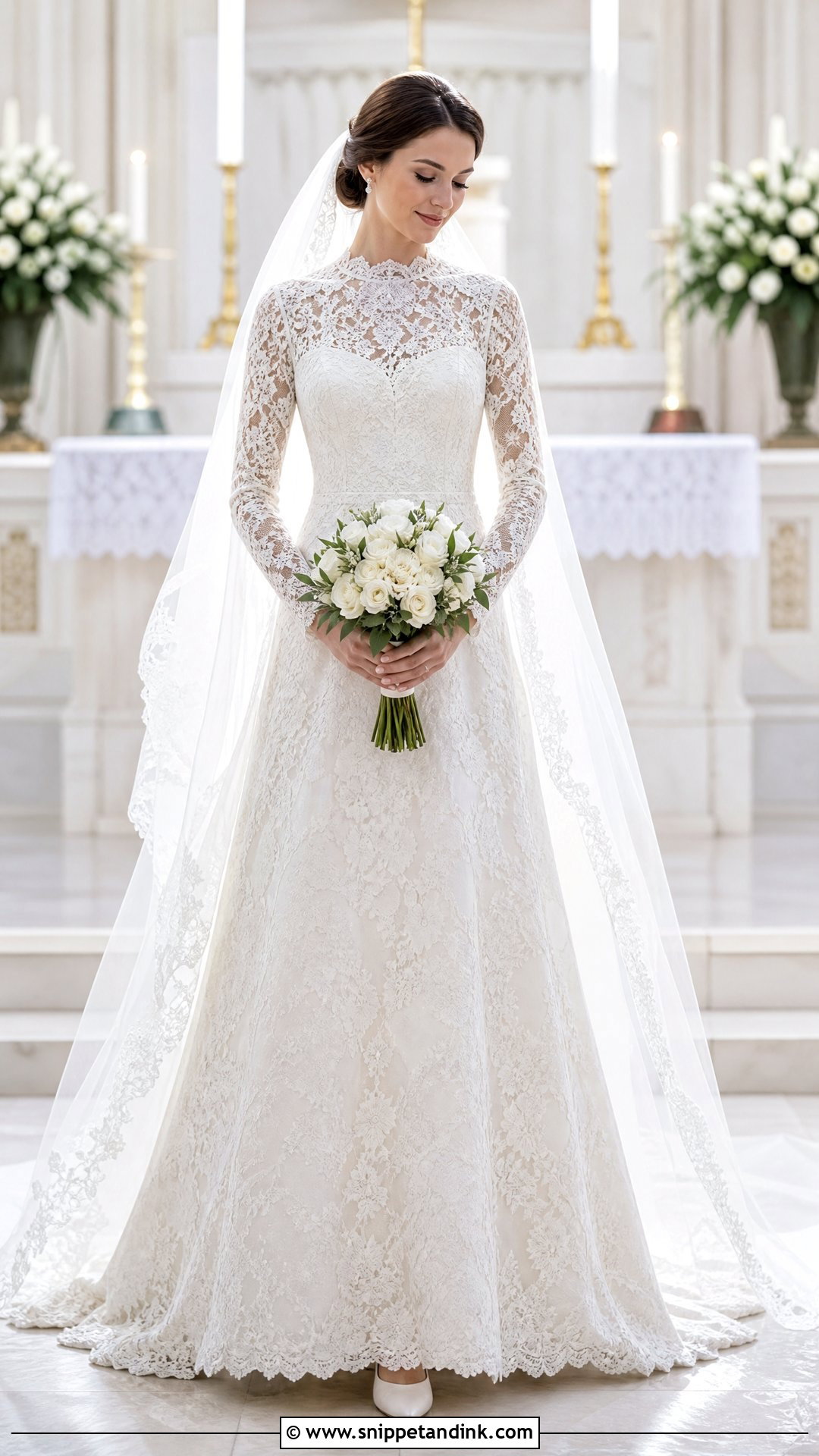
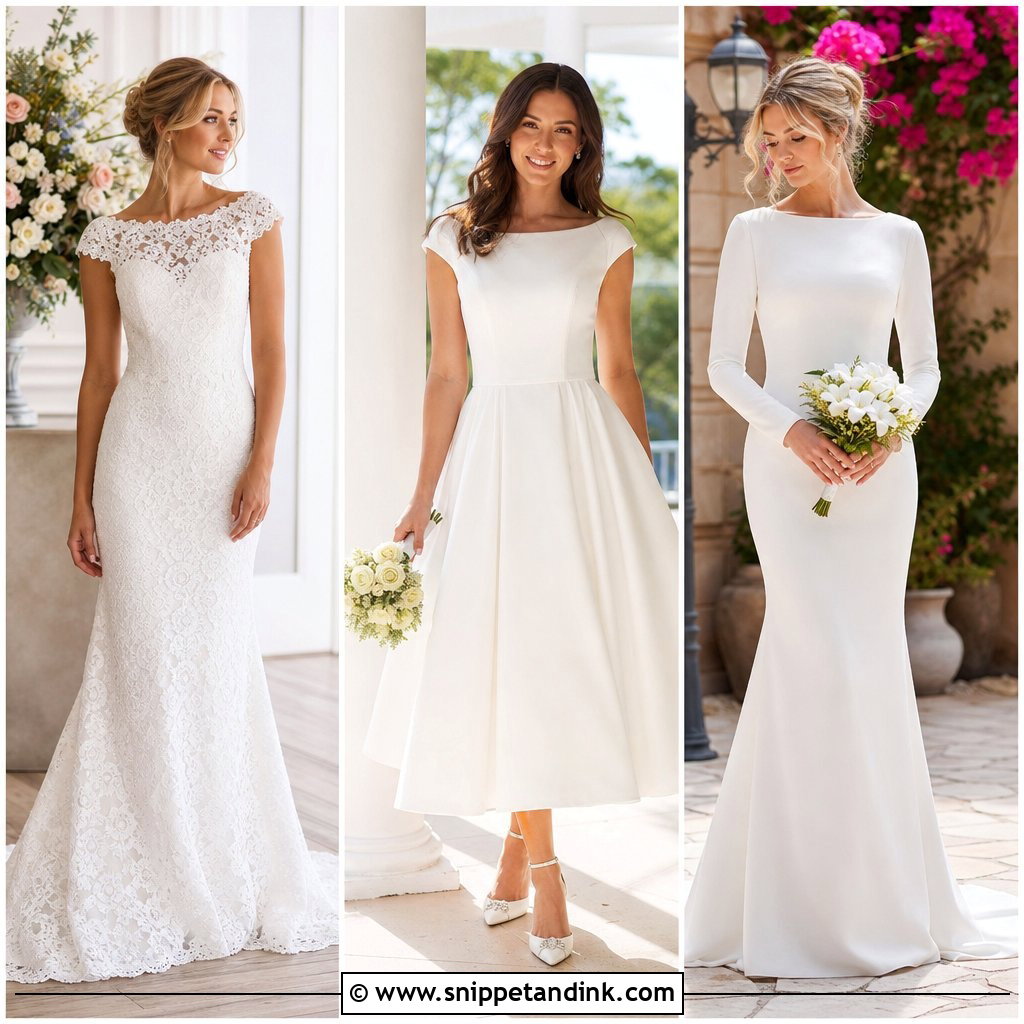
A long sleeve lace gown is the dress most brides picture first, and it earns that place. The thing I check at the first fitting is the armhole: lace sleeves set into a high, snug armhole let you lift your arms to hug people, while a low one pulls the whole bodice up when you reach. An illusion neckline over a lined bodice keeps the coverage soft rather than heavy. A chapel veil, pearl drops and closed-toe heels are all it needs. In autumn and winter churches, which are often cooler than you expect, the sleeves are a comfort as much as a style choice.
2. High Neck Satin Christian Bride Gown
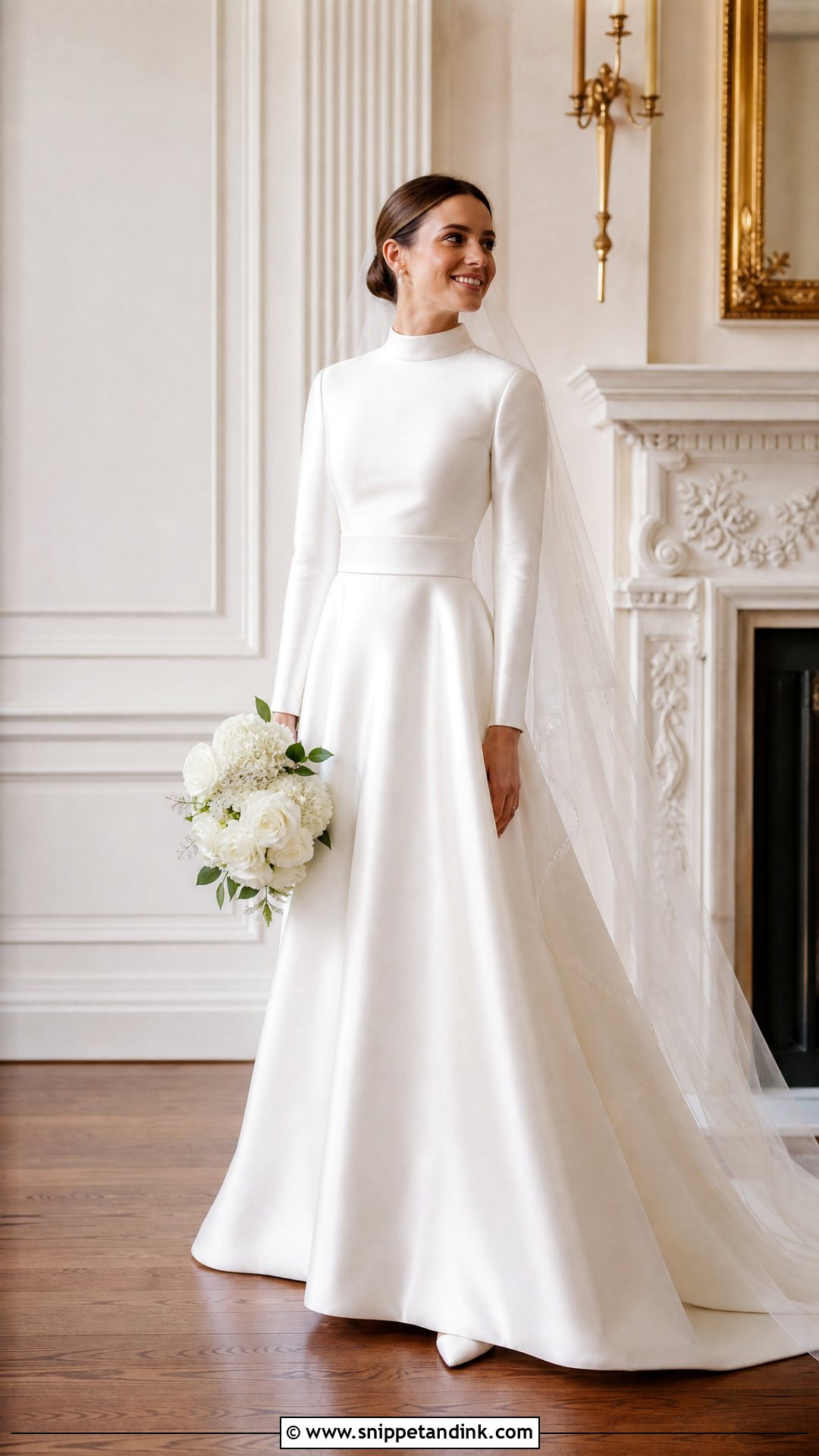
High neck satin works because the fabric does the talking. Satin catches light along every seam, so any pulling at the bust or waist shows up instantly in photos; I’d spend the alteration budget here on fit, not on adding detail. Keep it to pearl studs, a low bun and a fingertip veil. One honest caution: a high neck shortens the look of the neck on brides with a short torso, so try a slightly lower jewel neckline before you commit.
3. Modest Ball Gown Christian Bride Gown
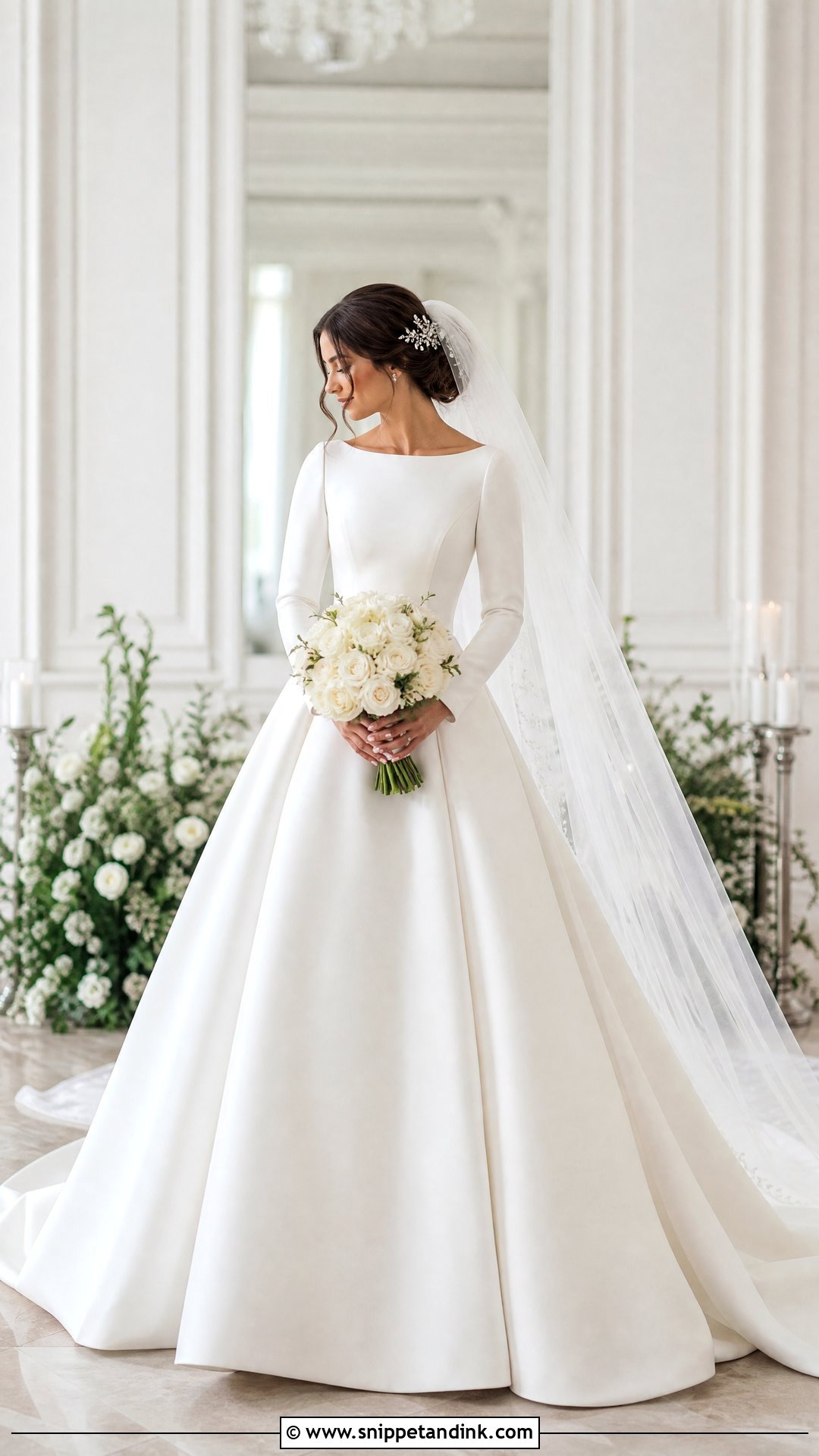
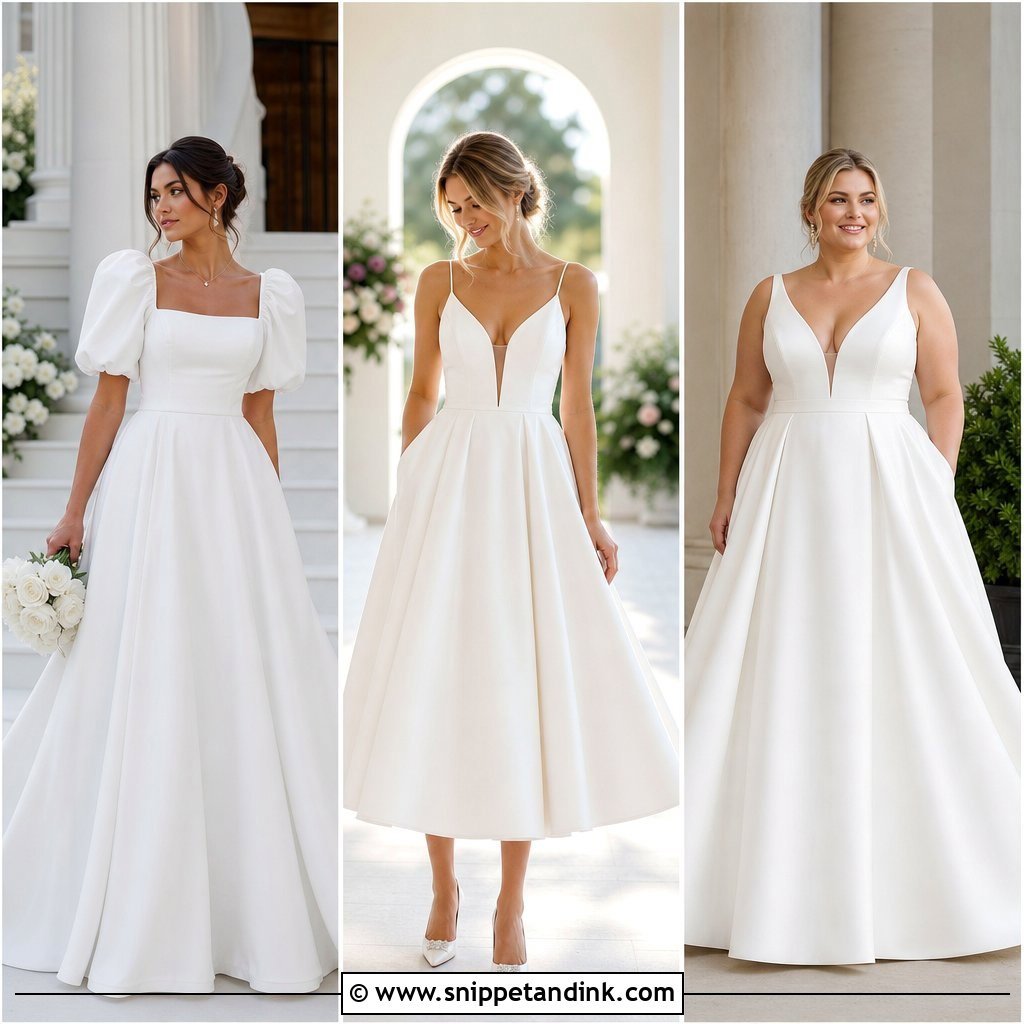
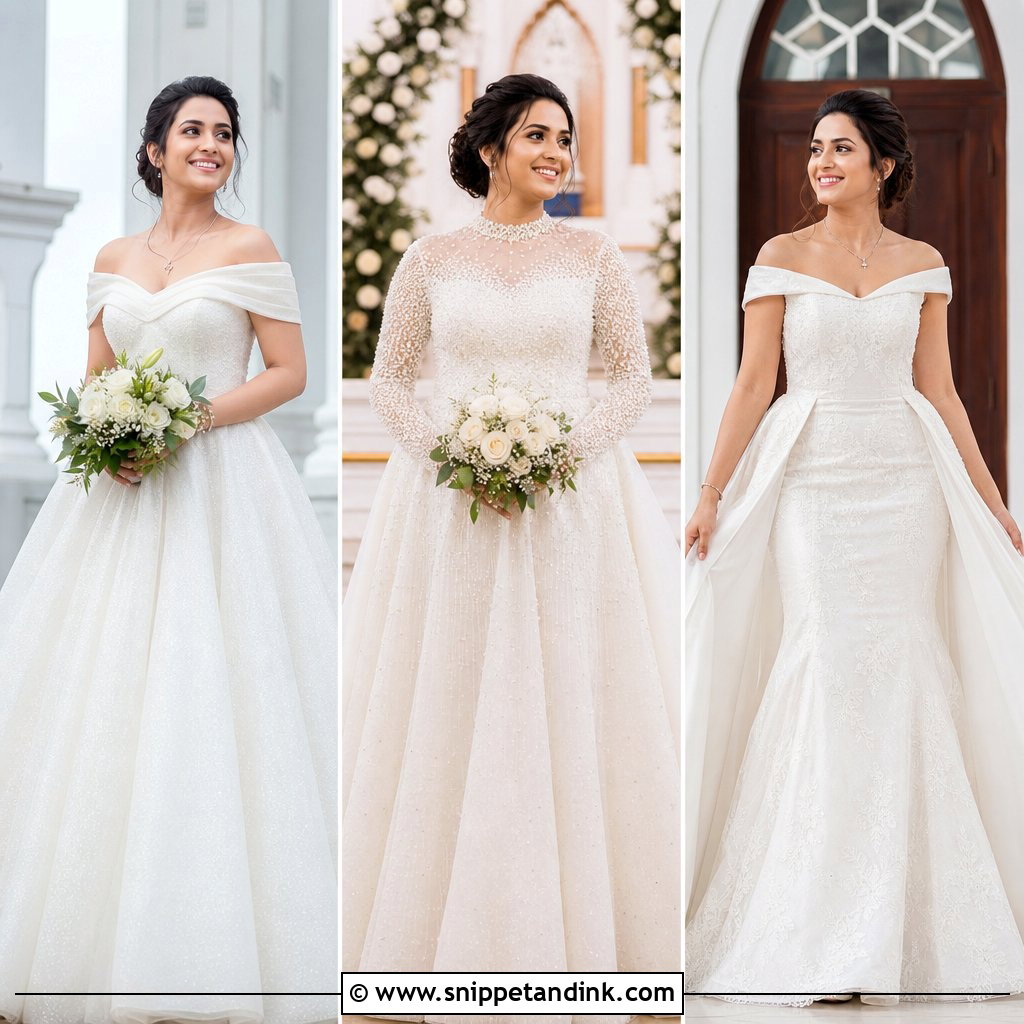
A modest ball gown gives you the grand aisle moment without any worry about coverage. Mikado and heavy satin hold the skirt’s shape on their own, while organza needs a crinoline or layered tulle underneath. Pair a bateau neckline with three-quarter sleeves, add a cathedral veil and choose low block heels, because you’ll be standing for the whole service. Ask how much the skirt weighs before you fall for it. A full ball gown can be several kilos, and that becomes very real during a long Mass.
4. A Line Christian Bride Gown With Cap Sleeves
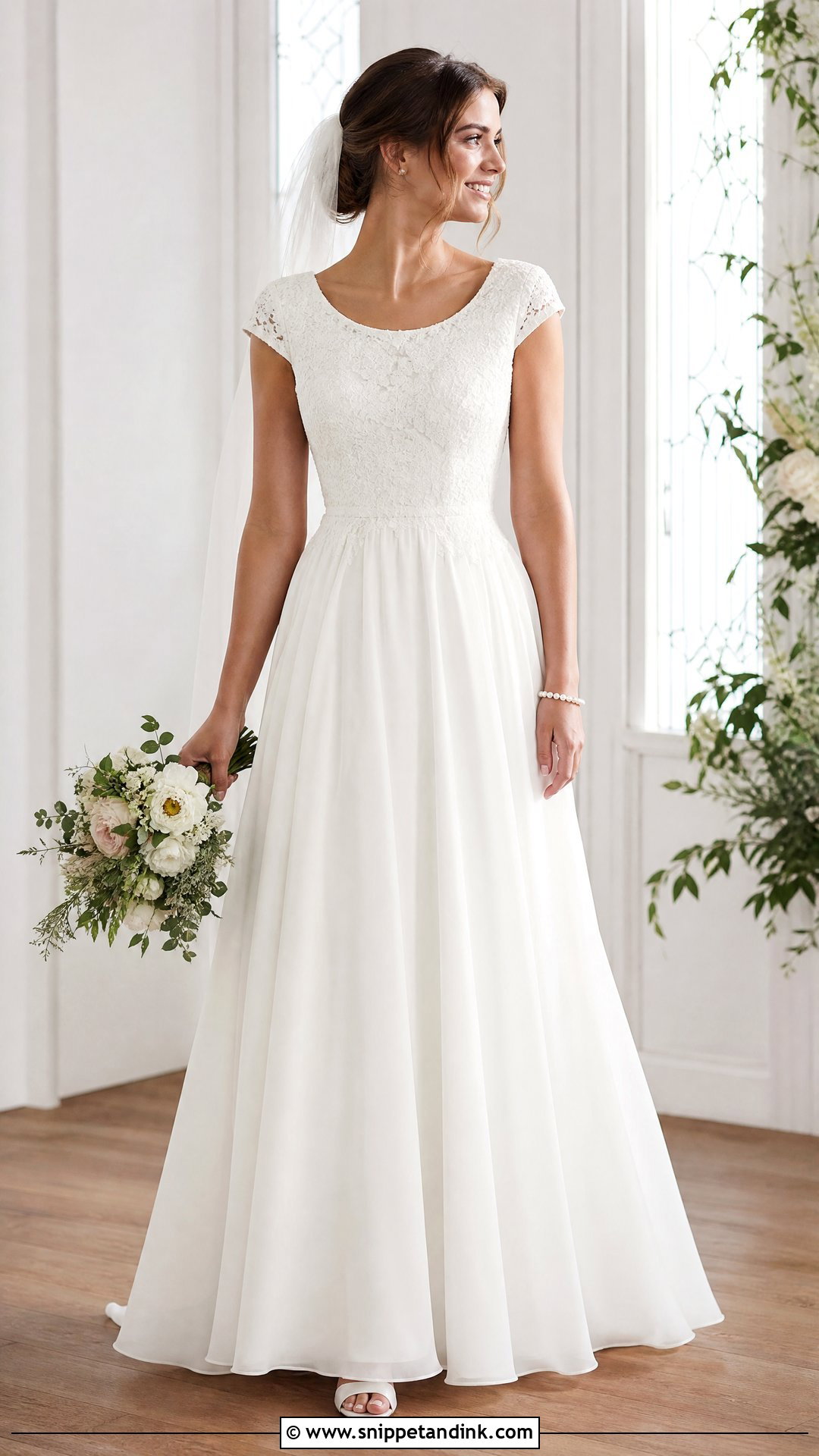
Cap sleeves sit right at the edge of the shoulder, which gives a little coverage without the warmth of a full sleeve. They’re kind to most arms, but they do bite if they’re cut too tight, so I always ask brides to cross their arms in the fitting room. Lace or chiffon suits spring and summer best. A scoop or soft square neckline, a simple veil and ivory heels finish it. If your church asks for covered shoulders, check that the sleeve actually reaches the shoulder point rather than stopping short.
5. Simple Crepe Christian Bride Gown
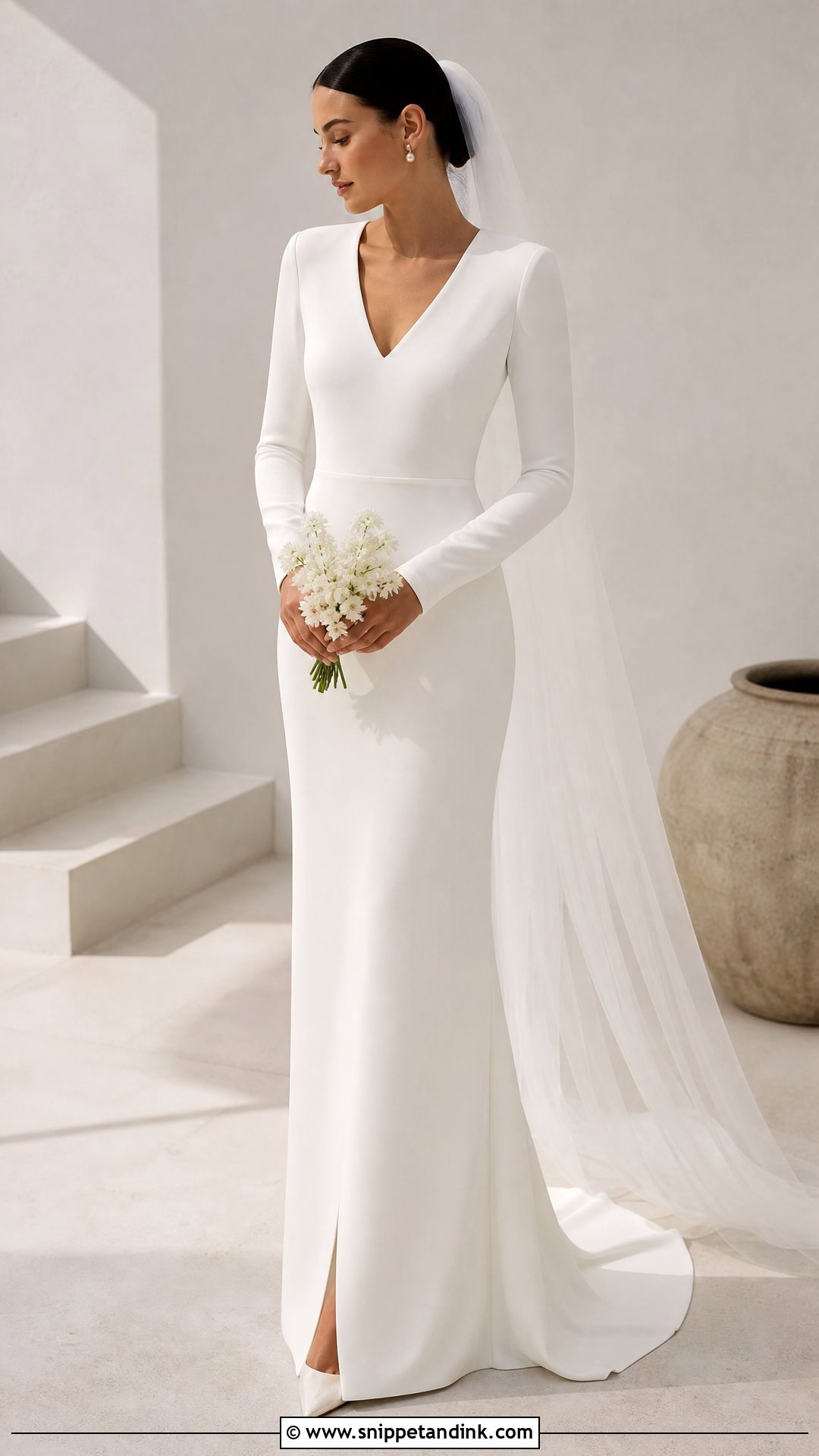
Crepe has a matte, slightly weighty finish, so a simple crepe gown relies entirely on cut. A modest V-neck, long sleeves and a covered back suit a faith-centred ceremony and look calm beside ornate church interiors. The fabric is honest, though: it shows every line underneath, so plan line-free underwear and a smooth bra before your first fitting. Style it with pearl earrings, a sleek veil and a low chignon, and leave the rest alone.
6. Square Neck Christian Bride Gown
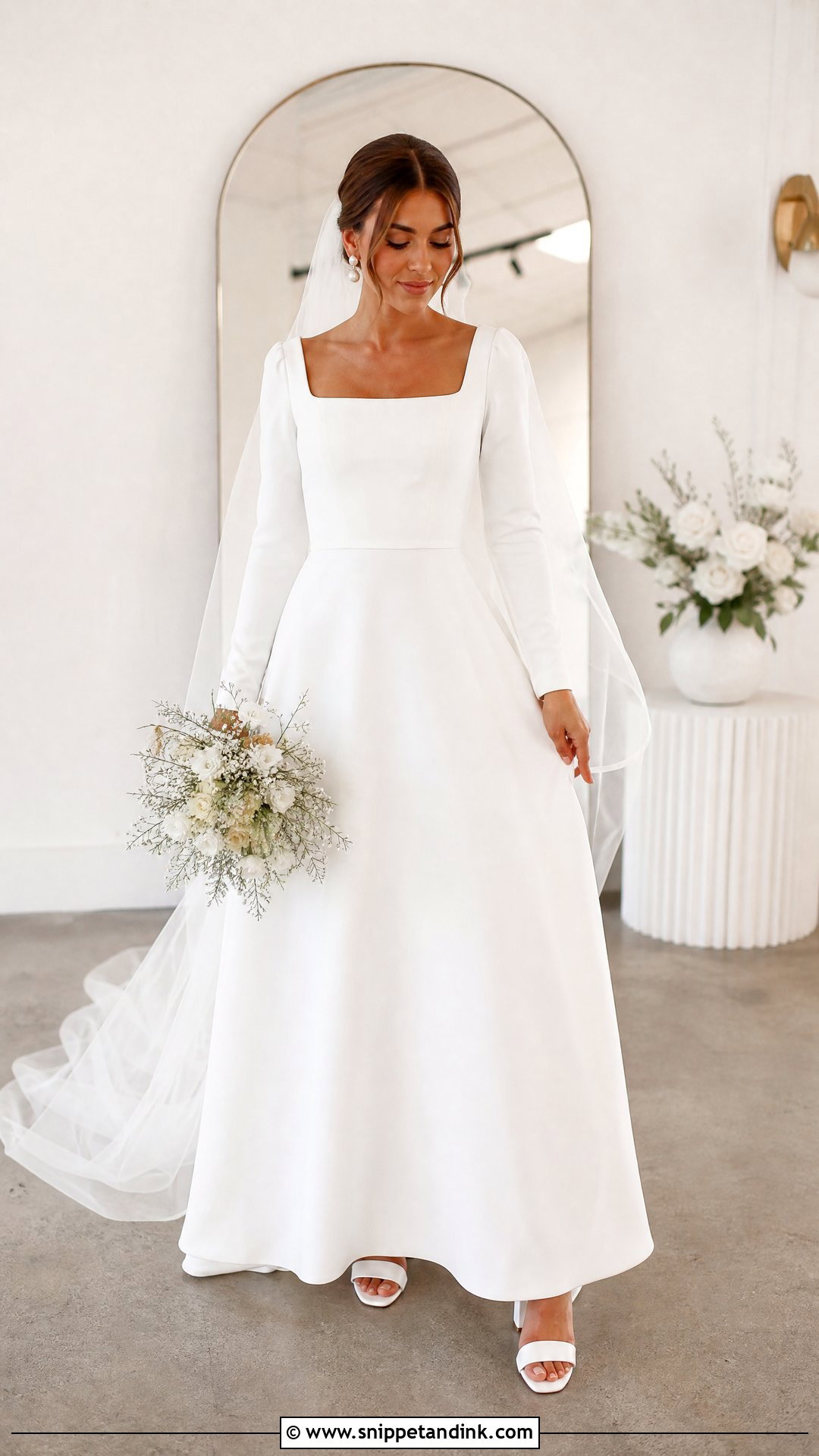
A square neckline frames the collarbones and gives a veil a clean edge to fall against. Cut higher, it reads as modest without the closed-in feel of a high neck, which is why I suggest it to brides who find jewel necklines claustrophobic. The corners need to be stable; on a soft fabric they can collapse inward when you sit, so I look for boning or a firm facing. Long sleeves for winter, short for summer, and pearl hoops with block heels to finish.
7. Tea Length Christian Bride Gown
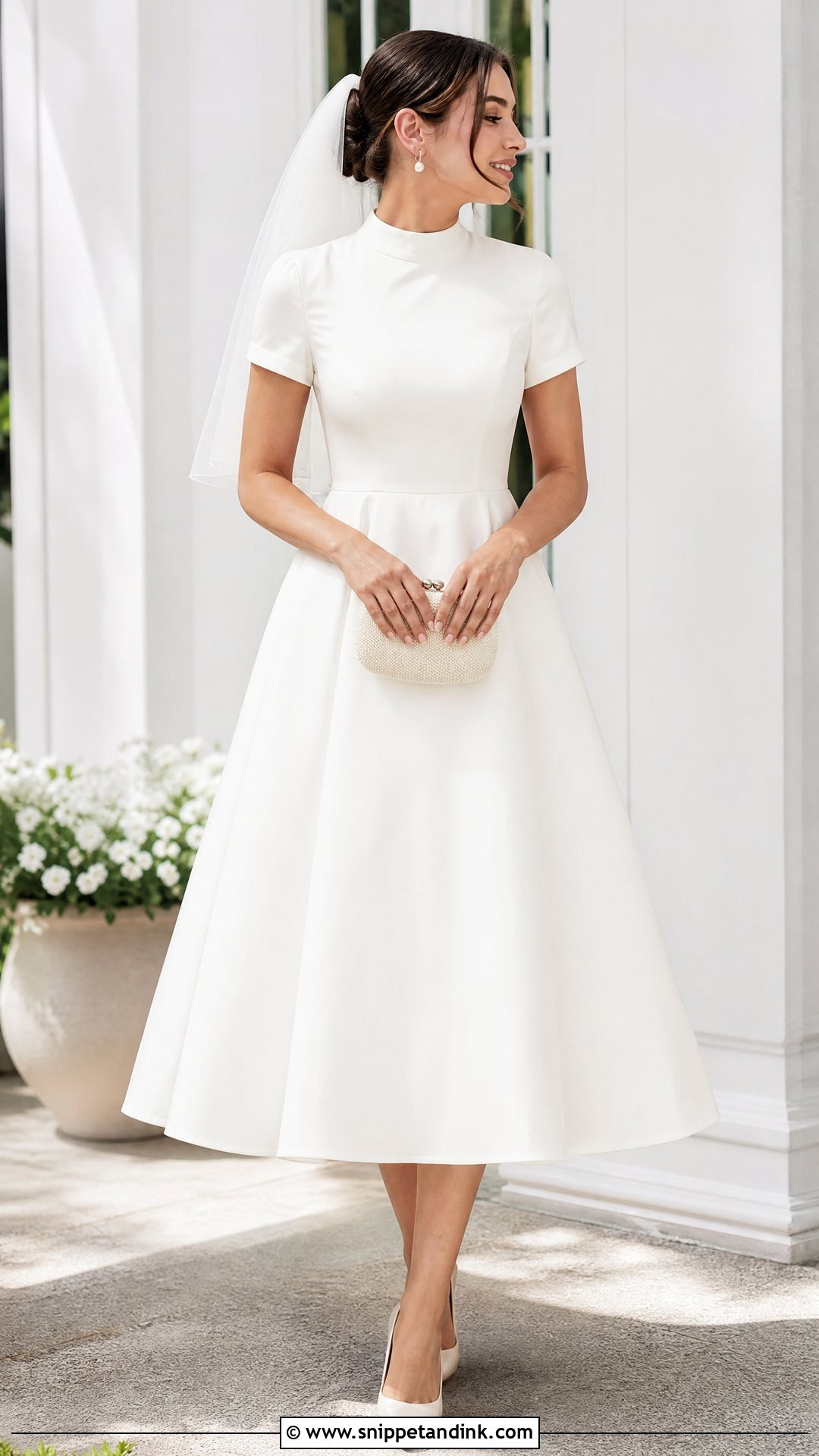
Tea length falls between the knee and ankle, so your shoes are part of the outfit. That’s the first thing to plan: a pointed pump or a T-bar shoe with a covered toe will be seen in every walking photo. A high neckline, short sleeves and a full skirt give it a vintage, 1950s shape. It’s my usual suggestion for daytime ceremonies, registry weddings and smaller church services where a train would feel too much. You’ll also never step on your own hem kneeling at the altar.
8. Pearl Detail Christian Bride Gown
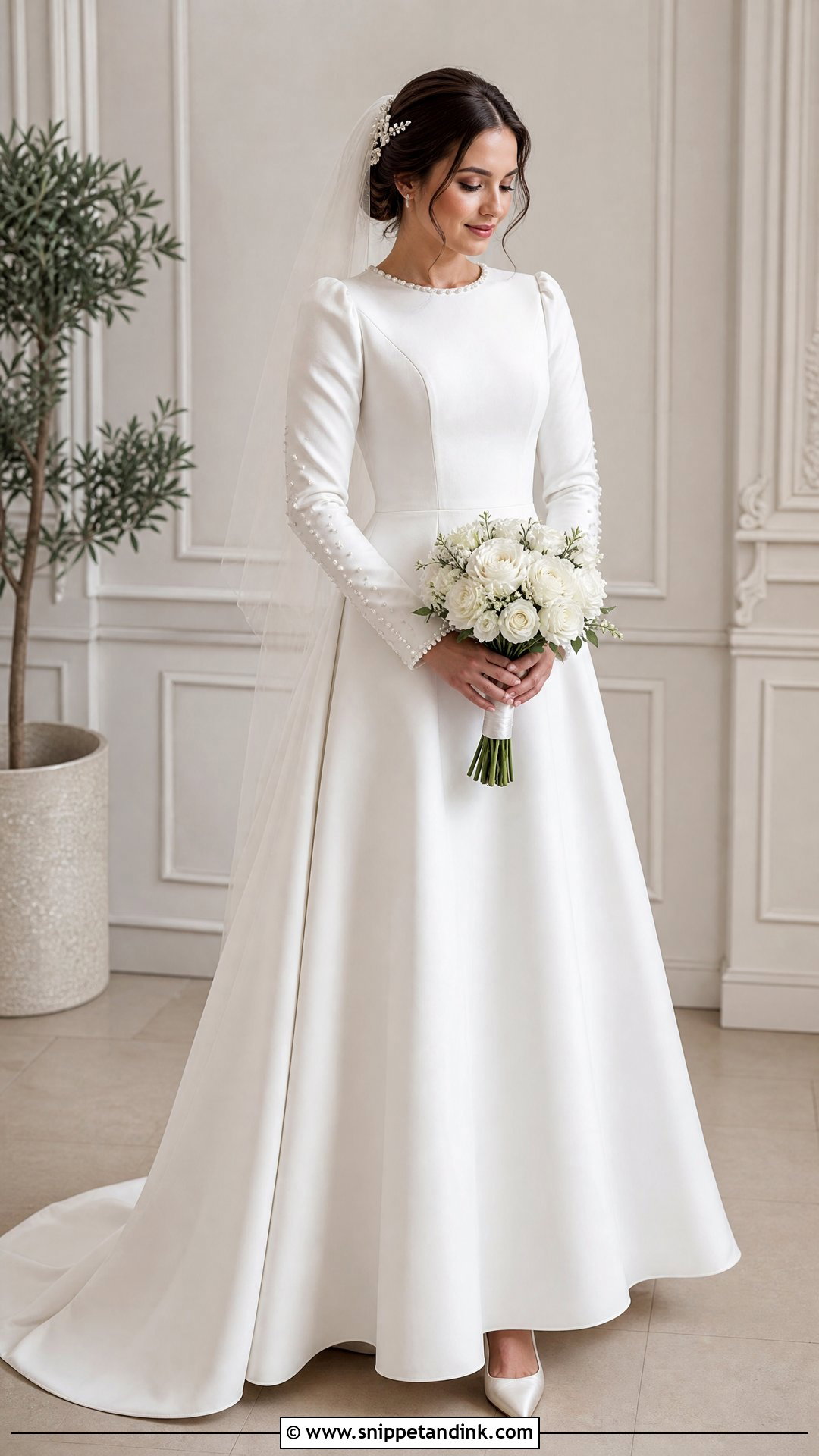
Pearls give texture without glitter, and that suits a church setting better than heavy crystal. On sleeves and bodices they’re hand-sewn, so before you buy, run your hand gently over them and check none are loose; a pearl that pops off during the day is a small but irritating fix. Choose one pearl moment, either the gown or a pearl comb, and keep the other pieces plain. Too many pearls start to look costume-like in close-up photos.
9. Basque Waist Christian Bride Gown
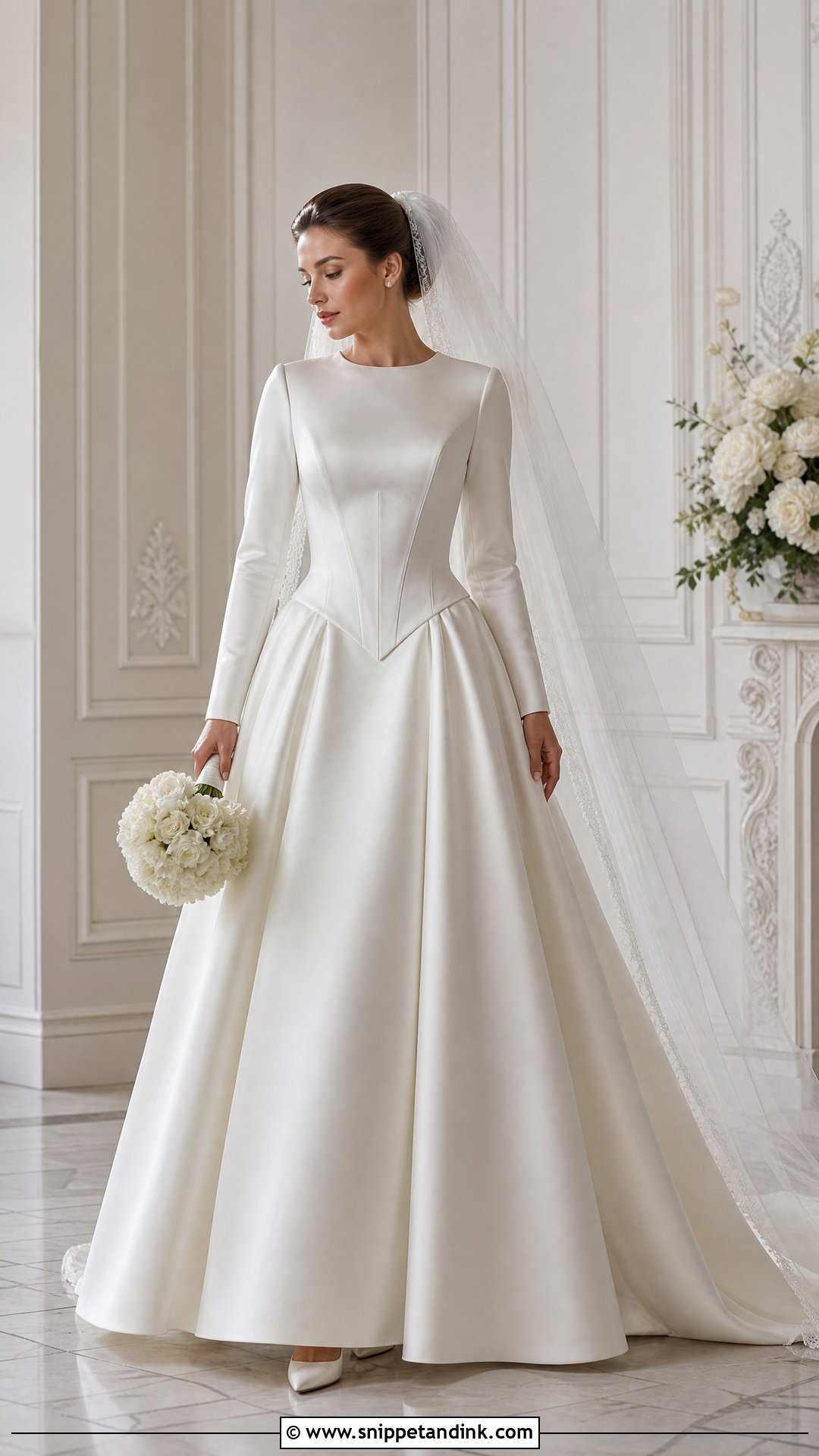
A basque waist gown has a bodice that dips into a V at the centre front, which lengthens the torso. It’s particularly good on brides with a shorter waist. The catch is that it has to sit exactly at your natural waist; even a centimetre too low and it looks like the dress is sliding down. With long sleeves, a modest neckline and a full satin or mikado skirt, it feels formal and composed. A neat updo shows off the bodice line.
10. Chiffon Christian Bride Gown With Sleeves
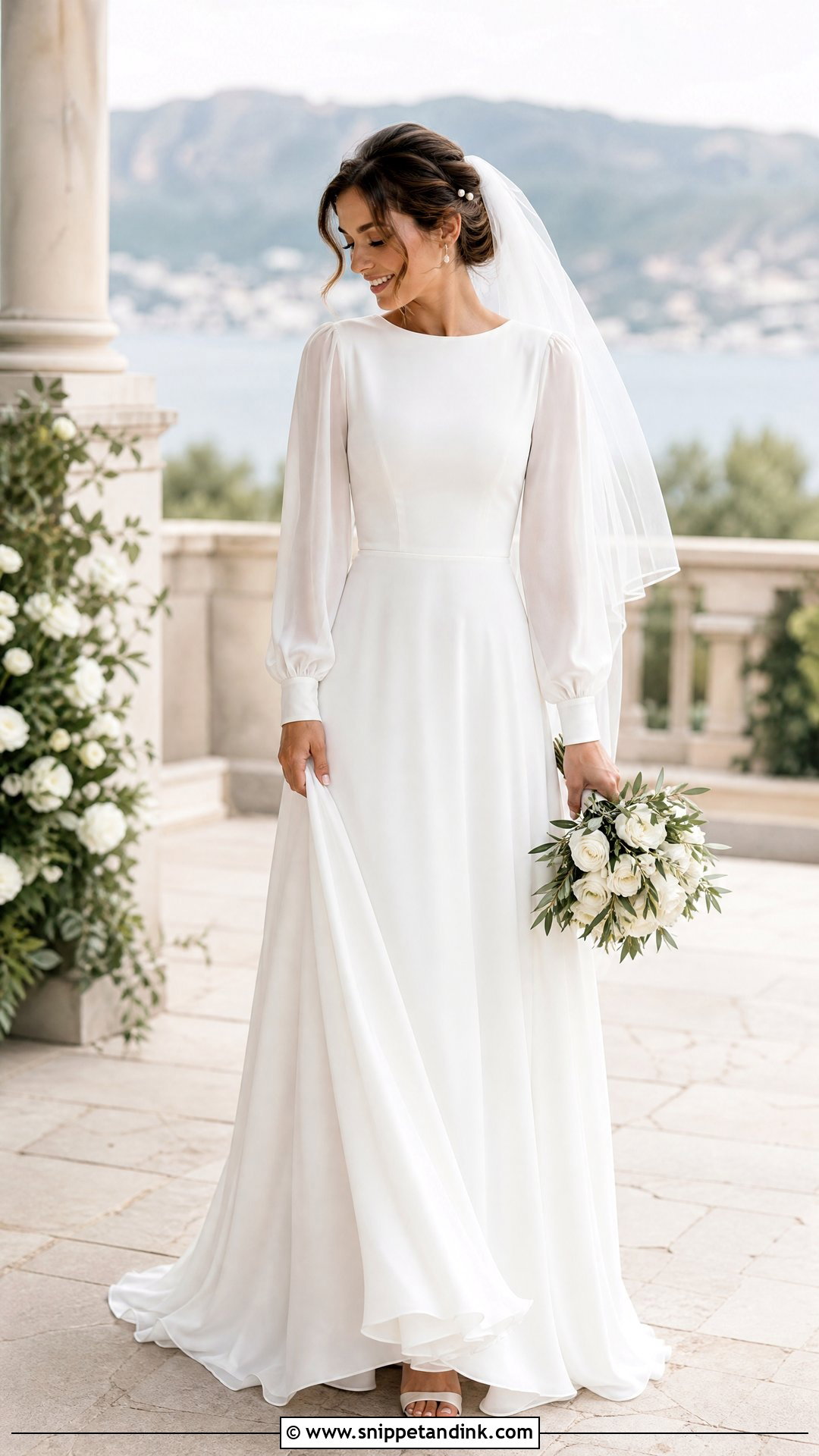
Chiffon is the lightest option here, and that matters for outdoor and summer ceremonies. It moves with every step, but it also wrinkles and can snag on rough stone or a bouquet stem, so I always suggest a steamer at the venue rather than an iron. A lined bodice keeps it modest, and Flutter sleeves, bishop sleeves or sheer lined sleeves let you decide how much arm you want covered. Low heels and a lightweight veil complete it. Expect it to feel comfortable well into the evening.
11. Modest Mermaid Christian Bride Gown
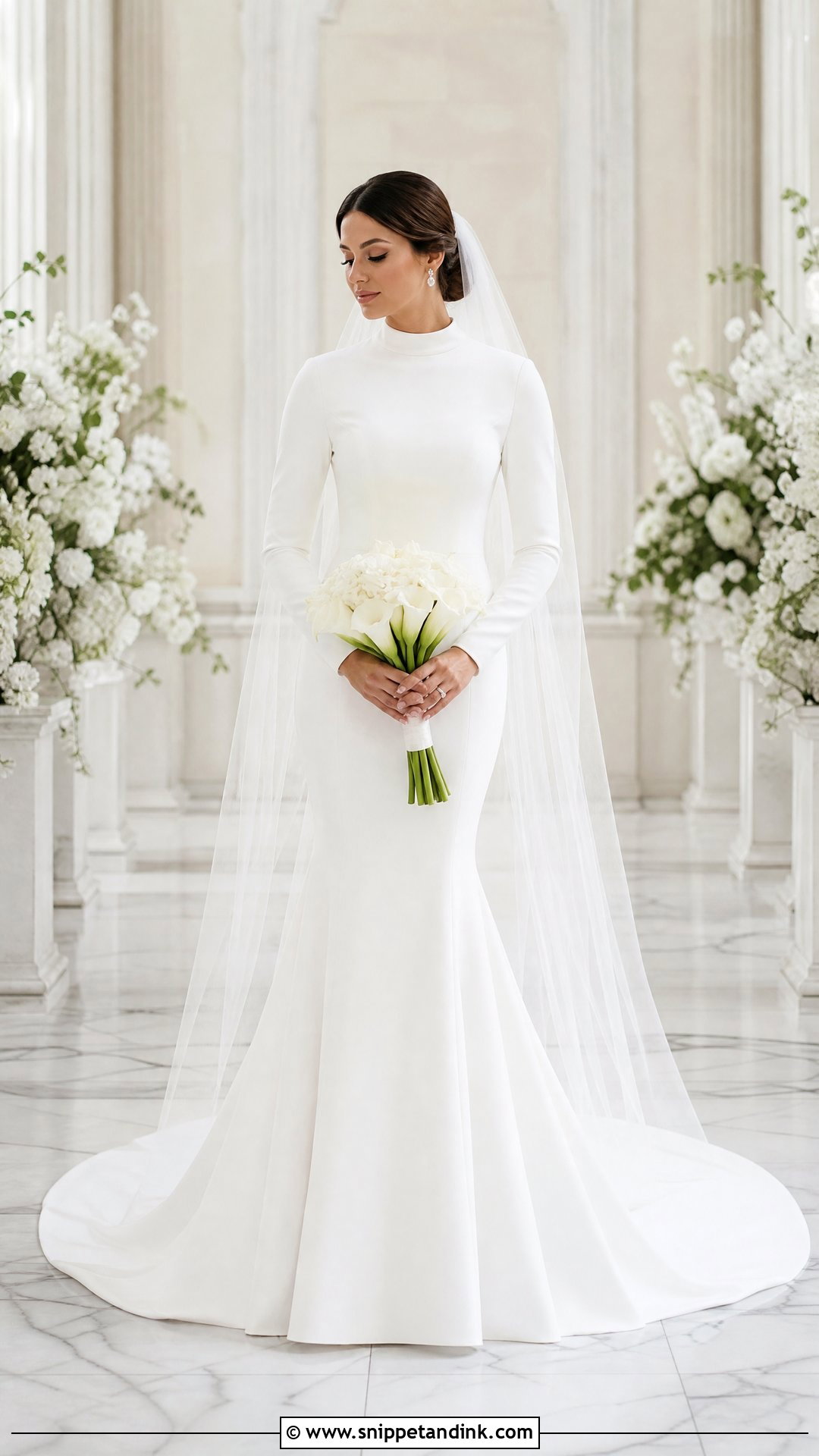
A mermaid shape is fitted to the knee and then flares, so it’s the most body-revealing silhouette on this list even with sleeves. To keep it modest, I’d raise the neckline, line the bodice fully and choose a matte crepe over clingy satin. Then test it honestly: sit on a chair, kneel and climb two steps in it. If you can’t kneel comfortably, this isn’t the gown for a ceremony with a long kneeling section, however good it looks standing still.
12. Tulle Christian Bride Gown With Long Sleeves
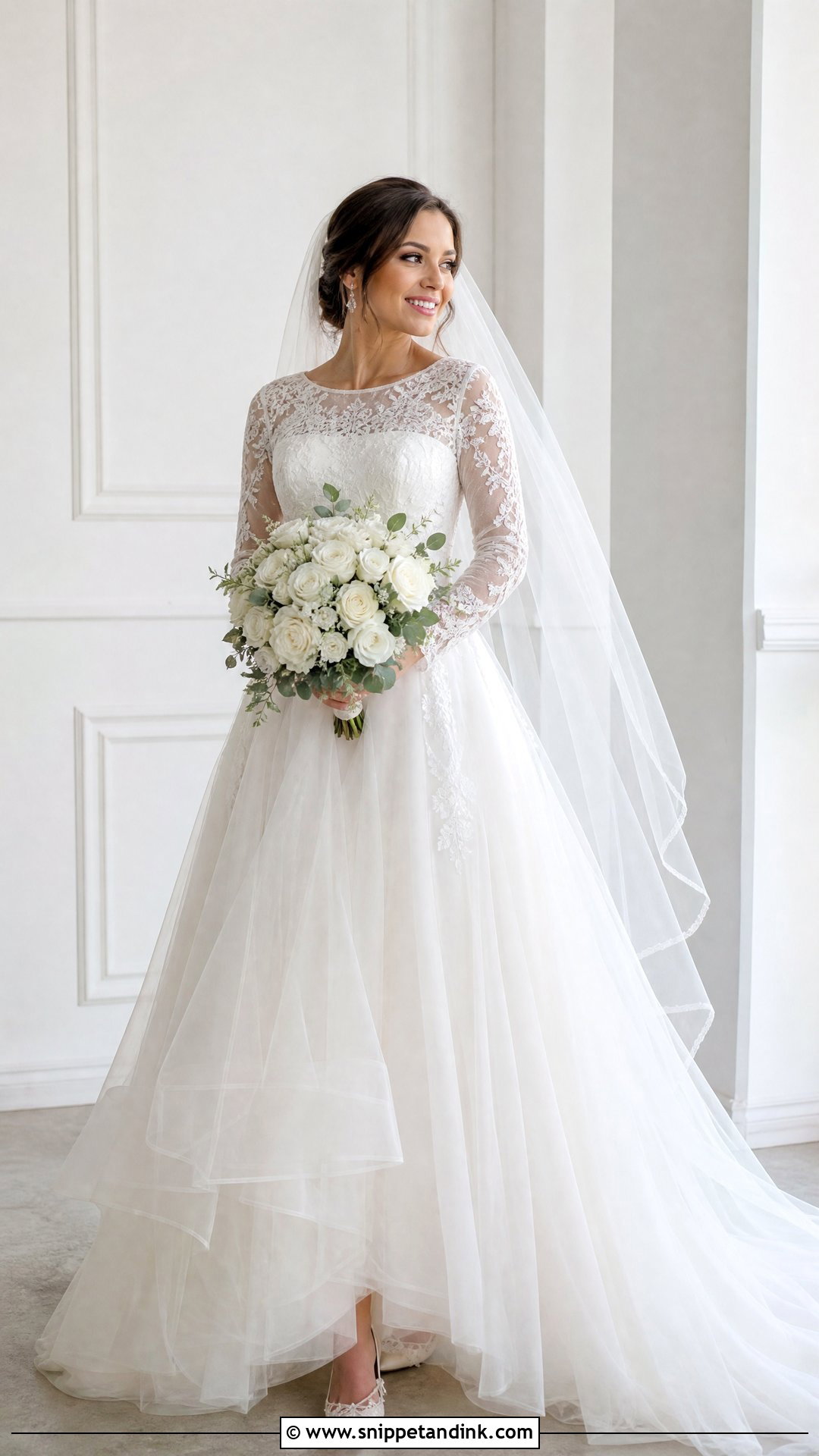
Long-sleeved tulle gives volume without much weight, especially when the skirt is two or three light layers over a smooth lining. Lace appliqué on the bodice adds detail while the sleeves stay sheer and covered. The weak point of tulle is the hem, which catches on shoes and gravel, so ask for a horsehair or a reinforced edge if you’ll be outdoors. A fingertip veil and soft waves or a low bun keep it gentle.
13. Off White Christian Bride Gown
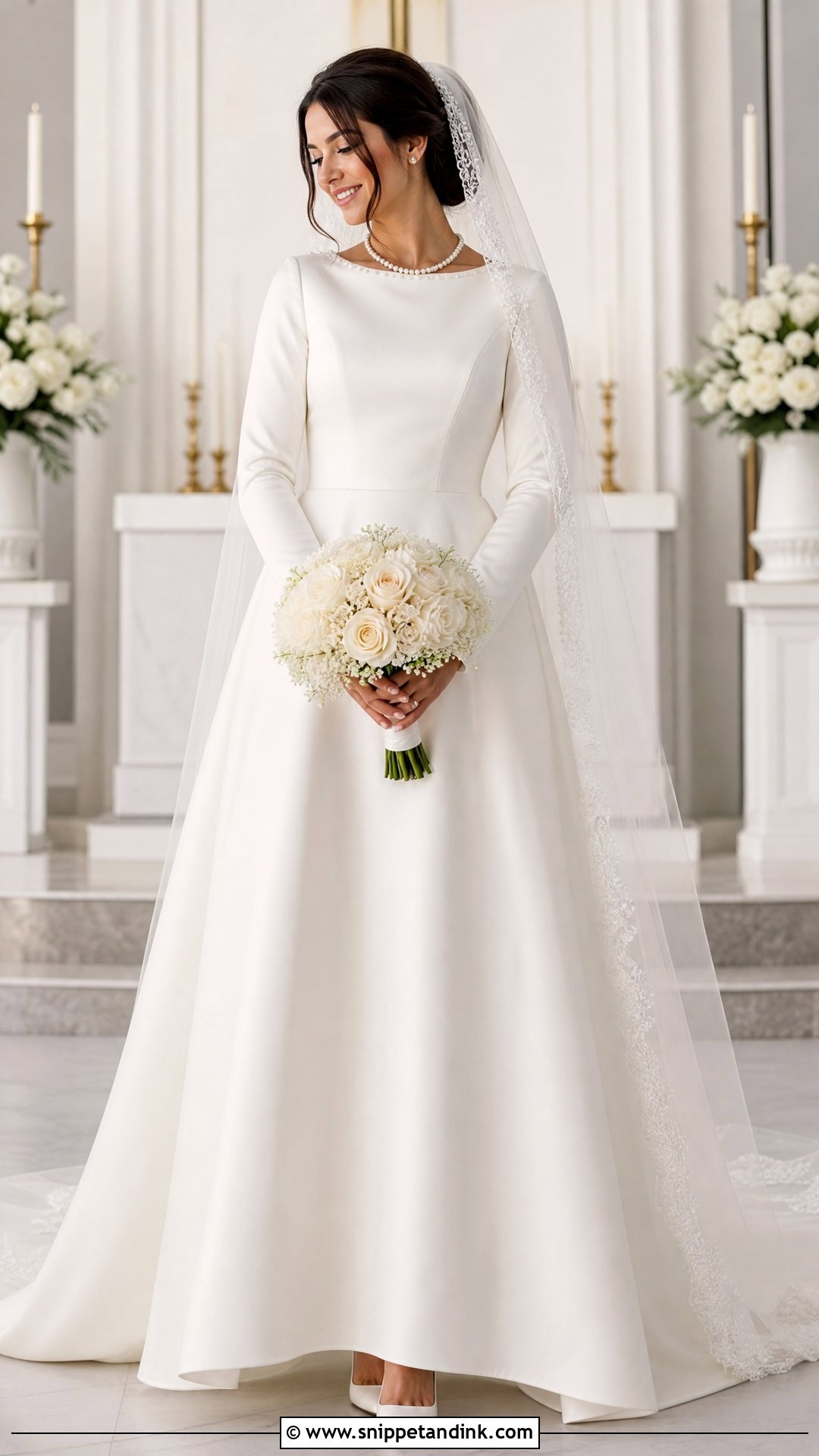
Off white covers ivory, cream and natural silk tones, and most of my brides end up here once they hold the swatches against their skin. Bright white can look blue-grey beside warm church lighting and old wood, while ivory tends to sit more naturally. Choose your veil from the same fabric house or hold the two together in daylight, because mismatched whites are obvious in photos. An A-line with sleeves, pearl jewellery and ivory heels keep everything in one tone.
14. Lace Bodice Christian Bride Gown
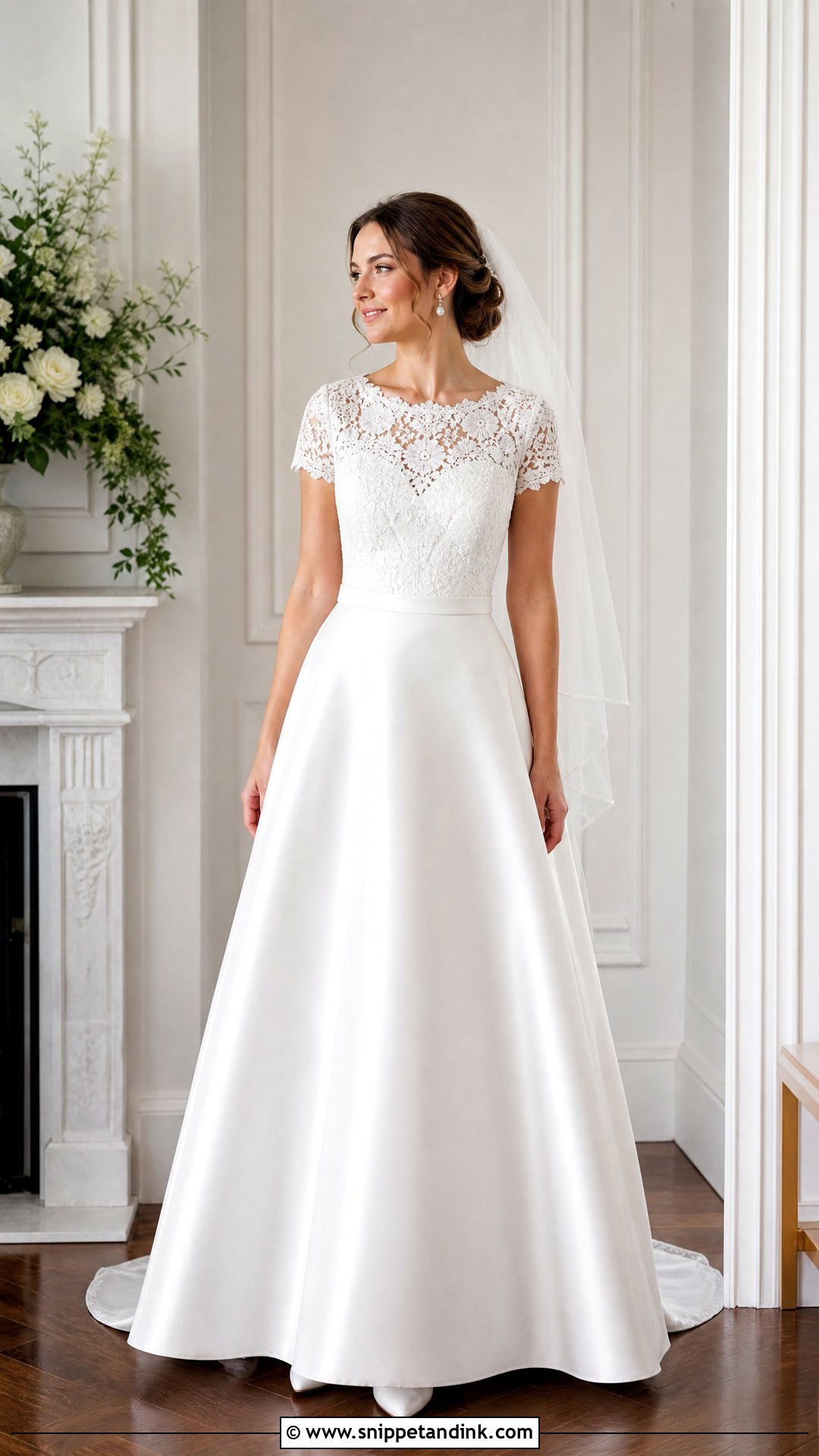
A lace bodice with a plain skirt puts the detail near your face and keeps the skirt easy to manage. Floral, vine or geometric lace all work; the thing I look at is where the motifs land on your body, because a large flower placed right on the bust is rarely flattering. Ask whether the lace can be repositioned during alterations. A high neckline or sleeves keep it modest. Finish with satin shoes, pearl earrings and a soft updo.

15. Satin A Line Christian Bride Gown
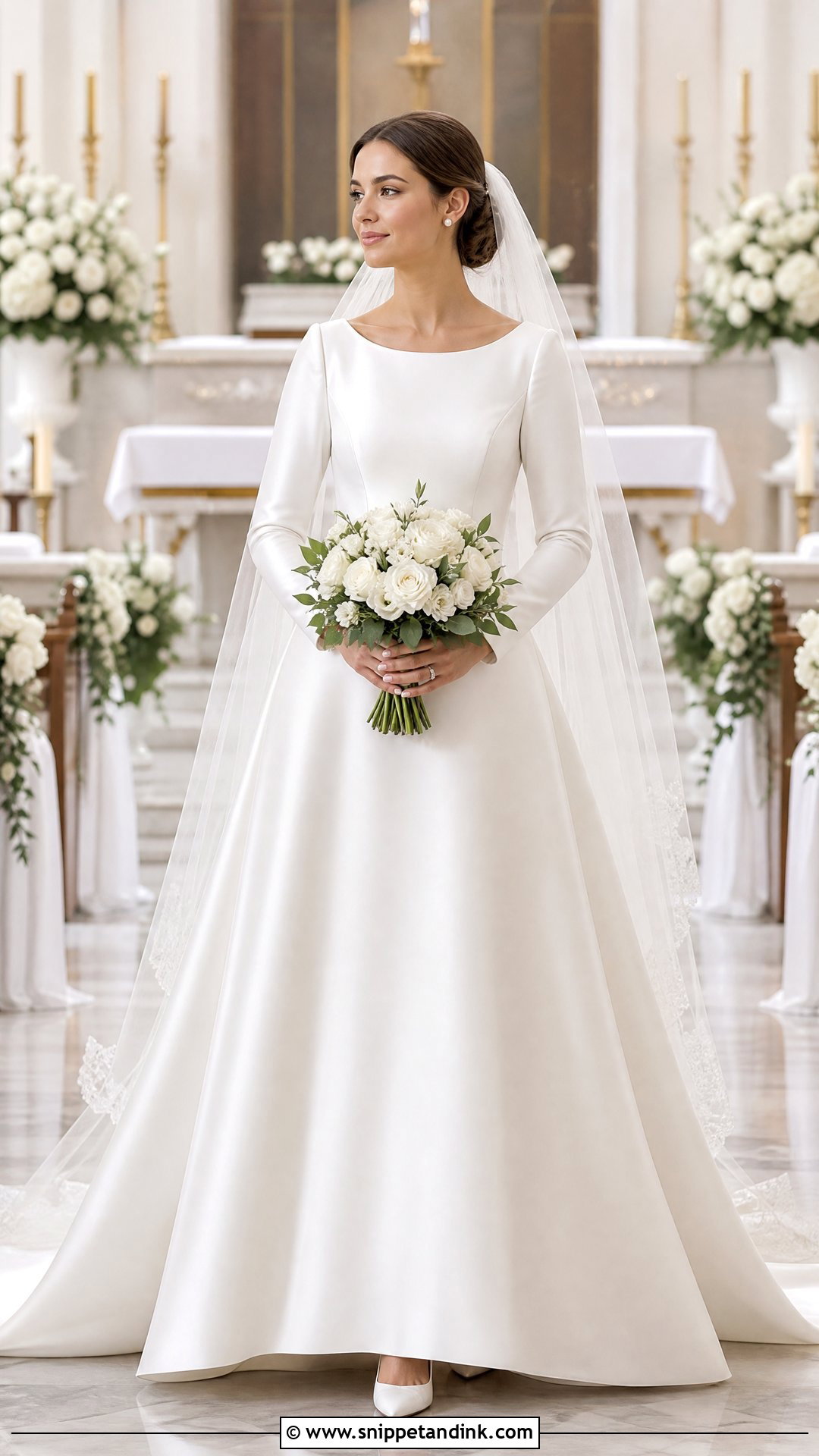
If I had to pick one dependable shape for a church wedding, the satin A-line would be it. It fits at the waist and clears the hips, so you can walk, sit and kneel without wrestling the skirt. Satin creases where you sit, though, so expect a few soft lines across the lap in the reception photos; heavier duchess satin creases less than thin polyester. A scoop neck or sleeves, a long veil and classic pumps finish it.
16. Bishop Sleeve Christian Bride Gown
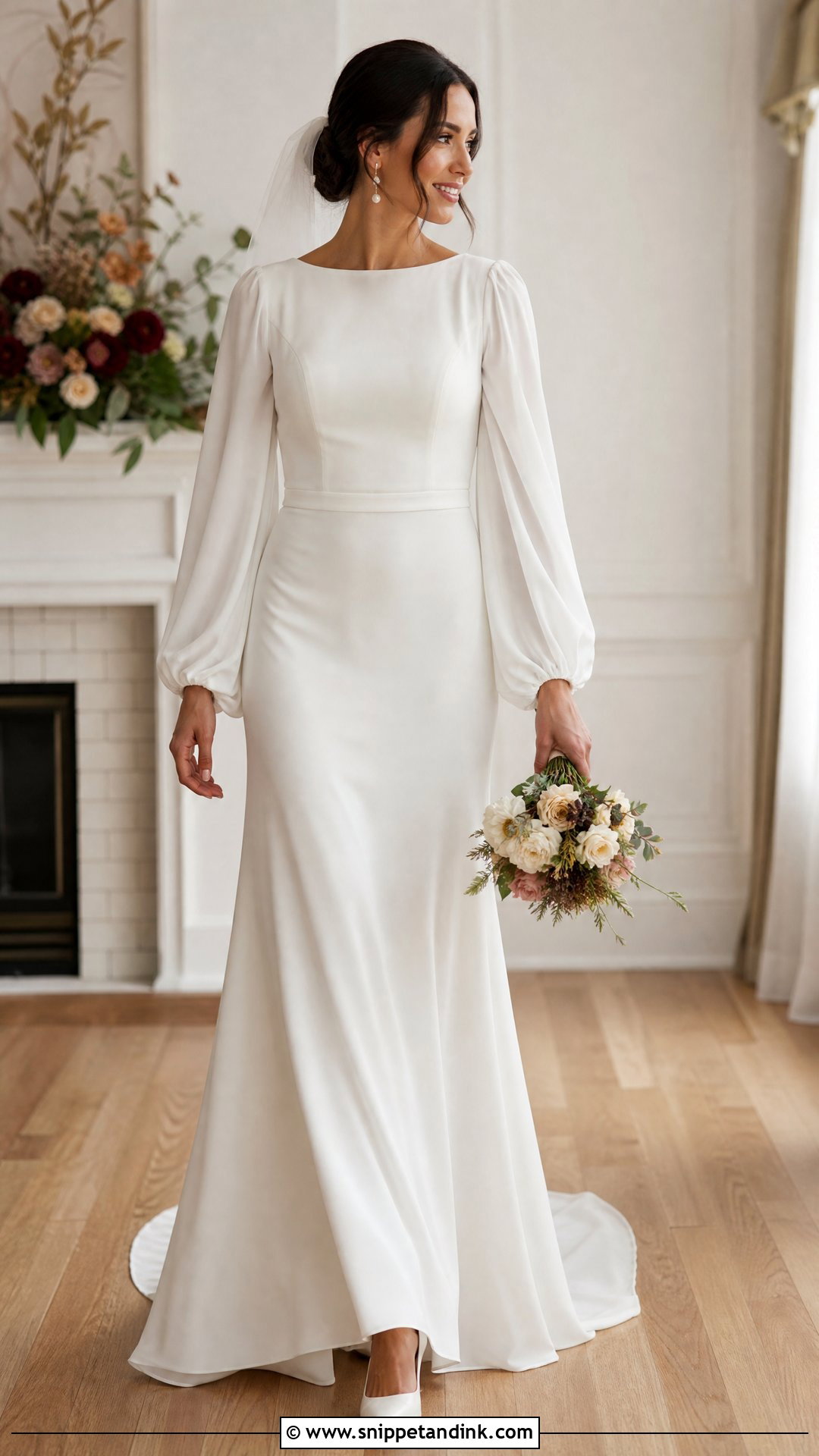
Bishop sleeves are full through the arm and gathered into a cuff at the wrist. They give a romantic shape with total coverage. The practical detail is that cuff: make sure it buttons or has an elastic loop, because a tight closed cuff makes it hard to slide your hand through for the ring exchange. Chiffon and organza versions suit spring, lace and crepe suit autumn. Tuck the veil under a low bun so it doesn’t tangle in the fullness of the sleeve.
17. Minimalist Christian Bride Gown
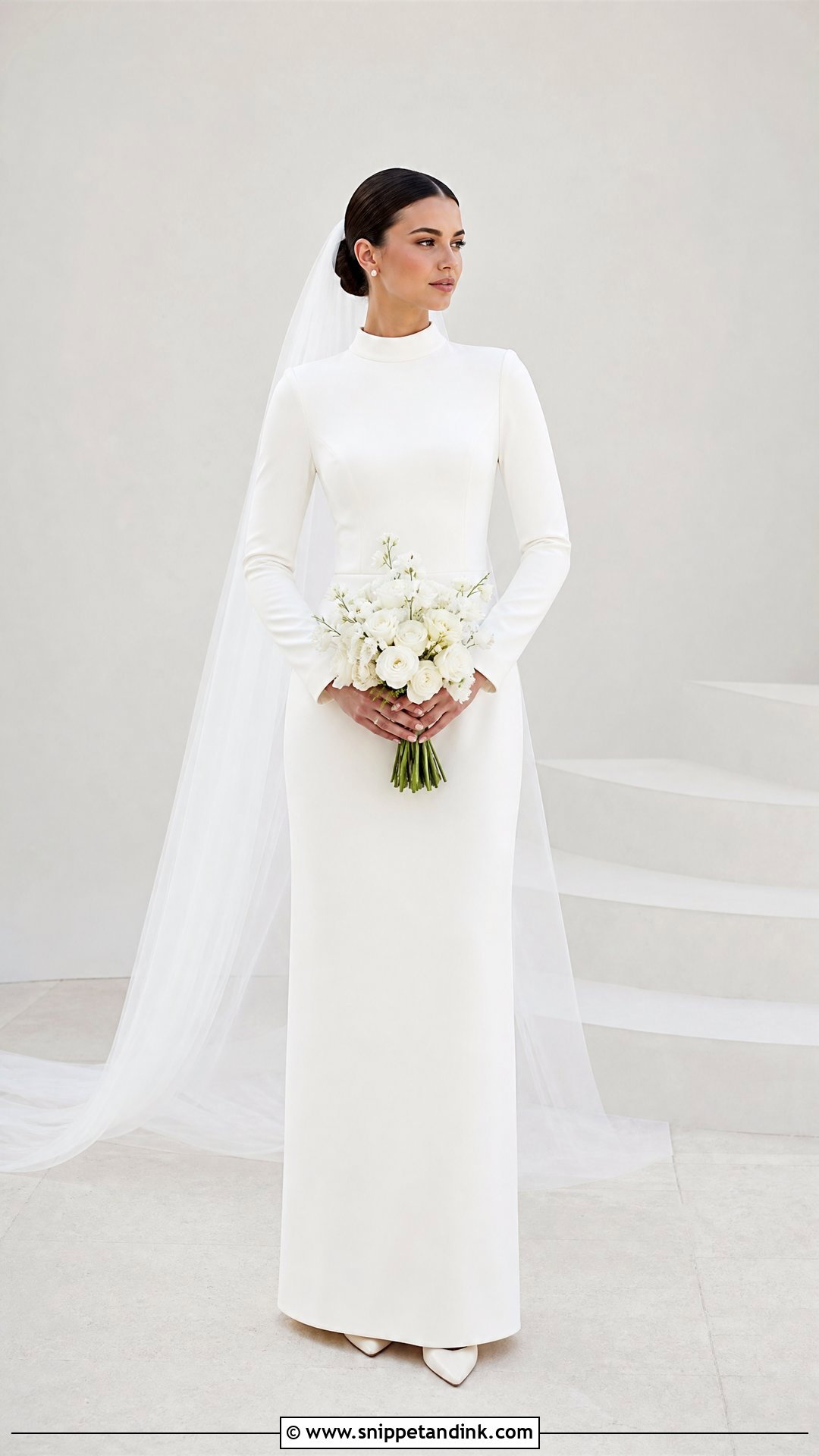
Minimal gowns are where tailoring shows most, because there’s nothing to hide a poor fit. A high neck column, a long sleeve crepe dress or a plain satin A-line all qualify. I’d put money into a good seamstress before any accessory. Then personalise it quietly with a family brooch, a grandmother’s earrings or a ribbon in the bouquet. It stays calm in a busy church interior and looks the same in photos decades from now.
18. Plus Size Christian Bride Gown
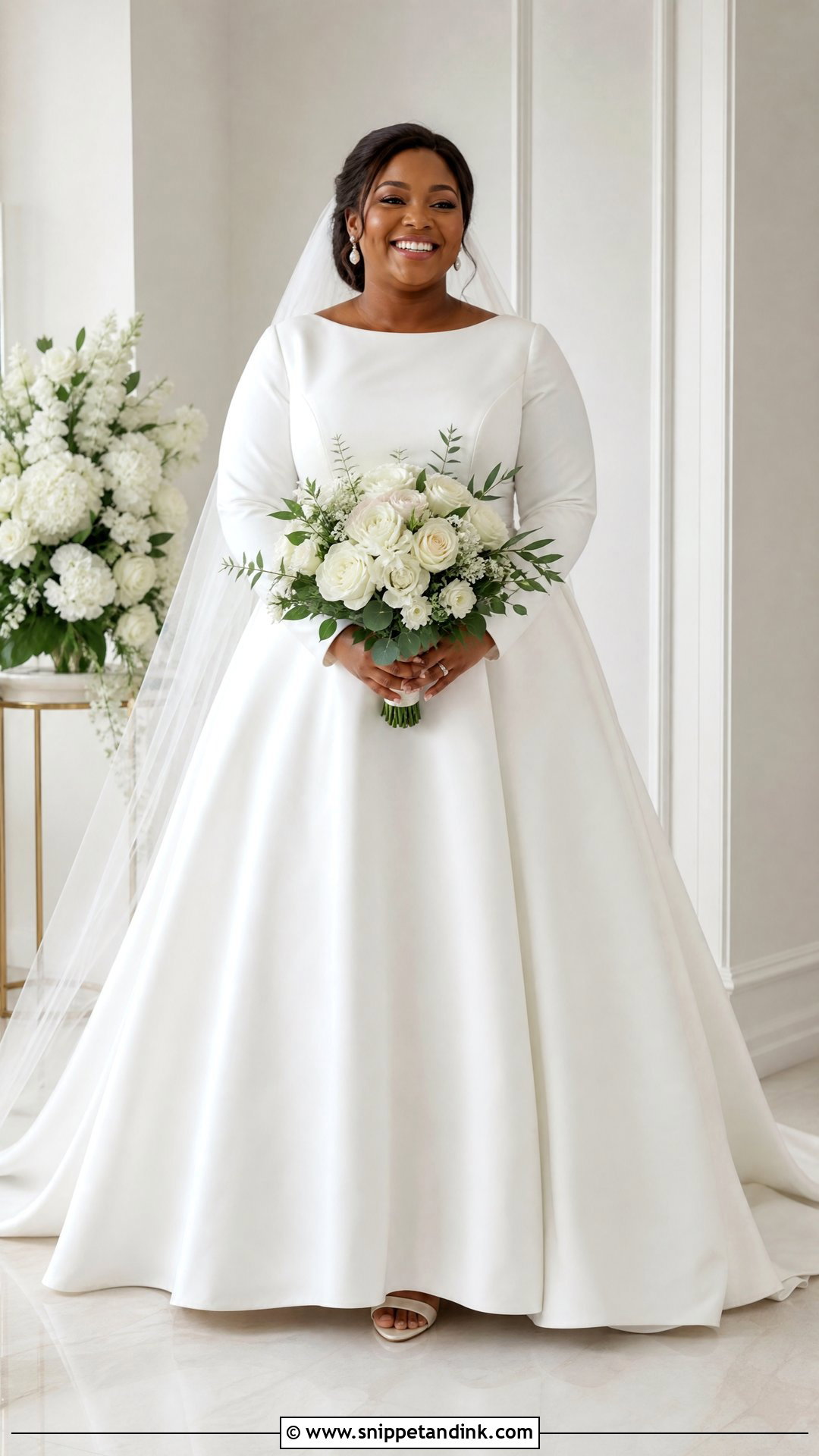
For plus size brides, the inside of the gown matters as much as the outside. I look for proper boning, a built-in support layer, and sleeves set with enough room in the armhole to raise your arms. A-line, ball gown and fit-and-flare shapes can all look striking when tailored to your body rather than to the sample. A higher neckline, covered back and long sleeves can be added without losing shape. The aim isn’t to hide your figure. It’s a gown that supports you comfortably for twelve hours.
19. Winter Christian Bride Gown
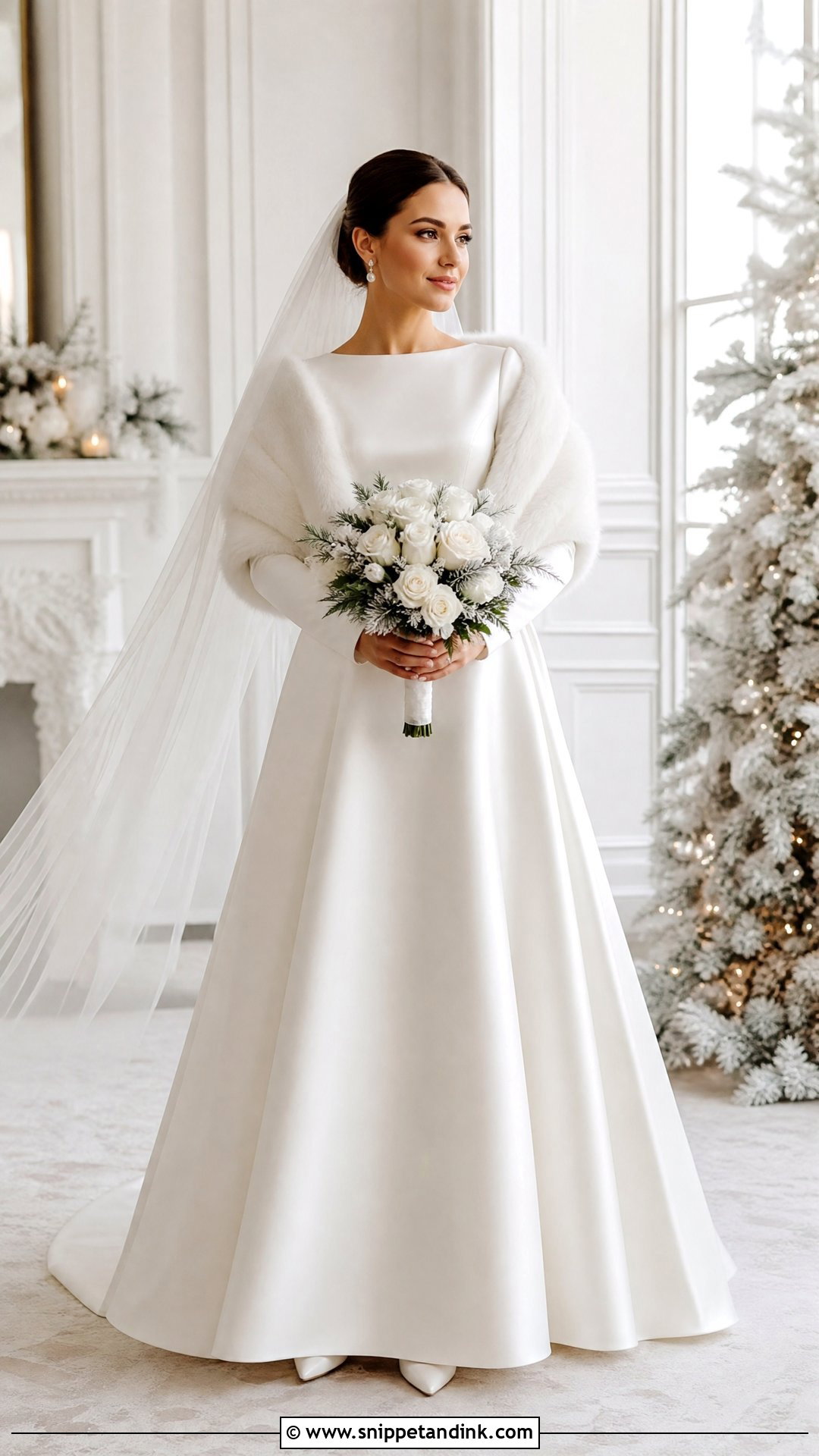
Winter gowns can take the heavier fabrics: mikado, duchess satin, velvet trim or a dense corded lace. They hold structure in a cold church and look rich in low light. Long sleeves help, but the real comfort is a tailored bridal cape or a faux-fur wrap for outdoor photos between the car and the door. Keep to ivory, cream or champagne, and wear closed-toe heels with a thin heel grip, because church steps can be slippery in wet weather.
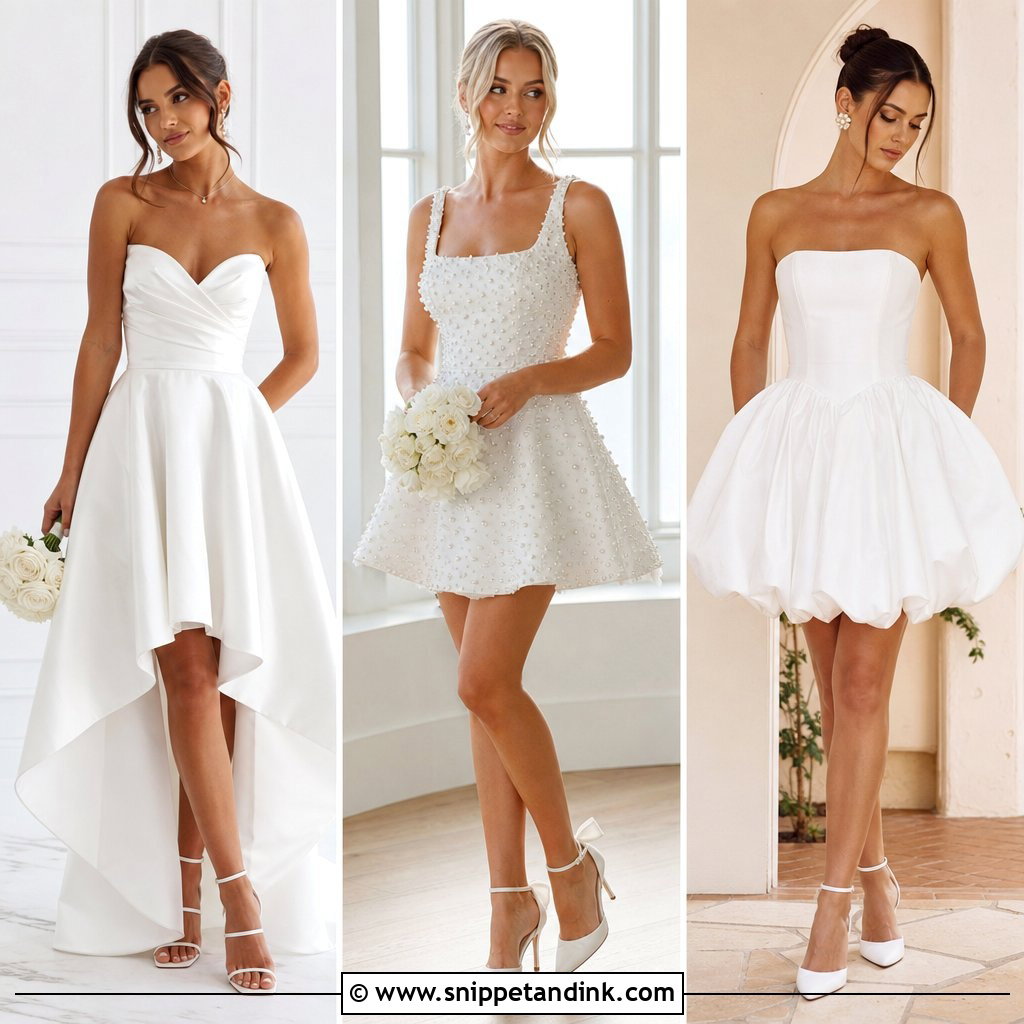

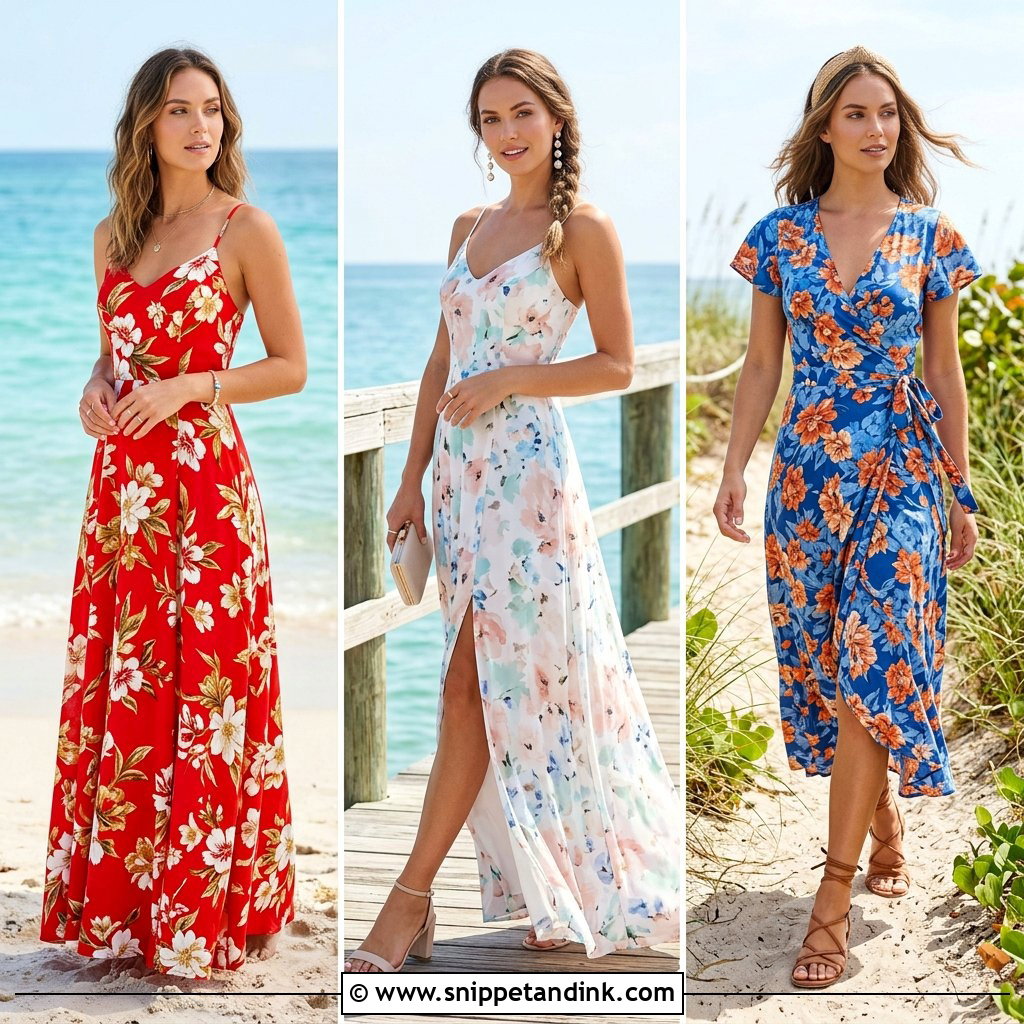
20. Summer Christian Bride Gown
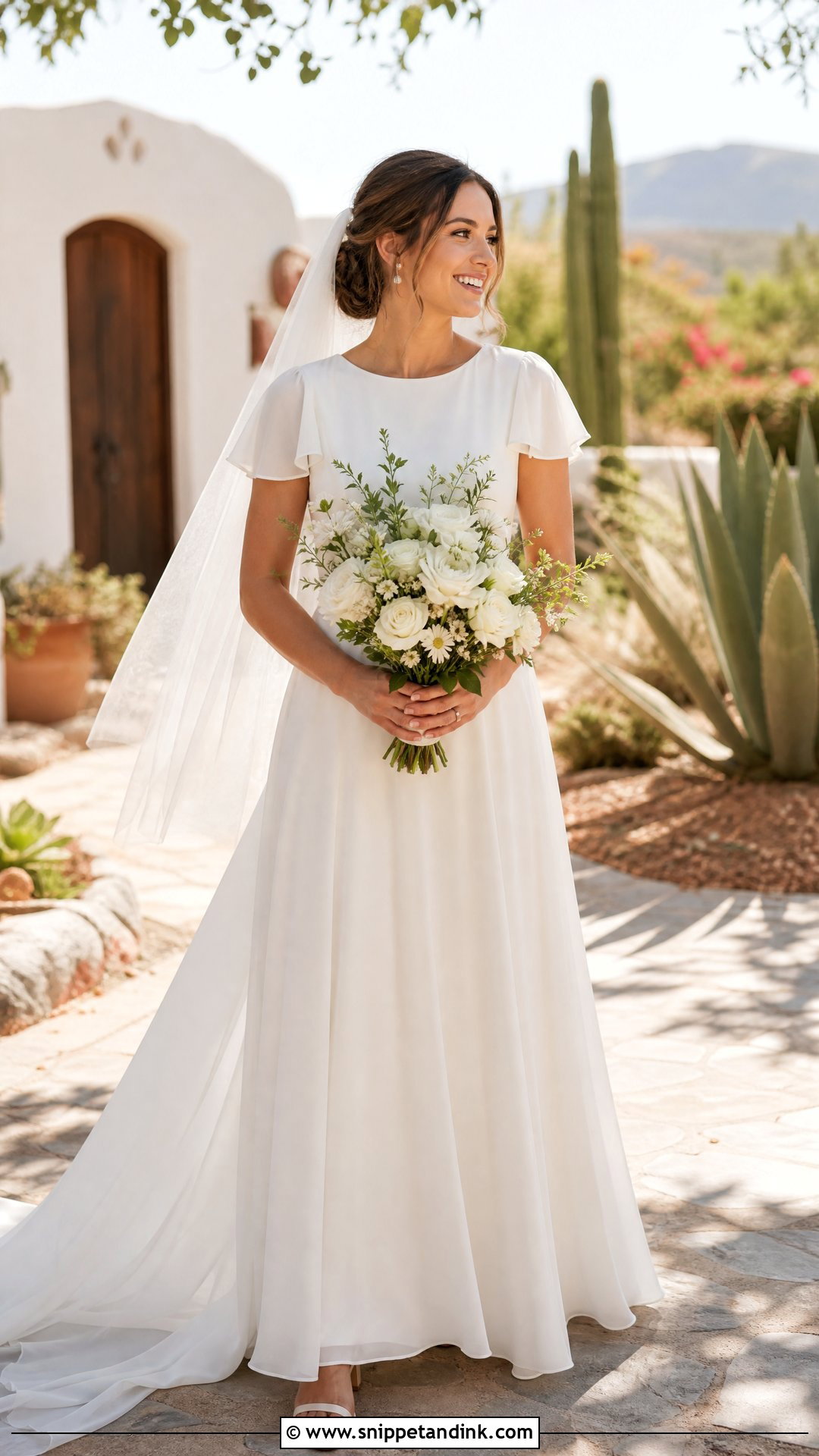
Summer heat changes everything. Chiffon, organza, light lace and soft crepe breathe; heavy satin and thick lining do not. Cap, flutter or illusion sleeves give coverage without trapping heat, and an A-line or sheath is far more comfortable than a ball gown in July. Ask your seamstress to line in cotton or a breathable fabric where it touches skin. Low sandals and a lightweight veil complete the look, and the gown still offers modest beauty without leaving you overheated by the reception.
21. Detachable Overskirt Christian Bride Gown
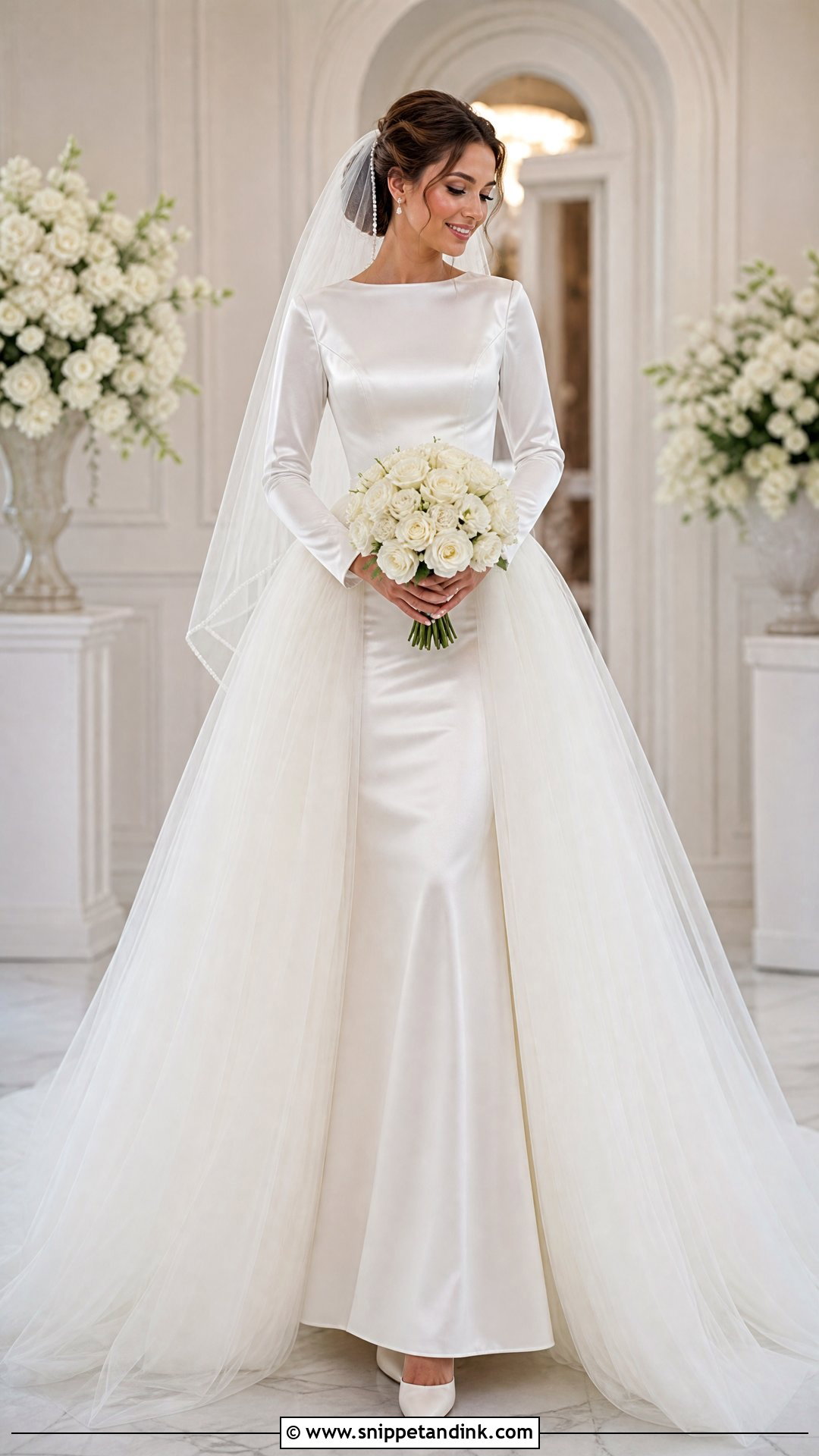
A detachable overskirt gives you a full skirt for the ceremony and a slimmer dress for the reception. The base gown has to stand on its own, so choose one with sleeves, a covered back and a secure neckline. I always ask brides to practise taking the overskirt on and off with whoever will help them on the day; hooks and hidden snaps are fiddly in a crowded room. Satin or tulle overskirts add the most shape.
22. Floral Lace Christian Bride Gown
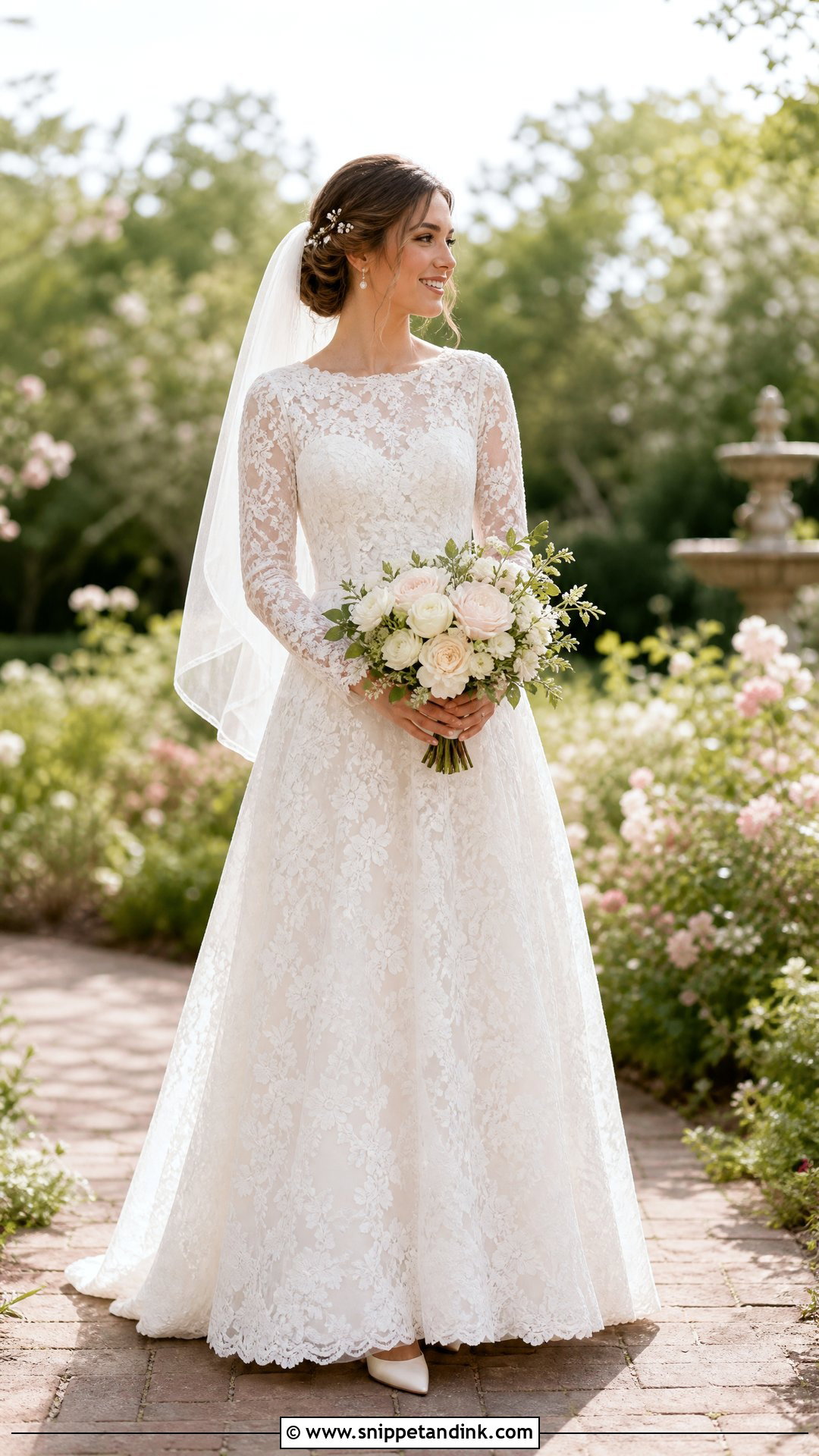
Floral lace reads as soft from a distance and detailed close up, which is ideal for church photos where the photographer moves from wide shots to portraits. It should sit over a lined bodice and a flowing skirt so the pattern has space. Long or short sleeves both work depending on the season. In spring and garden weddings, I’d pick a bouquet with white and blush flowers that echo the lace rather than compete with it.
23. Cape Sleeve Christian Bride Gown
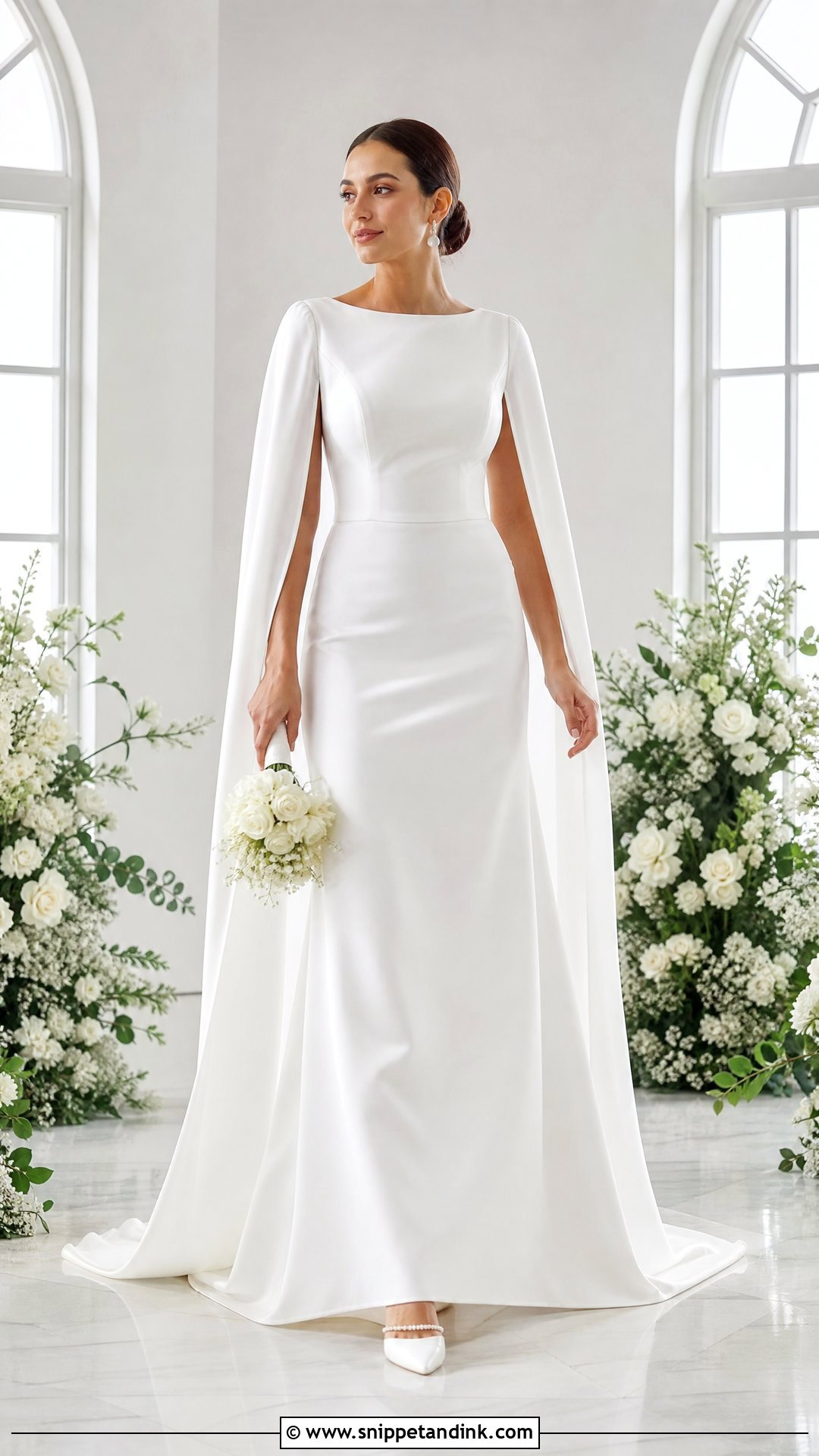
A cape sleeve drapes over the shoulders and upper arms and moves when you walk, so you get coverage plus a bit of drama. It works best over a clean crepe or satin gown with no other embellishment. The thing I watch for is length: a cape that runs past the wrist can catch on the bouquet or be pinned under your arm in photos. Keep jewellery small and wear a low bun so nothing interrupts the line of the cape.
24. Embroidered Christian Bride Gown
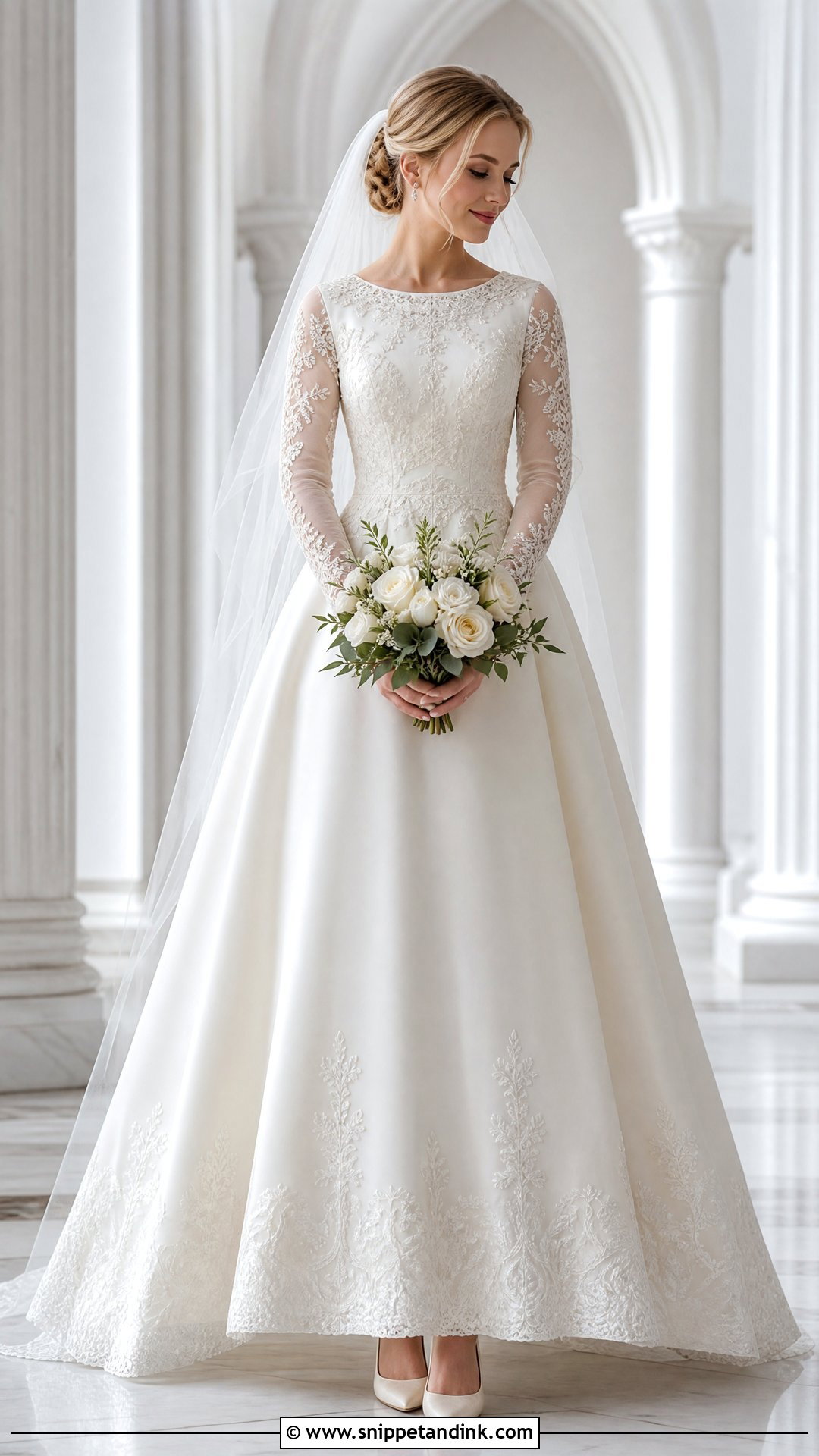
Embroidery adds a handmade quality that sparkle can’t. It can sit on the bodice, sleeves, hem or train, and some brides have a small cross, a date or initials stitched inside the gown, which a good seamstress can add discreetly. Choose a lined gown with sleeves and a secure neckline. Embroidered tulle is lighter than embroidered satin, and that difference counts on a hot day. Keep the shoes, earrings and veil plain.



25. Champagne Christian Bride Gown
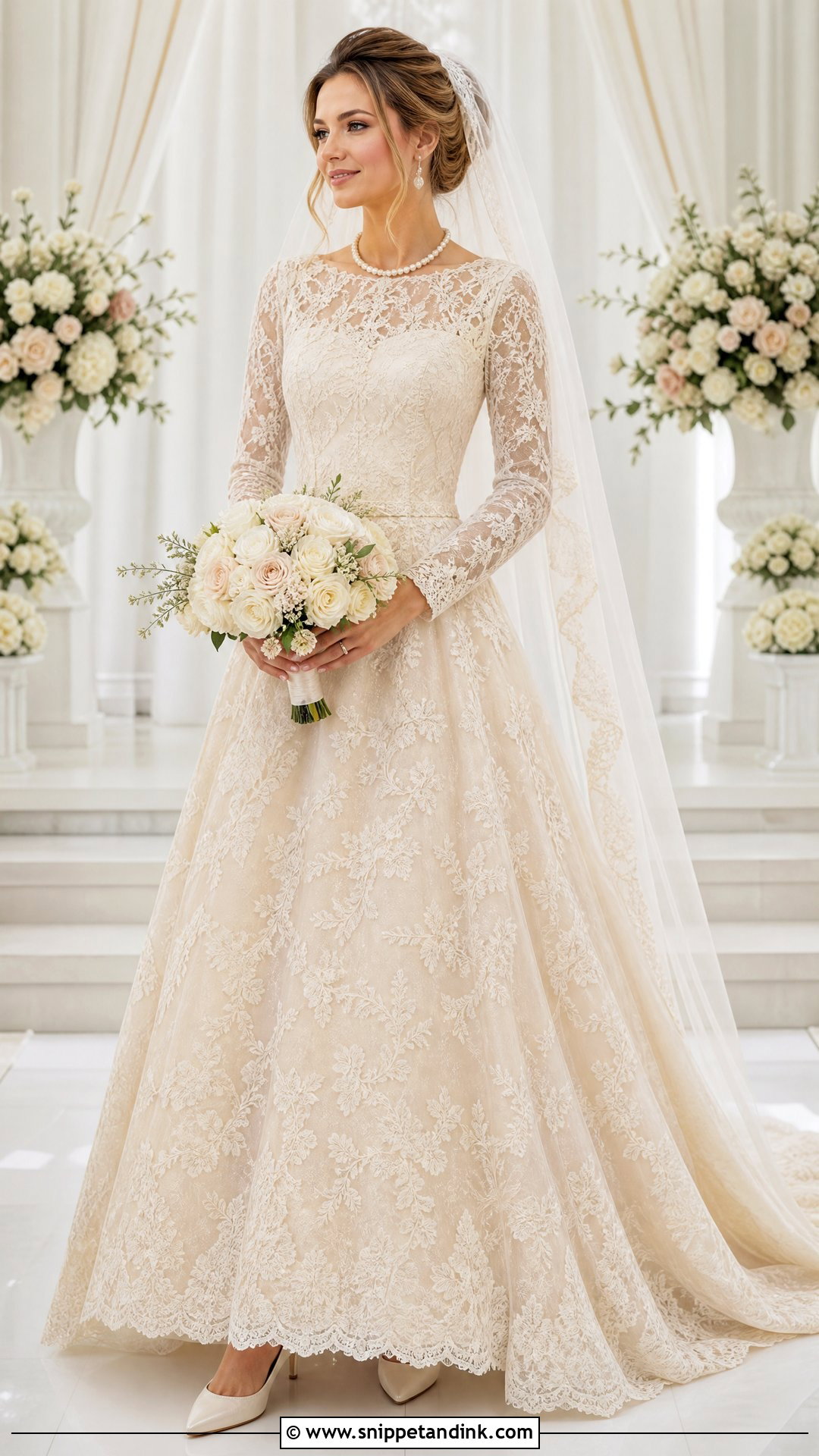
Champagne is warmer than ivory and still clearly bridal. It looks especially good under lace or tulle, because the warm underlayer glows through the white overlay. Hold it against your face in natural light before you buy, since on very fair or very golden skin tones it can sometimes look flat. An A-line with sleeves, ivory heels, pearl jewellery and a soft veil keep it understated. It photographs warmly at evening receptions under candle and tungsten light.
Adding Sleeves or a Higher Neckline to a Gown You Already Love
Plenty of brides fall for a gown that isn’t quite covered enough. Most of the time a skilled bridal seamstress can solve it. Illusion tulle can raise a neckline or fill an open back, and lace cut from the hem or ordered from the same supplier can be appliquéd on top so the addition looks original. Sleeves can be set in or made detachable, which gives you full coverage at church and a lighter dress for dancing.
Timing matters more than people expect. Made-to-order gowns usually need several months to arrive, and alterations generally start about two to three months before the wedding, with two or three fittings. Adding sleeves or a yoke is more work than a hem, so mention it the moment you order, and ask the shop whether matching fabric can be ordered with the gown.
Coverage options worth comparing
- Illusion yoke: raises the neckline with sheer tulle, nearly invisible from a distance.
- Detachable sleeves: tie or snap at the shoulder and come off for the reception.
- Lace bolero or jacket: fastest fix and can be bought separately, though it sits on top of the gown rather than inside it.
- Lined back panel: fills an open back and keeps the bra hidden when you kneel.
Bring your shoes and the underwear you’ll wear on the day to every fitting. A neckline that sits right with one bra can gape with another, and that’s exactly the kind of small problem that is easy to fix at a fitting and impossible to fix on the morning.
A Gown That Lets You Kneel, Pray and Celebrate
No single shape is the right Christian wedding gown. Lace, satin, crepe, chiffon, pearls or embroidery can all give you coverage that feels like you. What matters is how the dress behaves during the service: whether you can kneel, raise your hands, and walk up the steps without thinking about it. Get the fit right, keep the veil, shoes and jewellery working with the dress, and you’ll spend the day paying attention to the vows instead of your hem.
You'll Like These Ideas:



Leave a Reply