
A dress on a hanger tells you very little. I always want brides to picture the whole look: the veil, the hair, the shoes and the room they’ll walk into. That’s how these dresses are laid out, from classic silhouettes and soft romantic details to minimal gowns, statement looks and simpler courthouse outfits. Satin with a pearl veil, lace sleeves with soft waves, floral appliqué for a garden. Use them as complete looks, then adjust for your body, your setting and how you want to feel when the doors open.
How Satin, Crepe and Tulle Behave by Evening
Brides tend to choose a dress by its shape, but the fabric decides how it looks after the ceremony, the car, the dinner and the dancing. These are the behaviours I warn about at a first appointment.
- Satin creases where you sit and shows water marks. It also reflects flash, so heavy satin can look shinier in photos than in person.
- Crepe recovers from creasing well and photographs matte, but every seam and alteration line shows.
- Tulle is light and cool, though it snags easily on stone, shoe buckles and bracelets.
- Organza holds volume but crushes sharply if packed tight; hang it, don’t fold it.
- Chiffon is the coolest choice for heat, with little structure of its own.
- Mikado holds architectural shapes but is warm and heavy for summer outdoors.
If you sweat easily or the venue has no air conditioning, I’d put fabric ahead of silhouette in your list of priorities. A lighter fabric in a slightly simpler shape is more comfortable at hour eight than a heavy satin you love only for the first hour.
1. A Line Wedding Dress With Veil
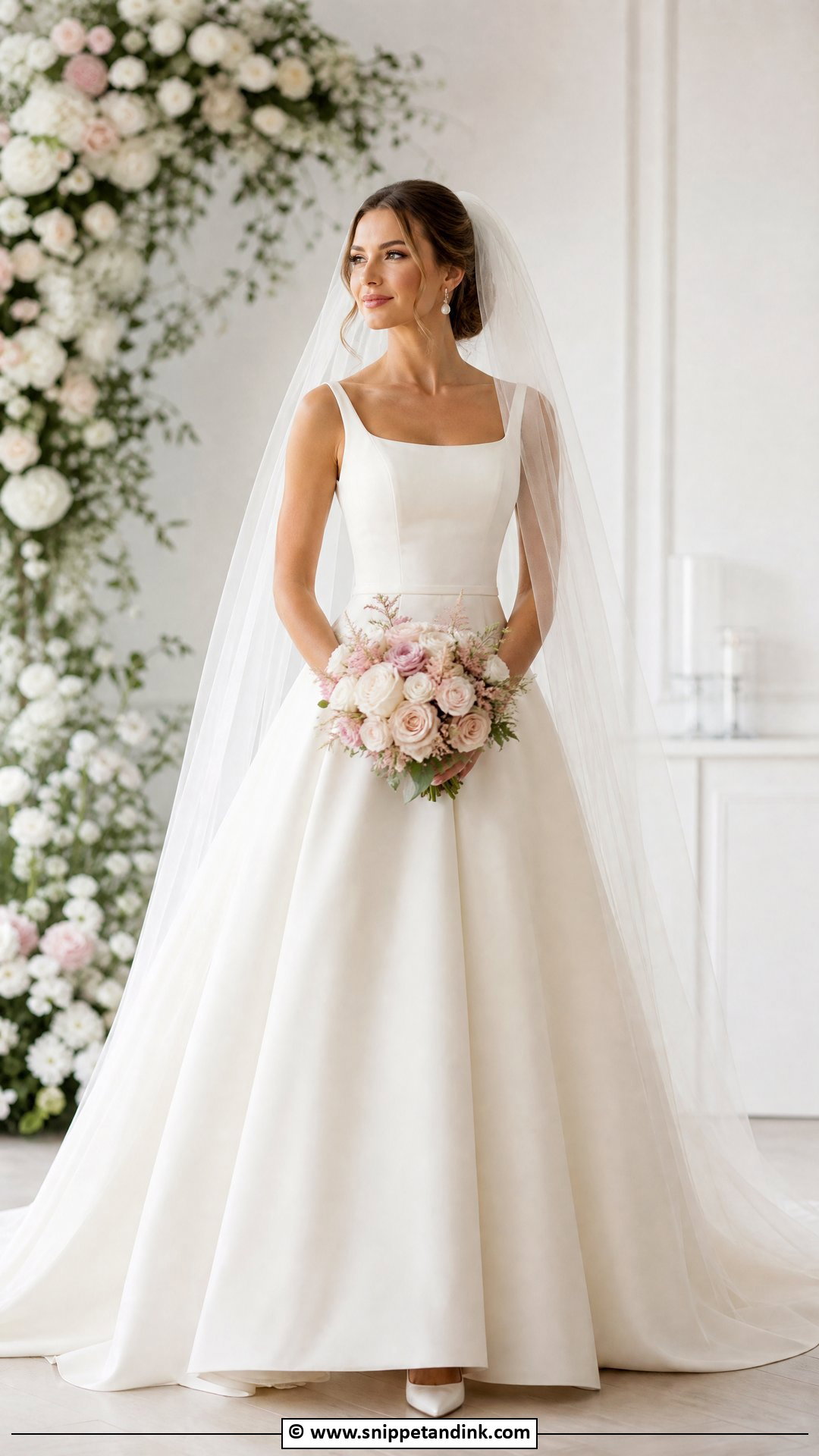
An A-line defines the waist and releases over the hips, and it’s the shape I’d ask almost any bride to try first, if only to compare. A soft ivory gown with a fitted bodice and a medium-length train balances well in most venues. A fingertip veil ends right around where the skirt starts to flare, which keeps the proportions tidy. Pearl drops, satin heels and a small white and blush bouquet complete it. Lace, beading or an off-shoulder sleeve can all be added without changing the base shape.
2. Satin Ball Gown Wedding Dress
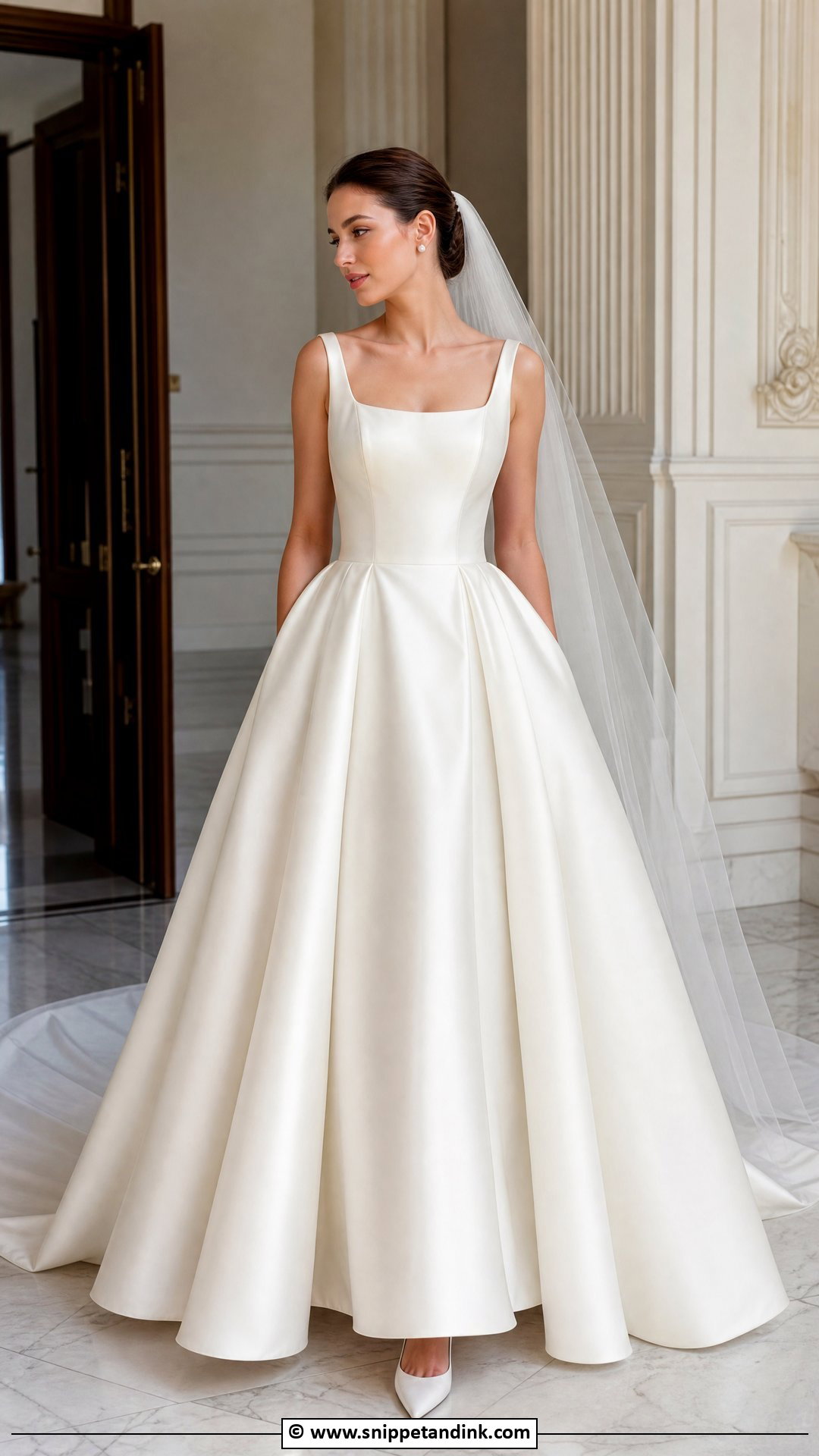
Satin on a full skirt catches light in long, smooth highlights, which is why ball gowns look so grand walking down an aisle. The weight is the thing to prepare for: a satin ball gown is heavy, and the waist carries it, so a structured waistband inside matters. Keep the neckline clean and the jewelry minimal. A chapel veil and a low bun suit it. Soft ivory is warmer than bright white against most skin.
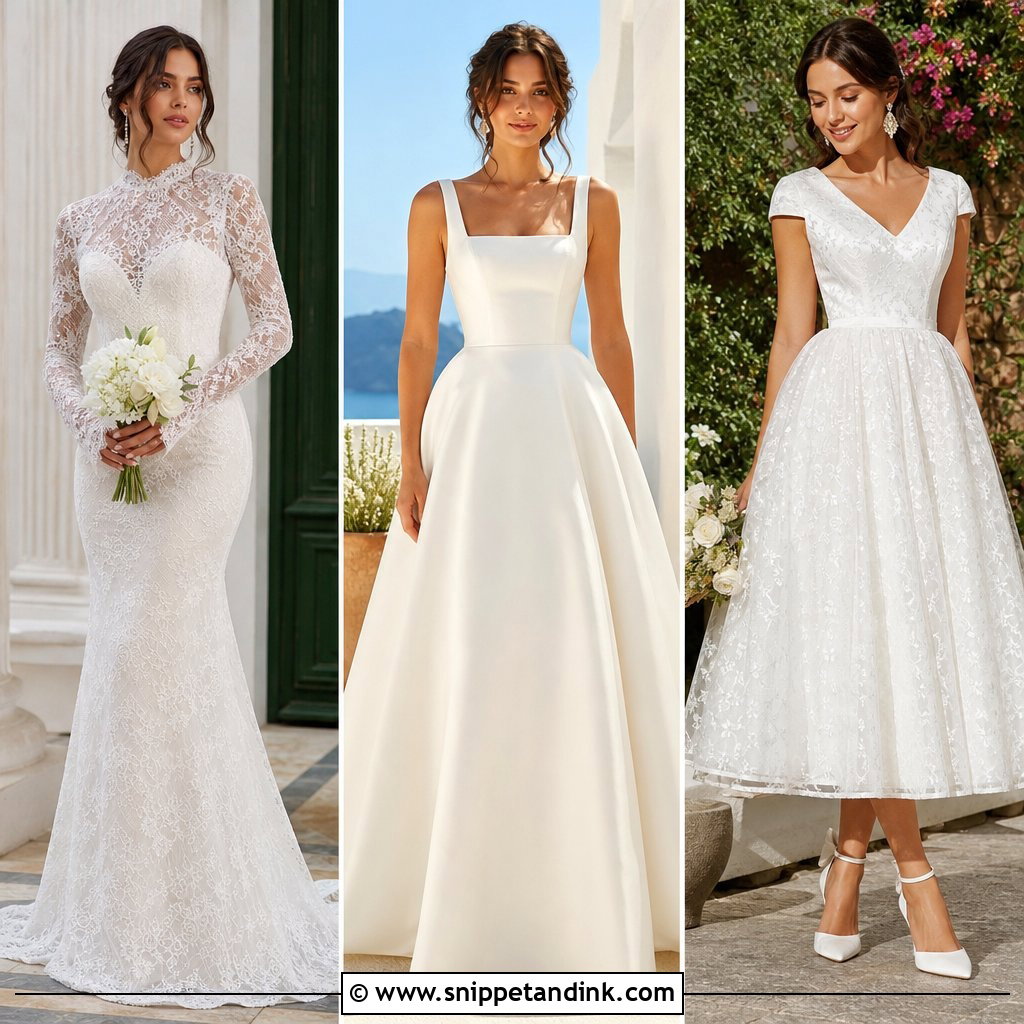
3. Lace Long Sleeve Wedding Dress
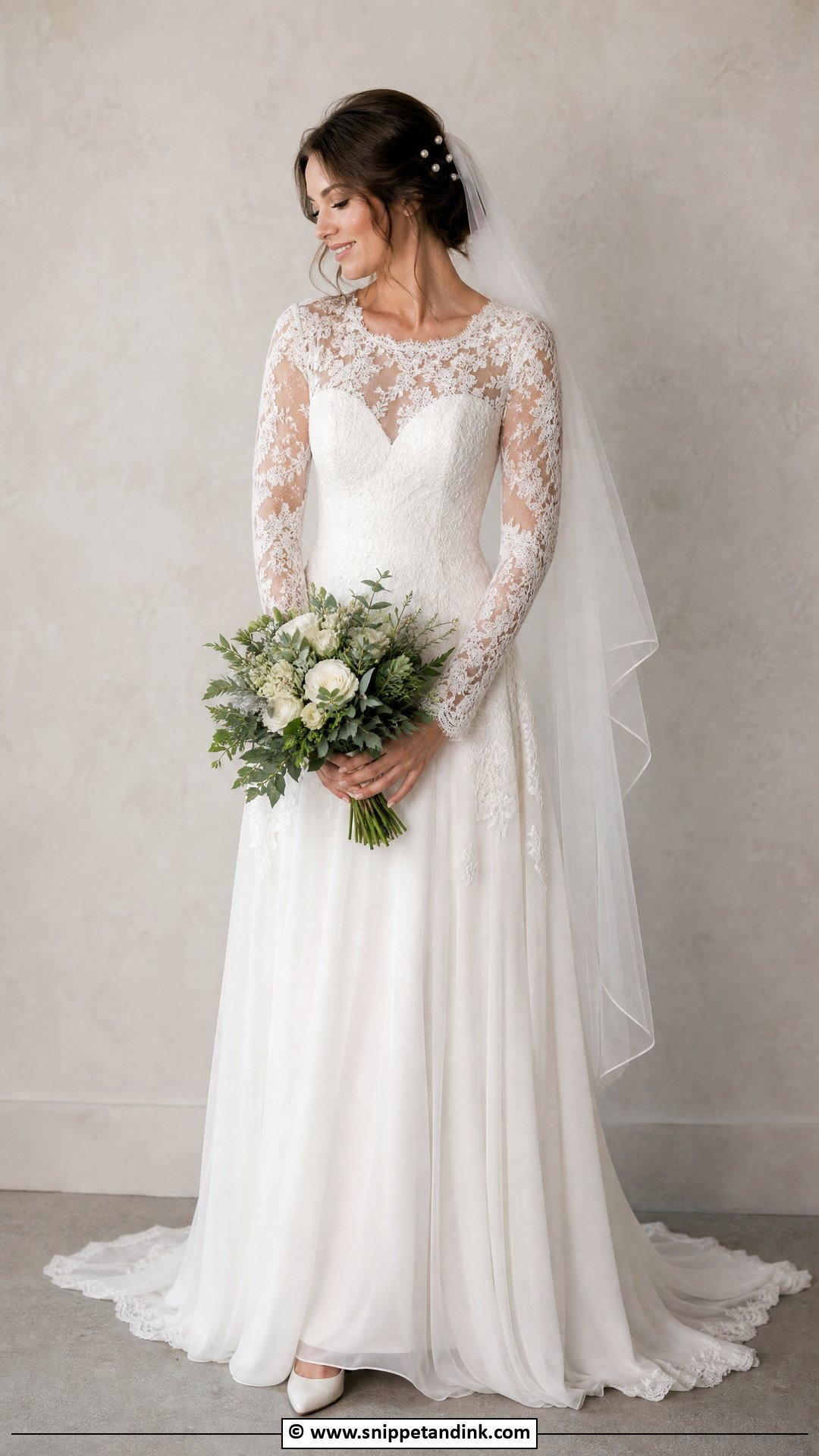
Lace sleeves give coverage that still looks light, which suits cooler seasons and historic venues. Sheer sleeves, a fitted bodice and a flowing skirt are the classic arrangement. When the lace is ornate, I take the jewelry down to almost nothing so the texture can show. Make sure you can lift your arms fully before you commit, as fitted lace sleeves can restrict hugs. A low chignon with tiny pearl pins and closed-toe heels finish it.
4. Off Shoulder Wedding Dress
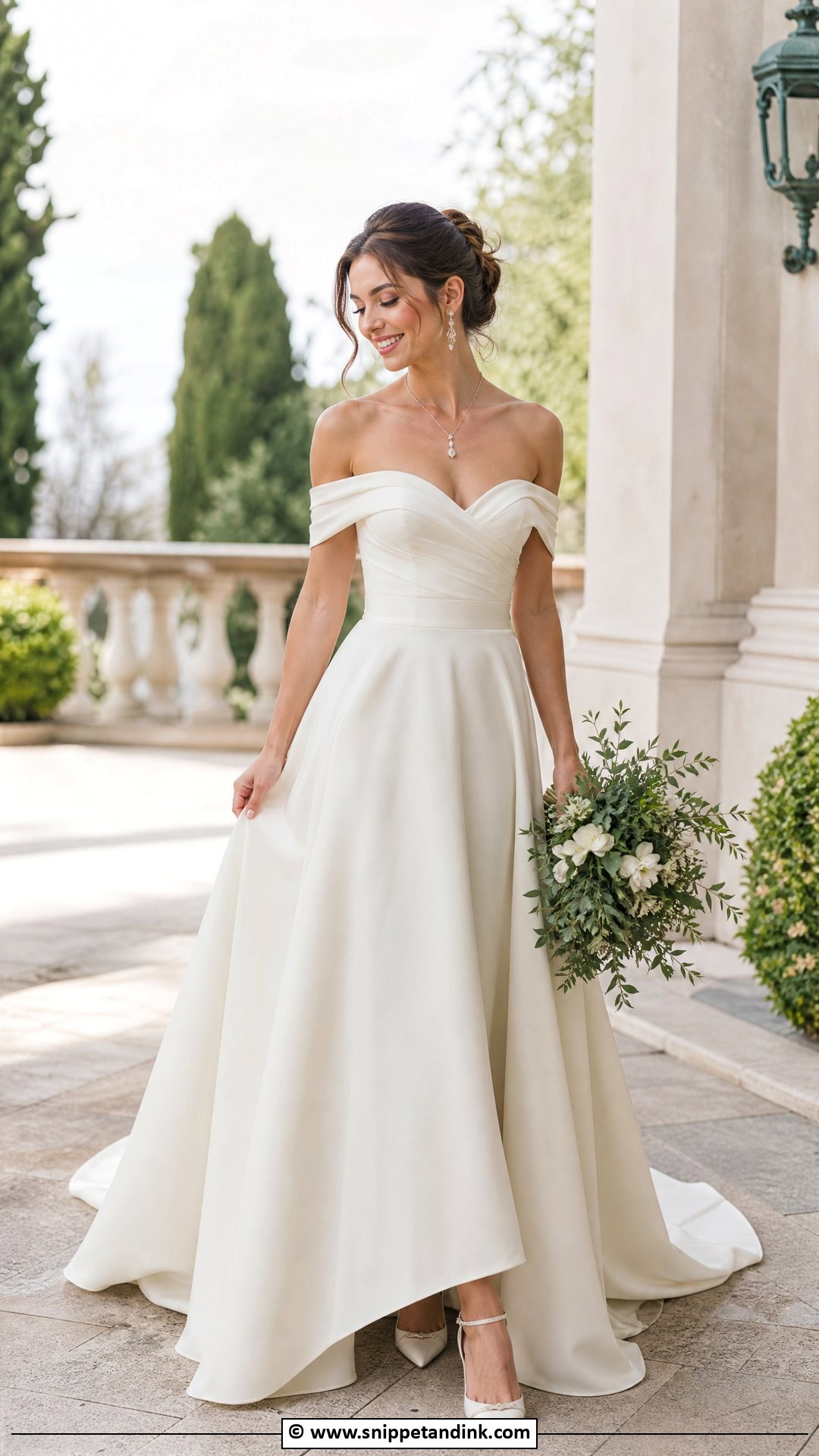
The off-shoulder neckline frames the collarbone and softens the whole bodice. It works in satin, crepe, lace or tulle, so you control how formal or airy it feels. My usual pairing is a fitted bodice with a gentle A-line skirt. Sweep the hair back so the neckline stays visible. I’d check that the sleeve band has a grip strip inside, since off-shoulder sleeves tend to creep up during the day.
5. Simple Slip Wedding Dress
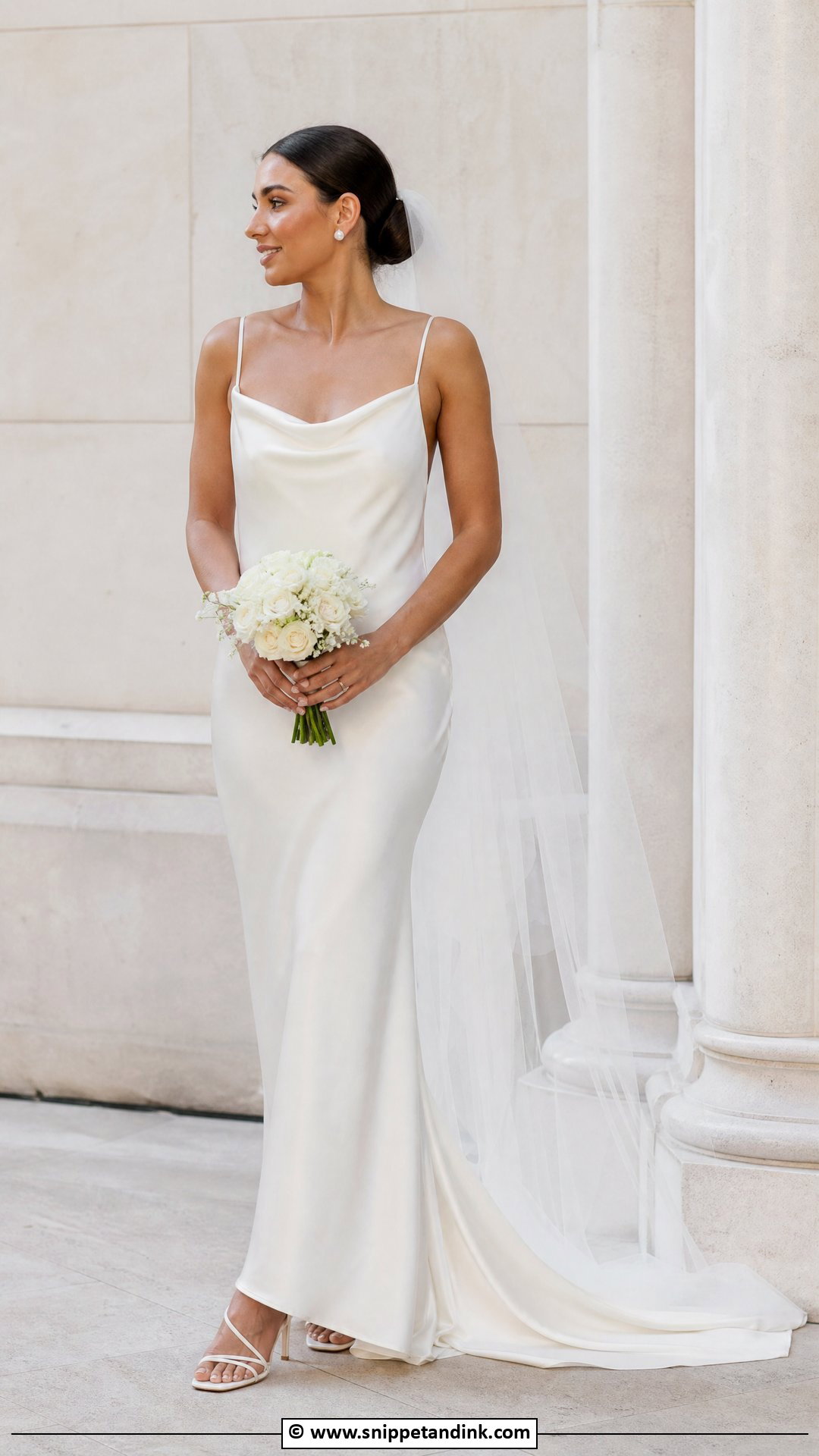
A simple slip wedding dress depends on fit and fabric because there is no structure to hide anything. Silk, satin or crepe with a soft drape should skim the body without clinging. I’d always fit a slip over the underwear you’ll actually wear. Strappy heels, a sleek veil and a structured bouquet keep it modern. For more coverage, add a sheer cape or a tailored jacket. It suits intimate weddings and city celebrations.
6. Floral Applique Wedding Dress
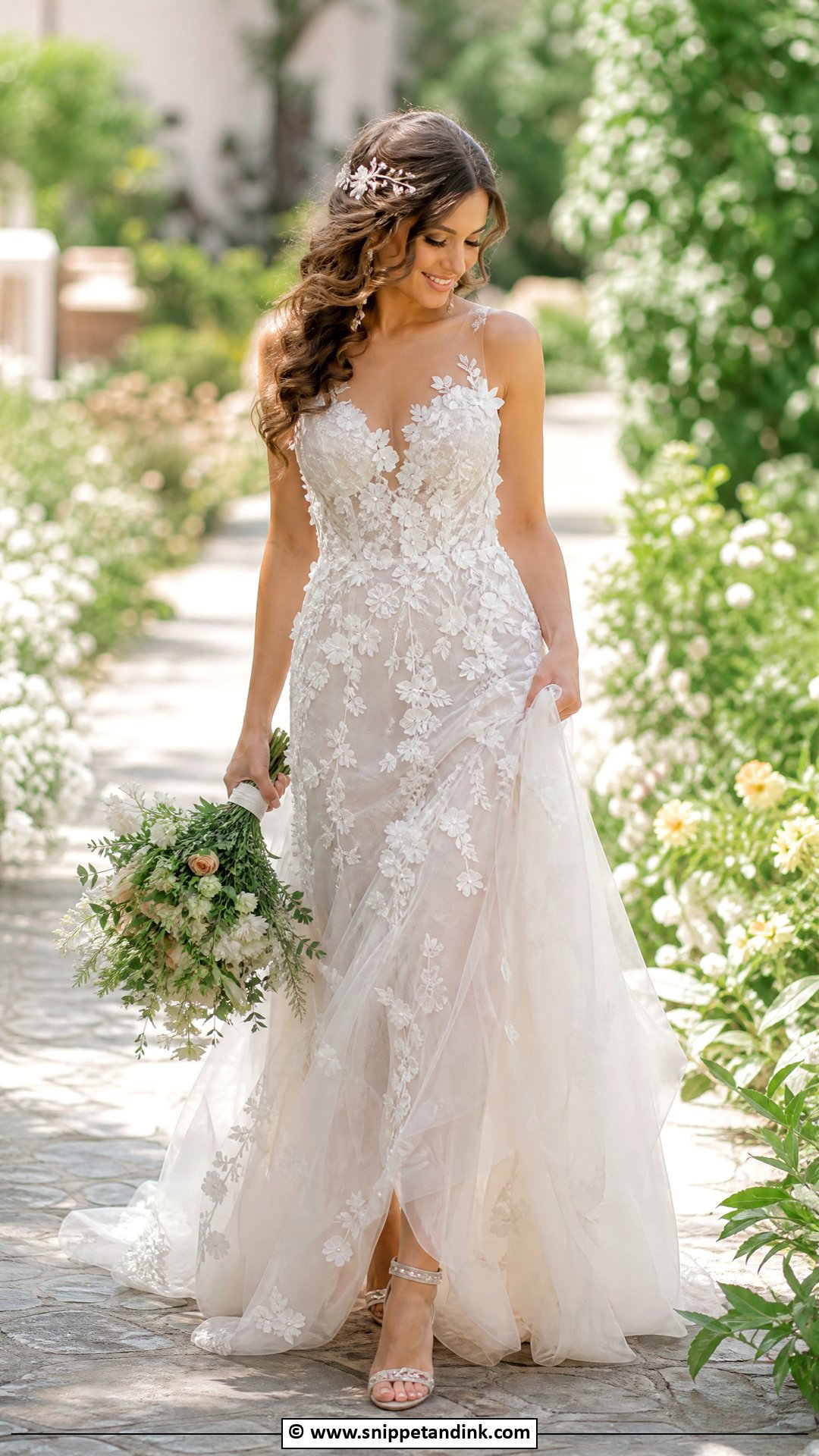
Appliqué puts fabric flowers onto the gown, so the pattern sits up off the surface and catches shadow. It looks its best on tulle, organza or lace. Choose small appliqués for subtlety or large blooms for impact. Raised flowers can snag on a textured bouquet wrap or a lace veil edge, so I keep the veil plain. Soft curls and a loose bouquet that echoes the dress suit outdoor and spring ceremonies.
7. Pearl Beaded Wedding Dress
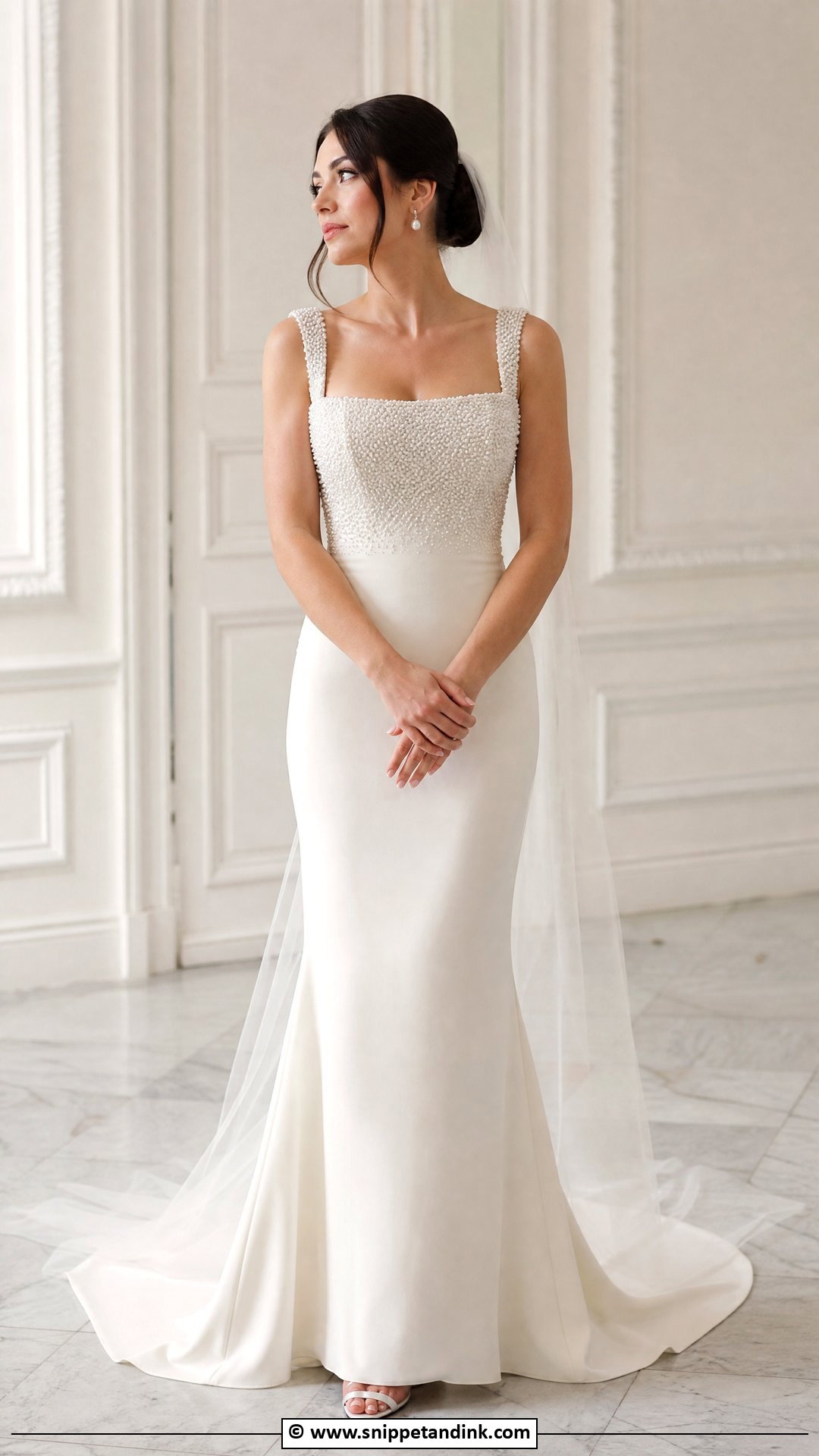
Pearls give a soft glow rather than the sharp sparkle of crystals. Look for pearl accents along the bodice, straps, sleeves or skirt. Because pearlwork already finishes the outfit, too many accessories make it look busy, so I stop at pearl earrings and a smooth veil. Pearl-heavy bodices can weigh more than you’d expect, so ask to feel the dress on the hanger. It suits fitted gowns, sheaths and A-lines.
8. Corset Wedding Dress
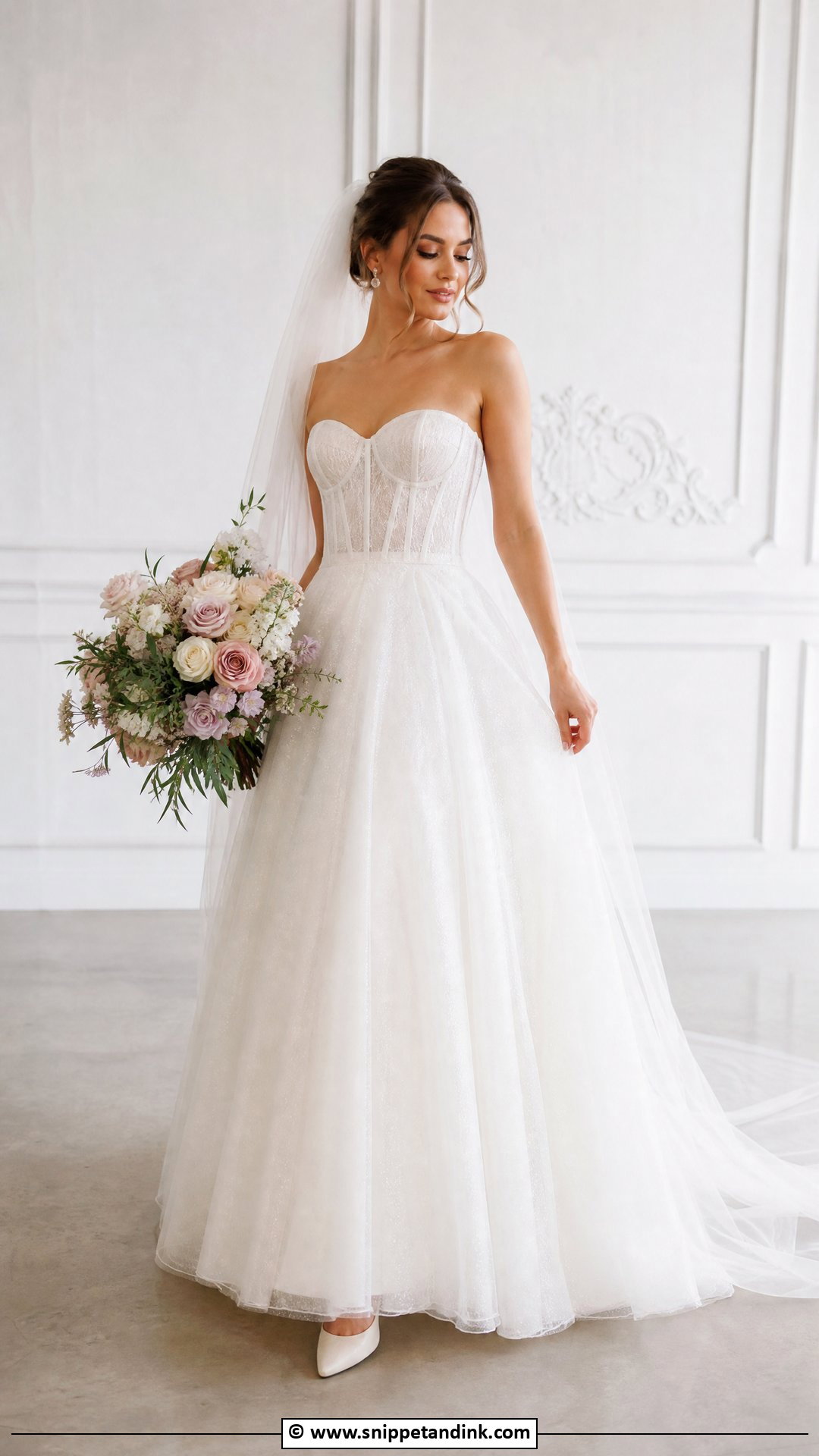
A corset wedding dress shapes the waist and supports the bust. Modern versions can be comfortable when the boning is flexible and the fit is right. The test I use is to sit and eat something at the fitting; if that’s uncomfortable, the corset needs adjusting. It pairs with a tulle skirt, sleek satin or a full ball gown. If the bodice has visible seams or lacing, keep the rest of the look clean.
9. Basque Waist Wedding Dress
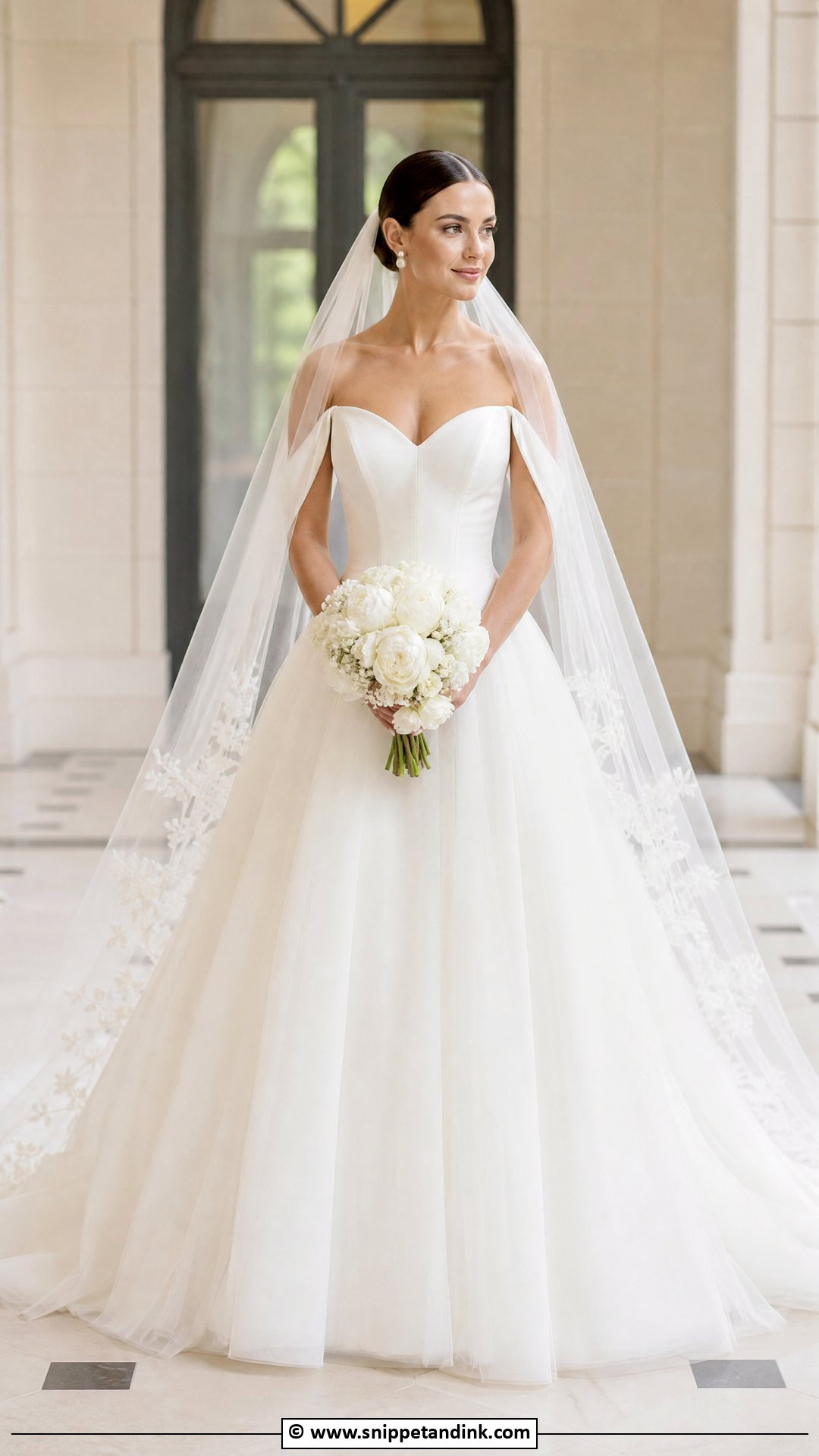
A basque waist dips into a point or a curve below the natural waist, lengthening the torso. It’s flattering when the point lands in the right place for your body, which is something I adjust carefully at fittings. Full skirts, soft pleats and tulle layers suit it. A cathedral veil and pearl earrings highlight the waist. Simple satin or mikado looks more modern than heavy embellishment.
10. Drop Waist Wedding Dress
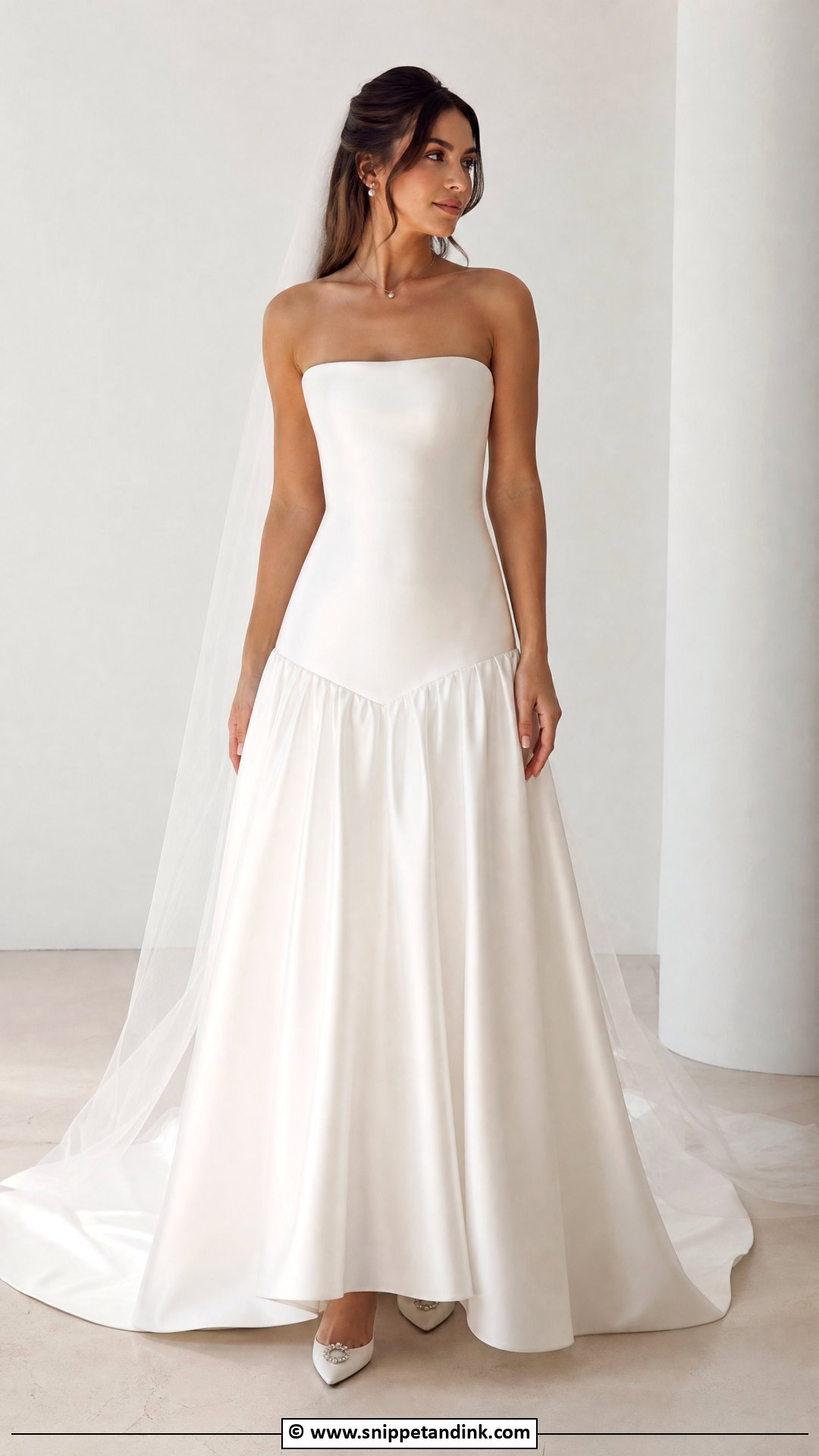
The drop waist sits below the natural waist, creating a long, sleek line. It works in satin, chiffon or lace. A softer drop waist allows more movement; a structured one looks editorial. On a petite frame I’d raise the seam slightly so the legs don’t look short. A half-up hairstyle softens the long bodice, and understated jewelry keeps the focus on the shape.
11. Square Neck Wedding Dress
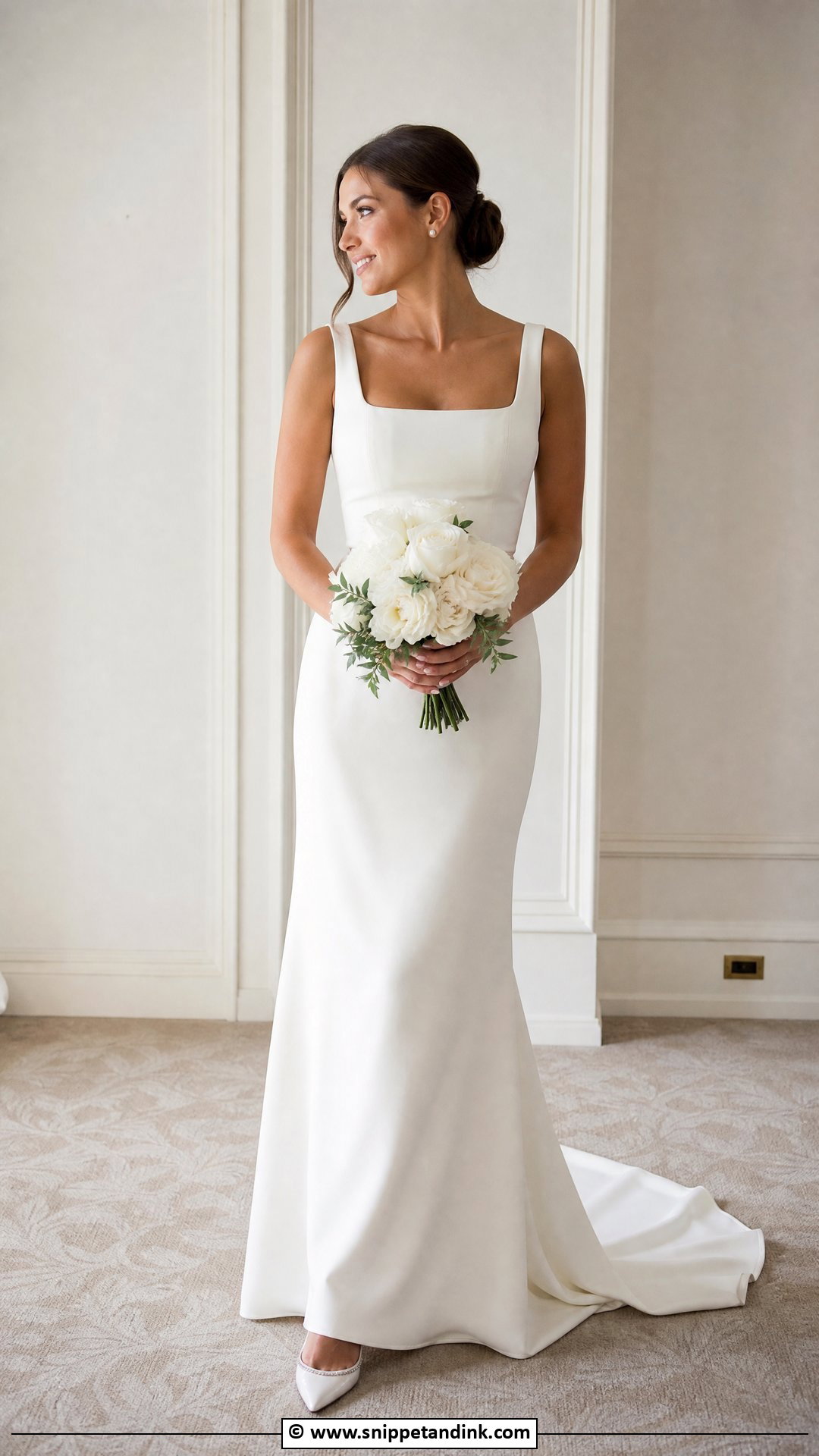
Straight lines across the chest frame the face and collarbone, with more coverage than a plunge. A square neck works with thick straps, long sleeves or sleeveless bodices. Choose a fitted crepe gown for minimalism or an A-line for softness. It photographs with clean lines from the front and side. Pearl studs, a low bun and classic pumps finish it without fuss.
12. High Neck Wedding Dress
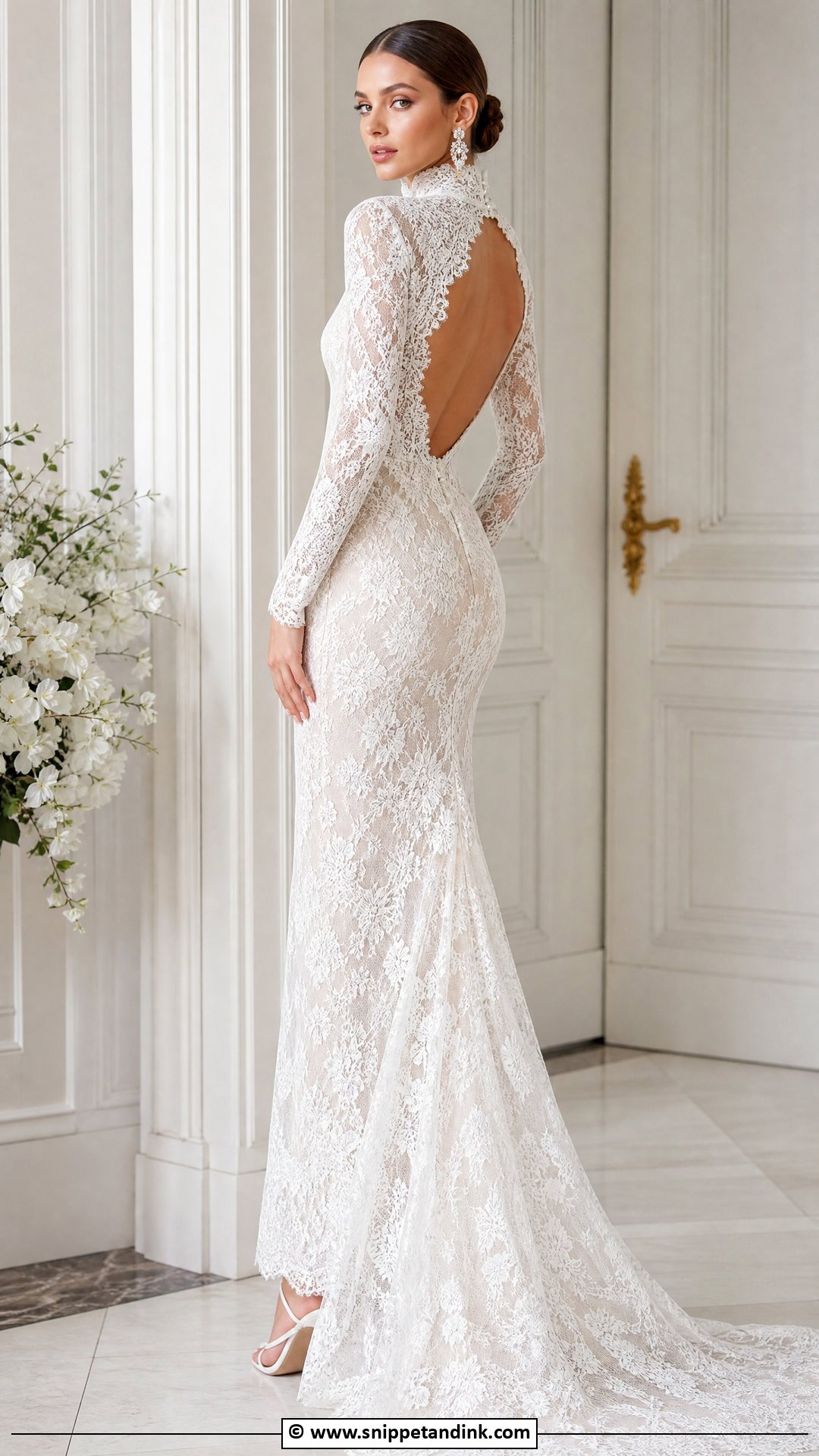
A high neck looks fresh in light fabric and strict in heavy fabric, so I’d choose sheer lace, soft crepe or satin with clean seams. Since the neckline covers more, balance it with an open back, slim sleeves or a flowing skirt. Statement earrings and a sleek updo suit it; a necklace would only clutter the line. It’s well suited to cooler months and formal indoor settings.
13. Strapless Wedding Dress
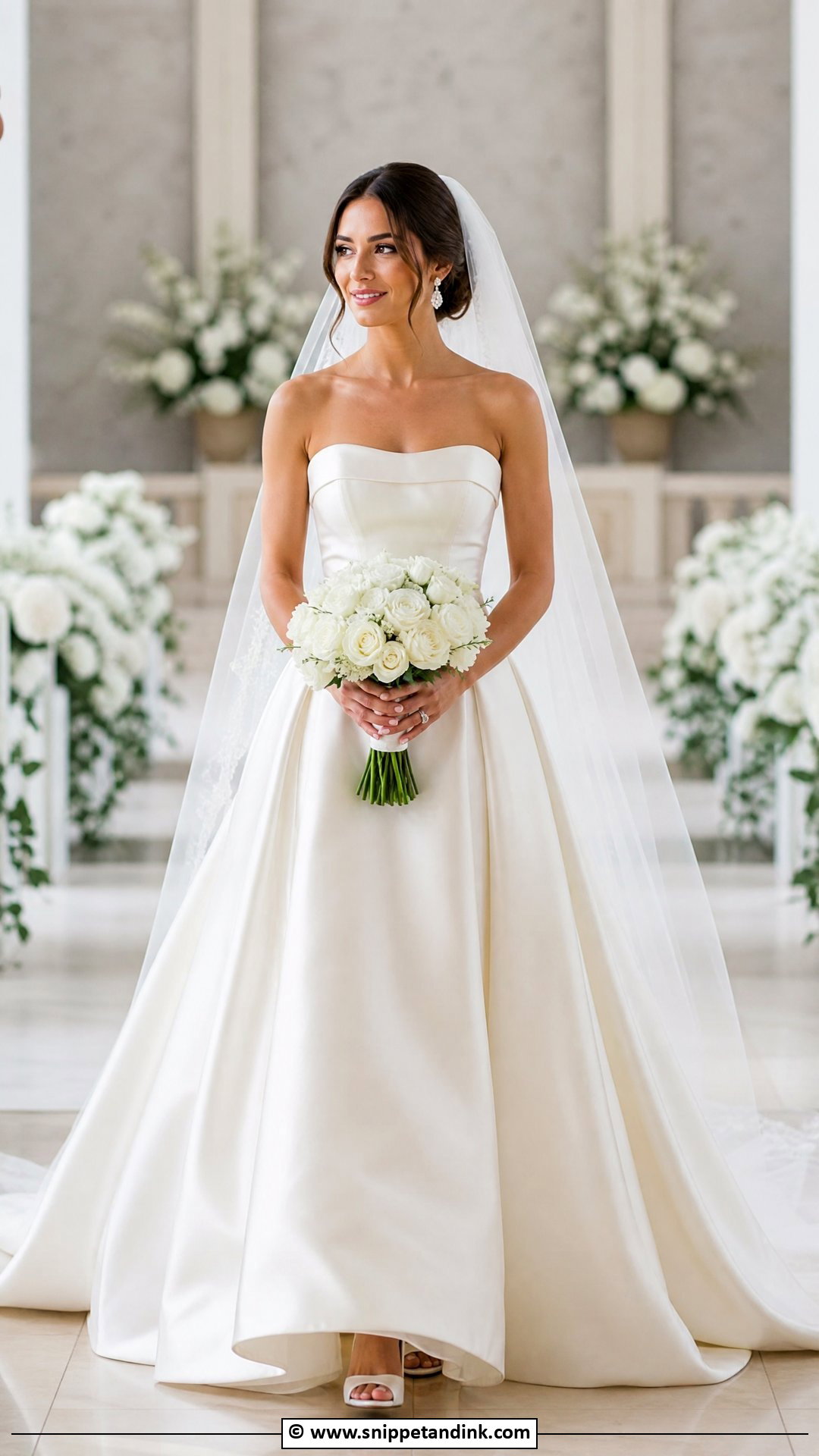
Strapless gowns frame the shoulders and upper body cleanly. The bodice fit is everything, so alterations matter more here than with most styles. Satin looks polished, lace looks romantic and tulle for softness is the lightest option. I check strapless bodices by having brides raise both arms; if the top edge drops, it needs taking in. It works with ball gowns, mermaids, A-lines and sheaths.
14. Sweetheart Neckline Wedding Dress
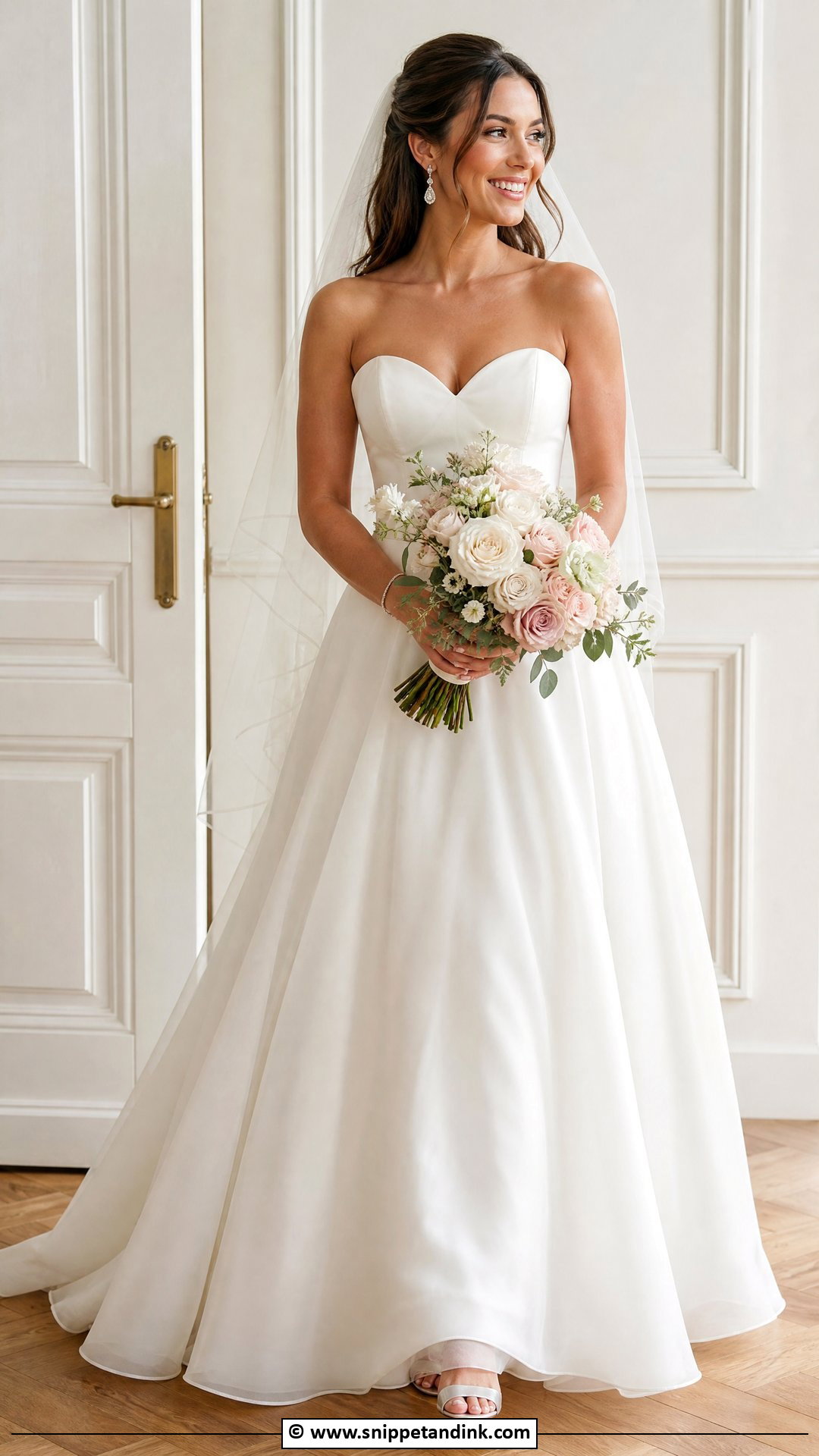
The sweetheart neckline softens the face and gives a curved, romantic bodice. It pairs with fitted gowns, corset bodices, A-lines and ball gowns. If the neckline is simple, a delicate pendant can sit in the dip; if the bodice has lace or beading, skip the necklace. On a fuller bust, a deep sweetheart needs good internal support, so check the cups at the fitting. Light veil, soft waves, small drop earrings.
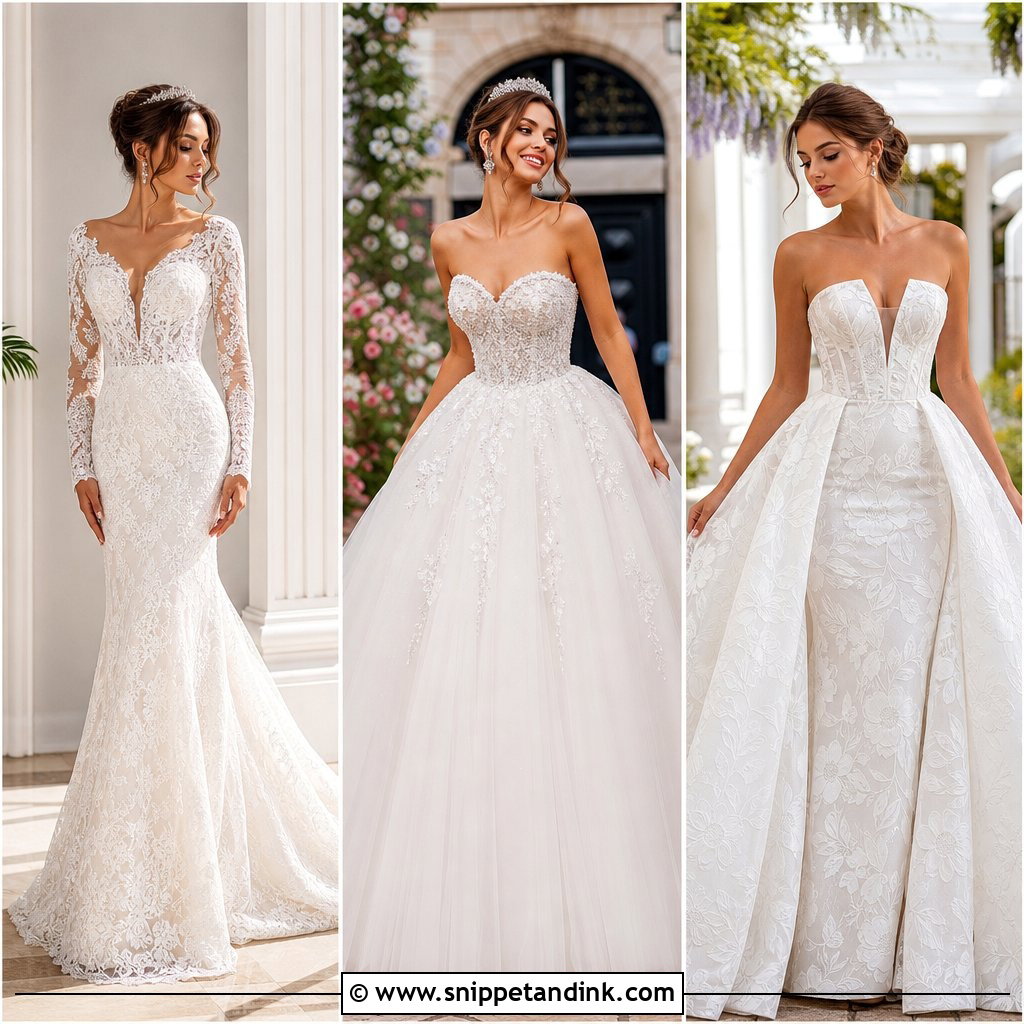
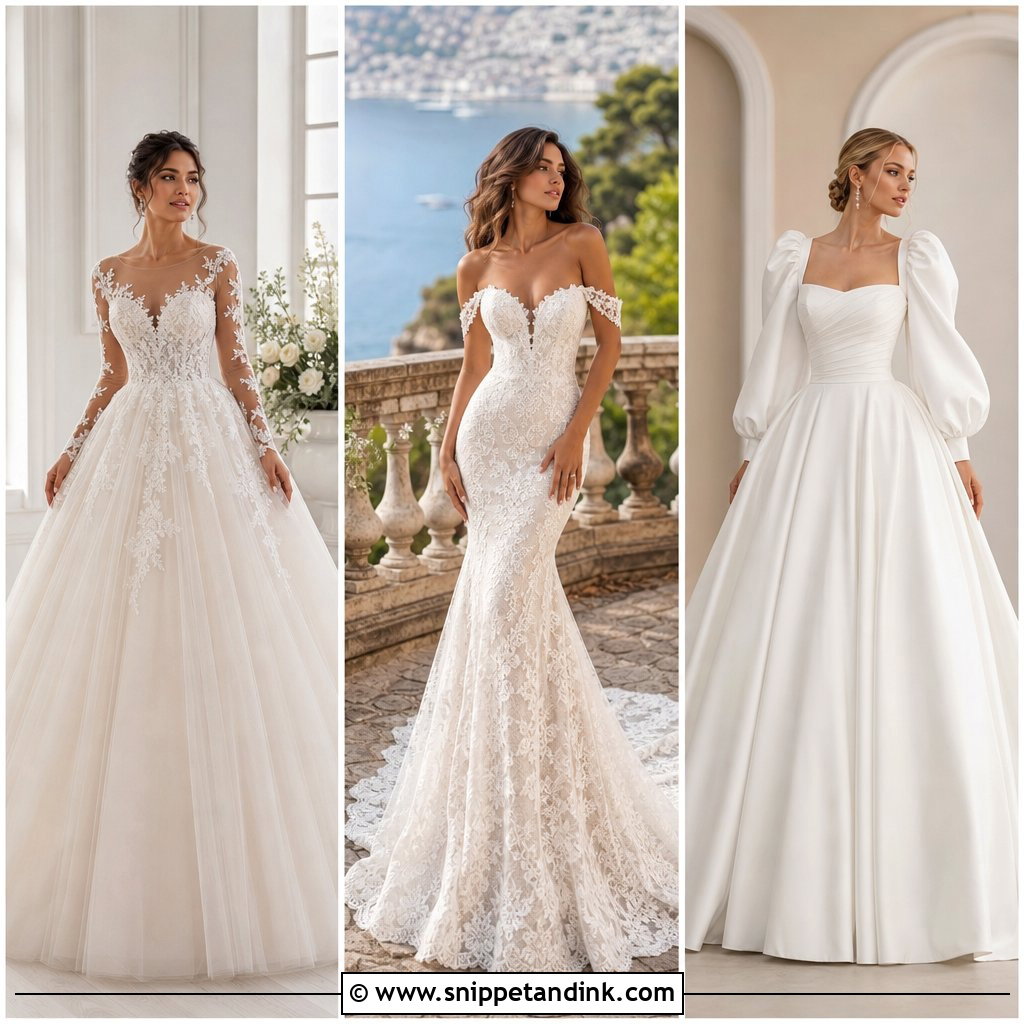
15. Mermaid Wedding Dress
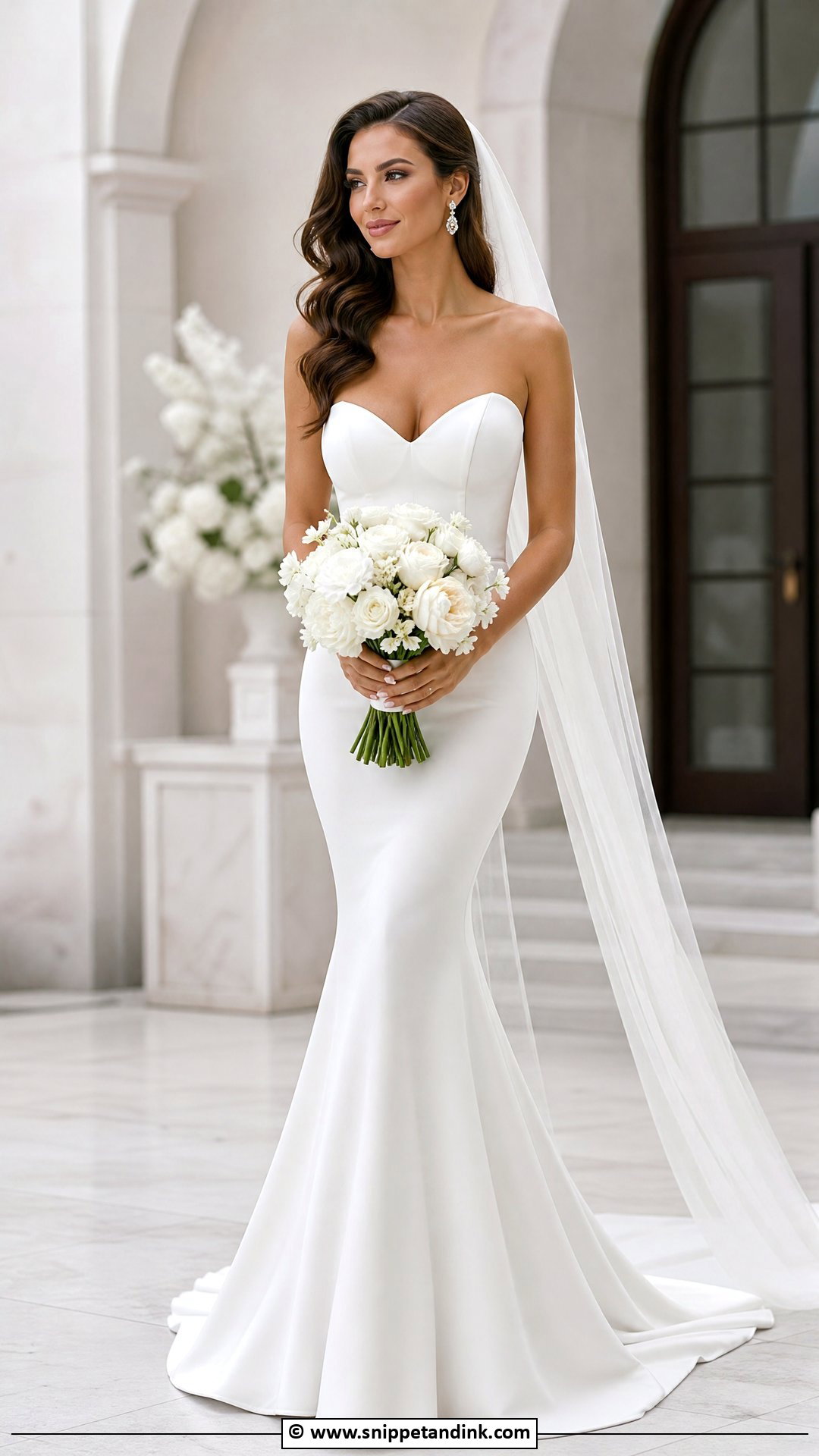
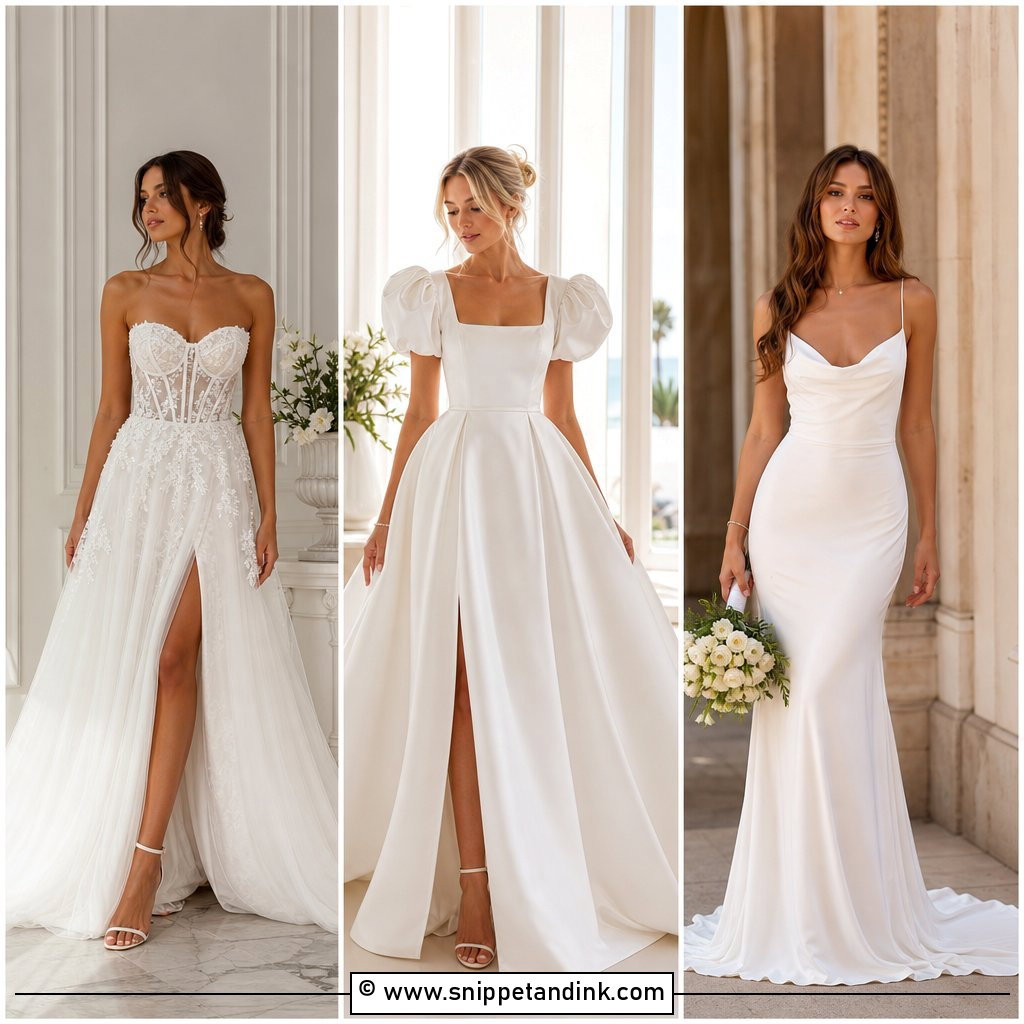
A mermaid hugs through the hips and flares near the knee, giving a sculpted shape that celebrates curves. Stretch crepe is sleek, lace romantic, satin glamorous. It’s the most restrictive silhouette for movement, so I always have brides walk, sit and try a dance step during fittings. A long veil and crystal earrings suit the bold shape. If stairs feature in your day, consider the trumpet below instead.
16. Trumpet Wedding Dress
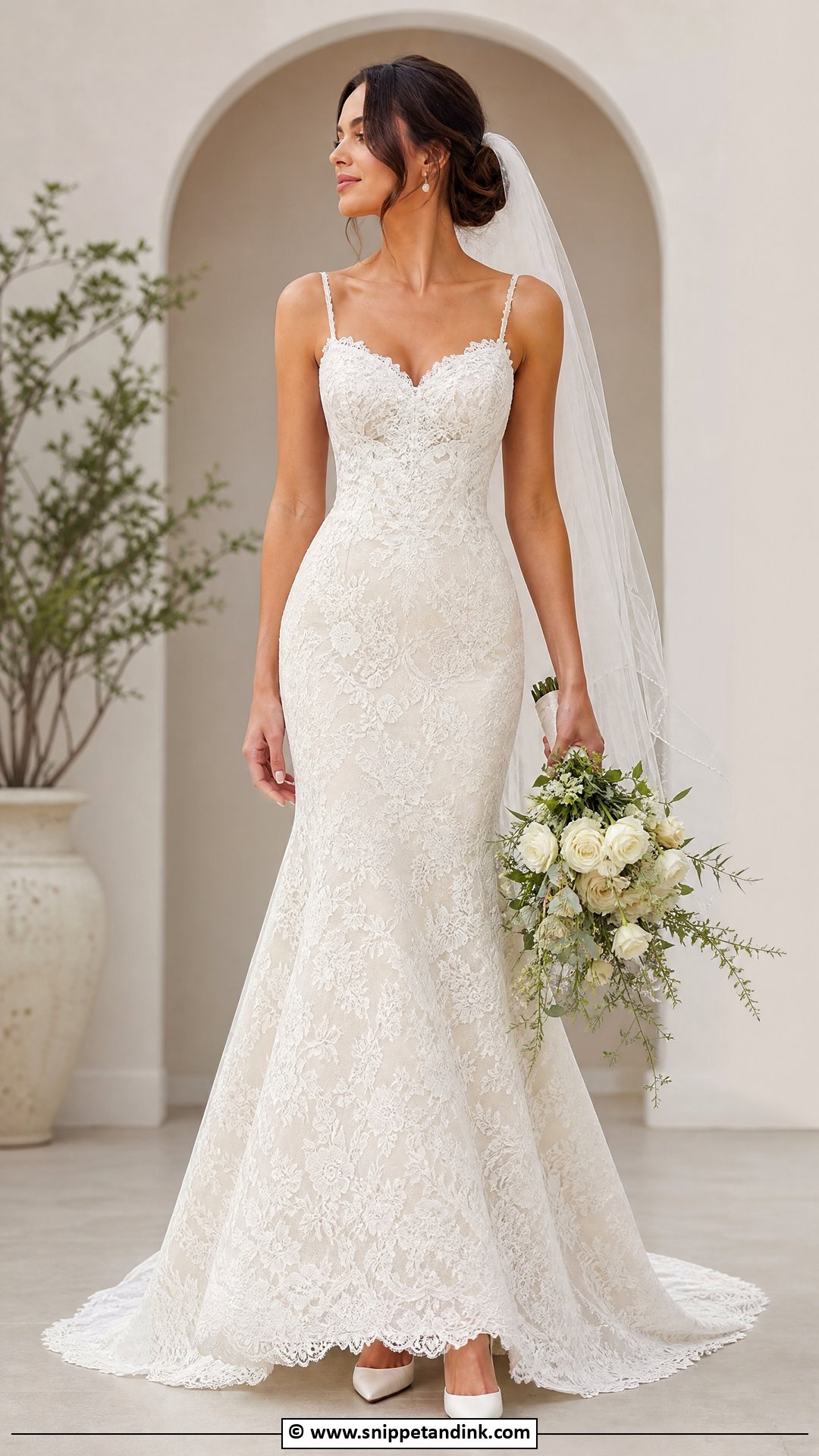
A trumpet is close to a mermaid but flares higher on the leg, which makes walking and dancing much easier. It still gives a fitted, defined shape. Lace, crepe, satin and mixed fabrics all work. Match the earrings to the gown’s level of detail, and add a side part or a soft bun for polish. In my fittings, brides who loved the mermaid look but struggled to sit often end up here.
17. Sheath Wedding Dress
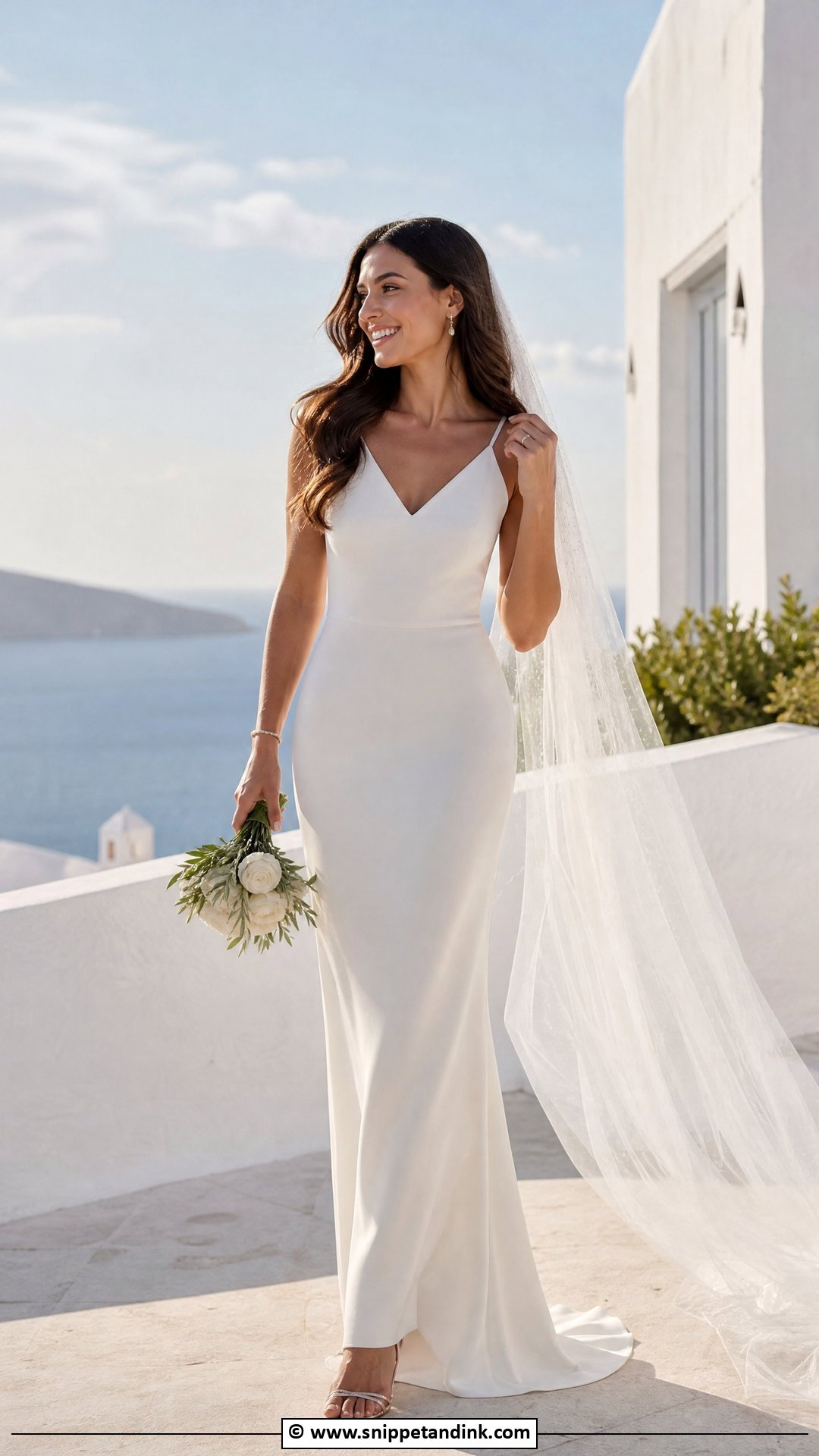
A sheath follows the body in a narrow line without volume. It feels light, which suits beaches, city venues and intimate celebrations. Crepe gives structure, silk gives movement, lace adds romance. A narrow hem can shorten your stride, so check you can walk up a step comfortably or ask for a small slit. Slim heels, a small bouquet and a soft veil suit it, with either waves or a sleek bun.
18. Tea Length Wedding Dress
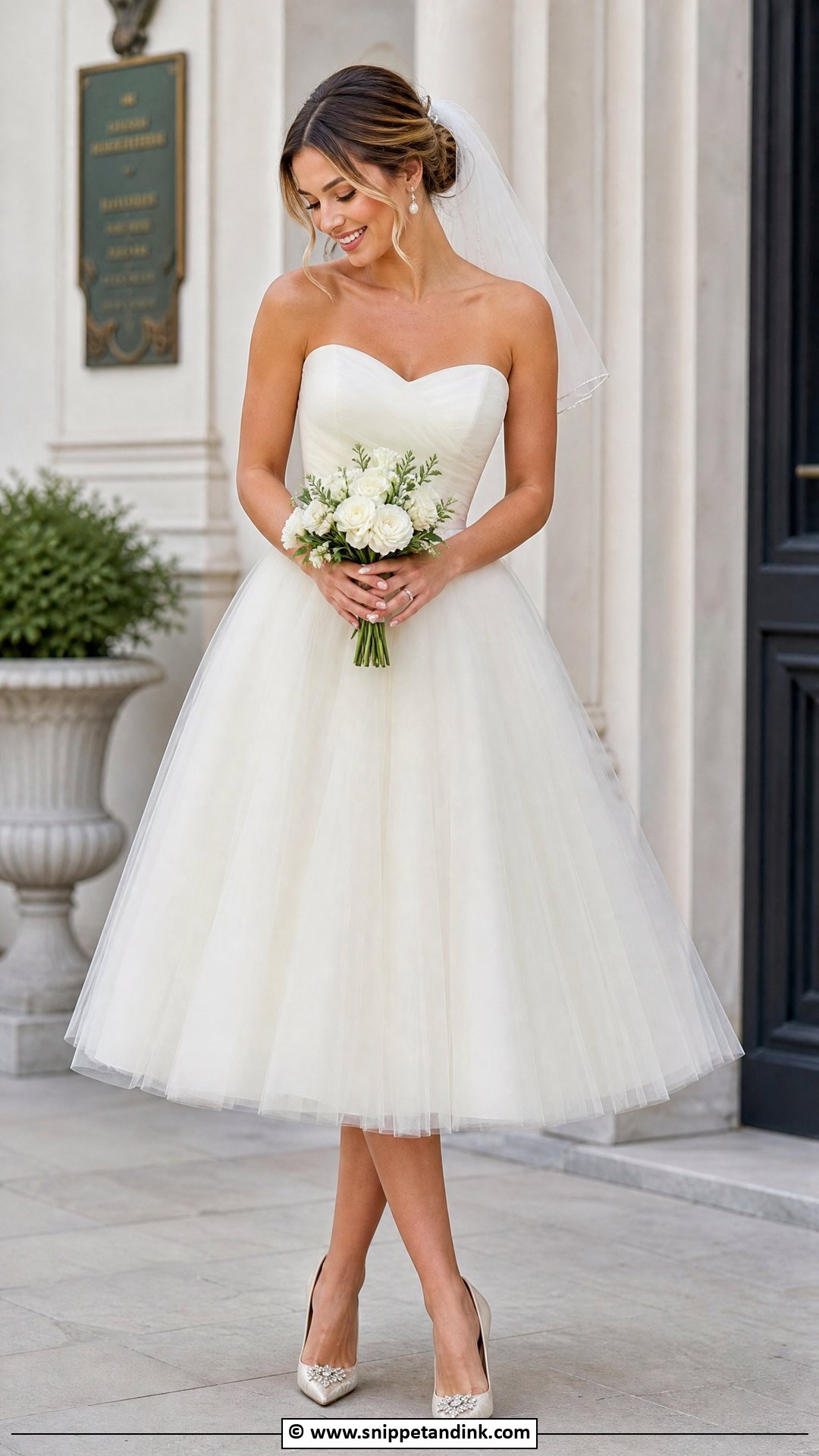
Tea length falls between the knee and ankle and puts your shoes in the picture. It suits courthouse weddings, garden ceremonies and second looks. Satin pumps, embellished heels or ankle-strap sandals become part of the outfit. Tulle, satin, lace or organza all work. Hem it in the shoes you’ll wear, as tea length is very sensitive to heel height. A short veil and pearl earrings complete it.
19. Mini Wedding Dress
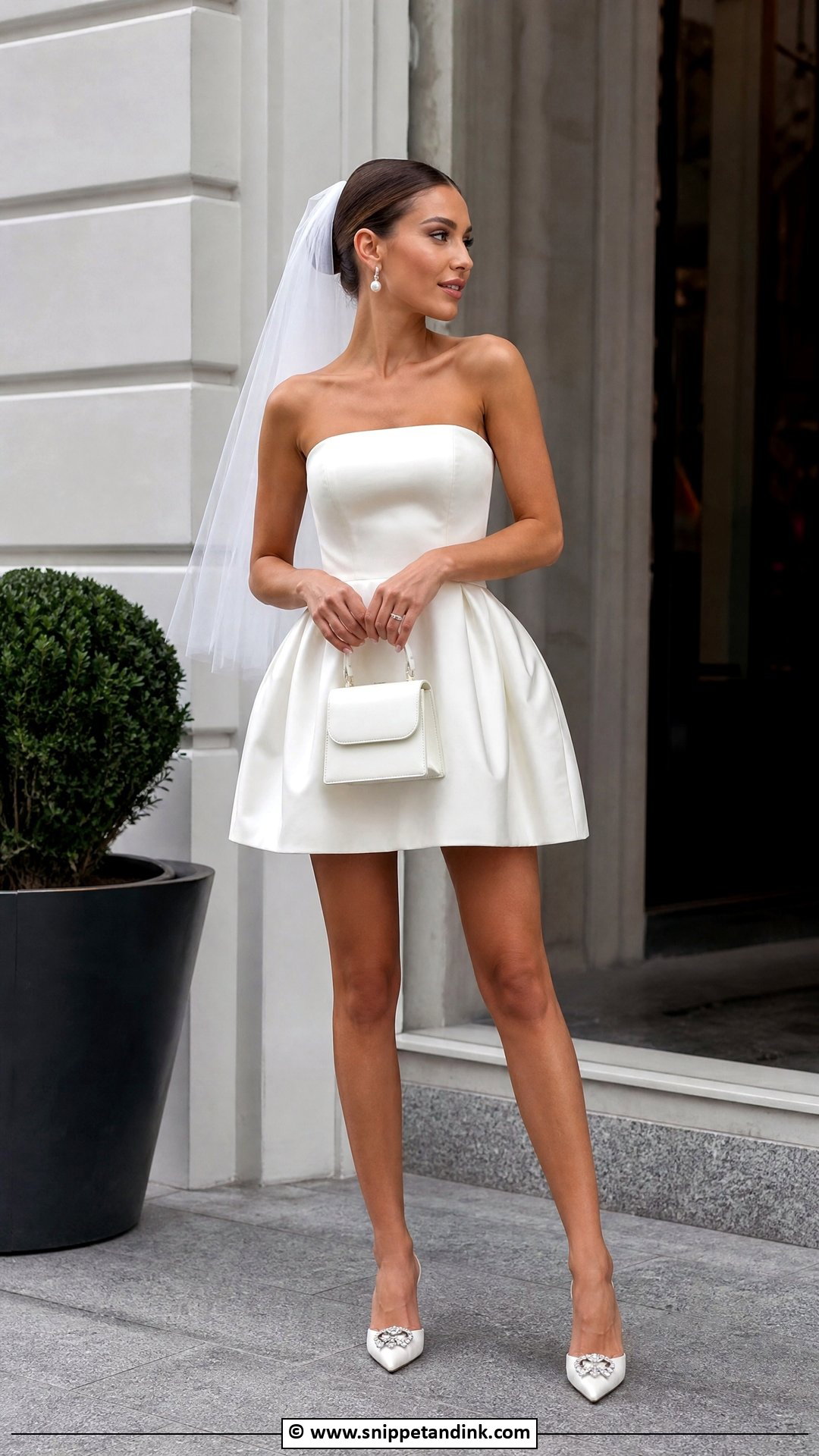
A mini is the most freeing wedding dress there is. It suits civil ceremonies, after-parties and destination weddings. A structured satin mini is chic, feathers add drama, lace softens it. Sharp tailoring keeps it bridal rather than casual, and I’d always do a sitting test. Statement heels and a short veil make it feel like a wedding outfit.

20. Bridal Jumpsuit With Cape
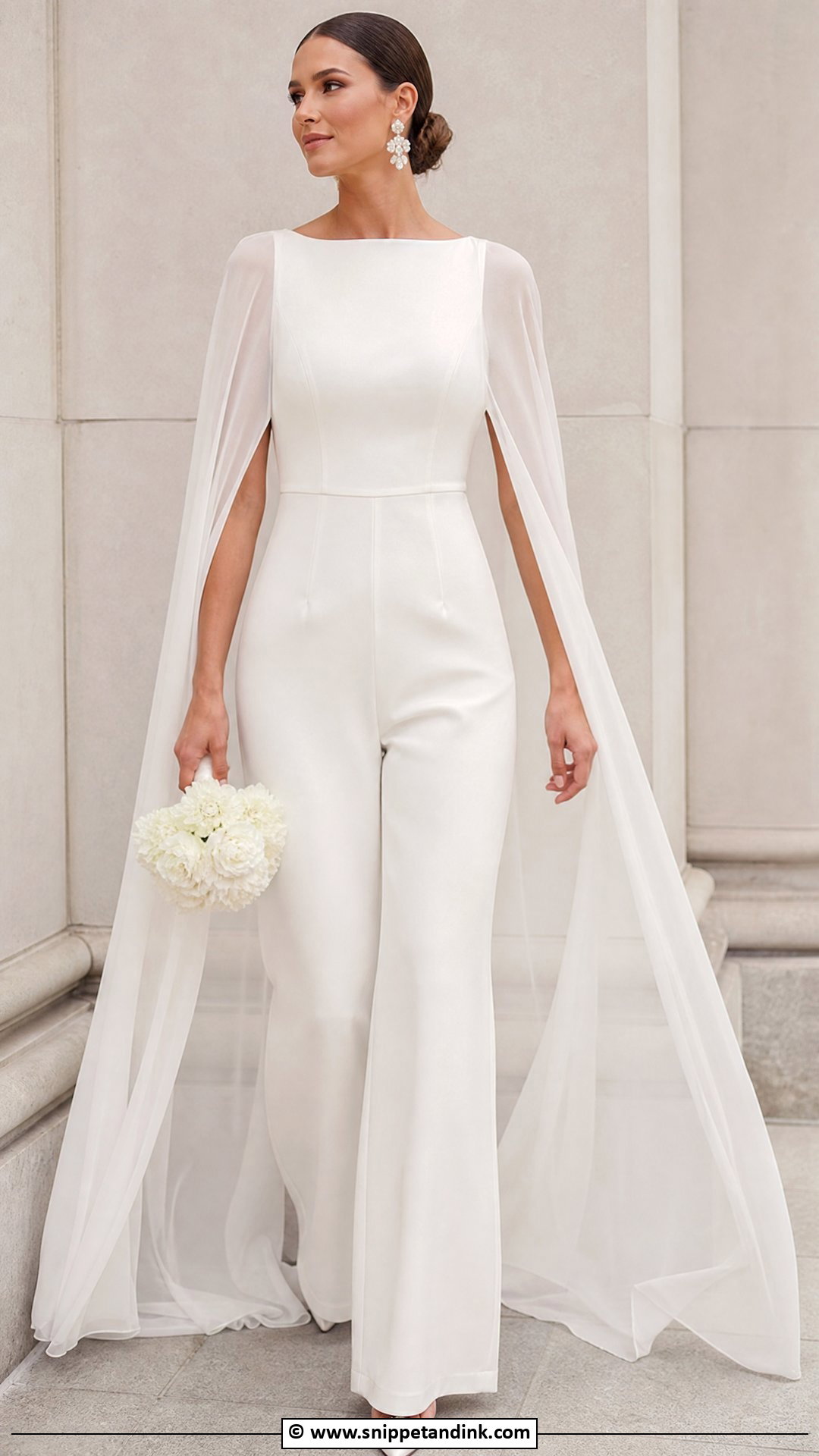
A tailored white jumpsuit with wide legs makes a long line, and a sheer or satin cape over it brings the ceremony feeling without a skirt. It’s comfortable and moves well. Back zips and bathroom trips are the honest drawback, so try the fastening yourself. Pointed heels, statement earrings and a sleek hairstyle complete it. It works for courthouse weddings, city celebrations or a second look.
21. Bridal Suit With Heels
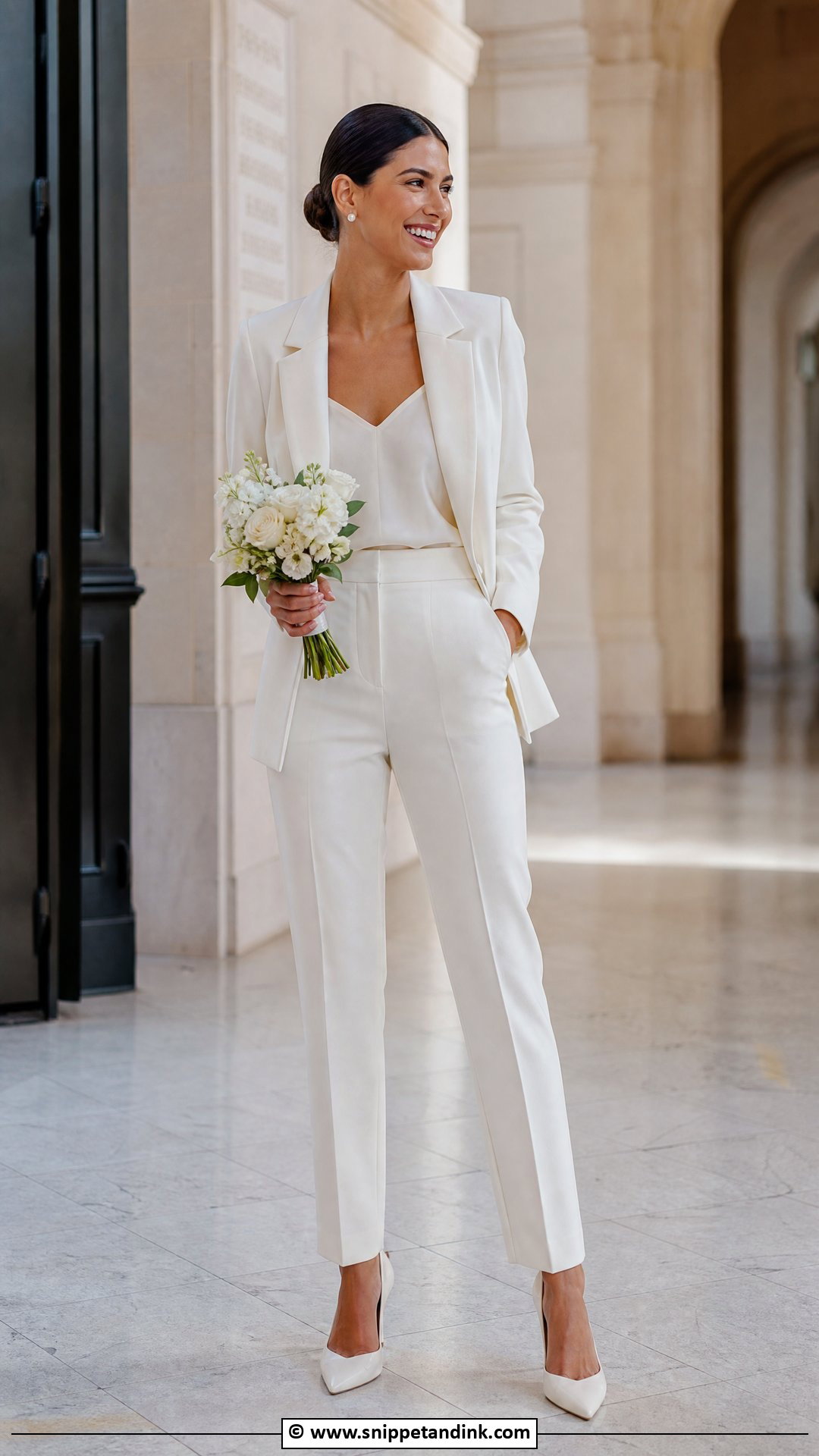
A bridal suit with heels gives you a polished, personal alternative to a gown. A white or ivory blazer, tailored trousers, a silk camisole and pointed heels are the base. A birdcage veil, pearl earrings or a floral corsage soften it. Tailoring has to be precise through the shoulders, waist and trouser length, so I’d book two fittings. It suits civil ceremonies, elopements and city weddings.
22. Two Piece Wedding Dress
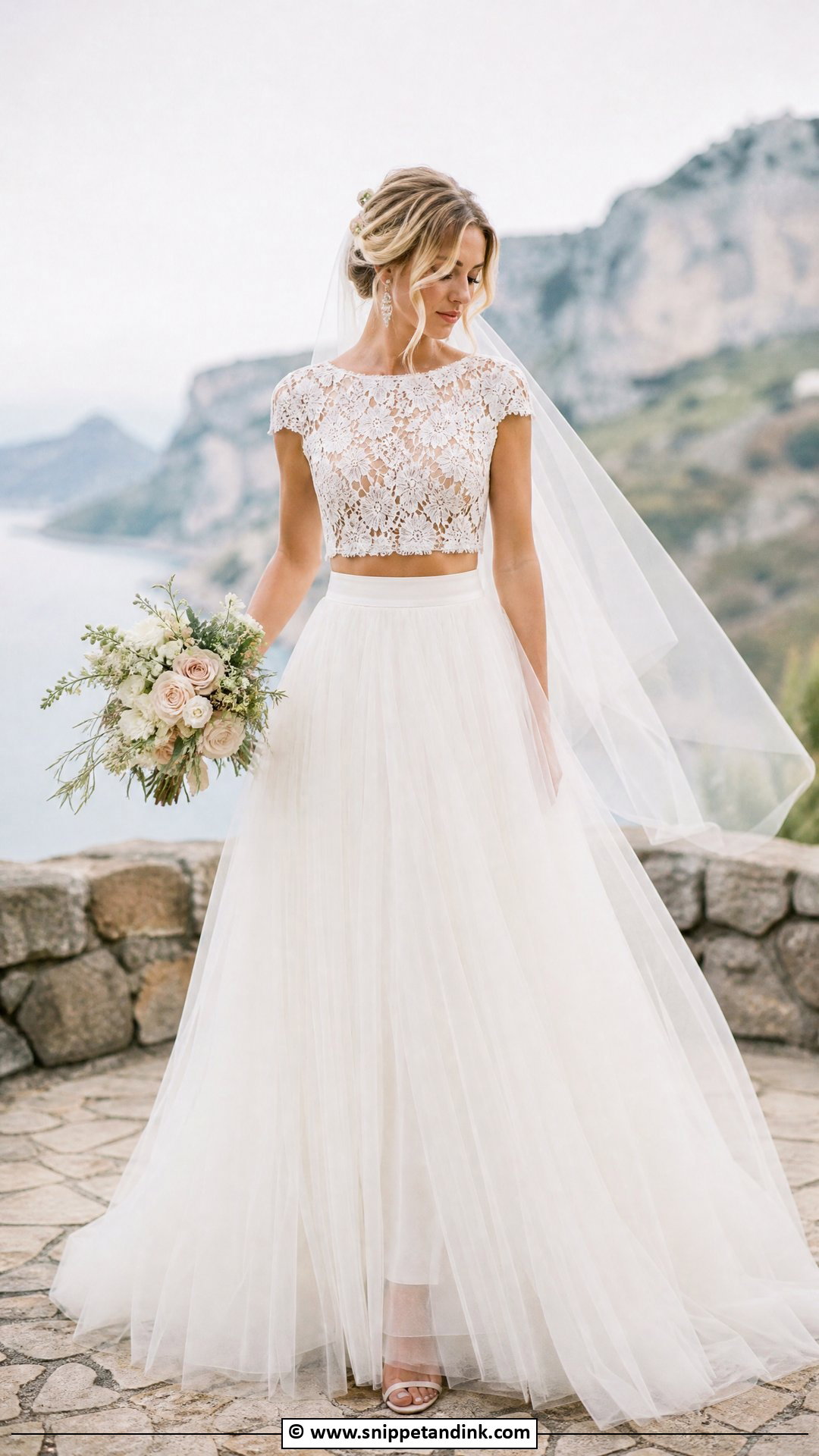
A two-piece gives flexibility: a fitted top with a matching skirt can look modern, romantic or minimal. Try a lace crop top over a high-waist tulle skirt, or a satin bandeau with a sleek column skirt. The gap at the waist should be small and comfortable, and the skirt waistband needs to stay put when you sit, so I’d have both pieces fitted together. Simple heels and a veil in the same mood finish it.
23. Tulle Wedding Dress
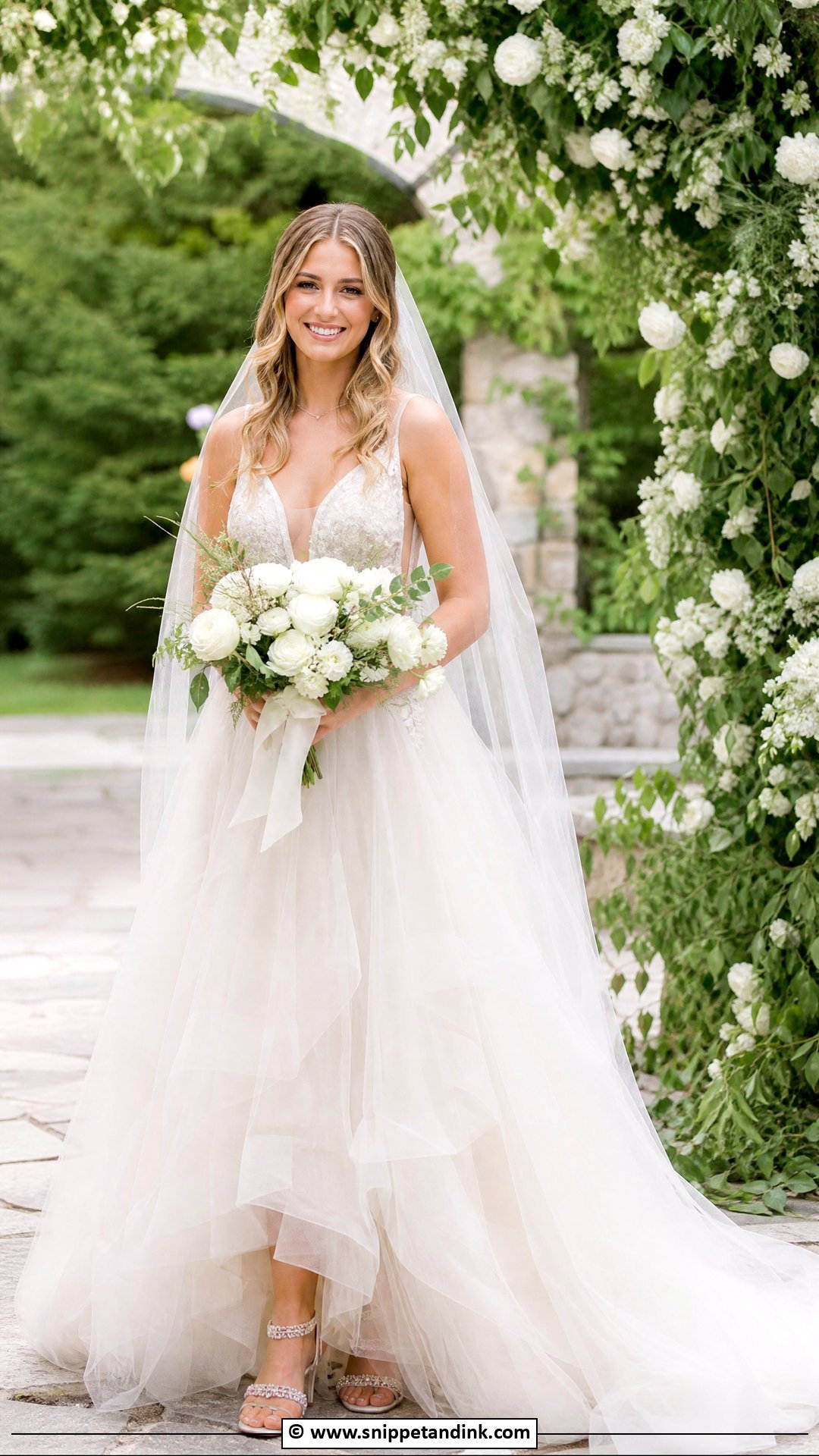
Tulle is the lightest way to get volume, and it floats when you move, which is why it looks so good in walking and dancing photos. Layers can create a full skirt, an A-line or an overskirt. With many layers, keep jewelry small. Tulle does snag on rough stone and heel buckles, so outdoor brides should check their shoes. Soft curls and a delicate veil suit it.
24. Organza Wedding Dress
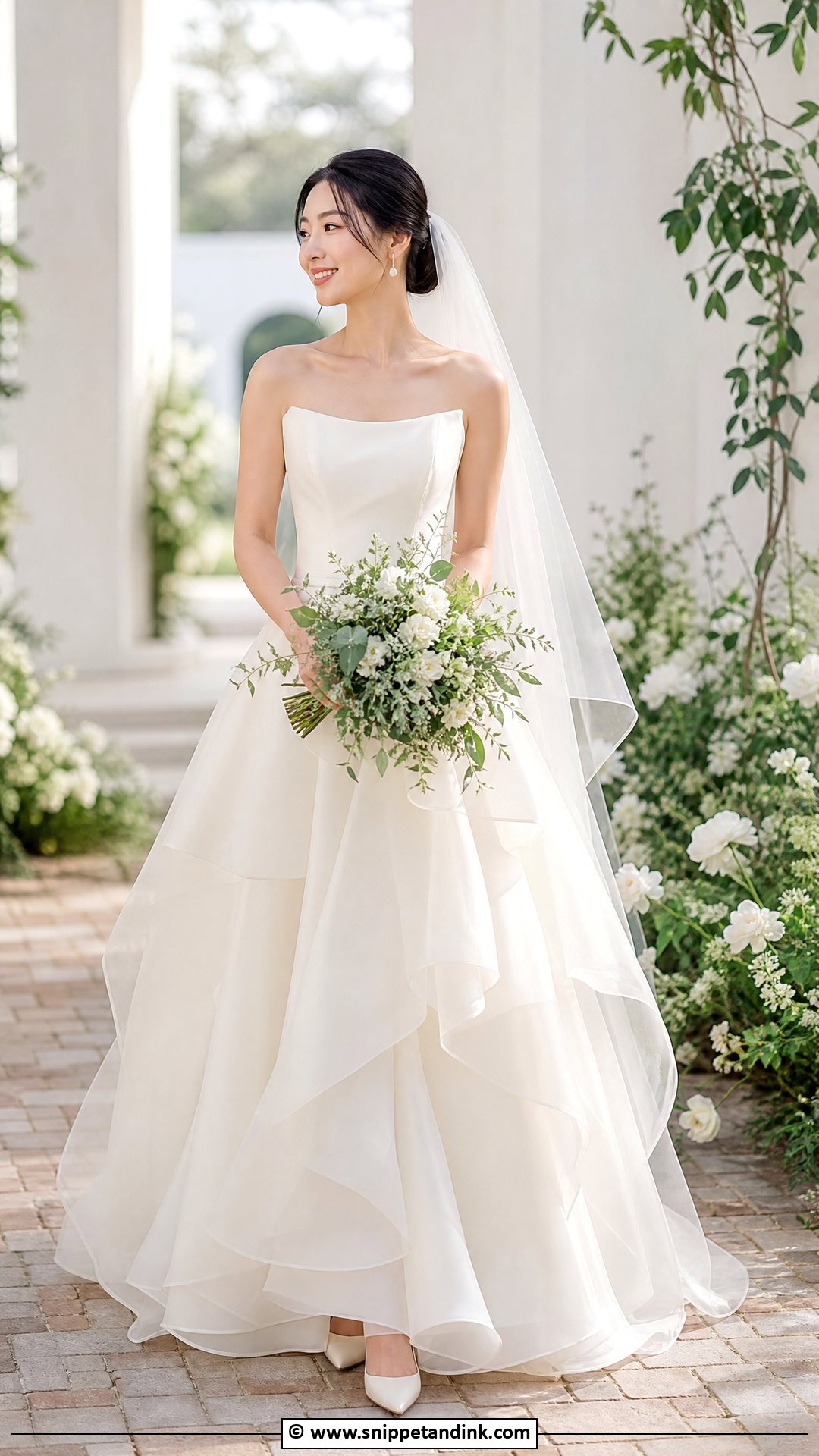
Organza holds shape better than tulle but still looks light, which makes it ideal for full skirts, ruffles and layered designs. It’s crisp and fresh in spring and summer. Organza creases sharply if crushed, so I hang it as soon as it arrives and steam it lightly. A fitted bodice with a flowing organza skirt gives volume without heaviness. Pearl earrings and a clean veil finish it.

25. Chiffon Wedding Dress
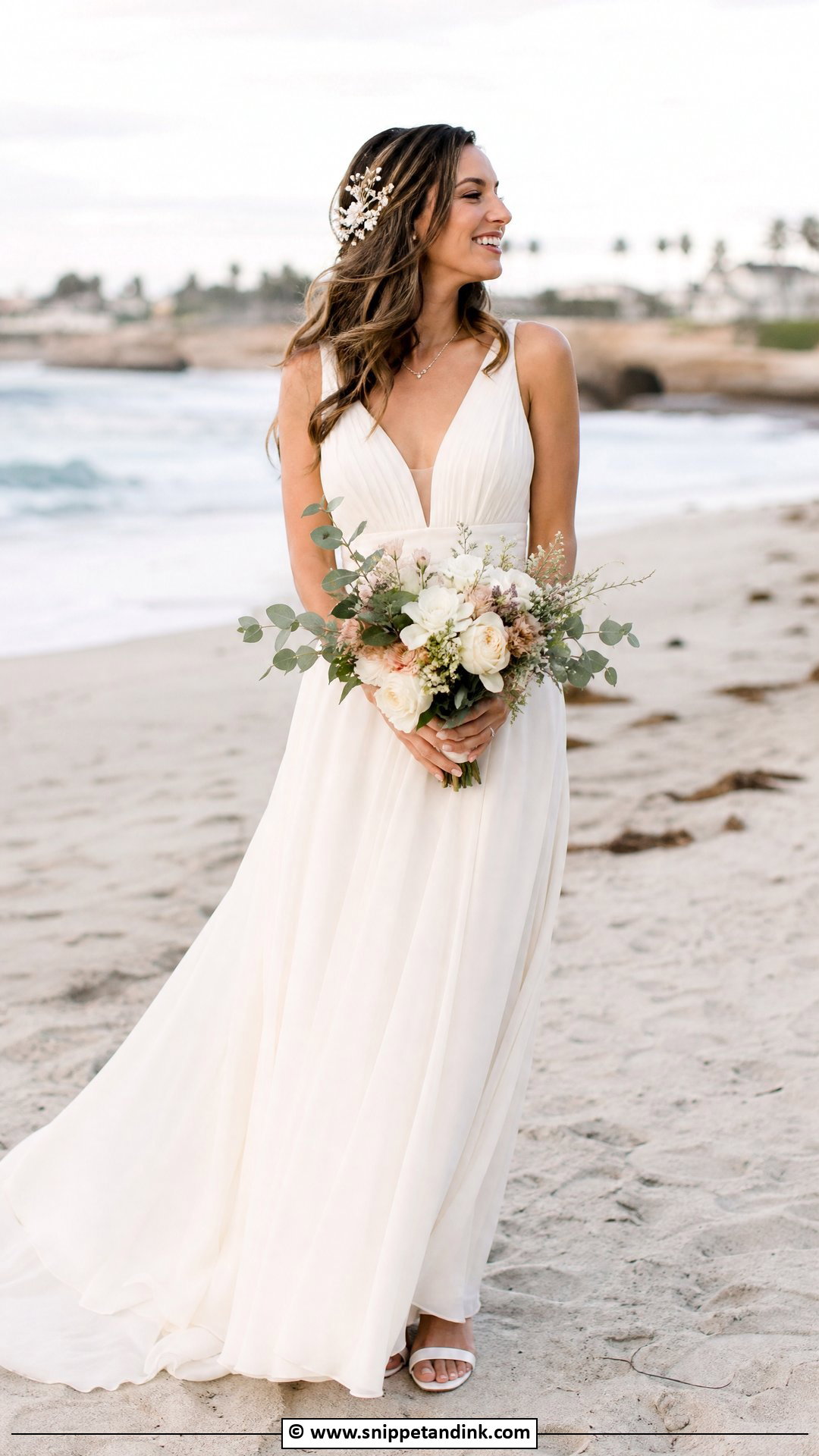
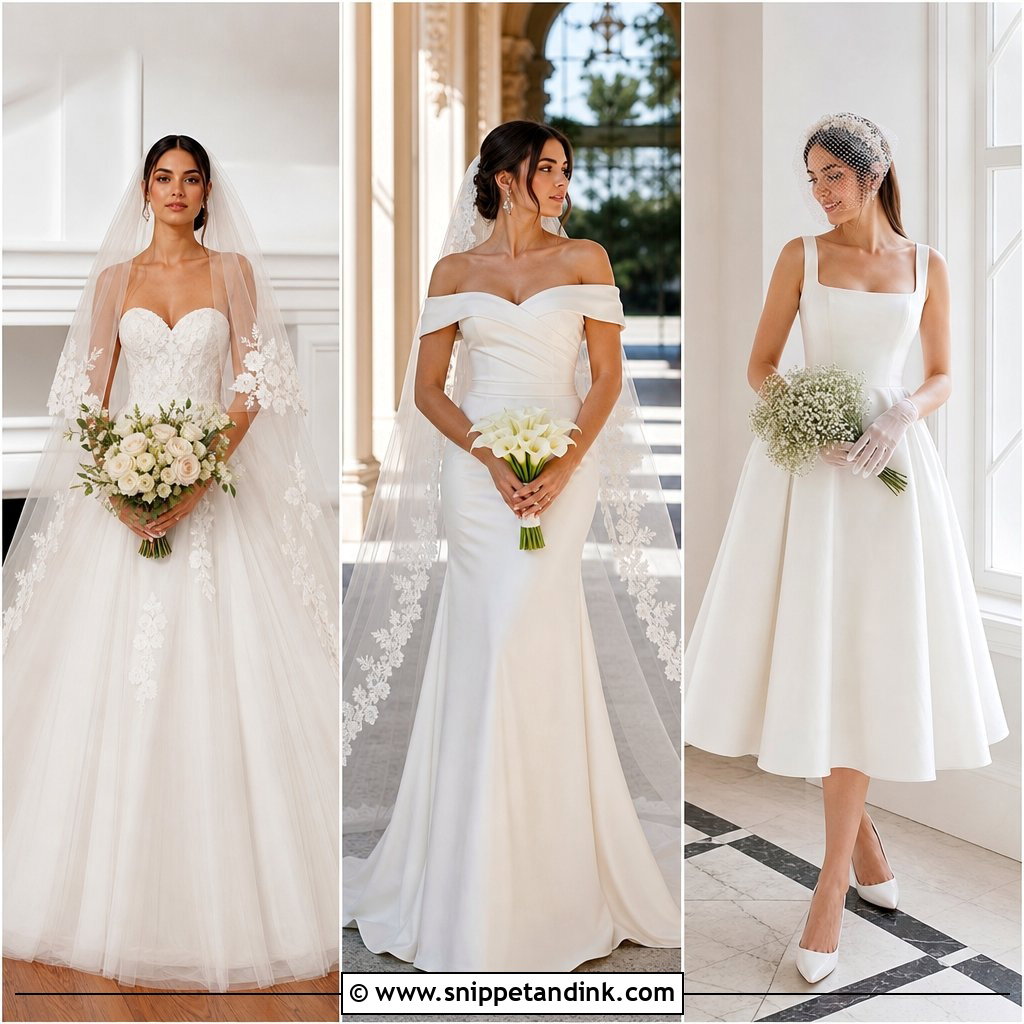
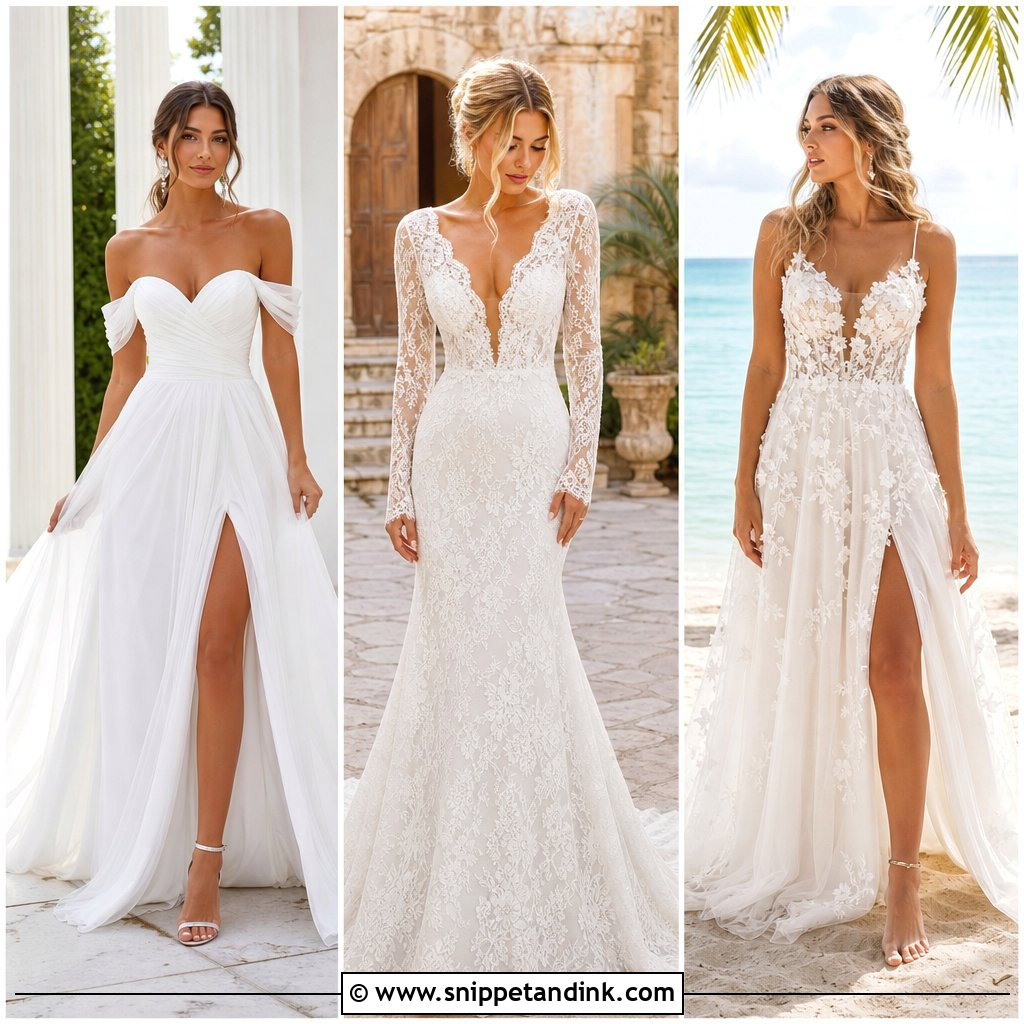
Chiffon is light and flowing, so it suits beaches and warm weather. It moves gently in a breeze and doesn’t trap heat. A chiffon A-line, an empire waist or a soft sheath all work. Chiffon has little structure, so the bodice needs a good lining for support. Flat sandals, loose waves and a short veil or a floral comb keep it relaxed.
26. Crepe Wedding Dress
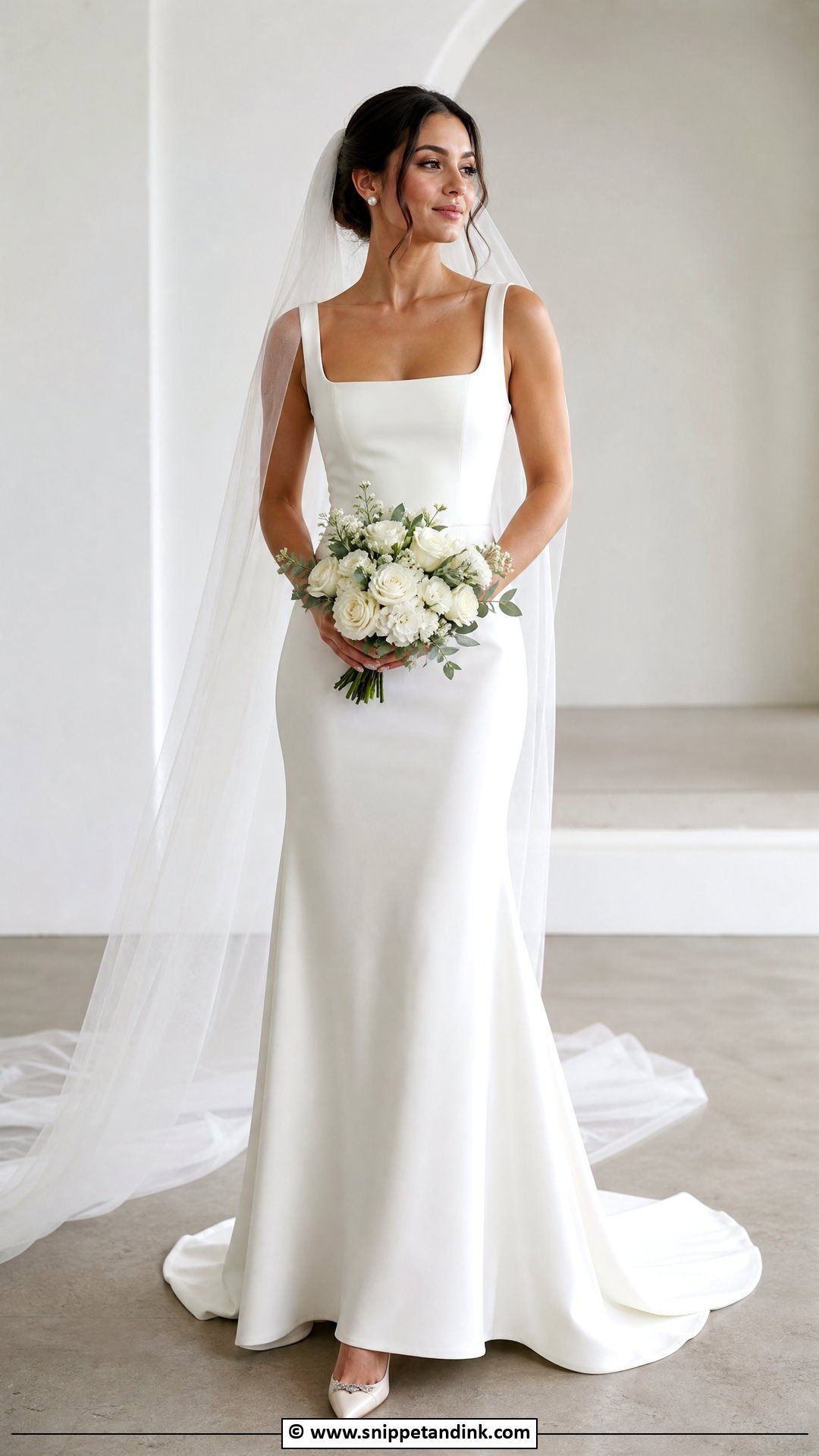
Crepe has enough weight to skim the body smoothly and looks clean in photos. It suits sheaths, trumpets and minimal A-lines. Strong seams, a square neckline or a low back give subtle detail. Crepe shows every alteration line, so a good seamstress matters. Pearl studs, a long veil and pointed heels complete a look that relies on fit rather than ornament.
27. Mikado Wedding Dress
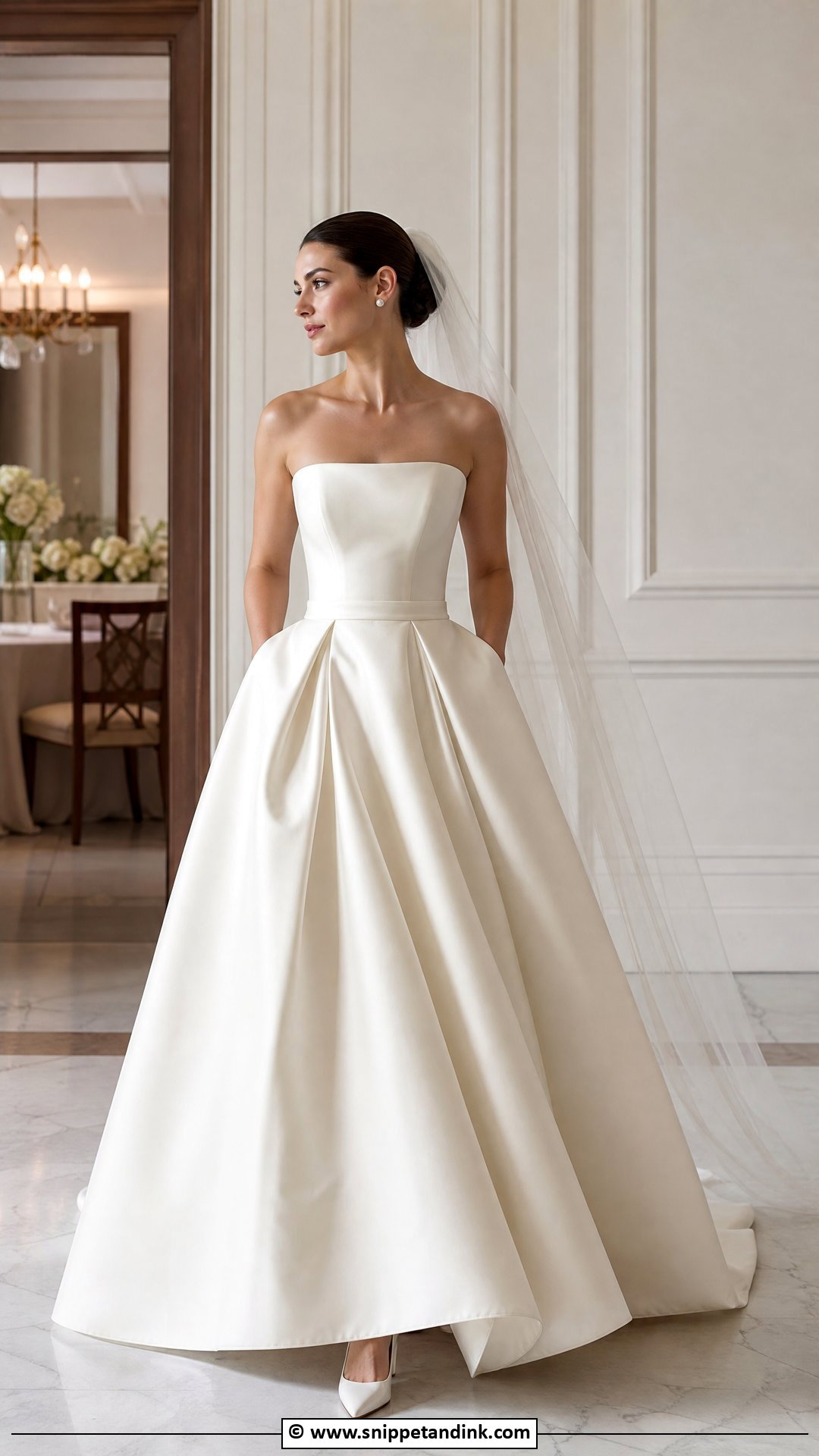
Mikado is a heavy, slightly stiff silk blend with a soft sheen, so it holds sculpted bodices, pleats and architectural shapes. It suits ball gowns and A-lines. Because it’s heavy, it can feel warm in a summer garden, so I’d save it for cooler months or air-conditioned venues. A long veil, pearl earrings and a sleek bun let the fabric speak.
28. Halter Wedding Dress
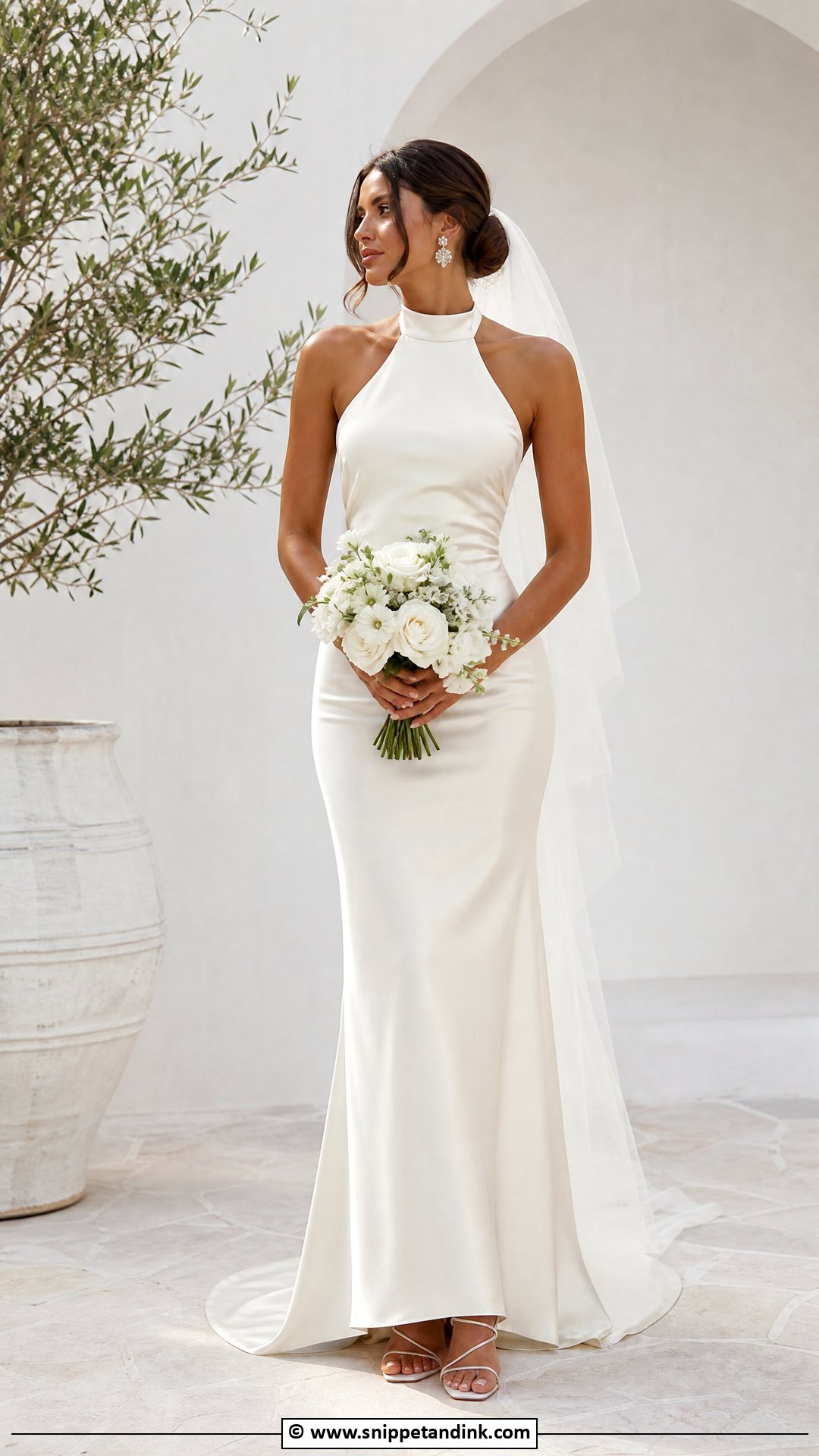
A halter neckline draws attention to the shoulders and gives a lifted shape. Satin looks polished; lace or chiffon looks softer. Skip a necklace and choose earrings. Attach the veil below the hairstyle so it doesn’t fight the neck strap. On a heavy gown the halter strap can pull by evening, so check that the bodice supports itself. It suits destination, garden and indoor weddings.
29. Plunging Neckline Wedding Dress
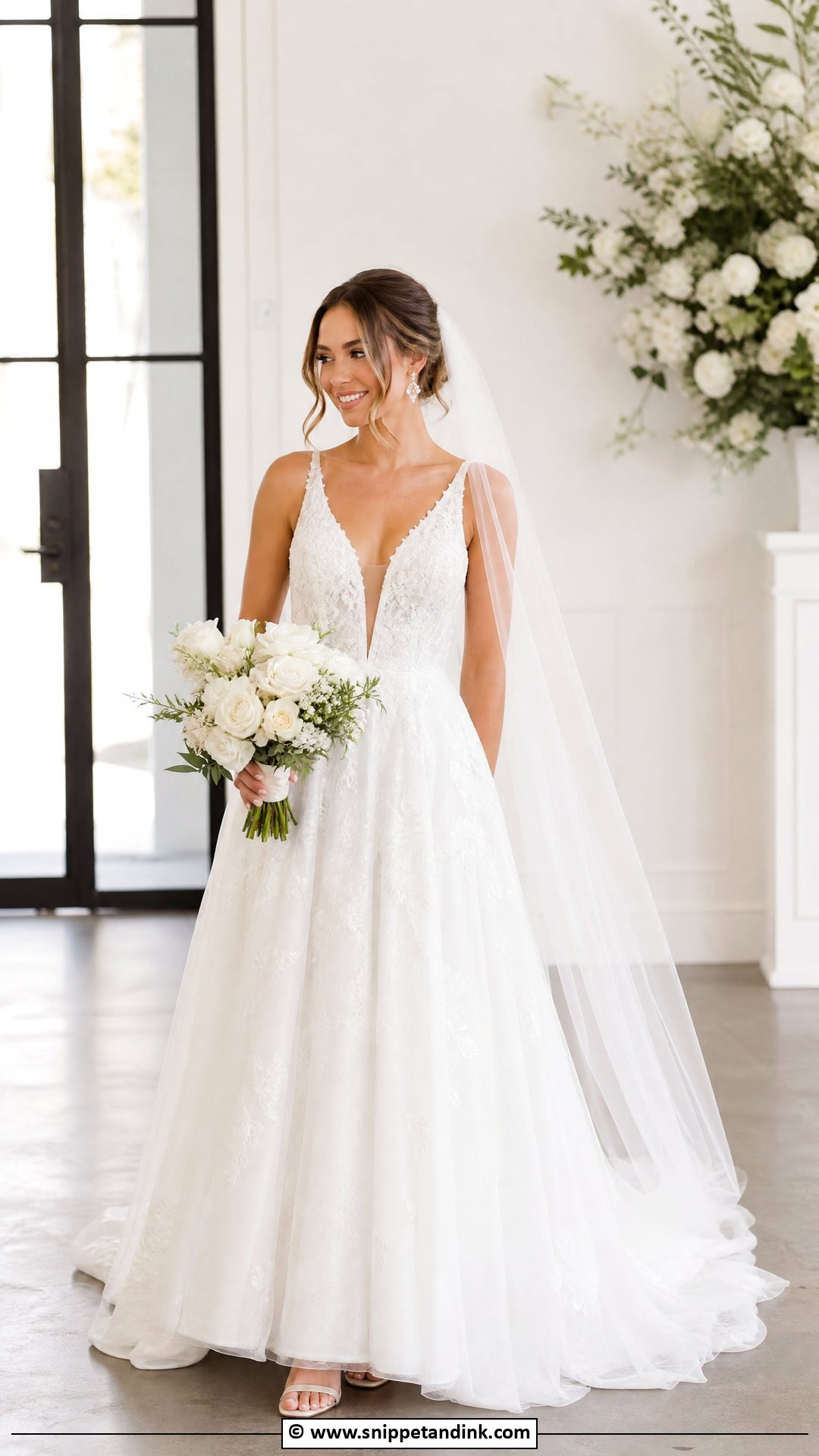
A plunge needs structure to stay elegant. Illusion mesh, supportive tailoring and a graceful skirt keep it refined. A-line, sheath and fit-and-flare all work. I always do a movement test with a plunge, bending and hugging, to make sure nothing shifts. Fashion tape is the backup, not the plan. Delicate earrings, soft waves and a veil keep it bridal.
30. Open Back Wedding Dress
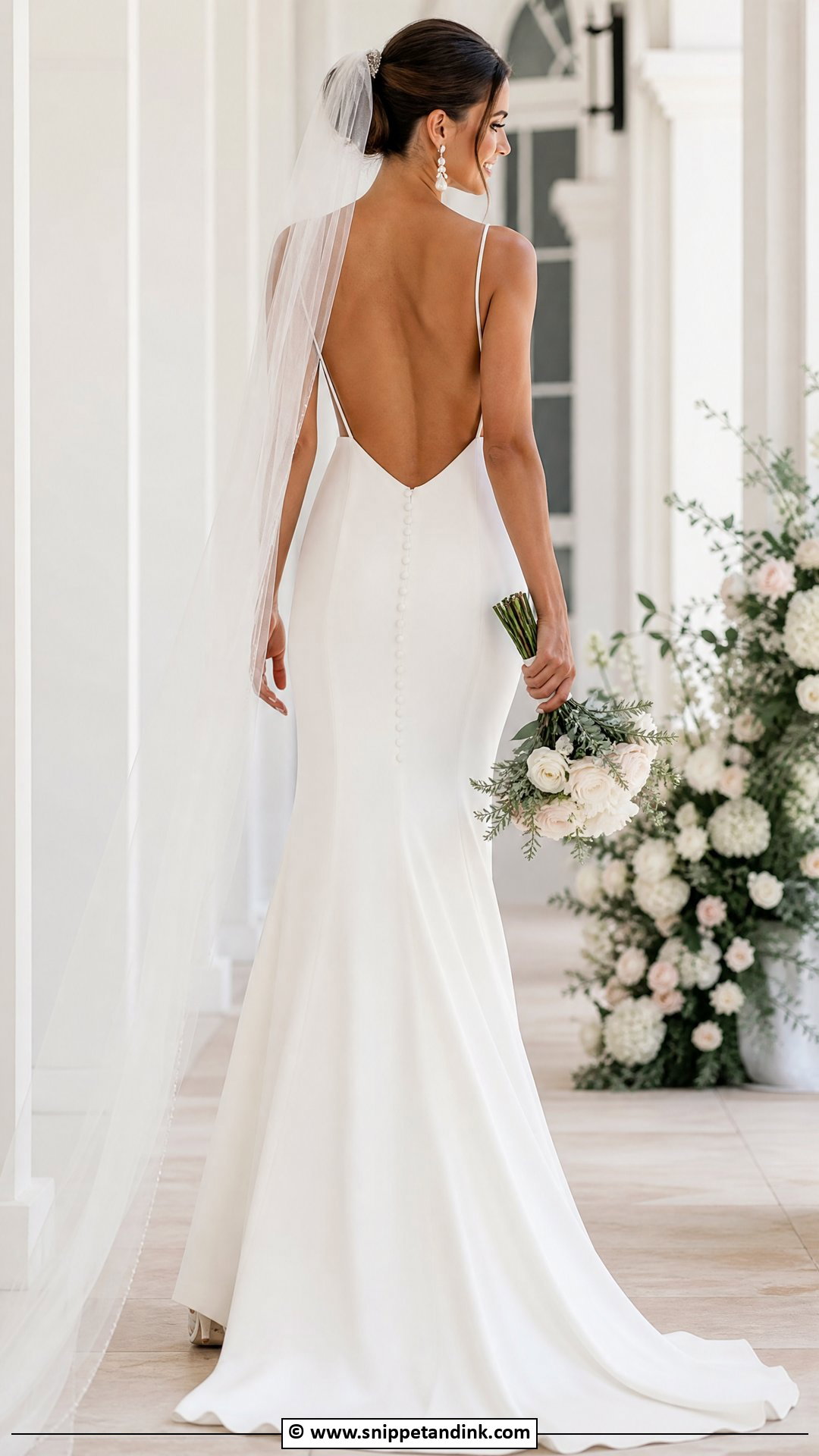
An open back puts the drama on the walk away, which is what most guests see during the vows. The front can stay simple. Lace, satin or crepe all work. Bra options are limited, so plan support with your seamstress early, often with cups sewn in. An updo or side-swept waves keep the back visible, and a sheer veil lets the detail show through.
31. Bow Back Wedding Dress
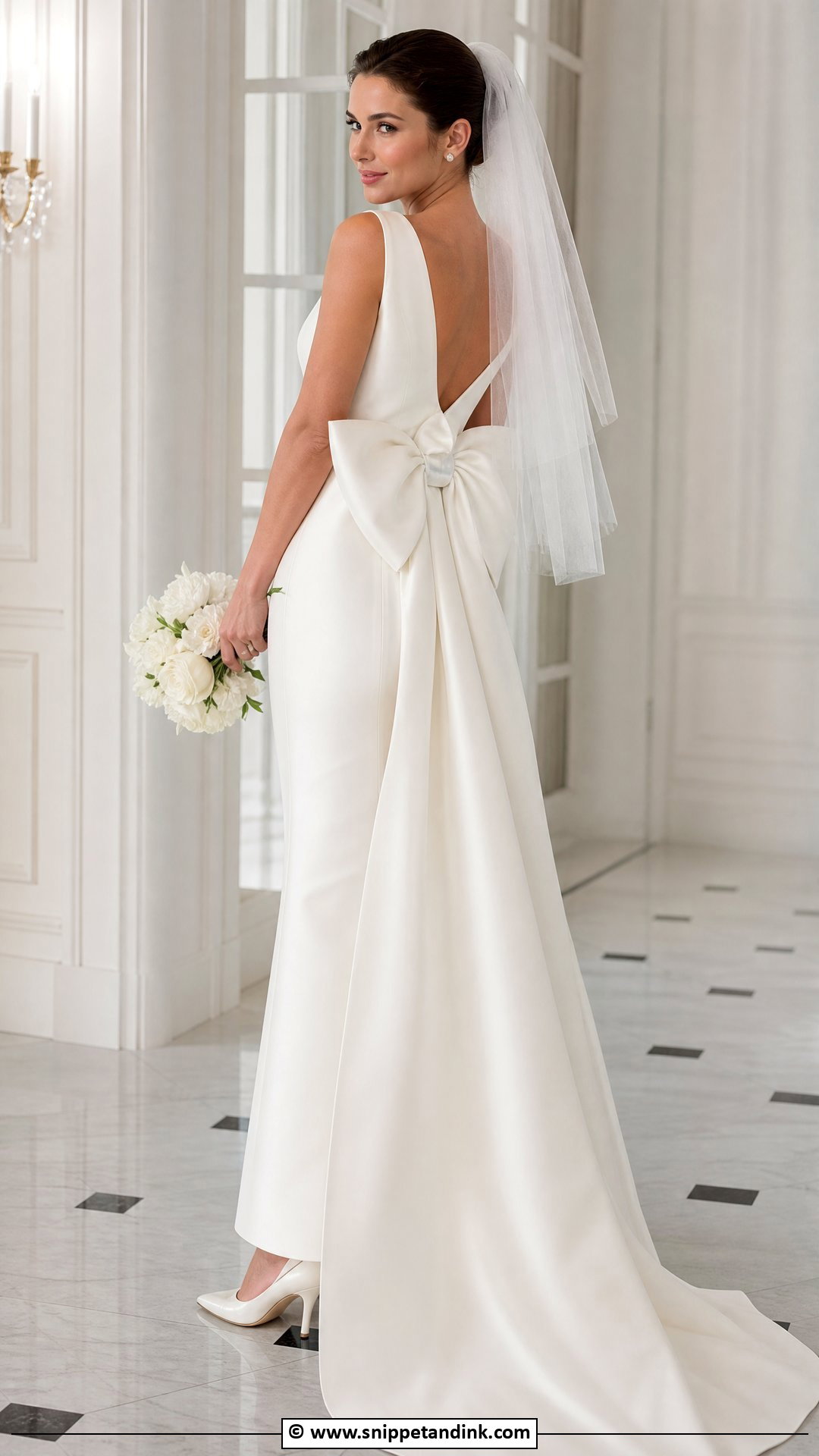
A bow at the back gives a single sweet focal point. Large bows are dramatic; small ones neat. Satin, mikado and organza hold the shape. Position the veil above the bow so it doesn’t flatten it. Big bows crush when you sit at dinner, so I’d ask whether yours can be removed or steamed back into shape. Keep the bouquet clean.
32. Ruffle Wedding Dress
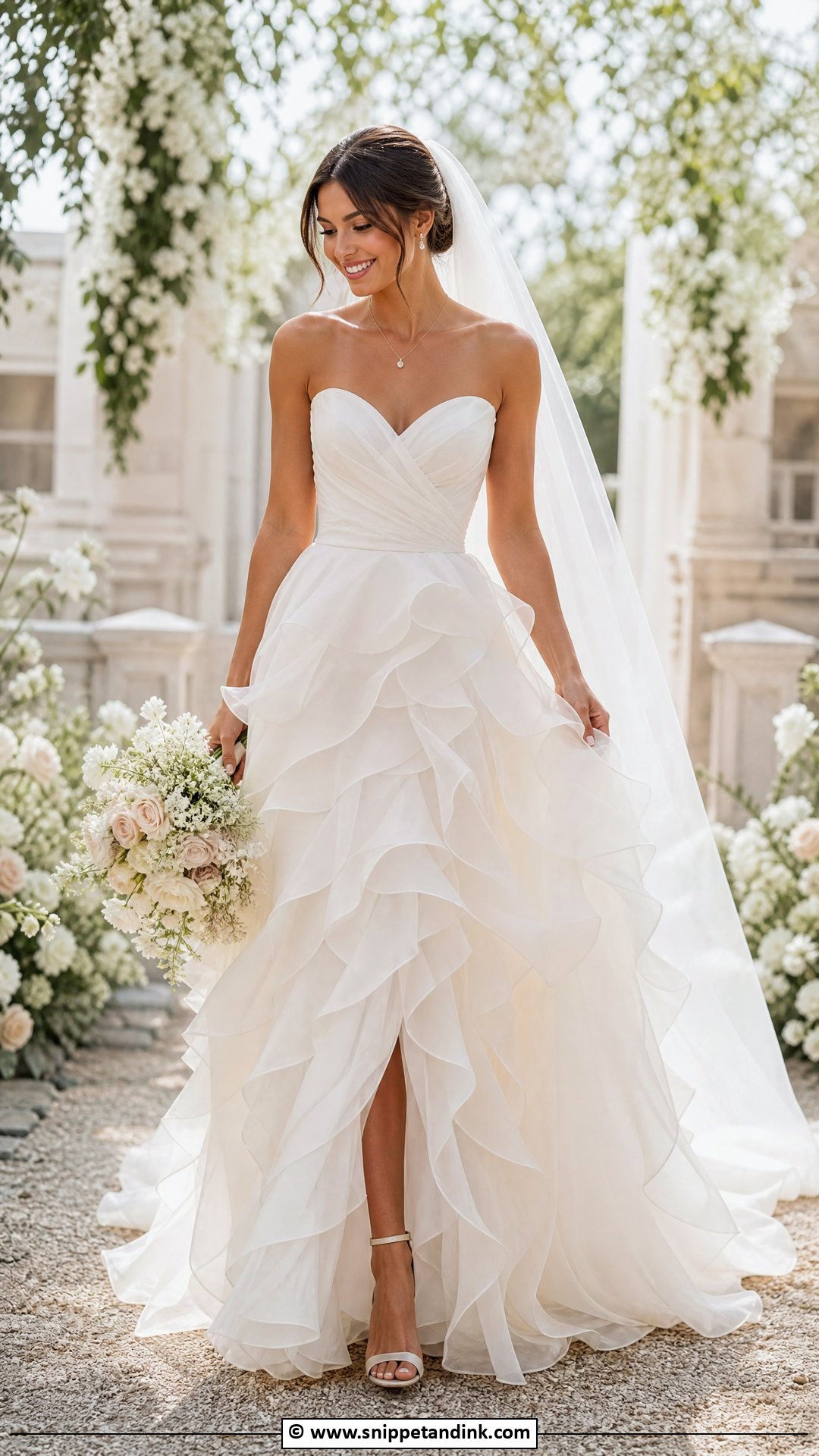
A ruffle wedding dress adds movement and texture. Cascading ruffles look soft; structured ones are more fashion-led. Lightweight organza, tulle or chiffon keeps ruffles from becoming bulky. Since ruffles add volume, I keep the hair and jewelry simple. Scale matters: large ruffles can overwhelm a petite frame, so choose a size that suits your height.
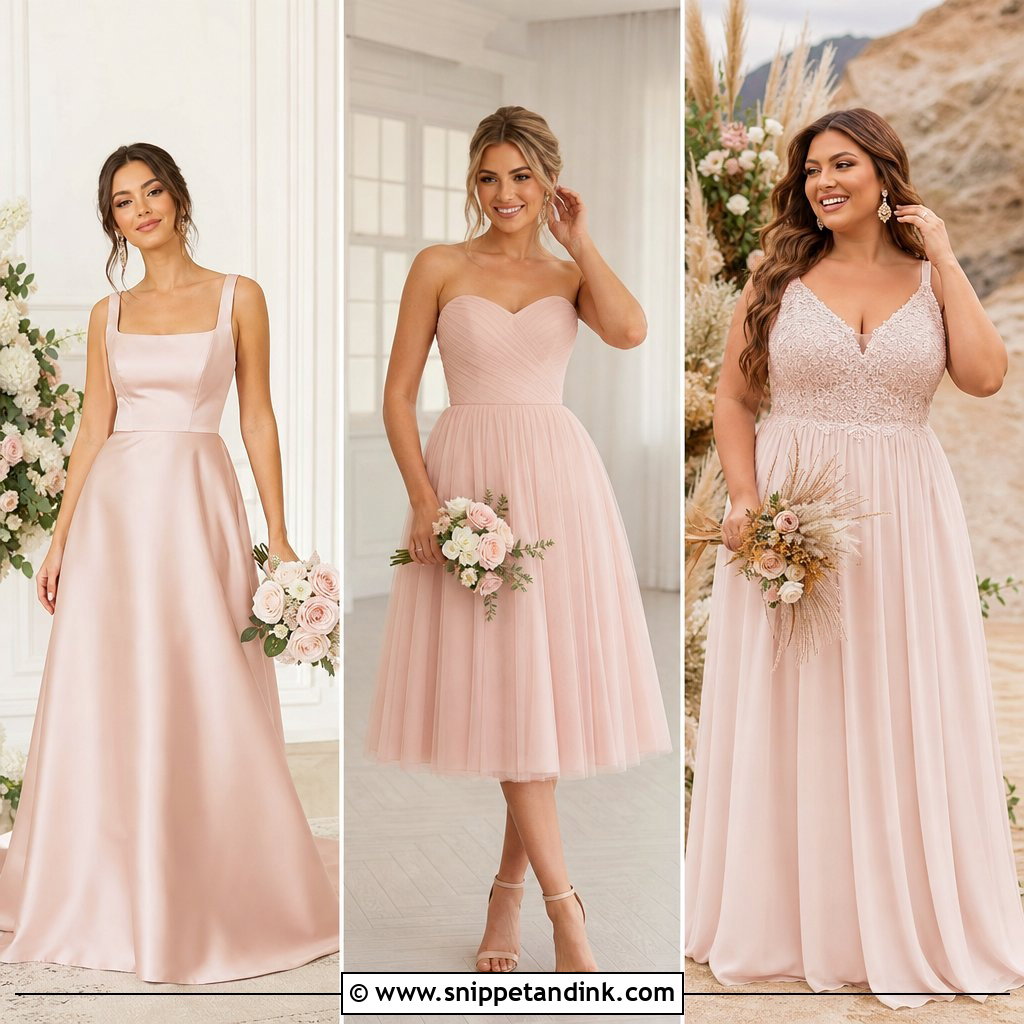
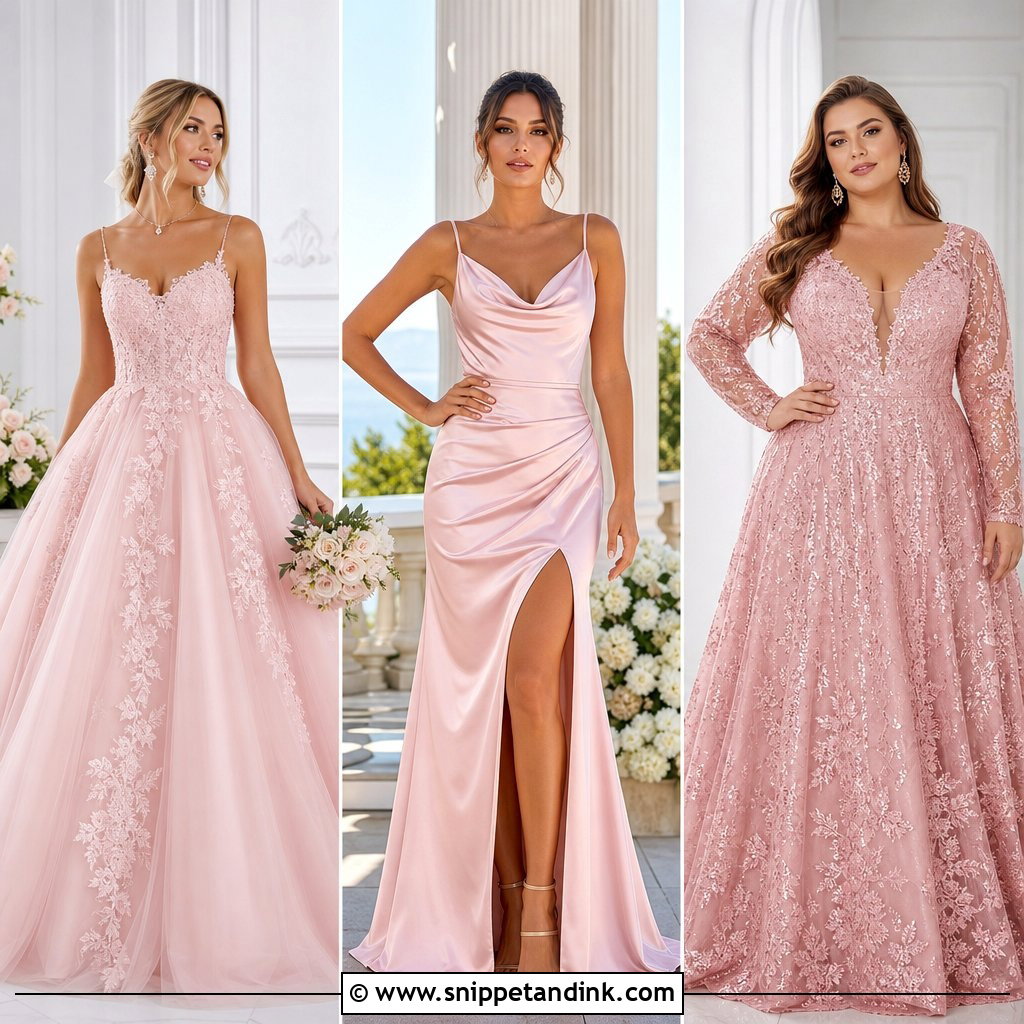
33. Blush Wedding Dress
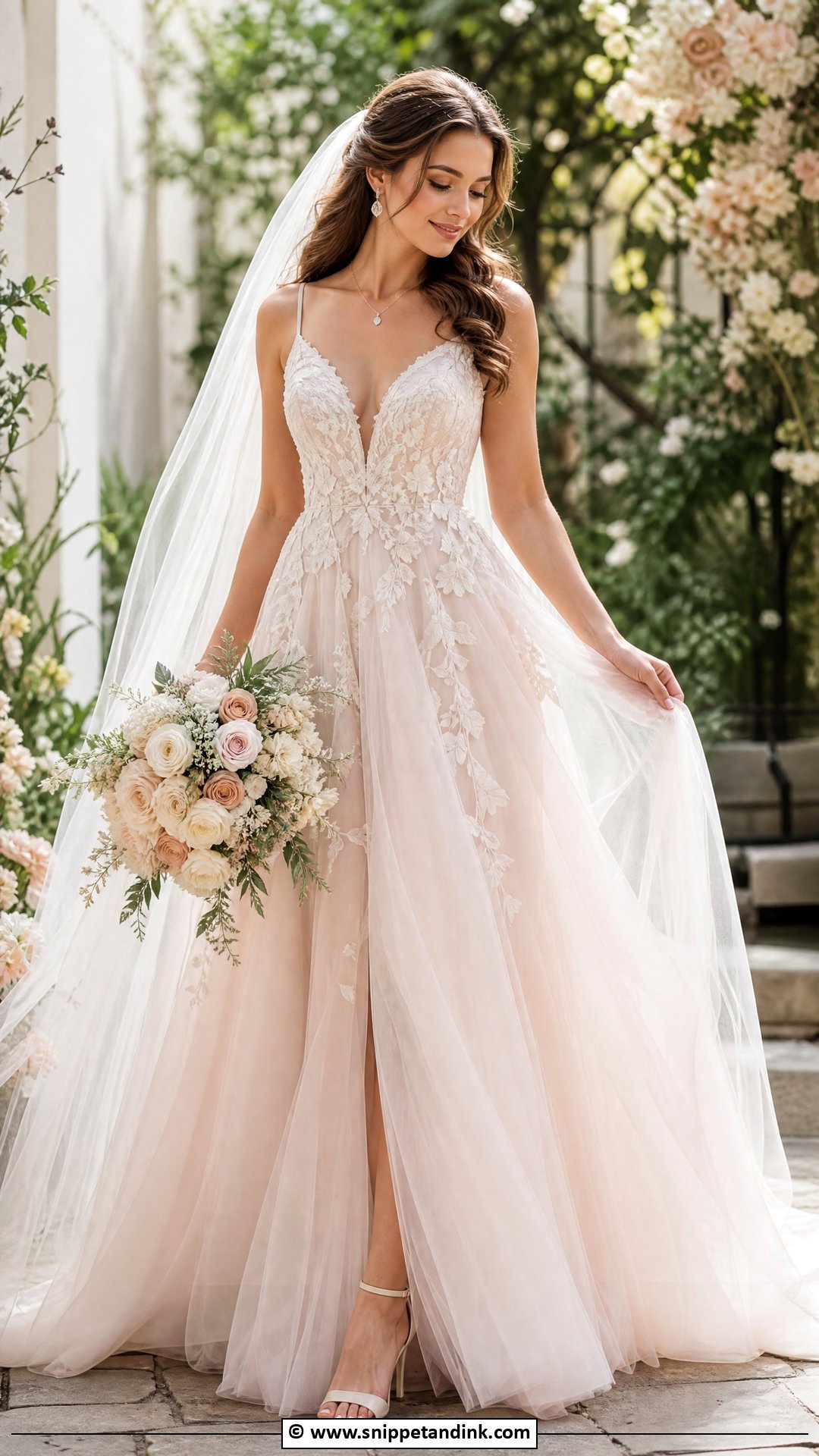
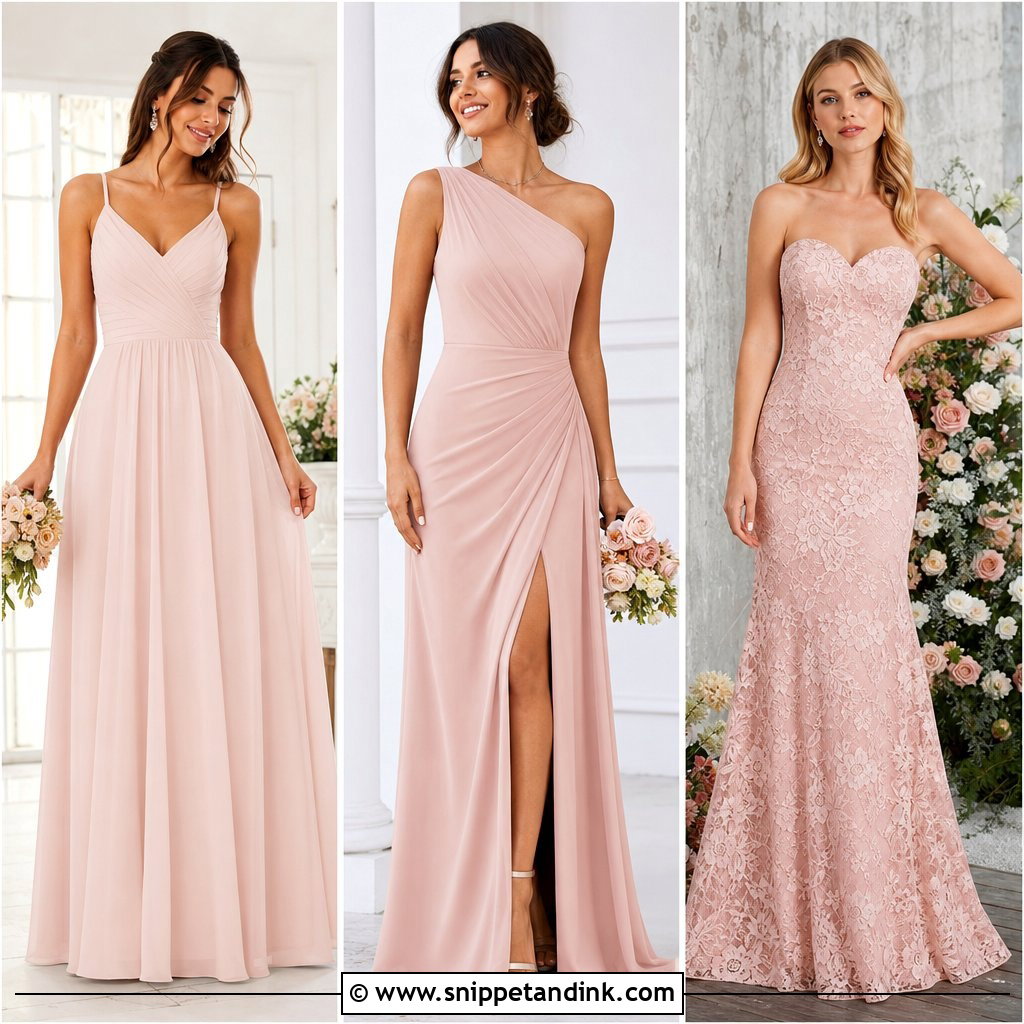
Blush adds soft color while staying bridal. Pale pink, champagne blush and nude undertones flatter many skin tones. It works in tulle, lace, satin and appliqué. Some blush linings disappear in bright sunlight and look white, so view the dress outdoors if you can. Ivory heels and rose-gold jewelry suit it, and a cream and blush bouquet ties it together.
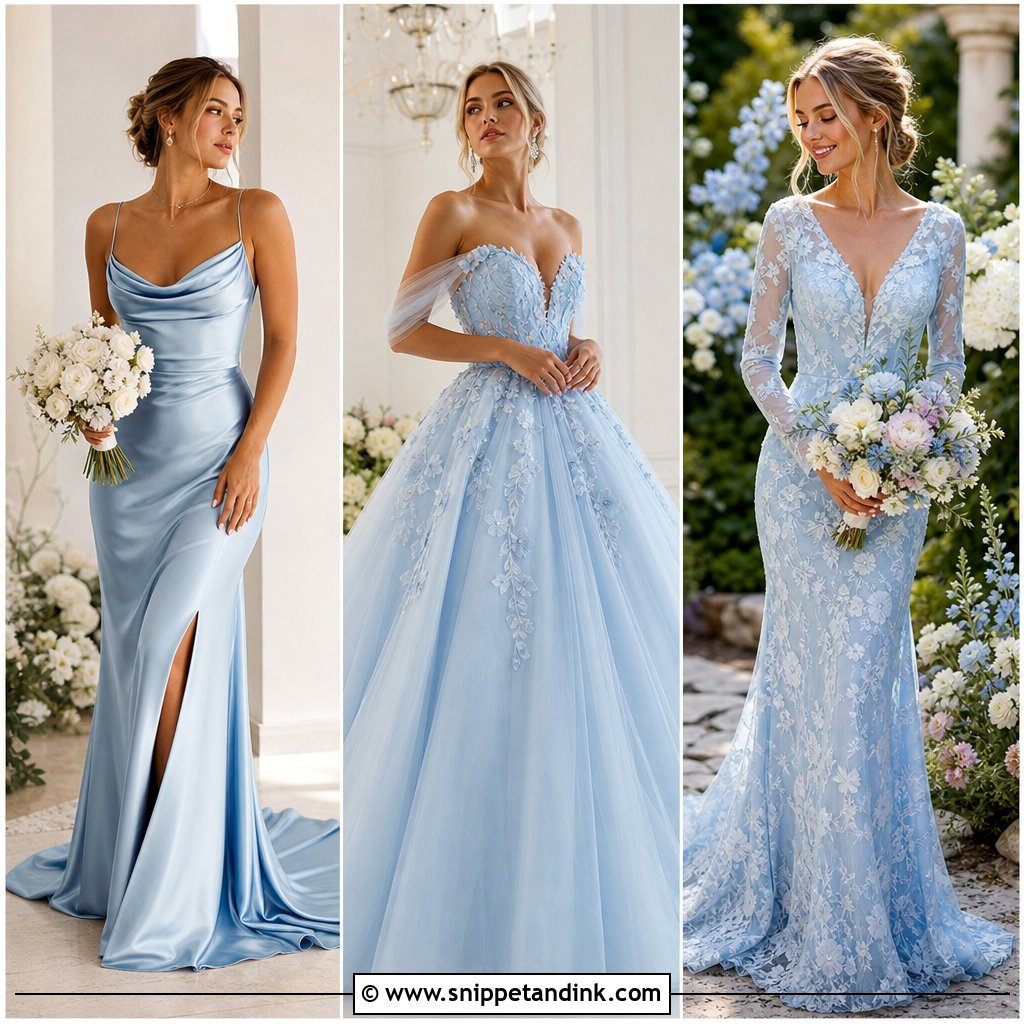
34. Blue Wedding Dress
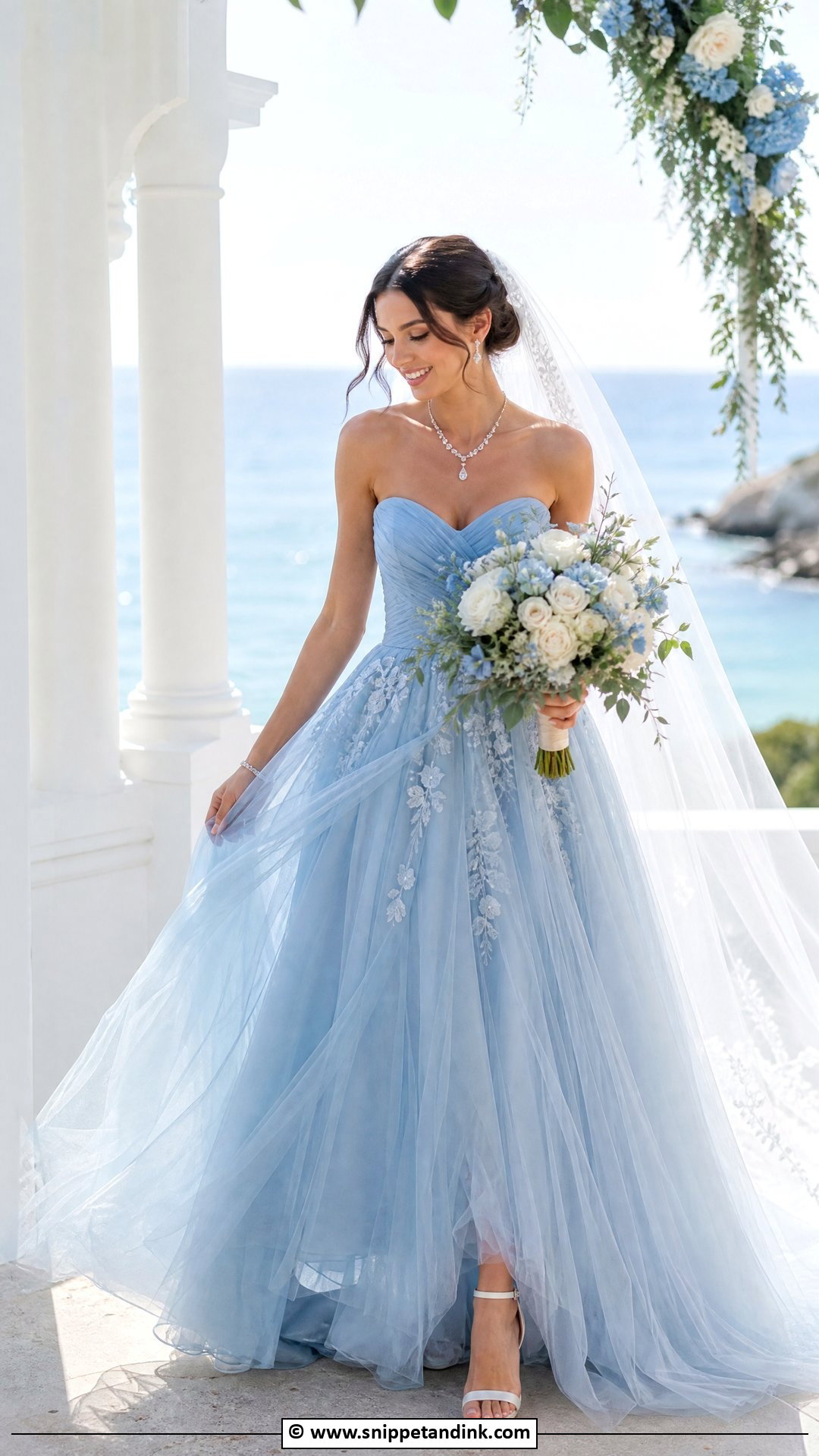
Pale blue is quietly unexpected. Powder blue tulle, blue-grey satin or icy organza all look elegant. Blue can turn grey under warm indoor light, so I always check it in the kind of light the venue will have. Silver or pearl jewelry and ivory heels suit it. A sheer veil gives traditional balance, and soft makeup keeps the color delicate.
35. Black And White Wedding Dress
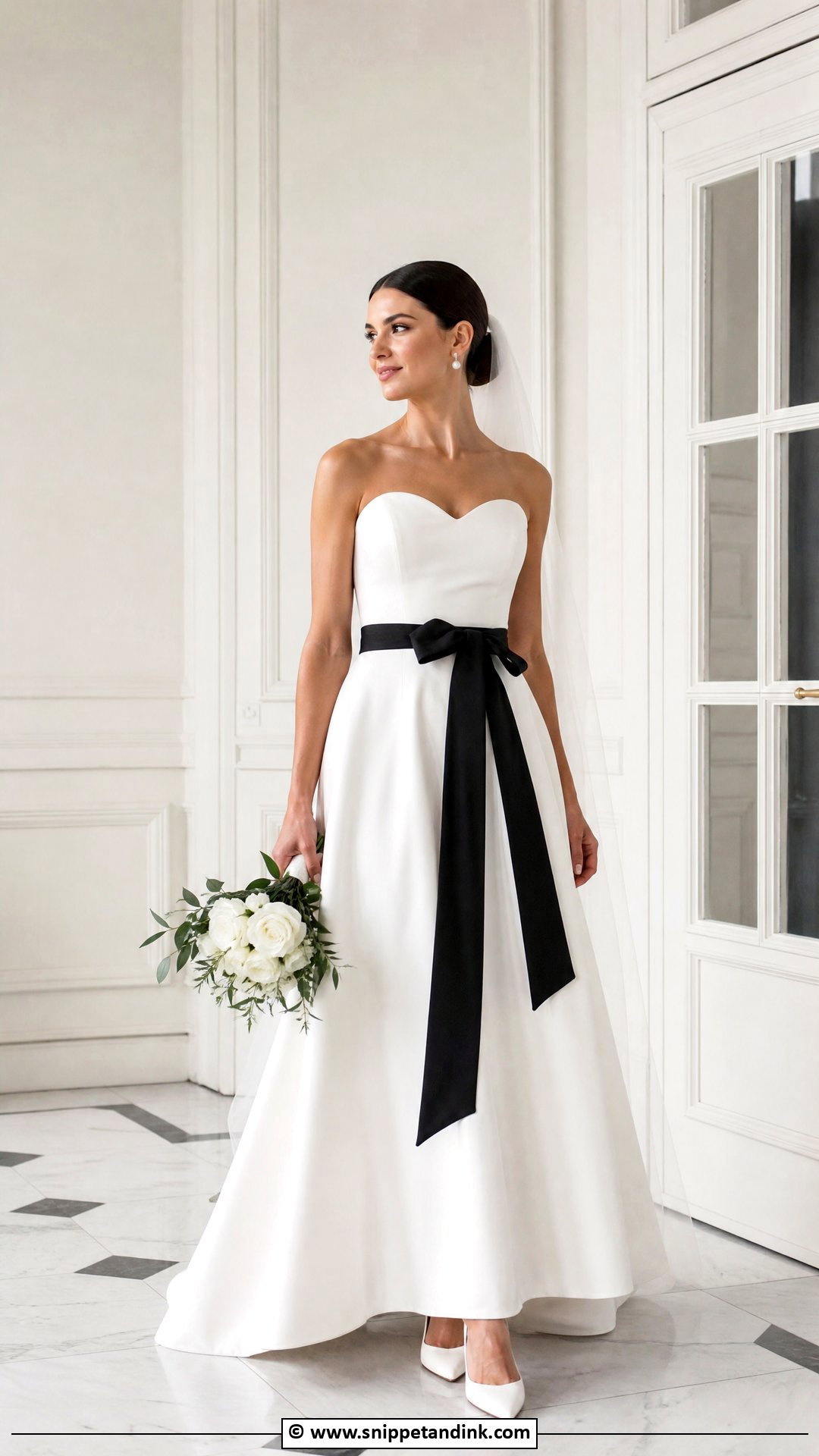
Black and white is bold. The contrast might come from a black bow, black gloves, black appliqué or black trim on a white gown. A refined silhouette keeps it chic rather than costume-like. Black details show every speck of lint and white dye can transfer onto them, so I’d keep a lint roller handy. Pearl earrings and a plain veil soften the drama.
Matching Veil Length to the Skirt Under It
Almost every look above includes a veil, and the length changes the whole outfit. I choose it last, with the dress on, because the right veil depends on where the dress has its detail.
Short: blusher, birdcage and elbow
These suit minis, tea length and suits, and they don’t hide an open back or a back bow. They’re also the easiest to wear all day.
Middle: fingertip and waltz
A fingertip veil ends near where an A-line or a trumpet begins to flare, which keeps the line tidy. Waltz length, around the calf, suits dancing without a train to manage.
Long: chapel and cathedral
These match ball gowns and long trains, and look dramatic in an aisle. They’re heavy on the comb, so I anchor them firmly and usually remove them before dinner. Outdoors, a long veil needs someone to straighten it for photos.
One rule I keep: a heavily detailed dress gets a plain veil, and a plain dress can carry a veil with lace or pearl edging.
Try On the Shape You’d Never Pick
Bridal style can be classic, modern, romantic, simple or dramatic, and the right gown is the one that works on you, not just on a hanger. It should feel comfortable, suit your venue and let you move the way you want through the day. Try silhouettes you don’t expect to love; it’s common for a bride to buy the one she nearly refused to put on. Pay attention to fabric, neckline, support and alterations. Satin, lace, tulle, crepe, color or tailoring, the dress should feel like you on your most confident day.
You'll Like These Ideas:








Leave a Reply