
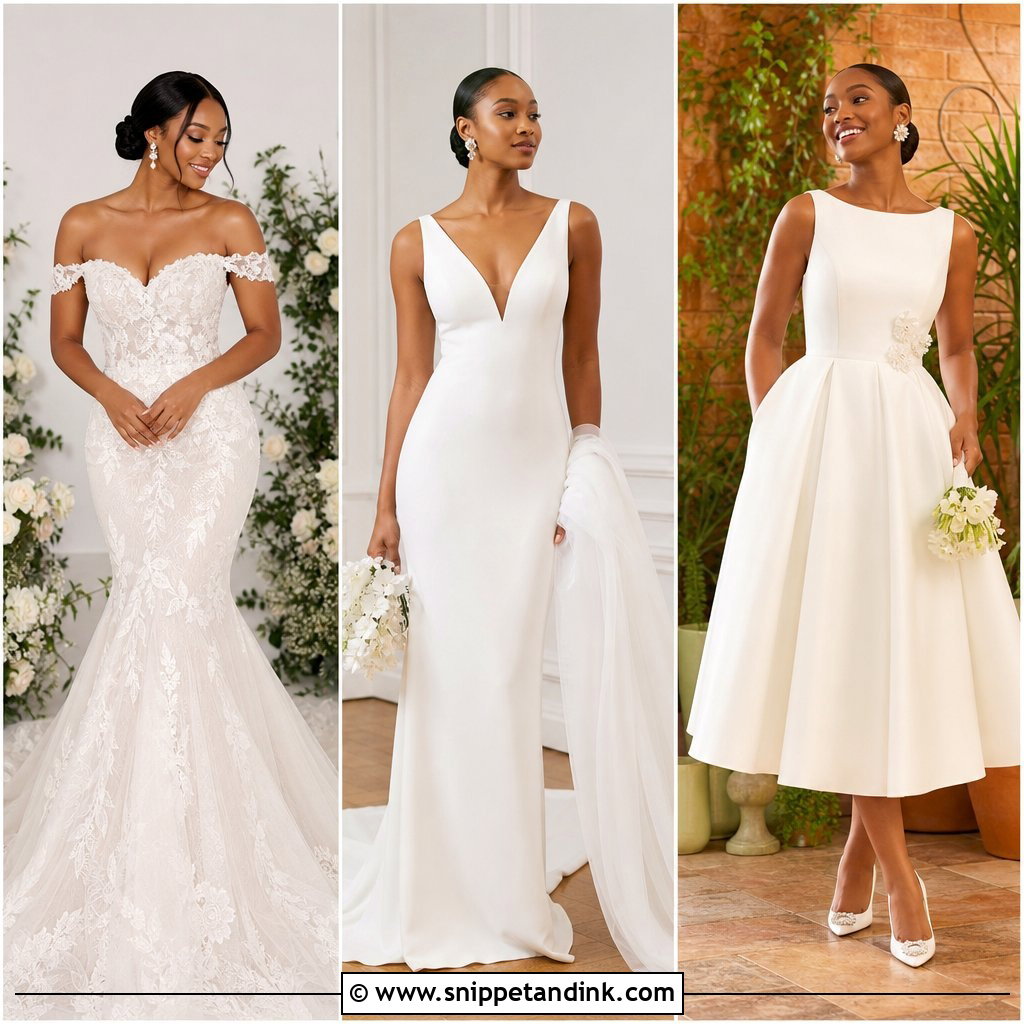
Every silhouette, fabric and neckline changes how a bride looks and moves, which is why the first few appointments can feel like too much. The gown that works isn’t the most fashionable one in the shop. It’s the one that suits the venue, the season, the formality of the day and the way you actually like to feel in clothes. Right now the range is wide: full ball gowns and sculpted waists sit beside delicate lace, three-dimensional flowers, bows, tea lengths and short dresses. I’ve styled each of the twenty gowns below as a complete look, from shoes and veil to jewelry and bouquet, with notes on fit and the trade-offs I’d talk through at a fitting.
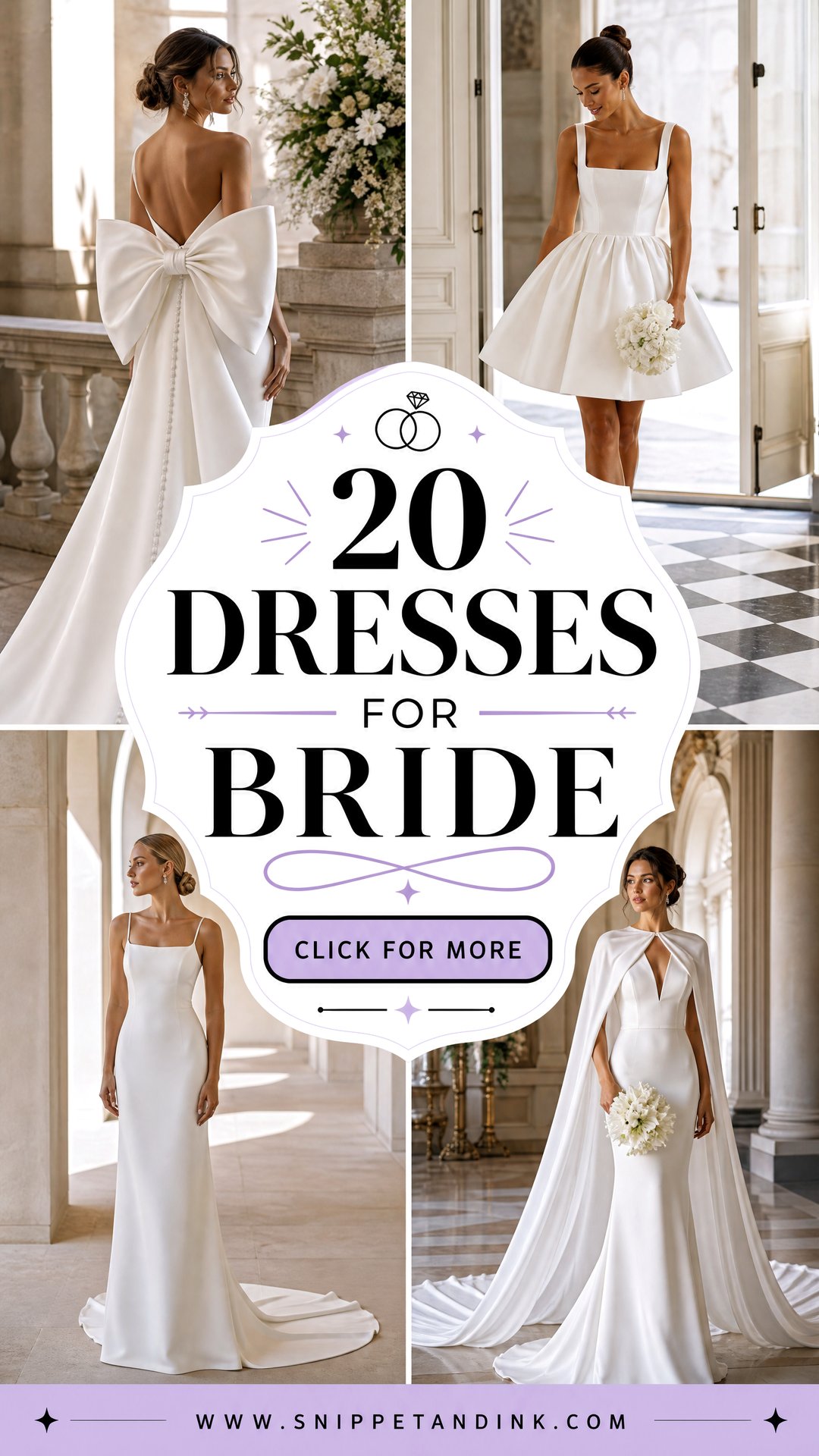
How Many Months a Wedding Gown Really Needs
Brides often fall in love with a gown before they realize most bridal salons order it to their measurements, and that takes time. Timelines vary between designers and shops, so always ask, but this is the rough rhythm I plan around.
- Start trying on gowns roughly nine to twelve months before the wedding. That leaves room to change your mind once.
- Order the gown. Made-to-order production commonly takes four to six months, sometimes longer for heavily embellished designs or overseas makers.
- First alteration fitting about two to three months before the date, once the gown has arrived.
- Second fitting a few weeks later, with the exact shoes and underwear you’ll wear on the day.
- Final fitting and collection one to two weeks before, when a seamstress can also show whoever is helping you how the bustle works.
Short on time? Sample gowns, off-the-rack collections and simpler dresses like slips, minis and tea lengths can work on a few weeks’ notice. Heavy beadwork, hand-sewn flowers and complex corsetry are where rushing gets expensive or impossible.
1. Classic Ball Gown Wedding Dress
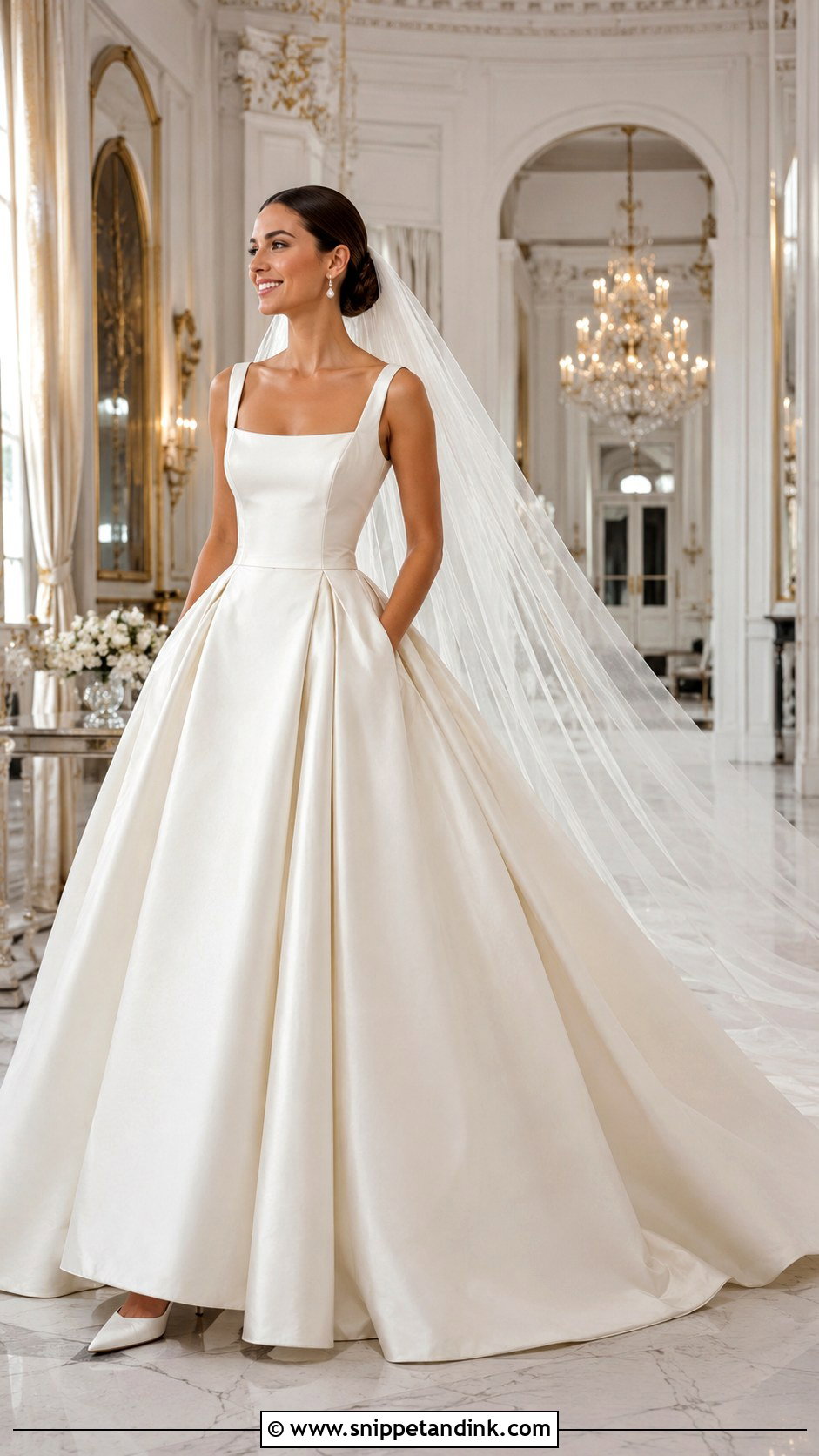
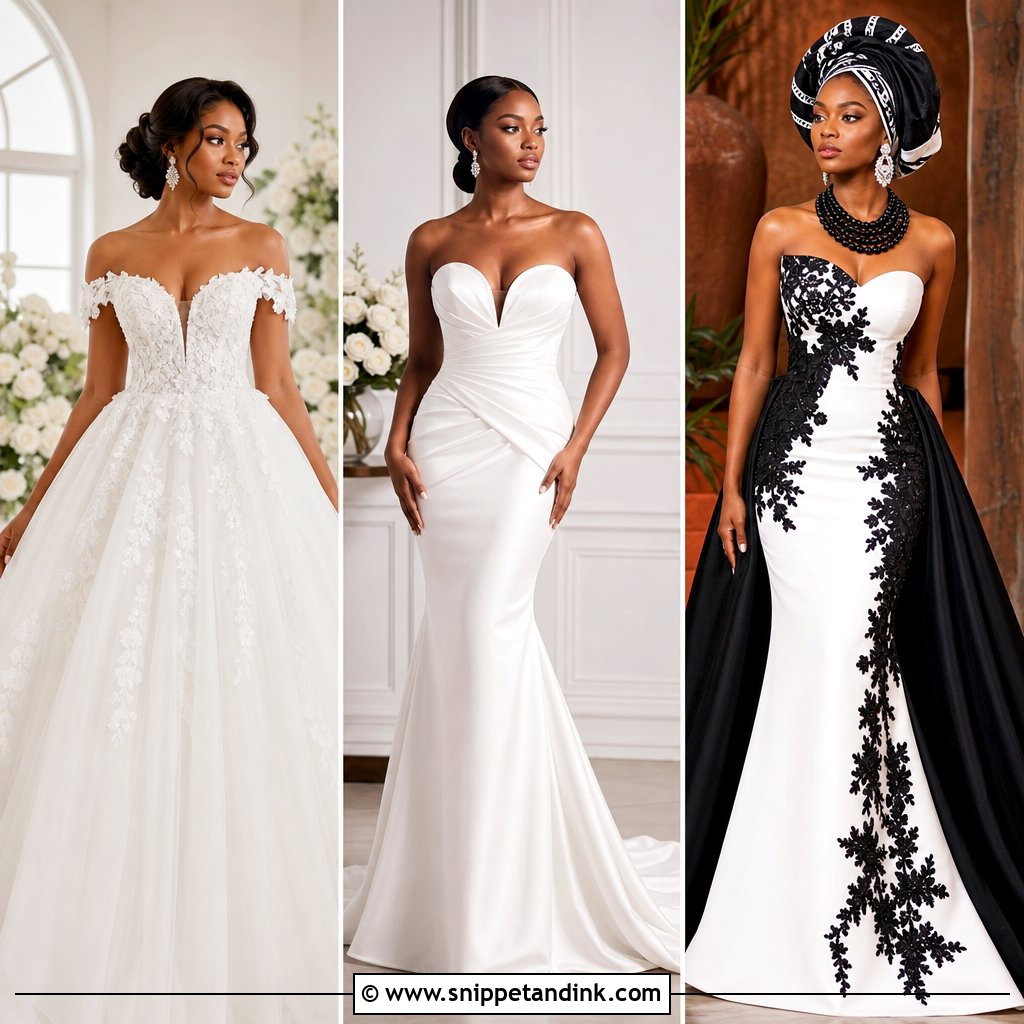
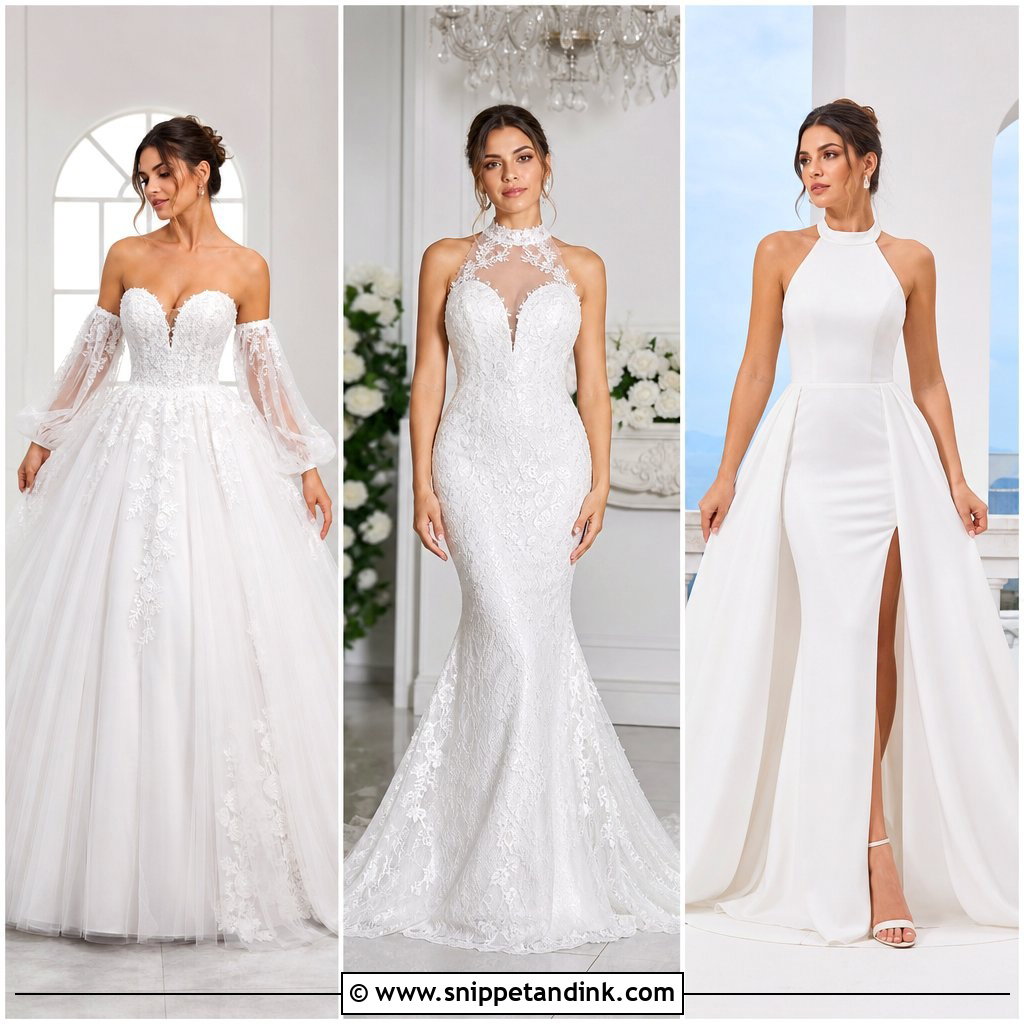
A ball gown does the work for you, so the styling can stay simple. Choose a fitted bodice with a clean neckline over a full skirt in satin, mikado or layered organza; structured fabrics hold the shape crisply, soft tulle floats. The thing I check first is the weight. A heavy mikado skirt can pull on the bodice over a long day, so the internal corset needs to carry it rather than your shoulders. Pointed pumps, pearl drops and a cathedral veil that matches the skirt’s scale. A low bun shows the neckline. Petite brides suit a slightly smaller skirt, and a compact bouquet keeps the proportions right. Formal indoor venues.
2. Lace A-Line Wedding Dress
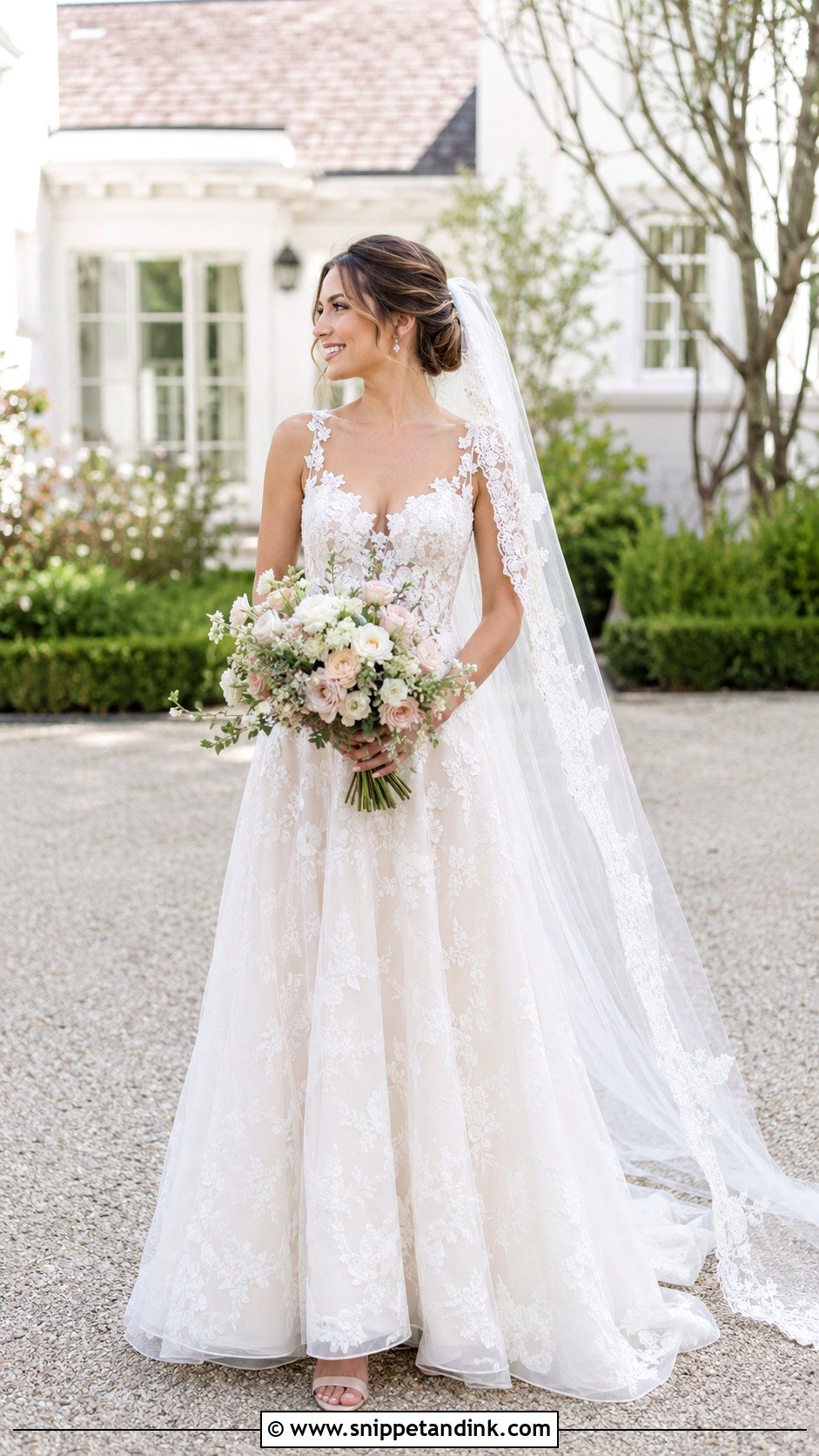
Lace on an A-line is the gown I’d suggest when a bride can’t decide what suits her, because the skirt falls away from the waist and flatters most shapes. Floral lace looks relaxed and garden-like; fine Chantilly lace is lighter and more delicate, but it snags easily on bracelet clasps and bouquet wire. Ivory block-heel sandals or pointed pumps depending on the floor. A fingertip veil with a narrow lace edge carries the detail without matching it exactly. Pearl studs, a slim bracelet, a loose low bun and a bouquet of white and pale green garden flowers. Gardens, estates or a ballroom.
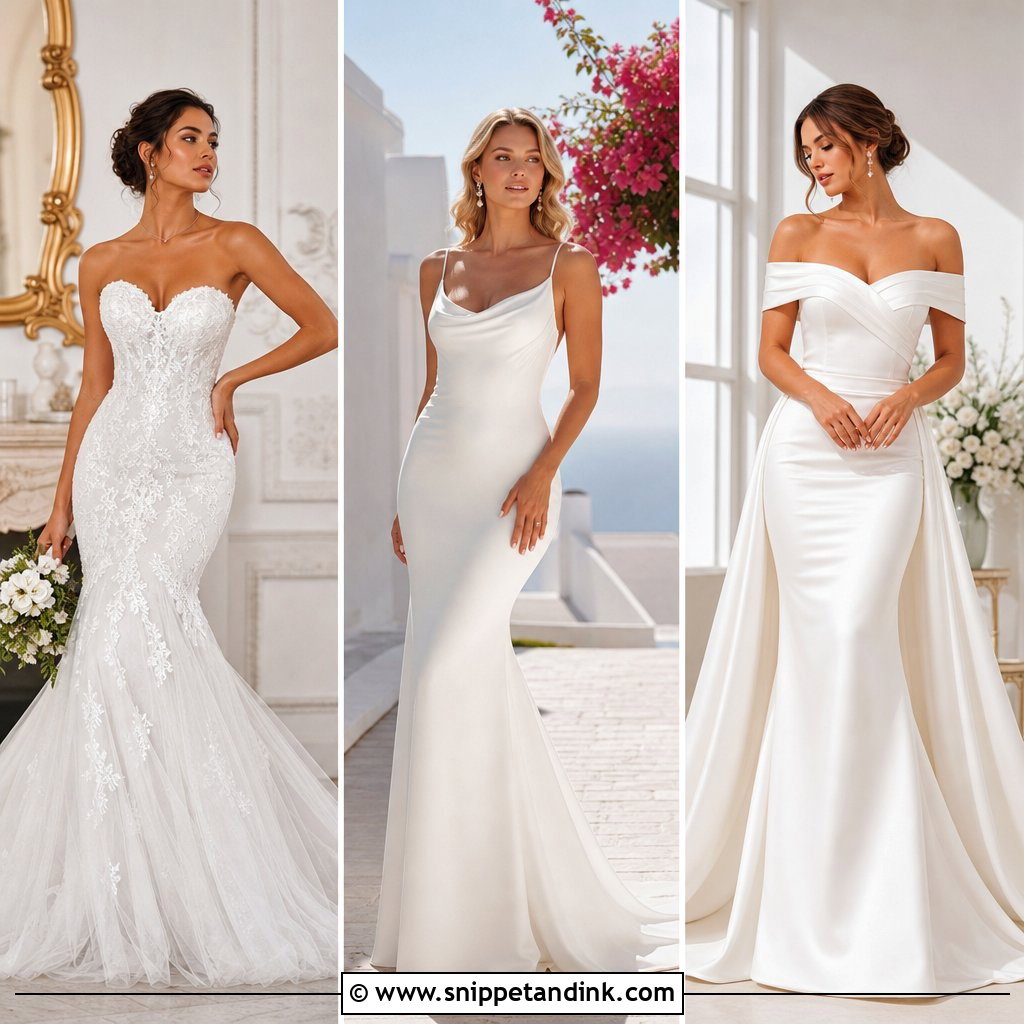
3. Satin Slip Wedding Dress
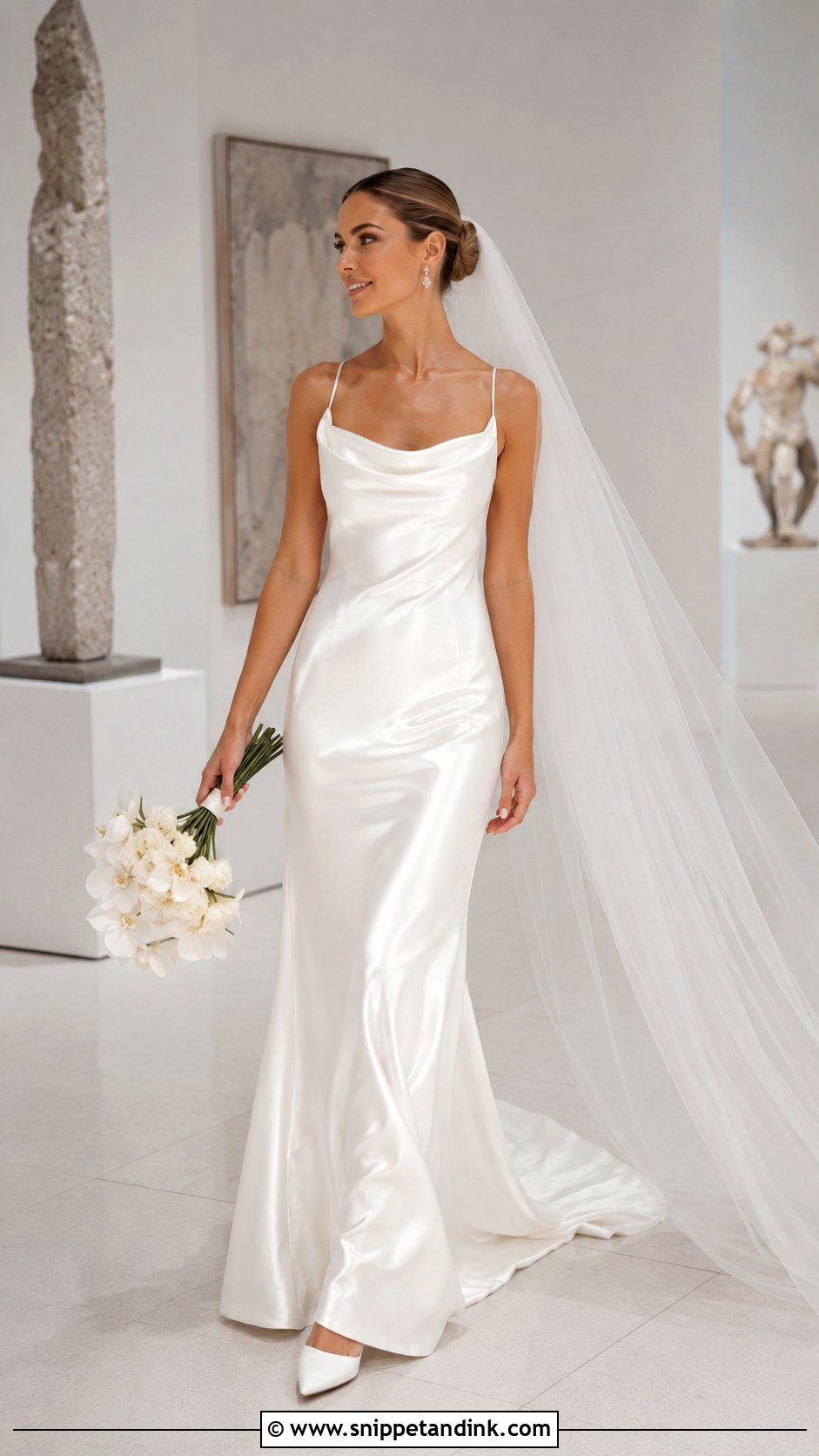
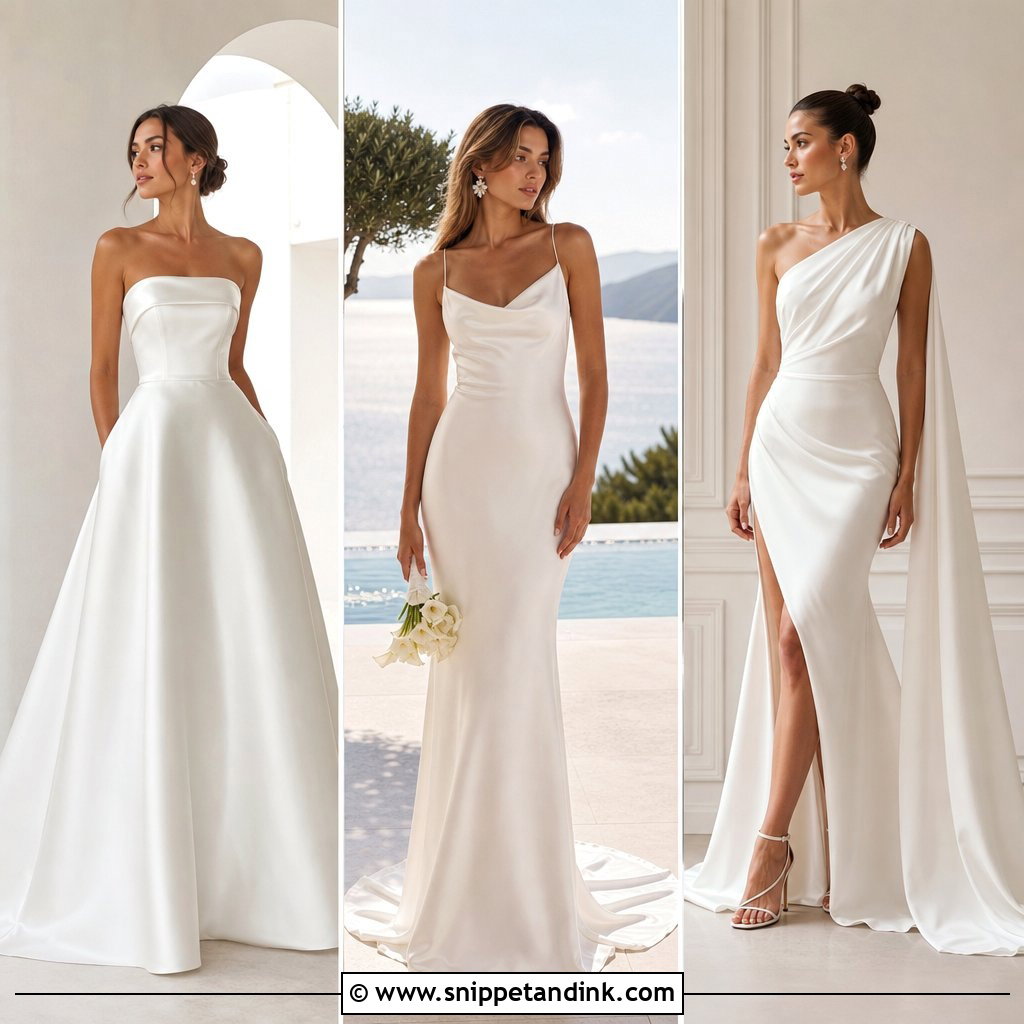
A satin slip has nowhere to hide. With so little structure, the fit is everything, and a bias cut that’s slightly too tight clings and shows every seam underneath. I always budget for alterations on this dress, and for proper smooth underwear tried on at the fitting. A cowl, square or draped neckline, then sleek white pumps, a structured mini bag and fine diamond or crystal earrings. A long plain veil adds drama without breaking the line. Hair in a polished bun or tucked waves, and calla lilies or long-stemmed white flowers. City and modern venues.
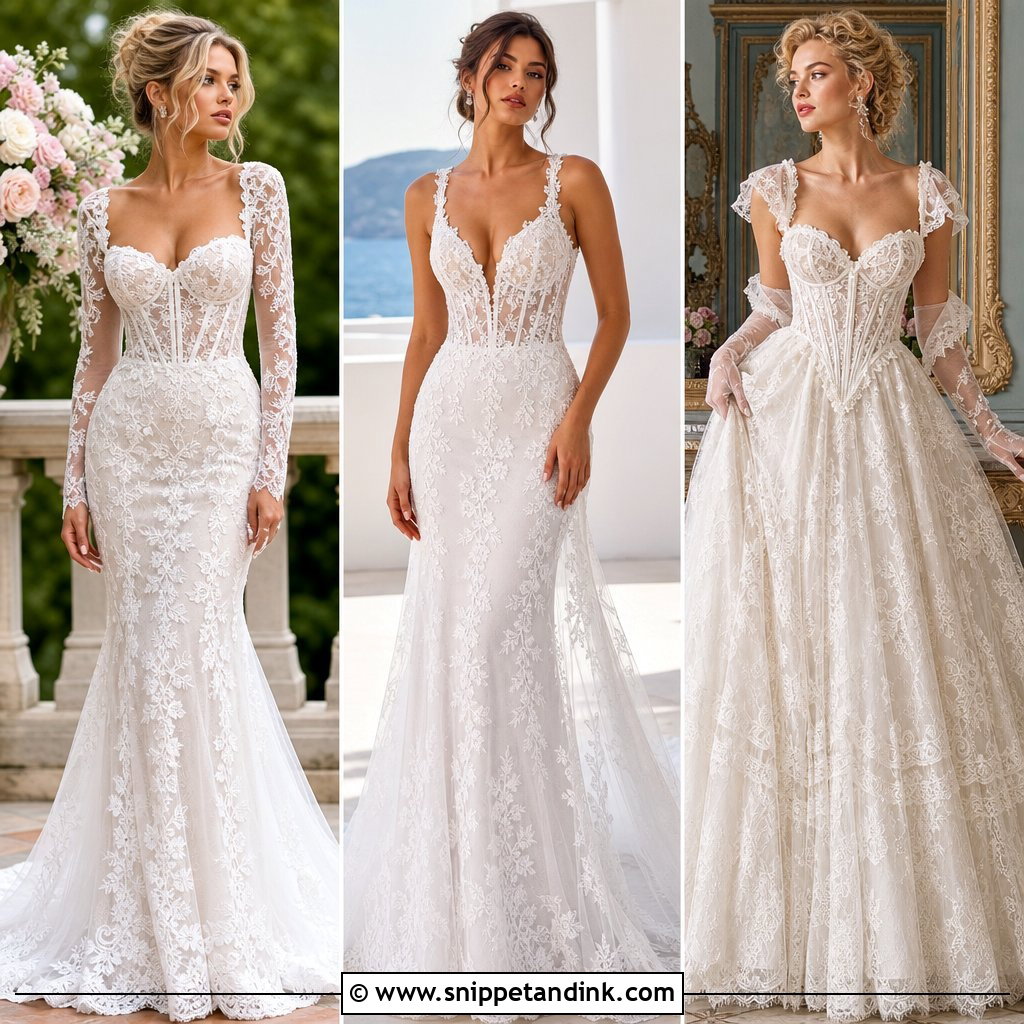
4. Long Sleeve Lace Wedding Dress
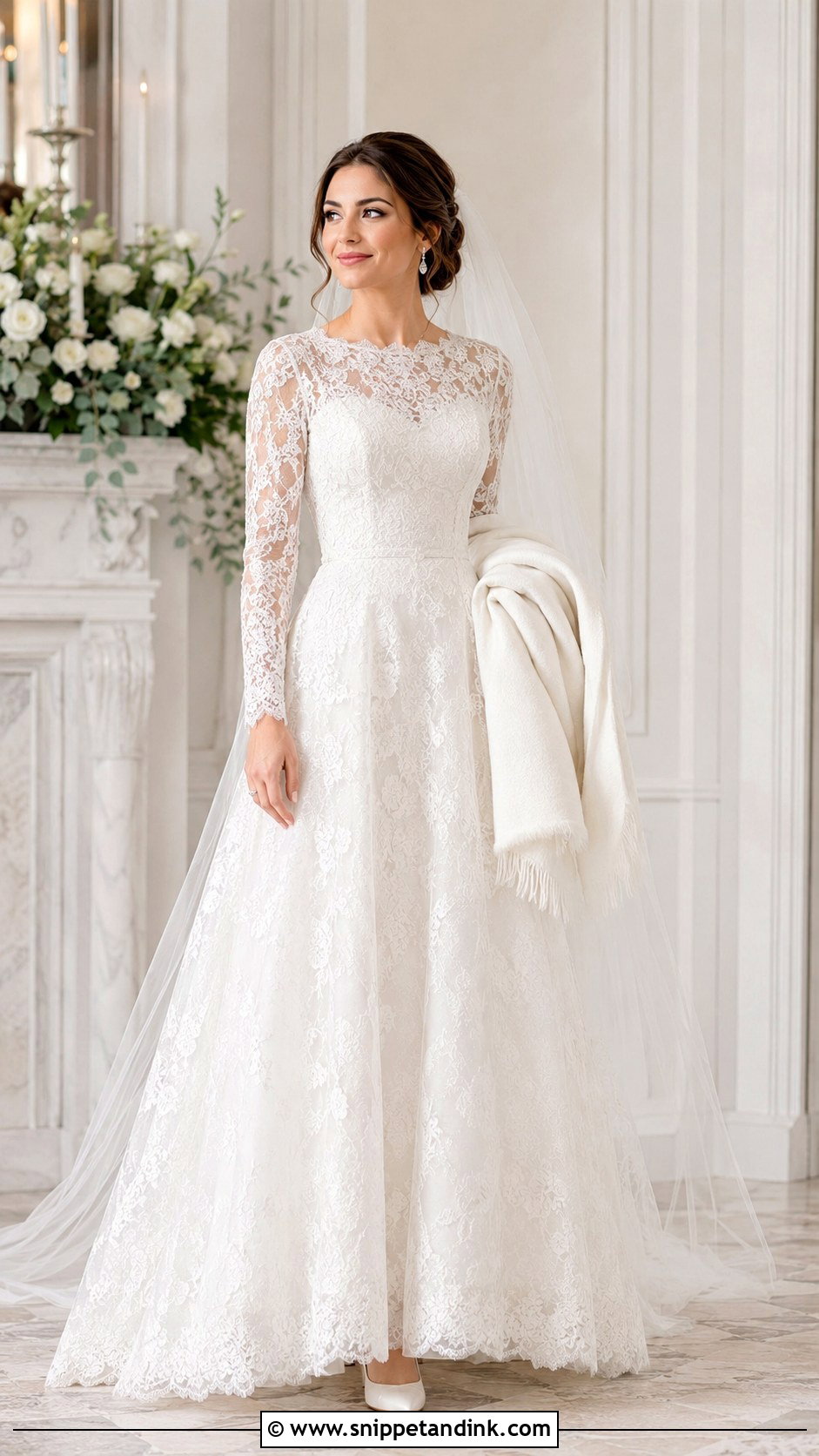
Long sleeves suit cool-weather weddings and ceremonies where shoulders should be covered. Fitted illusion sleeves look delicate; fully lined lace sleeves give real coverage. Have the sleeves fitted with your arms raised and bent: lace sleeves that look perfect hanging can pull at the armhole when you hug people or hold a bouquet. A defined waist and a flowing skirt keep the extra fabric from feeling heavy. Closed satin pumps, small drop earrings, a chapel veil that leaves the sleeves visible and a neat chignon. Add a plain ivory wrap or bridal coat for outdoor portraits, and a bouquet in white, cream and muted green.
5. Strapless Corset Wedding Dress
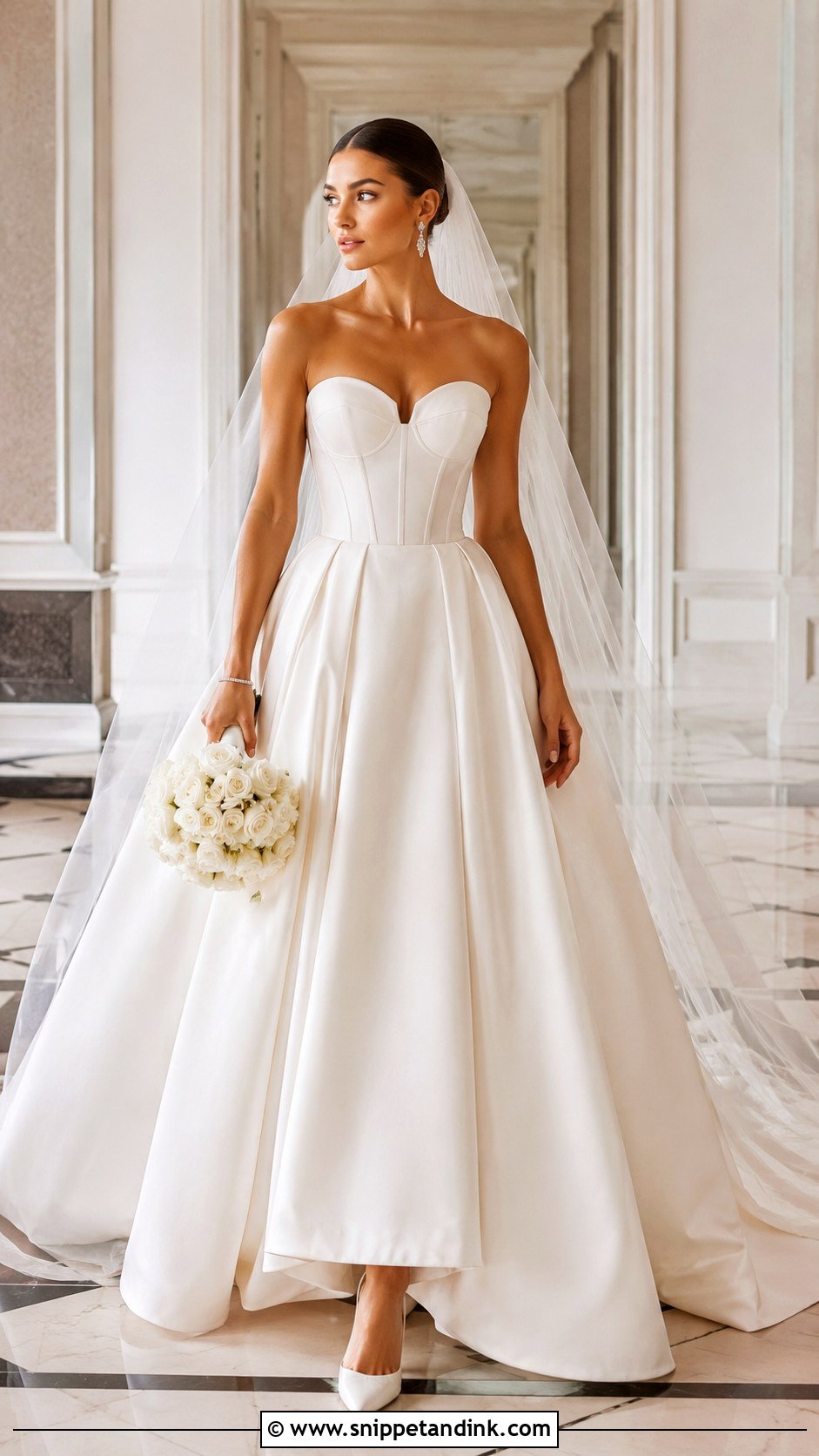
The fitting test for a strapless corset is simple: raise both arms, sit down, and hug someone. If the bodice slips or you pull it up afterwards, it isn’t fitted tightly enough at the ribcage. Done right, it supports the bust and waist all day. A straight, sweetheart or gently curved neckline changes the mood a lot, so try all three. Sheer cathedral veil, crystal earrings and a tennis bracelet; no heavy necklace over boning or embroidery. Pointed pumps indoors, metallic block heels outside. Hair up shows the neckline; brushed-out waves soften it. A white rose bouquet.
6. Off Shoulder Wedding Dress
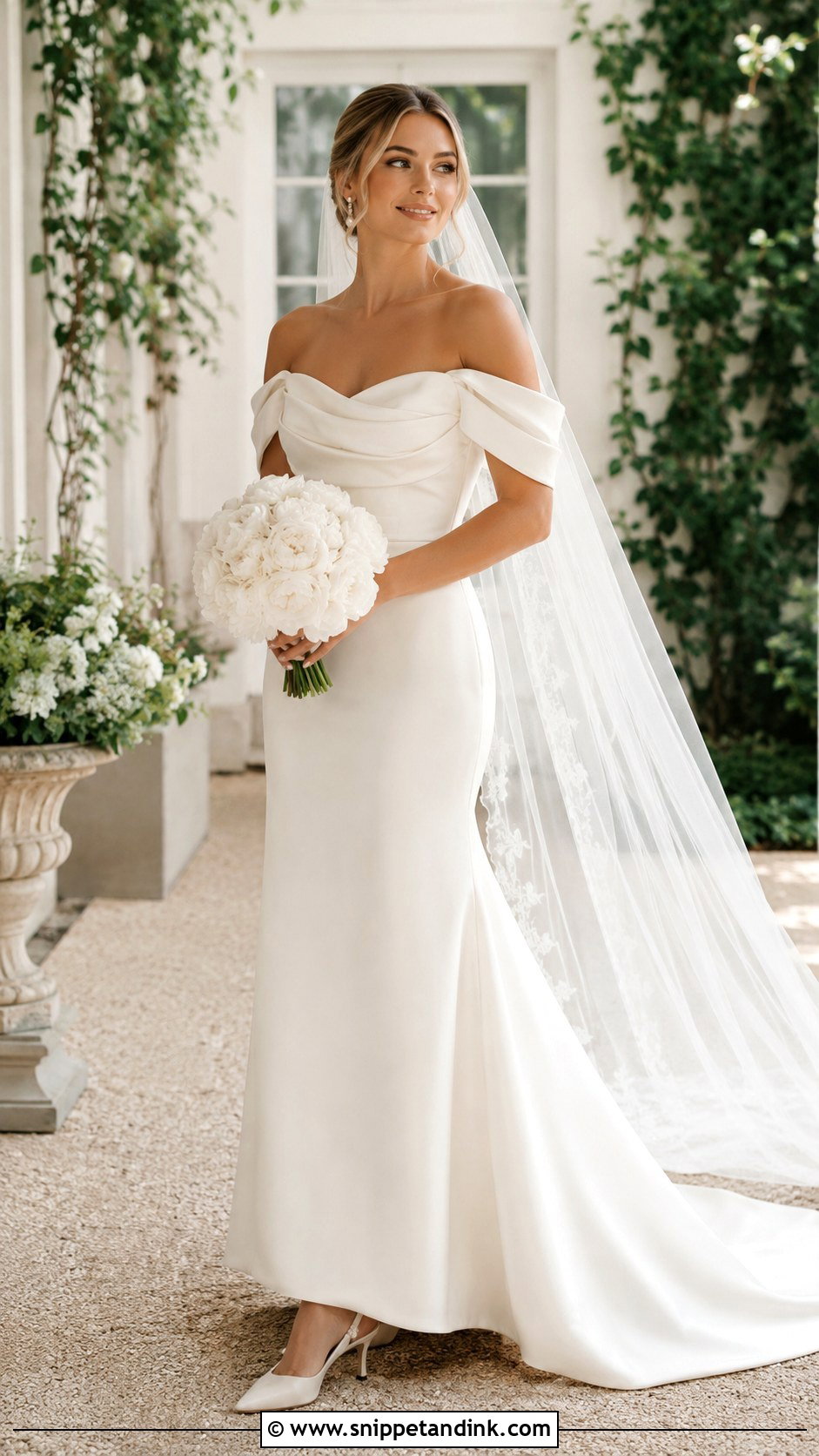
Off-shoulder gowns need internal support, a boned bodice or a stay tape at the neckline, or the sleeves creep up as you walk and dance. Draped satin sleeves look modern; lace or tulle sleeves look romantic. I skip the necklace and use pearl drops, with a mid-height bun and a fingertip or chapel veil anchored underneath it. Pointed or slingback heels in ivory. For an outdoor wedding, bring a wrap that sits below the neckline rather than covering it. A rounded bouquet of white peonies, roses or seasonal flowers suits the soft shoulder line.
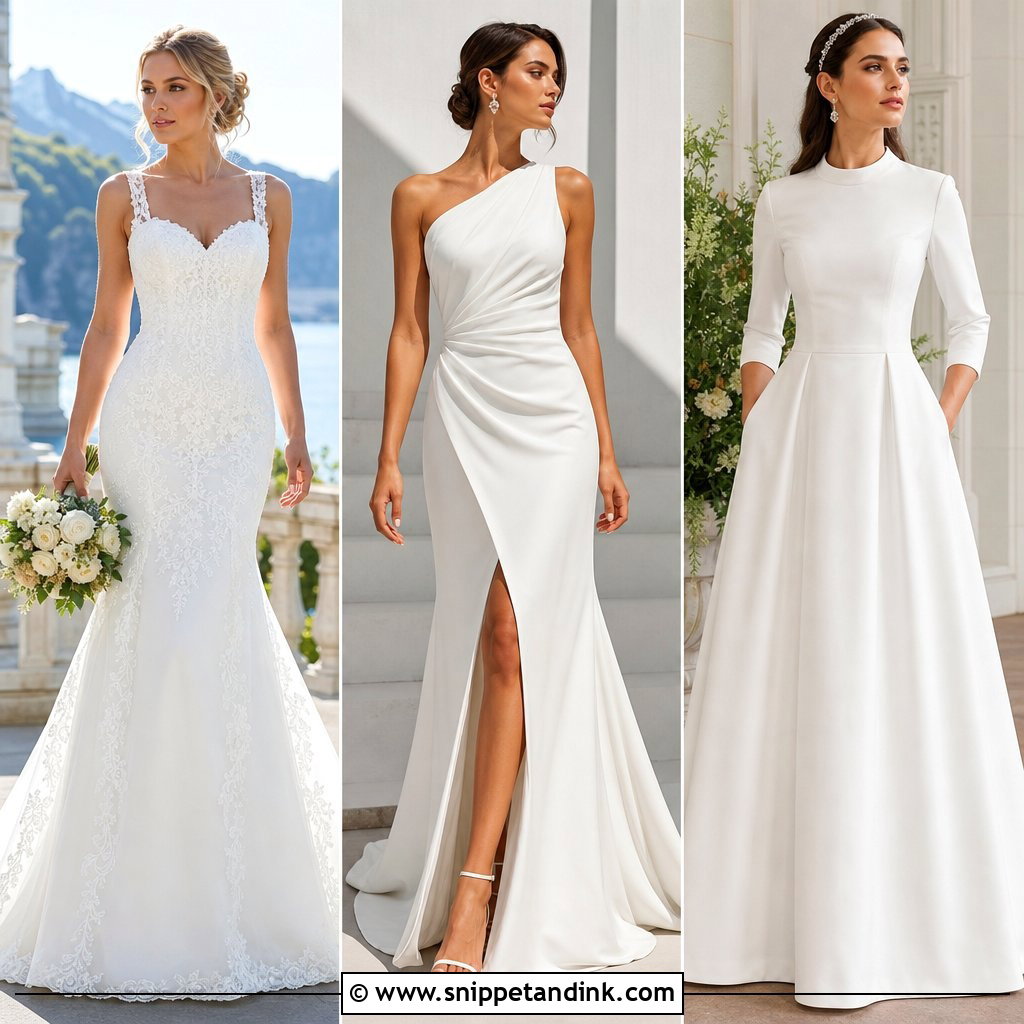
7. Mermaid Wedding Dress
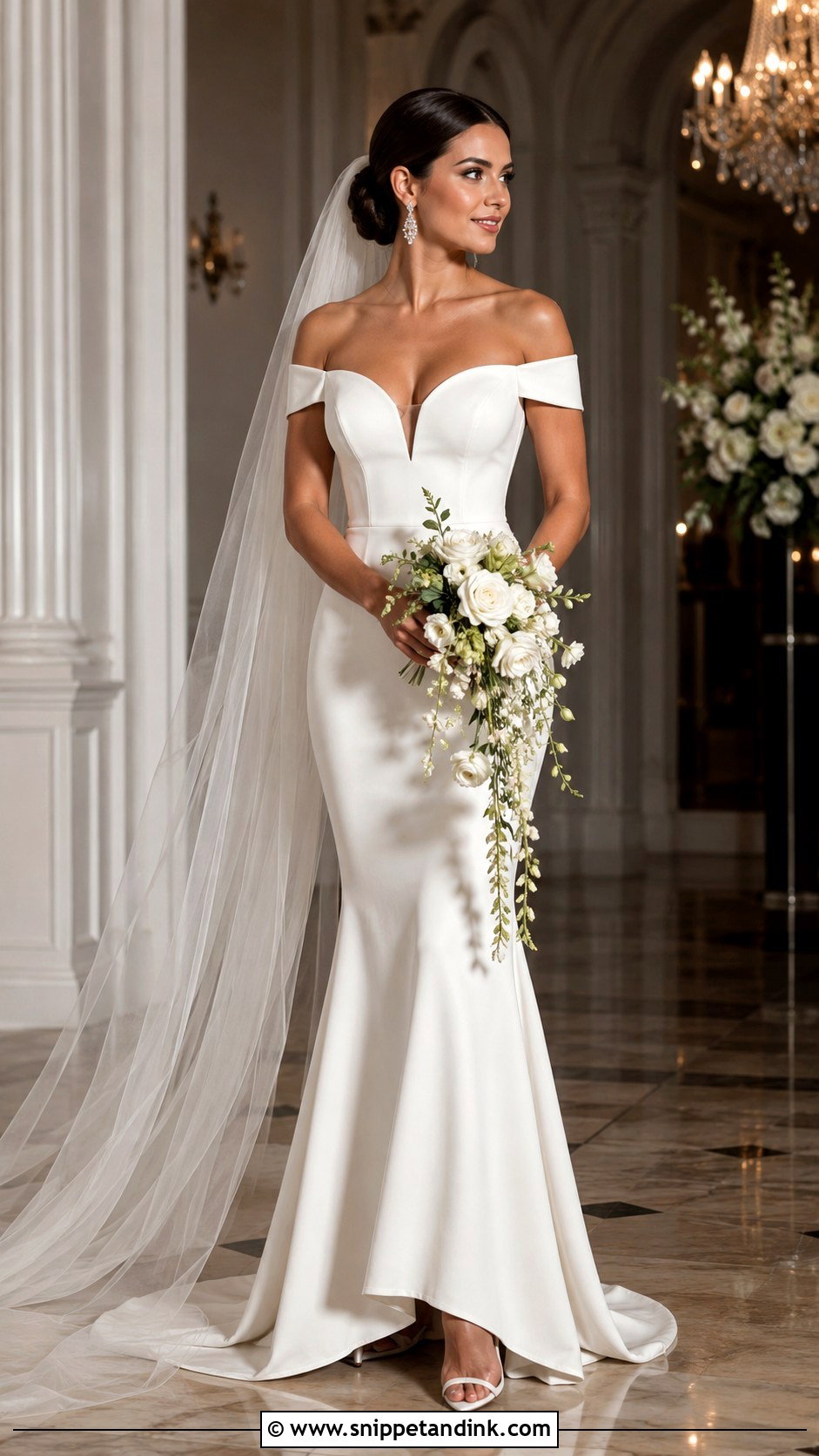
A mermaid gown fits through the bodice, waist and hips and flares near the knee, and where that flare starts decides whether you can walk. Too low and you’ll shuffle; a seamstress can raise it slightly if needed. Stretch crepe looks clean and modern; lace makes the shape romantic. Have the hem set with your exact wedding shoes. A long veil with minimal edging, sparkling earrings and a low bun. For extra ceremony coverage, add detachable sleeves or a sheer overskirt. Keep the bouquet narrow or cascading so it doesn’t hide the shape. Evening weddings suit it best.
8. Square Neck Wedding Dress
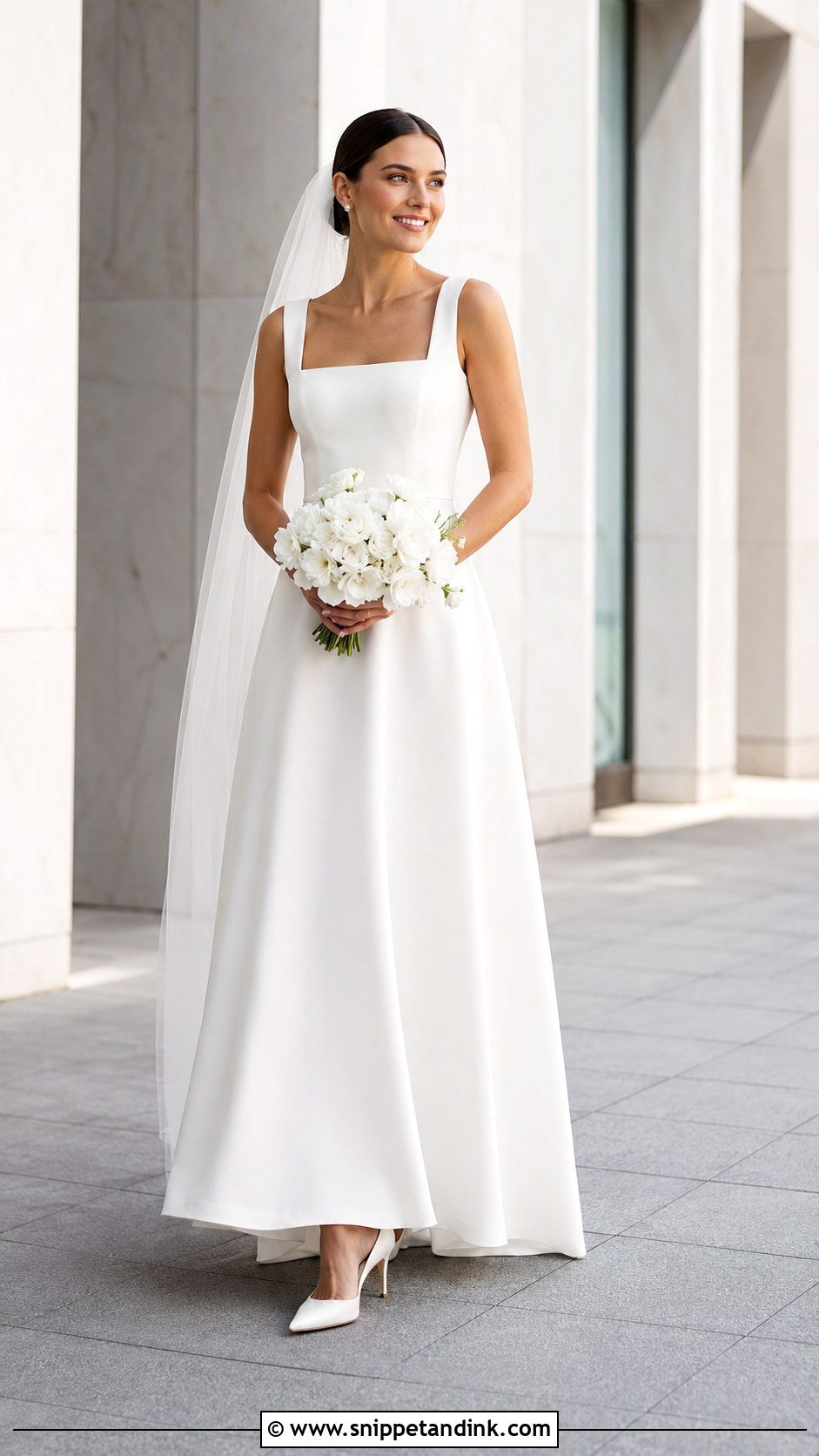
A square neckline frames the face and collarbones in a way that looks both classic and current. It works with wide straps, short sleeves or a structured sleeveless bodice. Matte crepe is the quieter option; satin is more formal. The corners of the neckline should sit flat against your skin, and if they gape when you lean forward, the bodice needs taking in at the side seams. A sleek bun, pearl studs and a fine pendant only if the neckline is very open. A plain veil, pointed ivory pumps and a neat small bouquet. A removable cape or fitted sleeves add coverage. Hotels, city ceremonies and minimal venues.
9. Basque Waist Wedding Dress
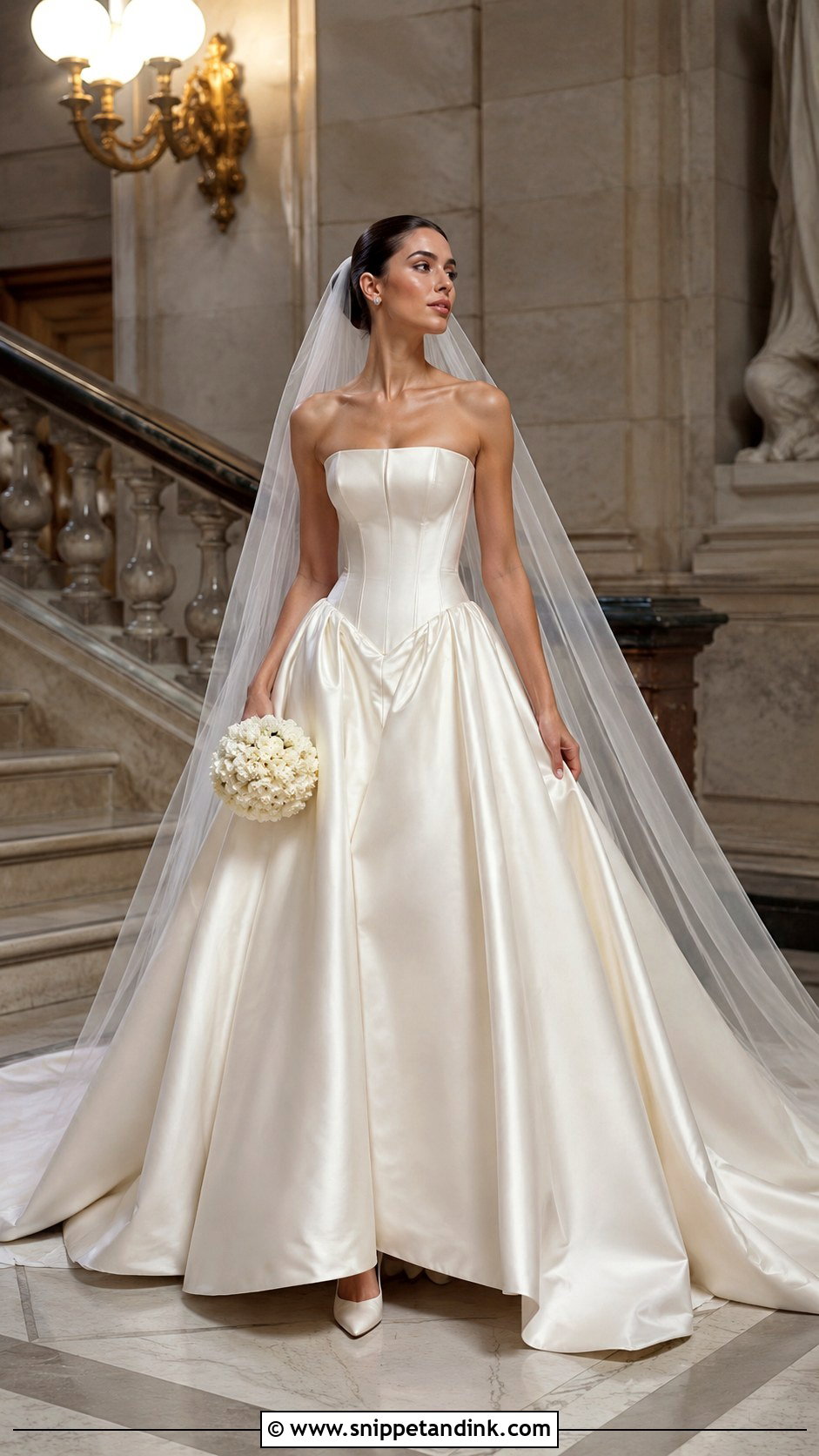
A Basque waist wedding dress has a bodice that dips below the natural waist into a V or a soft curve, which lengthens the torso and sharpens the waist. It’s often paired with full skirts and corseted bodices. This is a construction-led gown, so I keep the accessories quiet: small crystal earrings, satin pumps and a long sheer veil without a wide border. A smooth updo shows both the neckline and the waist point. With a full skirt, carry a medium bouquet with a tidy shape. If a sharp point feels severe on your frame, a softer curved seam gives the same effect more gently. Formal venues.
10. Drop Waist Wedding Dress
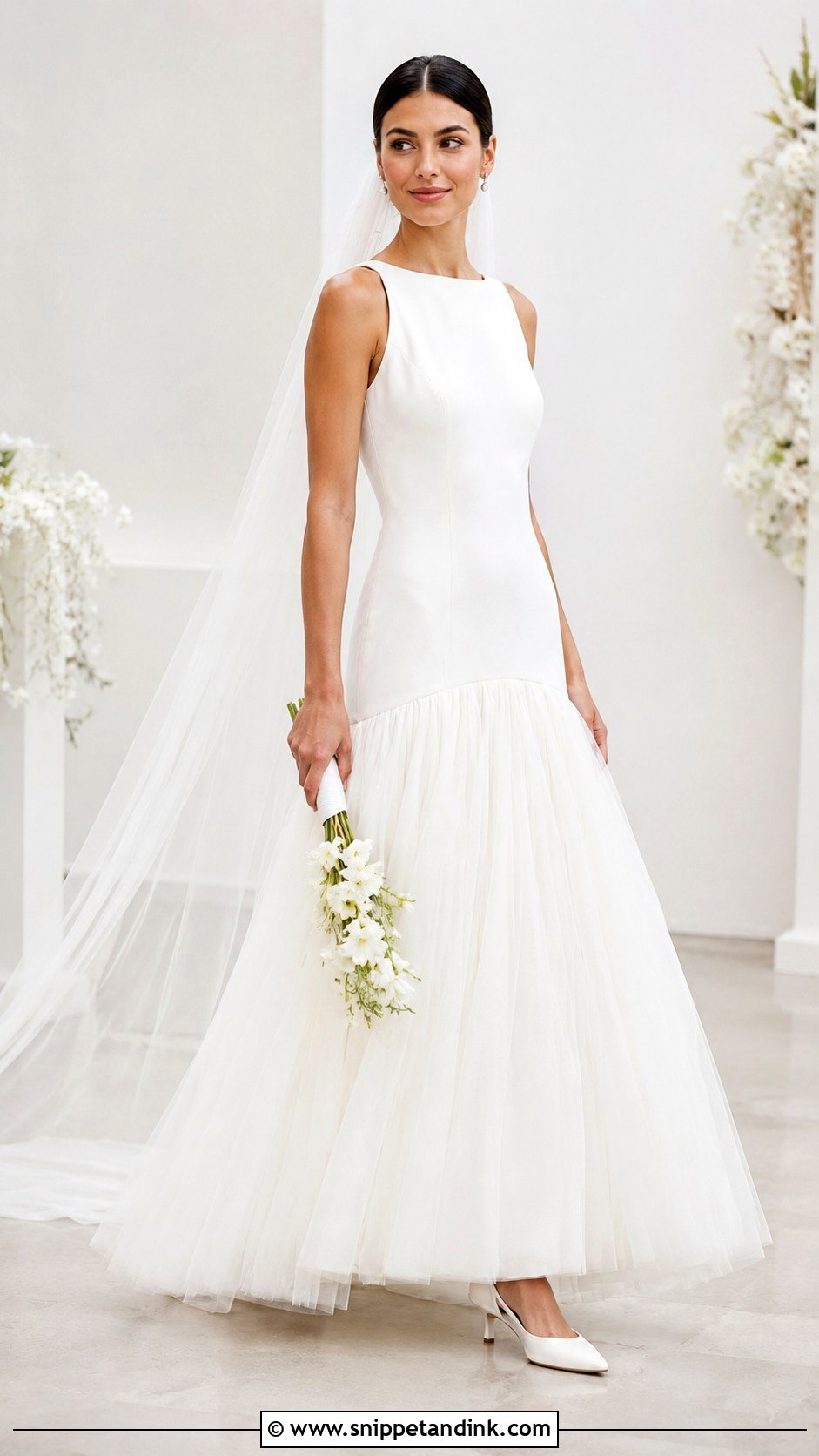
A drop waist places the skirt seam below your natural waist, giving a long, lean bodice. In satin it looks sculptural; with gathered tulle it turns romantic. The proportions are unusual, so try it with the exact heel height you’ll wear, since even an inch changes where the seam lands on your hips. Simple slingbacks, medium earrings and a clean cathedral veil. A low bun or smooth ponytail keeps the long line. Skip a wide belt, which cuts across the deliberate seam. A loose but narrow bouquet. This is a gown for a bride who likes fashion and wants drama without heavy beading.
11. 3D Floral Wedding Dress
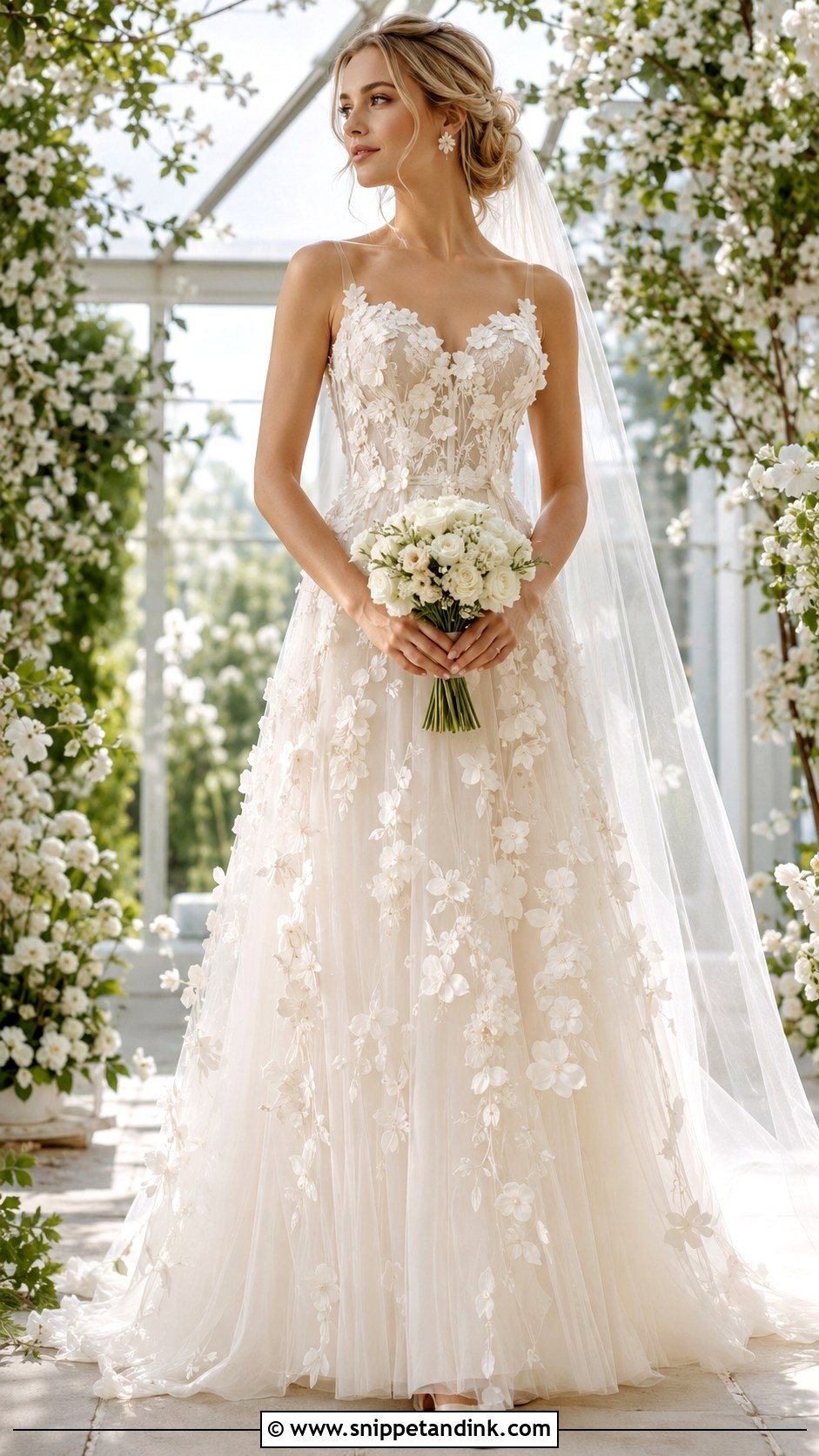
Three-dimensional flowers bring texture to a gown, whether scattered over a fitted bodice or tumbling down a tulle skirt. They’re hand-sewn and catch on things, so I’d check how securely they’re attached and plan the jewelry around them. Plain satin heels and very little else. Small floral earrings can work as long as they don’t copy the gown literally. Choose either a sheer veil with a few scattered appliqués or a plain one for contrast. A soft updo keeps shoulder flowers visible. A bouquet in one or two varieties, since a mixed bouquet competes. Gardens and spring weddings.
12. Bow Detail Wedding Dress
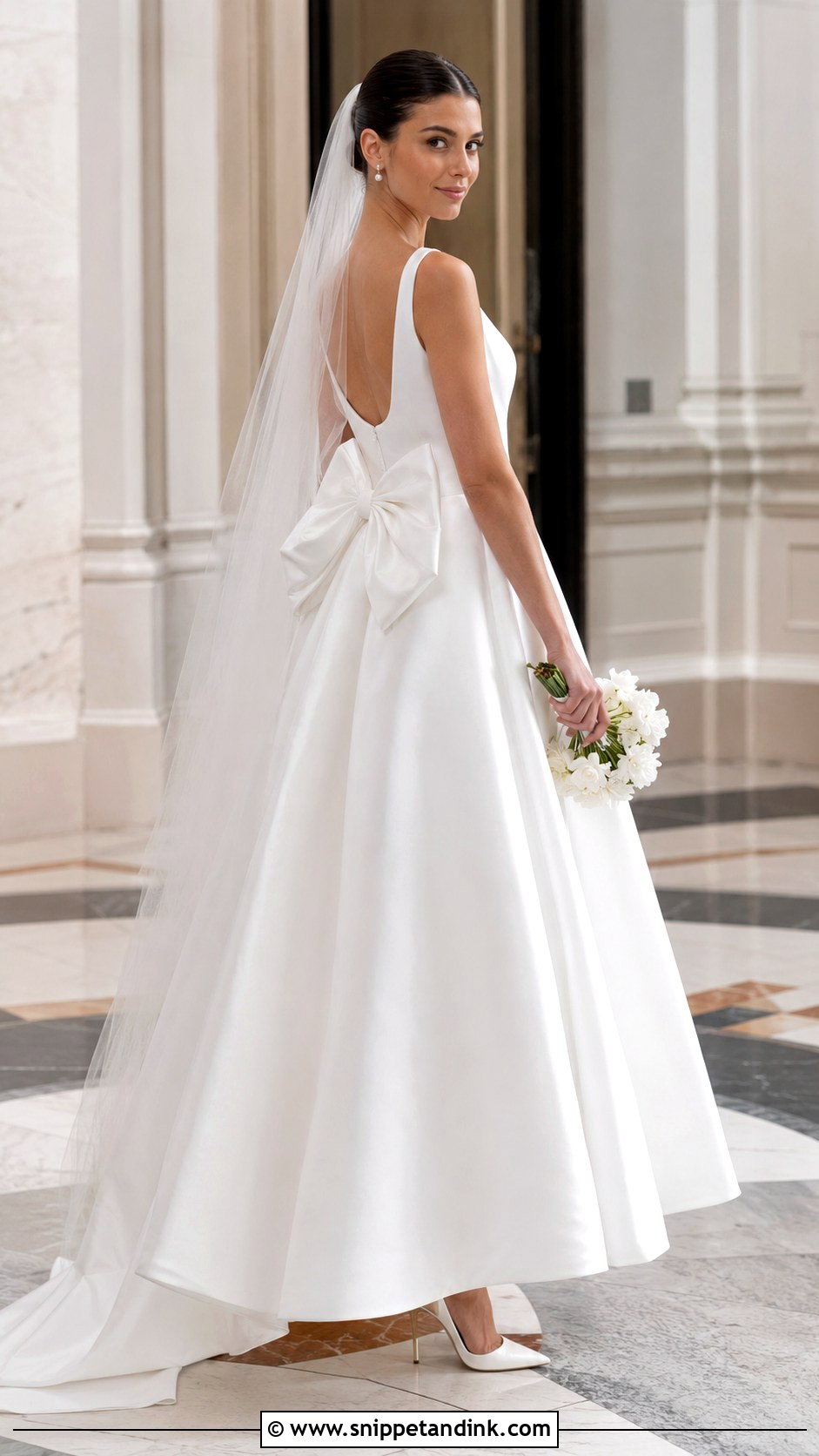
A bow gives a classic gown one playful focal point. It might sit at the back waist, along the neckline or across a shoulder. Large bows need a plain gown around them; small bows sit well with lace or light beading. Bows on the back are crushed when you sit, so ask your seamstress about a light interfacing to help it hold its shape. Understated pumps, pearl earrings and a neat bun. With a back bow, choose a sheer veil you can take off after the ceremony to show it. A compact white bouquet keeps attention on the gown. Modern and traditional settings both suit it.
13. High Neck Wedding Dress
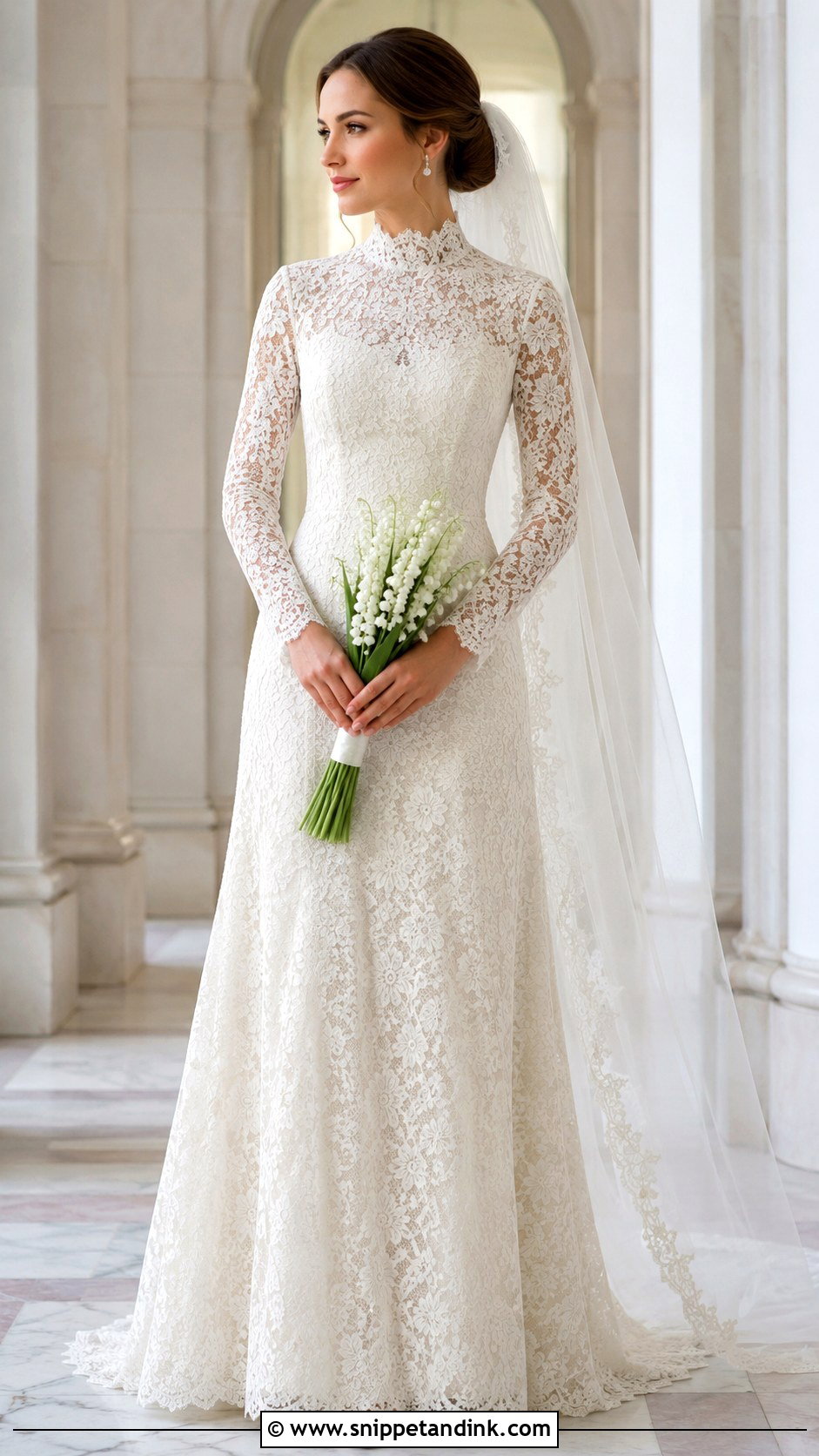
A high neck gives coverage and still lets the neckline be the detail. Sheer lace looks romantic, embroidered tulle feels intricate, and smooth crepe with a halter-like line is modern. I check the collar fit closely: too snug and it rubs when you turn your head; too loose and it folds. No necklace, just elegant studs or small drops. An updo keeps the neckline clear, with a chapel veil attached below the bun so it doesn’t crowd the collar. Closed-toe pumps and a long narrow bouquet. Keep everything else plain if the neckline is busy. Formal ceremonies, cool seasons and indoor venues.
14. Tea Length Wedding Dress
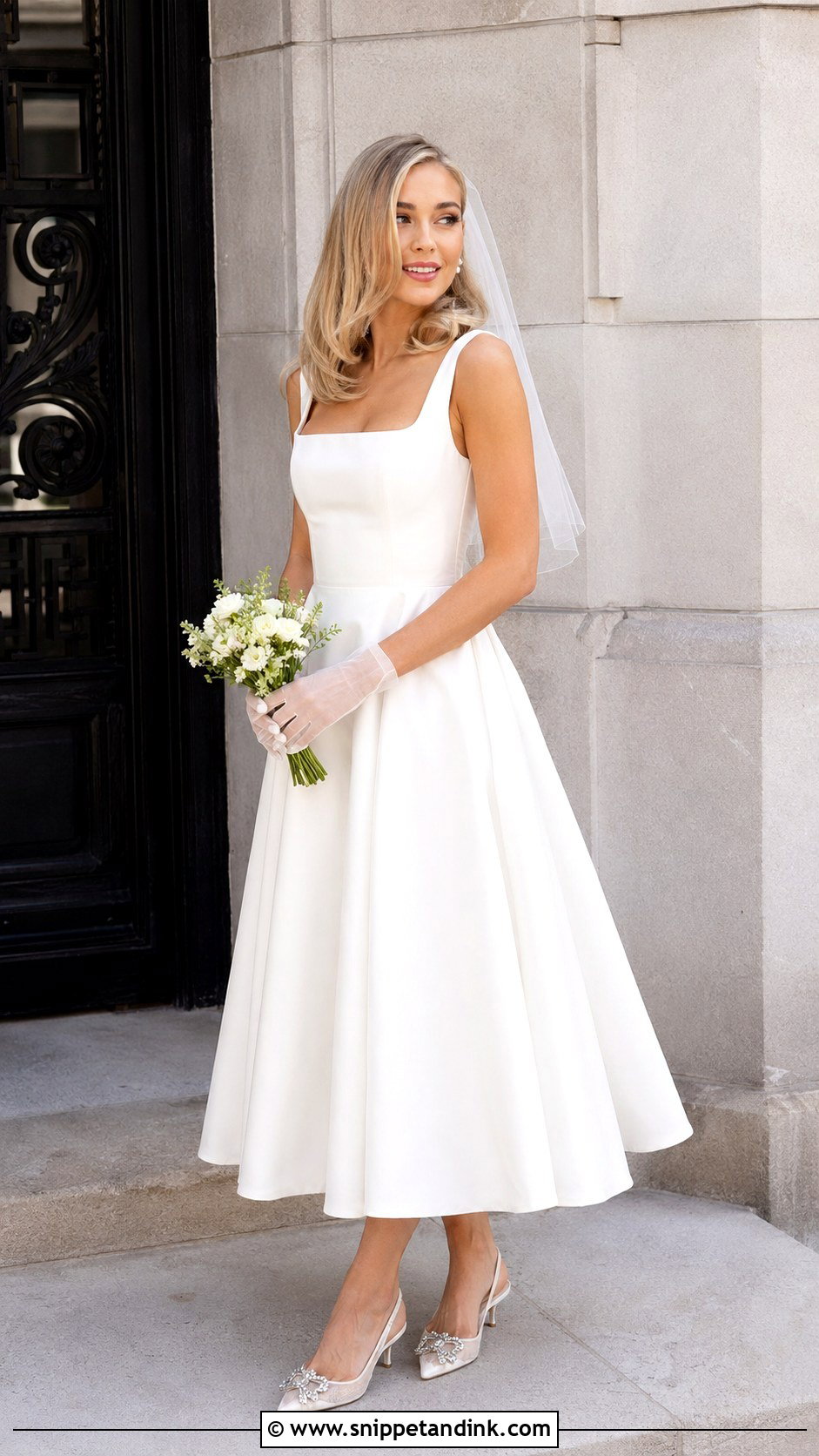
Tea length ends between the knee and the ankle, so your shoes are on show in every photo. Pick pointed slingbacks, embellished pumps or comfortable block heels, and look at them from the side and back as well as the front. A structured satin skirt looks polished; layered tulle gives a vintage shape. Pearl earrings, short gloves if you like them, and a birdcage or shoulder-length veil. Soft waves, a smooth bun or a neat bob suit the shorter hem. Check the proportions sitting down too, since the hem rises. A small hand-tied bouquet. Courthouse ceremonies, daytime weddings and restaurant receptions.
15. Mini Wedding Dress
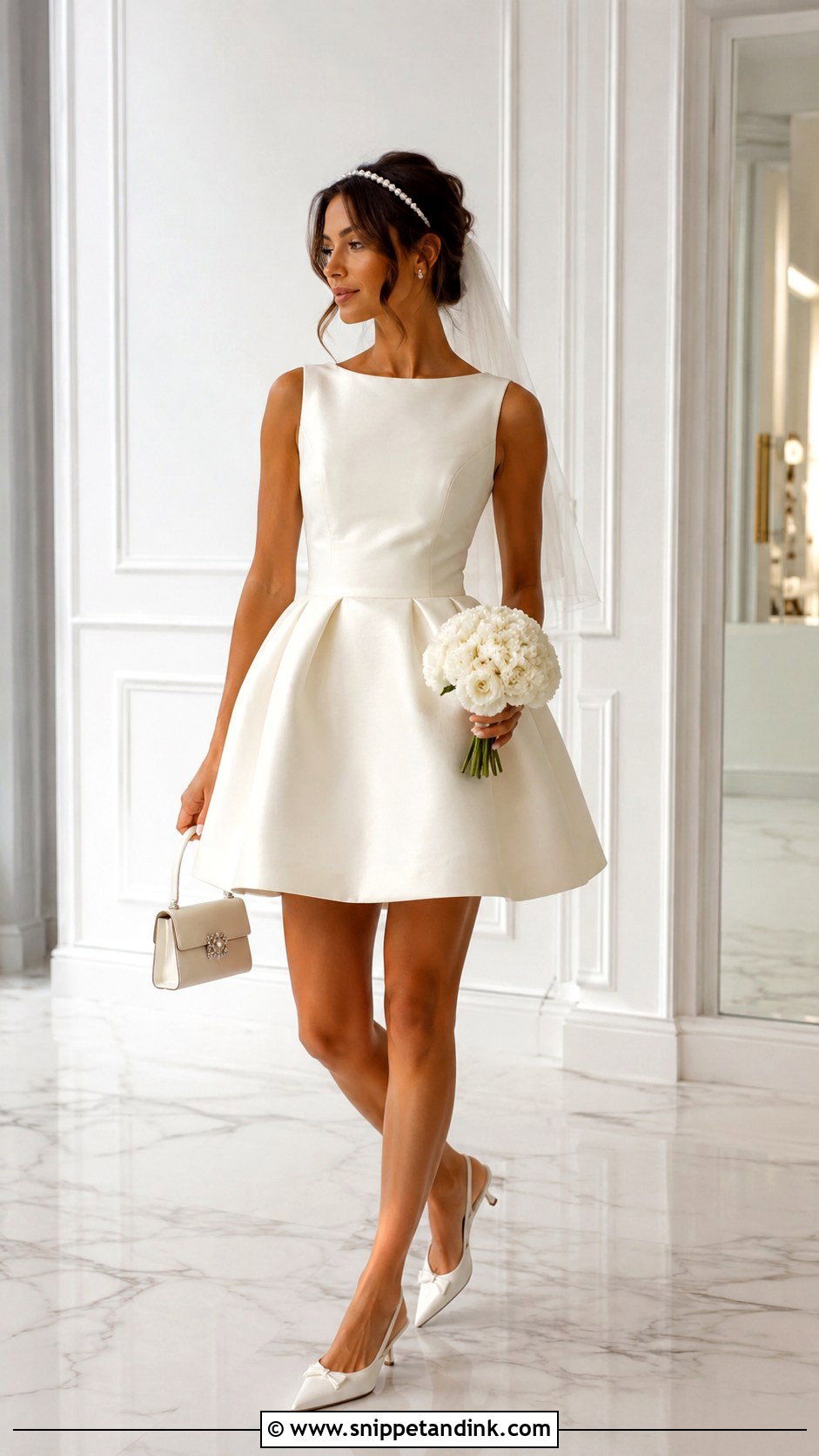
A mini suits a civil ceremony, an elopement, a reception change or a second look for dancing. It needs to be well made, because a short white dress in thin fabric looks like a party dress rather than a bridal one. Look for a tailored shift, a fitted satin mini or a structured dress with a full skirt. Slingbacks, pointed kitten heels or embellished flats. A short veil, a big hair bow or a headband marks you as the bride; pick one, not all three. Sheer tights in cold weather, bare legs in summer. A compact bouquet and a small top-handle bag.
16. Beach Chiffon Wedding Dress
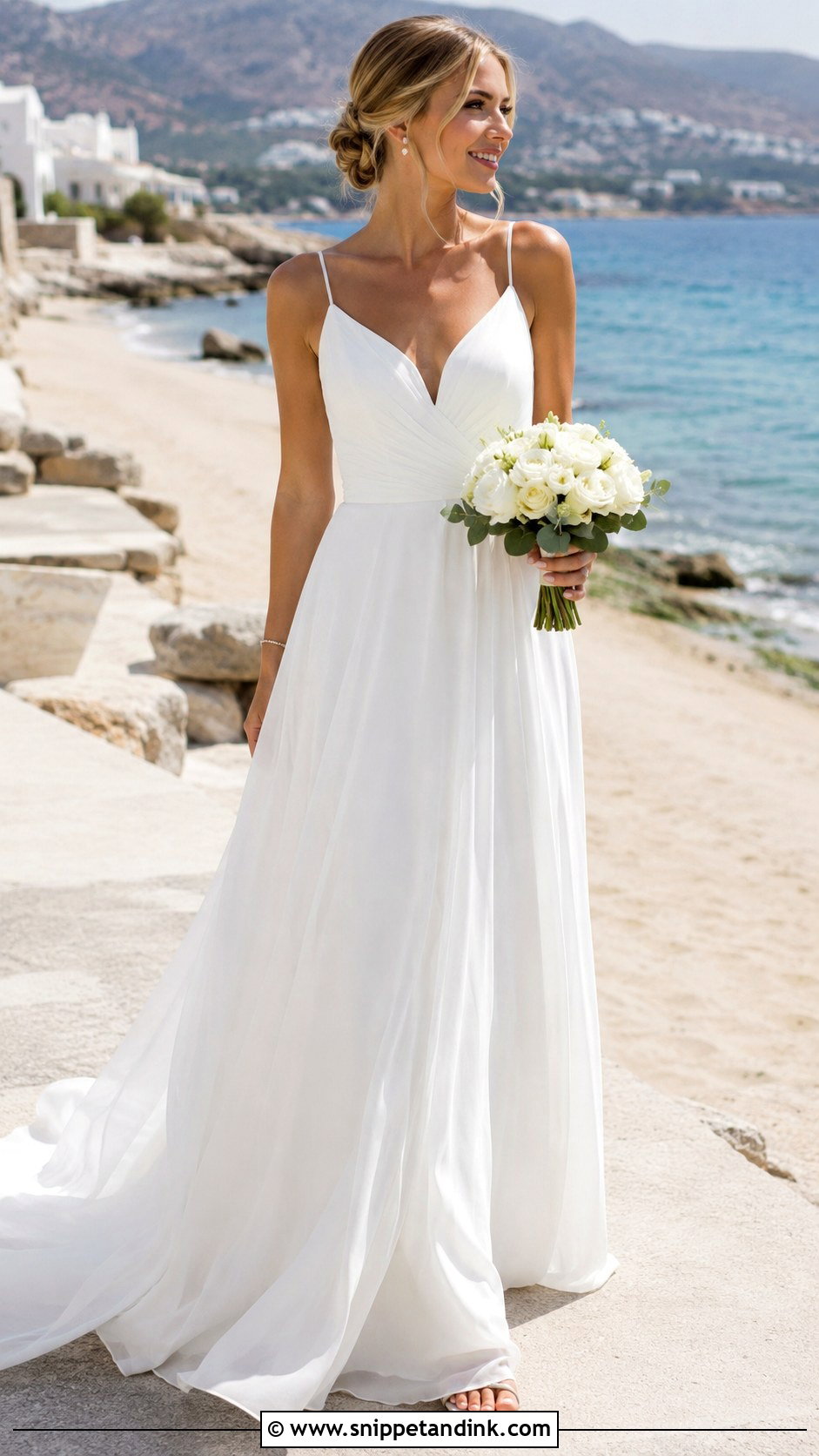
Wind is the deciding factor on a beach. Chiffon, georgette and light crepe move well in a breeze; heavy satin or a long train drags in wet sand and collects it in the hem. Choose an A-line or column with light layers, secure straps and a short train or none at all. Flat leather sandals or low wedges, or barefoot sandals where the sand is safe. Pearl studs, a fine bracelet and a fingertip veil you can take off if the wind picks up. Loose waves or a low textured bun. Tropical greenery or a small white bouquet suits better than big flowers that bend in the wind.
17. Boho Lace Wedding Dress
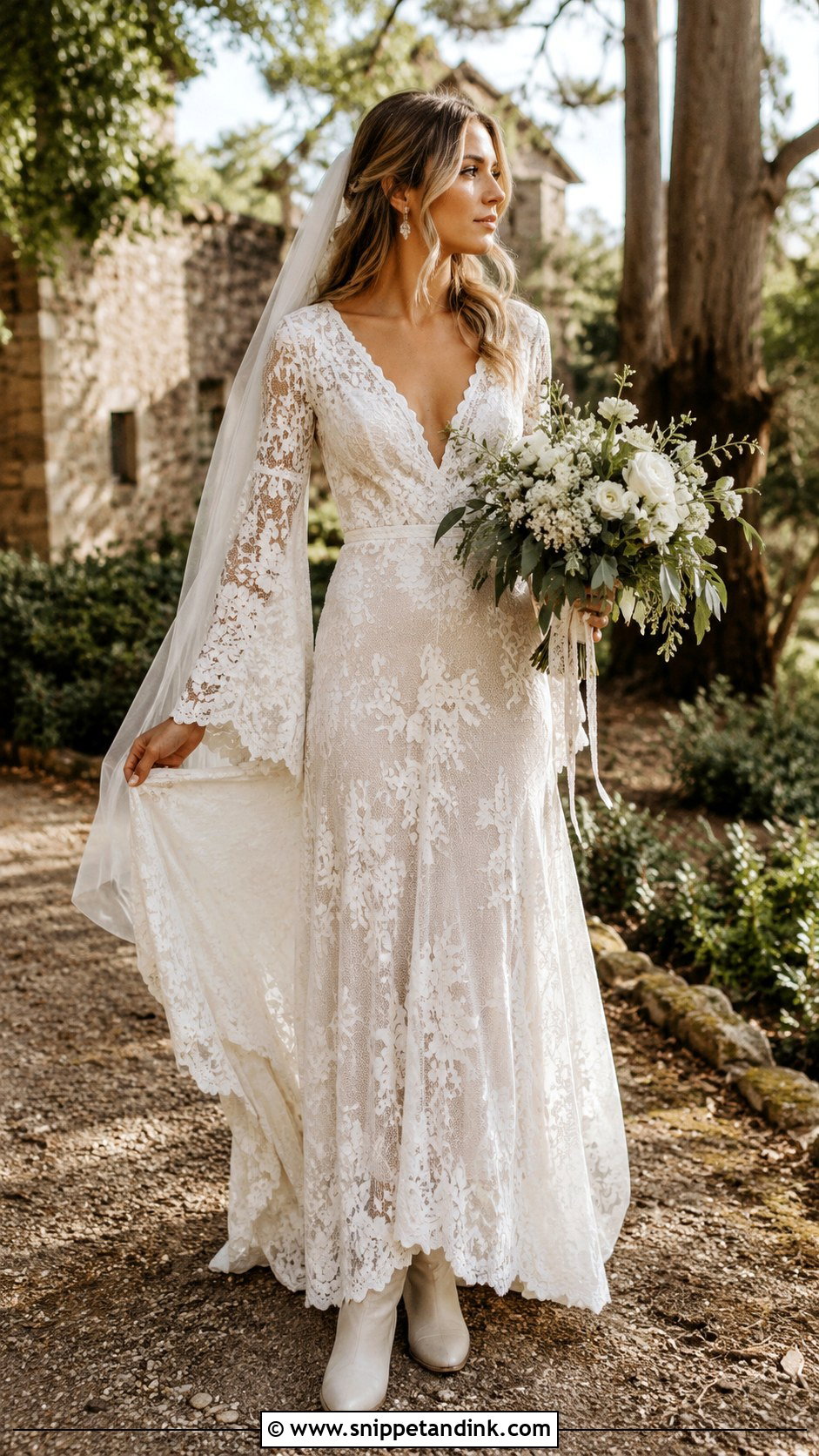
Boho lace can slide into looking too casual unless the fit is precise. Look for botanical lace, flowing sleeves, a gently fitted waist and a skirt that moves. An ivory lining softens the white and shows the lace pattern more clearly than a bright white one. Low block heels, simple sandals or polished ankle boots for a rustic autumn day. Delicate earrings and a fingertip veil or light cape. A loose braided updo holds up outdoors far better than loose waves. A natural bouquet with white flowers, greenery and a few dried stems. Woodland venues, barns and outdoor estates.
18. Minimalist Column Wedding Dress
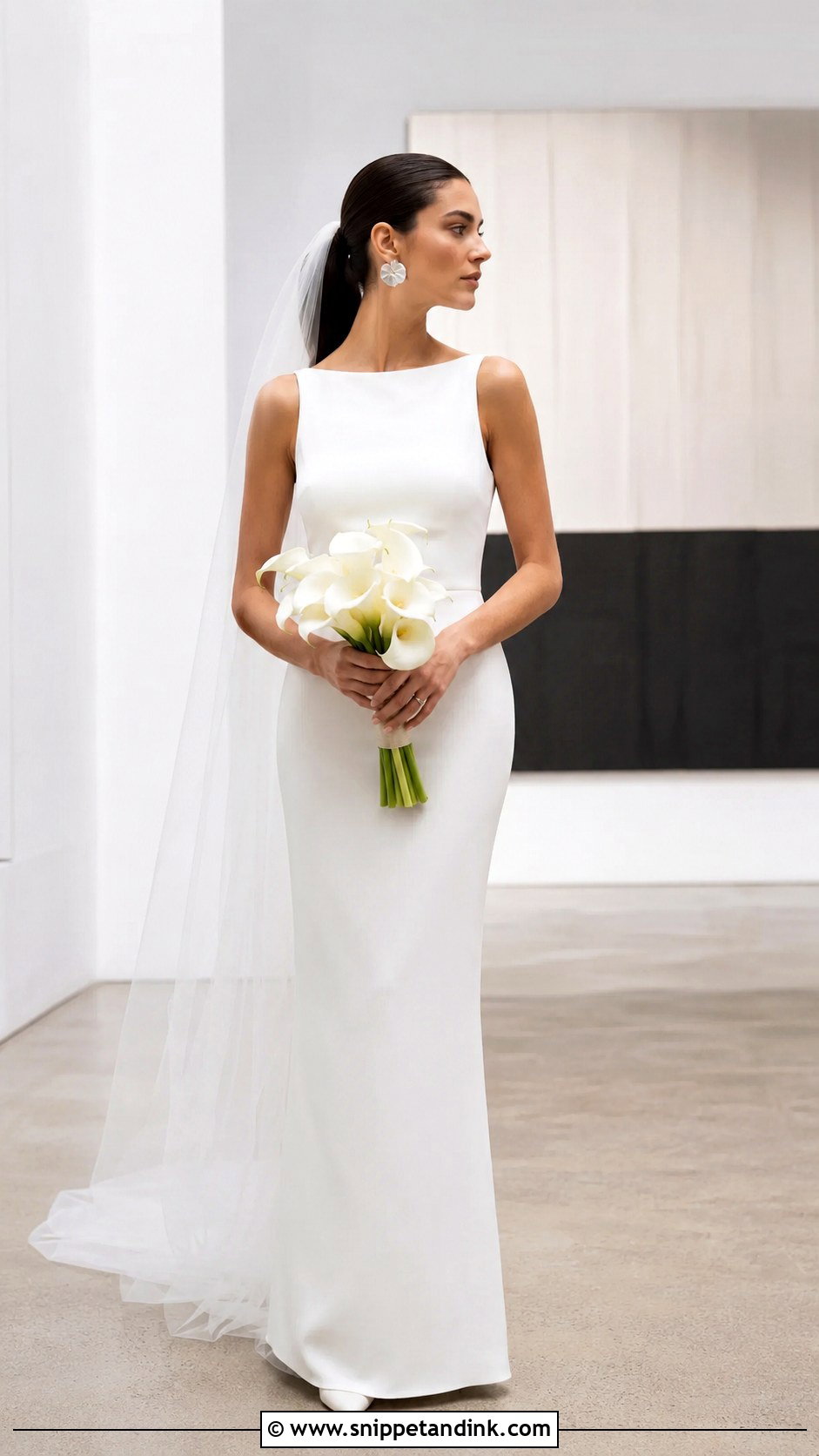
The minimalist column is all fit, fabric and proportion, with nothing to distract from a badly placed seam. Smooth crepe, satin or silk with a clean neckline and almost no embellishment. It should skim the body while giving you a full stride; a column without a slit or kick pleat can make stairs difficult. Sharp pointed pumps, sculptural earrings and a structured mini bag for the reception. A long sheer veil adds the ceremony moment. Hair in a neat bun, polished ponytail or smooth tucked waves. Calla lilies or white roses. Modern hotels, galleries, rooftops and courthouse ceremonies.
19. Blush Wedding Dress
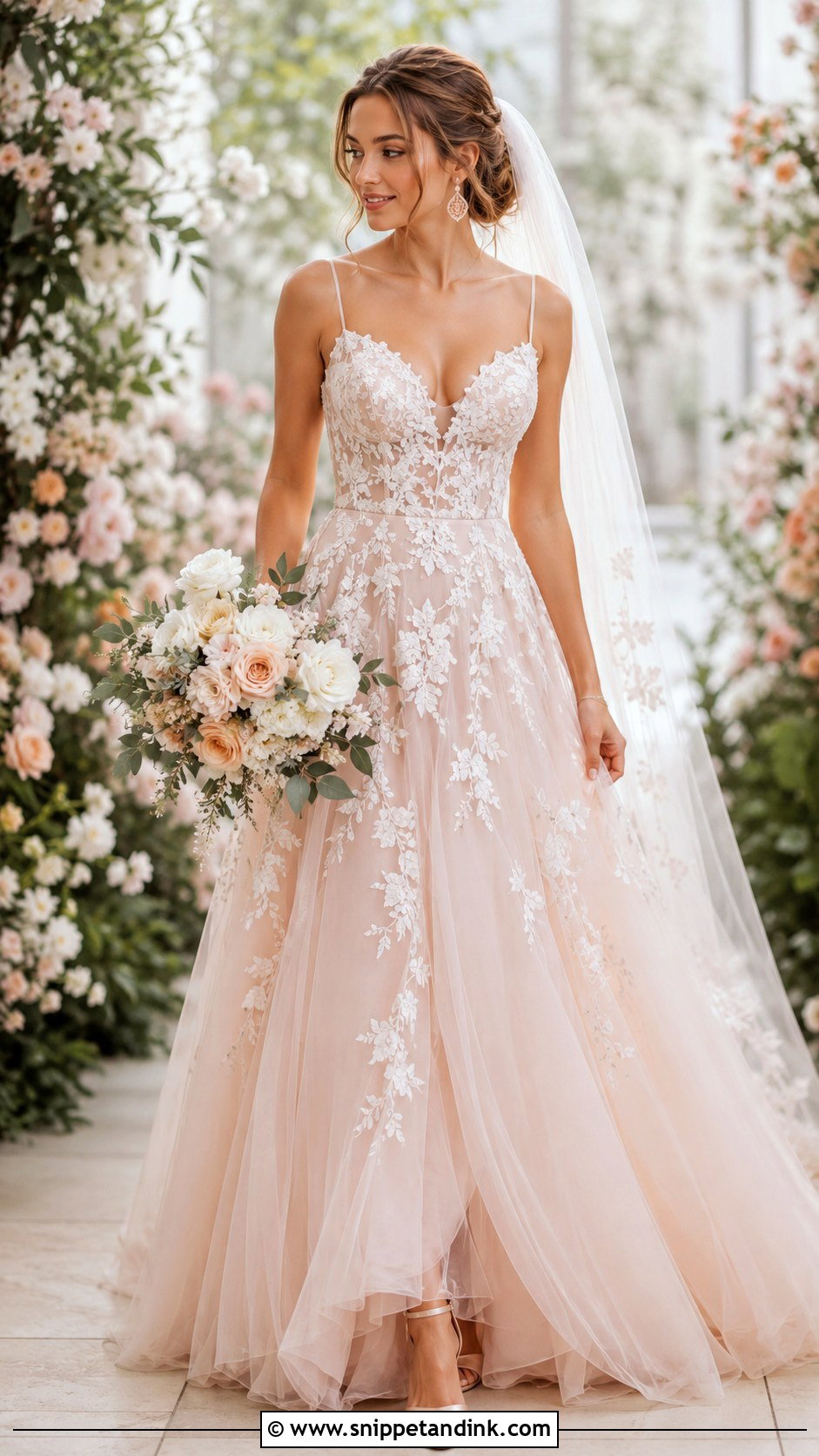
Blush is usually a tinted lining under white lace or tulle, not a pink fabric. That layering gives appliqués and embroidery more depth and still reads as bridal. Hold the gown against your face in daylight at the appointment, because the same blush lining looks warm on some skin tones and gray on others. Neutral satin heels instead of trying to match the pink. Rose gold earrings, soft pearls and a sheer ivory veil. Keep makeup in balanced pinks rather than a matched palette. A bouquet in white, blush and pale peach. Gardens, ballrooms and spring or summer weddings.
20. Wedding Dress With Cape
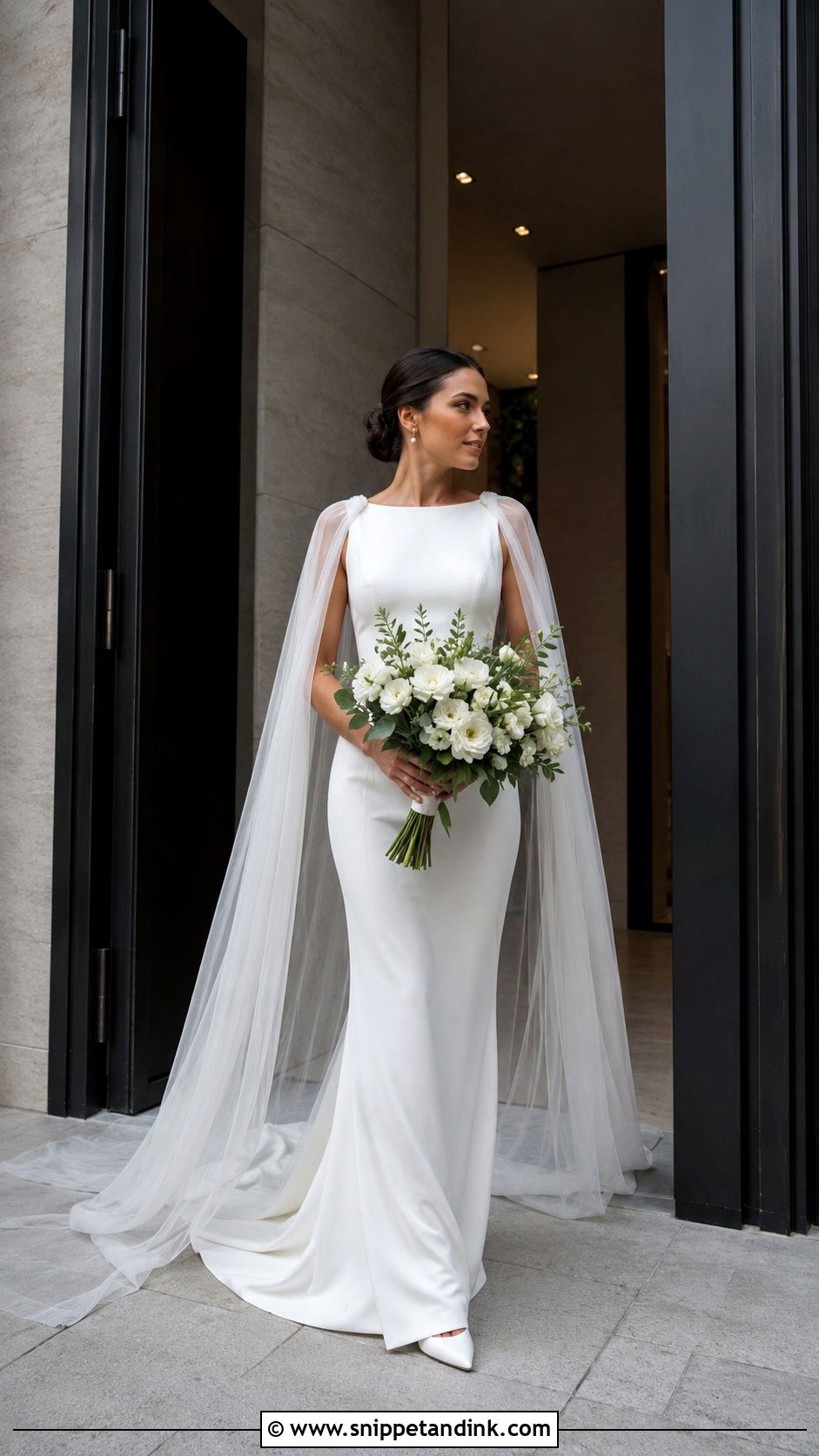
A cape replaces the veil and gives you an entrance. Choose a fitted crepe, satin or lace gown under a sheer tulle cape so the outline stays balanced. Floor length feels formal; shoulder length is a lighter touch. The fastening is what I check first: a cape that’s only attached at the neck pulls the neckline backward when you walk, so it often needs anchoring at the shoulders too. Simple drop earrings, pointed pumps and a sleek low bun, no necklace near the clasp. Take it off after the ceremony for a cleaner reception look. A structured white and green bouquet.
What Happens to Your Train Once the Dancing Starts
Any gown with a train needs a bustle, a set of hooks, buttons or ties that lift the train off the floor for the reception. It’s added at alterations and is easy to forget until someone steps on your hem.
- Over bustle: the train is lifted and hooked up onto the back of the skirt. Suits satin and structured fabrics.
- Under or French bustle: the train is tucked underneath and tied, creating soft folds. Good for lace and tulle.
- Ballroom bustle: several hidden points lift the train so the skirt looks like it was always floor length.
Ask for colored ribbons or numbered tags on the ties, and have the person bustling you practice at your final fitting. Doing it for the first time in a dim hallway after the ceremony is where most bustles go wrong.
The days after
Hang the gown out of direct light and get it to a specialist cleaner within a few weeks. Sugar from champagne or cake can be invisible at first and turn brown over time, so point out any spots you know about. Store it flat in an acid-free box, not in the plastic bag it came home in.
Bring the Shoes, the Veil and Your Patience to Every Fitting
The right gown lets a bride feel comfortable, like herself and confident all day. Start with the venue and season, then compare silhouettes for how much you need to move and how much coverage you want. Fabric, tailoring, underwear, shoes and accessories count as much as the gown. At appointments, try a veil and shoes with a similar heel height whenever you can. Trends can point you somewhere, but they should never outweigh comfort or your own taste. From lace and satin to capes and shorter hems, the looks above give you a place to start building your own.
You'll Like These Ideas:






Leave a Reply