
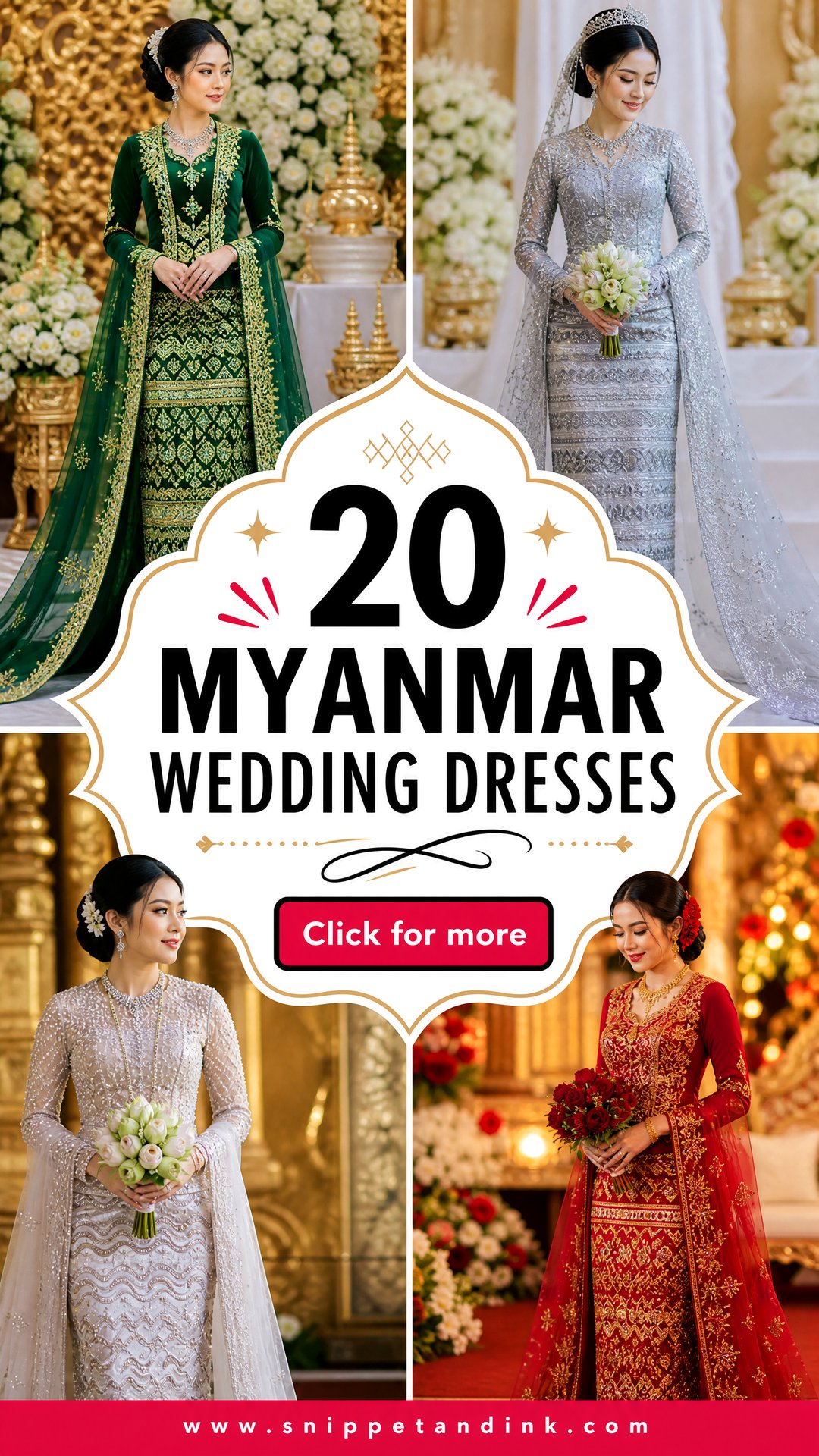
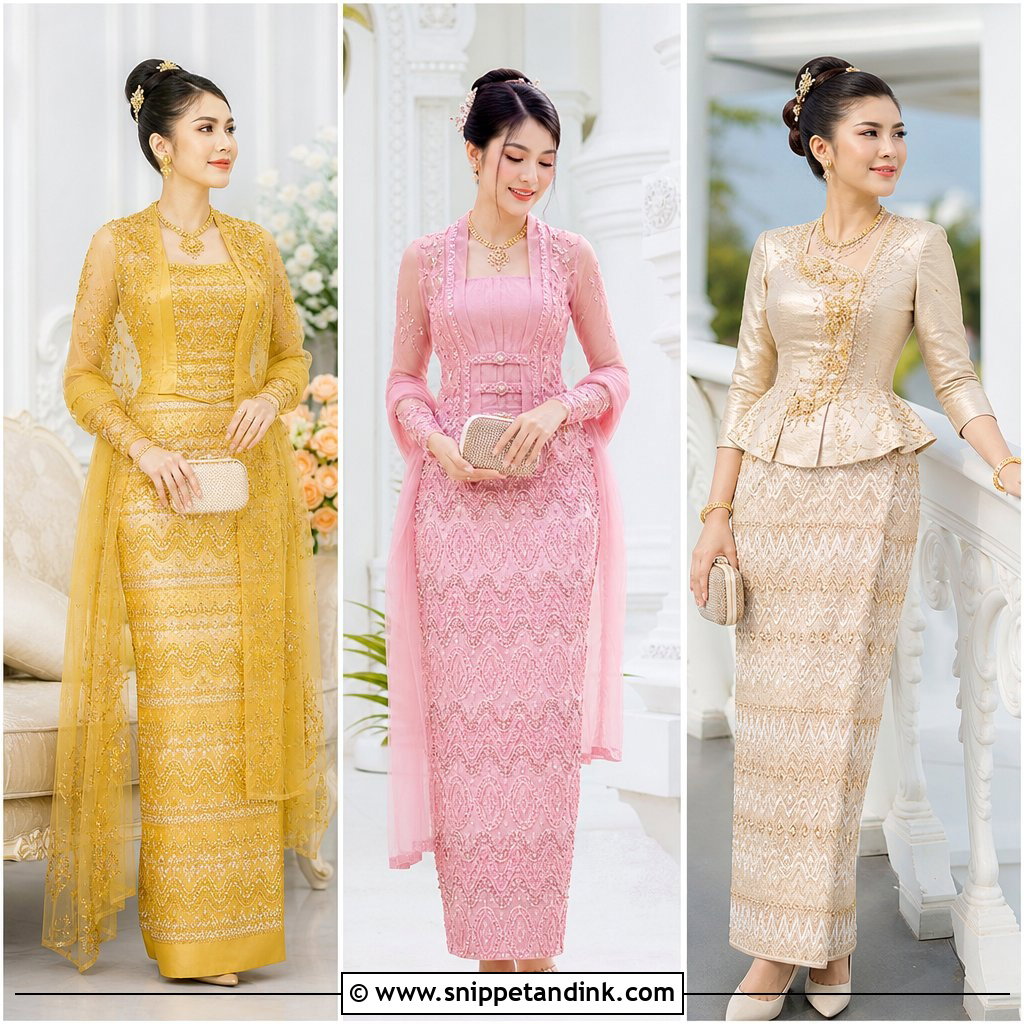
Myanmar wedding fashion is built on two pieces: a fitted blouse or ceremonial jacket on top, and a silk htamein, the long wrapped skirt, below. Gold jewellery, fresh flowers in the hair and formal sandals finish it. The fabric everyone notices is acheik, the woven wave pattern that takes real skill and time on the loom, and many brides today mix it with lace, beading, softer colours or newer blouse shapes. When I style a Myanmar bride, I start from the textile and build everything else so it doesn’t fight the weave. The outfits below cover regal traditional sets, quieter ceremony looks and a few fusion ideas, each with jewellery, hair and shoes, from classic red and gold to ivory and silver.
Wrapped or Sewn? Sorting Out the Htamein Before Any Fitting
A traditional htamein is a length of cloth wrapped around the body and tucked at the waist, with no zip or hooks. Many brides now wear a ready-made version stitched into a tube with a hidden fastening, because it stays put through a long ceremony and doesn’t need someone experienced to wrap it on the morning. Neither is more correct for a wedding; decide early, because the choice changes how the tailor cuts the waist and how much fabric you need.
Give the weaving time
Hand-woven acheik is slow work, done with many small shuttles to build the waves, and a complex bridal piece can take weeks or more on the loom before it reaches a tailor. If you want a specific colour or pattern woven for you, I’d order it several months ahead and leave a separate block of time for stitching the blouse and fittings.
Fit it for kneeling, not just standing
Paying respect to parents, elders and monks often means kneeling and bowing, sometimes more than once. A narrow htamein that looks perfect standing can pull tight or split when you kneel. At every fitting I ask the bride to kneel, bow and rise again, and to sit on a low seat. If the skirt strains, the tailor can add a little ease at the hip or a discreet pleat at the front overlap.
1. Red Acheik Myanmar Wedding Dress
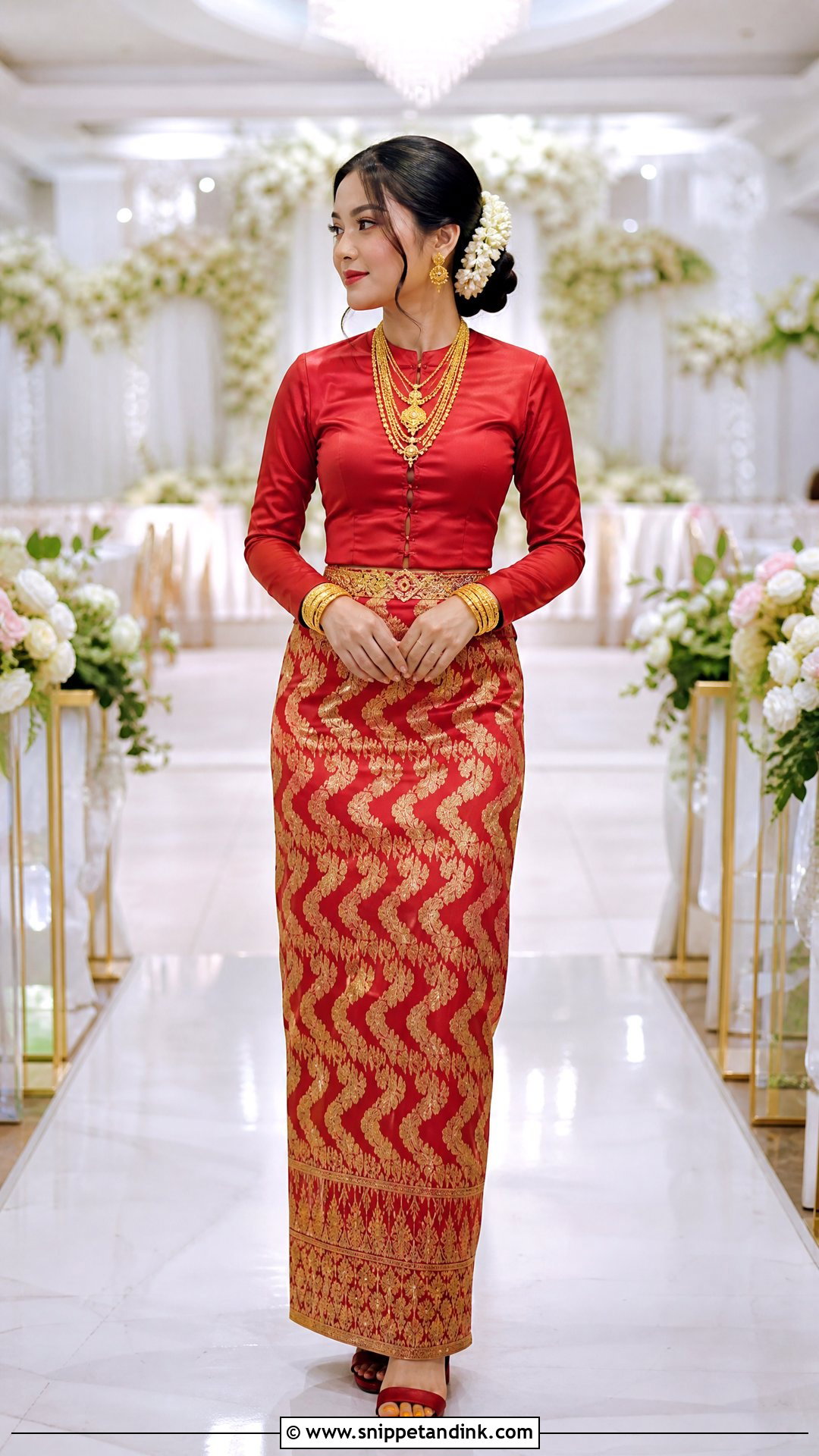
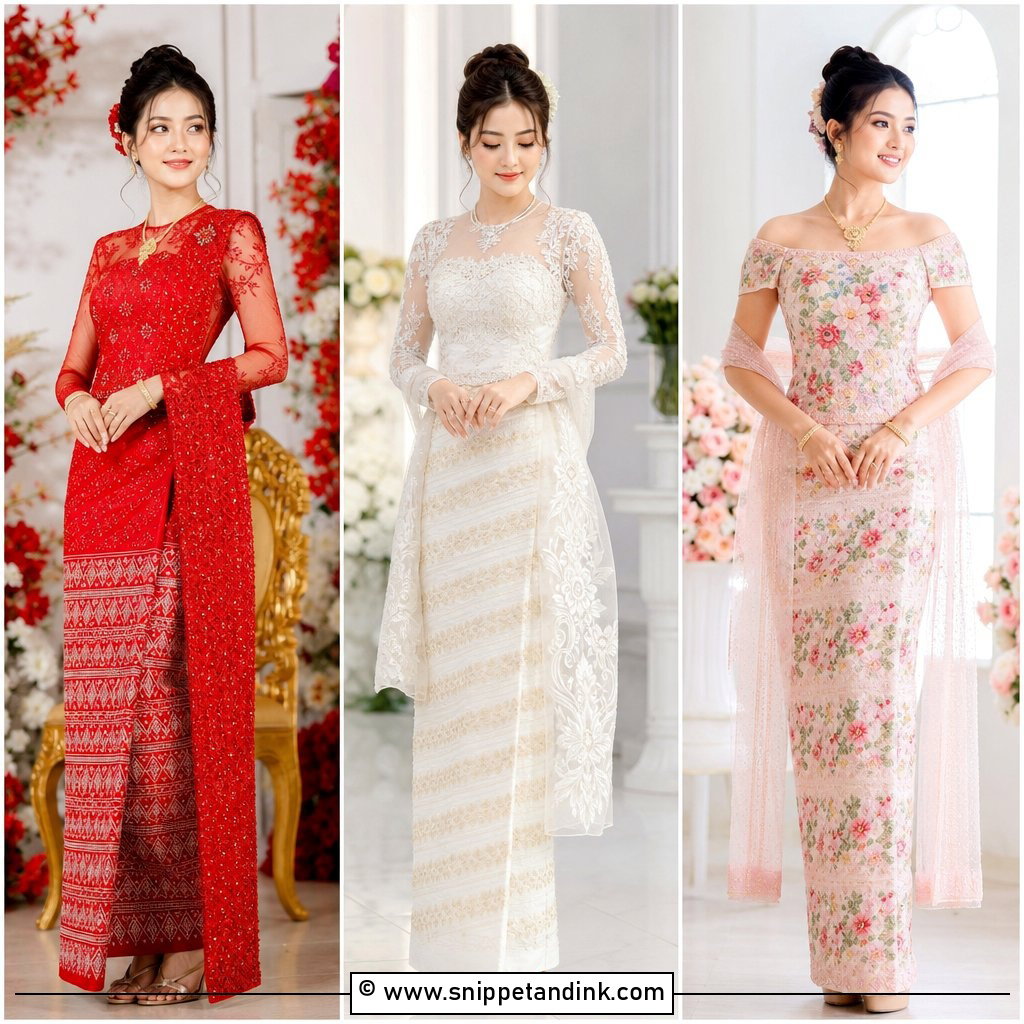
Red acheik is the most traditional choice, and it needs less styling than people expect. Choose a silk htamein with gold, cream or deep maroon waves and pair it with a fitted red yinzi blouse with covered buttons and fine gold embroidery at the neck and cuffs. The acheik itself, with its interlocking waves and horizontal bands, is the centrepiece, so I keep the rest disciplined: gold earrings, layered necklaces, slim bangles and velvet sandals. A neat low bun with white jasmine softens all that red. For makeup, defined eyes and a muted red lip; a bright blue-red lipstick fights the warmer red of most silk dyes.
2. Gold Htaingmathein Myanmar Wedding Dress
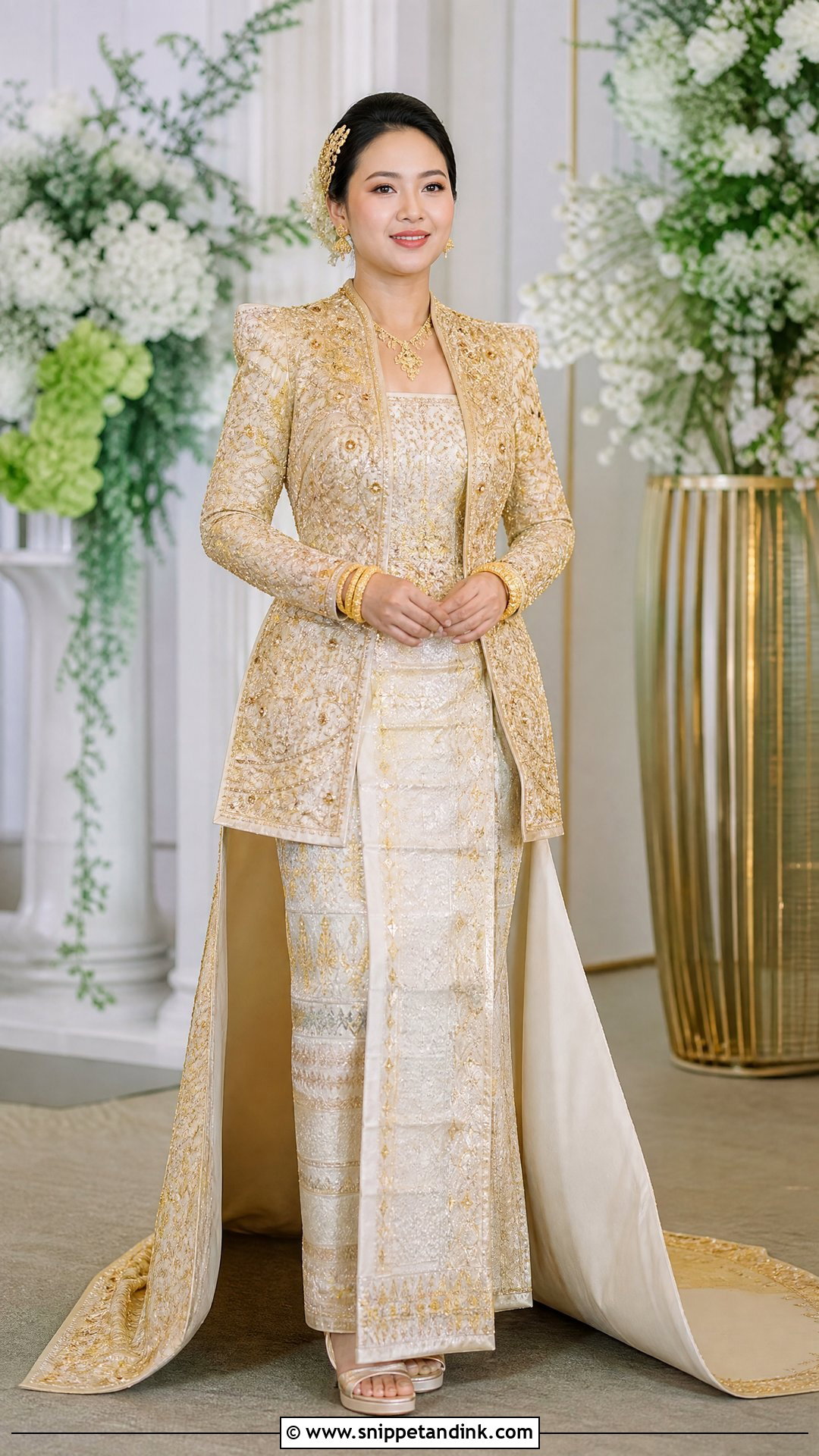
For a royal-style ceremony, a gold htaingmathein with a matching htamein is the grandest option on this list. The htaingmathein is a fitted, buttonless jacket with flared hip flaps, long tied to formal court dress and now worn mostly for weddings and classical dance. I’d choose one with refined embroidery rather than every surface covered. Wear it over a coordinating bodice with an ivory-gold acheik htamein that falls to the ankle, adding a train for formal portraits. A polished updo with gold hair ornaments, drop earrings, slim bracelets and champagne sandals complete it. The jacket is stiff and warm, so I plan the photos for it first and let the bride change before a long reception.
3. White Silk Htamein Myanmar Wedding Dress
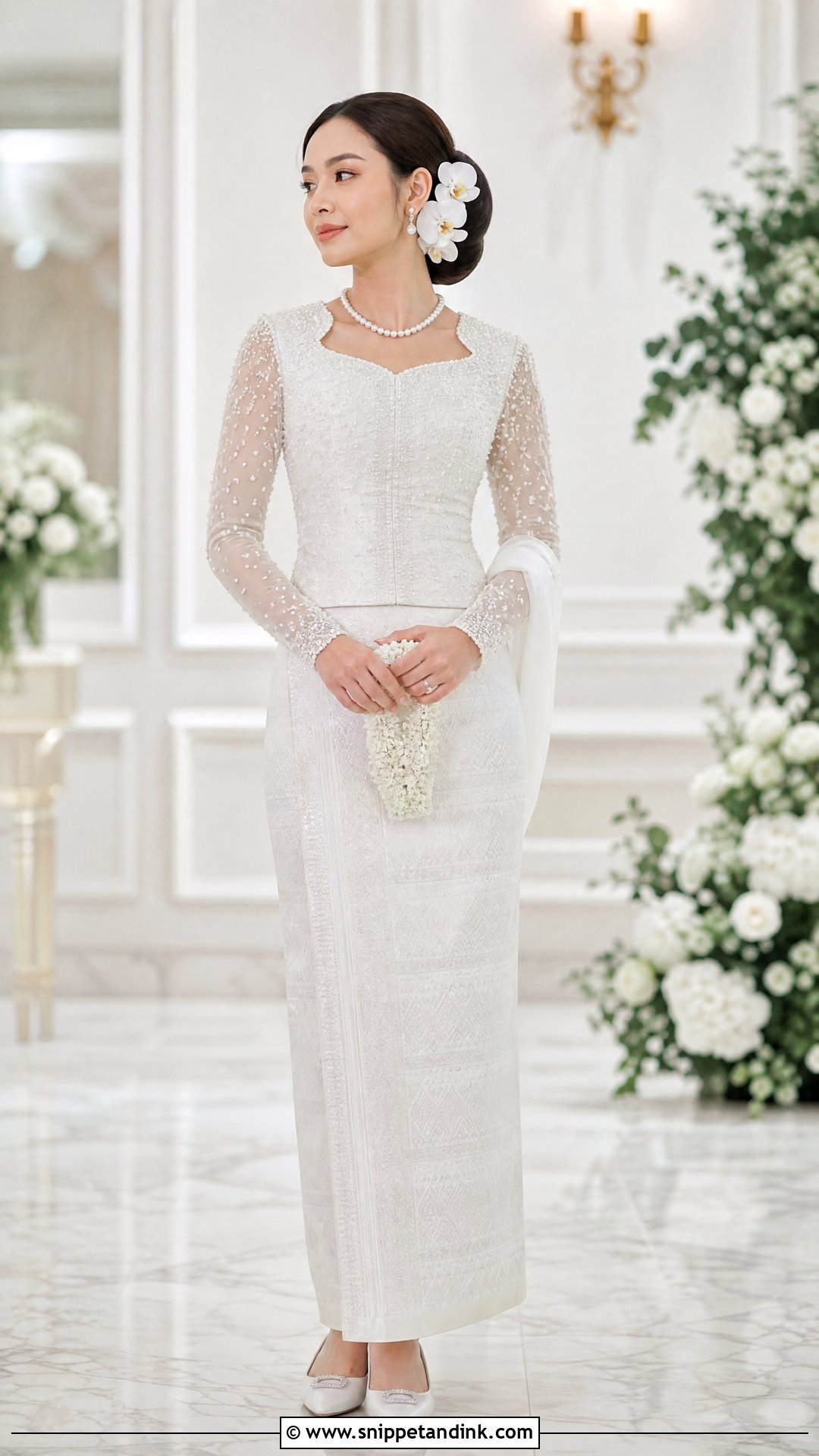
White silk gives a calm, polished alternative to the richer colours. Start with a white htamein with a subtle woven border or fine silver pattern, then a fitted long-sleeve blouse with a modest neckline, covered buttons and light pearl embroidery. Silver earrings and a single strand of pearls suit it; pointed white flats or low block heels keep you comfortable through a long ceremony. A smooth bun with white orchids finishes it. The problem with an all-white outfit is that it photographs flat, so I build in texture: matte silk, a touch of lace and small beads read far better together than one plain fabric. Rose-toned makeup keeps your face from fading into the white.
4. Pink Yinzi Blouse and Acheik Htamein
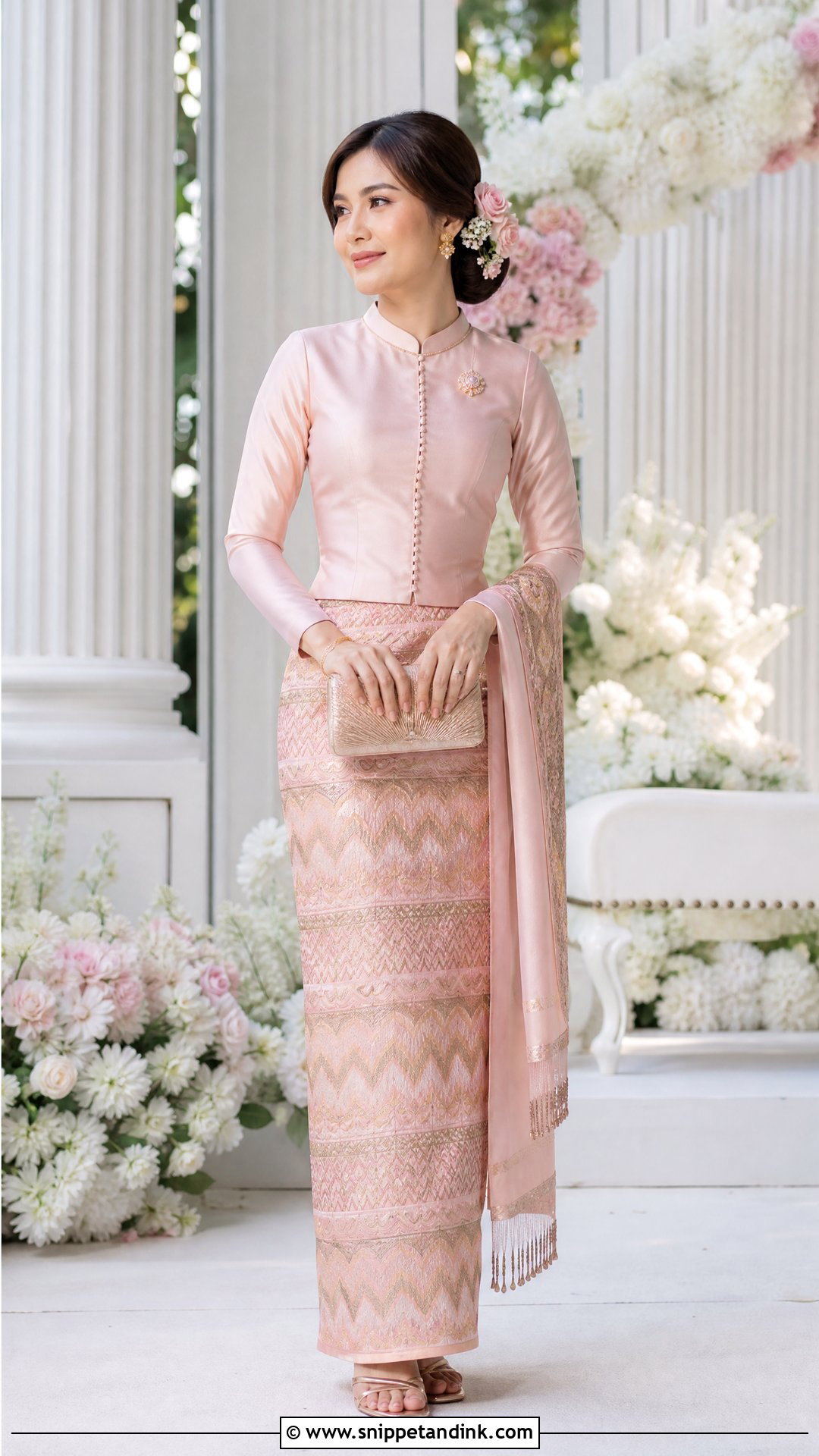
Blush pink softens the blouse-and-htamein pairing for a daytime wedding. The yinzi blouse buttons down the front, which gives a neat, symmetrical bodice and makes dressing easier than a side-fastened style. I’d pick fitted pink silk with elbow-length sleeves and restrained beadwork, worn with a rose, champagne and gold acheik htamein. Gold floral earrings, a small structured clutch and metallic sandals complete it, with a low side bun of pale pink flowers and jasmine. Leave the neckline open enough for a delicate necklace. Pink silk does vary a lot by dye lot, so I check the blouse and skirt side by side in daylight before anything is cut.
5. Ivory Lace Blouse and Champagne Htamein
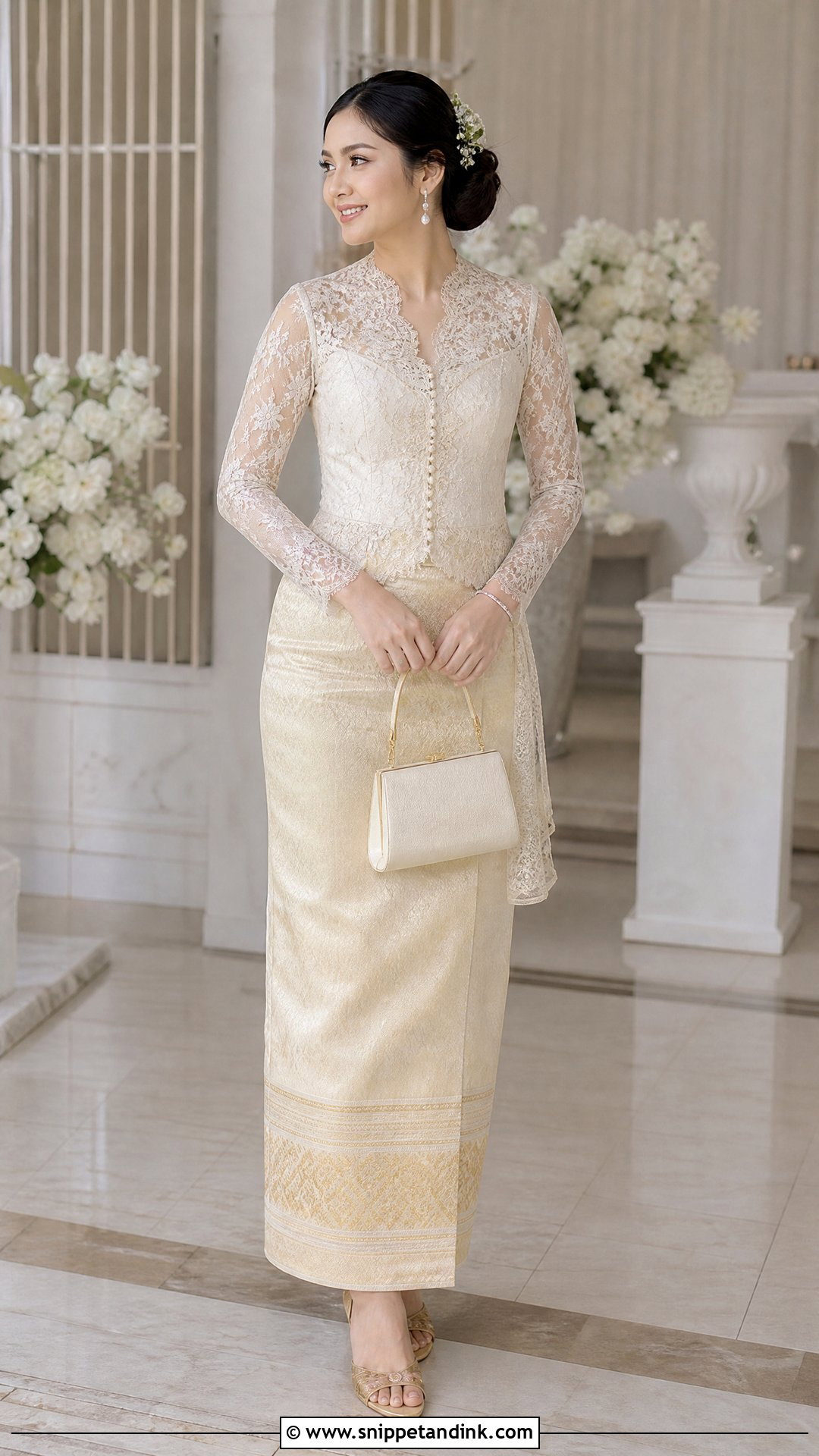
Ivory lace on top with champagne silk below feels formal but light. Choose a fitted ivory blouse with a lined bodice, sheer lace sleeves and a simple round neck, and a champagne htamein with a narrow gold border and subtle woven motifs. The skirt should skim the body; if it is wrapped too tightly, you’ll take tiny steps all day. Pearl drops, a slim gold bracelet, a compact ivory bag and low gold heels or embellished sandals keep it understated. A softly twisted bun with small white flowers along one side, luminous skin and a rose lip suit the palette. Heavy jewellery hides the lace, so leave it off.
6. Emerald Green Acheik Myanmar Wedding Dress
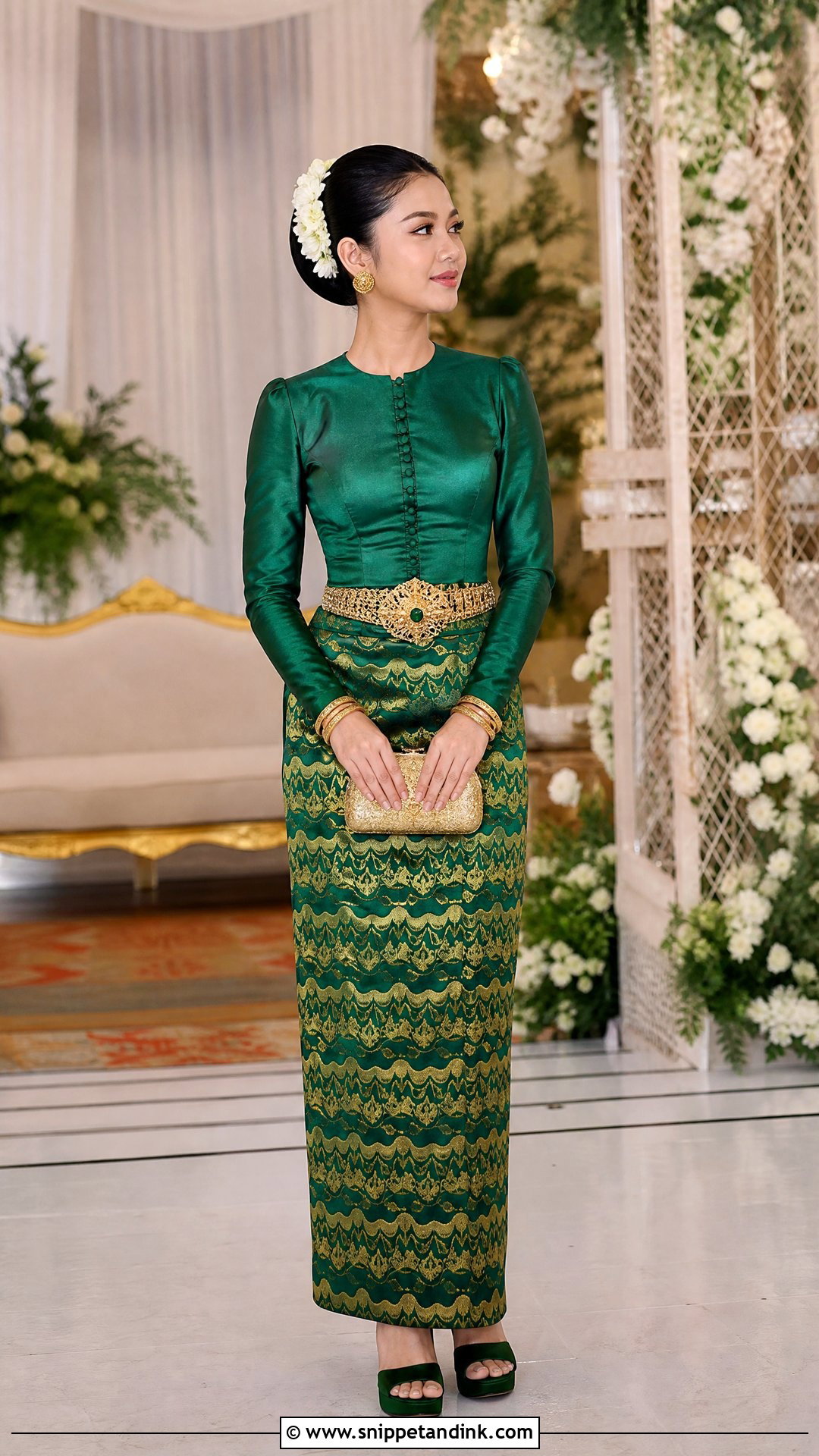
Emerald next to gold jewellery and woven silk looks rich without being loud. Begin with an emerald acheik htamein patterned in gold, black or deep teal, and add a fitted silk blouse in the same green with a clean neckline and three-quarter sleeves so the top stays calmer than the skirt. A narrow embroidered waistband smooths the join. Gold drops, stacked bangles, a small metallic clutch and green or antique-gold velvet sandals tie it together. A sleek bun with white flowers adds crisp contrast. Warm bronze eye makeup and a soft berry lip suit the saturated colour. Matching two greens in silk is harder than it looks, so I’d have both pieces dyed or bought together.
7. Royal Blue Silk Myanmar Wedding Dress
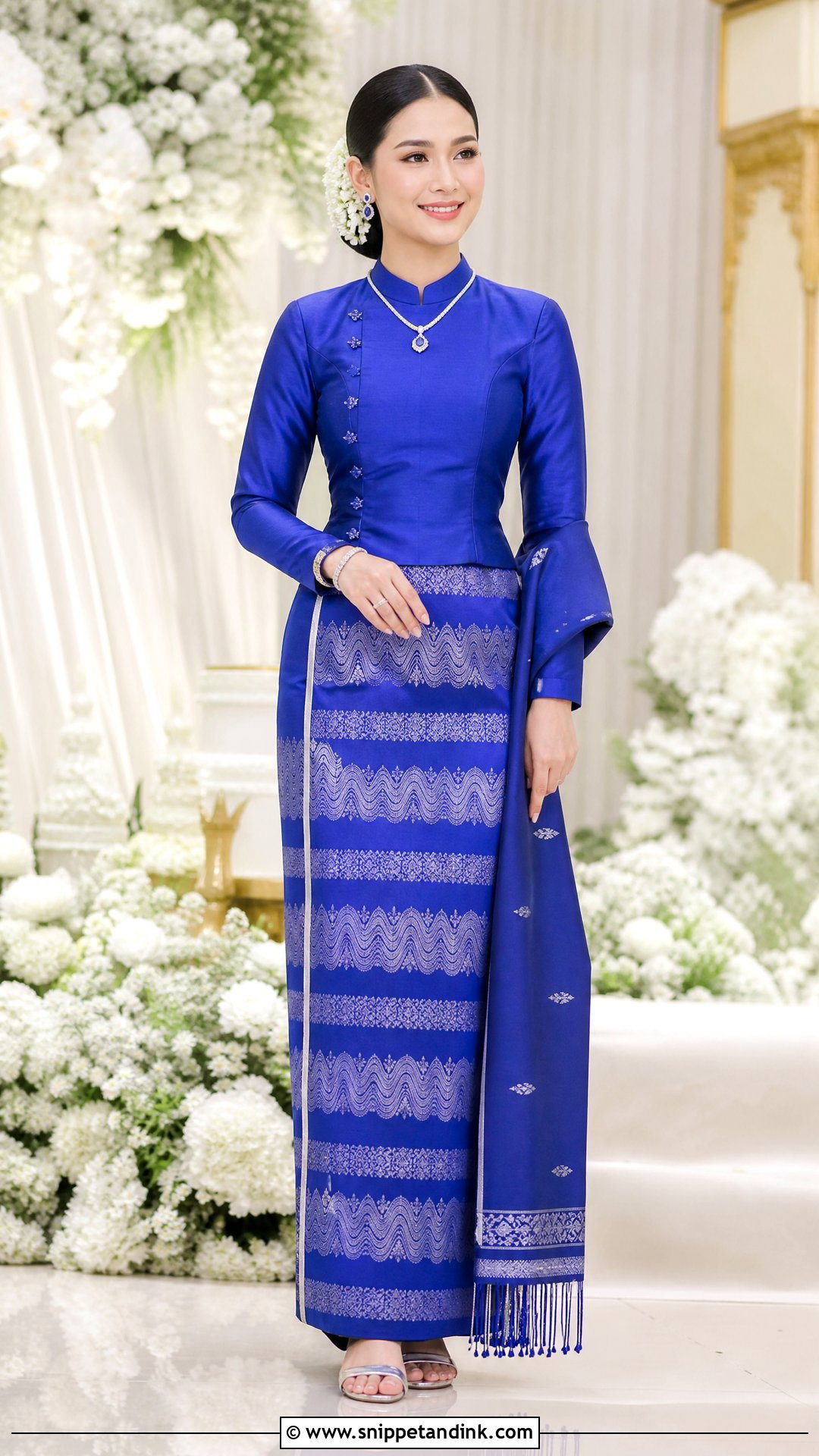
Royal blue silk holds its colour in both indoor and outdoor photos, which not every shade does. Choose a smooth blue htamein with fine silver or pale gold weaving and pair it with a fitted yinbon, the traditional blouse that fastens at the side so the front stays uninterrupted. Sapphire-coloured earrings, a slim silver necklace and a matching bracelet suit it, with silver low heels or formal sandals to lift the darker fabric. A centre-parted low bun with white jasmine finishes it. Keep the embellishment on the blouse to the cuffs and neckline; with strong blue, jewellery and a woven skirt, any more and the pieces start competing.
8. Purple Htaingmathein and Train Htamein
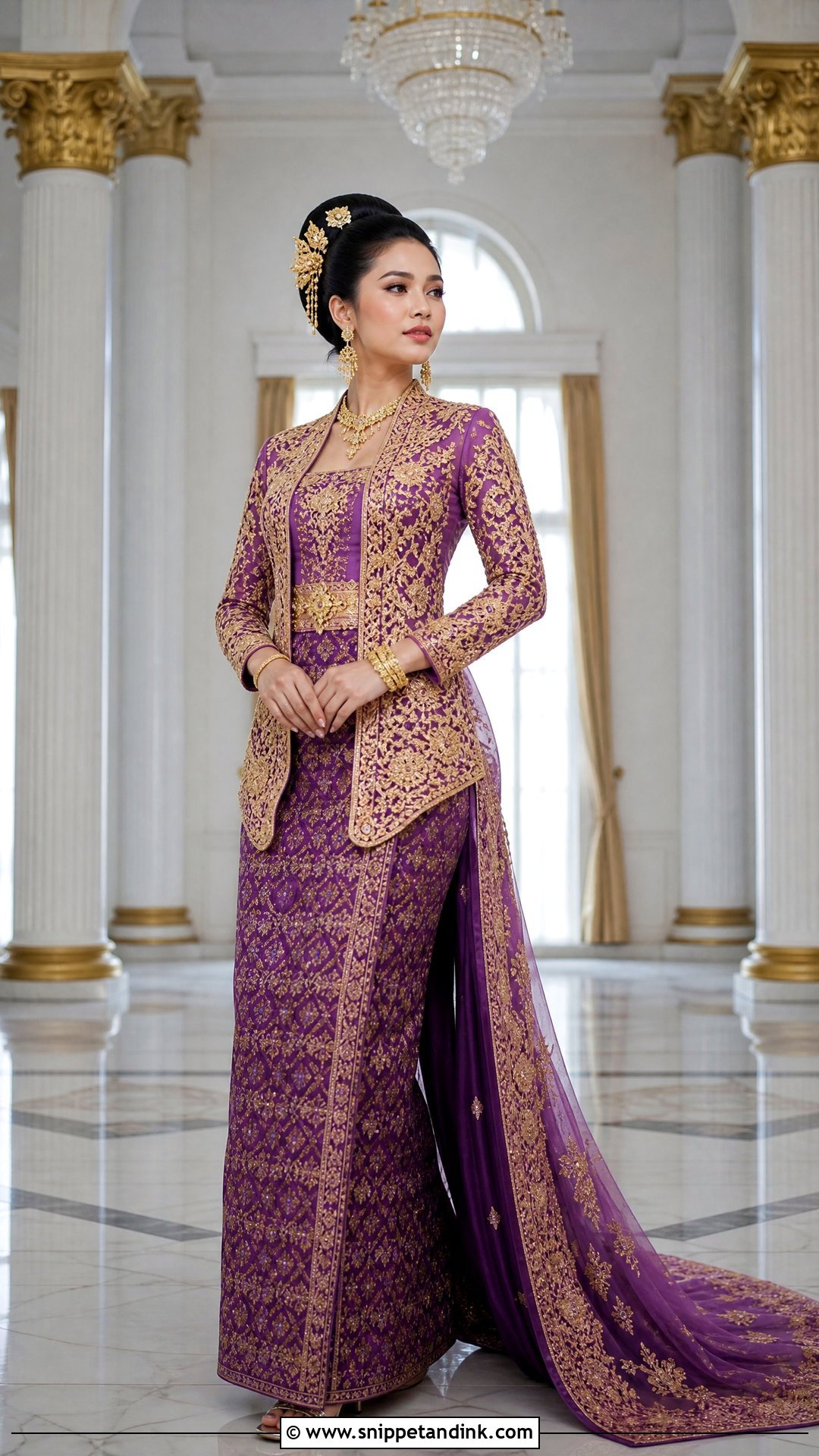
Deep purple gives a structured bridal outfit real weight. Wear an embroidered htaingmathein over a coordinated bodice and add a silk htamein with a broad ceremonial train, the yethina, which belongs to older court dress and today appears mainly at weddings and in classical dance. Embroidery in gold, lilac and muted pink keeps the dark fabric from looking flat. A traditional updo with gold combs, chandelier earrings, layered bracelets and low gold sandals let the train fall properly. A train like this needs a helper every time you turn, so I brief someone in the family before the day. With so much visual weight in the fabric, keep makeup controlled: defined eyes, highlighted skin and a plum-rose lip.
9. Pastel Peach Myanmar Wedding Dress
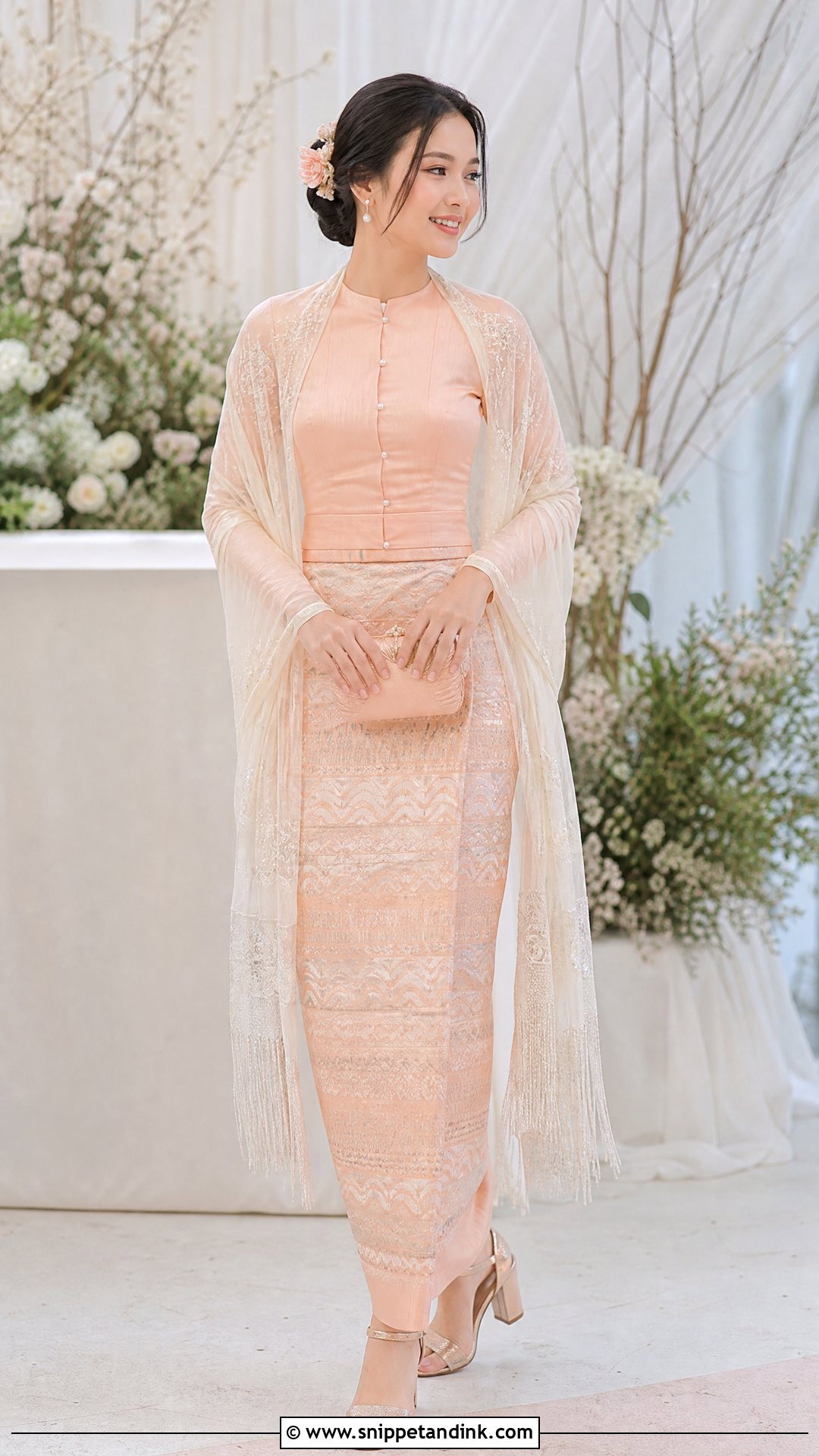
Peach can feel just as ceremonial as red, provided the fit and accessories are taken seriously. Choose a peach silk htamein with cream and pale gold weaving and a fitted blouse with a modest V-neck, elbow sleeves and tiny pearl buttons. A sheer cream shawl adds formality for the entrance and portraits, and comes off for the reception. Pearl earrings, a floral hairpin and champagne block heels complete it, with a soft low bun and a few face-framing pieces. Coral makeup with light gold shadow suits the warm palette. Peach is the colour I’d test hardest against your skin: on some complexions it disappears, and a slightly deeper apricot fixes that.
10. Silver Embroidered Htamein Wedding Dress
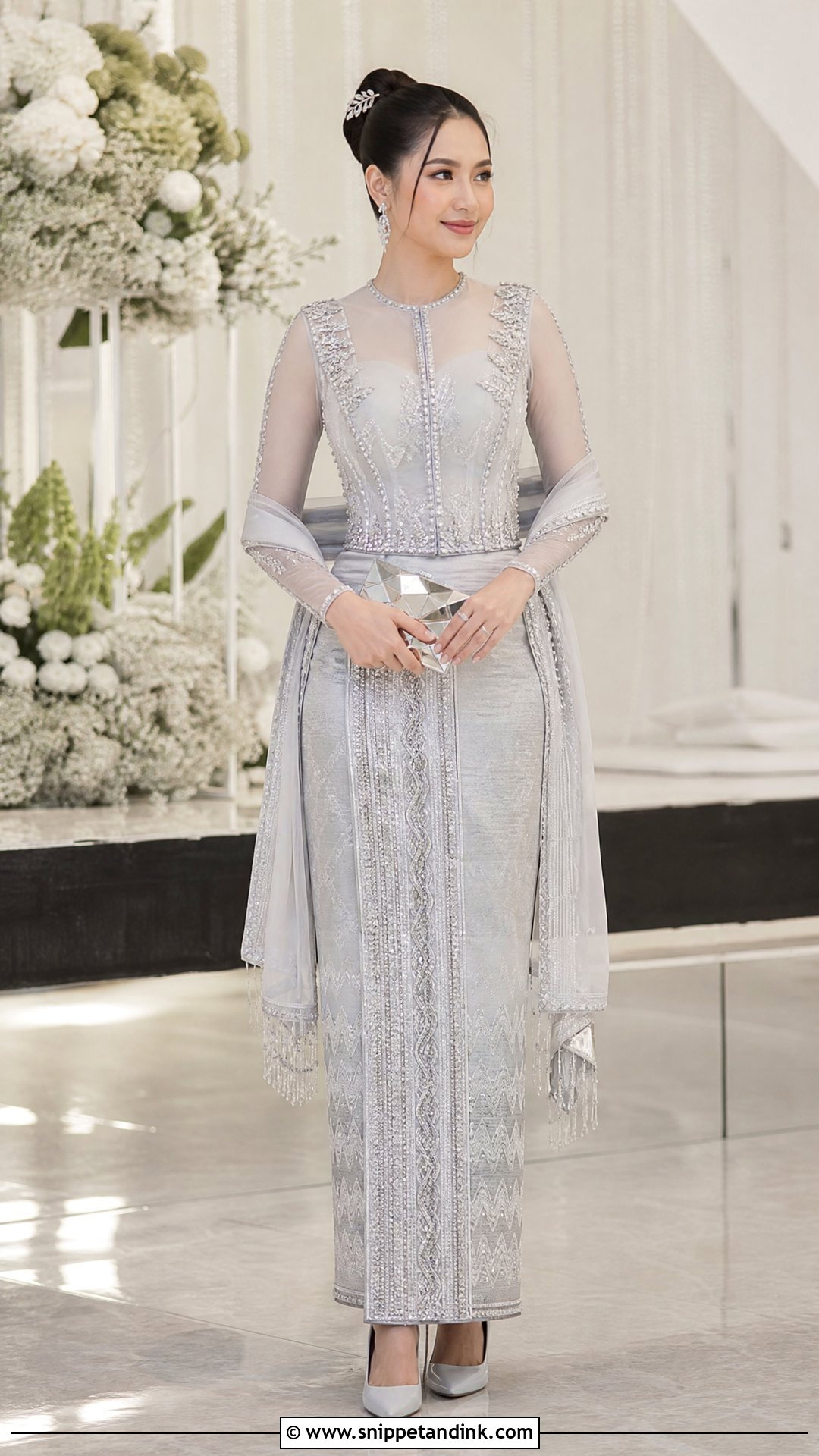
Silver embroidery turns a plain grey htamein into an evening outfit. Select a cool silver or dove-grey skirt with vertical embroidery, which lengthens the figure, and a matching silk blouse with sheer sleeves and crystal detail at the neckline. One statement piece is enough, long silver earrings rather than a full set. A mirrored clutch and pale grey heels continue the monochrome palette; a smooth high bun with a silver comb or small white blossoms finishes the hair. Cool pink lipstick suits the metallics. I always give the blouse and htamein slightly different textures, because two identical grey silks look flat and grey under flash.
11. Maroon Jacket and Gold Silk Htamein
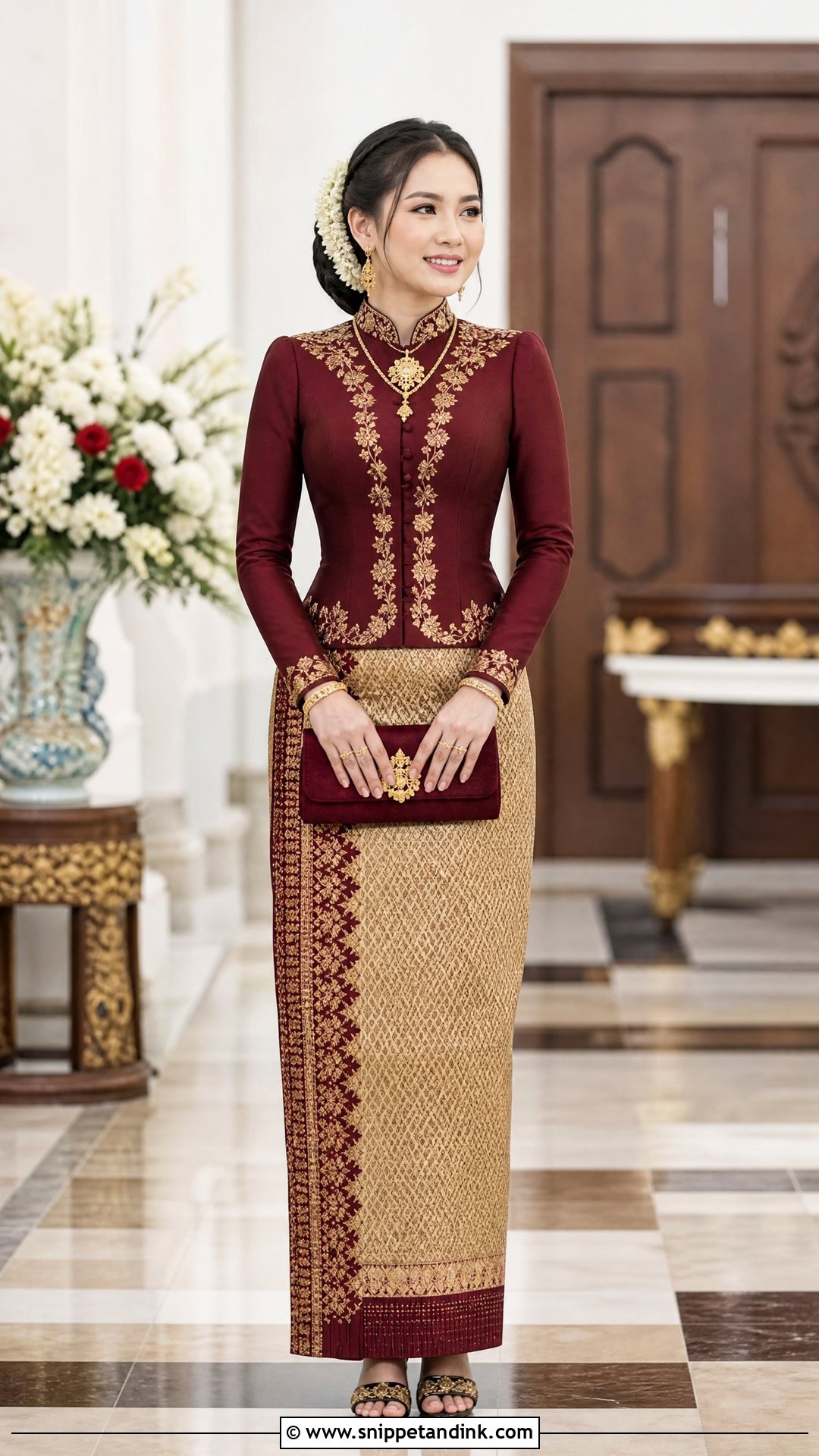
Maroon and gold are a rich formal combination, and they read especially well in bright halls. Start with a fitted maroon jacket with a high neckline, covered fastenings and fine gold embroidery down the front, then a gold silk htamein woven with narrow maroon details so the two pieces clearly belong together. Antique gold earrings, a matching necklace and two or three slim bangles are plenty; a small maroon clutch and dark gold velvet sandals finish it. A low braided bun with cream flowers at the base, warm neutral makeup and a muted berry lip. A high-necked jacket in heavy silk gets warm quickly, so I’d ask for it to be lined in cotton rather than polyester.
12. Floral Silk Htamein and Fitted Blouse
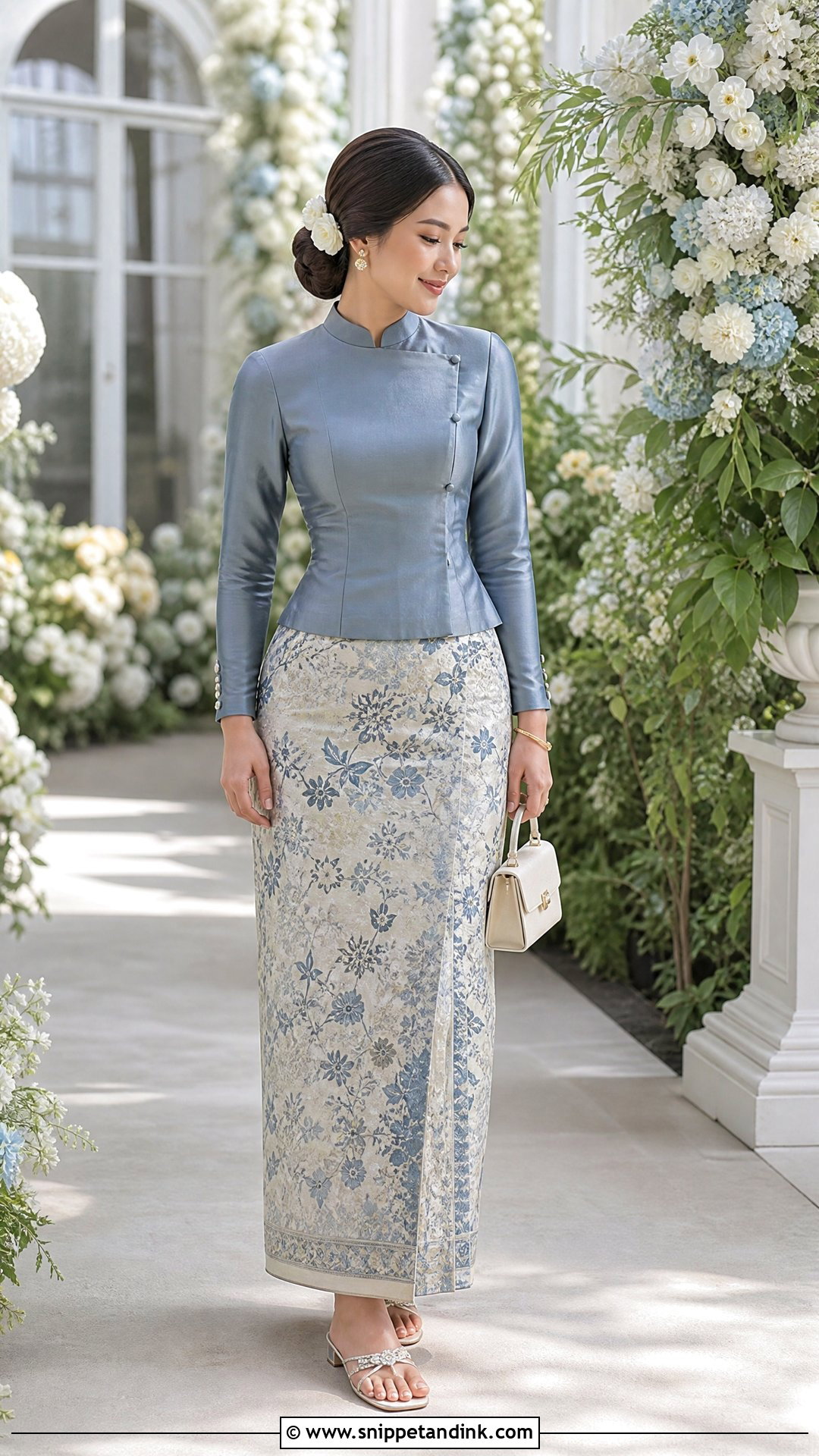
A floral silk htamein suits a happy daytime celebration, as long as the print keeps to a short palette, such as ivory flowers on dusty blue, rose or soft green. Pair it with a plain fitted blouse that matches one background colour from the print; that single repeat keeps it coordinated. Small gold earrings, one bracelet, a structured neutral bag and embellished low sandals are plenty. In the hair, I’d use one type of flower in a sleek side bun rather than mixing several. Fresh makeup with rosy cheeks and a satin lip. Skip heavy necklaces, large hairpieces and patterned accessories; the print is already doing the talking.
13. Peplum Blouse and Traditional Htamein
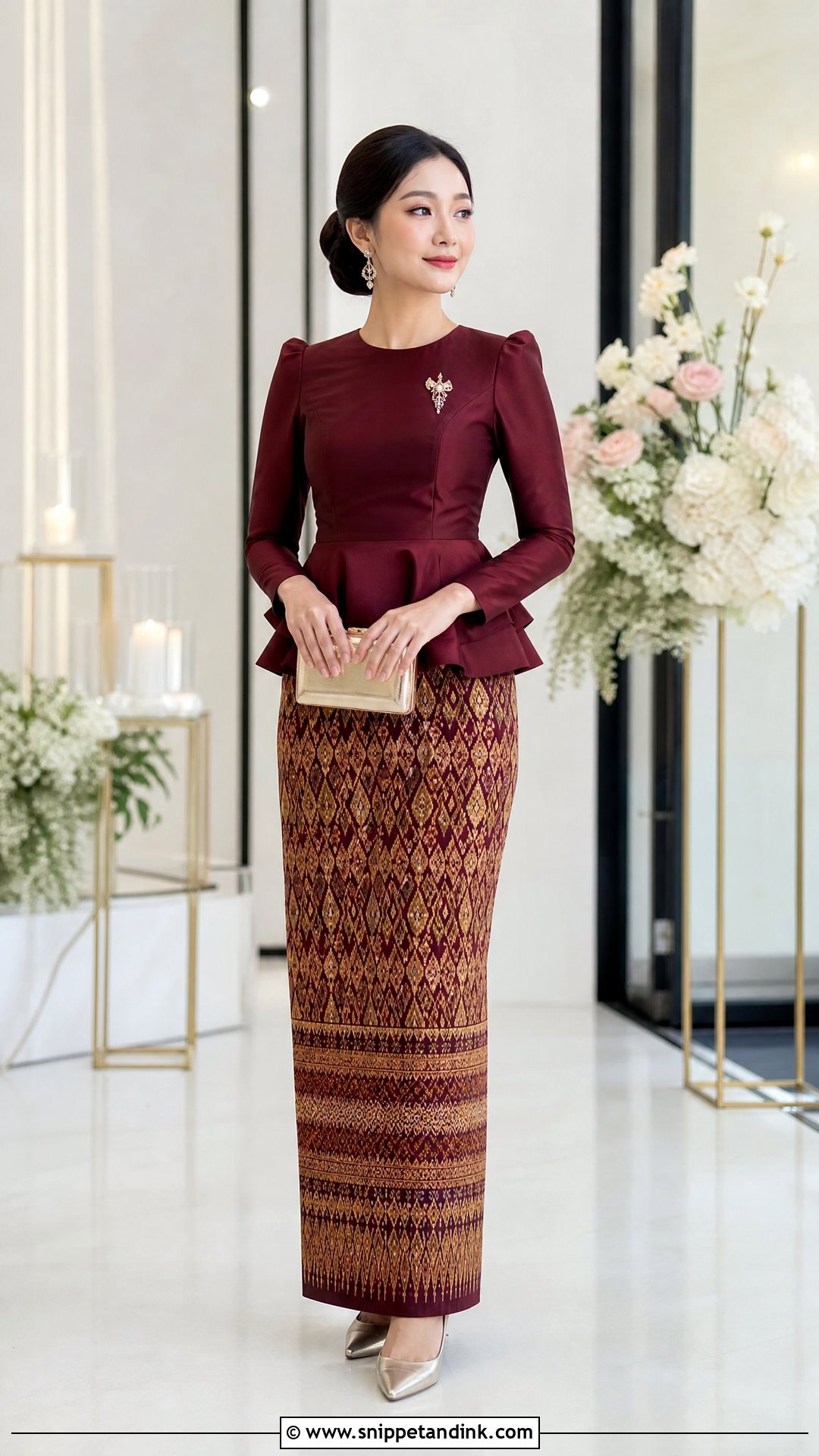
A tailored peplum blouse defines the waist while keeping the long line of the htamein. It should fit closely through the bodice and flare only gently above the hips. Pair it with a straight acheik skirt in navy, burgundy, emerald or champagne, and keep the peplum short; a long one covers the best part of the weave. Pointed metallic flats, drop earrings and a compact box clutch suit it, with a ponytail twisted into a low bun. Matching the shoes and bag in one colour holds it together. It’s the fusion look I suggest to brides who want the traditional textile in a cleaner, current shape.
14. One-Shoulder Blouse and Acheik Htamein
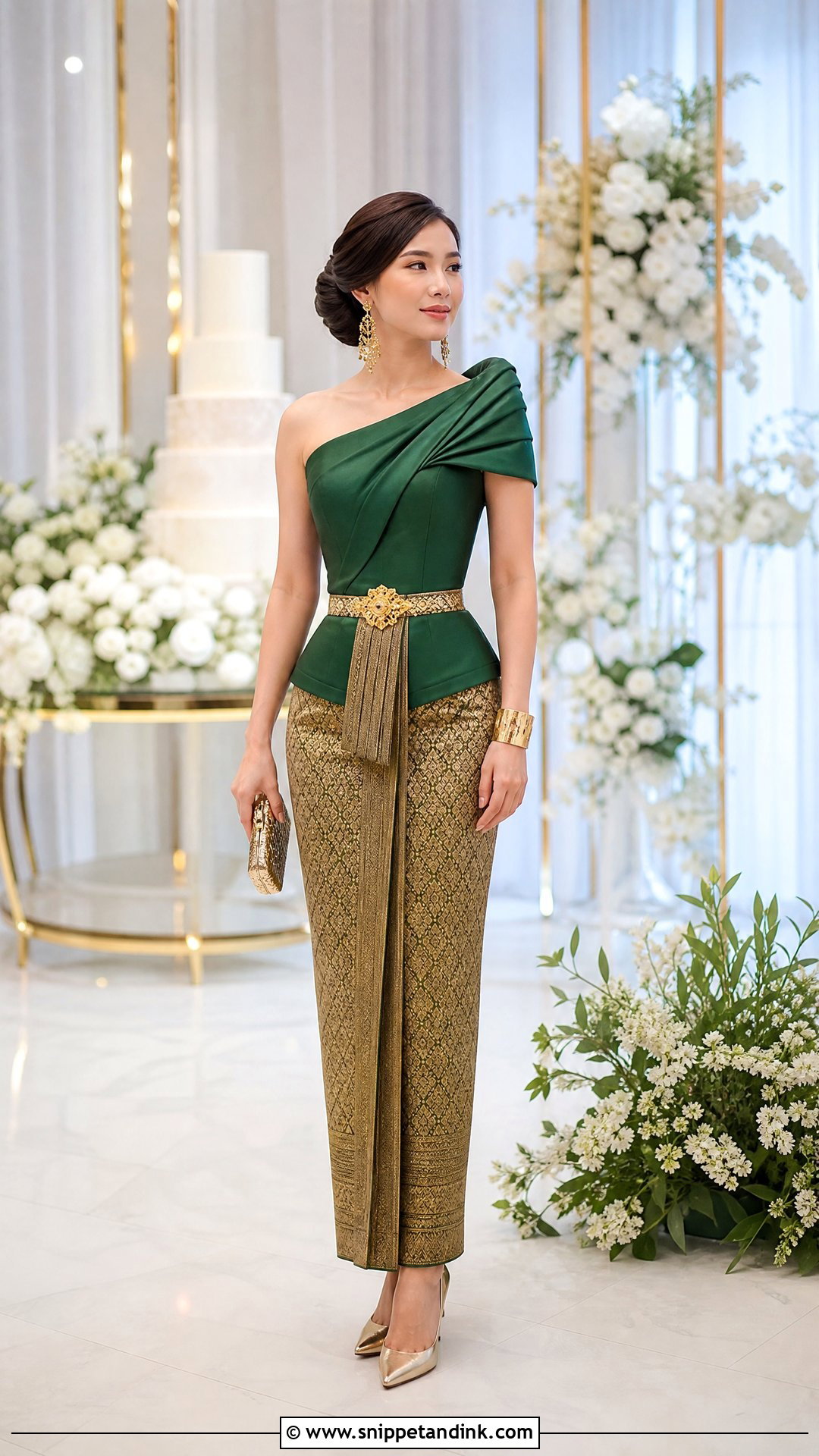
A one-shoulder blouse works with an acheik htamein for a modern reception, if the shoulder panel is wide and structured rather than a thin strap. Burgundy, midnight blue or emerald against a gold-patterned skirt looks polished, and a slim waist detail keeps the join neat. Statement earrings, a cuff, a small clutch and low metallic heels complete it; with an asymmetric neckline, no necklace, and the bun placed toward the bare shoulder so the cut stays visible. I’d keep this look for the reception rather than a ceremony with elders, where a covered shoulder is usually expected.
15. High-Neck Lace Blouse and Silk Htamein
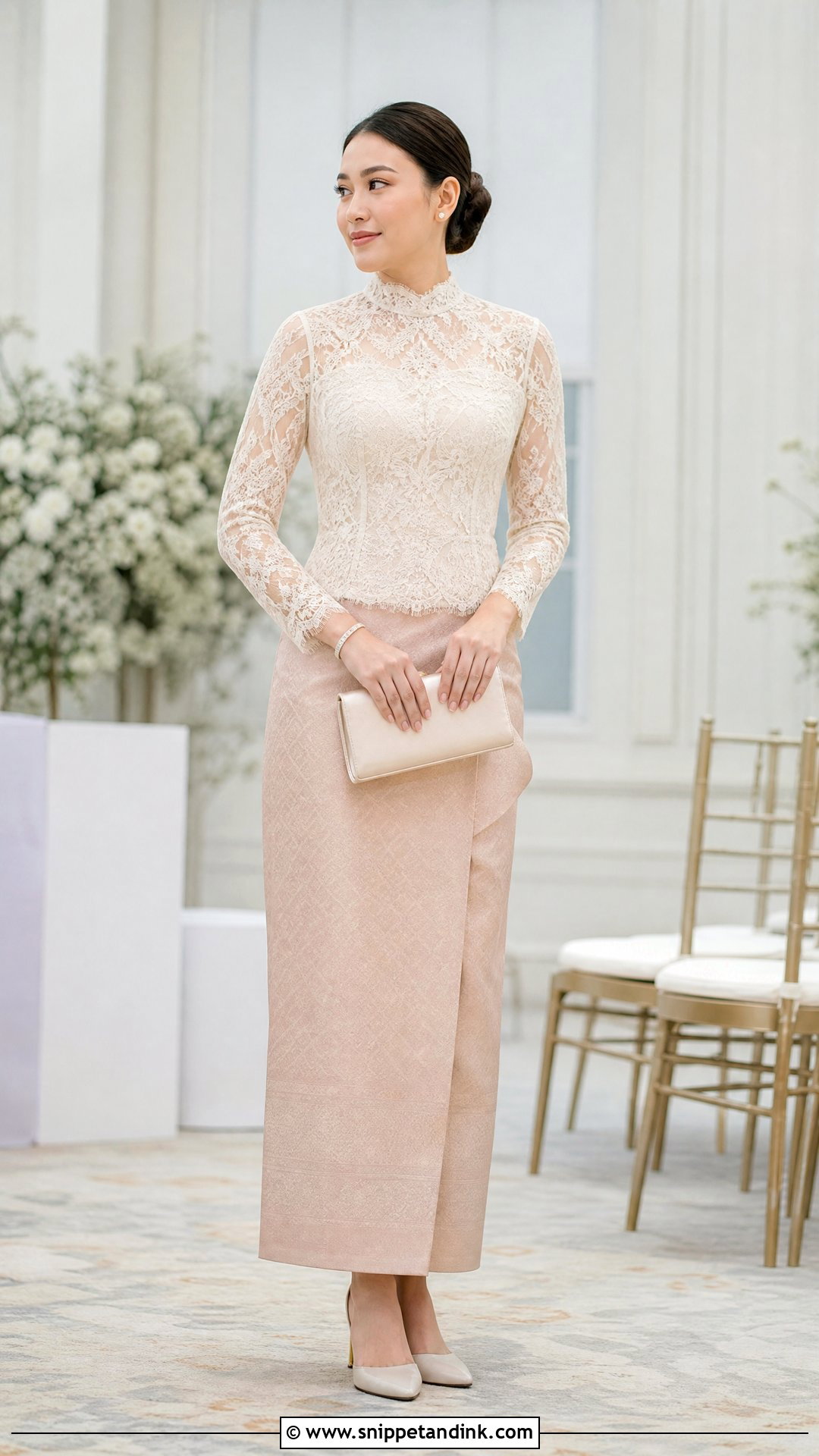
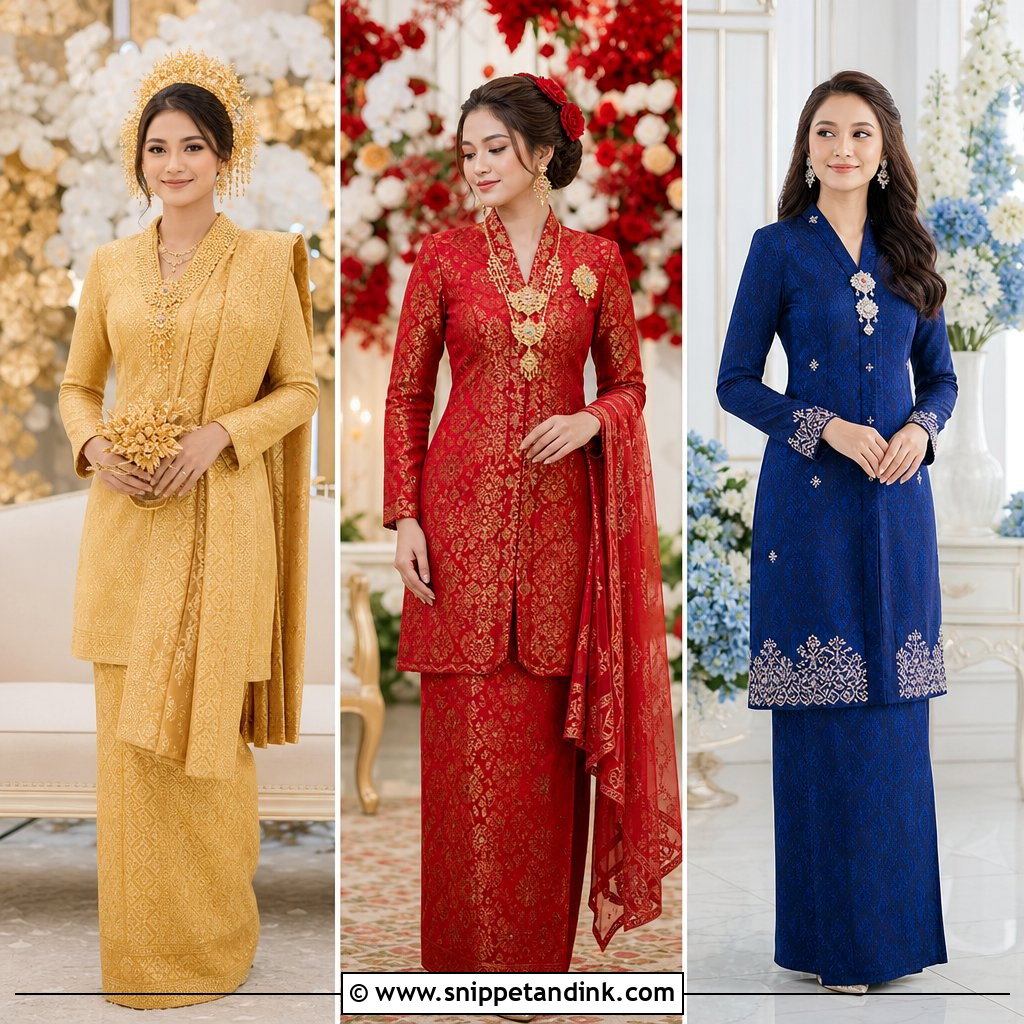
A high-neck lace blouse gives coverage and still looks delicate. Choose ivory, blush or pale blue lace with a fully lined bodice and lightly sheer sleeves, worn with a smooth silk htamein in a coordinating solid or restrained acheik. Pearl studs, a narrow bracelet and a small satin clutch are enough next to the collar; closed-toe flats or low heels give a more contemporary finish. The collar already frames the face, so a clean low bun and no large flowers near the ears. A soft pink lip and subtle liner complete it. Tailoring matters here more than anywhere: a collar that stands away from the neck or lace that wrinkles at the shoulder looks unfinished in close-up photos.
16. Long-Sleeve Beaded Blouse and Htamein
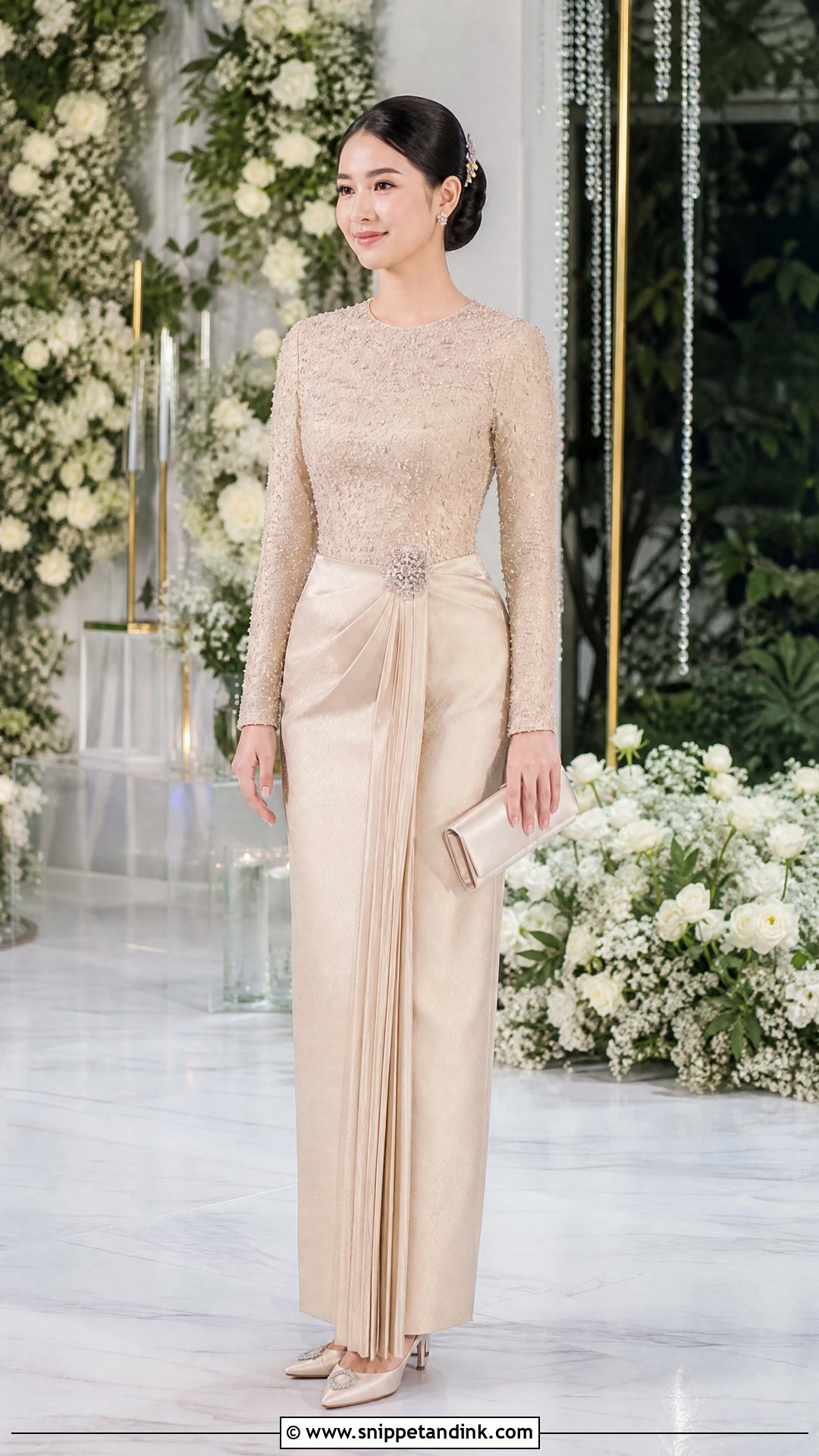
Beadwork on long sleeves catches the light every time you move, which makes it an evening favourite of mine. Keep the beading around the neckline, cuffs and upper bodice rather than over every inch, and pair the blouse with a simple silk htamein in the same colour family, champagne, dusty rose, pale gold or silver-blue. Small crystal earrings, a sleek clutch and low satin heels; keep bracelets minimal, because they snag on beaded cuffs. A polished bun with one jewelled pin, luminous makeup and defined brows suit the camera. Check the inside of the sleeves at a fitting; beads stitched through the lining can scratch over a long evening.
17. Pastel Shan Silk Wedding Dress
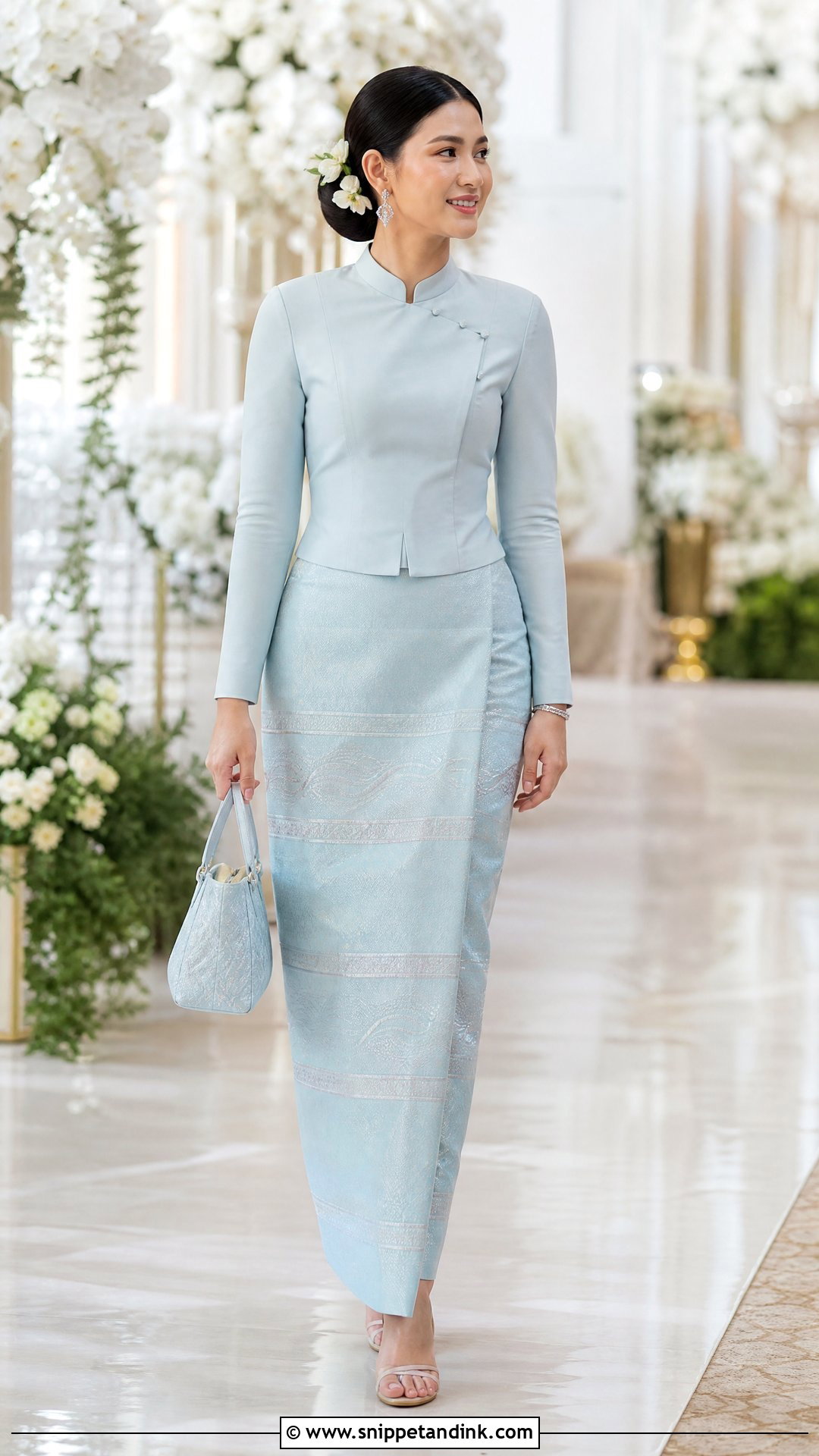
A pastel Shan-inspired outfit suits brides who like clean lines and gentle colour. Shan women’s dress is typically a long fitted skirt with a matching blouse in soft shades of fine silk. Choose a pale blue, mint, lavender or blush skirt with a coordinating long-sleeve blouse and subtle woven borders rather than heavy surface decoration. Silver earrings, a delicate bracelet, light neutral sandals and a compact silk bag in the skirt colour keep it understated, with a smooth low bun and small white flowers. Regional dress carries its own meaning, so for authentic textiles, motifs and ceremonial accessories I’d always work with a tailor or weaver who knows the tradition.
18. Kachin-Inspired Wedding Dress
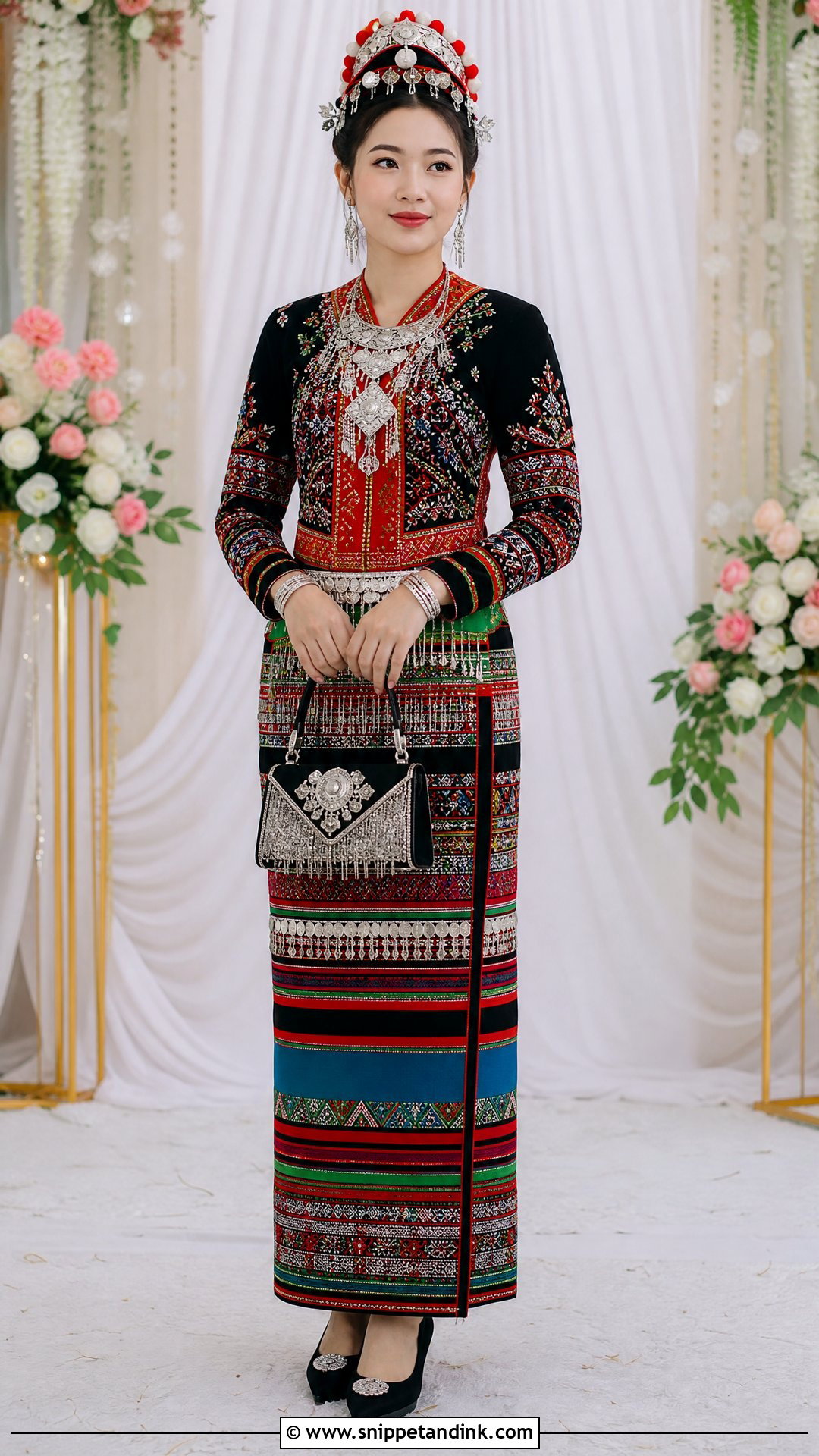
Kachin dress stands out for its bold decoration: colourful woven details, silver ornaments and elaborate accessories. Build the outfit around a fitted embroidered blouse and a long coordinating skirt in black, red, green or deep blue, and keep the shoes dark and simple with a small structured bag. Silver earrings, necklaces or waist ornaments can complete it, but where each piece sits follows custom, not just taste. Keep the hair neat so any appropriate headpiece is clearly visible. For a real Kachin wedding ensemble, I’d hand the decisions to a Kachin designer, artisan or knowledgeable family member, so meaningful patterns are worn correctly rather than as decoration.
19. Modern Ivory Gown With Acheik Panel
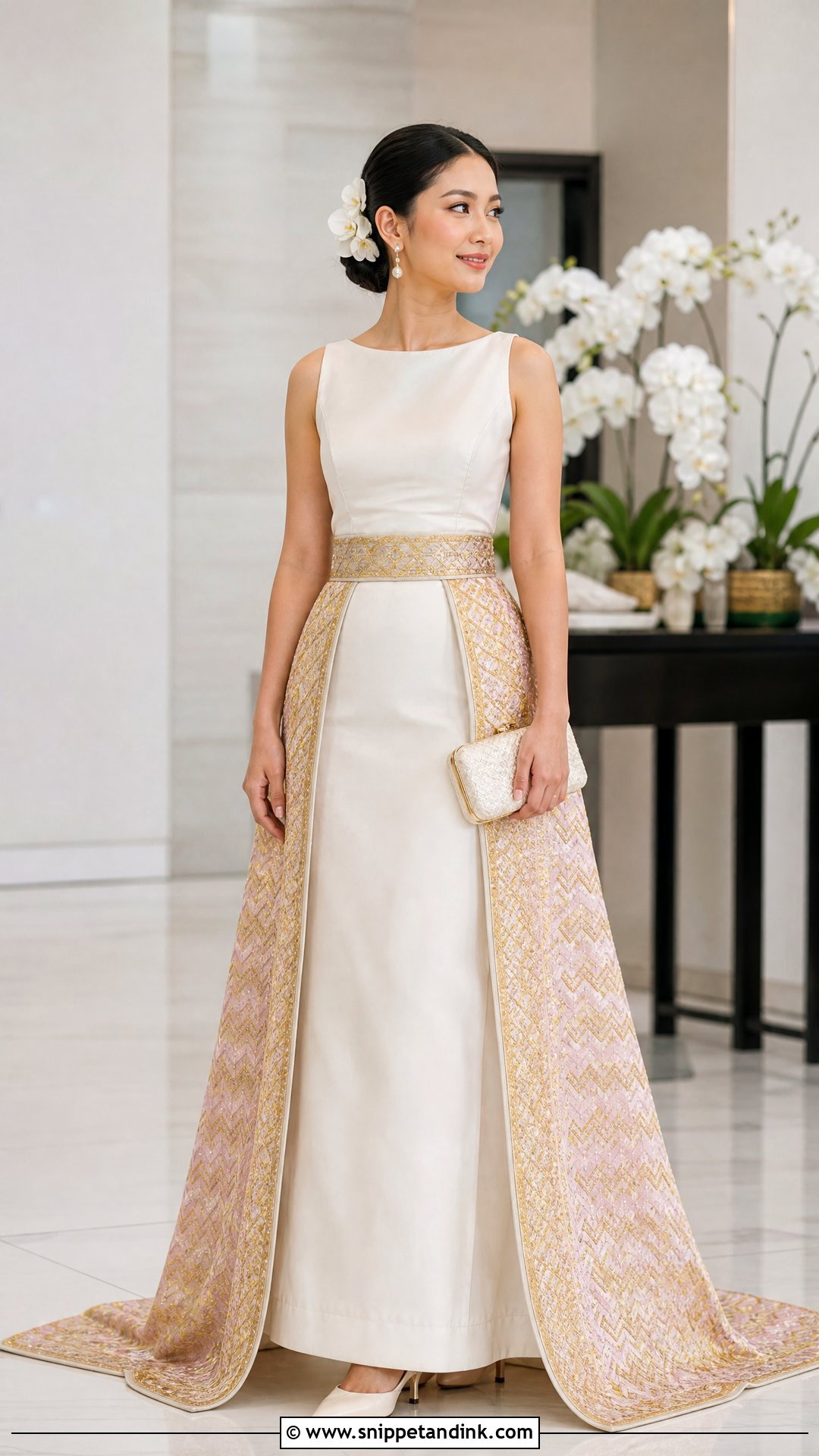
A modern ivory gown can carry Myanmar craftsmanship without copying the htamein set. I’d choose a full-length column or A-line gown and add acheik as a removable overskirt, a front panel, a waistband or a shoulder drape, with gold, blush, blue or burgundy waves against the neutral dress. Pearl earrings, an ivory clutch and low pointed heels keep it streamlined, with jasmine or white orchids in a low bun. Keep the neckline plain so the textile panel leads. Acheik silk is usually heavier than bridal crepe, so the seamstress needs to support the panel at the waist or it drags the gown sideways. It’s a good fit for a civil ceremony or a reception.
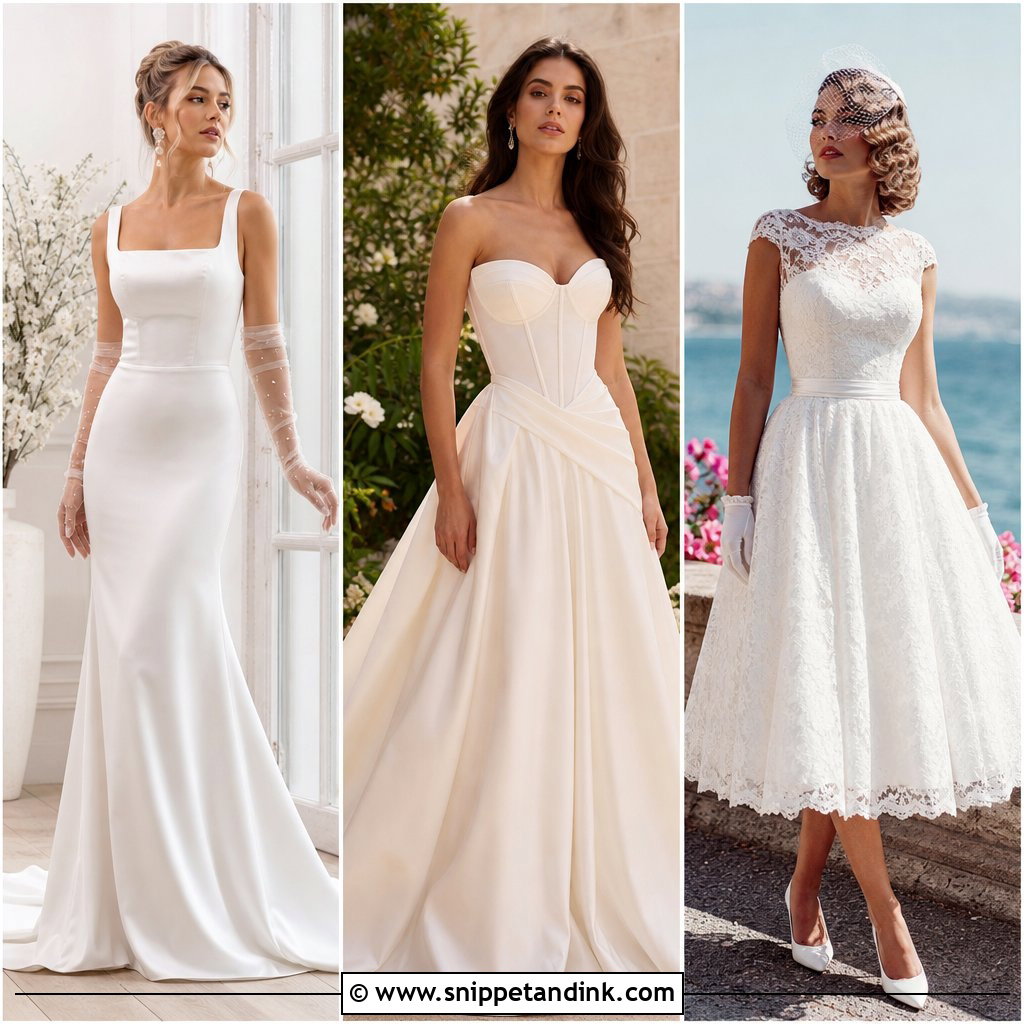
20. Red and Gold Myanmar Reception Dress
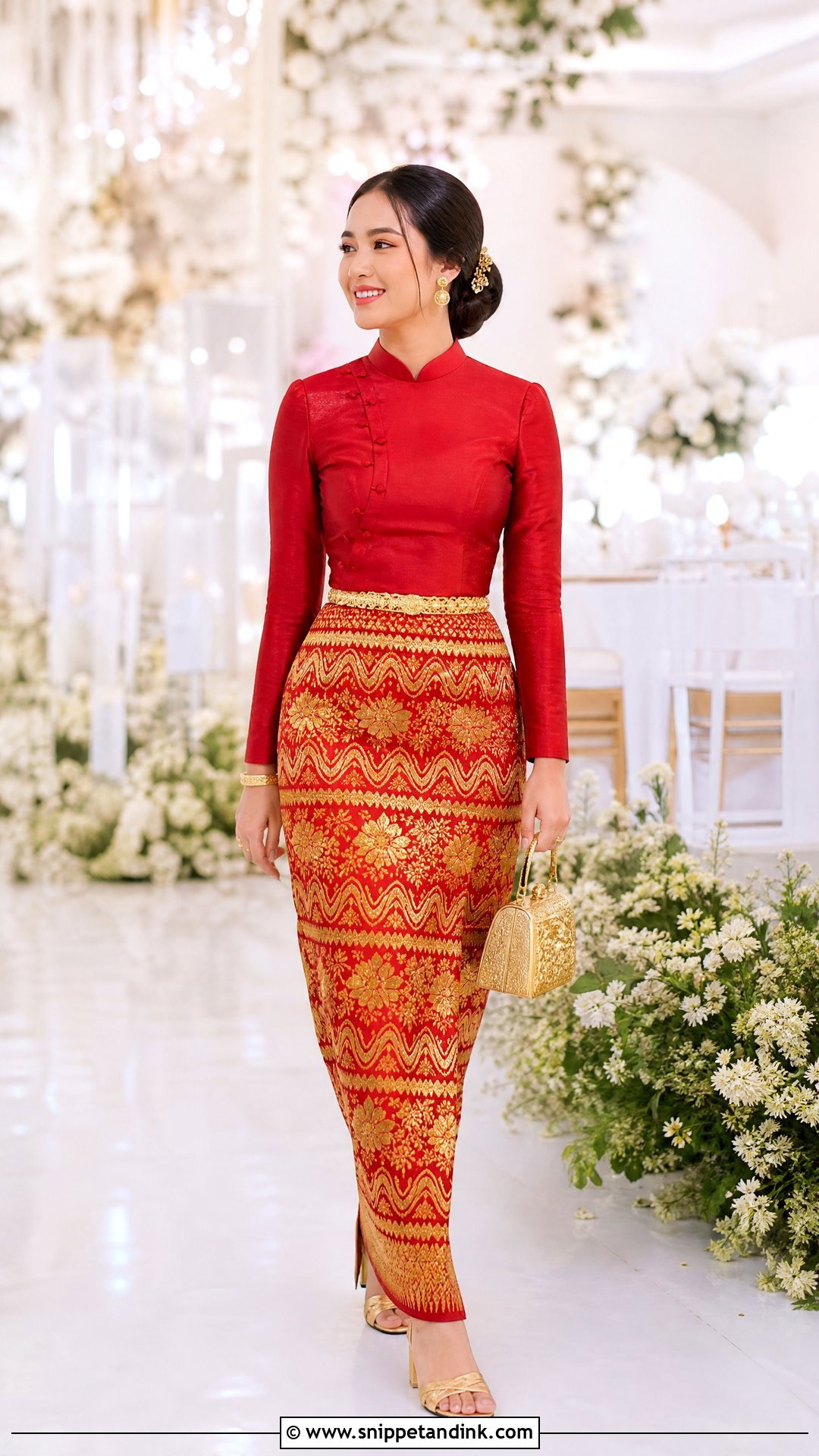
For the end of the night, a red and gold outfit built for movement makes sense. A fitted red blouse with short or elbow sleeves and a lightweight acheik htamein is far easier to walk and dance in than a heavy ceremonial skirt. Add a narrow gold waistband, medium earrings and a small wristlet. Low block heels or velvet sandals give support through all the greetings. I usually take the heavier ornaments out of the ceremony hairstyle at this point and add one gold comb, which also gives the bride a break from the weight. A brighter red lip makes the reception look feel distinct from the first outfit.
Heat, Silk and a Second Outfit
Most Myanmar weddings happen in warm weather, and a lined silk blouse, a jacket, gold jewellery and a full hairstyle add up quickly. Plan the heavy pieces for the ceremony and the portraits, then change. A lighter blouse and htamein for the reception is common now, and it lets you actually eat and greet guests.
- Ask for cotton lining in the blouse; it absorbs sweat where polyester lining sticks.
- Wear dress shields under silk sleeves, since perspiration can mark and fade some silk dyes.
- Keep fresh jasmine in a cool box until the last moment; it bruises and browns fast in heat.
- After the wedding, have acheik pieces cleaned by someone who handles silk, store them rolled or loosely folded in cotton, and keep them away from damp, which spots silk over time.
Let the Weave Lead the Outfit
A Myanmar bridal look comes together when personal taste, skilled tailoring and respect for the clothing are all pulling in the same direction. Silk htamein, acheik, fitted blouses, htaingmathein jackets, flowers in the hair and formal sandals combine in many ways, and colour sets the mood, from red and gold to peach, ivory or silver. Lace sleeves, peplum waists and removable woven panels can make the textile personal without hiding the craft. Where regional garments or meaningful motifs are involved, ask artisans and family before you decide. Start from the fabric you love, plan the fittings around how you’ll move on the day, and the rest of the outfit follows.
You'll Like These Ideas:


Leave a Reply