
Brides walking into a fitting room now have more directions open to them than I’ve seen in a long while. Clean minimal satin sits on the rail next to romantic lace, basque and drop waists, bows, pearl work, detachable skirts, dramatic sleeves and sleek reception dresses. That range is freeing, but it also means the shape you love on a hanger may not suit your venue, your walk down a long aisle or a ten-hour day. Below are thirty gowns and outfits I’d genuinely put a bride in, each with how I’d style it from head to toe and the practical catch I’d warn her about.
Gown Orders Run on a Longer Clock Than Most Brides Expect
The number one surprise I see is timing. Most bridal gowns are made to order after you choose them, so the dress you try on is a sample, and yours doesn’t exist yet. Production commonly takes several months, and alterations need their own window after it arrives. Timelines vary by designer and shop, so ask yours directly, but this is the rough shape I plan around:
- Nine to twelve months before: start trying on and settle on a shape.
- Around eight months before: place the order so production has time.
- Two to three months before: the gown arrives and the first fitting begins.
- Two to four weeks before: final fitting with your exact shoes and underwear.
Rush orders exist, though they often cost extra and limit your choices, so off-the-rack and sample sales are worth a look if your date is close.
What to bring to a fitting appointment
Wear or bring nude no-line underwear and a strapless bra, plus shoes close to your wedding heel height. Keep the group small; two or three people whose taste you trust is plenty. With a crowd, everyone’s opinion drowns out your own, and I often watch a bride talk herself out of a dress she clearly loved.
1. Simple Satin Bride Dress
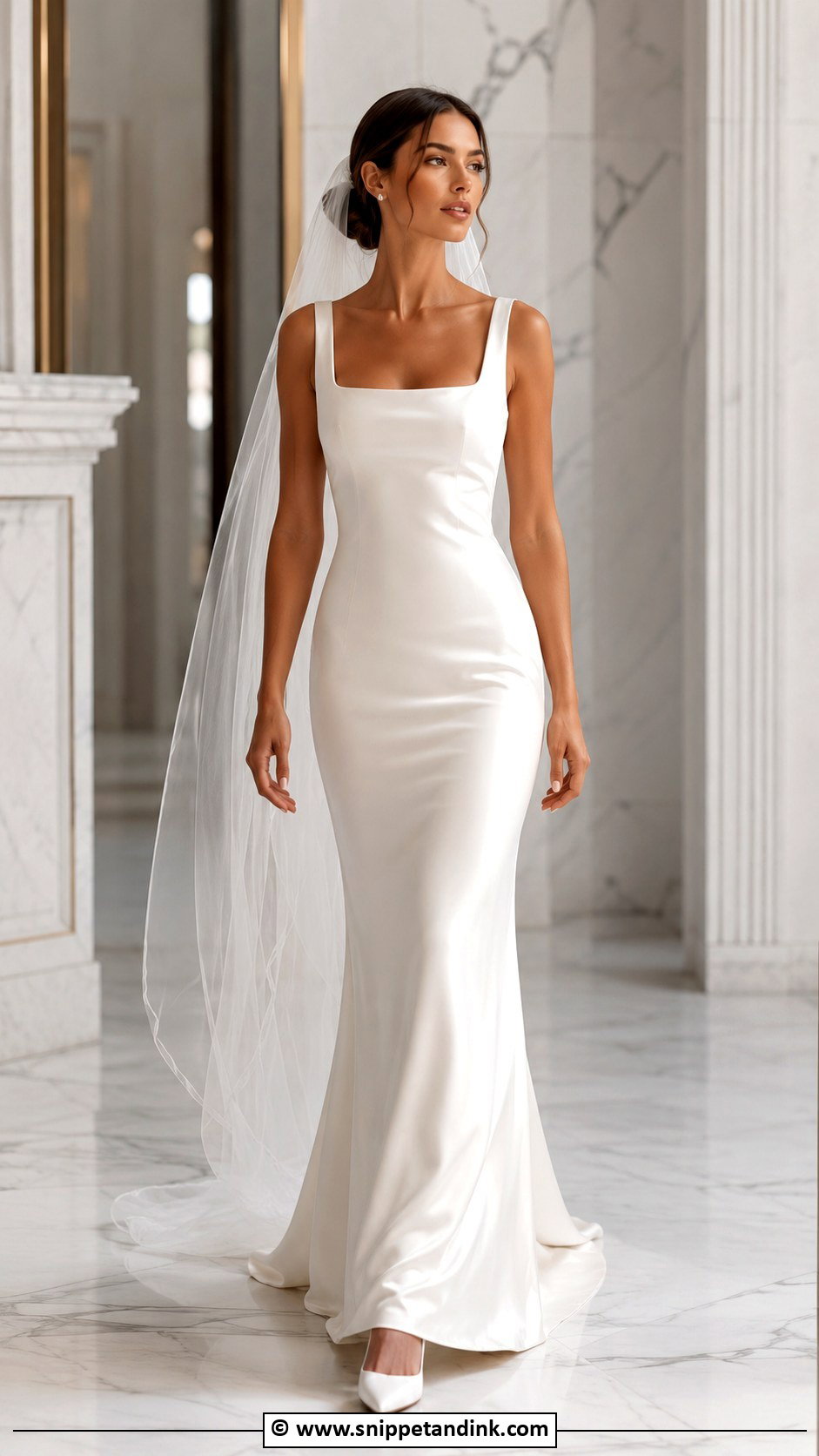
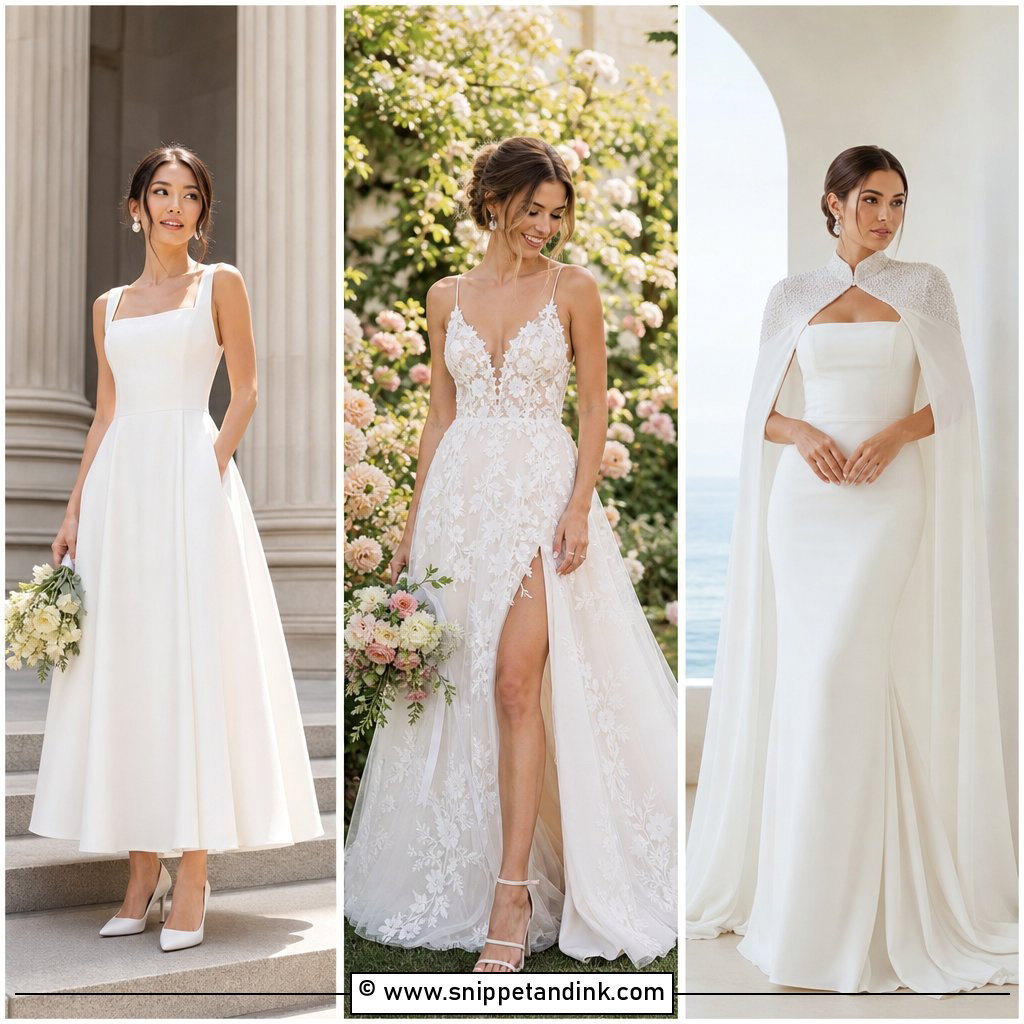
Plain satin hides nothing, which is exactly why I love it and why it needs perfect fit. A bias-cut gown skims the body and shows every line underneath, while an A-line in heavier duchess satin holds its own shape and is far more forgiving. Ivory or pearl tones usually flatter more skin than stark white. A square or scoop neck, or a soft cowl, keeps it current. I’d finish it with pointed satin pumps, pearl studs, a sleek low bun and a fine tulle veil, plus a bouquet of white roses, orchids or callas. Hotels, city ceremonies and indoor receptions all suit it.
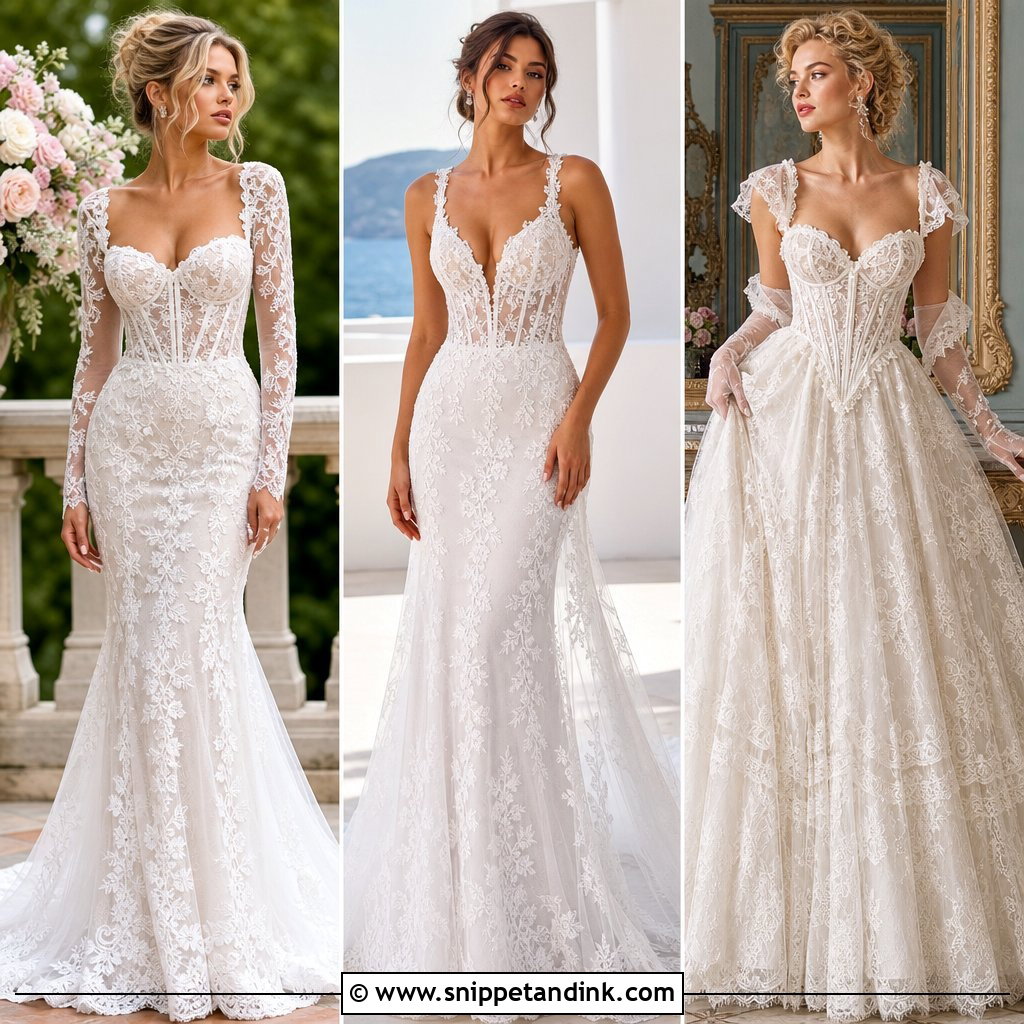
2. Lace A Line Bride Dress
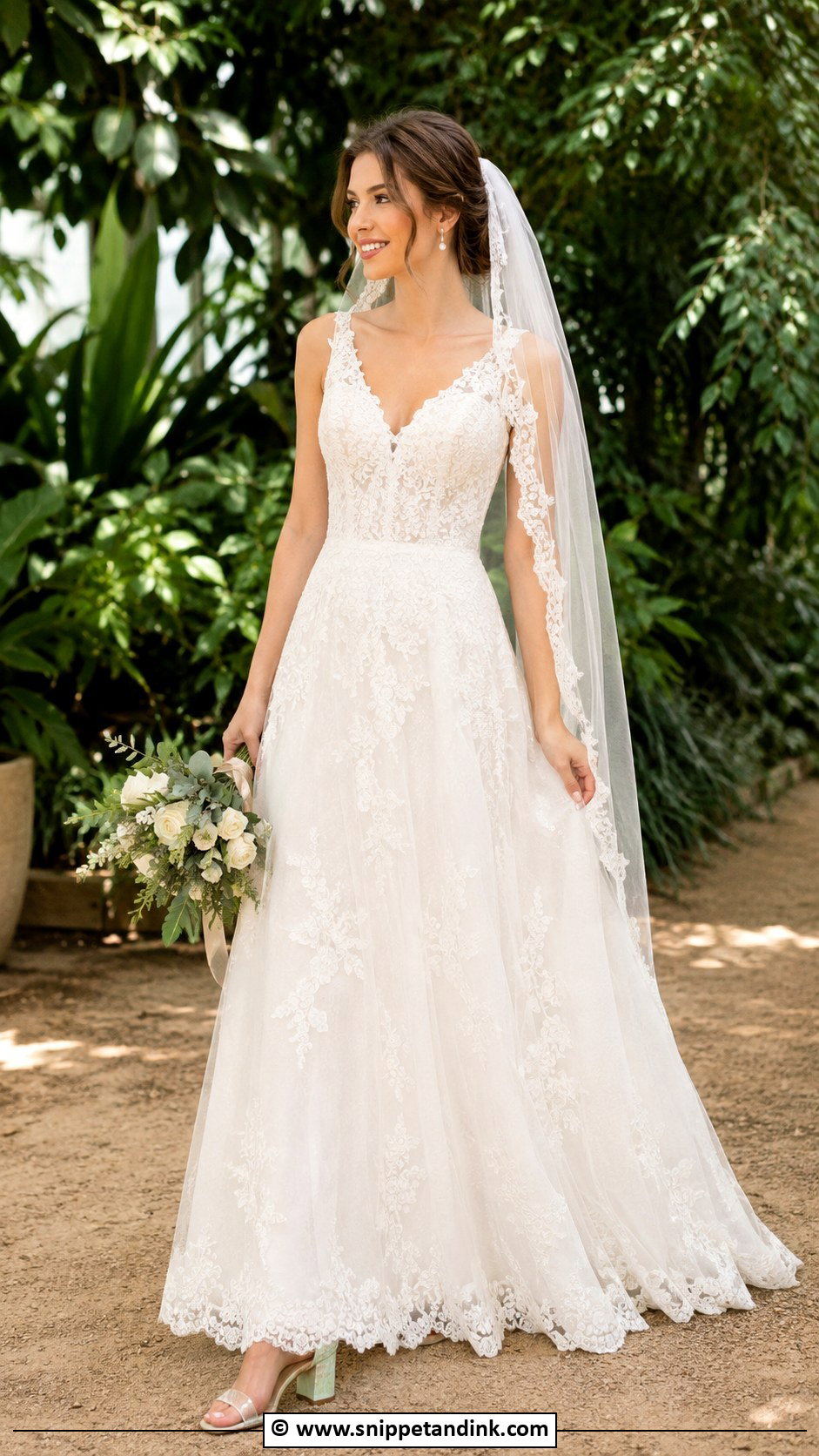
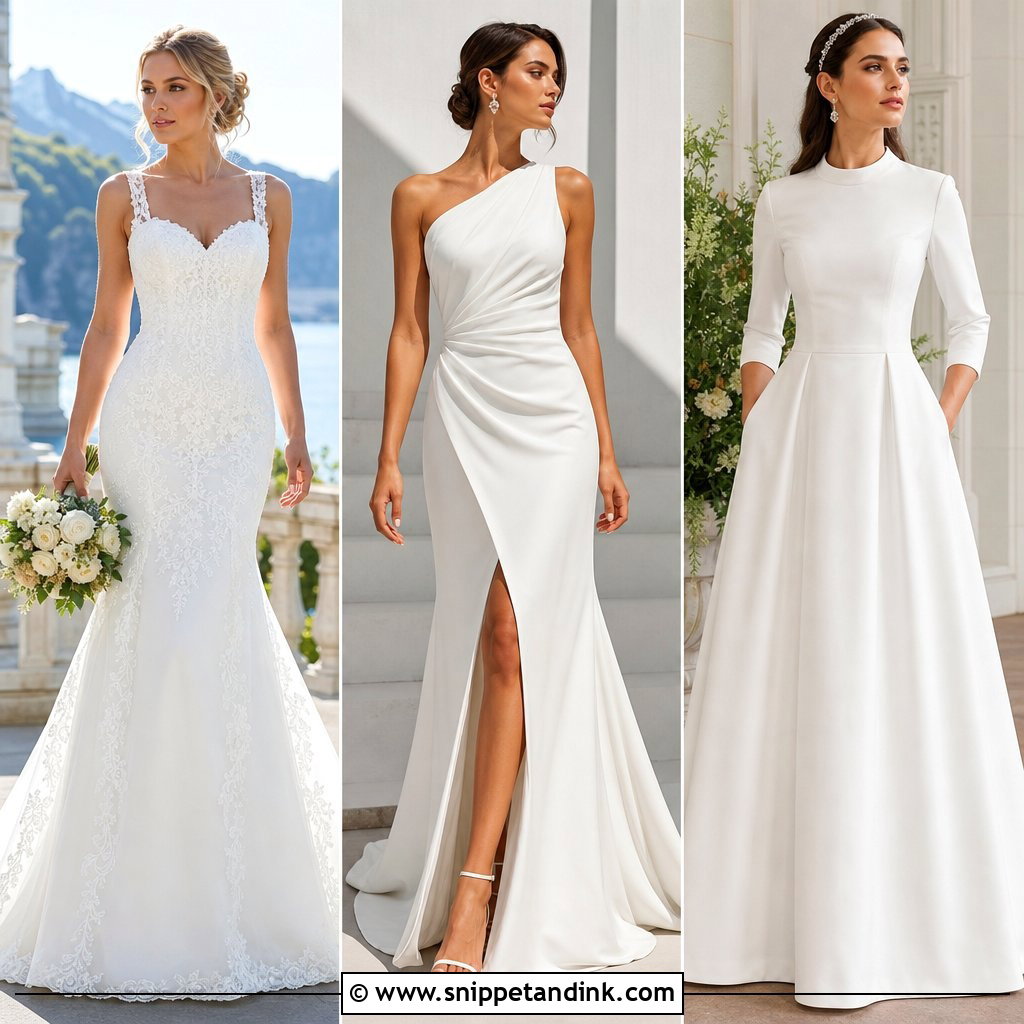
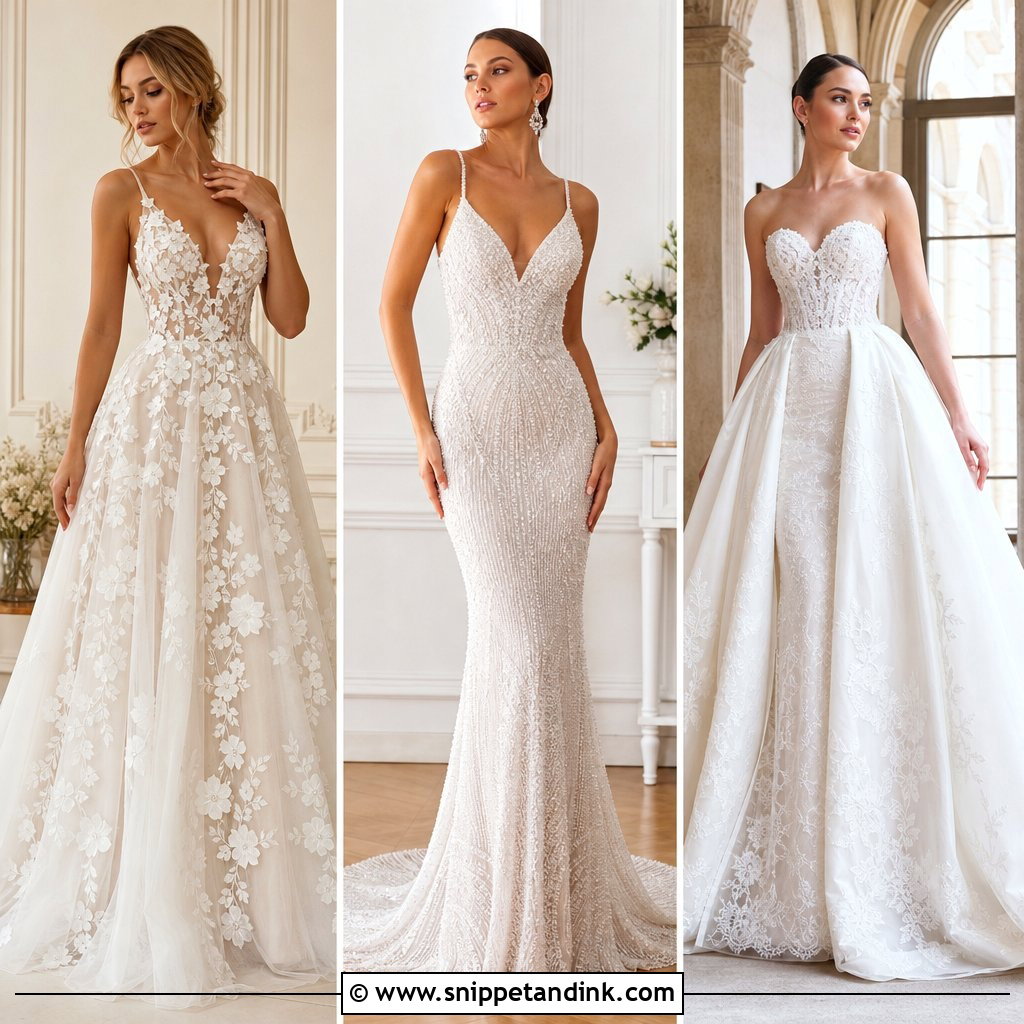
Lace on an A-line is the shape I see suit the widest range of figures in the fitting room, because the skirt flares from the natural waist and doesn’t cling at the hip. Ask about the lining: cheaper lace gowns often have a scratchy edge where the lace meets skin. Long sleeves give it a classic line; thin straps or an illusion neckline make it cooler for a summer estate wedding. Pearl drop earrings, a delicate bracelet, block heels and a veil with a lace edge match the gown’s texture.
3. Strapless Ball Gown Bride Dress
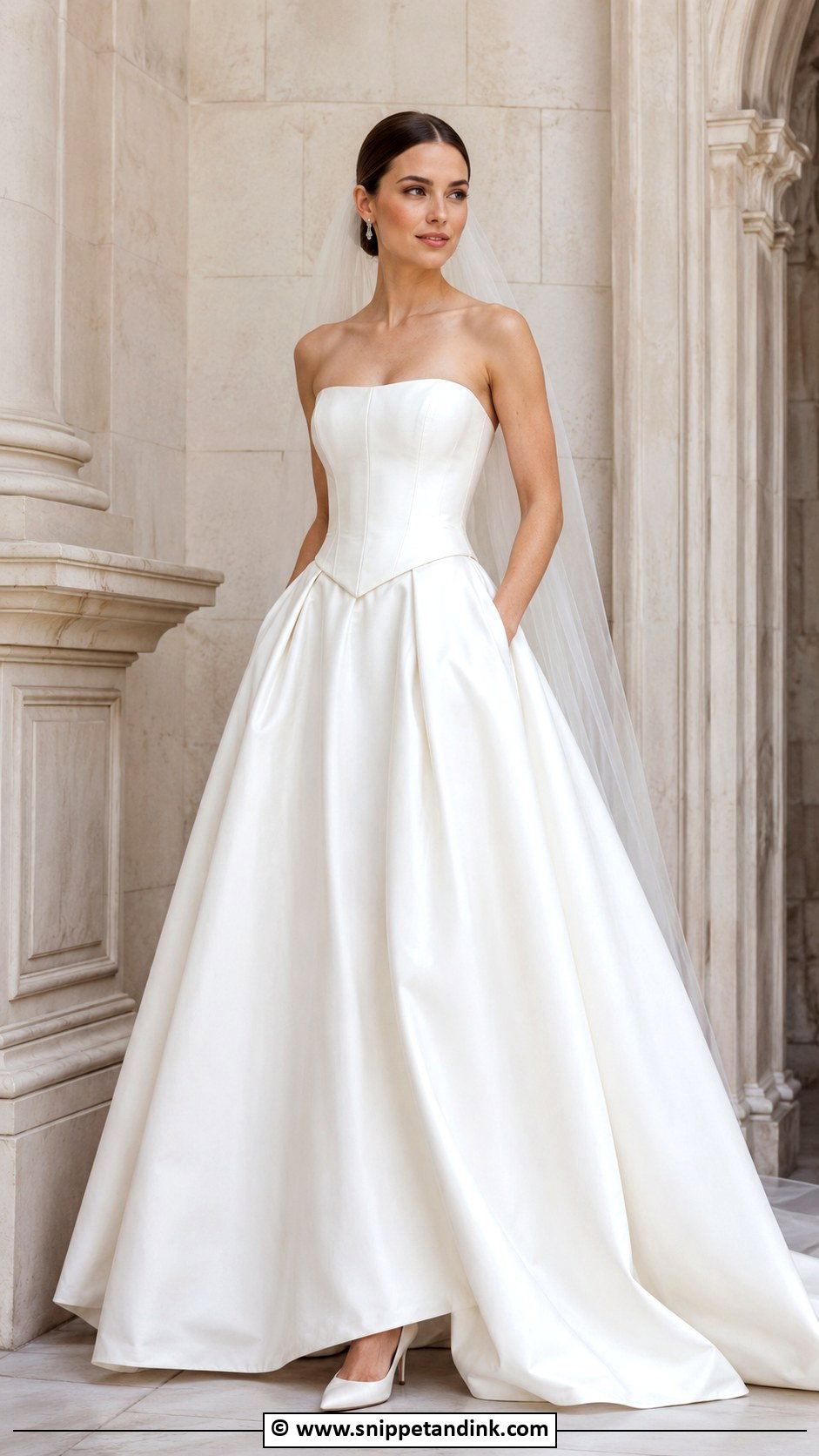
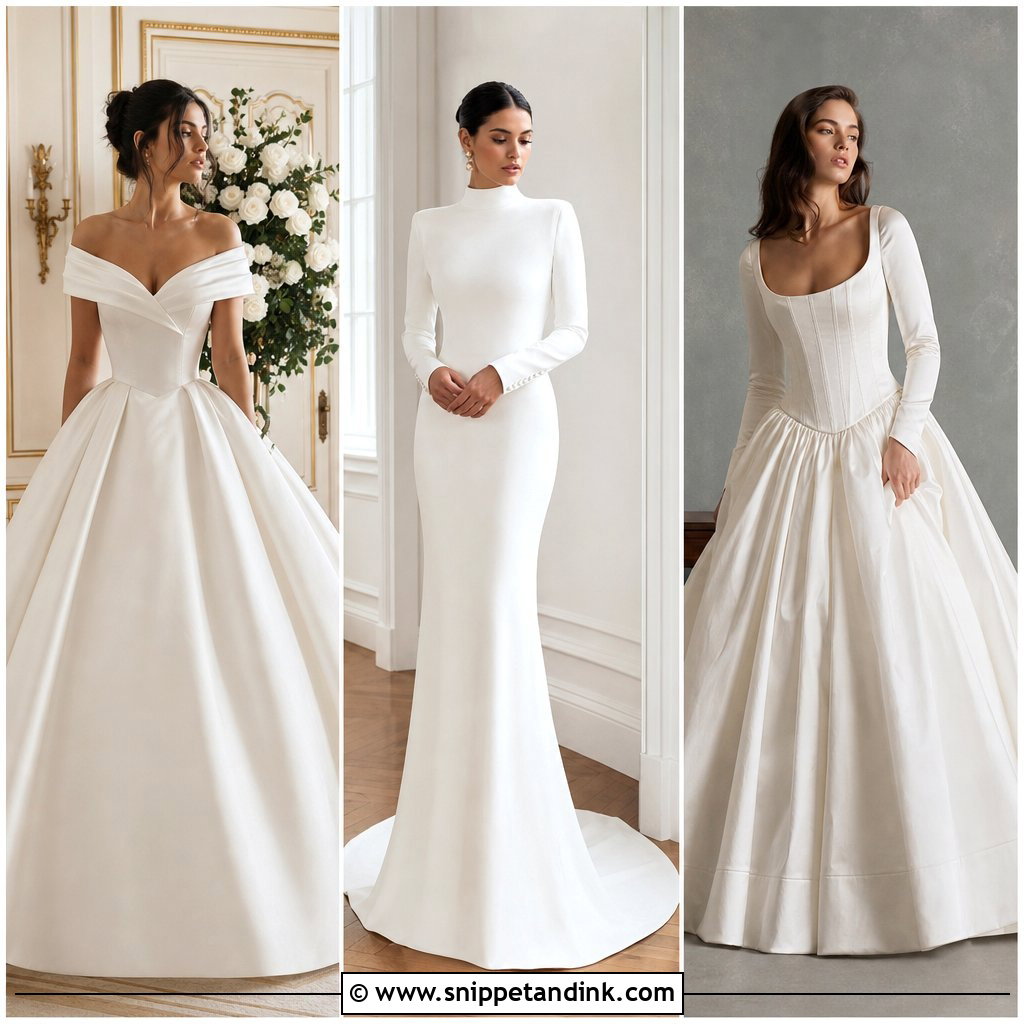
A strapless ball gown is the gown many brides picture from childhood. What makes or breaks it is the boned bodice. A good one holds itself up through internal structure, not by gripping your ribs, and I always ask a bride to raise both arms and hug me in the fitting to see whether it slips. Mikado and satin hold a crisp skirt shape; organza and layered tulle feel lighter. A cathedral veil, crystal earrings and elegant pumps balance the volume. Expect to need a bustle; a full skirt with a train gets stepped on the moment the dancing starts.
4. Off Shoulder Bride Dress
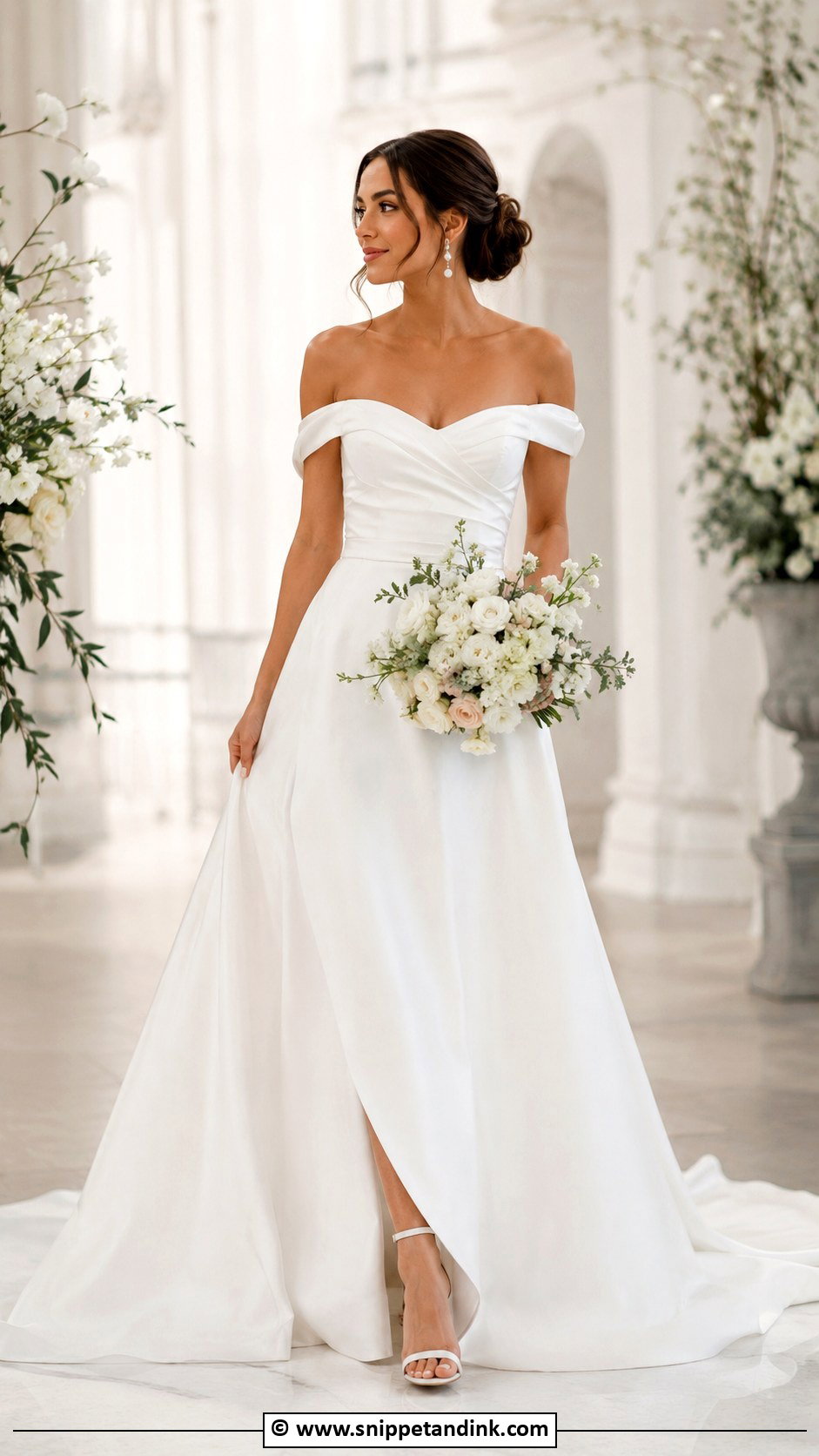
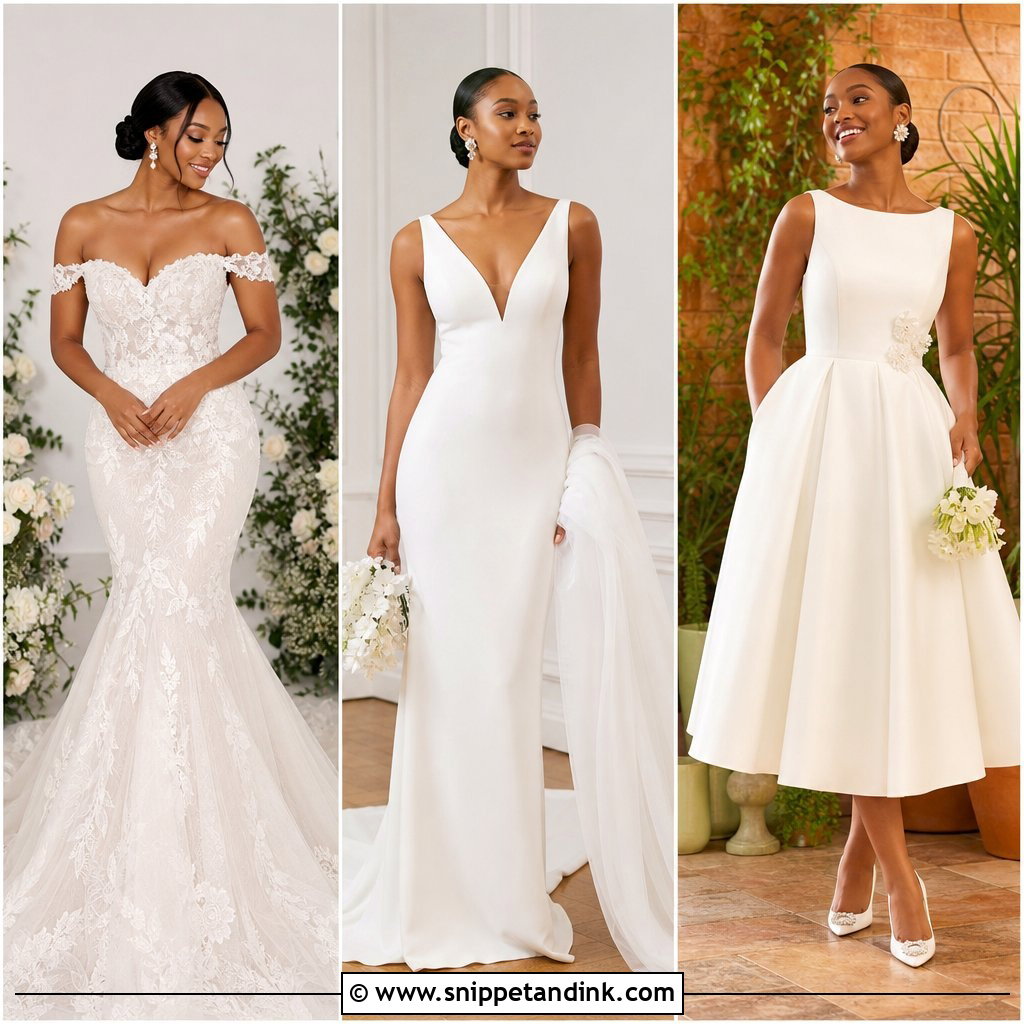
Off-shoulder necklines show the collarbone, but they also limit how high you can lift your arms, which matters for hugging and dancing. I always test that in the fitting. Structure through the bodice keeps the sleeves sitting in place rather than sliding up toward the neck. A fitted mermaid feels glamorous; an A-line is easier to move in. Pair it with drop earrings, a low chignon and heeled sandals or pointed pumps. A long veil suits a plain skirt, while a shorter one lets lace or beading show. It’s a strong option for spring and summer or formal indoor weddings.
5. Long Sleeve Crepe Bride Dress
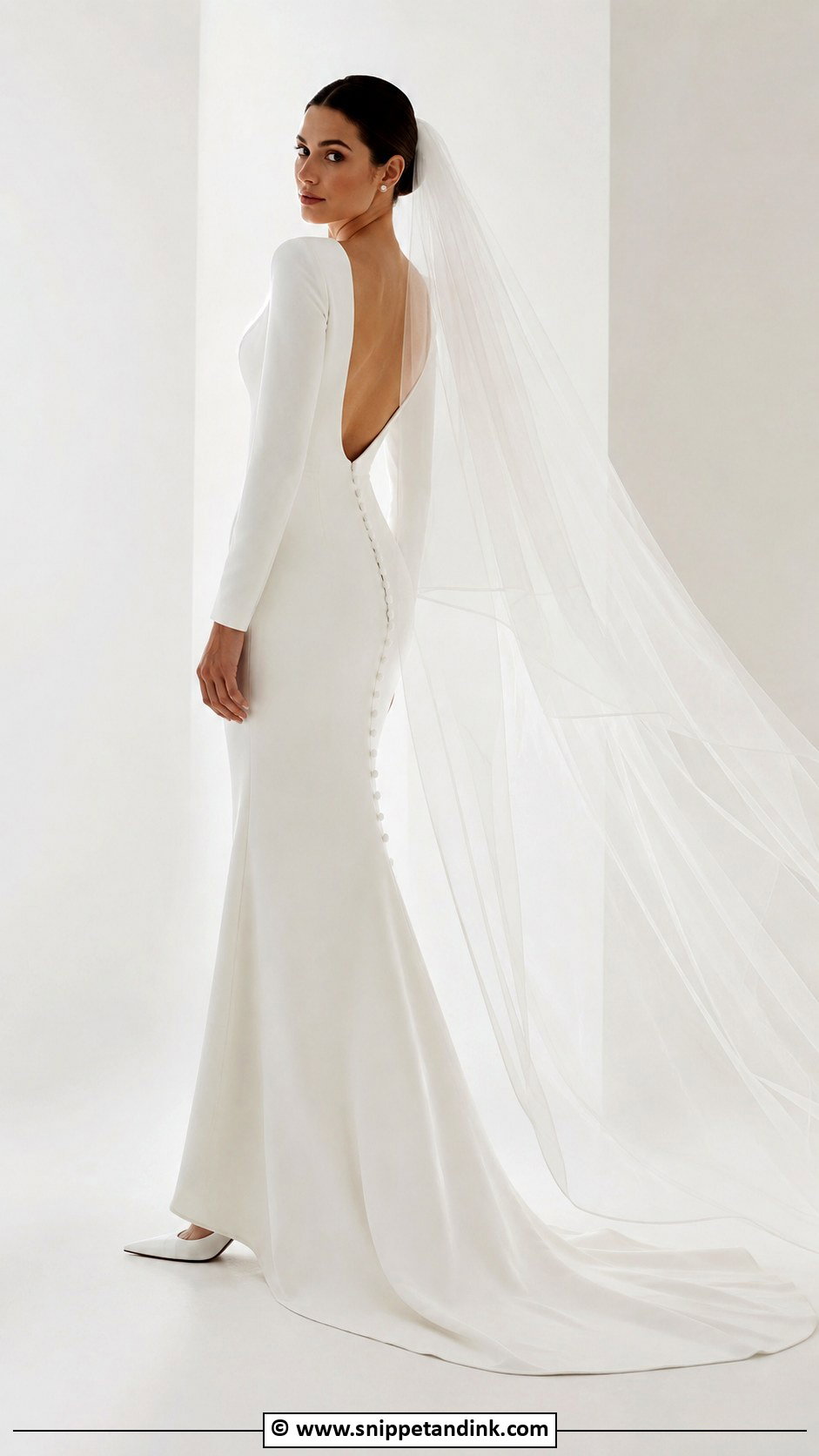
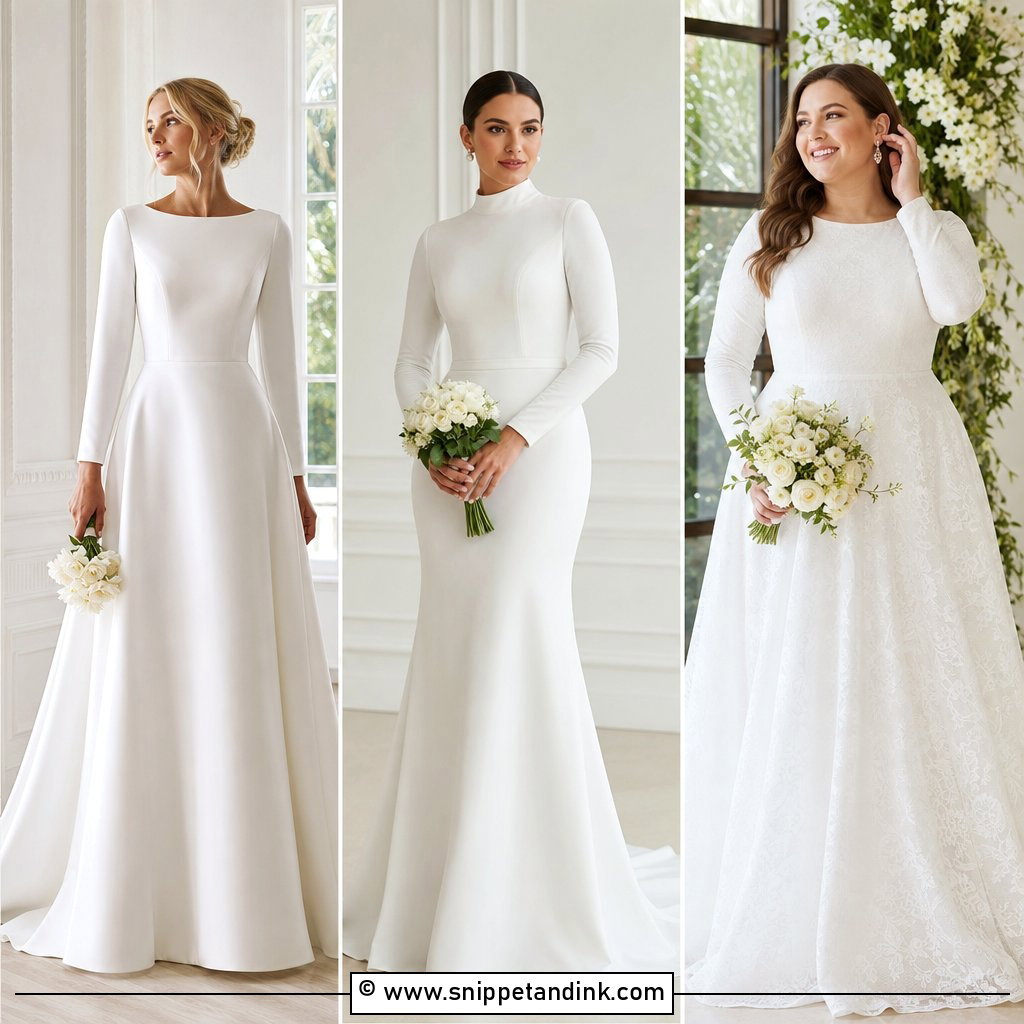
Crepe with a little stretch moves and breathes far better than people expect from such a sleek fabric, so a long sleeve crepe bride dress is surprisingly comfortable. It does show what’s beneath it, though, so I fit these with the exact smooth, no-line underwear the bride will wear. A sheath, column or soft mermaid with a bateau, V or square neck keeps the lines strong. Pearl studs, a clean veil, white pumps and a structured clutch finish it. If the back has buttons or a low cut, lift the hair so the detail is seen. City weddings, winter and courthouse ceremonies all suit it.
6. Pearl Embellished Bride Dress
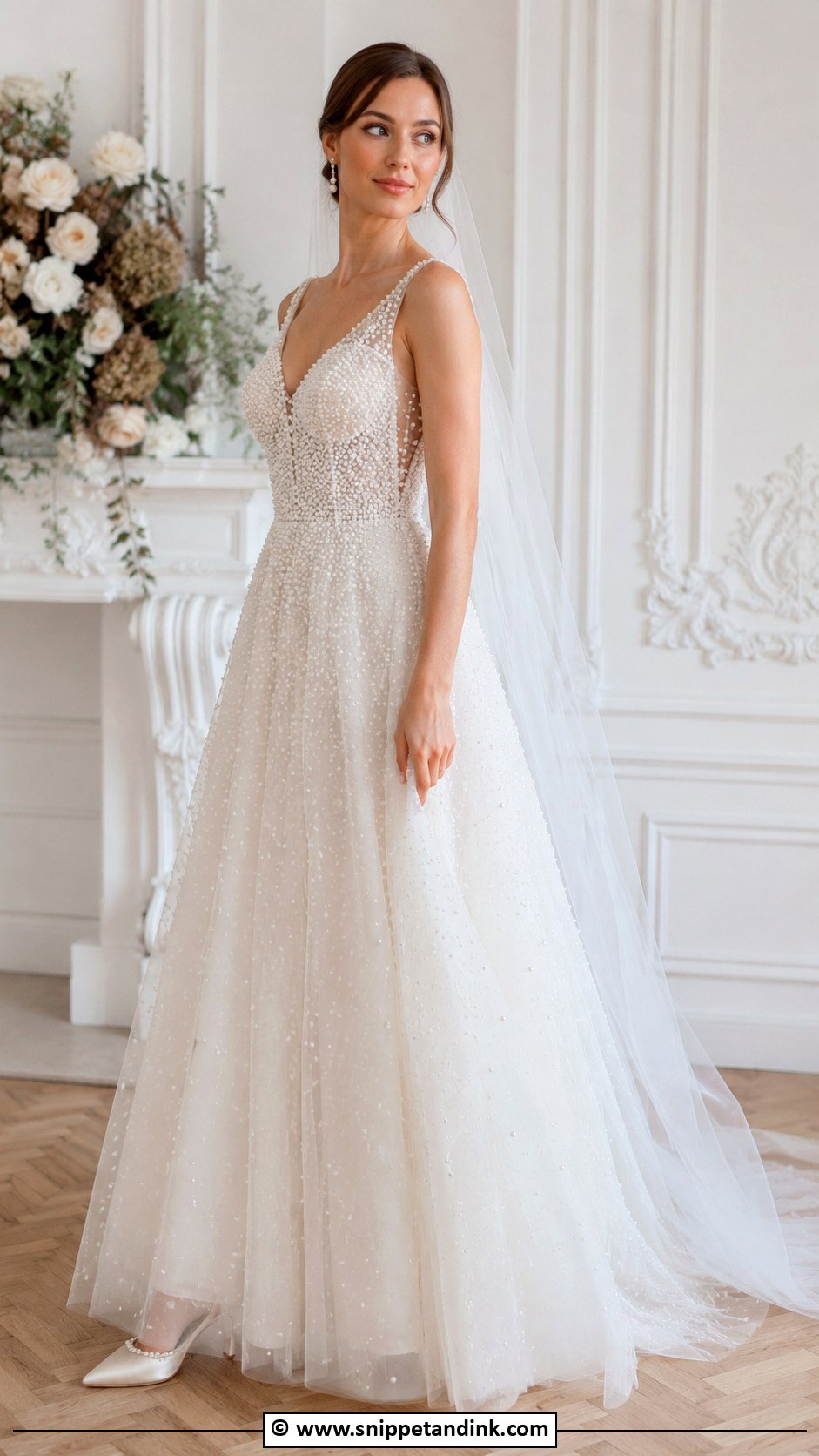
Pearls give a gown glow rather than glitter, and they read softer in flash than crystals do. Scattered seed pearls on a plain bodice feel subtle; dense pearl beading feels heirloom-heavy and adds real weight, so I ask brides to wear a heavily beaded sample for at least ten minutes before deciding. A fitted bodice over a soft tulle skirt, a pearl-covered column or simple pearl straps all work. Keep the veil plain so it doesn’t fight the embellishment, and add pearl earrings, satin heels and luminous makeup.
7. Basque Waist Bride Dress
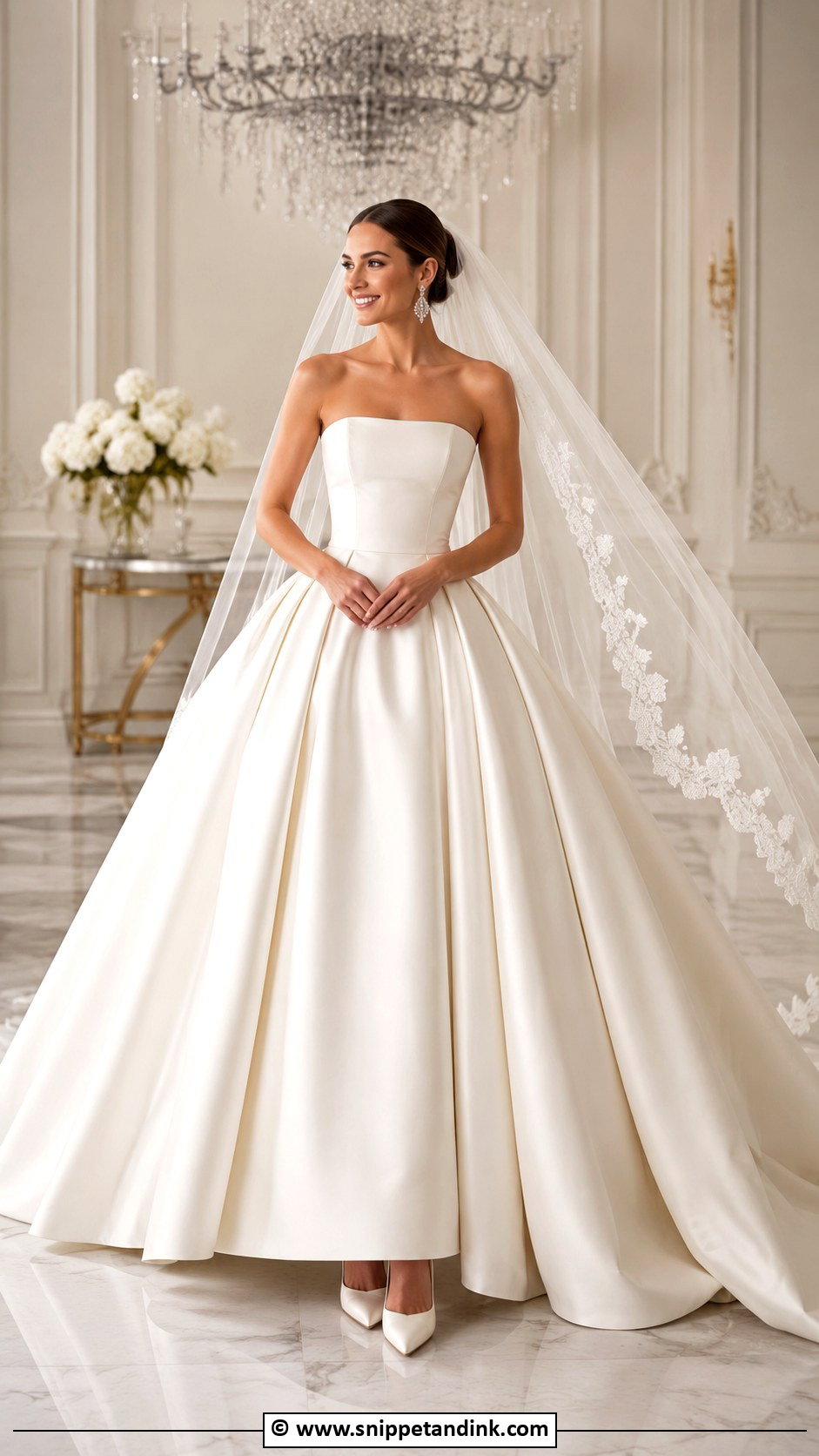
A basque waist dips into a V below the natural waist, which lengthens the torso and narrows the look of the midsection. It has old roots, yet in plain satin or soft drape it looks very current. Here, tailoring is everything: if the point of the V doesn’t sit centered on your body, the whole gown looks crooked, so this is a seam I check at every fitting. A full skirt goes regal; a slimmer skirt goes modern. Pointed pumps, small earrings and a simple veil keep the waistline the focus.
8. Drop Waist Bride Dress
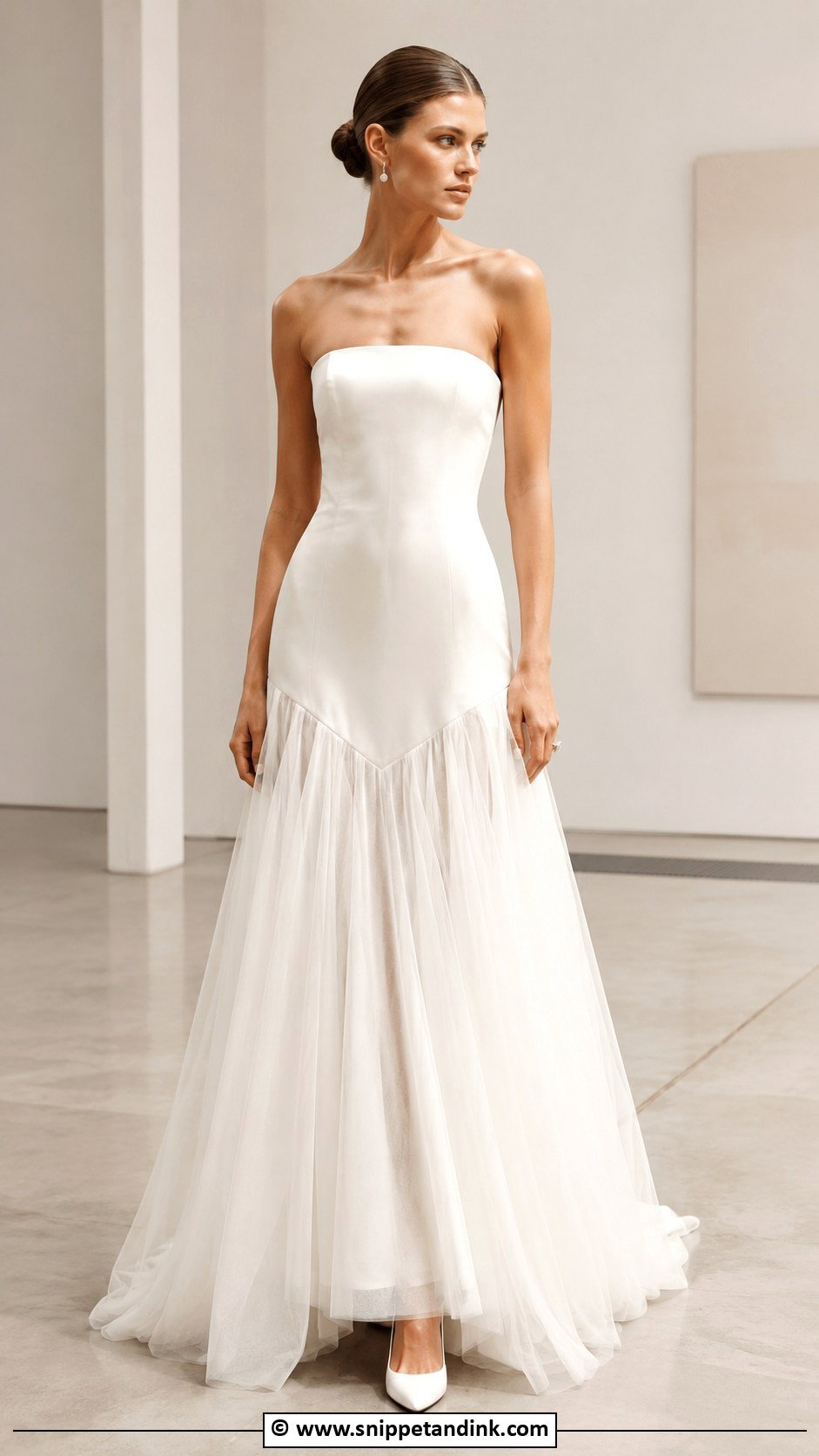
Drop waists sit low, often near the hip, and draw a long line through the body before the skirt begins. I’d be honest with petite brides: a drop waist can shorten the legs visually, and the fix is usually a higher heel and a skirt with less volume. Satin makes it sleek; tulle makes it playful. Vintage lovers can look at lace versions, minimalists at plain ones with strong seams. Keep jewelry and hair smooth, and budget for alterations, because the seam has to sit exactly at your hip to work.
9. Corset Bride Dress
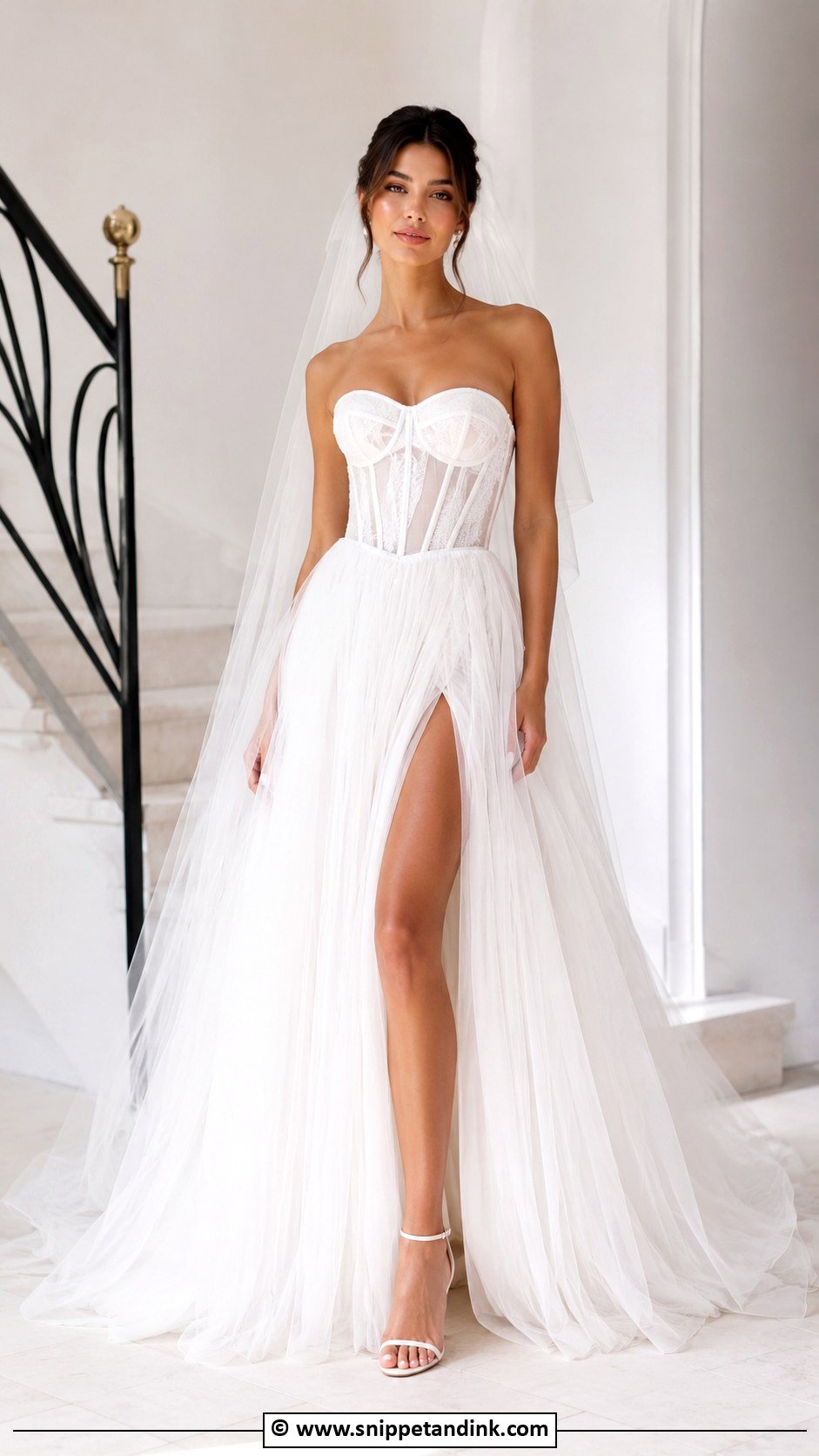
Corset bodices give real support, and many brides find them more comfortable than a strapless gown that relies on grip. The lace-up back is the part I like most, since it adjusts on the day if you’ve gained or lost a little since the last fitting. Ask whoever laces you to tighten from the middle outward and leave room to breathe through dinner. Tulle with a corset feels soft; satin feels formal. Simple earrings, a soft veil, heeled sandals and a bouquet that doesn’t hide the bodice complete it.
10. Floral Applique Bride Dress
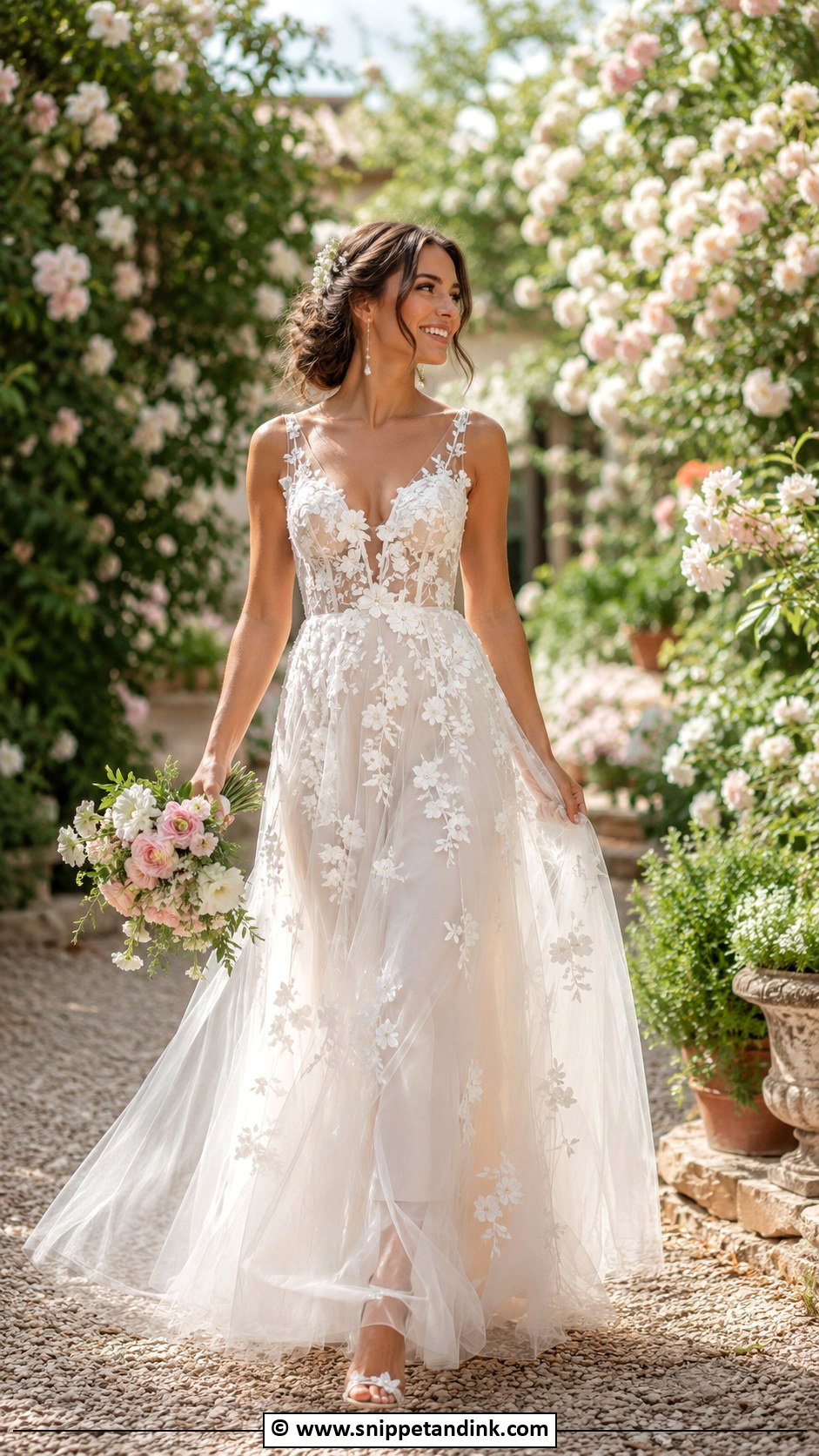
Three-dimensional appliqués look wonderful in a garden, but they catch on everything: veils, bouquet wire, a groom’s cufflinks. I suggest a veil with a soft cut edge rather than a beaded one so the two don’t snag. Embroidered vines and flat lace appliqués are less fragile than raised petals. A soft A-line moves well; a fitted shape is more dramatic. Floral hair pins, pearl earrings and delicate sandals or pumps tie it to a spring or botanical setting.
11. Sheer Sleeve Bride Dress
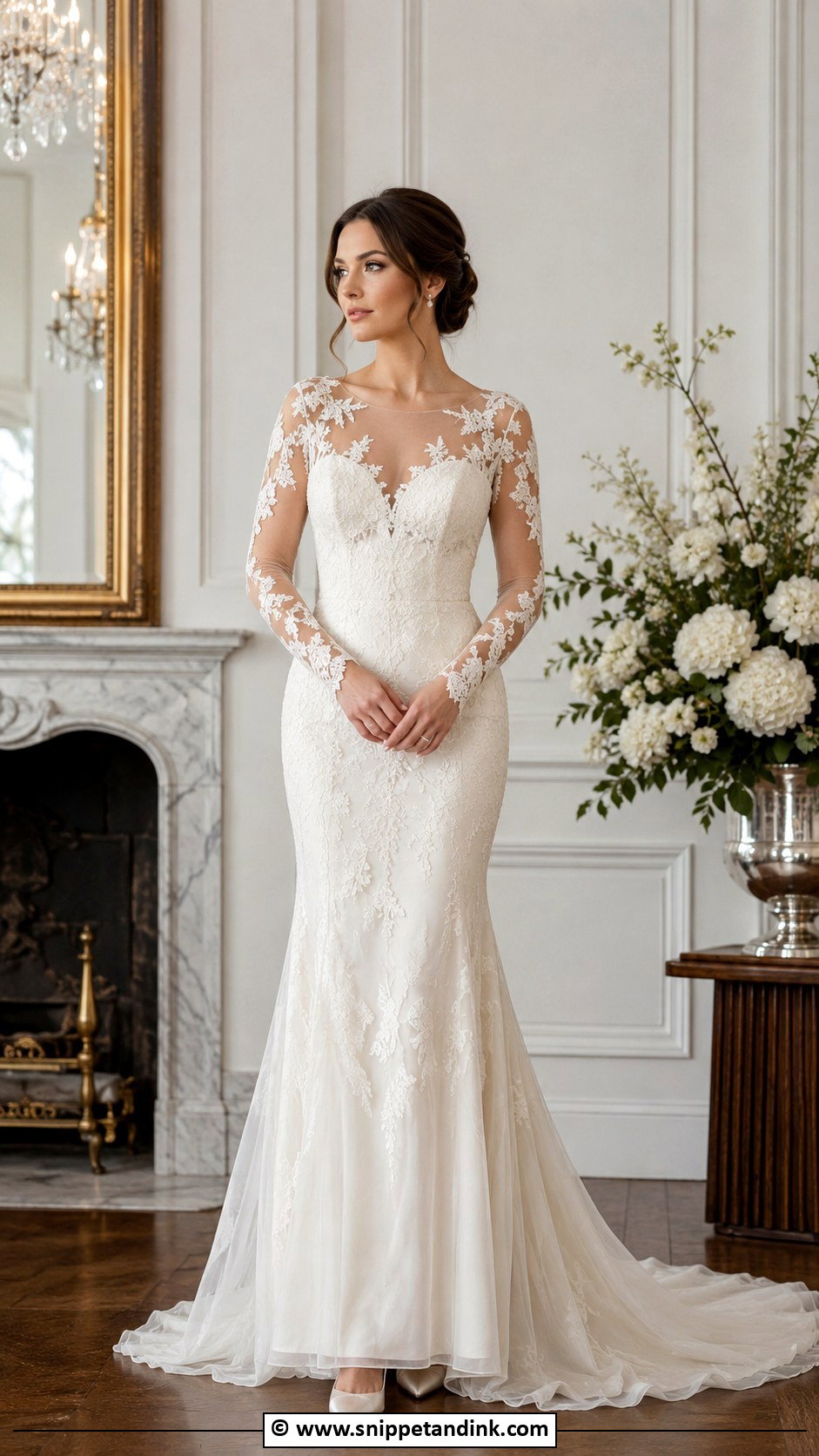
Illusion sleeves give coverage while still letting the skin breathe, which is why I suggest them to brides who want arms covered in warmer weather. The detail sits on very fine tulle, so check that the seams at the armhole are reinforced; that’s where these sleeves usually tear when you lift your arms. A fitted bodice with a flowing skirt balances them, or go sleek with a column gown. Keep bracelets off if the sleeves are embellished, and choose small earrings, a simple veil and elegant heels.
12. Bow Back Bride Dress
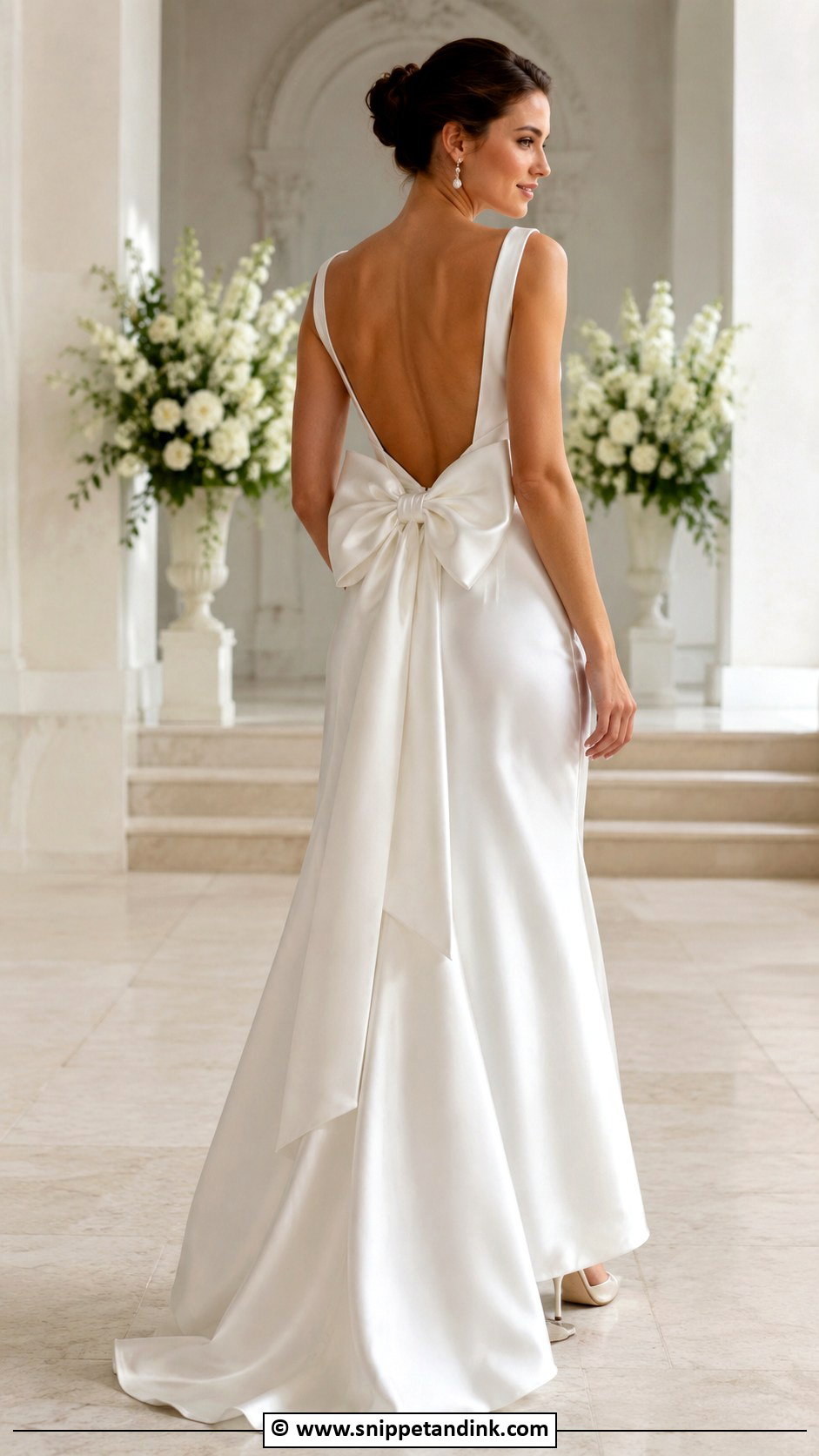
A bow at the back gives guests something to look at for the whole ceremony, since that’s the view they have. Large bows on satin need interfacing or they droop by the reception; I always pinch one in the fitting to see how it holds. Small bows feel refined, oversized ones feel playful. Wear a neat updo, pearl earrings and simple heels so the back stays visible, and skip a busy veil if the bow is large.
13. Square Neck Bride Dress
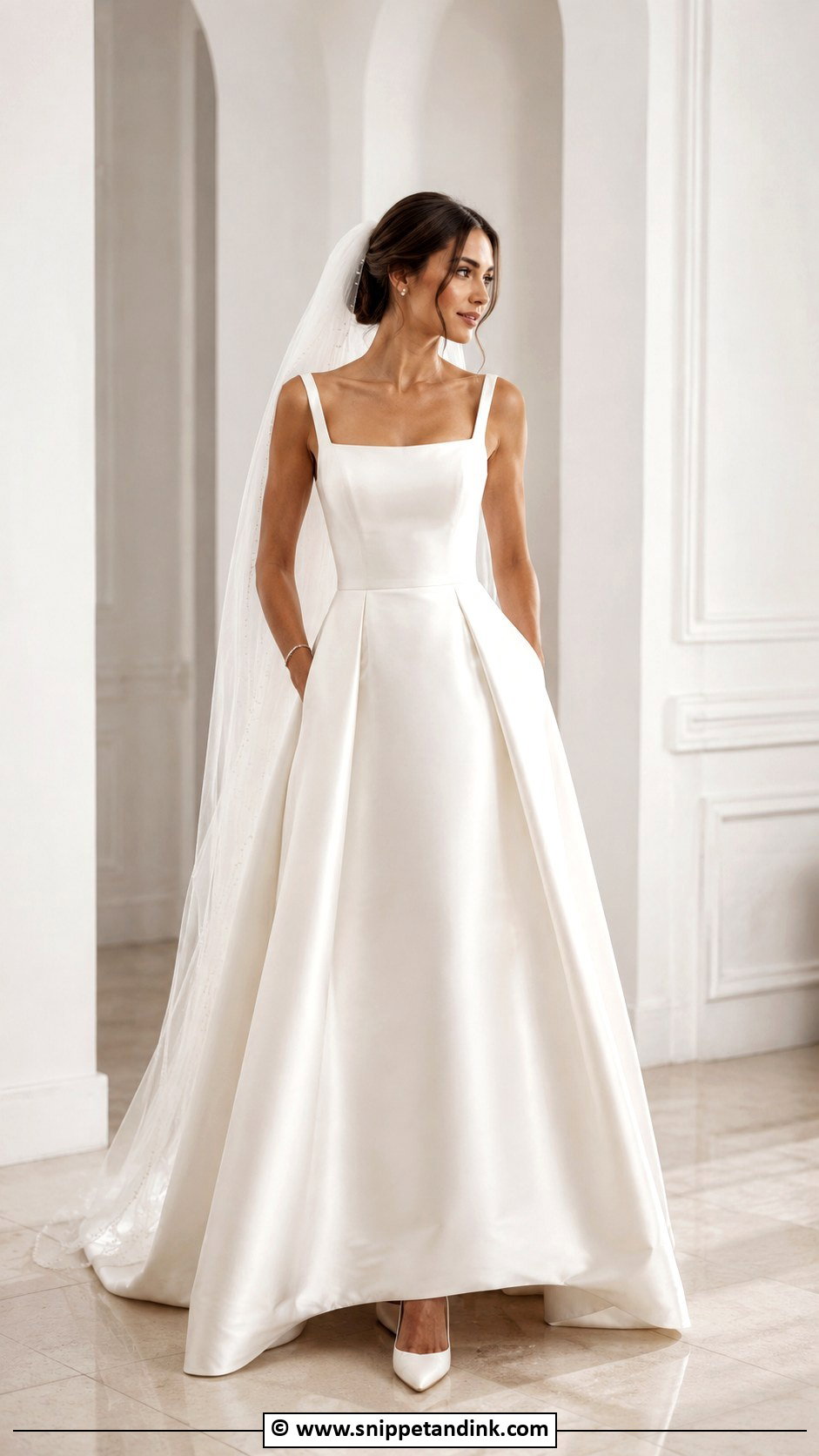
The square neck is one of the most forgiving necklines I fit. The straight line frames the shoulders and collarbone and gives a structured top on satin, crepe, lace or mikado. Thick straps offer real support for a fuller bust; thin straps feel lighter; long sleeves make it formal. Finish with a soft veil, pearl studs, a simple bracelet and pointed heels.
14. High Neck Bride Dress
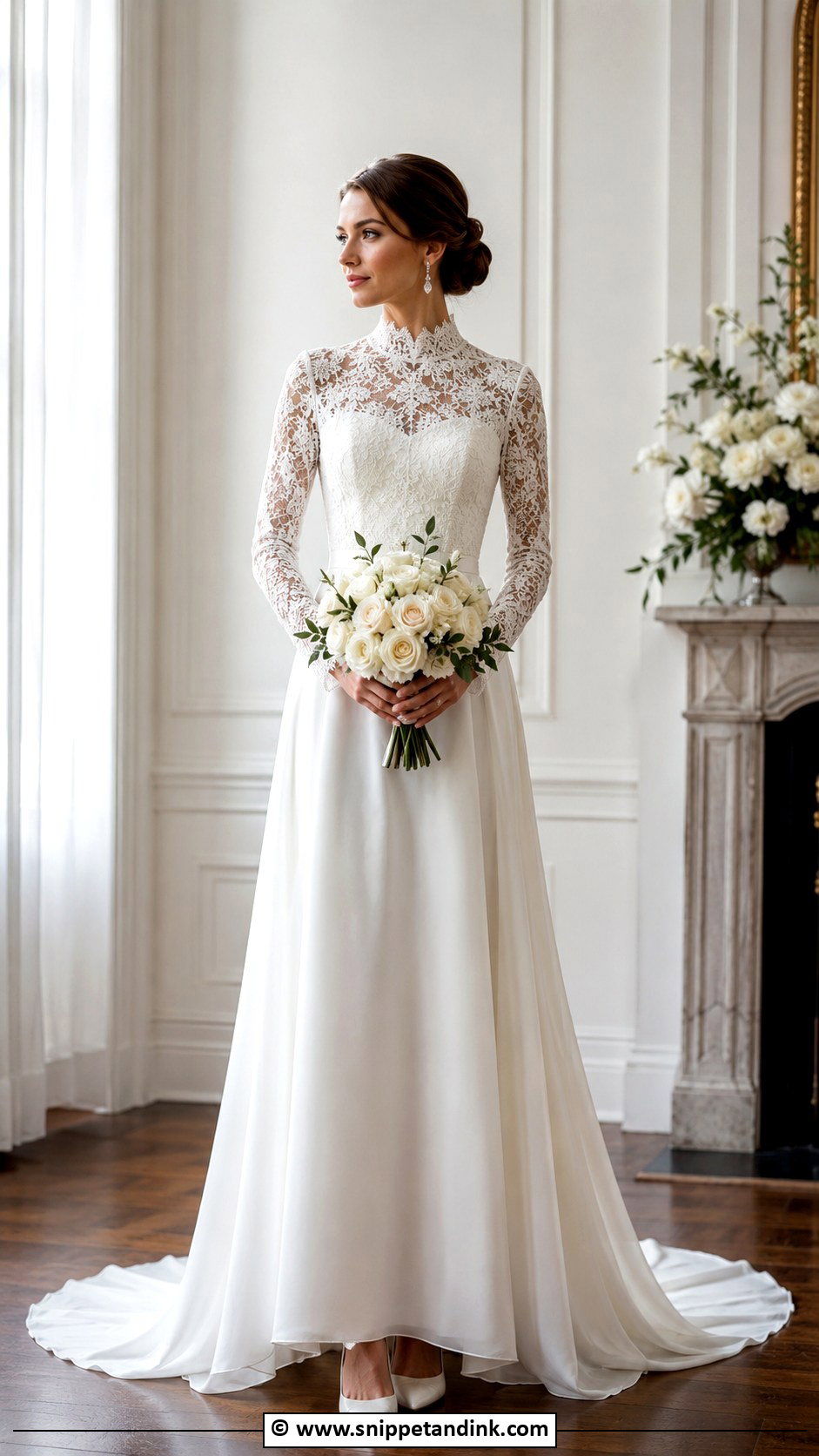
A high neck needs a counterweight, usually an open back, a fitted waist or a soft skirt, or it can feel buttoned up. Lace versions lean vintage; satin and crepe lean modern. Skip the necklace and let earrings do the work, with a low bun so the neckline isn’t hidden. In close-up portraits the neckline frames the face nicely. It suits fall and winter or formal indoor ceremonies, and brides wanting coverage.


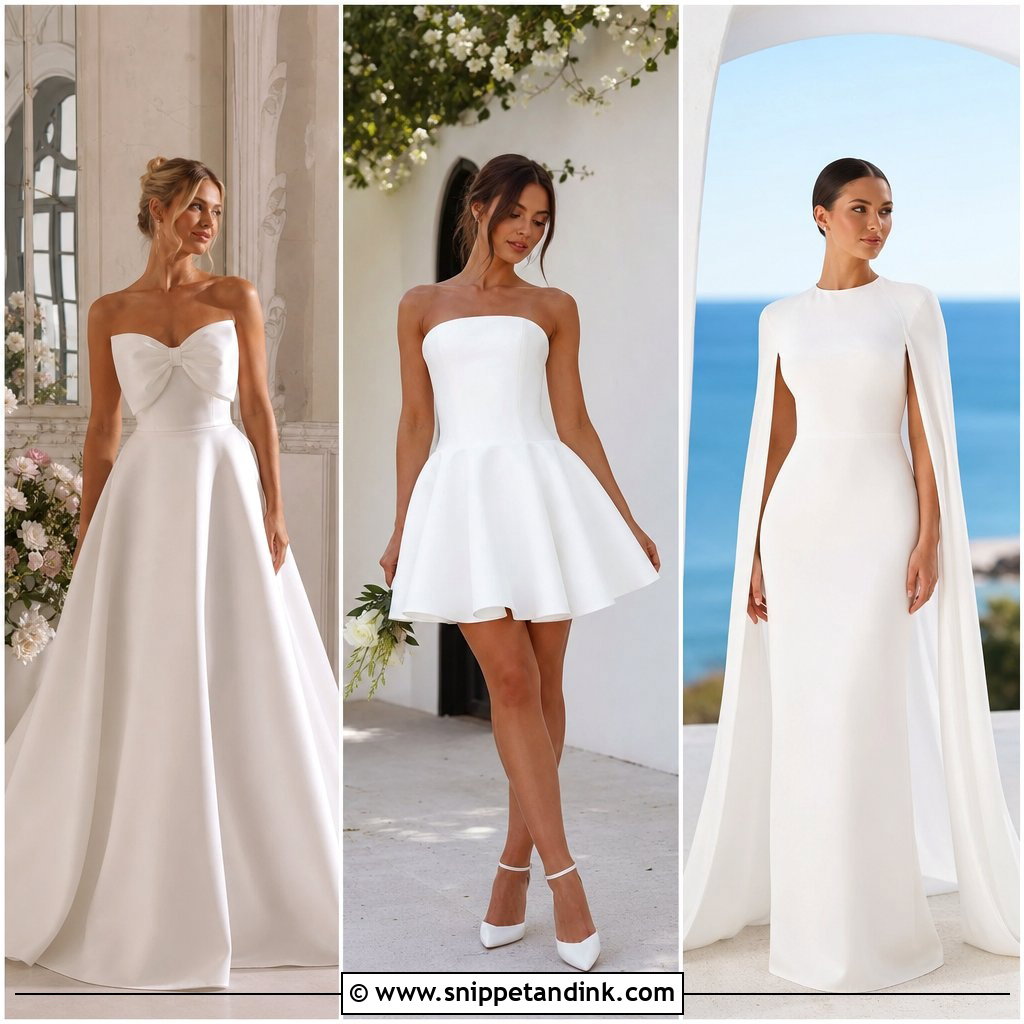
15. V Neck Bride Dress
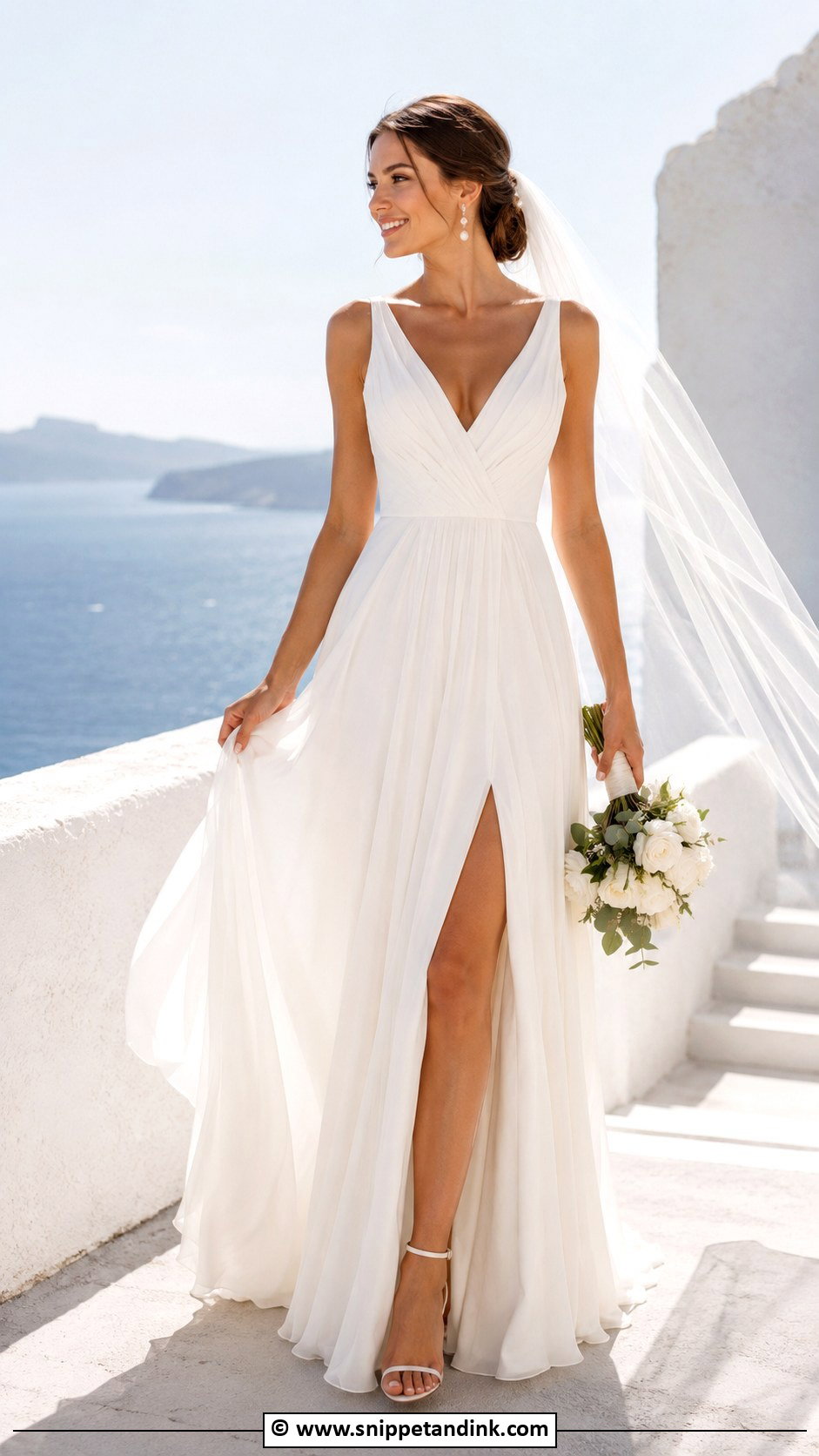
A V-neck lengthens the neck and torso, and depth is where brides need to be honest about comfort. A deep plunge needs illusion mesh or a well-built bodice, plus fashion tape, or you’ll be adjusting it all night. A softer V is easier to live in. Drop earrings, a delicate veil and strappy heels or pumps suit it. Lace, satin, chiffon and crepe all take the shape, so it adapts to a beach, a garden or a formal ballroom.
16. Mermaid Bride Dress
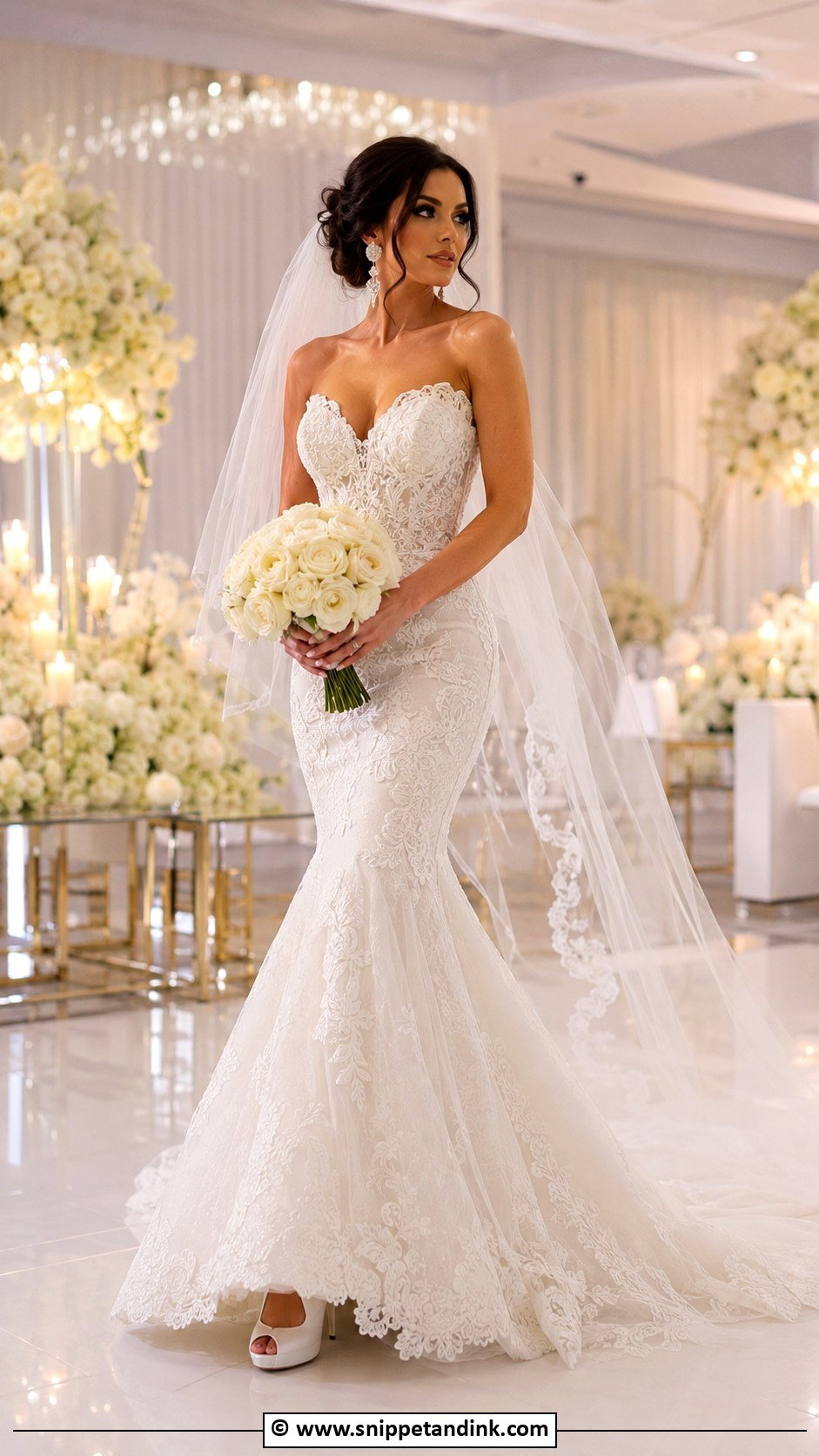
A mermaid bride dress hugs the bodice, waist and hips before flaring at or just below the knee. Where the flare starts changes everything: lower means drama but shorter steps; higher, often called a trumpet, lets you walk and dance. I ask every bride to sit, climb a step and do a slow turn in the sample before committing. Lace leans romantic, crepe modern, beading glamorous. High heels, statement earrings and a long veil balance the shape.
17. Tea Length Bride Dress
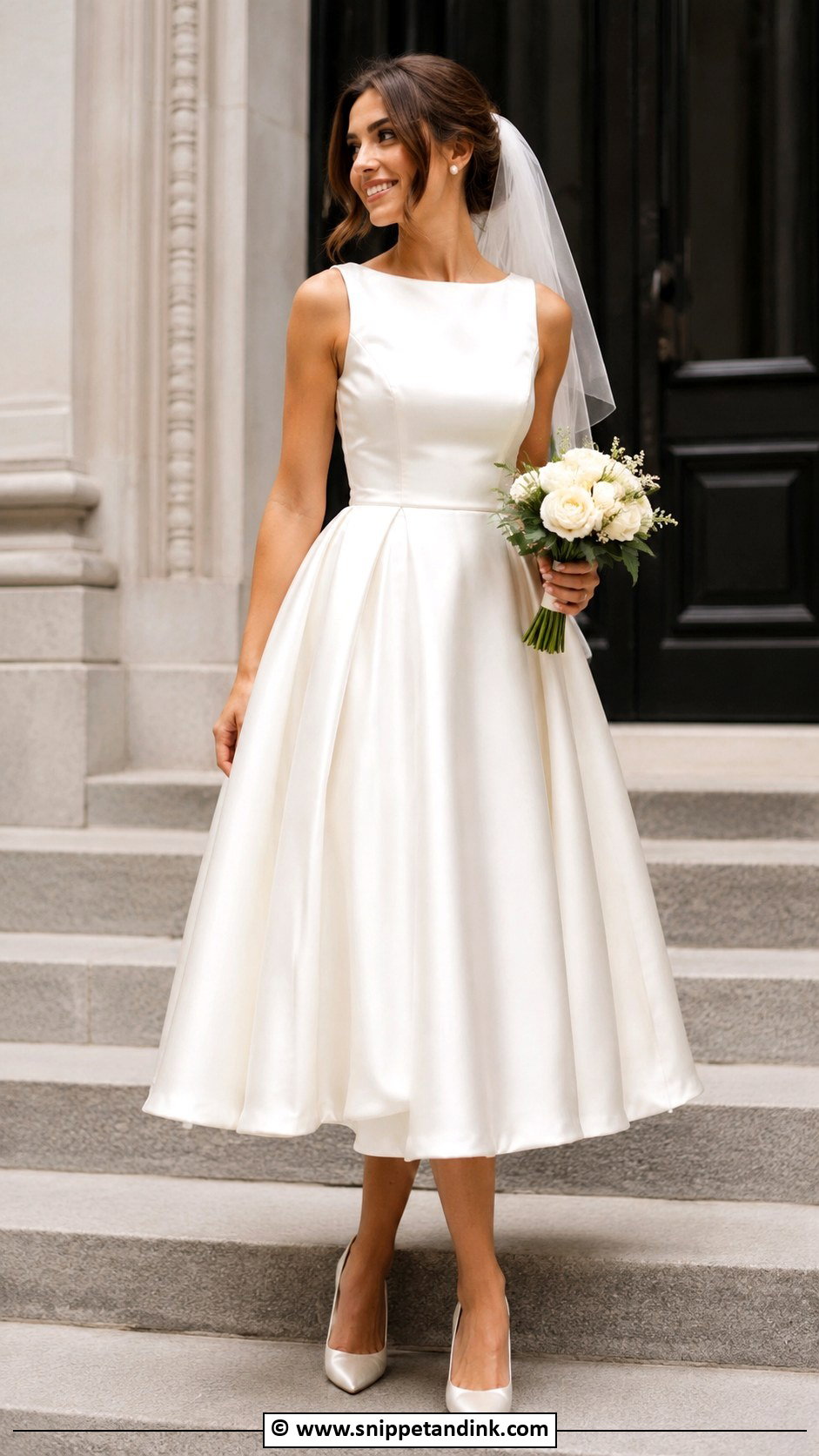
Tea length lands between knee and ankle, so the shoes become part of the look. Make sure they’re comfortable, because everyone will see them. Satin reads polished, lace romantic and tulle playful. Pointed pumps, slingbacks or embellished flats all work, with pearl earrings and a short veil or headband. It suits courthouse weddings, brunch receptions and brides drawn to vintage shapes.
18. Mini Bride Dress
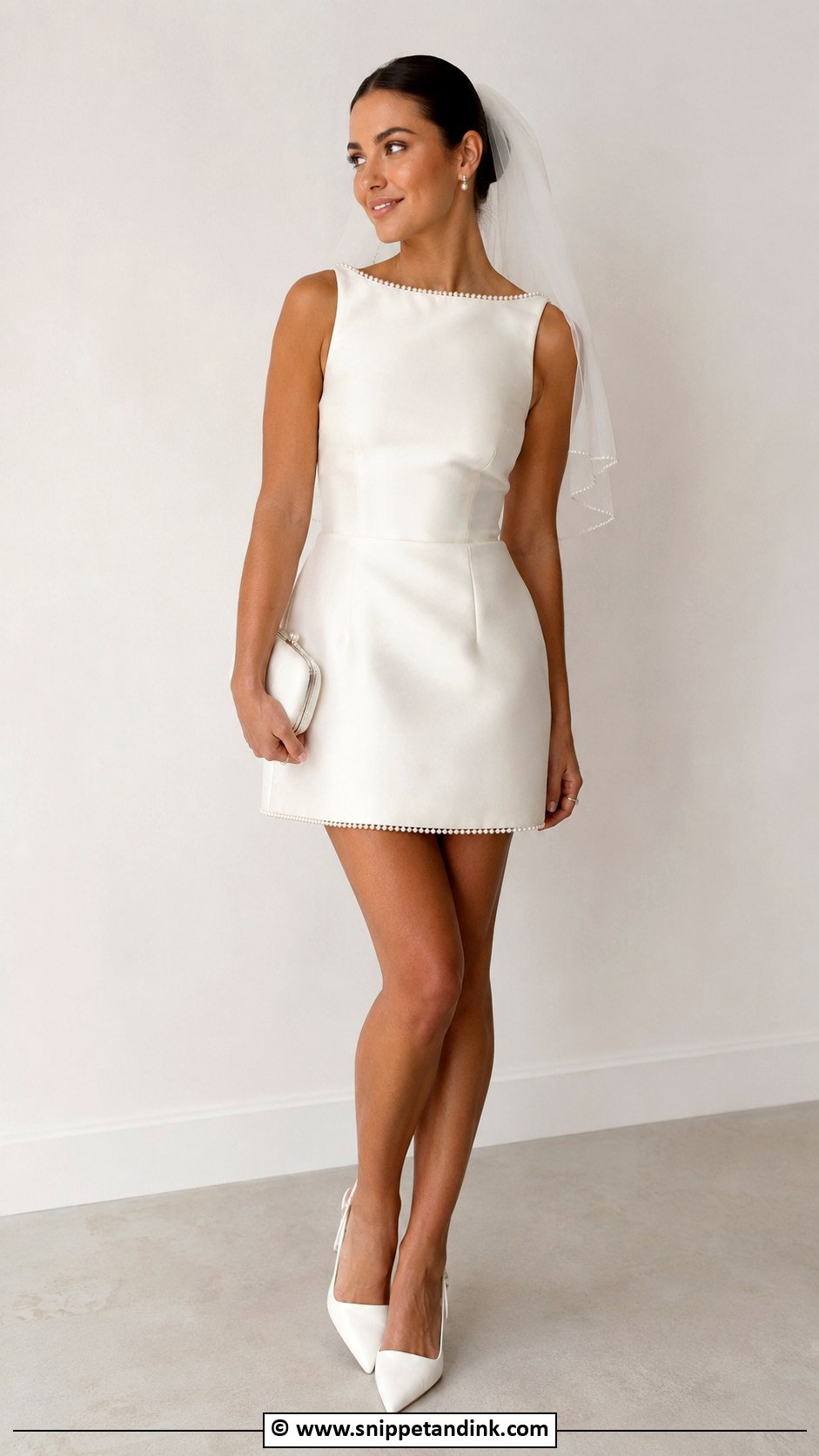
A mini stays bridal through fabric, not length. Satin, crepe, lace, feathers or a structured bow keep it from looking like a party dress. For a civil ceremony, an after-party or a reception change, I pair it with white slingbacks, pearl earrings, a small veil and a polished clutch. A tailored blazer or sheer tights add coverage in cooler months. Sit down in it in front of a mirror first; minis ride up more than you’d think.
19. Reception Bride Dress
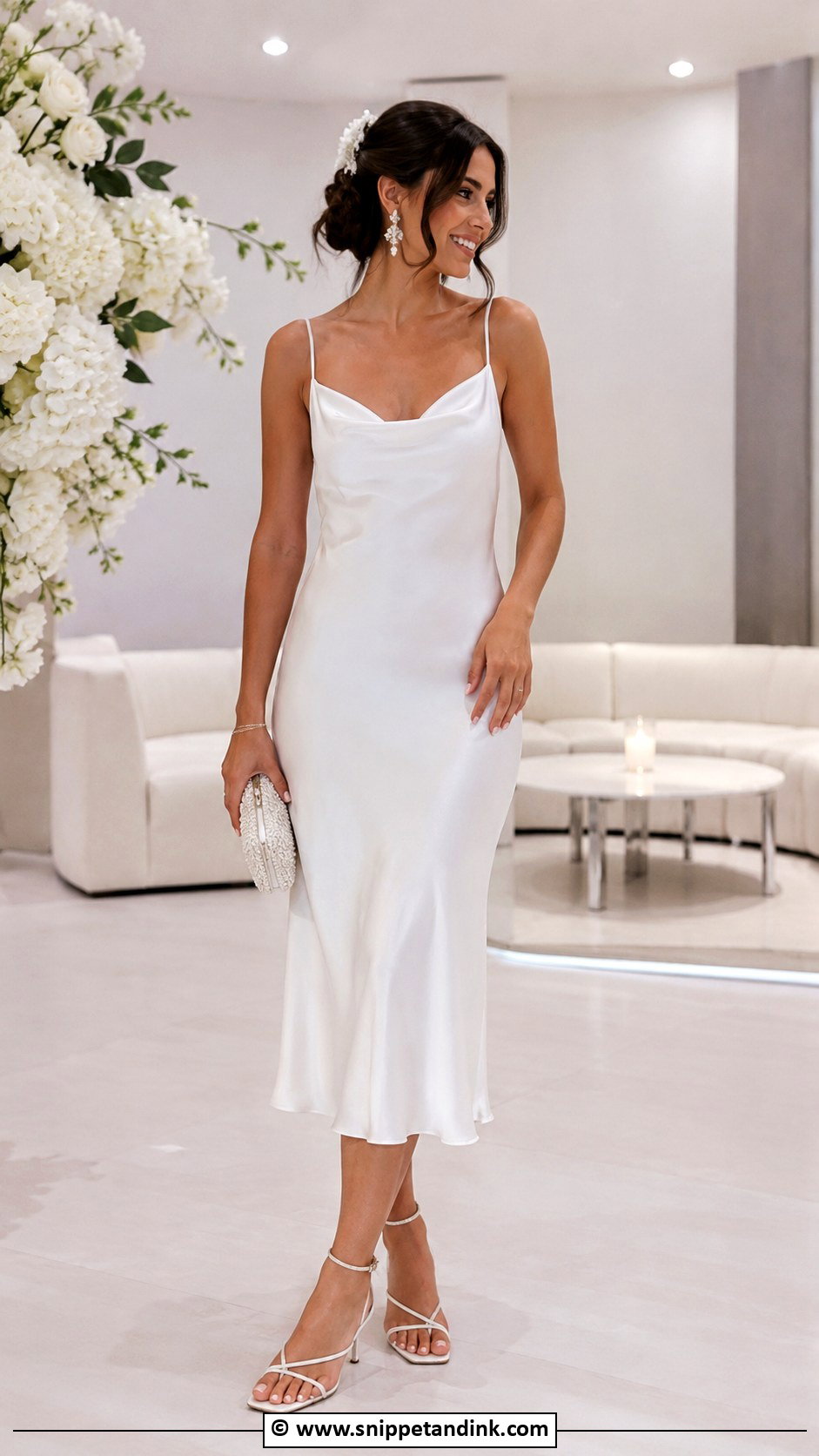
The second dress is often the one brides end up wearing longest. I think of it as the ceremony gown’s opposite: if the first is heavy, structured or trained, the second should be light and easy to dance in. A satin slip, beaded midi, feather-trimmed mini or simple crepe column all suit. Dance-friendly heels, a small clutch and statement earrings work, with hair that will last the evening. Swap the veil for a bow or pins, and plan where you’ll change and who will help, because changing takes longer than brides expect.

20. Two Piece Bride Dress
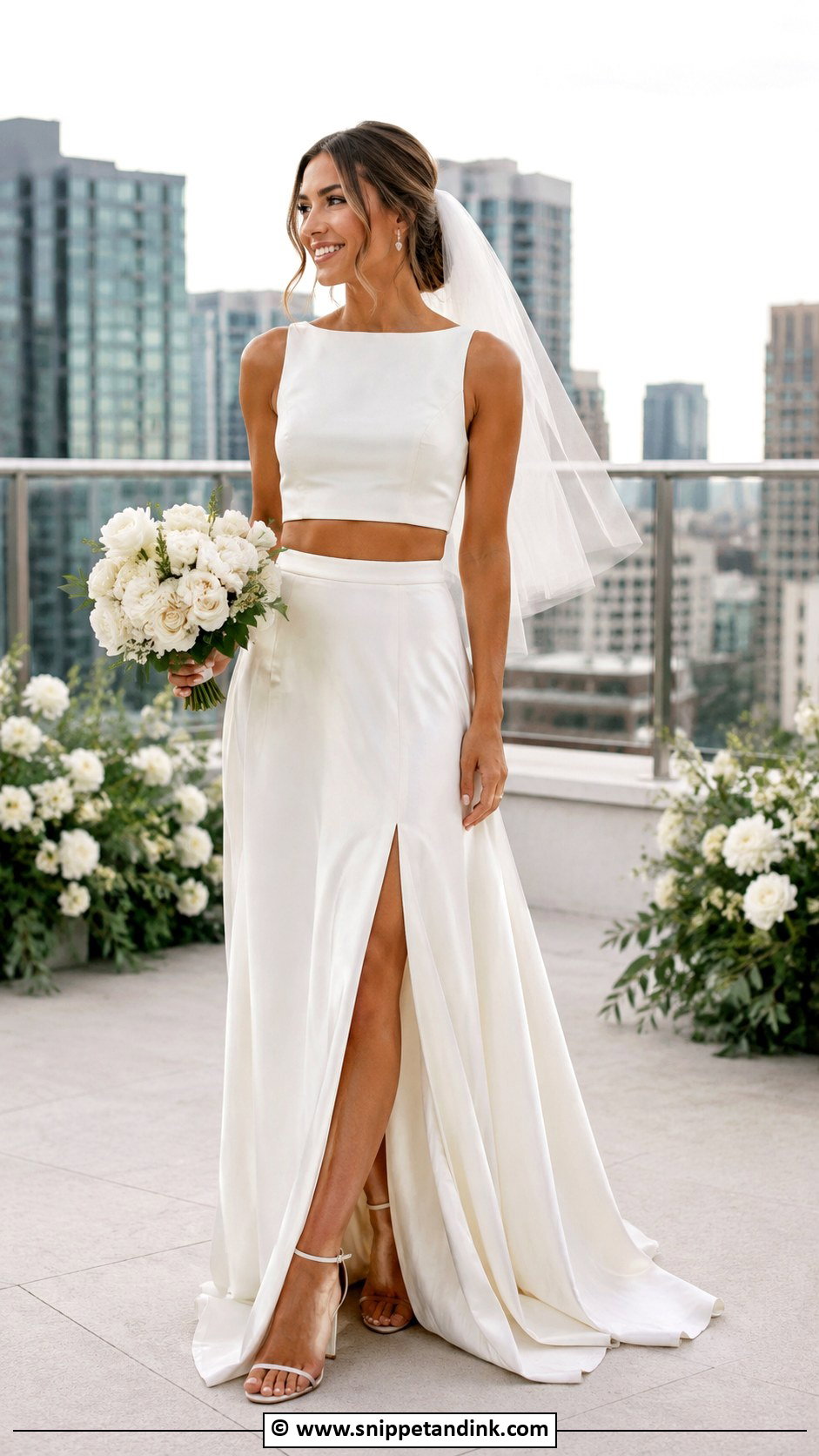
A two piece bride dress gives flexibility, but I’d look hard at where the top ends and the skirt begins. A sliver of skin between them is a deliberate look; an accidental gap when you lift your arms isn’t. A structured crop top with a high-waisted skirt feels fresh, lace over chiffon or tulle feels softer, and crepe on crepe is minimal. Sleek heels, simple earrings and a clean veil finish it. Destination, rooftop and relaxed ceremonies all suit it.
21. Bride Jumpsuit Outfit
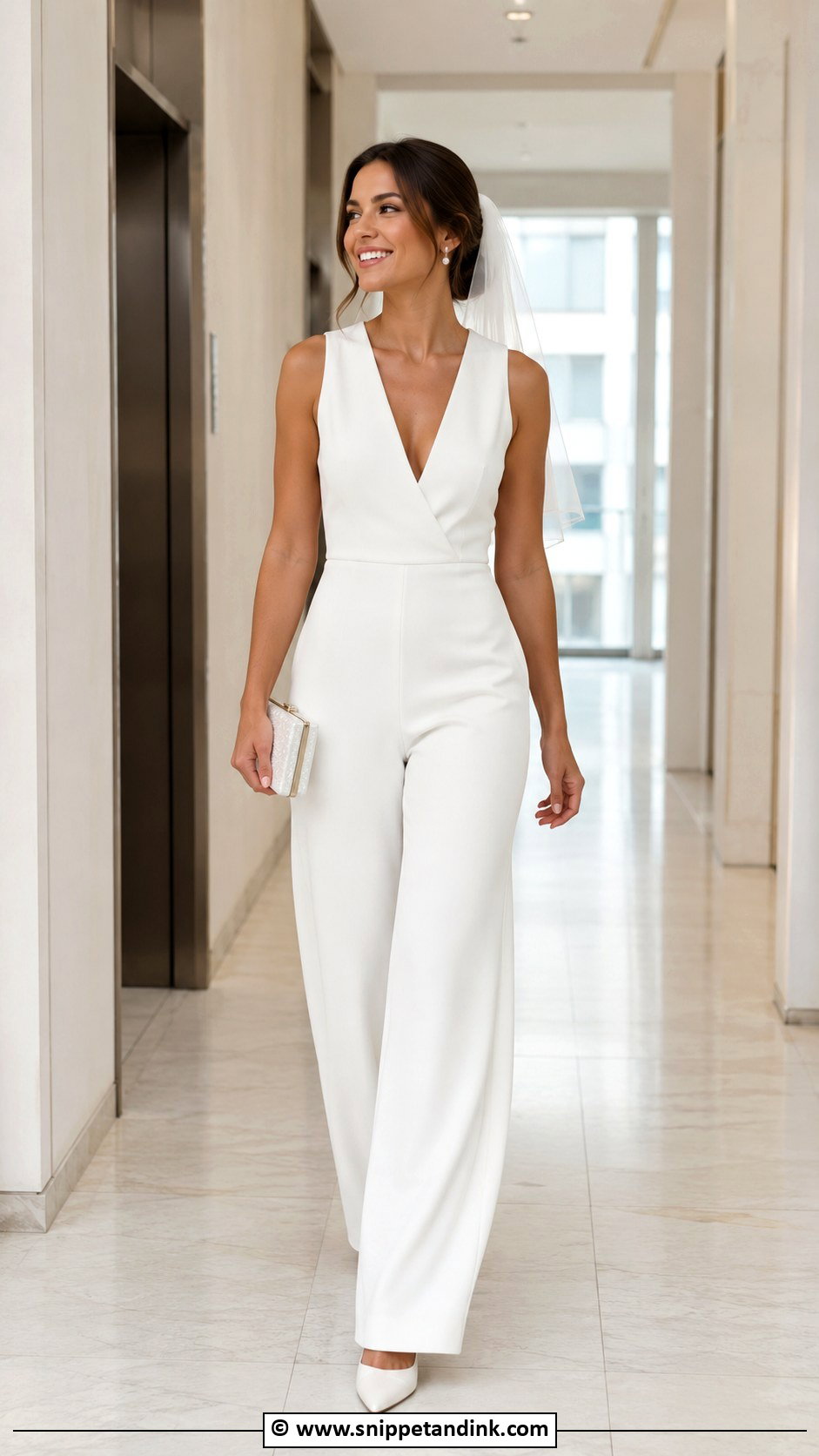
Jumpsuits live or die on the crotch and hem length. Too short a rise pulls when you sit; too long a hem drags under heels. I hem them to the exact shoes, just as I’d hem a gown. White crepe, satin or a tailored fabric with a strong fit through waist and legs looks smartest; wide legs feel elegant, fitted legs sleek. Pointed pumps, a structured clutch, pearl earrings and a short veil or headband complete it, and a detachable overskirt makes the ceremony feel more traditional. Courthouses, elopements and reception changes are where I use it most.
22. Bride Suit Outfit
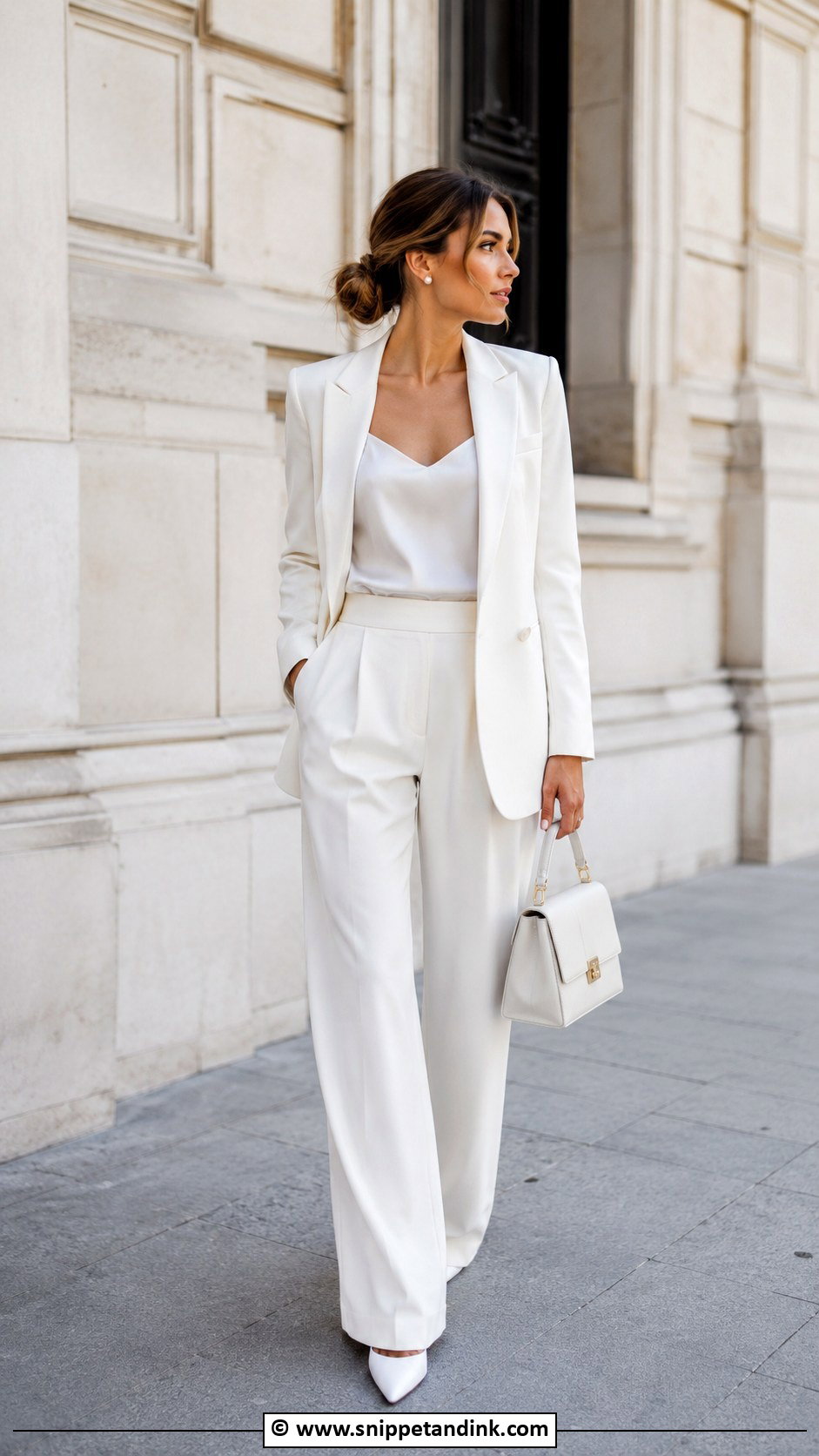
A bridal suit is all about tailoring at the shoulder; if the blazer doesn’t fit there, no amount of hemming fixes it. Choose white or ivory with matching trousers, worn over a silk camisole, lace top or bodysuit. Wide-leg trousers soften the look and slim trousers sharpen it. Pointed heels, pearl studs, a clutch and a low bun or smooth waves work, with a birdcage veil, long veil or bridal hat if you want ceremony detail. It suits courthouses, modern venues and civil ceremonies.
23. Beach Bride Dress
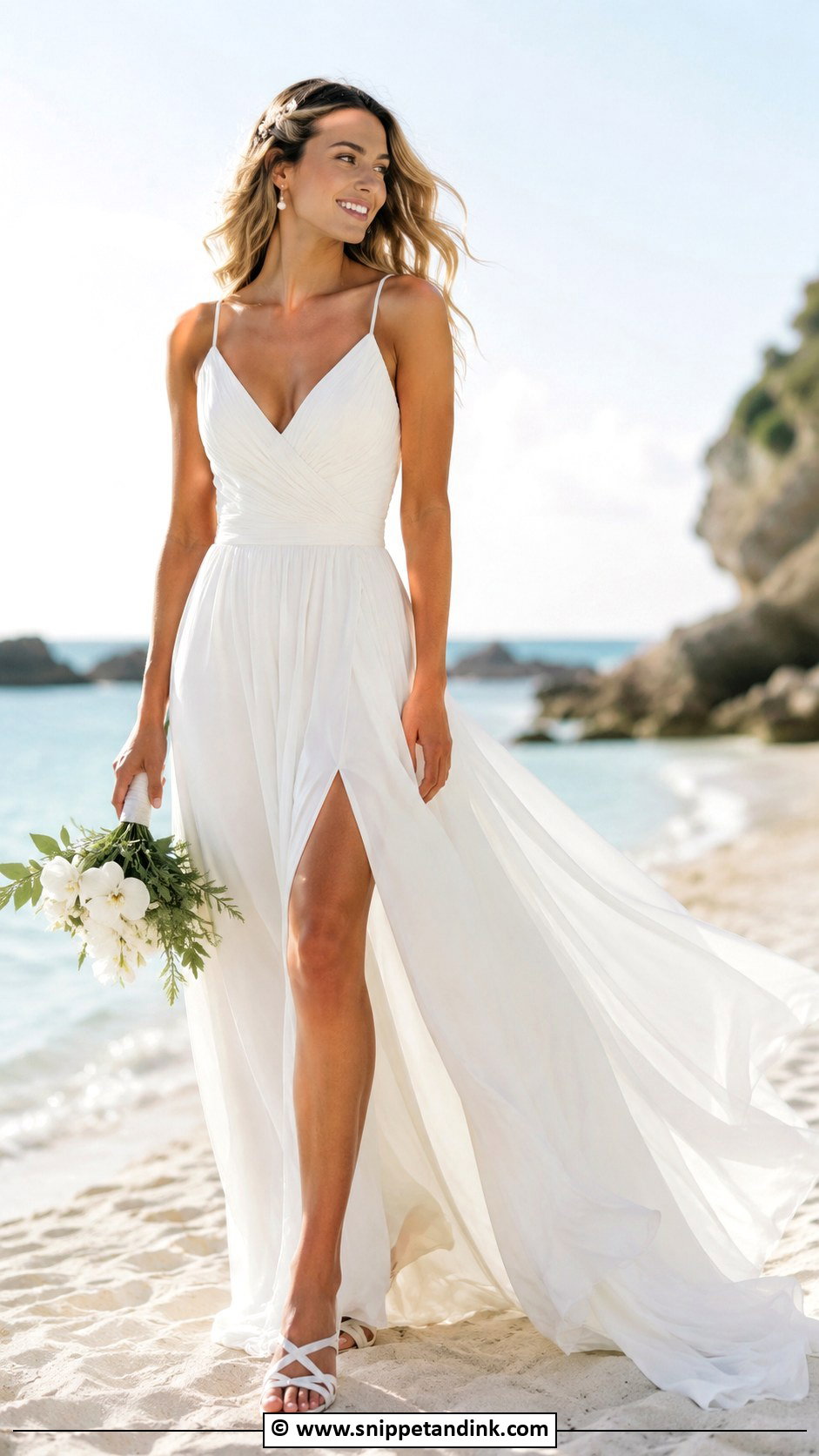
On a beach, anything heavy fights the wind and sand. Chiffon, lightweight crepe, silk and soft lace move with the breeze. A slip, a flowy A-line or a relaxed sheath beats a ball gown here. Flat or barefoot sandals, pearl earrings and loose hair suit the setting. I’d skip a long veil, or weight its edge, because coastal wind lifts it straight across your face. Ivory, soft white and champagne sit nicely against sand and sky.
24. Garden Bride Dress
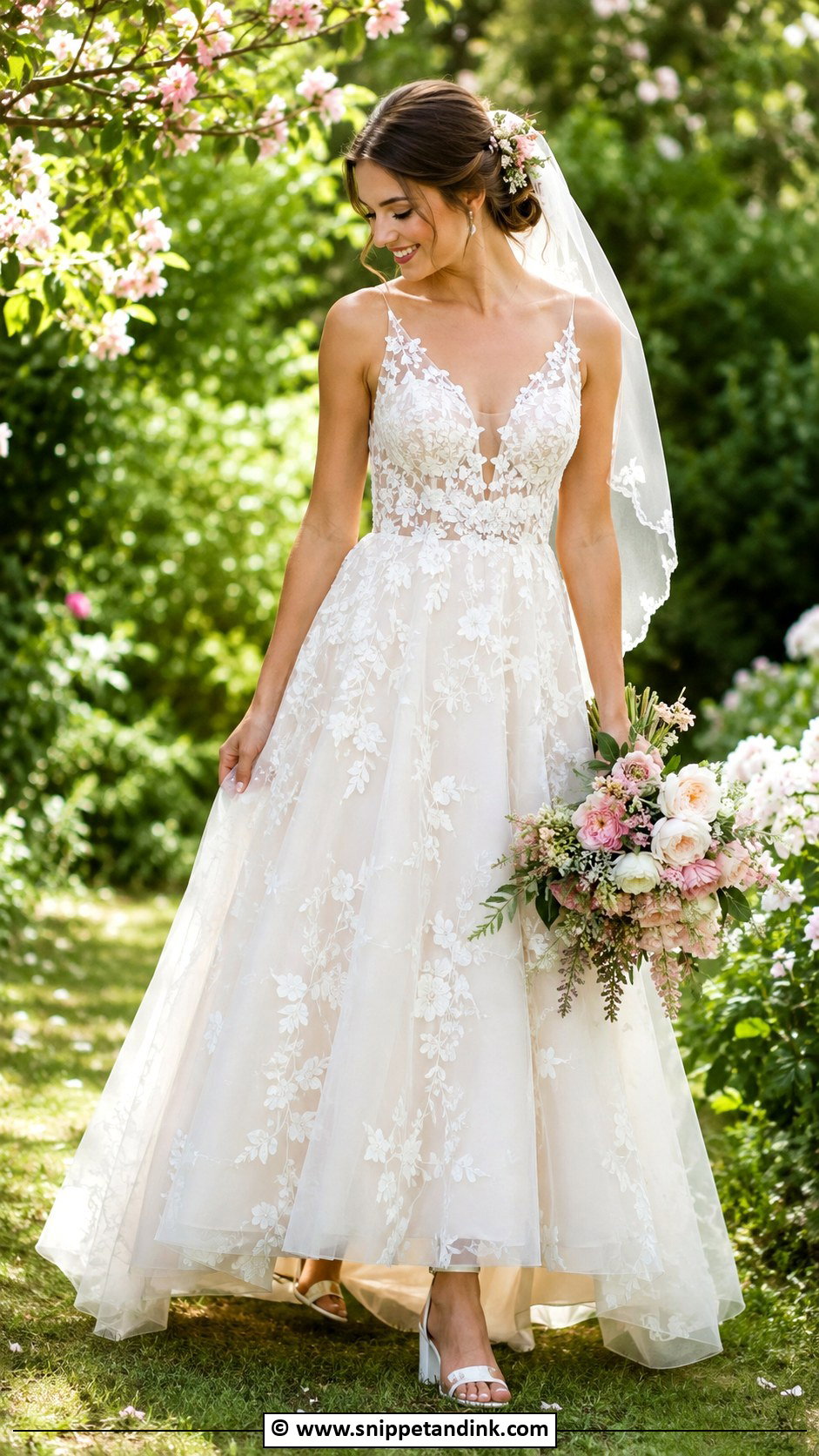
Garden gowns pick up grass stains and pollen at the hem, so I’d hem a garden dress a little shorter at the front than you would for a ballroom. Floral lace, embroidered tulle, light organza and chiffon feel right outdoors, and A-line or soft ball gown shapes move naturally. Block heels or wedges keep you from sinking. Floral pins, pearl earrings and a veil with some movement suit it, with a bouquet that isn’t oversized.
25. Courthouse Bride Dress
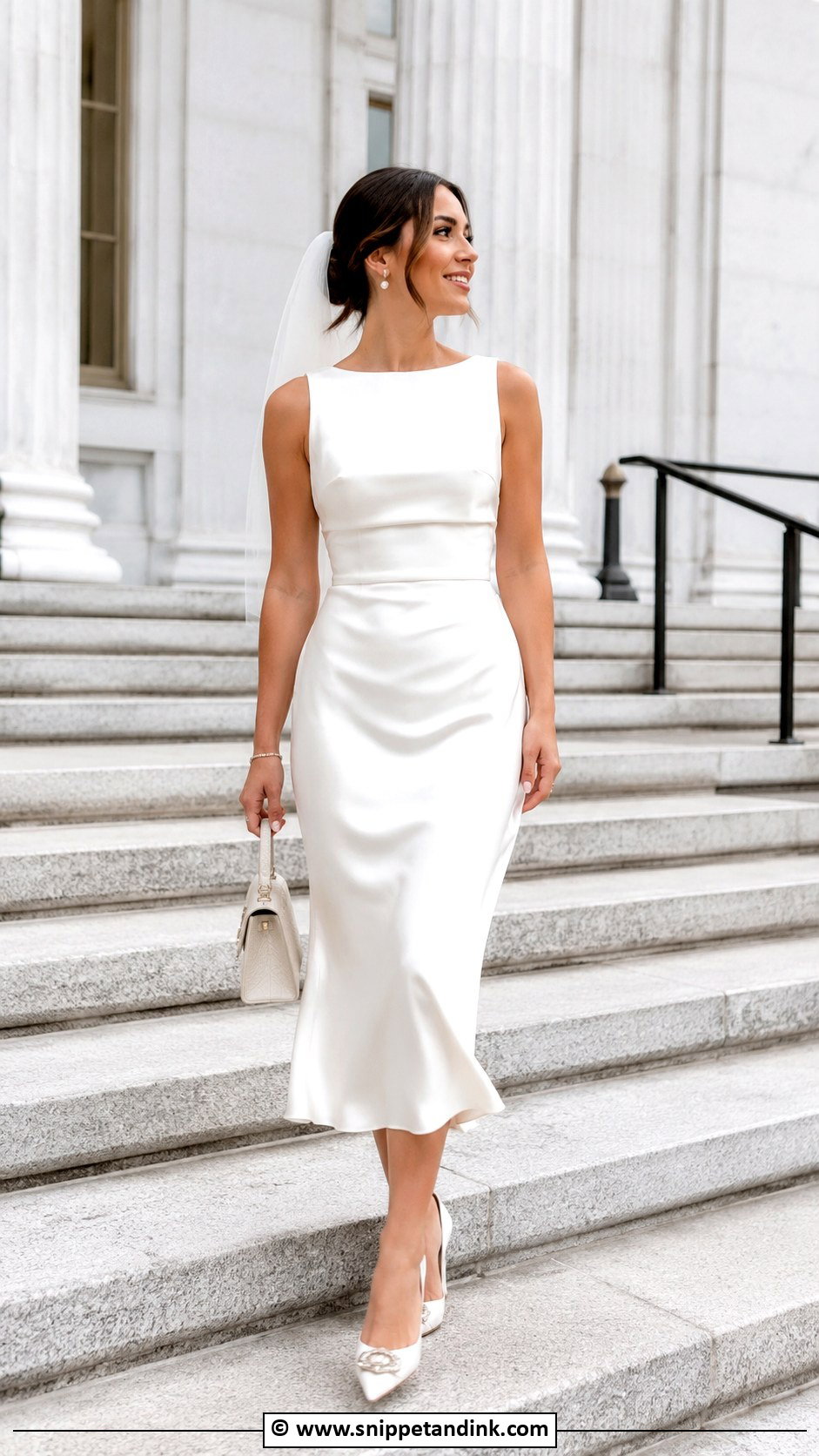
A courthouse bride dress has to cope with steps, security lines and a short ceremony with photos on the steps outside. A satin midi, tailored mini, crepe sheath or white blazer dress all look bridal without fuss. Slingback heels, a structured handbag, pearl studs and a short veil or headband suit the setting. In cool weather add a fitted coat. Above all, make sure it’s easy to walk and sit in, since you’ll do both a lot.
26. Winter Bride Dress
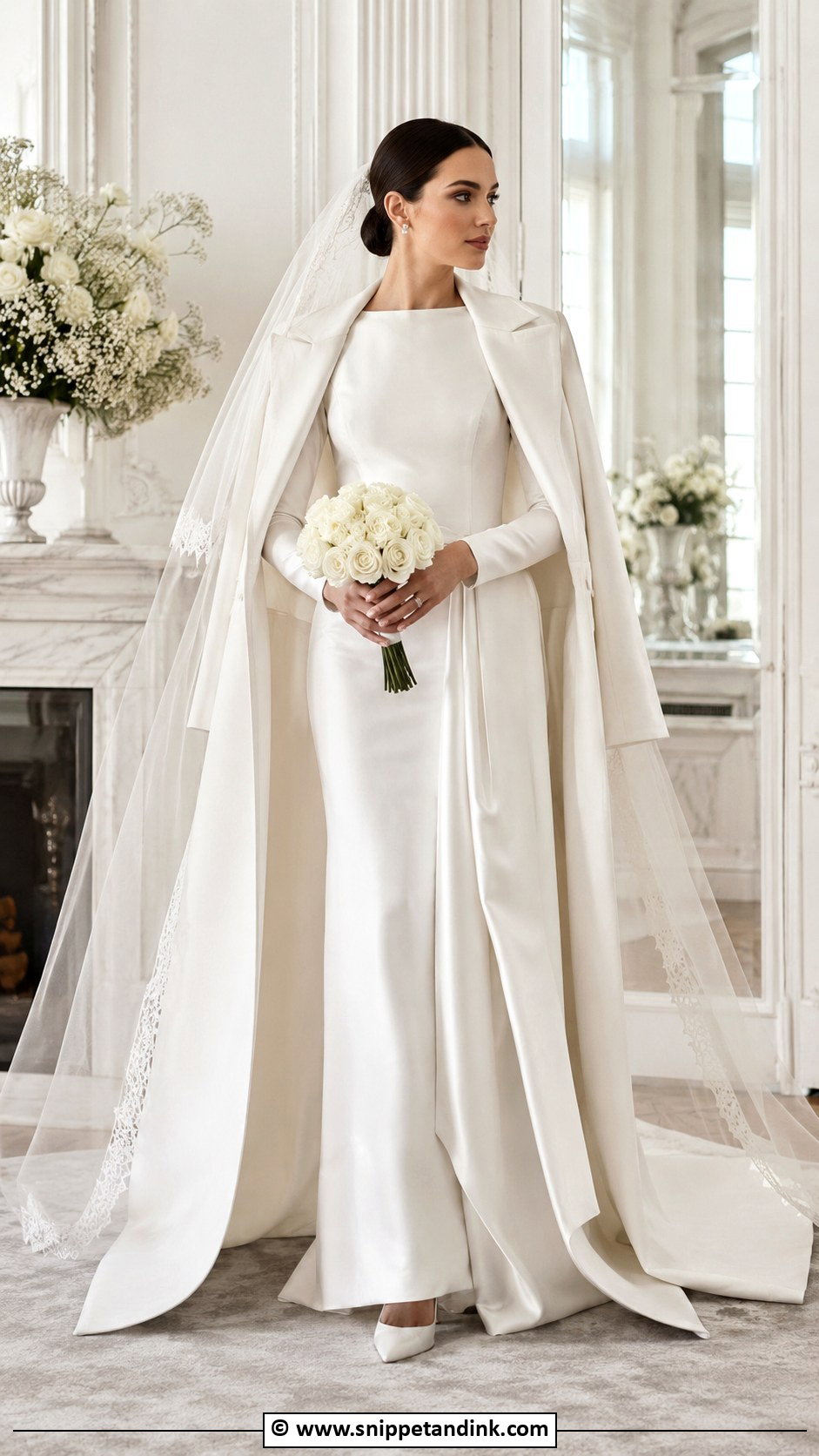
A winter bride dress doesn’t have to be heavy to be warm. Long sleeves, thick satin, crepe, mikado, velvet accents or layered skirts all help, and the cover-up matters most for outdoor portraits: a structured cape, faux fur wrap or tailored white coat. Closed-toe heels and pearl or crystal earrings suit the season. A cathedral veil looks dramatic against winter light. Soft but defined makeup and white blooms with greenery round it out for a formal indoor venue or snowy portraits.
27. Summer Bride Dress
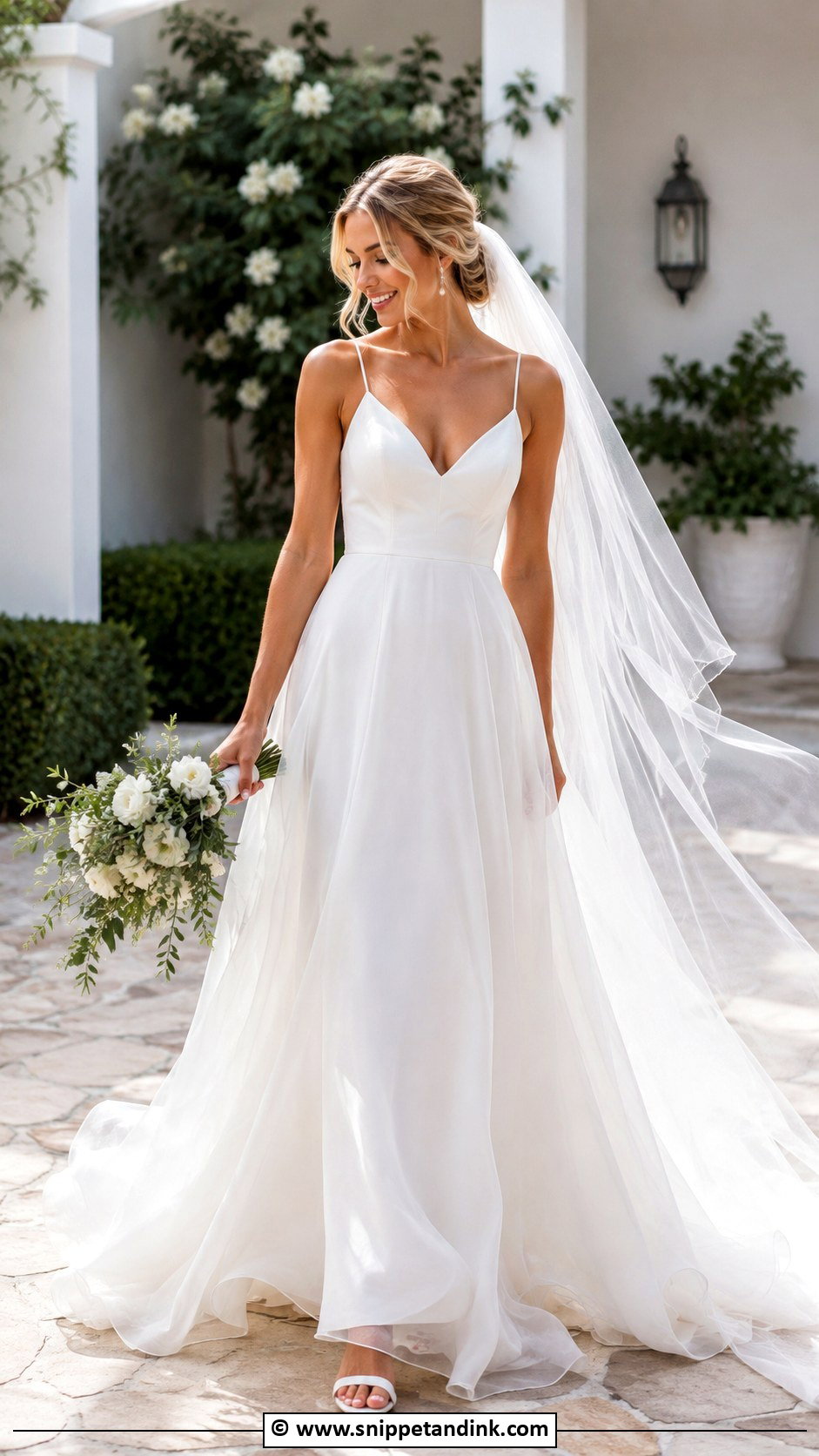
Heat is the real enemy of a summer gown, and the fix is fabric. Chiffon, organza, silk, tulle and lightweight crepe let air through; heavy satin and dense lace trap it. Thin straps, strapless necklines, soft A-line skirts and slip dresses all suit warm days. Comfortable sandals, delicate earrings and a lightweight veil help, with the hair lifted or softly pinned in humidity. A fresh bouquet in white or pastels finishes it for a garden or destination venue.
28. Plus Size Bride Dress
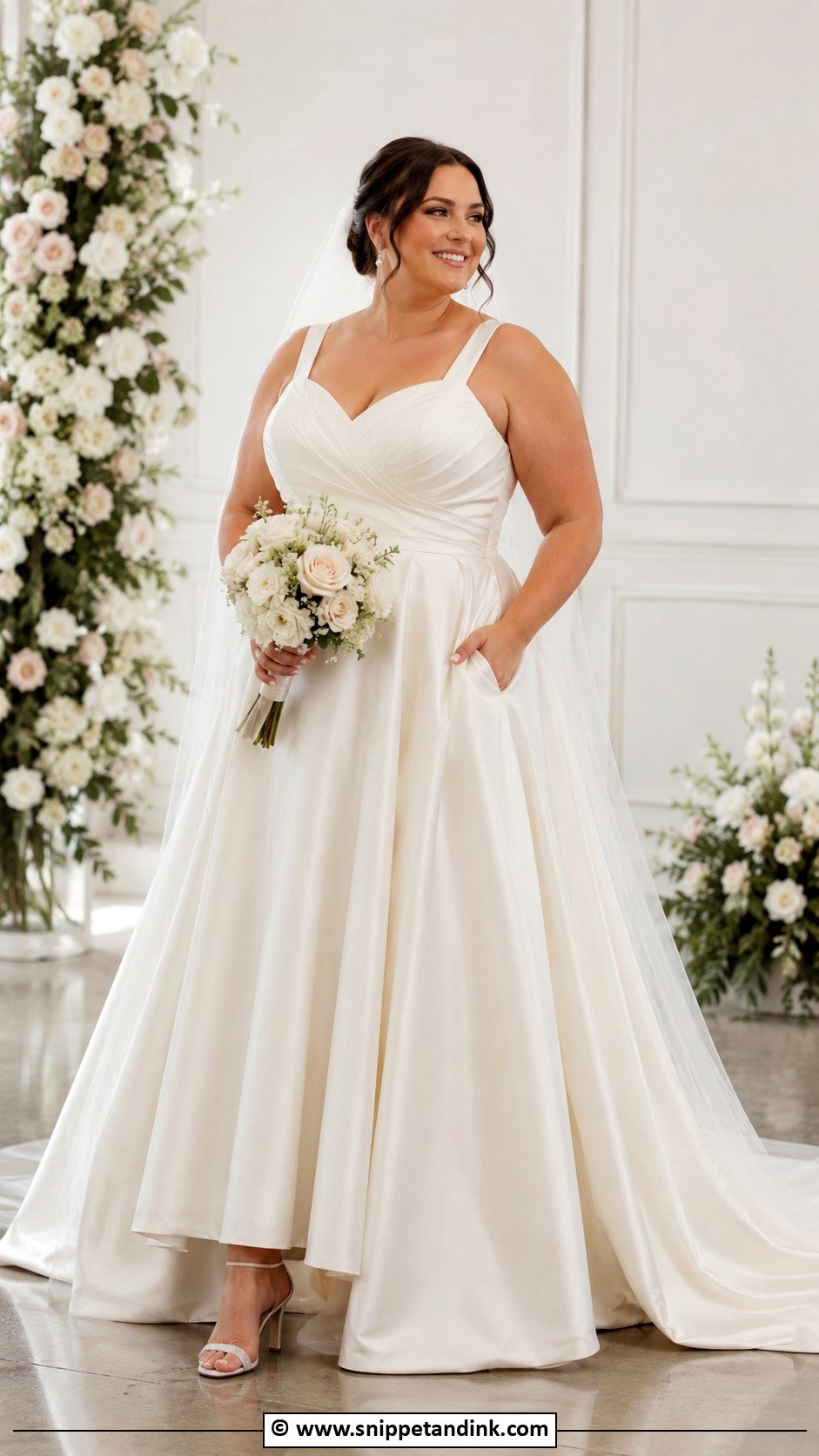
Fitting a plus size bride comes down to support and structure, and the gown should celebrate her shape rather than hide it. Structured bodices, wide supportive straps, corset backs, A-line skirts, basque waists and fit-and-flare shapes all work. I’d look for proper lining and internal support, since well-built bodices carry the weight so straps don’t dig. Satin, crepe, lace and lined tulle all move well. Comfortable heels and the right undergarments make a bigger difference than any accessory. A skilled tailor can make a sample-size gown feel custom.
29. Maternity Bride Dress
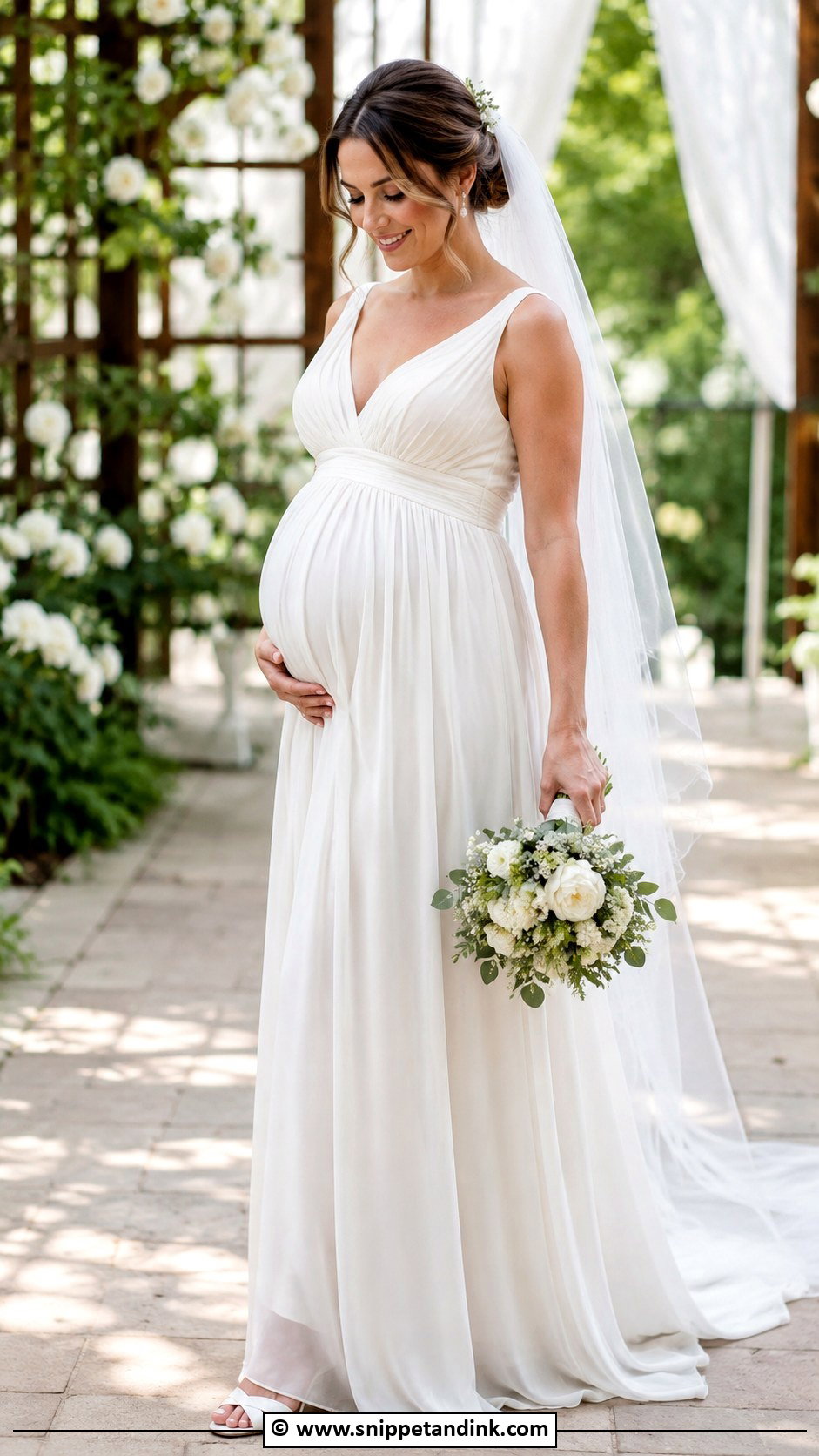
Bodies change week to week in pregnancy, so I schedule a maternity bride’s final fitting as close to the date as the seamstress allows, often within the last two weeks. Empire waists, flowing A-lines, stretch crepe, chiffon and wrap-style bodices give room without losing shape. Choose straps or sleeves that support a changing bust. Low block heels or cushioned sandals, pearl earrings and a lightweight veil keep her comfortable. Skip a heavy train, which only adds weight to carry and drag.
30. Modest Bride Dress
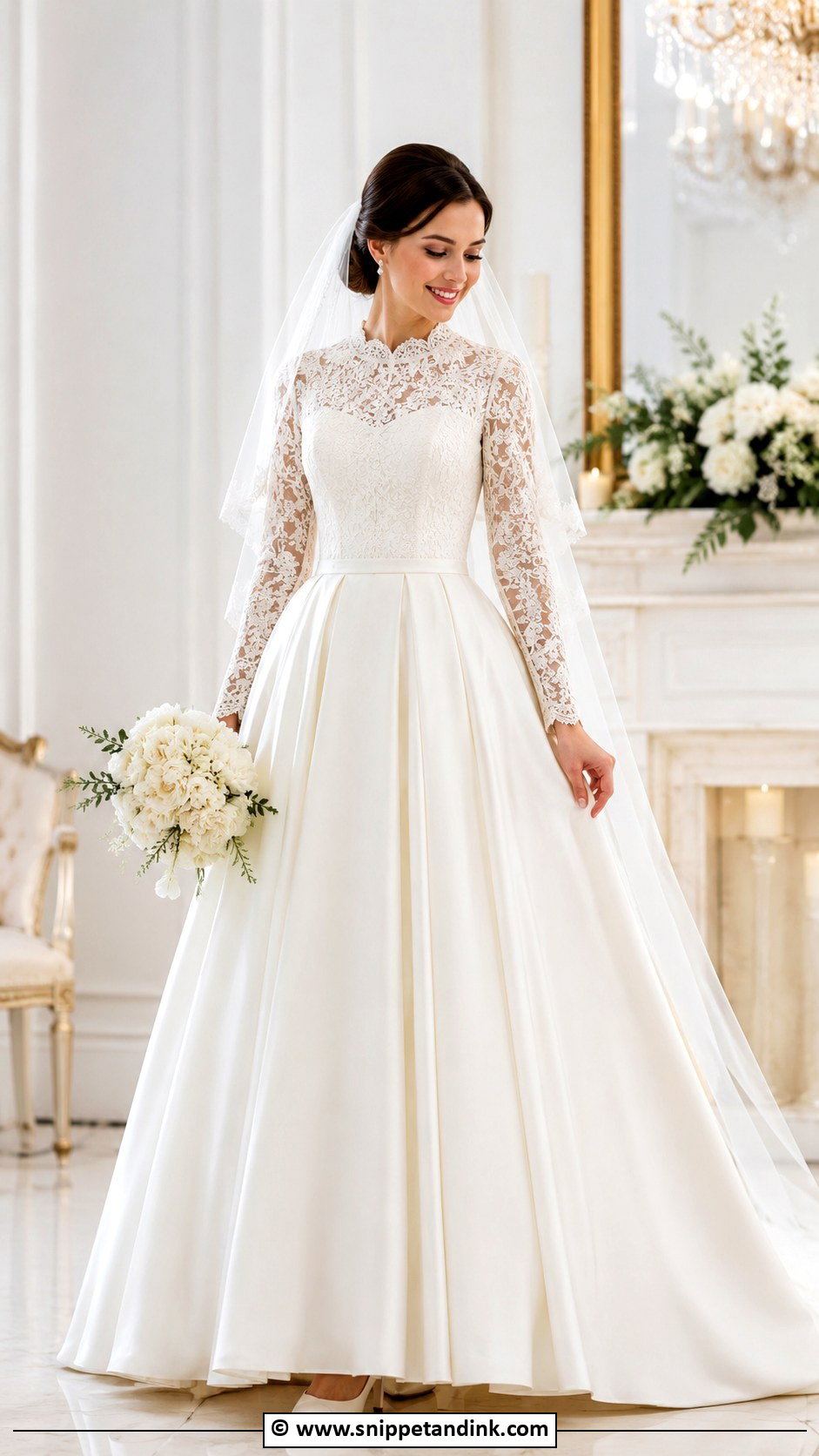
Modest gowns are some of my favorite briefs, because the detail has to come from fabric and construction rather than skin. High necks, long sleeves, lined bodices, full skirts or sleek sheaths give coverage. Lace sleeves, satin cuffs, lined illusion panels and button details add interest. Closed-toe pumps, pearl earrings, a classic veil and a soft updo finish it. If the gown is plain, let a detailed veil carry the texture. For a traditional family or religious ceremony, check any specific coverage expectations with your officiant early.
Trains, Bustles and Getting the Gown Cleaned Afterwards
A train looks wonderful on the aisle and becomes a hazard at the reception. That’s what a bustle is for: hooks, buttons or ribbon ties hidden in the skirt that lift the train off the floor.
Pick a bustle style at your fitting
- An over bustle hooks the train up onto the back of the skirt and makes a visible drape.
- An under bustle, often called French, tucks the train beneath itself and leaves a smoother, ruched shape.
- A ballroom bustle lifts the train all the way round so the gown looks floor-length with no train at all.
Bring the person who’ll do it on the day to your last fitting, usually your maid of honor or your mother, and have them practice twice. A complicated bustle can take ten minutes and two pairs of hands, so it helps to color-code the ties.
Have it cleaned soon after the wedding
Spilled champagne, sweet drinks and perspiration can look invisible on the night, then oxidize into yellow or brown marks months later as the sugars age. I’d get the gown to a specialist cleaner within a few weeks, point out any spills you remember, and store it flat or loosely folded in acid-free tissue, away from light and plastic bags.
Why the Dress Should Make Your Day Easier
Every gown above can be right, and every one can be wrong in the wrong setting. Before you decide, picture the whole day: the venue, the weather, how far you’ll walk, how long you’ll sit at dinner and how many hours you’ll be in it. Then try at least one shape you’d never have picked, because brides surprise themselves in fitting rooms all the time. Satin, lace, crepe, tulle, tailoring or a short second look are all open to you now. Pick the one you can breathe, sit and dance in, and the photos will take care of themselves.
You'll Like These Ideas:





Leave a Reply