
The question I hear most in a fitting room isn’t about silhouette at all. It’s “will this white make me look grey?” That worry is fair, because bridal fabric is dyed for a narrow idea of skin and lining is often cut in one flat beige. The answer is usually a shade and fabric choice, not a body-type rule. Below are twenty gowns I’d genuinely pull for a bride, from ivory satin and champagne tulle to drop waists, detachable layers, tea-length hems and Kente detail, each with the styling I’d pair it with and the fitting check I’d never skip. Use them to shortlist, then trust what the mirror and the camera tell you.
Testing Ivory, Diamond White and Champagne Against Your Skin
Shop lighting is kind to almost everyone, so I don’t let a bride decide on colour under it alone. Ask the consultant to bring two or three shades of the same gown, or at least fabric swatches, and stand near a window. Bright white tends to make deep skin look slightly ashy next to it, while ivory and soft champagne usually echo the warmth already there. Neither rule is absolute, which is why the test matters.
- Hold each swatch under your chin, not against your arm. The face is what the camera reads.
- Look at your teeth and the whites of your eyes. If they suddenly look yellow, the fabric is too stark for you.
- Take one phone photo with flash and one without. Flash is closest to what reception photos will do.
- Check the lining and any illusion mesh separately from the outer fabric, because they are often dyed in different lots.
If the gown you love only comes in a shade that fights your undertone, it’s not the end. Many bridal fabrics can be ordered with a warmer lining, and a champagne underlayer under ivory lace changes the overall tone more than people expect.
1. Ivory A-Line Wedding Dress
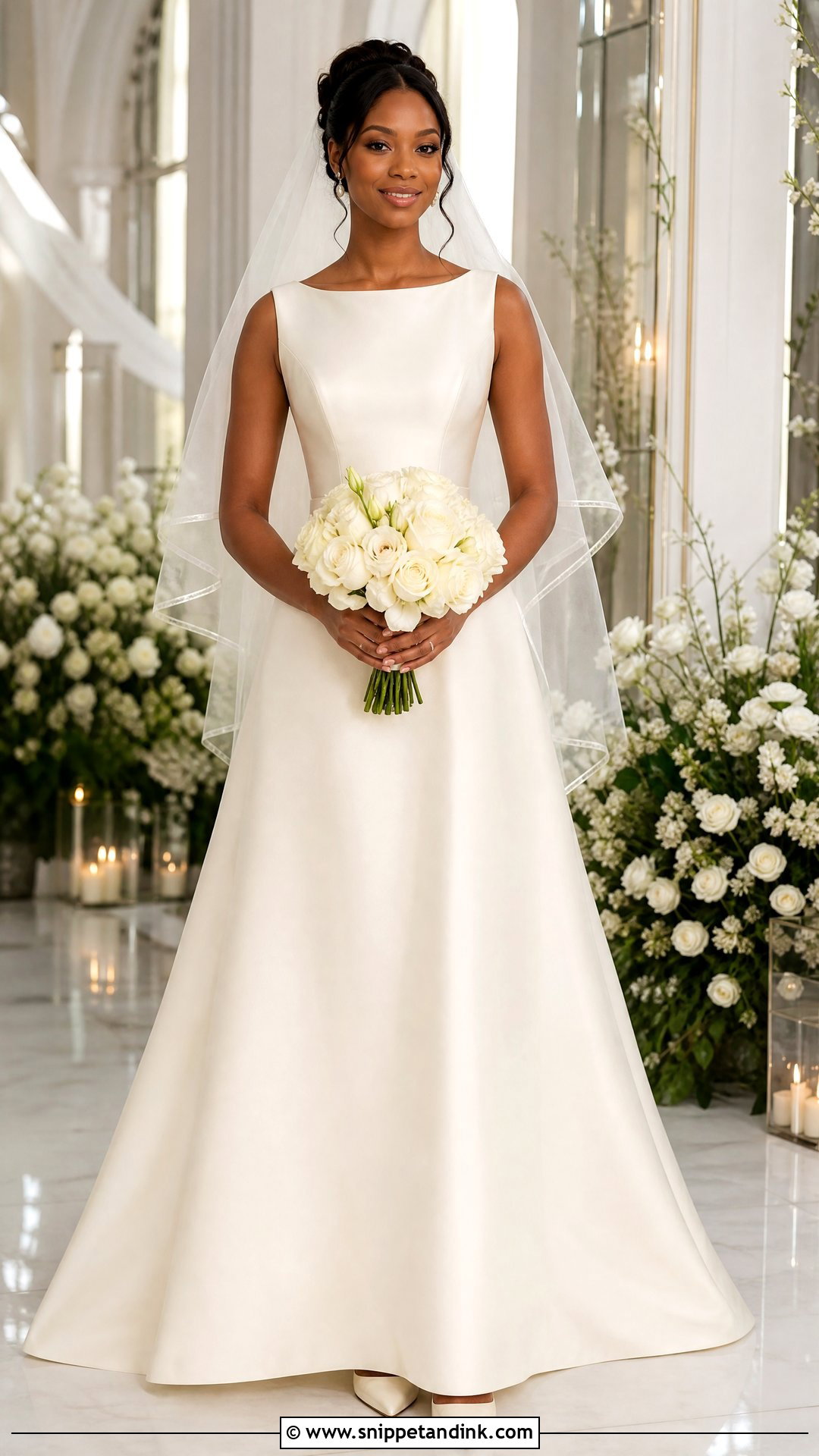
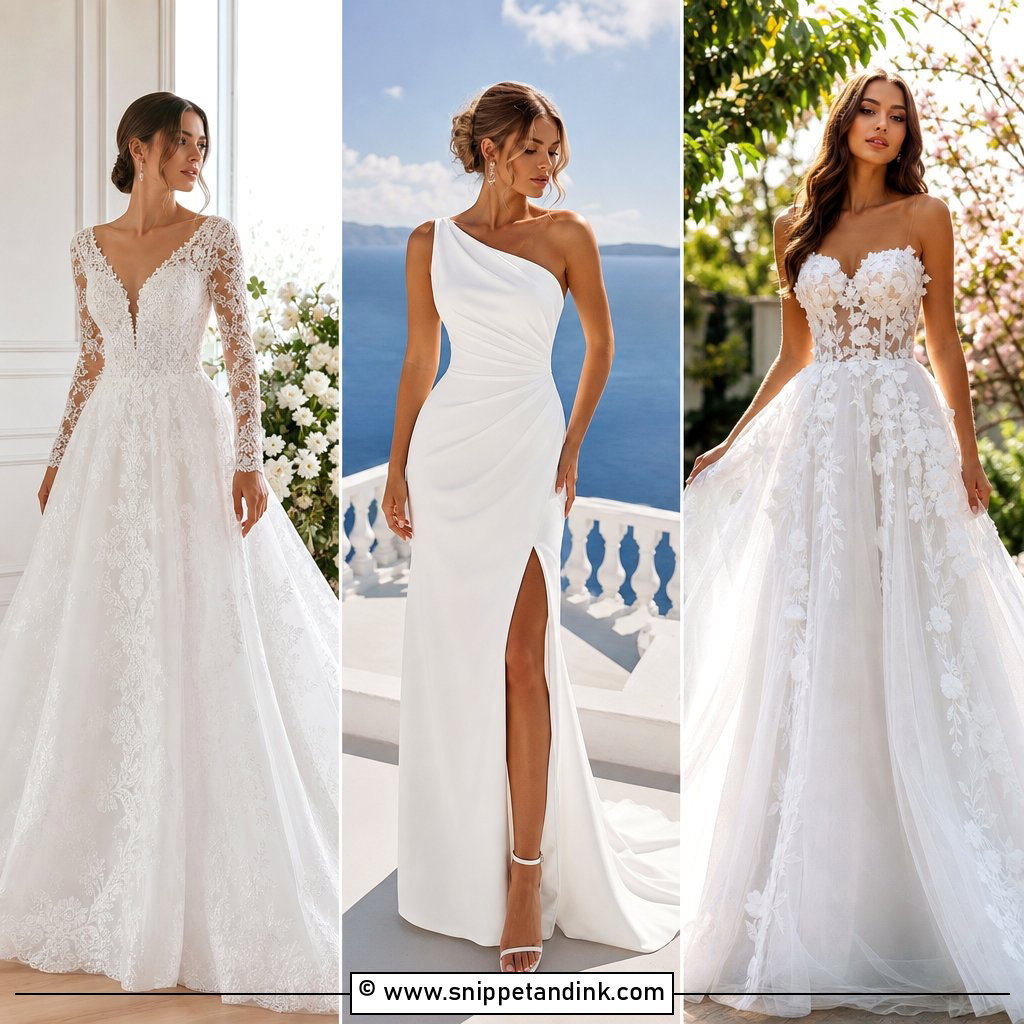
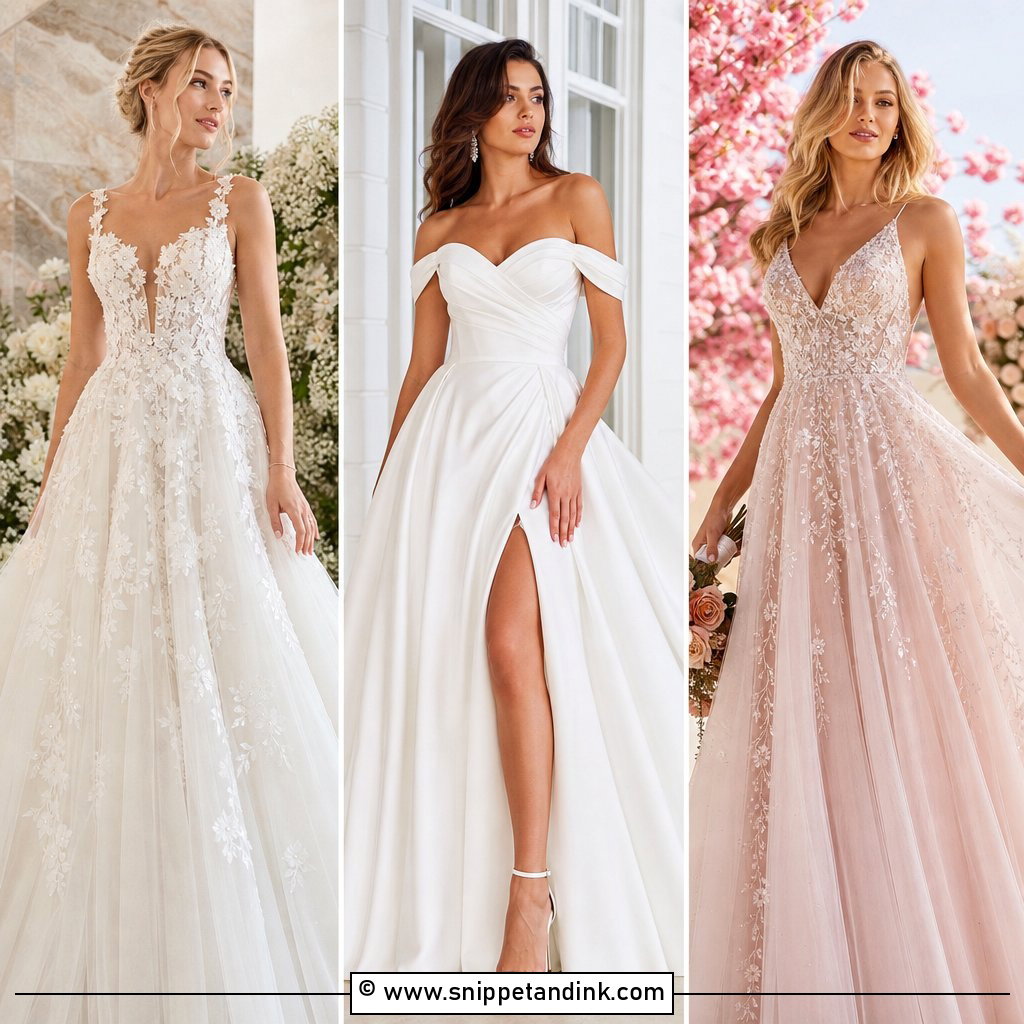
I start almost every appointment with an A-line, because it tells me so much about a bride’s proportions in one try. The bodice sets the waist and the skirt widens without much bulk, so you can judge fit before fabric gets in the way. Ivory tends to sit warmer than optical white on deep and golden skin, but I still hold the gown up to a window and then under the shop lights, since the two can disagree. Matte crepe keeps it modern; satin adds a soft glow. Pearl drops, a fingertip veil and pointed ivory pumps finish it, and a narrow embellished belt helps if you’d like more definition at the waist. Bring the actual shoes and bra to every fitting, or the hem will be wrong by the time you dance.
2. Satin Ball Gown Wedding Dress
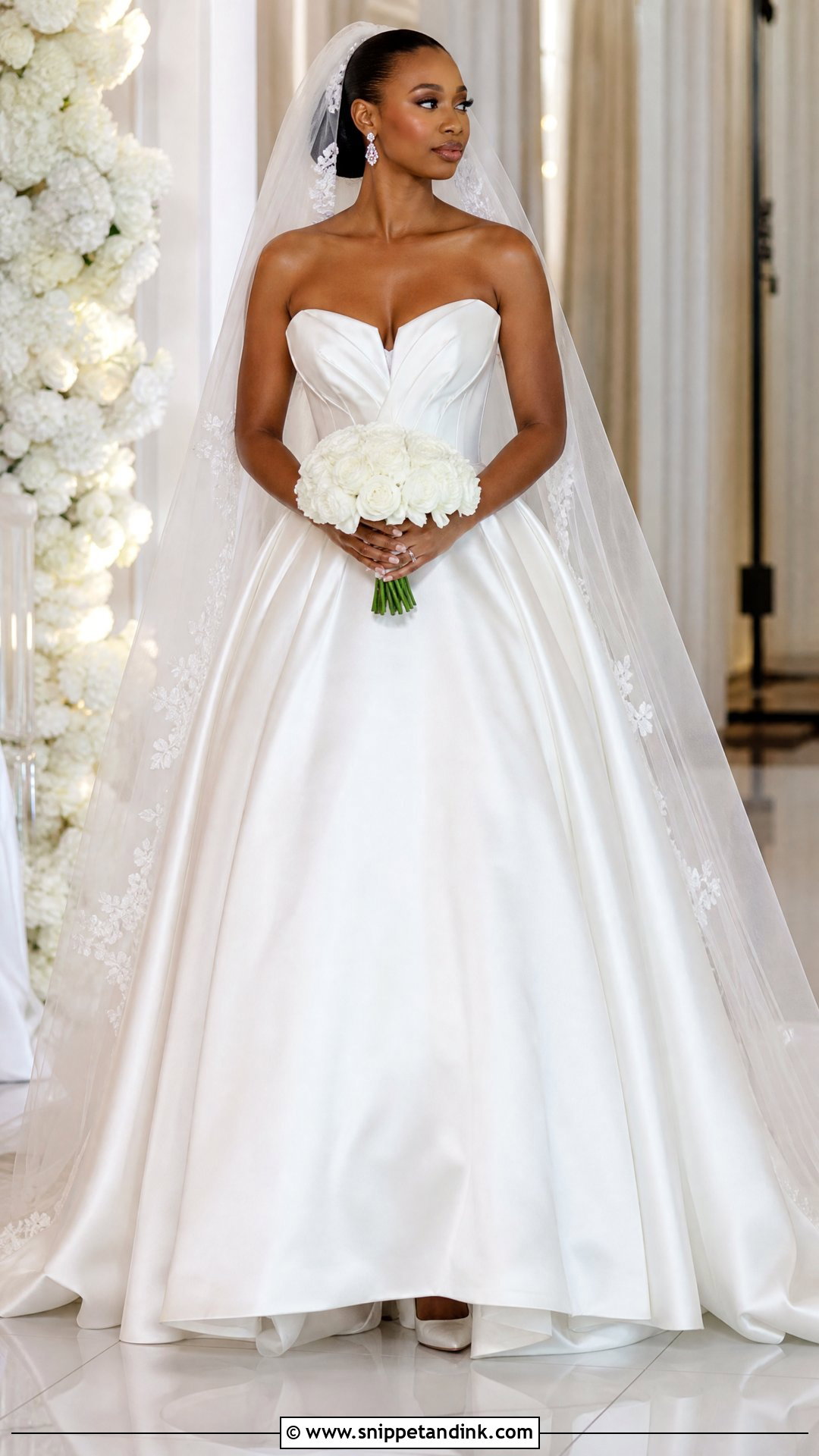
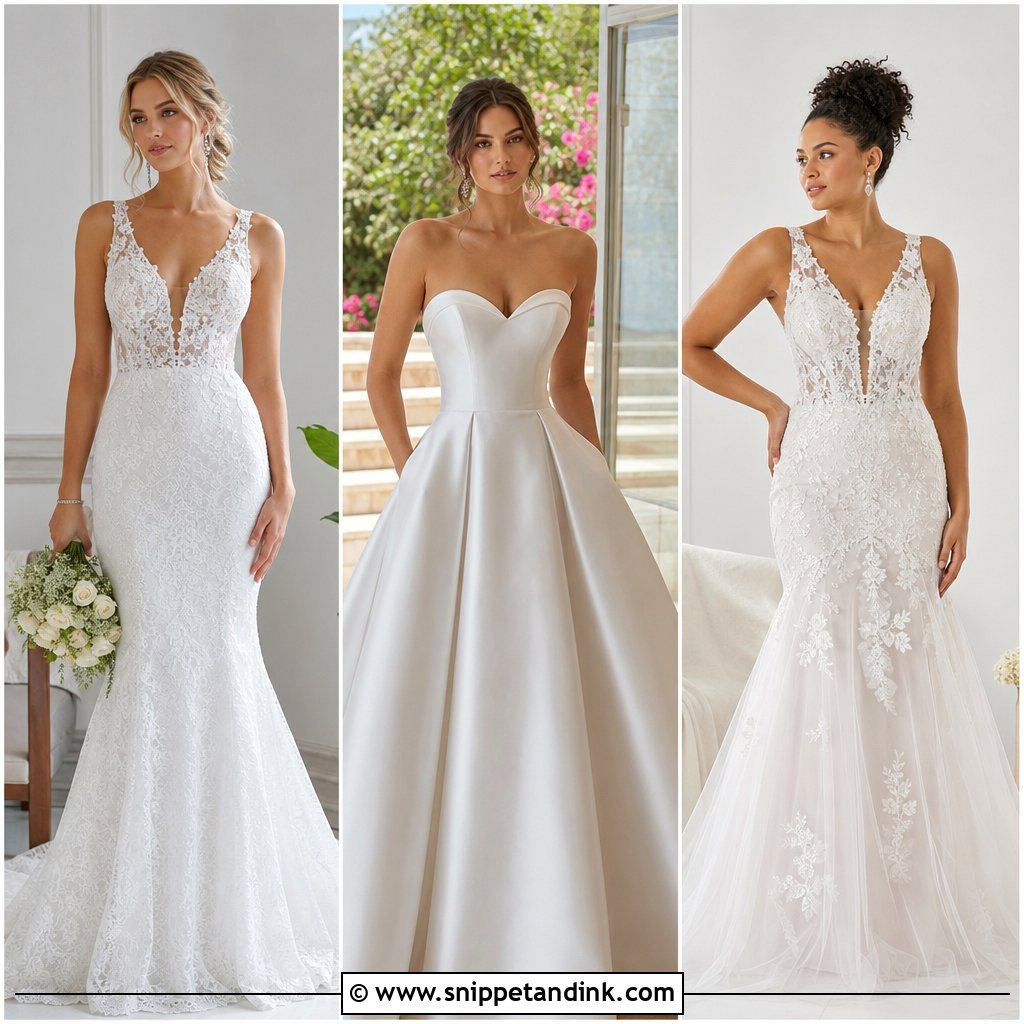
A satin ball gown needs a room big enough to hold it. In a ballroom or a large hotel space the full skirt reads regal; in a small restaurant it fills the aisle and bumps every chair. Medium-weight satin is my pick here, firm enough to keep the skirt’s shape but not so stiff it creases into hard lines once you’ve been seated through dinner. Strapless looks sharp with a jeweled necklace, while a square or scoop neckline leaves room for statement earrings. A cathedral veil and a compact bouquet balance the volume. Ask for pockets and a proper bustle, and have the seamstress walk all the way around the hem if you’re wearing platforms.
3. Lace Mermaid Wedding Dress
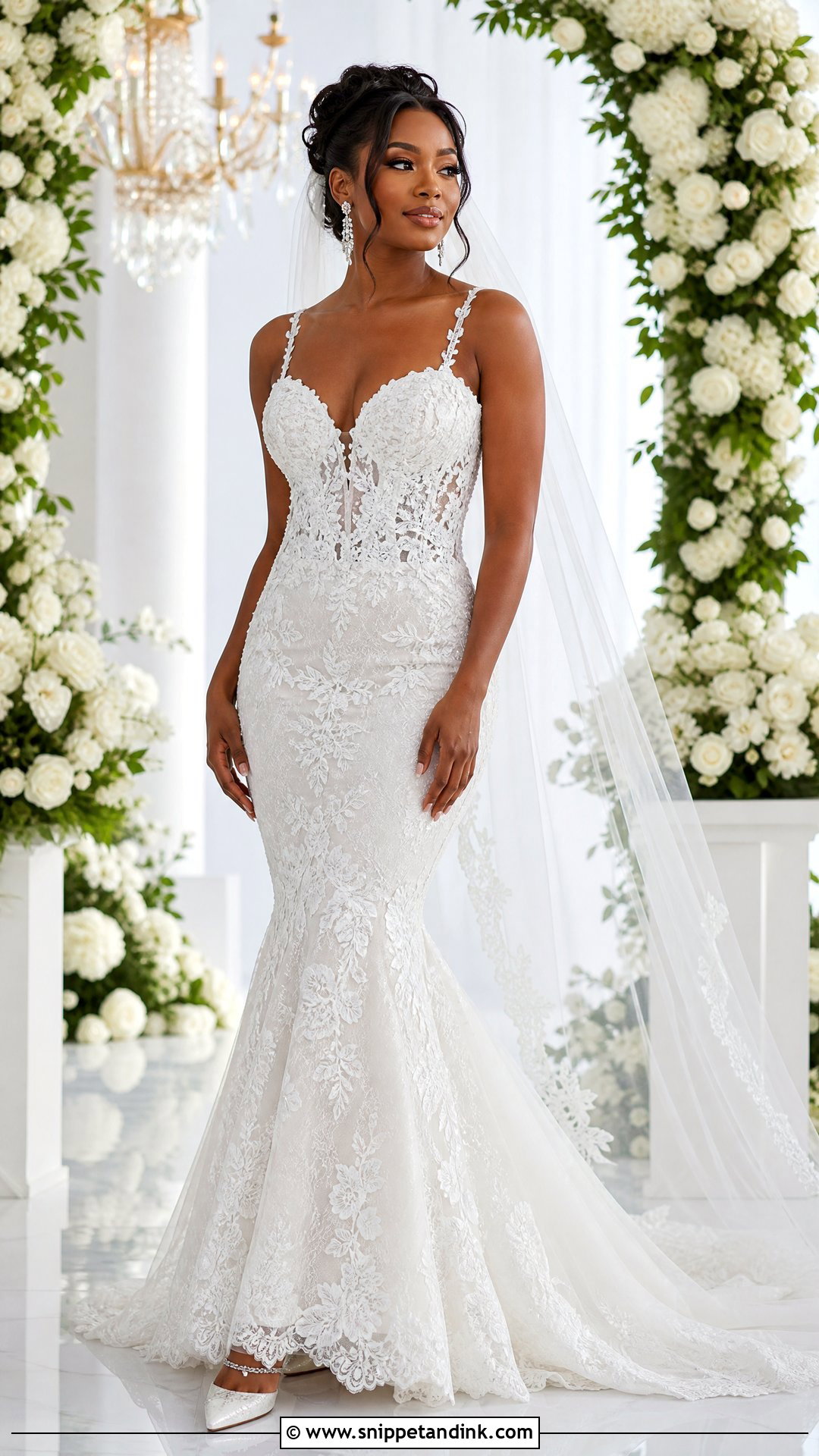
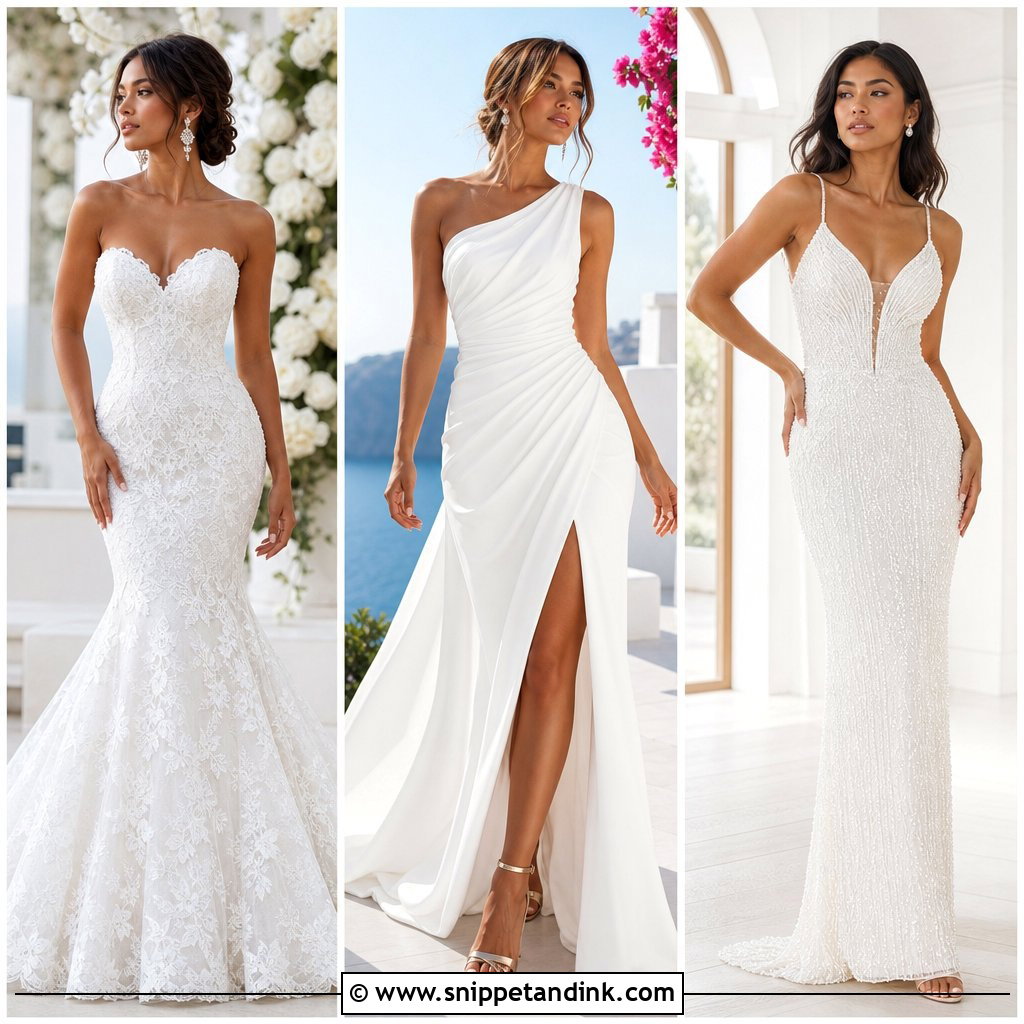
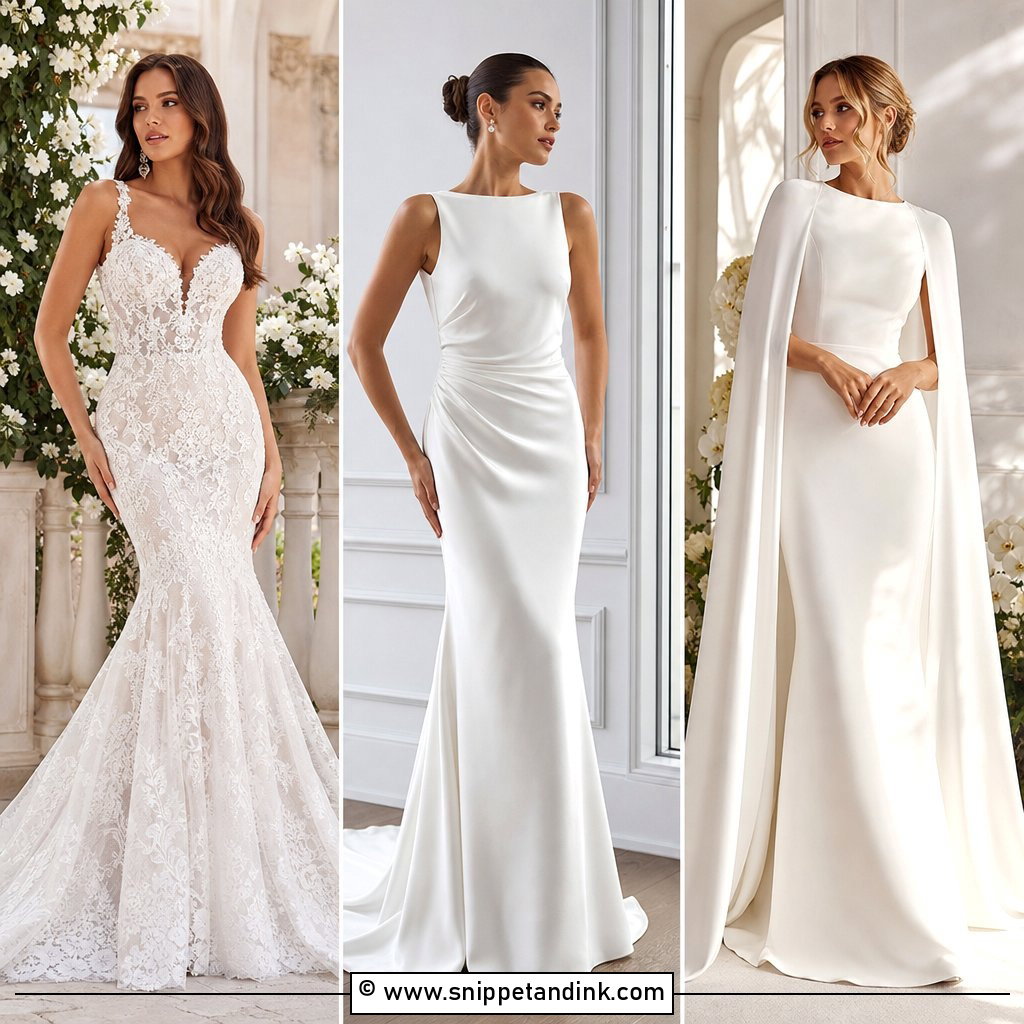
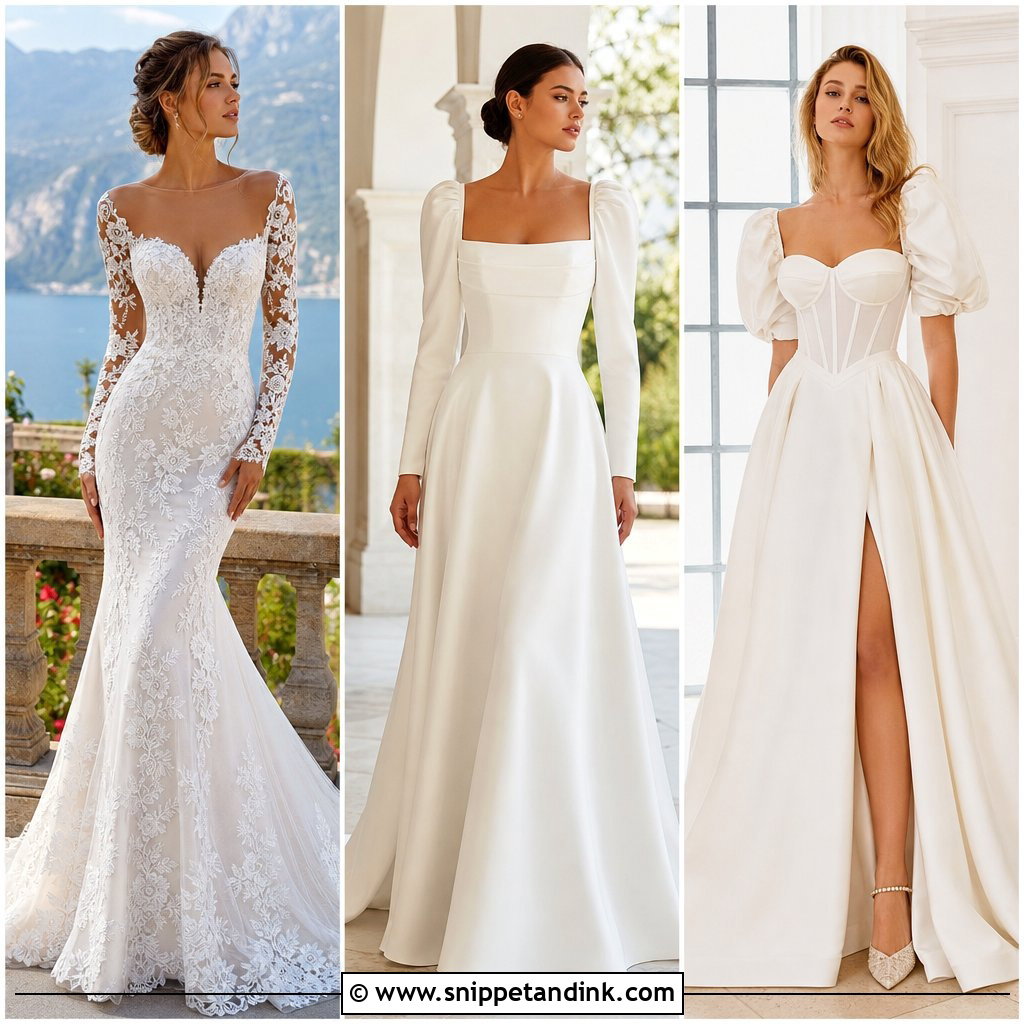
Mermaid gowns live or die on their inside. Before I look at the lace, I turn the dress out and check the lining and internal structure, because that’s what smooths the body without pinning the knees together. Floral lace feels traditional and soft; geometric lace takes the same shape somewhere more current. Pick appliqués with enough contrast to show up in photos, since tone-on-tone lace can vanish entirely on camera. A chapel veil, crystal earrings, pointed heels and a low bun suit the line, and a detachable train lets you keep the drama for the ceremony only. In the fitting, take real steps, climb a stair and sit down. If you can’t do all three, the flare is set too high.
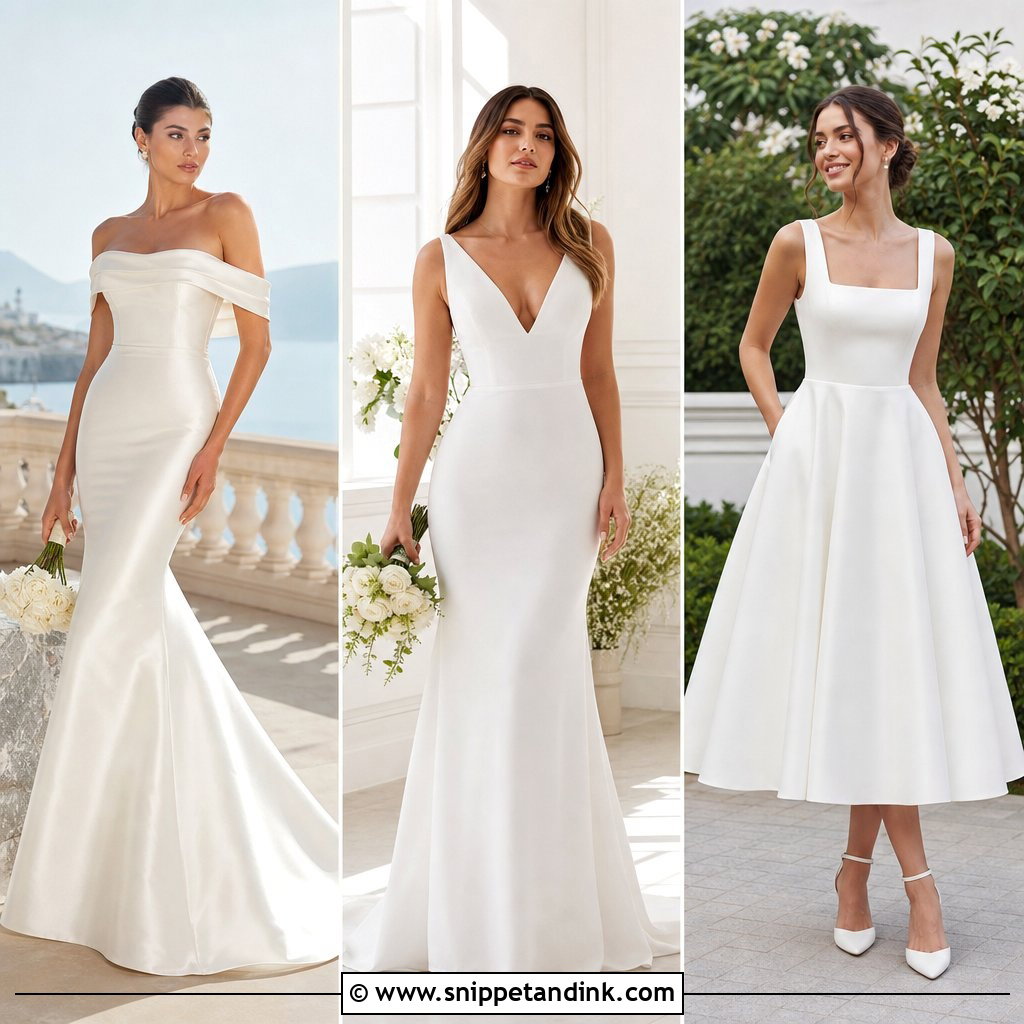
4. Off-the-Shoulder Wedding Dress
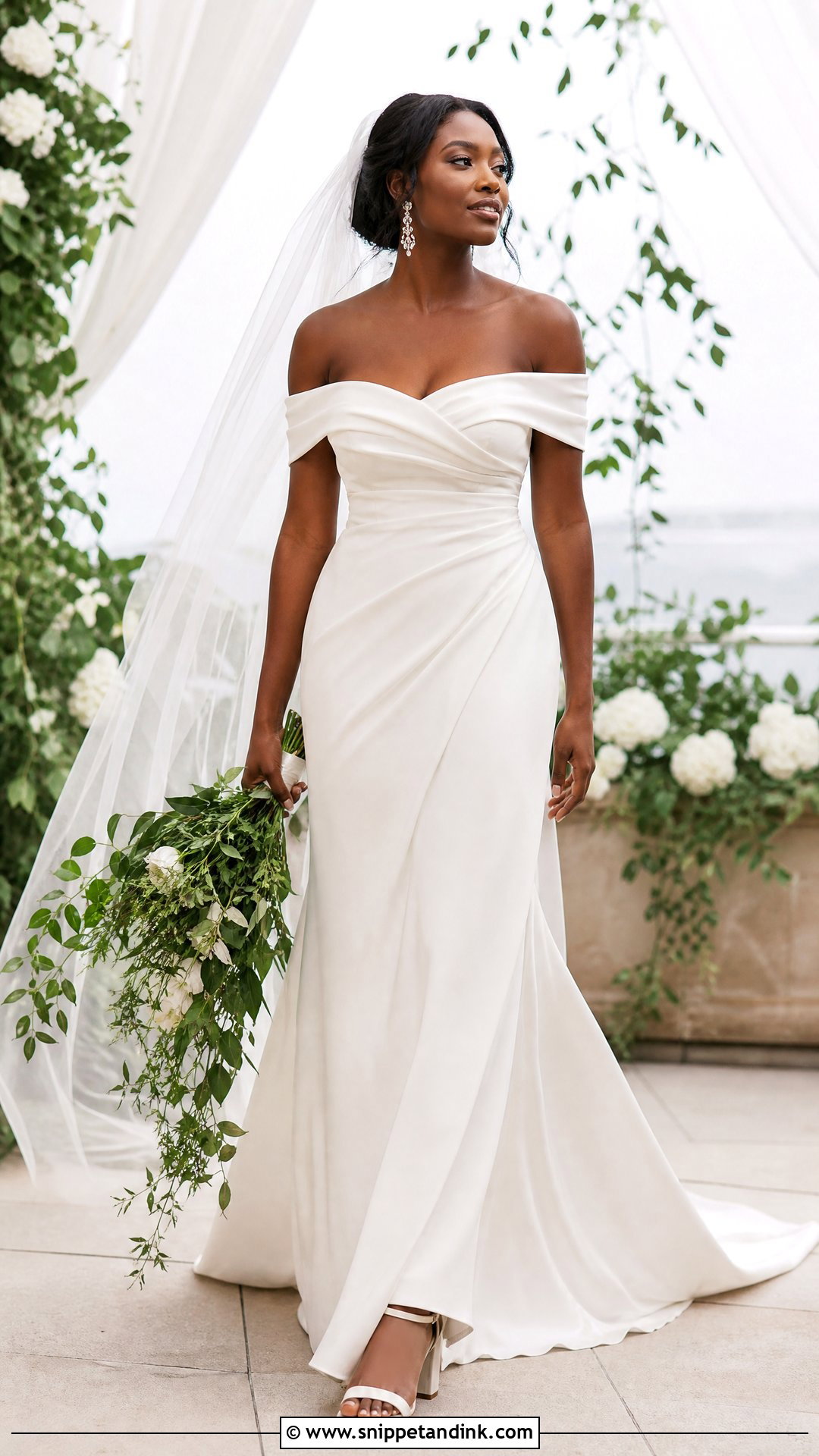
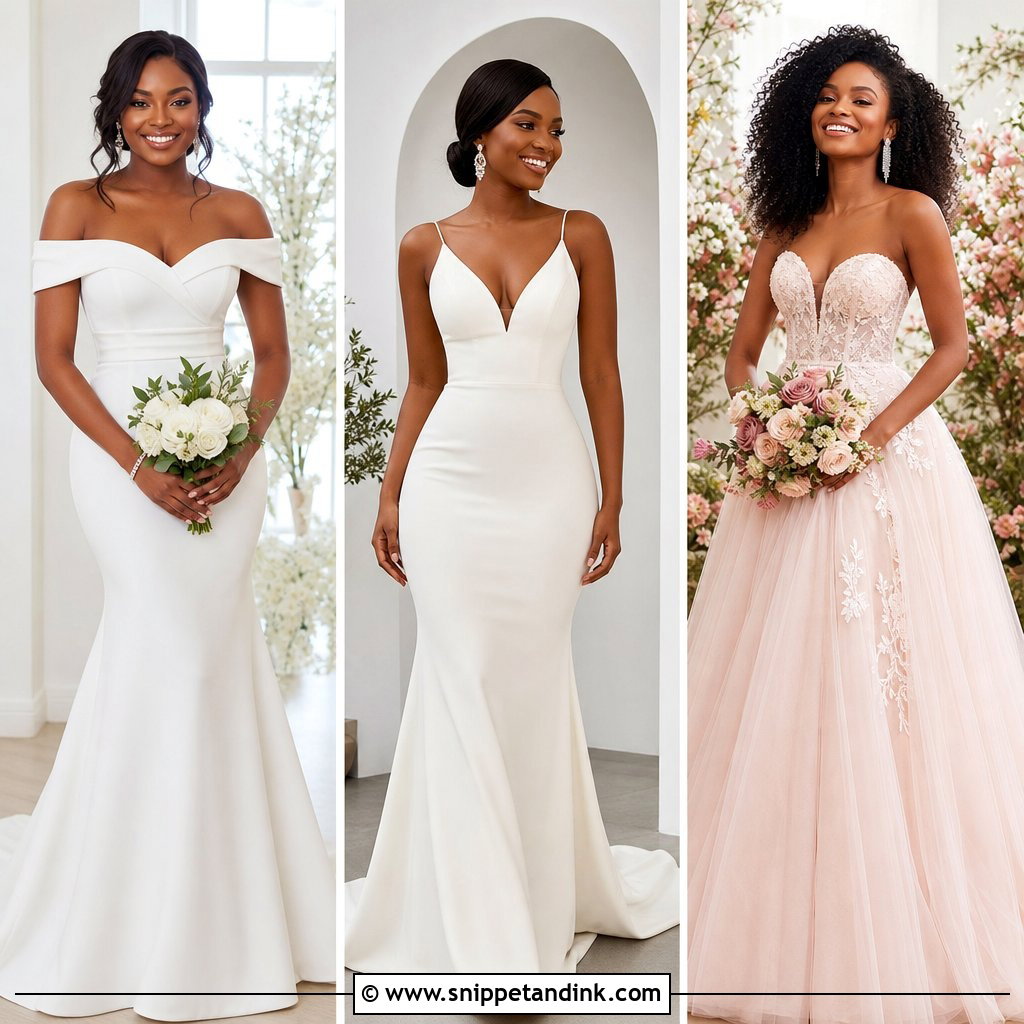
An off-the-shoulder neckline frames the collarbone with very little help from embellishment, which is exactly why I fuss over how it’s anchored. Draped satin bands look clean; lace sleeves bring texture. The trouble comes when you lift your arms: a band that’s too tight rides up, one that’s too loose slides down. So I have brides hug me, raise a bouquet and mimic a first dance before anything gets pinned. Skip the necklace in favour of chandelier earrings, or keep a small pendant. A neat updo shows the line best. Fashion tape is fine for a stubborn spot, but it can’t stand in for cups and a properly built bodice.
5. Long Sleeve Wedding Dress
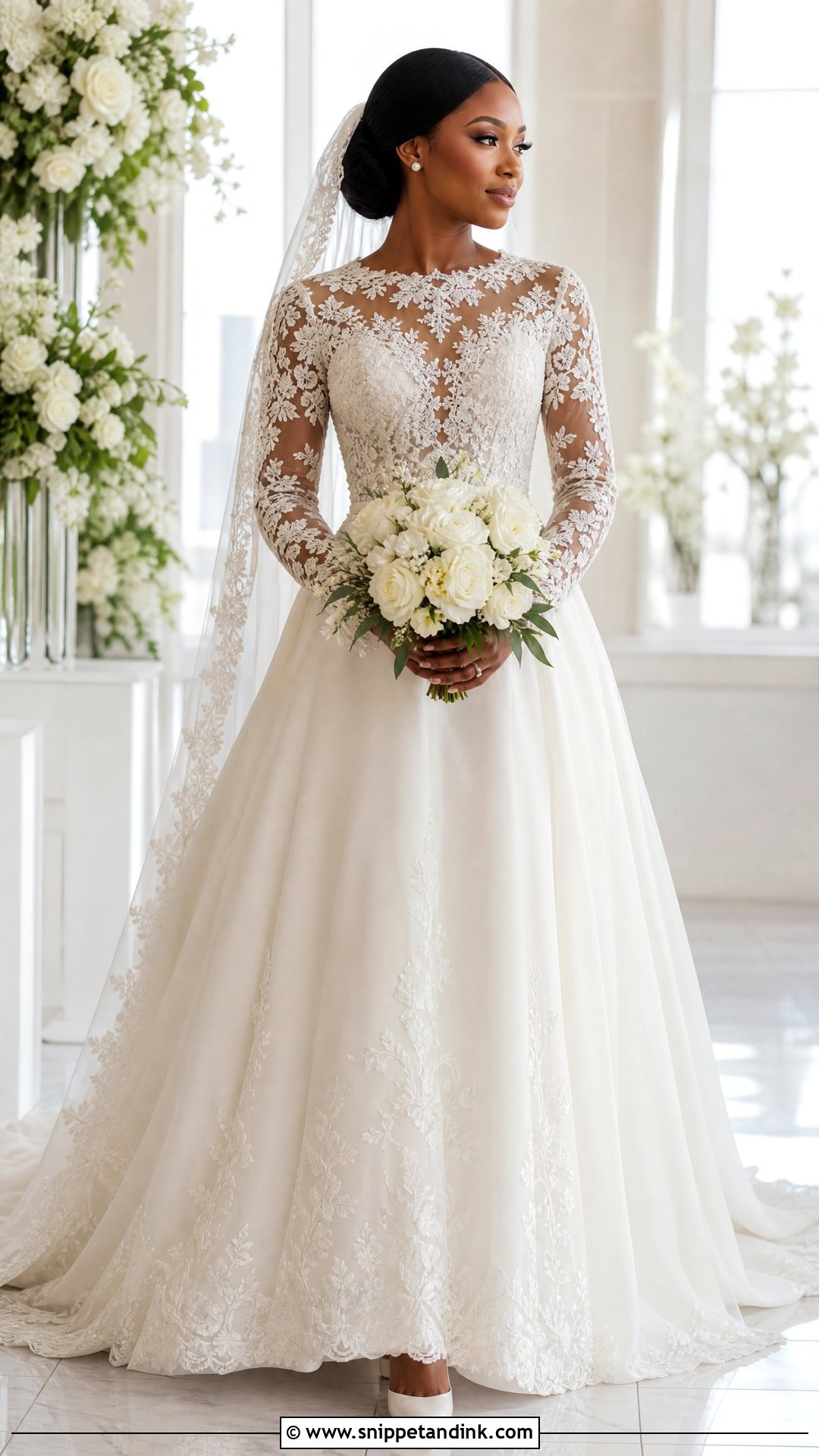
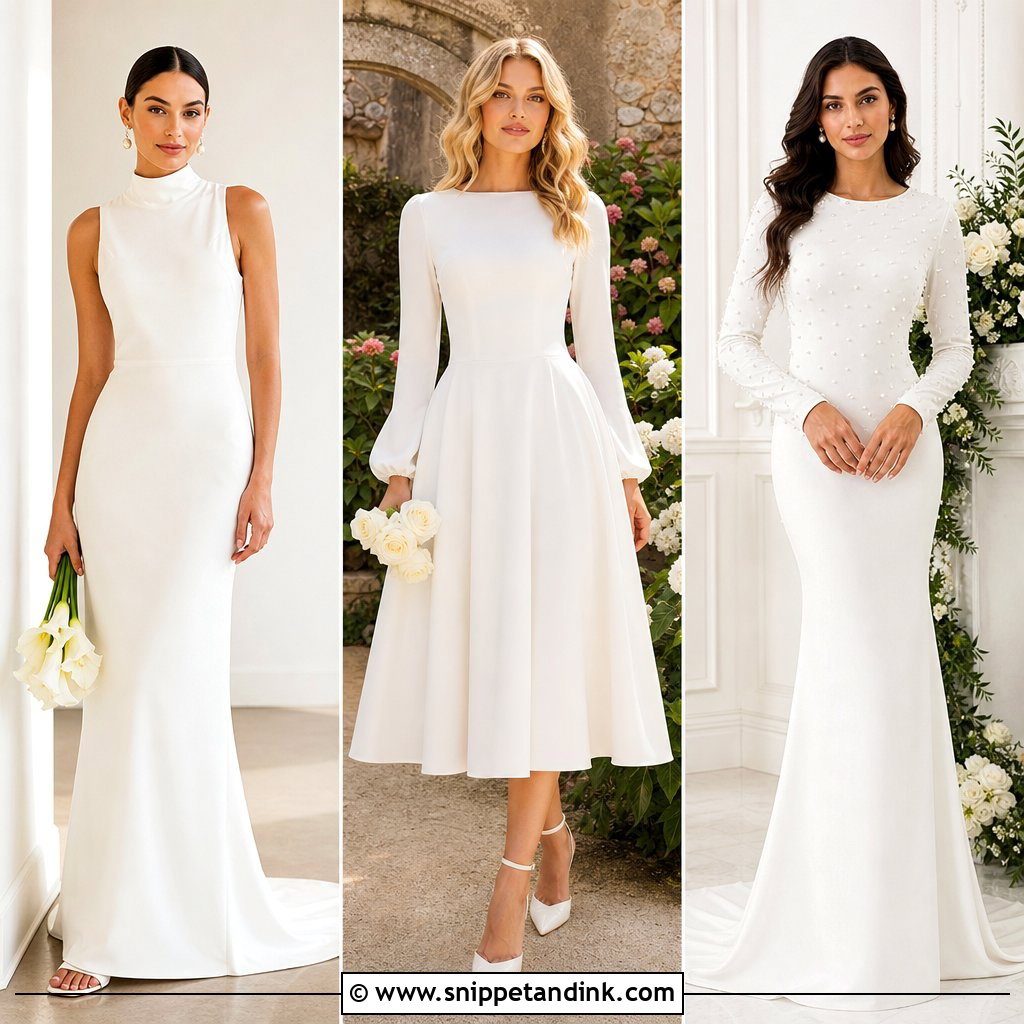
Sleeves bring coverage for a cool-weather or formal ceremony, and they change how the whole gown moves. Sheer lace sleeves stay light; fitted crepe sleeves look sleek and very modern. The detail I push hardest on is illusion mesh. Ask for a mesh matched to your actual skin rather than the default beige, which can sit on deep brown skin like a pale patch, and know that more makers now offer wider ranges of mesh and lining tones. An embroidered veil, pearl studs and a low chignon complete it. Bend your elbows in the fitting room, too. A sleeve that’s perfect with arms straight can cut into the inner elbow after an hour of hugging guests.
6. Strapless Corset Wedding Dress
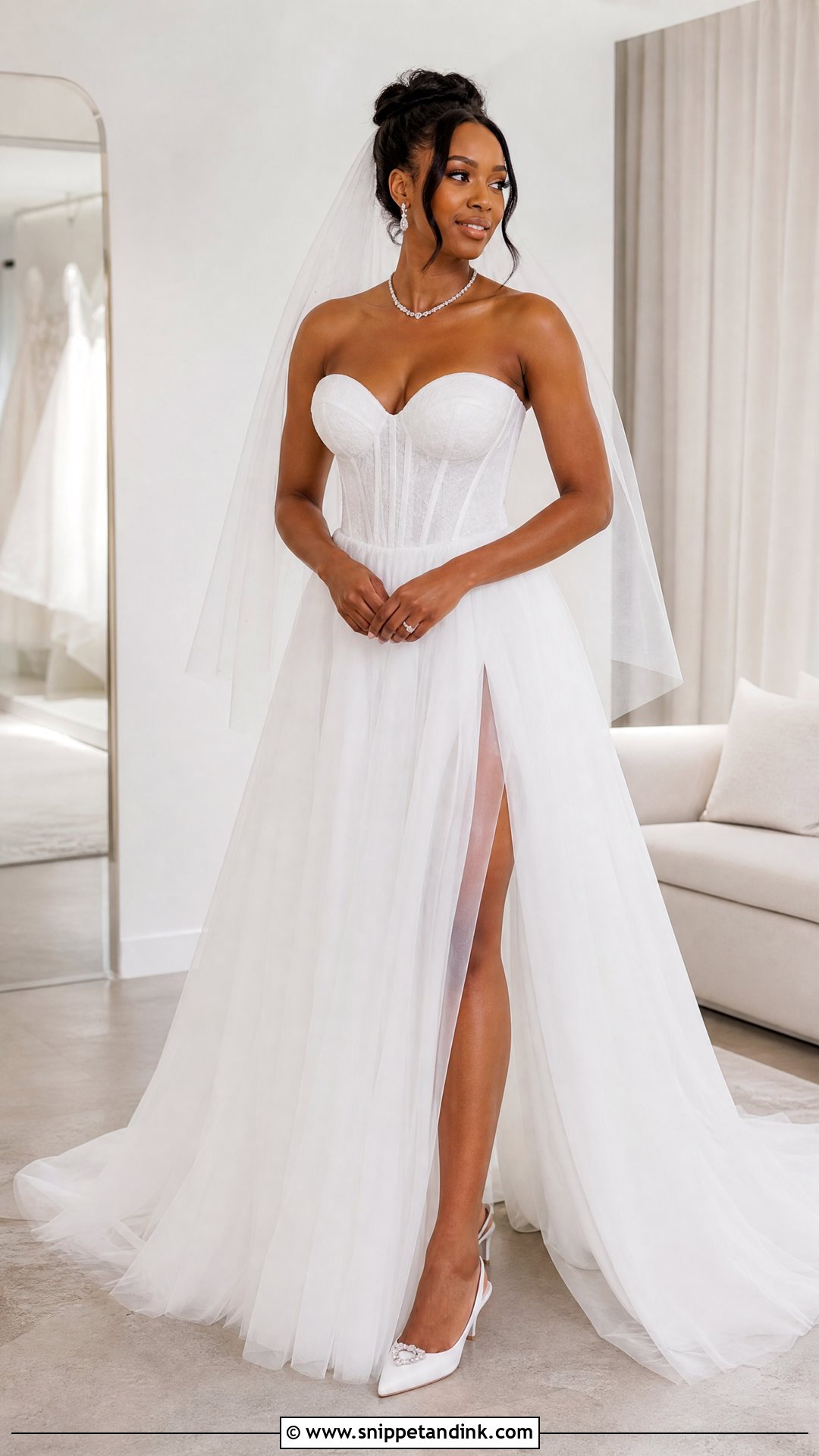
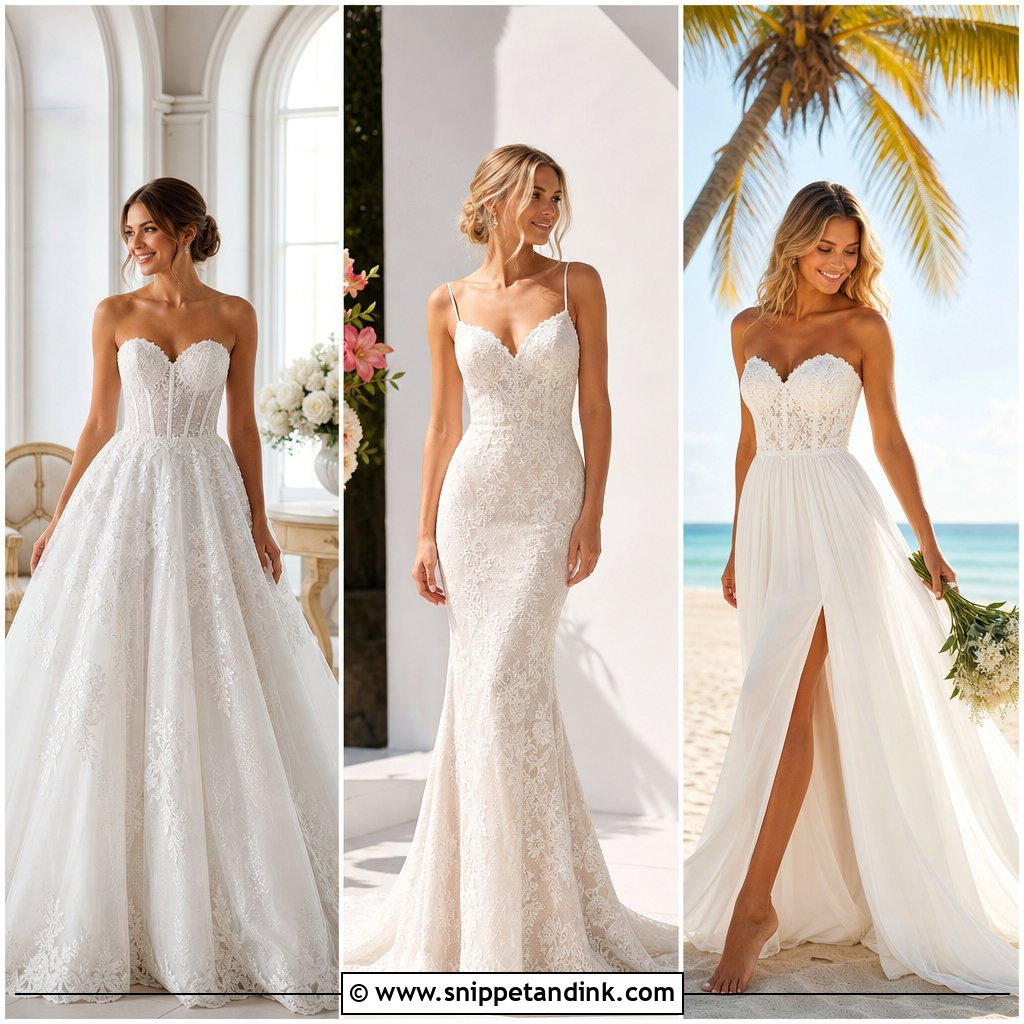
Boning is what makes a strapless corset bodice either a relief or a misery. Well-placed bones hold the bust and torso so the dress stays put; poorly placed ones pinch, roll at the top edge, or let the gown slide lower over the evening. A straight neckline reads clean, and a soft sweetheart reads romantic. Over a flowing tulle skirt the corset feels light, while a fitted satin skirt makes the shape stronger. A short necklace, drop earrings and slingbacks suit either. I always ask whether there’s a waist stay, built-in cups and adjustable fastenings inside, because those three things decide whether you spend the reception tugging at the top.
7. Square Neck Wedding Dress
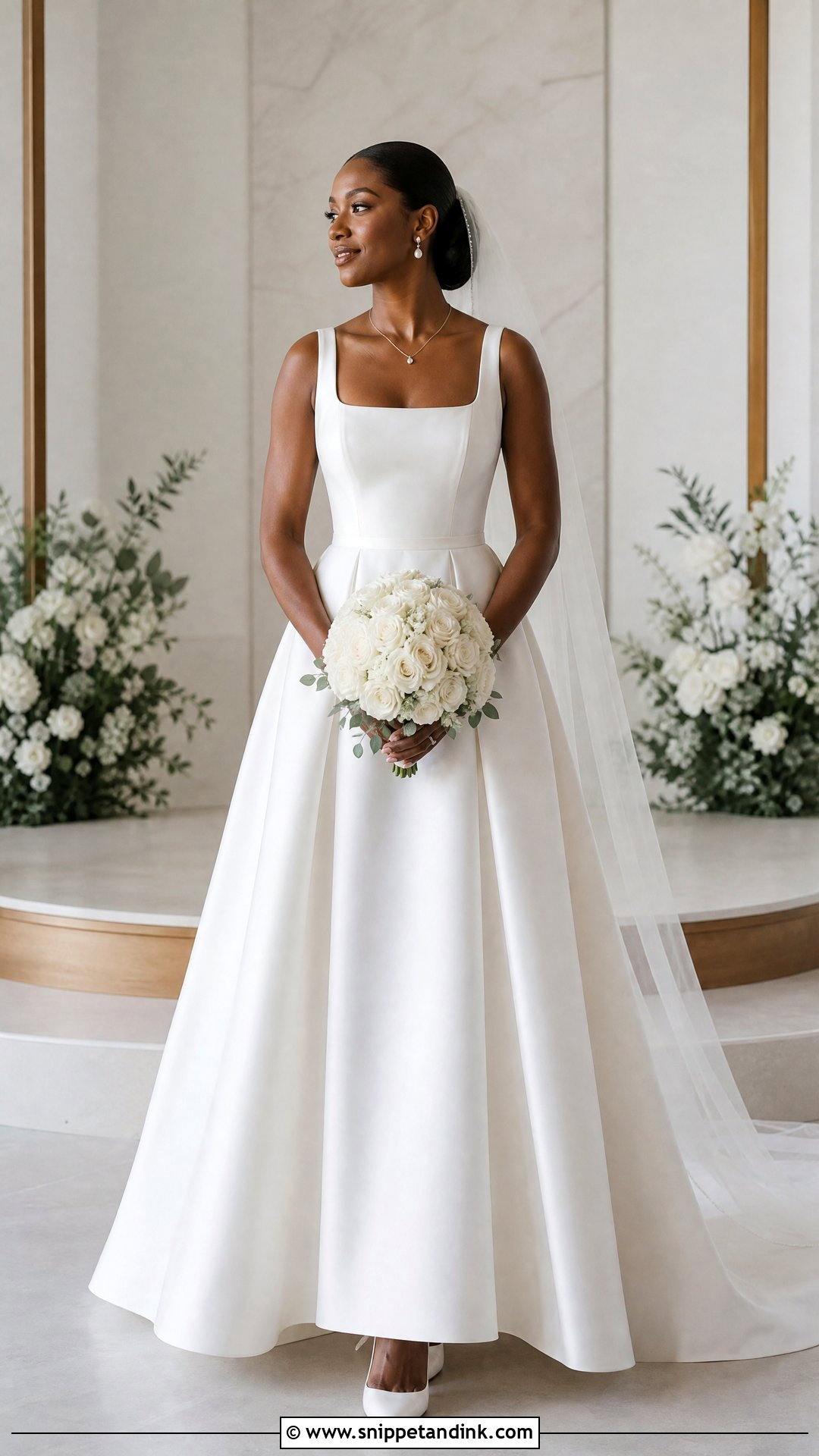
Square necklines are less forgiving than they look. The angle frames the collarbone well, but if the bodice is even slightly wide at the shoulder, the corners gape forward the moment you lean in, so shoulder placement is the first thing I pin. Silk mikado holds that crisp edge best; crepe softens it, and jacquard adds a quiet pattern. A small pendant can echo the shape. Pearl earrings, pointed pumps, a smooth bun and a medium veil set beneath the hair keep it tidy. For a fuller bust, look for supportive seaming and straps wide enough to hide the bra you actually plan to wear.
8. Halter Neck Wedding Dress
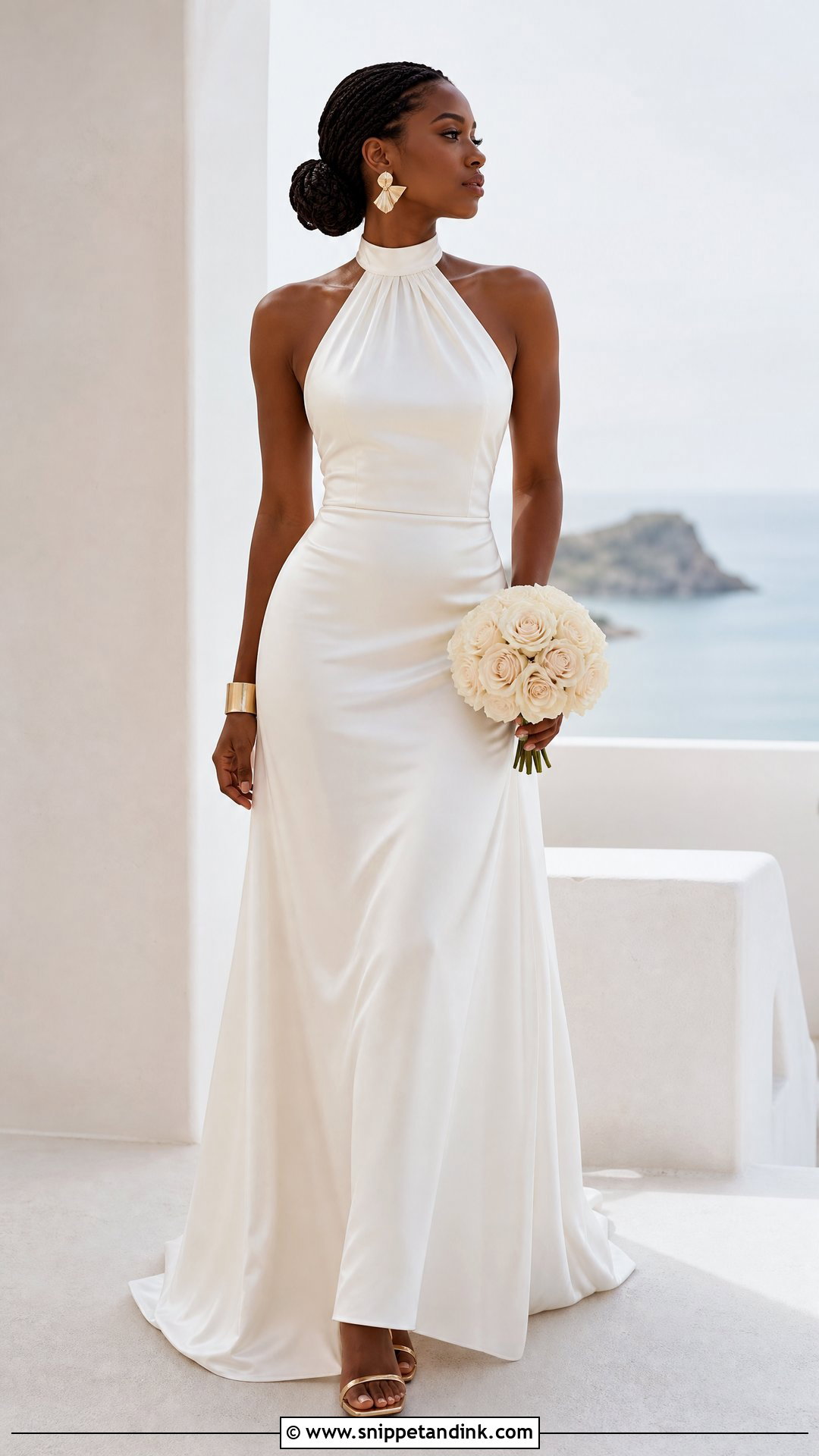
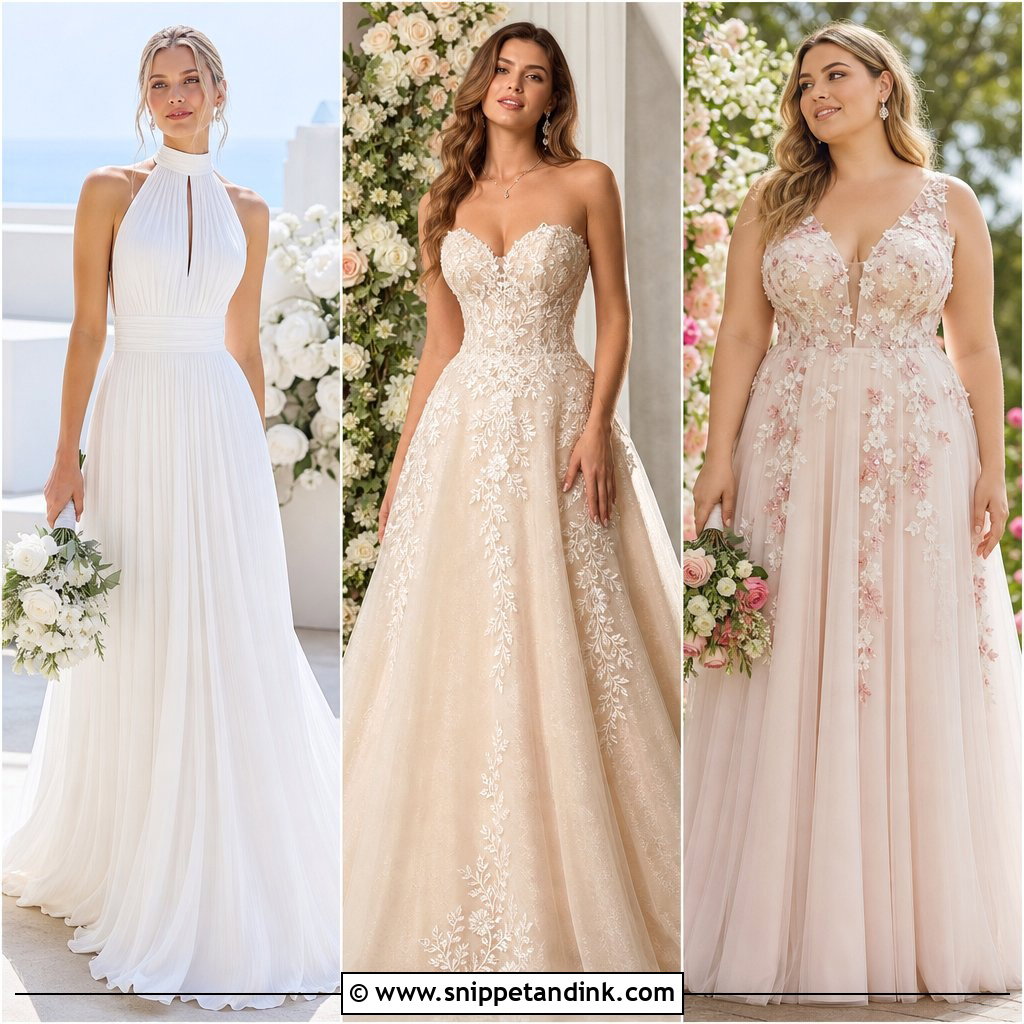
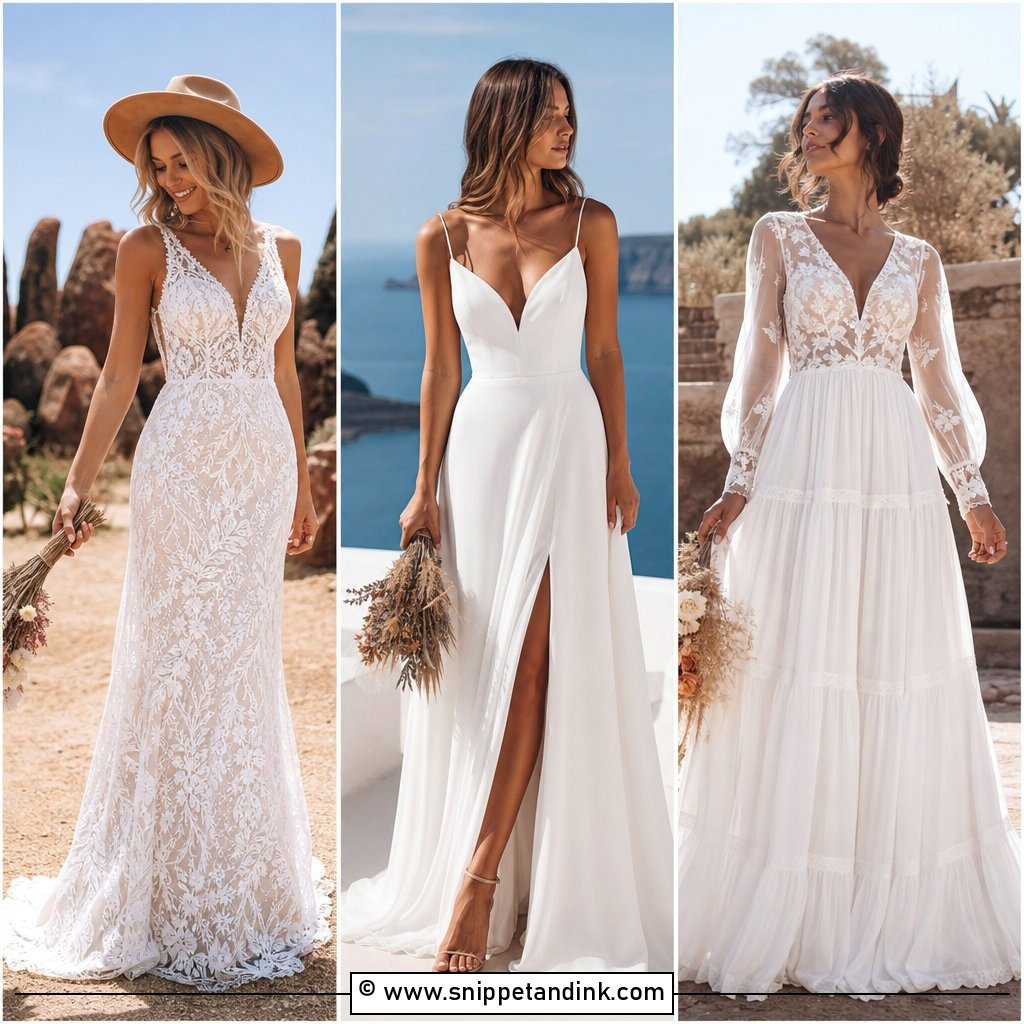
A halter neck wedding dress puts the shoulders on show and needs very little jewellery to look finished, so I skip the necklace and go straight to sculptural earrings and a cuff. Flowing chiffon suits a beach or garden ceremony; satin or crepe holds up in a city venue. An open back or a narrow keyhole adds interest if you’re comfortable showing skin. The thing I watch in fittings is the neck. If a heavy skirt is hanging off that strap, you’ll feel it by the speeches, so the bodice must carry the weight through the torso. A low ponytail or braided bun keeps the line clear.
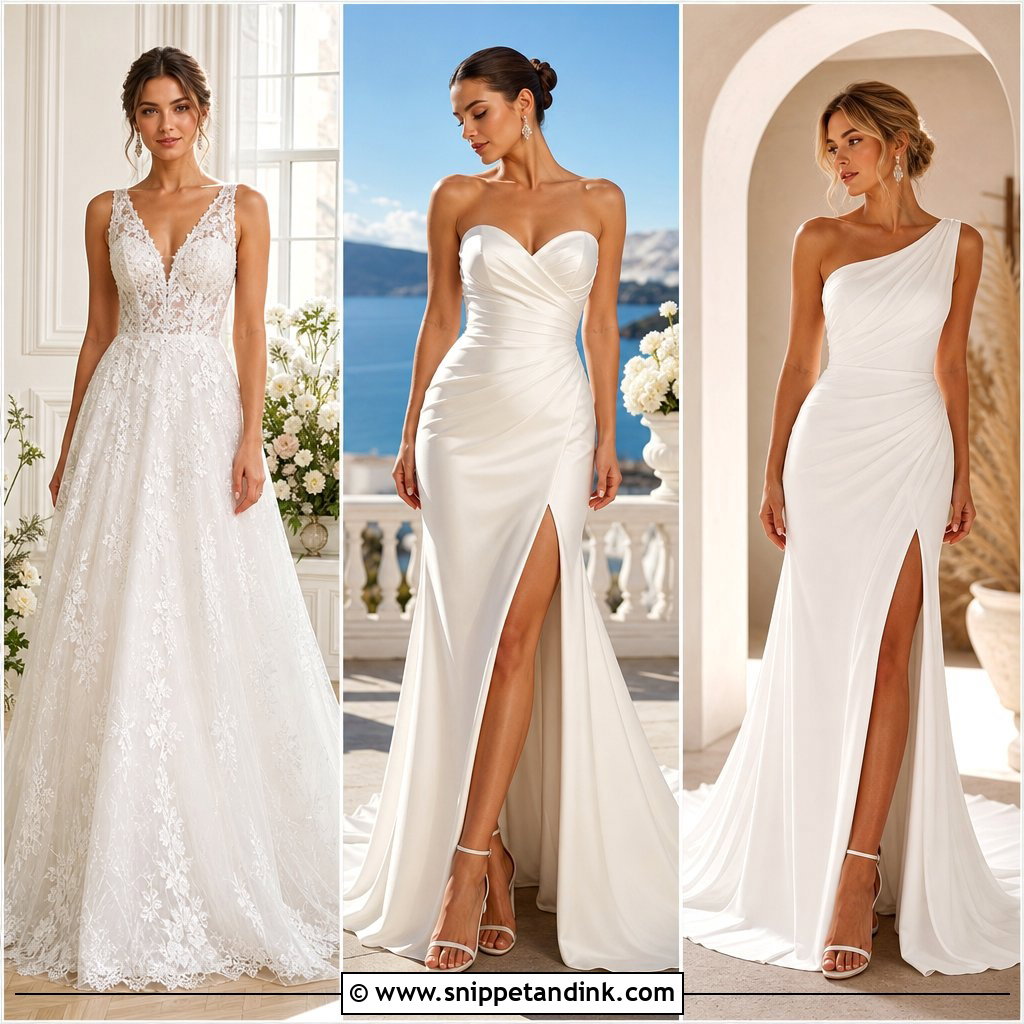
9. One-Shoulder Wedding Dress
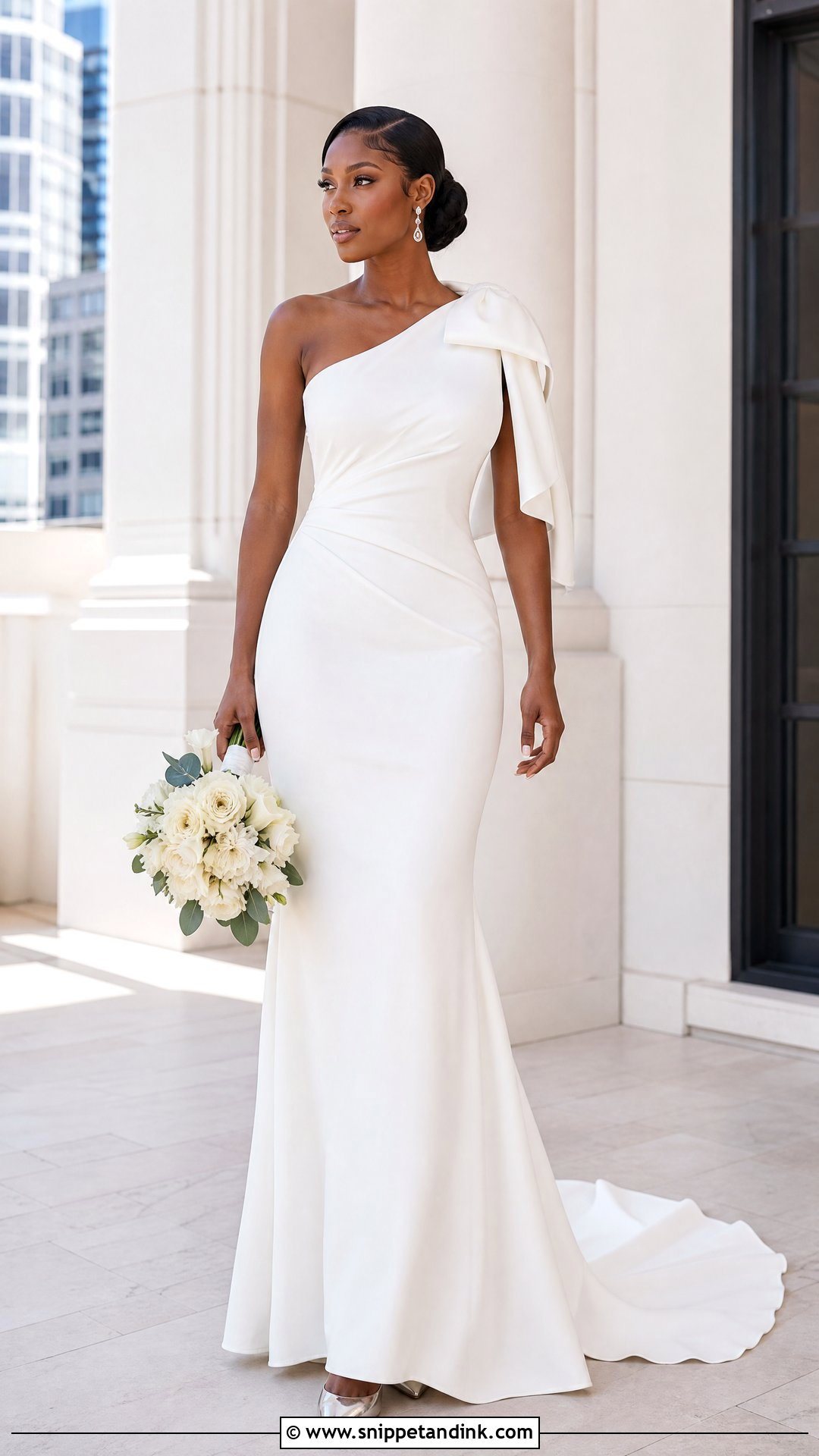
Asymmetry is the whole point of a one-shoulder gown, which means the single strap has to do its job quietly. It should lie flat without biting into the skin, and the open side needs a careful hidden anchor so the neckline stays level when you sit, dance or lift your arms. A fitted crepe version looks architectural; draped chiffon is softer and easier to wear for hours. A shoulder bow or a sash that runs into a train adds impact. One statement earring or a matching pair works better than a necklace fighting the diagonal. A low side-parted bun and metallic pumps finish it.
10. Drop Waist Wedding Dress
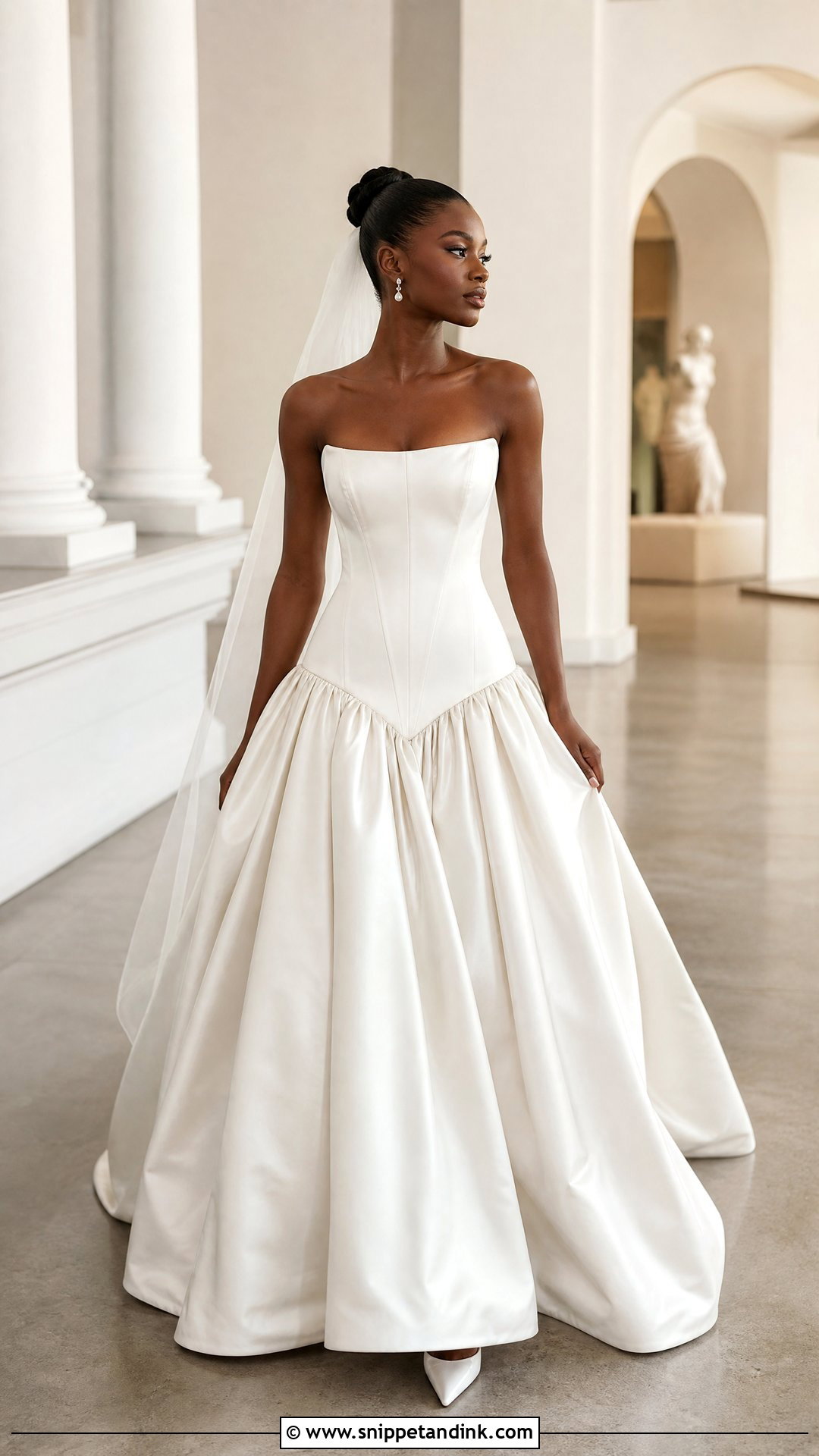
The drop waist is having a real moment in bridal, running from minimalist satin to heavily structured couture versions. It lengthens the torso and then opens into a fuller skirt at the hips. That low seam is also where things go wrong: if it lands in the wrong spot, the bodice bunches or presses into the hip bones when you sit. Choose a softened drop for easy movement or a sharp point for drama. Keep styling plain, a simple veil and slim earrings, so the construction carries it. I ask brides to walk, sit and then send me photos from the front, side and back before we commit.
11. Basque Waist Wedding Dress
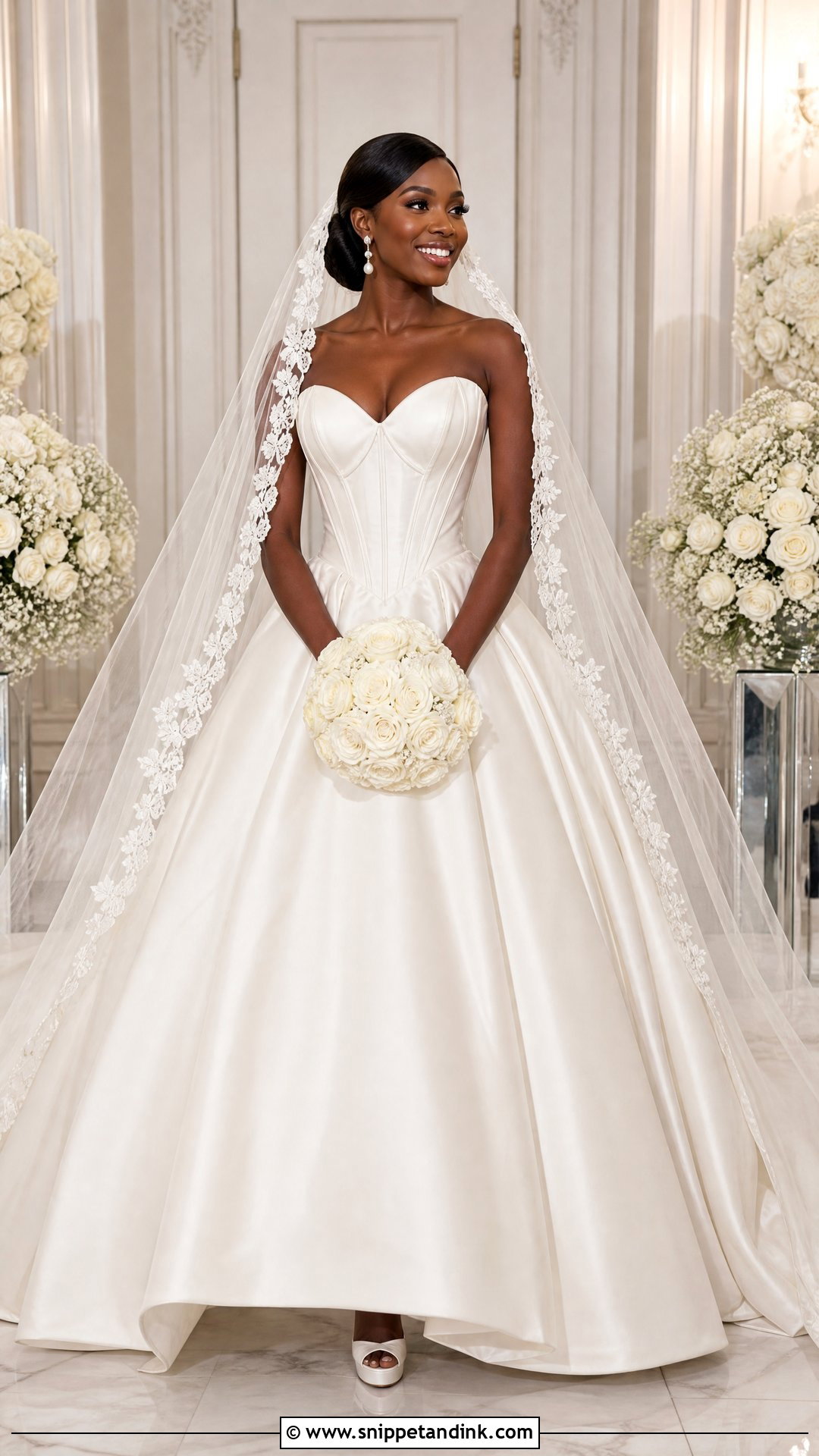
A basque waist wedding dress dips into a V or U below the natural waist, and the depth of that dip matters more than any decoration on it. On a shorter torso I’d go shallow; a deep basque line can make the bodice look longer than you are, which some brides love and others don’t. The pointed seam should lie flat without folding as you move, so I watch it while you turn. Keep the bodice smooth for a classic finish, or concentrate lace and beading around the neckline and waist. A cathedral veil, pearl drops and a full satin, tulle or organza skirt suit it.
12. Minimalist Crepe Wedding Dress
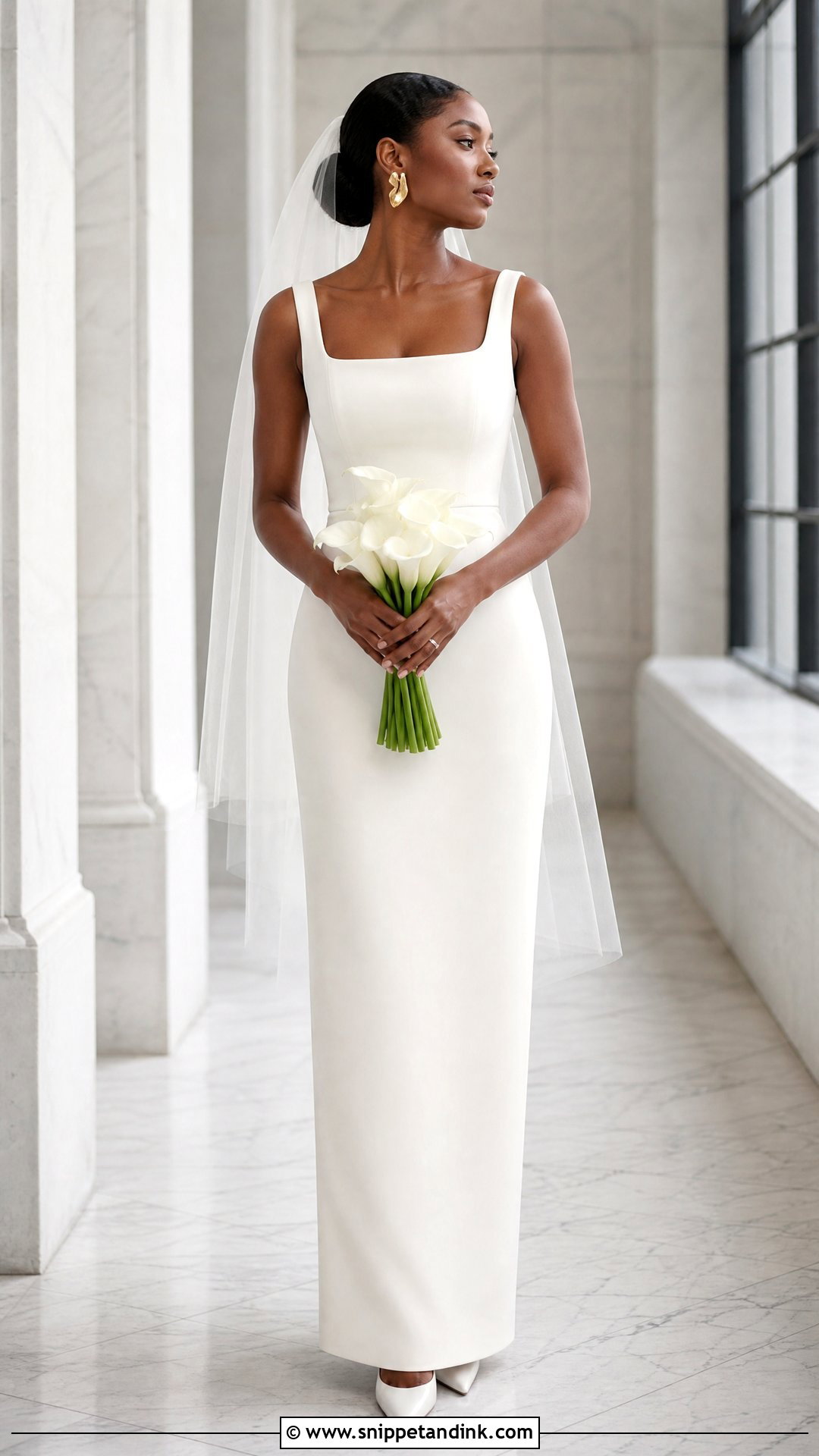
Crepe has nowhere to hide anything, and that’s both its appeal and its risk. In a column, sheath, or softly flared silhouette, precise seams and a clean neckline carry the whole look, so tailoring around the bust, waist and hips has to be exact. It will also show the edge of every wrong undergarment, which is why I tell brides to bring smooth, no-line foundations to the very first fitting. Covered buttons, a low back or a detachable bow add interest without clutter. Sculptural gold earrings and a single-variety bouquet suit it, and a bold lip or dramatic hairstyle gives the plainness some contrast.
13. Tea-Length Wedding Dress
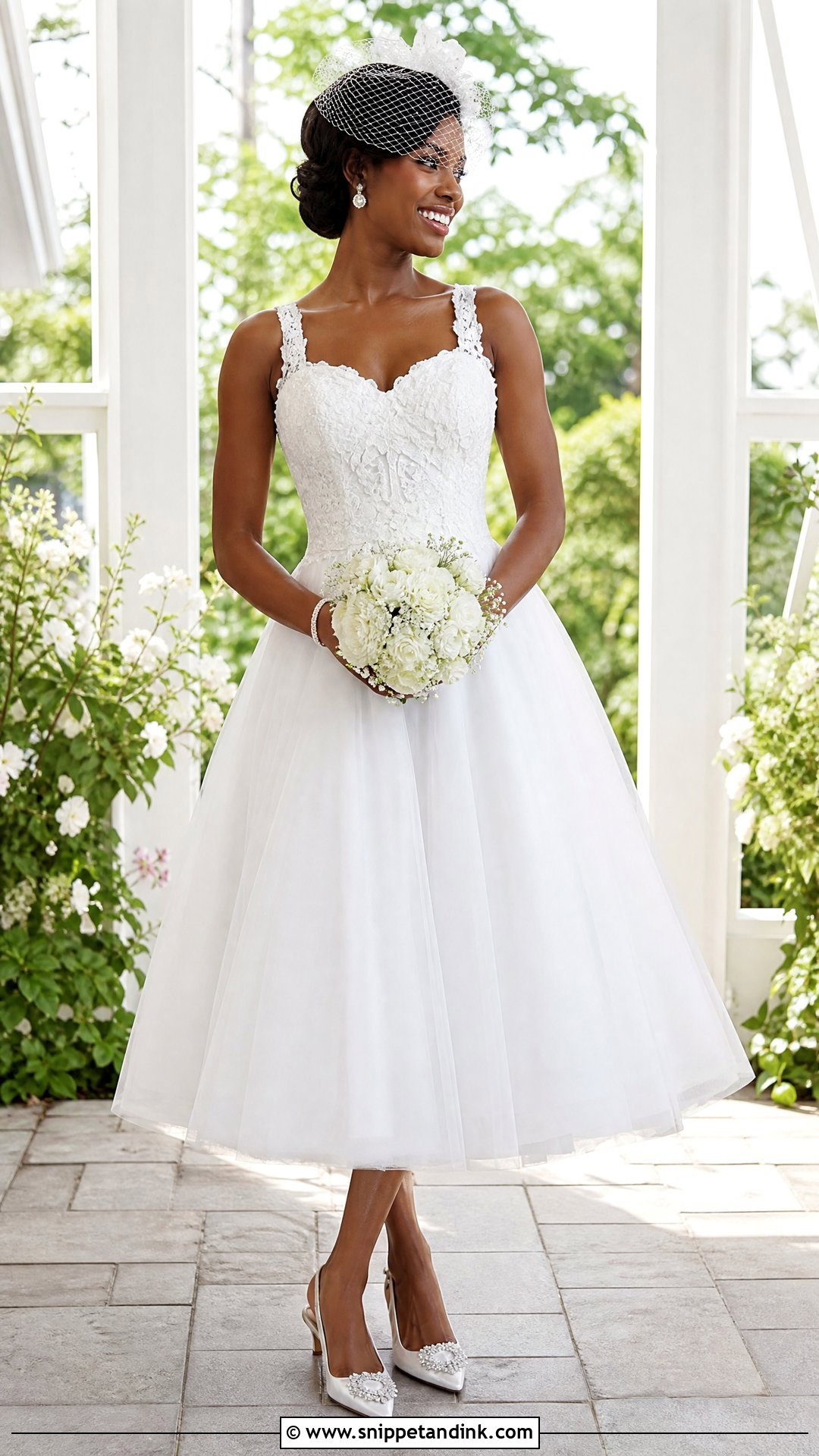
Tea length lands between the knee and the ankle, which instantly makes your shoes part of the outfit. I have brides try two or three pairs before hemming, because a pointed pump and a block-heel sandal change where the hem looks right. A fitted bodice over a full skirt feels retro; a slim lace version is quieter. A birdcage veil, pearl earrings and a small round bouquet keep the proportions in scale. It works for a courthouse ceremony, a daytime party or a second look. When the hem is set, check it while sitting and on stairs, not only standing still.
14. High-Low Wedding Dress
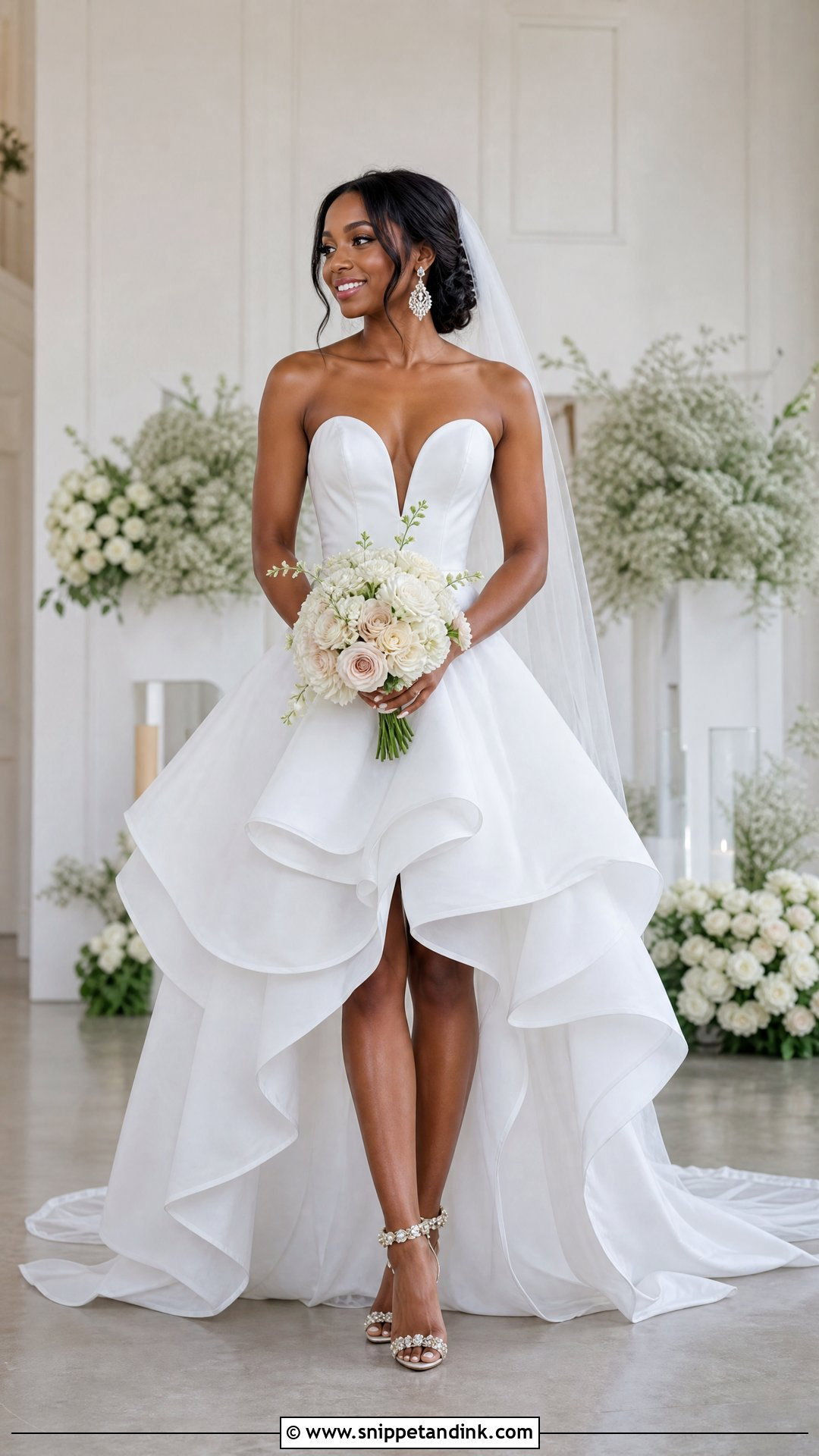
The risk with a high-low gown is that it can look like a long dress someone shortened. A subtle drop reads elegant; a sharp, layered one is far more fashion-forward. Crisp organza gives volume, chiffon falls softly and mikado looks sculpted. I ask the seamstress to shape the front evenly across both legs and to check the curve from the side, which is where an uneven hem shows first. The back can run into a chapel train and bustle up later. Embellished heels earn their place here because they’re visible, so keep the earrings bold and the bouquet low enough not to cover the neckline.


15. Detachable Overskirt Wedding Dress
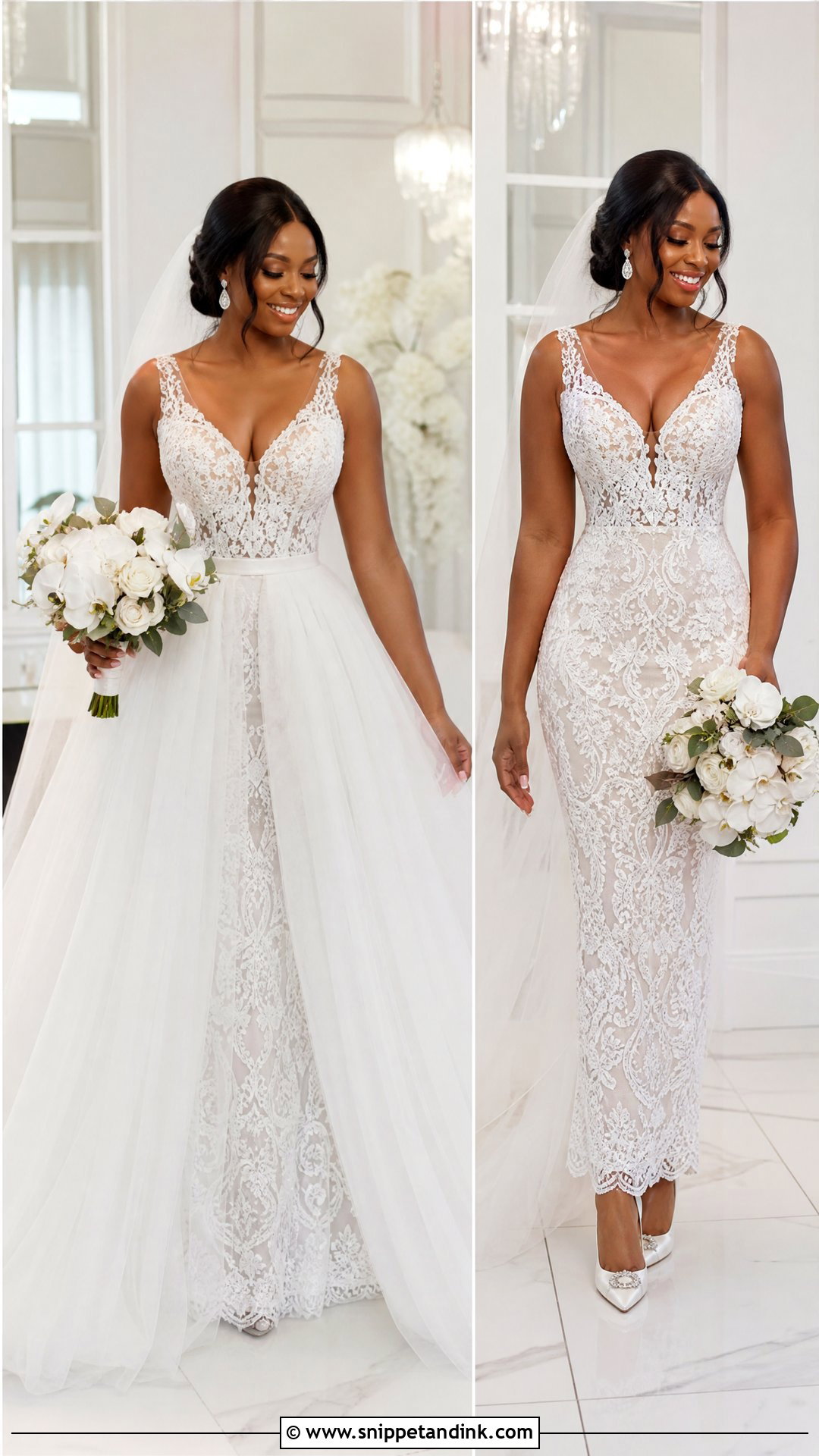
A detachable overskirt wedding dress gives you two looks without a full change. Over a fitted crepe, lace or satin gown it brings ceremony volume, then comes off to reveal a slimmer reception line. Tulle stays airy; mikado or satin adds grandeur. The attachment points are what I inspect: hooks, snaps or a hidden waistband must disappear from the front, side and back. Practise taking it off and putting it on at least twice before the day, and hand the job to one calm person who knows where it’s being stored. Swapping the long veil for a hair piece or bolder earrings makes the change obvious.
16. Champagne Wedding Dress
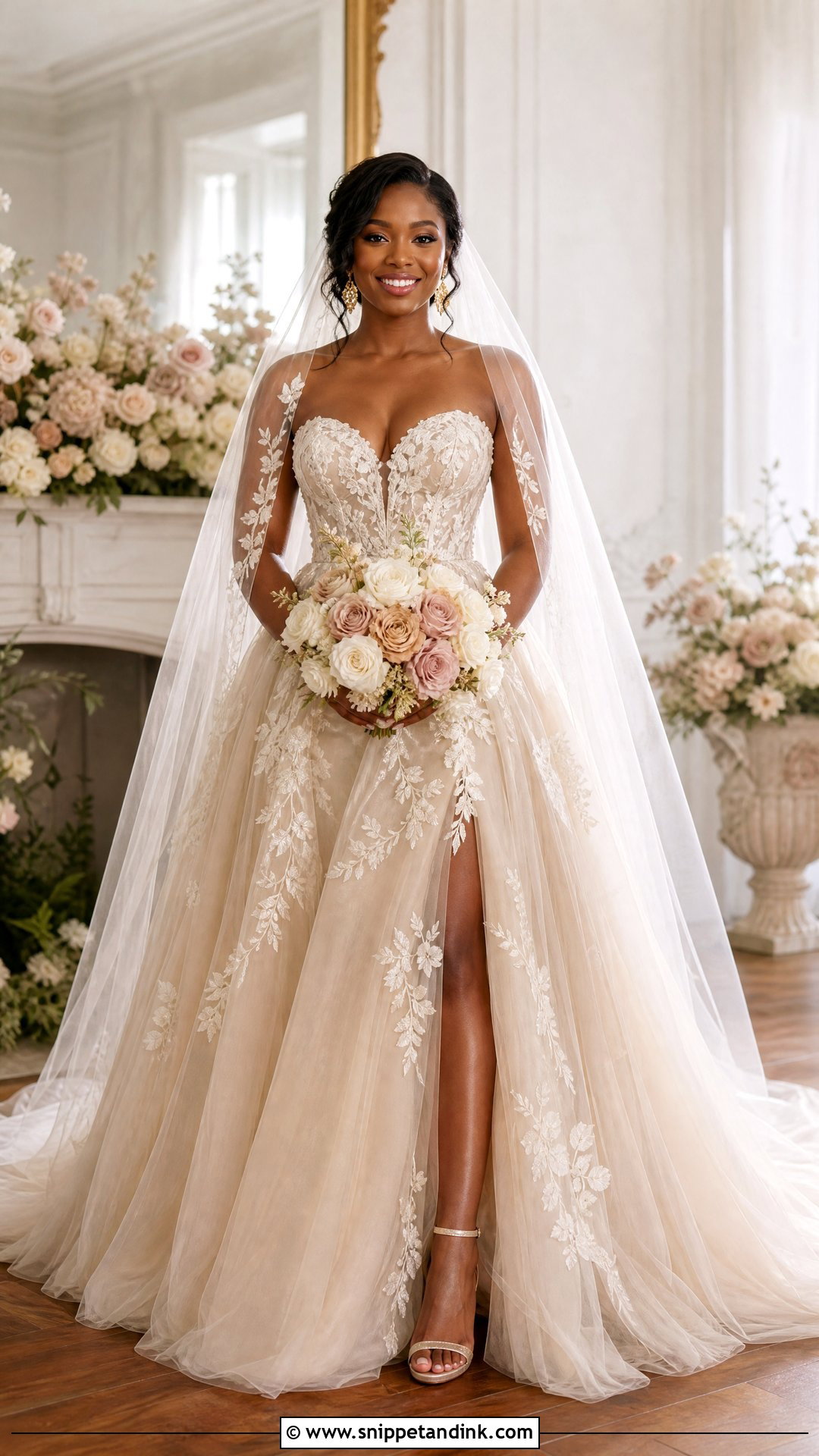
Champagne ranges from pale beige to soft gold, and the version that glows on one bride can look muddy on another, so I never assume one warm shade suits every Black complexion. Undertone, how shiny the fabric is and the lighting all shift the result. I compare swatches against the skin in daylight and under warm indoor bulbs, and ideally with the wedding makeup on. Champagne tulle under ivory lace creates depth; all-over satin looks smooth and luminous. Gold jewellery, metallic heels and an ivory veil pair well. Watch the lining: the wrong tone underneath can cast the whole gown grey or too yellow.
17. Blush Wedding Dress
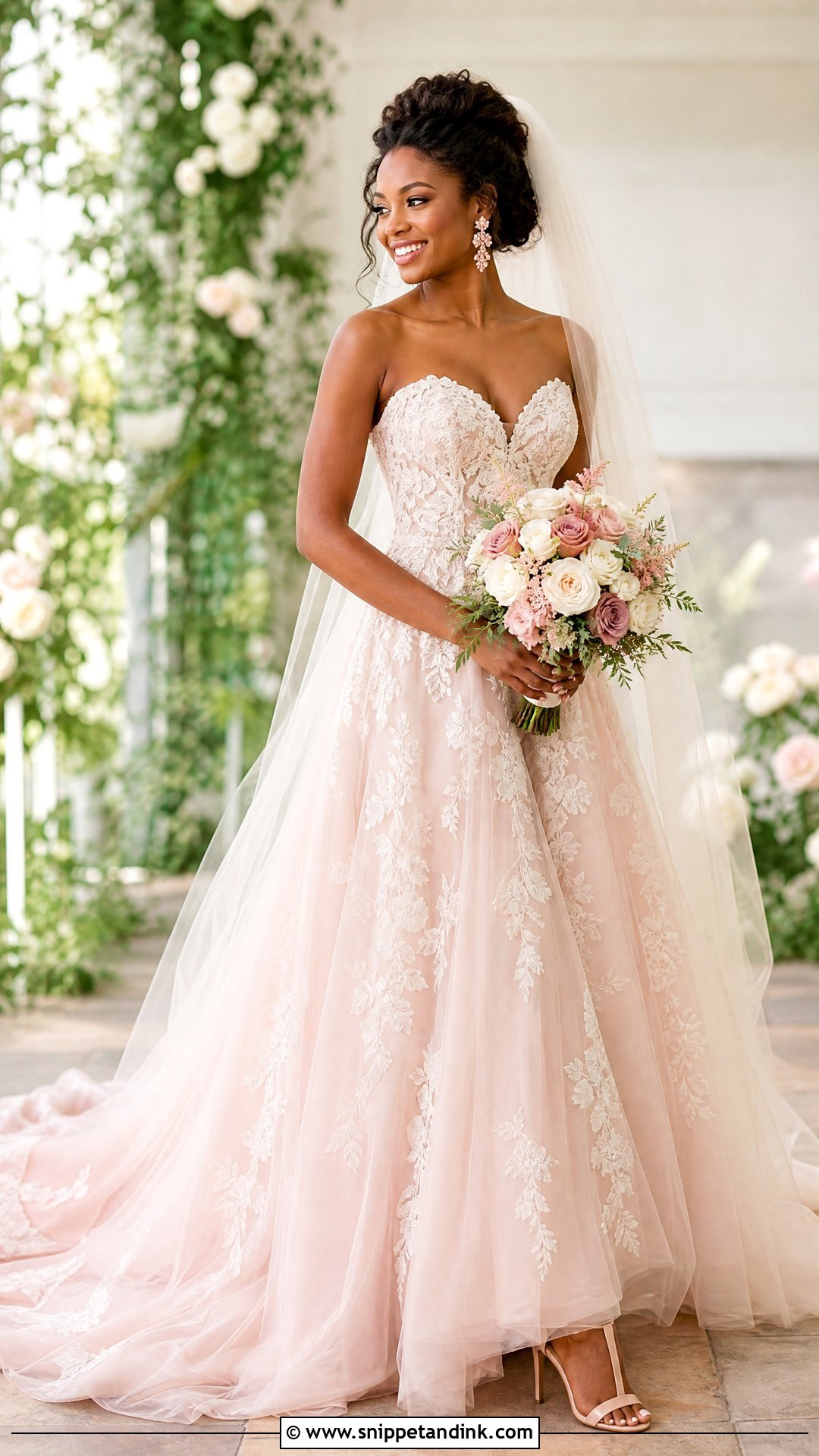
Blush is where online photos mislead brides most, since screens push pinks warmer or cooler than the fabric really is. Pale rose, dusty blush and pink-beige each behave differently against skin, so try the gown in person. Layered tulle keeps the colour airy; satin makes it stronger. Rose-gold earrings, neutral heels and a light ivory veil suit it, with cream and muted pink flowers. I’d also tell your makeup artist the dress shade, because a foundation or lip too close to it flattens the face. For a quieter version, an ivory lace overlay on a blush lining adds depth while keeping it ceremonial.
18. Black and White Wedding Dress
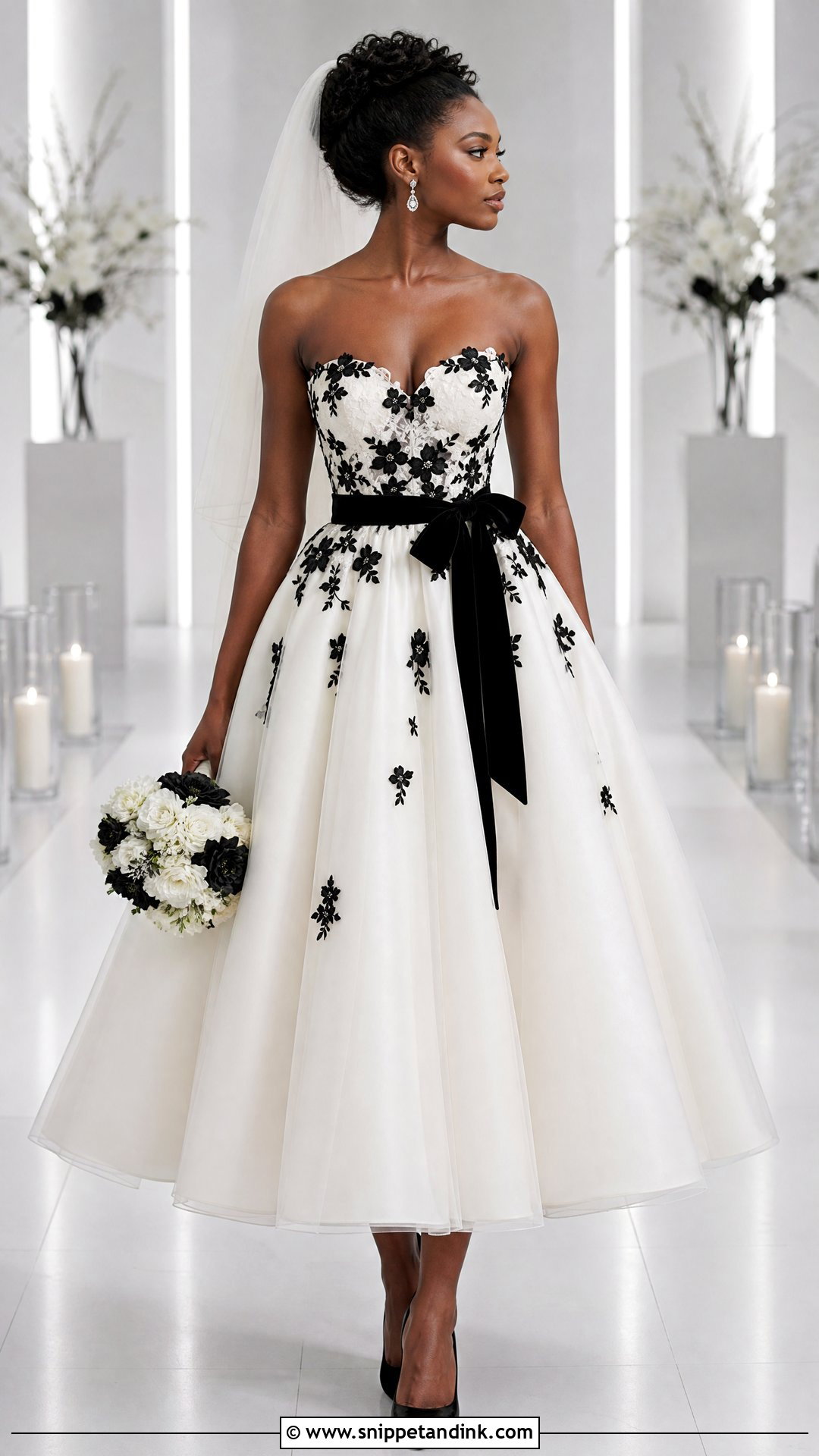
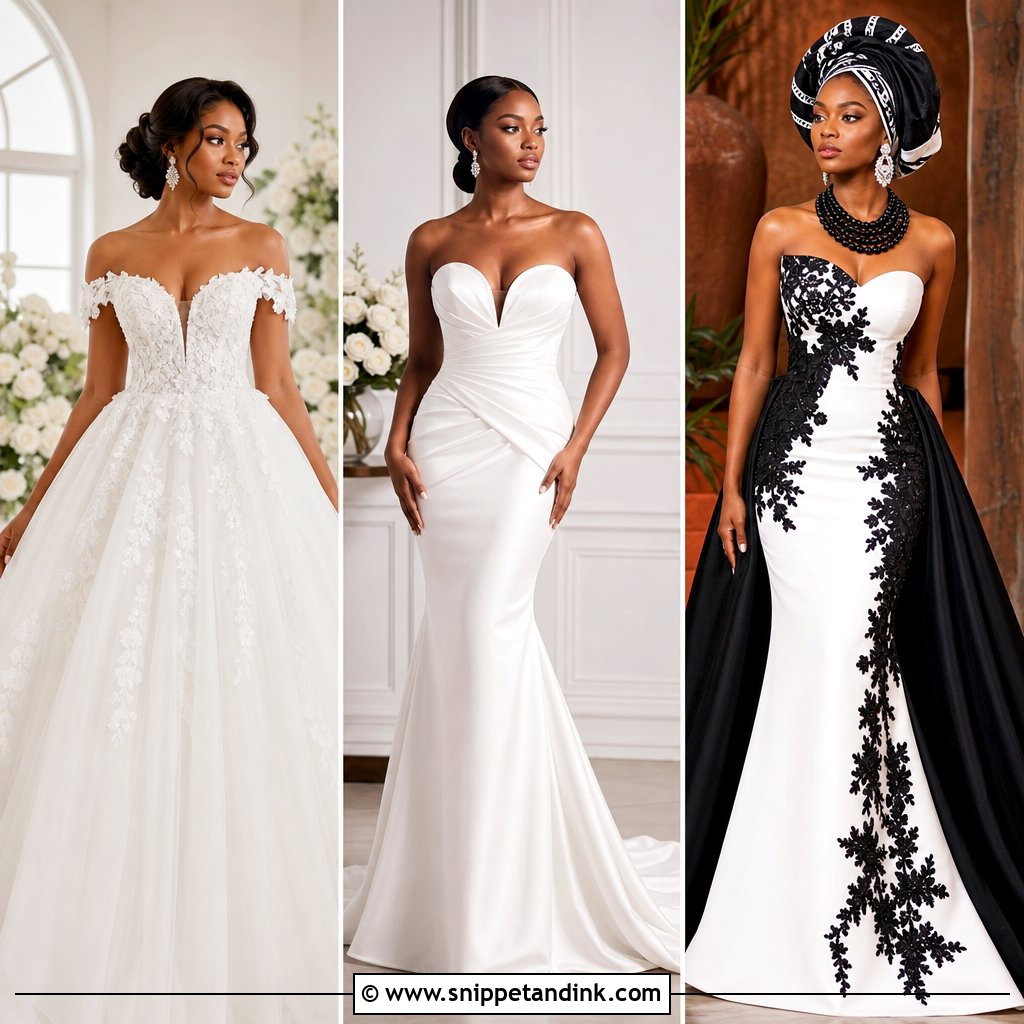
Graphic contrast needs restraint. On an ivory gown with black appliqué, a velvet sash, dark piping or a two-tone bodice, I keep the silhouette clean so the black looks placed rather than scattered. Repeat it in only two or three spots, say the sash, the shoes and the bouquet wrap, and stop there. Black pointed pumps, crystal earrings and a simple ivory veil keep the focus. Ask to see the dress photographed in both colour and black-and-white before you buy. Dark details can merge or jump out on camera in ways the mirror won’t show you.
19. Kente Accent Wedding Dress
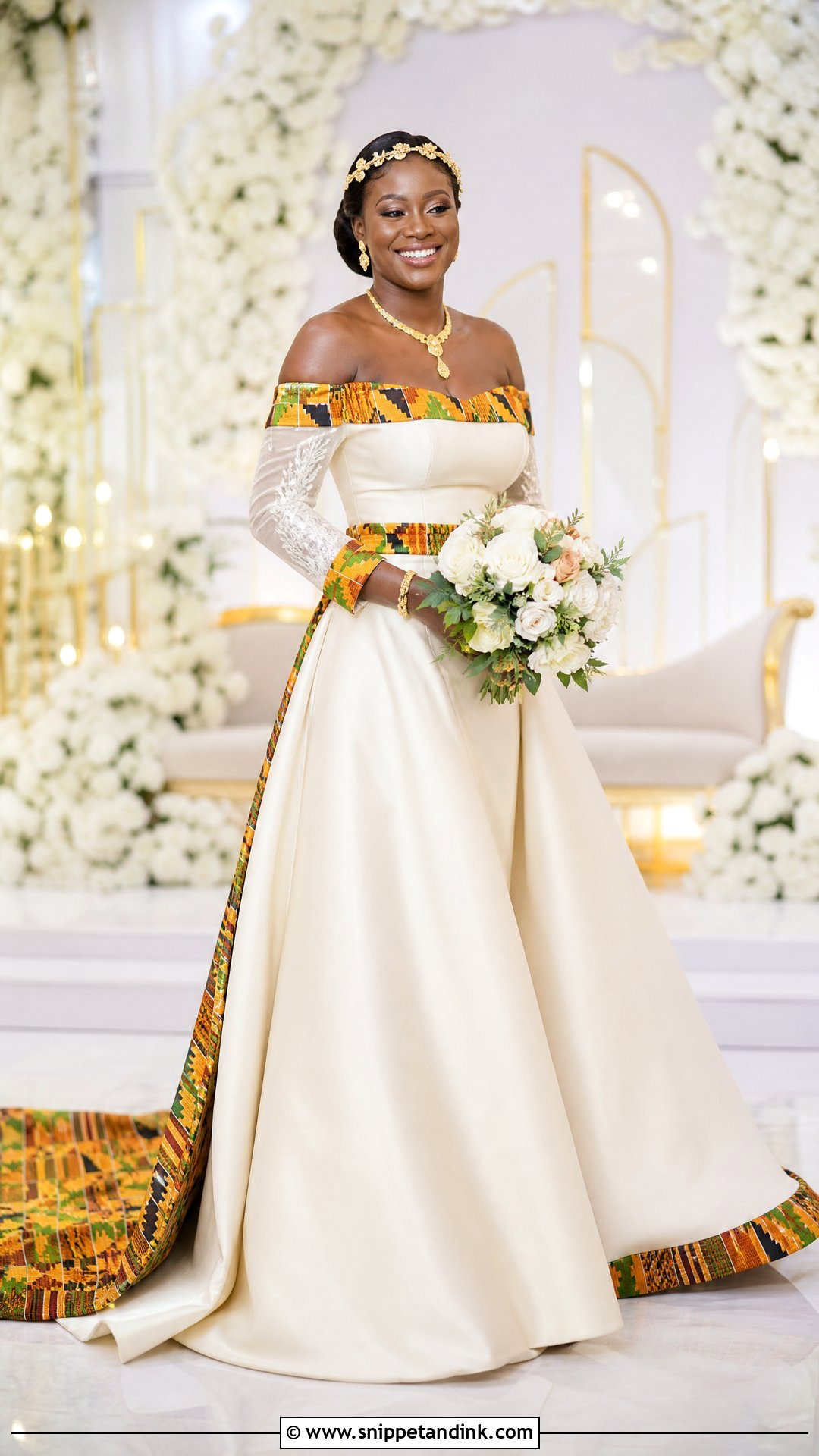
A Kente accent wedding dress can honour Ghanaian heritage through Kente placed at the neckline, waist, sleeves, train or a detachable overskirt on an ivory A-line or fit-and-flare base. I’d only make this with a designer or artisan who understands the cloth, how its patterns are placed and what they mean, rather than treating it as a decorative print. Practically, woven Kente is stiffer than tulle or crepe, so seams joining the two need care or the skirt will pull. Gold jewellery, neutral heels and a veil or traditional headpiece suit it, and the groom can echo the cloth in his accessories.

20. Bridal Cape Wedding Dress
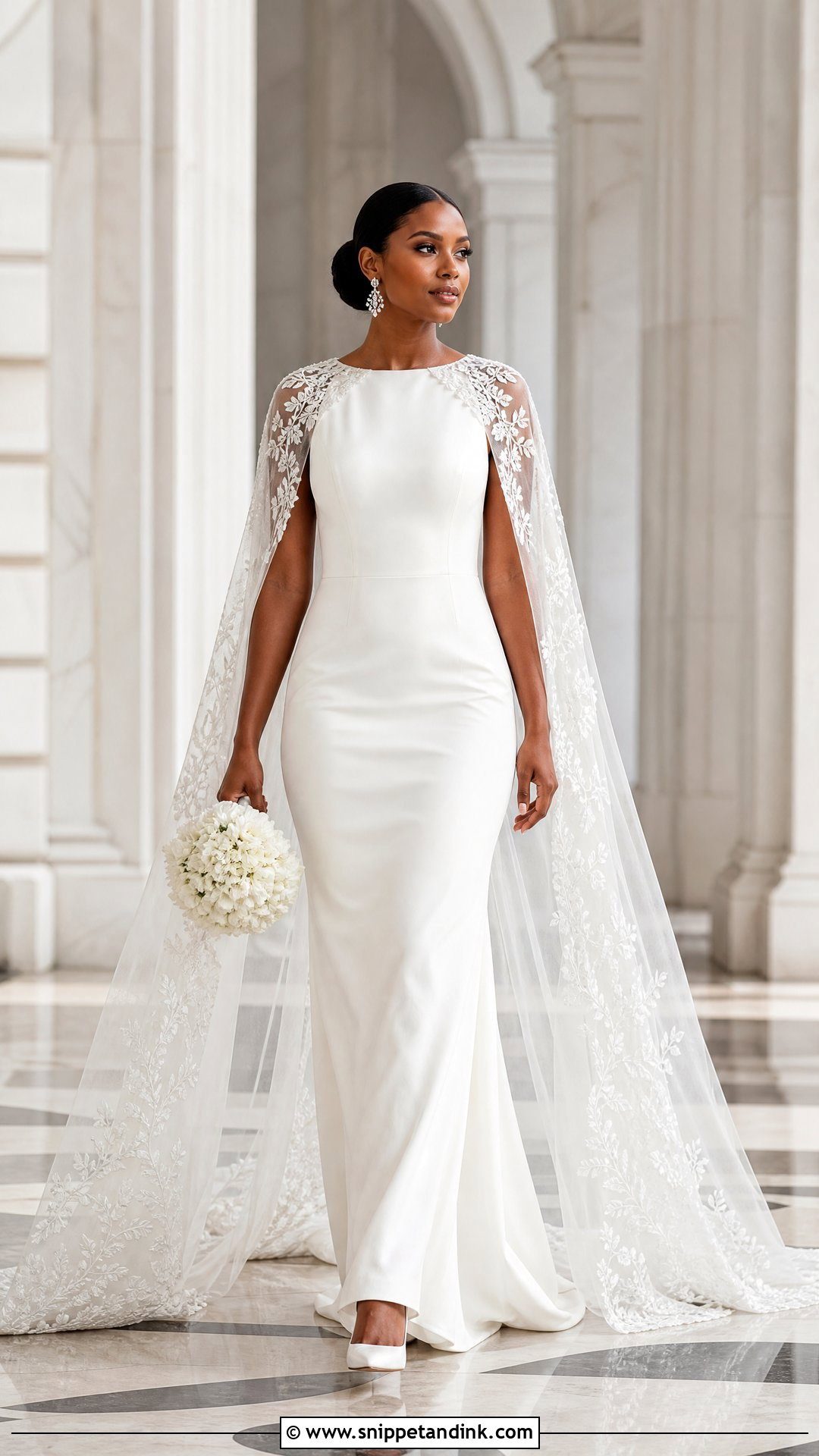
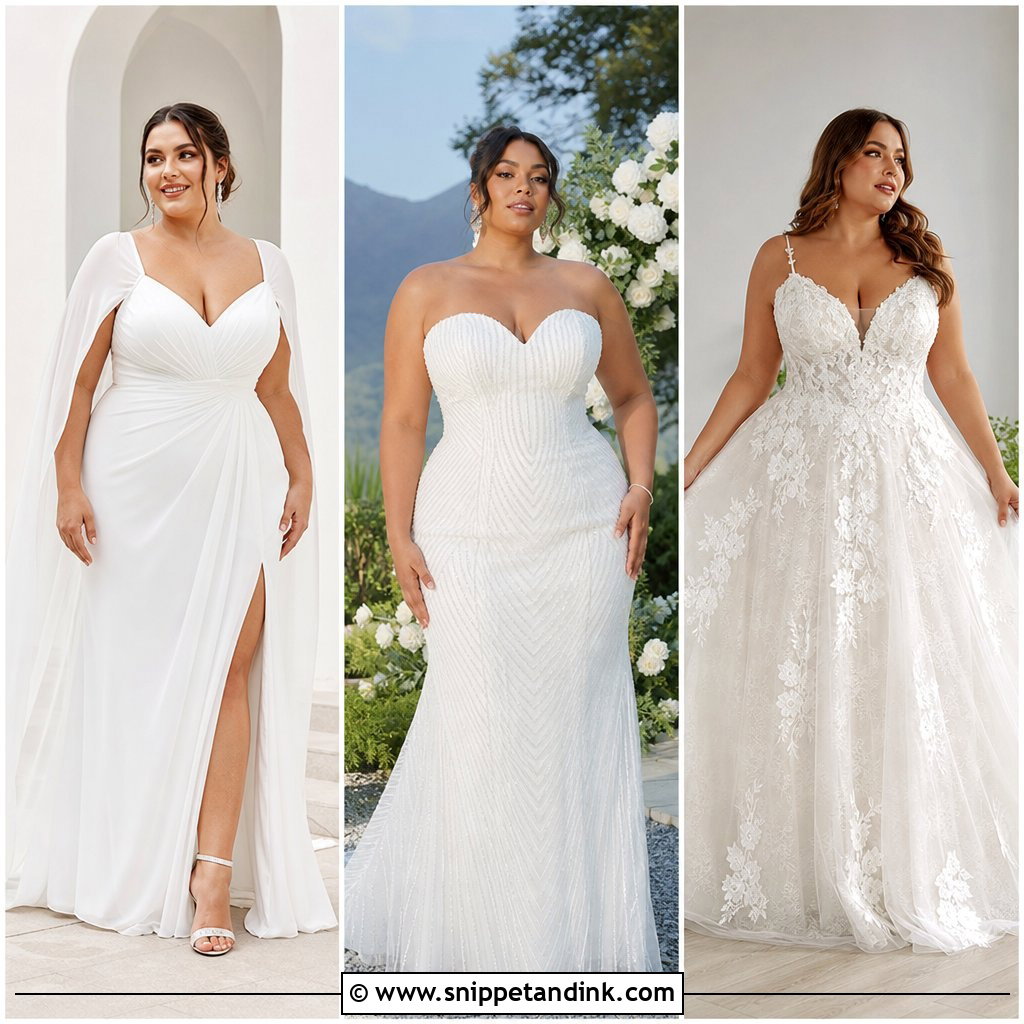
A cape turns a plain sheath, A-line or fitted satin gown into something dramatic without changing the dress itself. Sheer tulle is soft, lace is romantic and a structured floor-length cape is properly formal. Secure attachment points at the shoulders matter most, both so it doesn’t slip and so it comes off cleanly before the reception. Check that beading or appliqué on the cape can’t catch on the gown’s lace. With a cape providing movement behind you, I’d usually drop the veil and choose earrings that still show beneath the fabric. Practise turning and posing so it falls where you expect.
How I Space Out Alterations From Order to Wedding Week
Most made-to-order gowns take several months to arrive, often five to eight, so ordering roughly nine months out leaves room for delays. Alterations are a separate clock. I plan on two or three fittings that begin about eight to twelve weeks before the wedding, and the timing of each one has a job.
First fitting
This is the big one. Bring the exact shoes, bra or shapewear, and any hair piece that changes your height or posture. The seamstress pins the hem, bodice and straps, and this is where you ask for mesh or lining swaps, pockets, a bustle or sleeves.
Second fitting
Now you move. Sit, climb steps, dance a little and hug someone. Boning, a dropped waist and a one-shoulder strap all reveal their problems here, not while you stand still on the platform.
Final fitting and pickup
Usually a week or two before the wedding. Bring the person who will bustle your train or remove an overskirt, and have them practise twice while the seamstress watches. Ask how the gown should be hung and whether it needs steaming at the venue, then leave it in its breathable bag until the morning.
Shade, Lining and Fit Decide It, Not the Label
No silhouette on this list is off limits to anyone. What decides it is a shade that warms your skin, mesh and lining matched to you, and alterations done by someone skilled, whatever size is printed on the label. Compare ivory, white, champagne, blush and stronger colours in real light, and bring your shoes, undergarments and accessories to the later fittings so you see the full outfit at last. Then pick the dress you forget you’re wearing by the second hour.
You'll Like These Ideas:


Leave a Reply