
Reading a Silhouette in the Fitting Room Mirror
Before you look at a single trend, it helps to know what I’m watching when a bride steps out of the fitting room. I look first at where the waist seam lands relative to her own waist, because nearly every 2025 shape on this list (basque, drop, corset, natural) is defined by that one line. Then I look at the shoulders and the neckline, and only then at the skirt.
Samples are almost never your size. They’re usually clipped at the back, so the fit you see is an approximation. Ask the consultant to clip it to your body, and judge the shape rather than the tightness.
- Sit down in it. A bodice that fits standing can cut into the ribs or hips when you sit at dinner.
- Raise your arms as if hugging someone. Sleeves and off-shoulder bands show their limits here.
- Walk a few steps backwards and turn. That’s how you’ll move at the altar and on the dance floor.
- Look at your phone camera from across the room. A dress reads differently from 3 metres than from the mirror.
I’d try three contrasting silhouettes in the first appointment: something structured, something fluid and one wildcard. Brides often surprise themselves, and it narrows the list faster than browsing ever will.
1. Basque Waist Wedding Dress
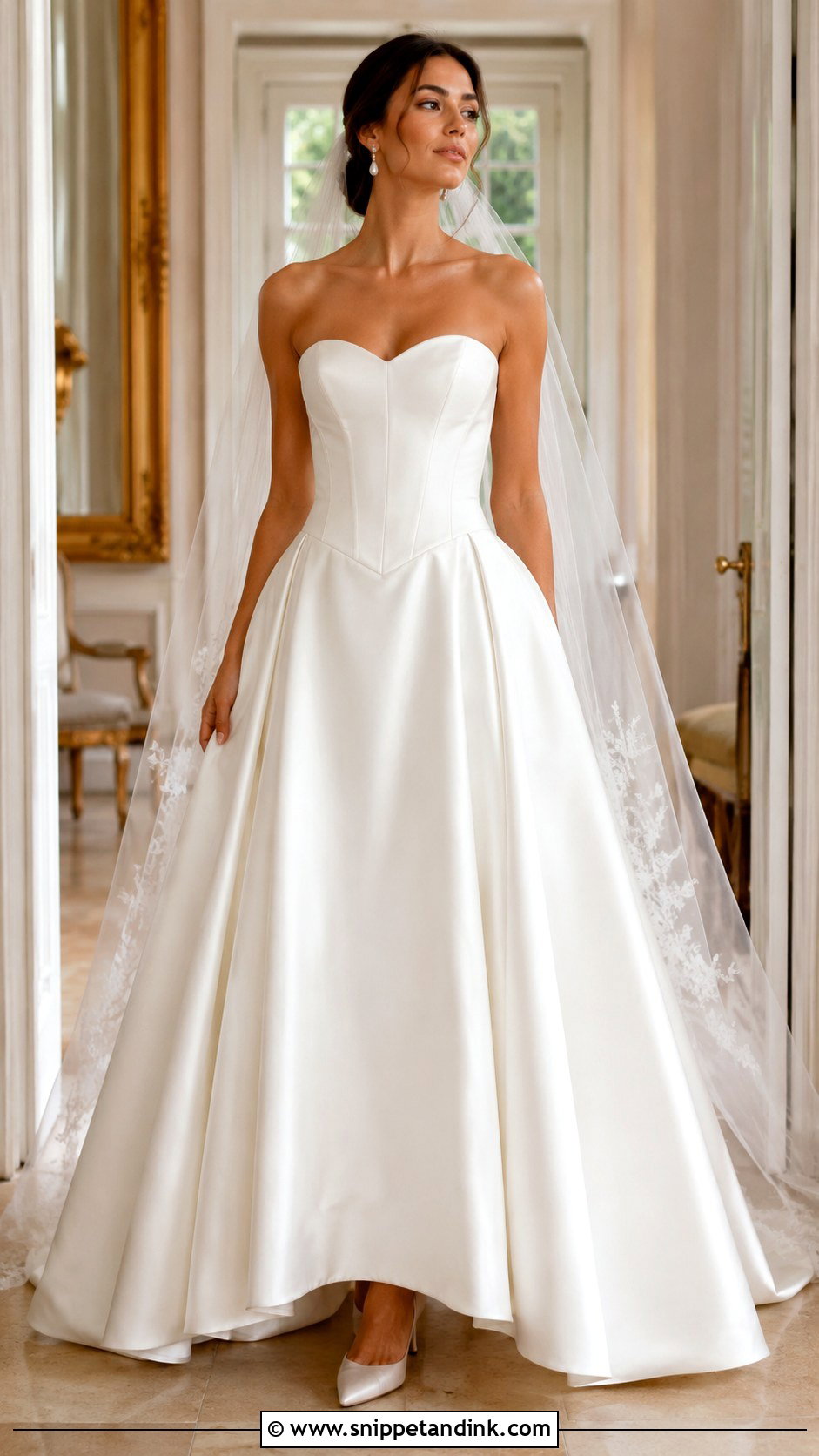
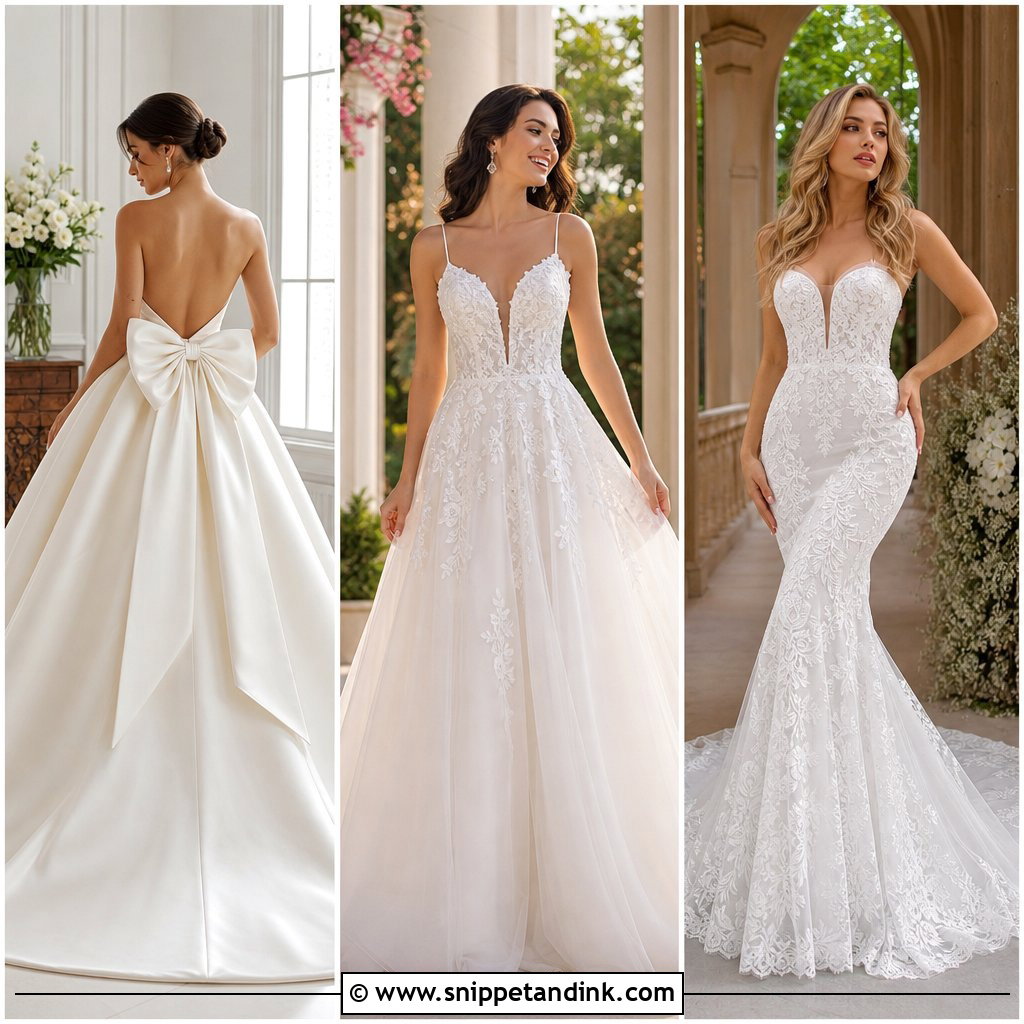
A basque waist wedding dress dips into a V or U point below the natural waist, and that point is what lengthens the torso. The catch is placement: if the dip lands too low on a short-waisted bride, it chops her legs instead. At a fitting I have her sit down before we pin the point, because a seam that looks right standing can dig into the hip once she’s seated at dinner. Pair it with a sweetheart bodice and a full satin or tulle skirt, then keep the rest quiet: pearl drops, a smooth low bun, a sheer veil and pointed ivory heels. It reads regal without needing sparkle, and it holds its shape in a ballroom just as well as on an estate lawn.
2. Drop Waist Wedding Dress
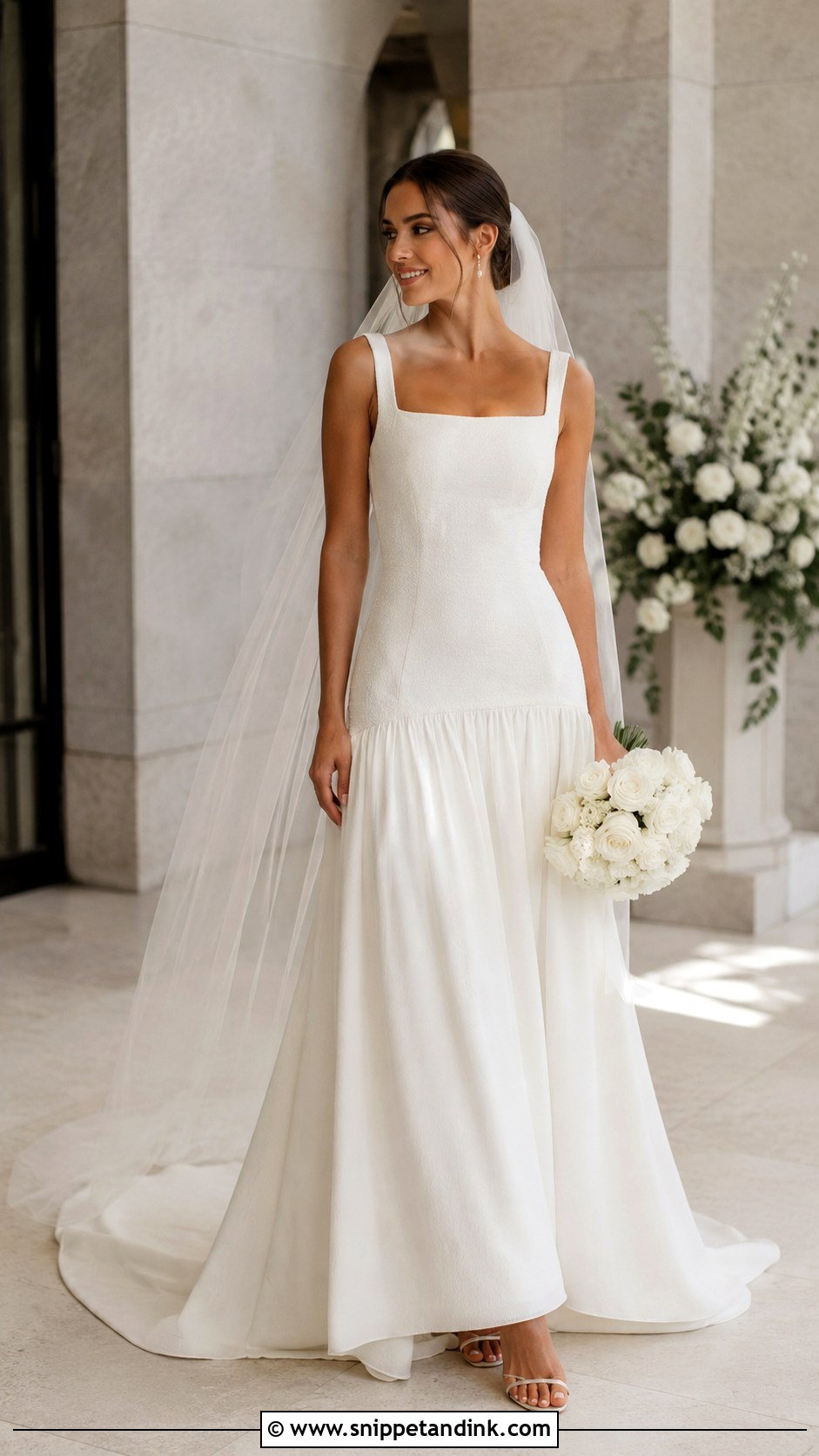
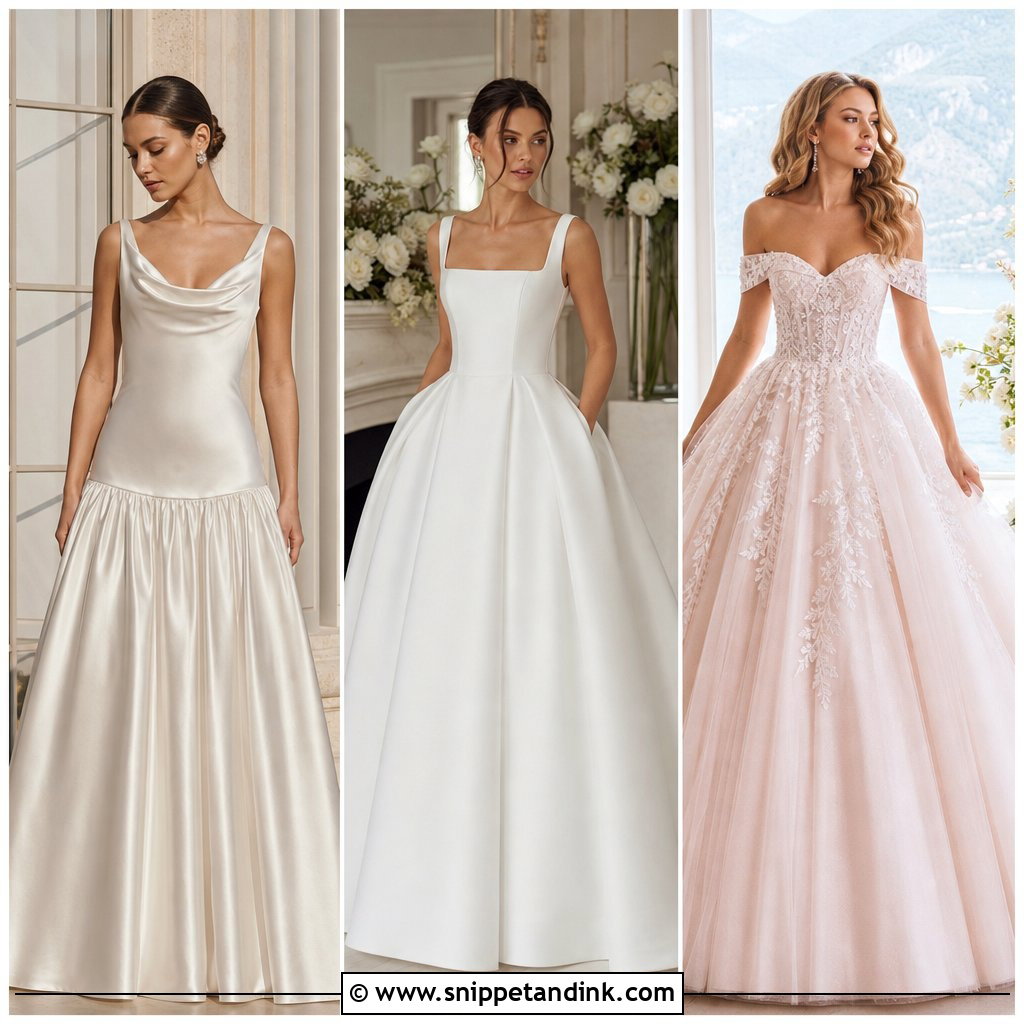
The drop waist is back, and it’s the one I warn people about most honestly. Because the seam sits on the hips, it widens whatever it crosses, so a bride with a long torso and narrow hips wears it best, while a curvy pear shape usually feels boxed in. When it works, a fitted bodice over a softly flared skirt gives movement without ball gown bulk. Small diamond studs, a clean veil and strappy heels are enough. Soft waves or a polished updo both suit it, and it reads more vintage than the standard natural-waist gown.
3. Corset Wedding Dress
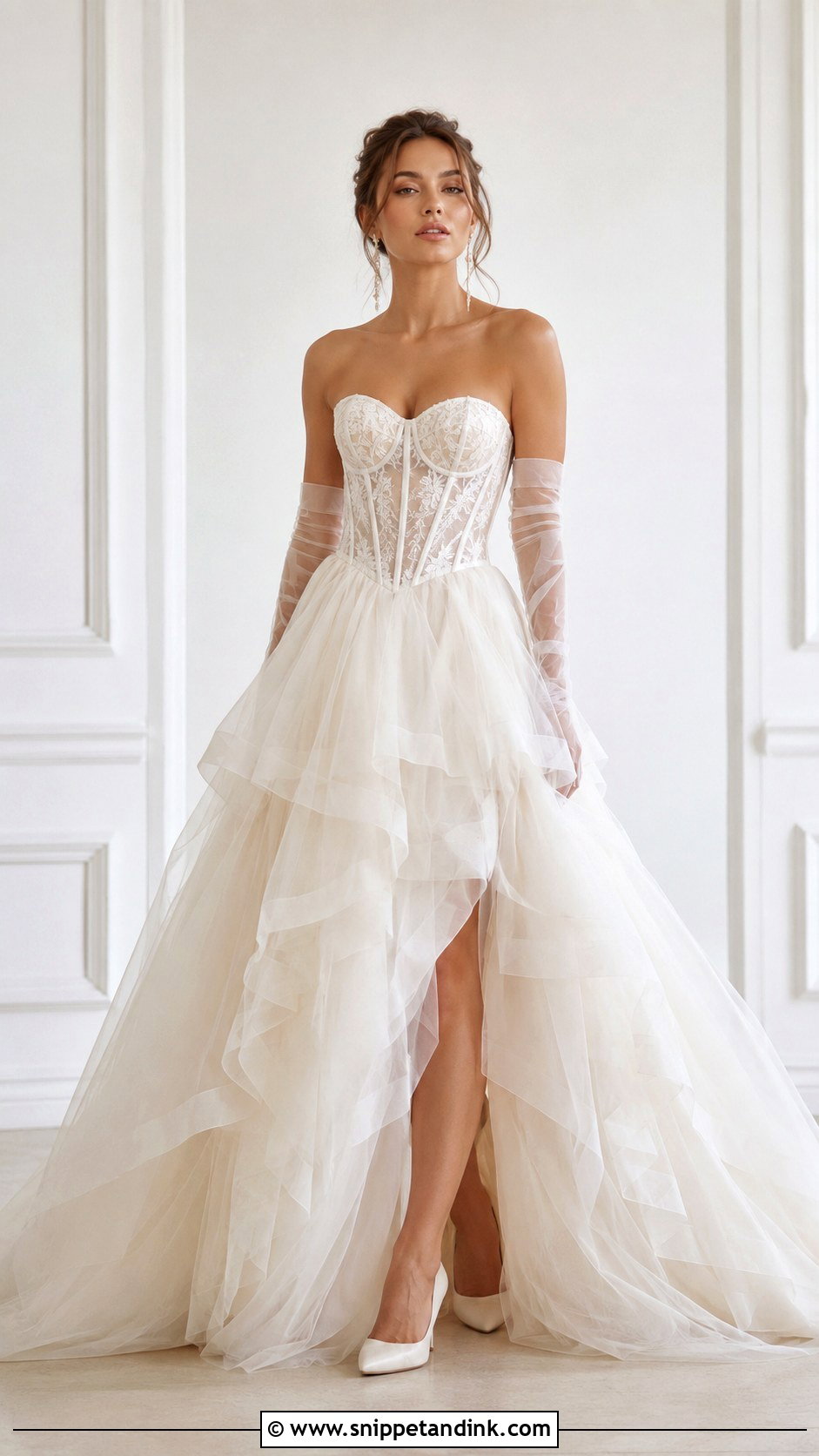
Real corsetry is engineered: spiral steel or synthetic boning, a grosgrain waist stay, and lacing or hooks that take the strain off the zip. That’s why a good corset gown feels secure through a two-hour portrait session, and why a cheap one with plastic boning ripples at the ribs by the first dance. Look for boning you can see, a sculpted bodice and a skirt in chiffon, satin or layered tulle. Sheer gloves, delicate earrings and sleek ivory pumps finish it. It supports a fuller bust better than most strapless styles, but book the bodice fit for when you’re close to your wedding weight, since a corset is unforgiving to a few pounds either way.
4. Simple Satin Wedding Dress
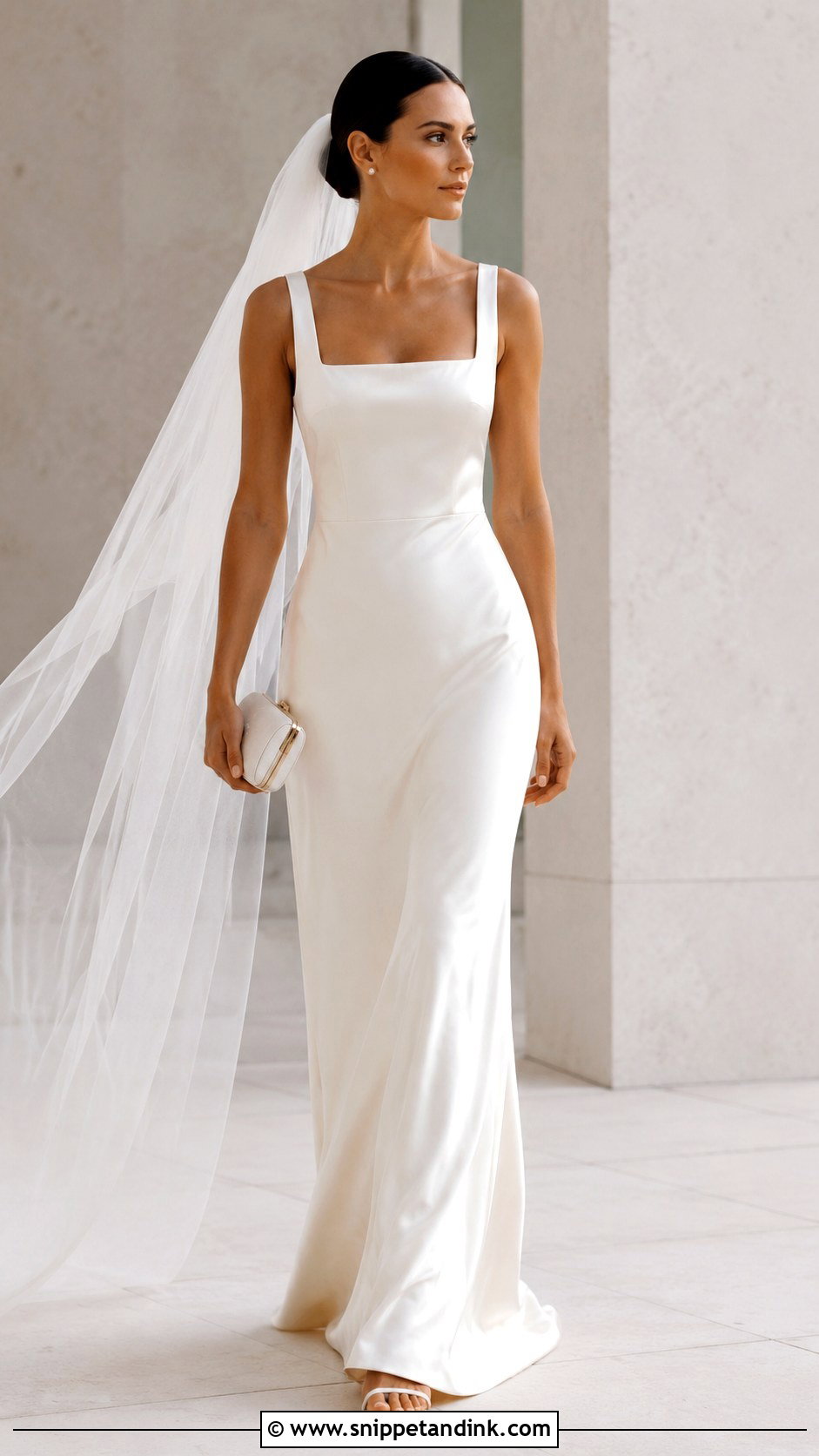
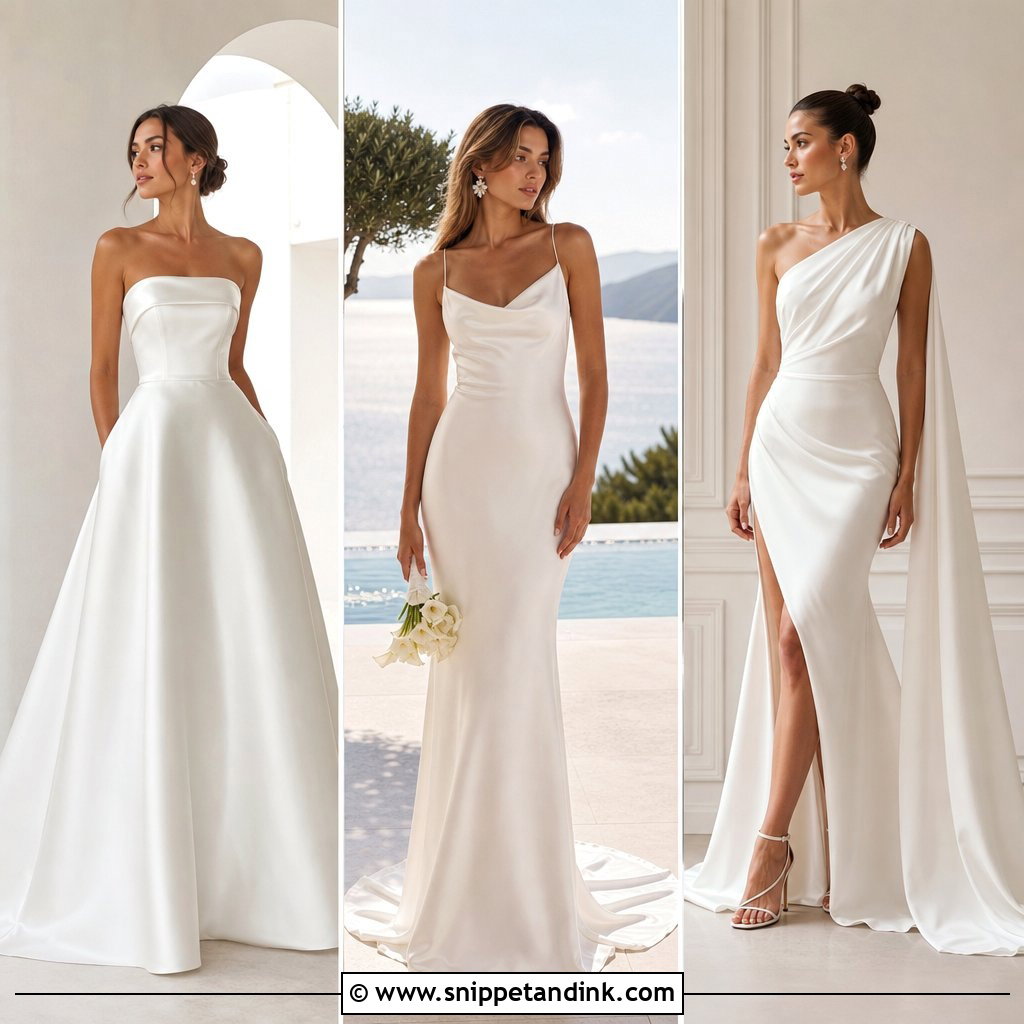
A simple satin dress has nowhere to hide. Every pucker at the zip, every wrinkle from the car ride, every bra line shows, so the alterations budget matters more here than on any lace gown. Bias-cut satin in particular clings and shows underwear seams; I fit it with a smooth, no-line shapewear brief on, not whatever the bride wore to the shop. A square neckline or strapless column looks right for 2025 with pearl studs, a smooth veil, minimal sandals and a structured clutch. Get the hem, neckline and waist exact, and then let hair and jewelry carry the personality. It suits a hotel ceremony or a small city wedding better than a muddy field.
5. 3D Floral Wedding Dress
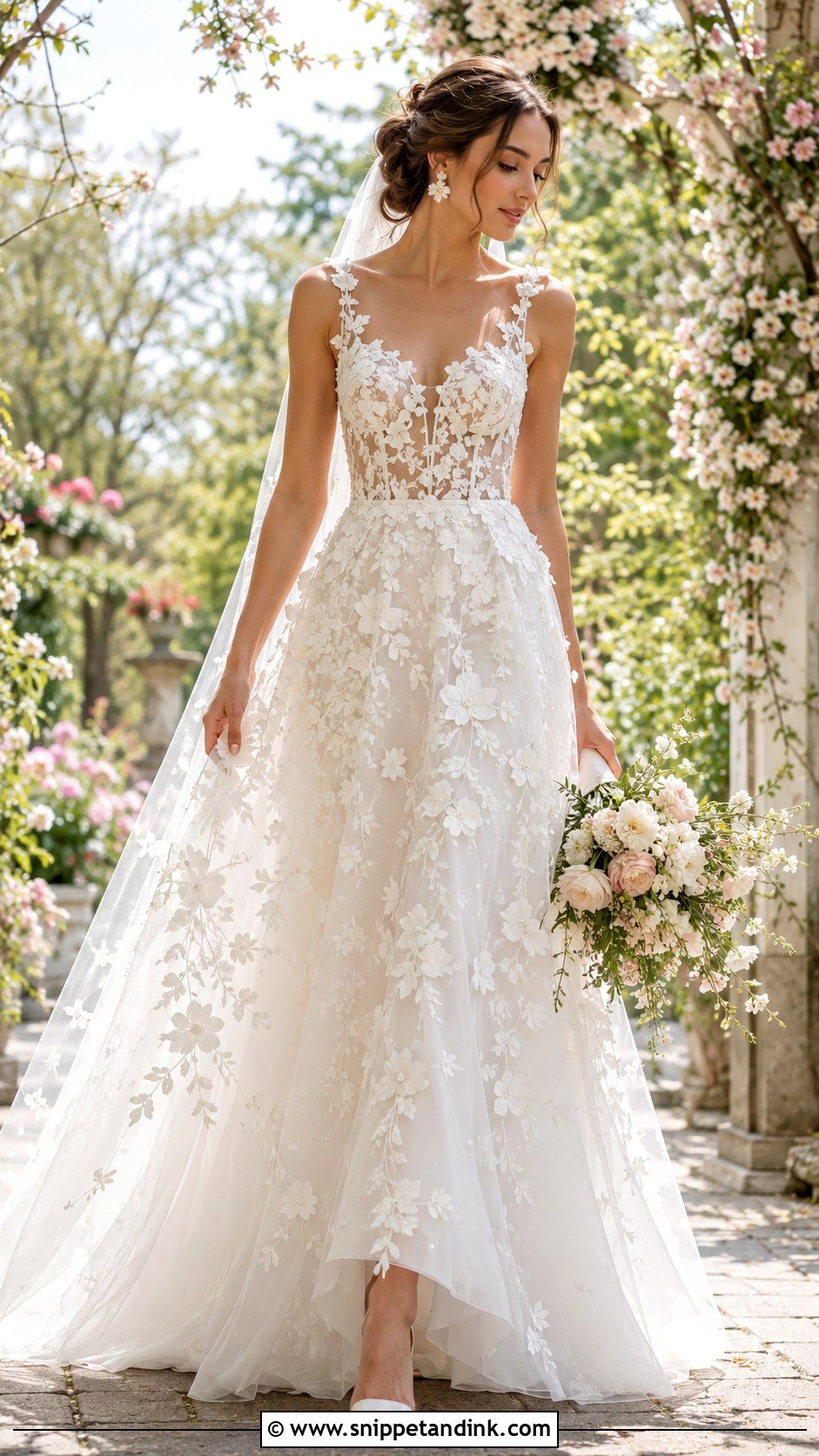
Raised floral appliqués catch side light in a way flat lace never does, so this gown comes alive in outdoor portraits and goes a little flat under harsh overhead flash. The flowers sit best scattered over an A-line skirt, sheer sleeves or a fitted bodice. One thing I always check: where the appliqués land on the inner arm and hips, because stiff petals there can scratch and catch on a bouquet. Floral earrings, soft curls, a sheer veil and simple heels keep the dress in charge. It’s very much a spring garden gown, and a balanced silhouette stops it tipping into sweet.
6. Halter Neck Wedding Dress
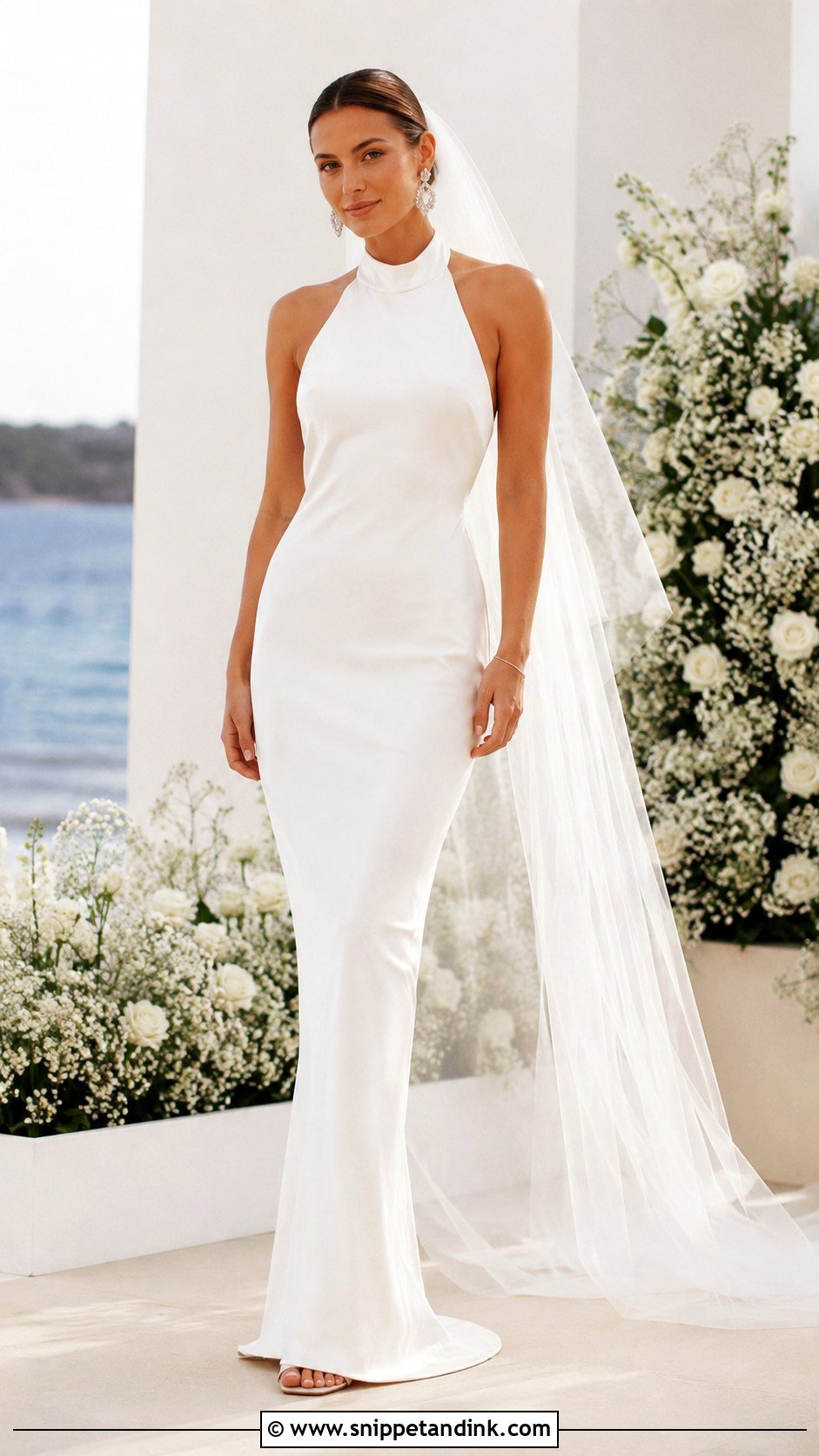
A halter pulls the eye up to the shoulders and collarbones, so the earrings and the makeup suddenly matter more than the necklace, which you should skip entirely. In 2025 it shows up in satin, crepe or lace over a fitted column skirt. Pair it with minimal heels, a long veil and a slim bracelet. Practical point: the halter strap carries weight at the back of the neck, so a heavy beaded bodice can give you a headache by the reception. Ask whether the bodice has its own internal support. Straps never slip, which is exactly why coastal and evening brides like it.
7. Off Shoulder Wedding Dress
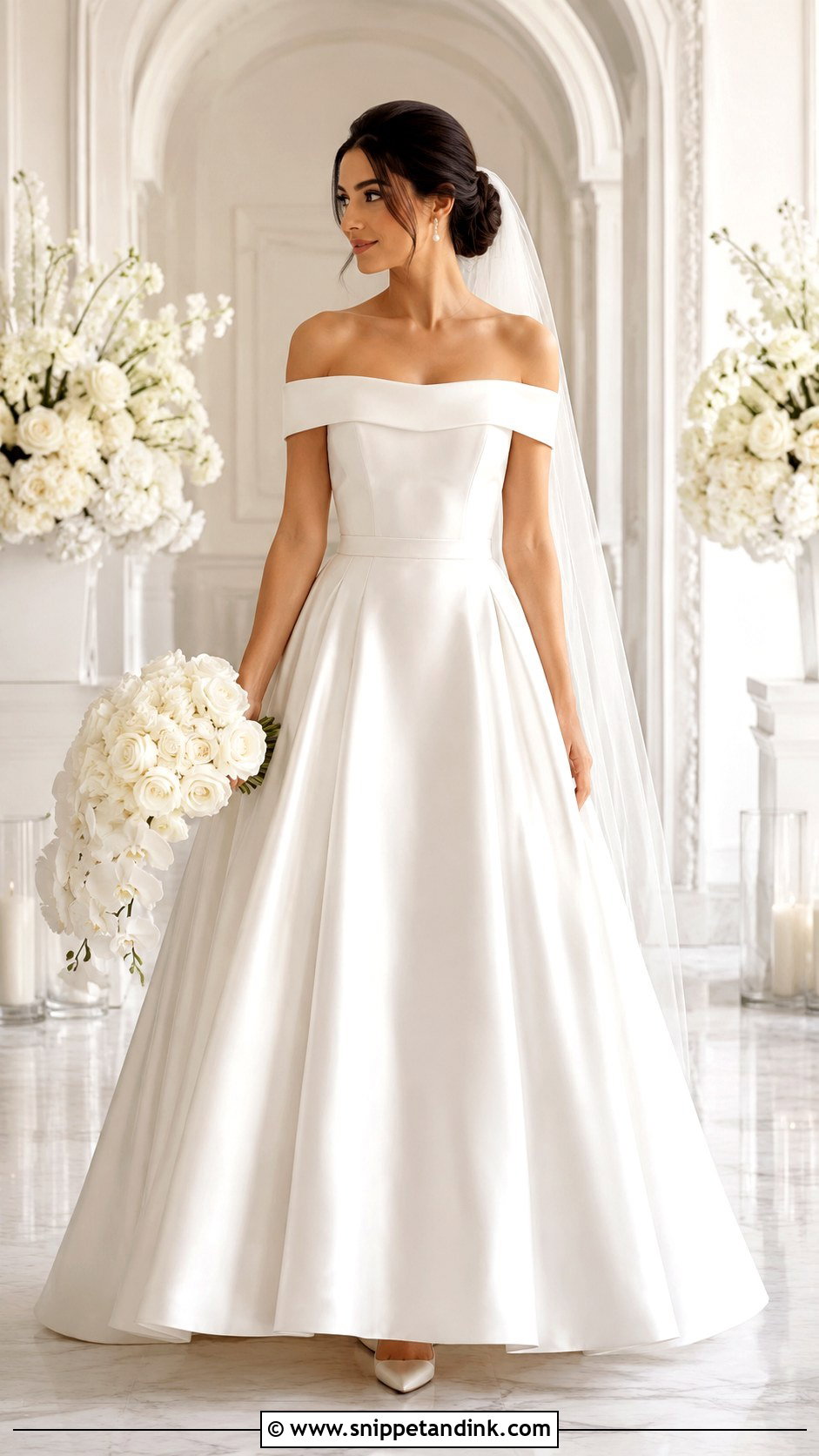
An off shoulder neckline frames the collarbones, but it lives or dies on how the band is anchored. Without silicone gripper tape or a bodice built to hold it, the sleeves creep down the arms and you spend the night hitching them up, and you can’t lift your arms above shoulder height for hugs. I test that at every fitting. With a structured bodice it suits a fitted skirt or a full A-line. Add a low chignon, pearl earrings and pointed heels. Long off-shoulder sleeves feel more formal; a folded neckline band looks cleaner and is easier to move in.
8. Long Sleeve Lace Wedding Dress
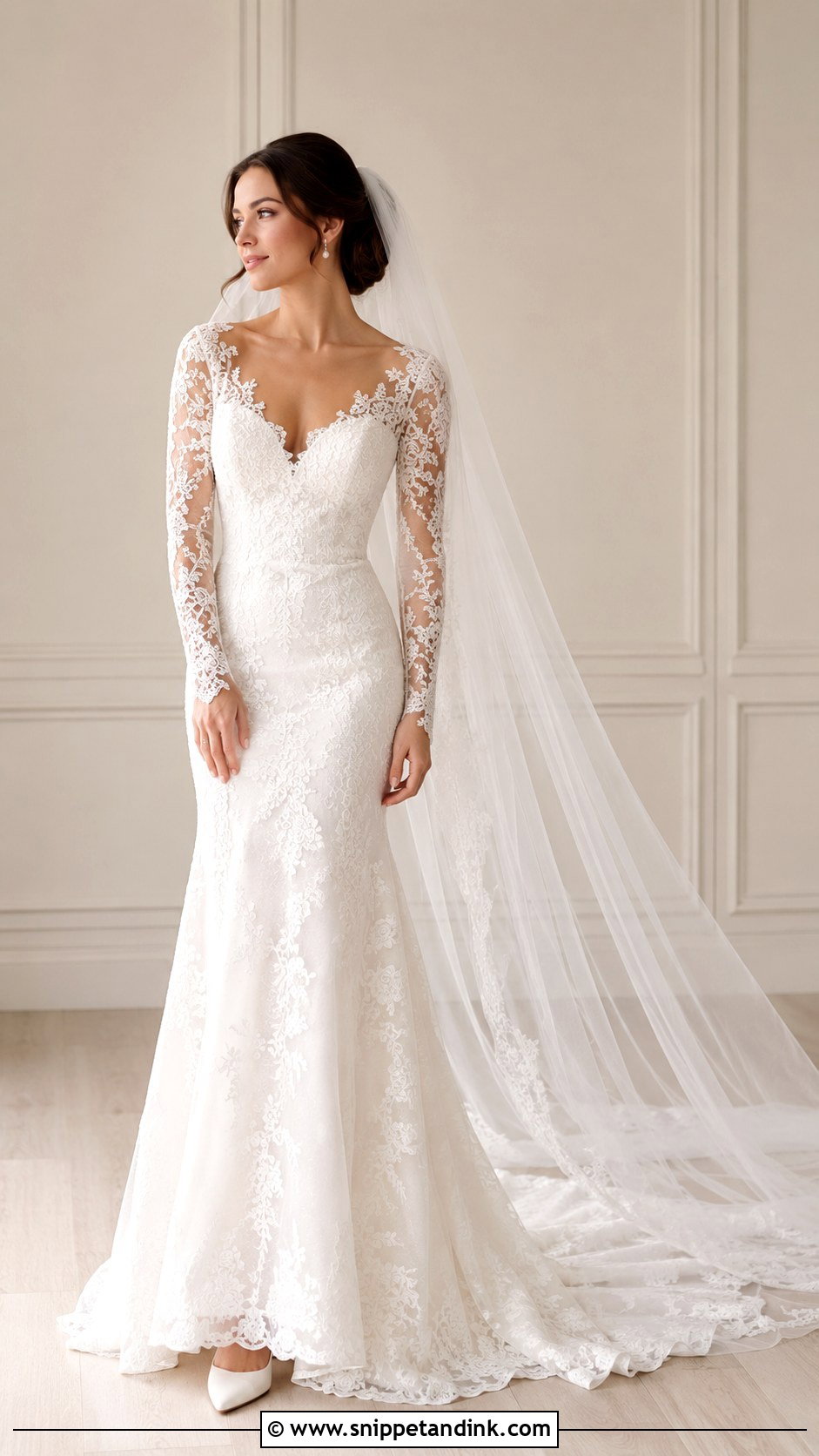
The 2025 long sleeve lace dress is lighter than the versions of a decade ago: sheer sleeves, fine floral lace and a fitted or gently flowing skirt. A nude lining under the lace makes the pattern stand out. The sleeve fit is what I watch most. Lace has little stretch, so a sleeve that looks perfect with arms at the sides can pull across the back when you lift your arms to hold a bouquet or hug someone. Pearl earrings, a cathedral veil and closed-toe ivory heels finish it, and natural makeup lets the lace do the talking. It’s a cool-month gown; in a July marquee you’ll feel every layer.
9. Strapless Ball Gown Wedding Dress
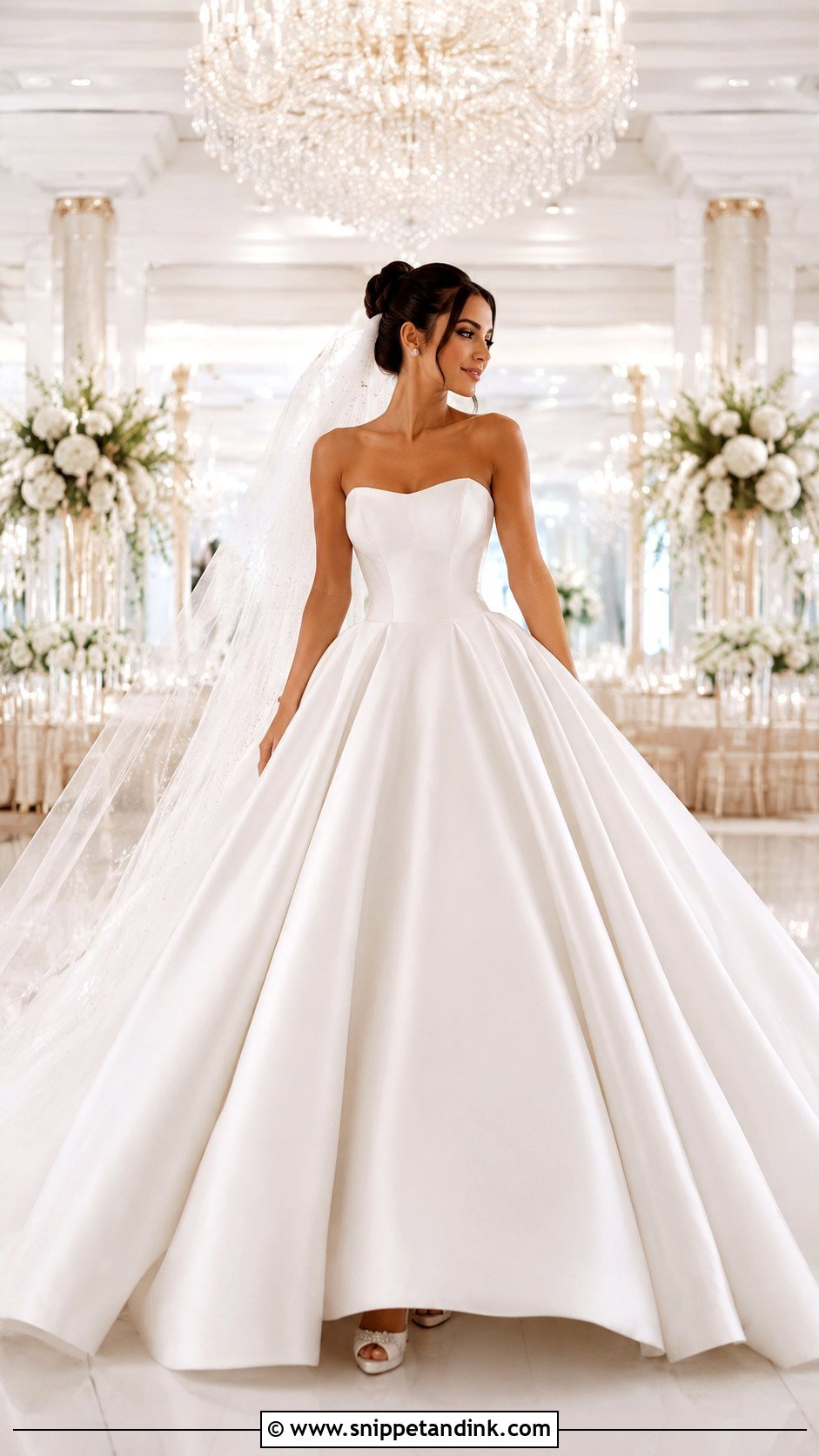
Nothing fills an aisle like a strapless ball gown, and the 2025 version leans on basque waists, sculpted bodices and stiff fabrics like mikado that hold volume without layers of crinoline. The bodice does all the work, so it has to be fitted snug enough to stay up when you bend to hug a grandparent. Style it with a soft updo, sparkling studs, a long veil and platform heels hidden under the skirt. Before you commit, walk a flight of stairs in the sample, and check the doorway widths and car if the venue is old. A full skirt needs real space to sit in.
10. A Line Wedding Dress
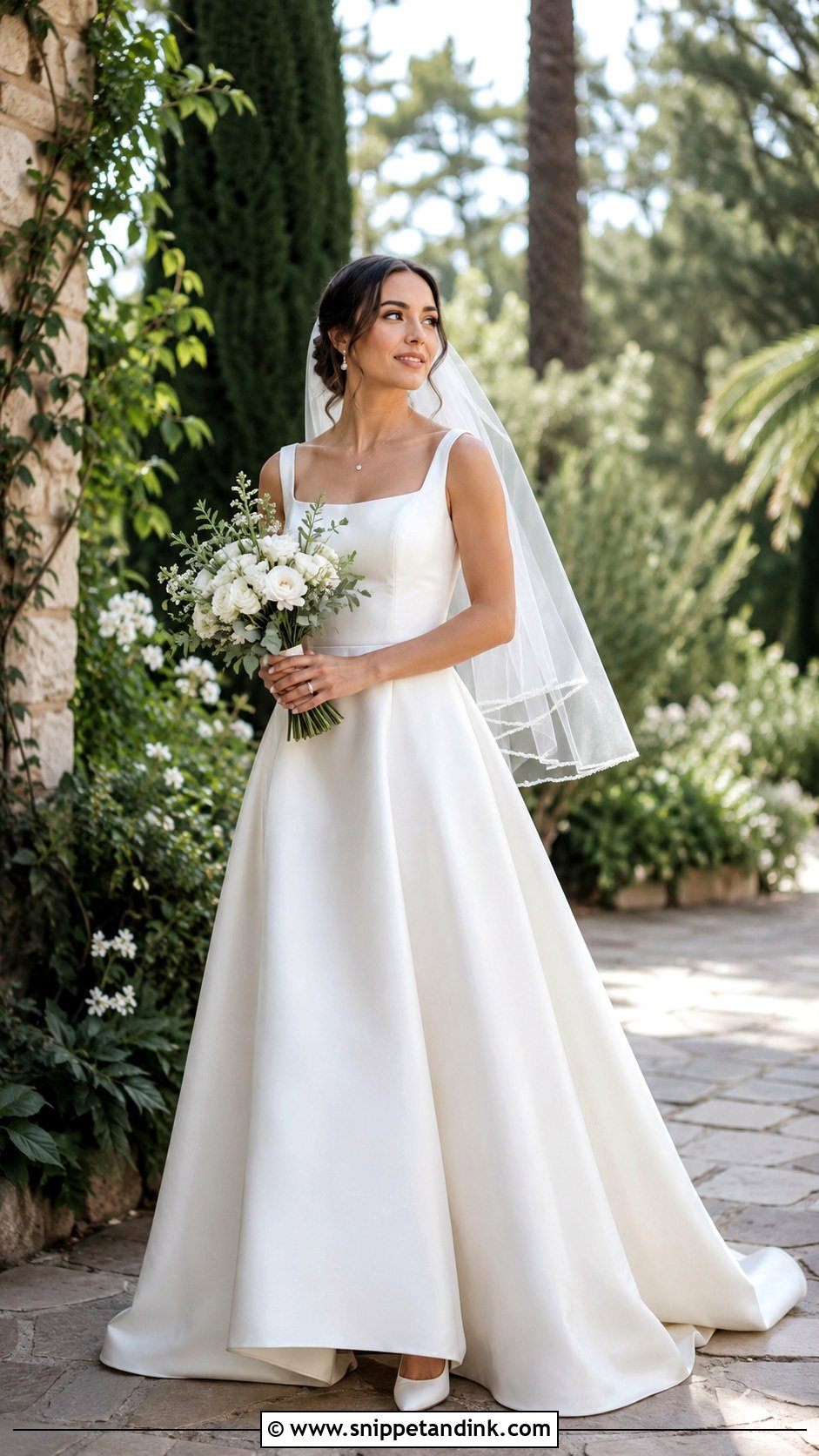
If I don’t know a bride’s taste yet, an A-line is the first dress I pull. It skims the bodice and widens gradually from the waist, so it forgives a lot and moves well on grass, sand and dance floors. For 2025 that means clean satin, floral lace, square necklines or a little sparkle. A fingertip veil, classic pumps and delicate jewelry are all it needs. Its weakness is that it can feel safe; if you try one and shrug, that’s useful information, and it’s usually a sign you want more structure or more drama.
11. Mermaid Wedding Dress
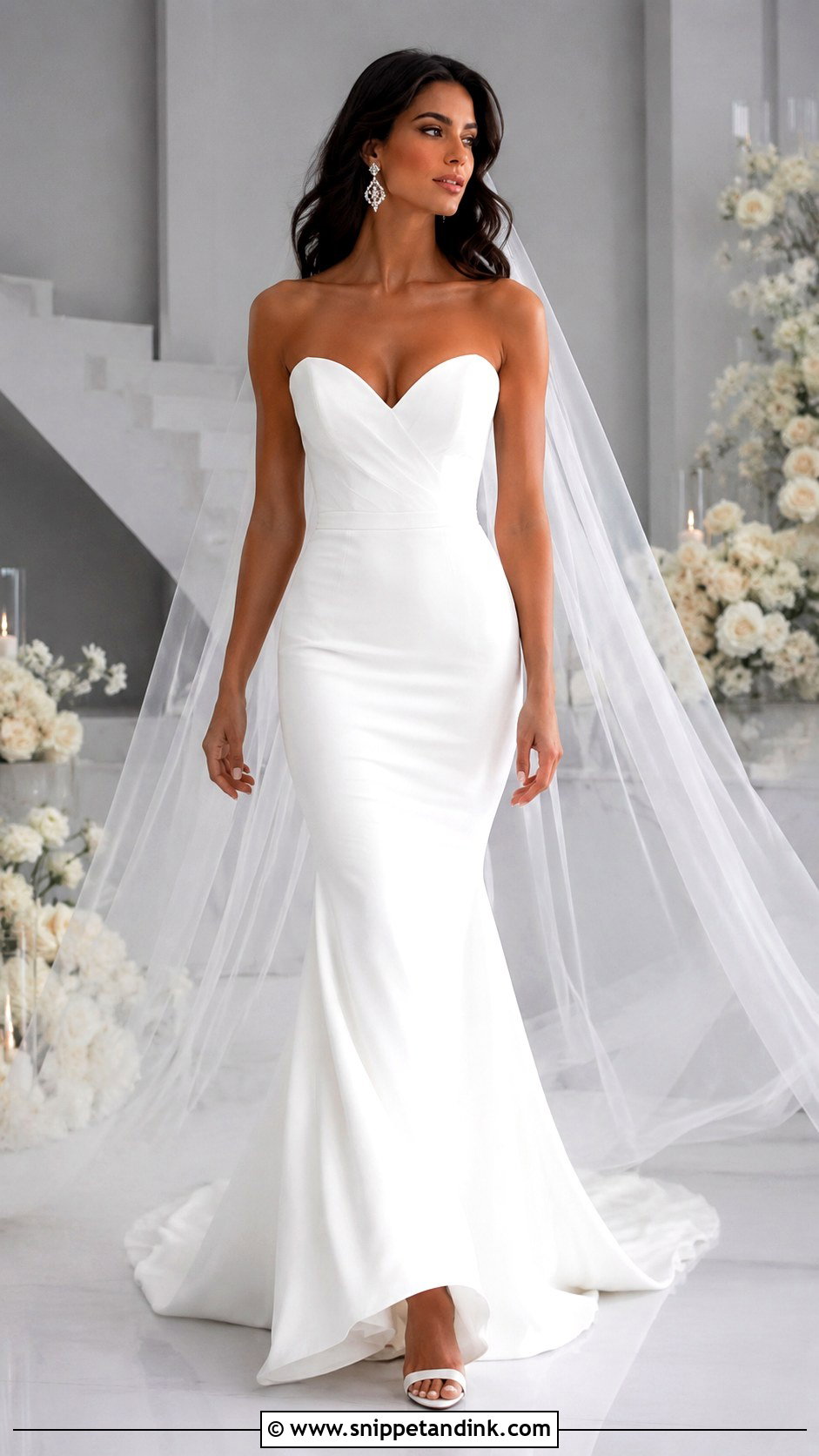
A mermaid gown fits close through the bust, waist and hips before flaring at or just below the knee, and the exact flare point is the whole fit. Too high and you look shorter; too low and you can’t climb steps or sit without hiking the skirt. Expect more alterations than with most shapes. Crepe, lace or satin with a softer flare feels more current than a stiff trumpet. Statement earrings, sleek waves, a long veil and high heels suit it, and the heels help with posture. Practice walking in it, since the knees are partly bound, and plan a bustle for the dance floor.
12. Square Neck Wedding Dress
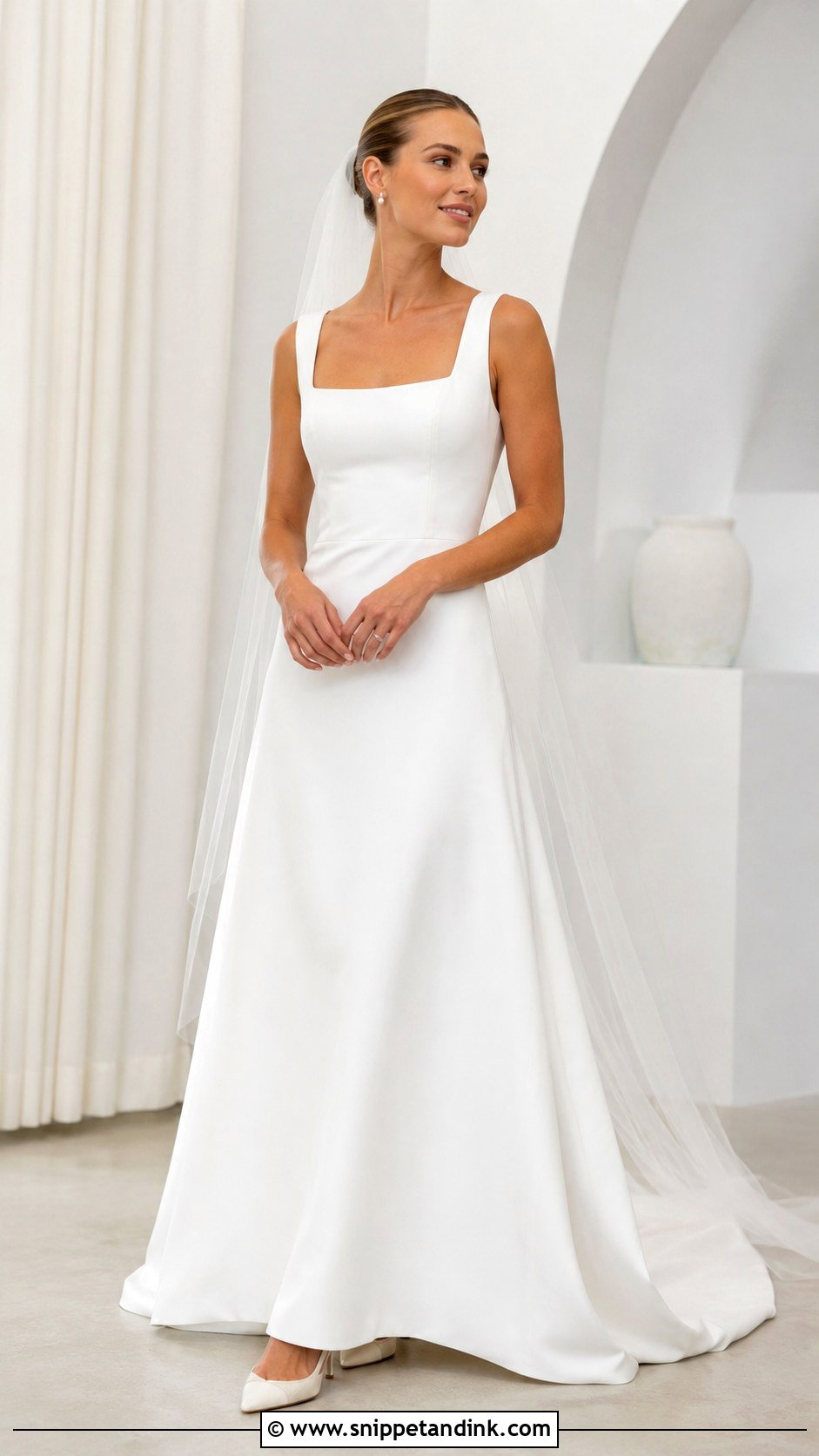
Square necklines suit a wide range of busts because the straight line sits at a predictable height, so you get coverage without feeling closed in. Wide straps and a fitted bodice in satin or crepe keep the architecture crisp. Add a smooth bun, pearl earrings, low slingback heels and a sheer veil. One honest note: on a very small frame, a wide square can make the shoulders look broader, so ask the seamstress to narrow the neckline by a little. An A-line skirt softens it; a column makes it minimal.
13. High Neck Wedding Dress
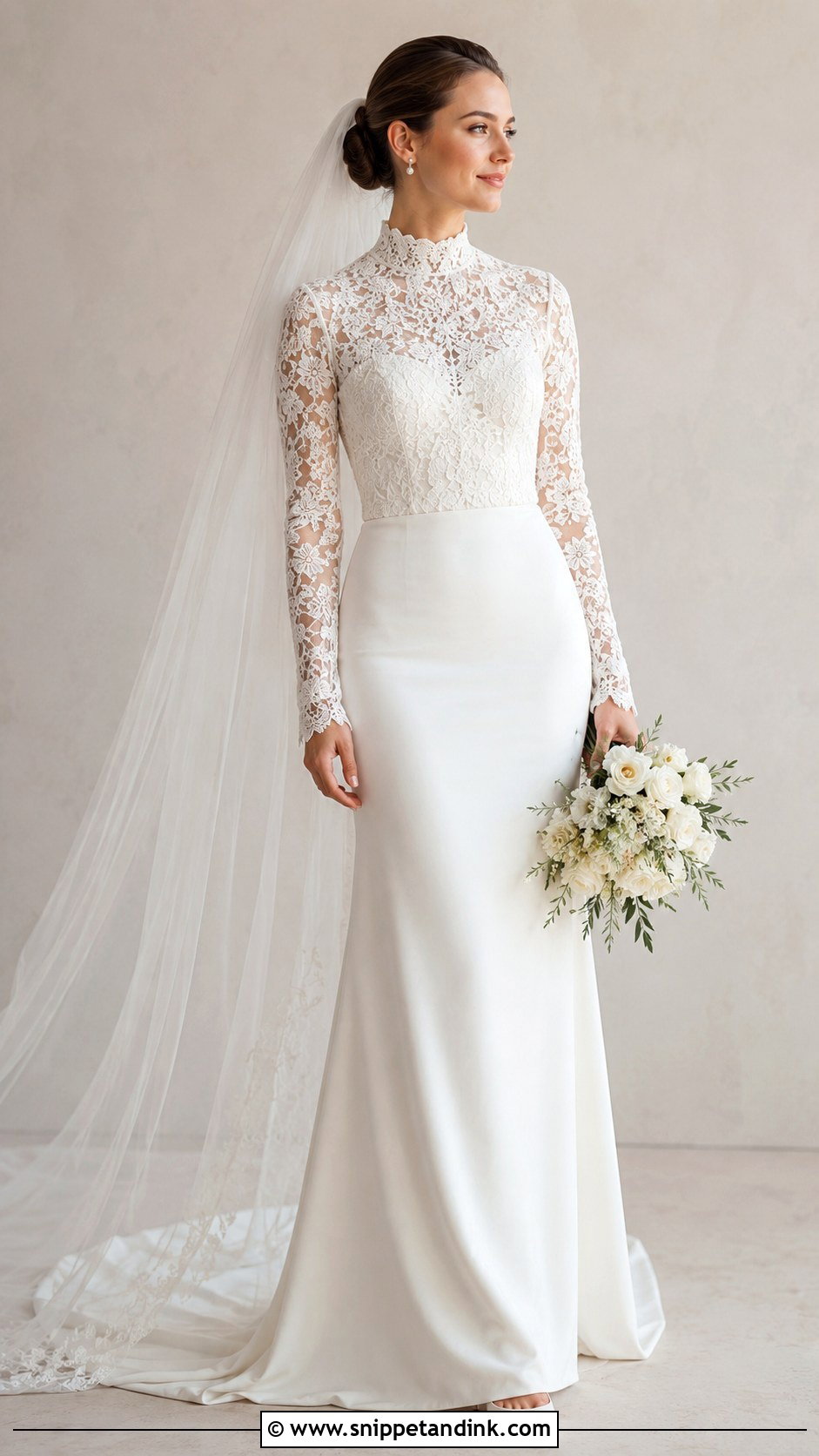
A high neck dress gives coverage and still looks modern, especially in lace, crepe, satin or halter-inspired cuts. Because the neckline is the focal point, there’s no room for a necklace; I’d spend that budget on earrings. Pull the hair back so the collar isn’t hidden, then add a soft veil and simple heels. Check the collar fit by turning your head both ways and looking down at your bouquet. A collar that’s a few millimetres too tight will mark your neck by evening. It’s a natural fit for cooler weather and gives a long line in portraits.
14. Wedding Dress With Detachable Sleeves
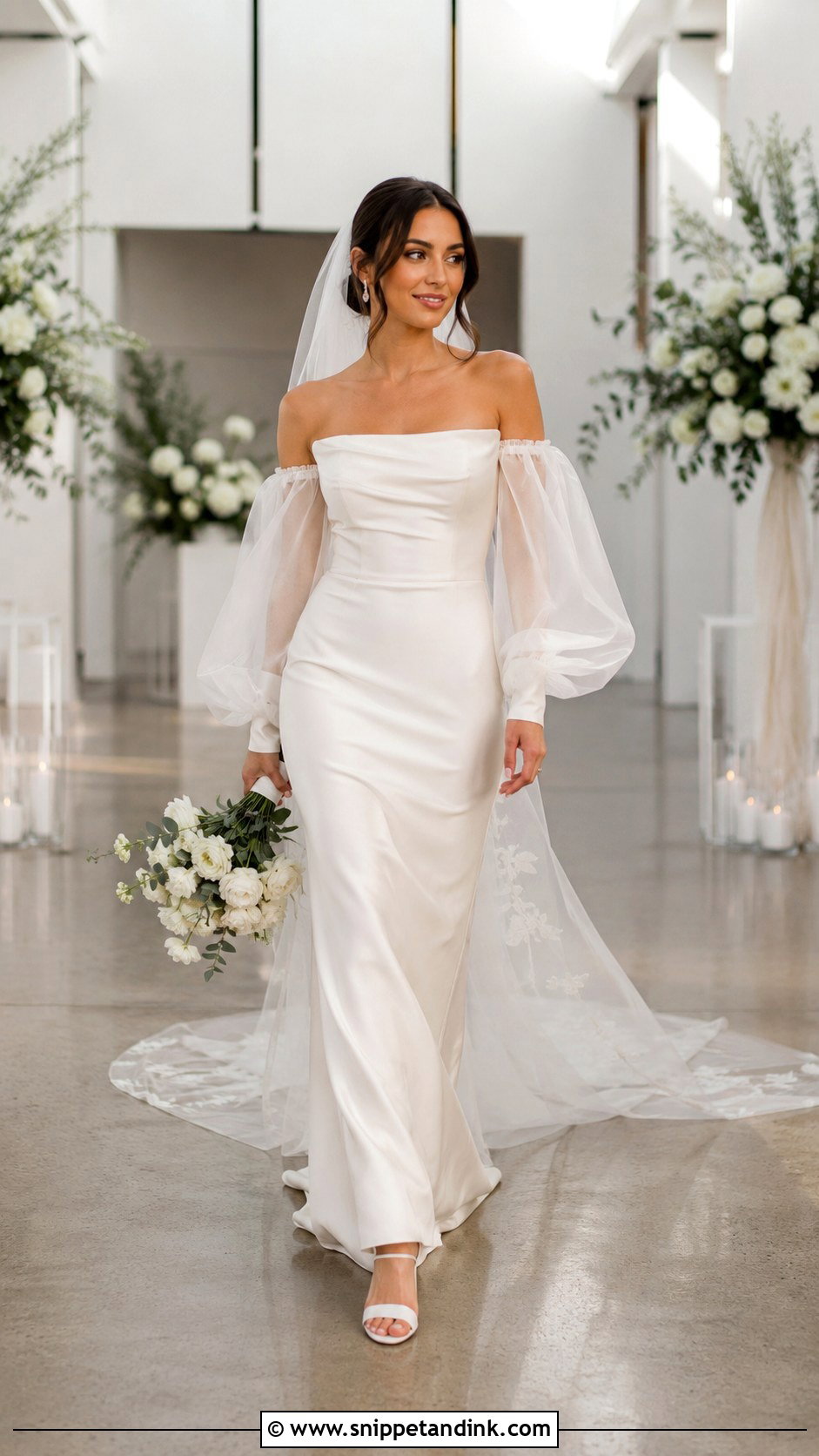
Detachable sleeves solve a real problem: covered arms for a religious ceremony or a cold church, then bare arms for dancing. They come in lace, tulle, puffs and fitted sheer styles, usually attached with small hooks, snaps or elastic loops. Ask your seamstress to sew a hidden loop or two so a bridesmaid can unhook them in a minute without help from you. Choose earrings that suit both versions and a veil that won’t fight the sleeves. Store the sleeves flat, in tissue, so they don’t crush in a bag during the reception.



15. Wedding Dress With Overskirt
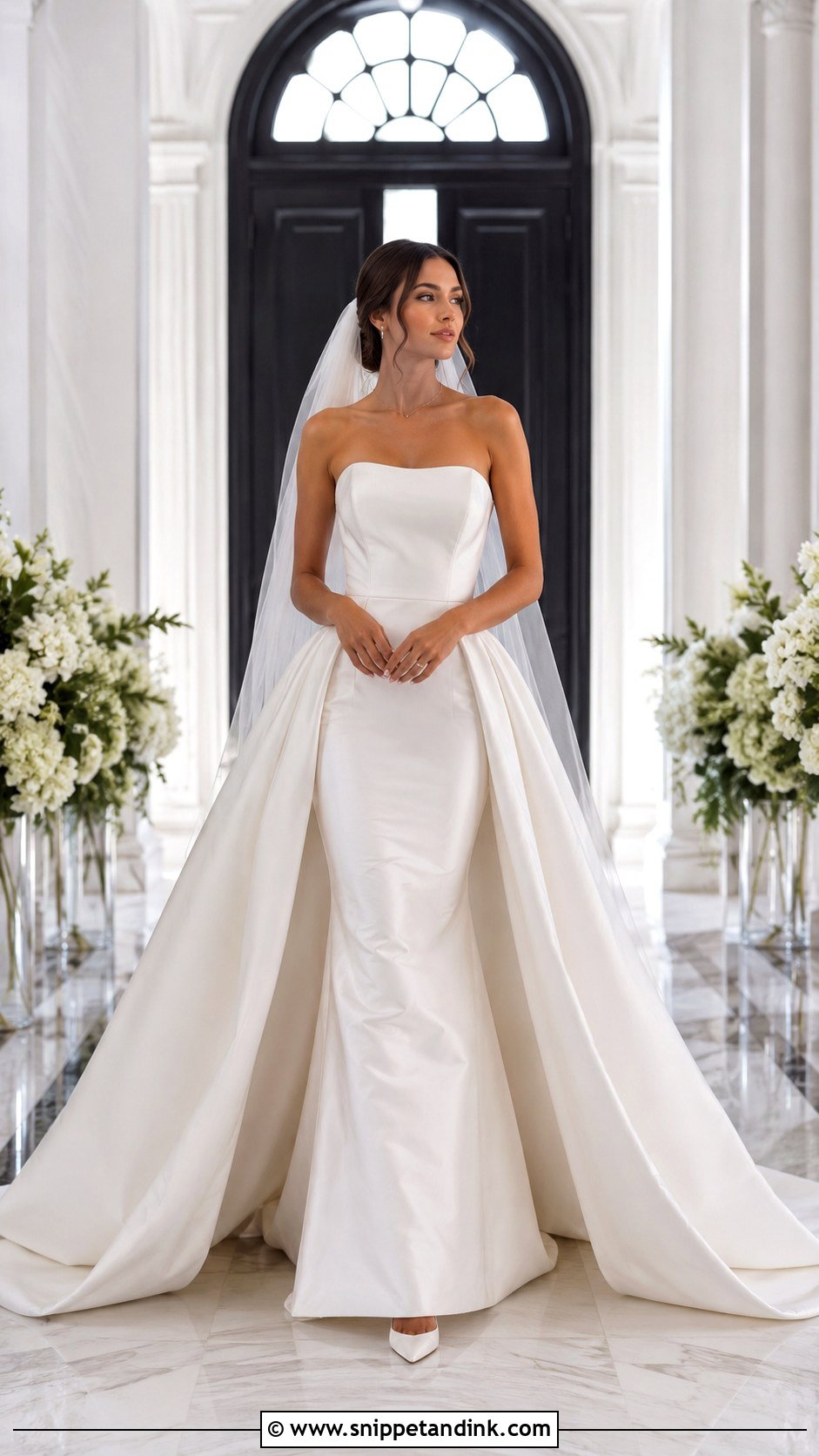
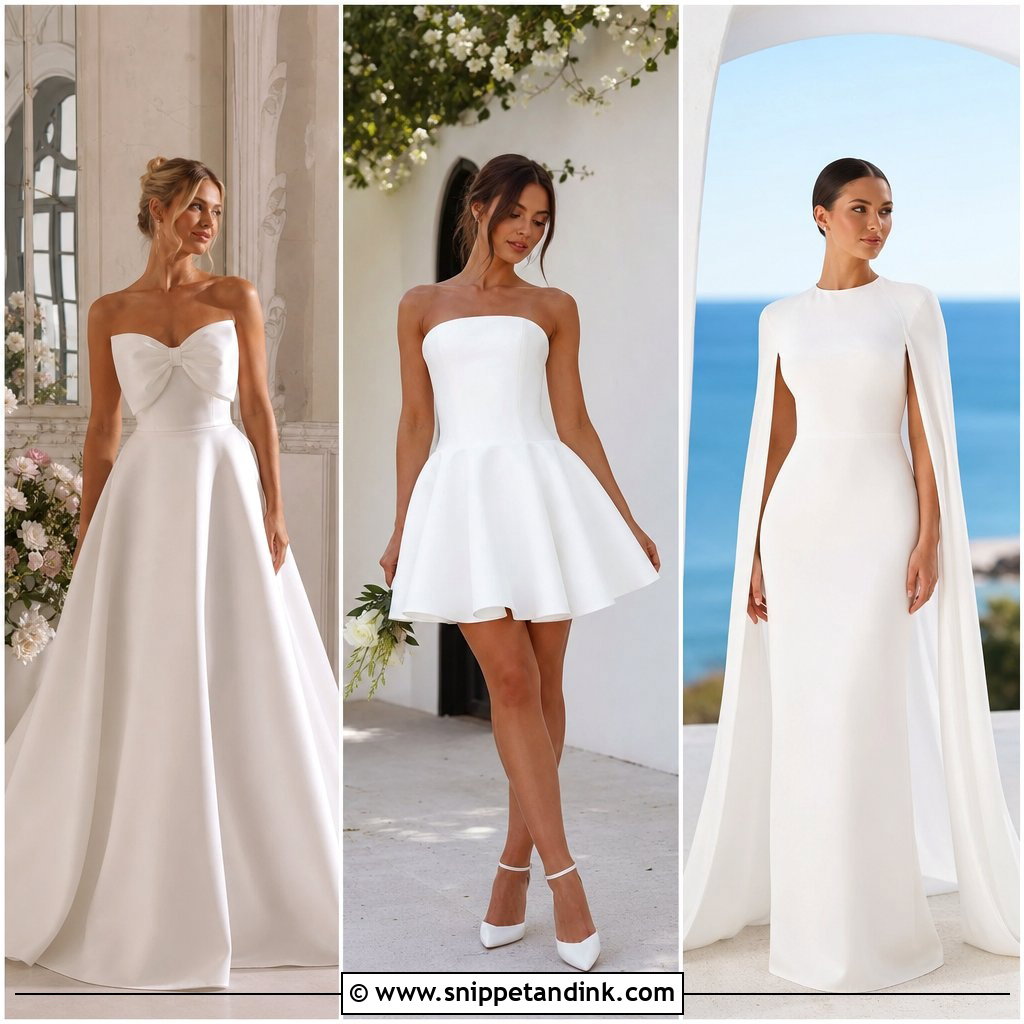
An overskirt gives you the ceremony drama and then takes it away when you need to move. The base is usually a fitted column, sheath or mini, with a full skirt that fastens at the waist with hooks, buttons or a hidden zip. The test I always run: can someone take it off in under two minutes without pulling your hair or veil? Rehearse that with whoever will help you. This convertible bridal choice works with sleek heels, a long veil and jewelry that suits both looks. Have a plan for where the overskirt goes afterward, since it’s bulky and easy to step on.
16. Bridal Mini Dress
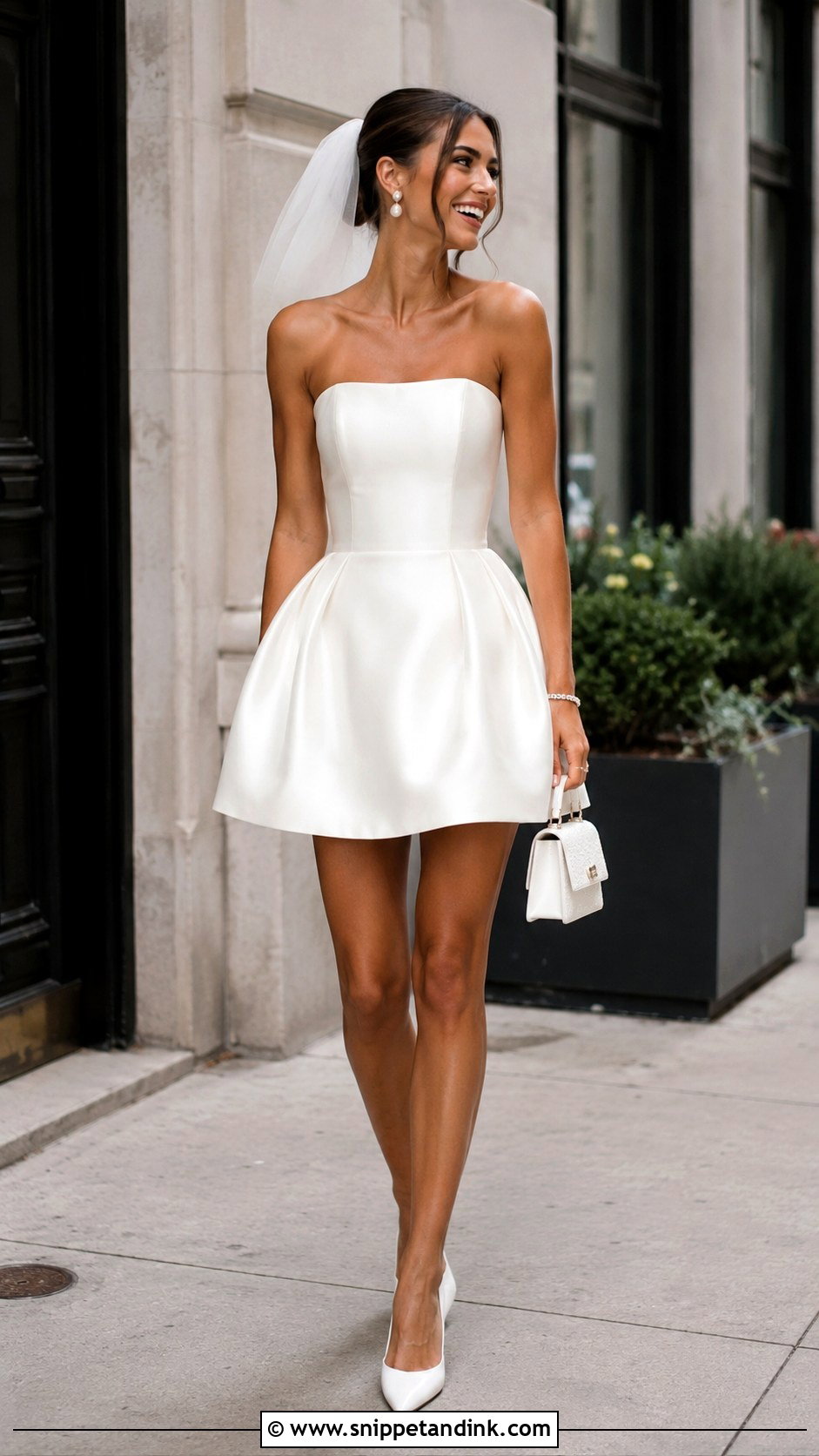
A bridal mini is about the hem and the fit; the hem can be playful, but everything else should be refined. Structured bodices, bows, pearl trim, feathers or clean satin all work for 2025. Pointed pumps, sheer tights if the weather calls for them, pearl earrings and a small structured bag complete the outfit, with a short veil or bow clip for personality. I check the length sitting down and climbing into a car, because a mini that’s fine standing can ride up in seated photos. It suits a courthouse wedding, a reception change or an after-party.
17. Tea Length Wedding Dress
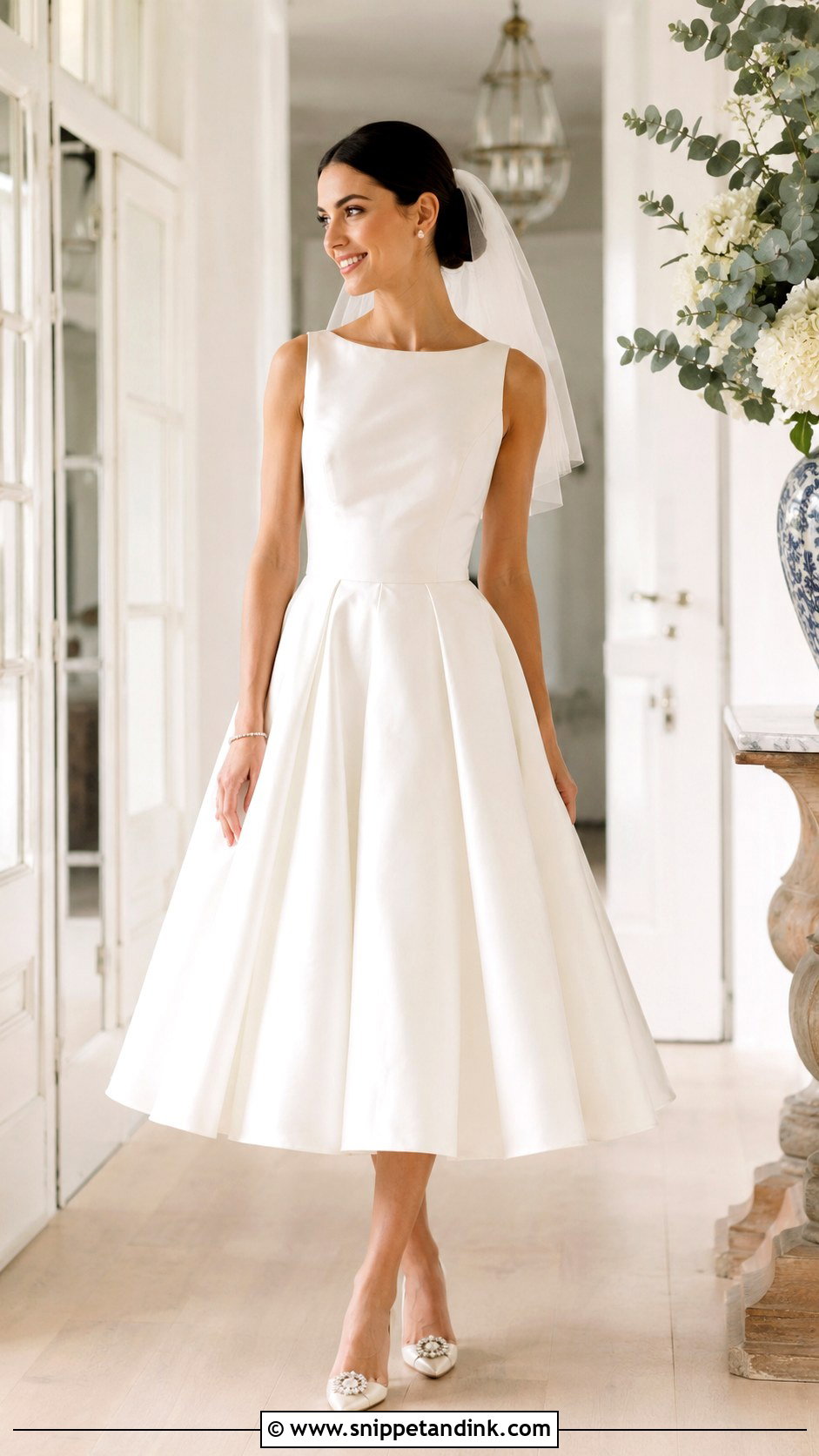
Tea length falls between knee and ankle, which means your shoes are part of the outfit rather than hidden under the hem. That’s freeing on a long day, and it makes daytime and garden weddings easy, but it also means a scuffed or uncomfortable pair has nowhere to hide. A structured bodice and full skirt in satin or light lace give the classic shape. Statement heels, pearl studs, a short veil and soft waves finish it. Wear the shoes in at home for a week, and break them in on carpet first so you can still return them.
18. Short Reception Wedding Dress
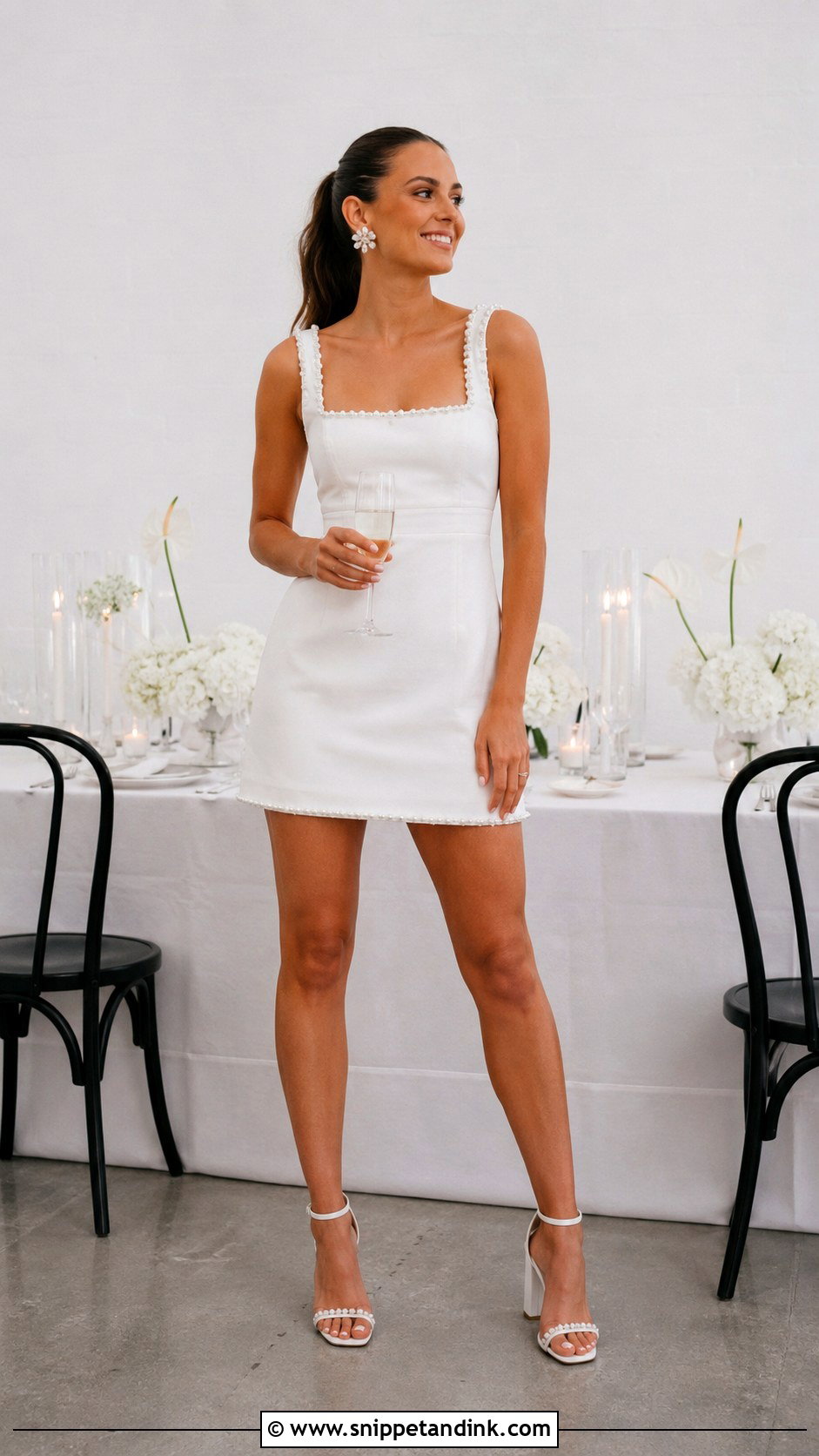
A reception dress lets you relax for the second half of the night. It can be a mini, a knee-length dress or a playful feather-trimmed piece, depending on the venue. In 2025 brides treat it as part of the wedding wardrobe, not an afterthought. I plan the change with the photographer so there’s a quick portrait in it before dancing starts, otherwise there may be no good shots of it at all. Block heels or platforms, statement earrings and a sleek ponytail or bun suit it. Keep it in white, ivory, pearl or subtle sparkle so it still reads bridal next to the ceremony gown.
19. Pearl Wedding Dress
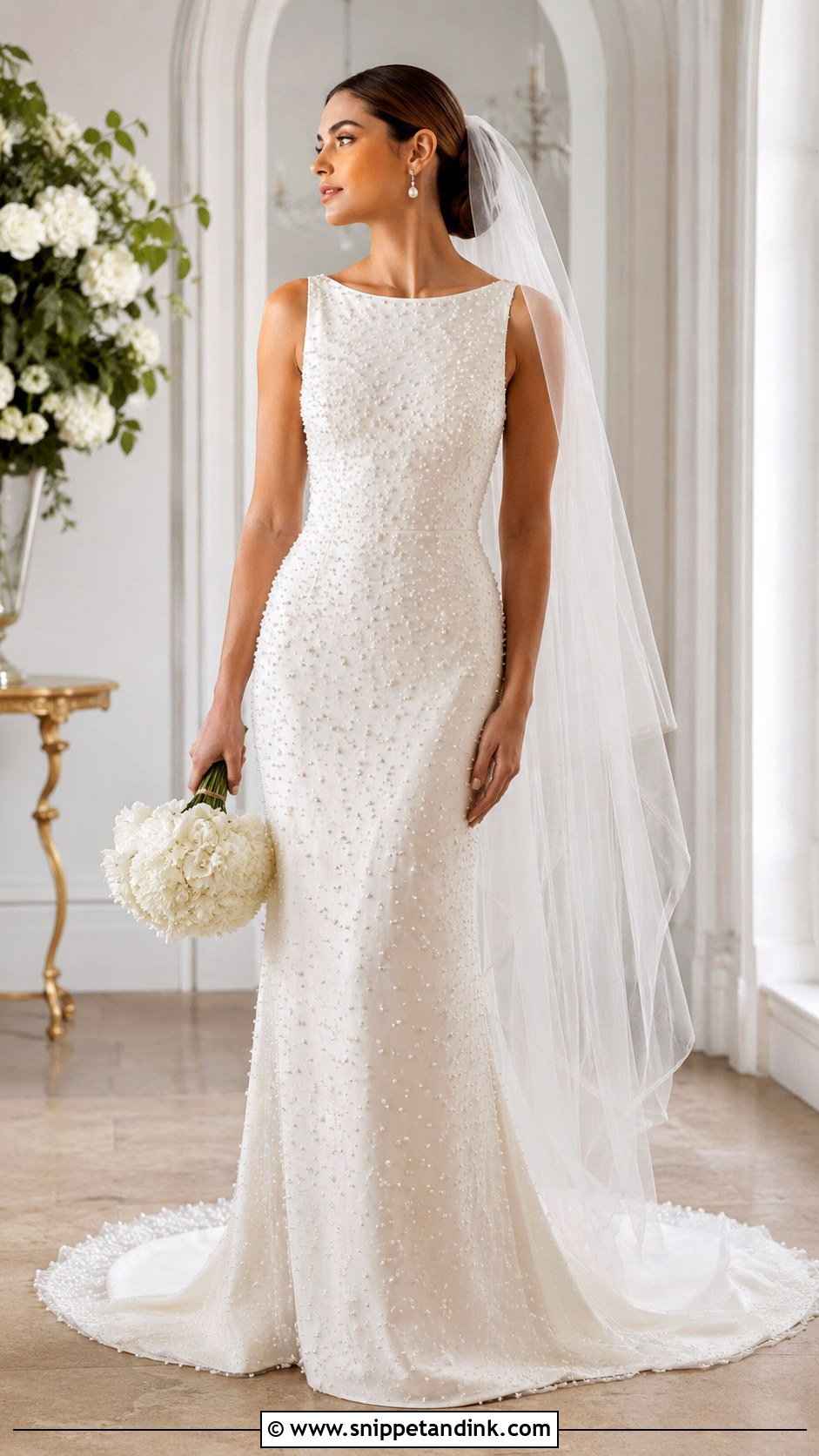
Pearls give a soft, milky shine rather than the hard flash of crystals, so they read gentler in daylight photos. They can cover a bodice, edge the sleeves or the veil, or scatter over a simple silhouette where the texture can stand out. Hand-sewn pearls are heavier than they look, and a fully pearled bodice can weigh noticeably more than a plain one, so try the actual dress, not a sample swatch. Pair with pearl earrings, satin heels, a smooth hairstyle and a clean veil, and stop there. Extra jewelry just competes.
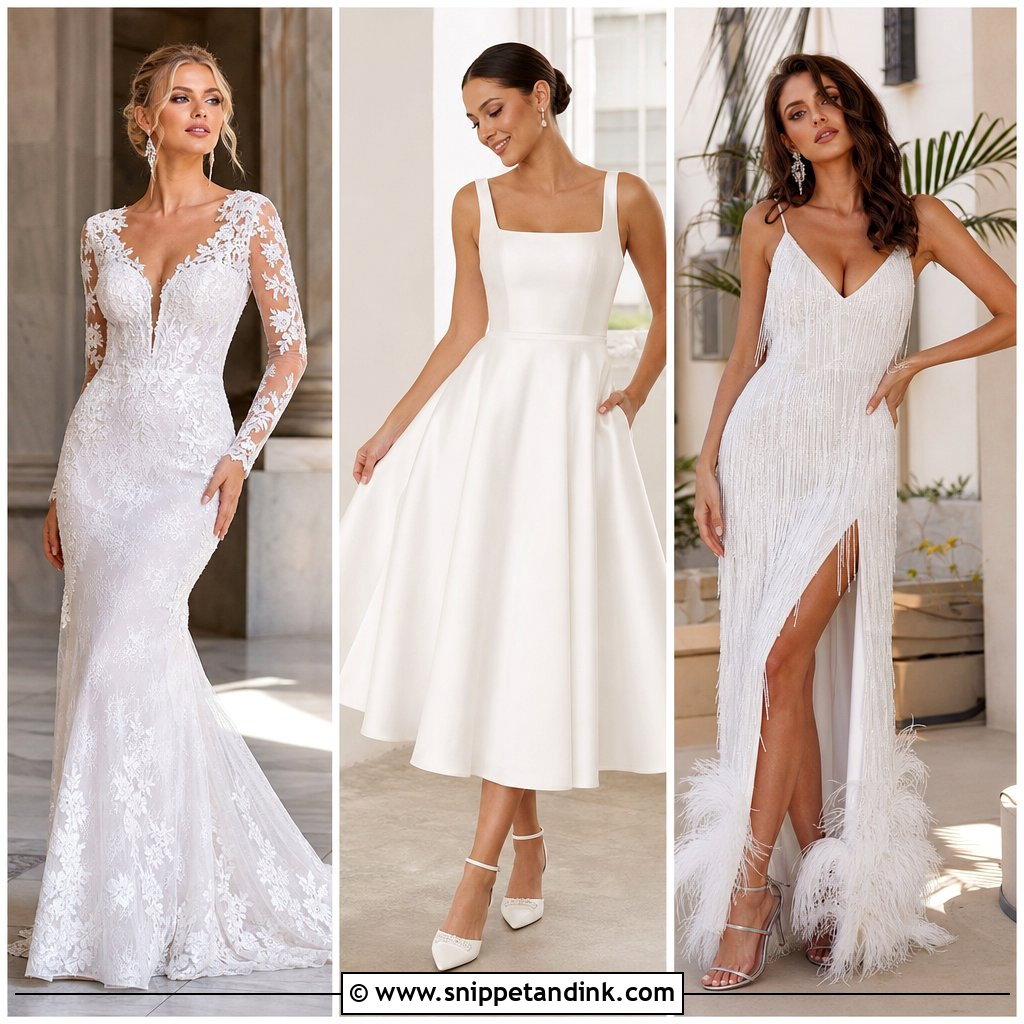


20. Beaded Wedding Dress
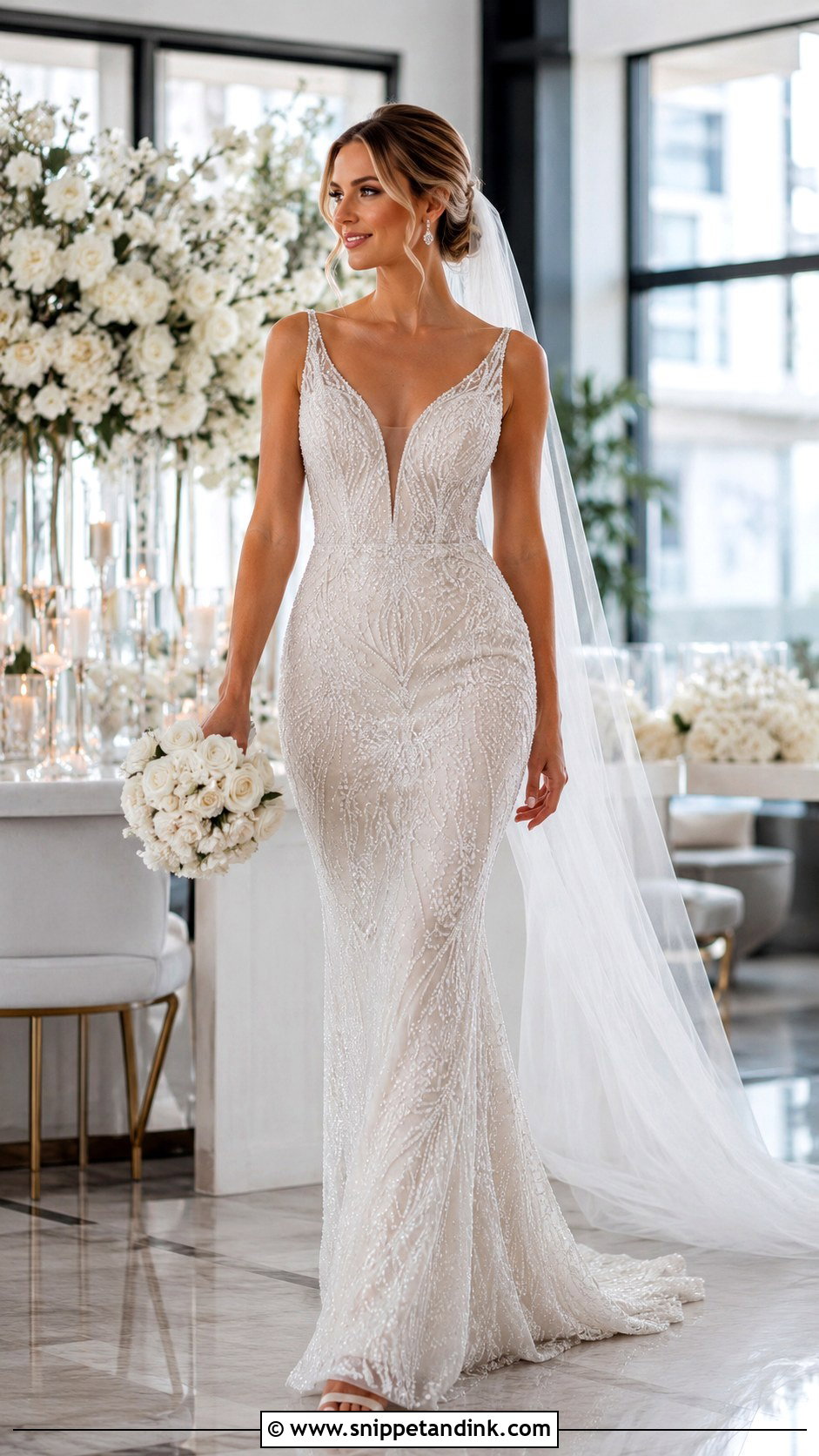
Beading brings sparkle that works hardest in the evening, at hotel venues and anywhere with plenty of flash. In 2025 it appears on fitted gowns, sheer overlays, art deco patterns and fine floral designs. Two things to check at fittings. Weight: a heavily beaded gown drags on the shoulders and hips over ten hours. Texture: beads on the inner arm can scratch, and beading on the seat can be uncomfortable when you sit. Keep the heels simple, the veil clean and the earrings quiet. Ask the seamstress to keep spare beads for emergency repairs.
21. Bow Wedding Dress
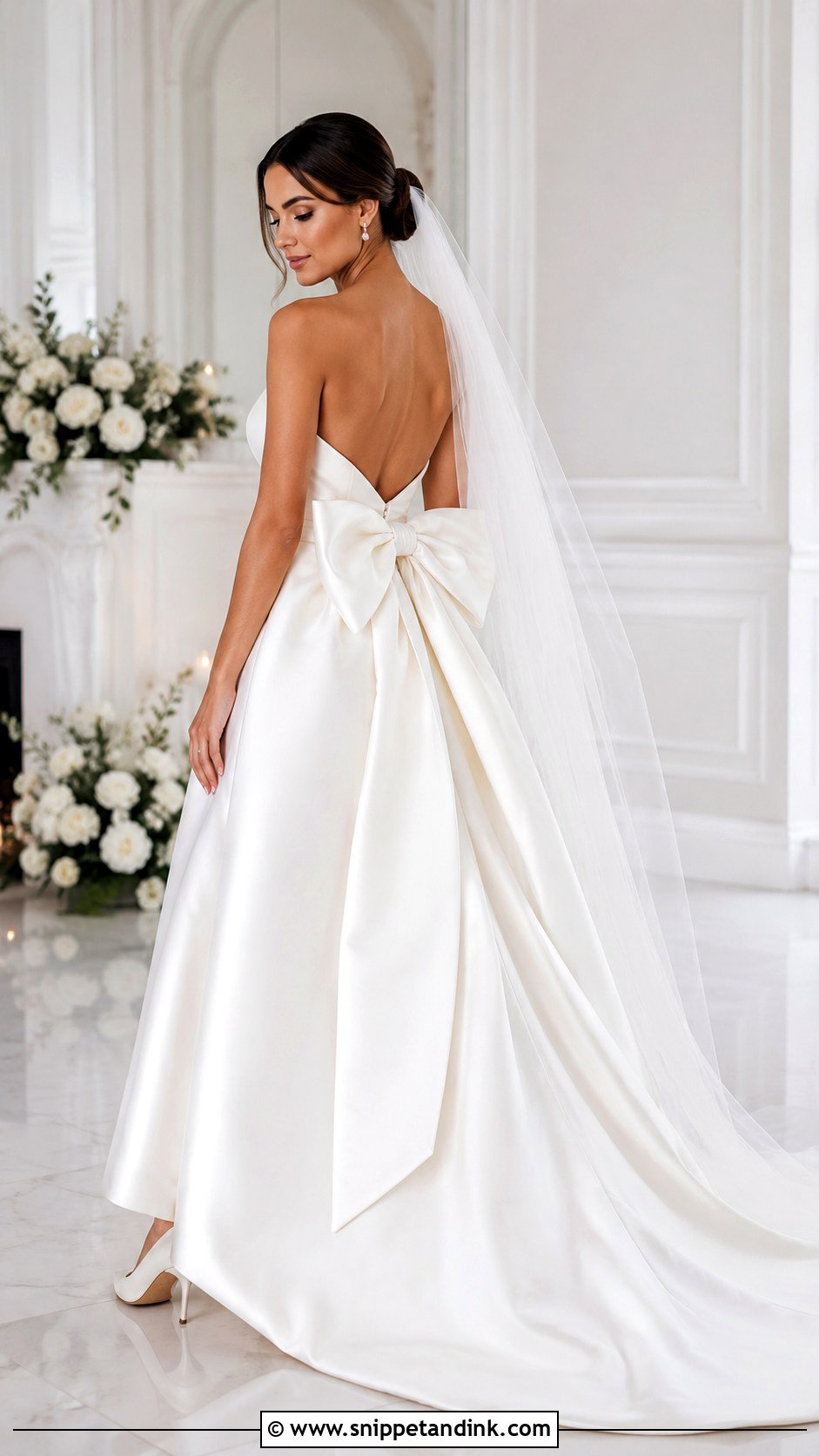
A bow can sit at the back waist, the neckline, the shoulders, or as an oversized train accent, and where it sits changes the whole mood. A back bow on structured satin is the most popular placement now. I always remind brides that the veil will cover a back bow during the ceremony, so either choose a veil that attaches below it or plan to take the veil off for portraits. Keep the rest of the styling clean, with simple earrings and sleek heels. One bold detail, nothing heavy, and it reads grown-up rather than sweet.
22. Floral Lace Wedding Dress
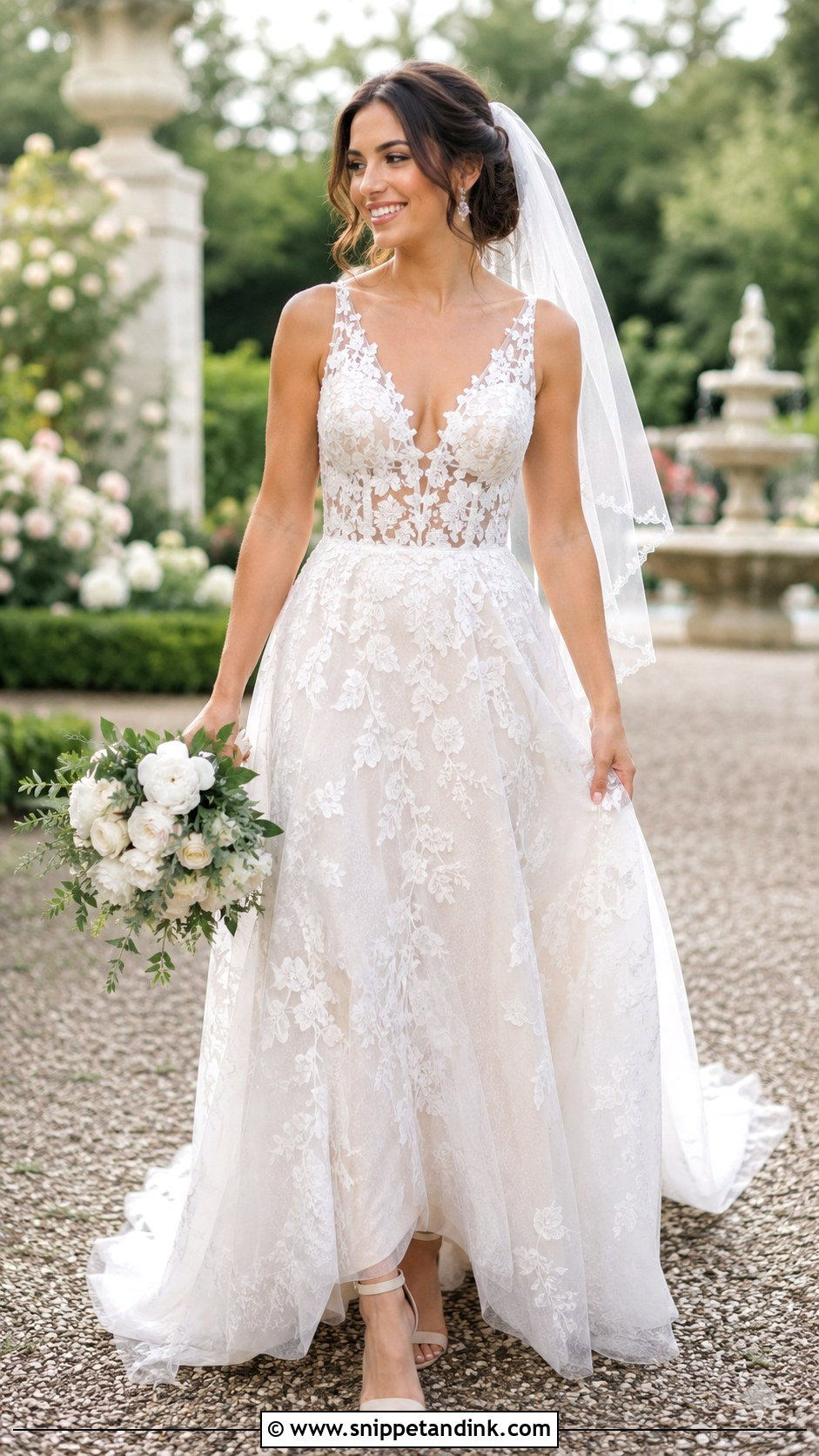
Floral lace is easy to personalise because there are so many patterns to choose from, from fine Chantilly to heavier corded lace. In 2025 it looks most current with sheer panels, a fitted bodice or a soft A-line skirt. Fine, gently patterned lace reads softer; large motifs feel more dramatic. Match the veil’s edge lace to the tone of the dress, since a bright white veil next to ivory lace makes the gown look yellow. Delicate earrings and nude or ivory heels finish it. Natural light is where it really shines, so garden ceremonies suit it.
23. Vintage Inspired Wedding Dress
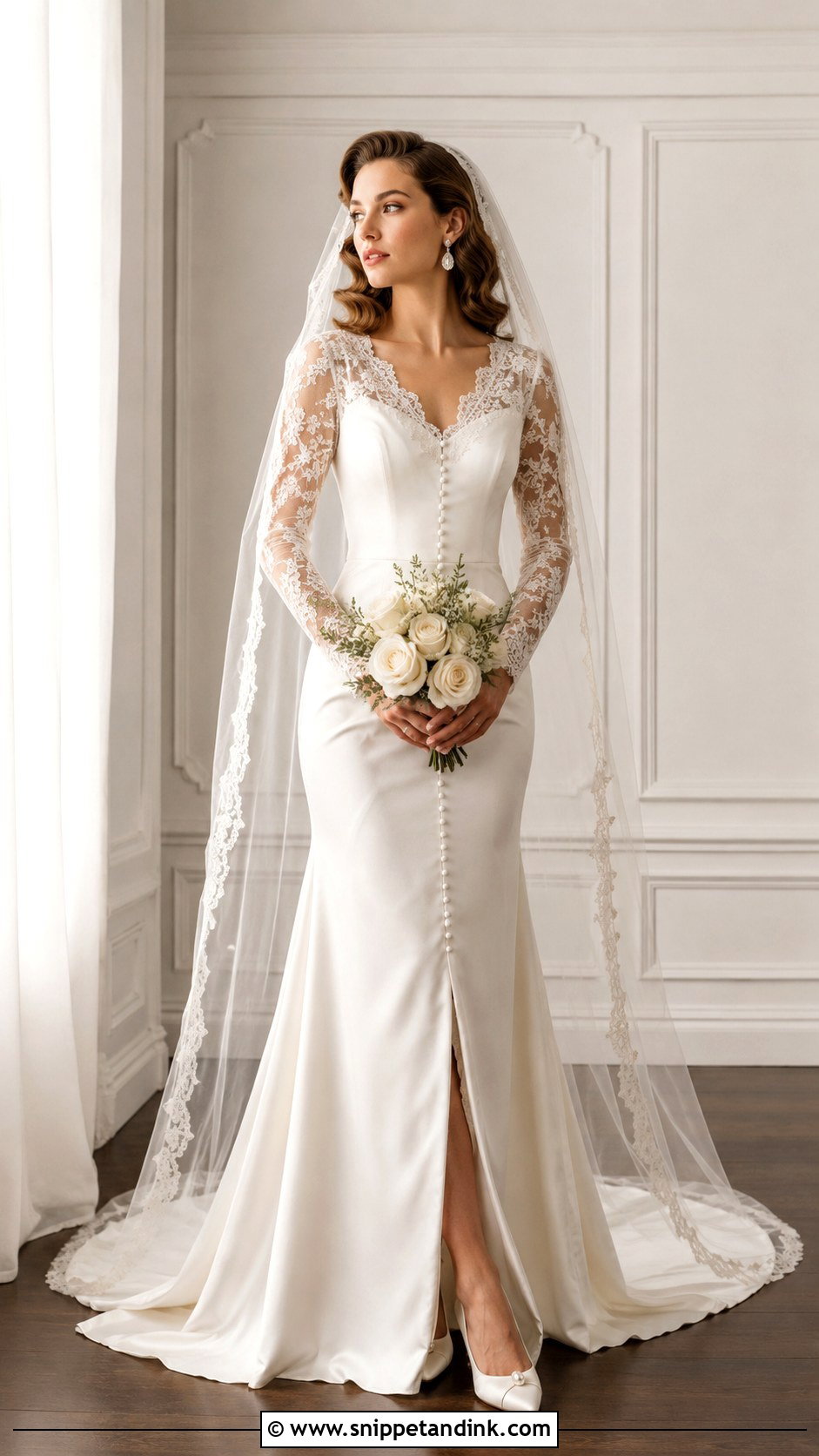
Vintage inspired doesn’t have to mean dated. In 2025 it shows up as drop waists, lace sleeves, satin-covered buttons, corset bodices and tea-length skirts. If you want to repurpose a family gown, take it to a seamstress early: old fabric can be fragile, yellowed or water-stained, and she’ll need to judge what can be cleaned or reworked before you plan around it. Heirloom-style earrings, soft curls, classic heels and a veil with fine edging complete the look. The best version mixes nostalgia with a fit that feels current.
24. Colored Wedding Dress
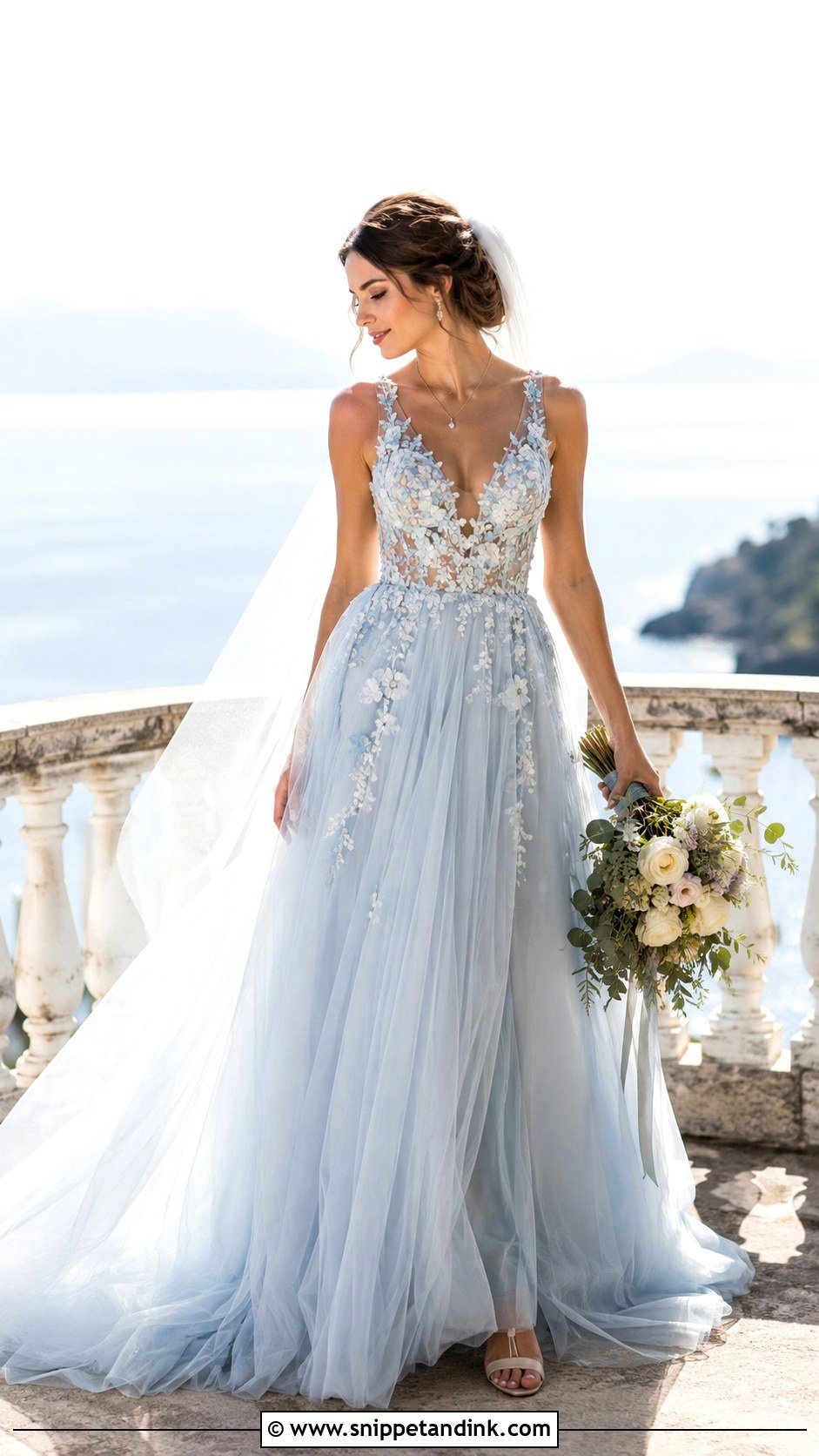
A colored wedding dress goes beyond ivory into blush, champagne, pale blue, buttercream or light lavender. Pale colors shift a lot under different light, so I ask brides to look at the fabric outdoors and under warm indoor bulbs before committing; a blush that glows in daylight can look grey under some reception lighting. Tulle, satin, floral appliqué and subtle ombré all carry color well. Neutral heels, fine jewelry and makeup chosen to suit the dress tone keep it bridal. Simple accessories stop it looking like costume.
25. Modern Bride Suit Dress
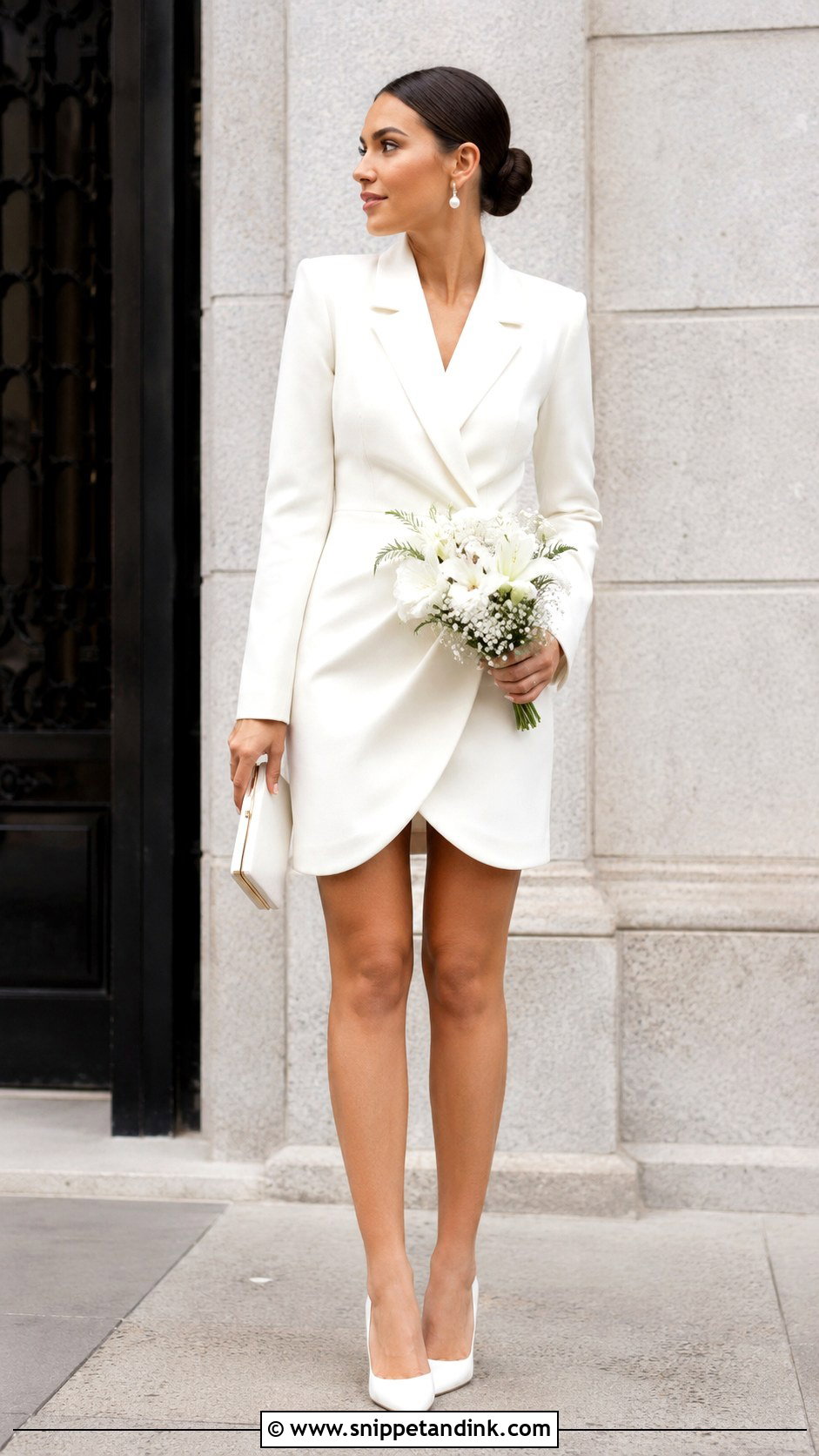
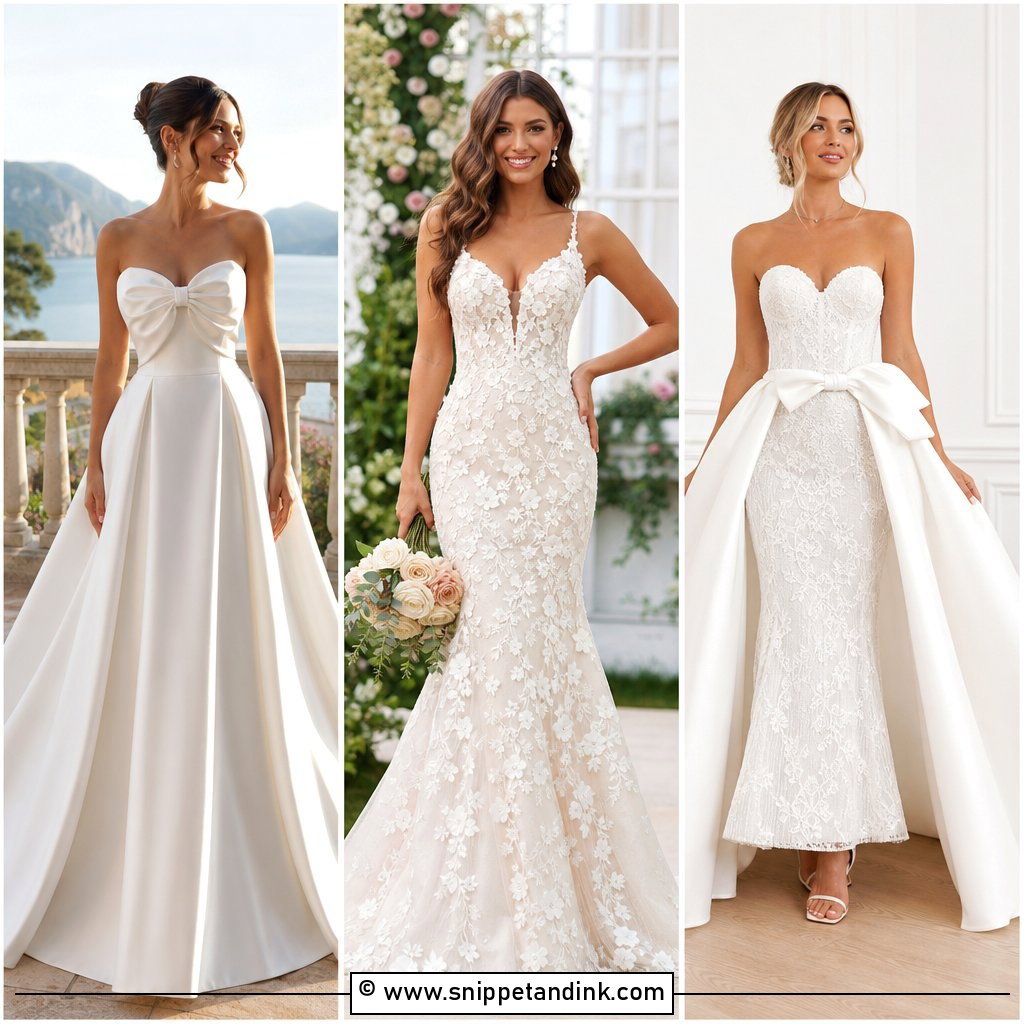
A bridal suit or blazer dress is all about fit at the shoulder, because that’s the one seam a tailor can barely alter. Get the shoulders right off the rack and everything else can be taken in. It can be a blazer dress, a tailored suit or a long dress with sharp jacket styling. Pointed heels, pearl earrings, sleek hair and a small bouquet balance the tailoring. It suits a courthouse wedding, an elopement, a rehearsal dinner or a second reception look. Look for a fabric with weight, crepe or wool blend, so it reads polished rather than office.
Six Months Out: Order Dates, Fittings and the Bustle
Most made-to-order gowns take several months to arrive after you place the order, and alterations need their own window on top of that. Timelines vary by designer and shop, so ask for the estimated delivery date in writing. As a working rule I like a gown ordered around eight to ten months before the wedding, which leaves room for delays without rushing the fittings.
How the fittings usually run
- First fitting, roughly two to three months out: the big structural changes, bodice, hem and any sleeve or strap adjustments.
- Second fitting: refining the shape, checking the hem with your actual wedding shoes and undergarments.
- Final fitting, one to two weeks out: a last check, plus a lesson in the bustle and any detachable pieces for whoever is helping you.
Bring your shoes and the exact underwear and shapewear you’ll wear to every fitting after the first. A heel that’s 2 centimetres higher than the one used for the hem changes how the skirt sits on the floor.
When the Train Gets Stepped On
Trains get trodden on, hems pick up grass, and a button pops at the worst moment. I tuck a small kit into a bridesmaid’s bag: safety pins in two sizes, a needle pre-threaded with ivory thread, clear nail polish for stopping a run in tulle, a white chalk stick for covering light marks on satin, and a few spare beads if the gown has beadwork.
For a fresh drink spill, blot (don’t rub) with a clean white cloth and plain water, then leave it. Rubbing satin raises the fibres and leaves a shiny patch that’s harder to hide than the stain. Leave proper cleaning to a specialist after the wedding, ideally within a few weeks so marks don’t set.
What to Try On First
Twenty-five shapes is a lot to hold in your head, so start with how you want to feel, then think about your venue and how much moving you’ll do. Basque waists, corsets, florals, simple satin, detachable details, minis and colored gowns are all on the table for 2025. Try at least one silhouette you’d never pick, sit down in every dress, and picture the whole outfit from veil to shoes. The right one is usually the dress you forget you’re wearing.
You'll Like These Ideas:








Leave a Reply