
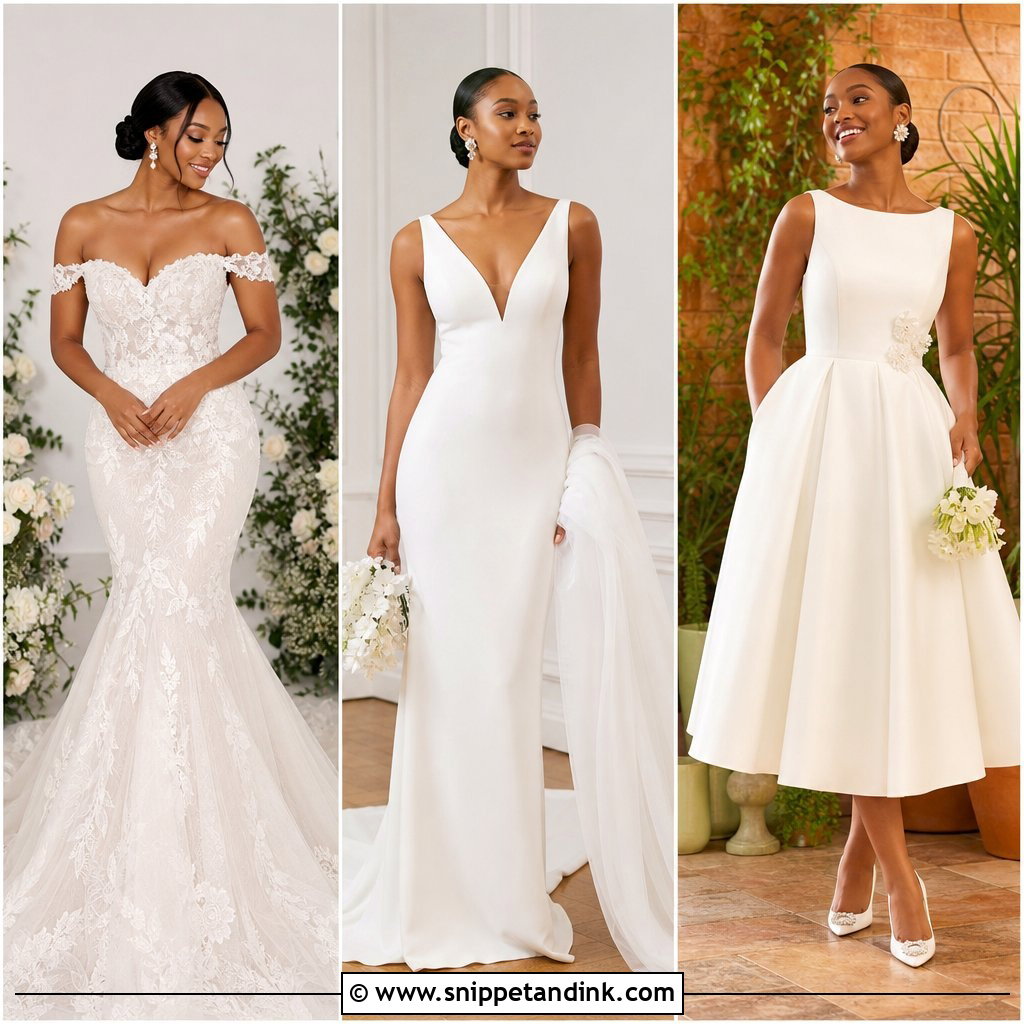
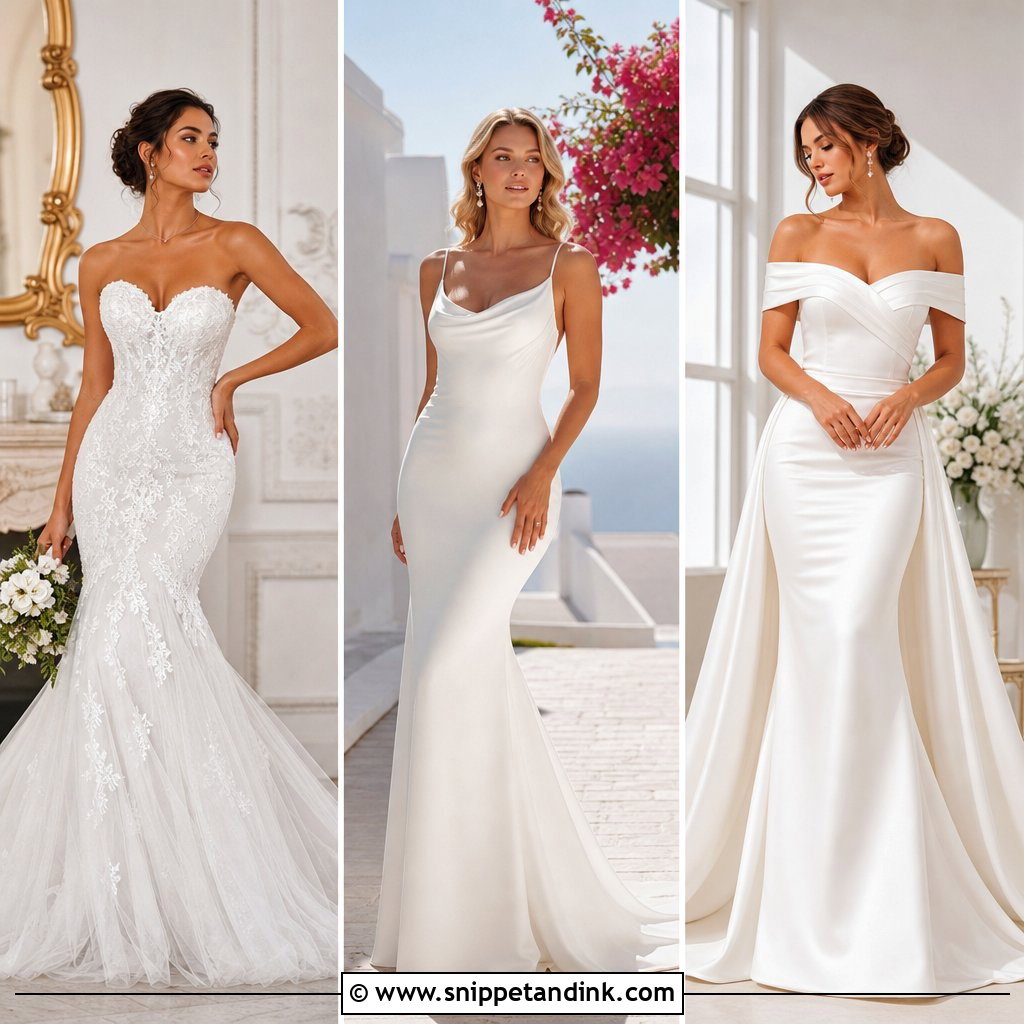
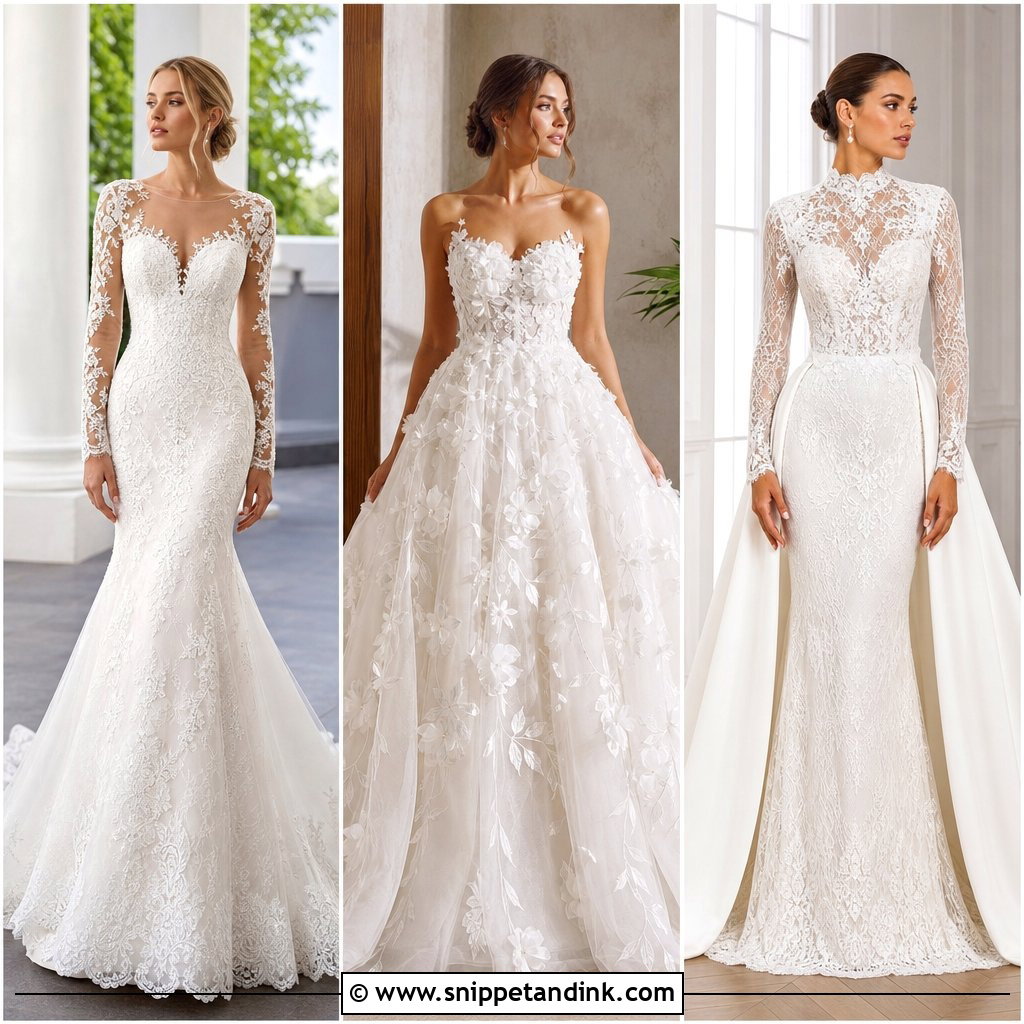
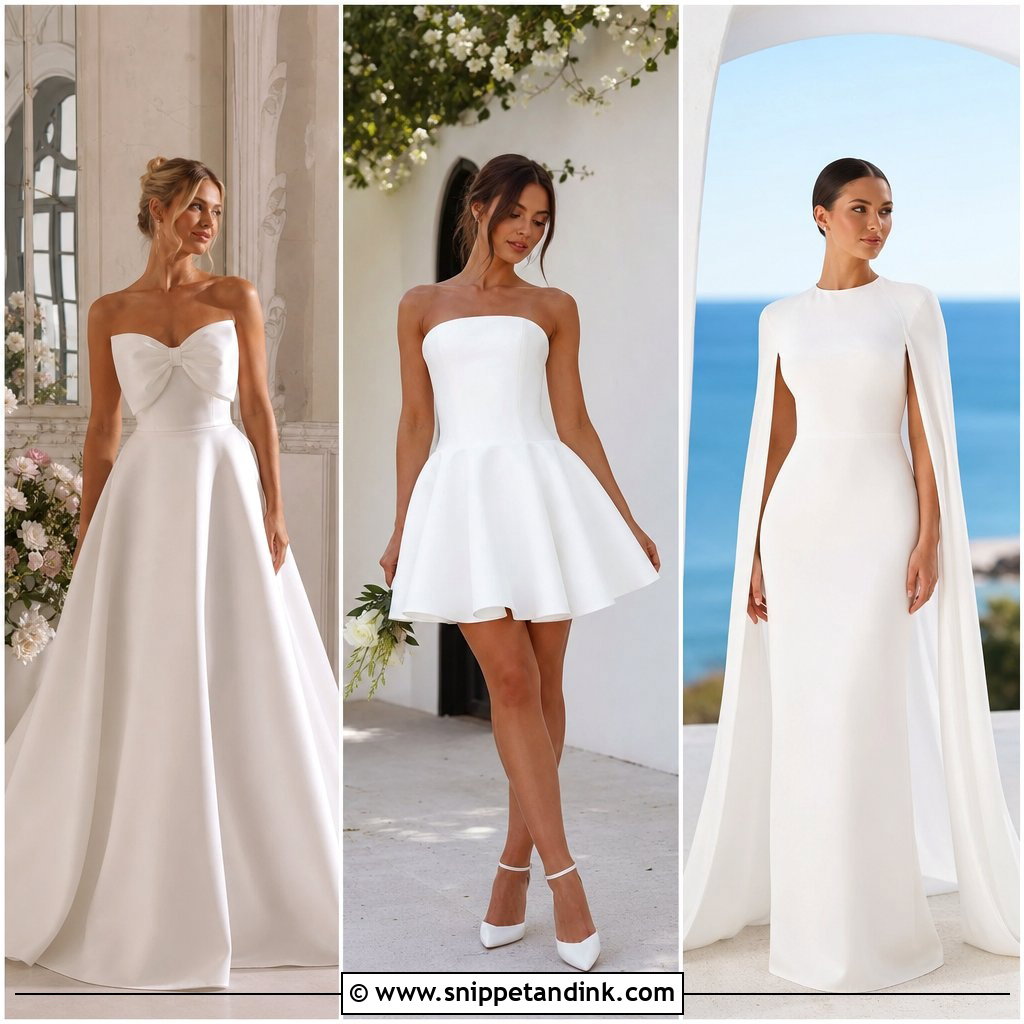
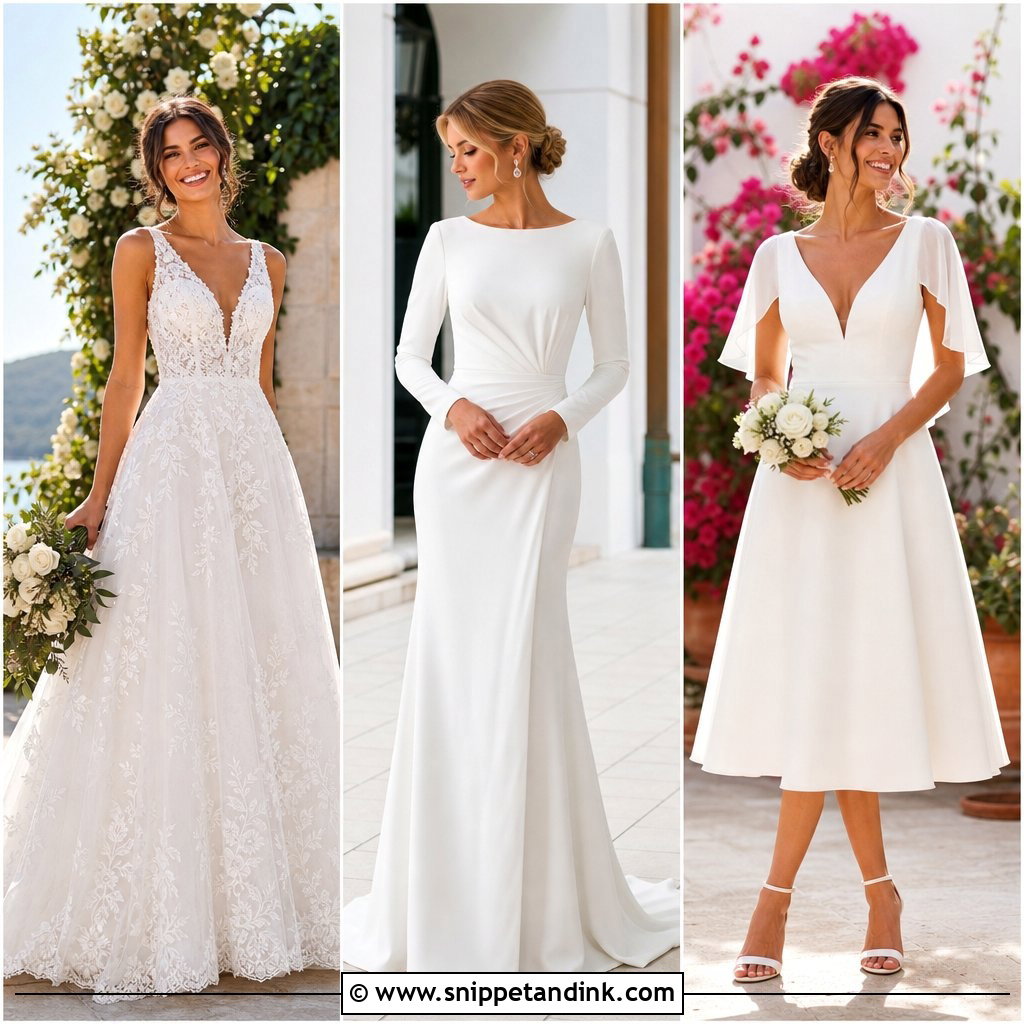
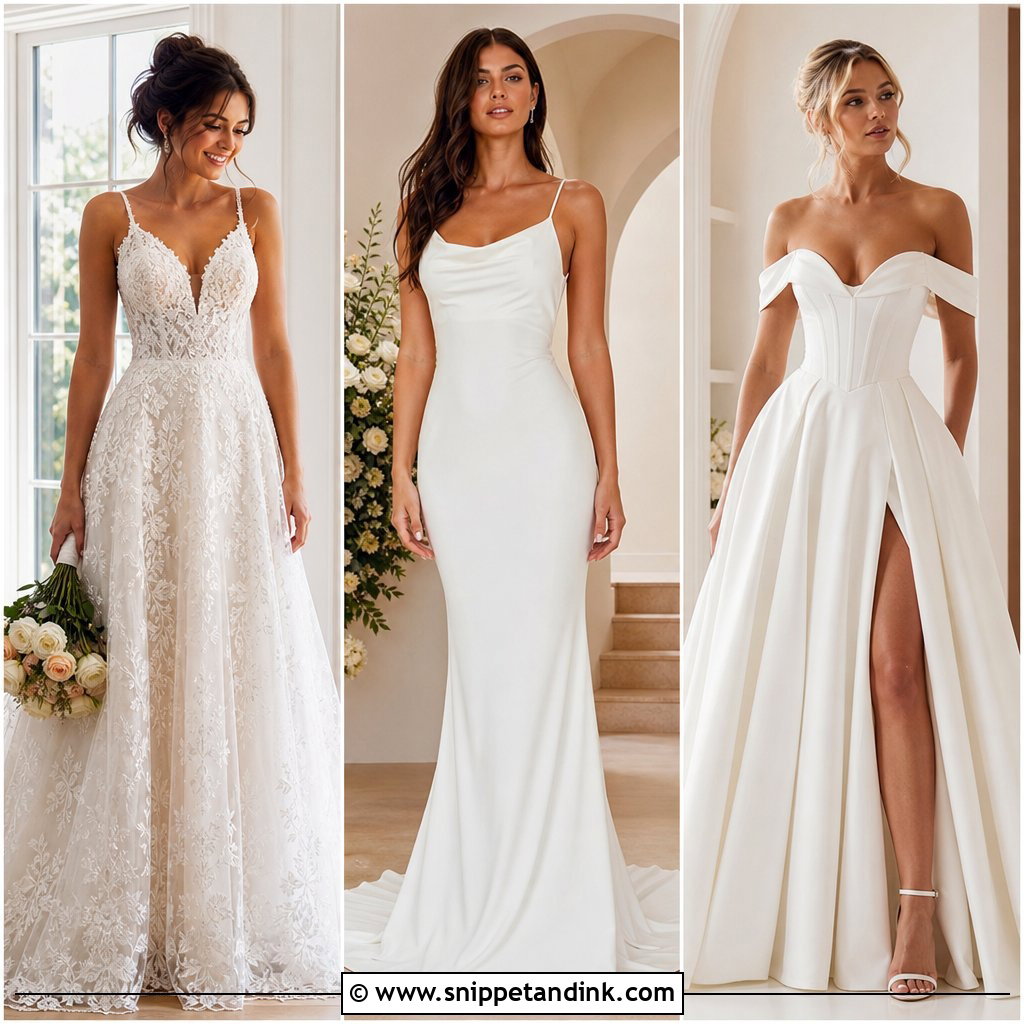
In a bridal salon, I never judge a gown on the hanger. I judge it once the bride is standing in it with a veil, shoes and a rough bouquet, because that is the version her guests will see. The right silhouette has to suit her proportions and the venue, and it has to stay comfortable from the aisle to the last song. Bridal collections right now run from lace and clean satin to corseted bodices, basque waists, shorter hems and convertible layers, so there is no single look to chase. Accessories shift a dress more than most brides expect: a plain sheath turns formal with a cathedral veil, and a heavy ball gown softens with pearl studs and loose hair. The twenty gowns below are styled as full looks, from structured satin to light chiffon, so you can picture each one on the day rather than on a rail.
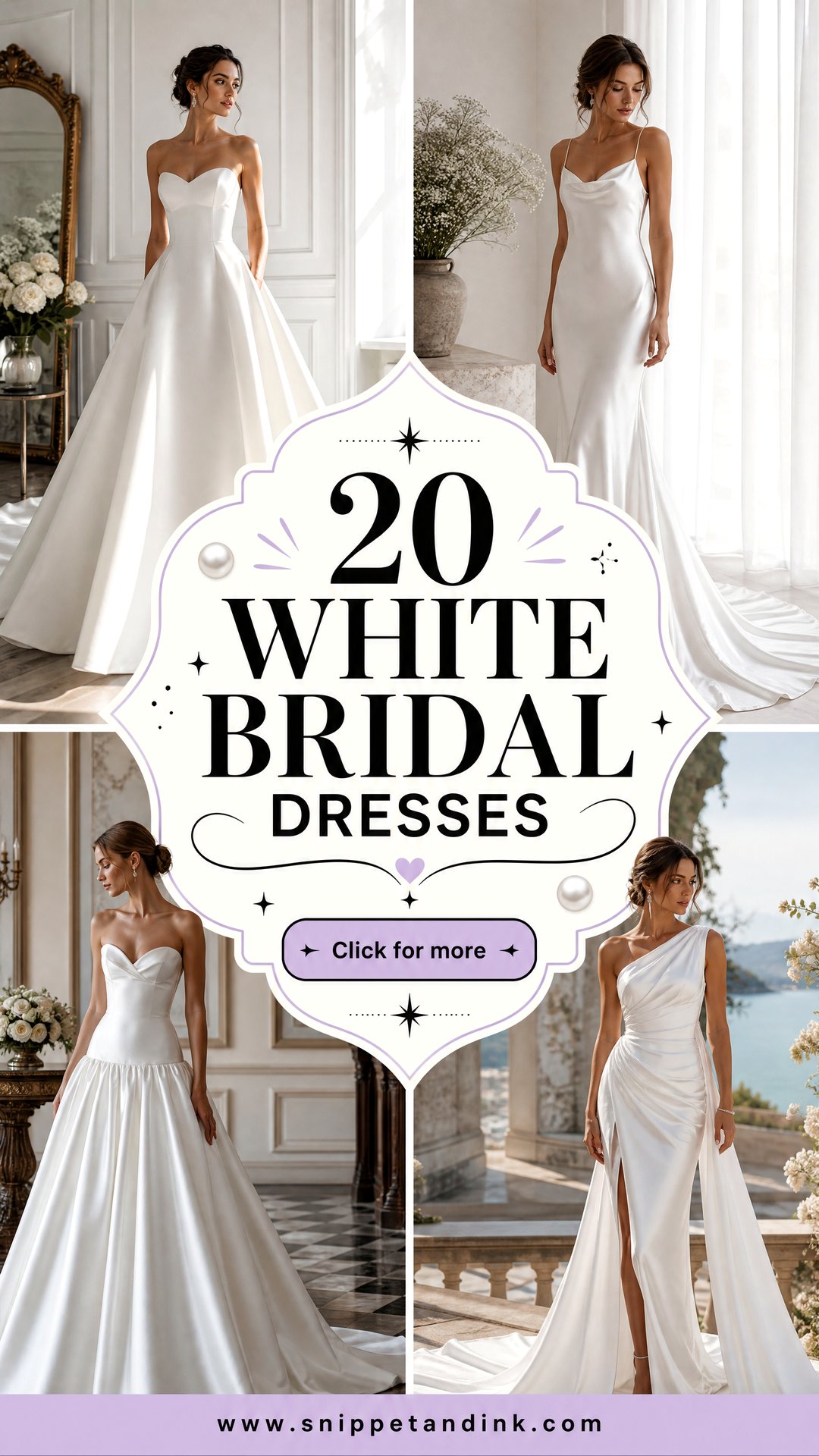
Optic, Natural, Ivory: Picking the Shade of White Against Your Skin
Most wedding dresses described as white are not all the same white, and the difference shows up clearly in photos. Before we look at silhouettes, I hold three swatches under a bride’s chin in daylight and watch what happens to her face.
- Optic or bright white has a blue cast. It looks crisp on deep and cool skin tones, but on very fair or pink-toned skin it can make you look washed out.
- Natural or soft white is the shade most silk and many satins come in naturally. It flatters the widest range of skin tones and is the safe choice if you are unsure.
- Ivory has a warm yellow base. It softens fair and olive skin and looks richer by candlelight, though next to optic white bridesmaid fabrics it can read as cream.
Fabric changes the shade too. Satin reflects more light and looks brighter than the same white in lace or chiffon, so compare swatches in the fabric you’re actually considering. If you plan to match a veil, ask for one cut from the same dye lot or at least checked against the gown in daylight.
1. White Satin A-Line Bridal Dress
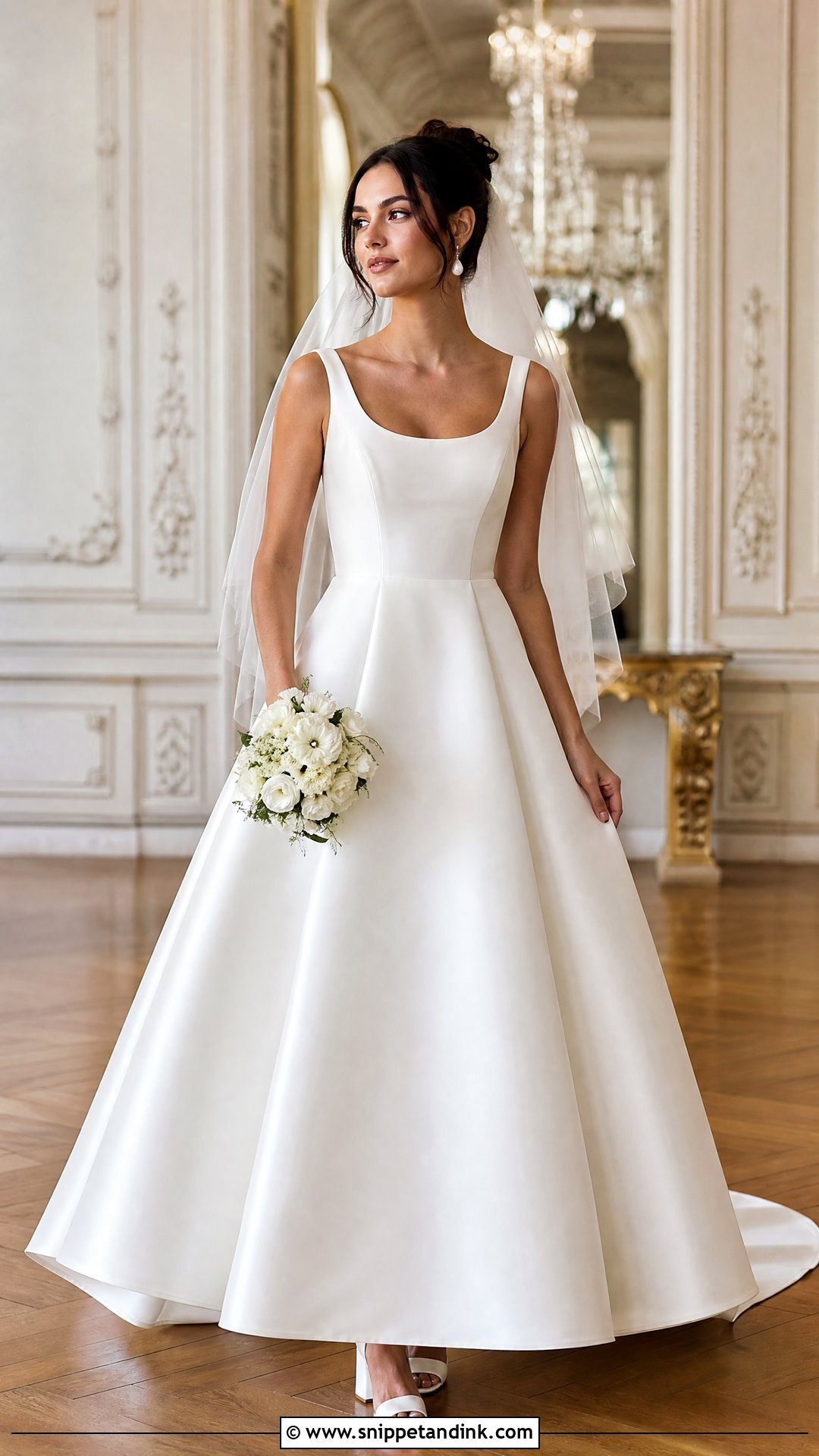
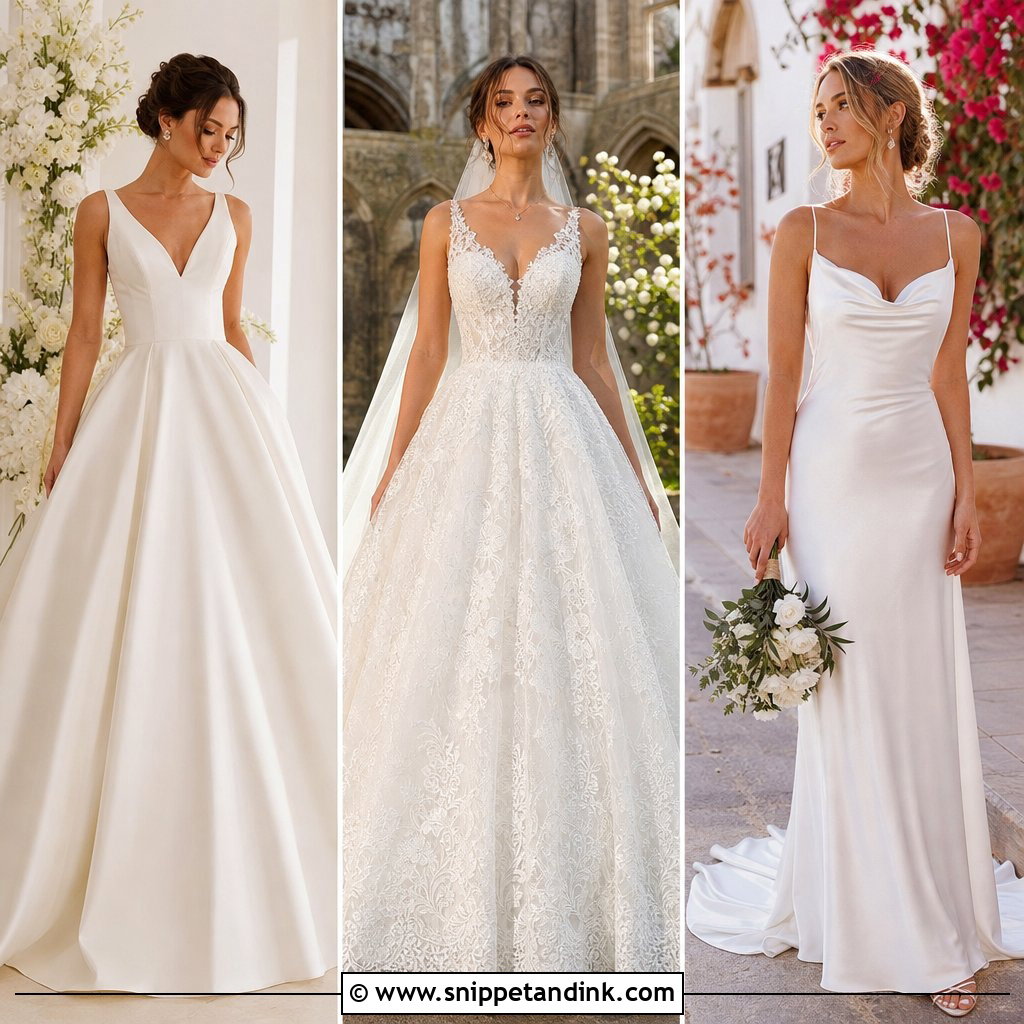
Satin A-lines are the dress I pull first for a bride who isn’t sure what she wants, because the shape flatters almost everyone. A structured bodice with wide straps or a clean scoop neck, and a skirt that falls from the natural waist, is very hard to get wrong. Satin-covered block heels keep it formal and stable. Pearl drops, a fingertip veil and a compact white bouquet with some green are all it needs. A low bun shows off the neckline from the back as well as the front. Heavy satin holds its shape under ballroom and hotel lighting, but it does crease across the lap when you sit, so let the photographer know to catch the standing shots first. A slim self-fabric belt adds definition if you want it.
2. White Lace Ball Gown Bridal Dress
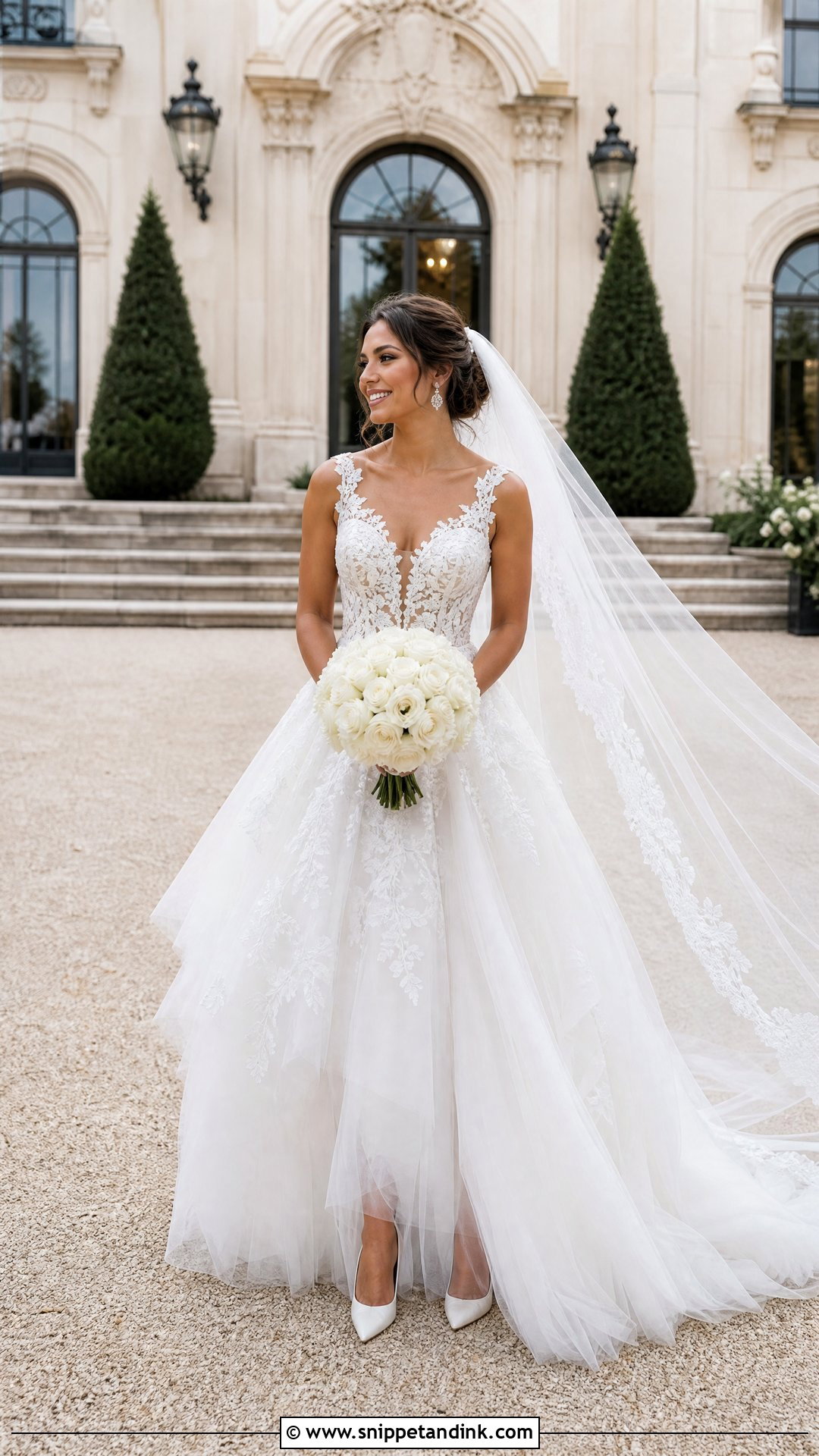
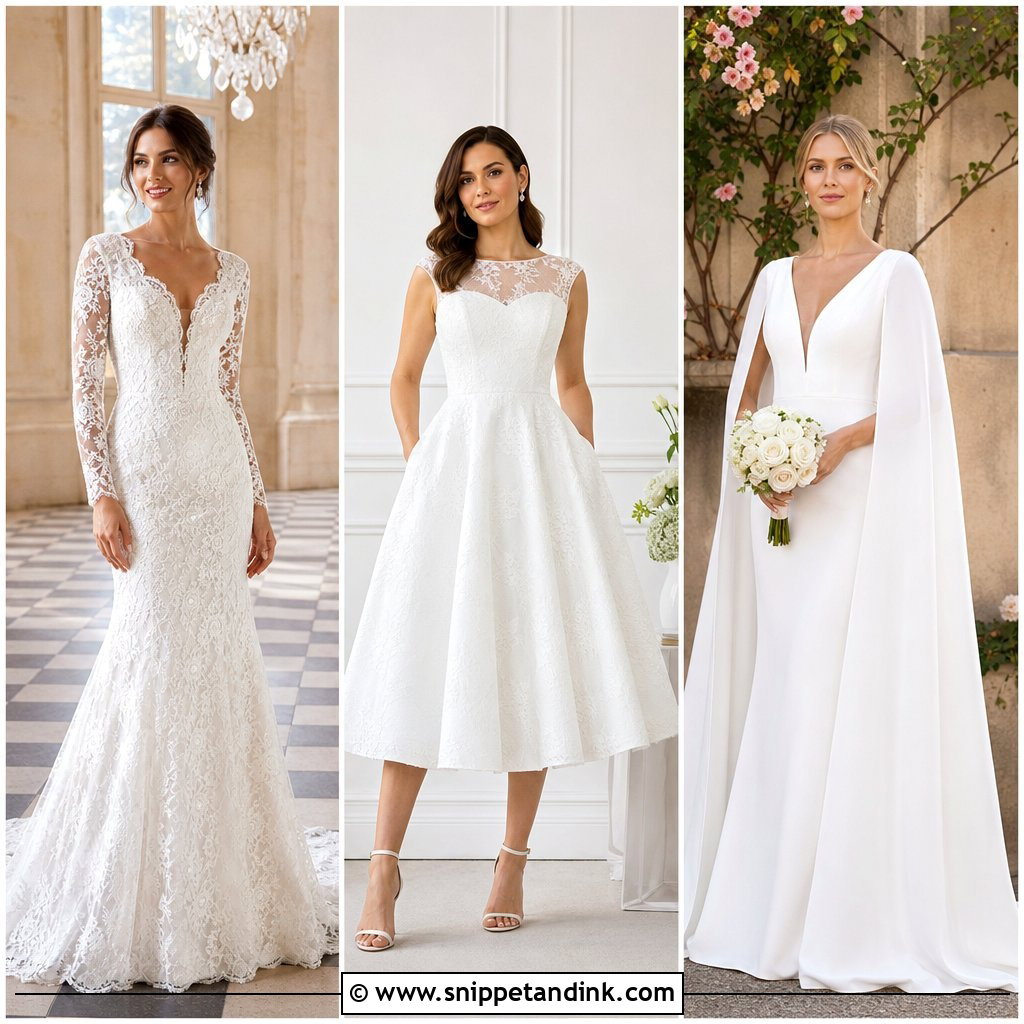
A lace ball gown has real presence walking down a long aisle. Look at where the appliqués sit: on a well-made gown, they continue from the bodice onto the skirt in a natural line, not stopping abruptly at the waist seam. Supportive straps help carry the weight of the skirt. A cathedral veil matches the volume, and pointed satin pumps give you height underneath. Small crystal earrings and a single bracelet are plenty, since the lace already provides the texture. A soft updo keeps the veil comb and neckline in view. Hemming is the critical fitting here. Several layers of tulle each need to be cut to the right length in your exact shoes, or you will kick the front of the skirt with every step.
3. White Strapless Basque Waist Bridal Dress
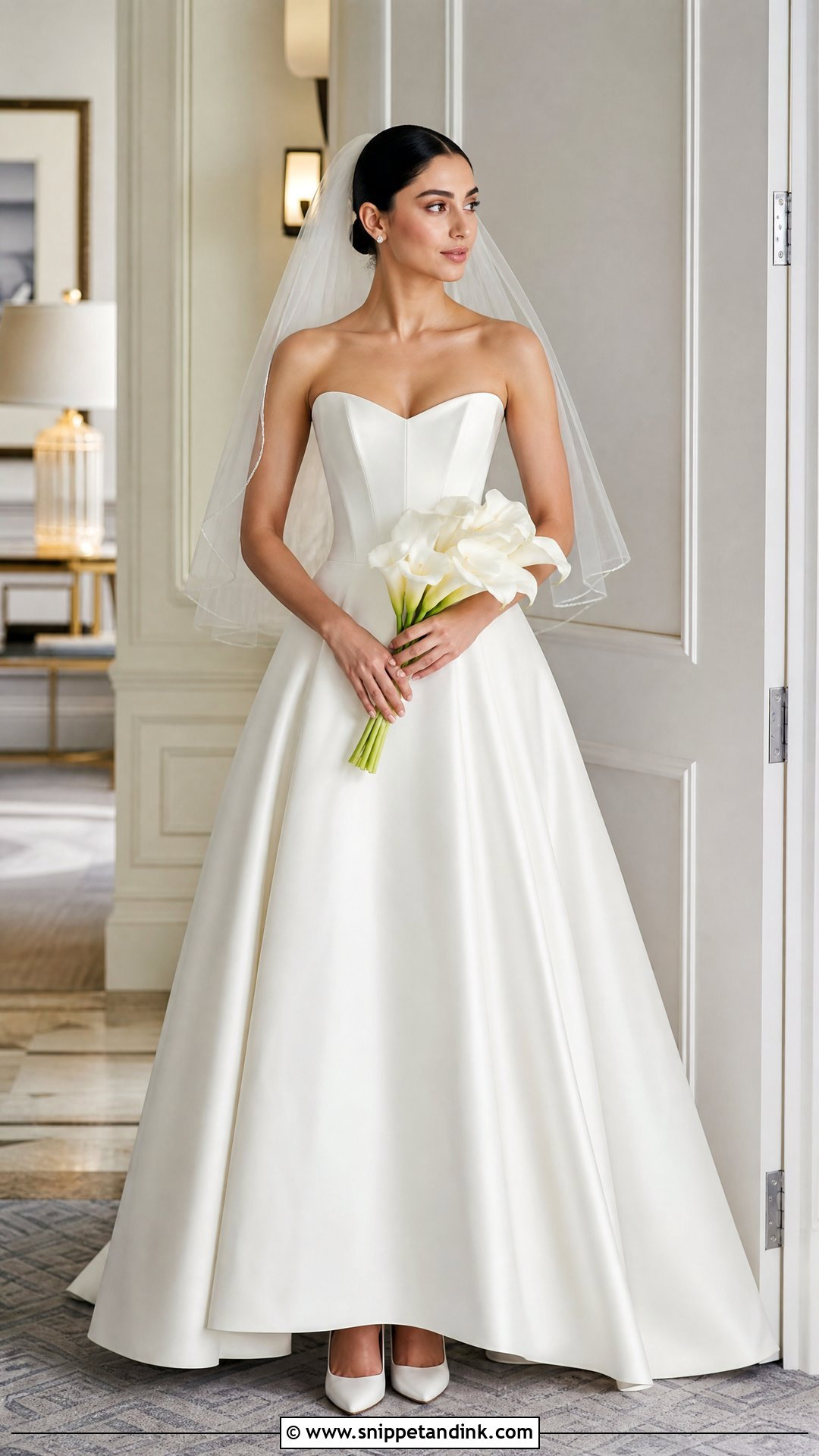
A pointed basque waist draws a sharp V below the natural waist and then opens into a full skirt, which lengthens the torso more than any other bodice shape. In a strapless version, the internal boning and cups do all the holding up, so I check them before anything else: the bodice should stay put when you lift both arms, without you gripping the top edge. A sheer elbow-length veil, pearl studs and white satin pumps complement it, and calla lilies echo the clean lines. A smooth chignon keeps the neckline uncluttered. Book the final fitting within two or three weeks of the wedding, because even a small weight change shows first in a strapless bodice.
4. White Long Sleeve Crepe Bridal Dress
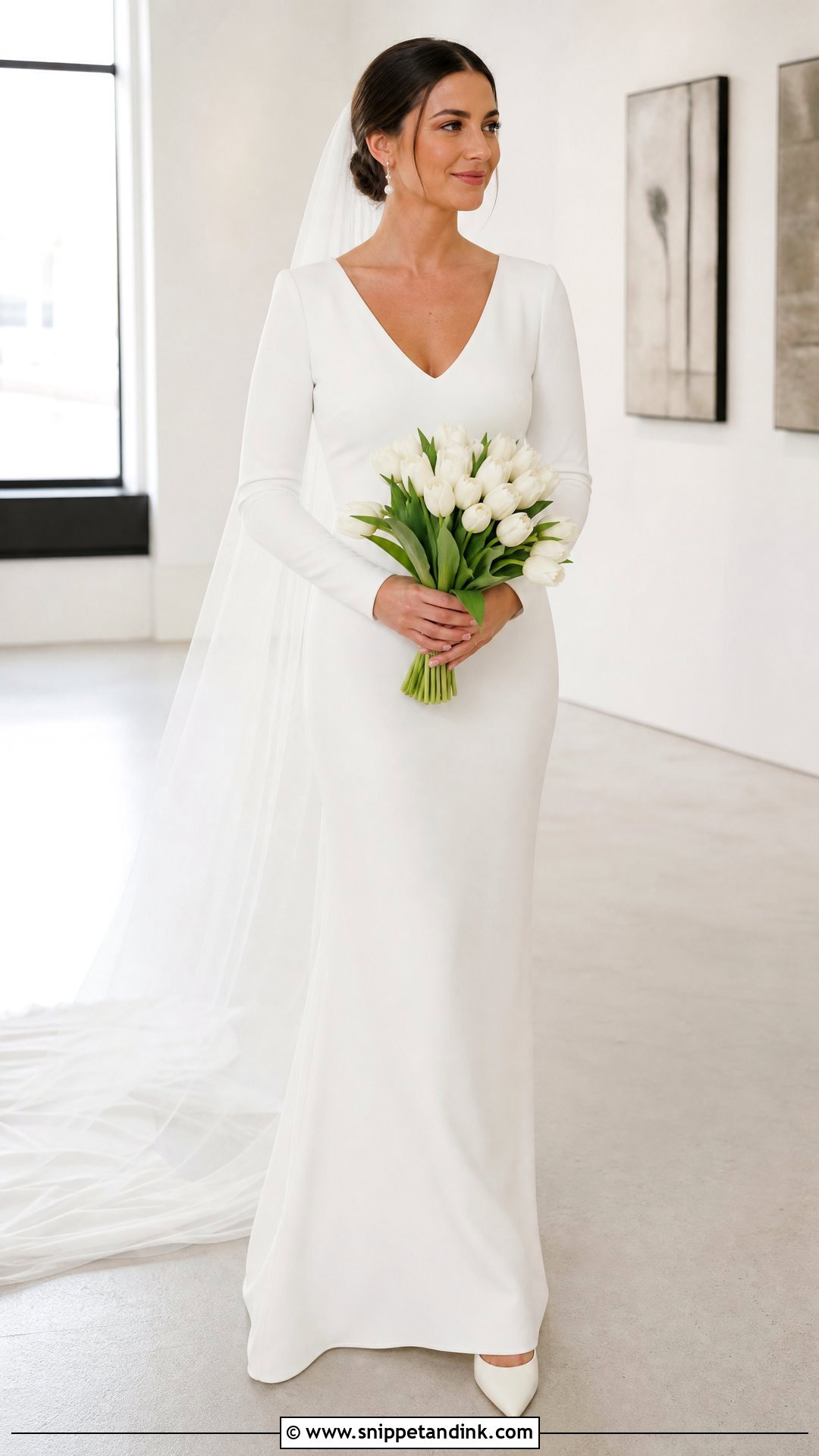
Crepe is the fabric I suggest to brides who want clean lines and no fuss. With a long sleeve, a soft V-neck or bateau neckline and a column or gentle fit-and-flare skirt, it looks modern in a city venue, courthouse or winter wedding. Pointed white pumps, pearl earrings and a plain chapel veil keep it quiet. In cold weather, a tailored bridal coat or matching crepe cape is warmer than a shawl. The honest catch is that crepe skims the body and shows everything underneath, so smooth shapewear and careful alterations matter more here than with any lace gown. Keep the bouquet restrained: white tulips, anemones or a few roses.
5. White Off Shoulder Mikado Bridal Dress
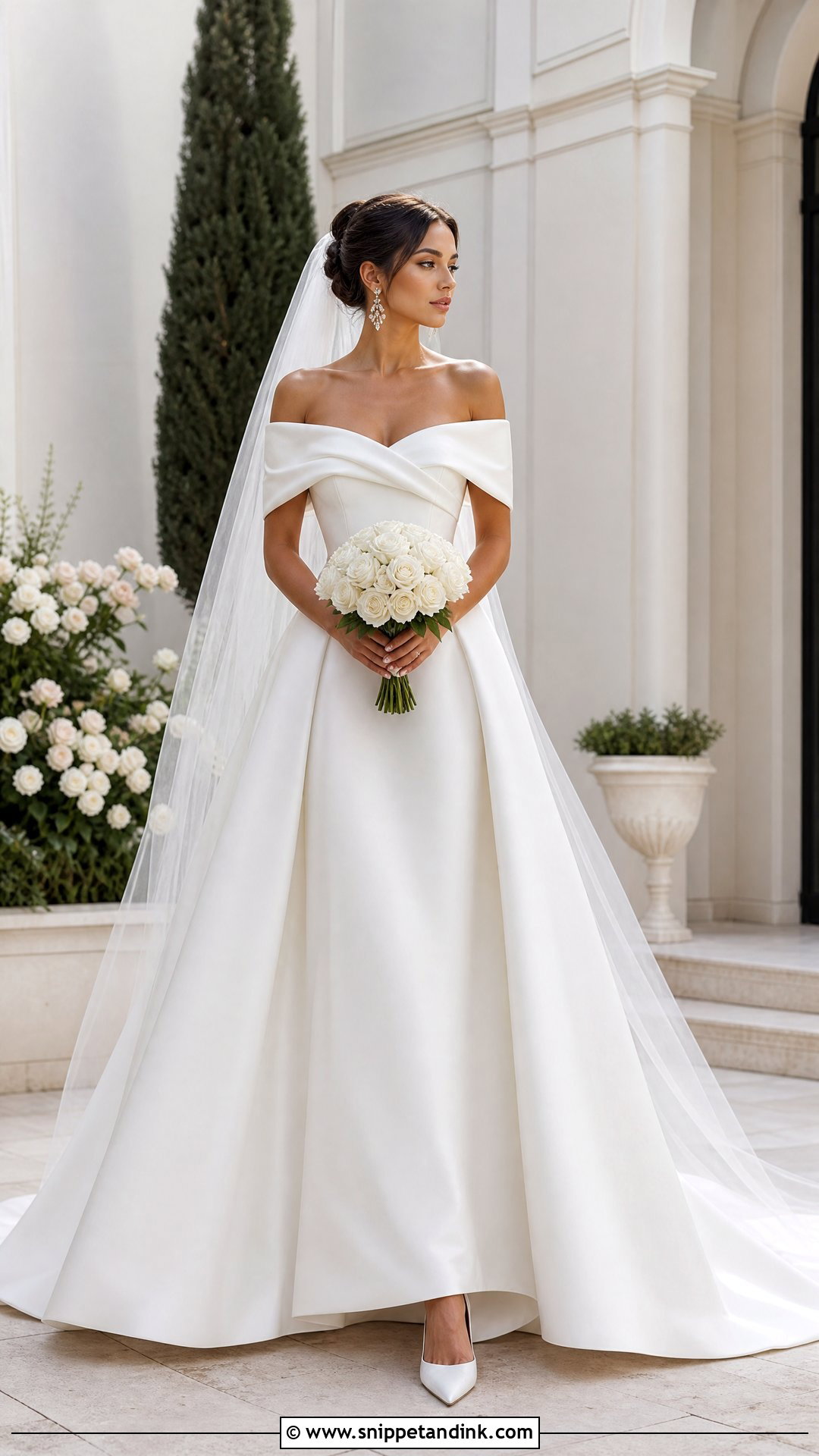
Mikado is a stiff, slightly lustrous silk blend that holds pleats and volume, so it suits an off-shoulder A-line or ball gown that needs to keep its shape all day. The off-shoulder band is the part I fit most carefully. If it is too tight, it cuts into your arms; too loose and it slides down every time you hug someone. Test it during alterations by reaching forward as if greeting a guest. A neat updo, crystal studs and a single bracelet suit the bare shoulders. A long plain veil balances the structure without adding more detail. White roses with very little greenery match the clean finish, and pointed pumps or block heels depend on whether you’ll be on grass.
6. White Square Neck A-Line Bridal Dress
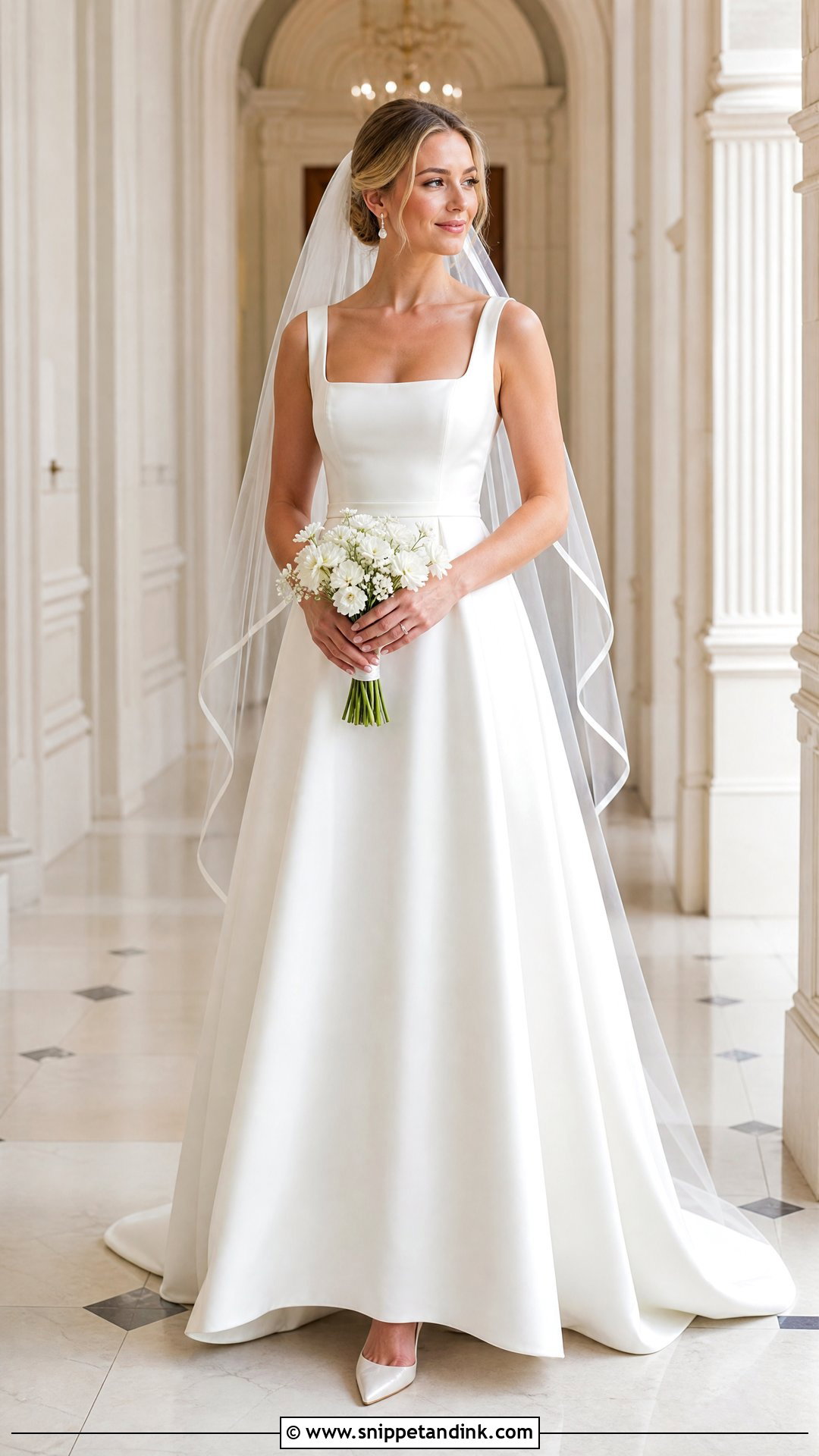
Square necklines give an A-line gown a slightly vintage feel and frame the collarbone nicely. Wide straps and a fitted bodice support the bust, with a satin, crepe or organza skirt balancing the strong line at the top. Pearl earrings, a fine chain bracelet and low pointed heels suit it, and a sheer veil with a narrow ribbon edge repeats the neat geometry. Brides wanting more coverage can find the same neckline with long fitted sleeves. I’d usually skip the necklace entirely; anything round fights the straight edge of the neck. Soft waves or a centre-parted bun both work, depending on how formal the venue feels.
7. White Silk Slip Bridal Dress
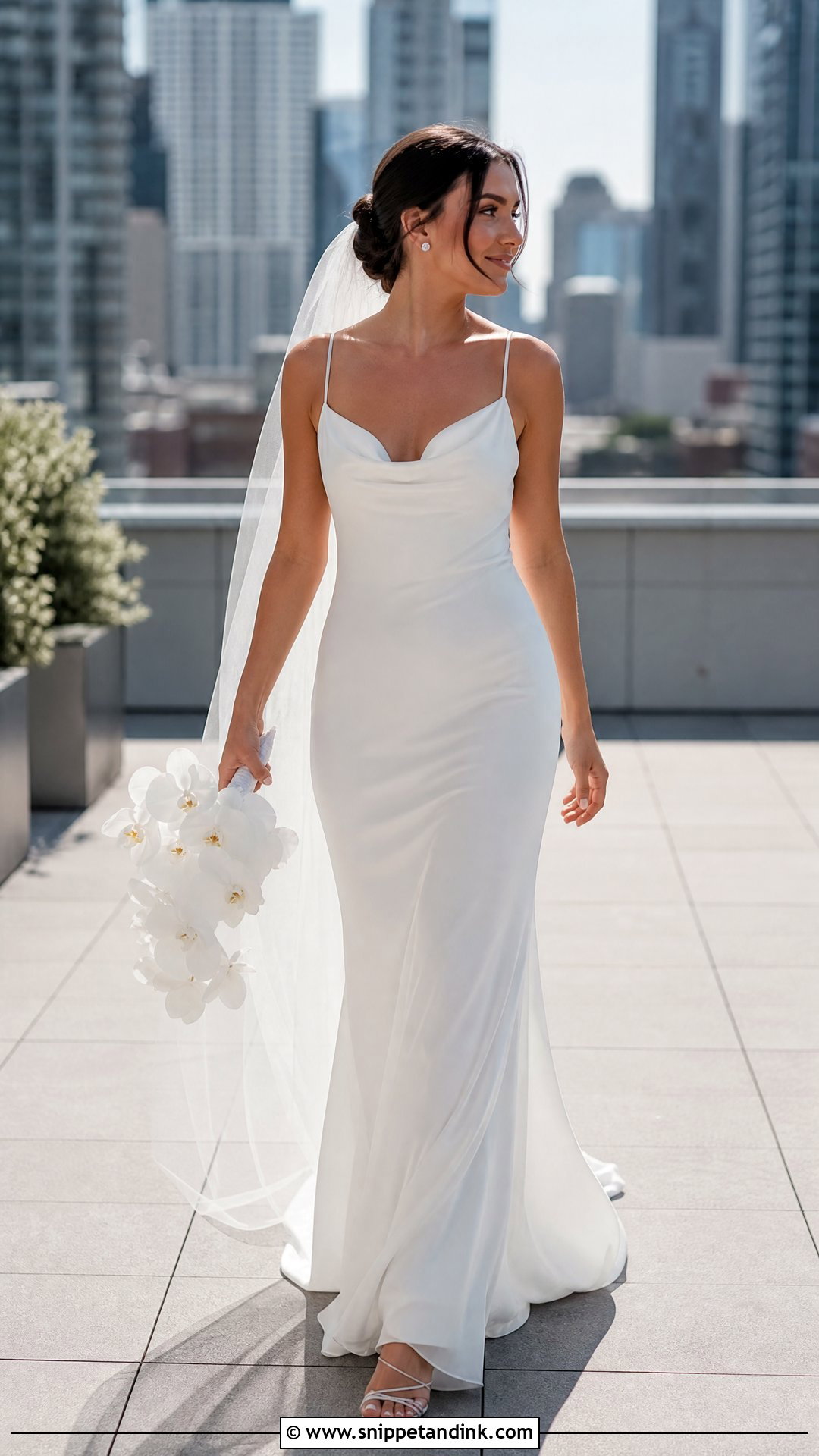
Silk cut on the bias drapes and moves with the body in a way no other wedding fabric does, which is exactly why it suits rooftops, beaches and intimate restaurant weddings. It is also unforgiving. Bias silk shows every seam, bra line and dimple, so plan on smooth underwear and careful tailoring through the hips. Look for a softly draped neck, slim straps and a hem that just brushes the floor. Barely-there strappy heels, small diamond or crystal earrings and a light veil keep the mood minimal, and a sleek bun or glossy waves suit it. Silk marks with water, so keep drinks and rain away from the skirt. A silk wrap or long scarf helps once the evening cools.
8. White Tea Length Bridal Dress
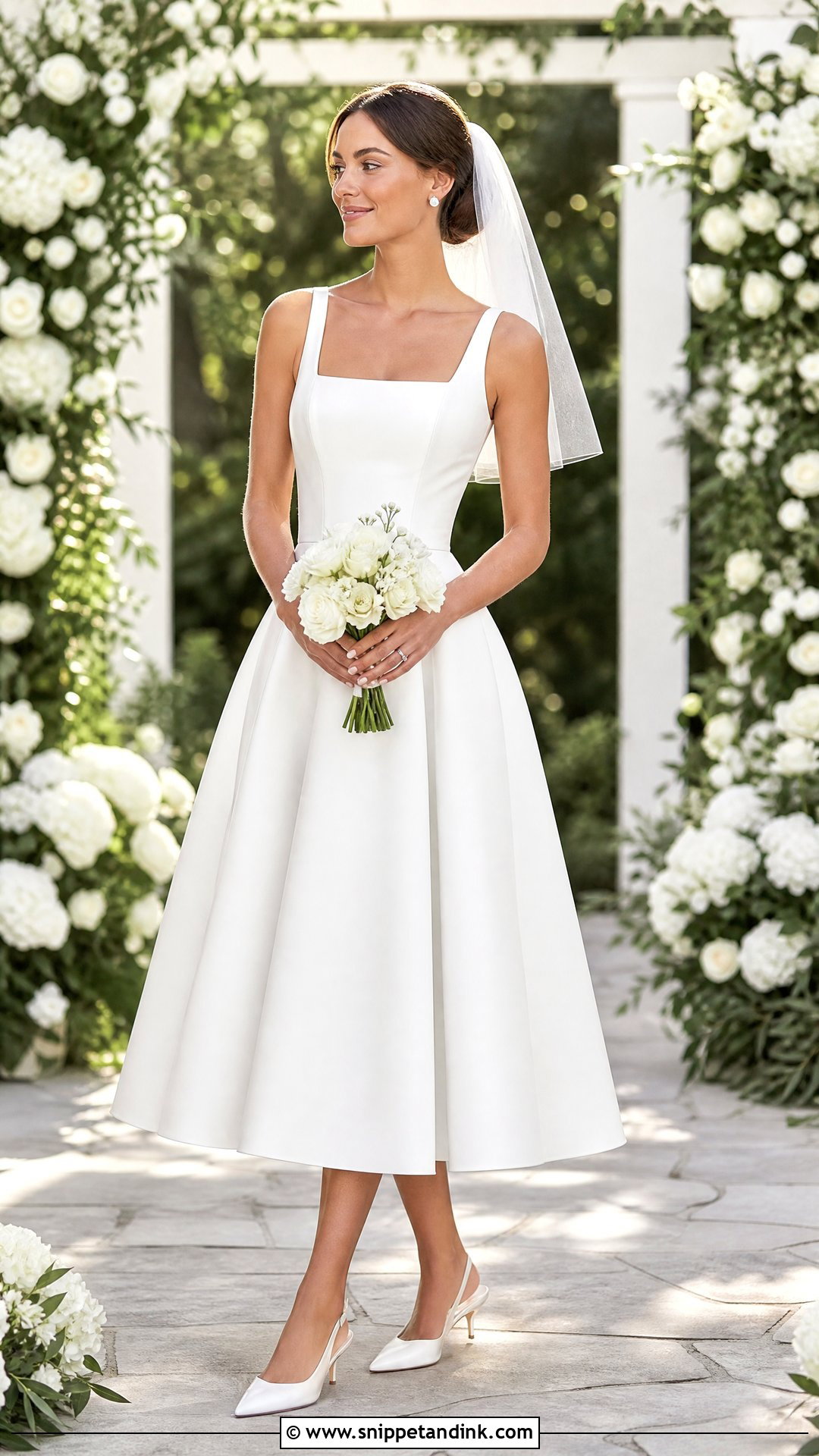
Tea length lands between the knee and the ankle and shows off your shoes, so treat the shoes as part of the dress: pointed pumps, slingbacks or embellished low heels. A fitted bodice and softly flared skirt keep the shape bridal rather than cocktail. Add a short veil, pearl studs and a compact bouquet so nothing overwhelms the shorter proportions. Soft curls or a neat bun finish it without tipping into a 1950s costume. A light petticoat gives the skirt a little lift. The hem placement is the thing to get right; mid-calf is the most forgiving point on most legs, and it leaves you free to walk and dance in a garden or at a daytime reception.
9. White Mini Bridal Dress
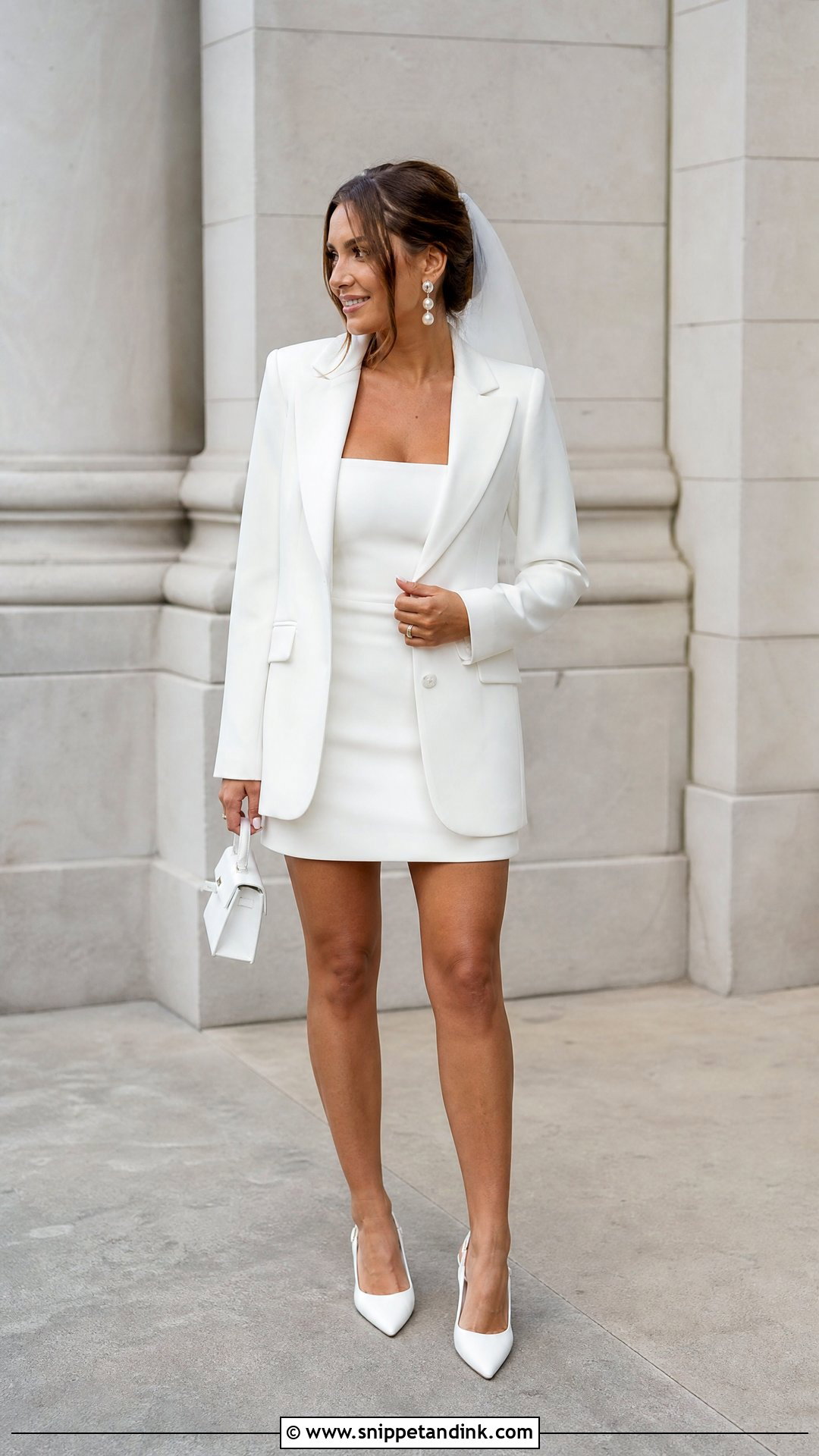
A white mini makes a confident choice for a civil ceremony, a reception change or a small wedding. Structure is what keeps a short dress looking bridal, so pick a firm fabric and a square, boat or strapless neck. Closed-toe slingbacks or low block heels, a short veil, statement earrings and a small white bag suit it, and a tailored blazer covers you between locations. A sleek ponytail, bob or modern bun suits the clean shape. Sit down in it at the fitting: a mini that is perfect standing can ride up uncomfortably at a dinner table. If the design is plain, textured fabric, pearl details or a sculptural bow add the bridal note.
10. White Lace Mermaid Bridal Dress
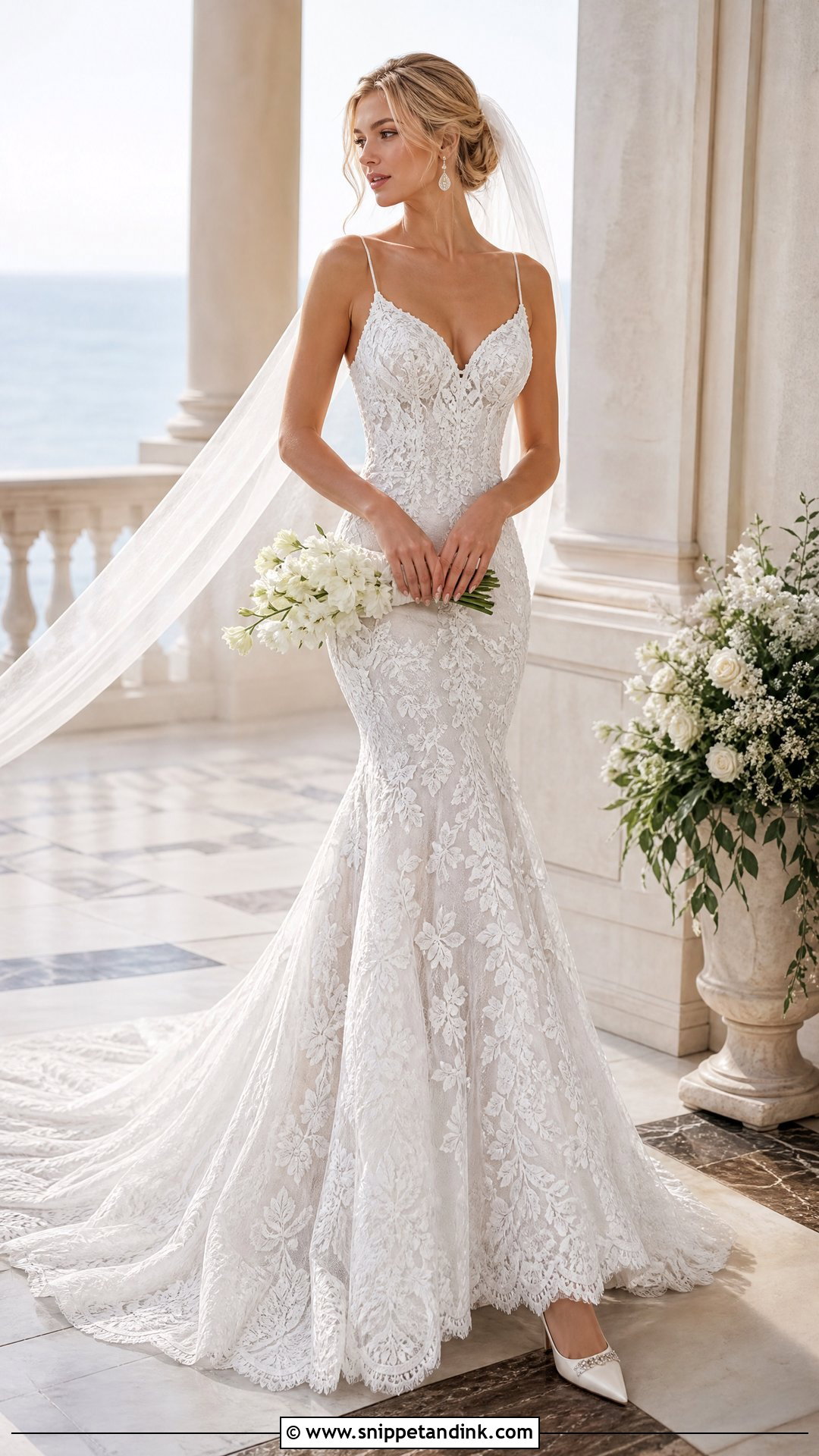
A lace mermaid hugs the body to the knee before it flares, and it shows a figure more than any other shape on this list. The internal construction carries the fit, so look for a bodice with proper boning and lace that runs unbroken from bodice into skirt. Practise stairs at your fittings; mermaids shorten your stride, and the flare should start low enough to let you walk but high enough to dance. Pointed heels with some lift keep the hem from dragging. A plain chapel veil, teardrop earrings and a side-parted updo suit the shape. Carry a narrow bouquet, since a wide one hides the waist the dress has worked so hard to define.
11. White High Neck Chiffon Bridal Dress
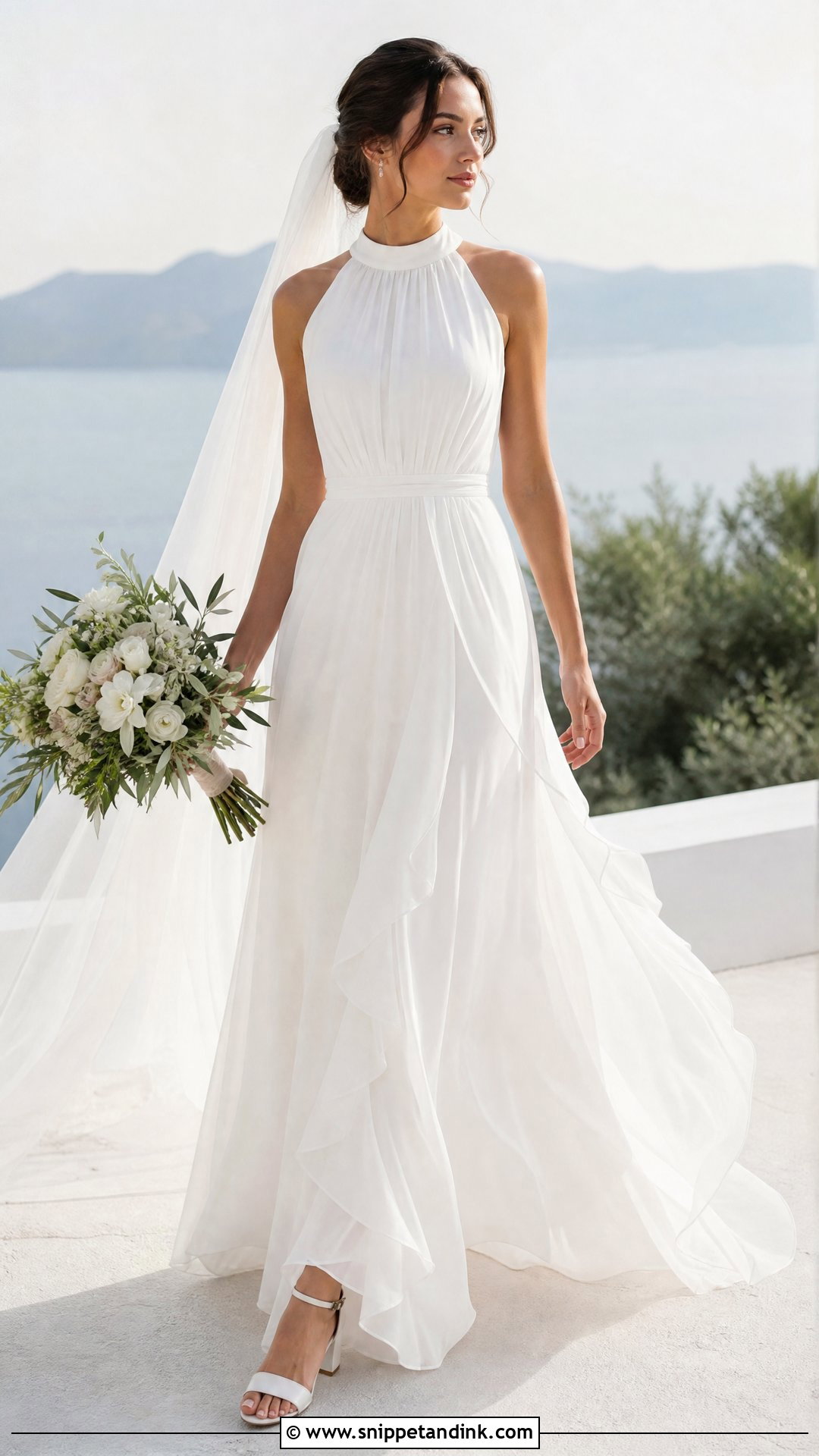
Chiffon lightens a high neckline that could look severe in a heavier fabric, and it moves nicely in a breeze. Look for a lined bodice, gathered waist and a flowing skirt for outdoor and warm-weather ceremonies. Low block heels, understated drops and a sheer veil tucked under a relaxed updo keep the look soft. A small keyhole back or lace panel adds interest without giving up coverage. Chiffon frays and snags if the hem is cut carelessly, so make sure each layer is finished and hemmed for your shoes. Skip the necklace; the neckline already does that work. A slim bracelet is enough with cap or no sleeves.
12. White Corset Tulle Bridal Dress
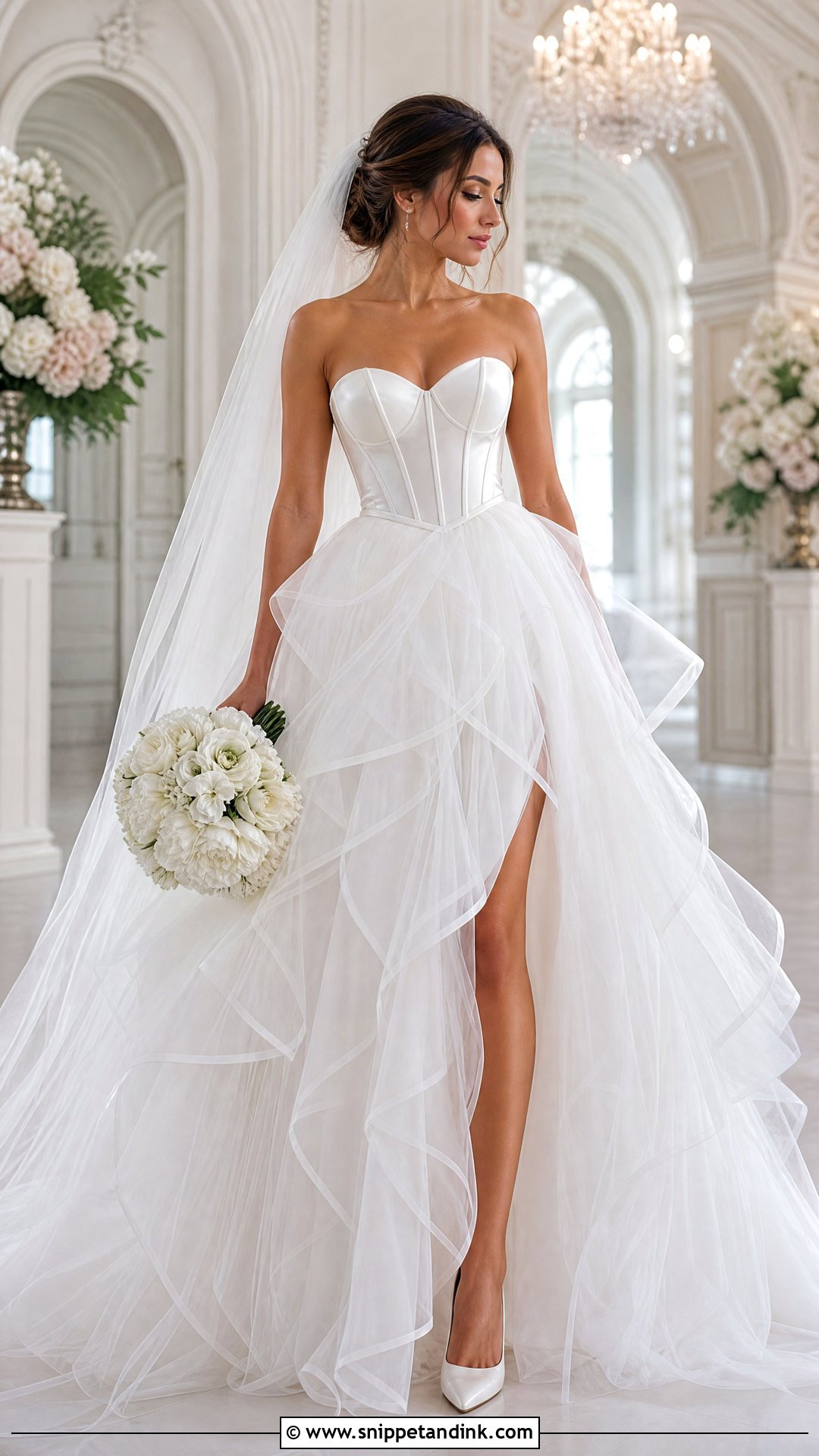
A visible corset over a tulle skirt gives you structure on top and lightness below, and that contrast is the whole appeal. The boning should follow your shape rather than flattening it, and the waist seam should pass smoothly into the skirt without a ridge. Satin pumps, crystal studs and a sheer veil a touch longer than the train complete it. Many corset bodices are partly sheer, so I always look at them in daylight and with a phone flash before a bride commits; mesh that reads as skin in the salon can glare white in photos. It should feel firm, never painful. Keep the accessories minimal and let the structure carry the dress.
13. White Cape Sleeve Column Bridal Dress
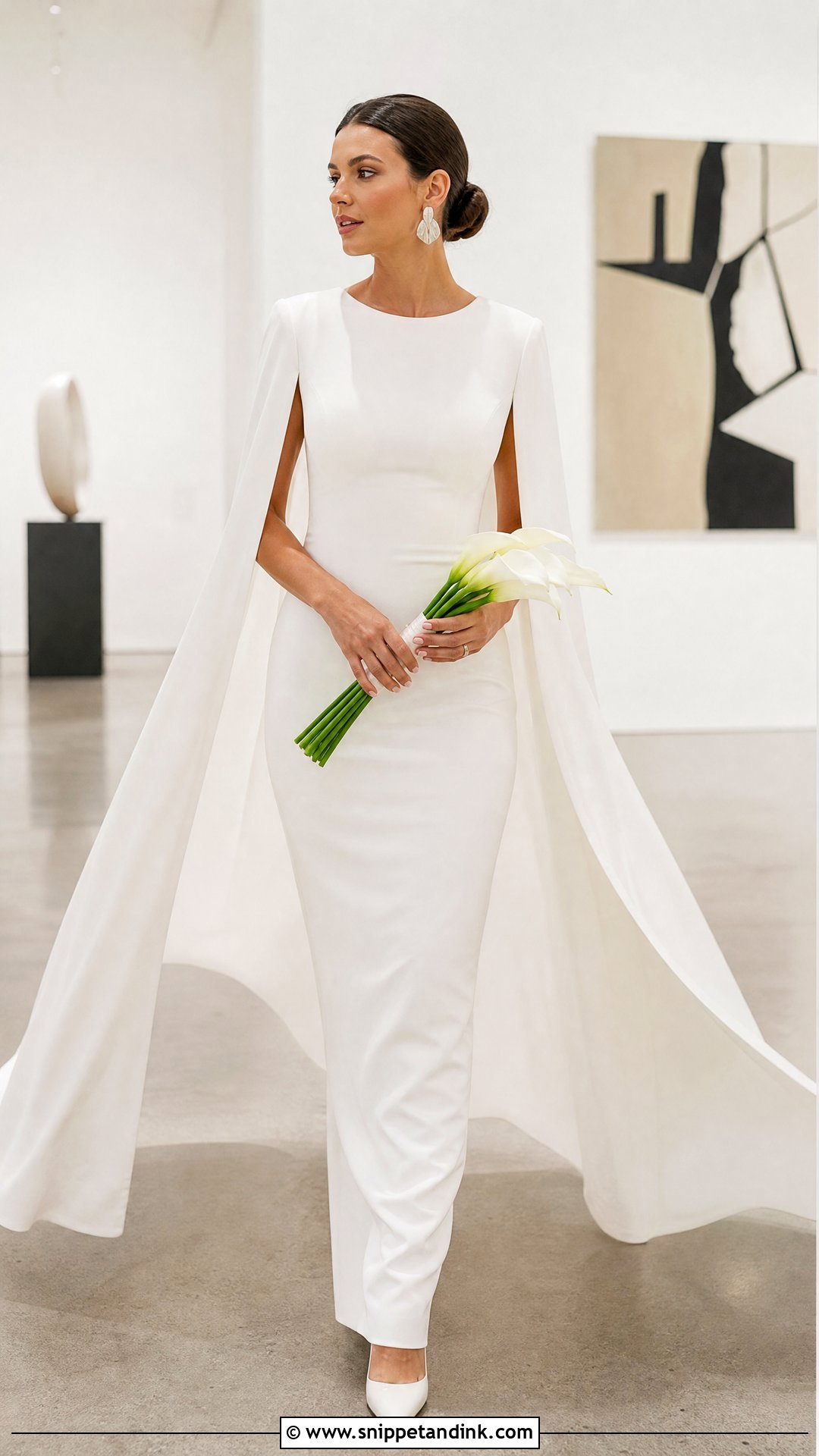
Cape sleeves fall from the shoulders and flow behind you, giving a column dress drama and coverage without a veil. Crepe or satin keeps the shape streamlined. Pair it with pointed pumps, sculptural earrings and narrow calla lilies, and wear a low bun so the hair doesn’t tangle with the cape. A removable cape is the most flexible version: full drama for the vows, a cleaner line for dancing. Check the length at alterations. The cape should finish slightly shorter than the train, or you will tread on it when you turn to walk back up the aisle.
14. White Drop Waist Satin Bridal Dress
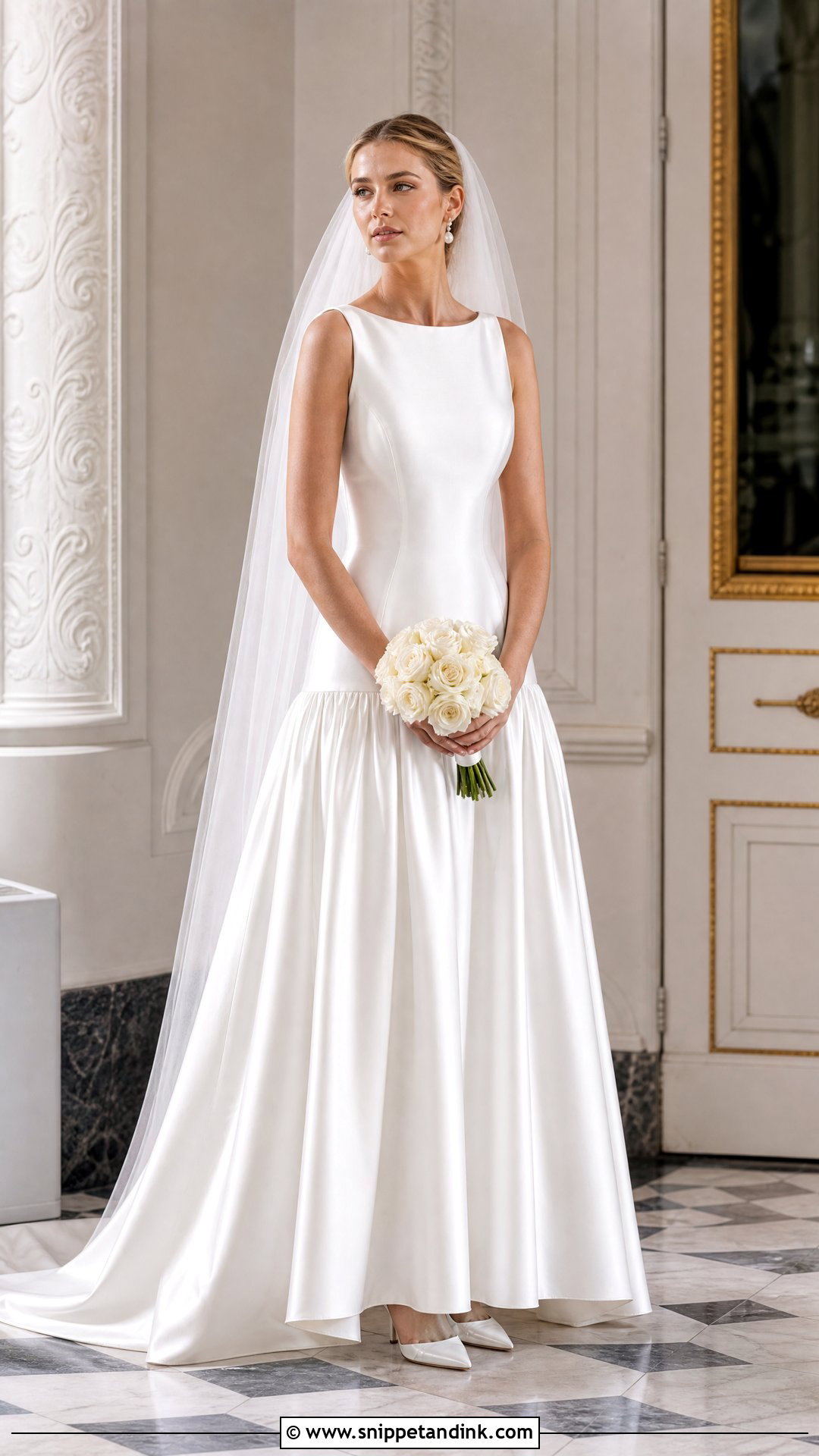
A drop waist lengthens the bodice below the natural waistline before the skirt opens out, which gives a sculpted, slightly 1920s line. Where that seam lands matters more than with any other style: a few centimetres too low and it shortens your legs, too high and it simply looks like a standard waist. Try more than one placement. A simple tulle veil, pearl drops and pointed white pumps suit the clean satin, and a neat chignon shows off the bodice. Soft pleating at the hip adds texture if you want it. Leave belts off; they cut straight through the line this dress is built around.

15. White Boho Lace Bridal Dress
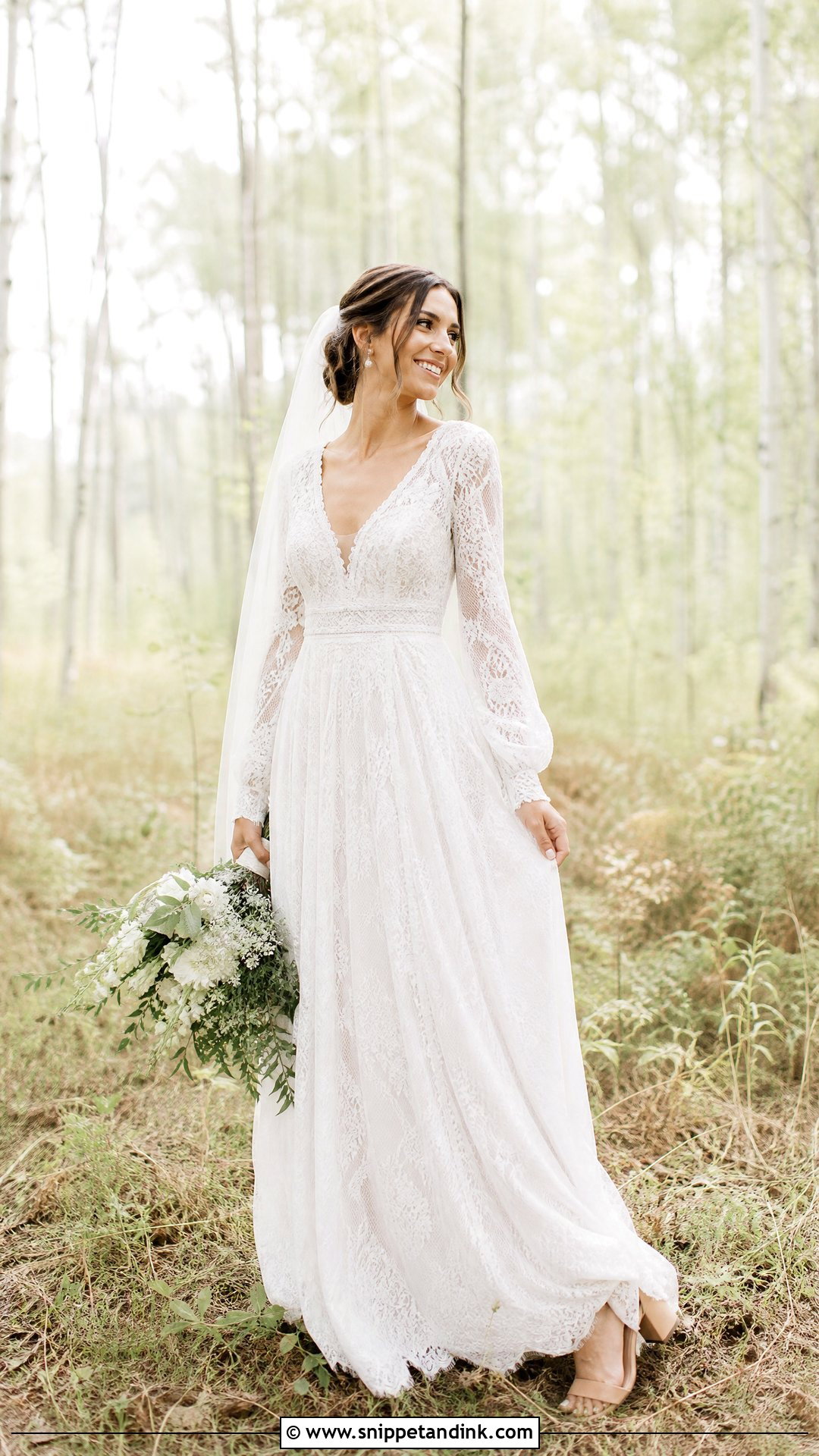
Boho lace works outdoors because it is light, relaxed and lined, with soft sleeves, an open neck and a defined waist. Low block heels or bridal flats are the right call on grass and sand. Small gold or pearl earrings, a fingertip veil and a loose bouquet with white flowers and greenery suit it, and soft waves, a braided bun or half-up hair all fit the mood. The risk with this style is that it can look like an ordinary lace maxi dress. Polish fixes that: a tailored bodice, a neat manicure and a properly bound bouquet ribbon. I’d go easy on rustic accessories like leather cuffs or cowboy boots unless the whole wedding is built around them.
16. White One Shoulder Draped Bridal Dress
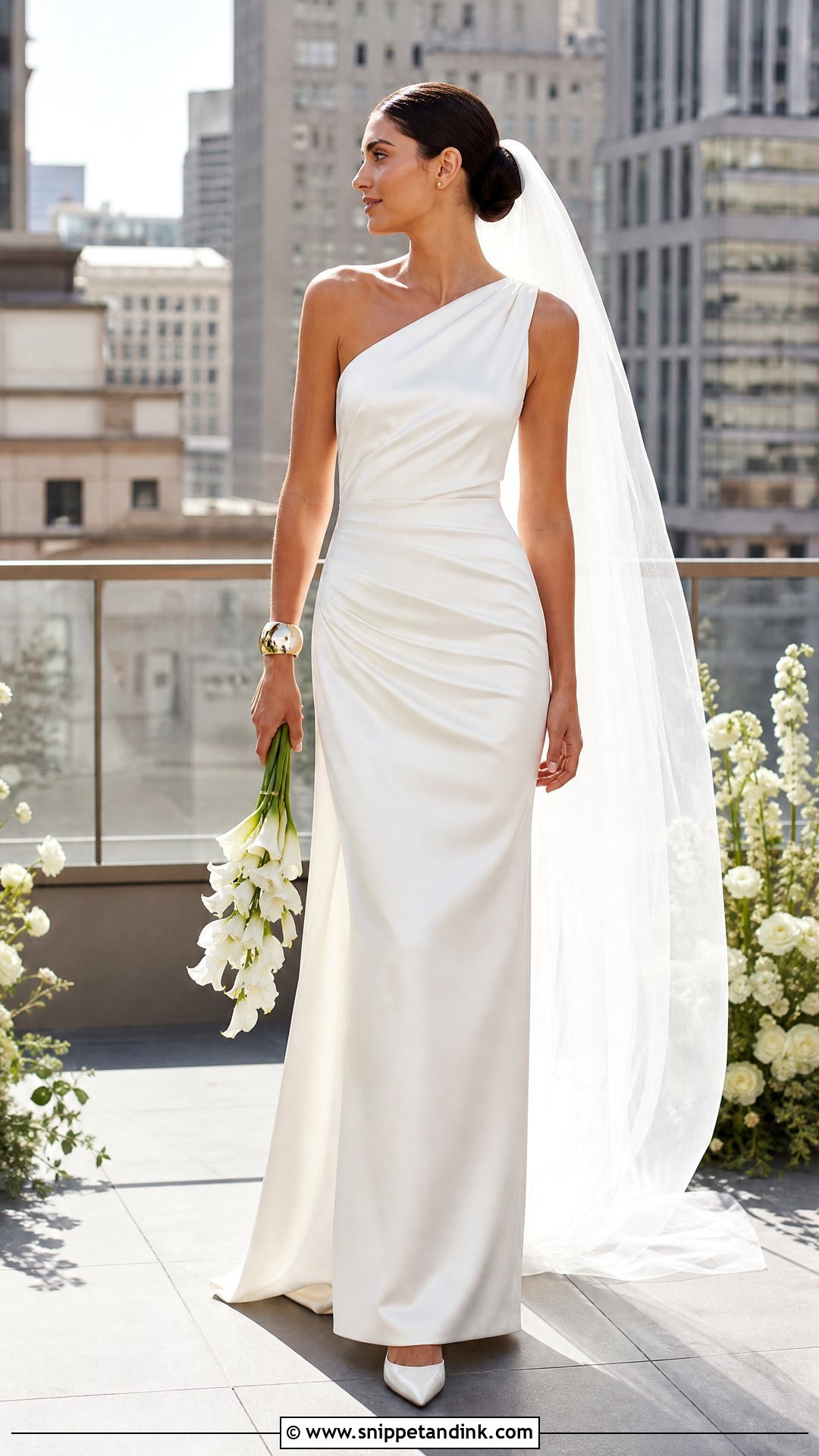
A one-shoulder gown gets its interest from an asymmetrical neckline, so the drape across the bodice has to fall smoothly into a column or soft A-line skirt. Crepe and satin both hold the fold well. One bracelet, small earrings and pointed white pumps are enough; skip the necklace. I place a low side bun on the bare shoulder side so the eye travels across the whole neckline. A plain veil set low on the head works, or leave it out for a sharper look. The strap carries more weight than a pair of straps would, so lift your arms and turn your torso at the fitting to make sure it doesn’t pull or slide.
17. White Pearl Embellished Bridal Dress
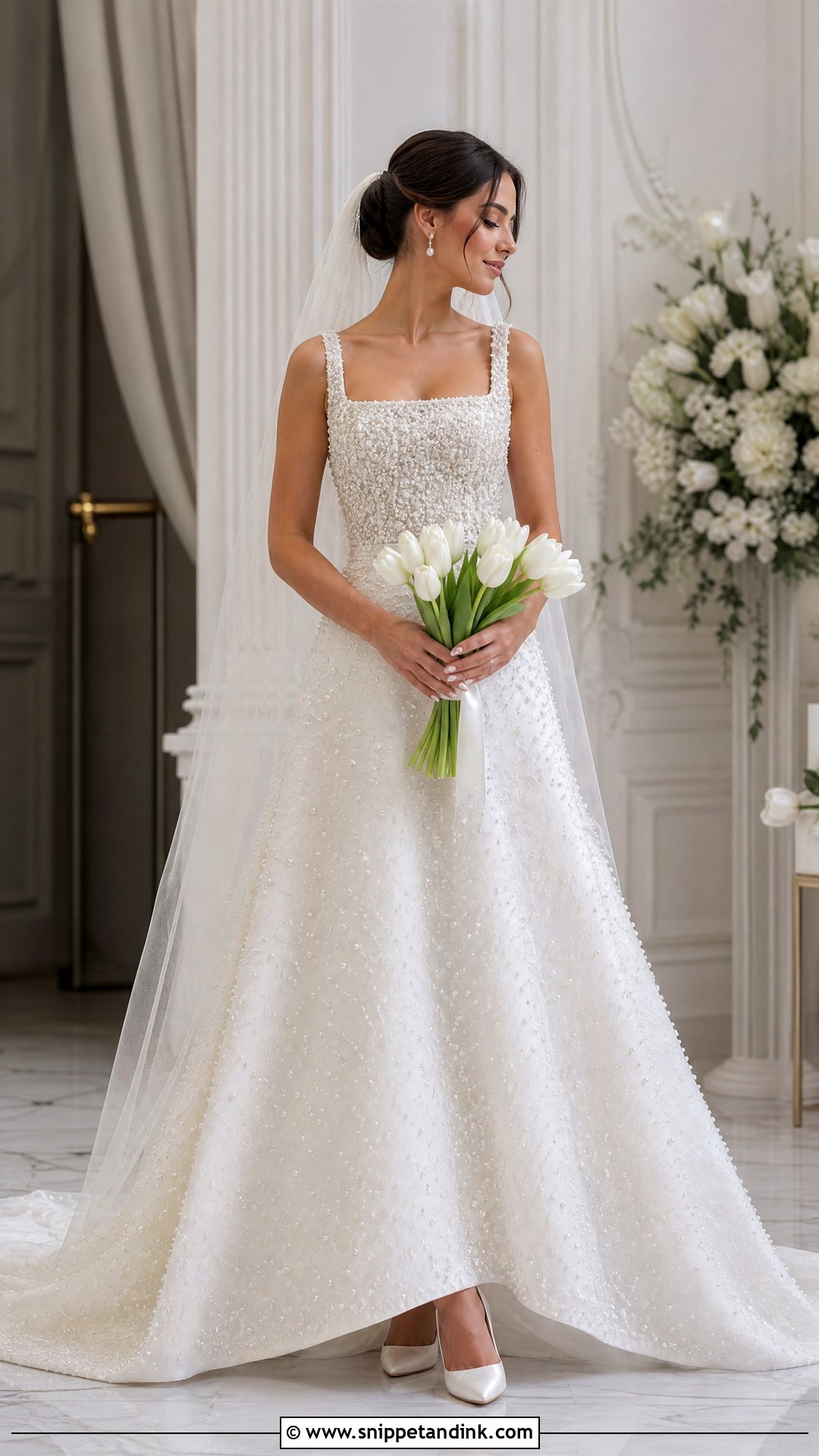
Pearls add a soft glow rather than the hard flash of crystal, which suits brides who find sequins too much. Look at how they are attached: hand-sewn pearls on lace or tulle should not move when you run a finger across them. Balance an embellished bodice with an A-line or straight skirt, plain satin shoes and small pearl earrings, and resist matching everything to the beading. A simple veil and a sleek updo let the surface show. White roses or tulips with little greenery keep the bouquet calm. Loose pearls catch on veil tulle, so check for them at every fitting and avoid bracelets that rub against the sleeves.
18. White Convertible Overskirt Bridal Dress
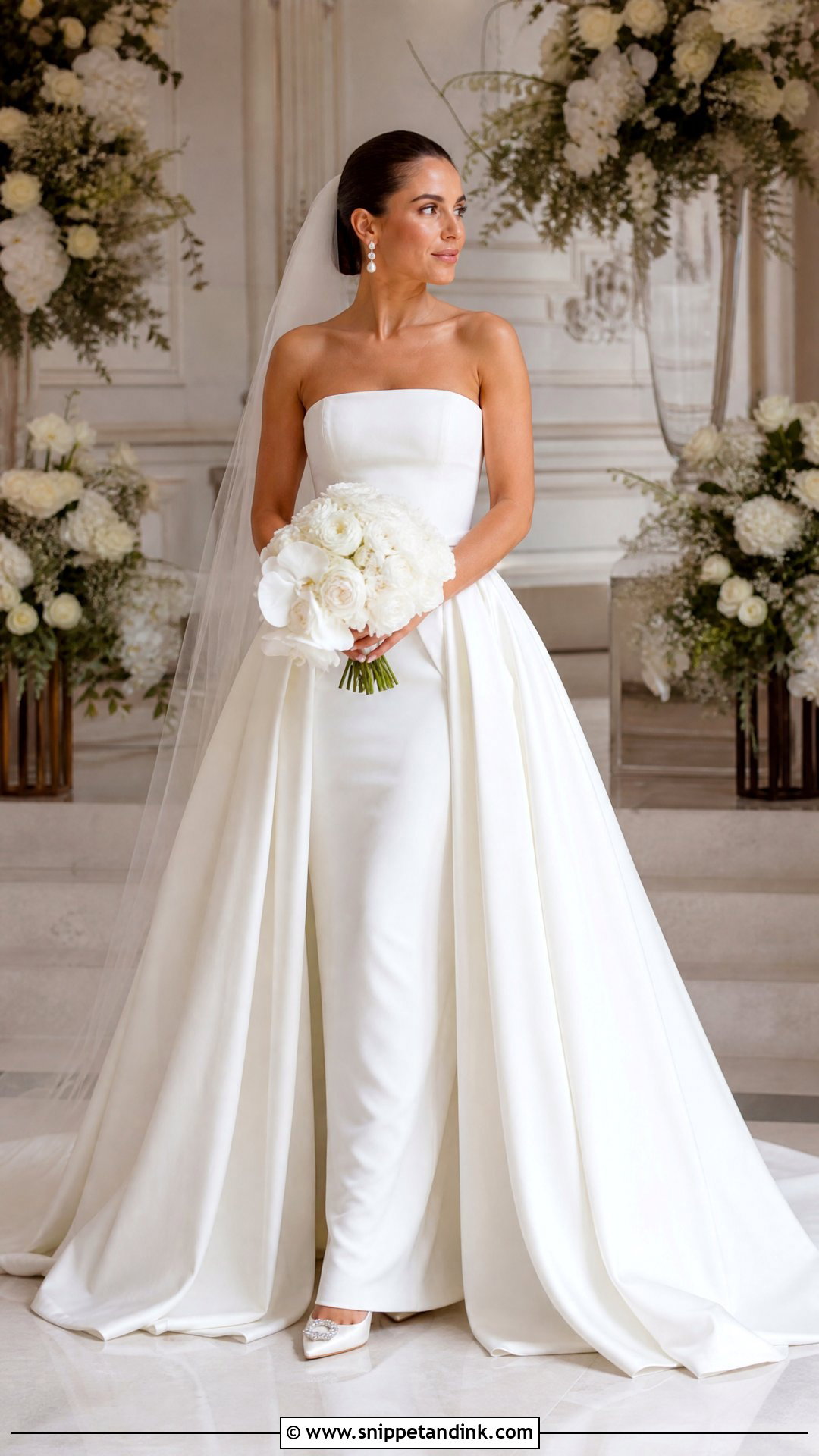
A convertible overskirt gives you two looks from one gown: a full skirt for the ceremony and a column, mini or mermaid underneath for dancing. Style the formal version with a long veil, pearl earrings, pointed heels and a structured bouquet, then switch to a shorter veil or a hair comb once the overskirt comes off. The base dress has to look finished on its own, so check for visible hooks, loops or a ridge at the waist. Practise taking the skirt off with whoever will help you on the day; it usually takes two people and a few minutes. Plan where it will hang afterwards so it isn’t left on a chair.
19. White Empire Waist Chiffon Bridal Dress
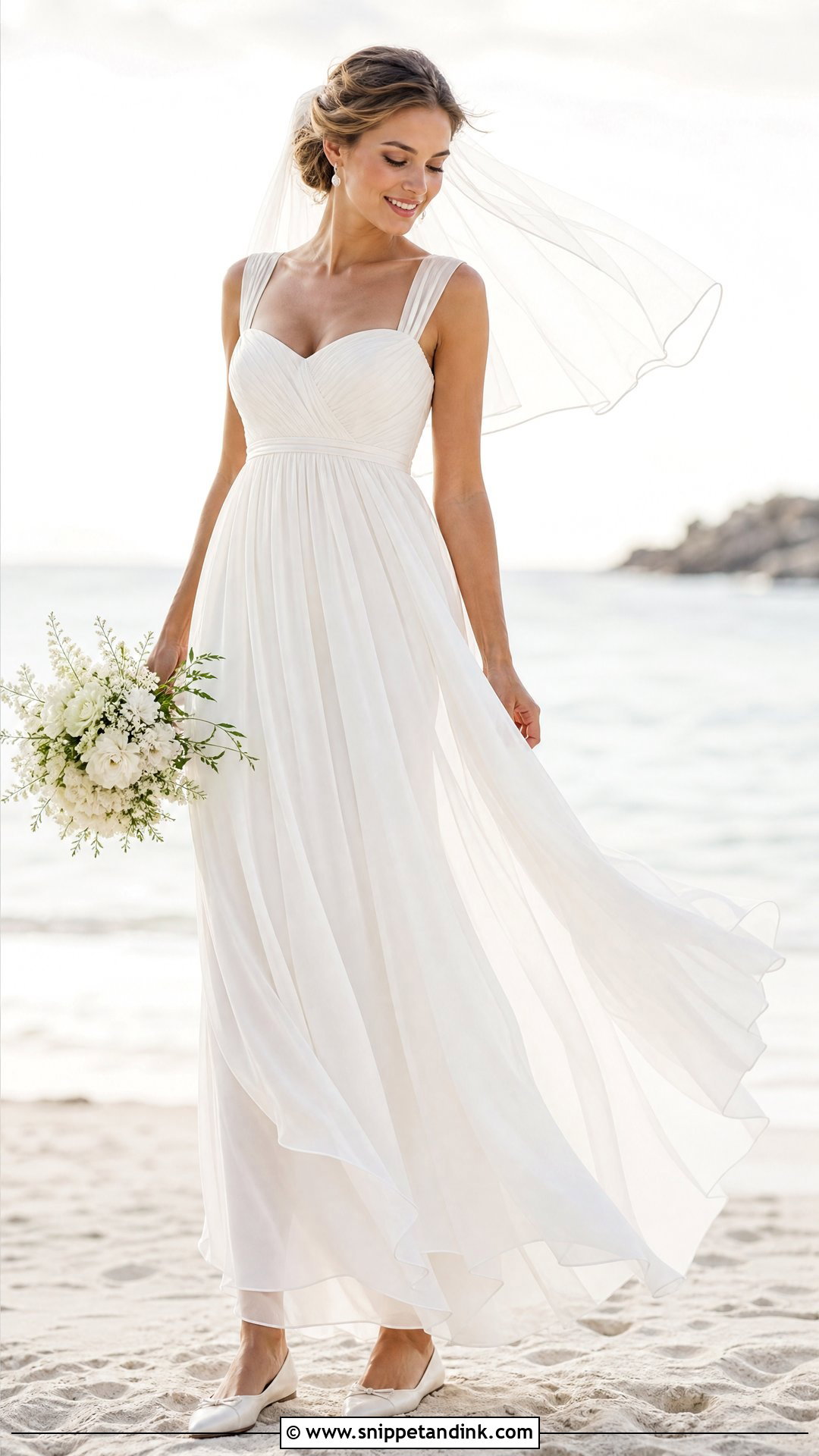
An empire waist sits just under the bust and falls loosely from there, so nothing presses on your stomach all day. White chiffon with a lined, supportive bodice, soft straps and light skirt layers suits beaches and hot destinations. Low heels or neat flats, delicate earrings and a fingertip veil keep the look light, and a loose updo with an airy bouquet matches the fabric. Stand in strong sun at the fitting; the underlayer has to stay opaque in bright daylight. A narrow ribbon under the bust adds definition if it is tonal. Heavy jewellery looks wrong against the floaty fabric, so keep it small.
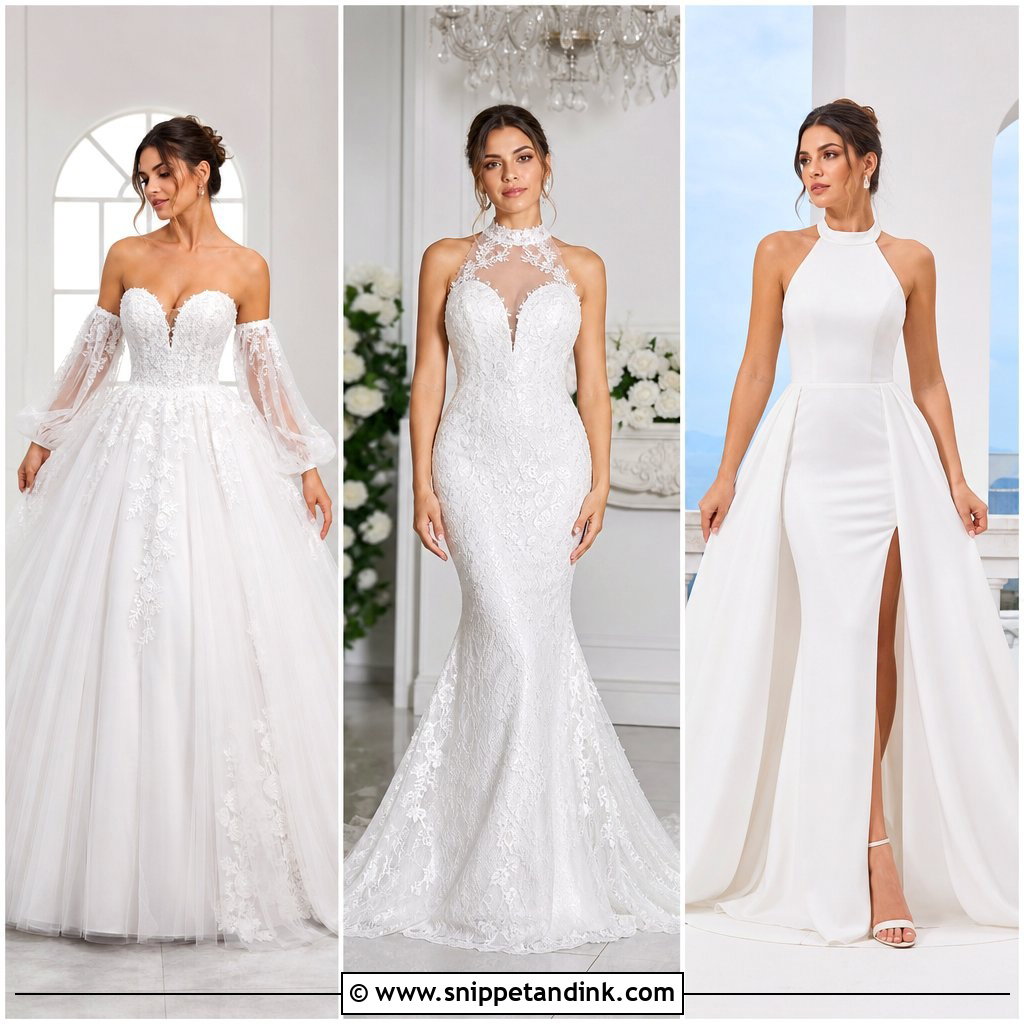
20. White Bow Back Column Bridal Dress
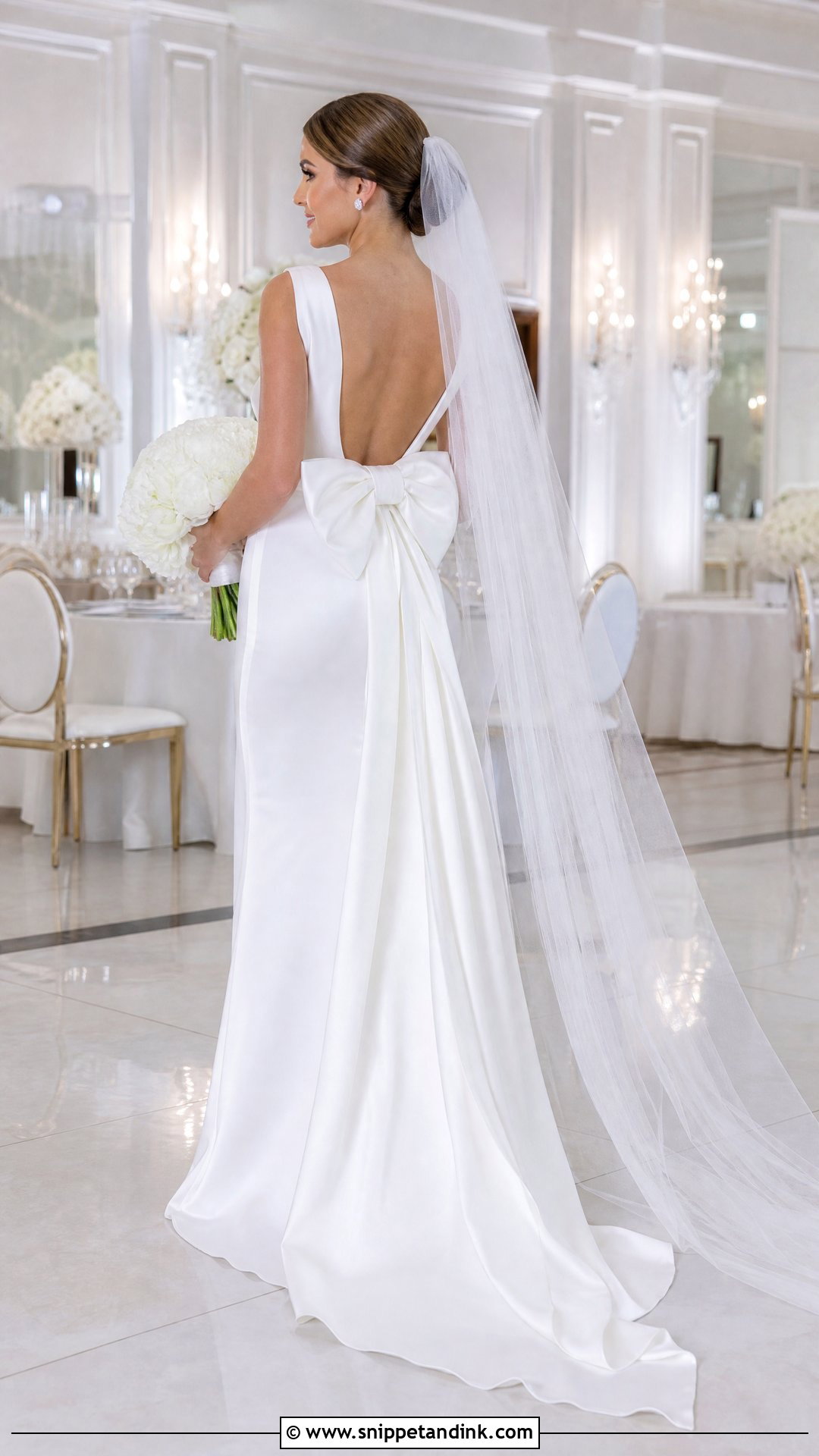
A big bow turns the back of a plain column dress into the detail everyone notices as you walk away. Satin or crepe works, with a clean front and defined waist. Ask whether the bow is detachable or sewn on, and pick it up and shake it a little: a well-made bow is interfaced so it doesn’t flop when you sit back against a chair. Pointed pumps, small studs and a plain veil you remove after the ceremony keep the focus on the back. A smooth bun shows the bow in photos. If it has long tails, have them hemmed to float just above the floor so they don’t tangle with the train.
From Order Form to Final Fitting: How Long a Gown Really Takes
Brides are often surprised by how early a made-to-order gown needs to be ordered. Most bridal designers cut each dress after the order is placed, and production commonly takes four to six months, sometimes longer for heavy beading or custom changes. Rush options exist but usually cost more and narrow your choices.
The alteration schedule I work to
- First fitting about eight to twelve weeks before the wedding, with your shoes and the bra or shapewear you’ll wear.
- Second fitting around four to six weeks out, once the main changes to length and side seams are done.
- Final fitting one to three weeks before, when you also learn the bustle and bring the person who will fasten it.
Alteration costs vary widely by region and by how much work a gown needs, so ask for a written estimate at the first appointment. Hemming a multi-layer skirt or a lace edge takes far longer than a plain one, and the price reflects that.
Learning the bustle before the day
Any gown with a train needs a bustle for the reception. Whoever is going to do it, a sister, a bridesmaid or your mother, should come to the last fitting and do it twice on their own. Ribbon loops in different colours make it easier, because in a crowded reception room nobody can find hook number five under the tulle.
The Fitting Room Test That Matters Most
The gown to keep is the one that supports your body, suits your venue and lets you move. Dramatic or fashionable comes after that. Whichever of these shapes you lean toward, bring your actual shoes and underwear to every fitting, and test the dress sitting, walking and lifting your arms, not just standing in front of the mirror. Think about the weather, how formal the ceremony is and how much time you’ll spend on your feet. Then style it so the accessories support the dress instead of competing with it.
You'll Like These Ideas:







Leave a Reply