
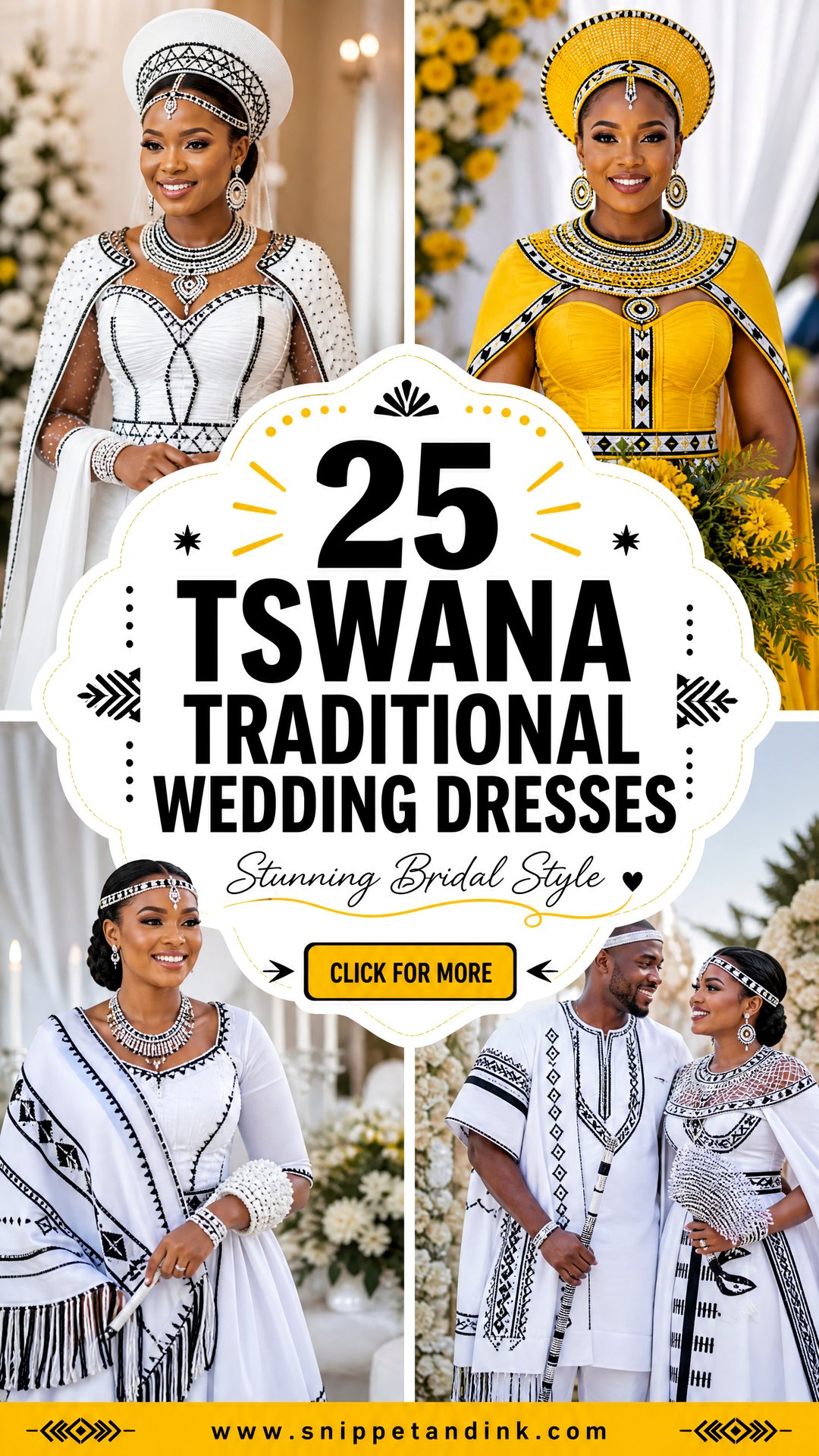
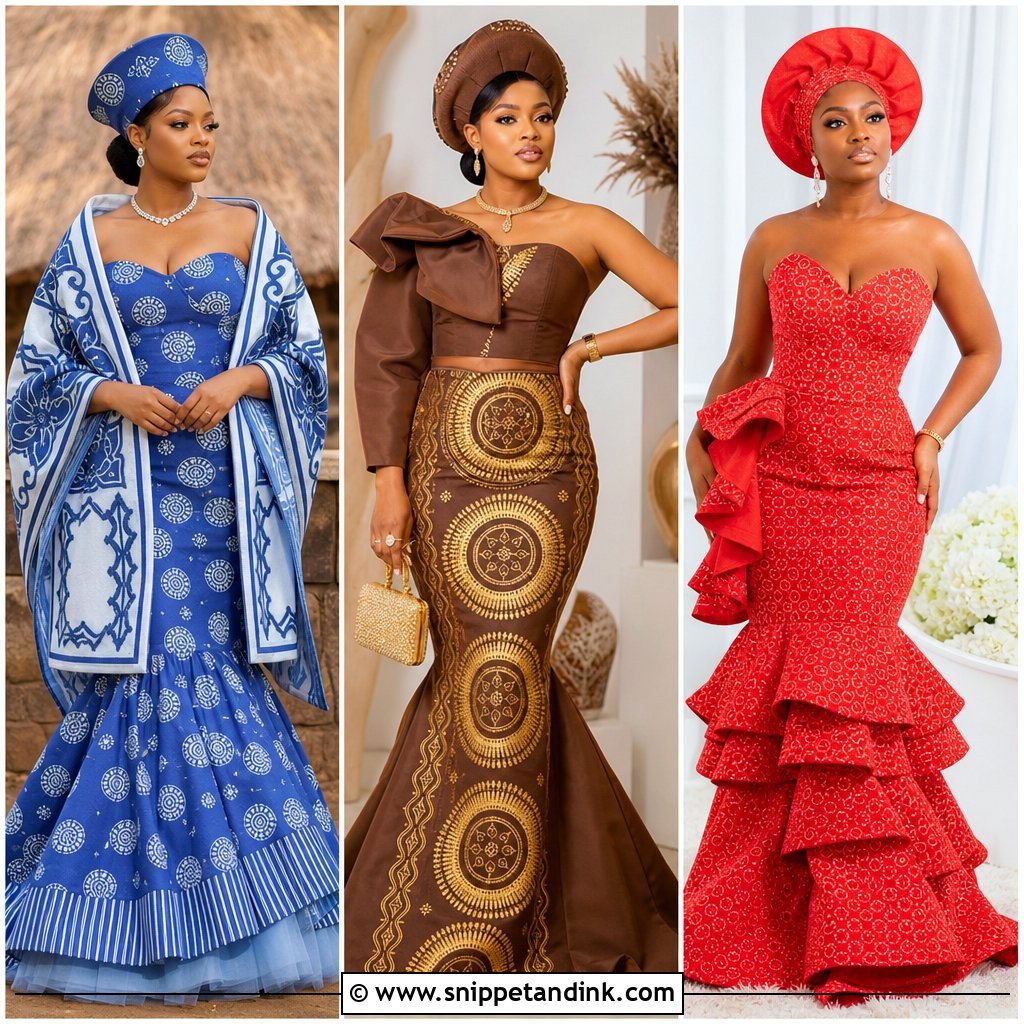
A Tswana bridal outfit is never only a dress. When I put one together I am thinking about the headwrap, the shawl, the beadwork, the shoes and how long the bride will be standing, greeting and dancing in front of family. Blue leteisi is the look most people picture, but brides now ask for everything from pleated skirts to modern shweshwe mermaid dresses, matching couple outfits and two-piece sets. The 25 looks below cover regal ball gowns, simple lobola outfits and very current cuts, with notes on how each one wears through a long celebration.
Leteisi Behaves Differently From Bridal Satin
Most of the dresses below are cut from shweshwe, also called leteisi in Setswana. It is a printed cotton, and brand-new cloth feels stiff, almost papery, because of the starch in it. That stiffness is not how it will feel on the day. Once washed it softens, and it also shrinks, so every good dressmaker I know washes and irons the fabric before cutting.
A few things I tell brides before they buy cloth:
- Buy everything at once from the same bolt, including the doek and any couple fabric. Shades can differ between batches.
- Ask your dressmaker for the exact quantity first. Full pleated skirts and ball gowns use far more fabric than a straight dress.
- Allow time. A custom traditional gown needs several fittings, and popular dressmakers book up in wedding season, so start a few months ahead.
- Iron on the reverse side to keep the print from going shiny.
1. Blue Tswana Traditional Wedding Dress
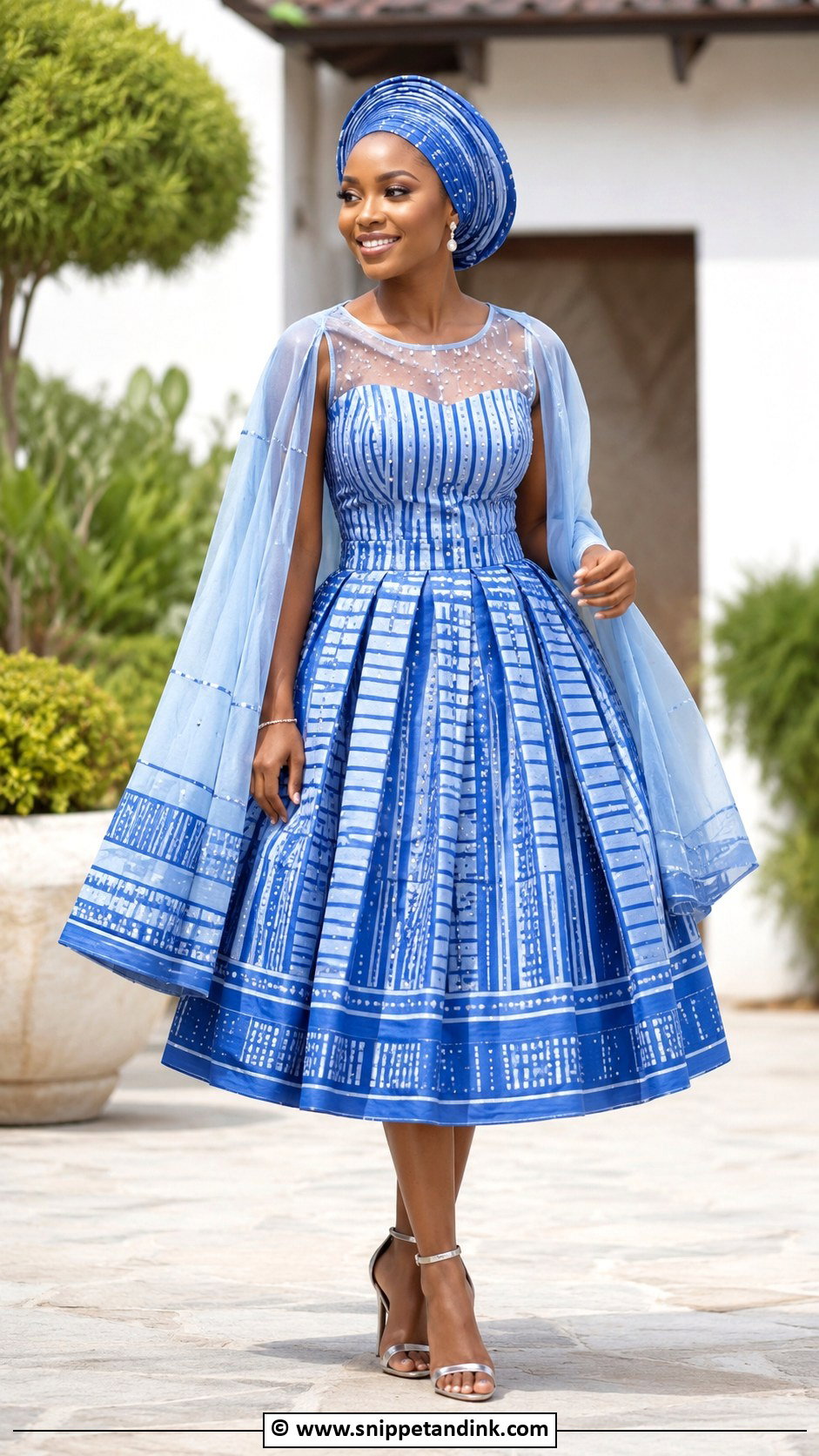
Blue leteisi is the look most families recognise at a glance, which is exactly why so many brides want it for the main ceremony. The usual build is a fitted bodice, a full pleated skirt, a matching headwrap and a soft shawl over the shoulders. Silver or pearl jewelry sits quietly against the print, and white, silver or blue heels disappear under the long skirt. The one thing I insist on with blue is pre-washing the fabric: new leteisi is stiff with starch and shrinks on its first wash, and a bodice cut from unwashed cloth can tighten after the first clean.
2. White And Blue Shweshwe Wedding Dress
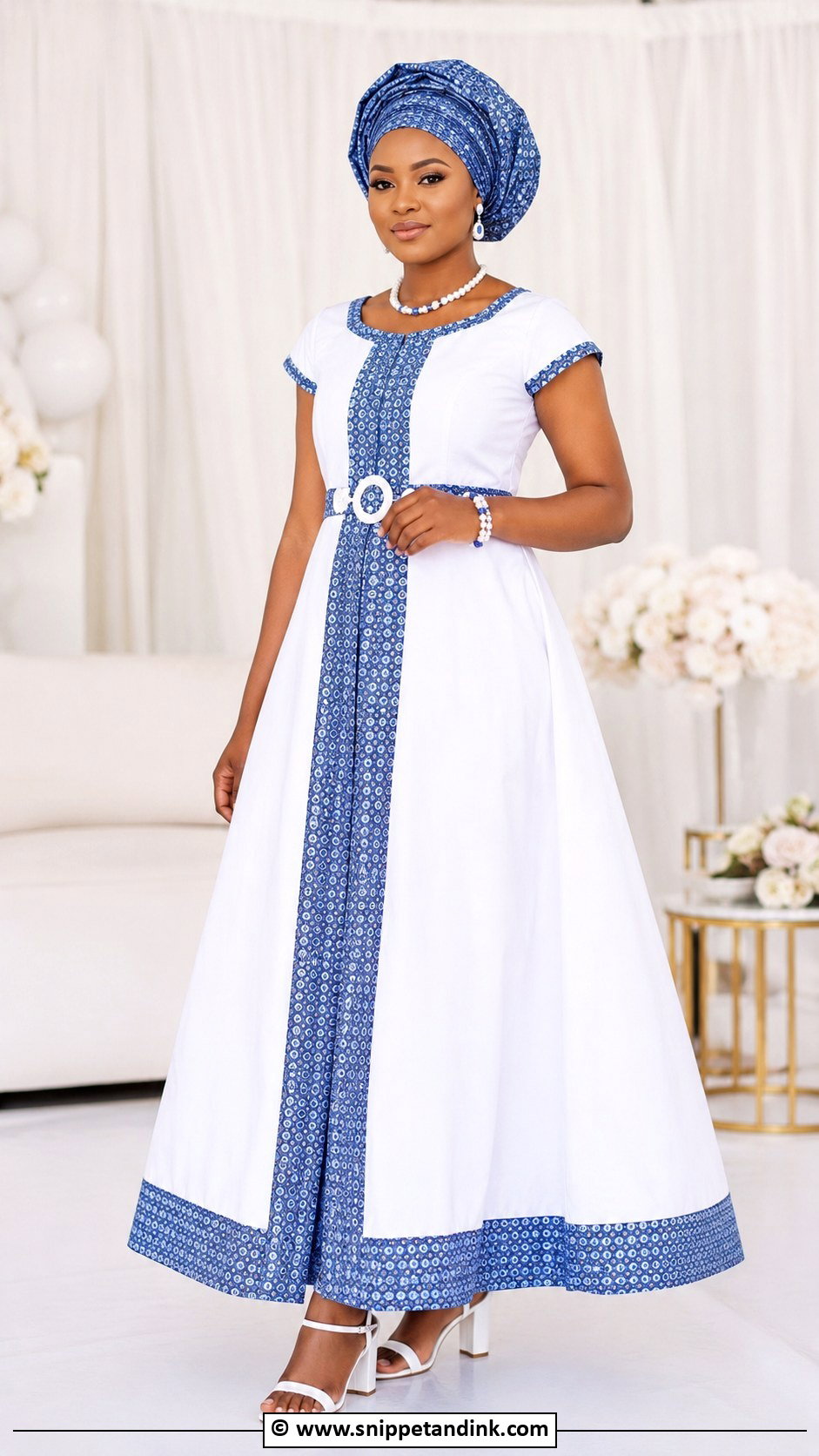
Plain white panels calm the print down, and the blue shweshwe keeps the dress clearly rooted in tradition. A floor-length A-line flatters most figures and moves well while you greet relatives. Style it with a matching blue doek, white block heels and small beaded jewelry. Watch the seam where white meets blue. Indigo can bleed into white cotton if the dress gets wet or is washed together, so a dressmaker should test a scrap first, and the finished gown should only ever be spot-cleaned or washed cold.
3. Tswana Mermaid Wedding Dress
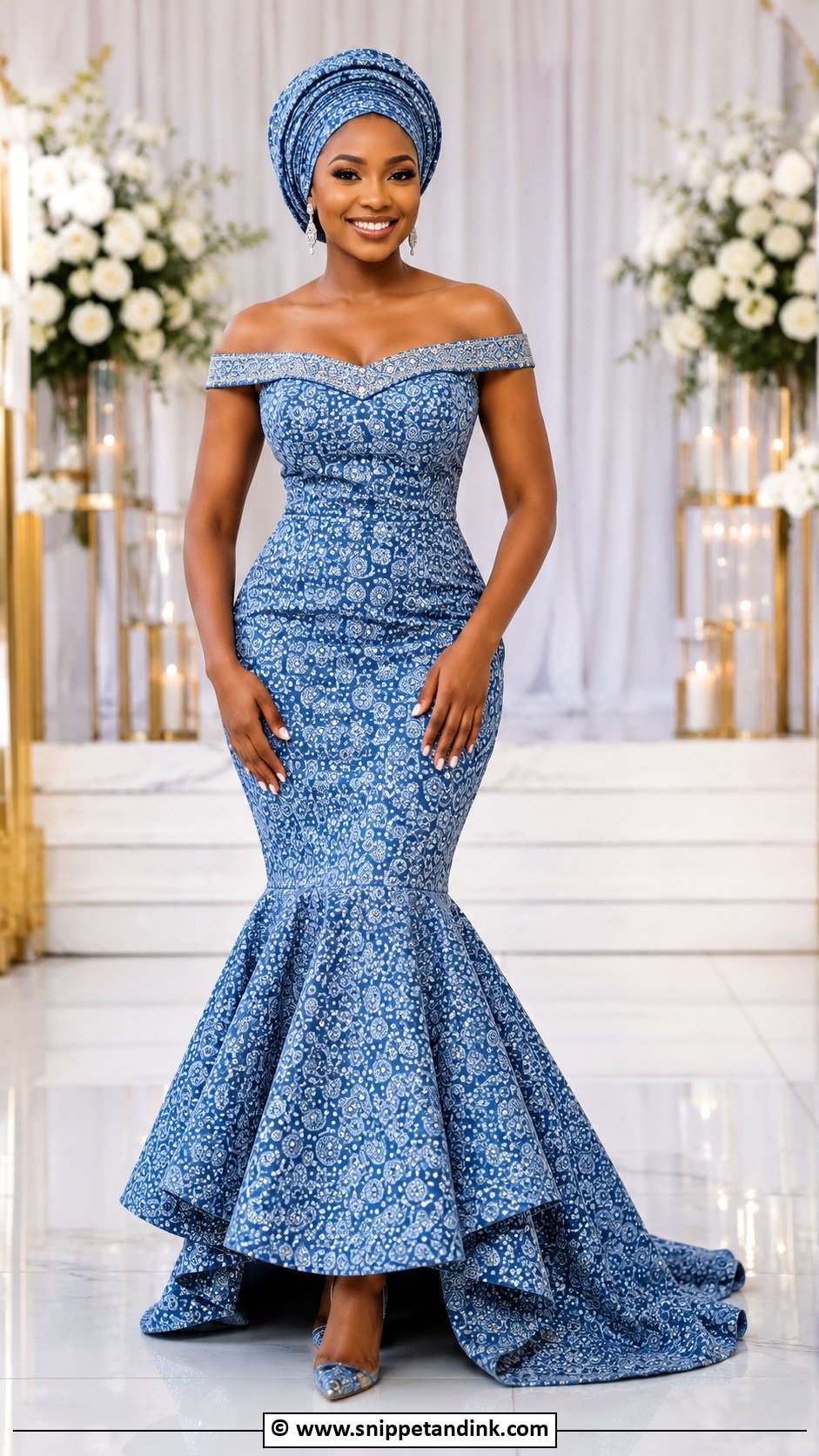
The mermaid cut hugs the waist and hips, then flares at the knee in shweshwe or leteisi. Because cotton print has less give than stretch fabrics, the fit through the hips has to be generous enough to sit and climb a step; I ask brides to sit down in the fitting before the flare is attached. An off-shoulder neckline, beaded waist detail or small train all suit the shape. Pointed heels, a matching headwrap, drop earrings and a small clutch are plenty. The silhouette is already bold, so keep everything else clean.
4. Tswana Ball Gown Wedding Dress
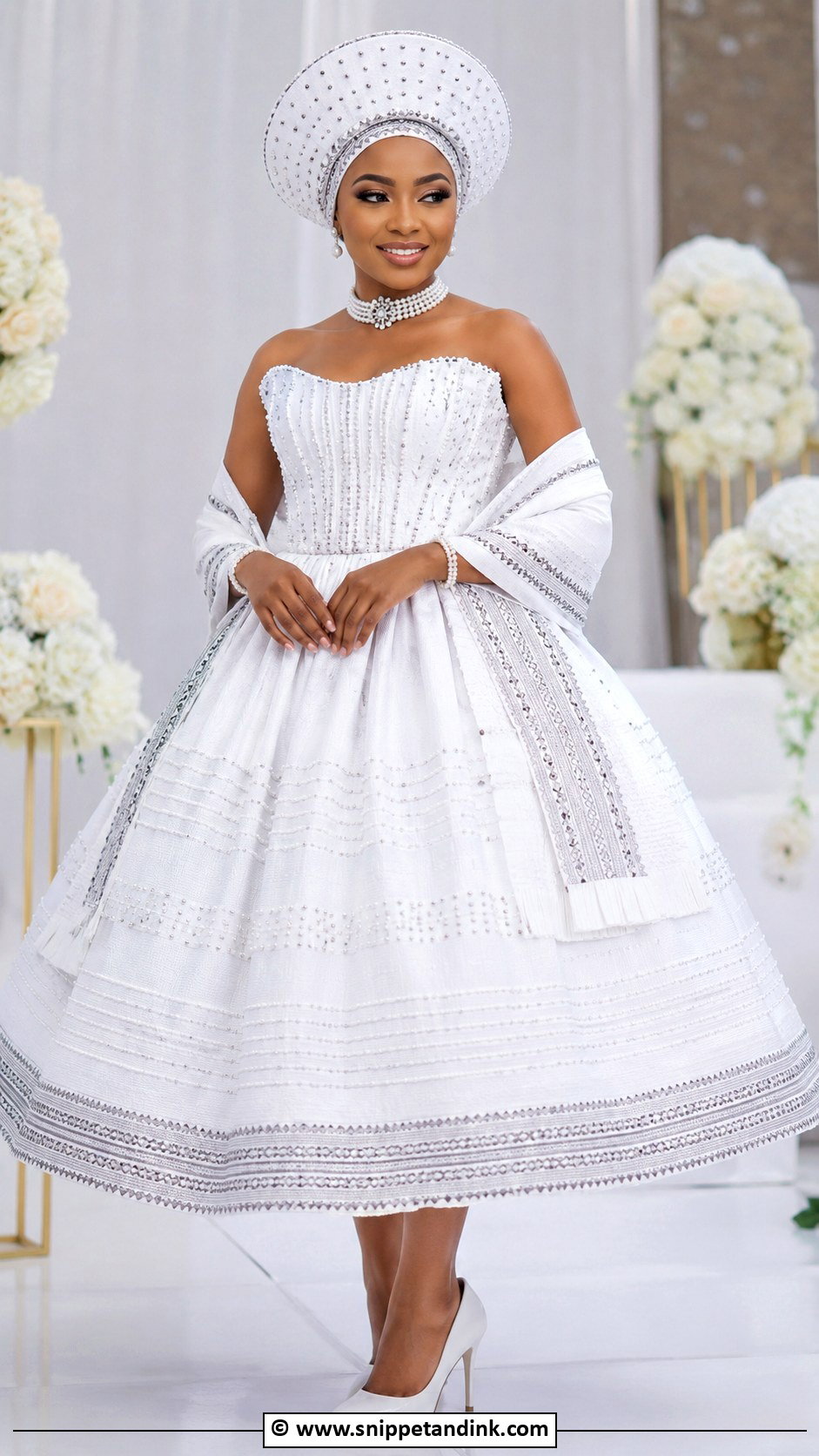
Volume and structure give the ball gown its royal feel. The skirt can be blue, turquoise, red or black-and-white leteisi over a fitted bodice, often with a crown-like doek on top. Simple heels, pearl jewelry and a neat shawl finish the traditional look. A full skirt in printed cotton is heavy once you add a petticoat, so I suggest a lighter net underlayer rather than stiff hoops if the day involves a lot of dancing. The bonus is comfort through the hips and legs, which a fitted cut cannot offer.
5. Tswana Off Shoulder Wedding Dress
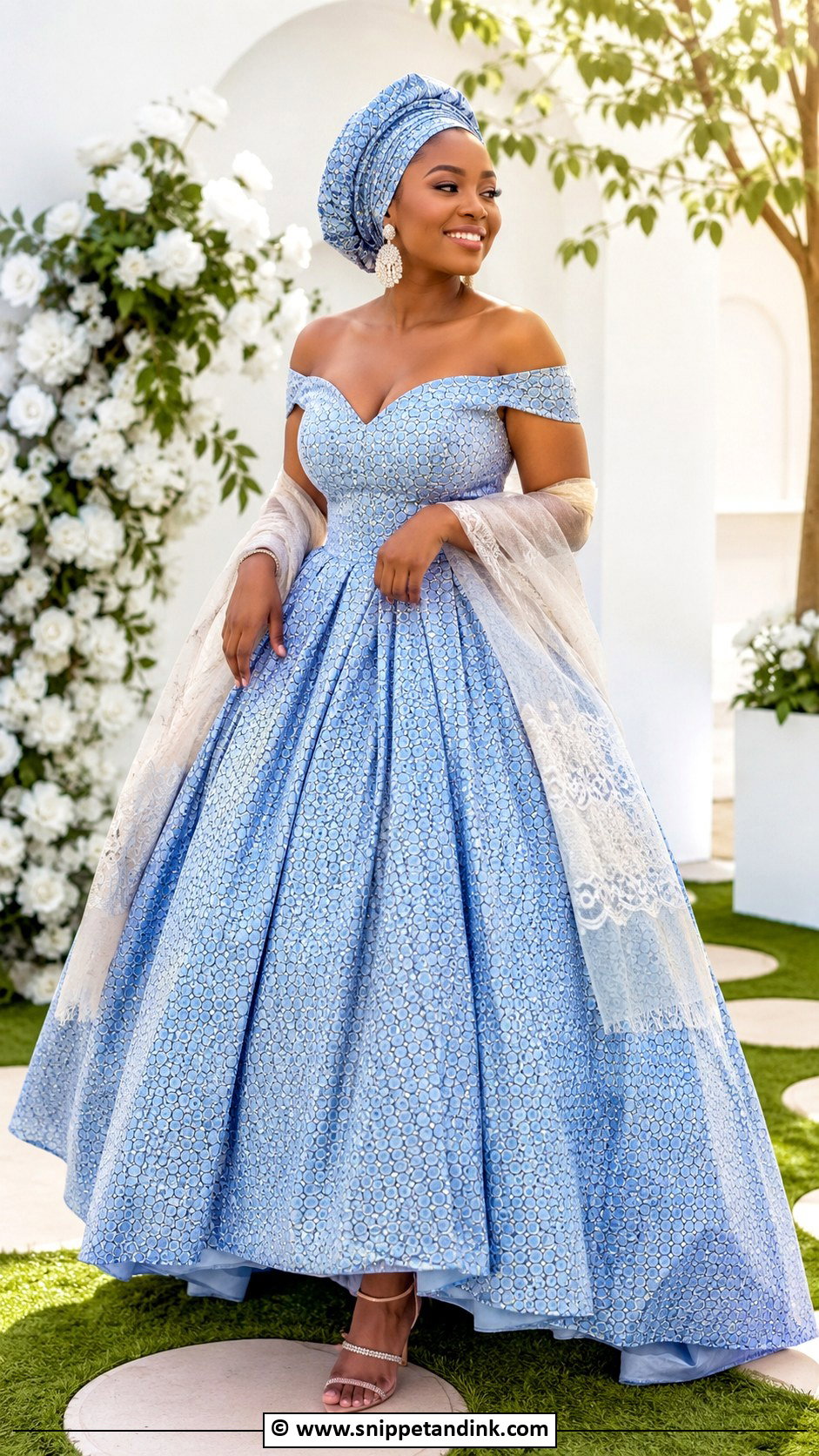
An off shoulder neckline frames the shoulders and softens the crisp print. It sits on a full skirt, a mermaid hem or a straight long gown. Pair it with a matching headwrap, statement earrings and heels you can stand in. In many families the bride covers her shoulders for formal greetings, so I always pair this neckline with a light shawl she can slip on and off without disturbing the headwrap. Ask at home before you assume either way.
6. Tswana Long Sleeve Wedding Dress
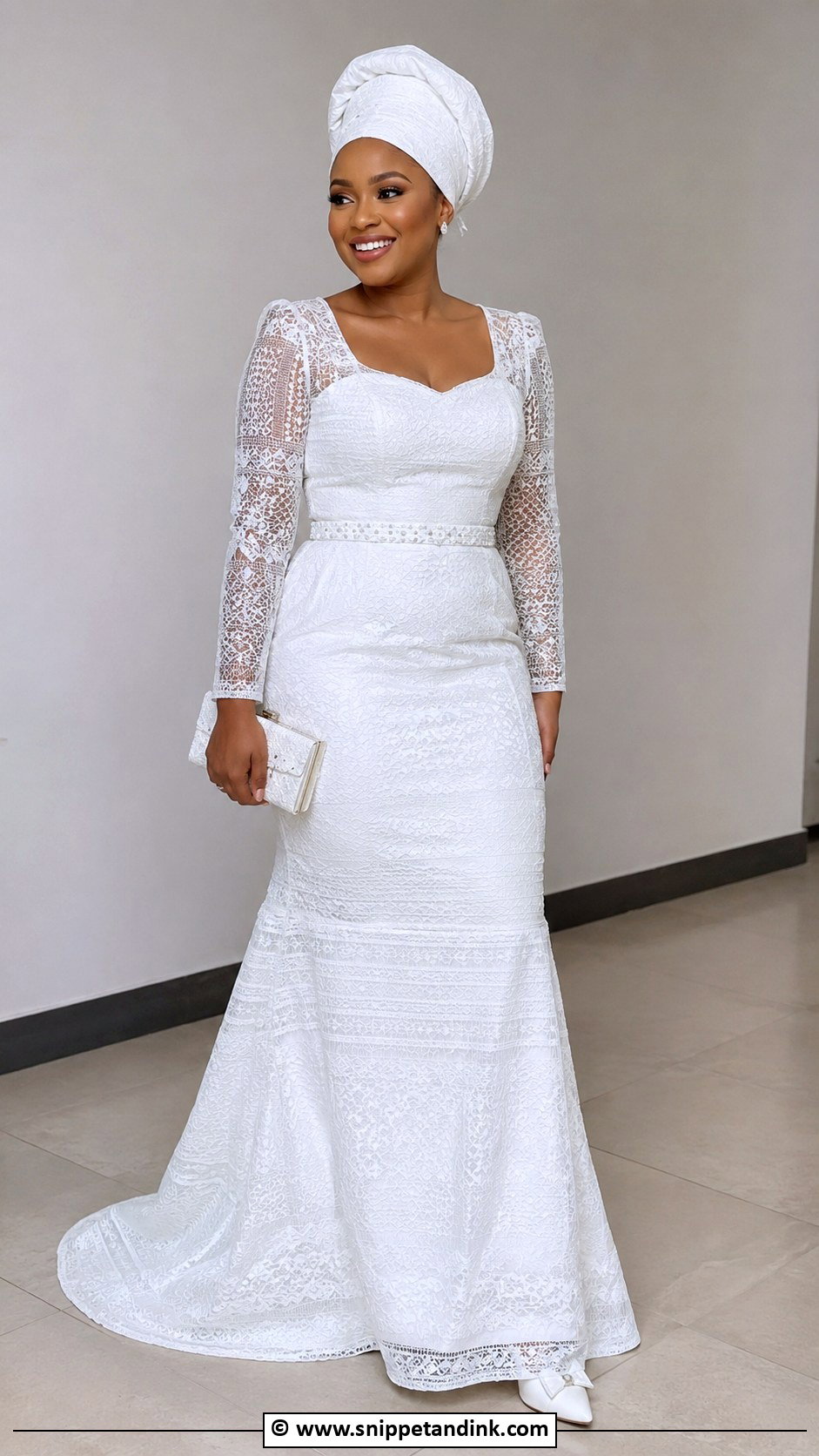
Long sleeves give coverage and quiet dignity. They can be matching leteisi, soft lace, sheer fabric or a mix of print and plain. A high waist, floor-length skirt and coordinated headwrap complete it, with closed-toe heels, a structured clutch and small earrings. Sleeves are where shweshwe shows its stiffness: cut too close, they restrict your arms when you hug and serve food. I ask for a little ease at the elbow and leave room for cuffs, buttons or beadwork.
7. Tswana Pleated Wedding Dress
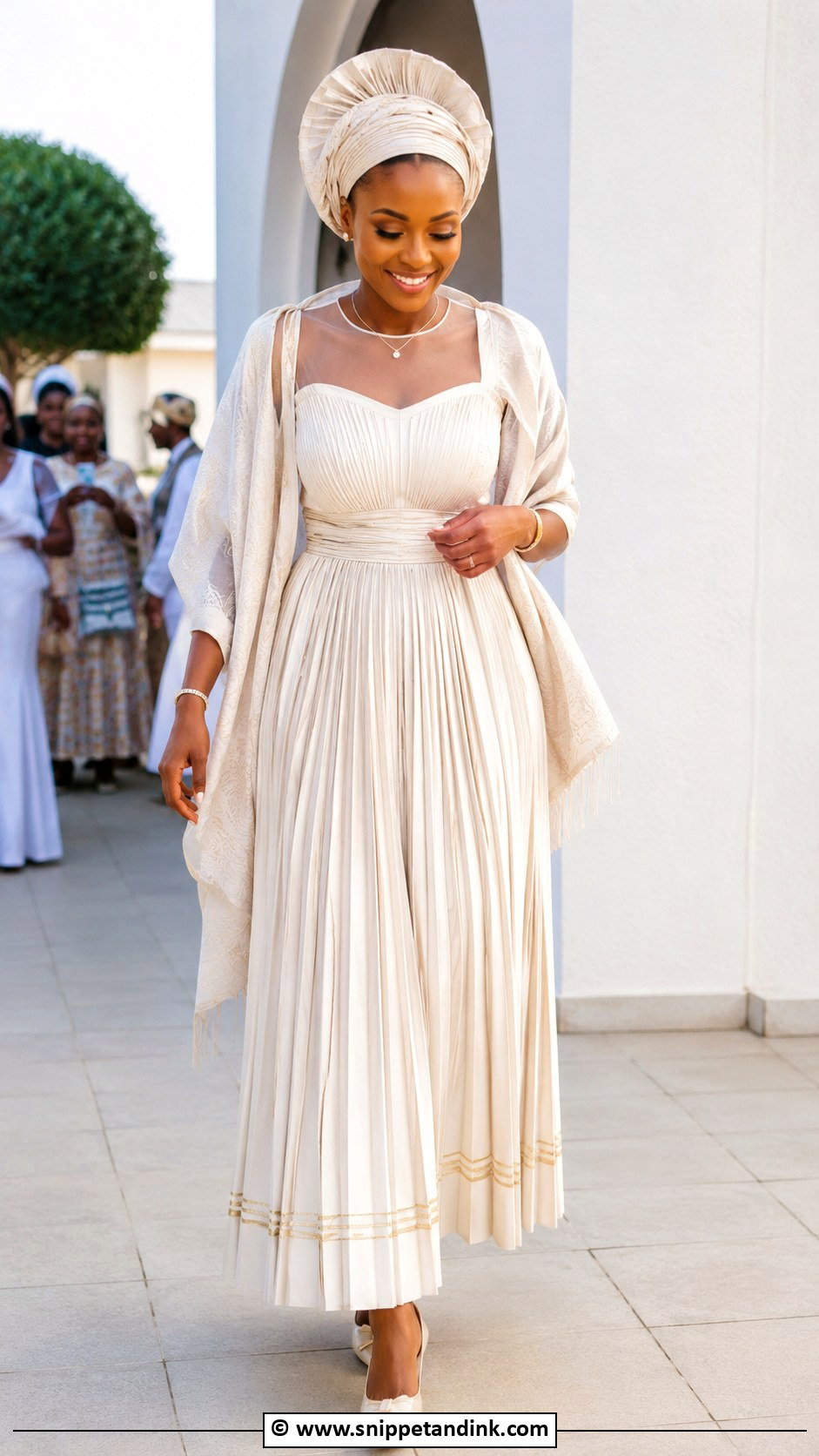
Pleats are one of the most loved details in Tswana dressmaking, giving the skirt swing when you walk and dance. A fitted bodice balances the fullness. Pressing is the secret here: knife pleats in cotton need sharp pressing on the reverse after every wash or they soften into gathers. Low or mid-height heels and simple jewelry keep the pleats as the feature, and blue, brown, red or black-and-white prints all hold a crease well.
8. Tswana Two Piece Wedding Dress
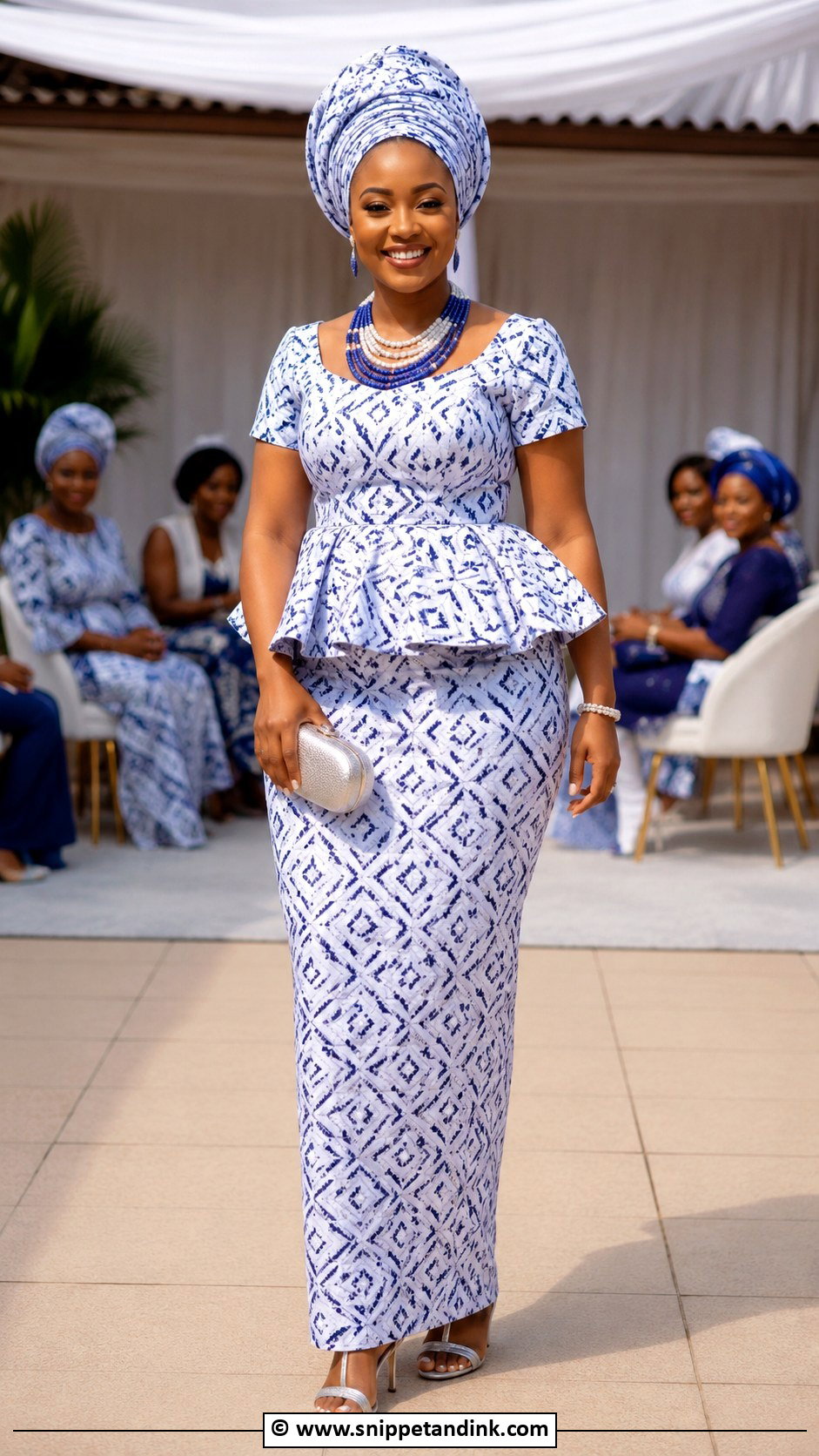
Two pieces give you shape and freedom at once: a fitted peplum top or corset-style blouse over a high-waisted maxi skirt. A matching headwrap, beaded necklace and elegant heels complete it. Use the same print on both pieces for a formal feel, or mix plain fabric with leteisi for contrast. Because top and skirt are made separately, you can rewear the skirt later with a different blouse, which makes it a sensible choice for lobola, a traditional ceremony or a second outfit.
9. Tswana Peplum Wedding Dress
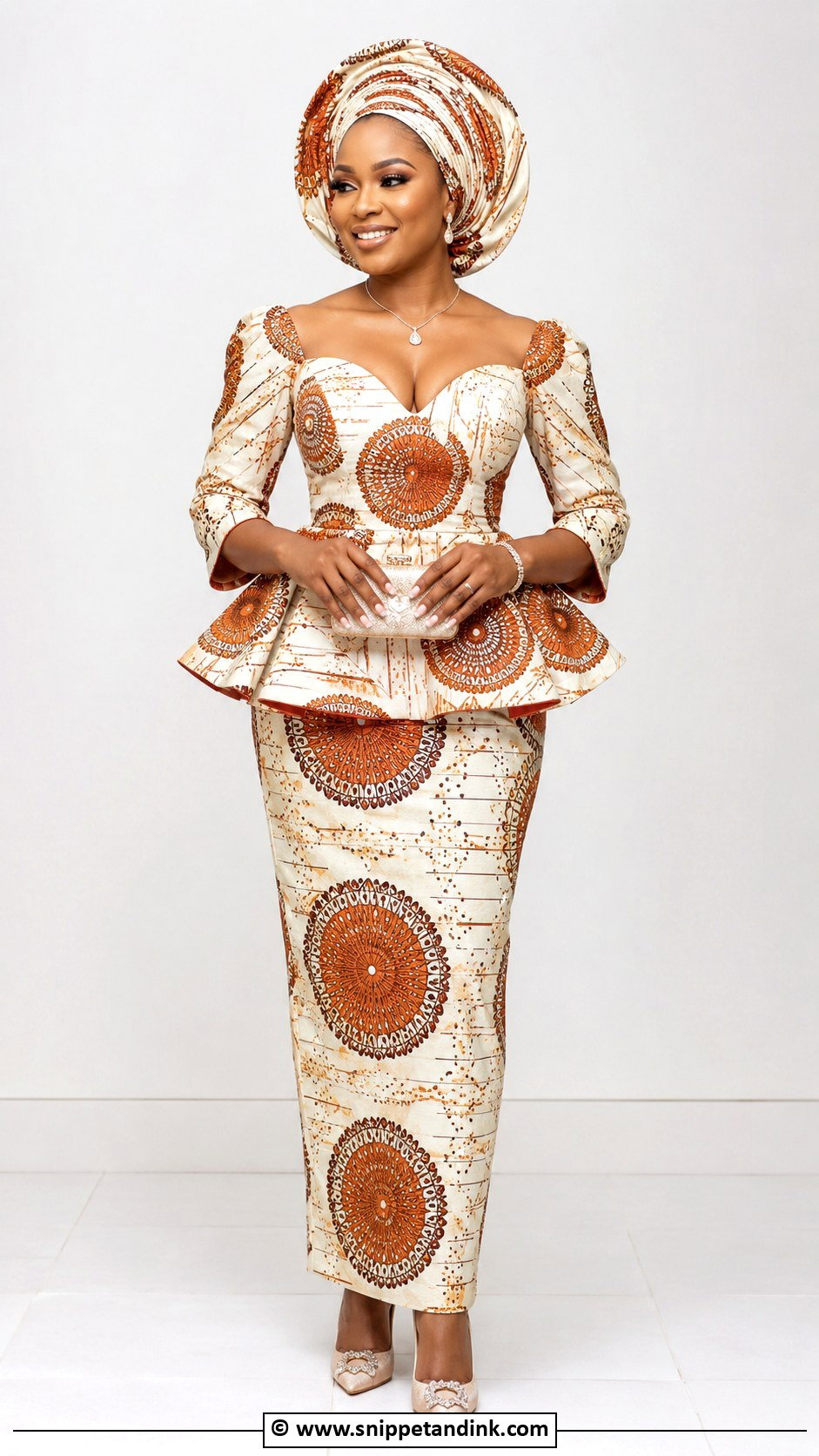
A peplum defines the waist and then skims over the hips, which suits a wide range of figures. It can sit over a fitted, mermaid or straight skirt. The thing I look at is where the peplum starts. If it begins even an inch below the natural waist, it widens the hips rather than shaping them. A matching doek, pointed heels and neat jewelry finish it, in blue shweshwe, black-and-white leteisi or a red print with plain trim.
10. Tswana Lobola Wedding Dress
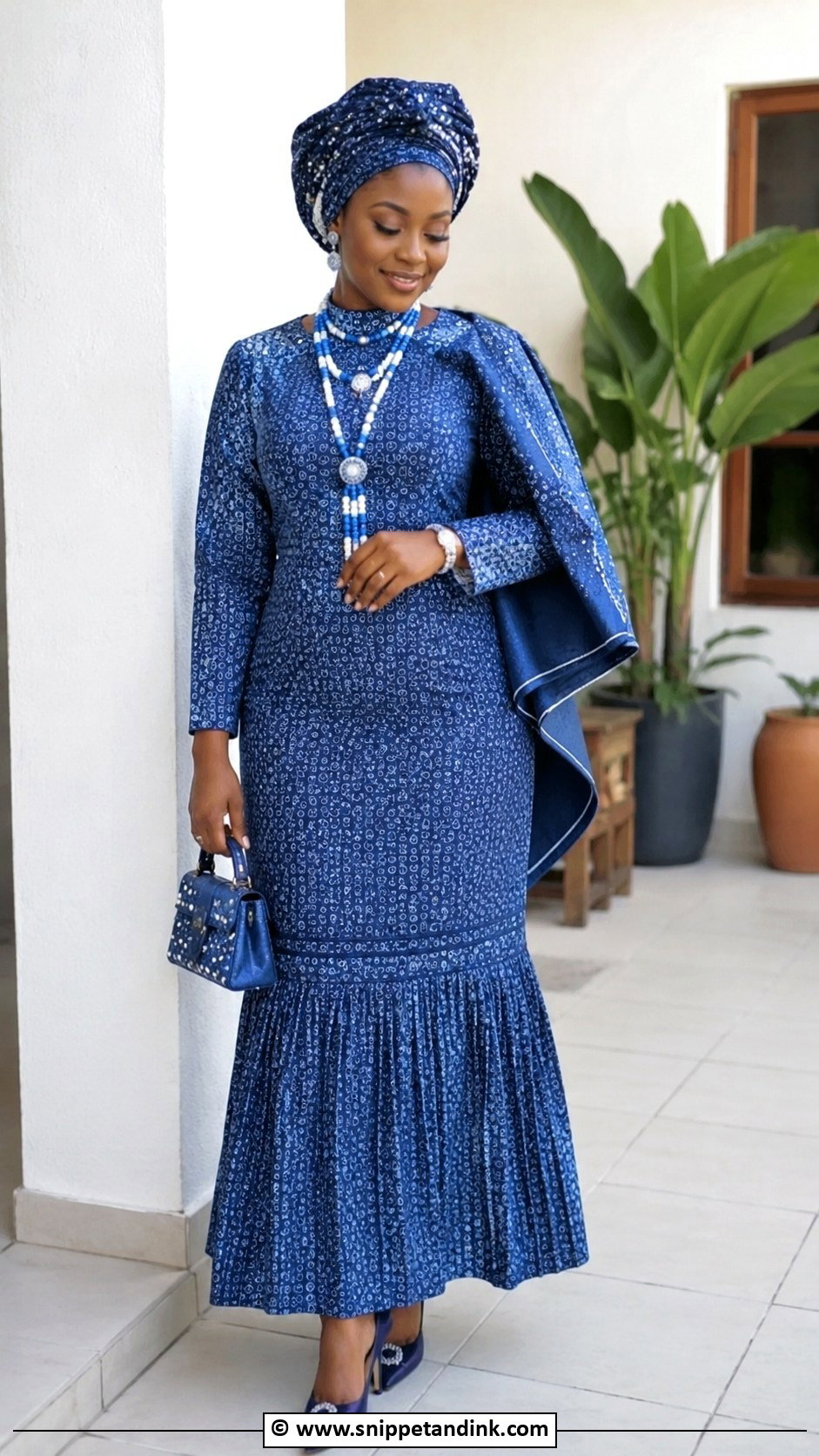
Lobola negotiations are a family occasion first, so a Tswana lobola wedding dress has to be respectful and comfortable before it is anything else. A modest midi or maxi in shweshwe or leteisi works well: fitted top, flared skirt, matching headwrap and a shawl over the shoulders. Low heels or dressy flats make sense if you will be standing, greeting and moving between rooms or a yard for hours. Keep jewelry meaningful but light. A small handbag is enough.
11. Tswana Makoti Wedding Dress
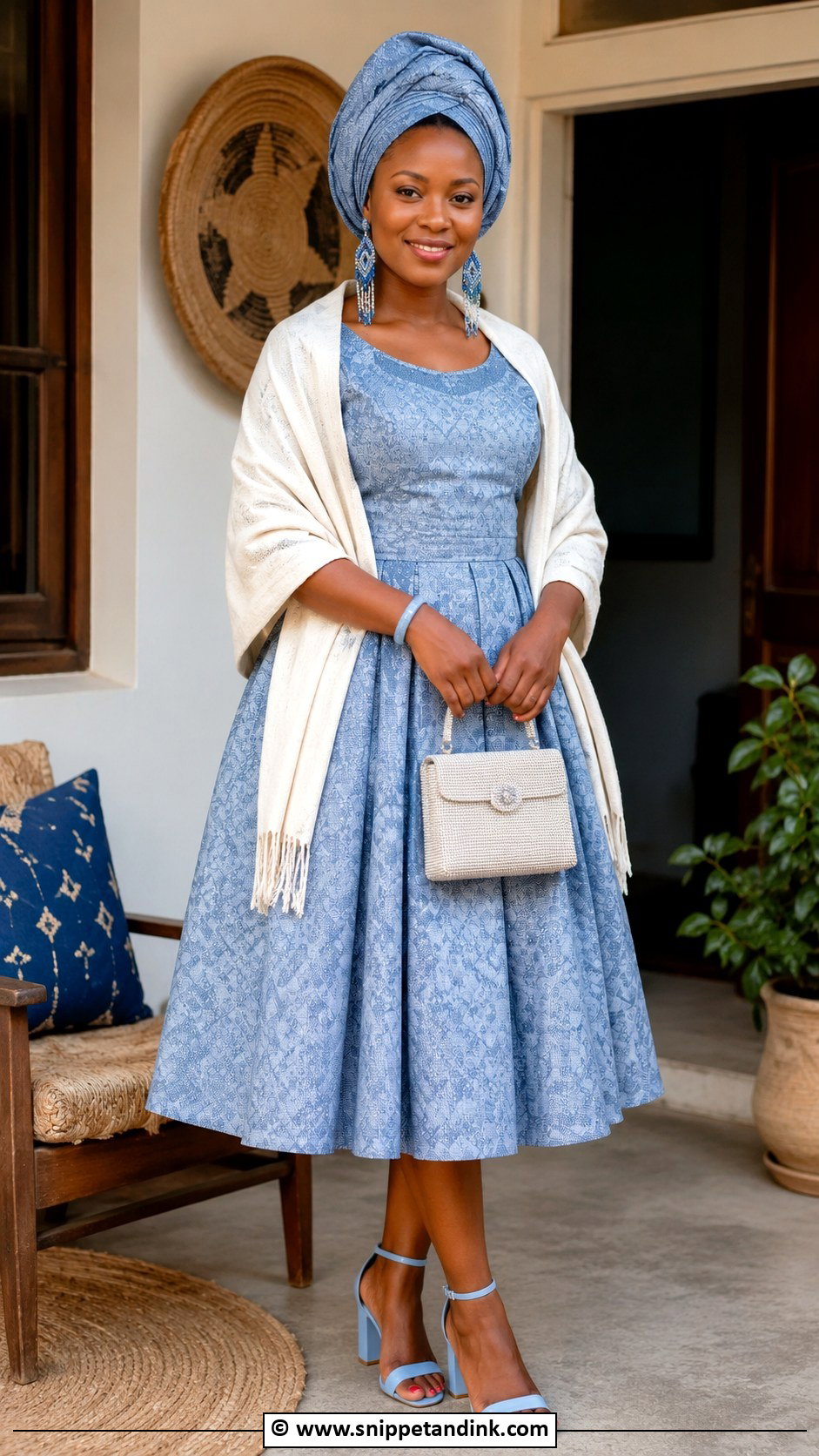
The makoti look reflects respect for a new family. A knee-length or midi shweshwe dress with a matching doek, shawl, beaded earrings and comfortable heels is the classic version; a long fitted dress with a pleated hem or peplum is more formal. Since makoti attire is often worn at family gatherings in the days after the wedding, I plan it as a small capsule: two or three pieces in blue, brown or black-and-white that can be mixed, rather than one dress worn repeatedly.
12. Red Tswana Traditional Wedding Dress
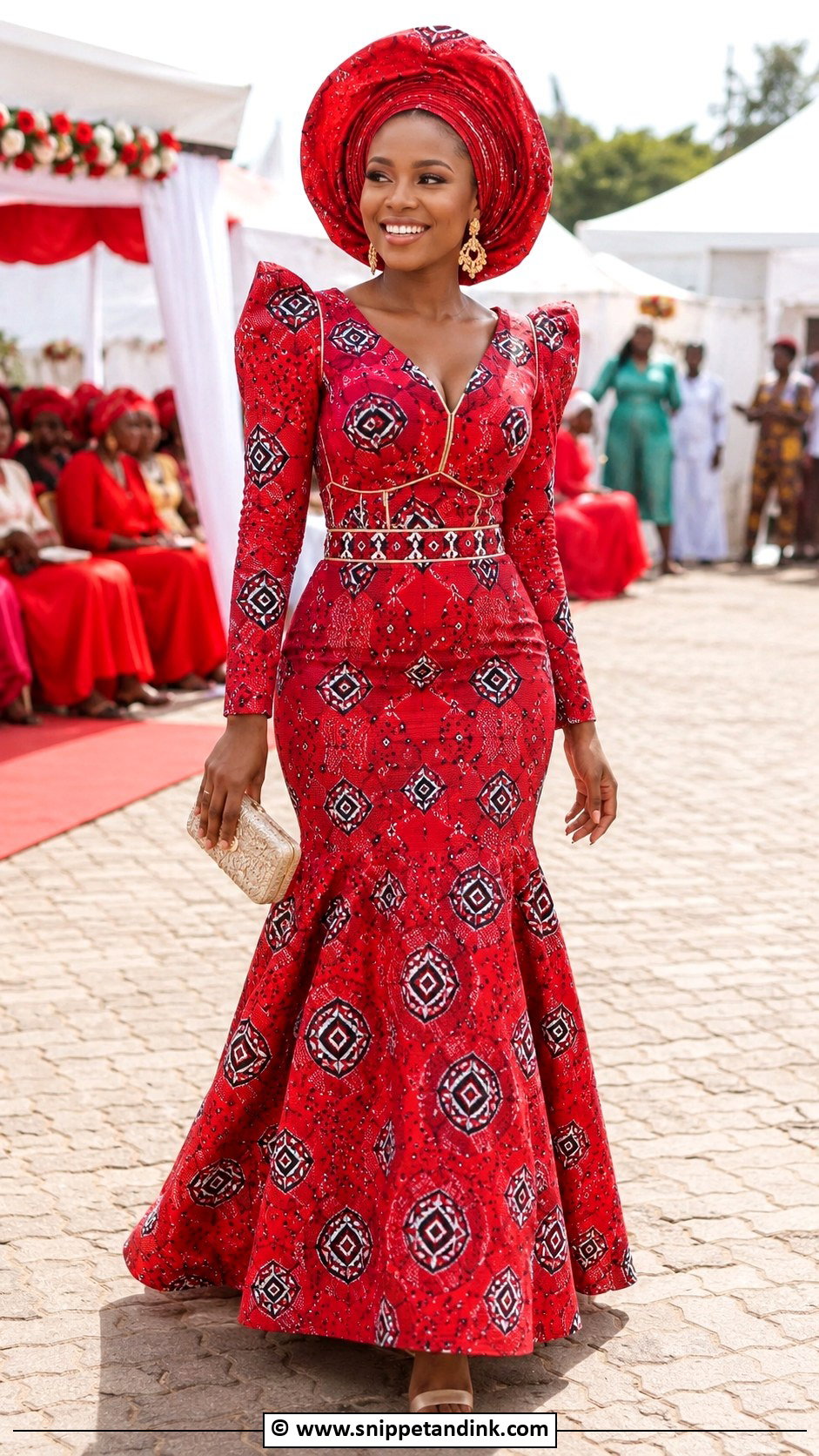
Red brings energy, especially with white, black or gold detailing. A full-length gown with a fitted waist and flared skirt reads strongly in family photos. Add a matching red doek, gold earrings, neutral heels and a small clutch. Red prints vary a lot between bolts, from tomato to deep wine, so buy all of the fabric, including the doek, at the same time. With a very busy print, keep the accessories plain.
13. Black And White Tswana Wedding Dress
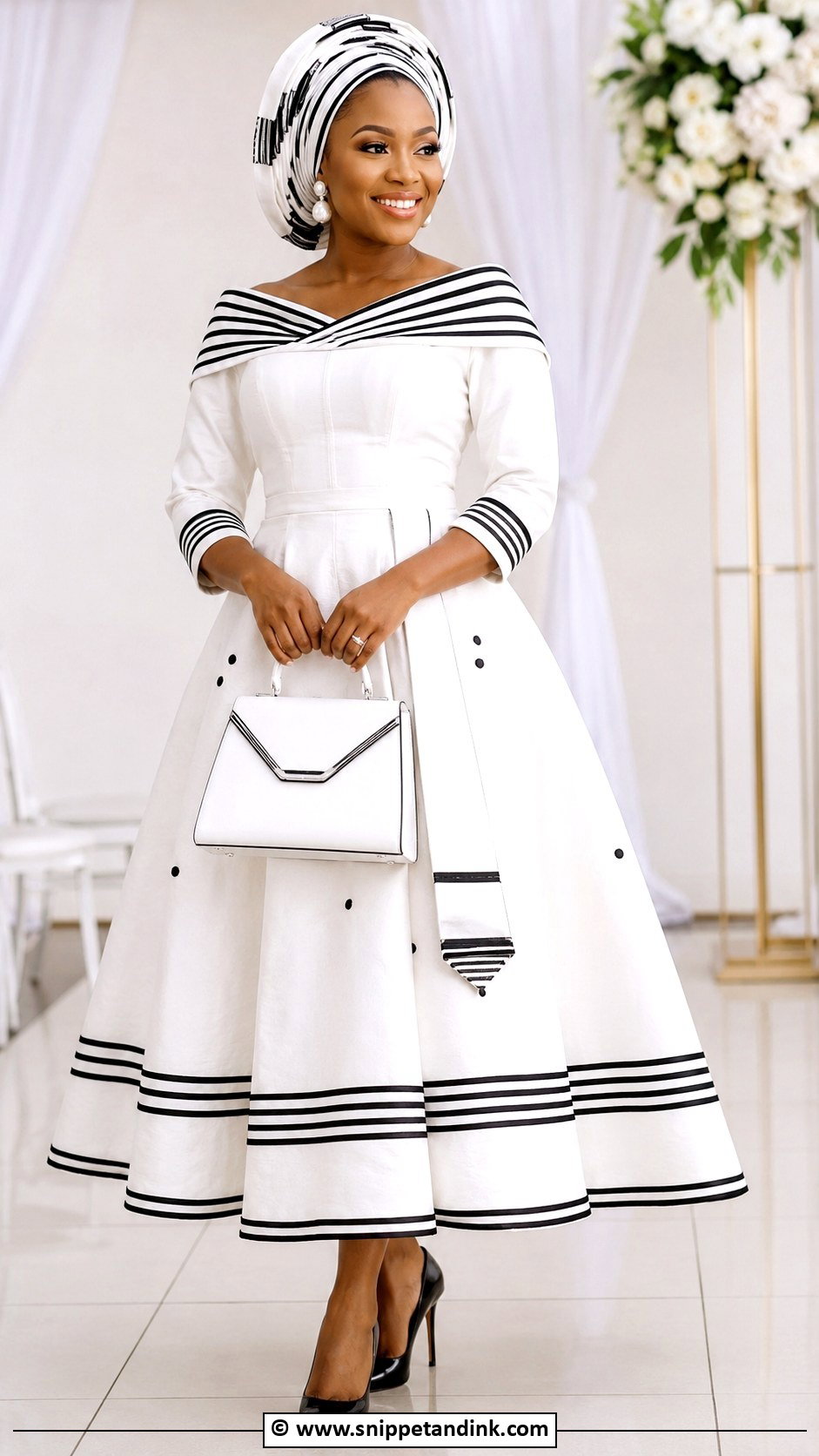
Contrast keeps a black and white print sharp while still traditional. A long A-line, a fitted mermaid or a two-piece skirt set all work in this palette. Black or white heels, a matching headwrap, pearl earrings and a structured handbag complete it. It is the easiest palette to coordinate with a groom, since a monochrome trim works on almost any suit. Bright sun can make fine black-and-white patterns flicker on camera, so I suggest a medium-scale print over a tiny one.
14. Turquoise Tswana Wedding Dress
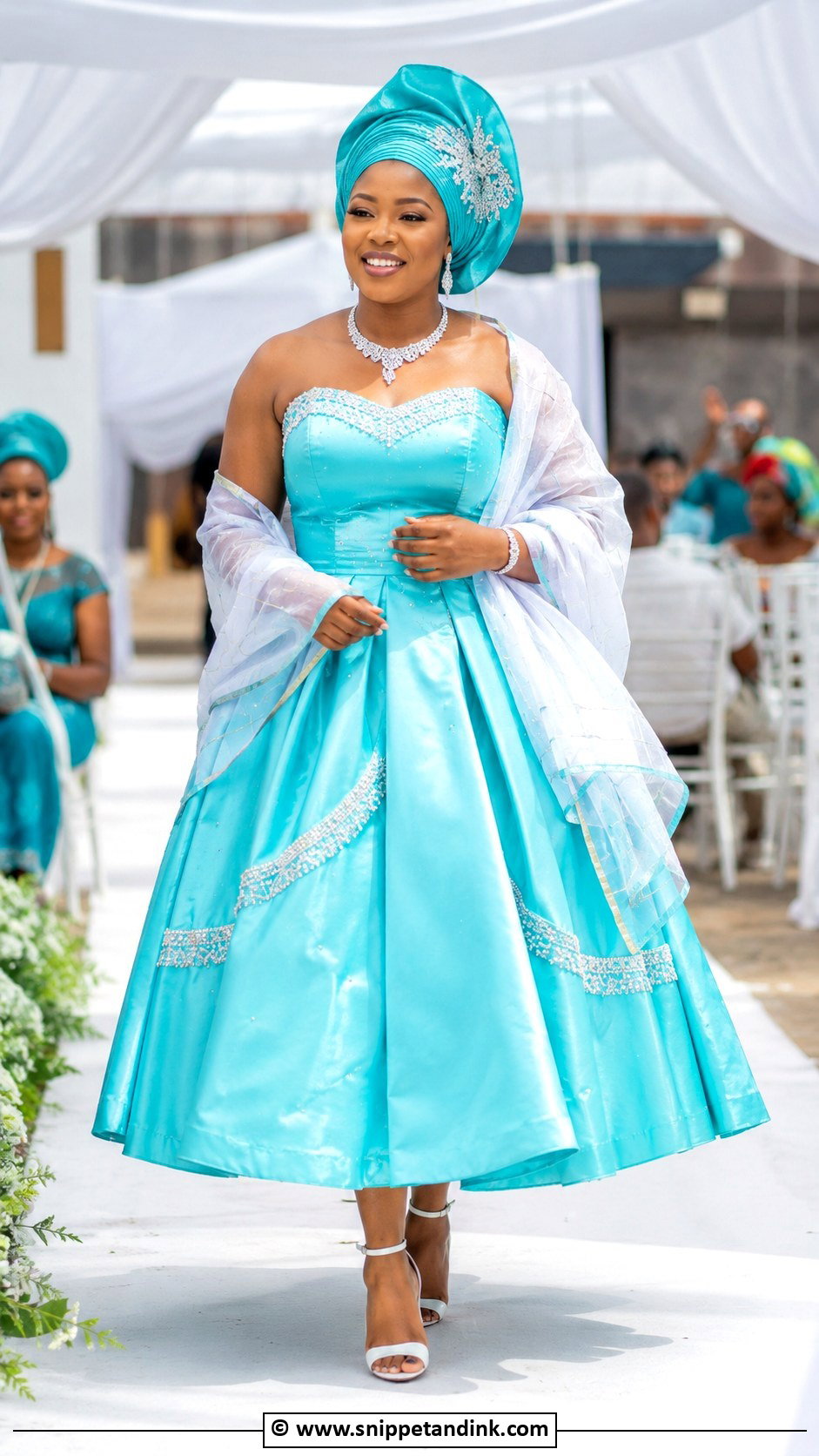
Turquoise sits close to classic blue but reads lighter outdoors, in family courtyards and reception halls alike. A fitted bodice with a full skirt, a matching doek and silver accessories suit it, with white or nude heels. A soft shawl or beaded necklace adds detail. Turquoise dyes fade faster in strong sun than deep indigo, so dry and store this dress out of direct light if you want it for family events later.

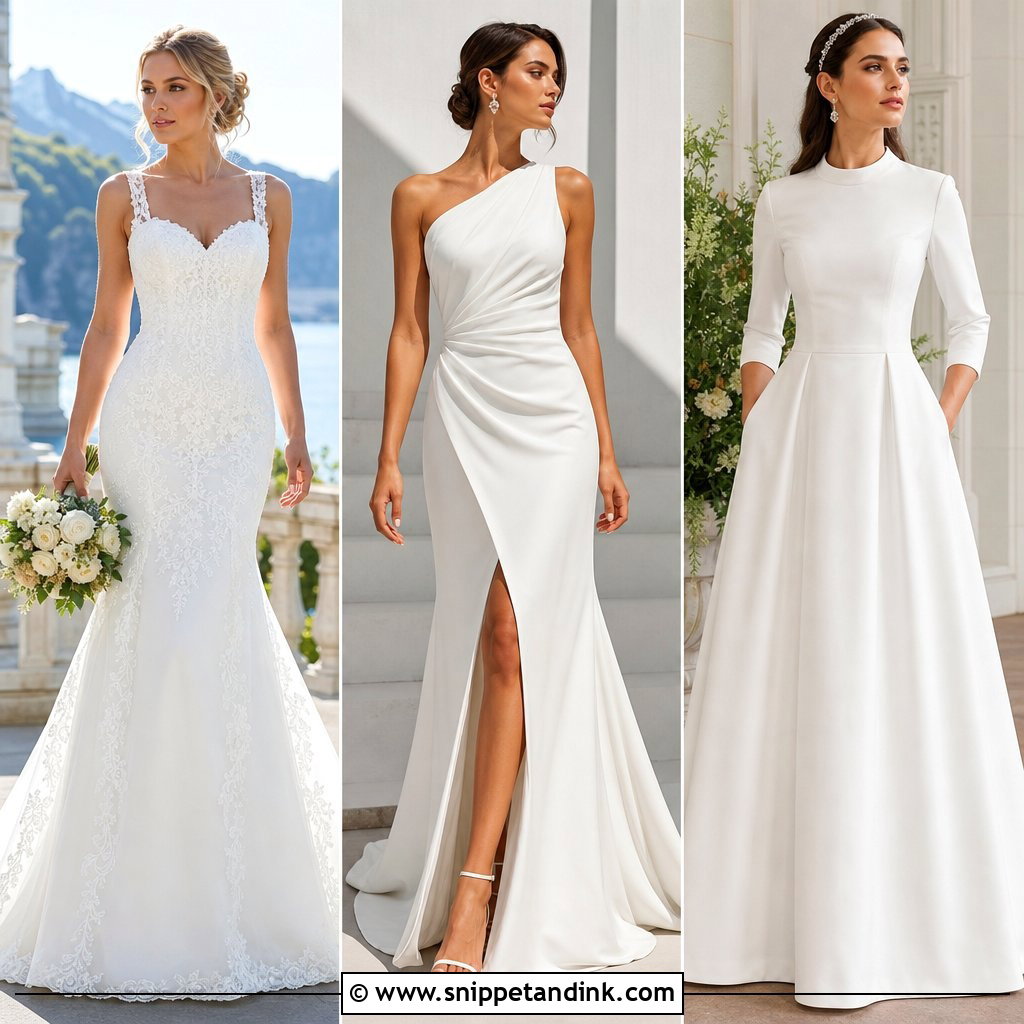
15. Yellow Tswana Traditional Wedding Dress
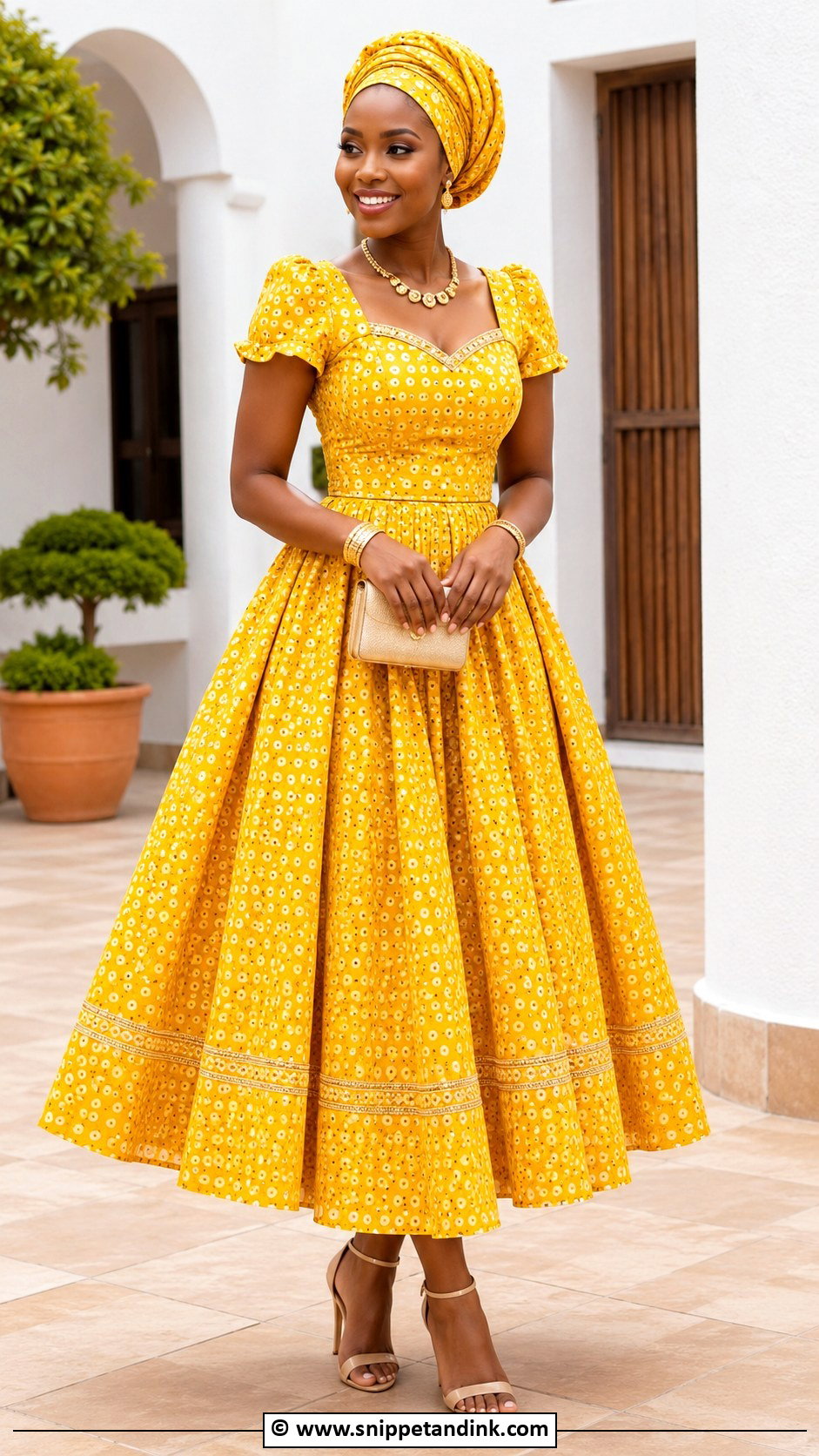
Yellow is sunny and warm, and it holds up best when balanced with white, brown, navy or black detail. A long flared gown with a fitted top gives a flattering line, finished with a matching headwrap, gold jewelry and neutral heels. Since the color is already bright, keep makeup fresh and accessories simple. Daylight is where yellow shines; under warm indoor bulbs it can turn slightly orange, so check it in both.
16. Tswana Beaded Wedding Dress
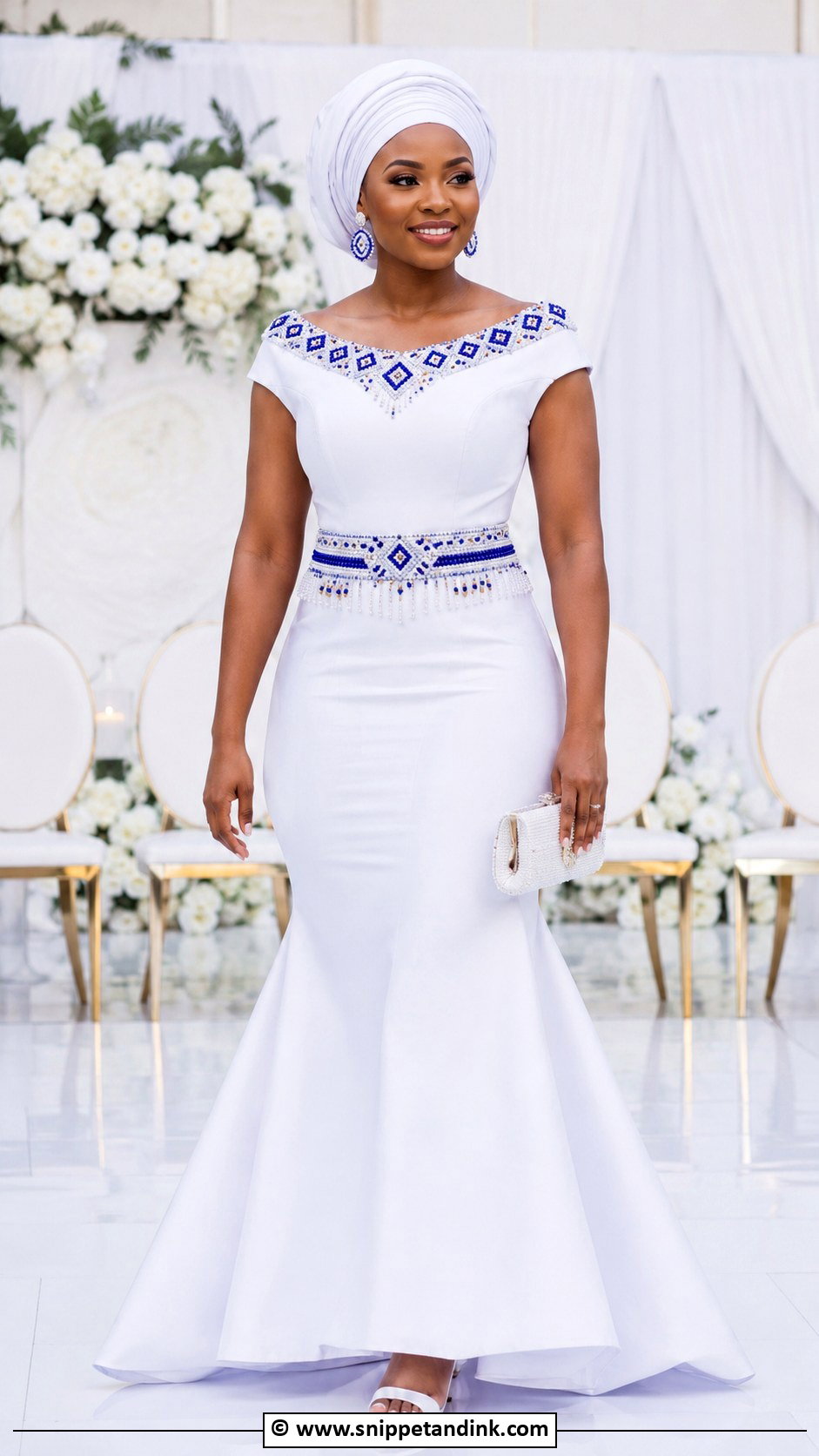
Beadwork adds texture and handmade meaning around the neckline, waist, sleeves or hem. Balance is the whole skill: beads should frame the leteisi, not bury it. A floor-length gown with a clean shape gives the work room, completed by matching beaded earrings, a simple headwrap and elegant heels. Heavy beading weighs down light cotton, so I ask the beader to stitch onto a backing strip that is then sewn in. It keeps the print from puckering and lets the beadwork be removed before washing.
17. Tswana Lace And Shweshwe Wedding Dress
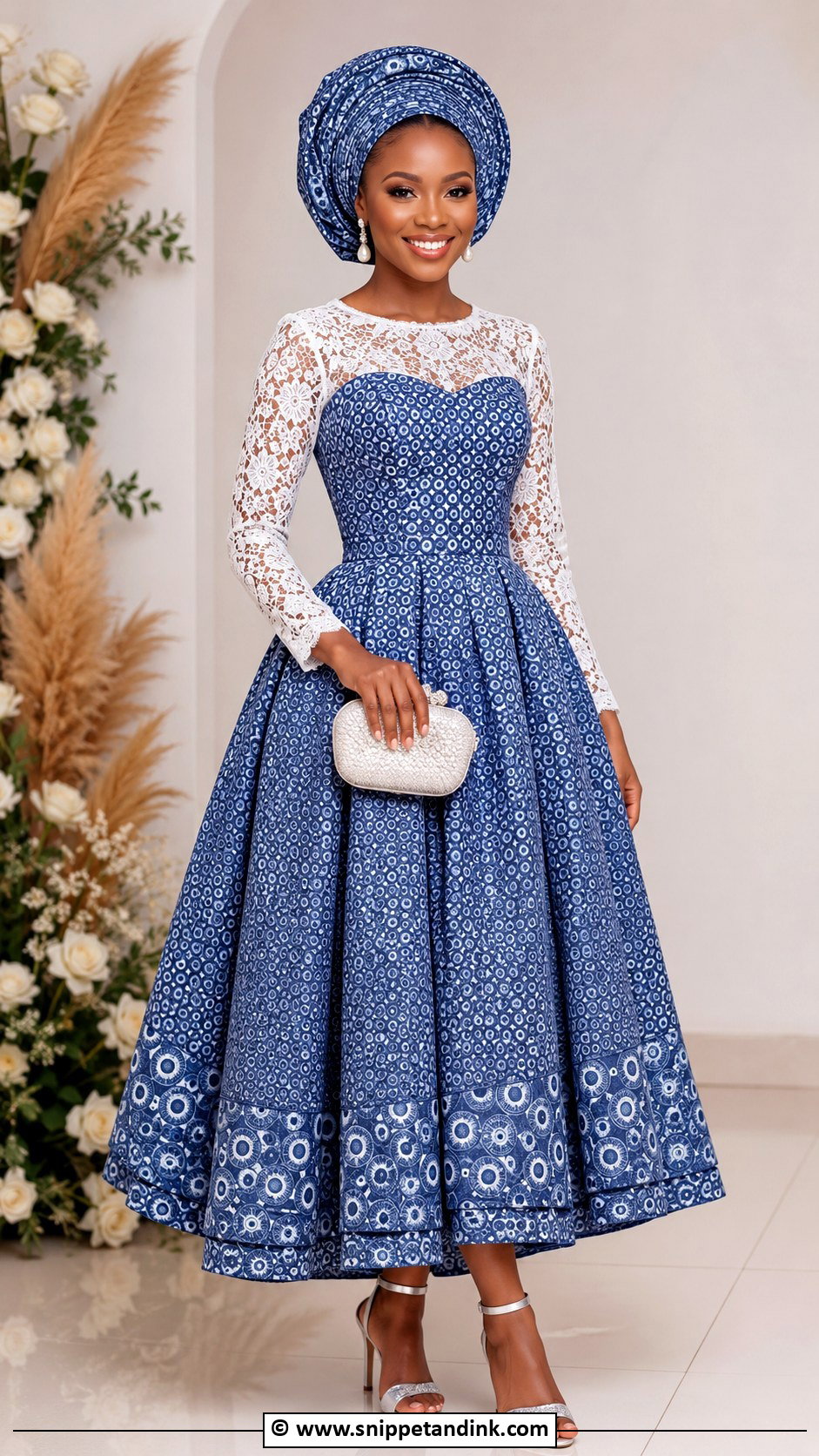
Lace softens the cultural print when it is placed on the sleeves, neckline, bodice or upper back, with shweshwe shaping the skirt or main panels. Match the lace to the mood of the fabric: white lace with blue print, black lace with monochrome. A matching doek, pearl earrings, white or silver heels and a small clutch keep it polished. The two fabrics behave differently, so the lace needs its own lining or it will drop and stretch while the cotton stays put.
18. Tswana Wedding Dress With Headwrap
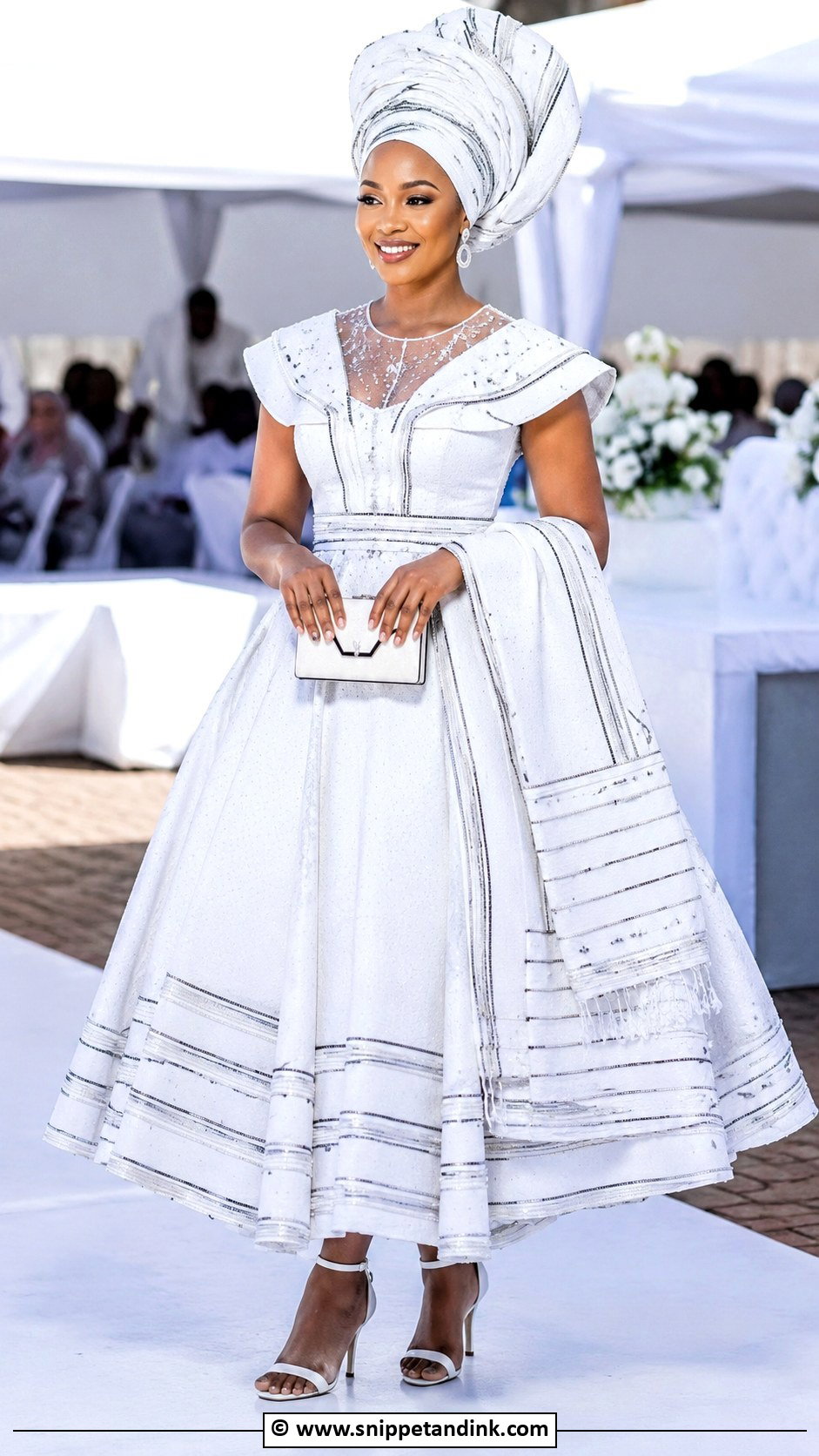
The headwrap is not an afterthought; it is half the silhouette. It can match the gown exactly or use a plain contrast fabric. A full skirt, fitted bodice and a structured doek together give height and presence. Since the wrap already frames the face, earrings should be visible but light. Heels, a shawl and a neat clutch finish it. For a doek that holds its shape all day, I lightly starch the cloth and build it around a soft base so the folds do not collapse by evening.
19. Tswana Wedding Dress With Shawl
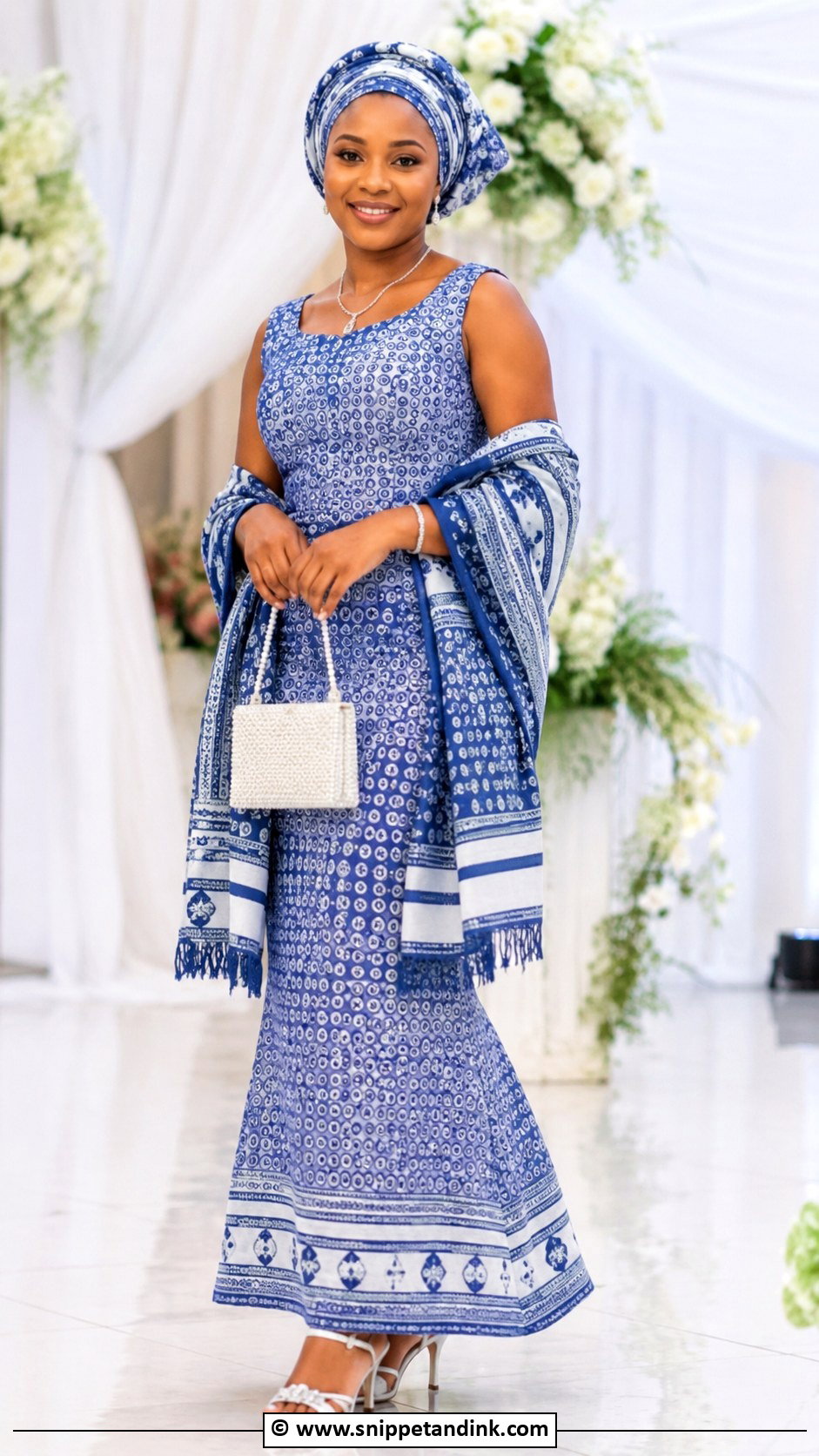
A shawl gives a layered, ceremonial finish and practical flexibility. It can be blue, white or matching leteisi, and it suits sleeveless dresses, off-shoulder gowns or fitted bodices that need softening. Worn over the shoulders for formal family moments, it comes off for photos and dancing. Pair it with a matching headwrap, simple heels and delicate jewelry. Hem the shawl edges rather than leaving them raw; shweshwe frays quickly when it is handled all day.
20. Tswana Short Wedding Dress
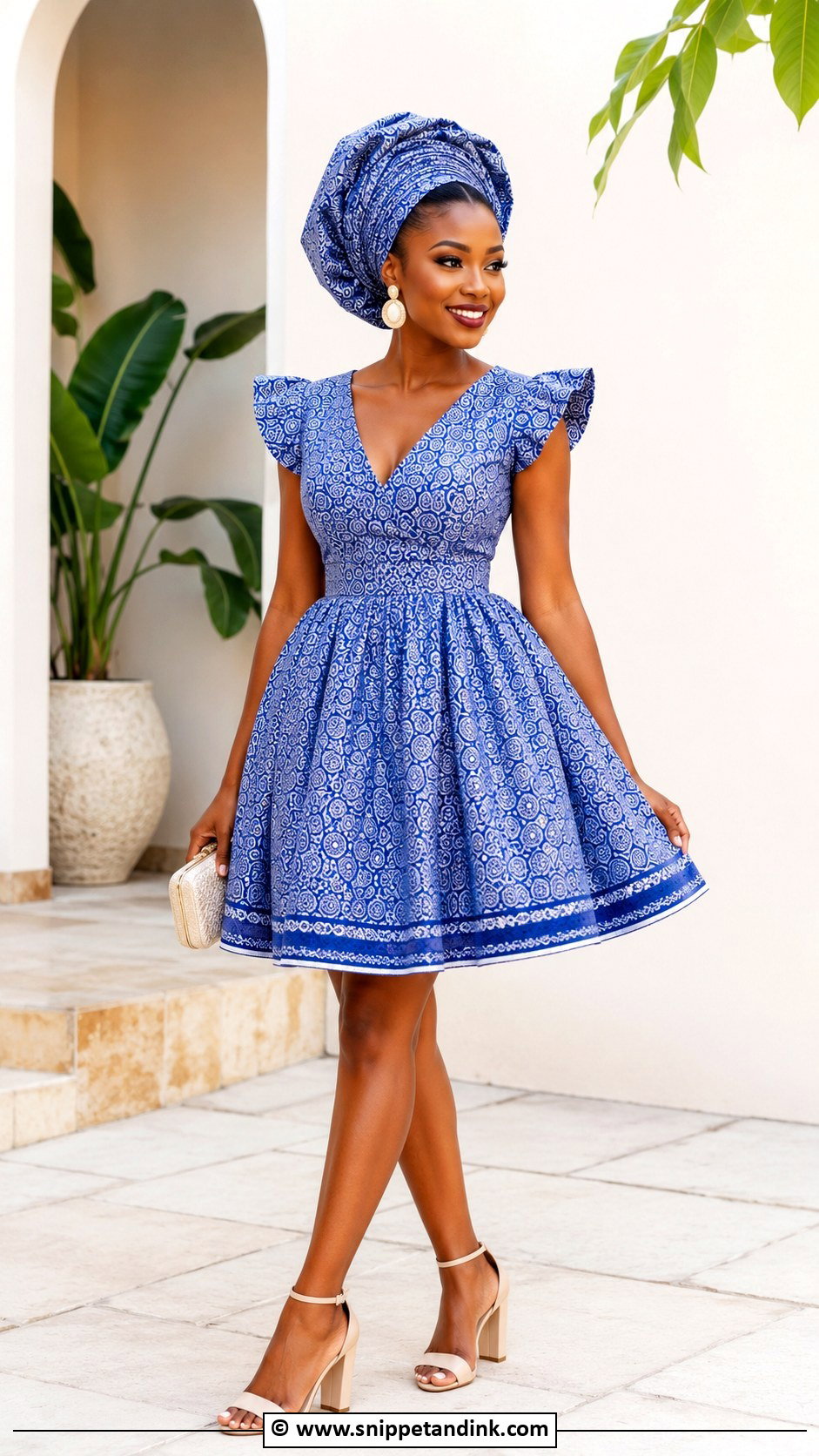
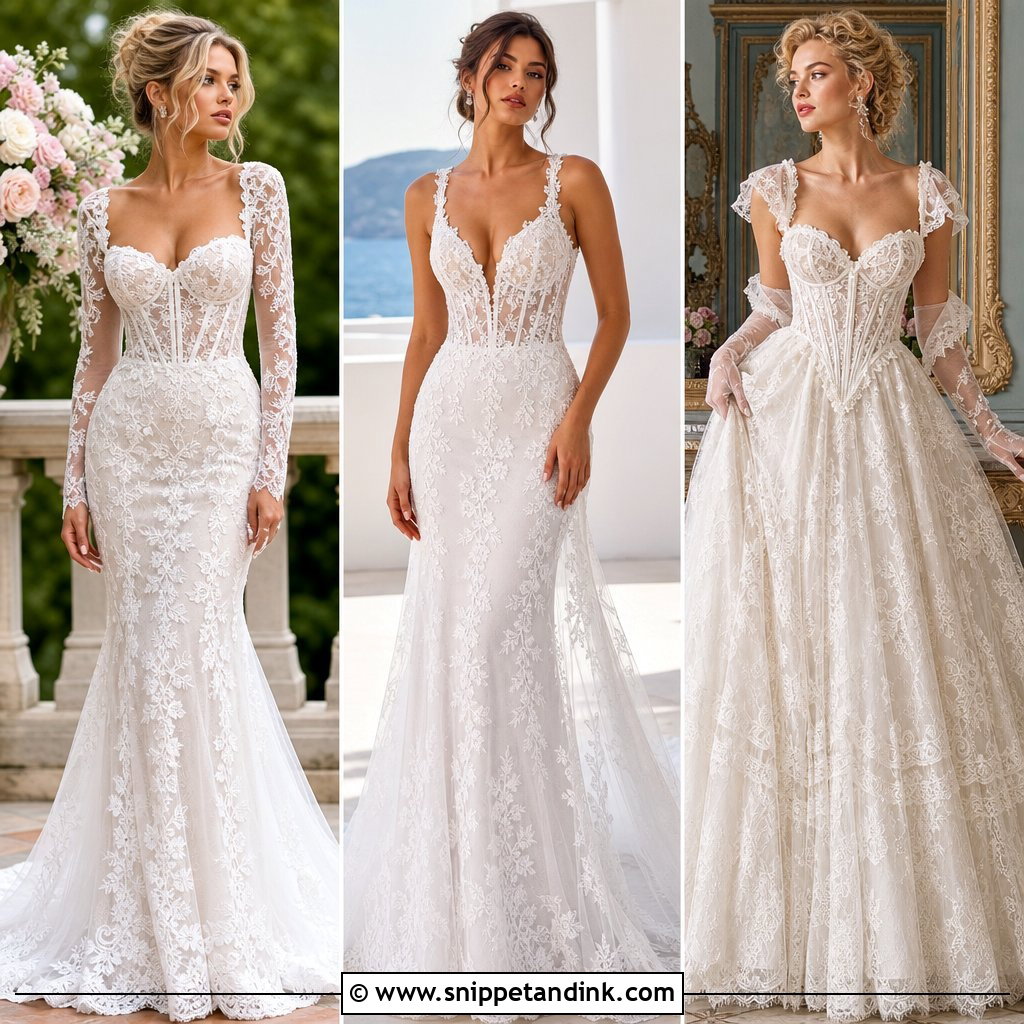
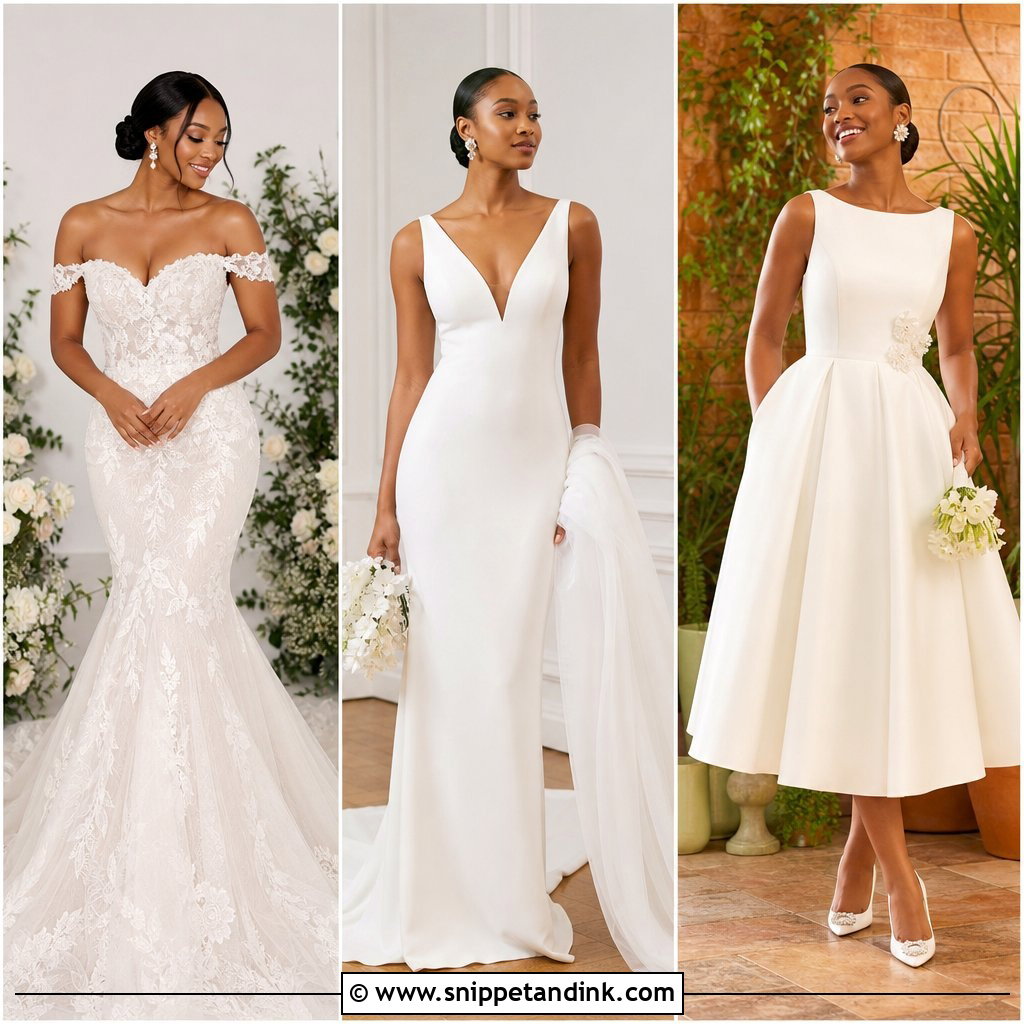
Comfort and movement are why many brides go short. A knee-length or tea-length shweshwe dress looks polished with a matching headwrap, block heels and statement earrings, and the skirt can be flared, pleated or slightly fitted. It suits lobola, civil wedding moments or a second look after the main ceremony. Quality fabric and a crisp waistline are what keep a short dress looking bridal rather than casual, so this is not the place to economise on cloth.
21. Tswana High Low Wedding Dress
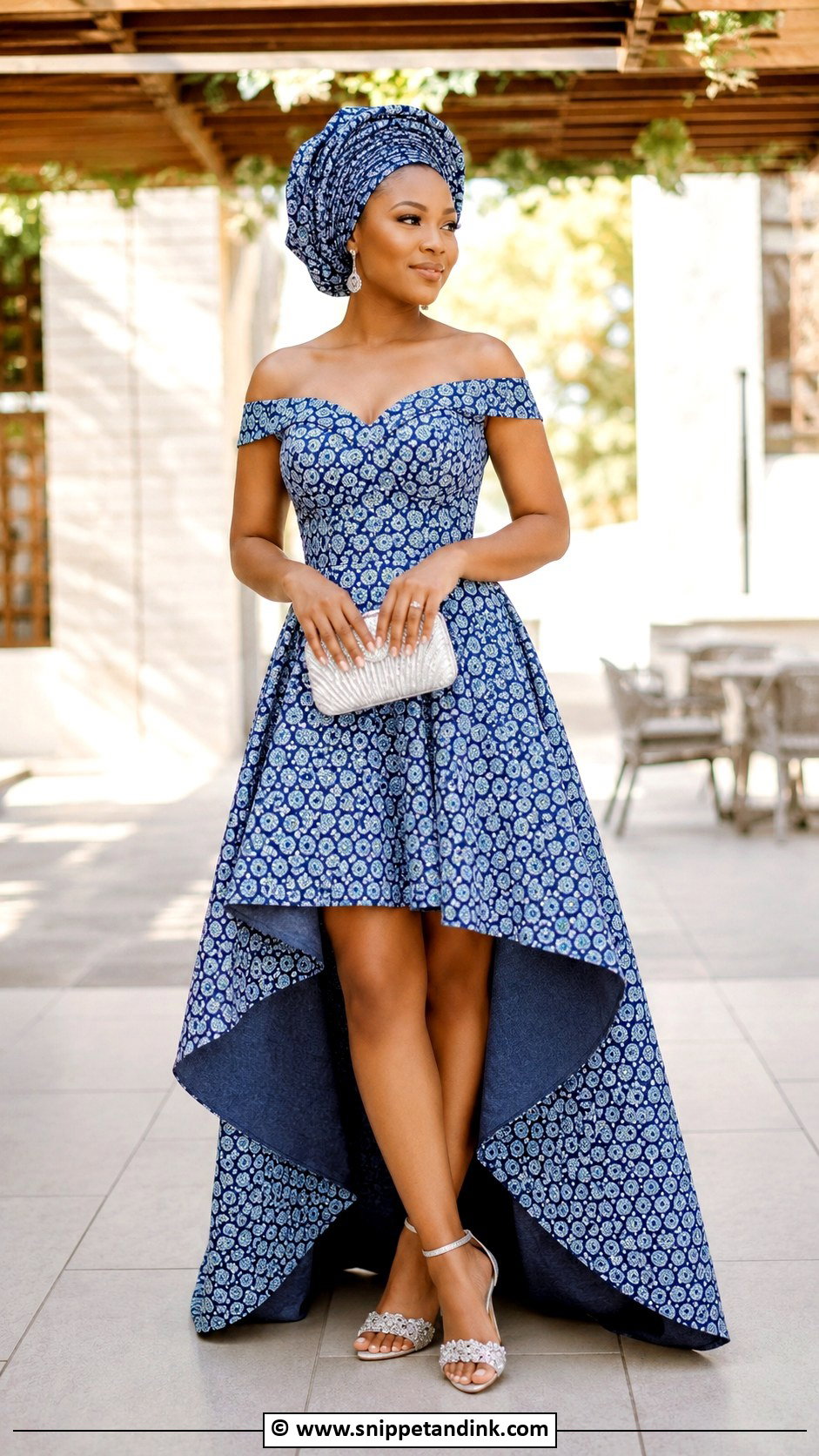
The shorter front of a high low hem shows off the shoes, and the longer back adds movement. Shweshwe suits it because the fabric has enough body to hold the curve without collapsing. Embellished heels, a matching doek and a simple clutch complete the outfit, with a fitted bodice or off-shoulder top to balance the uneven hem. Get the hem curve right on a dress form, because a dip that looks dramatic on a hanger can look unfinished when you walk.
22. Tswana Wedding Dress With Train
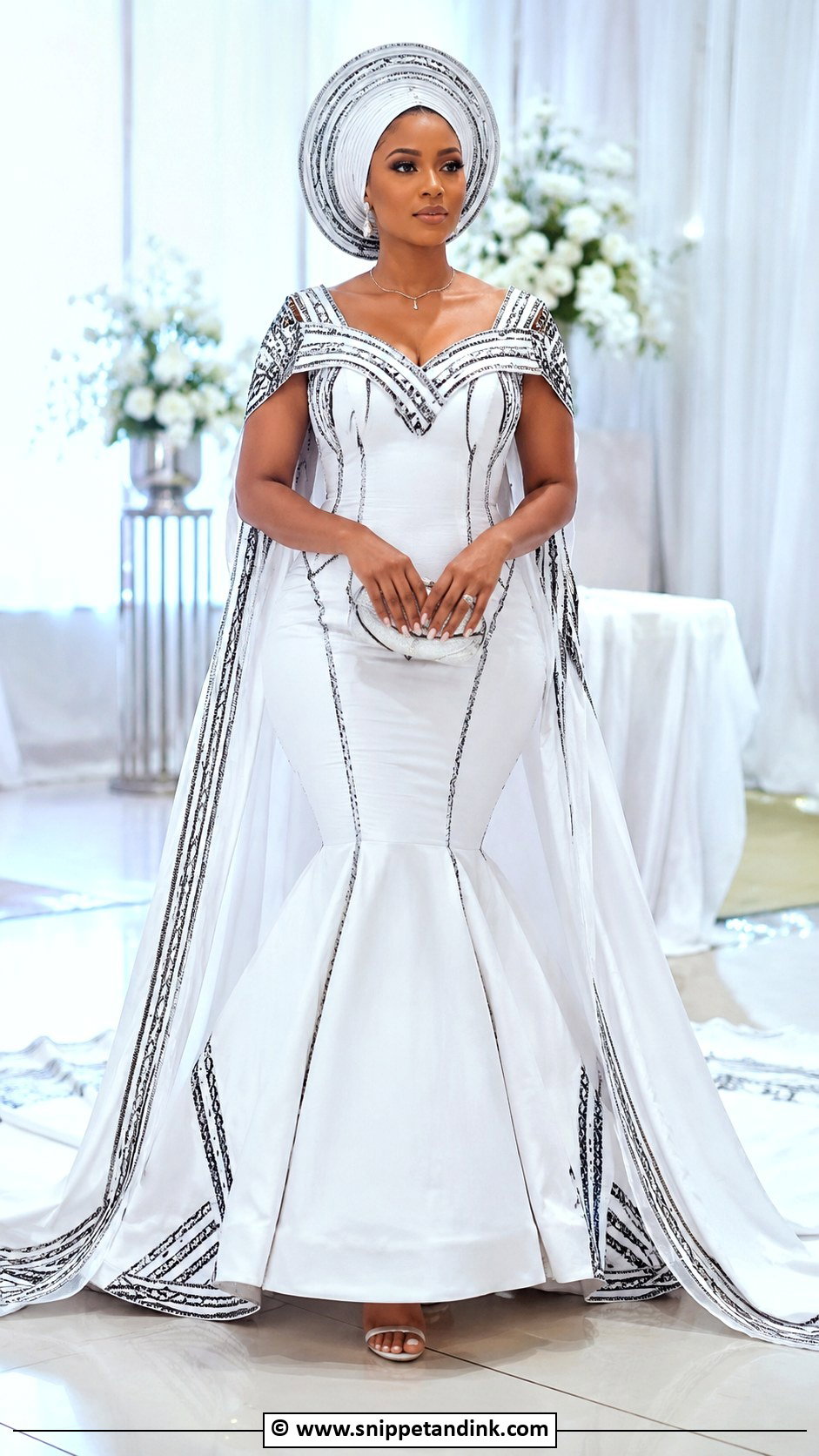
A Tswana wedding dress with a train makes the entrance on its own, so jewelry can stay minimal. The train might be matching leteisi, plain satin, lace or a mix. A fitted mermaid or structured ball gown supports the drama best. Think about the ground: a cotton train dragged across a dusty yard or grass picks up marks fast, so I add a hidden wrist loop or a simple bustle for the celebration after the entrance.
23. Tswana Skirt And Blouse Wedding Outfit
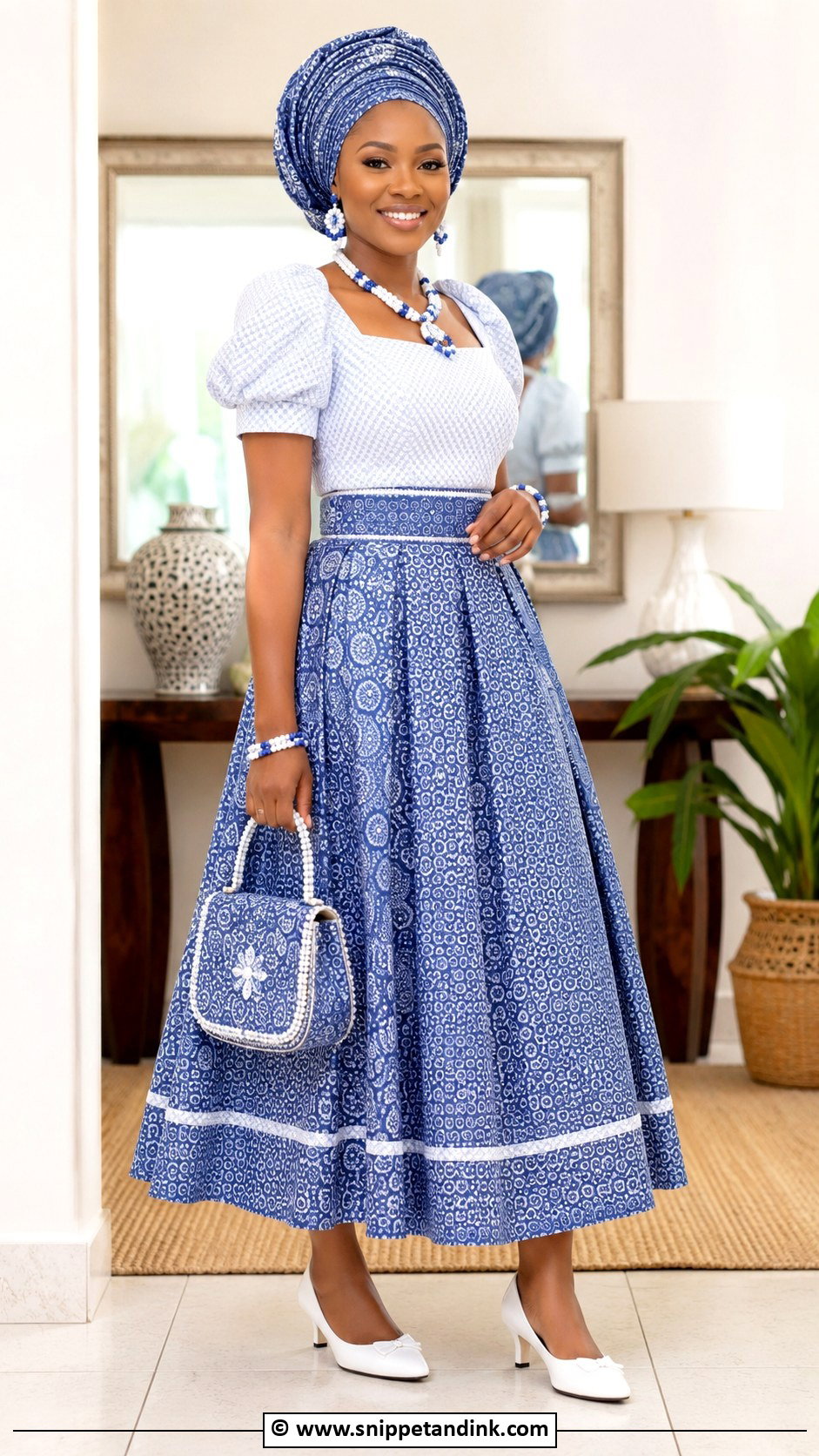
A skirt and blouse is one of the most practical outfits for a bride or makoti. A high-waisted maxi skirt with a fitted blouse gives shape and comfort, and the blouse can have puff sleeves, a peplum waist or a clean round neck. Finish with a matching doek, low heels and beaded accessories. Each piece is tailored separately, which helps if your top and bottom are different sizes, and it moves easily between lobola, family introductions and the main celebration.
24. Tswana Couple Matching Wedding Outfit
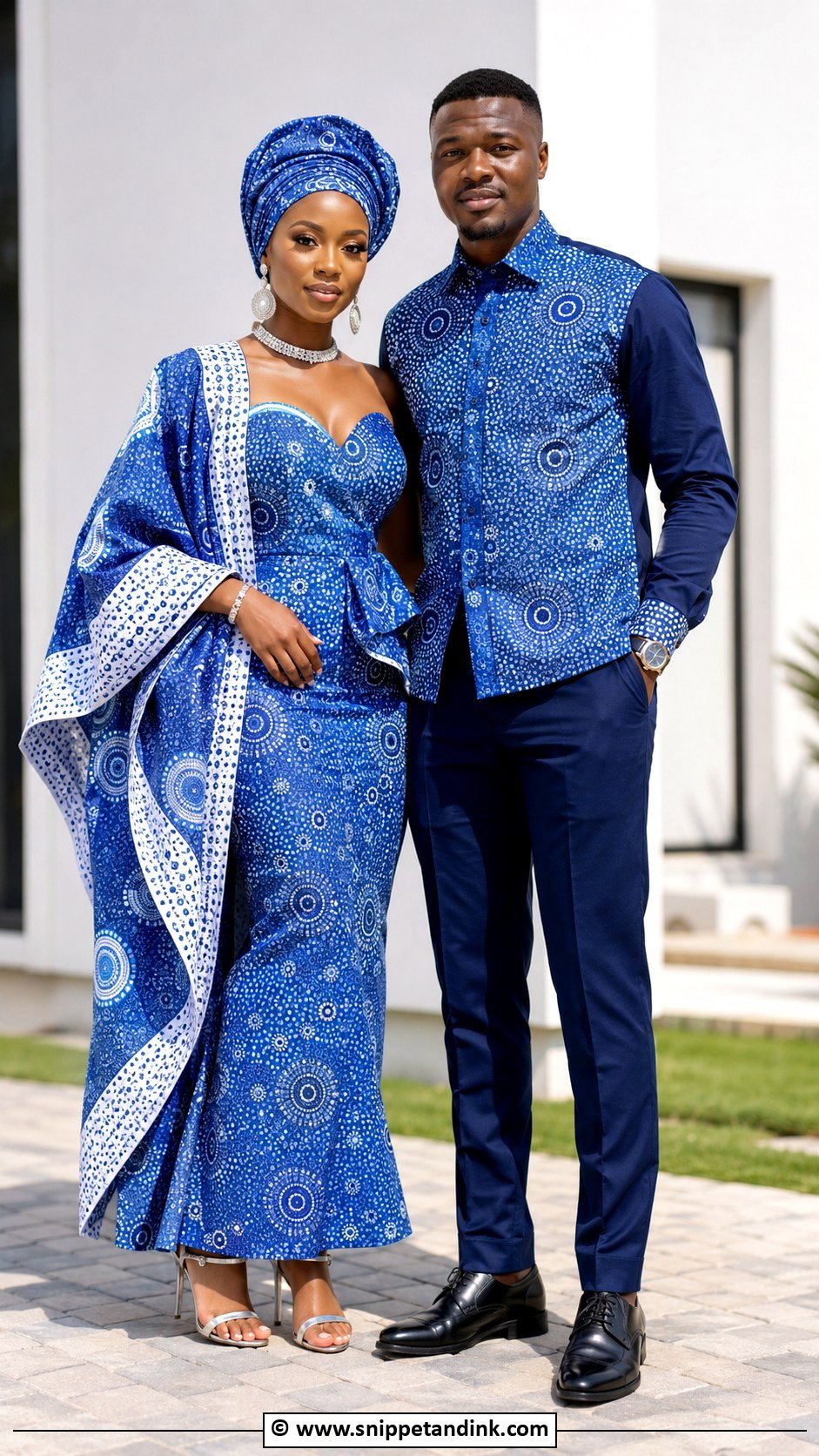
Coordination, not overmatching, is the aim with couple outfits. The bride might wear a shweshwe gown, skirt set or peplum dress while the groom carries the same fabric in a shirt, vest, blazer trim or pocket detail. Her look can include a headwrap, heels, jewelry and a shawl, and his can pair the print with tailored trousers and polished shoes. Cut both from the same bolt so the print color matches exactly in photos. Traditional ceremonies and lobola celebrations suit this most.
25. Modern Tswana Traditional Wedding Dress
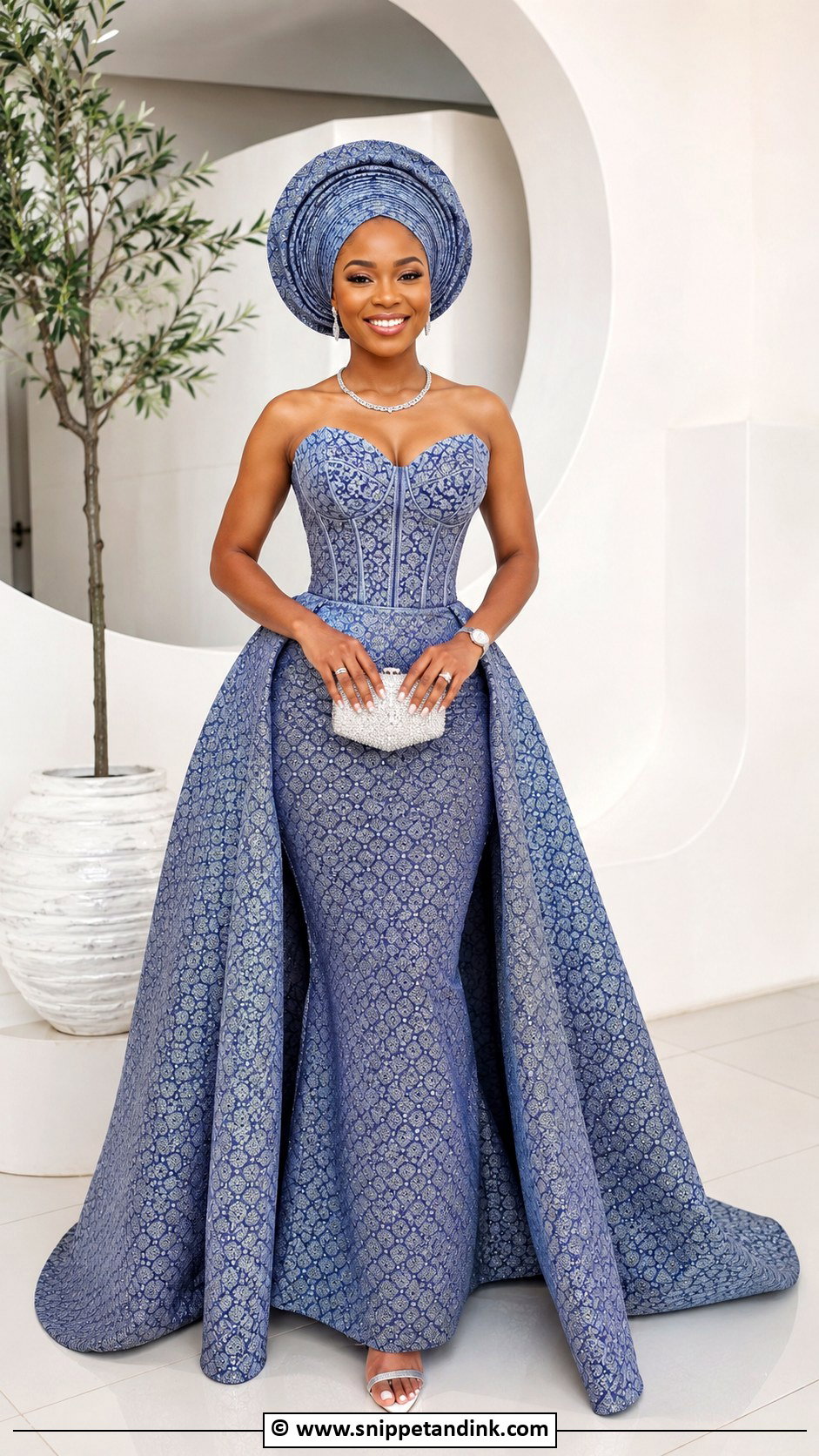
Modern shapes work with leteisi and shweshwe as long as the tailoring is sharp: corset bodices, clean necklines, detachable overskirts, puff sleeves, sleek mermaid hems or structured capes. The outfit should still feel complete with a matching headwrap, elegant shoes, jewelry and a bag or shawl. Classic blue is the safe start, though red, turquoise, yellow and monochrome all work. Corset structure in cotton needs proper boning and a firm interlining, or the print wrinkles across the waist after a few hours.
One Outfit or Three? Planning for Lobola, the Ceremony and Makoti Days
Tswana celebrations often stretch across more than one event, and each one asks something different of your clothes. Lobola is a family negotiation, so modest, comfortable outfits suit it best. The main traditional ceremony is where the full skirt, train or ball gown belongs. As makoti in the days afterward, you want practical pieces you can cook, serve and greet in.
Rather than three unrelated outfits, I plan them as a family: the same print in different shapes, or one fabric in different colors. It photographs as a story and keeps the fabric budget sensible. Customs vary between families and villages, so ask the elders on both sides what is expected for each event before the dressmaker cuts anything.
Washing and Keeping a Shweshwe Gown
Printed cotton is hard-wearing but its color is not. Wash it inside out by hand or on a gentle cold cycle with mild soap, never with whites, and dry it in the shade. Strong sun fades blues and turquoises faster than you would expect.
Before storing, remove any detachable beadwork, press the pleats on the reverse and fold the gown with tissue between the layers. A cotton bag in a dry cupboard is better than plastic, which can hold damp and leave marks on the fabric.
Leteisi, a Doek and a Long Day With Family
Every look here, from pleated leteisi gowns to bold red dresses, lace combinations, matching couple outfits and modern two-piece sets, can be styled as a complete head-to-toe outfit. What decides it is your comfort, your family setting, the fabric you love and how much drama you want. The doek, shawl, beadwork and shoes pull it together. Start with the fabric, give your dressmaker time, and build the rest of the outfit around how you will spend the day.
You'll Like These Ideas:







Leave a Reply