
The dupatta is the piece I spend the most time on when I dress wedding guests, because it changes an outfit more than any jewellery can. A plain kurta becomes festive, a heavy lehenga becomes manageable, and the drape decides whether you can actually eat, dance and carry a plate. The looks below run from cotton suits and Anarkalis to sharara sets, lehengas and fusion outfits. The rule I keep coming back to is balance: a worked dupatta wants a quiet outfit, and a heavily embellished outfit wants a lighter drape. Fabric matters as much as colour. Cotton relaxes, chiffon softens, organza holds a shape and silk adds weight. I’ve noted how I’d drape and secure each one for a long day of family events.
How Each Dupatta Fabric Behaves Once It’s Pinned
Most dupatta disasters I fix at weddings come from treating every fabric the same way. Each one has its own habit, and knowing it tells you how to drape and secure it.
- Chiffon and georgette slide constantly. Pin through the kurta’s shoulder seam, not just the fabric, and use two small pins rather than one large one.
- Organza and tissue hold a shape and crease easily. Pleat them loosely and avoid tight folds you’ll see in every photo.
- Net catches on bangles, rings and sequins. Keep it away from heavily embellished blouses.
- Silk and Banarasi are heavy. Narrow pleats and a pin at both the shoulder and the waist stop them dragging the neckline.
- Cotton and block prints are forgiving and barely need pinning, which makes them good for daytime functions.
My small kit for any wedding with dupattas: safety pins in two sizes, a couple of brooch pins, bobby pins for head drapes and a strip of double-sided fabric tape. It fits in a potli and saves more outfits than you’d expect.
1. White Chikankari Suit With Bandhani Dupatta
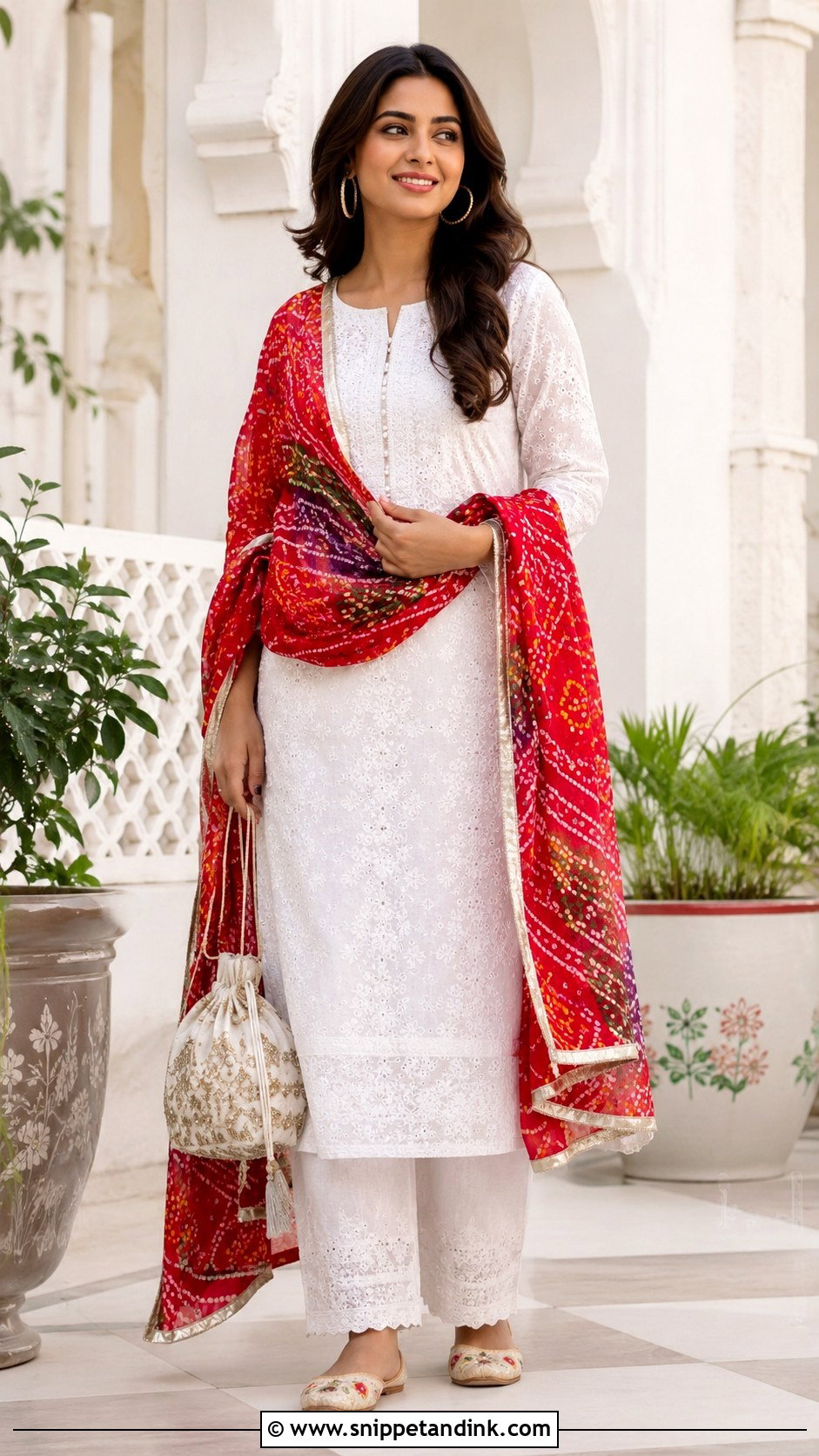
White chikankari is the calmest canvas there is for Bandhani. The tiny tie-dye dots are busy on their own, so a plain or gently flared kurta with matching white pants lets them carry the outfit. Red or pink Bandhani reads most festive; green is fresher for a daytime haldi. Drape it over one shoulder for ease, or across both for a more traditional finish, and add embroidered juttis, small gold hoops and a structured potli. One thing I check: cheaper Bandhani can bleed onto white in heat, so I’d keep the dupatta off the kurta if it’s damp or test a corner first.
2. Black Anarkali With Phulkari Dupatta
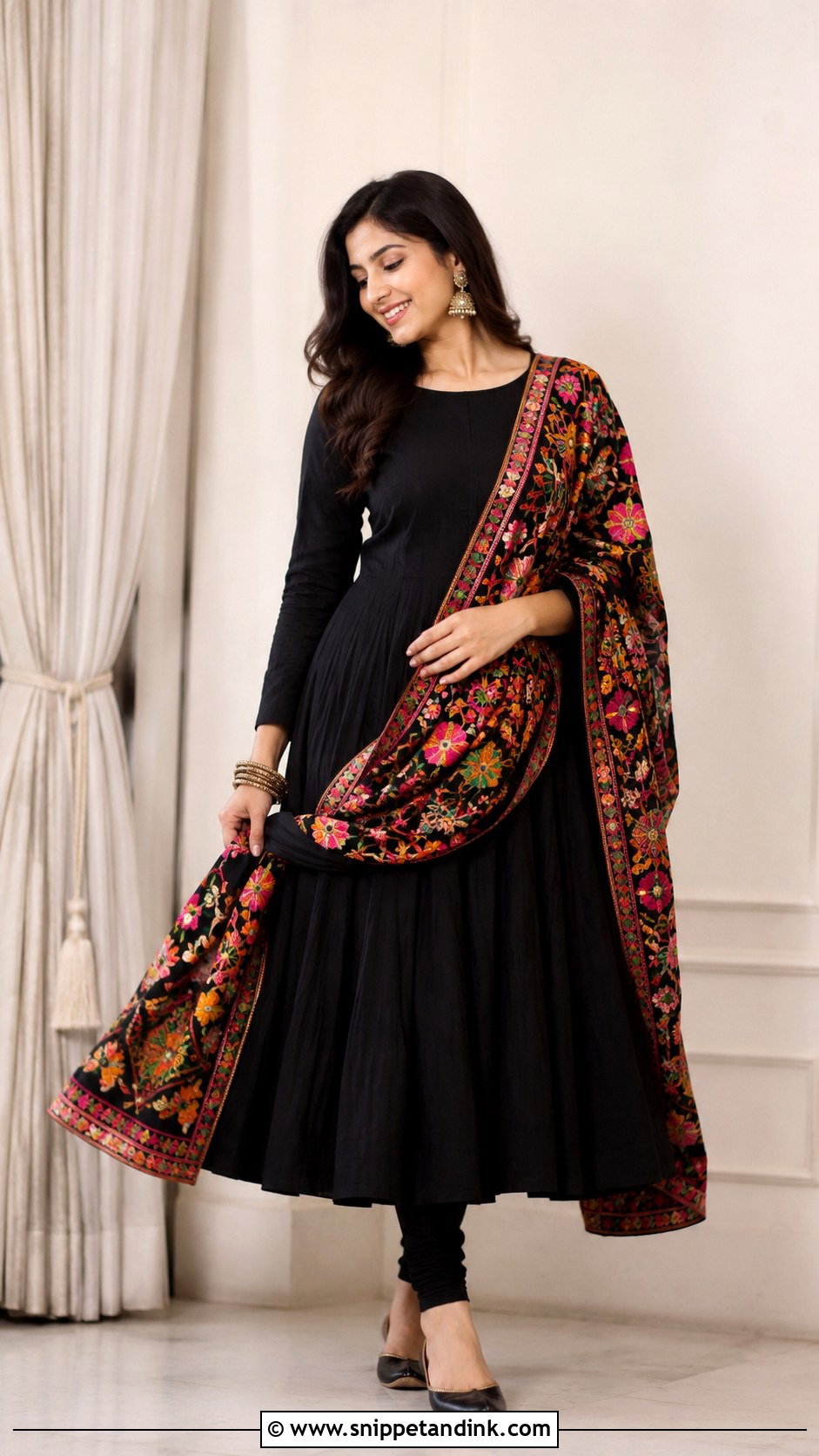
Black is the background that makes Phulkari glow. A solid floor-length or calf-length Anarkali with black churidar keeps the base clean, and a vibrant Phulkari dupatta brings all the colour. I let it fall from one shoulder and across the opposite arm, which shows the most embroidery when you’re standing for photos. Gold jhumkas, stacked bangles and black or metallic juttis finish it; the clutch should be plain. Keep makeup restrained, softly defined eyes and a muted berry lip, so your face isn’t fighting the dupatta. It’s a strong choice for an evening sangeet.
3. Ivory Kurta Set With Banarasi Dupatta
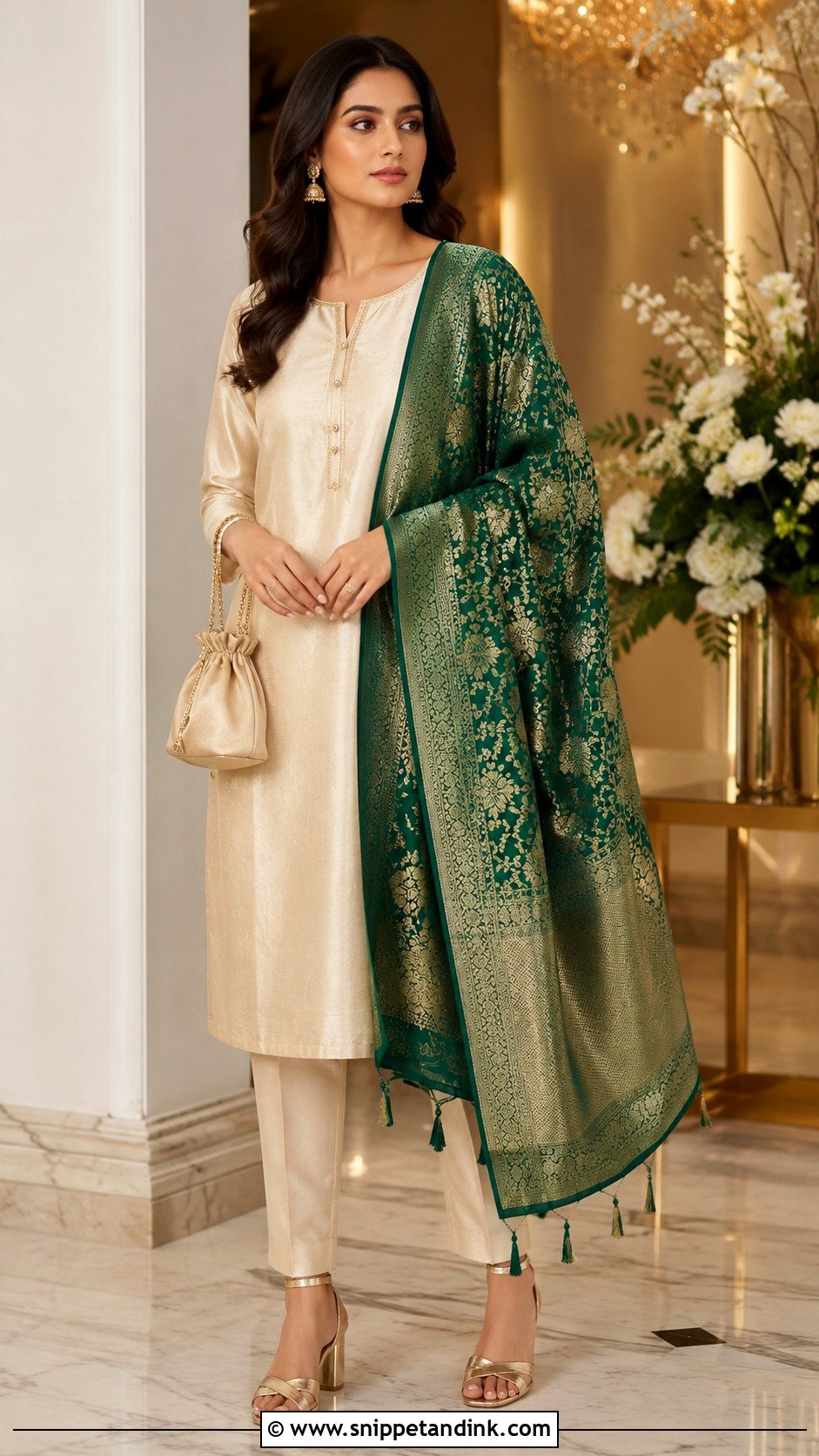
An ivory set with a Banarasi dupatta never looks overdone. Start with a straight ivory kurta and ankle-length pants in silk or cotton silk, then add a jewel-toned Banarasi dupatta in emerald, ruby or deep purple. The zari motifs give all the detail, so the kurta can stay almost plain. Banarasi is heavy, and that weight is what makes it slip, so I make narrow pleats along the length and pin it to the shoulder with a brooch pin through the kurta seam, not just the fabric. Metallic block heels, fine gold earrings and a small satin bag complete it.
4. Pastel Sharara Suit With Organza Dupatta
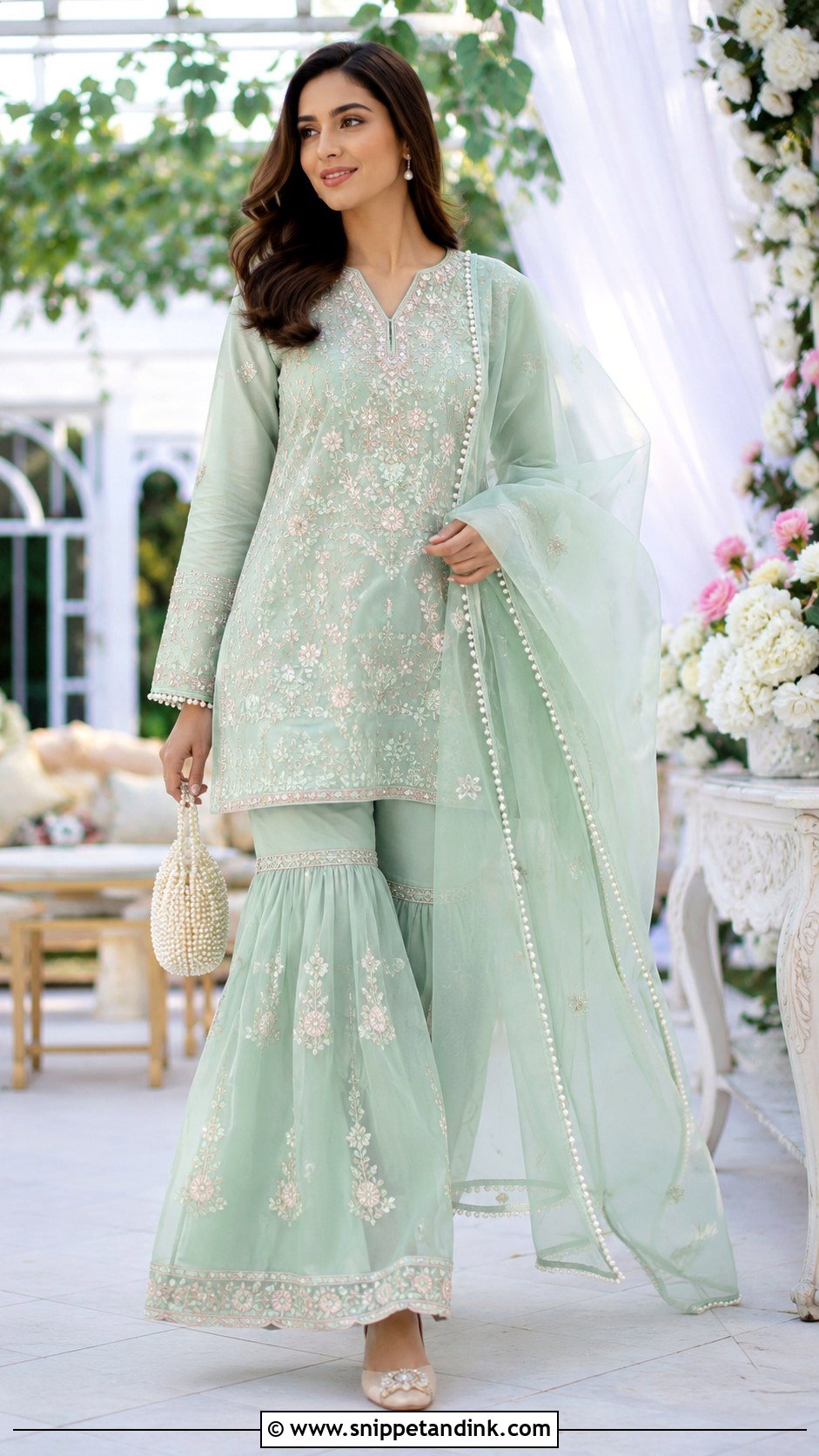
Organza is the right partner for a pastel sharara because it holds its own shape and won’t collapse into the flare. A short embroidered kurta and matching sharara in mint, powder blue or blush, with a scalloped or pearl-trimmed organza border, look light and festive for daytime. Loose over both arms or pinned on one shoulder both work. Pearl earrings, a beaded bag, low embellished heels and loose waves or a low ponytail suit it. Keep the palette tight. Organza is also a little scratchy against bare skin, so if your kurta is sleeveless I’d drape it over the shoulder rather than across the neck.
5. Floral Anarkali With Chiffon Dupatta
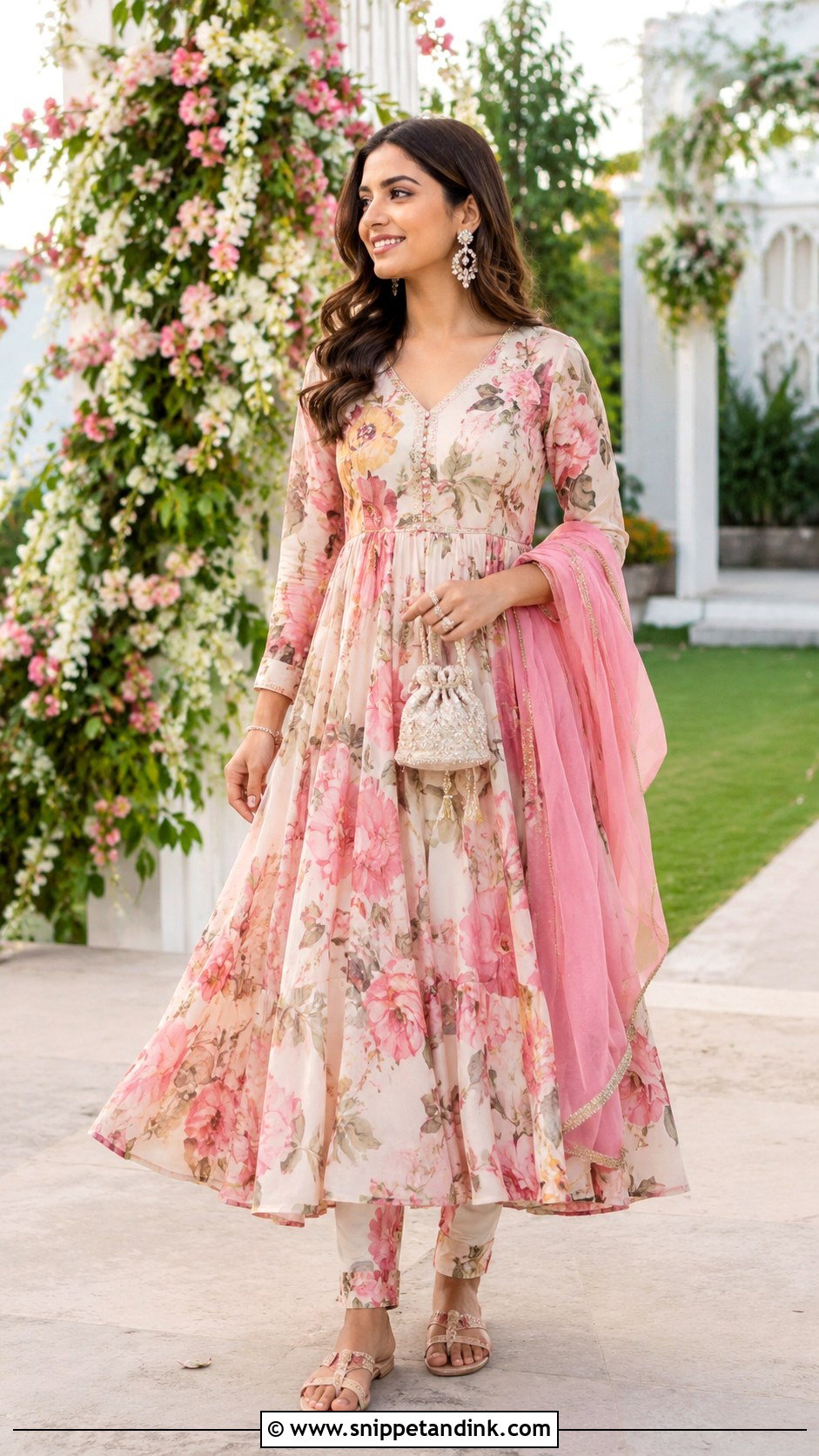
Florals are the easiest way to wear print without losing the graceful Anarkali line. Choose a midi or ankle length with a defined waist and a skirt that moves, slim pants underneath, and a light chiffon dupatta pulled from one shoulder across the front. I pick the dupatta colour from the quietest shade in the print rather than the loudest, which ties it together. Simple sandals, stone earrings and a small potli or crossbody keep it easy for a garden lunch. Big prints want minimal jewellery; small prints can handle bolder earrings or a stack of bangles.
6. Velvet Salwar Suit With Net Dupatta
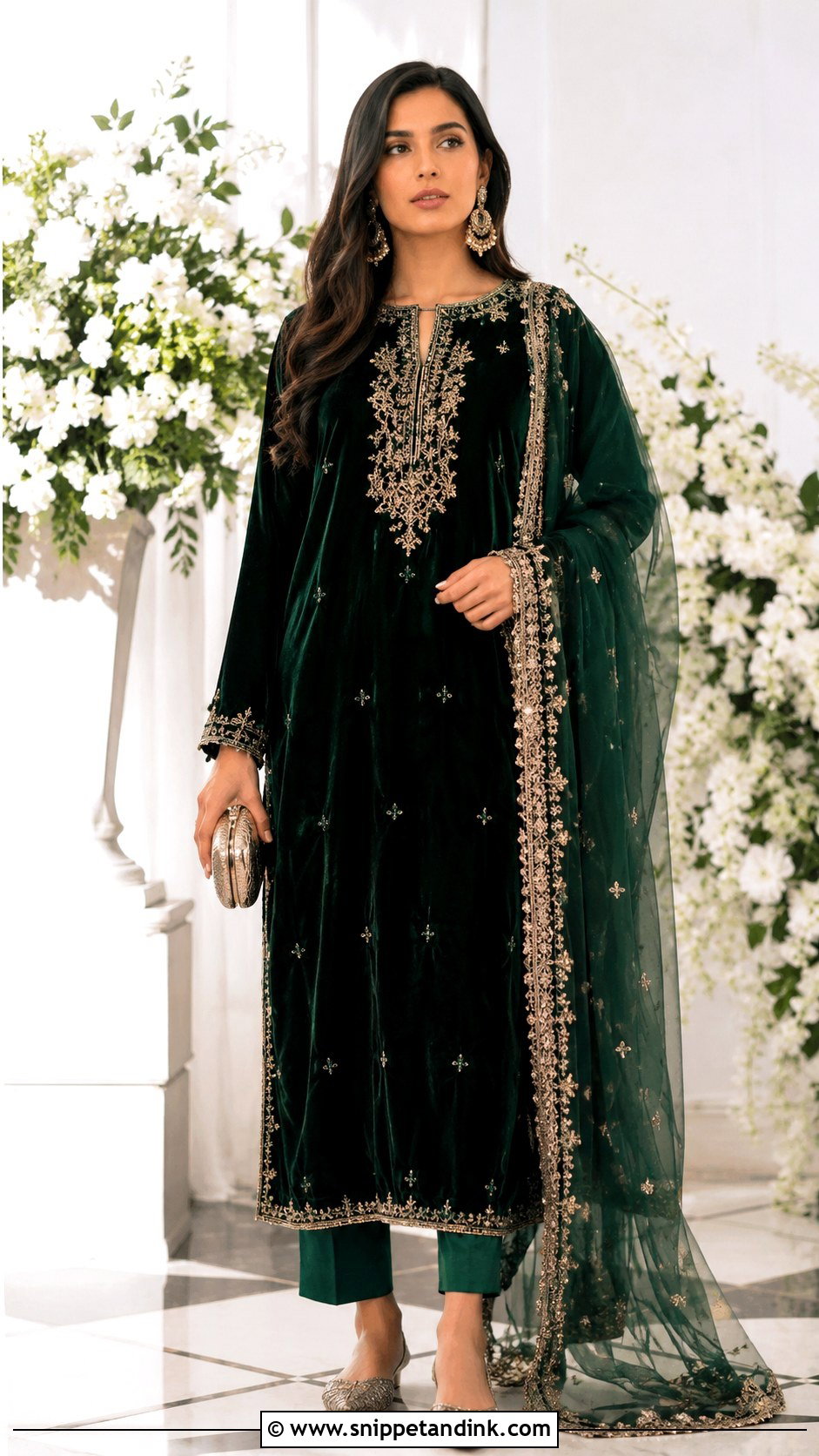
Velvet is my default for winter functions: warm, rich and photographs with real depth under evening lights. A long kurta in maroon, navy, forest green or plum, with straight silk pants or a fitted churidar, needs a fine net dupatta with a narrow border so the whole outfit doesn’t turn bulky. Drape it over one shoulder and let the other end rest on your forearm. Closed embellished mules, antique-finish earrings and a structured clutch are enough, with a sleek low bun. Velvet crushes where you sit, so I’d steam it from the inside and never iron the pile directly.
7. Cotton Kurta Set With Block Print Dupatta
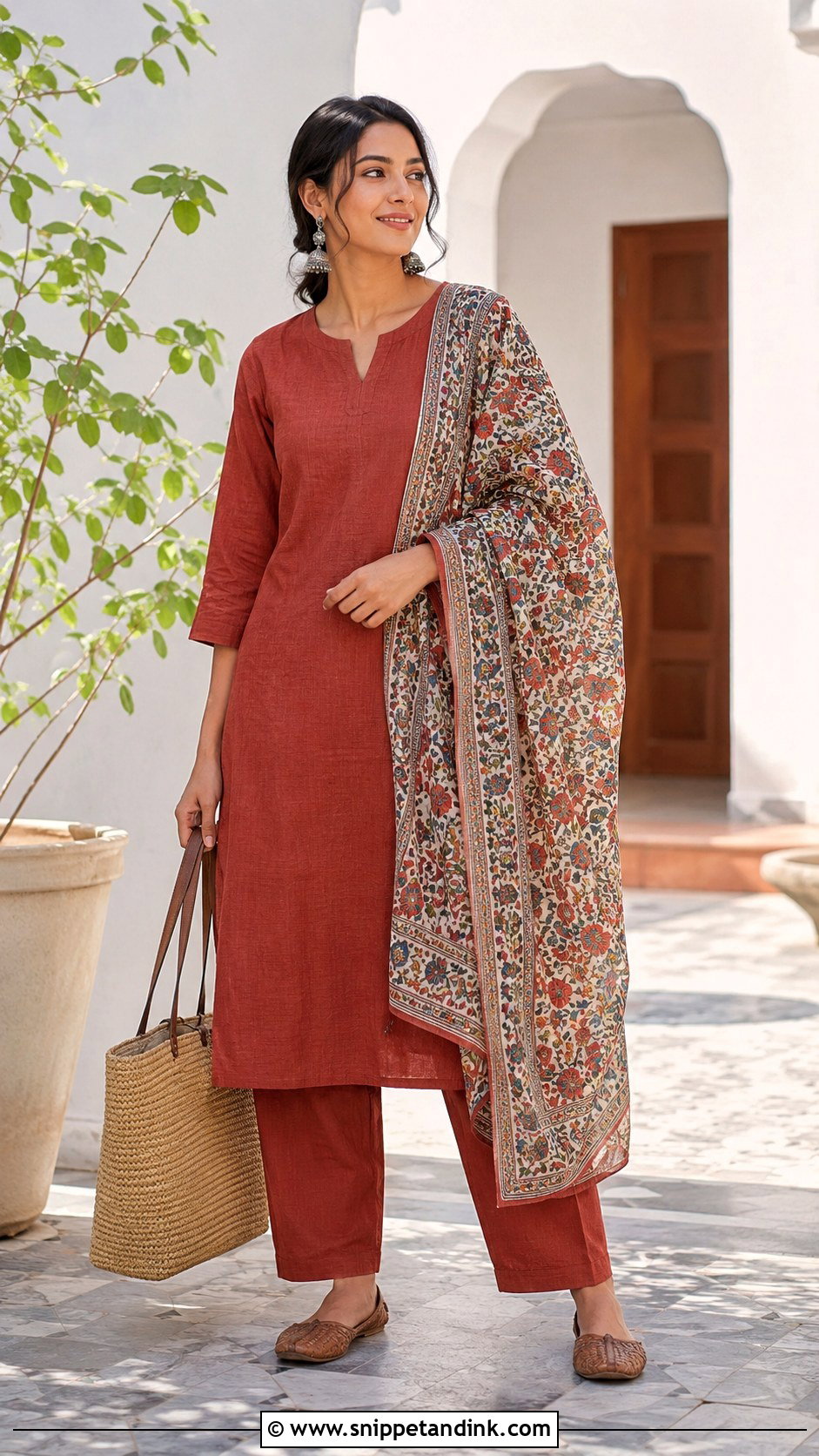
Comfort first, and it can still look considered. A solid cotton kurta in indigo, rust, mustard or sage with relaxed straight pants in the same family makes a quiet base for a hand-block-printed cotton dupatta. Wear it loosely around the neck with both ends falling forward, or throw one end over the shoulder when you need your hands free. Leather flats, silver earrings and a woven tote suit daytime pujas, family lunches and travel days between functions. Cotton breathes in heat. Roll the sleeves a little and keep makeup light.
8. Monochrome Palazzo Suit With Embroidered Dupatta
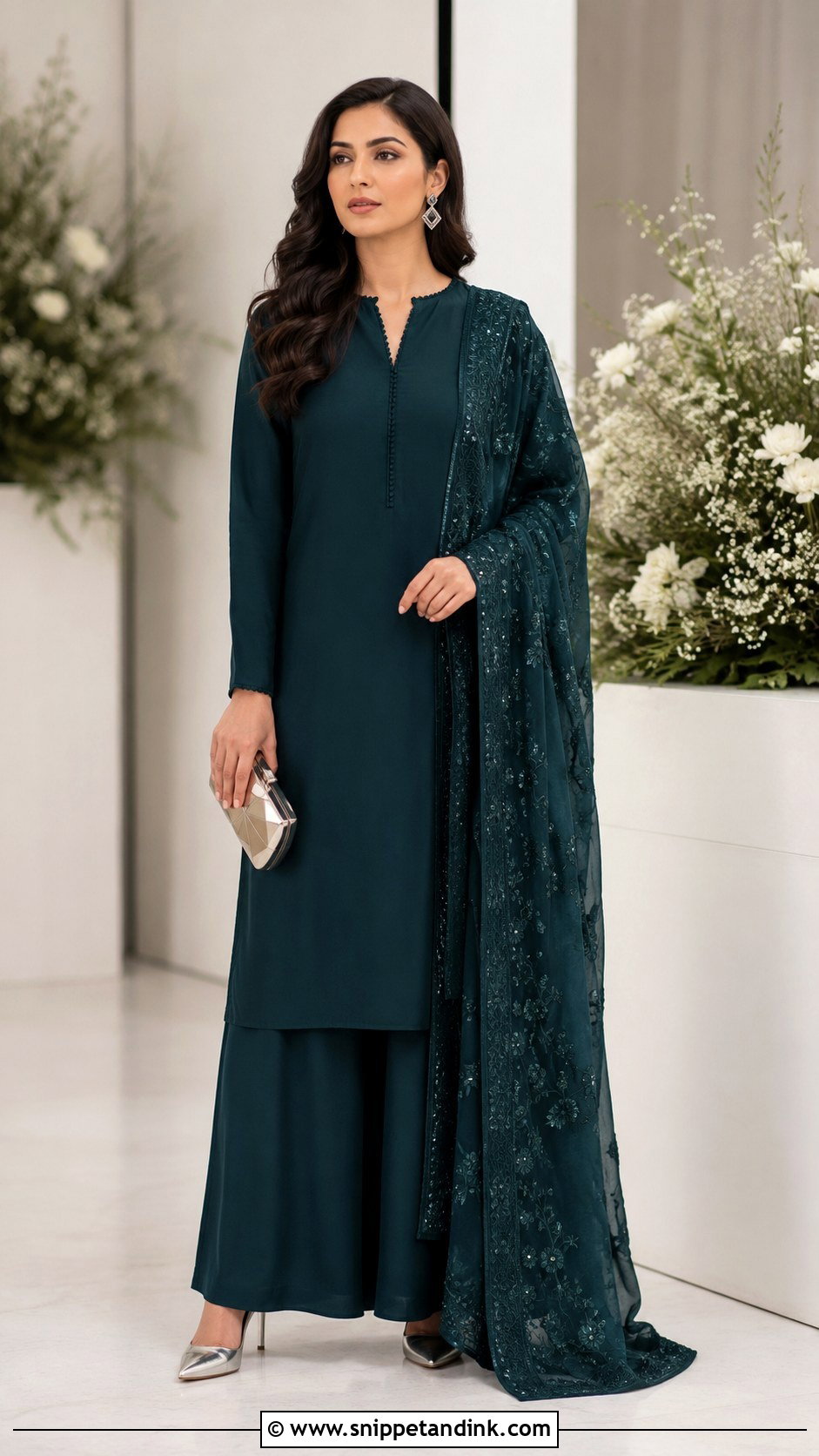
One colour head to toe creates a long line that reads sophisticated, especially on shorter guests. Pair a straight kurta with wide palazzos in navy, burgundy, teal or beige, then bring texture in through an embroidered dupatta in the same shade, perhaps with a metallic border. Pin it on one shoulder and let it hang straight down to keep the vertical effect. Pointed mules, geometric earrings and a small box clutch finish it. Proportions are personal here. Petite women usually look better in a shorter kurta, while taller women can carry a long tunic, full palazzos and a broader drape.
9. Plain Lehenga With Contrast Dupatta
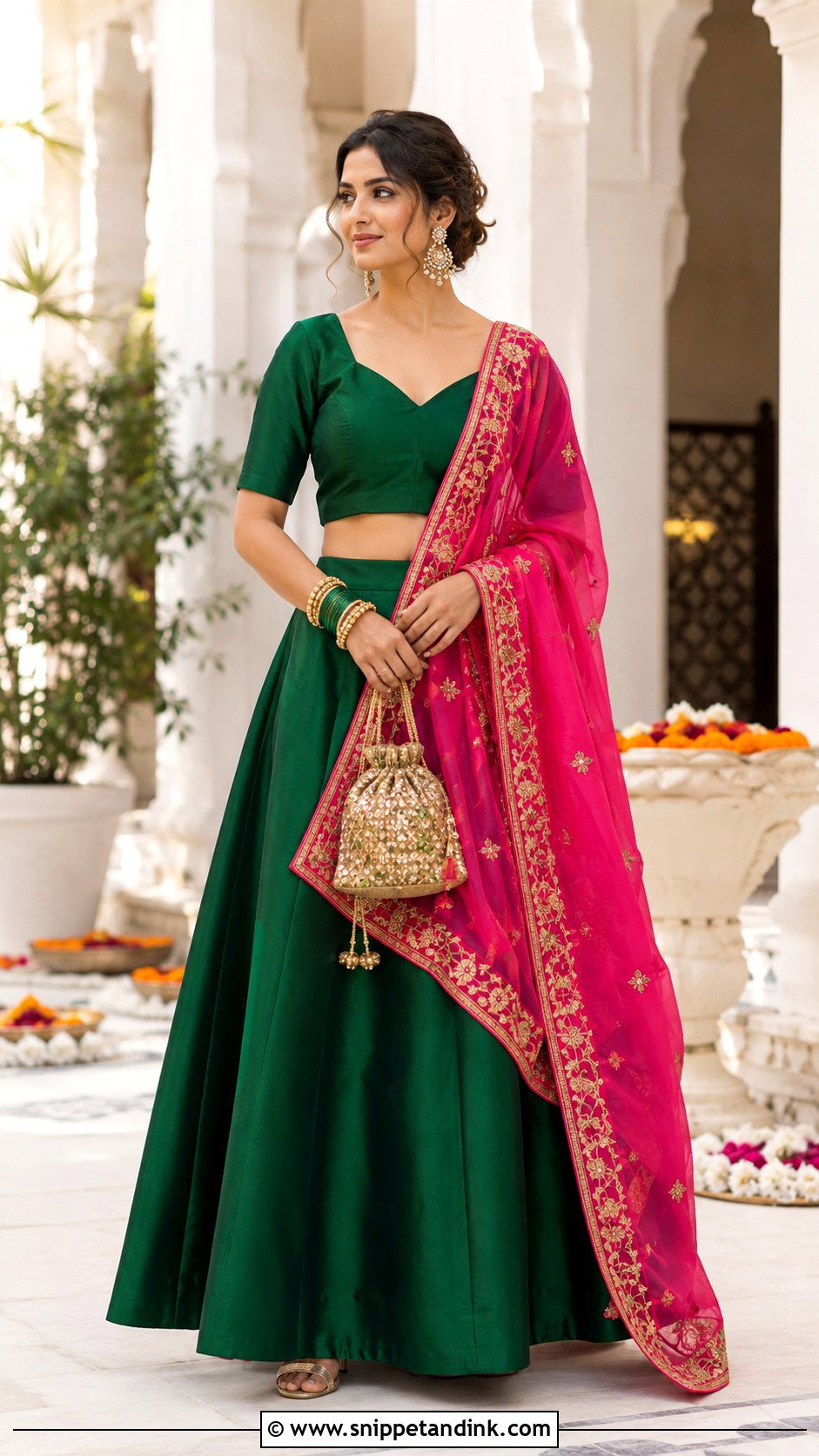
Let the dupatta do all the talking. A solid lehenga with gentle volume and a matching fitted blouse sets up a contrast dupatta, embroidered, printed or woven. Emerald with pink feels bright; ivory with red or gold leans traditional. I drape it diagonally across the torso and secure it at both the shoulder and the waistband, which keeps it from swinging into food at the buffet. Heeled sandals, chandelier earrings, bangles and a compact potli complete it. Skip a heavy necklace if the blouse neckline and border already carry detail. The pieces also re-style easily for later events.
10. Gharara Suit With Gota Patti Dupatta
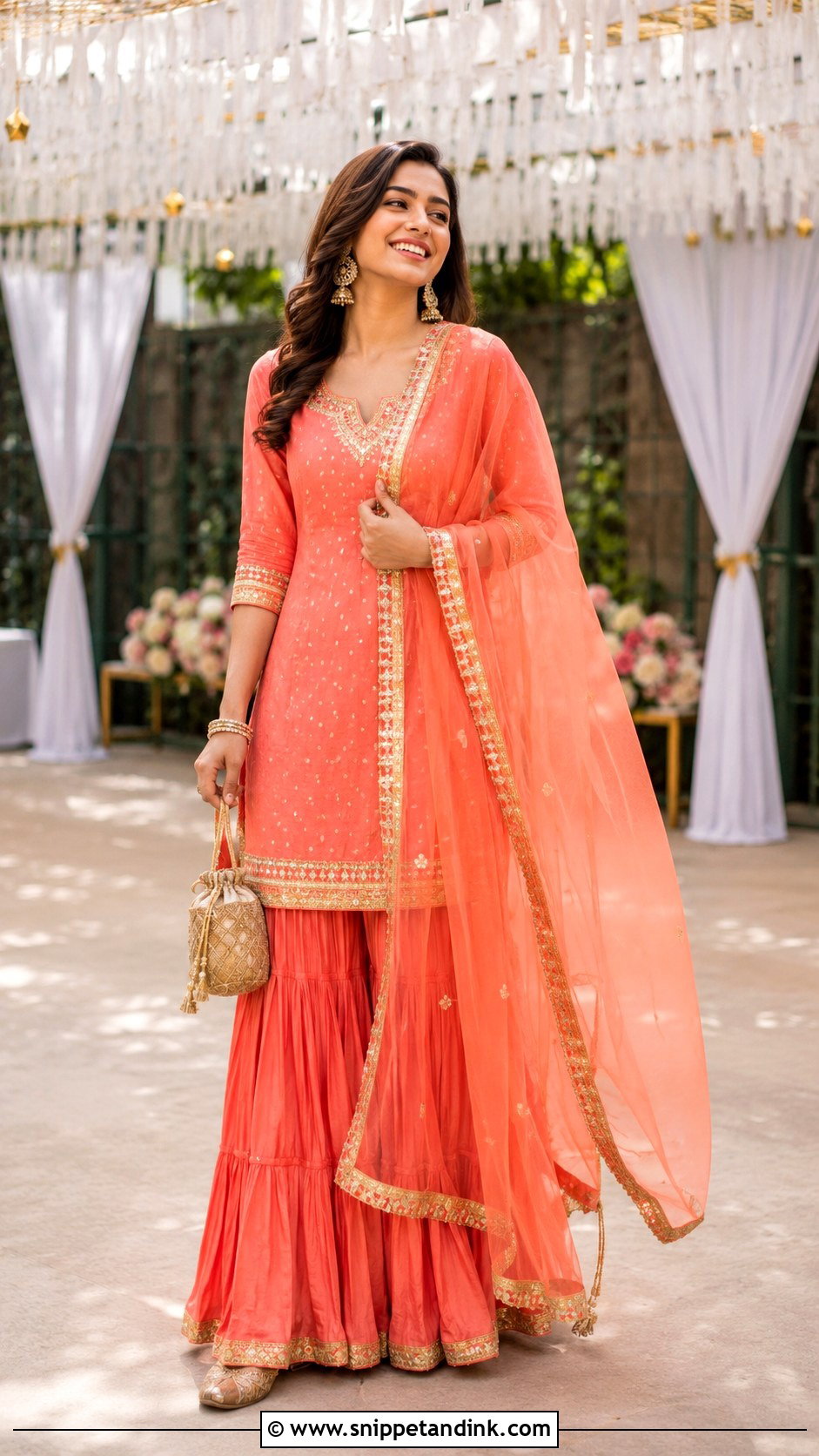
A gharara already has dramatic volume at the knee, so the dupatta should be light and flowing rather than stiff. Pair a short or mid-length kurta with matching gharara and a dupatta trimmed with gota patti, the shiny woven ribbon work that catches daylight well. Colours like yellow, coral, green or bright pink feel joyful for a mehndi or haldi. Keep embroidery to the neckline, cuffs and border. Traditional juttis, gold-toned earrings and a drawstring bag finish it. Drape over both shoulders with even ends, or diagonally for more definition. Gota can tarnish if it gets wet, so keep it clear of turmeric and water play.
11. Patiala Suit With Phulkari Dupatta
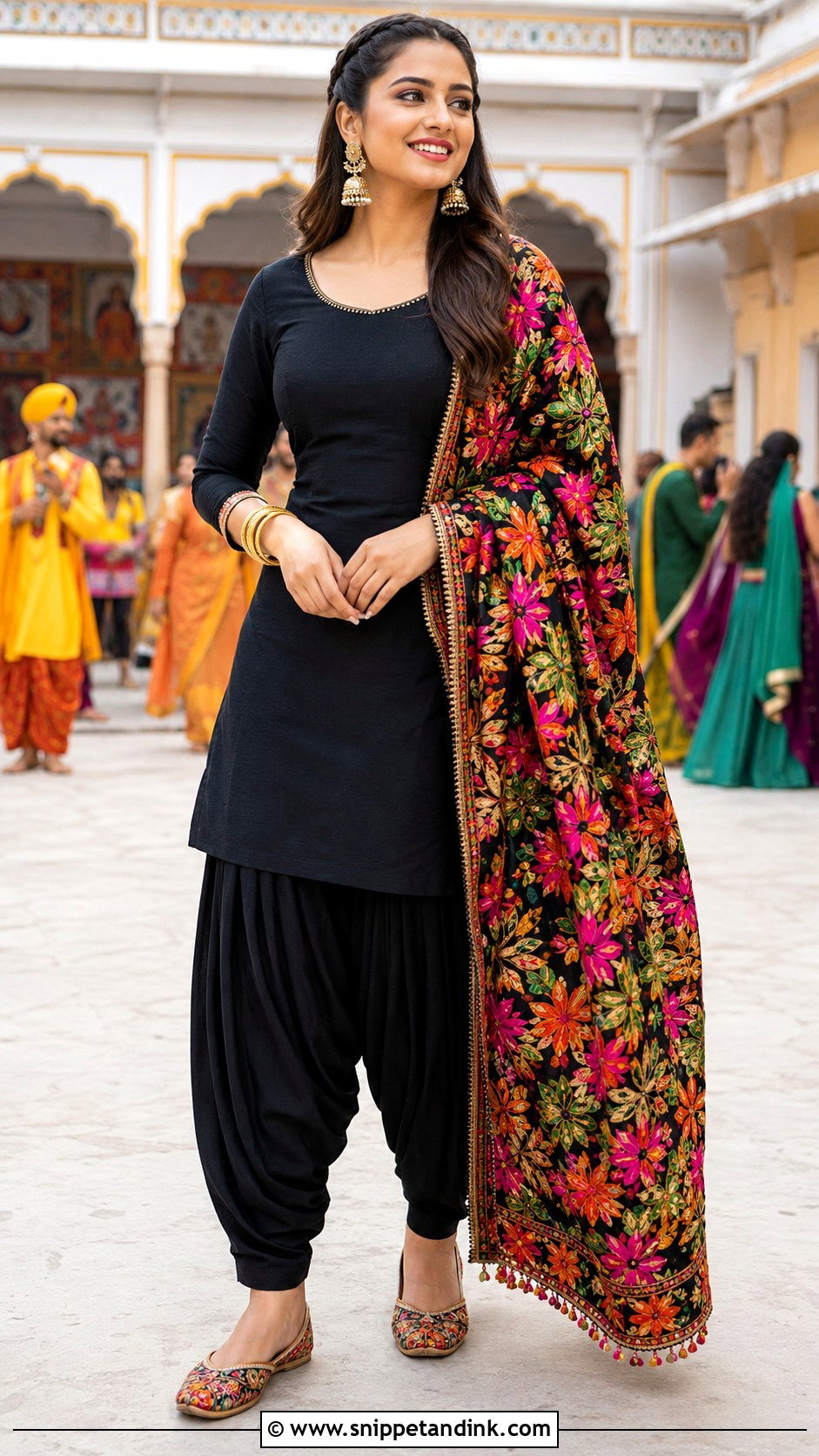
Phulkari and Patiala belong together. A fitted knee-length kurta in black, white, navy or mustard, with pleated Patiala salwar, lets the embroidery take centre stage. Wear the dupatta around the neck with both embroidered ends visible, or pin one side for security if you’ll be dancing at the jaggo or sangeet. Punjabi juttis, statement jhumkas and slim bangles fit the mood, as does a braid. I’d choose a medium-weight Phulkari over a heavy antique-style one. The dense hand-stitched pieces pull at the shoulders after a couple of hours of bhangra.
12. Kurta And Jeans With Printed Dupatta
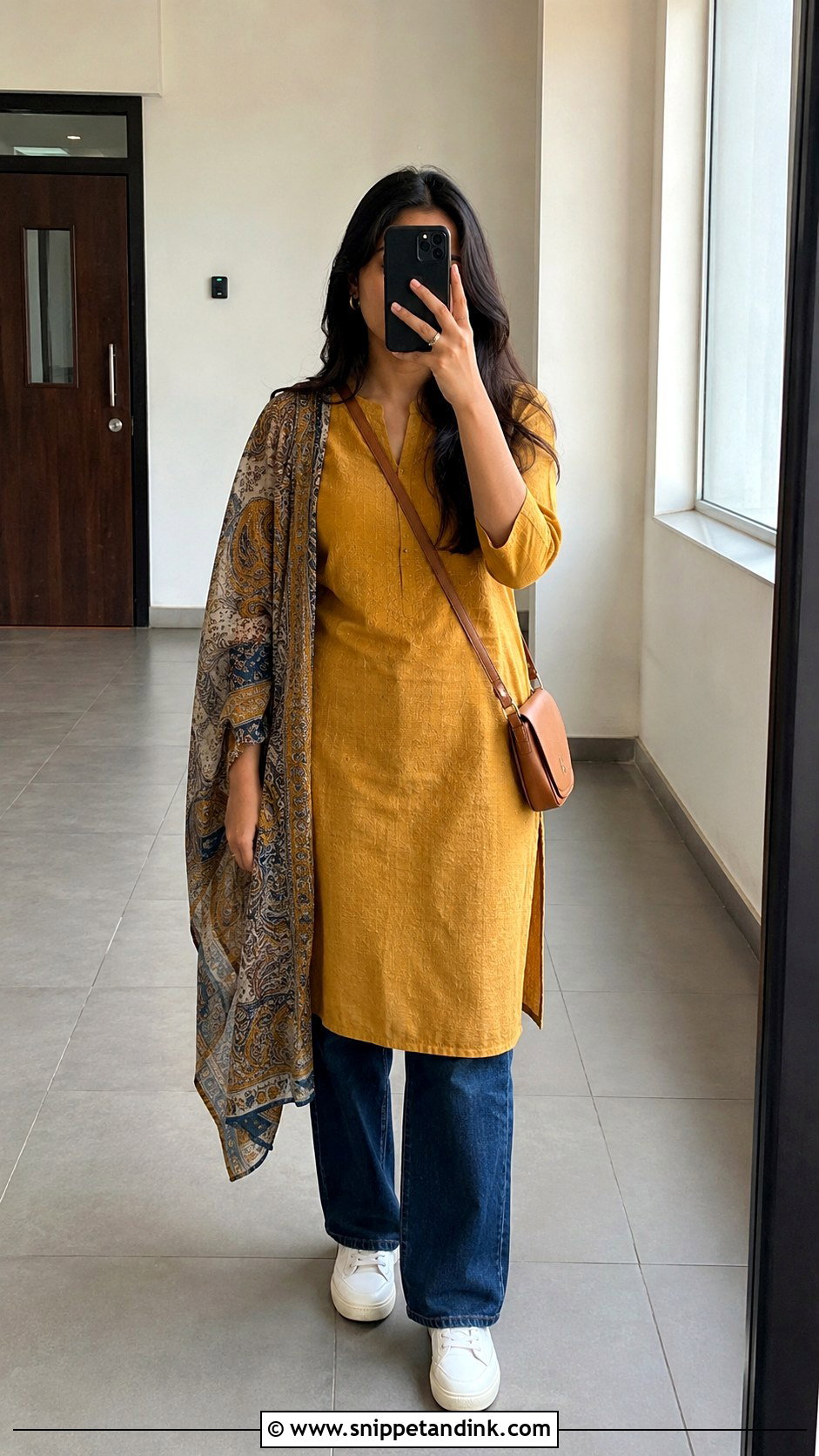
Kurta with jeans is the gentlest way into fusion dressing, and the dupatta is what makes it feel like an occasion. A knee-length solid kurta over slim or straight dark denim, plus a printed dupatta in paisley or geometric motifs, works for a casual pre-wedding dinner. Loop it once around the neck and leave the ends loose, or drape it asymmetrically. Clean sneakers, flat mules or juttis, small hoops and a crossbody bag keep it practical. Choose cotton or chiffon. Anything heavier bunches against denim and looks like an afterthought.
13. Long Dress With Belted Dupatta
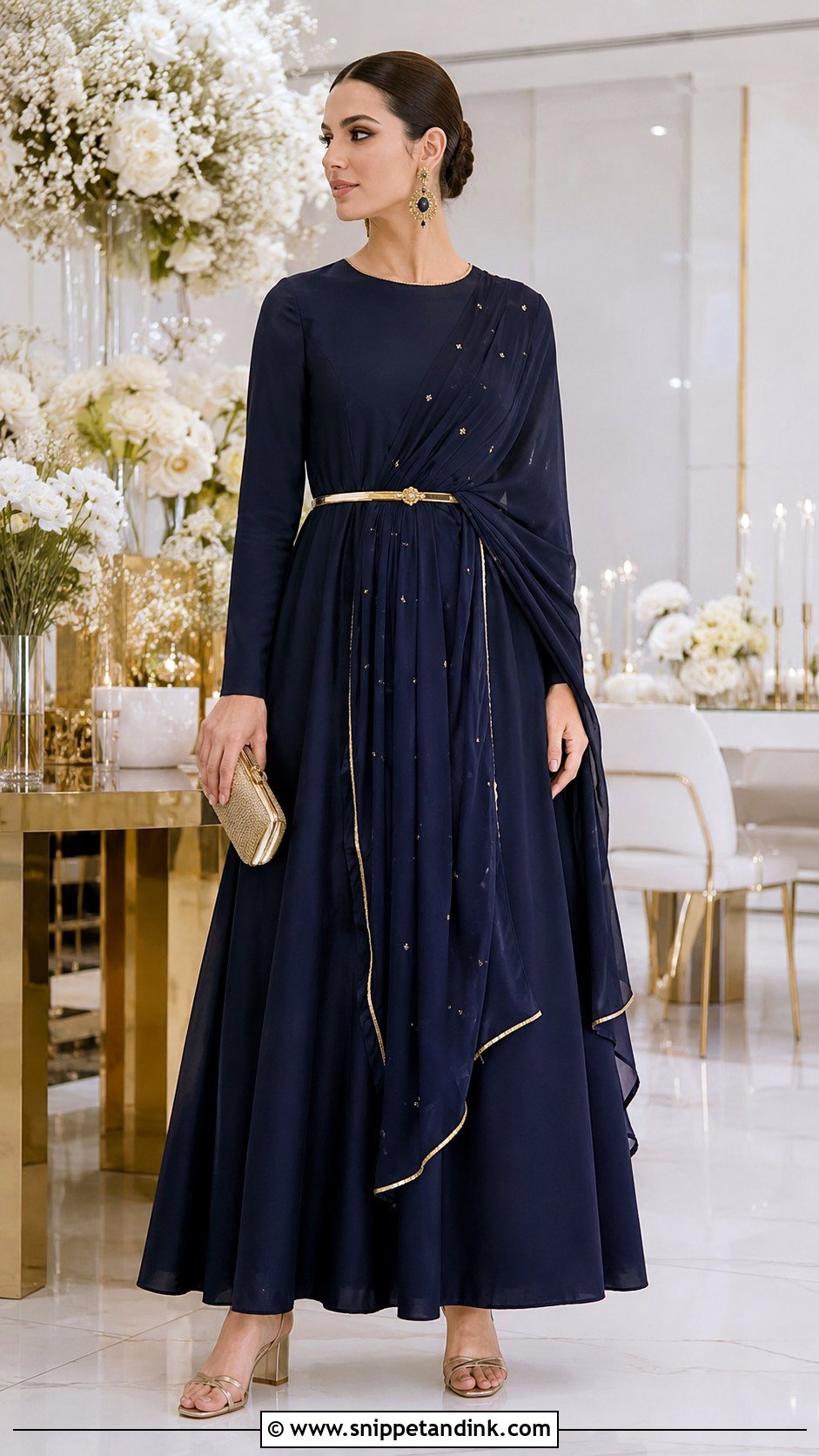
A belt solves the biggest dupatta complaint: it slips. Over a solid or lightly embroidered A-line maxi, drape chiffon, georgette or light silk from one shoulder diagonally across the body and cinch it at the waist with a slim metallic or fabric belt. Block heels, drop earrings and a sleek clutch complete it. Tonal colours lengthen; a controlled contrast adds punch for a reception. The belt should sit at your natural waist and be loose enough to breathe after dinner. Leave the dupatta slack above it, or the shoulder pulls every time you reach for something.
14. Silk Salwar Suit With Leheriya Dupatta
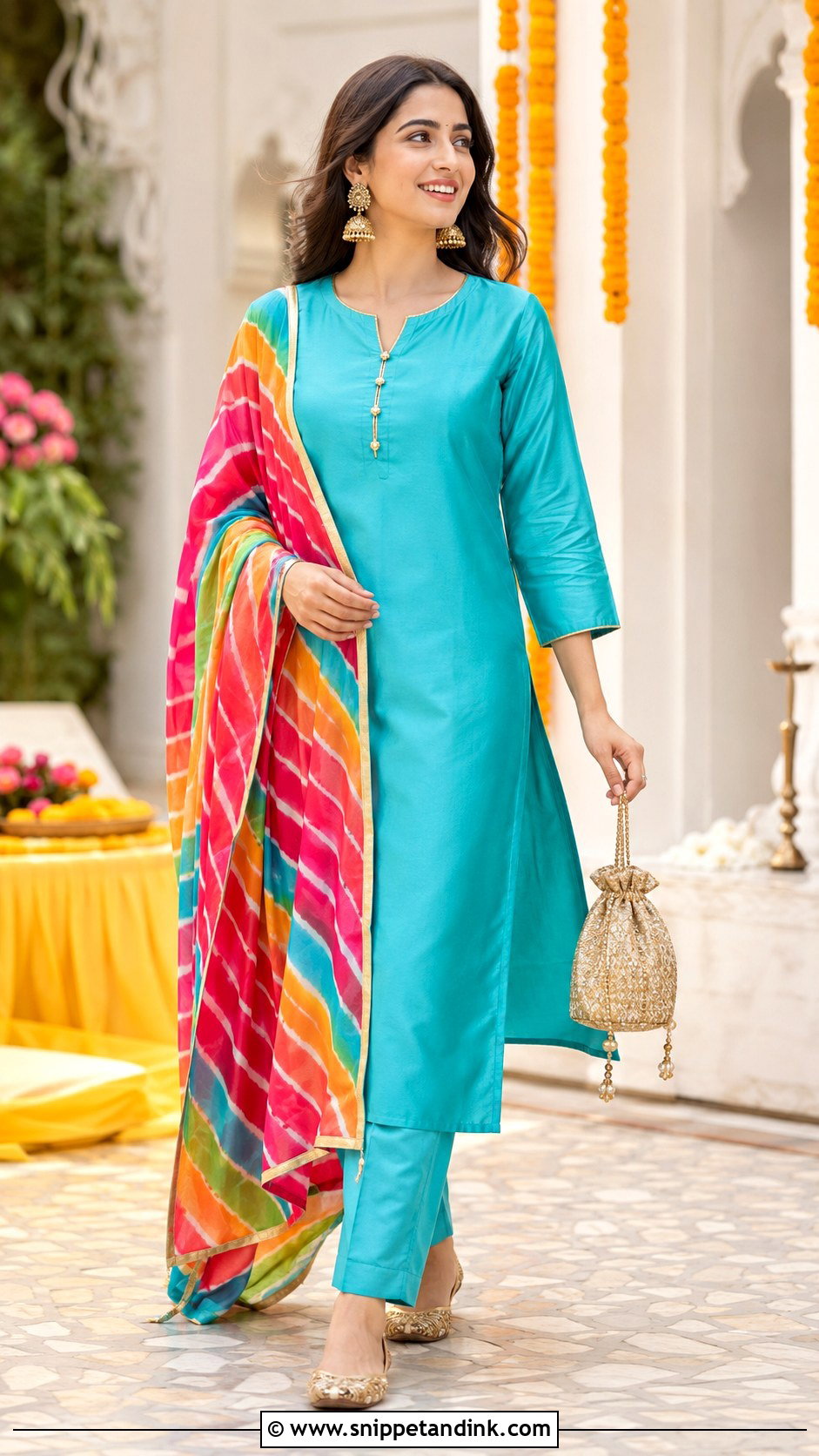
Leheriya, the Rajasthani wave-dyed stripe, makes a plain silk suit look playful. A straight kurta and tailored pants in fuchsia, turquoise or ivory, with a Leheriya dupatta sharing at least one colour, is all it takes; keep the suit embroidery minimal because the stripes already move. Drape loosely across both shoulders so the diagonal lines stay visible. Gold flats, dome earrings and a simple potli finish it for daytime family functions. For a softer take, put a pastel Leheriya with a neutral silk suit and delicate jewellery. Silk shows sweat marks, so I’d pick lighter shades for summer only if the event is indoors.
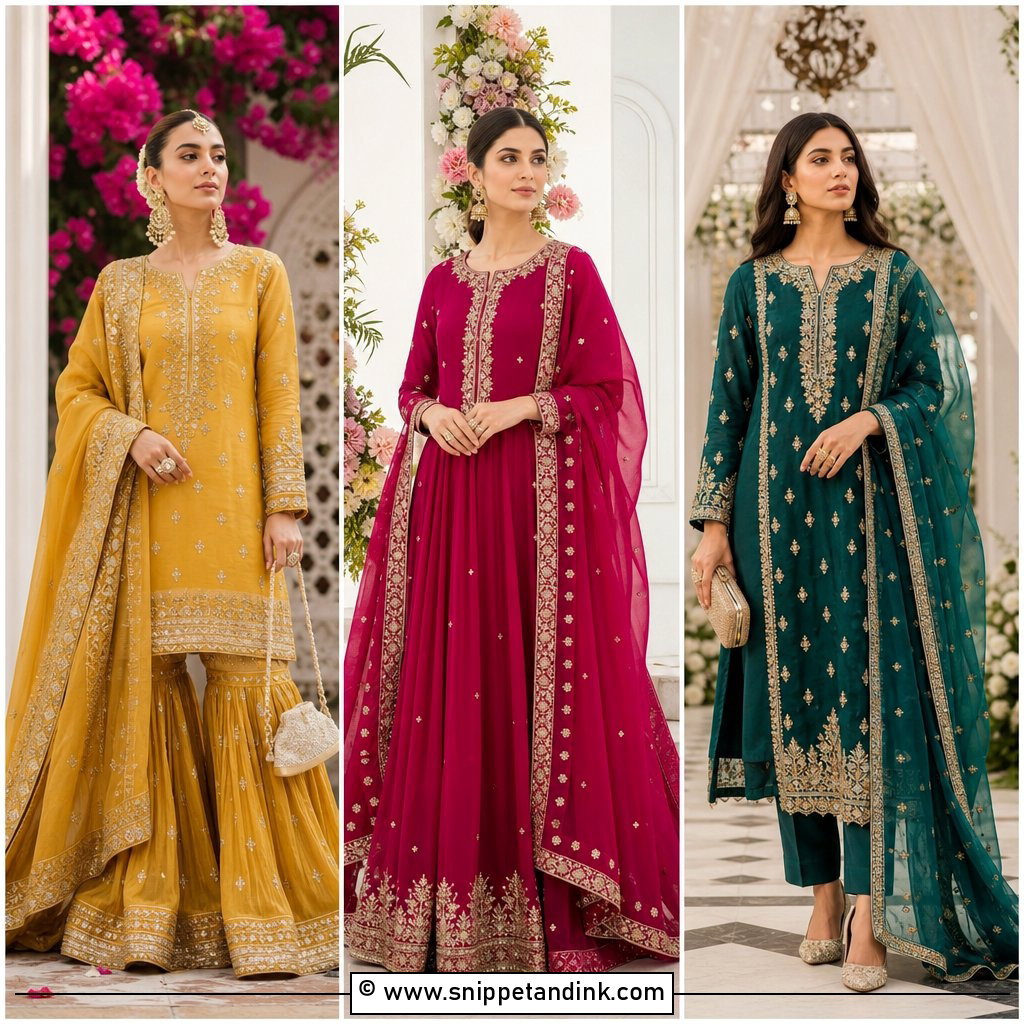
15. Peplum Sharara With Tissue Dupatta
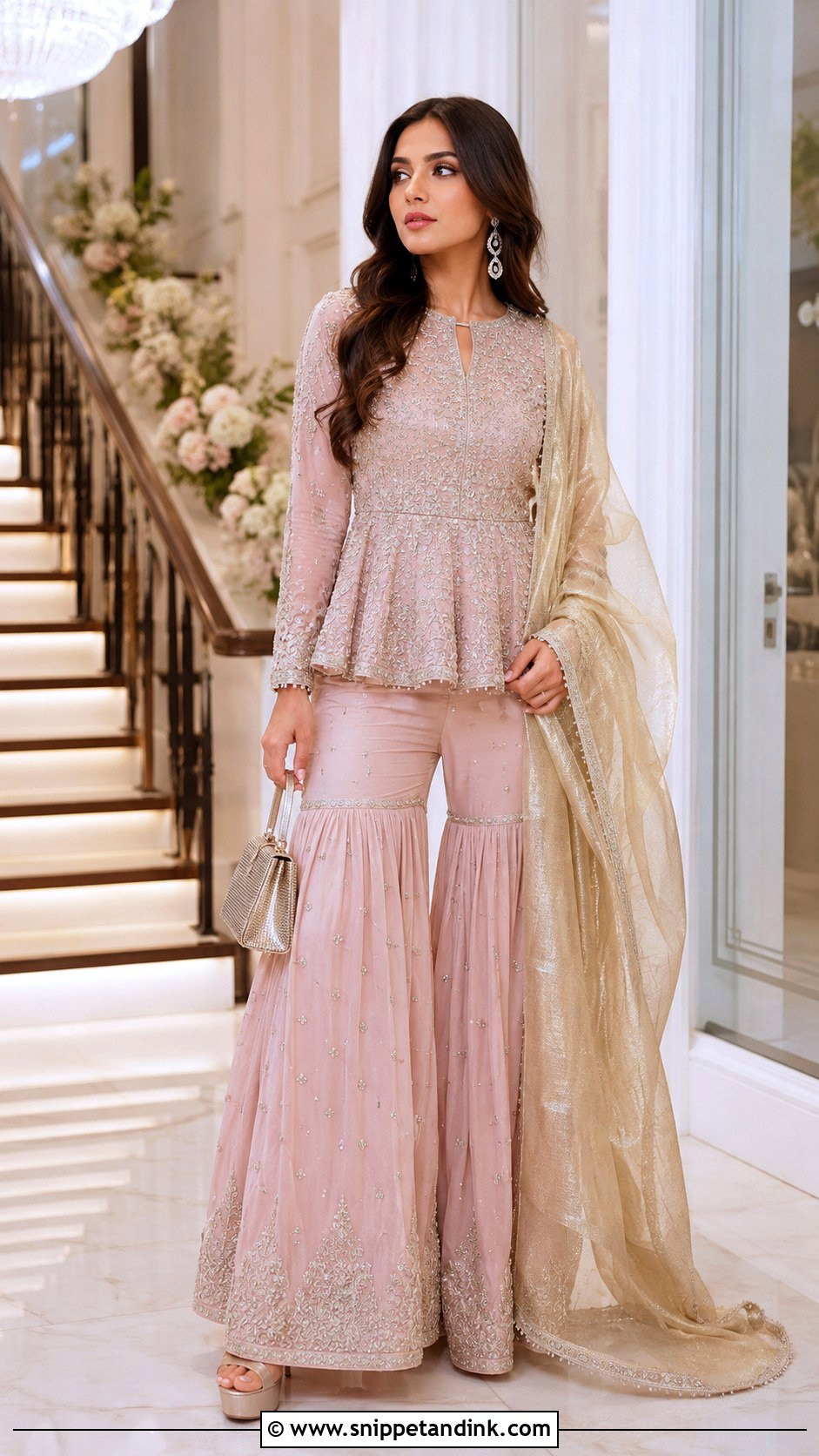
A fitted peplum and a flared sharara already give you a defined waist and plenty of volume, so the dupatta should stay out of the way. Tissue, a thin fabric woven with metallic thread, adds shine without the weight of heavy embroidery, in a matching metallic tone or a soft complementary colour. Wear it over one shoulder with the end on your forearm so the peplum stays visible. Don’t wrap it around the torso; you’d lose the shape you paid for. Platform heels, crystal earrings, a small metallic bag and a sleek ponytail or side-parted waves keep the neckline clear. Tissue creases sharply, so fold it loosely on tissue paper rather than stuffing it in a bag.
16. Straight Suit With Cape Dupatta
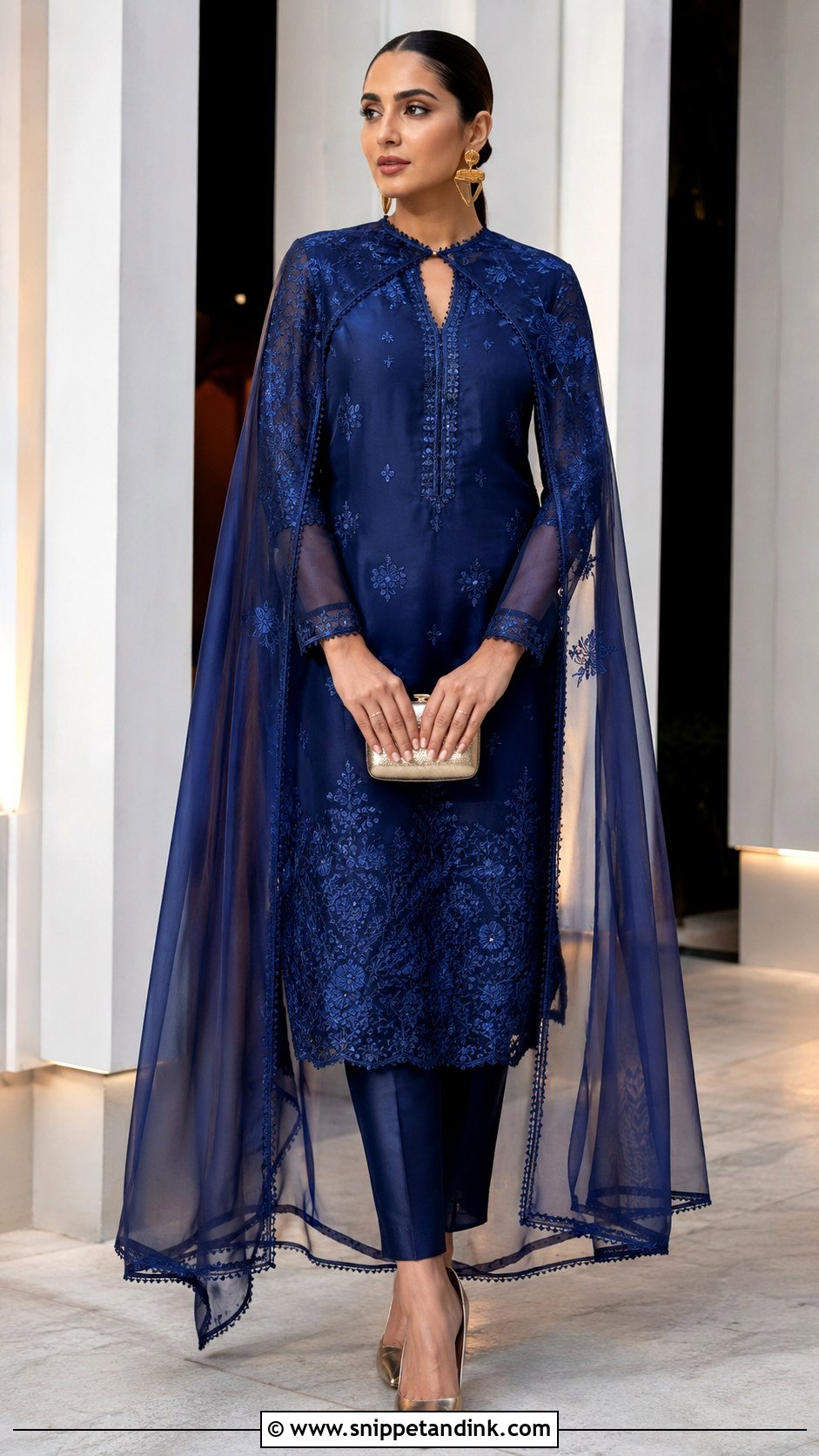
Worn as a cape, the dupatta shows off everything on the front of the kurta. Use a straight or fitted kurta with slim pants and a sheer chiffon, net or organza dupatta wide enough to cover both shoulders. Pin it lightly at each shoulder seam and let it fall behind the arms. Pointed heels, sculptural earrings and a minimal clutch keep it modern. It’s my go-to when the kurta has heavy front-panel embroidery. Keep the border narrow, because a heavy edge drags the cape backward and pulls the kurta neckline up against your throat.
17. Kaftan Dress With Sheer Dupatta
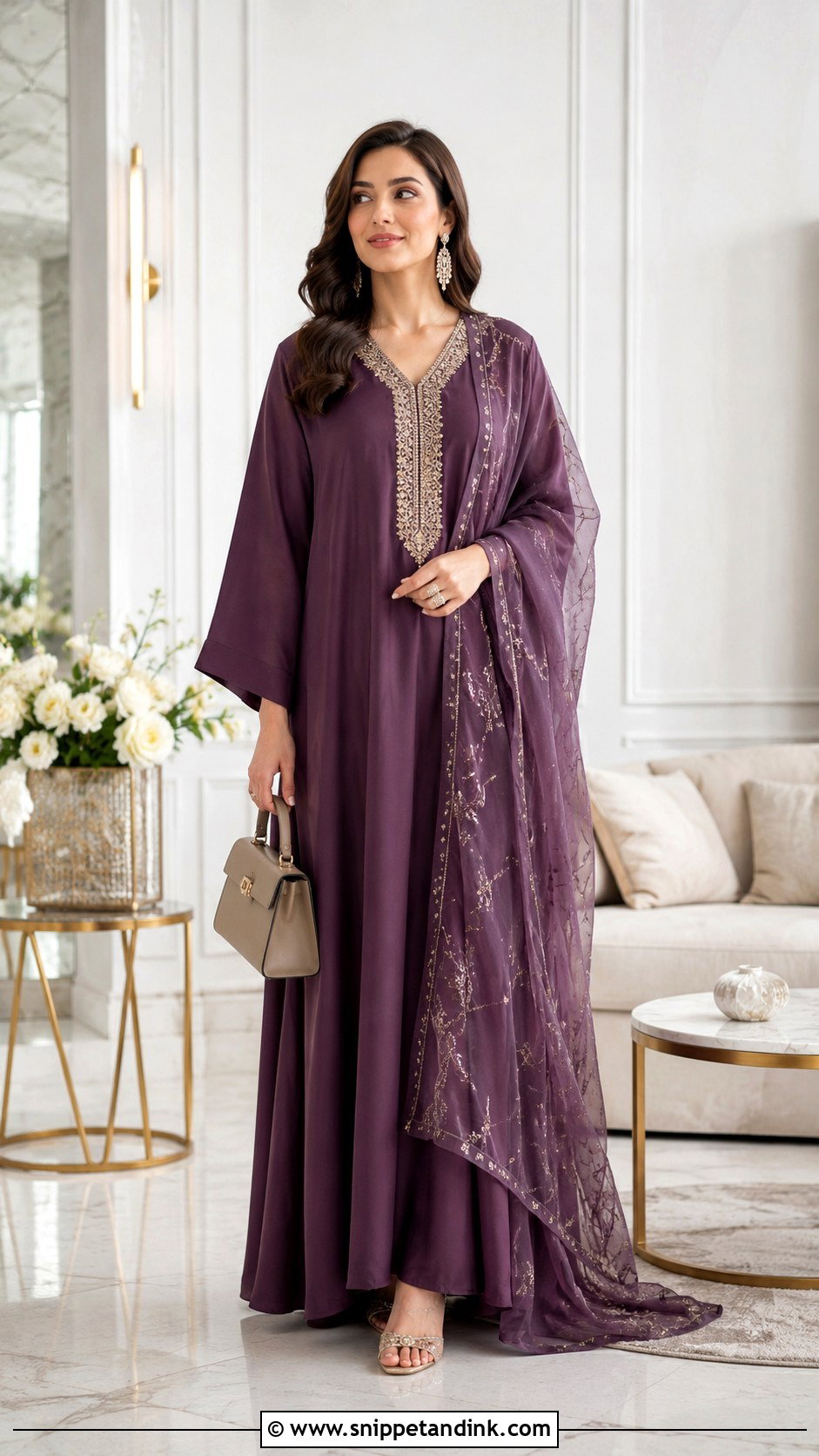
For guests who prefer looser clothing, a kaftan with a sheer dupatta is comfortable and still reads as dressed for an occasion. Choose an ankle-length kaftan with a defined neckline and moderate volume, then a sheer coordinating dupatta with fine embroidery or a metallic edge. Fold it lengthwise and lay it over one shoulder; wrapping hides the kaftan’s flow. Low block heels or embellished flats, long earrings and a structured handbag add definition. Avoid a big printed dupatta here. Two loose, patterned layers just look shapeless in photos.
18. Black Straight Suit With Mirror Work Dupatta
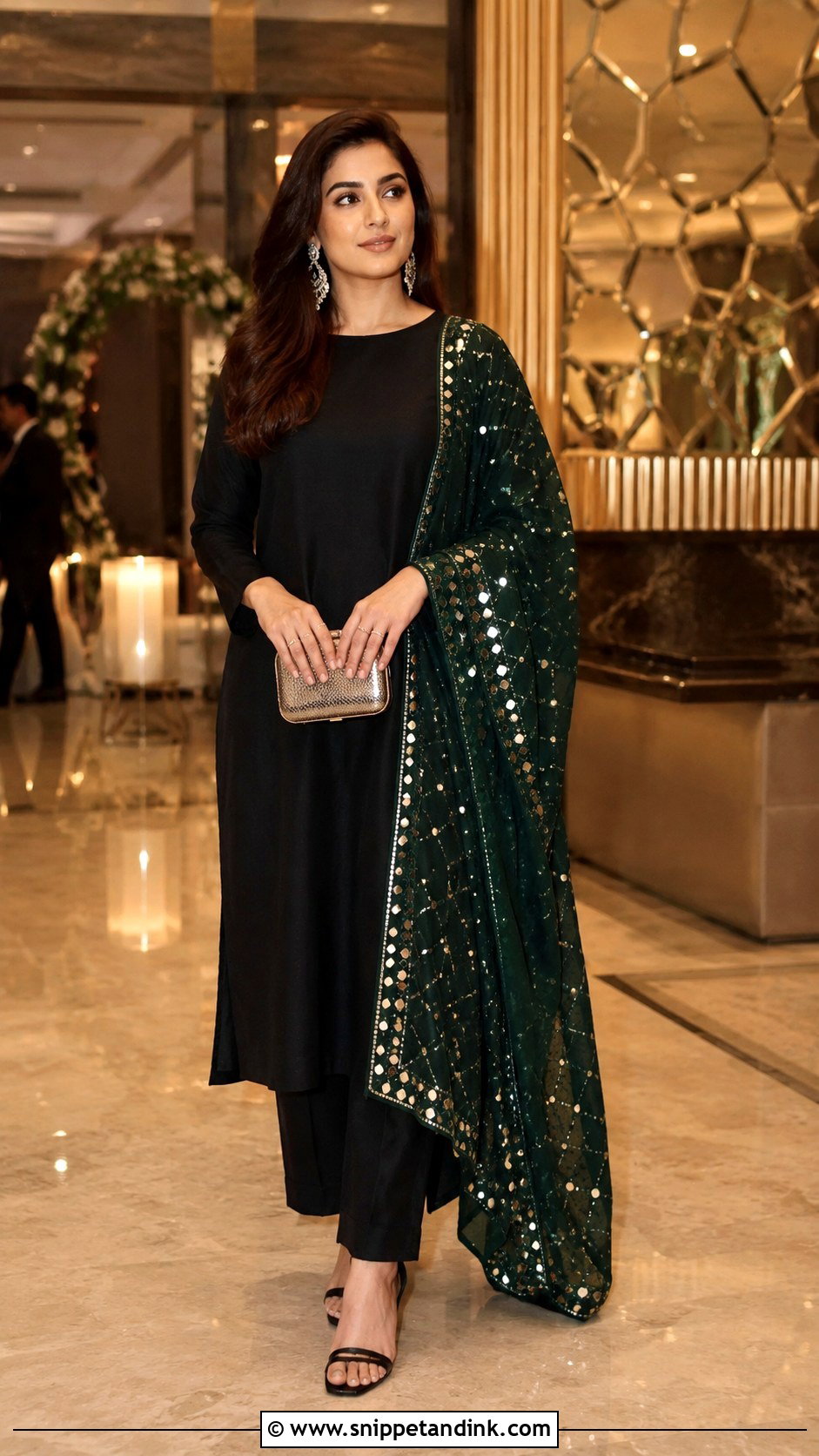
Black with mirror work is made for evening. A plain black kurta and ankle-length pants, styled with a mirror-work dupatta in black, silver, jewel green or magenta, need almost nothing else to sparkle. Mirror dupattas are heavier than they look and the mirrors snag fine fabrics, so I pin diagonally at the shoulder and keep delicate chiffon layers well away. Silver earrings, black block heels and a metallic clutch finish it. If you’d like softer contrast, look for coloured threadwork around each mirror. Defined eyeliner and a neutral lip suit the strong palette.
19. Maroon Lehenga With Double Dupatta
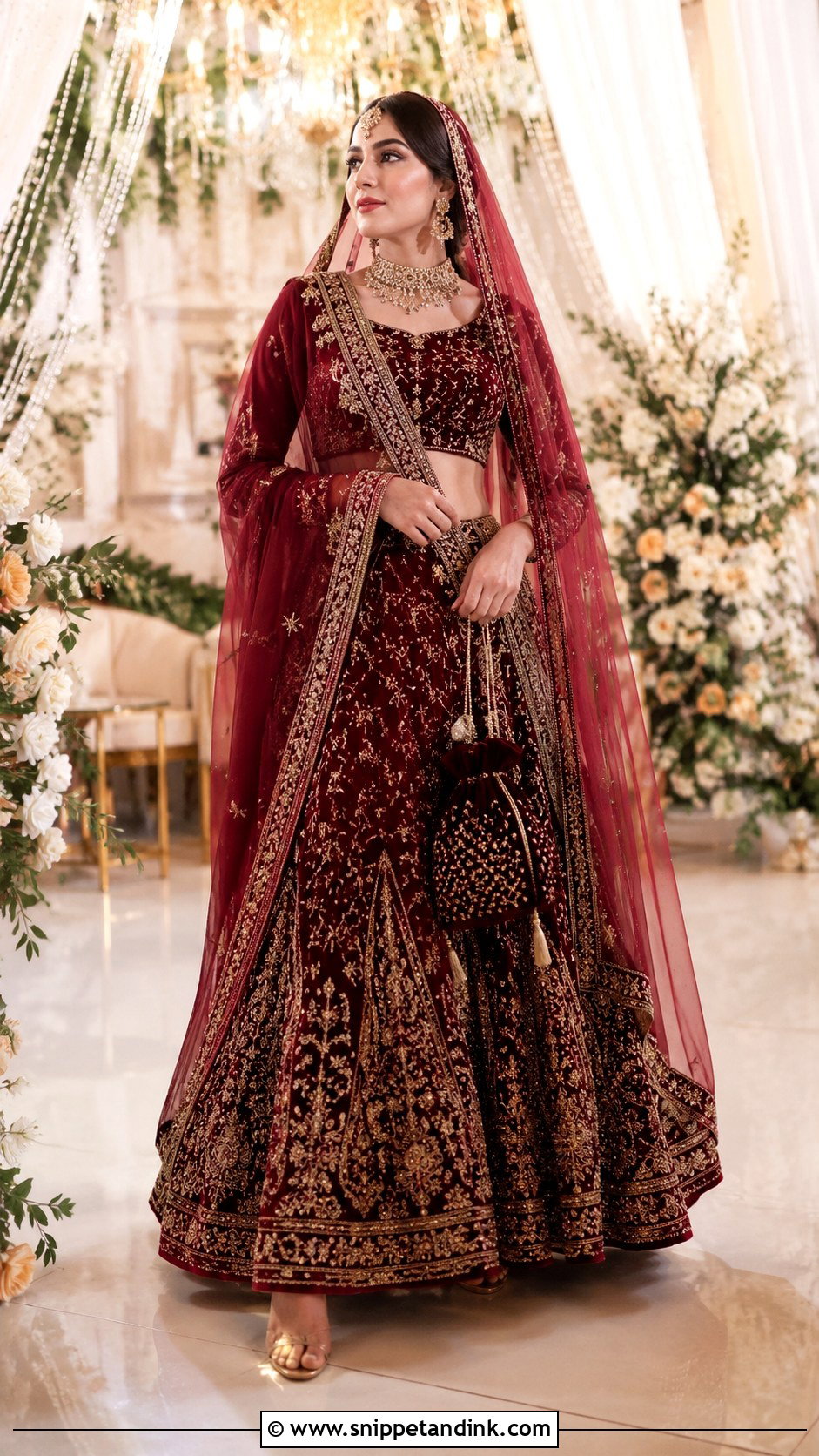
Two dupattas give a formal lehenga a layered, almost bridal-party look without loading on jewellery. With a maroon or deep red lehenga and coordinated blouse, one light dupatta goes across the torso, pinned at shoulder and waist. The second covers the head or both shoulders, depending on the ceremony and how much coverage you want. I always combine one sheer net layer with one richer embroidered piece; two heavy ones are exhausting to wear. Comfortable heels, a structured potli and jewellery matched to the blouse neckline complete it. Pin both layers more than you think you need. And as a guest, do check the bride isn’t in maroon or red before you commit.
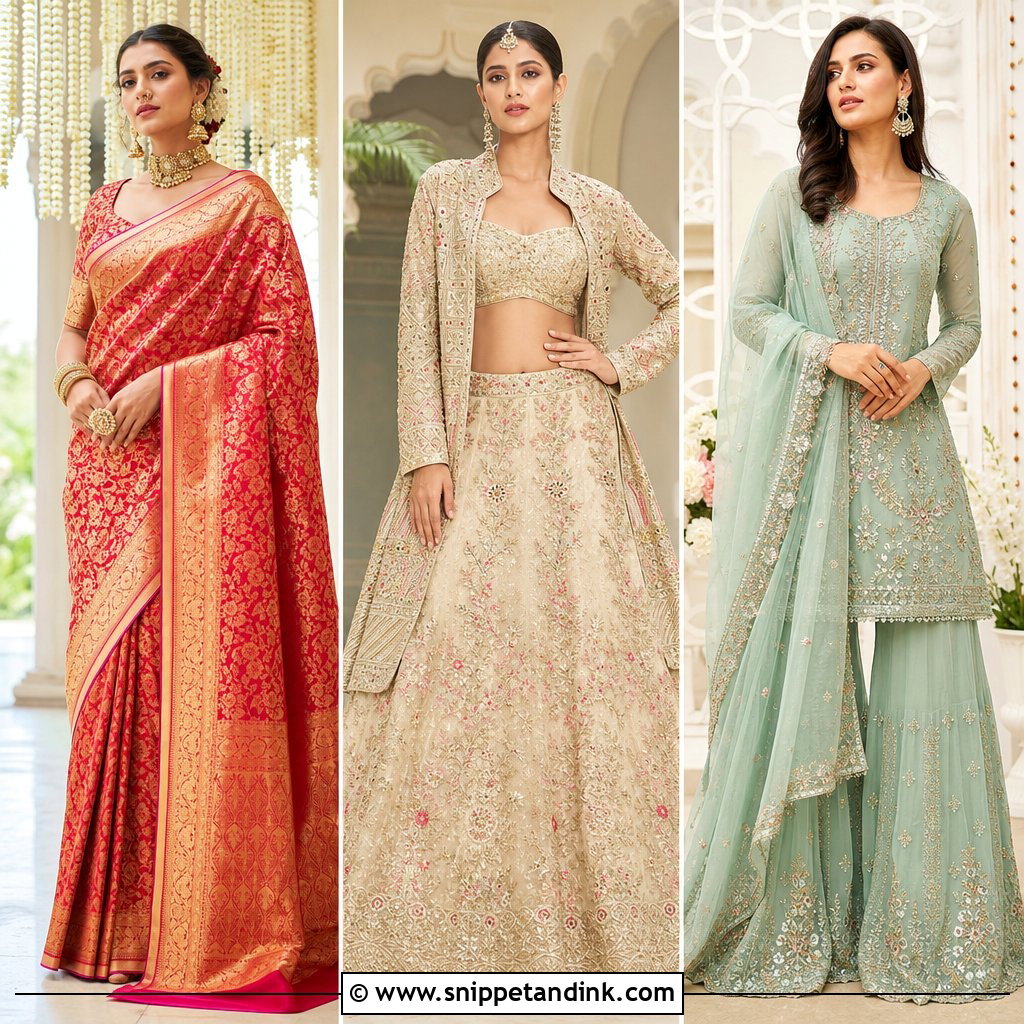
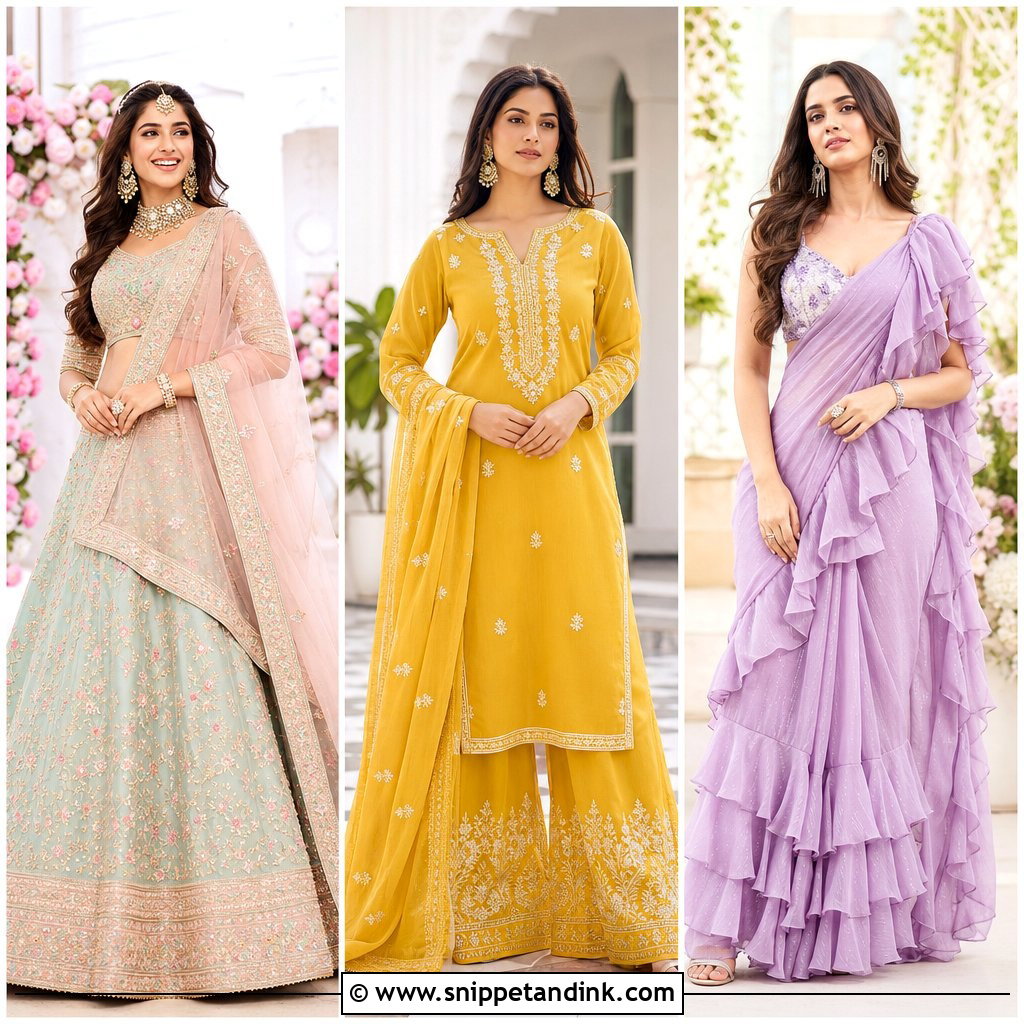
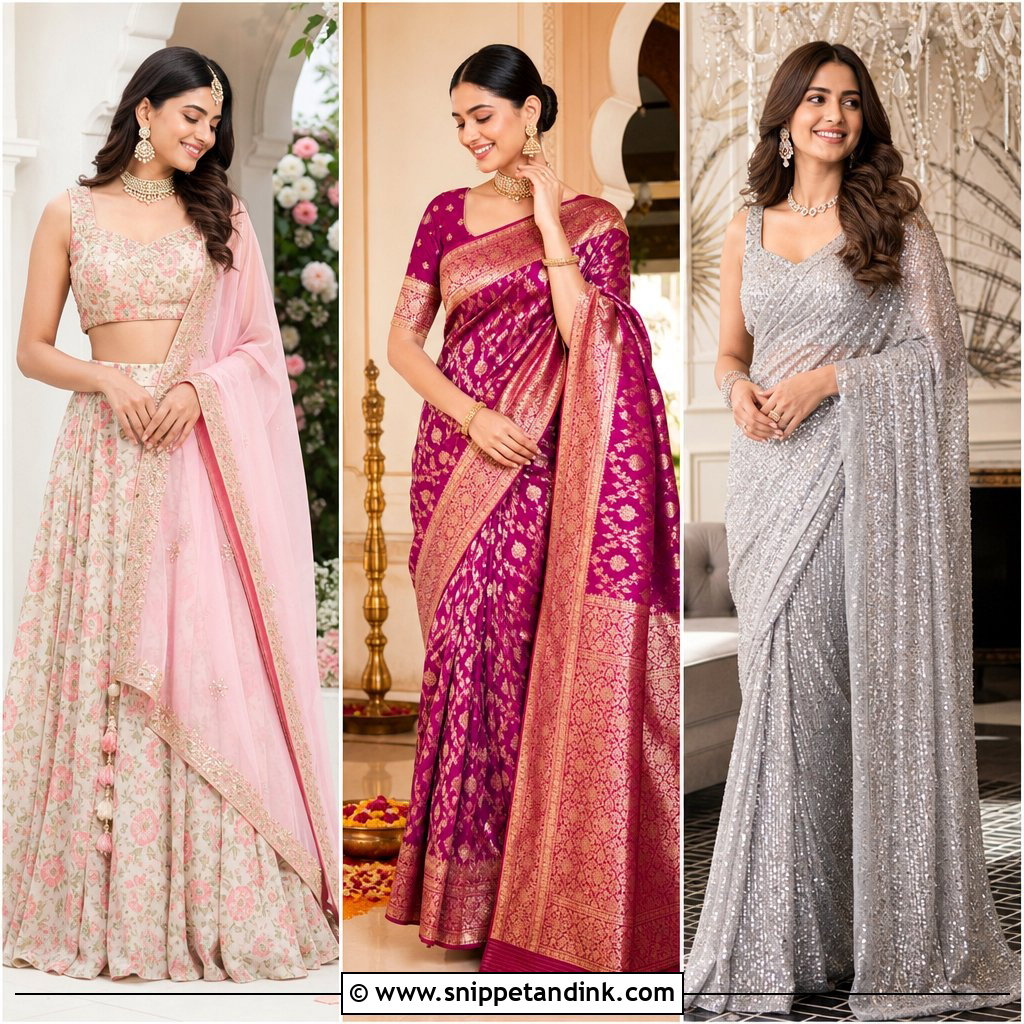
20. A-Line Suit With Lightweight Dupatta
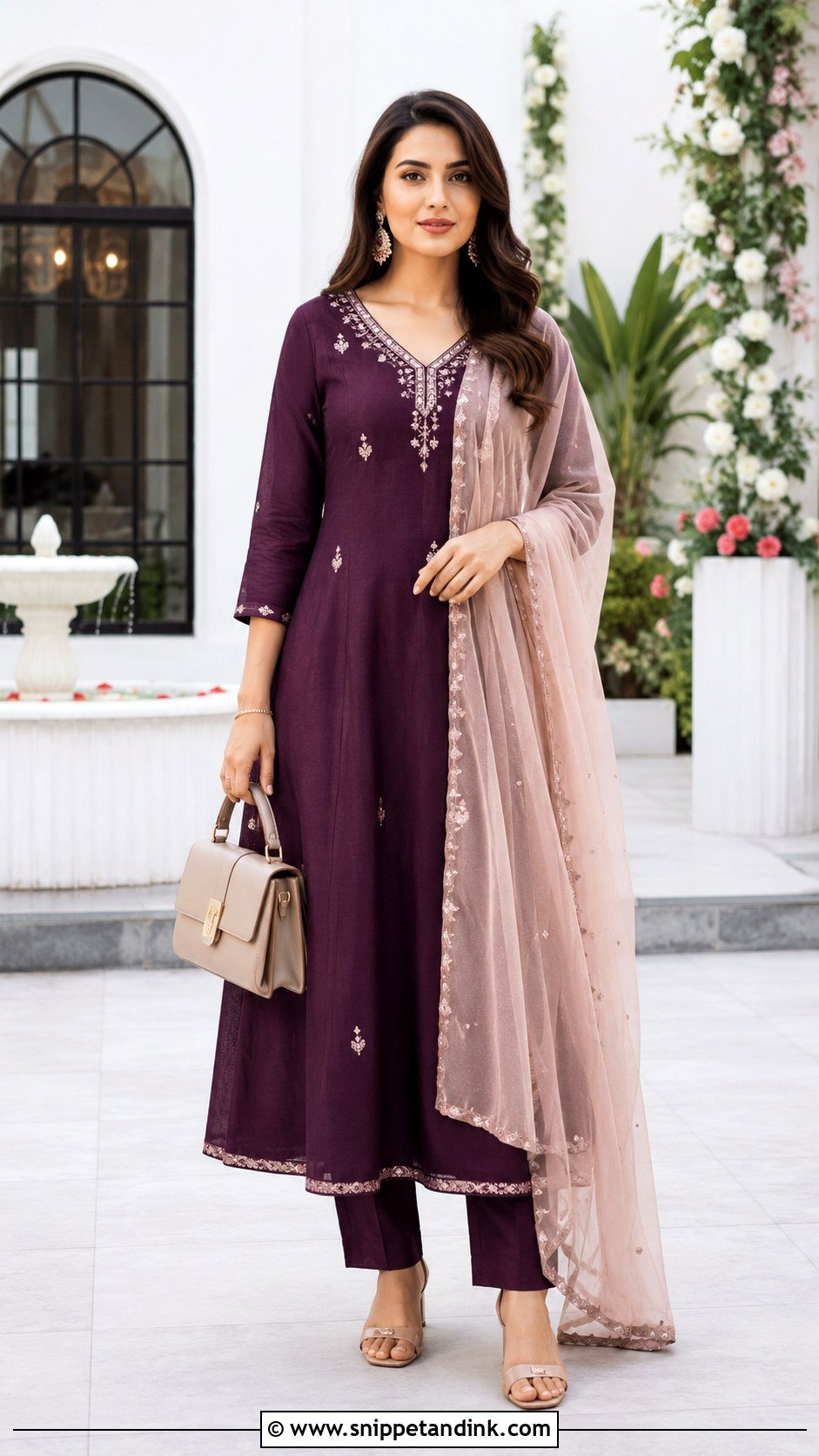
An A-line suit is the outfit I’d suggest to almost anyone unsure what to wear. The kurta skims the torso before widening gently, straight pants balance it, and a chiffon, cotton-silk or georgette dupatta in a matching or soft contrast colour completes it. Wear it vertically over one shoulder for length, or evenly across both. Low heels, medium earrings, a bracelet and a structured bag are plenty. A shorter kurta suits a petite frame; a longer cut gives more coverage. Above all, pick a dupatta you can manage while holding a plate and a phone.
Head Coverings, Colours and Other Guest Courtesies
A dupatta is also how a guest shows respect at certain ceremonies, so it helps to know when it matters.
- At a gurdwara, everyone covers their head inside the prayer hall, and shoes come off. A medium-weight dupatta that stays put without much pinning is far easier than slippery chiffon.
- Many families expect women guests to cover their heads during a nikah. Carry a dupatta that can go over your hair even if you plan to wear it on the shoulder later.
- Red and deep maroon are often the bride’s colours. If you aren’t sure, ask the family or choose another shade.
- Some communities avoid all-white or all-black for weddings. A coloured dupatta over a white or black suit usually settles the question.
When a head drape has to last through a long ceremony, I fold the edge back a little, set one bobby pin on each side behind the ear and let the weight rest on the pins rather than your hair. You can sit cross-legged on the floor without it sliding off.
A Plain Suit and One Strong Dupatta Go a Long Way
Comfort and balance are what make a dupatta outfit work over a long day. One well-chosen layer can change a cotton kurta set or a formal lehenga completely. Use contrast to make a simple suit expressive, or go tonal for a long, clean line. Think about fabric weight, placement and how much you’ll move before choosing jewellery, and secure the drape properly for long functions. Not every outfit needs heavy embellishment. A plain suit and a statement dupatta is often the most versatile combination you can own, and you can rework the colours, coverage and shoes for every event on the calendar.
You'll Like These Ideas:


Leave a Reply