
A guest at an Indian wedding is rarely dressing for one event. There may be a mehendi in the afternoon, a sangeet with dancing, a long ceremony with time on the floor and a reception under bright lights, each with its own level of formality. When I help a guest plan, I ask about the venue, the season, the time of day and how close she is to the couple before I talk about fabric or color. The thirty outfits below run from silk sarees and lehengas to Anarkalis, shararas and Indo-western pieces, and with each one I’ve noted where it works and where it struggles. The common test is simple: can you sit, walk, eat and dance in it for hours?
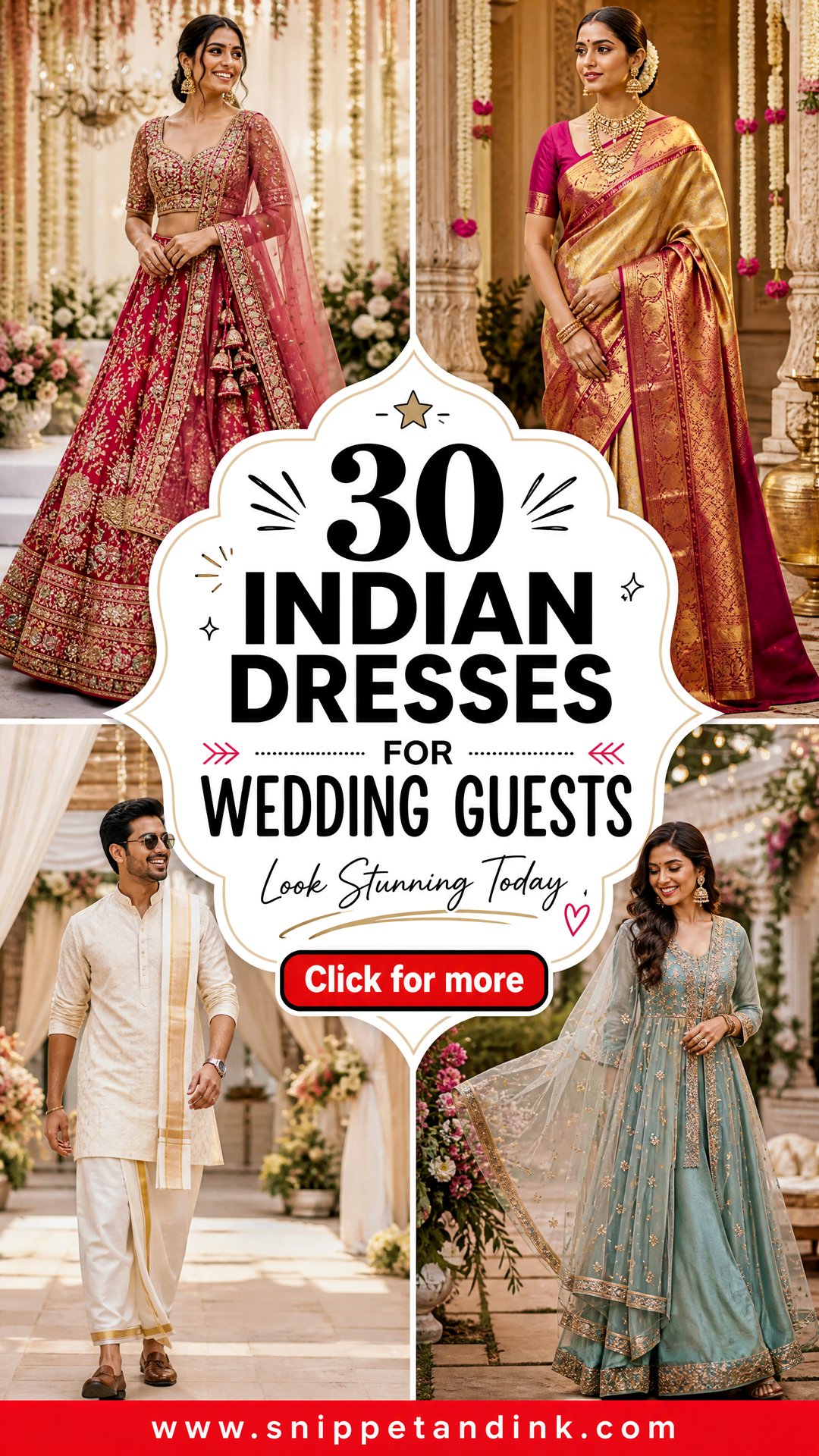
Mehendi, Sangeet, Pheras: Several Dress Codes on One Invitation
Each function asks something different of a guest, and I plan outfits event by event rather than for the wedding as a whole.
- Mehendi and haldi: daytime, often outdoors, sometimes seated on the floor. Bright colors, prints and light fabric. Many hosts suggest yellow or green, so check before you buy.
- Sangeet: dancing. Choose something with a clear hem, like a sharara, palazzo or light lehenga, and shoes you can stand in for hours.
- Wedding ceremony: the most formal and often the longest. Silk sarees, Anarkalis and modest lehengas suit it.
- Reception: evening and indoors, the place for sequins, velvet, gowns and sharper colors.
Colors I would steer a guest away from
Red, especially red with heavy gold, is the color many brides wear, so I’d avoid it unless the couple says otherwise. In some families white and black are tied to mourning, while others don’t mind at all. If you’re unsure, ask the couple or a family member; they will be glad you did. For a Sikh ceremony at a gurdwara, bring a scarf or dupatta to cover your head, expect to remove your shoes and sit on the floor, and choose a skirt or salwar long enough for that.
1. Indian Wedding Lehenga Choli
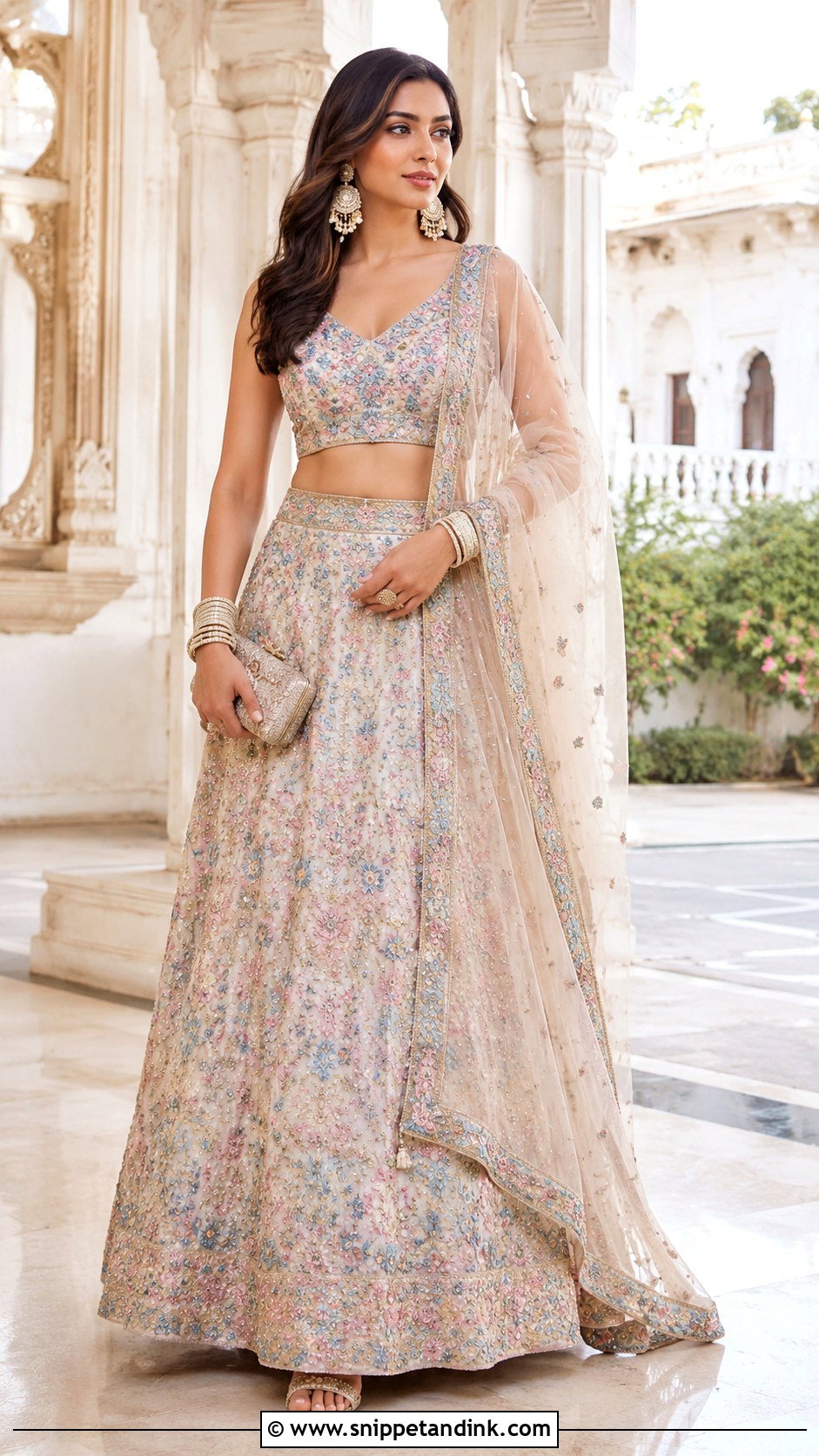
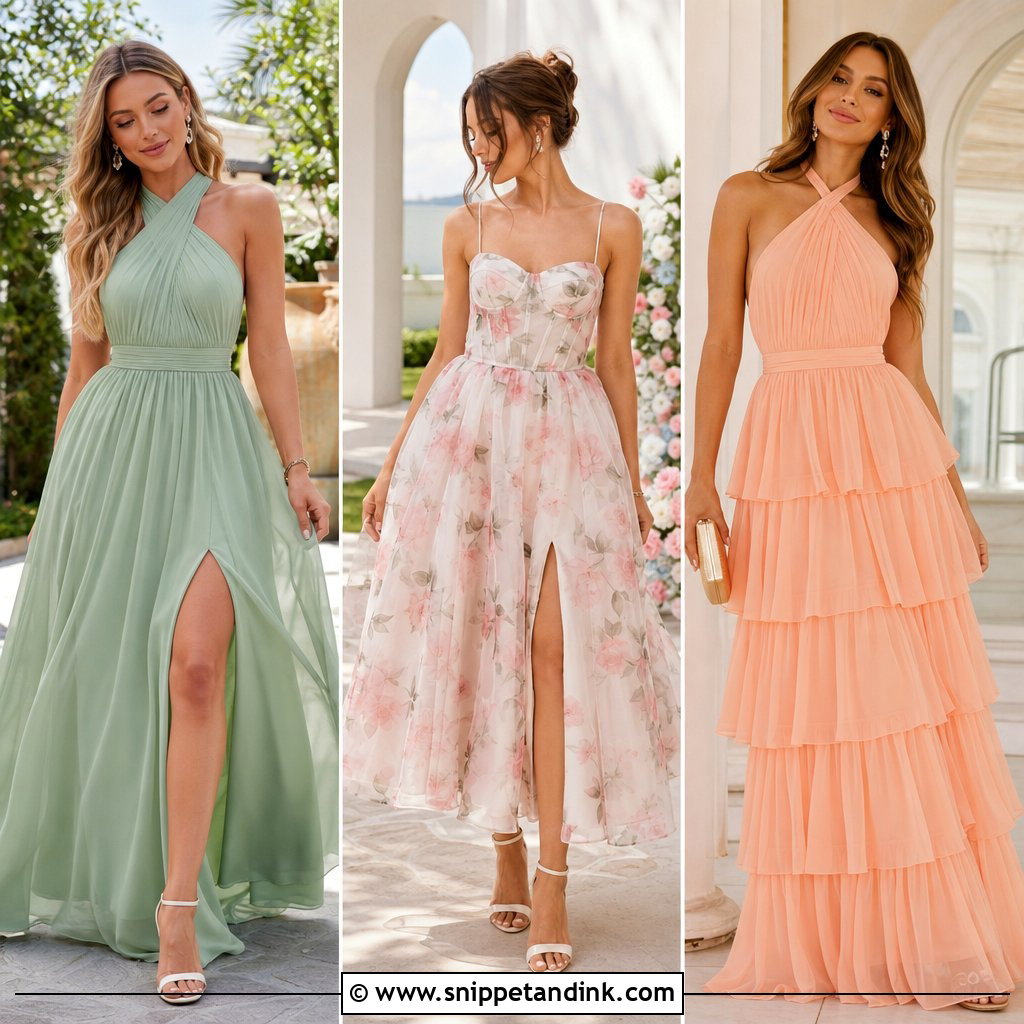
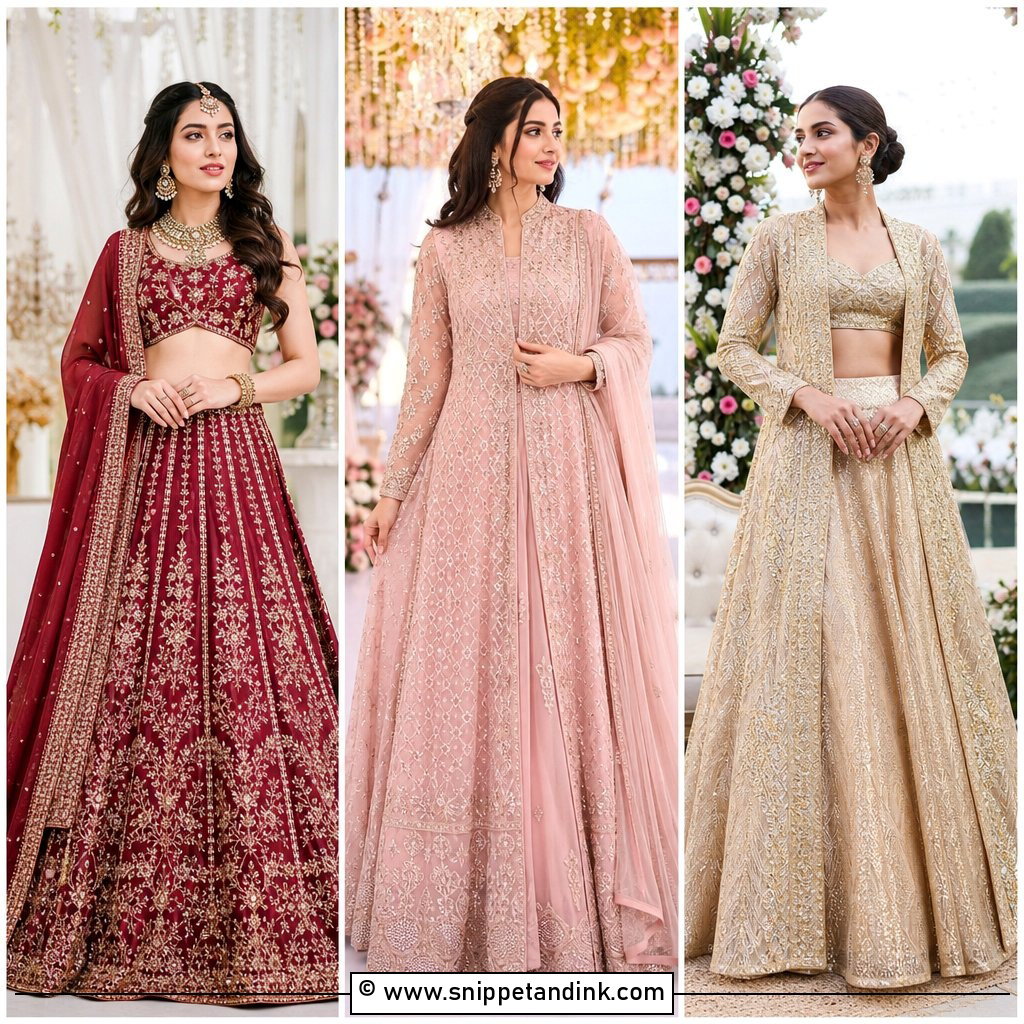
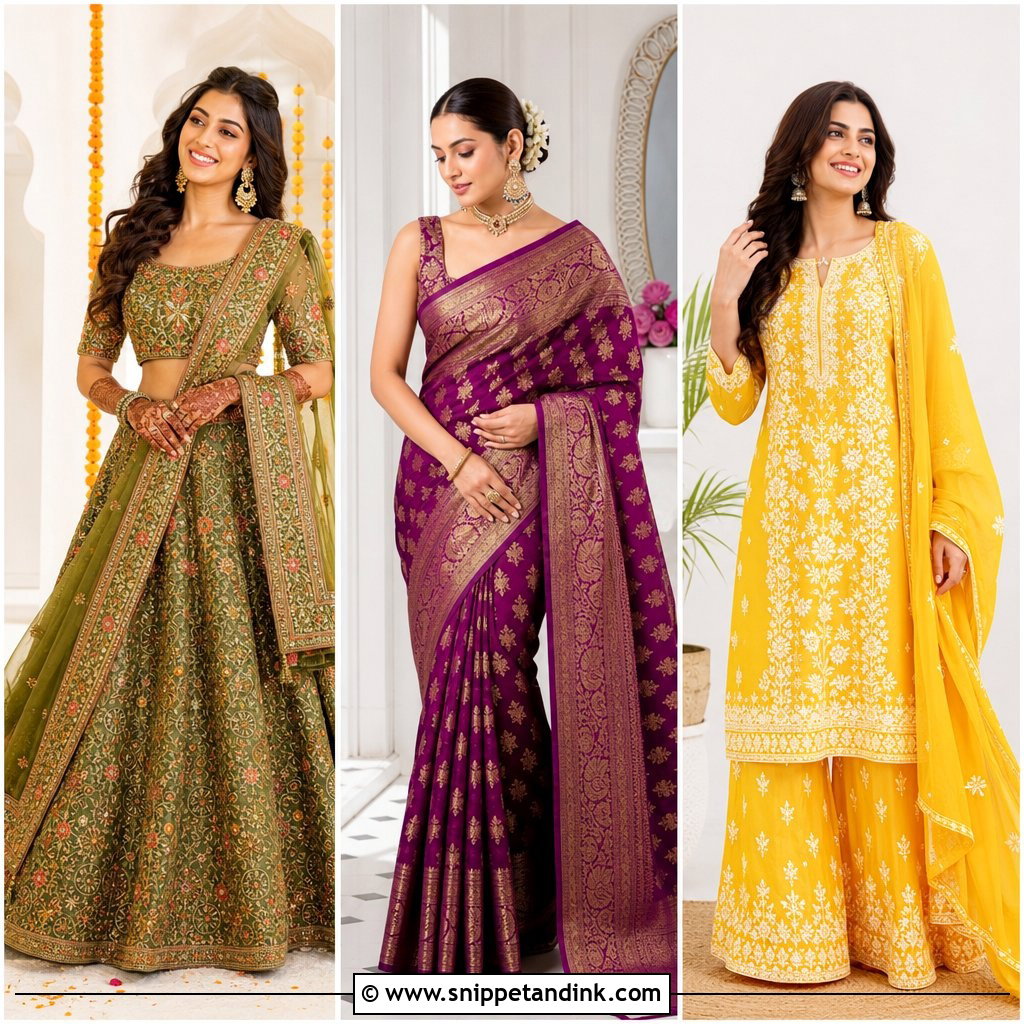
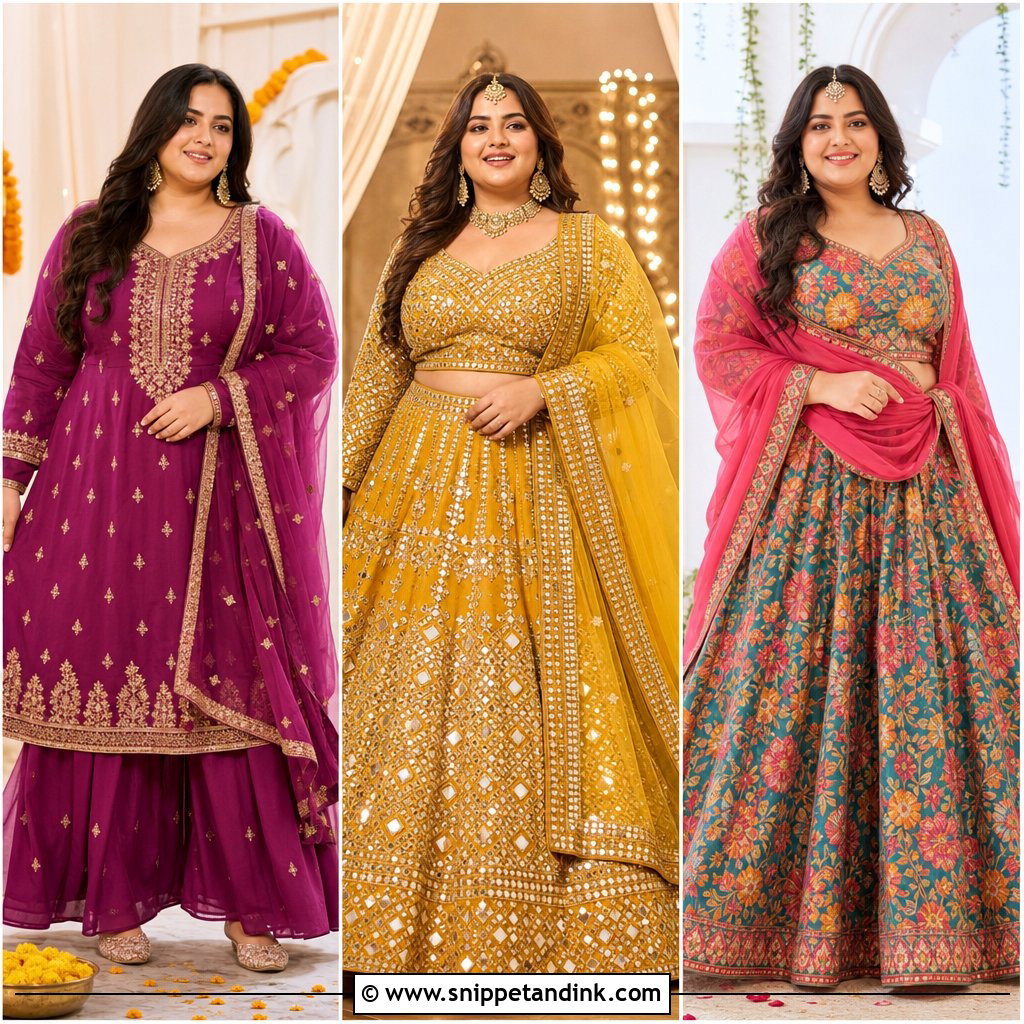
The lehenga is the easiest outfit to read as festive, which is why it is the default for so many guests. Daytime suits soft pink, sage or peach with colorful embroidery; evening suits emerald, navy or plum. As a guest, I’d keep the embroidery lighter and the borders narrower than anything a bride would wear, and drape the dupatta over one shoulder rather than over the head and both arms, which reads bridal. Check the blouse sitting down, since a long ceremony is where a tight armhole starts to hurt. Jhumkas, bangles and a small clutch finish it.
2. Indian Wedding Silk Saree
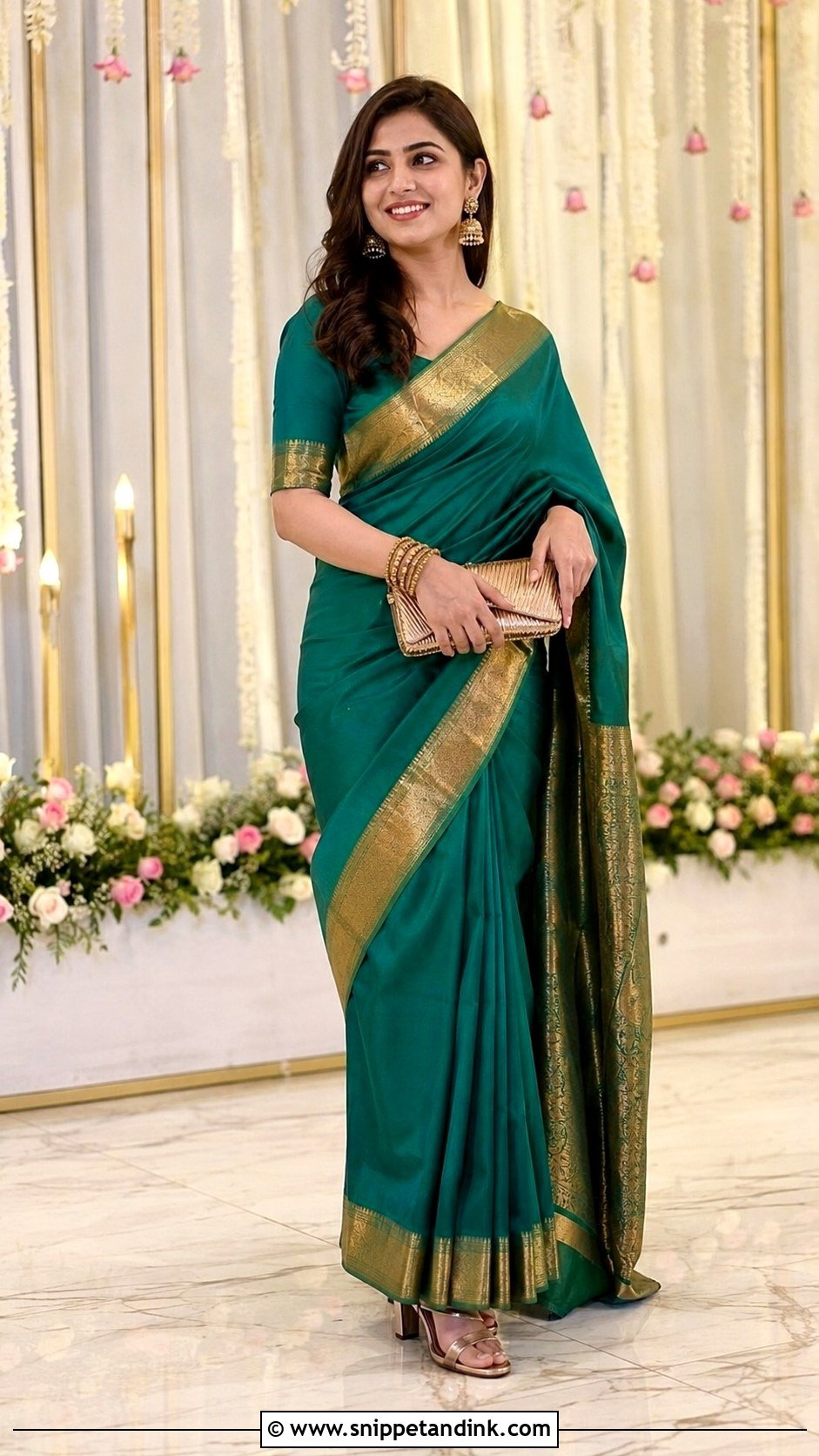
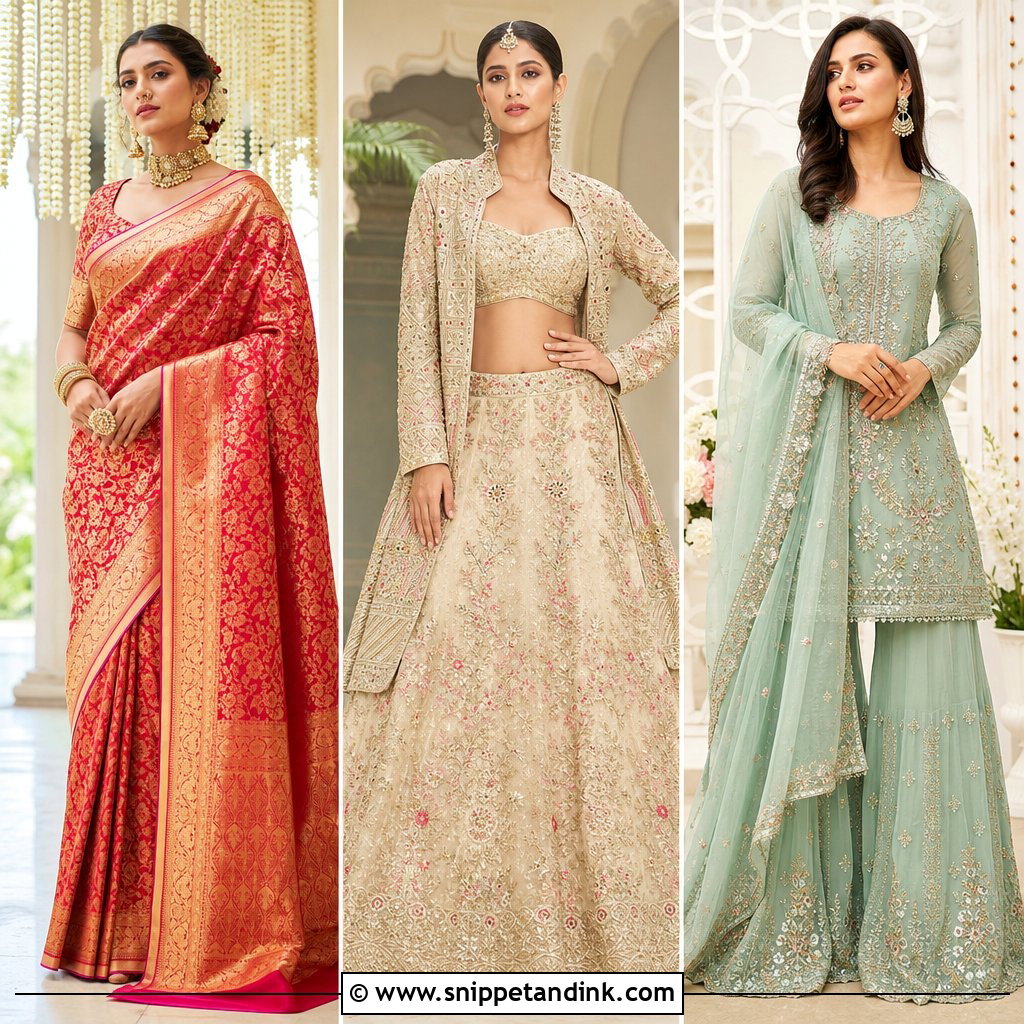
Silk sarees hold pleats and look composed in photographs, which is why they appear at every formal ceremony. Banarasi, Kanjivaram, Paithani and Mysore silk each have a character: Mysore silk is light and soft, while Kanjivaram is heavy and stiff. The rule I give clients is balance. A heavy border wants a plain blouse; a plain saree can take a statement blouse. Ruby, emerald, royal blue and mustard suit silk, with classic gold jewelry and block heels you can stand in.
3. Indian Wedding Anarkali Suit
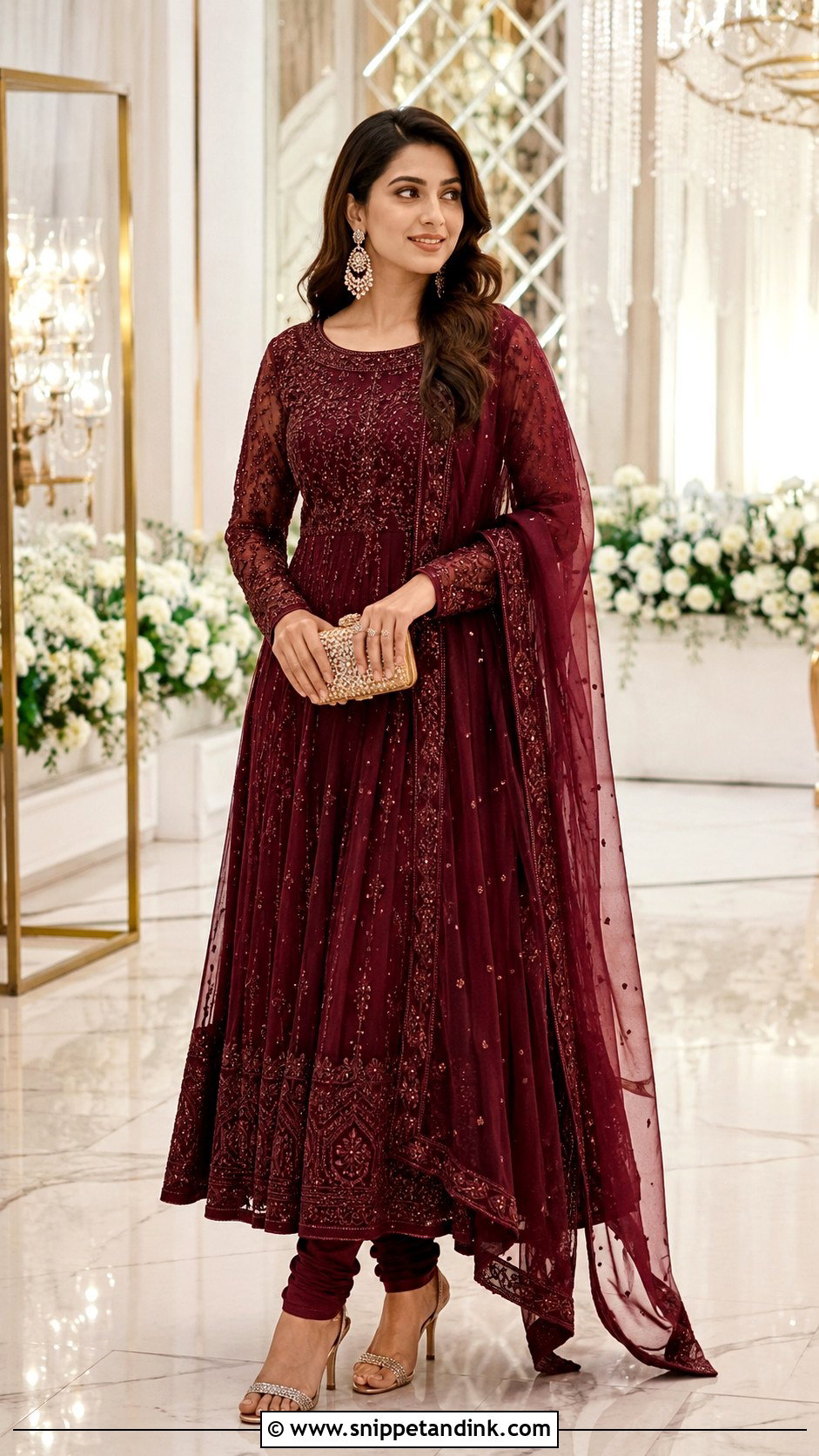
An Anarkali suit flatters a wide range of figures because it fits through the bodice and flares from just under the bust or the waist. It feels dressy without the weight of a skirt and blouse. For a wedding, I’d choose silk, georgette or crepe with zari, sequin or thread embroidery, and floor length over calf length. In teal, wine or champagne, a full-length Anarkali holds its own beside gowns. Chandelier earrings, a soft dupatta and metallic heels are all it needs.
4. Indian Wedding Sharara Set
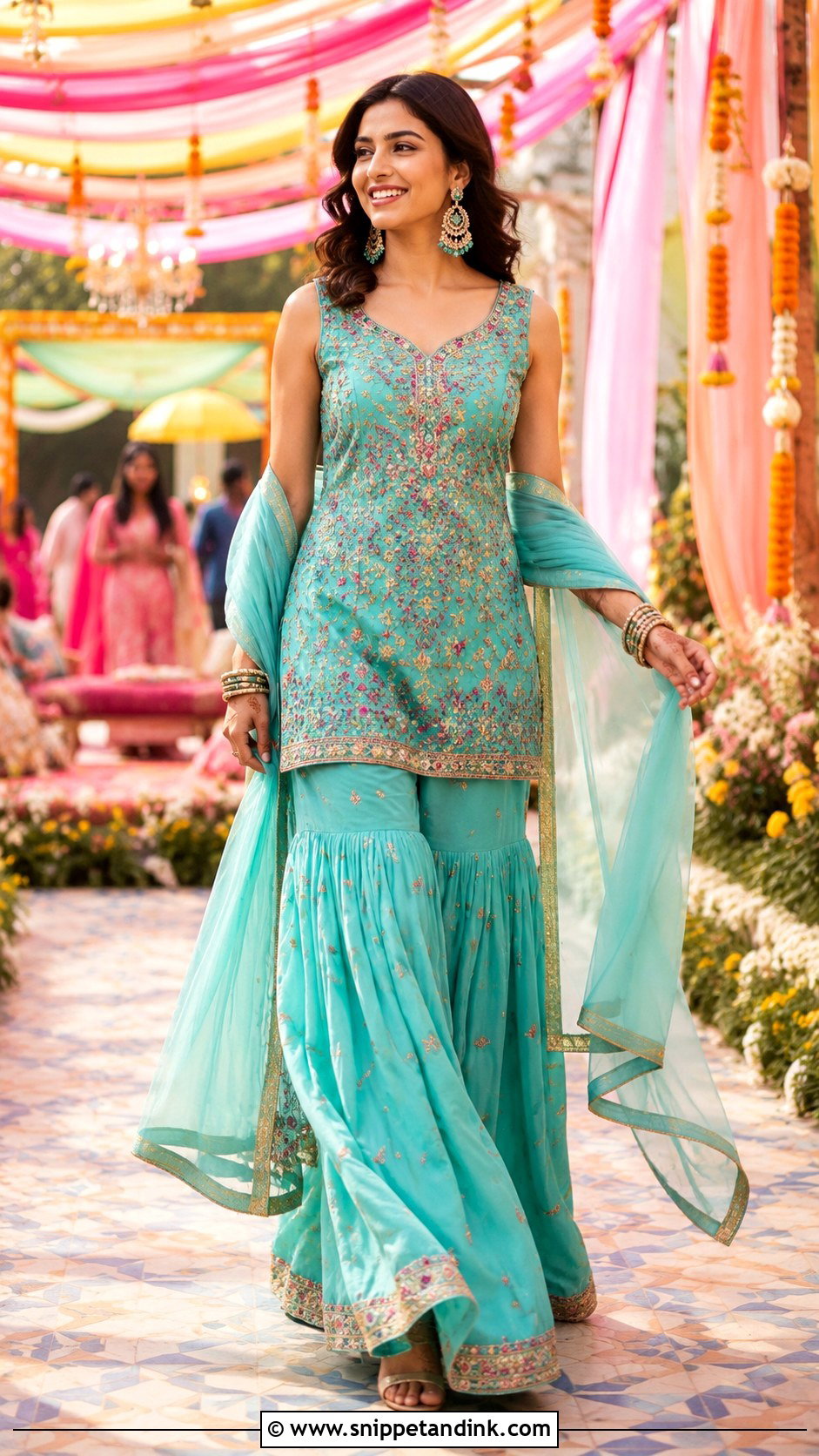
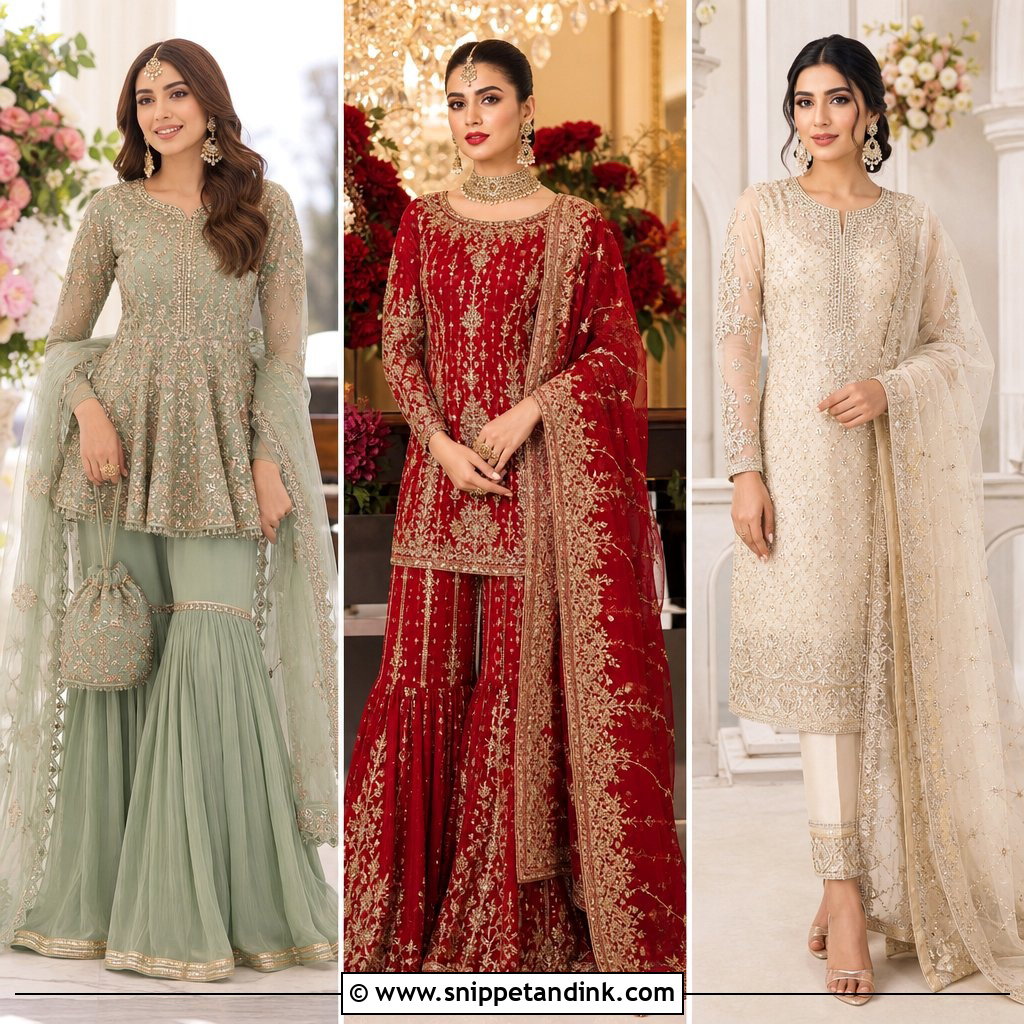
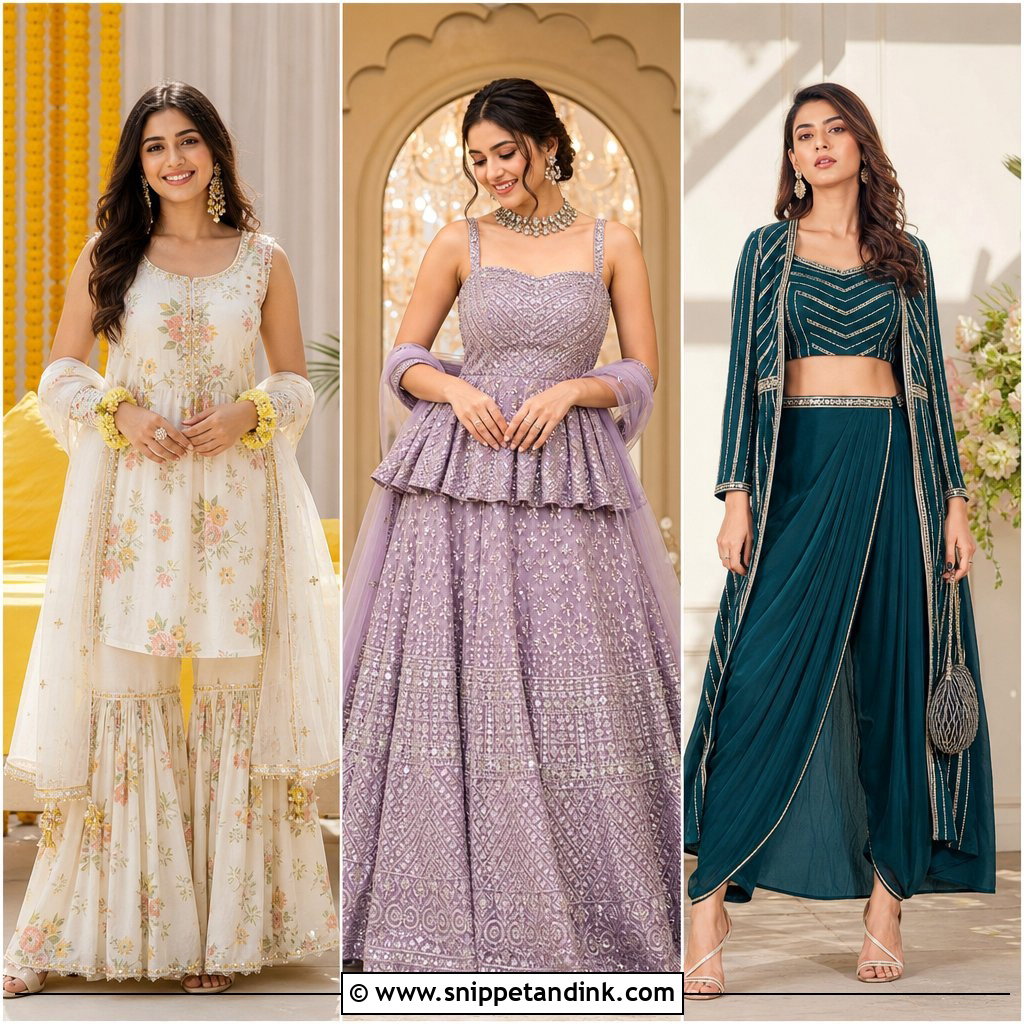
Shararas are pants, not a skirt, and that is their advantage: wide, flared legs that let you dance, climb stage steps and sit without gathering anything. Pair a short embroidered kurti with a light dupatta. Mirror work, gota patti and chikankari suit the sangeet and mehendi. Lime, rani pink or turquoise belong to daytime; plum, bottle green or midnight blue to the evening. Juttis or block heels keep the hem off the floor.
5. Indian Wedding Gharara Set
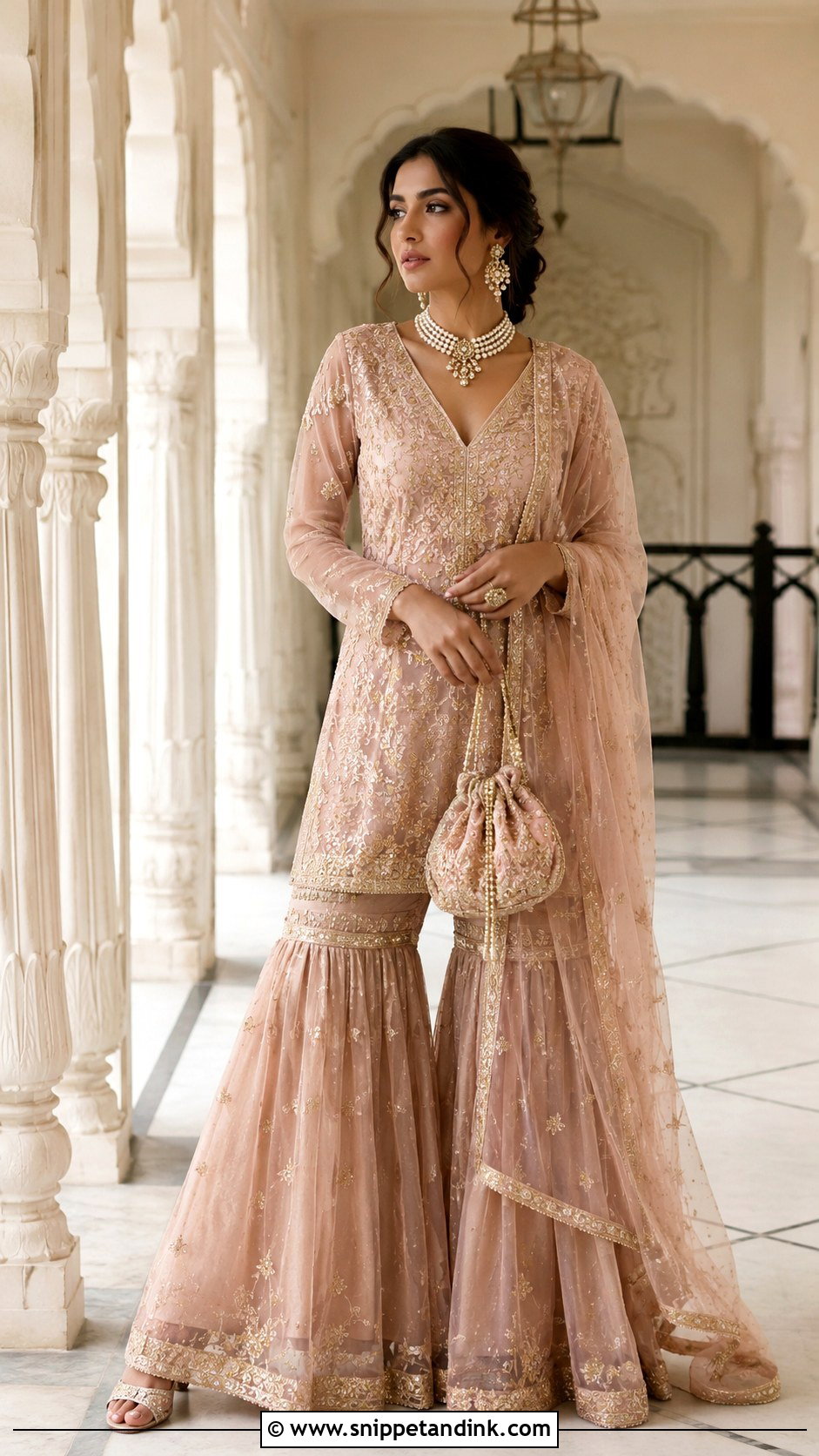
A gharara is fitted down to the knee and then flares out, often with a decorative band at the joint. That shape needs accurate measuring, so I’d check where the knee seam lands and that the hem clears your shoes by a fraction. Brocade, silk, organza and tissue all suit it. Pastels with pearl work read soft; jewel tones with zari read formal. A short kurti, an embroidered dupatta, statement earrings and a neat hairstyle complete it.
6. Indian Wedding Salwar Kameez
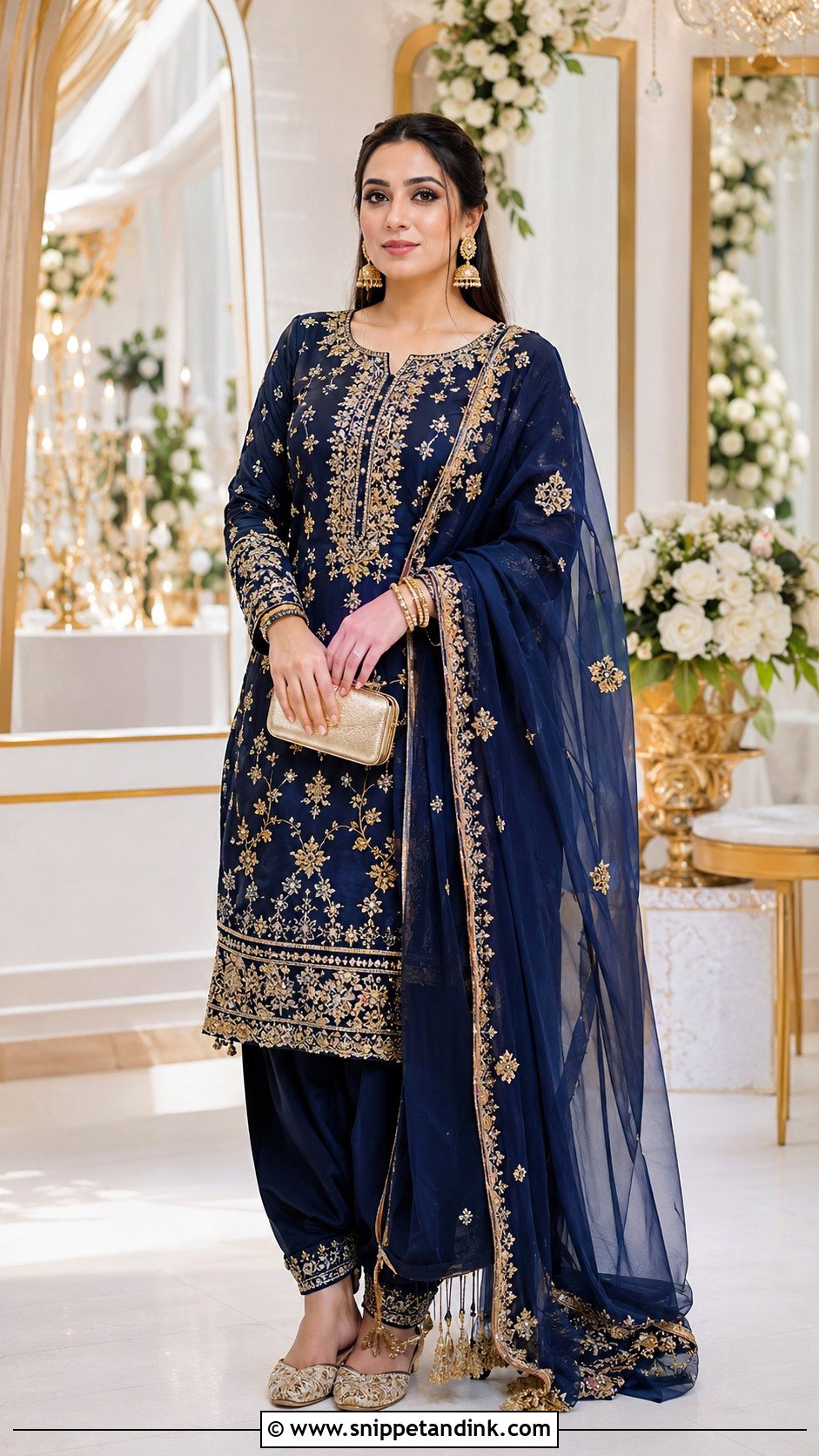
A salwar kameez can go to a wedding if the fabric does the work. I’d look for silk, brocade, georgette or velvet in the kameez and a dupatta that is clearly special, since the dupatta is what tells people this is not an everyday suit. Straight cuts with cigarette pants look current; a classic salwar is roomier and easier for floor seating. It suits guests who prefer full coverage. Mint or peach for day, deep green or wine for evening, with embroidered juttis and a potli.
7. Indian Wedding Palazzo Suit
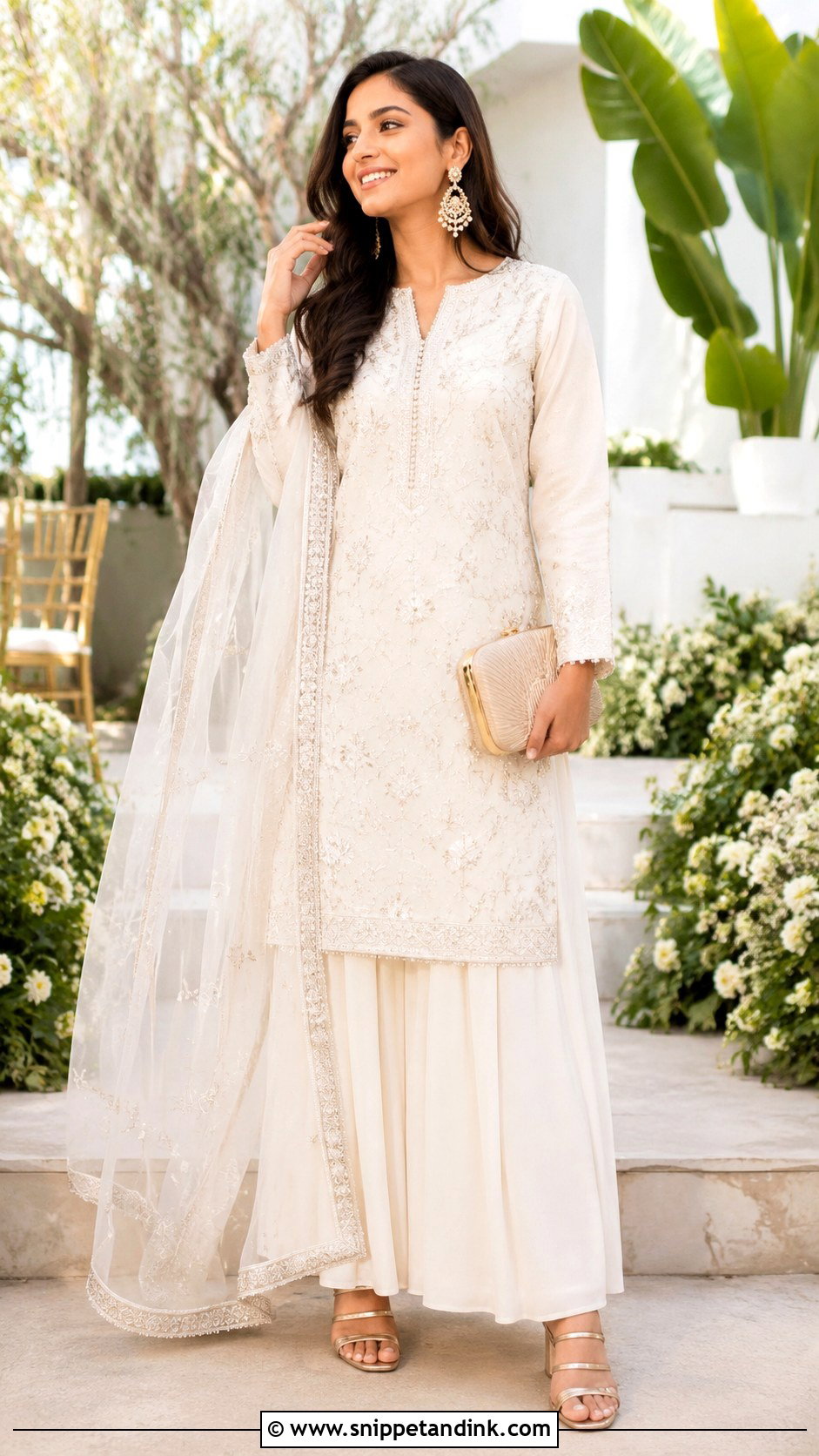
In heat, a palazzo suit is the outfit I’d reach for. Wide legs let air move, and a georgette, crepe or chiffon kurta keeps the weight down. Proportion is the thing to get right: wide pants want a fitted or structured kurta above them, or the whole silhouette turns shapeless. A long straight kurta looks sleek; a short peplum feels younger. Statement earrings and metallic sandals are enough.
8. Indian Wedding Churidar Suit
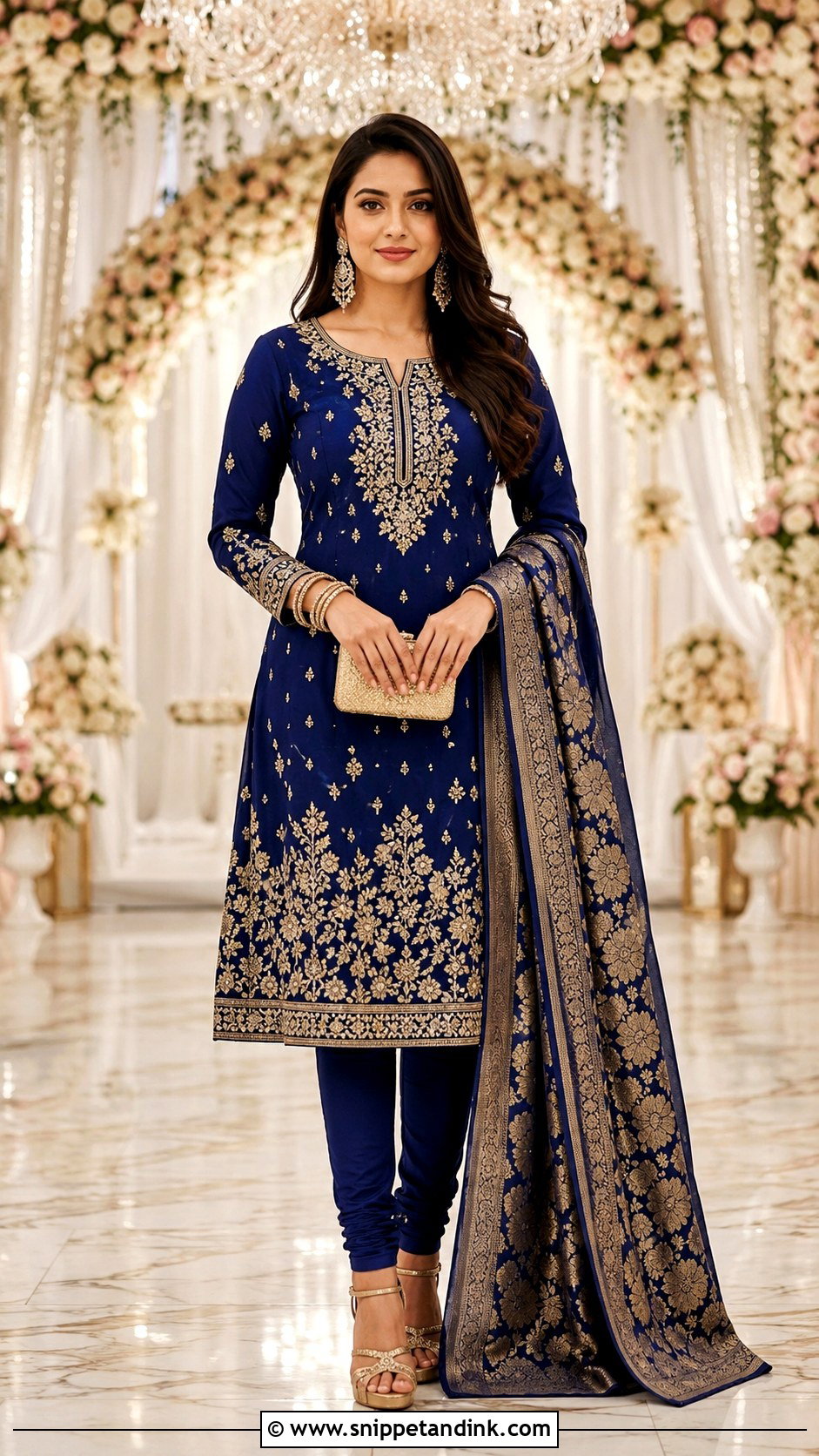
Churidar pants are cut long and narrow so the extra length bunches at the ankle, and that neat finish puts all the attention on the kurta. A long embroidered kurta with side slits, zari or resham work and a silk dupatta looks traditional and very tidy. Get the churidar length right; too short and the gathers vanish. Embellished heels or juttis suit it, and a bindi and bangles make it formal enough for the ceremony.
9. Indian Wedding Organza Saree
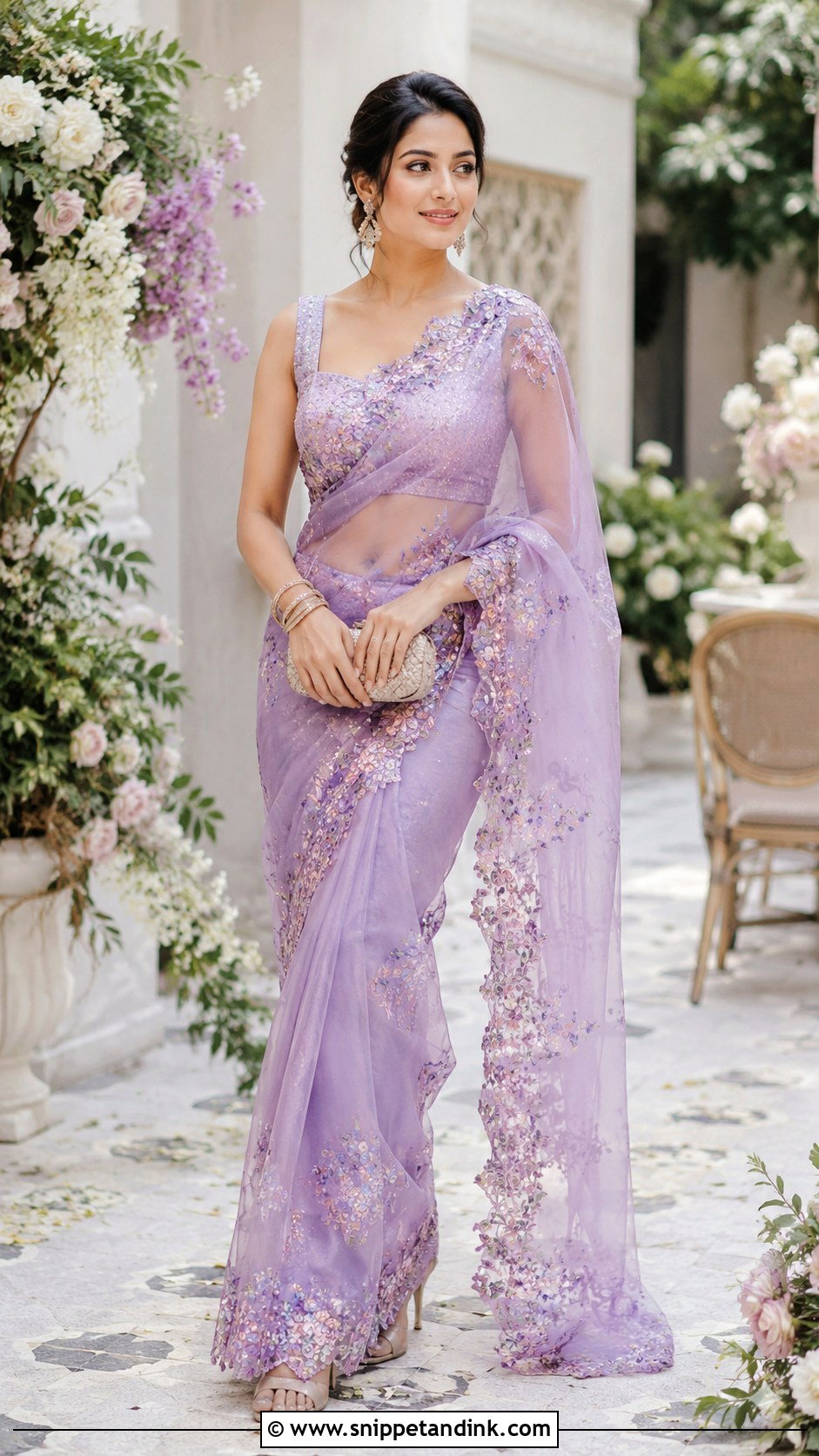
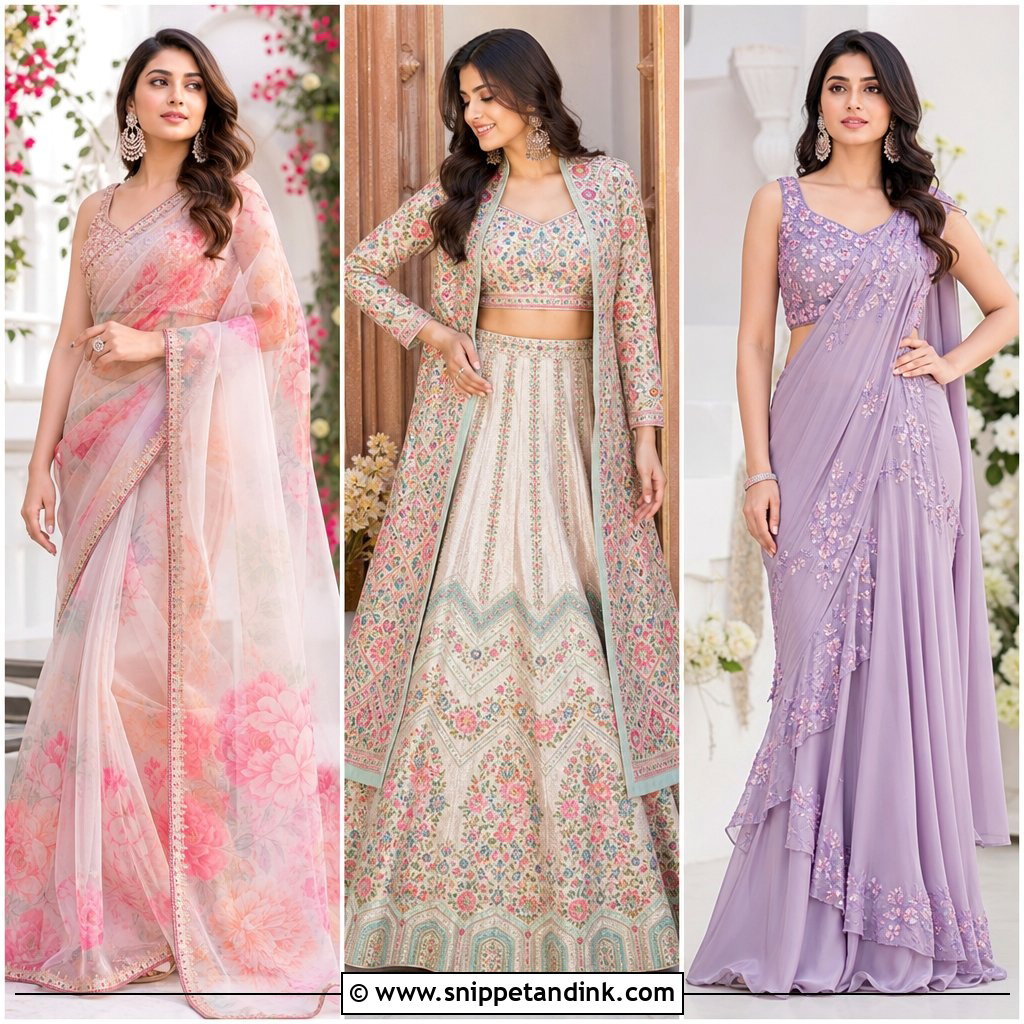
Organza is crisp and slightly sheer, so a saree in it looks airy at a daytime ceremony or garden venue. It also has body, which means the pleats puff unless you pin them firmly at the waist and shoulder. A structured blouse helps contain it. Floral embroidery, scalloped borders or pearl details are enough. Blush, lavender and mint are the familiar shades, but organza in emerald or deep rose with sleek hair is a stronger evening look.
10. Indian Wedding Banarasi Saree
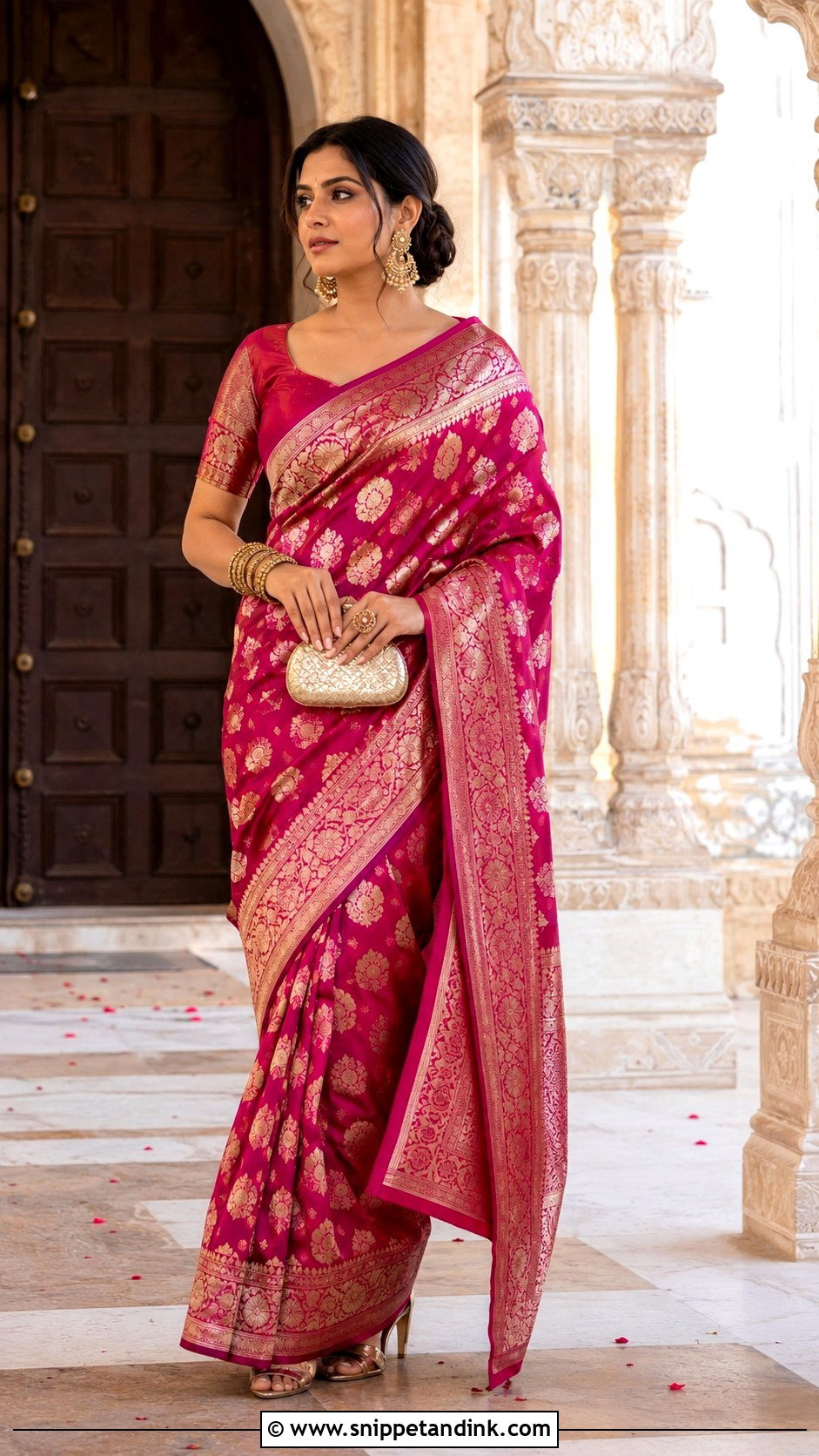
Banarasi silk is woven with zari motifs, so the saree carries its own decoration and needs very little help. I’d stop at gold earrings, bangles and a neat bun or soft waves. As a guest, I’d skip red and gold, which many brides wear, and look at purple, teal, magenta or mustard instead. It suits temple ceremonies, family weddings and formal receptions, with a simple clutch and comfortable heels.
11. Indian Wedding Kanjivaram Saree
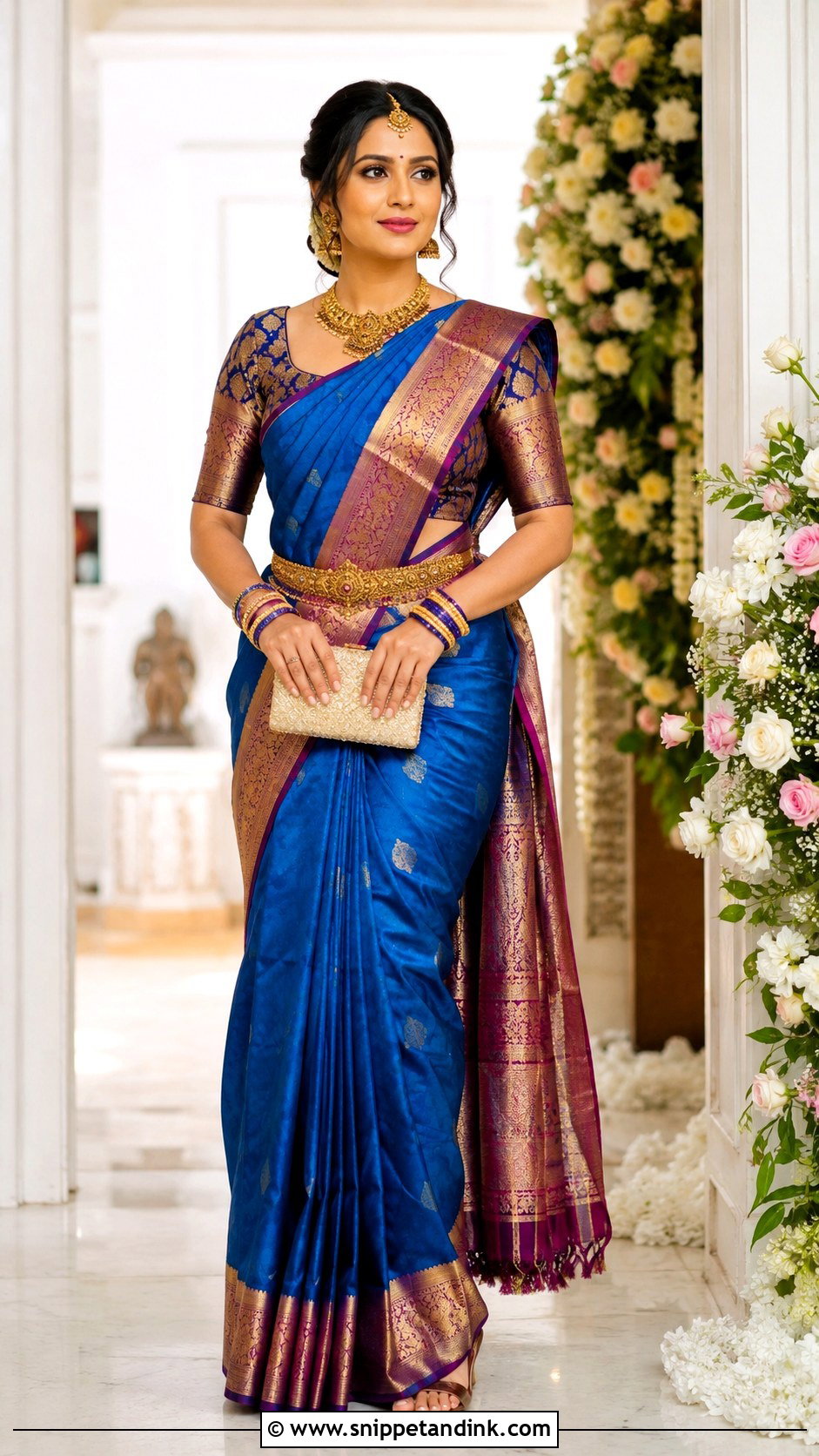
Kanjivaram silk is heavy and stiff, with contrast borders that photograph sharply. It is the saree of South Indian wedding ceremonies and works for many other formal Indian events too. Because the fabric is substantial, pleats need to be sharp and pinned, and the drape takes longer than a lighter silk, so allow time. Deep maroon, peacock blue or royal purple suit it, with temple jewelry, a matching blouse and a simple hairstyle that doesn’t compete.
12. Indian Wedding Chikankari Lehenga
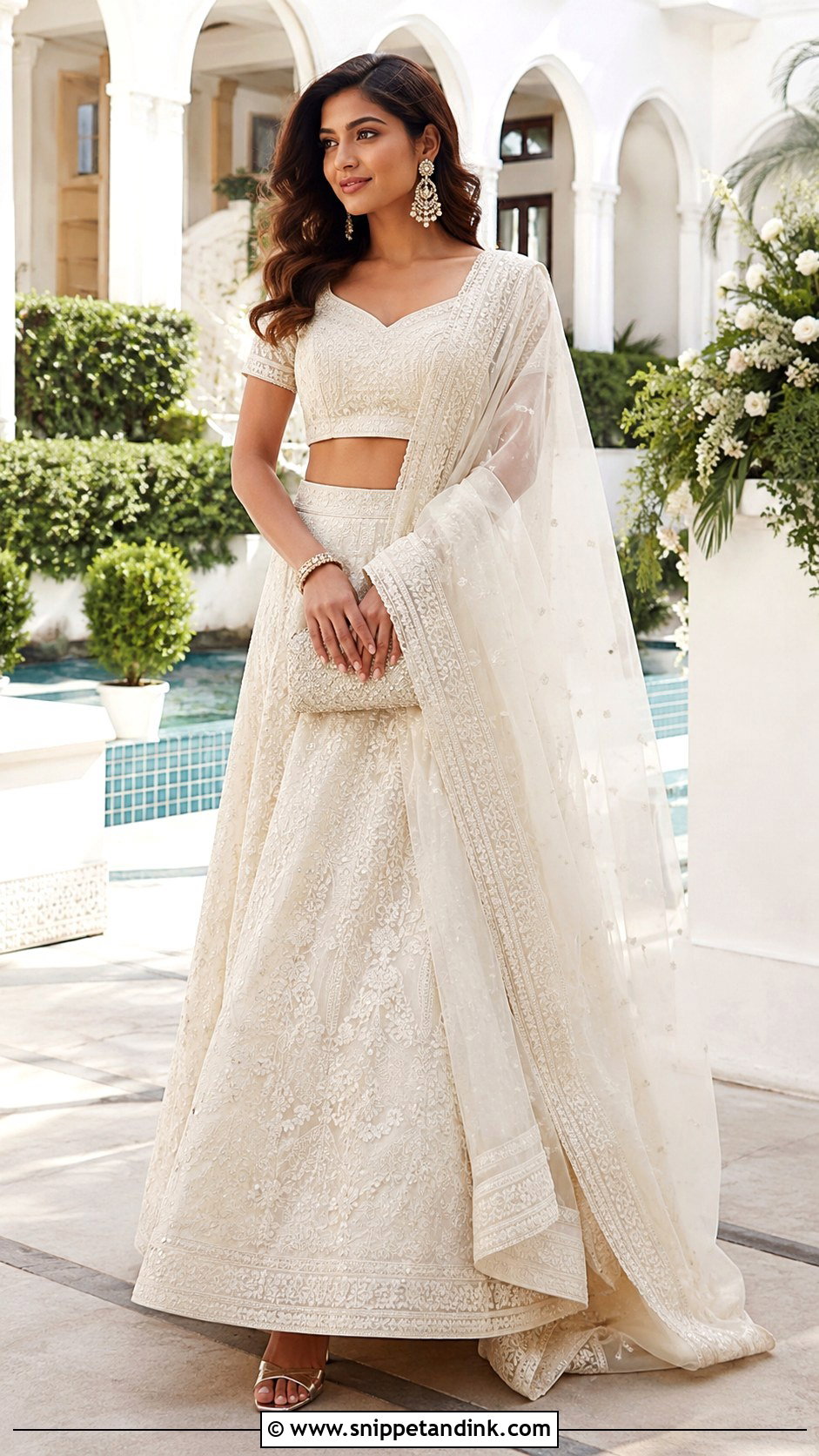
Chikankari is fine hand embroidery from Lucknow, traditionally white thread on light fabric, so a lehenga in it stays wearable through a long day. White, ivory, mint or powder blue suit daytime. For evening, mukaish, the tiny metal flecks sometimes worked into chikankari, or sequin highlights add shine. Pearl earrings, a sheer dupatta and fresh makeup let the handwork stay the focus. One honest caution: confirm white is welcome, since some families avoid it at weddings.
13. Indian Wedding Mirror Work Lehenga
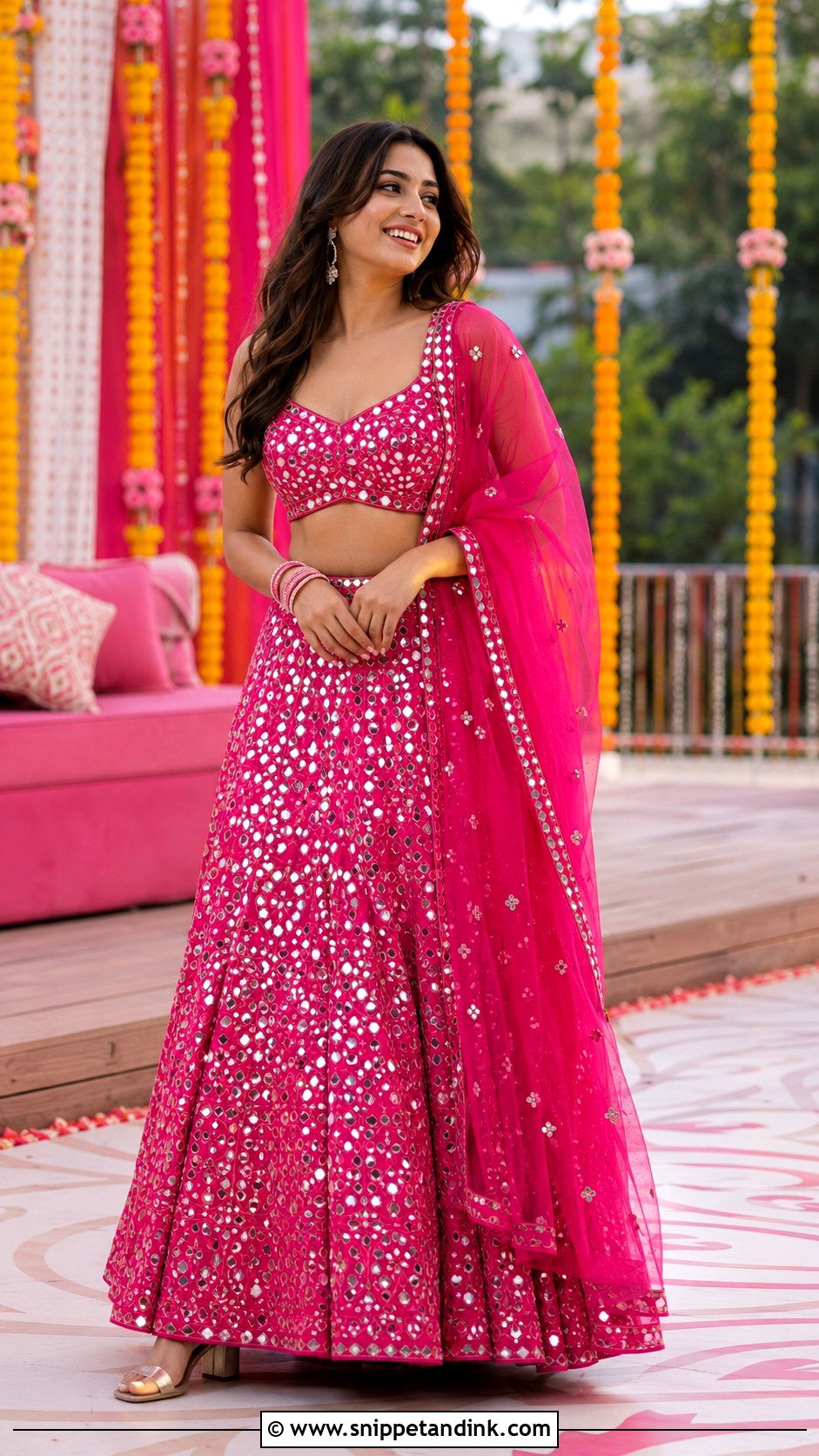
A mirror work lehenga belongs at the dance-heavy events: mehendi and sangeet. The little mirrors catch light as you move, and that is exactly when you want them. They also add weight and their edges can snag sheer dupattas, so I pair them with a cotton or georgette drape. Fuchsia, turquoise or green work by day; navy, wine or black at night. Keep jewelry simpler, since the outfit already shines.
14. Indian Wedding Sequin Saree
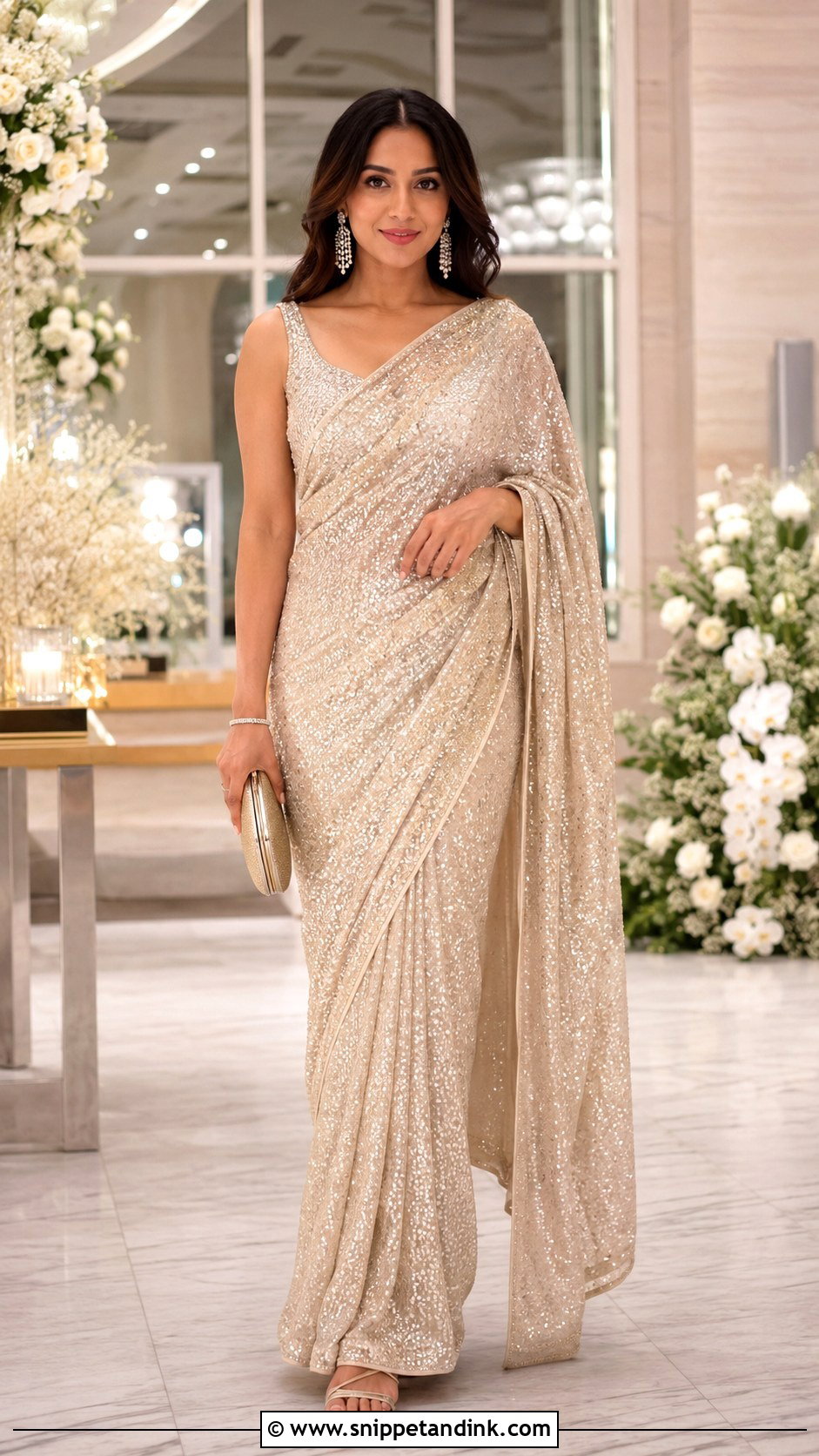
Reception or cocktail evening, nothing else. A sequin saree gives full sparkle with a slim silhouette. If the saree is fully sequined, the blouse should be plain; a lighter sequin drape can take a statement blouse. Crystal earrings, a compact clutch and strappy heels finish it. The pleats on sequined fabric are thick and slippery, so I’d pin them generously.
15. Indian Wedding Pre Draped Saree
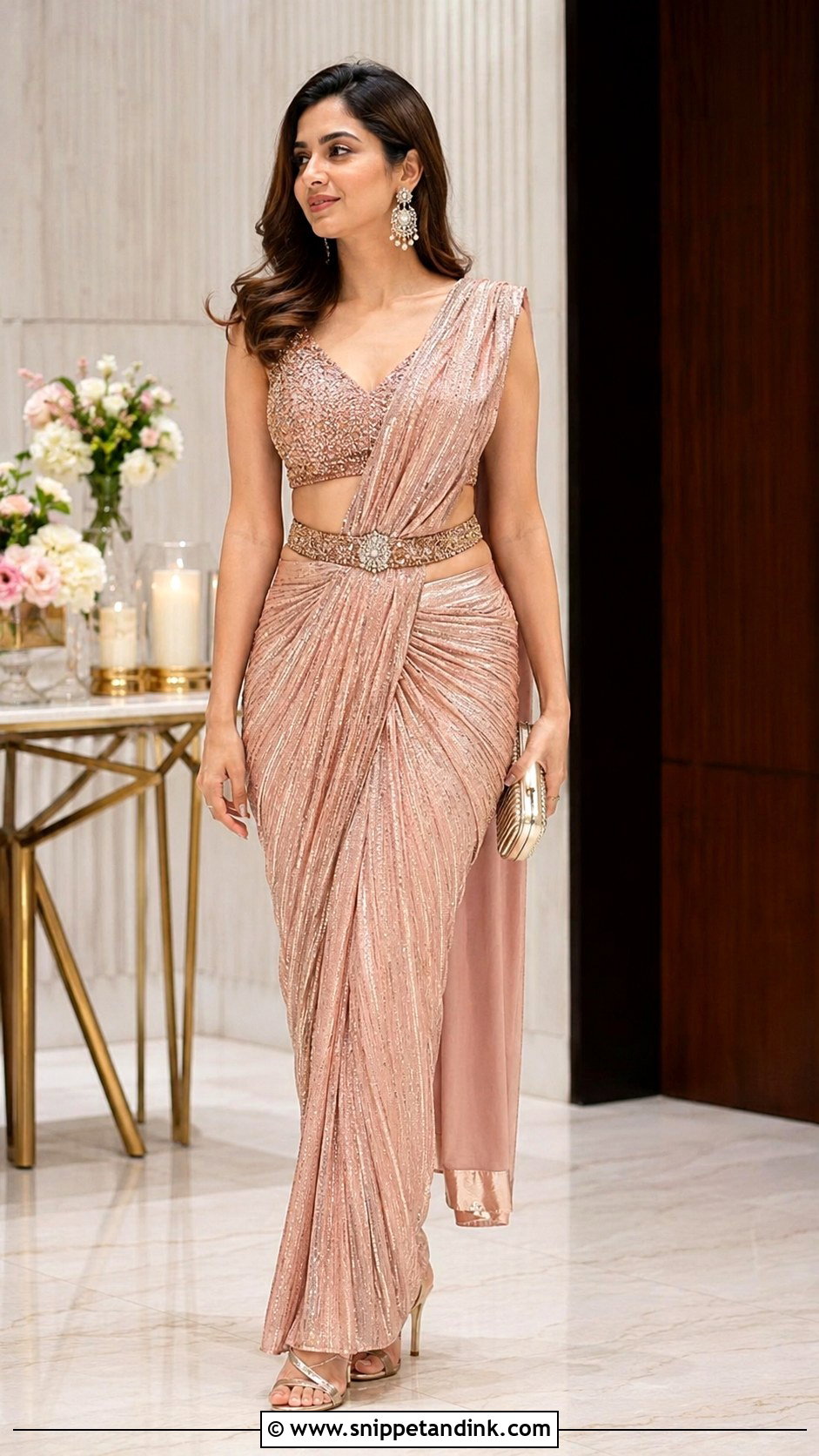
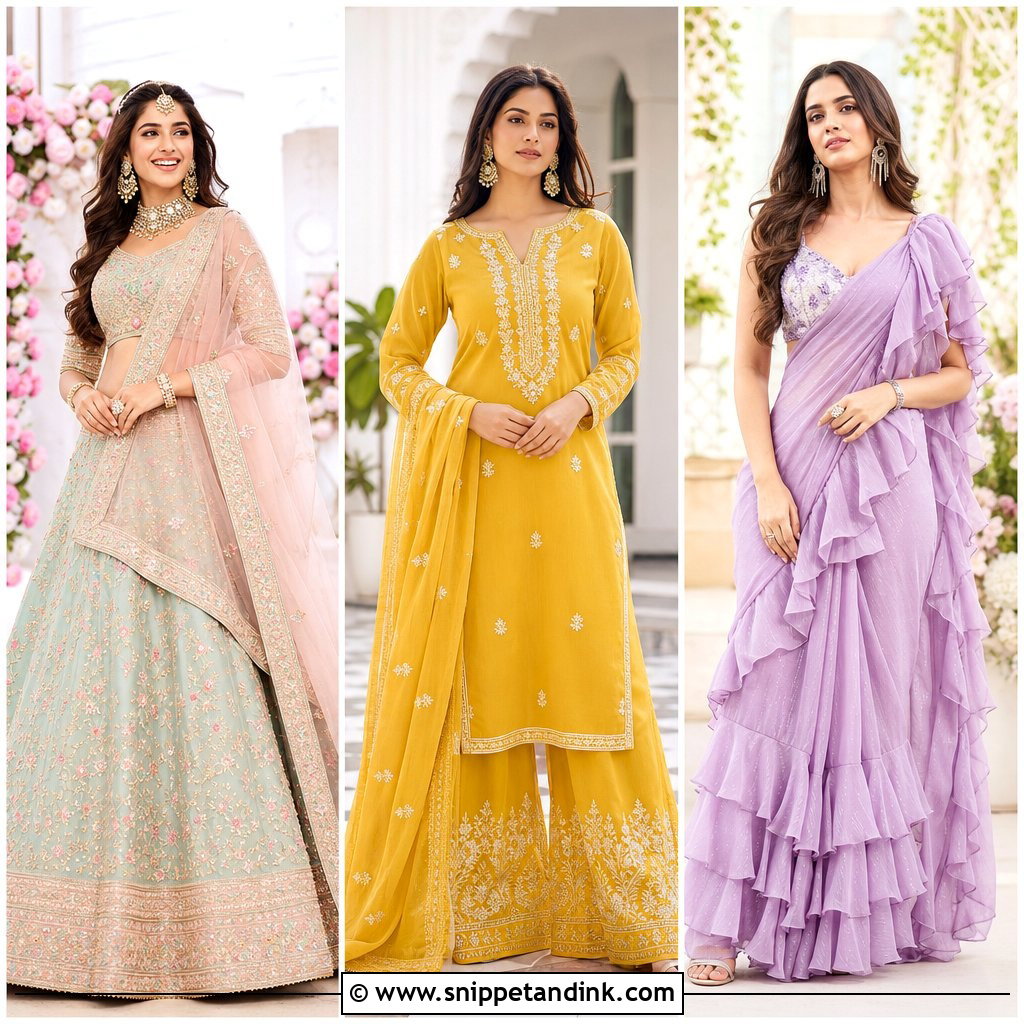
Pre-draped sarees come with the pleats and pallu stitched, so they go on in minutes and stay put through long celebrations. I recommend them to anyone new to sarees, guests coming from abroad included. Satin, georgette and crepe fall smoothly. A belt or cape blouse makes it look current. Keep the rest streamlined: earrings, heels and a clean clutch.
16. Indian Wedding Saree Gown
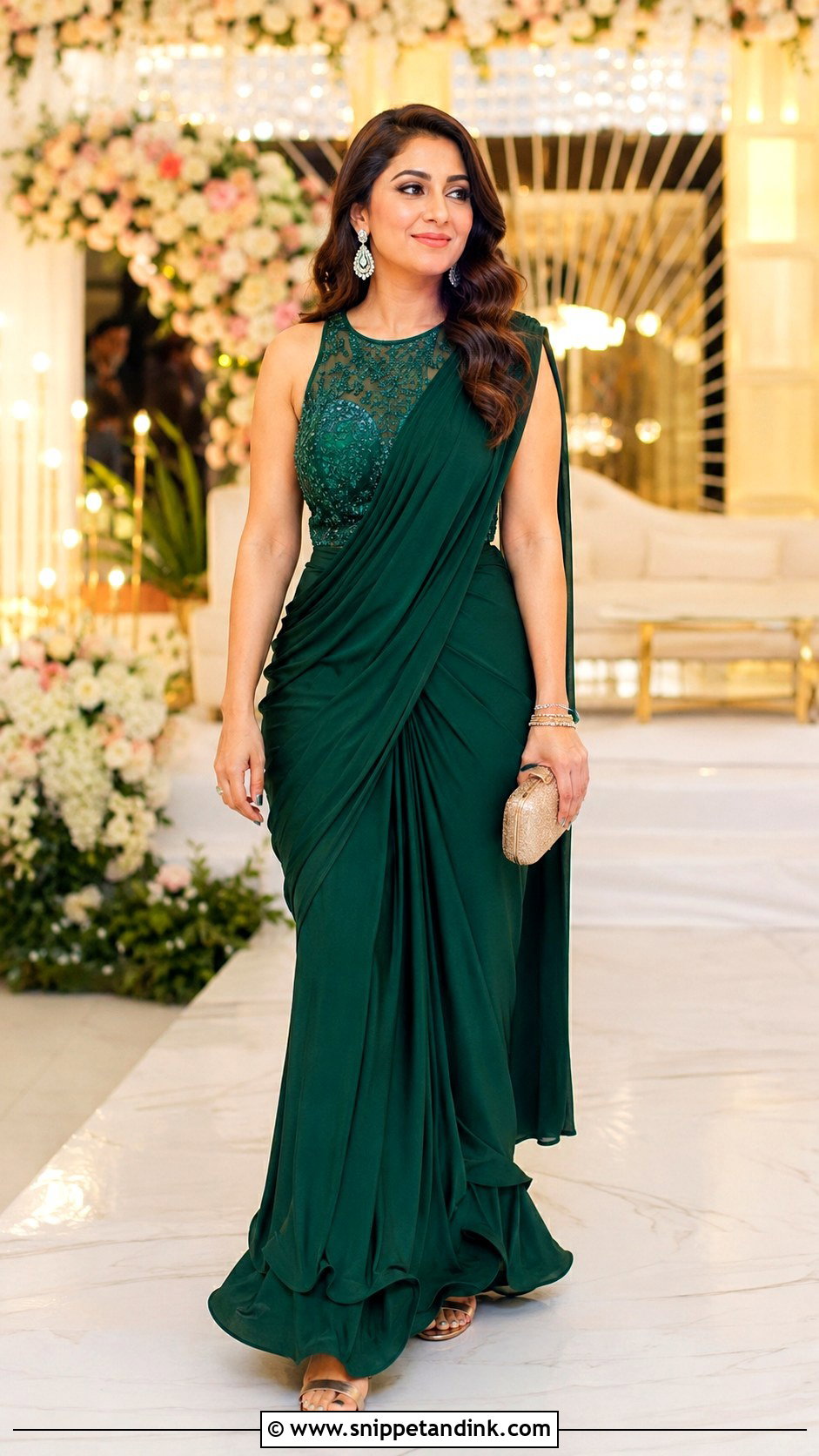
A saree gown has a fitted or draped bodice and a flowing skirt that imitates the saree line, with no pleating to manage. It suits receptions and destination weddings where you may be changing quickly. Satin, crepe, georgette or net with subtle crystal work are the usual fabrics. Because the shape is already modern, I keep the jewelry to one focal point, usually statement earrings.
17. Indian Wedding Cape Lehenga
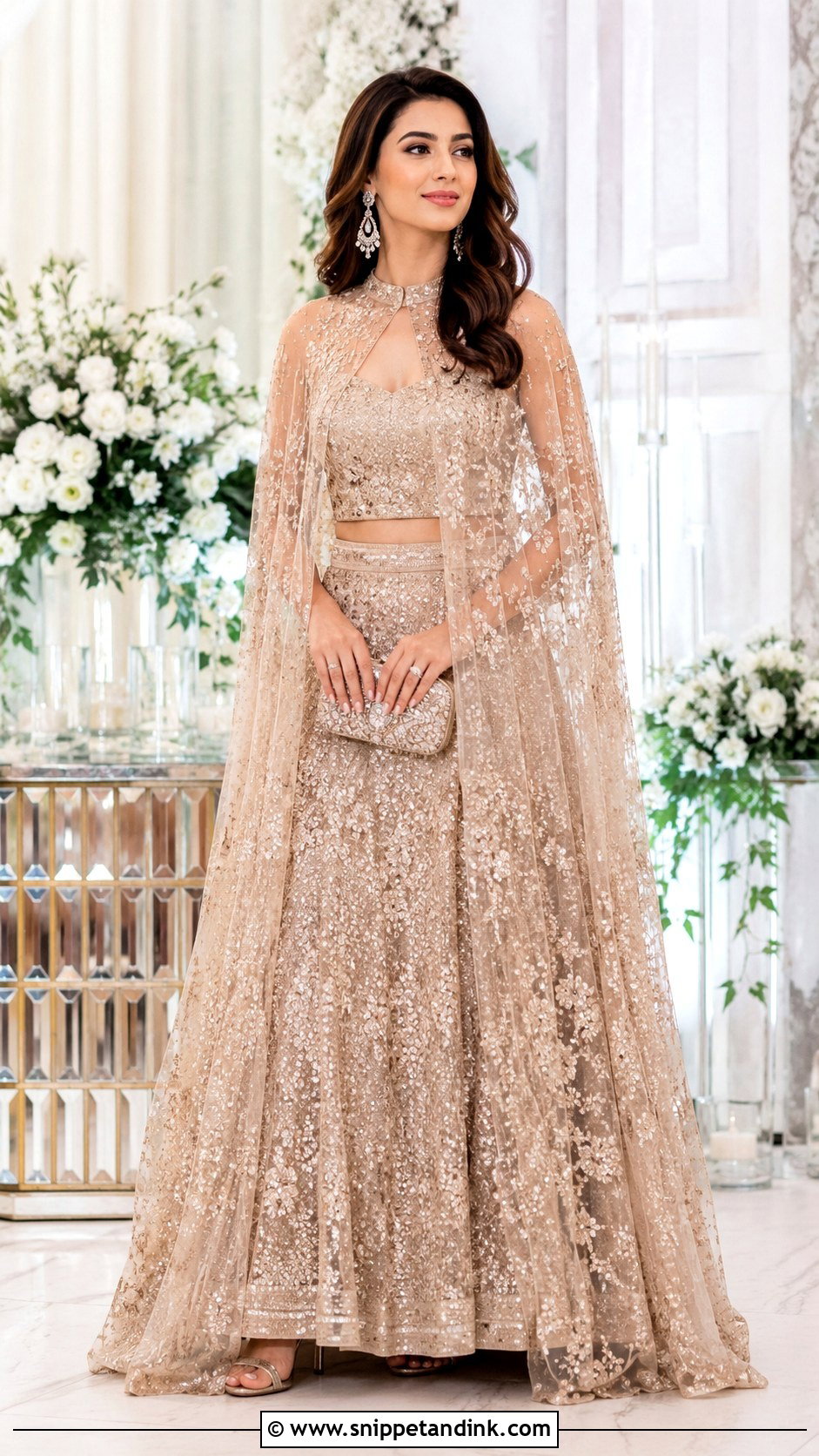
A cape replaces the dupatta and adds coverage without anything to rearrange all evening. Beadwork, sequins or threadwork on a sheer cape add movement as you walk. Pastel capes suit daytime; black, emerald or wine look dramatic at night. I’d keep the blouse neckline simple so the cape reads clearly, and check that the cape’s fastening holds when you lift your arms to dance.
18. Indian Wedding Jacket Lehenga
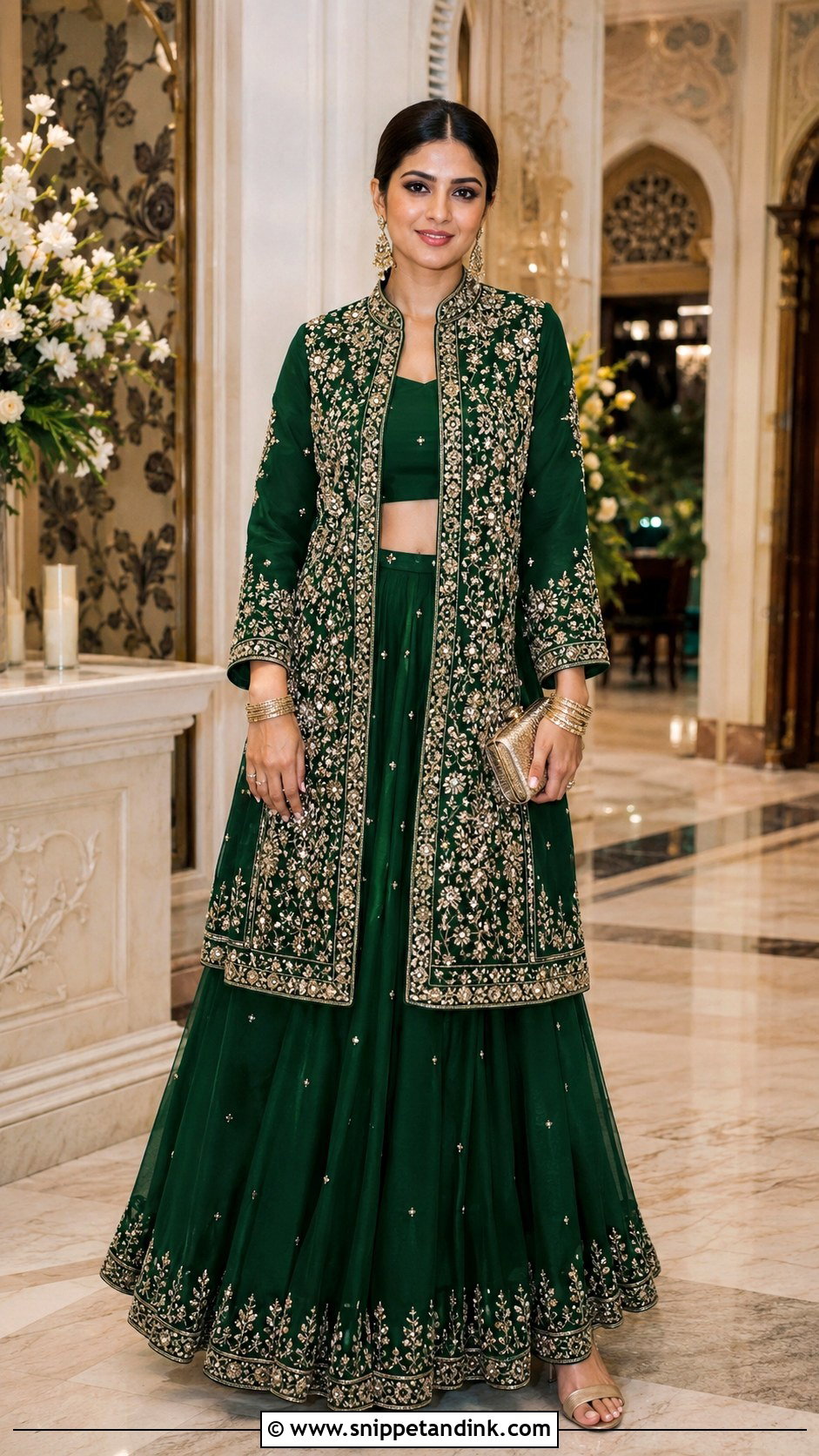
For a winter wedding or an air-conditioned banquet hall, a jacket lehenga is warmer and more modest than a blouse and dupatta. An embroidered silk jacket feels regal; sheer organza is lighter. The rule is one hero layer. If the jacket is heavily worked, keep the skirt simpler, and the other way round. Earrings, heels and a small clutch are plenty.
19. Indian Wedding Peplum Sharara
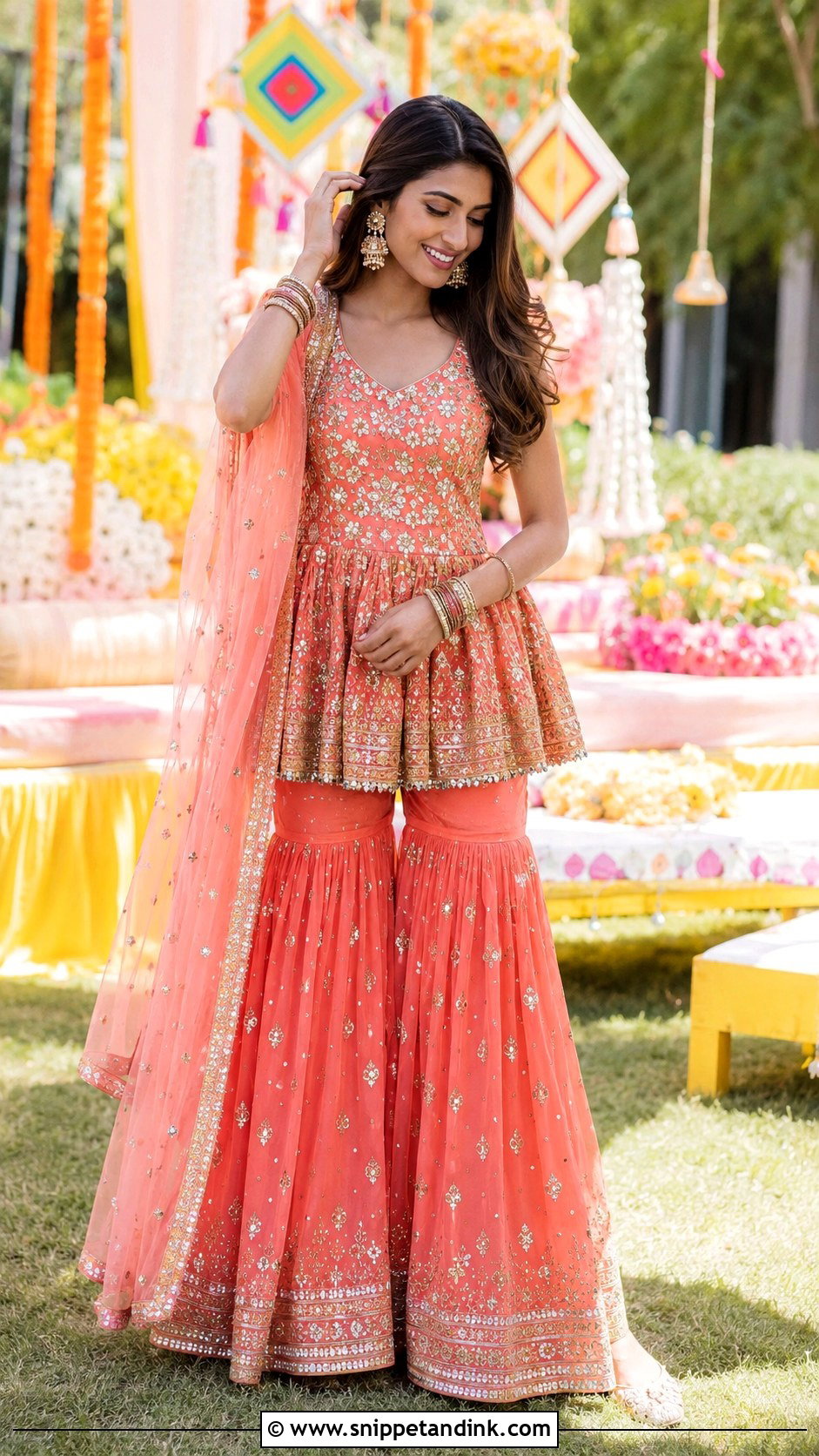
The peplum flares at the waist, which defines your shape and hides a sharara waistband if it moves while you dance. A peplum sharara in gota patti, mirror work or light sequins suits mehendi, sangeet and day events. Coral, teal or hot pink feel bright; blush or lavender feel softer. A short dupatta keeps bulk down. Juttis, statement earrings and bangles finish it.
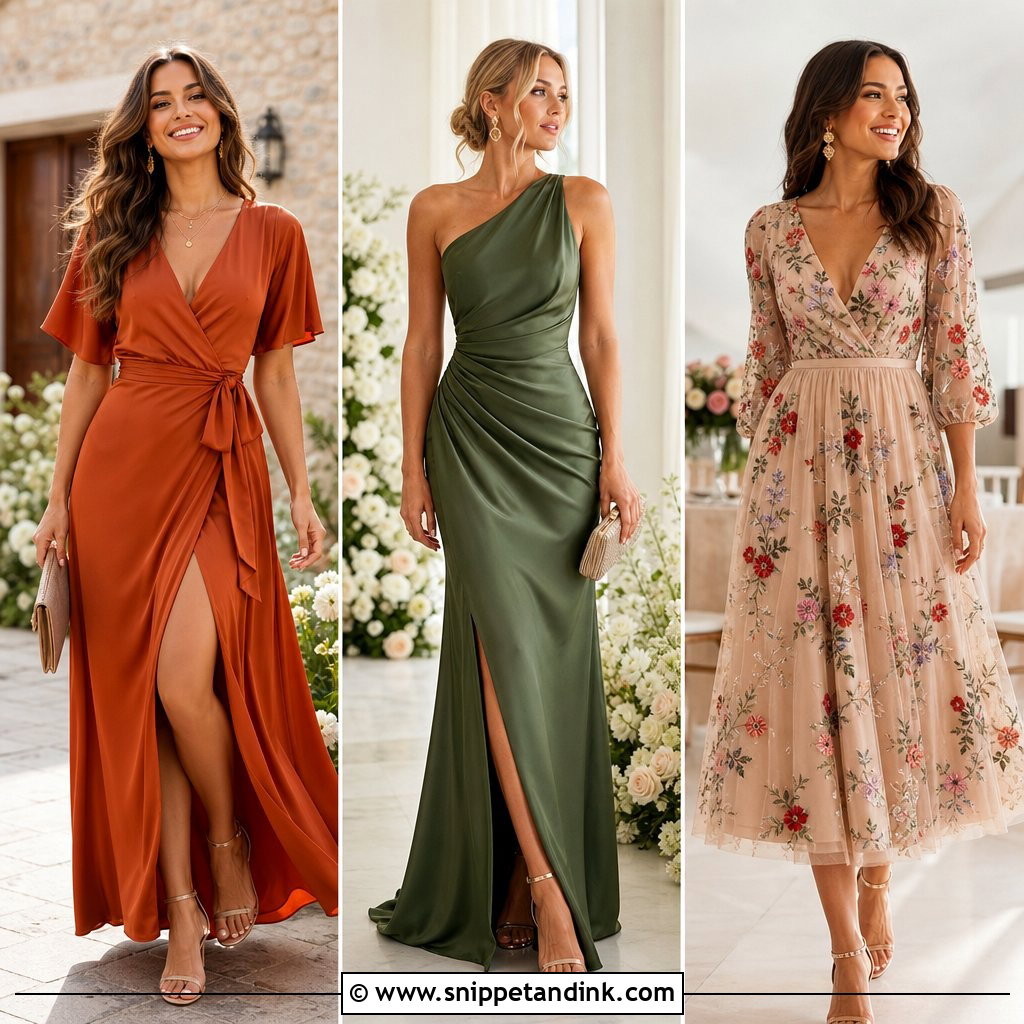
20. Indian Wedding Kurta Skirt Set
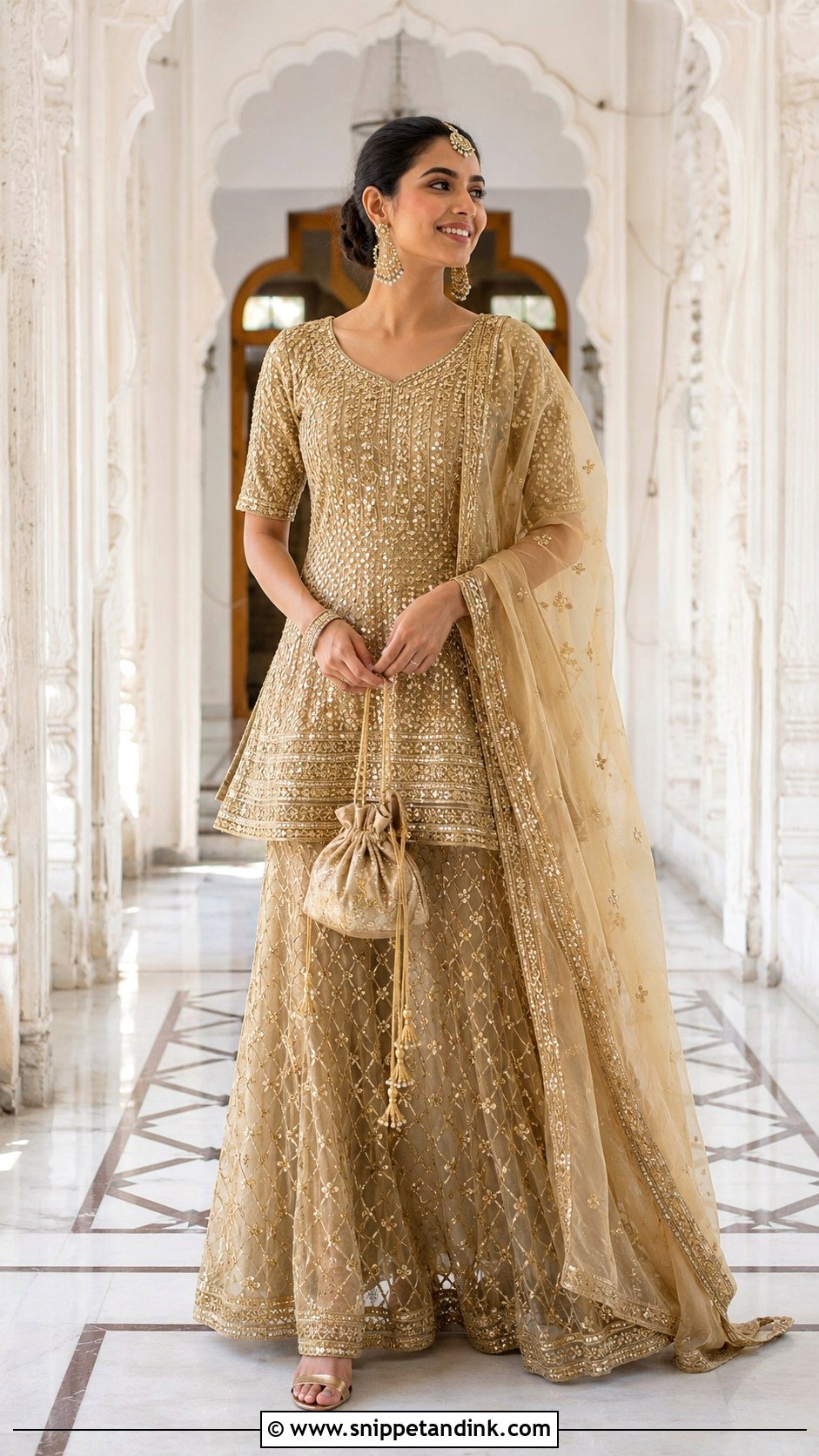
A kurta with a flared skirt gives you a lehenga’s swing with more coverage. Proportion matters: a shorter kurta over a high-waisted skirt shows off the waist, while a knee-length kurta reads more traditional. Silk or brocade with a coordinated dupatta keeps it formal enough. Jhumkas, a potli and embellished sandals suit guests, family members and semi-formal events alike.
21. Indian Wedding Angrakha Suit
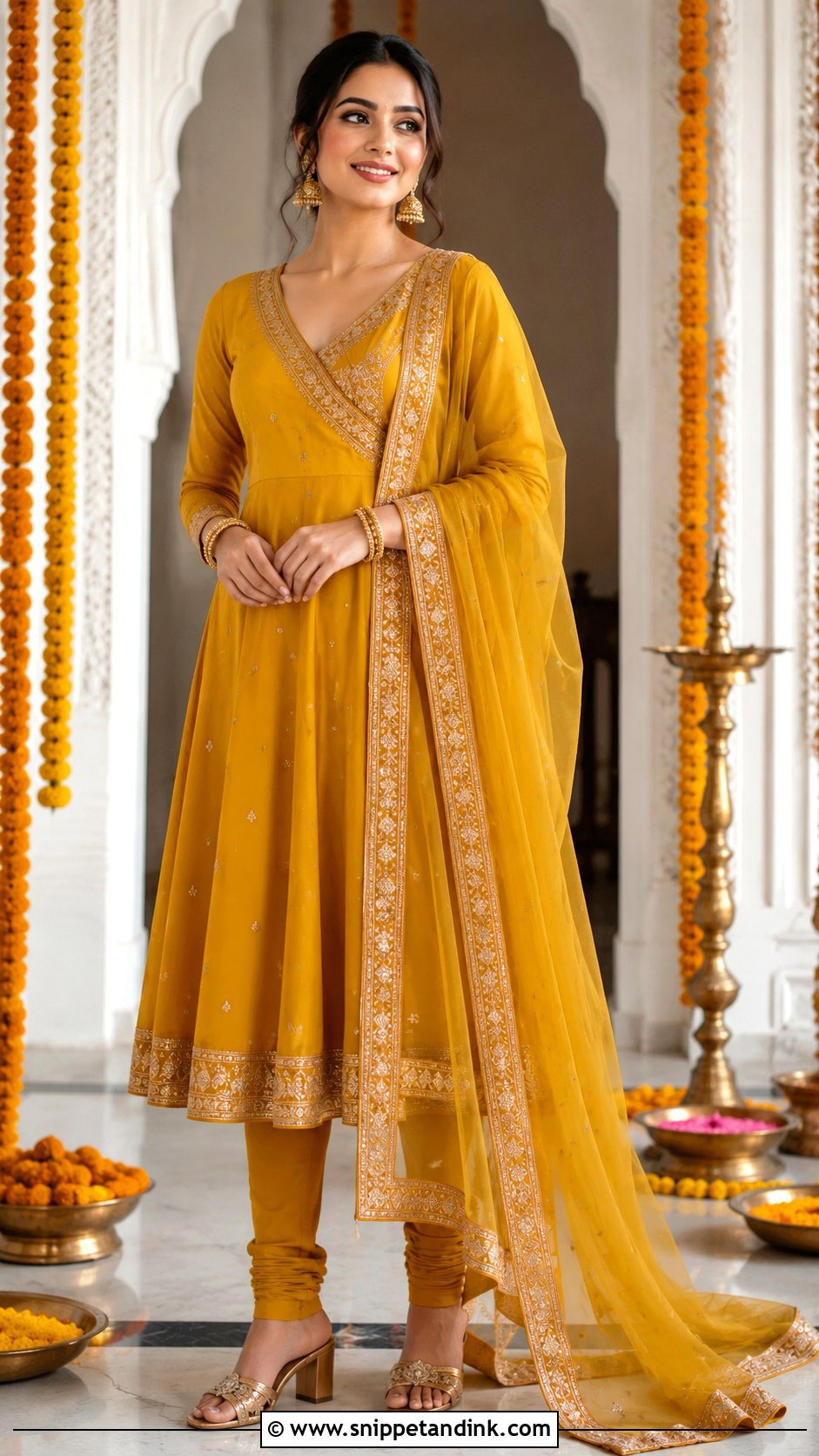
An Angrakha suit wraps across the body and ties at the side, which gives shape without a fitted bodice and suits many figures. The wrap can gape if the tie sits too loose, so I’d add a hidden snap where the panels cross. Silk, cotton silk or georgette with gota or zari work suit ceremonies and mehendi. A long angrakha with churidar is classic; a shorter one with palazzos is relaxed. Mustard, rust and teal look rich with jhumkas and bangles.
22. Indian Wedding Straight Kurta Set
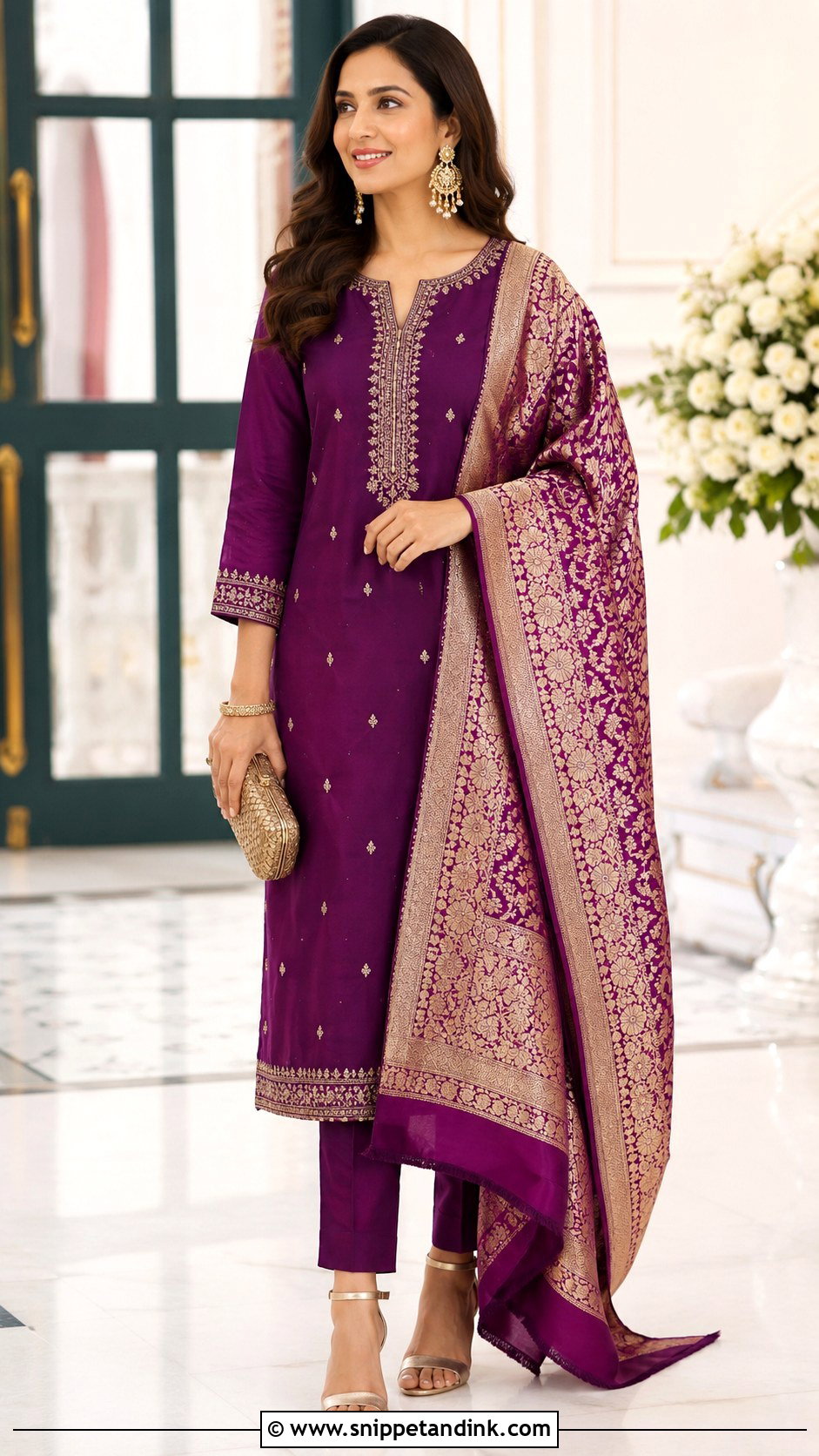
A straight kurta set has the least volume of anything here, and it suits guests who dislike flare. The dupatta is what makes it formal, so I’d spend there. A long embroidered kurta with cigarette or straight pants in silk, chanderi or brocade, jewel tones for evening, pastels for day. Earrings, a clutch and metallic heels finish it, and it rewears at dinners and festivals afterward.
23. Indian Wedding Velvet Lehenga
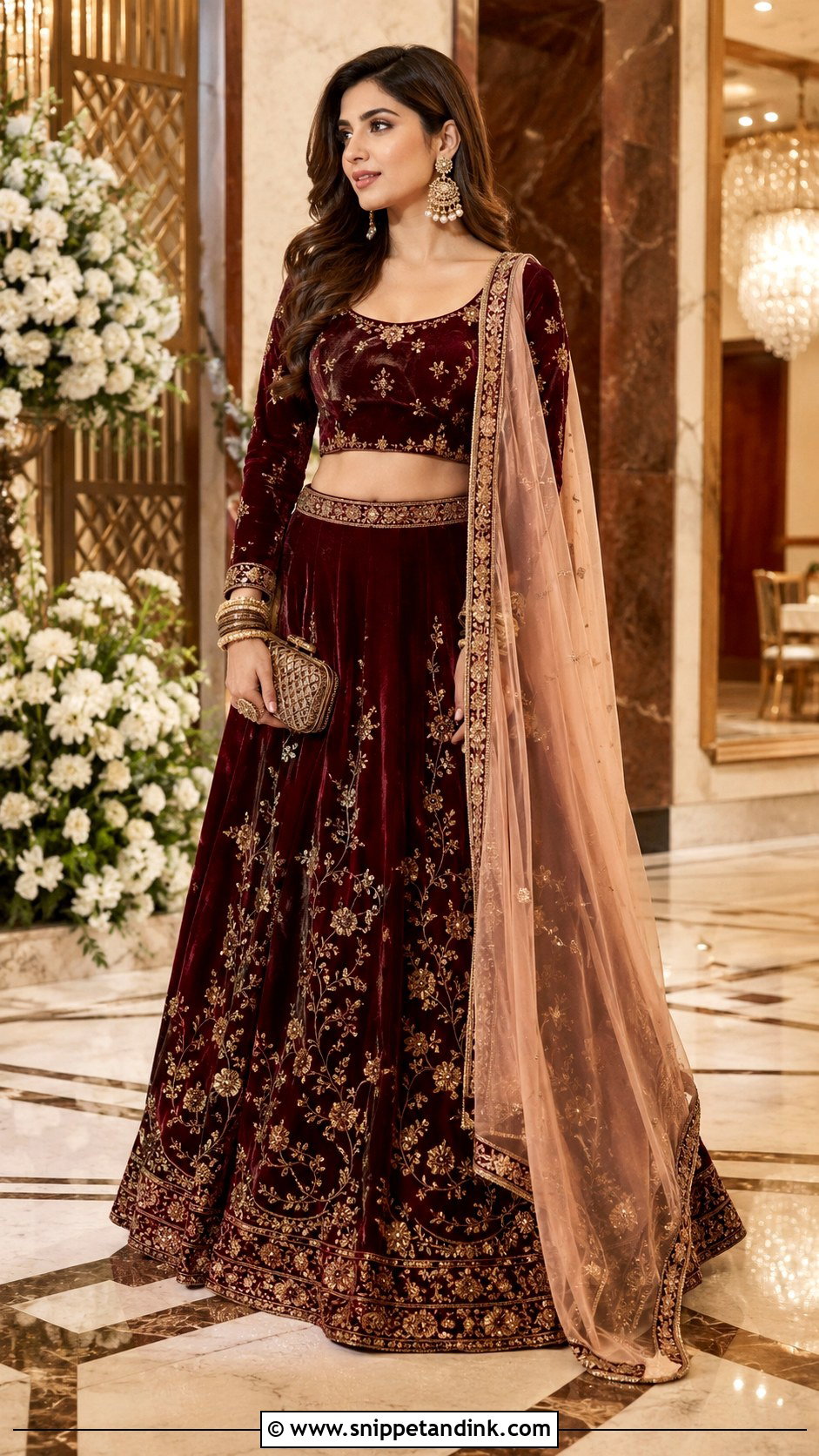
Velvet is the cold-season fabric. It has natural depth, so even light embroidery looks rich in emerald, maroon, navy or plum. It is also heavy and warm, which is why I insist on a comfortable waistband and a breathable blouse lining, and pair it with a light net or organza dupatta. Antique gold jewelry suits it. Save it for evening receptions and winter ceremonies.
24. Indian Wedding Net Lehenga
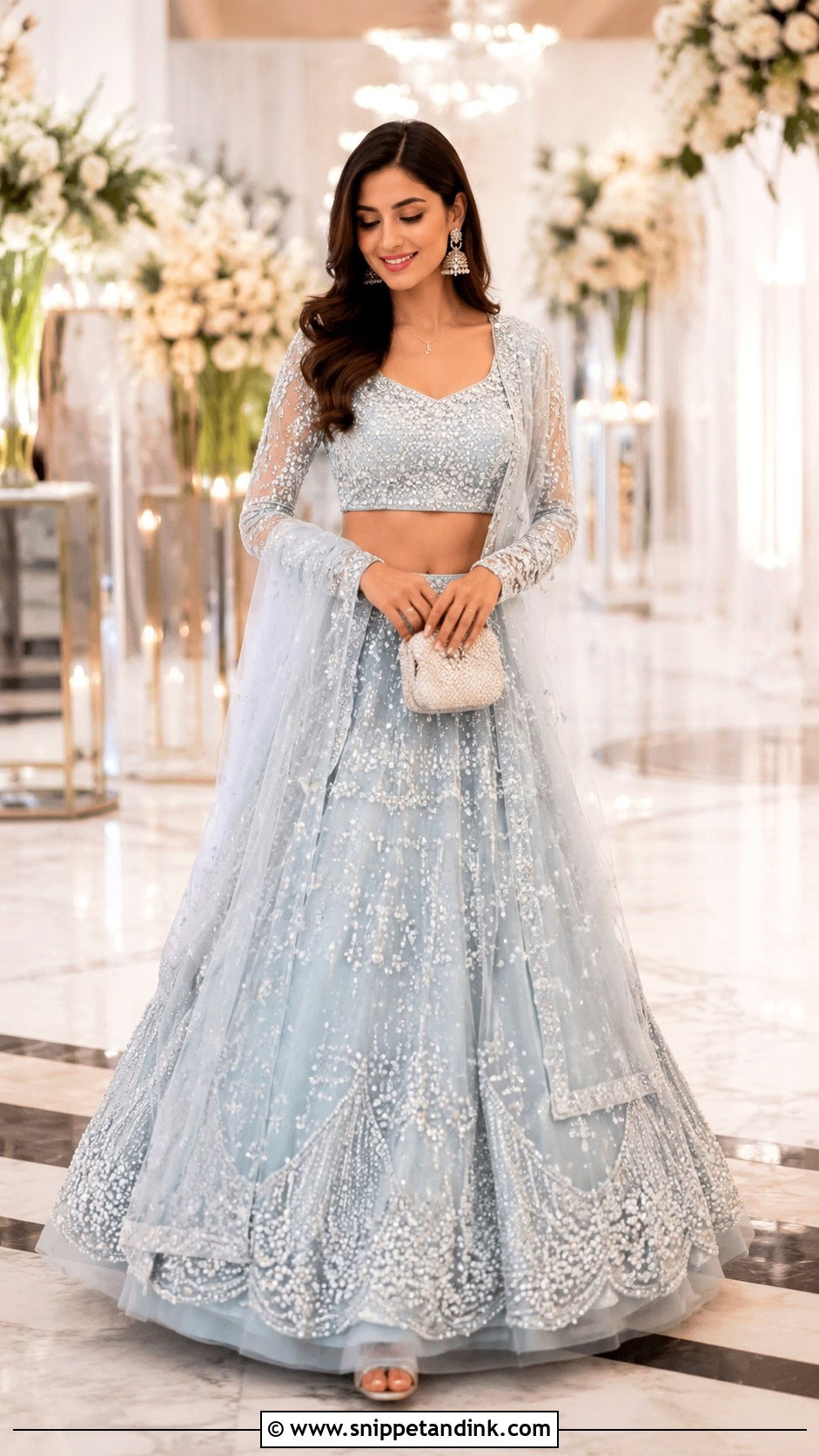
Layered net gives a lehenga volume without much weight, which is why it suits receptions and engagement evenings. The layers add bulk at the waist, so check that the skirt sits comfortably and that the waistband is not gathering too much fabric. Embroidery, sequins or pearls on the top layer add depth. Pastels suit daytime; navy, burgundy or champagne look rich at night. Delicate jewelry keeps it light.
25. Indian Wedding Floral Lehenga
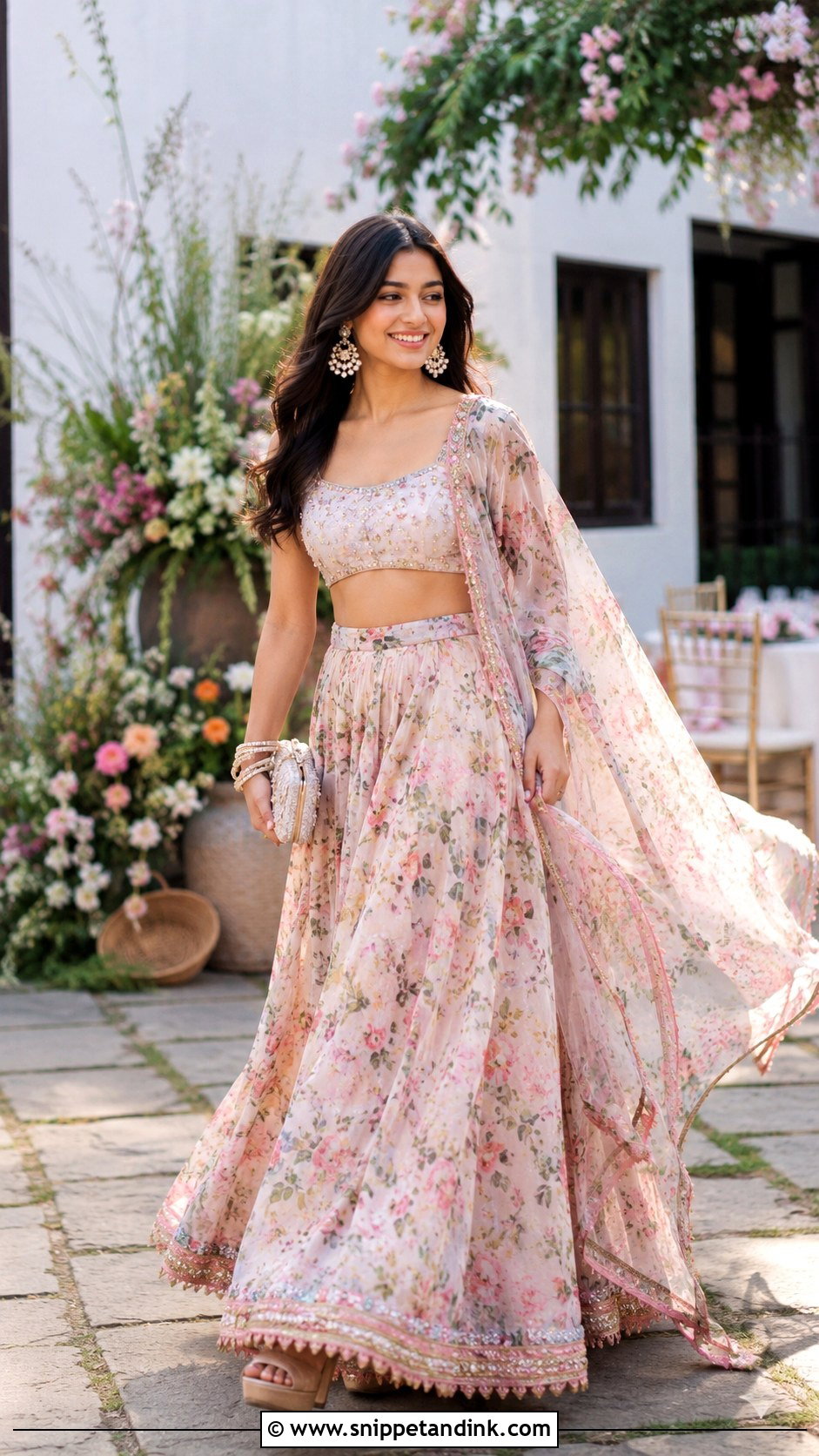
Florals belong to daytime: mehendi, haldi, garden ceremonies and hot weather. Printed florals are lighter and easier to rewear; embroidered florals are more formal. Pair the lehenga with a simple blouse, a flowing dupatta and pearls or floral-inspired jewelry. Wedges or block heels won’t sink into lawns, which matters more outdoors than anything else on this list.
26. Indian Wedding Pastel Lehenga
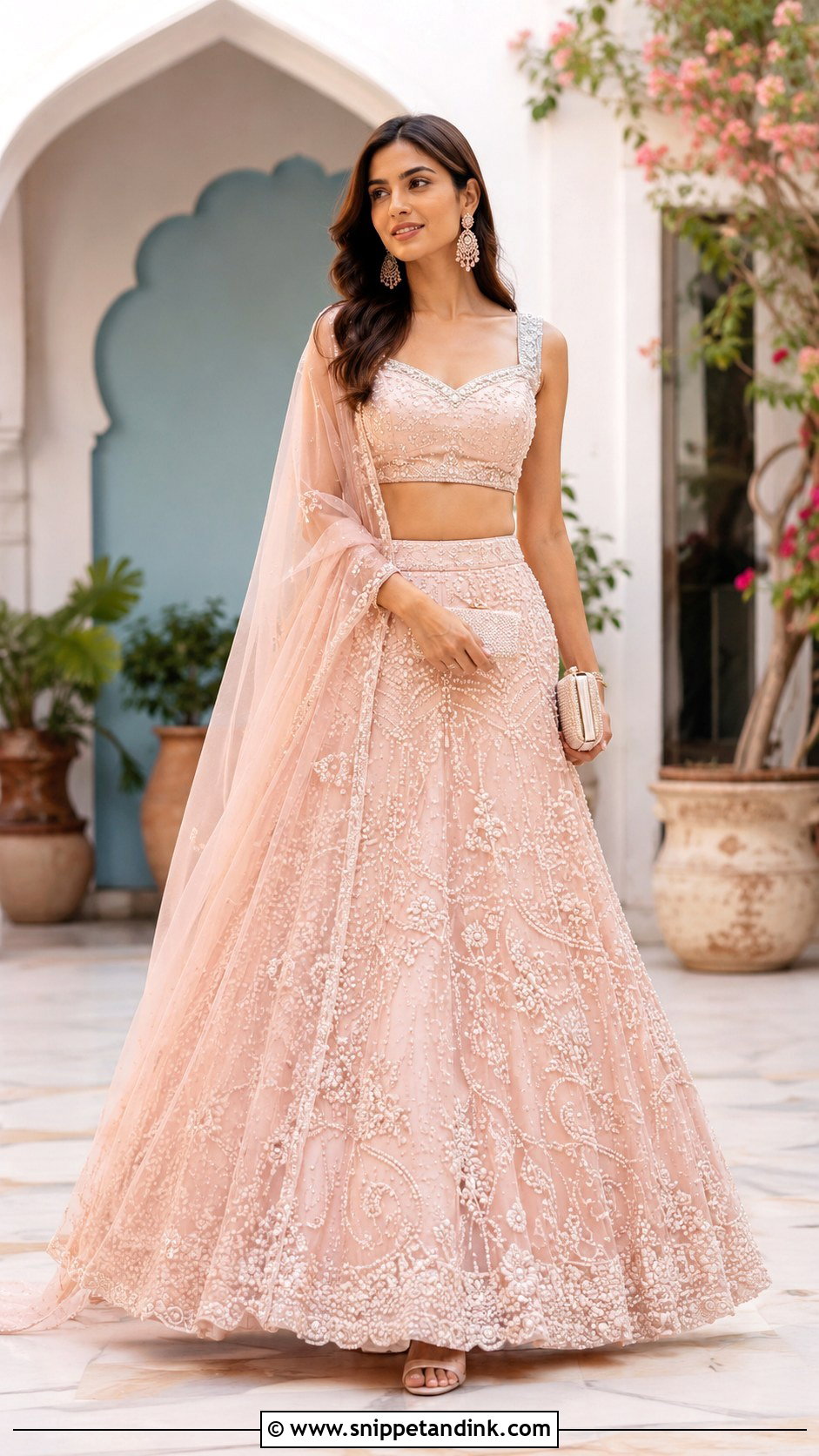
Pastel lehengas photograph well in daylight, but they can look flat if the styling is too plain. I add texture rather than color: a detailed blouse, an embellished dupatta, pearls or rose gold accessories. Blush, mint, powder blue and champagne are the reliable shades. Fresh makeup and comfortable heels in nude or gold complete it, and it suits bridesmaids and guests equally.
27. Indian Wedding Indo Western Gown
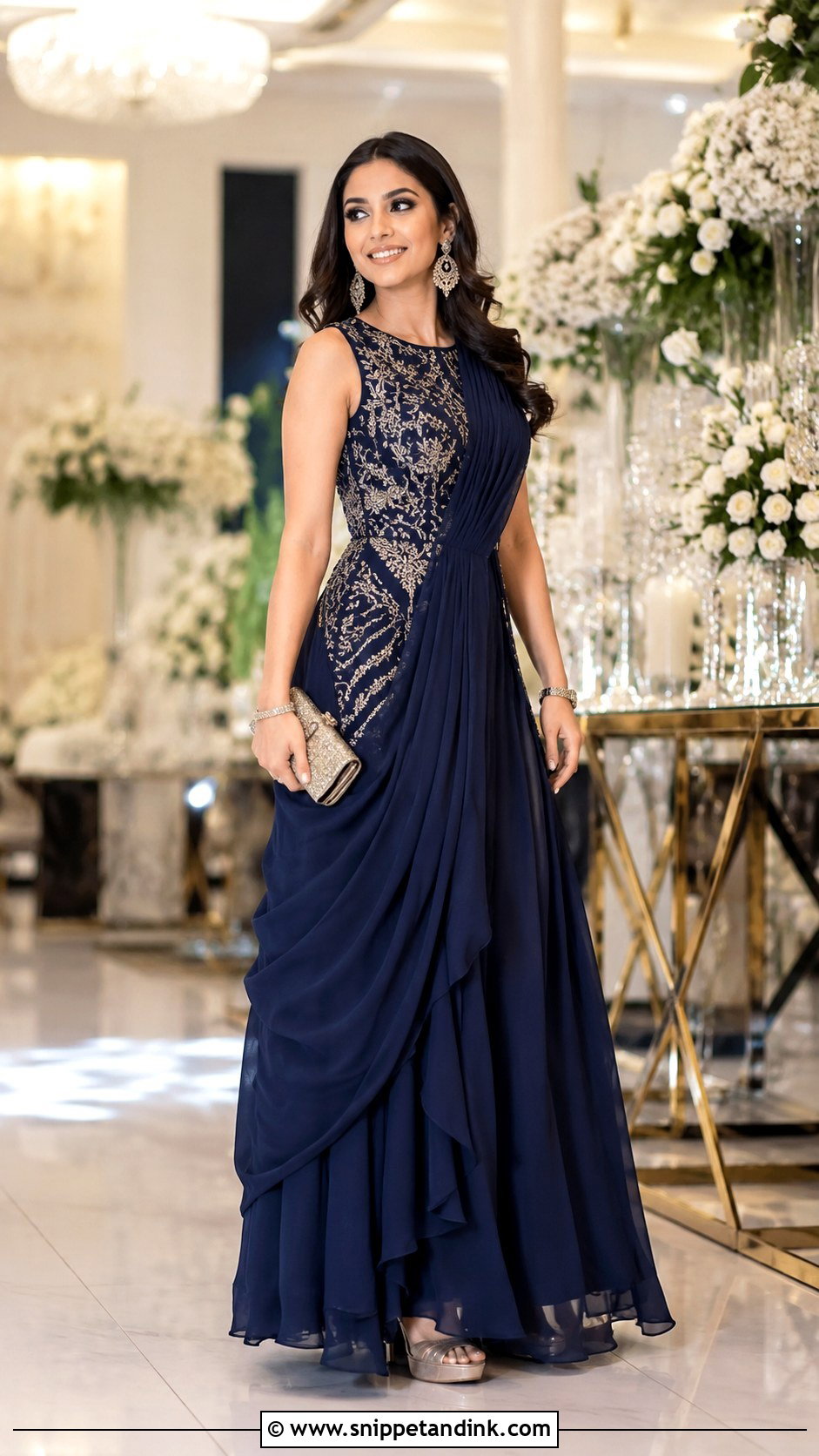
An Indo-western gown is the simplest option for a reception: one piece, nothing to drape. The Indian part comes through in cape sleeves, attached dupattas, brocade panels or zari. A-line and empire waists suit many body types and let you sit through dinner comfortably. Jewel tones suit evening; softer metallics feel refined. Since the gown is already a full look, I’d stop at statement earrings and a clutch.
28. Indian Wedding Dhoti Kurta Set
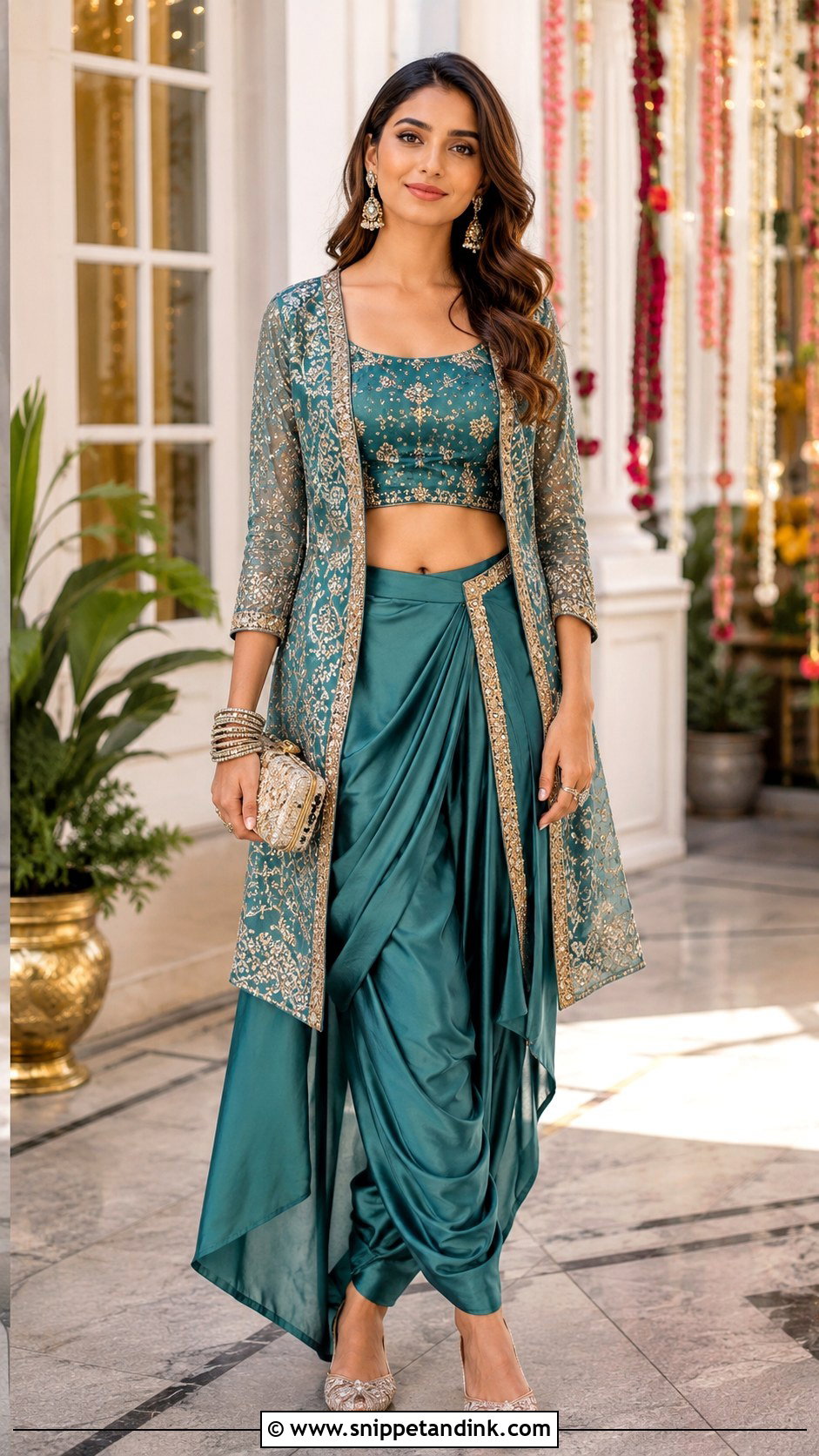
A dhoti kurta set is the fusion pick for mehendi, sangeet and day events. The draped bottom gives a lot of room to move, and on ready-made sets it is usually stitched in place so nothing unravels mid-dance. Silk, crepe or georgette with mirror work suits it, with a jacket or cape for more coverage. Juttis or block heels keep the draped hem manageable.
29. Indian Wedding Co Ord Set
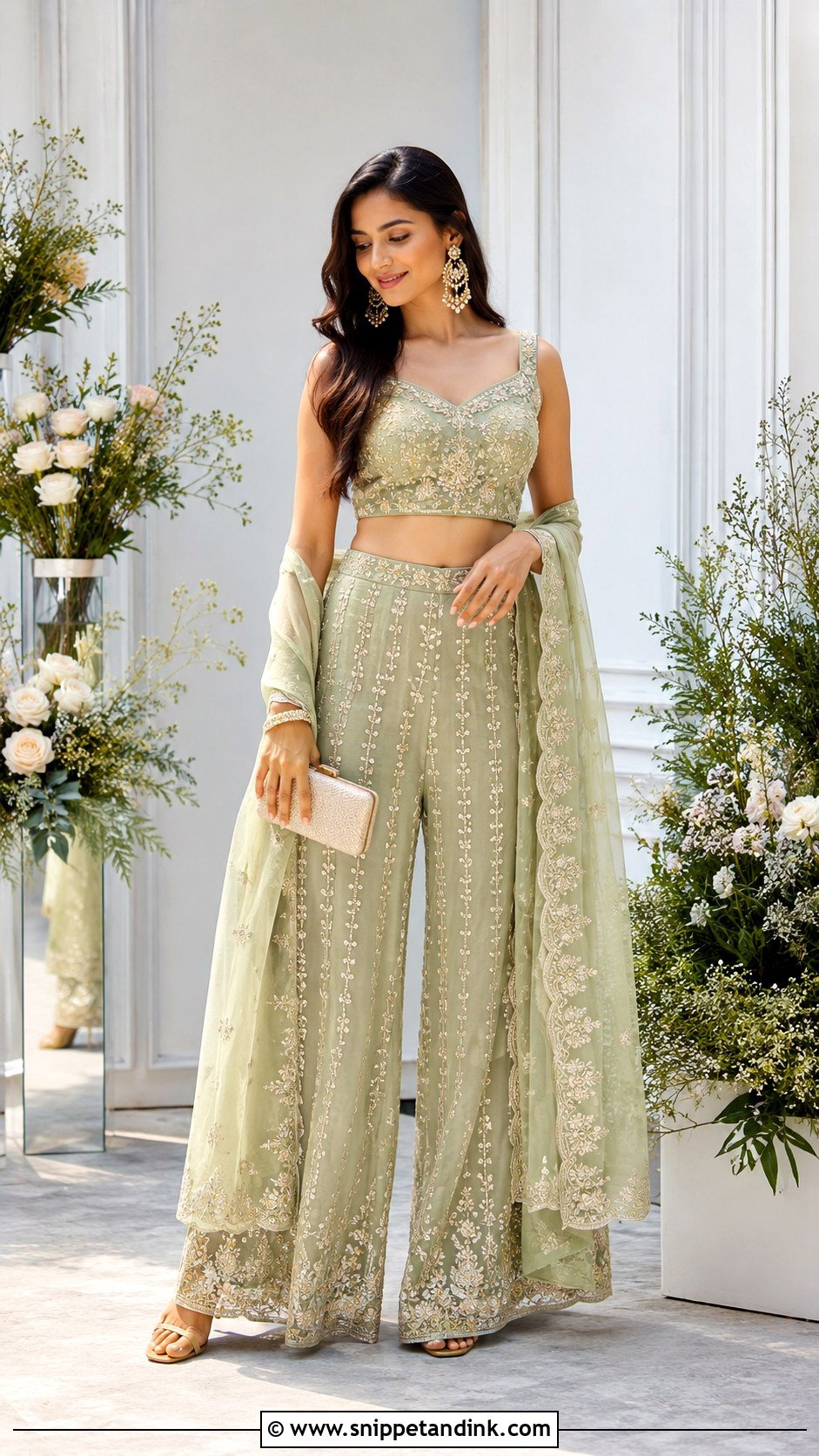
An Indian wedding co ord set suits smaller functions and pre-wedding dinners rather than the main ceremony. A crop top with palazzos or a tunic with wide-leg trousers looks put together with very little styling. Embroidery or festive fabric keeps it from looking casual, and a dupatta, cape or jacket lifts it for a dressier event. Bright for daytime, metallic or jewel tones for evening.
30. Indian Wedding Dupatta Dress
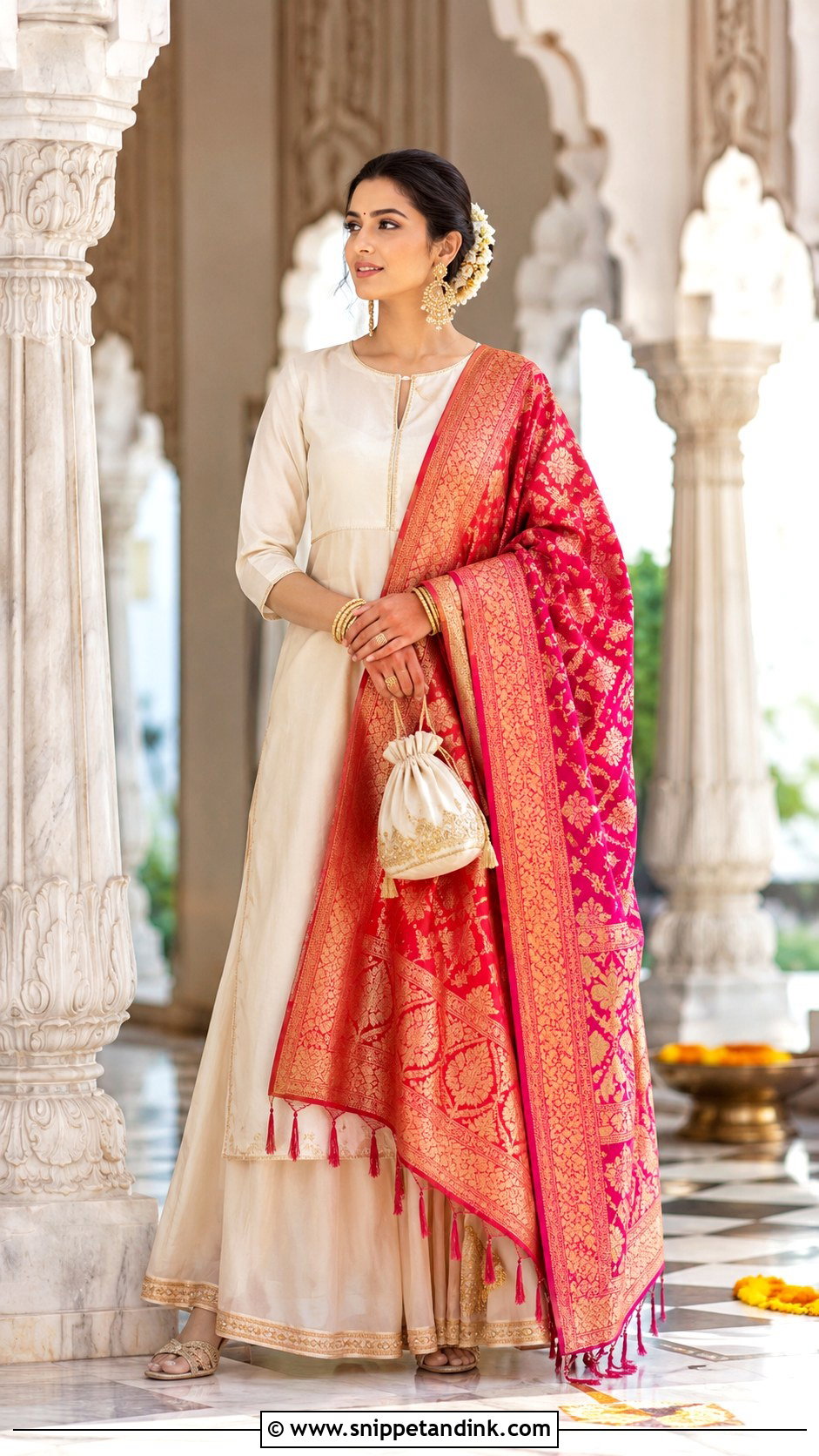
This is the trick I use most for guests on a budget: build the look around one exceptional dupatta. A plain suit, lehenga or skirt set becomes wedding-ready with a heavily embroidered, Banarasi, bandhani or phulkari dupatta. Drape it over one shoulder, around both shoulders or across the front for more modesty. Next time, the same dupatta goes over a different base and looks like a new outfit.
First Time Wearing a Saree or Lehenga? What Helps on the Day
Plenty of guests are wearing Indian clothes for the first time, and hosts are almost always happy to see it. The problems I see are practical, not cultural. Ready-made blouses rarely fit well off the rack, a saree drape slips if it’s under-pinned, and a lehenga hem that looked right in the shop drags once you’re in flat shoes.
- Get the blouse altered. The armholes and the back width matter most for comfort over a long day.
- Practice the drape once before the event, or choose a pre-draped saree and skip the worry.
- Hem the skirt or saree wearing the shoes you’ll actually wear.
- Carry a few safety pins and bobby pins in your clutch. Someone at your table will need one too.
- Sit down in the outfit at home. If it pulls, digs or rides up, it will do the same through a two-hour ceremony.
Renting is worth considering for a heavy lehenga you’d wear once, while a saree or a well-made Anarkali usually earns its place in the wardrobe.
The Outfit That Lasts From the Pheras to the Last Dance
A guest outfit at an Indian wedding has to respect the couple, suit the event and survive the hours. A silk saree may be right for a ceremony and wrong for a sangeet dance floor, where a sharara does better. A lehenga suits the grand functions, and an Anarkali or straight kurta set gives polish without effort. Think about fabric, season, venue and how long you’ll be wearing it. The heaviest outfit is rarely the right one; the one that fits and moves with you is.
You'll Like These Ideas:


Leave a Reply