
A full satin skirt does something no other gown does: it changes how you walk into a room. But the skirt is only half the decision. Neckline, waist shape, train, veil, shoes and jewelry all decide whether a ball gown reads regal or simply big, and I spend more time on those choices at appointments than on the skirt itself. Satin earns its place because it holds the shape and gives a soft, even sheen without needing beading. Right now I’m seeing plenty of clean satin, basque waists, strapless bodices, off-the-shoulder necklines, sculptural bows, long gloves and pearl accents. Below are 25 ways to wear the shape, each with the fitting and styling notes I’d give you in the room.
What Gives a Satin Skirt Its Volume
A ball gown skirt doesn’t stand out on its own. Its fullness comes from what’s underneath, and that choice decides how heavy the gown feels, how it moves and how easily you sit. I ask about it at the first appointment, before anyone falls in love with a silhouette.
- Built-in tulle or crinoline layers: the most common option. Light enough to dance in, though several layers of tulle trap heat in summer.
- A separate hoop petticoat: gives the widest, most even bell shape. It swings when you walk and needs practice on stairs and when sitting.
- Heavier satin with less underlayer: duchess satin holds a shape partly on its own, so the skirt can look full with less volume underneath, though the fabric itself is weighty.
Try the gown with the exact petticoat you’ll wear, because hems are measured over it. Swapping the underskirt after alterations changes the length and the shape of the whole skirt.
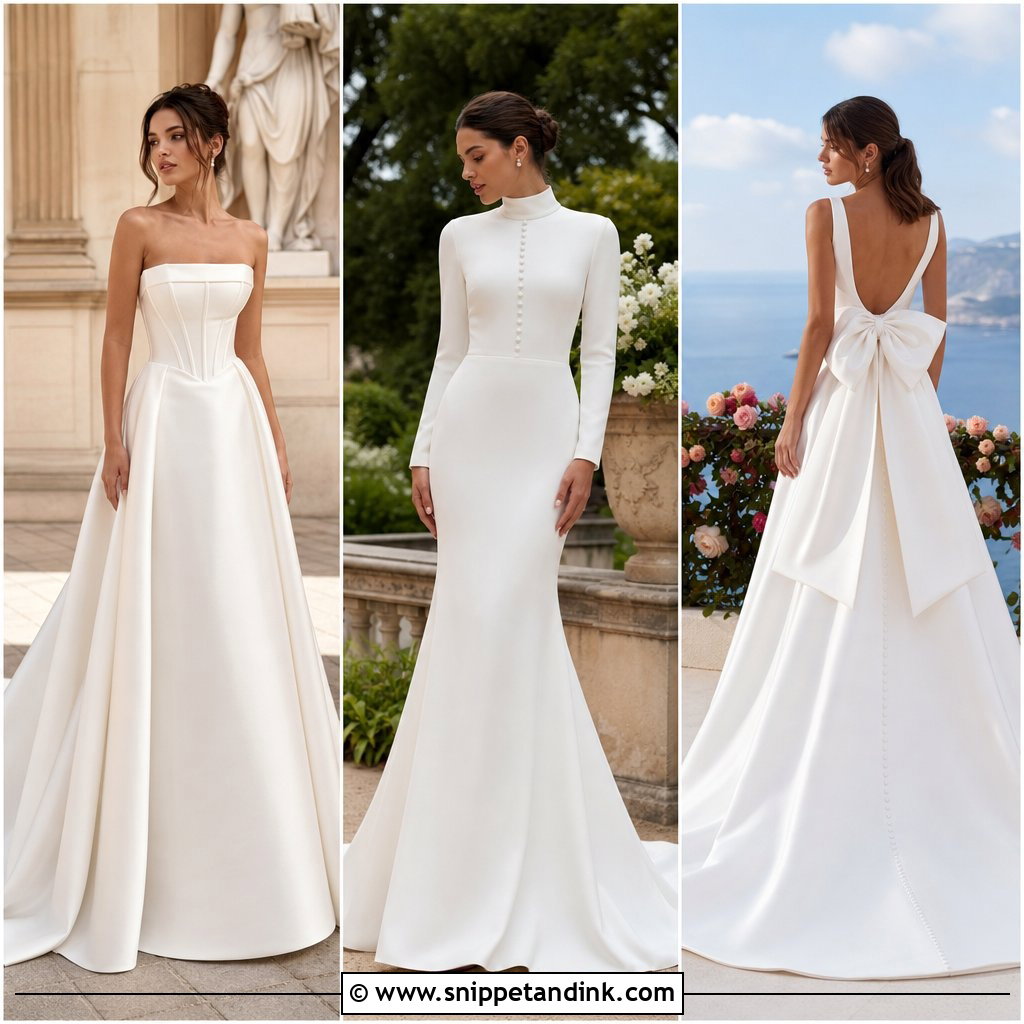
1. Strapless Satin Ball Gown Wedding Dress
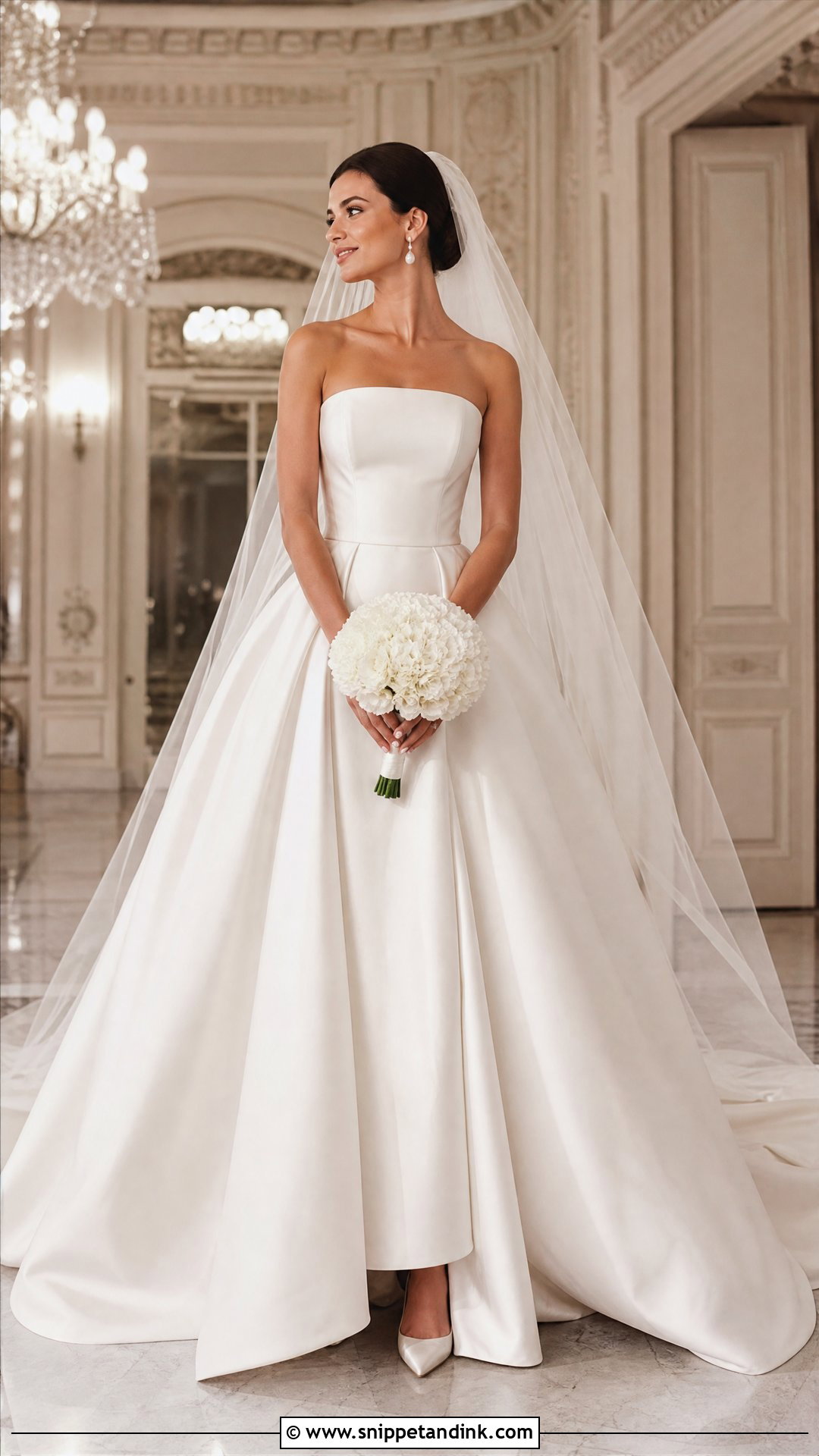
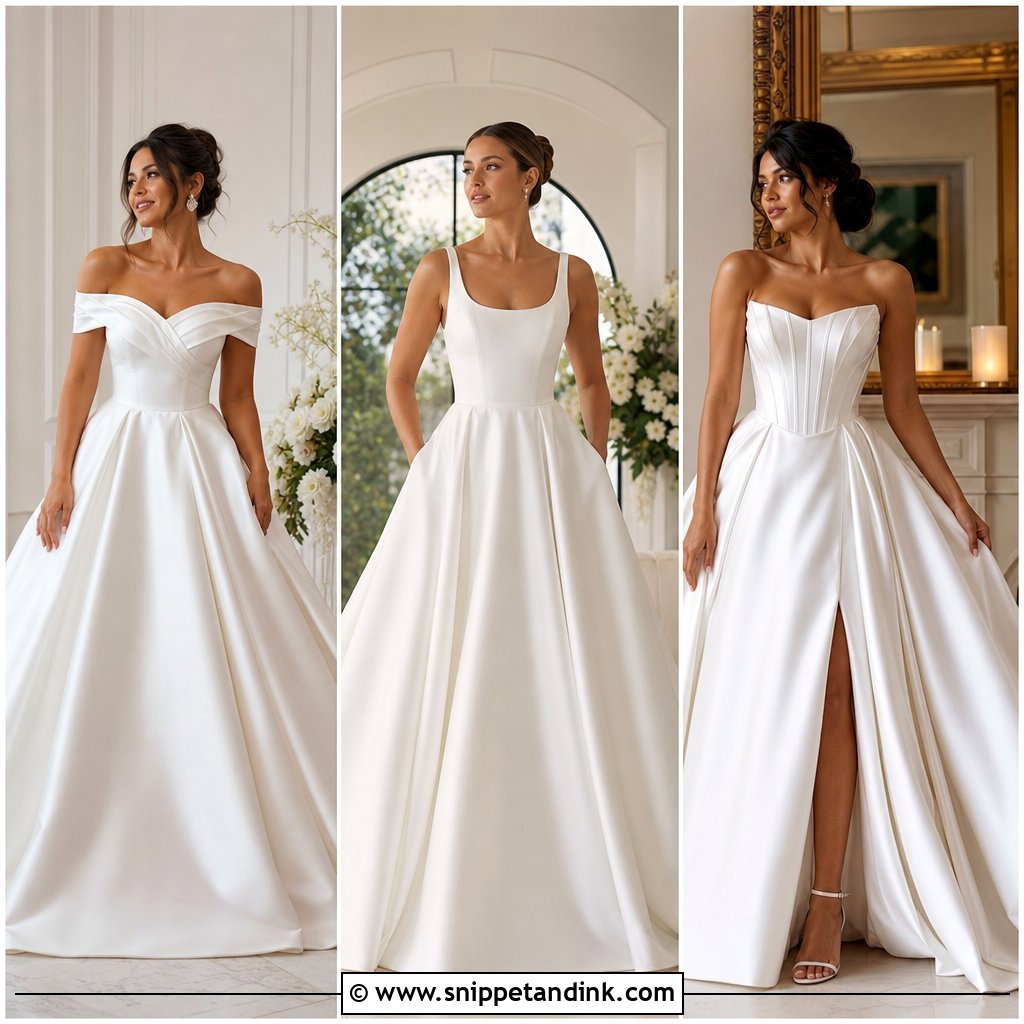
Strapless is the cleanest canvas a ball gown has, because nothing on the upper body competes with the skirt. The bodice has to do all the holding, though. At fittings I ask brides to sit, reach and hug; if the top edge moves, it’s taken in at the side seams before anything else. A straight or softly curved neckline keeps it modern. Pointed satin heels peek out without fuss, and a cathedral veil for the ceremony can give way to pearl drop earrings at the reception. A smooth low bun and a compact bouquet finish it.
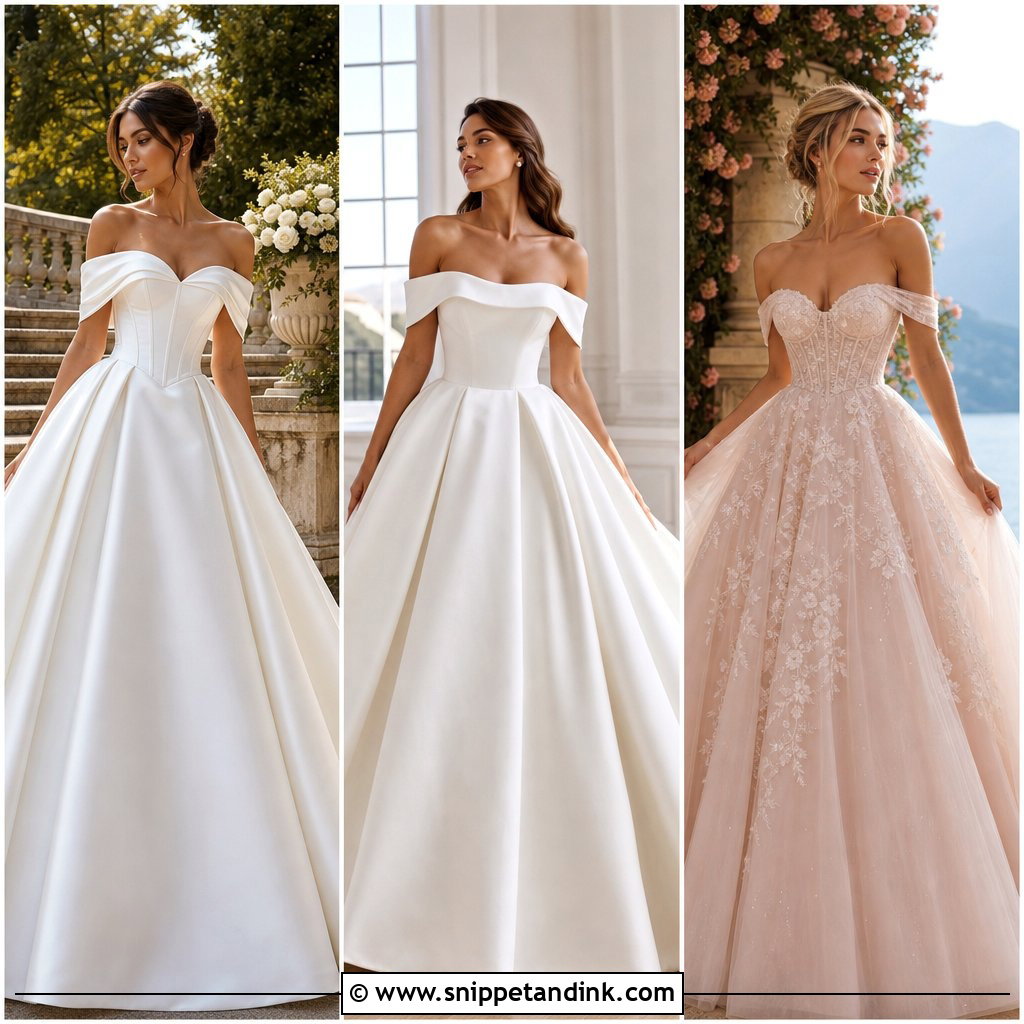
2. Off The Shoulder Satin Ball Gown Wedding Dress
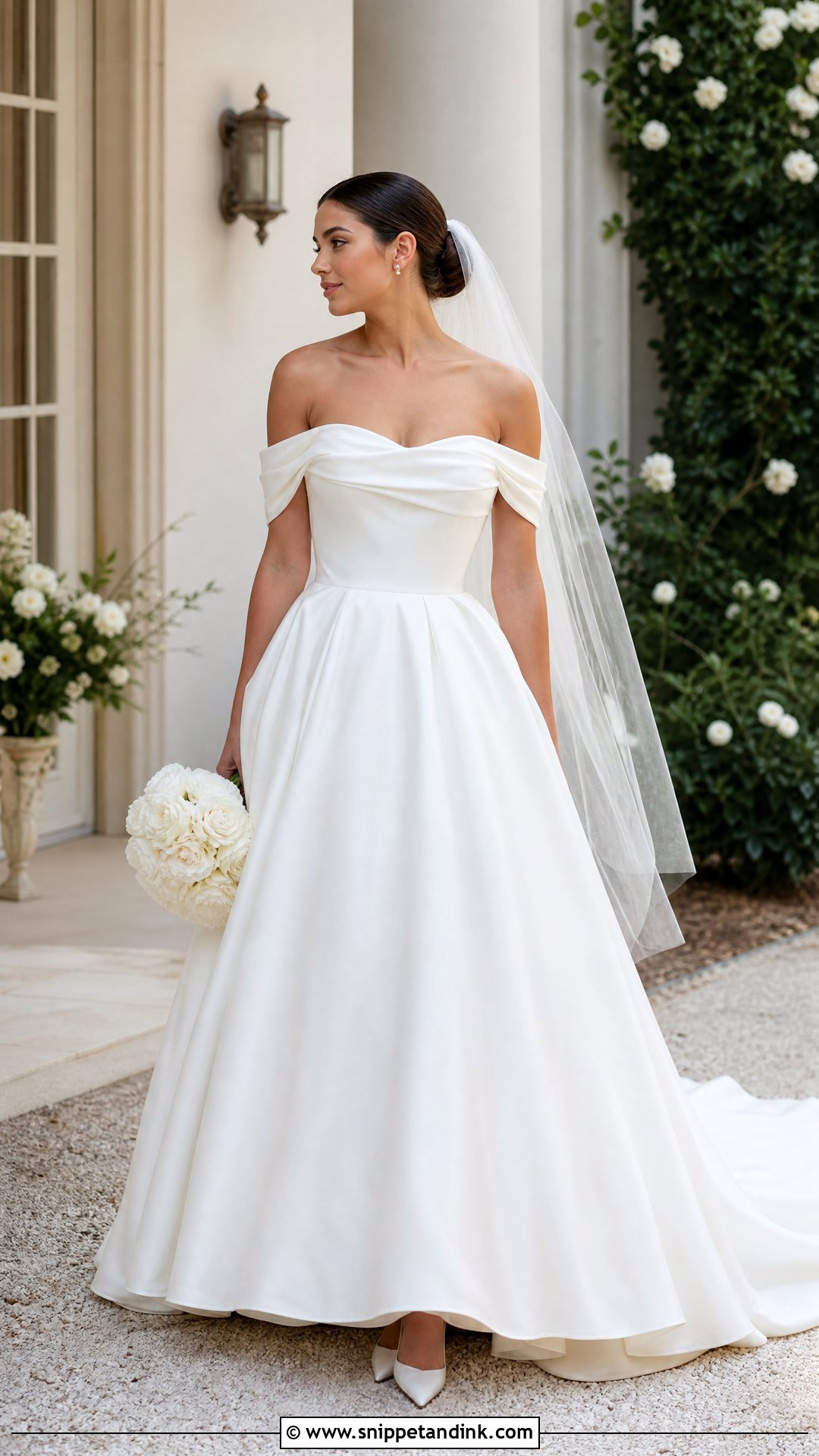
Draped off-shoulder sleeves soften a structured bodice and frame the collarbone, which is why this neckline photographs so kindly in portraits. The limitation is movement. A band that sits across the upper arms pins them a little, so I always check that a bride can lift a glass and reach around a guest without the band climbing. Gentle draping helps more than a tight straight band. Wear a smooth updo, pearl studs and a mid-length veil set low at the back of the head, and skip the necklace so the neckline stays clean.
3. Basque Waist Satin Ball Gown Wedding Dress
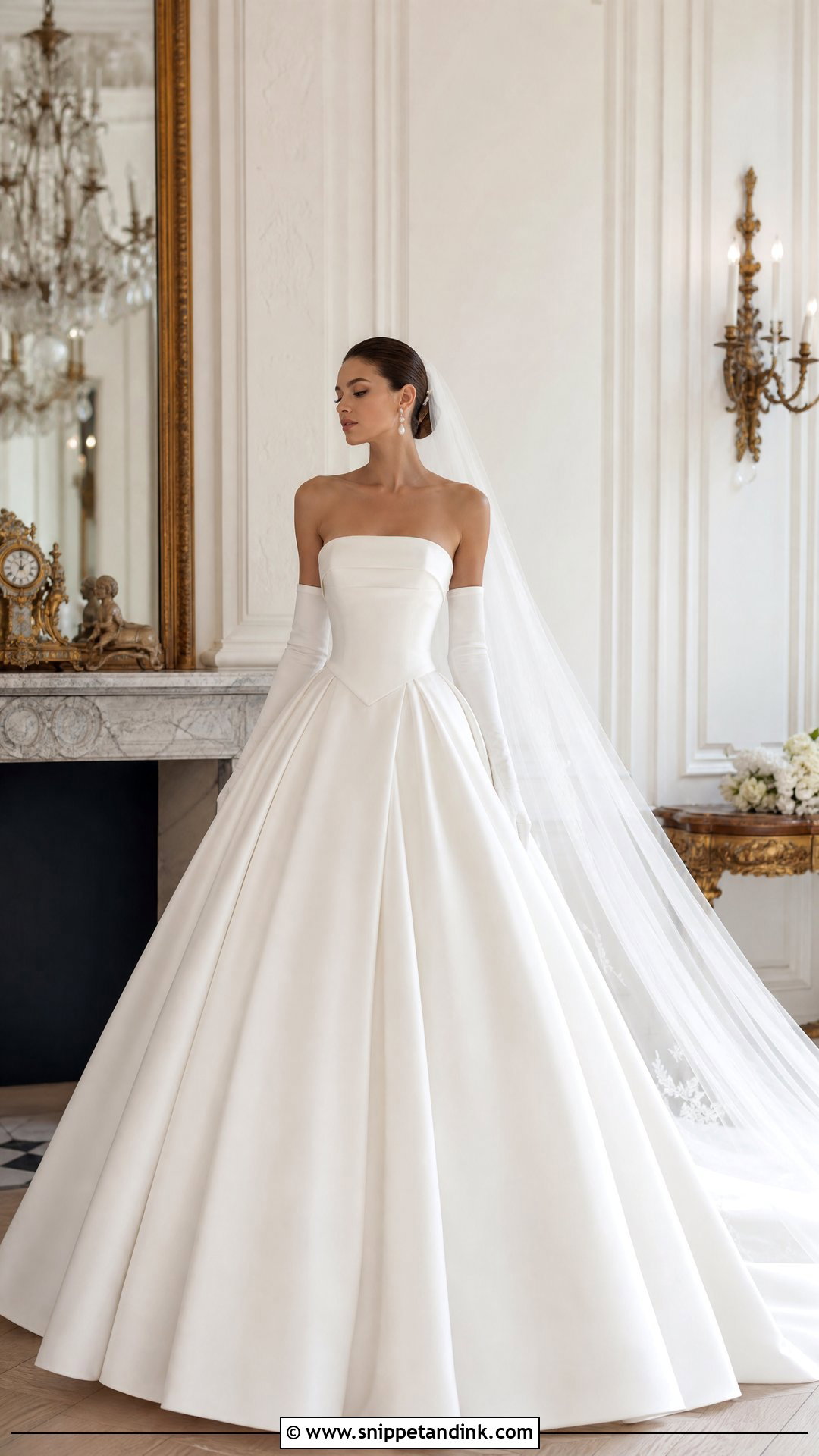
That pointed waistline lengthens the torso and gives the full skirt a sharp, deliberate starting point. Satin suits it better than softer fabrics because it holds the point crisply instead of collapsing. Long gloves push it toward a couture-inspired finish, while a long veil and pearl earrings keep it classic. A lace-up or button back adds detail behind. One thing I check: when you sit, the point of the V shouldn’t dig into your thighs. If it does, it can usually be shortened slightly without losing the effect. Sleek hair keeps the eye on the waist.
4. Sweetheart Satin Ball Gown Wedding Dress
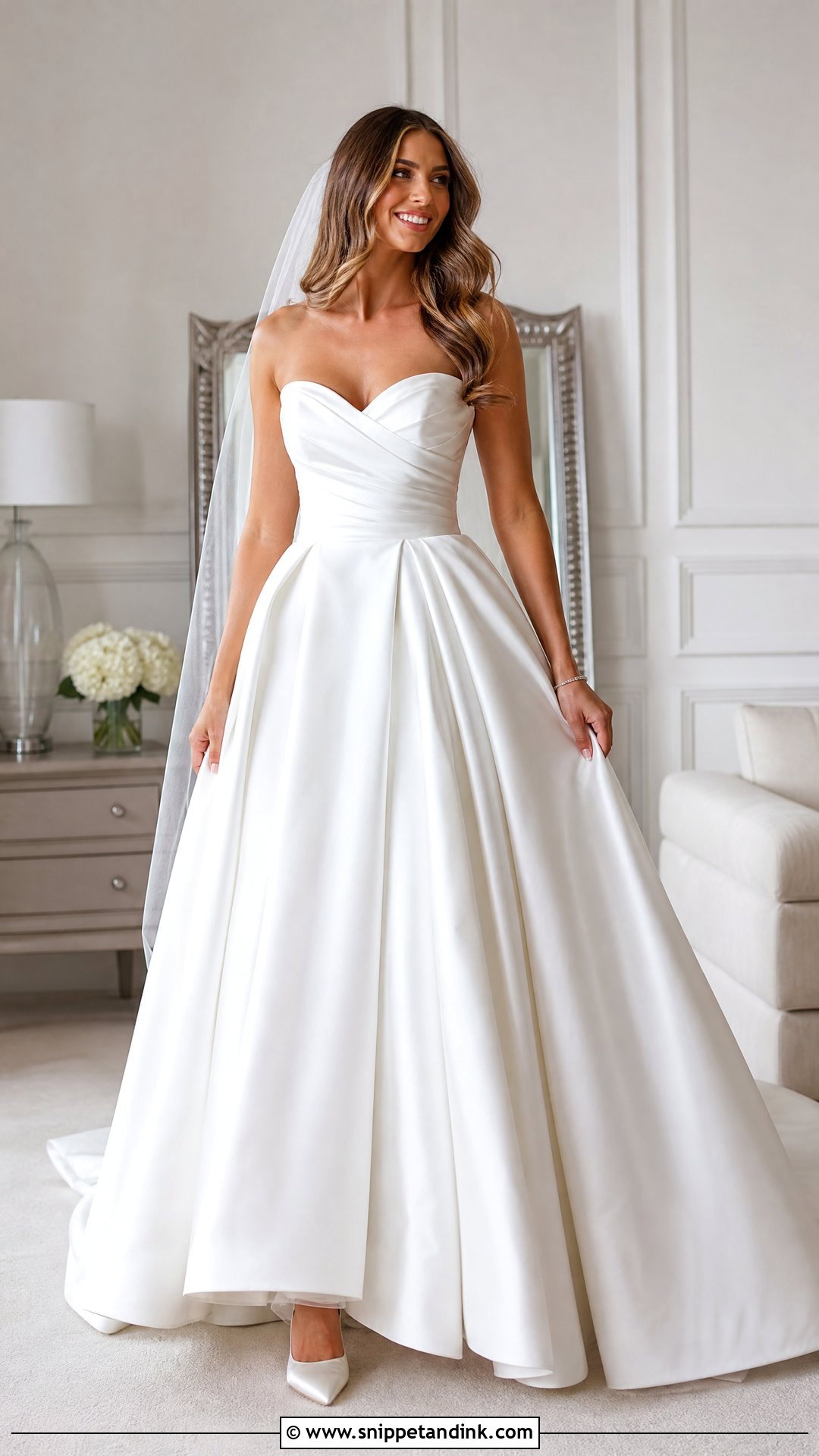
The curved neckline softens a ball gown’s structure and frames the shoulders and decolletage. Support is the first thing I test, because a sweetheart cut relies on the bodice rather than straps; hidden corsetry or light boning stops the dips of the curve from gapping when you lean forward. Soft waves, a sheer veil and a fine tennis bracelet keep the top half gentle. Ivory pumps work indoors, while satin sandals suit a warmer outdoor venue. It feels traditional without being plain.
5. Square Neck Satin Ball Gown Wedding Dress
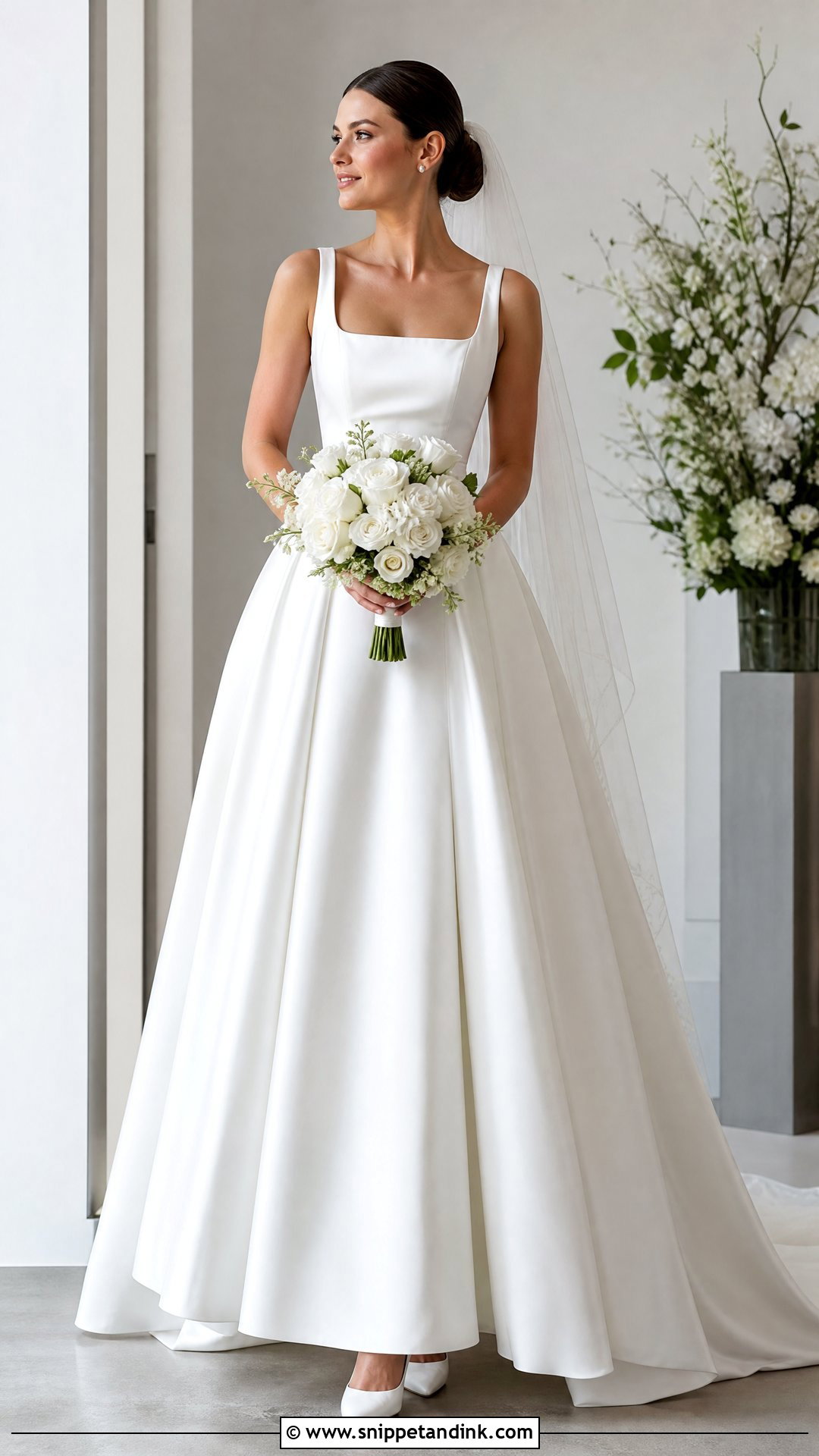
A square neckline with wide straps gives you the polish of strapless with far less hitching. The straight edge adds structure around the collarbone and suits a fitted bodice. My fitting check here is the corners: if they gape when you breathe in, the neckline needs taking in at the strap. A sleek chignon, small pearl earrings and a fingertip veil keep it refined, and satin heels with a structured bouquet finish it without clutter. It feels at home in a city hotel or a gallery space.
6. Long Sleeve Satin Ball Gown Wedding Dress
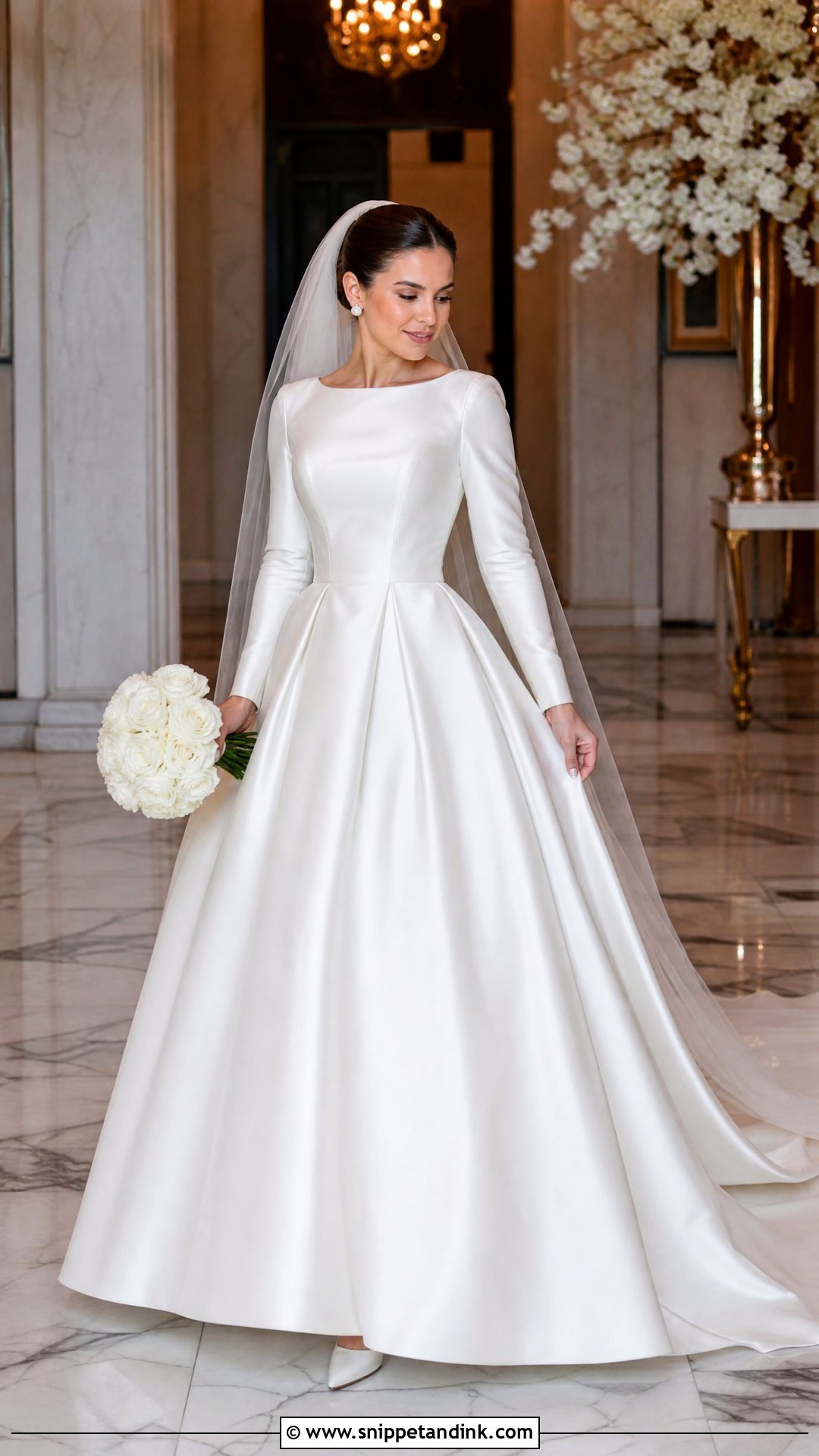
Sleeves can be smooth satin for a fully classic look, or sheer with satin cuffs if you’d like the arms to feel lighter. Full satin sleeves are warm, so I’d keep them for cooler seasons or properly air-conditioned rooms. The fitted bodice balances the skirt’s volume. Have the sleeve length checked with your arms bent, not straight, or the cuffs will ride up every time you hold the bouquet. A clean bun, button earrings, a long veil and closed-toe heels suit a fall or winter ceremony.
7. Satin Ball Gown Wedding Dress With Bow Back
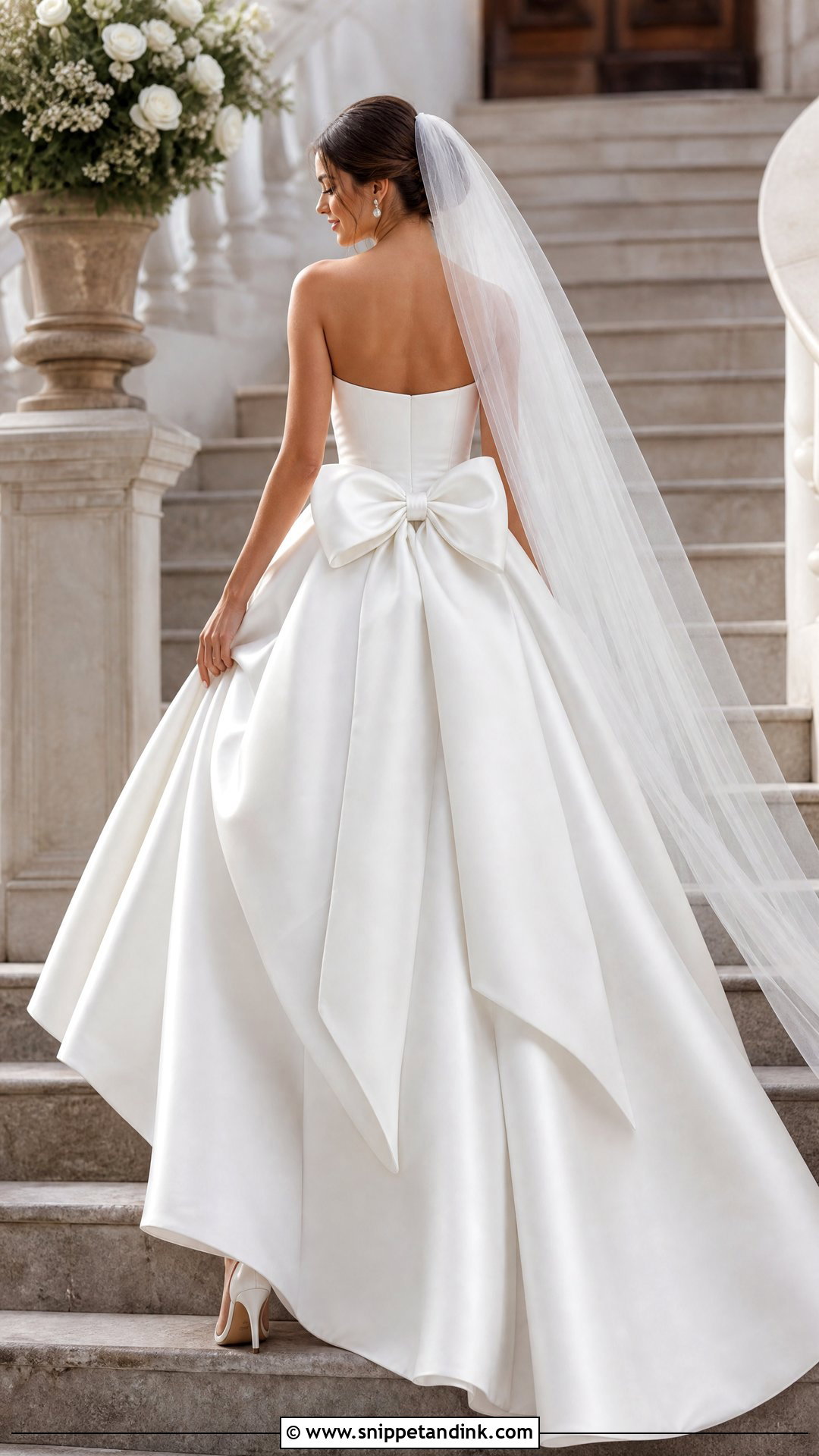
A bow can sit at the waist, the lower back or the train, and its position changes the whole mood. One sculptural bow looks modern; a row of small ones looks sweeter and busier. I’d keep the front calm with a strapless or square neckline and let the back carry the surprise. Ask how the bow is attached. Large satin bows can droop by evening unless they’re interfaced or stitched to the bodice at several points. Pair it with a plain veil, simple earrings and smooth heels for exit and back-view photos.
8. Satin Ball Gown Wedding Dress With Pockets
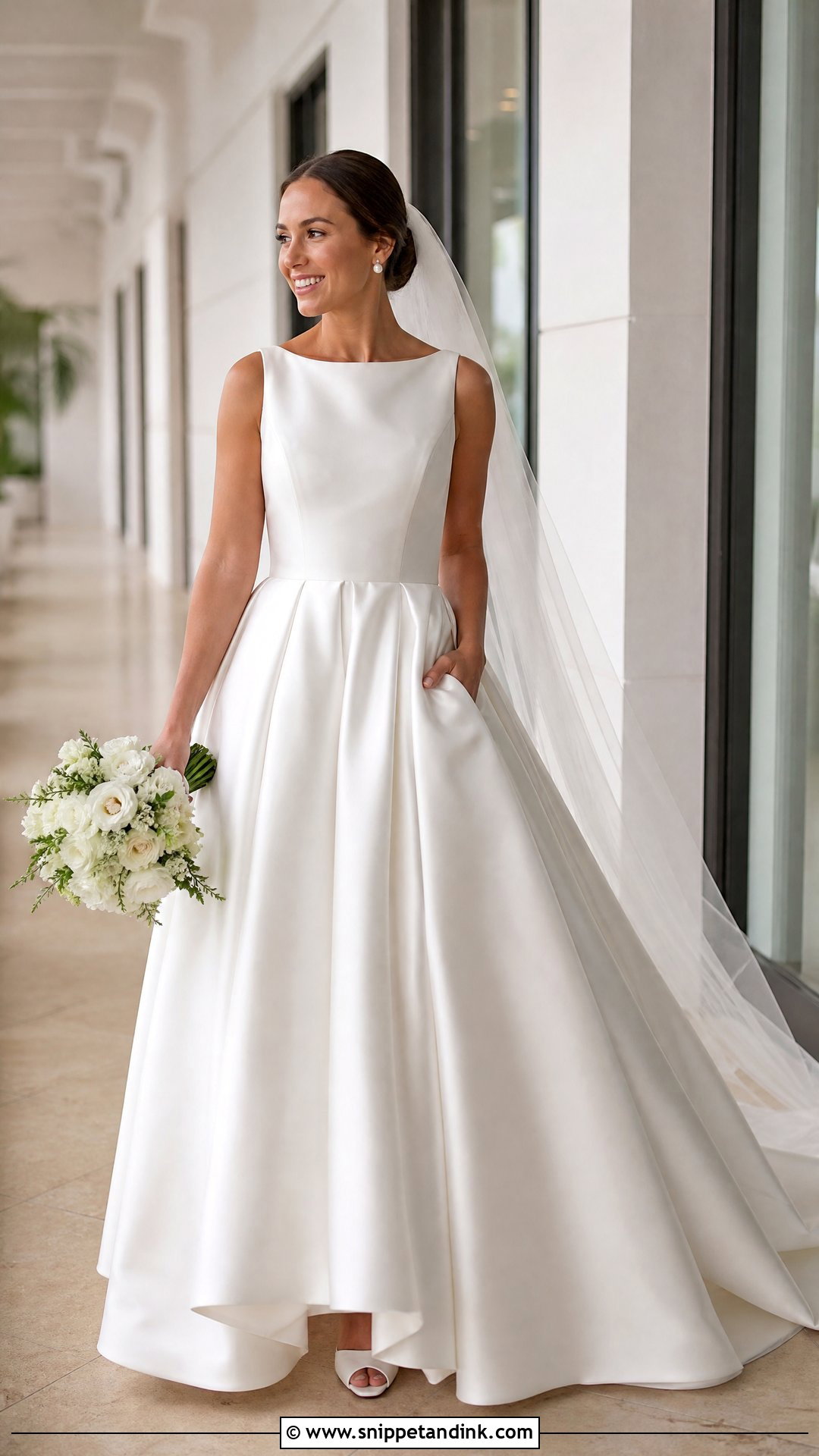
The joy of a wedding dress with pockets is that a full skirt hides them completely. They also give your hands somewhere natural to go in photos, which helps anyone who freezes in front of a camera. Ask for pockets set into the side seams and lined in a lighter fabric, since heavy satin pocket bags add bulk at the hip. Don’t fill them with a phone; satin shows the outline. A strapless, square or bateau bodice, pearl studs, a long veil and satin block heels keep it balanced.
9. Minimal Satin Ball Gown Wedding Dress
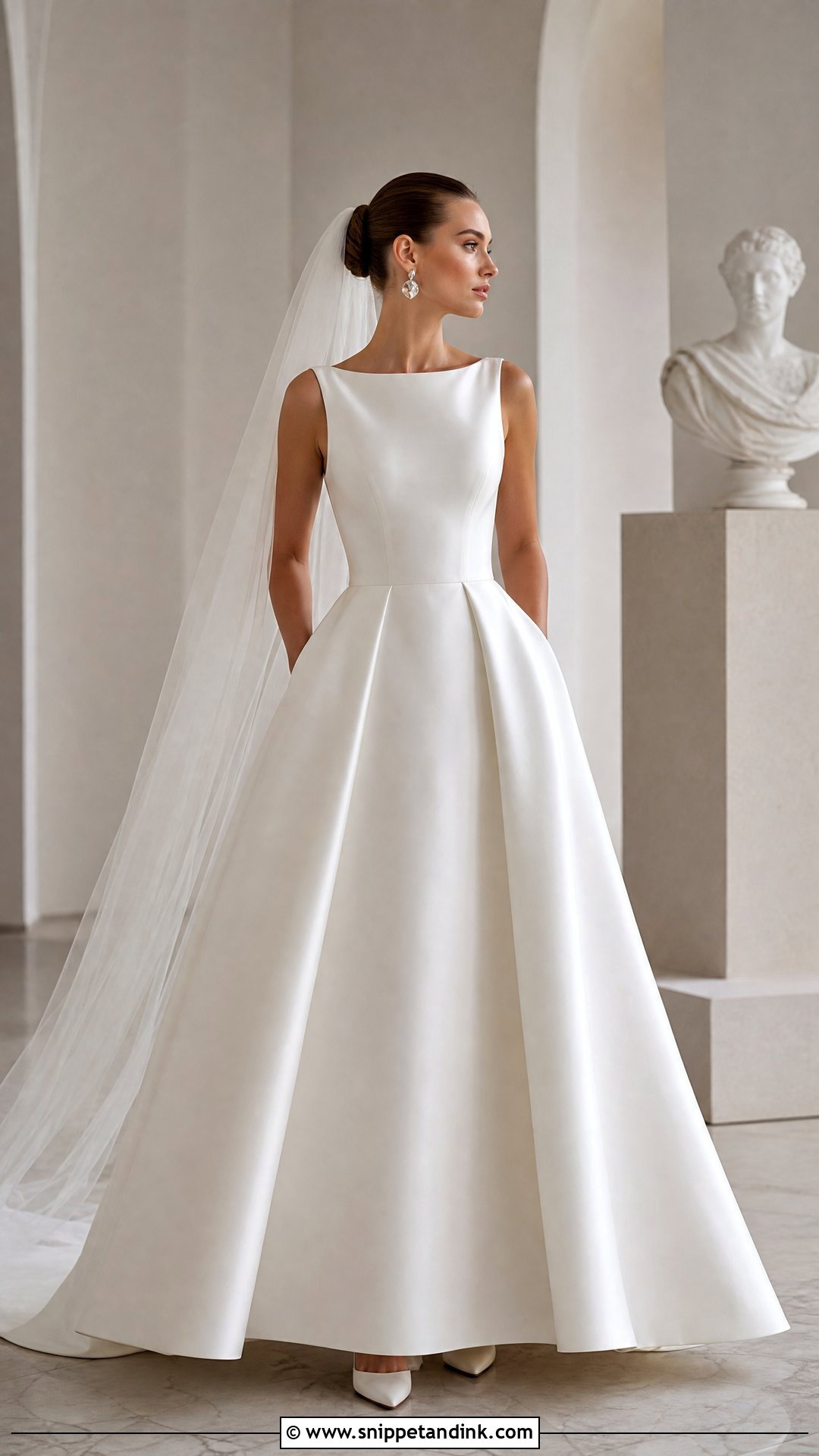
Without lace or beading, every seam and every fit issue is visible, so a minimal gown needs the best tailoring of any on this list. The focus is the cut, the fabric and the fit. I look for a smooth bodice, a defined waist and a full skirt with clean seams, and I check the satin under strong light for any puckering at the zip. Sleek hair, sculptural earrings and a plain cathedral veil suit it, with a small white or soft green bouquet. Bright venues, museums, rooftops and modern hotels all flatter its simplicity.
10. Pearl Satin Ball Gown Wedding Dress
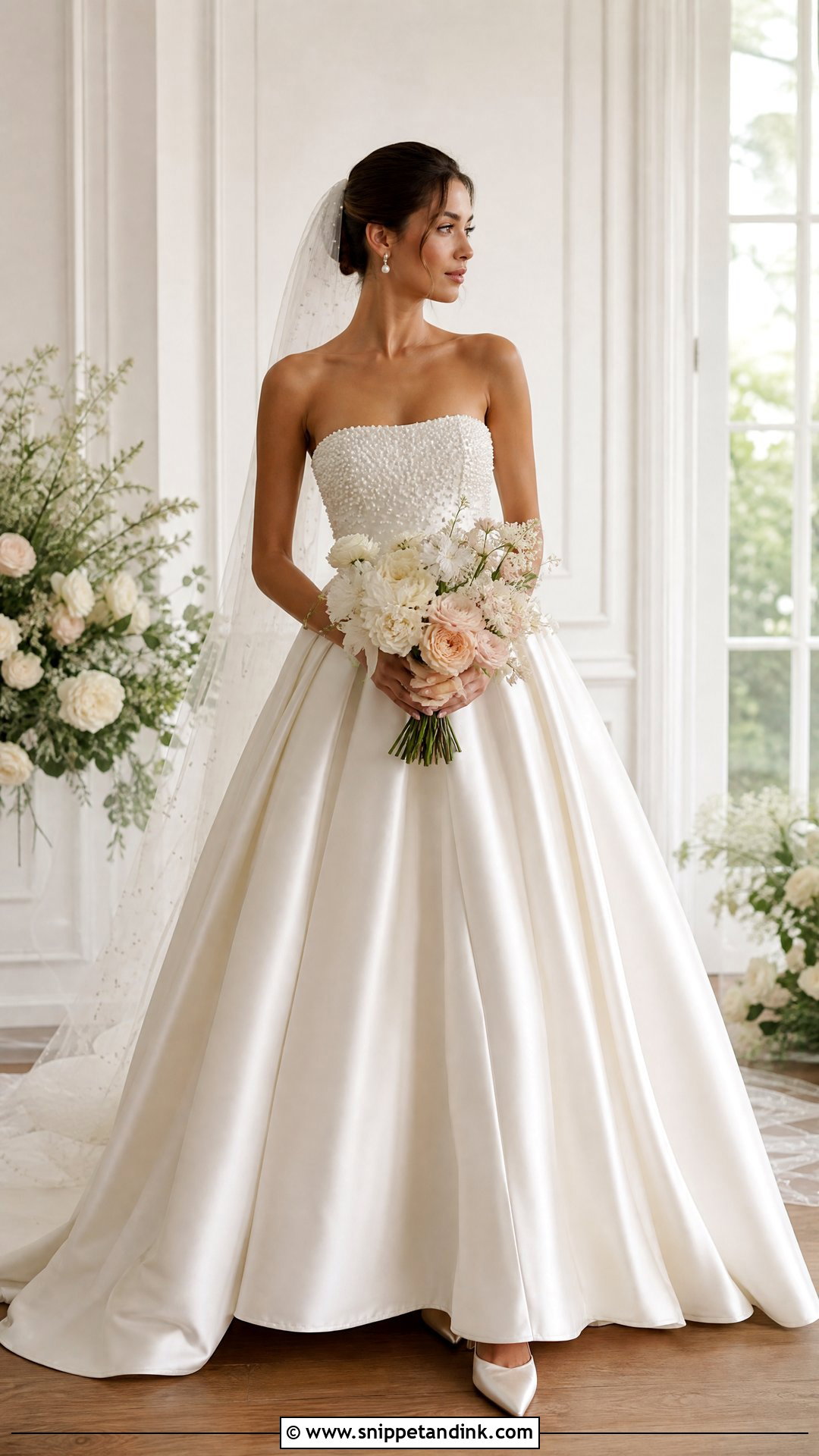
Pearls can run along the bodice, neckline, sleeves or veil, and restraint is what keeps them refined. Satin already has a soft glow, so pearl detail should read as texture. In practice I count: if there are pearls on the dress, the veil and the earrings, something should go. Pearl earrings, a clean bun and simple satin heels make a cohesive outfit, and a sheer veil with scattered pearls adds romance for the ceremony. It’s a good route if rhinestones or sequins feel too loud for you.
11. Corset Satin Ball Gown Wedding Dress
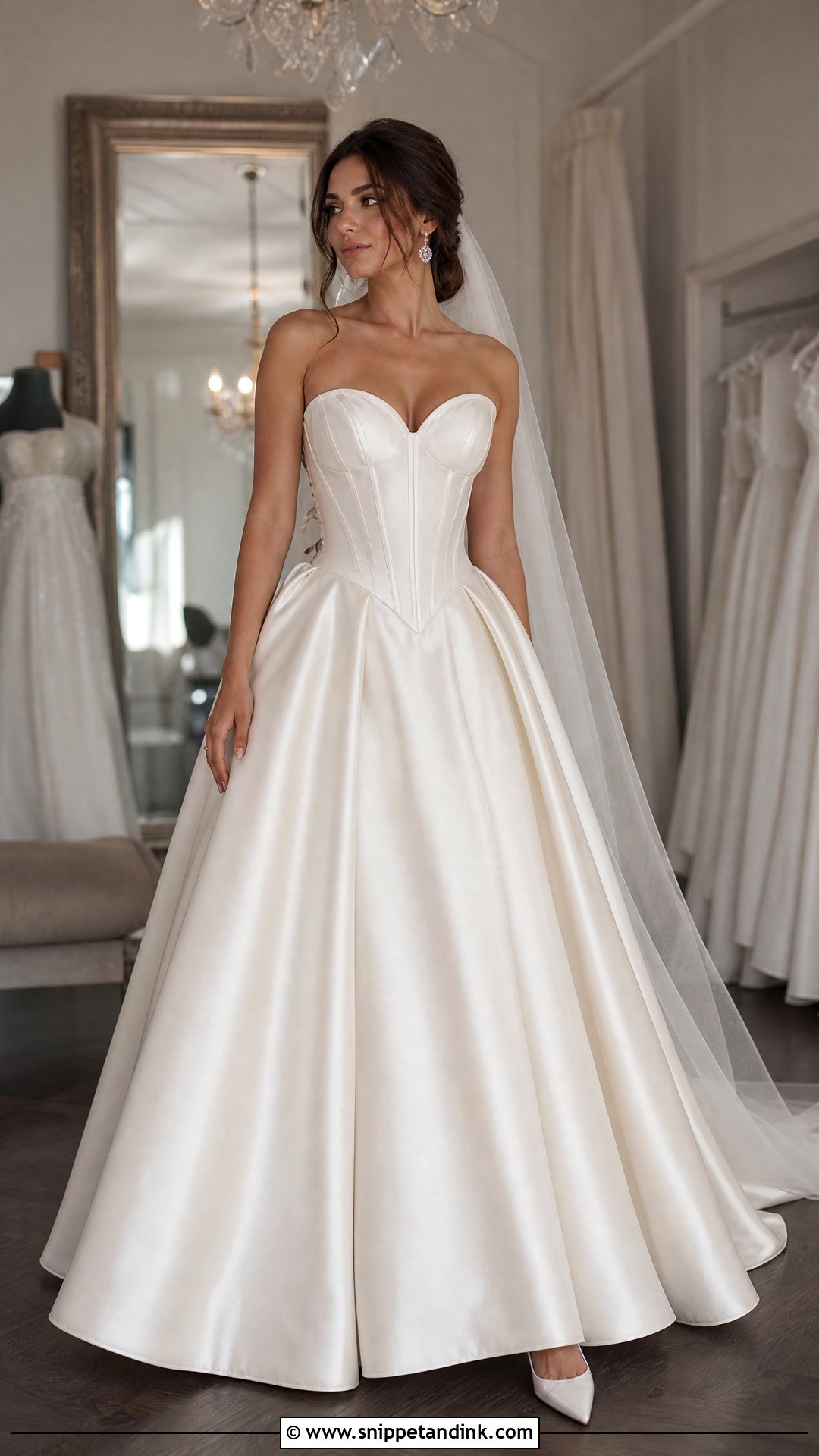
Structure and support are the reasons to choose a corset bodice, and the boning can be visible, laced at the back or hidden entirely under the satin. A lace-up back has a real advantage: it allows small adjustments on the day if your size has shifted. Balance the fitted top with a soft veil so the outfit doesn’t look severe. Drop earrings, a bracelet and pointed heels finish it. I’d do a full sit-down test in it, since a corset that feels fine standing can press hard when you’re seated through dinner.
12. Draped Satin Ball Gown Wedding Dress
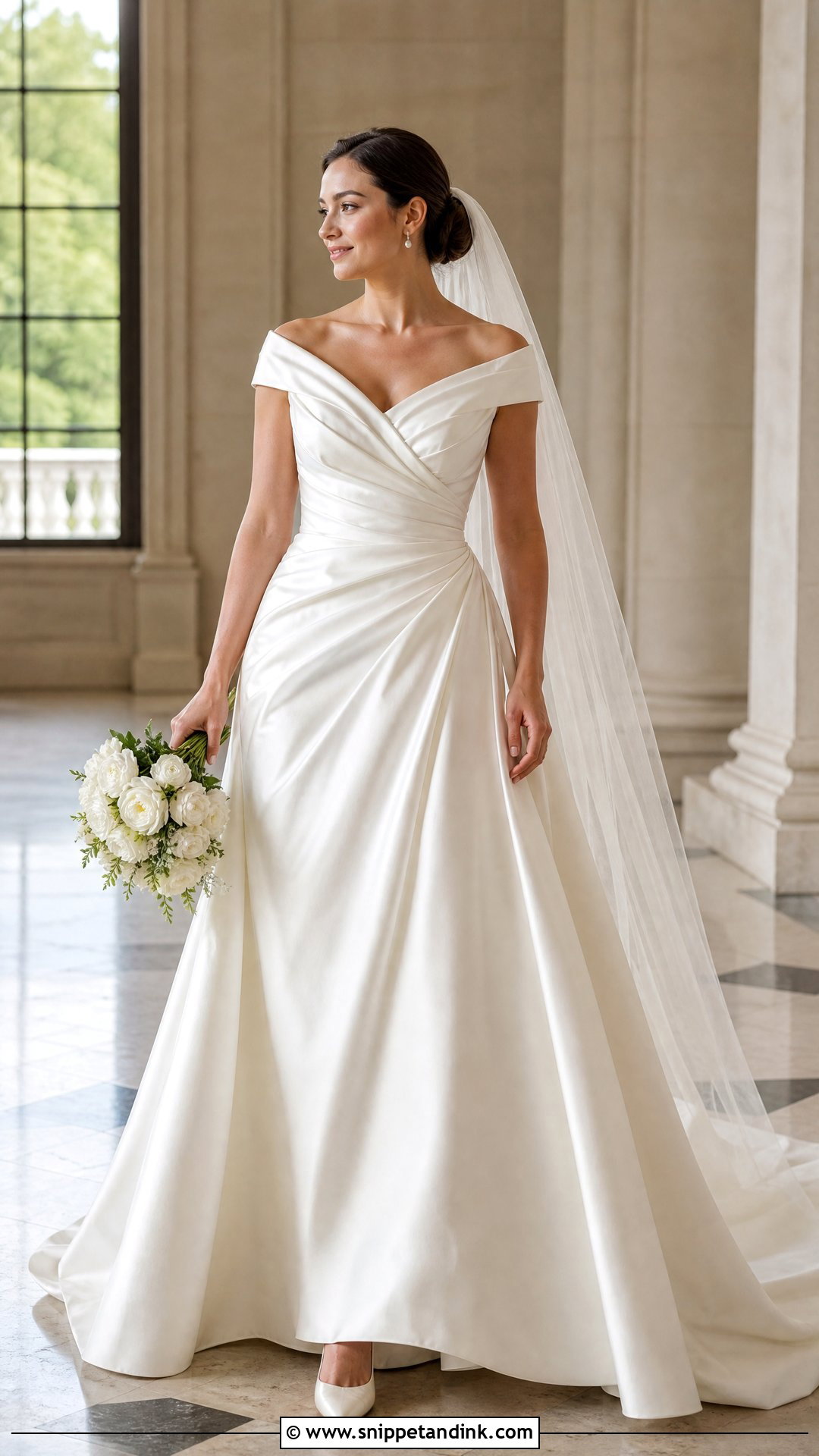
Draping adds movement to smooth satin, and it’s one of the best ways to add detail without lace or sparkle. It can cross the bust, waist, hips or neckline. The folds already carry visual interest, so I keep earrings simple and the veil plain. Drapes need to be stitched down at key points or they’ll shift and flatten through the day; look inside the bodice at the fitting to see how they’re anchored. Soft waves or a low bun both work, depending on how much fabric sits near the neck.
13. Halter Satin Ball Gown Wedding Dress
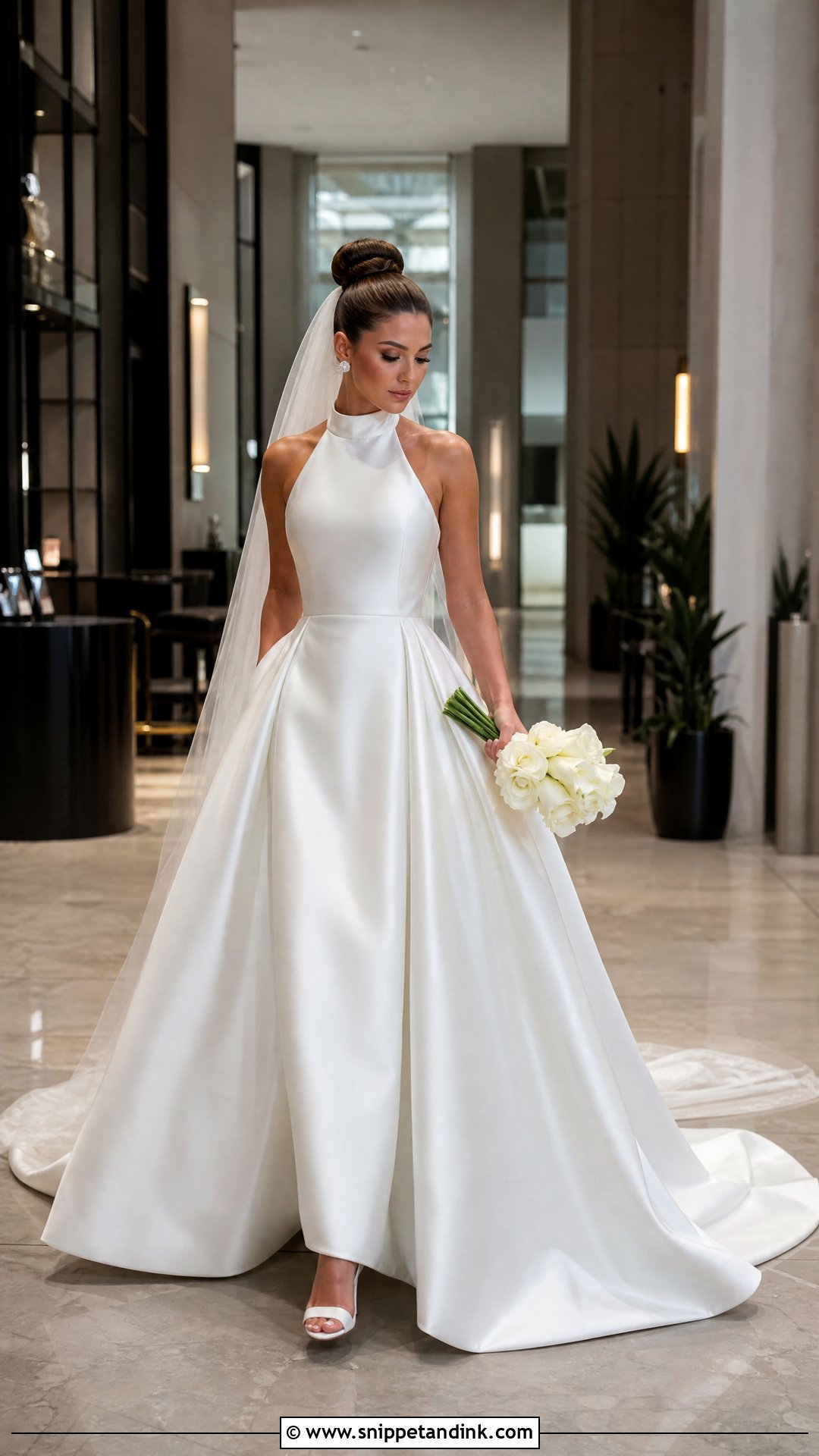
A halter draws the eye up and opens the shoulders while covering the chest, which makes it a strong pick for warm-weather weddings. The neck strap carries some weight of the bodice, so make sure it’s not pulling on the back of your neck after an hour; a wider strap or extra internal support usually solves that. A smooth satin skirt with few seams keeps it refined. Wear a high bun with the veil attached underneath, statement studs, and no necklace at all.
14. One Shoulder Satin Ball Gown Wedding Dress
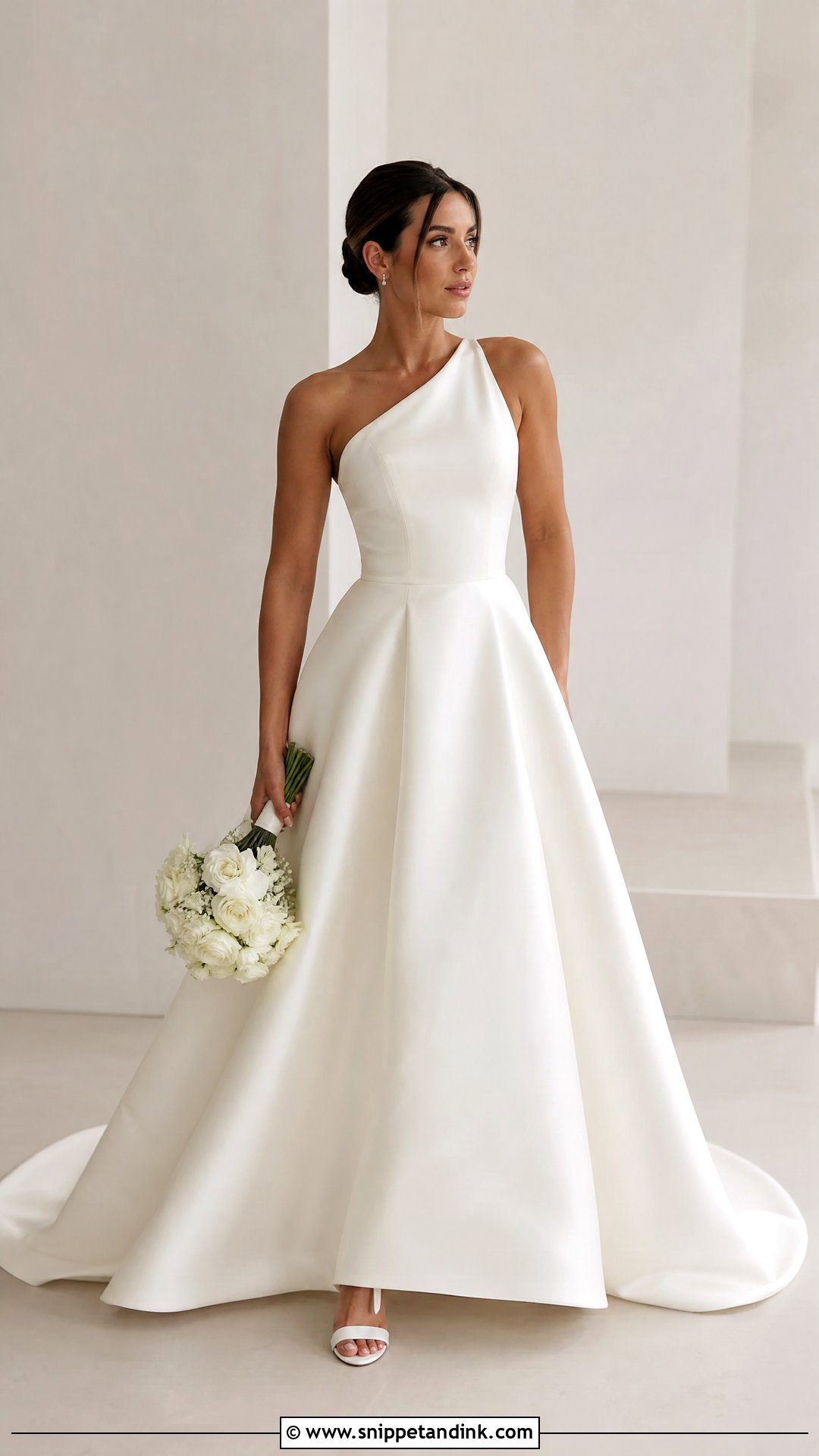
One bare shoulder gives the gown an asymmetric, sculptural edge while the full skirt keeps it formal. Look for a fitted bodice with clean lines so the shape doesn’t feel fussy. The single strap needs to grip; I have brides wave and turn their heads during the fitting, because a one-shoulder bodice can creep toward the bare side. A sleek updo keeps the neckline visible. Choose one bold earring or two small studs, simple satin heels, and either a low-profile veil or none at all for a cleaner, editorial result.
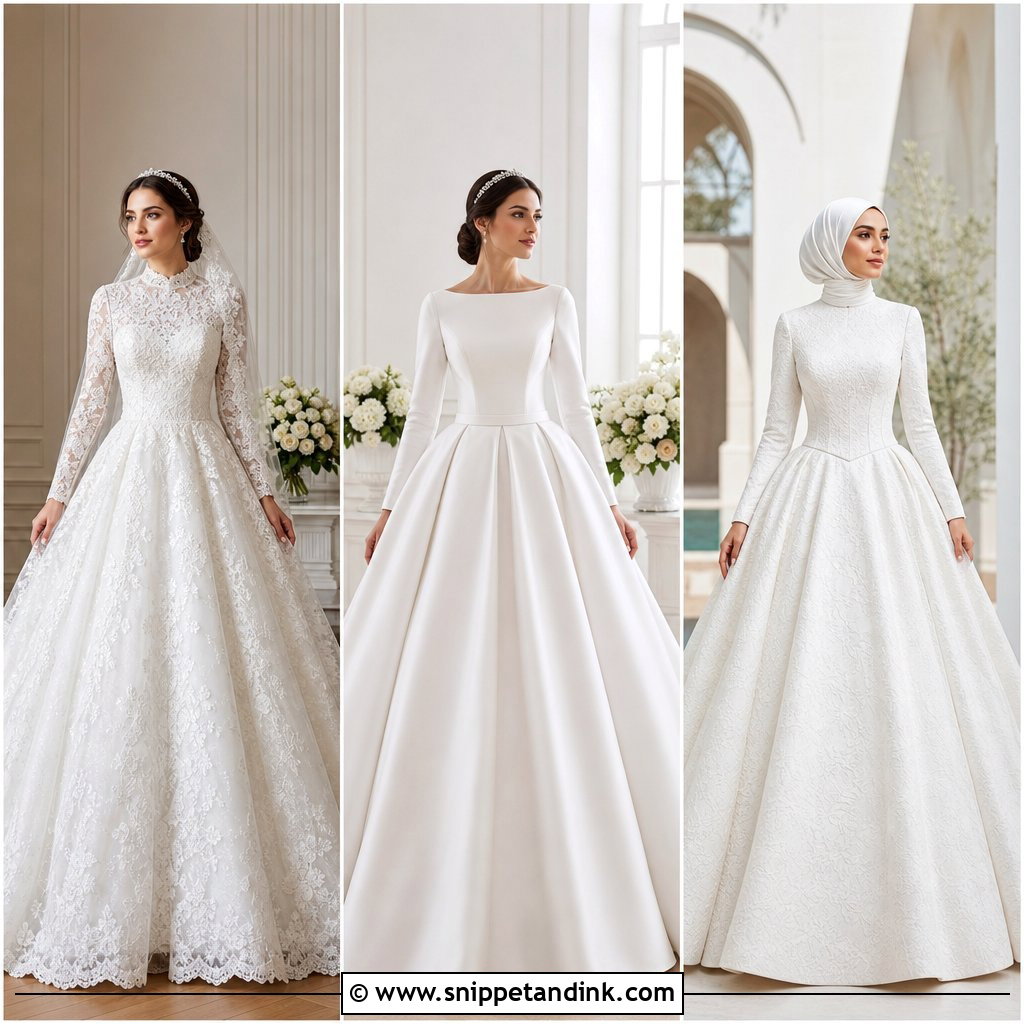

15. Bateau Neck Satin Ball Gown Wedding Dress
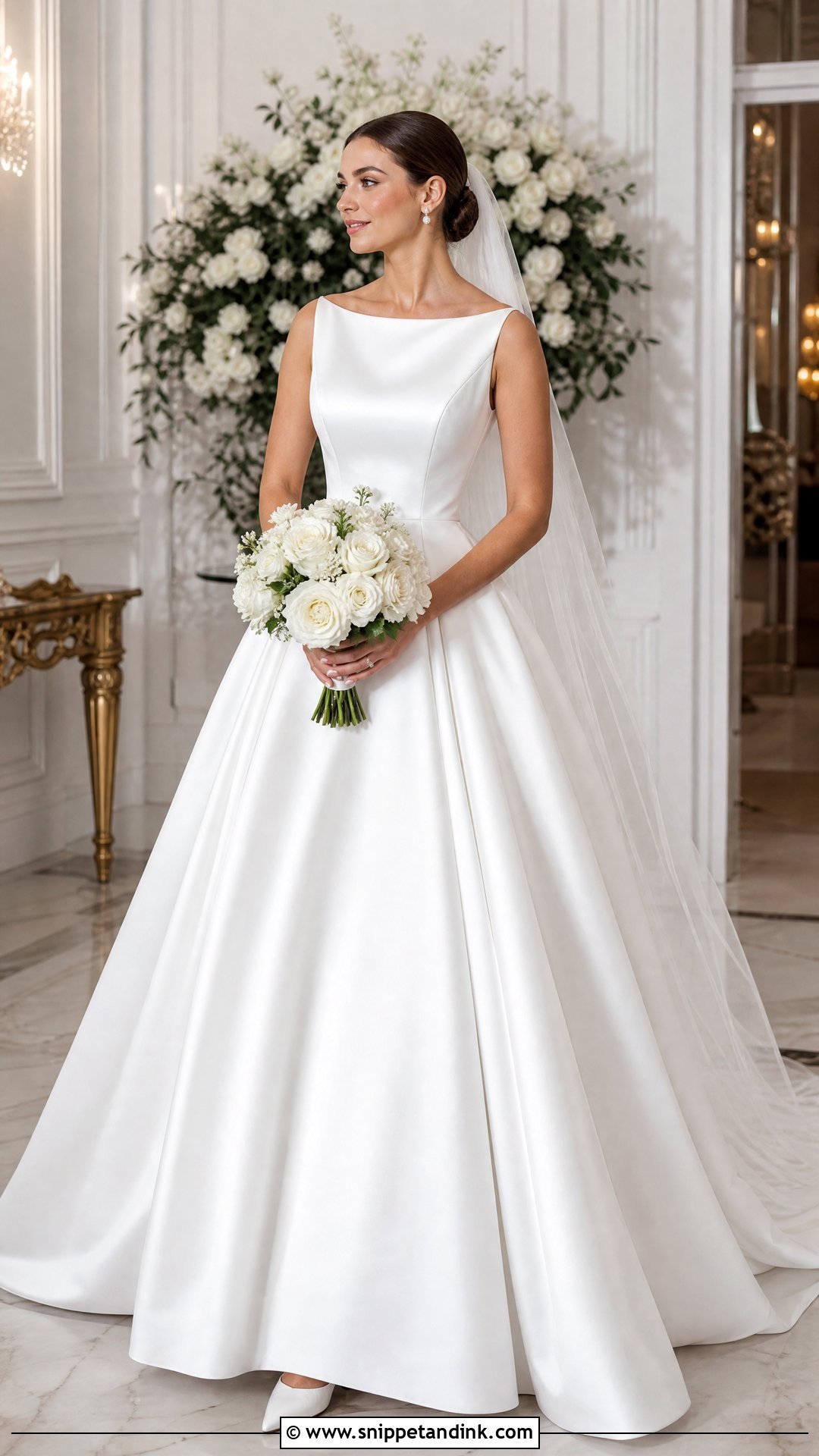
A bateau neck satin ball gown wedding dress runs straight across the collarbone, giving coverage that still feels graceful. It pairs with long sleeves, cap sleeves or a sleeveless bodice depending on the season. The neckline is wide, so I check that bra straps stay hidden and that it sits level when you lift your arms. Satin gives the shape a smooth finish that suits formal venues. A low bun, pearl earrings, a long veil at the crown and closed-toe pumps complete it.
16. V Neck Satin Ball Gown Wedding Dress
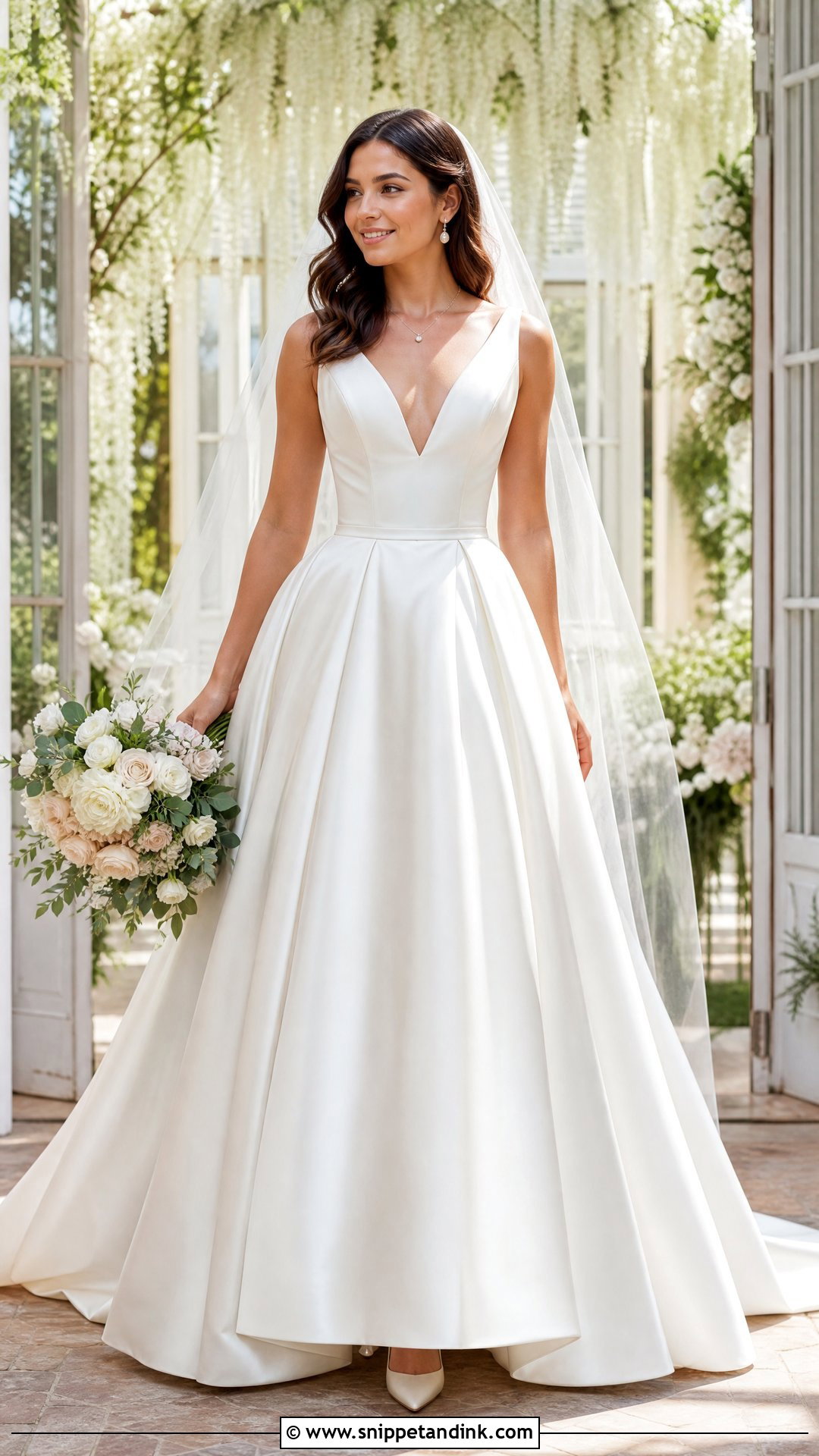
The V draws the eye vertically, which helps a full skirt feel lighter and less overwhelming on a shorter frame. It can be soft and modest or deep and dramatic. A fitted waist keeps the proportions right. With a plain neckline, a delicate pendant fills the space; with draping on the bodice, skip the necklace. A deep V needs illusion mesh or grip lining so it doesn’t shift when you bend. Soft waves, pearl earrings and a sheer veil keep the overall mood romantic.
17. Scoop Neck Satin Ball Gown Wedding Dress
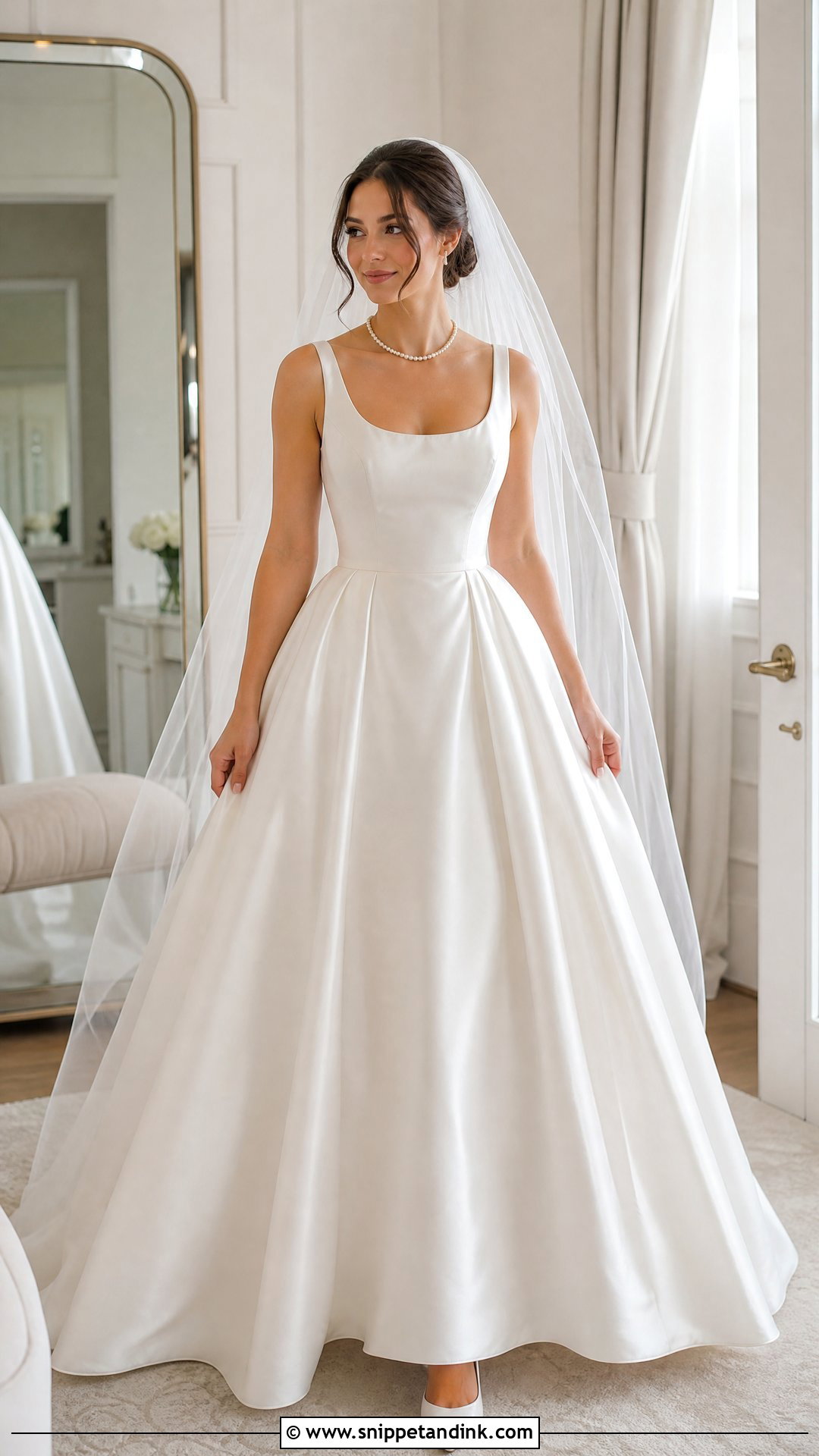
Here’s the most comfortable neckline on the list for a long day. The rounded scoop is easy to wear, especially with wide straps or a supportive bodice, and it’s kind to brides who don’t like a lot of structure near the chest. Satin dresses up the simple shape, and the full skirt keeps it formal. Unlike most necklines here, a scoop actually invites a necklace, so a short pearl strand works. Small earrings, a smooth veil and either a soft updo or brushed-out waves suit it.
18. Cap Sleeve Satin Ball Gown Wedding Dress
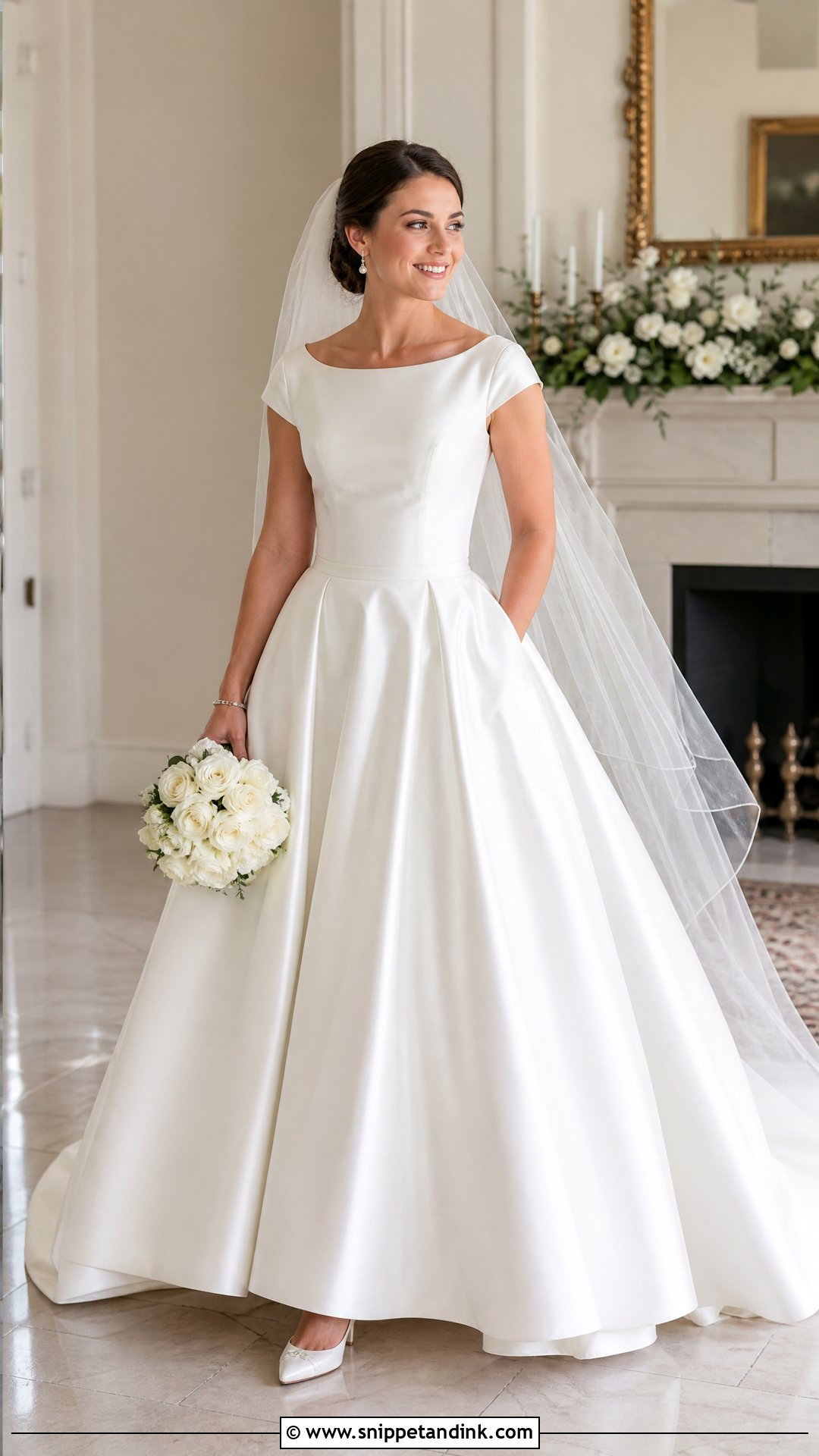
Cap sleeves give a little shoulder coverage without the weight of a full sleeve, and they lend a gown a slightly vintage note, especially with a defined waist. Check the armhole carefully. A cap sleeve cut too close restricts lifting your arms, and that’s hard to fix later. Keep accessories delicate so the sleeve stays the focus: pearl earrings, one bracelet and a fingertip veil. Satin pumps or low heels keep you comfortable, and the whole outfit feels sweet without tipping into girlish.
19. Satin Ball Gown Wedding Dress With Detachable Sleeves
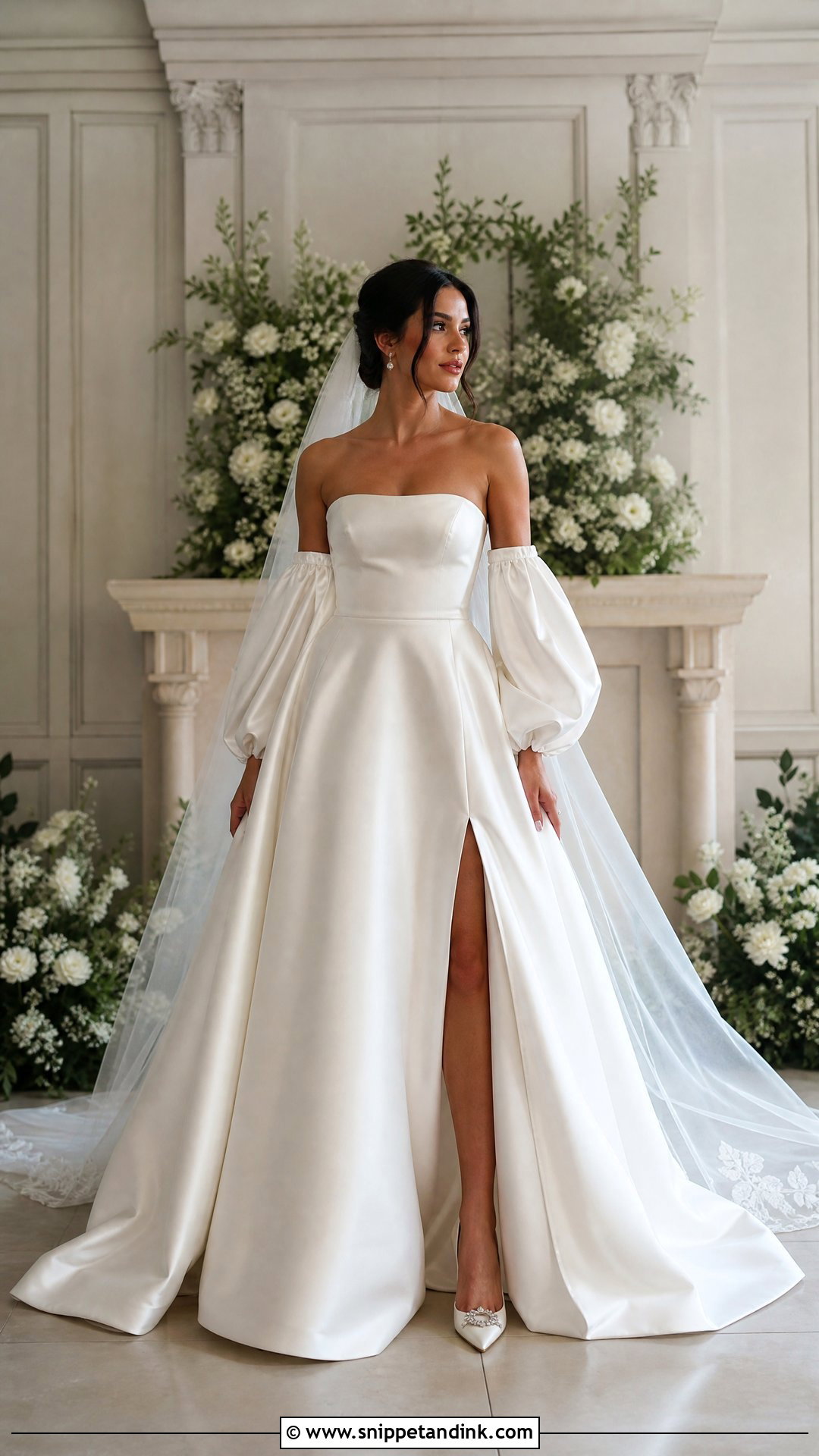
Wear the detachable sleeves for a formal ceremony, then take them off for dancing and reception photos. Off-shoulder satin sleeves, puffs and fitted long sleeves all suit a structured ball gown. The base dress should look finished without them, so a strapless bodice with a clean skirt is the safest pairing. I’d ask how they fasten; hidden snaps hold better than ties, and you’ll want someone who has practised removing them. Classic earrings, a long veil and comfortable heels complete it.
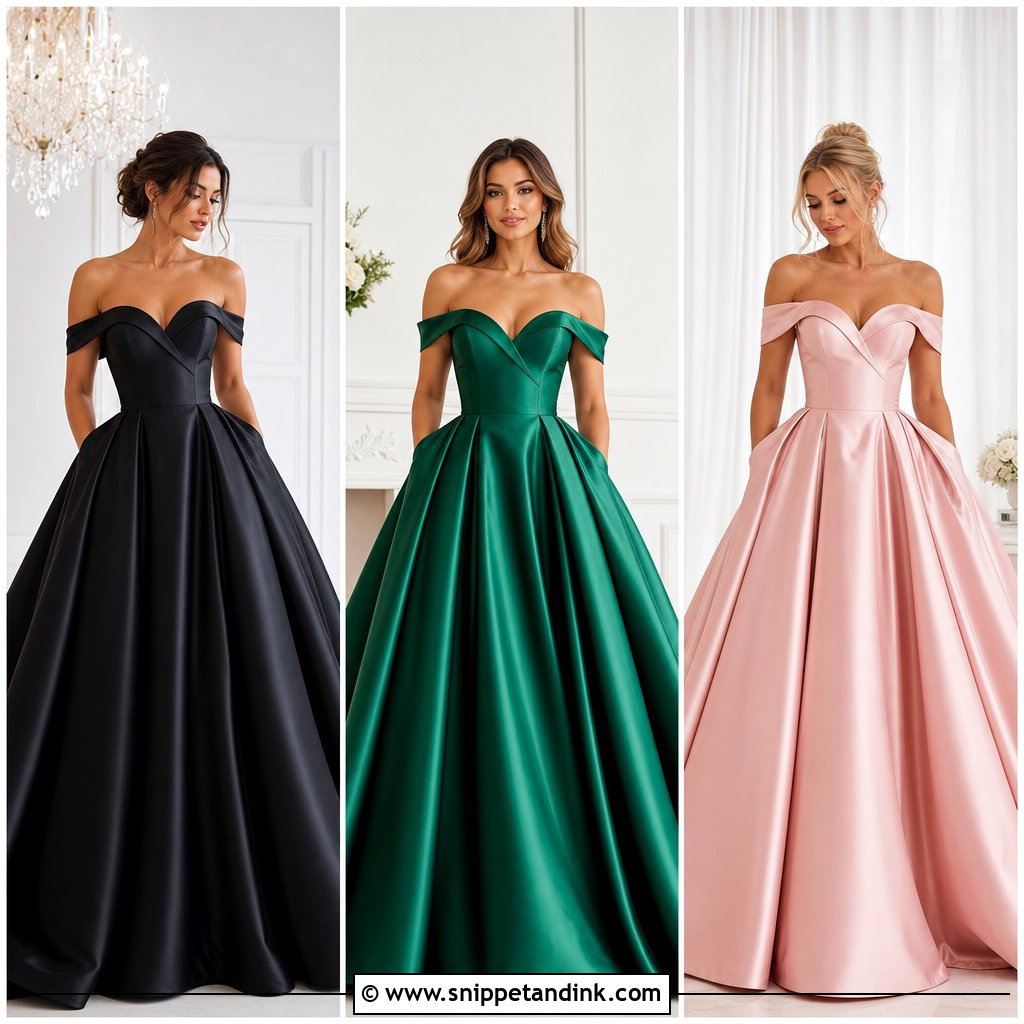

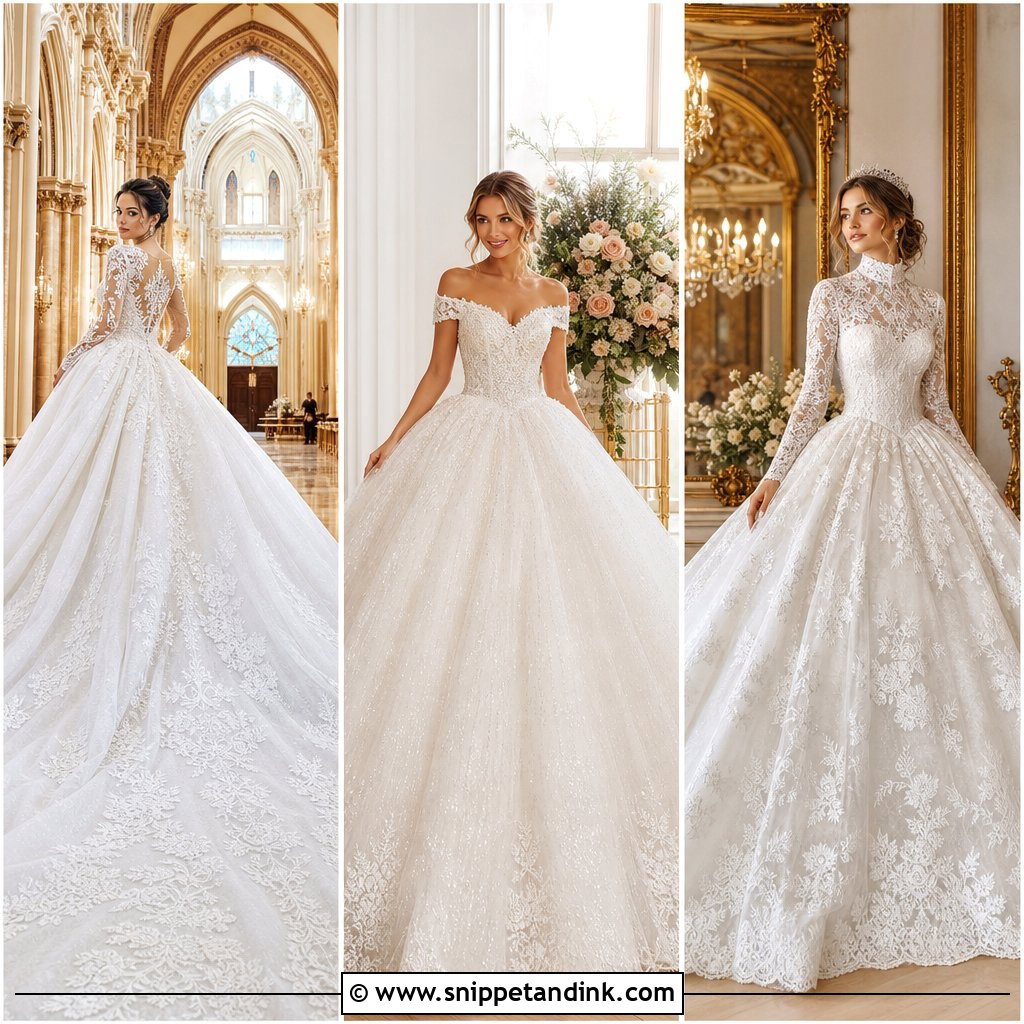
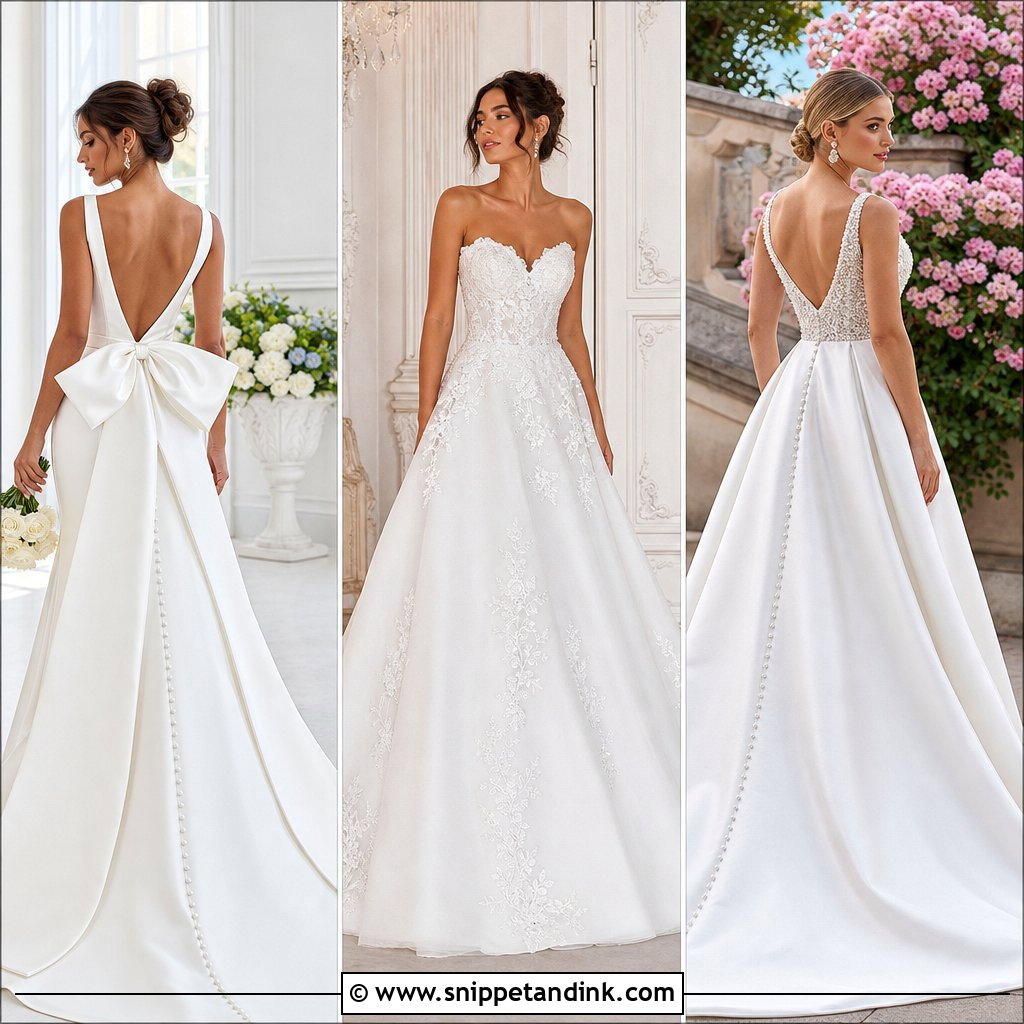

20. Satin Ball Gown Wedding Dress With High Slit
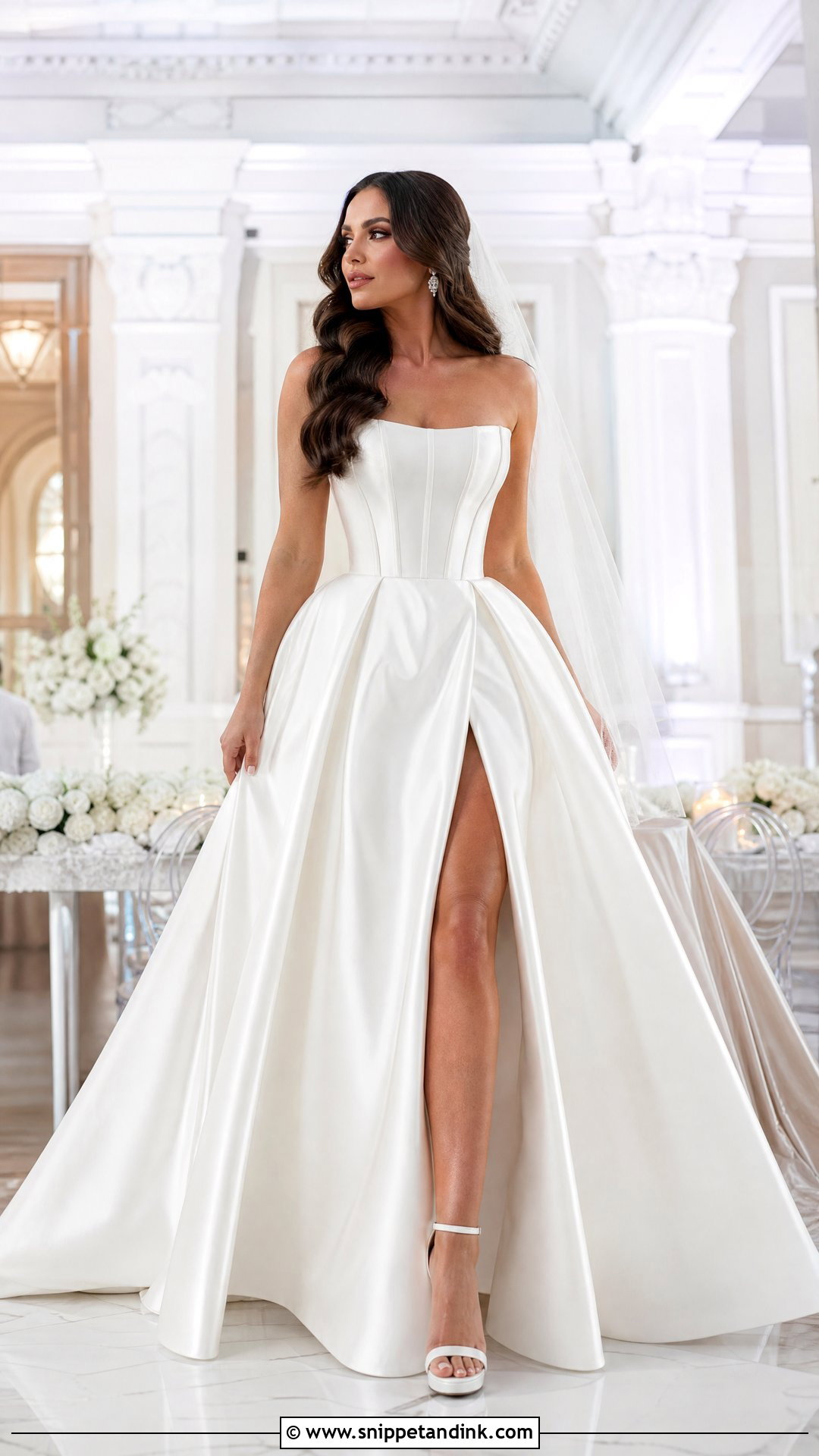
A slit in a full skirt is mostly about walking. It makes stairs and long aisles easier and lets the shoes show, so the shoes become part of the design: pointed satin pumps or crystal sandals. The structured bodice keeps it bridal. Placement matters more than height; a slit set slightly off the front opens naturally as you step, while a centre slit can split wide when you sit. A clean veil, simple earrings and polished hair let the movement do the talking.
21. Satin Ball Gown Wedding Dress With Chapel Train
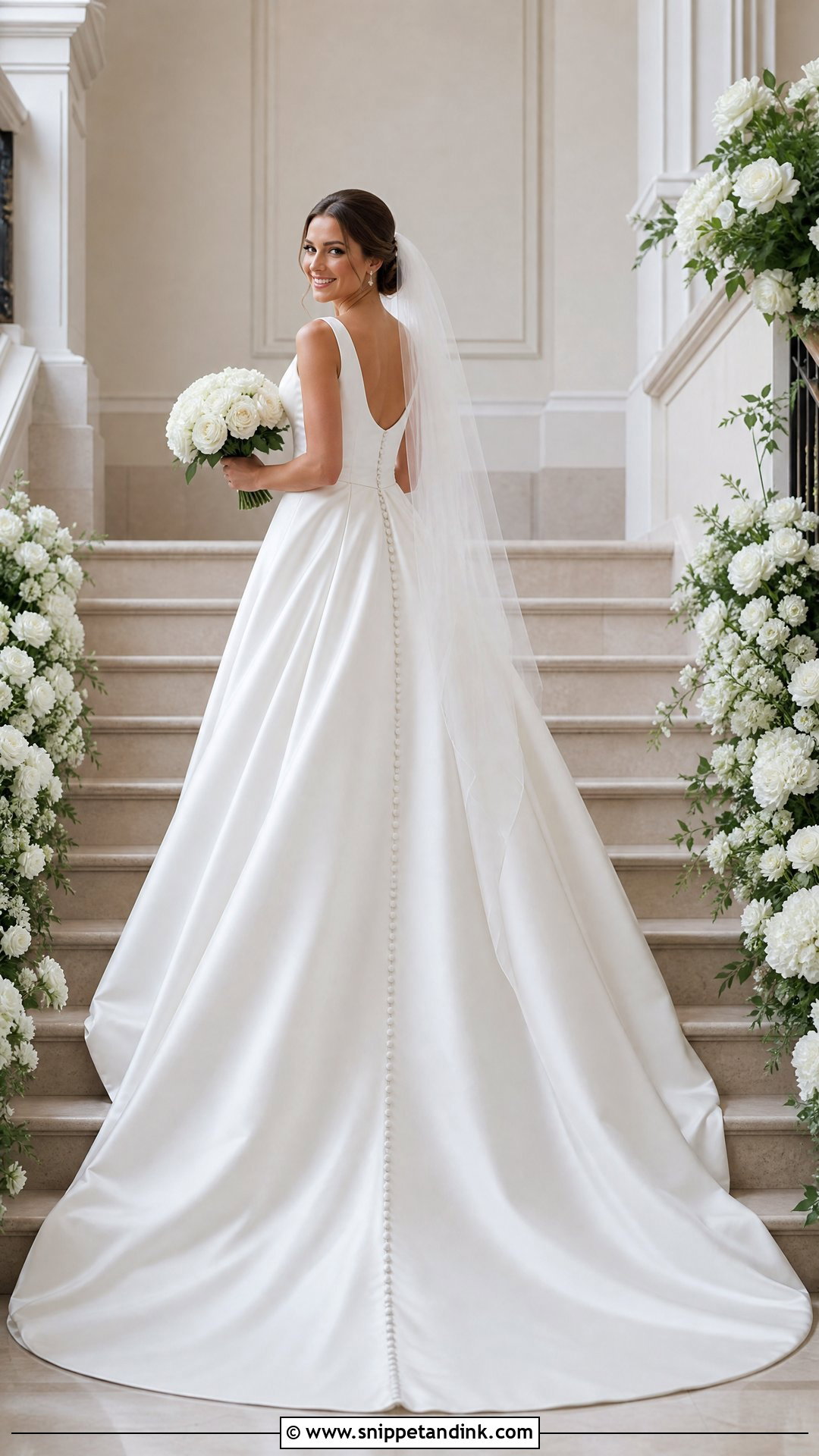
A chapel train extends behind the skirt without becoming hard work, and satin lets it fall in broad, clean folds that catch light on smooth floors, stairs or paths. Grass and gravel are harder on it, so ask about a bustle early. Most chapel trains bustle up with a few hooks, and someone in your party should learn how at the final fitting. Add a long veil for extra length or a fingertip veil to keep the train as the focus, and button detail down the back for a classic finish.
22. Satin Ball Gown Wedding Dress With Cathedral Veil
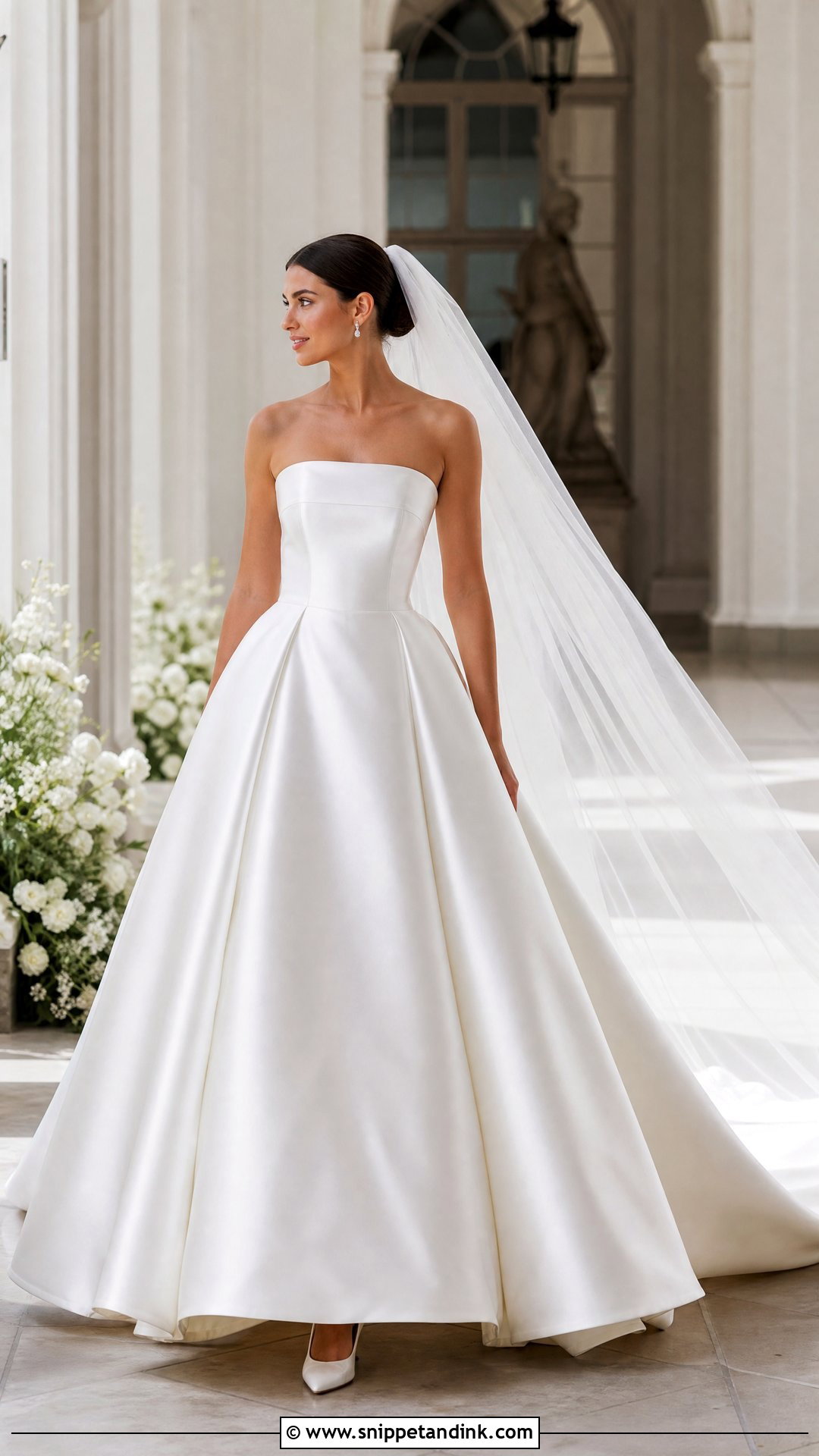
Pairing a cathedral veil with a ball gown builds a full bridal picture from head to hem. The veil brings length and movement; the satin skirt gives structure. It works best on a clean gown so the tulle can flow without fighting heavy detail, so I’d choose a strapless, off-shoulder or square bodice. Cathedral veils are heavy at the comb, which means the hairstyle has to anchor it properly, usually a bun or a pinned base under the veil. Keep jewelry understated. It suits long aisles and formal portraits.
23. Blush Satin Ball Gown Wedding Dress
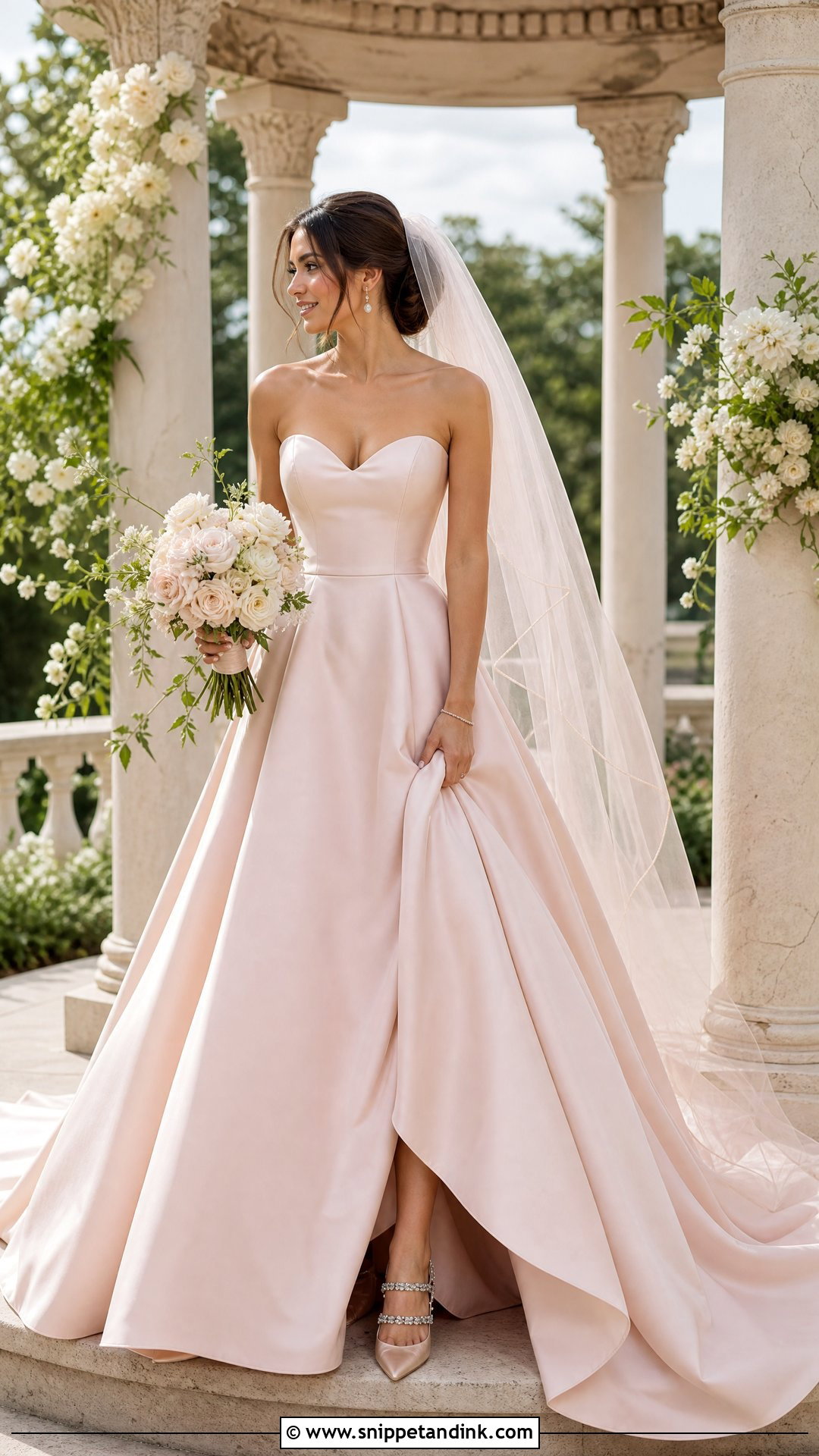
Blush gives you warmth and colour while still reading clearly as bridal. I’d keep the pink very pale, because stronger blush can go peach or grey depending on venue lighting and camera white balance. Hold the fabric against your face in daylight before you commit. Pearl earrings, champagne heels and a sheer veil in ivory or blush pull it together, with a bouquet of cream, pale pink and greenery. Spring and garden venues suit it, and it’s a gentle step away from tradition rather than a leap.
24. Ivory Satin Ball Gown Wedding Dress
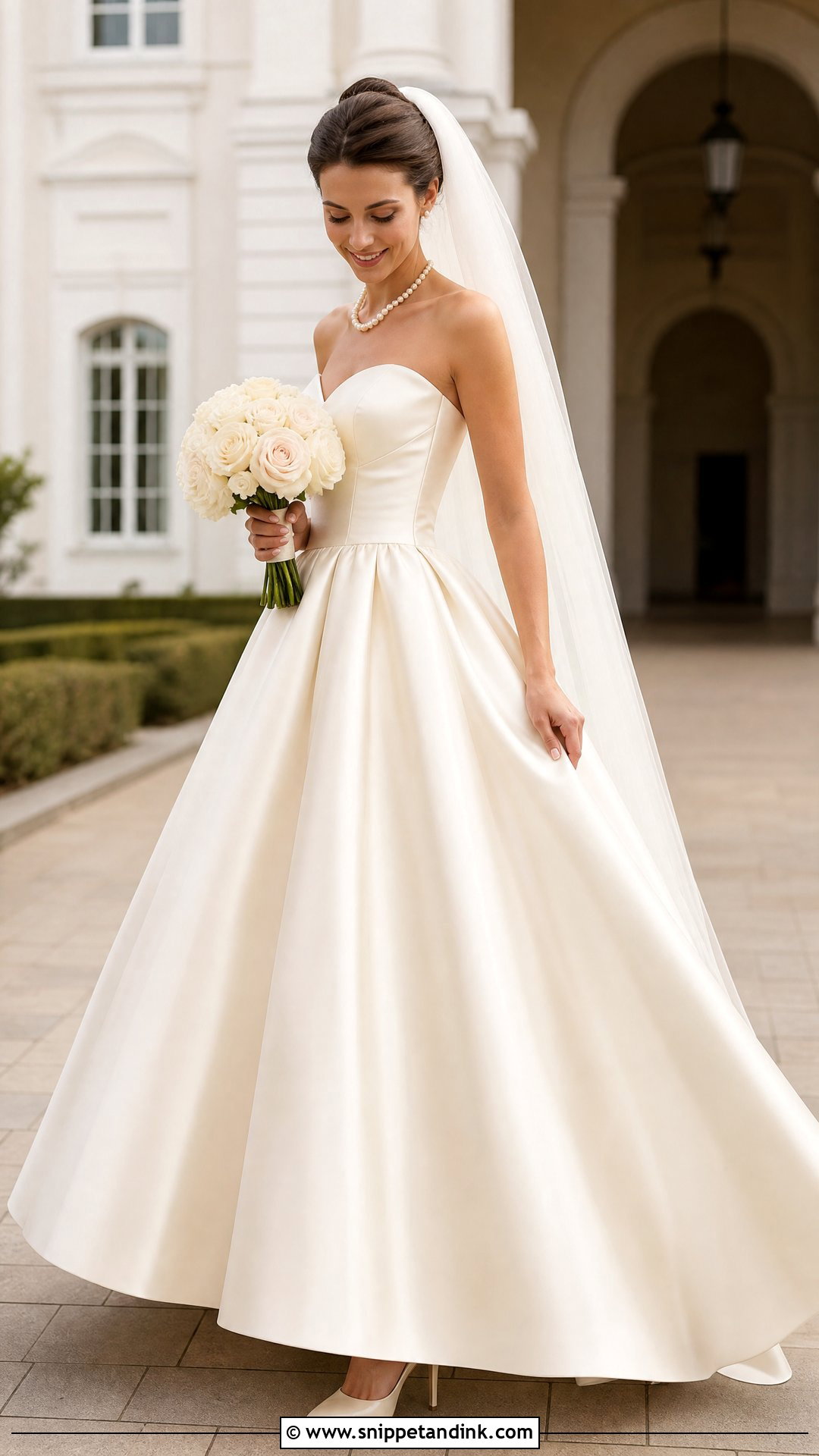
Ivory is the white I recommend most often, because it’s warm and forgiving across skin tones and lighting conditions. Ivory satin has a rich glow that pairs with pearls, gold jewelry and cream accessories. The catch is matching. Ivory varies a lot between makers, so bring a fabric swatch when you buy the veil and shoes, or the veil can look grey next to the dress. A structured bodice and full skirt keep it classic; a basque waist makes it more regal. Avoid a stark white bouquet that makes the fabric look dull.

25. Satin Ball Gown Wedding Dress With Long Gloves
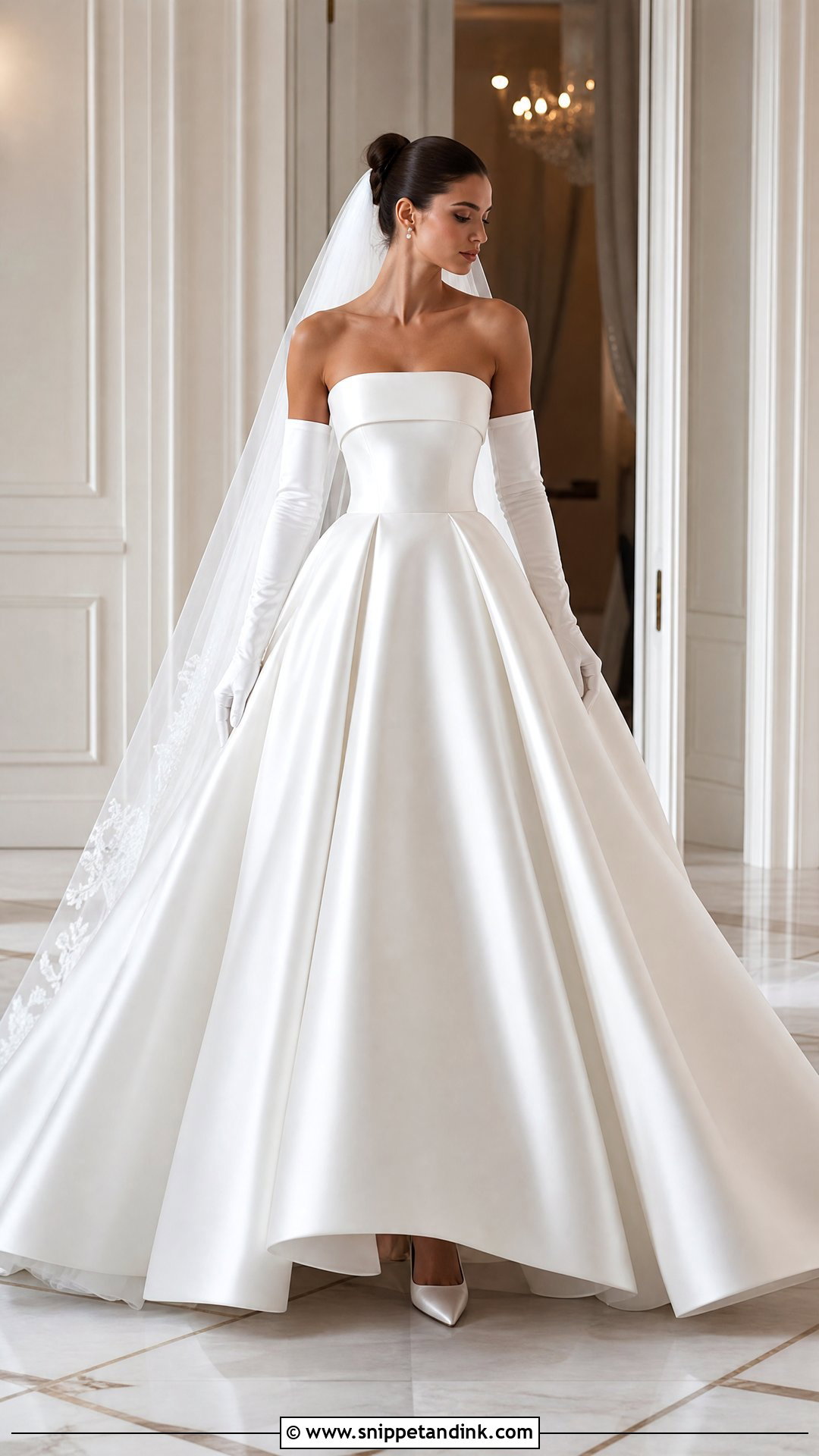
Long gloves add glamour without touching the neckline, so they suit strapless, off-shoulder and straight-neck gowns best. Match them to the gown’s exact ivory, in satin or a matte fabric. Practical warning: gloves need a plan for the ring exchange. Some brides slip one glove off before the vows; others choose a style with a finger opening. Keep jewelry minimal, perhaps small earrings and a bracelet worn over the glove. A sleek bun and cathedral veil give it a polished, editorial finish.
A Full Skirt From the Car Door to the Last Song
The moments that catch brides out are rarely the aisle. They’re getting into the car, using the bathroom and sitting through a long dinner. I walk every bride through these at the final fitting.
Cars and doorways
Sit in first, bottom down, then swing your legs in while someone gathers the skirt behind you. Clean the car seat before the day, since satin picks up marks from upholstery. A large vehicle saves a lot of crushing.
The bathroom question
Stepping into the skirt while facing the toilet, then gathering the layers up in front, works better than trying to hold everything from behind. Pick one person to help and have them practise once at the fitting.
Dinner and dancing
Smooth the satin under you as you sit, or it creases across the back of the skirt where every exit photo will see it. Bustle the train before the first dance, and check the bustle points after an hour or so, as hooks can work loose on a heavy satin train.
Does Your Venue Have Room for It?
A ball gown needs space around it. Before buying, measure the narrowest point you’ll walk through, usually the aisle between chairs or a doorway, and ask the venue about step heights. Tight aisles crush a hoop, gravel snags satin, and long grass soaks a hem. None of this rules the gown out. It just means I’d pick the underskirt, train length and bustle with the real route in mind rather than the showroom floor.
Satin Holds the Shape, You Set the Mood
The same full satin skirt can read classic, minimal or regal depending on what you put around it, and that’s the real skill with a ball gown. The fabric brings shine and structure; the silhouette brings presence in almost any venue or season. Treat neckline, waist, sleeves, veil, shoes and accessories as one outfit rather than buying the dress alone. A plain gown can turn dramatic with gloves or a cathedral veil, while a detailed one usually needs quieter styling. Pick the combination that still feels like you when you sit down at dinner.
You'll Like These Ideas:









Leave a Reply