
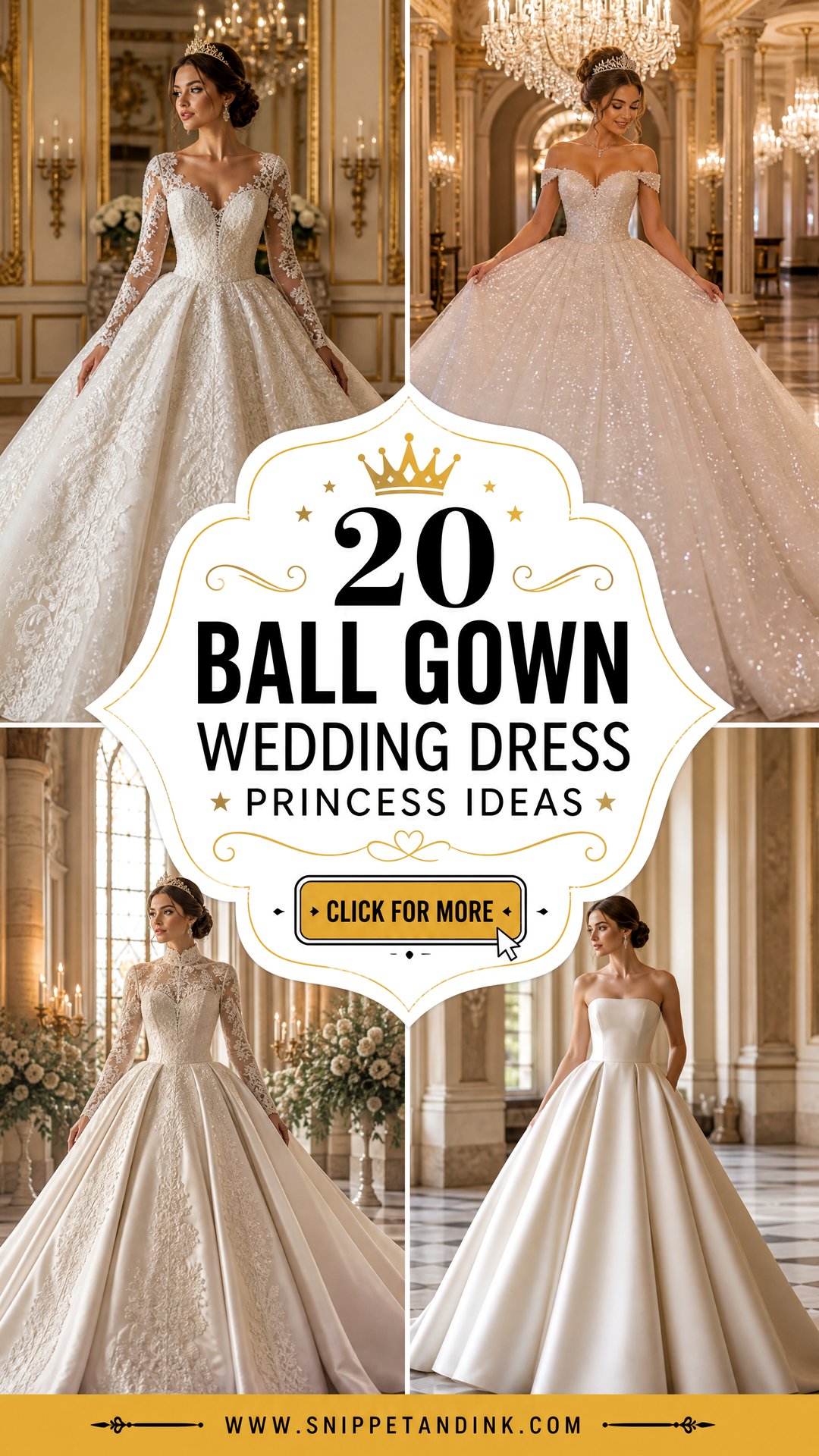
A full skirt, a fitted bodice and a sweeping train: no other bridal shape changes how a bride walks into a room quite so much. The ball gowns I’m seeing brides fall for right now lean on sculpted corsets, Basque waists, dimensional flowers, airy tulle and luminous satin, which keeps the classic princess gown from looking like a costume. The details do practical work too. A waist placed in the right spot balances your proportions, the right fabric suits your venue, and good construction decides whether you can actually move. I treat fabric, neckline, waist, train, veil, shoes and jewelry as one outfit, and every gown below is styled that way, from minimal to sparkling, vintage-leaning or modest.
Ordering a Ball Gown Around Its Real Timeline
Ball gowns are rarely bought off the rack. Most are ordered in your size after you try a sample, and production times vary a great deal by designer, often several months. That’s why I suggest starting appointments roughly nine to twelve months before the wedding, and earlier if you want custom changes like added sleeves or a different neckline.
How the fittings usually run
- First fitting, around two to three months out: the seamstress pins the bodice, hem and any big changes. Bring your wedding shoes and the exact bra or shapewear you’ll wear.
- Second fitting: the bodice should now be close. Sit, walk, lift your arms and check the bustle points.
- Final fitting, one to two weeks out: bring the person who will bustle the train and do up the buttons, and let them practise.
Structured gowns often need more alteration work than slips or sheaths, because the corset, the layers and the train all have to be adjusted together. Ask for an alterations estimate when you order, since costs vary widely and can surprise people who’ve budgeted only for the dress.
1. Satin Basque Waist Ball Gown Wedding Dress
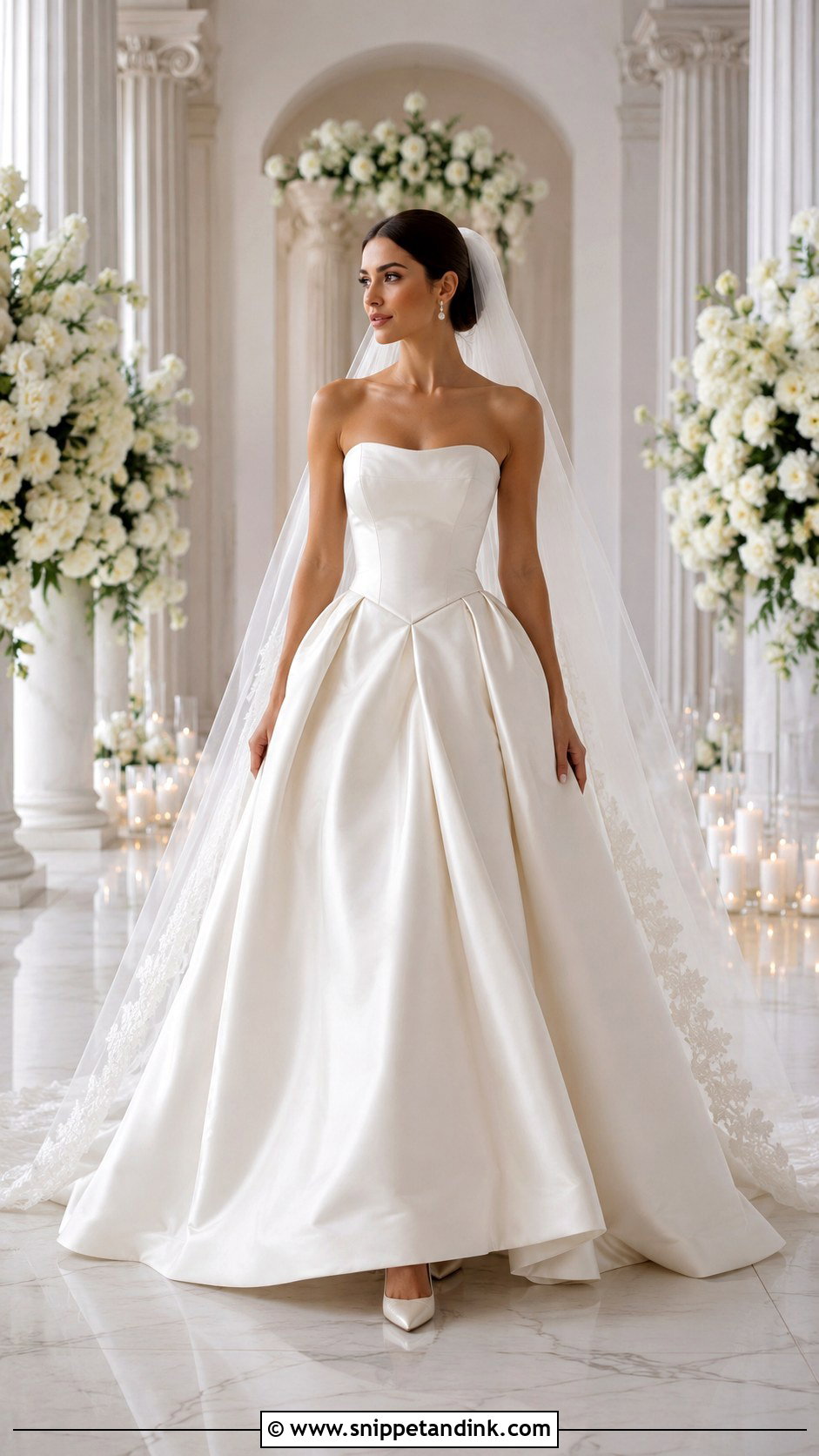
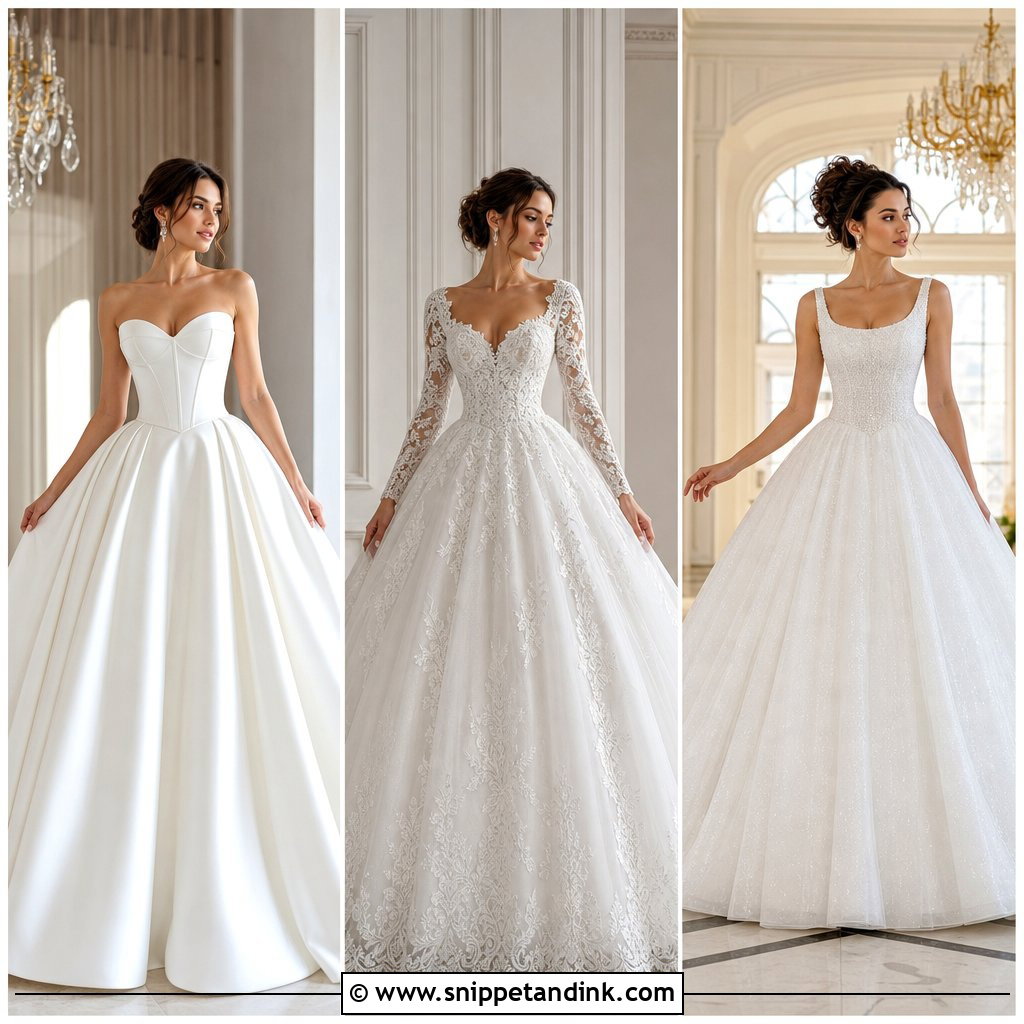
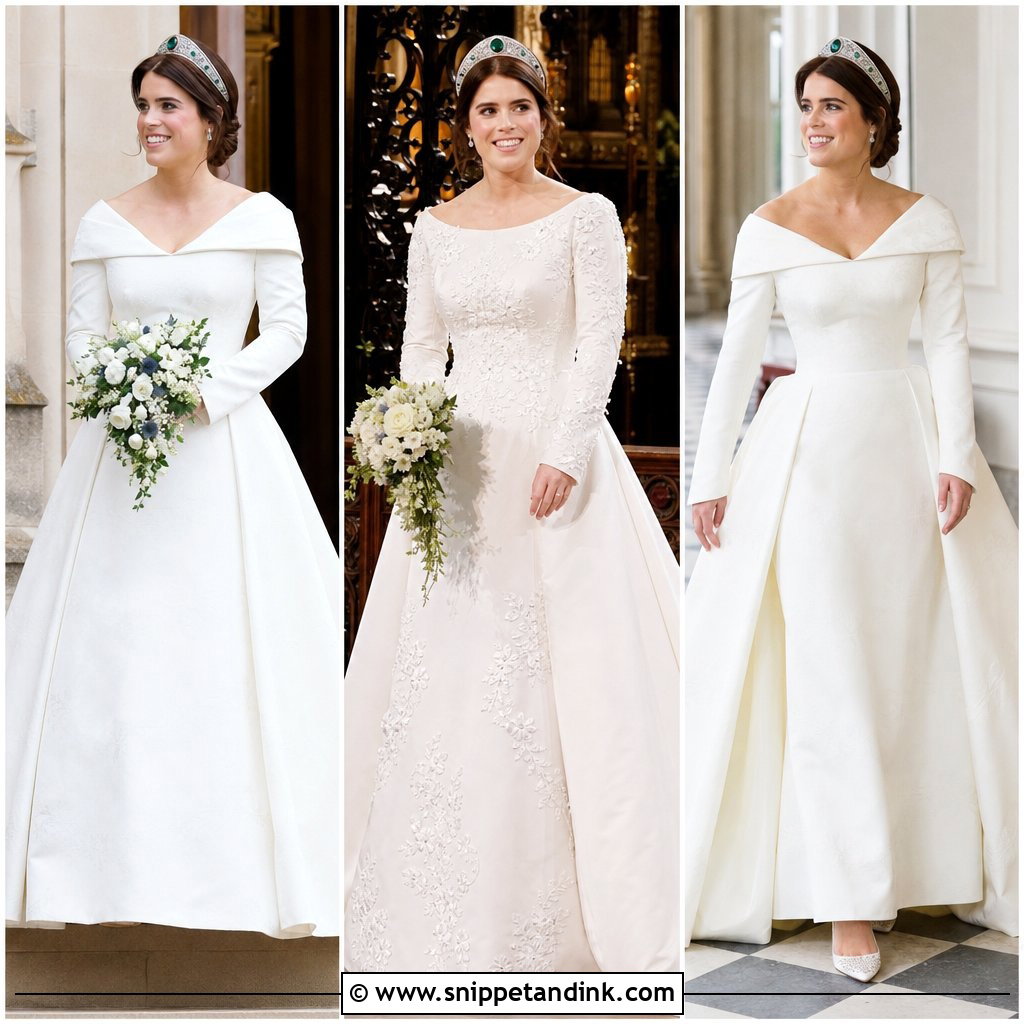
The Basque waist is the shape most people picture when they think of a royal wedding dress. The bodice dips into a soft V at the centre front, which lengthens the torso before the skirt opens out, and it sits best in structured satin or Mikado that can hold the point crisply. I’d pair it with a strapless neckline and internal corsetry for clean support, a cathedral veil with a narrow satin edge, pearl drop earrings and pointed ivory pumps. Smooth satin shows every seam and every line from your underwear, so this is the gown where I’d spend on good alterations and a properly fitted bra or built-in cups. A low bun keeps the focus on the shape.
2. Long Sleeve Lace Ball Gown Wedding Dress
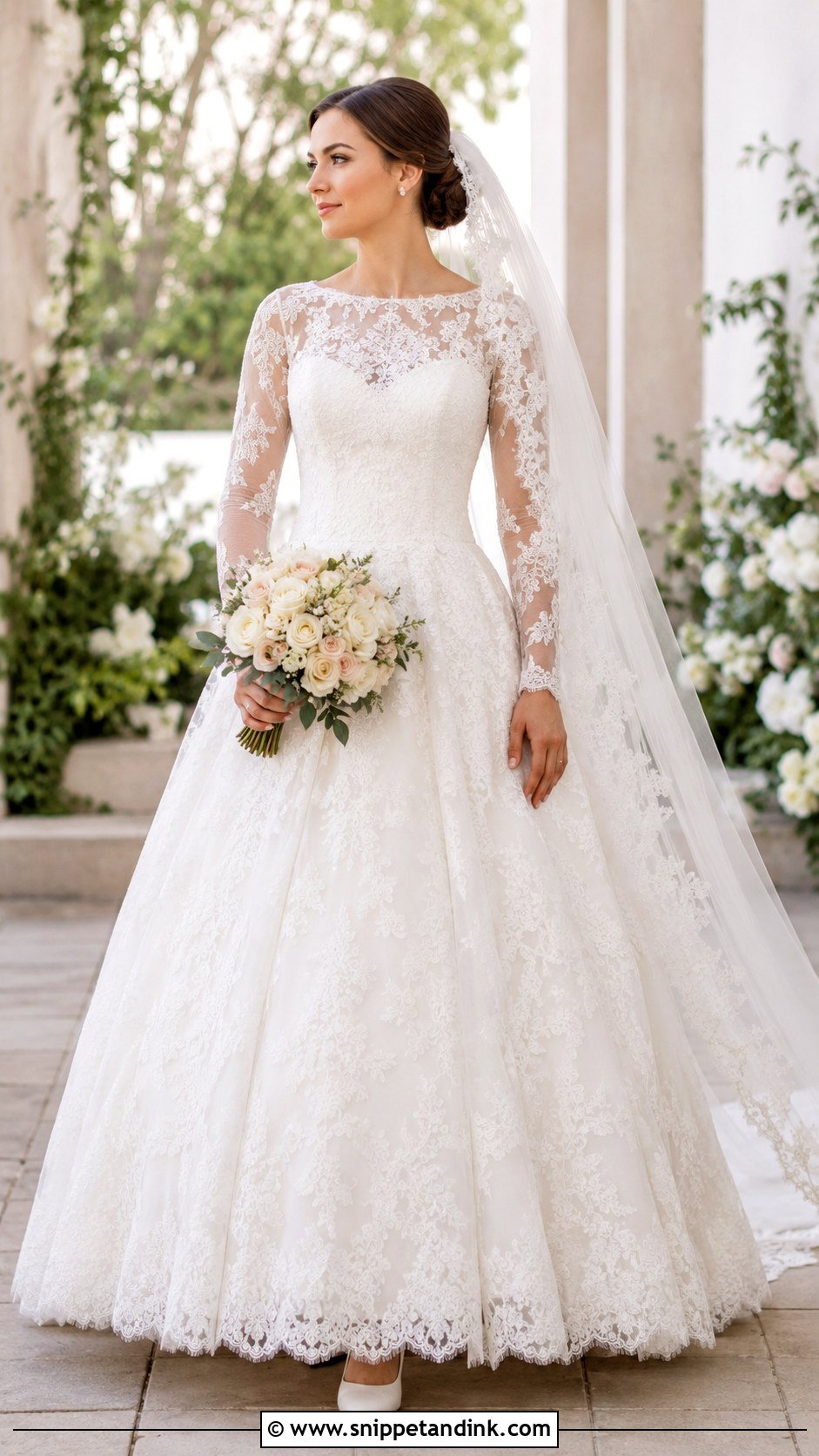
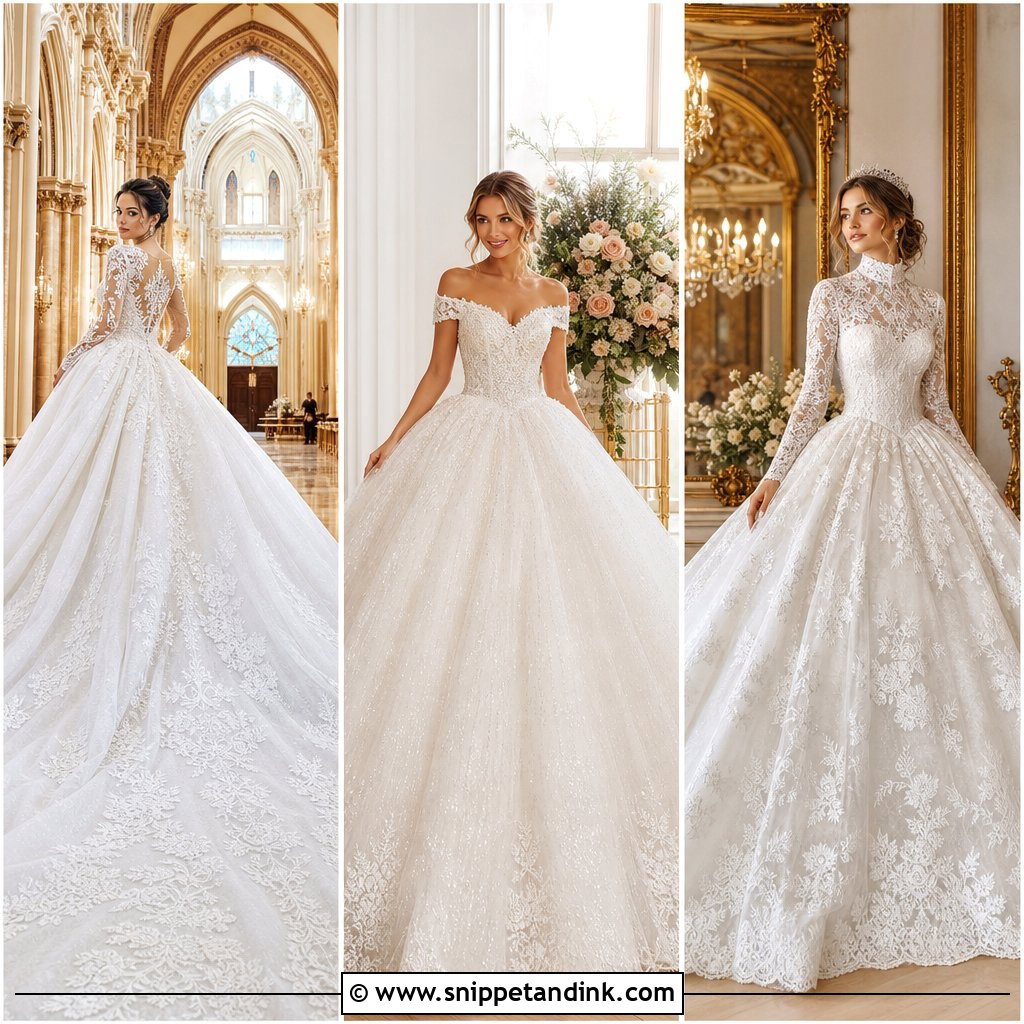
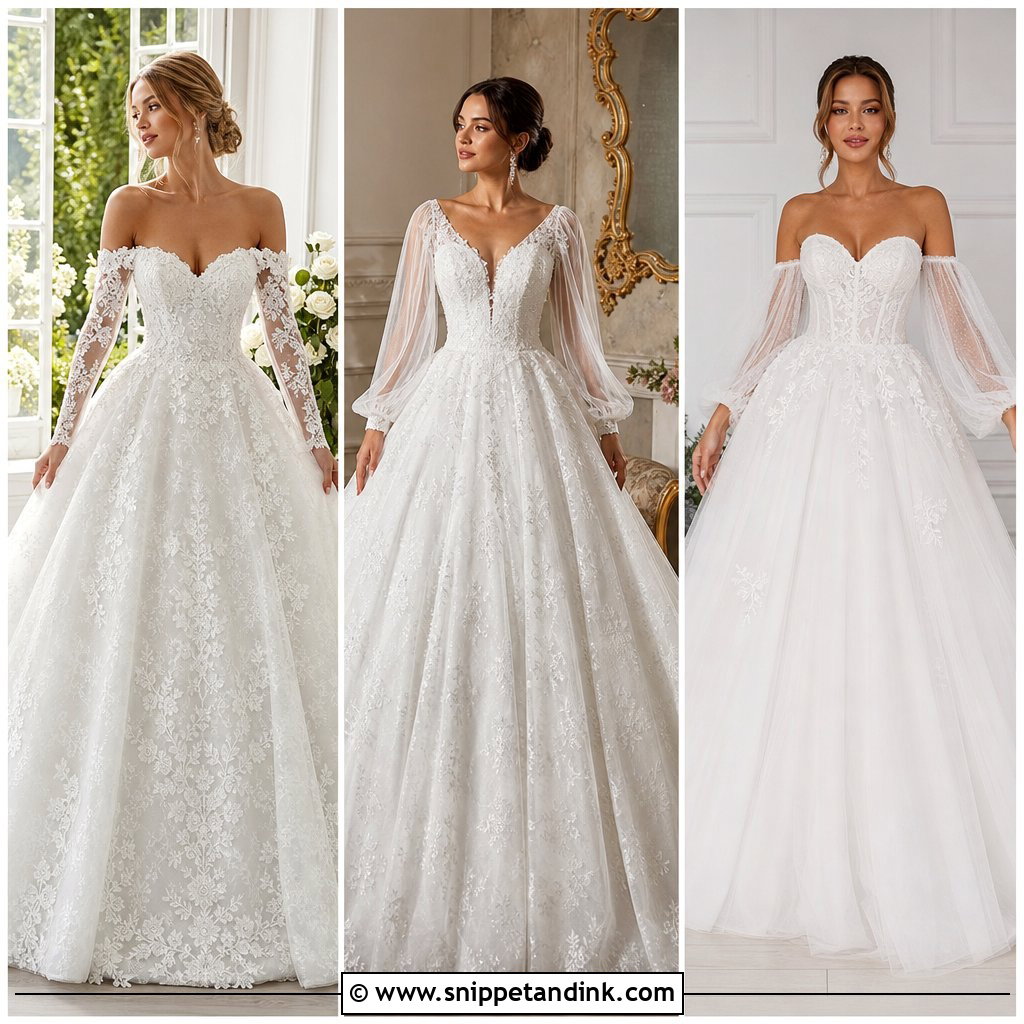
Long lace sleeves give coverage and movement at once, and lace on a full skirt moves in a way satin never does. Look for a fitted bodice with lined front panels, illusion sleeves and lace motifs that carry on down into the skirt. A sweetheart lining underneath a higher lace neckline gives the bust shape without showing it. Add a lace-trimmed veil, crystal studs and closed-toe satin heels, and skip the necklace so the neckline doesn’t crowd. A smooth chignon shows off the sleeves and back. The detail I always fix is the cuff: if the lace sleeve ends exactly at the wrist bone, the whole gown looks made for you, while a sleeve that bunches at the hand looks borrowed.
3. Sweetheart Corset Ball Gown Wedding Dress
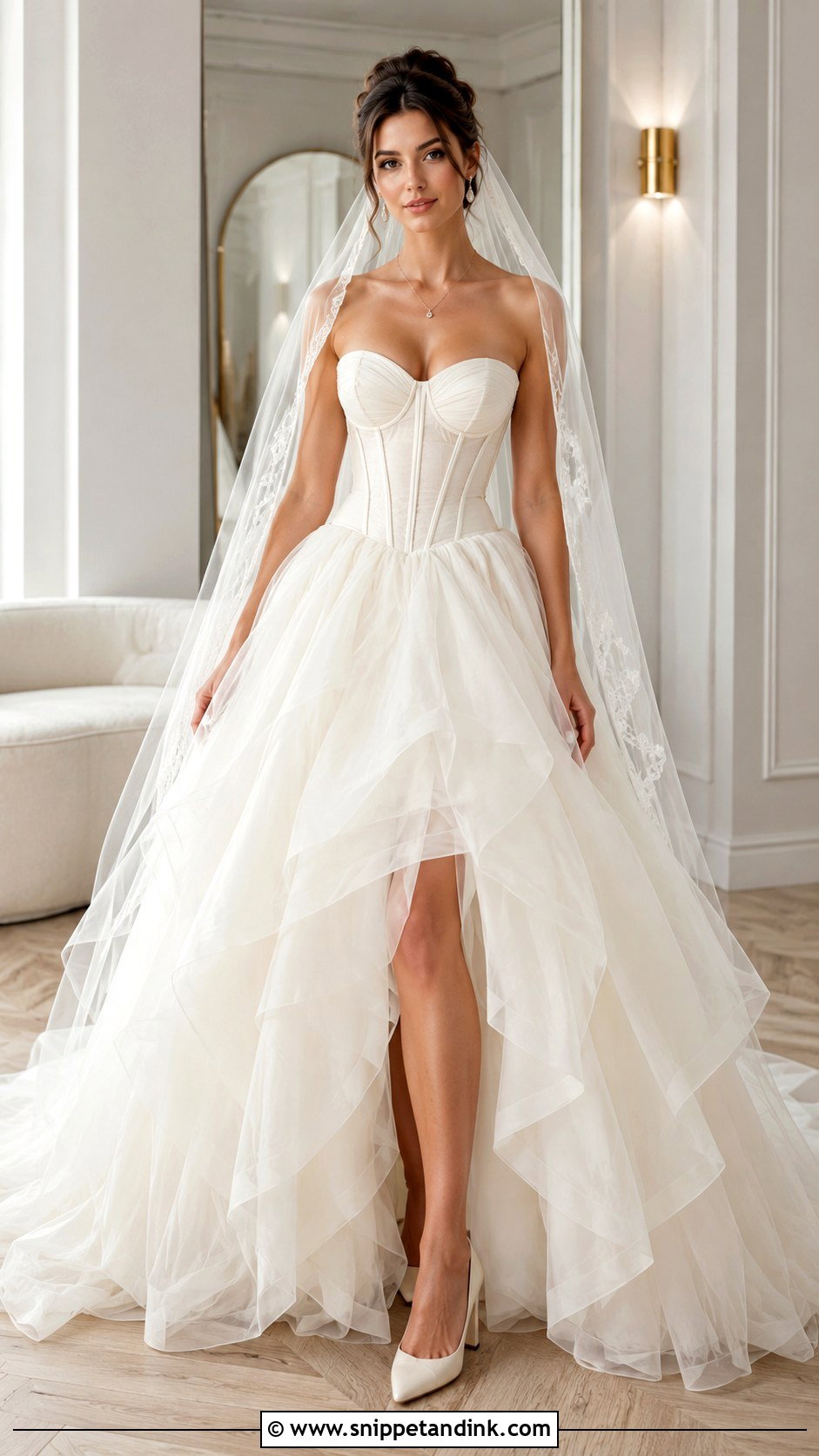
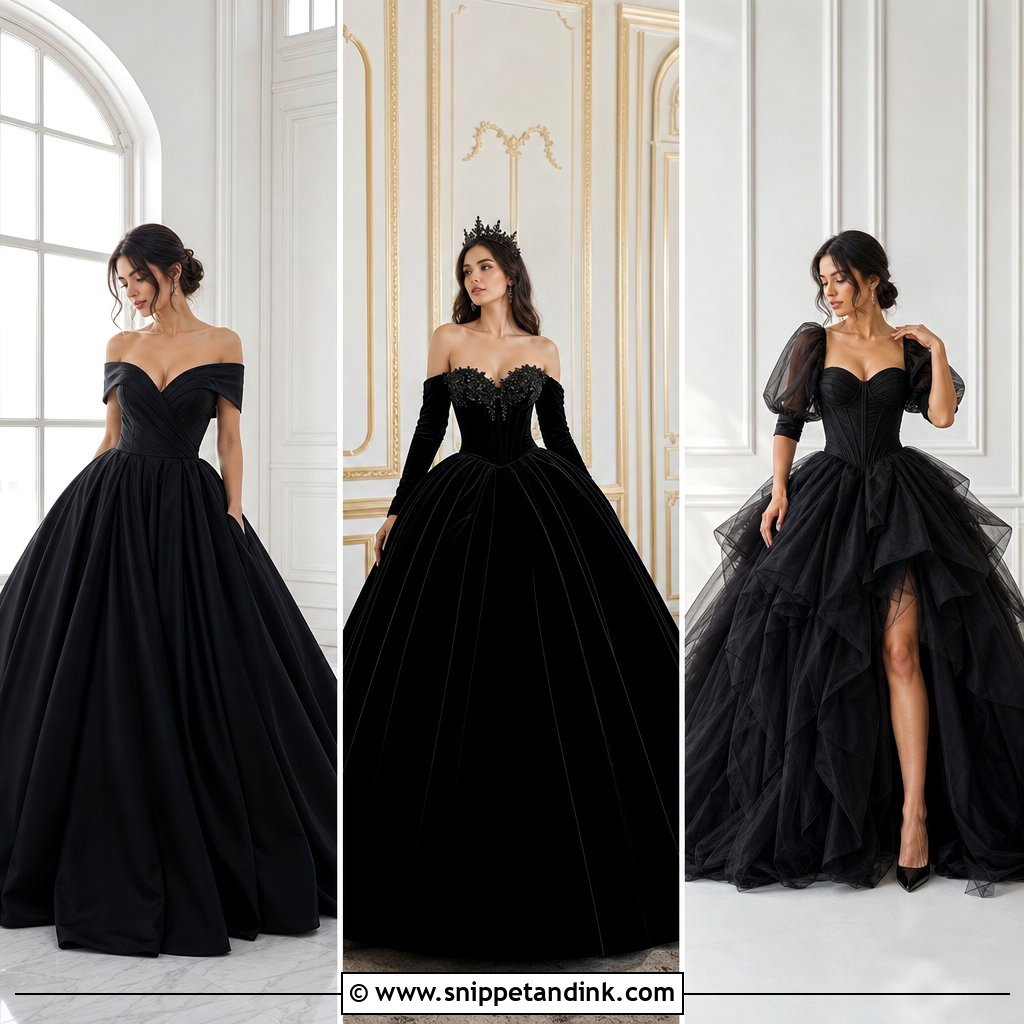
A sweetheart neckline softens a corset bodice, and together they give the recognizable fairy-tale silhouette without needing much decoration. Visible seams or covered boning define the waist, and a layered tulle skirt gives airy volume instead of stiff fullness. A lace-up back allows some adjustment, but I still have it altered properly; lacing pulled tight to make up for a poor fit puts strain on the side seams. Style it with a fingertip veil, a delicate pendant, teardrop earrings and block-heel pumps hidden under the skirt. At every fitting, sit, raise your arms and walk. The bodice should stay put without pinching or limiting your breath.
4. Off Shoulder Mikado Ball Gown Wedding Dress
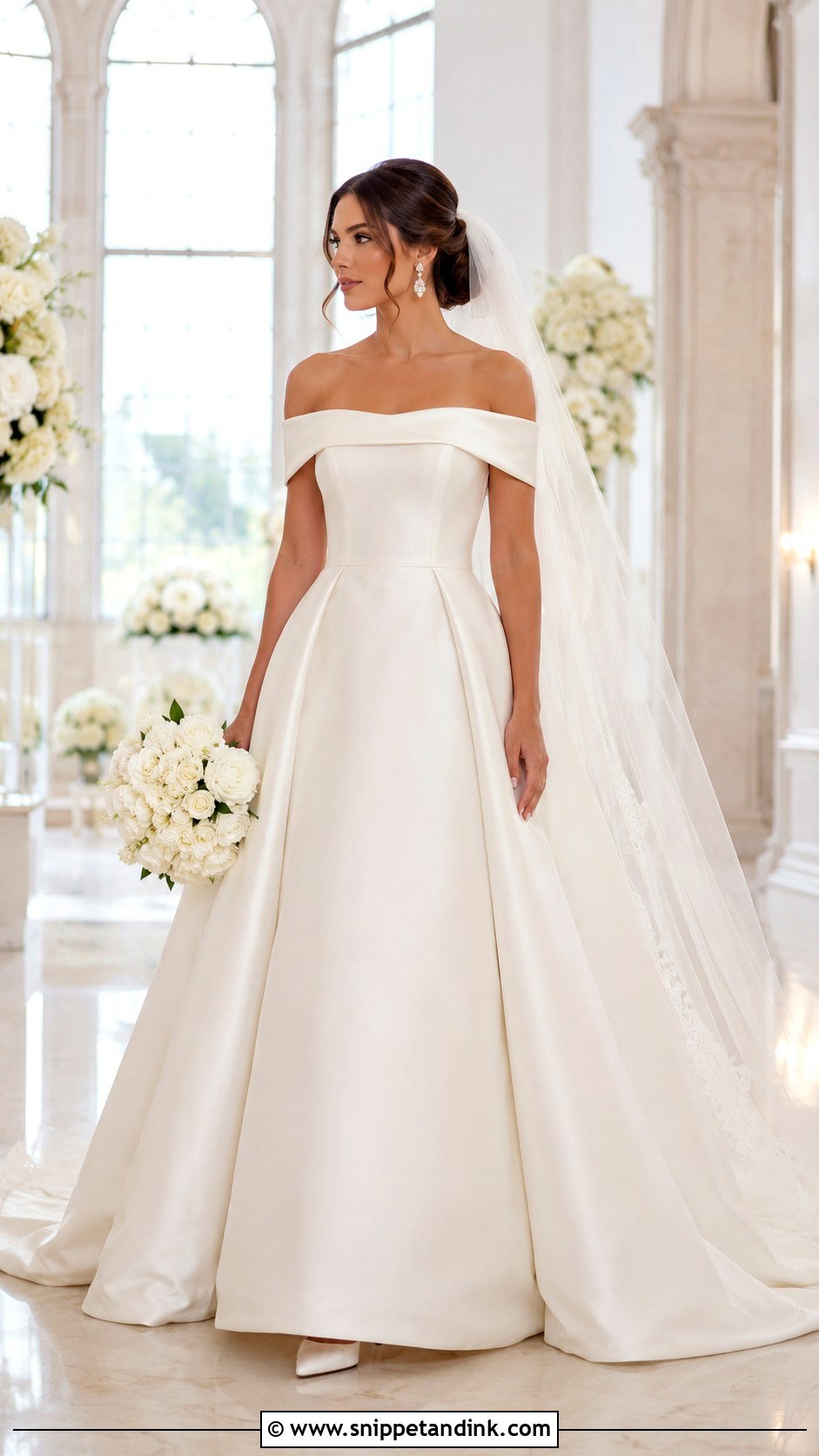
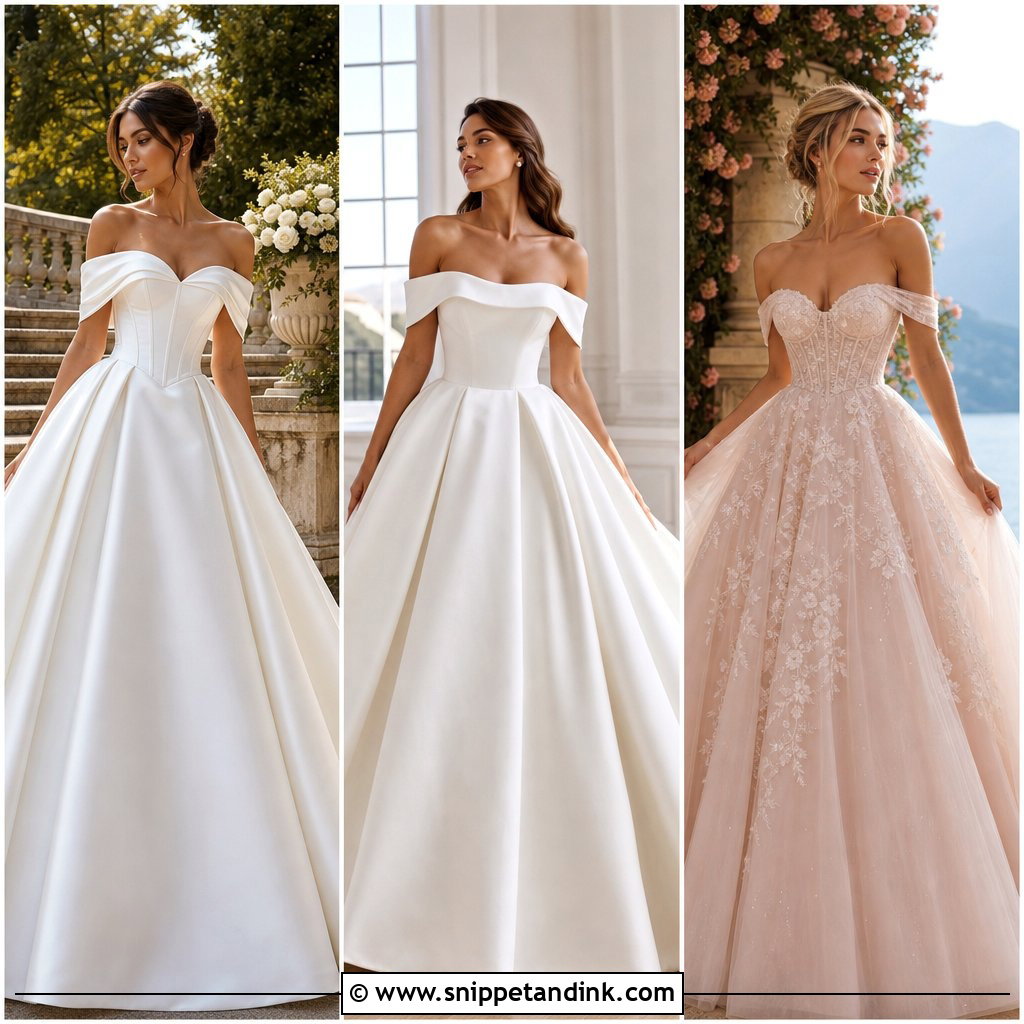
Mikado is a heavy, slightly crisp silk-like fabric, and it holds a wide skirt with real architecture. That makes it a strong partner for an off-the-shoulder neckline, which needs a fabric firm enough to stay folded. The band should rest securely around the upper arms; if it’s too tight you can’t lift your arms past your chest, so hug someone, dance a few steps and hold a bouquet up during alterations. A natural or gentle Basque waist balances the volume. A sleek cathedral veil, pearl-and-crystal earrings and pointed pumps finish it, and an updo keeps hair from catching on the neckline. Hidden elastic in the band or detachable sleeves can buy you movement without losing the look.
5. Square Neck Satin Ball Gown Wedding Dress
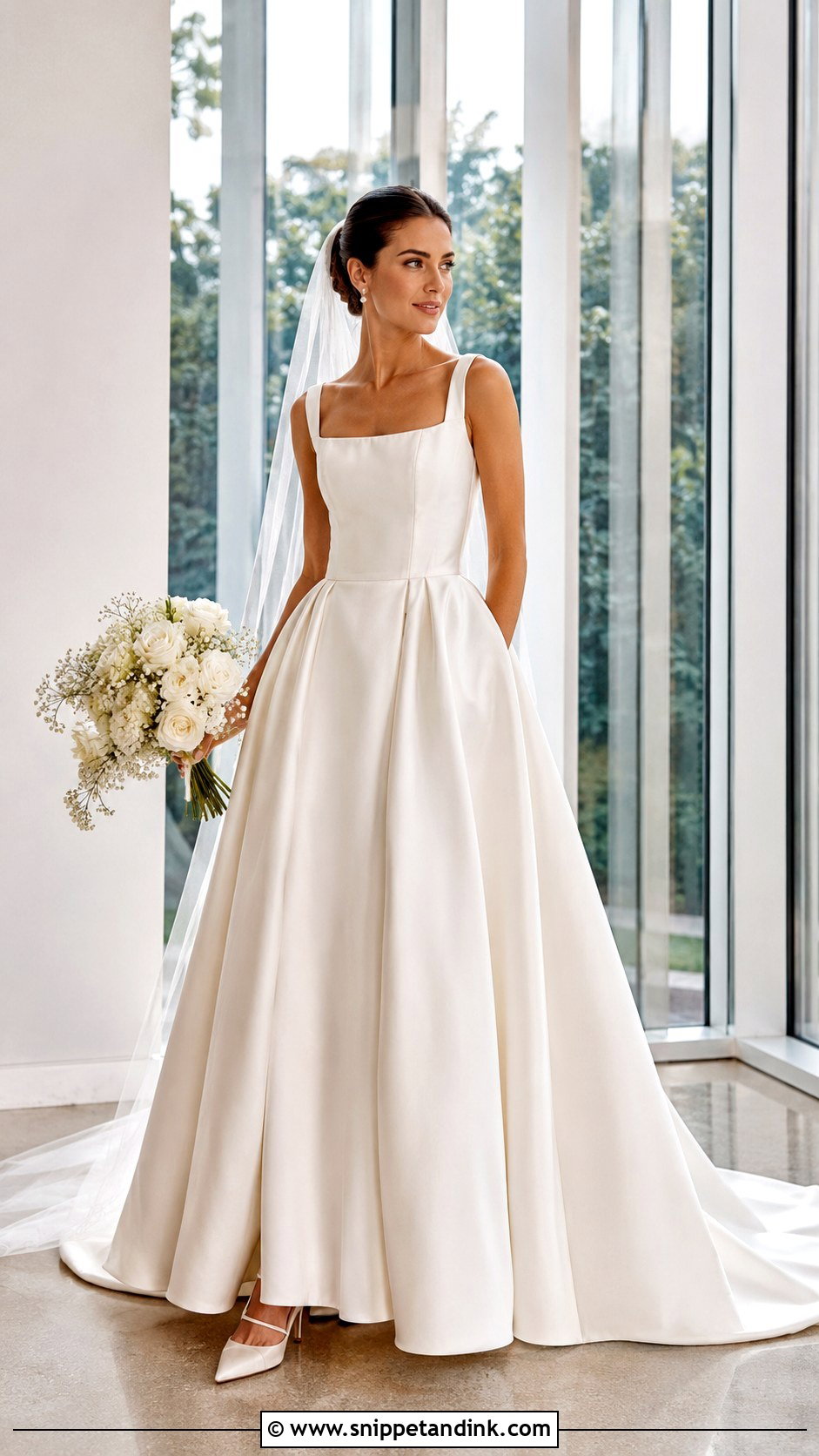
Square necklines give a princess gown a modern edge because they’re architectural rather than sweet. The angle frames the collarbone and works best with wide straps or cap sleeves, which also mean you won’t be hitching a strapless bodice all day. Princess seams through the bodice shape it without visible boning, and a full skirt with covered buttons and a medium train continues the clean lines. A simple tulle veil, small pearl earrings and satin slingbacks are all it needs. Keep oversized necklaces away; they fight the straight edge. If you want more coverage, the square can be raised slightly at alterations without losing its proportion.
6. 3D Floral Ball Gown Wedding Dress
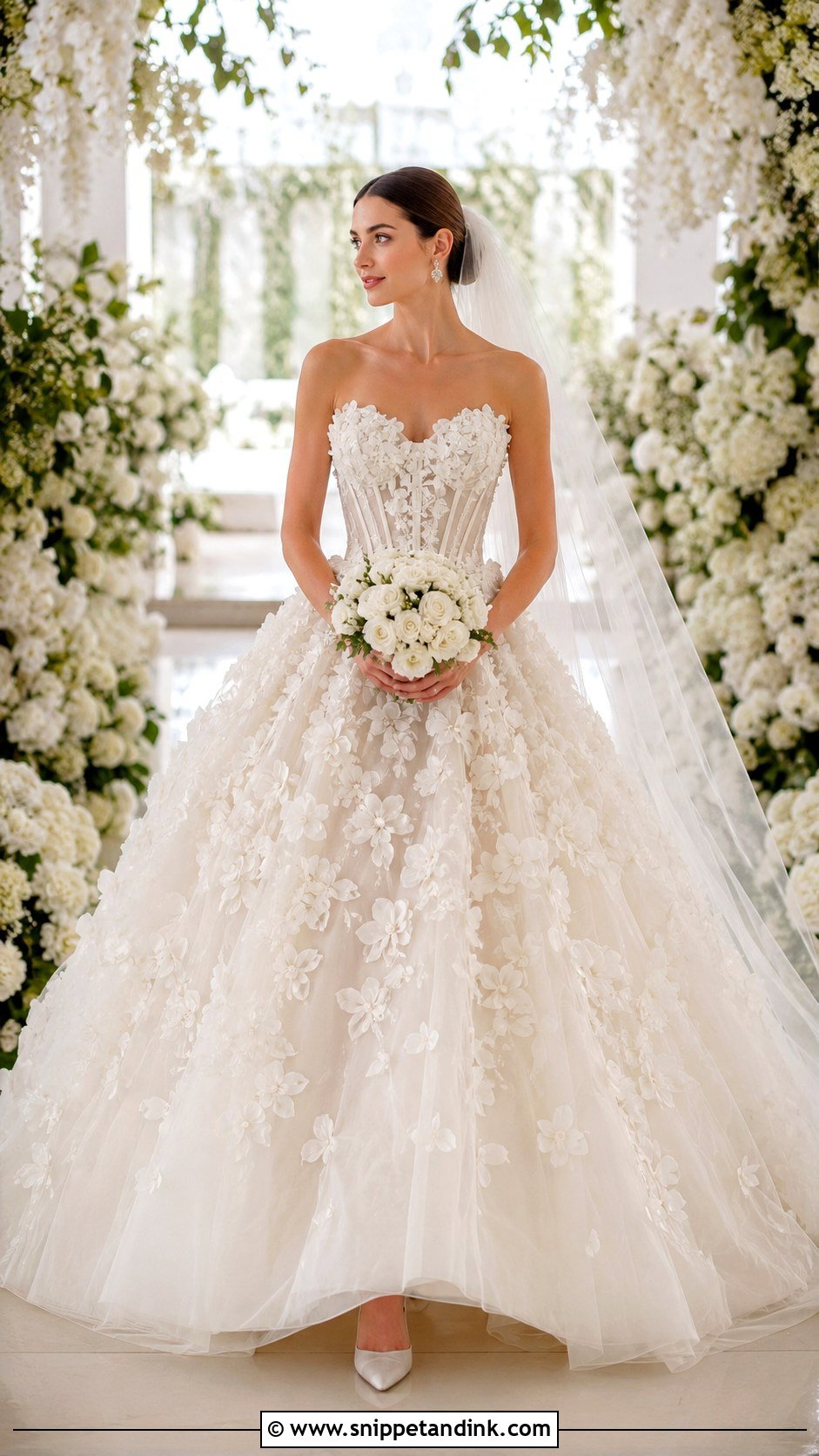
Three-dimensional flowers look best when they’re placed the way flowers grow: clustered around the bodice, then scattering thinly over the tulle skirt. Small organza petals stay delicate; larger blossoms give a more couture effect and more weight. A plain raw-edge veil lets the flowers show through, with crystal earrings, ivory pumps and a compact bouquet that doesn’t add more texture. A soft updo with a few face-framing pieces suits the dimension. During fittings I run my hand over every appliqué near the underarms, waist and seat. Flowers in those spots can scratch, crush or catch when you sit, and they’re easy to move before the wedding but impossible to fix on the day.
7. Sparkle Tulle Ball Gown Wedding Dress
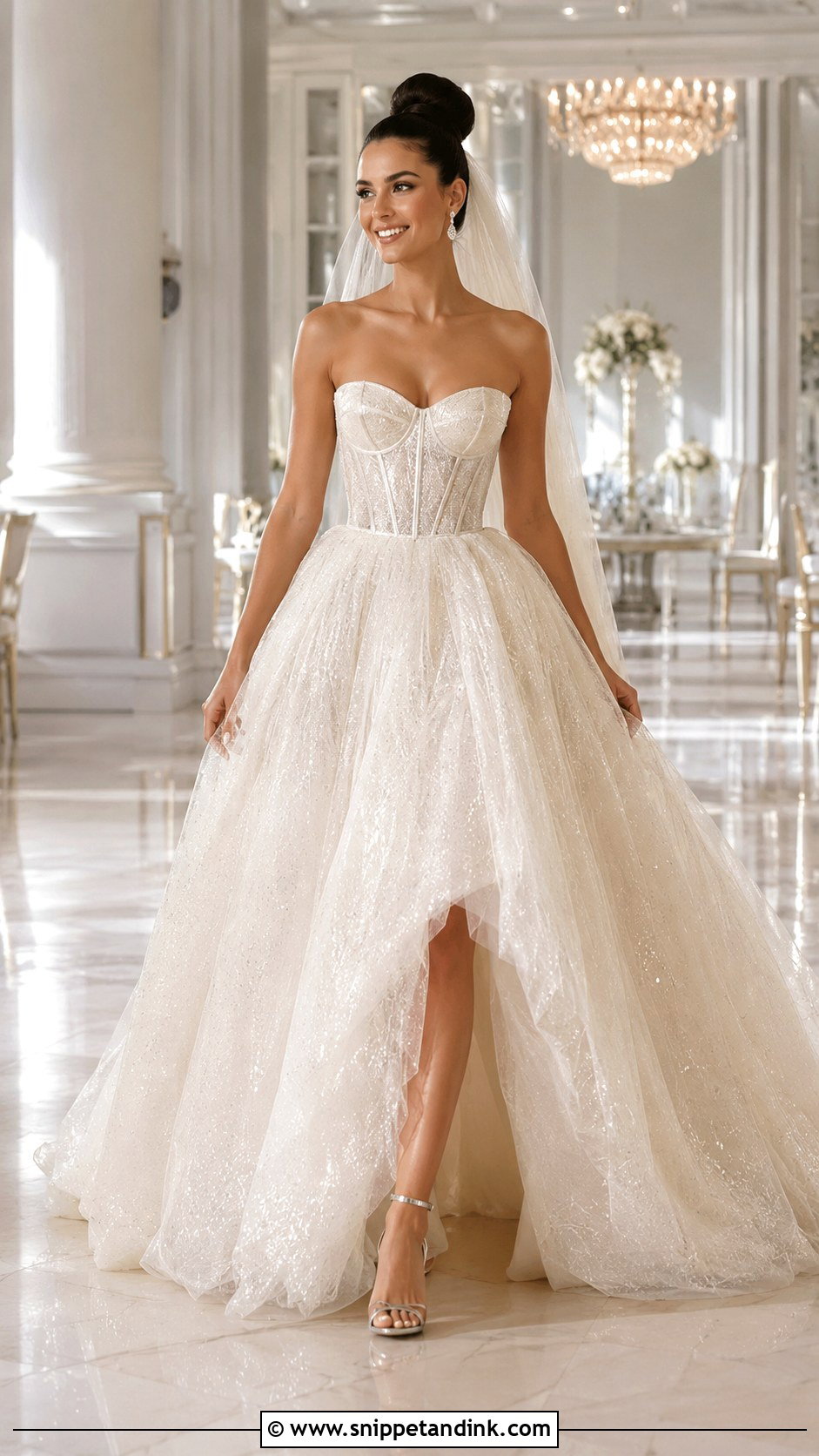
Sparkle tulle catches light every time you turn, so a little goes a long way. Fine glitter tulle or lightly beaded layers look elegant; dense embellishment pushes the gown toward pageant. A structured corset grounds the airy skirt and gives a clear waist. Keep the rest quiet with a simple fingertip veil, crystal drop earrings and metallic ivory heels. A sleek bun or smooth waves balance the texture. Before you buy, rub the skirt between your fingers and look at your palm. Some glitter tulles shed on everything, including the groom’s suit, and that’s worth knowing before you commit.
8. Pearl Embellished Ball Gown Wedding Dress
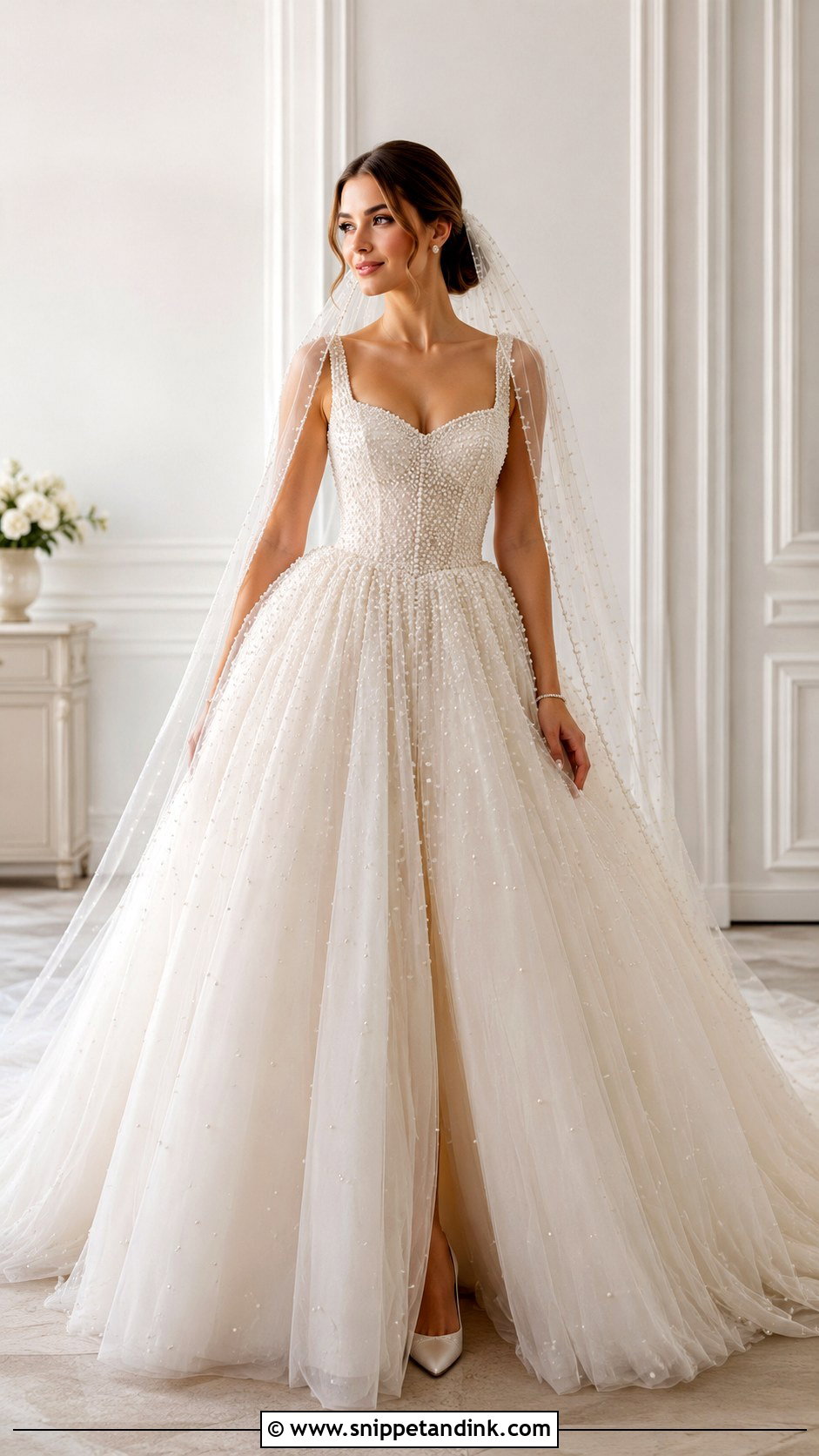
Pearls look more refined when they’re concentrated in a few places, along the neckline, the corset seams or the upper skirt, than spread evenly from top to hem. Think about the scoop, sweetheart, or straight neckline you need for support before you fall for the beading. Pearl studs, a narrow bracelet and satin pumps are enough, and resist the urge to add pearls everywhere else. A sheer veil with widely spaced pearl accents echoes the dress. A smooth low bun shows the bodice. I always ask the salon for spare pearls, because hand-sewn beads do work loose, usually at the waist and underarms where the dress moves most.
9. Cathedral Train Ball Gown Wedding Dress
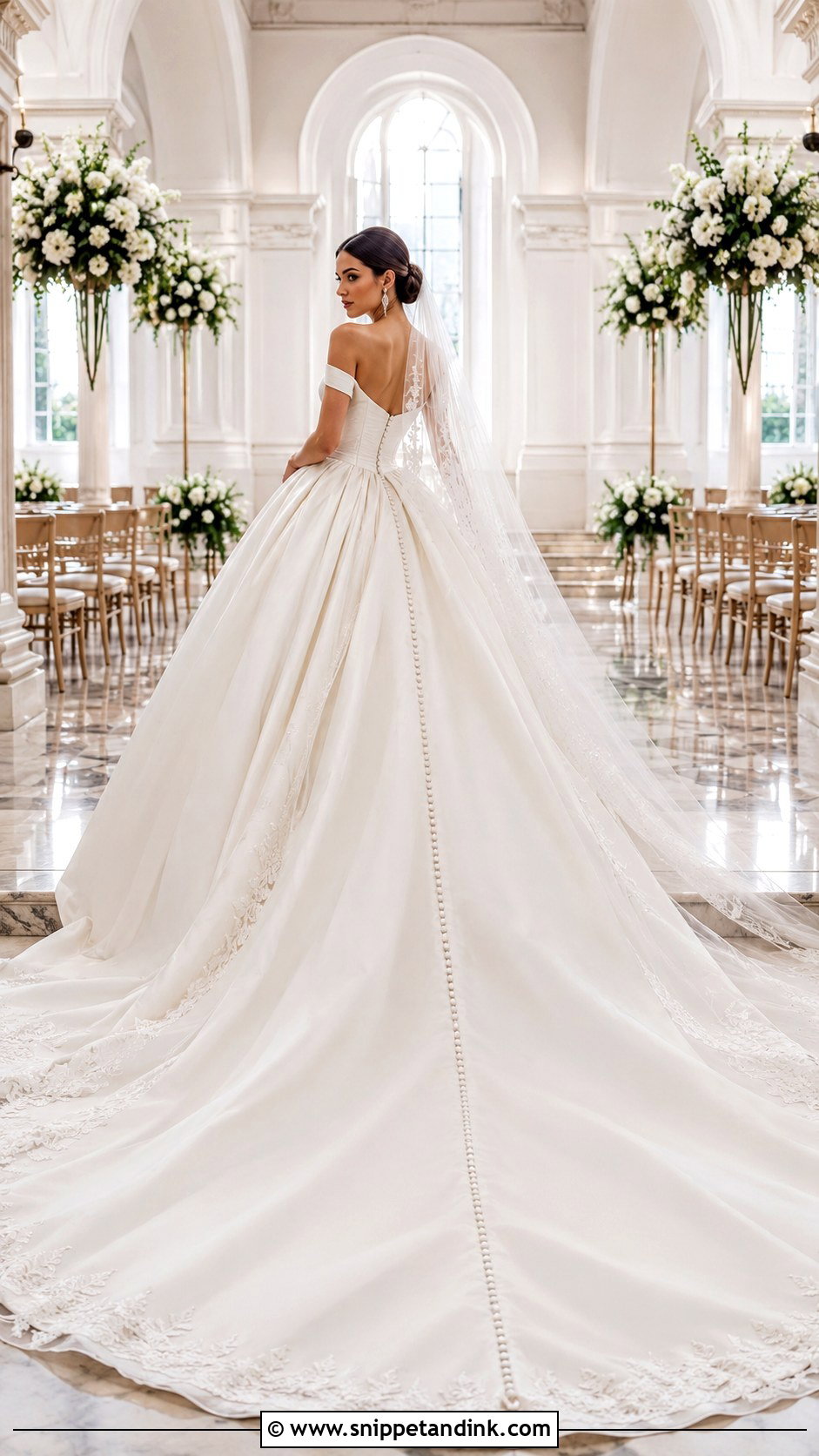
A cathedral train behind a full skirt makes the biggest entrance a bride can make, and it’s also the most work. Smooth satin, embroidered tulle or a lace edge suit it. Keep the front bodice fitted and balanced so the length feels intended. A cathedral veil that reaches the end of the train or a little past it completes the line, with classic earrings, comfortable platform pumps and a formal updo. The bustle is the part people forget. Ask your seamstress for one that spreads the weight across several attachment points; a single hook will tear under a heavy train. Have one person practise fastening it at the final fitting, so it’s done in minutes at the reception.
10. Detachable Overskirt Ball Gown Wedding Dress
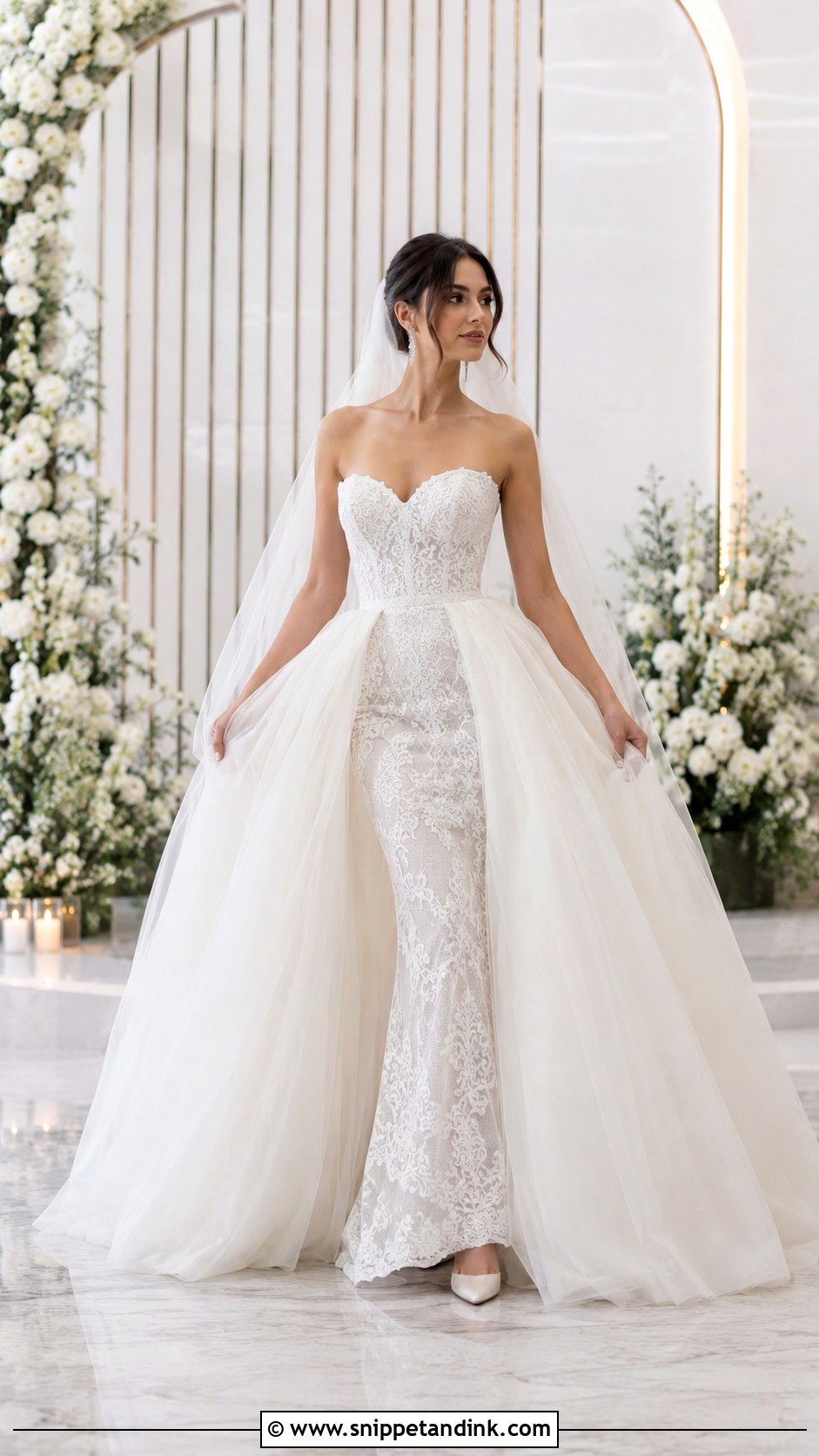
Two looks, one dress: a detachable overskirt is the option I suggest most to brides who want a ball gown ceremony and a dance floor they can actually enjoy. Start with a supportive fitted or A-line base, then add a full tulle, satin or organza overskirt. The join should sit smoothly at the natural or Basque waist, hidden under a belt, a seam or a row of appliqués. A long veil, drop earrings and elegant pumps complete the princess version. Check that the base looks fully finished alone, with no hooks showing. Practise taking it off at a fitting, and hang the overskirt flat afterward if you want it smooth for later portraits.
11. Bow Back Ball Gown Wedding Dress
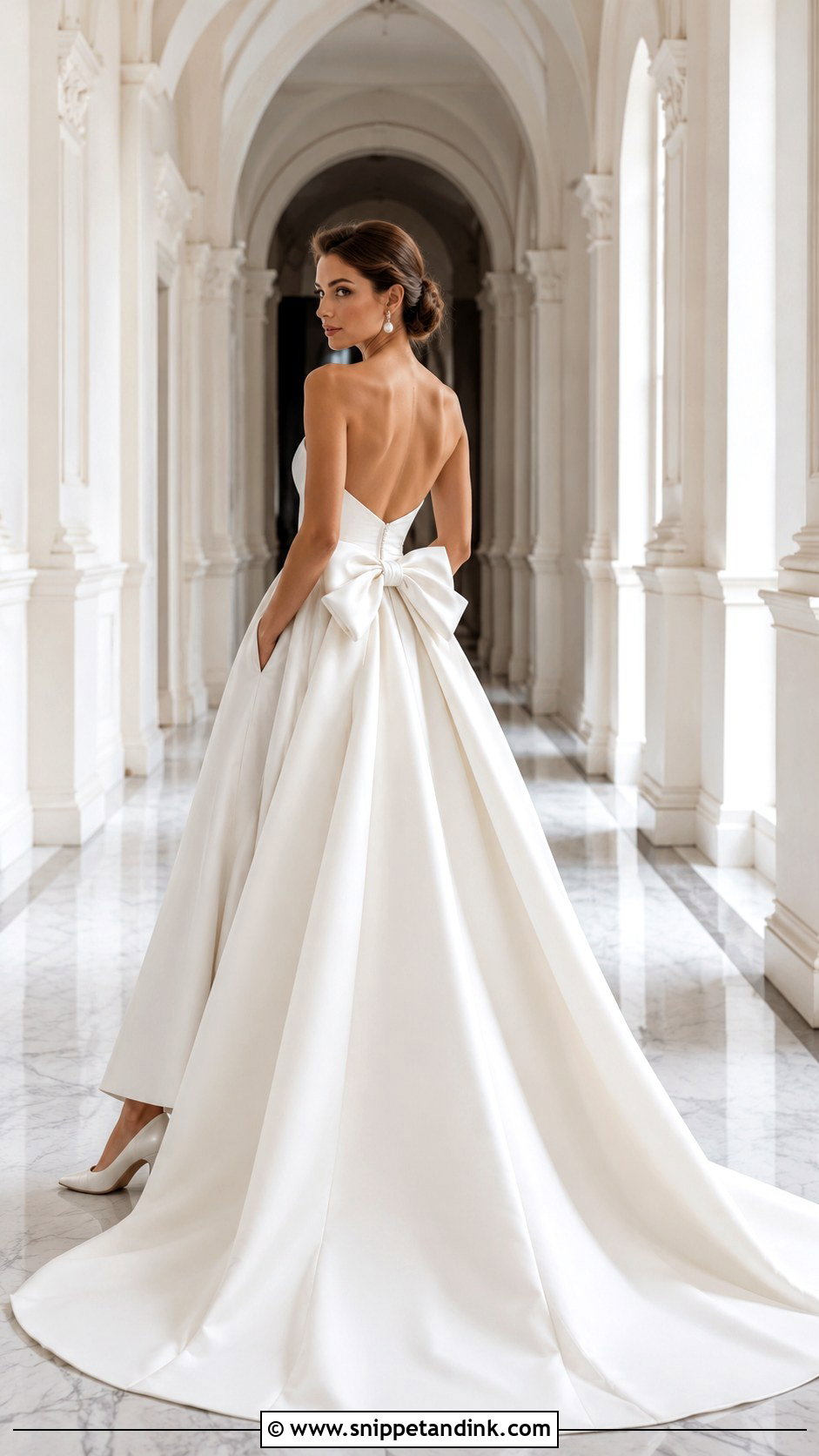
A large bow at the back changes how the gown looks for half the ceremony, since that’s the view guests have while you’re at the altar. Satin and Mikado hold a structured bow; organza gives a softer, floppier shape. A bow at the waist emphasizes definition, while one with long trailing panels adds movement. Keep the front clean with a straight or scoop neckline, and wear a plain veil you can remove after the ceremony so it doesn’t hide the bow in photos. Pearl earrings, closed-toe ivory heels and a polished updo complete it. Check the bow doesn’t cover the buttons or block the bustle, and if it’s detachable, teach one attendant exactly how it fastens.
12. Illusion Neckline Ball Gown Wedding Dress
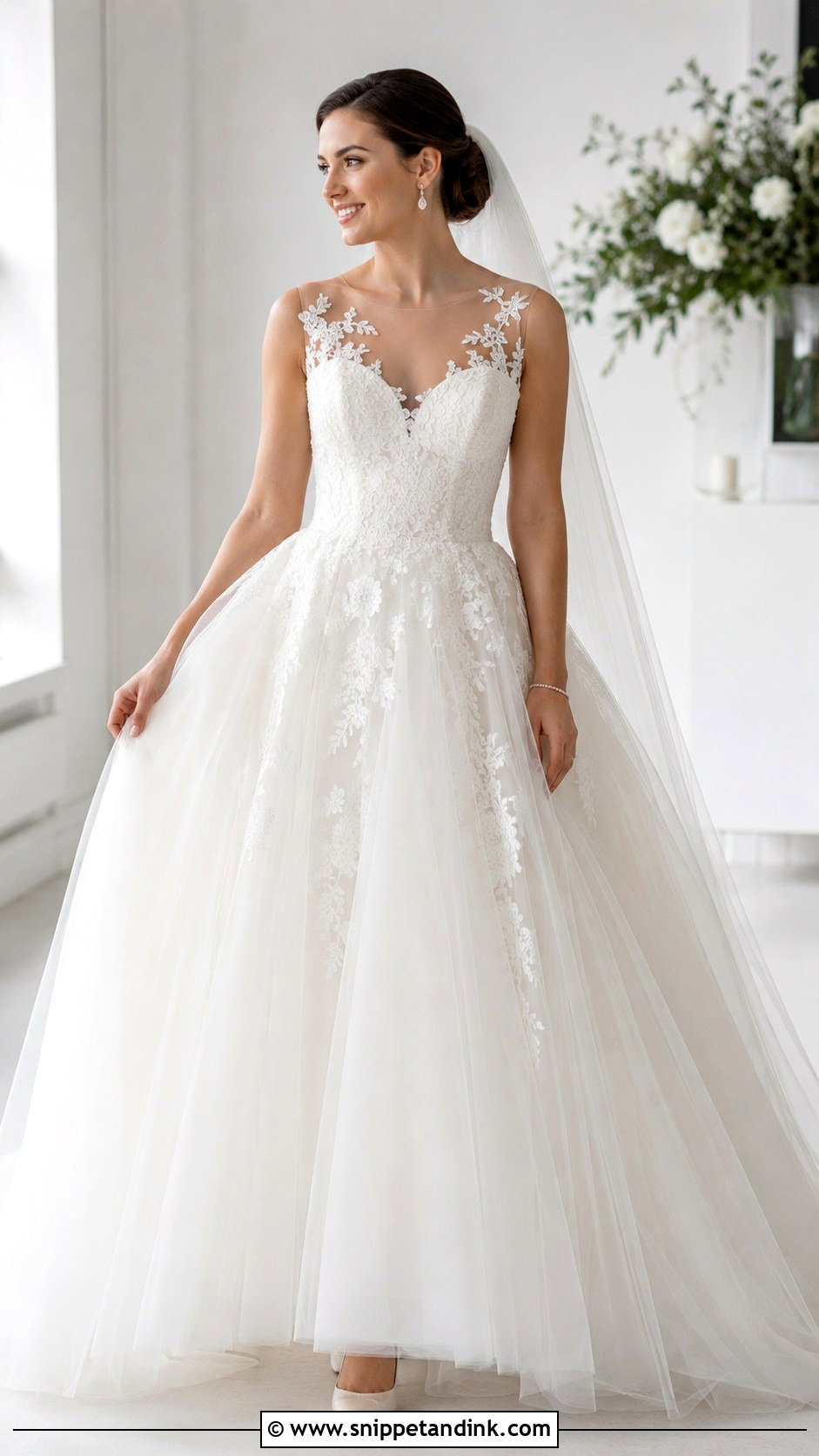
Illusion necklines give the look of strapless with the security of a neckline. Fine mesh runs from a sweetheart bodice up to a bateau, scoop or high neck, often with lace appliqués that appear to float on the skin. The mesh shade matters more than people expect: it needs to match your skin closely and lie flat, or it reads as a visible panel in photos. A tulle skirt keeps it light. Small crystal earrings, a narrow bracelet, pointed pumps and a veil set below a neat chignon finish it, with no necklace if appliqués cover the collarbone. I always check illusion fabric in daylight and from the side, where rippling shows first.
13. Cap Sleeve Lace Ball Gown Wedding Dress
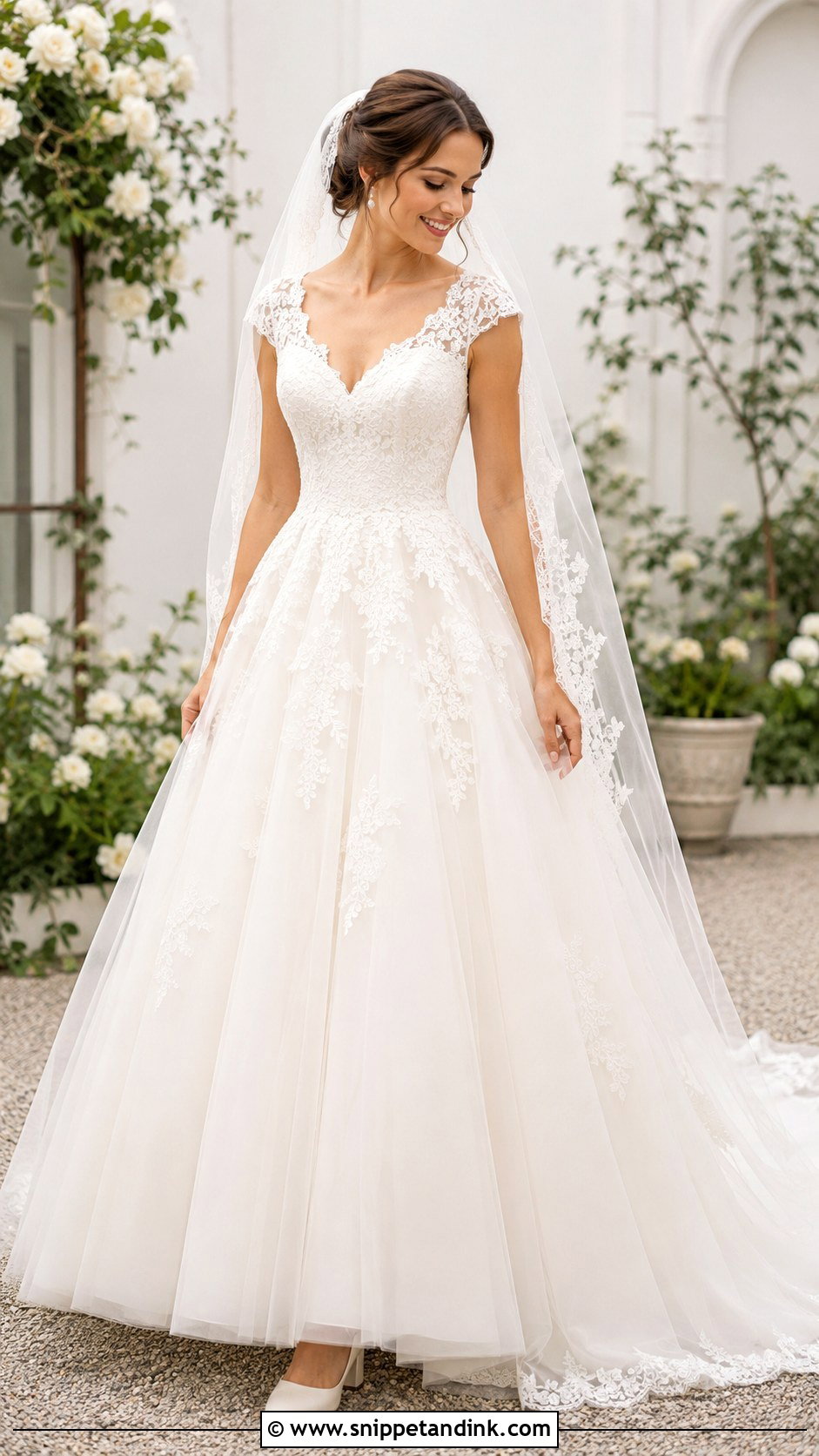
Delicate cap sleeves cover just the top of the shoulder, which keeps a princess gown open without feeling bare. Lace sleeves look most cohesive when their motifs carry across the bodice and fade into the skirt, and a V-neck or rounded neckline keeps the top from feeling closed in. Pair it with a layered tulle skirt, covered buttons and a chapel train, plus a lace-edged veil, pearl drops and low block heels. Choose a loose chignon so the sleeves stay visible. Cap sleeves are prone to cutting into the arm, so I have the armhole checked while the bride reaches forward; lace that sits flat standing can pull or wrinkle the moment you move.
14. High Neck Modest Ball Gown Wedding Dress
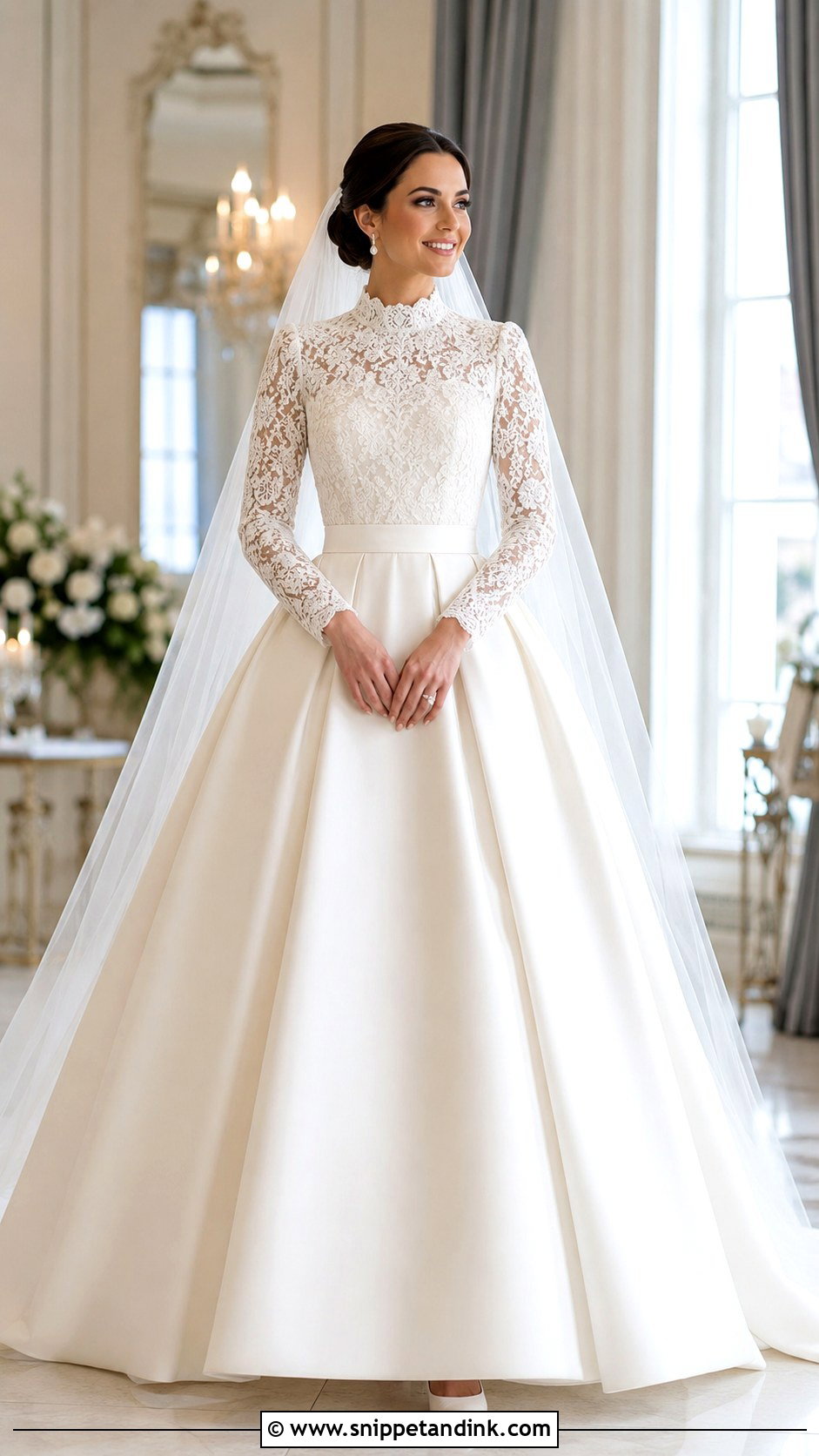
Modest doesn’t mean plain. A high-neck ball gown with a lined lace bodice, a clean bateau neckline or a soft mock neck and long sleeves can look as regal as anything in a salon. The extra coverage adds visual weight up top, so the waist has to be clearly defined, with a satin waistband, princess seams or corsetry under the lining. Add a full satin or tulle skirt, a simple long veil, pearl earrings and closed-toe pumps. Wear the hair up to show the neckline and back. A breathable lining and sleeves with a little give make the difference between comfortable and overheated by the portraits.
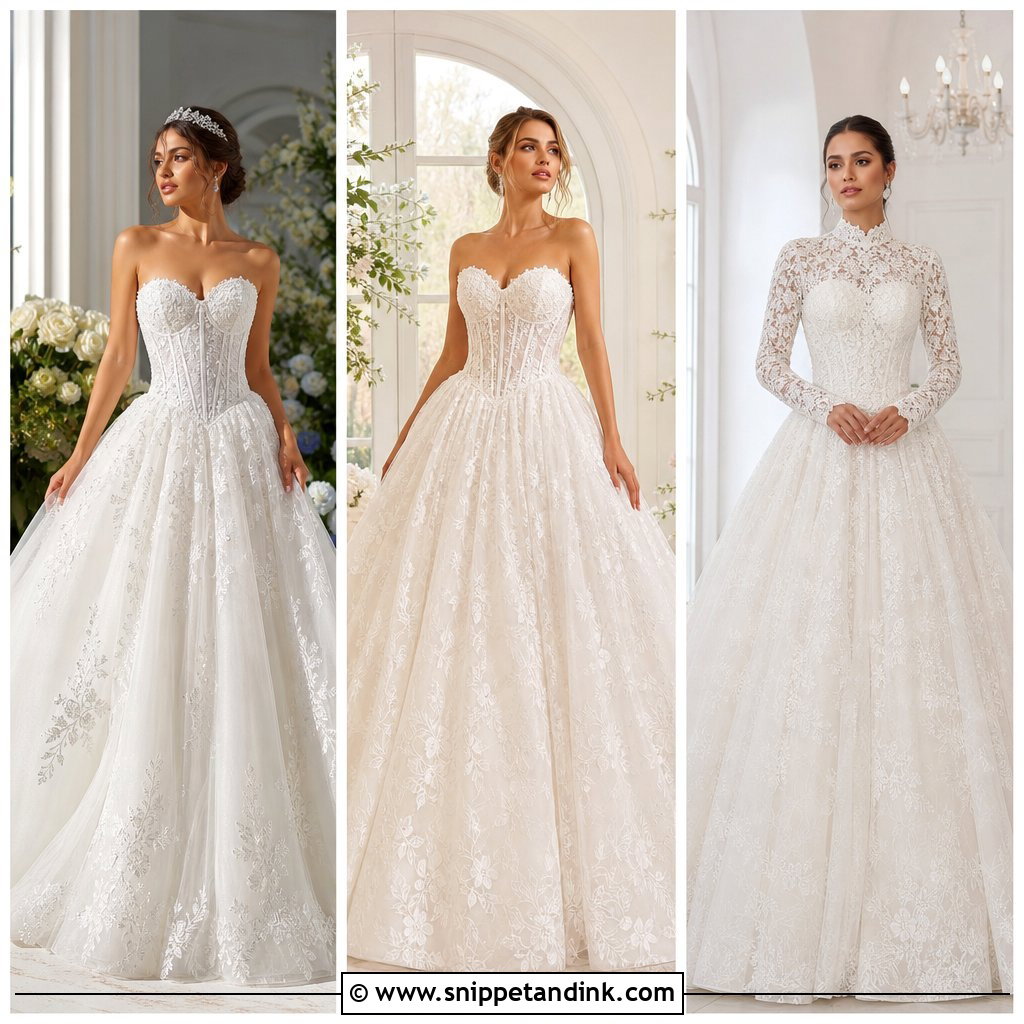


15. Blush Pink Ball Gown Wedding Dress
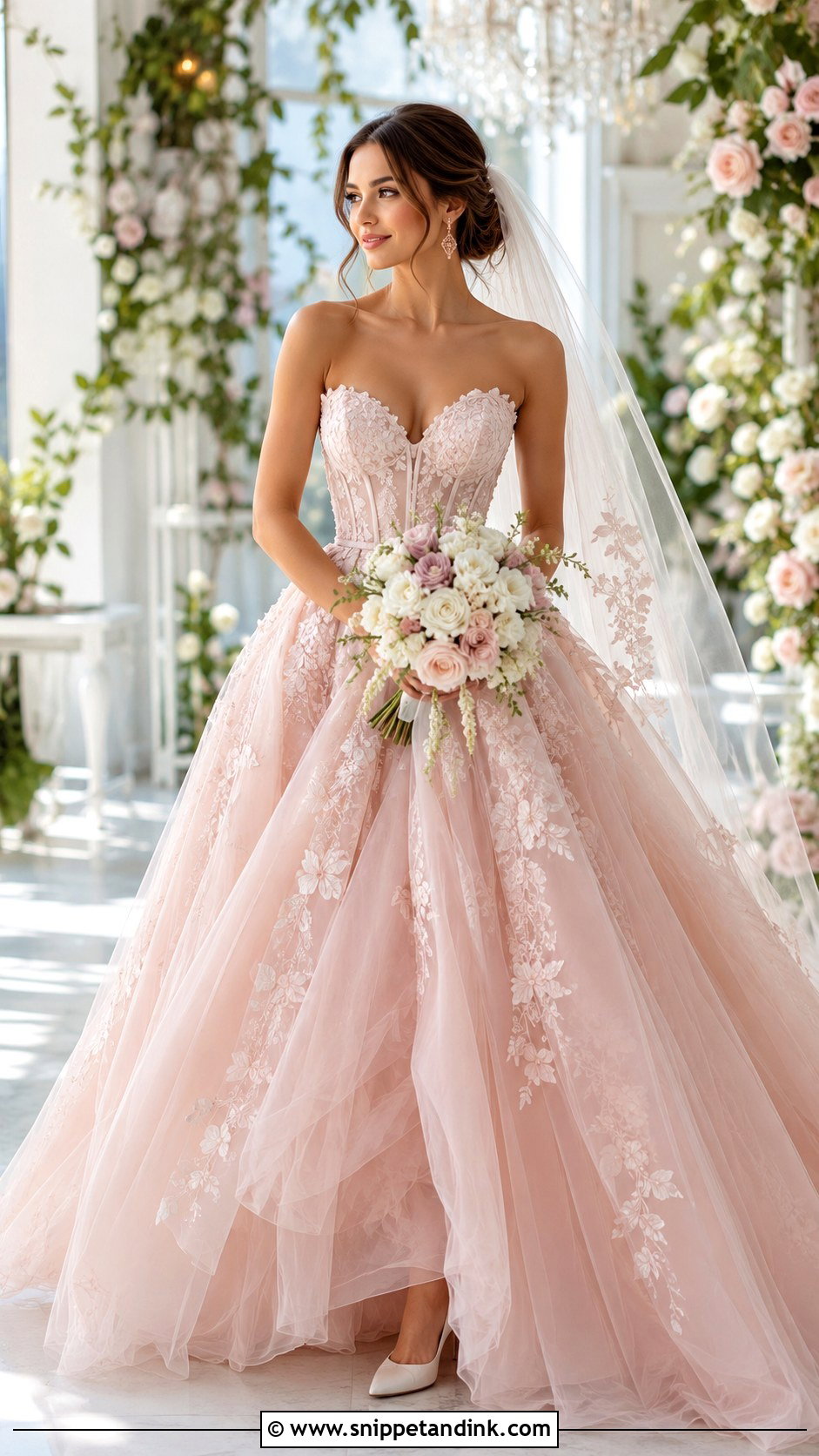
Would a hint of colour feel more like you than ivory? Blush is the gentlest way in. Pale blush tulle over an ivory lining gives subtle depth, while a fully blush satin gown makes a stronger statement. Floral appliqués, fine sparkle or a corset bodice can carry the colour without tipping into sugary. Rose-gold earrings, ivory shoes and a sheer veil with minimal edging suit it, and a bouquet of white and muted pink ties the palette together. Soft waves or a textured low bun finish it. Blush is the colour that shifts most under different light; I always view it in daylight, indoors and in a phone photo, because it can turn peach, beige or lavender.
16. Champagne Gold Ball Gown Wedding Dress
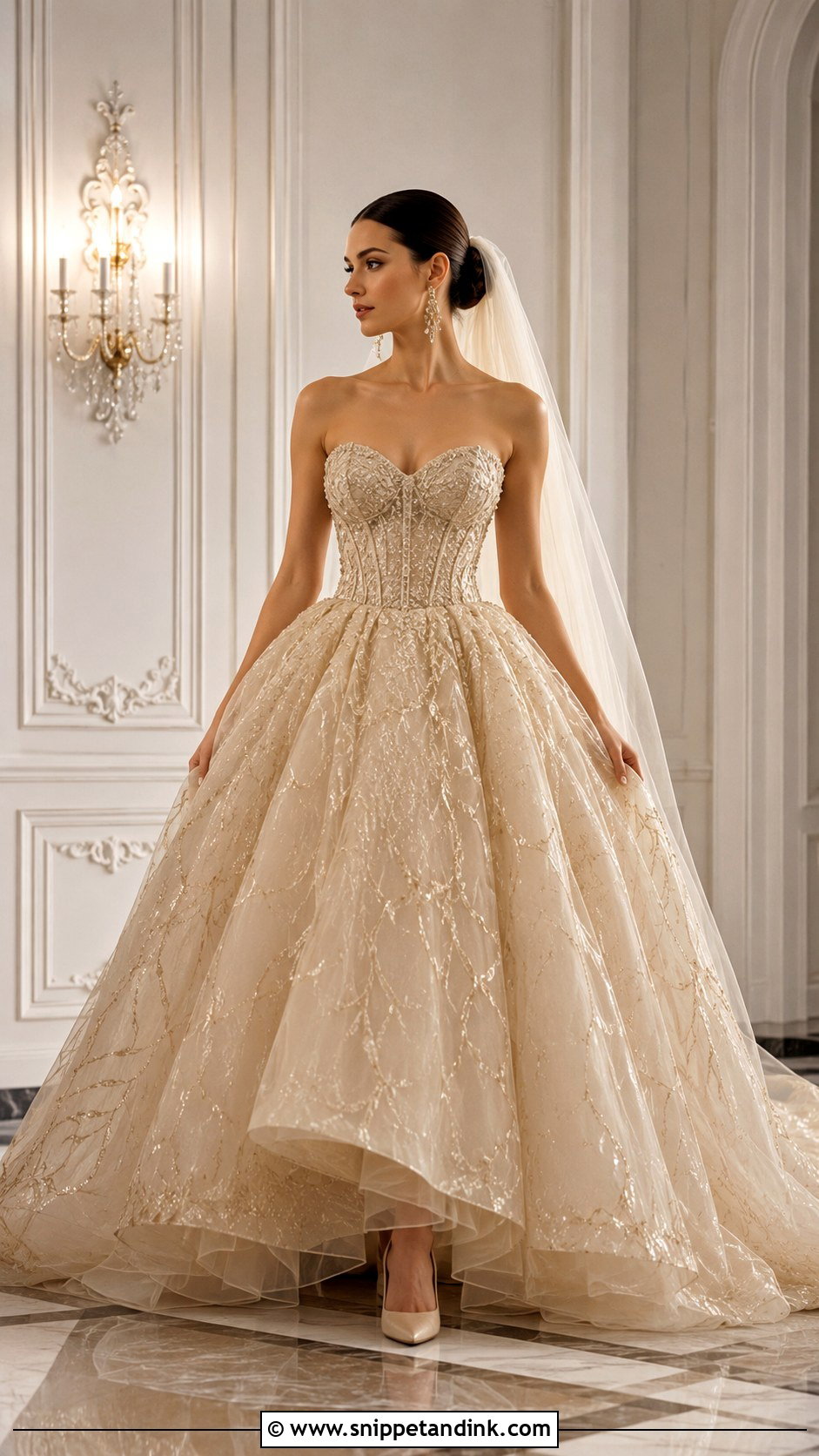
Champagne and pale gold give a ball gown warmth that bright white can’t, and they’re often kinder to warmer skin tones. This palette works with beaded tulle, metallic embroidery or satin under ivory lace. Pick one dominant metallic tone and match the jewelry to it, so nothing looks accidentally mismatched. A fitted corset and a full layered skirt give classic proportions. Champagne pumps, crystal-and-gold earrings and a plain ivory or matching veil complete it, with a sleek bun to balance an ornate fabric. Test the colour under your venue’s lighting. If the gown is heavily beaded, lift the skirt at the fitting; beads add real weight, and the waist has to carry it.
17. Blue Princess Ball Gown Wedding Dress
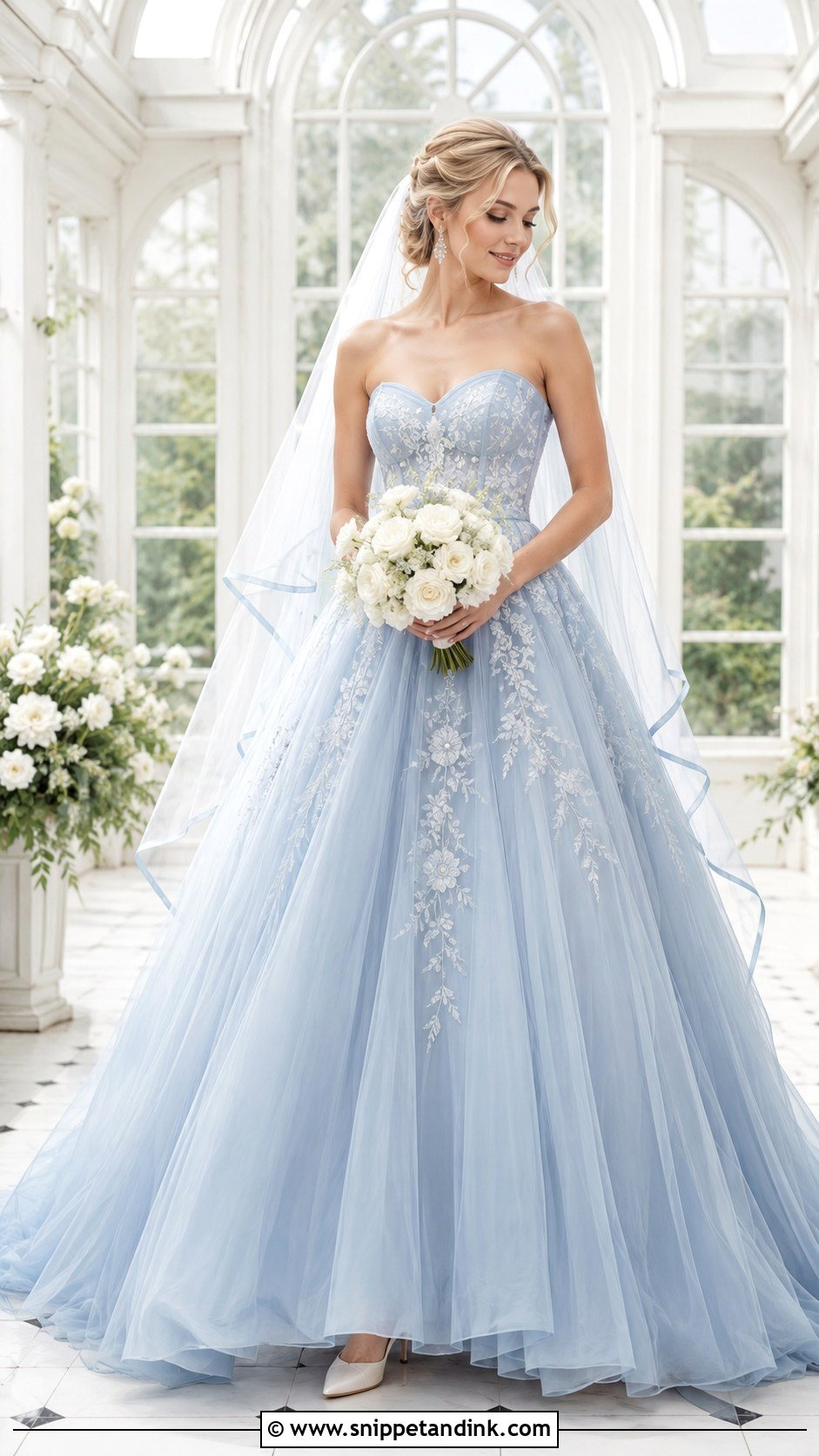
Pale blue is an unexpected bridal choice, and it works best as a whisper of colour rather than a full blue dress. Powder blue tulle over an ivory base gives a misty effect, and embroidered flowers can blend the two. Keep the bodice structured with a sweetheart or scoop neckline and let the skirt do the drama. Silver crystal earrings, ivory pumps and a plain veil with a barely visible blue edge suit it. A loose updo keeps it bridal. Don’t try to match the bouquet to the fabric; white flowers with a few blue accents look better. Ask for a swatch before buying accessories, because blue undertones lean grey, green or lavender in photos.
18. Plus Size Corset Ball Gown Wedding Dress
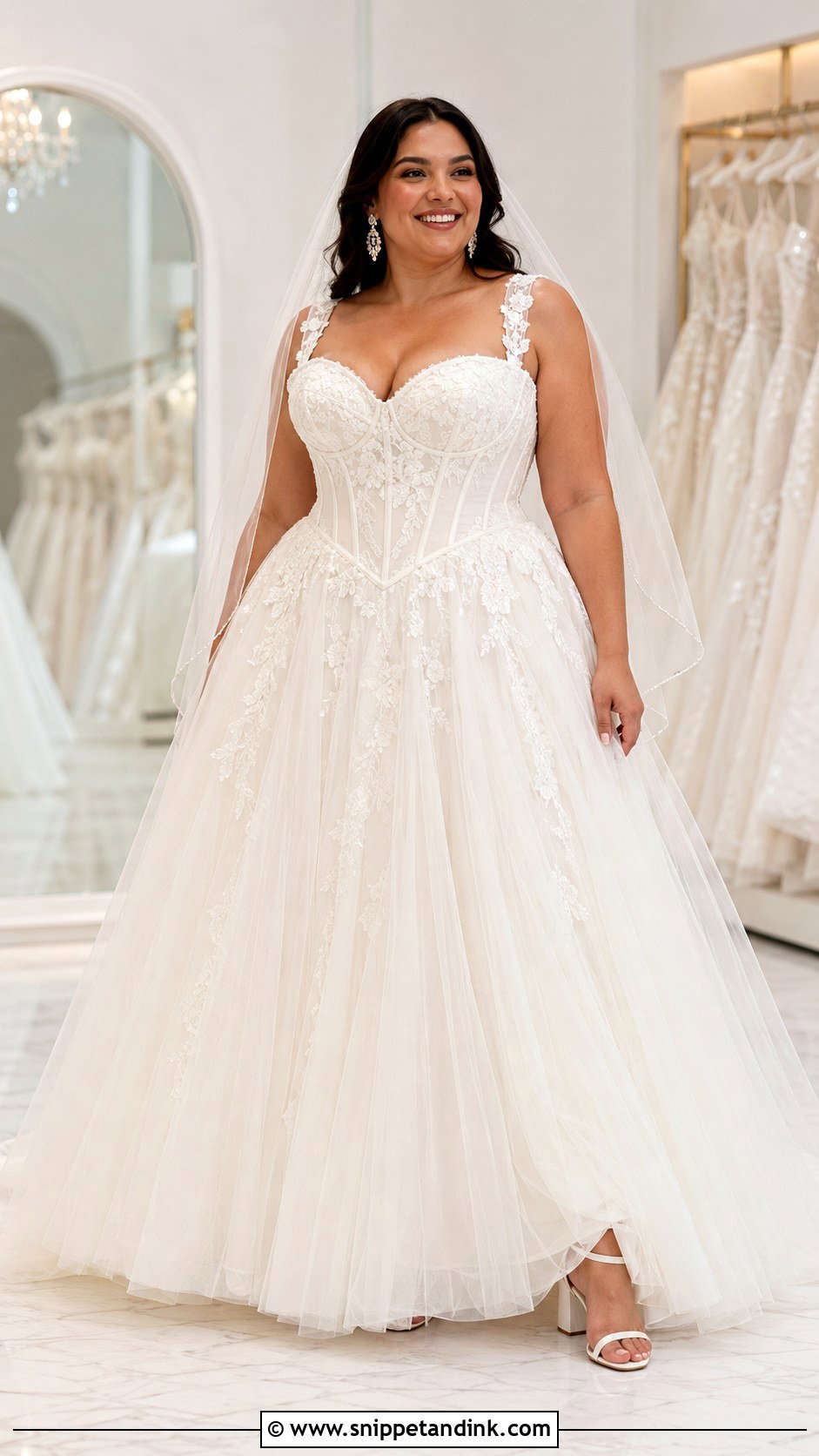
A well-built corset supports a curvy figure better than almost any other bodice, provided the construction is substantial. I look for real internal boning, secure cups, a stable back closure and a waist seam placed where it flatters your proportions. A Basque or natural waist defines the shape, and a full tulle skirt moves without clinging. Wide straps, detachable sleeves or an off-the-shoulder neckline give coverage options. Pair it with a balanced veil, statement earrings and cushioned block heels. Samples rarely fit anyone exactly, so judge the design, not the sample’s fit, and find a seamstress experienced in structured gowns. The finished bodice should lift and support without digging into the ribs or rolling at the top.
19. Petite Drop Waist Ball Gown Wedding Dress
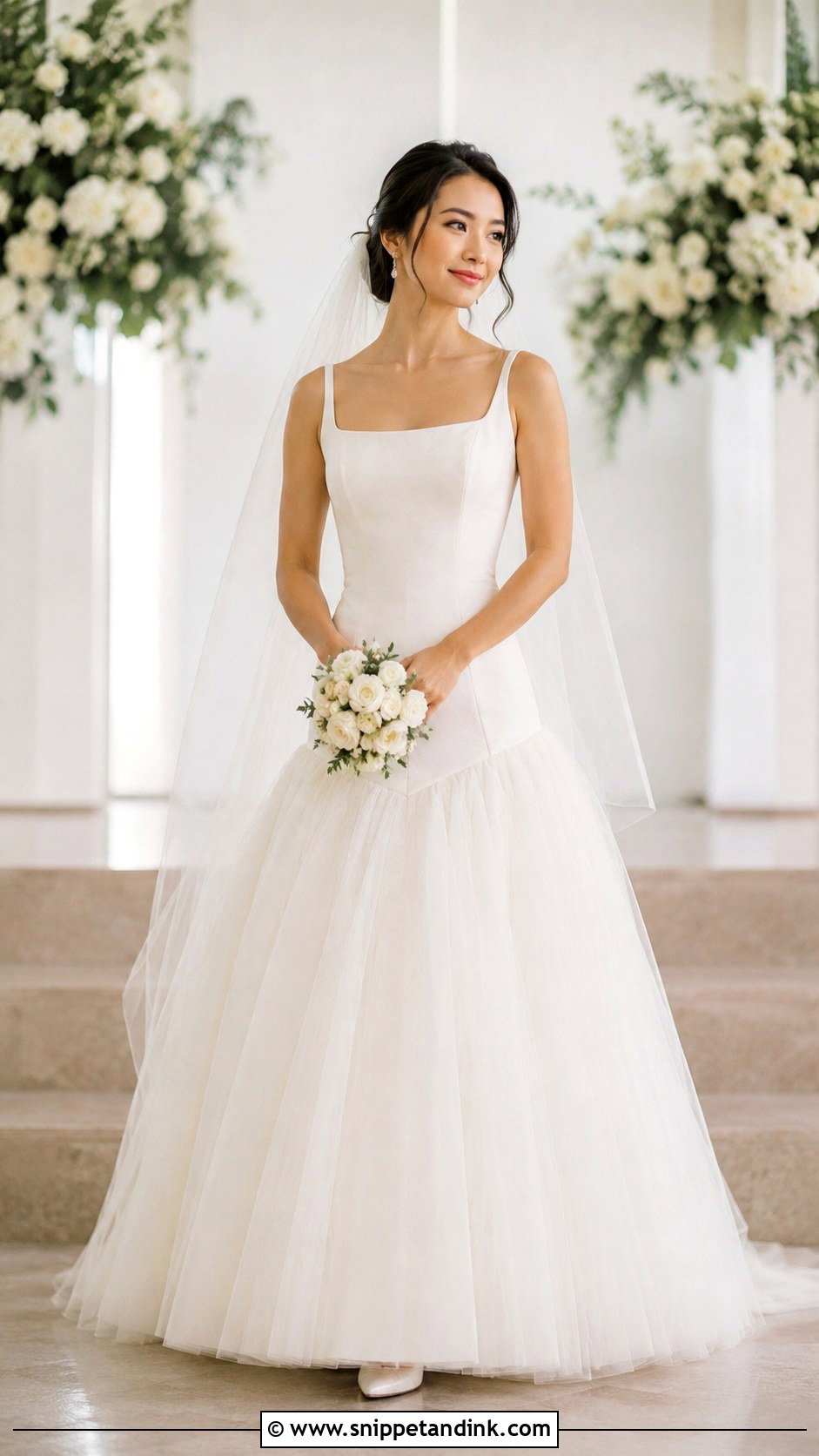
Petite brides can absolutely wear a big ball gown; it just has to be scaled. A moderate drop or Basque waist lengthens the torso, but a waist that drops too low shortens the skirt and swallows a smaller frame. A fitted bodice, controlled skirt volume and vertical seams help, as does a V-neck or narrow square neckline. A single-layer veil, delicate earrings and the heels you’ll actually wear at every alteration complete it. Keep the bouquet compact so it doesn’t hide the waist. Hemming alone often isn’t enough for a petite fit. I’d ask whether the bodice, the train, the appliqués and the skirt layers can all be shortened in proportion, so the design still looks like itself.



20. Minimalist Silk Ball Gown Wedding Dress
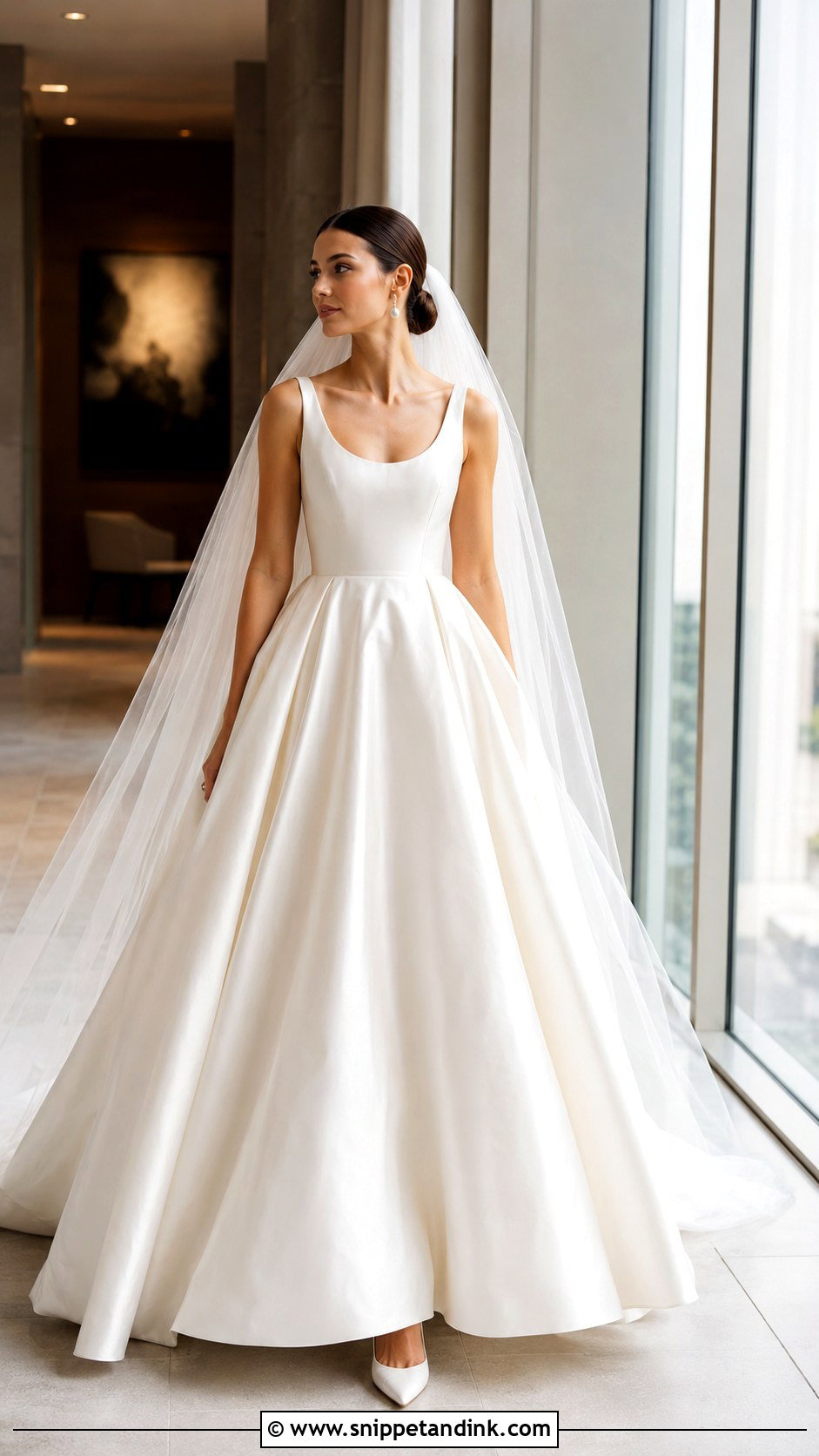
Silk without lace or beading leaves nowhere to hide, so seam placement and tailoring decide everything. A smooth fitted bodice with a straight, scoop or softly draped neckline over a full skirt with precise pleating is the classic shape. Small details are enough: a low back, covered buttons or one detachable bow. Sculptural pearl earrings, pointed silk pumps and a plain cathedral veil finish it, with a sleek bun or polished waves. Silk creases quickly and shows water spots and sweat more readily than synthetics, so ask the salon how it should be steamed, transported and stored. A drop of water on silk can leave a ring, so keep drinks well away.
The Bathroom, the Car and Other Ball Gown Logistics
Nobody asks about these until the day, and then everyone does. A full skirt takes up real space, so plan the practical moments in advance.
- Bathroom: face the toilet rather than the door, so you can sit straddling it while a friend gathers the skirt up from behind. Some brides use a bridal slip bag that bundles the layers; a large shower cap tucked in your bag works on the same idea.
- The car: sit down first, then swing your legs in and let someone tuck the skirt around you. A bigger car or a van saves a lot of crushed tulle.
- Stairs: lift the front of the skirt a few inches with one hand and keep the other on the rail. Let the back trail.
- Dinner: sit toward the front of the chair so the skirt can spread behind and to the sides instead of bunching under you.
I also suggest a small kit in someone’s bag: safety pins, a white chalk stick for marks on ivory, a few spare bustle loops and the spare beads from the salon. Most dress problems on the day are fixed in two minutes if the right thing is in that bag.
Three Angles and a Chair Before You Say Yes
A princess gown should make an impact and still let you breathe, sit and move. Use these ideas to compare fabrics, necklines, waist shapes, sleeves, trains and colours before your appointments, and bring pictures, but stay open; construction and fabric look different on a body than on a screen. I look at every gown from the front, side and back, then ask the bride to walk and sit in it. Put alterations, undergarments, shoes, veil and accessories into the budget from the start. Minimal silk, floral tulle, lace or sculpted satin, the gown that wins is the one that fits well enough to forget about.
You'll Like These Ideas:








Leave a Reply