
A corset ball gown is two garments working against each other: a bodice built to hold you still and a skirt built to move. When the balance between them is right, the gown looks regal. When it is wrong, the bodice slides down every time the skirt swings. Satin and Mikado give the cleanest architecture, while lace, tulle and appliqué soften the frame. Corsetry itself ranges from visible boning and lace-up backs to draped bodices with the support hidden inside. Below are twenty versions I’d happily put a bride in, each with the shoes, veil and hair I’d style with it and the fitting checks I’d insist on.
How a Corset Bodice Should Feel at the Final Fitting
Most brides judge a corset by how it looks in the shop mirror. I judge it by what happens after an hour. A well-built bodice gets its grip from the boning and the waist tape, not from squeezing, so it should feel firm around the ribs and quiet everywhere else.
Here is the routine I run at the last fitting, in the shoes and underwear you’ll actually wear:
- Take a full breath. If the top edge digs in under the arms, the bodice is cut too high there, not too tight overall.
- Sit on a hard chair for five minutes. The bones at the front should not push into your stomach or ride up toward your chest.
- Raise both arms as if hugging someone taller. The neckline should stay put; if it drops, the back lacing or waist stay needs adjusting.
- Bend to pick something up. You’ll do this all day, and a bone that pokes you here will bruise by evening.
- Ask to see the inside. Spiral steel or sturdy synthetic boning in sewn channels, plus a waist stay (an inner grosgrain band that hooks closed), is what keeps a strapless gown from slipping.
If anything pinches, say so then. Corsetry can be let out, re-boned or given a softer lining, but only before the final pressing.
1. Strapless Satin Corset Ball Gown Wedding Dress
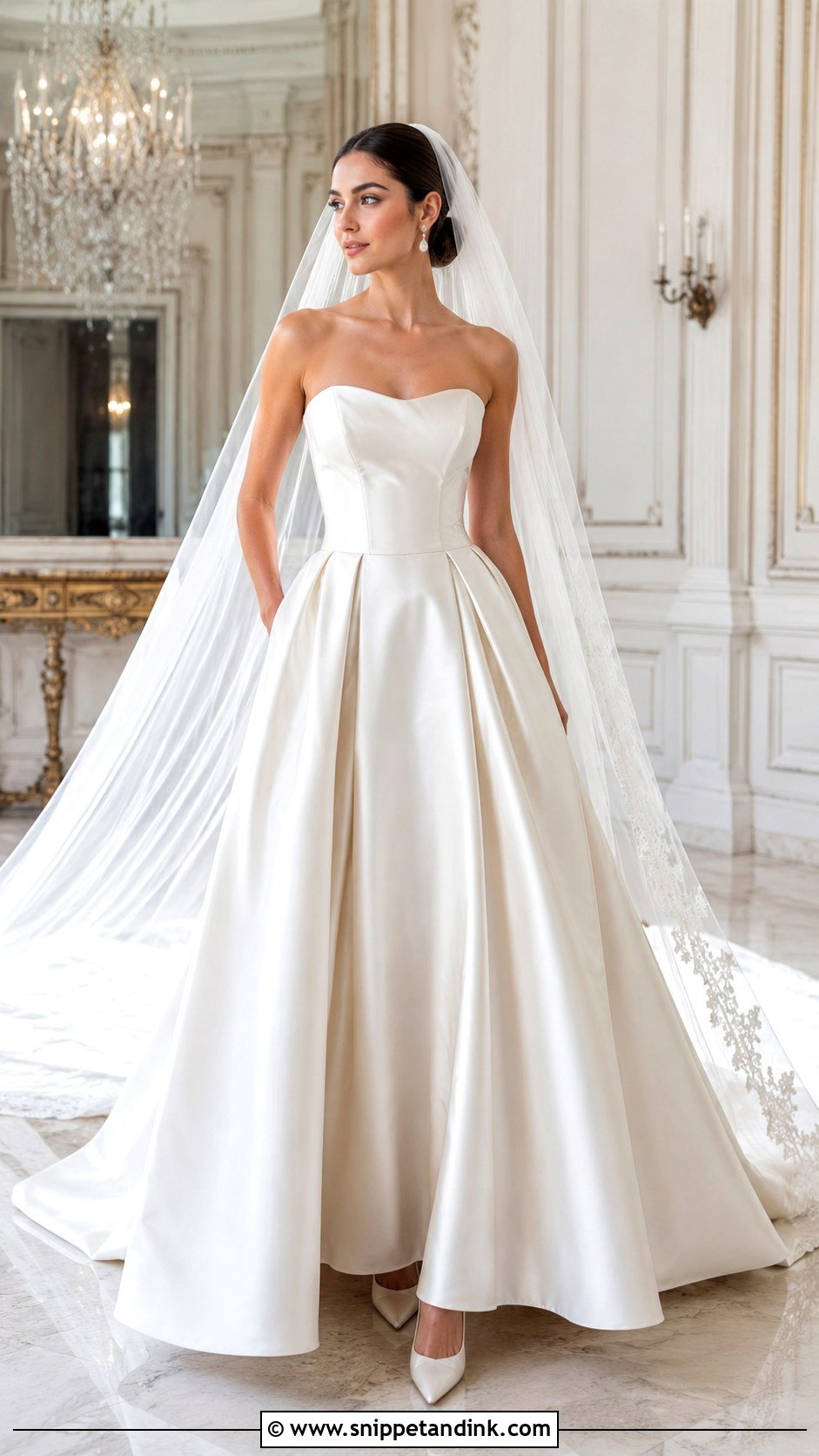
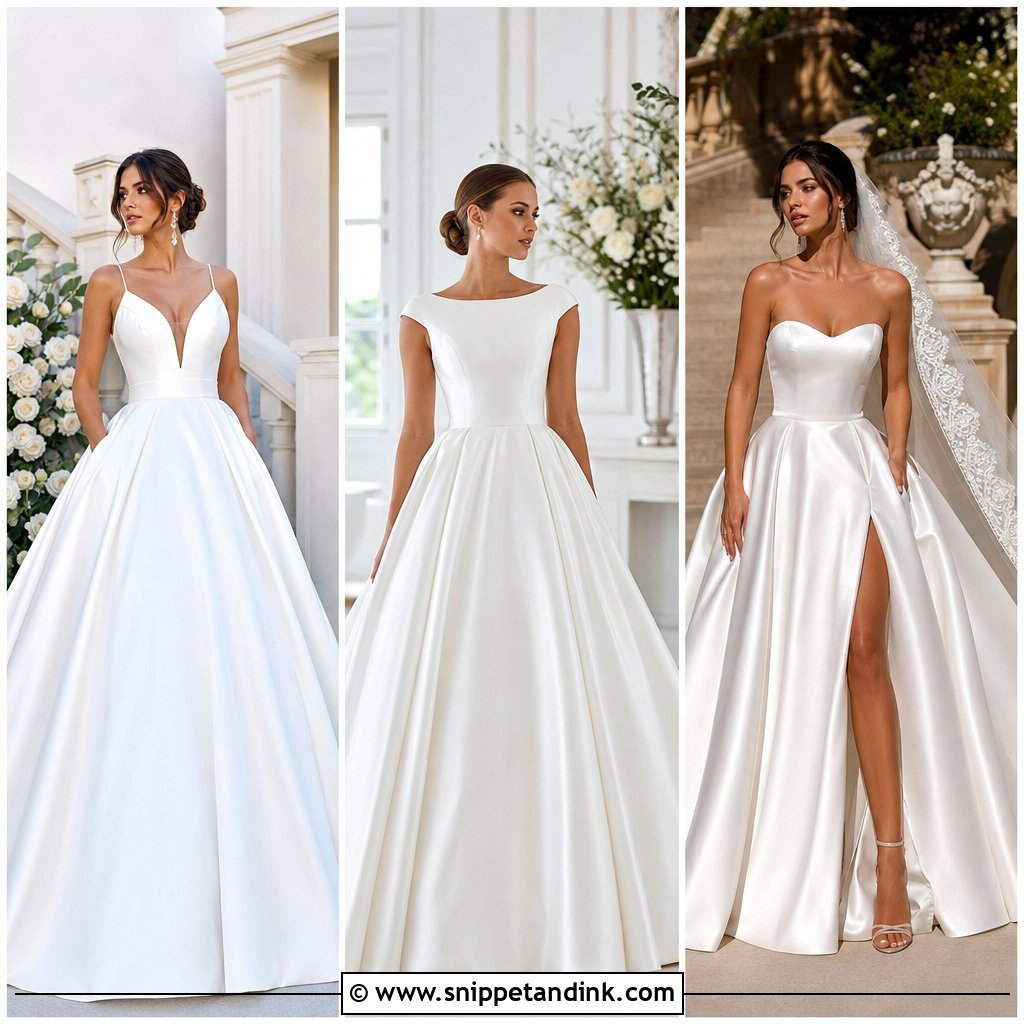
Strapless satin is the version where construction has nowhere to hide. Every ripple over a bone channel shows, so I look for internal boning sewn to a separate lining, a gently curved neckline and a Basque point that lengthens the torso. A pleated satin skirt gives controlled volume. I’d pair it with pointed ivory pumps, pearl drops and a plain cathedral veil over a sleek low bun. Highly reflective satin bounces flash, so keep jewelry small. At the fitting, sit down, walk and raise both arms: the top edge should not move more than a finger’s width.
2. Sweetheart Lace Corset Ball Gown Wedding Dress
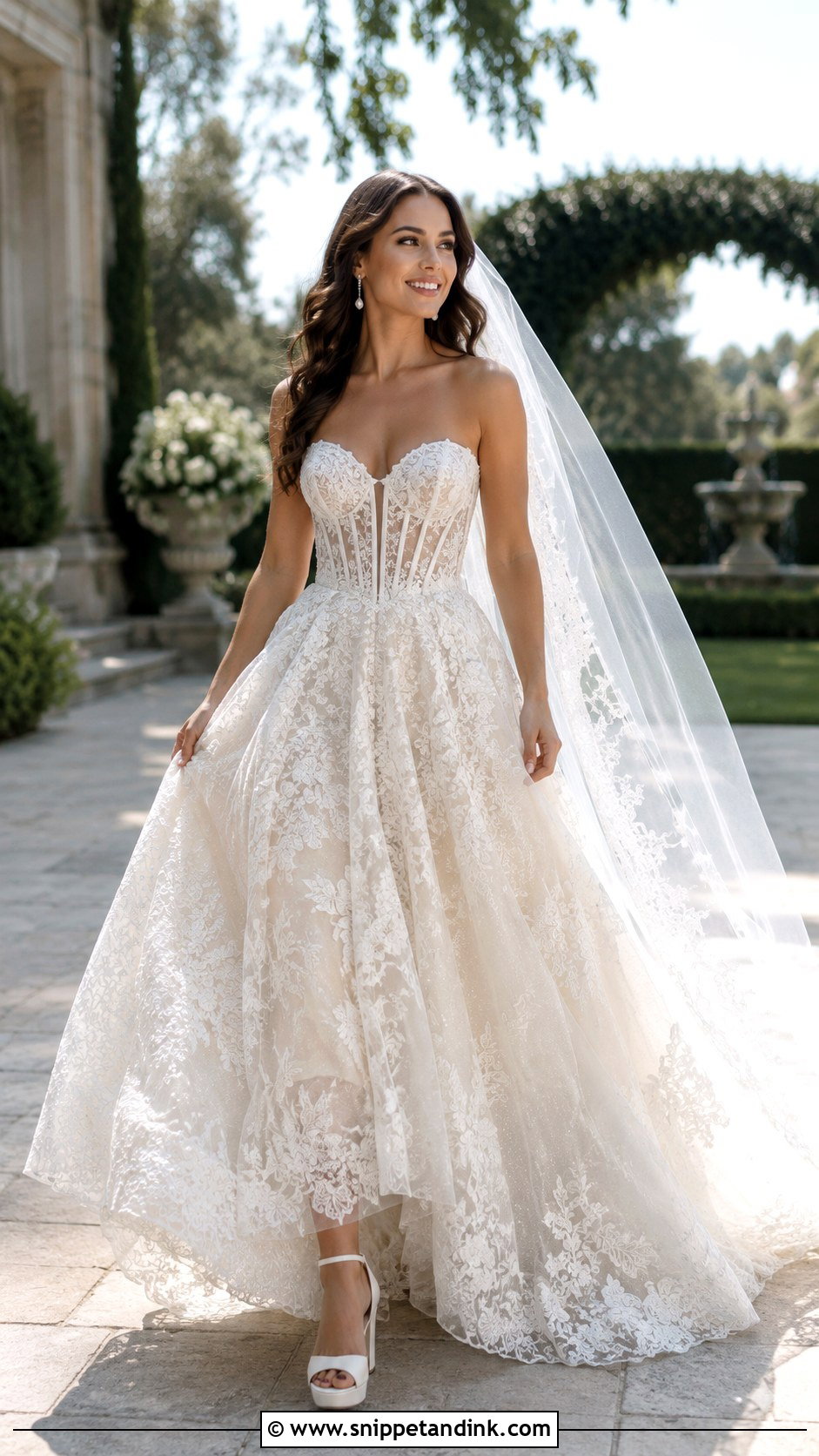
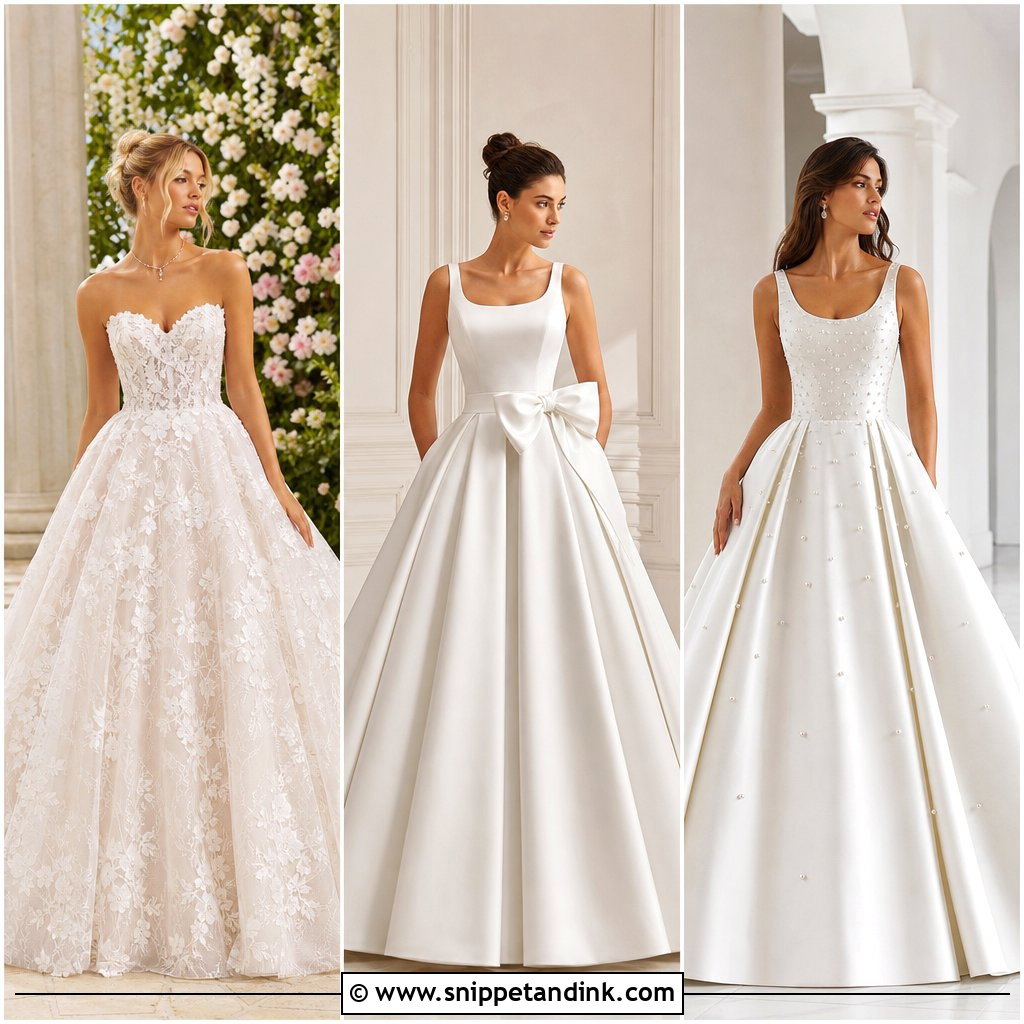
Lace softens the structure, and a sweetheart neckline adds the romance. The detail I check first is whether the lace motifs carry across the waist seam onto the skirt; when they stop dead at the seam, the bodice looks like a separate top. Exposed boning reads modern, a lined bodice reads classic. Pearl and crystal earrings, ivory block heels and a lace-edged fingertip veil keep it coordinated, and a white bouquet won’t fight the pattern. Sweetheart dips are where gaping starts, so ask for sewn-in cups or an extra lining layer early in alterations, not at the last fitting.
3. Basque Waist Corset Ball Gown Wedding Dress
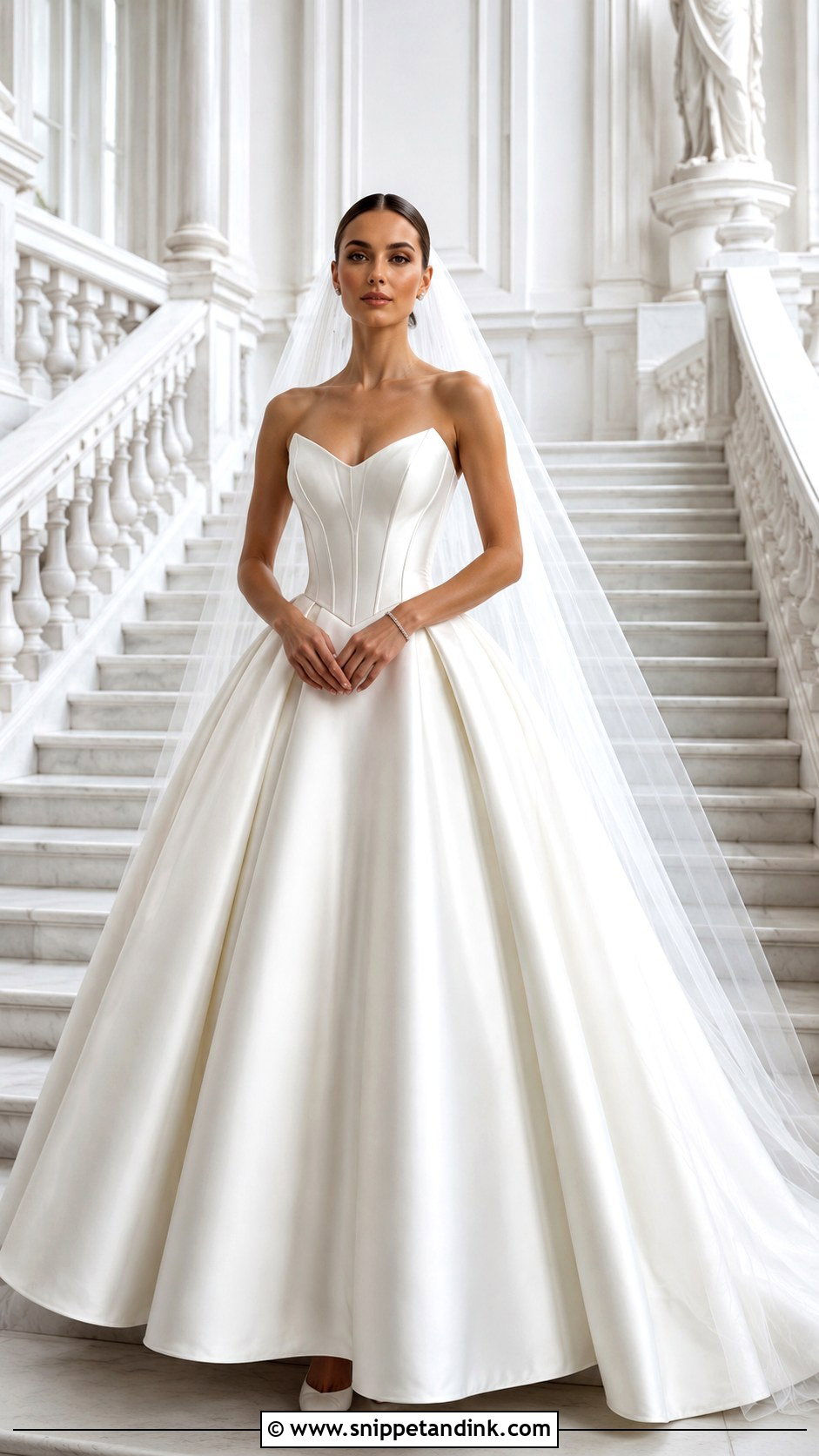
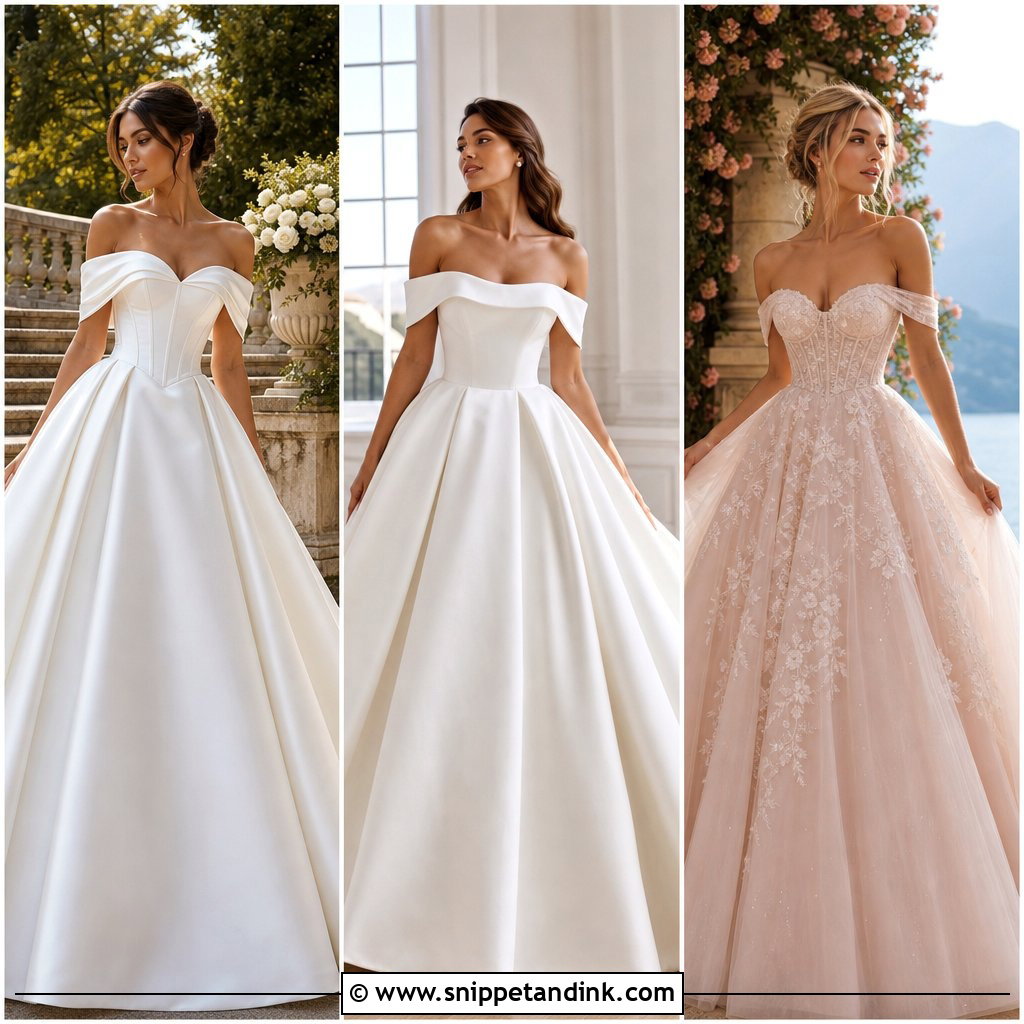
That pointed dip below the natural waist is the most flattering line in bridal corsetry for most torsos, because it draws the eye down and makes the bodice look longer. Crisp satin or Mikado shows the point clearly; soft tulle tends to blur it. I’d add closed-toe ivory heels, a fine bracelet, small studs and a long plain veil. If a dense skirt feels heavy on the hips, a softly gathered one keeps the grandeur with less bulk. The test I always run: sit down. The point should lie flat against you, not fold upward into a crease. And bring your actual wedding shoes to the hemming appointment.
4. Off Shoulder Tulle Corset Ball Gown Wedding Dress
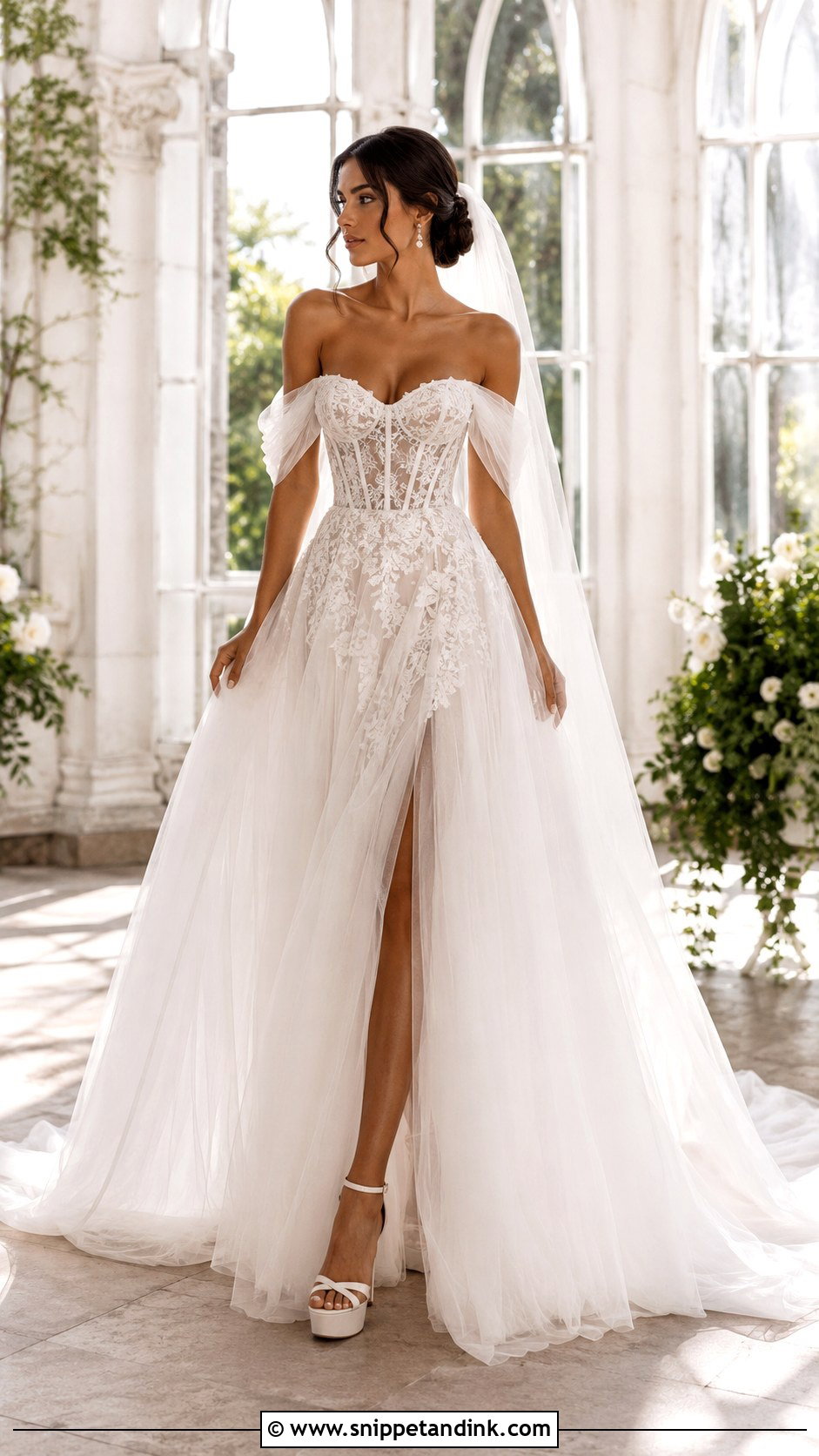
Off-the-shoulder framing flatters the collarbones, but it is the neckline I see brides regret most often, because fixed sleeves lock the arms below shoulder height. Before you commit, hug someone in the dress and lift a bouquet to chest height. Detachable tulle straps or sleeves on hidden elastic give the same look with freedom to move. A lace corset over airy tulle keeps the volume light, and delicate drops, platform heels and a chapel veil with scattered appliqués finish it. I’d put the hair in a low chignon so the shoulder line stays clear.
5. Long Sleeve Lace Corset Ball Gown Wedding Dress
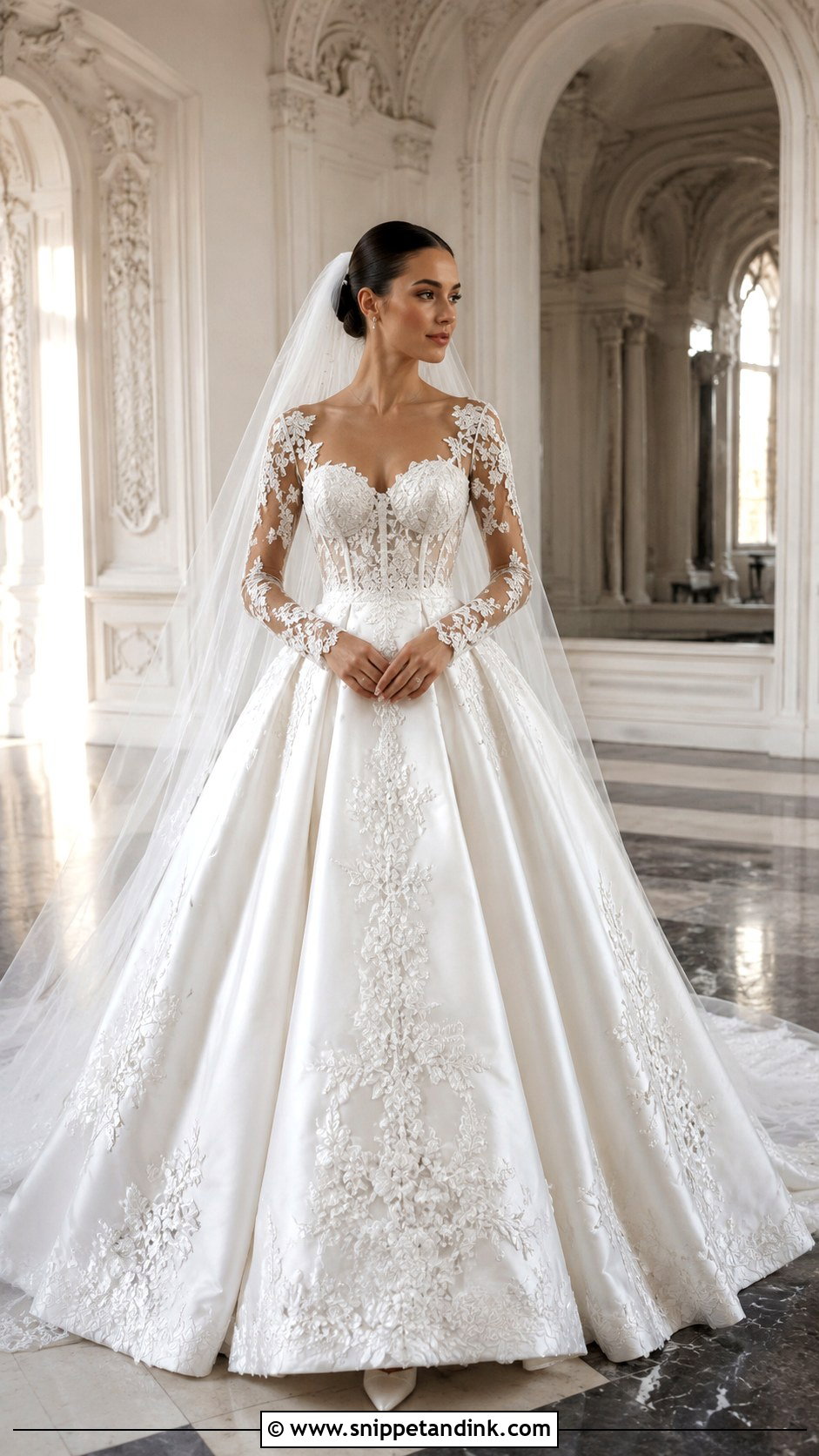
Long lace sleeves over a structured bodice give coverage without weight, since the boning sits under illusion lace and the sleeves read sheer. I like appliqués clustered at the waist and spaced out toward the hem. Pointed satin shoes, pearl studs and a sheer chapel veil coordinate quietly, and a neat bun stops hair snagging on the lace. Bend your elbows and reach forward at every fitting; lace sleeves set too tight pull across the back of the shoulders. For a cool-season wedding, a substantial satin underlayer helps the skirt hold its shape.
6. Square Neck Corset Ball Gown Wedding Dress
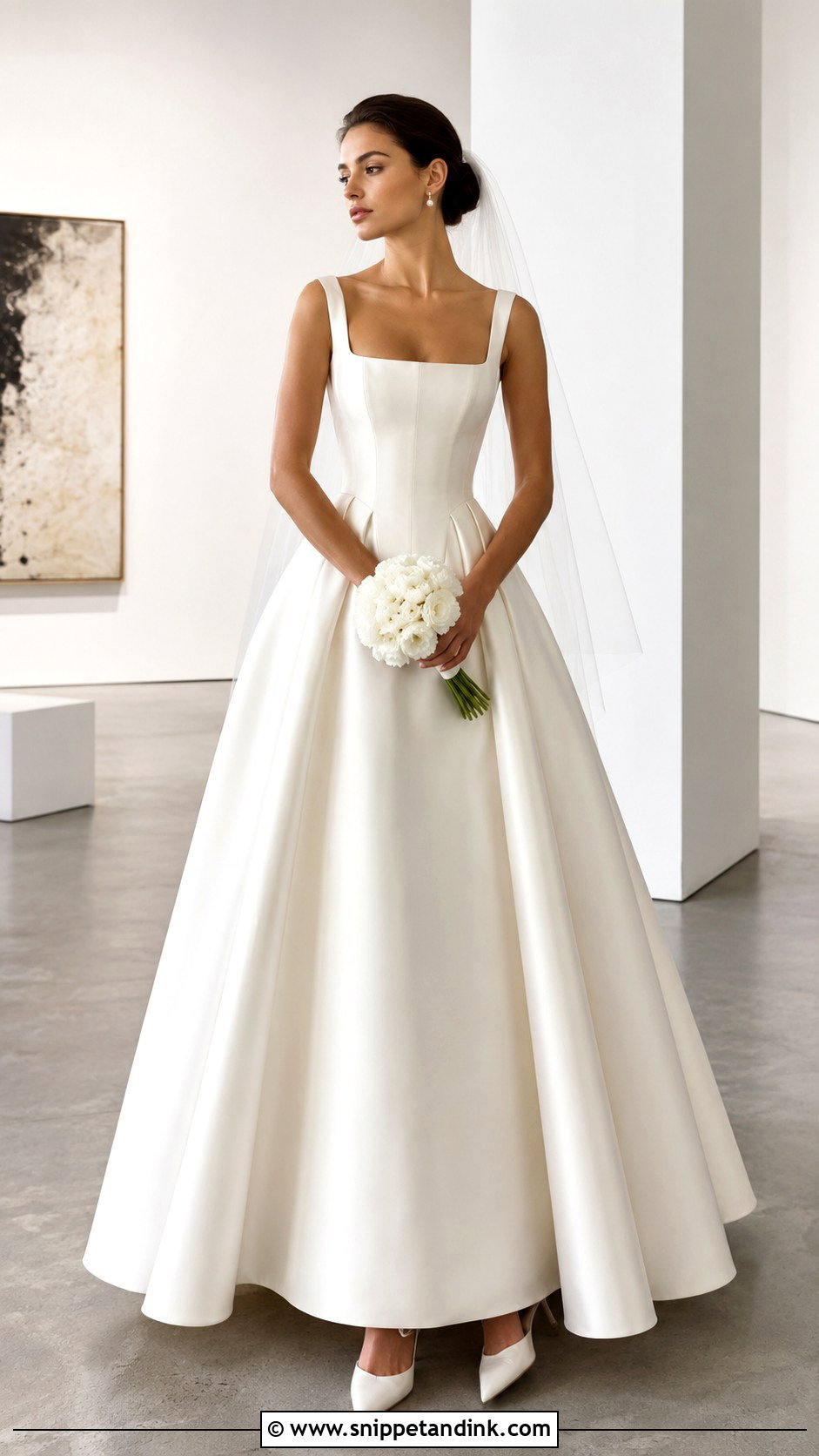
A square neckline gives the gown a crisp, contemporary edge, and the wide straps that usually come with it take some of the work off the boning. That makes it the version I’d suggest to a bride who doesn’t trust strapless. Smooth Mikado or satin shows the corners best. Classic pearl earrings, slingback heels, a simple tulle veil under a polished bun and a small structured bouquet suit its geometry; skip the necklace. The fitting flaw to watch is gaping at the two corners, which usually means the straps need shortening rather than the bodice taking in.
7. Scoop Neck Corset Ball Gown Wedding Dress
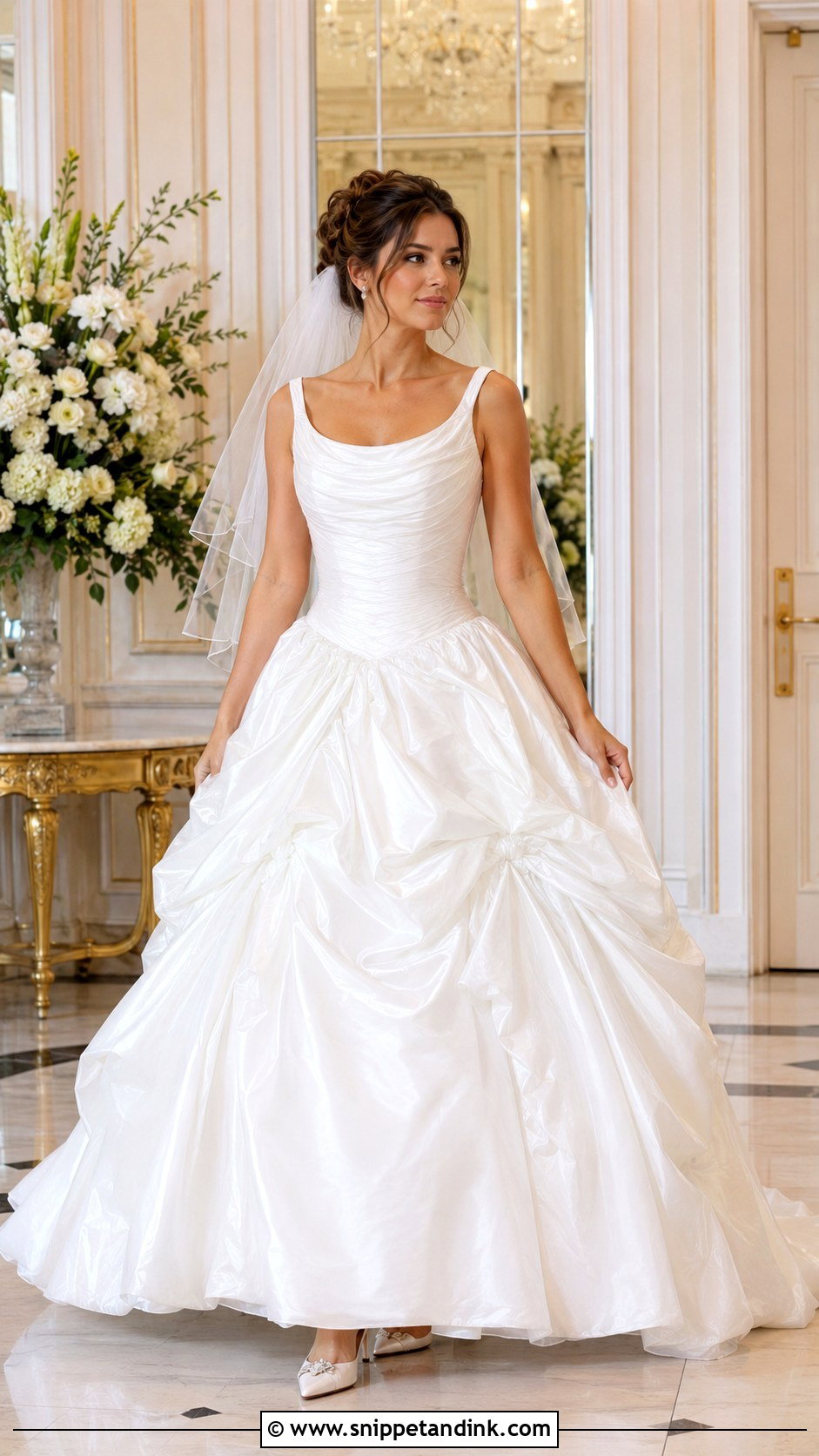
A scoop neck softens a corset bodice more than any other shape. It can be cut high for coverage or lower for an open frame. I like it on a satin bodice with light ruching over a gathered organza skirt, finished with crystal studs, low ivory heels and a shoulder-length veil that doesn’t swamp the neckline. A softly curled updo keeps it classic. If the bodice has visible princess seams, check in a side-on mirror that they follow your own curves; seams sitting too far in or out are the giveaway of a gown taken in without being refitted.
8. Sheer Corset Ball Gown Wedding Dress
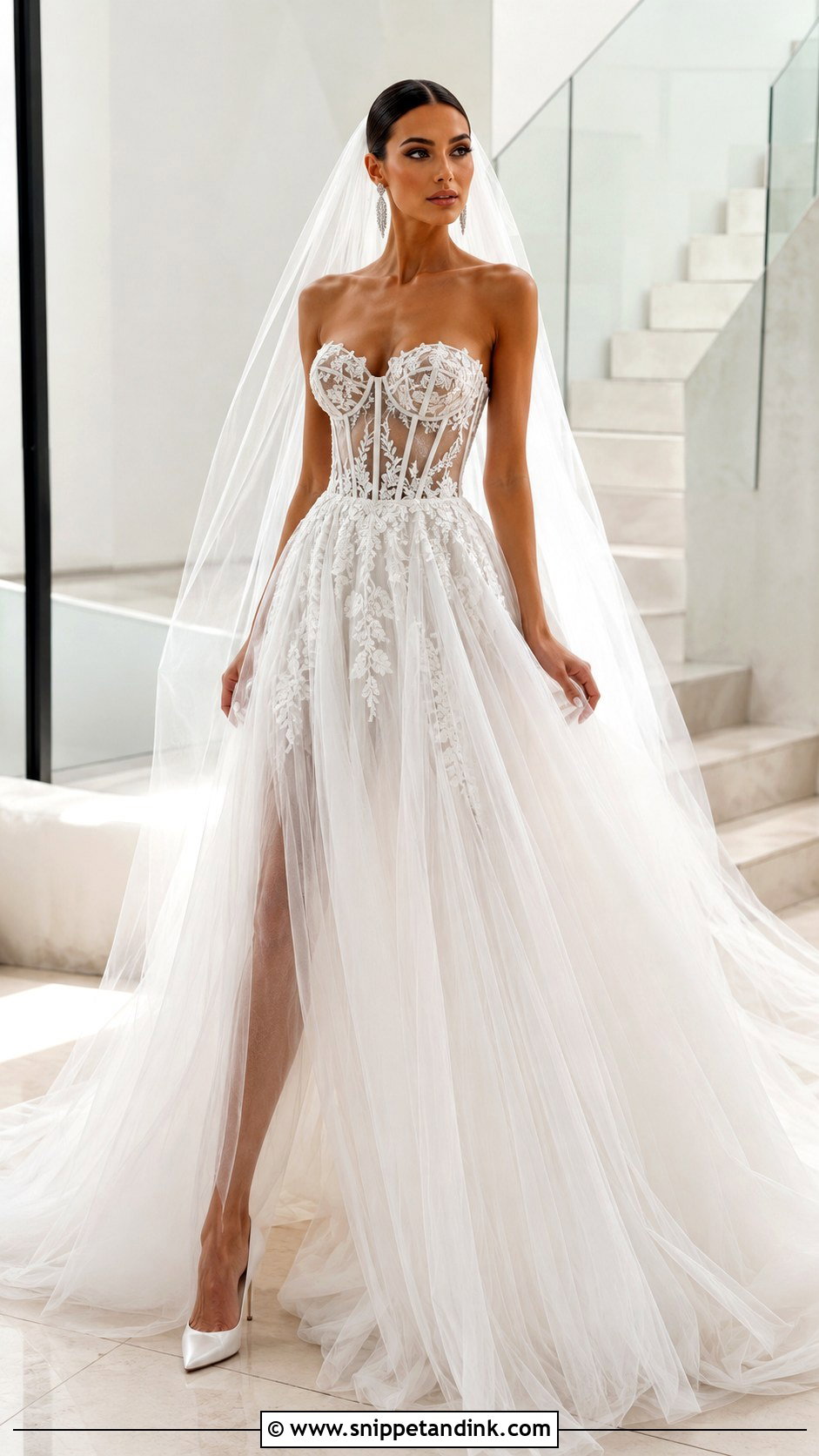
Visible boning under translucent mesh is the editorial end of this list, and it only works when the mesh matches your skin closely enough to disappear. I ask to see the mesh against the inside of the bride’s wrist in daylight before ordering. Keep the skirt plain tulle so the bodice leads, with satin pumps, small crystal earrings and a plain cathedral veil over a sleek center-parted bun. A removable lining added in alterations lets you change the coverage between ceremony and reception. Look at yourself under warm indoor light and under flash; sheer panels behave differently in each.
9. Pearl Beaded Corset Ball Gown Wedding Dress
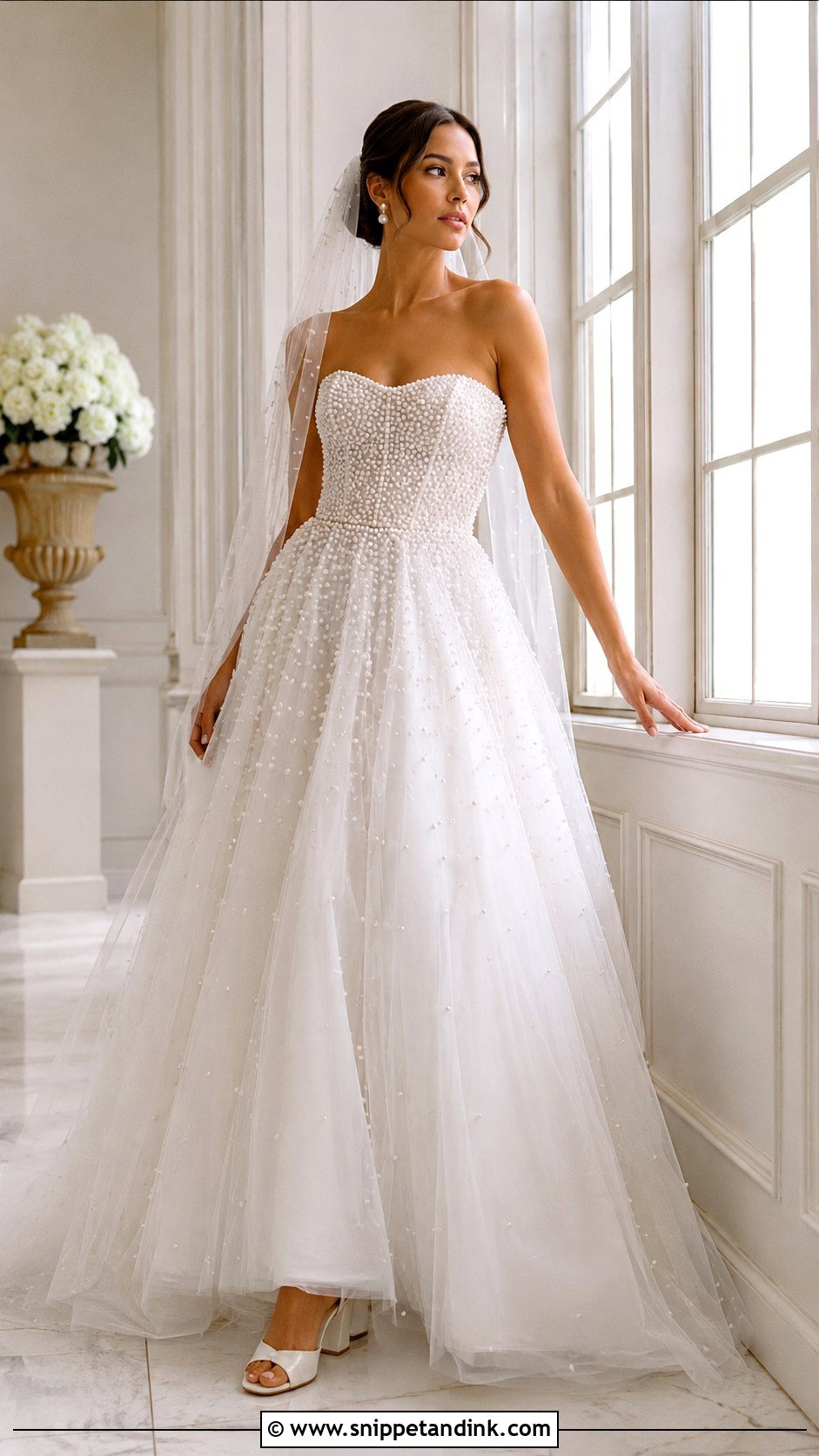
Scattered pearls give texture and a soft glow rather than the sharp sparkle of crystal, and they are easier to photograph in full sun. Let the beading thin out gradually as it moves onto the tulle skirt. A strapless scoop or sweetheart neckline gives it room, with pearl earrings, satin block heels and a veil with widely spaced pearls. Keep the hair smooth, a low bun with a side part. The underarm area and waist are where beads rub loose first, so I inspect those seams at the final fitting and ask the shop for a small bag of spare pearls for the emergency kit.
10. 3D Floral Corset Ball Gown Wedding Dress
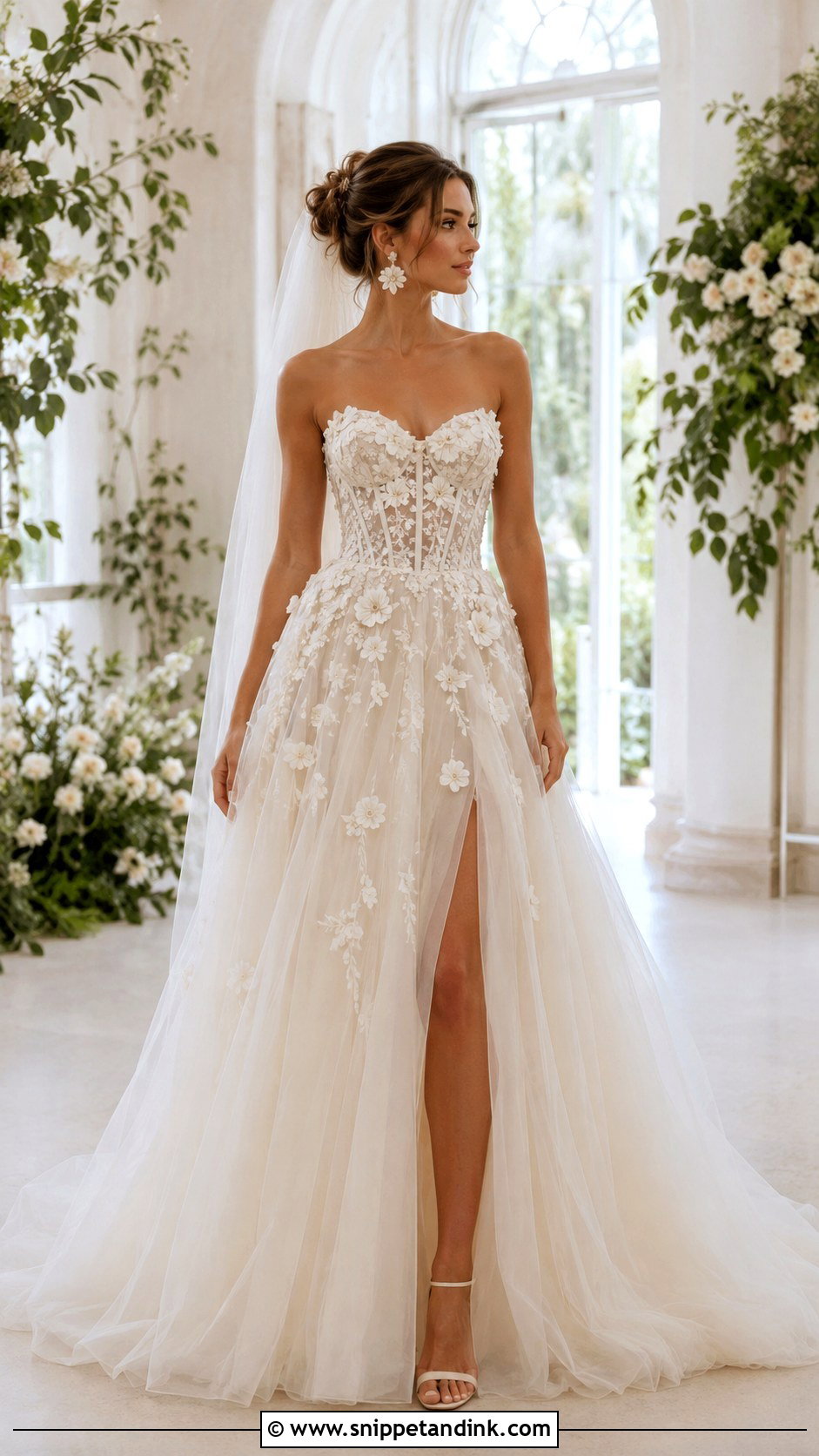
Three-dimensional florals are heavy and they catch on things, which is why placement matters. I prefer them concentrated at the neckline and waist and then thinning across layered tulle, so the bodice is defined and the skirt doesn’t look crowded. Simple ivory sandals, floral earrings and a plain veil let the appliqués show. Avoid a bouquet that copies every flower on the dress; it ends up looking like a matching set. Check the back view too, because florals bunched only at the front make the gown look flat from behind in the processional.
11. Ruffled Tulle Corset Ball Gown Wedding Dress
Ruffled tulle adds movement but also weight, and it hides the floor from you. Soft cascading tiers look lighter than stiff horizontal bands, which can shorten the figure. A clean satin or lightly beaded lace corset gives the ruffles something calm to sit under. I’d choose secure platform heels, small earrings and a fingertip veil, with a high or mid bun to lift the proportions. Practice stairs and turns in the dress before the day. Ask whether a layer or two can come out in alterations, and get a sturdy bustle; ruffled trains collect every step on the dance floor.
12. Bow Back Corset Ball Gown Wedding Dress
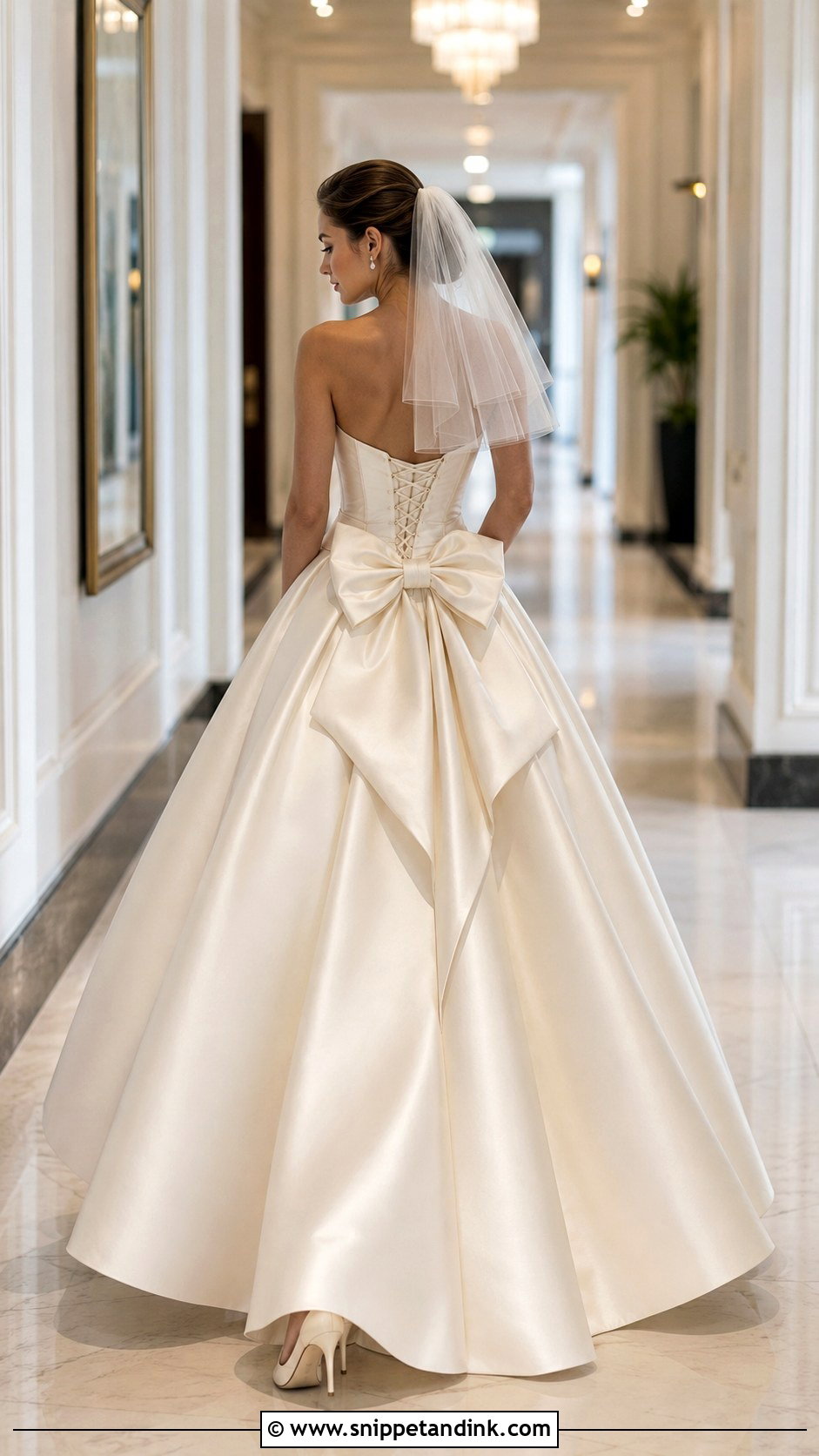
The bow is the moment, so the front can stay almost bare: a smooth satin bodice with a lace-up or buttoned back and a structured skirt. Pointed ivory heels and small studs keep the attention behind you. Veil length matters here. It should end above the bow or fall clearly past it, never sit on top of it. A polished updo keeps the whole back on view. Oversized detachable bows drag on the fabric if they hang from a single hook, so I ask for two or three hidden fastenings, then bustle the skirt with and without the bow to see both versions.
13. Detachable Sleeve Corset Ball Gown Wedding Dress
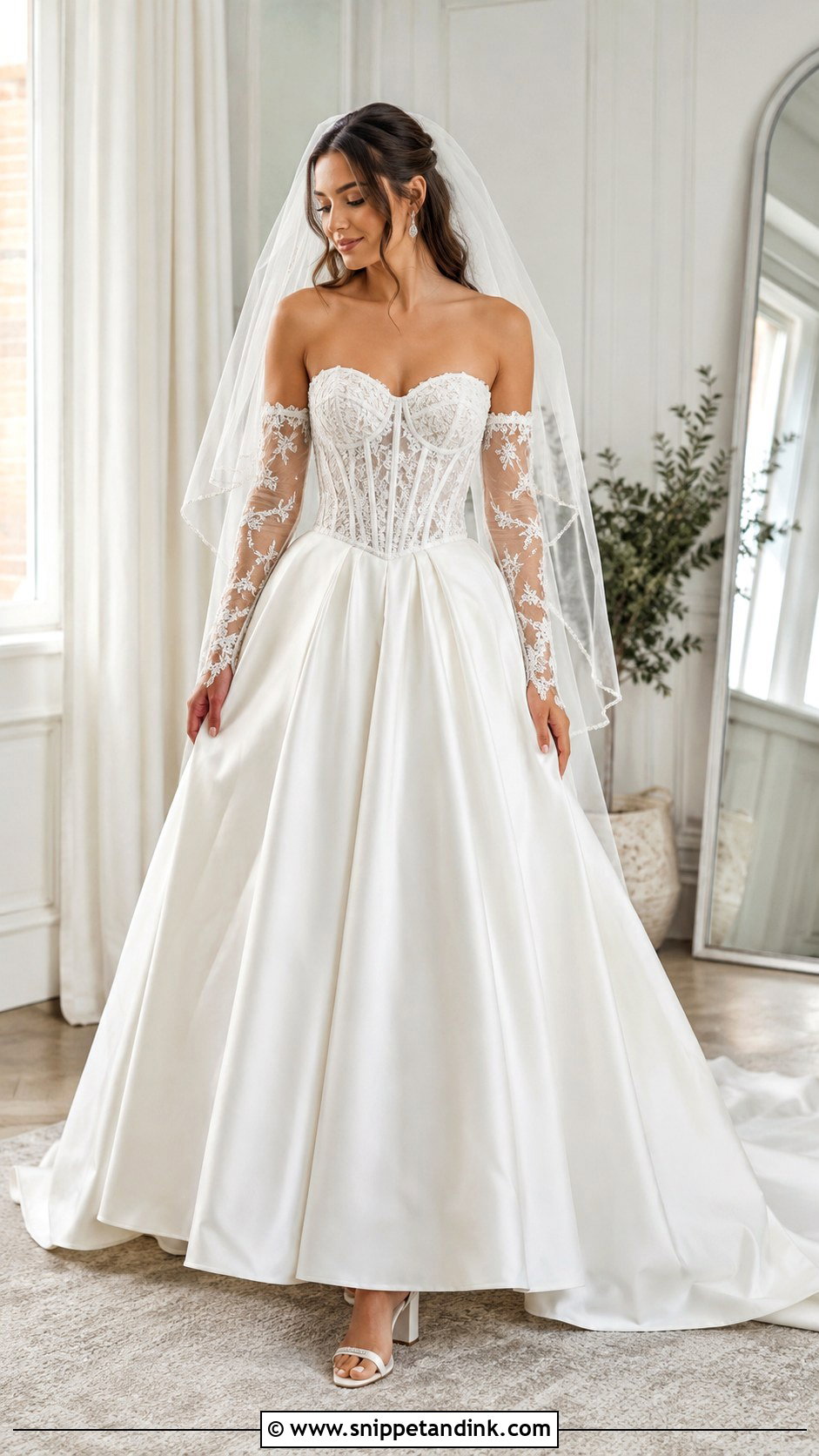
Detachable sleeves give you two gowns: lace, tulle drapes or illusion sleeves for the ceremony, then a strapless corset for dancing. A full satin or tulle skirt carries the drama either way. Block heels, refined drops and a softly edged veil suit both versions, and a half-up style works with either neckline. Make sure the fastenings lie flat in photos. Rehearse taking the sleeves off with whoever will help you, and give one person the job of storing them; I have seen good sleeves left draped over a chair at the end of the night.
14. Cape Veil Corset Ball Gown Wedding Dress
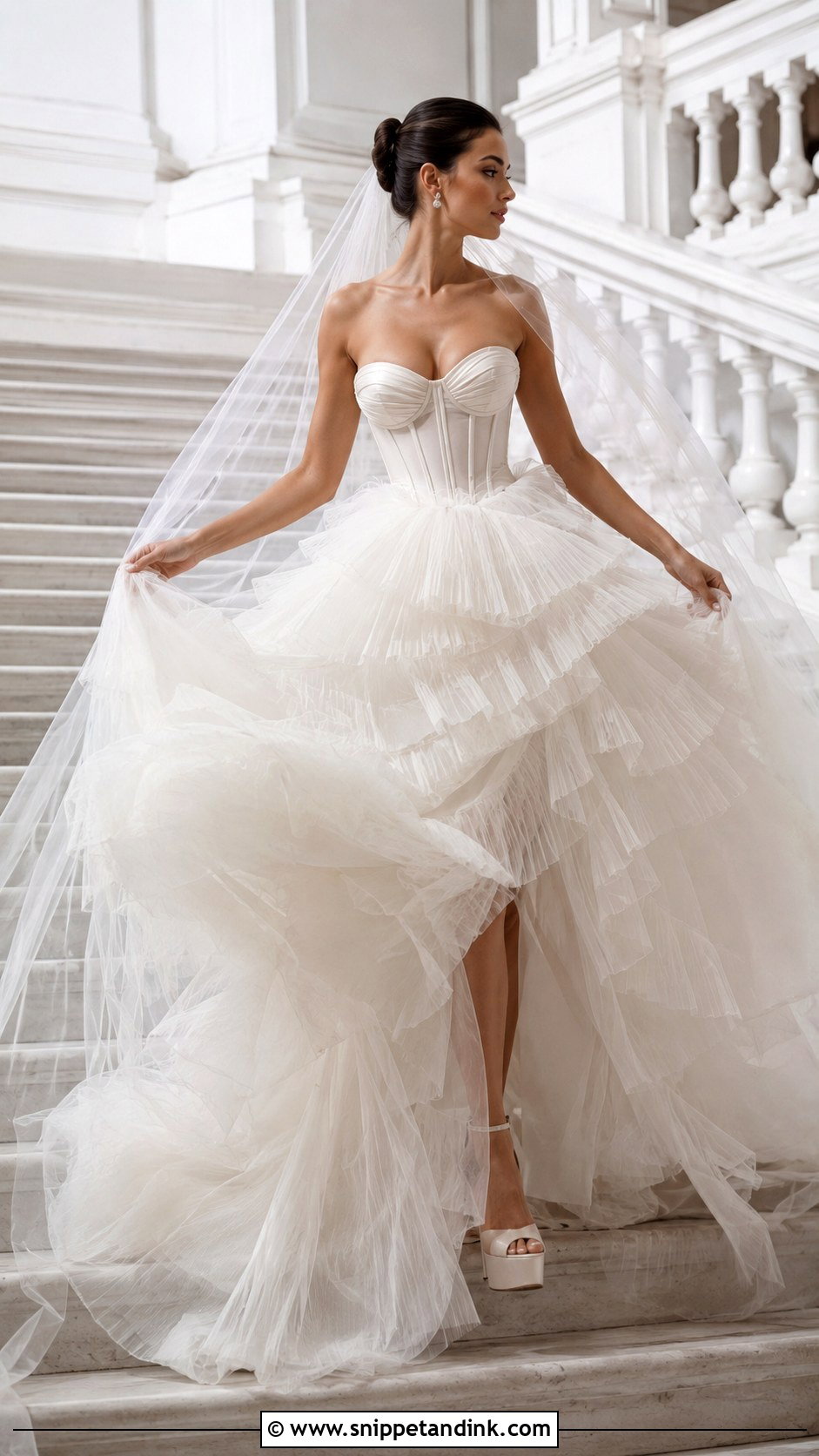
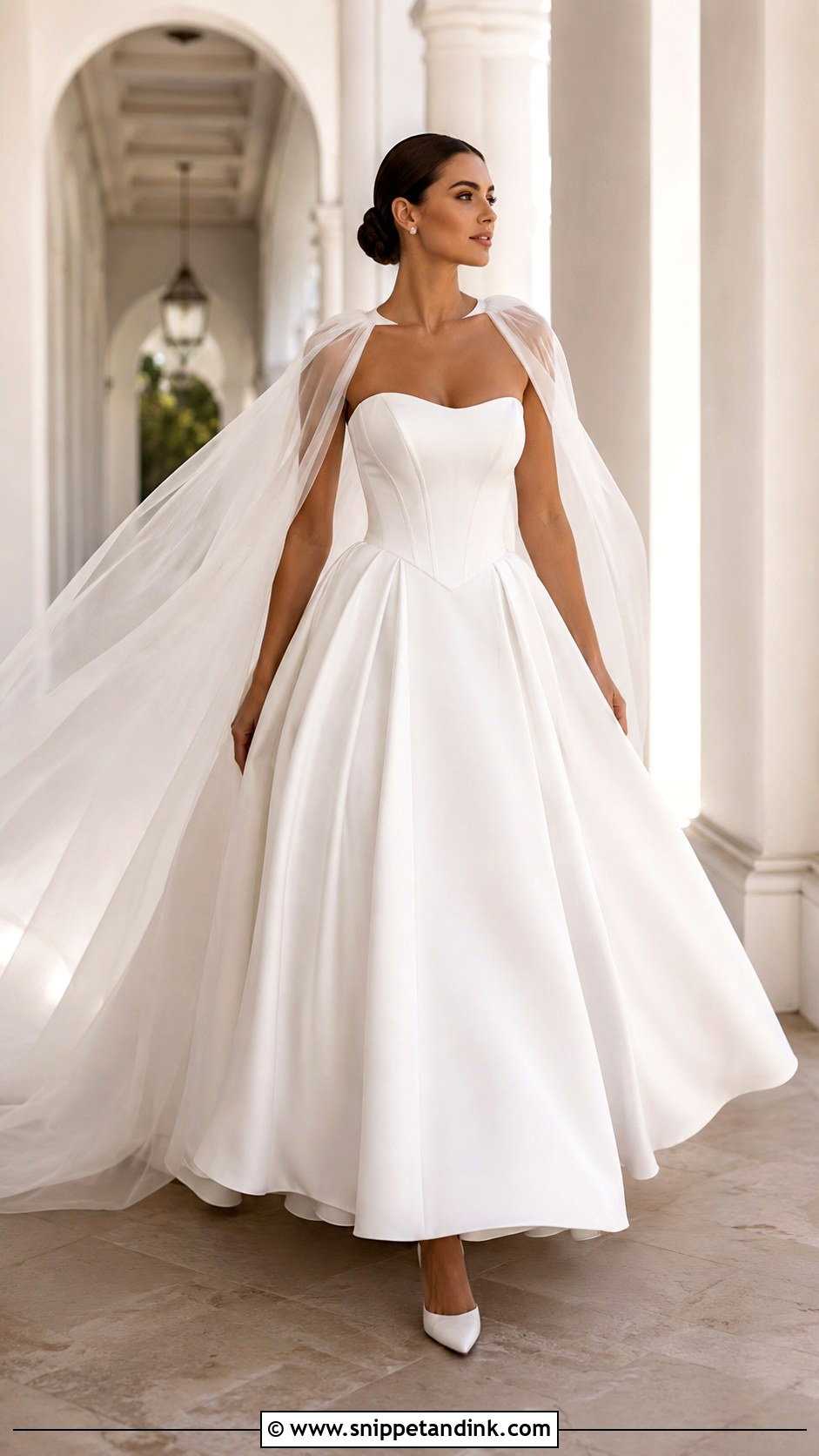
A cape veil gives the regal sweep of a cathedral veil while leaving the hair and neckline clear. I’d attach a light tulle cape at the shoulders or upper back over a clean strapless satin corset that doesn’t compete with it. Crystal studs, pointed pumps and a sleek bun finish the look. Don’t add a second traditional veil unless both were designed to layer. Tulle behaves like a sail outdoors, so if any part of the day is outside, test it in a breeze and ask for attachments that hold without pulling the neckline down.



15. High Slit Corset Ball Gown Wedding Dress
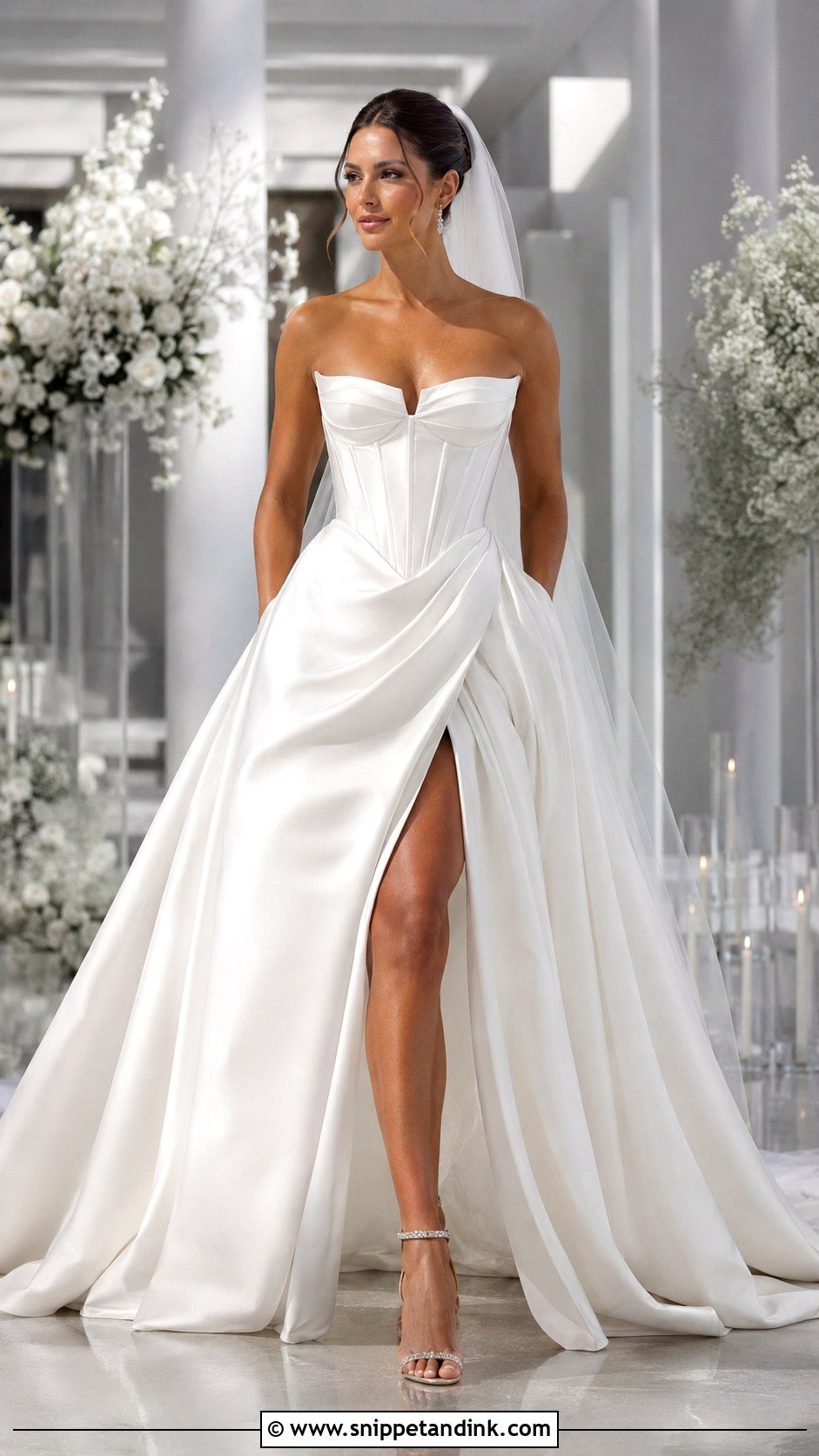
A ball gown with a high slit mixes classic volume with a fashion edge. The version I trust uses overlapping skirt panels, so the slit opens only when you walk. A strapless bodice and Basque waist keep the top grounded. Your shoes will be seen, so choose ivory pumps or ankle-strap heels you can stand in for hours, with slim drops and a plain cathedral veil. At the fitting, walk fast, walk slow and sit facing a mirror. A seamstress can deepen the overlap, add a hidden snap or lower the opening.
16. Blush Corset Ball Gown Wedding Dress
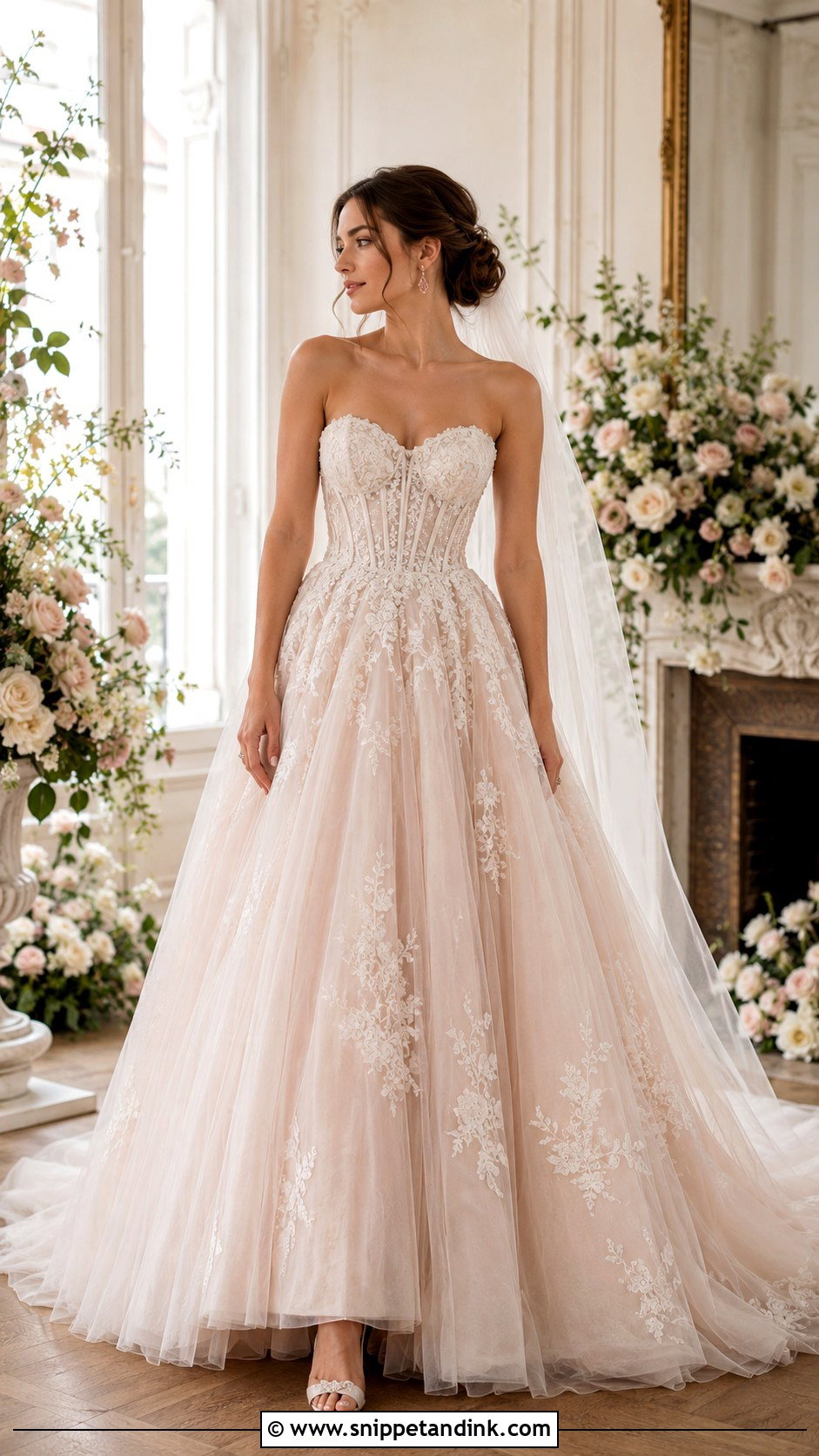
Blush works best as a lining glowing through ivory tulle rather than as solid pink fabric. It reads clearly bridal in person and gives depth to lace or beading. A sweetheart corset with a layered skirt suits it, with neutral ivory heels, rose-toned earrings and a veil matched to the lightest shade in the gown. Soft waves or a low textured bun keep the color story gentle. Blush can wash out to white under flash or turn peach in warm indoor light, so I always look at it by a window and under the venue’s kind of lighting. Keep the bouquet cream with a few muted pinks.
17. Champagne Corset Ball Gown Wedding Dress
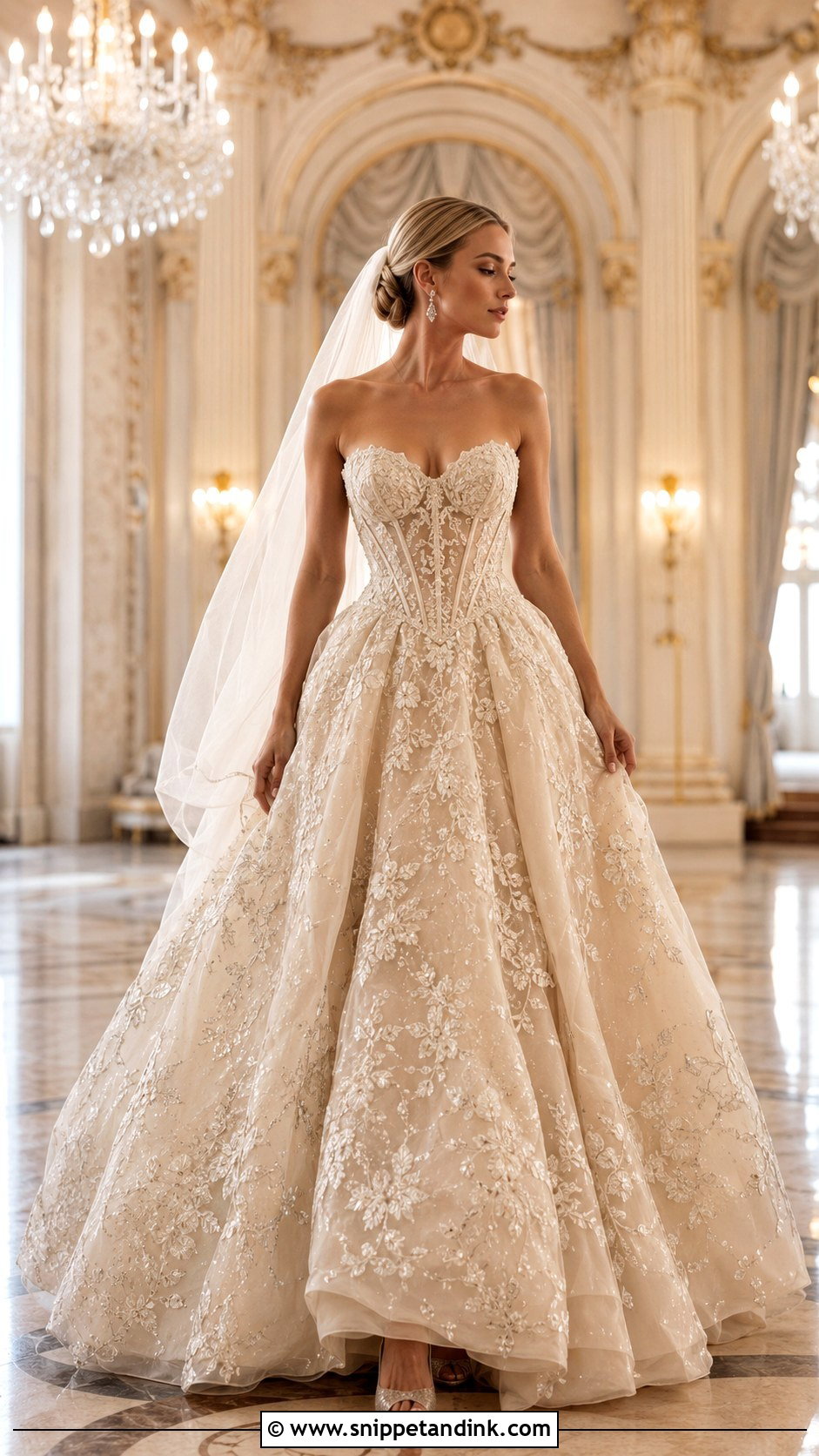
Champagne underneath ivory lace is my favorite way to make lace pattern visible, because the warmer base throws each motif forward. A structured corset with a gently dipped waist and a full tulle or organza skirt suits it. Neutral metallic heels, antique-style earrings and an ivory veil that blends with the overlay complete it, with a smooth low bun and soft makeup. Champagne runs anywhere from pale beige to muted gold, so carry a swatch when buying accessories. Pick one metal tone for shoes, jewelry and hairpiece rather than mixing gold, silver and rose.
18. Plus Size Corset Ball Gown Wedding Dress
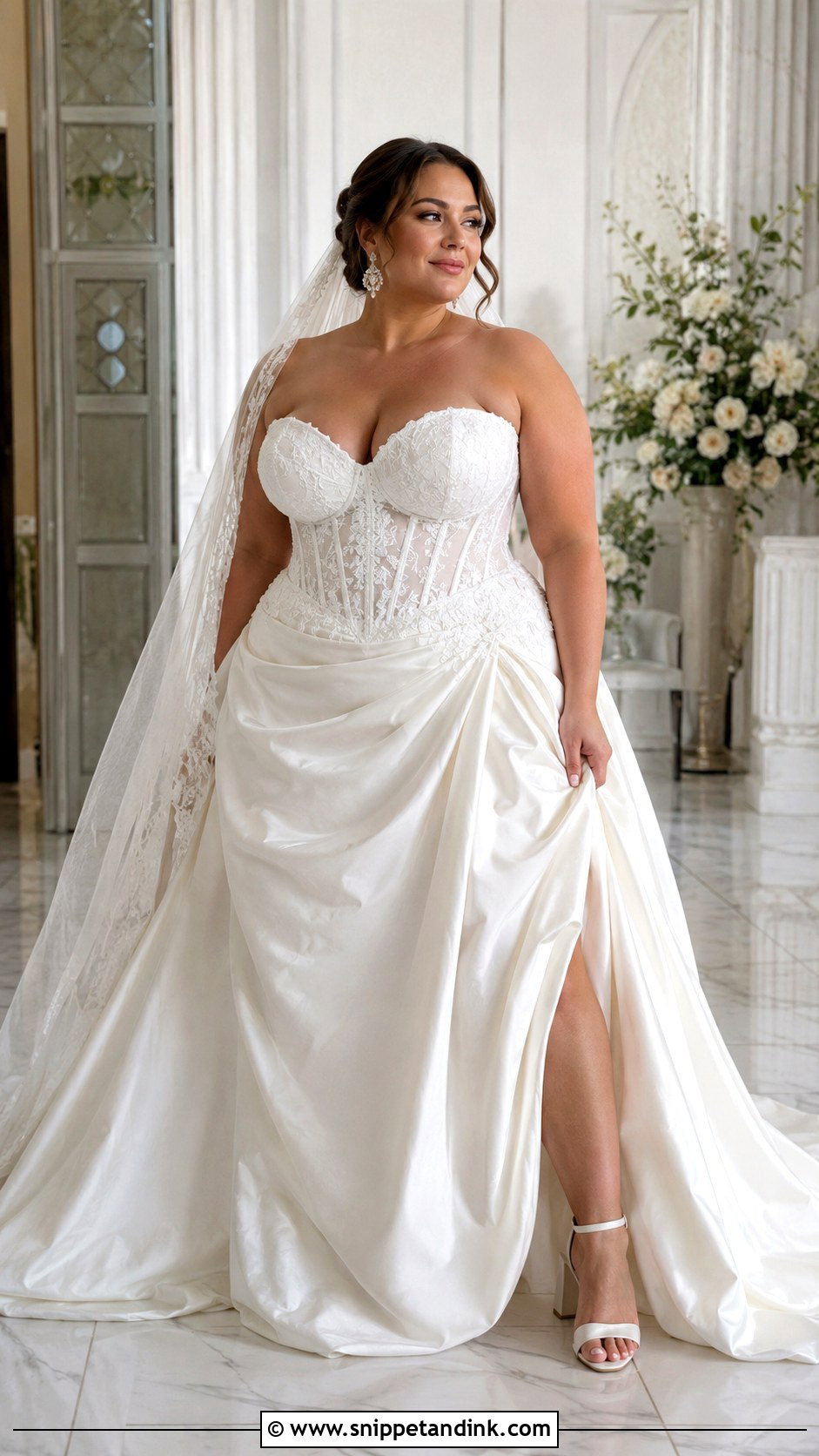
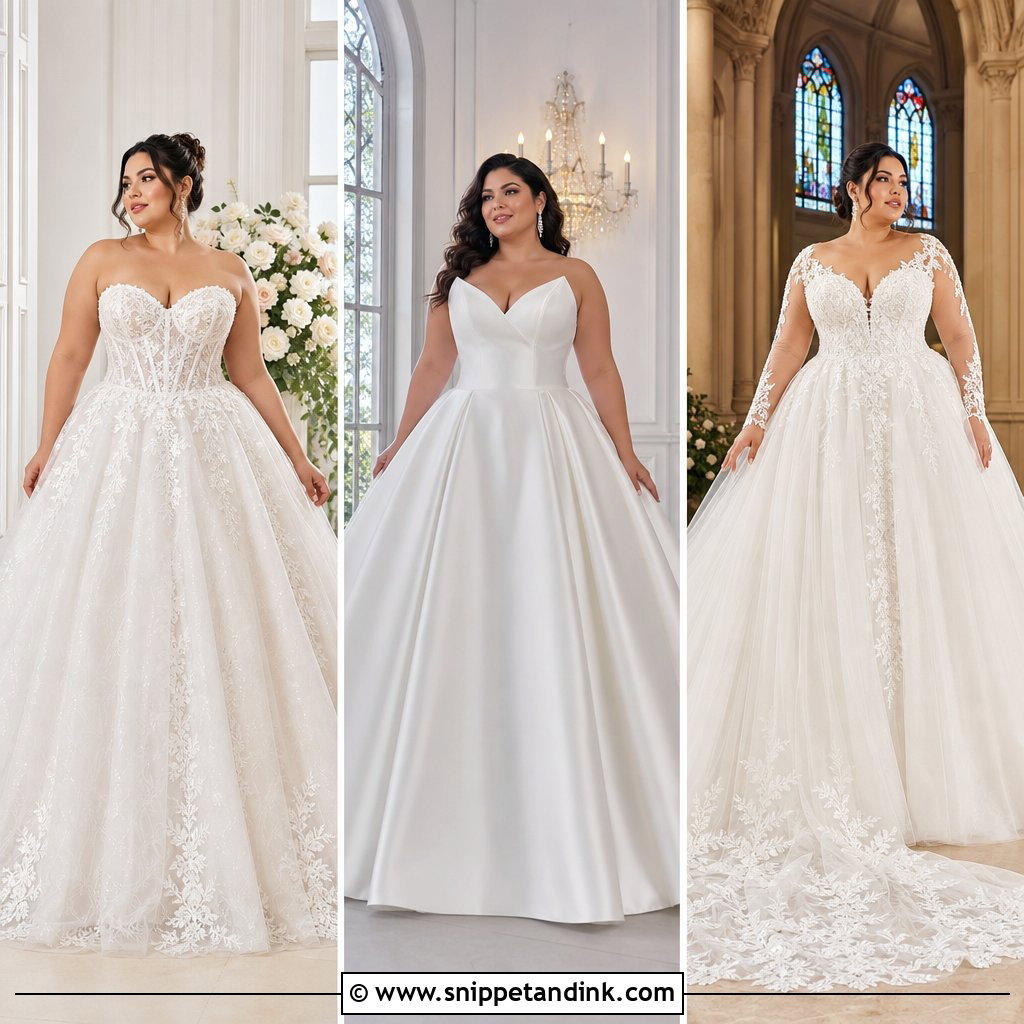
On a fuller figure, the corset has to do real structural work, so I look at the inside before the outside: firm spiral or steel boning, adjustable back lacing, secure cups and a waist seam placed for your own proportions. A Basque waist lengthens the line, and a softly gathered skirt adds fullness without bulk. Supportive block heels, statement earrings and a long veil follow the vertical. Shop by fit, never the label size, since bridal sizing runs small and varies between houses. Do breathing tests: sit, eat a bite, laugh. The bodice should feel firm, never pinching.
19. Modest Corset Ball Gown Wedding Dress
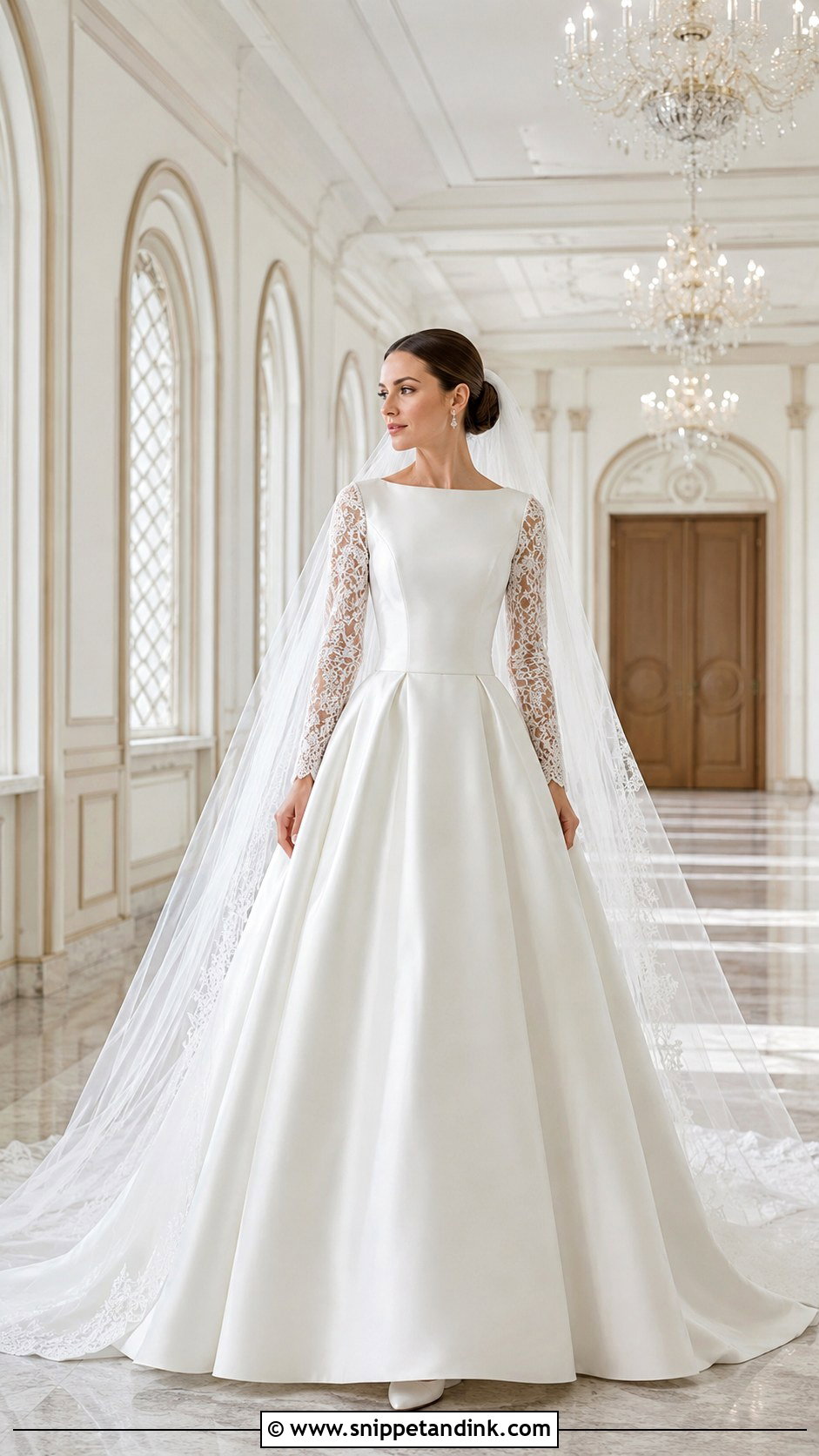
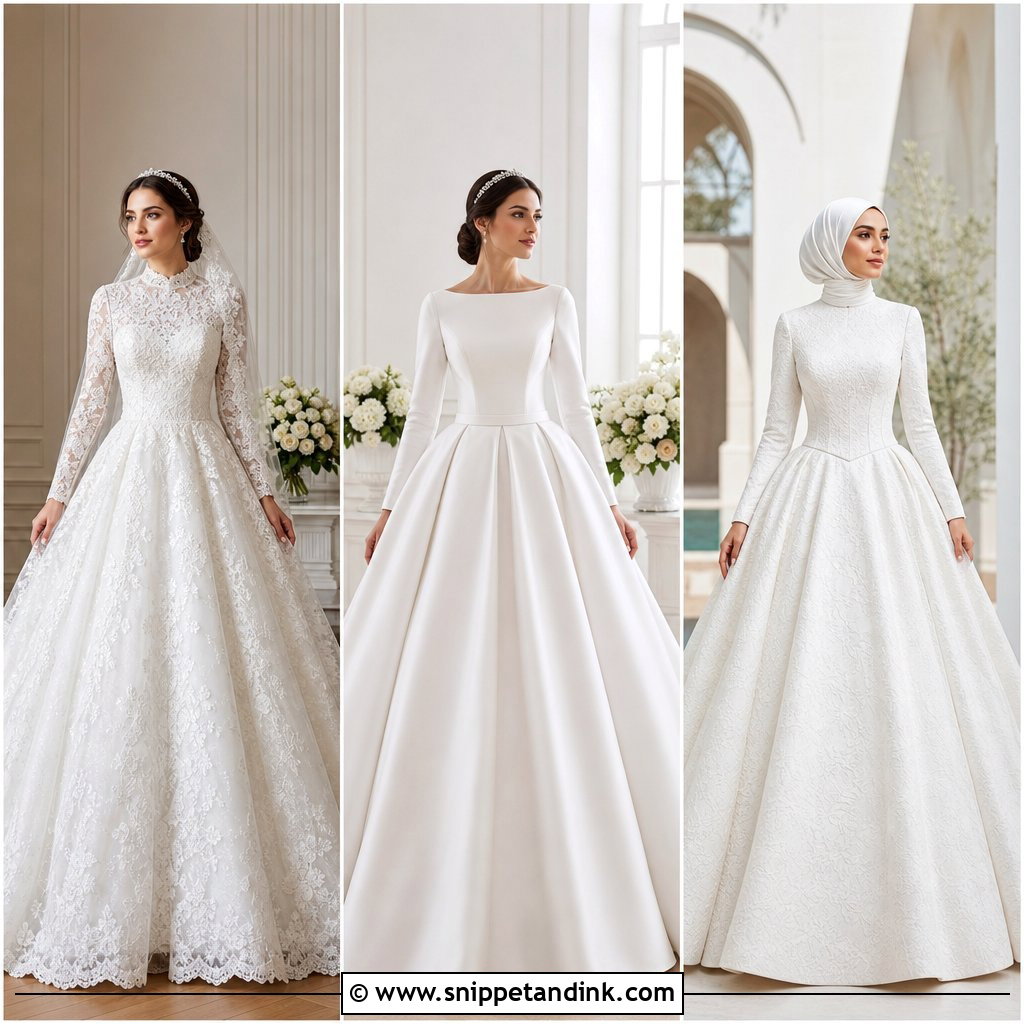
Coverage and structure aren’t opposites. A lined bodice with a high scoop or bateau neckline can hide full corsetry underneath, and fitted long sleeves in satin or lined lace complete the coverage. A natural or Basque waist into a full skirt keeps the ball gown shape. I’d add closed-toe pumps, pearl earrings and a cathedral veil anchored beneath a neat bun. Covered buttons down the back can hide a functional inner corset. Higher necklines show every bit of excess fabric as wrinkles when you sit, so the tailoring here needs to be precise.


20. Vintage Brocade Corset Ball Gown Wedding Dress
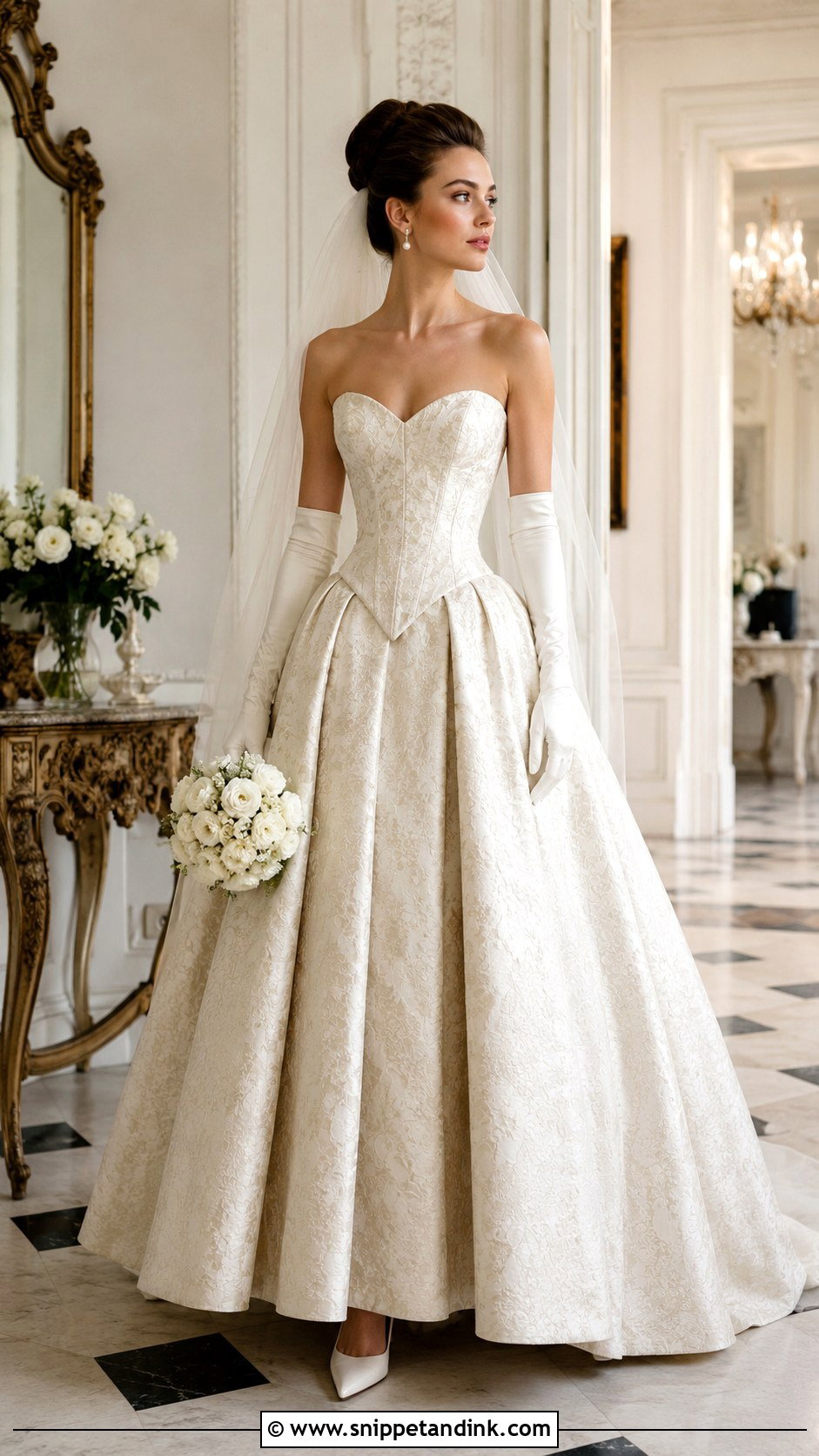
Brocade brings rich woven texture without any beading, and a subtle ivory floral weave with a sharp pointed waist feels properly vintage. Box pleats help the heavier cloth form a grand skirt while keeping the front flat. Satin pumps, pearl drops, wrist-length gloves and a plain veil under a sculpted updo suit its era. Keep the bouquet compact so it doesn’t cover the pattern. Brocade is noticeably heavier than tulle, so I ask about removing an underskirt layer. A strong bustle and a hem measured in your real shoes make it manageable.
Living in a Full Skirt from Vows to Last Dance
A ball gown skirt is the part brides think about least and handle most. I go through it with every bride I dress, because the problems show up hours after the ceremony, not during it.
Bustle practice
Full skirts usually take an over bustle (hooks lifting the train up onto the back) or a French bustle (ribbons tying it under). Ask the seamstress to color-code the ties, then have your helper practice twice at the final fitting. Fumbling with twenty unmarked loops in a dim corridor eats into the reception.
Steaming and travel
Hang the gown from its inner hanger loops, never the straps or bodice edge, which stretch. Satin and Mikado crease badly when packed, so steam from the inside of the skirt, keeping the steamer moving. Tulle needs only a light pass. Never iron beading or appliqué directly.
Sitting, bathrooms and the end of the night
Sit forward on the chair and sweep the skirt behind you rather than sitting on the layers. For the bathroom, two people and a large slip worn backwards make it manageable. After the wedding, get the gown professionally cleaned within a few weeks, since sugar and sweat stains turn yellow as they age, then store it flat in acid-free tissue with the boned bodice supported.
Where the Bodice Earns Its Place
Start with fabric, because satin, lace, tulle, brocade and dimensional embellishment each change how the corset behaves. Then compare necklines, waist points, sleeves and skirt volume against your proportions and venue. Let an intricate gown lead and save stronger jewelry for plain ones. Most of all, judge every bodice while walking, sitting and lifting your arms, not standing still in front of a mirror. A skilled seamstress can fix support, coverage, length and movement, but only if you tell her what you felt.
You'll Like These Ideas:







Leave a Reply