
When a bride tells me she wants a ball gown, I stop looking at fabric swatches and start looking at whole outfits. A ball gown is simply a fitted bodice over a full skirt, but the same shape can feel regal, playful or quietly modern depending on the veil, jewelry, shoes and bouquet you put with it. Designers keep refreshing the silhouette with structured corsets, Basque waists, oversized bows, dimensional flowers, removable pieces and very clean, unembellished finishes. Which one is right depends on your venue, how much drama you want and how comfortable you need to be for a long day. Below are twenty ball gown wedding dresses, each styled from head to toe.
How Much Skirt Your Venue and Season Can Carry
Before I pull a single gown for a ball gown bride, I ask where and when the wedding is. A full skirt that looks right in a ballroom can be miserable at an outdoor summer ceremony, and the fabric choice matters as much as the silhouette.
Warm weather and outdoor ceremonies
Layered tulle and organza are the lightest ways to get volume, and they breathe better than satin or Mikado. Heavy satin traps heat, and a stiff petticoat underneath adds another layer. On grass or gravel, a long train picks up stains and drags; a skirt that just clears the ground, or a short sweep train, is easier. Ask about a breathable lining too, since many gowns are lined in polyester.
Cold weather and grand rooms
This is where heavier fabrics and long trains earn their place. Satin, Mikado and long lace sleeves all hold up to a large formal room, and a cathedral train looks in scale with a long aisle. In a small room, the same train can fill the aisle and leave no space for anyone to stand near you, so think about the size of the space as well as the season.
1. Classic Satin Ball Gown Wedding Dress
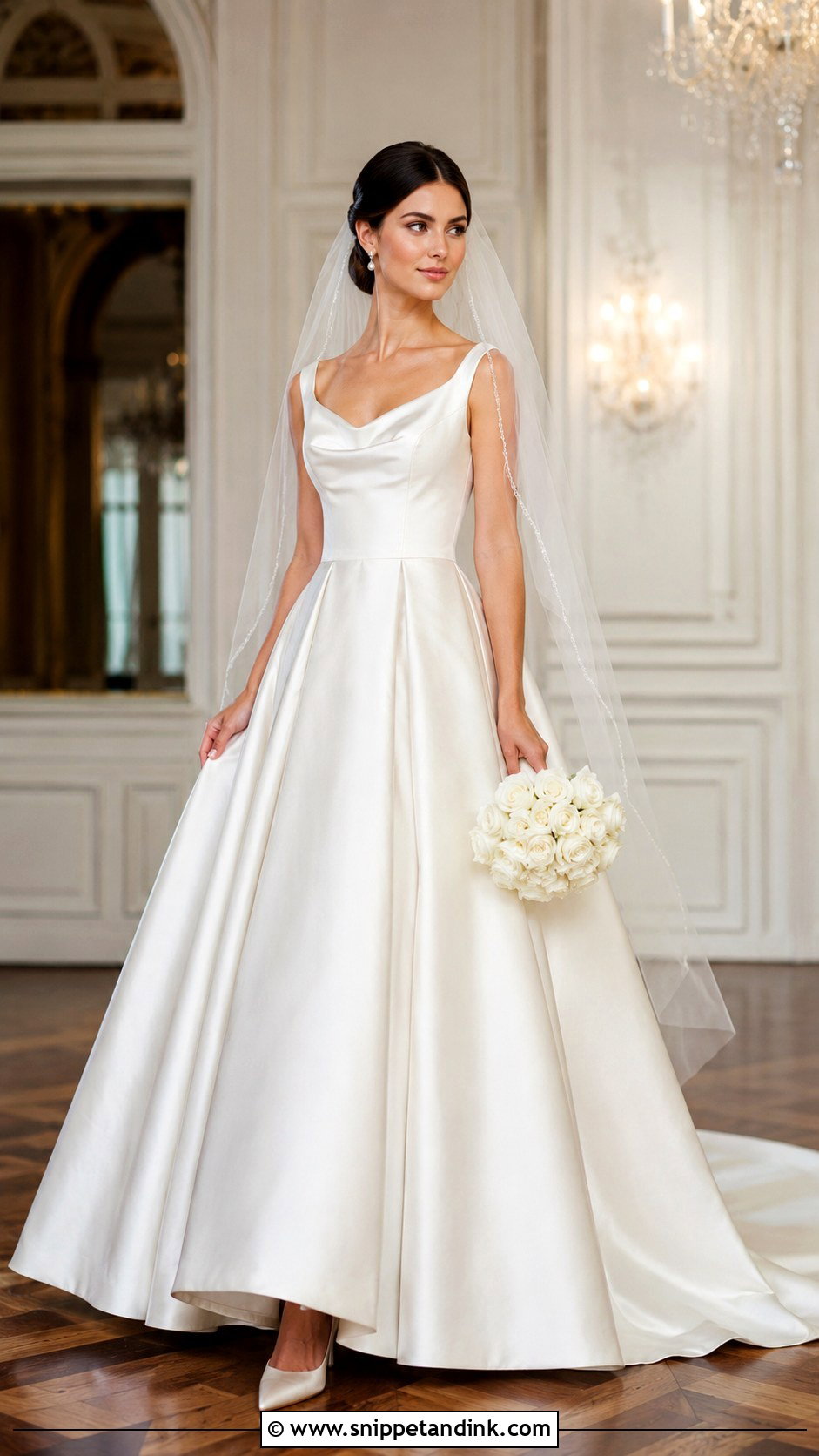
Satin is where most ball gown brides begin, and for good reason: it holds a full skirt without help and has a soft sheen that reads as formal in any room. I’d choose ivory over bright white for most skin tones, since stark white can look slightly blue next to the face. Look for a structured bodice with a softly curved neckline and a skirt that keeps its shape from the waist down. Pearl drop earrings, a fingertip veil and pointed ivory pumps complete it, with a low chignon and a rounded bouquet of white roses or peonies. Satin creases the moment you sit in a car, so ask the salon how they’d steam and pack it. Ballrooms, hotels, museums and estates all suit it.
2. Strapless Mikado Ball Gown Wedding Dress
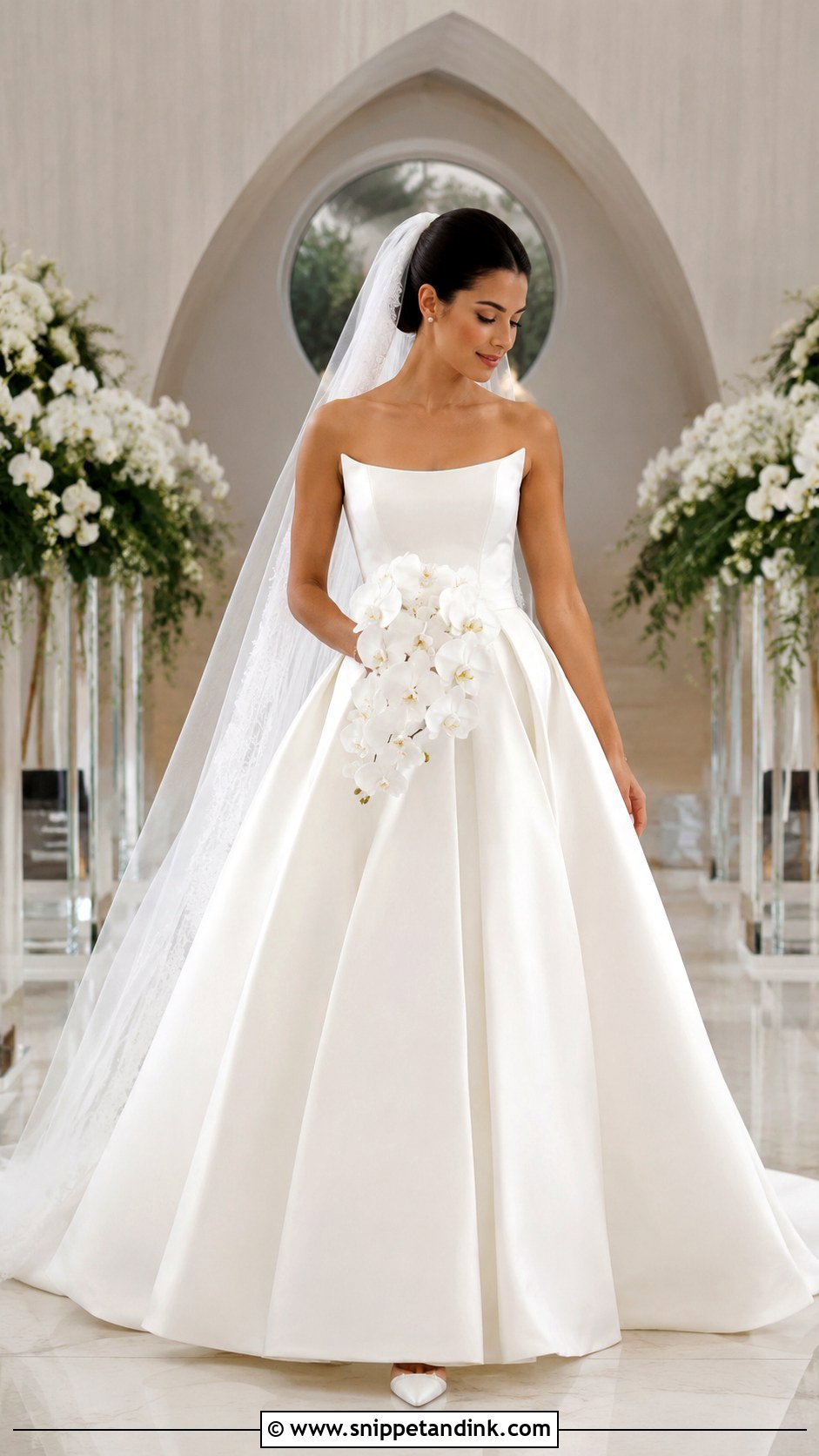
Mikado gives you structure without decoration. The fabric is heavy and slightly stiff, so seams and pleats stand out as the design. On a strapless gown, though, the weight is also the risk: a heavy skirt pulls a bodice down. I want secure internal boning, a straight or gently scooped neckline and a waist that is fitted firmly enough to carry the skirt, with fashion tape kept as a backup only. A cathedral veil, crystal studs and satin pumps with a block or low heel suit it, plus a sleek bun and a white orchid bouquet. It’s a dress for a grand ceremony and a clean, architectural style.
3. Lace Long Sleeve Ball Gown Wedding Dress
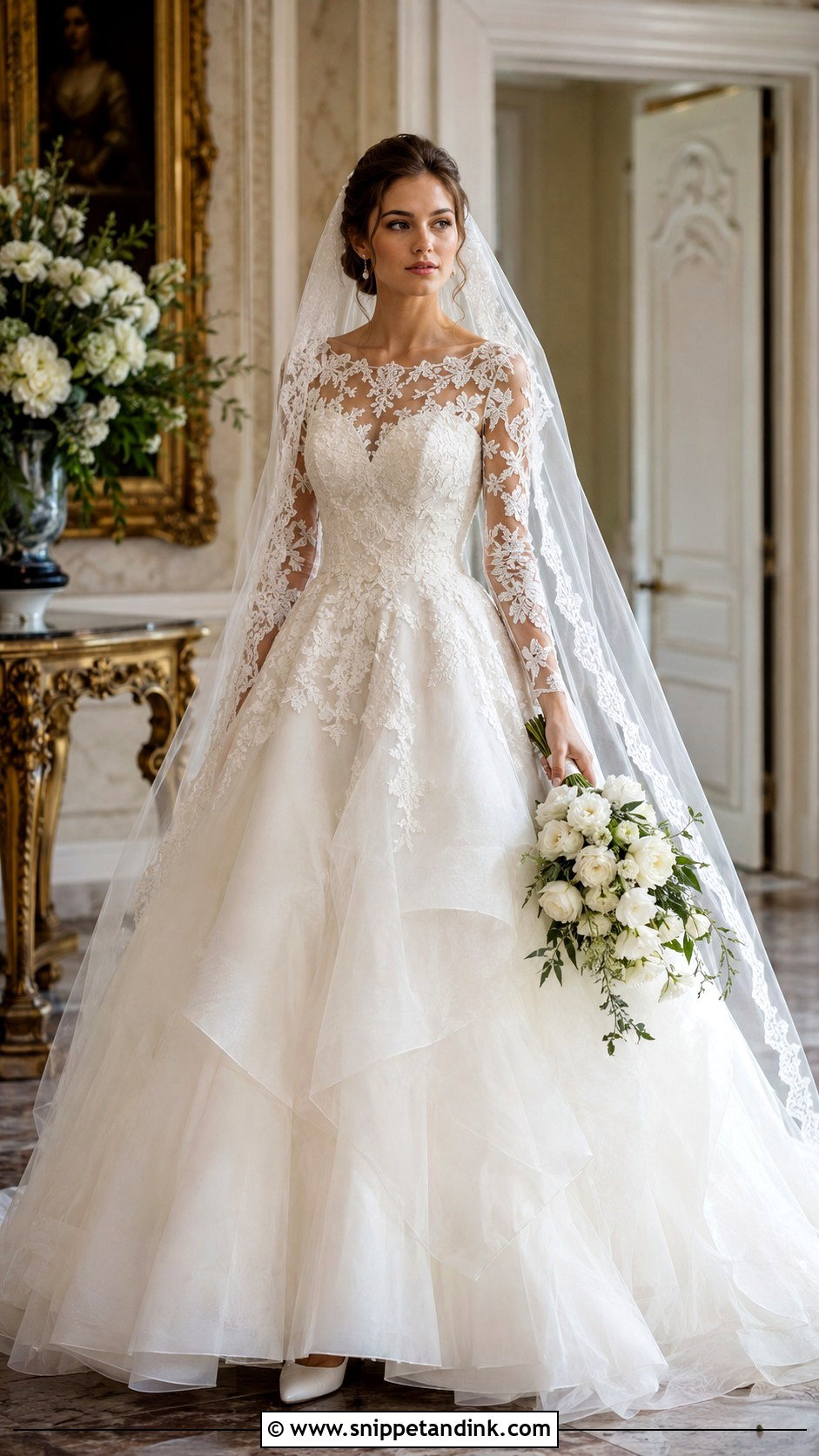
Lace sleeves only feel romantic if they’re light. Heavy corded lace on the arm turns bulky and hot, so I look for lightweight illusion sleeves with appliqués placed where they flatter, at the shoulder and wrist, rather than solidly covering the arm. A fitted lace bodice over a tulle or organza skirt keeps contrast without breaking the look. Pearl earrings, a simple hair comb and closed-toe ivory heels finish it, along with a chapel veil edged in matching lace and a loose bouquet of garden roses and greenery. Lift your arms fully before final alterations. Fall, winter and early spring weddings in historic houses and traditional indoor venues suit it best.
4. Basque Waist Ball Gown Wedding Dress
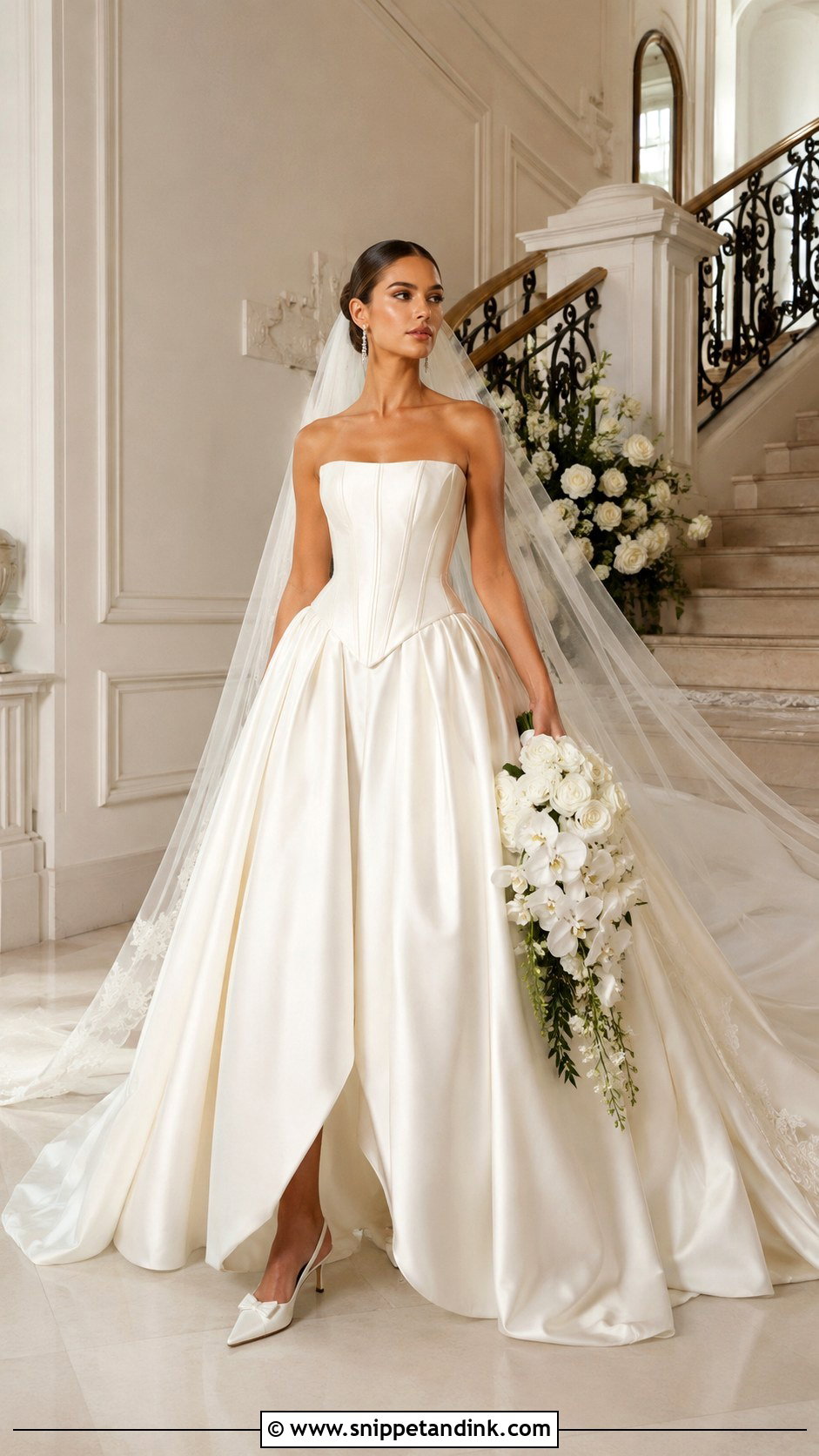
The Basque waist ball gown drops its waistline into a point below the natural waist, which carves a longer line through the torso. It looks strongest with a corset-style top and a generously gathered skirt. Satin or Mikado keep it sharp; layered tulle softens the point. I’d add a plain cathedral veil, delicate drop earrings and pointed slingbacks, then skip the necklace because the waist is already the focal point. A cascading bouquet echoes the long line. Fit is everything here: if the point sits too high it looks like a mistake, too low and it cuts into the hips when you sit. Leave enough alteration time to get it exactly right.
5. Off Shoulder Ball Gown Wedding Dress
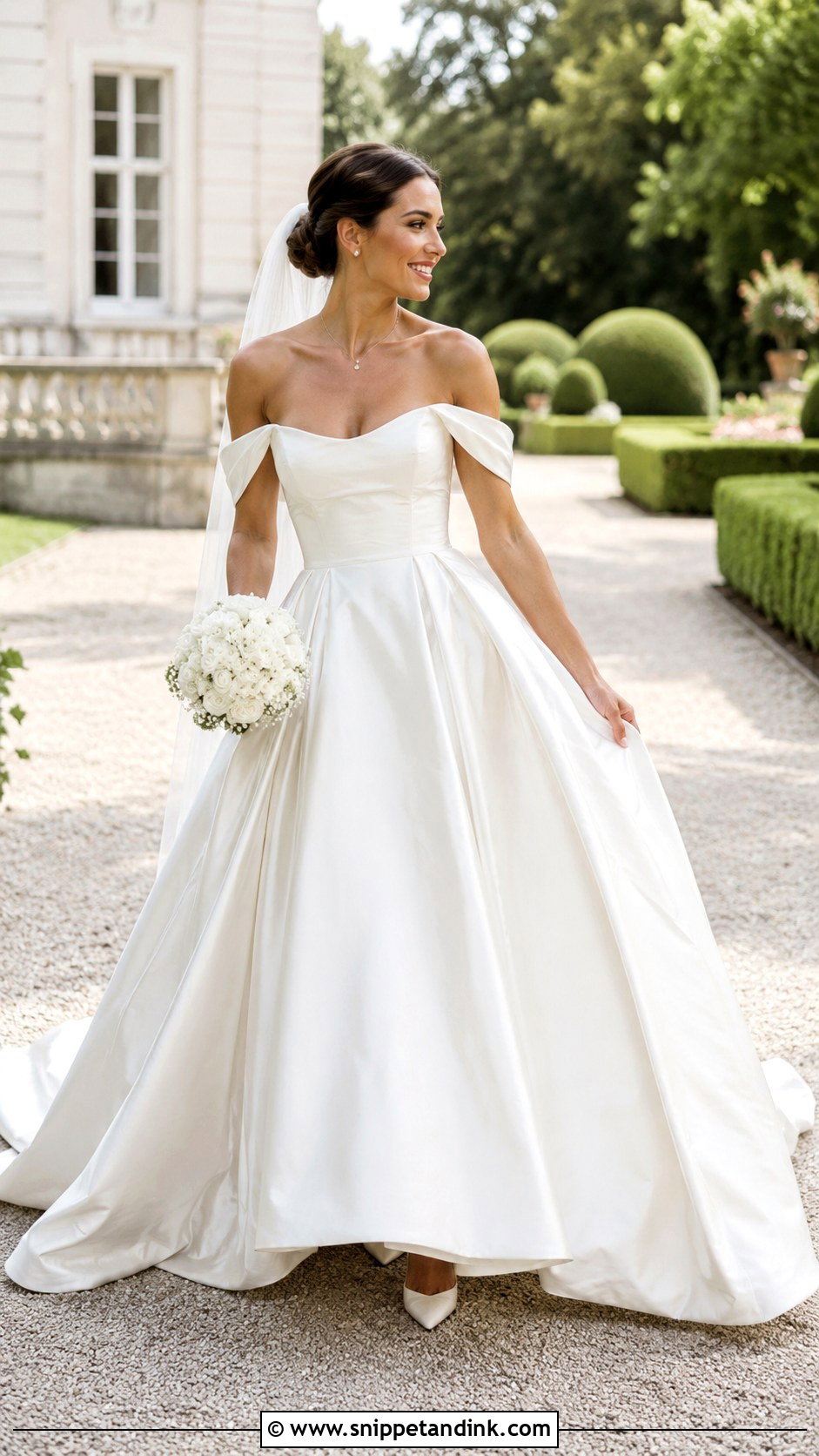
An off-the-shoulder neckline frames the collarbone while the skirt brings the drama. Draped bands look romantic, structured cuffs more modern. Pair either with a fitted bodice and an ivory satin or layered tulle skirt, a fine pendant, pearl studs and a veil set beneath a low bun. Pointed pumps keep it formal, though block heels are kinder under a heavy skirt. My one test: raise both hands as if you’re cheering. If the bands bite or the bodice lifts, it needs adjusting. Keep the bouquet compact so it doesn’t cover the neckline, and wear it in garden estates, hotels or light-filled ceremony rooms.
6. Sweetheart Tulle Ball Gown Wedding Dress
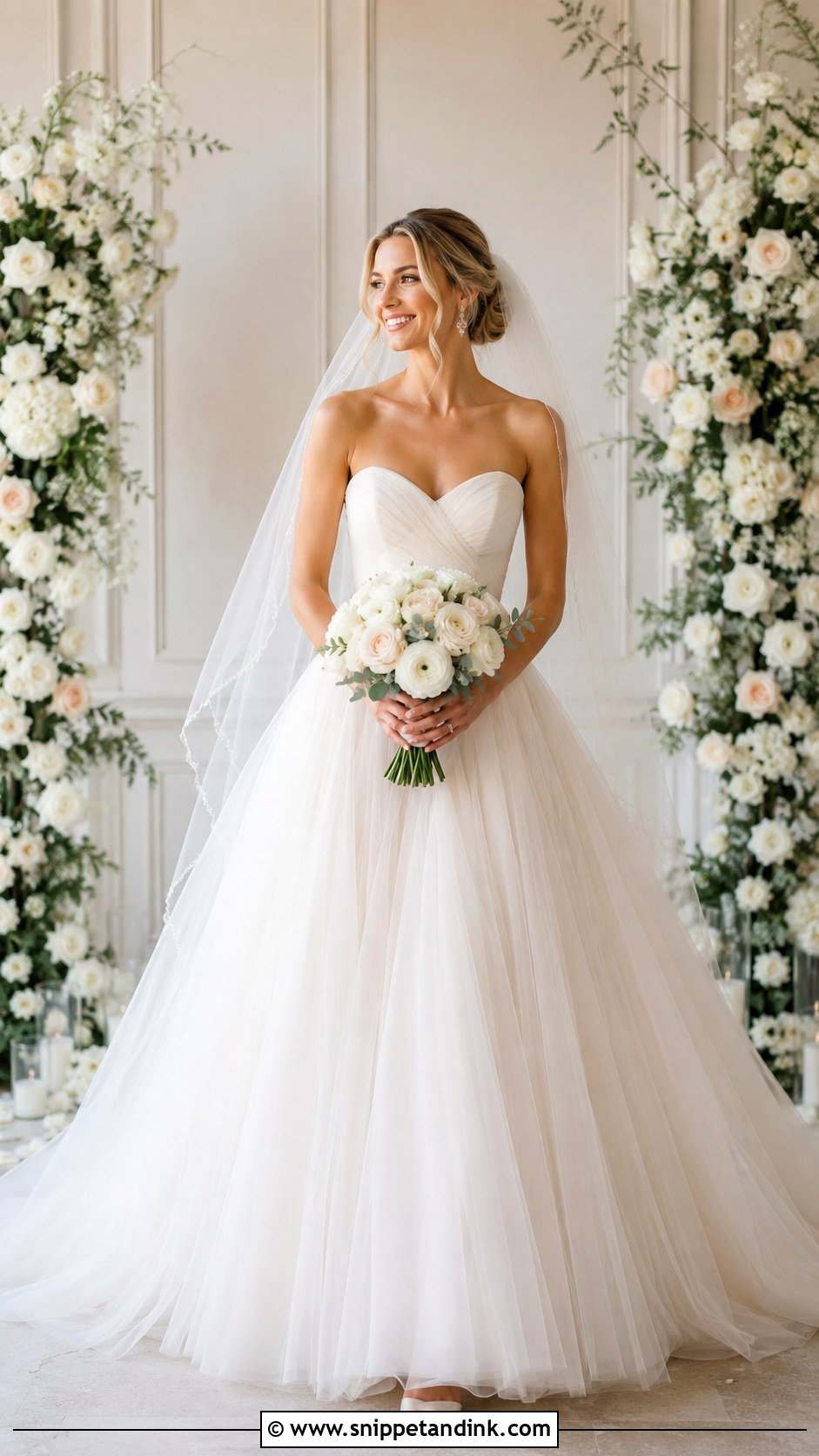
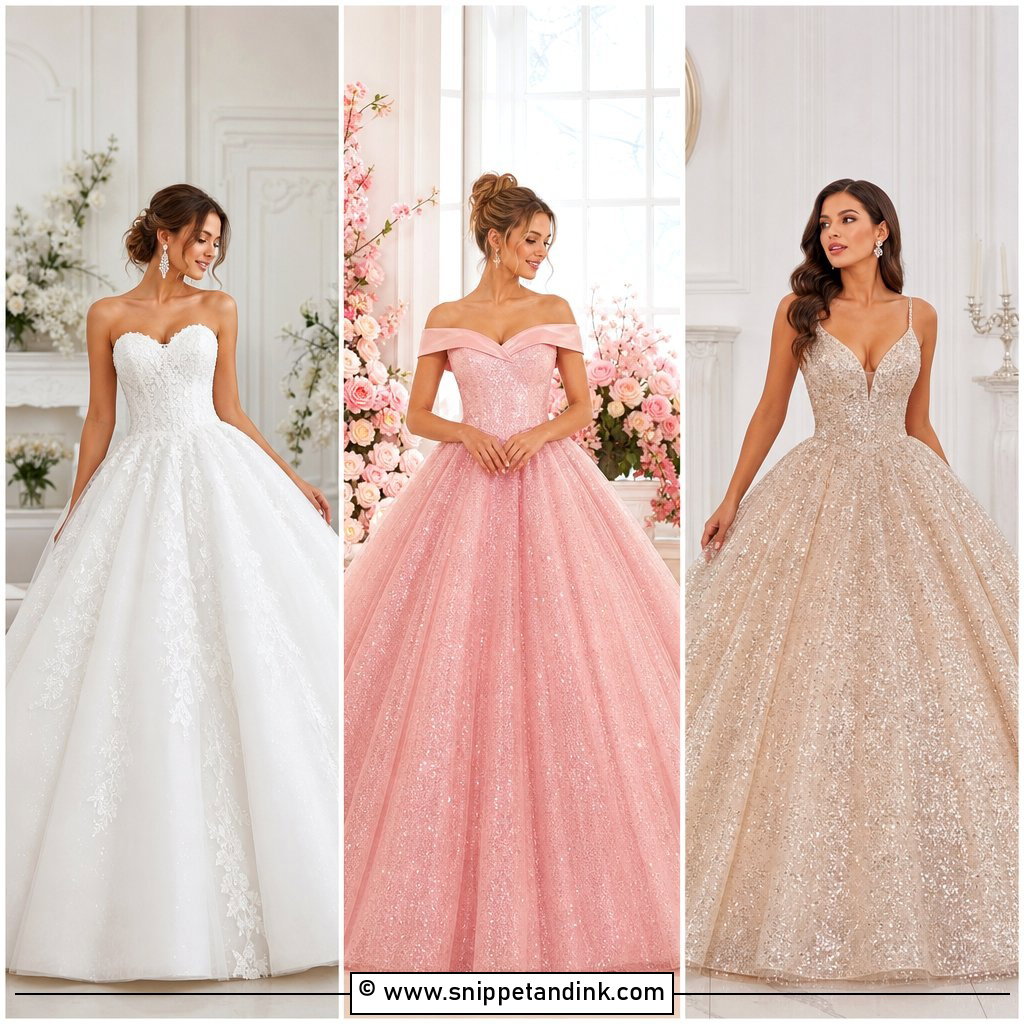
Tulle is the lightest way to get ball gown volume, which is why a sweetheart tulle gown is so comfortable compared with satin. The catch is that tulle has no structure of its own, so the bodice has to supply it. A strapless sweetheart needs real boning and a snug waist. Subtle ruching or lace appliqués add definition without weighing down the skirt, and a narrow sparkling belt only belongs if the waist needs emphasis. Crystal earrings, a sheer chapel veil and ivory heels suit it. Loose waves or a soft updo echo the curved neckline, and pale roses, sweet peas or white ranunculus keep the bouquet delicate. Walk and sit in it at a fitting to check the volume is manageable.
7. Corset Ball Gown Wedding Dress
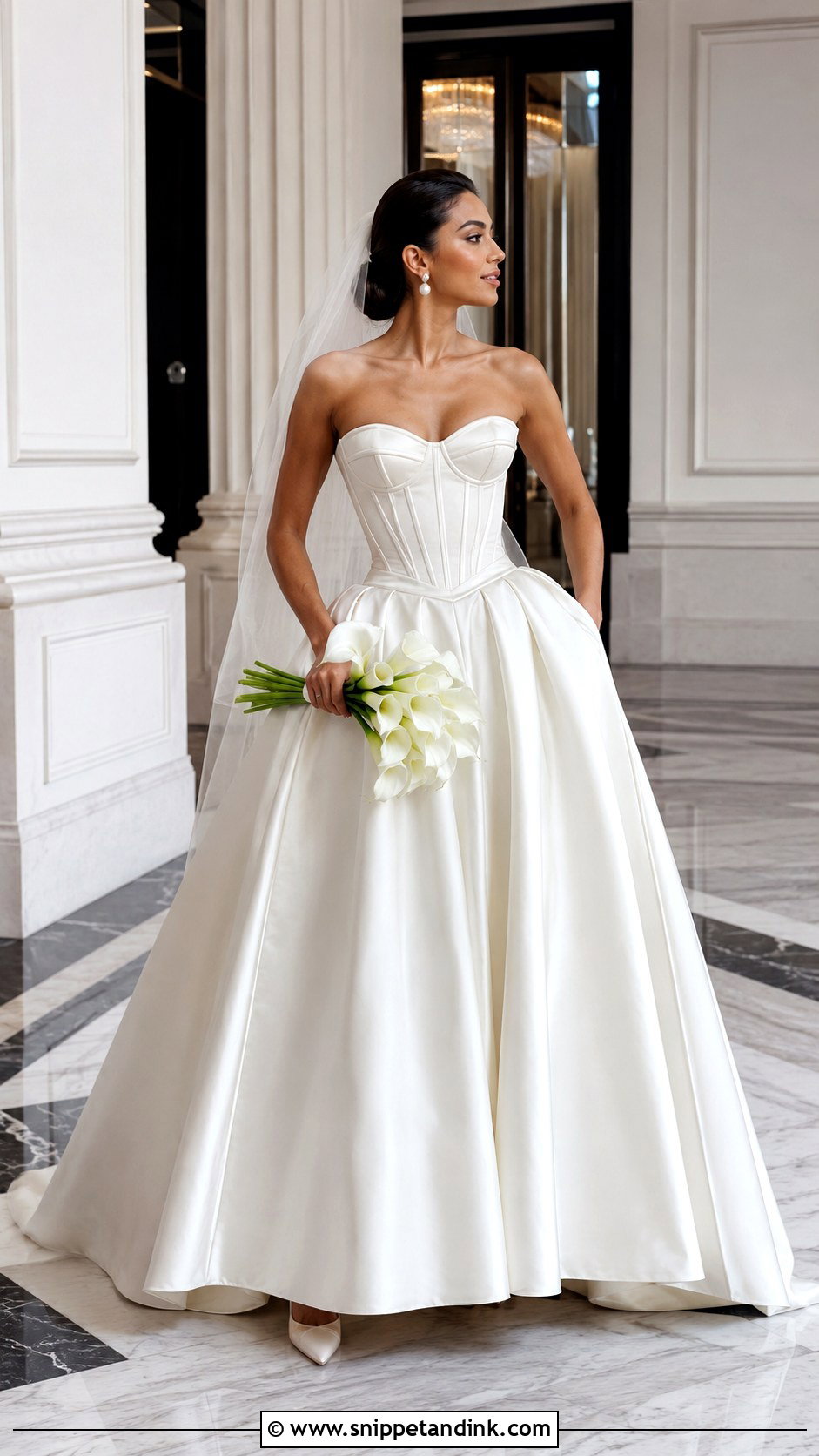
Exposed corsetry is a fashion choice and an engineering one. The boning you can see is doing real work, so I check that each channel lies flat and that the cups actually support rather than just shape. You should be able to take a full breath sitting down. A satin skirt contrasts with visible structure; tulle keeps it lighter. Add a plain veil, sculptural pearl earrings and closed-toe pumps, with a sleek bun or centre-parted updo to show off the lines. Go easy on accessories, since the corset is already the focal point, and a white tulip or calla lily bouquet keeps the mood modern.
8. Floral Applique Ball Gown Wedding Dress
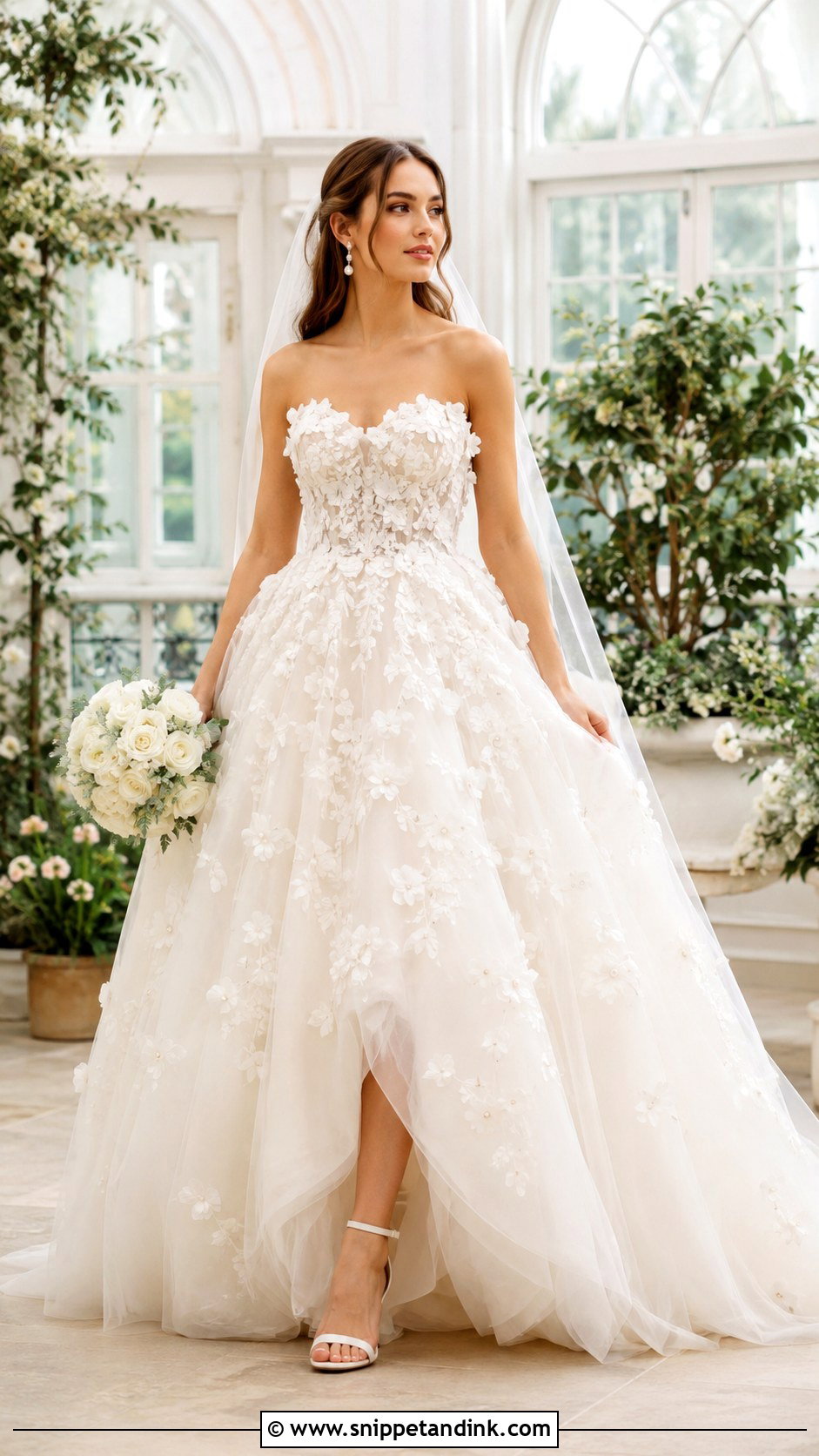
Floral appliqués can make a gown look painted with flowers or simply cluttered. Concentrated around the bodice and fading into the skirt, they lengthen the figure; scattered loosely, they feel like a garden. Keep accessories simple: small pearl earrings, a sheer veil and ivory ankle-strap heels, with a soft updo and a bouquet of just one or two flower types so it doesn’t argue with the dress. Run your fingers along the appliqués at the waist and neckline at your fitting. Raised edges there catch on the veil and the bouquet ribbons all day. Conservatories, garden venues and bright, flower-filled rooms suit it.
9. Pearl Beaded Ball Gown Wedding Dress
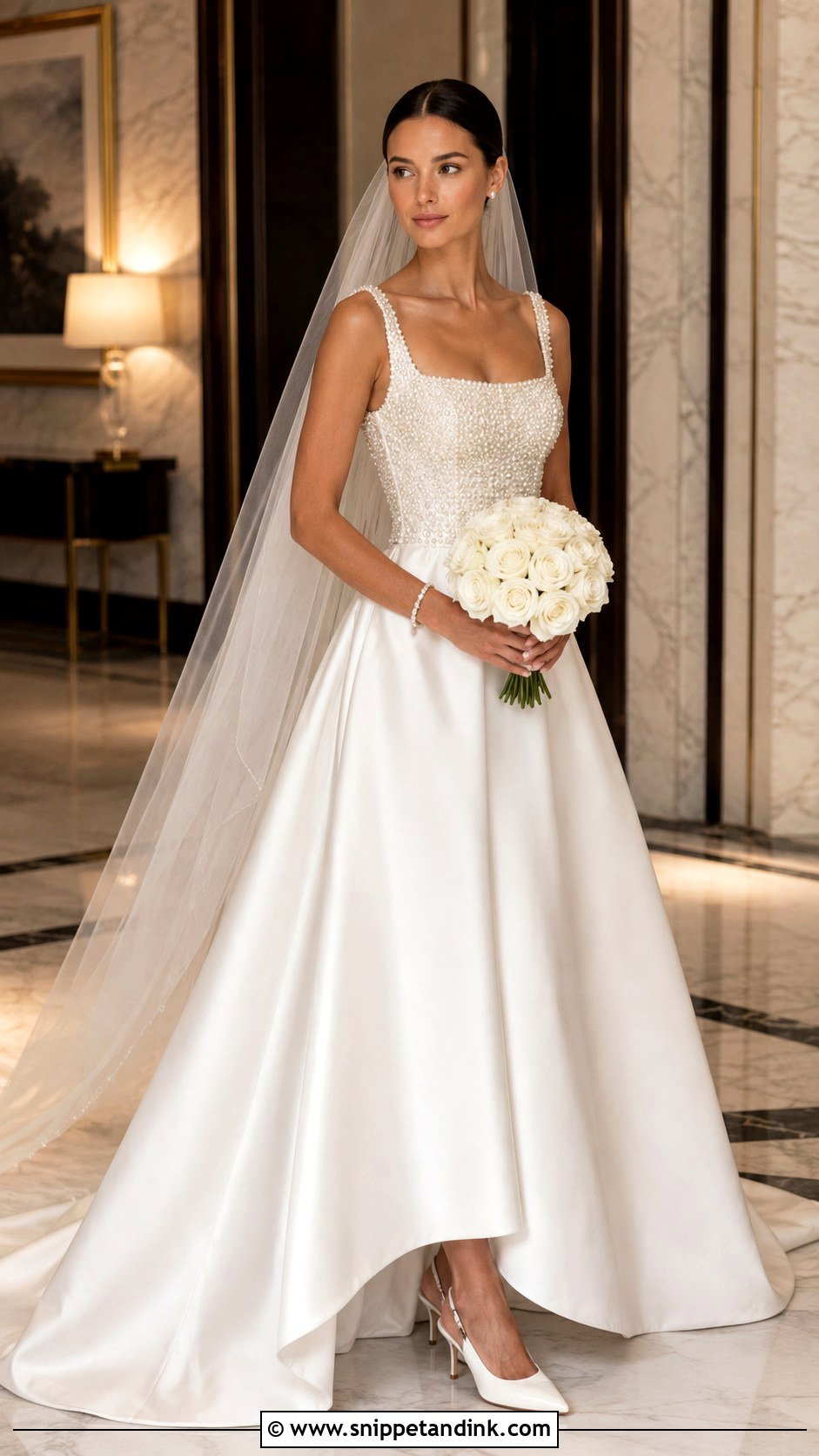
Pearls catch light softly, more glow than glitter. A pearl-covered bodice over a clean satin skirt looks balanced, while pearls scattered across tulle feel more romantic. Pearl studs, a single-strand bracelet and a plain-edged veil keep it coordinated, and skip a busy necklace if the pearls run across the neckline. Ivory pumps or low slingbacks suit it, with a low twist and a small pearl comb only if the beading is understated. Carry white roses. I always check the beadwork under the arms, because pearls there rub skin raw and snag the veil when you turn.
10. Sparkle Tulle Ball Gown Wedding Dress
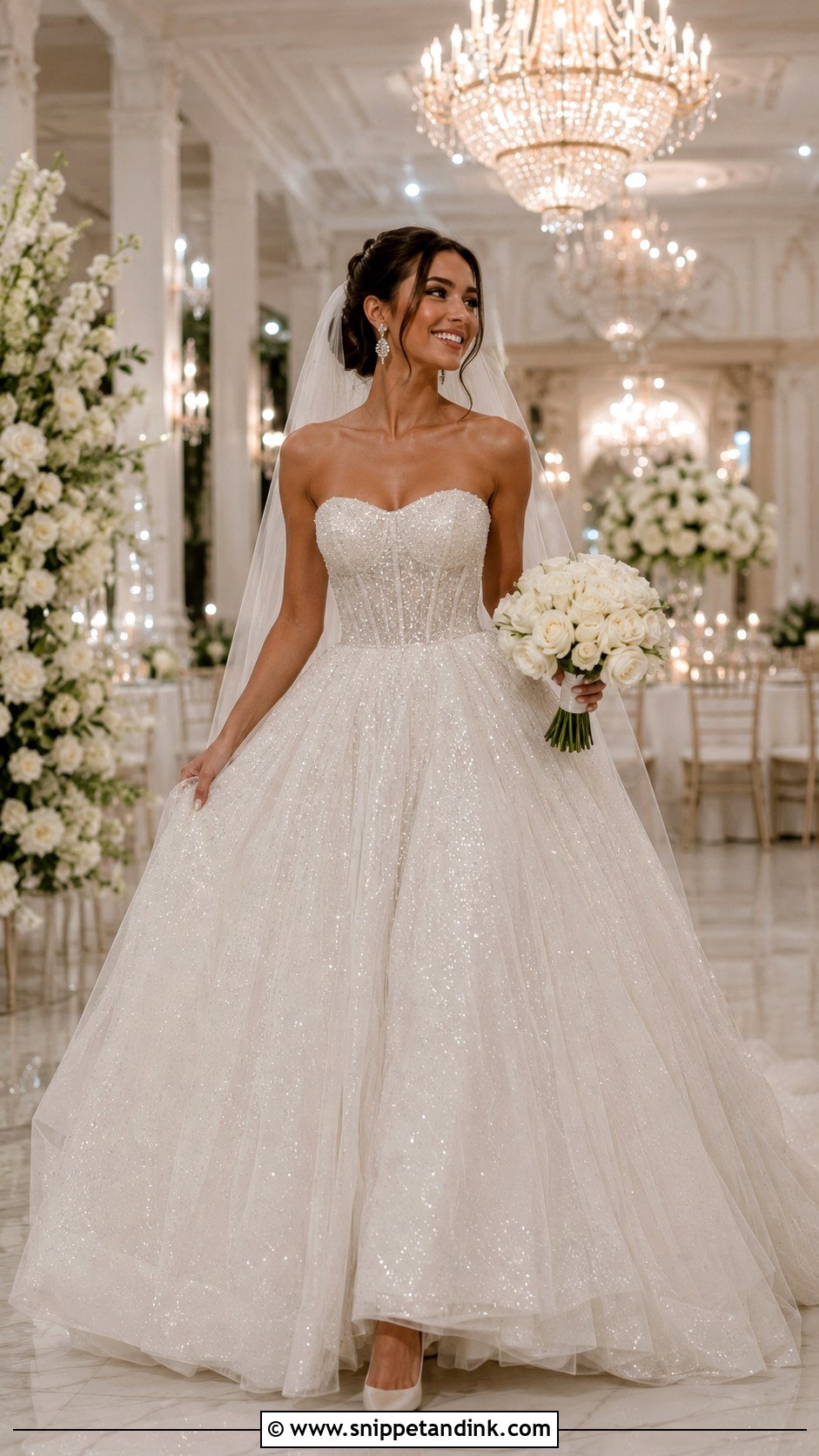
Sparkle tulle is built for evening. Under reception lighting and camera flash, it can look twice as bright as it did in a daylit salon, which is either the point or a surprise. I’d always choose glitter woven into the fabric rather than loose glitter, which sheds across the dance floor and everyone’s clothes. A clean corset bodice balances the shimmer. Small crystal earrings, a simple veil and silver or ivory pointed heels suit it, with a smooth chignon or soft Hollywood-inspired waves. White roses with minimal greenery keep the bouquet from crowding the look. View it under both natural and artificial light before you buy.
11. Bow Back Ball Gown Wedding Dress
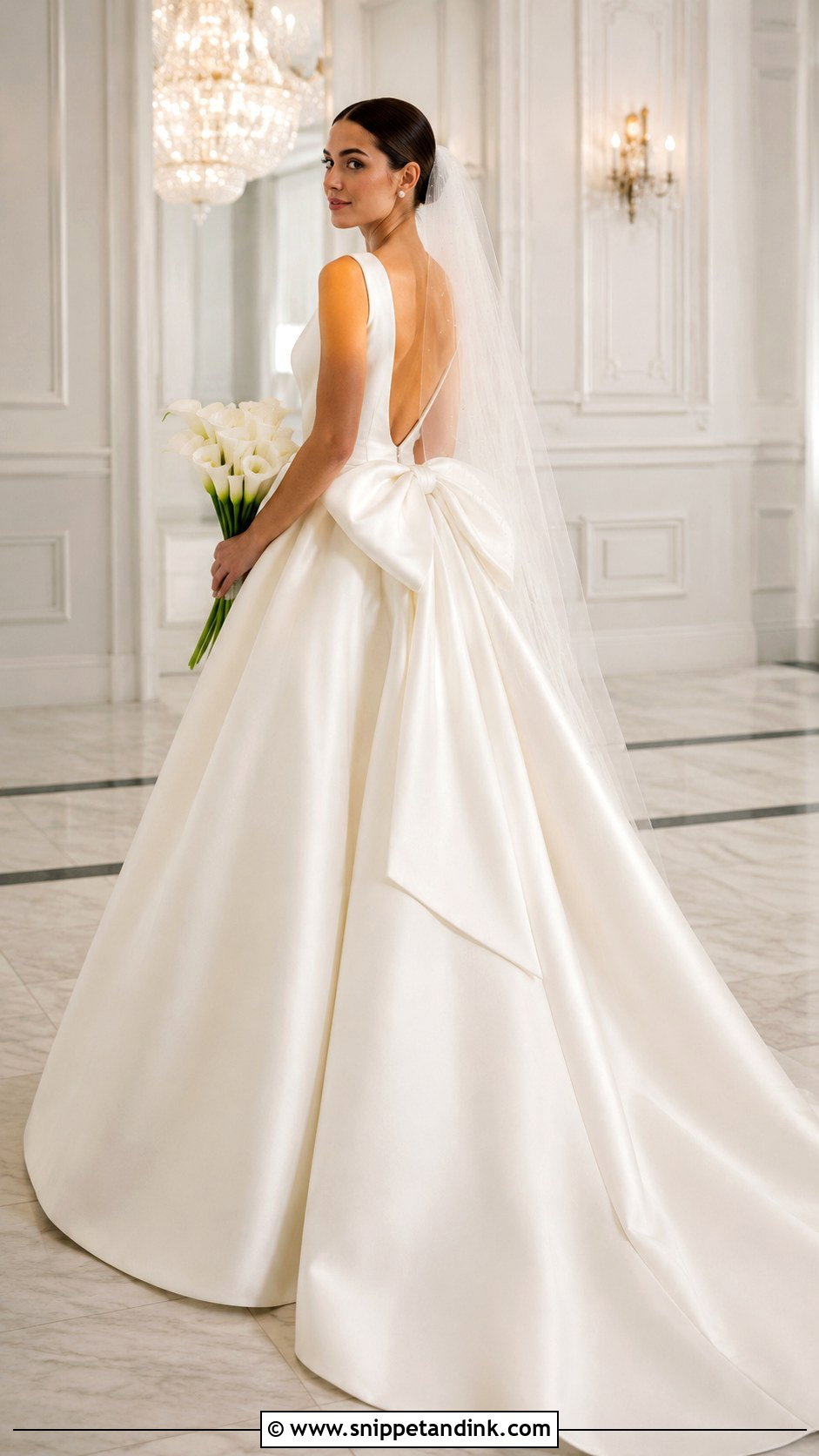
An oversized back bow is a front-plain, back-dramatic design, so the decisions are about the ceremony. Guests see your back for most of it, and a long veil can hide the bow completely. I suggest a veil you can remove straight after the vows. Satin and Mikado hold a crisp bow; choose a simple neckline and minimal embellishment so the back stays the attraction. Pearl studs, pointed pumps and a smooth bun keep everything clear, and a streamlined bouquet of calla lilies or tulips suits the clean front. Check whether the bow can be detached or bustled, since a big bow can sit right where the bustle needs to go.
12. Detachable Sleeve Ball Gown Wedding Dress
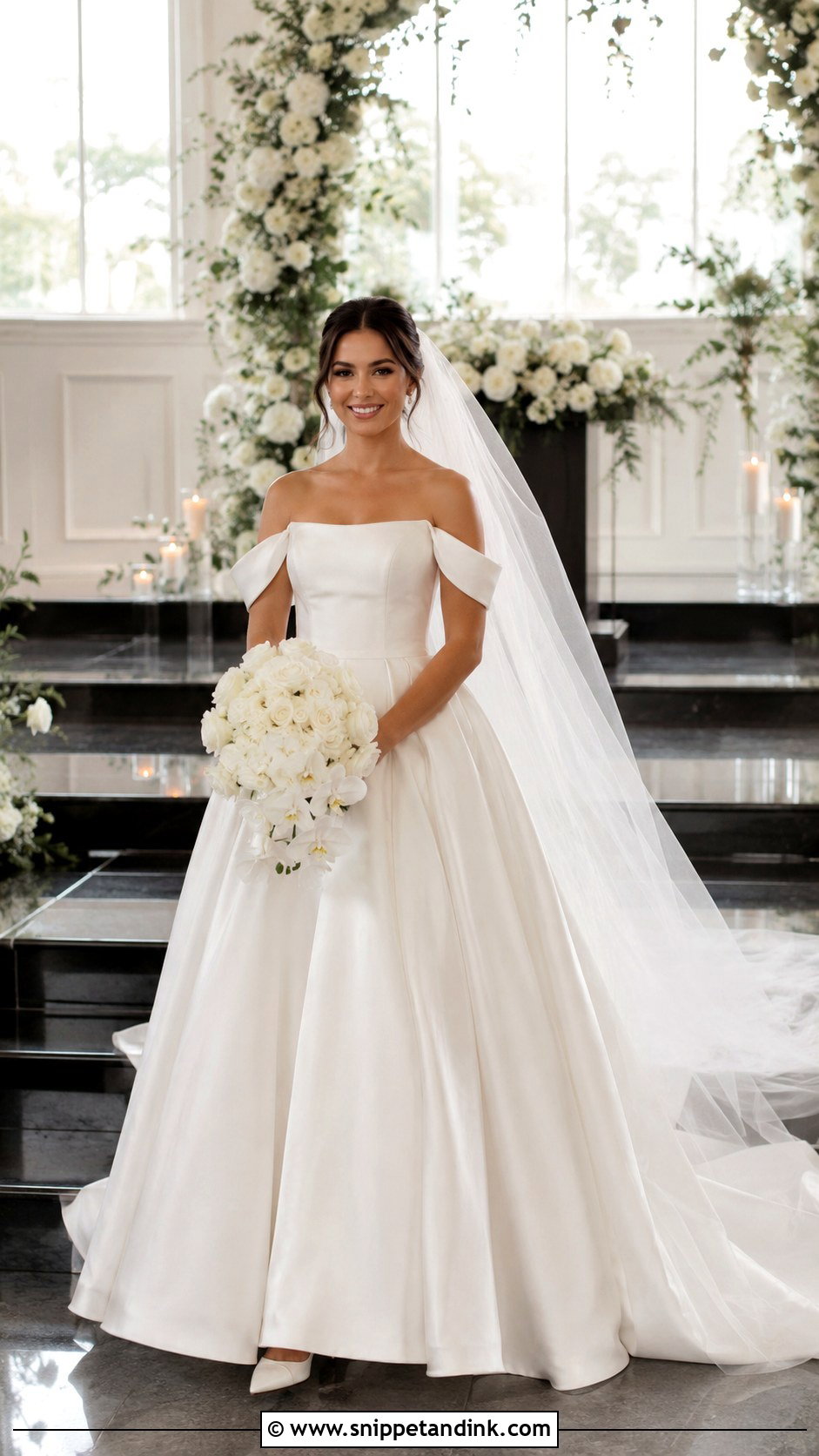
Detachable sleeves give you two looks from one dress. Fitted lace or draped off-the-shoulder sleeves suit the ceremony; unhook them and you have a strapless reception dress. The attachment points are where these go wrong. They need to lie flat and hold when you reach, so test them by hugging someone at the fitting. A long veil, pearl earrings and closed-toe ivory heels complete the ceremony version, then swap to statement earrings or a sparkling comb for the evening. A structured satin bodice and full skirt work for both. Teach one attendant how the sleeves come off, and keep a labelled bag ready for them.
13. Detachable Overskirt Ball Gown Wedding Dress
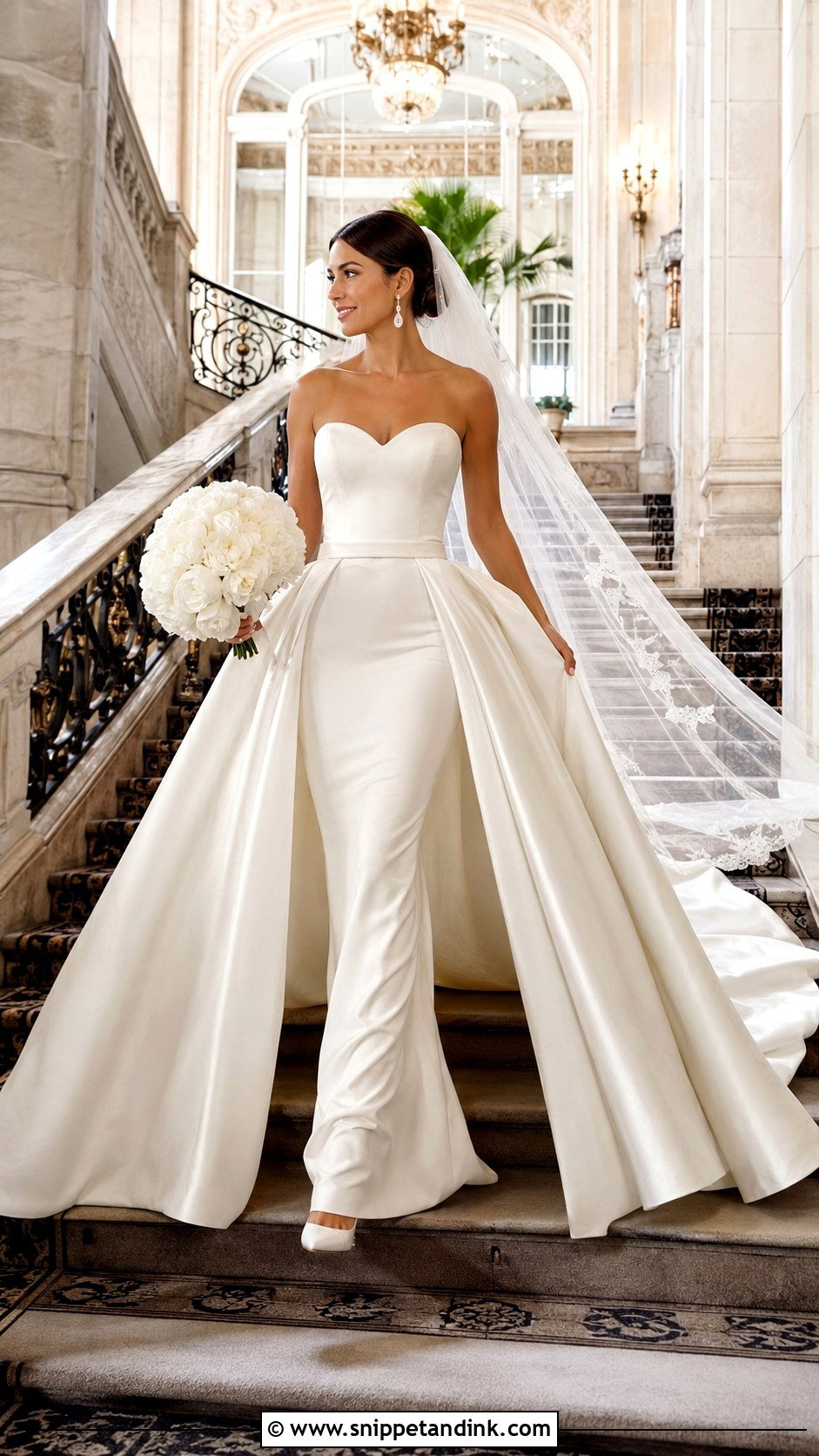
The overskirt is the ball gown with an exit plan. It gives you full volume for the ceremony and portraits, then lifts away to reveal a slimmer dress for dinner and dancing. The waistband has to be discreet and secure, blending into the fitted base gown so nobody can see where one ends and the other begins. A cathedral veil, drop earrings, satin pumps and a structured white bouquet suit the first look; shorter earrings or a modern hair piece can mark the change. Practise removal at the final fitting with whoever will help. It should come off cleanly without tugging the bodice, which matters at weddings with separate ceremony, portrait, dinner and dancing segments.
14. Drop Waist Ball Gown Wedding Dress
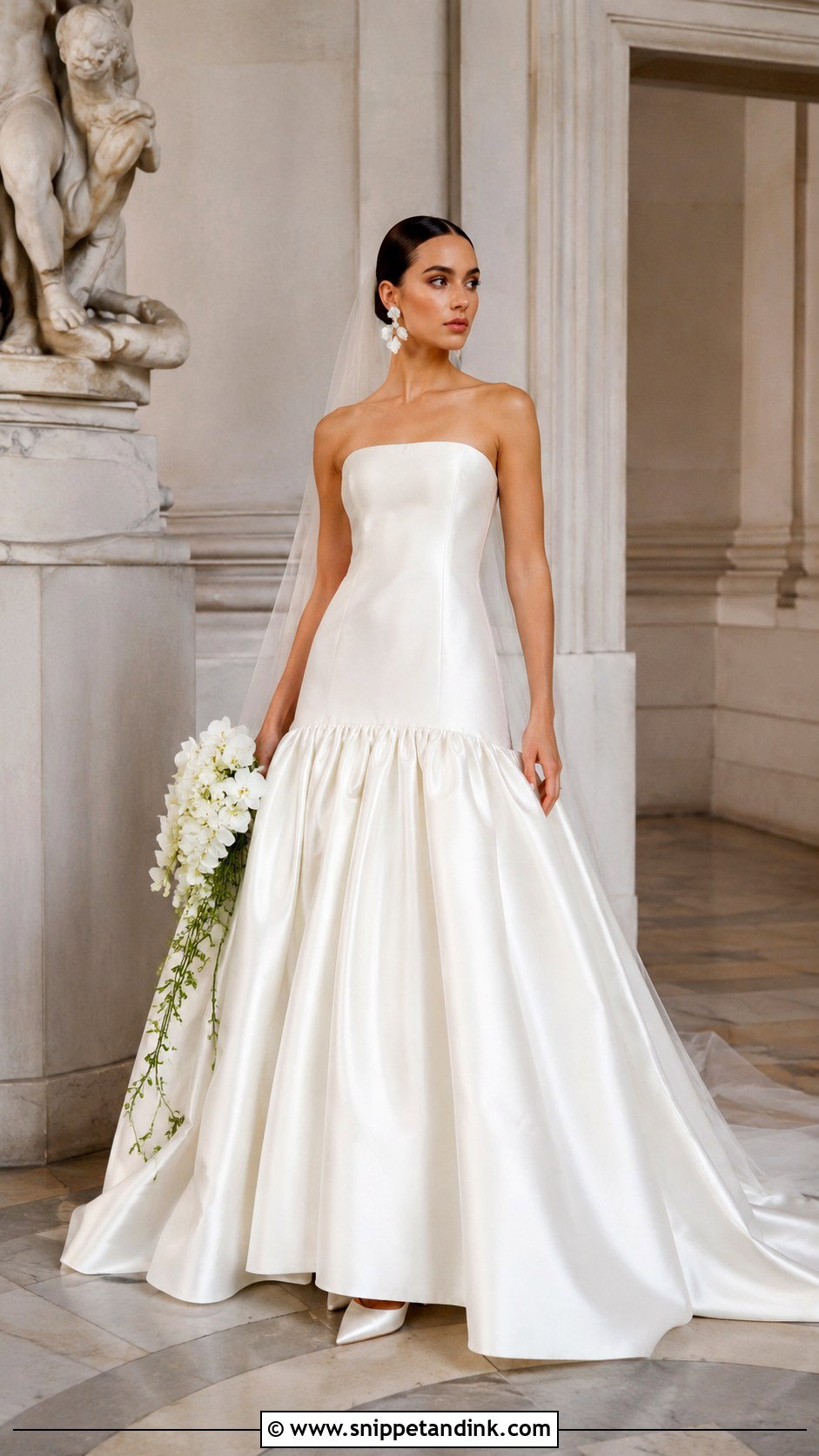
A drop waist extends the fitted bodice down toward the hips before the skirt releases, which reads as dramatic with a slight vintage note. It needs a firm foundation; structured satin, Mikado or lace over a stiff lining keeps that long bodice smooth instead of wrinkling across the stomach. A simple veil, sculptural earrings and pointed heels suit it, plus a neat updo and a narrow, gently trailing bouquet that echoes the line. The skirt has to start at the right point on your body, so ask the seamstress to look at the proportion from the side and back as well as the front. Then sit down. A drop waist that’s fine standing can dig in when seated.



15. Square Neck Ball Gown Wedding Dress
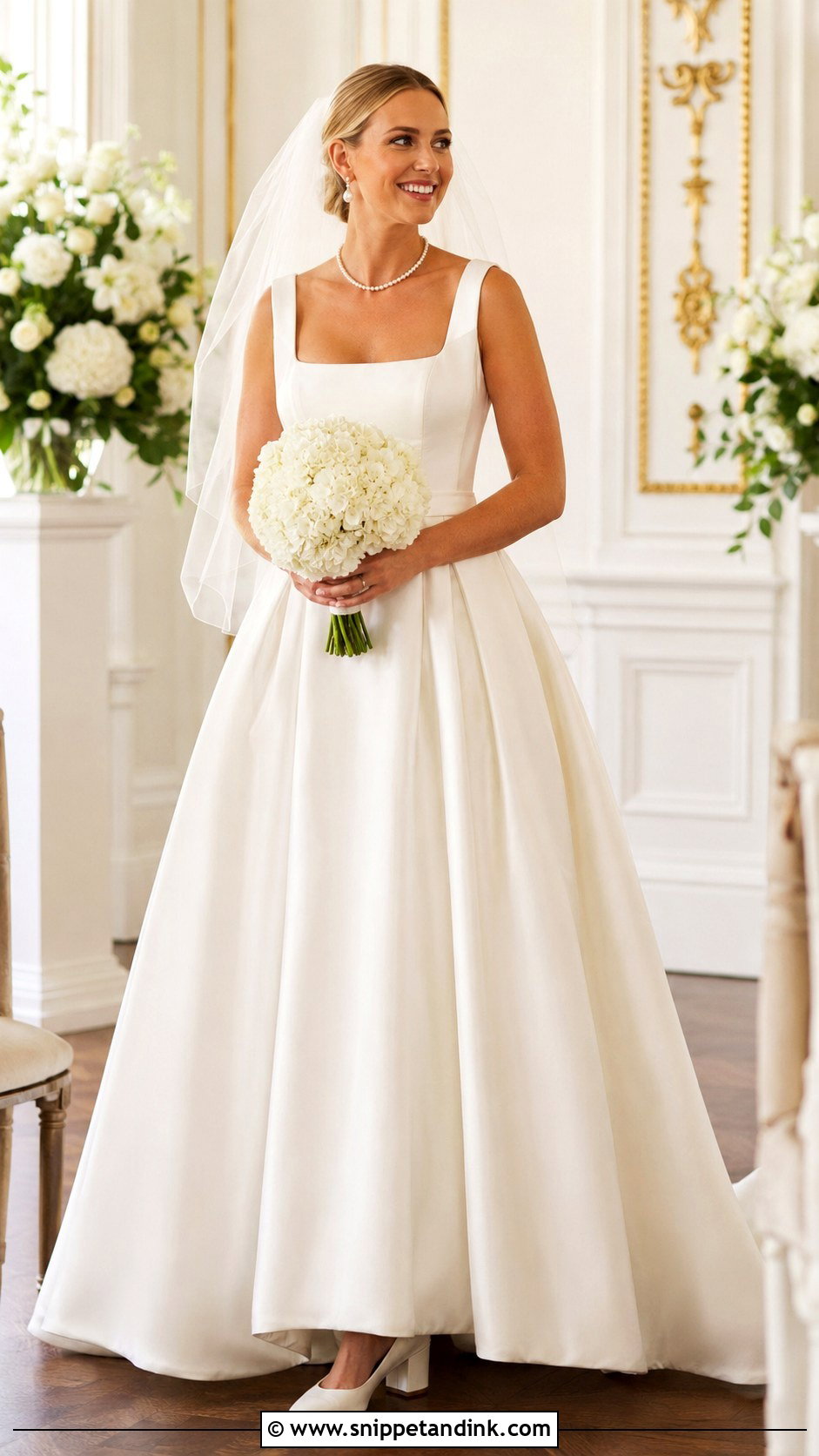
Square necklines are structured but forgiving. Wide straps give real support, and the open neckline leaves room for a delicate pendant or short pearl strand. A smooth satin skirt keeps it understated; floral jacquard adds woven texture. Pearl earrings, a fingertip veil and ivory block heels suit it, with a centre-parted low bun and a rounded bouquet to soften the geometry. Watch the corners at your fitting. A square neck that pulls into a curve when you move your arms is a fit problem, and it shows in every photo.
16. Scoop Neck Ball Gown Wedding Dress
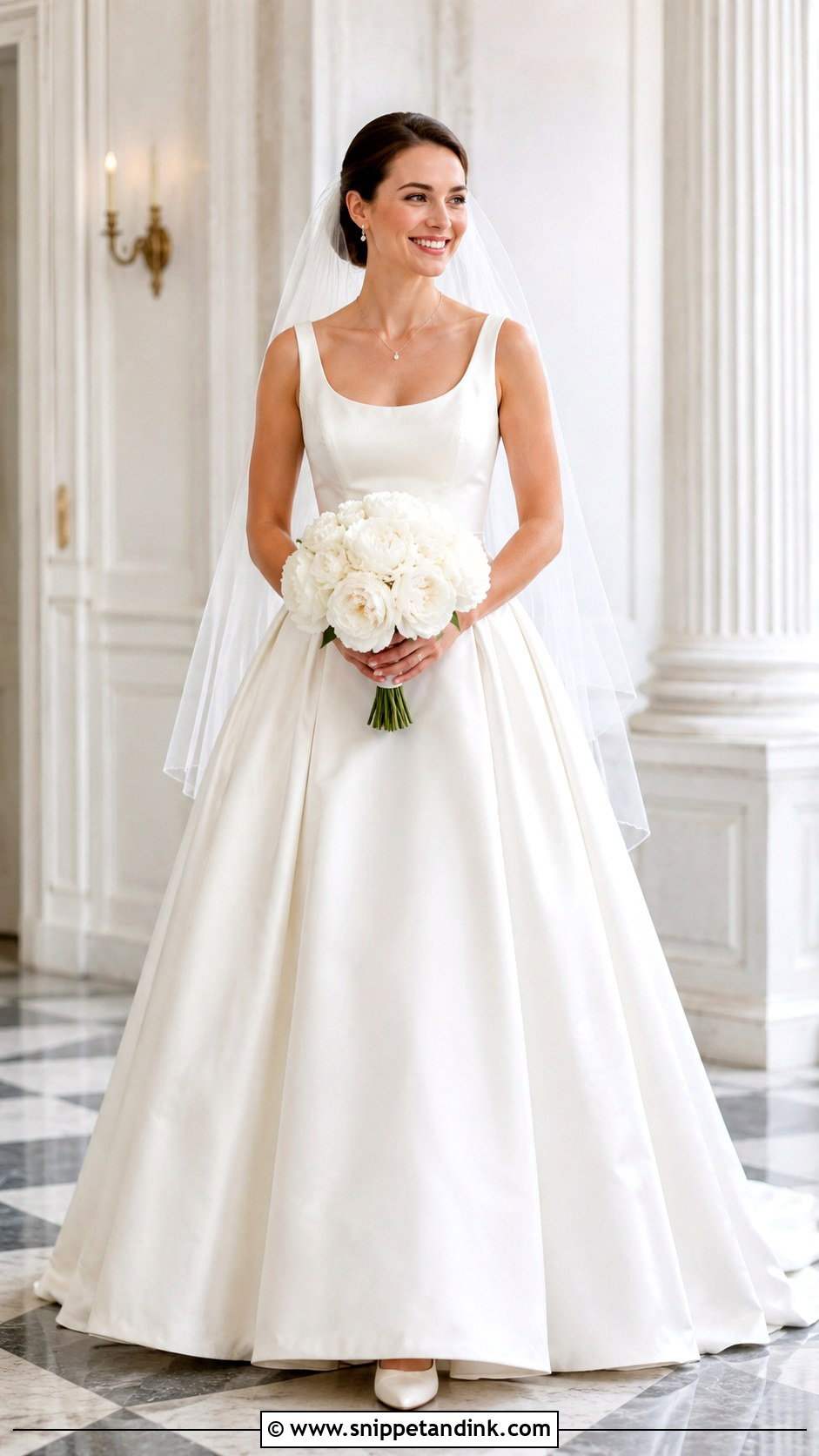
Scoop necklines are the softest and most approachable of the ball gown necklines, and they flatter a wide range of figures. Cut wide, a scoop shows the collarbone; cut higher, it gives more coverage. I like it on a fitted satin bodice with wide straps over a full skirt with clean pleats, finished with a small pendant, pearl drops and a sheer chapel veil. Ivory pumps with cushioned insoles will see you through hours of standing. A relaxed low bun or half-up style and white peonies keep it gentle. Scoops are the neckline most likely to gape when you lean forward, so test that at alterations.
17. High Neck Ball Gown Wedding Dress
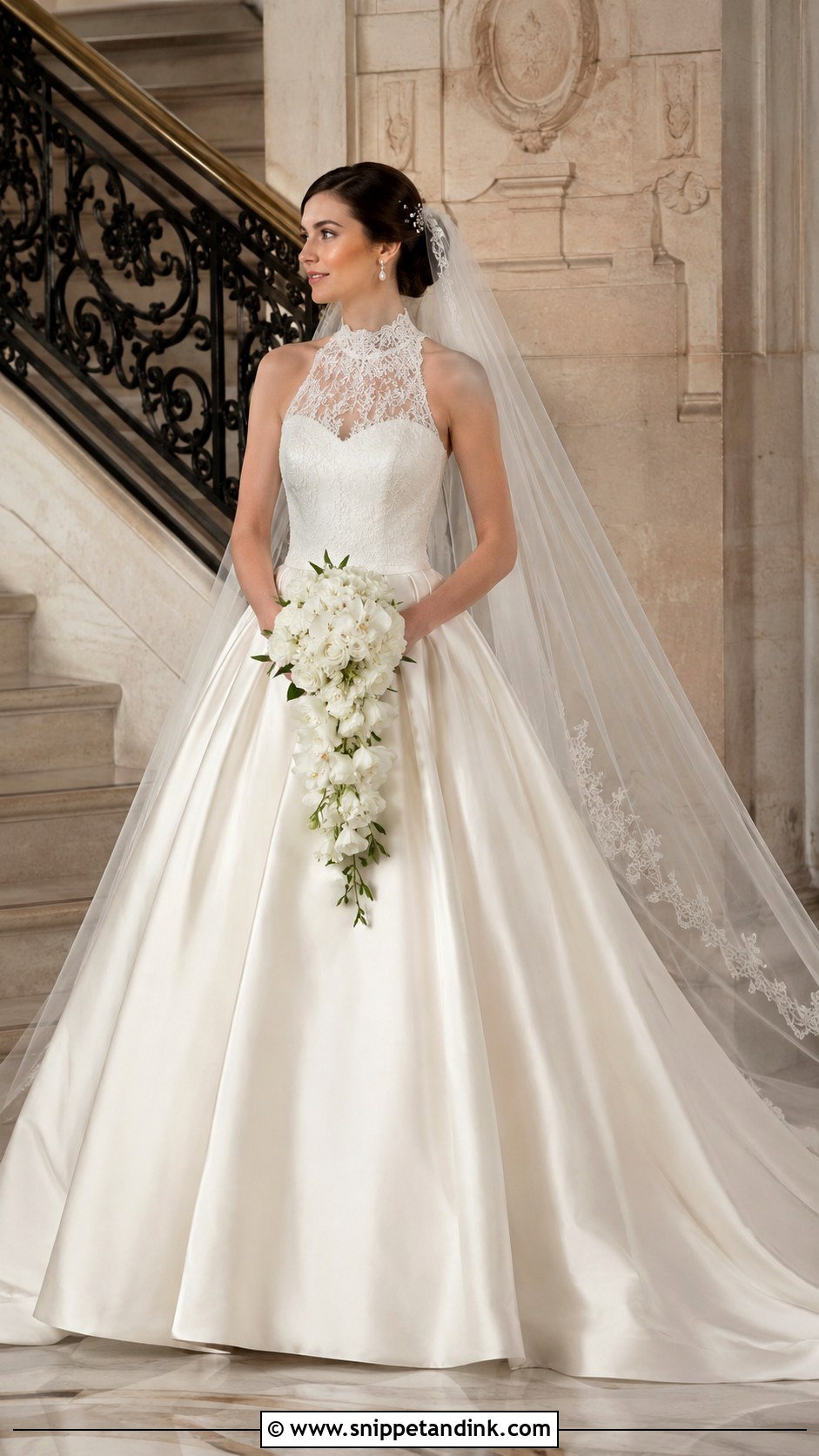
A high neck pulls attention up to your face, which is a lovely balance to a full skirt. Lightweight illusion tulle with lace appliqués keeps the neckline from looking heavy, while a simple bateau-style high neck on a sleeveless bodice with a satin skirt feels cleaner. Skip the necklace and let refined earrings do the work. A low bun with pearl pins, a cathedral veil and closed-toe pumps complete it, with an elongated bouquet to balance all that coverage. Turn your head both ways at the fitting. A collar that rubs on the first turn will be raw by the reception. Cooler seasons, formal evening ceremonies and historic venues suit it.
18. Minimalist Silk Ball Gown Wedding Dress
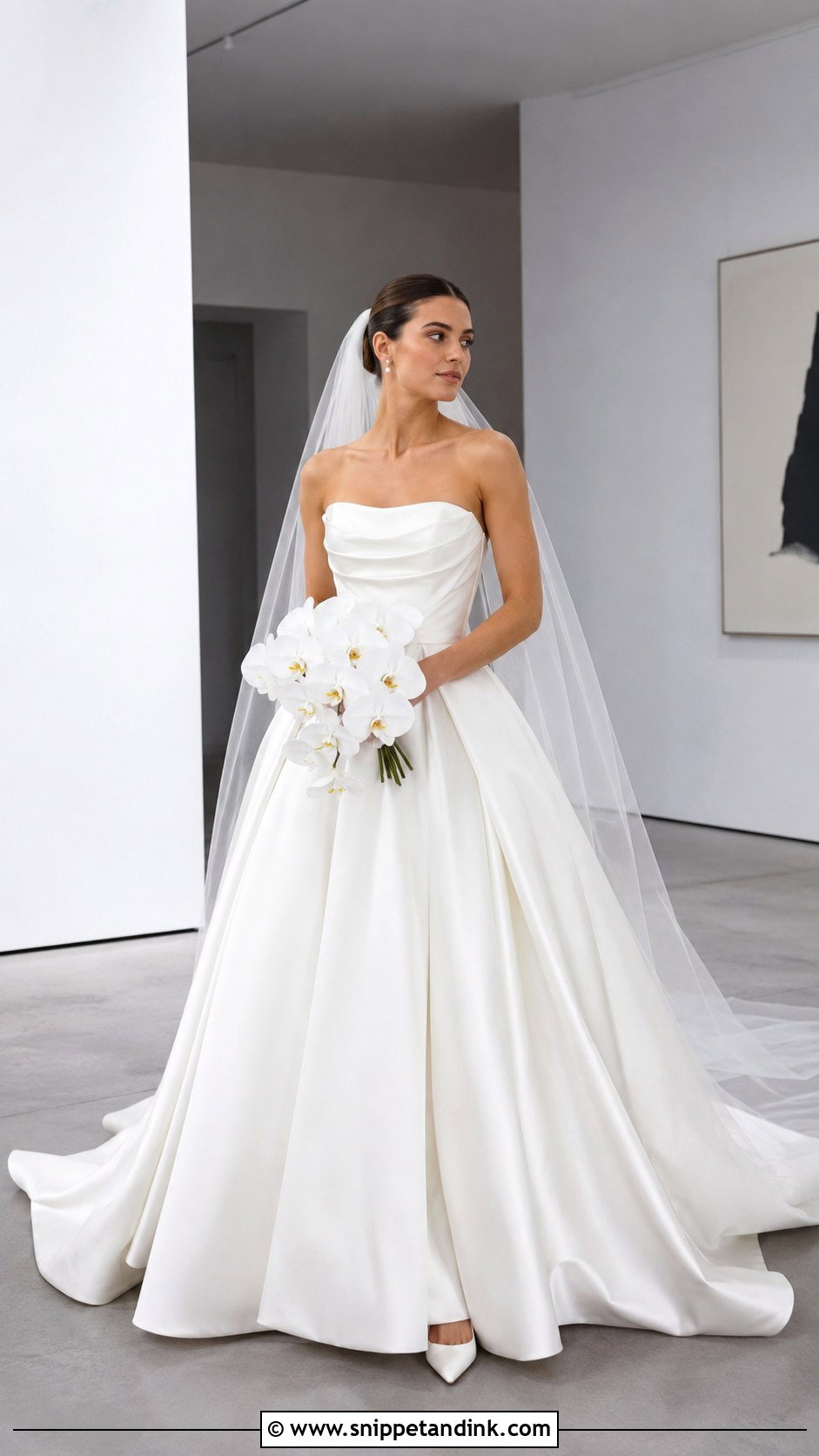
Can a gown with no decoration at all make the strongest impression? It can, but only if the fabric and tailoring are excellent, because silk without lace or beading shows every seam. A structured bodice with a softly draped neckline and a skirt that moves naturally is the shape I’d look for. Pearl or diamond studs, a plain cathedral veil and pointed ivory pumps complete it, with a sleek chignon and white orchids. Ask about pockets, covered buttons and a secure bustle; small practical details matter more on a plain dress. Silk shows water spots and creases readily, so plan for rain and for steaming. Museums, galleries and modern hotels suit it.
19. Blush Ball Gown Wedding Dress
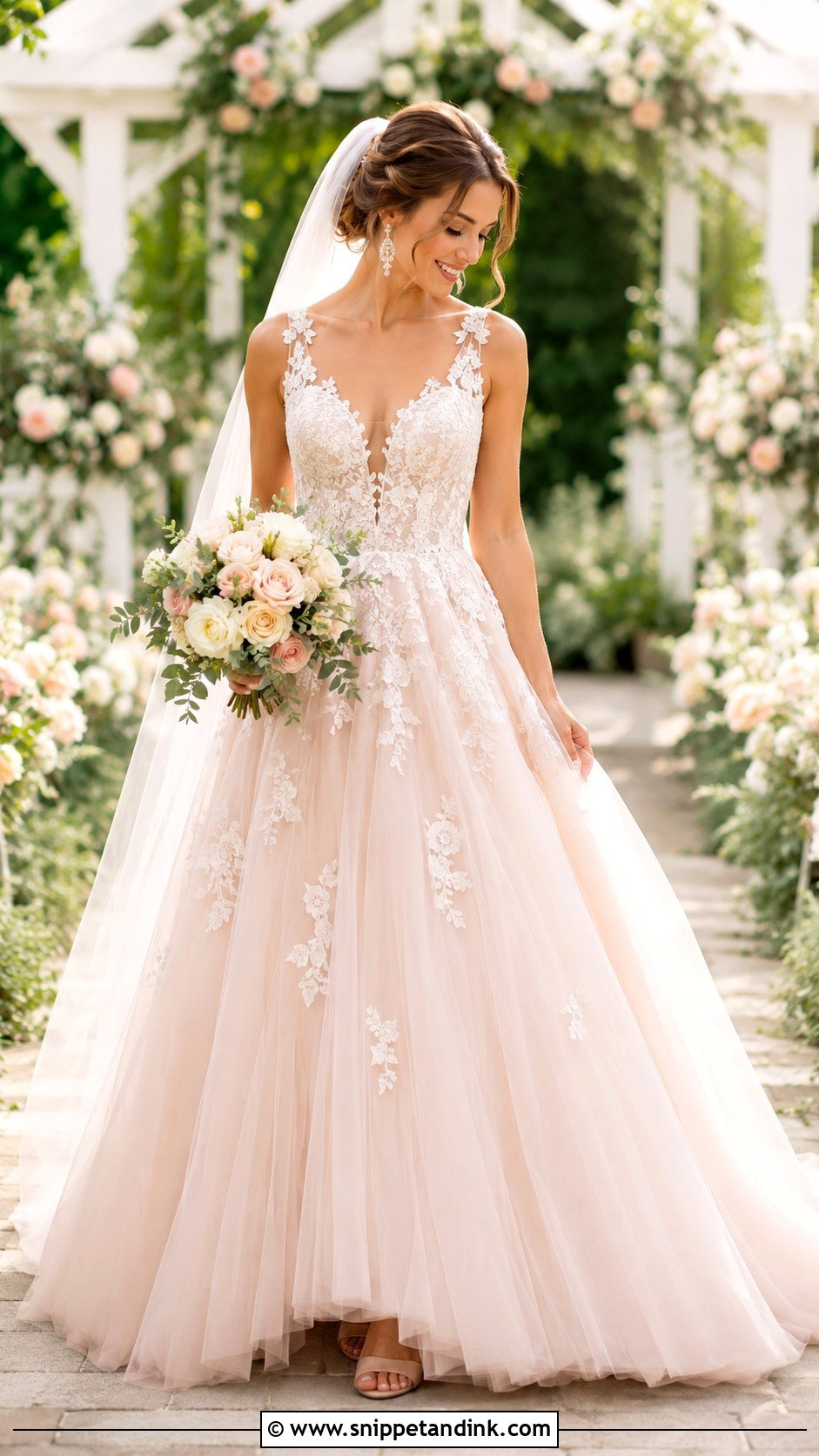
Blush is a soft step away from white that still reads bridal. Pale pink, champagne-blush or nude-lined tulle work better than saturated colour. One effect I like is ivory lace over a blush lining, which makes floral lace more visible and gives the skirt depth. Rose-gold earrings, neutral satin heels and an ivory veil that blends with the lighter appliqués suit it, with loose waves or a textured low bun and a bouquet of cream, pale pink and white flowers. Blush undertones shift between rooms, so compare it under several lights and pick the version that suits your skin.



20. Plus Size Ball Gown Wedding Dress
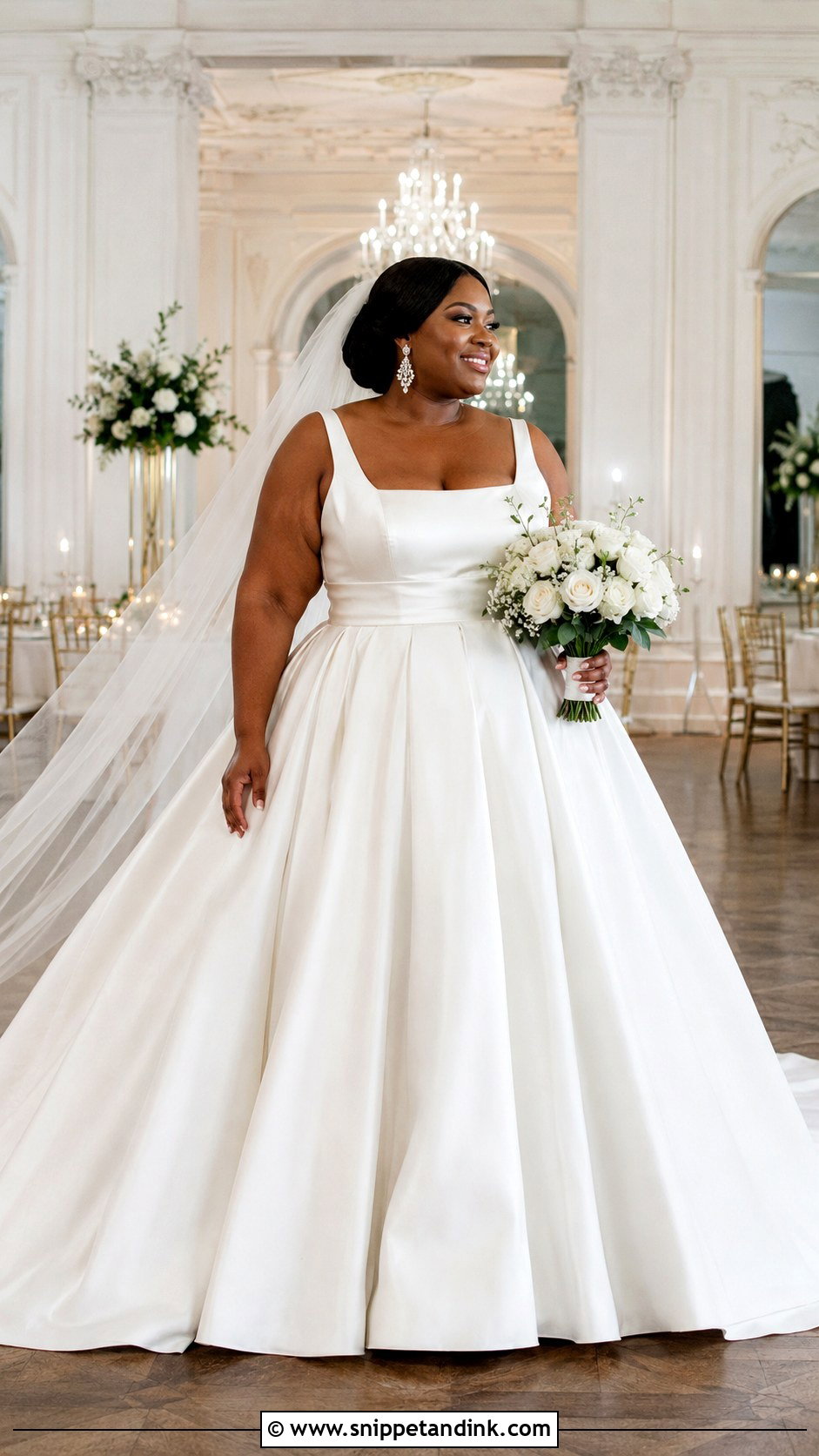
A plus-size ball gown should be built for the bride’s body, not scaled up from a smaller pattern, and the difference shows in the bodice. I look for real boning, supportive straps or sleeves and a skirt that starts at the waist position that feels most comfortable. V-necks, square necks and off-the-shoulder bodices each do something different, so try several; ignore the rules people repeat about what curvy brides “should” wear. Supportive block heels, good foundation garments, statement earrings and a veil sized to the skirt complete it. During alterations, sit, walk, hug and dance. The gown should stay secure without pinching or constant tugging, and good construction is what makes that possible.
Sizing the Bouquet and Veil to a Full Skirt
A ball gown changes the proportions of everything else you carry or wear. A tiny bouquet can disappear against a wide skirt, while a huge round one hides the waist, which is the part of a ball gown designed to be seen. I usually suggest holding the bouquet at the hip bone, slightly below the waist, so the bodice stays visible.
- Bouquet width: roughly the width of your waist to a little wider looks balanced against most full skirts.
- Veil length: a fingertip or chapel veil suits most ball gowns; a cathedral veil looks best when the train is long enough to match it.
- Veil edge: a plain or narrow-edged veil lets lace, flowers or beading on the gown show through. A heavily trimmed veil over a busy dress competes with it.
- Shoes: the hem hides most of them, so choose for comfort and height first and let the colour be close enough.
Bring a photo of your gown to the florist, and bring the veil to your final fitting. Seeing them together, at full scale, is the only reliable test.
The Back View Matters as Much as the Front
One shape, a lot of personalities. Satin and Mikado give clean structure, while lace, appliqués, pearls and sparkle add texture, and Basque waists, corsets, detachable sleeves and overskirts let you tailor a traditional ball gown to how your day actually runs. Don’t judge any of them from the front alone. At fittings I have brides walk, sit, turn and raise their arms, then check the back, the bustle, the weight of the fabric and the shoe height. Choose accessories that support the gown’s strongest detail rather than competing with it. The ball gown that wins is the one you feel like yourself in and can’t wait to put on.
You'll Like These Ideas:









Leave a Reply