
Polish brides have two strong wardrobes to draw from. One is regional folk dress: embroidered blouses, decorated vests, full skirts, flower wreaths and saturated color. The other is the clean European bridal tradition of fine lace, champagne tones and sharp tailoring. You don’t have to pick a side. I often build a modern gown around a single panel of folk-inspired embroidery, or take a full regional costume and make it bridal with an ivory blouse and quieter accessories. The looks below run from formal ball gowns to light outdoor dresses, each styled from head to toe, so you can see where heritage fits into your own taste.
Planning Your Veil Around Oczepiny at Midnight
Many Polish weddings still include oczepiny, the late-night ceremony where the bride’s veil or wreath is removed and replaced with a headpiece marking her as a married woman. Modern versions are often full of games, but the veil removal usually stays. That moment affects how I style the hair from the start of the day.
- Attach the veil with a comb that slides out cleanly. Dozens of hidden pins turn a symbolic moment into a struggle in front of every guest.
- Plan the hairstyle to still look finished once the veil is gone. A low bun or braided crown holds up; a style that relied on the veil to cover the back does not.
- Decide in advance what goes on afterward, whether a cap, a flower wreath, a lace headscarf or a simple jeweled pin, and give it to whoever runs oczepiny.
If you’re wearing a traditional wreath (wianek) rather than a veil, the same thinking applies. Have the florist build it on a sturdy wire base with flowers that won’t wilt by midnight, and secure it with bobby pins crossed through the frame rather than relying on its own grip.
1. Traditional Polish Wedding Dress With Floral Crown
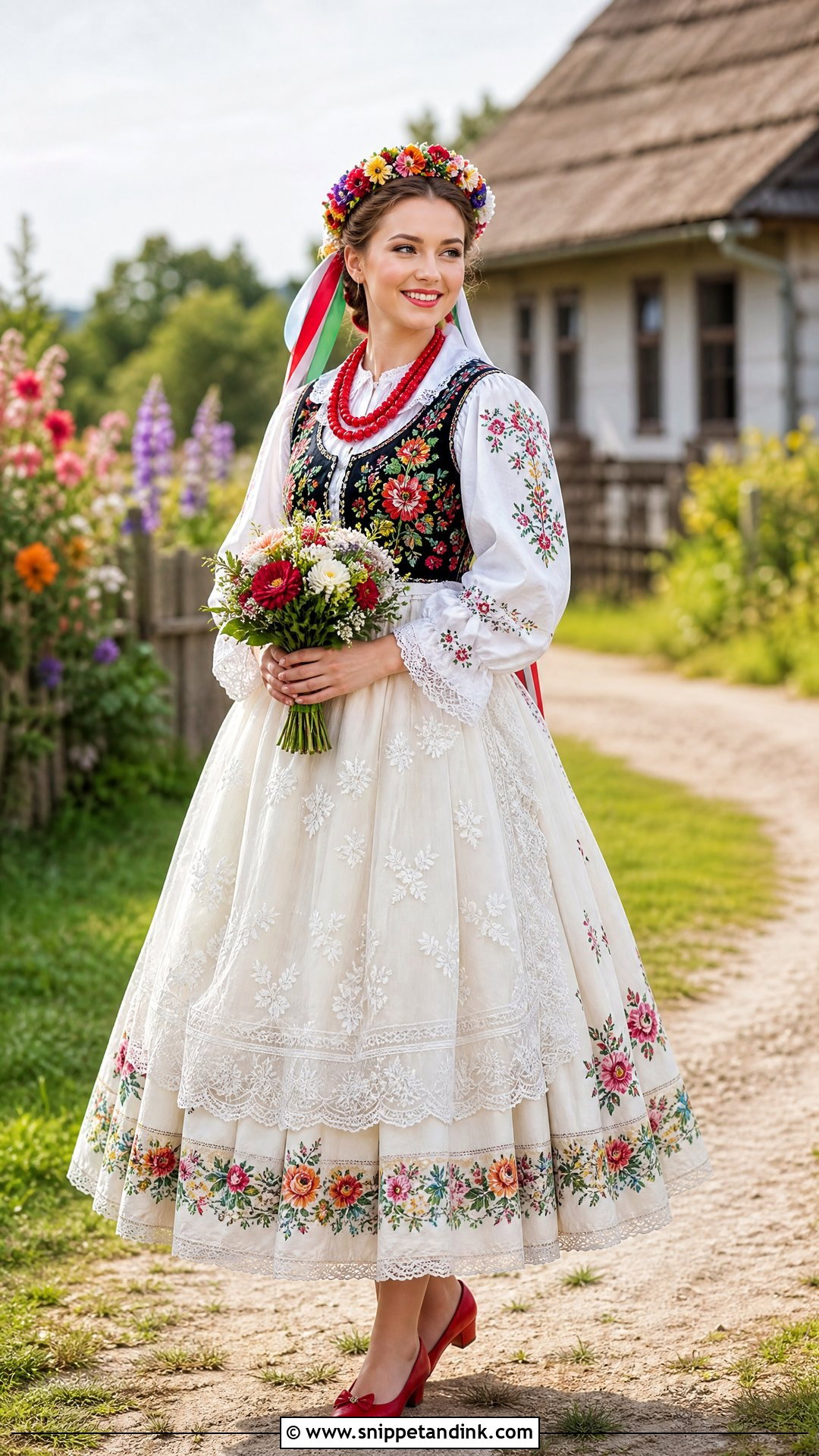
Folk costume with a flower crown is the most joyful bridal look in this collection, and the most demanding to get right. The base is a crisp white blouse with embroidered sleeves and a gathered neckline, a fitted floral vest and a full ankle-length skirt, tied at the waist with a coordinating apron or decorative sash. Regional costumes differ a great deal, so I always ask which part of Poland the family comes from before choosing colors or motifs. Low embroidered heels or soft leather pumps will see you through a long party. A braided style anchors the crown far better than loose hair, and the bouquet should stay small next to that much pattern.
2. Kraków Polish Wedding Dress With Embroidered Vest
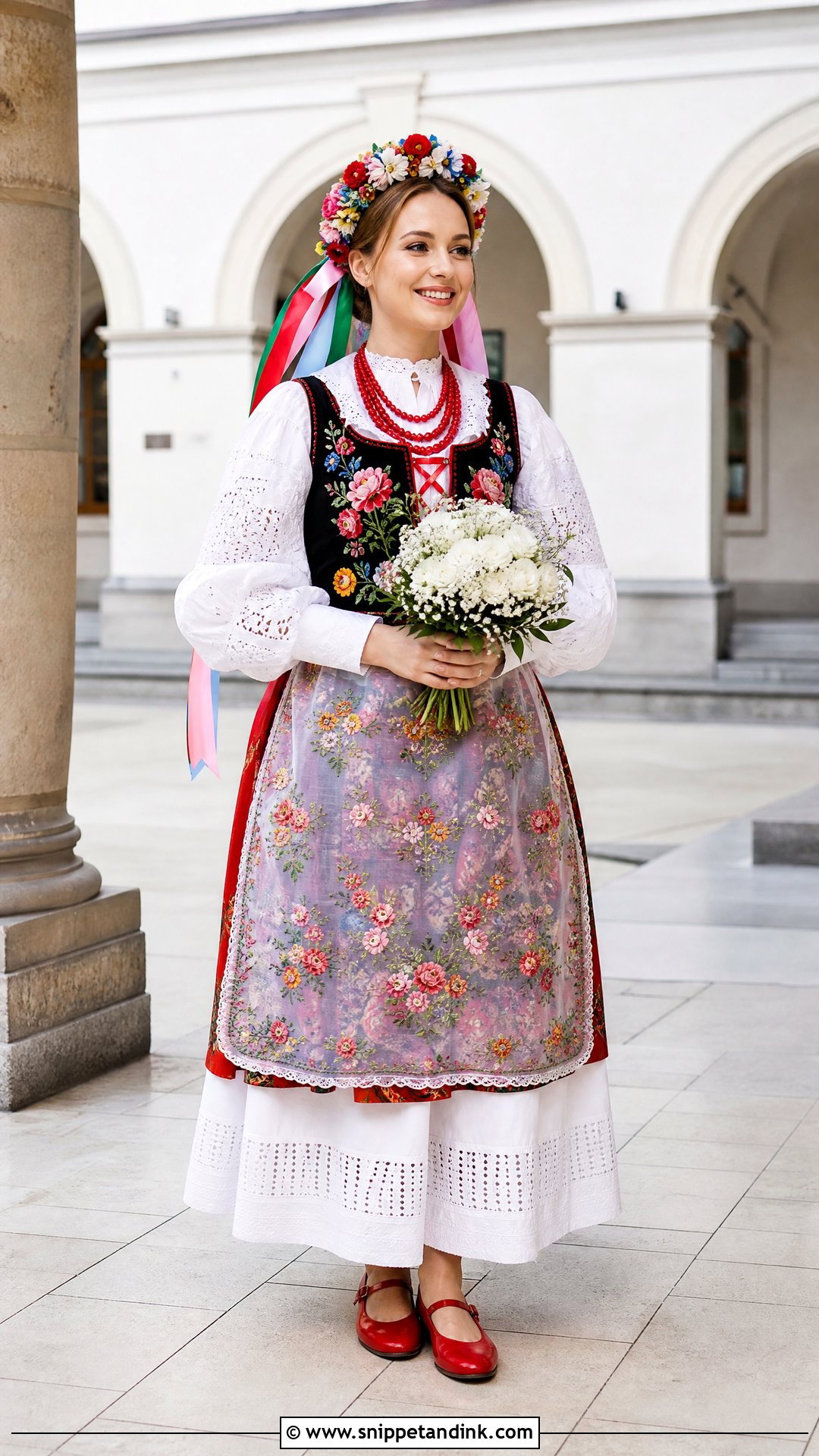
Kraków dress is the one most people picture: white blouse, structured vest bright with floral stitching and small metallic details, and a skirt with real volume. Pick an ivory cotton or linen blouse with full sleeves and neat cuffs, then a fitted vest in black, navy or a deep jewel tone. Keeping the long skirt white holds the outfit on the bridal side, while a floral apron carries the color. Red or black low heels and a ribboned flower crown complete it. Strands of red coral-style beads are the traditional necklace with this costume, and they’re all the jewelry it needs.
3. Łowicz Polish Wedding Dress With Striped Skirt
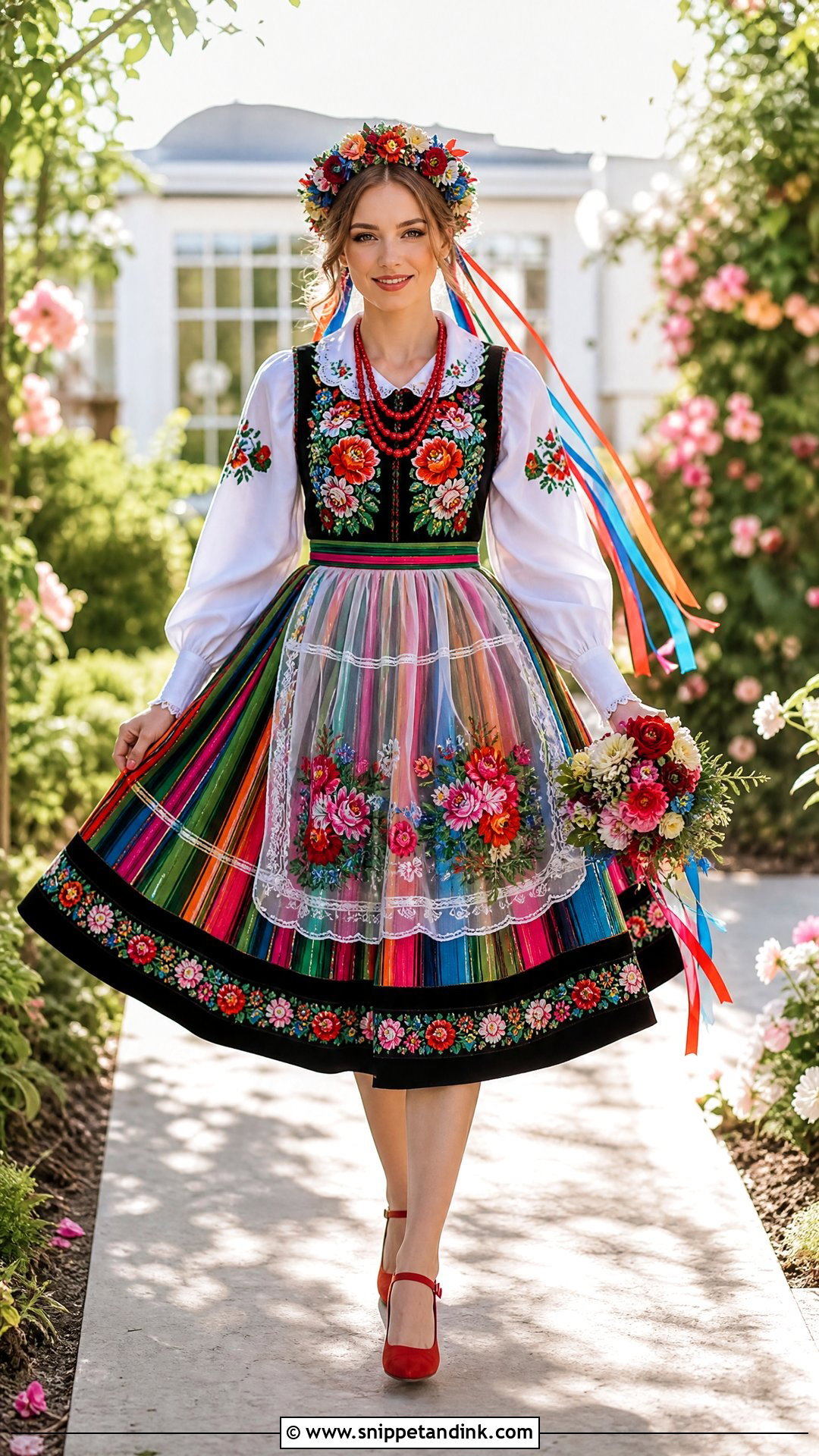
Łowicz stripes are loud in the best way: green, orange, blue, yellow and pink woven together in a full skirt. Build the rest around it with a white embroidered blouse and a floral vest that picks up the skirt colors. A matching striped apron is the traditional choice; a plain ivory one calms the whole thing down and reads more bridal. Red pumps, a floral headpiece and long ribbons down the back finish it. With this much color, the bouquet should be white and the earrings modest. Fit is what separates celebration from costume here, so have the vest taken in properly rather than worn off the rack.
4. Podhale Polish Wedding Dress With Corset Bodice
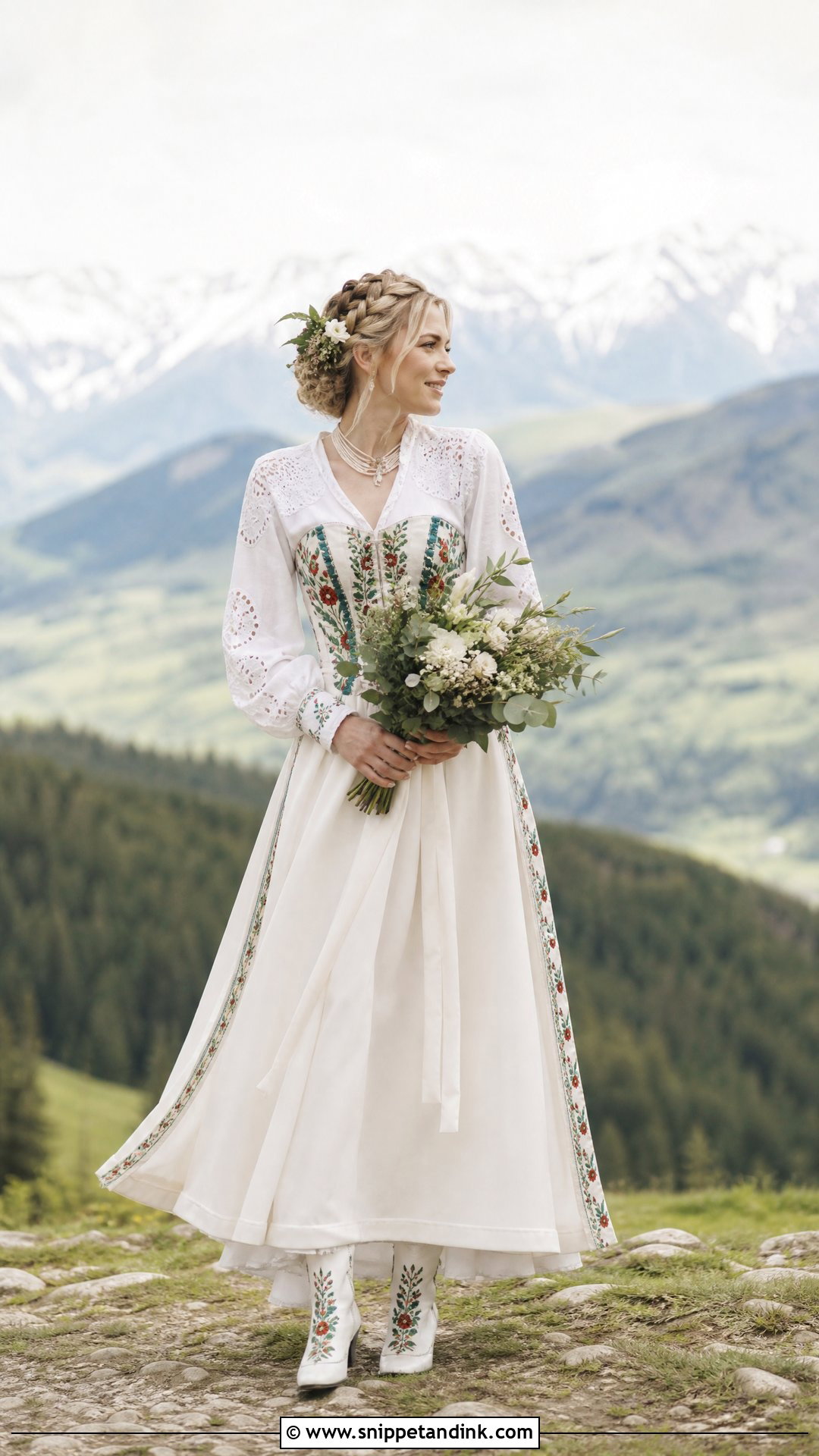
Podhale, the mountain region, gives a sturdier silhouette. A white blouse with eyelet embroidery and softly puffed sleeves sits under an embroidered corset bodice, traditionally in dark velvet. The corset should hold the waist without stopping you from eating dinner, so I check it with the bride seated. A flowing ivory or cream skirt with folk trim near the hem keeps it bridal. Plain leather shoes or embroidered ankle boots suit the season, and a wool shawl handles cold mountain evenings. Braided hair, fresh flowers and a small greenery bouquet finish a look that belongs in a timber venue.
5. Modern Polish Wedding Dress With Folk Embroidery
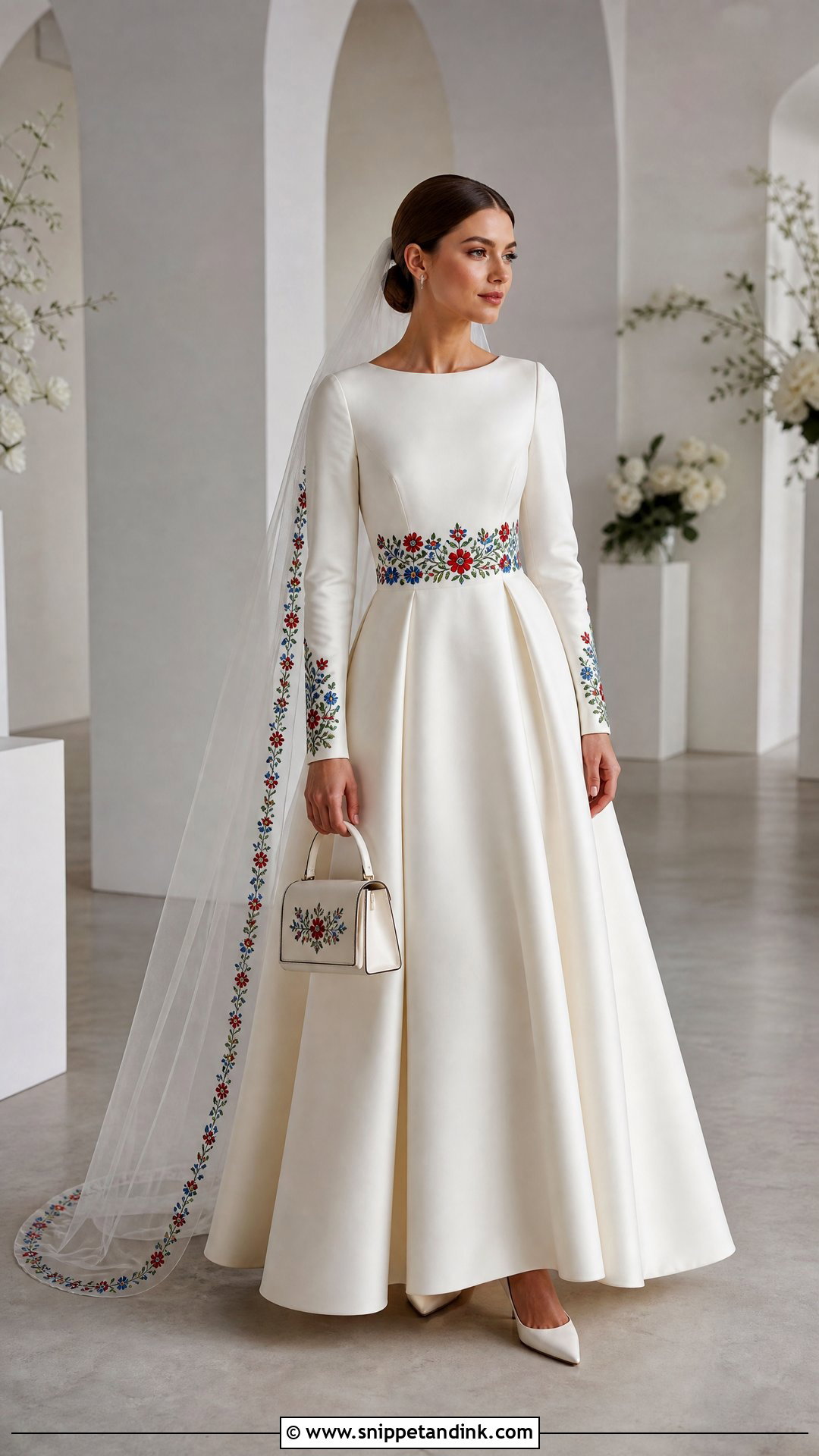
Not every bride wants a full folk outfit, and that’s where this gown comes in. Take a clean ivory A-line and add Polish-style floral embroidery at the sleeves, neckline, waist or train. The plain skirt gives the stitching space to be seen. I limit the thread palette to two or three colors; more than that and the embroidery starts to look busy from a distance. Ivory block heels, a structured mini bag and a sheer veil edged in the same motif complete it, with a smooth low bun keeping the neckline clear. A custom embroiderer can work in flowers tied to a family region.
6. Polish Lace Wedding Dress With Long Sleeves
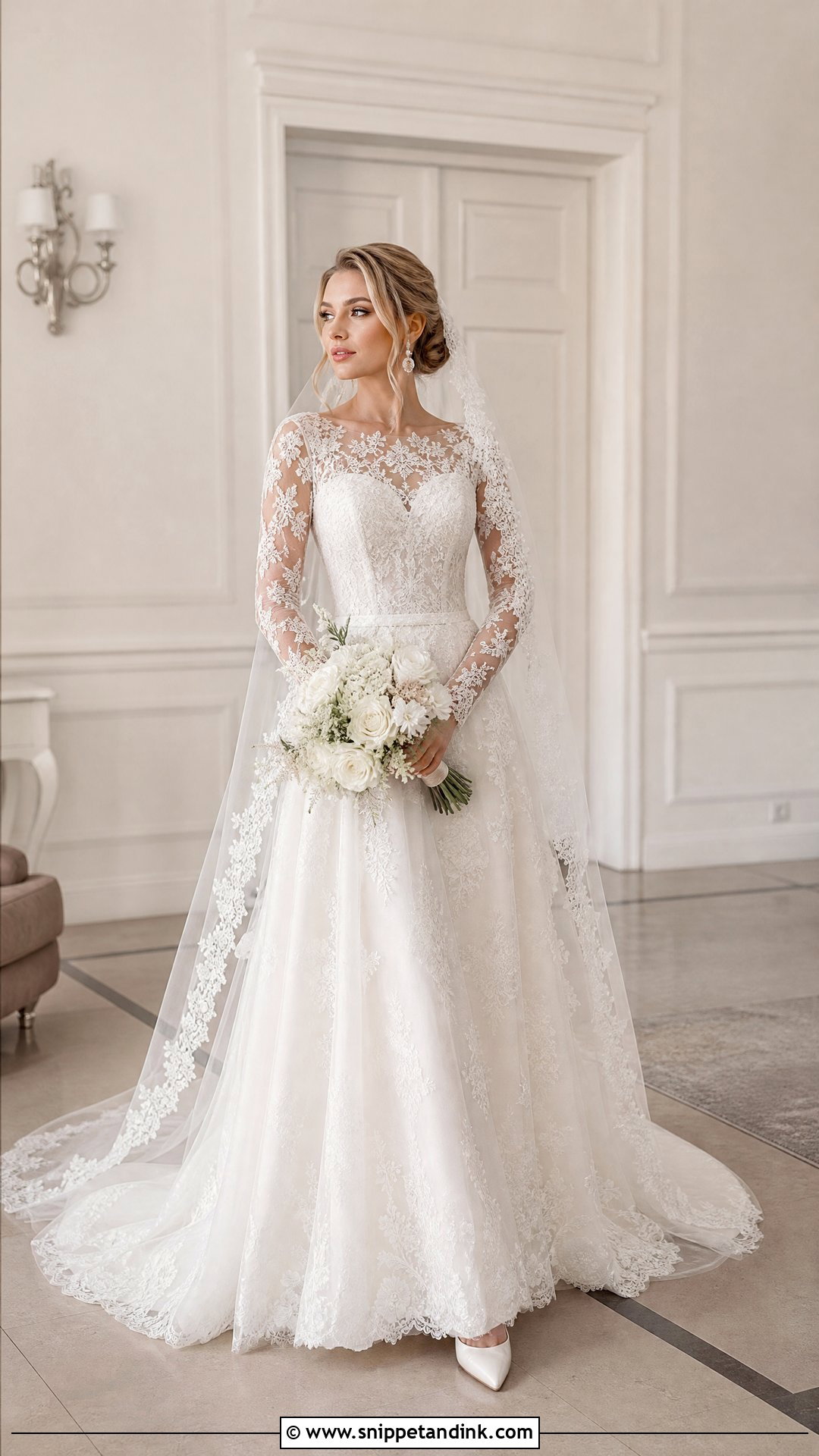
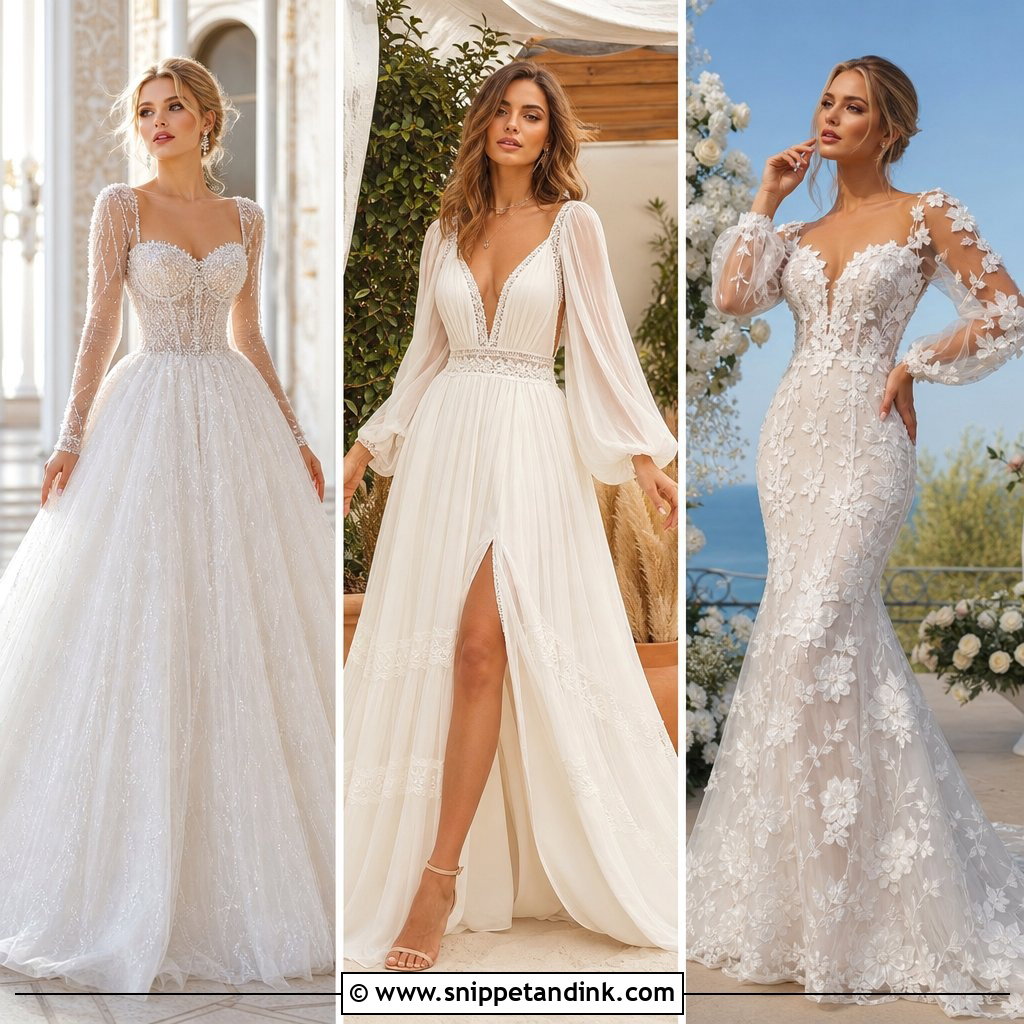
Long lace sleeves suit almost any season, and they suit Polish church ceremonies especially, where covered shoulders are expected in many parishes. Look for a fitted lace bodice, lightly defined waist and flowing A-line skirt, with an illusion neckline for coverage. A lined bodice gives a classic finish; a semi-sheer layer feels lighter. Pointed ivory pumps, pearl or crystal earrings, a fingertip veil with a narrow lace edge and a loose chignon complete it. Pick one focal point. Heavy lace plus big jewelry plus an elaborate headpiece will fight each other in close-up photos.
7. Minimalist Polish Wedding Dress With Cathedral Veil
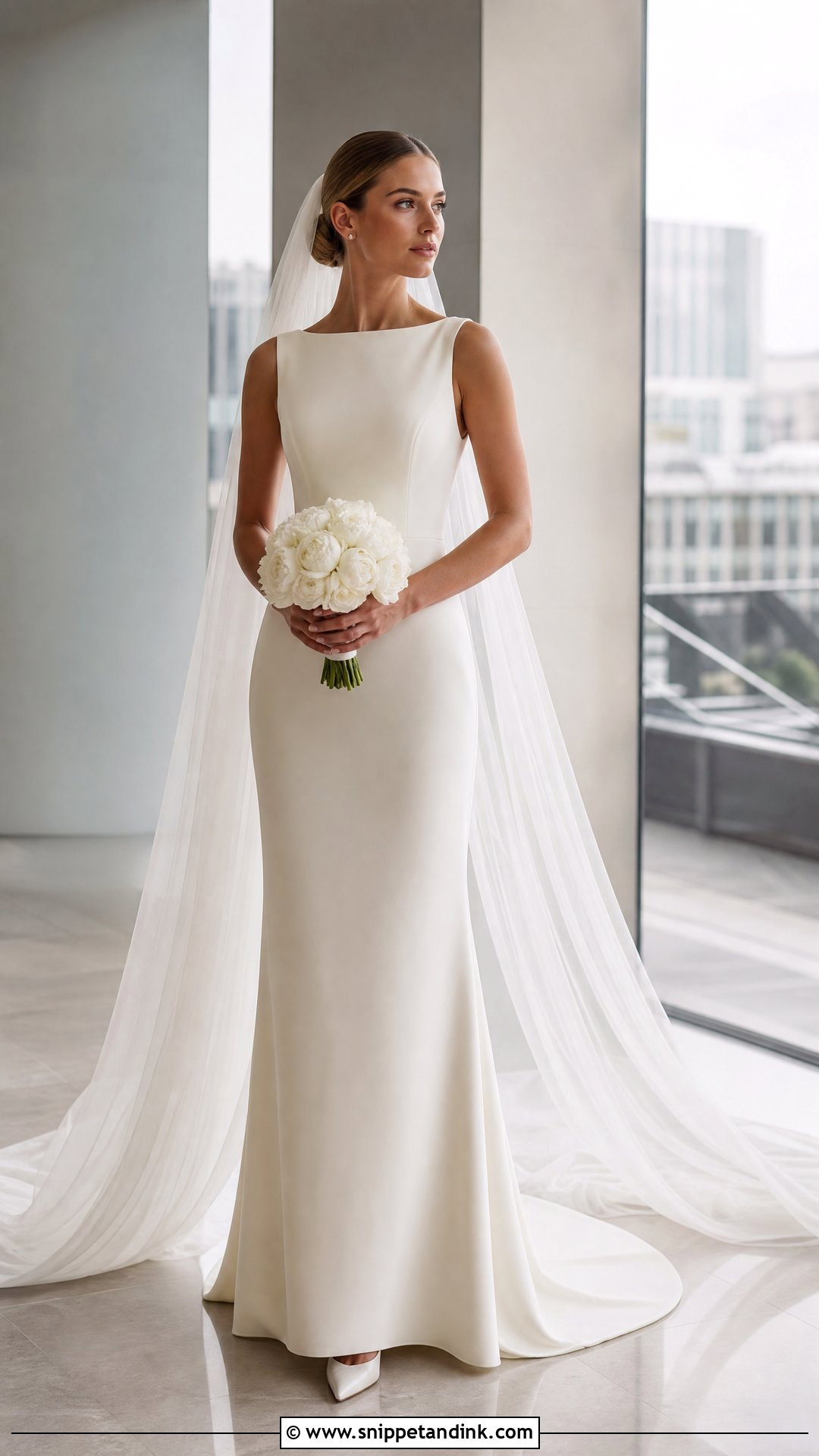
A plain column in crepe or satin can be just as memorable as heavy embroidery, provided it fits perfectly. On an unembellished gown every seam shows, so this is where I spend the most fitting time. A defined waist, covered back and gently structured neckline give the base; a cathedral veil supplies the drama for the ceremony. Pointed pumps, small bright studs, a compact white bouquet and a sleek bun or low ponytail keep it modern. Removable sleeves or a short cape add church coverage without changing the clean character. It belongs in a city venue or a formal hotel.
8. Champagne Polish Wedding Dress With Beaded Bodice
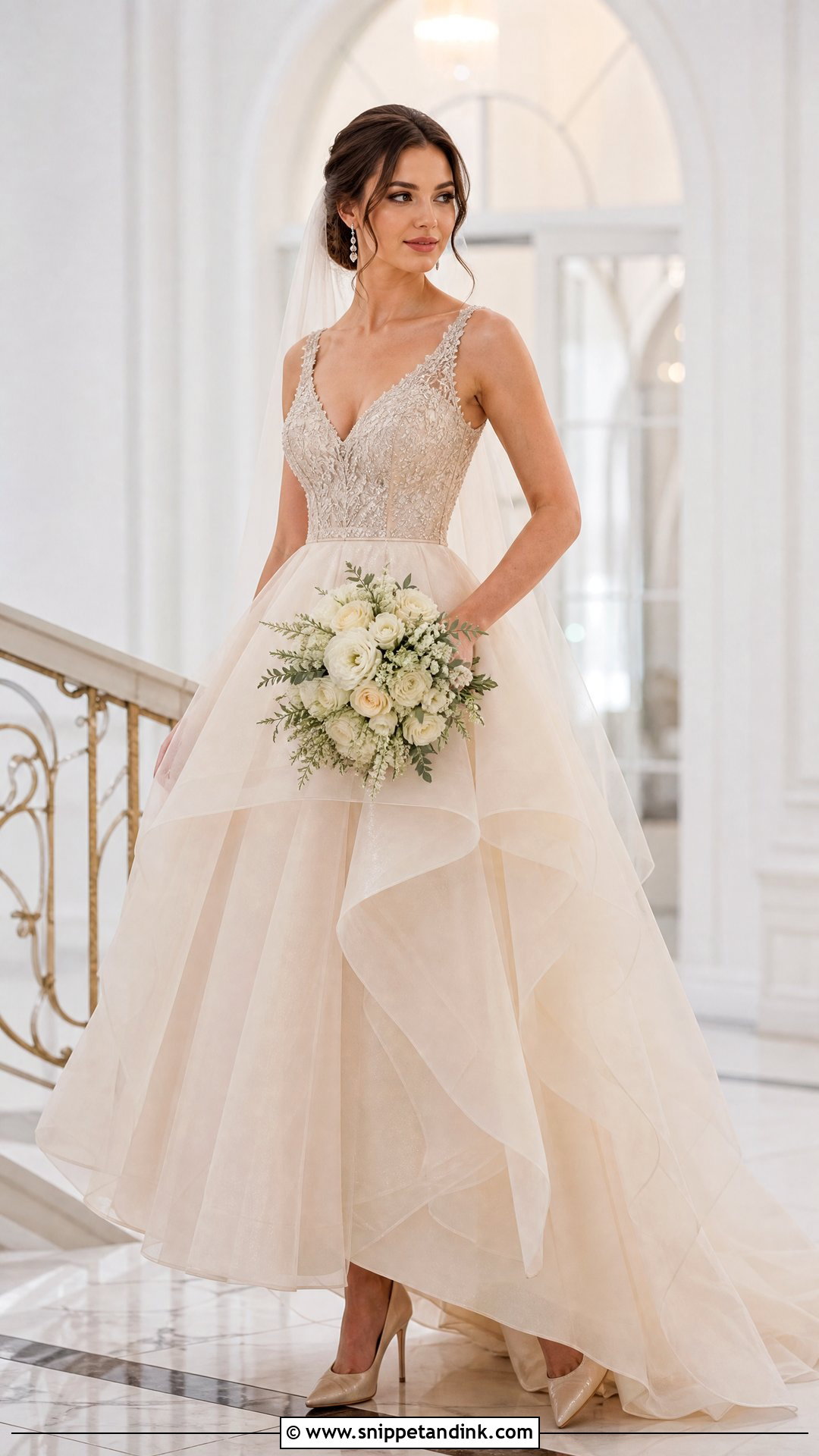
Champagne has a long place on Polish bridal rails alongside sand and pale gold, and it suits brides who look flat in bright white. Choose an A-line or soft ball gown with a lightly beaded bodice and a plain layered skirt. Silver, ivory or pale gold beads blend into the base and catch evening light. Champagne pumps, fine drop earrings and a sheer neutral veil keep it tonal. I add ivory flowers and pale greenery to the bouquet so the whole palette doesn’t slide toward gold. It glows under candlelight and in autumn.
9. Satin Polish Wedding Dress With Square Neckline
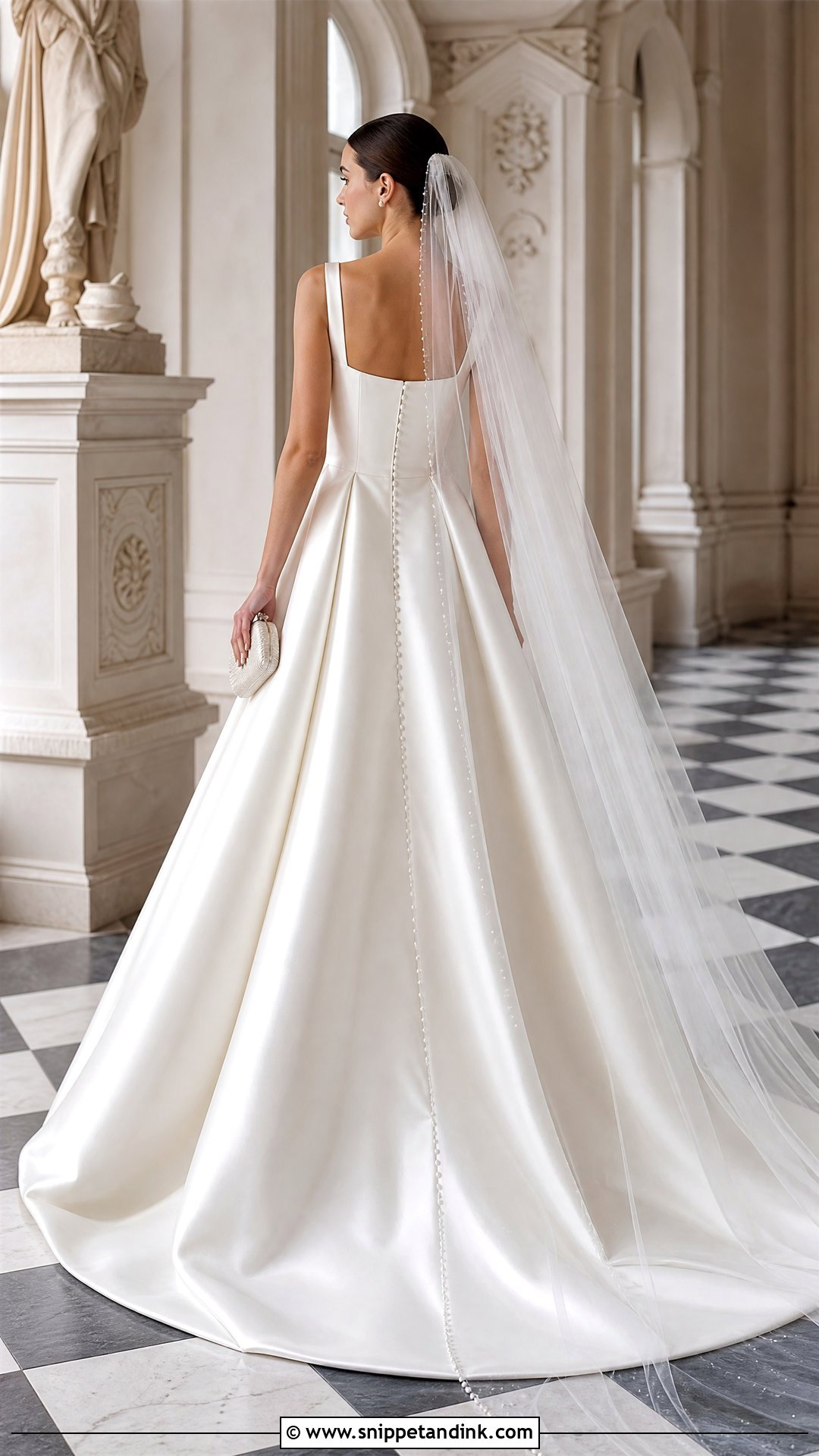
Heavy satin is what makes a square neckline work, because a thinner satin won’t hold that straight edge across the chest. Choose a fabric with body that falls smoothly into an A-line or ball skirt, wide straps for support and perhaps a low square back. Closed-toe ivory pumps, a pearl-edged veil, a small structured clutch and a smooth updo keep everything clean. Covered buttons or a detachable train add impact if you want it. Go easy on sparkle; satin already reflects plenty of light. Watch the neckline as you lift your arms at the fitting, as it can gap at the corners.
10. Polish Ball Gown Wedding Dress With Floral Lace
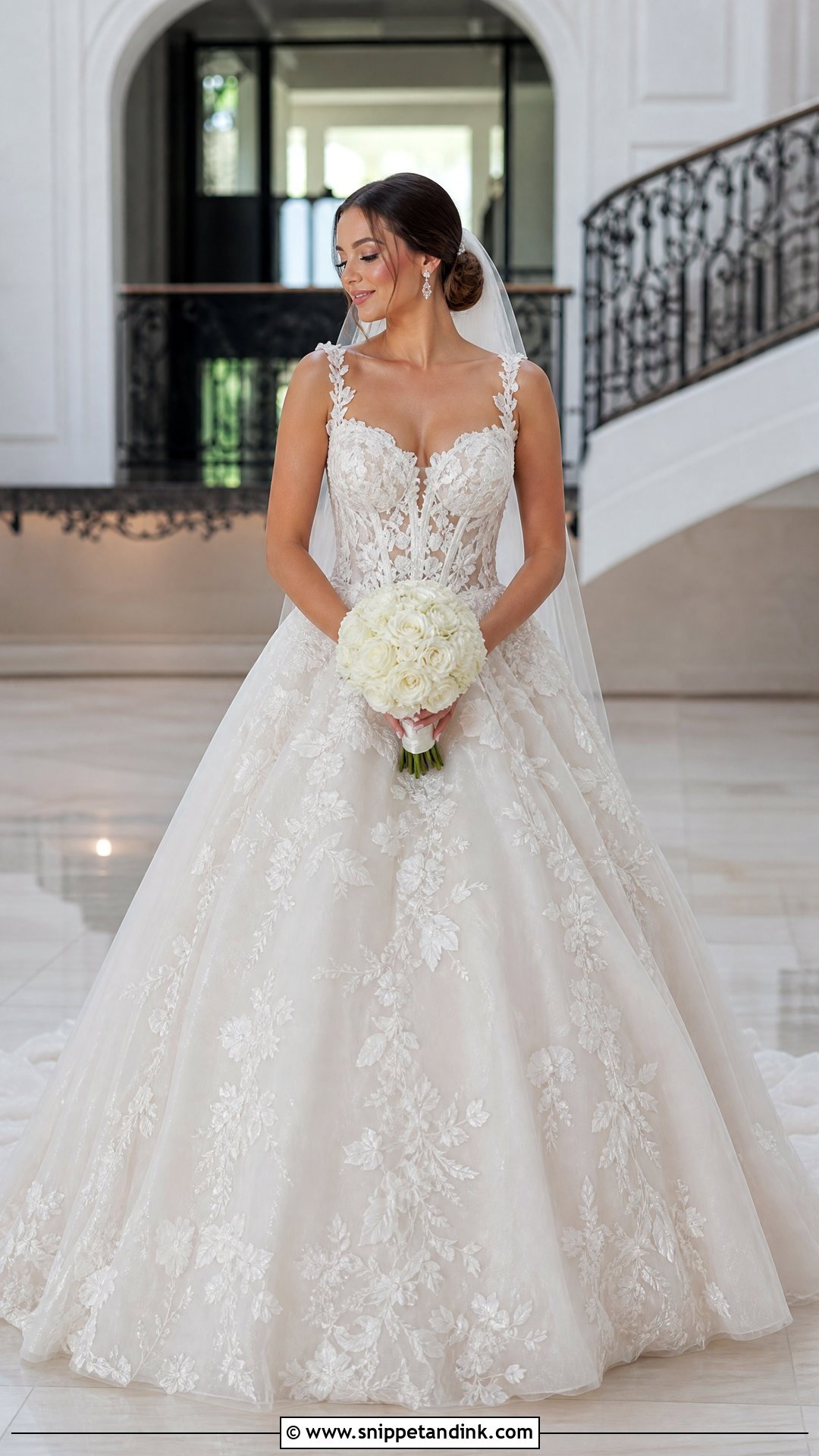
Dimensional floral lace on a full ball gown makes a grand entrance. A fitted bodice and full skirt give an hourglass outline, with embroidered flowers softening the neckline and upper layers. My preference is lace that thins out toward the hem, so the skirt doesn’t look weighed down. Hide comfortable platform heels underneath and keep jewelry to crystal earrings and a single-layer veil. A low bun and a rounded bouquet echo the florals. Ask about a corseted interior, wider straps or removable sleeves if you want more support. Measure the aisle and doorways too; this skirt needs room.
11. Polish A-Line Wedding Dress With Lace Veil
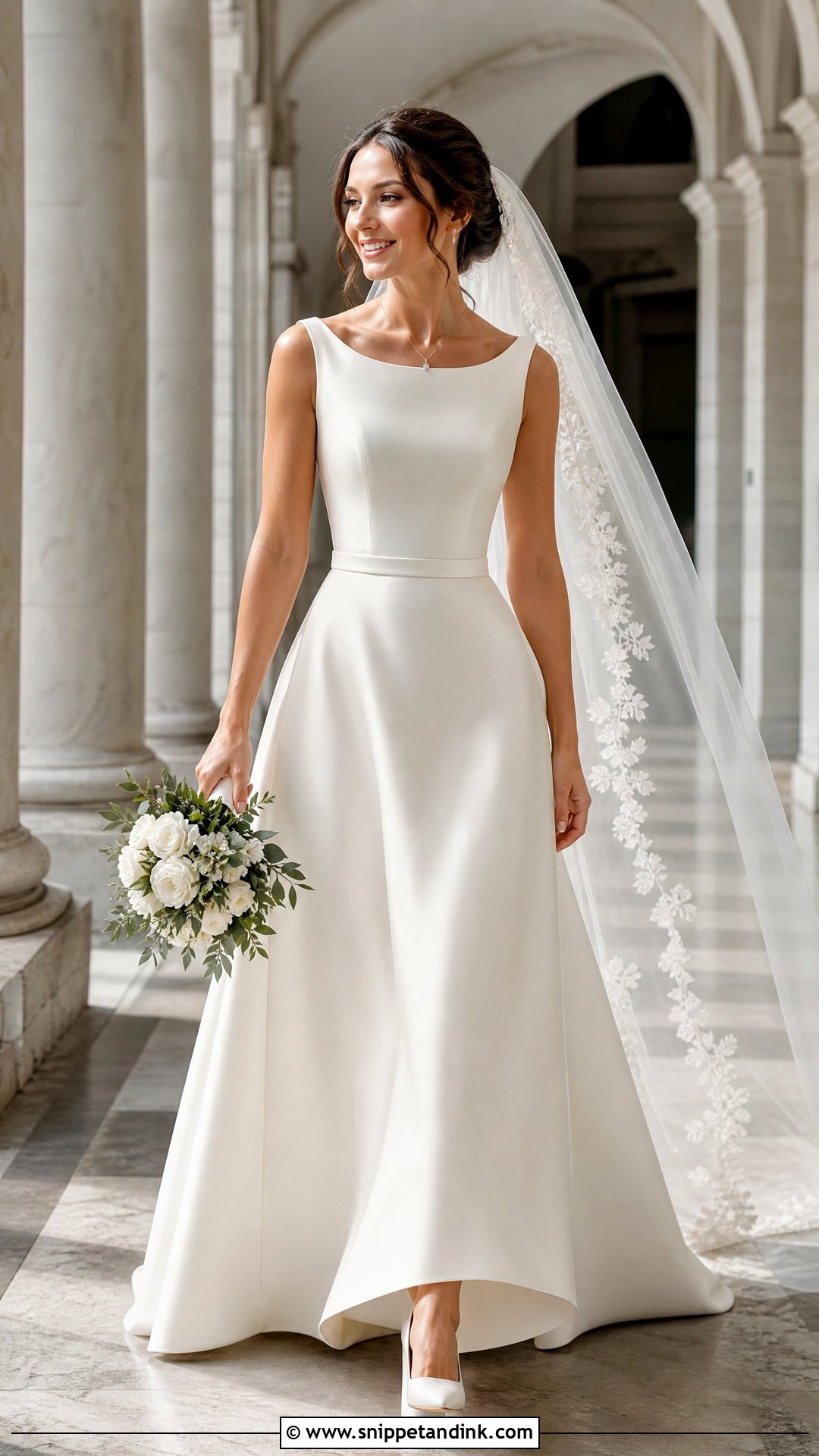
Here the veil does the decorating. An ivory A-line in plain crepe, mikado or chiffon, with a fitted waist and softly structured bodice, gives a calm background for a detailed lace veil, and that veil can carry floral embroidery drawn from Polish folk motifs. Block-heel pumps, a small pendant and white flowers with touches of red or greenery complete it. Since the veil is the feature, the hair underneath has to be secure: I anchor the comb into a firm base so it doesn’t drag backward. The dress moves between a traditional church ceremony and a modern reception without fuss.
12. Polish Boho Wedding Dress With Embroidered Sleeves
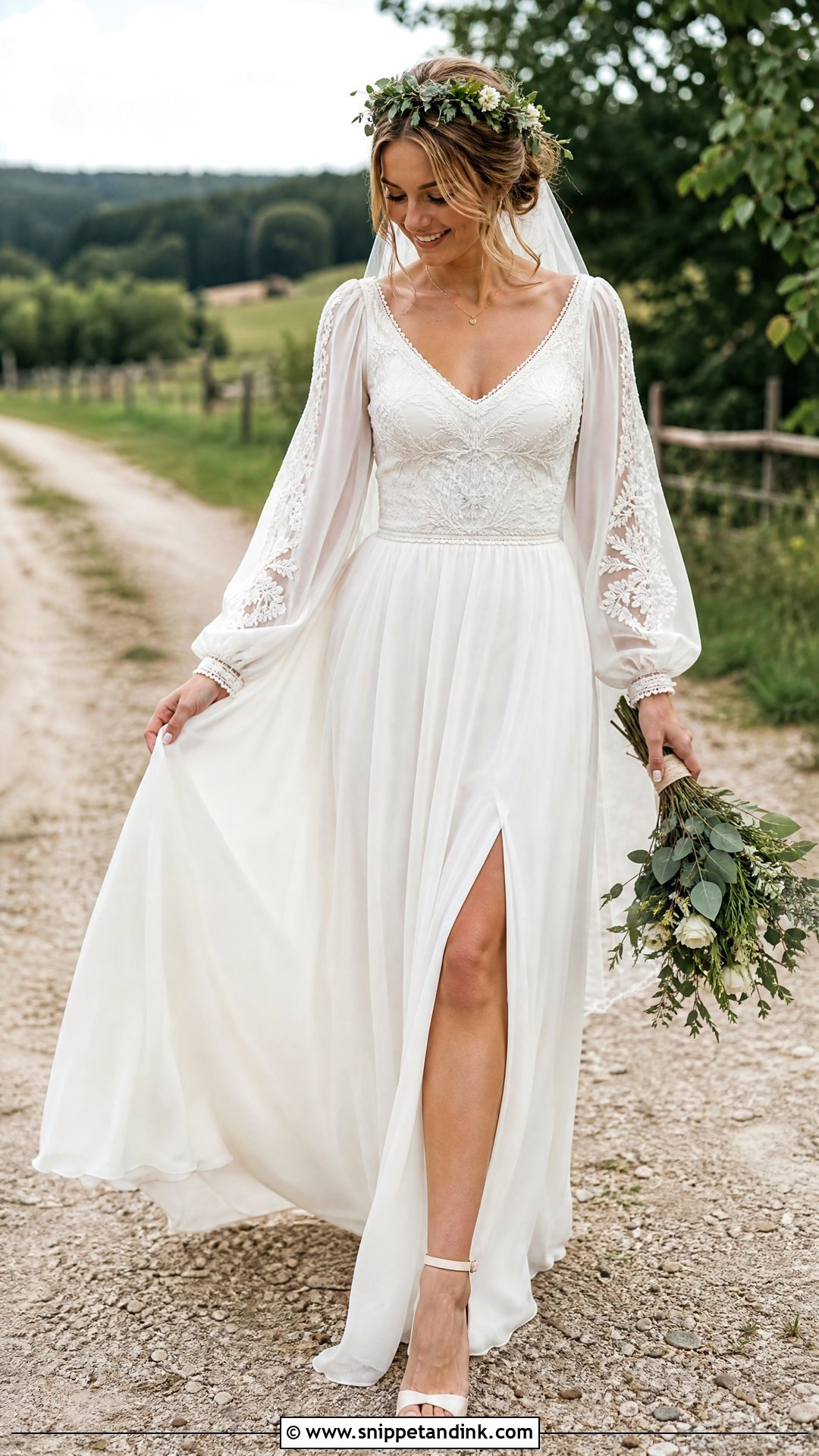
Soft chiffon or tulle, an empire or natural waist and embroidered bishop sleeves give this boho look its handmade feeling. White botanical stitching or restrained folk color at the cuffs keeps it from tipping into costume. Ivory ankle-strap heels, a loose braided updo and a crown of small seasonal blooms suit it, with a light veil fixed beneath the hair so the sleeves stay visible. Carry greenery and field-style flowers, kept small. A full lining and supportive bodice matter more than they seem; airy dresses without them turn see-through in sunlight.
13. Polish Vintage Wedding Dress With Tea-Length Skirt
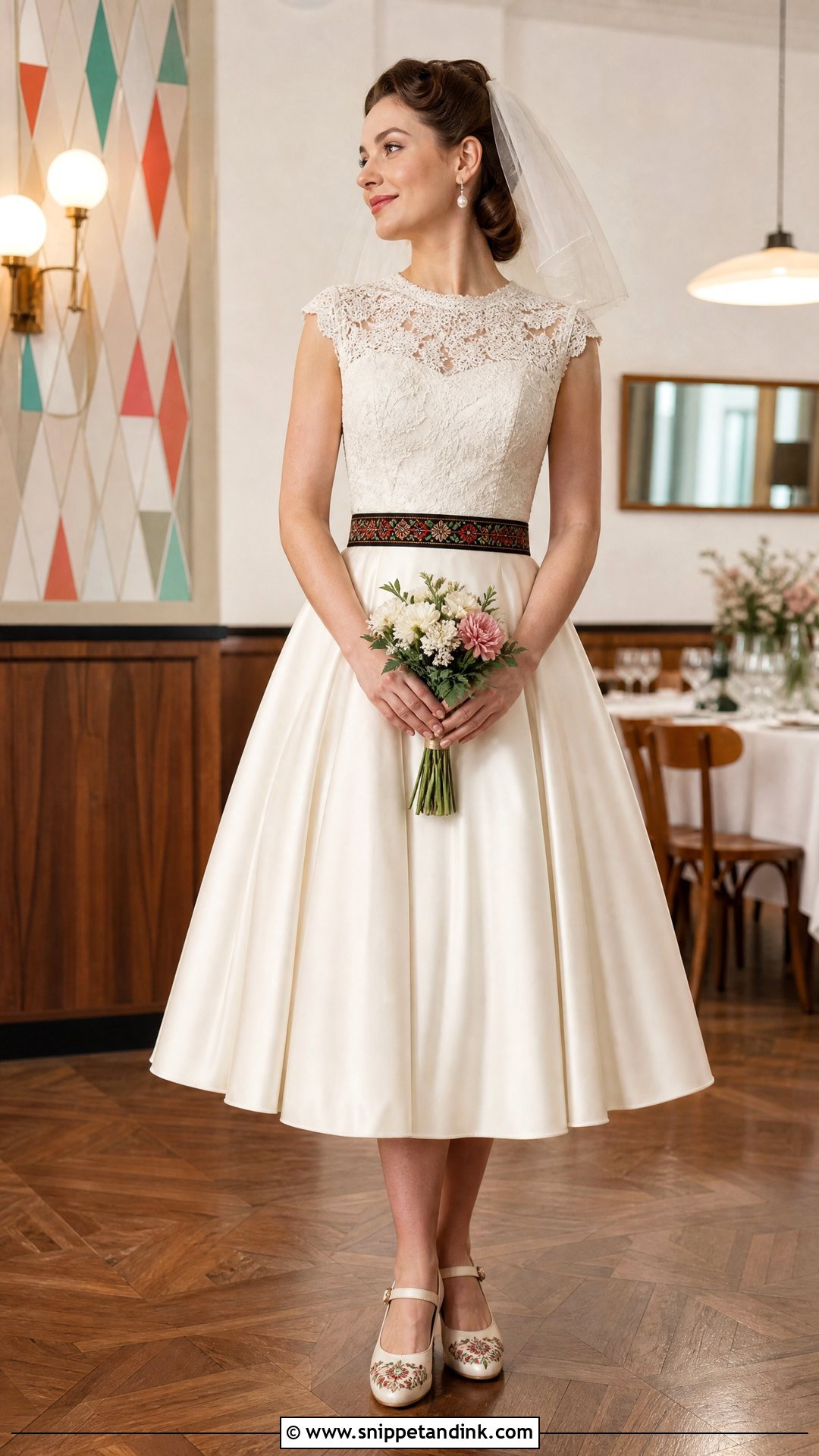
Tea length gives vintage charm and freedom to move. A fitted lace or satin bodice with a full skirt ending between knee and ankle puts your shoes on show, so ivory pumps, embroidered heels or Mary Janes deserve some thought. A short veil, pearl studs and a compact bouquet match the scale. A narrow embroidered belt can bring in a folk detail without changing the dress. Hair in soft waves or a low roll suits the era. It’s practical for civil ceremonies and lively receptions, and it gives petite brides fullness without the weight of a floor-length gown.
14. Polish Wedding Dress With Detachable Folk Overskirt
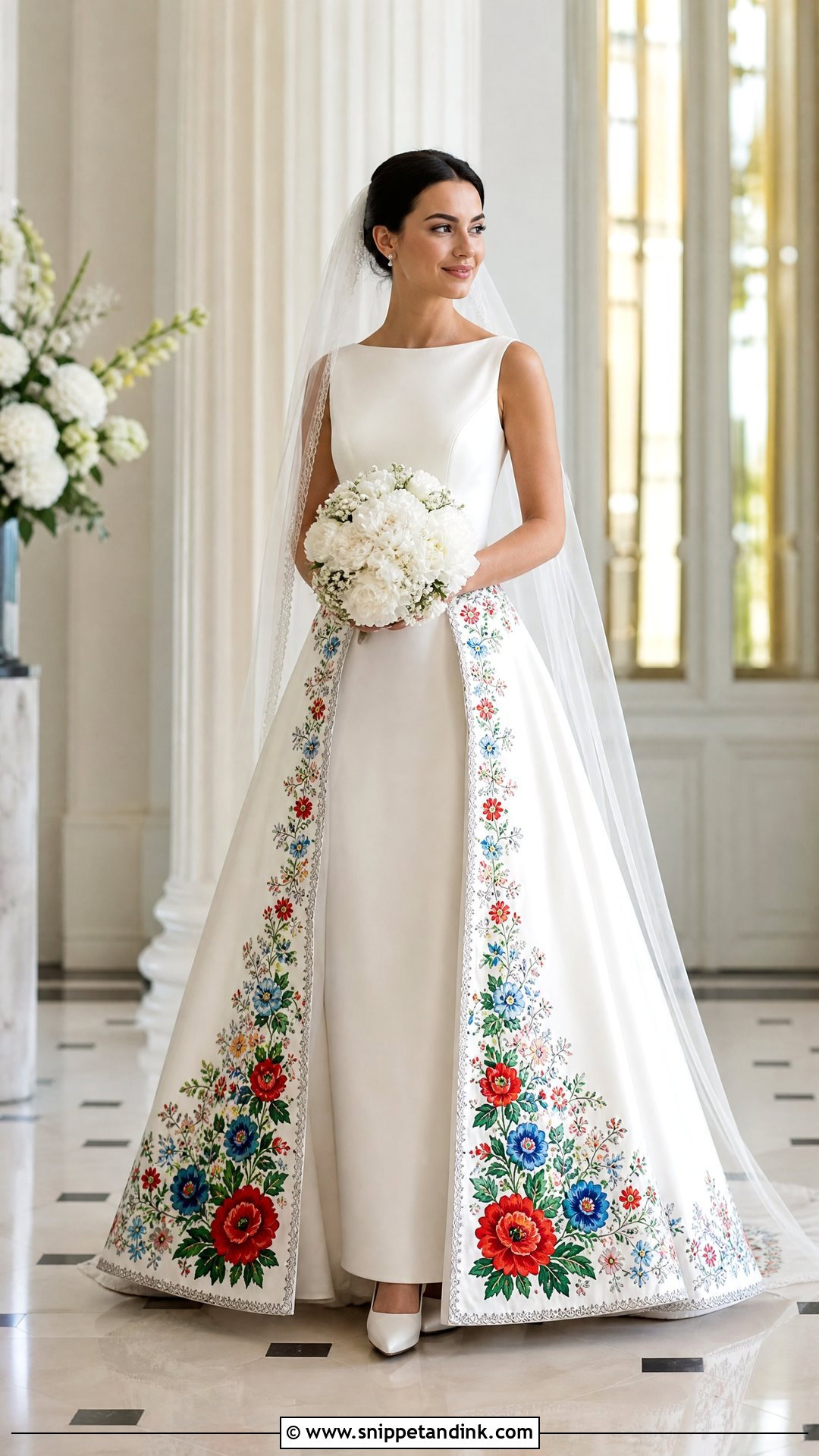
Two looks from one gown: start with a simple ivory sheath, column or A-line that stands on its own, then add a full overskirt featuring floral embroidery, colorful borders or striped panels for the ceremony. Closed-toe heels, a clean veil and small earrings keep the focus on the overskirt. After formal photos it comes off for dancing. Keep the dress underneath plain so the two layers don’t compete. The fastenings are where these fail. I ask for hooks and a hidden waistband rather than snaps, and test them while walking and sitting.


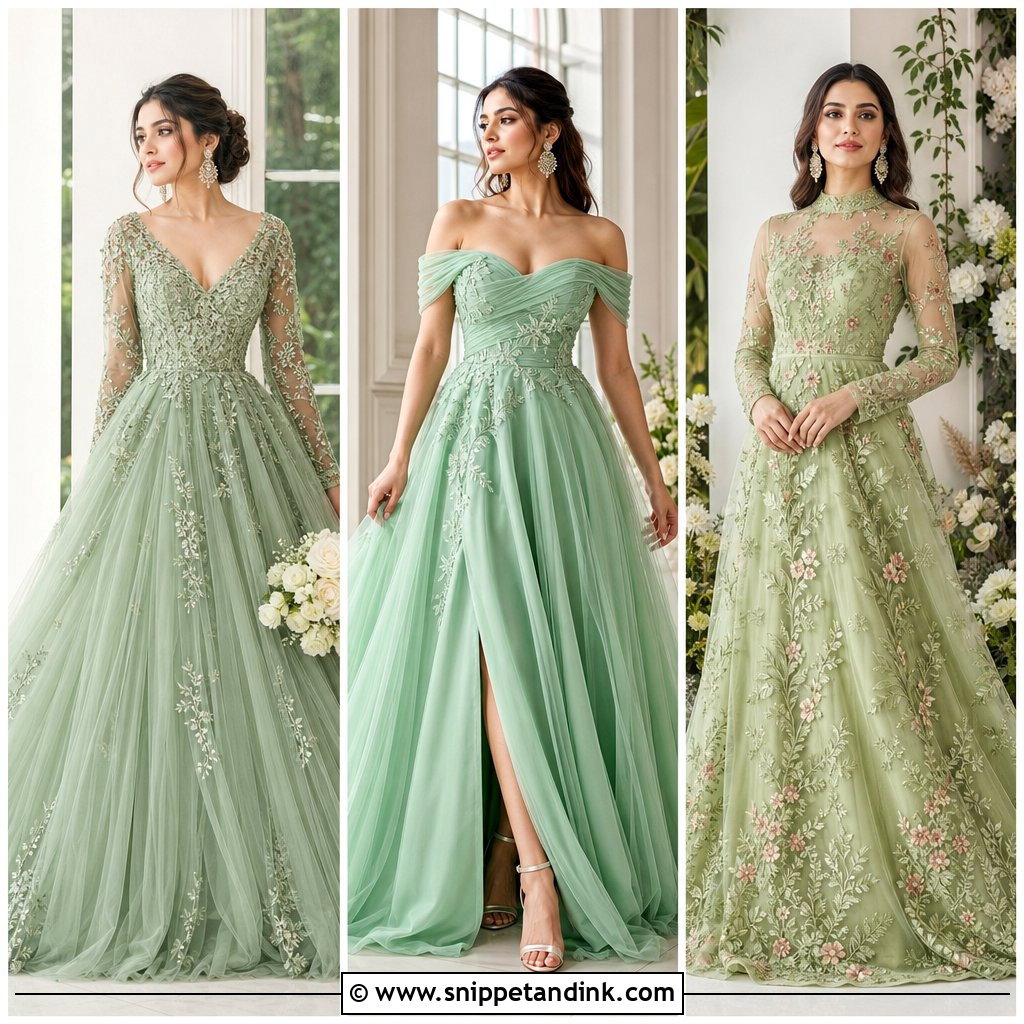
15. Polish Wedding Dress With Red Floral Embroidery
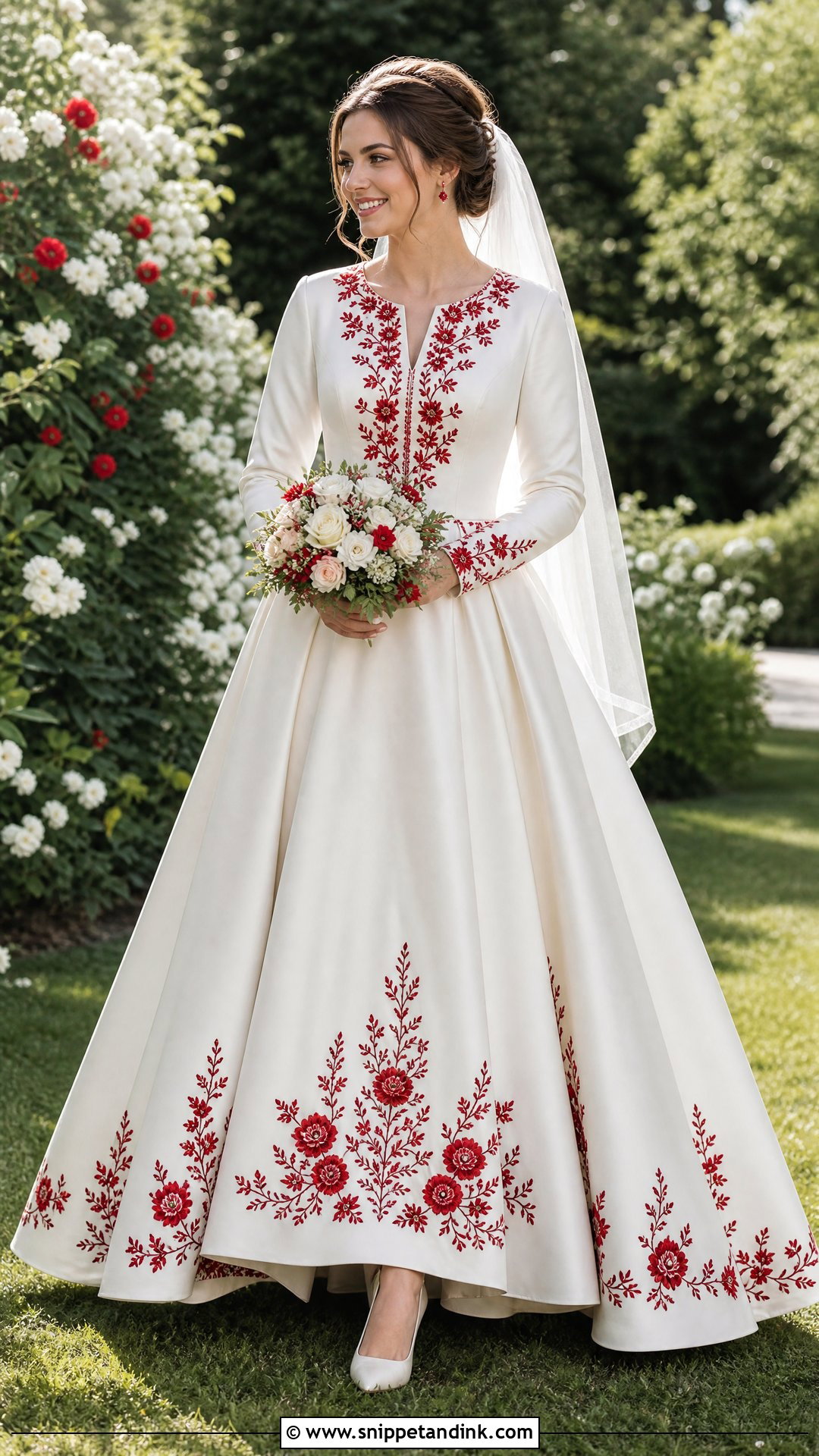
Red flowers on white are one of the strongest visual links to Polish folk embroidery. Place them at the bodice, cuffs, waist or lower skirt of a white or soft ivory gown, with a fitted top and flowing A-line skirt to keep the motif elegant. Neutral ivory shoes and a plain veil leave the embroidery uninterrupted. Small red earrings or a narrow ribbon can repeat the accent once; don’t match every accessory. A mostly white bouquet with a few red blooms balances it. Before settling on symbolic colors or regional patterns, talk to family members or an experienced maker who knows the region.
16. Polish Wedding Dress With Floral Cape
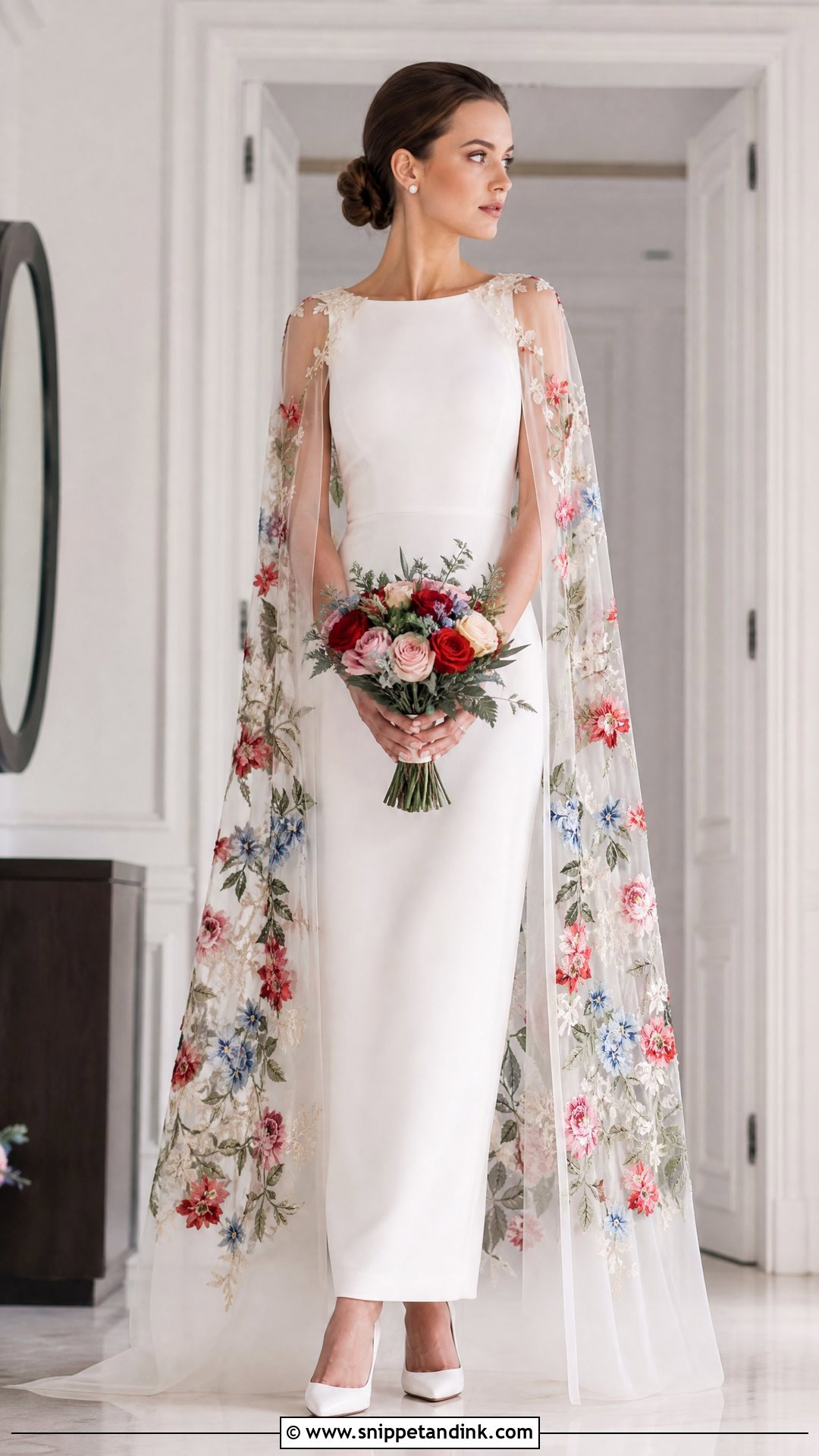
If you love folk decoration but want a plain gown, put the embroidery on a cape. A strapless or sleeveless ivory dress in crepe, satin or mikado becomes the base, with a sheer cape stitched with colorful flowers across the shoulders and along the edges. It should fall behind the arms so the waist stays visible. Pointed pumps, delicate studs and a structured bouquet using flowers from the embroidery tie it together. A sleek bun gives the cape a clean neckline to fasten at. Take it off for the reception and you have a second look.
17. Polish Winter Wedding Dress With Velvet Bodice
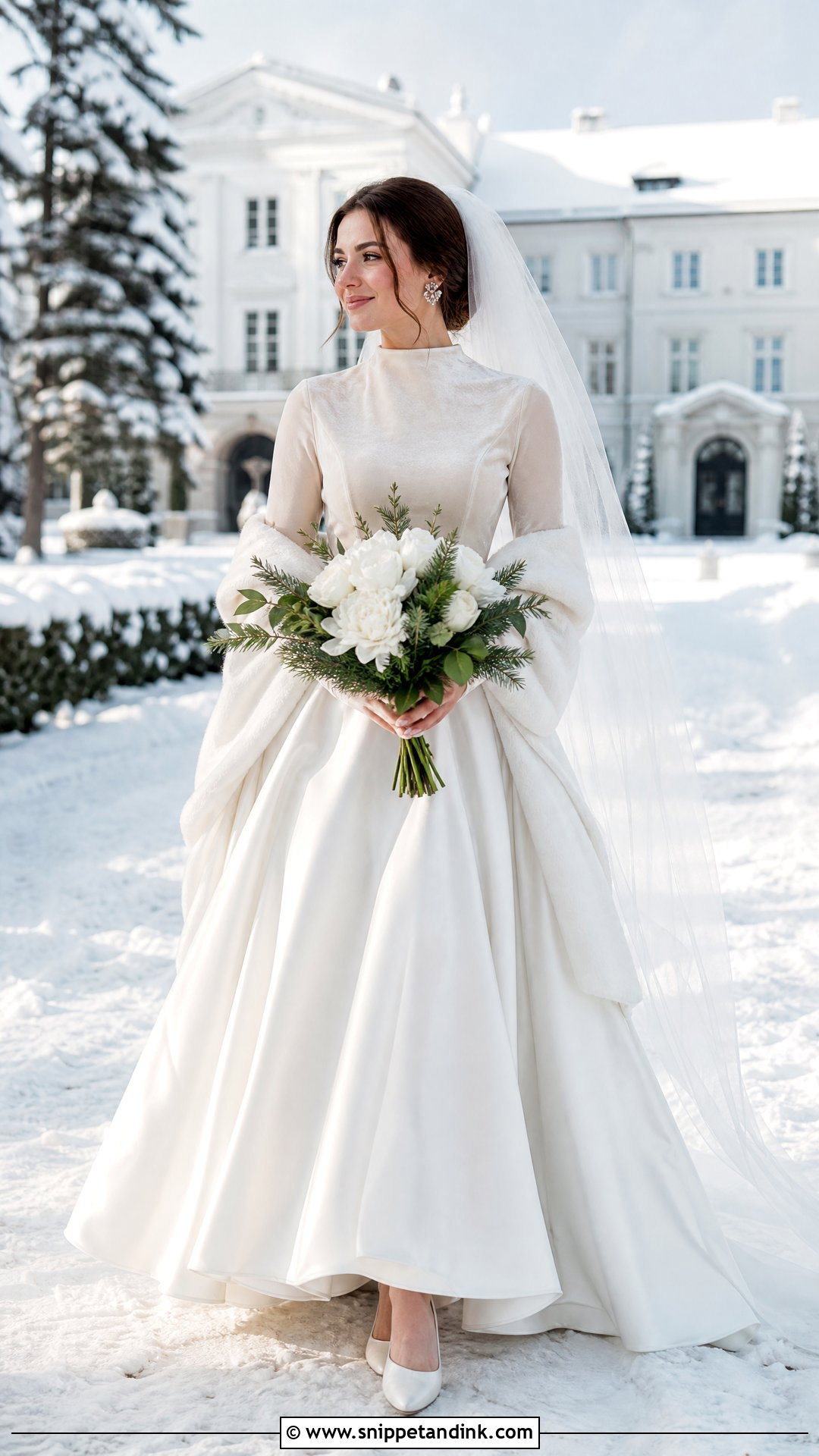
Polish winters can be properly cold, and velvet handles them well. An ivory velvet bodice with long sleeves over a satin or mikado skirt gives rich texture without beading. Closed-toe pumps, opaque ivory tights if needed and a faux-fur or wool wrap for outdoor photos keep you warm. A long veil and a neat braided bun sit comfortably under the wrap. Silver earrings and white flowers with evergreen and muted red finish it. Velvet traps heat, so I make sure the wrap comes off easily once you’re inside a warm hall.
18. Polish Summer Wedding Dress With Linen Embroidery
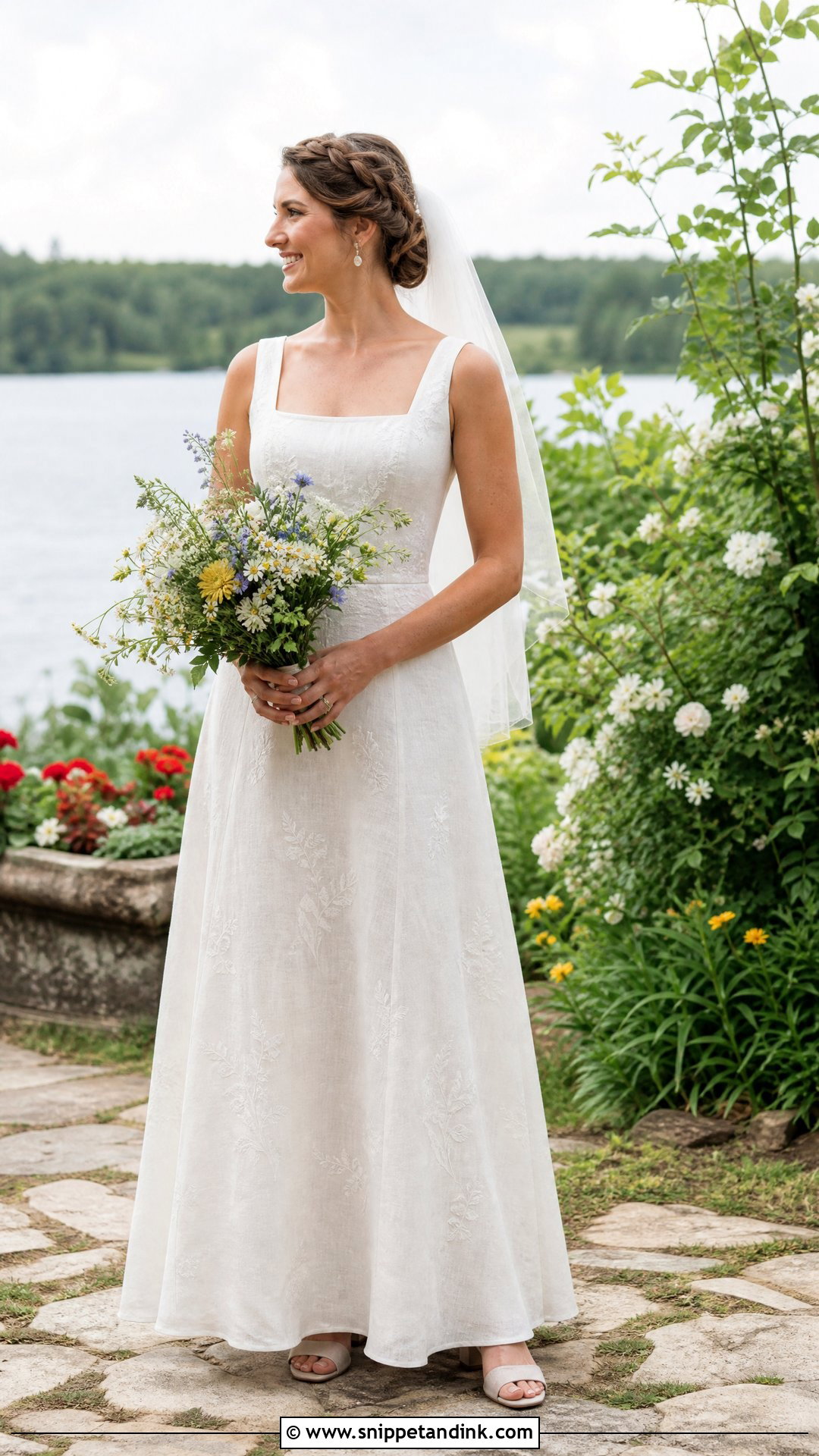
Linen breathes in summer heat like nothing else, and lined linen with light embroidery looks considered rather than casual. Choose an ivory linen gown with a square or rounded neckline, fitted waist and gently flared skirt, adding white botanical embroidery at the sleeves, bodice or hem. Low block heels, a light fingertip veil and simple gold or silver earrings suit it, and a braided updo keeps your neck cool. Linen creases as soon as you sit, which I tell every bride upfront; the soft wrinkles are part of its character. Skip thick underskirts and heavy corsetry in hot weather.
19. Plus Size Polish Wedding Dress With Embroidered Waist
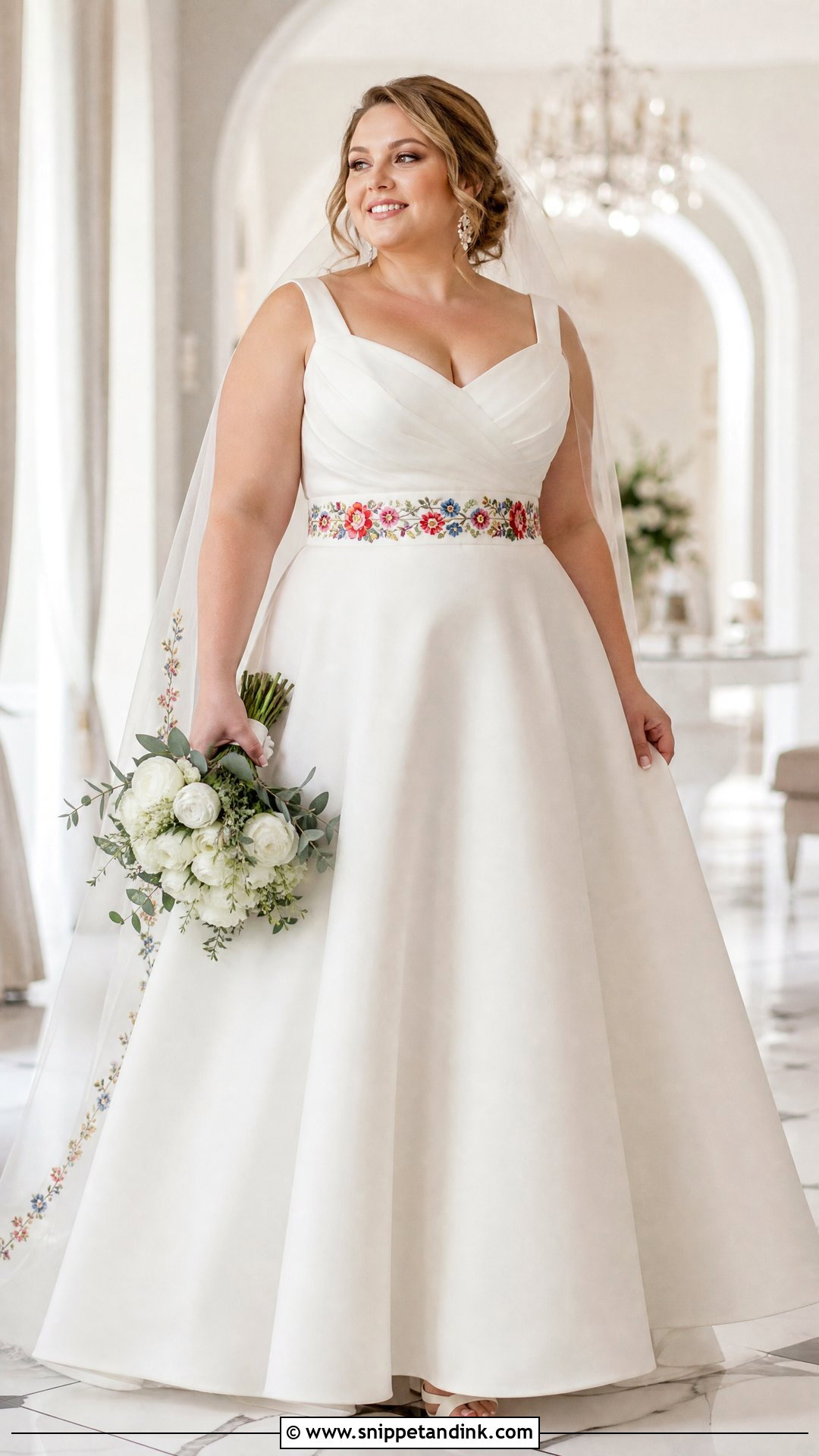
An embroidered waistband is a smart way to bring Polish detail into a curvy silhouette, because it marks the waist with pattern instead of tight construction. An A-line or soft ball gown with supportive straps and a structured bodice is the base. A wide band in ivory, red, blue or green florals does the decorating, with a little of the same embroidery repeated at the neckline or veil. Stable block heels, medium earrings and a bouquet held low enough not to hide the waist finish it. Good undergarments and alterations do more than any body-shape rule. You should be able to sit, raise your arms and dance.

20. Polish Wedding Dress With Folk Reception Outfit
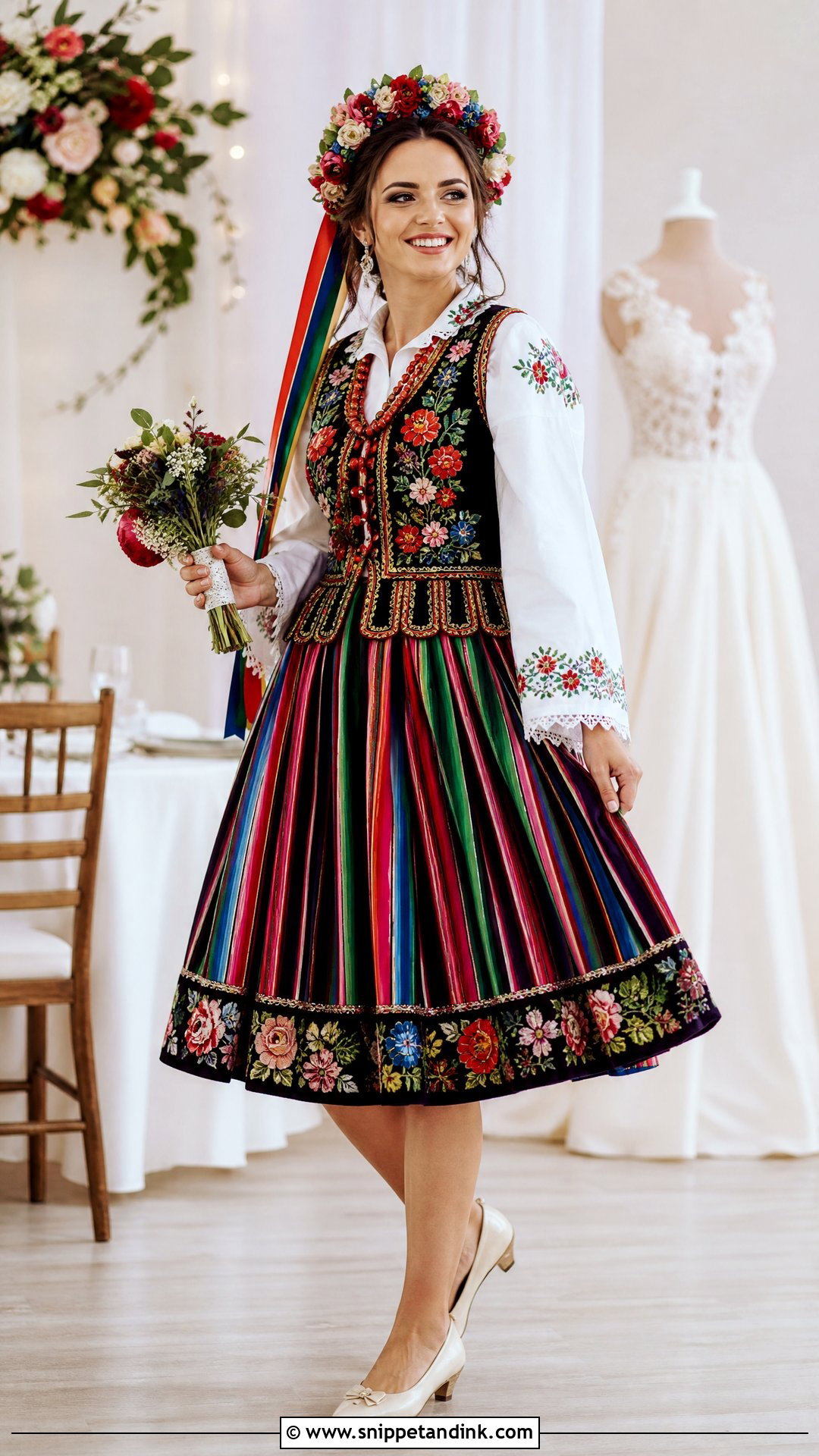
Polish receptions run long, often well past midnight, and a change of outfit makes sense. Wear a classic ivory A-line with a lace veil and pointed pumps for the ceremony. Later, switch to a shorter folk-inspired outfit: embroidered white blouse, fitted floral vest, striped or colorful midi skirt and low heels. Swap the veil for a ribboned floral crown, and keep earrings small enough not to catch while dancing. I like to carry one element across both looks, perhaps the bouquet colors or an embroidery motif, so they read as one story.
Where Real Regional Costume Pieces Come From
Authentic folk dress is usually handmade and specific to one region, sometimes to one area within it. A Kraków vest, Łowicz stripes and a Podhale corset should not all end up in a single outfit. Mixing them is the quickest way to make a heritage look feel off to anyone who grew up with these costumes.
Good places to start
- Family wardrobes. Grandmothers’ blouses and vests can often be altered, and they carry meaning a new piece can’t.
- Folk dance ensembles. Many keep costume collections and sometimes lend or rent pieces, along with expert advice on how they should be worn.
- Specialist makers who work in a single regional style. Allow several months for hand embroidery.
Caring for embroidery and wool
Old embroidery thread can bleed red dye onto white linen, so test a hidden spot before any wash, and never put beaded or sequined vests in a machine. Wool skirts and shawls should be aired and brushed, then stored folded with tissue rather than hung, which stretches them. If the pieces are borrowed, agree on cleaning with the owner before the wedding, not after.
Heritage Can Be One Embroidered Cuff or a Full Costume
Your dress should sound like you while handling cultural details with care. Some brides feel most themselves in full regional dress; others want one discreet line of embroidery on a modern gown. Fabric, fit, movement, venue, weather and family tradition all shape the decision. Try each outfit with its shoes, veil, headpiece and outer layer before you commit. When you borrow regional motifs, learn where they come from or work with a maker who knows. A full folk ensemble, a single meaningful detail or a ceremony-to-reception change can all honor the same heritage.
You'll Like These Ideas:


Leave a Reply