
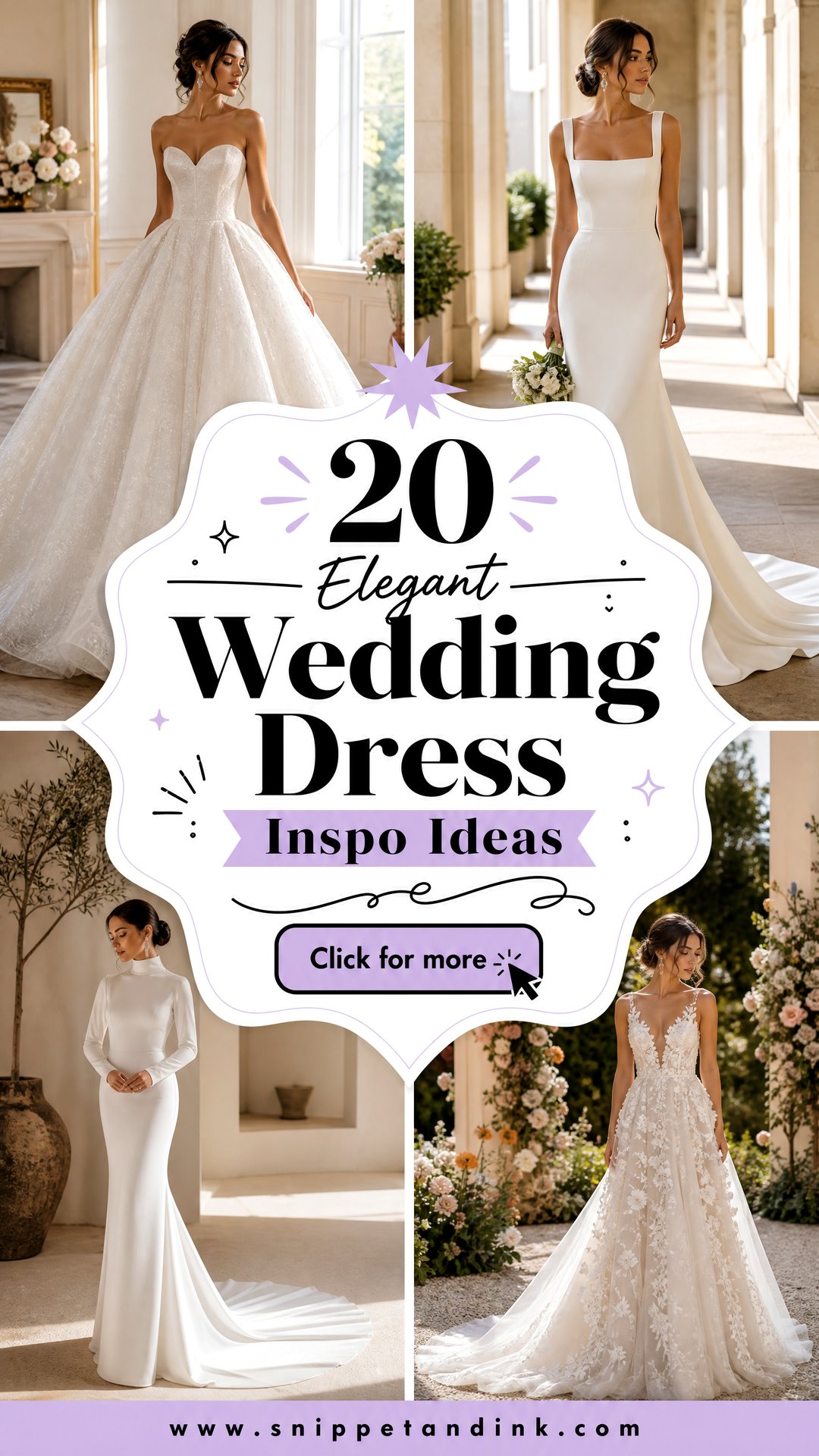
Turning an Inspiration Board Into an Appointment Plan
Most brides arrive at their first appointment with dozens of saved photos, and most of those photos disagree with each other. Before an appointment I ask brides to sit down with their board and write one line under each image saying what they actually love about it. Usually it comes down to a few repeating answers: a neckline, a fabric, how full the skirt is, or how much skin shows. Those answers are what I need as a stylist, far more than the photos themselves.
- Pick your top five images and note the shared features. If four have sleeves, sleeves matter to you.
- Mark what you don’t want, too. Ruling out strapless or heavy beading saves an hour of trying on.
- Tell the shop your real budget, including alterations, which can add a noticeable amount to the total.
- Wear or bring a smooth, skin-tone strapless bra and shoes about the height you plan to wear.
- Try at least one shape you’d never pick. It tells you quickly whether your instinct was right.
Keep the group small. One or two people whose taste you trust give clearer feedback than a crowd of opinions.
1. Satin A-Line Wedding Dress
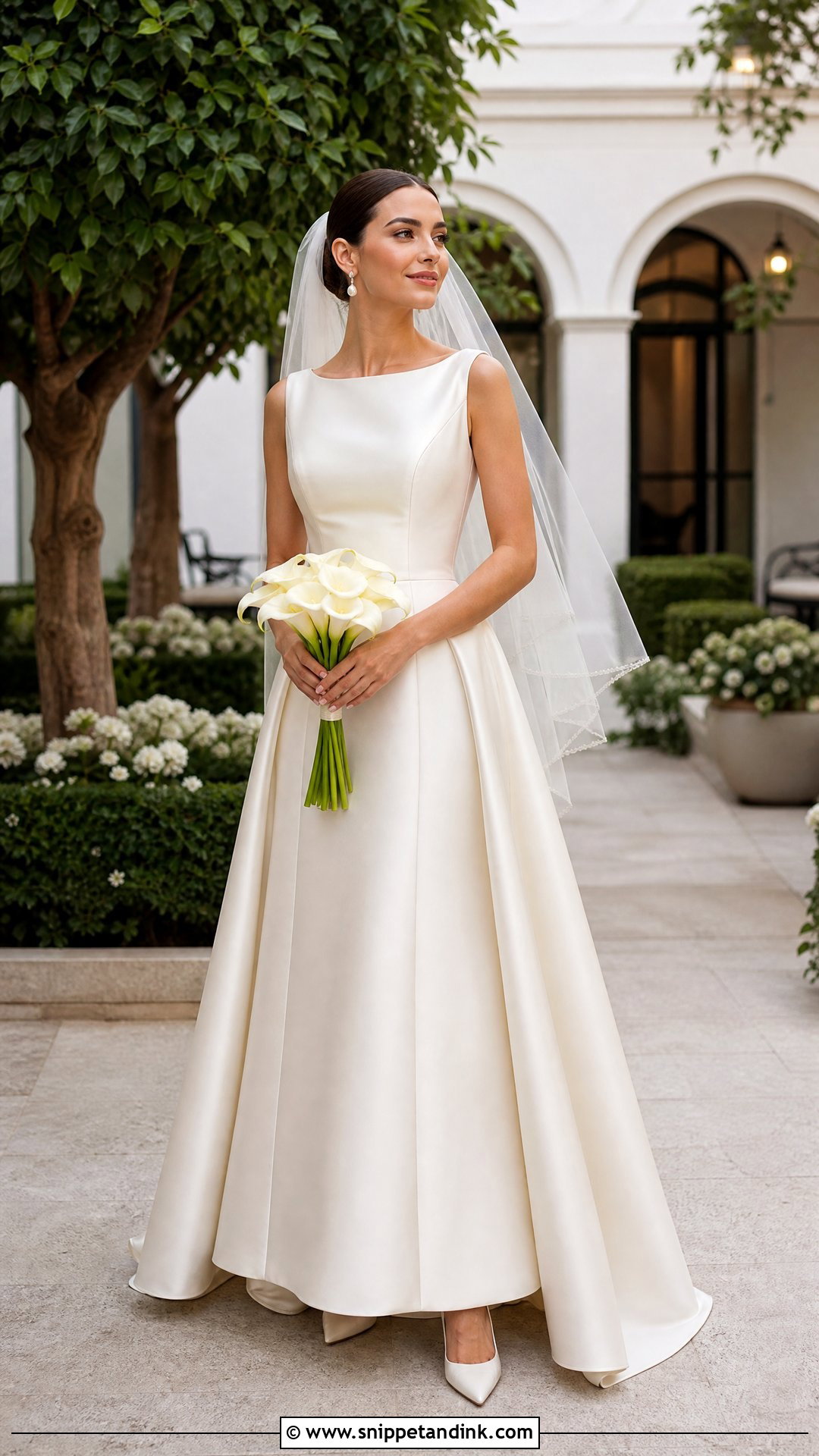
Satin A-lines are the dress I pull when a bride says she doesn’t know where to start, because almost every figure can wear one. Look for a softly fitted bodice, a natural waist and a skirt that widens gradually to the floor. Ivory satin gives a rich finish, and quiet seaming keeps it modern. Pointed satin pumps, pearl drops and a small structured bag finish it; a fingertip veil suits a simple ceremony, a cathedral veil a larger room. White roses or calla lilies keep the bouquet streamlined. Satin marks where you sit, so expect some creasing at the hips by the reception; that is the fabric, not a fault.
2. Strapless Ball Gown Wedding Dress
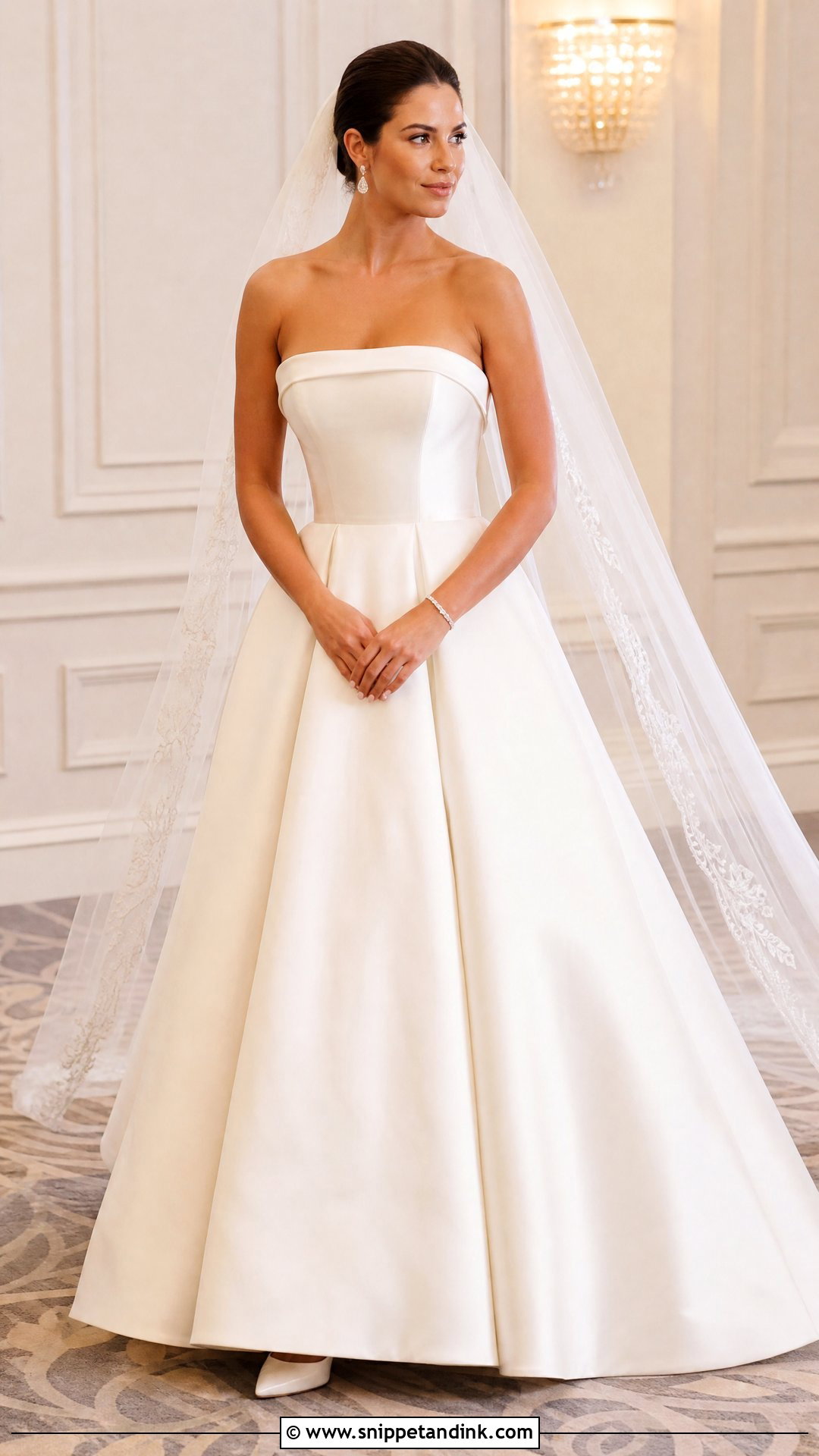
Nothing beats a strapless ball gown for an entrance. It depends on a sculpted bodice that holds you without straps and a full skirt in satin, tulle or structured organza. A straight or softly curved neckline keeps it polished. Crystal studs, a fine tennis bracelet and closed-toe heels hidden under the hem are enough, with a long clean-edged veil and a low bun. The skirt already fills the frame, so carry a compact bouquet. Ball gowns are wide; check that your venue’s aisle and doorways can take it before you buy. Ballrooms and luxury hotels are its home.
3. Long Sleeve Lace Wedding Dress
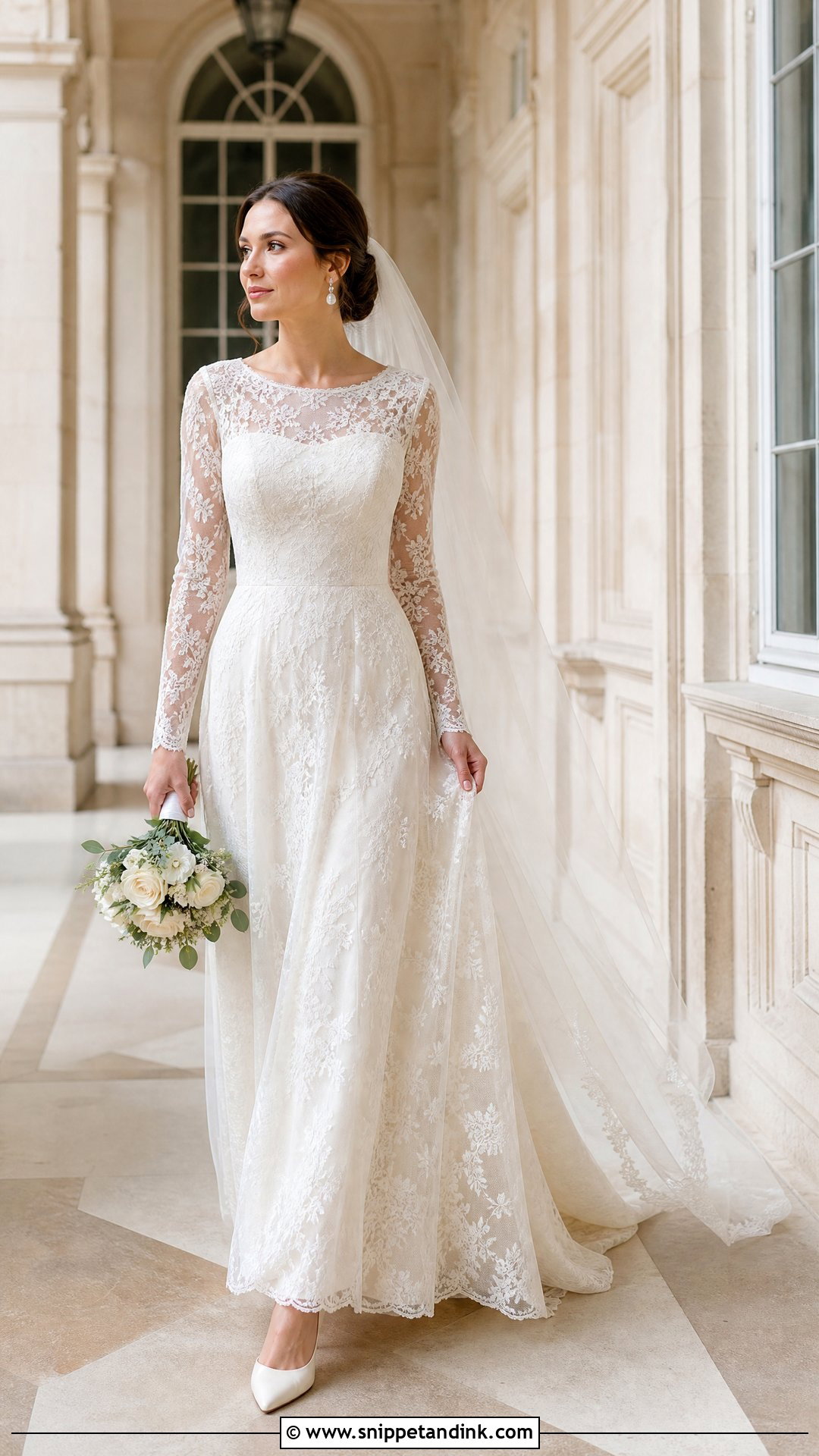
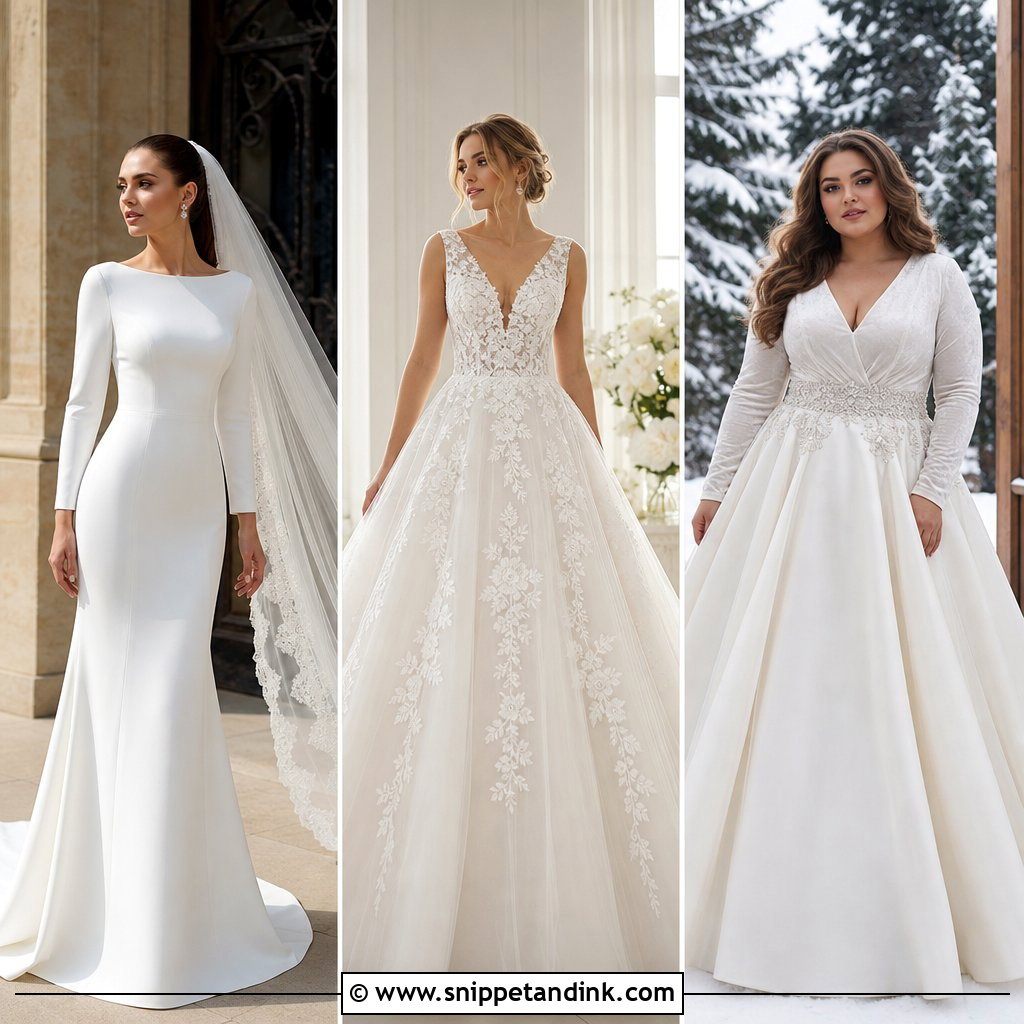
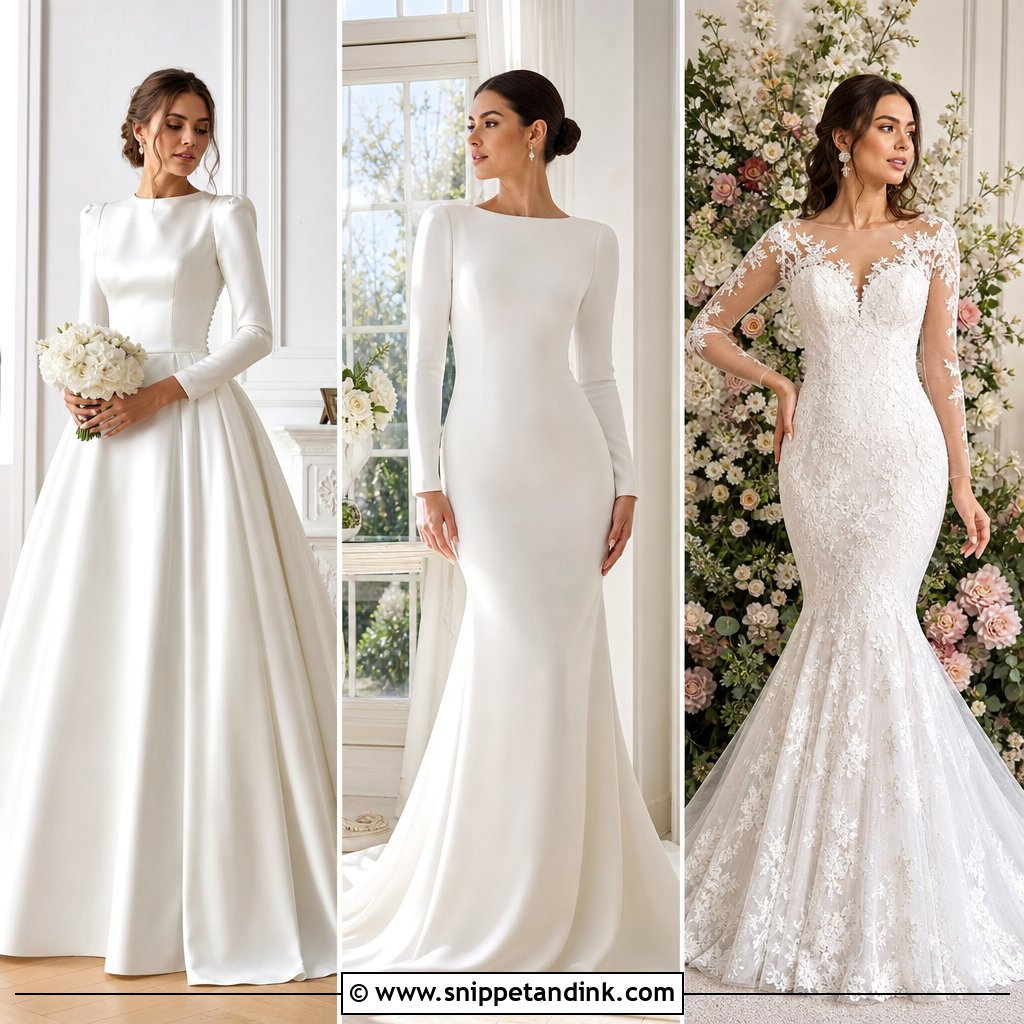
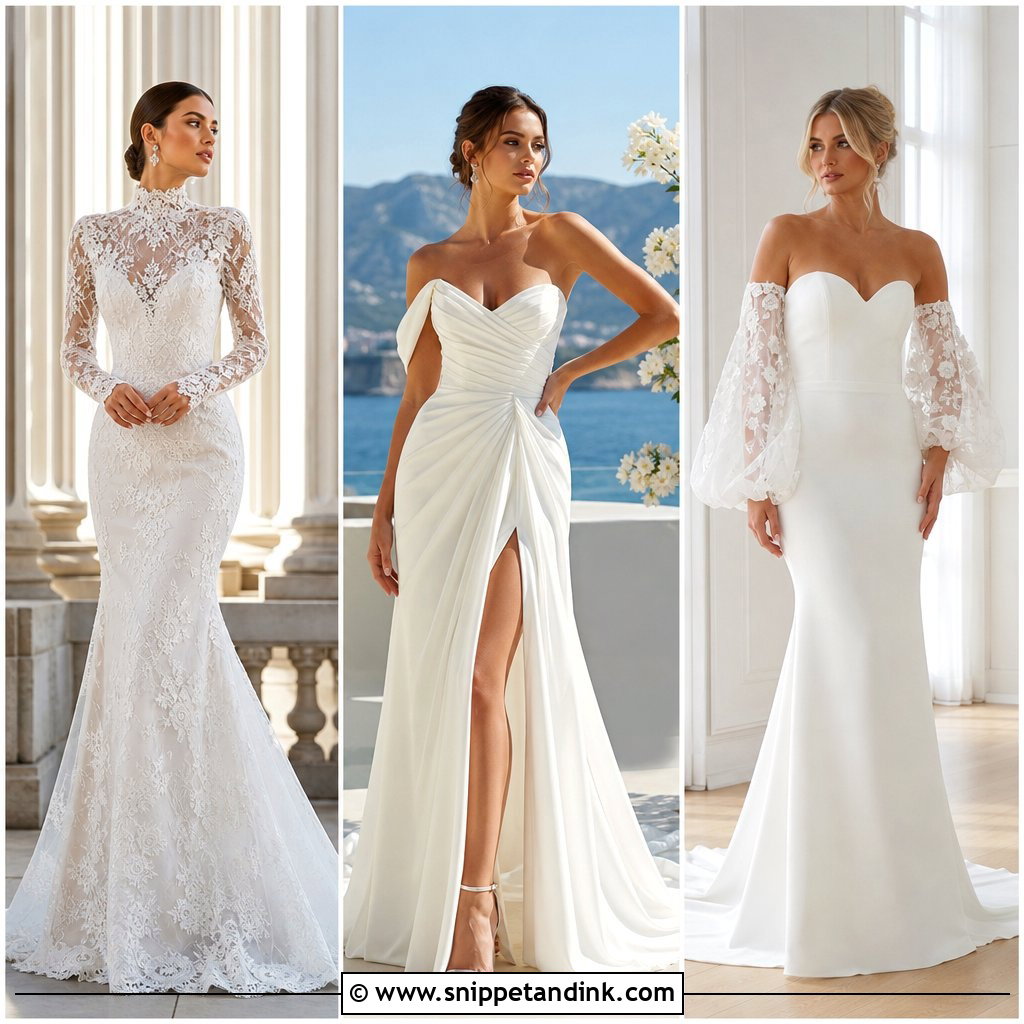
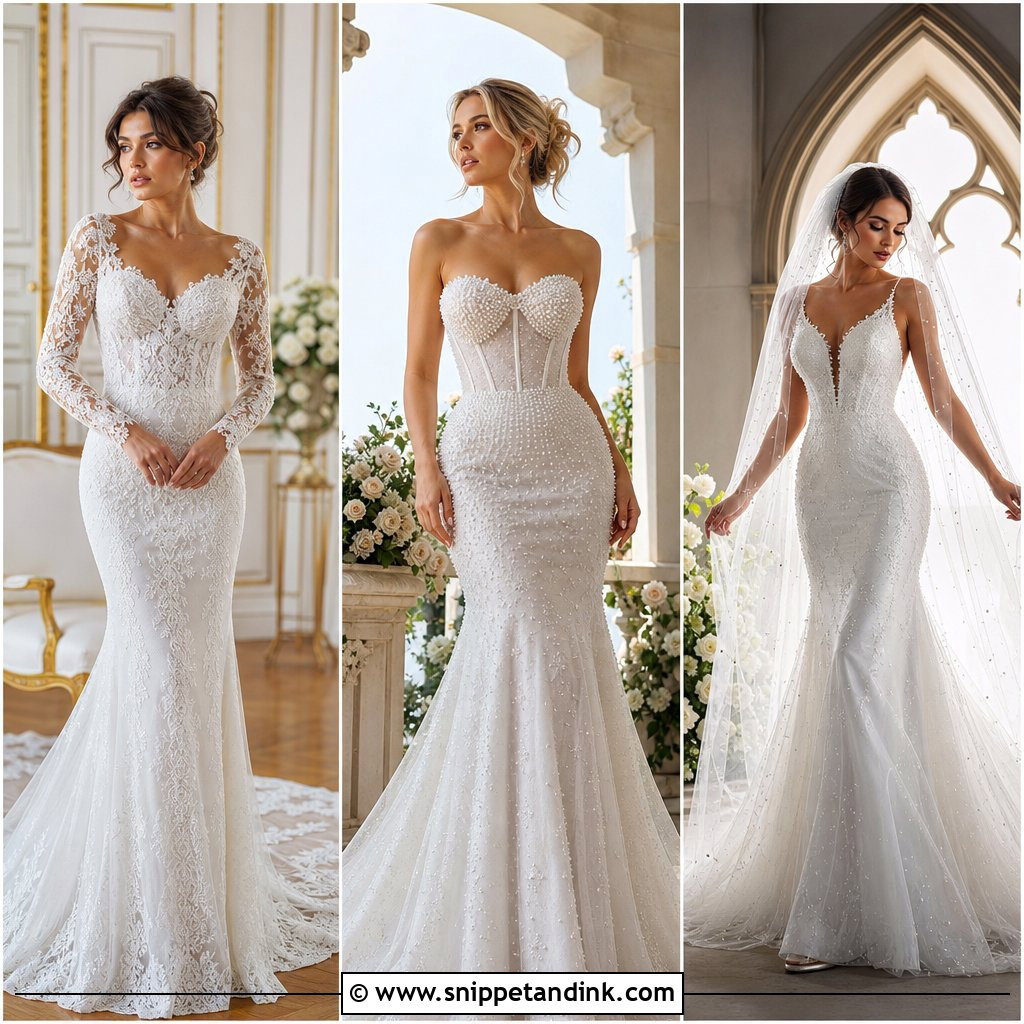
Lace sleeves give coverage you can still see through, which keeps a covered gown from feeling heavy in any season. Choose a lined bodice with sheer lace sleeves and let the lace carry into an A-line or fit-and-flare skirt. Floral motifs read soft; geometric lace looks cleaner and more current. Appliqués and embroidery can add depth to an otherwise simple shape. Pearl earrings, ivory pumps and a light veil that doesn’t hide the sleeve pattern complete it, with a loose low chignon. I always check the sleeve hem at the wrist; scratchy lace edges there rub all day, and a soft binding fixes it. Estates and historic venues suit it.
4. Square Neck Crepe Wedding Dress
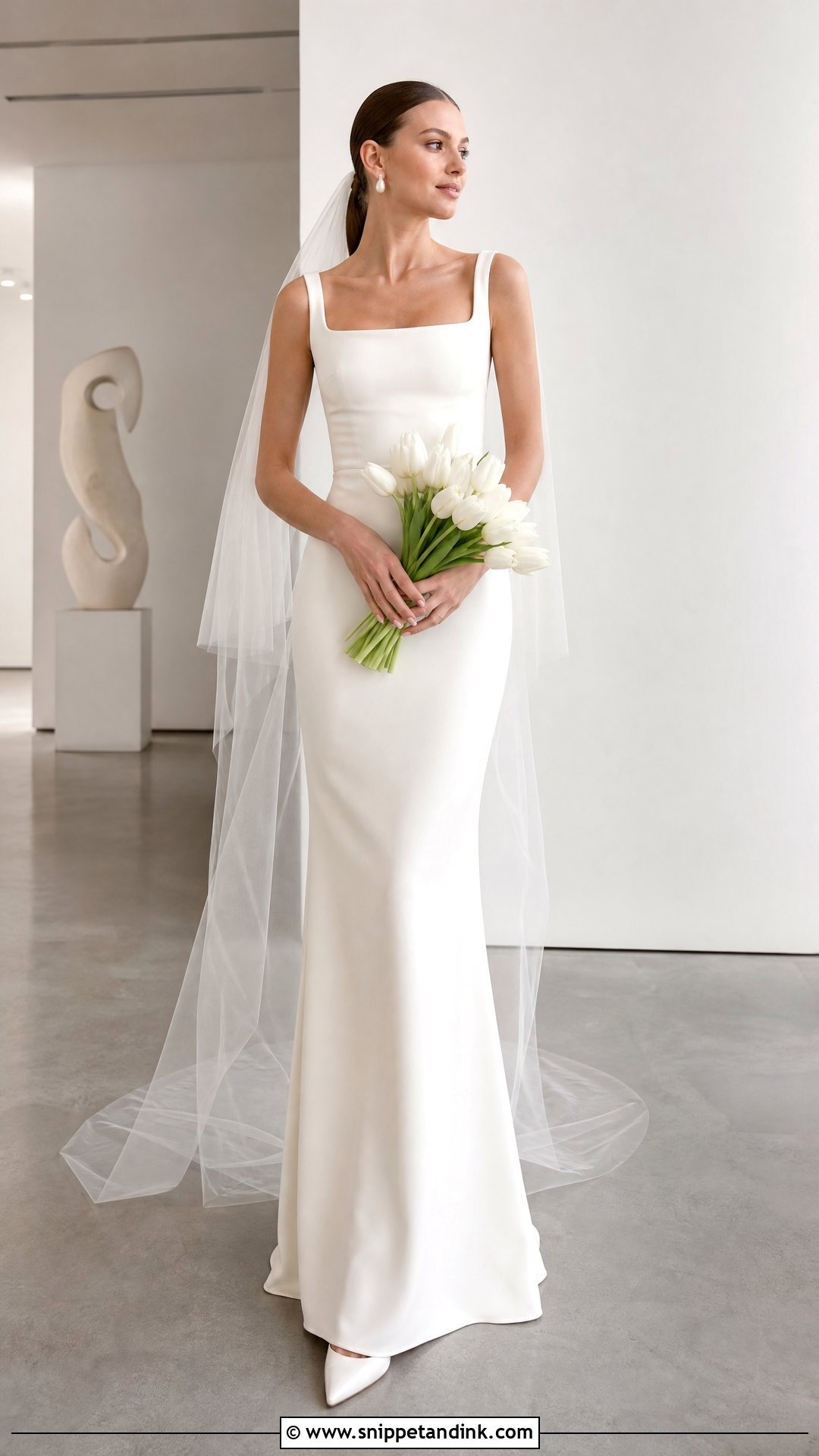
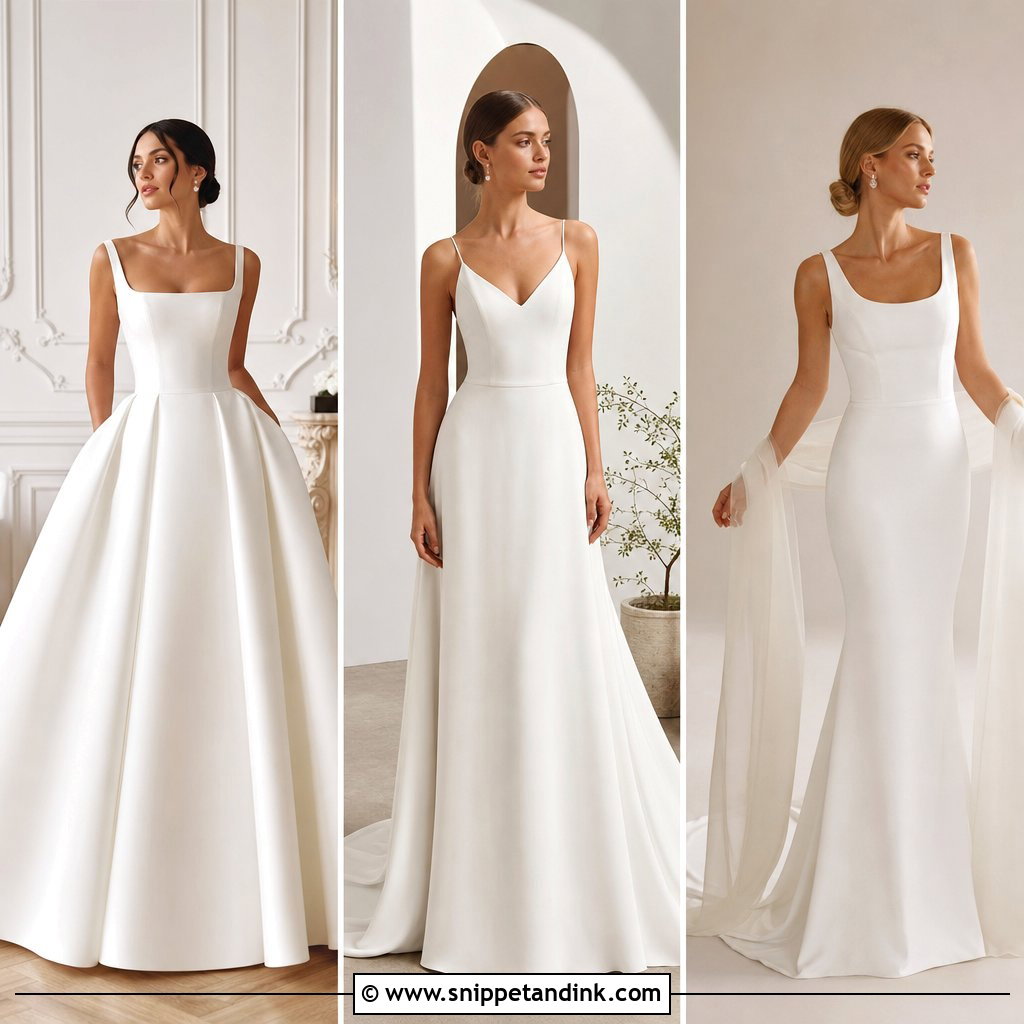
Crepe with a square neck is one of the most comfortable modern gowns you can wear. A fitted bodice frames the collarbone, and a sheath or gentle A-line keeps the line unbroken. Medium-weight crepe skims the body without clinging; too light and it shows every undergarment line. Wide straps support the neckline, so a regular bridal bra or sewn-in cups both work. Pearl button earrings, pointed white pumps and a sleek low ponytail suit it, with a single-layer chapel veil and white tulips or orchids. Galleries, rooftops, city hotels and pared-back outdoor ceremonies fit it.
5. Off Shoulder Mikado Wedding Dress
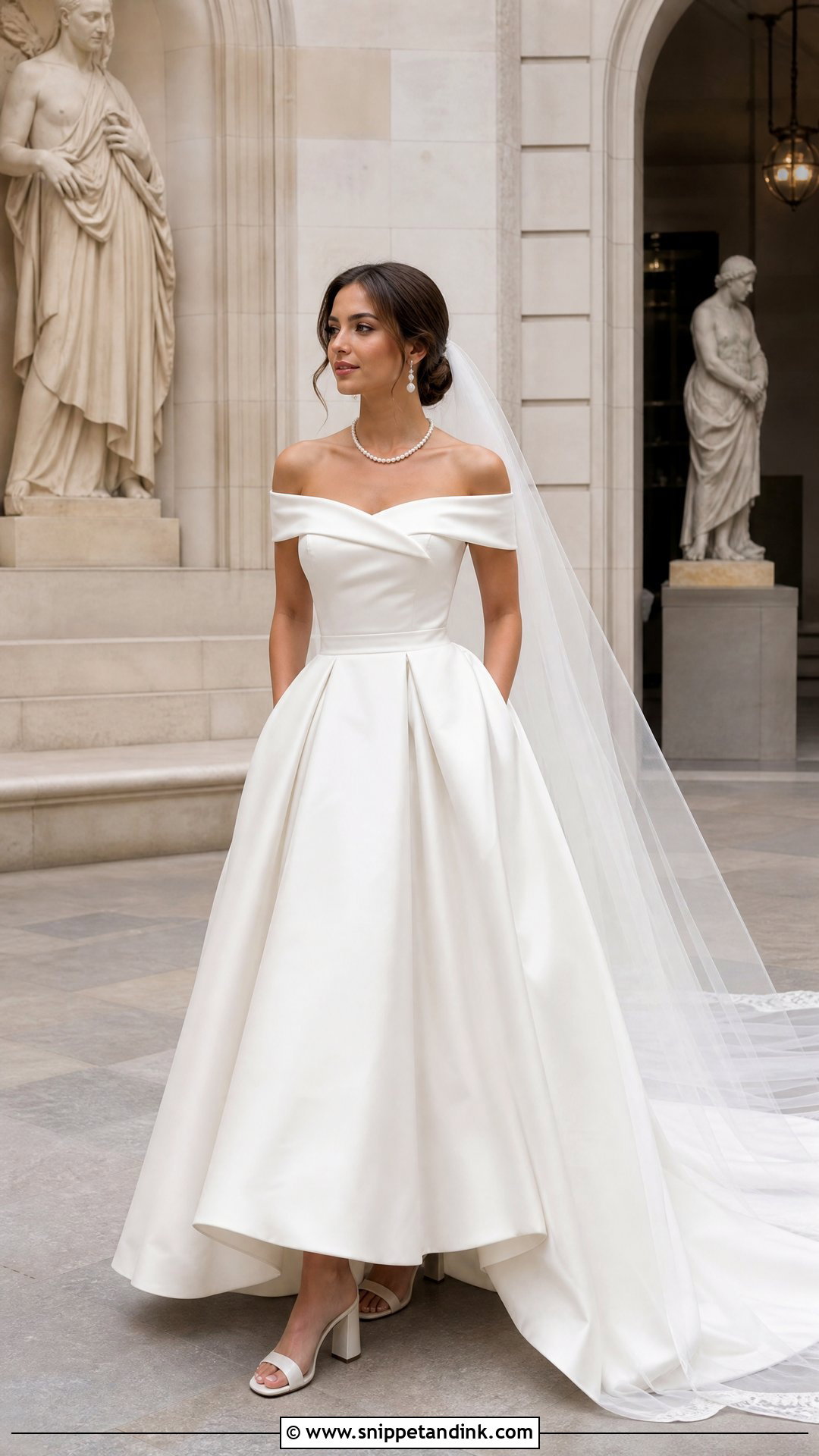
An off shoulder Mikado wedding dress stays put better than softer off-shoulder styles, because the fabric is stiff enough to hold the band in place on the upper arm. Still, leave room to move; test by reaching forward as if for a ring. A fitted waist and a lightly structured skirt give it presence without embellishment, and mikado holds pleats and folds well. A short pearl necklace, teardrop earrings and ivory block heels finish it, with a polished bun and a cathedral veil. Keep everything else simple. Elegant halls, museums and courtyards suit it.
6. Basque Waist Wedding Dress
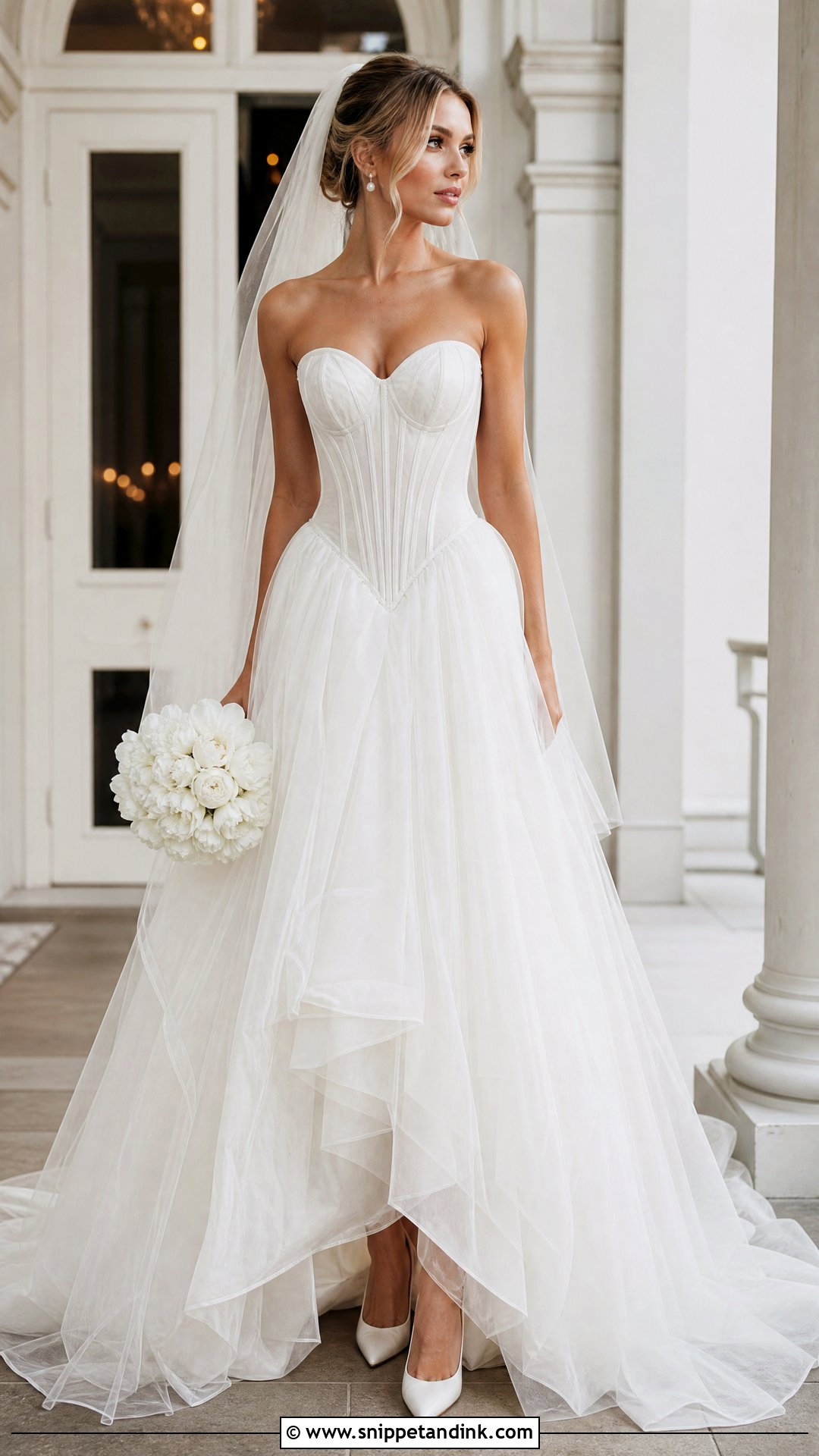
The V-shaped dropped waist is what gives the basque its long, defined bodice before the skirt extends. It can sit on a corseted top, a scoop neck or fine straps, depending on how much structure you want. Satin looks regal, layered tulle lighter. It shares its moment with square and sculptural necklines and other revived historical shapes in current gowns. Low-profile earrings, pointed pumps and a long veil set under a neat bun are enough; never add a belt, which cuts straight through the point. A round bouquet of ivory flowers softens the precise lines.
7. High Neck Column Wedding Dress
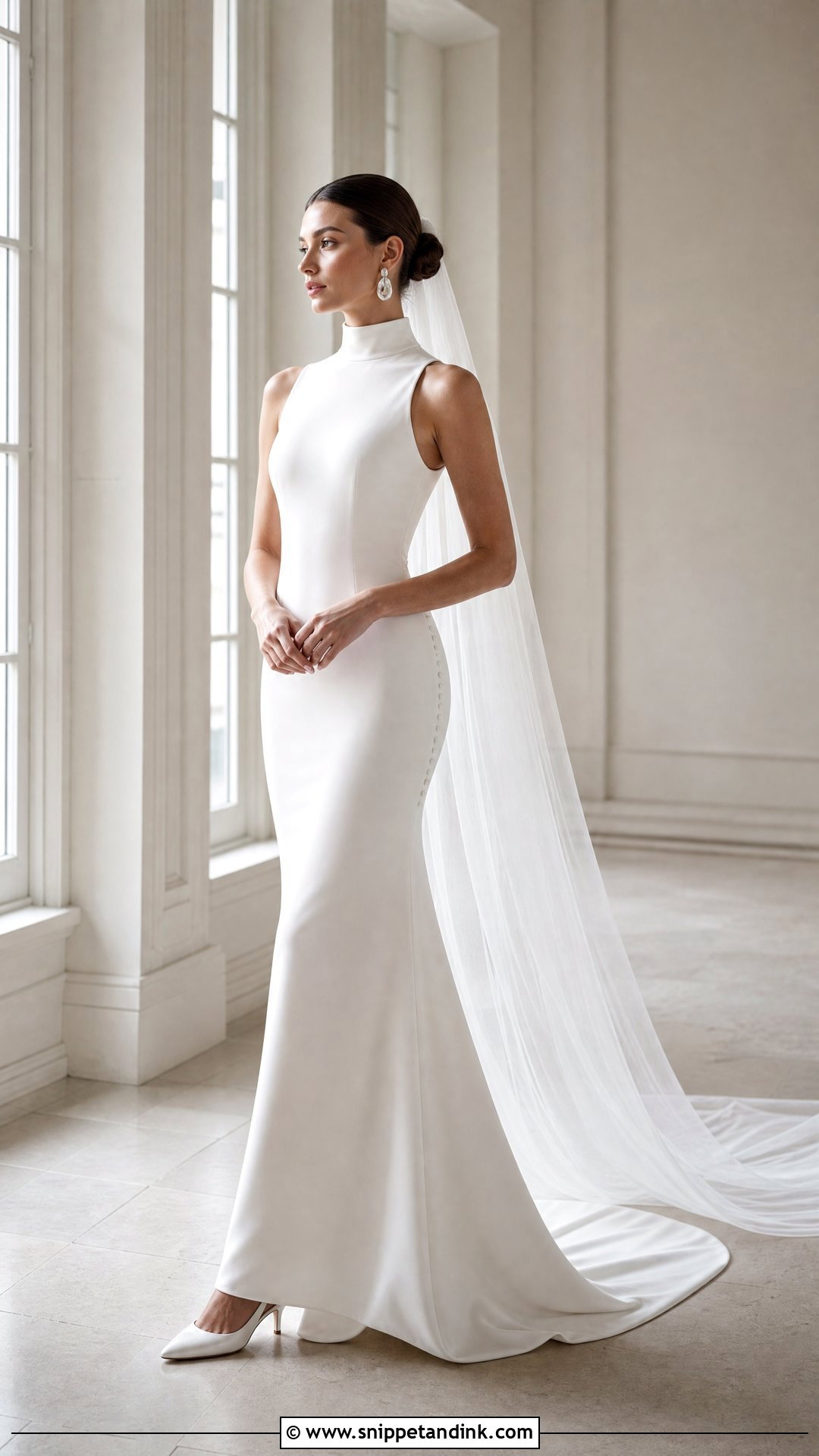
High-neck columns look quiet from the front and dramatic from the back. The fitted collar draws the eye up, and the narrow skirt follows the body without ball gown volume. Silk crepe, matte satin or fluid jersey all work; jersey is the most forgiving for movement, crepe the most sculpted. An open back or a row of covered buttons gives interest behind. Sculptural earrings, slingbacks and a slim clutch finish it, with no necklace, a sleek bun and a chapel veil. A narrow column needs a walking slit or a little ease at the knee, or the stairs become a problem.
8. Draped Cowl Neck Wedding Dress
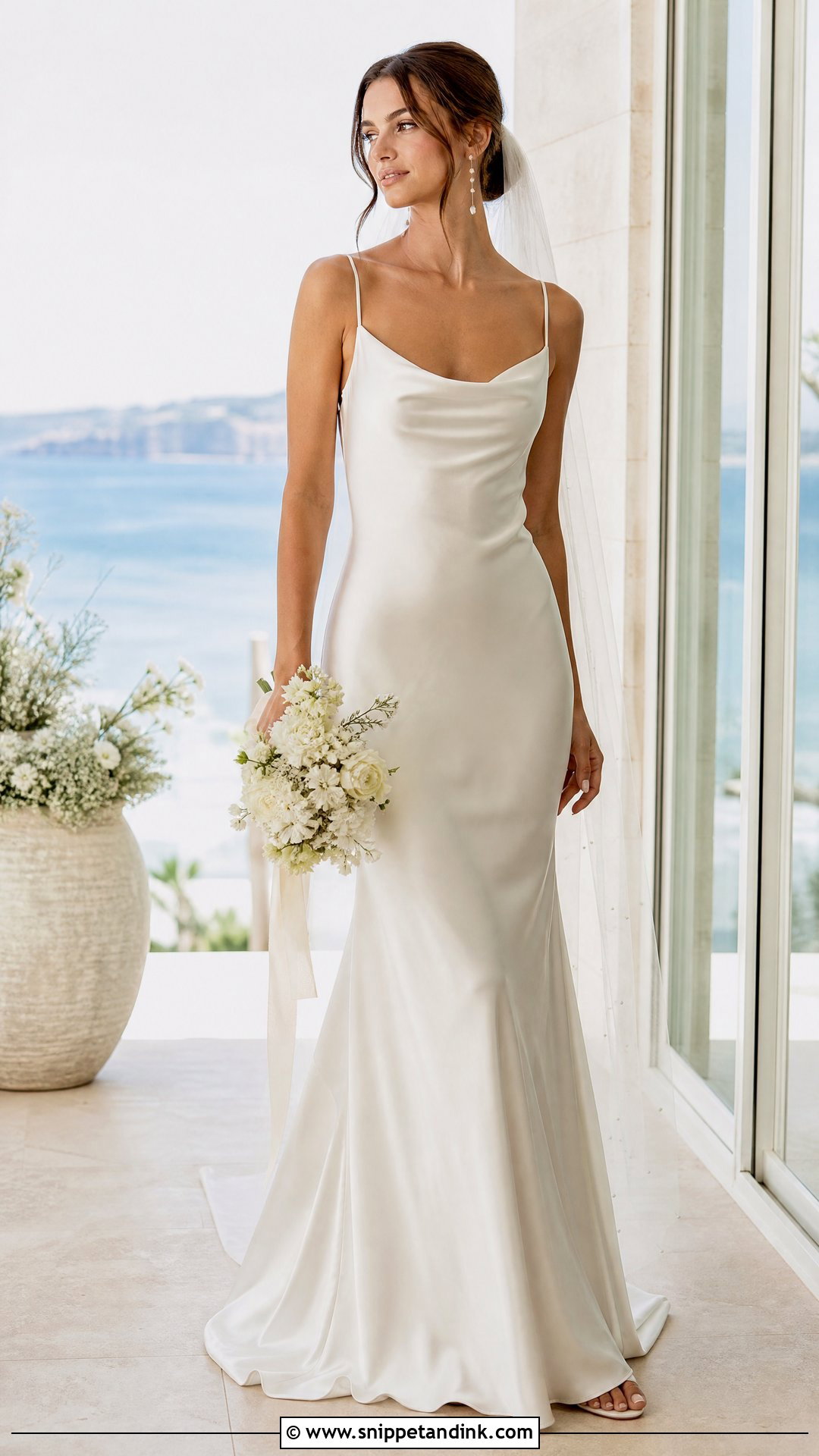
A cowl falls into its folds only when the fabric is cut on the bias, which is why a draped cowl neck wedding dress needs silk satin or charmeuse rather than anything stiff. Thin straps keep it delicate, and a low or draped back gives you something for ceremony photos. Pearl threaders, barely-there ivory sandals and a light fingertip veil suit it. Keep hair up or side-parted so it doesn’t cover the neckline. A cowl can gape when you bend forward, so a small fashion-tape strip inside saves you worrying in the group photos. Beaches, destination weddings and hot days are where it makes the most sense.
9. Floral Applique Wedding Dress
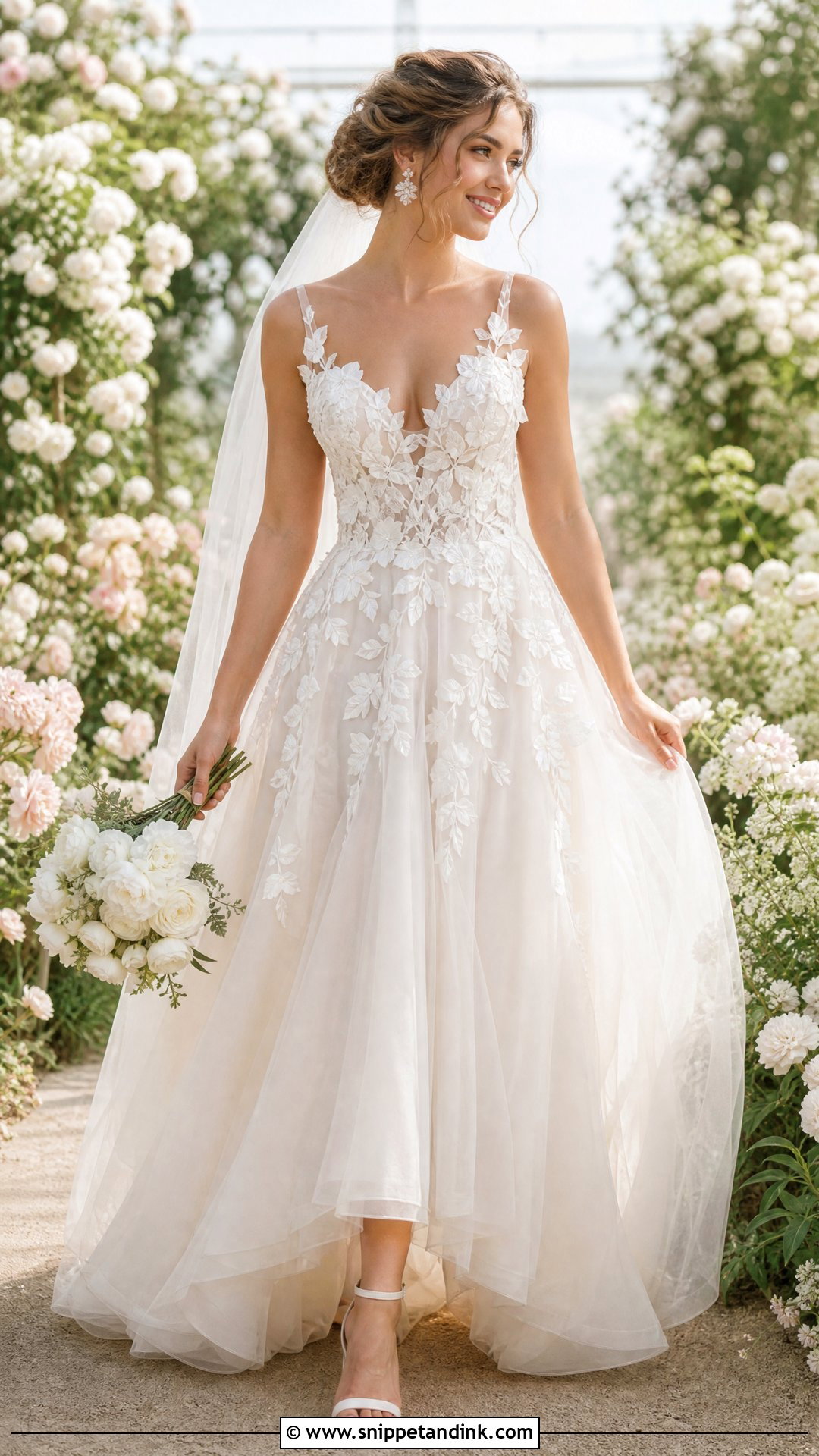
Dimensional petals give an appliqué gown texture that flat lace can’t. Place them around the bodice and scatter them down an A-line skirt so the weight stays balanced. Soft tulle keeps it light, and a fitted lining gives coverage under the sheer layers. Floral detail stays popular because it adds personality to familiar shapes. Crystal flower earrings, satin ankle-straps and a plain-edged sheer veil complete it; skip an embellished necklace. Loose waves or a soft updo suit the mood, and a bouquet in one or two colors keeps it cohesive. I check that the veil comb sits above the highest appliqué, otherwise the tulle catches on every step.
10. Pearl Beaded Wedding Dress
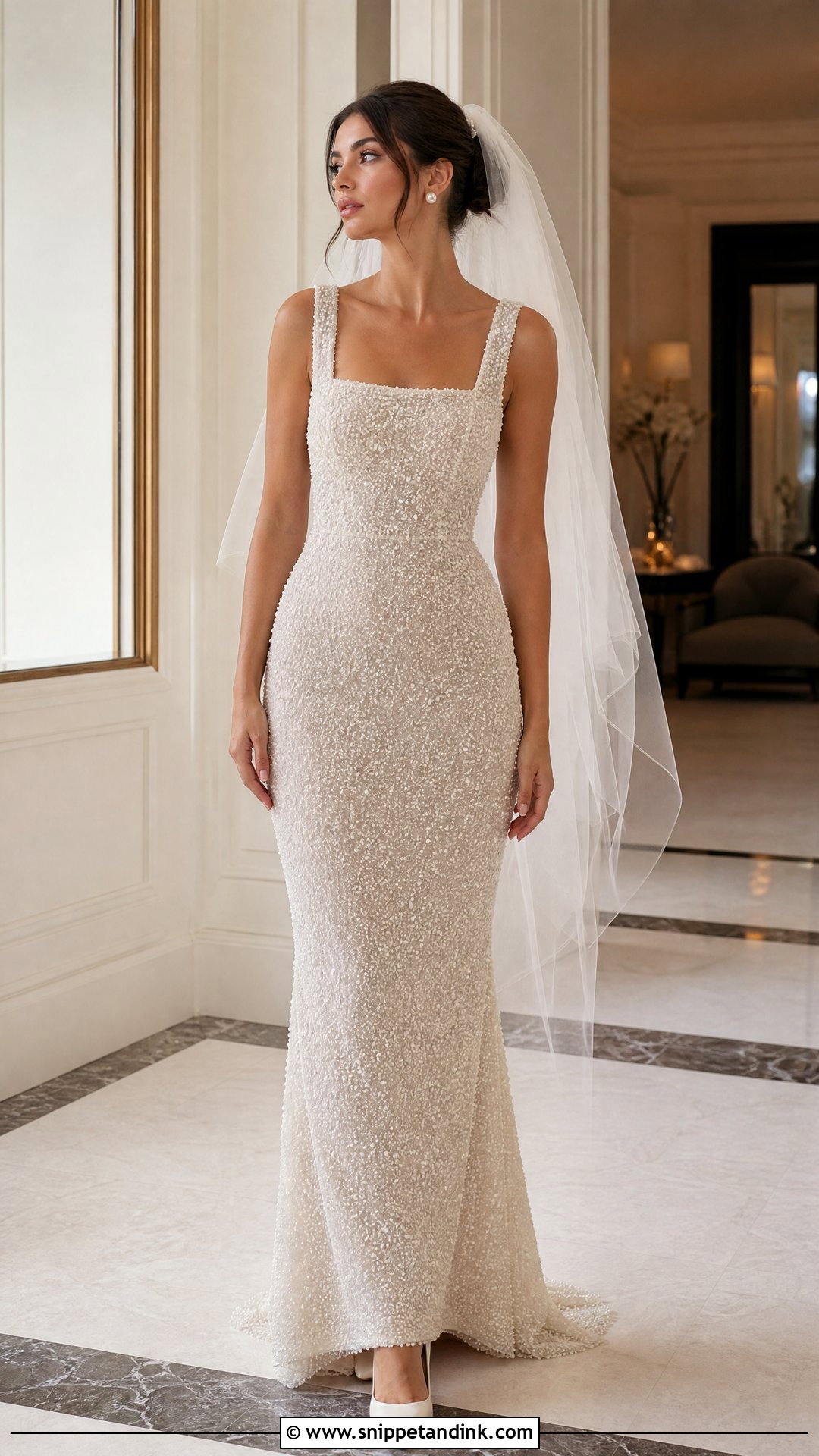
Pearl beading glows rather than glitters, so it sits well with brides who find crystals too much. Scatter pearls across the bodice, straps and upper skirt and let them thin out near the hem. A warm ivory lining makes them look creamier and keeps the coverage comfortable. Small pearl studs, pointed satin pumps and a compact pearl-trimmed bag are plenty, with a plain tulle veil and a smooth bun or waves tucked behind the ears. Pearls on a gown are often glass or plastic; that’s normal, but check the coating isn’t chipped on the sample. Evening weddings and candlelit rooms show it best.
11. Chiffon Empire Waist Wedding Dress
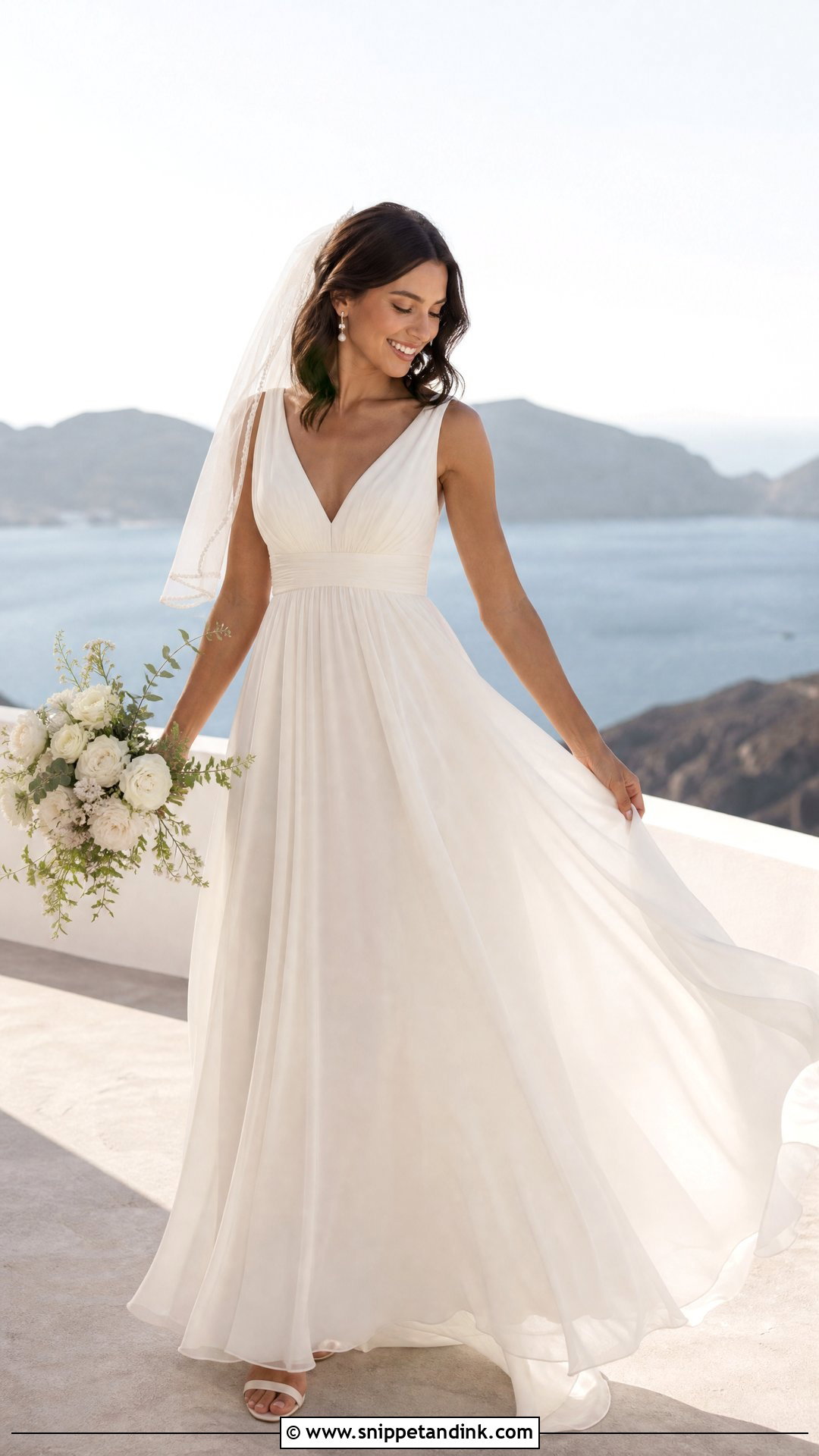
Empire waists are the easiest gowns on this list to move, eat and dance in, because nothing is fitted below the bust. Lightweight chiffon falls from just under the bodice and stays airy. Choose a gathered skirt with a lined underlayer so it doesn’t go see-through in sunlight. A V-neck, square neck or draped bodice personalizes it. Low block heels, delicate gold or pearl earrings and a ribbon-tied loose bouquet suit it, with a shoulder-length veil. Season and setting matter when choosing fabric, and breathable chiffon is a practical answer for warm outdoor and destination weddings. It is also kind to anyone who is pregnant at their wedding.
12. Tea Length Wedding Dress
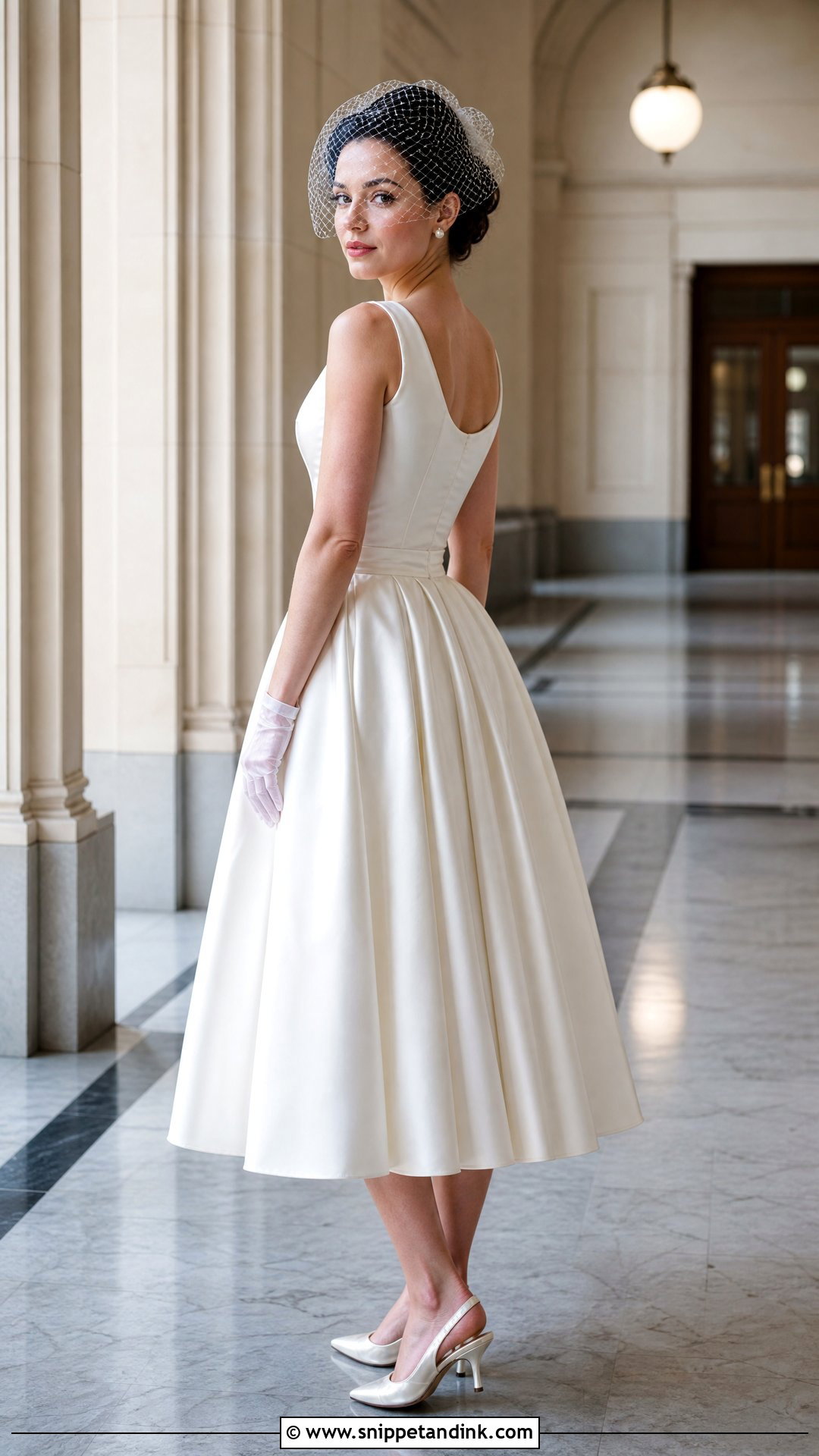
Tea length gives your shoes a starring role, so buy them with as much care as the dress. A fitted bodice and a full skirt ending between knee and ankle feel playful. Structured satin reads formal; lace or dotted tulle feels more vintage. Pointed pumps, slingbacks or embellished ankle-straps must be comfortable enough to stand in for hours, since everyone will see if you swap to flats. Pearl studs, short gloves if you like them, and a birdcage or fingertip veil complete it, with a neat chignon or curled bob. Courthouses, restaurants and gardens suit it, without any train to manage.
13. Detachable Overskirt Wedding Dress
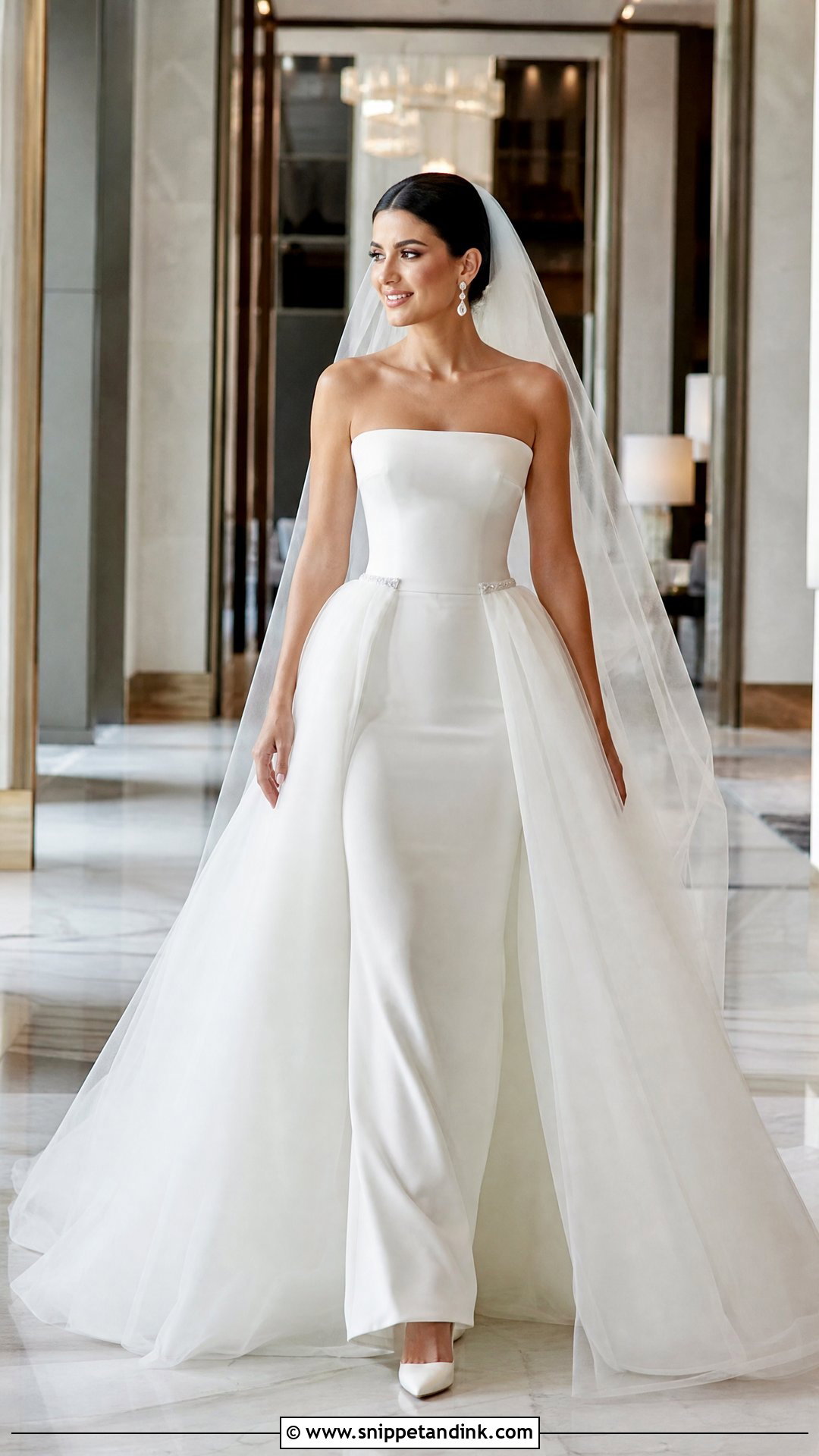
Would you like two looks without a full outfit change? A detachable overskirt gives you ceremony drama and a slimmer reception line. Start with a fitted crepe, lace or satin gown, then add a full overskirt that fastens neatly at the waist; satin, tulle or appliqué all work for the outer layer. Convertible pieces like overskirts and sleeves have become a common way to dress for both halves of the day. Pointed pumps, drop earrings and a long veil suit the ceremony; after, a smaller hair accessory or statement earrings. The fastenings must be hidden and simple enough for someone else to undo in a minute.
14. Cape Sleeve Wedding Dress
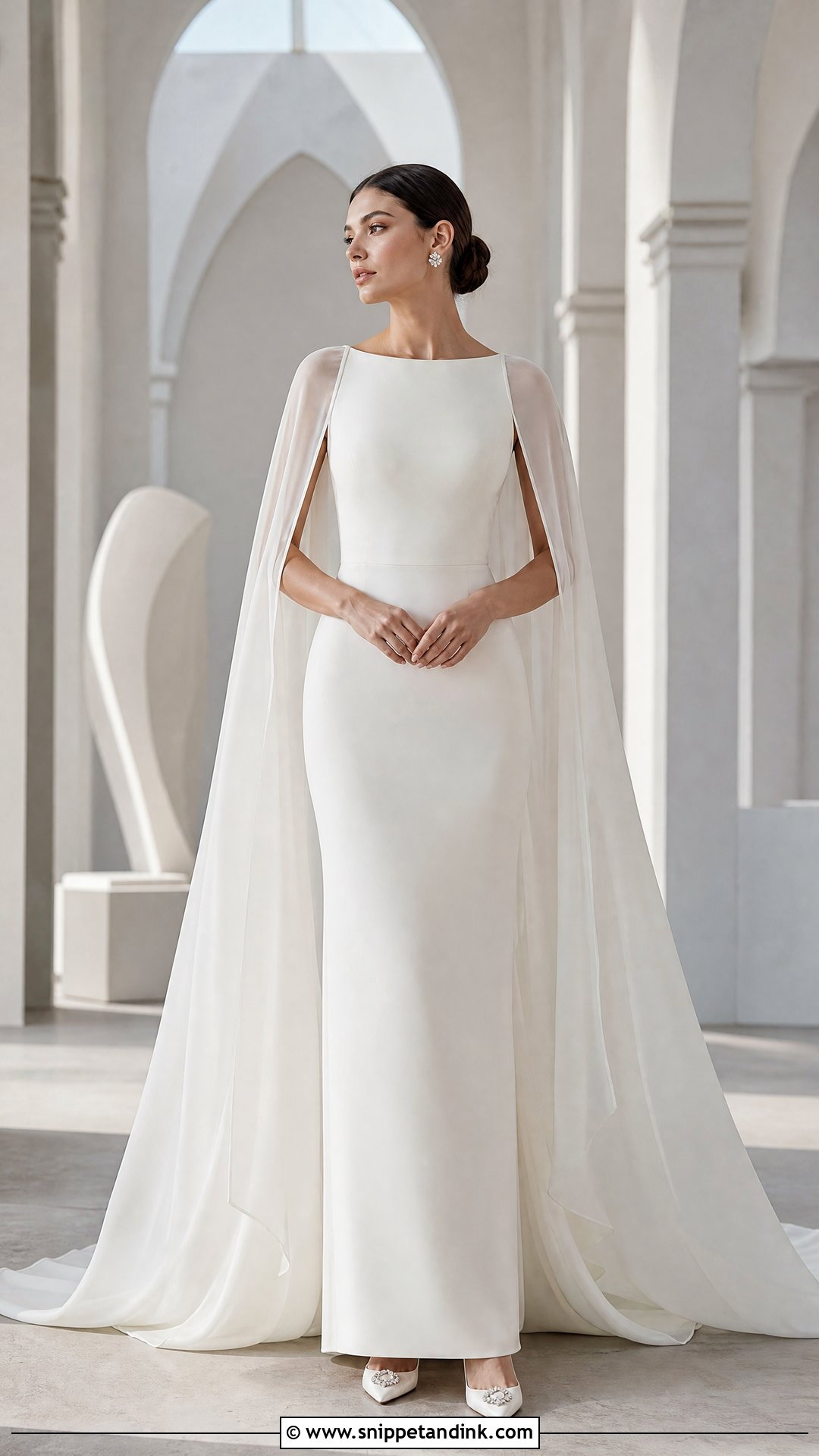
Cape sleeves give movement and coverage while the gown underneath stays sleek. Use a fitted column or A-line with the cape attached at the shoulders, neckline or back. Sheer chiffon floats; satin or crepe makes a stronger, architectural shape. Keep the bodice plain so the cape leads. Small diamond or crystal studs, pointed heels and a sleek low bun finish it. You may not need a veil, since the cape already gives length behind; if you want one, keep it short and plain so the two fabrics don’t tangle. In wind, chiffon capes wrap around your arms, so outdoors I’d choose a heavier fabric.
15. Minimal Slip Wedding Dress
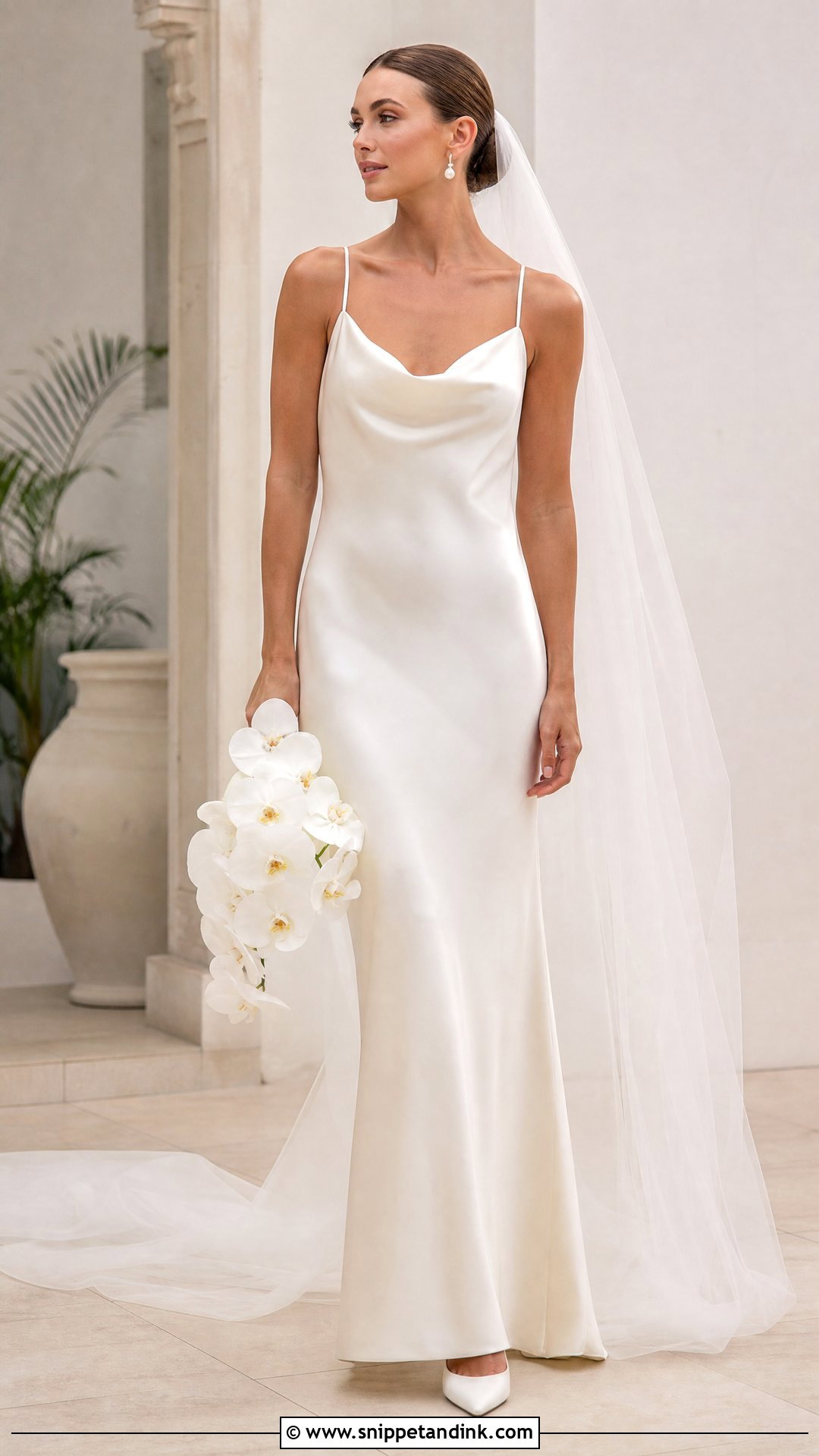
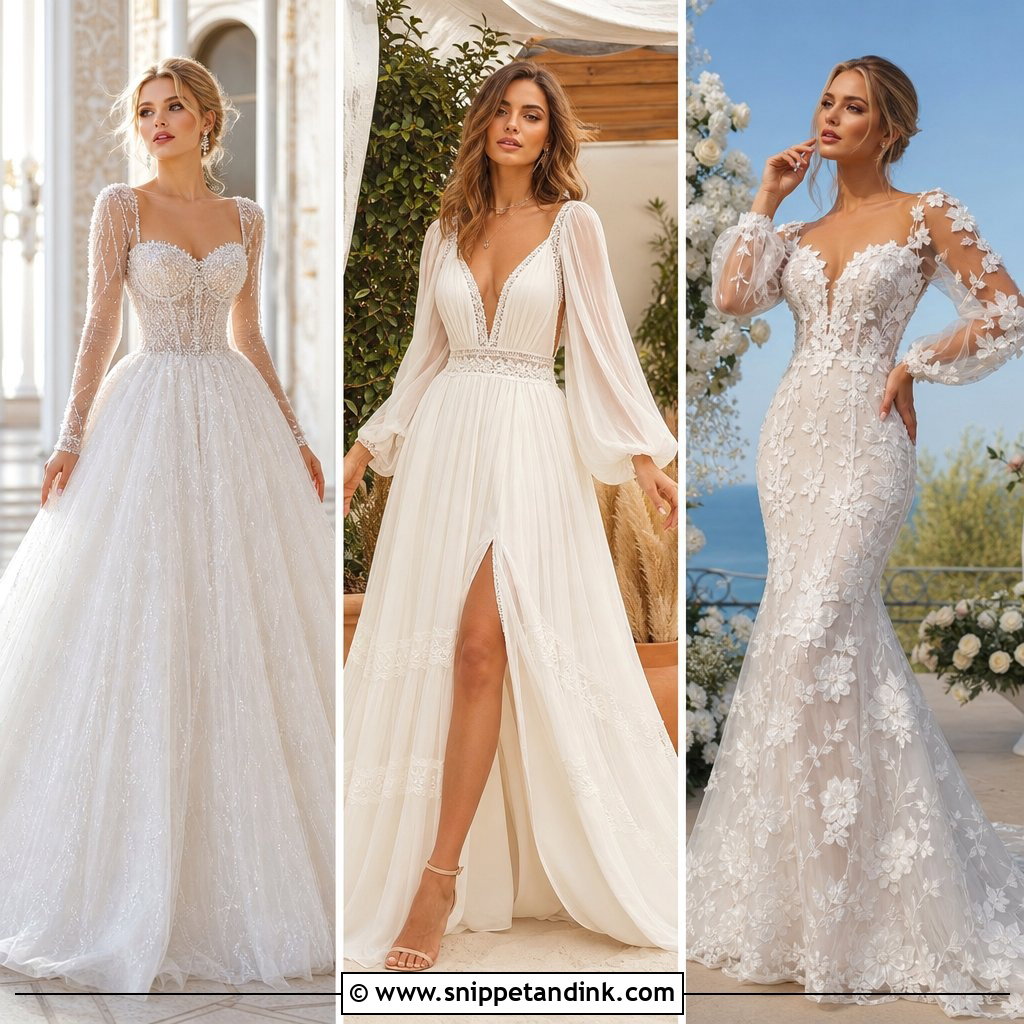
A slip dress looks simple only when it is cut perfectly. Choose a bias-cut silk or satin gown with narrow straps, a softly shaped neckline and a skirt that glides. Bias cuts drop and stretch slightly as they hang, so your final hem should be set after the dress has hung for a day or two. A long sheer veil, pearl drops and closed-toe pumps add formality; a white wrap or light bridal coat covers you on a cool day. Glossy waves or a low bun both suit it, with a compact bouquet of white orchids. Minimalist venues and destination weddings suit it.
16. Corset Bodice Wedding Dress
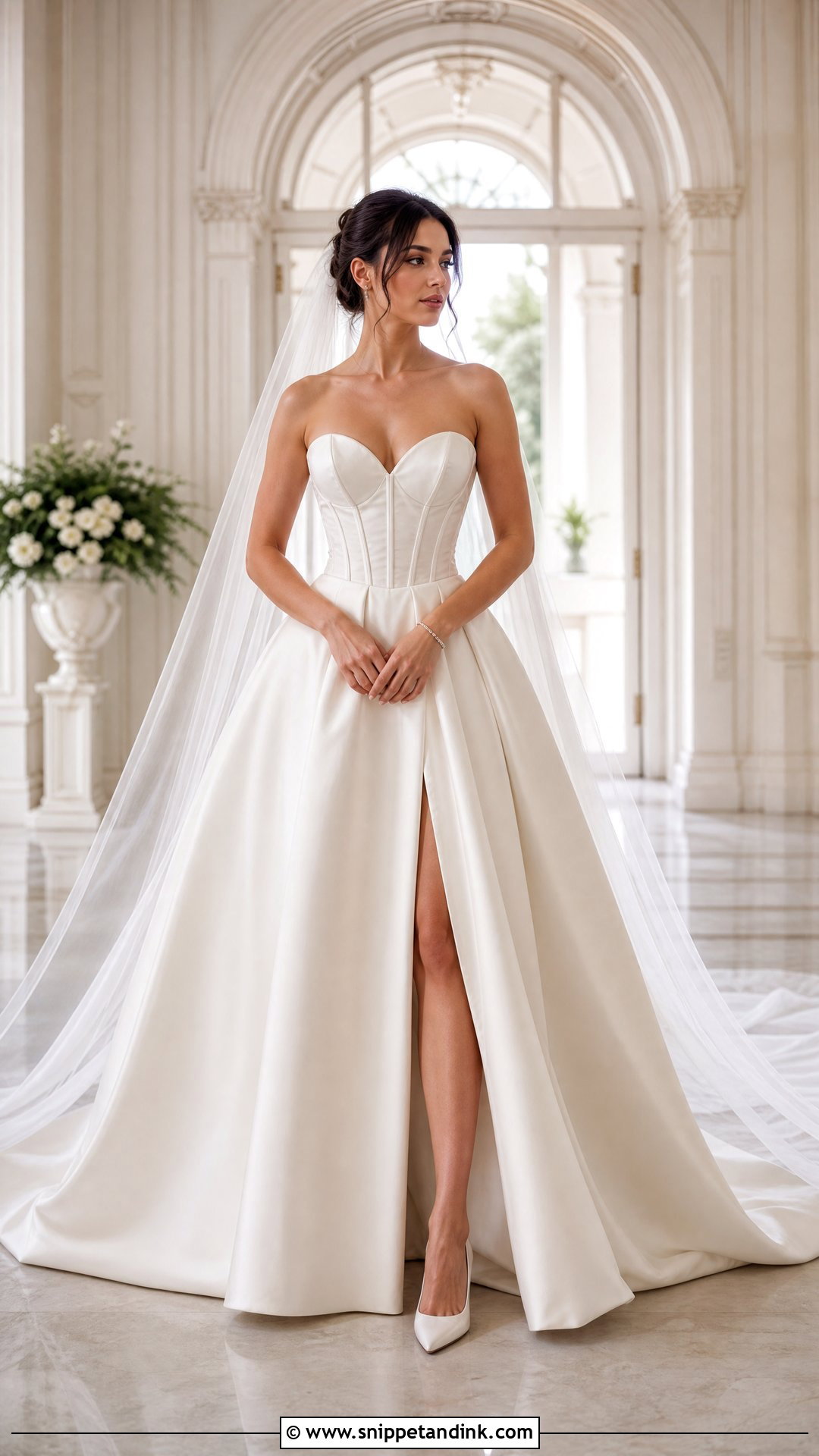
The corset is doing the fitting work, so this is the gown where alterations matter most. Choose well-placed boning, supportive cups and a straight, sweetheart or scoop neckline. A full satin skirt feels classic, a soft tulle one airier. It should feel secure, not tight: at fittings sit, walk, raise your arms and take a deep breath. Crystal studs, a fine bracelet, pointed pumps and a plain cathedral veil complete it, with a low chignon so the bodice shows from every side. Skip a large necklace when the neckline is already shaped. Formal estates, ballrooms and dressy outdoor venues suit it.
17. Pleated Organza Wedding Dress
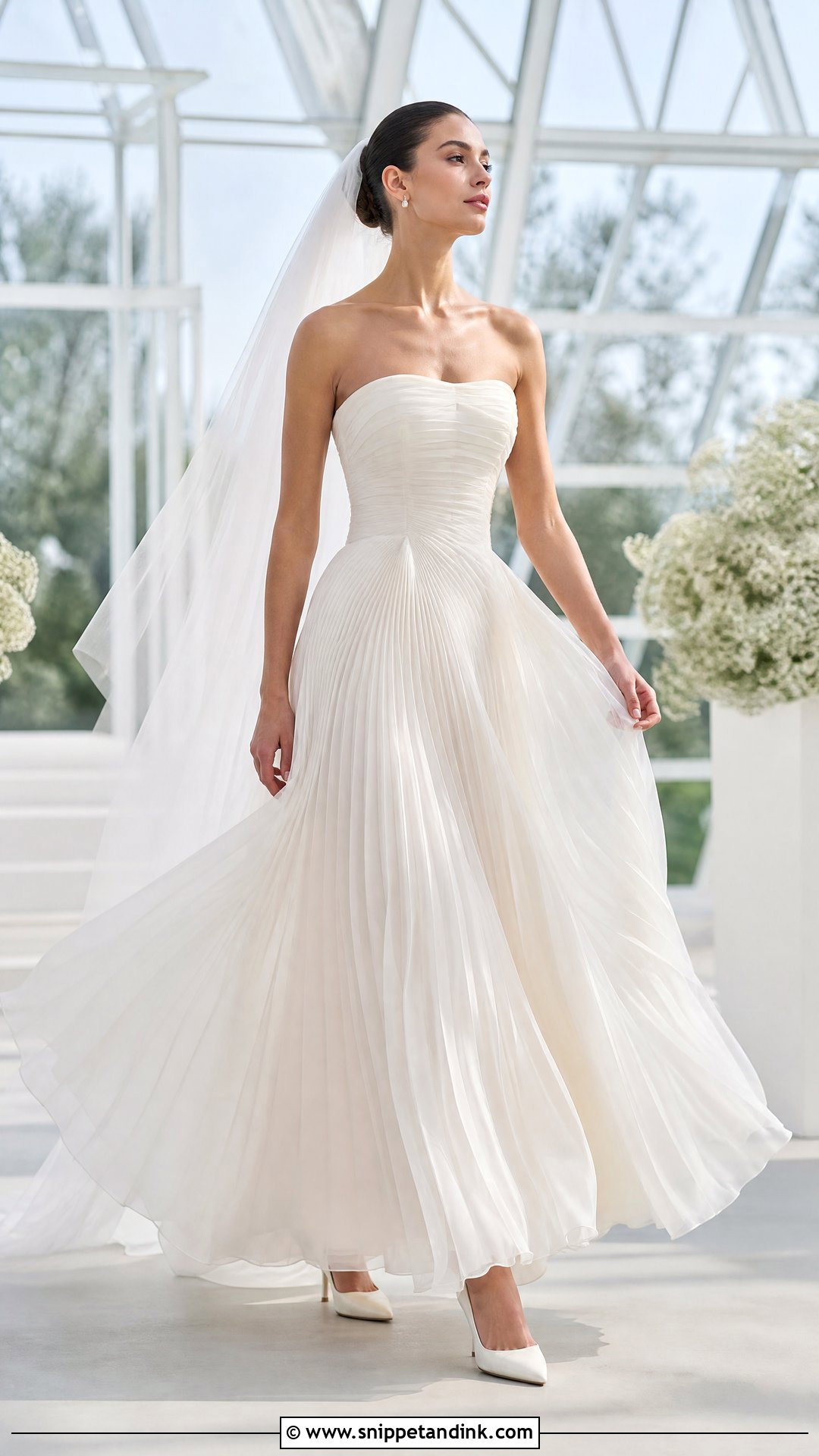
Organza is crisp yet almost weightless, so pleats in it give volume without the heaviness of thick satin. Choose an A-line or ball gown with fine pleats through the bodice, skirt or both; the sheerness lets layers build depth. A scoop or strapless neckline keeps attention on movement. Understated studs, satin pumps and a smooth-edged veil just past the train finish it, with a sleek updo and a small bouquet. Organza creases sharply if it’s packed tightly, so travel it in a long bag with tissue between the pleats. Spring and summer ceremonies and bright indoor venues suit it.
18. Bow Back Wedding Dress
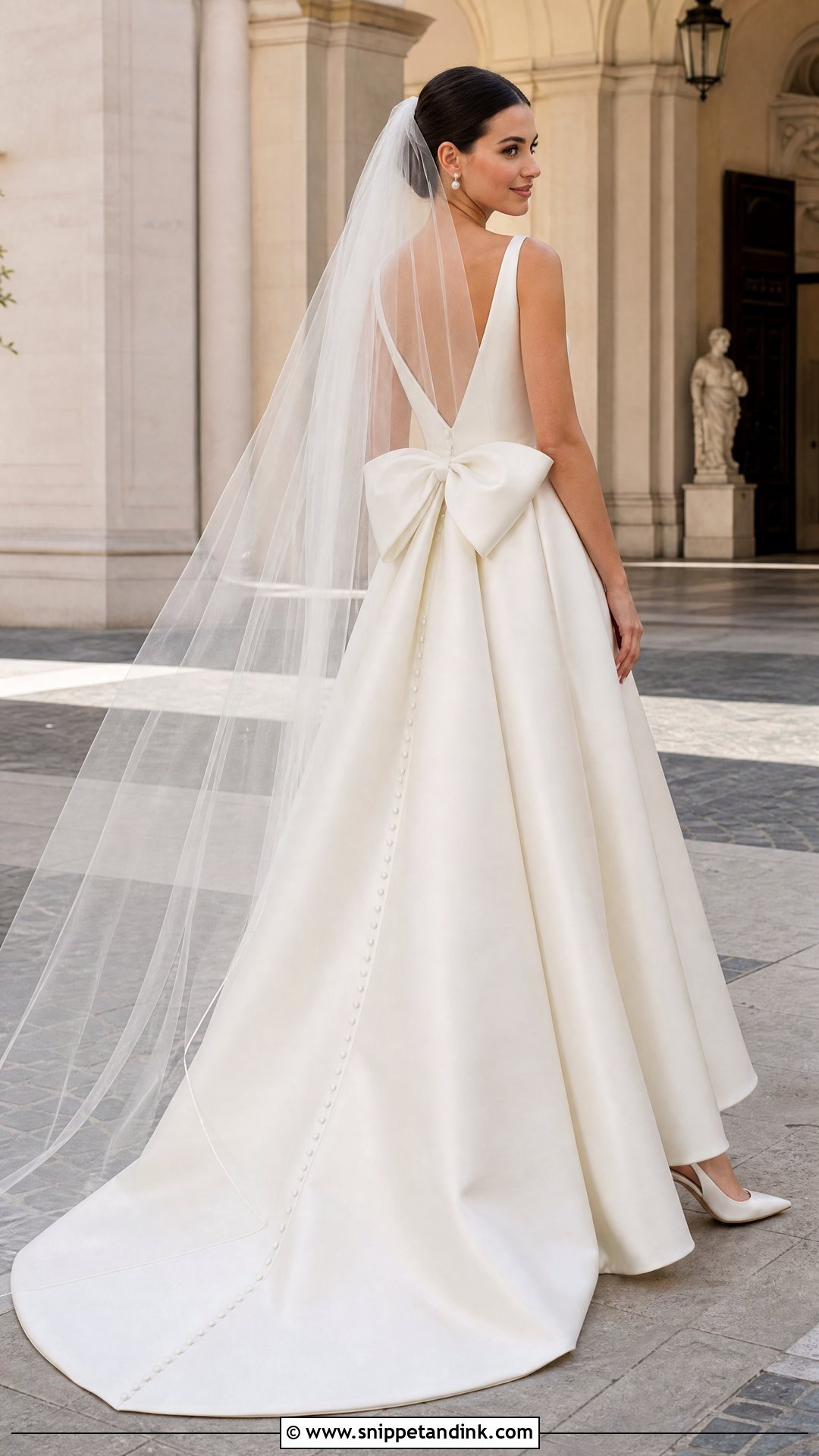
A bow back saves its moment for the walk down the aisle. Choose clean satin or mikado with a structured bow at the waist, lower back or the top of the train. A sheath silhouette looks sleek; an A-line skirt gives the bow a softer setting. Keep the front plain with a square, bateau or strapless neckline. Pearl studs, pointed heels and a sheer veil that leaves the bow visible complete it; after the ceremony, swap the veil for a small comb in a polished bun. The bow sits where you lean back, so ask whether its loops are stiffened enough to recover after dinner.
19. One Shoulder Wedding Dress
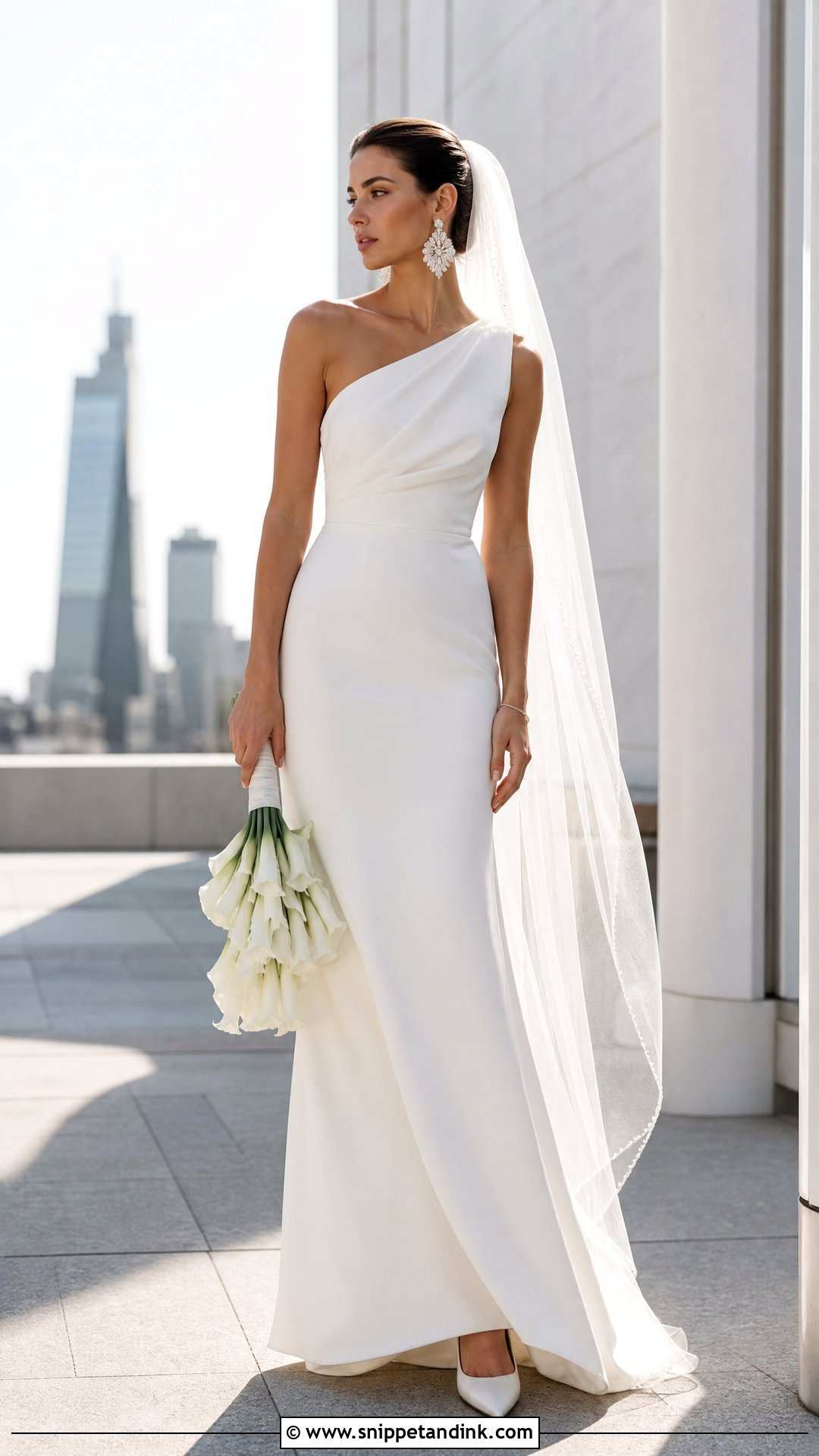
Asymmetry gives a one-shoulder gown its modern edge without needing beading. A fitted crepe gown, draped satin column or soft A-line all work, as long as that single strap is secure; I’d ask for silicone grip tape inside it. A folded detail or small bow at the shoulder adds dimension. Wear earrings rather than a necklace and put a bracelet on the bare arm. Pointed pumps and a simple fingertip veil keep it polished, and a low side bun or sleek ponytail keeps the shoulder visible. A narrow bouquet with clean stems fits the lines. City venues and rooftops suit it.



20. Modest Satin Wedding Dress
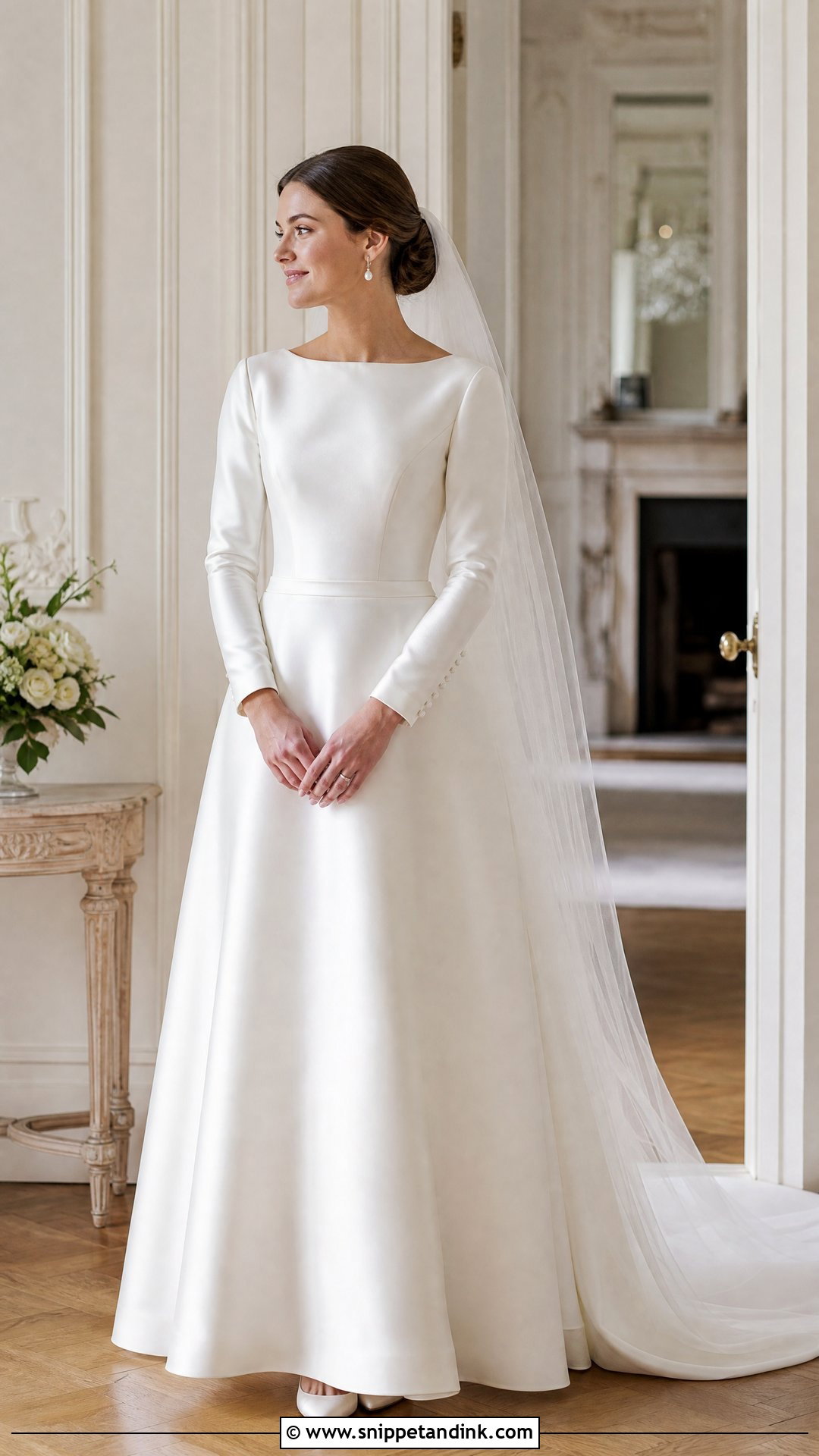
Covered gowns can look dated when the fit is loose; in satin, close tailoring keeps them fresh. Choose a bateau or high scoop neckline, fitted long sleeves, a defined waist and a gently flared skirt. Smooth satin gives a soft sheen, and covered buttons at cuffs and back add interest. Pearl earrings, closed-toe pumps and a long veil set under a low bun finish it, with white roses, peonies or tulips. Satin sleeves have no stretch, so raise your arms at the fitting and ask for a gusset if they bind. Pick a lining weight that suits the season.
Why the Sample Looks Different on You
Inspiration photos show a gown fitted to a model, pinned at the back, lit by a professional and often retouched. Shop samples are usually one standard size and have been tried on many times, so they are clipped to fit and may be slightly stretched. When I’m with a bride in the fitting room, I tell her not to judge a dress by how the sample hangs; judge the neckline, the silhouette and how you feel moving in it. Fit is what alterations are for.
Fabric for the season you’ll actually be in
The same style changes character in different fabric, and I’d let the weather on the day help decide which one you choose.
- Hot or humid days: chiffon, organza and light crepe breathe; heavy satin and full net skirts trap heat.
- Cold months and stone churches: mikado, heavier satin and lined lace sleeves keep you warmer and look rich in low light.
- Long days with lots of sitting: crepe and lace forgive creasing better than satin, which shows every fold.
- Outdoor ground: a shorter hem or tea length avoids grass stains and a train full of gravel.
Your Pinned Photos Start the Search, the Mirror Ends It
A gown that looks perfect on a mood board still has to support your body, suit your venue and feel like you from every side. Lace, satin, crepe, chiffon, ball gowns and convertible designs all appear above, and each one solves a different problem. Save the shapes that pull you in, compare their necklines, fabrics and waistlines, and take a short list to appointments. Then stay open: many brides fall for something they would never have pinned. Good shoes, the right accessories and skilled alterations turn any of these into your own outfit.
You'll Like These Ideas:



Leave a Reply