
Most gown appointments start with a saved photo and end with a different dress, because a picture can’t tell you how a fabric carries weight or how a bodice behaves when you sit down. The shapes brides ask me about most right now are lace, basque and drop waists, bows, corsetry, pleats, minis, suiting, detachable layers and very clean minimal gowns. Below are 25 complete looks built around those directions, each with the thing I’d actually check in the fitting room. Use them to work out which silhouette suits your venue and the way you move, not only which one looks best standing still.
Reading a Gown in the Fitting Room, Not the Photo
Every gown in a photo is standing still, lit well and pinned at the back. In a fitting room I put each bride through the same short routine before she’s allowed to fall in love, because these few movements reveal problems that a mirror never shows.
- Sit on an ordinary chair for a full minute. Watch where the bodice digs and whether the skirt bunches at your lap.
- Raise both arms as if hugging someone taller. Necklines that slide, sleeves that bind and boning that pokes all show up here.
- Climb a step or two. Mermaid and fitted gowns that look fine on flat floors can stop you dead on stairs.
- Turn your back to the mirror with a hand mirror. Guests see the back of your gown for most of the ceremony.
- Stand for ten minutes. A heavy skirt that feels fine at first can feel very different by the time you’d reach dinner.
Fabric tells you just as much. Satin shows every crease and needs a steam before portraits. Crepe is forgiving and quiet, though it clings, so the right underwear matters. Mikado and taffeta hold sculpted shapes like bows and pleats. Tulle is light but snags. Lace gives slightly with the body, which makes it kind on long days. I’d always pick the fabric for your venue and timeline first, then the silhouette.
1. Lace Wedding Gown
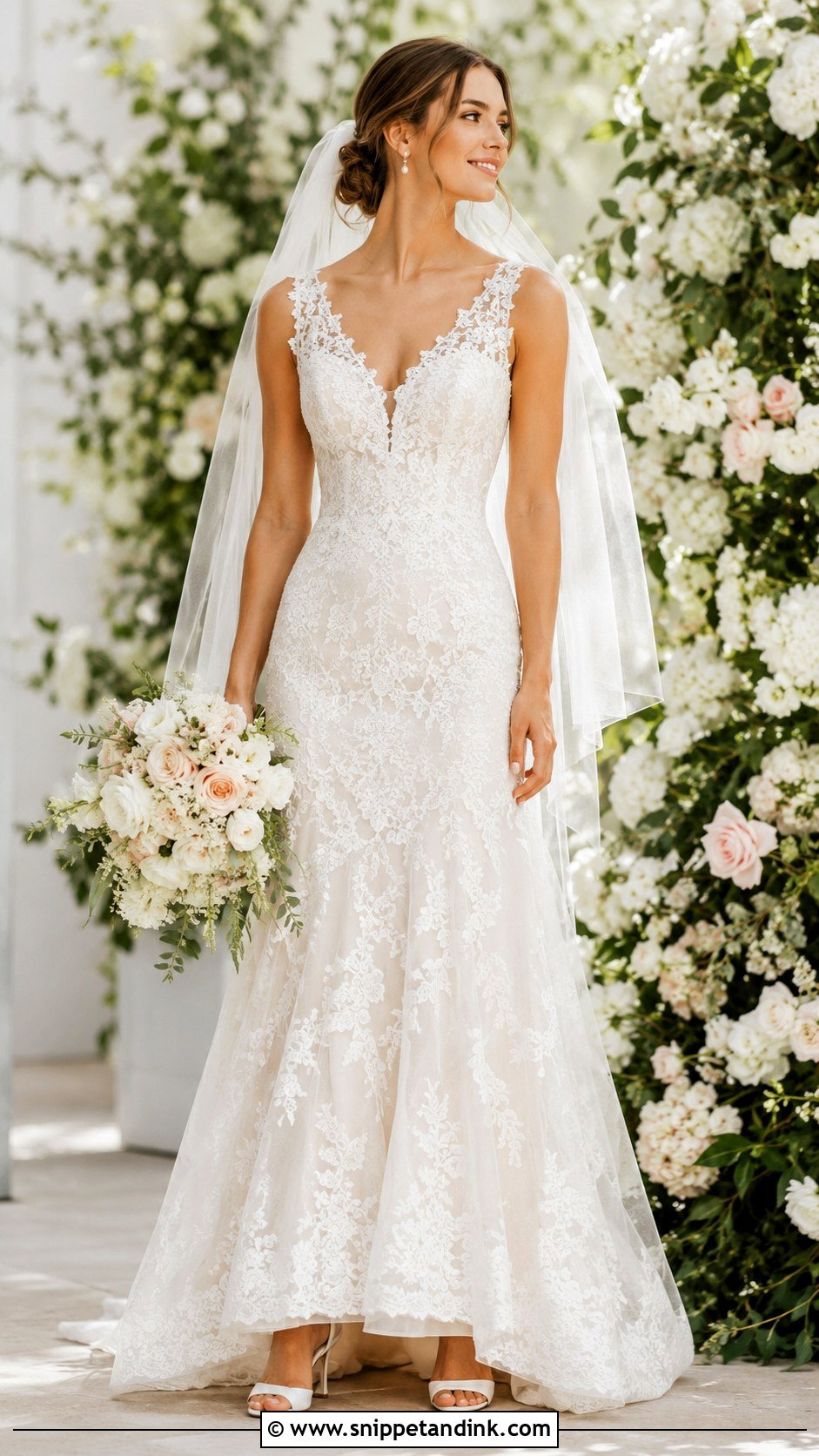
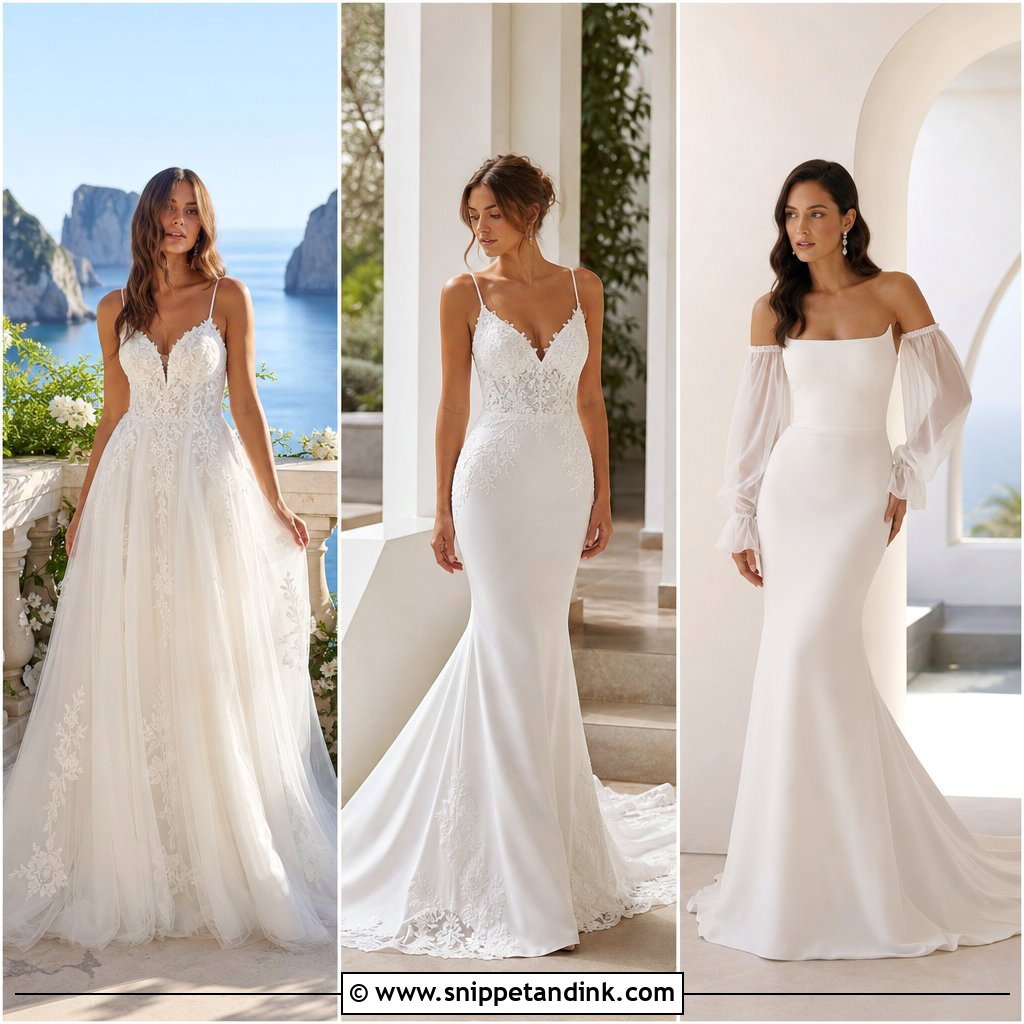
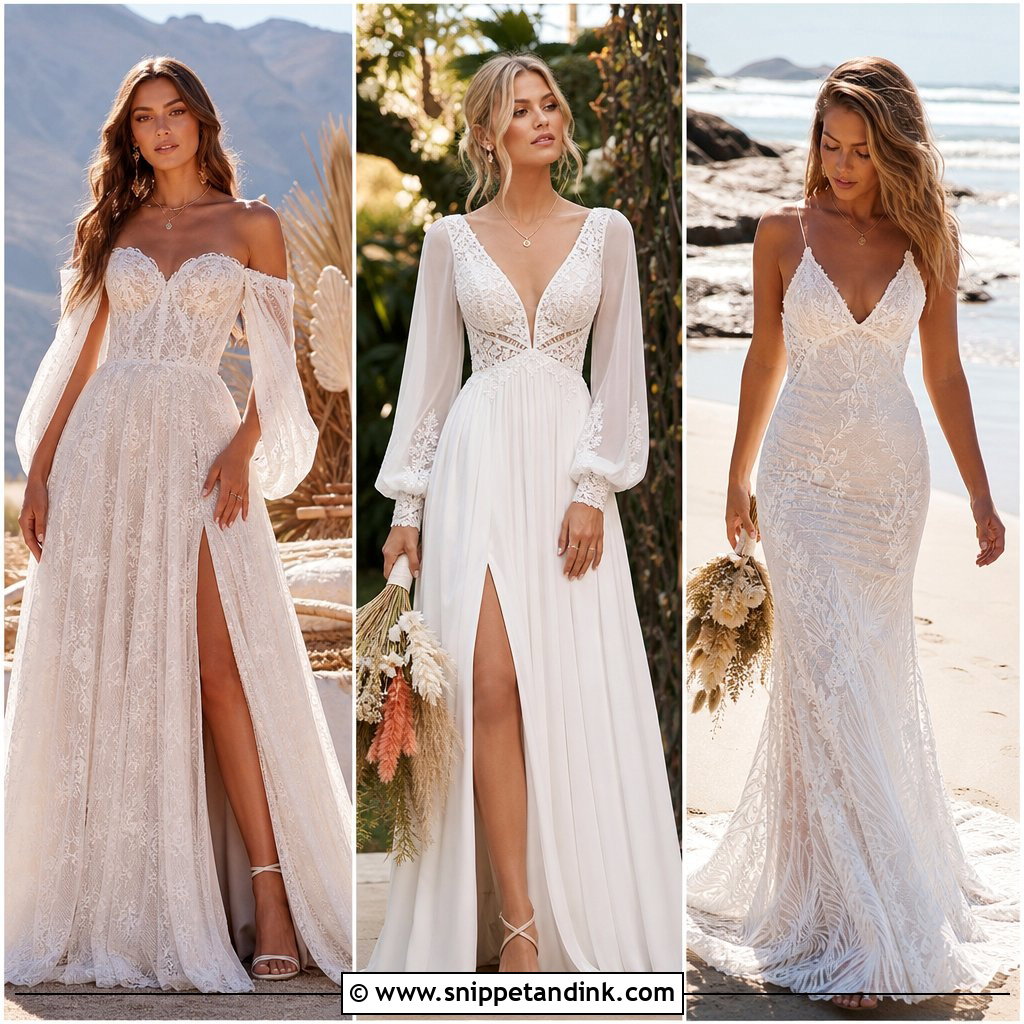
Lace is the fabric I reach for when a bride wants detail that still reads from across a room. Corded lace has a raised outline that holds up in strong sun, while flat Chantilly lace is softer and can fade into the gown in harsh midday light, so match the lace to the hour you’ll be photographed. A fitted bodice over a gentle A-line skirt suits garden and estate venues, finished with pearl drops, a plain veil and ivory heels. If head-to-toe lace feels too traditional, look at lace only on the sleeves, side panels or train edge. One thing I check at every fitting: the motifs should be matched across the side seams, or the pattern breaks right at your waist in every photo.
2. Basque Waist Wedding Gown
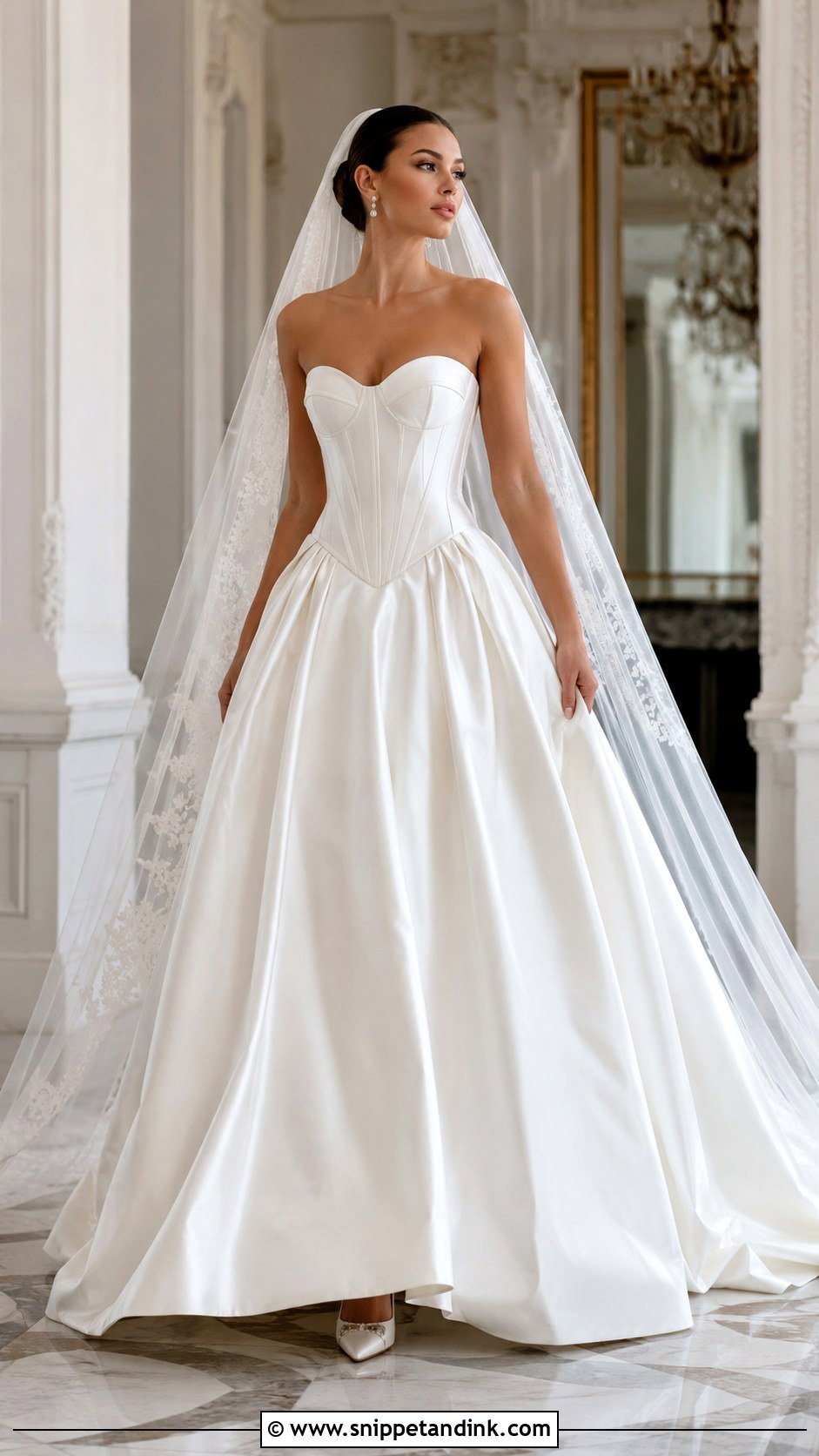
A basque waist wedding gown dips into a soft V below the natural waist at the front, which lengthens the torso and makes a full skirt look intentional rather than heavy. It needs a boned bodice to keep that point lying flat; without structure the V buckles the moment you sit. Satin gives the crispest point, lace softens it, tulle lets the skirt float. I leave the neck bare if the neckline already carries detail, and add pointed ivory heels and a cathedral veil for a ballroom or historic venue. Petite brides should try it before ruling it out, because the downward point often adds height instead of taking it away.
3. Drop Waist Wedding Gown
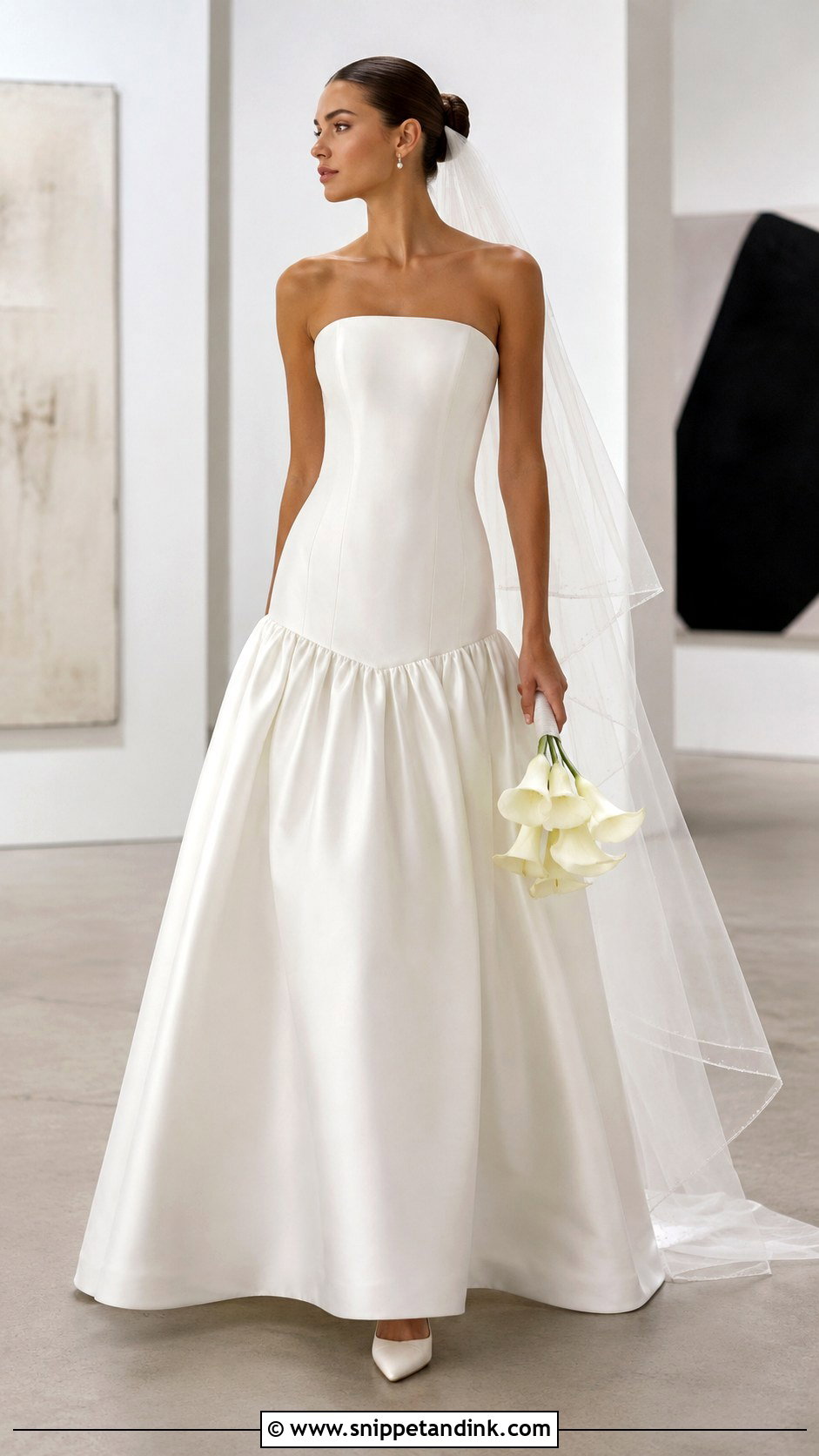
The seam on this silhouette sits on the hips, so everything depends on torso length, and that is exactly where it can go wrong. On a short-waisted bride a drop waist can chop the leg line, so I always have her stand side-on to the mirror before we decide. When it works, it looks current with a slight vintage edge, especially in mikado, silk, or structured satin, which hold the flare below the seam instead of collapsing. Keep the rest tidy: satin pumps, a sleek bun, a fingertip veil. Galleries and modern venues suit it best.
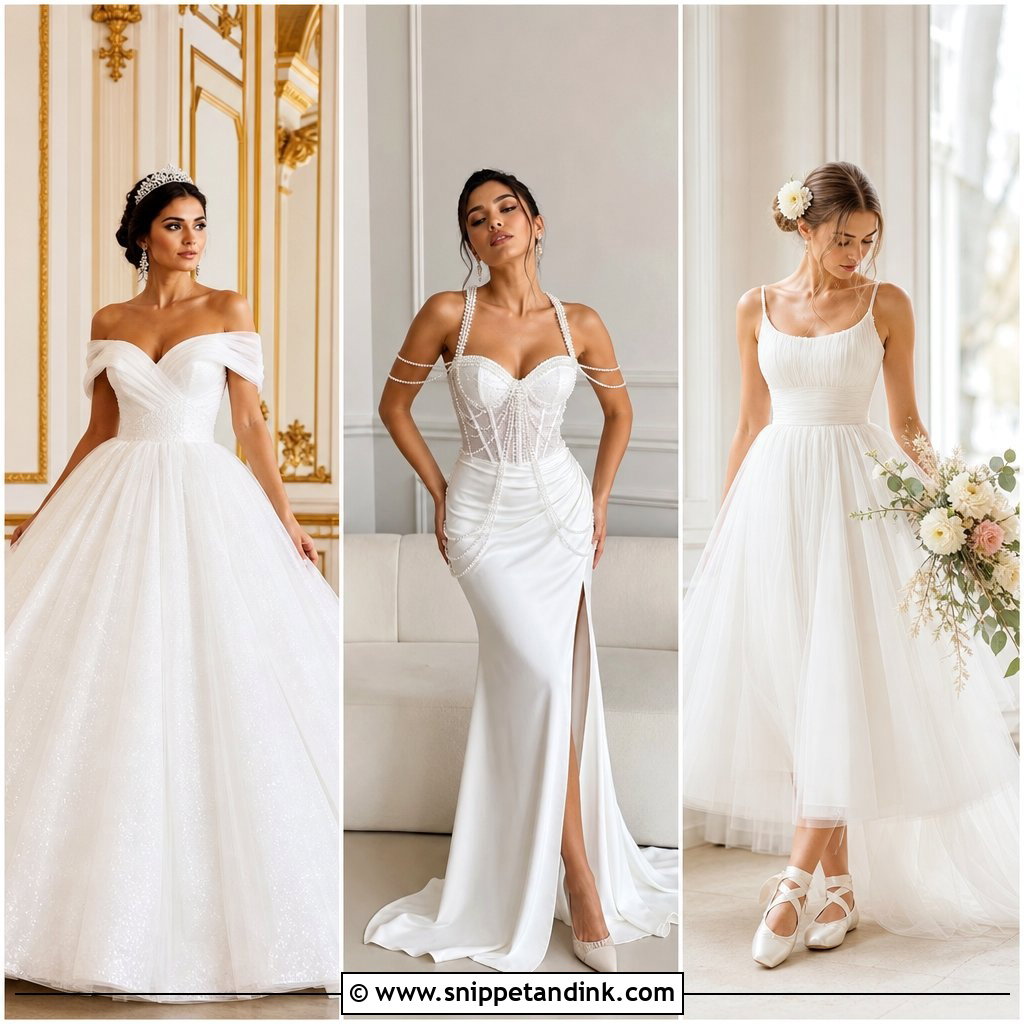
4. Satin Ball Gown Wedding Gown
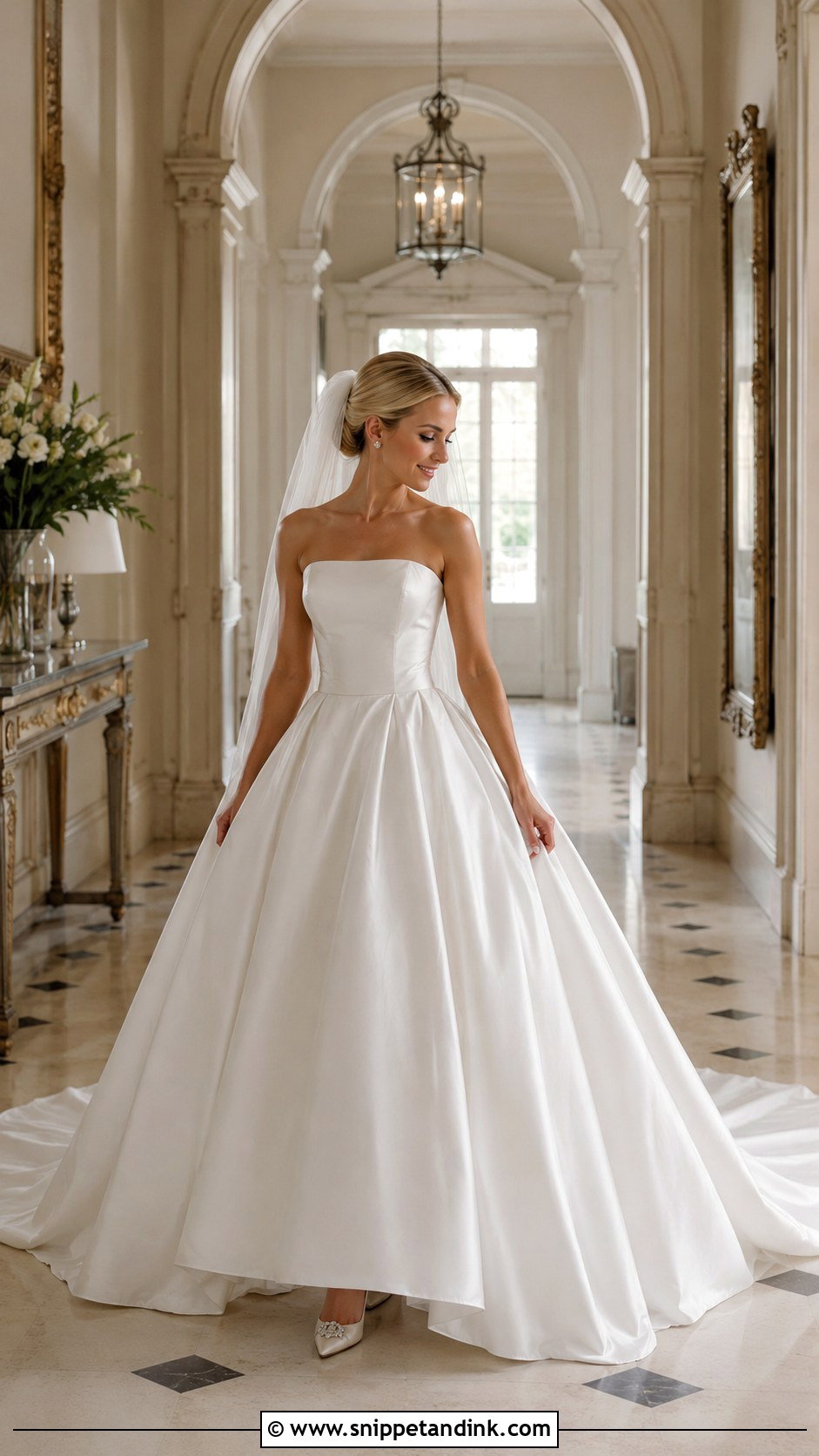
A satin ball gown has nowhere to hide, and that’s the point. Every seam and every wrinkle shows, so fit carries the whole look: the bodice should grip without pulling, and the skirt usually needs a petticoat or crinoline layer underneath to hold its bell shape. Strapless and square-neck bodices both suit it, with a smooth veil, crystal studs and a structured bouquet. Heavy satin has a soft sheen in daylight and a warmer glow under evening lighting. It is often the heaviest gown on a list like this, so I plan the bustle early and suggest an armless chair at dinner.
5. Corset Wedding Gown
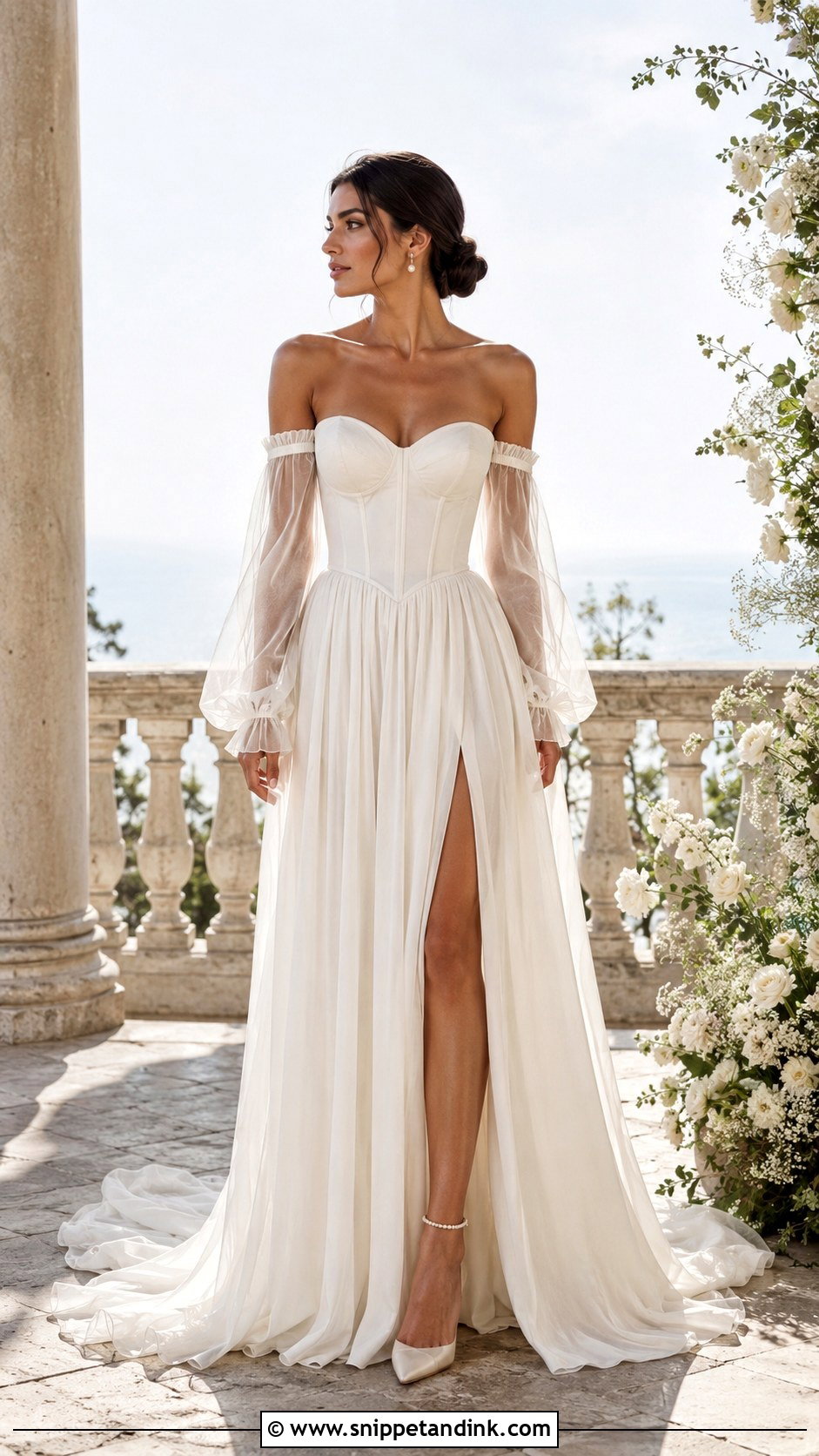
A properly built corset bodice does more than shape the waist. It carries the weight of the skirt from your middle instead of your shoulders, which is why many brides find it more comfortable over a long day than they expected. Visible boning channels read modern, smooth satin panels read classic. Over chiffon the look stays soft; over tulle it turns dramatic. I check that the top edge doesn’t dig into the underarm when you lift your arms to hug someone, because that’s the moment it shows in photos. Pearl earrings and a low bun keep attention on the waist, and detachable sleeves or an overskirt pair easily with it.
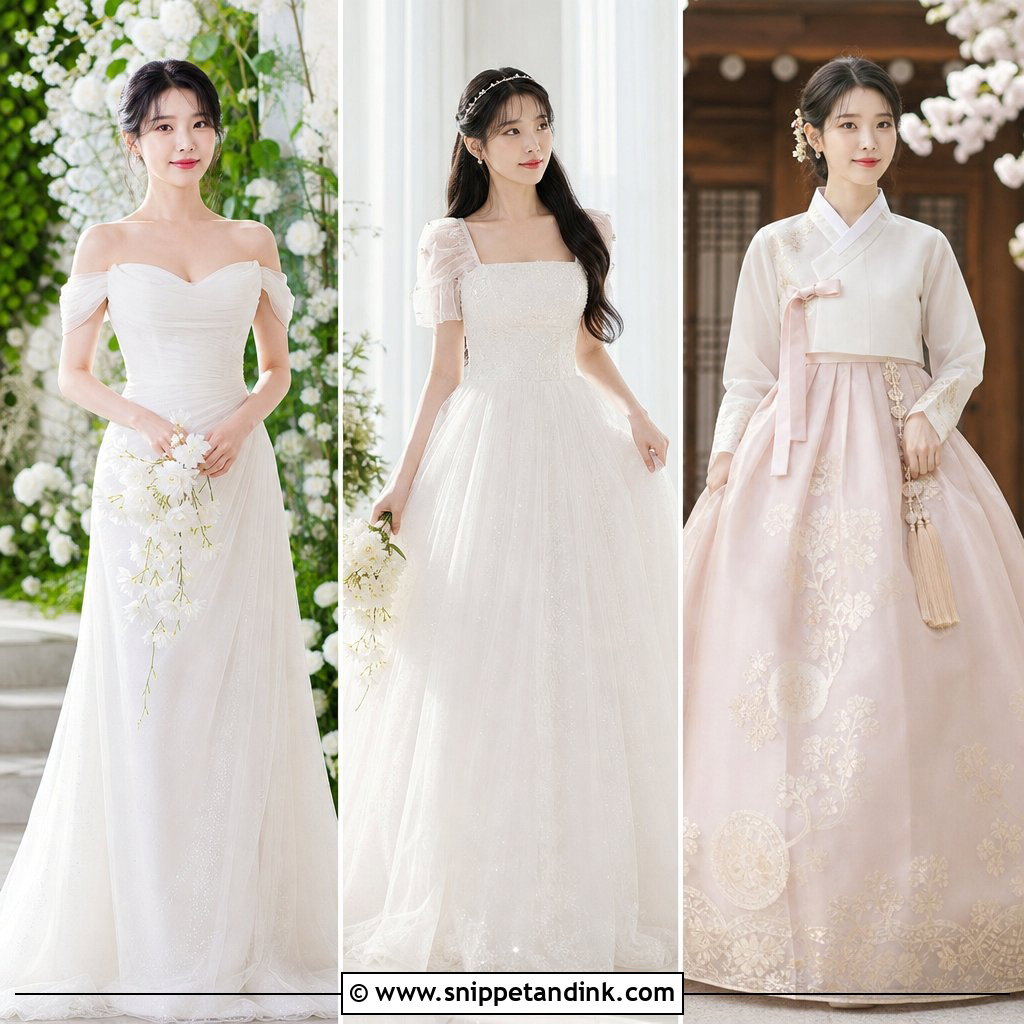
6. Off Shoulder Wedding Gown
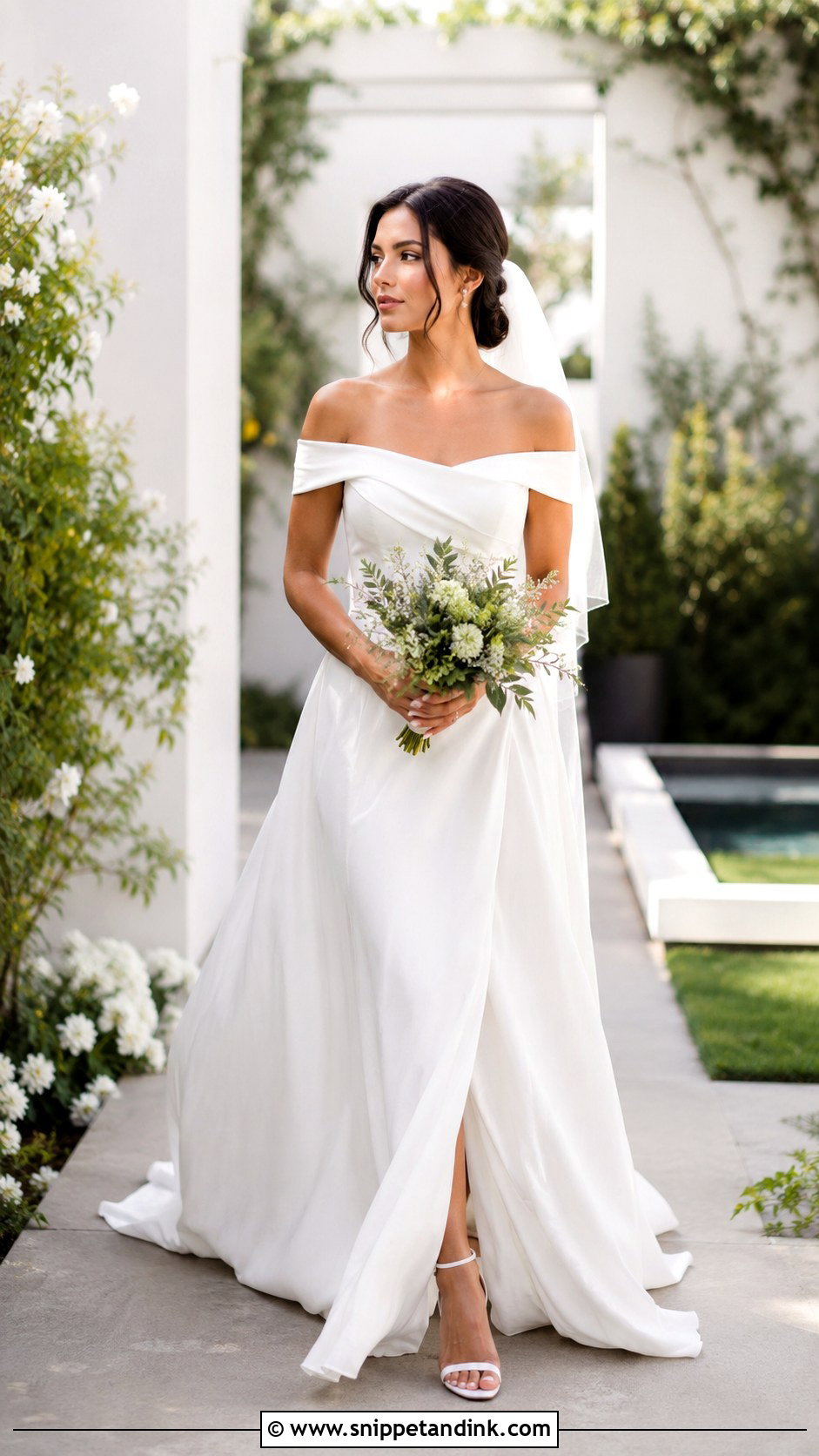
Off-the-shoulder necklines frame the collarbone and give you a sleeve without covering the whole arm. The catch is movement. If the band sits loose, it creeps up; if it’s tight, you can’t raise your arms. During the fitting I ask brides to reach forward as if hugging a guest, and we adjust the elastic or add a hidden strap from there. It works on mermaid, A-line and ball gown skirts. Wear a delicate necklace or statement earrings, not both, and set the veil low at the back of the hair so it doesn’t fight the neckline.
7. Long Sleeve Wedding Gown
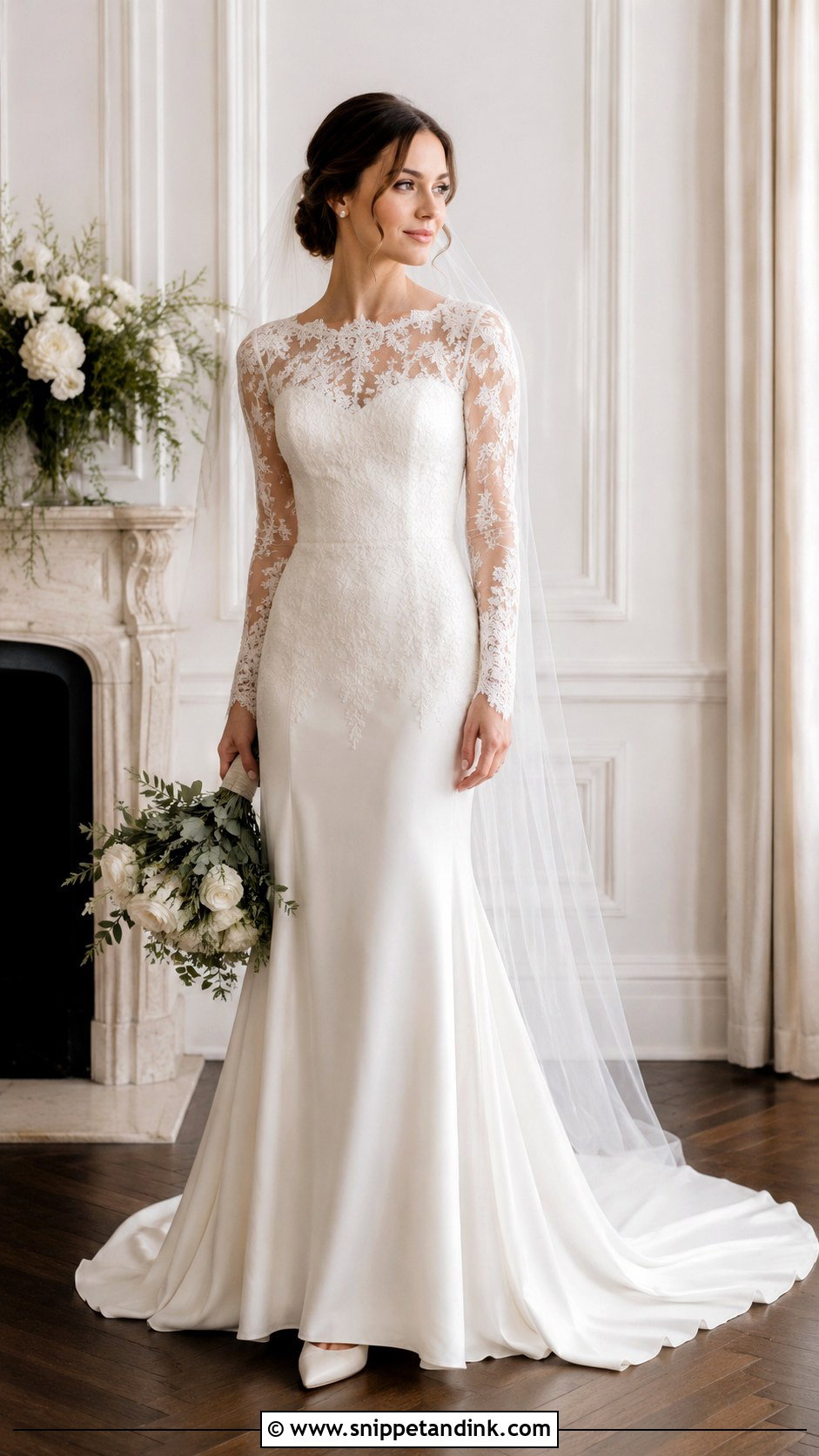
Sleeves change how a gown moves more than any other detail. Sheer lace sleeves look romantic but need a little ease at the elbow, while fitted crepe sleeves look sharp and can pin your arms down during a first dance. If a sleeve feels tight when you reach up, I ask the seamstress about a higher armhole or a small gusset. In cooler months, long sleeves are genuinely warmer, which matters at mountain venues and winter evenings. Keep jewelry to studs when the cuffs are beaded, and pick a veil edge that echoes the sleeve rather than repeating it.
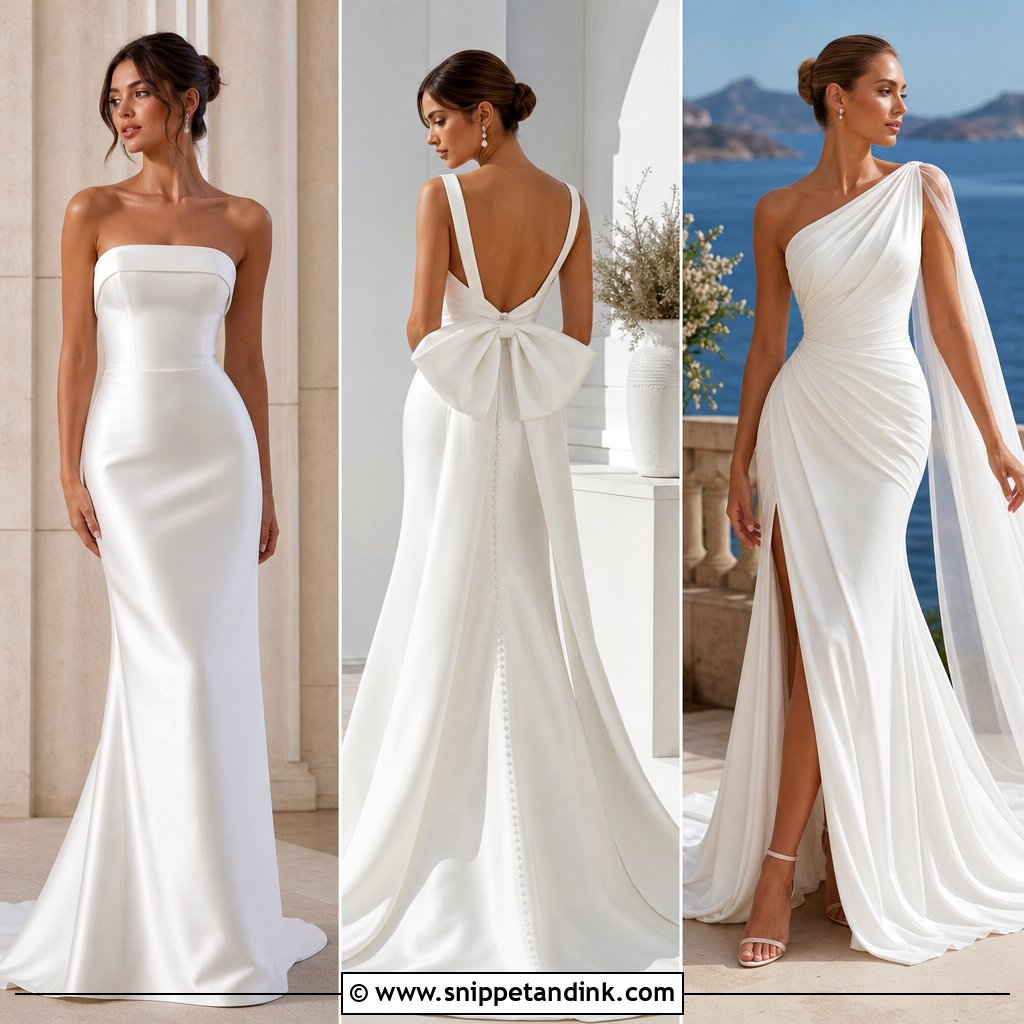
8. Strapless Wedding Gown
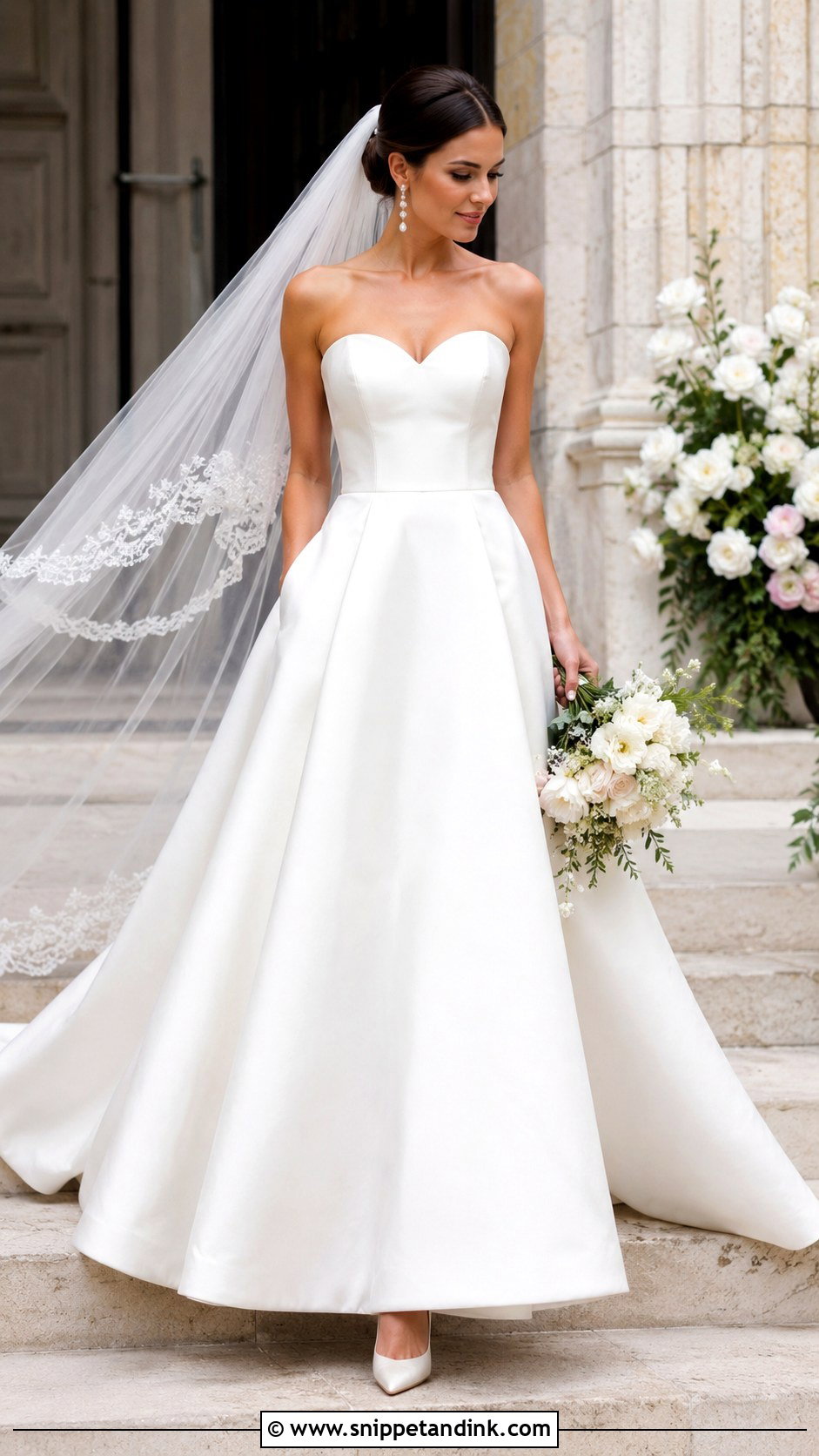
Strapless adapts to nearly any fabric, skirt and accessory, but it lives or dies on its internal structure. I look for boning and a grip waist stay inside the bodice; without them, a heavy skirt drags the neckline down by evening and you spend the reception hitching it up. A straight neckline reads modern, a sweetheart reads softer. Bare shoulders also leave room for a lace bolero, satin scarf or detachable sleeves for a church ceremony, taken off later for dancing.
9. Square Neck Wedding Gown
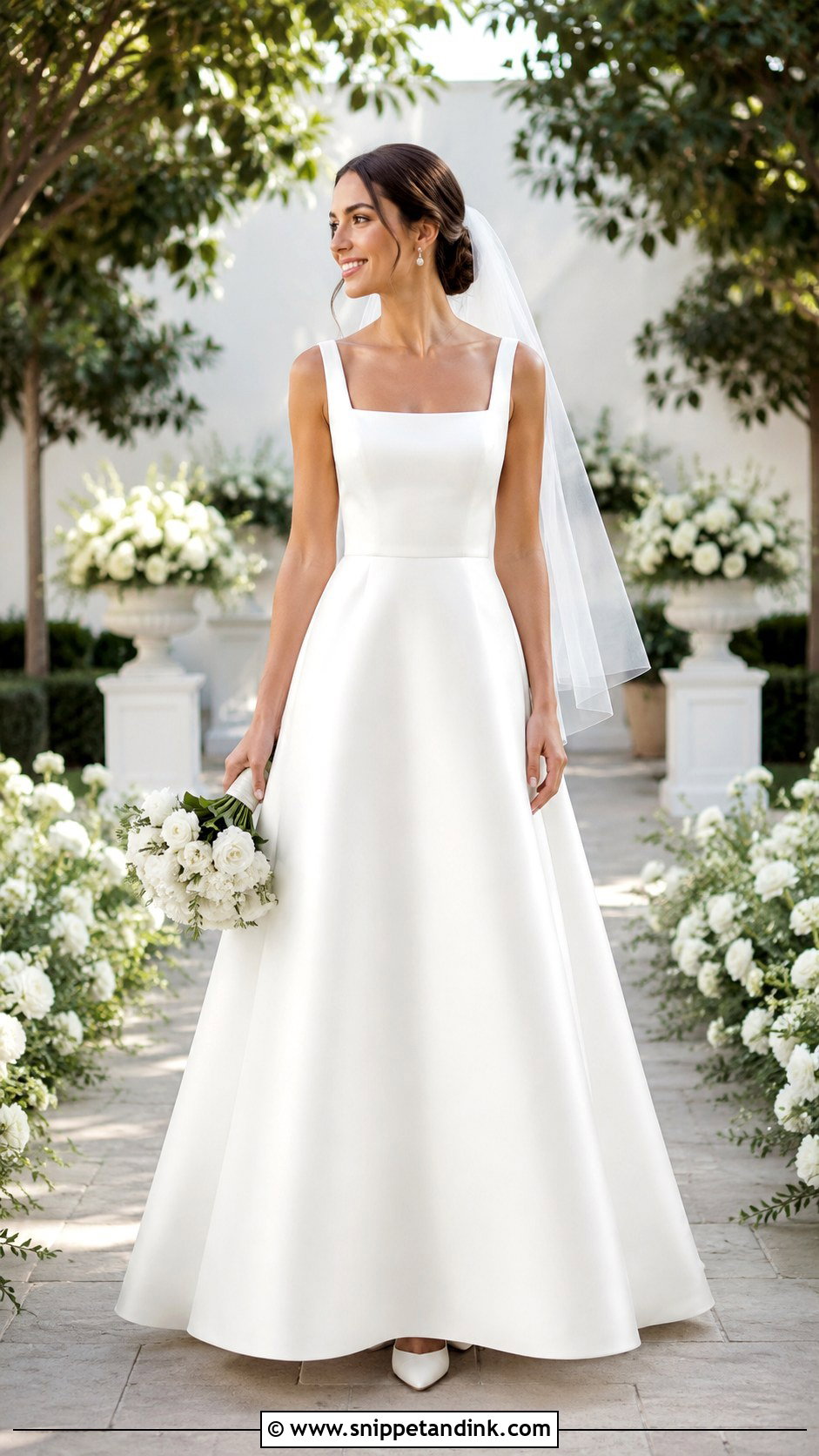
A square neckline frames the collarbone with more coverage than a plunge, and it flatters broad shoulders because the straight lines echo them instead of narrowing them. Satin A-lines, crepe sheaths and lace gowns with simple straps all carry it well. Strap placement matters more than people think: set too wide, the straps slip; too narrow, the corners gape. Pearl earrings, a soft updo and a medium veil are plenty. On a plain gown, I let a textured bouquet do some of the work.
10. Mermaid Wedding Gown
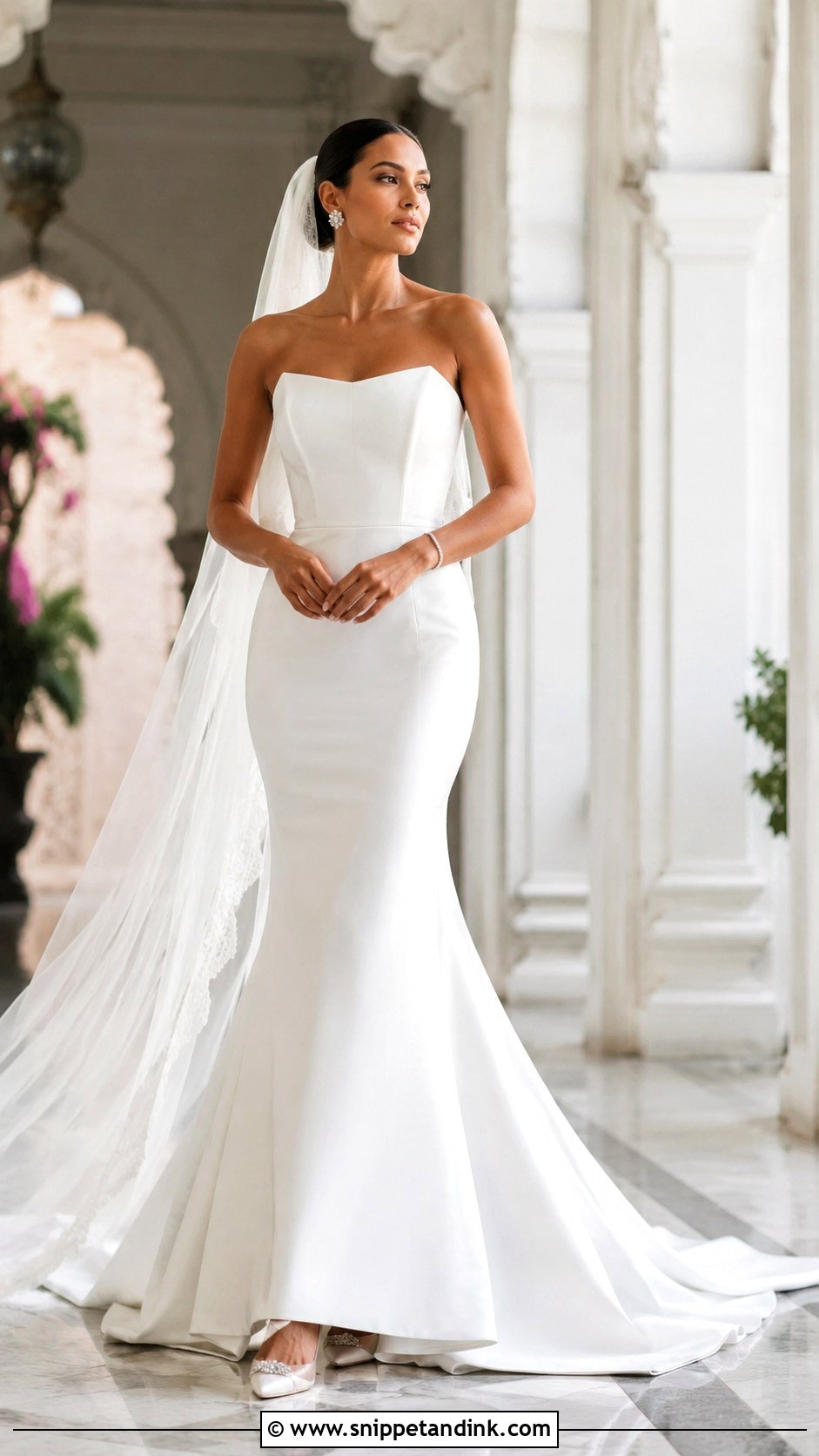
A mermaid gown is fitted through the hips and flares at or below the knee, and that flare point decides how well you can walk. The higher it sits, the easier your stride; a flare set low on the calf looks dramatic but makes stairs and dancing slow. At fittings I make brides sit, climb a step and dance a few beats before we pin anything. Keep styling clean with pointed heels and a fitted veil. Black-tie receptions and venues with grand staircases suit it, provided you’ve tested those stairs.
11. A Line Wedding Gown
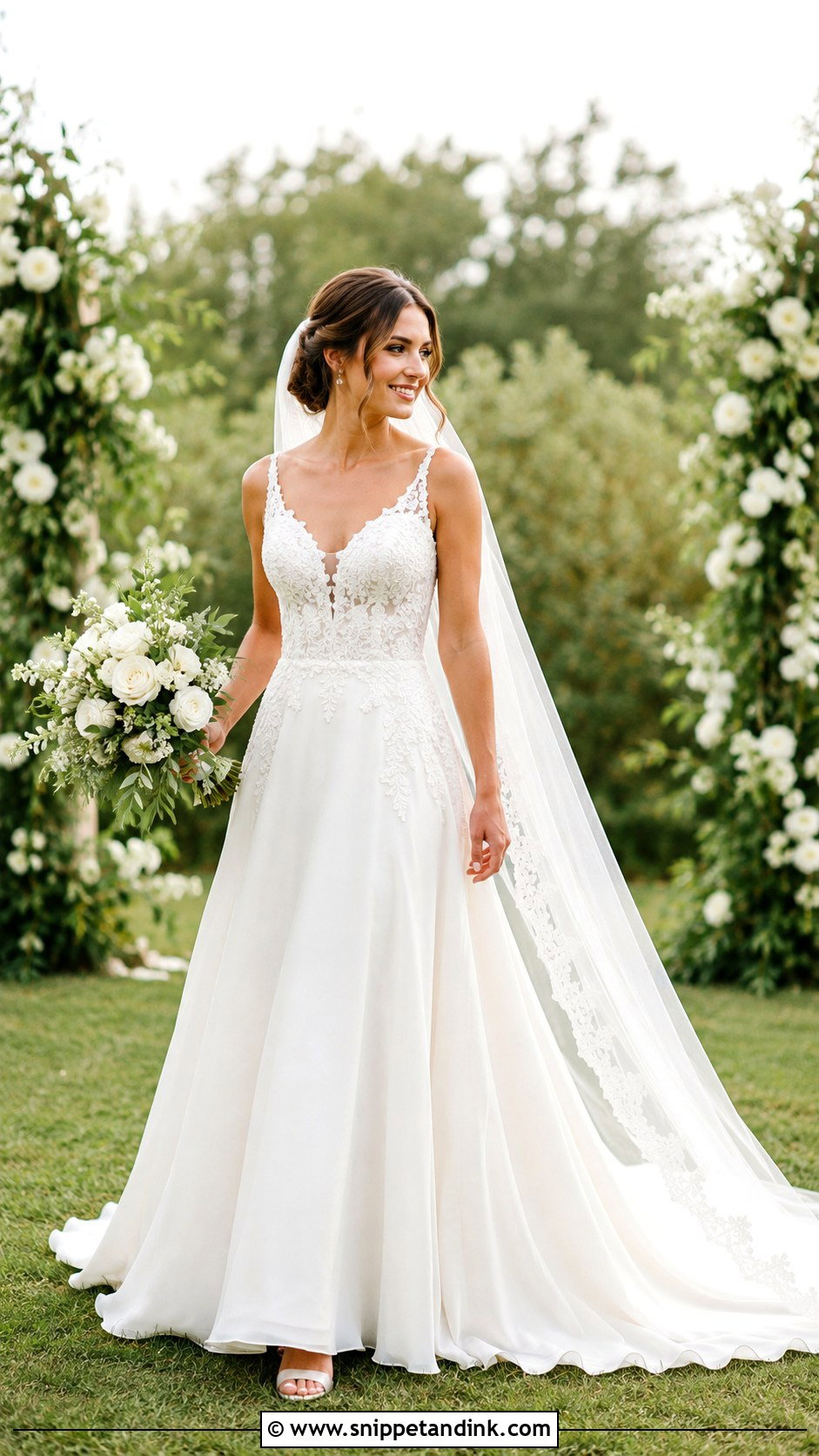
This is the shape I pull first for a bride who isn’t sure where to start. It fits through the bodice and widens gradually from the waist, skimming the hips rather than gripping them, and it’s much lighter than a full ball gown, so you get movement without hauling a heavy skirt around for ten hours. Lace leans romantic, satin classic, chiffon suits an outdoor ceremony. Match the veil length to the train and pick jewelry by neckline. If you keep changing your mind between styles, an A-line is usually where you end up.
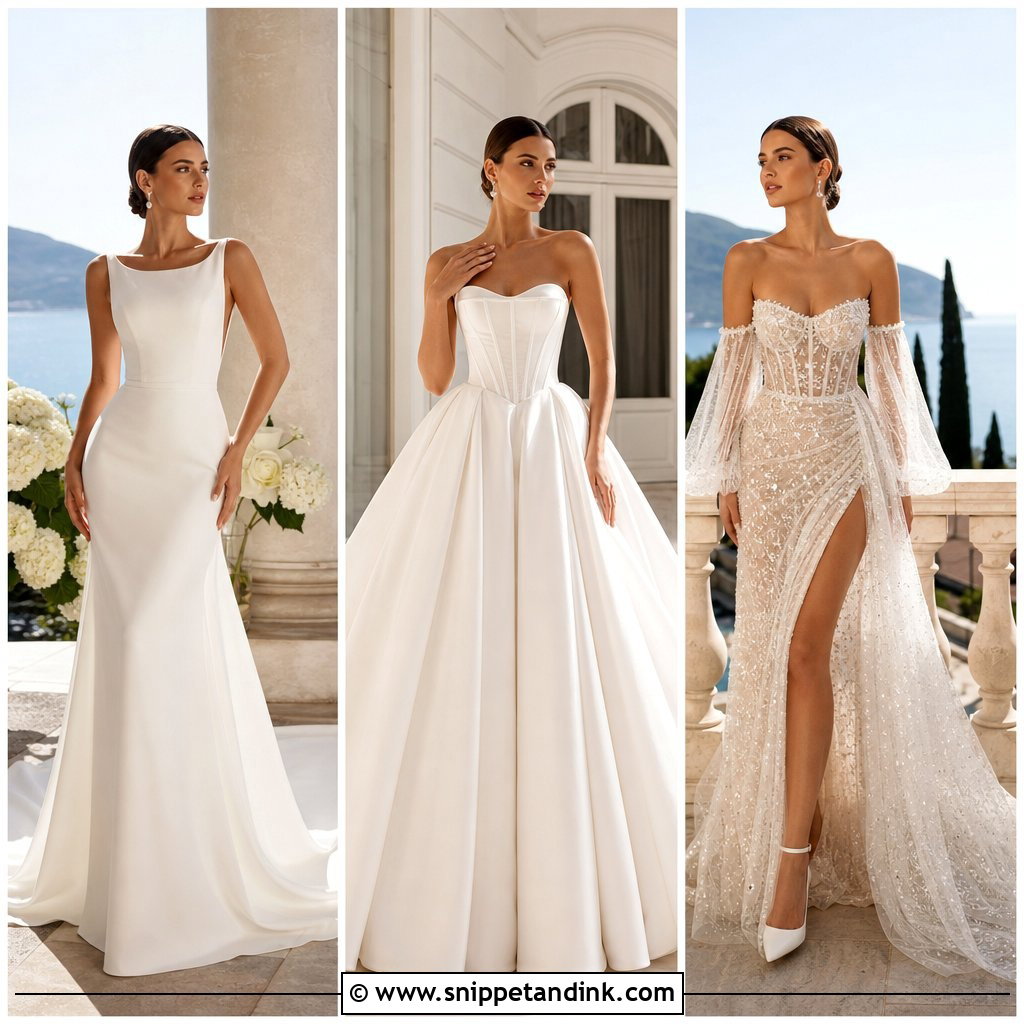
12. Minimalist Wedding Gown
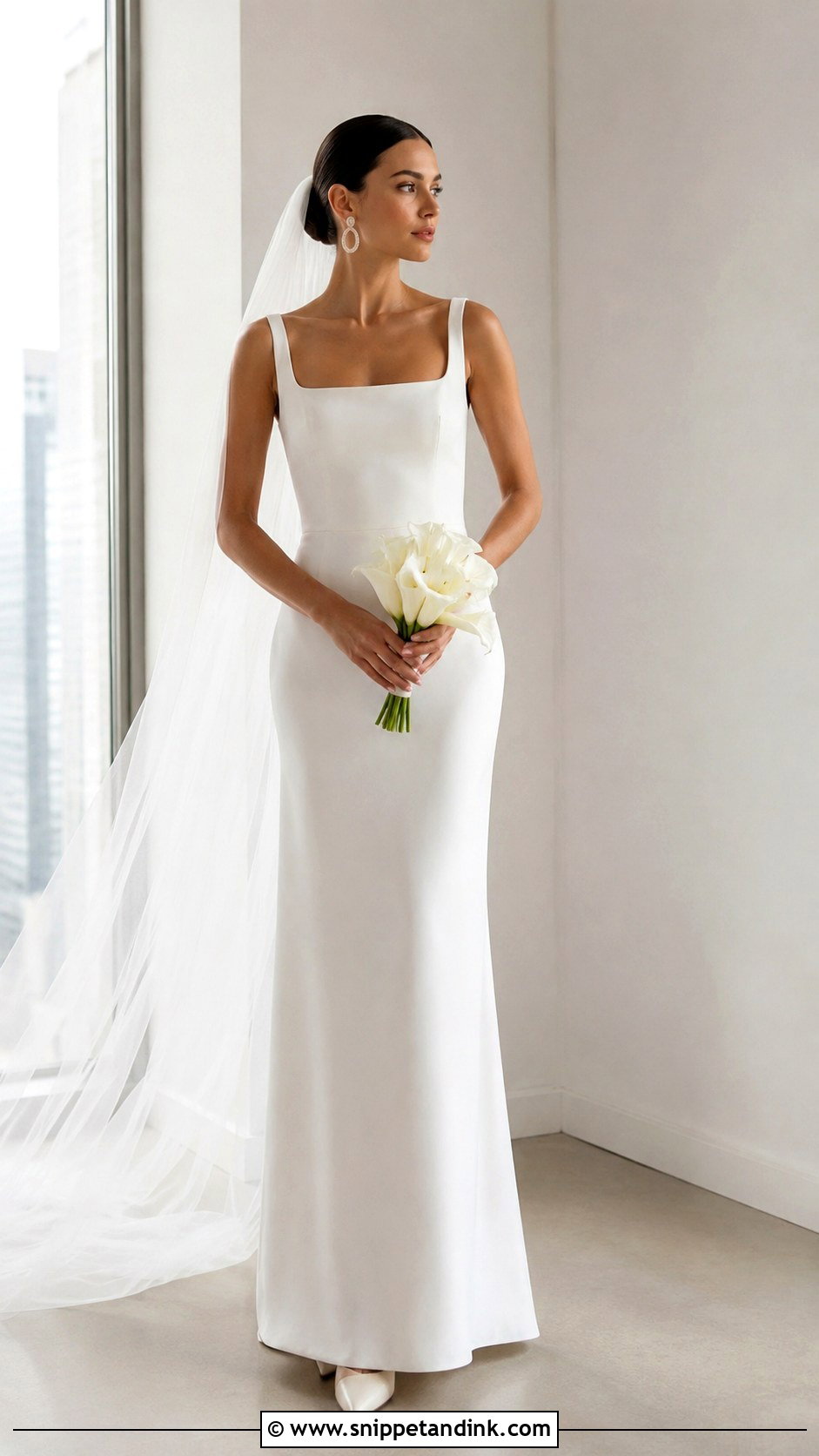
With no lace or beading to look at, tailoring becomes the whole design. Clean satin, crepe or silk only looks expensive when the seams lie flat and the hem meets the floor evenly, and I often spend more fitting time on a plain gown than on a decorated one. A column cut, square neck or low back adds interest without embellishment. Because the dress is so quiet, sculptural earrings and a bouquet of one or two flower types carry your personality, so pick each one with care. Courthouse weddings, modern venues and destination ceremonies suit it.
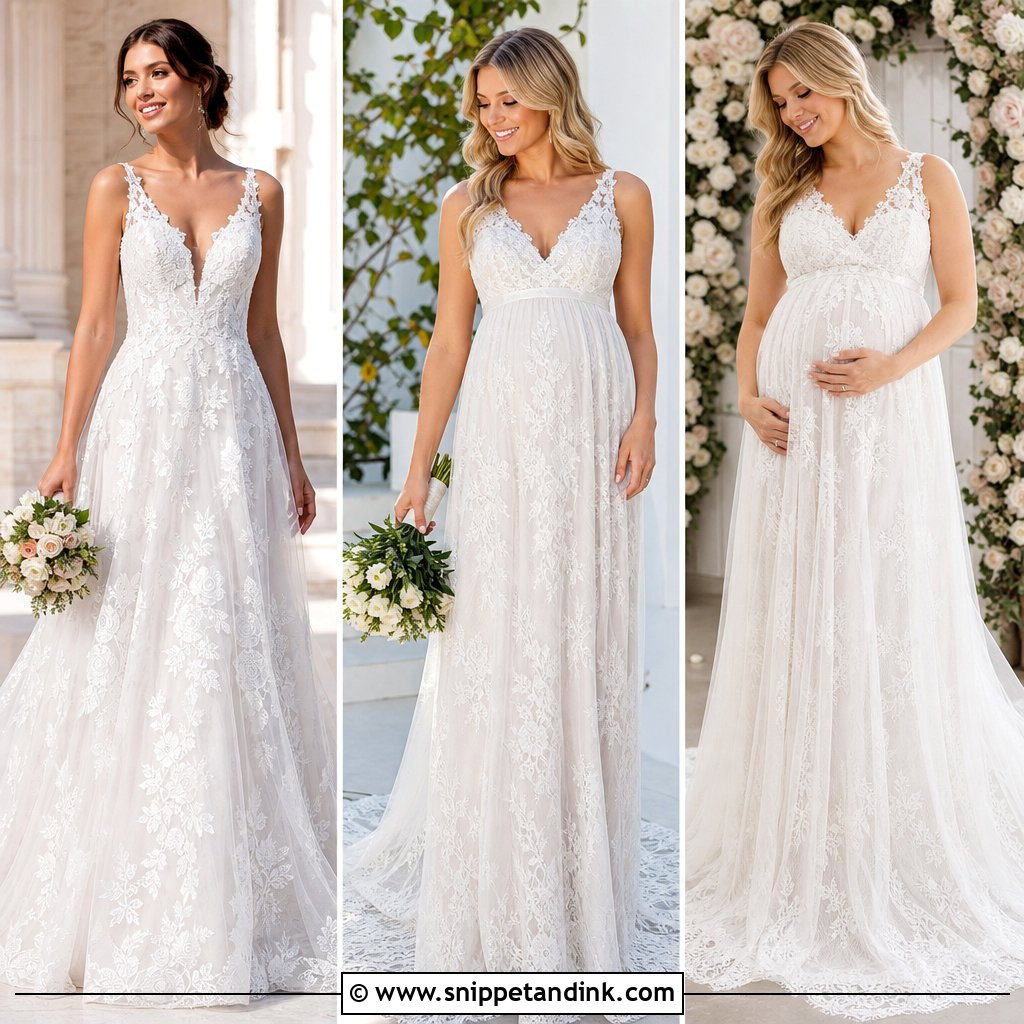
13. Floral Applique Wedding Gown
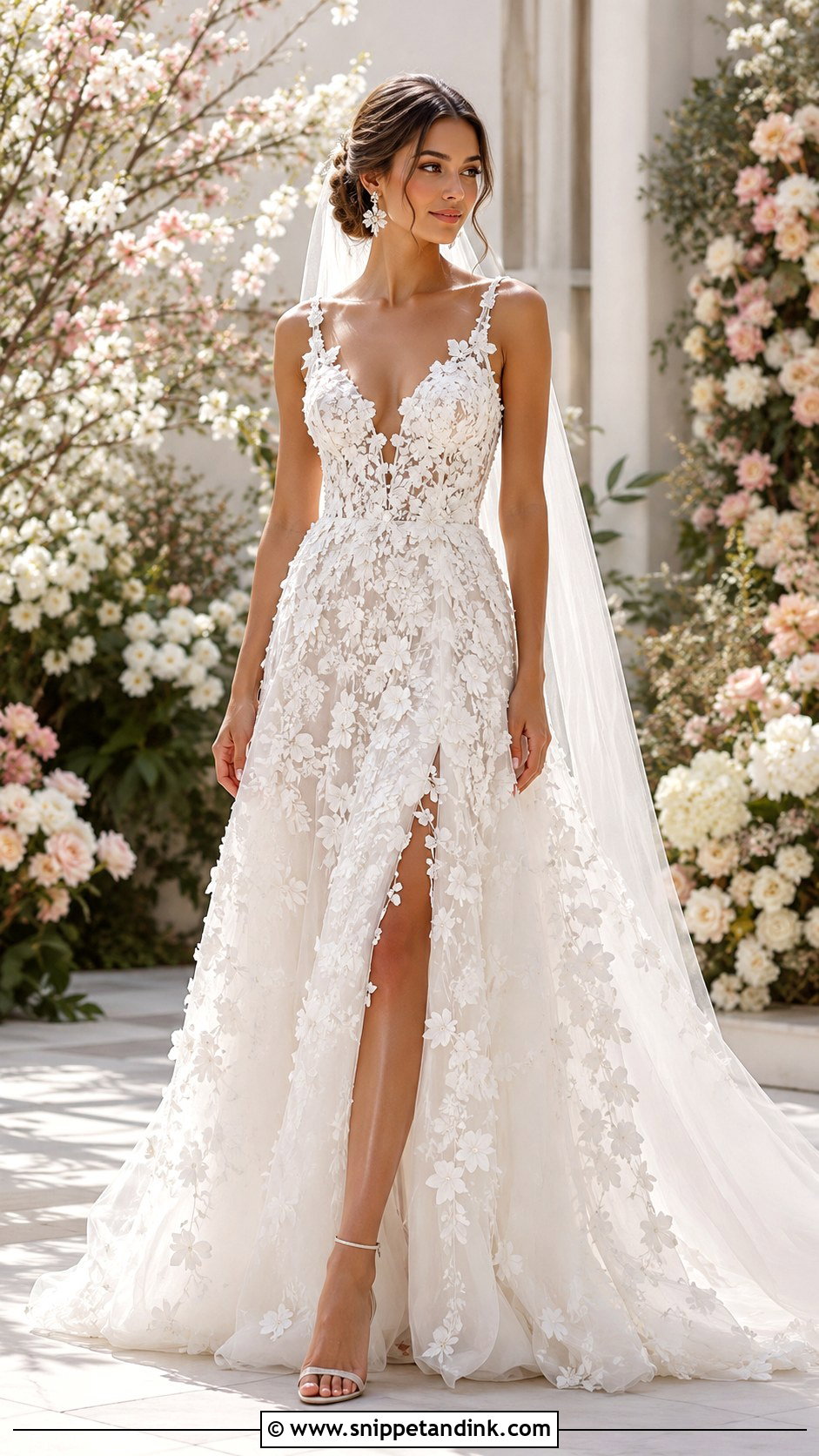
Appliques are cut motifs stitched onto the gown, and placement makes or breaks them. A scatter that thins toward the hem draws the eye upward, a cluster at the waist shapes the middle, and a heavy trail down the train mostly shows in walking-away shots. Tonal appliques stay subtle; oversized blooms read bold. I keep veil trim minimal so the two don’t compete, and suggest a simple bouquet with heavily textured gowns. Spring gardens and outdoor receptions are natural settings. Do ask whether the pieces are hand-sewn, since glued appliques can lift with heat and movement.
14. Pleated Wedding Gown
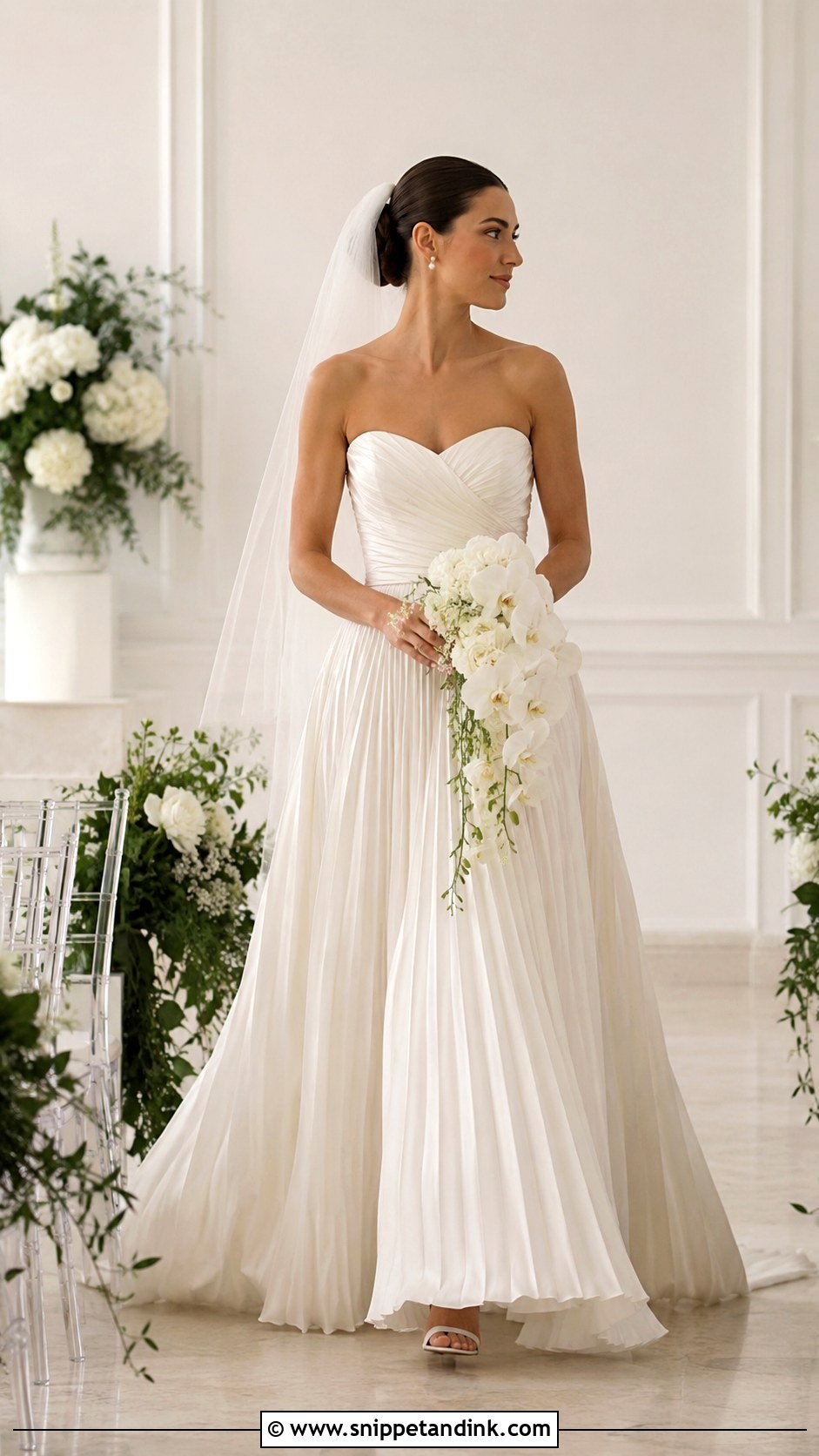
Pleats give texture without lace or sparkle, and their position changes the mood. Crisp pleats on a satin ball gown look architectural; soft pleats in chiffon look light and airy. The folds catch light as you move, which shows up well in candid shots. My practical warning: pressed pleats can open up after hours of sitting, so I ask the seamstress to tack them at the waist where needed. Simple heels, small earrings and a smooth veil let the folds lead.
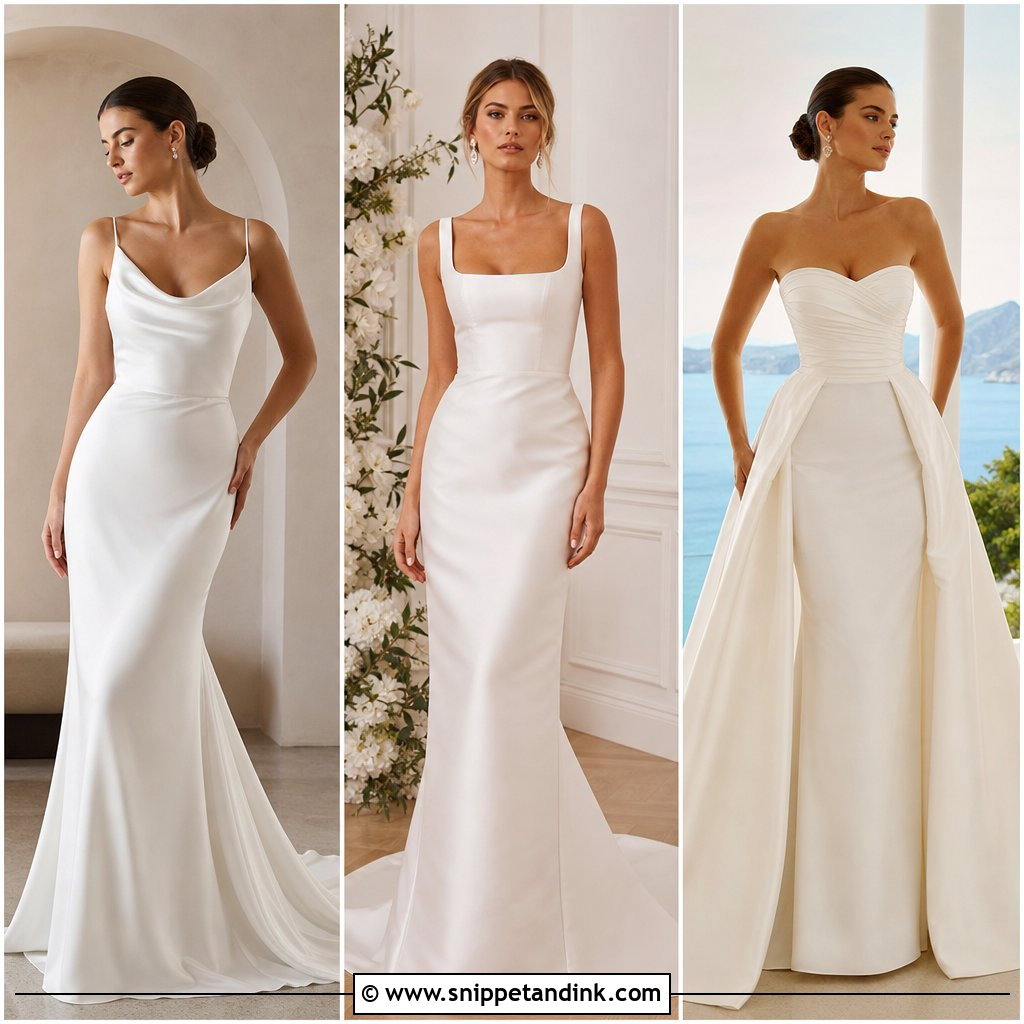


15. Bow Wedding Gown
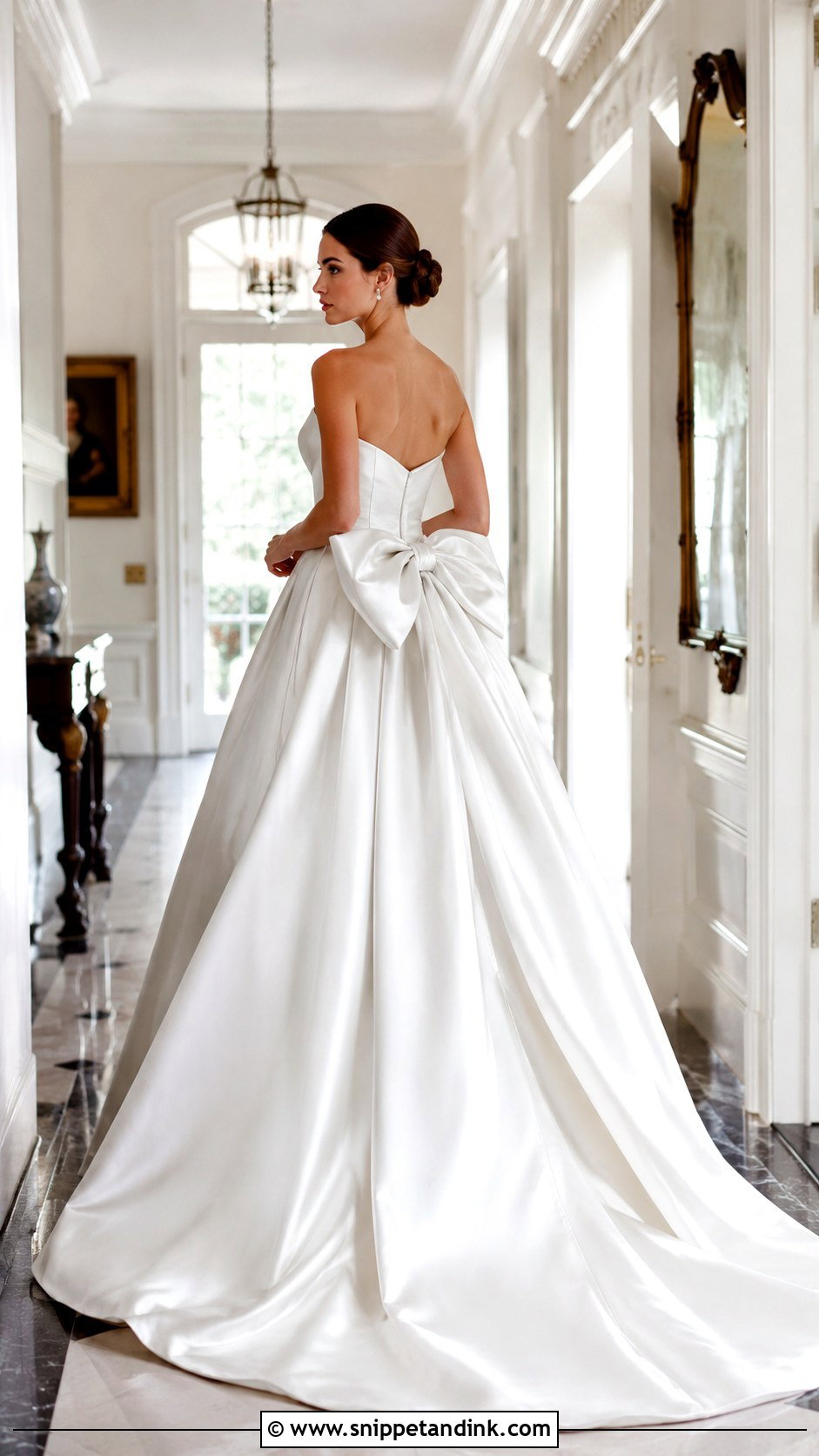
Size decides a bow’s personality. A small one at the neckline is delicate; a large one at the back becomes the detail guests stare at through the whole ceremony. Bows also sit at the waist, shoulder, sleeves or train. They keep their shape in satin, mikado or taffeta, while a soft-fabric bow tends to droop by evening, so I check whether there’s interfacing inside. With an oversized bow I cut accessories back hard: simple heels, clean jewelry, a classic veil. And remember you’ll be sitting on a back bow at dinner, so ask if it detaches.
16. Beaded Wedding Gown
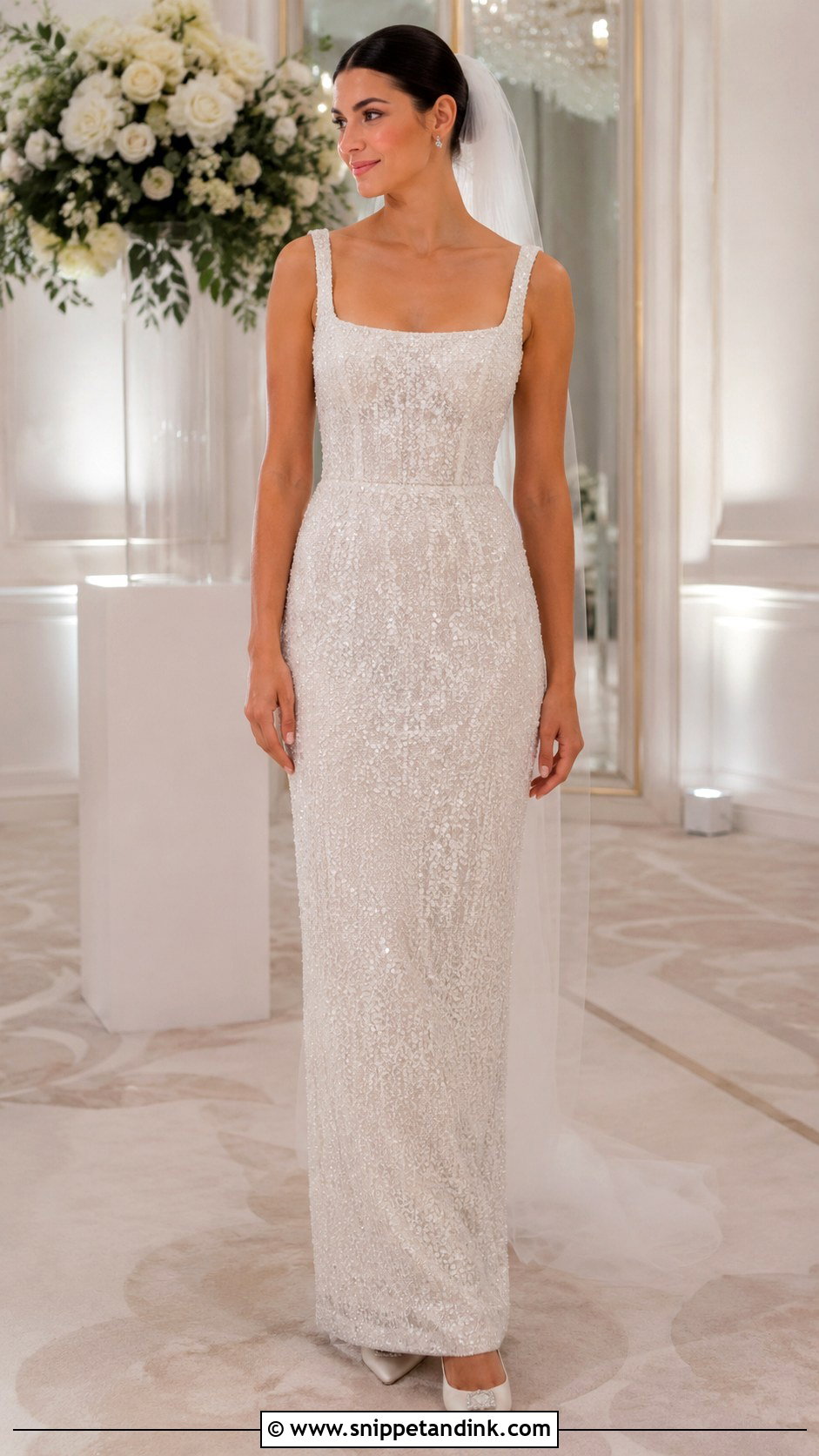
Beading catches candlelight like nothing else, which makes it a natural match for evening ballrooms. Pearl beading looks soft; allover crystal reads formal. The trade-off is weight and texture. Heavily beaded gowns can be surprisingly heavy and scratchy on the inner arm, so I have brides swing their arms in the fitting and check for rubbing before they commit. A fitted beaded sheath feels vintage, a beaded A-line more romantic. Small earrings, sleek heels and a simple veil keep it from tipping into too much.
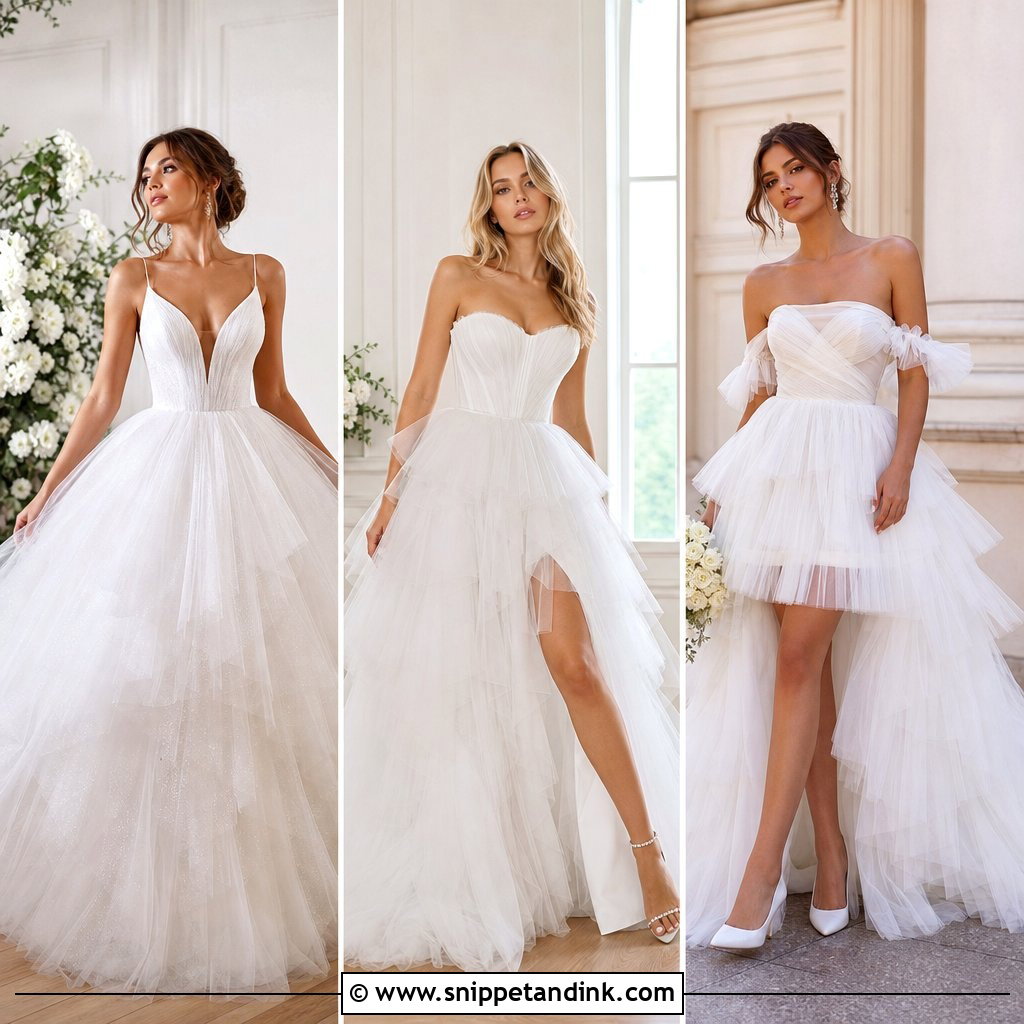
17. Tulle Wedding Gown
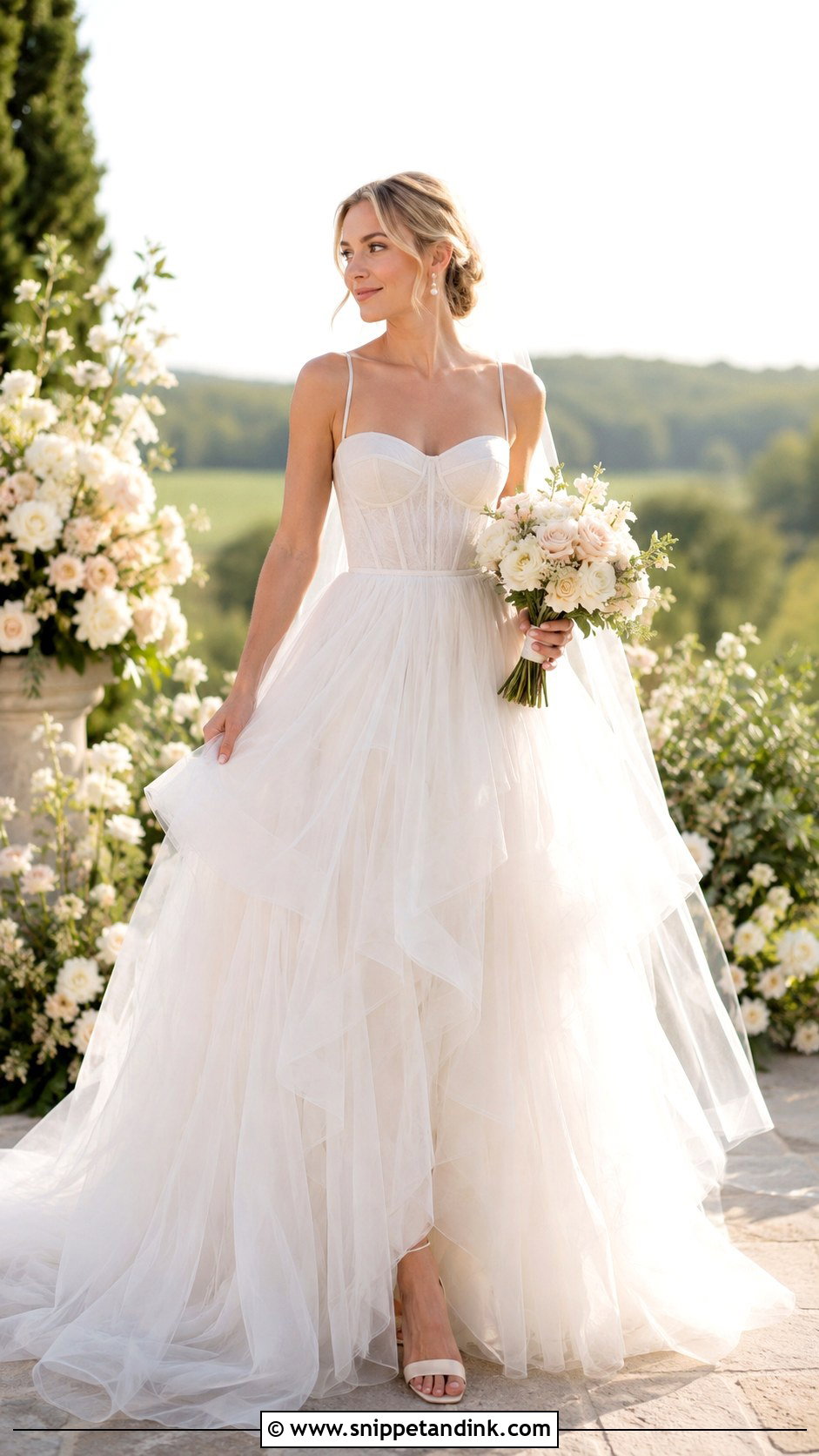
Tulle gives volume without much weight, which is why a tulle ball gown can feel lighter on than a satin A-line. Layers can make a skirt full or let an A-line float, and it moves nicely in a breeze. Clean tulle reads modern; floral appliques, pearls or soft shimmer turn it romantic. Two things I warn every tulle bride about: it snags on bracelets, rough bark and velcro, and it collects grass at the hem. Leave the bracelet off and route outdoor walks over paved paths where you can.
18. Silk Slip Wedding Gown
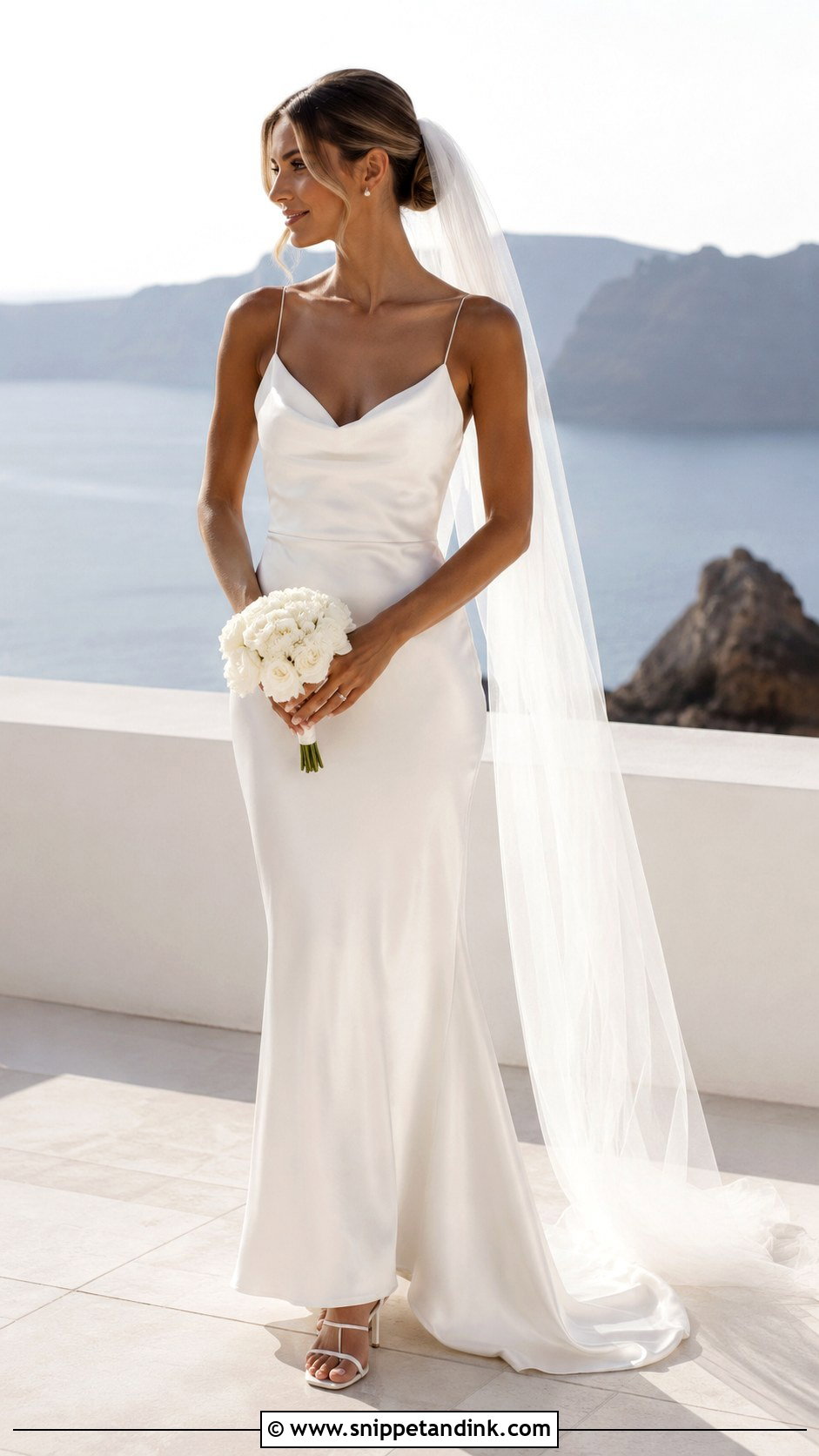
A slip dress has no internal structure, so the cut and the fabric do everything. Bias-cut silk skims the body and moves well, but it also shows every line underneath, which is why I talk about smooth, line-free underwear before we talk about shoes. It suits destination weddings, intimate ceremonies and city venues, with strappy ivory heels, pearl studs and a small bouquet. For more coverage, add a sheer cape, a light shawl or a tailored blazer. Silk creases when you sit, so plan a quick steam before portraits. Fitted properly, it looks effortlessly stylish.
19. High Neck Wedding Gown
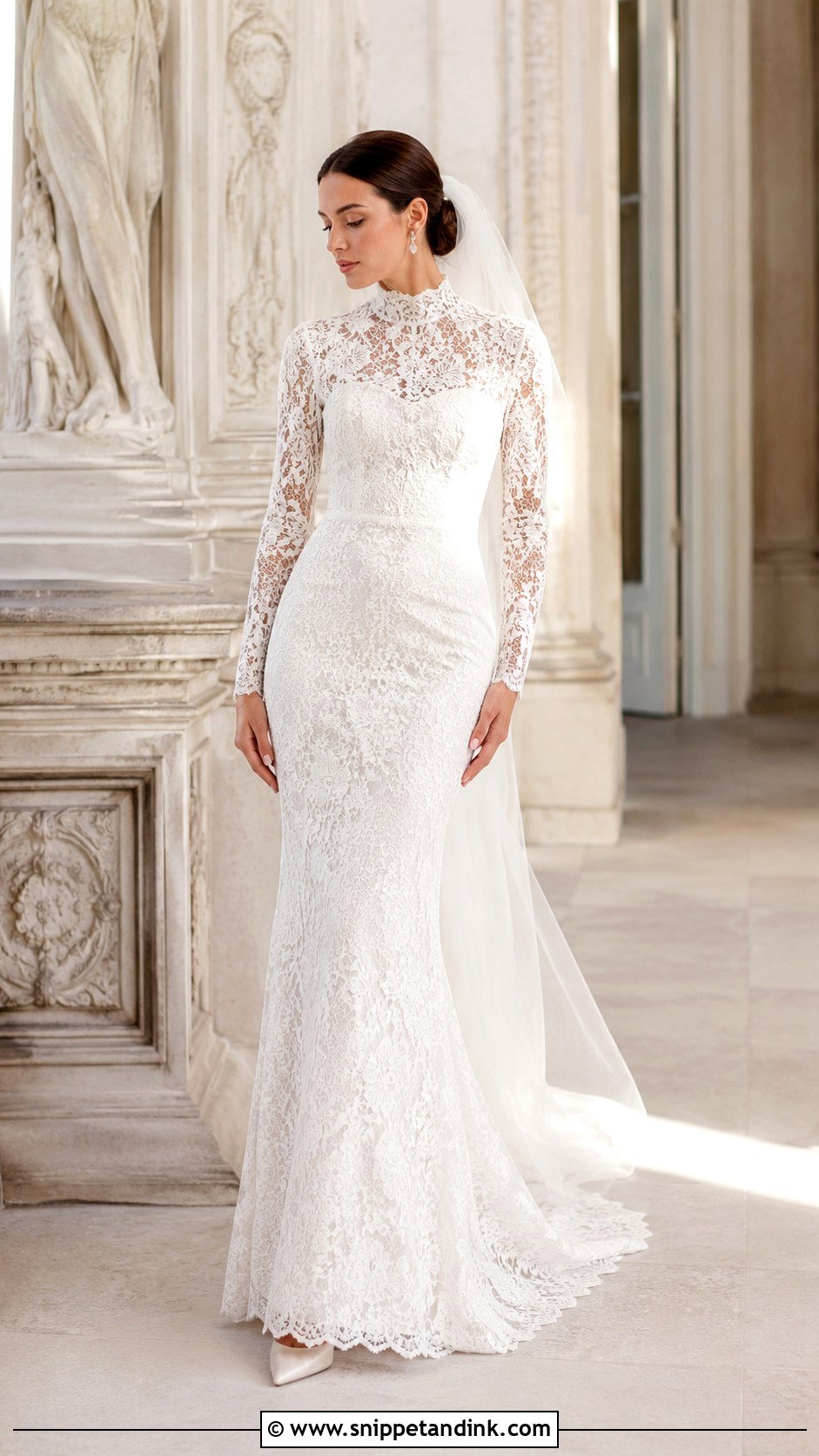
A high neck draws one long line up through the upper body. Lace with long sleeves feels vintage, while sleeveless crepe looks clean and modern, especially on brides with strong shoulders. Skip the necklace entirely and let earrings do the job. I always check the collar with the bride seated, because a neckline that’s fine standing can press on the throat when you lean forward to sign the register. Pointed heels, a smooth updo and a veil attached low at the back suit formal ceremonies and cooler months.
20. Backless Wedding Gown
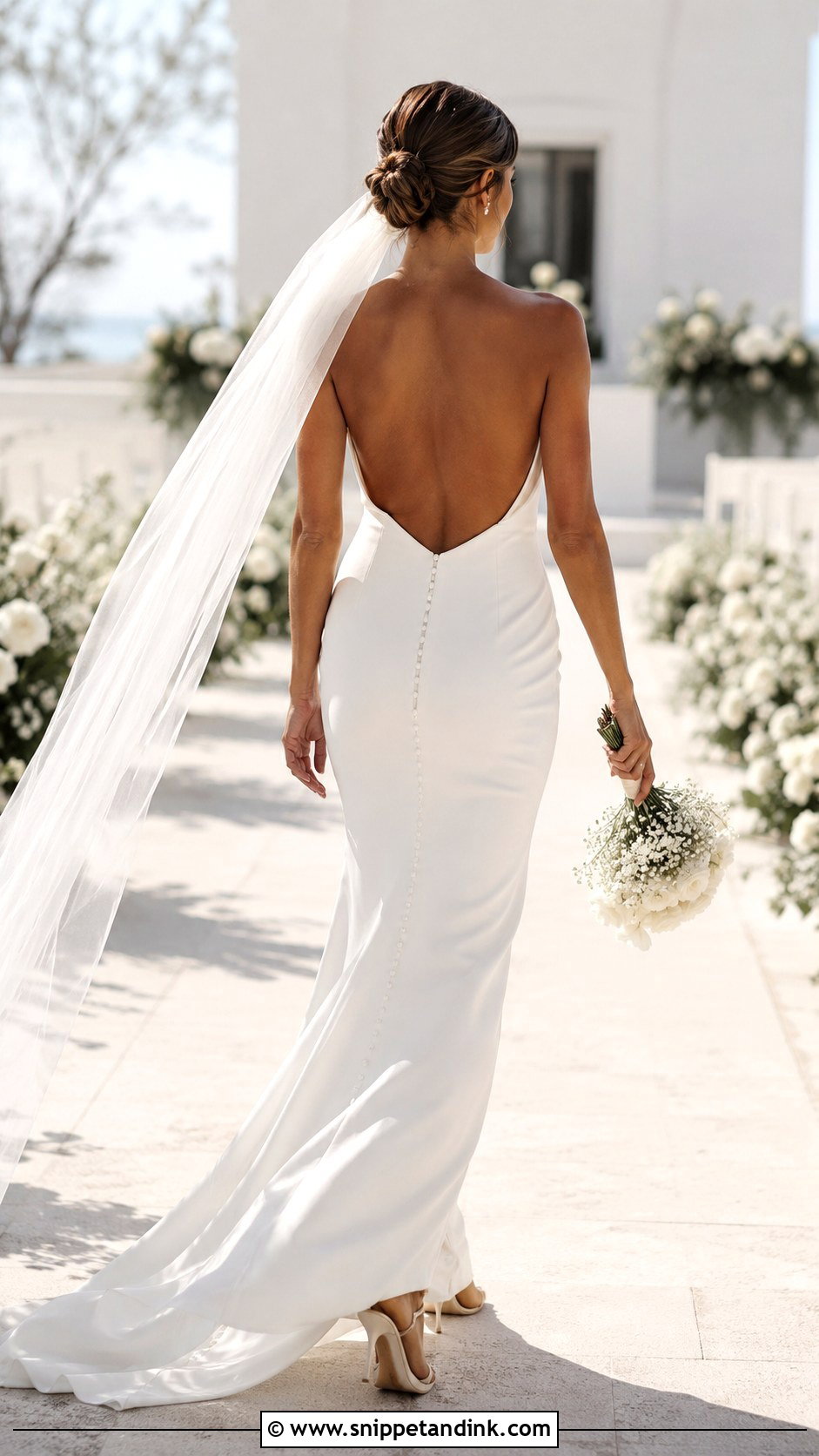
An open back puts the drama behind you, which pays off at ceremonies where guests watch your back for most of the vows. A low V, an open scoop or a lace-framed back changes how much skin you show. Plan support early: most brides need cups sewn into the gown, or adhesive options tested at a fitting, never for the first time on the morning. Crepe, satin and silk show the line most cleanly. A low bun keeps the back visible, and a removable veil lets it show again at the reception.
21. Tea Length Wedding Gown
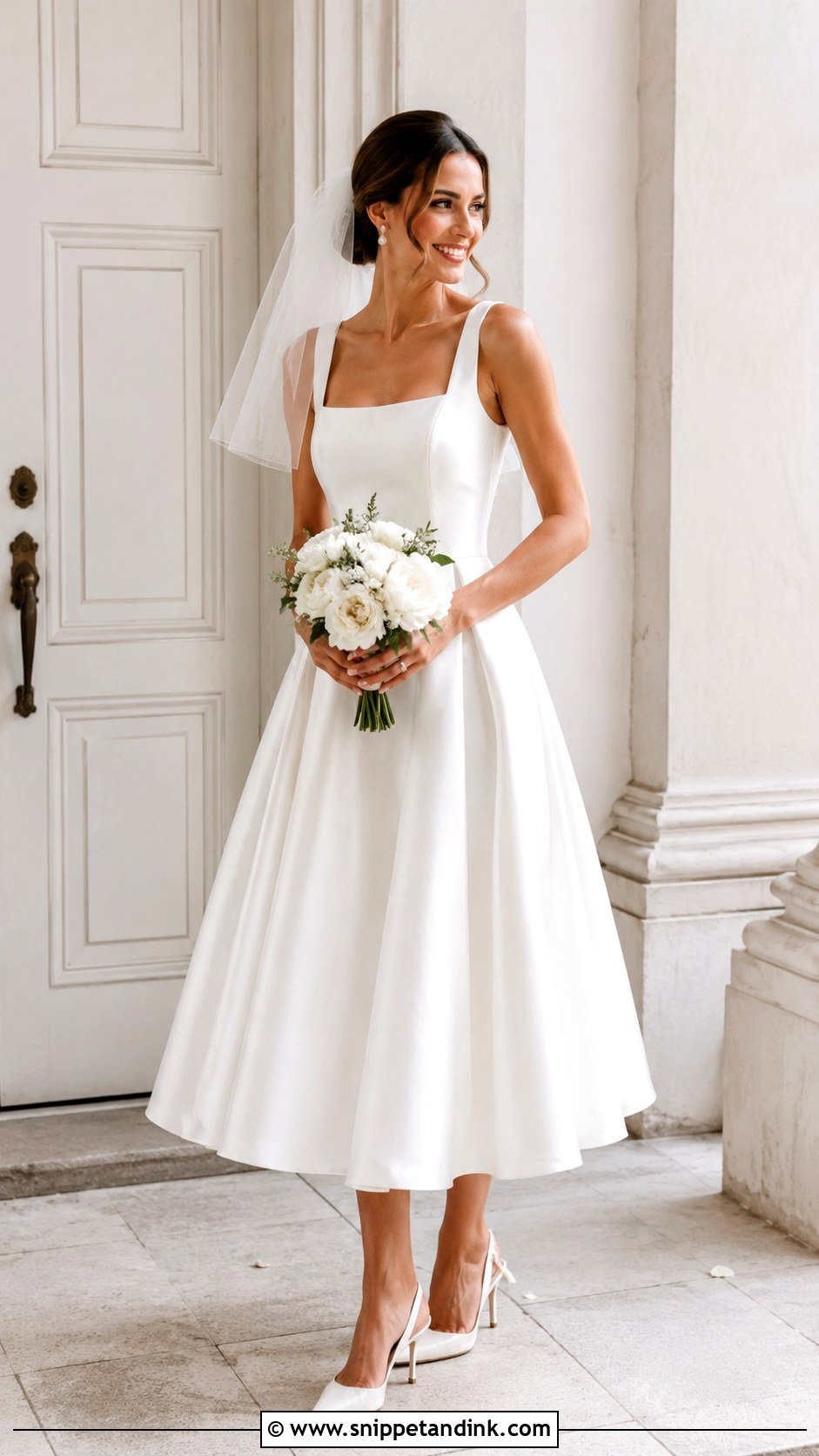
A hem between knee and ankle lets you walk, dance and take stairs without gathering your skirt, and it puts your shoes on show. So the shoes need real thought: pointed pumps, satin slingbacks or an embellished heel. A fitted bodice with a full skirt at this length reads vintage, while clean satin reads modern. I always set the hem with the exact shoes on, since a centimetre either way changes the proportions. Courthouse weddings, garden ceremonies and brunch receptions suit it.
22. Mini Wedding Gown
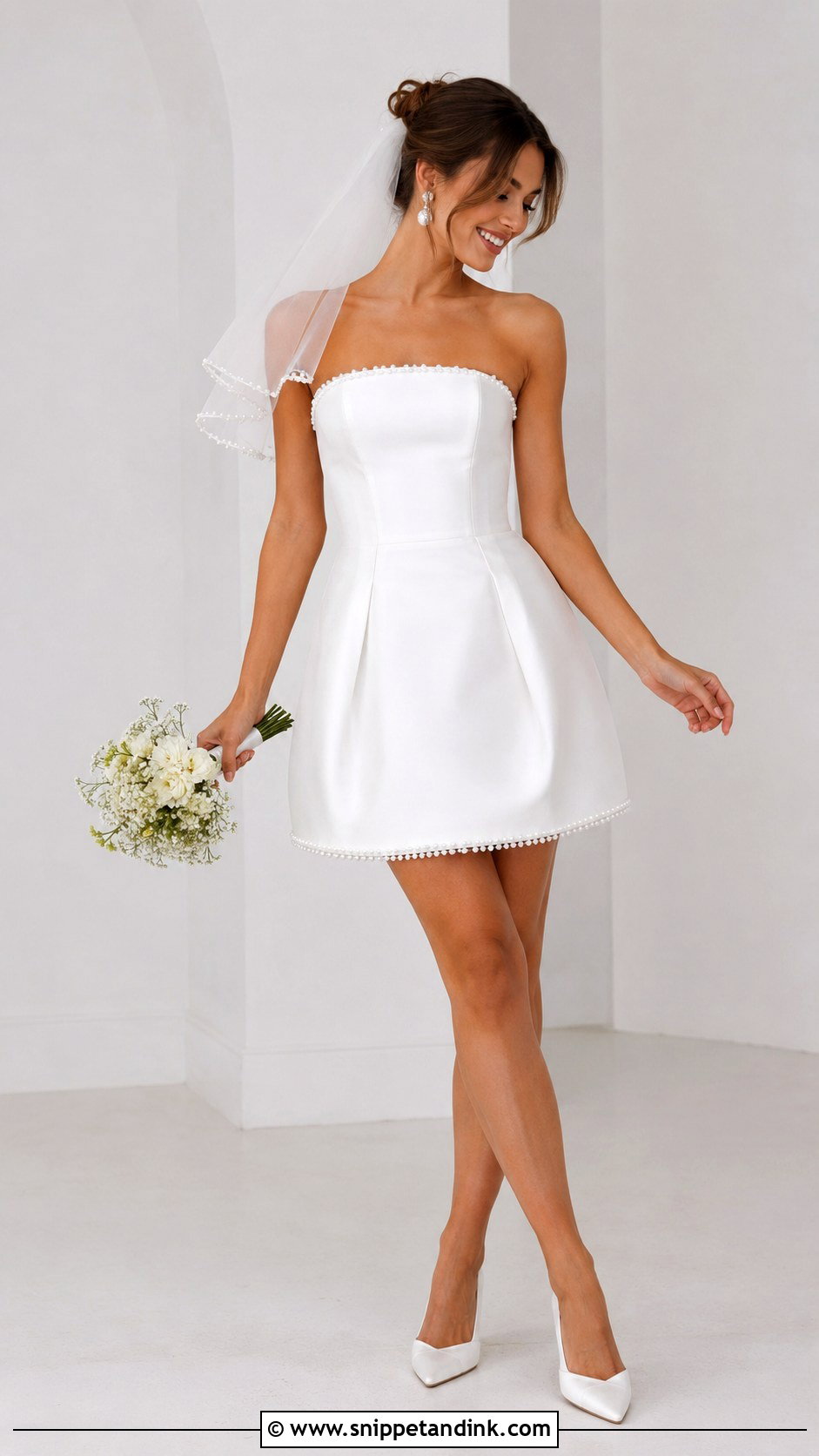
A mini is the easiest reception change I know. You can dance, sit on the floor for group photos and move through a crowd without anyone stepping on your train. Satin, pearl trim, a structured bodice or a big bow keep it bridal. Fit matters even more with so little fabric; a slightly loose mini starts to look like a party dress. Pointed heels, sheer gloves, a short veil or statement earrings finish it. Plenty of brides wear a formal gown for the vows and switch into one once the first dance is done.
23. Wedding Gown With Detachable Overskirt
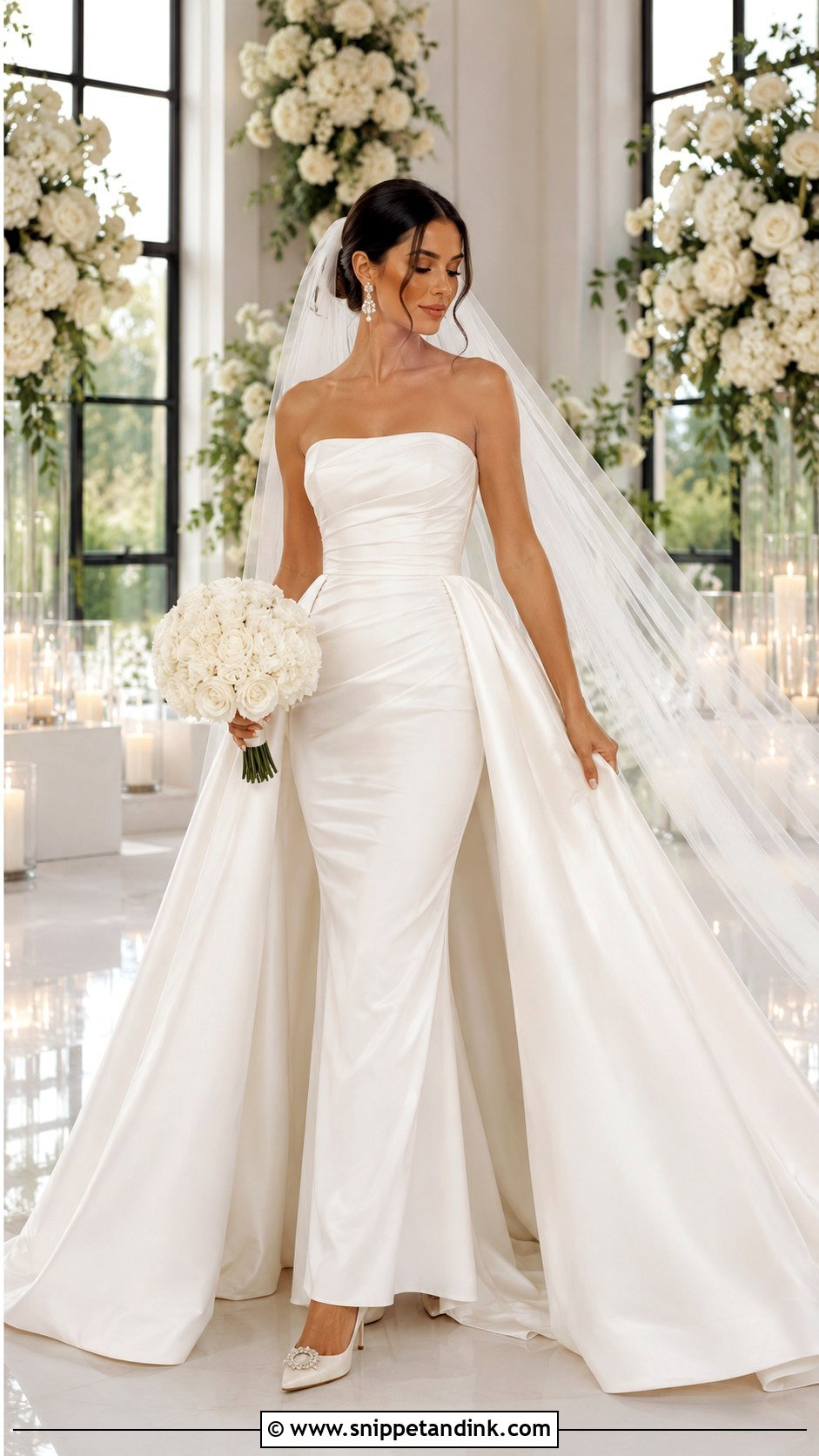
An overskirt buys you two looks without paying for two dresses. During the ceremony it adds volume and a long train; unhooked for the reception, it reveals a sleeker column, mermaid or mini underneath. The fastening is the bit people forget. Hooks, snaps or hidden buttons at the waistband should be tested at your final fitting, and one person in your party should practise removing it so the change takes minutes, not half the cocktail hour. Swap the long veil for statement earrings once it’s off.
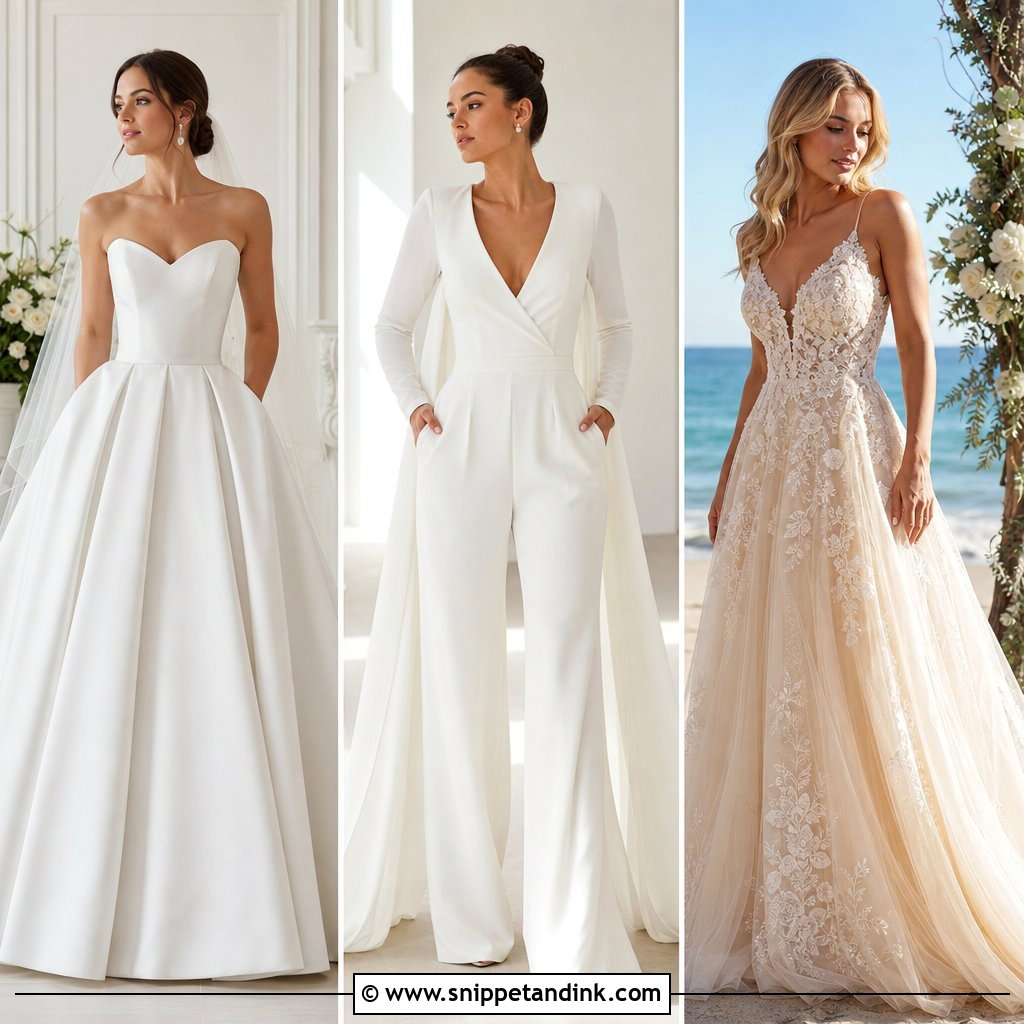
24. Bridal Suit Wedding Gown Alternative
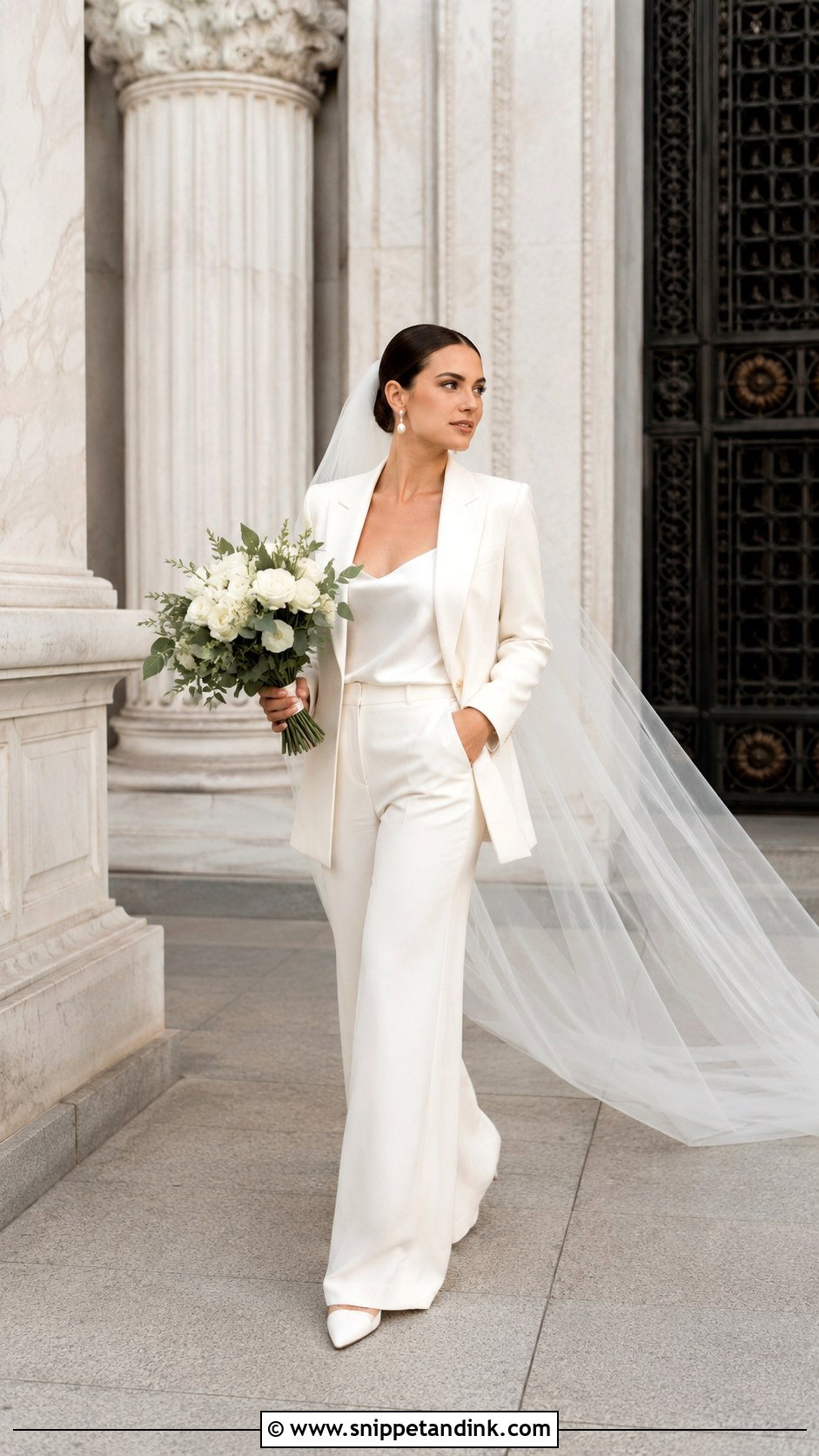
A suit is the answer for brides who never feel like themselves in a dress. A white or ivory blazer with wide-leg trousers, a silk camisole and pointed heels is the classic route; a long veil, pearl earrings and a structured bouquet make it ceremony-formal. The shoulder is the hardest part of a jacket to alter, so I tell brides to buy for the shoulders and let the tailor handle the waist and sleeves. A sharp fitted blazer looks polished, a softer oversized one more relaxed. Courthouse ceremonies, city weddings and elopements suit it.
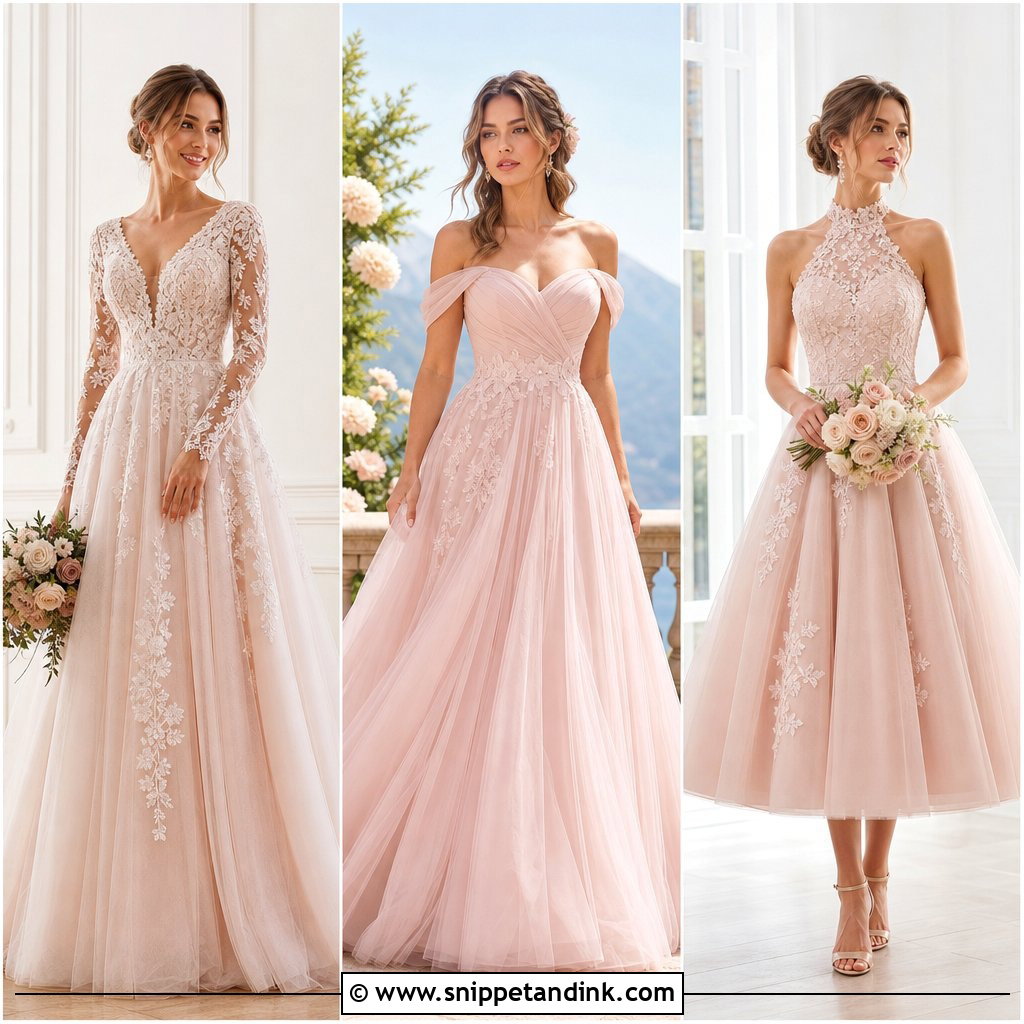
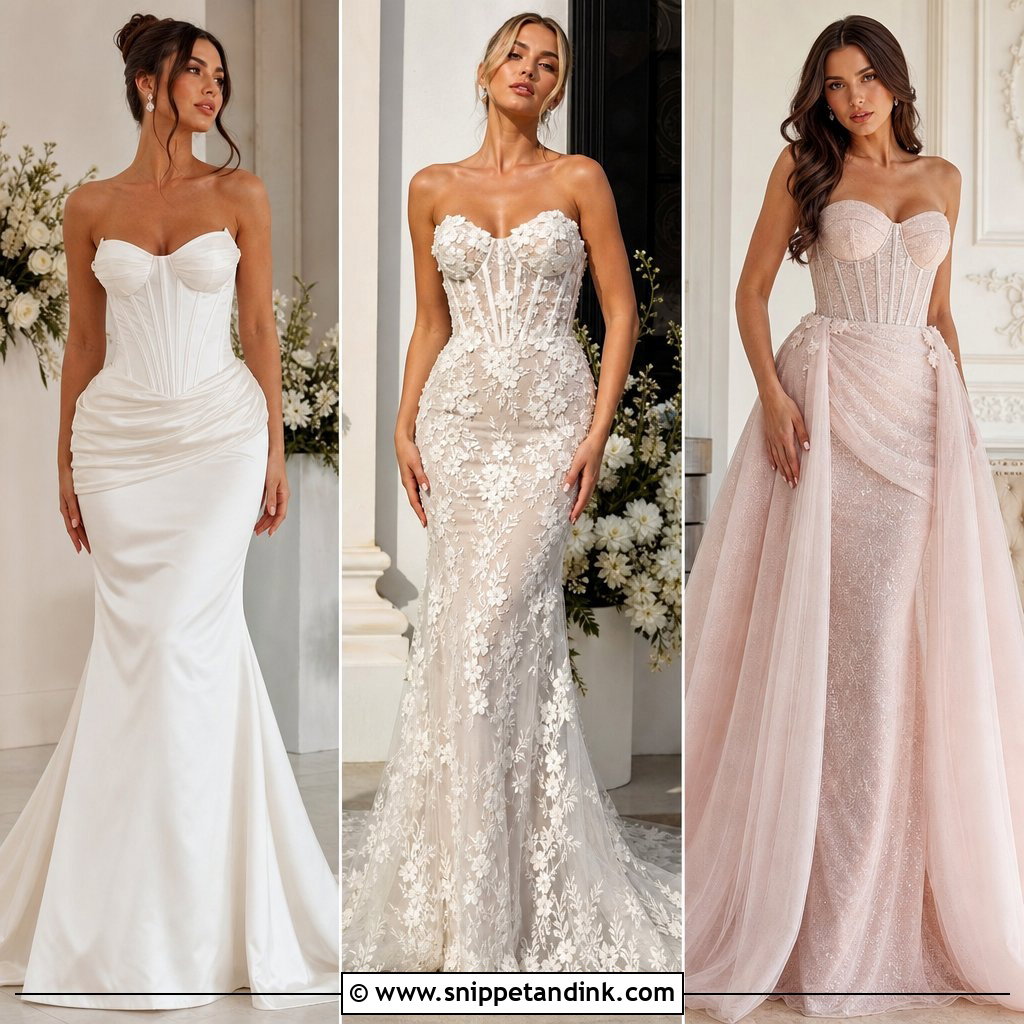



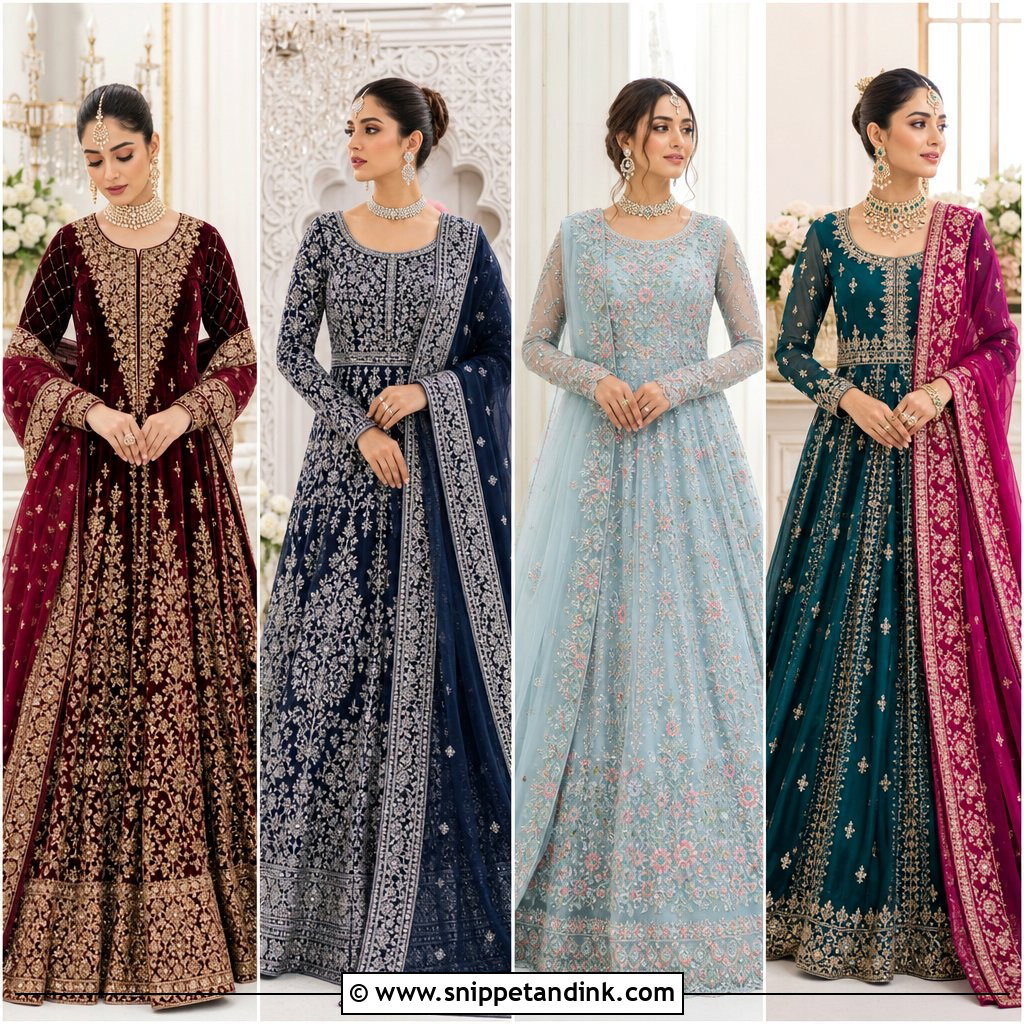
25. Colored Wedding Gown
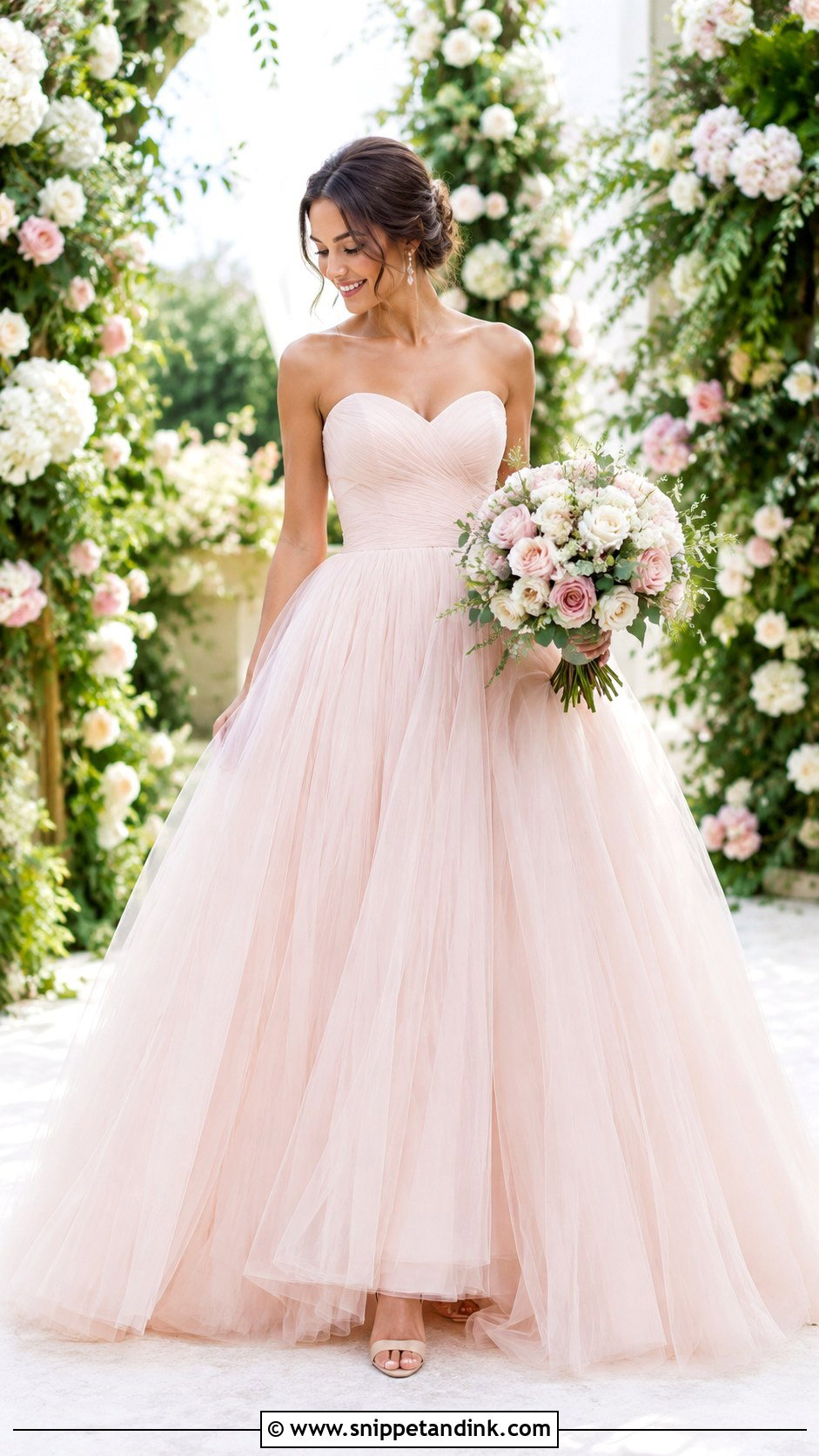
Blush, champagne, pale blue, silver and warm nude still read as bridal while stepping away from white. Skin tone decides the shade. Champagne can wash out very fair skin, and blush can turn too pink against a warm complexion, so I hold fabric swatches right under the chin in daylight before anyone orders. A blush tulle ball gown reads romantic; champagne satin reads polished. Keep shoes neutral and jewelry simple, and ask your florist for flowers that sit alongside the gown’s tone rather than copying it.
The Alteration Calendar Behind Every Gown Here
Made-to-order gowns usually take several months to arrive from the day you order, and the exact wait varies by designer, so I like brides to order around eight to ten months before the wedding where they can. Rush fees exist, but they shrink your choices. Alterations come next, and they are where most of the fit you see in these photos actually happens.
- First fitting roughly two to three months out, once the gown has arrived and been checked for damage or sizing errors.
- A second fitting a few weeks later to set the hem, bustle and any strap or sleeve changes.
- A final fitting one to two weeks before the wedding, with a bridesmaid there to learn the bustle and fastenings.
Bring the exact shoes and underwear to every fitting. A hem set in flats will drag in heels, and a bodice fitted over the wrong bra will fit badly on the day. If your weight is changing, tell your seamstress; she’d rather leave a little room than refit the bodice twice.
Twelve Hours in Satin, Tulle and Lace
The gown you put on at noon is not quite the gown you dance in at night. Hems collect dust and grass, satin creases at the lap, and anything with a train needs a bustle that someone other than you can work. An over bustle lifts the train onto the back of the skirt with hooks or buttons; an under bustle tucks it beneath with ribbon ties. Have whoever does it practise at the final fitting, not at the reception door.
I pack a small kit for every bride: safety pins, a needle with ivory thread, fashion tape, white chalk to cover a light mark, and a handheld steamer for the morning. After the wedding, get the gown to a specialist cleaner within a few weeks. Spilled champagne and sugary drinks can dry invisible, then turn into brown marks months later if they’re left in the fabric.
Your Venue, Your Chair and Your Dance Floor Decide the Shape
A trend can point you toward a silhouette, but it can’t tell you how a gown feels six hours in. The right one lets you sit, hug, eat and dance without thinking about it. Lace, corsets, minimal crepe, tulle, bows, minis, suits and colour are all here, so take the two or three that keep pulling you back to your appointment and test them against your venue, your season and the photos you care about. If you can move freely in it from the aisle to the last song, you’ve found your gown.
You'll Like These Ideas:







Leave a Reply