
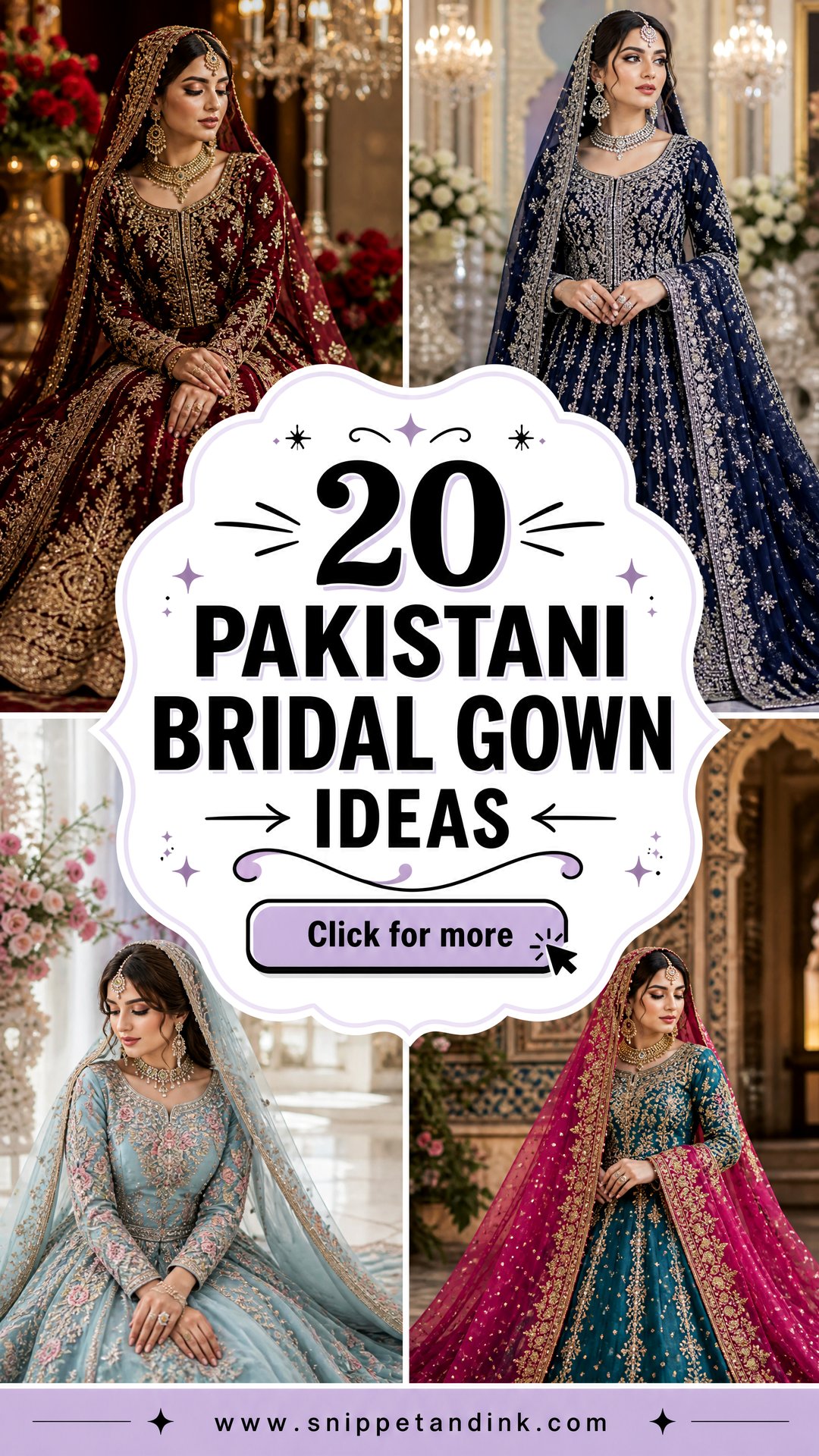
A gown is the one Pakistani bridal silhouette with nowhere to hide. There is no separate blouse to adjust and no skirt to raise at the waist, so the fit has to be right from shoulder to hem. I like them for that reason: when a gown is cut well, it gives a long, unbroken line that a lehenga can’t. The 20 looks below run from traditional red for the baraat to soft walima gowns, jewel tones and modern fusion cuts. Bridal designers are still pairing lehengas, maxi gowns, pishwas silhouettes and statement dupattas with zari, zardozi, dabka, naqshi and resham. Think about the event, venue, season and your jewellery as you go, and above all how easily you can move.
What a One-Piece Gown Asks of Your Fittings
With a lehenga you can loosen a drawstring or shift a blouse. With a gown, the bodice, waist and skirt are joined, so a small change in your body shows everywhere. I plan gown fittings differently for that reason.
- Wear the exact bra or shapewear you will wear on the day to every fitting. Changing it later moves the bust and waist seams.
- Sit down at each fitting. A gown waist that feels fine standing can cut in once you are seated on a stage for an hour.
- Ask where the closure is. Back zips and long rows of hooks need a helper every time, including bathroom trips, so a hidden side zip is worth asking about.
- Check sleeve movement by lifting your arms as if to hug someone. Fitted sleeves on a gown can lift the entire bodice when they are too tight.
If your weight is likely to change before the wedding, ask the designer to leave extra seam allowance at the side seams. Taking in is easy; letting out is only possible when there is fabric to let out.
1. Red Pakistani Bridal Gown With Gold Dupatta
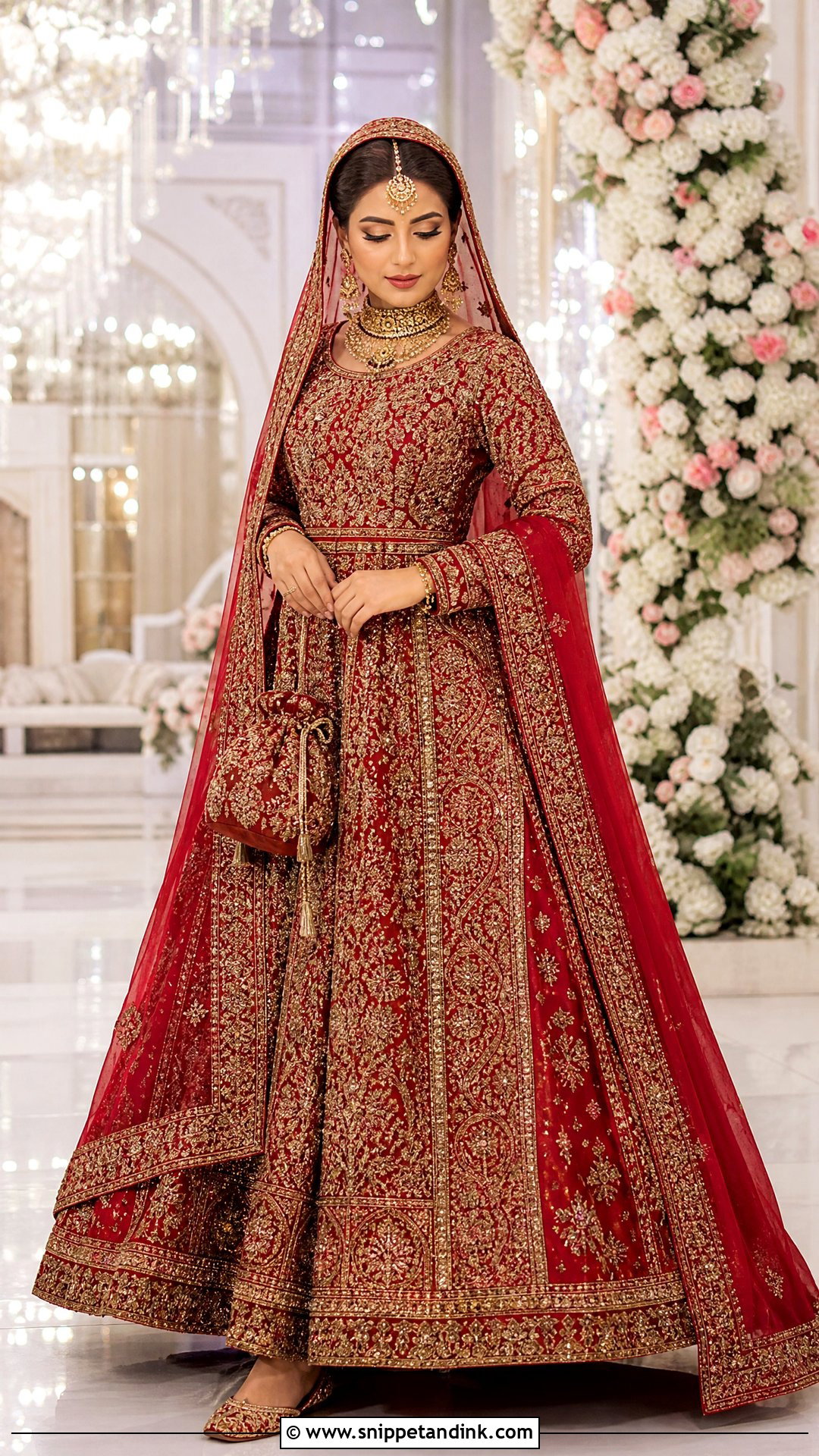
Red is still the baraat colour for most families, and a red gown with a gold dupatta answers that expectation in one clean shape. A fitted bodice, full sleeves and a wide flared skirt, with dabka, zari and sequins framing the neck and hem rather than covering every inch. I ask for the skirt panels to be cut wide at the hem but light at the waist, so the flare comes from the cut, not from layers of fabric piled at the hips. A heavily bordered red dupatta over the head, a lighter one on the shoulder, a gold choker, a maang tikka and khussas complete it.
2. Ivory Pakistani Bridal Gown With Red Dupatta
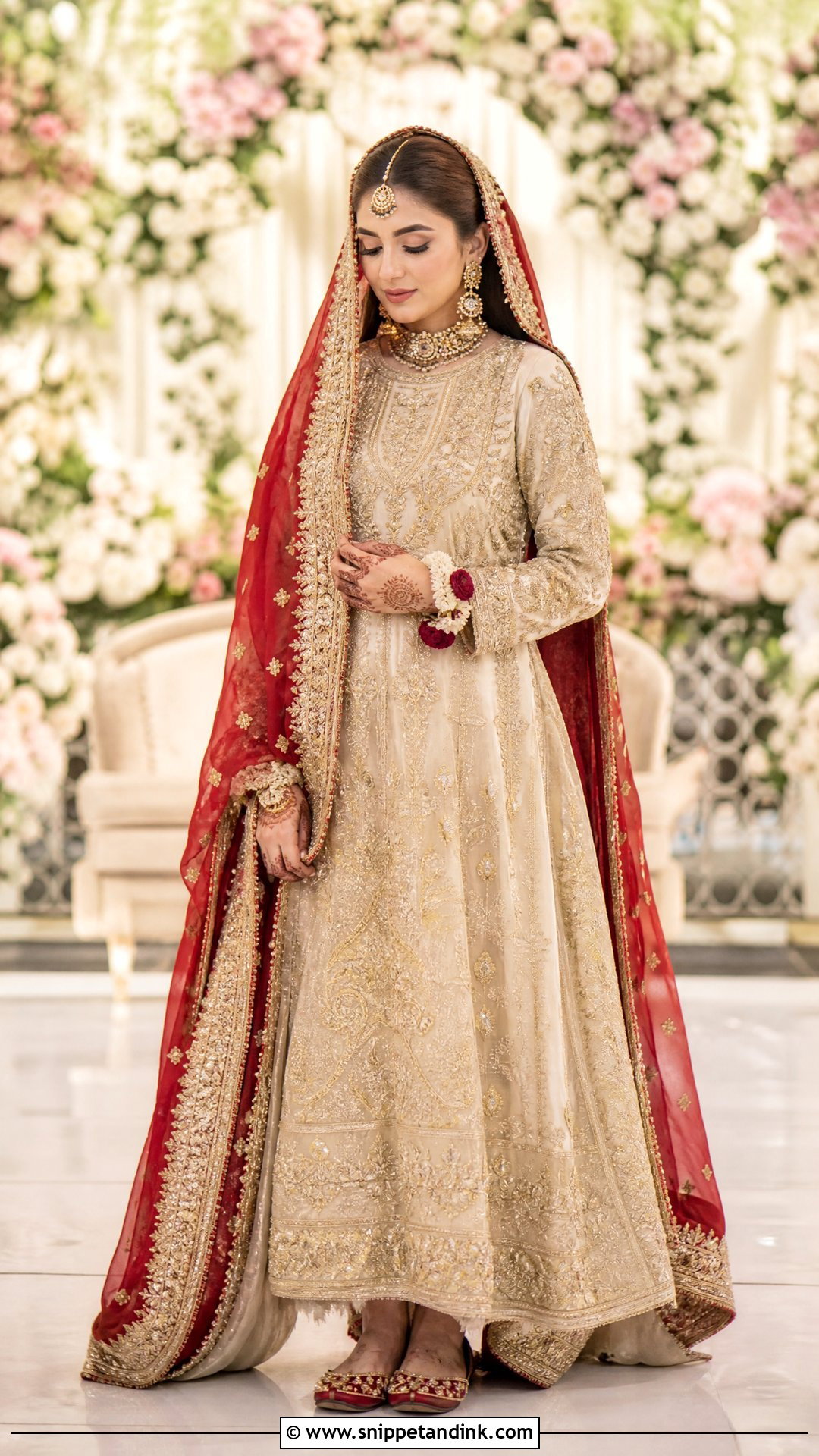
Ivory with a red dupatta is my favourite way to soften a bridal look while keeping its meaning. An A-line or pishwas-shaped gown with gold threadwork, pearls and small red details at the neck and cuffs, then a deep red dupatta over the head with one border laid neatly along the hairline. The red near the face is what makes the camera read it as bridal. Kundan, jhumkas and a small tikka suit the gold work; red velvet khussas and a muted red lip pick up the dupatta.
3. Blush Pink Pakistani Bridal Gown With Pearl Work
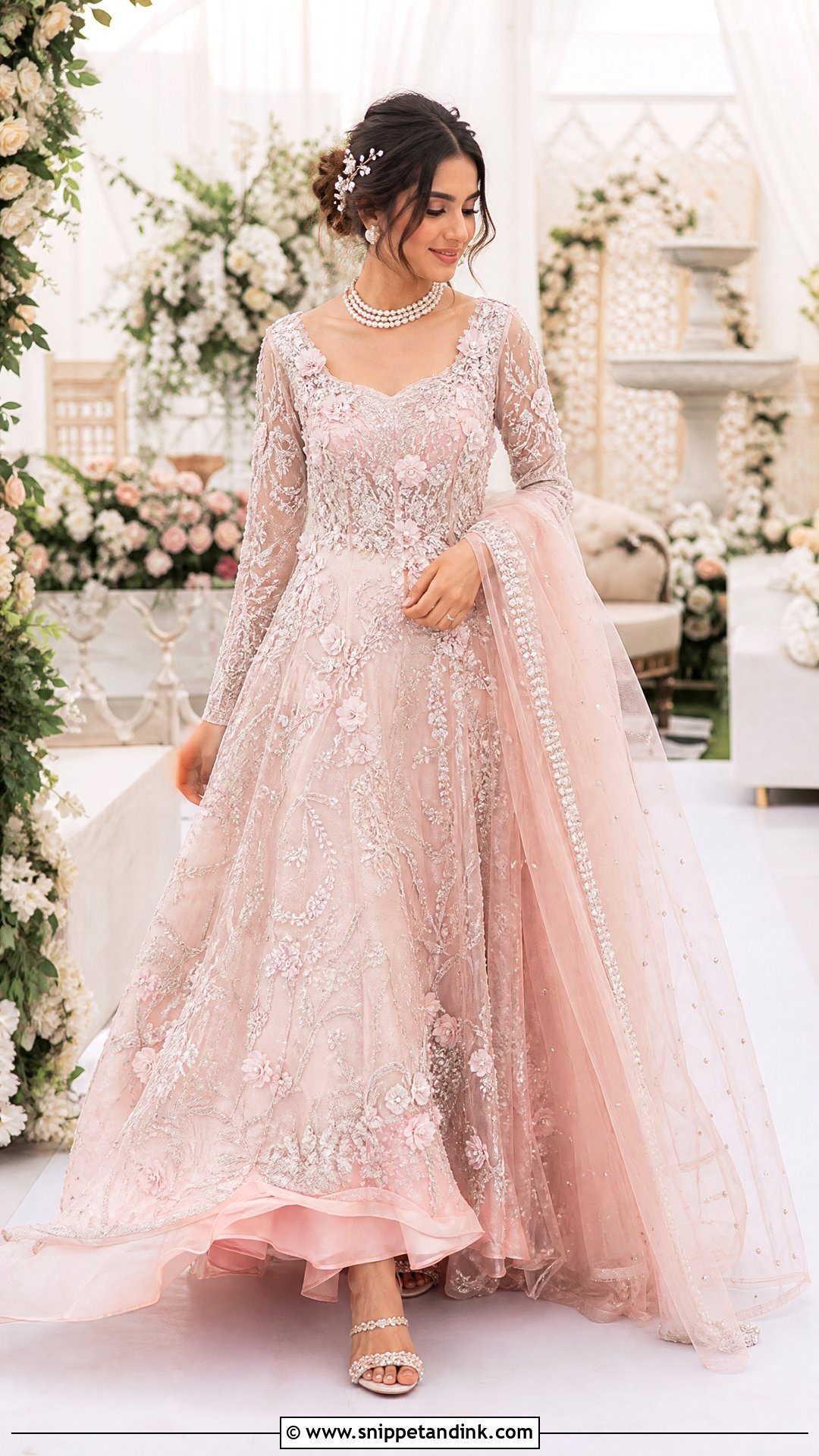
Blush is the gown I suggest for a daytime nikah or walima when a bride wants colour that stays gentle. Net, organza or tissue with pearl vines, silver sequins and small floral appliqué, a fitted waist and a flowing skirt. Pearl work is heavier than it looks, so I ask how densely it is placed on the bodice before approving the design; a solid pearl bodice can pull the neckline forward. A sheer blush dupatta with a pearl border, crystal heels and soft curls finish it, especially in bright venues or among fresh flowers.
4. Maroon Pakistani Bridal Gown With Antique Gold Embroidery
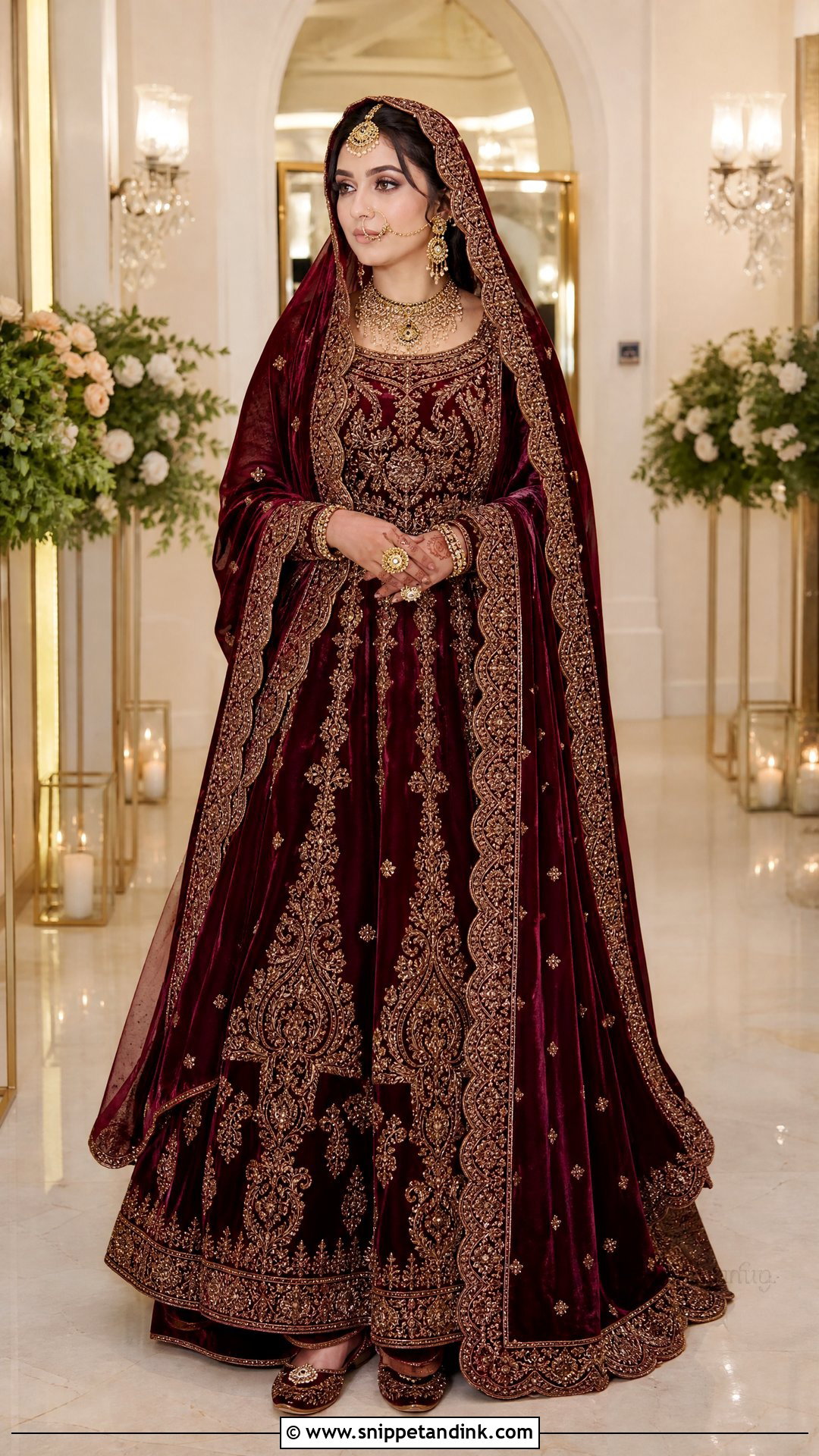
Maroon gives the richness of red with more drama, and in velvet or raw silk it belongs at an evening baraat in the cooler months. Antique gold embroidery looks deeper on maroon than bright metallics, which can flare in photographs. A paneled gown with a structured bodice and long sleeves looks regal without a heavy skirt. Velvet is warm, so I keep the lining cotton. A maroon net dupatta with a scalloped edge, antique gold jewellery, a nath if you like one and velvet khussas finish it. Choose a deep rose lip rather than matching the fabric exactly.
5. Emerald Green Pakistani Bridal Gown With Kundan Jewelry
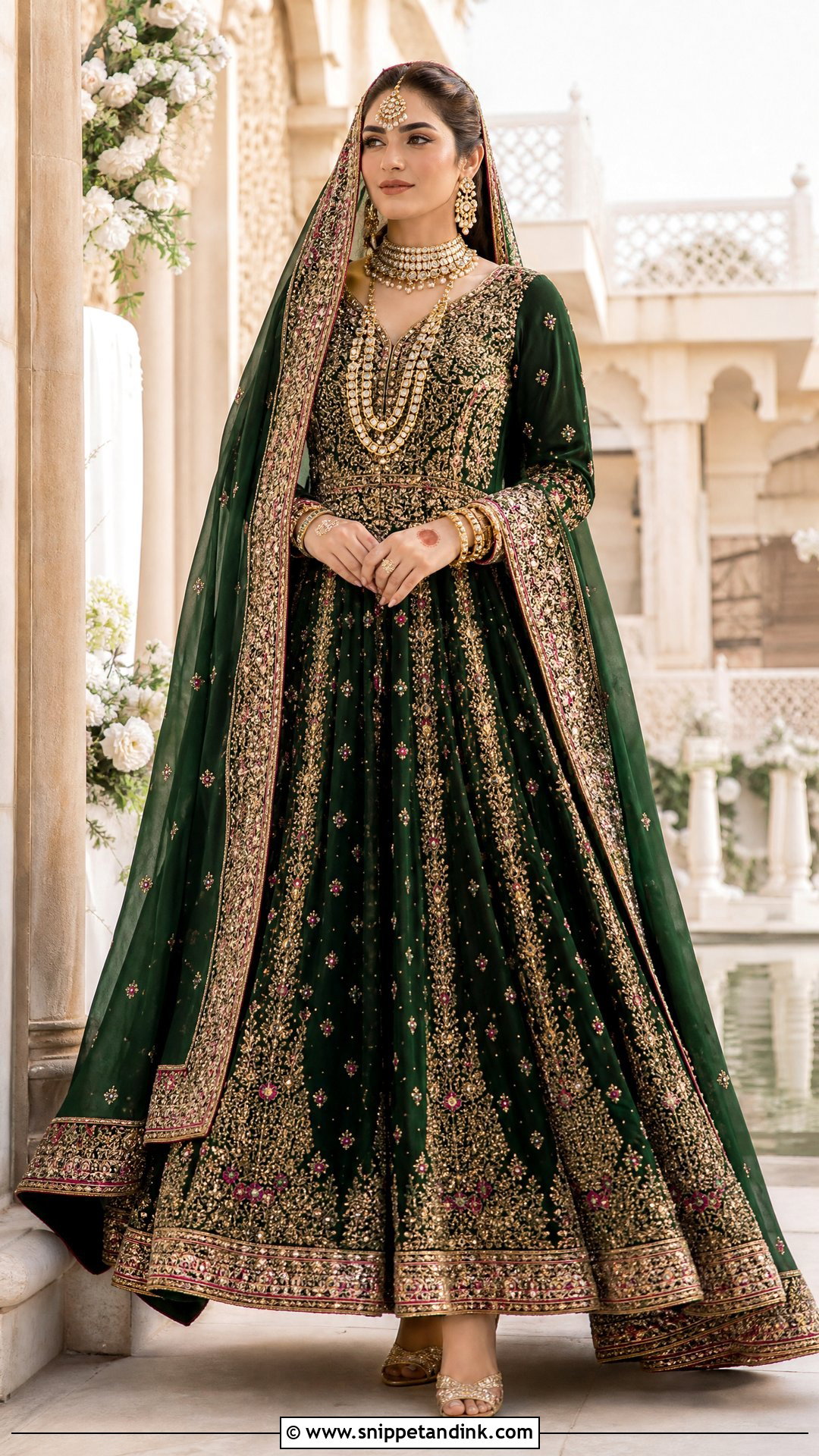
Emerald makes a memorable bridal outfit for a mehndi, reception or evening function. The jewel tone takes antique gold, champagne and multicoloured thread equally well. A long gown with a fitted upper body, defined waist and generous hem, with small touches of magenta, rust or teal in the embroidery for depth. Pair it with an emerald dupatta with a broad gold border. Kundan layers and stacked bangles finish it. Emerald also flatters a wide range of skin tones, which is not true of every green, so I usually hold it up to a bride’s face before anything else.
6. Champagne Pakistani Bridal Gown With Crystal Details
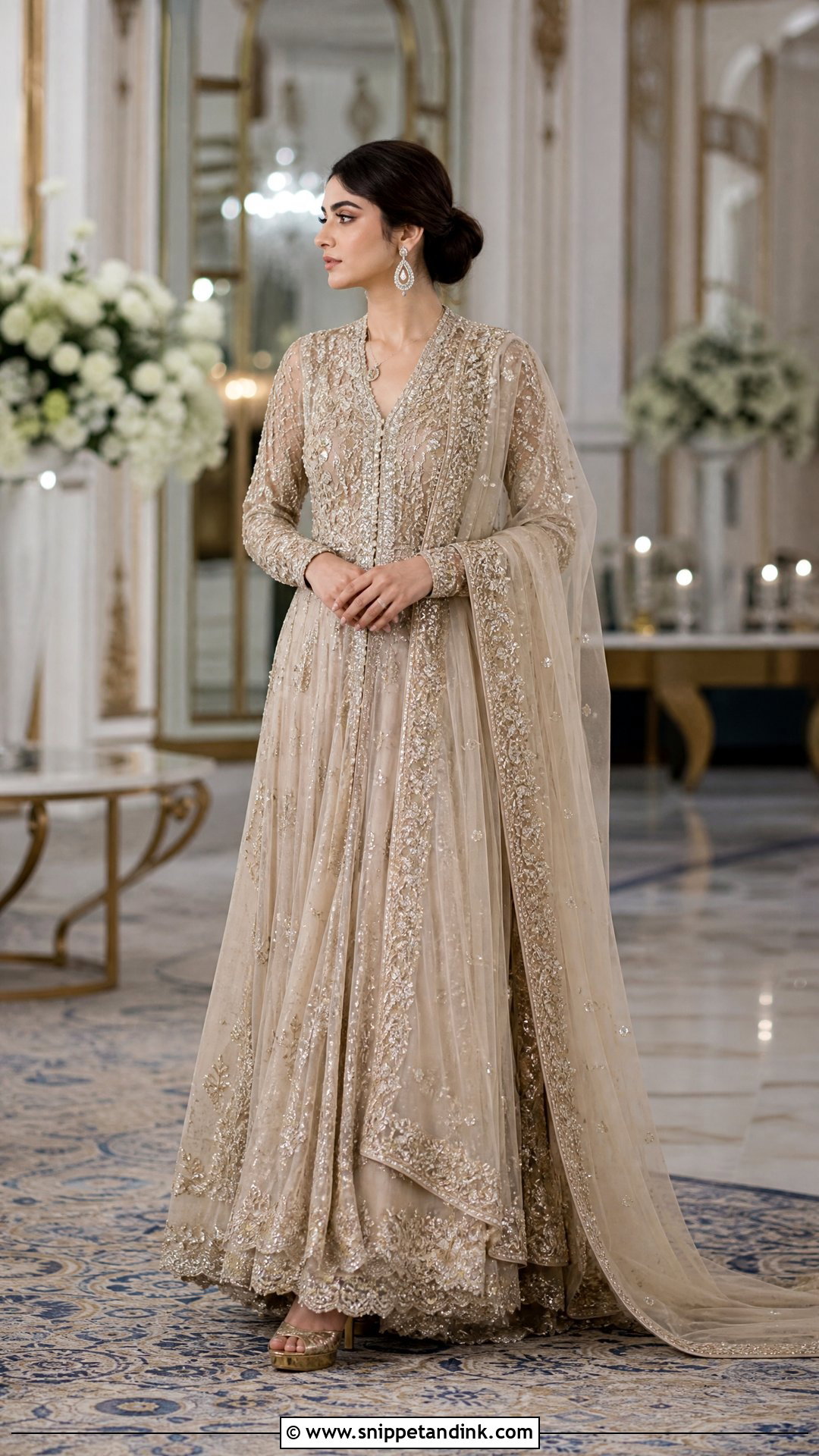
Champagne gives a walima glamour without strong colour. A flowing maxi silhouette in organza, tissue or net over a silk lining, with crystal vines, silver beads and light gold thread. The lining matters more than the outer fabric here. Without a skin-friendly silk or cotton layer underneath, crystal-heavy net scratches through a long evening. A high neck or modest V with fitted sleeves, a sheer champagne dupatta with a crystal border light enough to drape, and a sleek bun let the reflective details work in a ballroom or a marquee.
7. Navy Blue Pakistani Bridal Gown With Silver Work
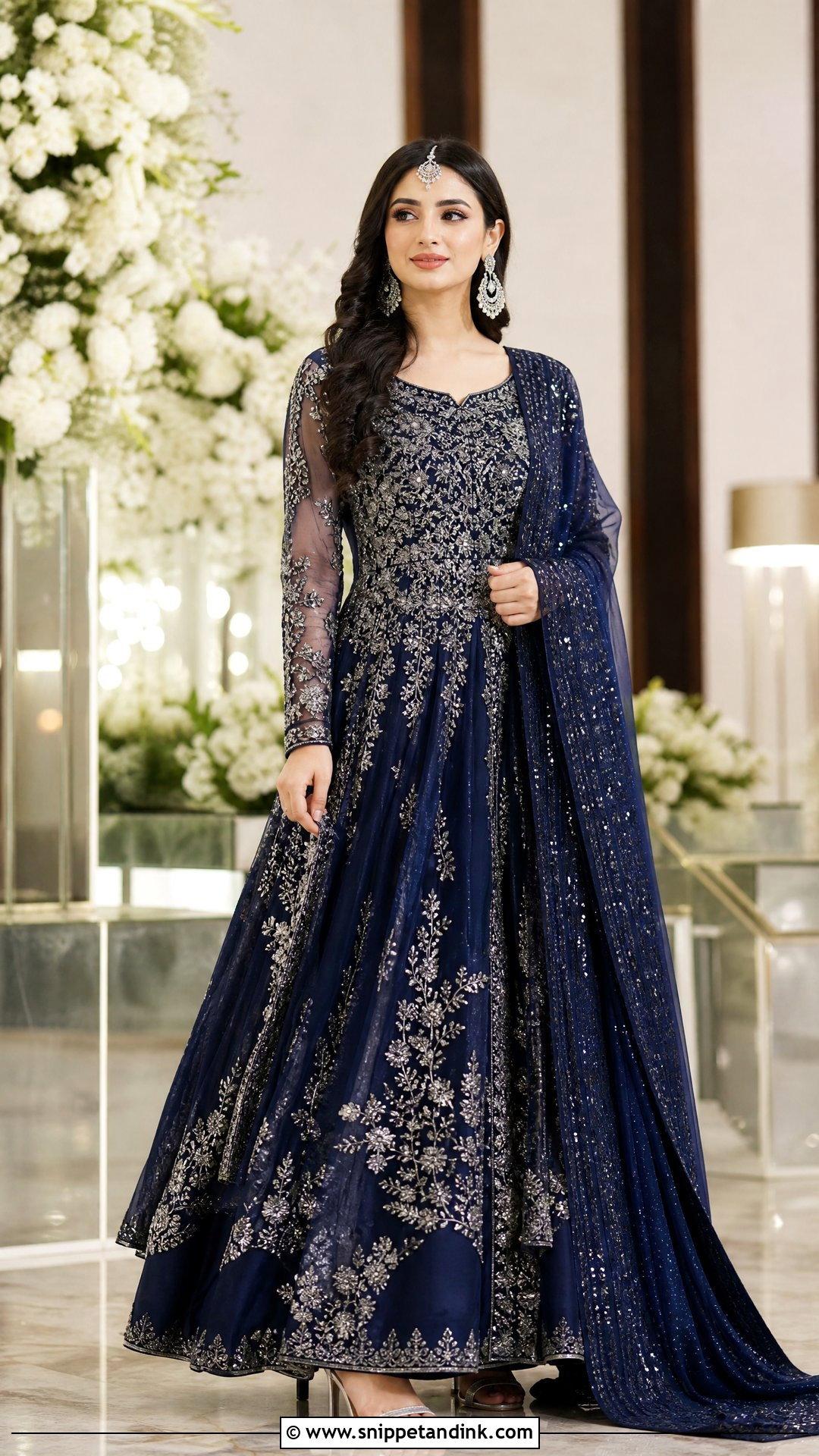
Navy is the evening alternative to black, with depth but more warmth. A long fitted bodice and a full layered skirt, with silver embroidery at the neckline, sleeves and lower border. I keep the work concentrated rather than scattered, since silver dotted across dark fabric can look busy in photographs. A navy dupatta with scattered sequins and a clean silver edge, crystal earrings, a matching tikka and silver heels finish it. Cool-toned eyes and a mauve lip suit the colour.
8. Powder Blue Pakistani Bridal Gown With Floral Embroidery
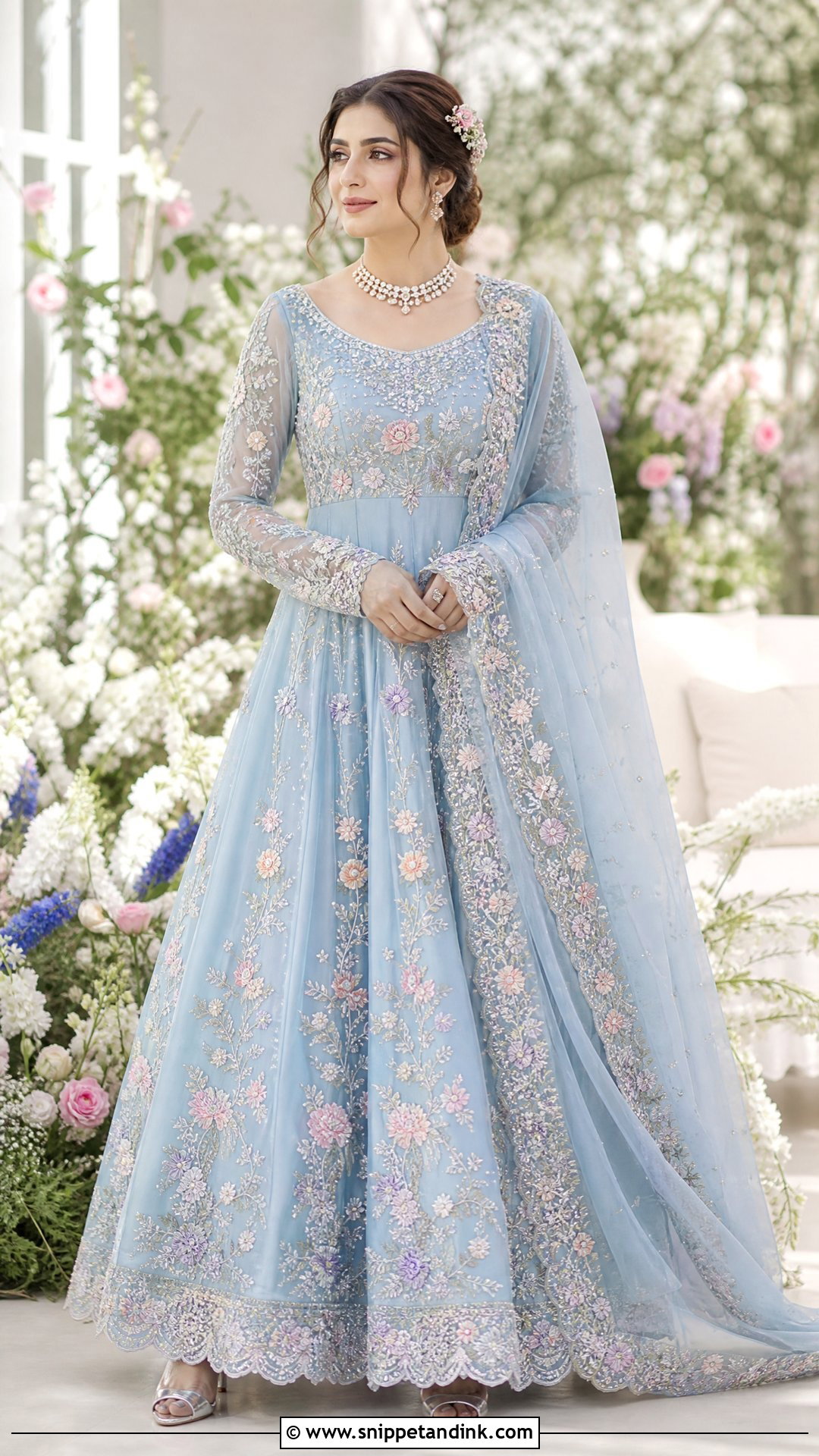
Powder blue is fresh for a daytime walima or a spring function. A floor-length gown with pastel floral thread in pink, lavender, ivory and pale green, fitted above and softly flared below so the embroidery shows from every side. Pale blue can look grey under some indoor lighting, so I check the fabric under the venue’s bulbs if I can. A sheer blue dupatta with small flowers and a slim silver border, pearl earrings, a delicate choker and loose waves complete it.
9. White Pakistani Bridal Gown With Silver Dupatta
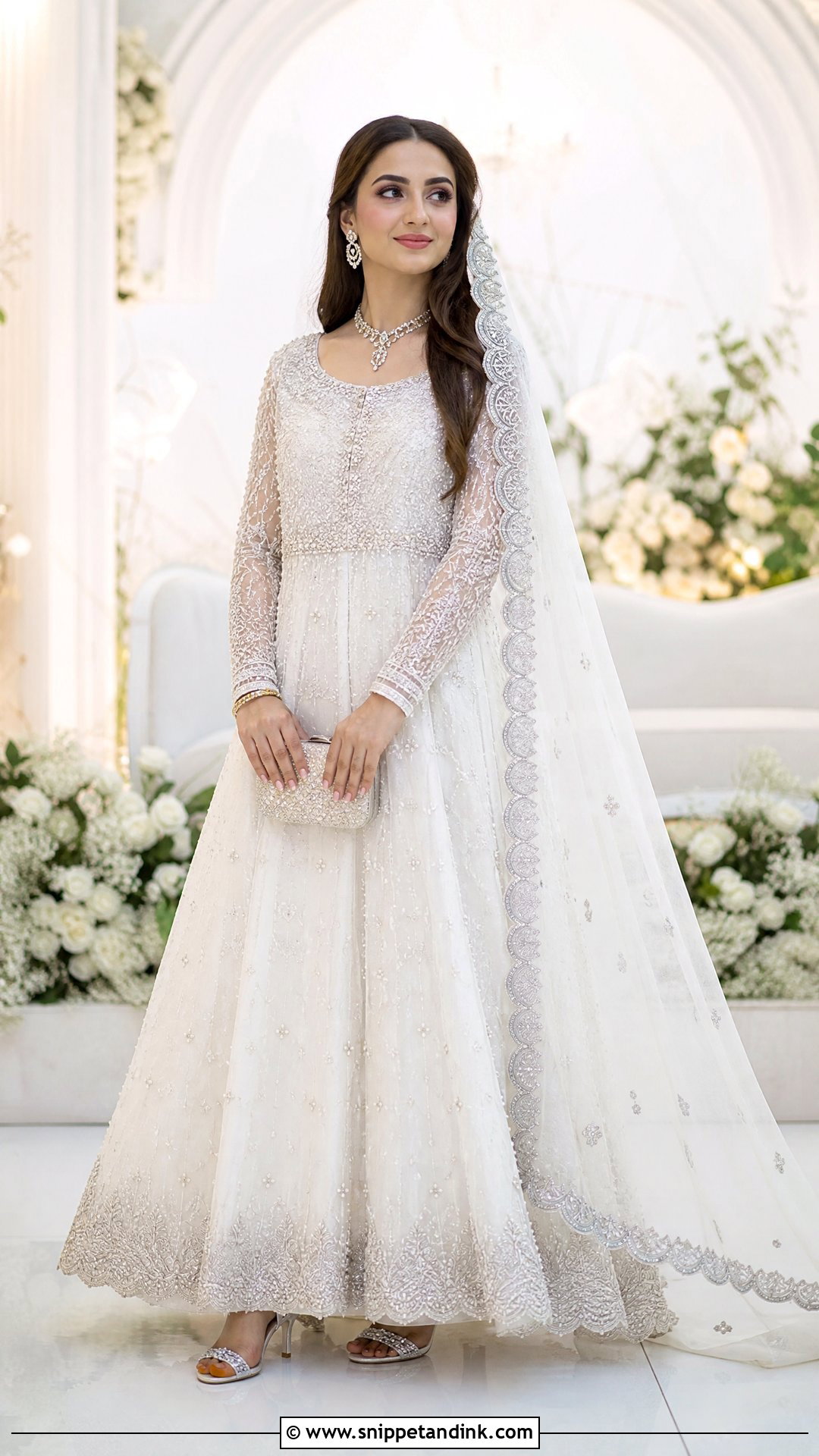
White is a calm, refined choice for a nikah or walima, and modest full-length gowns and fusion cuts have become common for both events. Choose an A-line with pearl embroidery and silver thread, and insist on a structured lining. White fabric that looks opaque in the shop can turn sheer under a camera flash, so I always photograph the bride in it with flash at a fitting. Full sleeves, a soft neckline and a long hem make a clean base; a silver-grey scalloped dupatta adds gentle contrast. Pearl jewellery, a soft pink lip and a smooth low bun keep it formal.
10. Black Pakistani Bridal Gown With Gold Embroidery
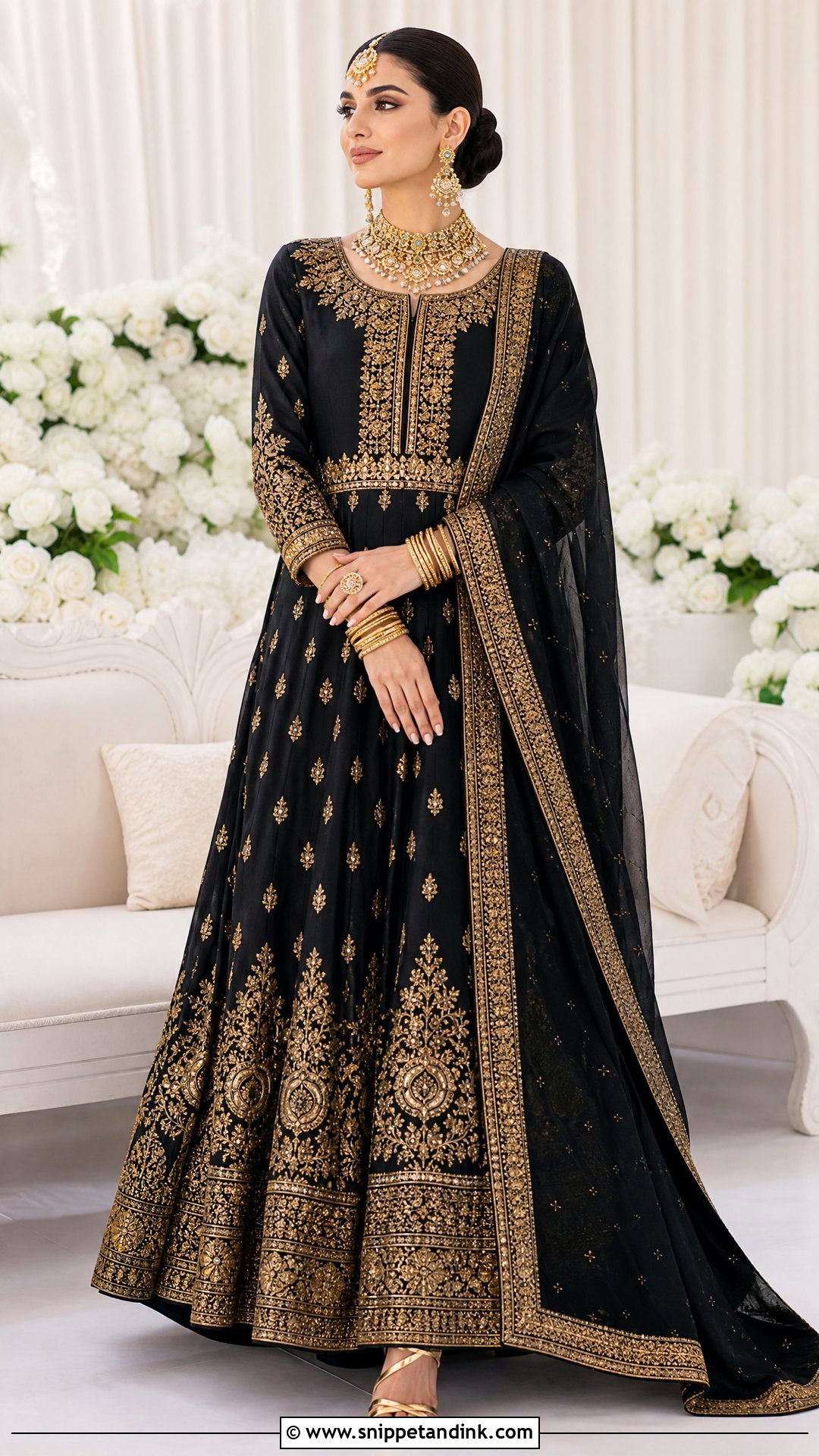
Black can be very polished for a reception or a post-wedding dinner, though some families still avoid it at weddings, so check before you order. A modest fitted bodice and sweeping skirt with antique gold work at the neckline, waist, cuffs and hem. Black needs warmth near the face, which is why I pair it with a kundan necklace and gold bangles instead of silver. A black net dupatta with gold motifs and a wide border completes it. Bronze eyes and a rose-brown lip stop the look from turning severe.
11. Peach Pakistani Bridal Gown With Gold Florals
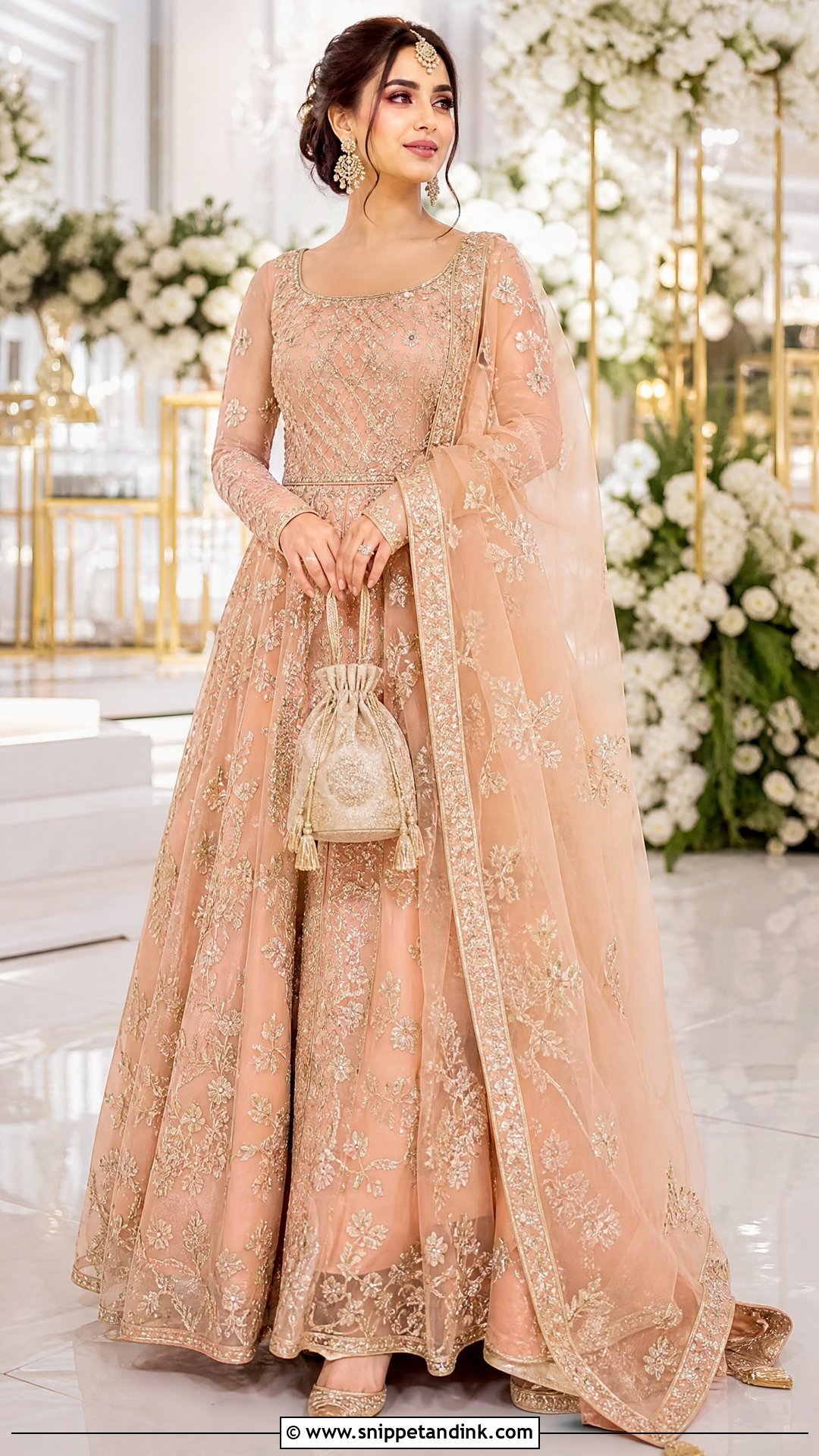
Peach is easy to wear and flatters warm skin, which makes it a good daytime walima or summer gown. Lightweight organza or net with champagne-gold florals, a fitted waist, flowing skirt and gently shaped sleeves. In warm weather, I suggest a single-layer skirt over a cotton lining rather than multiple net layers. A sheer peach dupatta with a narrow metallic border, polki earrings, a slim tikka and champagne heels finish it, with a relaxed low bun and a few small flowers.
12. Lavender Pakistani Bridal Gown With Silver Embellishments
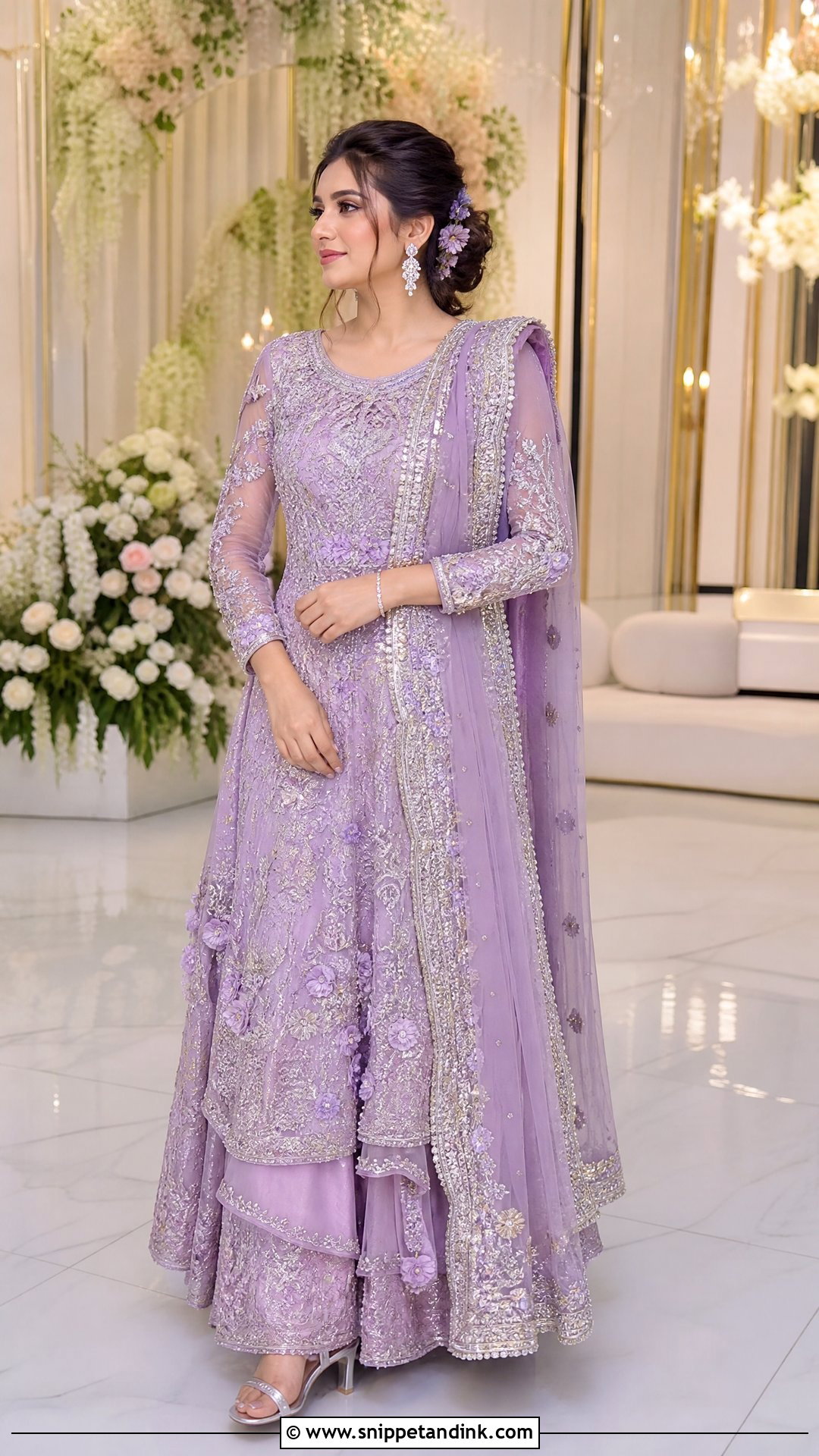
Lavender gives Pakistani bridal wear a modern, dreamy feel and stays soft enough for a walima. A long gown with silver resham, crystal accents and small three-dimensional flowers on the bodice and skirt. Raised floral appliqué adds texture, but those petals crush easily, so I tell brides to store the gown hanging with tissue between the layers, never folded. Several light skirt layers give volume without weight. A matching dupatta with a silver border across the shoulders, crystal drops, silver heels and loose waves finish it.
13. Rose Gold Pakistani Bridal Gown With Cape Dupatta
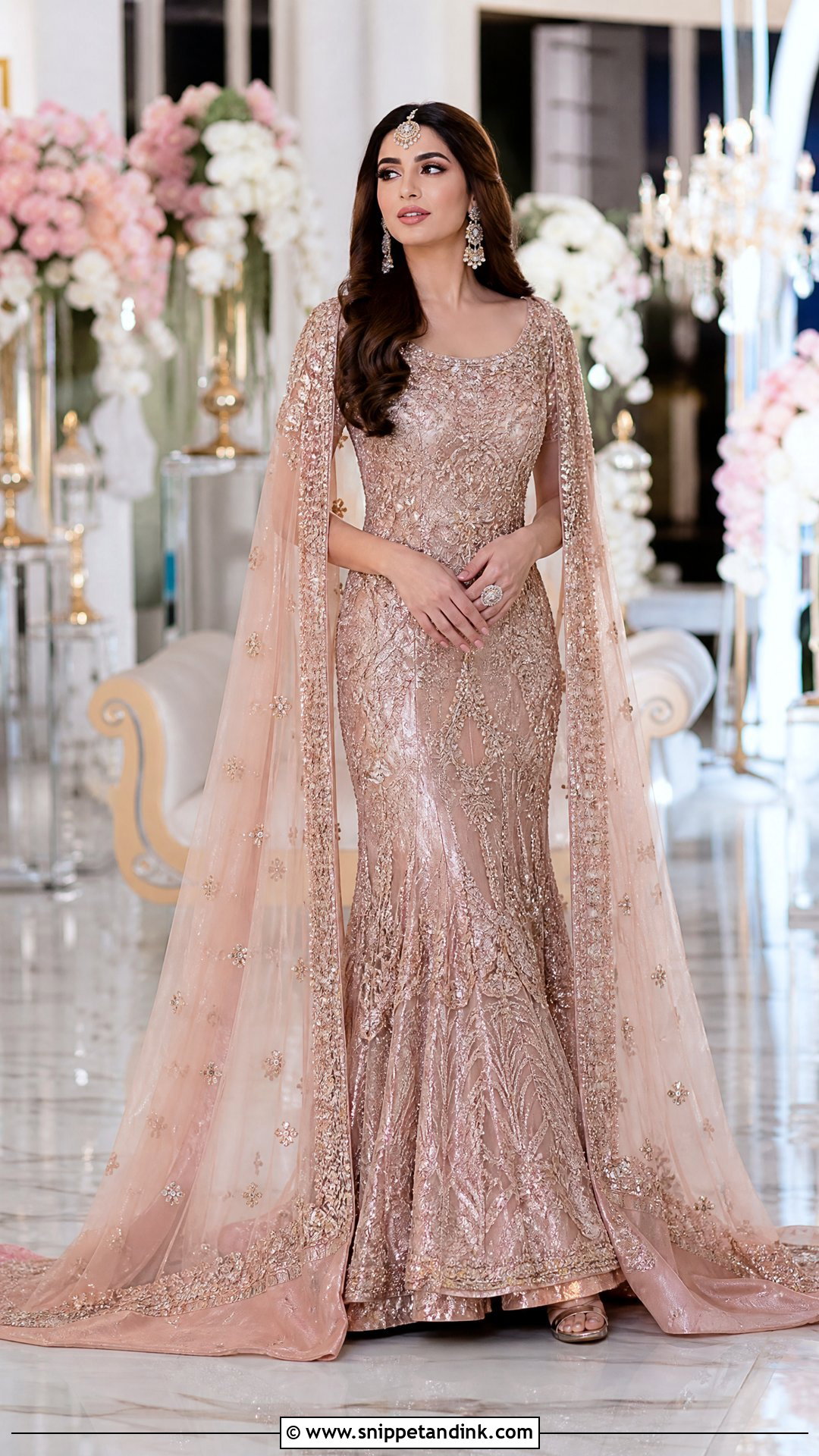
A cape dupatta turns a rose gold gown into something contemporary. A fitted gown with metallic thread, crystals and tonal sequins, with a skirt that falls straight from the waist so the cape becomes the statement. The net cape attaches at the shoulders and flows behind like a veil, which keeps your arms free at the reception. I check the attachment points carefully; a cape hooked too far forward pulls the neckline back when you walk. One statement ring, crystal earrings, a small tikka and a sleek middle-parted bun keep it balanced.
14. Teal Pakistani Bridal Gown With Magenta Dupatta
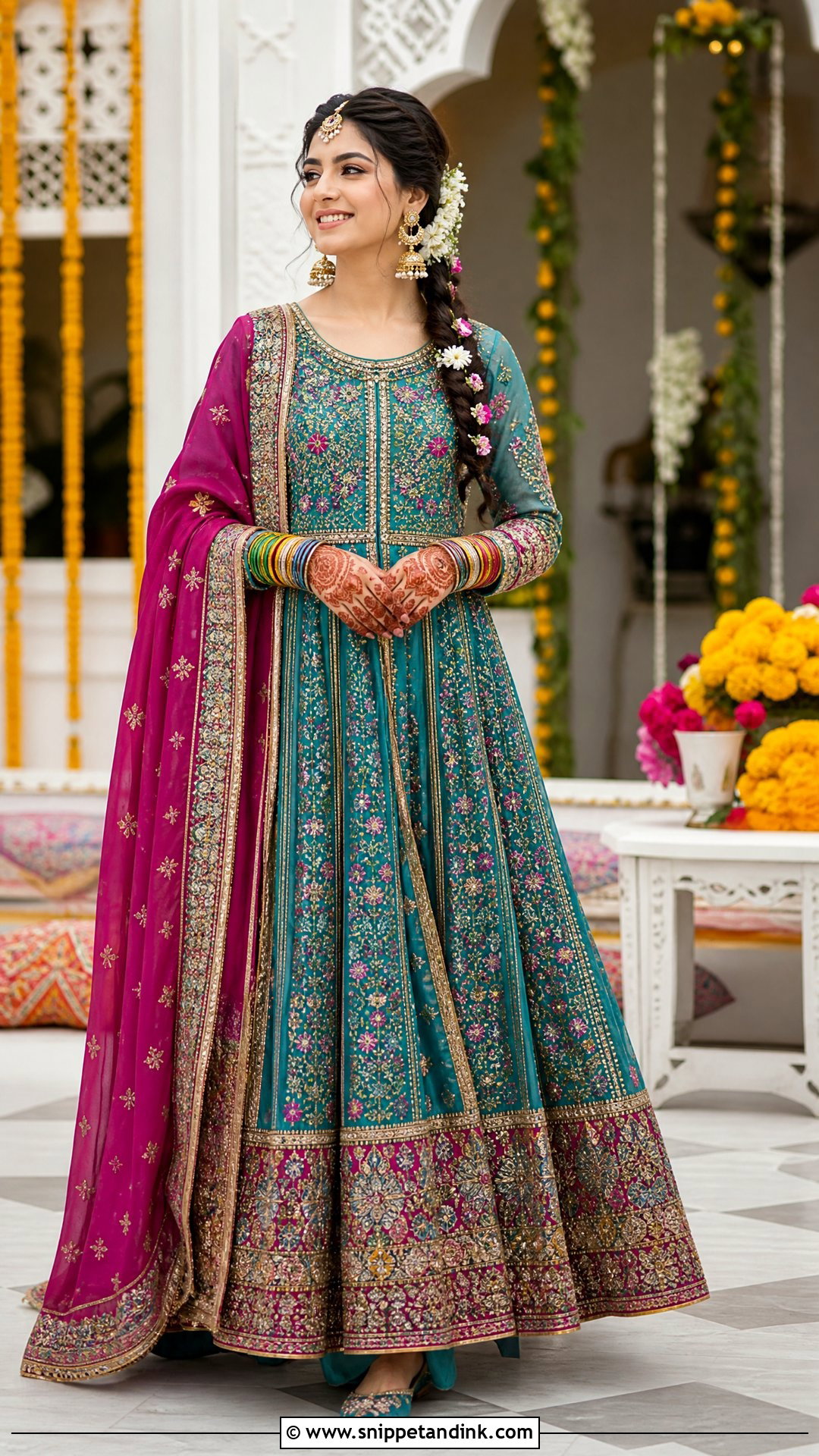
Do you want colour that still looks coordinated? Teal with a magenta dupatta is a rich contrast for a mehndi or festive function. A paneled gown with gold embroidery and small magenta details in the bodice and border, which is what connects the dupatta to the dress. Without those repeats, the two colours look like they came from different outfits. Drape the dupatta over one shoulder or across both arms so the neckline stays visible. Antique gold jhumkas, stacked bangles, teal khussas and a flower-trimmed braid finish it.

15. Plum Pakistani Bridal Gown With Velvet Bodice
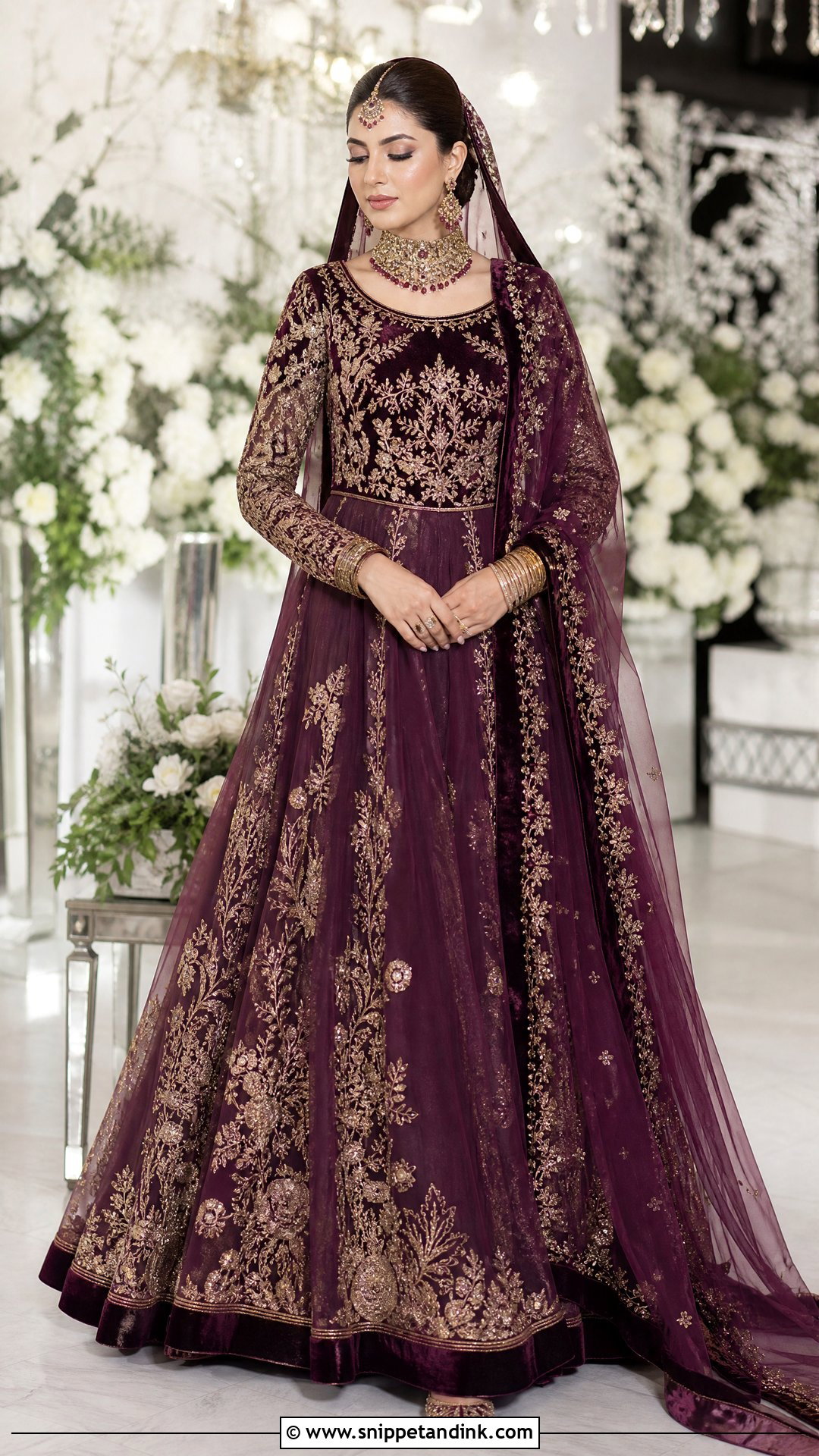
Plum pairs naturally with velvet and antique metals, which is why it is my winter reception suggestion. A fitted velvet bodice with a flowing organza or net skirt gives seasonal depth without making every layer heavy. Gold and bronze embroidery at the neckline, sleeves and waist frame the face. A plum dupatta with a velvet border, antique gold earrings, a statement choker and closed-toe embellished heels finish it. Go light with a deep berry lip; with this much colour in the outfit, a heavy lip starts to compete.
16. Mint Green Pakistani Bridal Gown With Pearl Dupatta
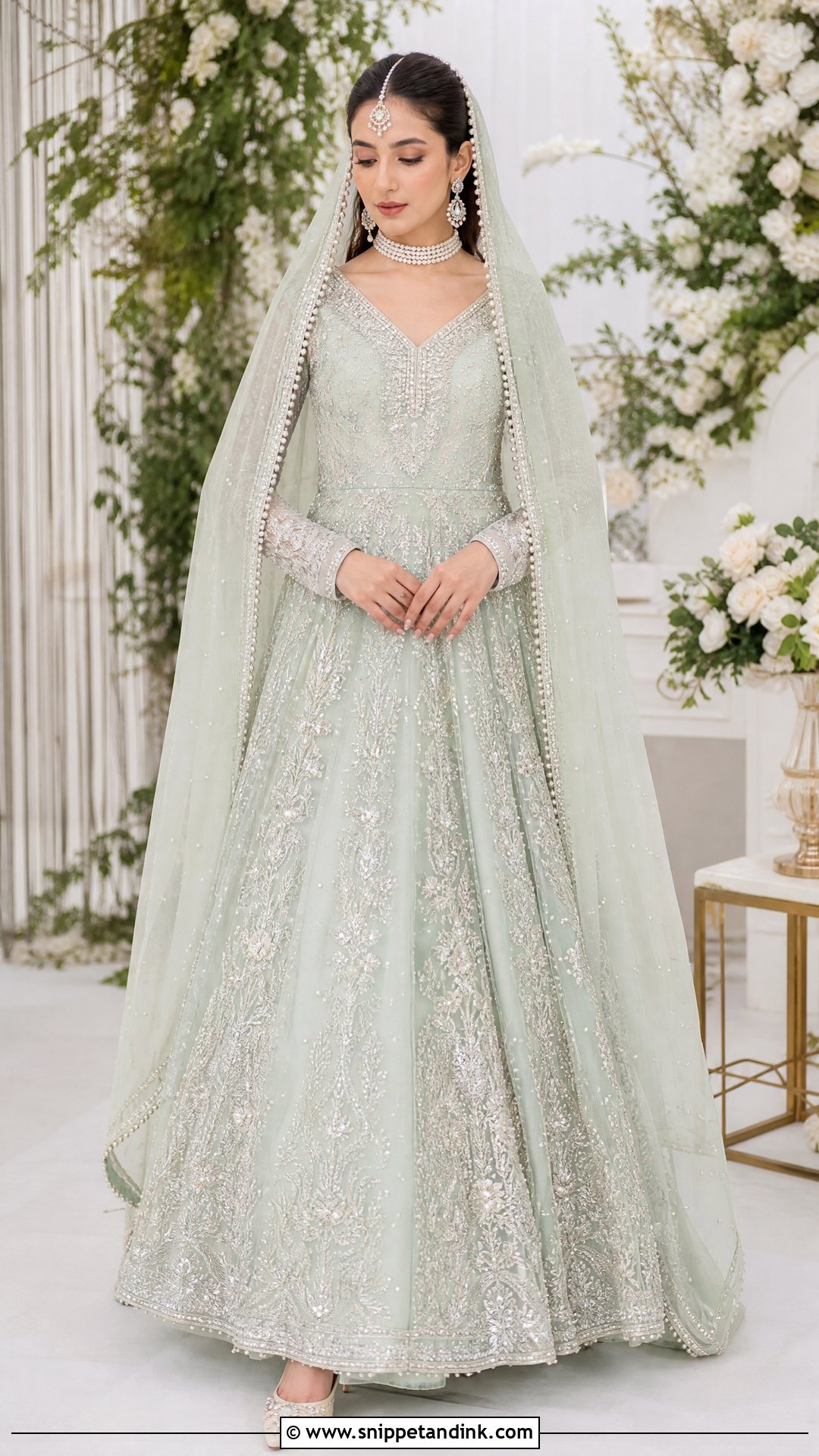
Mint suits a daytime nikah or spring walima. An A-line gown with fitted sleeves and white or silver embroidery, with pearl clusters at the neckline and cuffs giving the pale colour some definition. A sheer pearl-edged dupatta draped loosely over the head keeps the front embroidery on show. Pale mint shows every mark, so I recommend a protective sheet of muslin over your lap while you eat. A pearl choker, a small silver tikka and silver sandals keep the palette light.
17. Rust Pakistani Bridal Gown With Traditional Jewelry
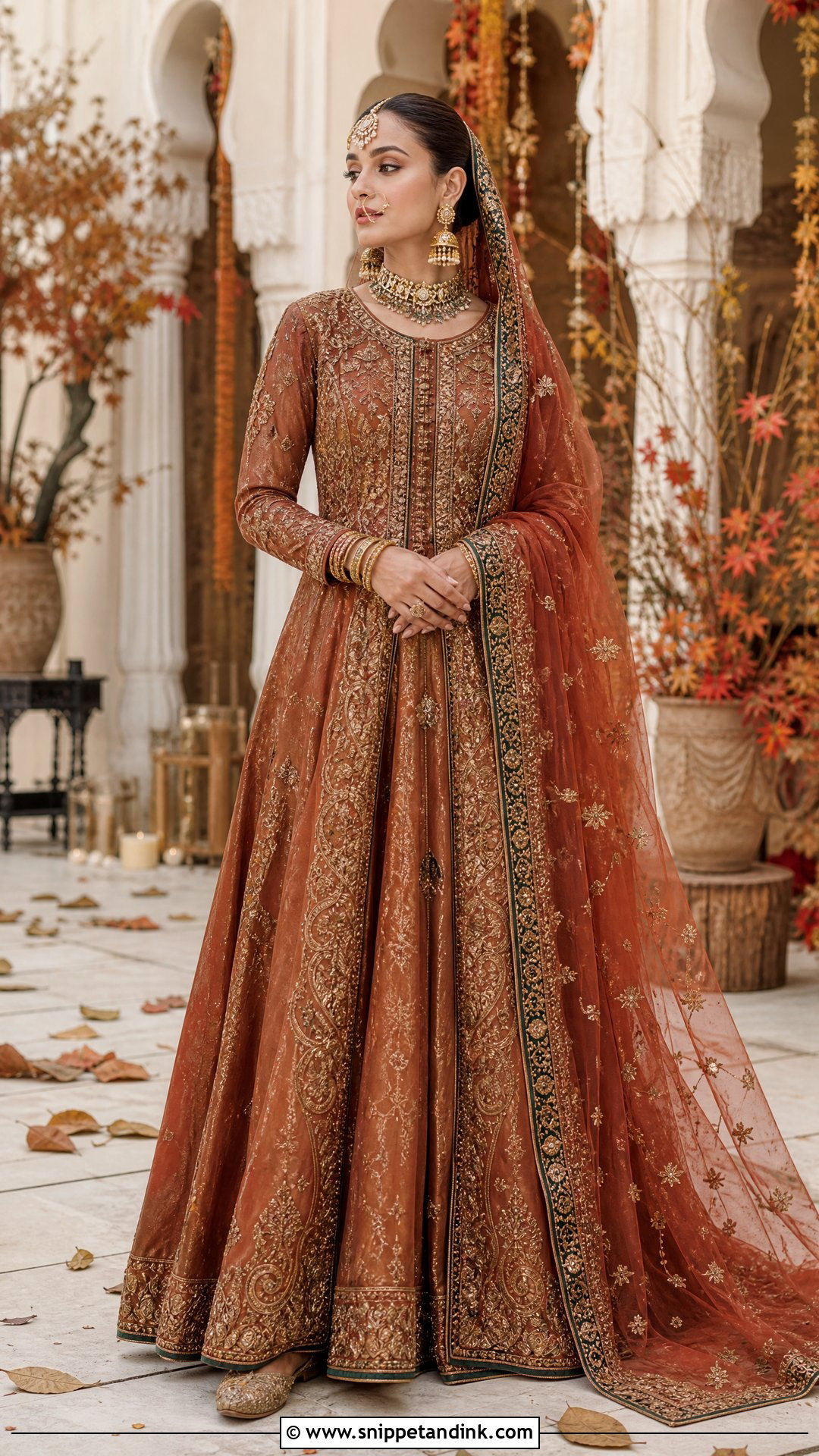
Rust is an earthy alternative to orange or red for an autumn mehndi or an intimate baraat. A Pakistani bridal gown in raw silk with antique gold embroidery and touches of deep green, cut long and paneled with a fitted waist so the silk holds its shape. Raw silk creases where it bends, especially behind the knees, so plan to stand for the main portraits. A rust net dupatta with a green or gold border, jhumkas, a kundan choker and a small nath strengthen the heritage feel. A terracotta lip keeps it from going too orange.
18. Gray Pakistani Bridal Gown With Detachable Train
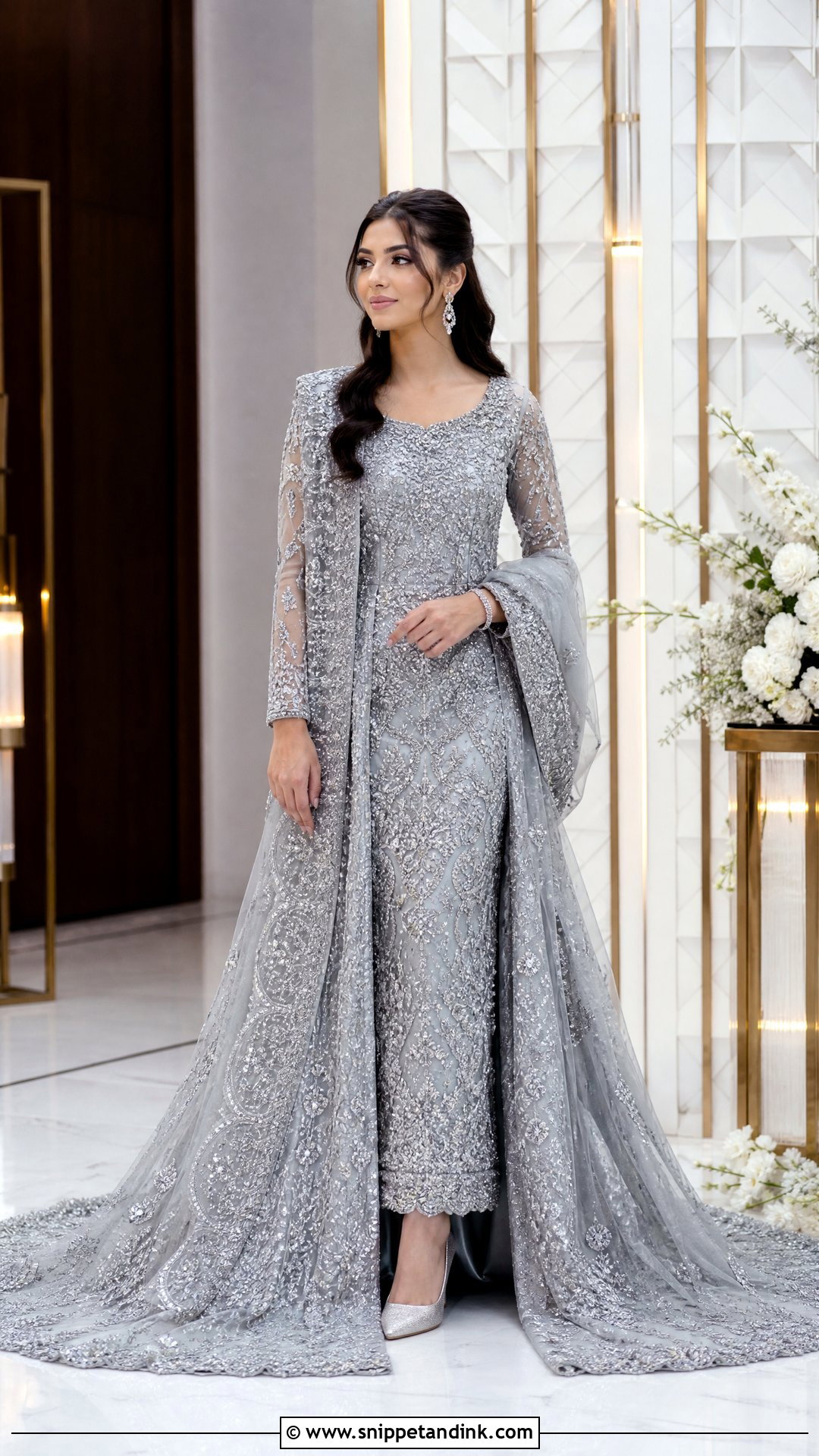
Grey becomes formal and modern with texture and a train. A silver-grey fitted gown with crystal embroidery and a detachable overskirt or train secured at the waist gives you a grand entrance, then comes off for dancing. I always have the bride practise taking the train off and putting it back on with whoever will be helping her, because hidden hooks are fiddly with long nails. Keep the dupatta light and over one shoulder rather than adding another trailing layer. Silver heels, a crystal bracelet and a low bun finish it.
19. Coral Pakistani Bridal Gown With Gota Work
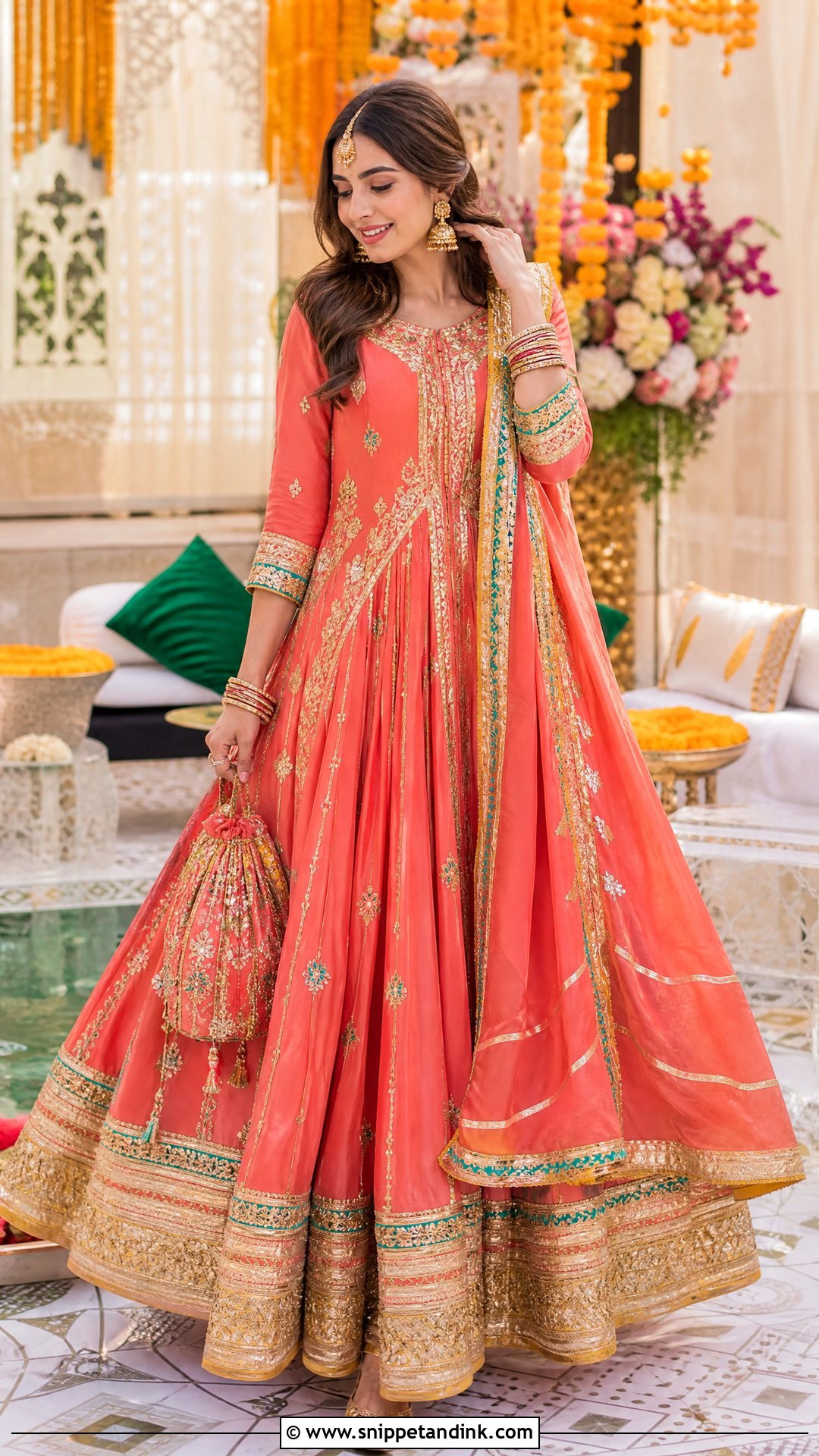
Coral is joyful for a mehndi and softer than vivid orange or hot pink. A full-length gown with a flared skirt, comfortable three-quarter sleeves and gold gota in neat borders, with small touches of turquoise or green. Three-quarter sleeves are a practical choice at a mehndi because they stay clear of fresh henna. A light coral dupatta with metallic edging, gold jhumkas, colourful bangles, a potli bag and gold khussas let you stand and dance for hours. A coral-pink lip that doesn’t quite match the gown looks more natural than an exact match.


20. Pastel Pakistani Bridal Gown With Double Dupatta
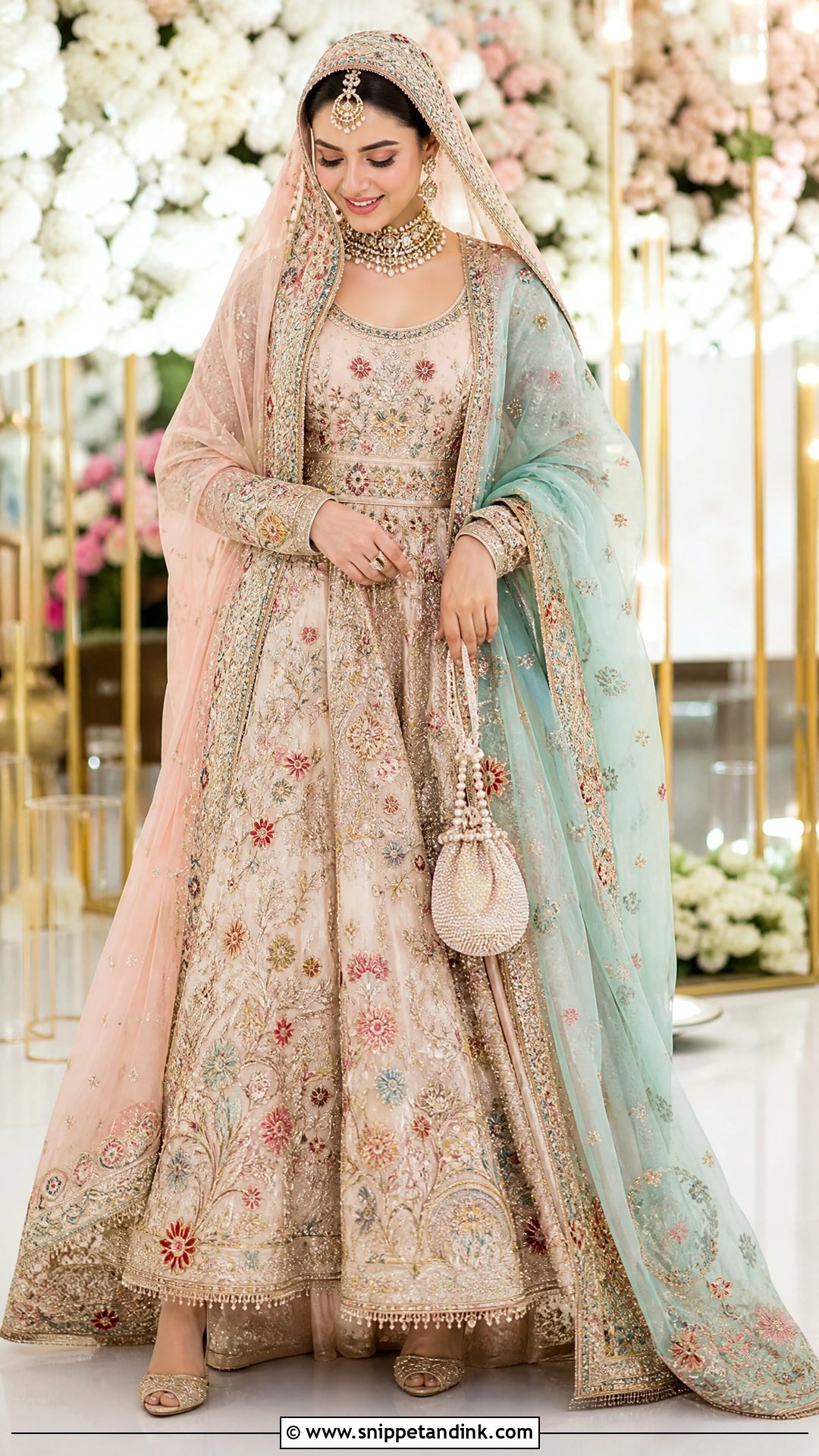
Two dupattas on a pastel gown create a layered bridal statement without dark or saturated colour. An ivory, blush or pale peach gown with multicoloured florals and a wide skirt, a light matching dupatta over the head and a contrasting pastel one across a shoulder. Give one dupatta the detailed border and keep the other plain, or the layers fight. Pin the head dupatta into a firm base in your hair, not into loose strands. A kundan choker, a centred tikka, neutral embroidered heels and a pearl potli complete it.
Travelling With a Heavy Gown and Steaming It Safely
Many brides fly to their wedding or receive the gown from abroad. A heavily worked gown is too precious for checked luggage. I pack it in a breathable garment bag with acid-free tissue folded into the sleeves and between the skirt layers, and carry it on where airlines allow.
Steaming by Fabric
- Organza and net: light steam from a short distance. Crushed organza usually recovers, but never press it flat with an iron.
- Velvet: steam from the inside or the back, holding the steamer away from the pile. Pressing velvet directly flattens it for good.
- Tissue: low heat only, through a press cloth, because the metallic thread can scorch or dull.
- Embroidered areas: press from the reverse on a folded towel so the work stays raised.
Hang the gown the night before so the creases start dropping on their own. Leave the final touch-up to someone who has steamed bridal wear before, and keep it well away from where make-up and hair products are being used.
Which Event Is This Gown Really For?
A gown worth wearing balances your taste, cultural detail, comfort and the formality of the event it is meant for. Red and maroon suit a regal baraat. Ivory, blush, mint, lavender and champagne give a softer walima or nikah. Jewel tones and contrasting dupattas bring energy to a mehndi or reception. Before ordering, check fabric weight, lining, sleeve movement, heel height and how the dupatta will sit. Book fittings early and try everything on with the jewellery. Zardozi, pearls, florals or a detachable train, the right gown is the one you can move, sit and celebrate in.
You'll Like These Ideas:










Leave a Reply