
A forest cake earns its place when it looks like it grew out of the venue rather than arrived from a party shop. The ingredients of the look are simple: moss greens, bark texture, ferns, berries, the odd mushroom, ivory frosting and a wood slice underneath. Where couples go wrong is stacking every one of those onto three tiers. Some of the designs below are plain and rustic, others lean toward a woodland fairy tale, and I’ve added notes on how each one is actually built, what it costs you in heat or handling, and where I’d hold back.
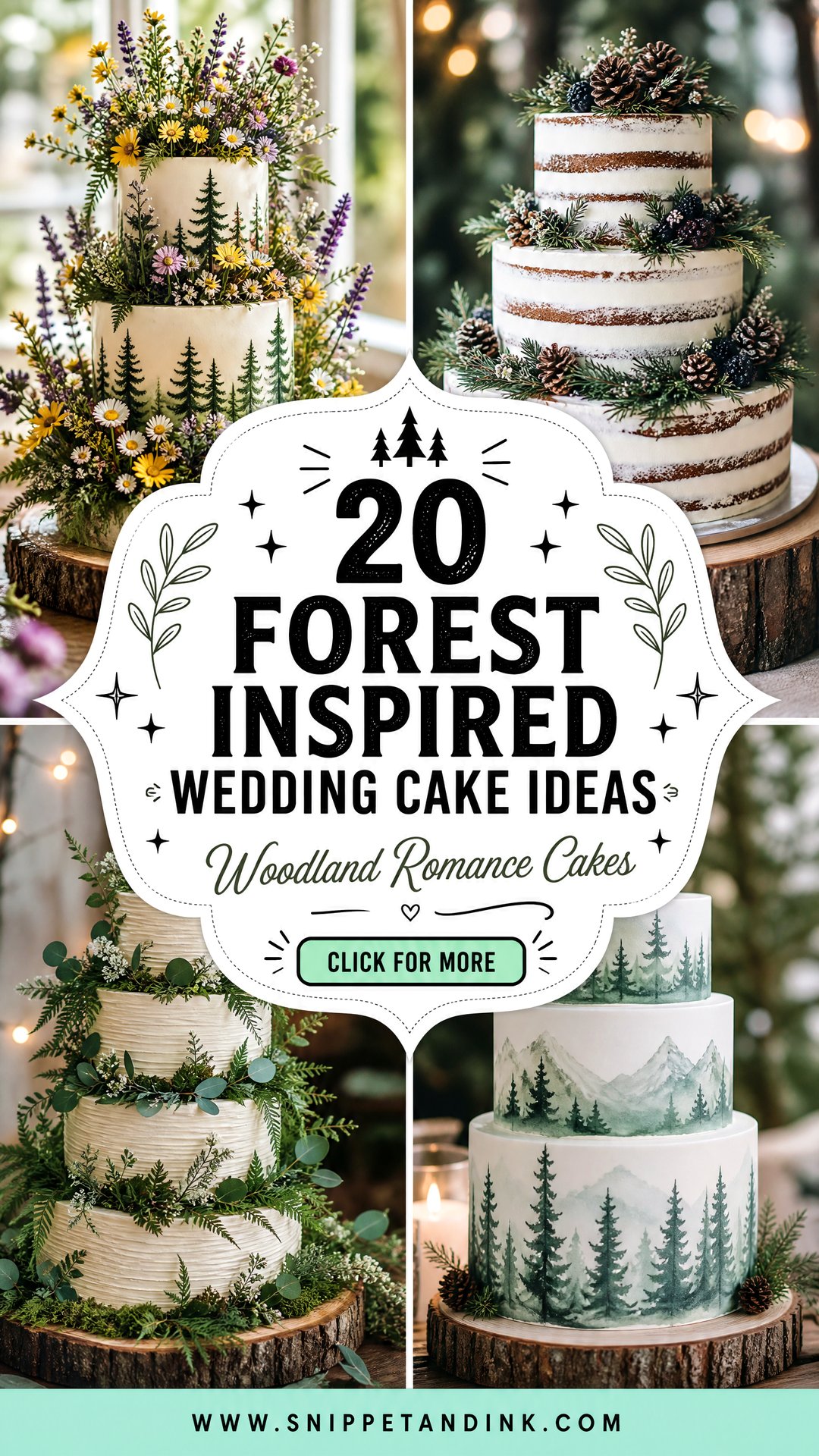
Sketching a Woodland Cake With Your Baker Before Anyone Touches Sugar
The first conversation I have about a forest cake is about the venue, not the cake. A shady lodge with dark timber suits deep greens and chocolate bark; a sunny meadow edge suits pale sage and wildflowers. Bring photos of the room or clearing, the table where the cake will stand, and your florals if you have them.
Then pick a hero detail. Moss, birch, ferns, mushrooms, berries or painted trees: choose one to lead and allow at most one supporting accent. Most of the cakes that disappoint are the ones that tried to carry five.
Buttercream or fondant for a forest finish
Buttercream gives softer, more natural texture and tastes better to most guests, but it softens in heat. Fondant takes painting and crisp bark detail and holds shape outdoors, though it can sweat when a chilled cake meets humid air. I often cover in buttercream and do the painted or sugar elements separately, so they go on at the venue.
Lead times worth knowing
- Popular cake designers book months ahead, so enquire as soon as you have a date and venue.
- Hand-made sugar flowers, ferns and pine cones take days of work and drying time, so the design needs to be settled several weeks before the wedding.
- Final guest numbers set the tier sizes; most bakers want them two to four weeks out.
- Fresh fruit and edible flowers are confirmed last, because availability changes with the weather.
1. Forest Wedding Cake With Edible Moss
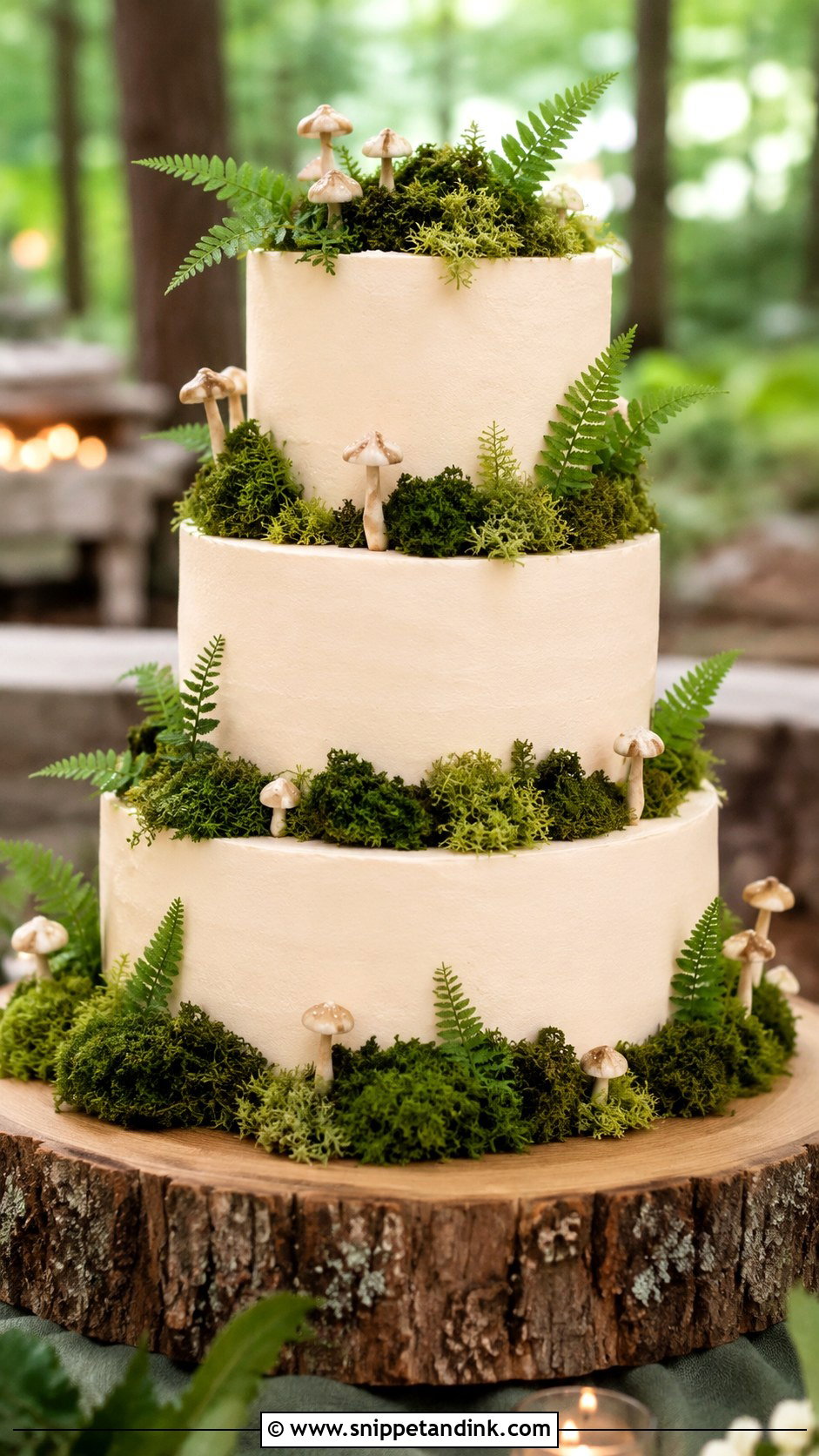
Edible moss is usually green-tinted sponge crumb or cookie crumb, rubbed through a sieve so it clumps like the real thing. I press it on in small patches at the base and along a couple of tier ledges, never as an all-over coat, because a full crust of crumb reads as a spill once the cake is cut. A smooth ivory or pale sage buttercream behind it keeps the moss looking deliberate. Add a few sugar mushrooms and a wood slice stand and you have the whole theme on one cake. Real moss never goes near the frosting.
2. Birch Tree Wedding Cake
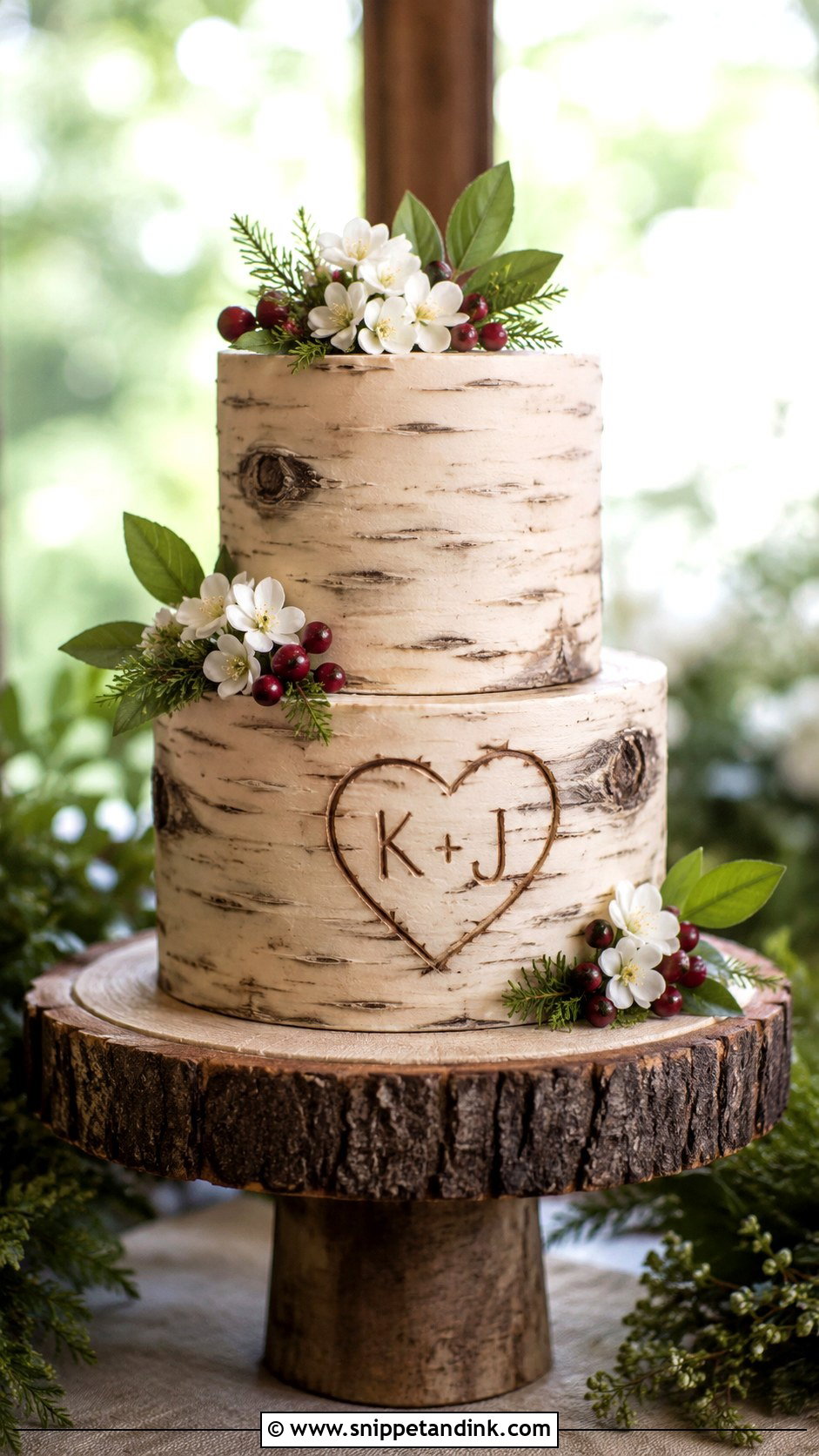
Birch bark is one of the easiest woodland effects to get right. On buttercream I scrape the tiers smooth in white, then drag a palette knife loaded with grey and dark brown sideways in short broken strokes, which gives those horizontal lenticel marks birch has. Fondant versions get hand-painted instead and look crisper but less natural. Carved initials in a heart are a sweet touch on the bottom tier, at the height guests actually look at. Tall, slightly narrow tiers suit birch far better than wide squat ones, which start to look like logs.
3. Woodland Wedding Cake With Mushrooms
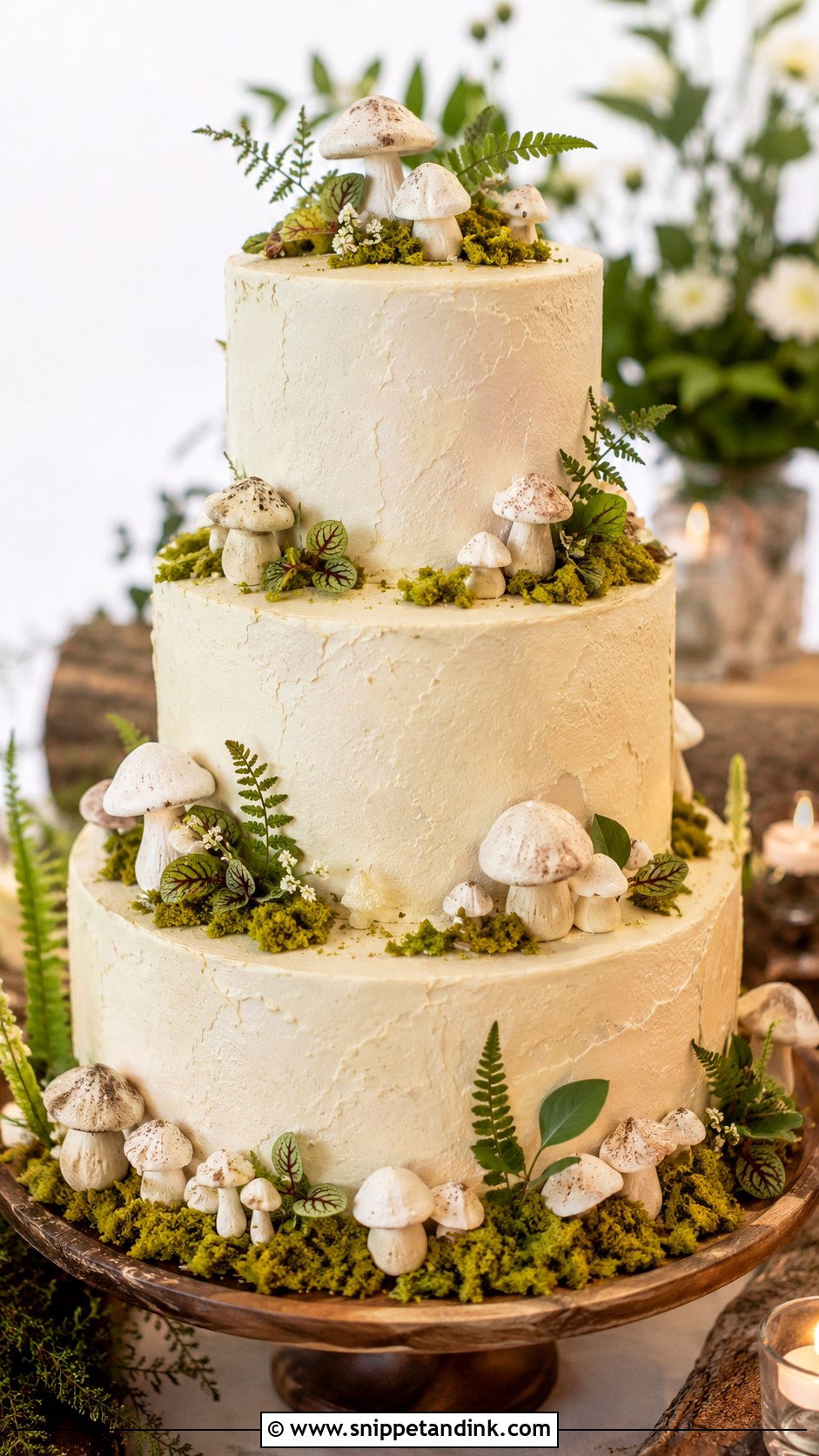
Mushrooms are where a woodland cake tips into a child’s birthday if you’re not careful. I pipe them from meringue most of the time, since it’s light, holds its shape and tastes of something, and I keep them to the base and a ledge or two. For a woodland wedding cake with mushrooms, a neutral buttercream lets those caps stand out. Meringue does go soft in a humid tent within a few hours, so in a damp summer marquee I switch to modeling chocolate or sugar paste.
4. Forest Wedding Cake With Wildflowers
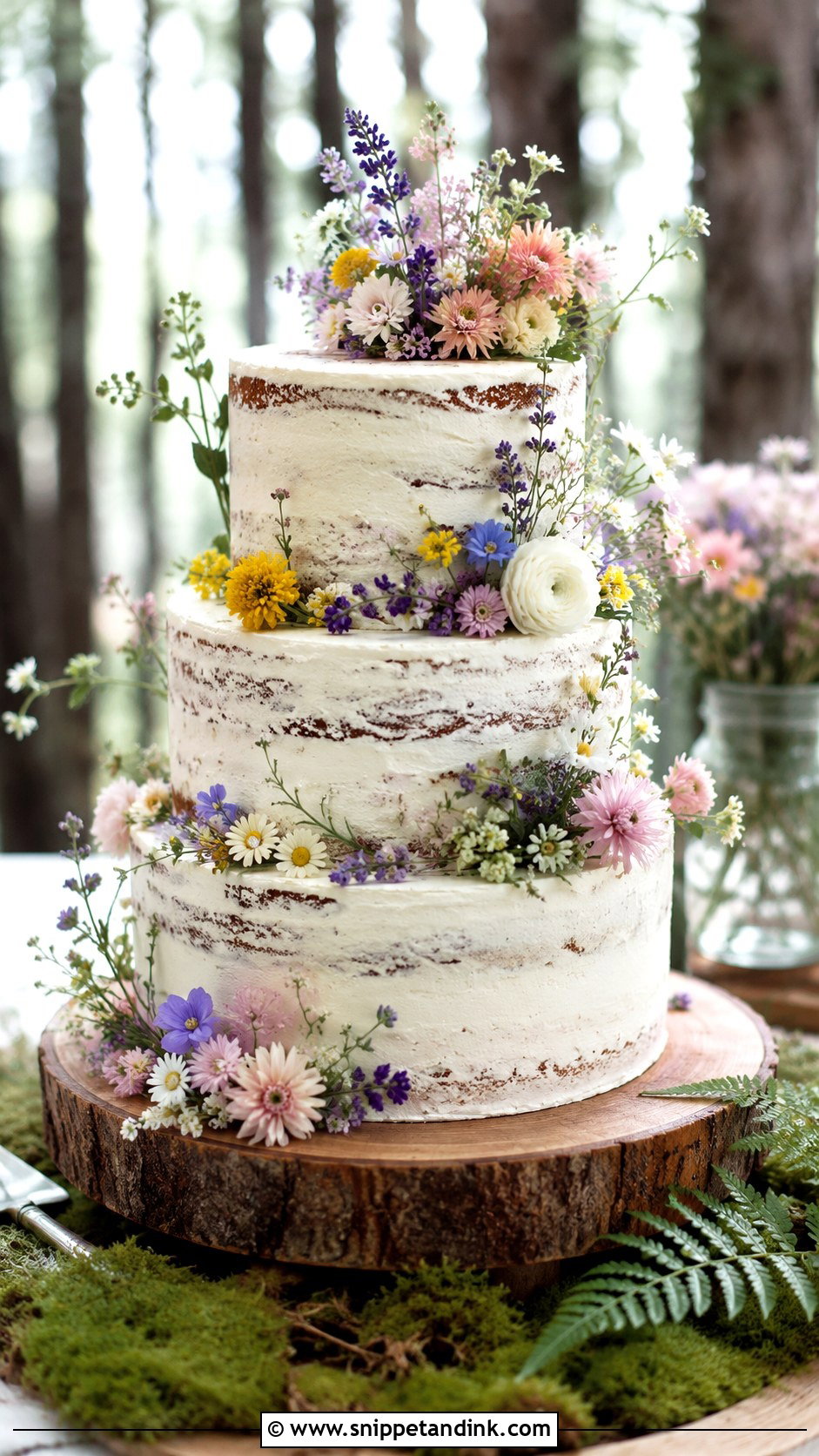
Wildflowers give a forest cake more colour and movement than any other option here, and they’re also the riskiest. Plenty of meadow flowers are not safe on food, and some that look harmless, like foxglove or lily of the valley, are toxic. I settle the flower list with the florist weeks ahead and stick to edible blooms such as violas, cornflowers and calendula, or sugar versions of the rest. A semi-naked base suits the loose, gathered style best. Place them in drifts, as though someone picked a handful at the edge of the path.
5. Sage Green Forest Wedding Cake
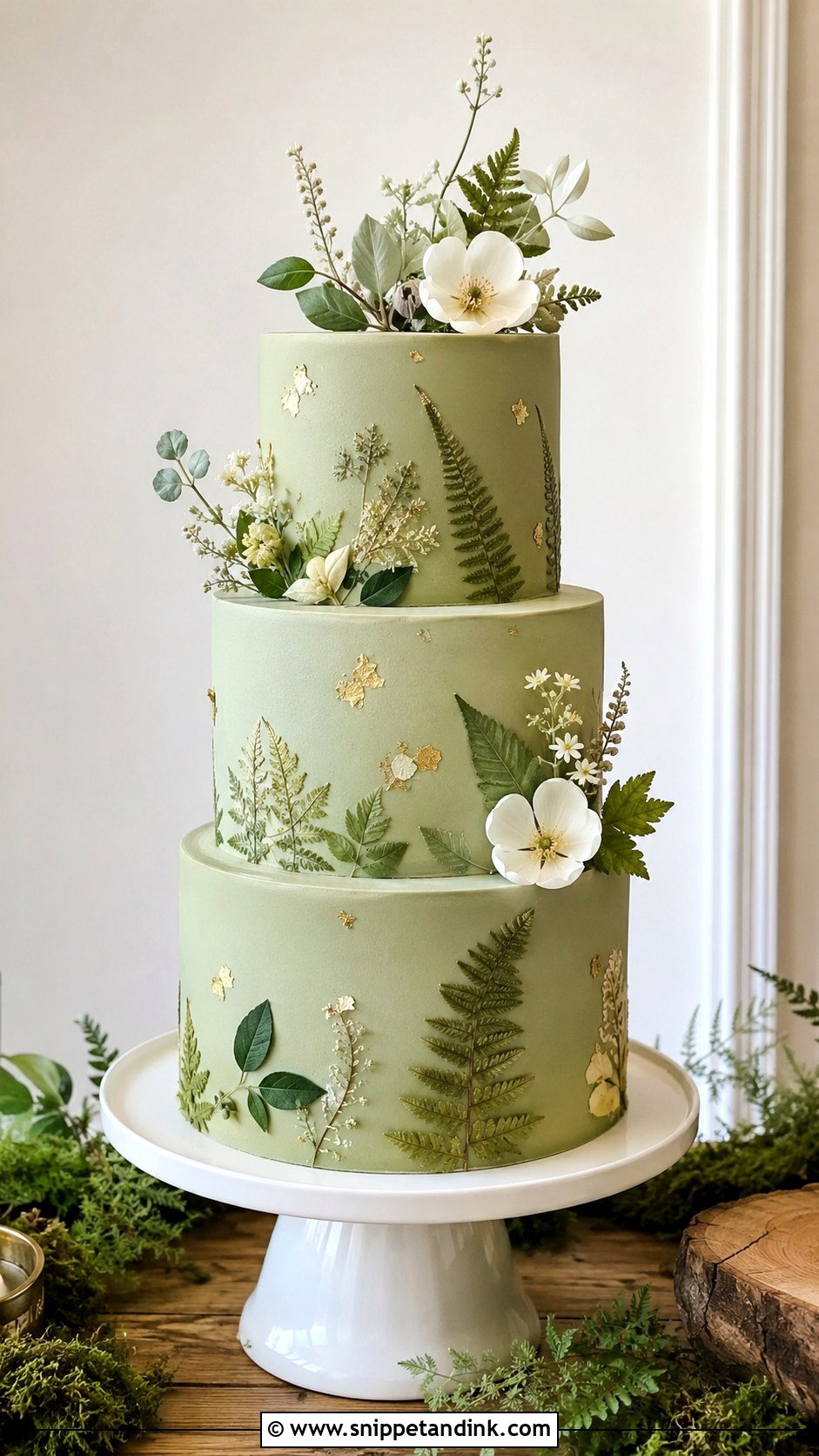
Sage is the quiet option for couples who want the forest in colour only, with no bark or mushrooms. The trick with sage buttercream is a drop of grey or a touch of brown in the green, otherwise it drifts toward mint under warm lights. White sugar flowers, a few pressed leaves or a little gold flake are all it needs. I keep the decoration sparse so the colour does the work, and it sits happily against wood, stone or candlelight.
6. Naked Forest Wedding Cake
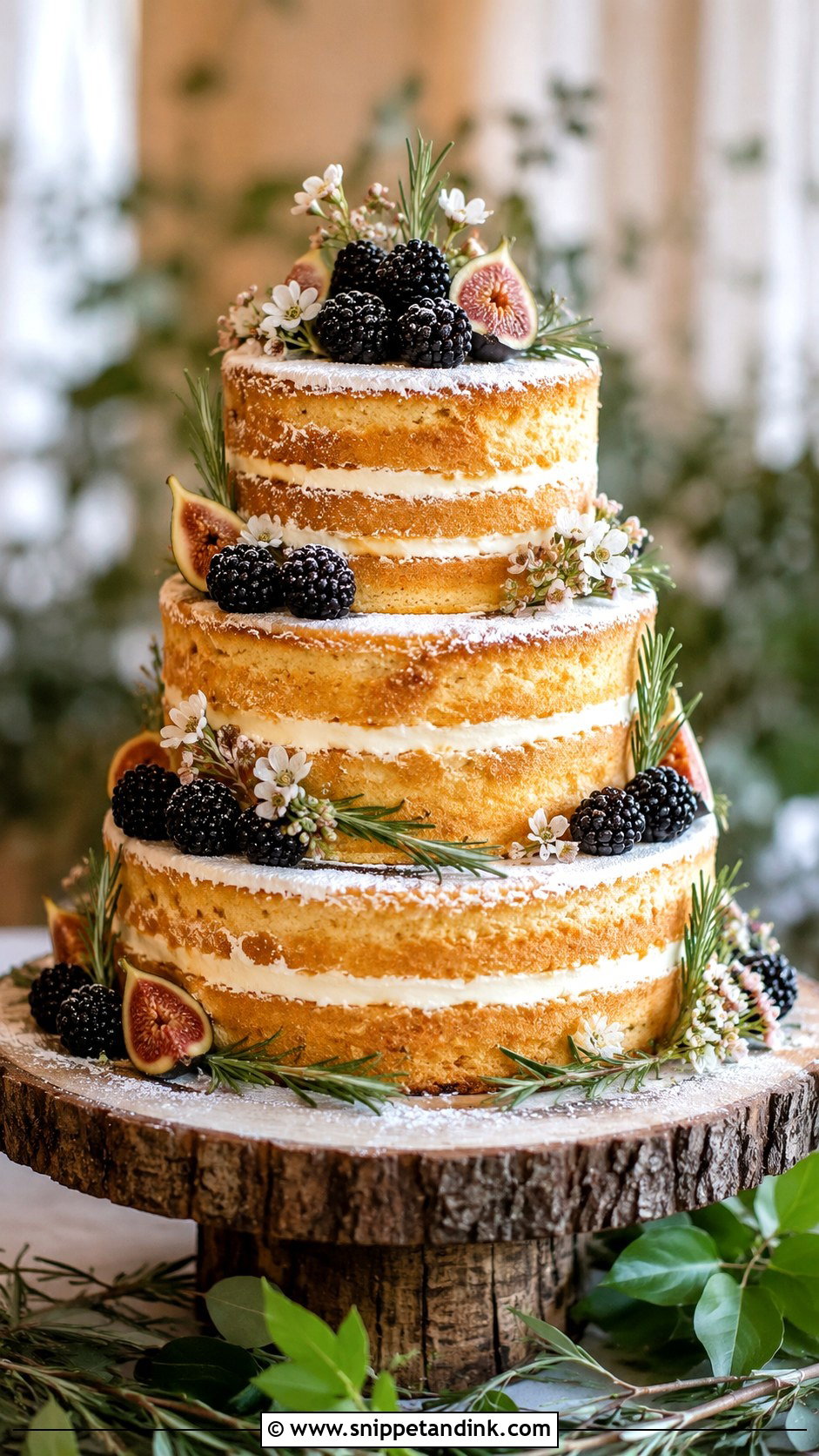
A naked cake shows every layer, so the baking has to be tidy: level sponges, even filling, straight sides. That’s harder than it sounds and it’s why a good naked cake isn’t the cheap option people expect. Figs, berries, rosemary, thyme and a fern or two finish the forest look. My honest warning is that bare sponge dries at the edges once it’s out of the fridge, so I assemble it as late as I can and brush the layers with syrup. A barn or a shady forest elopement suits it far better than a long afternoon in full sun.
7. Semi Naked Forest Wedding Cake
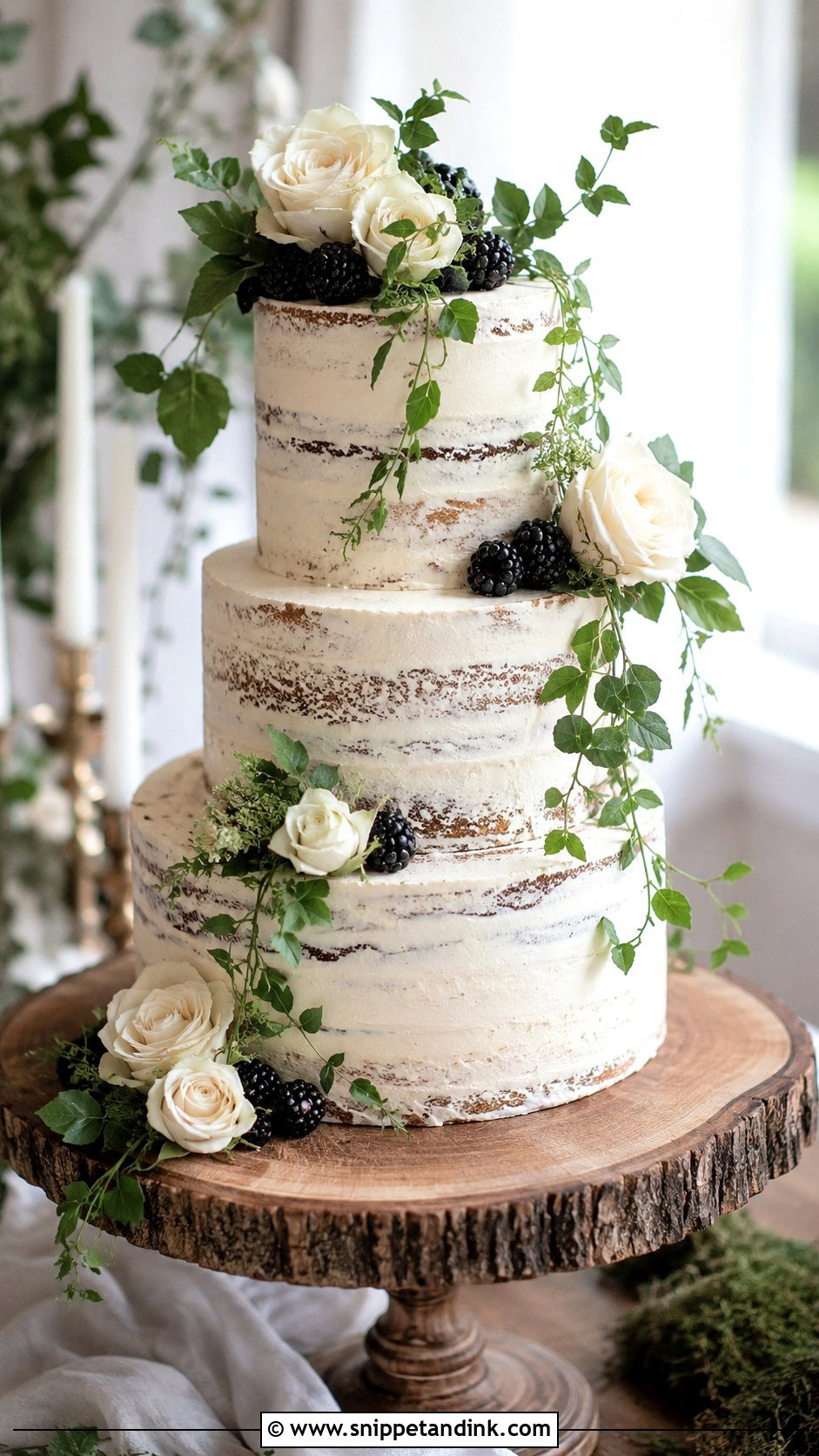
Semi-naked sits between rustic and polished: a thin scraped coat that veils the sponge without hiding it. That extra layer of buttercream also protects the cake from drying, which is why I steer outdoor summer weddings here rather than to fully naked. Earthy flavours suit it, from vanilla bean or almond to carrot and spice, or lemon with elderflower. Trailing greenery and blackberries do most of the decorating, and you can swap them by season: herbs and berries in summer, copper sugar leaves in autumn, ivory blooms in winter.
8. Tree Stump Wedding Cake
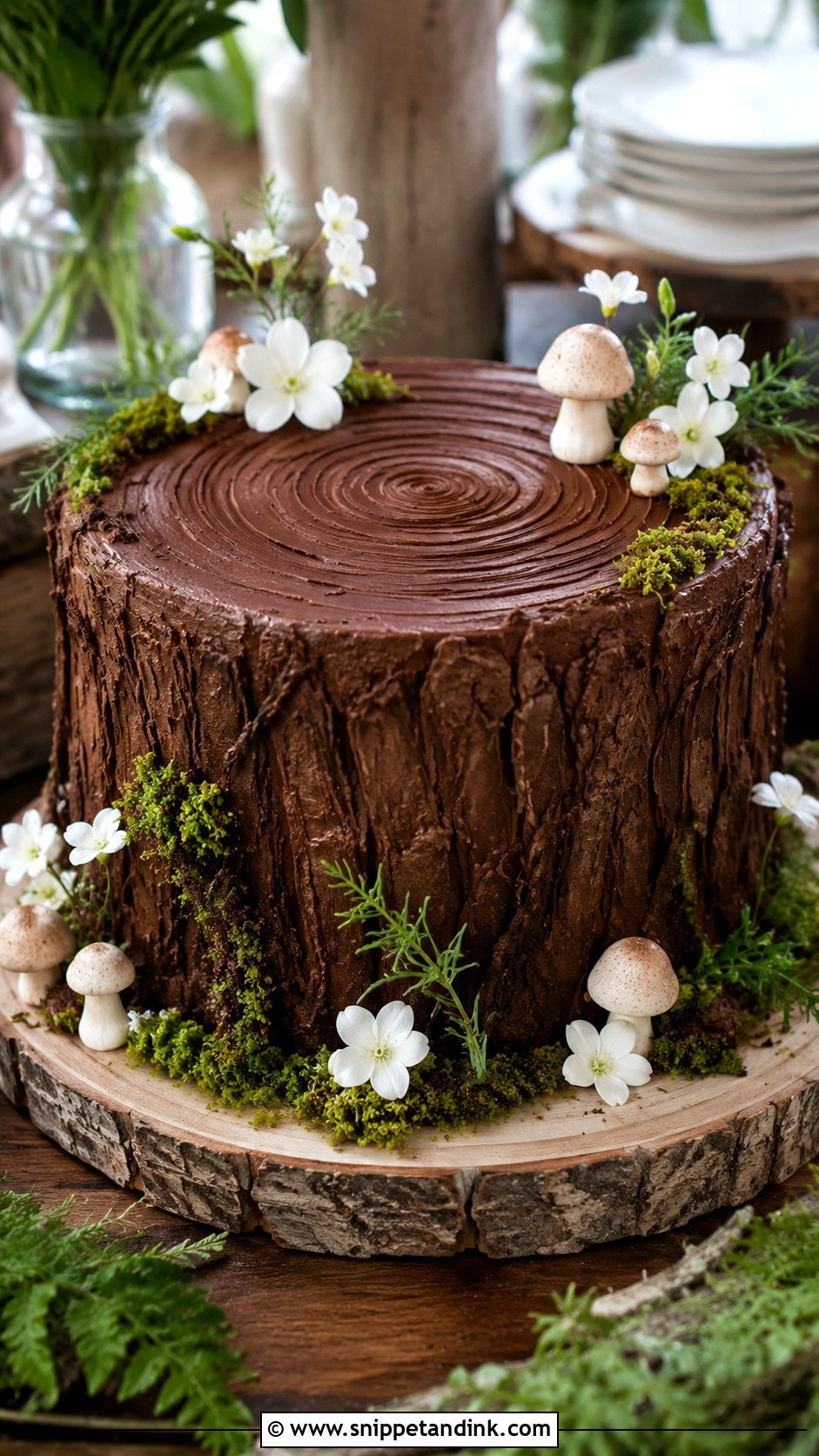
A tree stump wedding cake is a full commitment to the theme. I build the bark from chocolate buttercream combed with a fork or from modeling chocolate pressed with a real bark texture mat, then paint growth rings on the top. White flowers, moss crumb and a couple of meringue mushrooms stop it looking like a Yule log. It’s a strong groom’s cake beside a classic main cake. As the only cake, I’d keep the top surface clean and let one cluster of flowers sit off-centre.
9. Forest Wedding Cake With Ferns
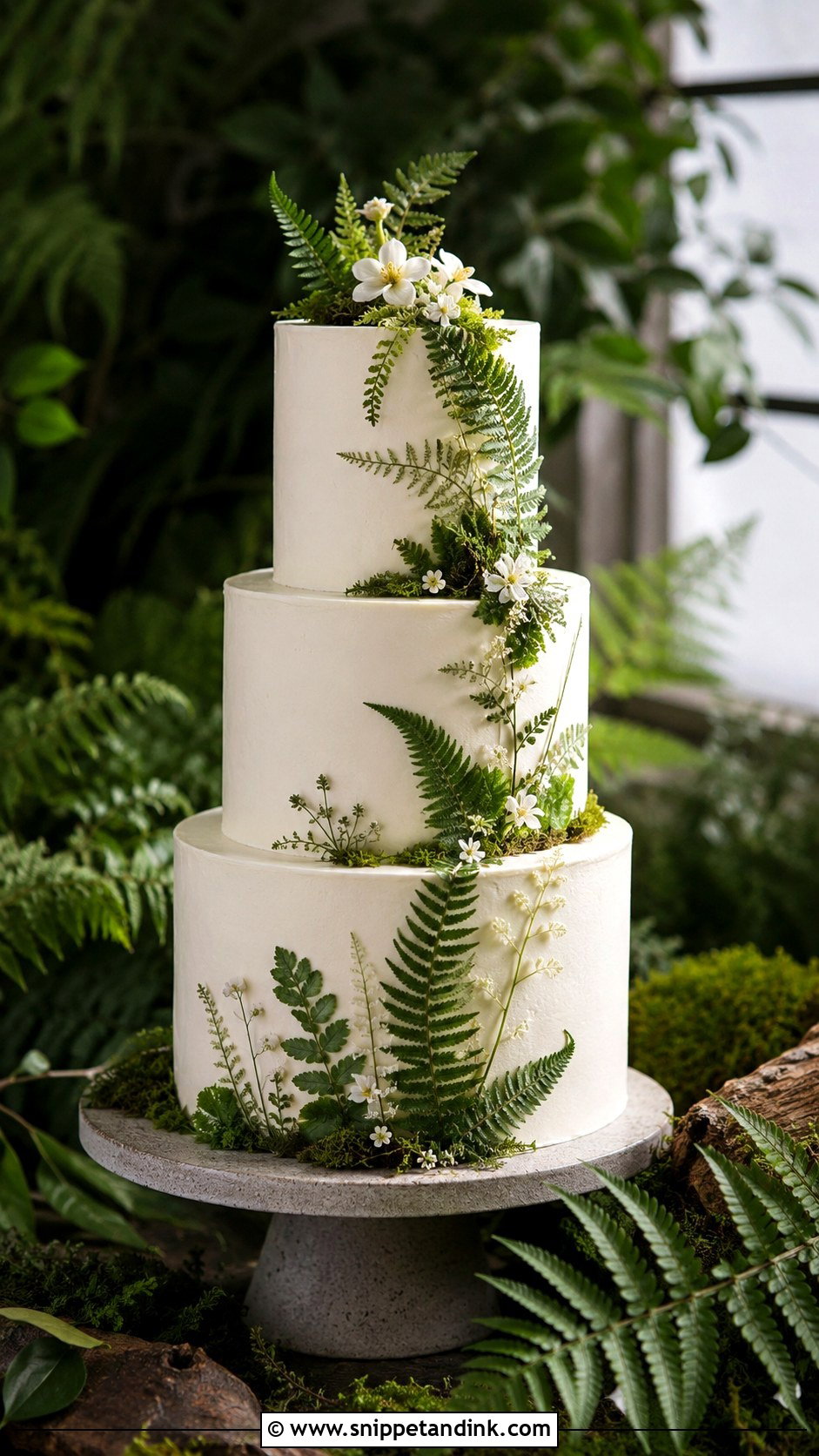
Ferns say shade and damp woodland like nothing else, but most real ferns are not food safe, so on my cakes they’re sugar or wafer paper. Wafer paper ferns are delicate and look very natural, though they curl and soften in humidity, so I add them on site rather than travelling with them attached. They read best against white, ivory or very pale green. My favourite placement is a single climb up one side of the tiers, with a few soft flowers tucked where the fronds start.
10. Dark Forest Wedding Cake
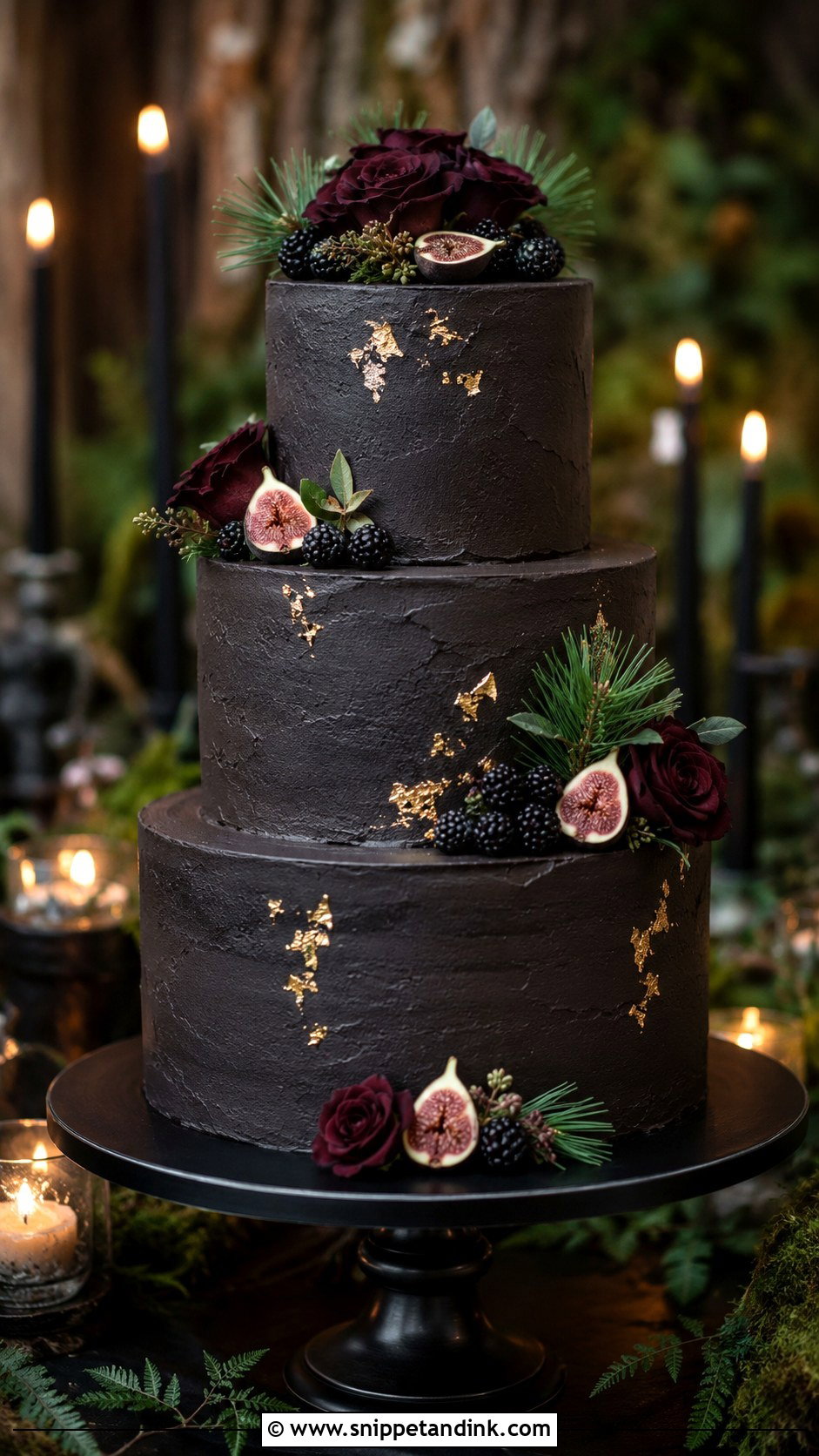
Dark cakes look dramatic on a candlelit table and they’re getting asked for more often. Black and charcoal buttercream need a lot of colouring, which can stain teeth and taste bitter, so I start from a chocolate base and darken it from there rather than tinting white frosting. Blackberries, figs, deep red roses, pine and a little gold leaf give it depth. I’d keep this one for evening and autumn weddings. Clean tier edges matter more here than anywhere, because every wobble shows against a dark finish.
11. Enchanted Forest Wedding Cake
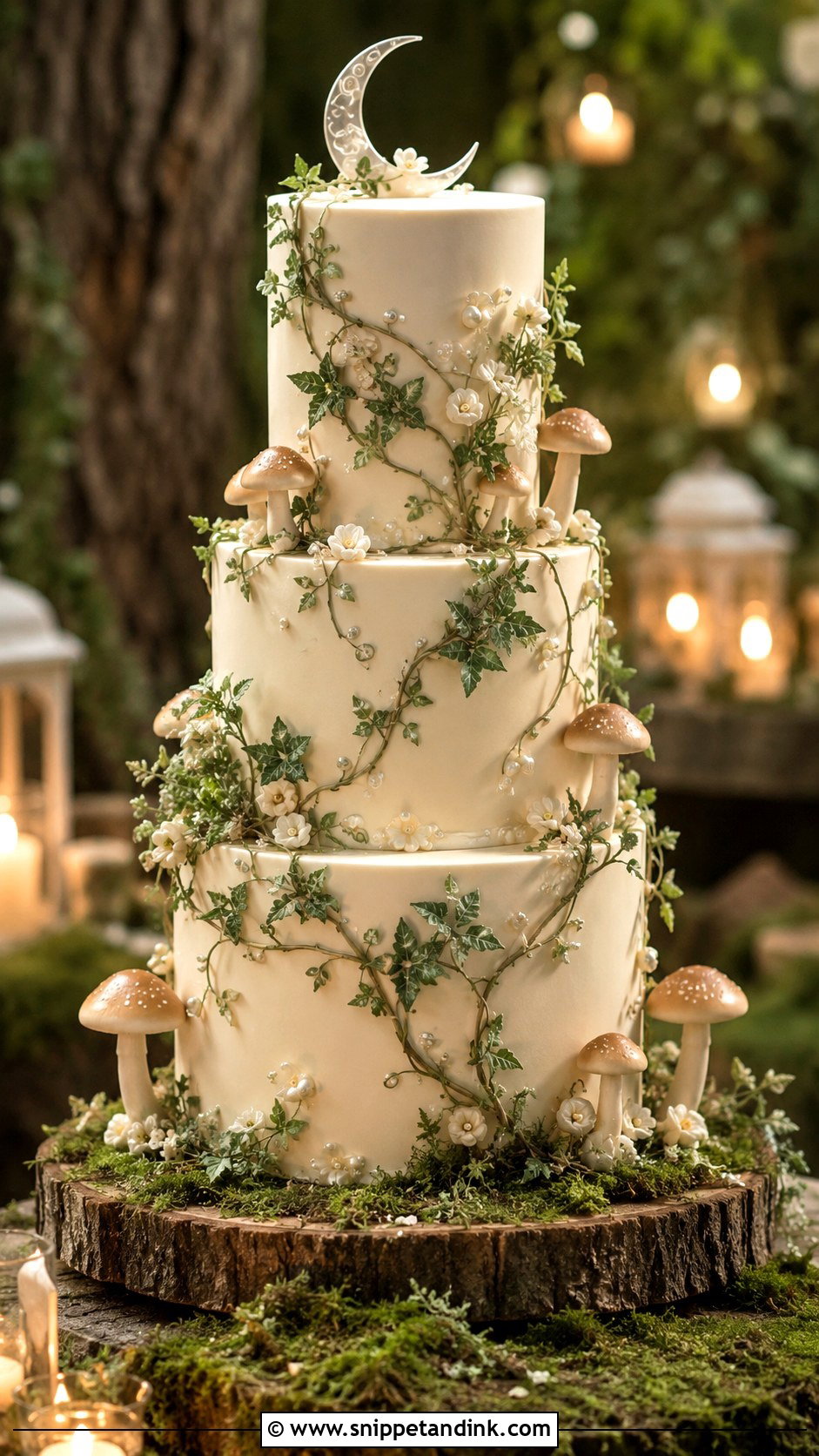
Enchanted forest is the theme most likely to turn childish, so I hold the palette to ivory, champagne and pale green and let detail do the talking. Sugar leaves, a vine painted up the tiers, a few tiny mushrooms and a crescent moon topper are plenty. Shimmer belongs in small doses: a dusting on leaf edges catches string lights far better than an all-over lustre. Think of a cake set down in a hidden clearing, softly lit, rather than a fairy castle.
12. Forest Wedding Cake With Pine Cones
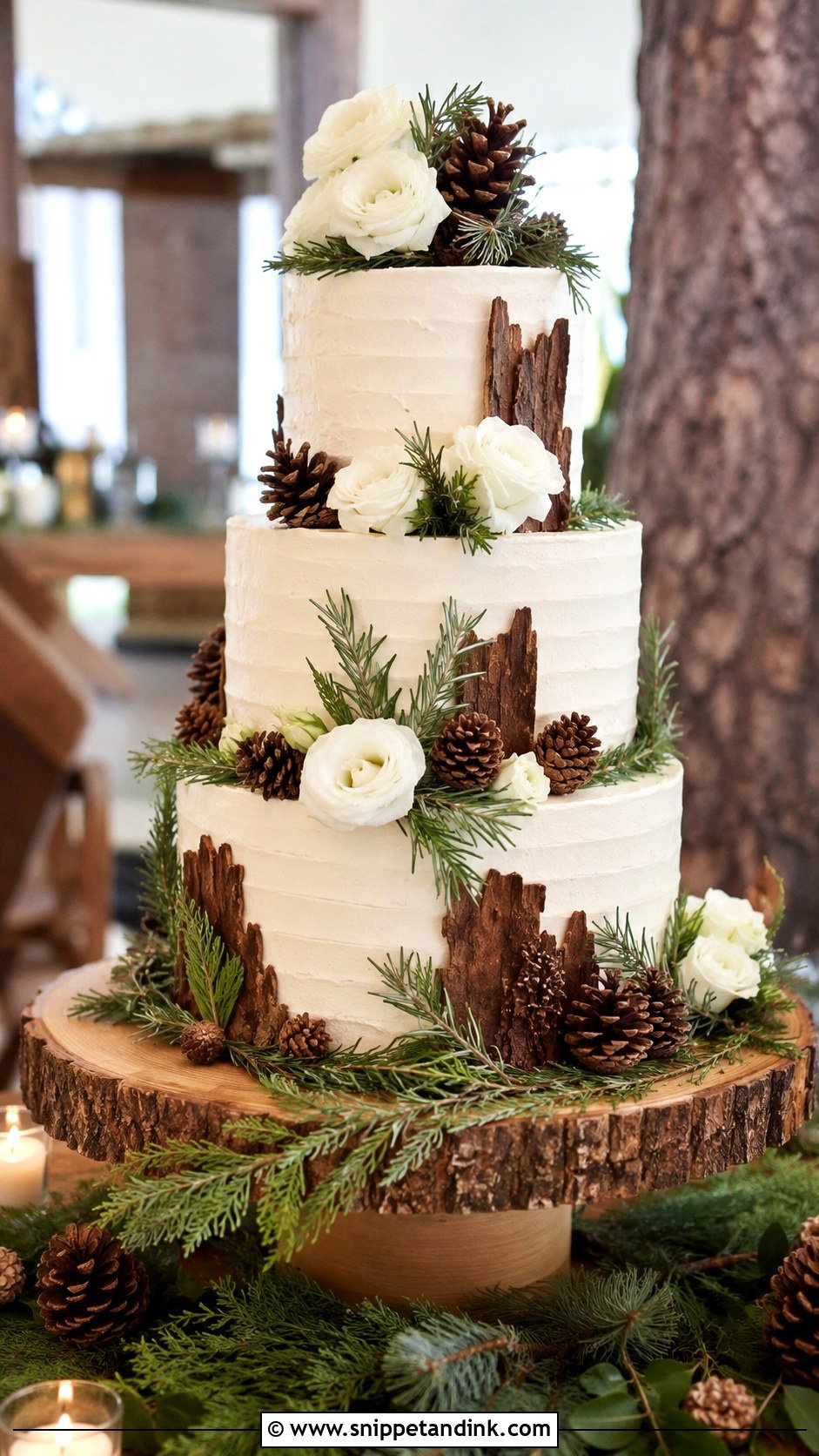
Pine cones suit mountain lodges and evergreen venues, and I make them from chocolate, snipping the scales with small scissors so they catch the light. Real cones from the woods carry sap, dust and insects, so they stay on the table, not the cake. Rosemary sprigs pass for pine needles and are actually edible. My only caution is the holiday look: red berries plus pine plus white frosting starts to read as a Christmas cake, so I keep the accents brown, green and ivory and place the cones in small clusters.
13. Forest Wedding Cake With Berries
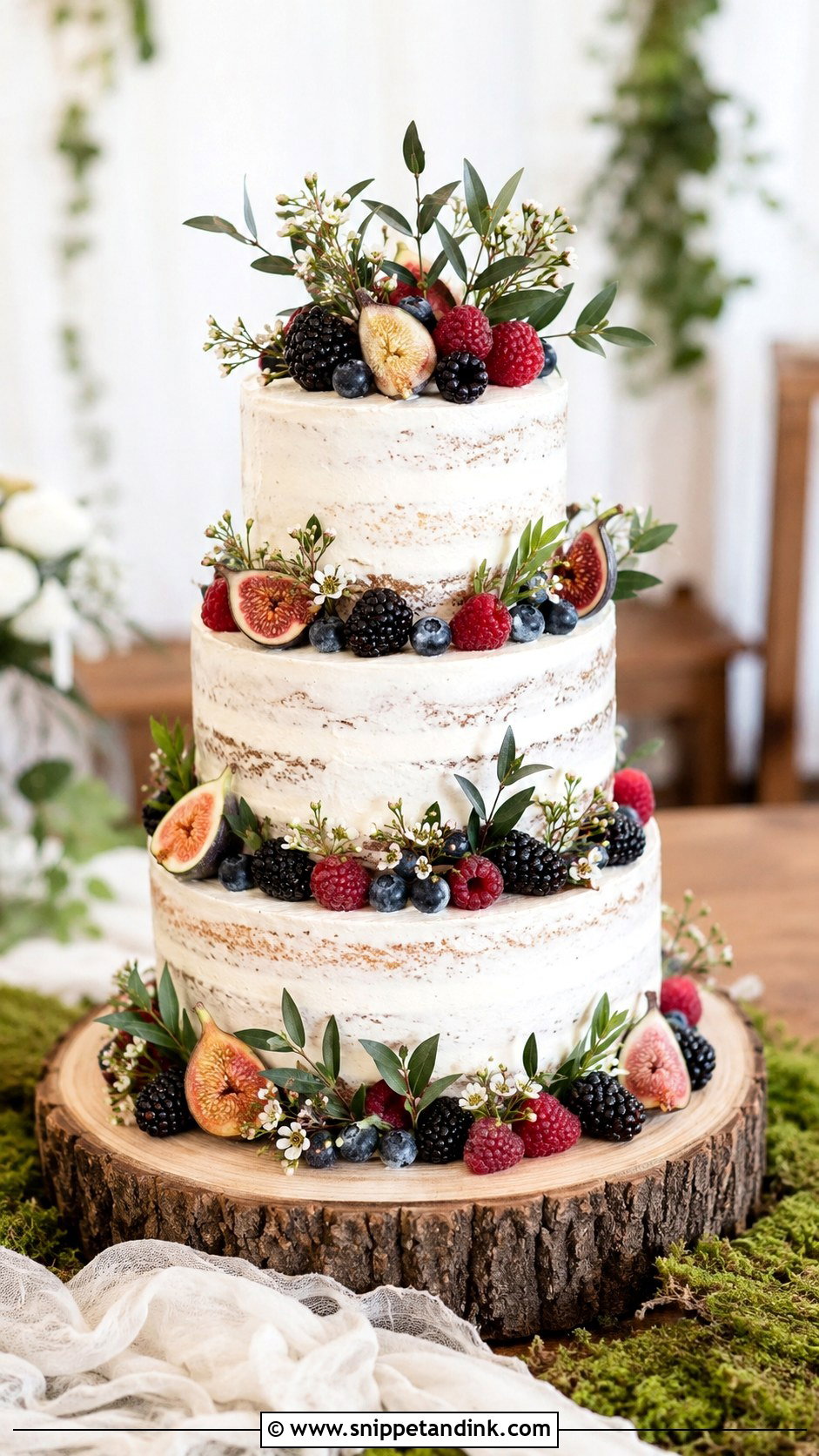
Berries make a forest cake feel abundant, and they hint at the flavour inside. Blackberries, blueberries, raspberries, currants and figs all suit the look. The practical issue is juice: cut figs and soft raspberries bleed into buttercream after an hour or two, so I add fruit as close to serving as I can and dry every berry first. Pair the decoration with the filling, for instance lemon with raspberry, chocolate with blackberry or almond with blueberry. A light dusting of icing sugar takes the shine off and looks like frost.
14. Forest Wedding Cake With Pressed Flowers
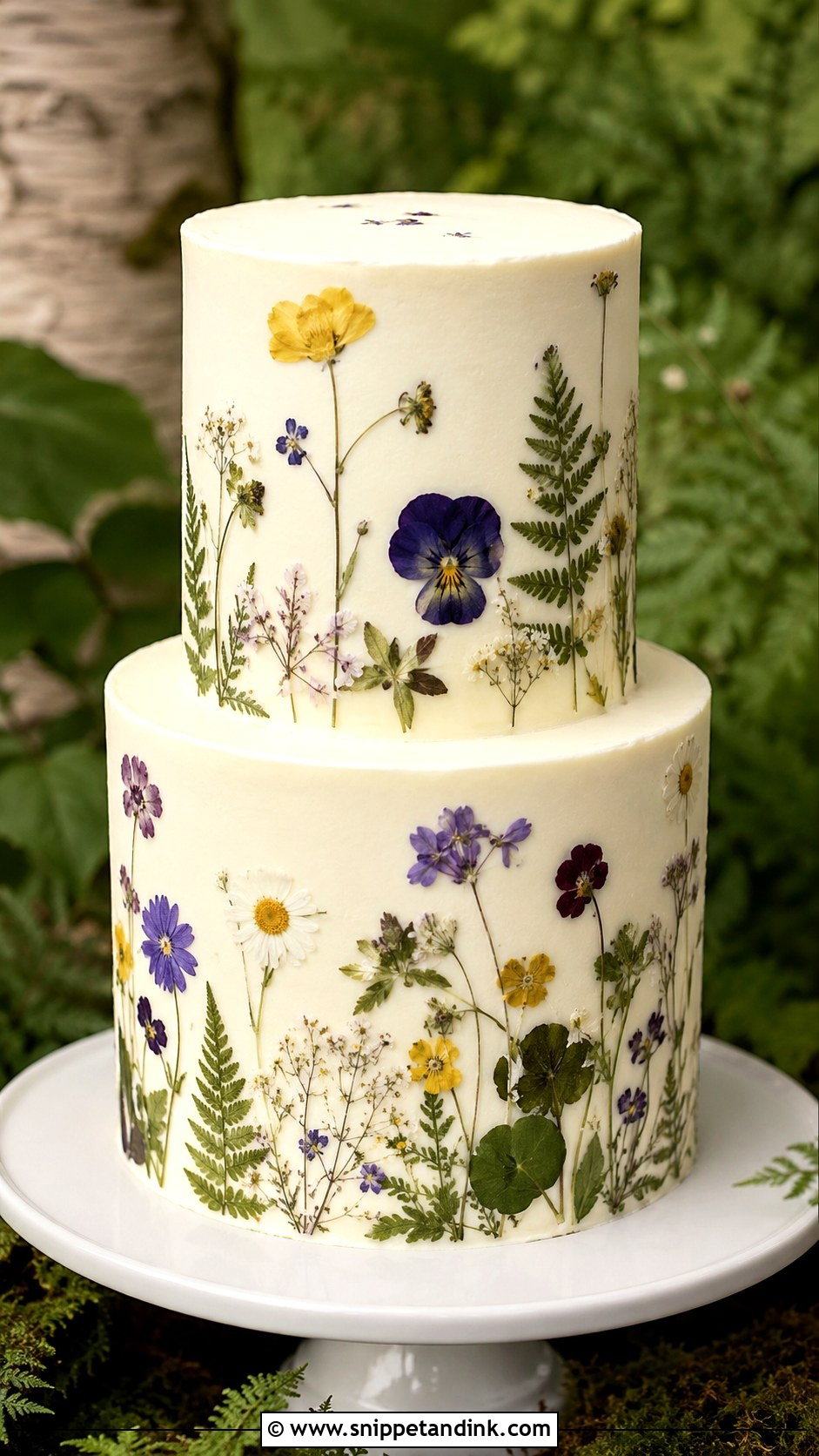
Pressed flowers lie flat, so they work on smooth buttercream or fondant, where they look like a botanical print. I press them into chilled buttercream so they stick without sliding. For a forest feel, choose small blooms, herbs and fern-shaped leaves in faded colours rather than bright petals. Leave space between them; a diagonal drift across one tier looks far more considered than the whole cake covered. Every pressed flower has to come from an edible variety, grown without pesticides.



15. Forest Wedding Cake With Greenery
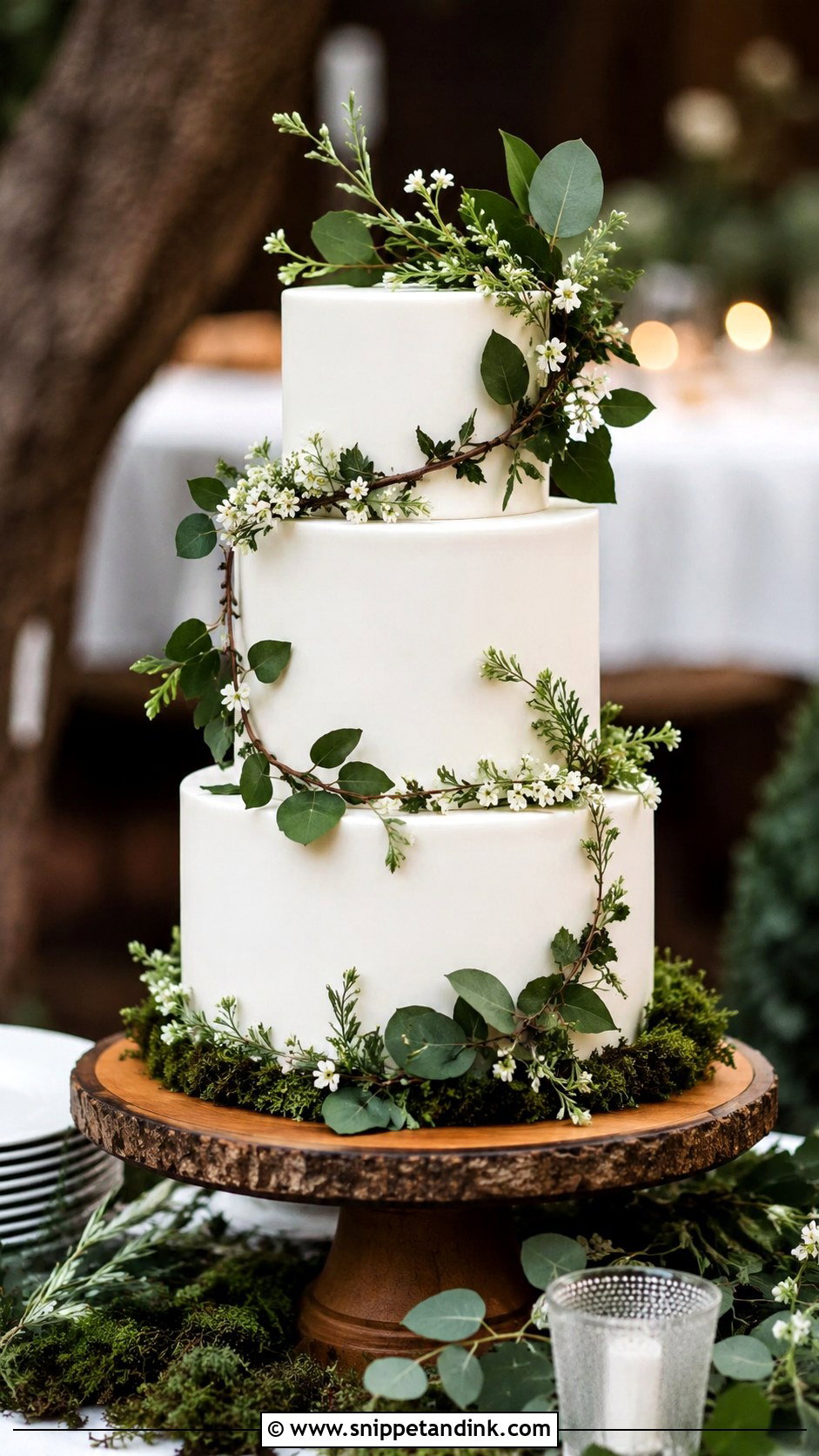
Greenery alone is the most budget-friendly woodland cake here, because foliage costs far less than sugar flowers and needs less labour. Eucalyptus, olive and rosemary all look right, but eucalyptus is not edible, so any real stems get wrapped in floral tape and pushed into a flower pick or straw before they touch the cake. If your ceremony and tables are already full of foliage, this ties everything together. Semi-naked keeps it rustic; smooth fondant with sharp edges makes it formal.
16. Forest Wedding Cake With Watercolor Trees
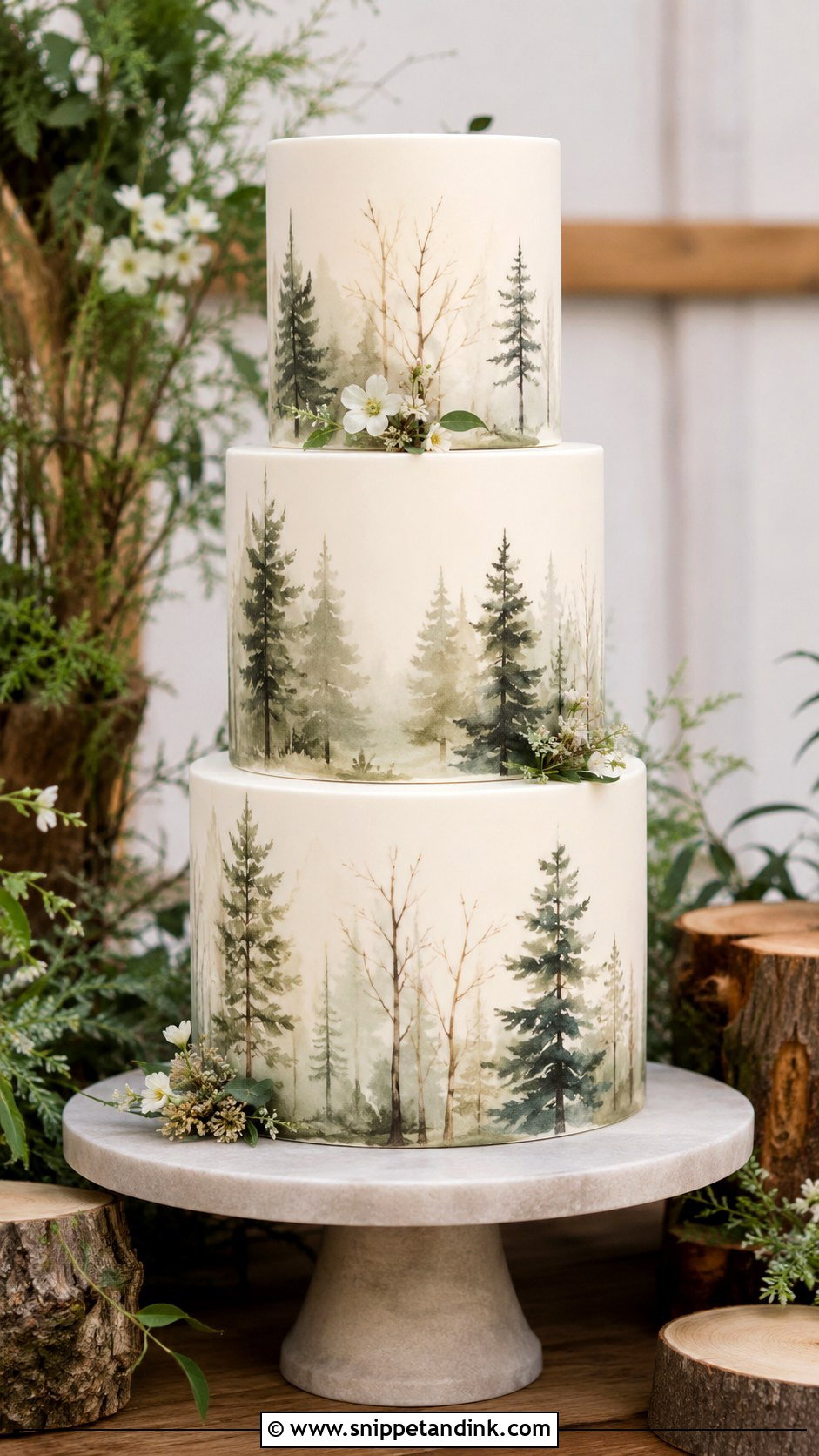
Watercolour trees are painted straight onto the cake with diluted food colour, so the surface has to be glass smooth: fondant is the reliable choice, though very well-chilled buttercream can take it. Misty pines, bare branches or a faint mountain line all work. I keep the palette muted, mainly sage, grey, brown and ivory, with one seasonal colour if the couple wants it. This suits people who love nature but don’t want bark or moss. Keep flowers to a single small cluster so the painting stays the focus.
17. Forest Wedding Cake With Chocolate Bark
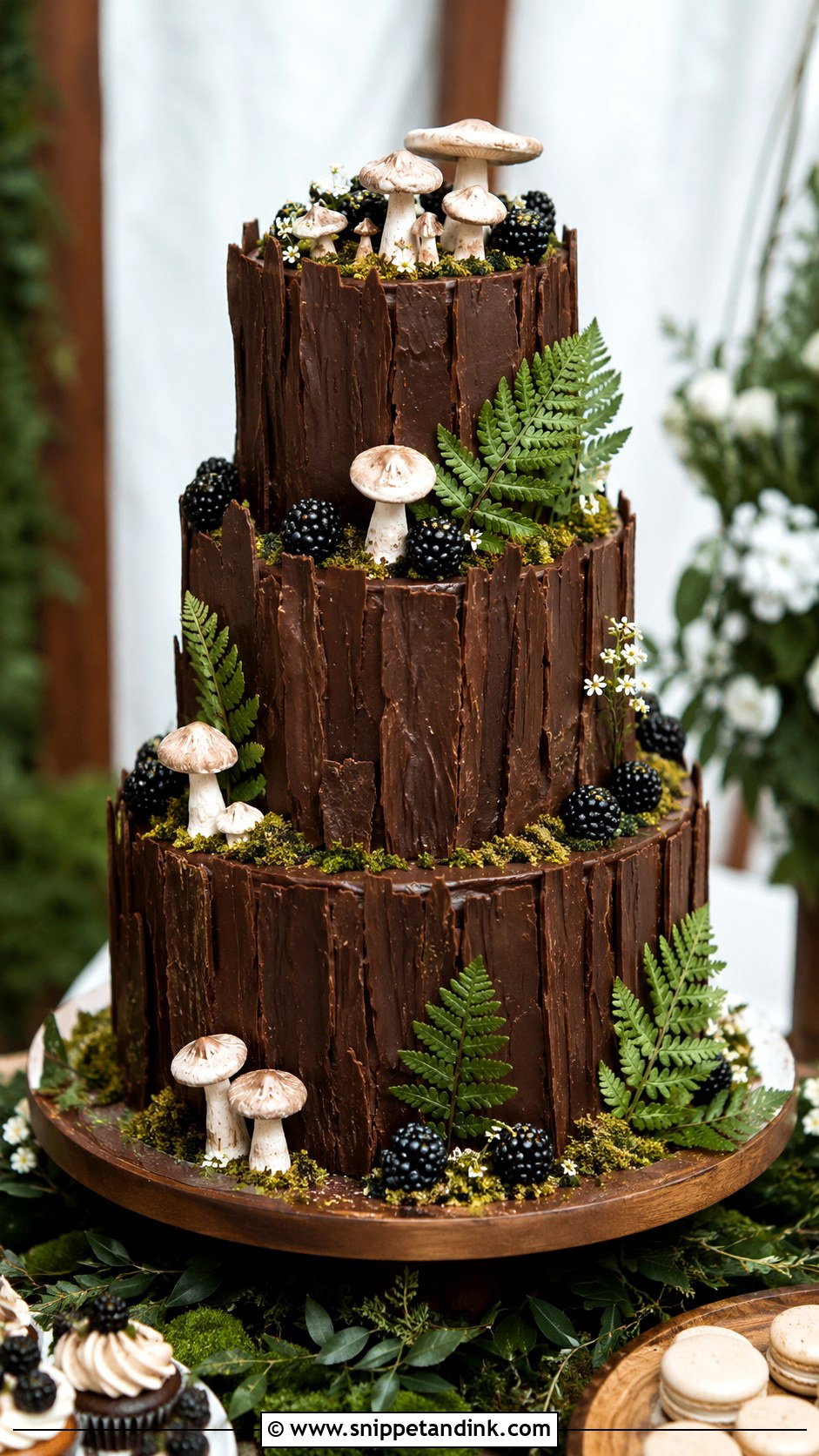
Chocolate bark is made by spreading tempered chocolate thin, letting it half set and then breaking it into shards that get pressed around the tiers. Dark chocolate looks like oak; white chocolate tinted with a little grey makes birch. The decoration matches a chocolate cake inside, which is why chocolate lovers ask for it. Finish with moss crumb, berries or meringue mushrooms. Tempered chocolate softens in sun and warm marquees, so this design wants a cool, shaded spot and a late set-up.
18. Forest Wedding Cake With Gold Accents
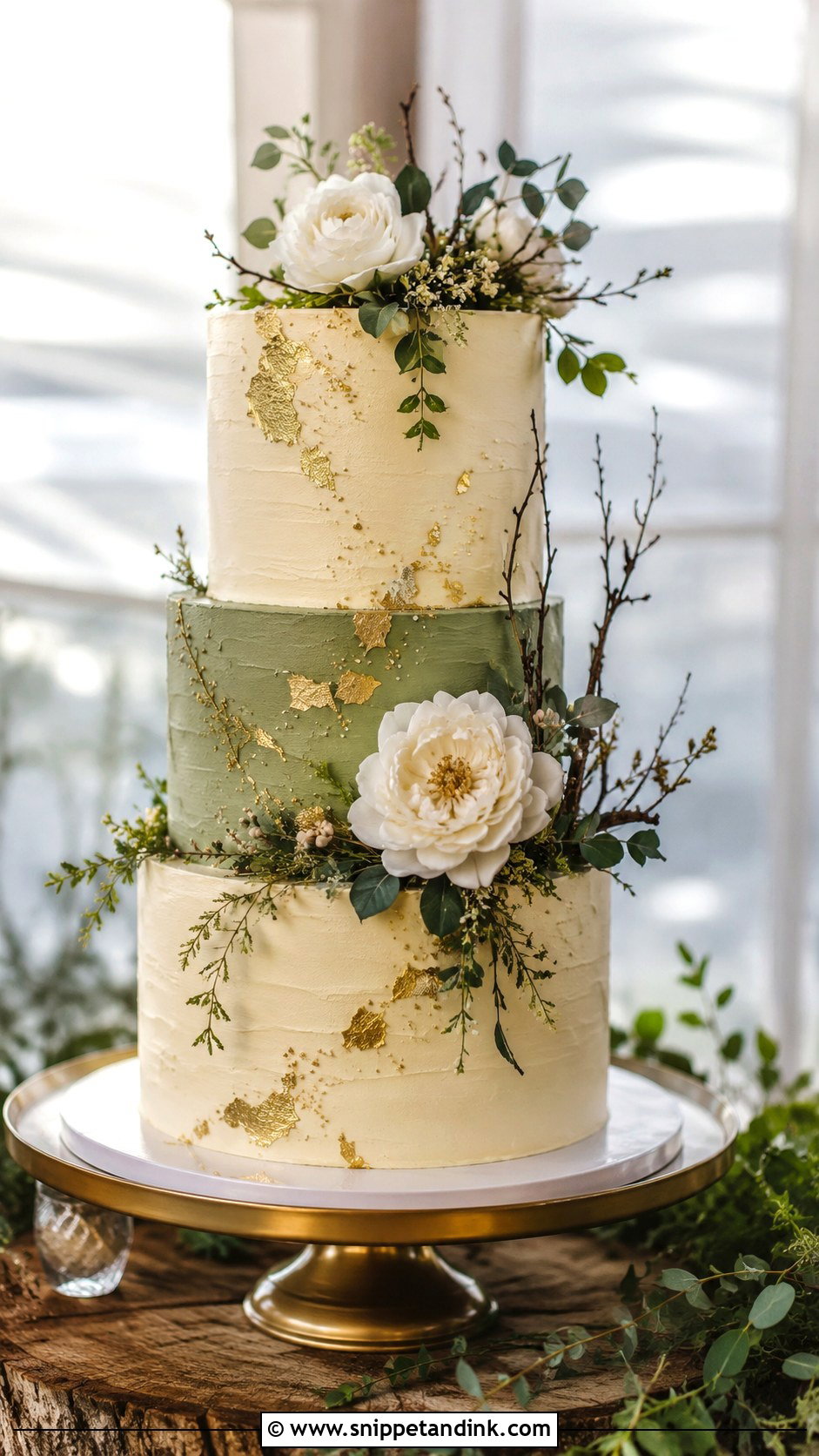
Gold turns an earthy cake formal very quickly. I use real edible gold leaf, applied in small torn pieces along tier edges or on a painted branch. Be wary of craft lustre dusts sold as non-toxic: that is not the same as edible, and I won’t put them on anything guests eat. Gold sits well on sage, ivory, emerald, chocolate or charcoal. Use less than you think you need; a few flakes catching candlelight look richer than a fully gilded tier.
19. Forest Wedding Cake With Autumn Leaves
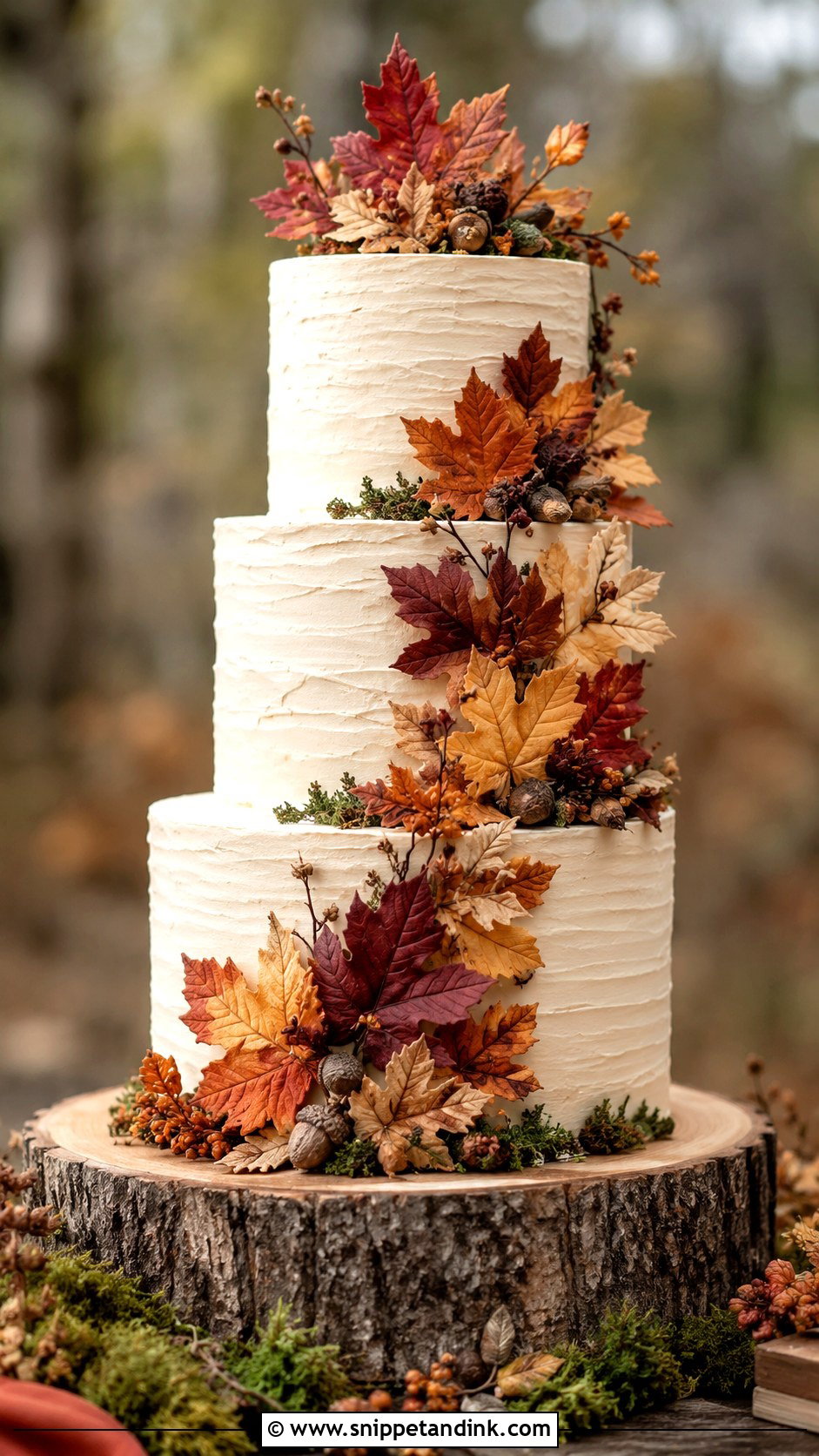
Autumn leaves cut from sugar paste and dusted in amber, copper, rust and burgundy can wrap a tier or tumble down one side. Leaf cutters with veining mats make each one look real, and petal dust brushed from the edge inward gives that turning-leaf gradient. Chocolate bark, berries or small chocolate acorns finish the forest floor. It’s a natural fit for September to November weddings. Keep the frosting ivory and plain so the leaves don’t fight with anything.


20. Forest Wedding Cake With White Flowers
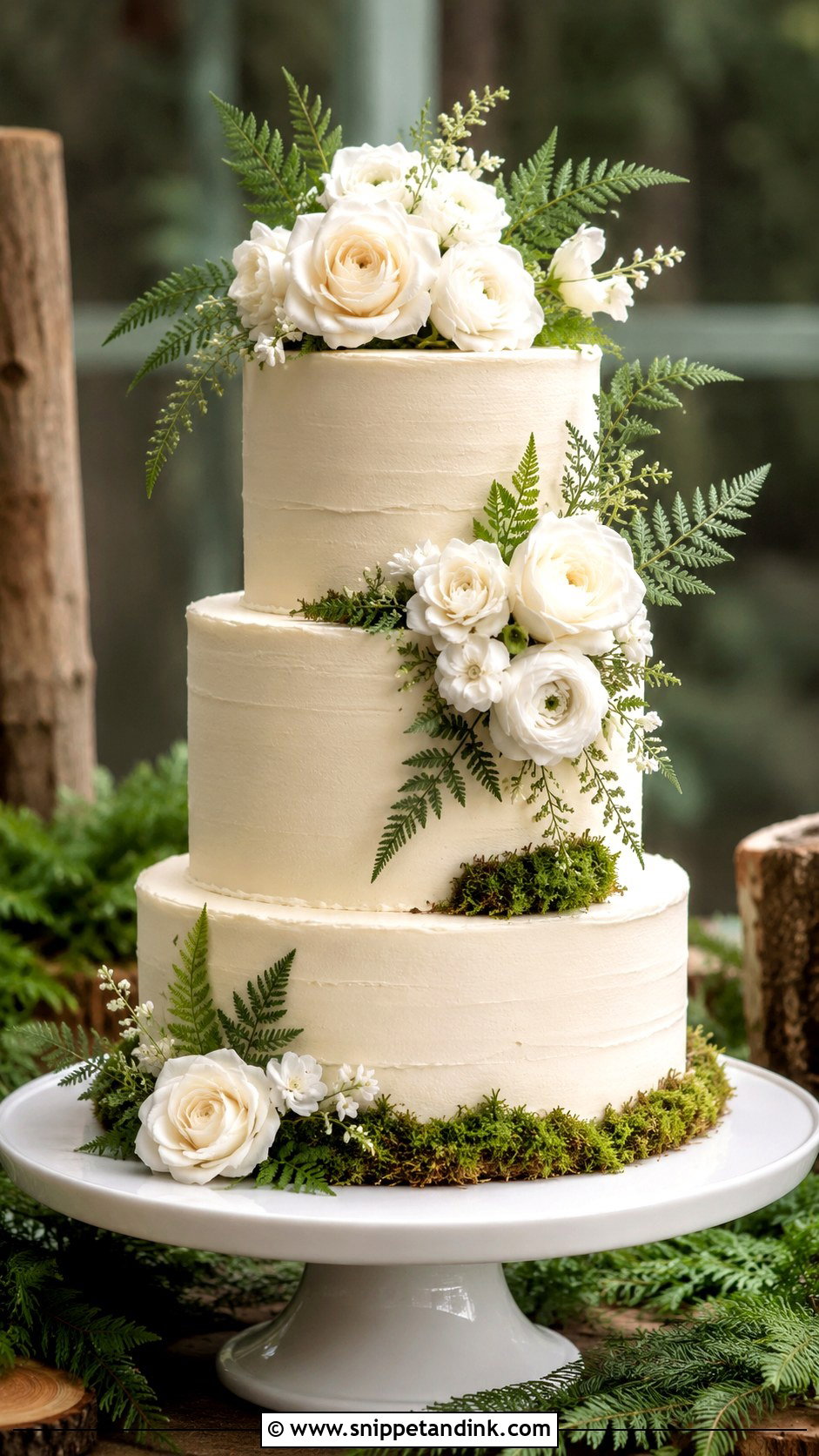
White flowers are my safest suggestion for a couple who loves the forest idea but still wants a cake that looks unmistakably bridal. Roses, ranunculus, anemones or sugar blossoms soften bark, moss and wood. Anemones with their dark centres work especially well in woodland settings. I place them in uneven clusters, two or three groups of different sizes, never in neat rows. Pale green accents and a little foliage keep the link to the woods, and the look works in any season.
What Is Allowed to Touch the Cake
Woodland styling tempts everyone to pick things up from the forest floor, and that’s where I draw a firm line. Real moss, pine cones, bark, acorns and most ferns carry soil, sap and insects, and several common garden plants are toxic. Yew, foxglove, hydrangea, lily of the valley and daffodils should never be near food.
- Edible blooms grown without pesticides (violas, pansies, cornflowers, calendula, roses) can sit on the frosting directly.
- Non-edible stems are wrapped in floral tape and placed in a flower pick or straw, so no sap reaches the sponge.
- Moss, pine cones, ferns and mushrooms on the cake itself should be made from sugar, chocolate, meringue or crumb.
- Real foraged pieces are welcome around the base of the stand, on the table, where nobody will eat them.
Agree this in writing with your florist and baker. Florists sometimes arrive at the venue with a handful of extra greenery and good intentions.
How a Forest Cake Holds Up in a Warm Clearing
Outdoor woodland receptions look made for these cakes, but sun is hard on them. Buttercream starts to soften once the air is warm, meringue weeps in humidity, chocolate bark bends, and wafer paper curls. Shade is the single most useful thing you can give the cake.
I ask for the cake table to sit out of direct sun for the whole time the cake is on display, ideally indoors or under a tent until shortly before the cutting. Wasps find berries and sugar quickly, so a cake left out from the ceremony to dessert in late summer will collect visitors. Keep the display window short, keep the delicate decorations for on-site finishing, and your cake will look at the cutting the way it looked when I set it down.
One Woodland Detail Is Enough
Forest inspired wedding cakes cover a lot of ground, from a plain birch tier to a moody chocolate cake with figs and gold. The ones I’m proudest of usually pair a clean, well-finished cake with one woodland detail done properly. Match that detail to your venue and season, then carry the same colours onto the stand and the cake table. If it looks like it belongs in the room, the cake has done its job.
You'll Like These Ideas:






Leave a Reply