
A forest fairy cake borrows its look from the woodland floor: moss, bark, ferns, mushrooms, butterflies, the odd pressed flower. Those woodland details suit a garden, barn or outdoor reception because they feel natural without looking plain. The difficulty is restraint. Pile on every element and the cake looks like a craft table; pick one or two and it still reads as a wedding cake. Below are twenty directions I’d take a woodland design, with notes on what each one is really made of and how it behaves on the day.
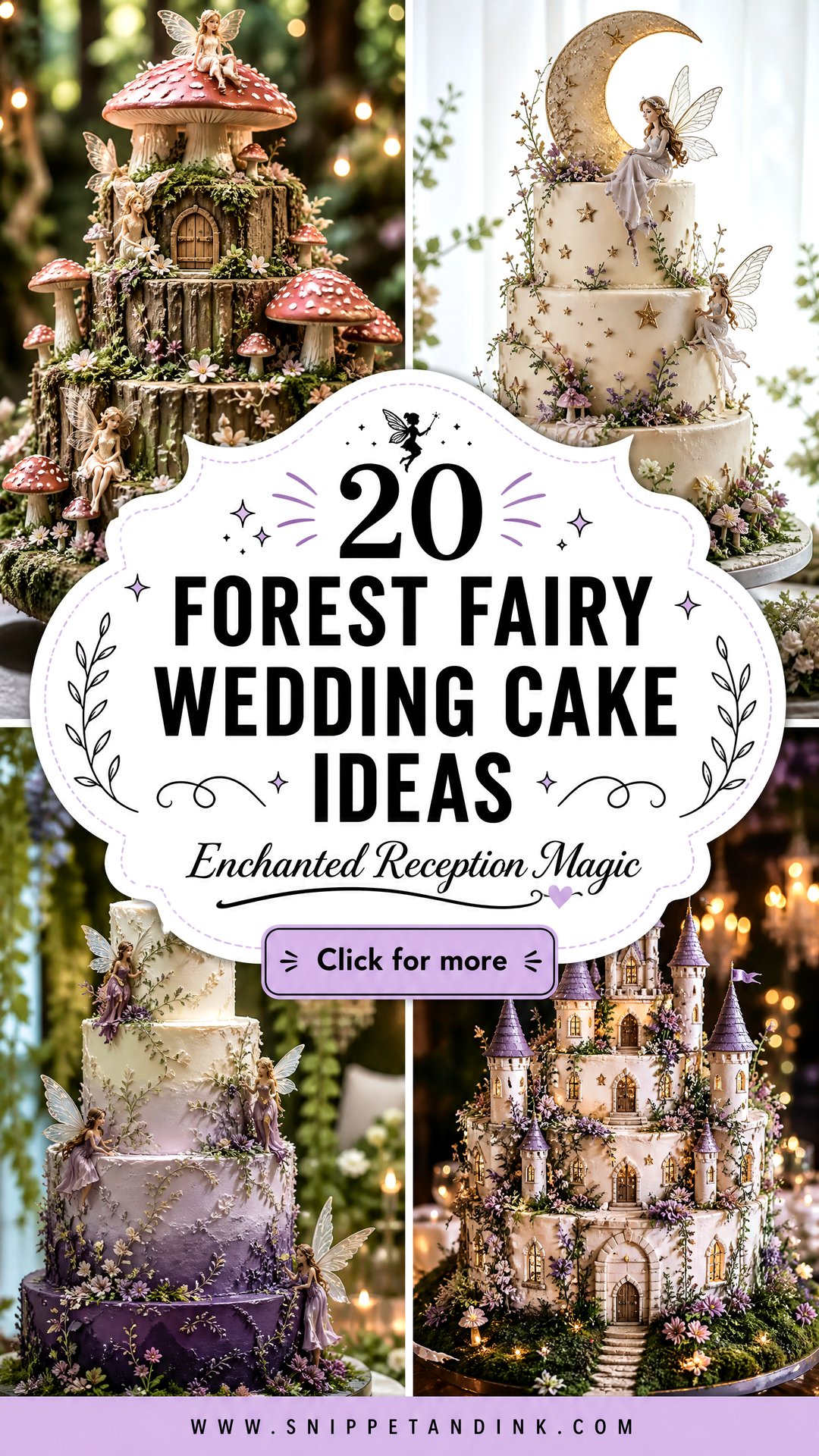
What a Woodland Cake Is Really Made Of
The forest look depends on materials that seem wild but are entirely edible. I never put foraged decoration on a wedding cake, and you should expect the same from whoever bakes yours. These are the swaps I make every time.
- Moss: dyed sponge crumbs, matcha or crushed pistachio, never real moss.
- Bark: chocolate, textured fondant or buttercream, never twigs or bark brought in from outside.
- Mushrooms: fondant, gum paste or meringue, never real fungi of any kind.
- Ferns and leaves: wafer paper, sugar or piping, never cut fronds.
- Flowers: sugar flowers, or edible blooms grown for food use.
A wood slice stand is fine under the cake, but the cake should never sit directly on raw wood, which can carry dirt and sap. A cake board the same size as the bottom tier always goes between them.
1. Forest Fairy Moss Wedding Cake
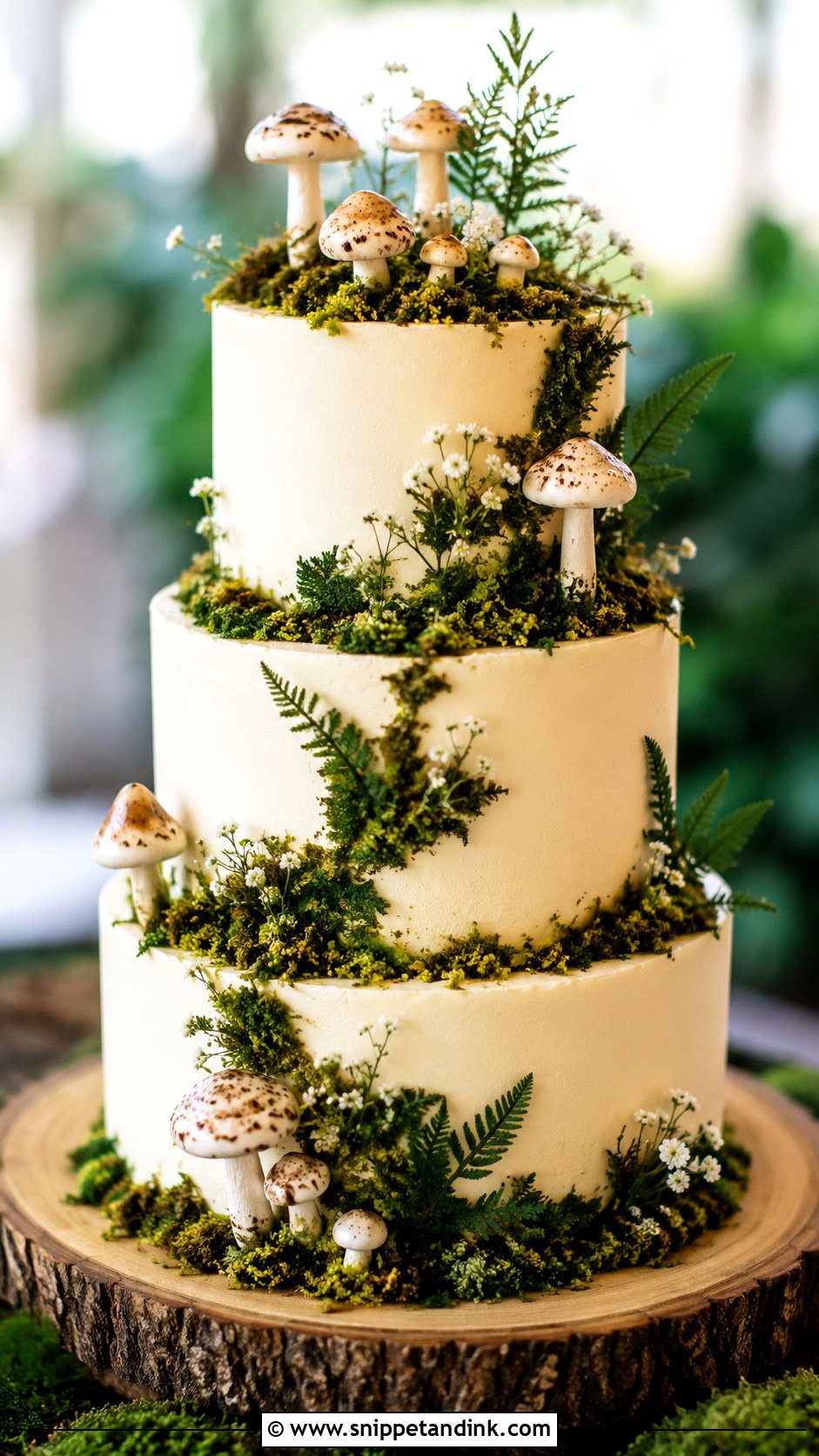
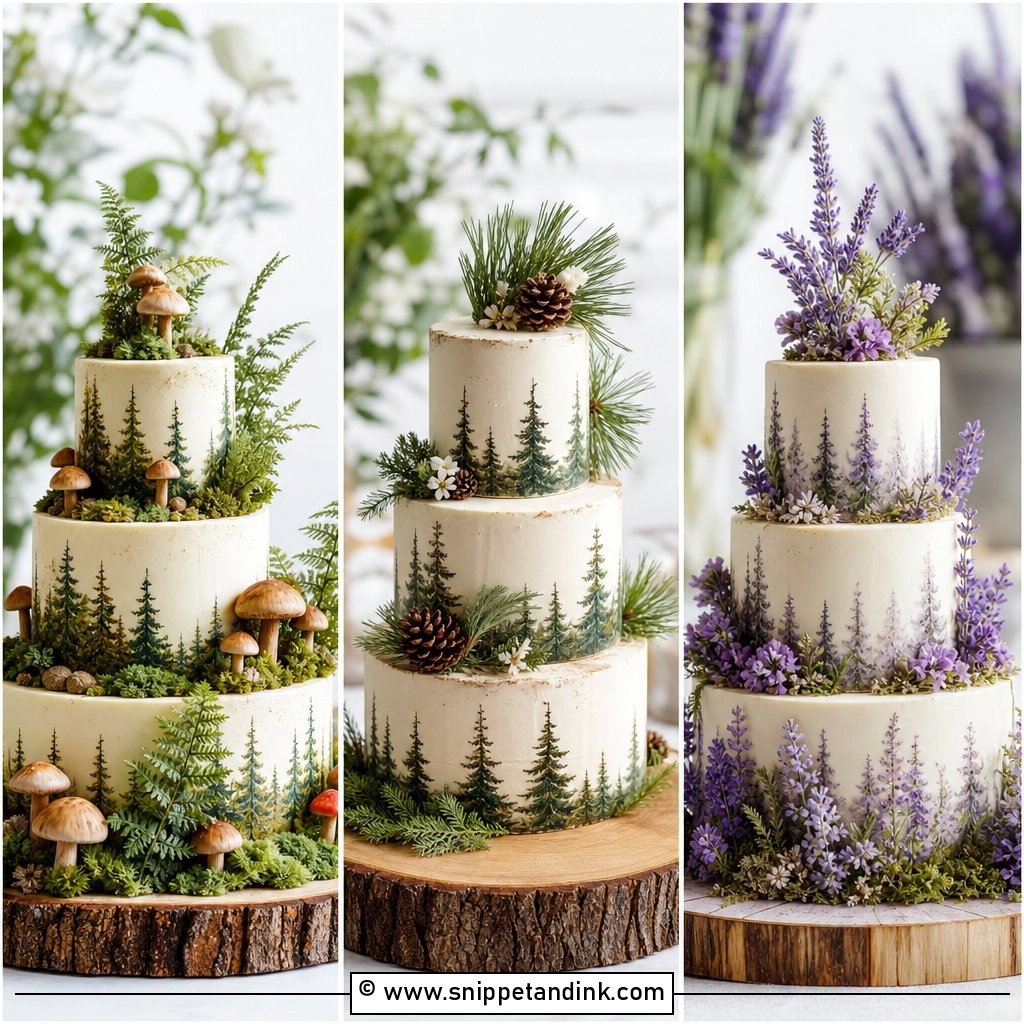
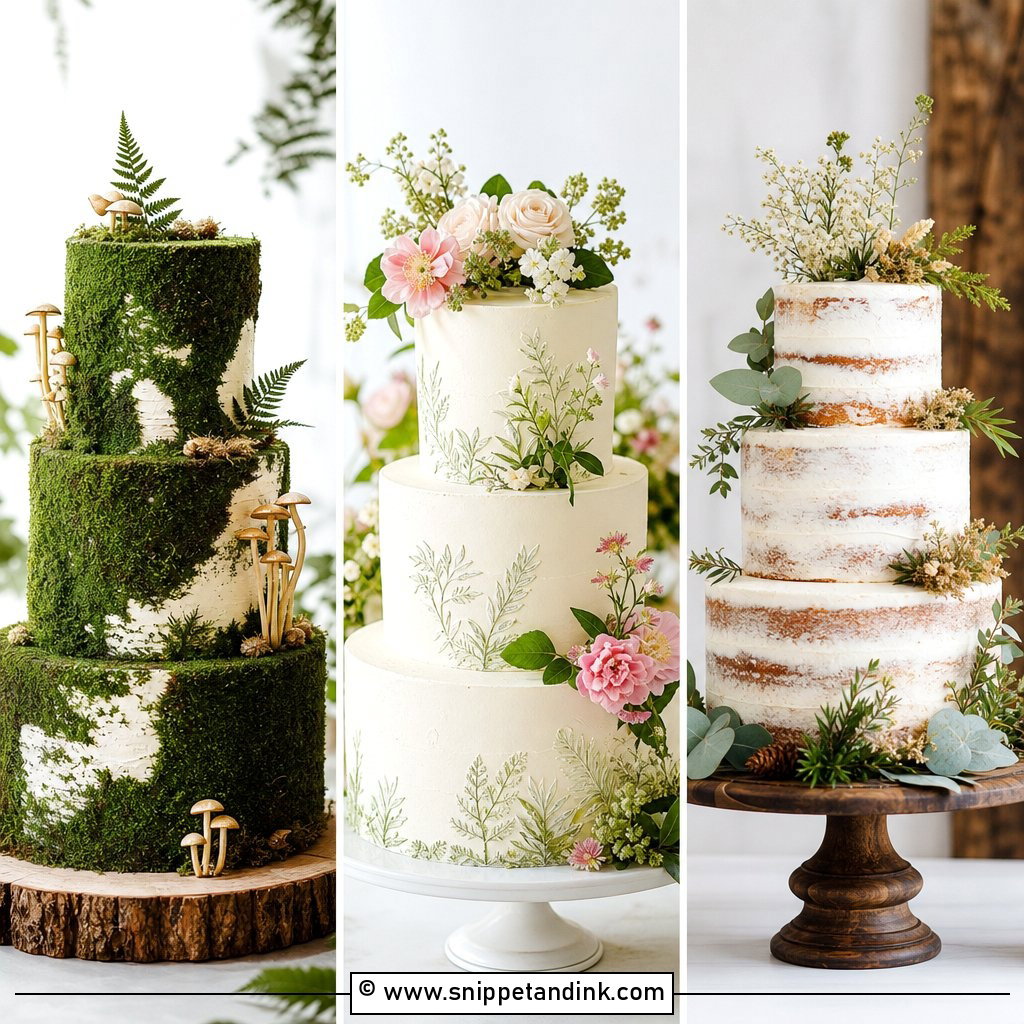
Edible moss is easier than it looks: green-tinted sponge crumbs, rubbed through a sieve and dried briefly in a low oven, then pressed onto buttercream in patches. Matcha gives a more natural olive tone but dulls if it sits in strong light for hours, so I add it close to delivery. Keep the main tiers ivory or pale sage and let the moss creep up from the base rather than covering everything. It sits best on a wood slice or a stone-look pedestal.
2. Forest Fairy Mushroom Wedding Cake
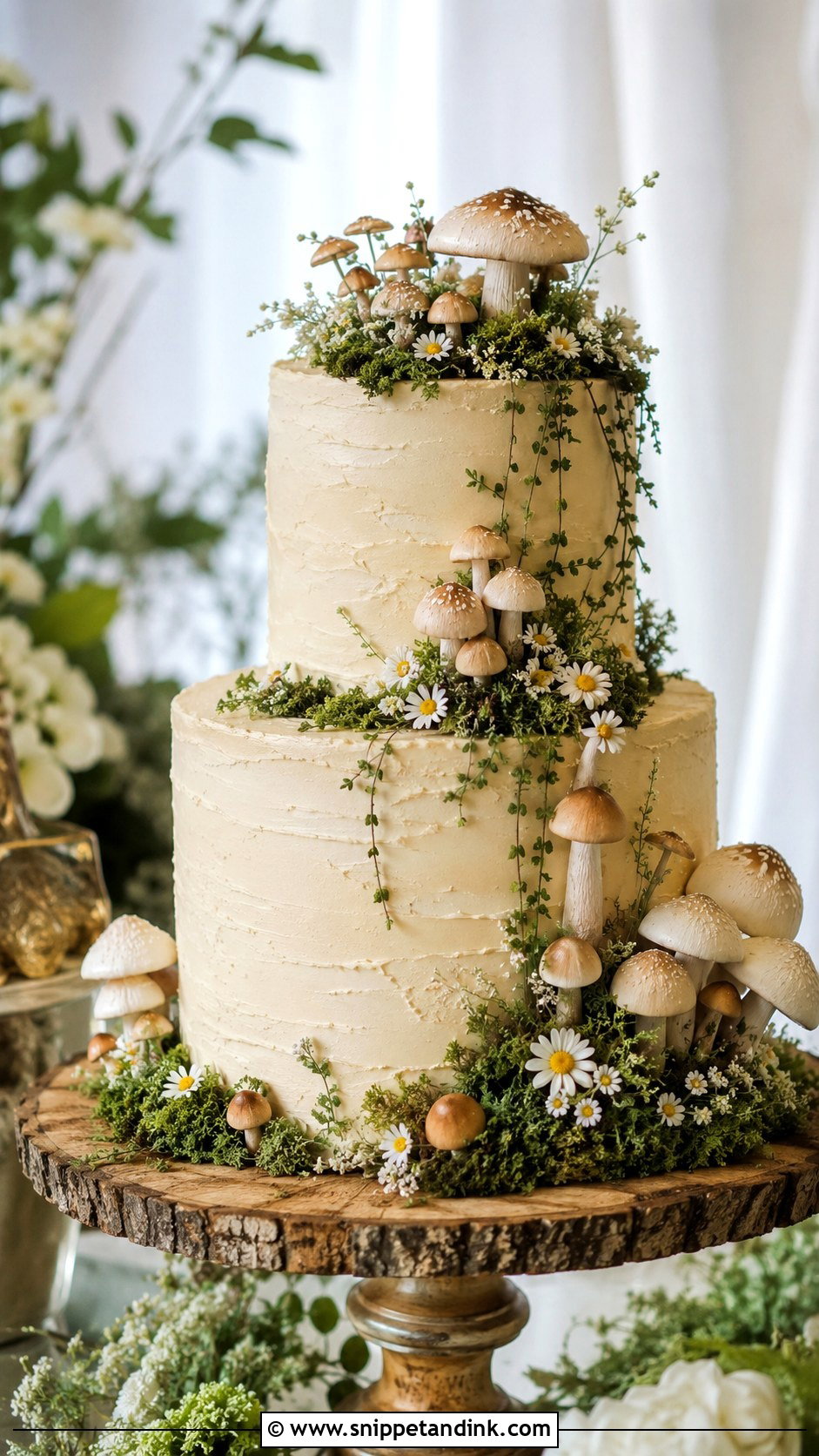
Mushrooms are the detail guests remember, so I keep them few and grouped. Two or three smooth buttercream tiers in cream or beige make the base, then fondant or sugar mushrooms cluster near the bottom, along one side and once near the top. Meringue mushrooms taste better than fondant ones but go soft in humid air, so I only use them indoors. Red-and-white caps read storybook, while tan and brown look like a real forest floor.
3. Forest Fairy Tree Bark Wedding Cake
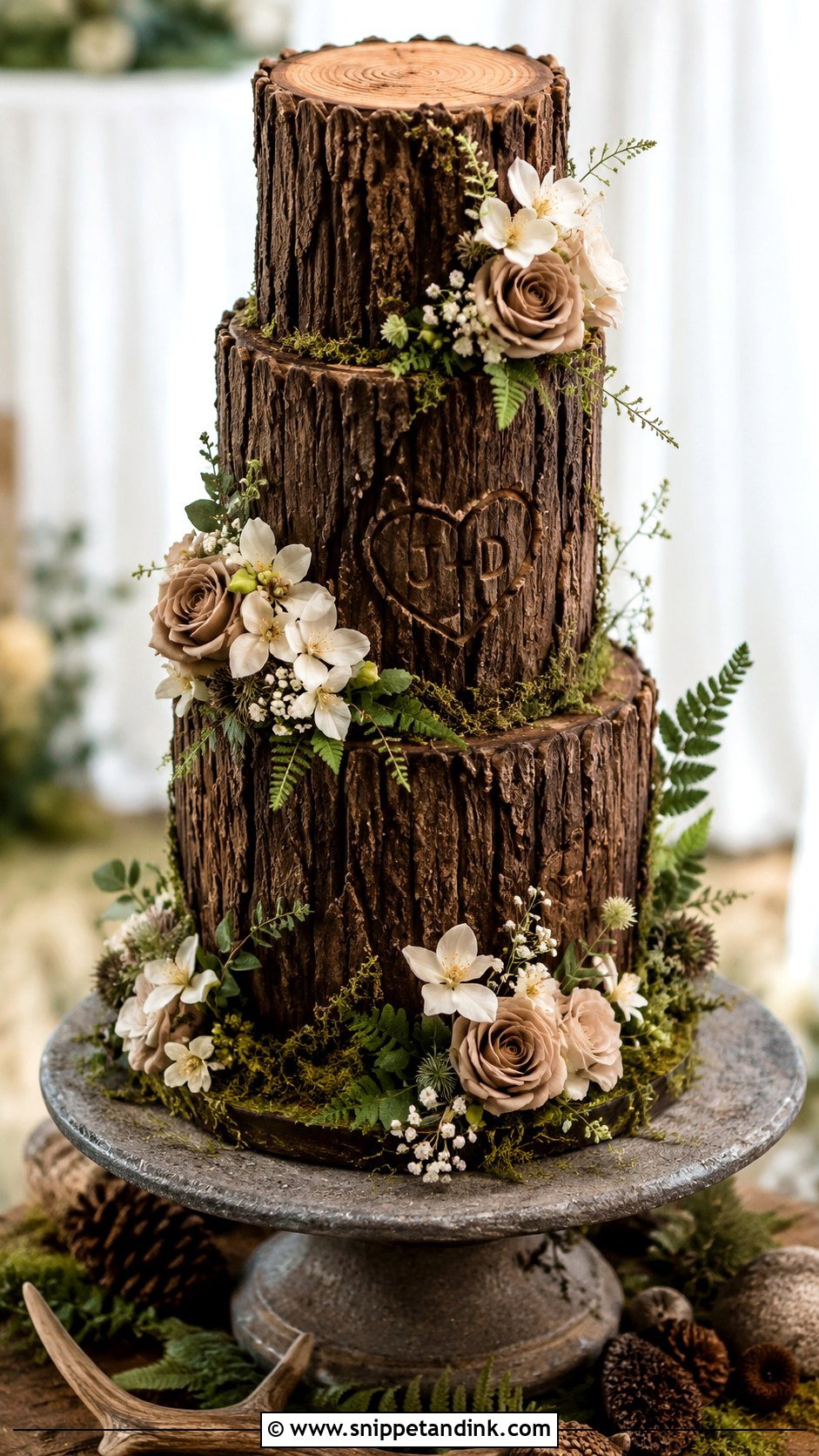
Bark texture comes in three versions, and each behaves differently. Chocolate panels, made by spreading chocolate over textured acetate, look the most convincing but soften in a warm tent. Scored fondant copes with heat better. Textured buttercream, dragged with a palette knife, is the softest and easiest to slice. I pair bark with something light, like sugar roses or white wildflowers, so the cake stays bridal. A tree-ring top tier, painted in fine brown rings on fondant, adds a quiet nod to growing together.
4. Forest Fairy Naked Wedding Cake
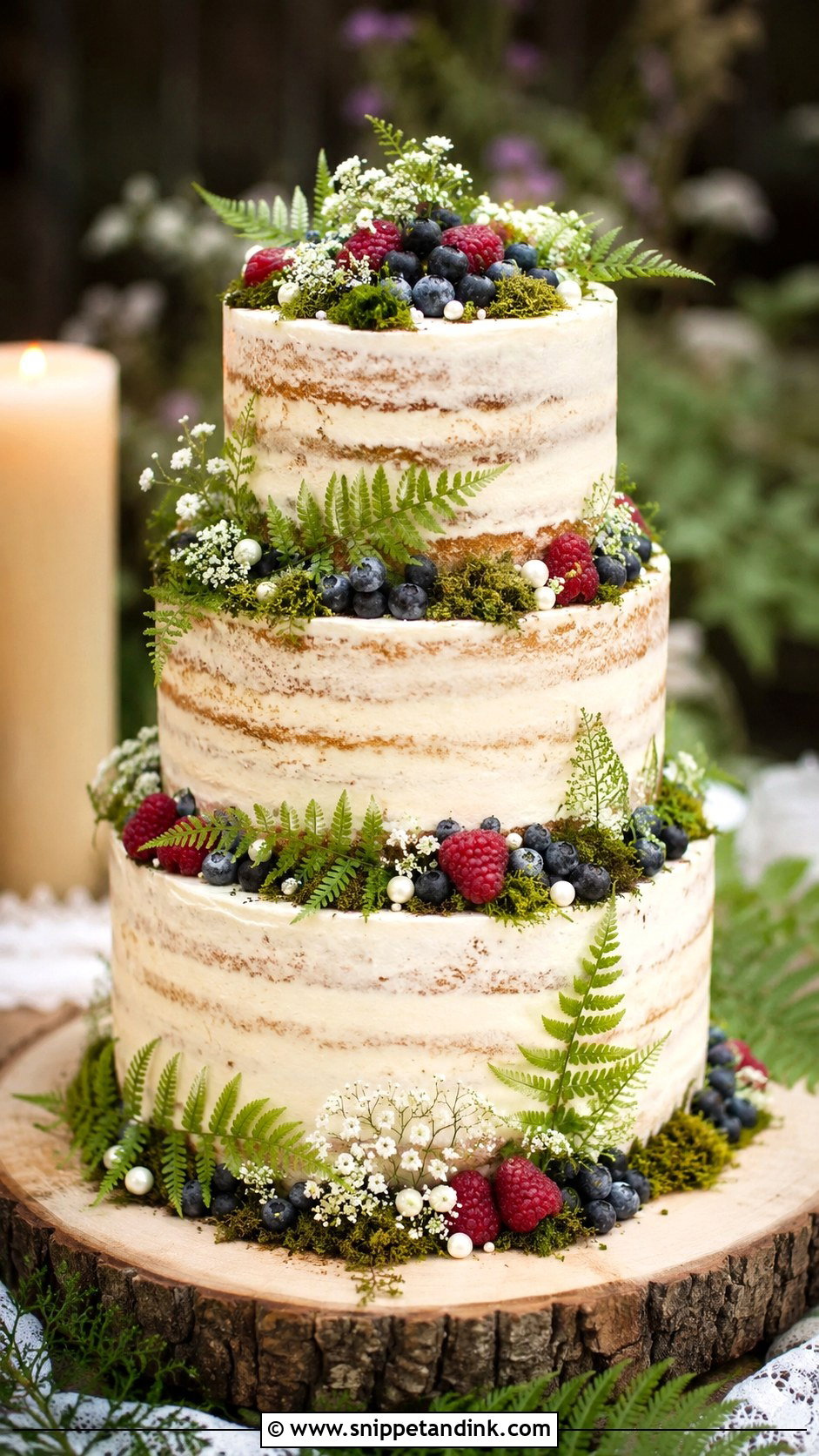
A naked wedding cake is the most natural fit for this theme, since exposed sponge already looks rustic. The catch is that thinly scraped sponge dries out faster than a fully frosted cake, so I assemble and finish it as close to the event as I can and keep it wrapped until delivery. Vanilla, almond, spice or lemon elderflower layers all suit it. Fresh berries weep juice into the sponge after a few hours, so they go on at the venue, along with any wafer paper ferns.
5. Forest Fairy Green Wedding Cake
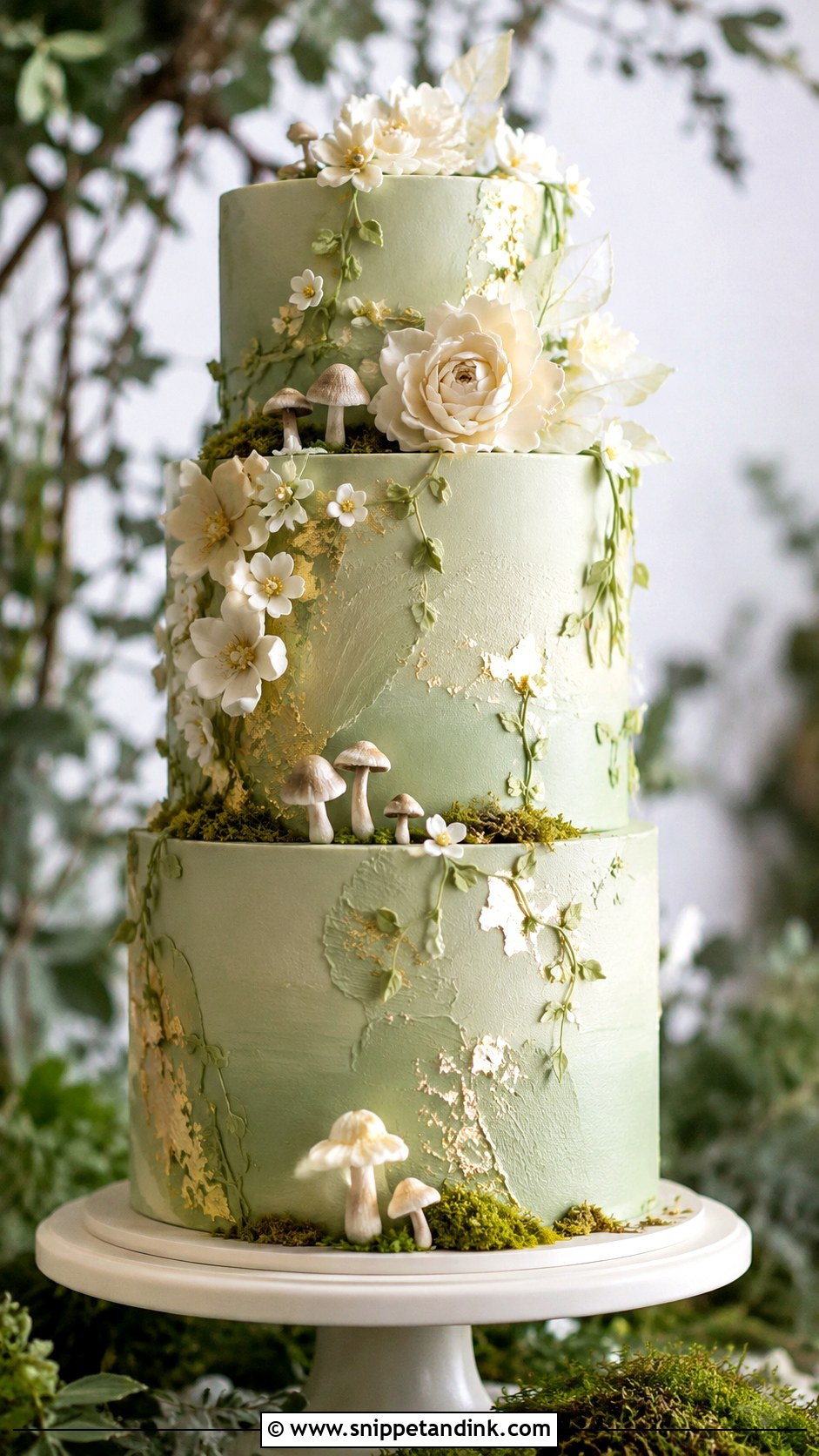
Green buttercream is where most woodland cakes go wrong. Straight green gel turns minty or neon, so I mute it with a touch of brown or a speck of black until it reads as sage, olive or fern. Mix more than you need, because matching a second batch exactly is nearly impossible. A pale ombre from deeper green at the base to ivory at the top feels lighter on a big cake. Vines, pressed flowers or a little gold leaf add depth once the color itself is right.
6. Forest Fairy Floral Wedding Cake
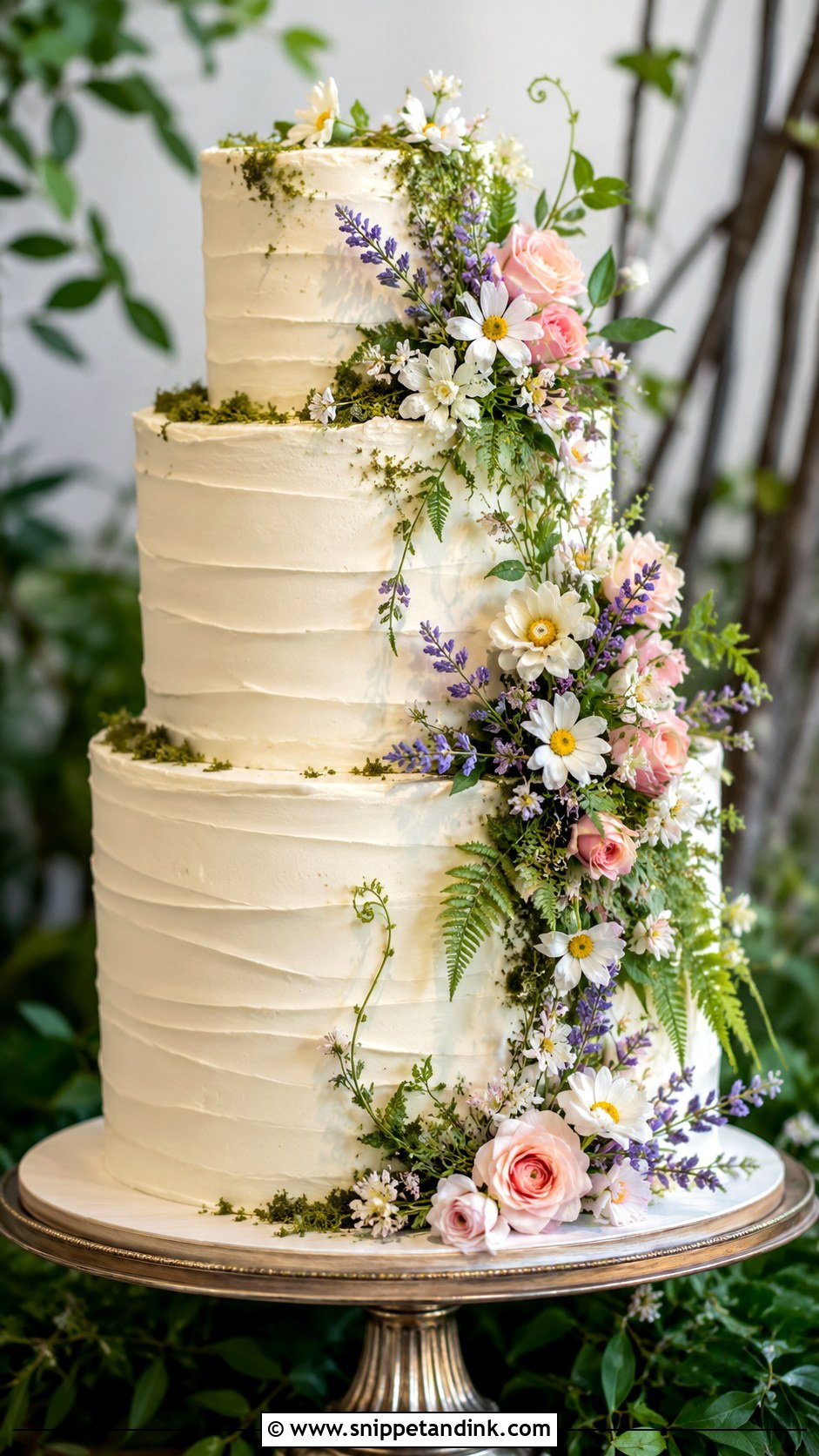
Wildflowers soften this theme better than anything else. I make small sugar blooms like chamomile and forget-me-nots, mix in a few edible fresh flowers such as violas, and cascade them down ivory buttercream. Lavender looks right, but it’s strong in flavor, so a sprig or two is enough. Limit the palette to three or four tones, perhaps ivory, blush, lavender and sage, or the cascade starts to look like confetti.
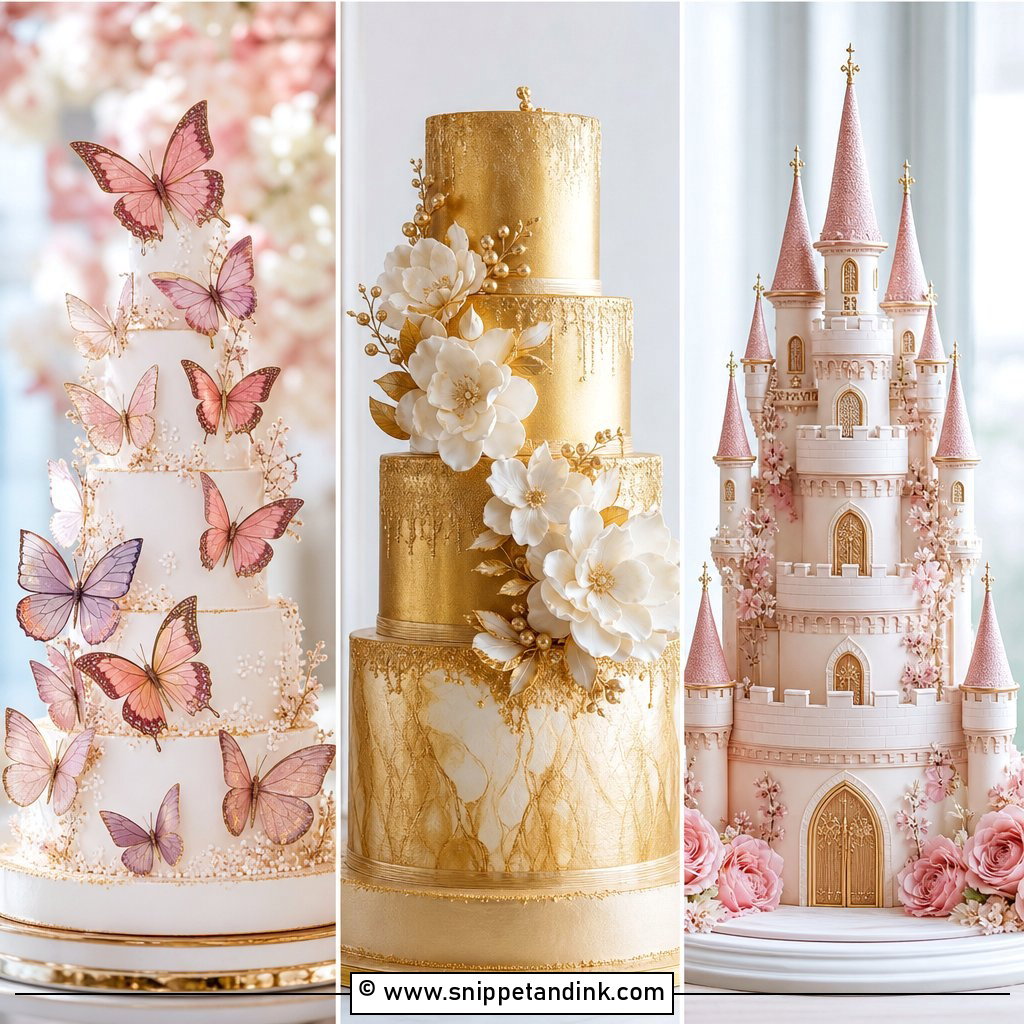
7. Forest Fairy Butterfly Wedding Cake
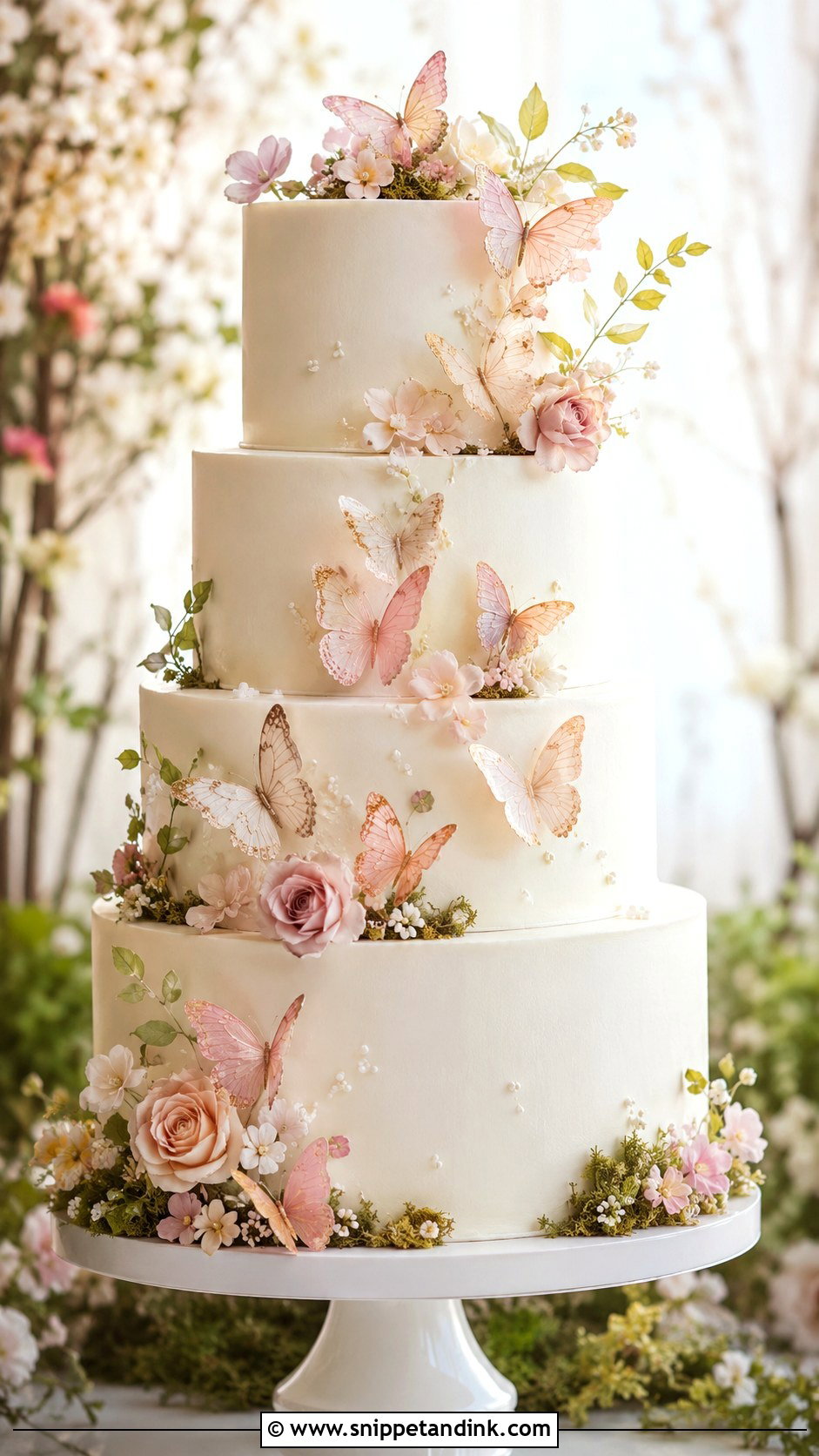
Wafer paper butterflies are the lightest decoration you can put on a cake, and the most sensitive to moisture. They curl and go limp against damp buttercream, so I attach them with a tiny dot of melted chocolate on the body only, keeping the wings clear of the frosting. Bend the wings slightly while the paper is dry and they hold the angle. Cream, pale gold and soft blue look delicate; bright primary colors drift toward a children’s party.
8. Forest Fairy Fern Wedding Cake
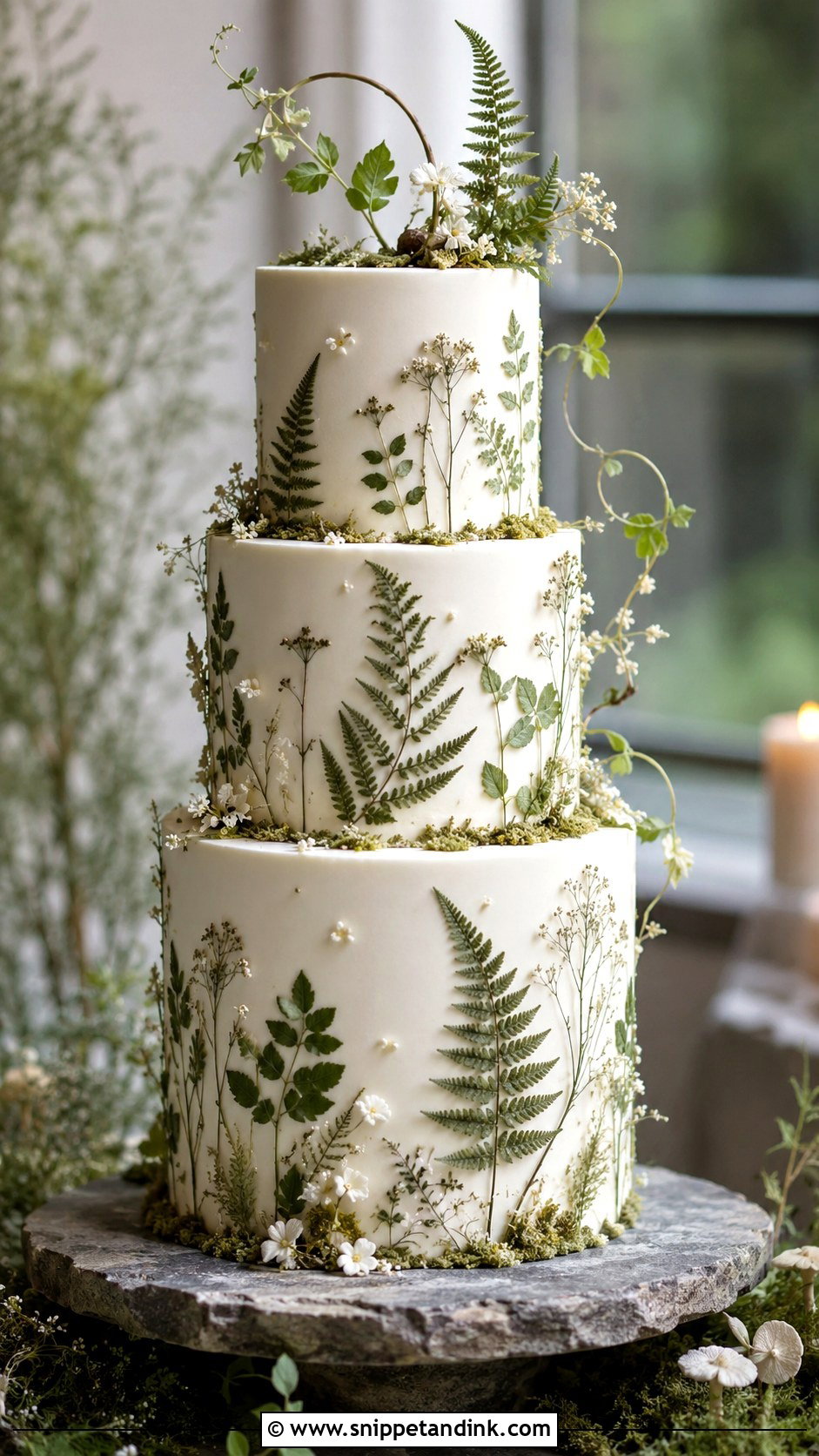
Ferns are one of the easiest ways to make a woodland wedding cake feel graceful instead of whimsical. I paint them freehand with thinned green gel, pipe them in buttercream or cut them from wafer paper. Real fern fronds aren’t food-safe, and some common ones are toxic, so they never go on the tiers. Keep the frosting plain so the fern shapes read clearly. If mushrooms feel too playful for you, this is the one to pick.
9. Forest Fairy Geode Wedding Cake
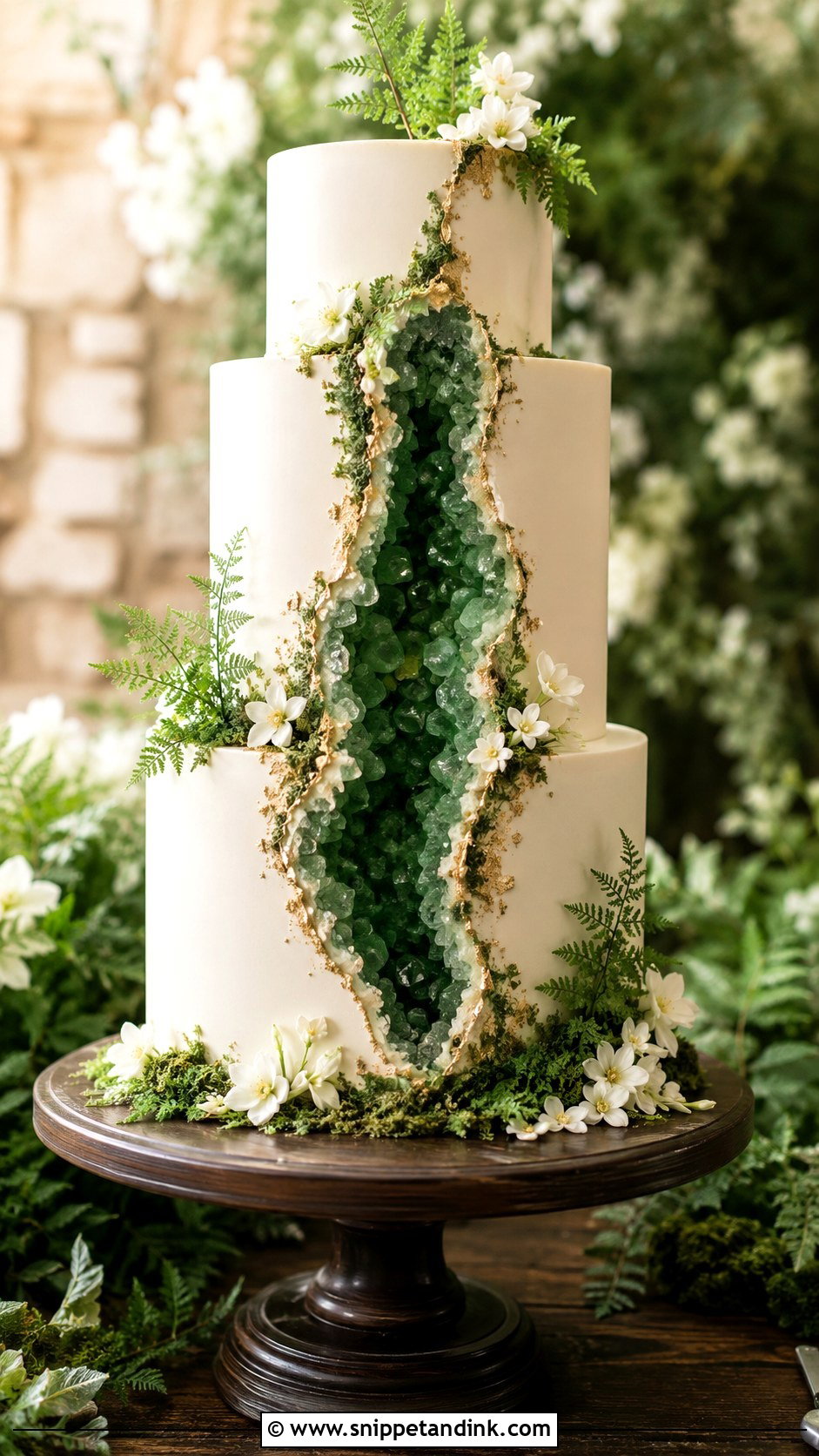
A geode is a dramatic piece of work. I carve a channel into the tier, line it with rock candy or isomalt crystals, then paint the edges gold; green, amber or smoky lavender crystals tie it to the forest. Both isomalt and rock candy draw moisture from the air, so on a humid day the crystals can turn cloudy and sticky. I build them in a dry room and keep the cake inside until the last moment. Everything else on the cake stays quiet.
10. Forest Fairy Waterfall Wedding Cake
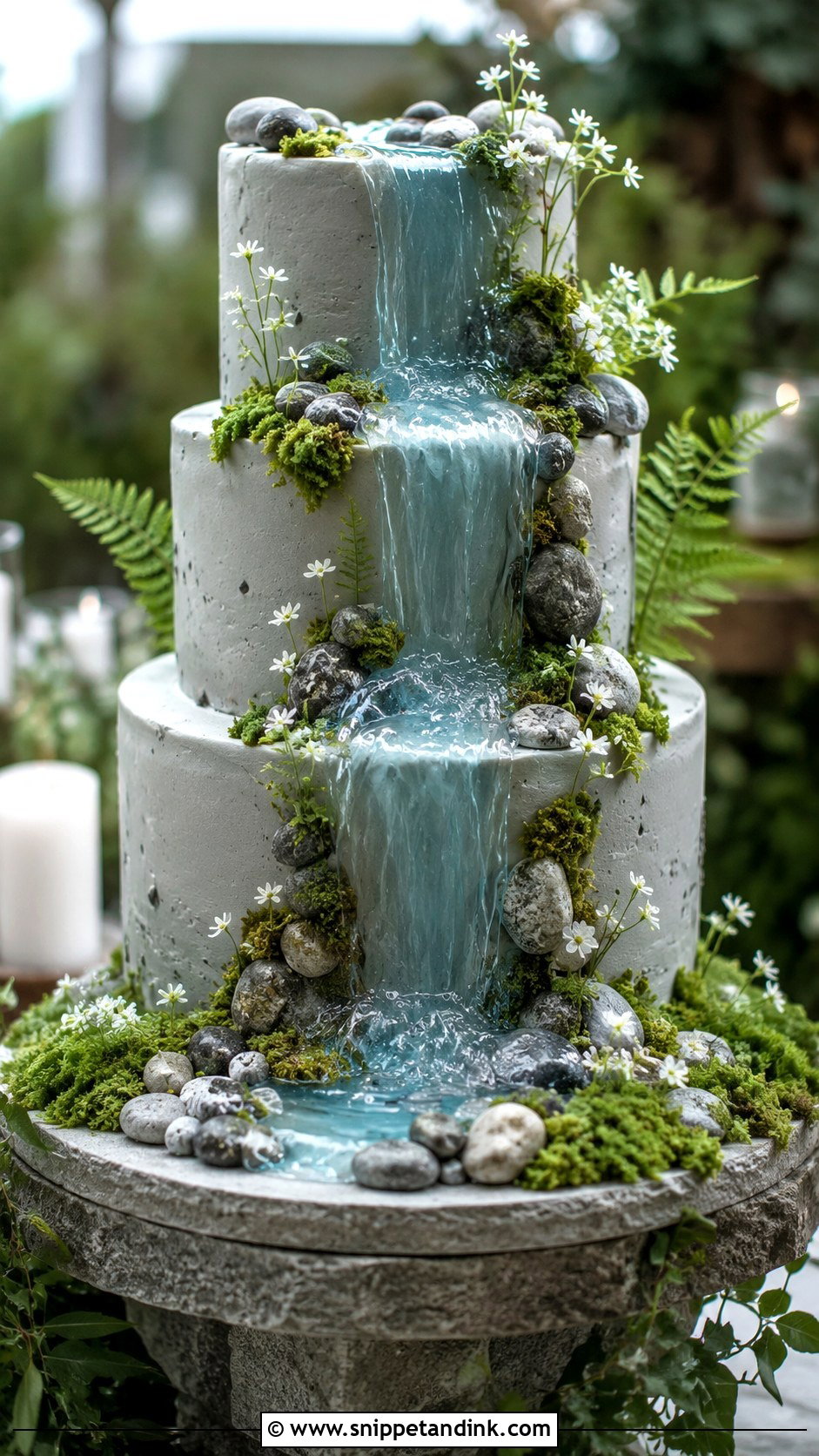
The water itself is usually poured isomalt or tinted piping gel, running down one side between sugar rocks and moss. Isomalt looks like glass but is heavy and can crack if the cake shifts in transit, so I attach it at the venue. Piping gel is lighter and safer but stays slightly tacky and catches dust. Ivory or soft grey tiers let the water stand out, and it needs at least three tiers for the fall to look natural.
11. Forest Fairy Gold Wedding Cake
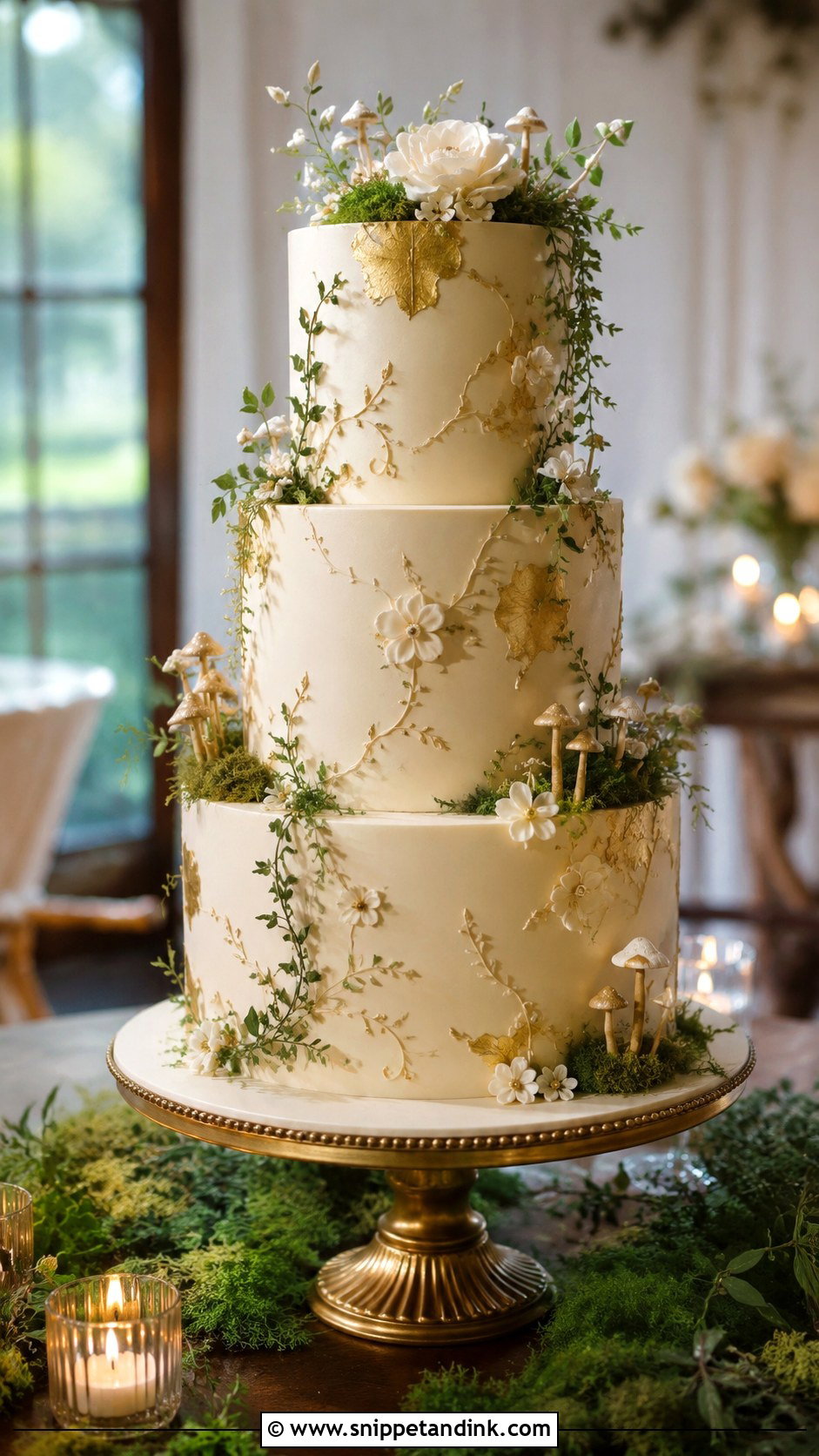
Gold on a woodland cake should look like light on leaves, which means a little, applied by hand. I brush gold leaf on in torn patches rather than whole sheets, or paint thin vines with gold luster mixed into clear alcohol. A gold drip can work but tends to shout. Candlelit evening receptions are where gold earns its place, because it catches the flicker of the flames. Under flat daylight, the same gold can look brassy.
12. Forest Fairy Moon Wedding Cake
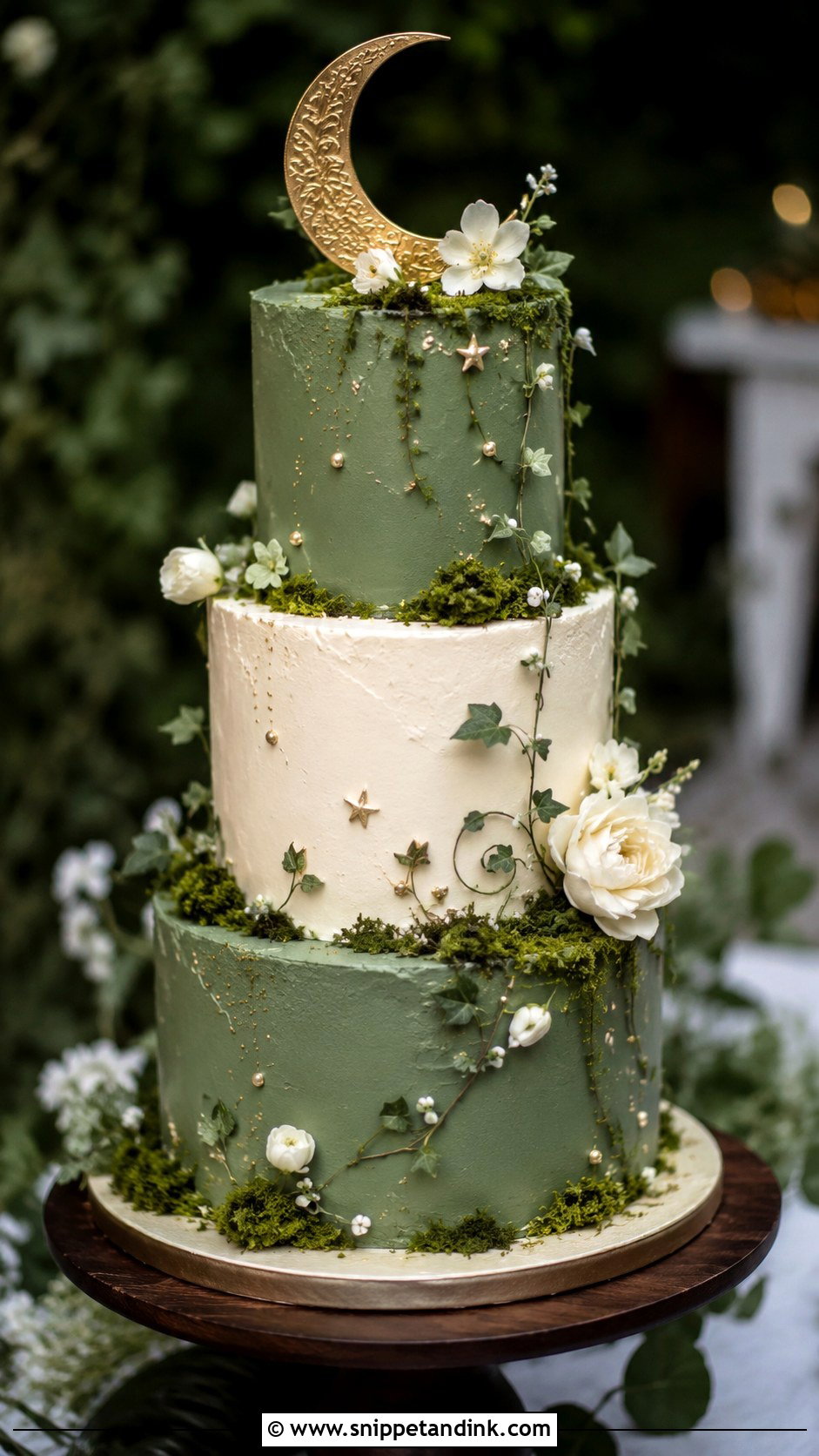
A moon cake is the one woodland design I’d let go darker. Deep green or dusty blue tiers with a crescent moon topper, cut from fondant or isomalt, and a scatter of tiny stars read as twilight in the trees. Very dark buttercream needs so much coloring that it can stain teeth and taste slightly bitter, so I use fondant over a lighter buttercream for the deep tiers, or a cocoa-based frosting. Ivory tiers and pale flowers keep it looking like a wedding cake.
13. Forest Fairy Vintage Wedding Cake
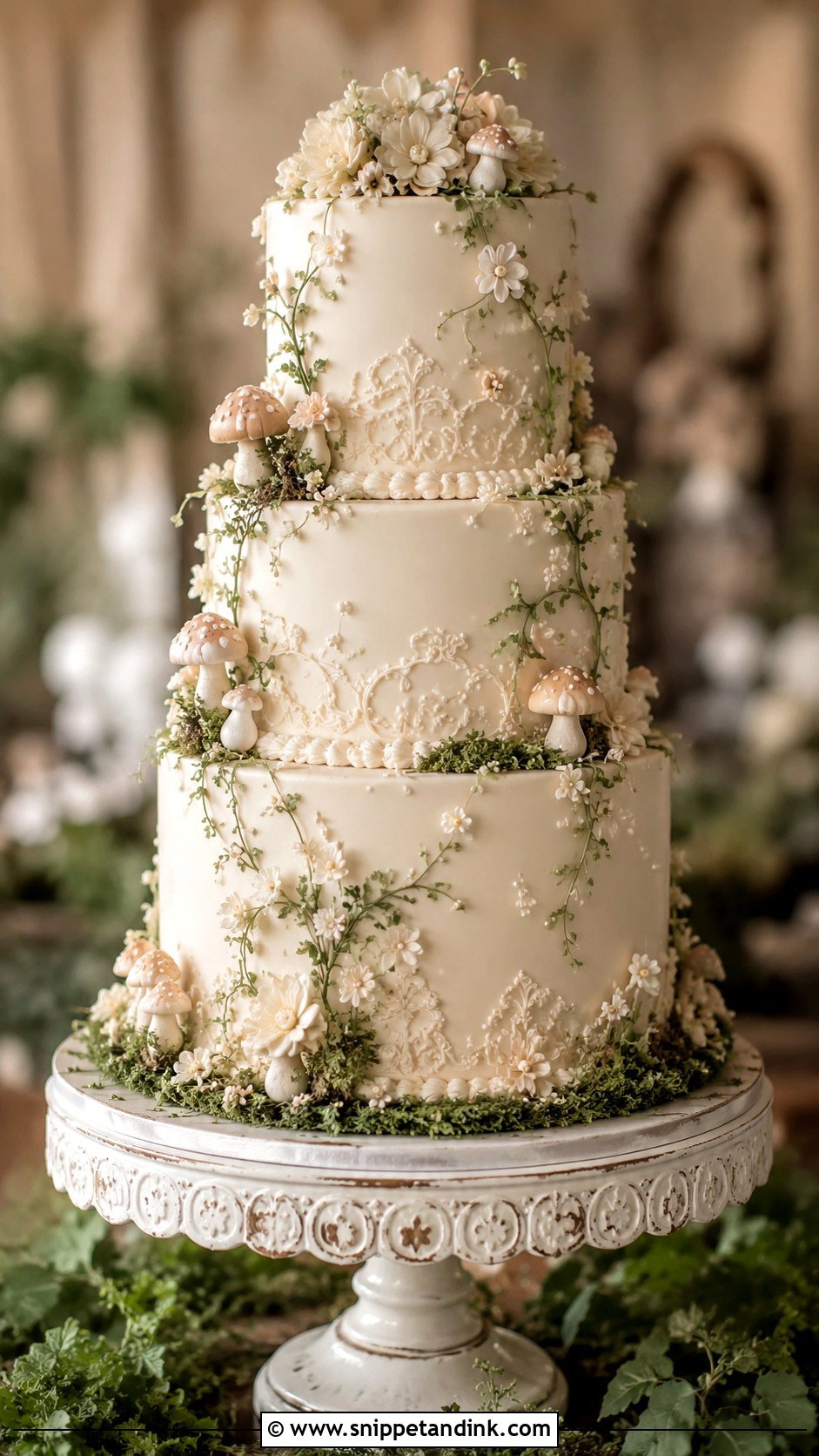
Vintage piping and woodland details sound like an odd pair, but they work when the piping stays ivory and the forest part stays small. I pipe ornate borders and pearl dots, add pale green vines in the same scrolling style, and tuck a few mushrooms or moss patches at the base only. Muted cream, sage and antique gold keep it gentle. When in doubt, let the piping lead and treat the woodland as an accent.
14. Forest Fairy Pressed Flower Wedding Cake
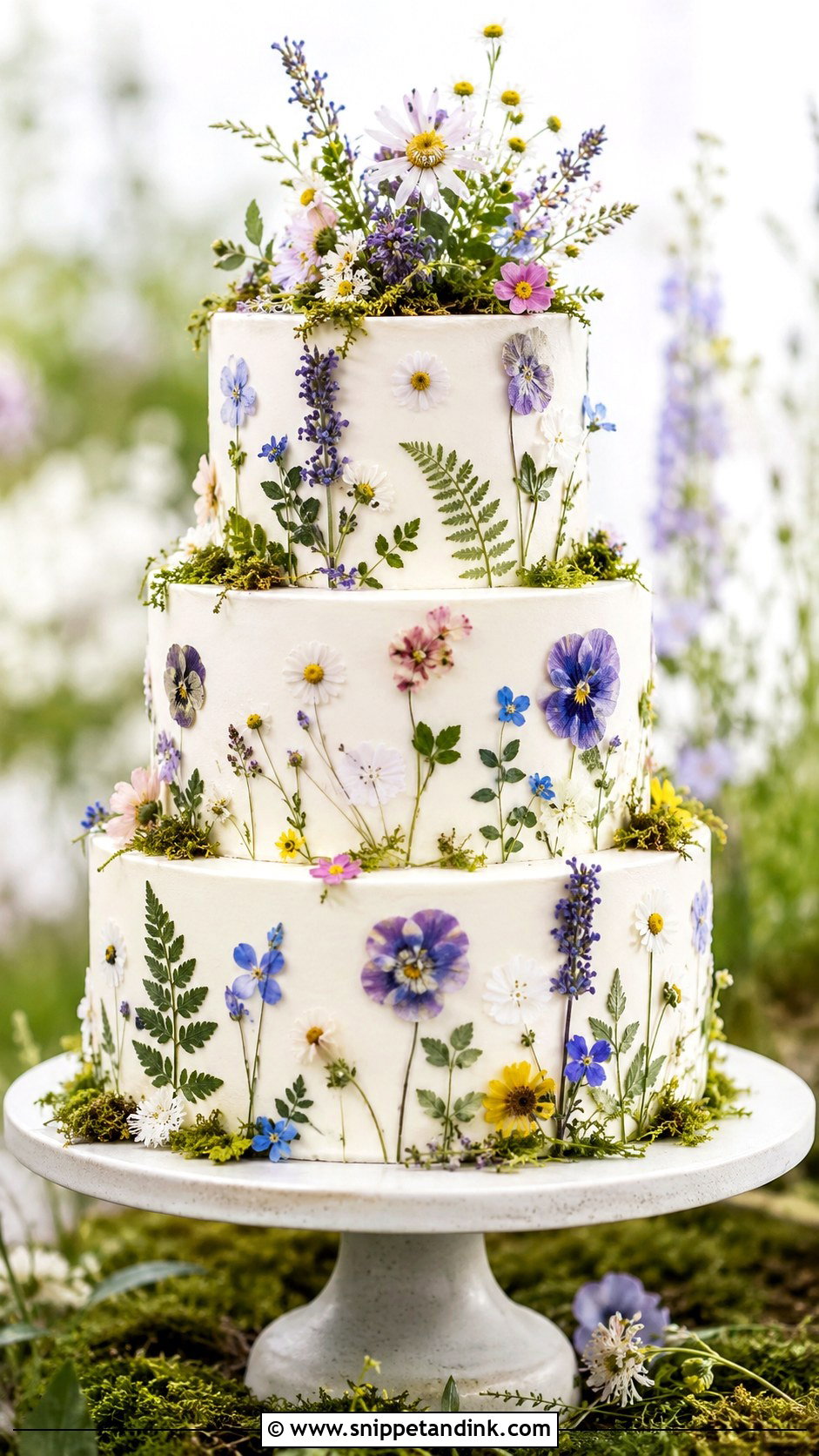
Pressed flowers on a cake must be genuinely edible varieties grown without pesticides; violas, pansies, cornflower and calendula petals all press well. I press them myself or buy from a grower who sells for food use, then attach them to smooth buttercream with a thin brush of piping gel. They brown at the edges if the cake sits in strong sun. Keep the tiers plain so the petals read clearly, with a few tiny leaves and moss crumbs at the base.

15. Forest Fairy Pearl Wedding Cake
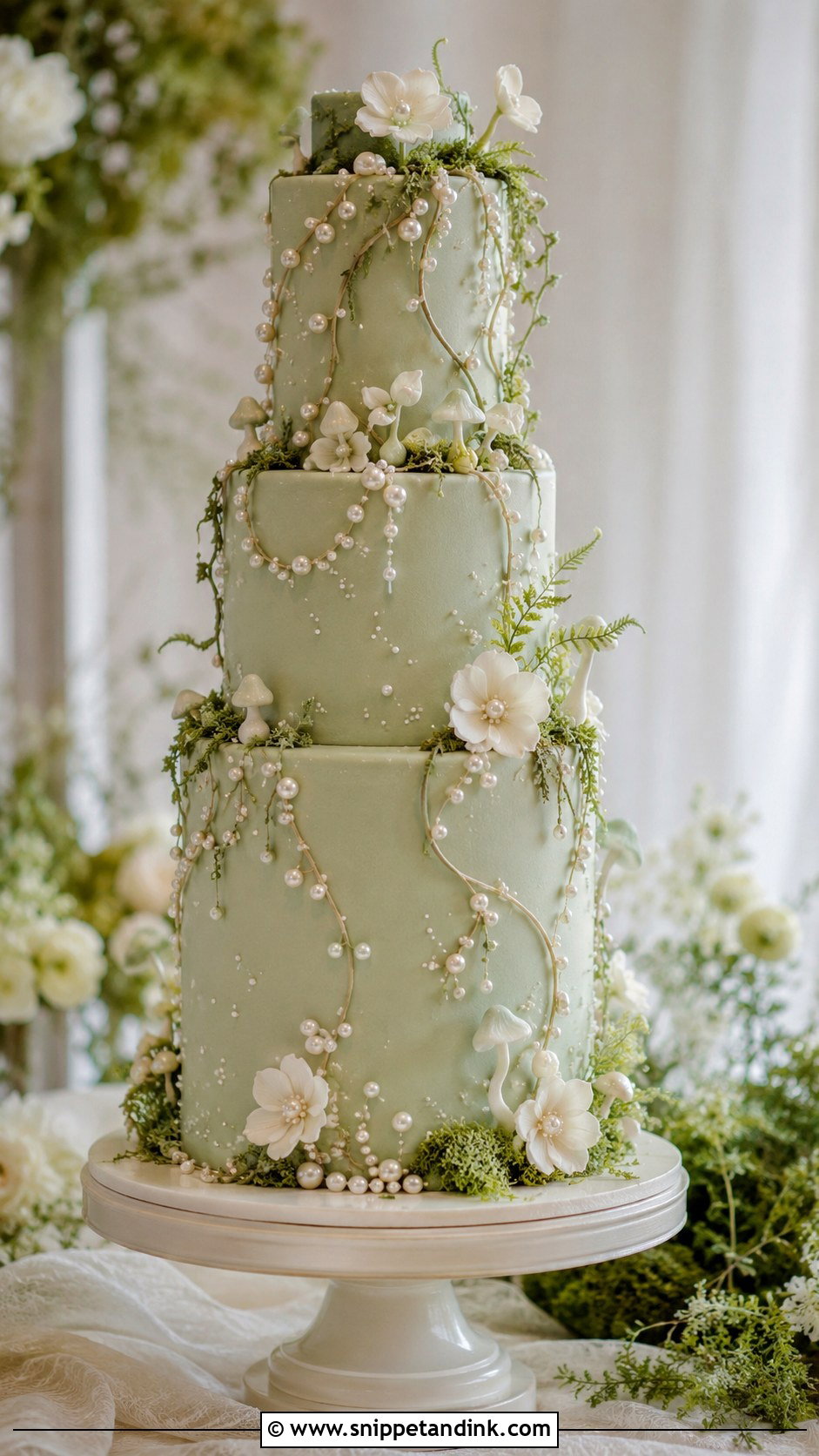
Pearls on a woodland cake should look like dew, so I scatter them unevenly along vines and around blossoms instead of lining them up. Small sugar pearls or rolled fondant pearls brushed with pearl luster both work. Pair them with white blossoms and a light touch of moss. This is the version for couples who want the fairy feel without anything rustic, and it sits especially well on a pale sage cake.
16. Forest Fairy Woodland Animal Wedding Cake
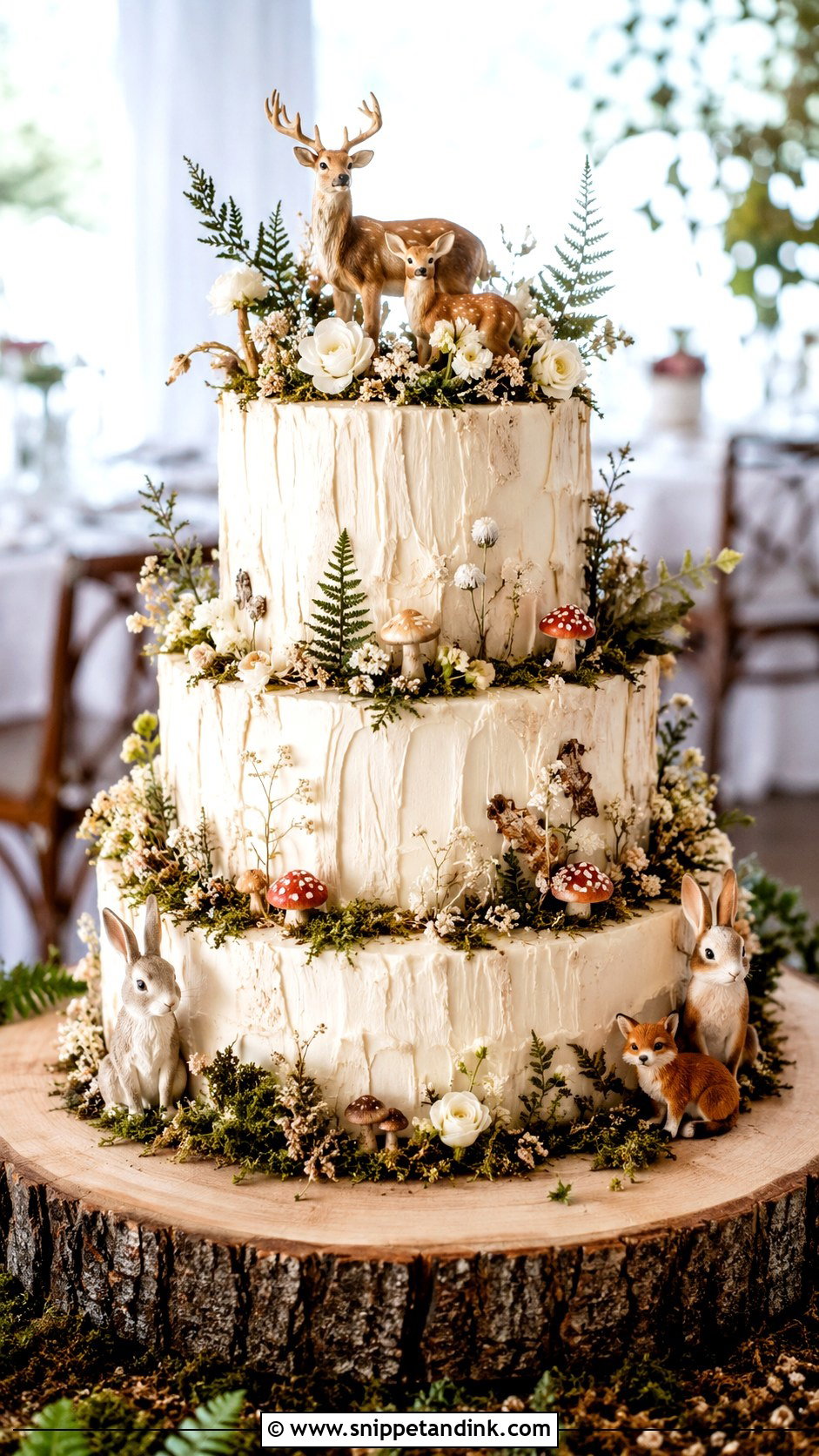
A woodland animal wedding cake stays grown-up only if the animals are small. I sculpt deer, rabbits, foxes or birds from modeling chocolate or fondant, no taller than a thumb, and set them among greenery at the base or between tiers. Realistic shapes and natural colors keep them from turning into cartoons. Sculpted figures take days to dry, so they’re the first thing I make, well before baking starts.
17. Forest Fairy Drip Wedding Cake
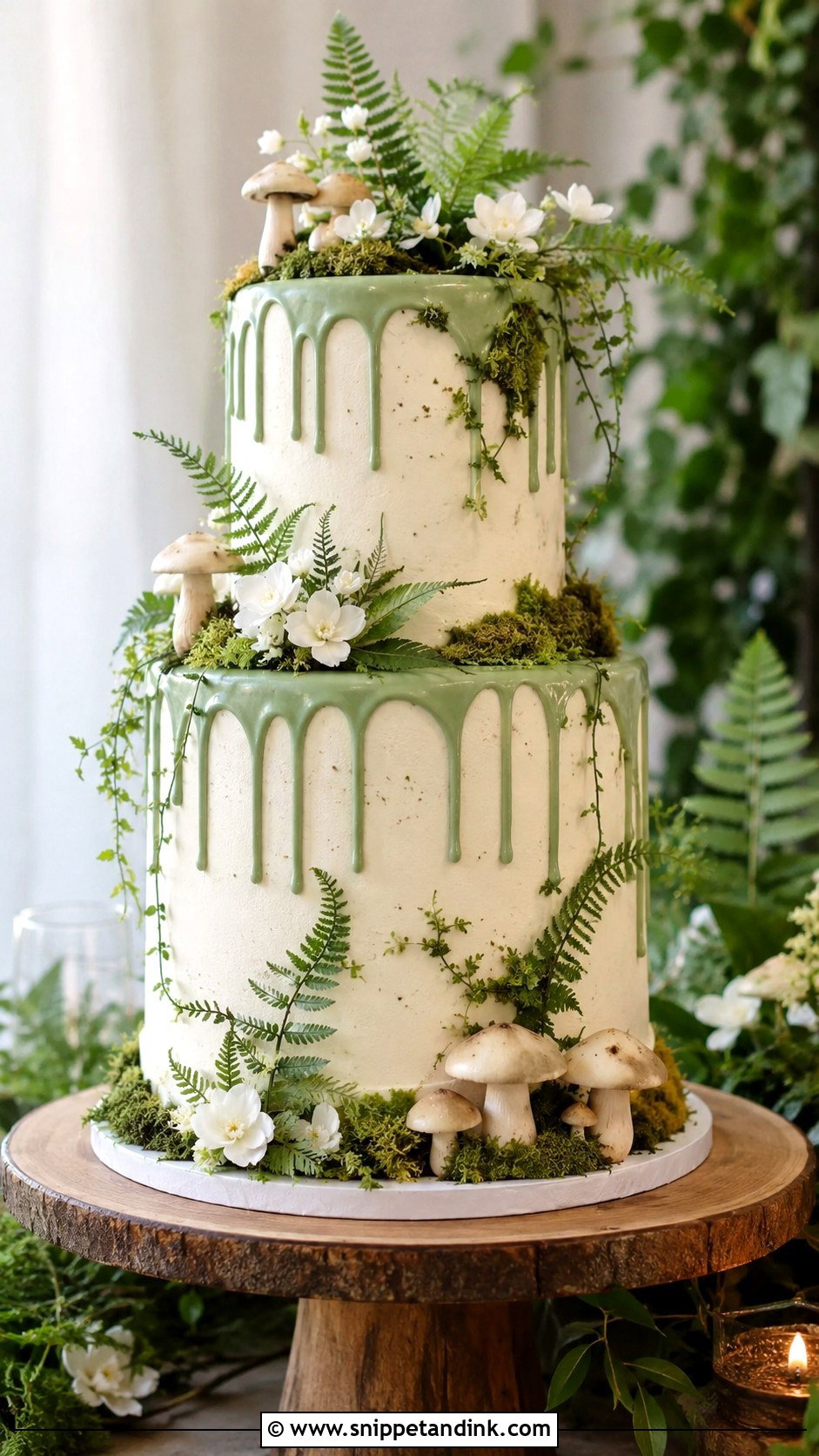
A drip only suits this theme when it’s thin and controlled. White chocolate, caramel or a pale gold drip over chilled buttercream runs short and neat; on a warm cake it runs all the way to the board. I test the ganache’s temperature on the side of a cold glass before touching the cake. Moss crumbs, sugar mushrooms and small fern accents go on after the drip sets. A semi-naked base works under it too.
18. Forest Fairy Ombre Wedding Cake
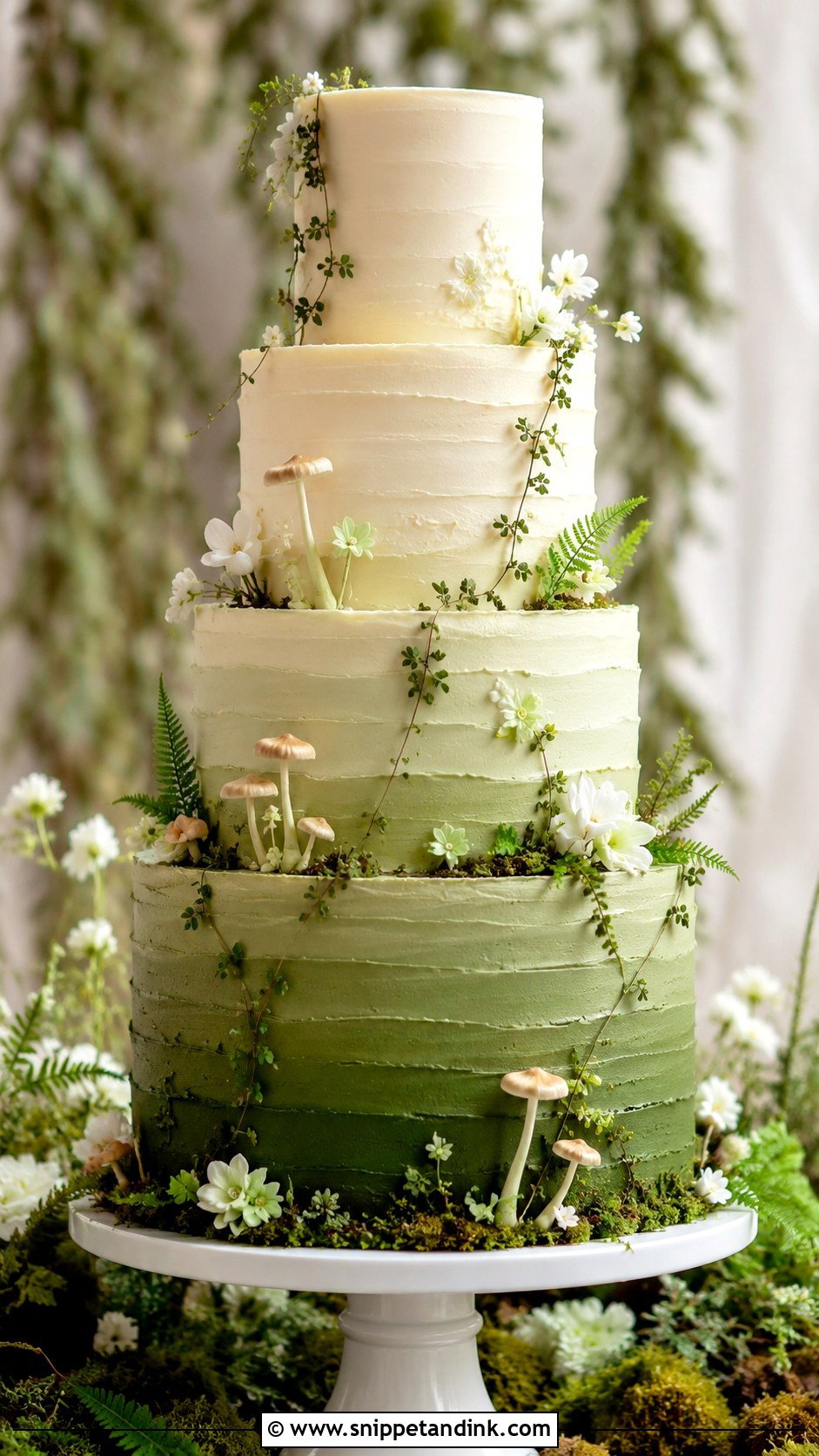
Ombre does a lot with very little. I divide one batch of buttercream into tints, deepest for the base, and spread them in bands before smoothing so the edges blend. Ivory to sage reads soft, while sage to deep green feels more like real forest. Smooth finishes look modern; textured palette-knife strokes feel more organic. A few flowers and vines near the base are plenty.
19. Forest Fairy Tiered Wedding Cake
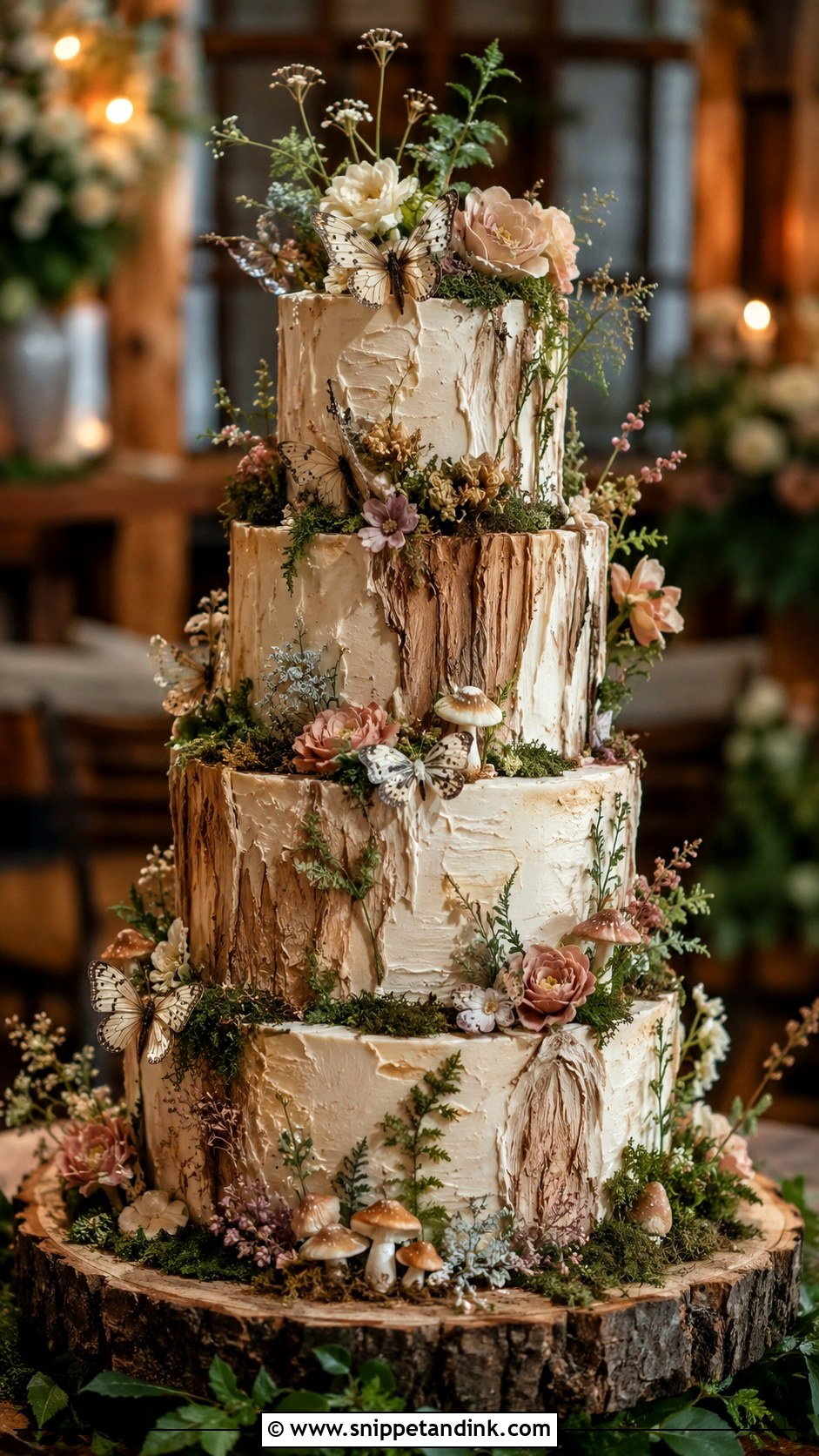
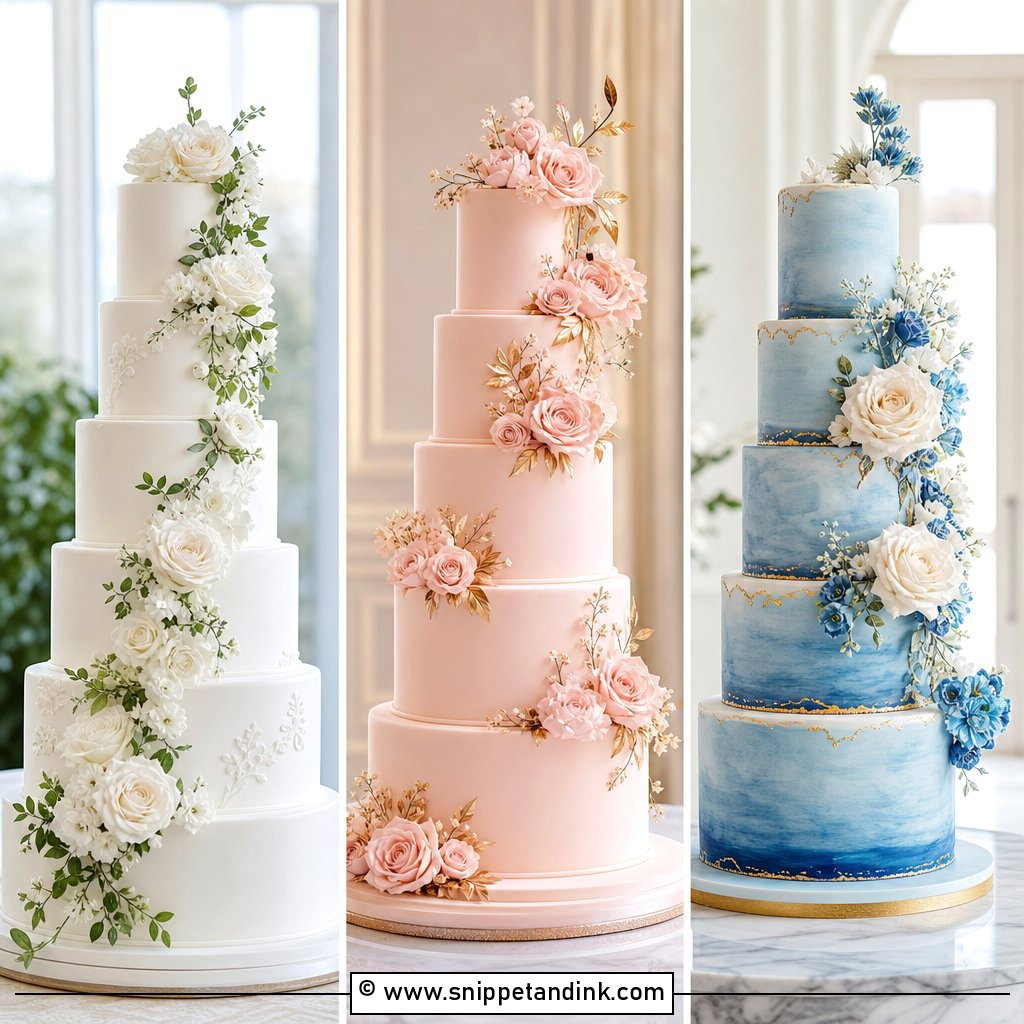
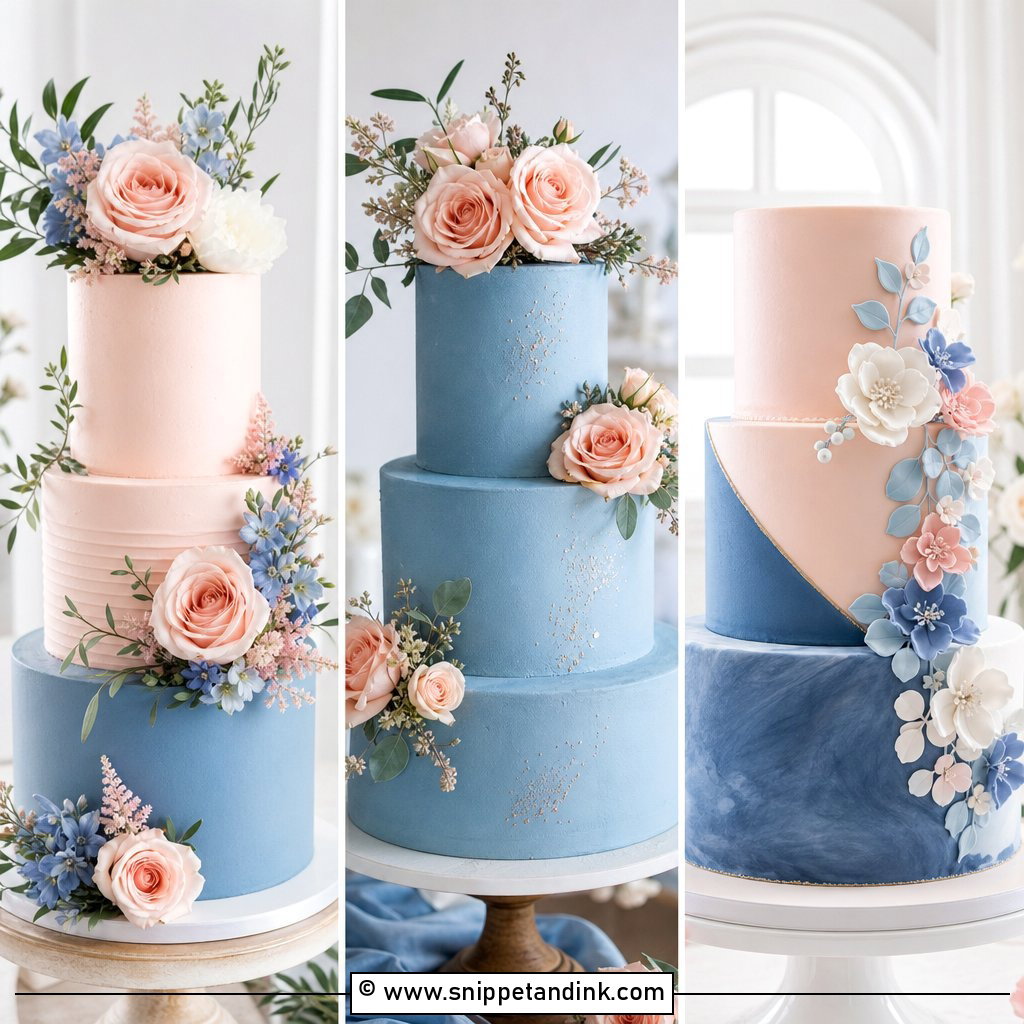
A tall tiered cake gives each layer room for a different detail: bark on one, moss on another, wildflowers on a third. The risk is a cake that looks like five separate cakes stacked up. I tie them together with one palette and one element that travels the full height, usually a vine or a run of flowers. It needs internal supports in every tier, and placed against trees or greenery, the whole thing should read as one enchanted forest scene.

20. Forest Fairy Castle Wedding Cake
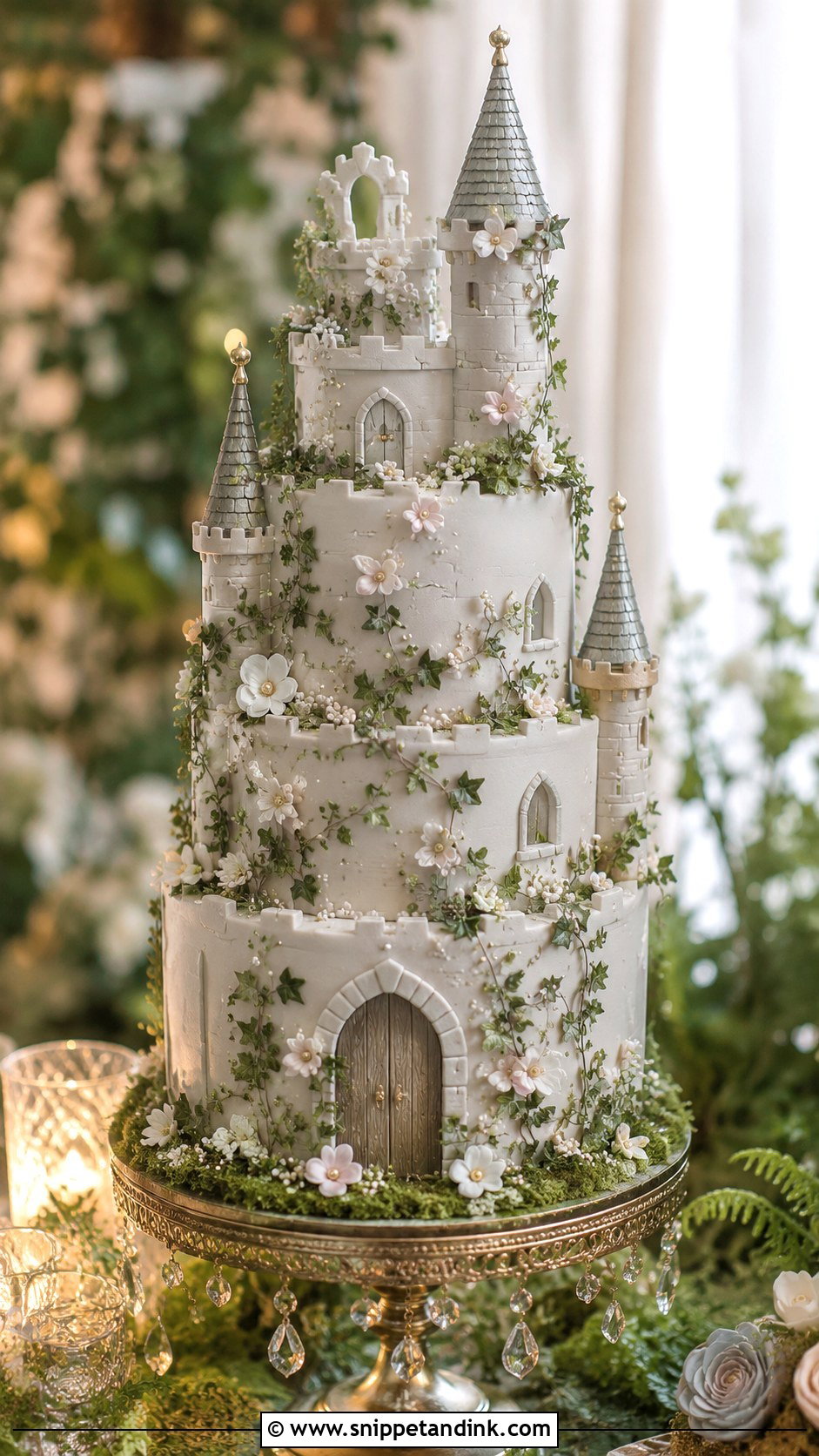
A castle is the most storybook choice here, and the hardest to keep tasteful. I make the turrets from cake or rice cereal treats covered in pale stone-colored fondant, keep them short, and let vines and tiny flowers climb the sides. Ivory or pale stone tones stop it from looking like a princess party. Turrets are heavy, so each needs its own board and supports, and they’re added only once the cake reaches the venue.
Flavors That Taste Like the Cake Looks
A woodland cake invites flavors with a little earthiness, and the inside should match the outside. These are pairings I’d happily suggest at a tasting:
- Pistachio sponge with raspberry, which also gives you naturally green crumbs for moss.
- Earl grey with honey buttercream, gentle and fragrant.
- Hazelnut and dark chocolate, which suits a bark finish.
- Lemon and elderflower, light enough for a summer afternoon.
- Spiced apple or carrot with brown butter frosting for an autumn wedding.
Keep at least one familiar flavor on a tiered cake alongside anything unusual. Not every guest wants matcha.
Heat, Damp Air and Wasps at an Outdoor Reception
Forest weddings usually happen outdoors, and outdoors is hard on cake. Buttercream softens in a warm tent, wafer paper and isomalt pick up moisture from the air, and fruit and sugar draw wasps within minutes.
Ask the venue for a shaded spot, ideally indoors, where the cake can wait until shortly before the cutting. If it must sit outside for hours, choose fondant over firm ganache, keep fresh fruit and wafer paper to a minimum, and place the table out of the afternoon sun’s path. A light mesh dome over the cake keeps insects off without hiding it from guests.
Let the Forest Be the Accent, Not the Whole Cake
The woodland designs that work best mix one or two forest textures with a soft bridal base. Moss, mushrooms, ferns, bark, butterflies, pressed flowers and gold can all work, just not all at once. Think about the venue, the season and how formal the evening will be. A naked moss cake suits a daytime outdoor wedding, while an evening reception can carry gold, pearls or a moon. Then ask your baker what each detail is made of and how it will hold up where your cake will sit.
You'll Like These Ideas:











Leave a Reply