
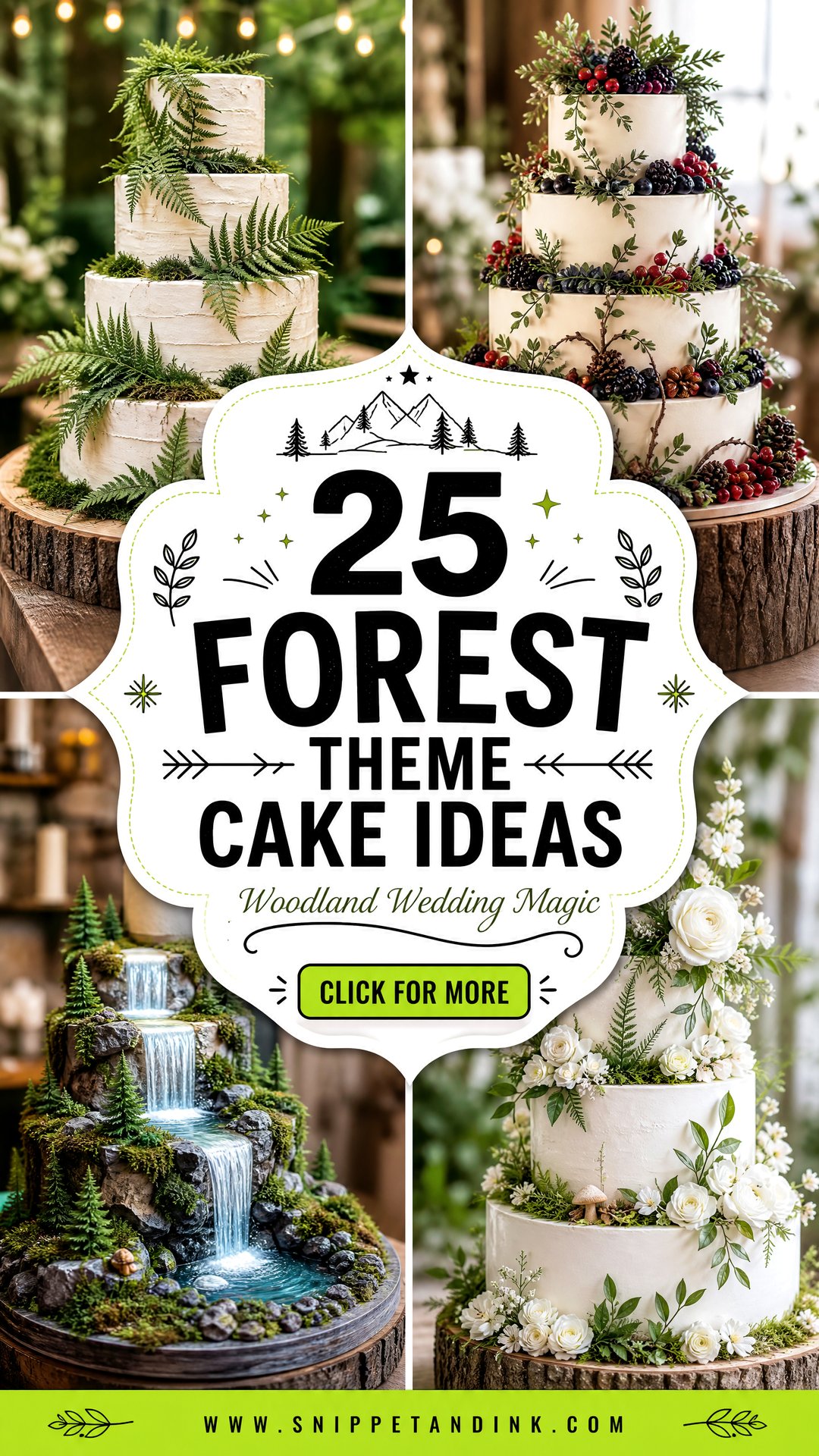
A woodland cake is one of my favourite briefs to get, because the forest gives you so much to borrow: moss, fern fronds, bark, mushrooms, berries and that low candlelit woodland styling couples love. The theme stretches further than people expect. It can be rustic for a barn, moody for a lodge, or quite pared back for a garden reception. What decides the direction is usually the venue and the flowers you’ve already booked. Below are 25 forest cakes, with notes on how each one is made and where it tends to cause trouble.
Moss, Bark and Mushrooms Are Mostly Sugar
Most of what looks foraged on a forest cake is made in my kitchen, and knowing how each texture is built helps you understand quotes and lead times. Moss is tinted sponge crumb or piped buttercream. Bark is comb-scraped icing, modeling chocolate pressed on a texture mat, or tempered chocolate shards. Mushrooms, leaves and acorns are gum paste, shaped and left to dry for several days so they hold their form.
- Piped and crumb textures are quick and cheap but soften in heat.
- Sugar leaves, mushrooms and animals take days of drying, so order them early.
- Chocolate bark looks the most real but needs a cool room to stay crisp.
- Painted fondant is the hardiest choice for long outdoor displays.
When you send inspiration photos, I’ll tell you which elements are labour-heavy. Often we can keep the look and swap one handmade detail for a piped one to bring the price down.
1. Forest Wedding Cake With Moss
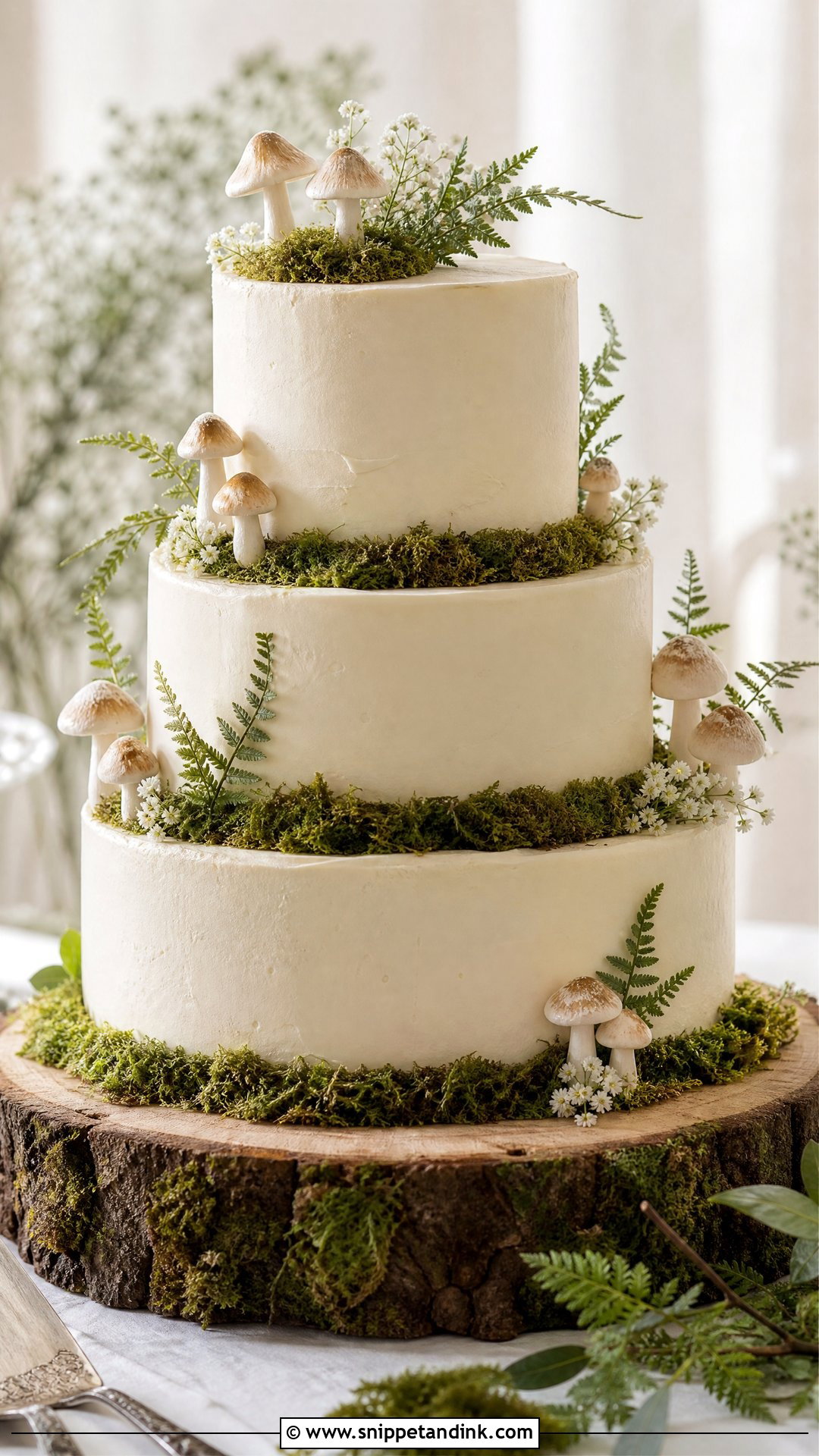
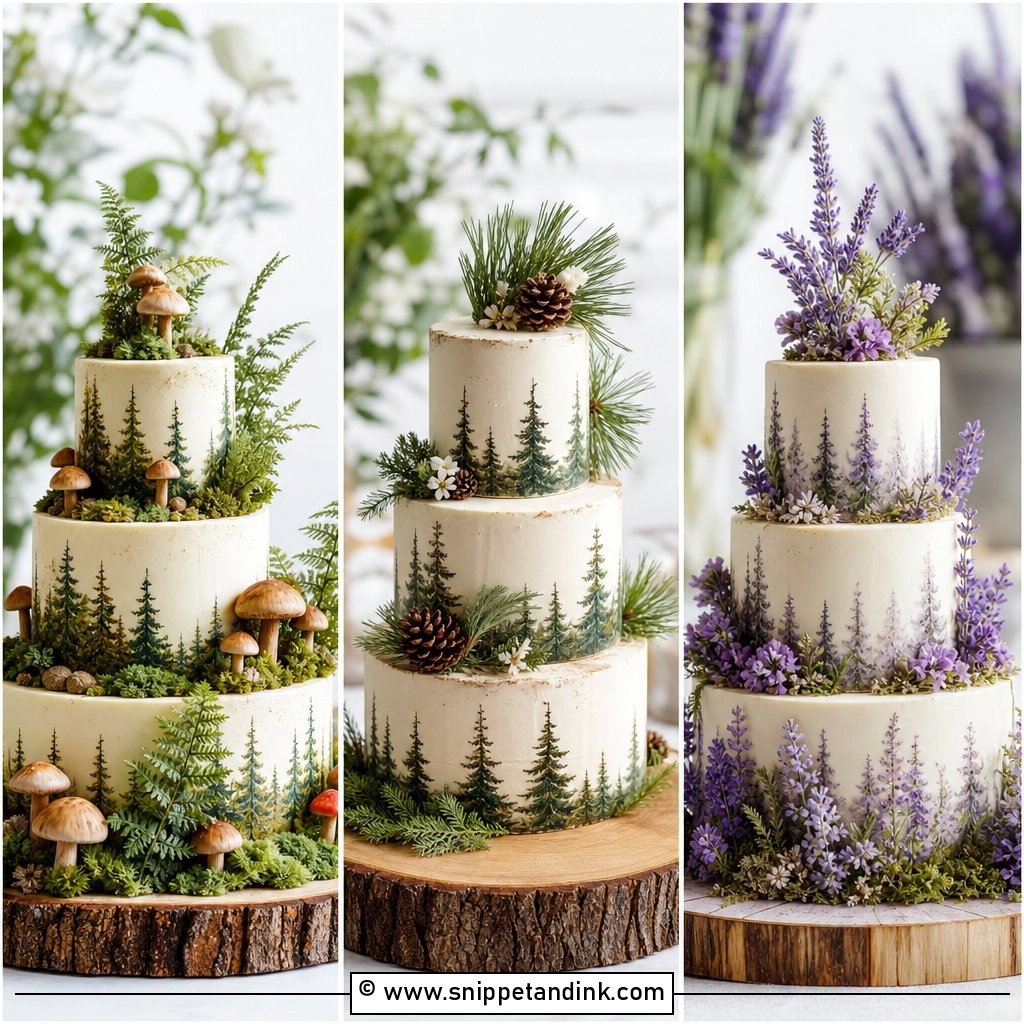
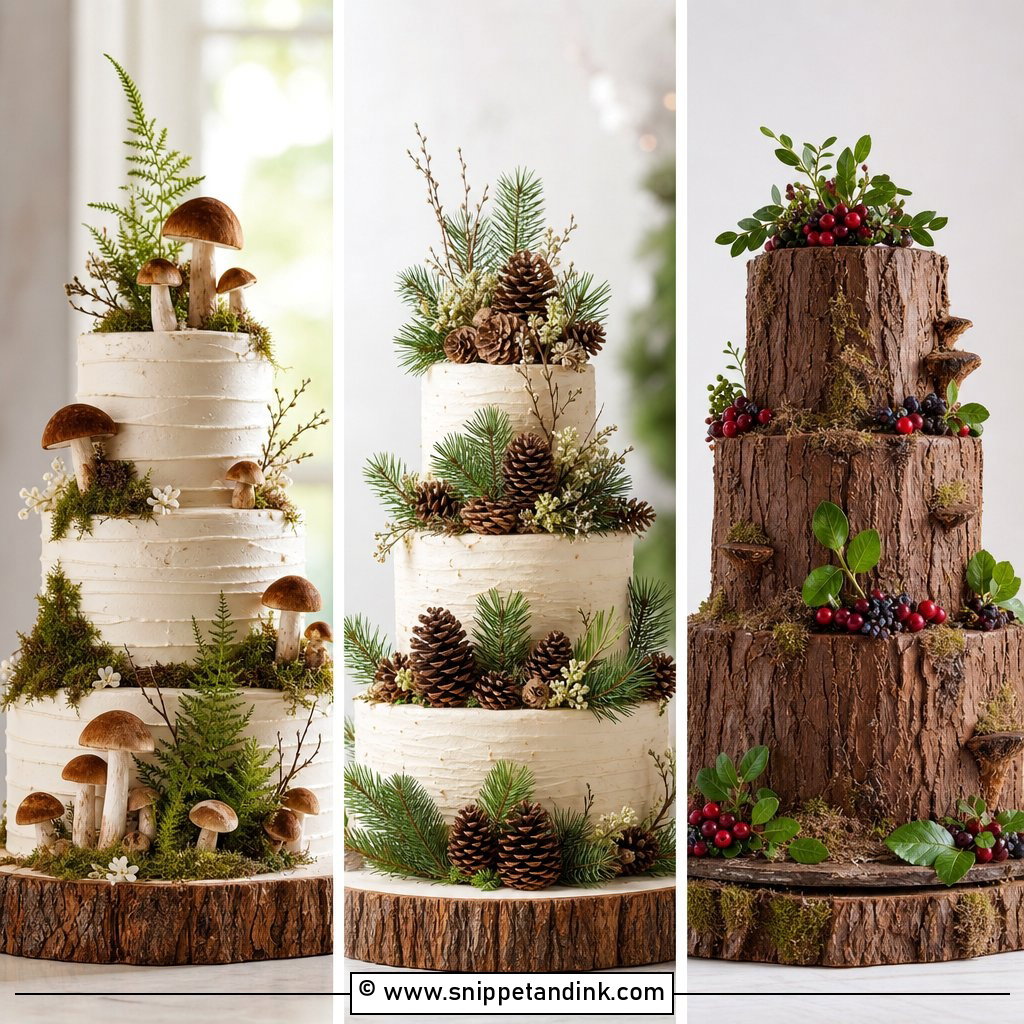
Moss is the detail most couples ask for first. On a cake it’s almost never real moss; I make it from green-tinted sponge crumbs, crushed biscuits or buttercream pushed through a fine grass tip, which gives that springy, uneven pile. It looks most convincing tucked into the ledges between tiers and pooled around the base, not spread evenly like a lawn. A pale stone or ivory icing keeps the green from going muddy. Two or three sugar mushrooms and a fern are plenty.
2. Woodland Wedding Cake With Mushrooms
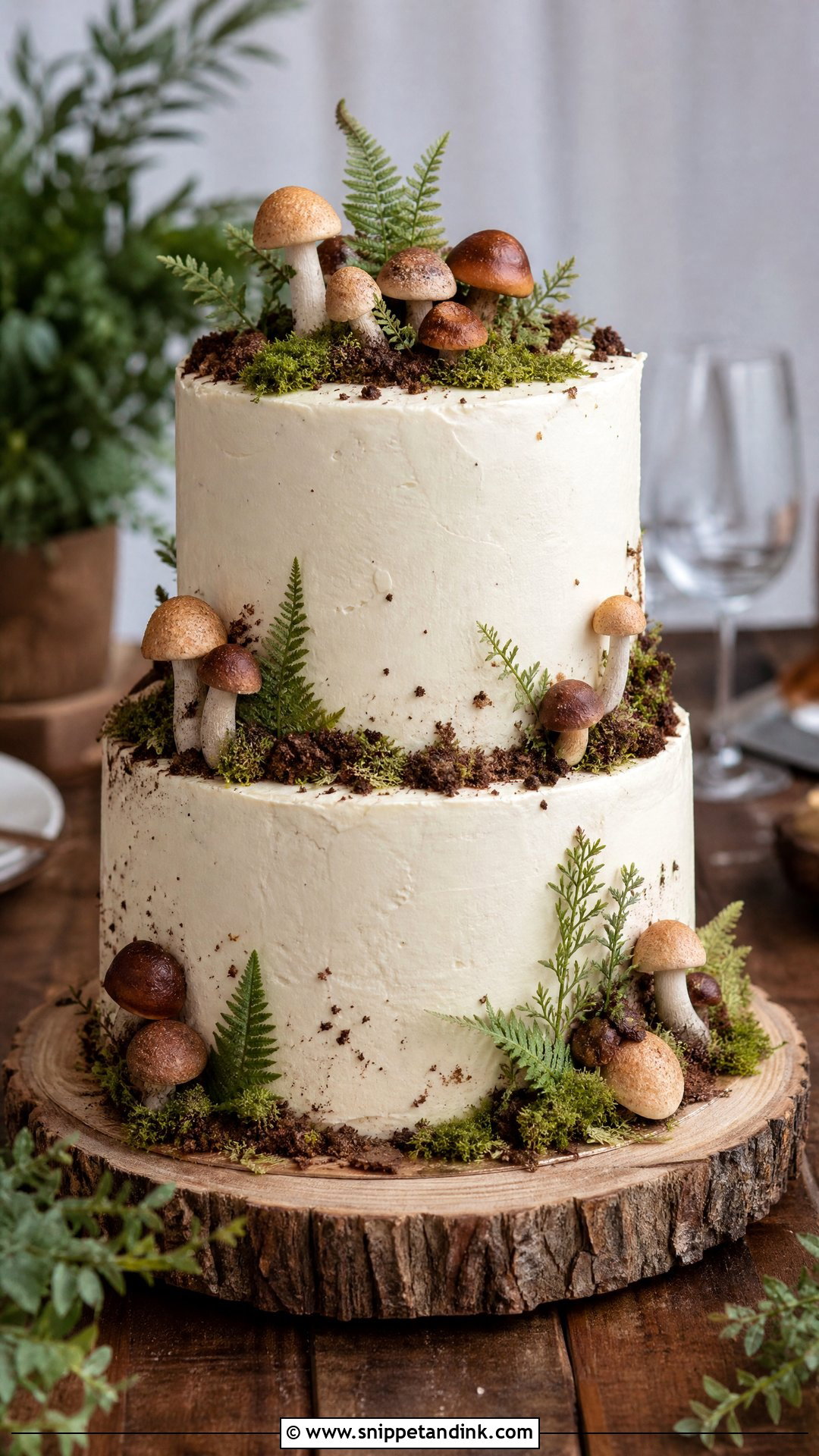
Mushrooms can tip into novelty quickly, so I keep the caps in cream, caramel, chestnut and a dusty red rather than the bright spotted toadstool. Sugar mushrooms are made days ahead and dried hard, which means they can sit on buttercream without wilting. I group them at the foot of a tier, like they grew there, and leave the top clean. Underneath, chocolate, almond or a spiced sponge suits the autumn-floor mood.
3. Tree Stump Wedding Cake
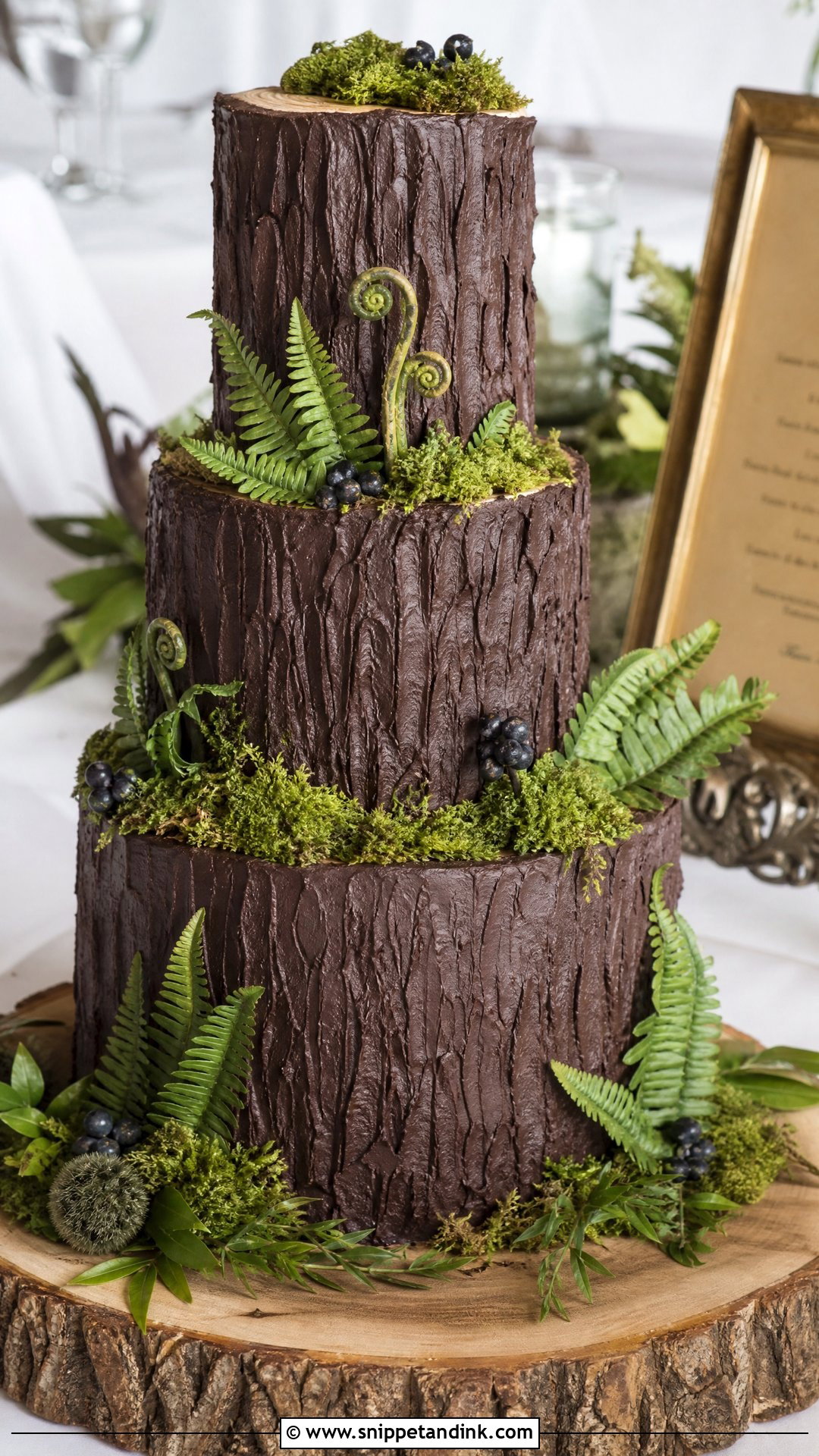
A tree stump wedding cake works because the bark hides small imperfections that a smooth finish would show. I usually build it in chocolate buttercream scraped with a comb or in modeling chocolate pressed with a bark mat, then score growth rings into the top tier. Stacked stumps need proper dowels and boards like any tiered cake, since the weight is the same. Set it on a wood slice and you need very little else.
4. Enchanted Forest Wedding Cake
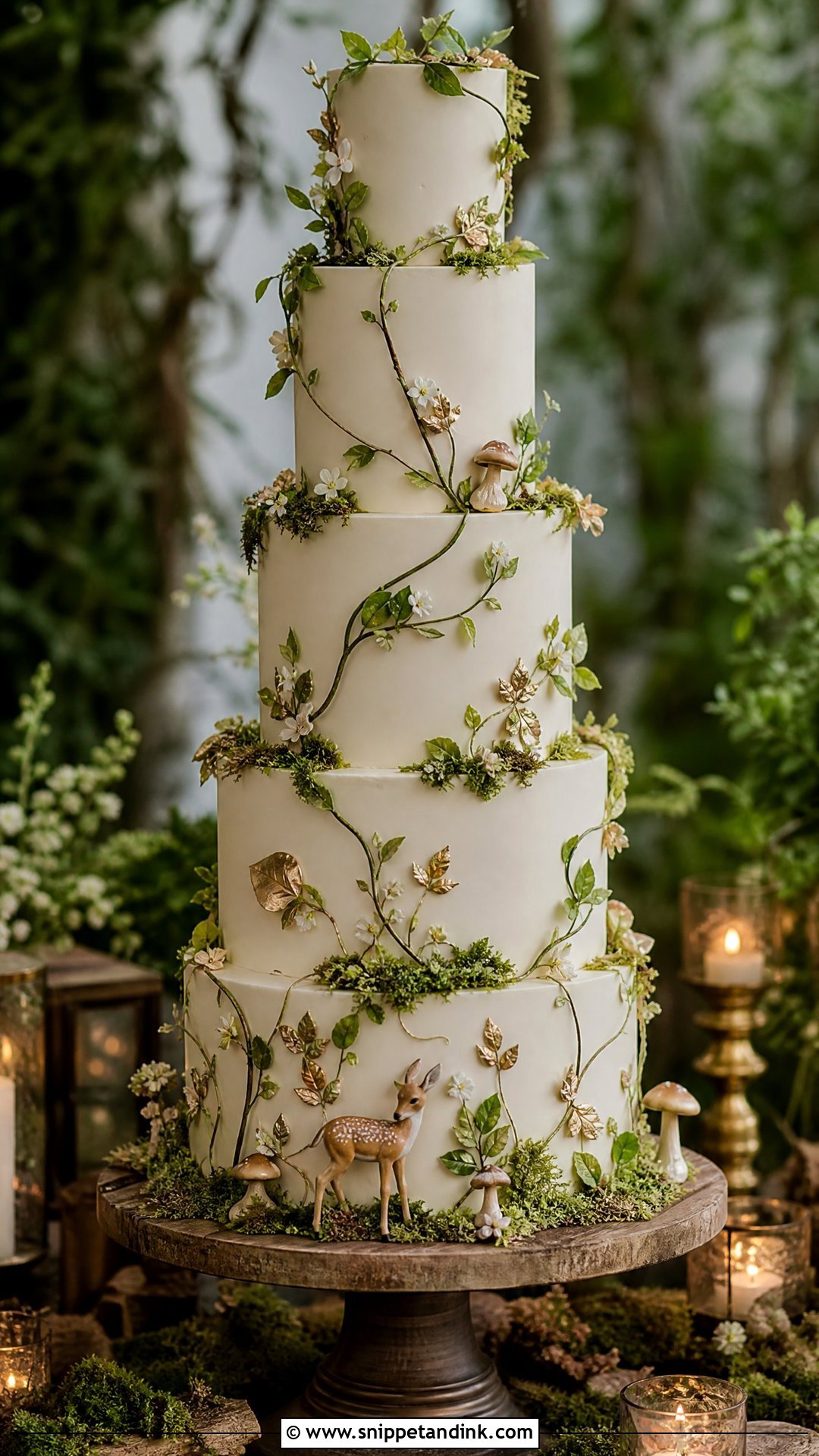
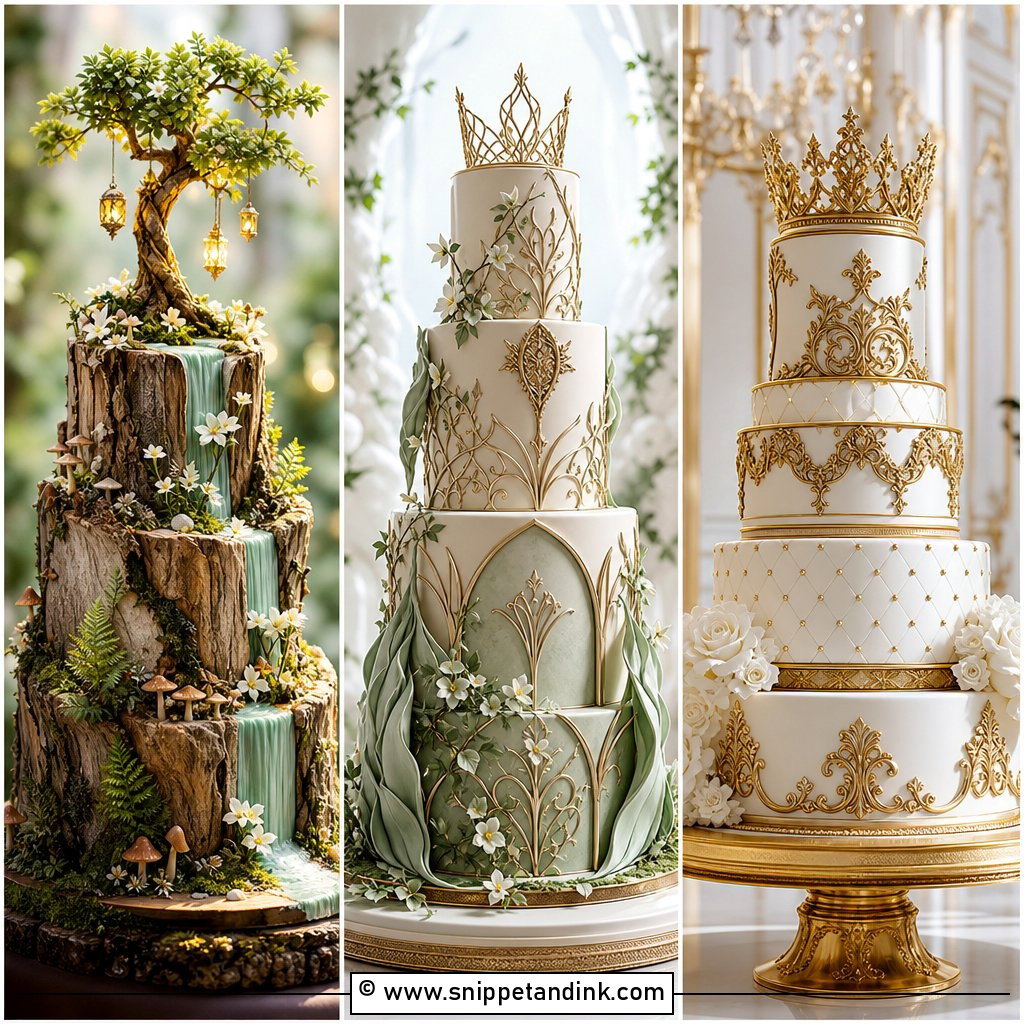
With an enchanted forest wedding cake the risk is a children’s storybook look. My fix is height and restraint: tall tiers in ivory or very pale green, then a single vine climbing from the base with tiny blossoms and a scatter of gold leaf. Pearls and moss can join in, but not everywhere. The extra height gives the vine room to travel, which is where the sense of movement comes from. It sits well beside velvet linens and heavy greenery.
5. Rustic Forest Wedding Cake
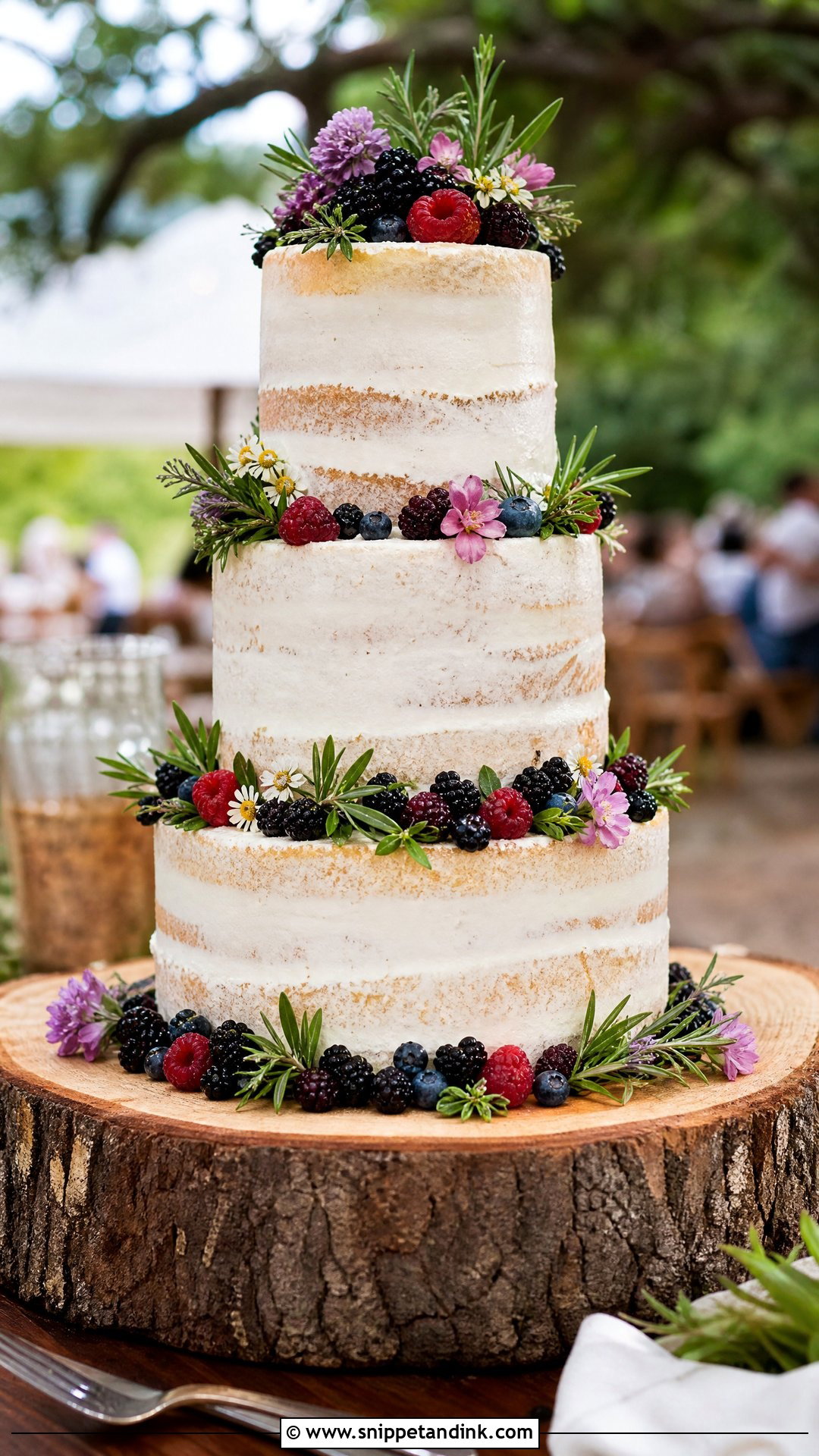
Semi-naked cakes are relaxed, but they dry out faster than fully iced ones because so much sponge is exposed. I bake them as close to the day as possible and keep them covered until setup. Herbs, figs, berries and fern-style greenery suit the bare edges. Vanilla bean, carrot, honey or chocolate all work. The goal is handmade, and the line between handmade and unfinished is in the neatness of the scrape, so that’s where I spend my time.
6. Forest Wedding Cake With Ferns
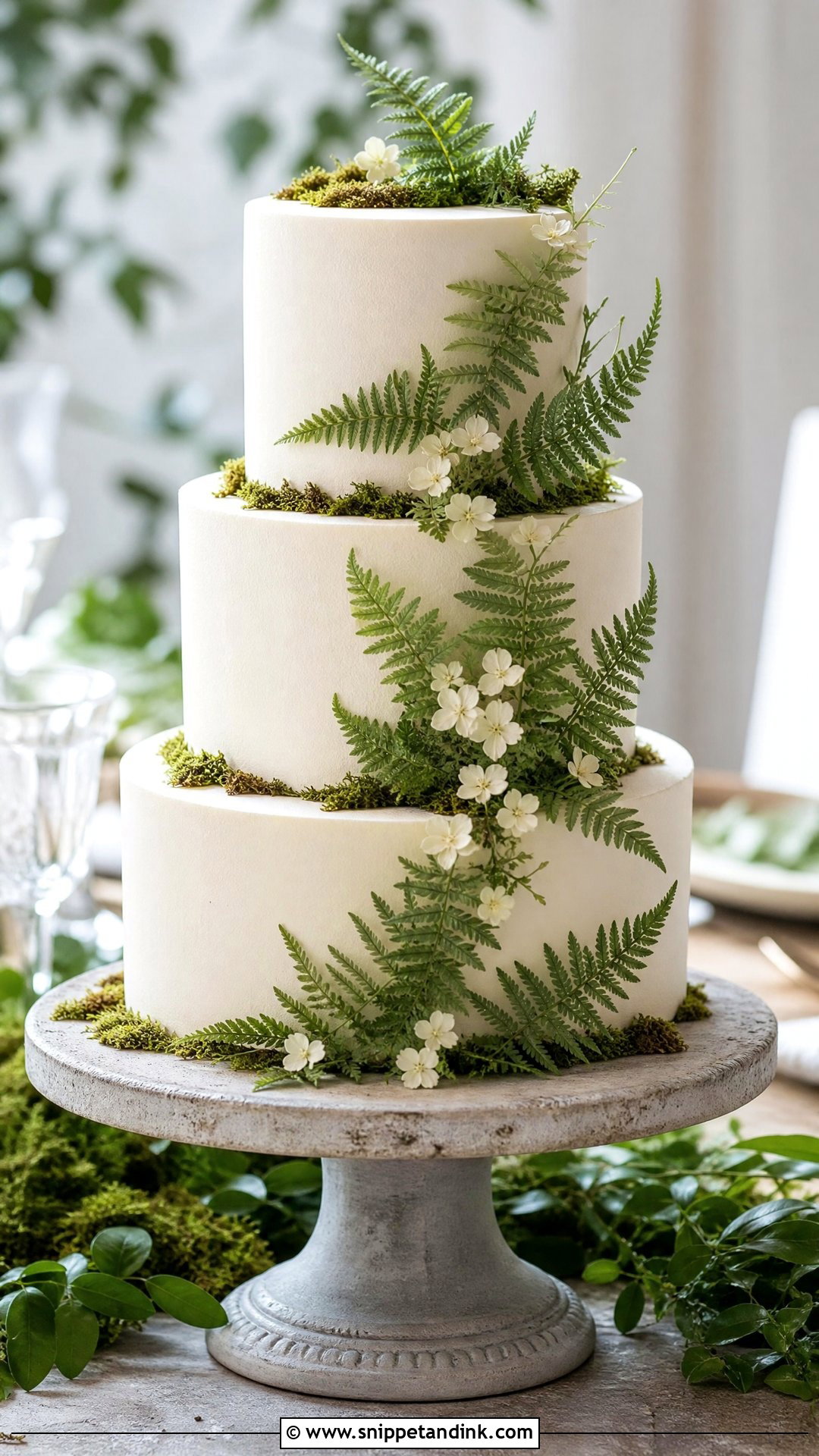
Ferns give a cake movement without any colour, which is why greenery-first couples like them. Here’s the catch: real fern fronds are not something I’d put against icing, so I either pipe them, paint them onto fondant or cut them from sugar paste. If your florist supplies fresh fronds, they need a barrier and must never touch the slice that gets served. A diagonal sweep across ivory or sage buttercream reads more natural than a ring at every tier.
7. Dark Forest Wedding Cake
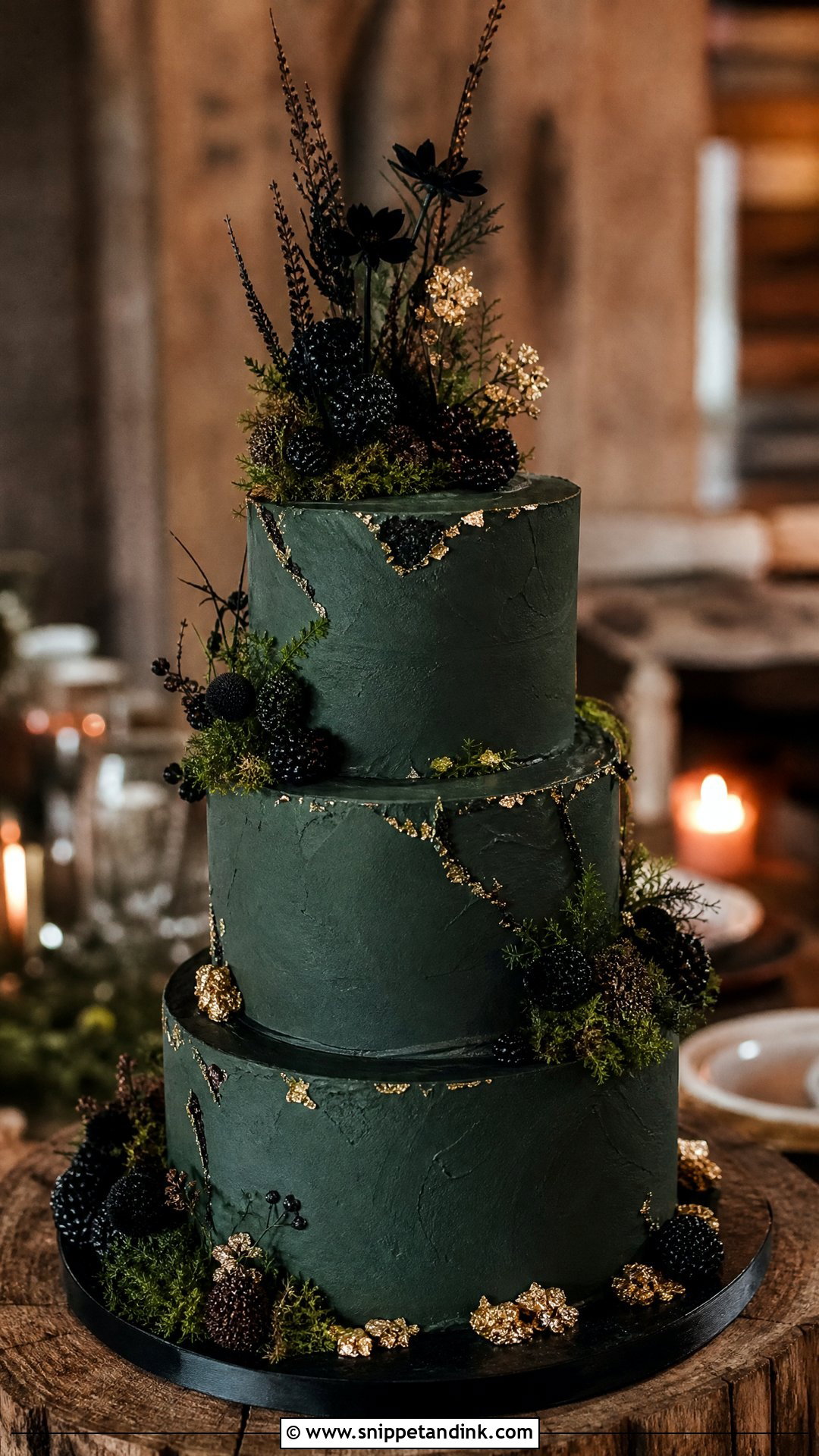
Dark icing is dramatic and slightly tricky. To get a true charcoal or forest green in buttercream I build the colour the day before, because it deepens as it rests, and I warn couples that very dark colours can tint lips and teeth. A dark chocolate ganache finish avoids that problem altogether. Gold leaf, blackberries and dried flowers read clearly against it, especially in an evening room with candles. Inside, espresso, blackberry or spiced chocolate carries the same depth.
8. Forest Wedding Cake With Wildflowers
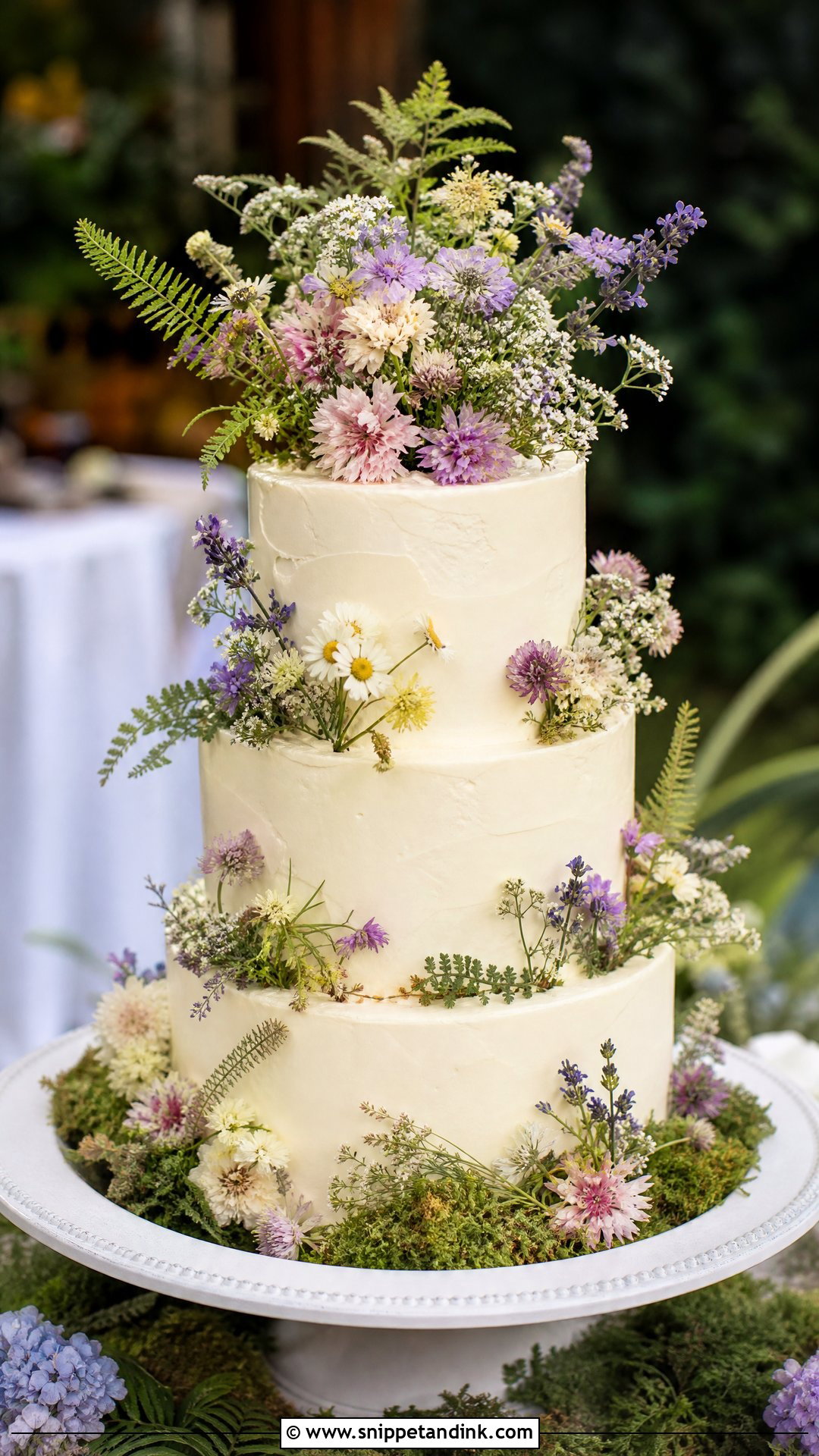
Wildflower designs only look wild if the placement is loose. I gather small blooms in cream, lavender, butter yellow and dusty blue in uneven clusters, as if they were picked on a walk, then add a frond or two and a little moss. Bright, saturated colours tend to look artificial next to green. Lemon elderflower, almond, honey or a berry-filled vanilla all match the fresh feel, and this one suits an outdoor afternoon reception.
9. Forest Wedding Cake With Pine Cones
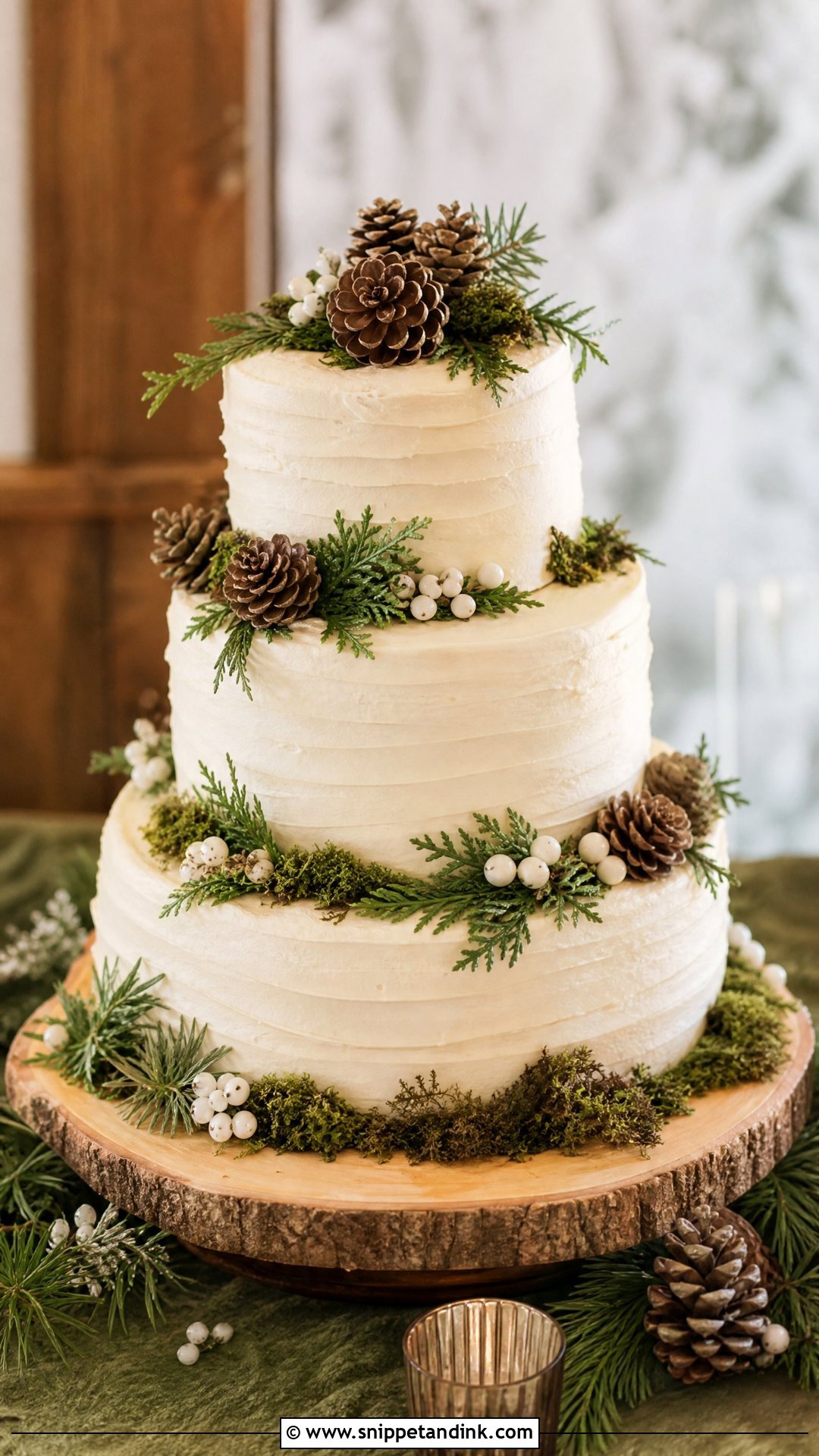
Pine cones are the detail I’m most careful with. Real ones carry resin, dust and sometimes insects, so on my cakes they’re either sugar or chocolate replicas, or real cones placed on the board and nowhere near anything that gets eaten. Paired with evergreen sprigs, moss and textured icing, they suit mountain and lodge weddings. Keep red berries to a minimum or the cake drifts into Christmas.
10. Forest Wedding Cake With Berries
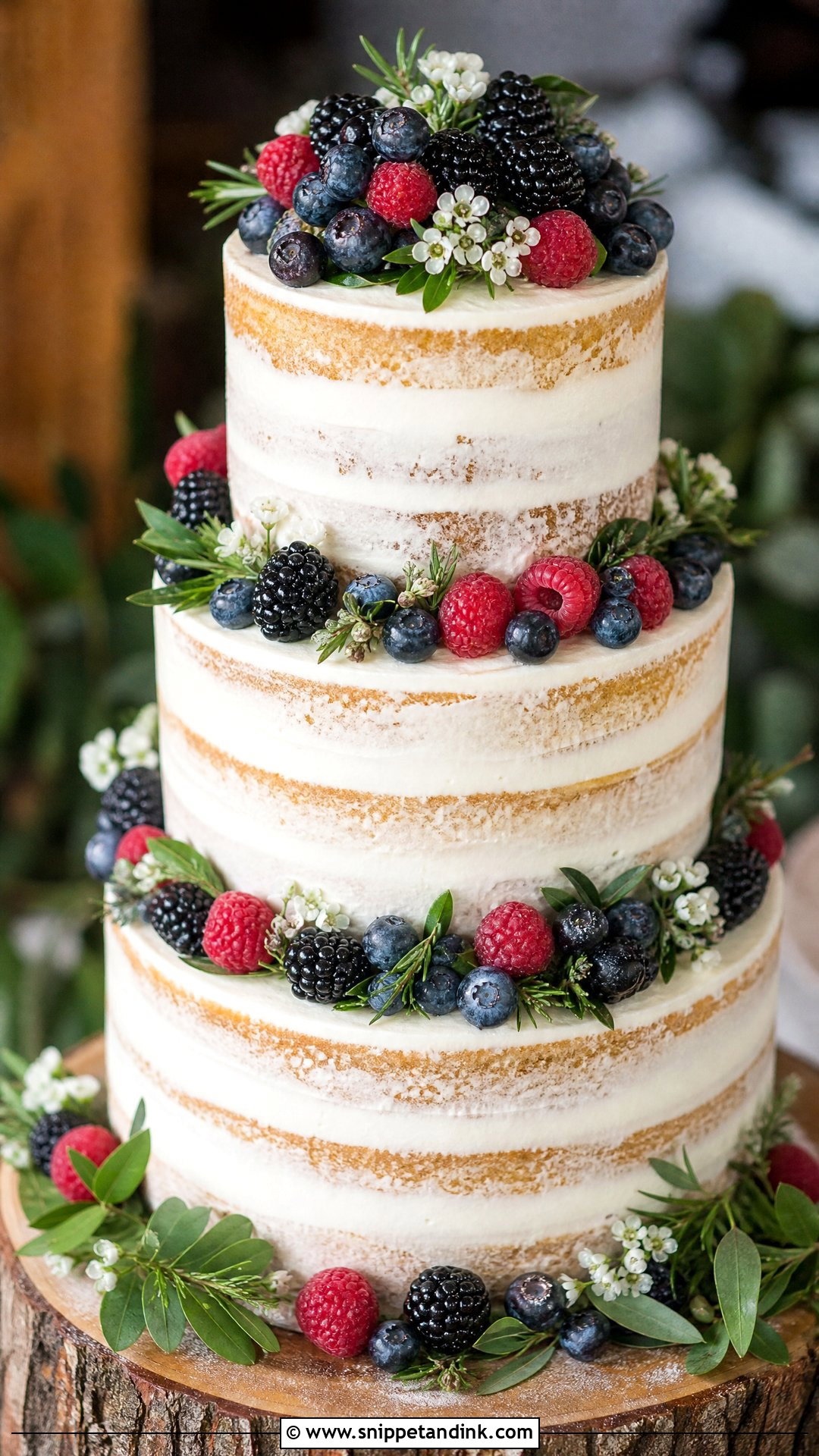
Fresh berries look generous, but they bleed. Raspberries and blackberries will stain white buttercream within a few hours, so I add them at the venue, ideally sitting on a thin layer of ganache or set on small dots of icing. Sugared cranberries and blueberries are more stable. Cluster the fruit at the tier edges and around the stand rather than dotting it evenly, and match the inside with a berry filling.
11. Forest Wedding Cake With Greenery
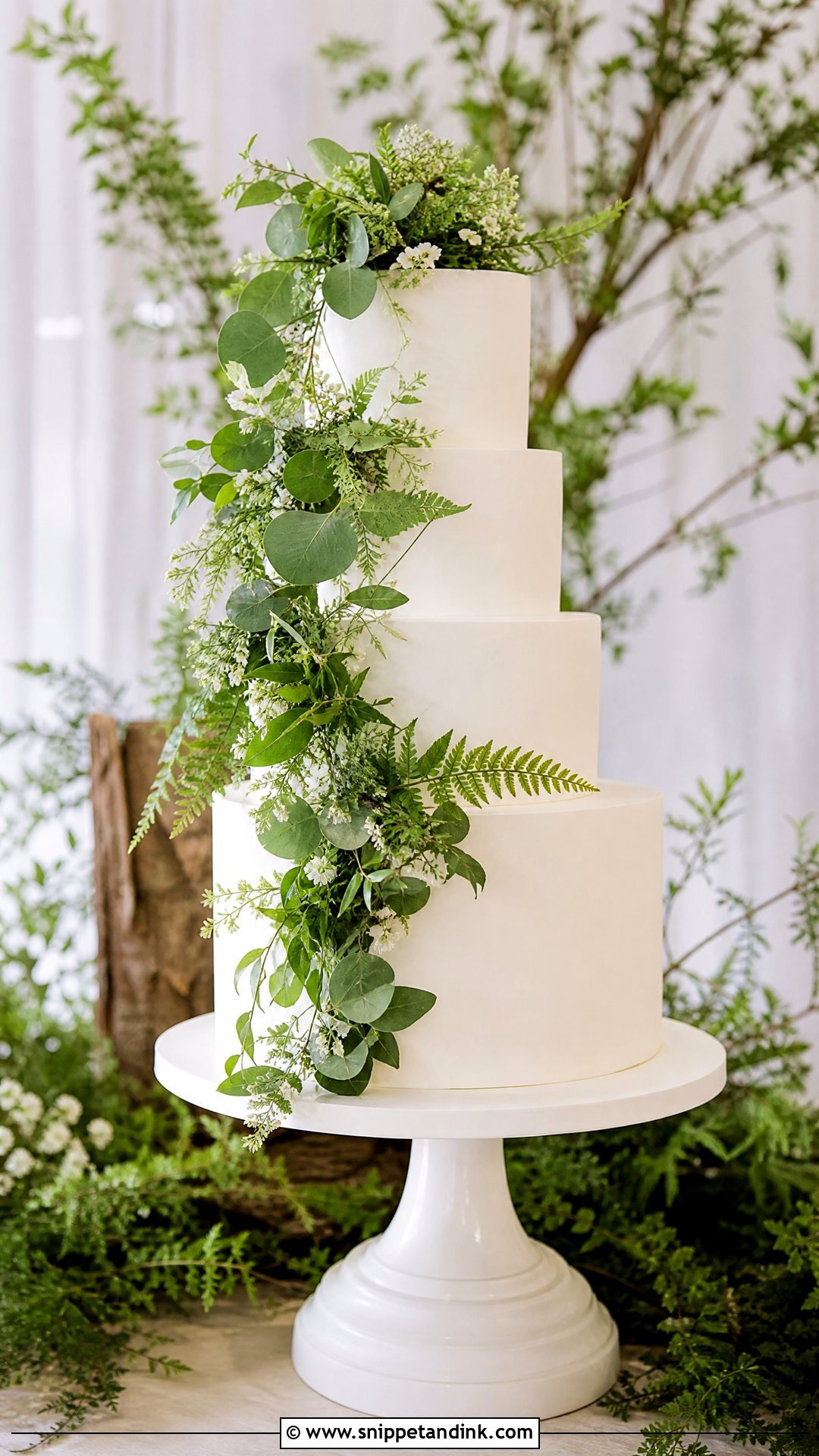
Plain greenery is the forest theme at its quietest: smooth white icing and a cascade of leaves, nothing heavy. The one thing I always check is the species. Eucalyptus is common at weddings and isn’t food-safe, so it has to be wrapped and taped at the stems and kept off the cut tiers, or swapped for olive or bay. A soft cascade down one side makes a short cake read taller, and it ties the cake back to your bouquet and arch.
12. Forest Wedding Cake With Bark Texture
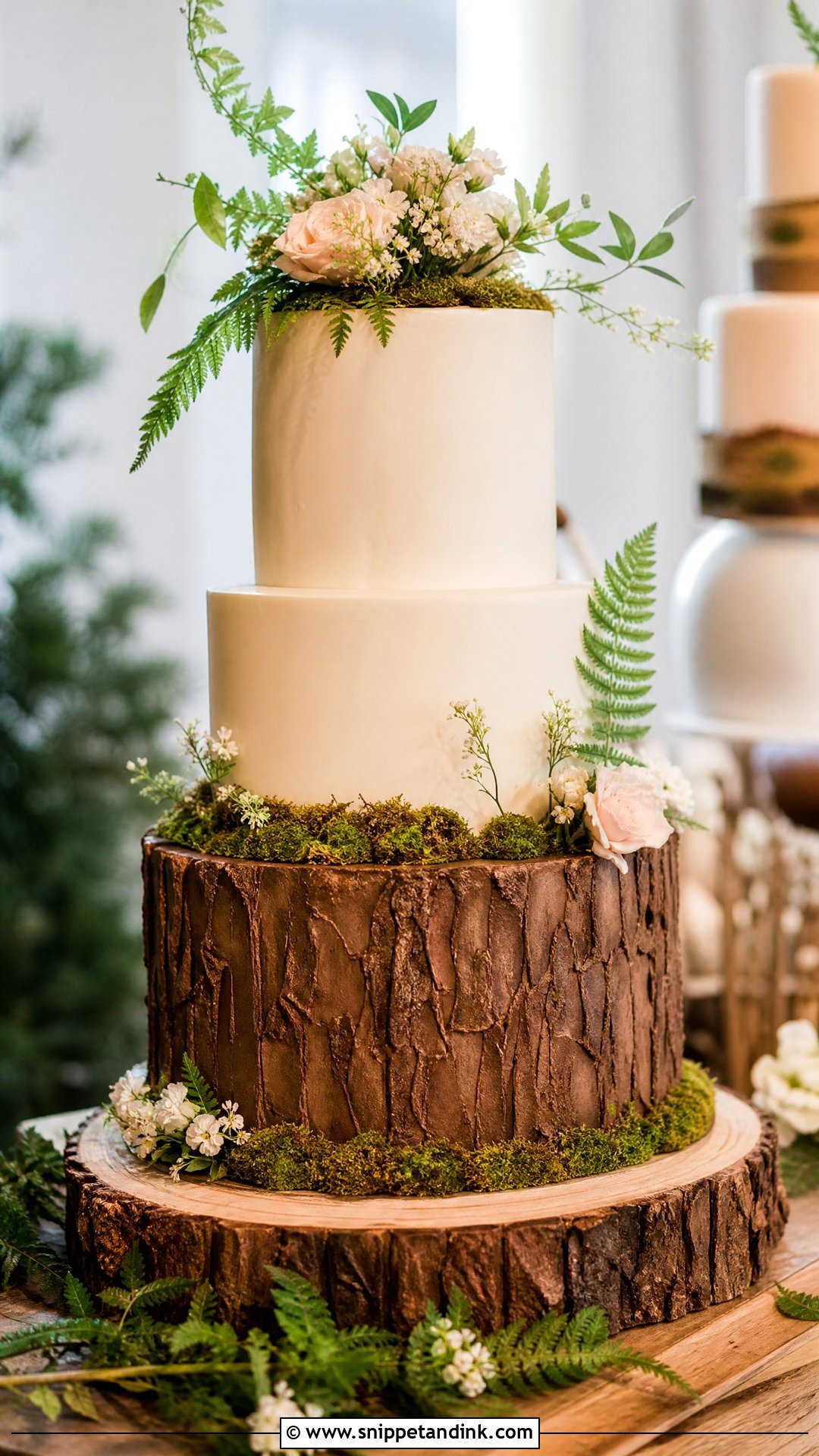
A forest wedding cake with bark texture can be made from chocolate shards, fondant panels or buttercream ridges, and each behaves differently. Chocolate bark is the most convincing but softens in a warm room. Fondant holds up better and takes paint well. My usual balance is one bark tier between two smooth ones, softened with moss and small flowers. Chocolate, maple or hazelnut sponge suits the look.
13. Forest Wedding Cake With Deer Topper
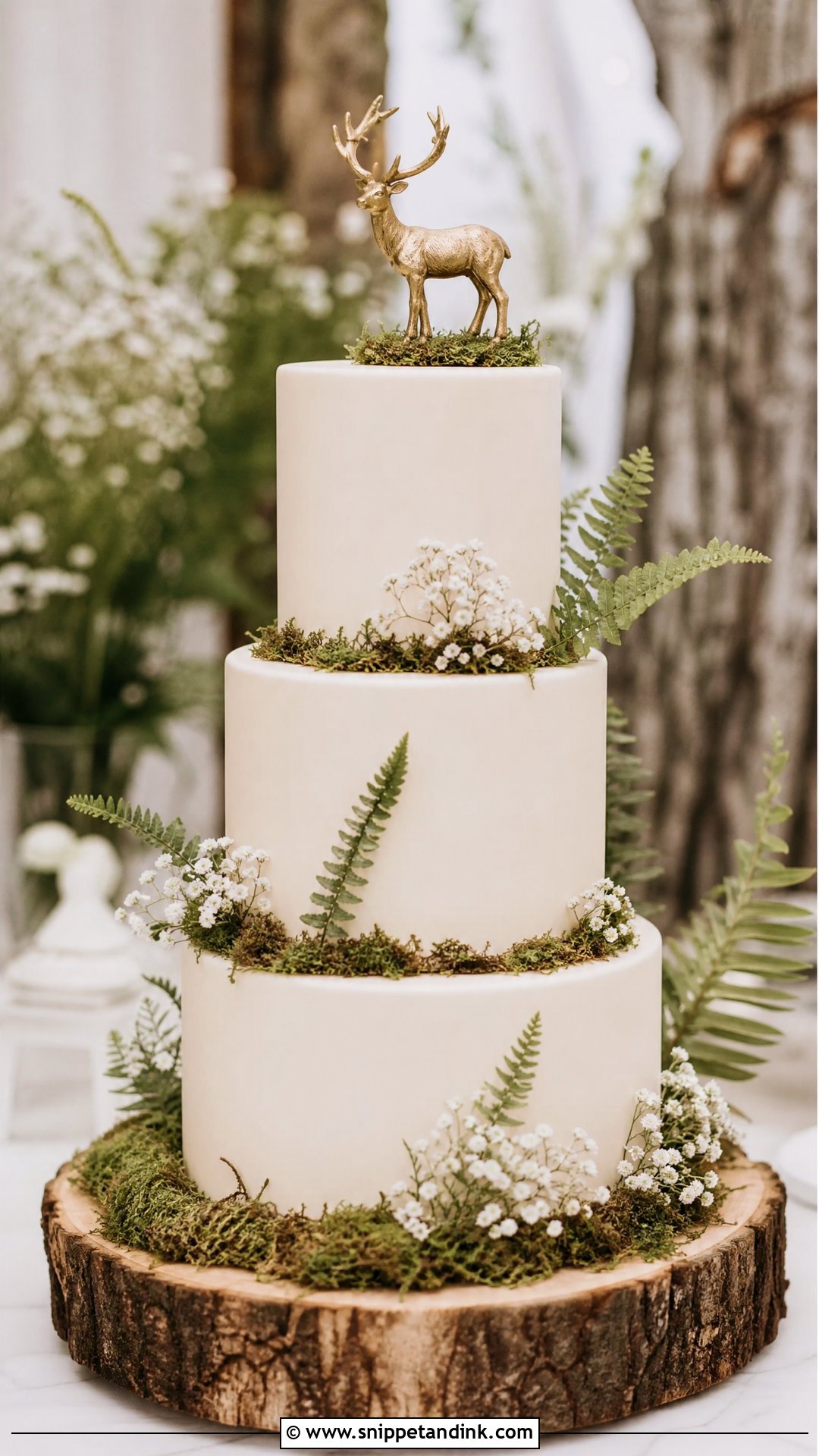
A deer topper gives a tall cake a focal point, but it has to belong. I choose a simple silhouette in white, gold or carved wood, then repeat one or two forest details lower down so the deer doesn’t look dropped onto a plain wedding cake. Heavy toppers need a support rod down into the tiers. Moss, greenery and a few small flowers are enough below.
14. Forest Wedding Cake With Mountain Scene
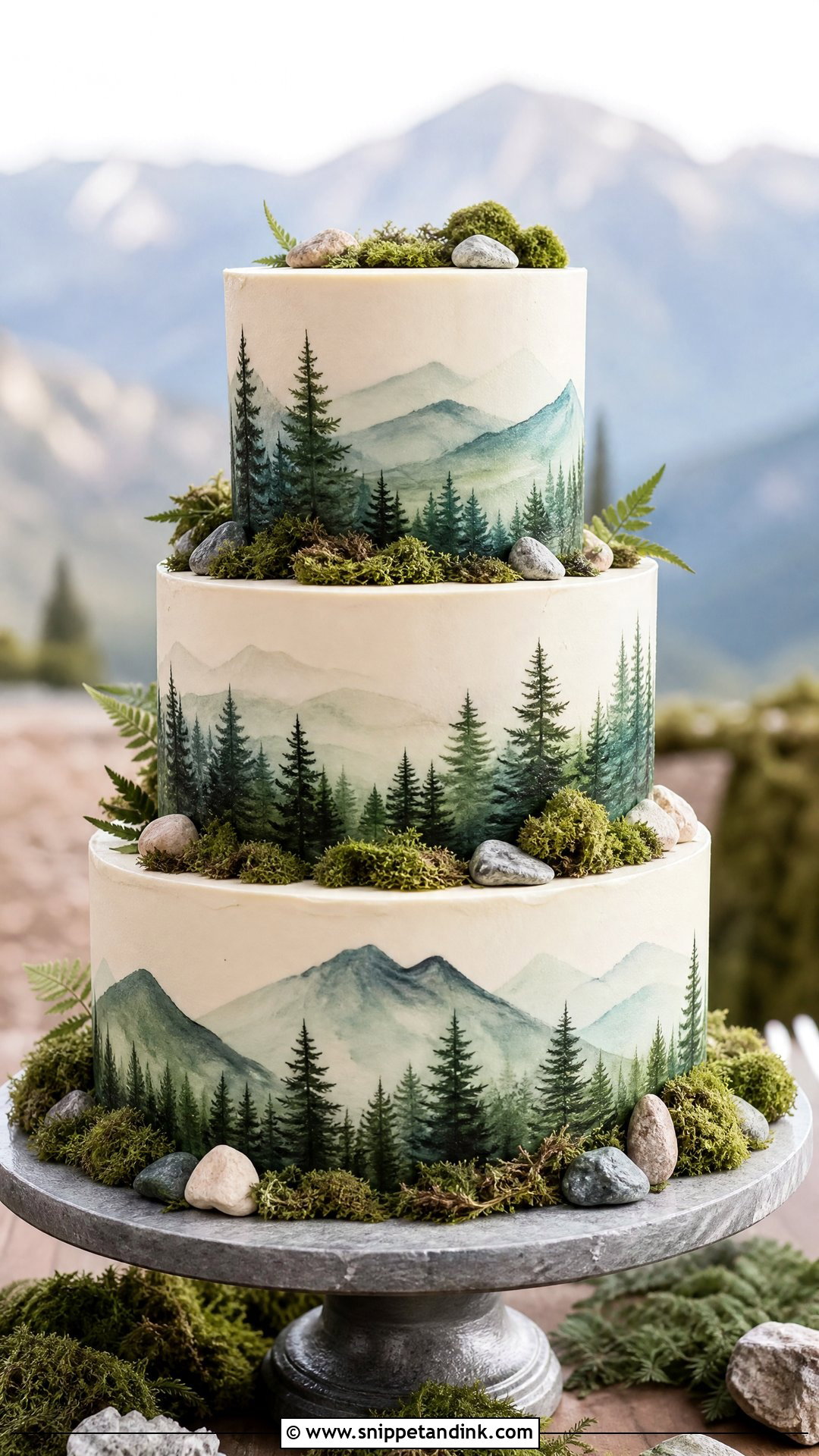
A mountain scene can be painted onto fondant, piped in buttercream or built from layered sugar silhouettes, and I’d choose painting when the couple wants misty, soft-edged peaks. Deep green trees against blue-grey mountains on an ivory ground give the clearest read from across a room. Candy rocks and moss at the base finish the landscape. It means most when the couple actually hikes or met somewhere with that view.


15. Forest Wedding Cake With Sugar Leaves
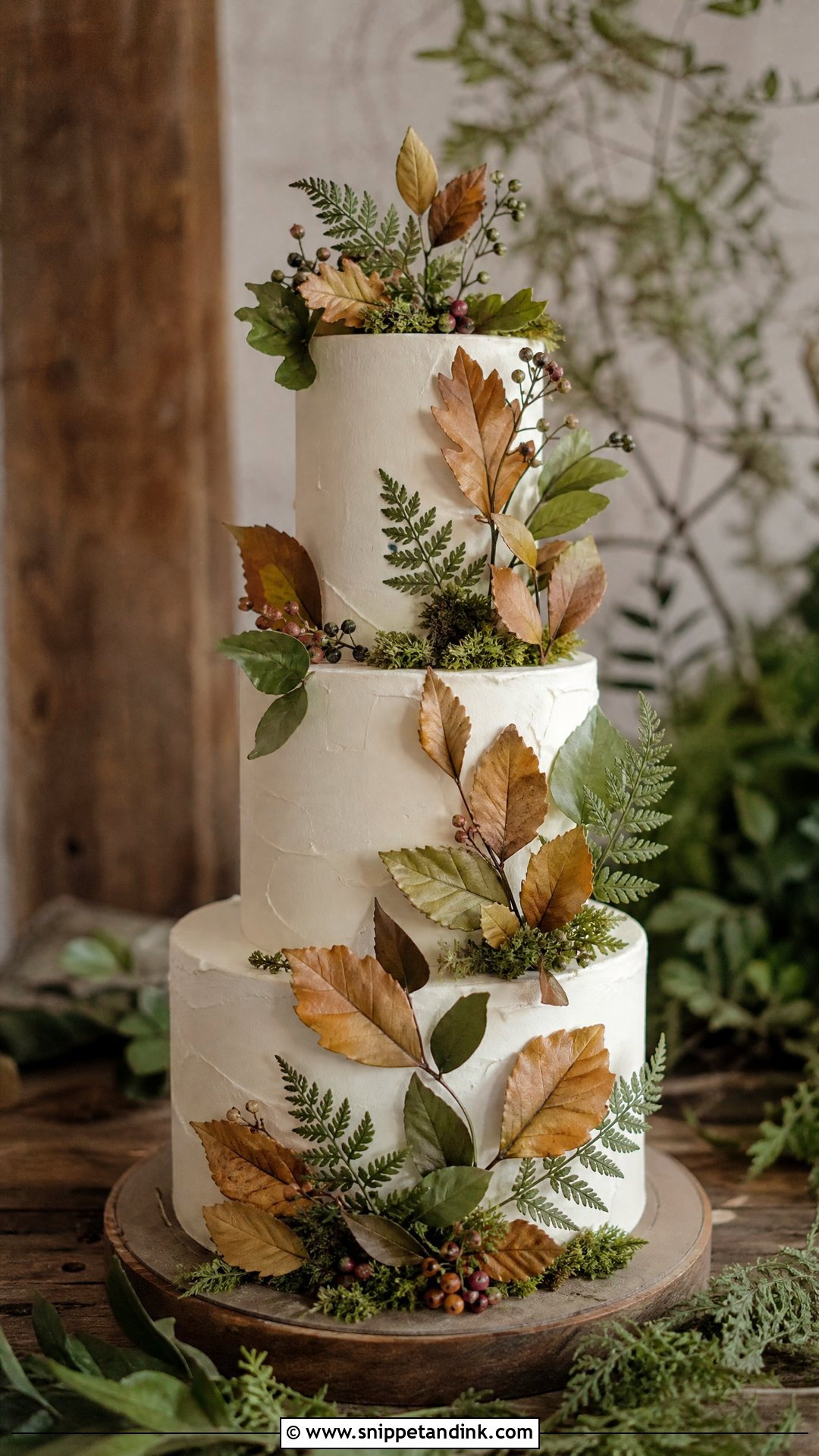
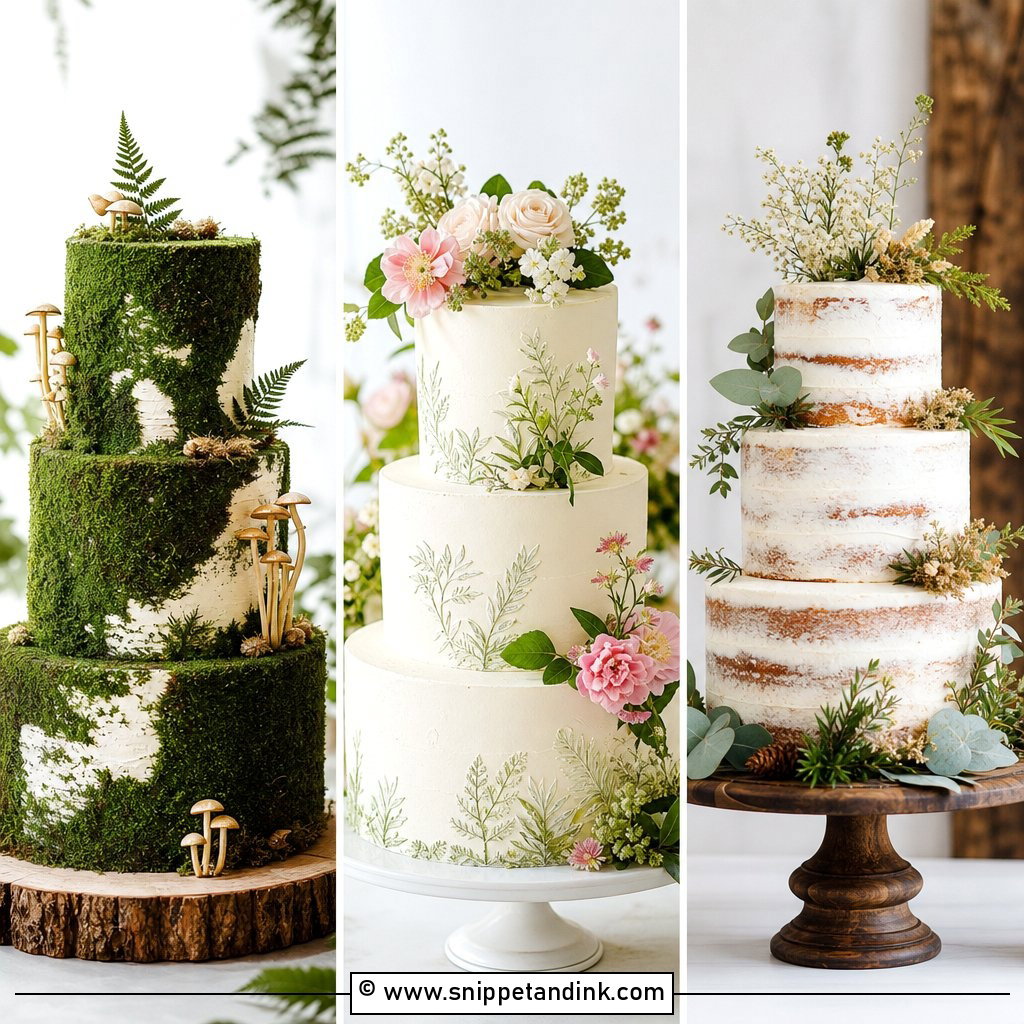
Sugar leaves are my go-to when someone wants texture but finds moss and bark too heavy. Each leaf is cut, veined and dried, then dusted, so the colour can follow the season: fresh green in spring, amber and rust in autumn, muted sage for a modern palette. They trail well as a vine or gather at the base. Be aware that they’re brittle and take time to make, which shows up in the quote.
16. Forest Wedding Cake With Edible Flowers
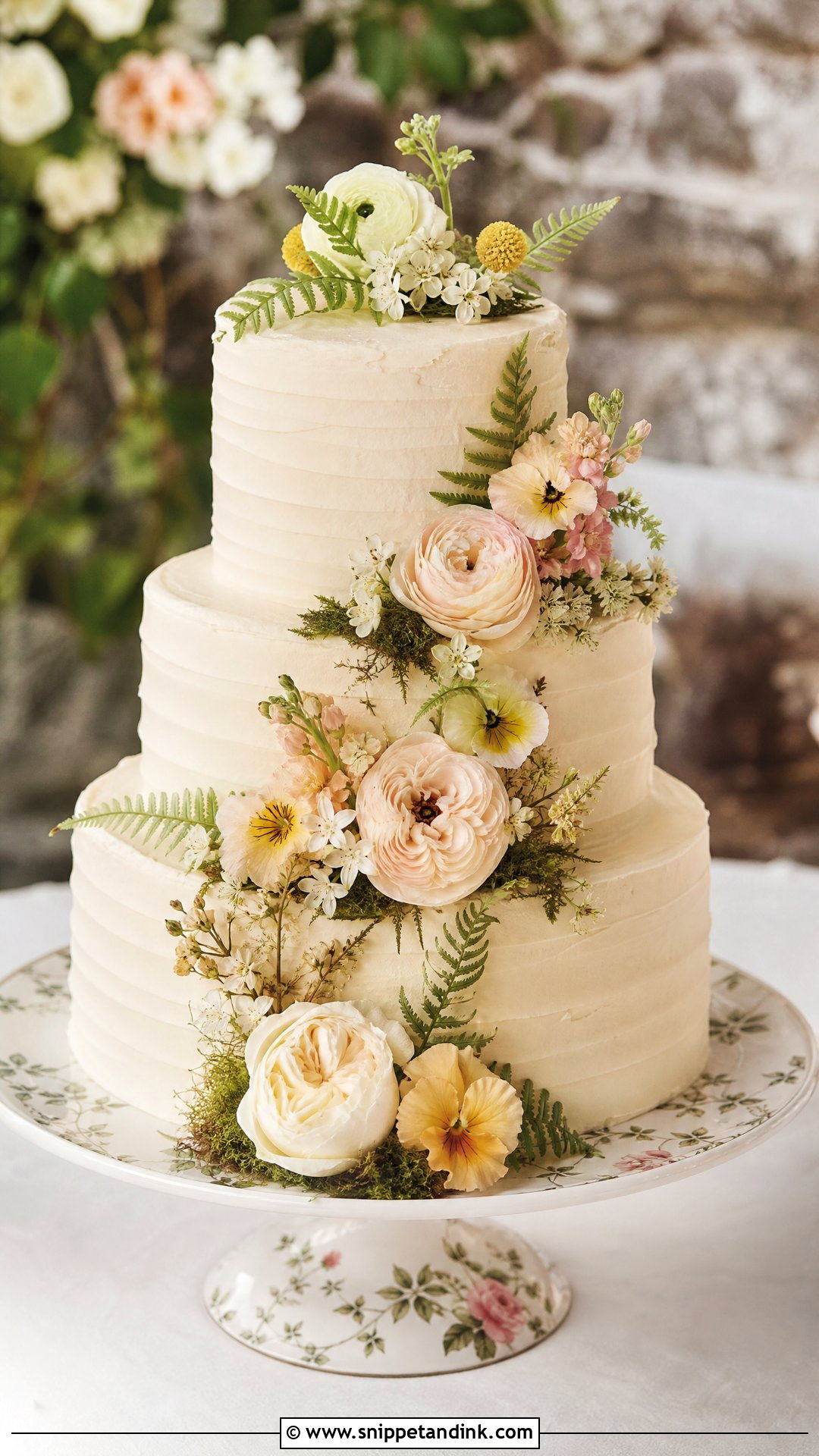
Edible flowers should come from a grower who sells them for eating, not from the florist’s bucket, which may have been sprayed. Violas, pansies, cornflowers and calendula are the reliable ones. I press them into the buttercream close to serving time because they wilt within hours, especially outdoors. Loose clusters beat neat rows here. Lemon, honey, lavender or berry flavours keep it light.
17. Forest Wedding Cake With Waterfall
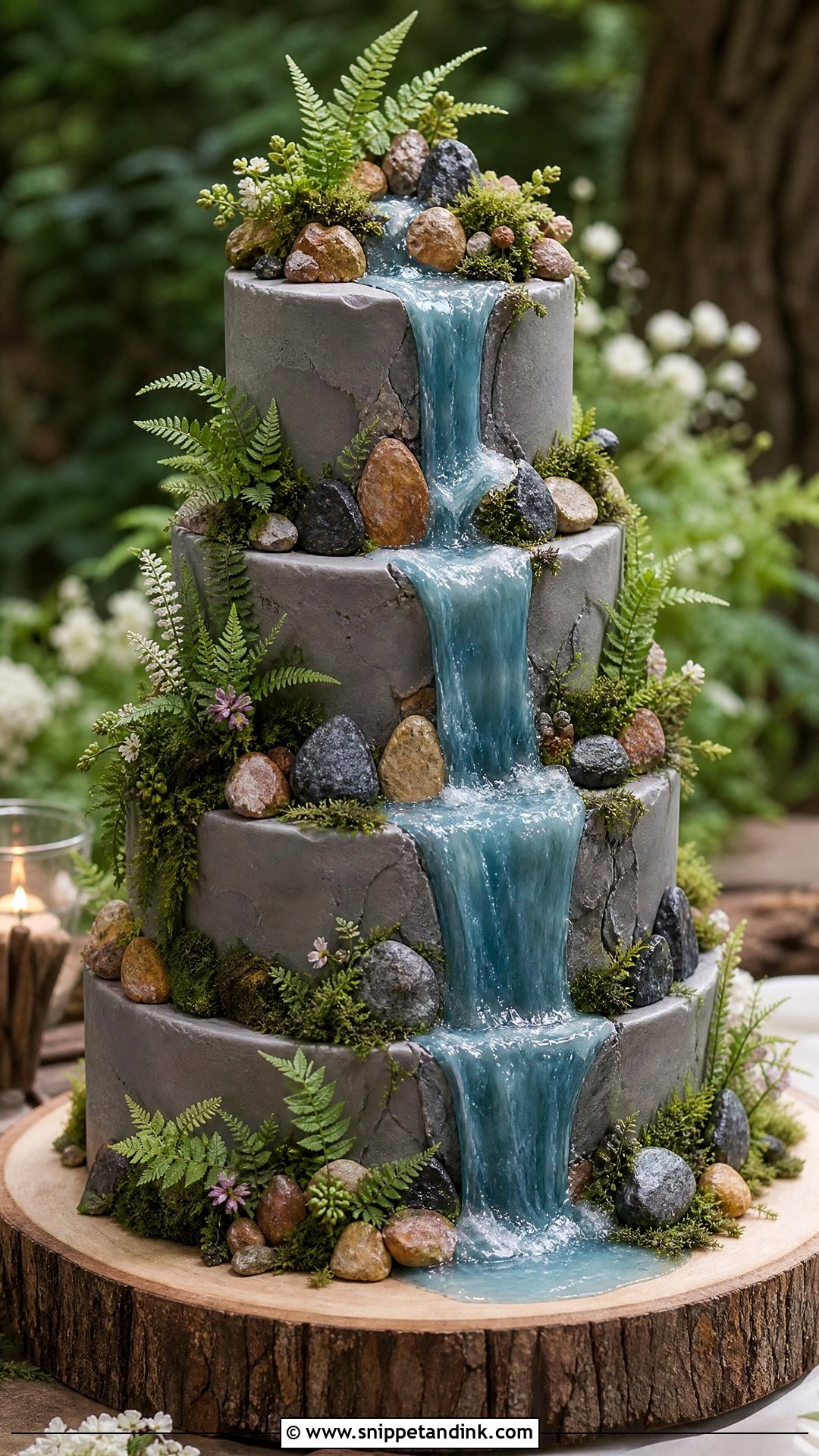
A waterfall is a showpiece and a structural job. The water is usually isomalt poured to look like falling water, or piping gel over painted buttercream, and isomalt goes cloudy and sticky in humidity, so I’d avoid it for a tent in summer. One waterfall down the front, framed by moss, sugar rocks and ferns, is enough. It needs a stable, tall build and a careful delivery.
18. Forest Wedding Cake With Fairy Lights
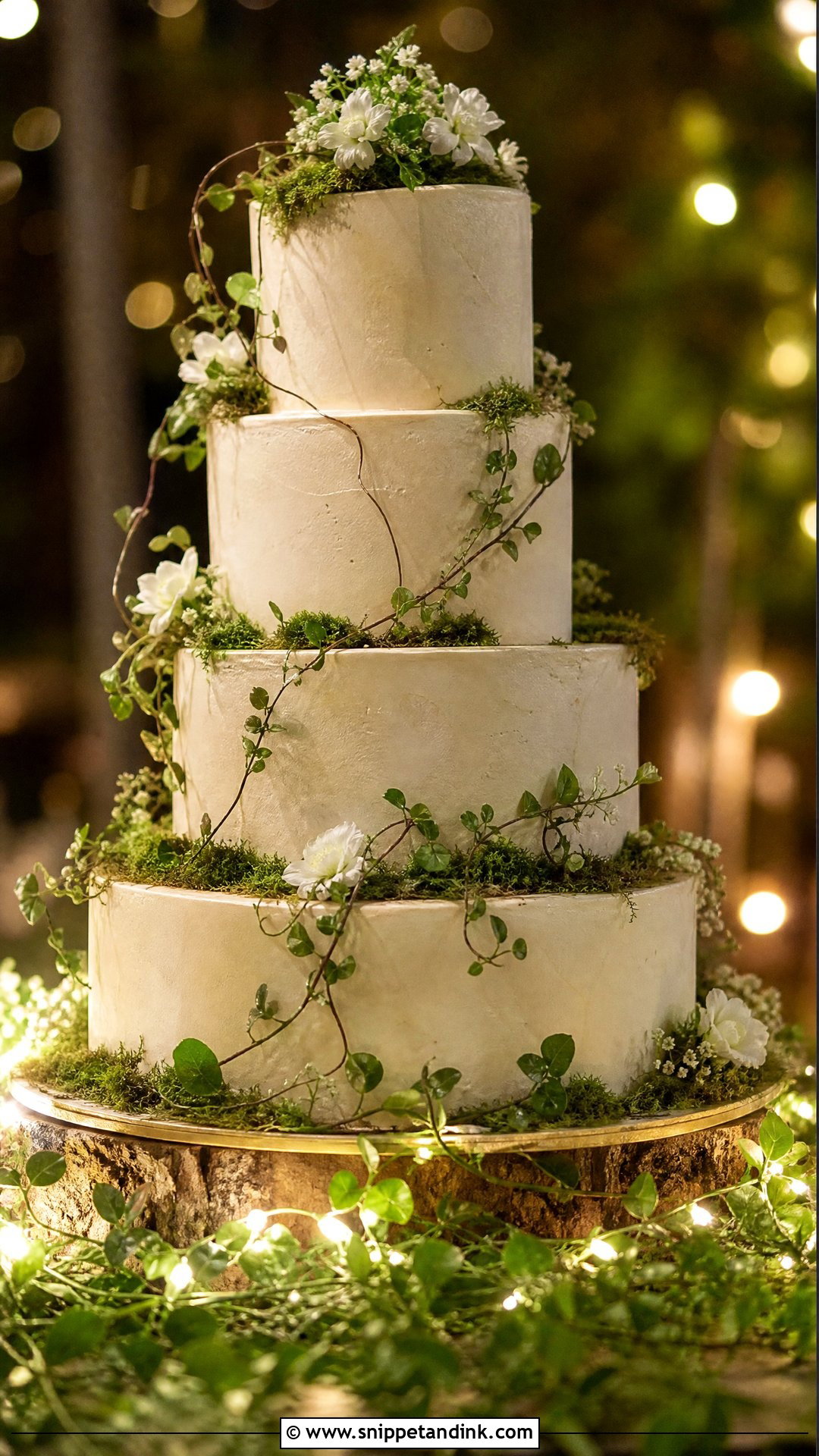
A forest cake with fairy lights needs the lights around the cake, not in it. Battery strands go under a glass cloche, wrapped round the stand or woven through greenery on the table; I never push wires into icing. The light is what does the work in an evening room, so the cake itself can stay simple: ivory buttercream, some moss and a vine. It glows on camera once the room lights go down.
19. Forest Wedding Cake With Gold Leaves
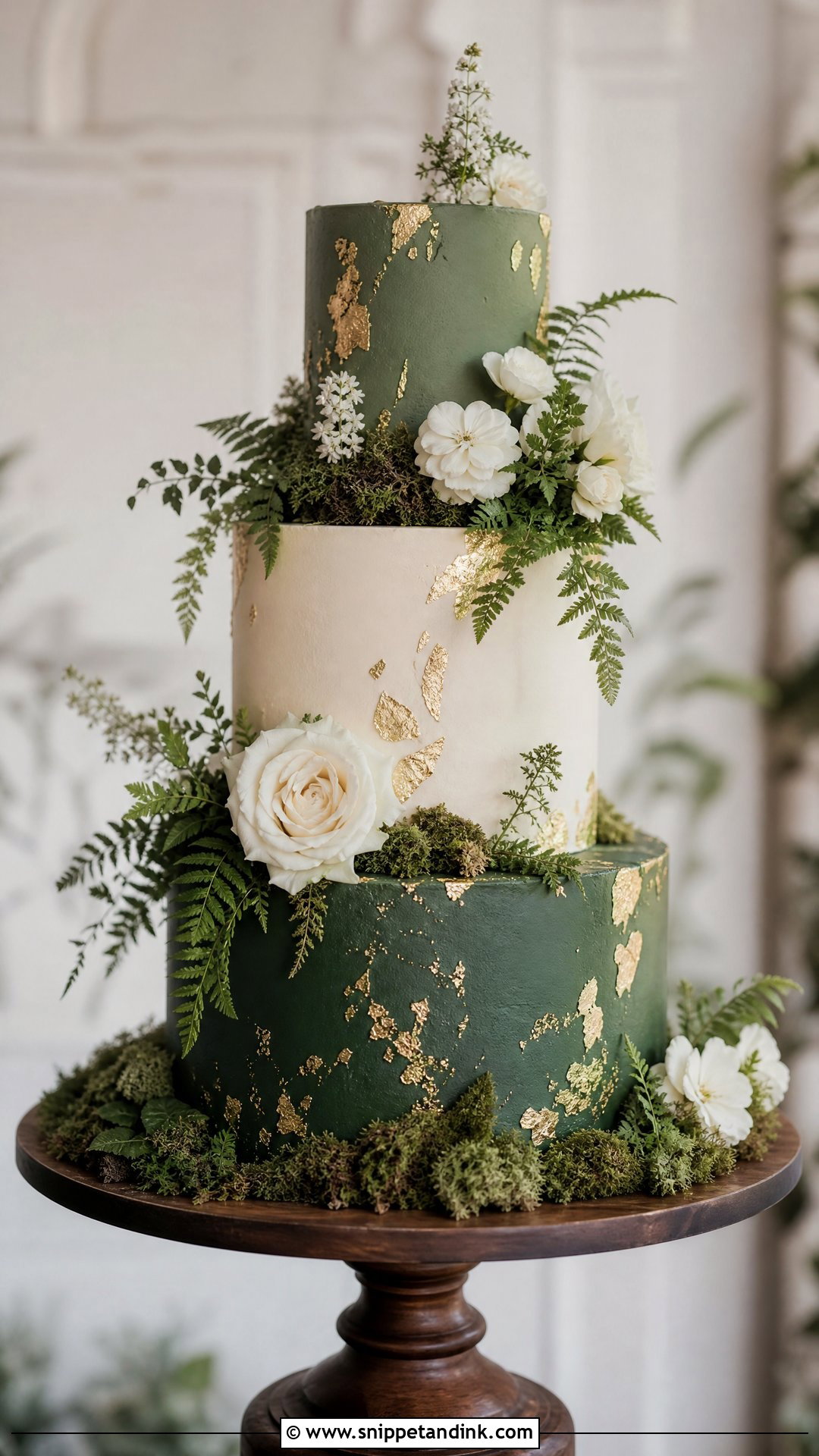
Gold works best in small doses here. I use edible gold leaf or a lustre dust mixed with alcohol and painted on, and I check that anything metallic is labelled edible, since some craft dusts are only food-contact. A few gilded leaves against deep green, taupe or chocolate icing look rich. Moss and ferns keep it tied to the forest rather than to a ballroom.
20. Forest Wedding Cake With Birch Bark
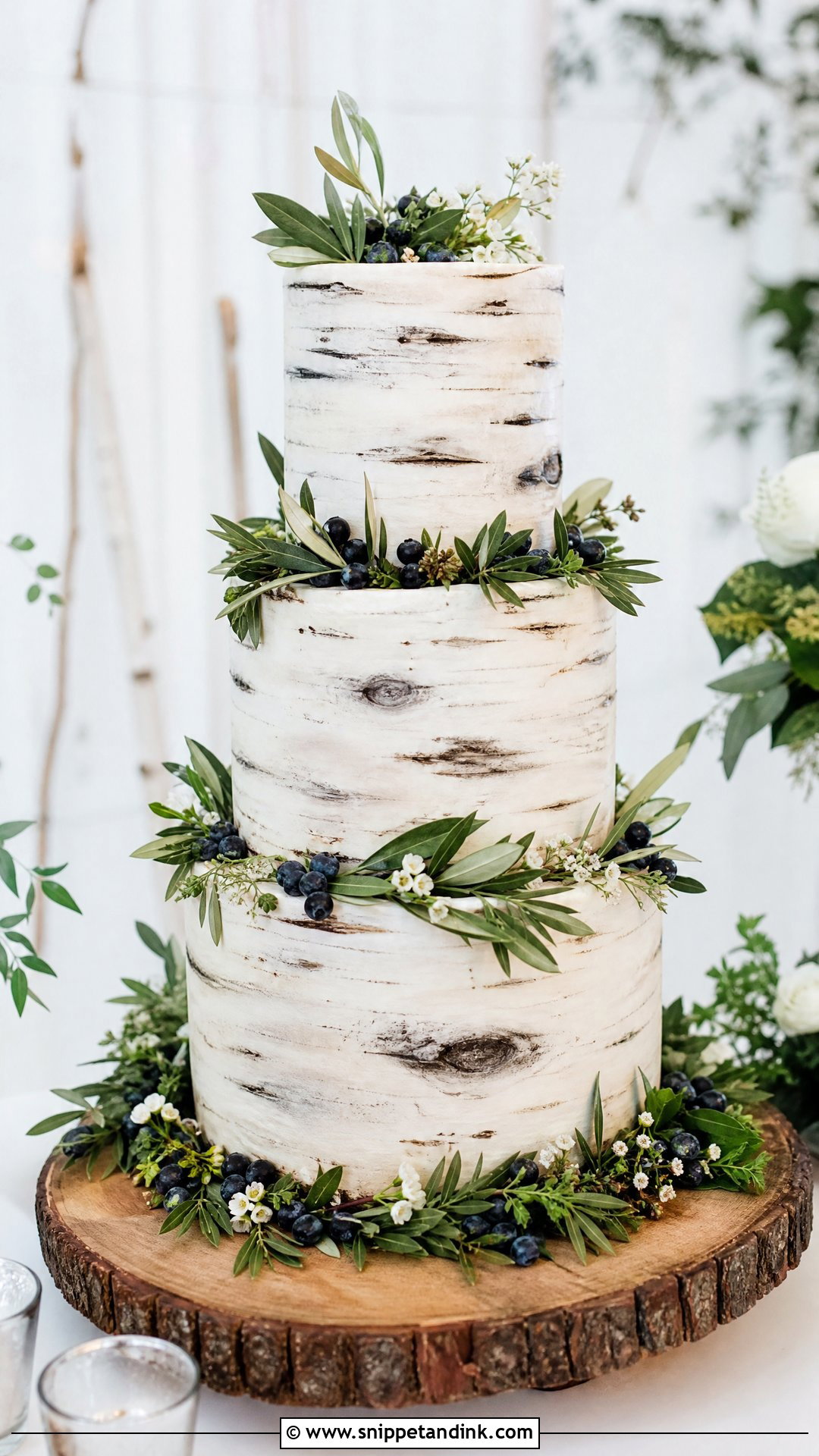
Birch is the lighter cousin of the bark cake, white and grey with those dark horizontal marks. I paint it onto fondant or mark it in buttercream with a palette knife and a little cocoa. It suits a winter woodland setting without needing anything festive. Carved initials in a heart are a classic birch detail if you want something personal. Vanilla, almond or lemon keeps the inside as bright as the outside.
21. Forest Wedding Cake With Vines
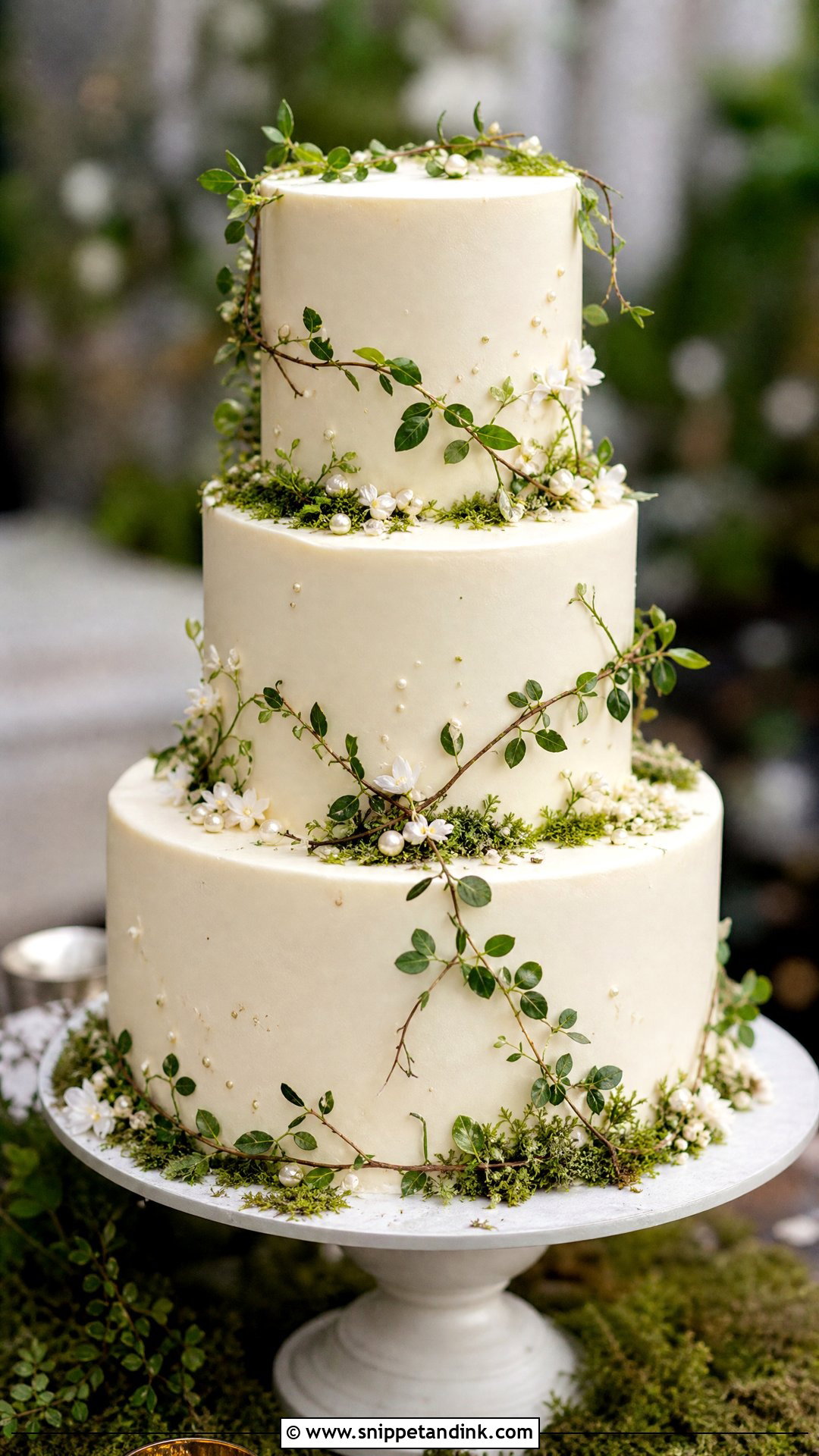
Vines are about direction. I start at the top tier and let them fall in a soft diagonal to the base, because a vine that circles every tier evenly looks like a ribbon. Piped buttercream vines are the fastest; fondant ones last better in warmth. Small flowers, berries or a few pearls along the stem add texture. Sage, blush or pale grey icing all suit it.
22. Forest Wedding Cake With Woodland Animals
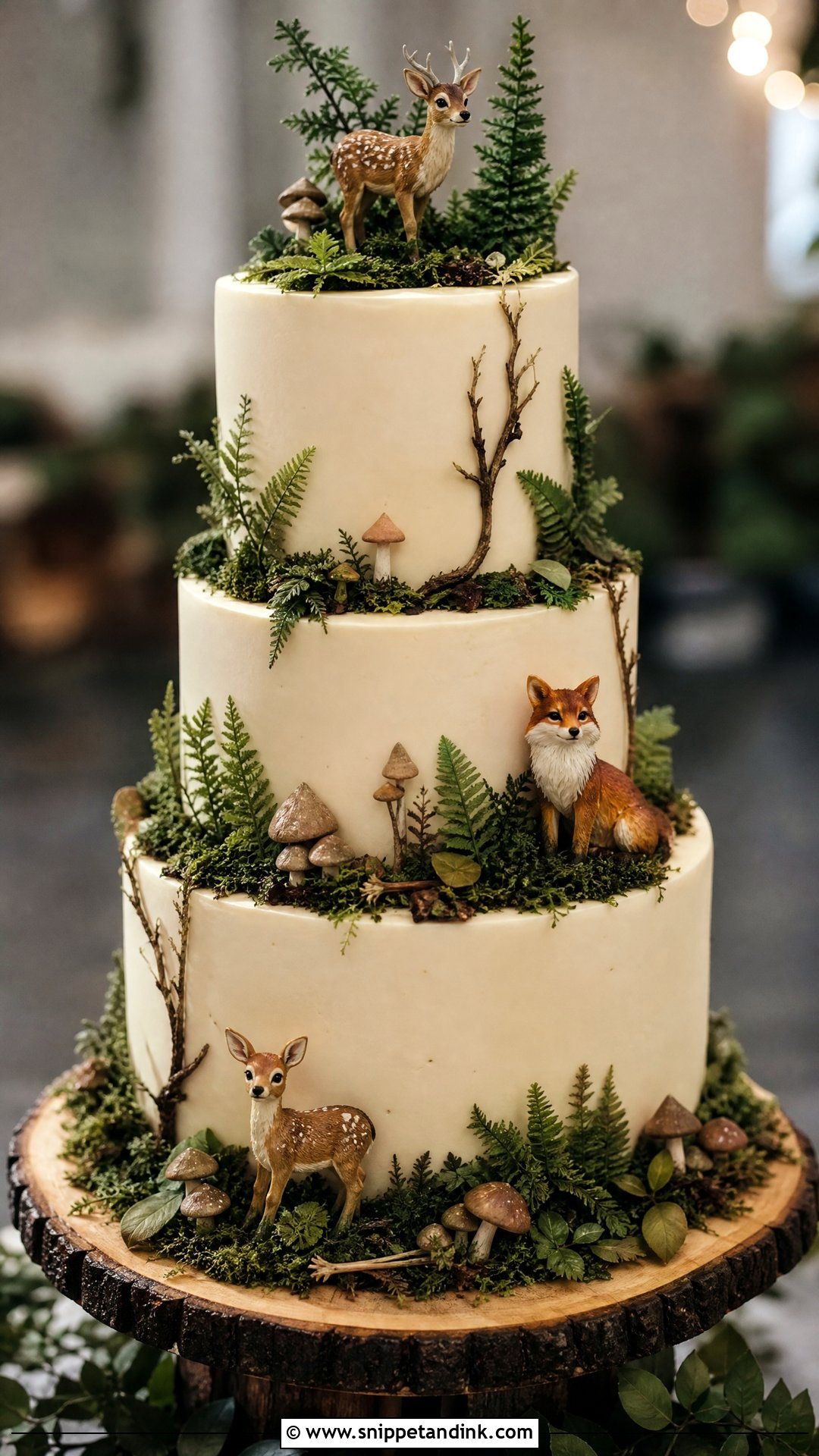
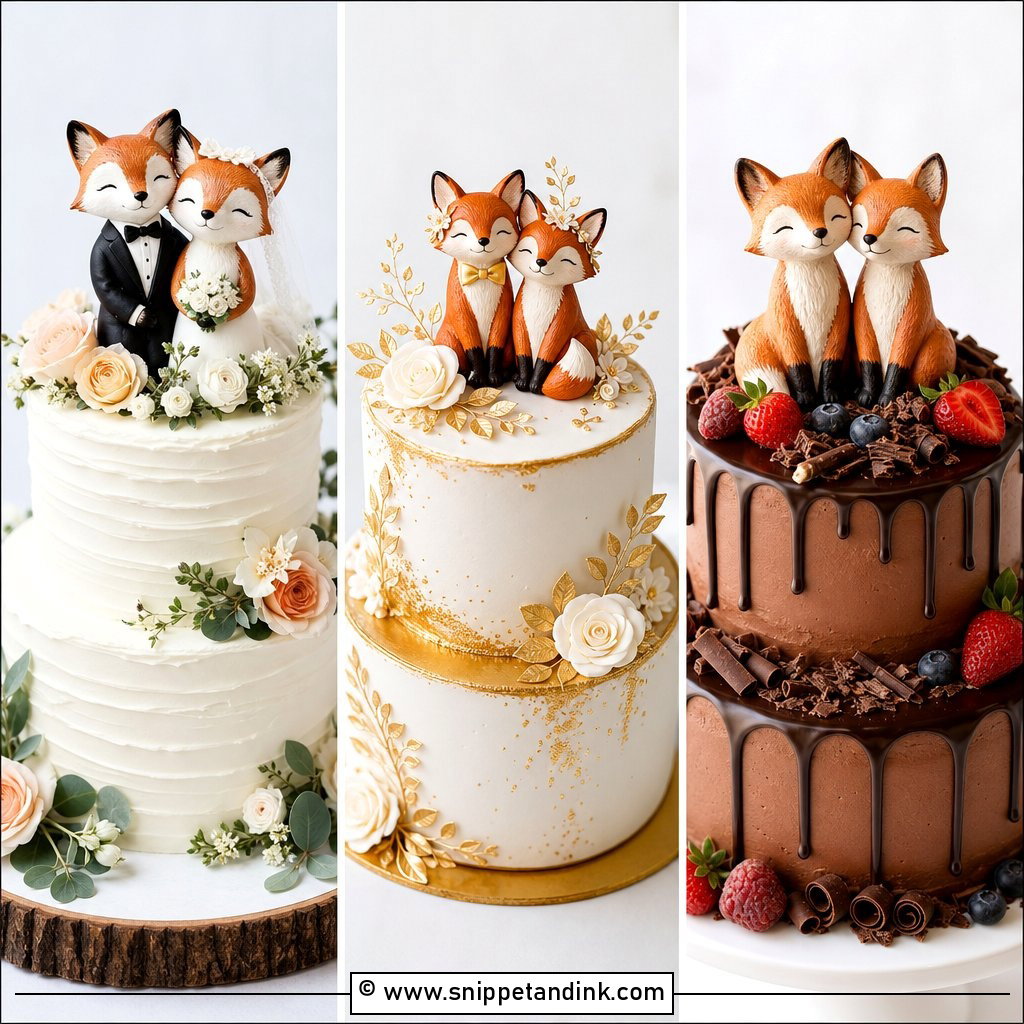
Woodland animals stay grown-up if there are only one or two of them. A small sugar fox or owl placed near moss and mushrooms tells a story; six figures turn it into a birthday cake. I sculpt them in muted, natural tones and keep the cake underneath smooth or lightly barked so they have somewhere to sit. Storybook-loving couples tend to enjoy this one most.
23. Forest Wedding Cake With Autumn Leaves
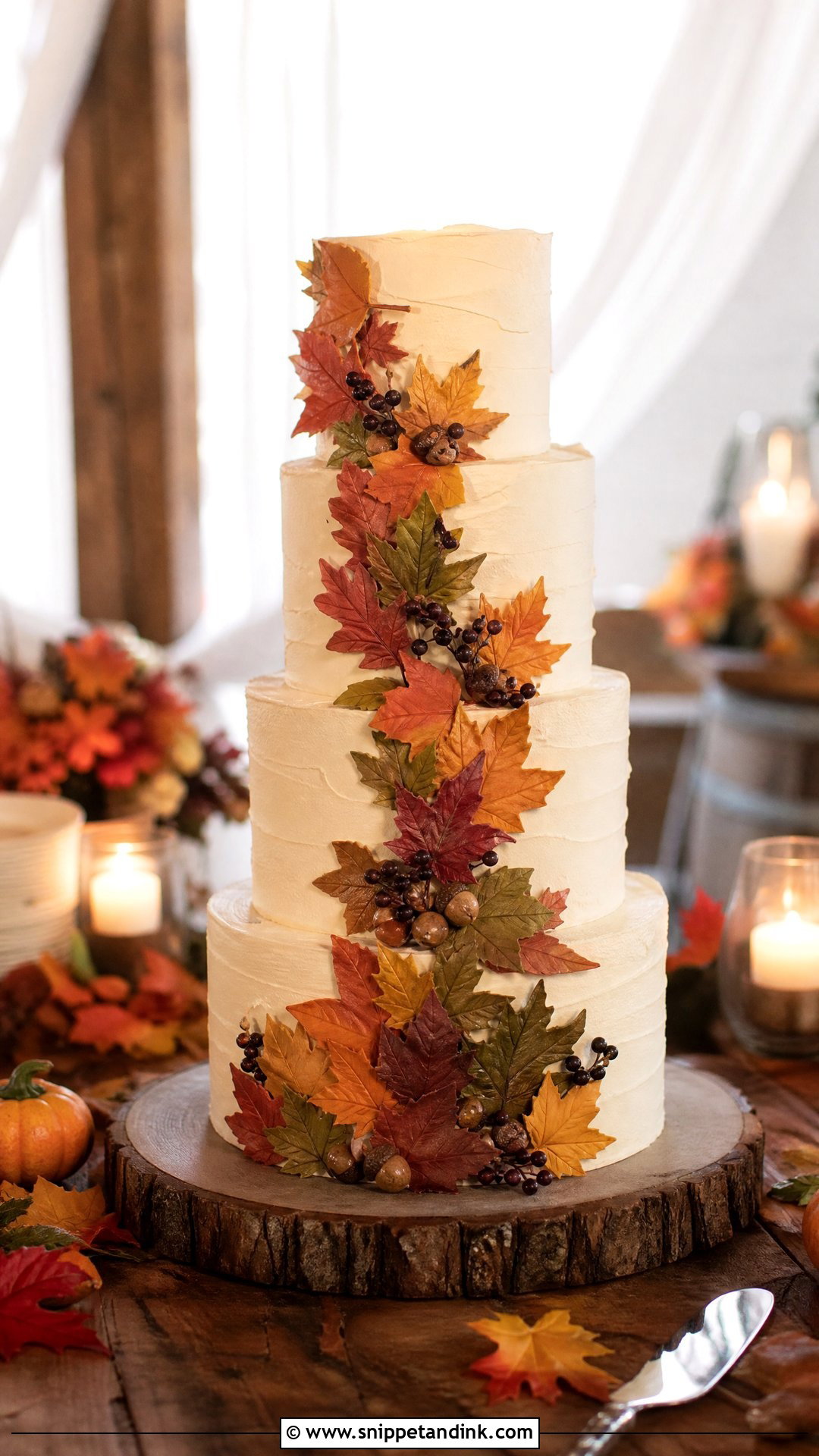
A forest wedding cake with autumn leaves is my favourite way to use colour in this theme. I dust sugar leaves in amber, rust, olive and burgundy so no two match, then add figs, sugar acorns and a pine cone or two. Ivory buttercream or a dark bark tier both carry it. Spice, maple, apple or chocolate sponge finishes the season inside.
24. Forest Wedding Cake With White Flowers
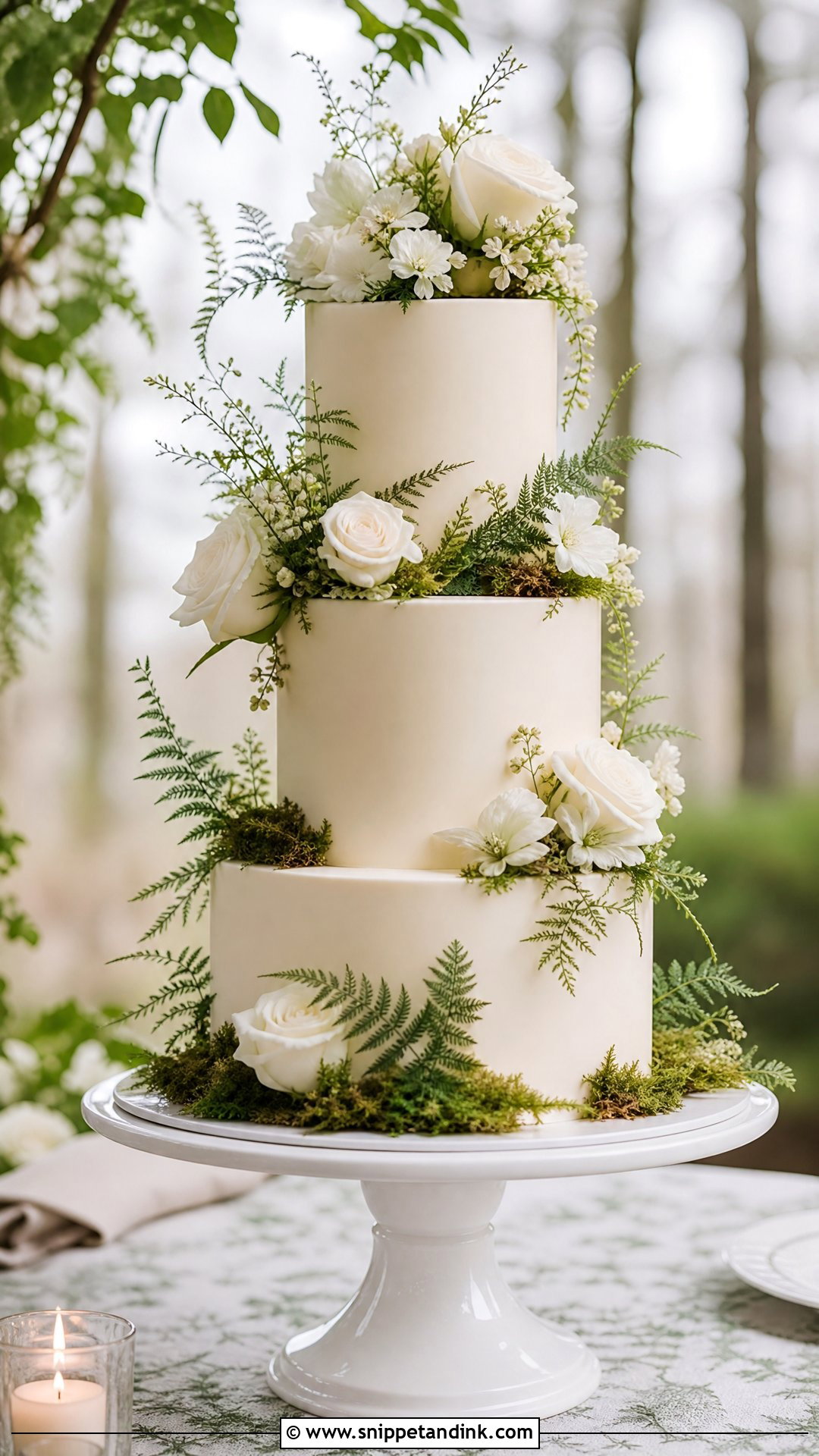
White flowers are the safe route into the theme for couples who don’t want much rustic texture. Roses, ranunculus and anemones with greenery and a touch of moss look classic, and you can add a fern or a single bark tier for more forest. If those are fresh stems, the florist and I agree beforehand who wraps them and where they go. It works in any season and matches the bouquet easily.

25. Forest Wedding Cake With Green Buttercream
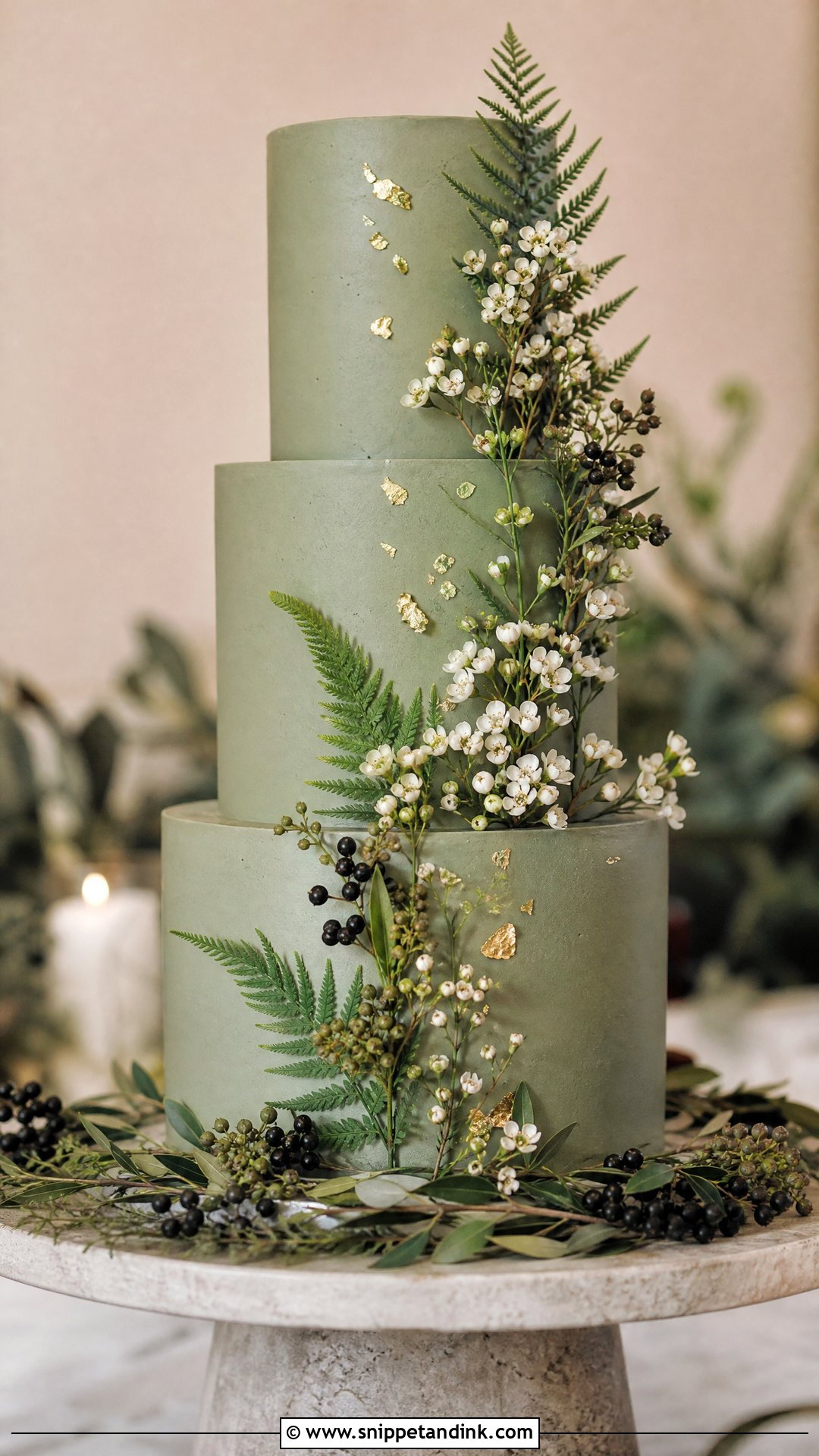
Green buttercream lets the colour carry the theme with very little decoration. Sage and eucalyptus tones are easy; a deep forest green takes a lot of colouring and can taste slightly bitter, so I often go a shade lighter than the swatch. Smooth reads modern, textured reads rustic. A few white flowers, ferns or berries give contrast, and a stone or wood base finishes it.
Real Greenery Near Icing Needs Rules
Forest cakes invite real foliage, and this is where I’m strict. Plenty of popular wedding greenery is either toxic or treated with pesticides, and stems leak sap into buttercream. My rule is simple: if it isn’t sold as food, it doesn’t touch the cake directly.
- Wrap every stem in floral tape and seat it in a straw or pick before it goes in.
- Keep ferns, eucalyptus, ivy and pine cones on the board or the stand, not the tiers.
- Agree in writing whether the florist or the baker places fresh stems, so nobody assumes.
- Ask for decorations to be lifted off before the cake is cut and served.
A Woodland Venue Is Hard on Buttercream
Forest weddings tend to happen in barns, tents and clearings, which are exactly the places a cake struggles. Buttercream starts to slump once it sits in direct sun or a stuffy tent, and moss made of crumbs soaks up moisture on a damp evening. I always ask where the cake table will stand and for how long before cutting.
Put the table in shade and away from heaters, and keep display time short if the day is warm. A ganache layer under the buttercream adds real stability, and fondant-covered tiers handle a long afternoon better than semi-naked ones. If the venue is a long drive on rough tracks, I’ll often stack the tiers on site rather than travel fully assembled.
Pull Three Things From the Woods, Not Ten
The forest cakes I’m proudest of rarely use every element. Pick two or three details, maybe moss, ferns and one bark tier, and let a clean tier shape and a calm colour palette hold them together. Your venue usually settles the rest: pine cones and bark belong in a lodge, ferns and white flowers in a garden. Bring photos of your flowers and tablescape to the consultation and we can build the cake to sit inside that room.
You'll Like These Ideas:




Leave a Reply