
A forest cake should look as if it was set down under tall trees, next to a mossy stone or on a candlelit dessert table in a barn. Brown and green icing alone won’t get you there. What makes the style work is texture: bark ridges, edible leaves, berries, little sugar mushrooms and an earthy palette, layered until you have a full forest-inspired look. Some of the designs below are plain and rustic, others lean into fairy-tale detail. I always start a woodland consultation by asking about the venue and the month, because those two answers rule out half the options before we talk about decoration.
What Can Actually Touch a Woodland Cake
Woodland cakes invite couples and florists to bring the forest indoors, and that is where I spend most of my consultation time. Plenty of the greenery that looks right on a cake is not safe to eat, and some of it is properly toxic. My rule is simple: anything a guest might eat is made from sugar, chocolate or cake, and anything real stays on a barrier or on the stand.
- Keep off the icing entirely: real moss, real pinecones, ivy, holly berries, mistletoe, yew, bracken and lily of the valley. Several are poisonous, and the rest carry soil, sap or insects.
- Fine with a barrier: florist roses, eucalyptus and most foliage, provided the stems are wrapped in floral tape or set in food-safe picks so they never pierce the sponge.
- Fine to touch: rosemary, thyme, edible flowers grown without pesticides, and fresh berries that have been washed and fully dried.
Wood slice stands need the same thinking. Raw timber can leak sap and splinter, so I either seal it with a food-safe finish or sit the cake on its own board on top. If your florist is dressing the cake on the day, put them in touch with your baker beforehand so both know who is placing what.
1. Woodland Wedding Cake With Moss
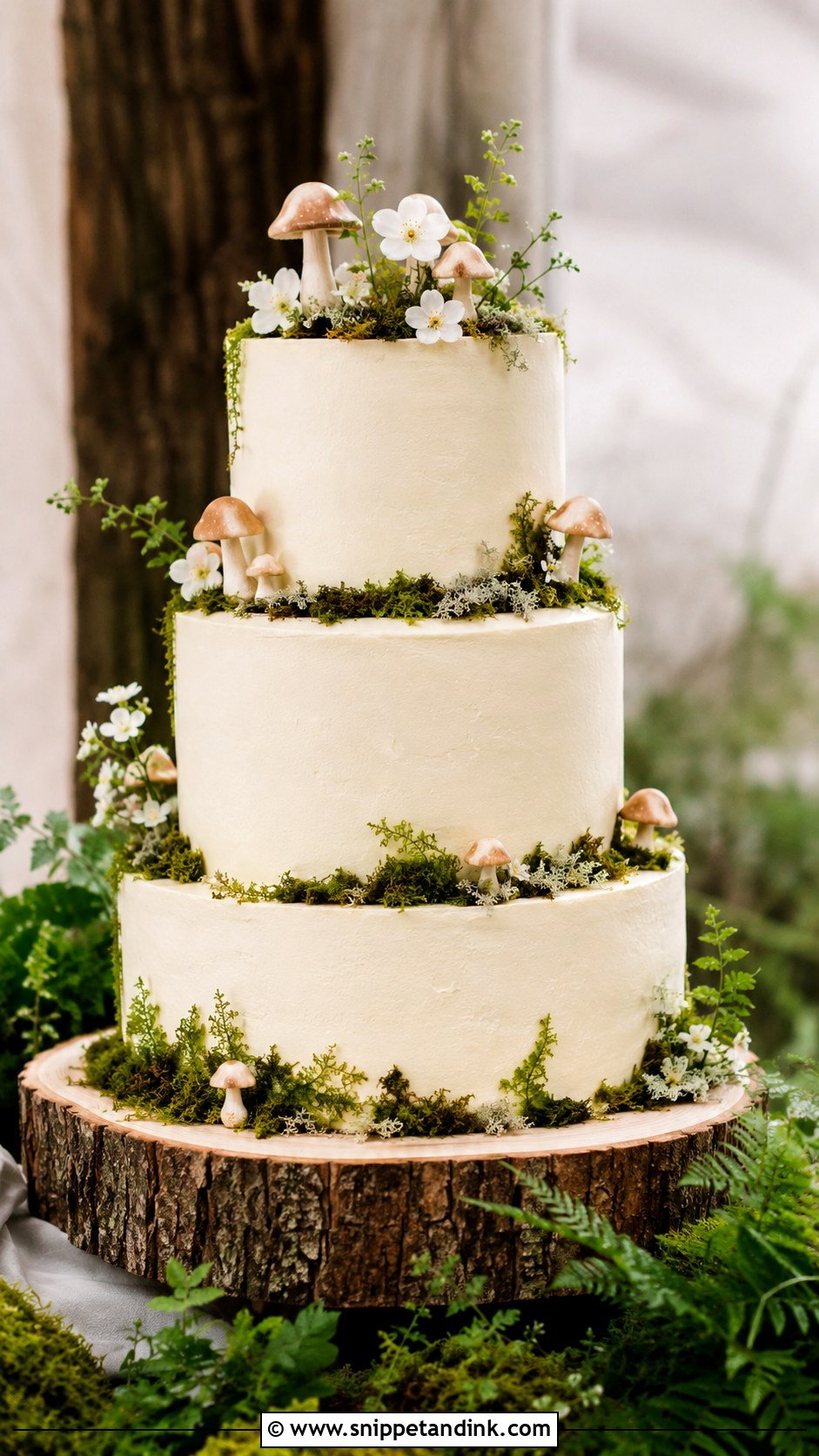
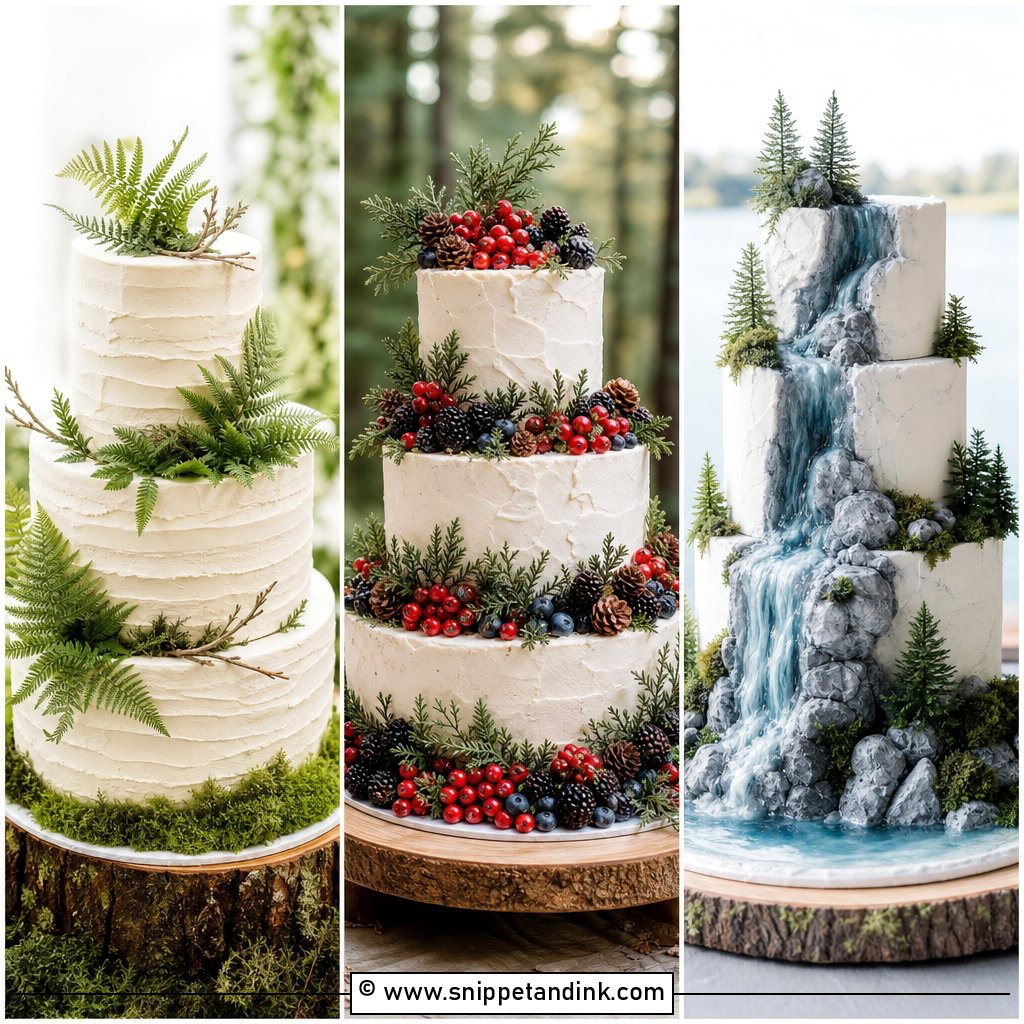
Moss gives the strongest forest feeling for the least amount of decoration. I cover the cake in smooth ivory buttercream and then add edible moss at the base, between tiers or down one side. My edible moss is usually crumbled green-tinted sponge or cookie crumb, which reads as moss in photos and is safe to eat, unlike real moss. It suits barns, outdoor receptions and enchanted forest themes. The tiers need sharp, clean edges here; if the buttercream is rough as well, the moss stops looking placed and starts looking spilled. A few sugar mushrooms and a tree slice stand finish it. Vanilla bean, almond or honey sponge sits well under that soft green.
2. Woodland Wedding Cake With Mushrooms
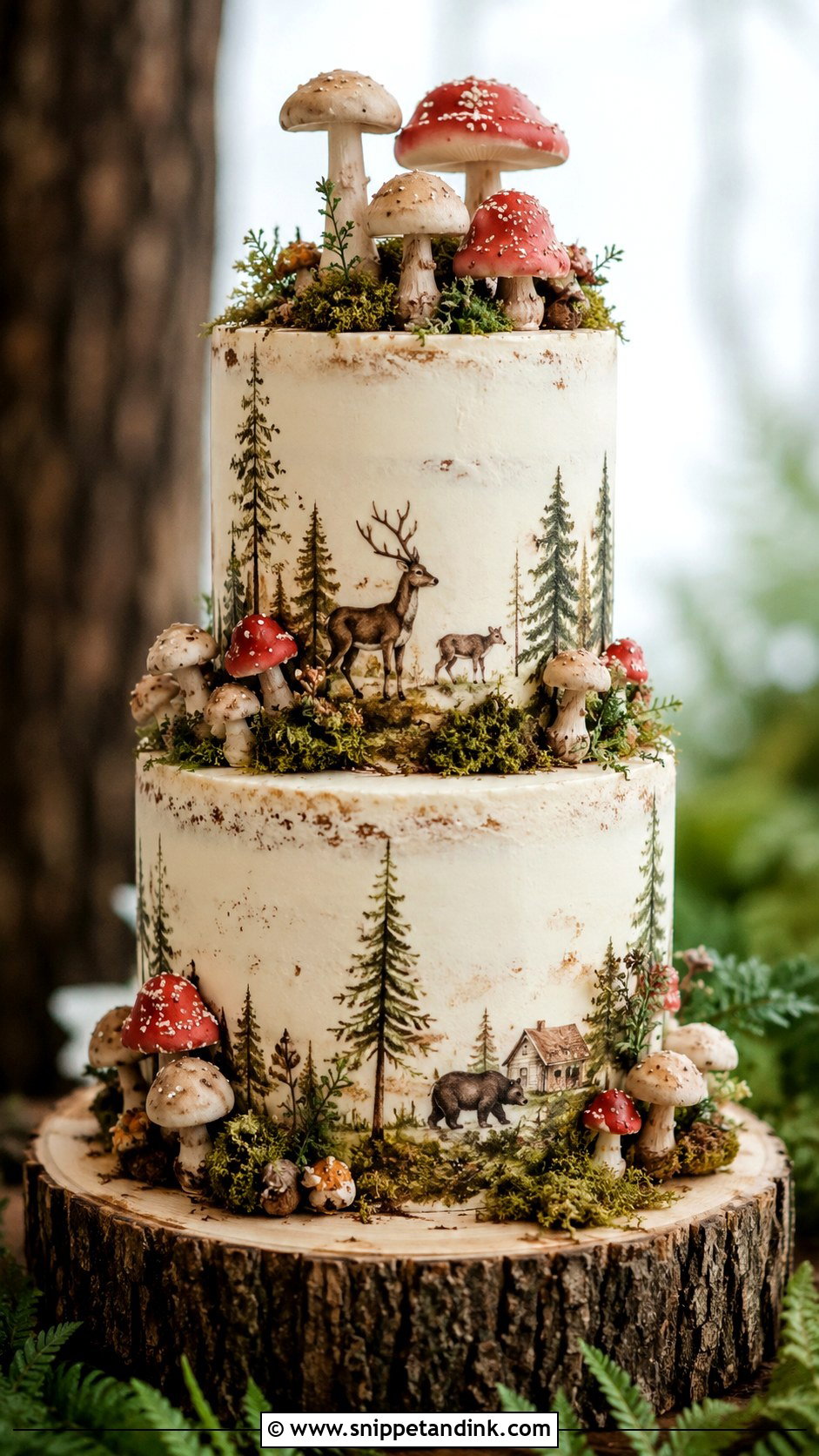
Mushrooms are where a woodland cake can tip from storybook into children’s party, so colour does most of the work. Red caps with white dots read whimsical; beige, cream and brown caps read natural. I shape the sugar mushrooms by hand from gumpaste a couple of weeks ahead so they dry hard, then cluster them low near the bottom edge or tucked beside edible moss. Odd-numbered groups of three or five look like they grew there. Put them on a semi-naked or bark-textured cake and they become part of a scene rather than a row of toppers.
3. Woodland Wedding Cake With Pinecones
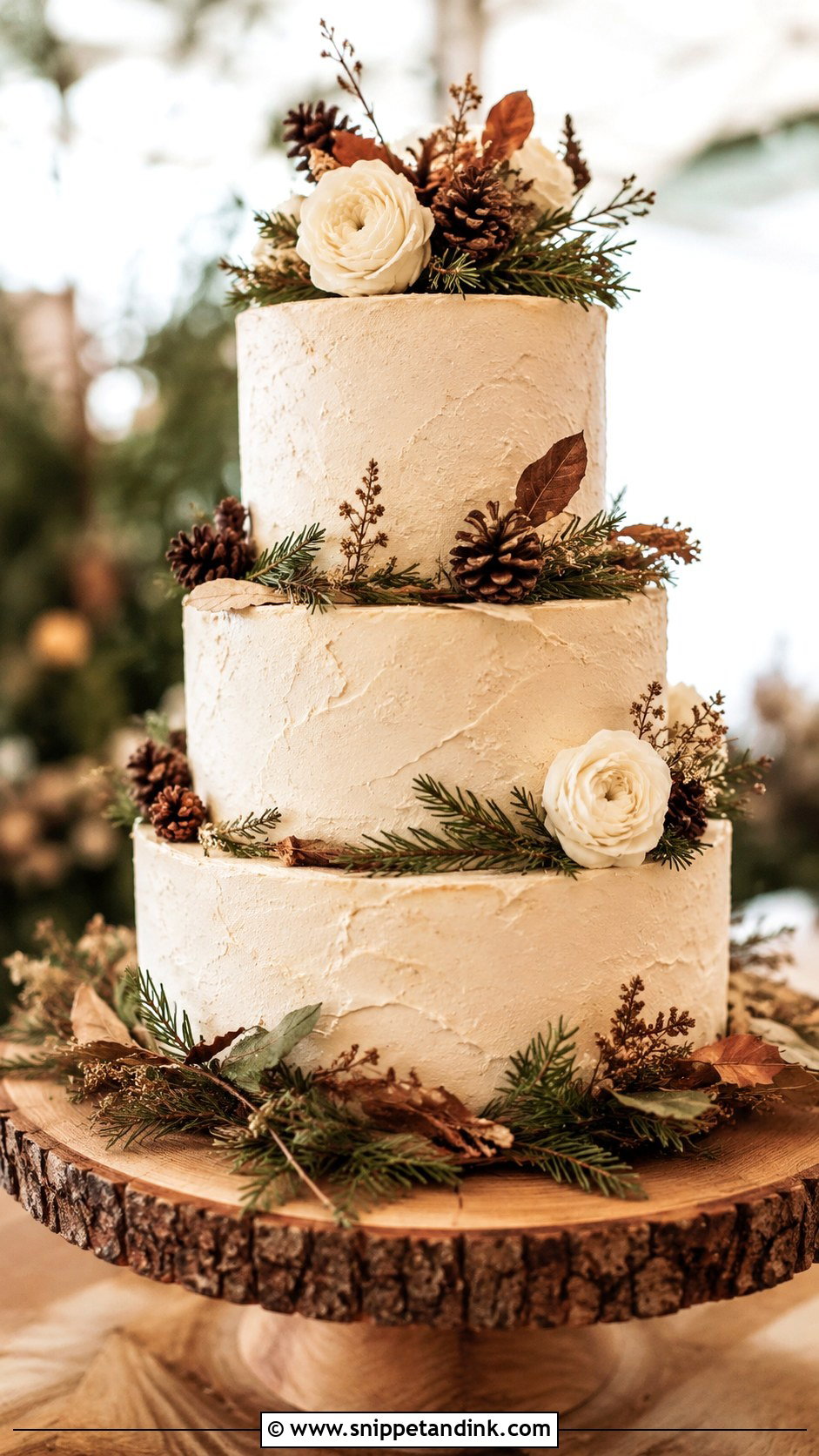
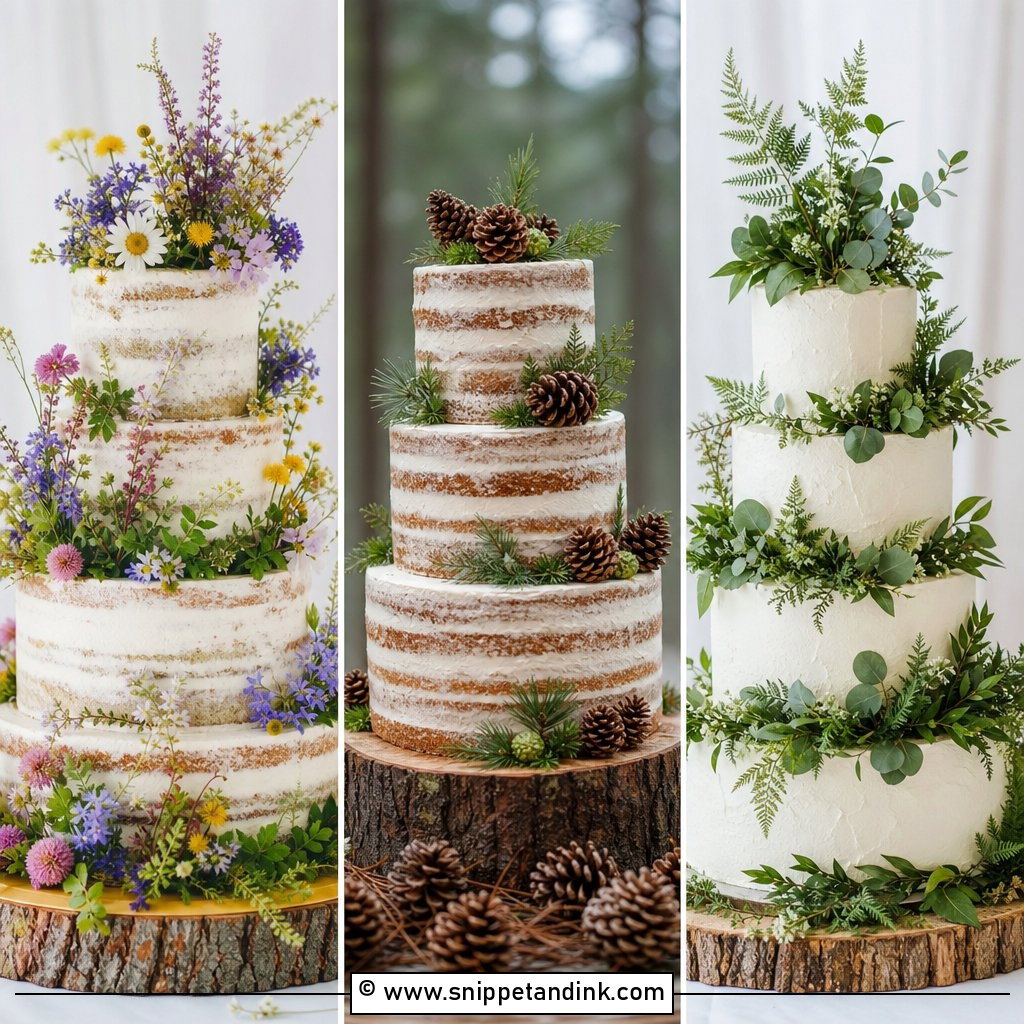
Pinecones belong to autumn and winter, and they need warm styling around them so the cake doesn’t feel cold and spiky. One thing I insist on: real pinecones never touch the icing. They can carry sap, dust and insects, so on my cakes they are either chocolate or modelled sugar, or real ones sitting on the stand beside the cake. Cluster them with rosemary sprigs, berries or a few cream roses. A wooden stand at a lodge or mountain venue suits this one, and spice cake, carrot, maple or brown butter vanilla carry the seasonal mood into the flavour.
4. Woodland Wedding Cake With Tree Bark
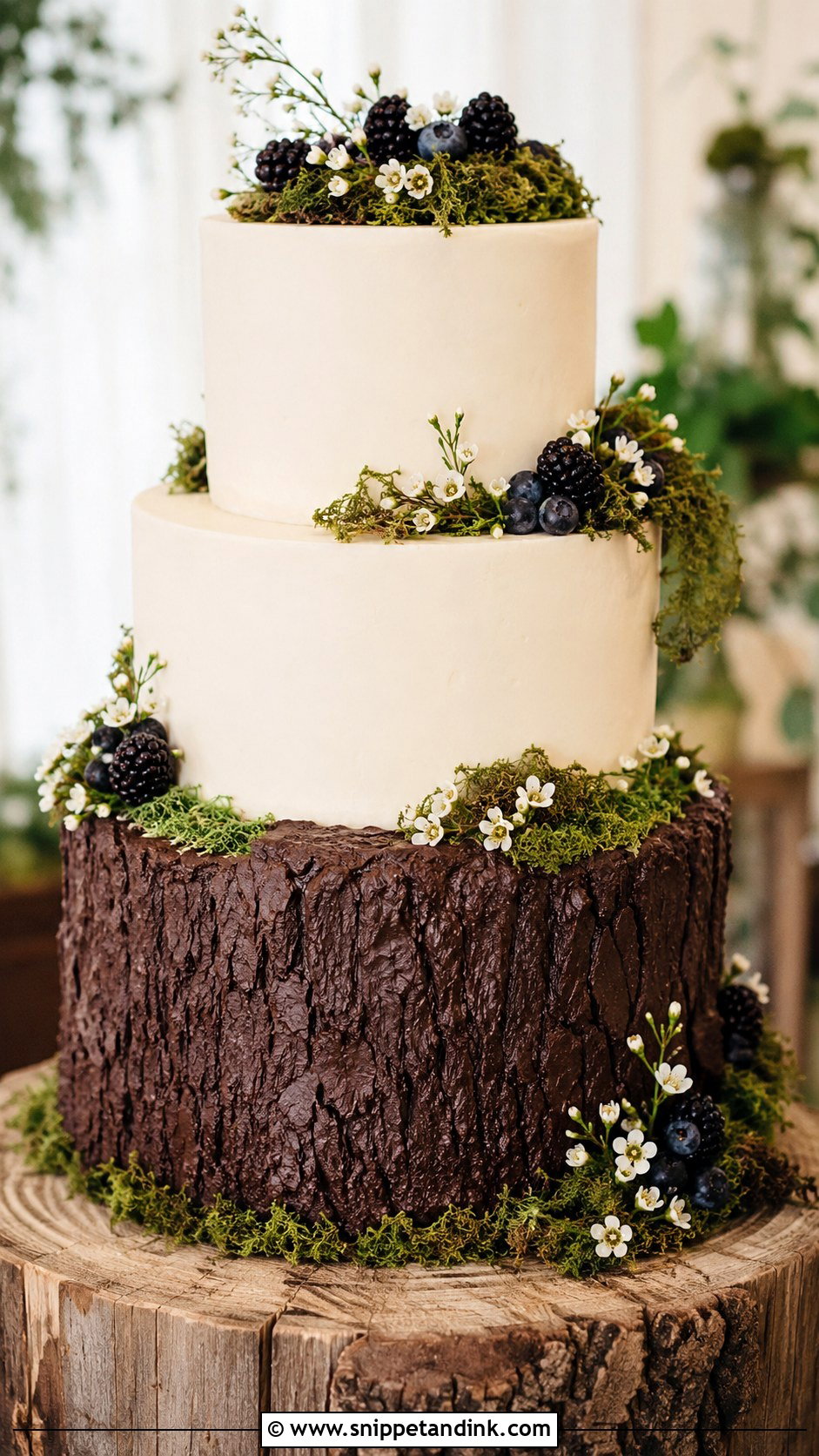
I rarely bark every tier. One bark tier between smooth ivory ones looks more deliberate and photographs with better contrast. The bark itself can be piped buttercream dragged with a fork, chocolate pressed onto a textured mat, or painted fondant panels; chocolate gives the sharpest grain but softens fast in a warm room. Carved initials in a heart are a sweet touch if they stay small. Ferns, moss and a few berries soften the wood finish. Chocolate, mocha and caramel flavours match the colour of the outside, which guests tend to notice when the first slice is cut.
5. Woodland Wedding Cake With Ferns
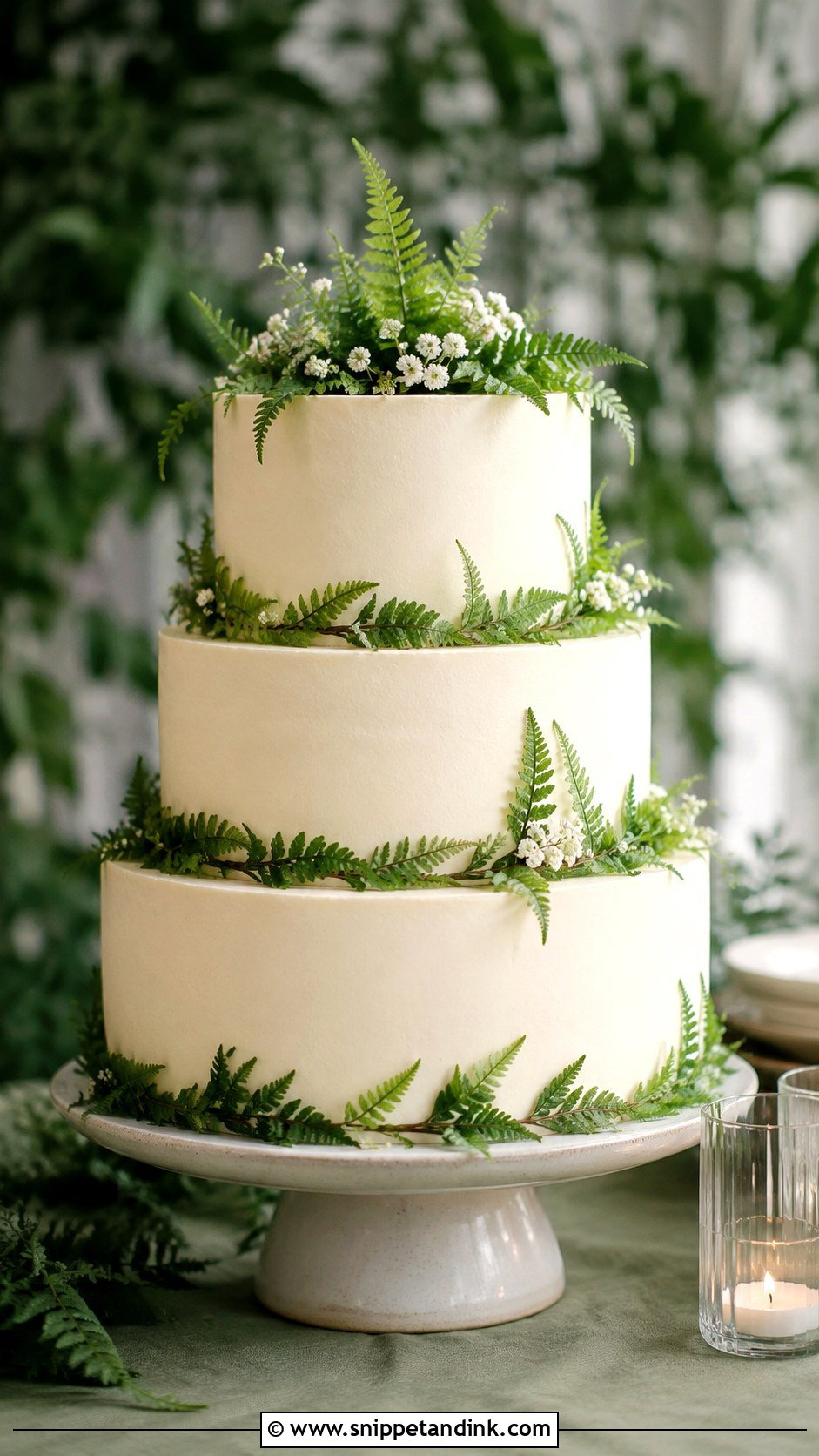
Ferns give you greenery without big flowers, and they wrap around a base or climb a tier like a garland. Here is the part I’d want every couple to hear: many real ferns are not food safe, and bracken in particular should never go near food. On my cakes the ferns are either piped buttercream, wafer paper or sugar fronds, and if a florist supplies real greenery it sits on a barrier and never touches the icing. Against smooth ivory buttercream the fronds look crisp; on a semi-naked cake they look more rustic. Lemon, coconut or elderflower suit a spring or summer forest wedding.
6. Woodland Wedding Cake With Wildflowers
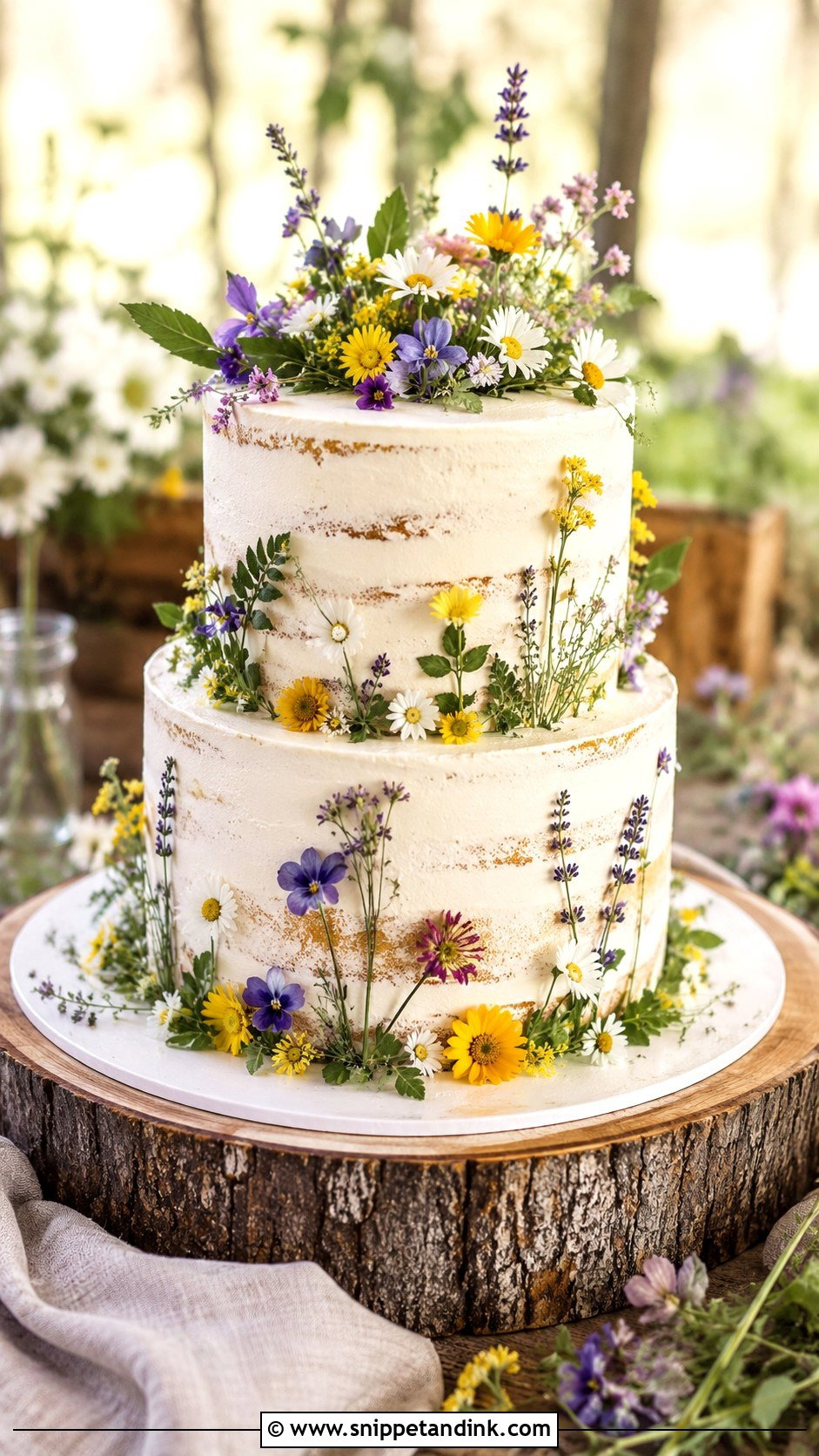
Wildflowers should look gathered from the edge of the woods, so I avoid formal rose clusters for this one. Small blooms in purple, yellow, blush and blue work when you keep each cluster to two or three colours. Textured buttercream or a semi-naked finish suits them because both already look handmade. Place them loosely in small groups or a gentle cascade down one side. Fresh flowers on a cake have to be food safe and pesticide free, which rules out a lot of florist stock, so ask your baker where the flowers come from. Lavender, lemon or berry flavours echo the meadow theme.
7. Woodland Wedding Cake With Berries
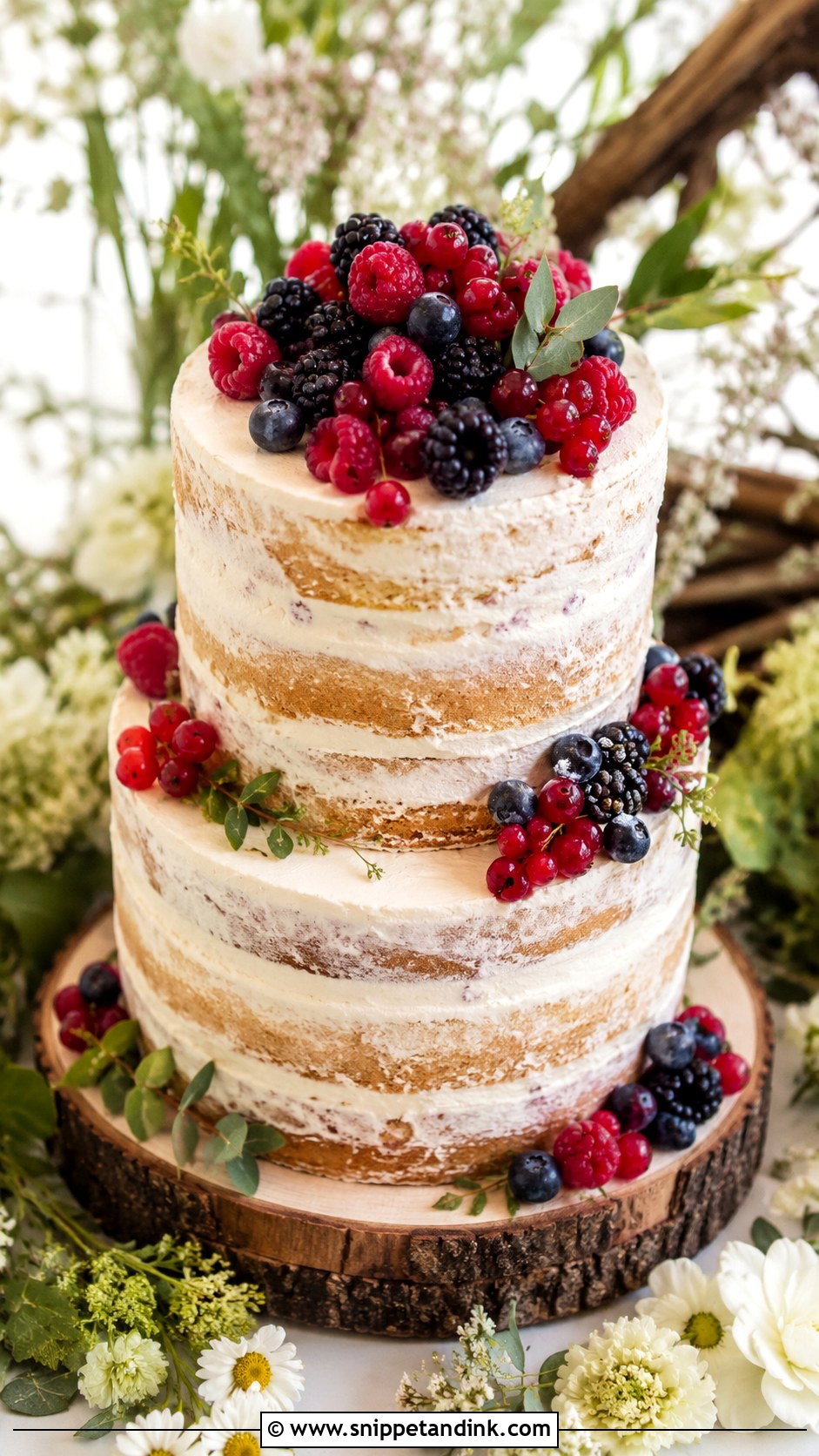
Berries are the most practical decoration in this whole list: they add colour without heavy sugar work and they taste good. Blackberries, blueberries, raspberries and currants show up best against ivory frosting or exposed sponge. The catch is moisture. Washed berries weep onto buttercream within a few hours, so I dry them thoroughly and add them close to delivery, often with a light glaze to keep them glossy. A semi-naked cake with greenery and a few blossoms looks foraged. For flavour, lemon raspberry or chocolate blackberry are easy crowd pleasers.
8. Woodland Wedding Cake With Deer Topper
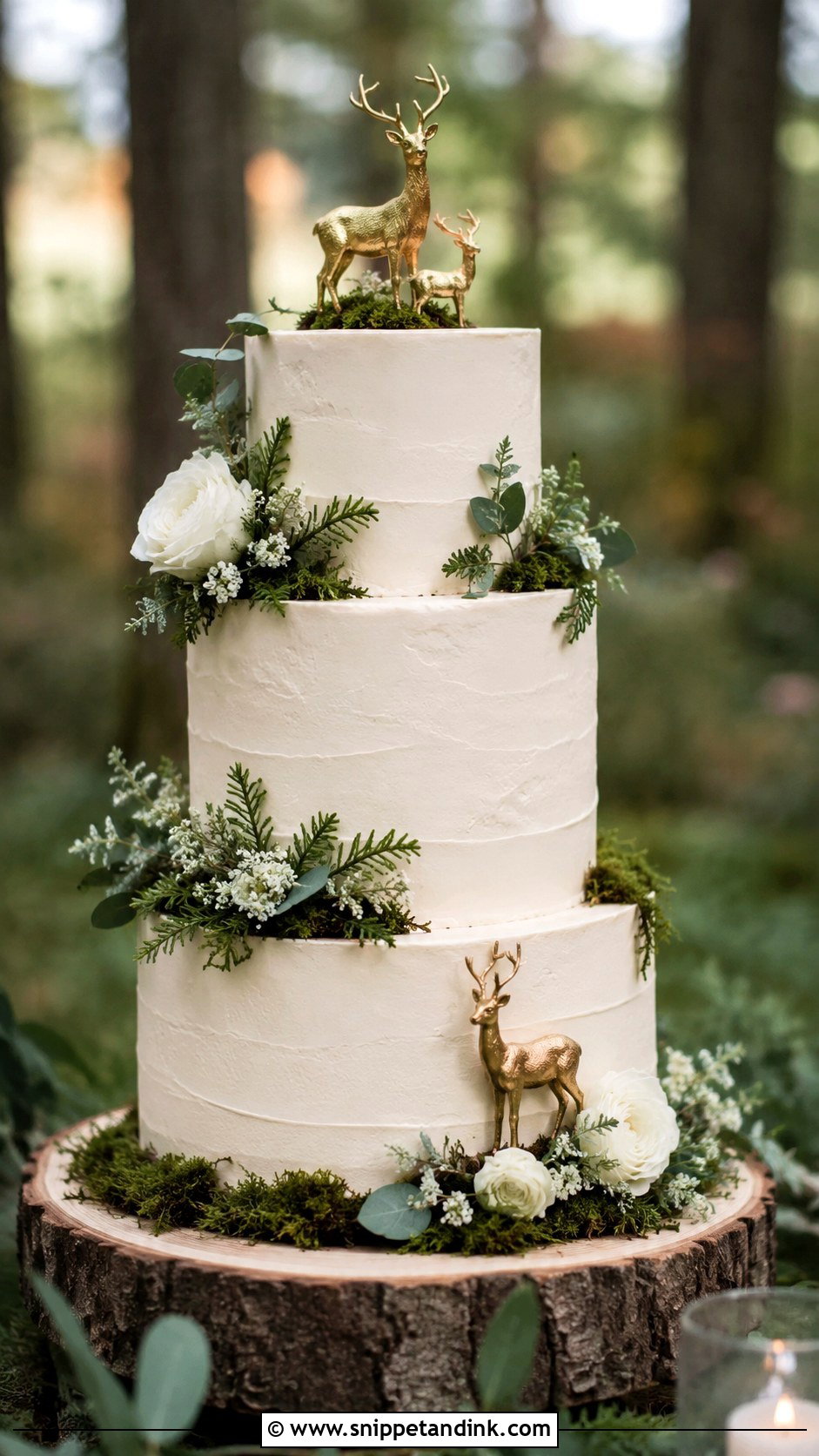
A deer topper sets the forest theme in one move, and the topper itself decides whether it looks elegant or novelty. I steer couples toward white, gold, wood or ceramic figures and away from cartoon styles. Check the weight before you buy: ceramic deer can be heavy enough to sink into soft buttercream, so I put a small cake board or dowel under anything solid. Two or three tiers give the figure space to stand. Smooth buttercream or fondant with greenery and moss keeps it calm, and neutral colours stop it feeling like a theme party.
9. Woodland Wedding Cake With Leaves
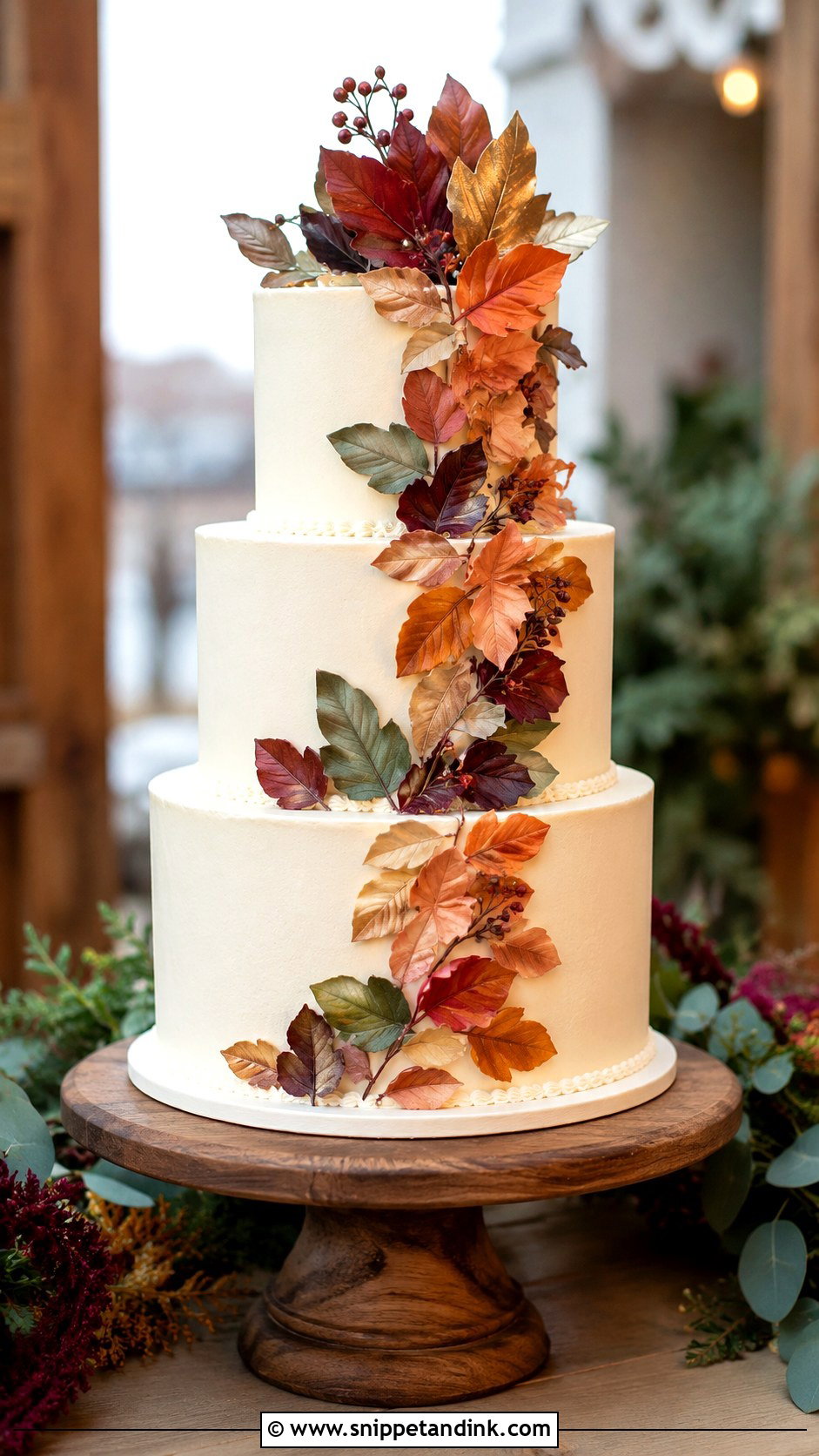
Leaves let you shift the cake through the seasons: soft green for spring, then copper, amber and burgundy for autumn. Sugar leaves can be cut, veined and dusted to look delicate, while pressed edible leaves give a flatter, modern finish. I keep the cake underneath simple, ivory with light texture or soft marbling, and trail the leaves from the top tier down one side so they look like they fell there. If you want woodland style without mushrooms, animals or bark, this is the gentlest route. Spice, apple or caramel sponge matches the warm colours.
10. Woodland Wedding Cake With Tree Stump
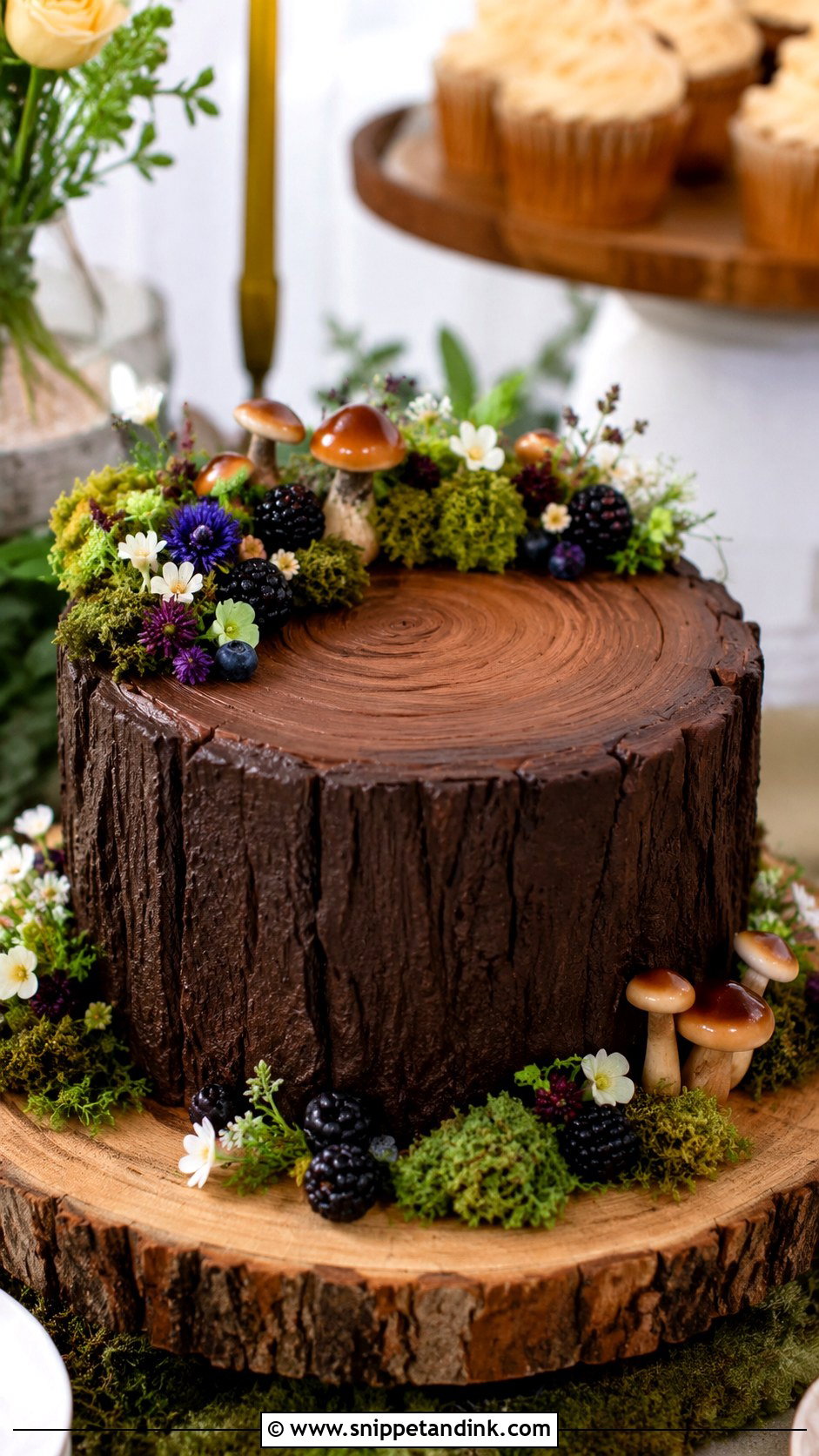
A tree stump woodland wedding cake makes a rustic centrepiece, either as a whole stump or one wood-grain tier. I build the rings on top with a palette knife in two shades of buttercream, then bark the sides in chocolate ganache or painted fondant. The more realistic you want it, the more time the decorator needs, so a fully sculpted stump costs more than it looks. Moss, mushrooms and berries around the base set it on the forest floor. It suits intimate weddings and cabin venues, and chocolate, hazelnut or maple sponge make the earthy look taste right too.
11. Woodland Wedding Cake With Succulents
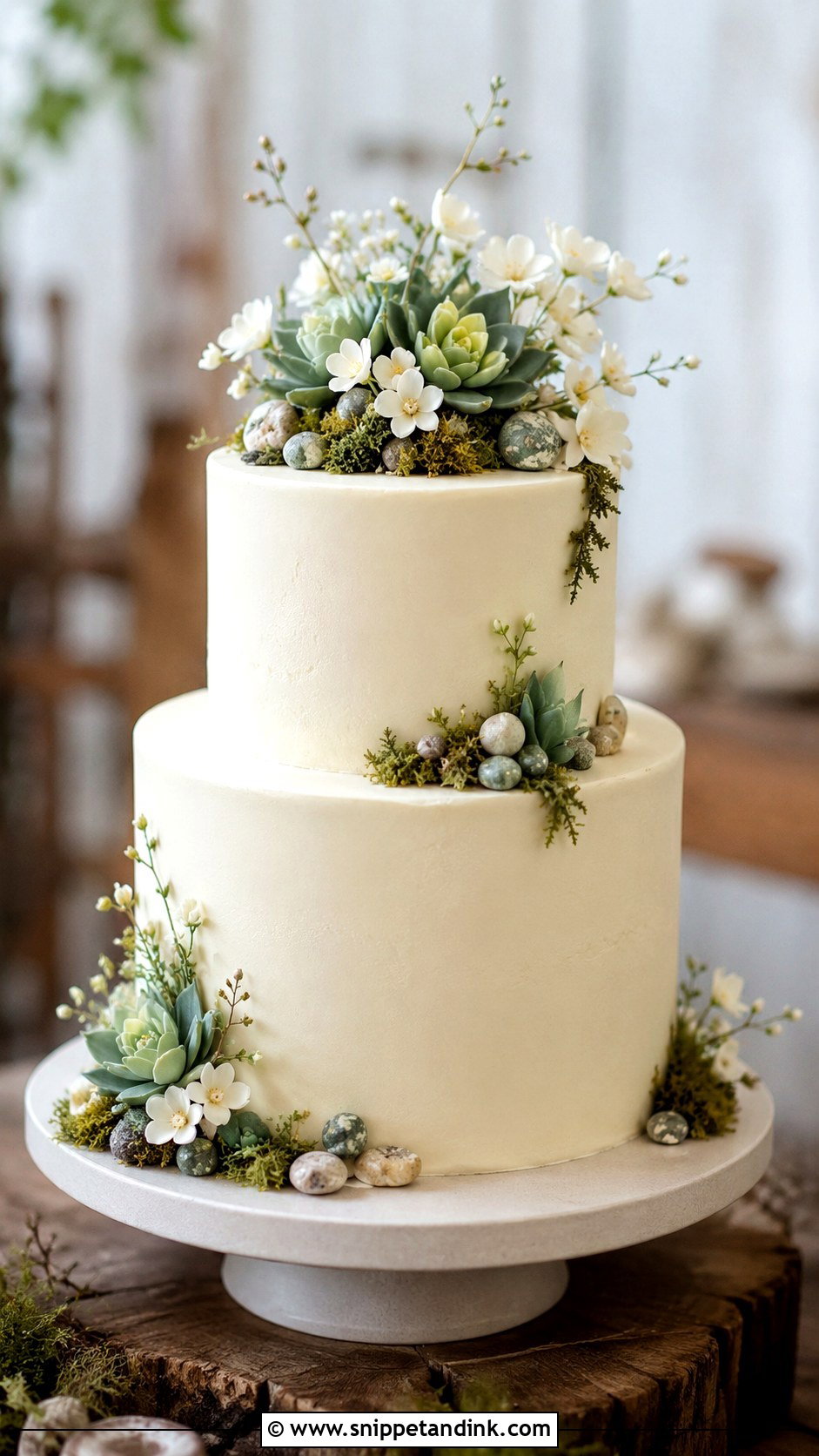
Succulents read earthy and a little modern, and they sit well with moss and stone colours. My preference is piped buttercream or sugar succulents. Real ones can be used, but their roots and soil have to be fully wrapped and they should sit on a barrier, never pushed into the cake. Sage, dusty green and muted blue-green keep the palette calm. Sugar pebbles and a wood slice base add to it, and a touch of white flowers breaks up all the green. Almond, pistachio or honey lavender fit the muted colours.
12. Woodland Wedding Cake With Pressed Flowers
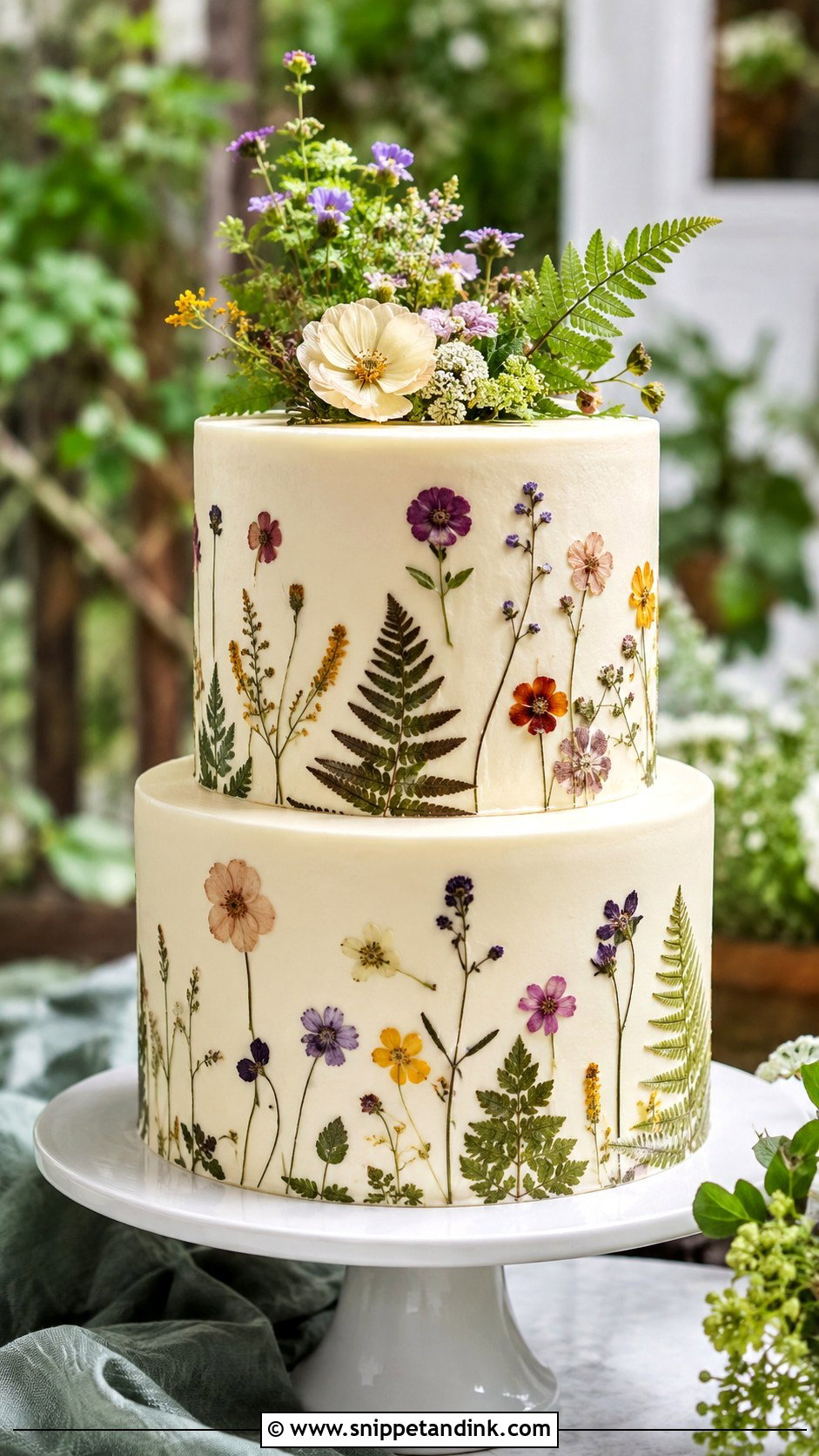
Pressed flowers need a clean canvas, so I chill the buttercream until it is firm and then lay the edible blooms and leaves on by hand like a botanical print. They have to be properly dried edible flowers; fresh petals wilt and bleed colour into the icing. Ivory, pale yellow or soft blush frosting shows them best. You can scatter them lightly over every tier or press one focused panel for a more modern finish. Lemon, chamomile, honey or berry flavours suit something this delicate.
13. Woodland Wedding Cake With Gold Leaf
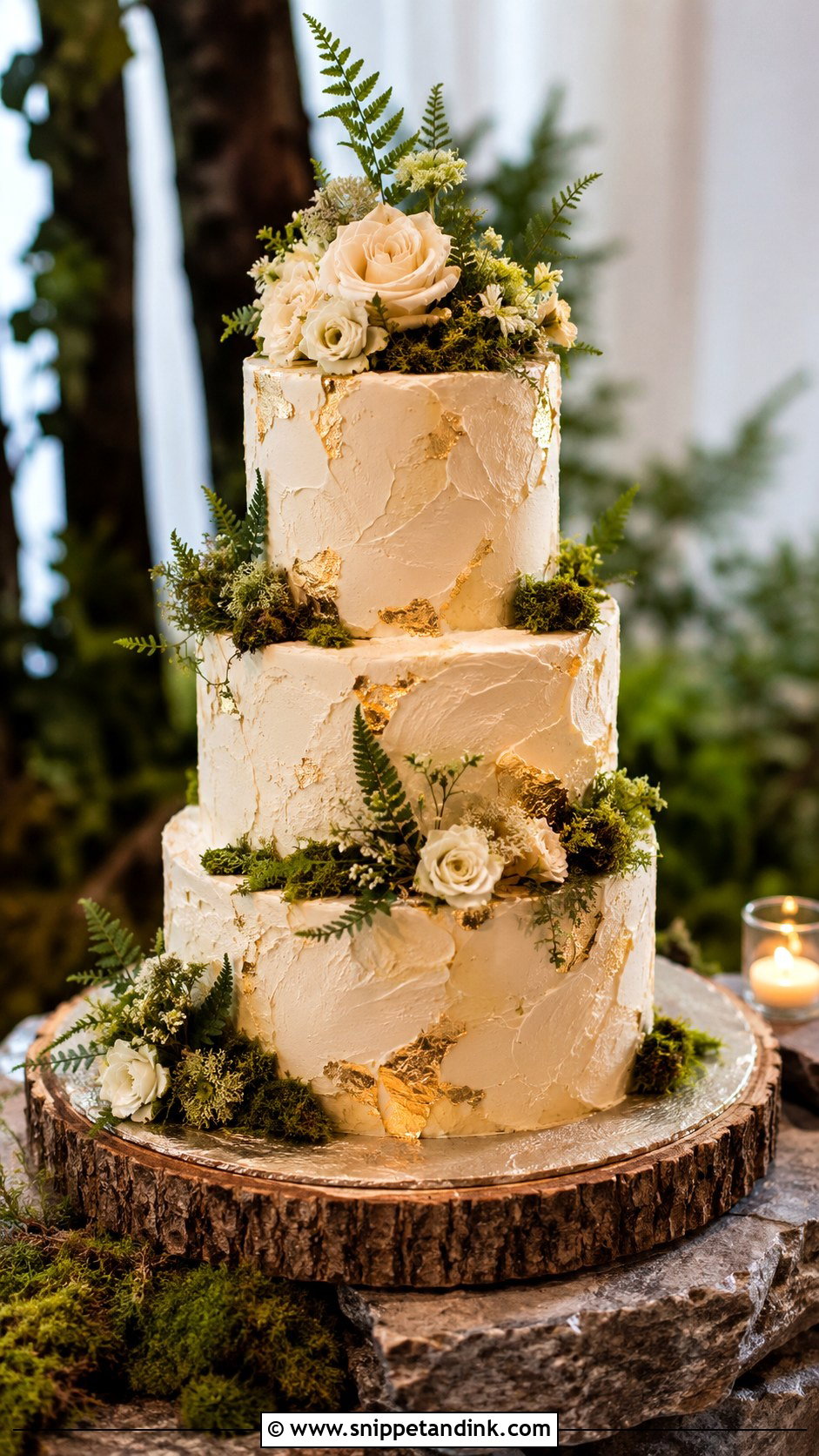
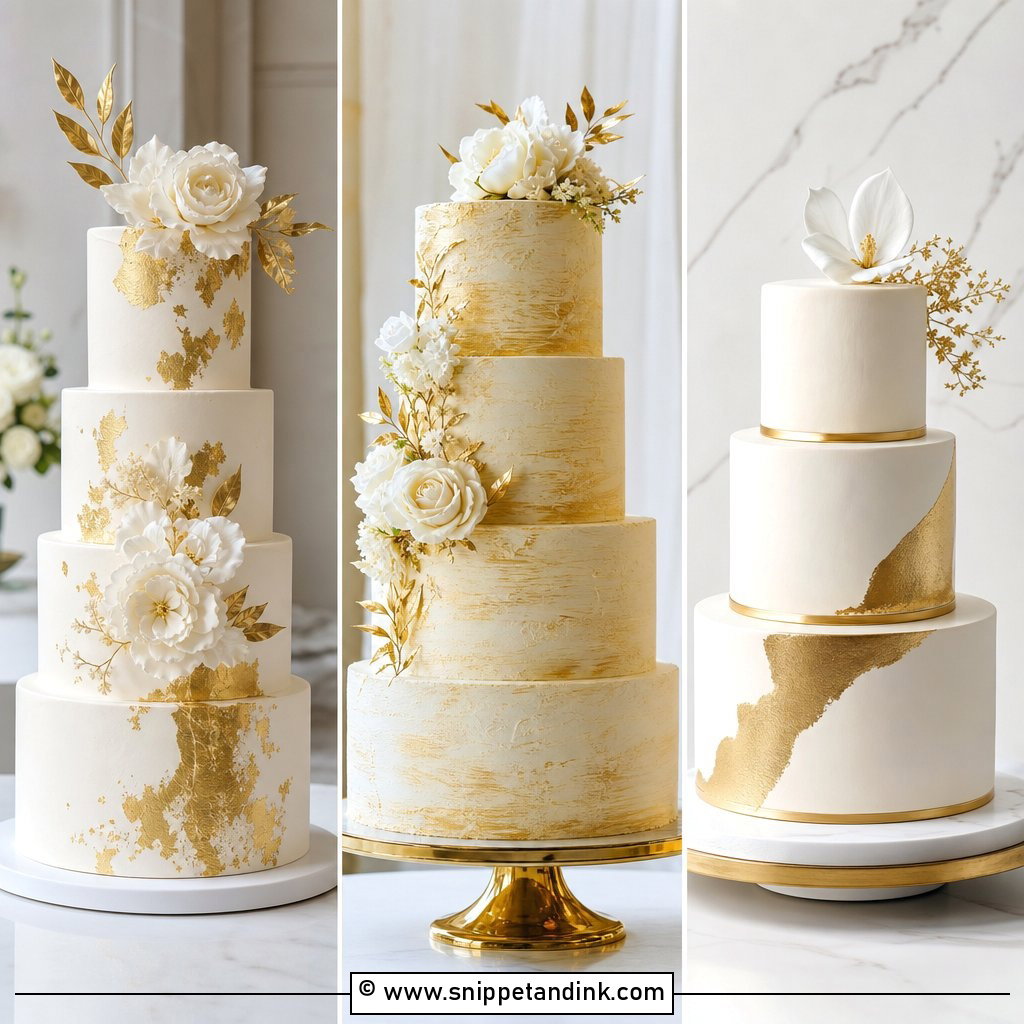
Gold leaf should look like sunlight catching the forest, not a metallic cake. I apply it in small torn flakes on bark ridges or stone-like fondant, never in whole sheets. Use edible gold leaf only; craft gold looks identical and is not food safe, which is why I never accept leaf a couple has bought themselves. Pair it with moss green, ivory and warm brown. One textured tier against one smooth tier gives the best balance on three tiers. Honey, pear or vanilla bean sponge works here.
14. Woodland Wedding Cake With Naked Layers
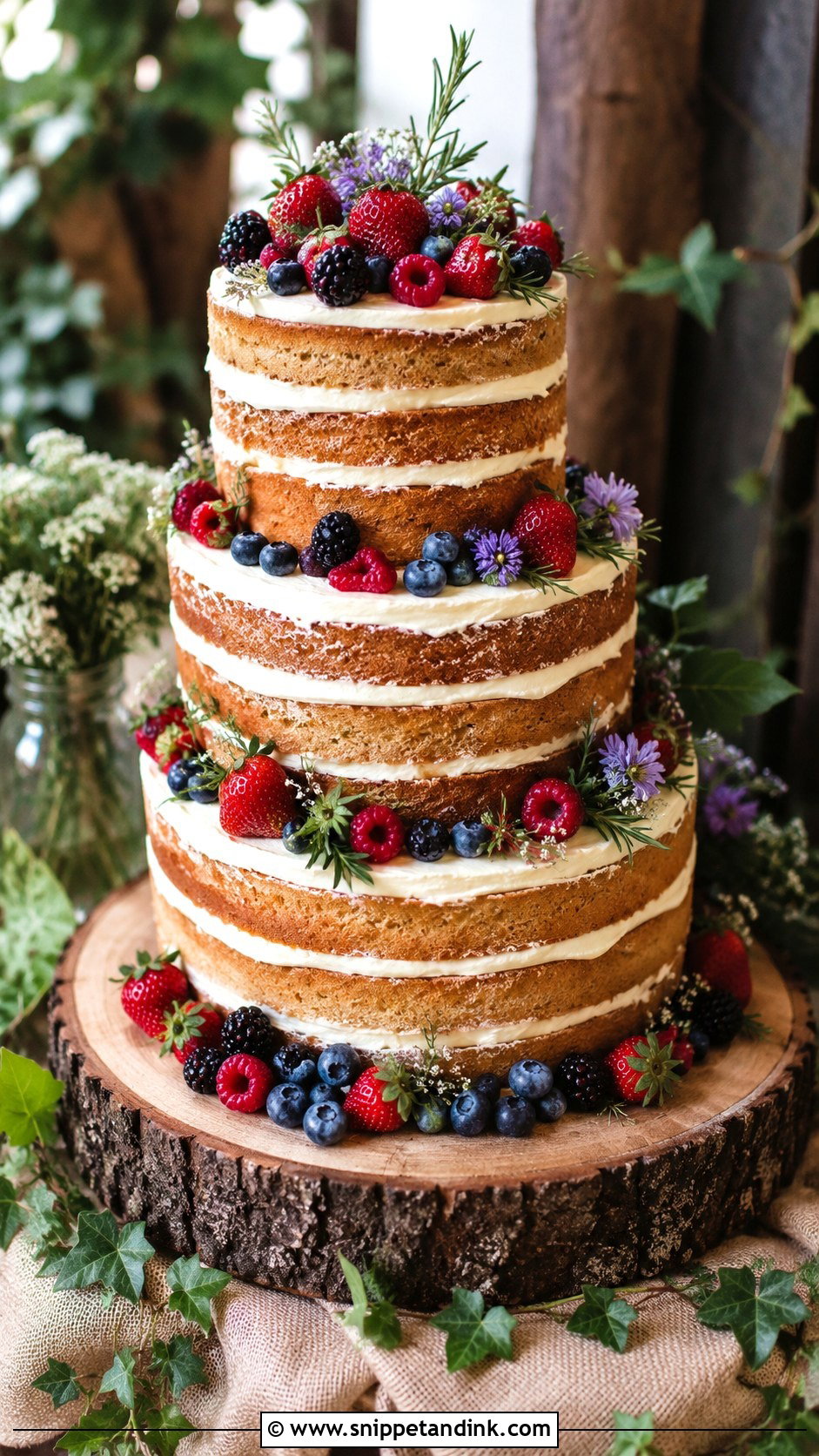
A naked cake is the quickest route to a rustic forest look, but it is also the least forgiving. With almost no frosting covering the sponge, every uneven layer and gap in the filling shows, so I level each layer and pipe a firm dam before filling. Exposed sponge also dries out faster than a covered cake, so I assemble it as close to the wedding as possible. Decorate with berries, wildflowers, herbs, leaves or small moss accents. A tall two or three tier version on a wood slice stand reads properly bridal.


15. Woodland Wedding Cake With Buttercream Texture
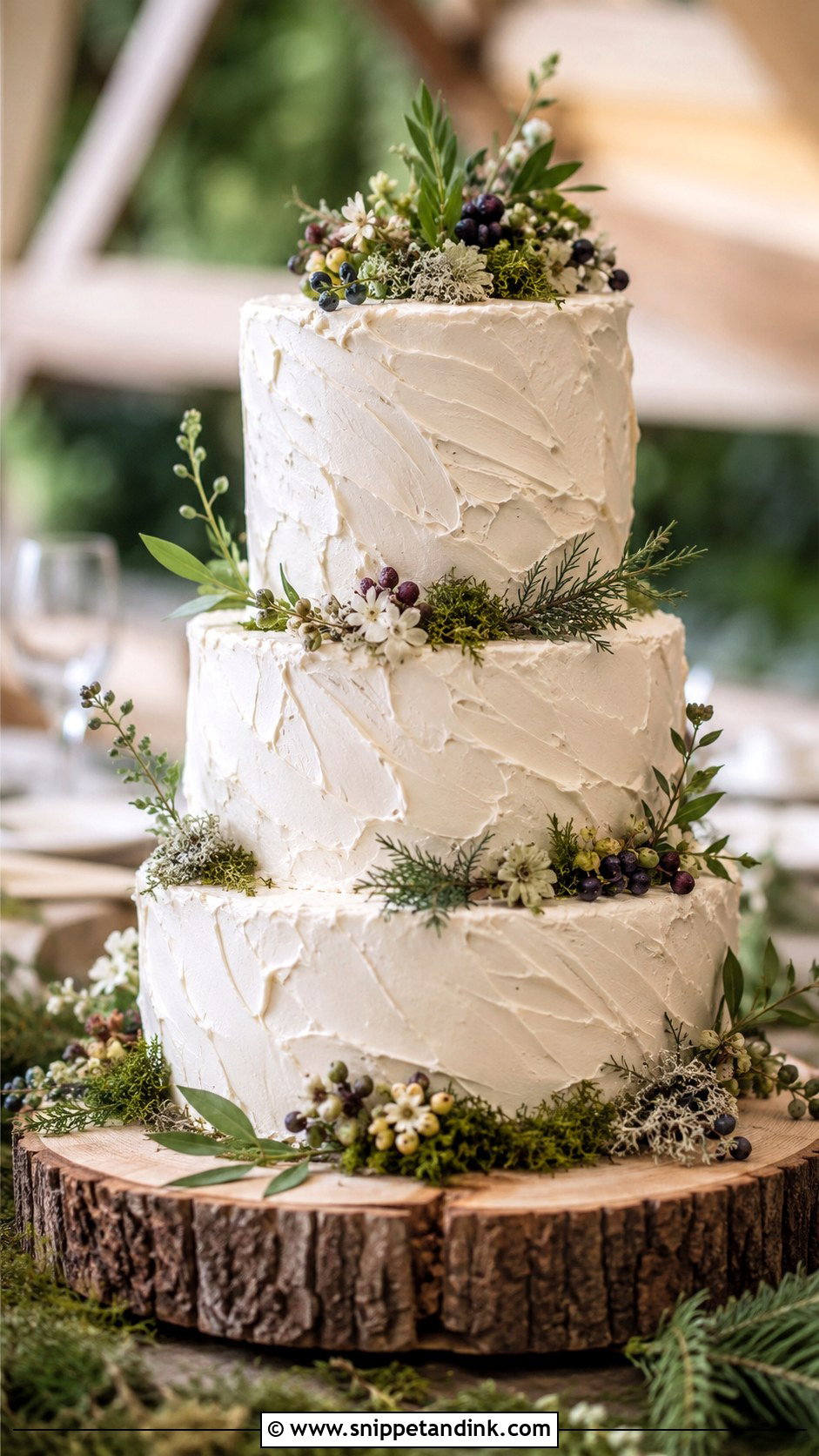
Textured buttercream adds depth without clutter. Palette-knife strokes, rough ridges or bark-like drag marks can all look natural, and they forgive small marks from transport far better than a mirror-smooth finish. Warm white keeps the cake bright in photos, while a little taupe or soft brown in the strokes brings the woodland warmth. Add greenery, berries or pinecones depending on the season. Almost any flavour works under this finish, from vanilla and almond to carrot and spice.
16. Woodland Wedding Cake With Marble
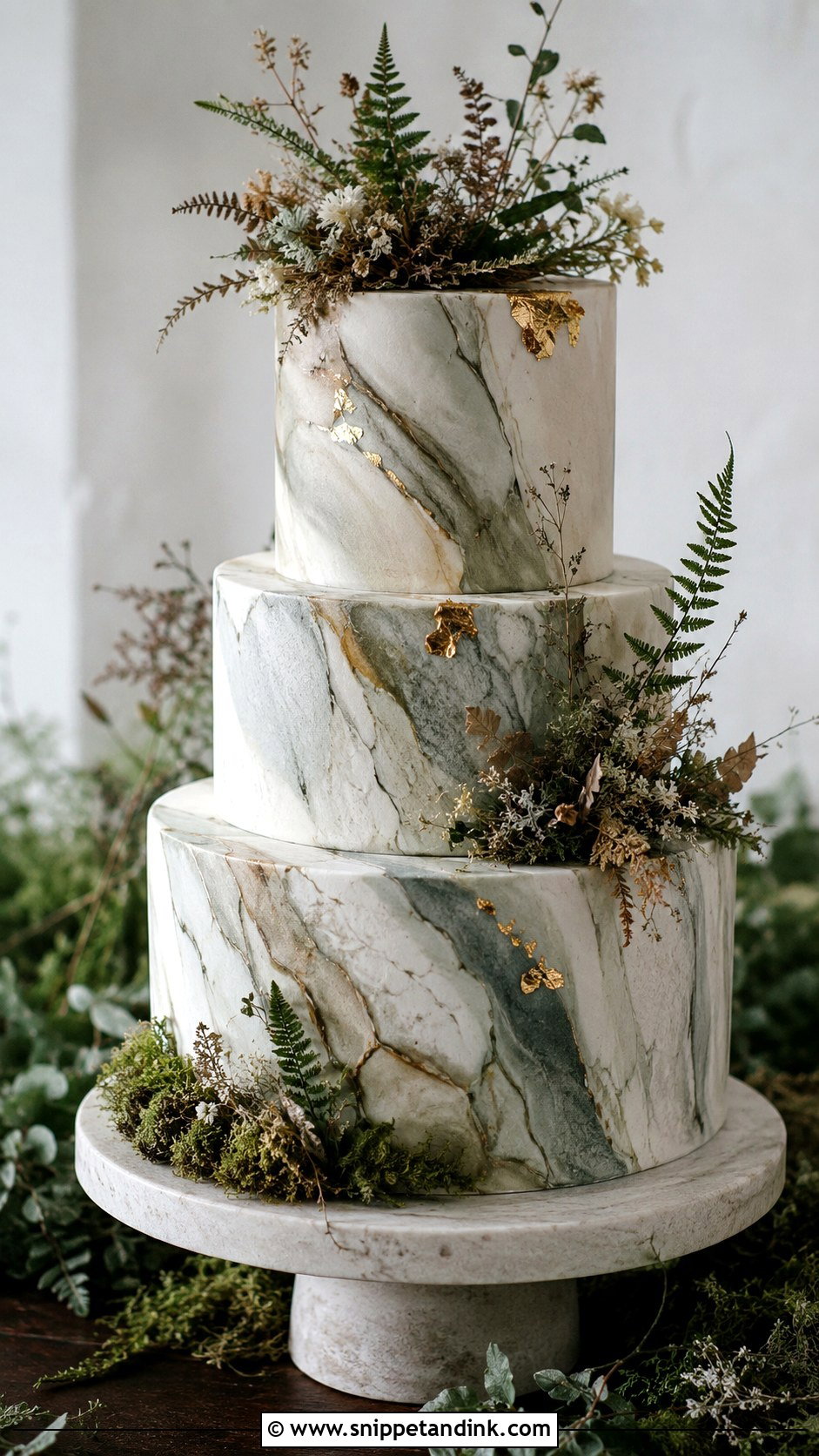
Marble moves the woodland idea toward something cleaner. I swap bright white and grey for ivory, sage, taupe and warm grey so it looks like river rock rather than a kitchen worktop. Fondant gives the crispest veining because the colours are kneaded in before rolling; buttercream marble is softer and more watercolour-like. Bring it back to the forest with gold leaf, dried botanicals or a ring of moss at the base. Couples who find bark or mushrooms too literal usually land here. Pear, honey or spiced apple suit the stone tones.
17. Woodland Wedding Cake With Dark Chocolate
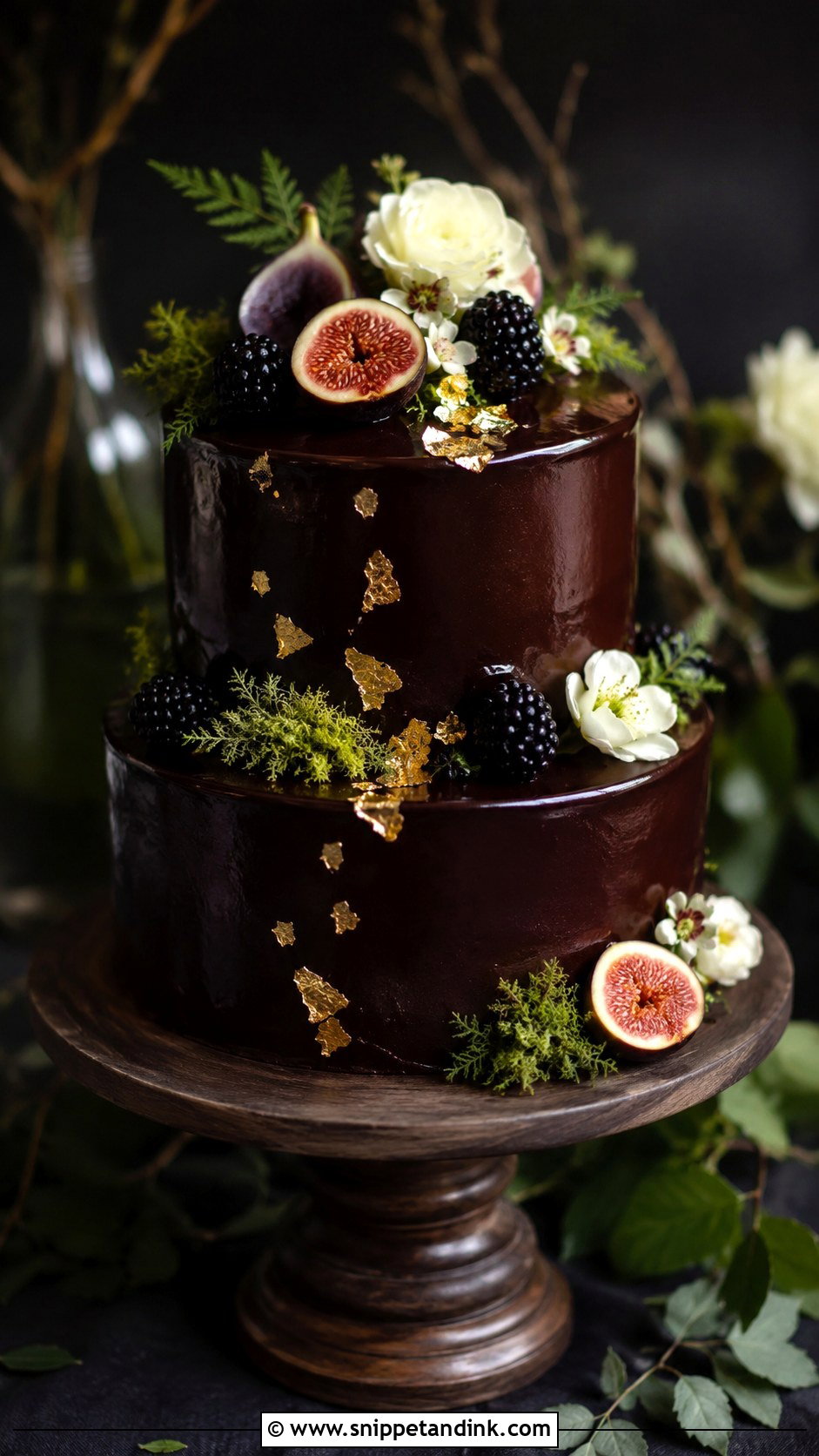
Dark chocolate is moody and dramatic, best for evening receptions and venues with deep green decor. Glossy ganache or rough chocolate bark gives an earthy base, and figs, berries, pale flowers or gold leaf lift it. Be aware that glossy ganache reflects flash and spotlights, so I set the cake away from direct uplighting. Dark chocolate is also the first finish to soften in a warm room, which matters if you are outdoors in late summer. One tier for an intimate wedding or a tall stack both work. Chocolate raspberry, espresso, black forest and salted caramel all make sense inside.
18. Woodland Wedding Cake With Autumn Colors
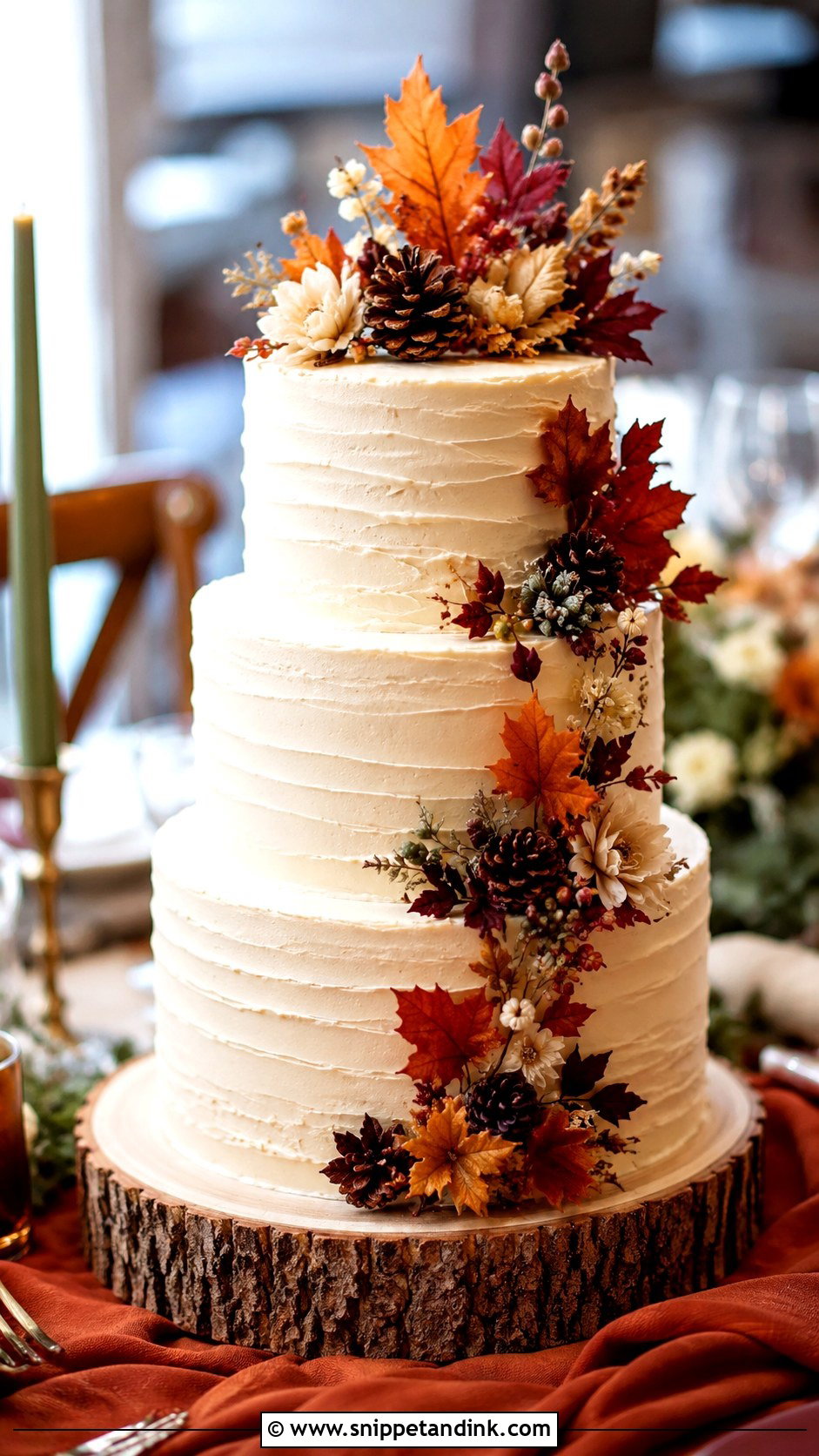
An autumn woodland wedding cake needs restraint more than anything. Ivory frosting with rust, copper, mustard, burgundy and deep green accents can turn muddy fast, so I pick three of those colours and repeat them, rather than using all five. Sugar leaves, dried flowers, berries and tiny pinecones in a diagonal cascade across three tiers photograph cleanly. Textured buttercream or a semi-naked finish both suit it. Apple spice, pumpkin, maple pecan and brown butter vanilla fit the cosy season.
19. Woodland Wedding Cake With White Flowers
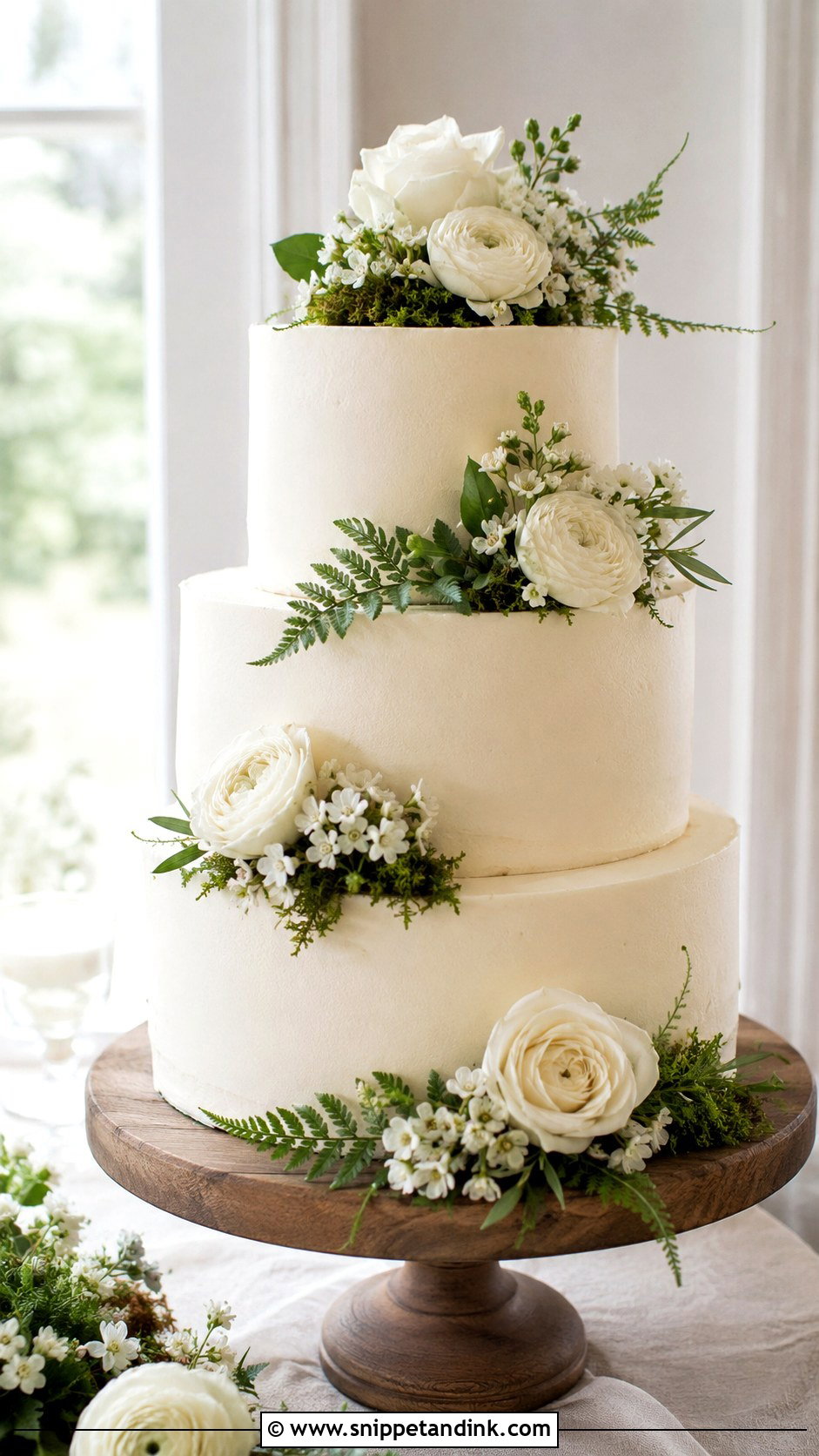
White flowers keep the forest theme gentle and still read as a classic wedding cake. White roses, ranunculus, anemones or small blossoms with greenery and moss sit well on smooth ivory buttercream or fondant. A word on colour: pure white flowers can make ivory icing look yellow next to them, so I match the icing to the flower or choose cream blooms. A few ferns or a band of bark bring in the woods quietly. This one works in any season and almost any venue. Vanilla bean, lemon or champagne-style sponge suit the light look.





20. Woodland Wedding Cake With Fairy Lights
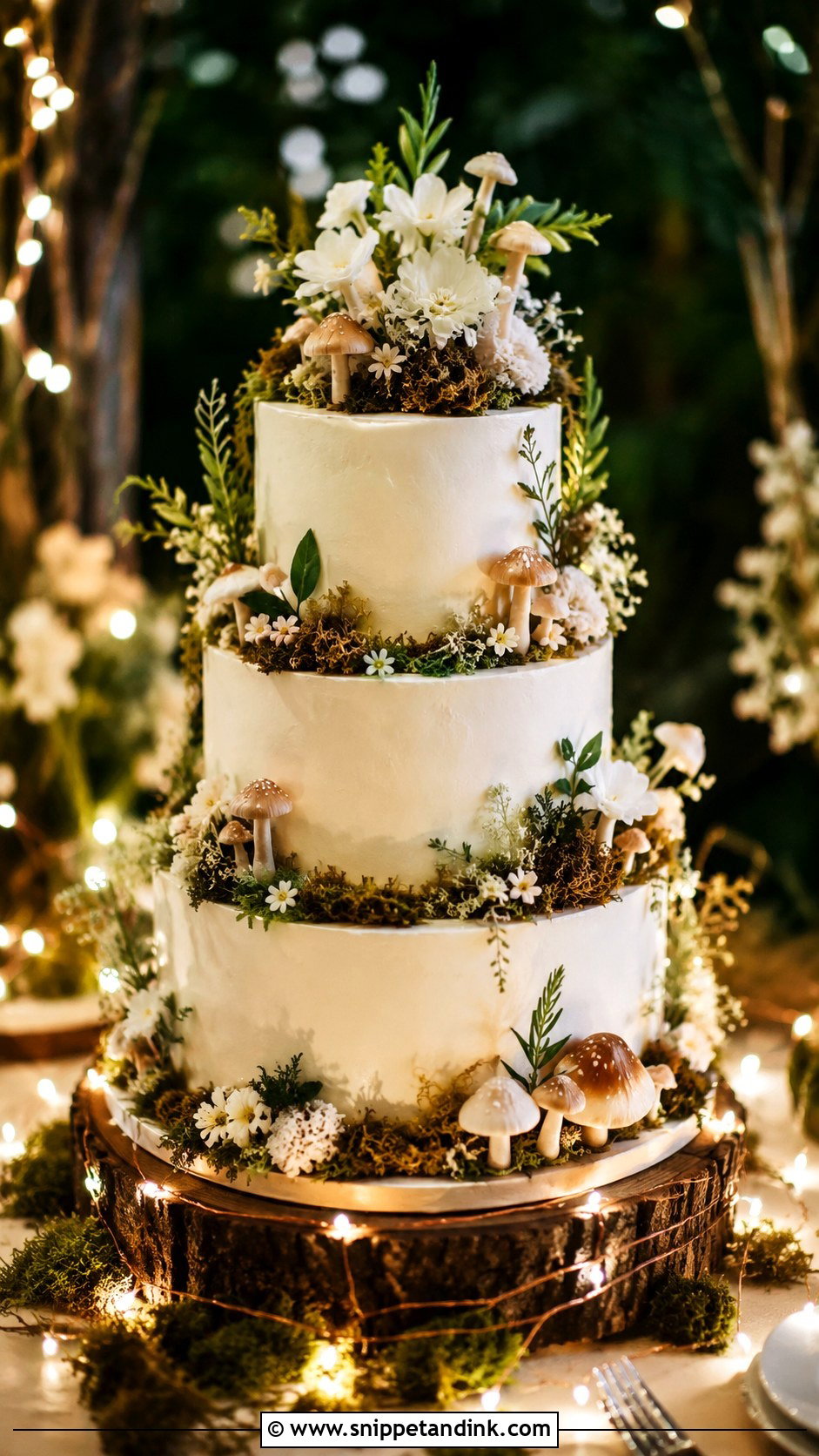
Fairy lights make an evening cake glow, but they belong around the cake, not in it. I style them on the table, under a clear cover or woven through the stand. Battery wires and LEDs are not food safe, and even cool LEDs warm the icing slightly if they are buried in it. Pair the glow with moss, mushrooms or bark texture on a smooth ivory cake so the light has a clean surface to bounce off. Tented receptions and outdoor venues after sunset suit this best. Honey vanilla, lemon or chocolate sponge all work.
Buttercream, Bugs and Sun at an Outdoor Reception
Most woodland weddings happen outside or in a barn with the doors open, and that changes how I build the cake. Meringue buttercreams taste lighter but start to slump once the air is warm, while a crusting buttercream or ganache under fondant holds its shape much longer. If the forecast is hot, tell your baker early so they can choose the right covering instead of hoping for shade.
Shade is the other half. Place the table out of direct sun for the whole reception, not just the morning, and remember the sun moves. A cake dome or mesh cover keeps wasps off berries and fruit until the cutting. Ask your coordinator to bring the cake out as late as the timeline allows; it can sit in a cool room until the guests sit down.
How Early to Book a Sculpted Forest Design
Sugar mushrooms, wafer paper ferns and gumpaste leaves are made by hand and dried for days before they go on, so detailed woodland cakes take far longer to decorate than a plain one. Bakers who do this work often fill their autumn diaries many months ahead, which is exactly when most forest weddings happen. I’d reach out as soon as your venue is booked and plan a tasting about two to three months before the date. Bring a photo of the stand you want to use too. A heavy tree slice adds weight and changes how the cake is delivered, so your baker needs to know about it before they quote.
A Forest Cake Is Only as Good as Its Setting
Every cake above comes back to the same idea: a simple base, then natural detail that connects it to where you are standing. Moss, ferns, bark, berries, mushrooms and pinecones all work when you use a few of them with conviction rather than all of them at once. Bring your venue photos, your florist’s plan and the month to your tasting, and let your cake designer edit the list down. The cake should look like part of the woods you chose, not a prop brought in from somewhere else.
You'll Like These Ideas:





Leave a Reply