
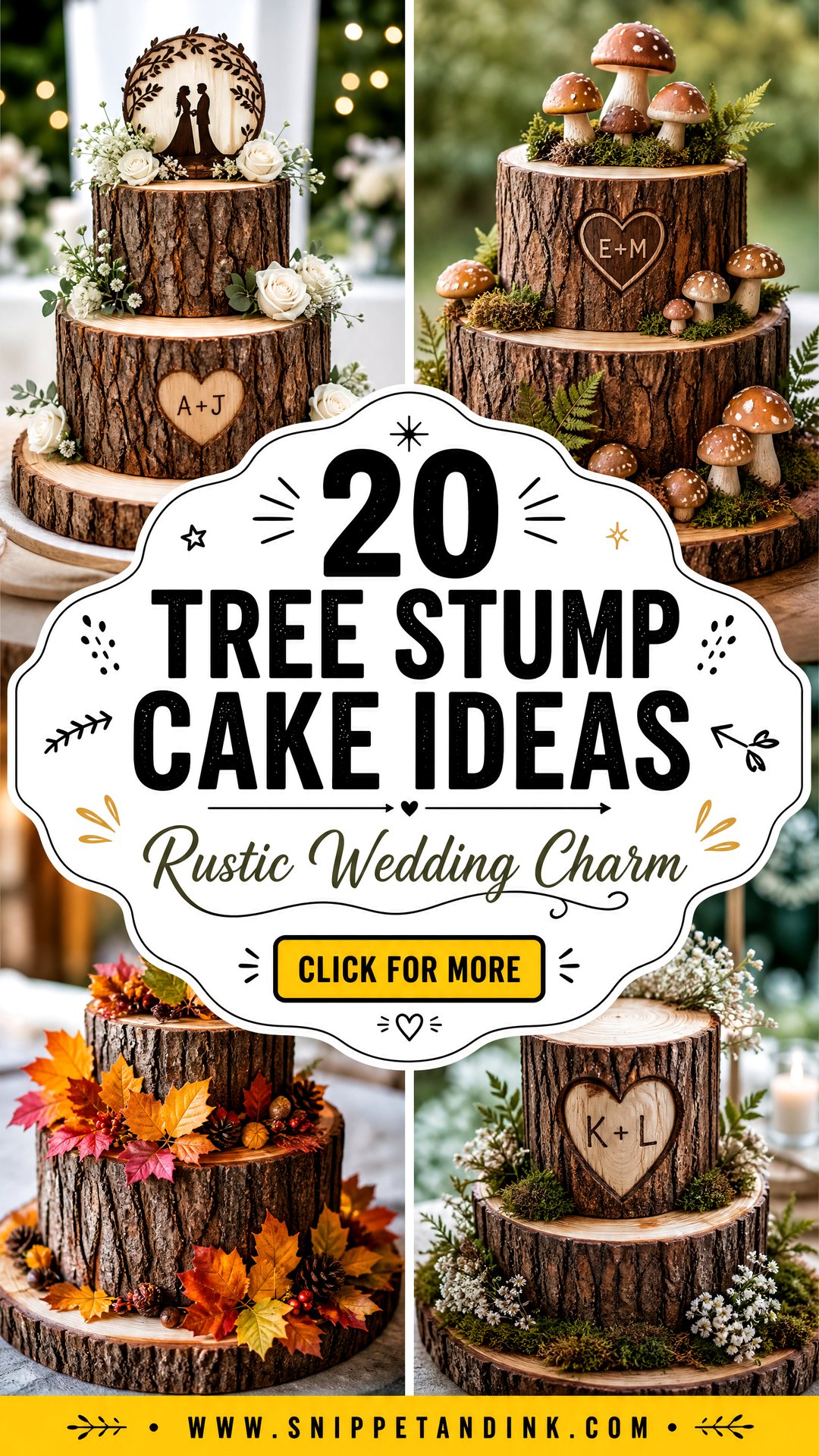
A cake made to look like a cut log is one of the few wedding designs where texture does almost all of the decorating. The bark is piped, combed or carved into the coating, the top shows growth rings, and a handful of flowers or mushrooms finishes it. I like making them for barn, forest and autumn receptions because the cake sits naturally among wood, candles and greenery instead of fighting them. Some couples want a plain stump with one initial; others want something closer to edible woodland art. Below are twenty versions I’d happily put on a reception table, with notes on how each one is built.
How the Bark Is Actually Made, and What to Ask Your Baker
Almost every stump cake is a round tier with a textured coating, so the real decision is what that coating is made of. Each one behaves differently on the day, and I always settle it before we talk flowers.
- Combed buttercream is the softest to eat and the quickest to make, but it is also the most heat sensitive. I use it for cool rooms and indoor receptions.
- Chocolate ganache sets firm, holds deep grooves and copes with a warm room far better. It is my default for anything outdoors.
- Modeling chocolate or fondant bark gives the most realistic peeling edges and knots. It adds sweetness and cost, and some guests peel it off.
When you book, bring photos of the bark color you like, tell your baker whether the cake will be inside or outside, and ask to see their own textured work, not just smooth cakes. Carved tops with rings take extra hours, so allow a little more budget than for a plain buttercream tier.
1. Tree Stump Wedding Cake With Initials
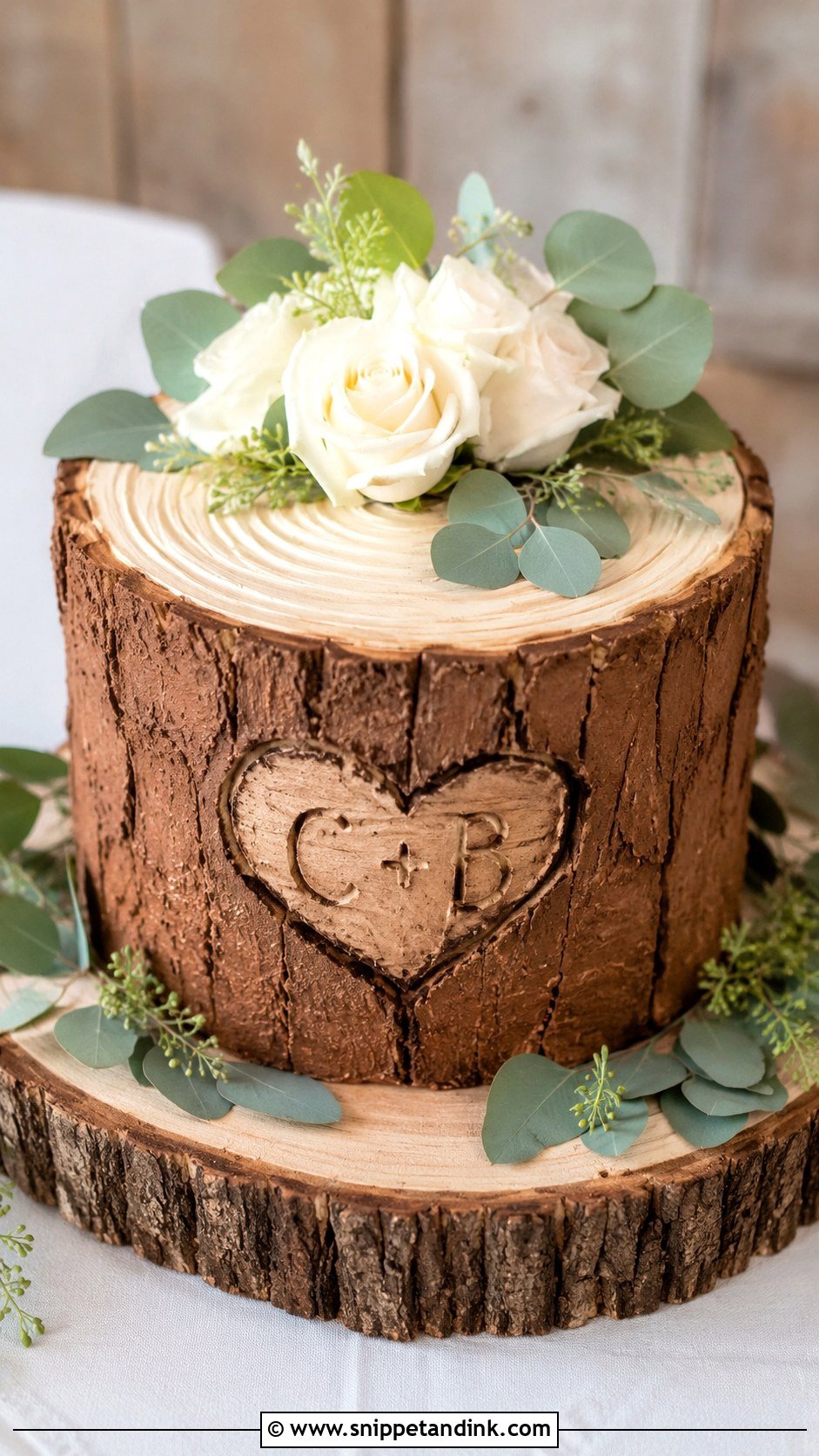
Carved initials are the detail couples ask for most, and I never actually cut into the cake to make them. The letters are scored into a fondant or modeling chocolate panel, or painted onto a smoothed patch of buttercream, so the tier stays sealed and moist. A single round tier or two stacked logs gives enough flat surface for the lettering. A small heart around the letters reads clearly from across a room. Keep the palette to brown bark, cream rings and a few flowers at the base.
2. Birch Tree Stump Wedding Cake
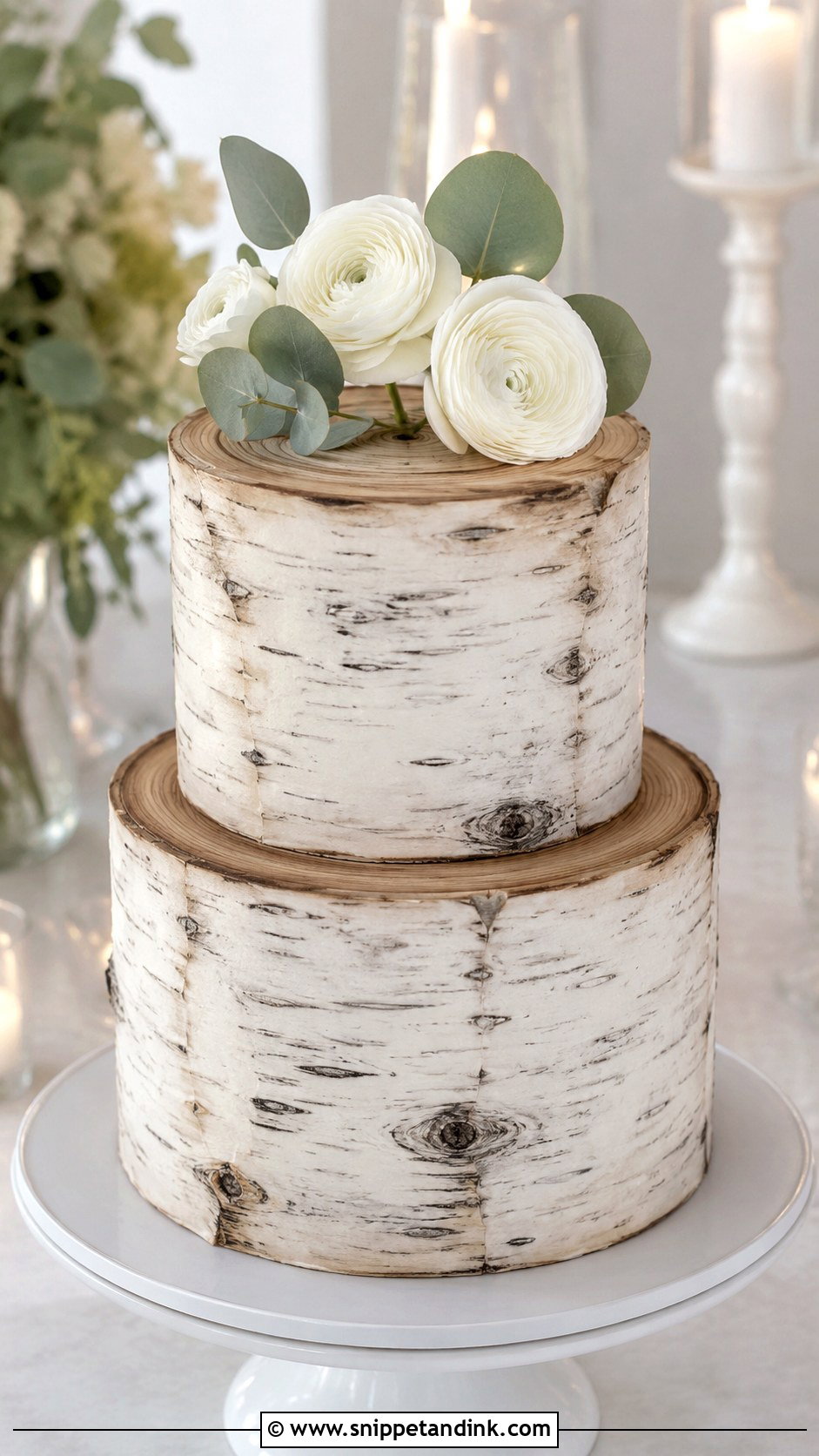
Birch is the paler, softer cousin of the dark stump, and it suits ivory flowers and eucalyptus far better than chocolate bark does. I build it on a white base and drag charcoal-tinted buttercream across with a palette knife, then add the little black lenticel marks by hand; too many marks and it starts to look like a cow print. Peeling bark edges in thin fondant add realism. Vanilla, almond, lemon and white chocolate sponges all sit happily under it. Set it on a wood slice with a few candles and leave it at that.
3. Two Tier Tree Stump Wedding Cake
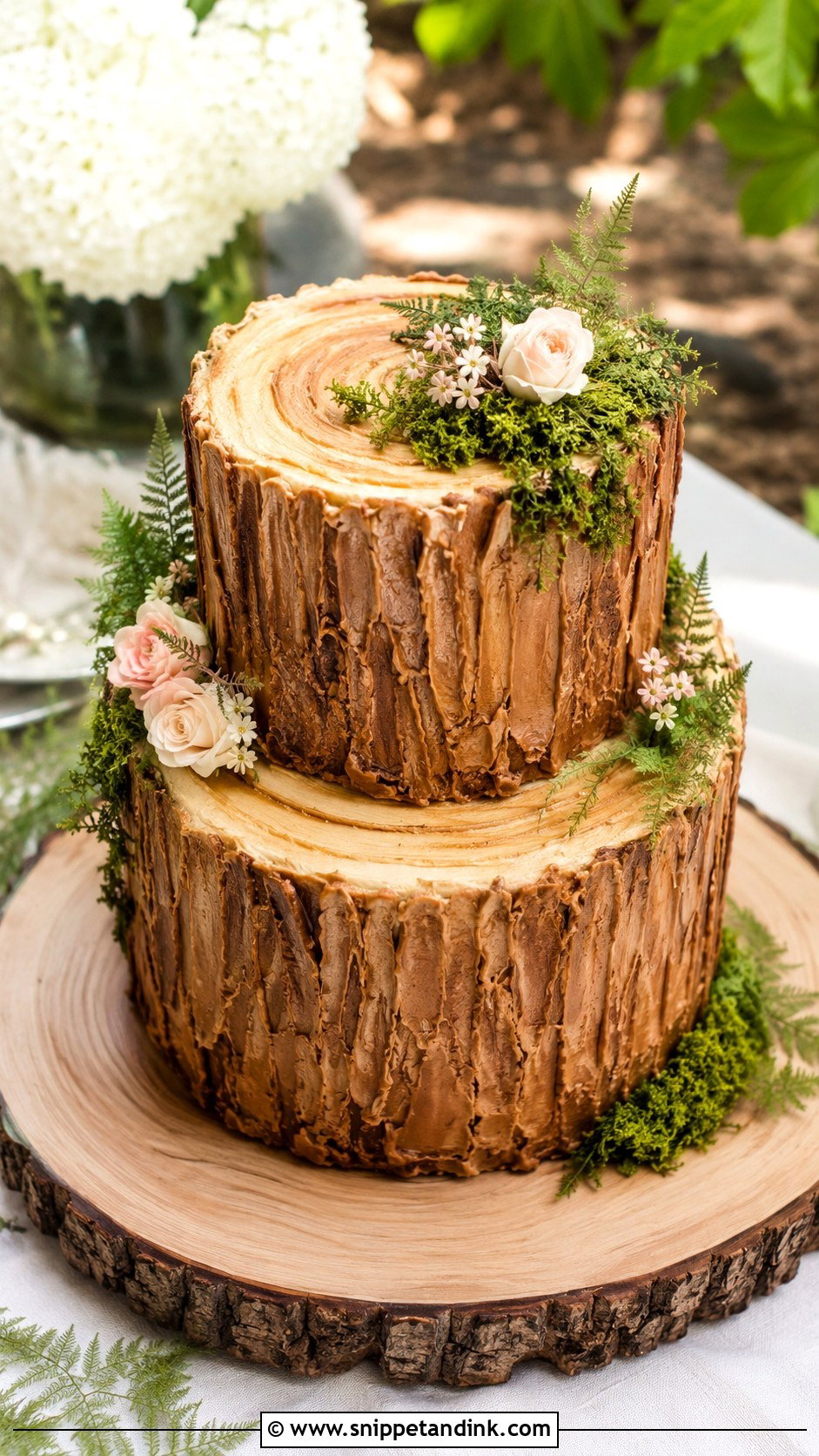
Two tiers give you height without needing internal support rods running through four layers of carved texture. I treat each tier as its own cut log, with rings on top and bark on the sides, and I sometimes offset them slightly so they look like they were stacked by hand. Mixing one birch tier with one dark tier is a good contrast if your palette can carry both. A few meringue mushrooms and sprigs of greenery are plenty. For a guest count around fifty to eighty, this size usually feeds everyone without a kitchen cake.
4. Three Tier Tree Stump Wedding Cake
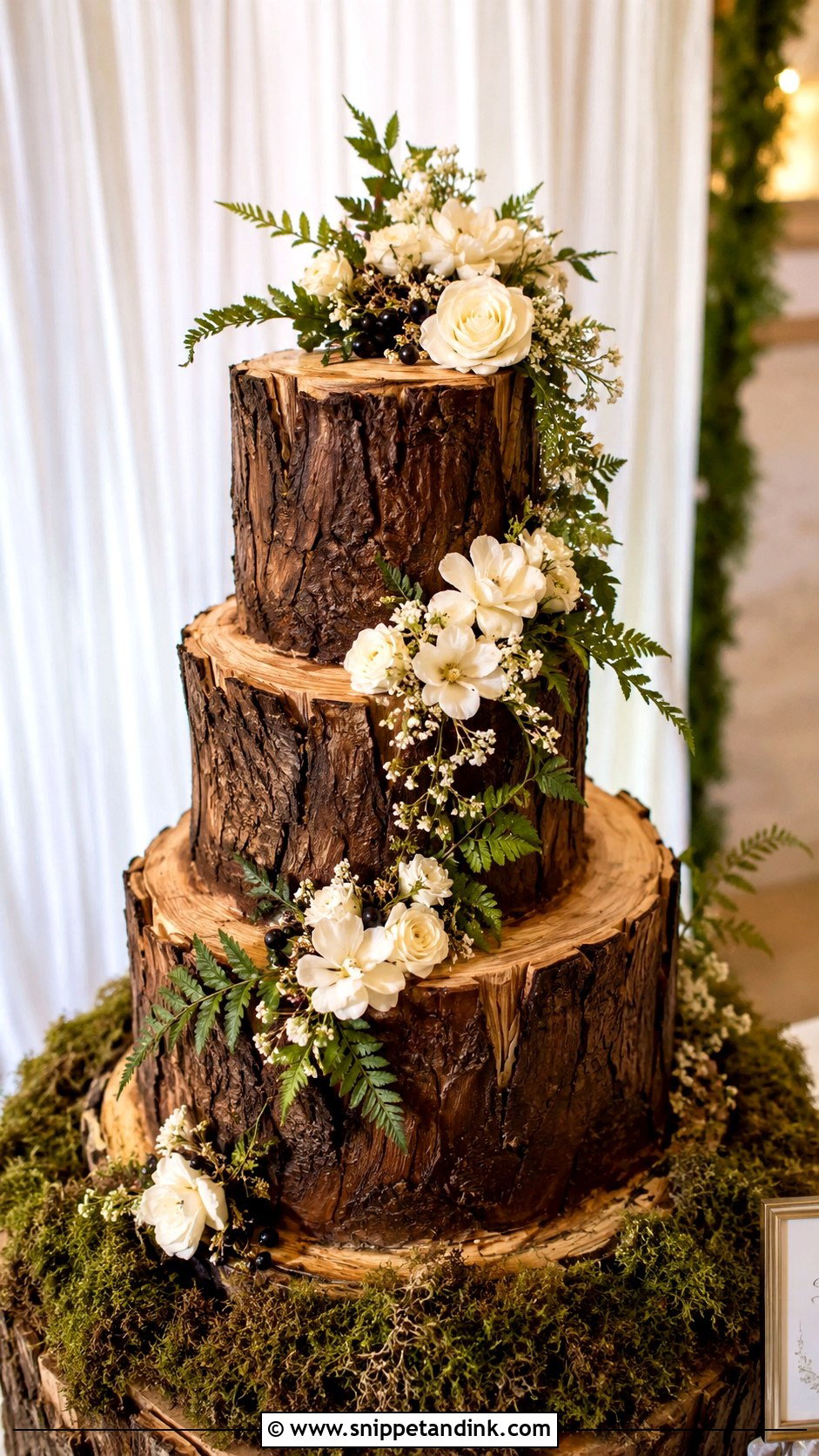
Three tiers is where a stump cake becomes a centerpiece, and also where the structure matters most. Every tier above the base needs dowels and its own cake board, because textured buttercream hides nothing if a tier starts to sink. I usually make the bottom tier the roughest bark and get finer as I go up, which mimics how a real trunk narrows. Flowers can climb diagonally from the base to the top tier. This is the size I’d suggest for larger receptions or couples who want one strong focal point on the dessert table.
5. Tree Stump Wedding Cake With Flowers
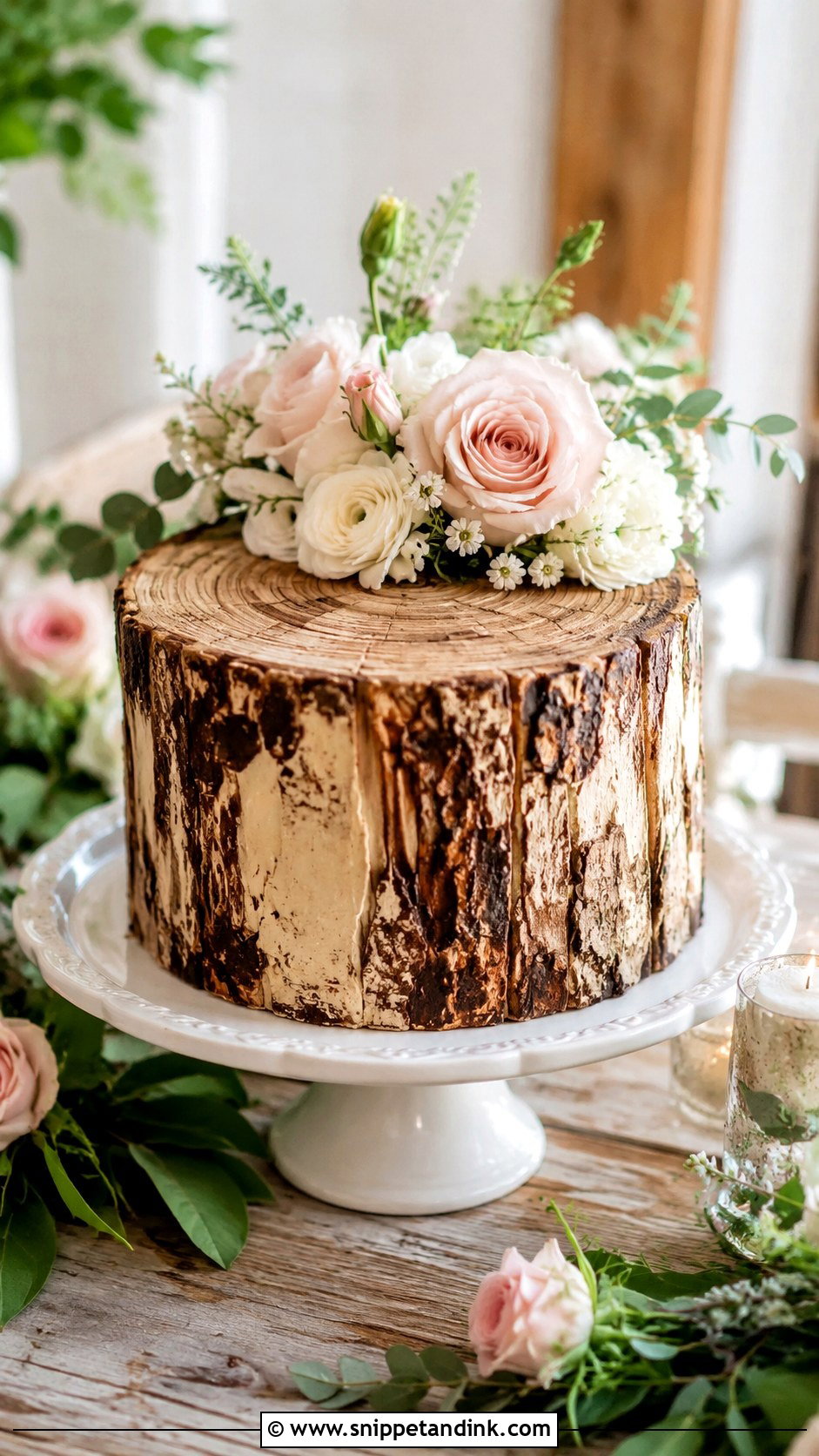
Flowers soften the bark and are what make a stump cake look bridal rather than like a forest birthday. With fresh blooms, I wrap or tape every stem and never push bare stems into the sponge, and I’ll steer you to sugar flowers if your florist can’t confirm the blooms were grown without pesticides. Sugar roses and ranunculus also hold their color for days. Blush, white and a little wild greenery all sit well against brown texture. A simple stand lets the flowers frame the stump shape.
6. Tree Stump Wedding Cake With Moss
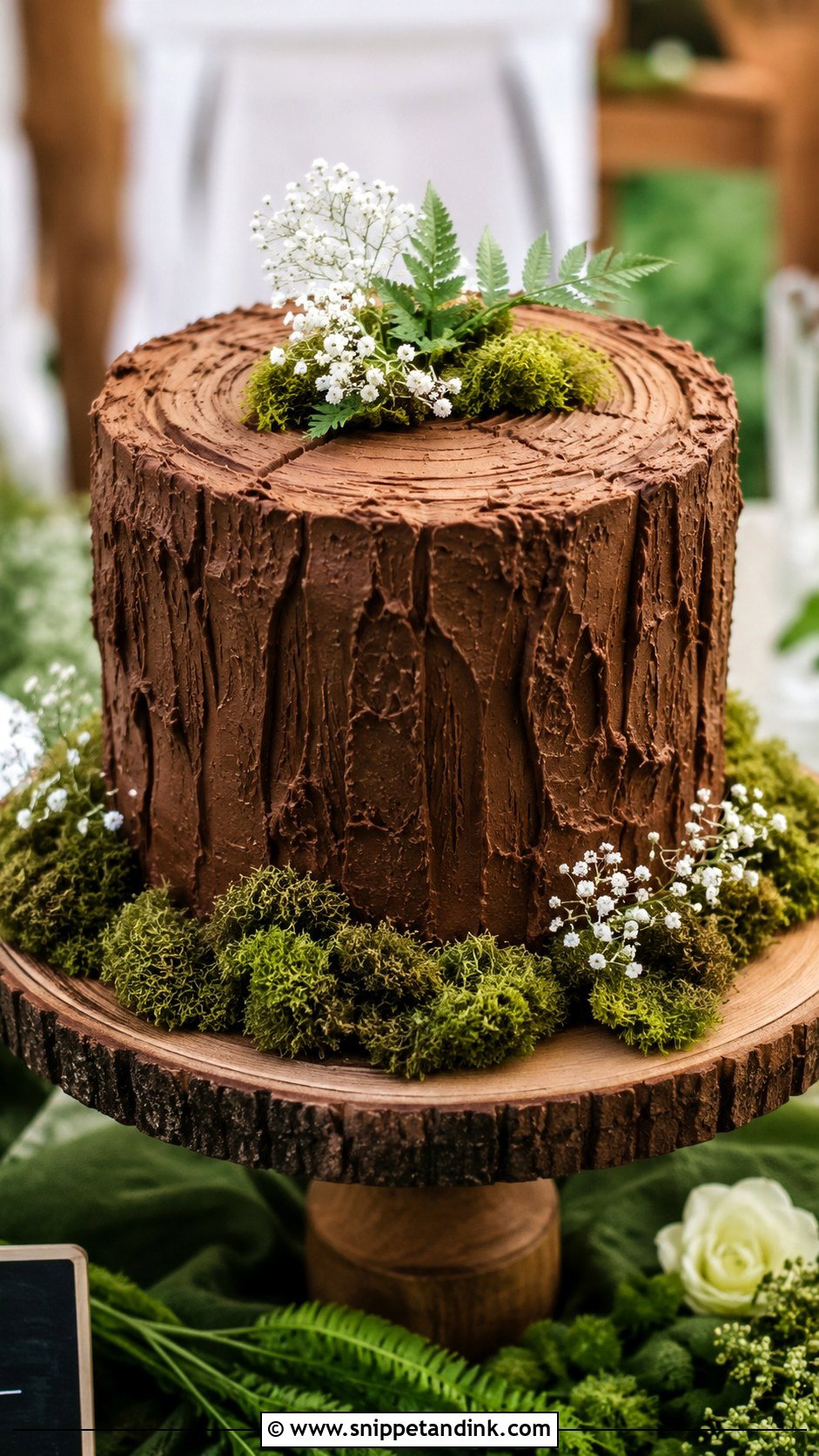
Moss is the detail that makes the cake look like it grew out of the table, which is why it suits a woodland or forest-style celebration so well. Edible moss is usually green-tinted sponge or cookie crumb, rubbed through a sieve so it stays fluffy. The mistake I see is too much of it; a ring at the base and a patch where the bark splits is enough. Crumbs drift once the cake is cut, so ask your caterer to slice on a separate board. Pair it with a few ferns or mushrooms rather than everything at once.
7. Tree Stump Wedding Cake With Mushrooms
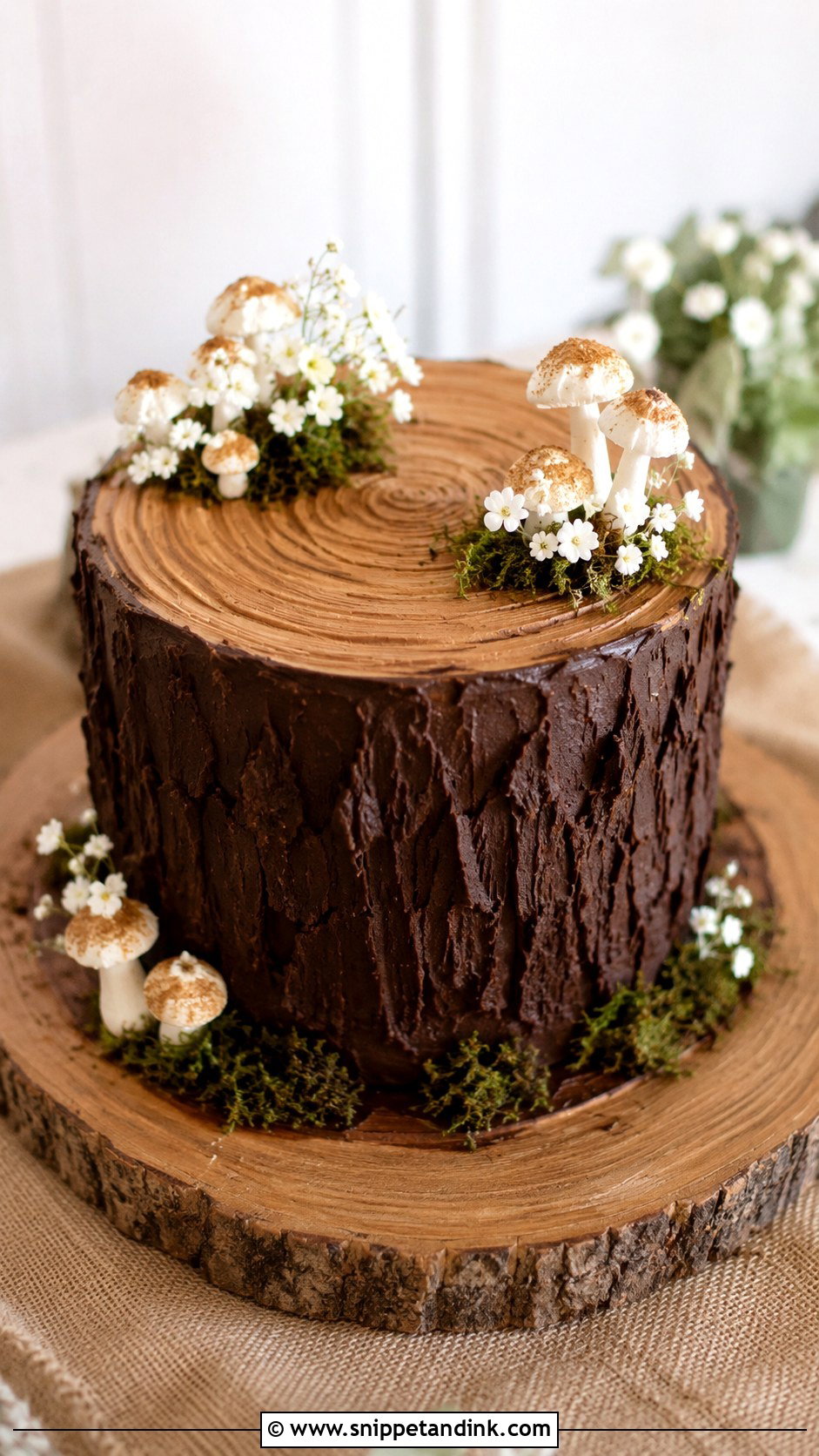
Meringue mushrooms are my favorite woodland accent because they weigh almost nothing and taste good. I pipe the caps and stems separately, glue them with melted chocolate, and dust the caps with cocoa so they look earthy. Their one weakness is humidity; in a damp tent they go sticky within hours, so on a muggy day I switch to fondant or chocolate mushrooms. Cluster them near the base or let a few climb one side. Small white flowers between them keep the look romantic.
8. Tree Stump Wedding Cake With Wildflowers
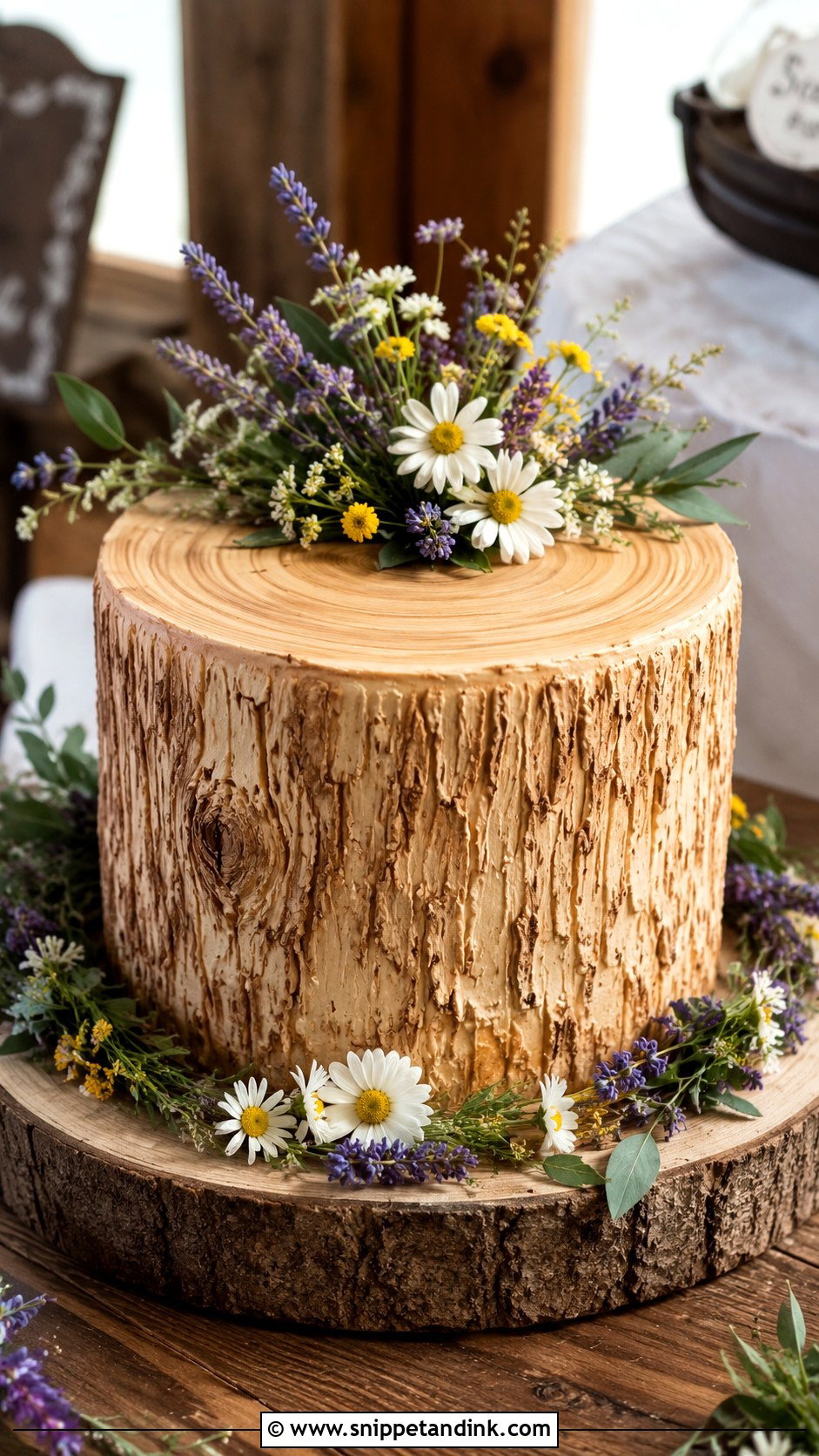
Wildflowers bring movement to a cake that is otherwise very solid and textured. I pick tiny blooms in pale yellow, lavender or peach and keep them low so they look like they’re growing around the trunk, rather than arranged on top. The stump can be semi-naked or fully barked underneath. Many meadow flowers are not food safe, so I either use edible varieties or wrap stems and keep petals off the frosting. A diagonal trail across the tiers suits spring and summer barn receptions.
9. Tree Stump Wedding Cake With Succulents
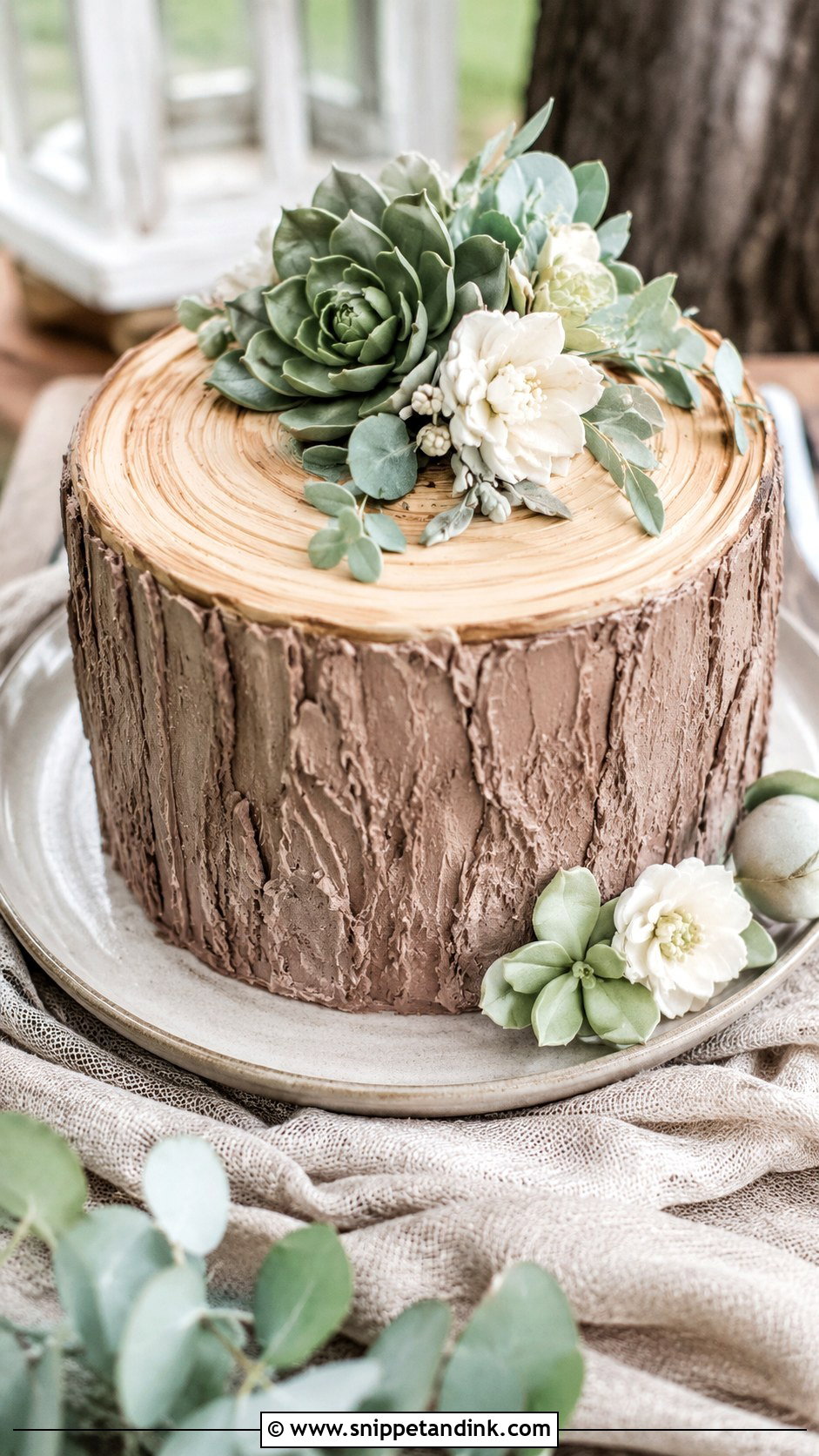
Succulents give the stump a cleaner, more modern outline. They are sculptural, so you need fewer of them than flowers, and the muted greens work with deep brown, taupe or birch white bark. I always make these in sugar or gum paste; real succulents are heavy, wet at the base and difficult to clean off a cake. Cluster them with a little eucalyptus or a small white bloom. Smooth rings on top with rough bark on the sides is the contrast that makes this one work for desert, garden and boho weddings.
10. Tree Stump Wedding Cake With Ferns
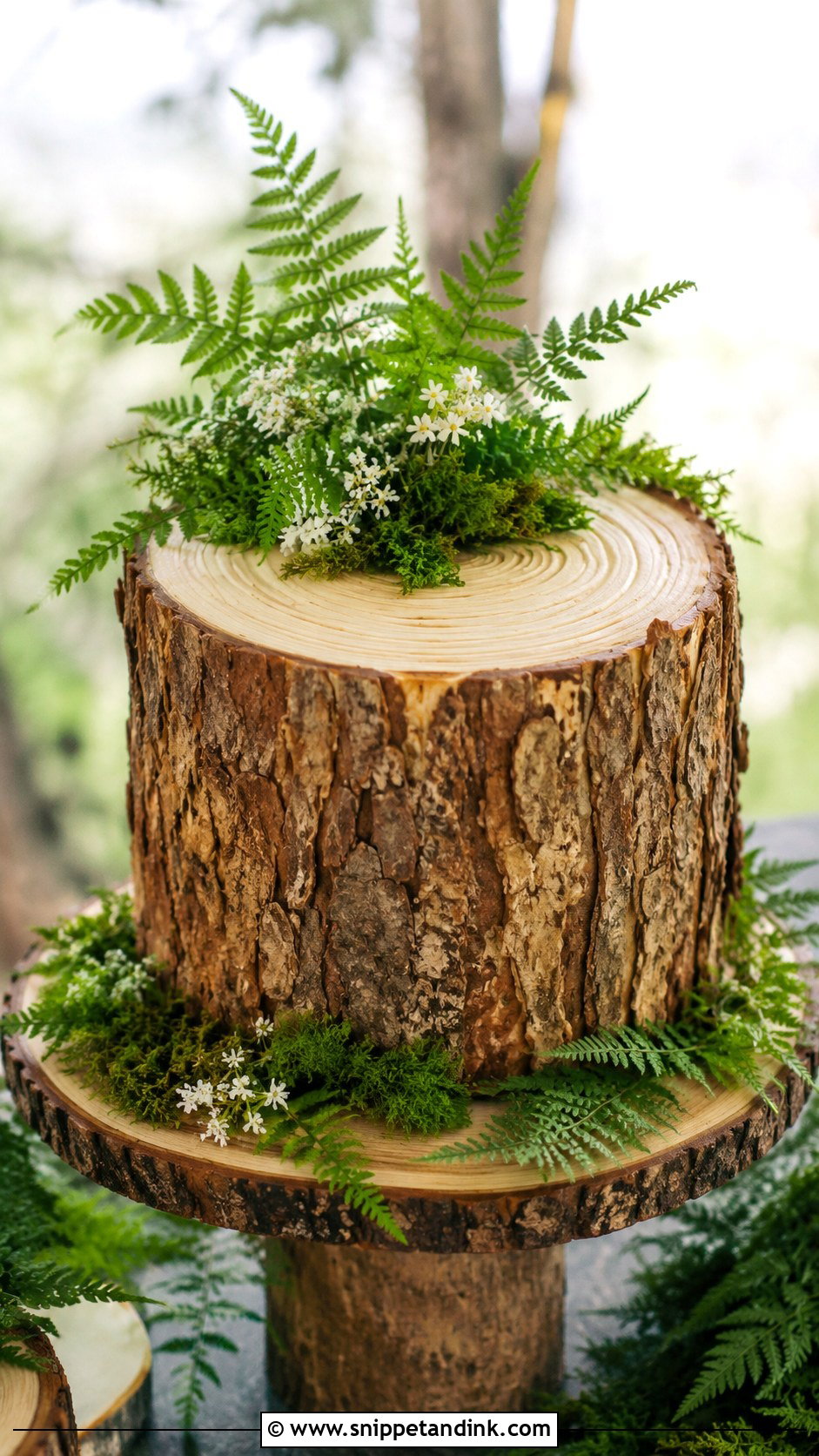
Ferns create a fresh forest look without a big floral budget. One or two fronds curling around the base do more than a dozen small flowers. Real fern leaves are not something I’d put directly on frosting, so I cut them from wafer paper or sugar paste and let them dry over a curve so they bend naturally. They show up best against dark chocolate bark or warm caramel buttercream. On ivory birch they look softer and more delicate.
11. Chocolate Tree Stump Wedding Cake
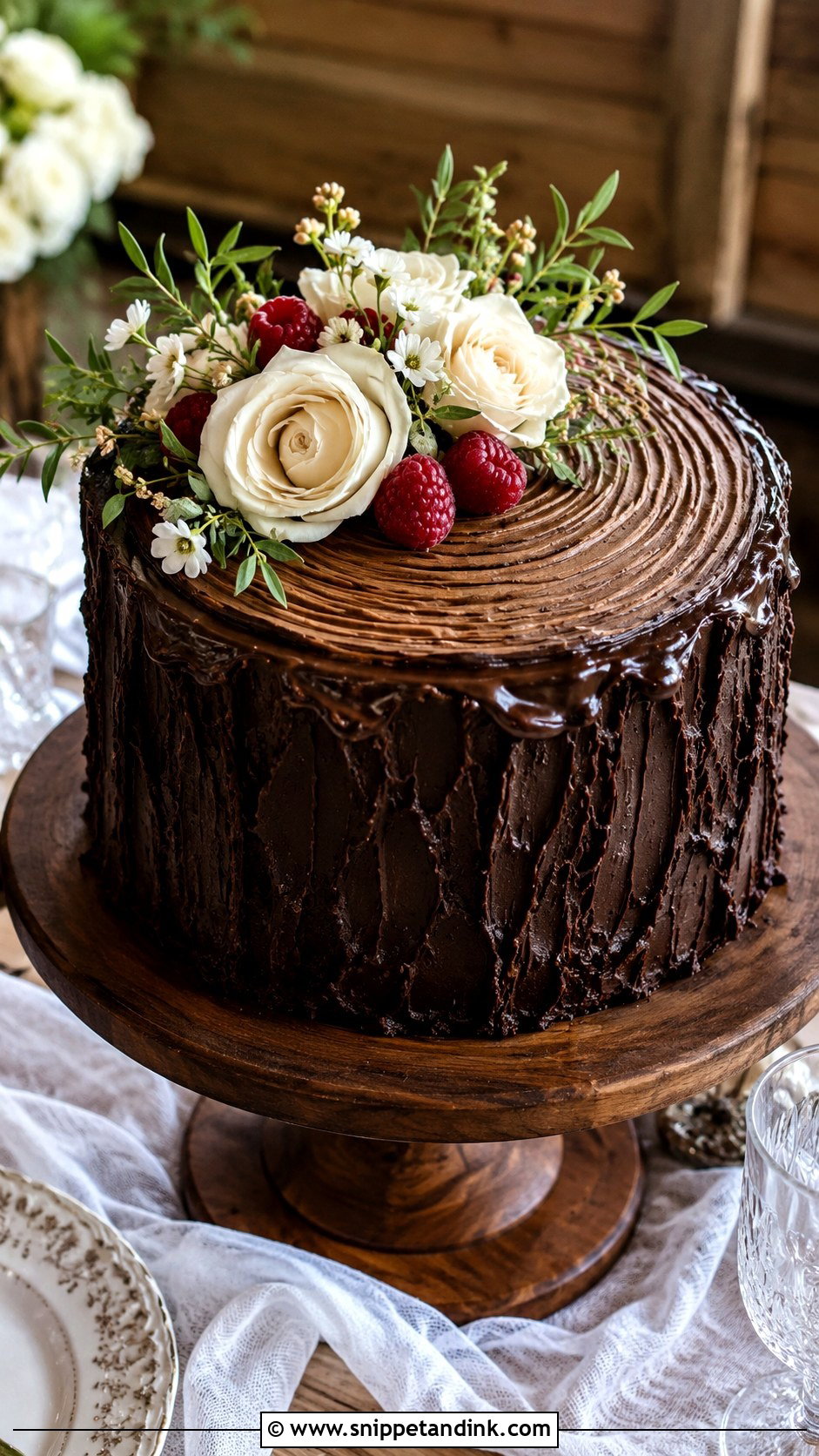
Chocolate is the easiest coating to make look like bark, because ganache sets firm and holds deep grooves from a fork or a cake comb. I pull lines down the sides once the ganache has thickened slightly, then brush a little cocoa into the cracks. Underneath, chocolate sponge with mocha, salted caramel or raspberry works well. Without a few white flowers or initials it can drift toward birthday territory, so I always add one wedding detail. It suits fall and evening receptions, and ganache handles warmth better than buttercream does.
12. Vanilla Tree Stump Wedding Cake
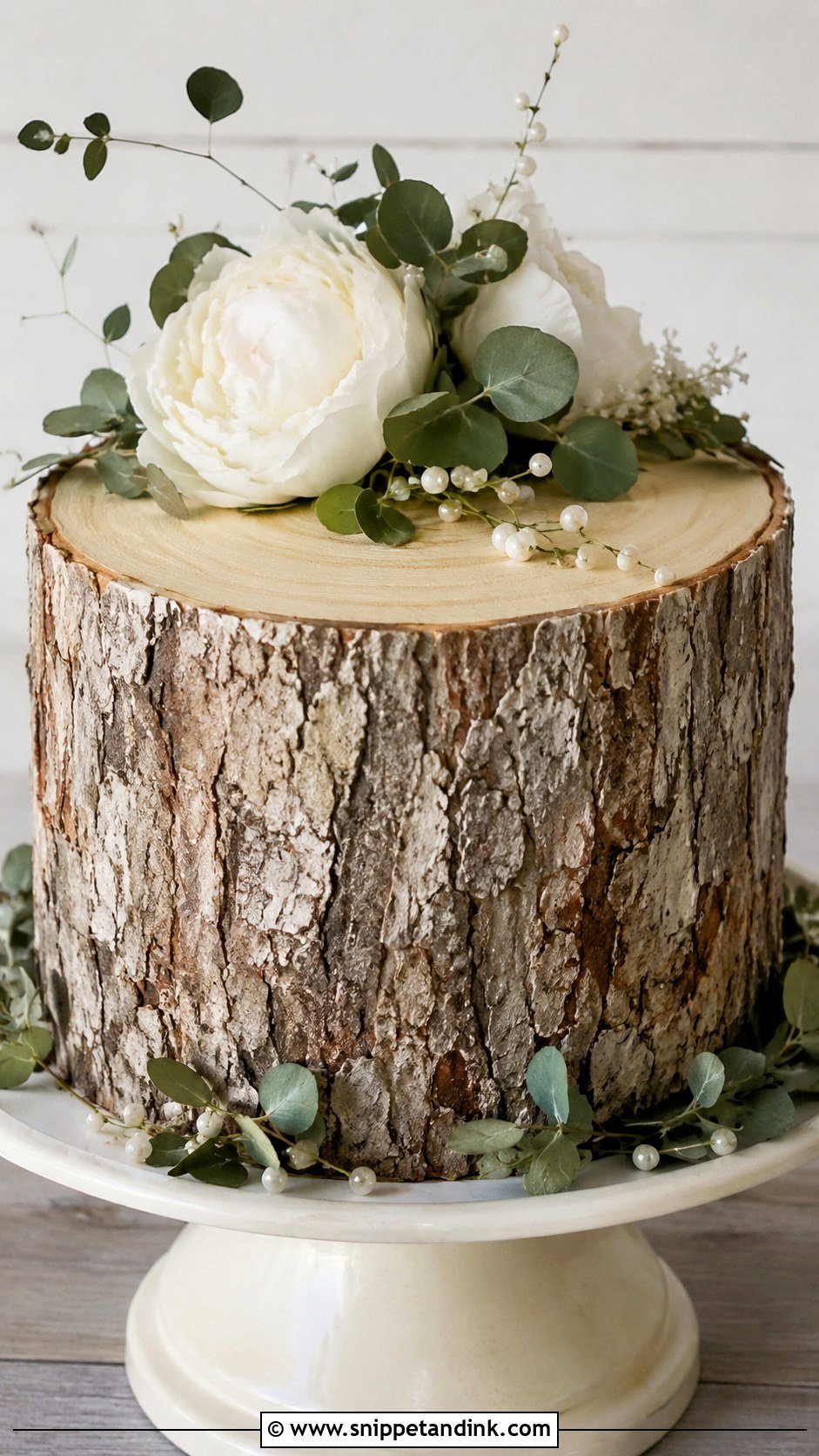
Vanilla underneath means the rustic look outside doesn’t have to dictate a heavy flavor. I fill these with vanilla bean buttercream and something bright like lemon curd, strawberry or raspberry, since most guests will happily eat it. Outside, the bark texture is tinted buttercream rather than chocolate, so it needs a cooler room. A soft brush of edible brown dust in the grooves gives the bark depth. Ivory flowers and greenery finish it simply.
13. Semi Naked Tree Stump Wedding Cake
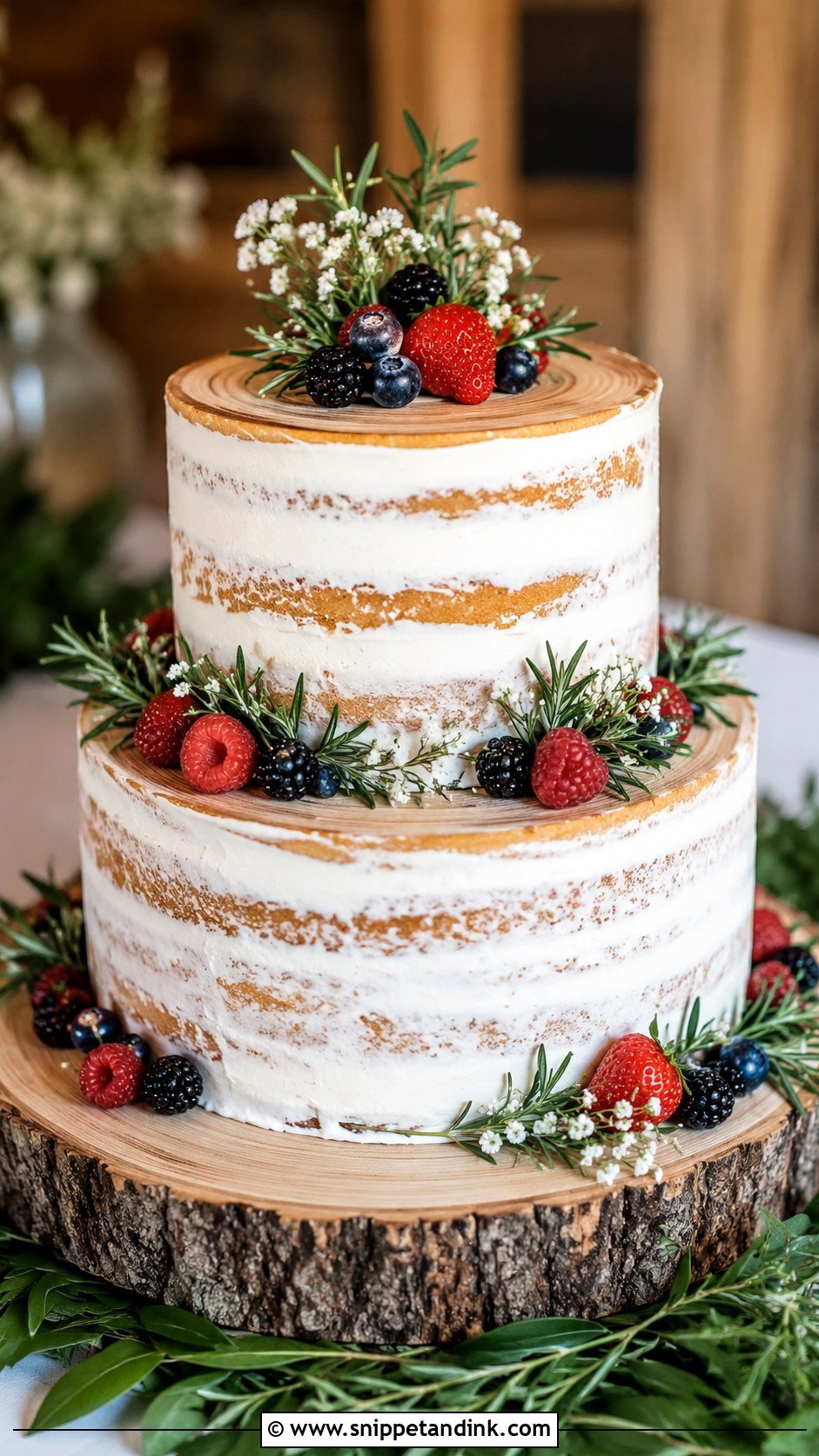
Semi-naked stumps are the lightest version to make and to eat. A thin scraped coat lets the sponge layers show like the inside of a log, and I rough up the top edge with a spatula so it reads as freshly cut. The honest downside is that exposed sponge dries faster, so I don’t like these sitting out uncovered for more than a few hours before cutting. A soaking syrup between layers helps. Berries, herbs or a few flowers suit the handmade look for barn and backyard receptions.
14. Tree Stump Wedding Cake With Gold
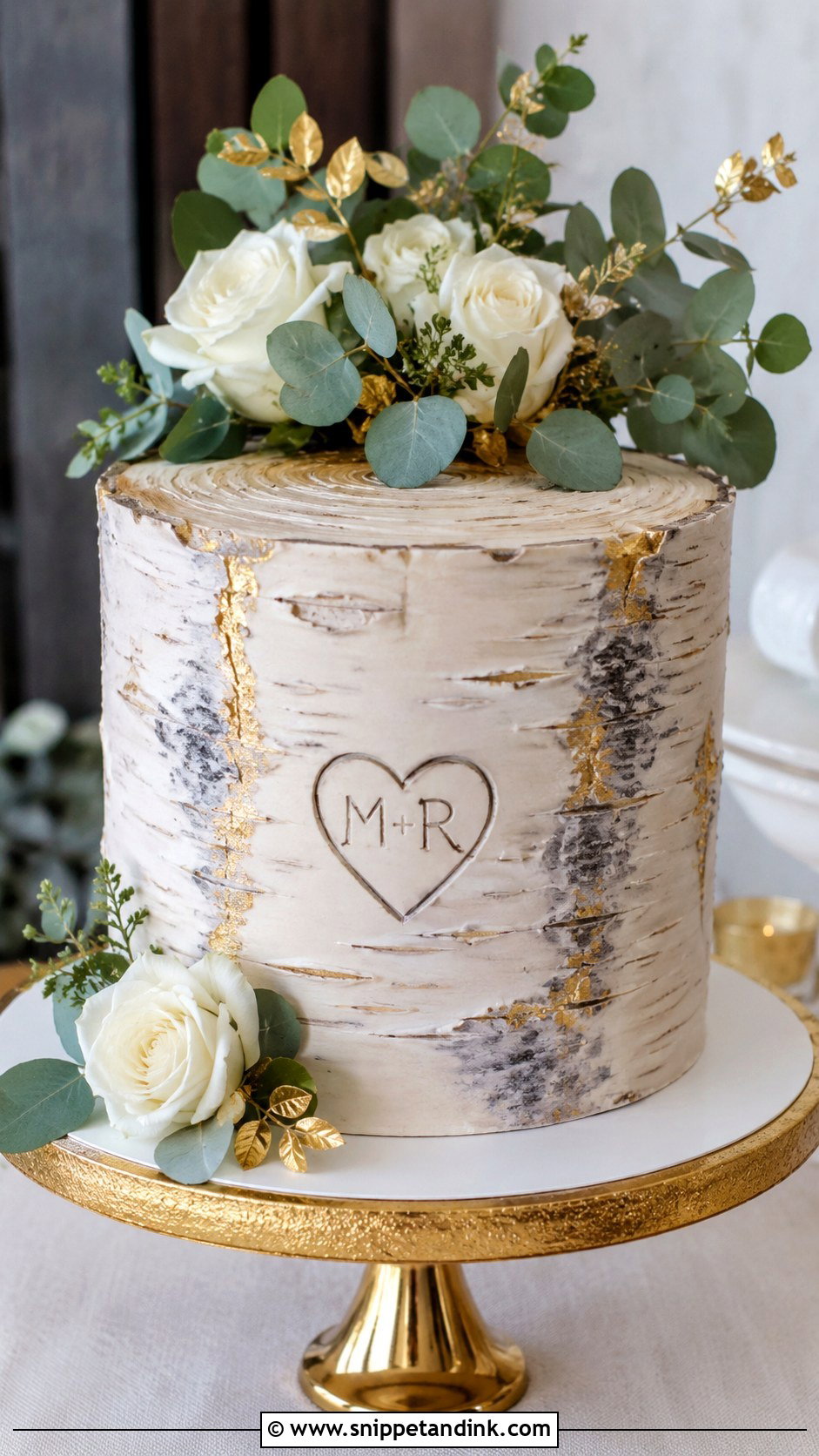
Gold works on a stump cake only in small amounts. I paint edible gold along a few bark ridges, the outer growth ring or a set of initials, and stop there. On birch, the metallic catches the light against the white bark; on dark chocolate it looks richer and more evening. Ivory flowers and deep greenery keep it grounded. Ask your baker which gold they use, because some glitters sold for cakes are labeled non-toxic but are not actually meant to be eaten.

15. Tree Stump Wedding Cake With Autumn Leaves
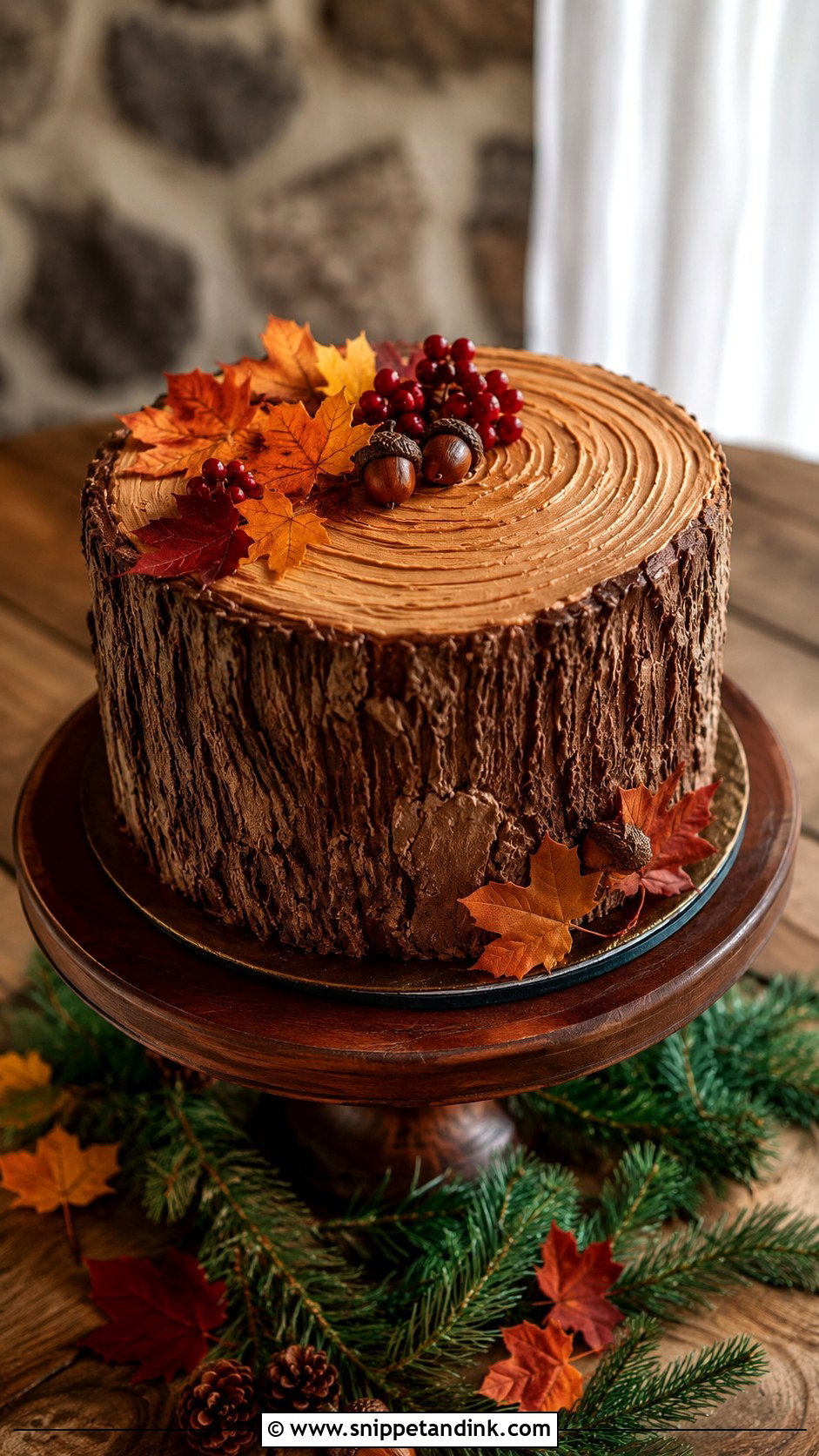
Sugar leaves in orange, rust, burgundy and brown are an easy fit for fall weddings because the bark already looks autumnal. I cut them in gum paste a week or two ahead, vein them, and dust the edges darker so they look like they’re turning. A cascade down one side looks more natural than a full ring. Tiny chocolate acorns or berries can fill gaps. Spice, carrot, pumpkin and maple sponges all match the season.
16. Tree Stump Wedding Cake With Berries
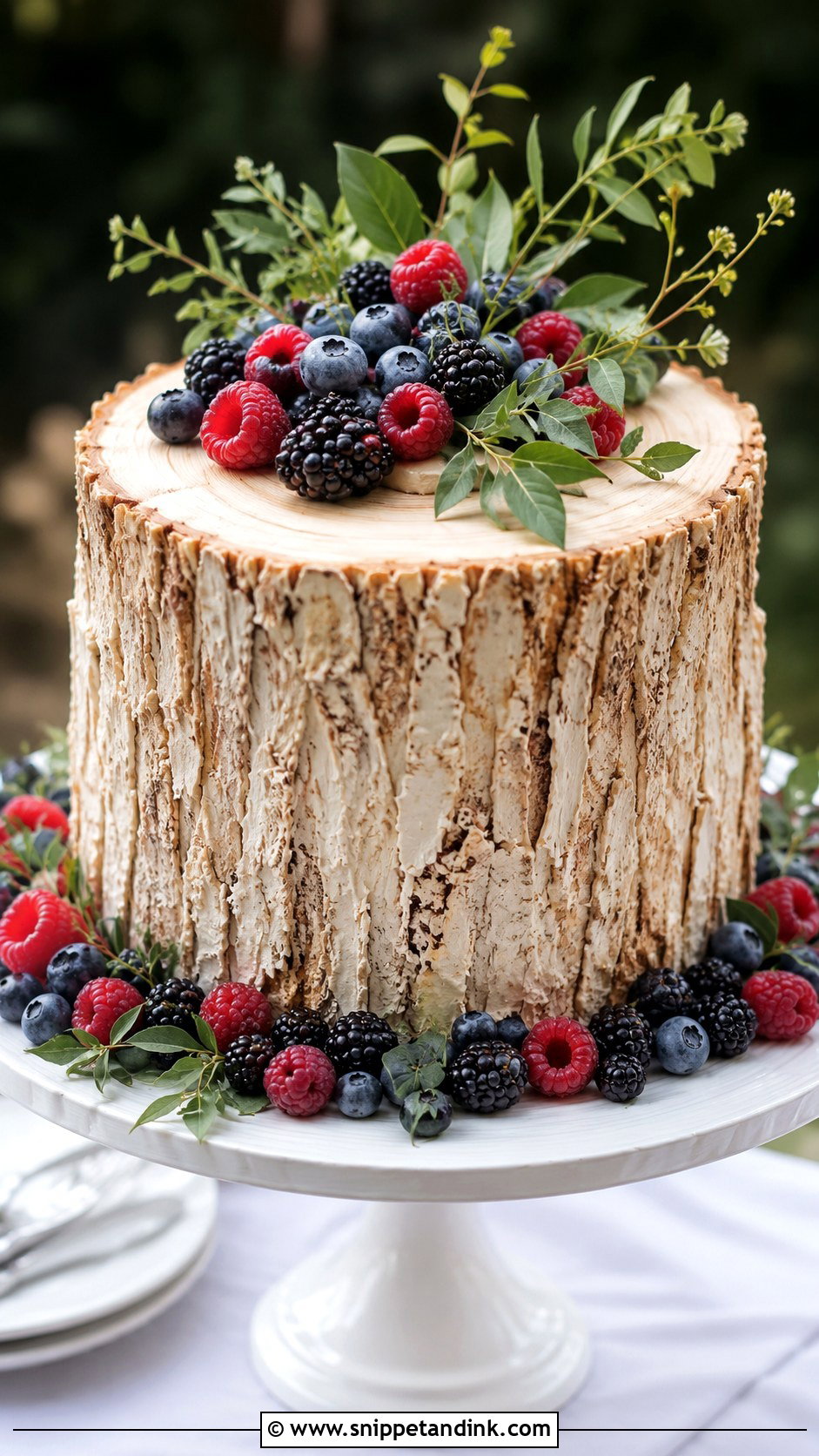
Berries bring color and acidity to a style that can feel heavy. Blackberries and blueberries sit well against chocolate bark, and redcurrants or raspberries look bright against birch. I wash and dry them thoroughly before they go on, because wet berries bleed into buttercream within an hour. Place them at the base, between tiers or in a small cluster on top with greenery. Pair them with vanilla, lemon, chocolate or almond sponge.
17. Tree Stump Wedding Cake With Pinecones
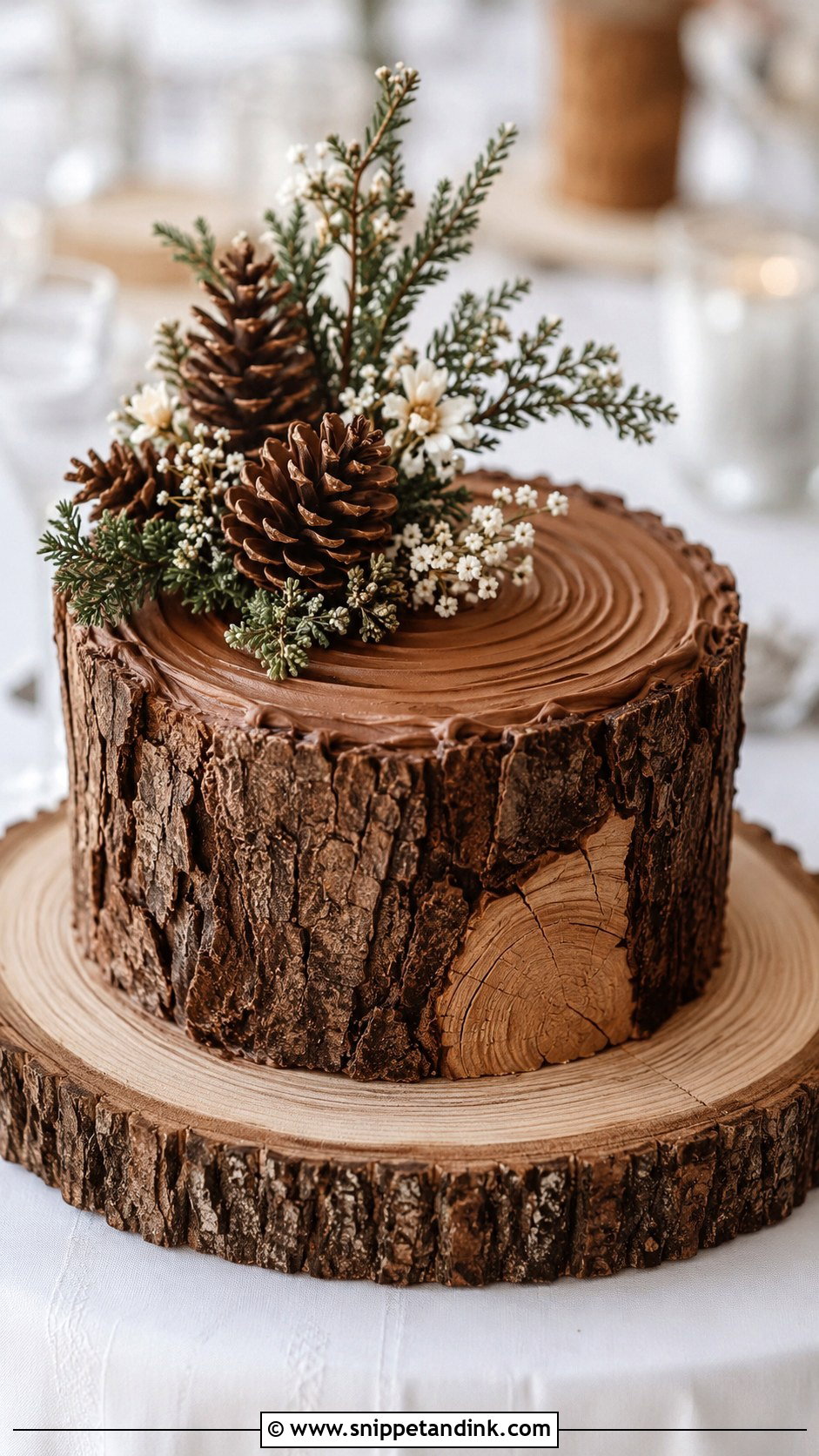
Pinecones suit mountain, lodge and late fall receptions. I make them from chocolate or by layering little almond flakes and fondant scales on a cone shape, so every piece on the cake is edible. Real pinecones carry dust and sap, and I won’t put them on frosting. Evergreen sprigs and a few white flowers finish the look. Warm bark coloring with visible rings on top keeps the palette earthy, and a wood slab stand with greenery around it completes the lodge feel.
18. Tree Stump Wedding Cake With Carved Heart
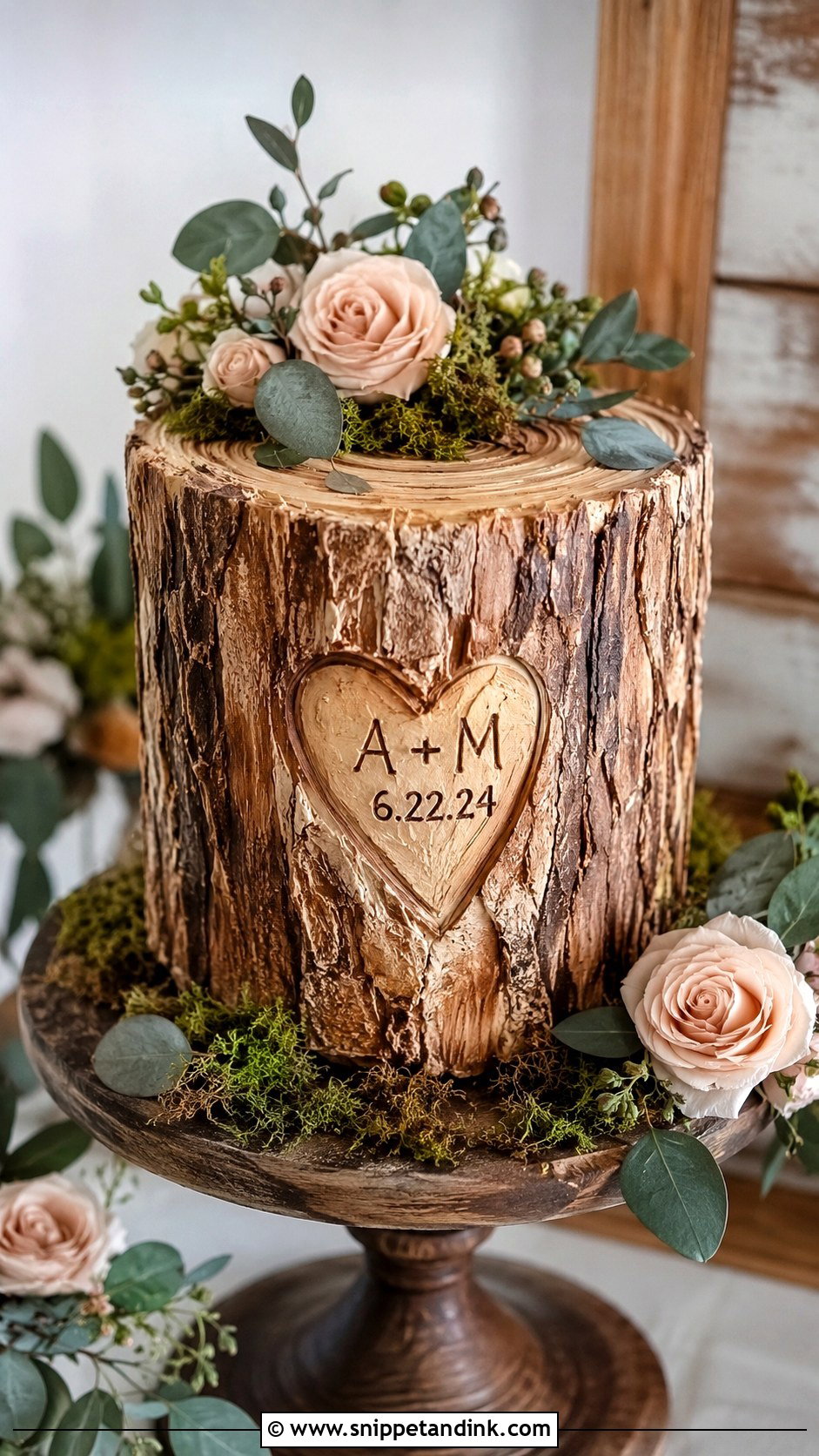
A carved heart is the oldest tree-trunk gesture, and on a cake it photographs clearly even from the back of the room. I score the outline into a smoothed panel and pipe or paint initials, the date or a short word inside. It sits best on the front of a single tier or the middle tier of a tall cake, at roughly eye level for the cutting photo. Keep the rest quiet so the heart reads first. A little moss or a couple of flowers at the base is enough.
19. Tree Stump Wedding Cake With Woodland Animals
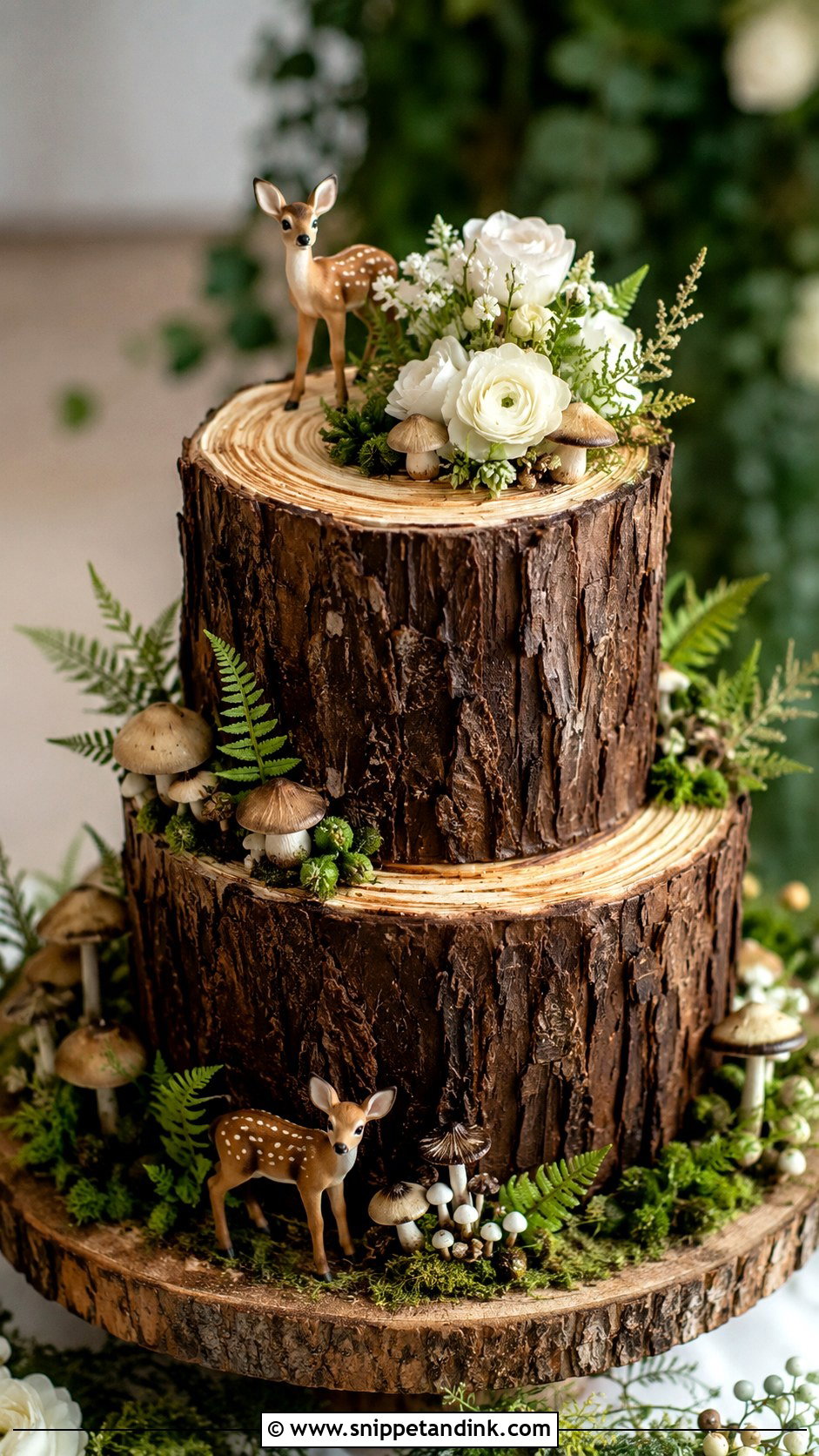
Little sugar figures of woodland animals can go wrong quickly if they look cartoonish. I model them in muted browns and greys, keep them small, and place one or two near the base as if they wandered up to the trunk. A deer, a pair of birds or a fox are the usual choices. Figures take real time to model, so they add to the cost and need ordering early. Moss, ferns and a few mushrooms complete the setting for an outdoor or forest ceremony.

20. Simple Tree Stump Wedding Cake
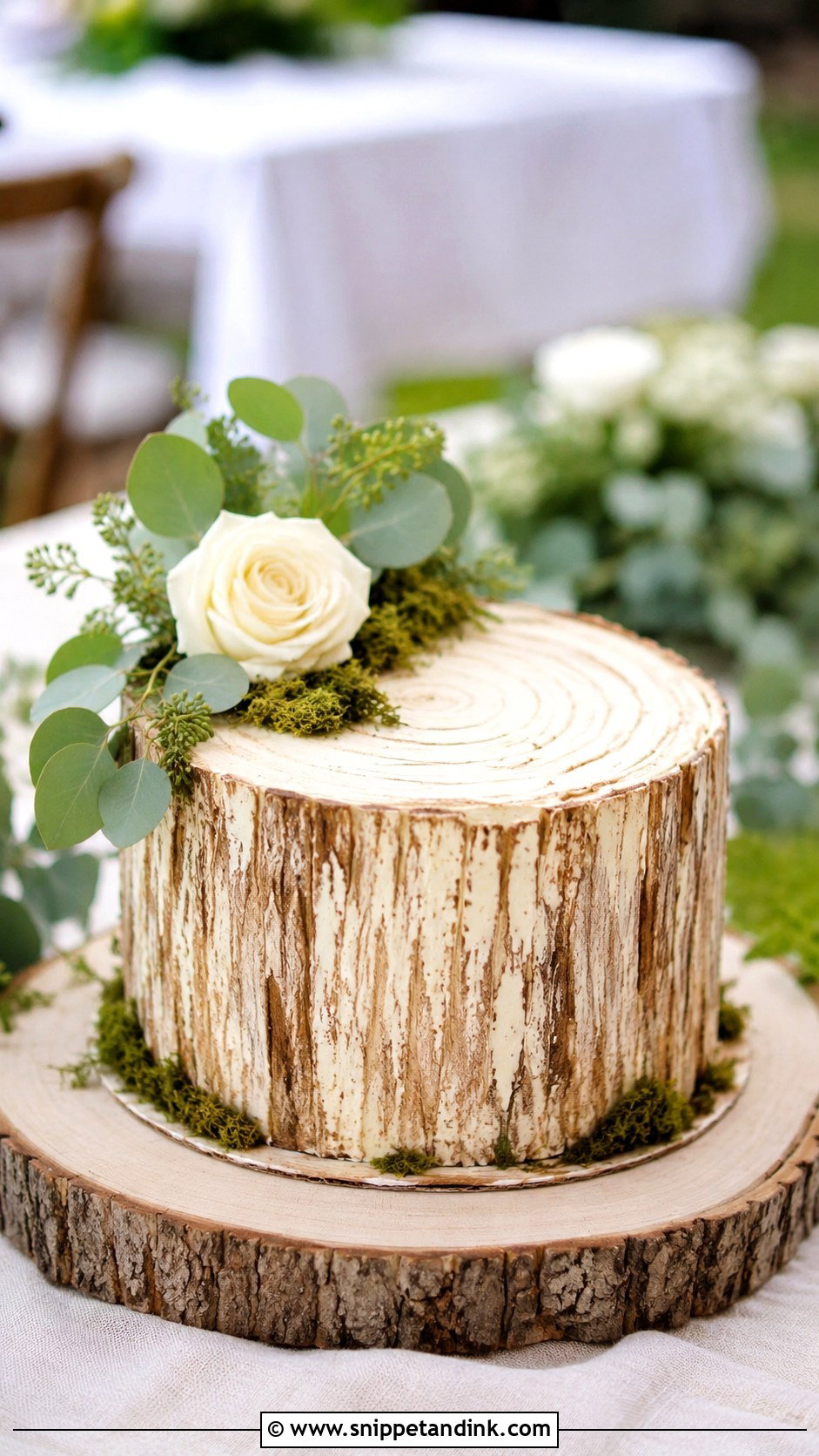
One stump-shaped tier with good bark and clean rings is honestly enough for an elopement or a small dinner. Without a pile of decoration, the quality of the texture is all anyone sees, so ask to see photos of your baker’s bark work before booking. A small floral cluster or an initial is all it needs. This is also the version where flavor matters most, so I’d spend the budget on a good filling rather than extra detail.
Barns, Tents and Warm Afternoons
Rustic cakes often end up at the hardest venues for cake: open barns, tents in direct sun and forest clearings with no kitchen. A few habits keep them standing.
Heat and timing
Buttercream starts to soften once a room passes the mid seventies Fahrenheit, and the deep bark grooves are the first thing to slump. If the cake will sit outside, choose ganache, place the table in shade away from the sun’s path in the afternoon, and ask for the cake to be set up as close to cutting time as the schedule allows. A cake moved straight from a cold fridge into a humid tent will sweat, so I bring it up to room temperature gradually in the van.
The wood slab stand
Real wood slices look right under a stump cake, but raw wood can carry sap, splinters and dirt. Your baker should put the cake on its own board, with a food-safe barrier or sealed surface between the board and the wood. Check that the slab sits flat; a slight rock is enough to crack a stacked tier during the toasts.
Slicing a Cake Covered in Bark
Guests are cut from a stump cake like any round tier, but the decoration changes how service goes. Meringue mushrooms, sugar leaves and figures need lifting off first, so ask your caterer to set them aside for the couple. Ganache bark cuts cleanly with a hot knife; thick fondant bark is easier when scored first. If the top tier is being saved, tell your baker in advance so it can go on a separate board.
Let the Wood Grain Carry Your Cake Table
The stump cakes I’m happiest with have one finish done properly and one accent that suits the season. Birch reads soft and bridal, chocolate bark reads rich and evening, and moss and mushrooms push it toward the forest. Initials make it yours. Start with your guest count and venue temperature, decide on the coating from those, and then choose the decoration. Get those right and the cake will feel at home on the table.
You'll Like These Ideas:











Leave a Reply