
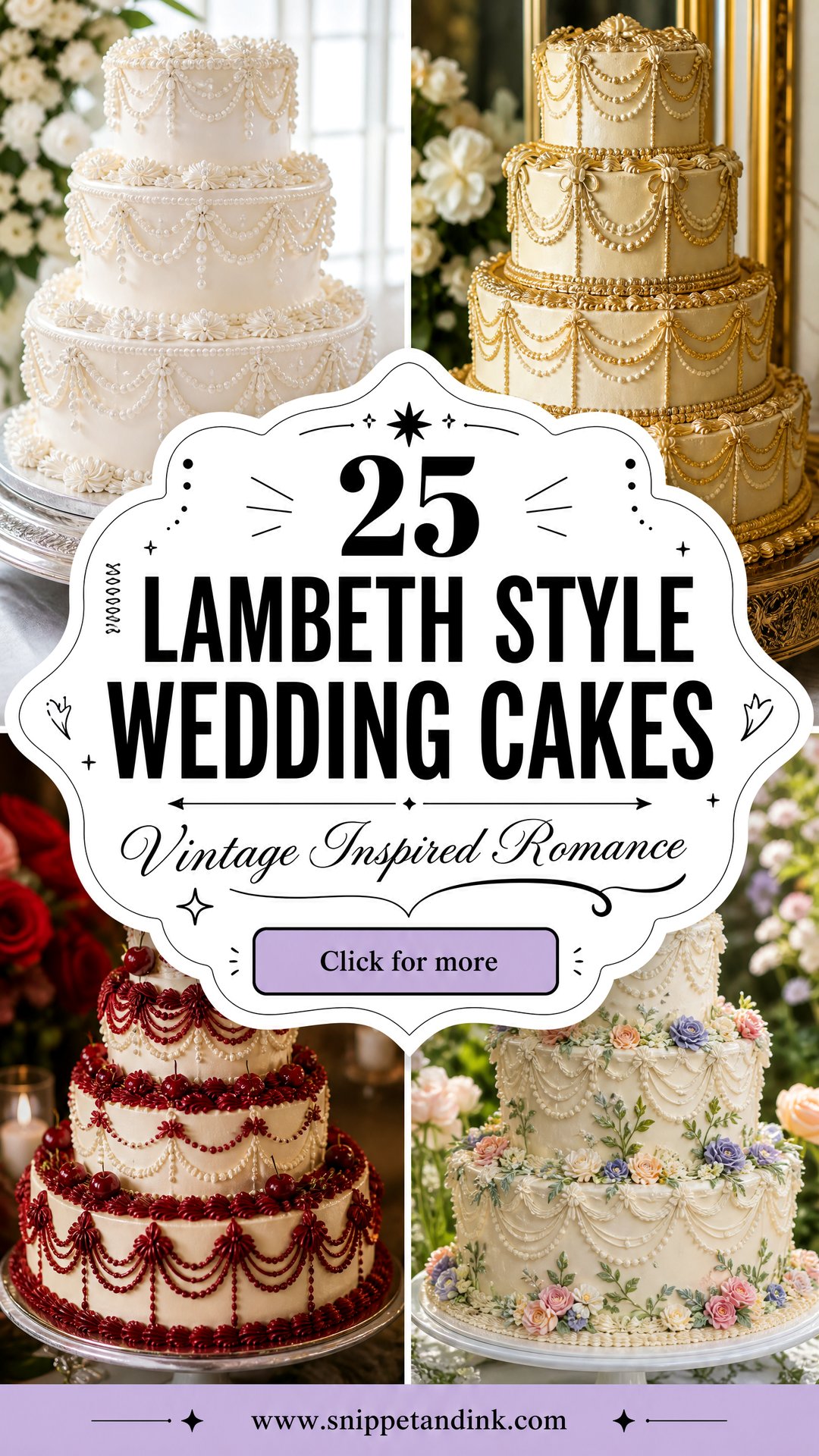
A Lambeth cake is the opposite of a smooth, blank tier. Every surface is built up with piped shells, swags, scrolls, ruffles and strings, then dressed with pearls, cherries or bows in soft vintage colors. It can look grand in a ballroom, sweet at a garden ceremony or quite cheeky at a modern wedding. I love making them because the style bends so easily: formal, colorful or nostalgic. Here are 25 versions I’d pipe for a wedding, with notes on shape, color and what each one asks of the baker.
Overpiping Is Slow Work, and Here’s Why
The style takes its name from Joseph Lambeth, an English decorator whose method of building piping in layers, one border piped on top of another, was taught for decades. What looks like one thick border is usually three or four passes: a base line, a shell over it, a string drape, then a finishing bead. Each layer needs to firm up a little before the next goes on, or the whole thing sags.
That’s why a fully piped three-tier cake can take a long day or more just for decoration, and why Lambeth cakes usually cost more than a smooth cake of the same size. You’re paying for hours of hand piping, not for ingredients.
- Star tips make the shells and rosettes
- Petal tips make the ruffles and swag frills
- Small round tips make the drop strings and pearl beads
If a baker quotes very low for a full Lambeth design, ask how many tiers will be fully overpiped. Sometimes the price covers only a single border per tier.
1. White Lambeth Wedding Cake
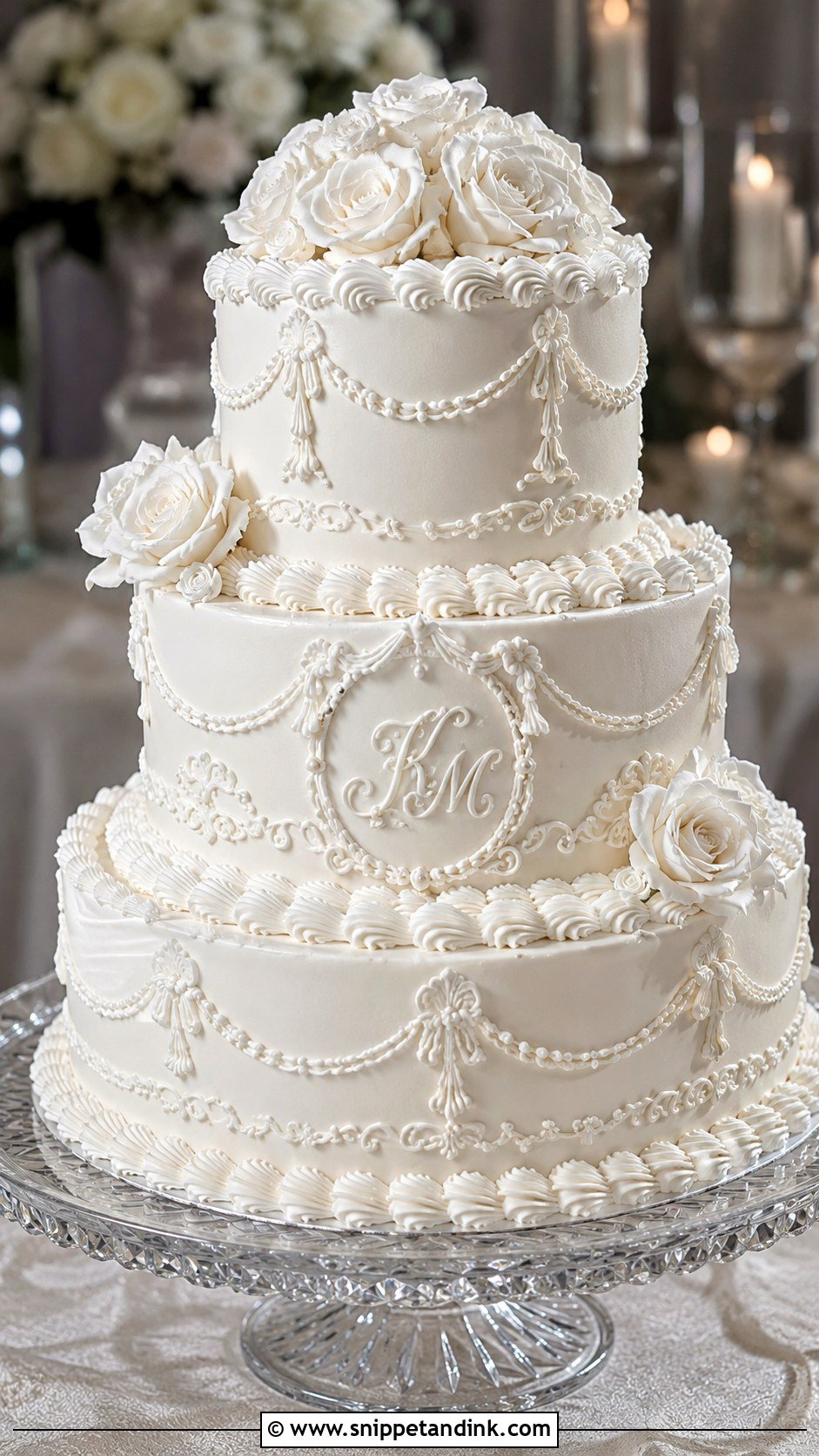
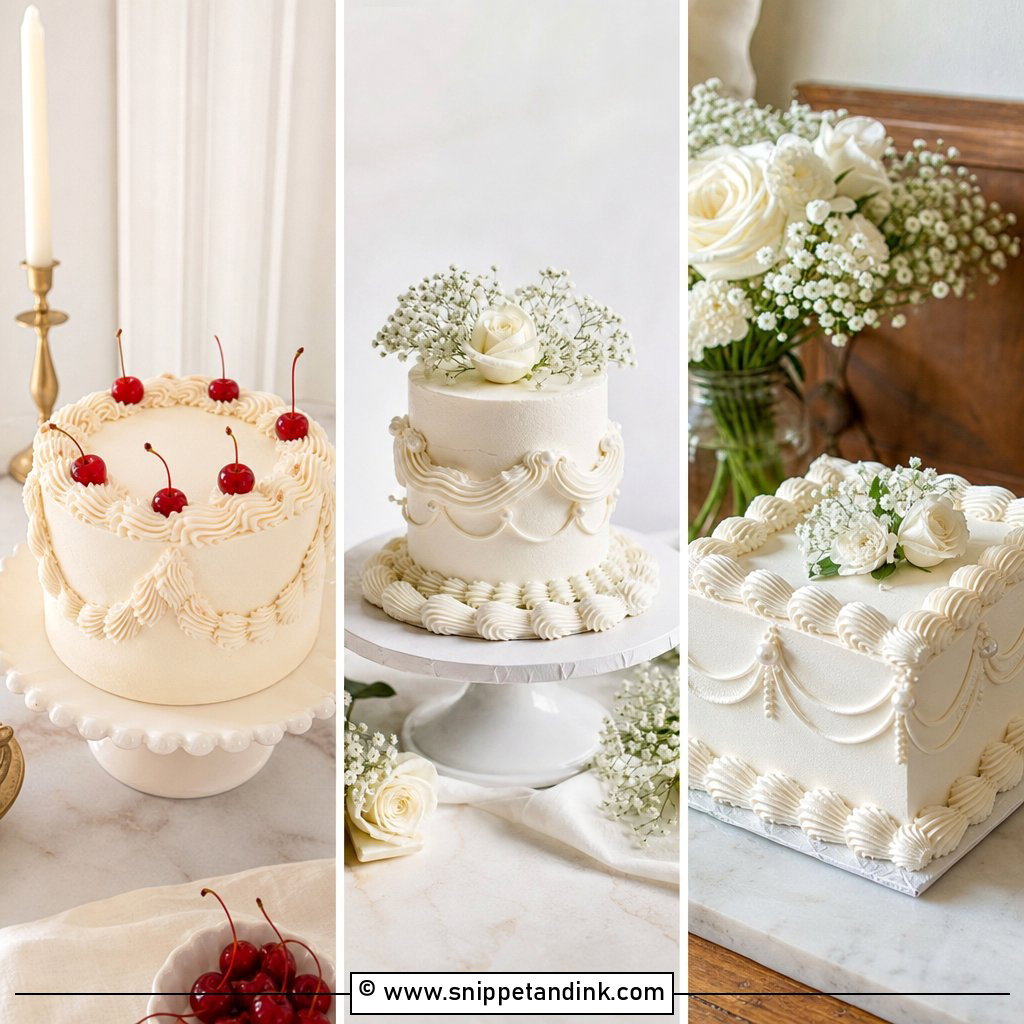
All-white is the purest form of this style, and it relies on texture rather than color. Think stacked shell borders, deep piped swags, fine drop strings and raised scrolls that catch the light. Ivory buttercream keeps it soft; white on white makes it formal. Sugar pearls, white roses or a small piped monogram add polish. In a ballroom or tent, white piping casts its own little shadows under spotlights, which is exactly what shows off the depth.
2. Heart Lambeth Wedding Cake
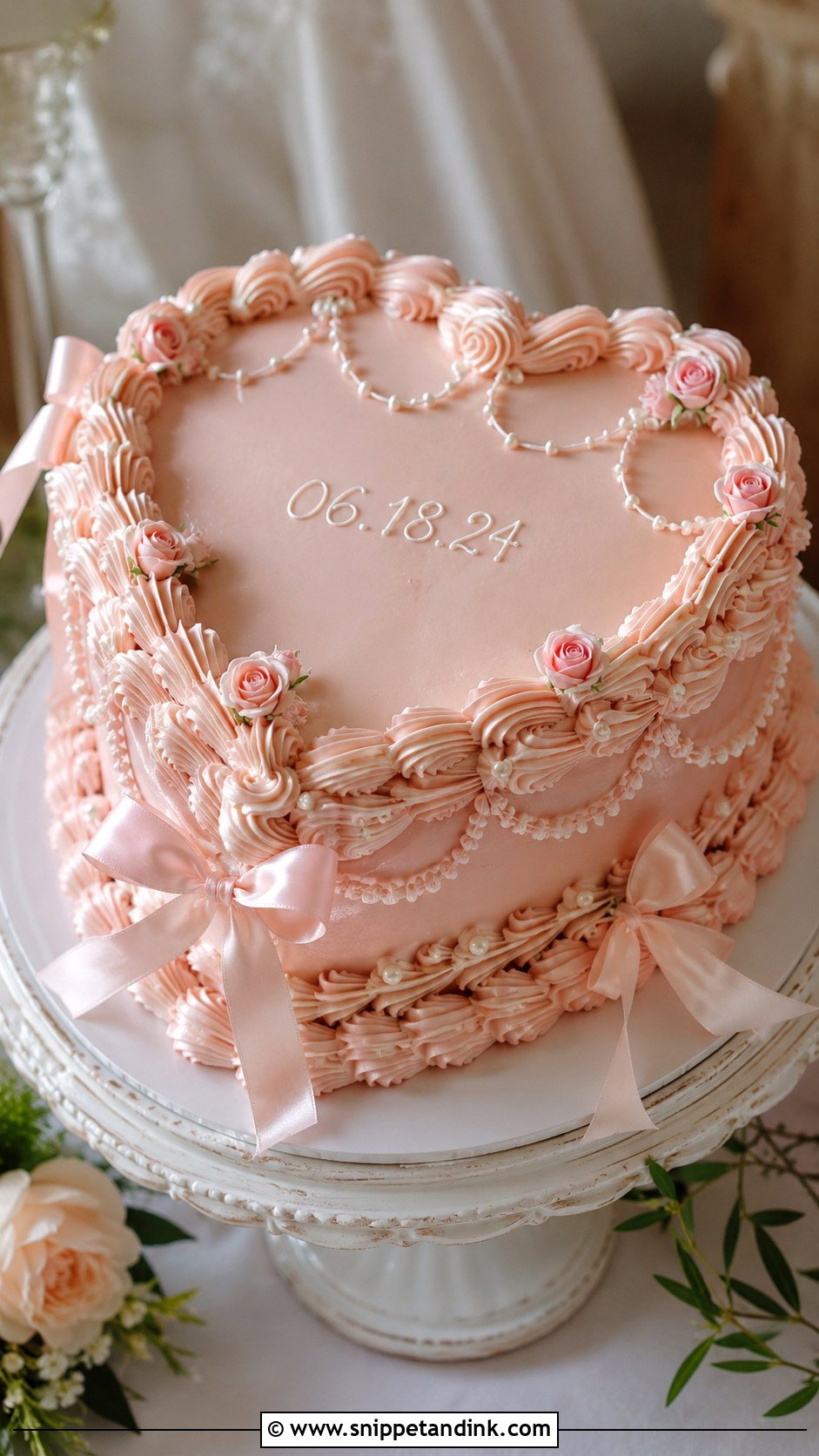
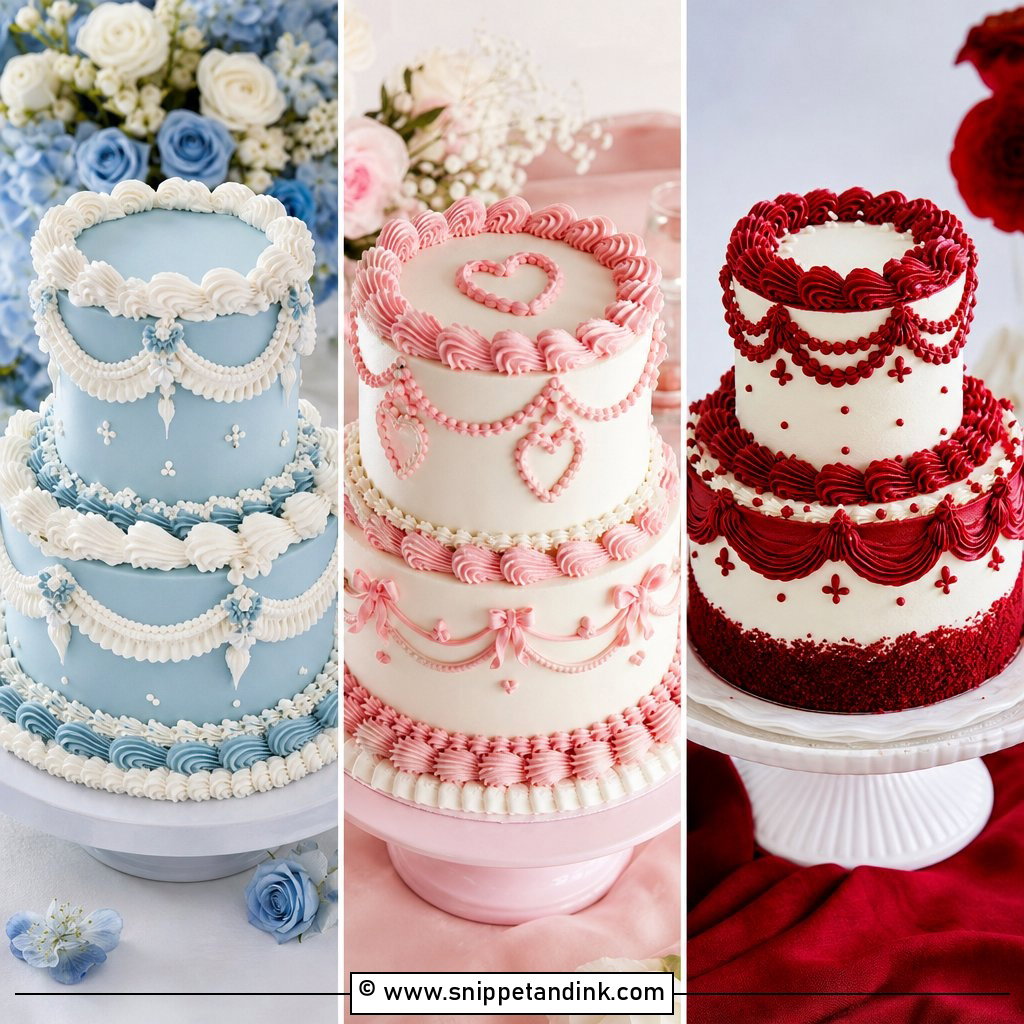
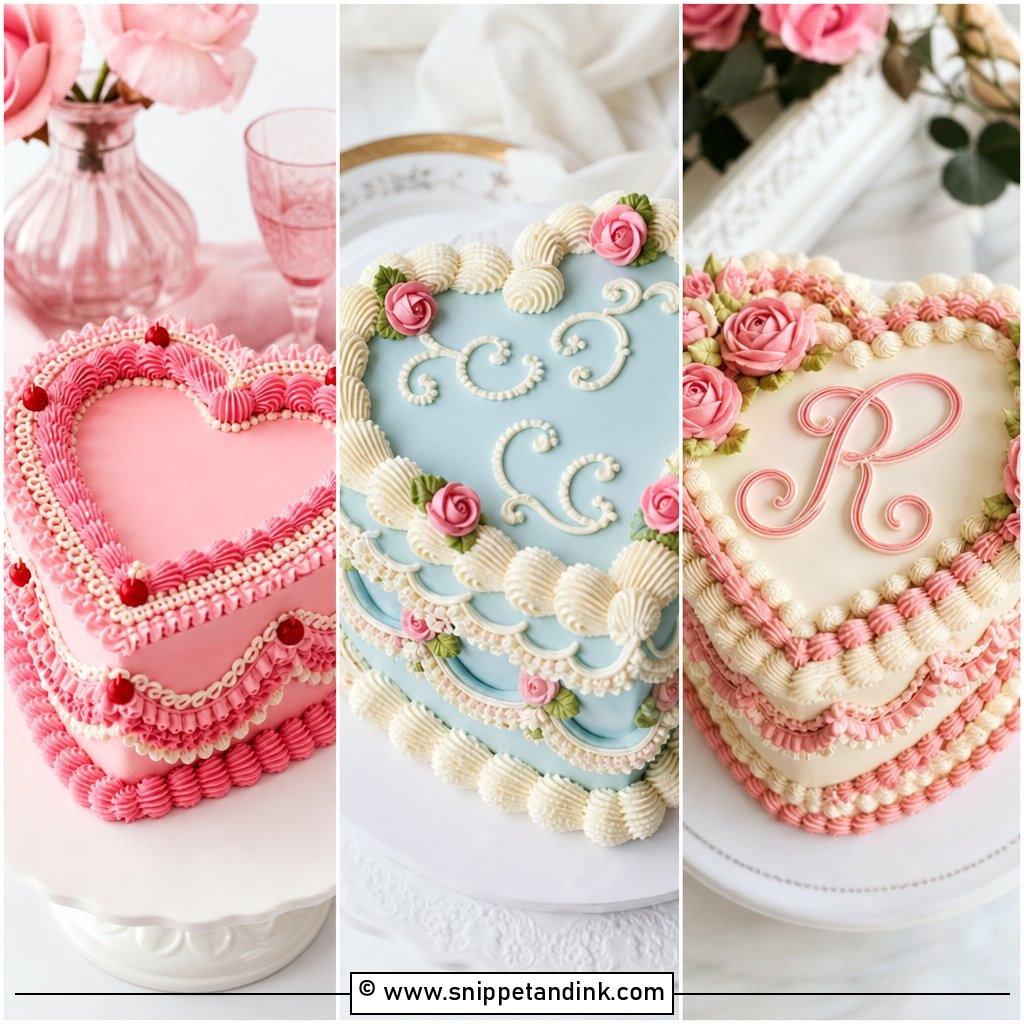
A heart Lambeth wedding cake is playful and very photogenic. Layered piping lifts the heart beyond a simple novelty cake, and the borders can frame initials, a date or a short message. Ivory, blush or pale pink keeps it bridal, with cherries, bows, pearls or tiny piped roses for nostalgia. It suits elopements, courthouse weddings or a sweetheart cake next to a bigger dessert table. The point and the dip of a heart are fiddly to pipe evenly, so it’s worth checking a baker’s earlier heart cakes specifically.
3. Two Tier Lambeth Wedding Cake
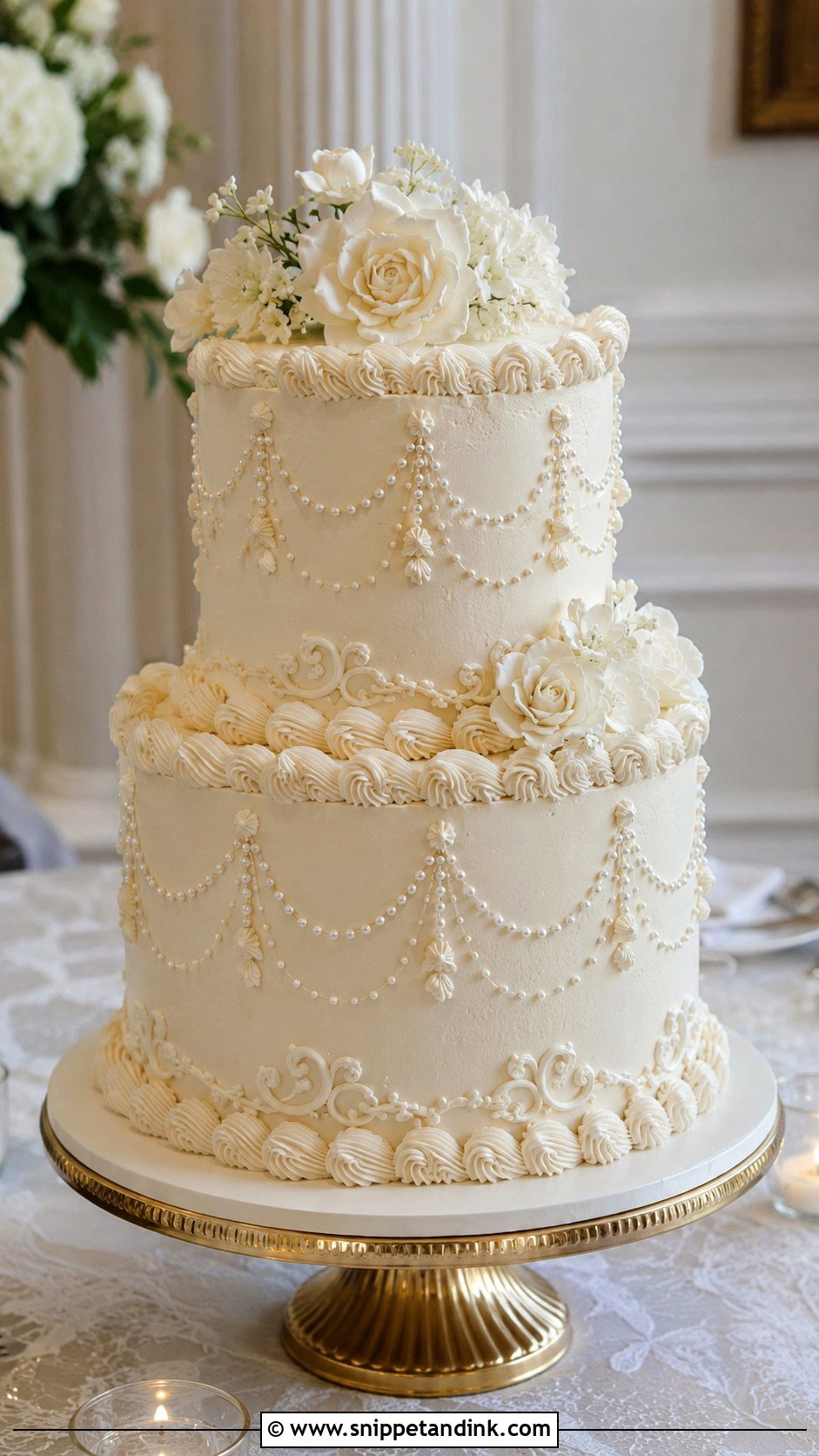
Two tiers give you the vintage look without a towering centerpiece, and there’s still enough surface for swags, shells and scrolls. It still reads as a proper wedding cake in photos, which matters at an intimate wedding. Keep both tiers one color for a clean look, or pipe ivory over pale blue or blush for contrast. Fresh flowers around the base or a piped bow on the front finish it. Since two tiers serve fewer guests, a plain kitchen cake in the same flavor can stretch it further.
4. Three Tier Lambeth Wedding Cake
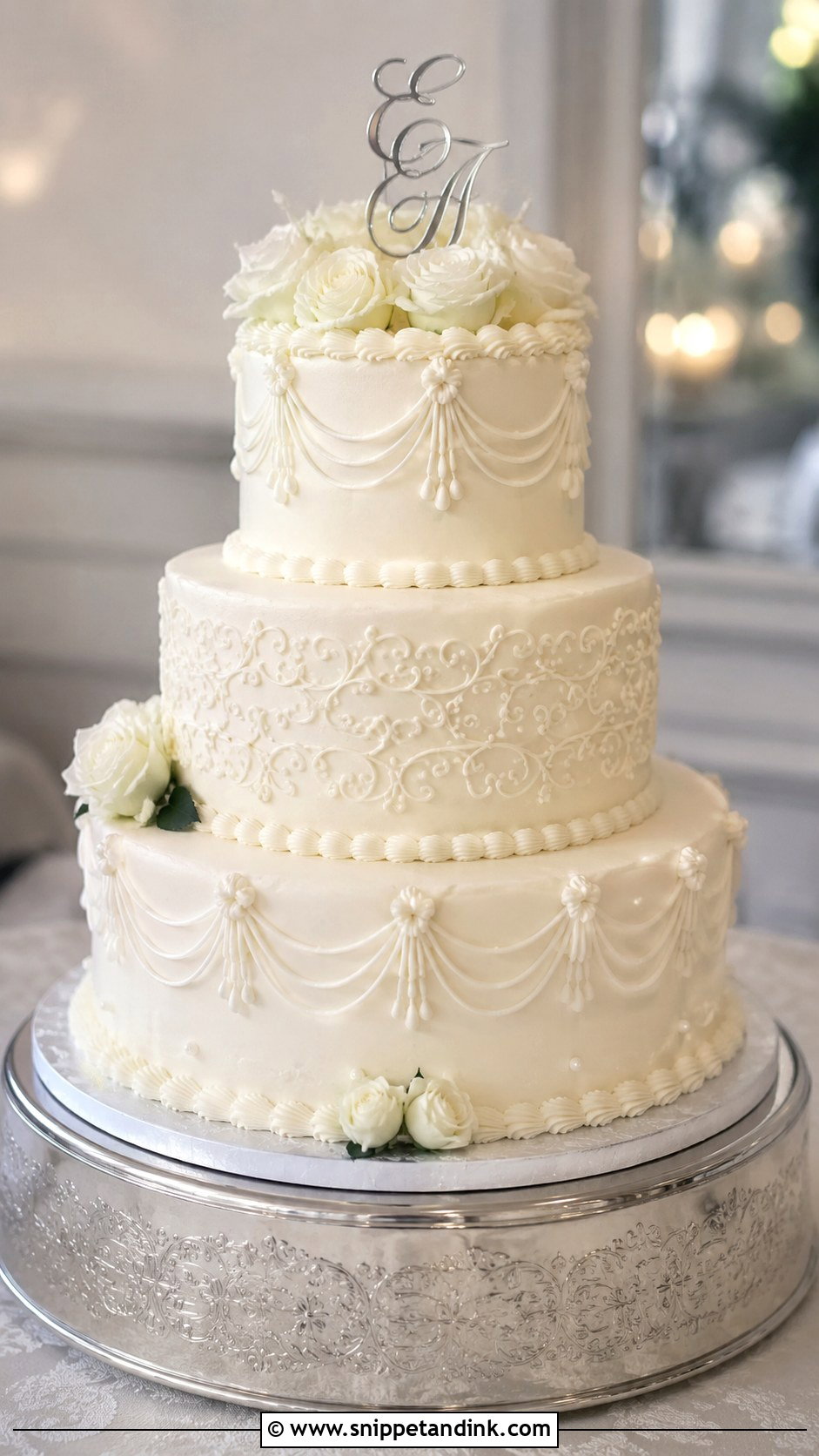
A three tier Lambeth wedding cake gives the piping room to tell a story. I like a different pattern per tier, shells at the bottom, curved swags in the middle and scrollwork near the top, which keeps the cake from looking flat. It covers a mid-sized guest list well. White is timeless, pastels are popular too. Pick one accent, pearls, cherries, sugar roses or a vintage topper, rather than all four. Too many accents bury the piping, which is the whole point of the style.
5. Blue Lambeth Wedding Cake
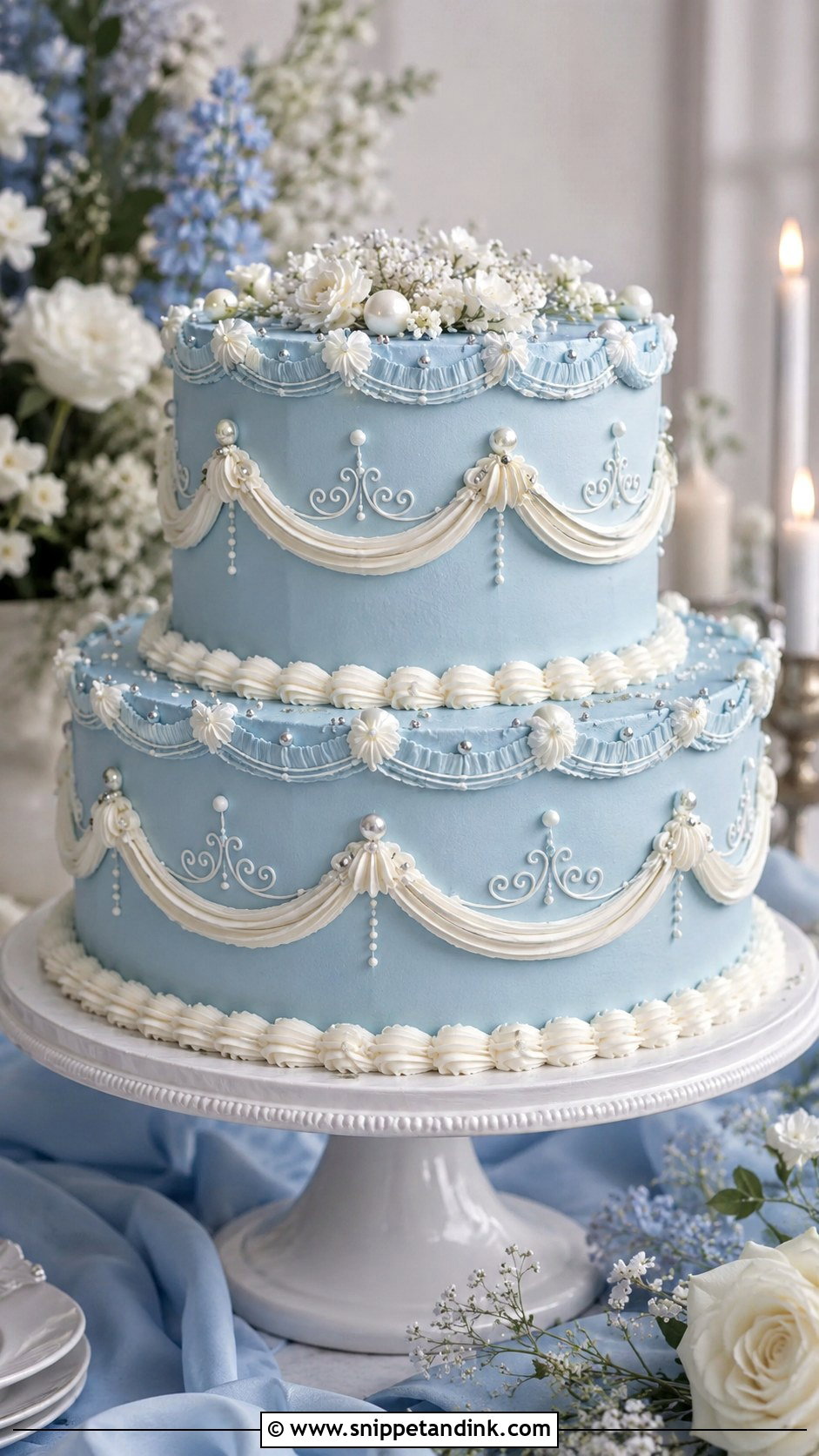
Blue brings in something blue in the most charming way. Dusty blue, powder blue or pale baby blue under white or ivory overpiping makes the shells, swags and scrolls stand out clearly in photos. Cherries make it retro; pearls and white flowers make it formal. Garden and coastal venues suit it. I keep the blue in the frosting and the piping white. Blue gel in buttercream also deepens over a few hours as the color develops, so I mix it a shade lighter than the target.
6. Pink Lambeth Wedding Cake
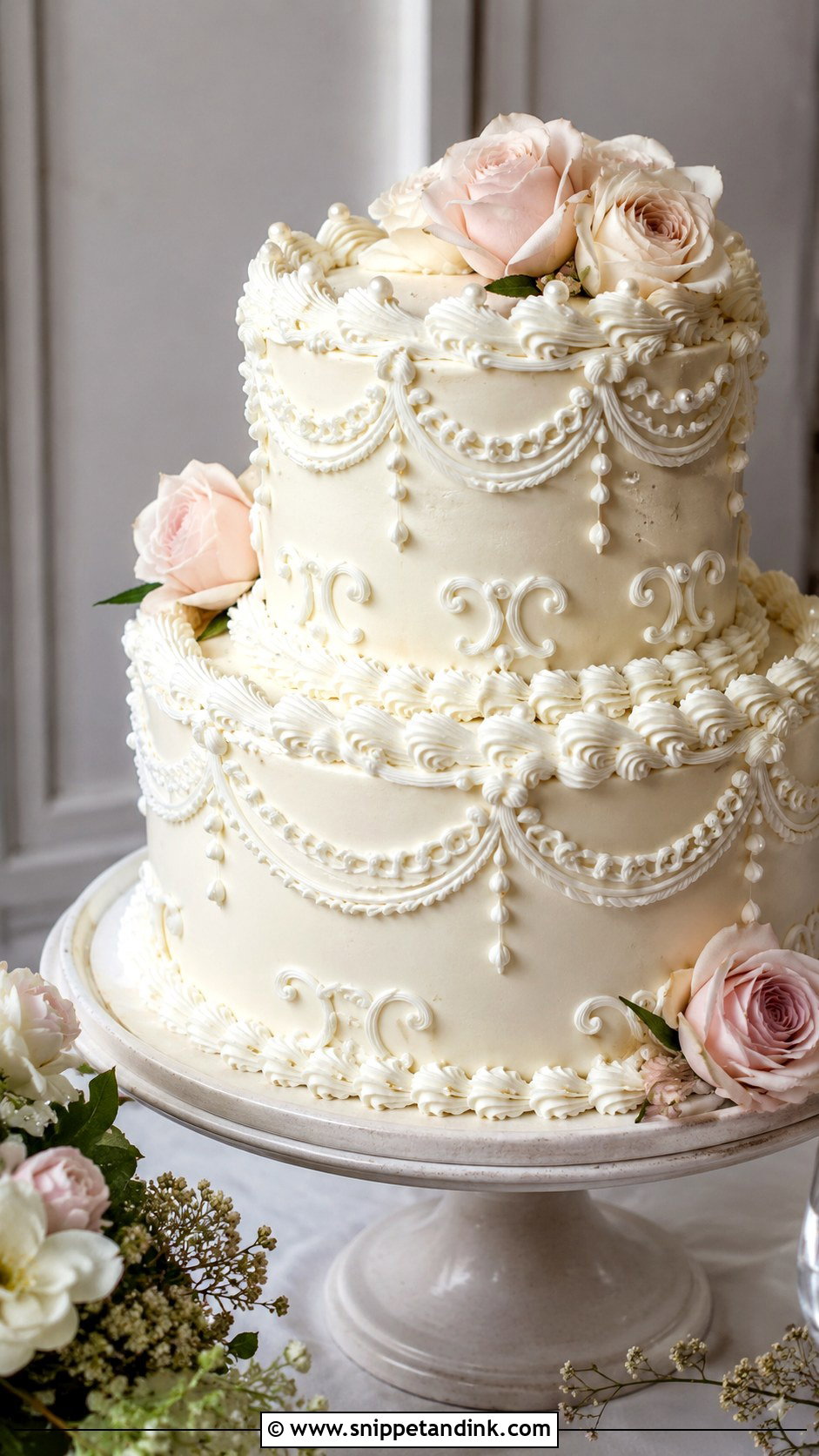
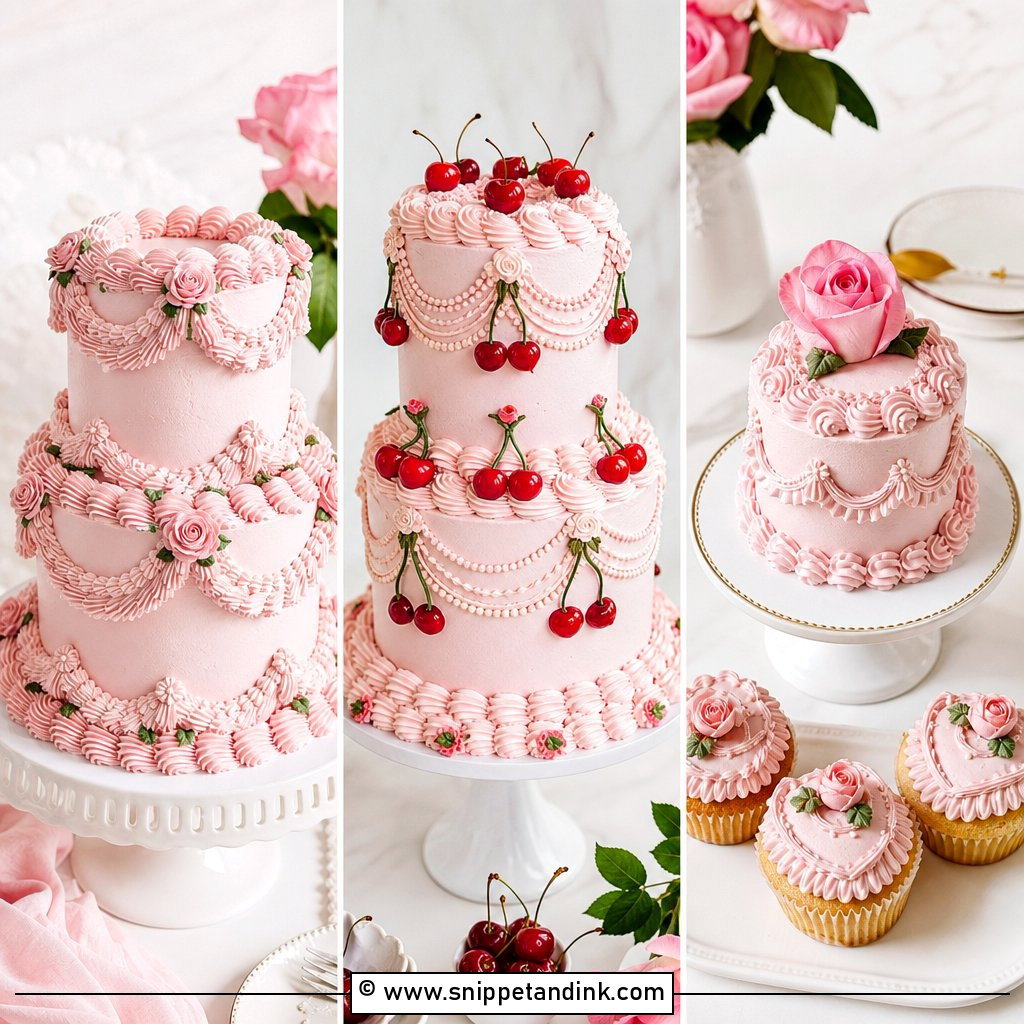
Pale pink buttercream is the softest base for Lambeth work, and ivory piping on top adds contrast without harshness. Buttercream roses, satin bows, pearls or tiny red cherries all suit it. For something more modern, dusty rose frosting with fewer but very detailed decorations works well. Spring weddings and bridal brunches are its natural home. Pink piping over pink frosting can lose its definition in photos, so I’d keep the piping a shade lighter or in ivory.
7. Cherry Lambeth Wedding Cake
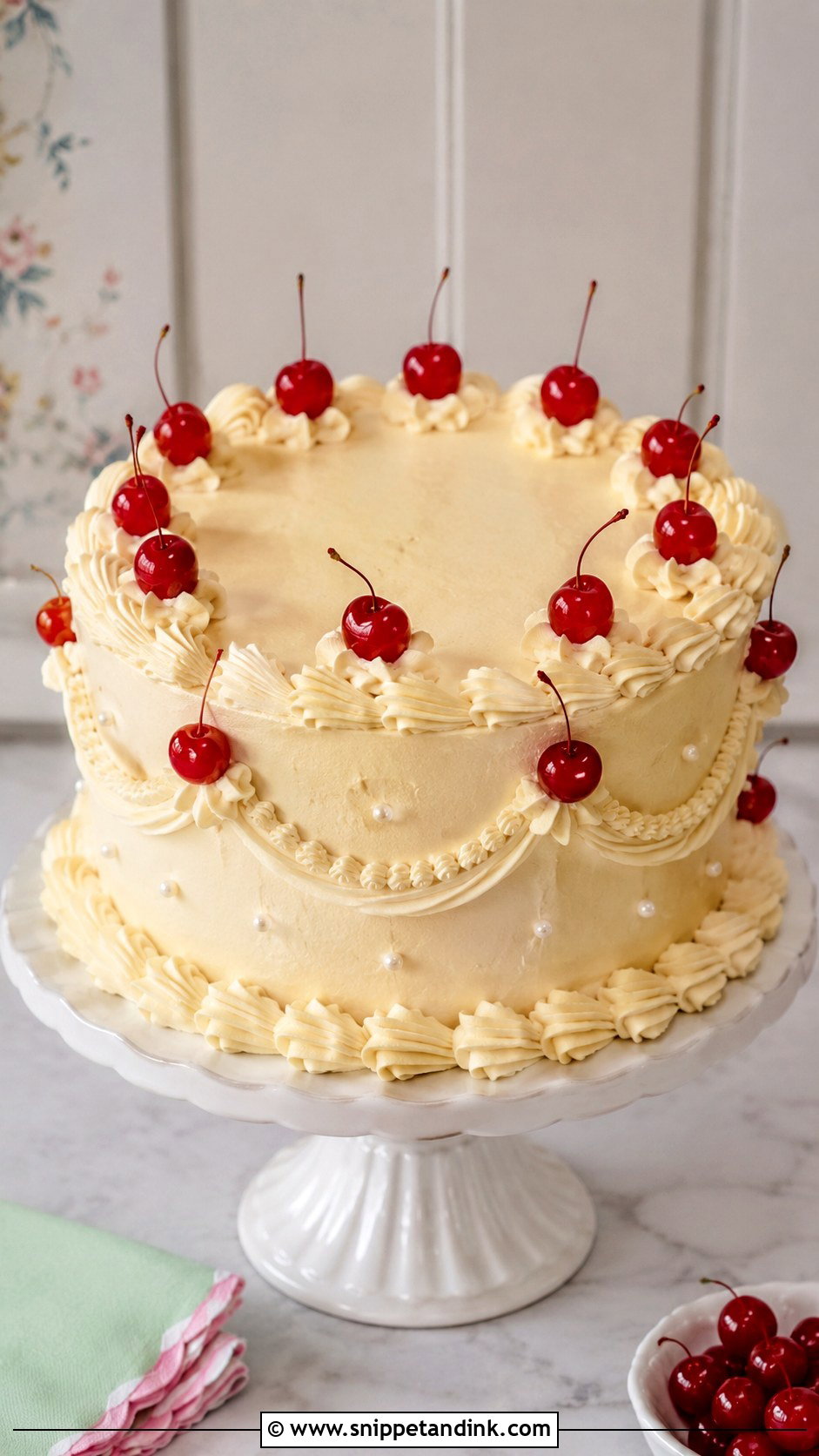
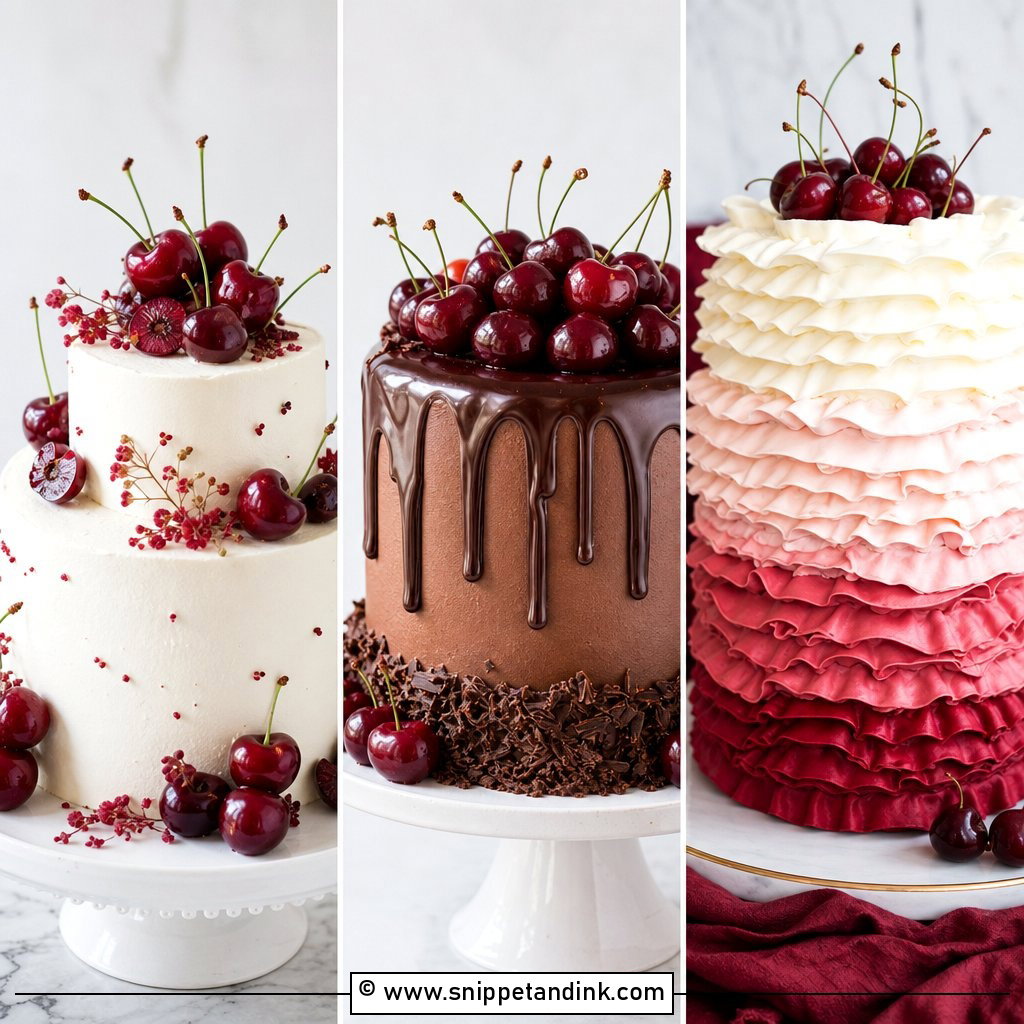
Cherries are the detail most people picture with this style, and they add color and fun instantly. Bright red cherries along borders, between swag loops or on the top tier stand out on white or pale blue frosting, while the shells and ruffles keep it bridal. It suits couples who love diner nostalgia or retro romance. Use cherries as punctuation, not a blanket. Fresh or maraschino cherries weep juice into buttercream within a few hours, so I pat them dry, set them on a dab of piping and add them close to delivery. Candied or sugar cherries avoid the problem.
8. Pearl Lambeth Wedding Cake
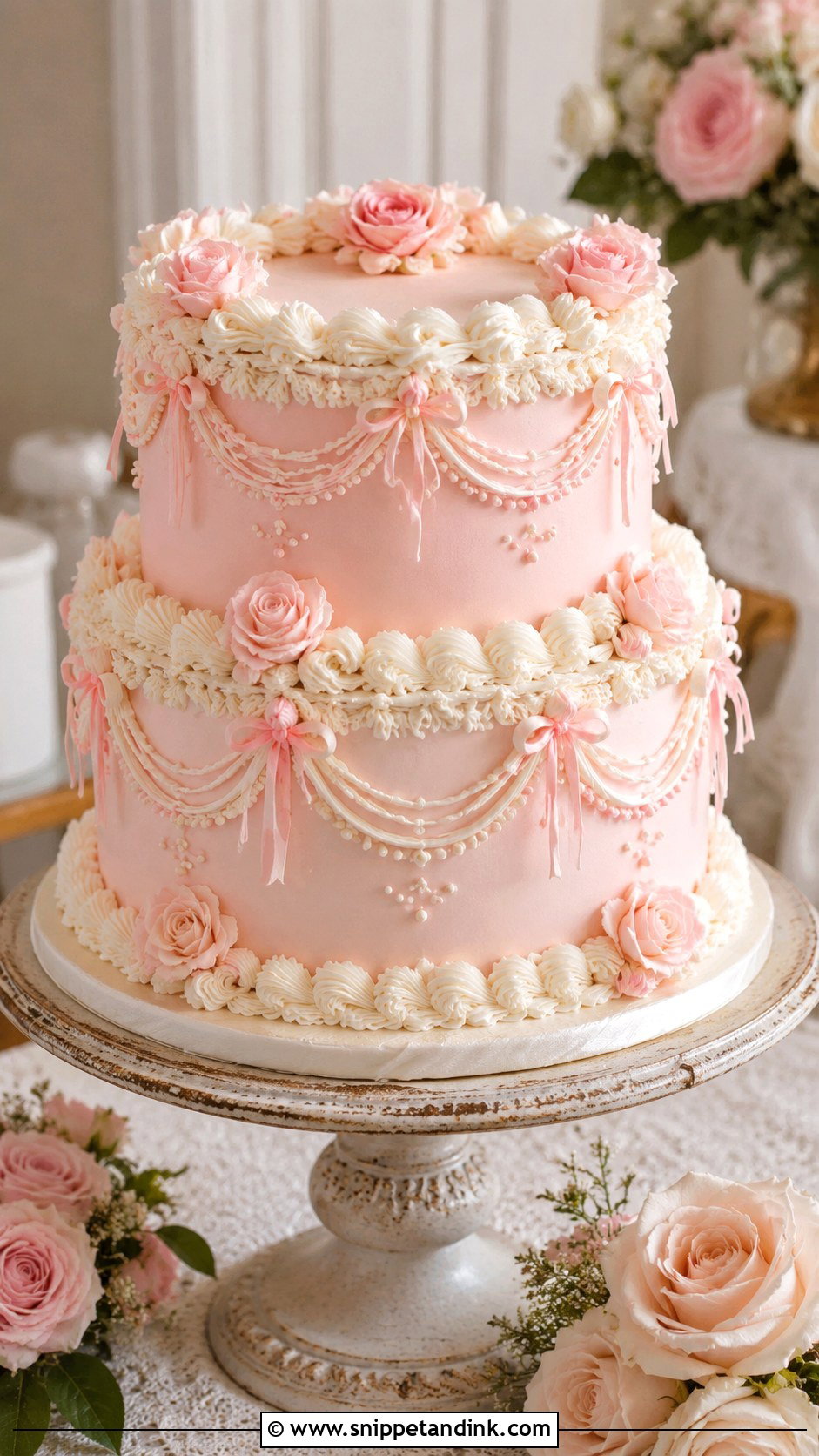
Pearls give the piping a soft shine. Ivory, champagne or soft white frosting lets them blend into the texture: small pearls along swag lines, larger ones at border points, a scatter on the top tier. It suits black-tie weddings and classic ballrooms. Keep the flowers simple so the pearls stay the focus. Hard sugar pearls are a real bite risk for guests with fragile teeth, so I use the softer edible kind or tell the caterer to warn people.
9. Floral Lambeth Wedding Cake
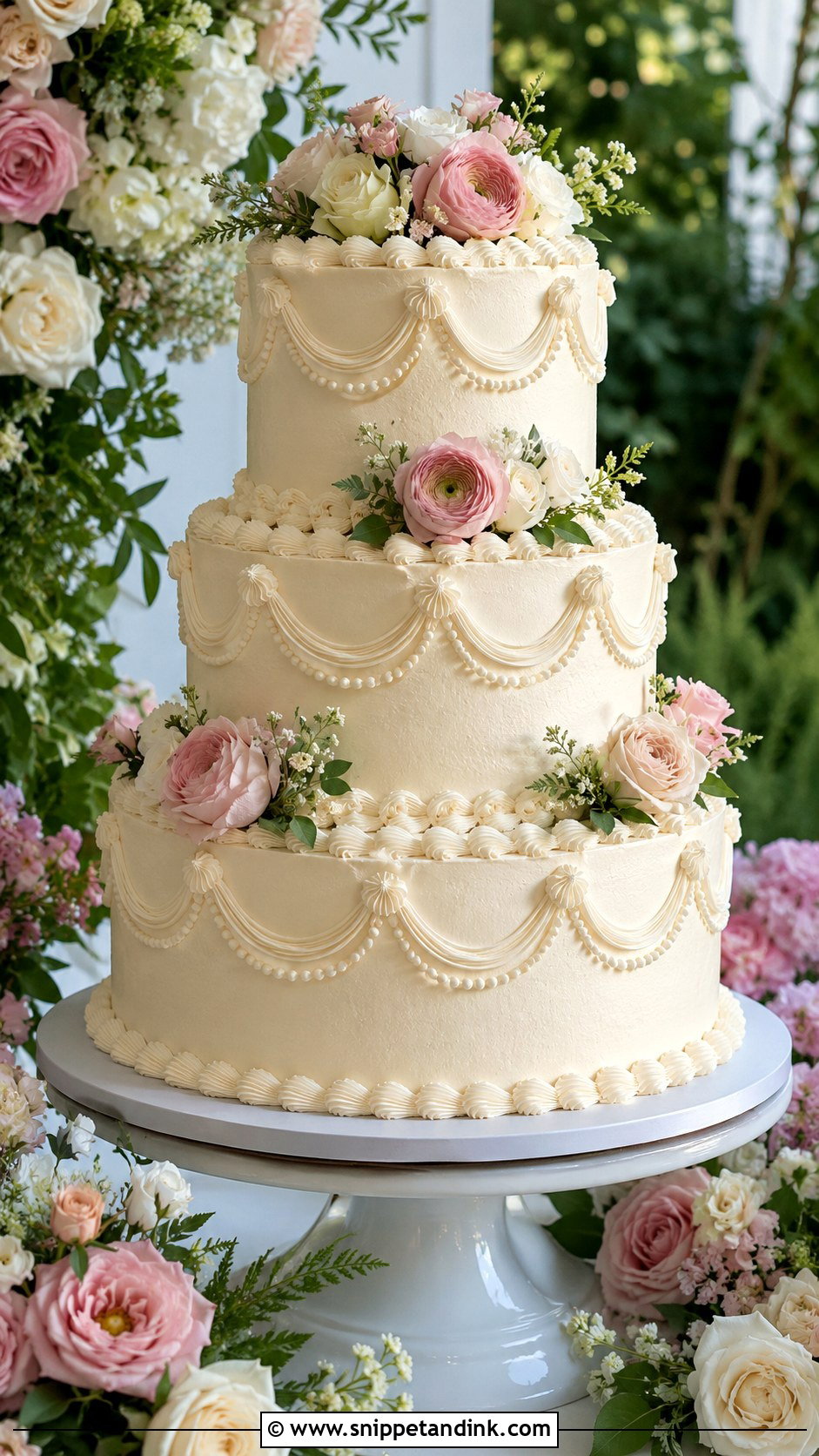
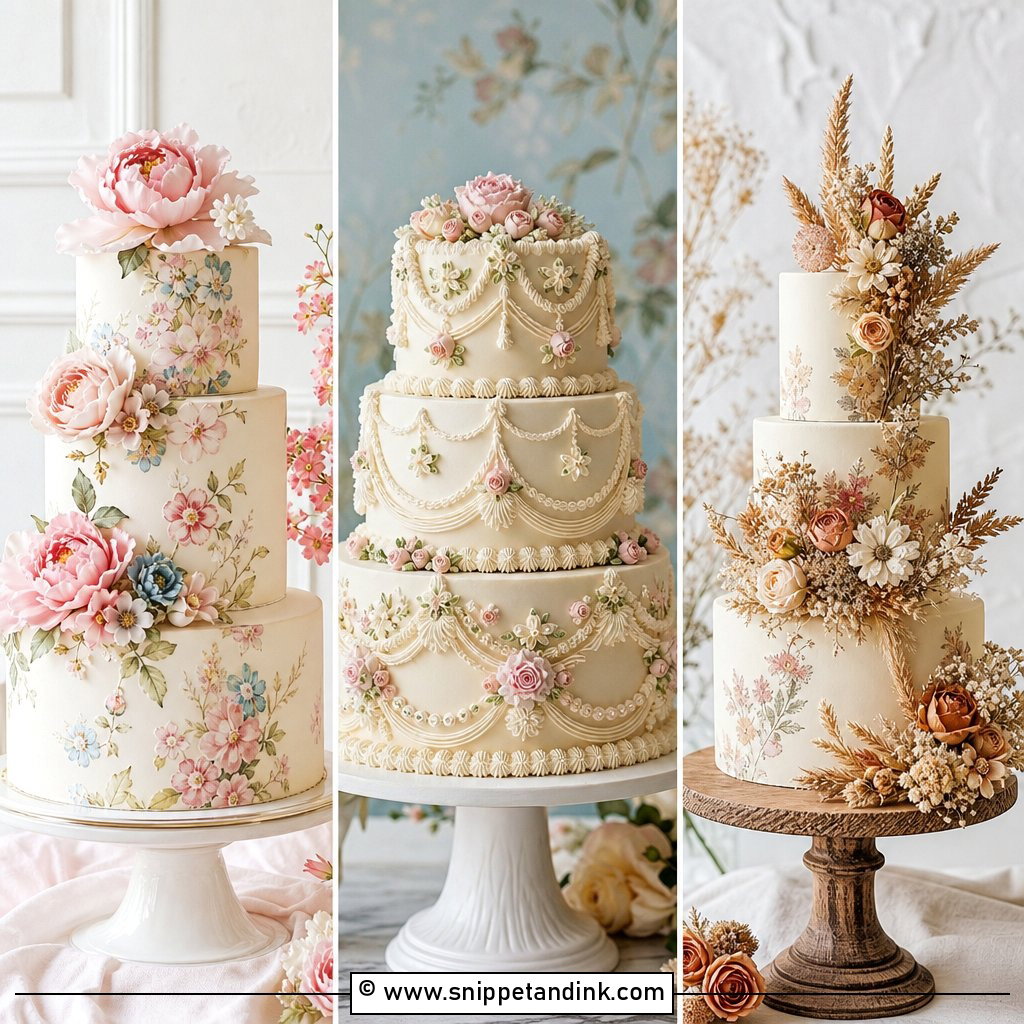
Piping and blooms go well together because the piping gives structure and the flowers soften it. Fresh roses, ranunculus, peonies or sugar flowers can sit between tiers, trail down a side or frame the base. Ivory is the easiest base, with blush, sage, lavender and butter yellow close behind. Cluster the flowers so the Lambeth work still shows. I leave a planned gap in the piping where each cluster will sit, otherwise stems get pushed through finished swags and crack them.
10. Gold Lambeth Wedding Cake
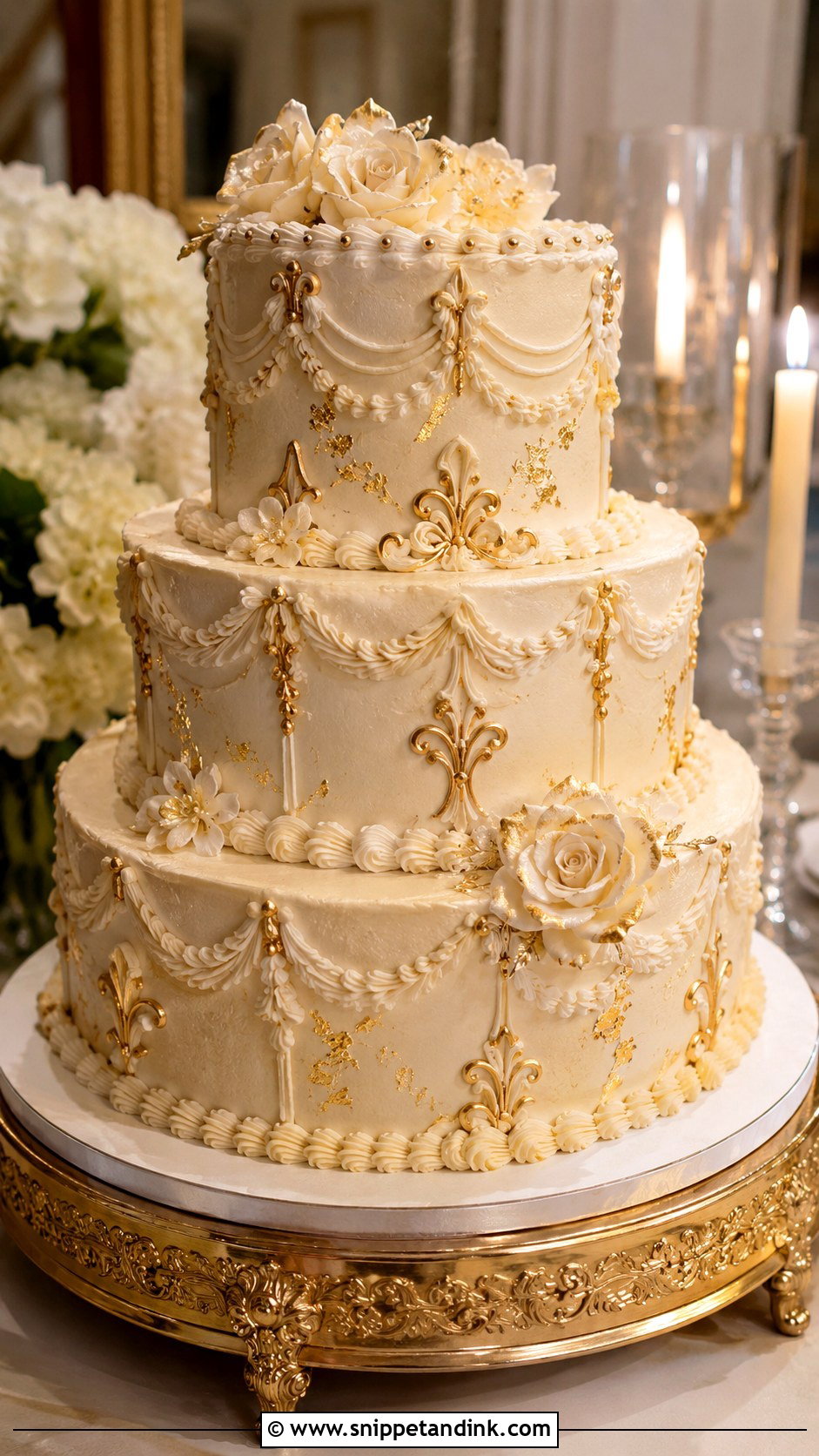
Gold on Lambeth piping catches the light on every raised scroll. I keep the cake mostly ivory and add gold through edible paint on the scrolls, metallic pearls, a little leaf or brushed accents. Taller cakes suit gold best. Champagne frosting makes it warm; white makes it crisp. Formal evenings and chandelier rooms are its setting. Painting gold onto buttercream piping is tricky since the surface is soft, so the piping is chilled first and painted with a very light touch.
11. Square Lambeth Wedding Cake
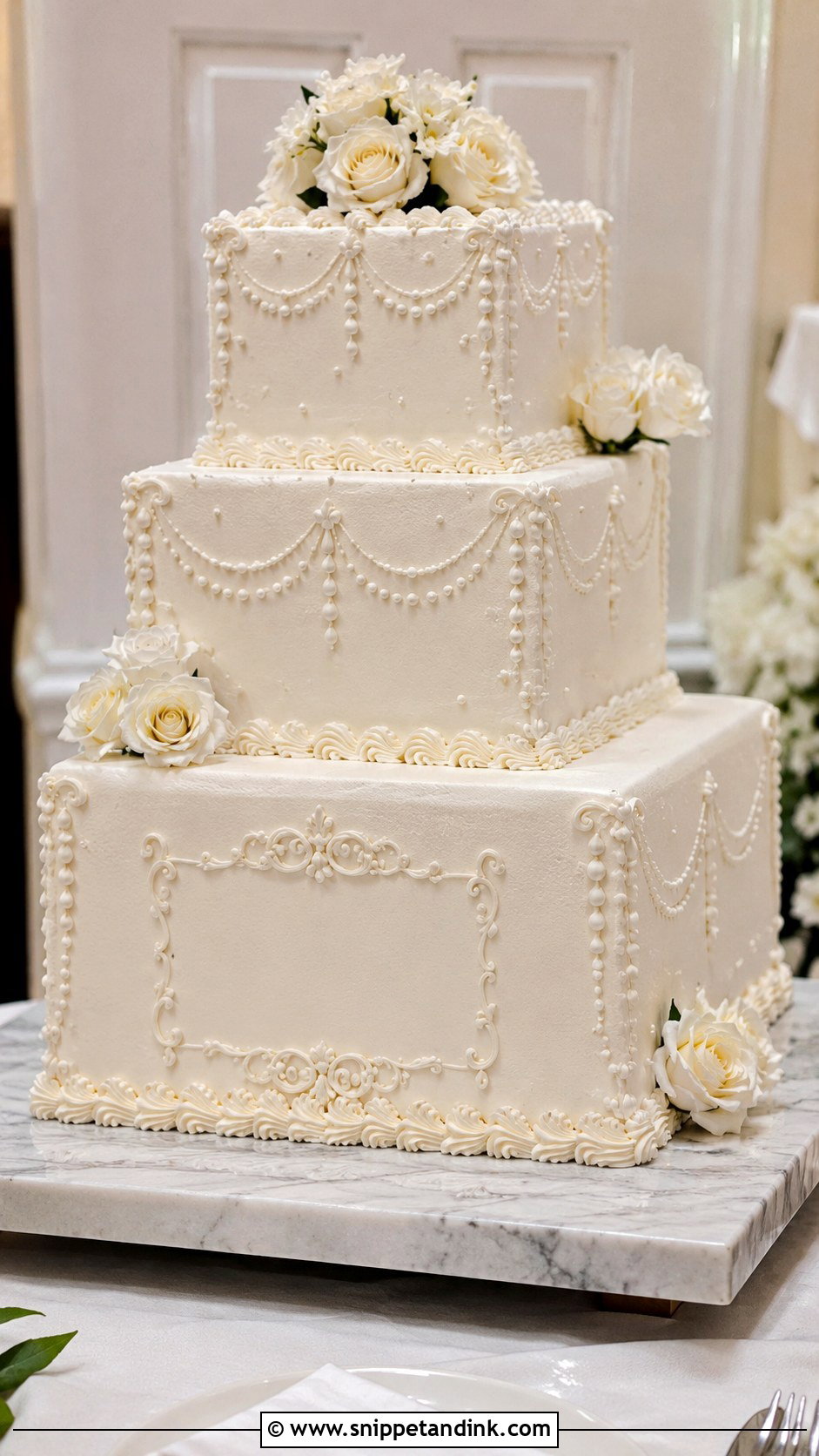
Square tiers give this style a crisp, architectural shape, and piped borders, corner scrolls and drop strings look especially defined against straight sides. It’s traditional without being predictable. Buttercream gives the piping softness and dimension. Ornate corner details, pearl dots or small flower clusters highlight the shape, and the top can carry a framed message or a floral crown. Corners are where uneven piping shows first, so this one needs a very steady hand.
12. Sheet Lambeth Wedding Cake
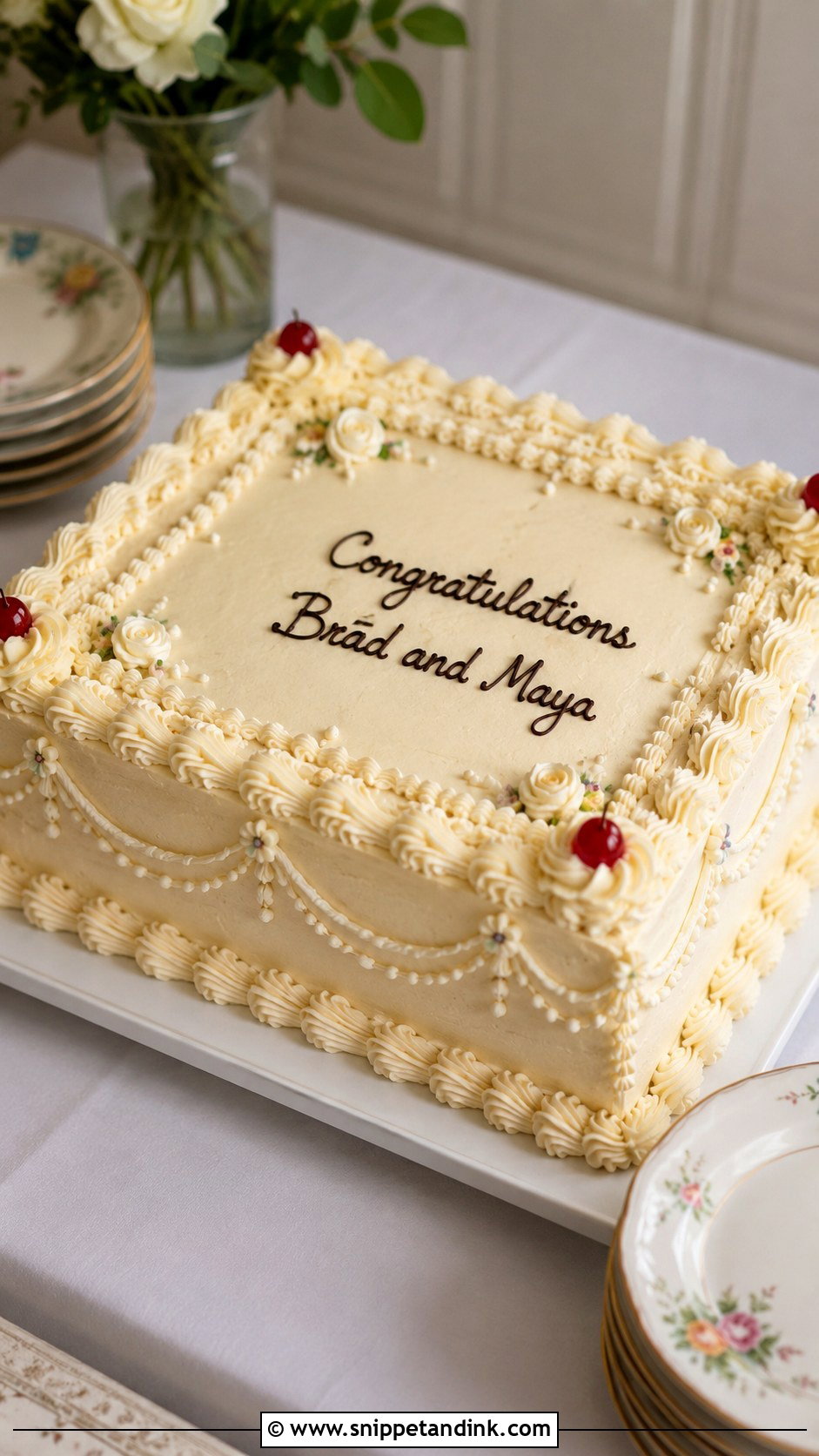
A sheet cake turns the flat top into a canvas: ornate borders, piped frames, shell trim, swags and a centered message. It’s practical and nostalgic, easy to serve and good for backyard weddings, brunches or a dessert table with other treats. It also works as a cutting cake when you don’t need a display cake. Ivory buttercream is classic; pale pink, blue or yellow feels cheerful. Sheet cakes are usually the most affordable way to get real Lambeth piping, since there’s less stacking and structure to pay for.
13. Mini Lambeth Wedding Cake
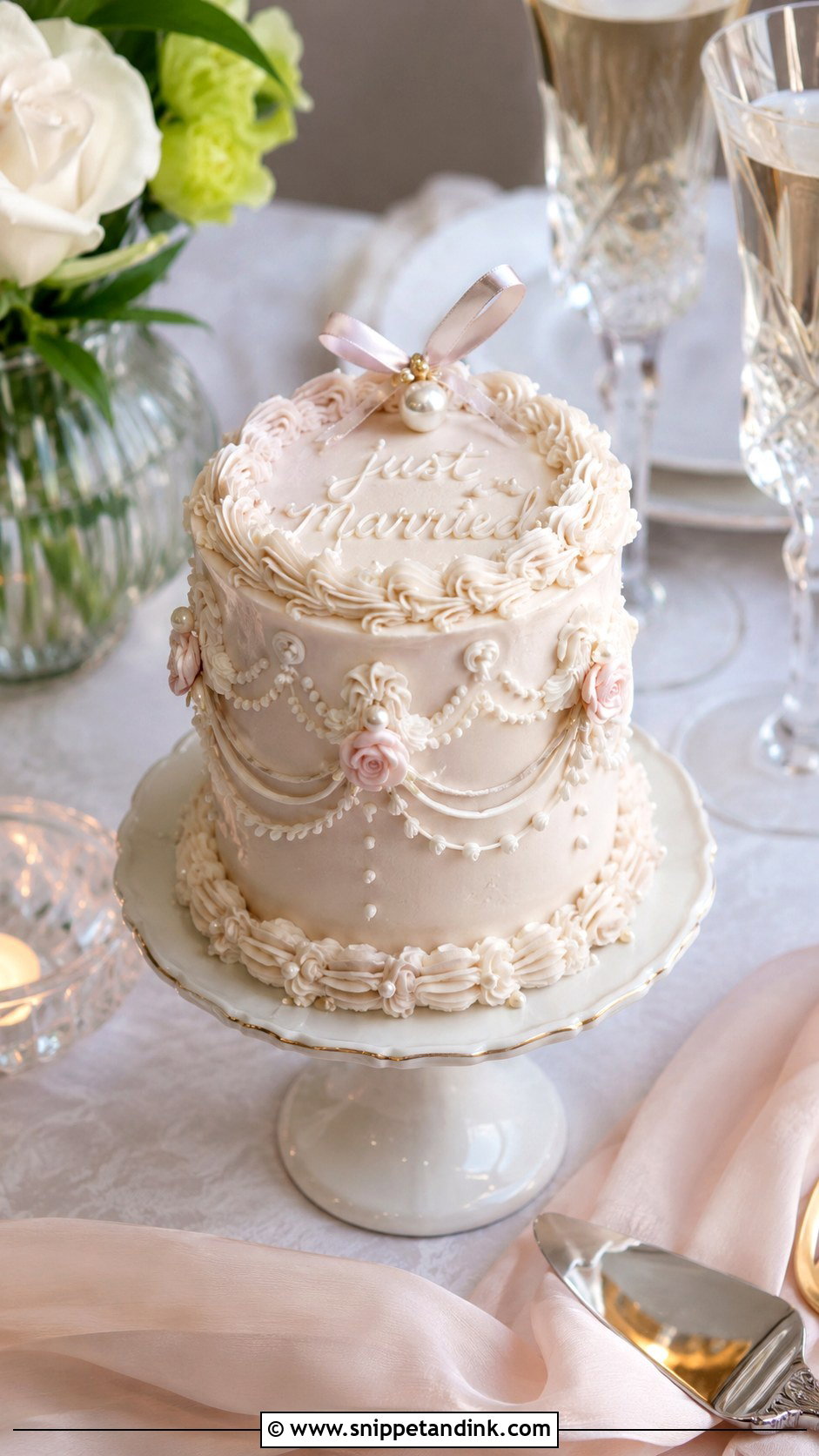
A six-inch round or heart can hold layered borders, tiny swags, piped roses and a small topper, enough to feel complete for an elopement or sweetheart table. Guests can have cupcakes or plated desserts while the couple shares this one. Keep the palette soft, ivory, blush, pale blue or sage, so the small size doesn’t look crowded. On a mini cake, I scale down the piping tips too. Full-size shells on a six-inch tier swallow the cake whole.
14. Black And White Lambeth Wedding Cake
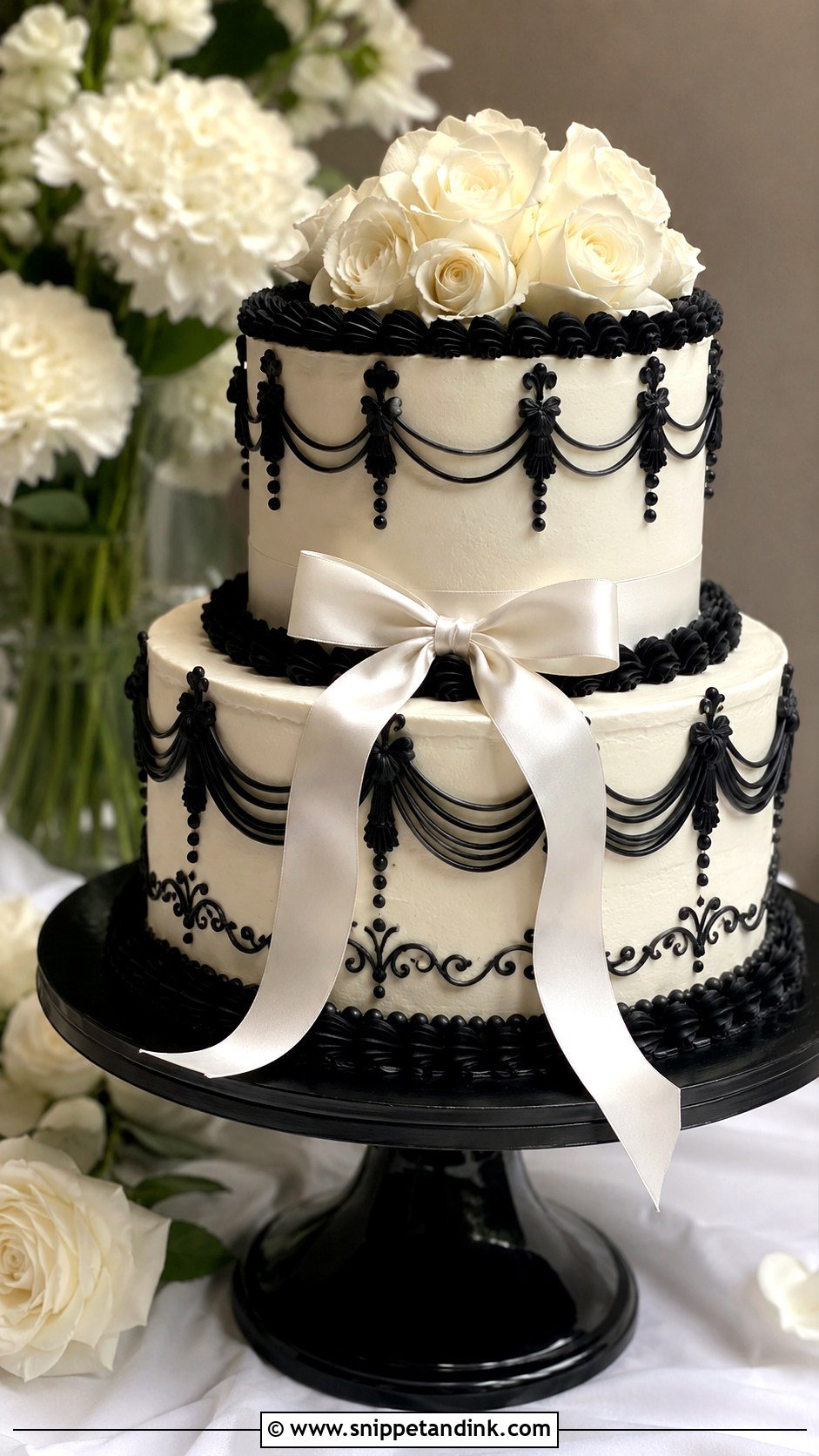
Black and white makes every piped detail stand out. White frosting with black piping looks graphic; black frosting with white piping is moodier. Pearls, white roses or a clean satin bow keep it wedding-appropriate. It suits evening receptions, city venues and art deco themes. Black buttercream needs a lot of coloring and stains mouths, so I usually suggest black piping on white frosting, or a dark cocoa base that’s tinted rather than dyed.

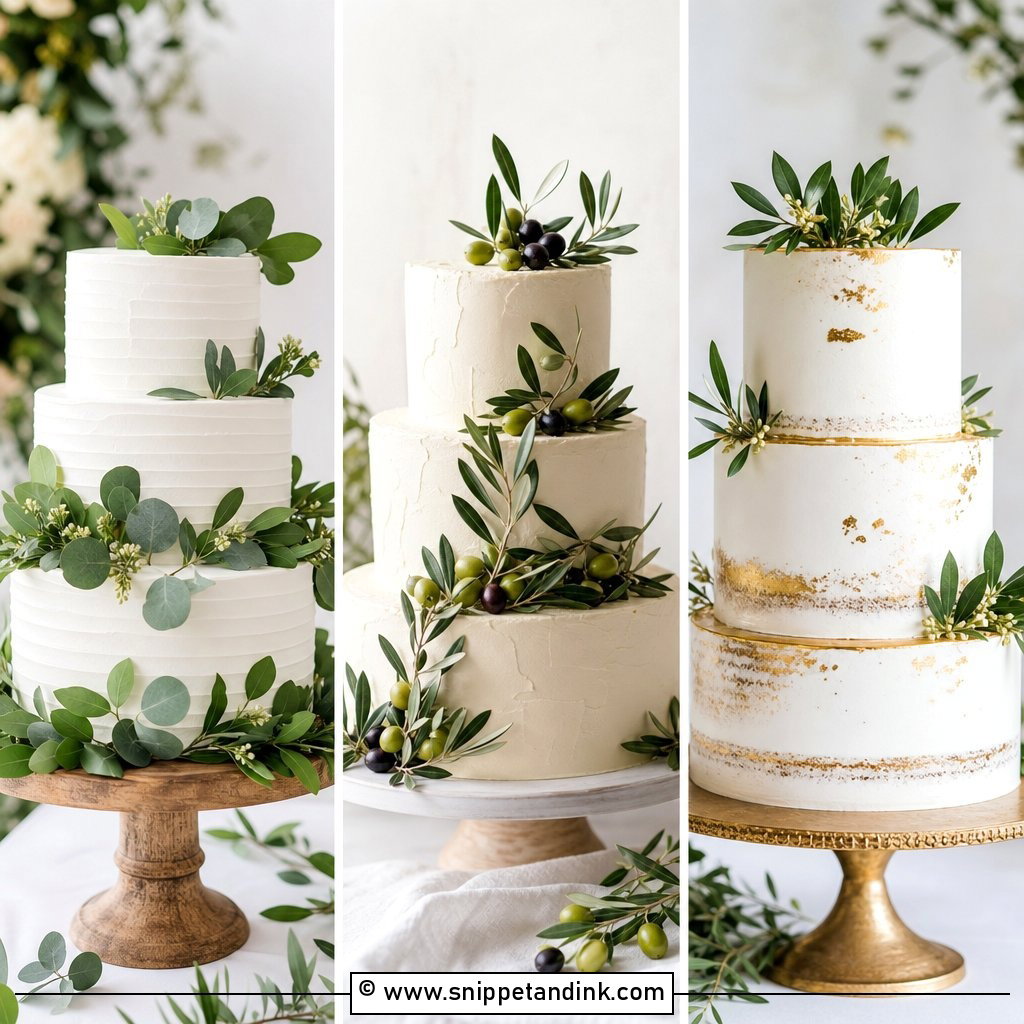

15. Green Lambeth Wedding Cake
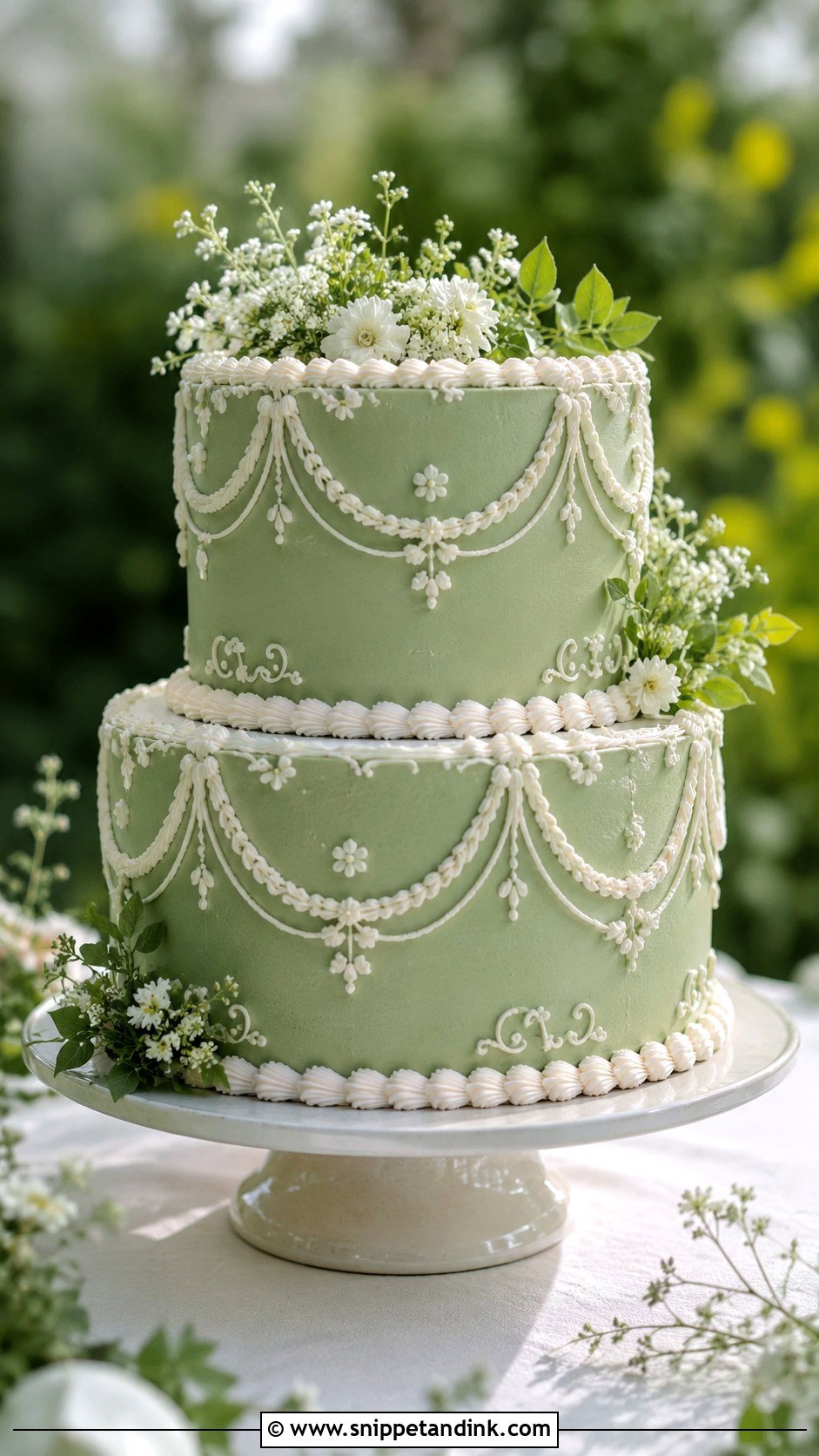
Green is a little unexpected, and it feels fresh. Sage is the safest for a soft palette, while pistachio, mint or olive are more distinctive. White or ivory piping keeps it bridal, and garden flowers, herbs or small sugar blossoms suit it. Outdoor weddings are a natural fit. Keep the piping delicate and let the frosting carry the color. A pistachio buttercream can flavor and tint the cake at once, which is a nice detail if guests ask.
16. Lavender Lambeth Wedding Cake
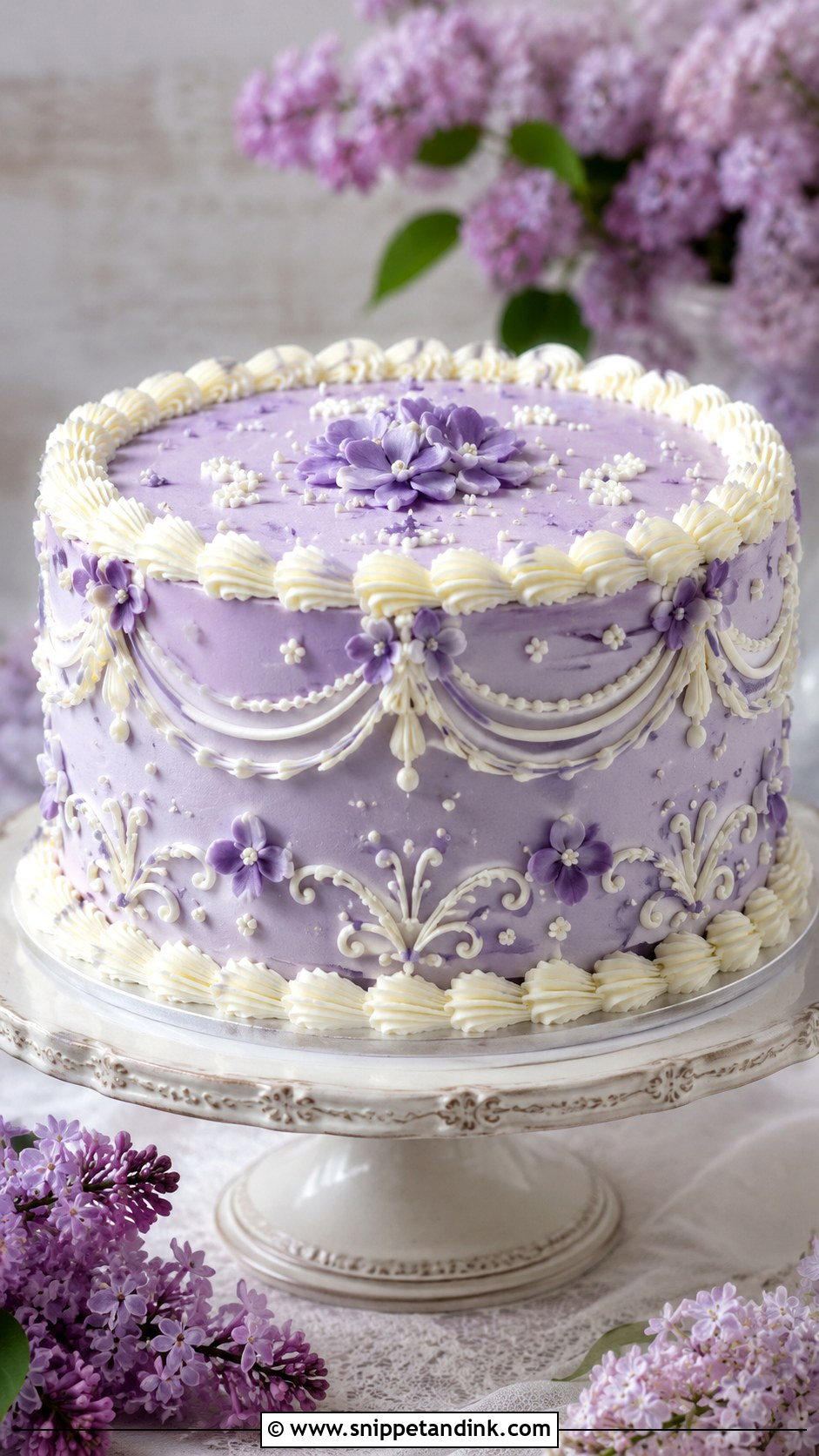
Pale lavender frosting under ivory piping keeps every raised detail gentle and clear. It fits spring and garden weddings with lilac, blush or cream flowers, and sugar violets, tiny pearls or a piped bow finish it. Silver or white accents make it more elegant. Keep the decoration light. Lavender is one of the hardest buttercream colors to hold: it can drift grey or blue under warm lighting, so I test a swatch in the venue’s light when possible.
17. Bow Lambeth Wedding Cake
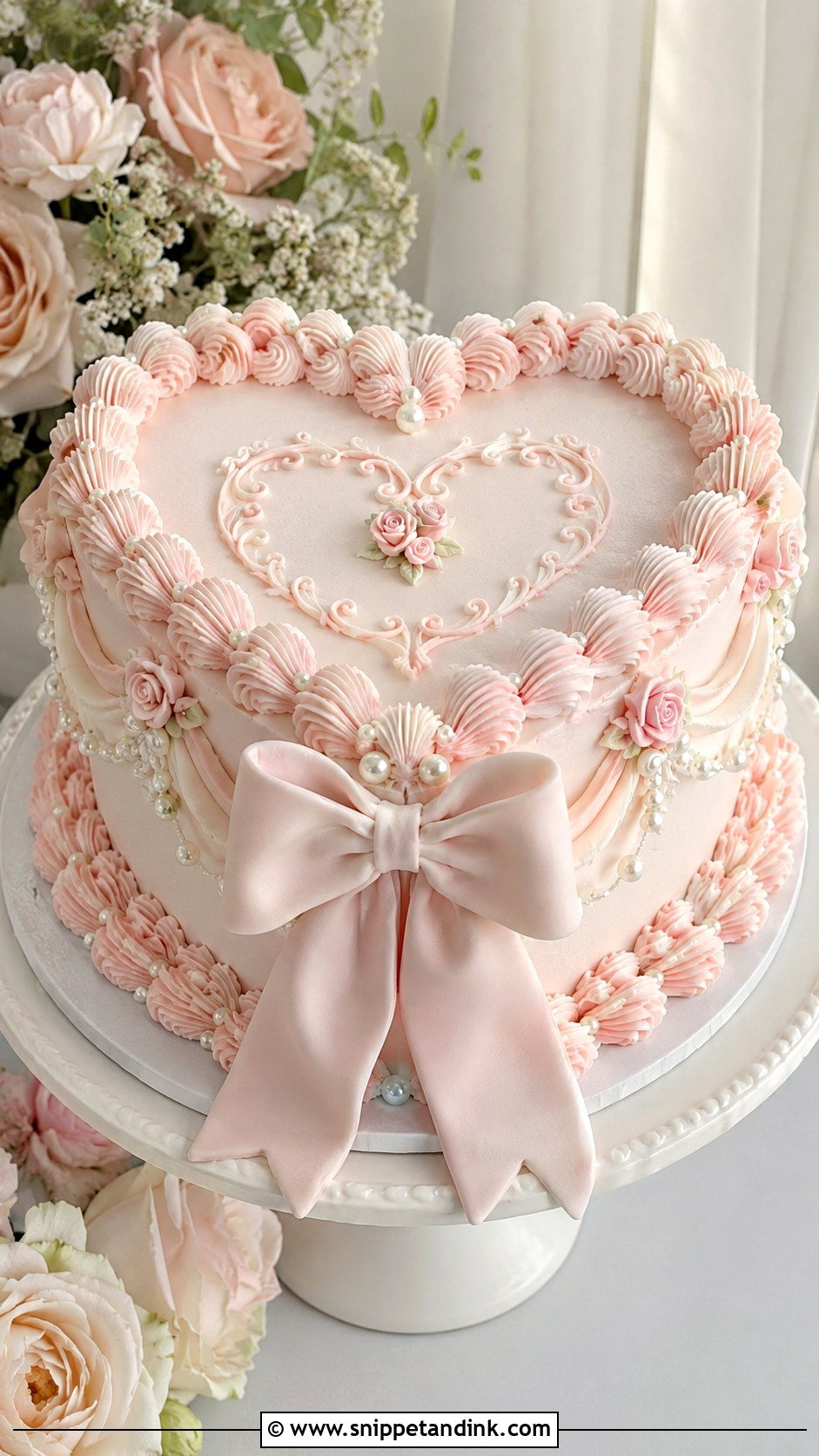
A bow Lambeth wedding cake adds a coquette touch. The bow can be piped, made from fondant or tied as a satin ribbon around a tier, on a heart, a mini or a two-tier cake. Pale pink, ivory, blue or butter yellow keeps it romantic. One larger bow as the focal point looks more polished than bows everywhere. If you choose real ribbon, I line it with a thin strip of fondant or acetate, because buttercream grease spots satin within an hour.
18. Monogram Lambeth Wedding Cake
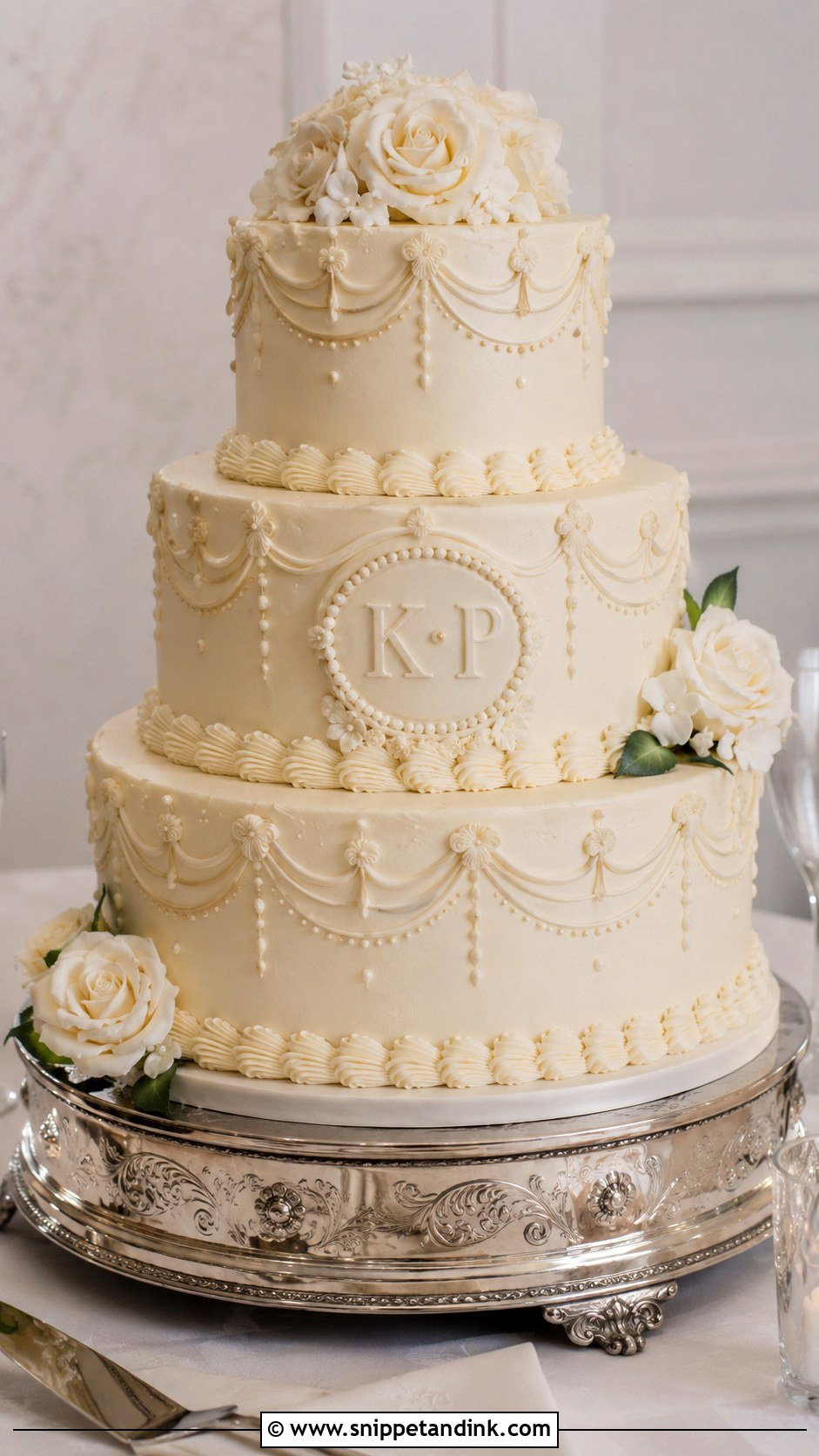
The swags and borders of Lambeth piping naturally frame a monogram. The initials can sit inside a piped oval, on the center tier or on a raised plaque. White, ivory, champagne or pale blue keep the lettering readable, with pearl dots, shell borders and scrollwork around it. It suits traditional and estate weddings. I pipe monograms onto a separate sugar plaque first, so a wobble on a letter doesn’t mean re-covering a whole tier.
19. Baroque Lambeth Wedding Cake
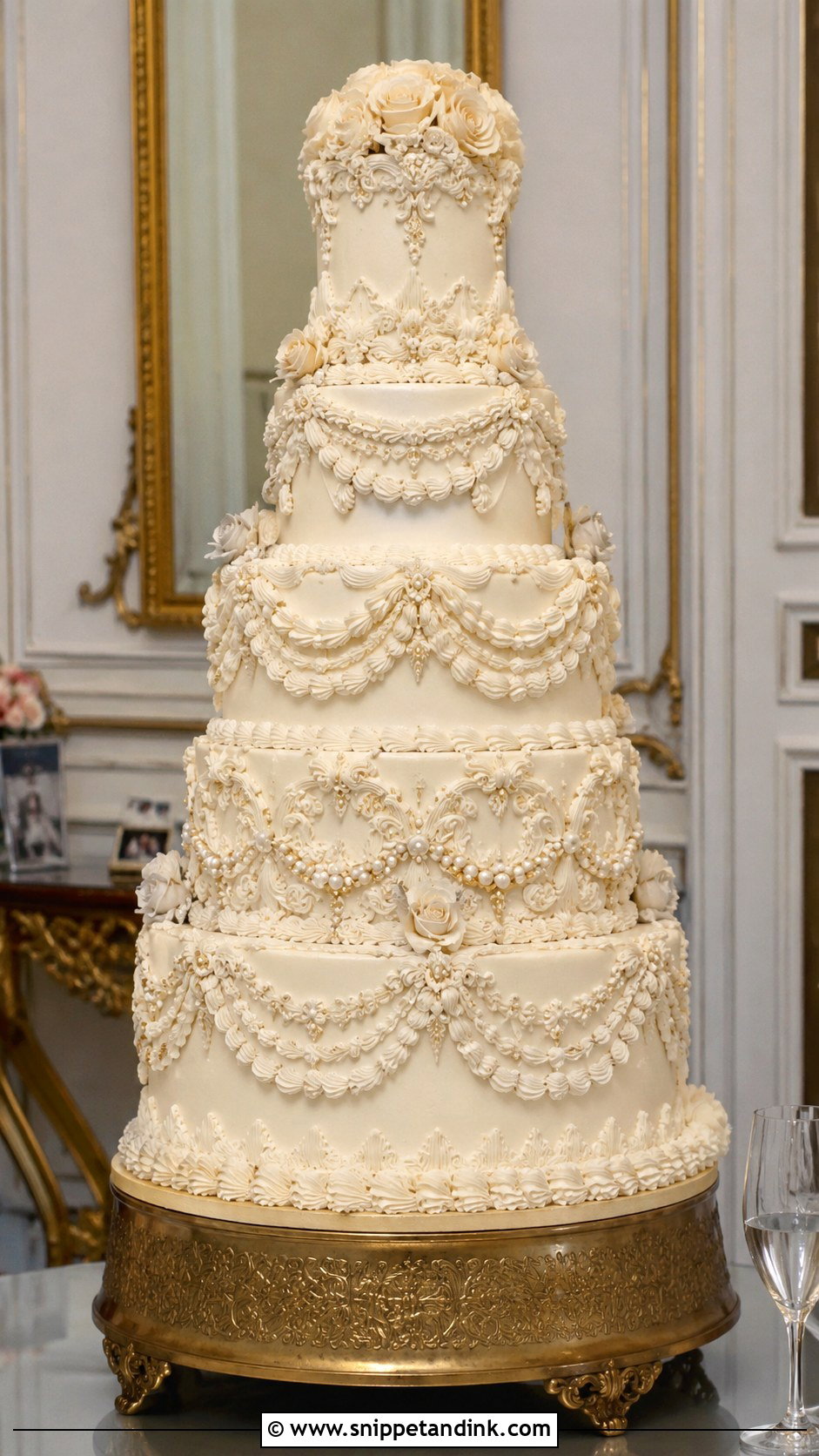
This is the most extravagant version: heavy piping, tall tiers, rich scrolls, deep borders and raised accents that almost look carved. Ivory and champagne keep it elegant, and gold gives it a palace feel. Grand rooms with high ceilings and candlelight suit it. Flowers should be minimal, or just at the base. The weight is real. Layer upon layer of piped buttercream adds a surprising amount, so the structure needs proper dowels and a sturdy base board.

20. Buttercream Lambeth Wedding Cake
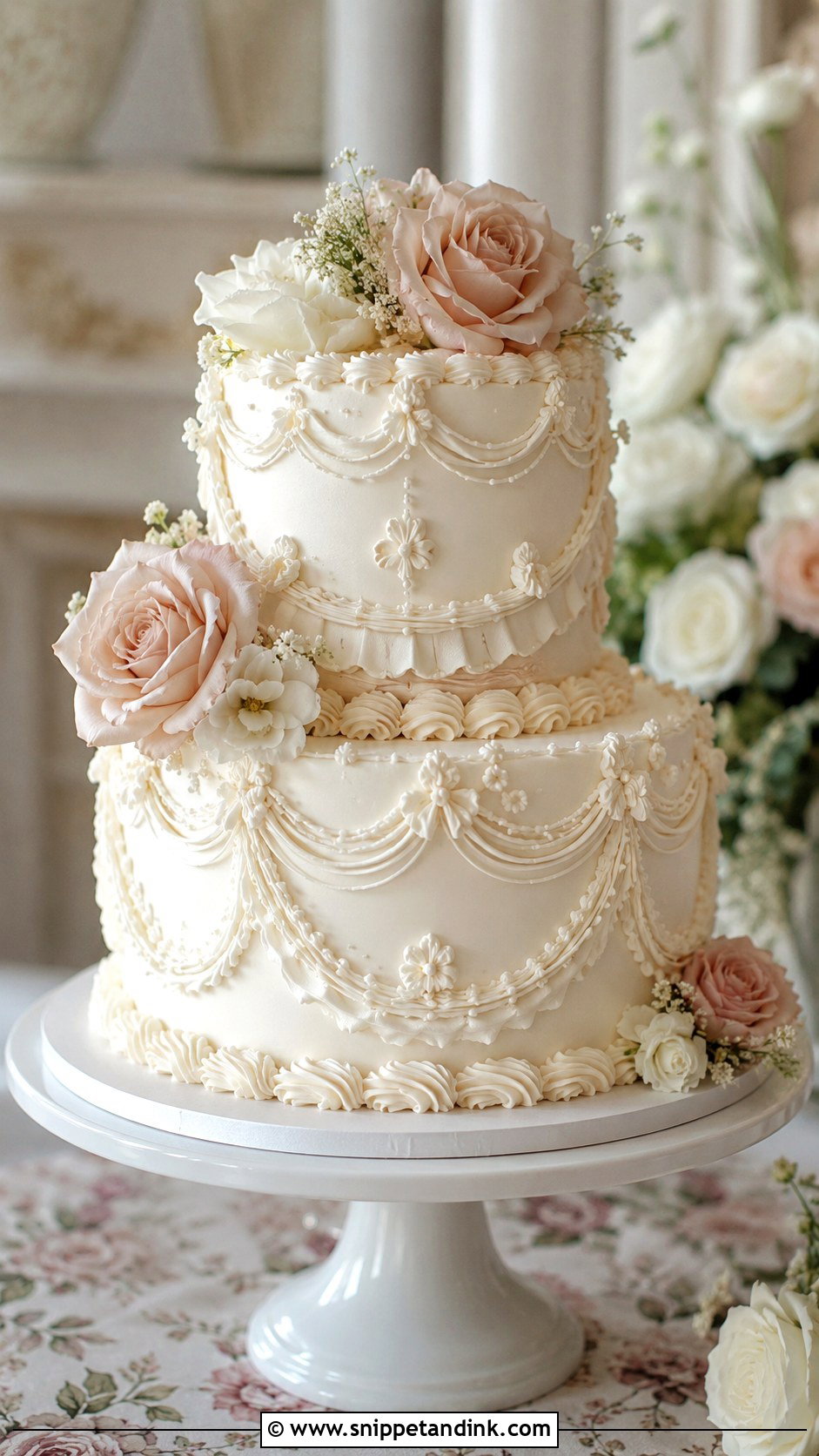
Buttercream gives the softest, creamiest Lambeth look, with piping that feels lush and slightly relaxed. Guests recognize it as real cake straight away. Vanilla, almond, lemon or chocolate can go inside. For tall borders and deep swags, the buttercream has to be stable. A crusting American-style buttercream holds sharp shells best, while silky meringue buttercreams taste lighter but slump sooner in a warm room.
21. Fondant Lambeth Wedding Cake
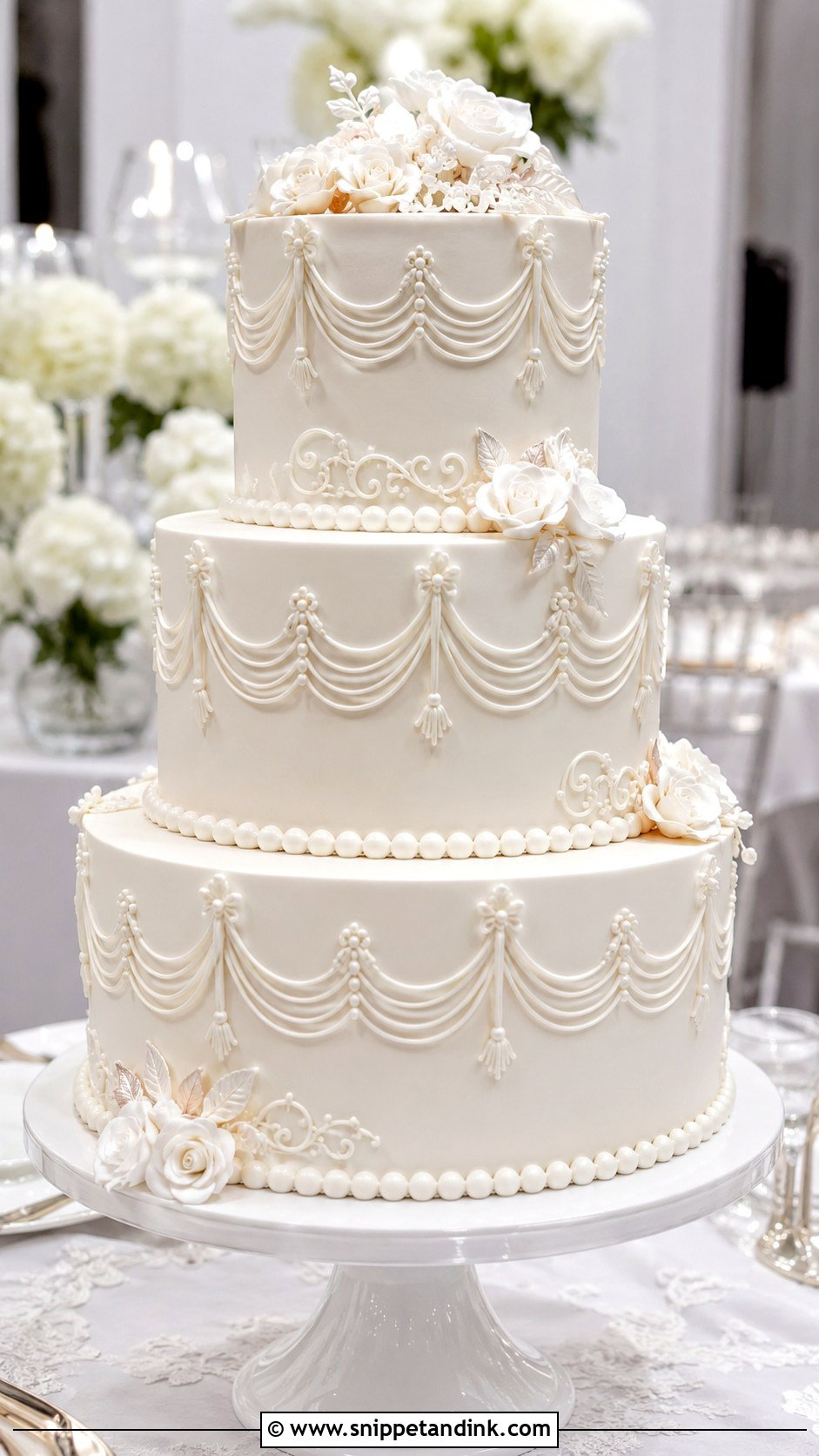
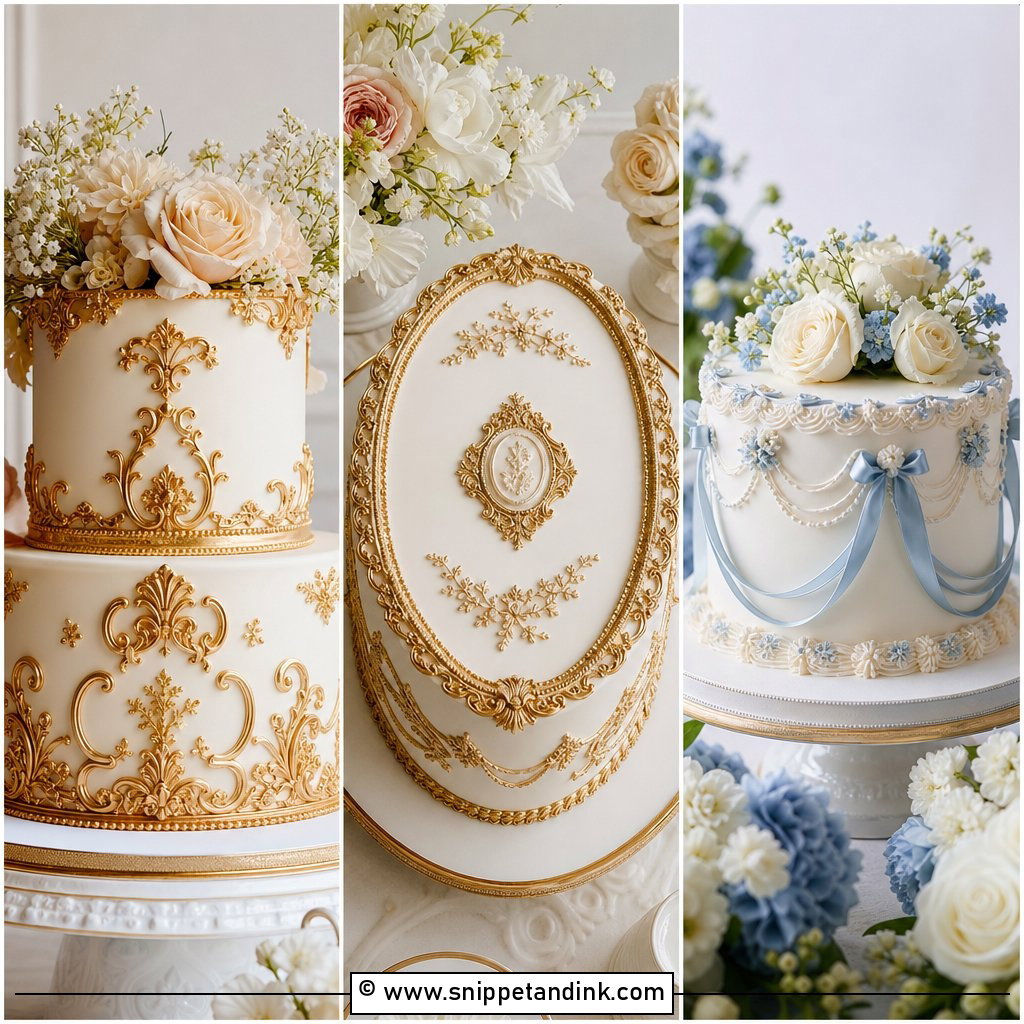
Fondant gives a very clean, structured base under ornate piping: smooth sides, crisp edges, and a surface that holds royal icing detail precisely. It suits formal weddings. White or ivory is classic, with pale blue, blush and champagne as alternatives. The piping can be neat and symmetrical or bolder. Royal icing piping on fondant dries hard and survives heat far better than buttercream piping, which makes this the version I suggest for a summer wedding.
22. Fruit Lambeth Wedding Cake
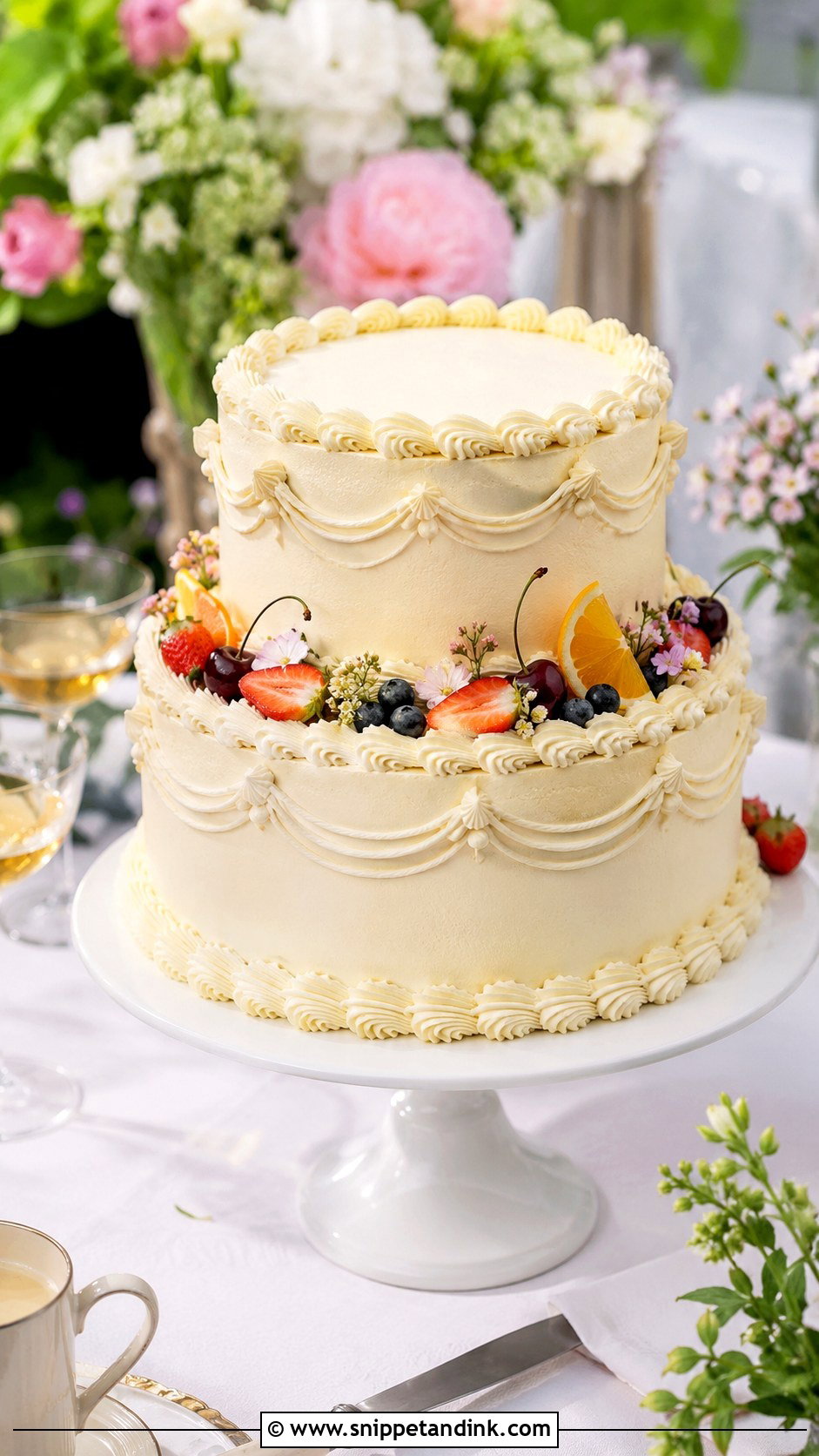
Fresh fruit adds color without more decoration. Berries, cherries, figs, citrus slices or small grapes placed along piped borders and tier edges look deliberate rather than scattered. White or pale yellow buttercream makes the colors stand out, with vanilla, lemon or berry sponges inside. Garden and brunch weddings suit it. Cut fruit leaks onto buttercream, so I use whole berries where possible, brush them with a thin glaze to stop them drying out, and place them at the venue.
23. Chocolate Lambeth Wedding Cake
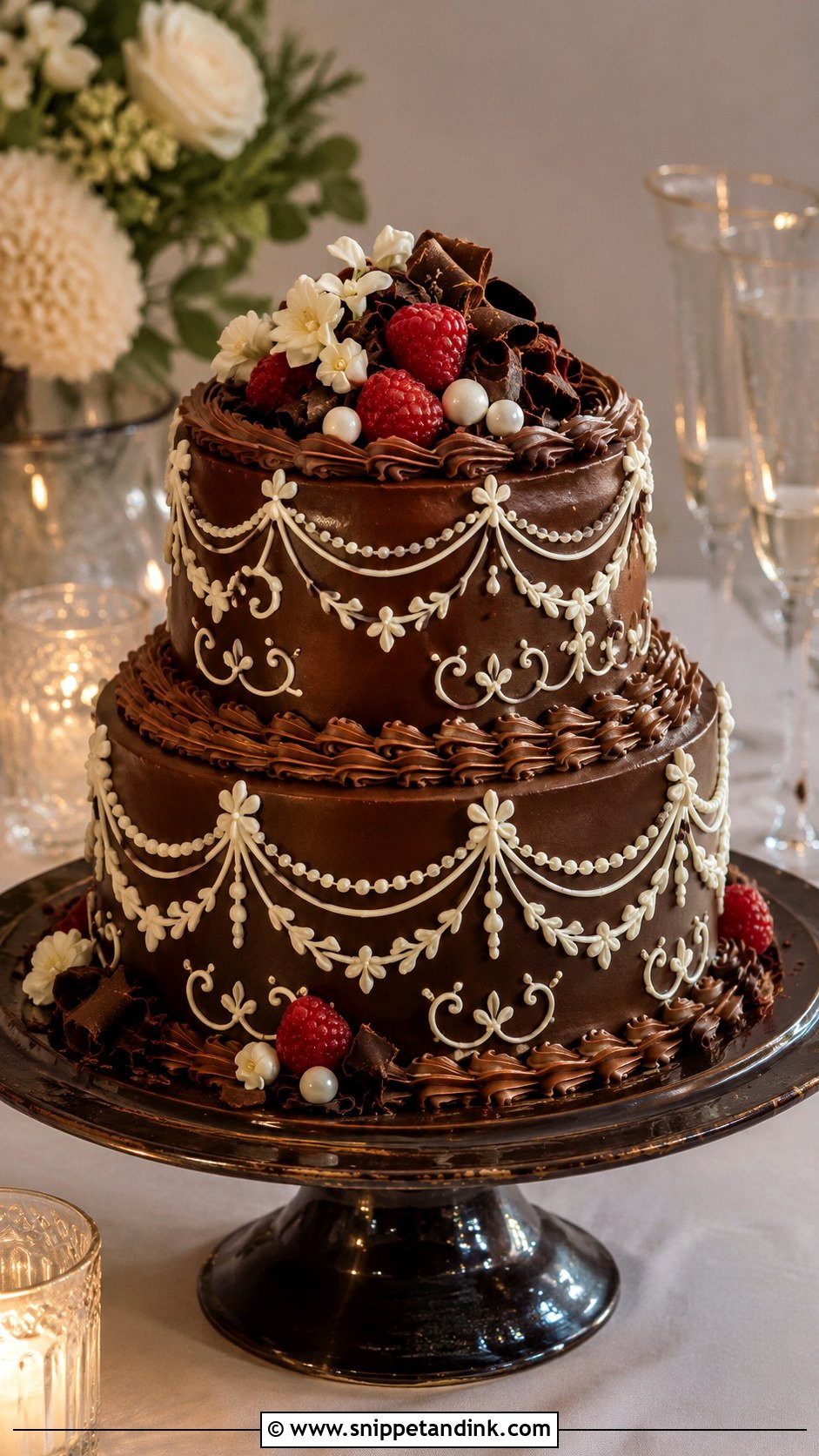
Chocolate surprises people at a wedding. Dark chocolate frosting makes a dramatic base under ivory or mocha piping; milk chocolate with pale cream scrolls is softer. Inside, it pairs with chocolate ganache, espresso filling, caramel or raspberry. Chocolate curls, pearls, berries or warm-toned flowers finish it. Fall and evening weddings suit it. Chocolate buttercream softens faster than vanilla in heat because of the cocoa butter, so keep it cool until cutting.
24. Red Velvet Lambeth Wedding Cake
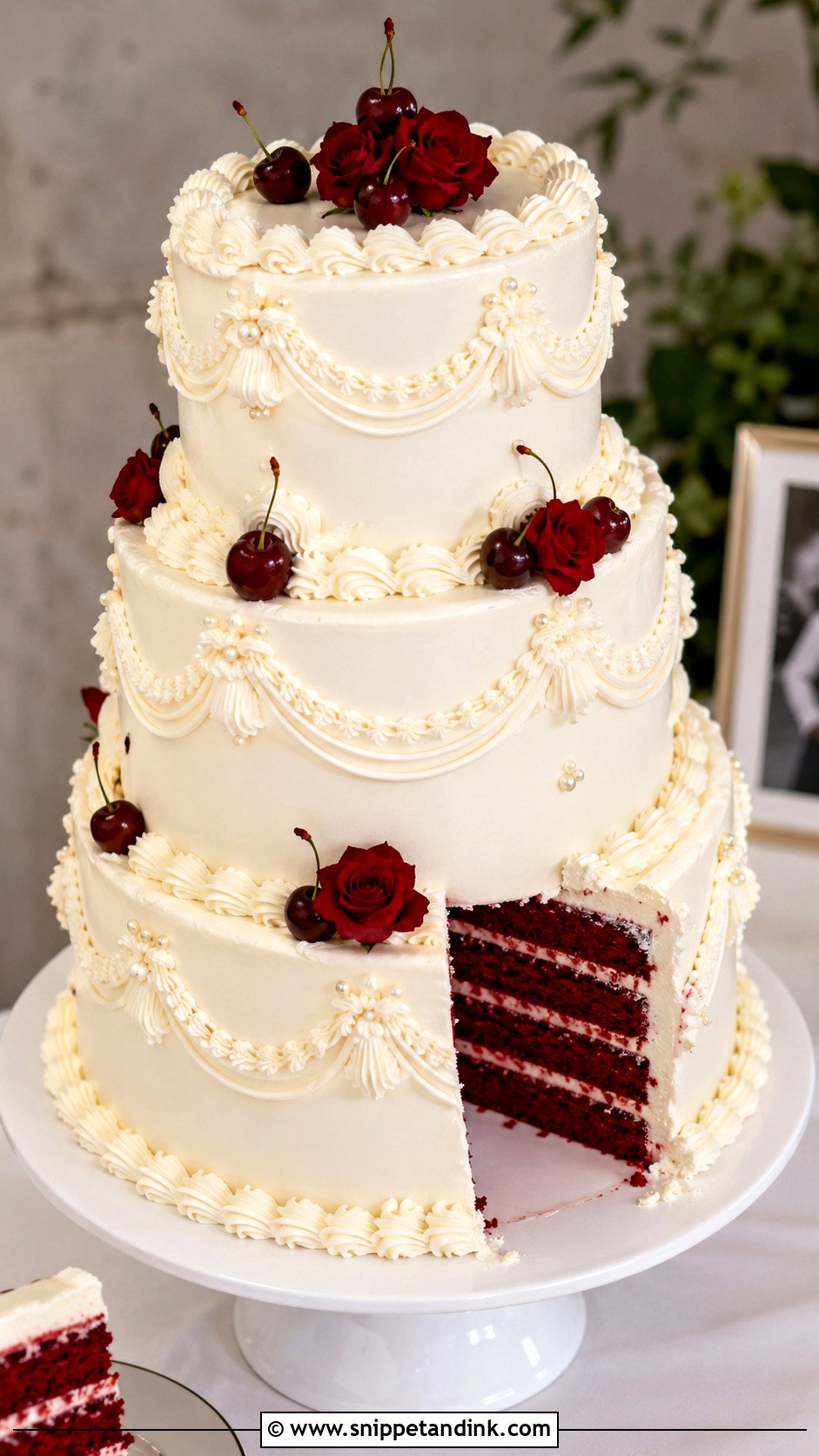
A red velvet Lambeth wedding cake hides the drama inside. The outside stays white or ivory with detailed piping, and the first cut reveals deep red layers and cream cheese filling, which is a great moment for cake-cutting photos. For a hint outside, use small burgundy accents, red roses or cherries rather than red frosting. Cream cheese filling is soft and needs refrigeration, so it isn’t a good match for a long outdoor display.

25. Garden Lambeth Wedding Cake
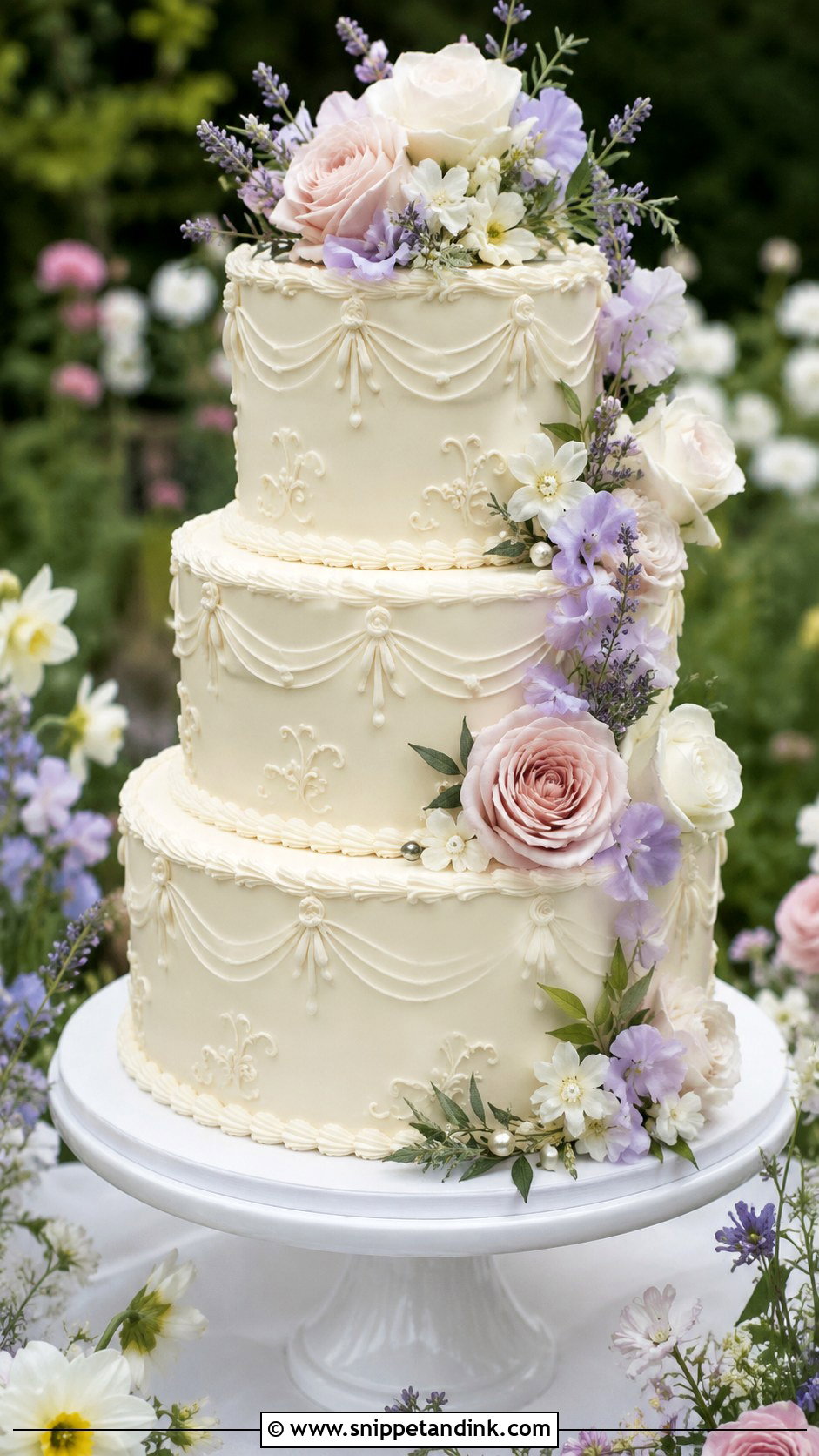
This version pairs ornate piping with flowers that look freshly picked: ivory or pastel buttercream, layered shells, and roses, sweet peas, ranunculus, lavender or small greenery sprigs used with restraint. The piping should still show, so the flowers stay on the tiers, the base or one gentle cascade. Estate gardens, backyards and greenhouses suit it. Sweet peas wilt fast out of water, so I’d keep them for the last placement before guests arrive.
Summer Heat and All That Buttercream
The deeper the piping, the more buttercream sits on the outside of the cake, and the more there is to soften in heat. Fine strings droop first, then the swags start to slide. For a summer wedding, I’d plan one of three things: royal icing piping over fondant, a crusting buttercream made partly with shortening, which stays firmer in warmth, or simply a cooler spot indoors where the cake stays until cutting.
Moving a chilled cake into a hot, humid room also causes condensation, little beads of water that can make colored piping bleed. Letting the cake come up to room temperature gradually in its box, rather than unboxing it straight into the heat, helps.
How to Cut a Heavily Piped Tier Cleanly
Thick borders drag a knife and tear slices. Ask your caterer to use a long, thin knife dipped in hot water and wiped between cuts, and to cut from the back of the cake so the front stays intact for photos. Some guests find a full Lambeth border very sweet, so it’s fine for the slices to be served with some of the border trimmed off. Nobody will mind, and the piping already did its job on the cake table.
Pipe the Cake That Matches Your Colors and Your Head Count
What makes this style so loved is the visible handwork, layer after layer of piping, with plenty of room for color, cherries, flowers, bows and pearls. A white tiered cake, a tiny heart, a blue vintage cake and a dramatic chocolate version are all the same craft underneath. Pick the one that fits your colors, your guest count and the venue, not only the one trending this month, and ask to see a baker’s own Lambeth work before you book.
You'll Like These Ideas:





Leave a Reply