
Classic wedding cakes keep coming back because they’re built on proportion rather than novelty. White or ivory icing, stacked tiers, pearl borders, sugar flowers and piping that throws small shadows have been reworked for generations and still read as a wedding cake from across a room. A good classic cake is rarely plain, though. Its spacing, edge finish and tier heights are doing the work. I’ve gathered 25 traditional designs and flavors below, and for each I’ve added what I’d tell a couple at a consultation: how the finish behaves, what it costs in hand time, and where it can go wrong.
How Many Tiers Does Your Guest Count Need?
Wedding slices are cut smaller than party slices, usually about 1 by 2 inches by the height of the tier. At that size, a round tier feeds roughly this many guests:
- 6 inch tier: about 12 slices
- 8 inch tier: about 24 slices
- 10 inch tier: about 38 slices
- 12 inch tier: about 56 slices
These are approximate and vary with cutting style. If you’re keeping the top tier, leave it out of the count. When the cake you want looks bigger than your guest list, I’d shrink the tier sizes rather than drop a tier, so the proportions stay classic.
When to order
Popular bakers fill their season months ahead, so I’d book about six to nine months out for a summer Saturday, and earlier if you want detailed sugar flowers or a fruitcake tier. Tasting comes next, then the final design. Confirmed guest numbers are usually needed two to four weeks before the date. Ask what’s included in delivery, setup and stand hire, because these vary a lot.
1. Three Tier White Wedding Cake
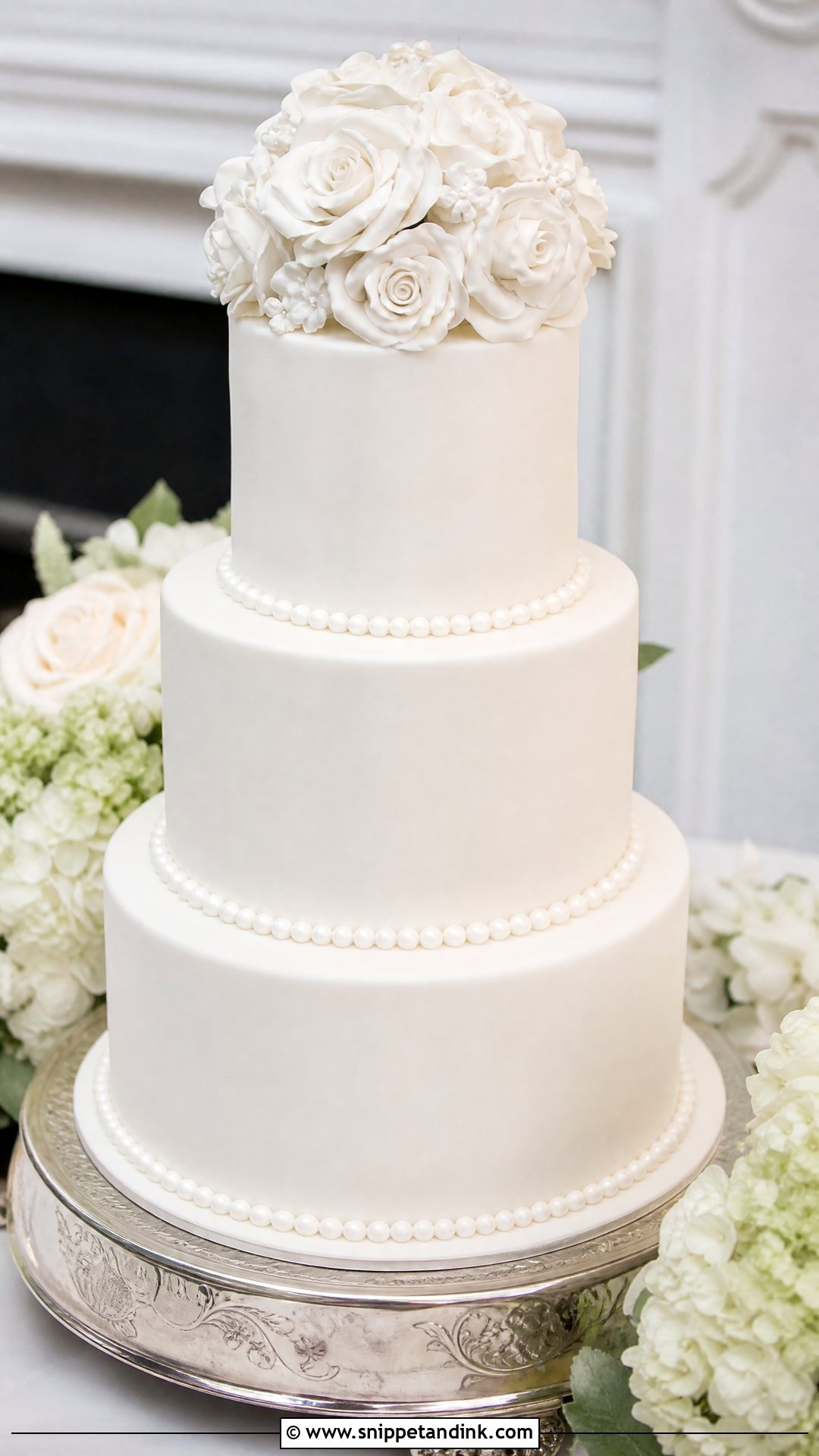
A three tier white wedding cake is where most traditional designs begin, and a 6, 8 and 10 inch stack feeds roughly 70 to 80 guests at wedding-size slices. The choice that changes the look most is the coating. Fondant gives a crisp, satin surface; buttercream gives a softer edge and a better bite. I keep the decoration to one element, a pearl border or a few sugar roses, because white shows clutter instantly. Vanilla almond, lemon and classic white sponge all sit happily under it.
2. White Wedding Cake With Roses
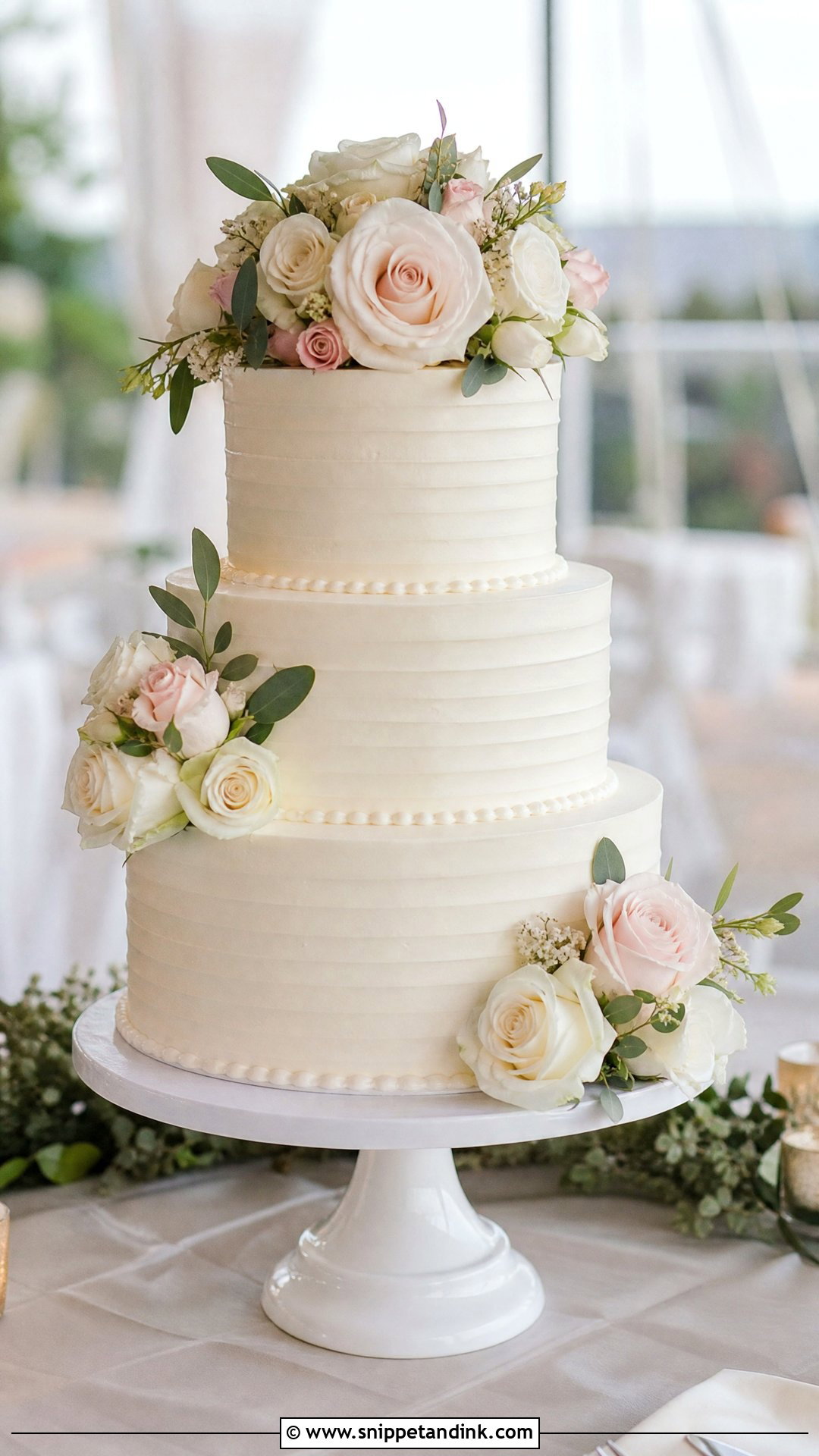
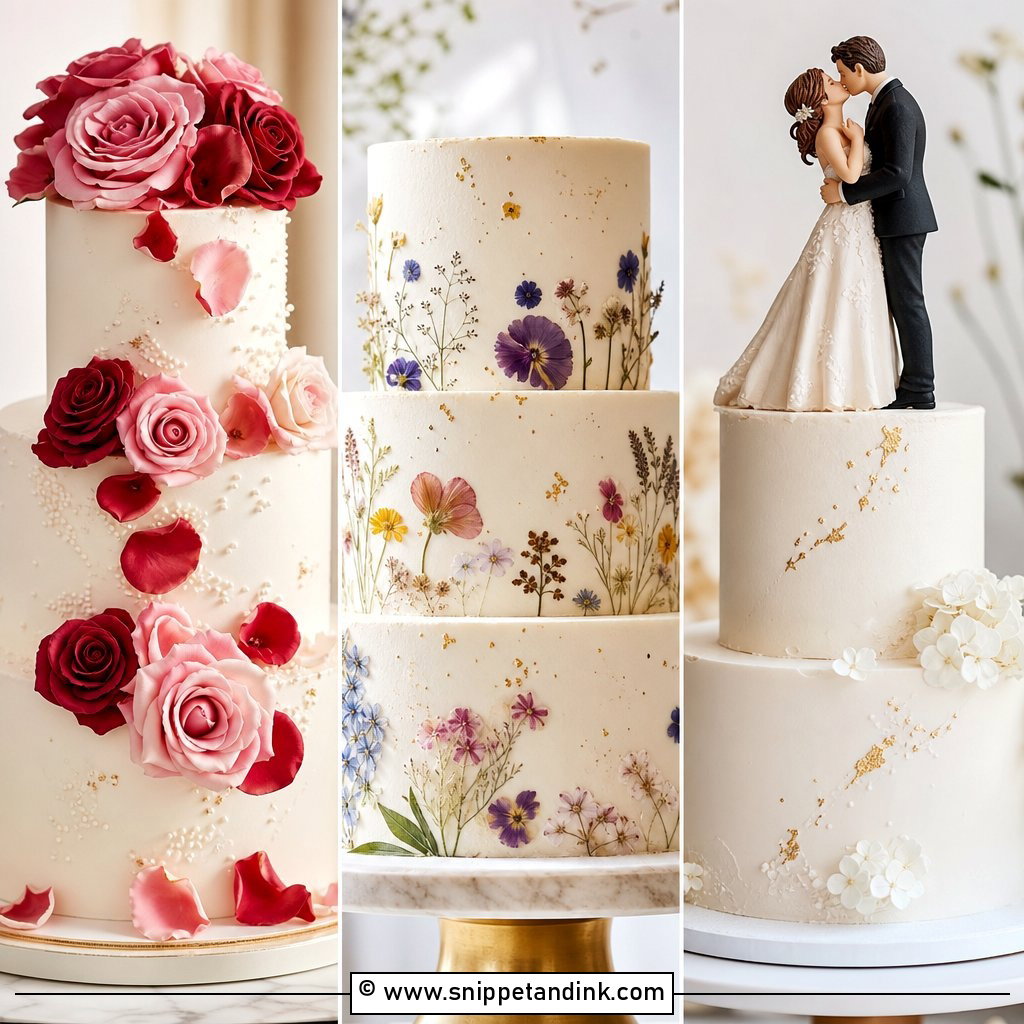
Roses can be fresh, sugar or piped in buttercream, and the choice matters more than people expect. Fresh roses are cheapest and most natural, but they wilt in a warm room and must be prepared for food contact. Sugar roses last all night and can be made weeks ahead. Piped roses taste like the cake and soften in heat. On an ivory base, I place clusters between tiers or let them fall down one side, keeping leaves to a few so the shape stays clear. White, blush and cream roses sit easily beside lace gowns and candlelit tables.
3. Buttercream Wedding Cake
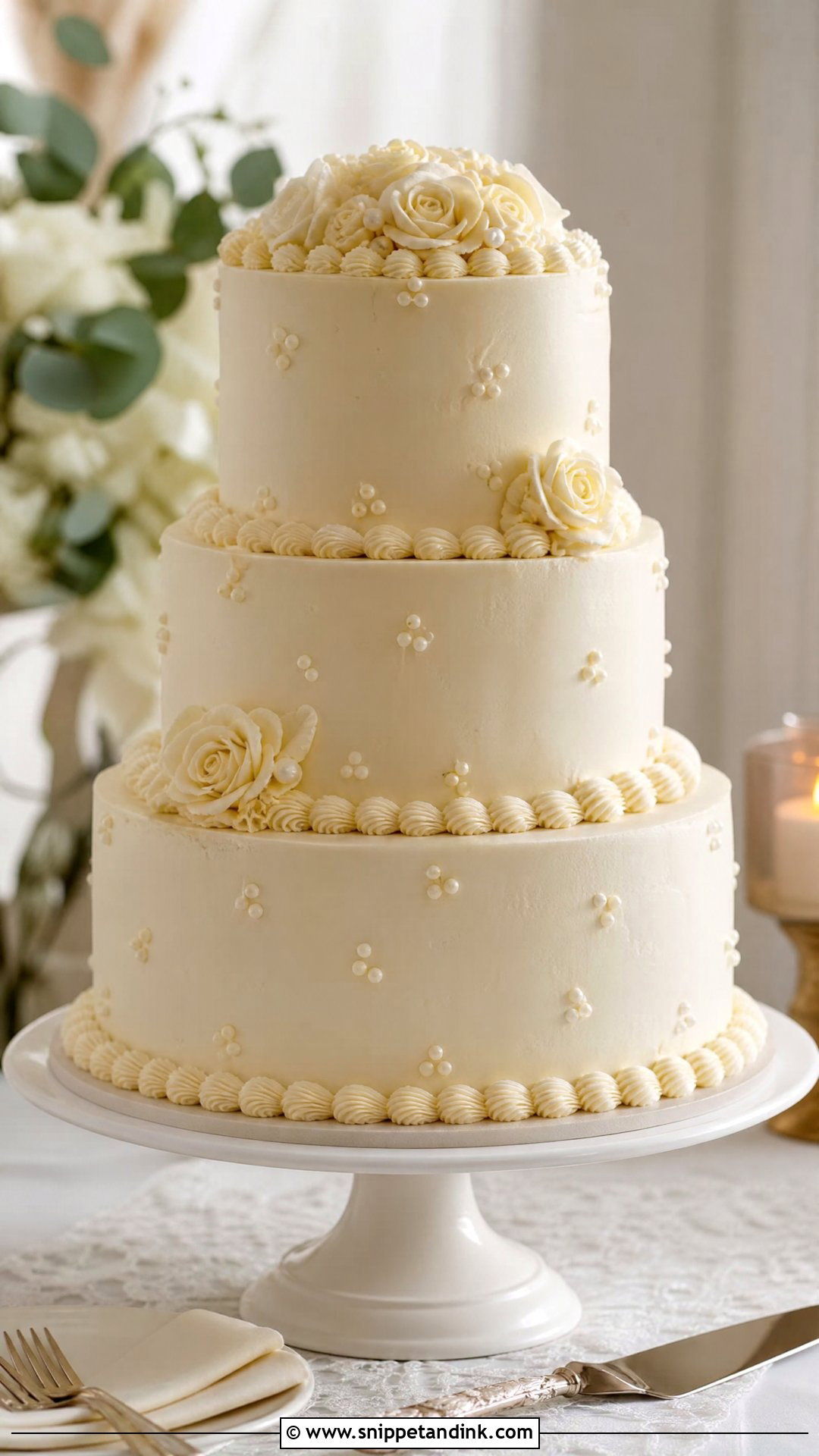
Most couples who come to me for a traditional cake end up choosing buttercream once they taste it. A smooth finish can look very refined if the cake is chilled between coats; a lightly combed texture gives a handmade look that hides small marks. Shell borders, piped pearls and rosettes all work in buttercream. The trade-off is heat. American buttercream holds shape better in a warm room, while Swiss meringue tastes lighter but softens faster, so I ask about the venue temperature before recommending one.
4. Fondant Wedding Cake
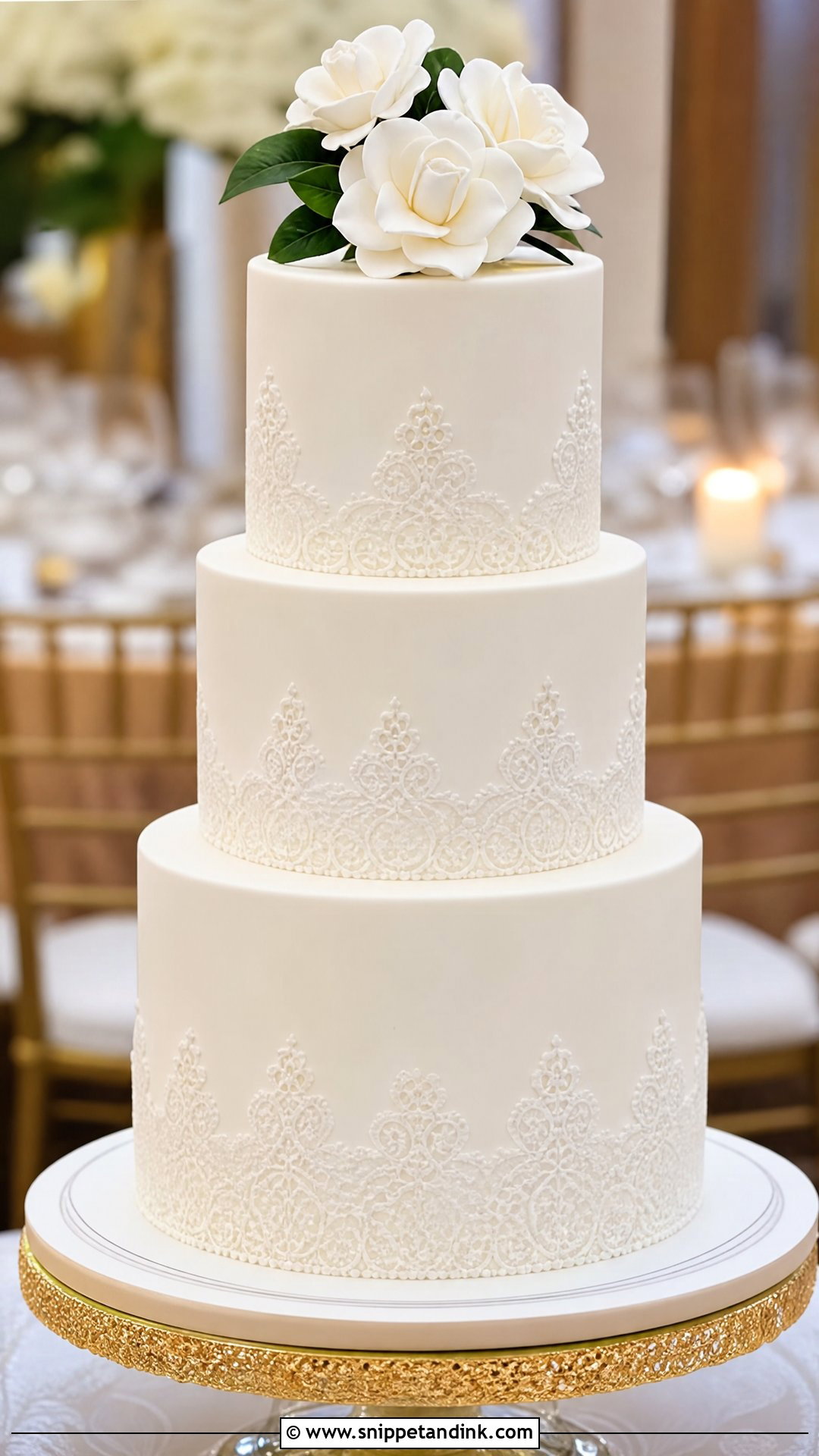
Fondant gives every tier a tailored edge, which is why it still dominates black-tie and hotel ballroom receptions. It also supports detail that buttercream can’t carry: embossed lace, molded appliques, monograms and wired sugar flowers. Under the fondant there’s always a layer of buttercream or ganache, and ganache gives the sharpest corners. Many guests peel fondant off, so I roll it thin. A faint champagne tint warms it slightly if bright white feels cold against an ivory dress.
5. Wedding Cake With Pearl Border
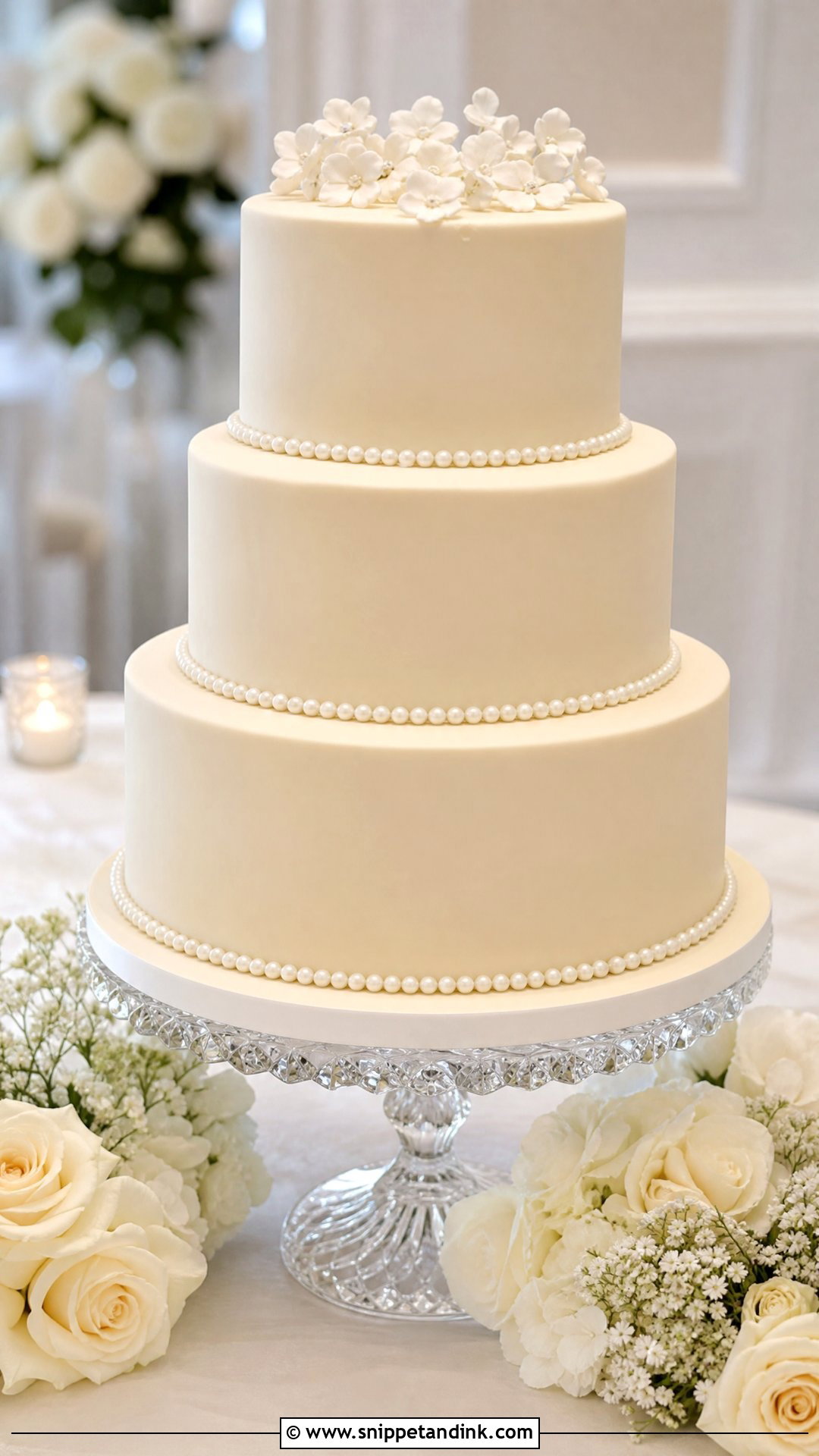
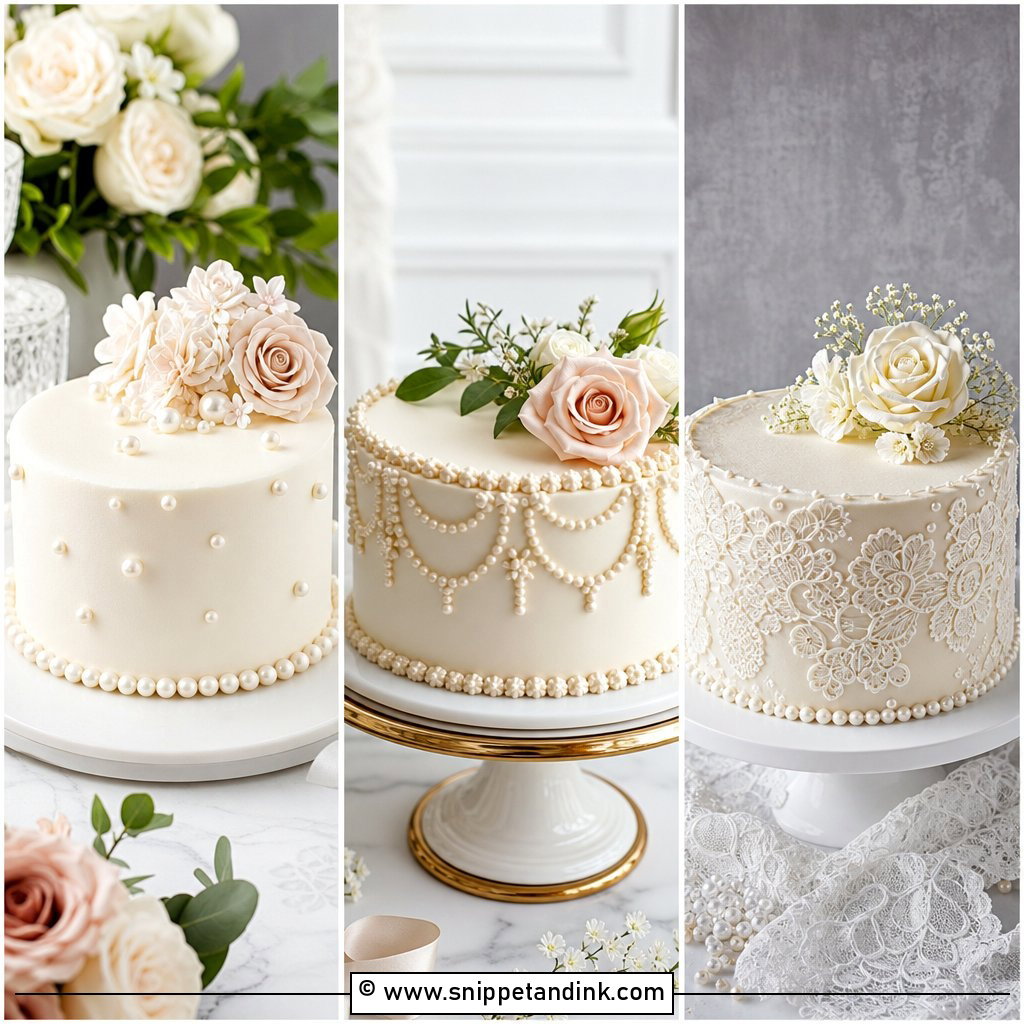
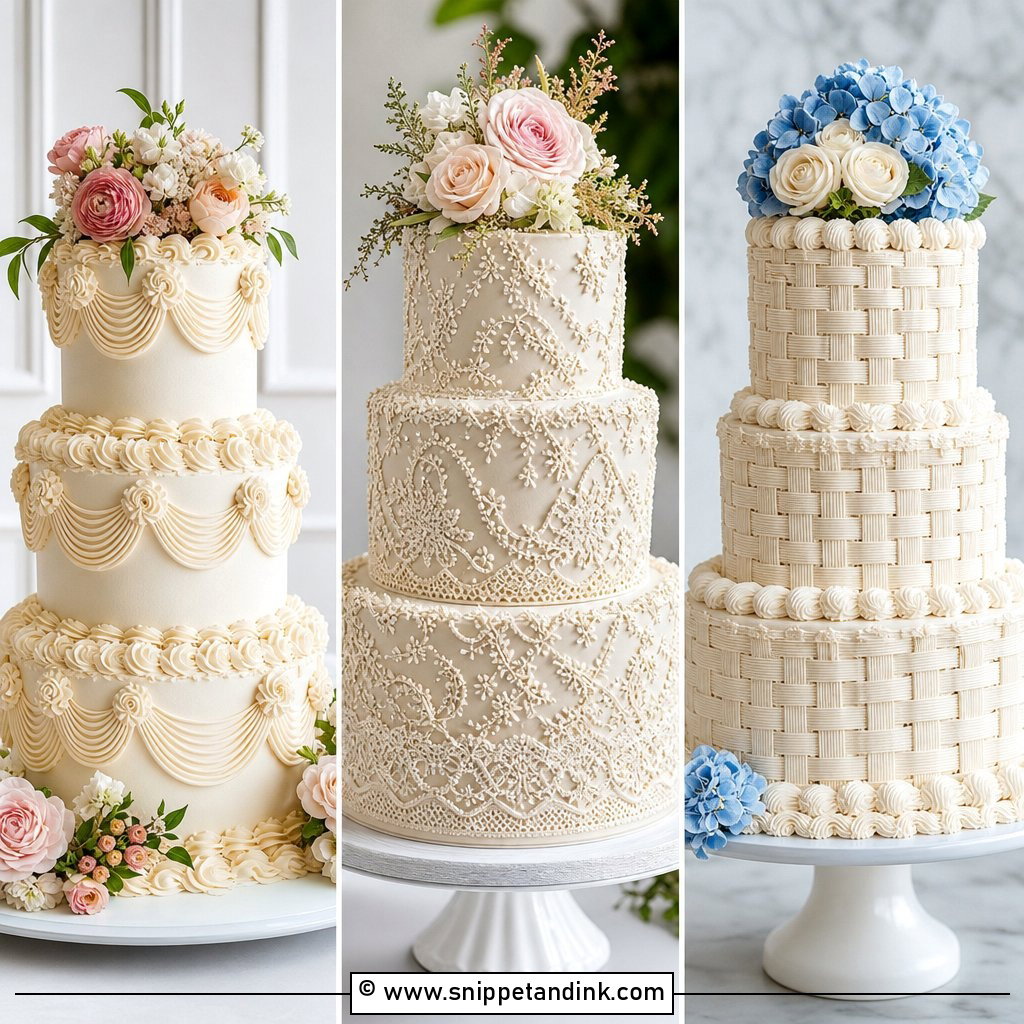
The pearl border has a job beyond looks: it hides the seam where each tier meets the board below. The small pearl details can be piped in royal icing, rolled by hand from fondant or bought as sugar pearls, and the hand-rolled kind look the most even. On smooth fondant with satin ribbon, pearls read formal. On ivory buttercream with softly rounded edges they read gentler. Size matters: pearls that are too large make a small cake look heavy, so I match pearl size to tier height.
6. Wedding Cake With Lace
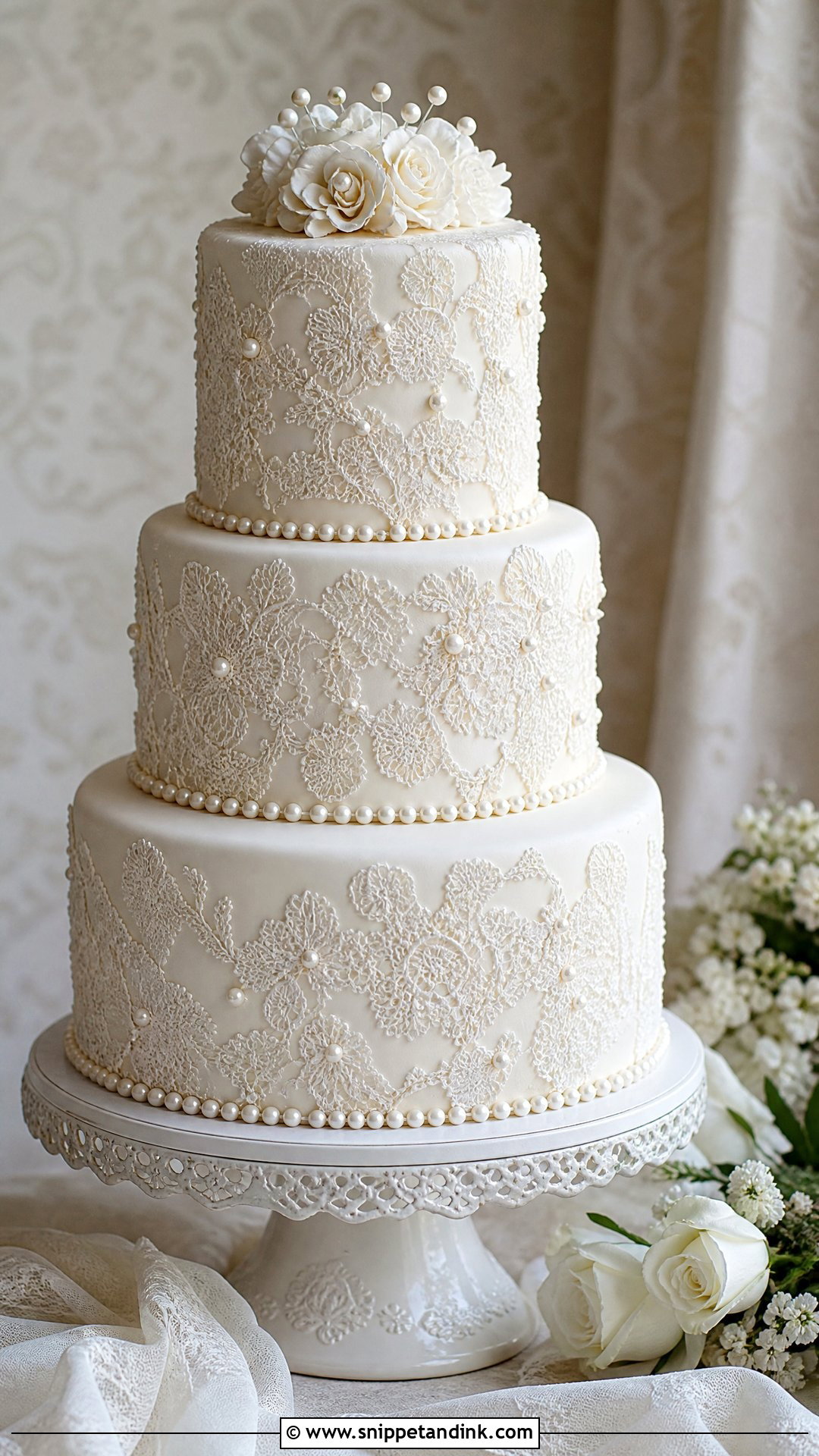
Lace is the detail couples most often want to match to the gown, and a photo of the dress fabric is the most useful thing you can bring me. It can be piped freehand, pressed into fondant with a mold or applied as sugar lace that’s been dried and lifted. Freehand piping takes the longest, so it costs more. White-on-white is the classic version; ivory lace over a cream base adds warmth. Keep the tiers plain and round so the pattern stays the focus.
7. Wedding Cake With Piping
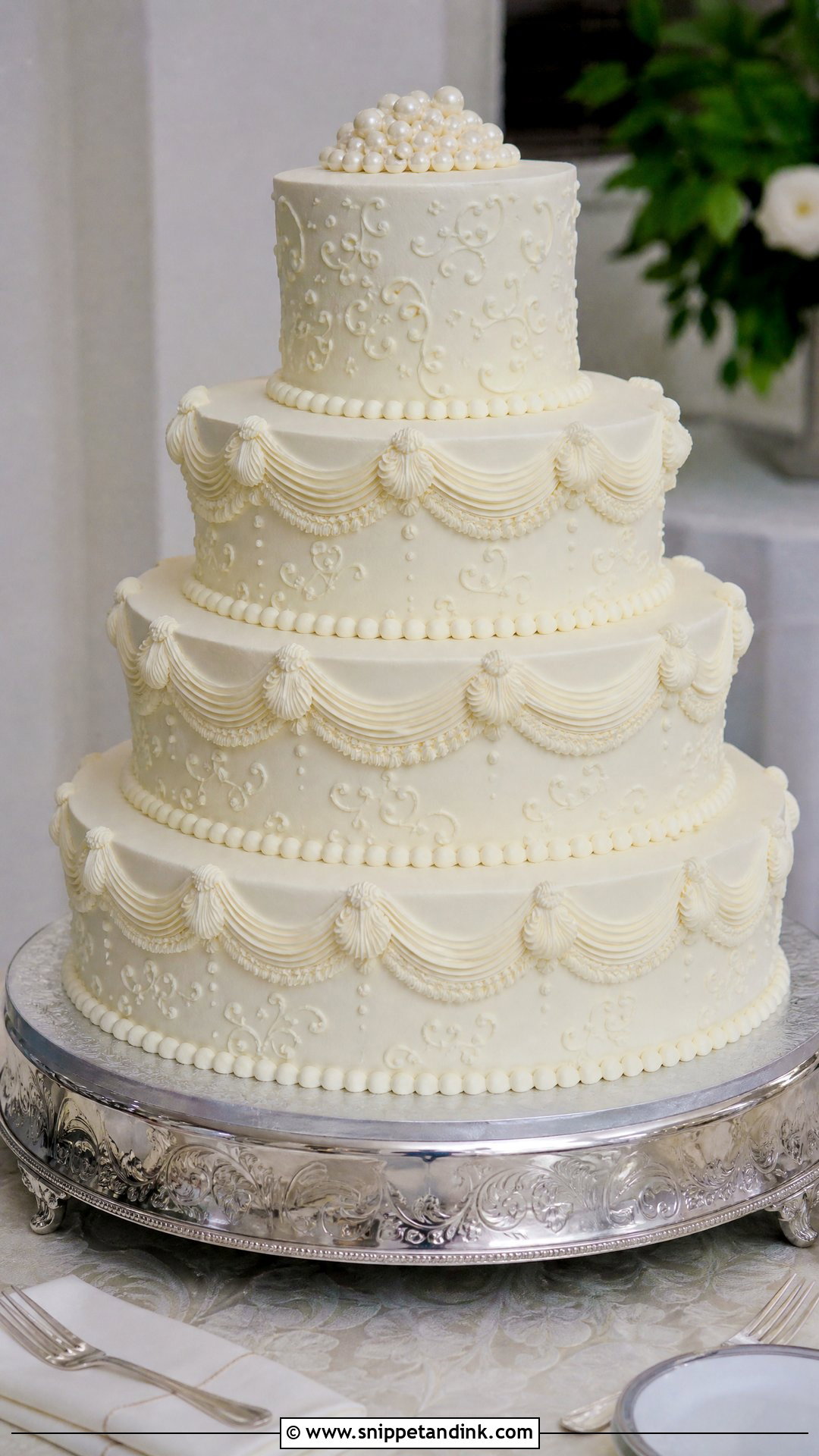
Piping is where you can see the hand of the baker. Scrolls, shells, dots, swags and garlands all add texture that shows up in white without any color, because the raised lines cast small shadows. Buttercream piping looks soft; royal icing gives sharp, formal detail. My rule is one main pattern repeated cleanly across every tier. Mixing three patterns on one cake almost always looks busy in photos, even when each pattern is well done.
8. Square Wedding Cake
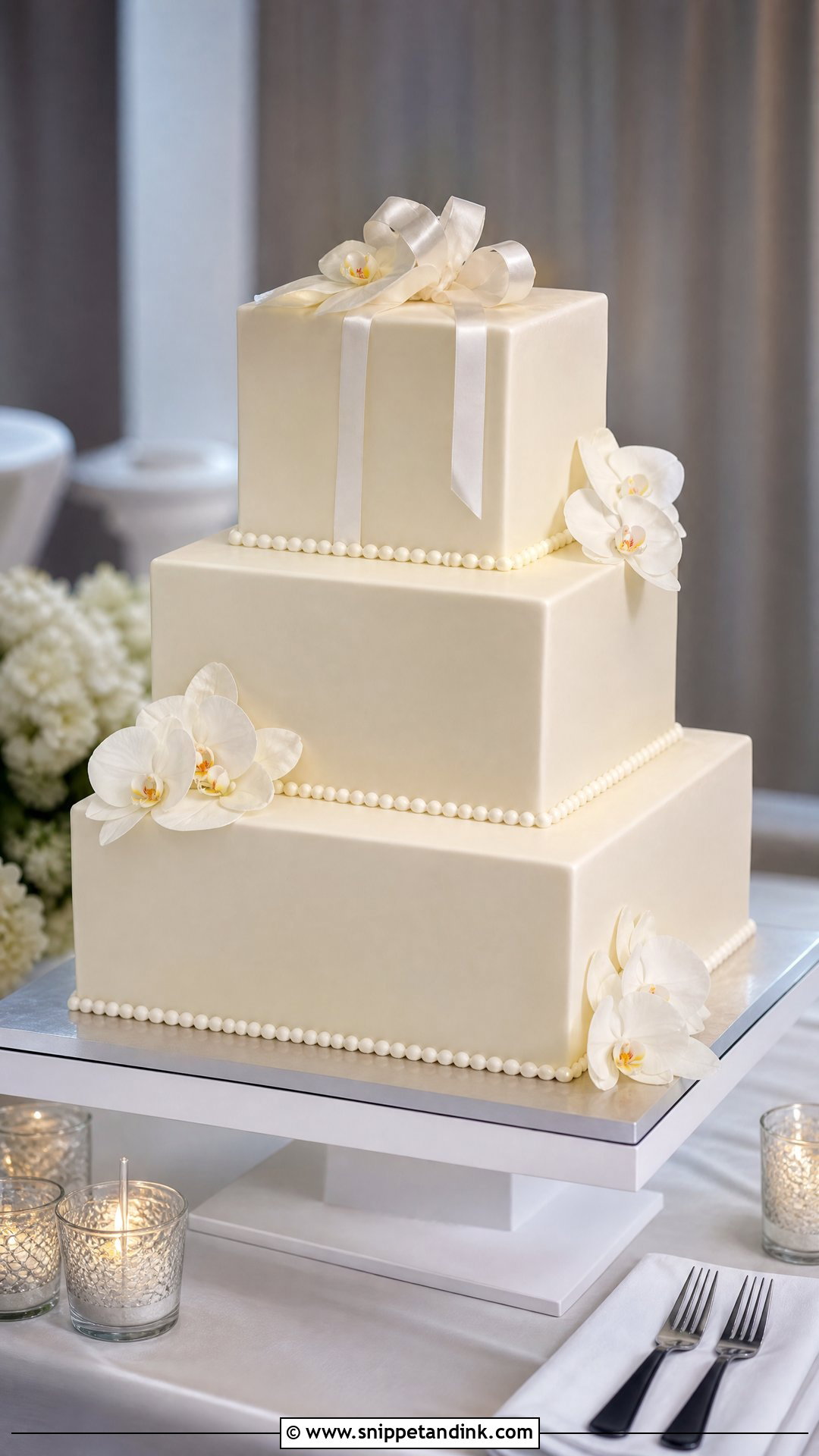
Square tiers keep the stacked traditional form but add a sharp, structured edge suited to a ballroom or an evening church reception. They’re harder to finish than rounds: fondant tends to tear at the corners, and buttercream corners need ganache underneath to stay crisp. Ribbon, pearl borders, lace panels or sugar flowers soften the geometry. A square cake also serves more slices per tier than a round of the same size, which helps with a large guest list. Keep to white, ivory, champagne or soft blush so it stays classic rather than modern.
9. Round Wedding Cake
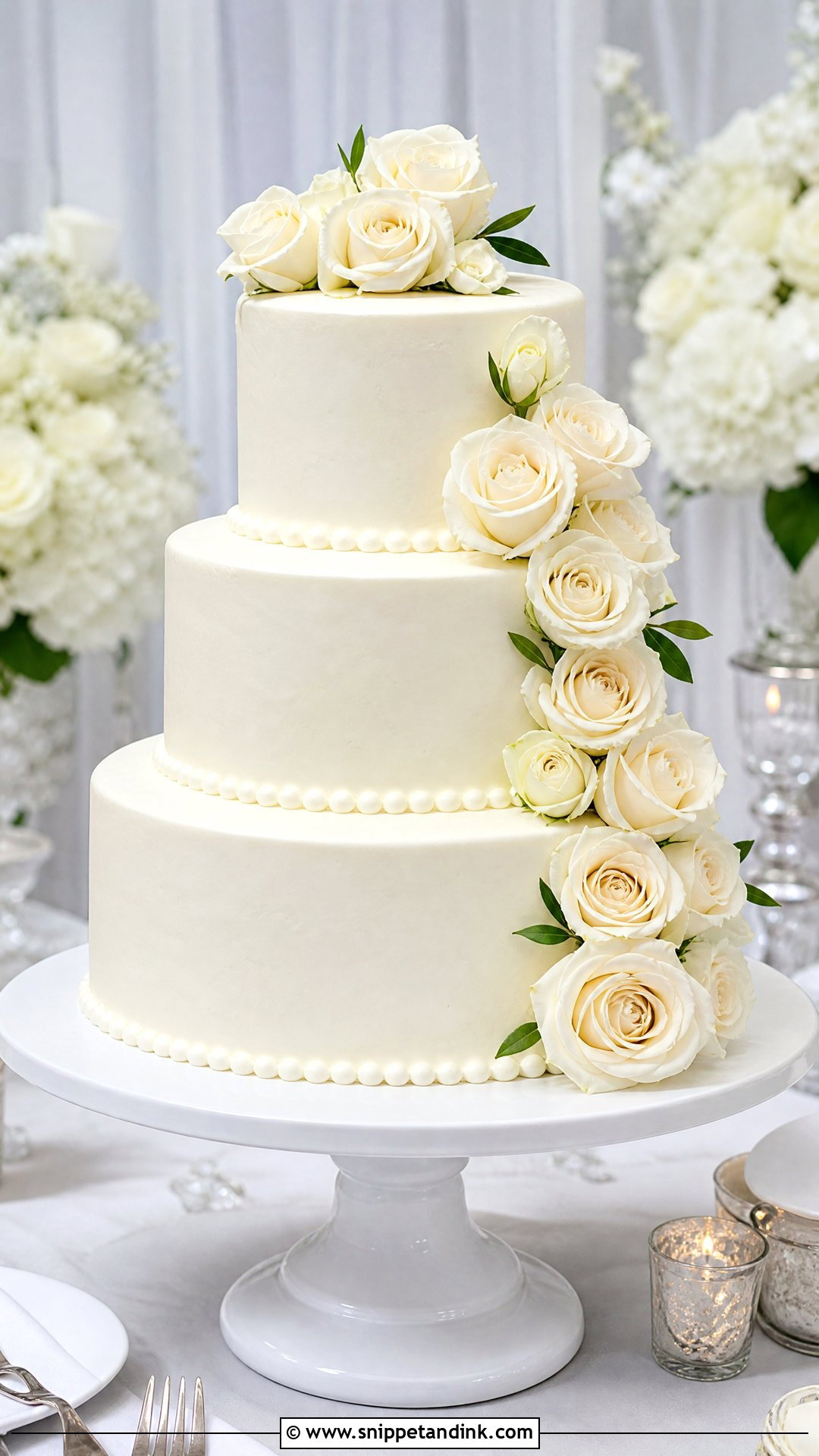
Round is the shape everyone pictures, and it’s the easiest to coat smoothly, which keeps the cost down. Two tiers suit an intimate dinner; four or five make a grand centerpiece. With no corners, rounds take cascading flowers, pearls, ribbon and lace equally well. For a traditional reception I keep the finish white or ivory and let one accent carry the design.
10. Tall Tier Wedding Cake
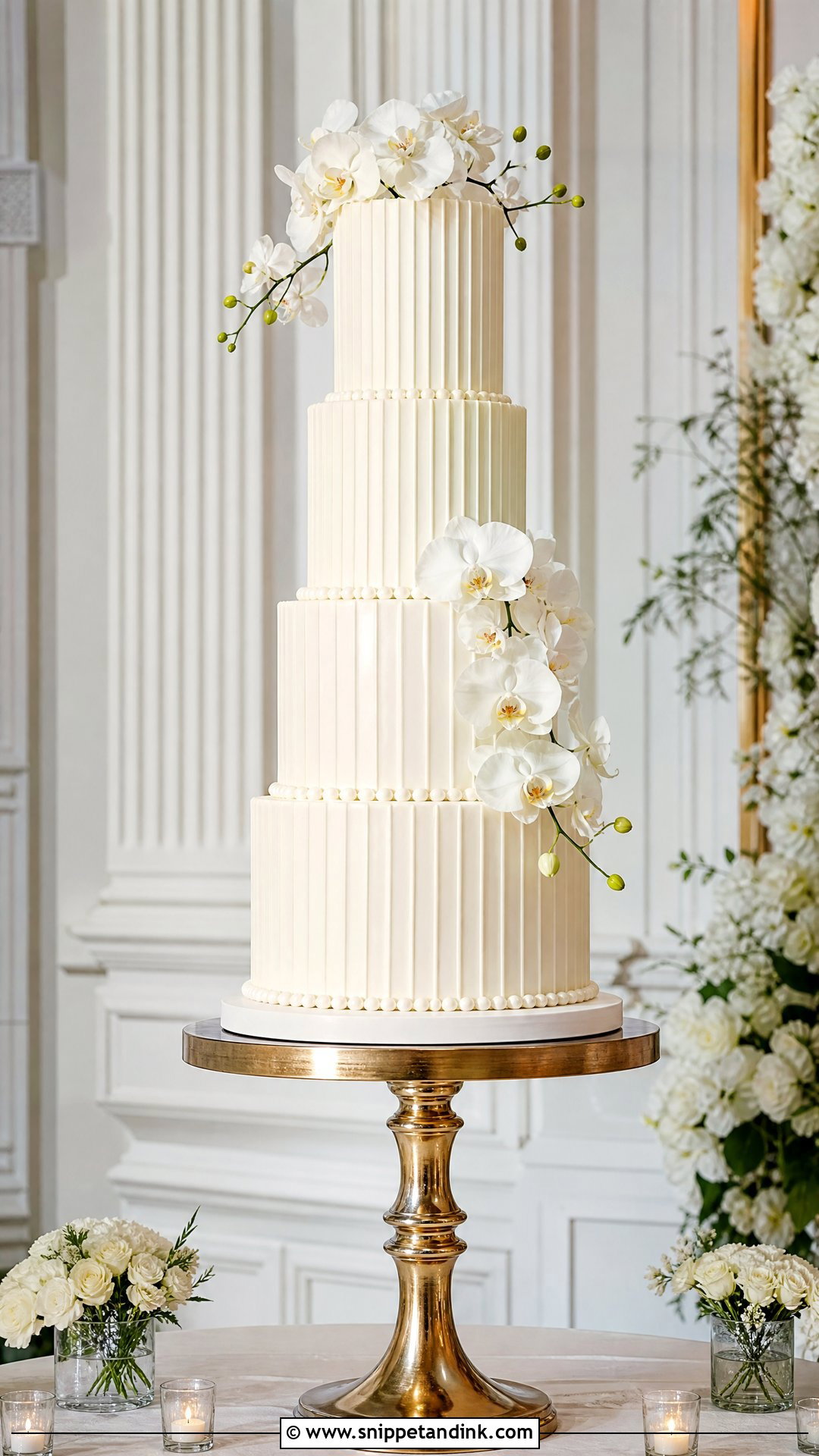
Taller tiers, usually 5 or 6 inches instead of the standard 4, give a cake presence without adding more layers. They suit rooms with high ceilings and big floral arrangements. Every tall tier needs its own internal support, with dowels and a cake board inside so the layers don’t compress, and I’d only order this from a baker who’s built them before. Vertical piping or narrow ribbon emphasizes the height.
11. Wedding Cake With Columns
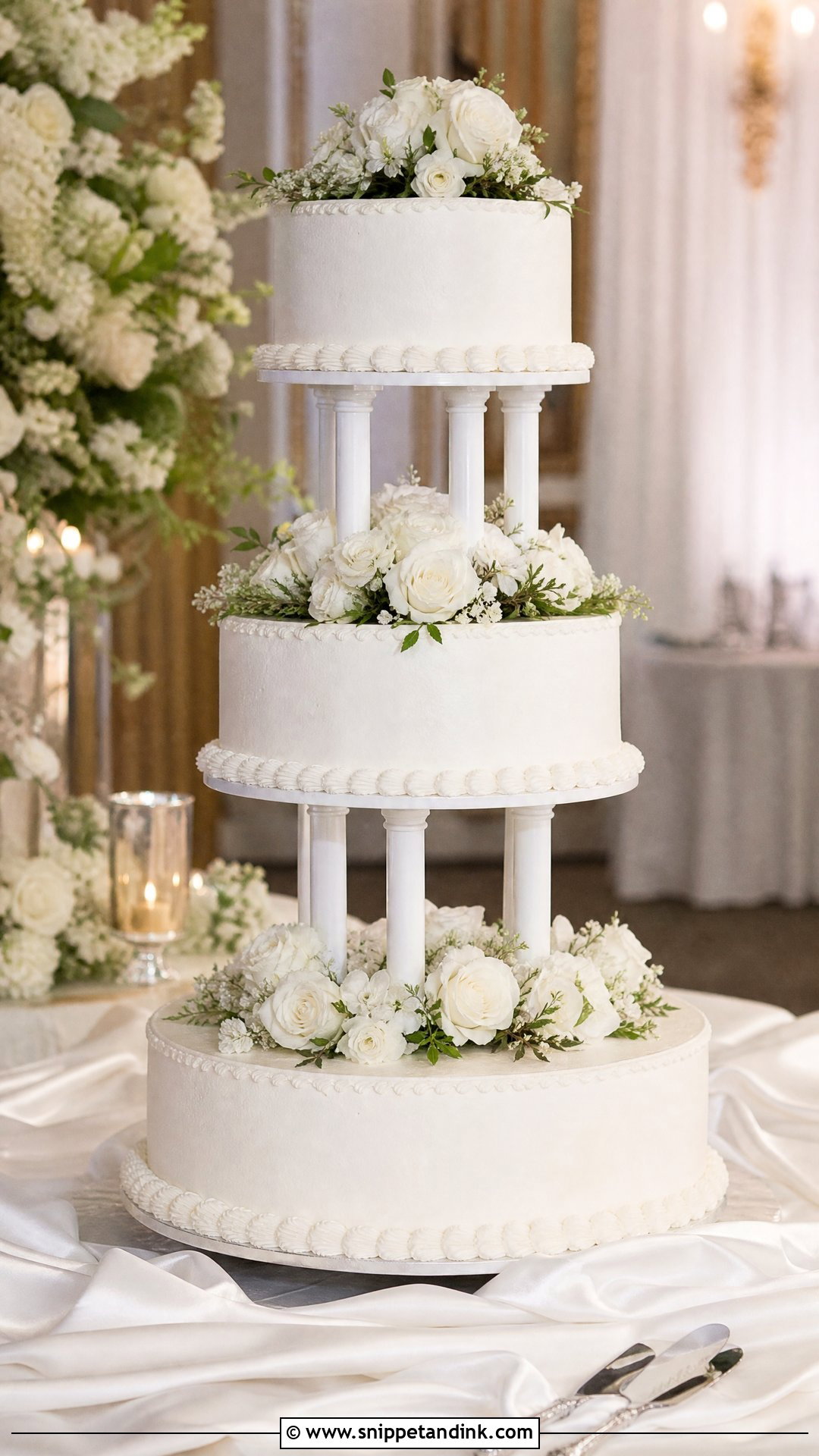
Separating tiers on columns turns the cake into a small piece of architecture, and it was the standard formal style for decades. White pillars, round tiers and piped borders keep it true to that era, with flowers placed between the separated tiers or around the base. The weak point is setup: separator plates must be perfectly level, so I assemble pillar cakes at the venue rather than transporting them stacked. Smooth icing and controlled decoration stop it looking dated.
12. Wedding Cake With Satin Ribbon
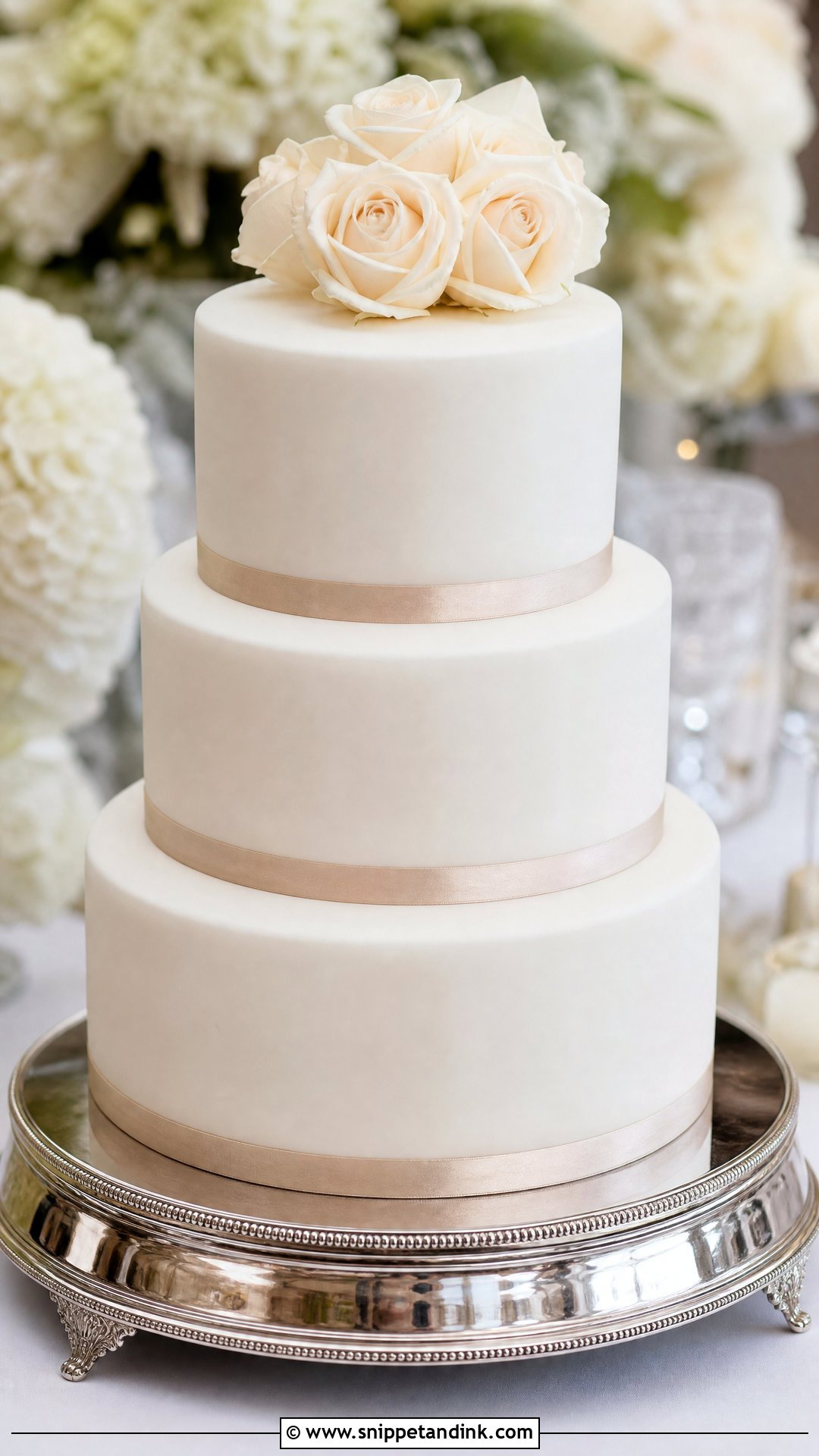
Ribbon around the base of each tier is one of the quickest ways to make a cake look finished. Plain satin ribbon sits neatly on fondant; on buttercream, the fat in the frosting can bleed into the fabric and leave grease marks, so I back the ribbon with a strip of food-safe tape or wax paper. White ribbon matches the icing, while ivory, blush, champagne or soft blue can pick up the wedding colors. A small floral topper, a pearl border or a monogram completes it.
13. Wedding Cake With Sugar Flowers
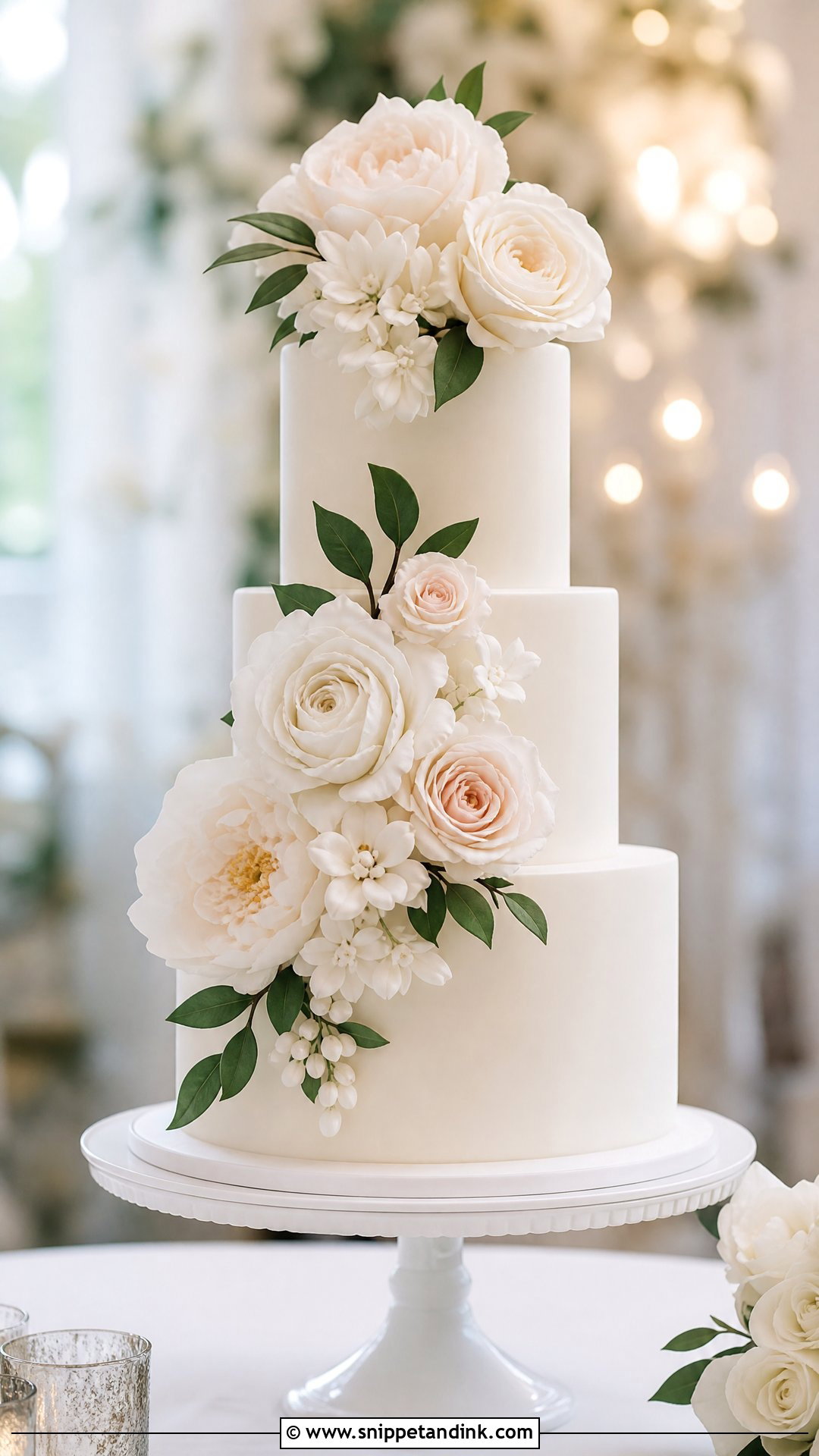
Sugar flowers are hand-built petal by petal on wires, which is why they’re expensive and why a cluster of peonies can take days. The payoff is that they won’t wilt under lights and can be kept afterward as a keepsake. Roses, peonies, gardenias, orchids and lilies are the traditional choices, and I can color them to match the bouquet if I see the florist’s recipe early. Wired flowers should never be pushed straight into the cake; they go into a posy pick first.
14. Wedding Cake With Fresh Flowers
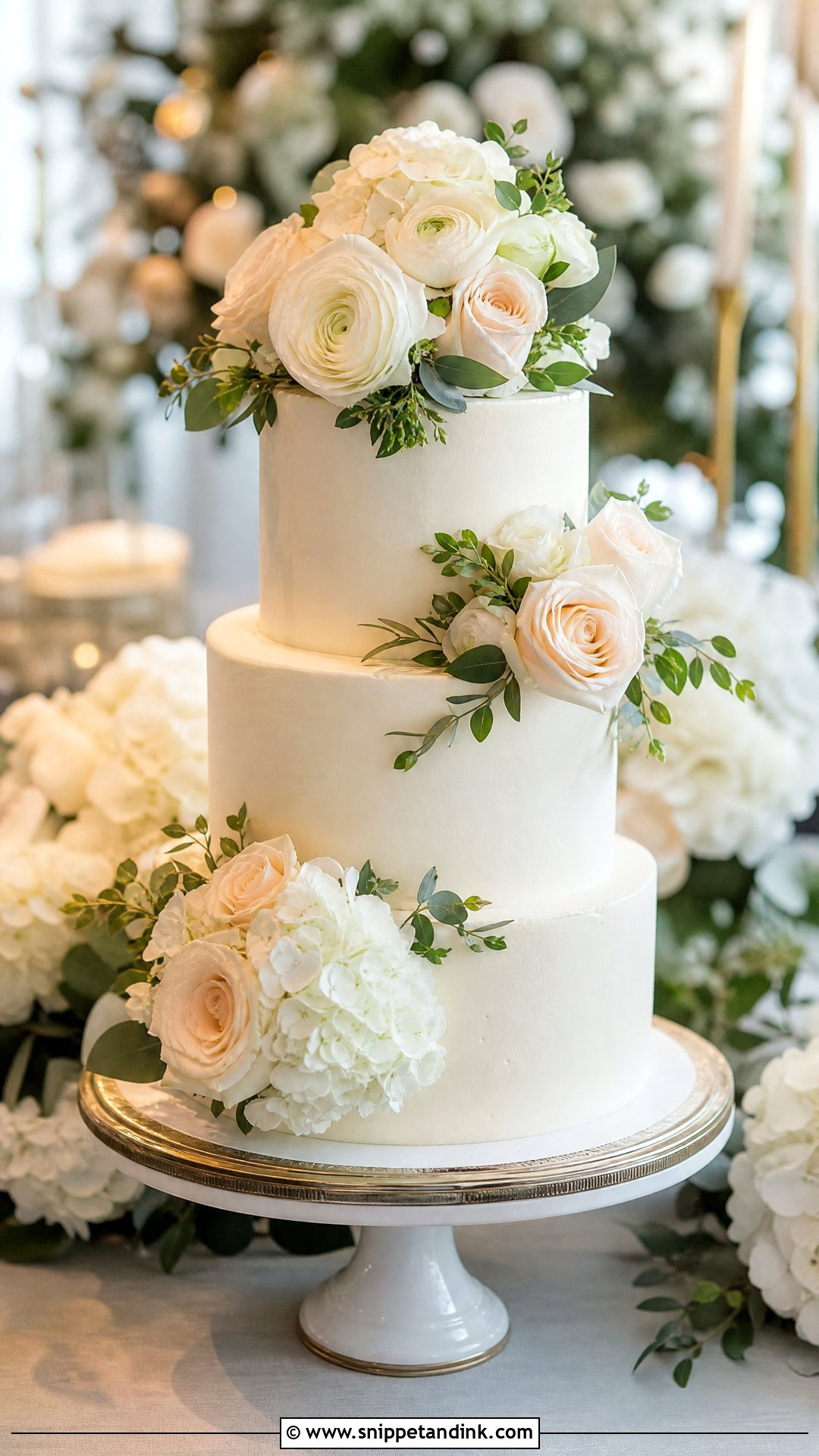
Fresh flowers tie the cake to the rest of the wedding, and the florist usually provides them to match the bouquet and centerpieces. Roses, ranunculus, garden roses, hydrangeas and small greenery sprigs are classic. Not every flower is safe on food, and many are sprayed, so stems should be wrapped in floral tape and set into picks or sit on small barriers rather than directly in the icing. I need to know who’s dressing the cake and when, so the flowers go on shortly before guests arrive. Garden weddings and spring or summer receptions suit it naturally.
15. Wedding Cake With Monogram
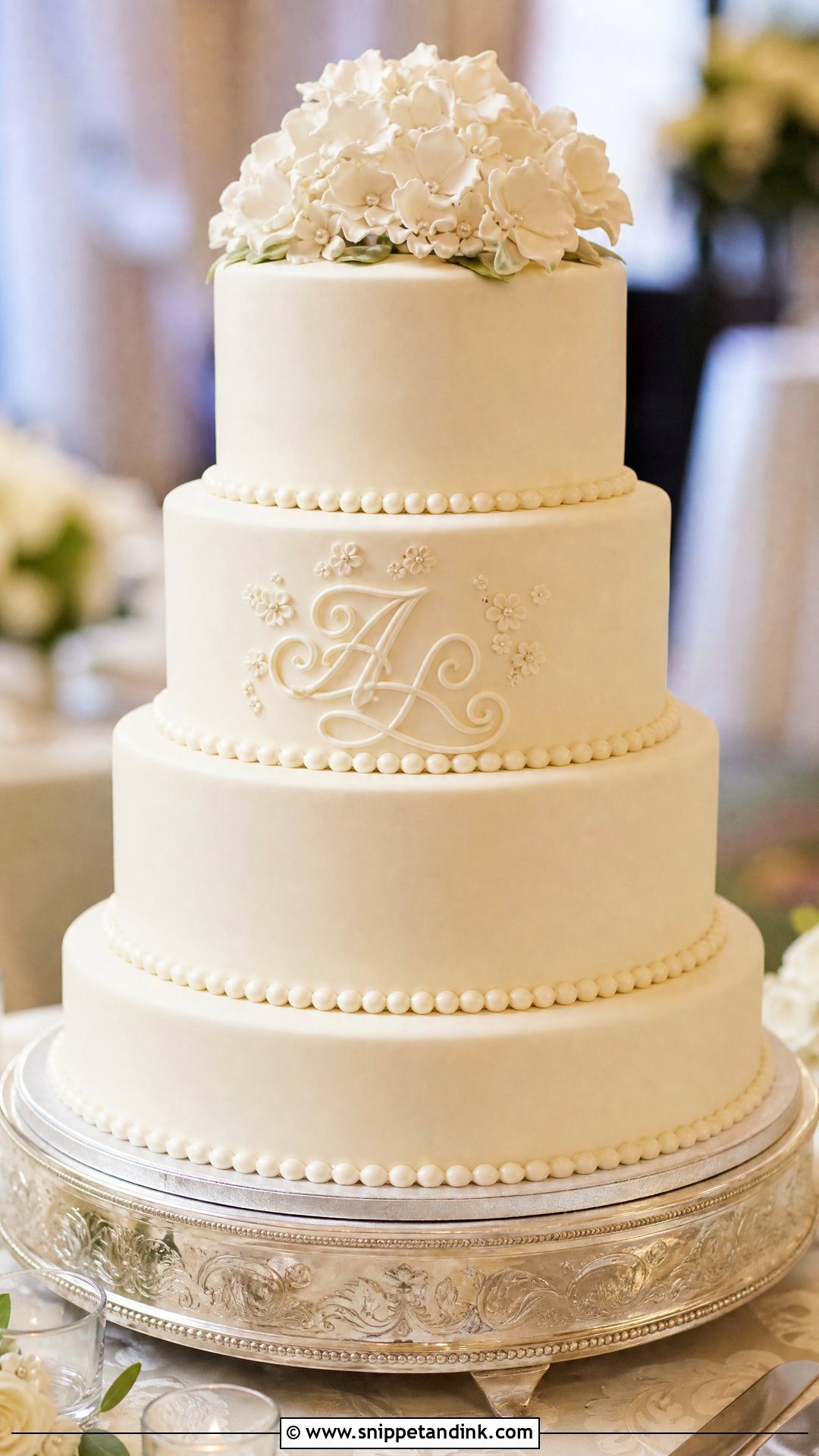
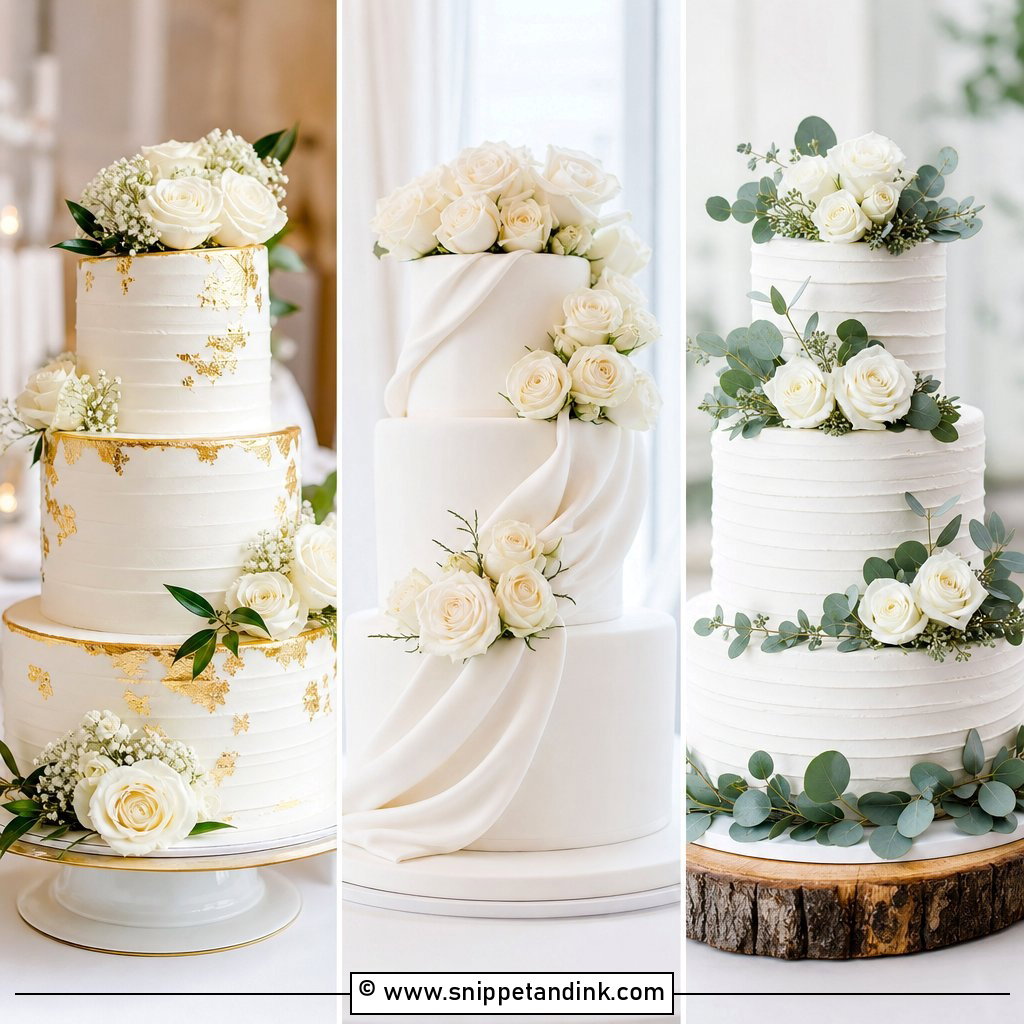
A monogram makes a classic cake personal without chasing a trend. Initials can be piped in royal icing, cut from fondant, painted in edible gold or set as a topper. I always ask for the lettering from the invitation suite so the cake echoes the stationery. Keep surrounding detail quiet: one pearl border or a lace panel. Script letters thinner than about 2 mm tend to snap, so delicate monograms are best as a separate topper.
16. Wedding Cake With Gold Accents
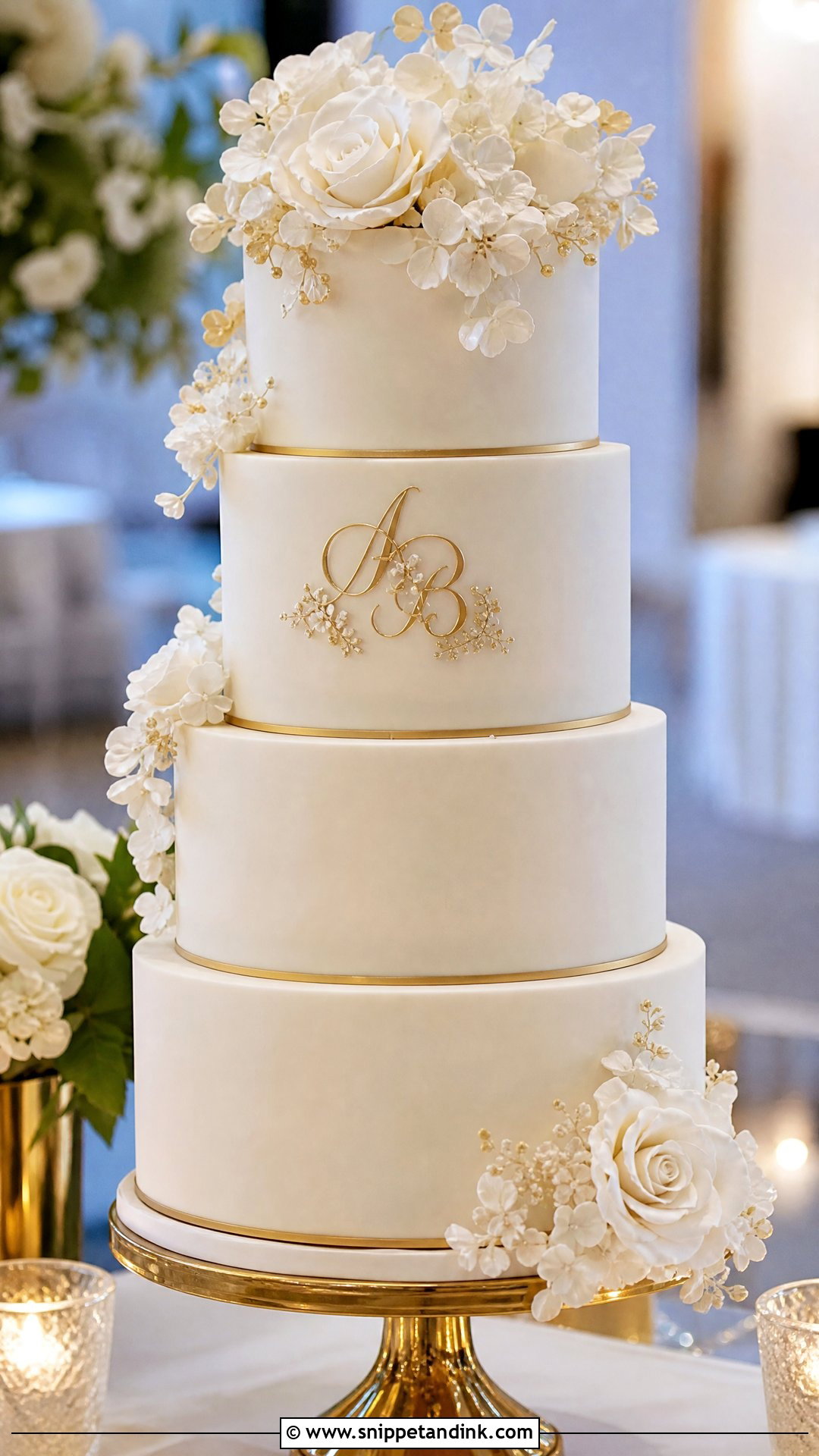
Gold works on a traditional cake when it’s used like jewelry rather than paint. A thin line of gold piping, an edged monogram or touches on sugar flower petals warm a white base nicely. The gold you see on cakes is usually edible gold leaf or a luster dust mixed with alcohol, and it shows brushstrokes on buttercream, so I prefer it on fondant. Candlelit ballrooms make it glow. Covering whole tiers in gold moves the cake out of traditional territory altogether.
17. Wedding Cake With Blush Flowers
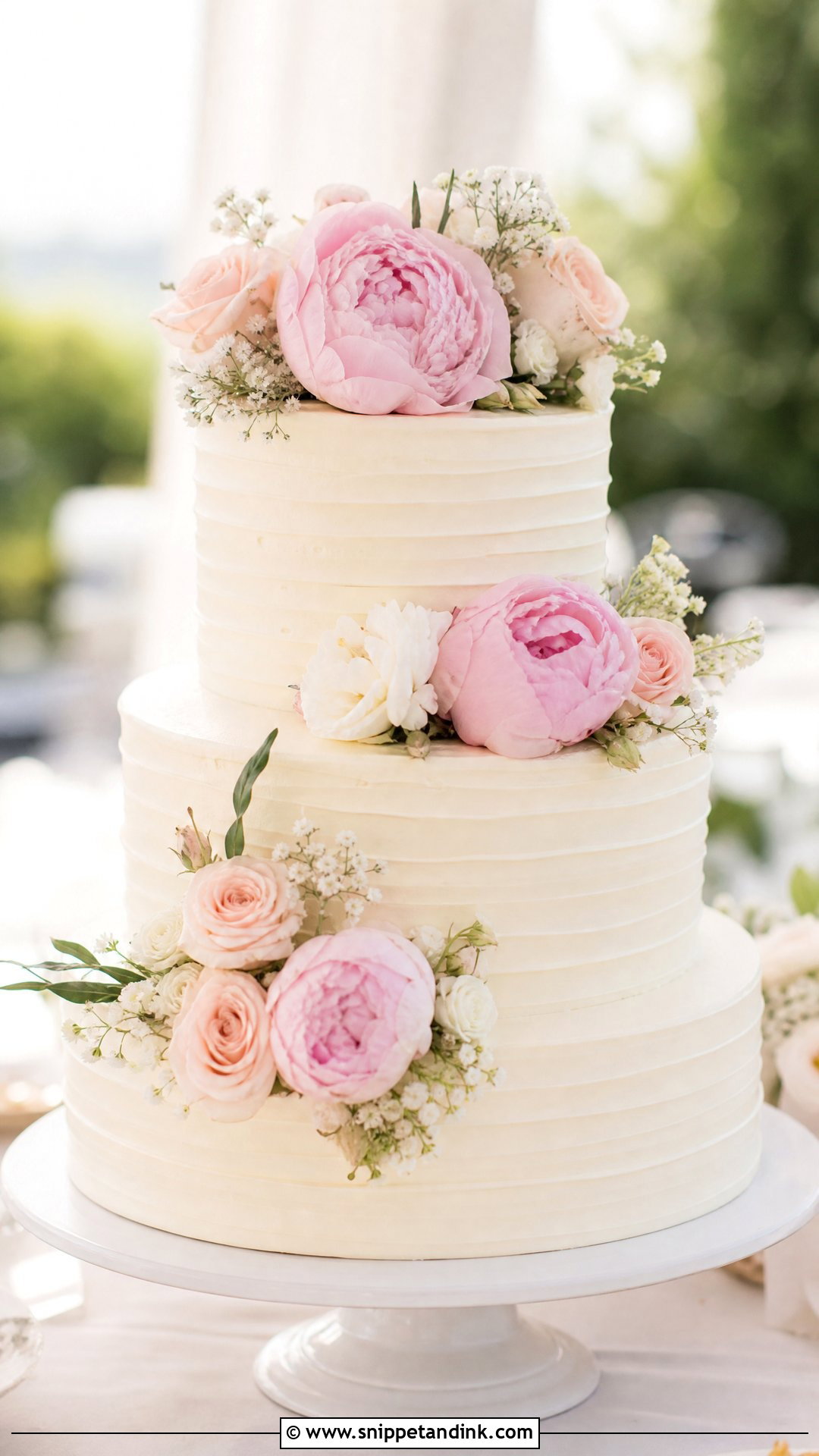
Blush is the safest way to add color to a classic cake because it reads as warm white from a distance. White or ivory tiers with blush roses, peonies or sugar blossoms suit spring weddings and neutral rooms. Sugar flowers can be tinted to the exact shade, while fresh blush blooms vary from stem to stem. Place one cluster on top, a few between tiers or a light cascade. Keep the frosting smooth so the flowers aren’t competing with texture.
18. Wedding Cake With Cascading Flowers
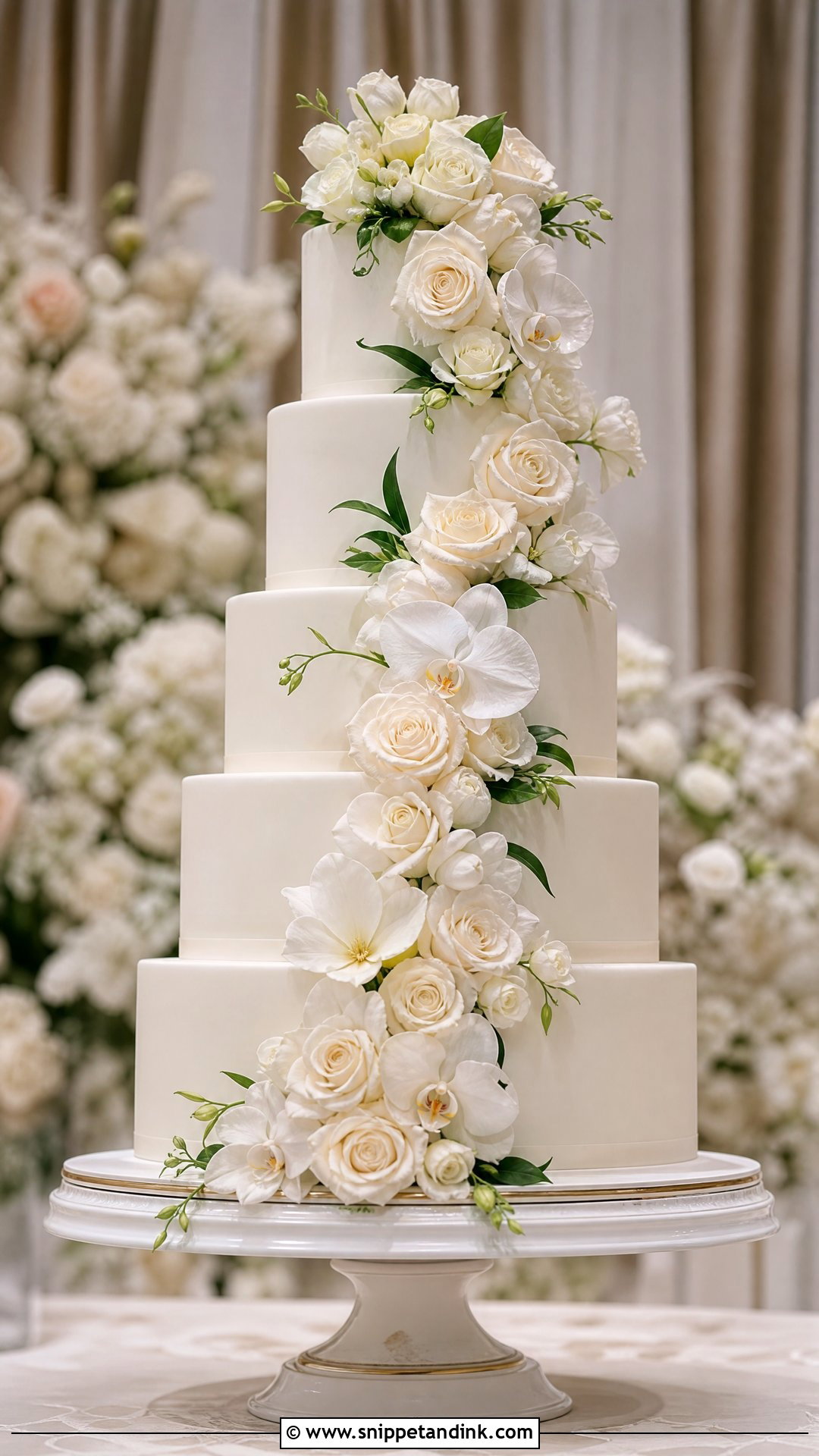
A cascade starts near the top tier and falls diagonally down one side, giving a still cake a sense of movement. It has been on formal wedding cakes for generations and still works when the colors stay soft. Roses, orchids, gardenias and small filler flowers are classic. The cascade looks best when it covers about a third of the cake’s face, so the white base frames it. I build sugar cascades in sections so they can be transported separately and attached on site.
19. Wedding Cake With Royal Icing
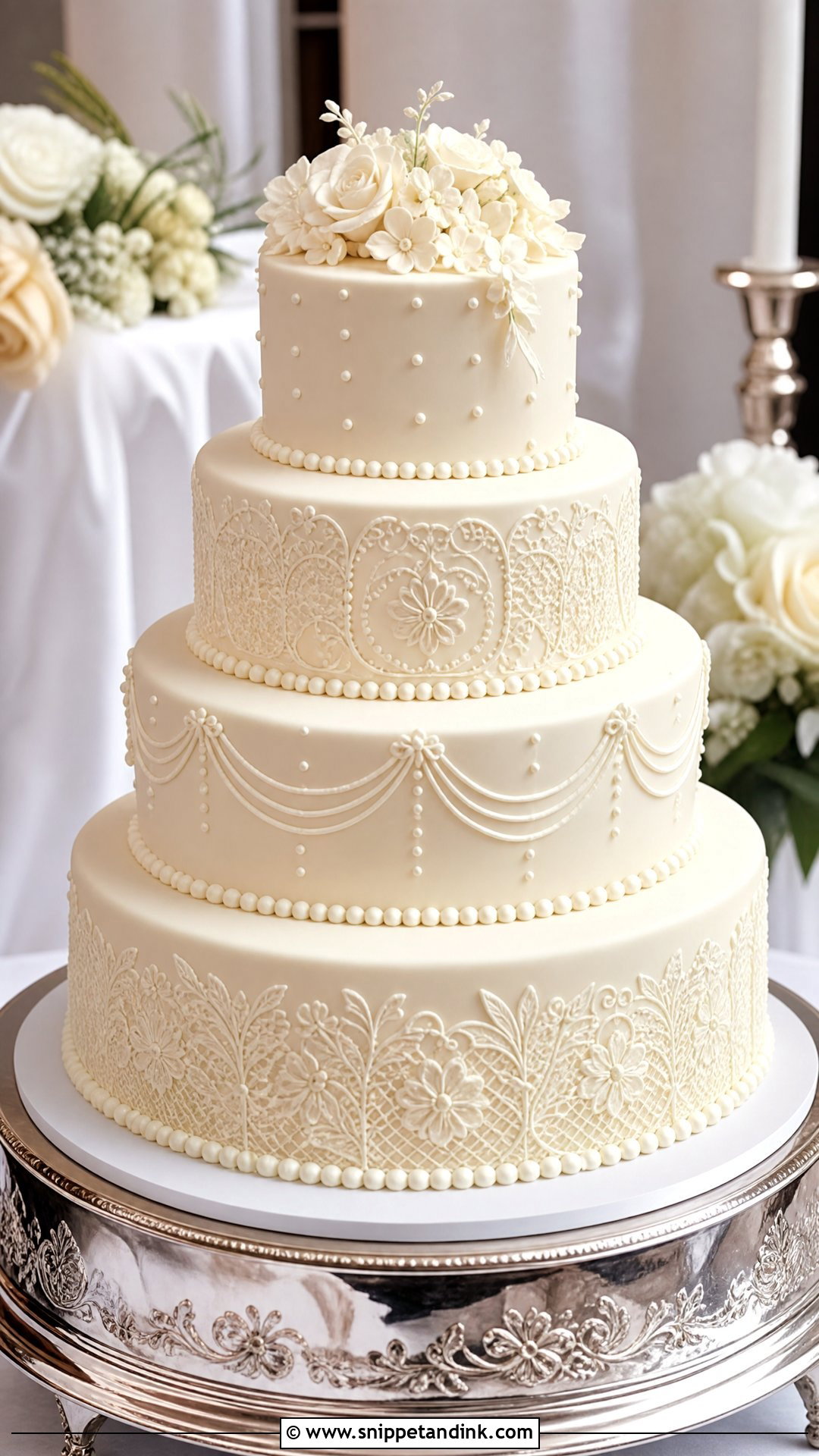
Royal icing dries hard, and that firmness is what lets it hold stringwork, lacework and tiny piped flowers that stand away from the cake. It belongs on smooth fondant, where the white detail shows crisply. Humidity is its weakness: in a damp room fine stringwork can soften and drop. Repeated patterns with even spacing keep it refined. It takes patience and a steady hand, and it rewards couples who love fine, old-world detail.
20. Wedding Cake With Ruffles
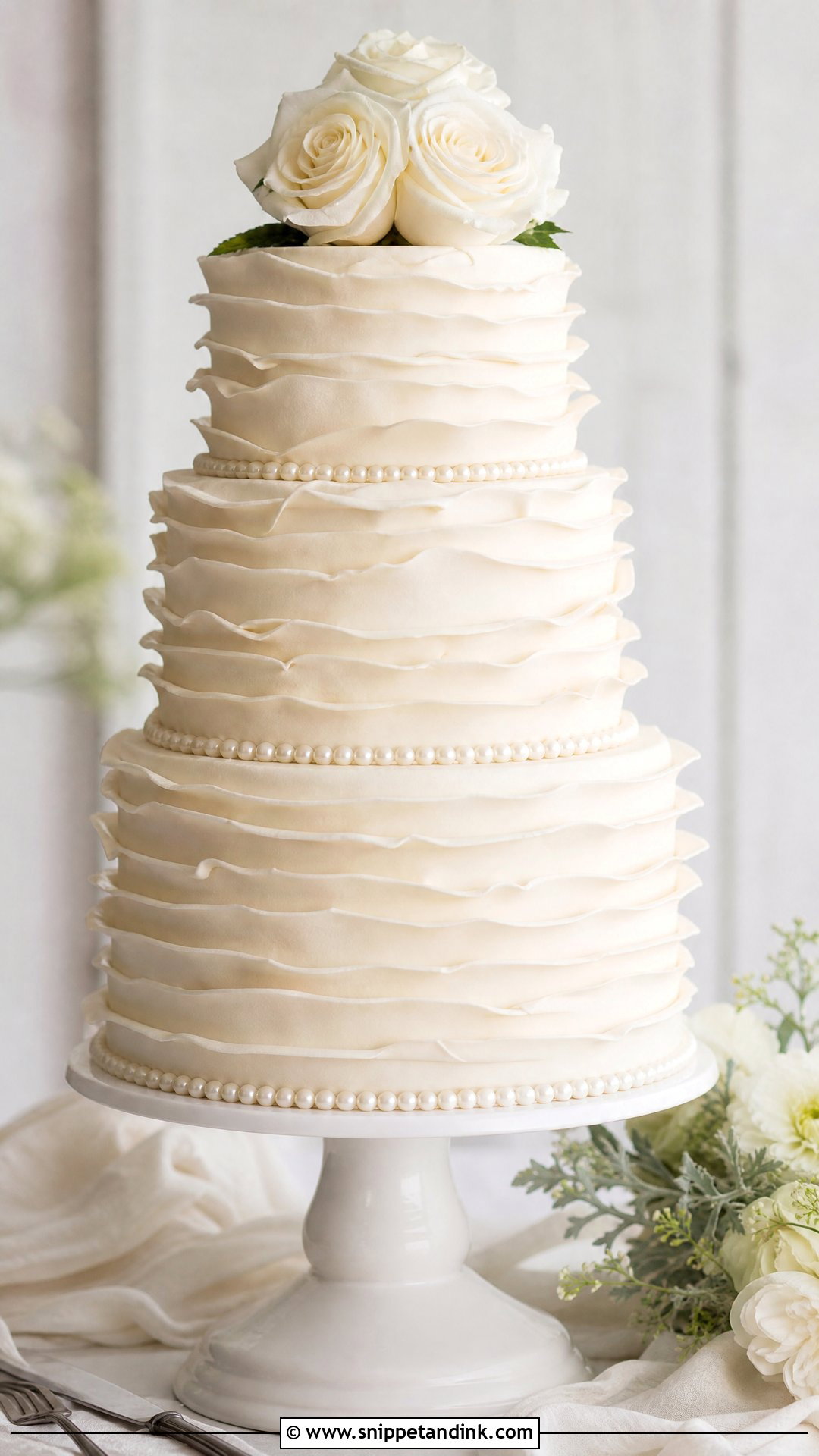
Ruffles give a cake a fabric-like softness, and they can be made in fondant, buttercream or wafer paper. Wafer paper ruffles are the lightest and look most like fabric, but they curl in humidity. Fondant ruffles hold shape best. White or ivory keeps them classic. One ruffled tier among smooth ones balances the design better than ruffles everywhere, and it echoes a lace gown or draped linens.
21. Wedding Cake With Basketweave
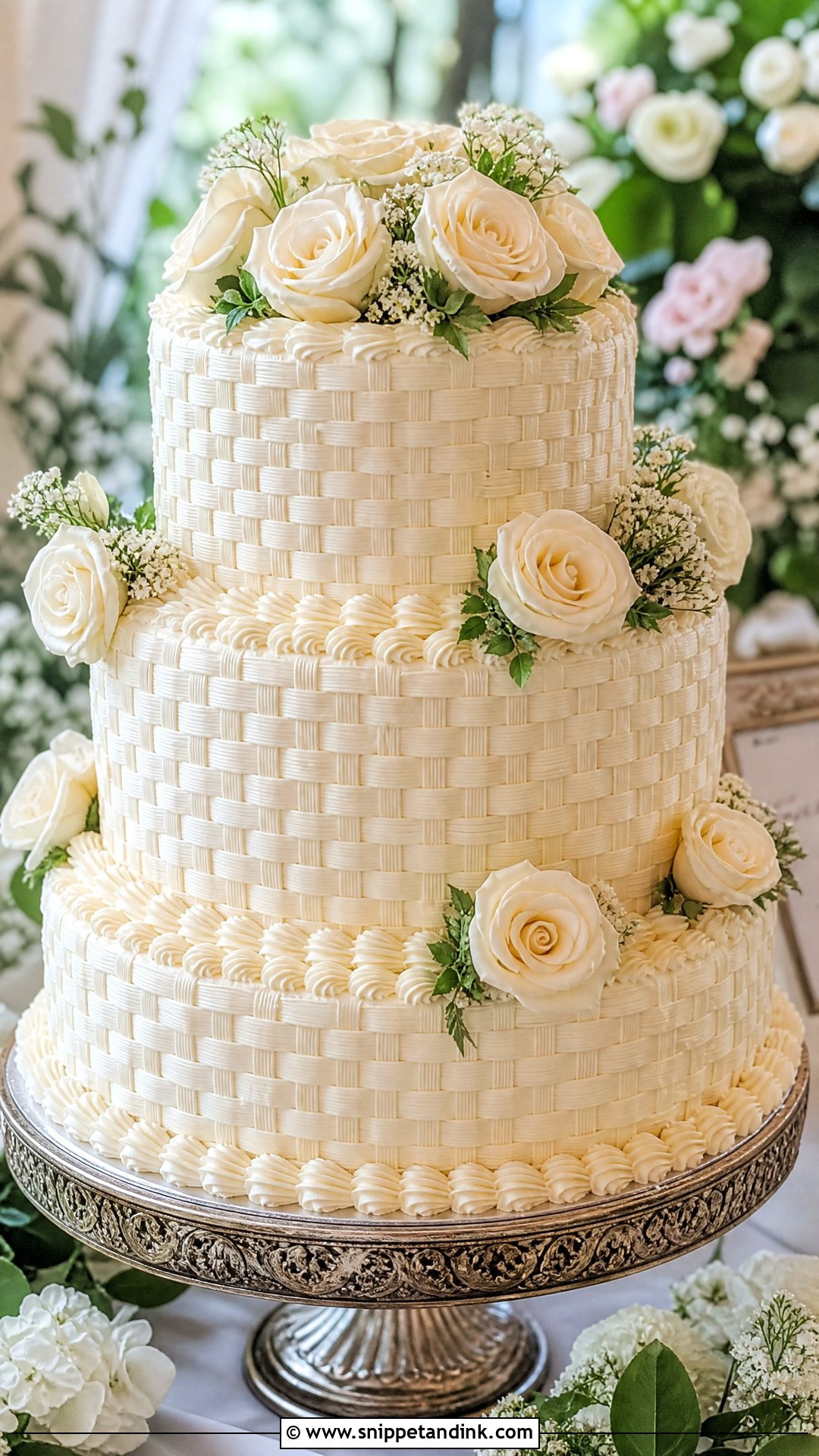
Classic basketweave piping is made with a ridged tip, alternating vertical lines with short horizontal bars, and each tier takes real time. It belongs on buttercream, with buttercream roses, small blossoms and shell borders. White reads formal and ivory reads warm. Because the texture is busy, I keep the topper and flowers simple. It fits garden weddings, church receptions and family celebrations that want a homemade feel.
22. Wedding Cake With Fruit Filling
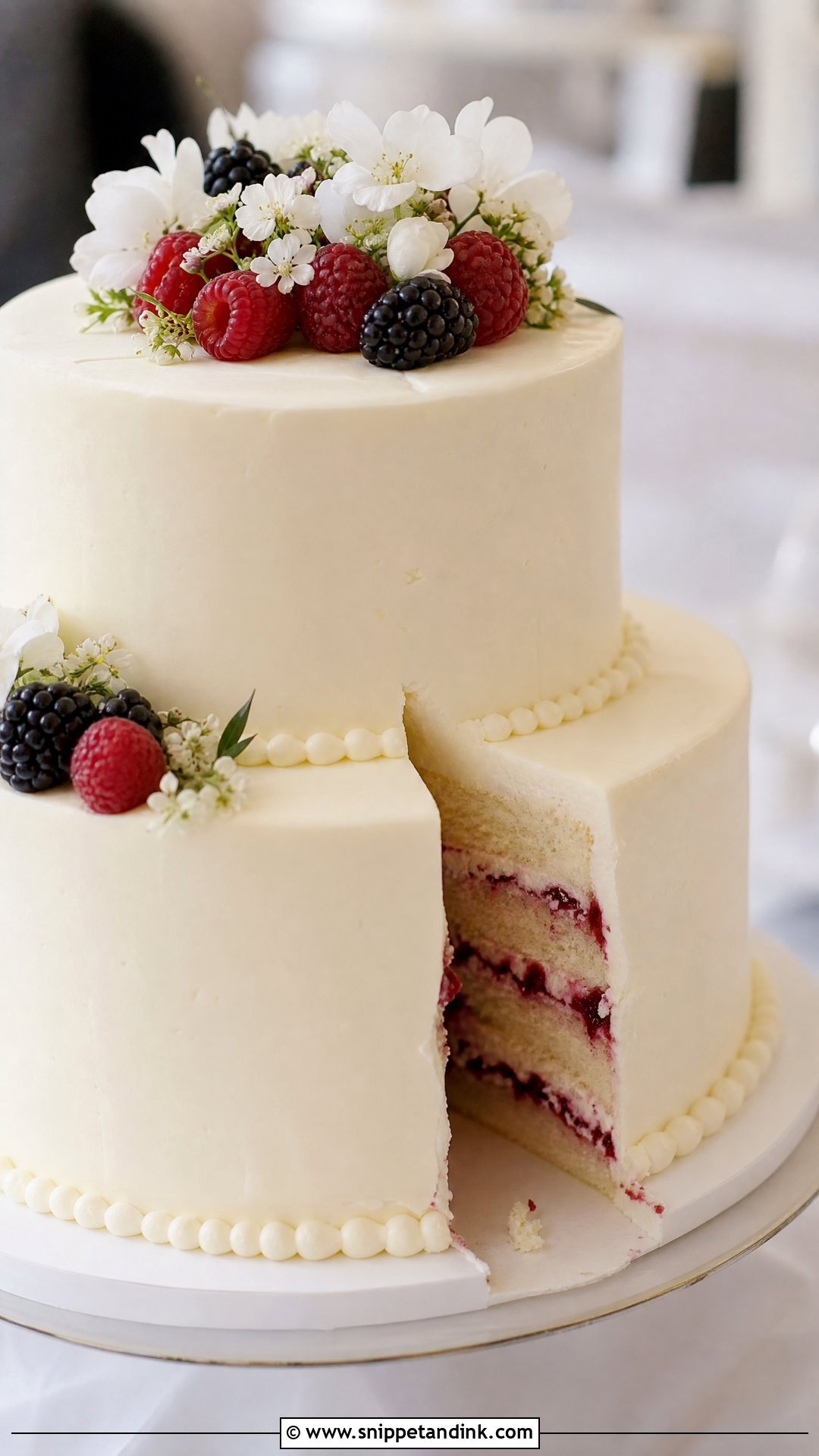
Fruit fillings keep a classic exterior while giving the inside some brightness. Raspberry, strawberry, lemon curd, apricot and blackberry are traditional. Fruit needs a dam: I pipe a ring of buttercream around each layer before adding the filling, otherwise it seeps out and causes bulges in the icing. Wet fillings also shorten how long the cake can sit unrefrigerated, so I’ll plan a firmer filling for an outdoor summer reception. Vanilla, almond, white and lemon cakes all pair well.
23. Almond Wedding Cake
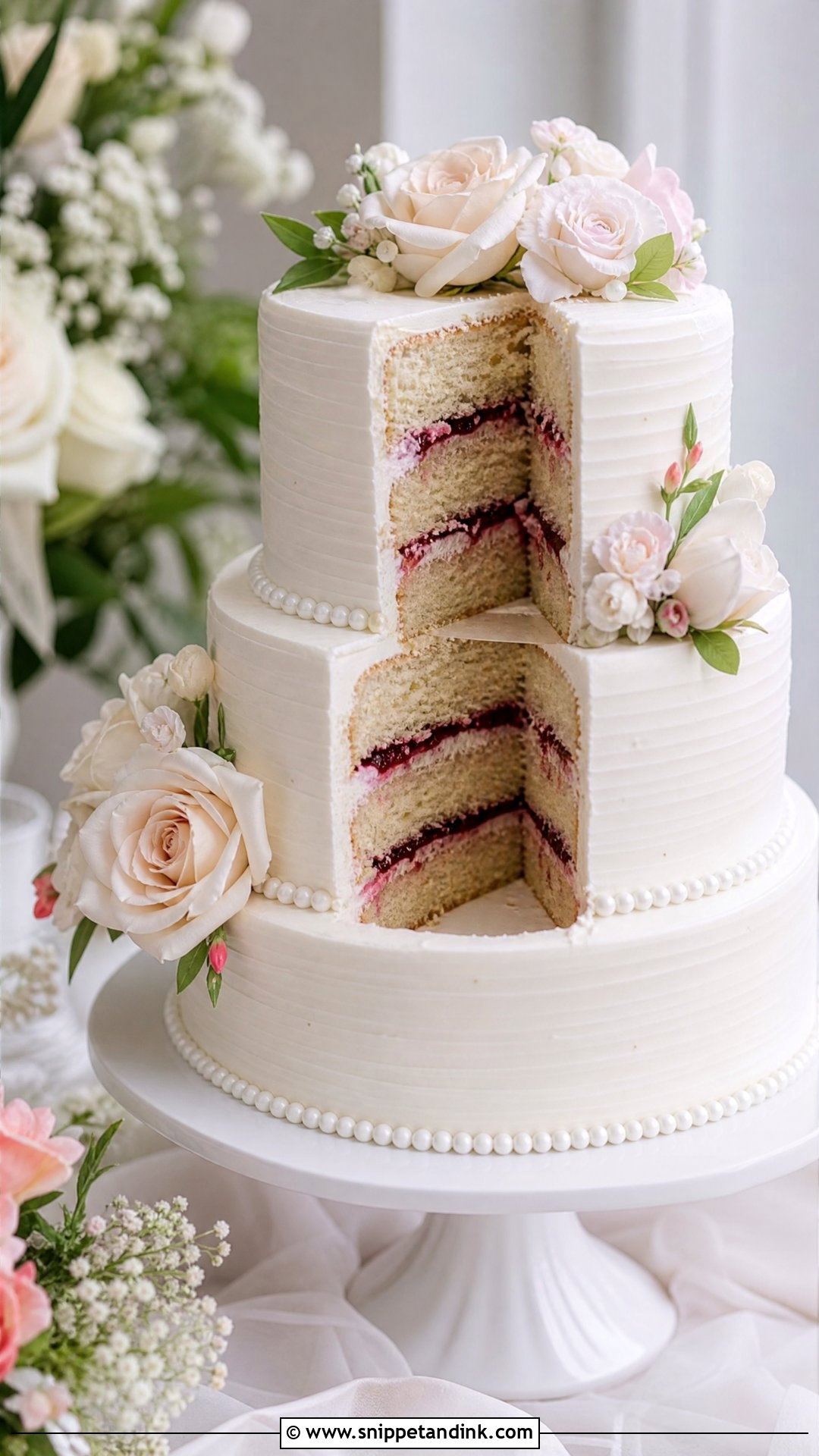
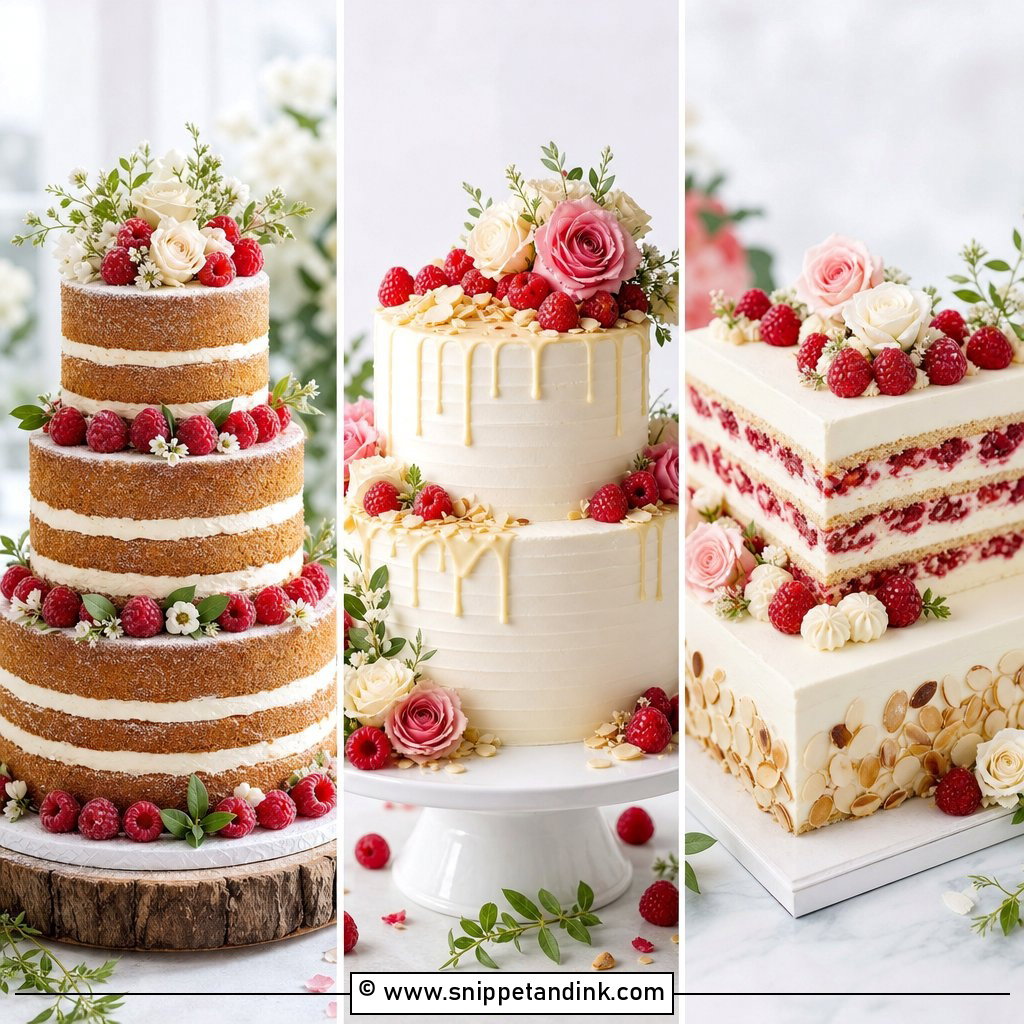
Almond is the flavor many people remember as the taste of a wedding cake, soft and slightly nutty without being unusual. An almond wedding cake pairs with vanilla buttercream, raspberry or apricot filling, or cream cheese frosting, and suits white fondant with pearl borders and sugar flowers. Ask about nut allergies among your guests before you commit; I’ll often make one tier a nut-free flavor so nobody misses out.
24. Fruitcake Wedding Cake
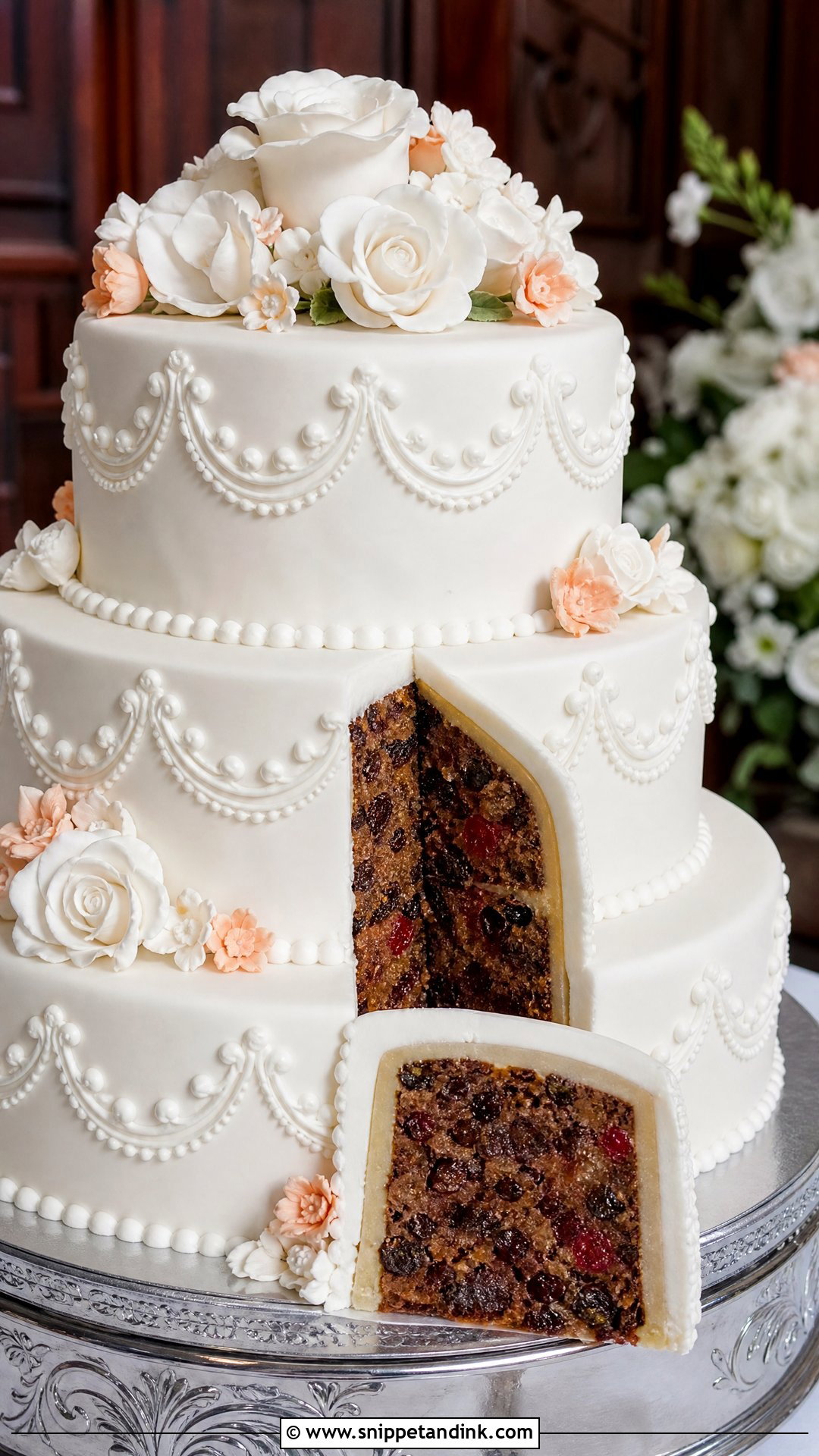
A fruitcake wedding cake is the oldest style here and still a tradition at many British-style weddings. It’s dense and rich with dried fruit and spice, covered first with marzipan and then fondant or royal icing. Because fruitcake keeps so well, it became the tier couples saved for a christening or first anniversary. I usually suggest it as one tier within a cake of lighter flavors, since not every guest wants it. Fruitcake is fed with alcohol over several weeks, so it needs ordering much earlier than a sponge.
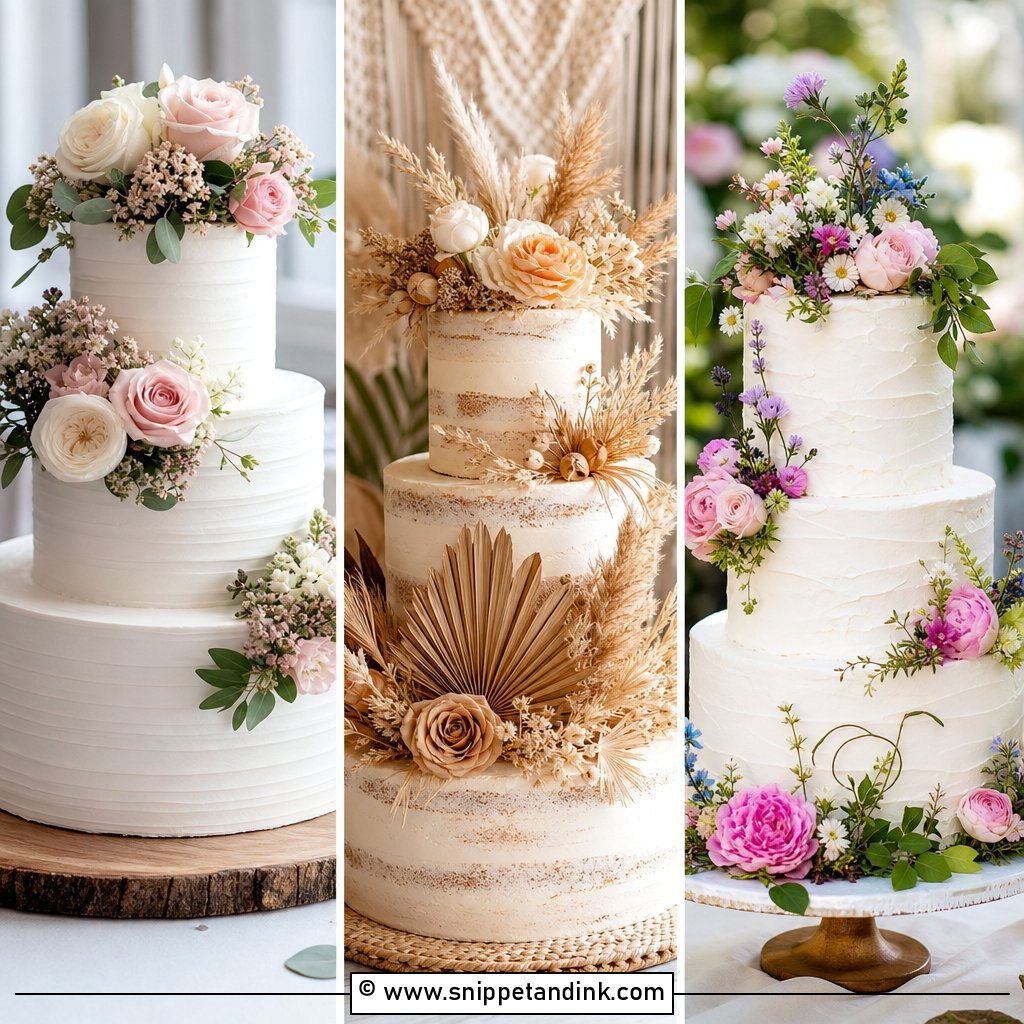
25. Small Traditional Wedding Cake
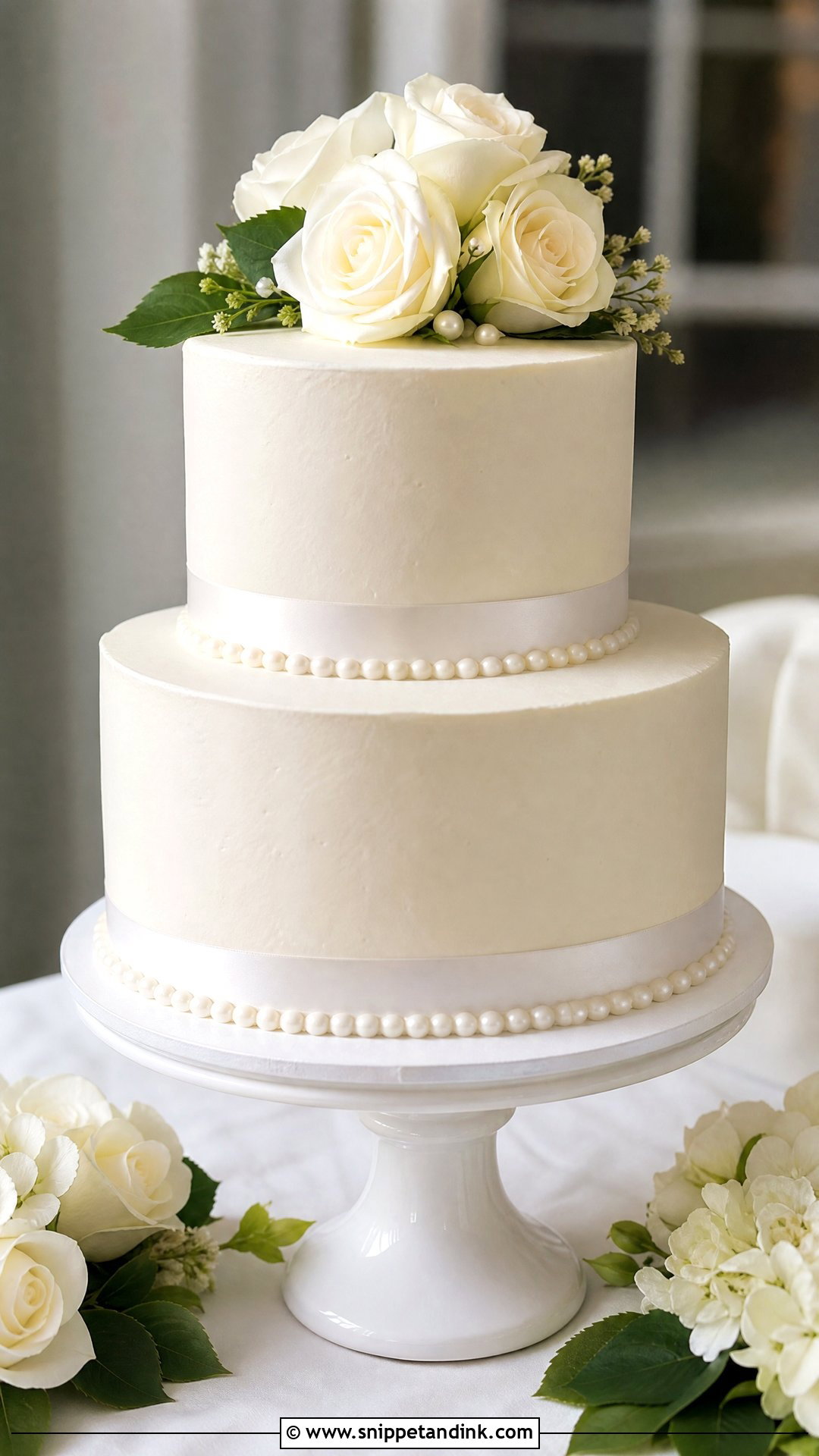
Two tiers are enough to create a proper wedding cake for an intimate dinner, a courthouse wedding or a cutting cake beside a dessert table. White or ivory buttercream, pearl borders, a few roses or a satin ribbon keep it traditional. A tall stand with flowers around the base adds presence. If you’re serving a larger crowd, a small display cake plus kitchen sheet cakes in the same flavor is the most economical approach, and guests won’t notice the difference on the plate.
From the Bakery Van to the First Cut
Most cake disasters happen in the last few hours, not in the kitchen. A traditional cake is heavy and often has delicate piping, so I plan delivery as carefully as the design.
- Tiers travel chilled, usually separately for larger or pillar cakes, and are stacked on a level table at the venue.
- The cake table should be away from windows, heaters and the dance floor, and sturdy enough not to wobble.
- Buttercream starts to soften in a warm room, so I ask for the cake to arrive no more than a couple of hours before it’s cut in summer.
- Fondant brought from a cold van into a warm room can sweat; leaving it to come up to temperature without wiping it lets the moisture dry off.
- Fresh flowers should go on last, prepared for food contact by the florist or baker.
Agree who will cut and serve the cake, since some venues charge a cake-cutting fee and some caterers won’t handle outside cakes. If you’re keeping the top tier, ask for a box and a plan for freezing it well wrapped.
A Classic Cake Still Needs a Clear Brief
A traditional cake looks simple, and that simplicity hides a lot of planning. The coating has to suit the room temperature, the decoration has to suit the size of the tiers, and the flavors need to work for your guests. A grand fondant cake fits a ballroom; buttercream and roses feel right in a garden. Bring a photo of your dress, your stationery and your florist’s plan to the tasting, and give your baker the venue’s setup times as early as you can.
You'll Like These Ideas:


Leave a Reply