
Traditional Ghana wedding dress ideas start with cloth, and for most of the Ghanaian brides I dress, that cloth is Kente. It carries deep weight in Akan and Ewe families, while brides from the north may look to woven smock fabric instead. Modern Ghanaian bridal wear then adds corsets, sculpted sleeves, lace, beads and detachable skirts on top. My first question is always about family, because there isn’t one Ghanaian tradition, and a pattern or color that’s right for one family can carry a different meaning in another. Talk to your relatives about fabric, color and jewelry, then take that to a designer or tailor who knows Kente. The twenty outfits below are practical starting points, each with the fitting detail I’d check.
Handwoven Kente or Printed Kente Pattern?
Before any design conversation I ask which cloth you’re using, because it changes everything a tailor can do. True Kente is handwoven on narrow looms in strips only a few inches wide, which are then sewn edge to edge into a full cloth. It’s heavy, stiff, and every strip repeats the pattern, so cutting it is closer to working with a quilt than with yardage. Printed fabric with a Kente design is lighter and cheaper, and it drapes like ordinary cotton.
- Handwoven cloth suits wraps, structured bodices and panels where the strips stay mostly intact.
- Printed Kente works better for full gathered skirts, ruffles and anything that needs to drape.
- Many brides combine both: handwoven for the bodice or sash, print or plain fabric for volume.
- Commissioned handweaving takes time, so order cloth well before you book your tailor’s first fitting.
Bring the actual cloth to your first consultation. A tailor can only plan pattern placement once she can count the strips.
1. Classic Kente Wrap Wedding Dress
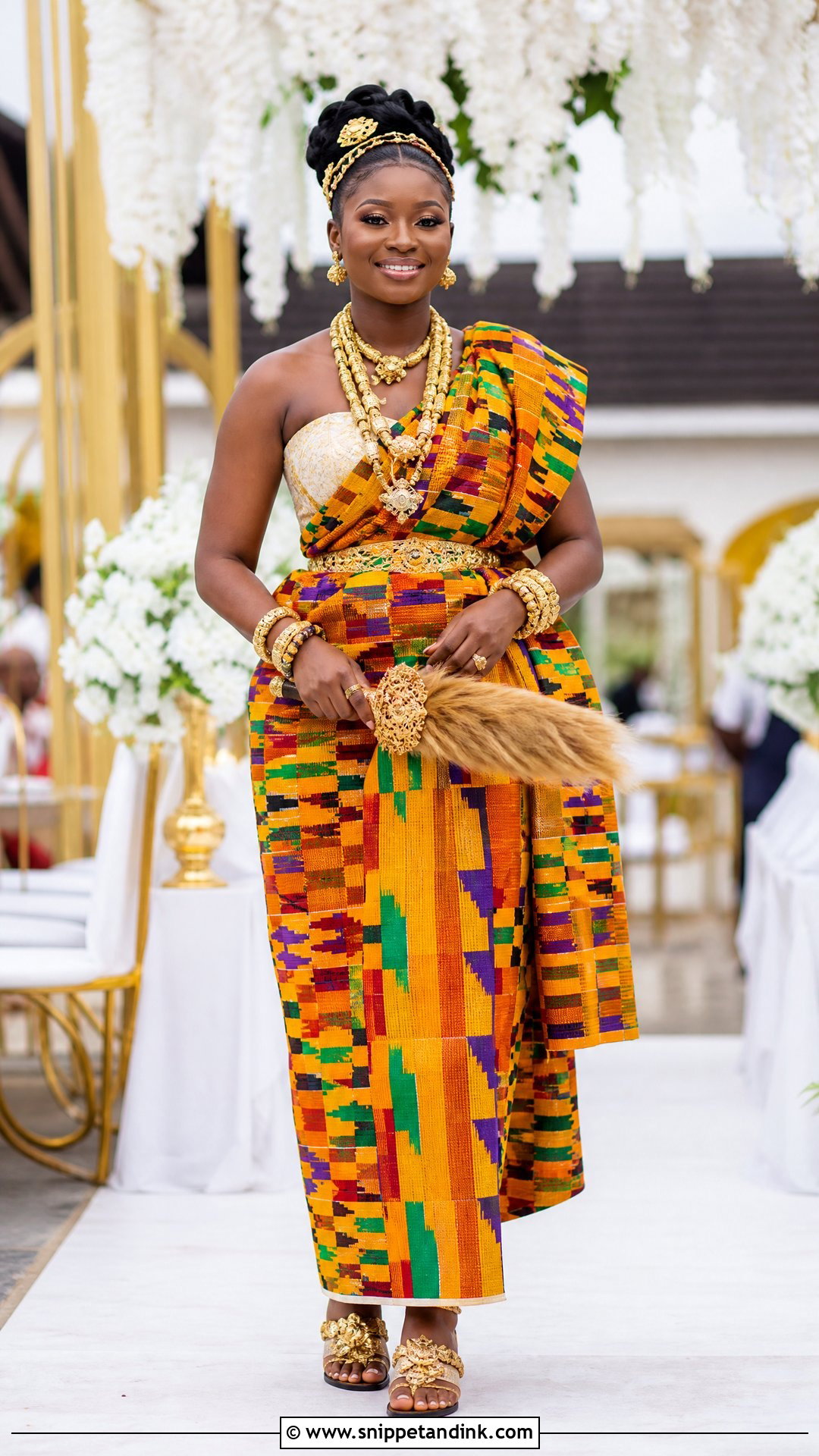
A classic Kente wrap keeps the cloth itself as the outfit. The fabric goes over one shoulder in folds, and the folding is a skill: done well, the main motif sits across the front and back, not buried in a pleat. Underneath, a fitted strapless blouse or supportive corset holds everything in place. Layered gold, traditional beads, decorative sandals and a matching headpiece complete it, with only a small bag. Handwoven Kente is heavier than people expect, and a wrap shifts as you dance, so practise sitting, walking and dancing in it, and keep a few safety pins inside the folds.
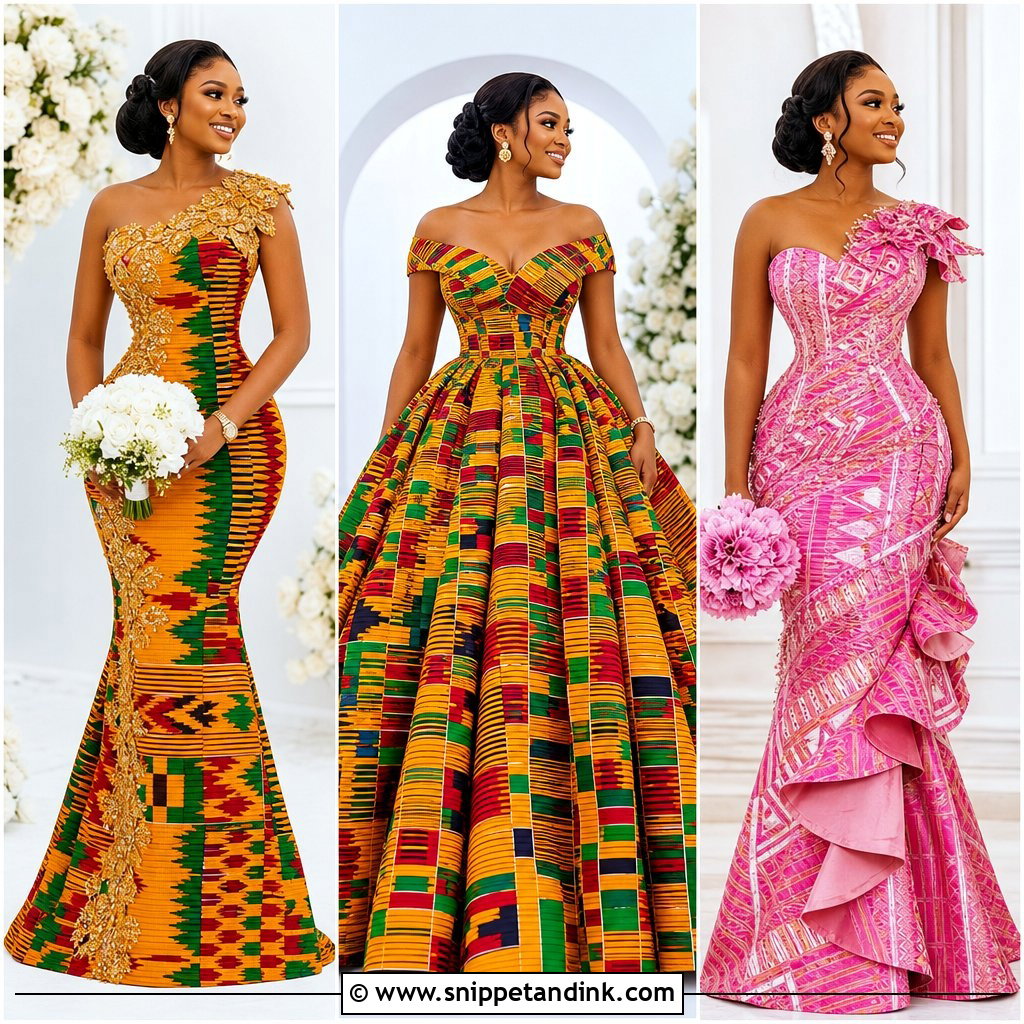
2. Kente Mermaid Wedding Dress
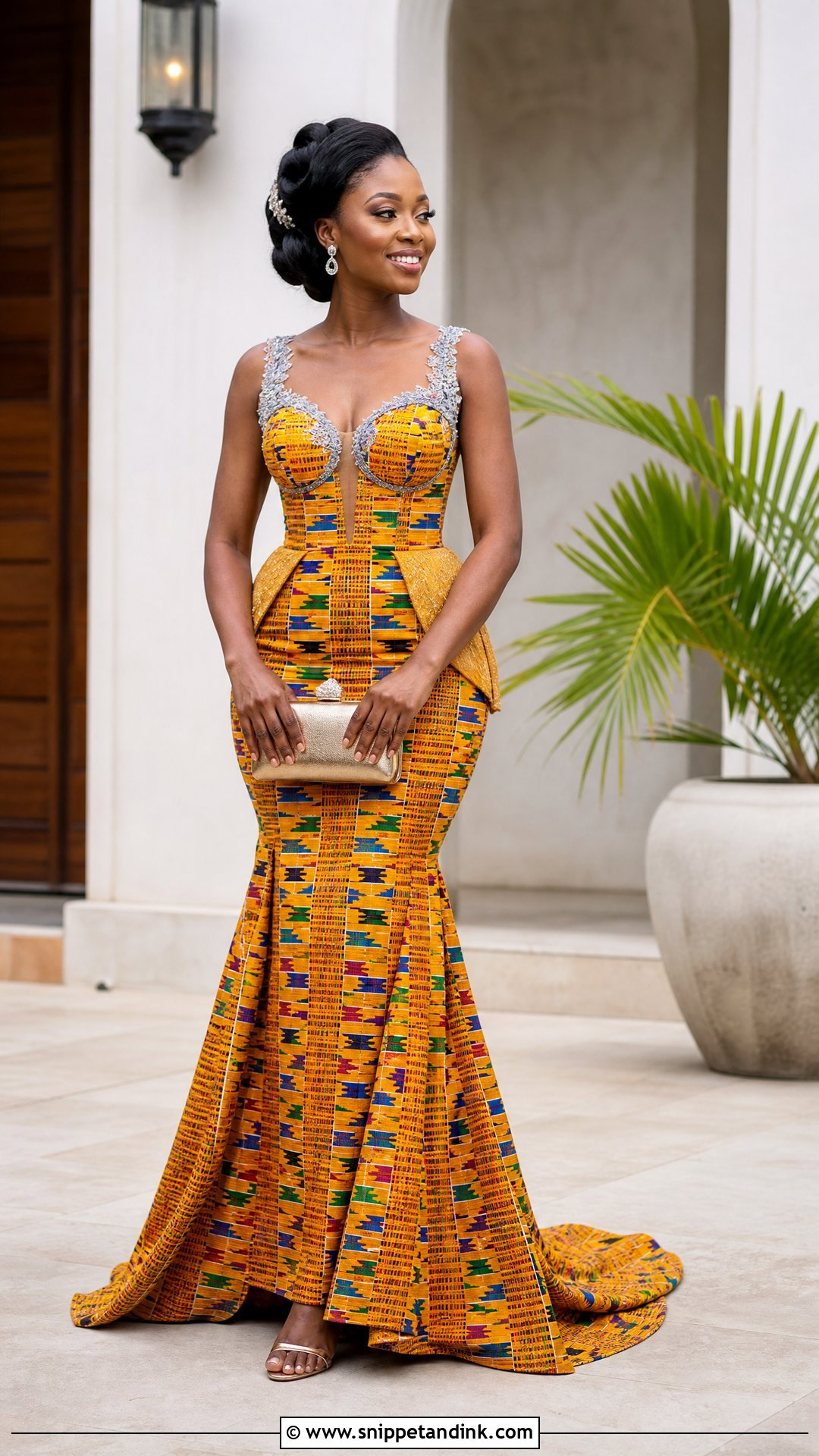
A Kente mermaid gown is the most dramatic use of the cloth and the hardest to cut well. Kente has more body than bridal crepe or satin, so the flare stands out further than you’d predict from a sketch. I ask the tailor to make a quick test flare before cutting into the good cloth. Pattern placement should mark the waist; a bold block landing off-center on one hip looks like a mistake. Metallic heels, a structured clutch, drop earrings and an updo that leaves the neckline clear finish it. Keep the train short. Illusion sleeves or a modest back panel add coverage without losing the shape.
3. Kente Ball Gown Wedding Dress
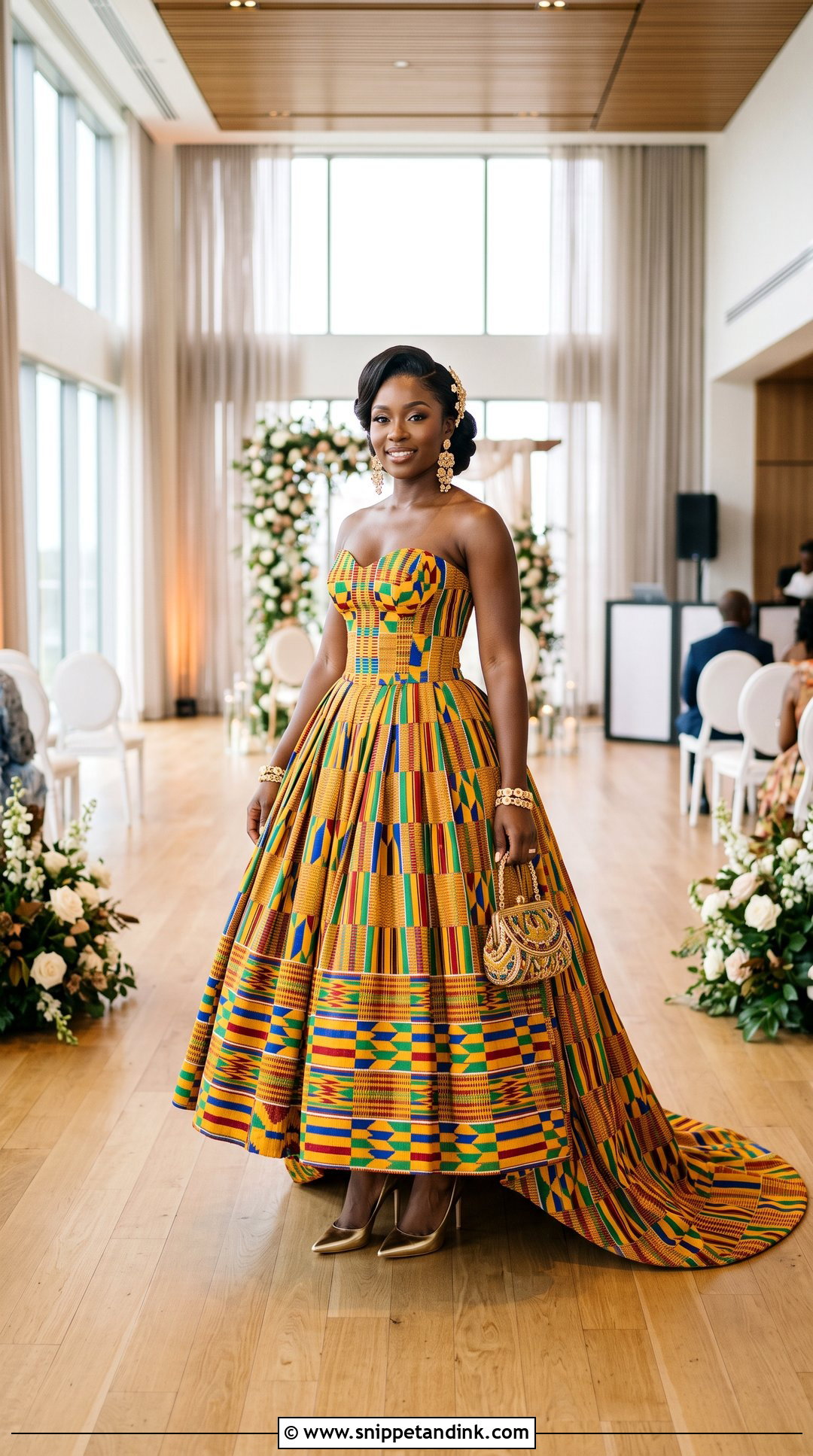
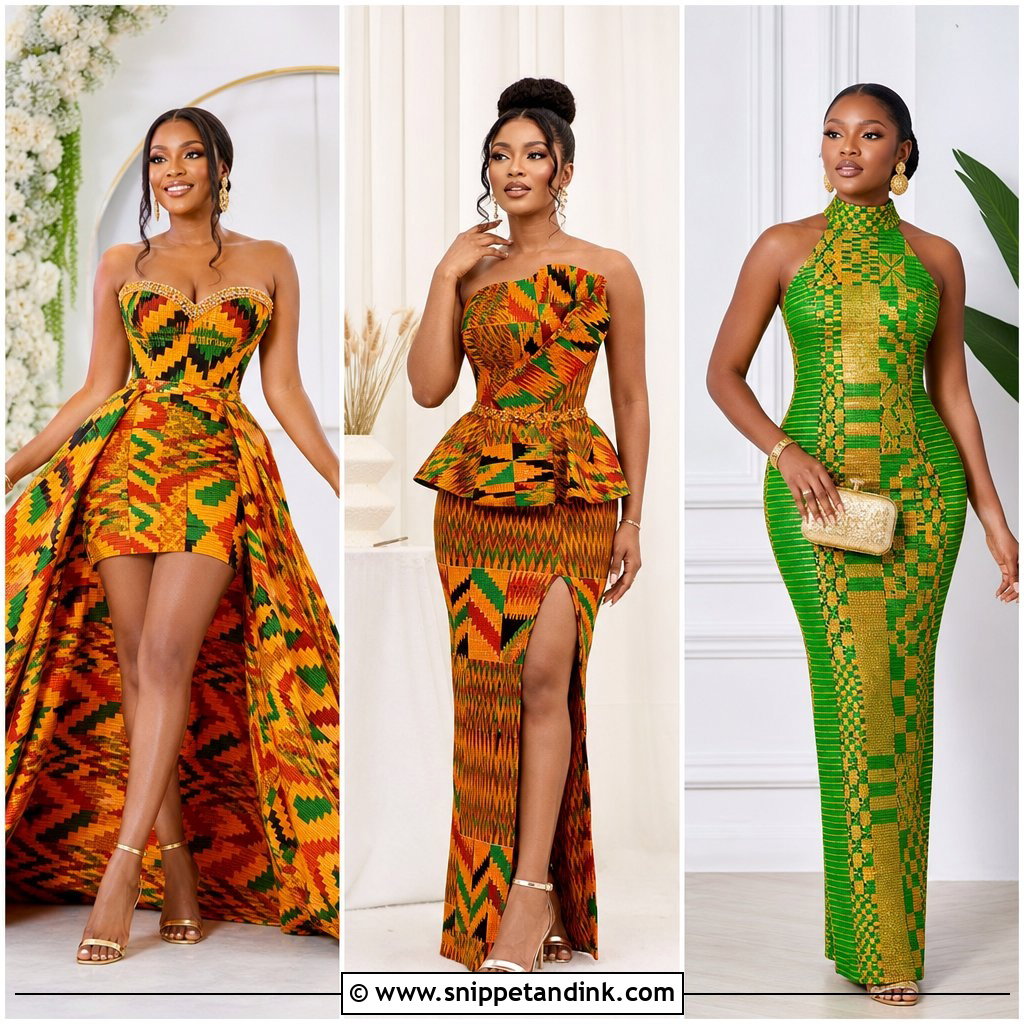
Few outfits make an entrance like a full Kente ball gown. Because the fabric is heavy, a structured bodice with boning is not optional; without it the skirt drags the neckline down within the hour. I steer brides toward controlled volume rather than stacked petticoats, especially for a daytime ceremony in Ghanaian heat. Arrange the panels so the colors balance on both sides. Pointed metallic pumps, a small beaded bag, statement earrings and a polished bun suit it, and a matching hand fan is both pretty and useful. Ask for hidden pockets and a strong bustle so you can carry your phone and manage the train after photos.
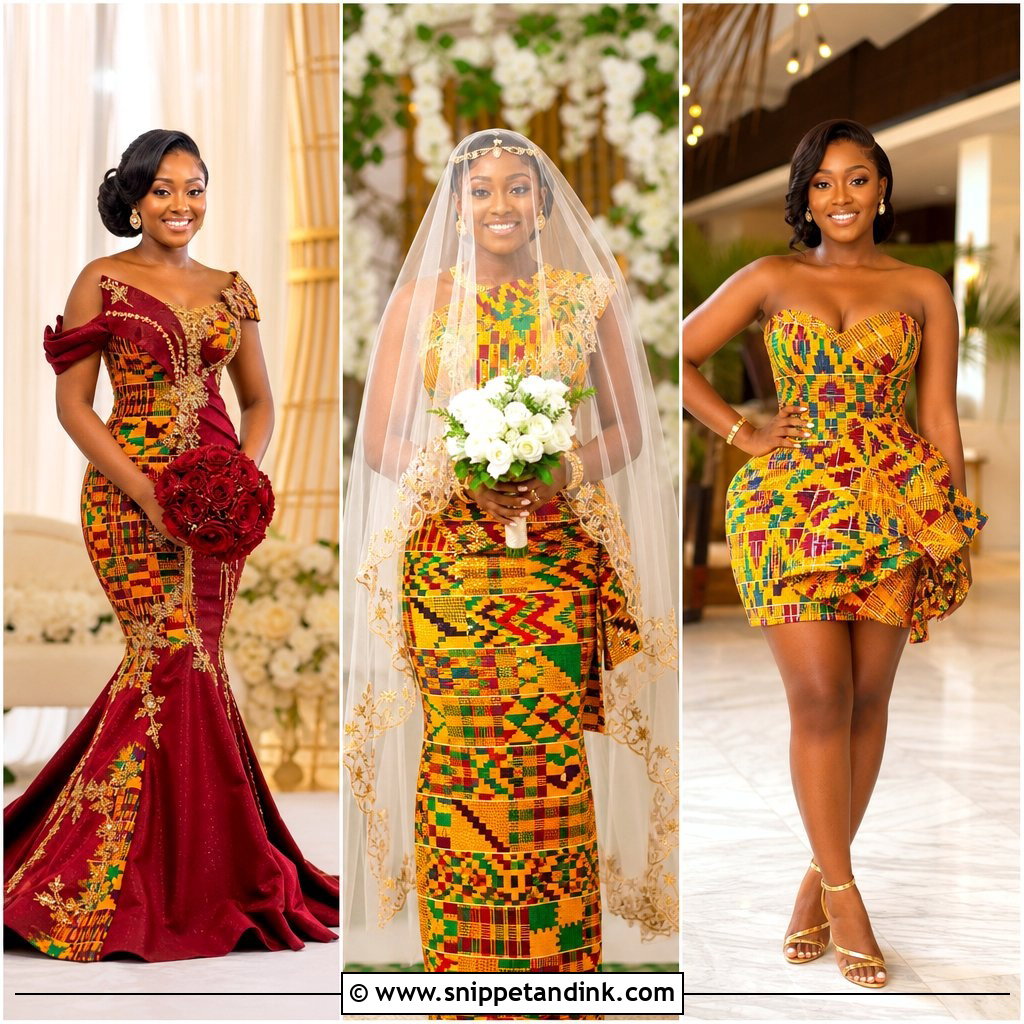
4. Off Shoulder Kente Wedding Dress
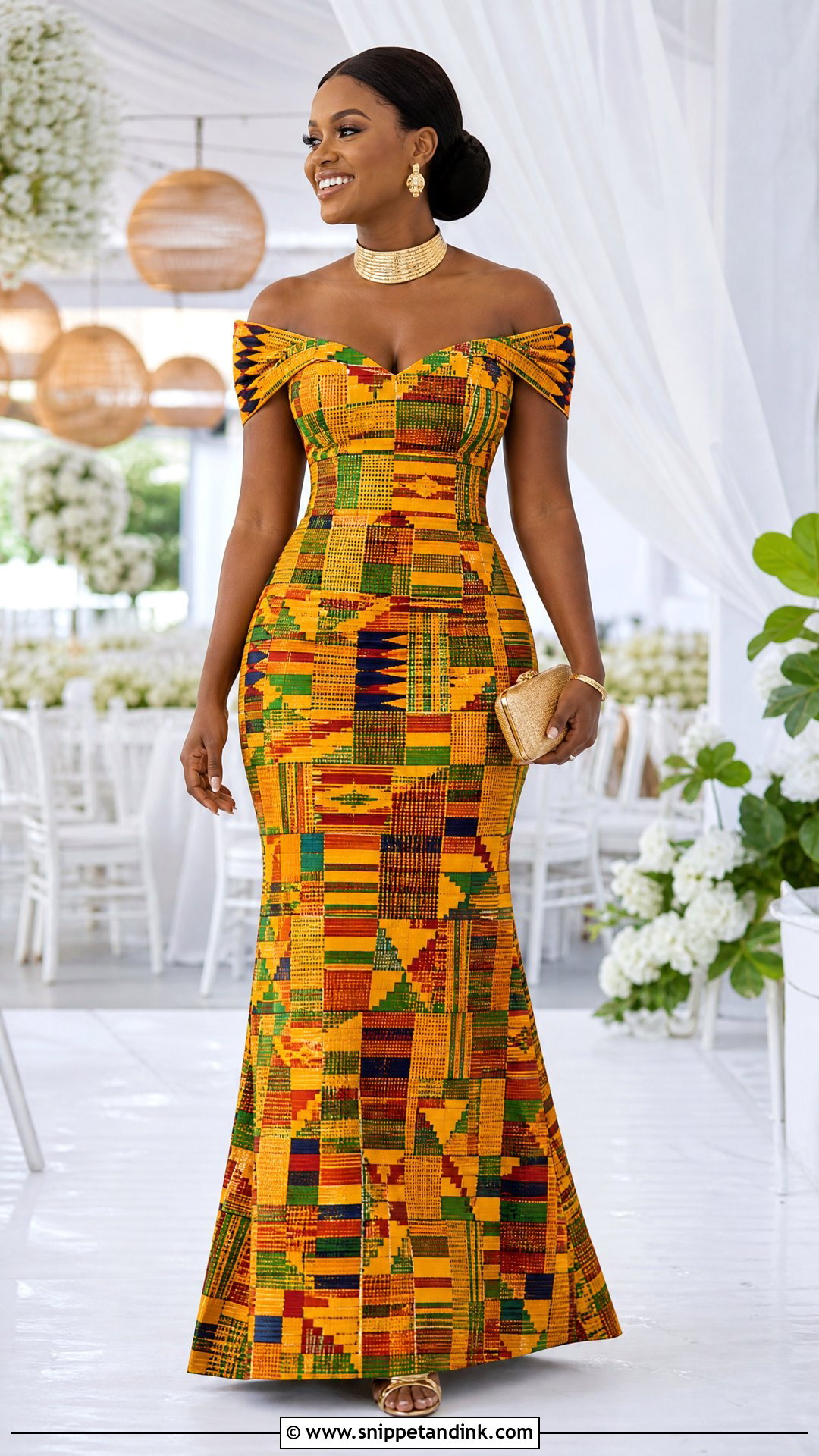
An off-shoulder Kente gown frames the collarbones and keeps the cloth rich. A fitted bodice with a straight or softly curved neckline flows into an A-line or gentle flare. Short sculpted sleeves help hold the bodice up. The main problem with off-shoulder Kente is slippage: heavy fabric pulls down every time you hug a relative. Hidden straps, firm boning and a silicone grip band at the top edge fix most of that. A gold choker, matching earrings, embellished heels and a compact clutch complete it. A low bun or braided updo keeps the neckline open.
5. One Shoulder Kente Wedding Dress
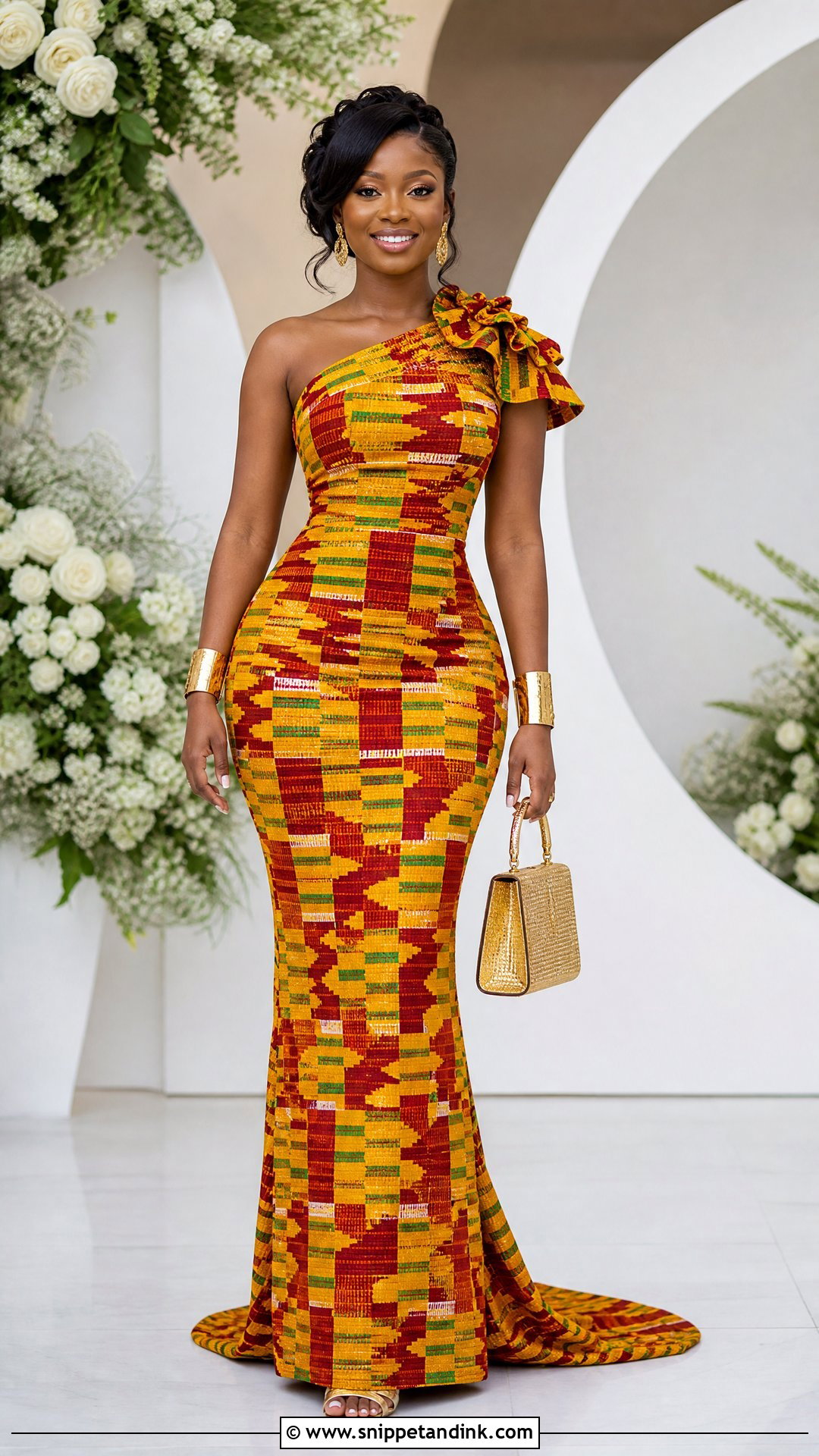
One shoulder in Kente creates a clean diagonal that suits brides with strong shoulders and good posture. The shoulder can be folded, pleated or finished with a small controlled ruffle, while the other side stays smooth. Skirt options run from straight to mermaid to a short train. Wear a single statement earring on the bare side or a matching pair, plus gold cuffs, heeled sandals and a structured mini bag, but no heavy necklace. A sleek bun balances the asymmetry. Cut the armhole generously; a tight one-shoulder strap digs in the moment you raise your arm to dance or embrace someone.
6. Corset Kente Wedding Dress
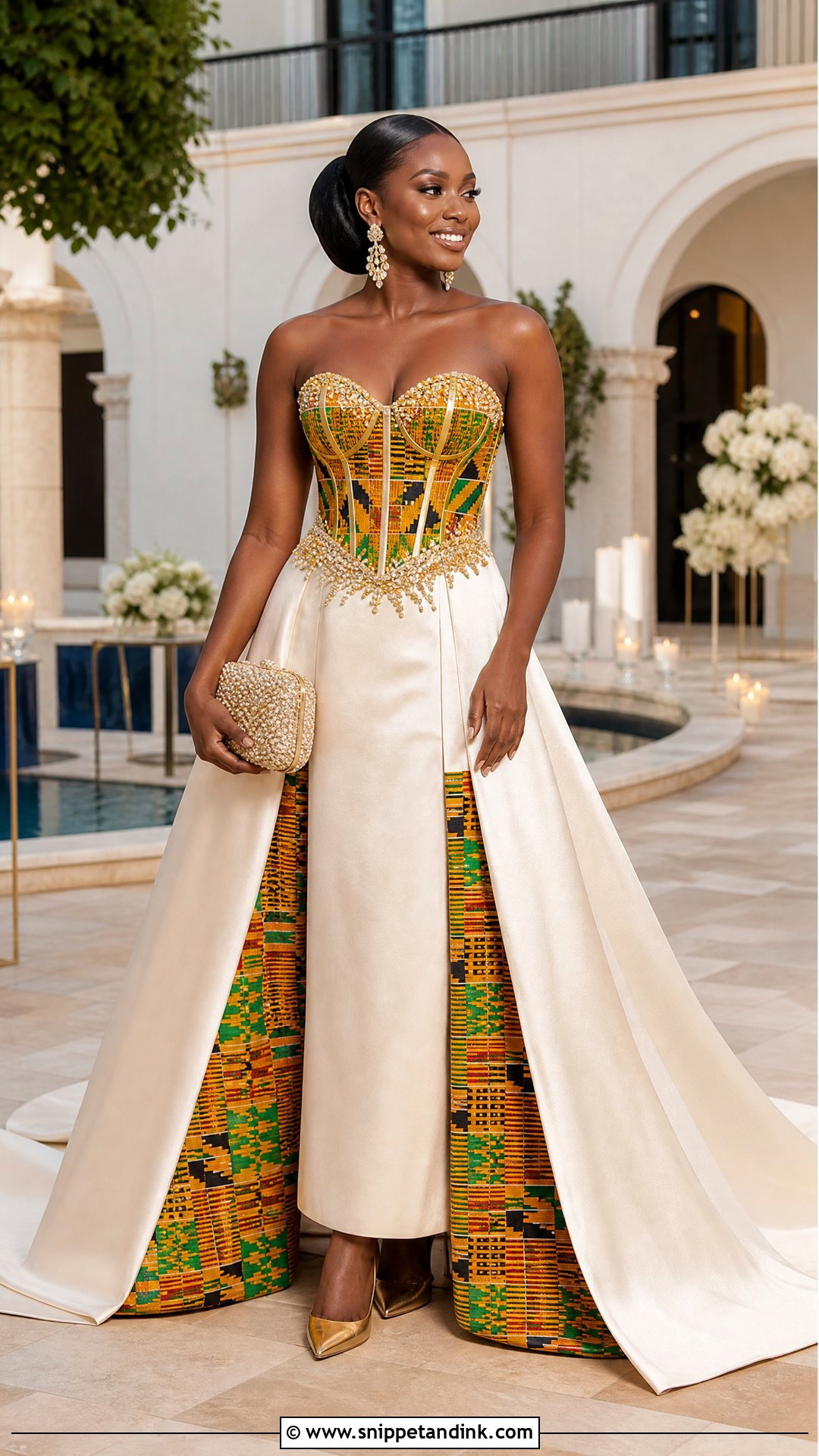
A corset Kente gown gives the firmest support and sharpest waist in this list. The best versions match the woven pattern across every bodice panel, and that takes extra cloth, so plan for it when you order. Boning should be hidden under beading, embroidery or appliqué. Pair it with an A-line, mermaid or detachable overskirt. Gold pumps, a beaded clutch, chandelier earrings and a smooth updo complete it; mesh sleeves or a higher back add coverage. Fit it so you can breathe deeply and sit, not just stand still. Book at least two fittings and wear the real shoes and undergarments to each.
7. Kente Peplum Wedding Dress
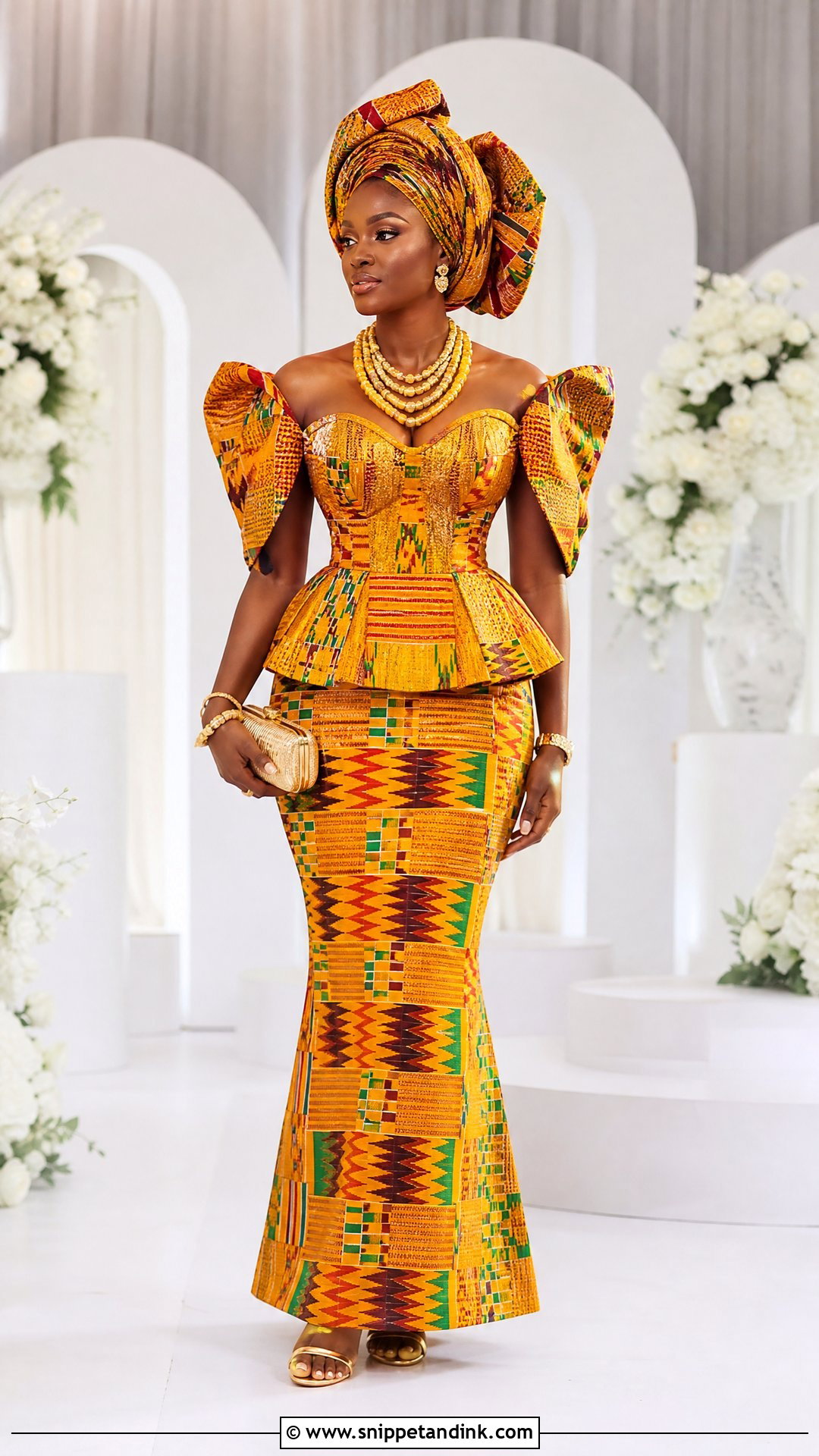
A Kente peplum top with a long skirt is the outfit I recommend to brides who want something wearable afterward. The peplum sits at the natural waist and the skirt falls straight, trumpet or gently flared. Proportion is everything: a wide peplum on a short torso cuts the body in half, so scale it to your height. A fitted neckline and short sculpted sleeves balance the top. Gold heels, a matching headwrap, layered beads and a small box clutch finish it. Separates are easier to alter and rewear, but line up the pattern between top and skirt so they read as one piece.
8. Kente And Lace Wedding Dress
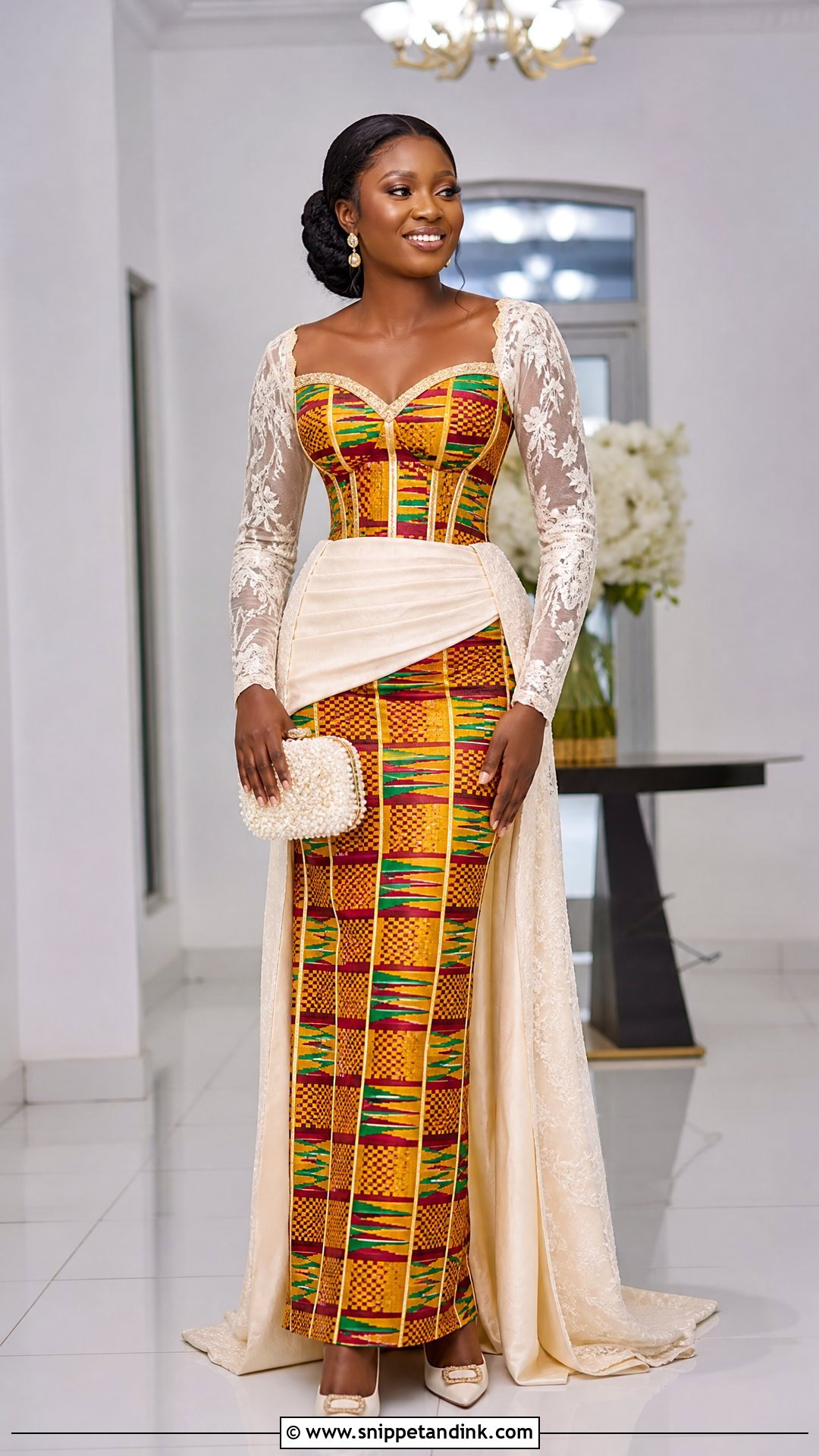
Lace softens Kente without covering it, but the two fabrics behave very differently. Use Kente for the bodice, waistband or main skirt panels, and lace for sleeves, side inserts or the upper neckline. Ivory, champagne or a shade lifted directly from the Kente keeps the palette together. Lightweight lace sewn straight onto heavy woven cloth tends to pucker and pull, so it usually needs a backing; stiff lace can make a structured gown bulky. A cheap mock-up lets the designer test sheerness and drape before cutting precious cloth. Refined heels, pearl-and-gold earrings, a beaded clutch and a low braided bun complete the look. Keep the lace symmetrical.
9. Beaded Kente Wedding Dress
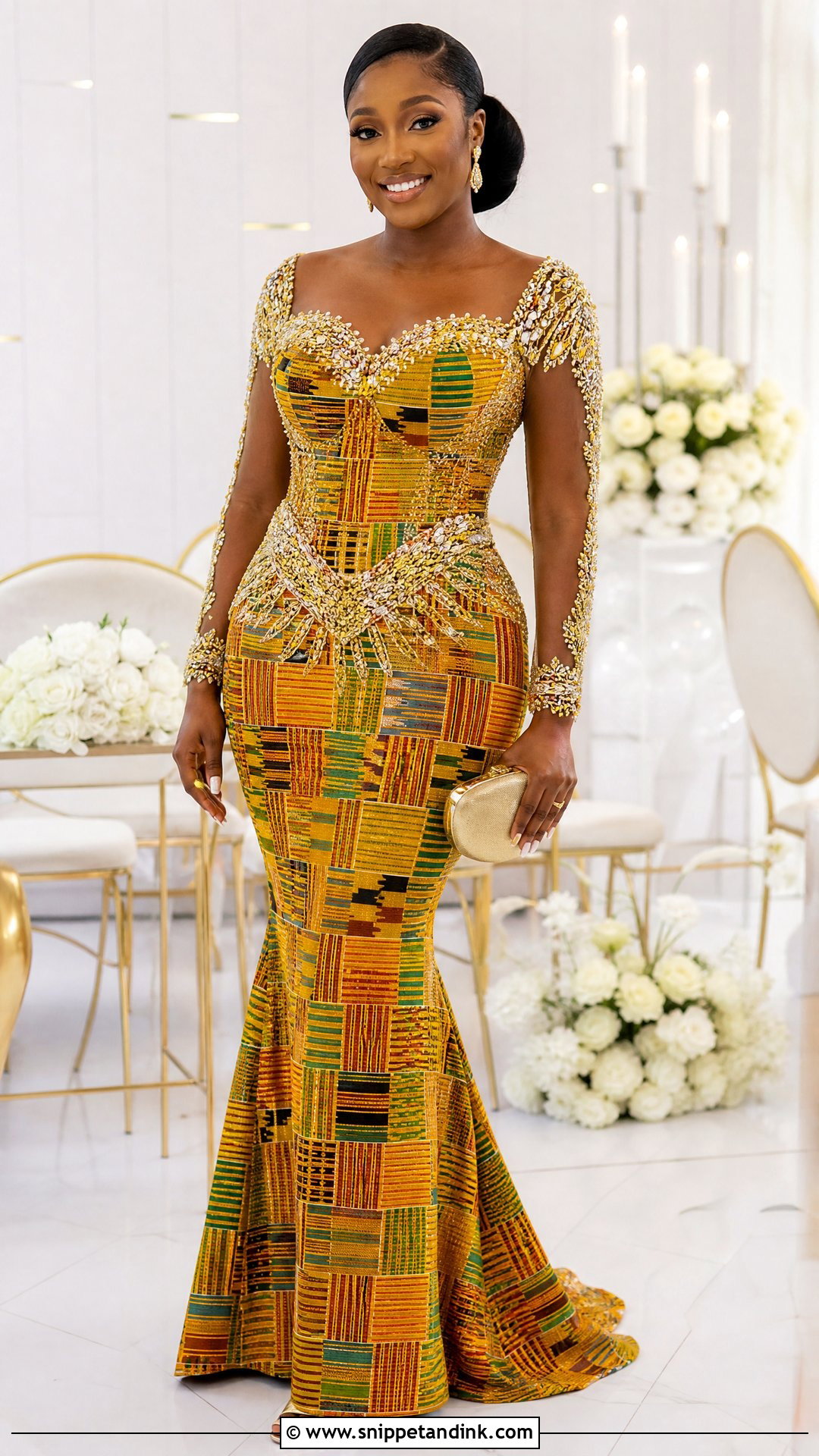
Beading on Kente works best when it follows the weave. I’d concentrate it at the neckline, waist, sleeves or around chosen motifs, so the cloth still reads as Kente from across a room. A column or trumpet shape keeps the beaded surface looking refined. Beads add real weight and every hand-sewn strand is a snag point, so ask for a supportive lining, reinforced seams and a small bag of spare beads for the day. Metallic sandals, a plain clutch, drop earrings and an updo with one decorative comb are enough. Sit and dance during the fitting to find any scratchy sections before the wedding does.
10. Kente Wedding Dress With Ruffle Sleeves
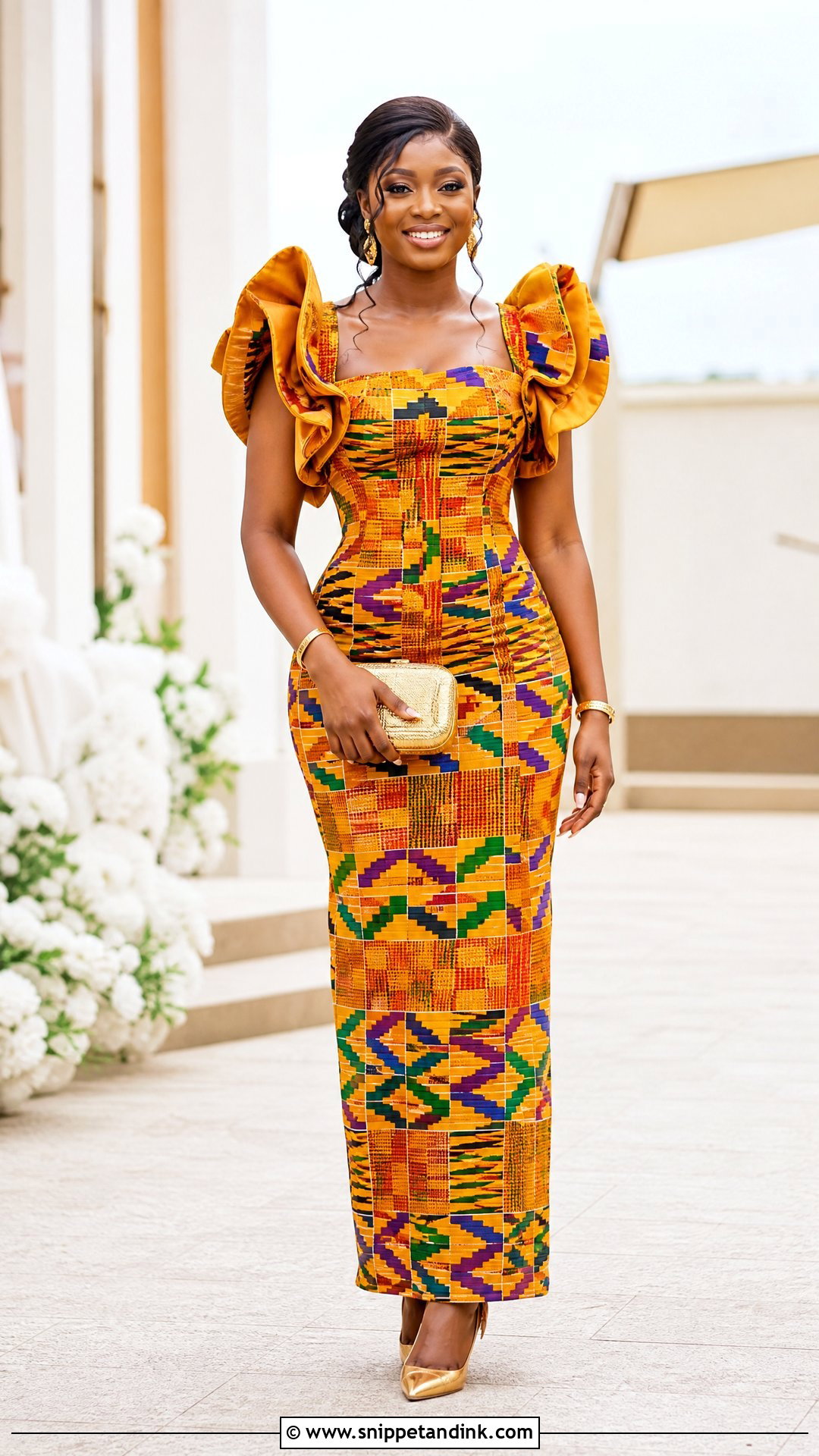
Ruffle sleeves add movement to a fitted Kente dress, and they can overpower it fast. Placed at the shoulders, curved around the upper arm or swept from one side, they should frame the bodice, not compete with the pattern. Kente ruffles are stiff on their own; a lining of lightweight organza or a complementary fabric inside reduces bulk. A long straight skirt or mermaid hem keeps the base clean. Gold pumps, a compact bag, slim bracelets and earrings short enough to clear the sleeves work best, with a high bun or swept-back style. Before approving, raise your arms and hug someone; if the sleeve crushes, it needs more support.
11. Long Sleeve Kente Wedding Dress
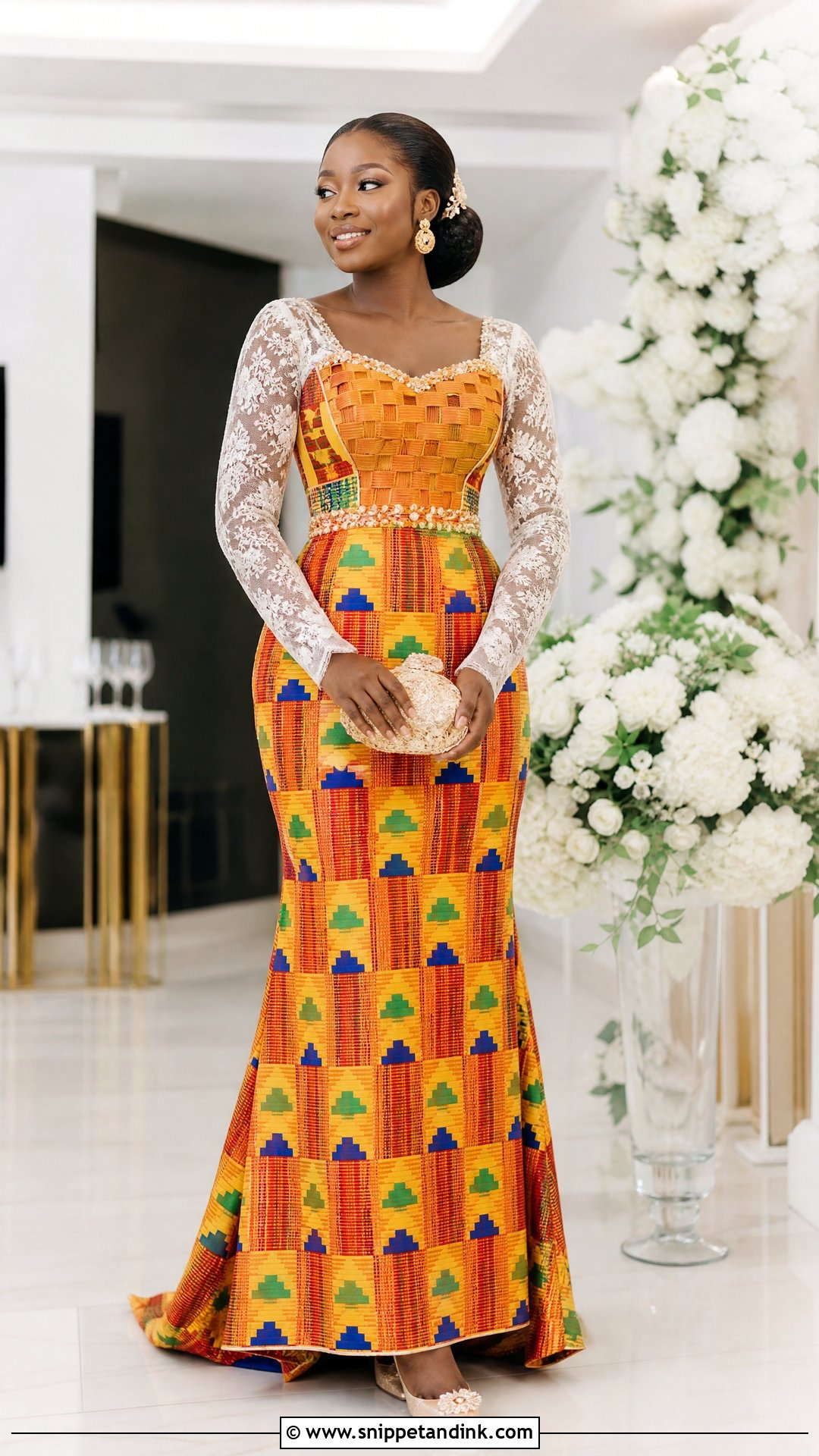
A long-sleeve Kente dress looks commanding, but full Kente sleeves can feel like armor. I usually suggest woven cloth for the body and sleeves in lace, illusion mesh or narrow lightweight Kente panels. A high bateau, shallow V or modest sweetheart neckline suits covered arms. Pointed heels, a structured clutch, gold earrings, a low bun and a slim beaded waistband complete it. Check that your elbows bend easily; tight sleeves ride up and pinch when you lift a glass. Breathable lining and discreet underarm gussets help a lot at a long, lively ceremony, and it’s a sensible pick for cooler evenings or indoor halls.
12. Sleeveless Kente Column Wedding Dress
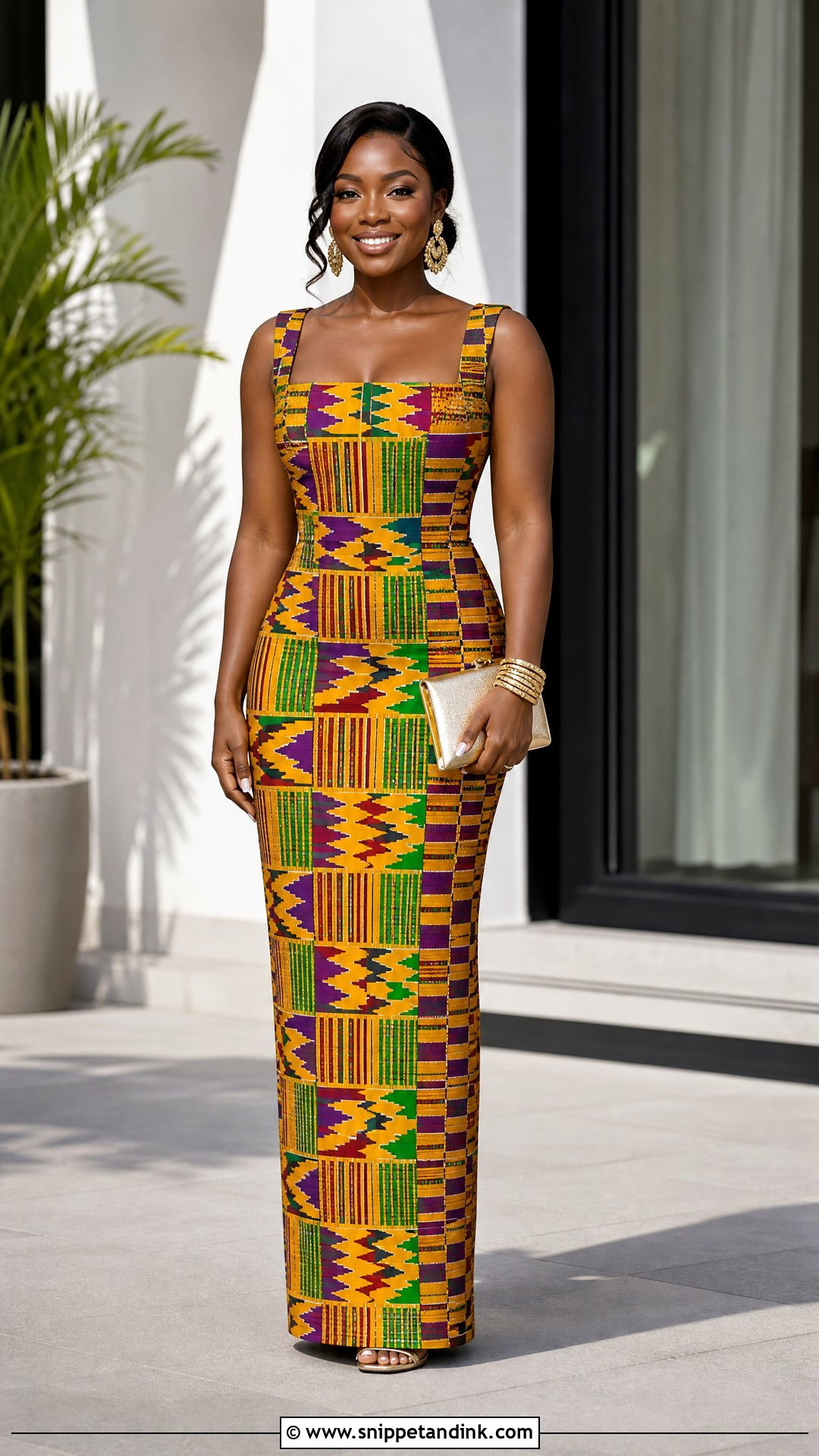
A sleeveless Kente column is clean and lets the geometric motifs run uninterrupted from neckline to hem. Choose a supportive square, scoop or modest V bodice and add a back slit for walking. Metallic heels, a slim clutch, stacked bracelets and statement earrings complete it. A headwrap adds height and tradition; a sleek bun feels more modern. The risk with any column is the hips. Kente doesn’t stretch, so a column cut close will pull at the seams when you sit. I’d ask the tailor for extra ease through the hips and strong inner construction to keep the seams flat.
13. Kente Wedding Dress With Detachable Overskirt
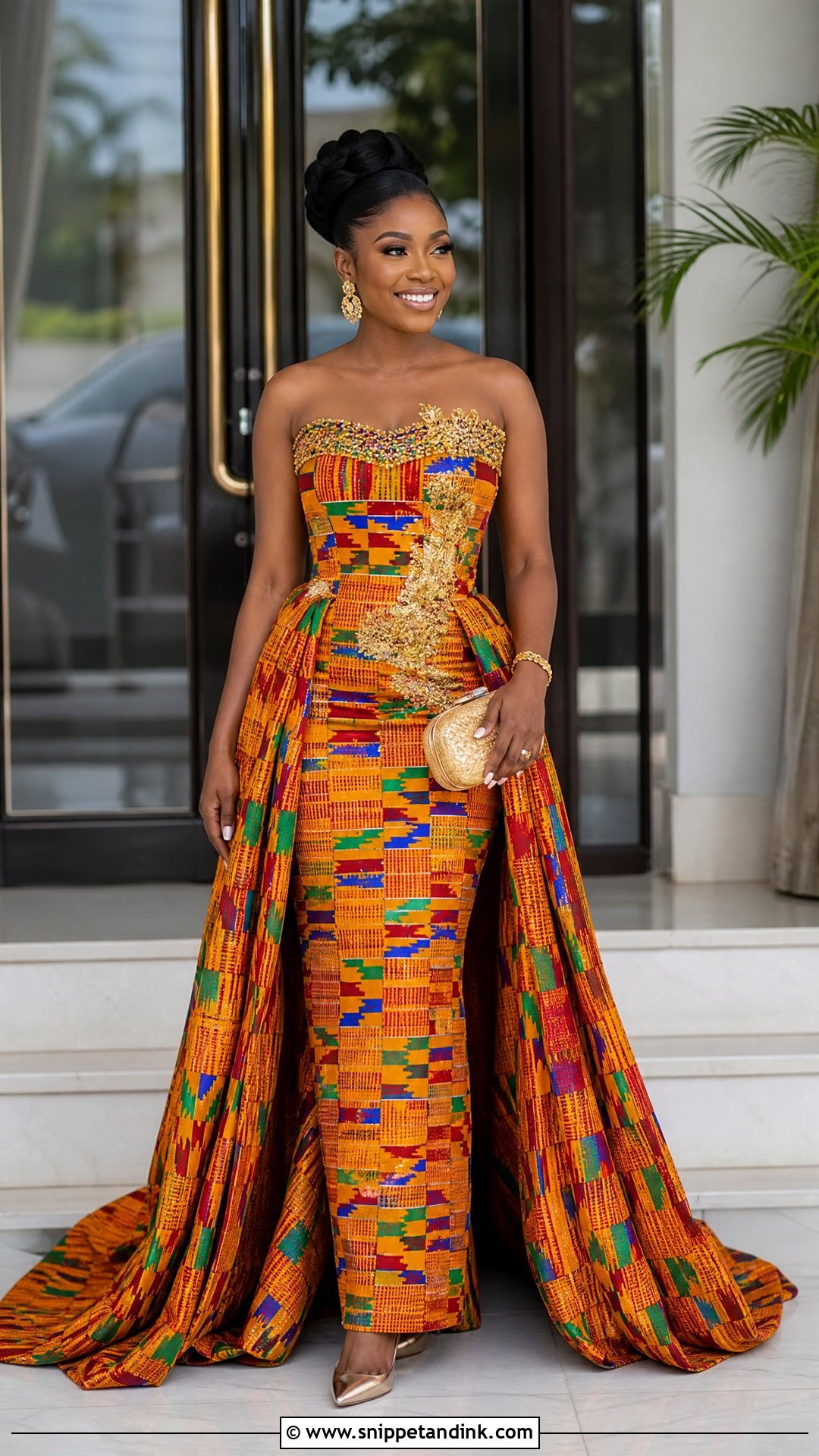
A detachable Kente overskirt gives you two looks without a full change. Underneath, wear a fitted column, mermaid dress or tailored jumpsuit; the full overskirt goes on at the waist for the entrance and family photos, then comes off for dancing. Broad Kente panels, soft pleats and a manageable train work well. Metallic pumps, a beaded clutch, gold earrings and a refined updo suit the ceremony version. Hidden hooks or a firm waistband should hold it without a visible ridge. The dress underneath has to look complete by itself. Practise the removal with one trusted attendant so it takes a couple of minutes in private.
14. Kente Jumpsuit Wedding Dress
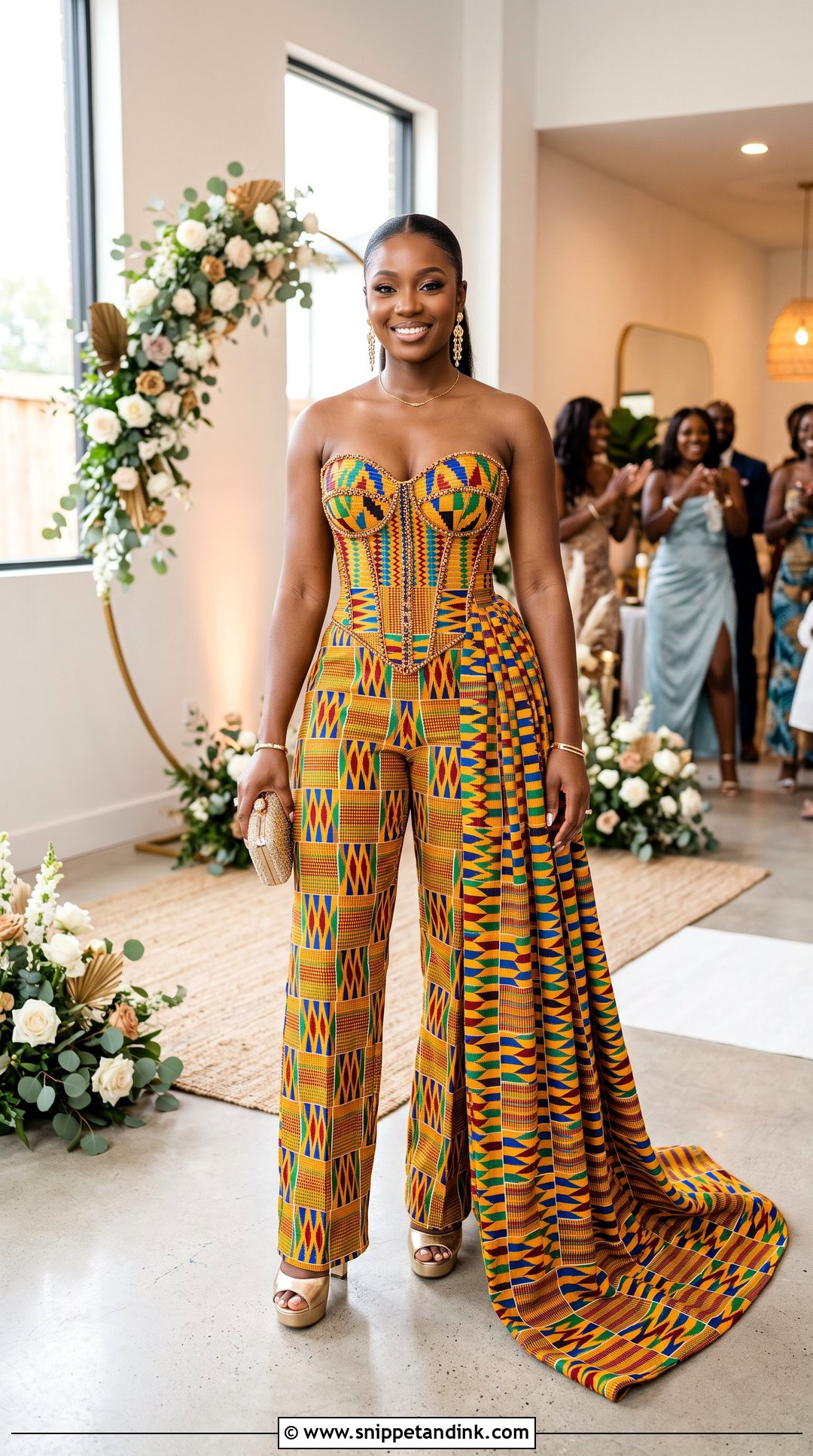
A Kente jumpsuit suits a bride who wants to dance freely all evening. Wide-leg trousers give drama, and a structured corset, one-shoulder or modest fitted bodice keeps it formal. A detachable train or overskirt adds a gown-like entrance if you want one. Platform heels, a metallic clutch, long earrings and a sleek ponytail finish it. Hem the trousers while wearing the actual shoes, since a centimeter either way changes how wide legs fall. Run the Kente vertically to lengthen the body. Ask for fastenings you can manage in a restroom alone, which is the practical issue nobody mentions until the day.
15. Kente Cape Wedding Dress
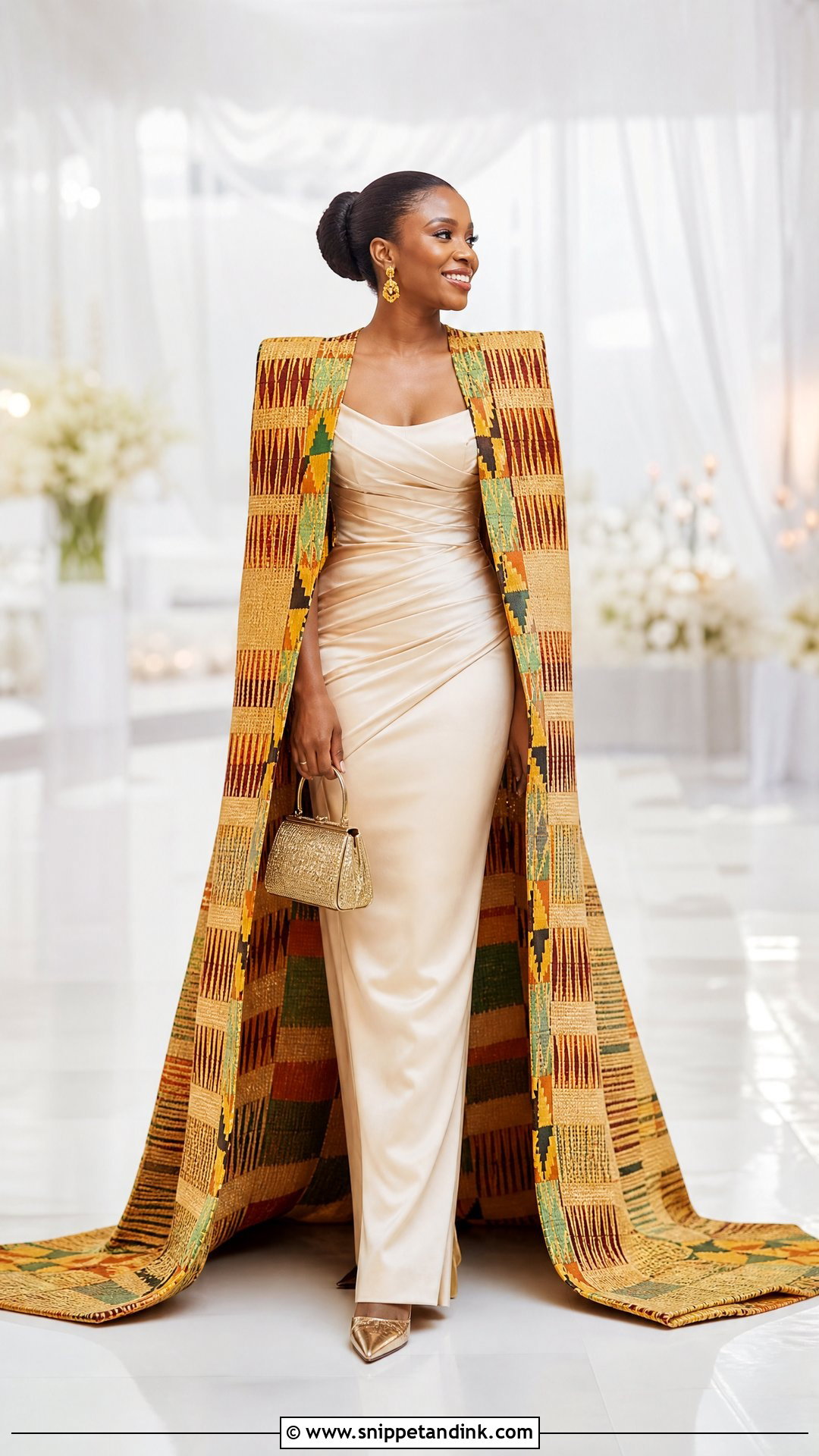
A Kente cape turns a quiet gown into a ceremonial one. Start with a fitted dress in ivory, champagne or one of the softer colors in the cloth, then add a full-length Kente cape from the shoulders. Weight is the catch: heavy handwoven cloth on a cape pulls the gown’s neckline backward. I’d use a lighter Kente or line the cape so it drapes, and fasten it to the shoulders rather than the throat. A removable version lets you shed it after the entrance. Pointed heels, a structured mini bag, gold earrings and a smooth bun keep it neat. Repeat a little Kente at the waist or cuff to tie dress and cape together.
16. Kente Wedding Dress With 3D Flowers
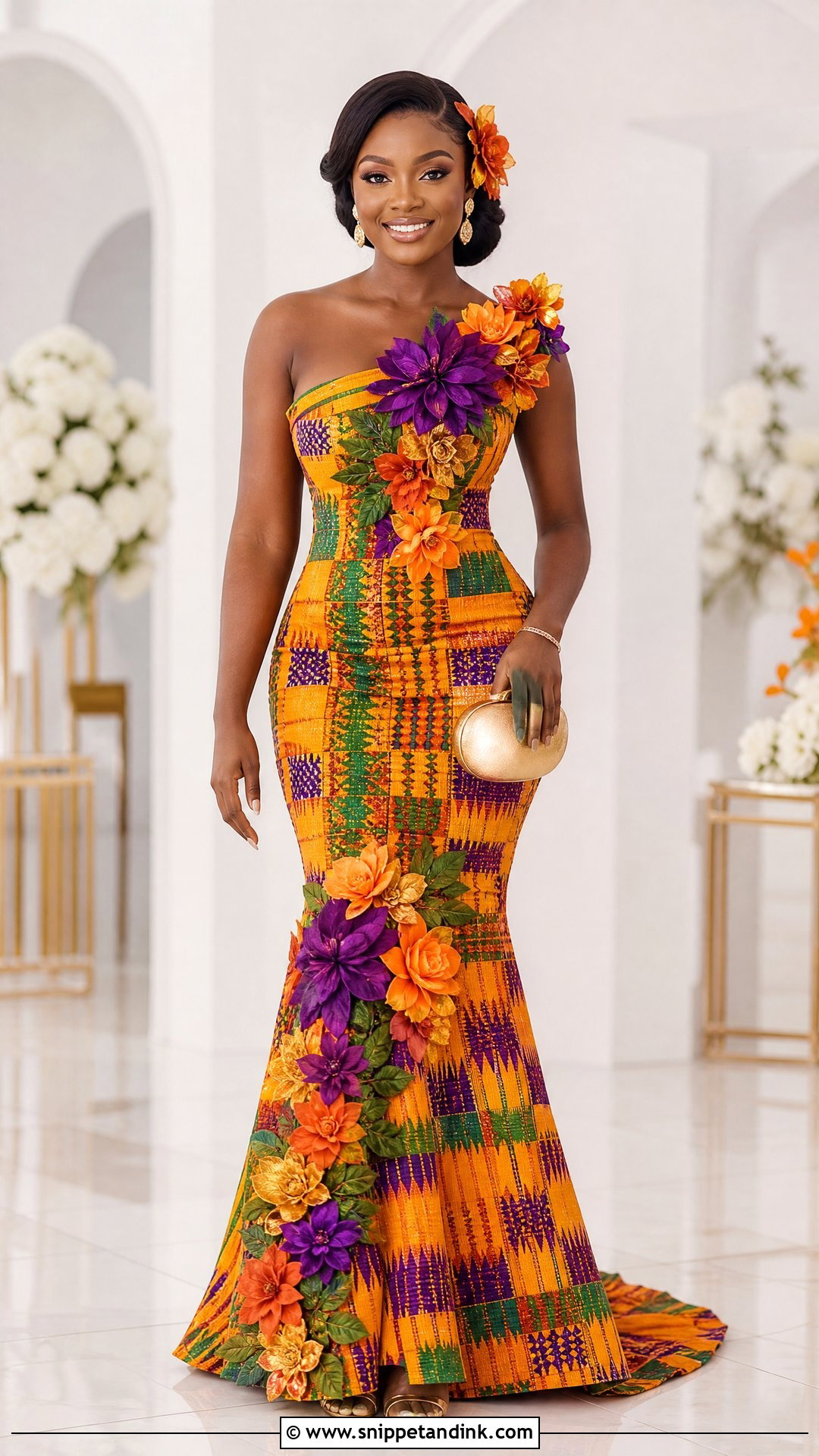
Handmade 3D flowers give Kente texture and a couture finish when they follow one clear path, along a shoulder, around the neckline or down one side of the skirt. Leave enough of the weave uncovered that the pattern is still recognizable. A fitted bodice and gentle flare give the flowers a calm base. Make petals in colors already in the Kente. Simple metallic heels, a plain clutch, small earrings and one matching flower in an updo finish it. Stiff petals scratch the inner arm and catch on bracelets, so during fittings I check where your arms rest and keep flowers away from those spots.
17. Plus Size Kente A Line Wedding Dress
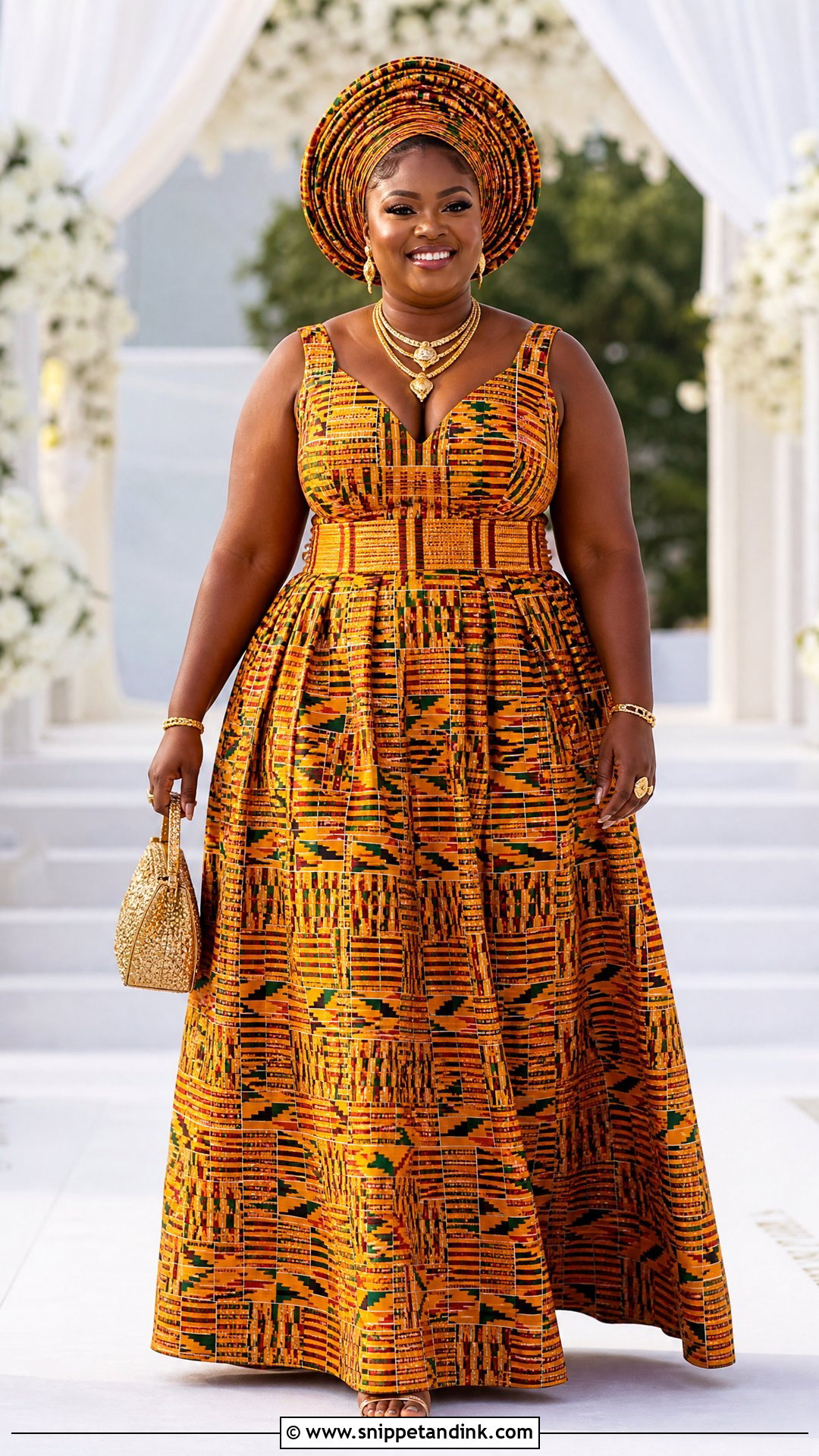
A-line is the shape I start from with most curvier brides wearing Kente, because the cloth flows away from the hips instead of gripping them. A supportive V-neck, square or off-shoulder bodice works depending on what you’re comfortable in. Vertical panel placement lengthens the figure and shows the motifs clearly. Stable block heels, a structured bag, layered gold and a matching headwrap finish it. Support matters more than tightness: wide straps, good boning and breathable lining hold you securely without an overly tight corset. Ask for a seated fitting and walk around for ten minutes before signing off.
18. Modest Kente Wedding Dress
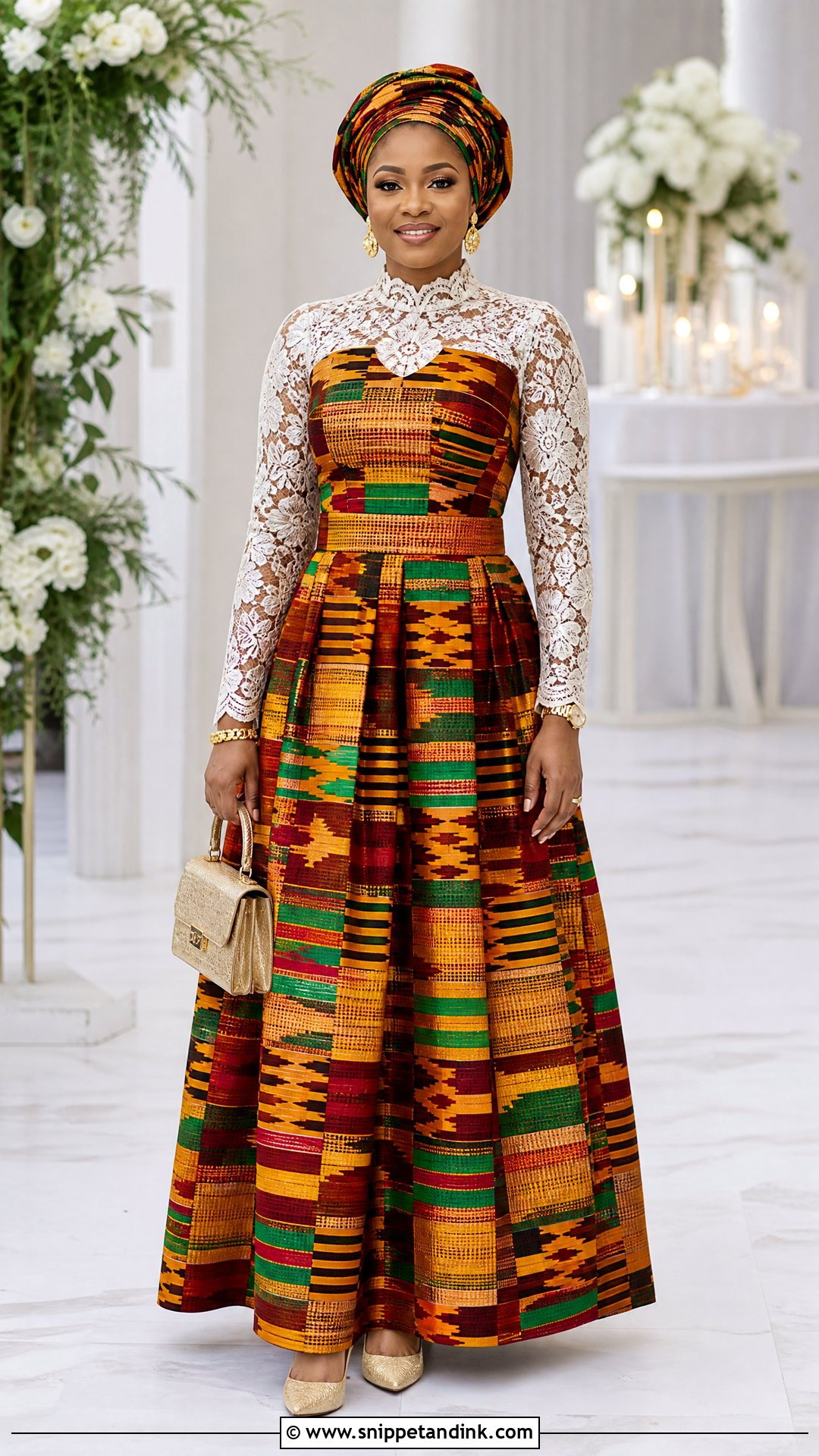
A modest Kente gown can cover fully and still feel bridal. I’d start with a high neckline, fitted long sleeves, a defined waist and a floor-length A-line. If all-Kente sleeves feel heavy, swap in lighter lace or illusion fabric. A matching headwrap, closed-toe pumps, a small top-handle bag and gold earrings complete it, with a little beading at cuffs and neckline. The gown should skim the body, shaped by darts and panels, with room to sit and dance. Choose breathable lining and skip extra underskirts for an outdoor ceremony or anywhere hot.
19. Ewe Kente Wedding Dress
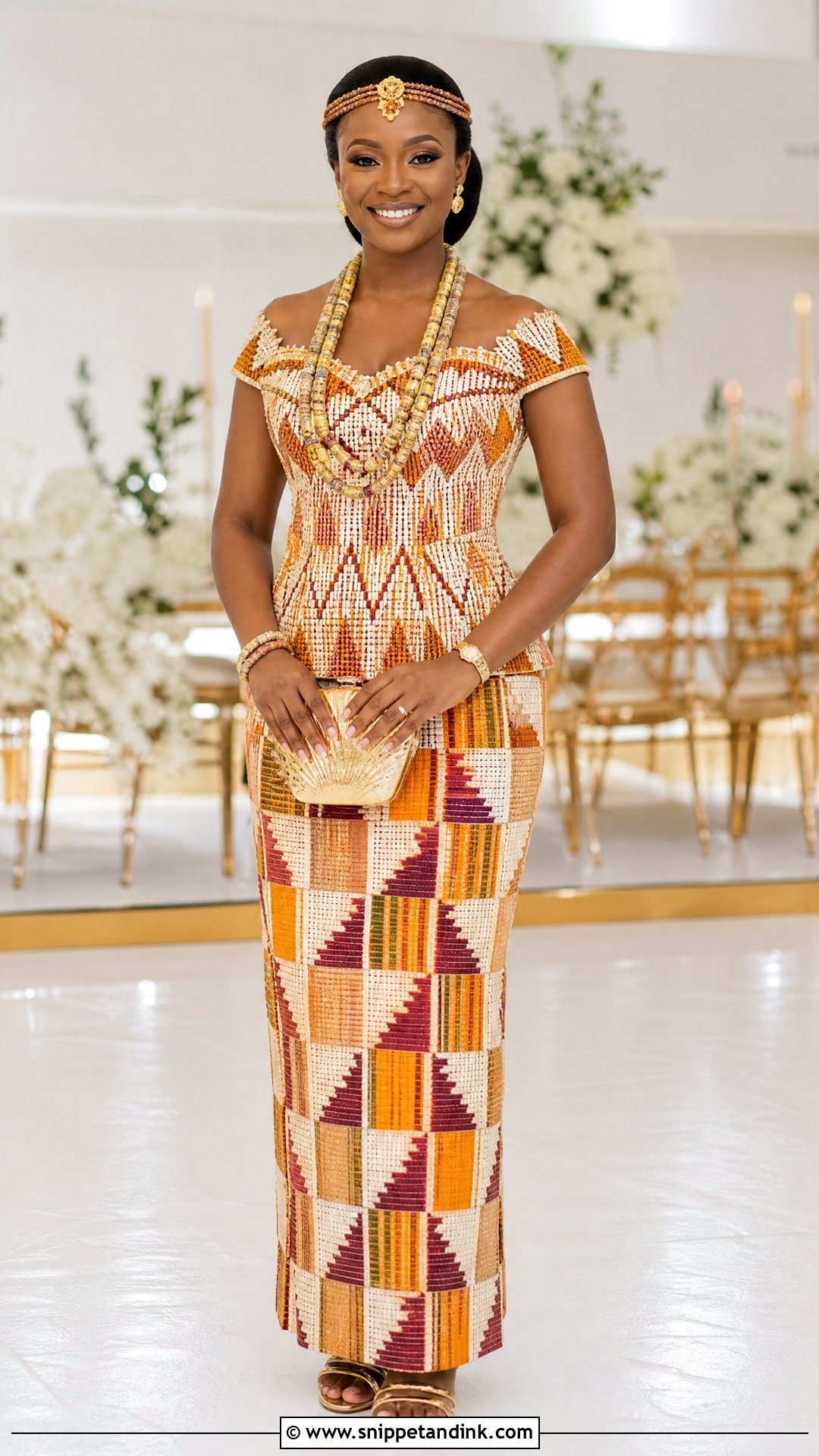
An Ewe Kente gown is a chance to wear cloth that belongs to your family’s heritage specifically. Ewe weaving has its own character, often with figurative motifs and a range of colors different from Asante Kente, so choose cloth with your relatives and a weaver rather than by color alone. It can be shaped into a fitted gown, a wrap or a blouse-and-skirt set. Traditional beads, metallic sandals, a structured clutch and a headpiece complete it. Keep the tailoring plain so the weave leads. Match the pattern at the bodice, front seams and hem. Working with the weaver directly also teaches you what your cloth means.


20. Northern Ghana Smock Wedding Dress
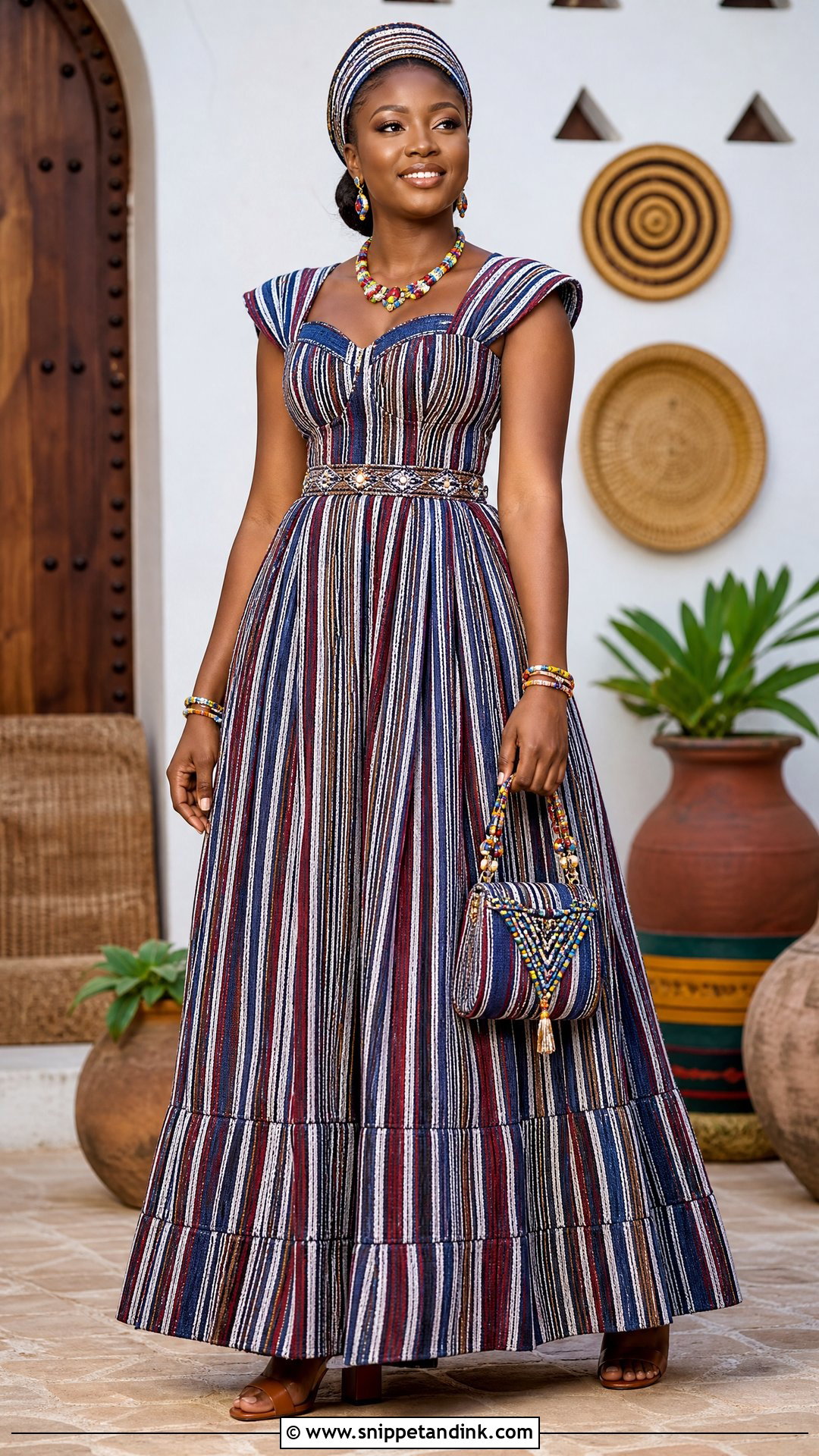
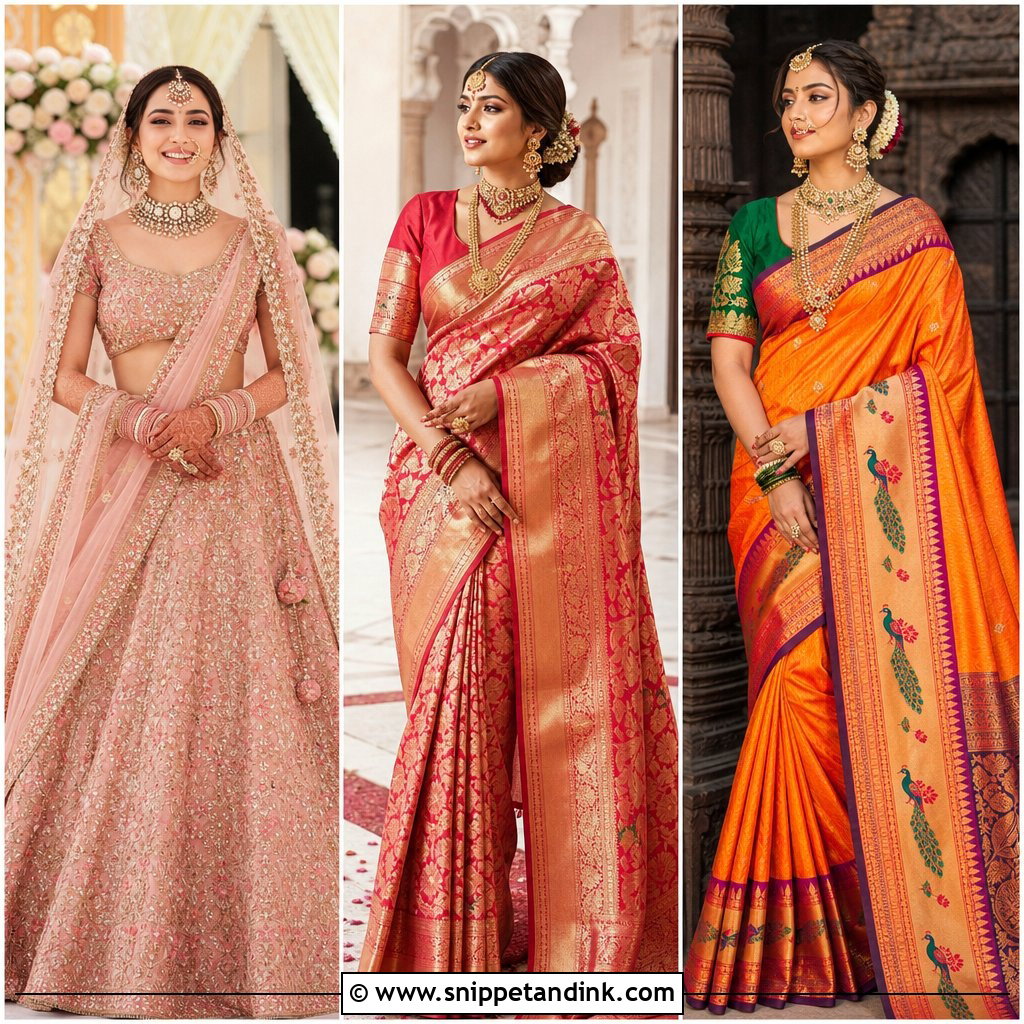
A Northern Ghana smock wedding dress is a strong alternative for brides whose roots lie in the north. Fugu, also called batakari, is made from woven cotton strips in stripes, and the cloth is thicker and more matte than Kente. A bride can wear it as a flared full-length dress, a belted tunic over a long skirt, or a gown with smock panels. Because the cotton is sturdy, it holds structure well with less boning. Leather sandals or block heels, regional beadwork, a matching headpiece and a handcrafted bag complete it. Keep the cut simple so the stripes stay visible, and talk to relatives and a local craftsperson about which details fit your community.
Dressing for the Traditional Marriage and the Church Wedding
Many Ghanaian couples hold a traditional marriage ceremony at the family home as well as a church or civil wedding, and the outfits do different jobs. At the traditional ceremony the bride often changes more than once, and the cloth is the focus; elders will notice the weave long before they notice your shoes. The church or reception look can be a white gown or a lighter Kente piece built for dancing.
Coordinate with the groom early. He’ll usually wear Kente draped toga-style over one shoulder, and many couples choose cloth from the same weave or color story so they read as a pair in photos. Agree on one shared color and let each outfit interpret it differently.
Caring for Kente Once It’s Been Worn
- Never put handwoven Kente in a washing machine; the strip seams and floats loosen. Spot clean or use a cleaner who handles woven textiles.
- Press on the reverse with a cloth between iron and weave, at a moderate setting.
- Store it folded with acid-free tissue in the folds, and refold along new lines now and then so creases don’t wear through.
- Keep it out of direct sun; bright colors fade along whatever edge faces the window.
Your Family’s Cloth Comes First, the Silhouette Second
Ghanaian cloth can carry almost any bridal shape, from a classic wrap or peplum set to a corset gown, a jumpsuit or a northern smock dress. Start with your family background, then choose fabric and accessories that mean something to the people around you. Take comfort seriously: walk, sit, greet relatives and dance in the outfit before the day. A designer experienced with Kente can match the woven pattern, reinforce heavier embellishment and shape the garment around your body instead of a trend. With good advice and careful tailoring, the result feels personal and celebratory, and shows real respect for Ghanaian craftsmanship.
You'll Like These Ideas:




Leave a Reply