
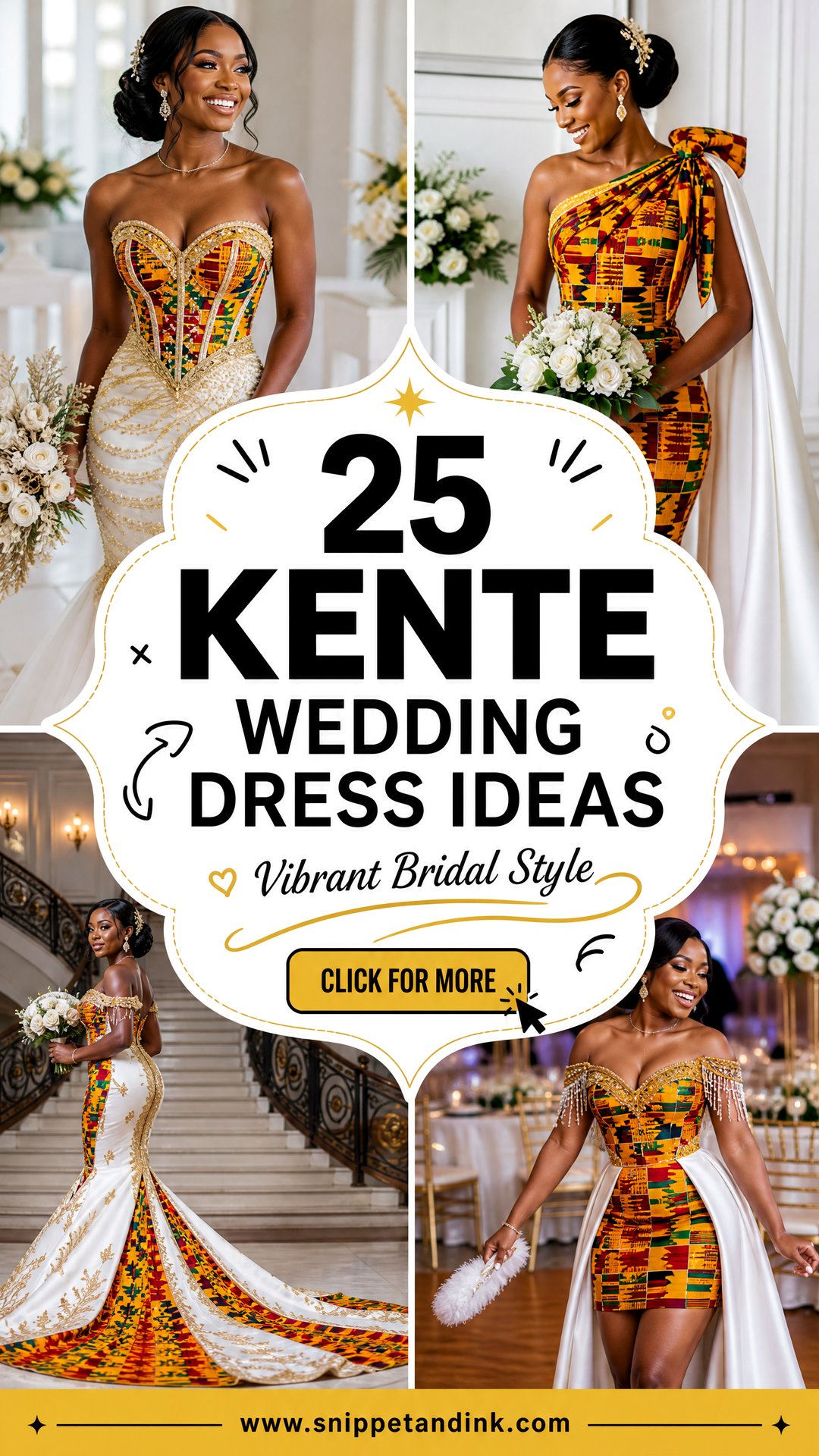
Kente carries so much meaning that a bride wearing it is never just wearing a pretty fabric. It’s Ghanaian heritage, family and often a whole community showing up in one outfit. That’s why styling it well is less about adding things and more about balance: the pattern is already loud and regal, so the shape, beads and accessories have to support it. Some brides want a full kente gown with dramatic structure, others a two-piece, a lace fusion, a cape or something light for the reception. The twenty-five looks below run from classic gold to soft pastel, with what I’d pair with each and where each one tends to need care in the making.
Handwoven or Printed: How the Cloth Changes the Dress
Before you choose a silhouette, decide what kind of kente you’re working with, because it changes what a seamstress can build. Handwoven kente is made on narrow looms as long strips that are then sewn edge to edge into a wider cloth. It’s thick, firm and holds structure well, which suits corsets, mermaids and A-lines. It doesn’t drape like silk, and it can’t be cut freely without breaking the pattern.
Printed kente-pattern fabric is lighter, softer and far less expensive. It drapes, wraps and gathers easily, so kaftans, wrap dresses and full skirts are simpler in print. Many brides combine the two: handwoven cloth for the bodice, cape or panels where it will be seen up close, and printed or plain fabric where volume is needed.
- Buy more cloth than you think. Matching the pattern across seams uses extra, and a gown with a train needs far more than a fitted dress.
- Order early. Handwoven cloth is often woven to order, and a weaver may need weeks or months depending on the design.
- Ask your seamstress whether she has sewn handwoven kente before. Cutting it badly can’t be undone.
1. Gold Kente Mermaid Wedding Dress
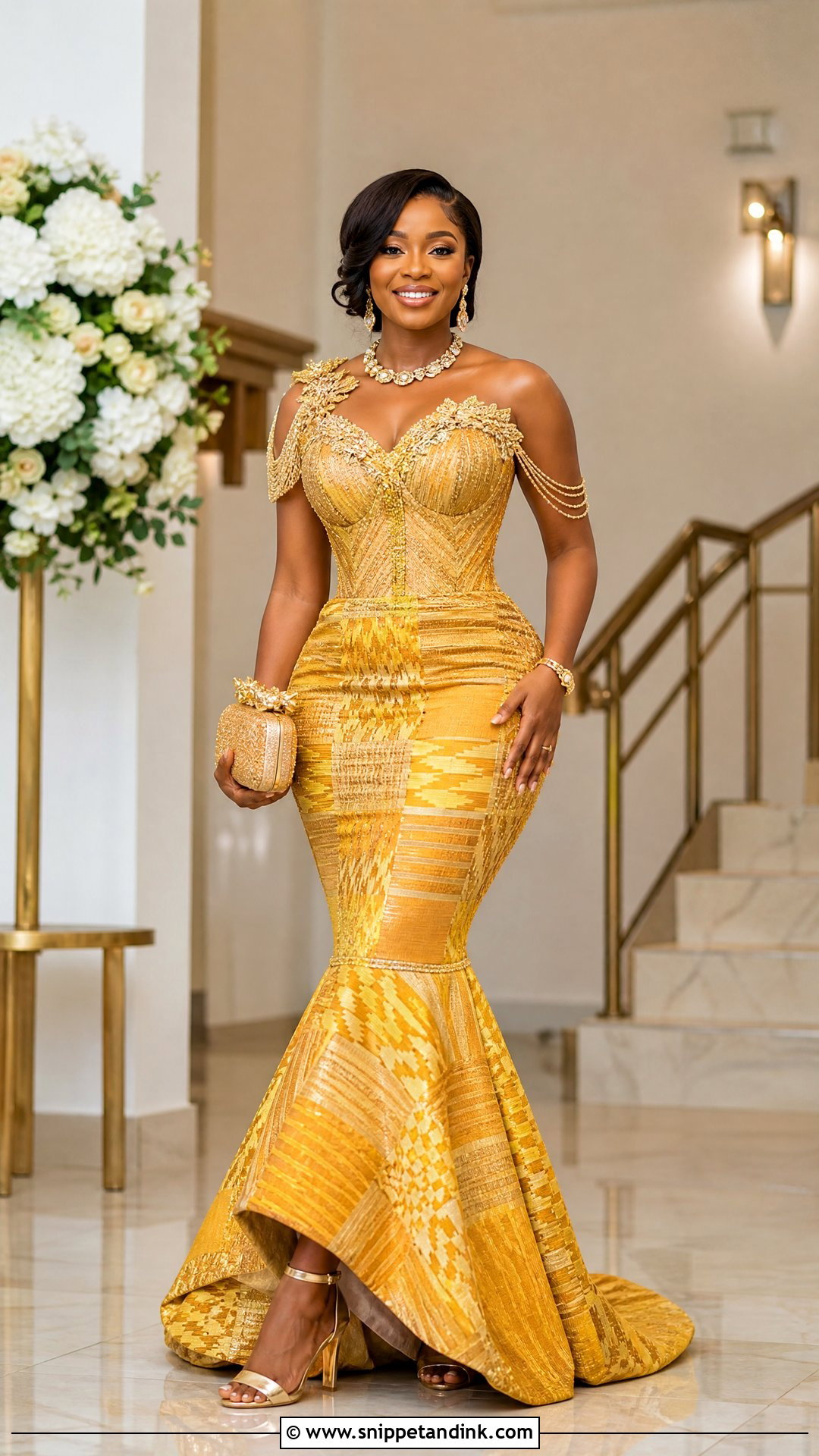
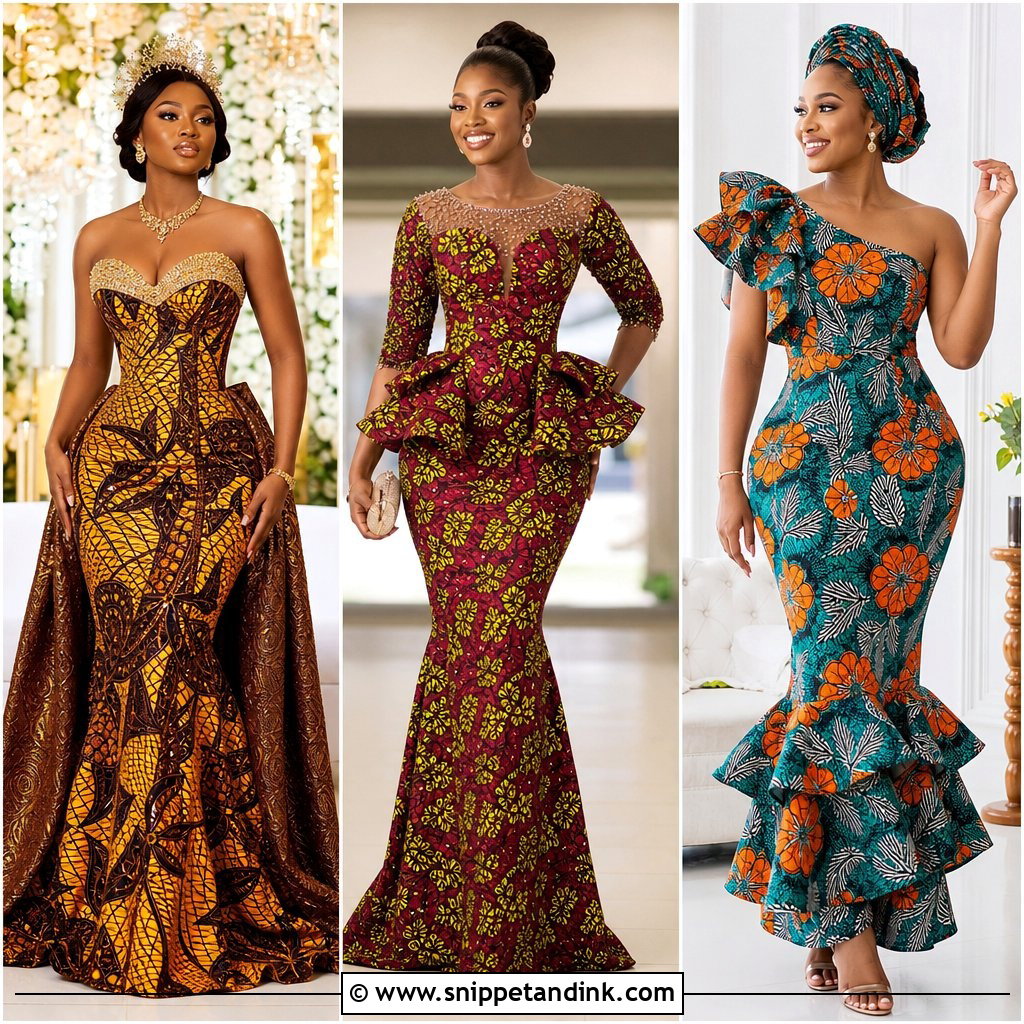
Gold kente on a mermaid cut is the classic traditional entrance, and for good reason. The fitted bodice shows the waist and hips, and the flare at the hem gives you movement without breaking up the cloth. Handwoven kente is stiff compared with lace, so a good seamstress lines the mermaid and places the flare low enough that you can still walk and sit. Crystal beads, gold bangles and a neat gele or wrapped headpiece go naturally with gold. Metallic sandals or pointed gold heels, a structured clutch and drop earrings finish it without fighting the pattern.
2. Green Kente Ball Gown Wedding Dress
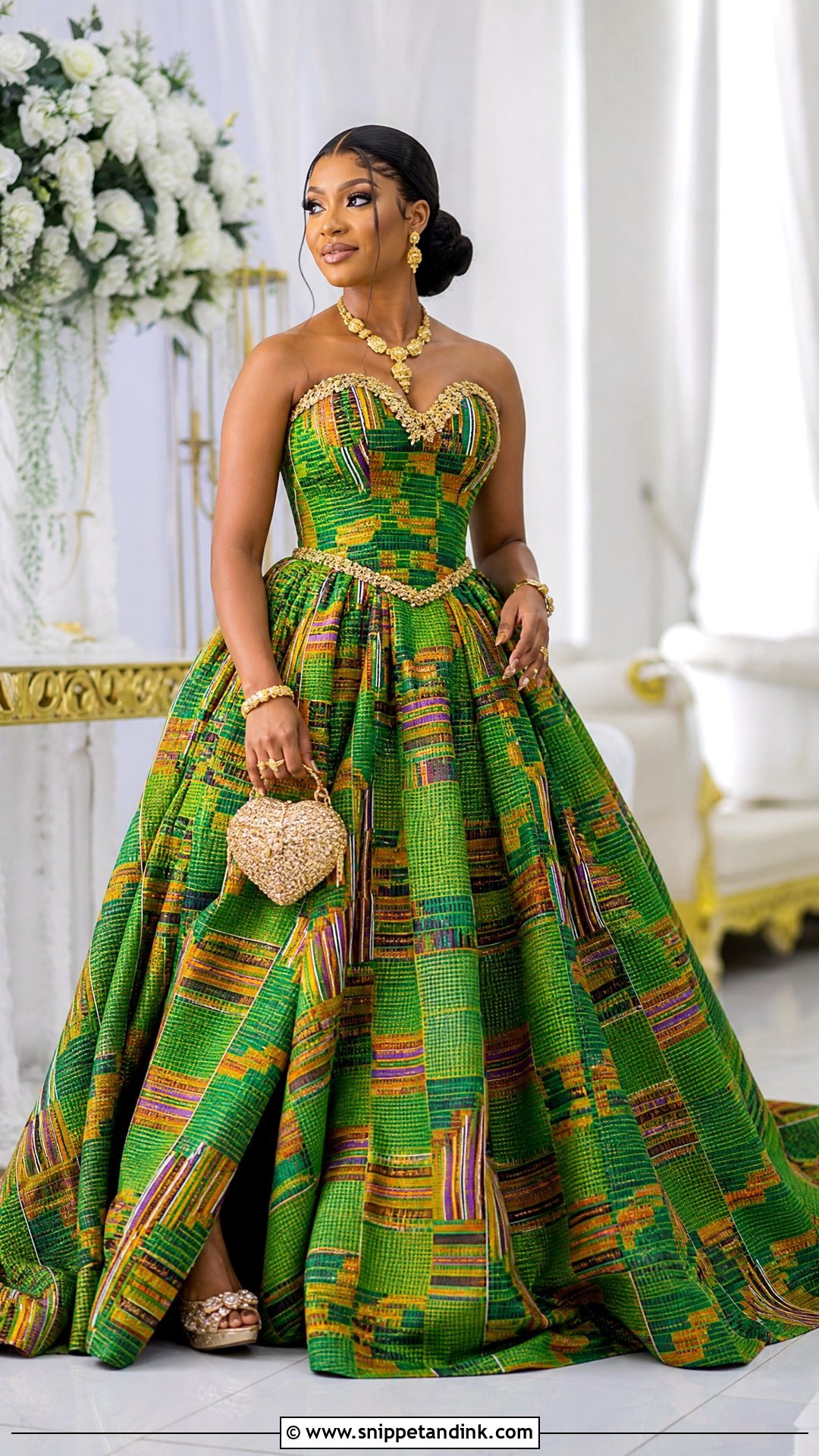
Green kente in a ball gown softens the grandeur a little. The full skirt gives volume and the fitted bodice keeps the shape balanced. Most green kente runs with gold, cream or yellow in the weave, so I keep accessories warm: gold jewelry, embellished heels and a small beaded purse. A smooth low bun or sculpted updo shows off the neckline. Be realistic about weight here. A full skirt in handwoven cloth is heavy, and many designers use kente for the bodice and an overlay while building the volume underneath with lighter layers.
3. Red Kente Off Shoulder Wedding Dress
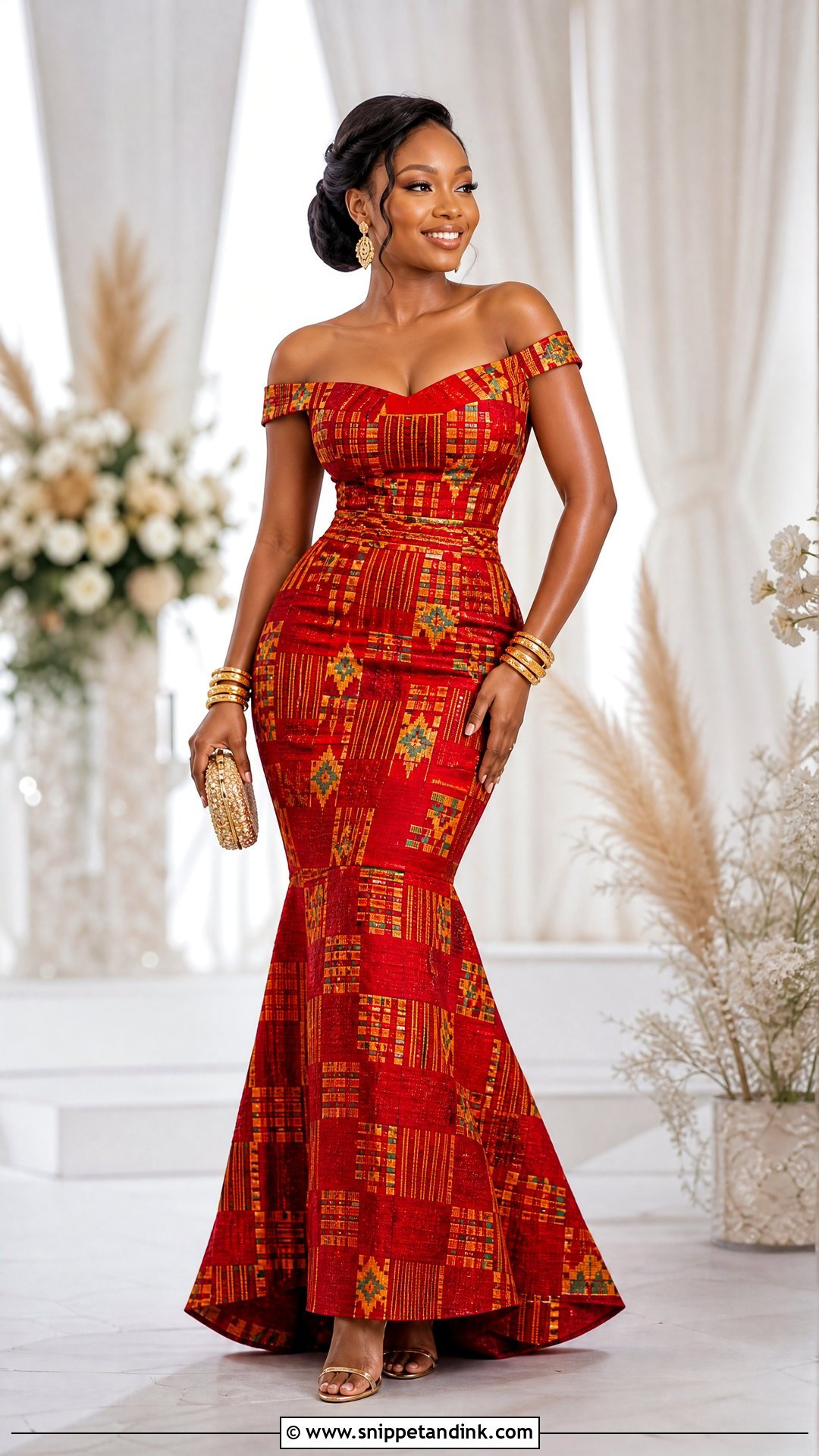
Red is the boldest kente on this list and photographs with real force. An off-shoulder neckline frames the collarbones and keeps the top half clean, which helps when the pattern is this strong. Gold earrings, stacked bangles and simple heeled sandals are enough. The skirt can be fitted, mermaid or a soft flare depending on how much drama you want. On makeup, I’d steer you toward glowing skin and defined eyes rather than a strong lip; a red lip against red kente competes.
4. White And Kente Lace Wedding Dress
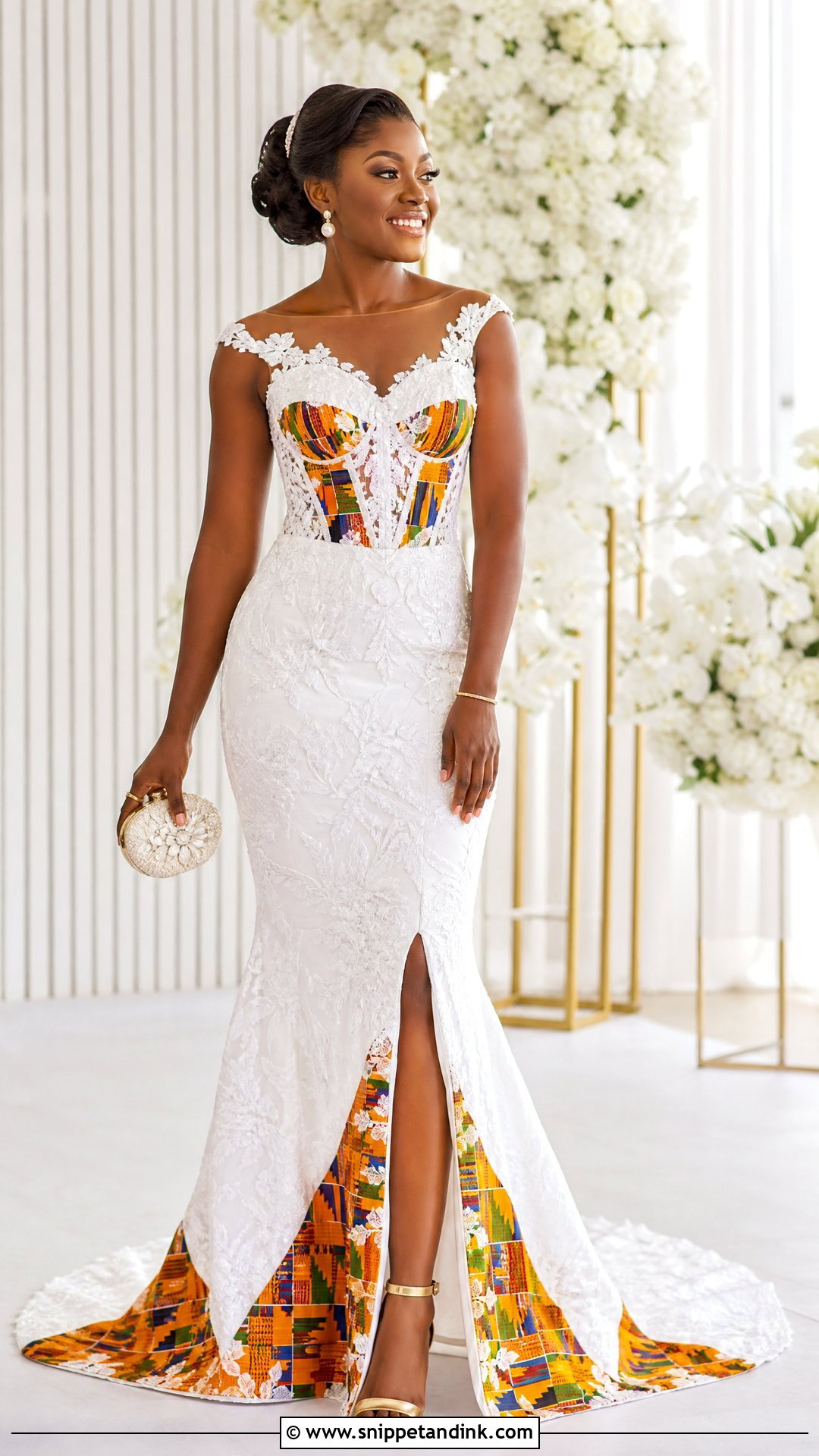
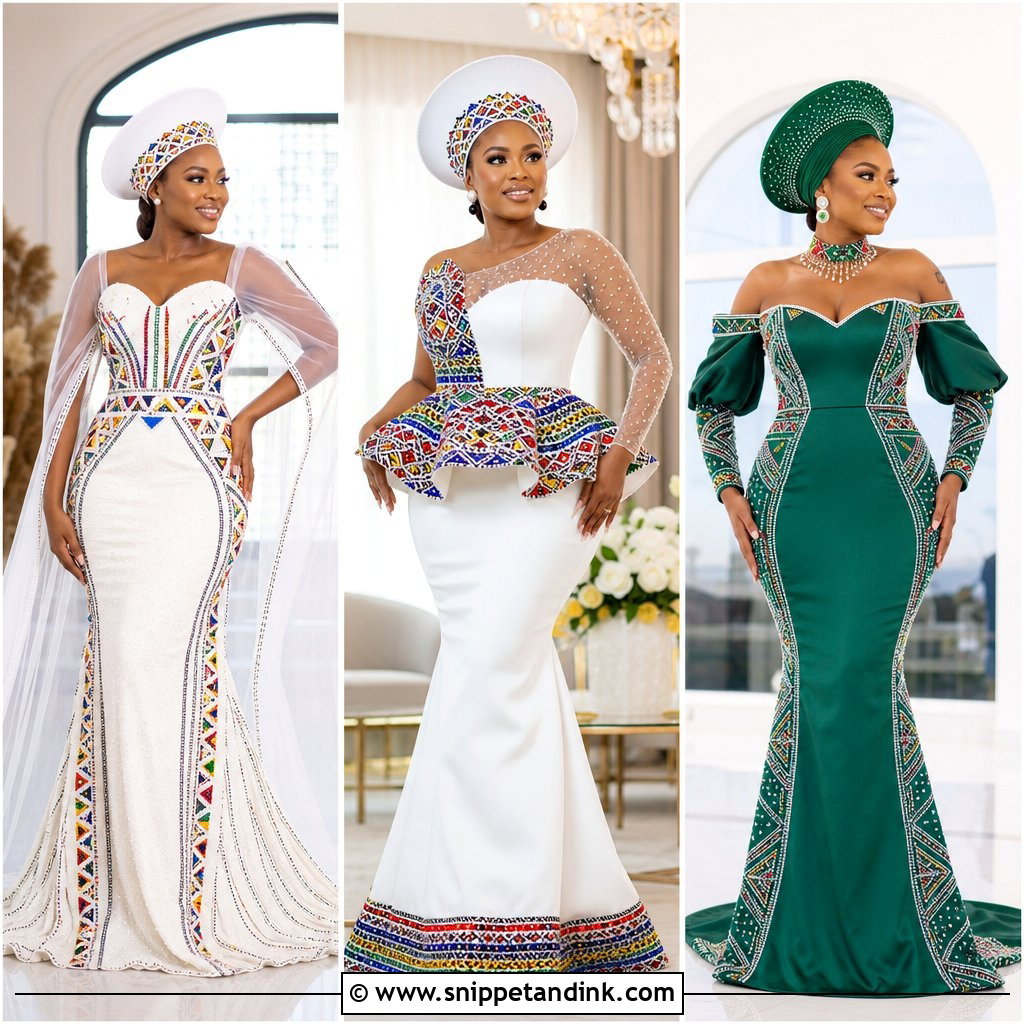
White lace with kente panels is the fusion look I’m asked about most, because one dress can cover both a church ceremony and the traditional celebration. Kente can sit at the waist, hem, sleeves or bodice of a fitted, A-line or long-sleeve gown. The joins are the tricky part. Lace stretches and handwoven kente doesn’t, so the seamstress usually backs the lace where they meet to stop puckering. Style it with pearl earrings, gold heels and a simple veil, and let the two fabrics carry the meaning.
5. Kente Corset Wedding Dress
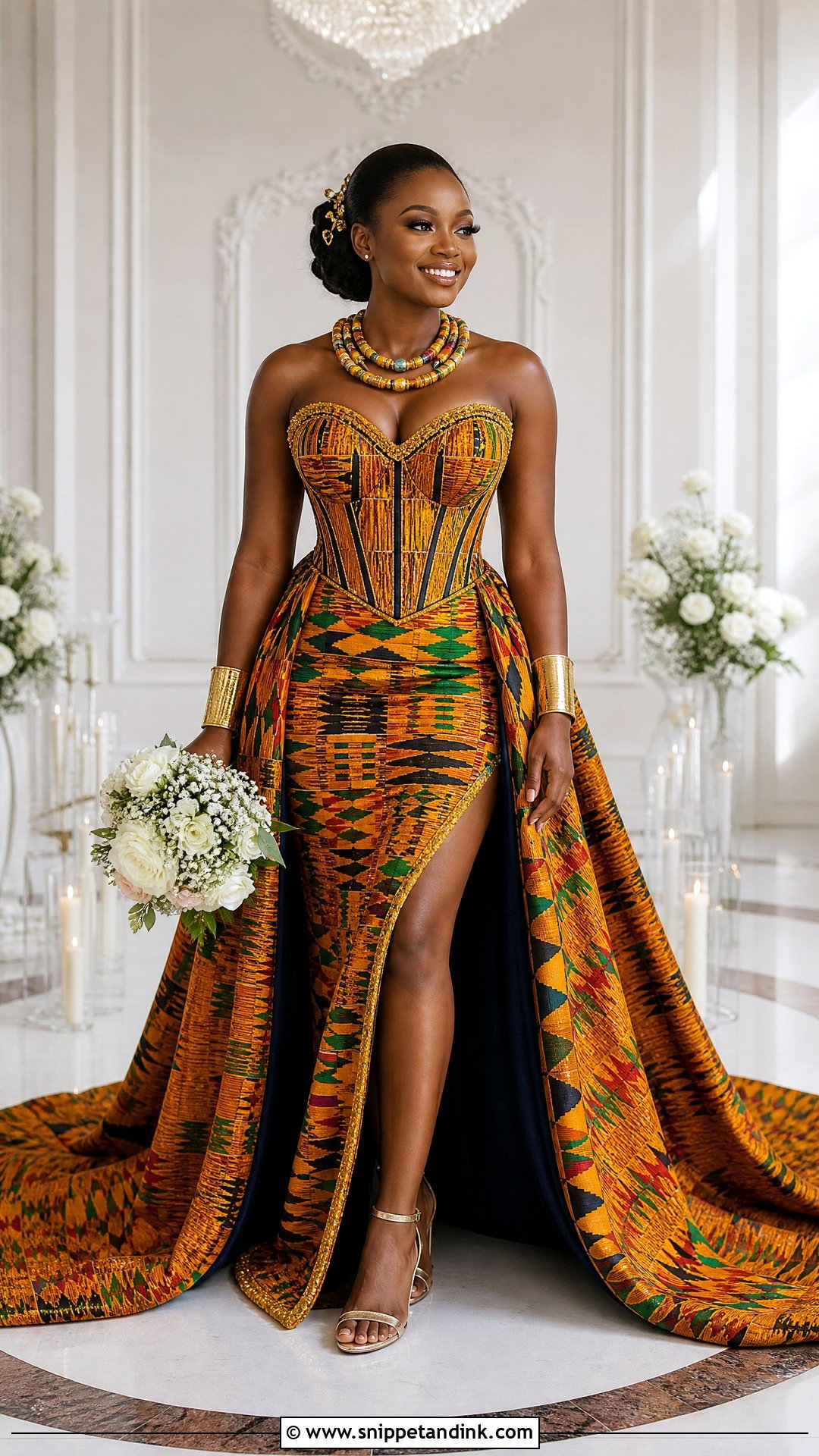
A corset bodice gives kente a sculpted, structured shape that the cloth suits well, since its stiffness takes boning cleanly. Pattern placement matters more here than anywhere: the strips should line up through the center front so the design looks planned rather than cut at random. I’d add a beaded necklace, gold cuffs and slim heels. A detachable train adds drama for photos and comes off for dancing. Keep accessories restrained; the corset is already a strong statement.
6. Kente Two Piece Wedding Dress
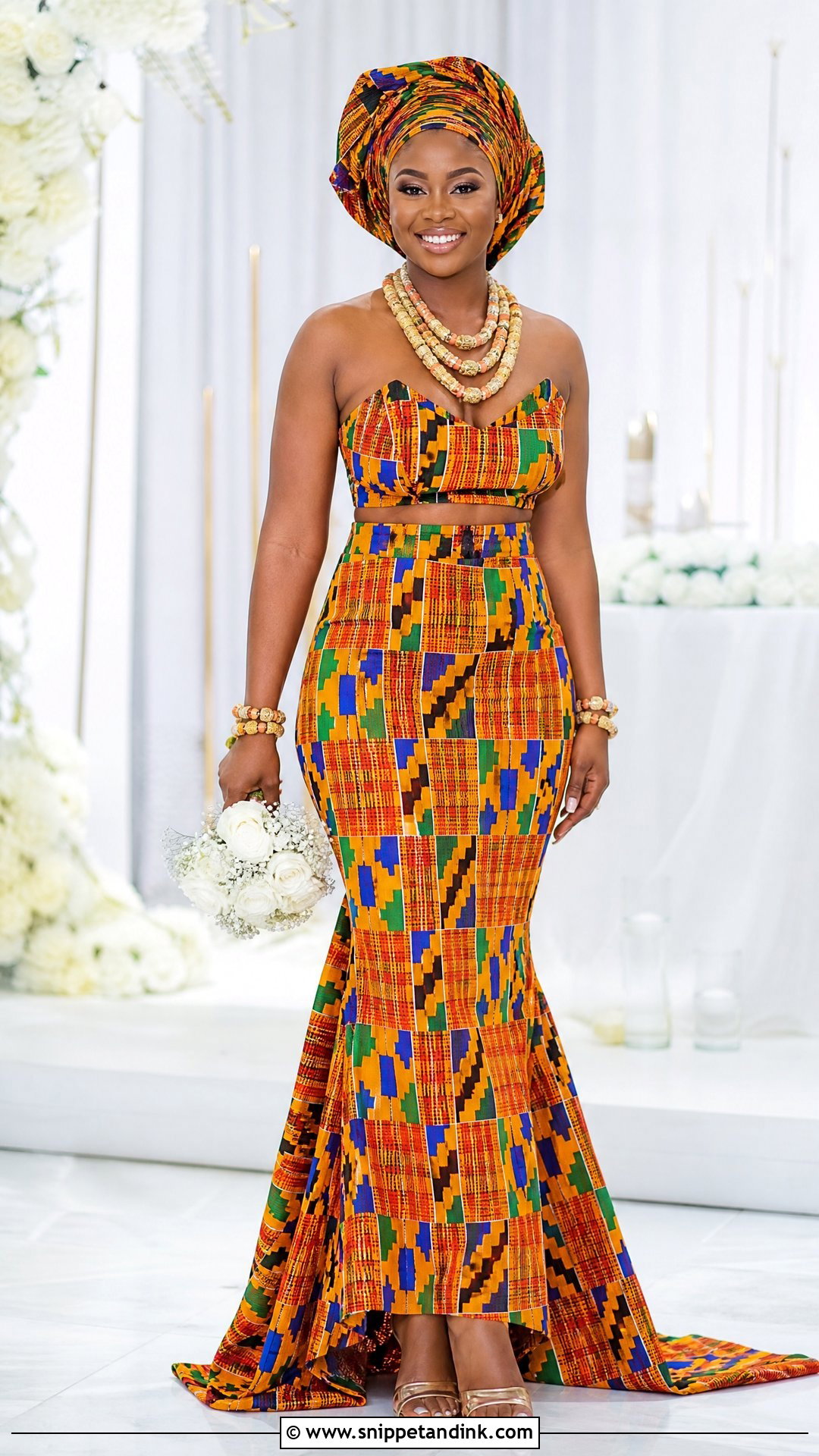
A kente two piece wedding dress is often the most practical choice I can offer. A fitted crop or corset top with a matching skirt is easier to fit, since each piece is altered separately, and you can wear the pieces again later. The skirt can be high-waisted, mermaid, straight or full. Gold heels, layered beads and a matching headwrap complete it. If you go with a crop top, have the seamstress add a waist stay or hook so the top doesn’t ride up when you dance.
7. Blue Kente Wedding Dress
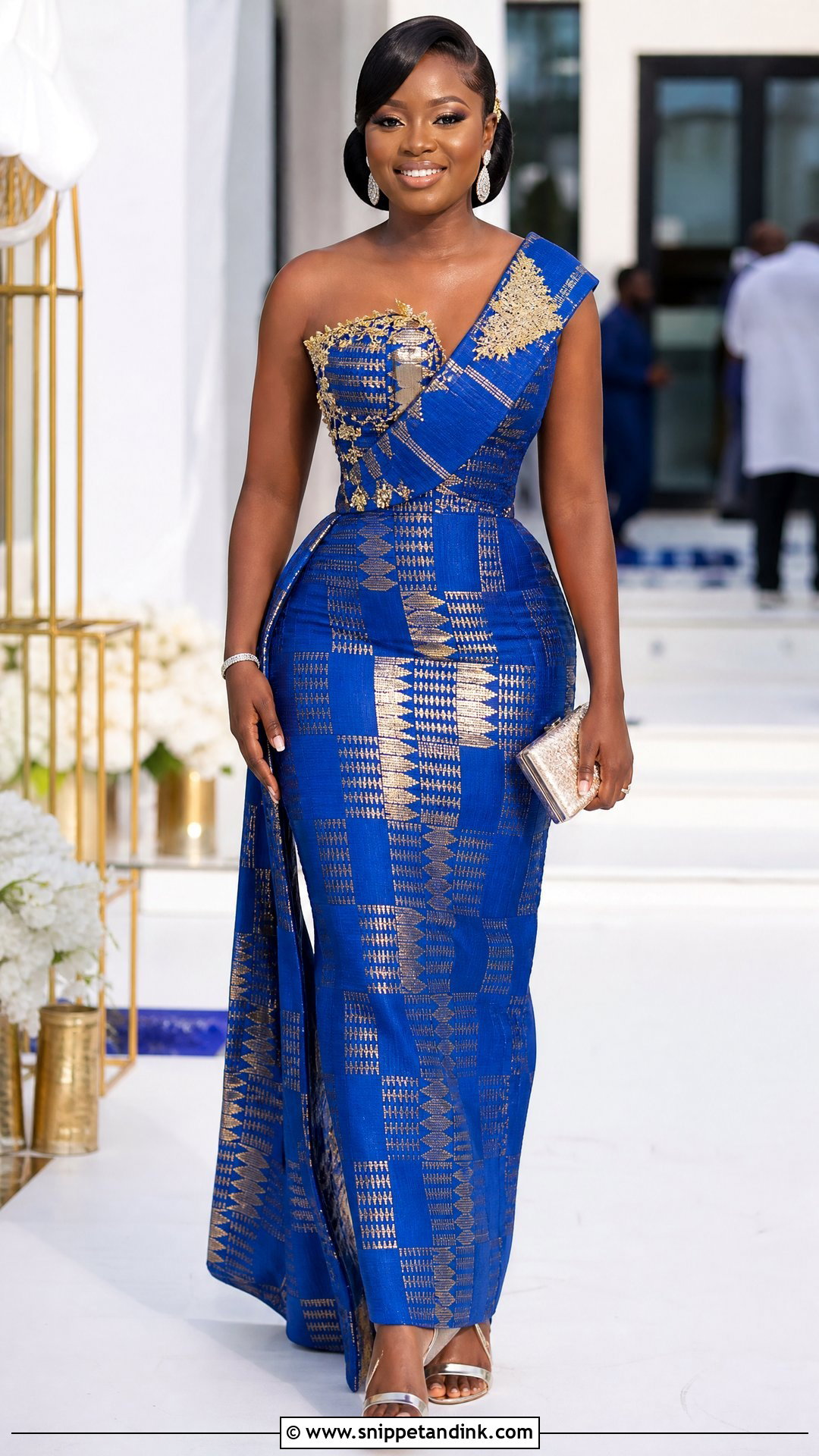
Blue kente is calmer than gold or red, and it’s a lovely choice if you want color without the most common palette. It looks fresh with silver, gold, cream or turquoise in the weave. A fitted gown with a flared hem works, as does an A-line or a draped shape. Metallic heels, crystal earrings and a small bridal clutch keep it refined, and a sleek hairstyle lets the pattern breathe. Check the blue against your skin in daylight; deep indigo and bright royal blue read very differently on camera.
8. Kente Wrap Dress Wedding Dress
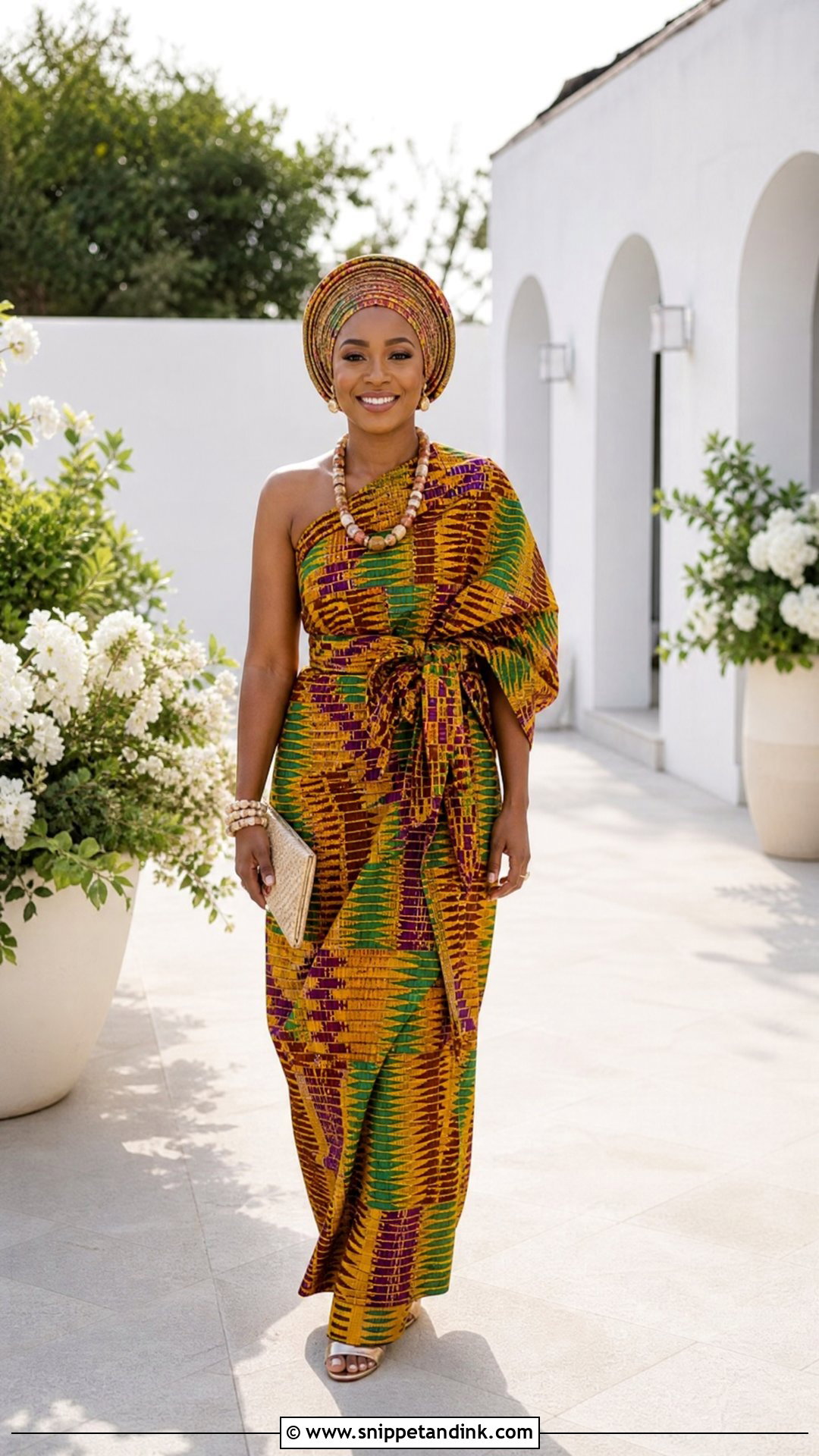
Wrap dresses define the waist on their own, which makes them one of the most comfortable ways to wear kente for a long ceremony in warm weather. It can be floor length with a side tie, a draped shoulder or a soft slit for movement. Gold sandals, a woven clutch and traditional beads finish it. The catch is that a wrap needs some drape, and the thickest handwoven kente doesn’t wrap softly. A lighter-weight weave or a kente-and-silk combination behaves better, and that’s worth discussing with your designer up front.
9. Kente Cape Wedding Dress
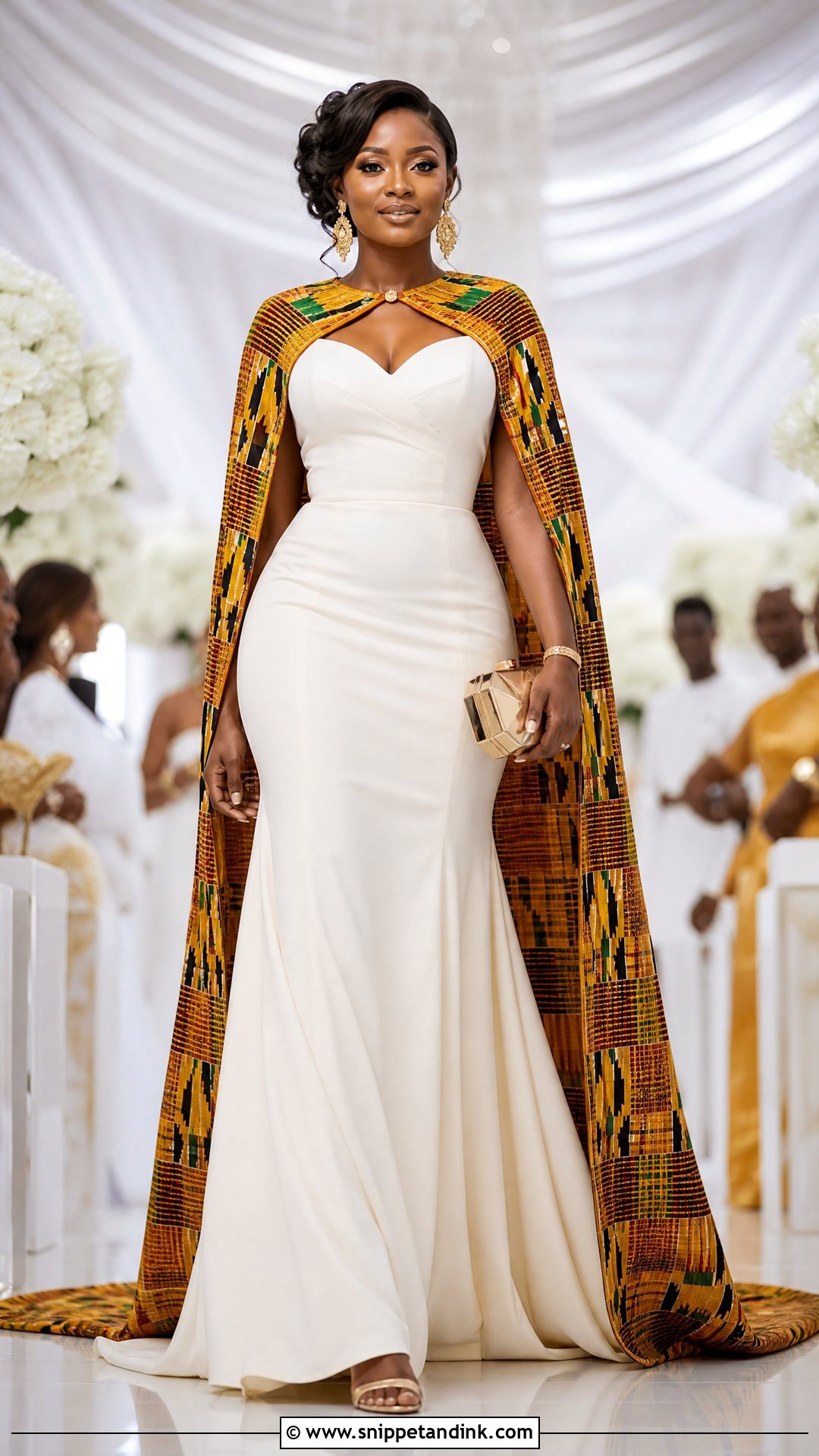
A kente cape layered over a plain dress gives you the richness of the cloth without a fully patterned gown. The base can be white, ivory, gold or kente itself, and the cape can sweep the floor or stop at the waist. It’s the look I recommend when the back view matters, like a long aisle or a church with guests seated on both sides. Simple heels, statement earrings and a neat clutch are enough. Skip heavy necklaces if the cape sits close to the neck, and make sure it’s anchored at the shoulders so it doesn’t pull backwards all day.
10. Kente One Shoulder Wedding Dress
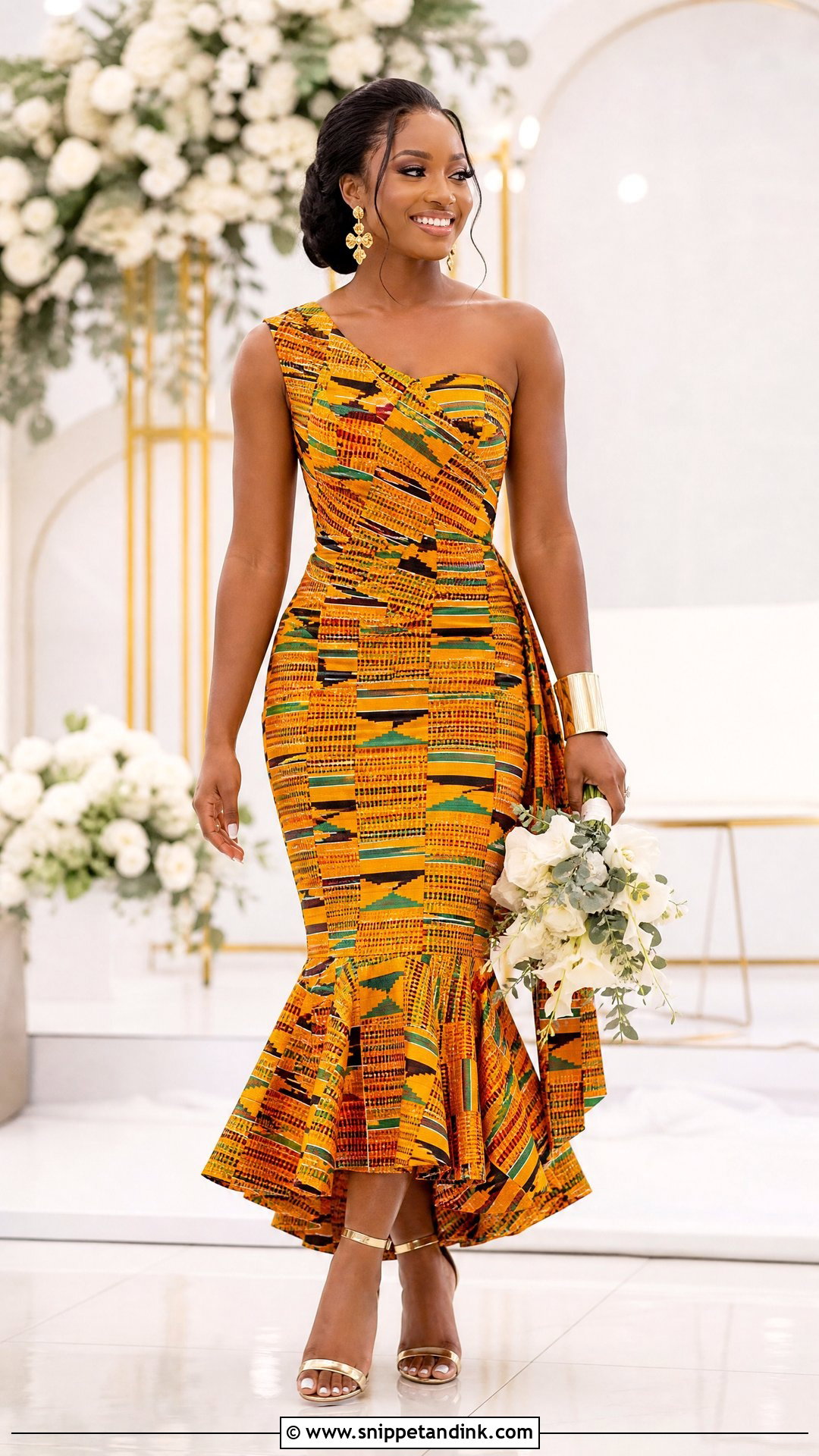
One bare shoulder draws the eye up and gives kente a modern shape. It works with a fitted skirt, high slit or mermaid hem. Choose one strong accessory, bold earrings or a cuff, and leave it there. Gold heels and a small clutch finish it, and a side-parted style or pulled-back bun keeps the shoulder visible. Because kente is stiff, the single strap needs internal support; without it, the dress pulls toward the bare side after a few hours.
11. Kente Peplum Wedding Dress
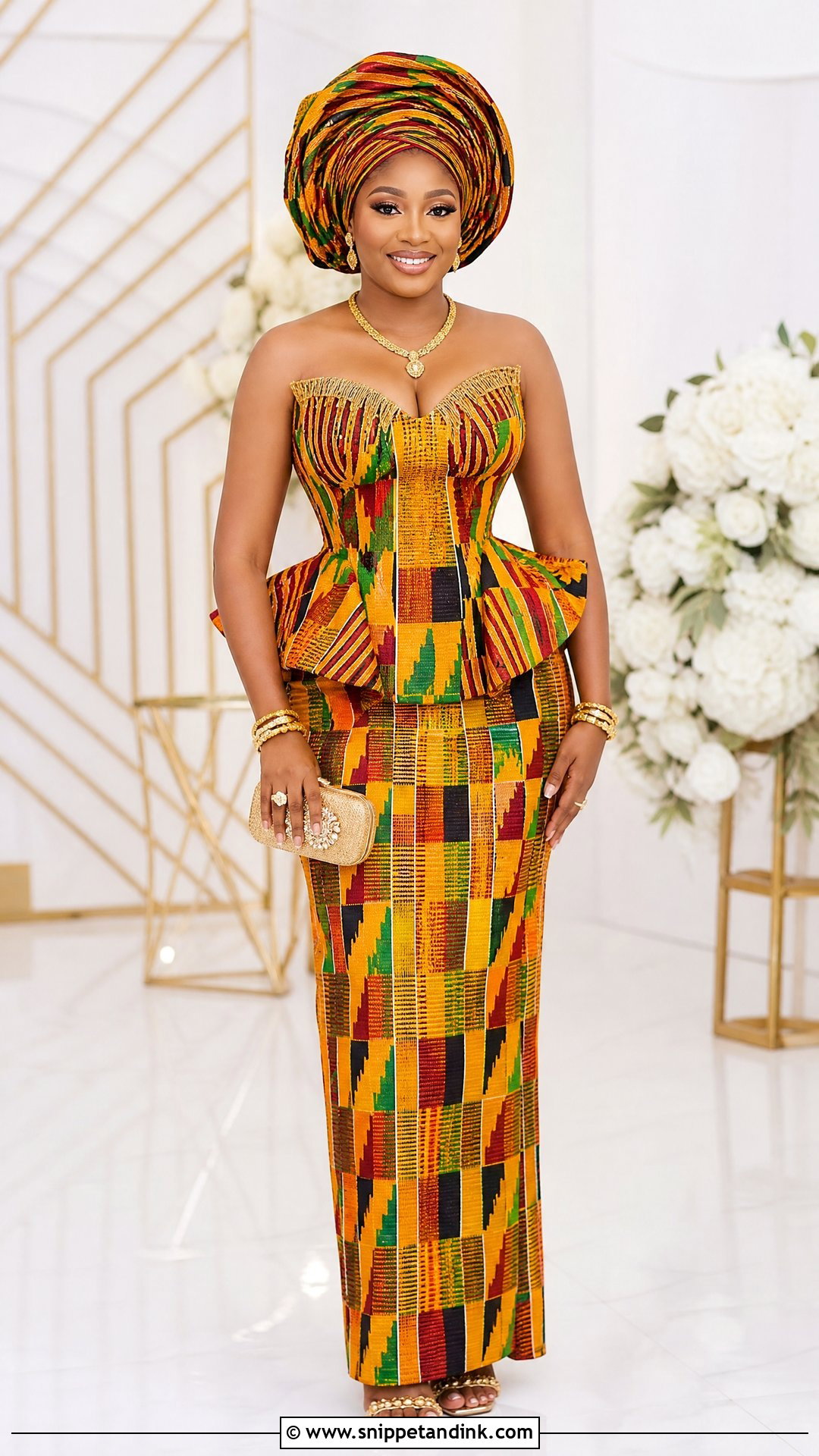
A kente peplum wedding dress adds shape at the waist and gives soft coverage over the tummy, which many of my brides appreciate in photos of them seated. The peplum pairs with a fitted, pencil or long flared skirt, and it lets the pattern show in layers. Gold jewelry, beaded sandals and a matching headwrap complete it. Ask for the peplum to be lined or interfaced, or it can flip upward when you sit. It suits a traditional Ghanaian celebration particularly well.
12. Kente High Low Wedding Dress
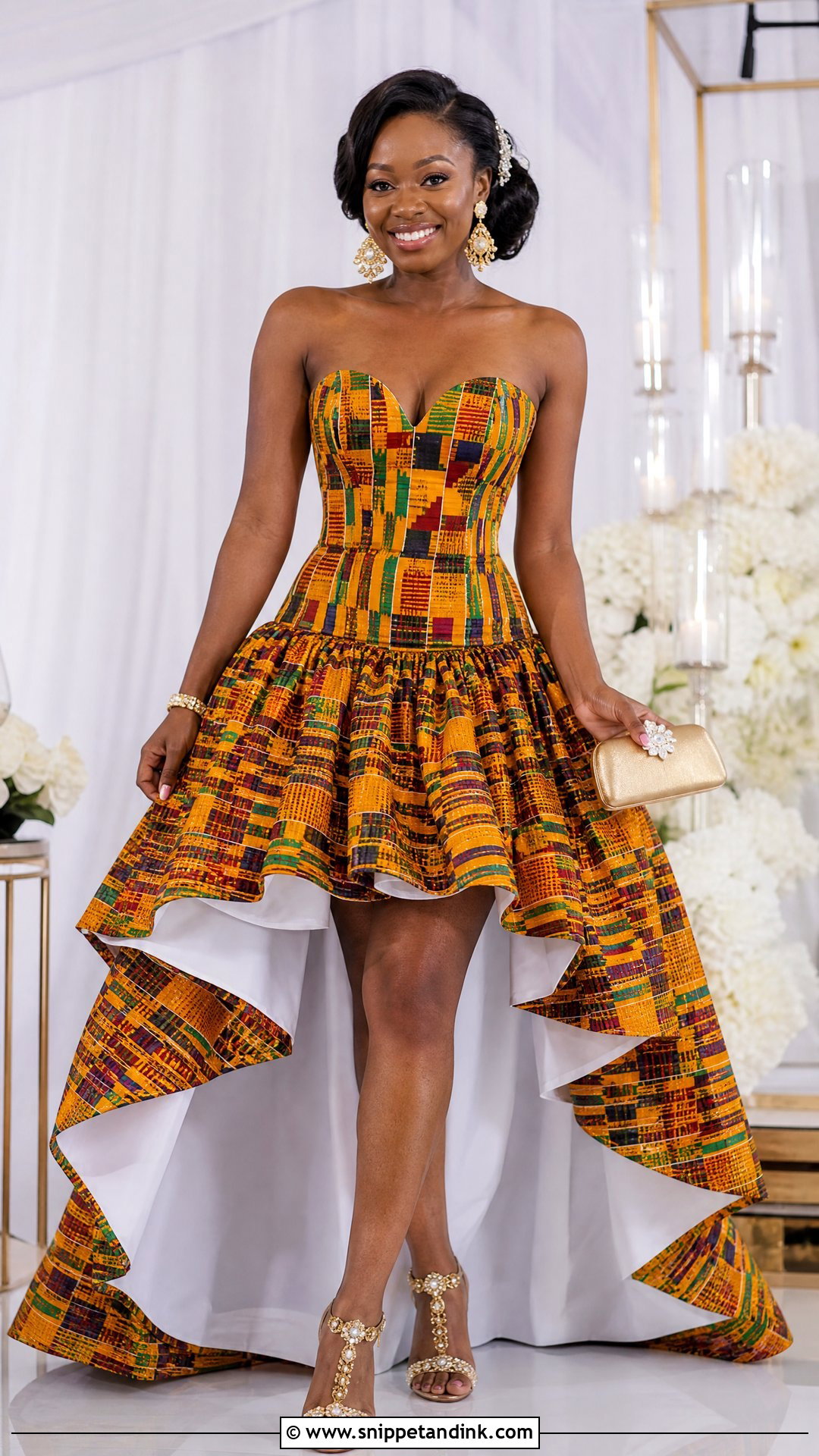
High-low hems bring movement and a little playfulness. The shorter front shows off strappy heels, metallic pumps or embellished sandals, while the longer back keeps it bridal. A fitted bodice balances the hem, and a beaded necklace or bold earrings finish it. It’s lighter than a full gown, so it’s practical for dancing and greeting guests. Pick a pattern with strong color contrast so the uneven hemline actually reads in photos; low-contrast kente makes the shape disappear.
13. Kente A Line Wedding Dress
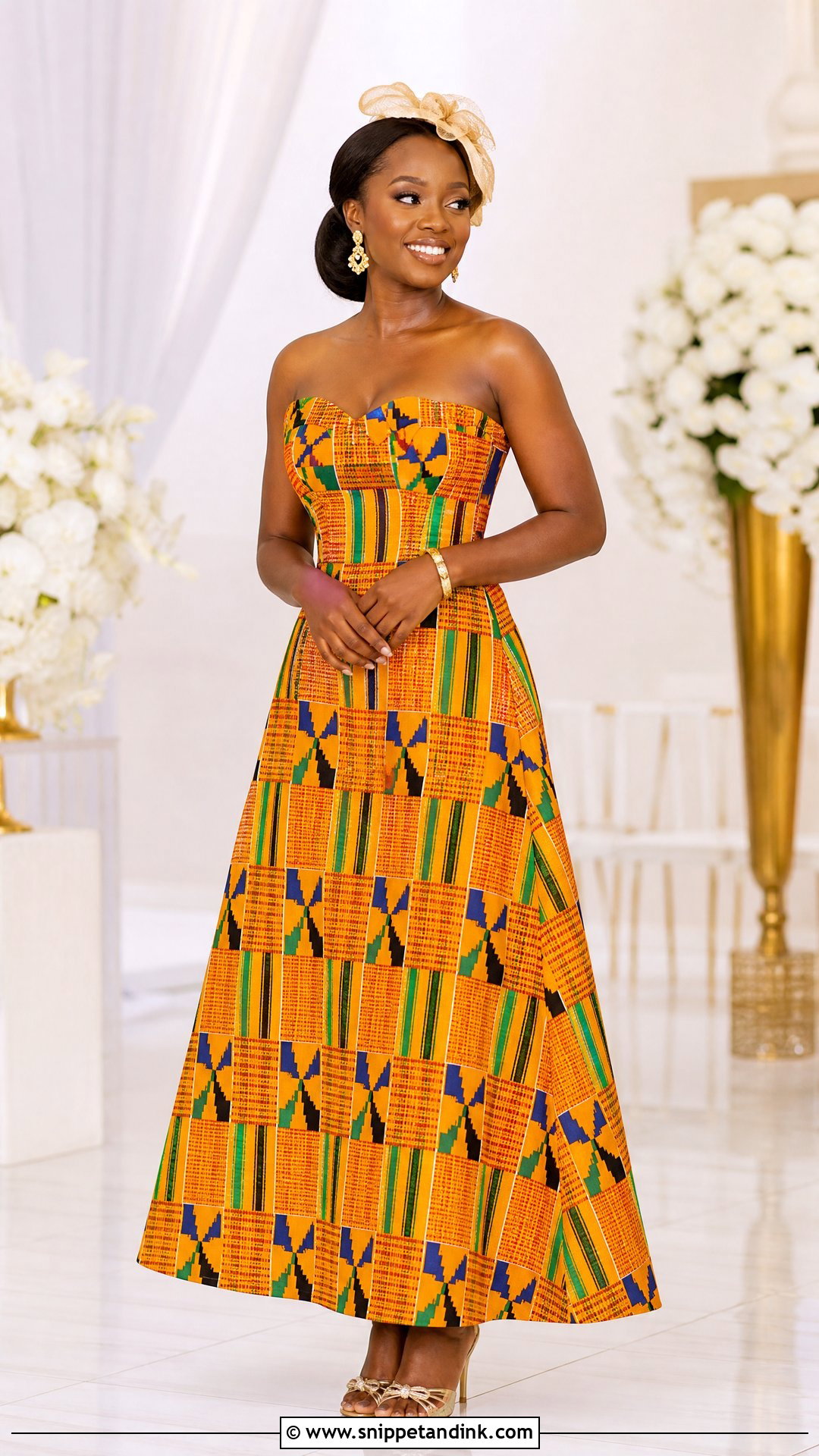
An A-line is the shape I’d suggest if you’re unsure, because it suits almost every figure. It fits through the bodice and widens gently from the waist, which gives handwoven kente room to sit flat instead of straining over the hips. Gold heels, fine earrings and a soft headpiece or wrap are all it needs. It’s comfortable standing, walking and seated, and it’s modest without trying. A good everyday answer to a complicated cloth.
14. Kente Strapless Wedding Dress
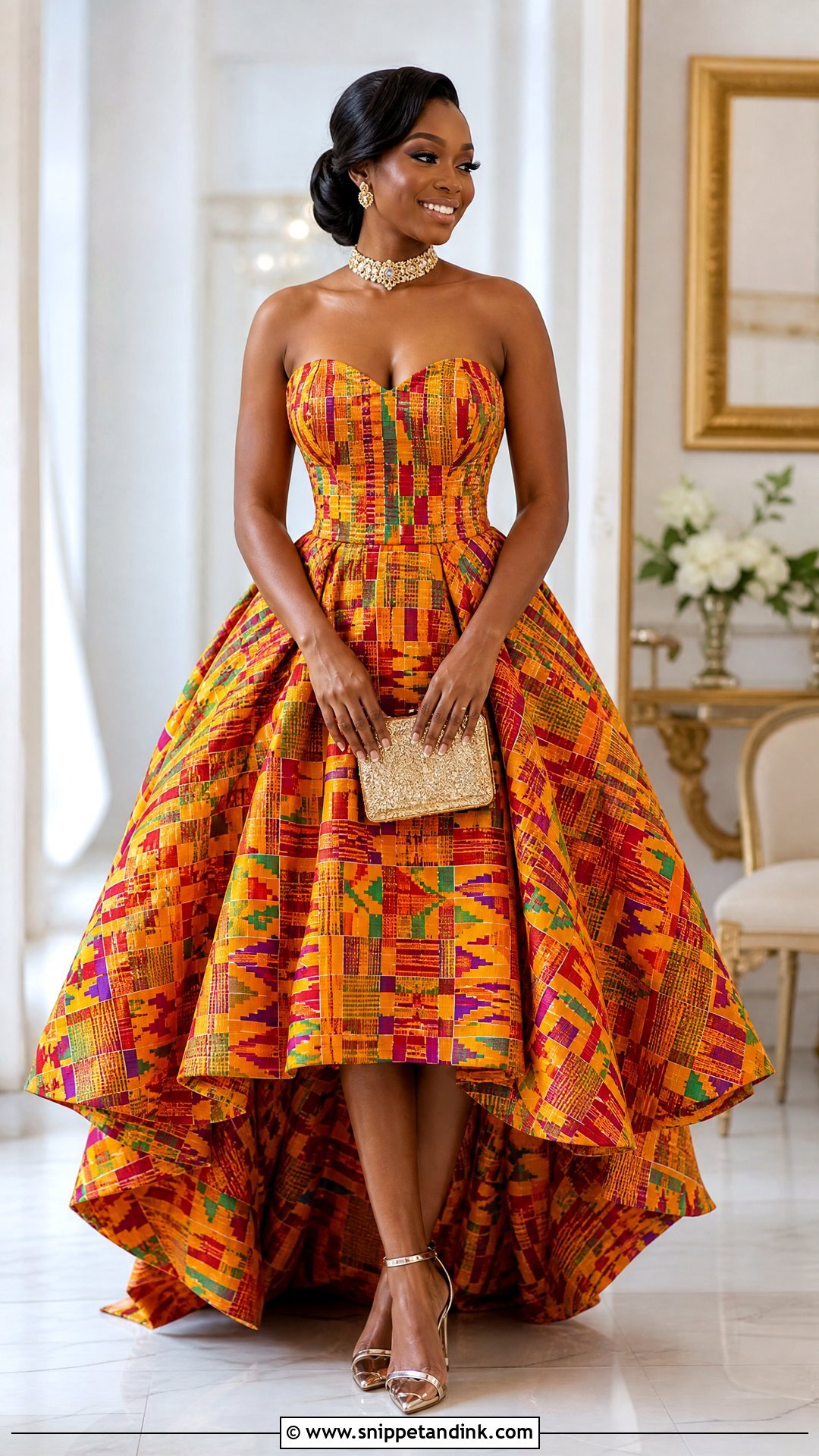
Strapless leaves room for jewelry, so this is where a beaded choker or bold gold necklace earns its place. A fitted strapless bodice over a mermaid or ball gown skirt looks elegant, and a detachable kente shawl or wrap covers the shoulders for parts of the ceremony where that’s expected. Metallic heels and a structured clutch keep it polished. Tailoring is everything. The bodice has to grip without you adjusting it, and with heavy kente the skirt’s weight pulls down on that bodice all day.


15. Kente Long Sleeve Wedding Dress
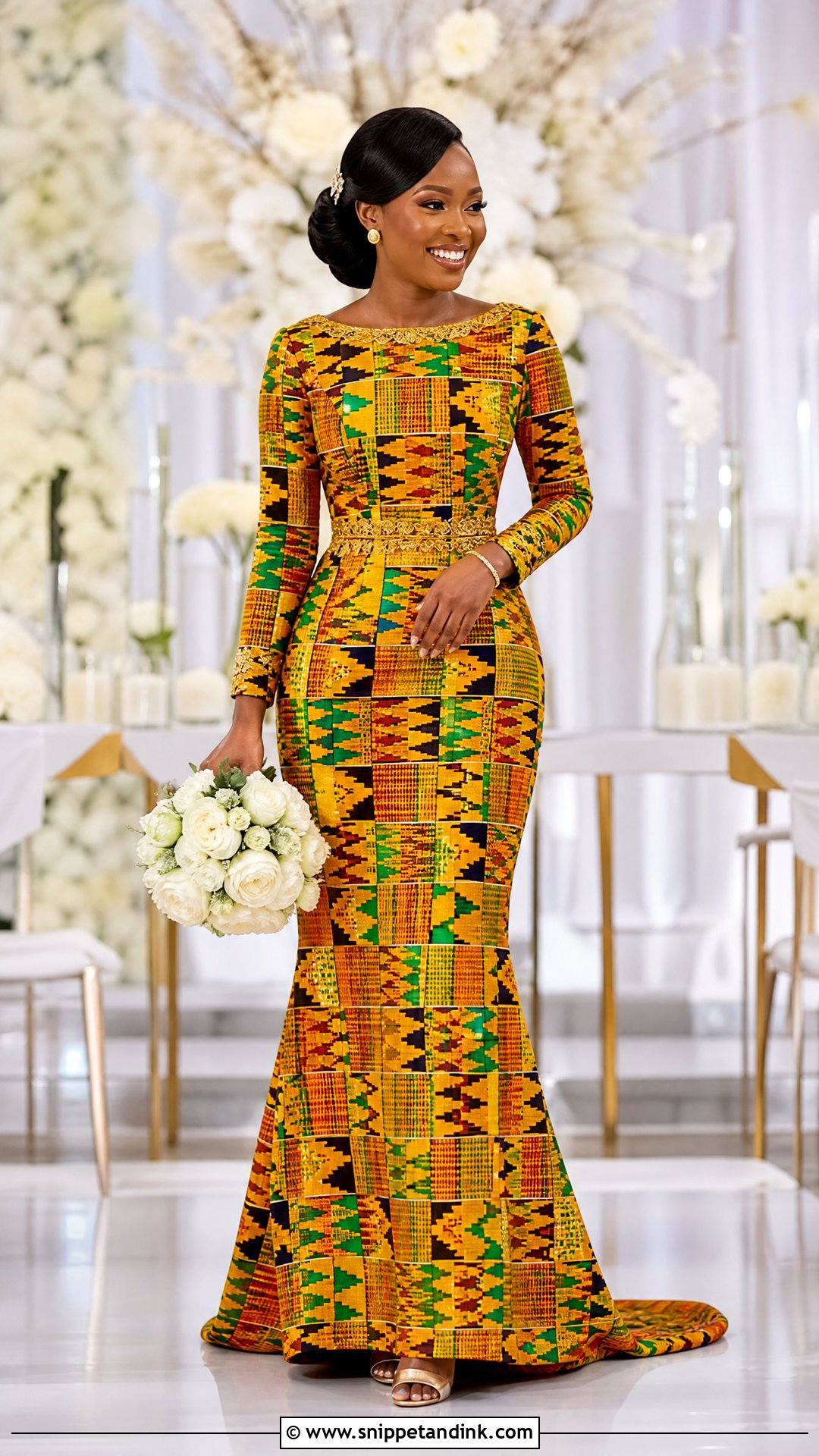
Long sleeves give coverage and a regal finish. They can be full kente, sheer lace with kente cuffs, or fitted with beading. The look works with a fitted skirt, A-line or modest floor-length gown. Keep accessories quiet since the sleeves already carry detail: gold studs, a slim bracelet and classic heels. One practical warning for kente sleeves: set them with enough room at the armhole, because the stiff cloth won’t stretch when you lift your arms to dance or hug.
16. Kente Beaded Wedding Dress
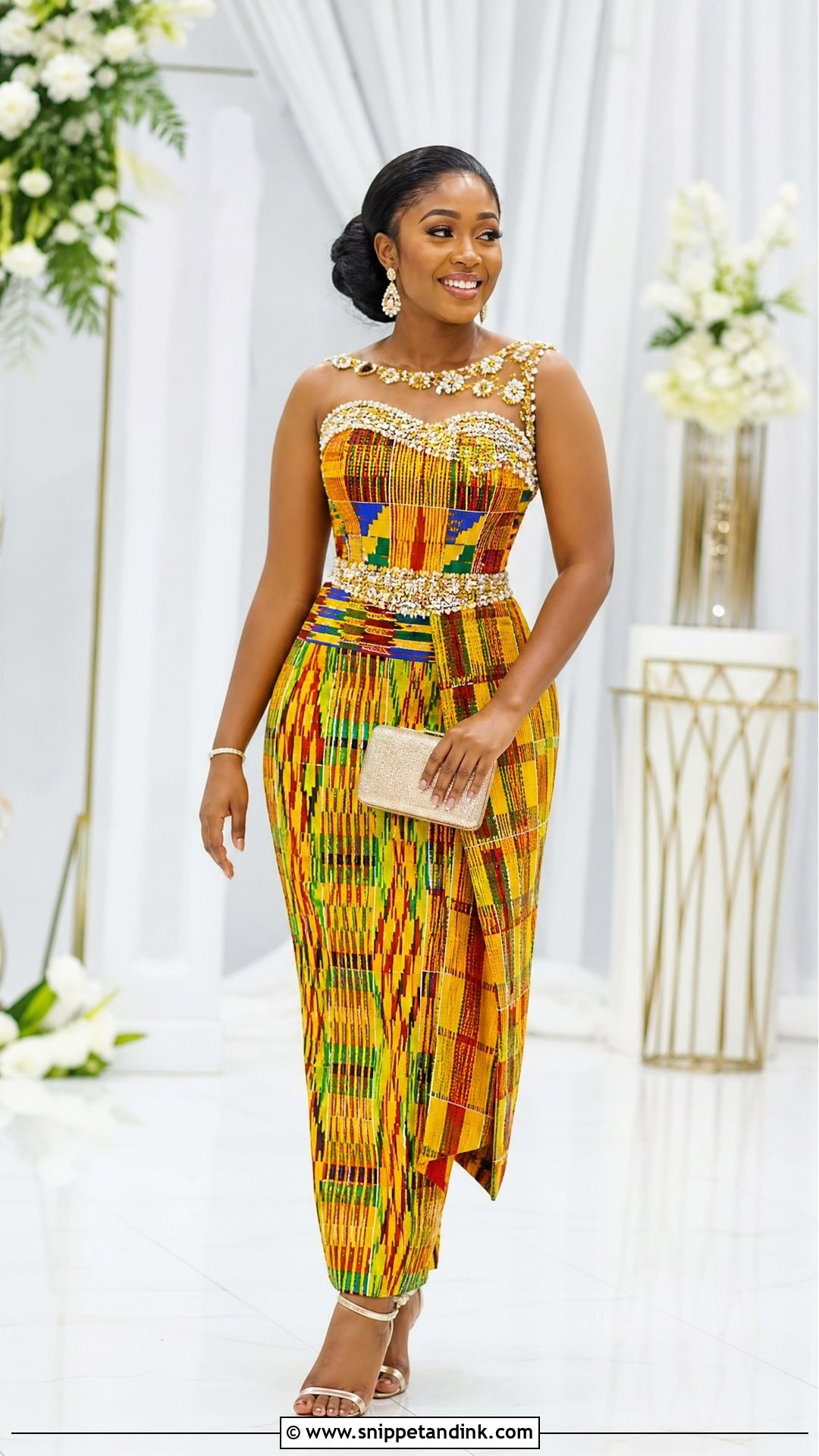
Beading on kente should follow the pattern rather than cover it. I like it best at the neckline, waist, sleeves or hem, where it adds shine without hiding the weave. Pair the dress with simple metallic heels and jewelry in the same tone as the beads, and wear your hair sleek. It glows at evening receptions. Ask whether the beads are hand-sewn and how securely, because heavy beadwork on a stiff base can pull threads loose by the end of a long night.
17. Kente Gown With Train
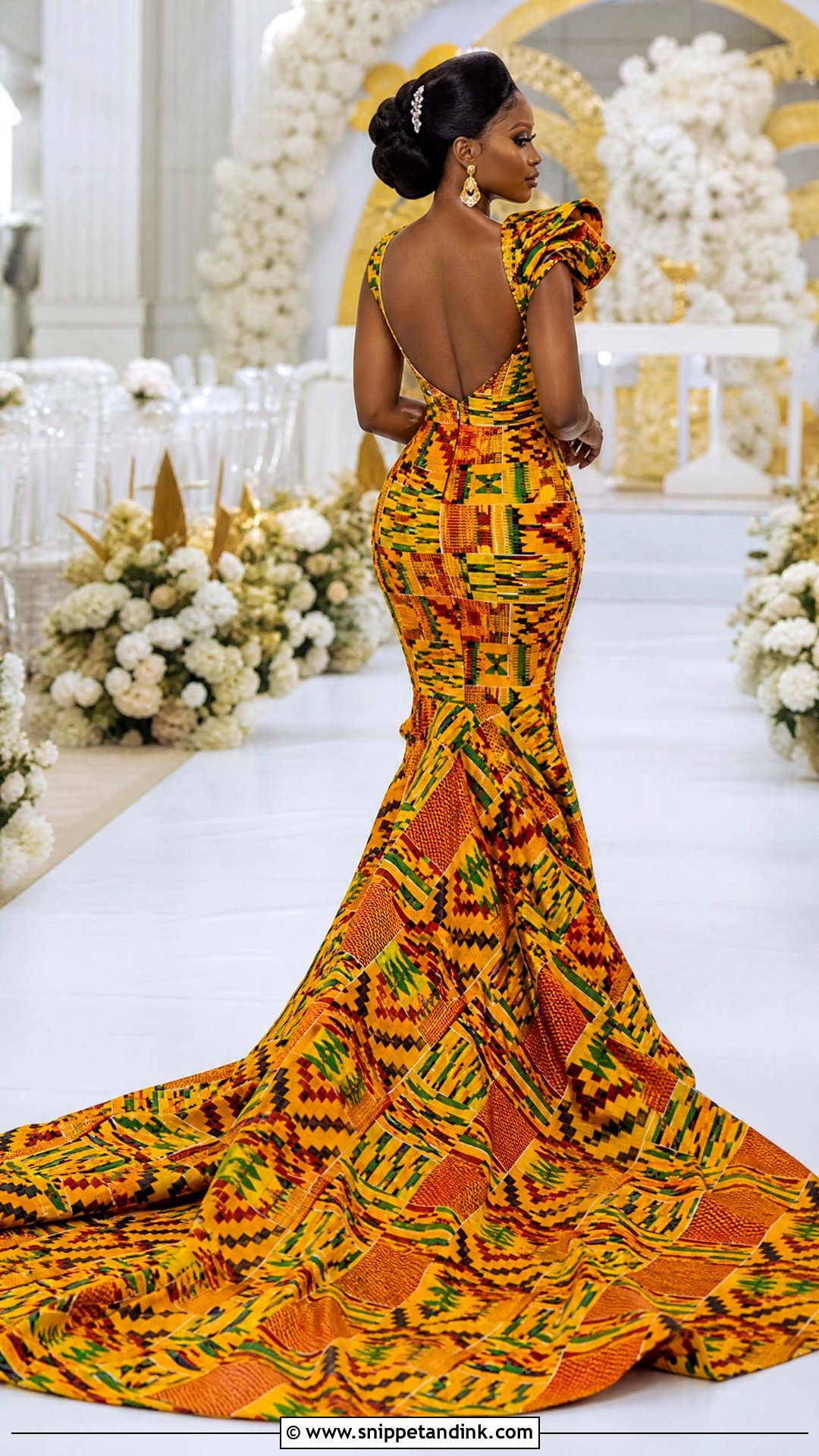
A kente gown with train makes the most formal entrance on this list. The train can attach to a mermaid, ball gown or column. Because handwoven strips run lengthwise, the pattern needs planning so it flows unbroken down the train; that’s a skilled cutting job, so ask to see your designer’s previous trains. Choose one that bustles or detaches after photos. Supportive heels, elegant earrings and a clutch in one of the kente colors complete it.
18. Kente Reception Wedding Dress
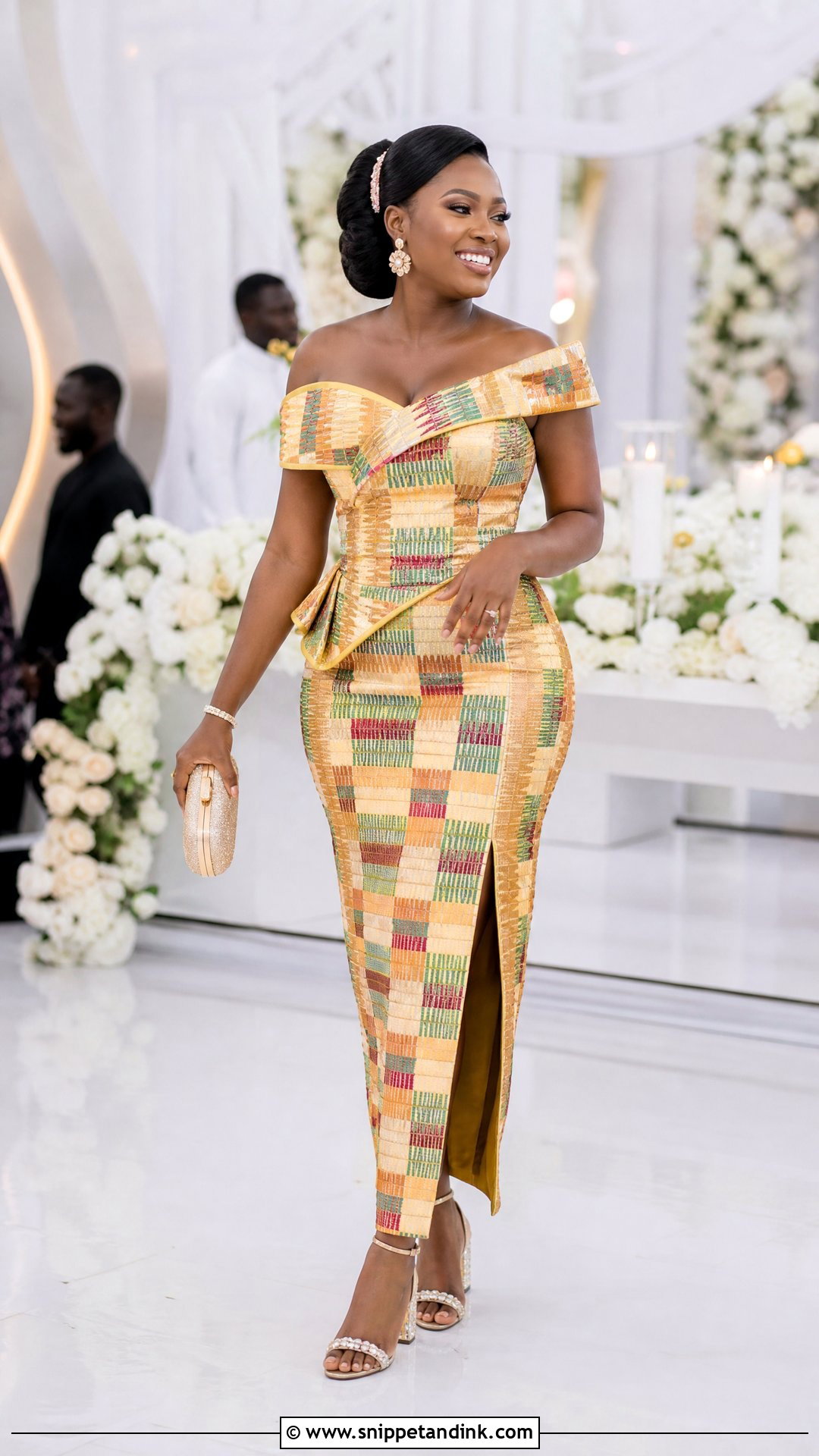
For the reception, you want to keep wearing kente in something you can move in. Brides often switch to a shorter hem, a lighter fabric mix, a fitted midi or a floor-length dress without a train. Beads, a structured bodice or metallic accessories keep it bridal. Block heels or embellished sandals are the smart footwear for dancing, with a smaller clutch and a hairstyle pinned securely. The change also gives the family photographer a second look to capture.
19. Kente And Tulle Wedding Dress
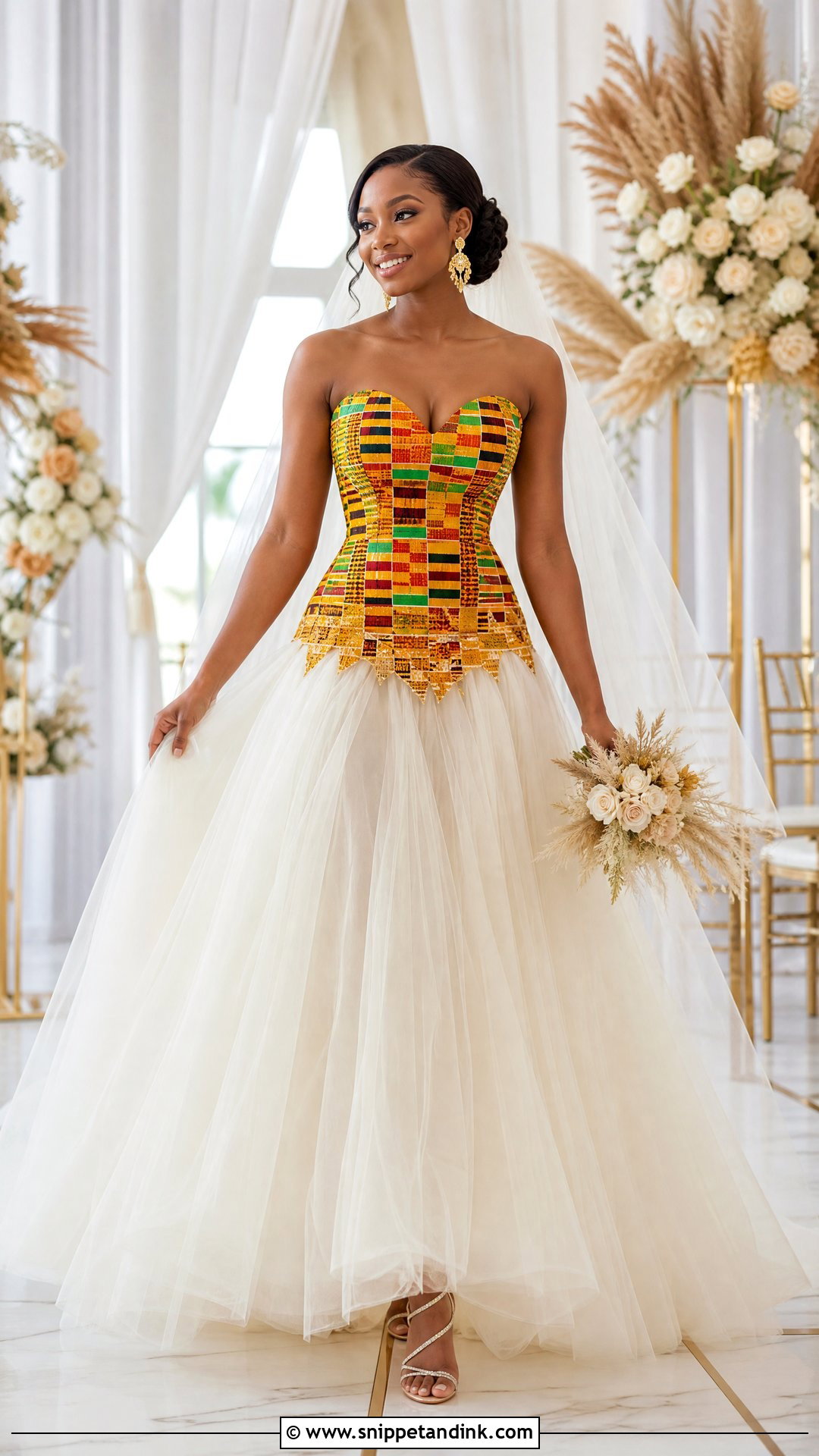
Kente and tulle combine structure with softness. The kente goes at the bodice, waist panel, sleeves or overskirt, and tulle builds the volume without the weight of a full kente skirt. Delicate heels, pearl or gold earrings and a soft veil if you want one complete it. Match the tulle to a color in the cloth, ivory with gold kente or blush with softer patterns. Tulle is fragile next to kente’s firm edges, so I ask for the joins to be bound so the tulle doesn’t tear at the seam.


20. Kente Mini Wedding Dress
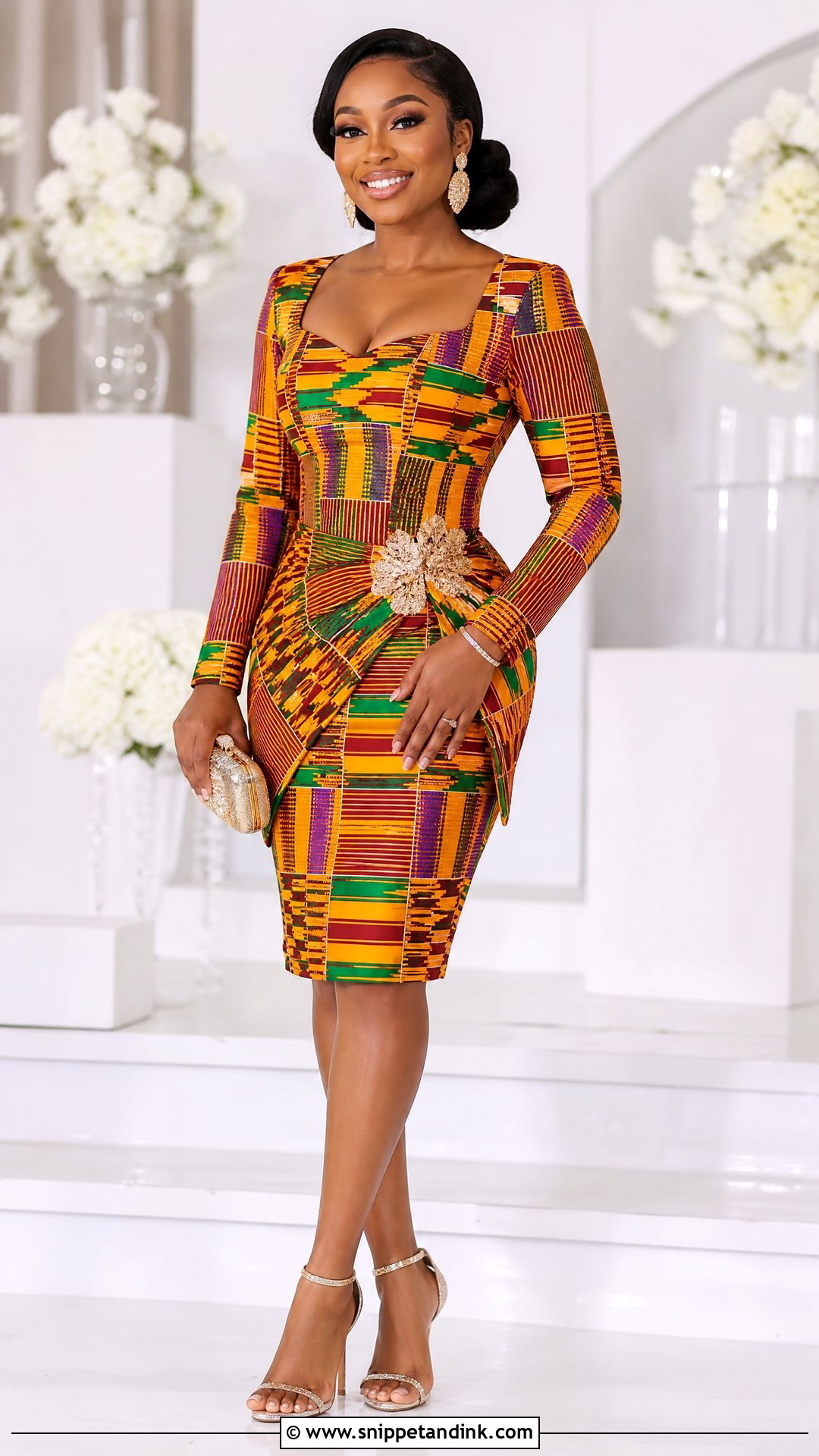
A mini is a bold pick for the reception, a civil ceremony or a second look. Short hems feel playful, while the cloth keeps the meaning. Long sleeves, a corset bodice or a flared skirt all make a structured mini look polished. Statement heels, a small clutch and bold earrings finish it. Keep the tailoring sharp, because an unstructured kente mini can read casual. It also suits a bride who loves dancing and doesn’t want to manage a hem all night.
21. Kente Kaftan Wedding Dress
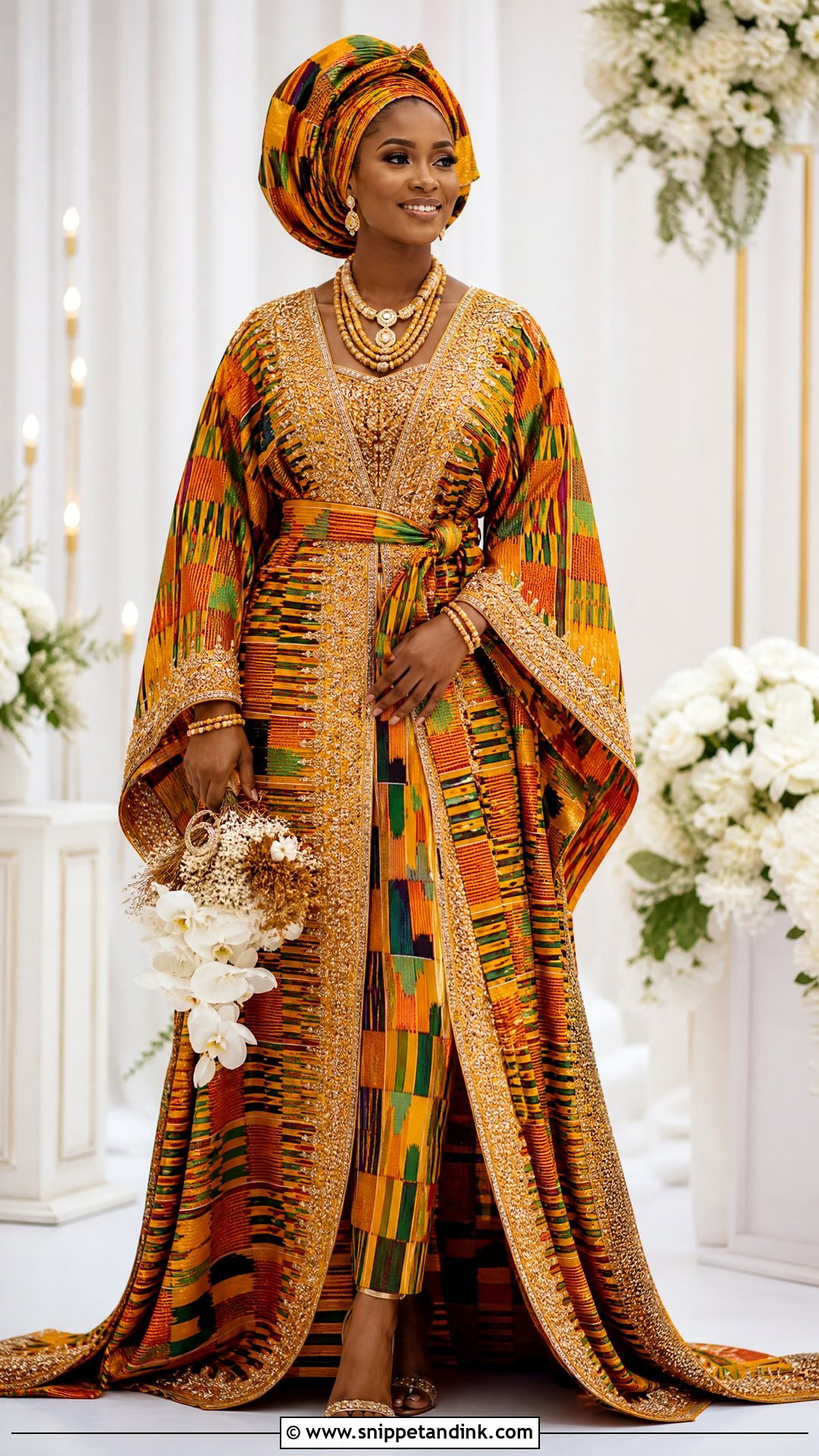
A kaftan gives graceful movement and complete comfort, and in quality kente with beading, embroidery or a waist tie it looks dignified rather than relaxed. Heeled sandals, layered jewelry and a matching headwrap suit it. I often suggest it to brides who don’t want a tight gown at all, including older brides and those planning a long traditional ceremony. Proportion is the key: a kaftan that’s too wide or too long swamps a smaller frame, so pin the length and sleeve width on you at the fitting.
22. Kente Bridal Jumpsuit
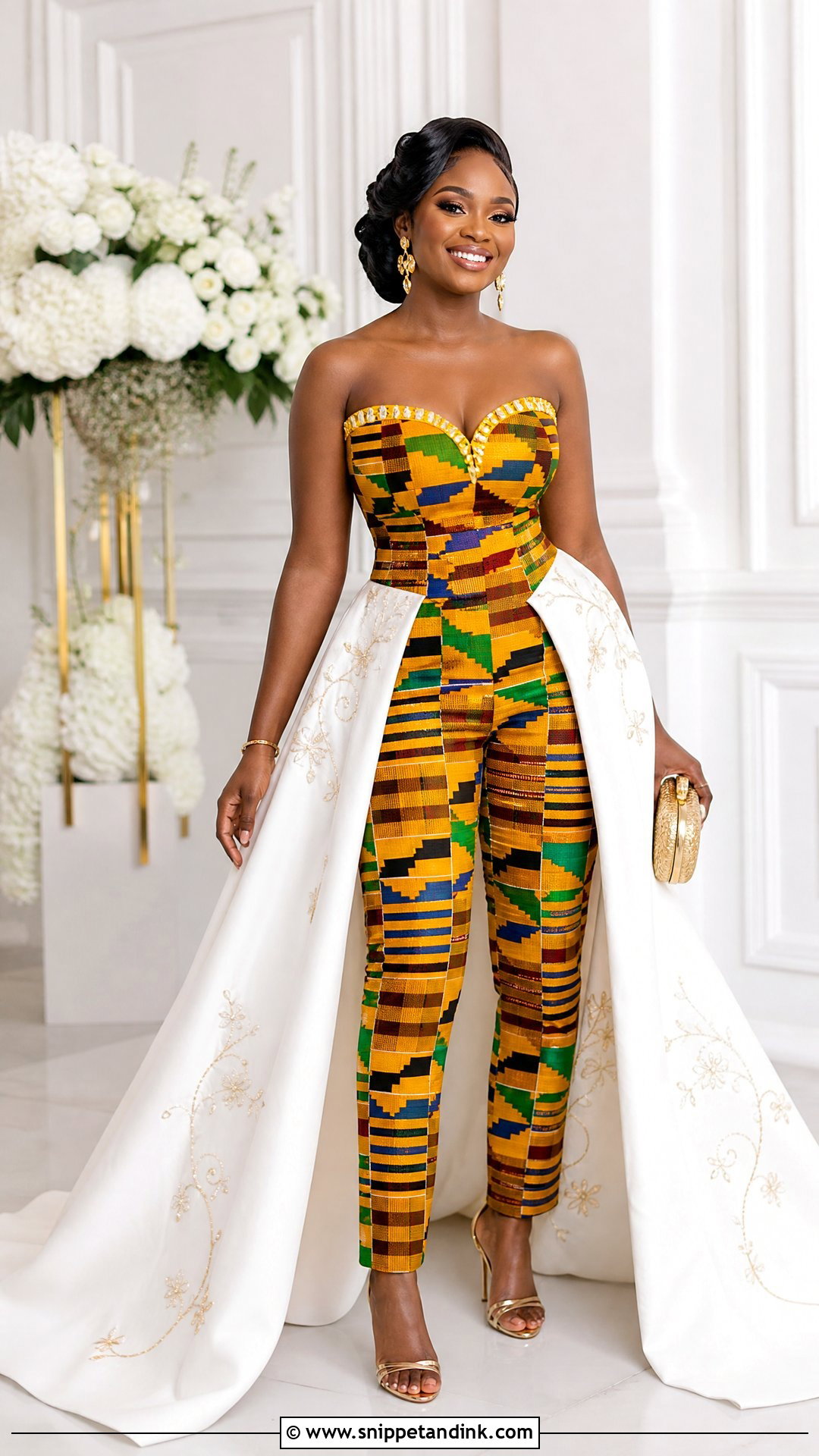
A kente jumpsuit is the modern alternative to a skirt. A tailored bodice, wide-leg pants and a cinched waist give a clean bridal line, and a detachable overskirt or cape adds a dramatic entrance. Gold heels, statement earrings and a structured clutch make it feel wedding-worthy. It suits receptions and registry ceremonies. Fit through the shoulders, waist and hips has to be precise, and with stiff kente the seat and crotch need extra ease so you can sit comfortably.
23. Kente Skirt And Blouse Wedding Dress
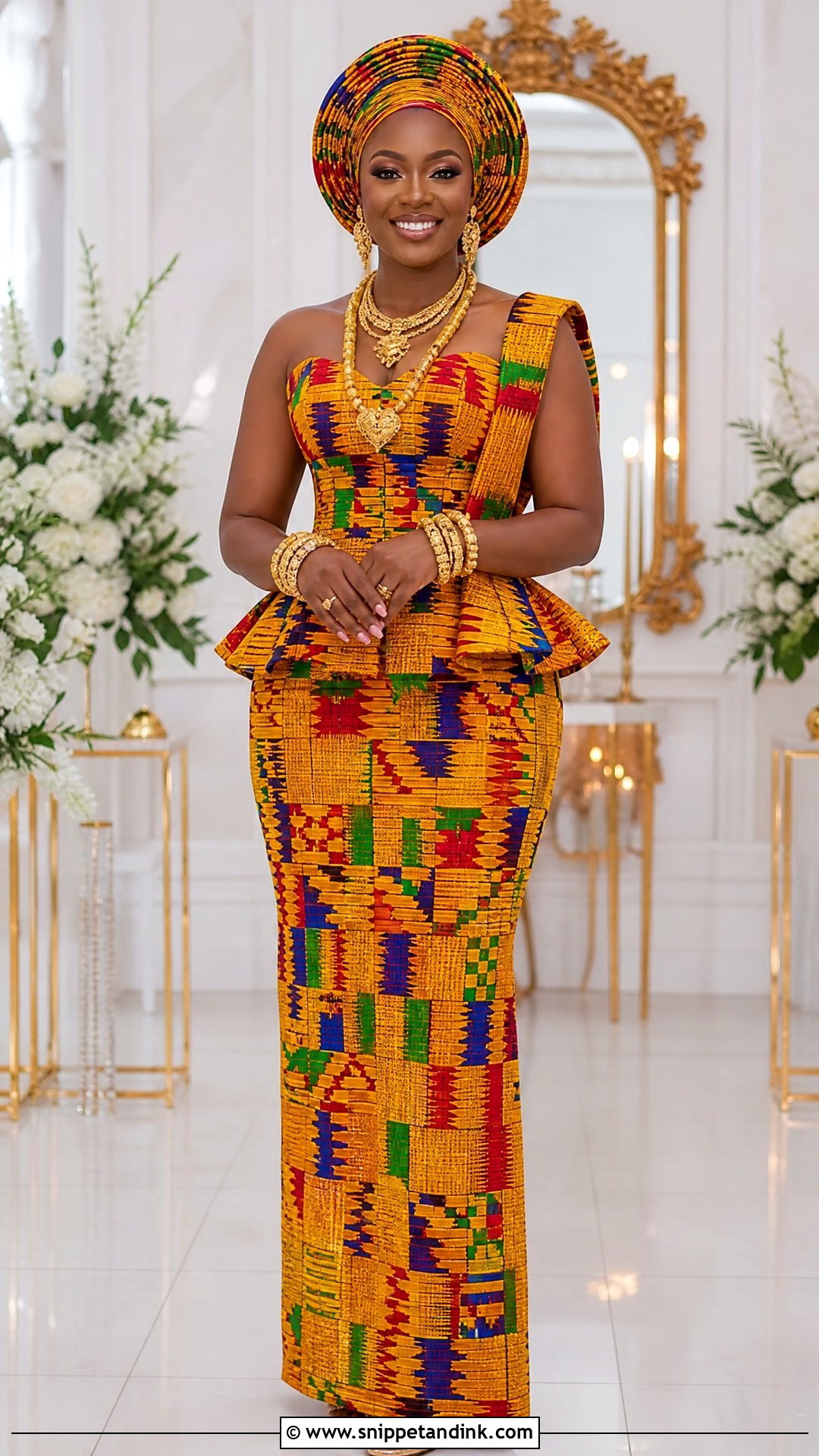
A kente skirt and blouse wedding outfit is the classic form, and it’s the most adaptable. The blouse can be off-shoulder, peplum, corset, long sleeve or lace-trimmed, and the skirt fitted, wrapped or flared, each tailored separately to your shape. Gold jewelry, beaded accessories and matching heels complete it, and a headwrap in the same cloth ties it together. It’s also easier to alter than a one-piece gown, which matters if your fittings are close to the wedding or your weight changes.
24. Pastel Kente Wedding Dress
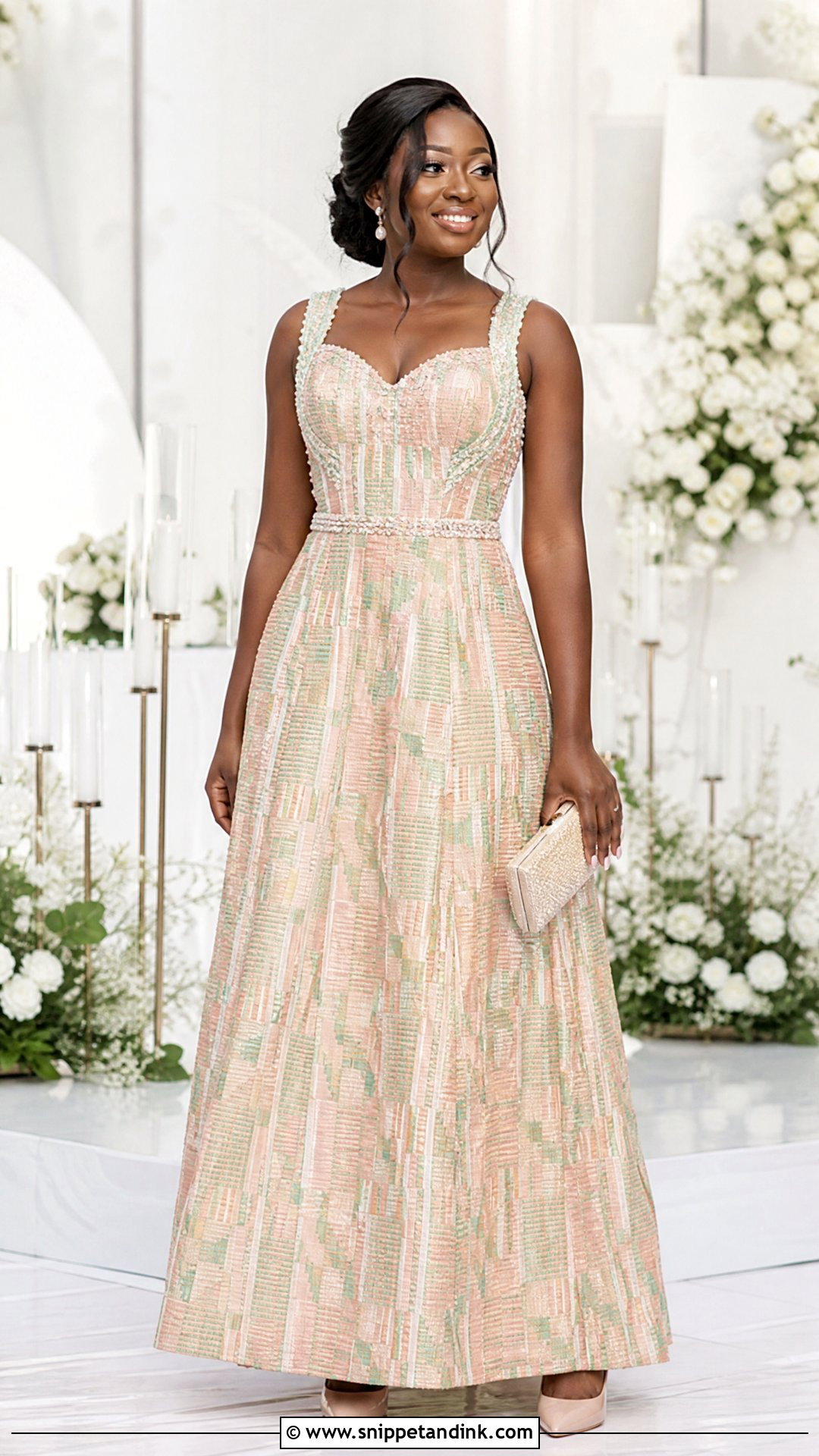
Pastel kente, in blush, mint, lavender, pale gold or light blue, creates a softer bridal mood while keeping the identity of the cloth. It works in A-lines, lace combinations and fitted dresses with delicate beadwork. Nude heels, pearl earrings and a light clutch suit it, along with natural makeup. Look at pastel weaves under the venue’s lighting if you can. Warm indoor bulbs can turn mint and lavender muddy, while daylight keeps them clean.
25. Black And Gold Kente Wedding Dress
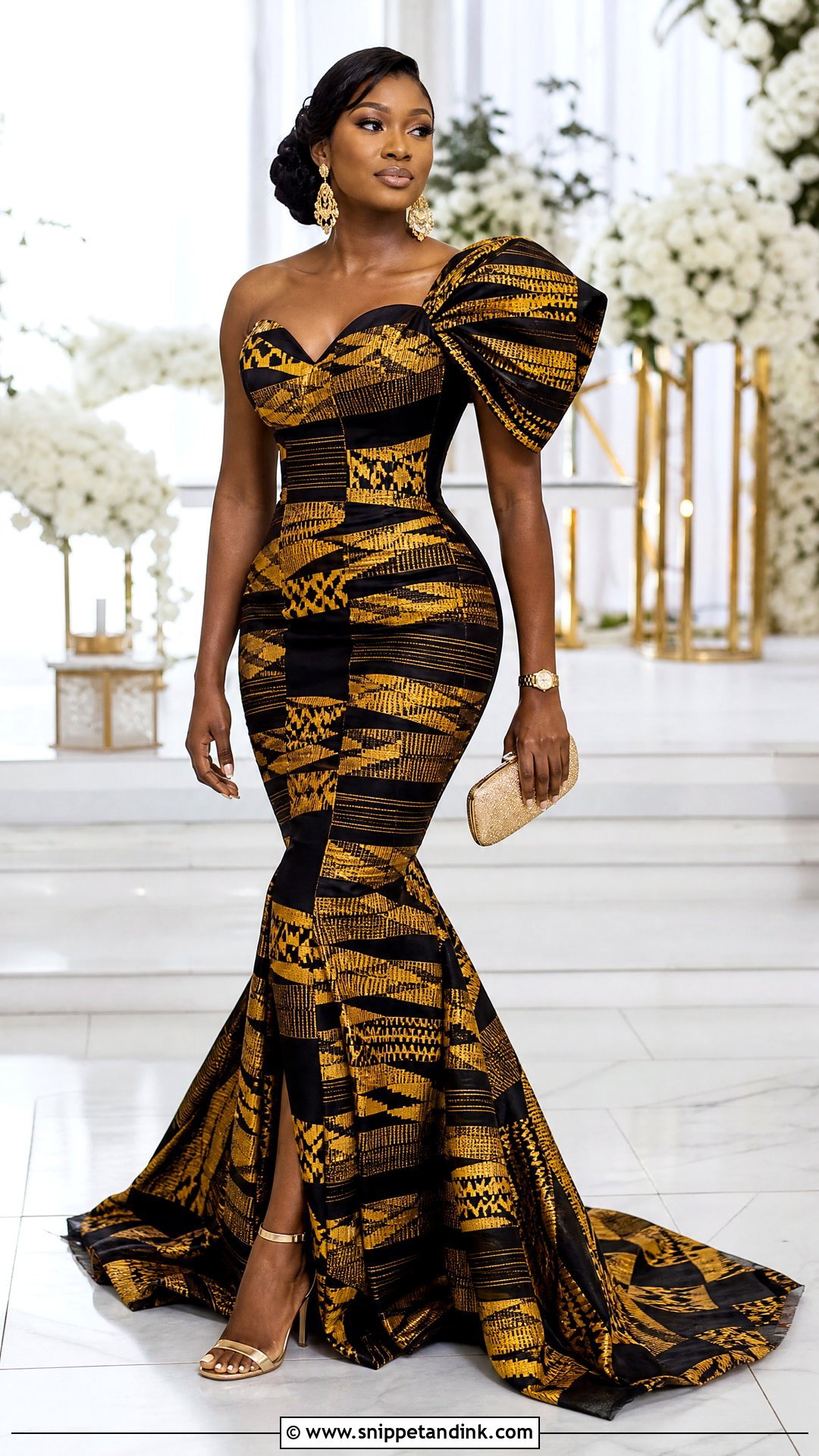
Black and gold kente is the most dramatic palette here. The contrast looks luxurious in a fitted gown, mermaid or structured two-piece. Gold jewelry is the natural match, with black or metallic heels, a sleek hairstyle and bold earrings. Keep the silhouette clean so the contrast stays crisp. For photos, ask your photographer to expose for your skin rather than the fabric; very dark and very bright areas side by side can trick a camera.
Colors, Meanings and Dressing Alongside the Groom
Kente colors and patterns carry meanings, and families often care about them. Gold is commonly read as wealth and royalty, green as growth and renewal, blue as peace and harmony, and red as strength and sacrifice. Patterns also have names, and the weaver or seller can usually tell you what yours is called. If you’re marrying into a family with strong traditions, ask an elder before settling on colors; it’s a small conversation that avoids awkwardness later.
Coordinating with the groom
At many traditional ceremonies the couple wear the same kente, with the groom’s cloth worn wrapped or made into a smock or shirt. If you’re buying together, buy from the same batch so the colors match exactly; two pieces of the same pattern from different weavers can differ noticeably in shade. Decide early whether he’ll match your ceremony outfit, your reception look or both.
Caring for the cloth afterwards
Don’t put handwoven kente in a washing machine. Spot clean gently or take it to a cleaner experienced with heavy handwoven fabric, and air it out after the wedding before storing. Roll it rather than folding it along the same lines, which can weaken the threads over time, and keep it away from damp and direct sun so the colors stay bright for the next generation.
What to Bring to Your Seamstress Once You’ve Fallen for a Look
Kente can be traditional or modern, modest or dramatic, and the cloth will carry identity in every version. What makes the outfit work is fit, comfort, the meaning of the colors you choose and accessories that support rather than crowd it. Save the images of the looks you love, then take them to a designer or tailor who has sewn kente before, along with your cloth, your shoes and your plan for the day. Ask how they’ll place the pattern. A seamstress who answers that question confidently is the one to trust with your wedding.
You'll Like These Ideas:







Leave a Reply