
There is no single African bridal look. The continent holds dozens of countries and hundreds of communities, and each family brings its own customs and stories. A bride might wear handwoven cloth for the traditional ceremony, an embroidered white gown for church or civil vows, and something brighter for the reception, and multiple changes are normal at many of these weddings. The outfits below run from Yoruba aso oke and Ghanaian kente to Moroccan caftans and modern Ankara gowns. Wherever a garment carries cultural meaning, I always bring relatives and skilled artisans into the conversation before anything is ordered.
Handwoven Cloth Behaves Differently at the Tailor
Several looks below start from handwoven or traditional cloth, such as aso oke, kente, habesha cotton and shweshwe, and these don’t behave like bridal satin. A few things I settle with the tailor before anyone picks up scissors:
- Buy extra. Woven strips have fixed widths and patterns that must line up at the seams, so a tailor needs more cloth than the pattern suggests. Ask how much before you buy, and get it all from the same weaver or batch.
- Lay the whole piece out first and decide where the strongest pattern will sit on her body. Once it’s cut, you can’t move a motif.
- Finish cut edges right away. Loosely woven cloth frays quickly, and a frayed seam inside a heavy wrapper weakens fast.
- Ask about shrinkage and pre-washing for cottons. Printed and starched cloth can tighten after its first wash.
- Line anything that touches skin. Metallic yarns in some aso oke and lace can scratch over a long day.
Leave time for a proper fitting schedule. Custom traditional outfits often need two or three fittings, and handwoven cloth sometimes has to be ordered weeks in advance, so start with the cloth, not the tailor’s calendar.
1. Yoruba Aso Oke Bridal Outfit
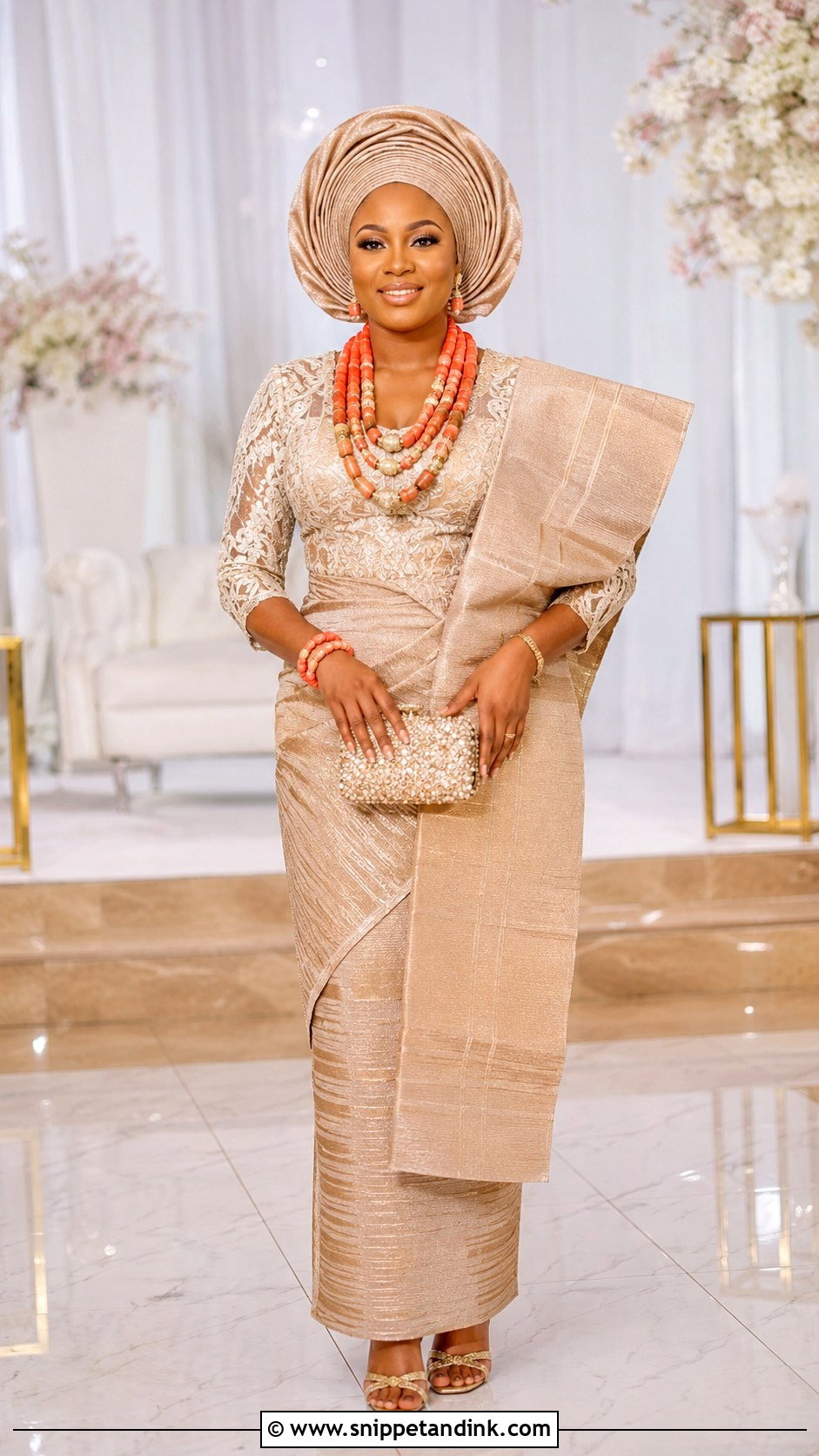
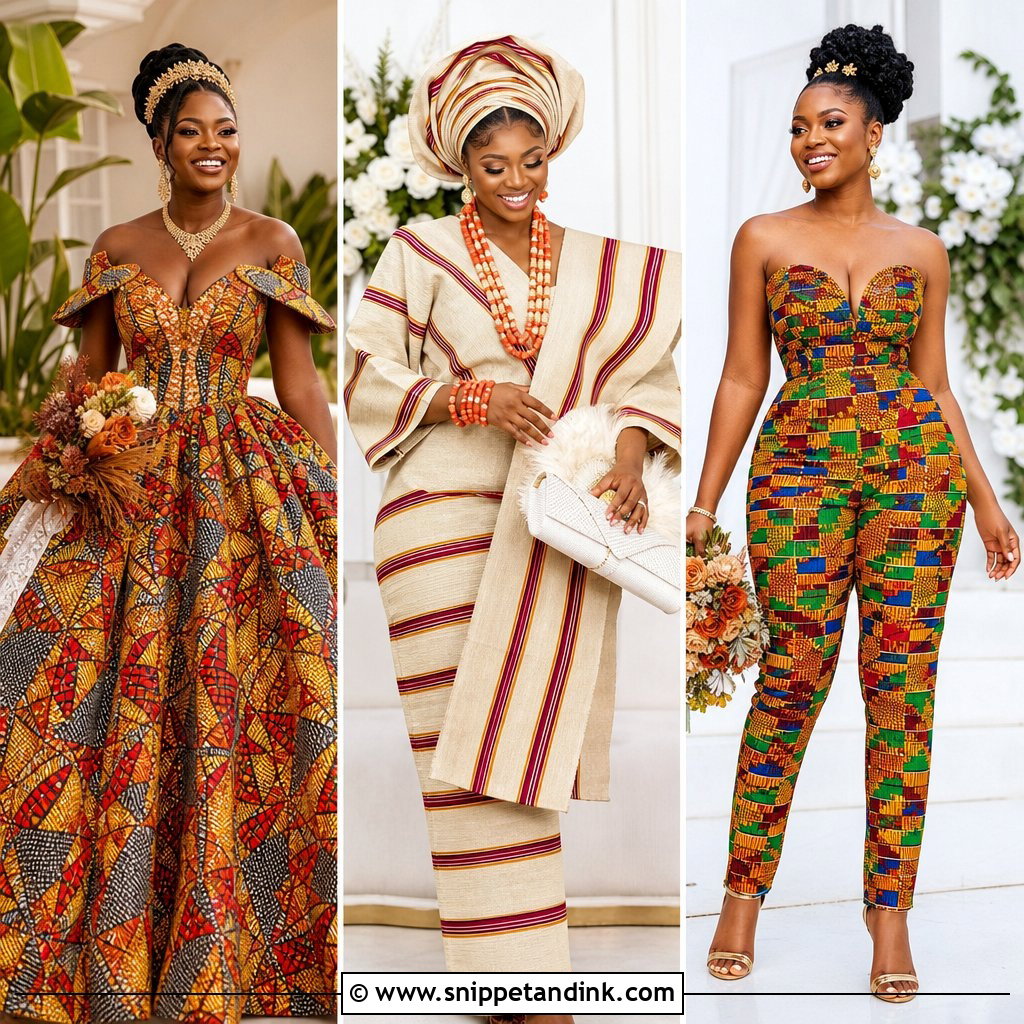
Aso oke is stiff, handwoven cloth, and that stiffness is what gives a Yoruba aso oke bridal outfit its sculpted shape. The ensemble is an iro wrap skirt, a fitted buba blouse, an ipele over the shoulder and the gele on the head. Champagne, coral, emerald or royal blue all read well at a traditional ceremony. Layered coral beads at the neck and wrists, metallic heels and a small beaded clutch complete it. Keep the whole outfit in one color family. I’d also have the iro tied by someone who knows how; a loosely tied wrapper is the first thing to slip during the dancing. Confirm the arrangement with relatives or your designer, since pieces can carry family meaning.
2. Igbo George Wrapper Bridal Outfit
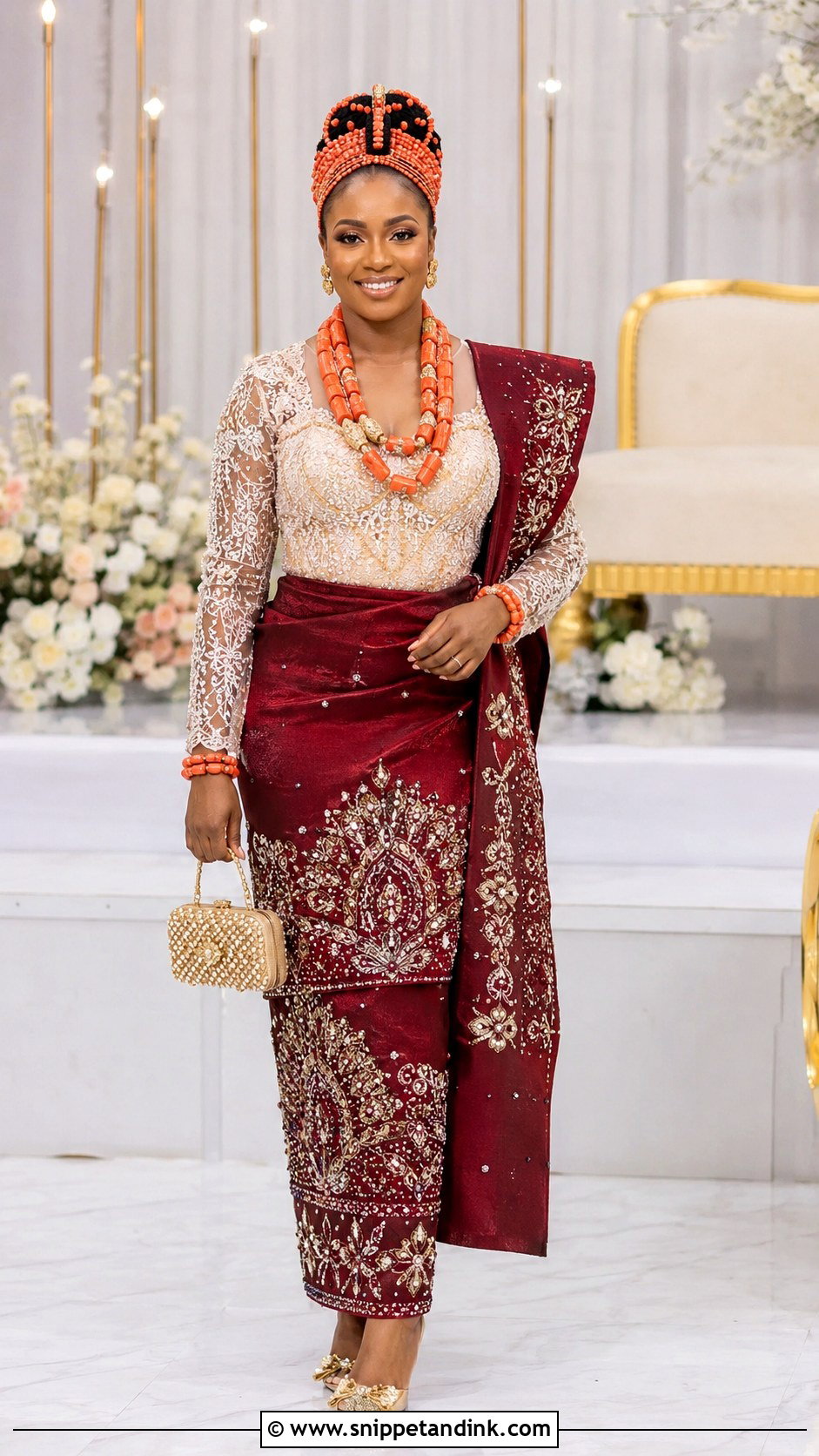
An Igbo bridal outfit usually centers on a George wrapper, a heavy, richly embroidered fabric that falls to the floor. Pair it with a fitted lace blouse with crystal work, structured sleeves or a sweetheart neckline. Coral beads anchor the look at the neck, wrists and ears, often with a traditional headpiece. Burgundy, ivory, cobalt and deep green suit George, and coral or orange accents warm them. Many Igbo brides wear several outfits during the traditional wedding, so this one can be the formal first look or a second appearance. George is weighty, so I check that the blouse’s waist is firm enough to anchor the wrapper. Follow the customs of the bride’s community and family on every detail.
3. Ghanaian Kente Bridal Outfit
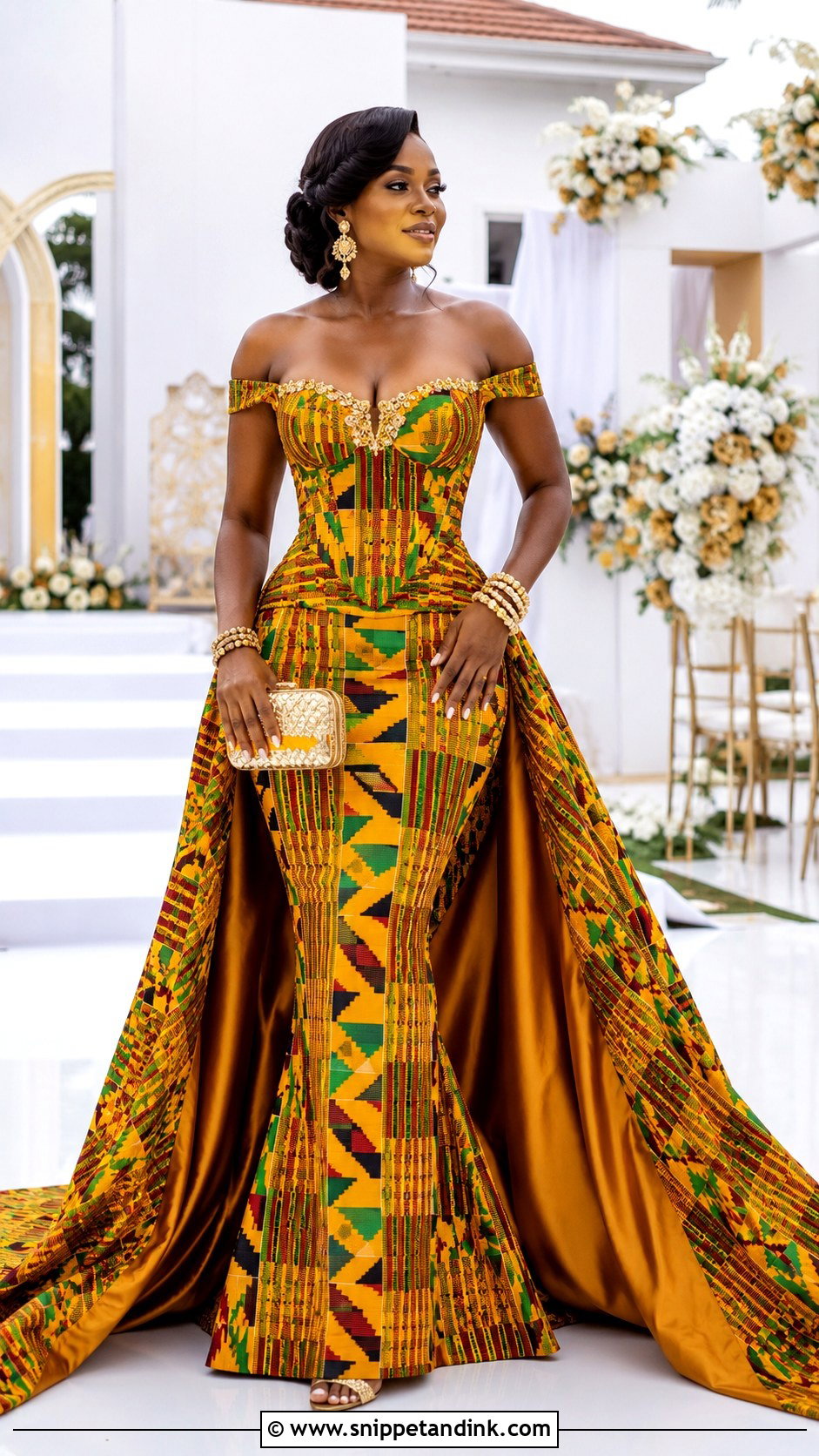
Kente is woven in narrow strips and sewn together, so its pattern runs in blocks. That shapes how you design with it. A fitted mermaid, a structured corset gown or a wrapped two-piece can all work, as long as the strongest blocks land at the bodice and hem rather than across the hips. With busy cloth, keep construction clean and skip extra beading. Gold earrings, stacked bracelets and a clutch picking up one color from the kente are plenty. A detachable overskirt gives volume for the ceremony and comes off for dancing. Work with a Ghanaian designer or kente specialist who can help choose cloth connected to the bride’s background.
4. Zulu Beaded Bridal Outfit
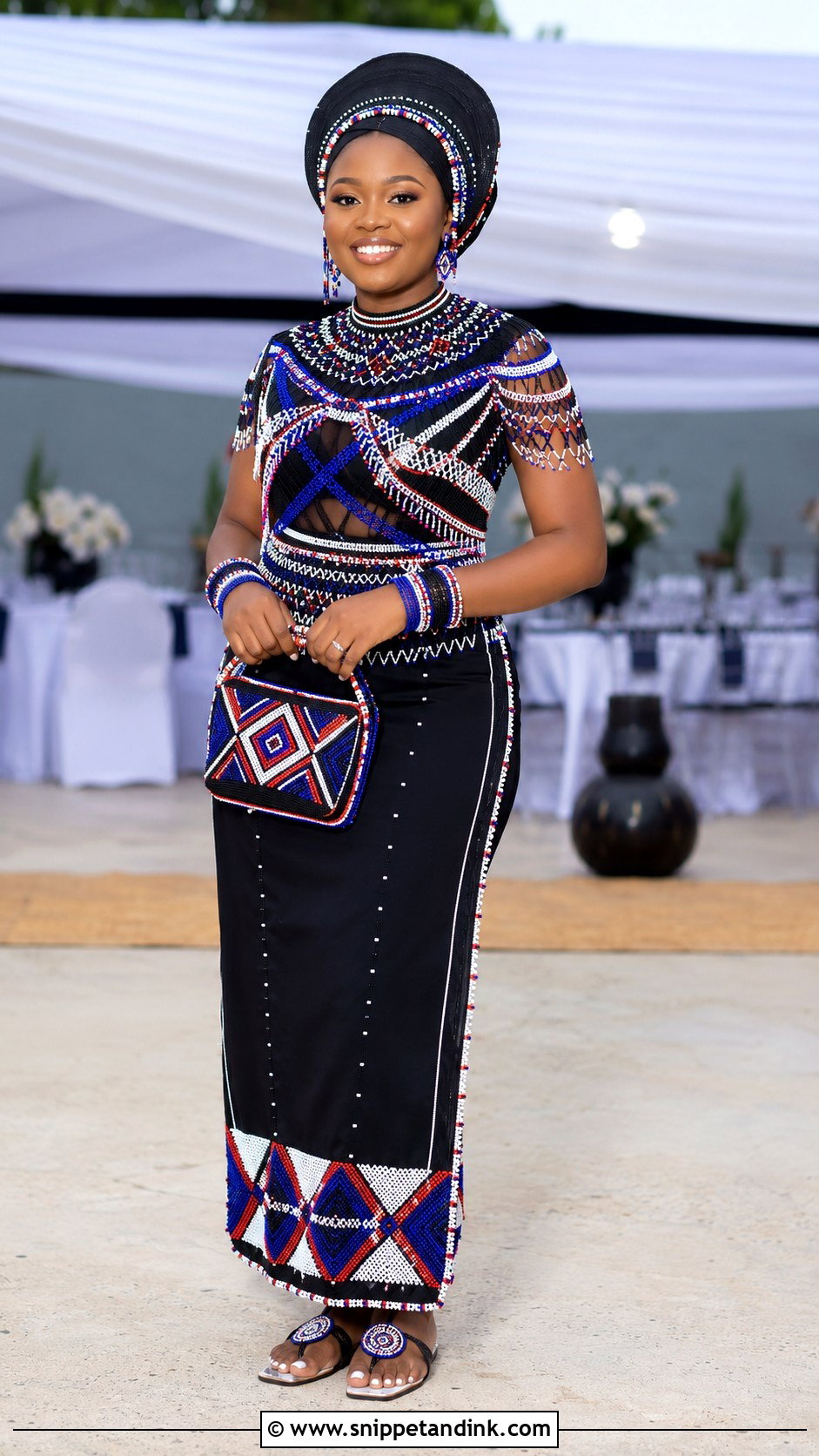
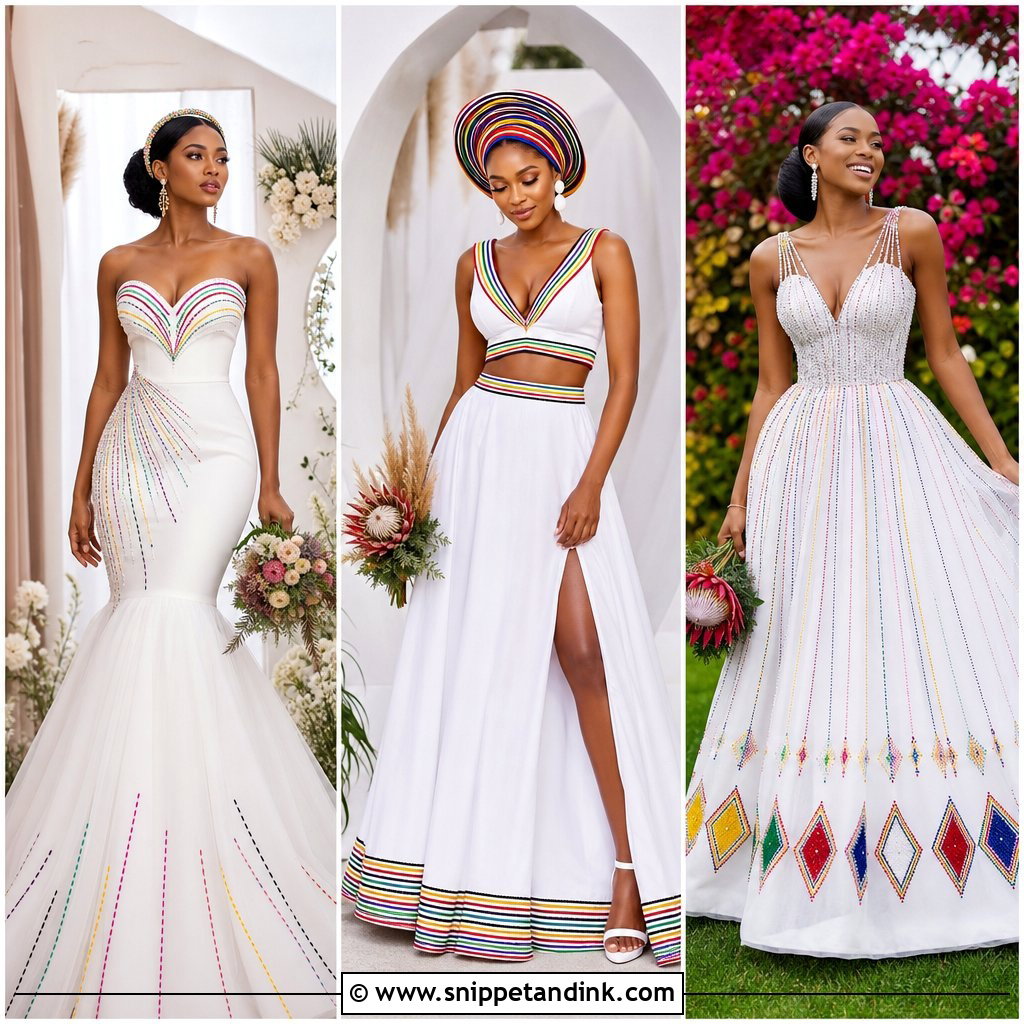
Zulu beadwork isn’t just decoration; colors, patterns and how pieces are arranged can communicate cultural information, so a Zulu bridal outfit should be planned with family and an experienced Zulu artisan. Depending on tradition and the ceremony, it may include a skirt, a fitted or draped top, a beaded collar, a head covering and arm and ankle adornments. A clear palette, often built from black, white, red and blue, keeps it balanced. Beaded collars are heavier than they look and sit on the collarbones, so I’d have her wear it for a while before the day. Flat sandals suit the ceremonial movement and dancing.
5. Xhosa Umbhaco Bridal Outfit
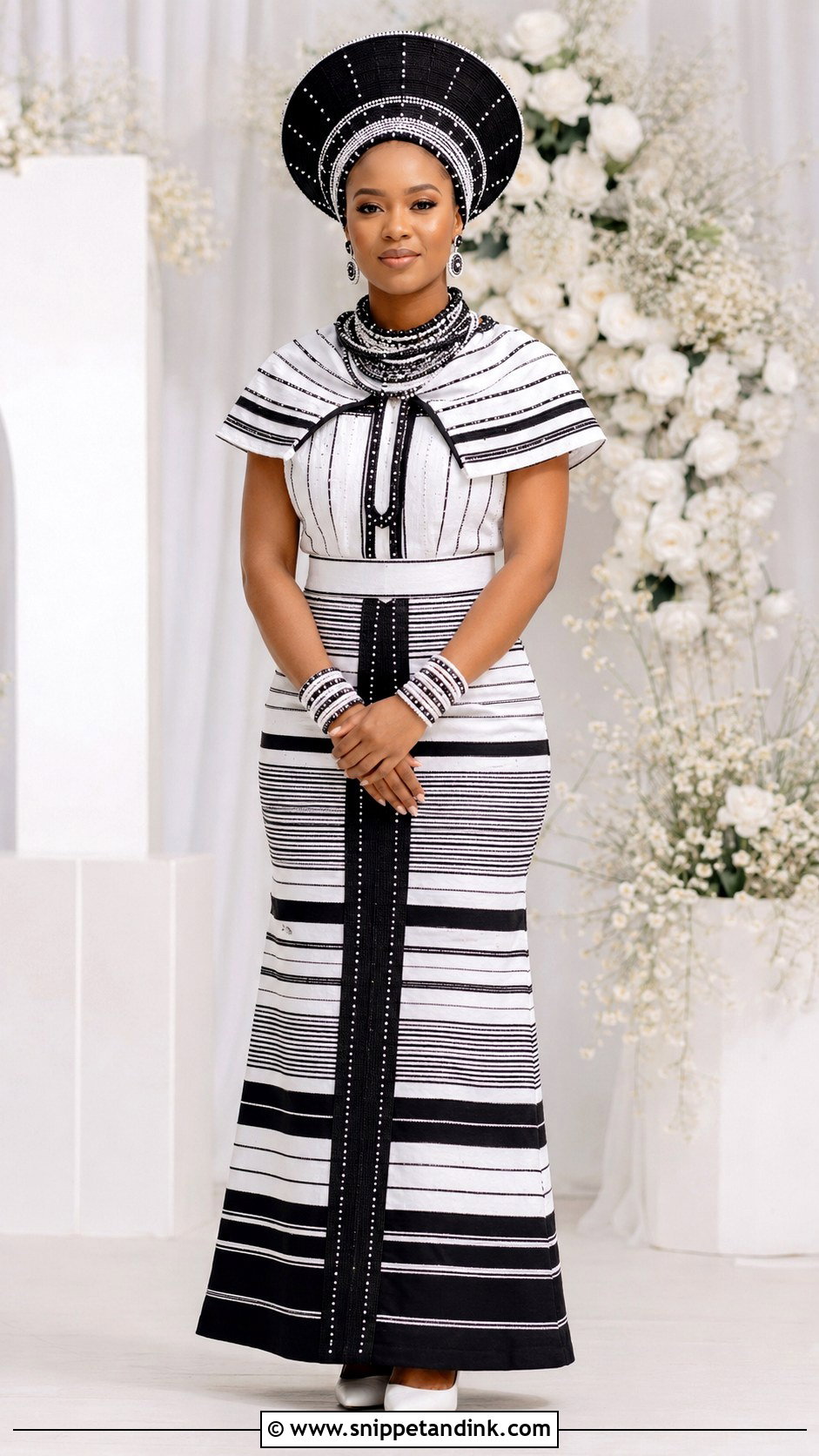
Umbhaco is known for its crisp black-and-white contrast, with decorative bands, beadwork and red, yellow or blue accents layered over that graphic base. A long striped or paneled skirt, a coordinated top, a shoulder covering and headwear make the full look. A structured top looks more formal; a wrapped version moves more freely. Couples often coordinate certain patterns without matching outright. Garment placement and meaning can vary by community, marital status and ceremony, so I’d never copy a picture from the internet. Ask relatives and a knowledgeable maker, and keep the shoes simple and hidden by the hem.
6. Ndebele Beaded Bridal Outfit
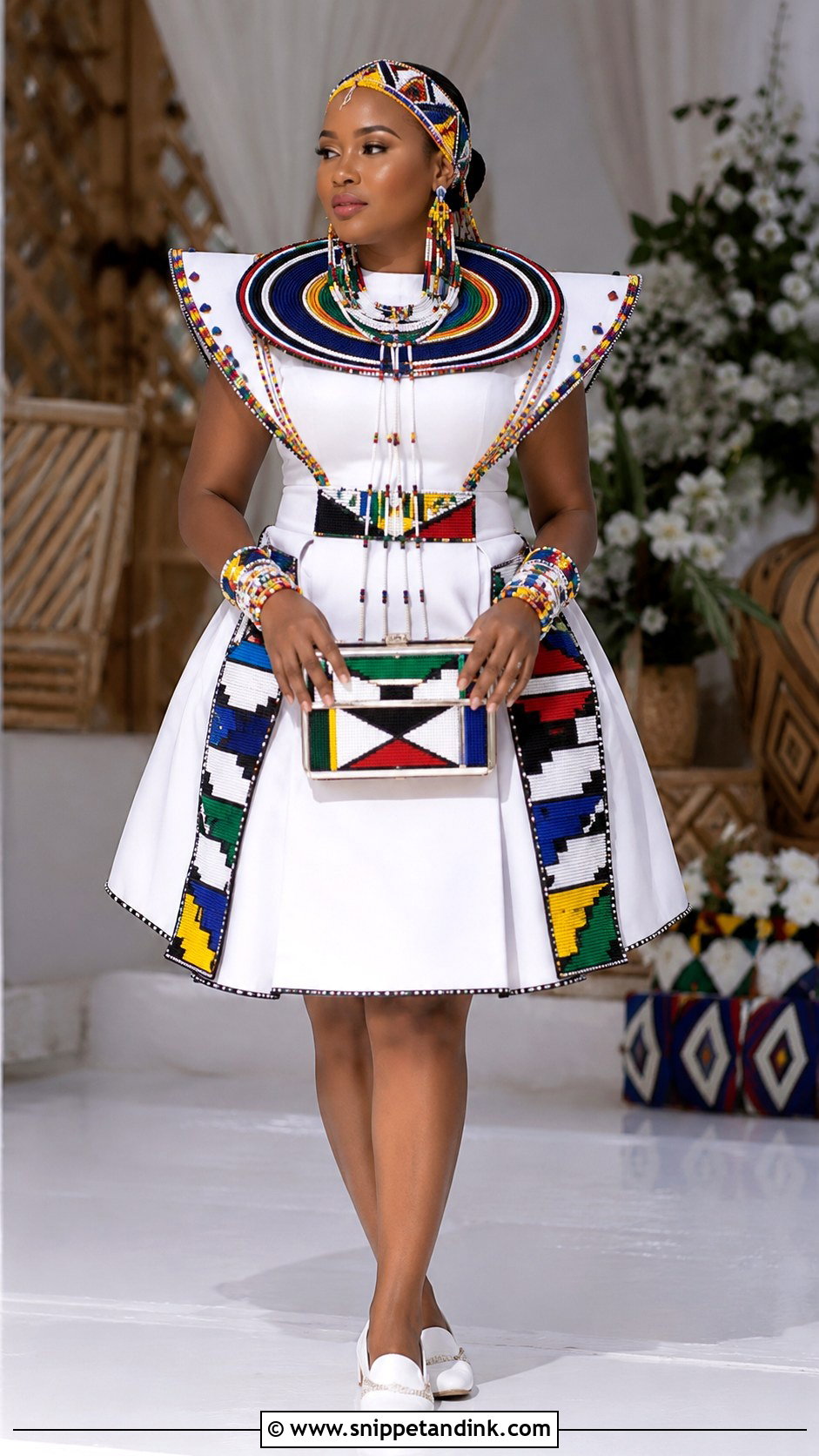
Ndebele beadwork is defined by bold geometric bands of white, black, red, yellow, green and blue. A structured dress or wrapped ensemble, a dramatic beaded collar, neck rings where culturally appropriate, bracelets and a shaped headpiece make a complete look. With that much going on above, the shoes should be plain: white flats or a low block heel. A modern bride may want a floor-length gown inspired by the traditional shapes, and that can work, but the beadwork should be real. Collaborate with an Ndebele artist who understands the symbols and how each piece is used, especially for a cultural ceremony.
7. Rwandan Mushanana Bridal Outfit
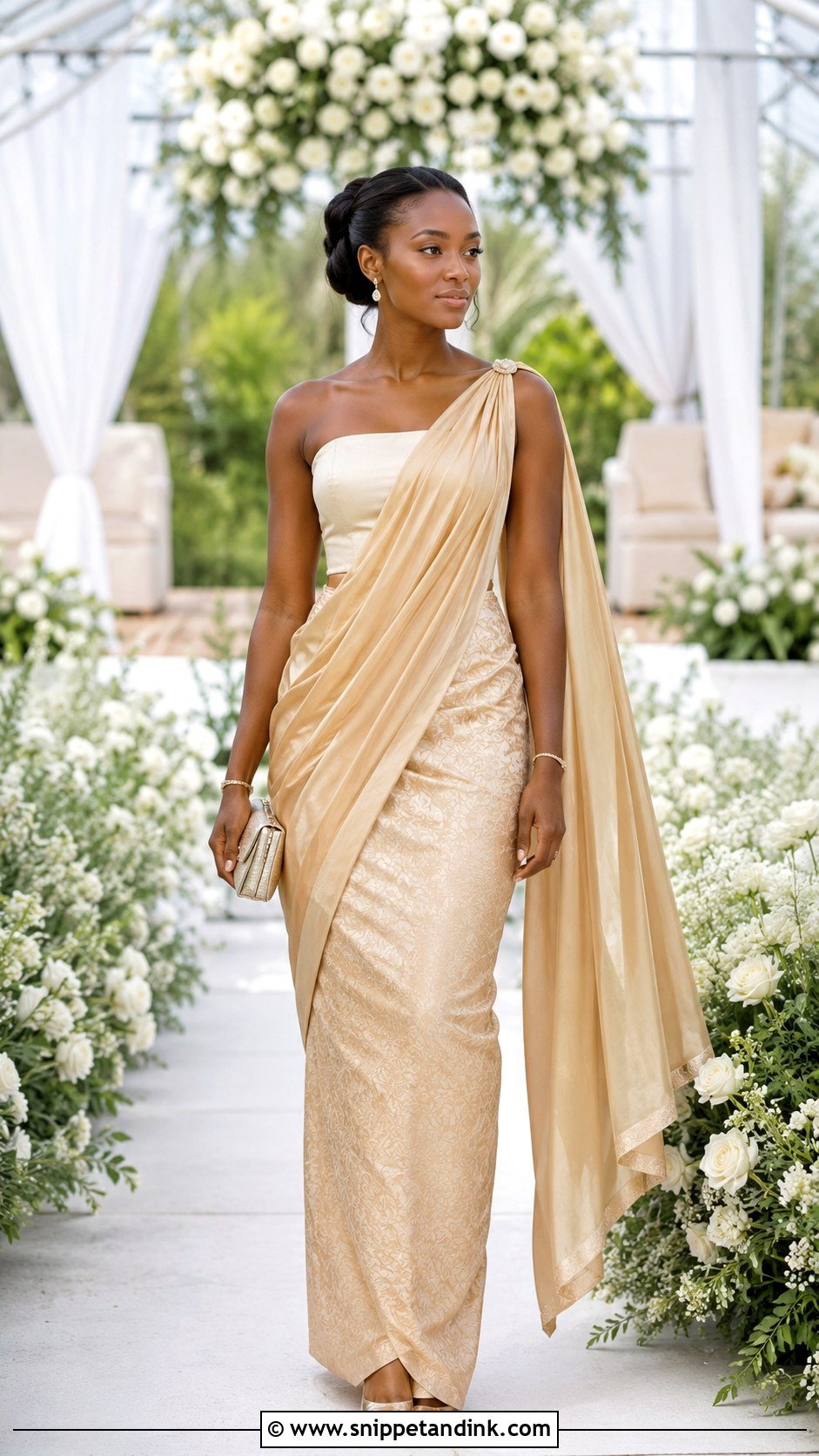
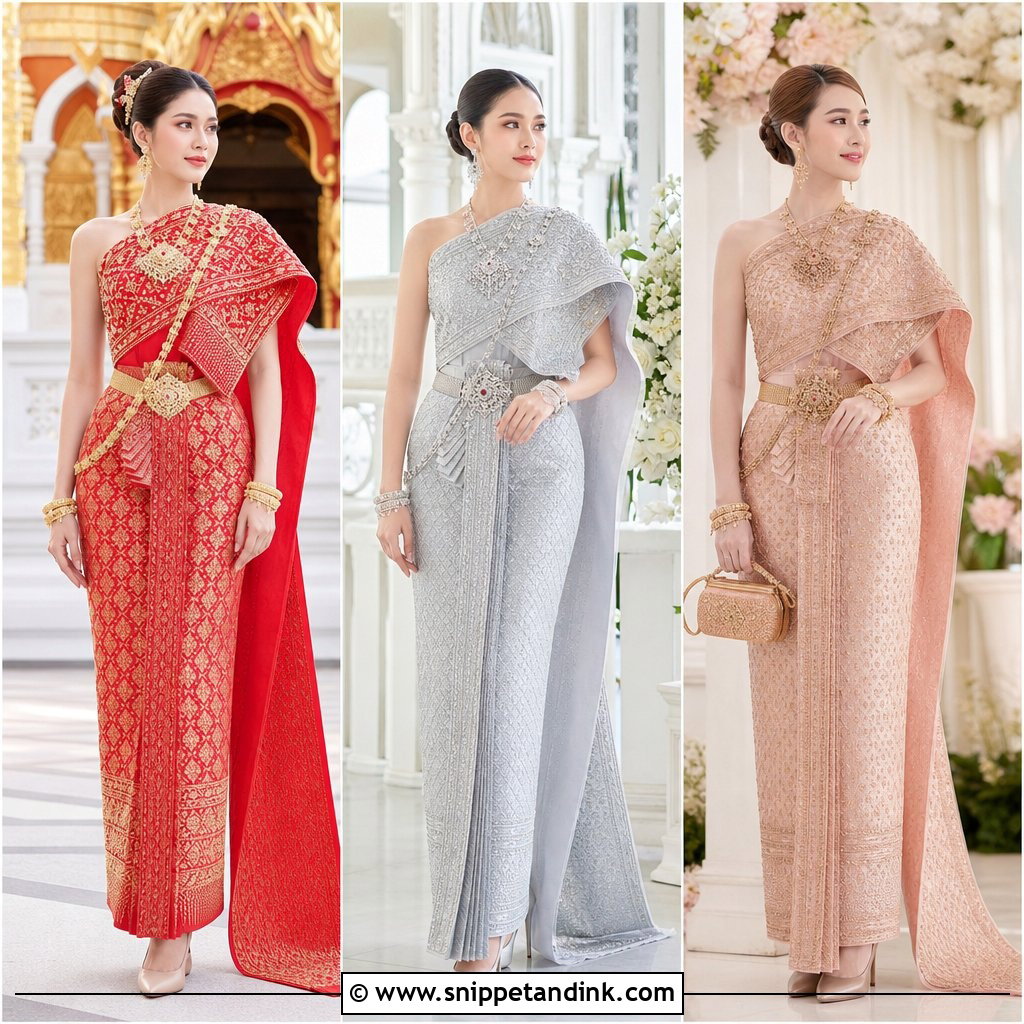
The mushanana’s charm is in the drape: a wrapped floor-length skirt, a sash over one shoulder and a fitted top underneath. Ivory, pale gold, dusty rose or powder blue in a luminous fabric looks bridal, and a subtle jacquard adds depth without fuss. The shoulder drape is the focal point, so keep the bag small and the jewelry delicate, with a polished low bun to leave the shoulder clear. It also works as a second look after a white ceremony gown. Have a Rwandan tailor set the wrap, length and proportions. A sash that hasn’t been fitted keeps slipping off the shoulder, and she’ll spend the evening adjusting it.
8. Ethiopian Habesha Kemis Bridal Outfit
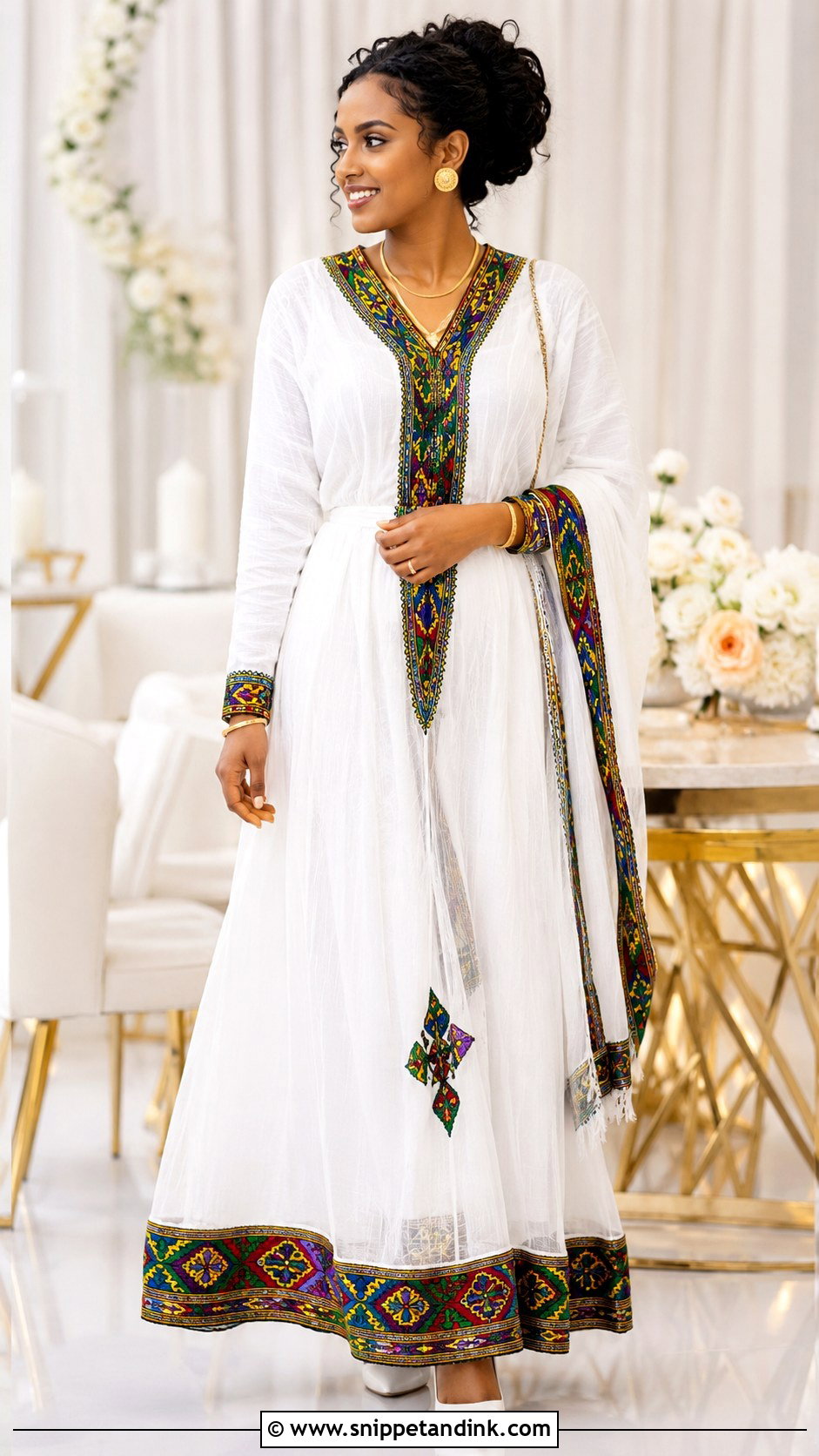
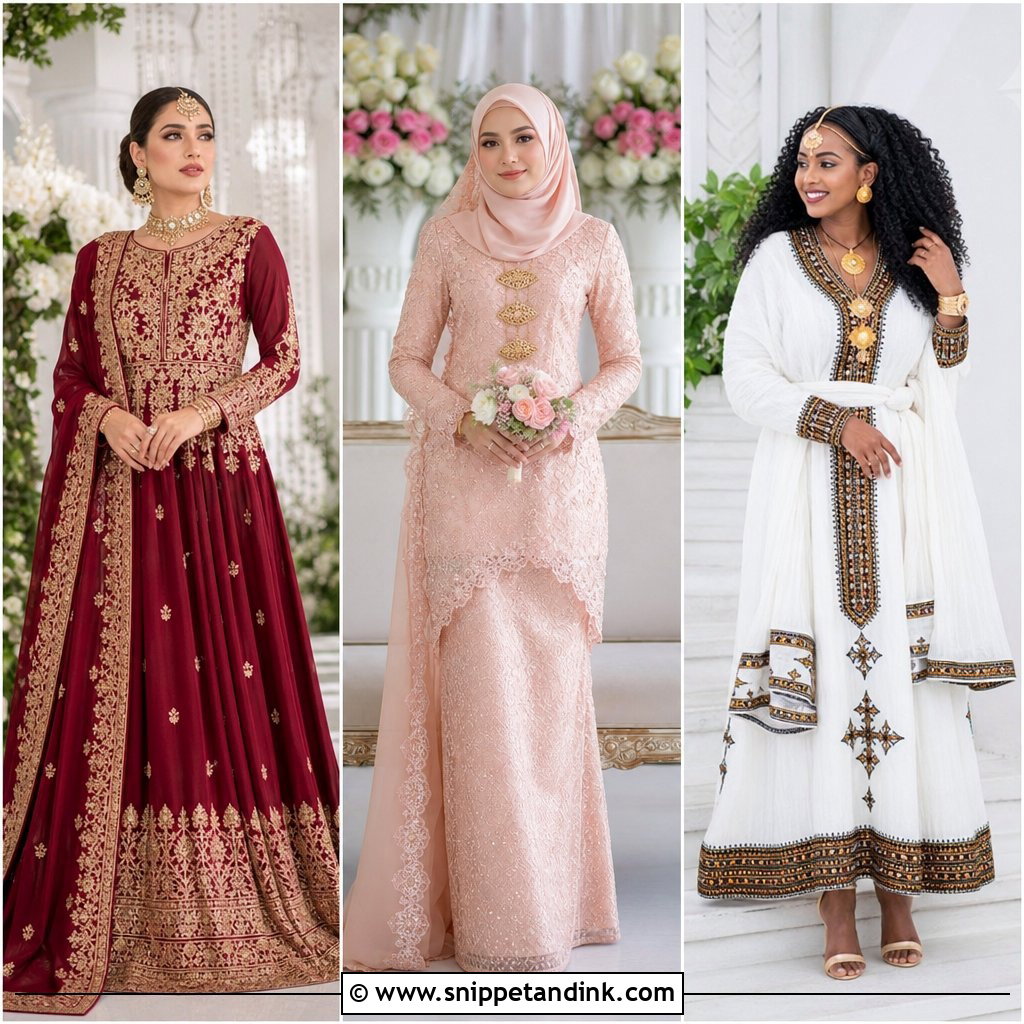
An Ethiopian habesha kemis is woven cotton, light and airy, with colorful tibeb borders along the neckline, cuffs and hem. The shape can be a relaxed column or more fitted, and a wider border in gold, green, red or blue reads more formal. Add a netela shawl, gold earrings, fine bracelets and white or metallic shoes. A braided updo keeps the neckline visible. Handwoven cotton creases when she sits, which is part of its character, but I’d still steam it just before she dresses. Designs and draping differ between communities, so work with a maker who knows them rather than buying a printed imitation.
9. Eritrean Zuria Bridal Outfit
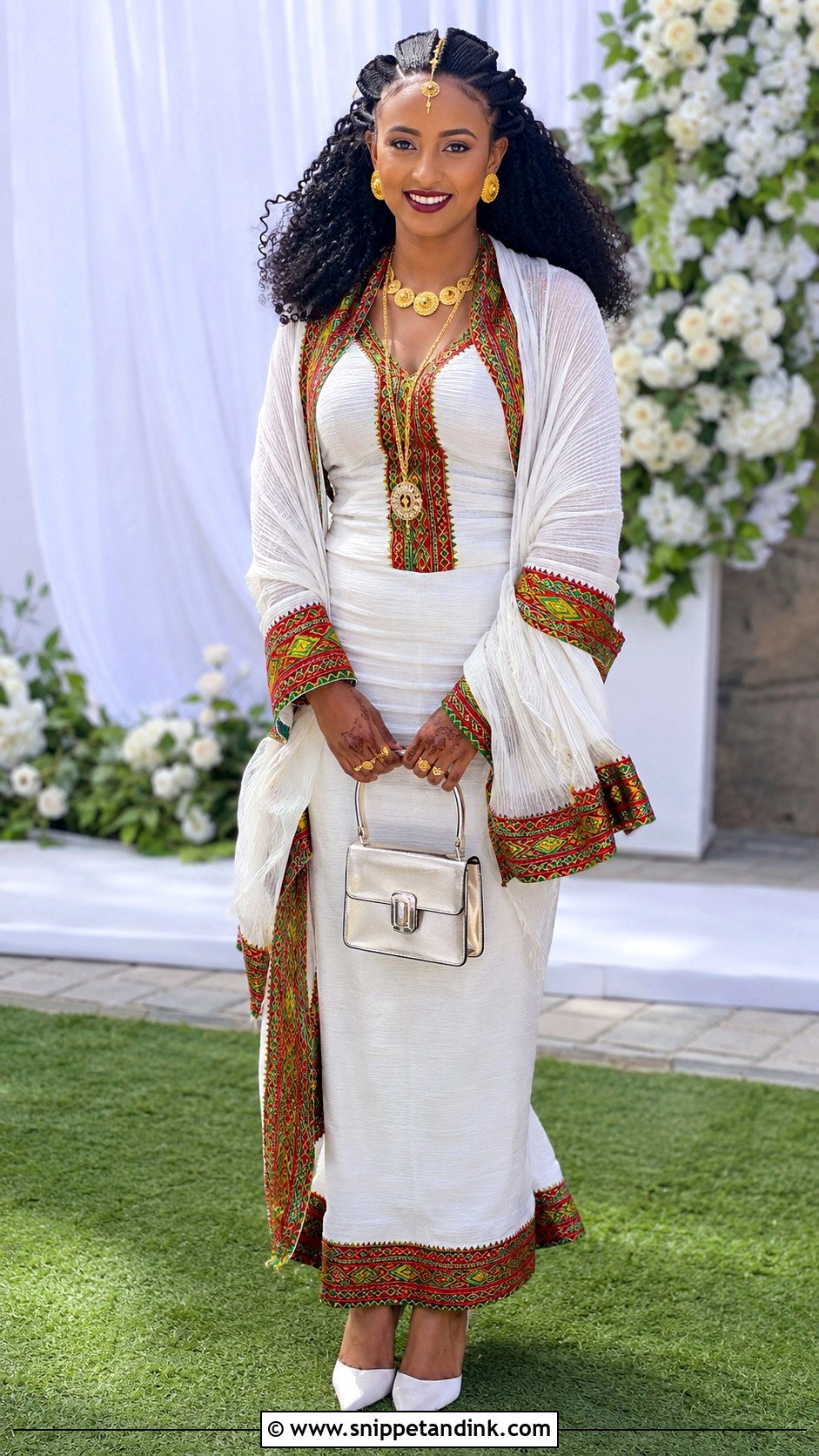
The Eritrean zuria shares that light white cloth and colorful woven borders, with embroidery at the neckline, sleeves, waist and hem and a shawl draped so its patterned edge frames the dress. Gold jewelry, white heels and a small metallic bag keep it clean. Traditional braids or a neat updo both suit it. A fitted waist reads modern; a looser cut is kinder for a long celebration. I’d ask an Eritrean dressmaker or a family elder about the right textiles and motifs for the bride’s region and the specific events.
10. Moroccan Caftan Bridal Outfit
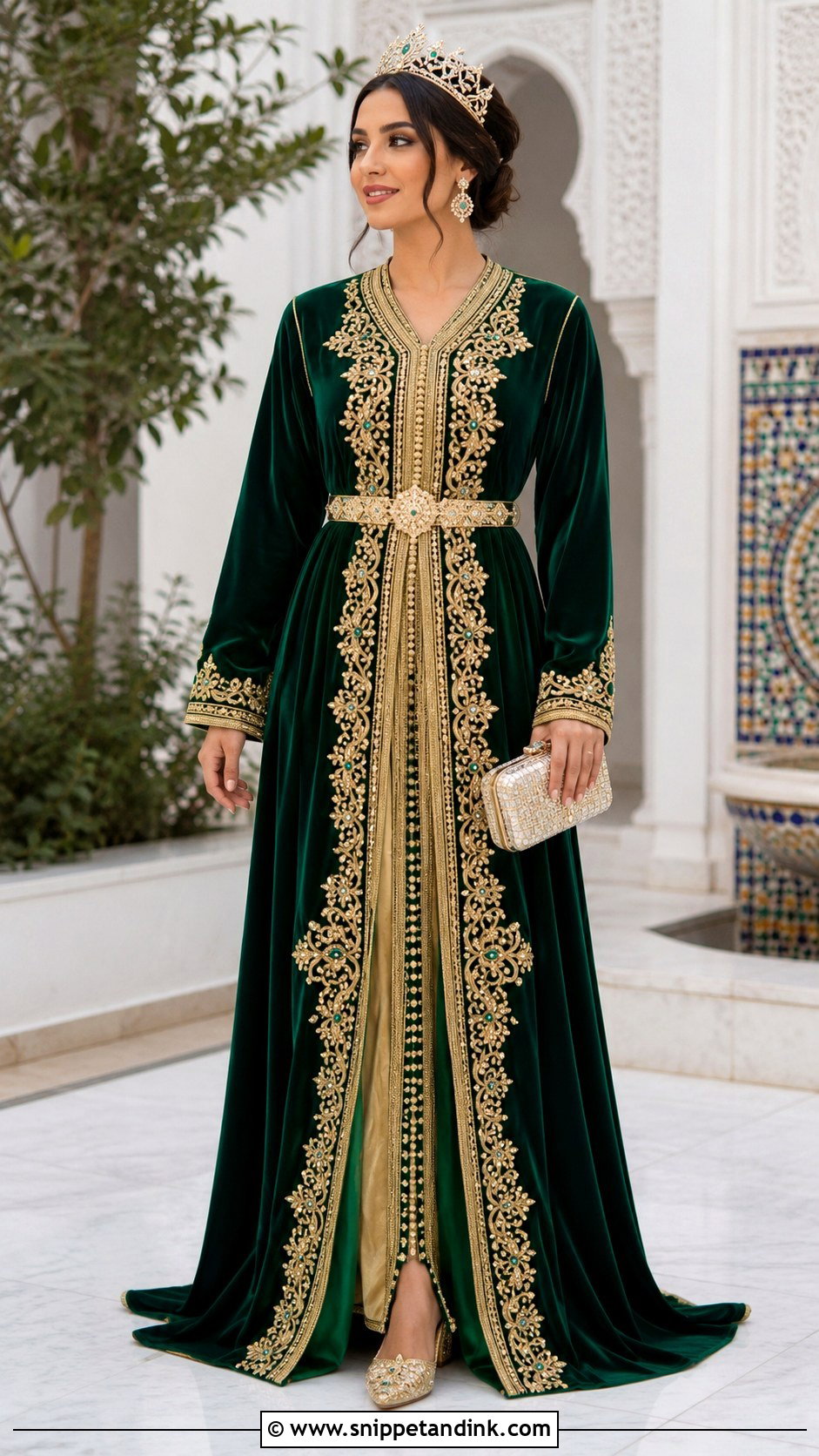
A Moroccan bridal caftan gives ceremony without any Western silhouette. Emerald, ivory, ruby or sapphire in velvet, silk or brocade, with embroidery, crystals and metallic trim framing the neckline, sleeves and front opening. The belt does the shaping, so it’s fitted to her waist, not bought off the rack. Pointed slippers or low metallic heels go under the hem, with a jeweled headpiece and drop earrings. Moroccan brides often change several times, and I’d save the most elaborate caftan for the reception entrance. A Moroccan artisan will get the layering and fit right, which is what separates it from a costume.
11. Algerian Karakou Bridal Outfit
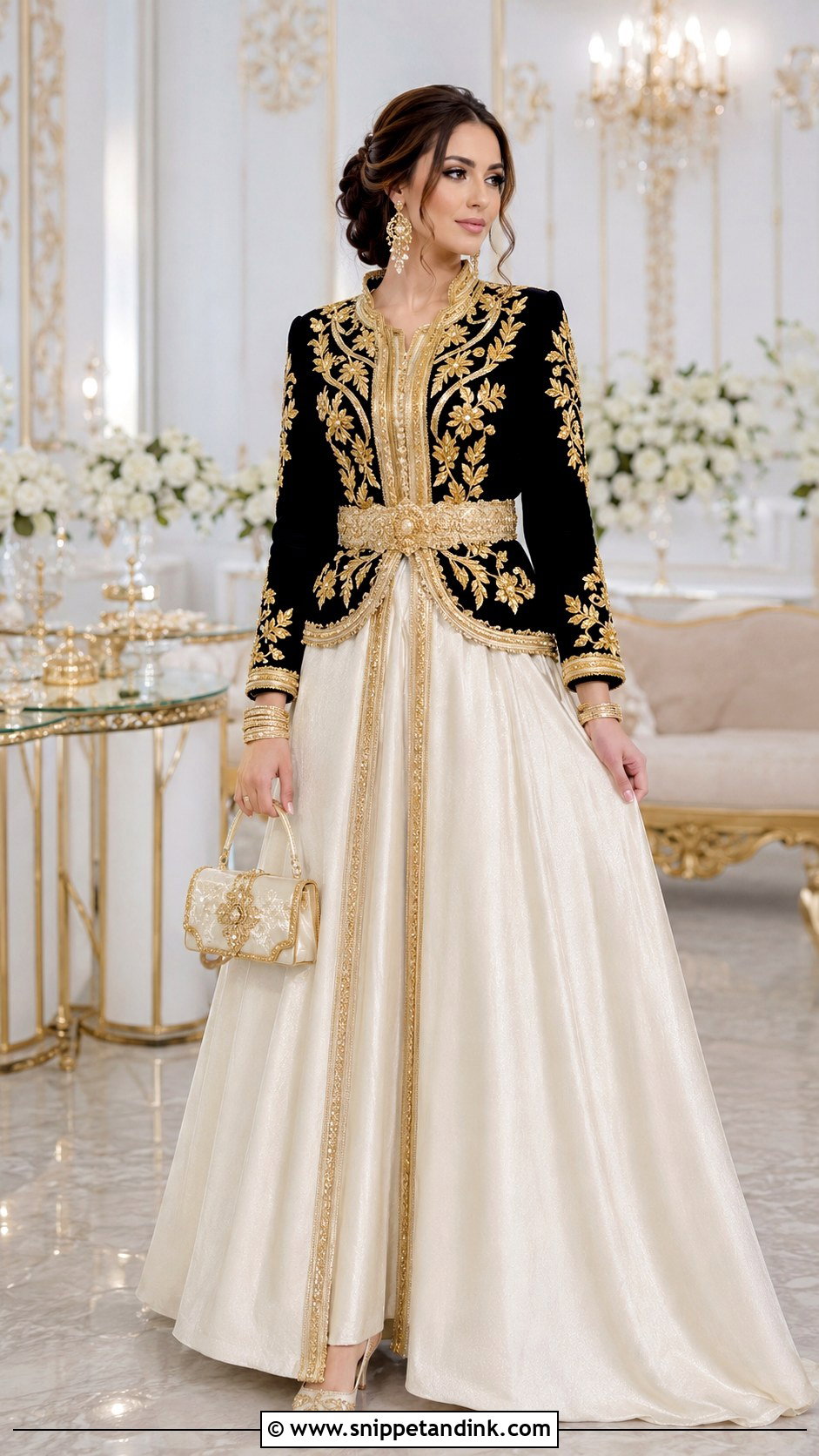
An Algerian karakou is a fitted embroidered jacket worn with a flowing skirt or wide trousers, and black velvet with gold threadwork is the classic pairing. Ivory, burgundy, navy or emerald are equally formal. The jacket has to sit perfectly at the shoulders and front edges; if it gapes at the bust, the embroidery buckles, so I’d fit it over the exact blouse she’ll wear. Gold earrings, stacked bracelets, embroidered shoes and a sleek bun keep the focus on the jacket. A skirt with a short train adds drama below. Ceremonial dress varies by region, so use a specialist who knows the bride’s background.
12. Kabyle Bridal Dress Outfit
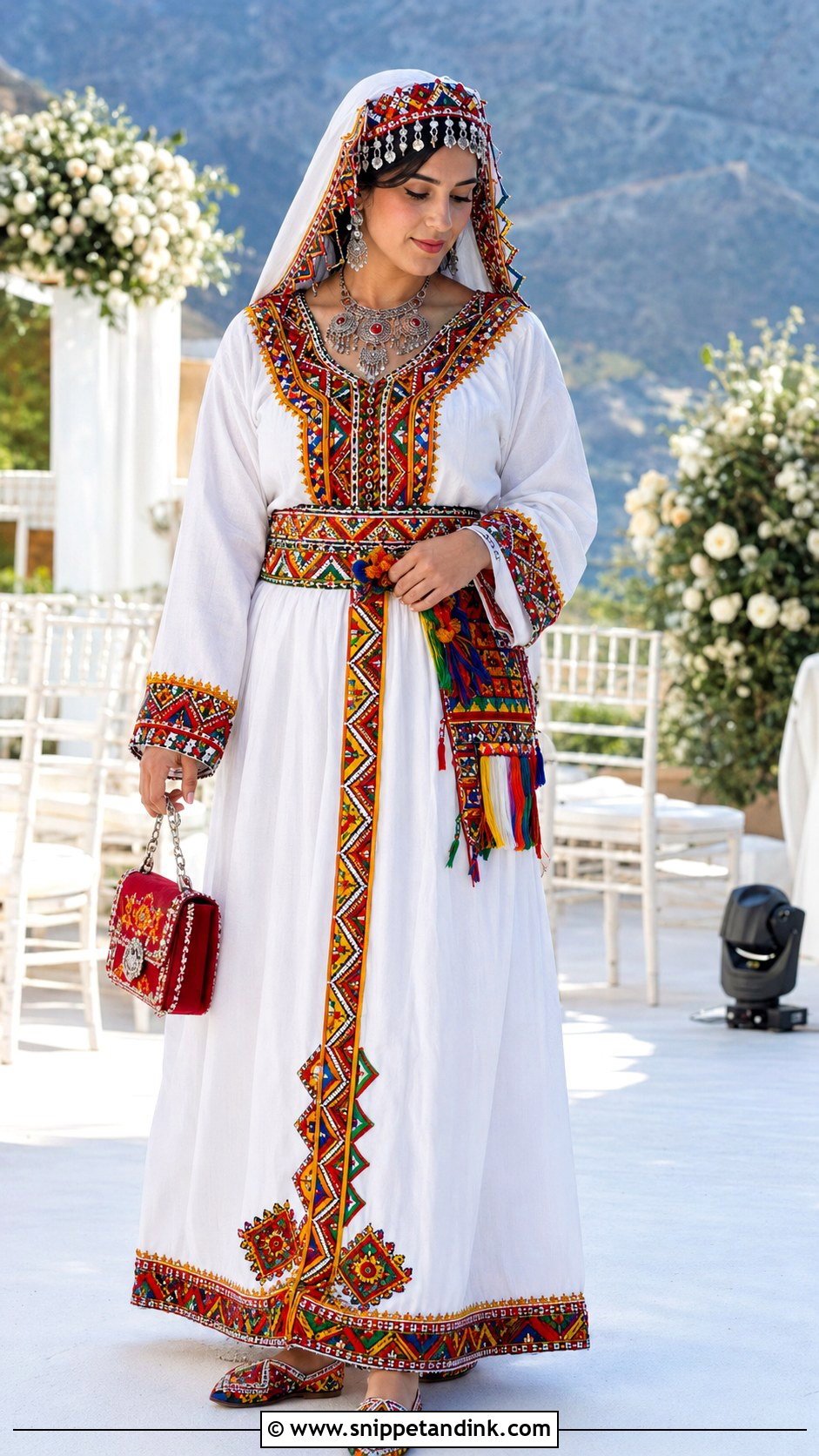
Kabyle bridal dresses are white or light with bright geometric embroidery in red, yellow, green, blue and orange, often finished with a woven belt at the waist. Silver-toned jewelry, a patterned head scarf and embroidered flats complete it, and a light wrap adds coverage on a cooler evening. For the bag, pick one solid color from the embroidery. Motifs and jewelry can carry regional or family meaning, so I’d source the outfit through a Kabyle maker and confirm how each piece is worn.
13. Somali Dirac Bridal Outfit
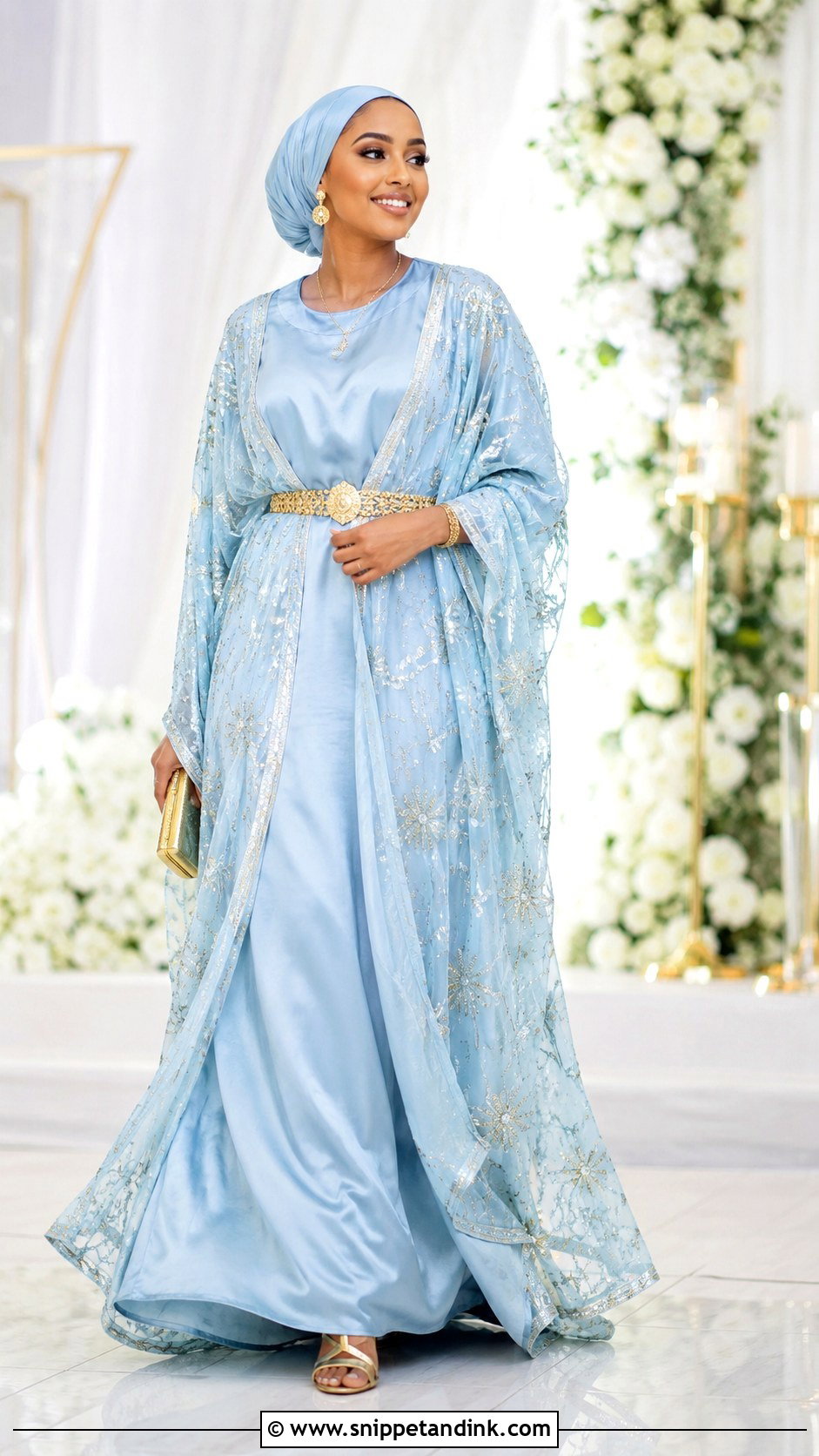
A Somali dirac is a sheer outer dress over a satin underdress and a long underskirt, which is why it moves and catches light. Pastel pink, icy blue, lilac, champagne or soft green with gold embroidery and crystals looks formal. A decorative belt, metallic heels, a small clutch and refined gold jewelry finish it, with a matching headscarf or a hairstyle suited to the family. The layers have to sit together. If the underskirt is cut shorter than the dirac, the hem looks uneven every time she walks, so I check all three lengths at once. A Somali tailor can balance sheerness and coverage for the occasion.
14. Maasai Beaded Bridal Outfit
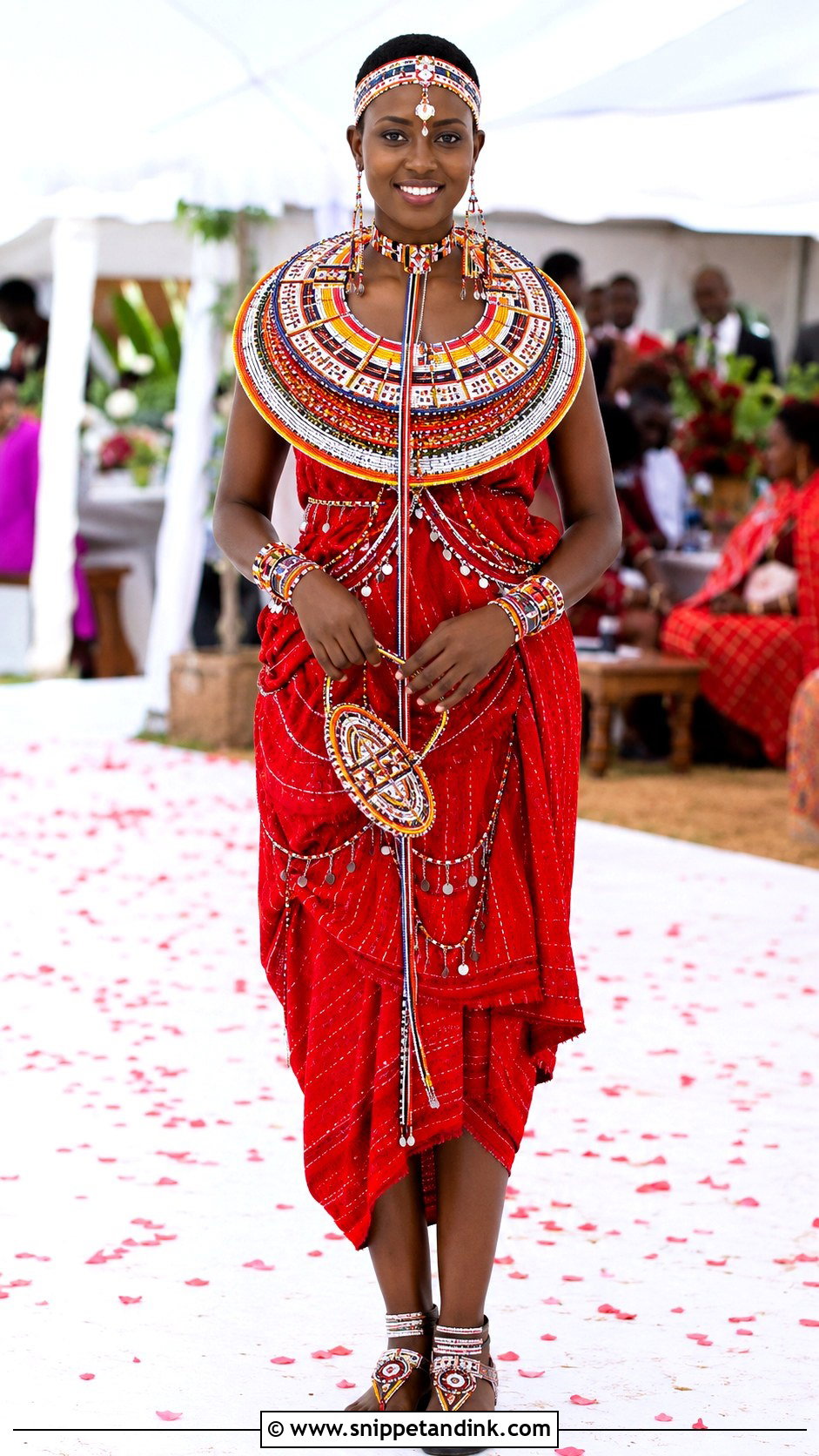
A Maasai bridal outfit should start from authenticity, not a loosely inspired fashion version. Depending on the community and ceremony, it may combine a wrapped garment in red or another significant color with elaborate circular beadwork, earrings and bracelets. The handmade collar is the focus, so the cloth underneath stays simple, and flat sandals keep her steady. For a contemporary silhouette, have a Maasai artisan work alongside the dressmaker. Clothing, colors and jewelry can relate to age, marriage and social identity, so family guidance comes first, and unrelated motifs from other communities should stay out.
15. Shweshwe Bridal Gown Outfit
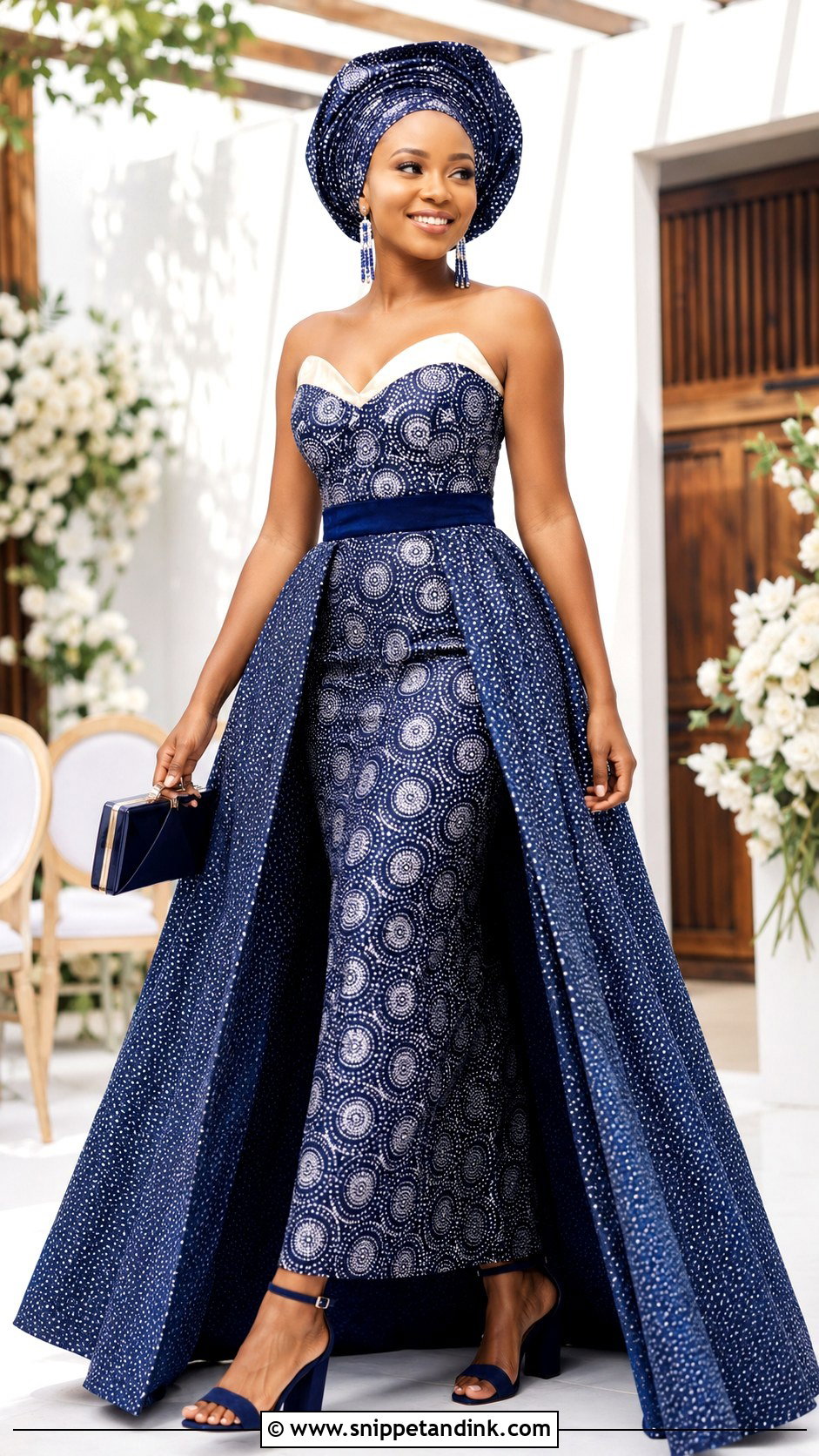
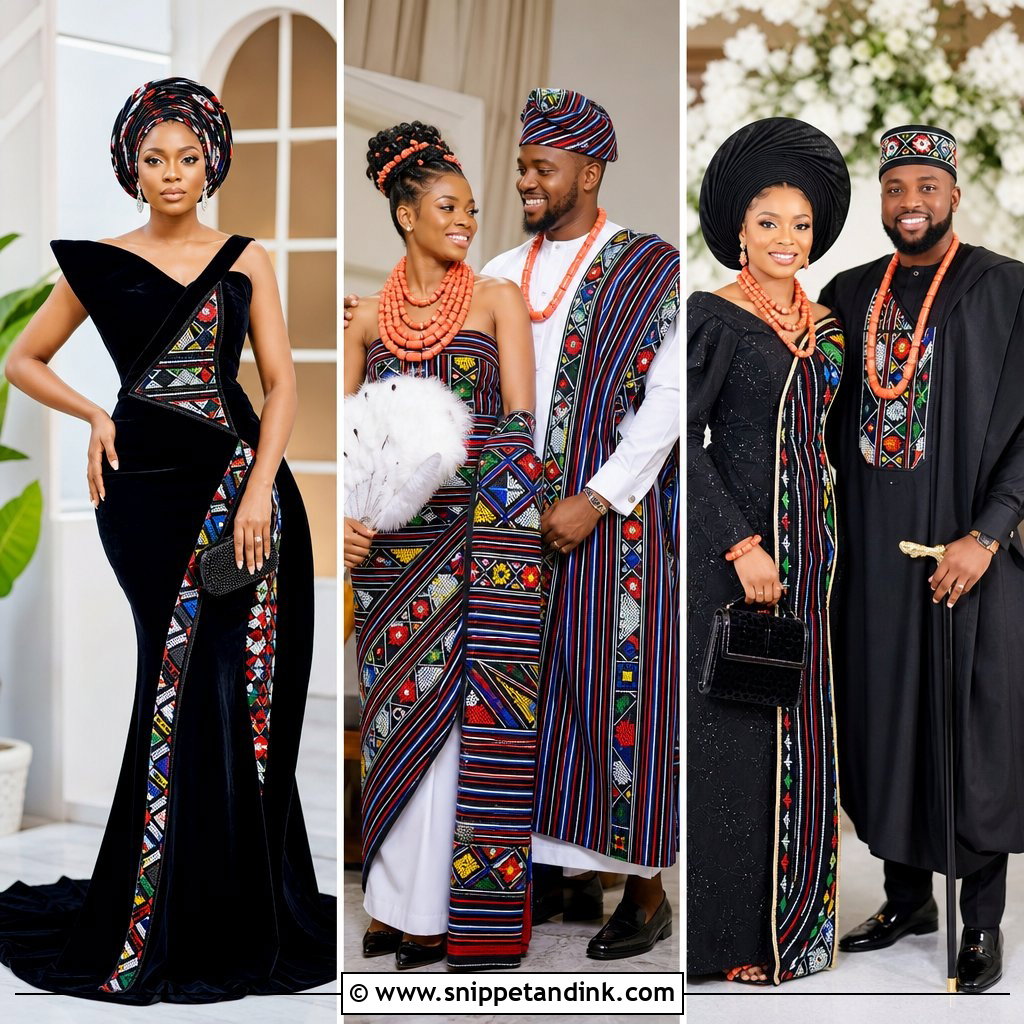
Shweshwe is a crisp printed cotton, and it holds a structured shape well. A fitted bodice with an A-line skirt shows off the small-scale print without looking busy. Indigo, brown, red or green shweshwe can be softened for a bride with an ivory neckline, a detachable overskirt or a plain satin panel. A solid waistband breaks up the pattern. The fabric is traditionally starched and can shrink when washed, so I always have it pre-washed before cutting. Beaded earrings, block heels and a neat headwrap or veil complete it. Use a tailor who has worked with genuine shweshwe before.
16. Ankara Ball Gown Bridal Outfit
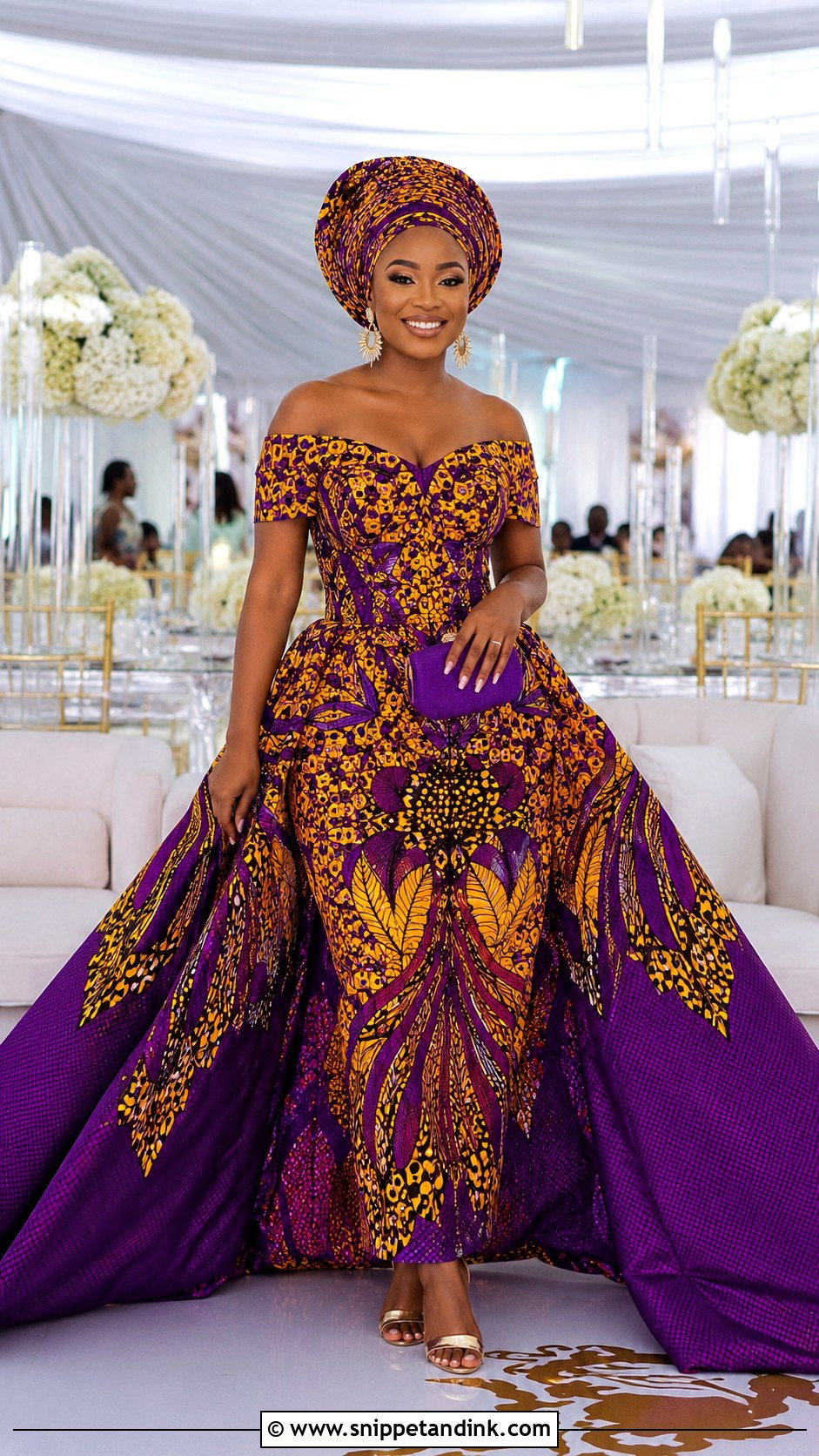
An Ankara ball gown uses one bold print across the fitted bodice, full skirt and optional train. Big motifs need placing. I ask the tailor to center the largest motif on the bodice and mirror it on the front skirt, because an off-center print reads as a mistake in photos. A sweetheart, square or off-the-shoulder neckline balances the volume. With a vivid print, skip the necklace. A matching headwrap gives a traditional touch, or a simple veil for a fusion look. Proper internal structure keeps the skirt full without making it heavy.
17. African Lace Mermaid Bridal Outfit
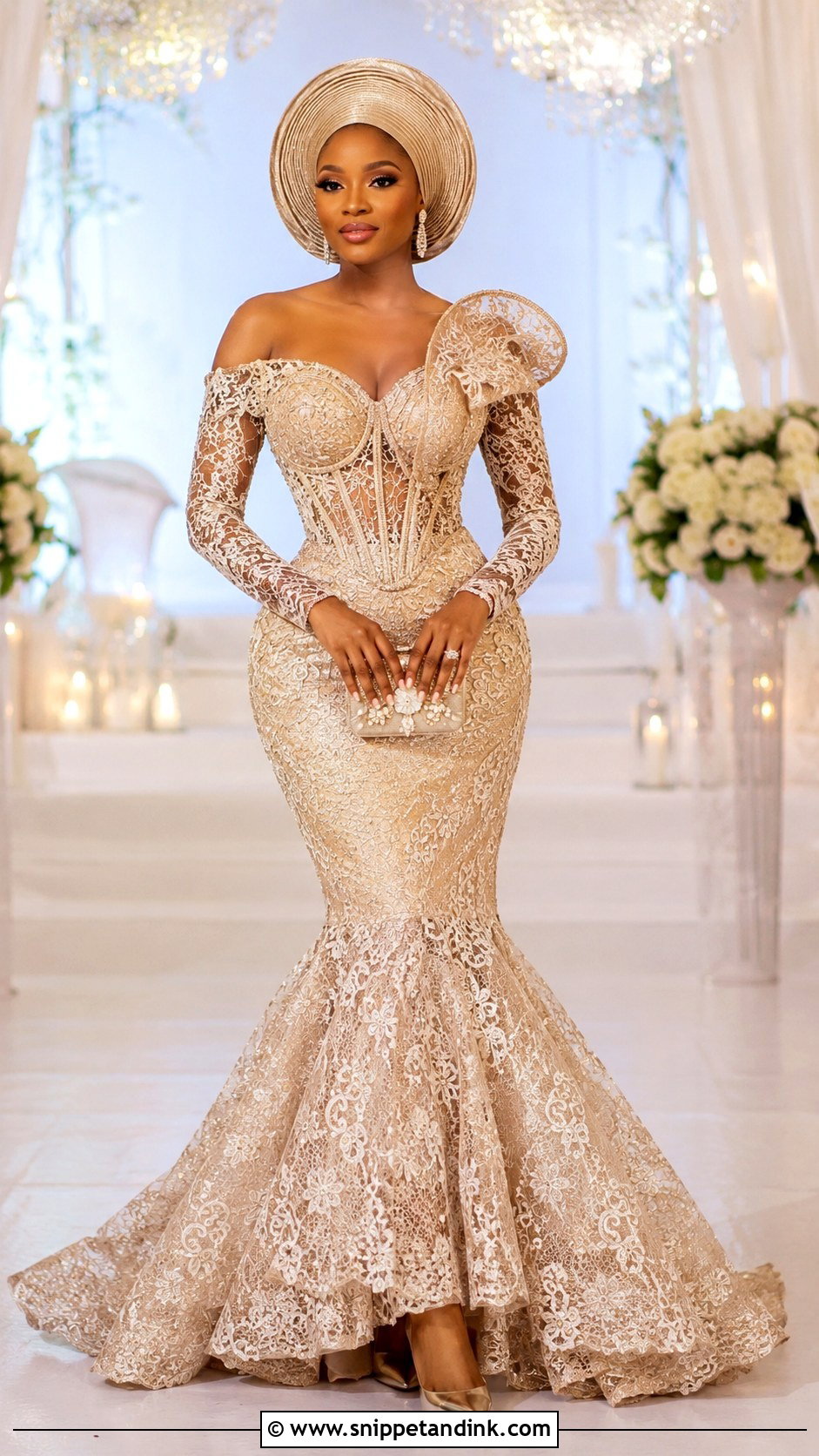
Lace mermaid gowns are a reception favorite, in ivory, gold, champagne, burgundy or emerald with beading across the bodice and skirt. The fit has to be smooth through the waist and hips before the flare, which takes several fittings. A corseted interior helps, but she still needs to sit down and dance. I test that at every fitting. Add a gele, headpiece or sleek veil depending on the event, with pointed heels and drop earrings. With heavily beaded lace, one or two statement jewelry pieces are enough.
18. White Gown With Kente Bridal Outfit
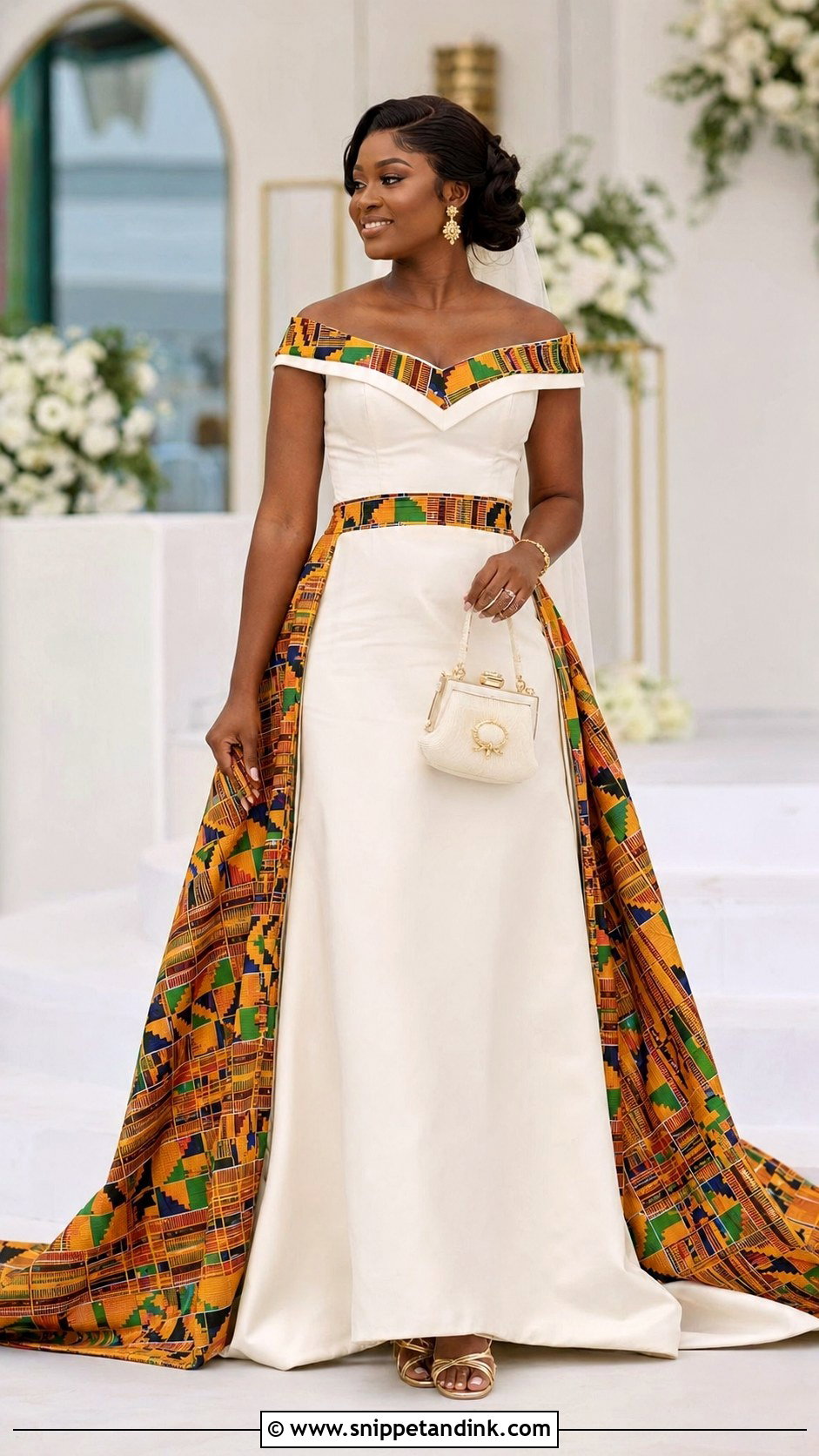
A white gown with kente accents is a clean bridge between classic bridalwear and Ghanaian heritage. Keep the gown simple, an A-line, column or mermaid, and add kente at the neckline, waist, cuffs or on a detachable train. A kente sash or overskirt is the most flexible version since it can come off between ceremony and reception. Limit it to one or two prominent placements; narrow strips everywhere look scattered. The veil stays plain. I’d choose the cloth with family or a knowledgeable designer, as patterns and colors can carry personal or ceremonial weight.
19. Beaded Bridal Jumpsuit Outfit
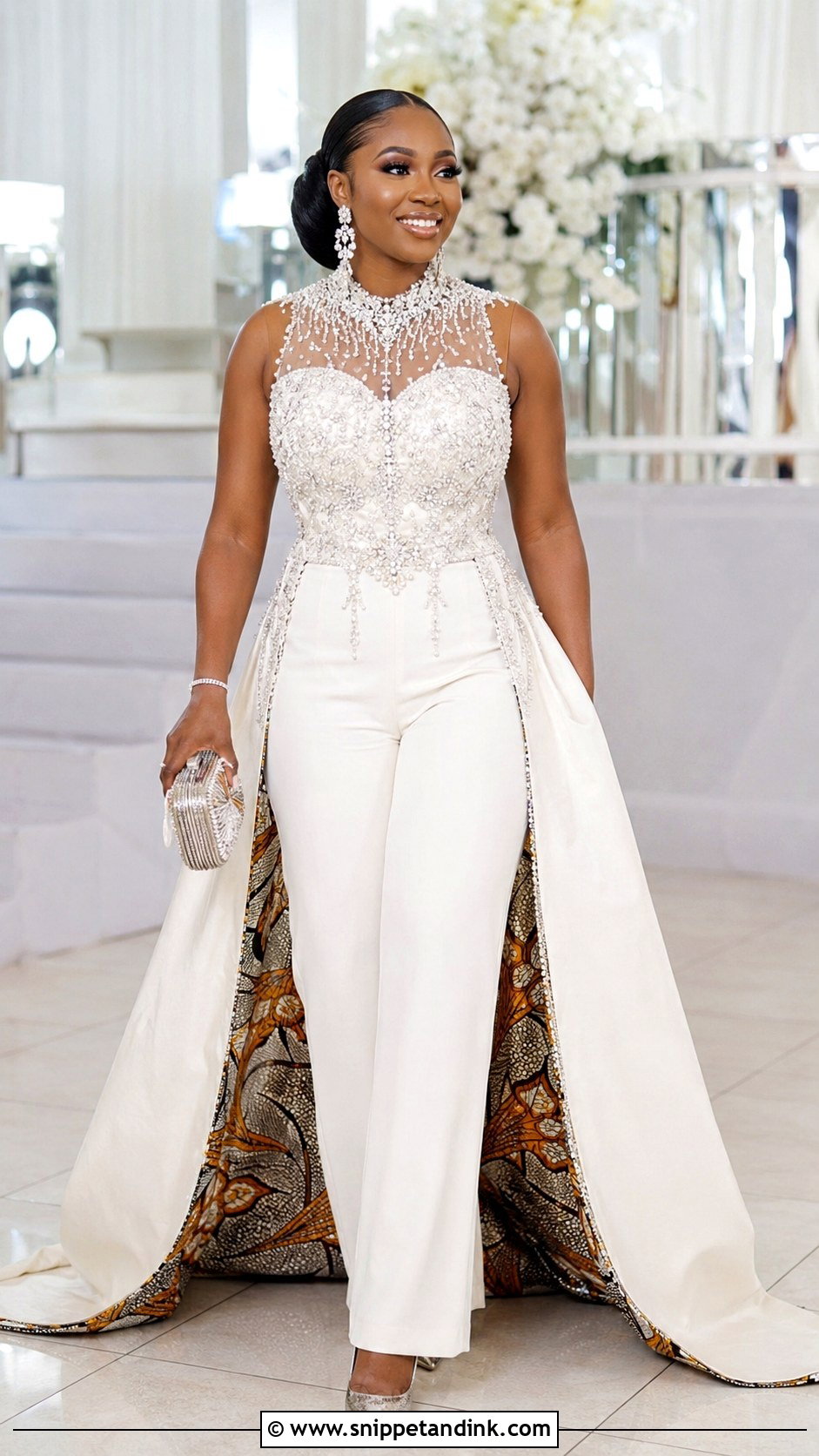
A beaded bridal jumpsuit is a practical second outfit when she wants to dance. An ivory, champagne or gold design with wide-leg trousers, a defined waist and sparkle confined to the bodice. A detachable overskirt can make the entrance, then come off. Aso oke, kente, Ankara or hand-beaded trim can go on the belt, cuffs or overskirt. My main fitting check is the trouser hem, which should nearly touch the floor in her heels without dragging, plus the seat seam when she sits. Pointed heels and crystal earrings finish it.
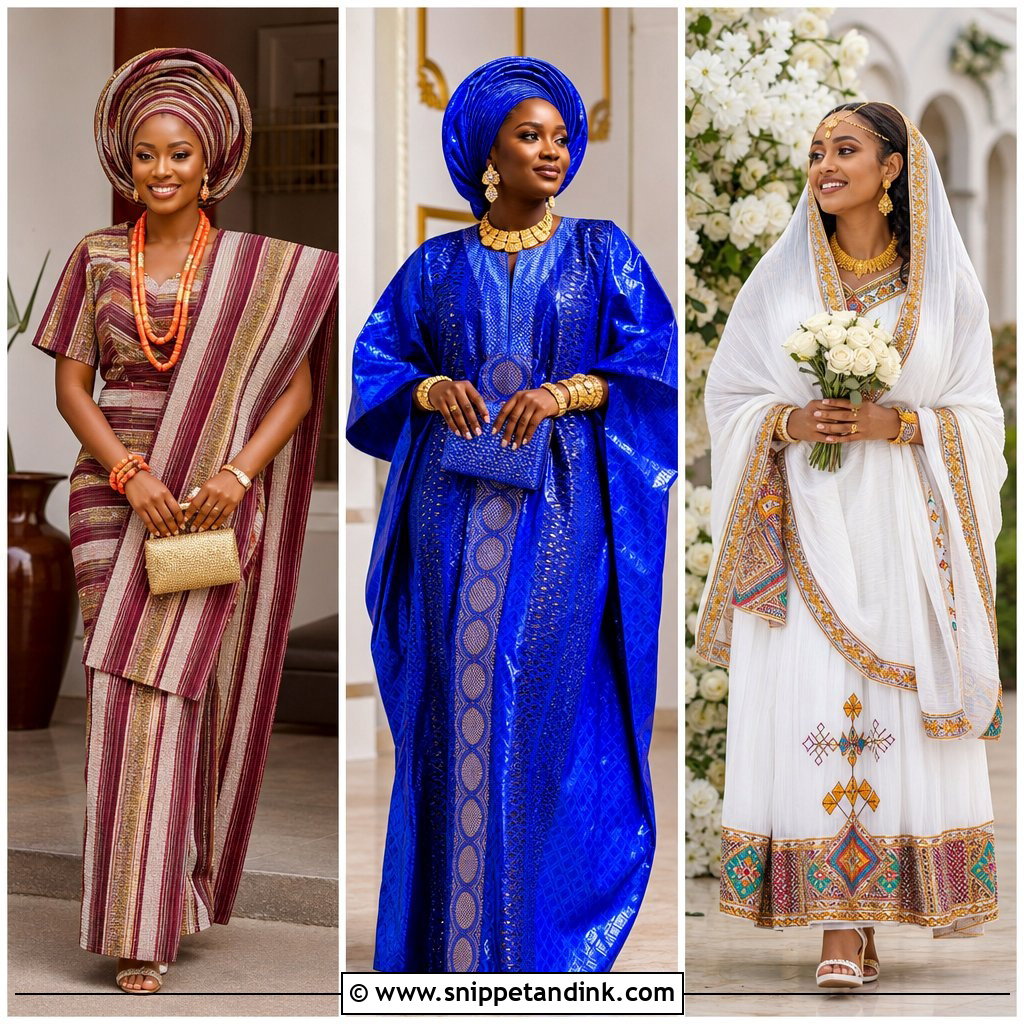
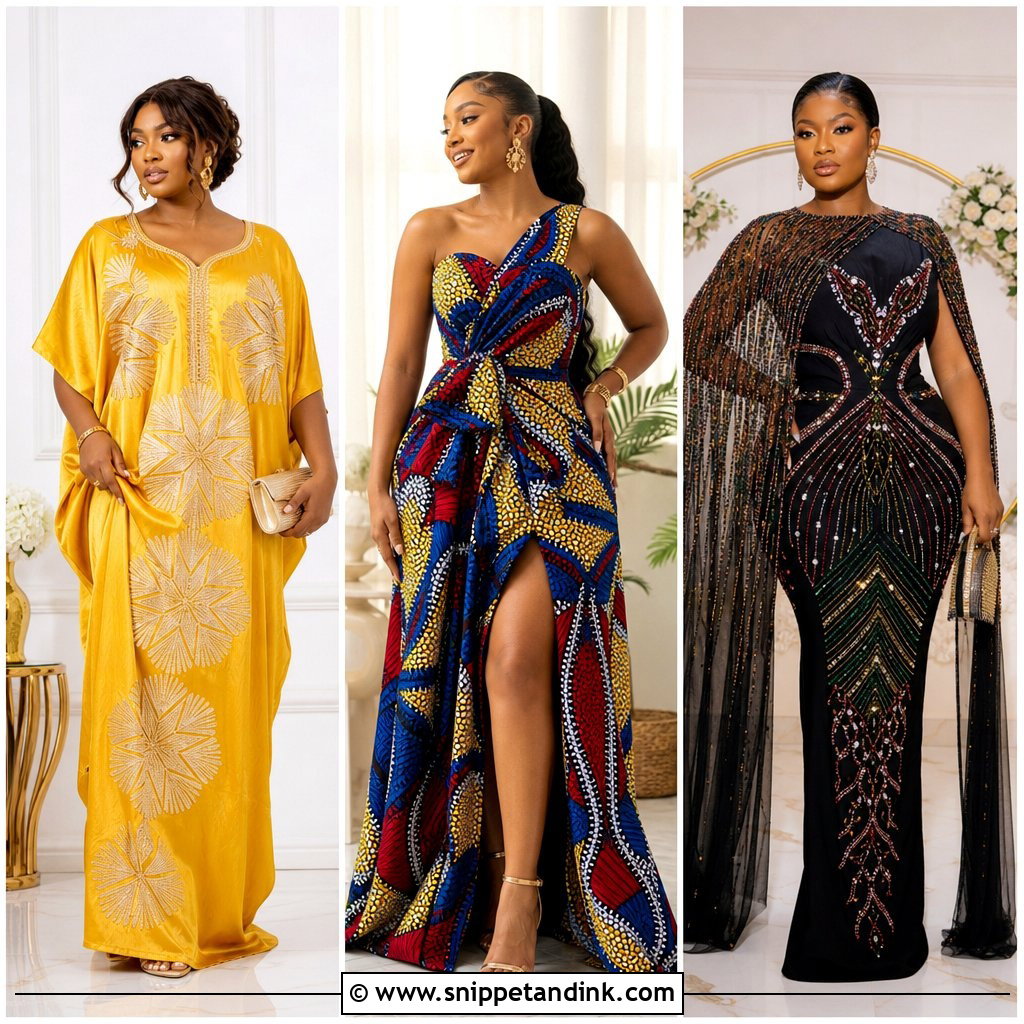
20. Metallic Wrapper Bridal Reception Outfit
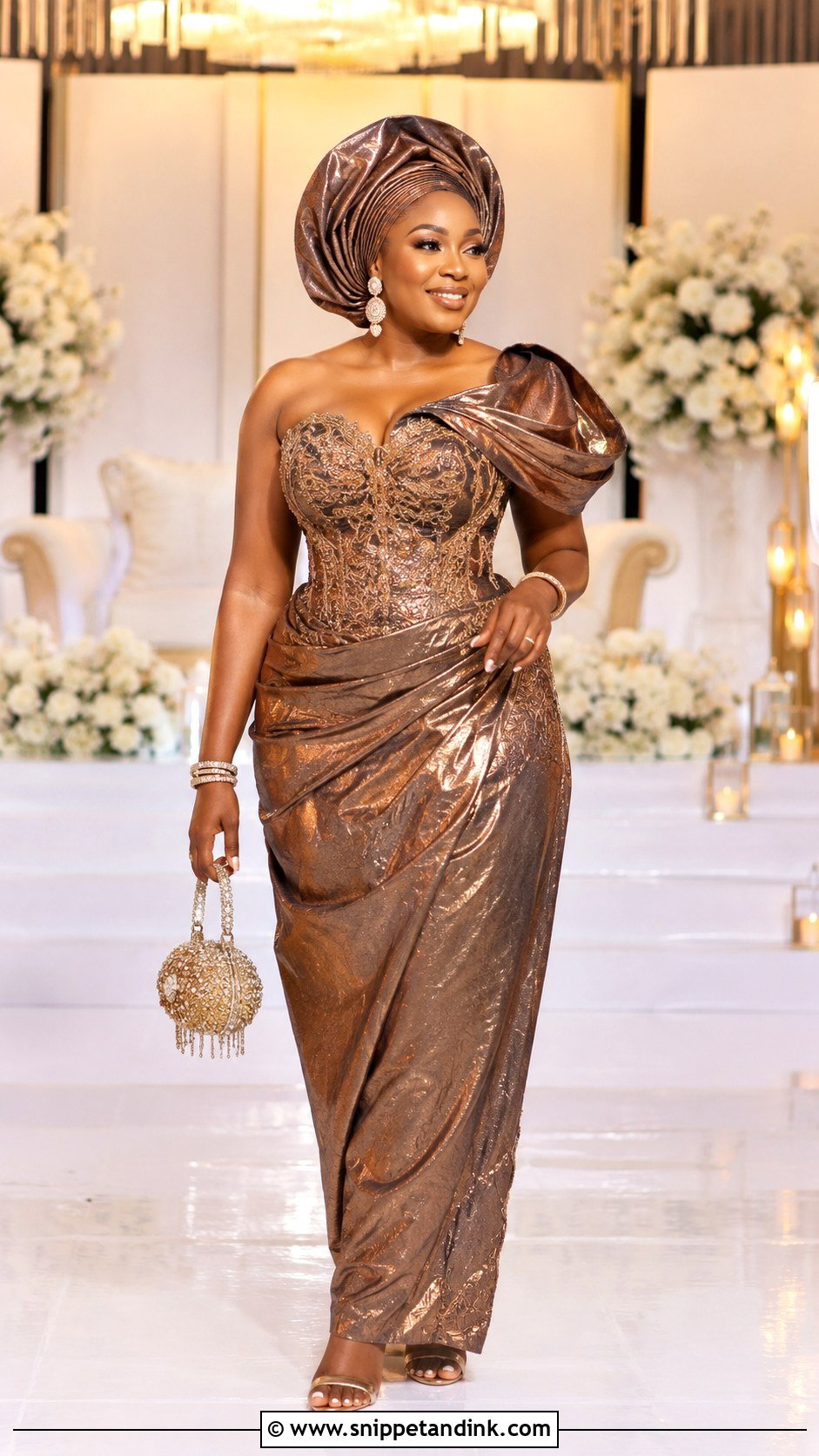
A metallic wrapper is a strong final reception entrance: bronze, copper, silver or gold wrapper skirt with a corset blouse or peplum top, plus lace, beading or a draped shoulder for texture. Keep the colors tonal so the surfaces don’t compete. A floor-length wrapper looks formal; a front slit or shaped hem makes dancing easier, provided coverage is planned. Metallic fabrics can be hot and scratchy, so I’d insist on breathable lining and secure fastenings. A coordinated headwrap, sculptural earrings and a small beaded bag finish it, and the groom can pick up one shared fabric or accent color.
A Gele or Headwrap That Lasts Until the Last Dance
Several of these outfits finish with a gele or headwrap, and it’s usually the first thing to collapse. I plan it as carefully as the dress.
- Book someone who ties gele regularly. A good tie takes skill, and a professional will finish in minutes what a nervous relative can spend half an hour on.
- Tie it after makeup and after the hair is set flat and secure underneath, ideally over a smooth cap so the fabric doesn’t slide on hair.
- Stiffer fabrics hold sculpted pleats longer; soft fabric looks gentler but drops sooner. Pick based on how long she’ll wear it.
- Ask for a few hidden pins at the back, and have a spare set of pins in the bag for touch-ups.
- If she has several outfit changes, consider a pre-tied gele for one of them. It goes on in seconds.
Do one practice tie before the wedding, wearing the actual earrings and with the hair done as planned. The weight and angle of a gele change how earrings and a veil sit, and finding that out on the morning wastes time nobody has.
One Heritage, Worn Properly
A bridal outfit works when she feels connected to it and comfortable enough to stay present all day. Traditional textiles, regional craftsmanship and modern tailoring can all combine, as long as each culturally specific garment is chosen with relatives, community experts and artisans who know its meaning. Plan around the ceremony, the climate, how much she’ll move and how many changes there are. Africa isn’t one fashion identity, and the best outfits honor one distinct heritage, the bride’s own, while still looking like her.
You'll Like These Ideas:


Leave a Reply