
When a bride tells me she wants a gown with a wow moment, the first thing I ask is where she wants people to look. A sculpted satin bodice, a field of embroidered flowers, a detachable overskirt, a scatter of pearls, one of the colored gowns now in sample rooms, or a short dress with a big hem: each puts the drama in a different place. Unusual rarely has to mean difficult to wear. Often it is a single sleeve, neckline or fabric doing the talking while the rest of the dress stays calm. Here are the 25 directions I’d show a bride who wants to be remembered, with notes on how each one behaves once she is wearing it.
Statement Gowns Take Longer to Arrive Than Simple Ones
The more unusual the detail, the more lead time it needs. Most designer gowns are made to order after you choose them, and production commonly runs somewhere around four to eight months depending on the house. Custom colours, hand-placed pearls, 3D flowers and feather work sit at the long end, because they are applied by hand after the base dress is built.
Then come alterations. I plan for two or three fittings, starting roughly two to three months before the wedding. Heavily embellished gowns take longer to alter than plain ones, since a seamstress has to remove and re-sew beading or appliqué wherever she takes in a seam. That work is often priced separately from a standard hem, so ask for an estimate at the first fitting.
If your wedding is less than six months away, tell the boutique at your first appointment. They can point you to sample gowns, rush options or designers who keep stock, which saves you falling for a dress that cannot be delivered in time.
1. Floral Embroidered Wedding Gown
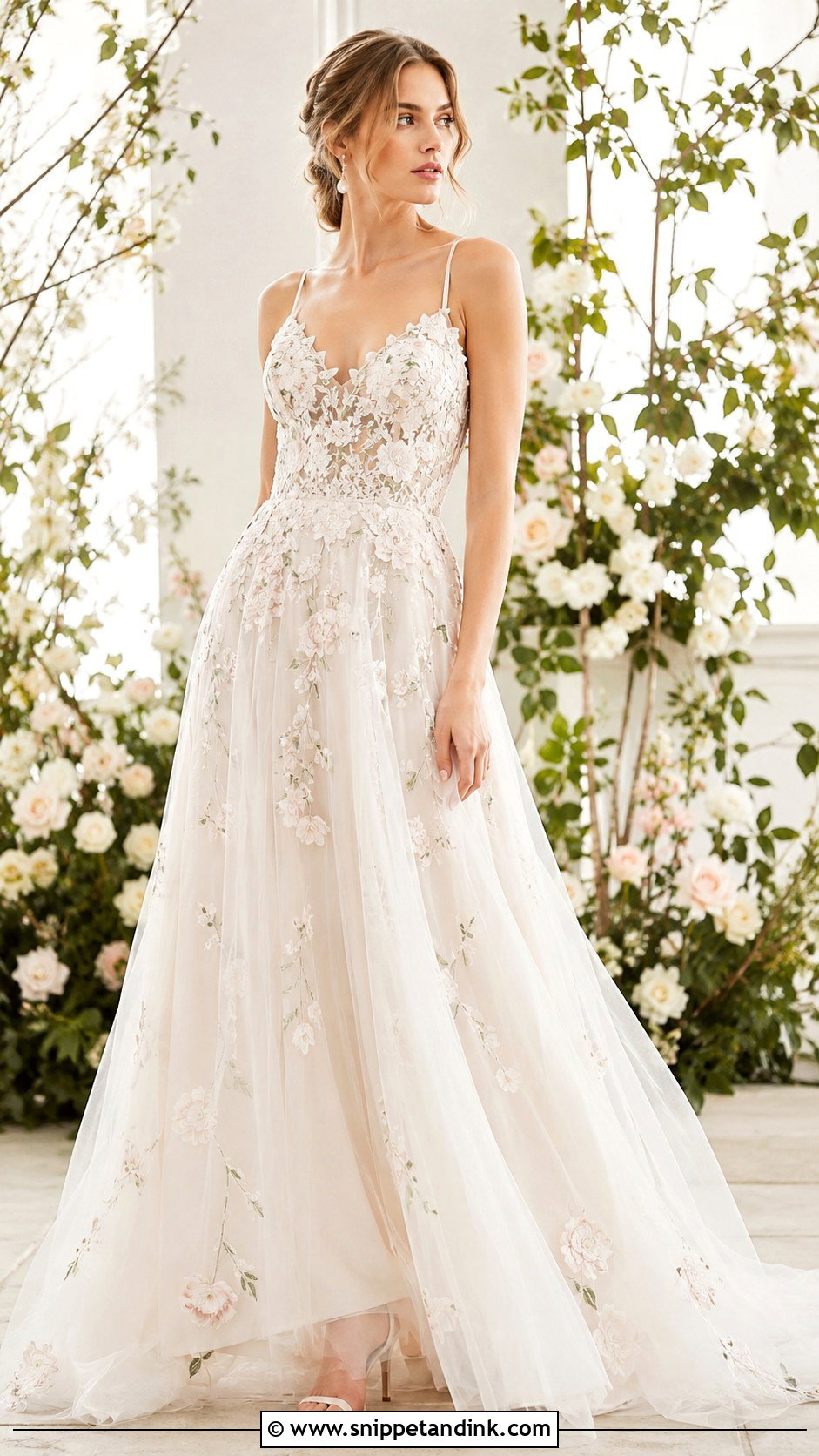
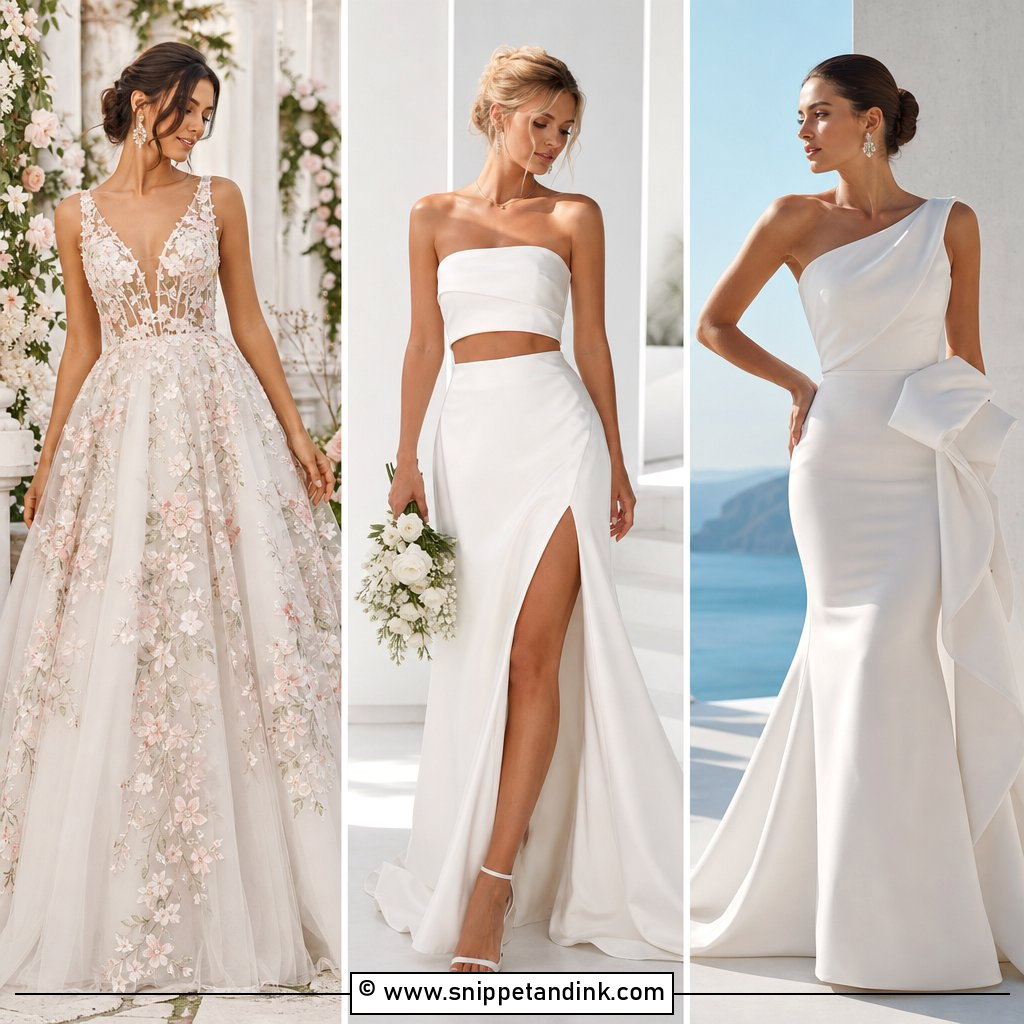
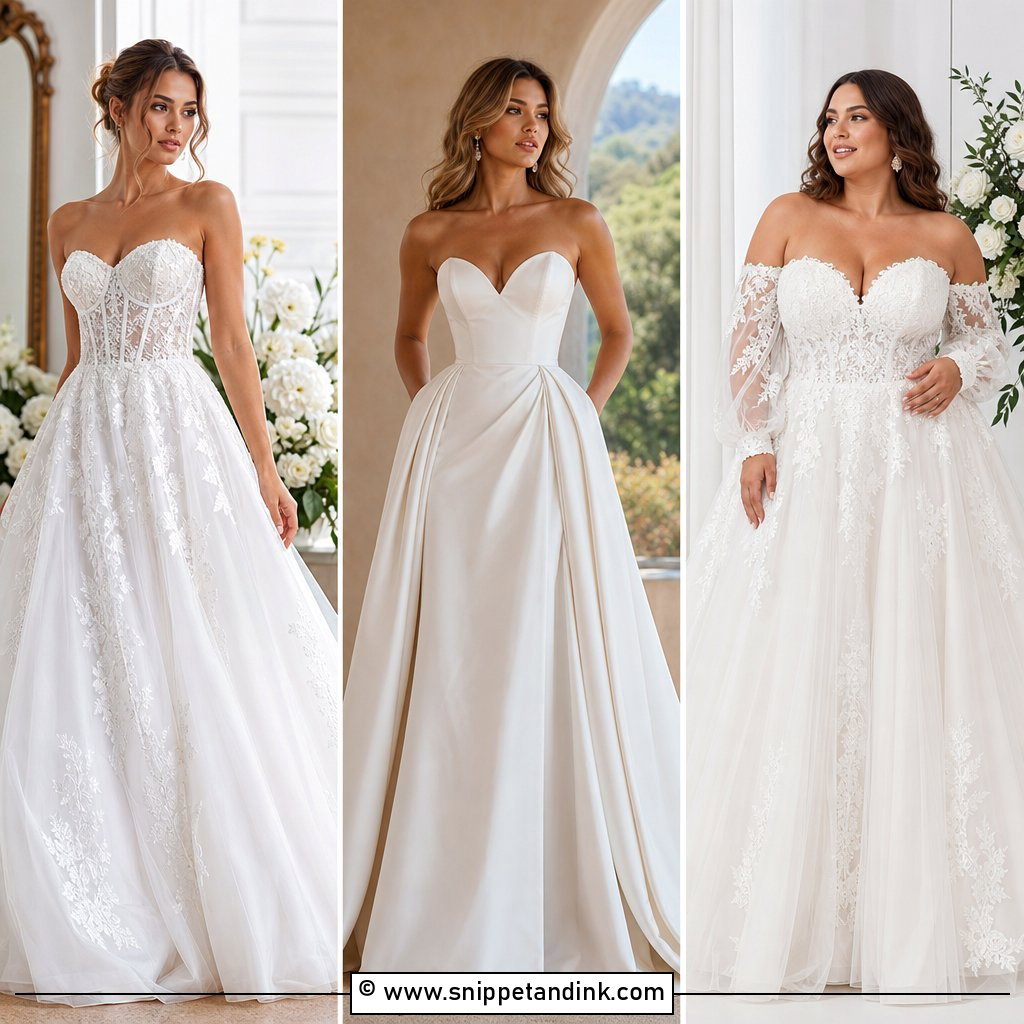
Embroidered flowers give you romance without falling back on all-over lace. Look for stitched motifs on tulle or organza that sit slightly raised from the fabric; flat printed florals read cheaper in photos. Pastel thread, ivory vines and tiny pearl centres keep it artistic rather than sugary. At a fitting I check that the embroidery stops short of the side seams, because motifs cut through by alterations are hard to rebuild. If the flowers are coloured, let the dress lead and keep the bouquet tonal, with a low bun and a plain veil.
2. Pearl Beaded Wedding Gown
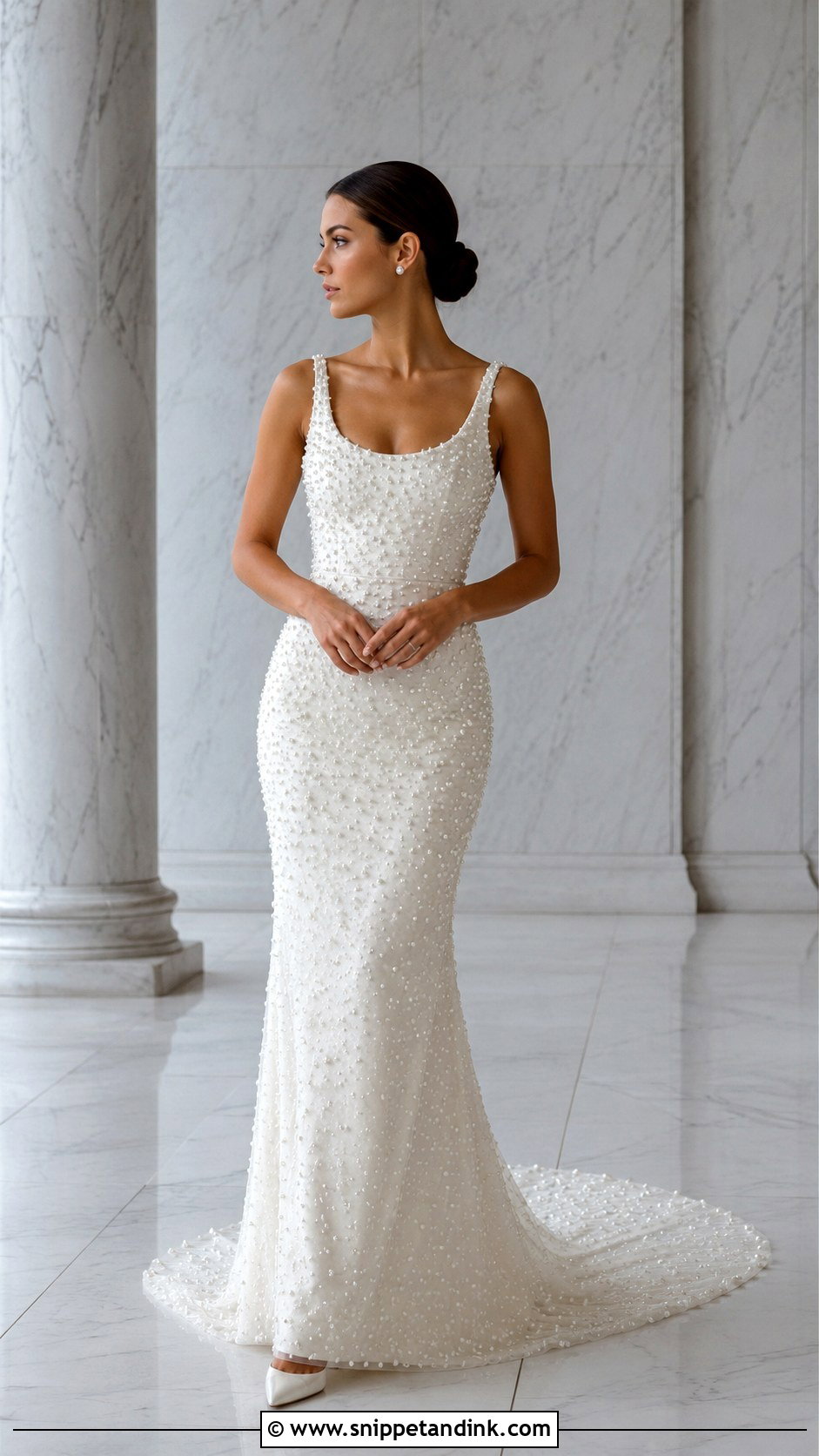
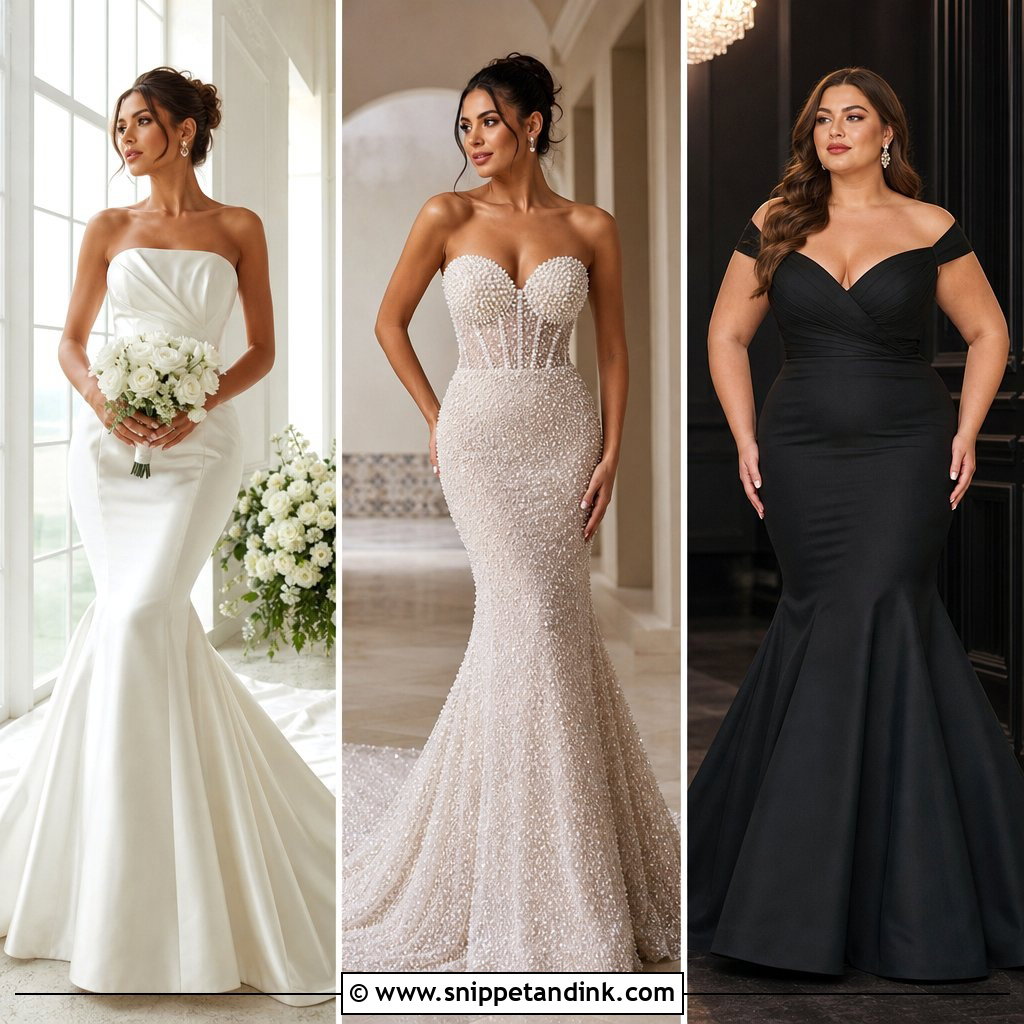
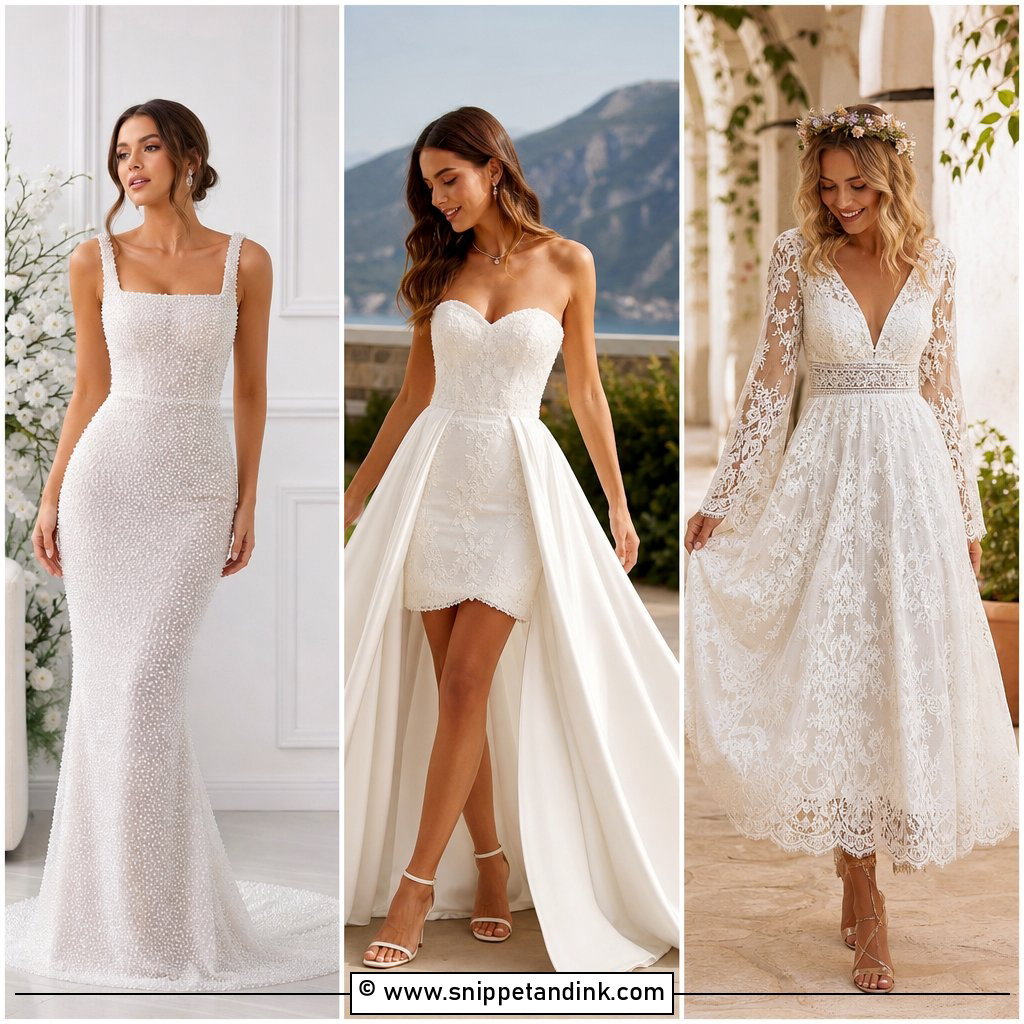
Pearls give a soft, milky light instead of sparkle, which is why they suit brides who find crystal too loud. A fitted sheath with scattered pearls feels current; a ball gown covered in them is regal and heavy, sometimes noticeably so. They glow under warm indoor light in hotel ballrooms and museum halls. Keep everything else matte: satin heels, a smooth updo, almost no jewellery. Ask whether the pearls are glass or plastic, since glass drapes better but adds weight across a long skirt.
3. High Neck Wedding Gown
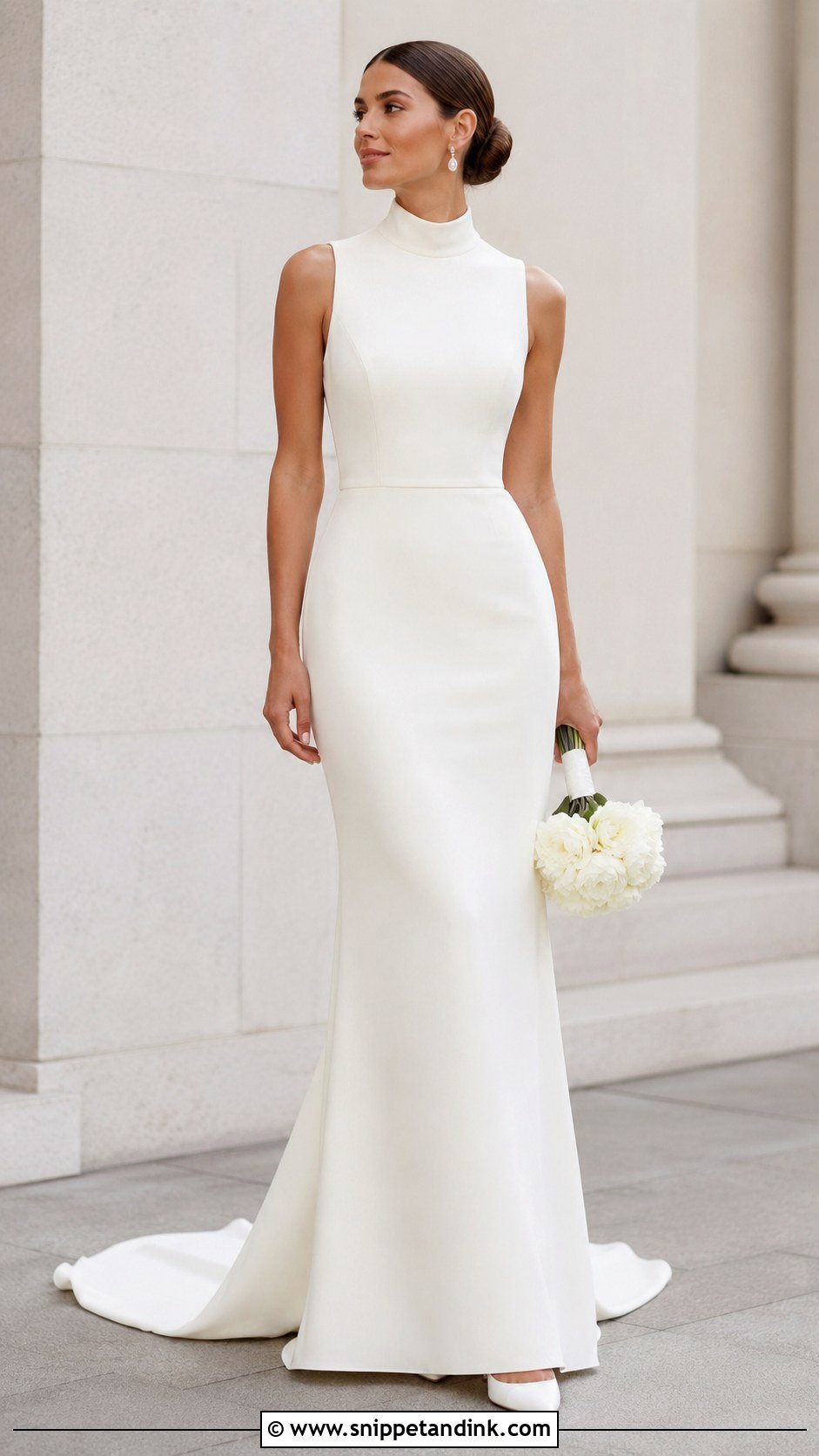
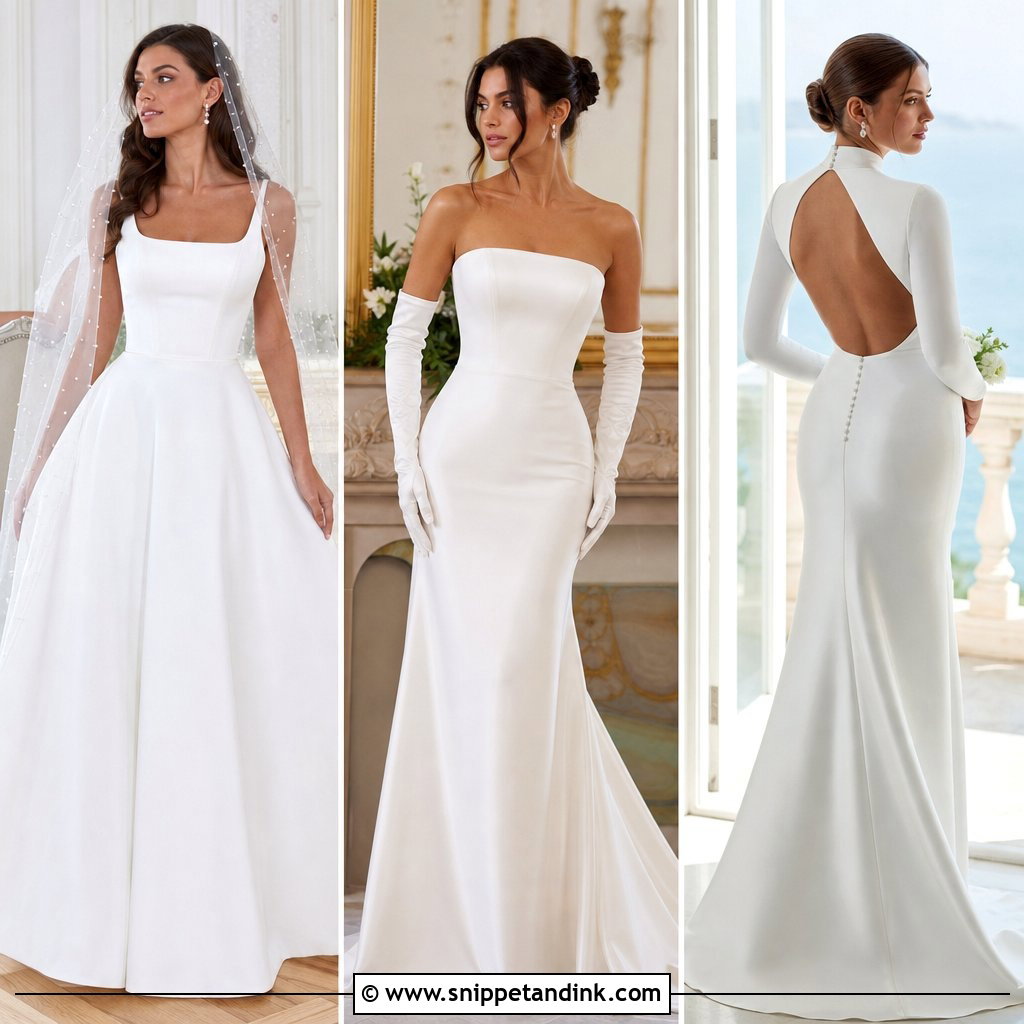
A high neck covers the chest and pulls the eye up to the face, so it photographs as tall and composed. Crepe and mikado make it sharp; lace makes it romantic. The sleeveless column version is the modern one, the long-sleeve lace version the softer one. I’d steer a bride with a short neck or a large bust toward a slightly lowered or keyhole high neck, since a collar sitting right under the chin can look crowded. Hair up, drop earrings and a defined waist do the rest.
4. Drop Waist Wedding Gown
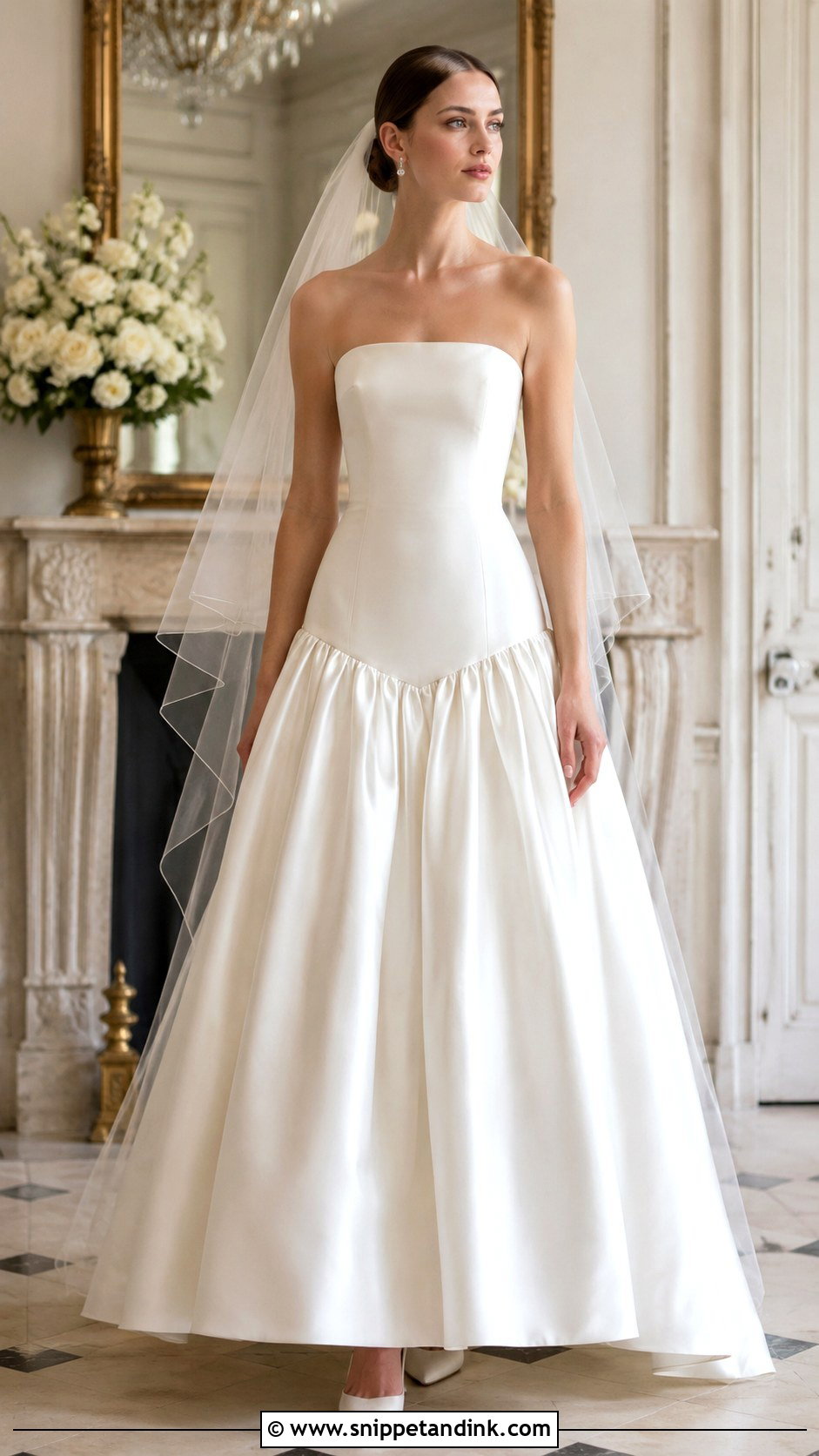
In a drop waist the bodice runs past your natural waist, often to the hip, before the skirt opens. It lengthens the torso and gives a vintage-but-sharp line, especially in satin or structured taffeta. This is the silhouette that depends most on proportion: on a short torso the skirt can start too low and shorten the legs, so try it on before falling for a picture. When it does suit you, the shape is the statement, and accessories should step back to a sleek veil, pointed heels and a smooth chignon.
5. Basque Waist Wedding Gown
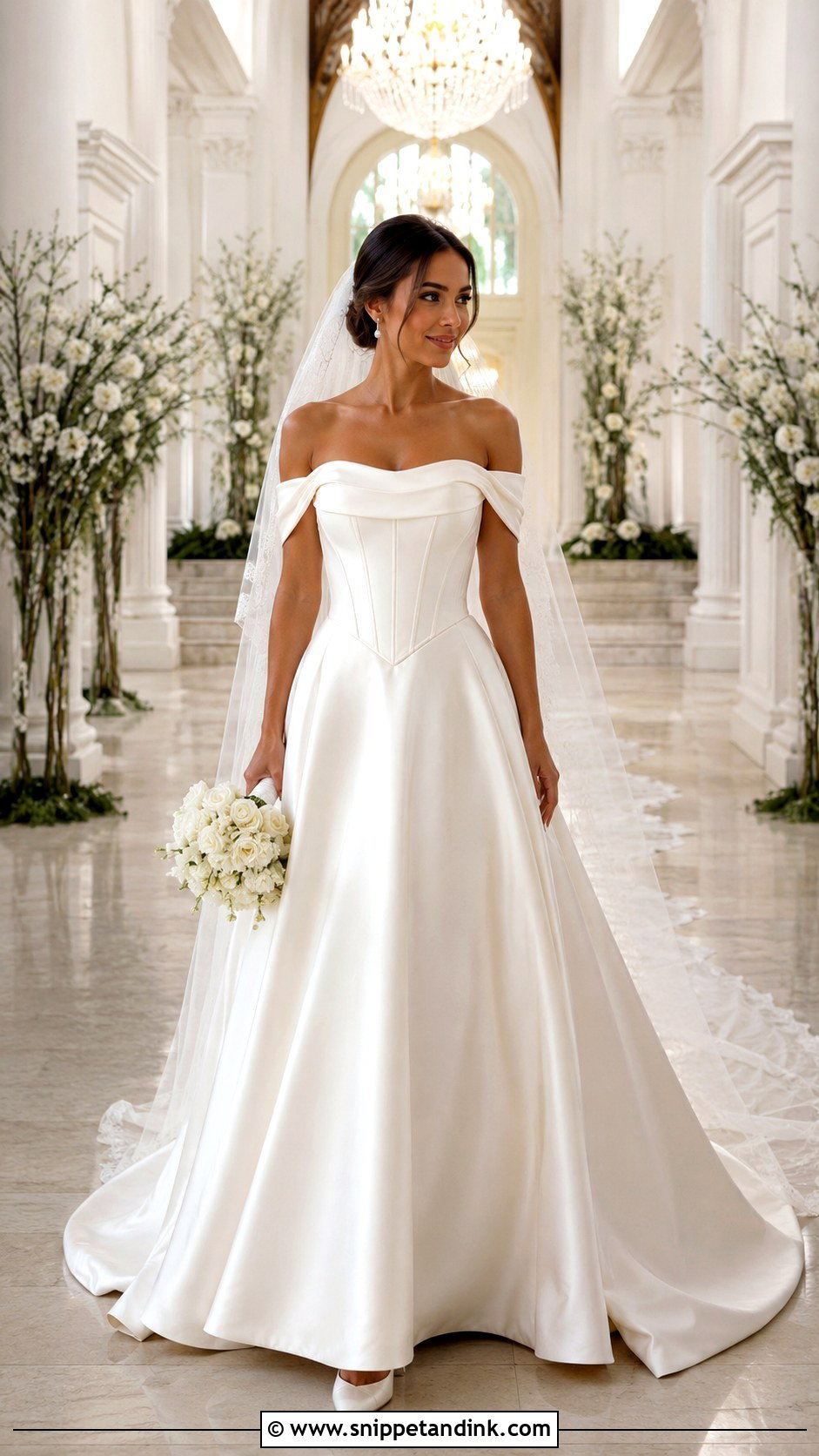
A basque waist wedding gown drops into a V at the centre front, which narrows the waist visually and lengthens the body. It reads romantic and slightly historical, and it is at its most dramatic over a full skirt with a corset bodice and an off-the-shoulder neckline. It works just as well in clean satin or with lace sleeves. Because the waist is so defined, I keep jewellery fine. A cathedral veil suits a formal church; a fingertip veil keeps the gown lighter for a long reception.
6. Corset Bodice Wedding Gown
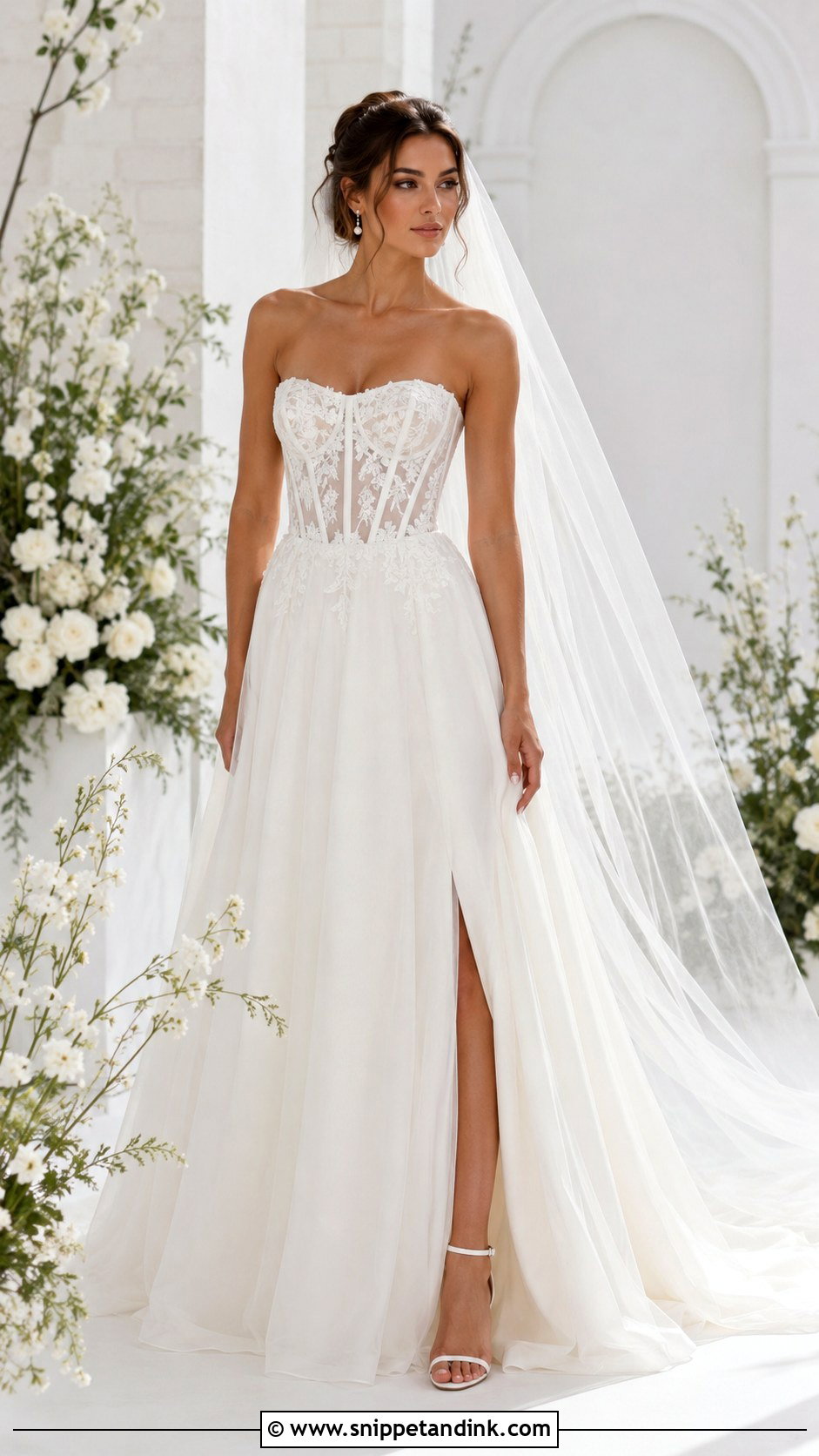
A modern corset bodice should hold you up without you noticing. Good ones use flexible boning and are built on a firm inner layer, so the outer fabric can be sheer lace or smooth satin without wrinkling. I’ve seen brides fitted too tightly at the first appointment because they expect to lose weight; I prefer a corset fitted to your body now, with lacing at the back to take it in later. It flatters a wide range of figures because it shapes and supports at the same time. A simple veil, soft waves and barely any jewellery keep it from looking like costume.
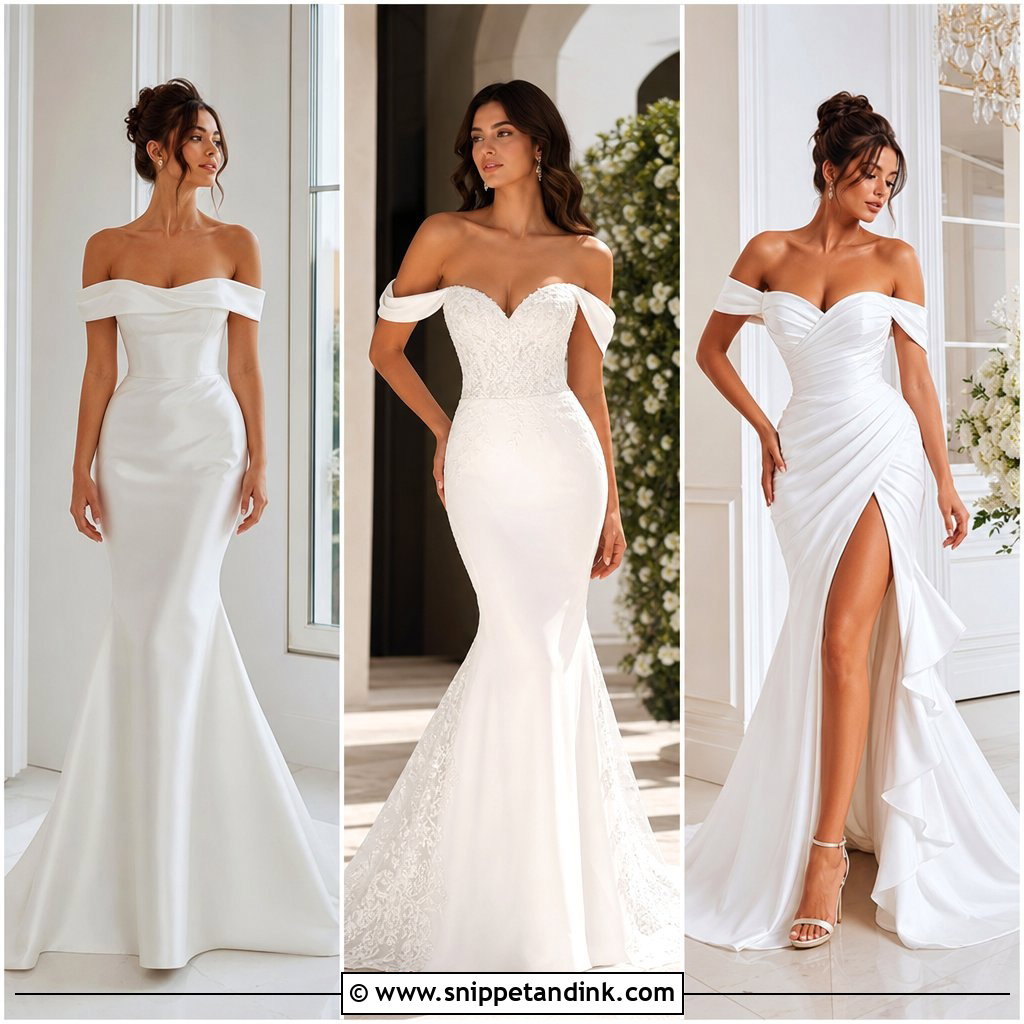
7. Sculptural Satin Wedding Gown
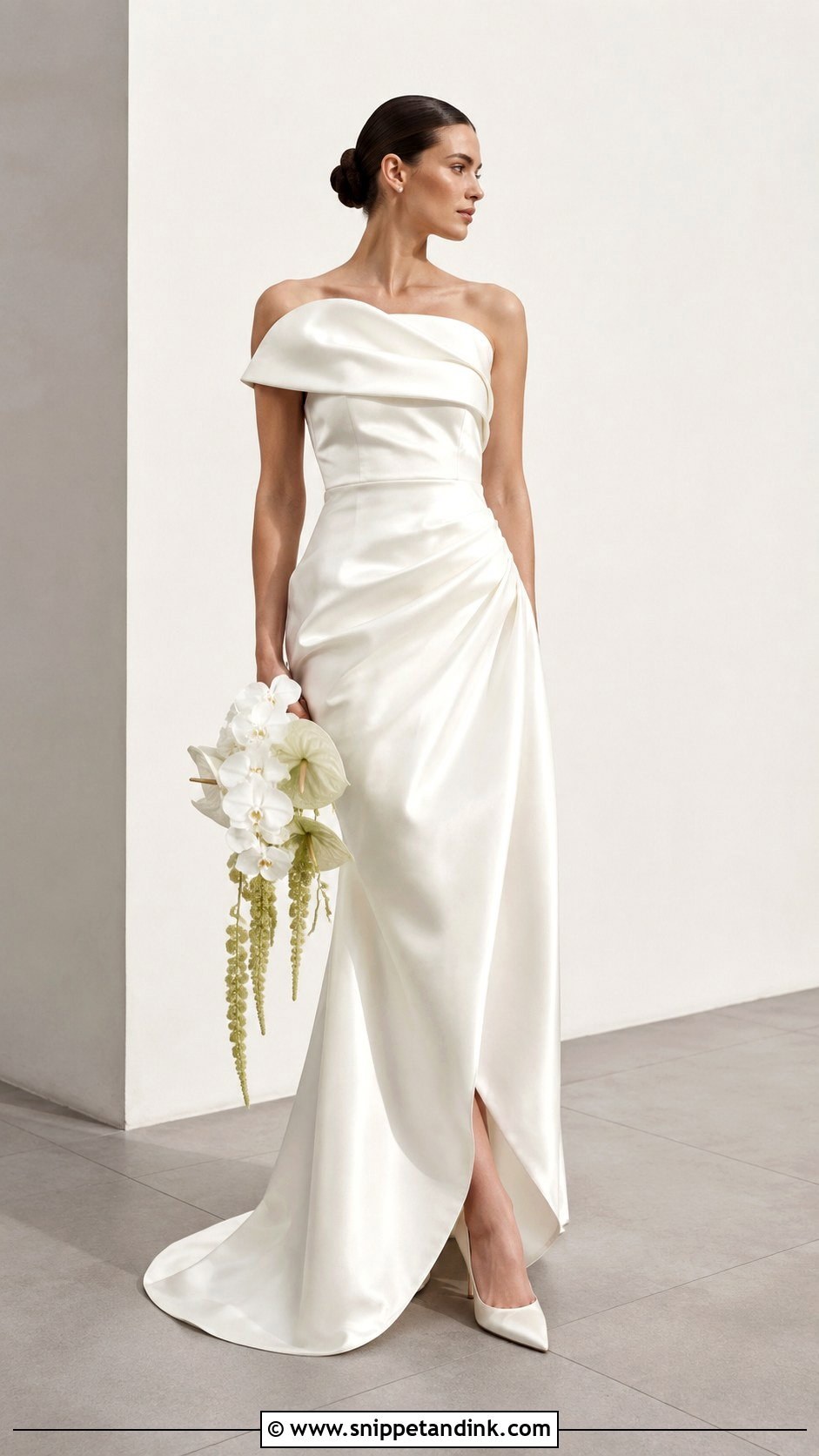
Sculptural satin is for the bride who likes clean lines but wants one memorable shape: a folded neckline, a curved bodice, an architectural drape or a bow built into the side. Heavy duchess or mikado satin holds those folds; lightweight satin collapses them. Galleries, city hotels and formal ceremonies suit it. One honest drawback: satin shows creases from sitting in the car, so plan to stand on the way or steam before photos. Keep styling sharp and sparse so the construction stays the focus.
8. Bubble Hem Wedding Gown
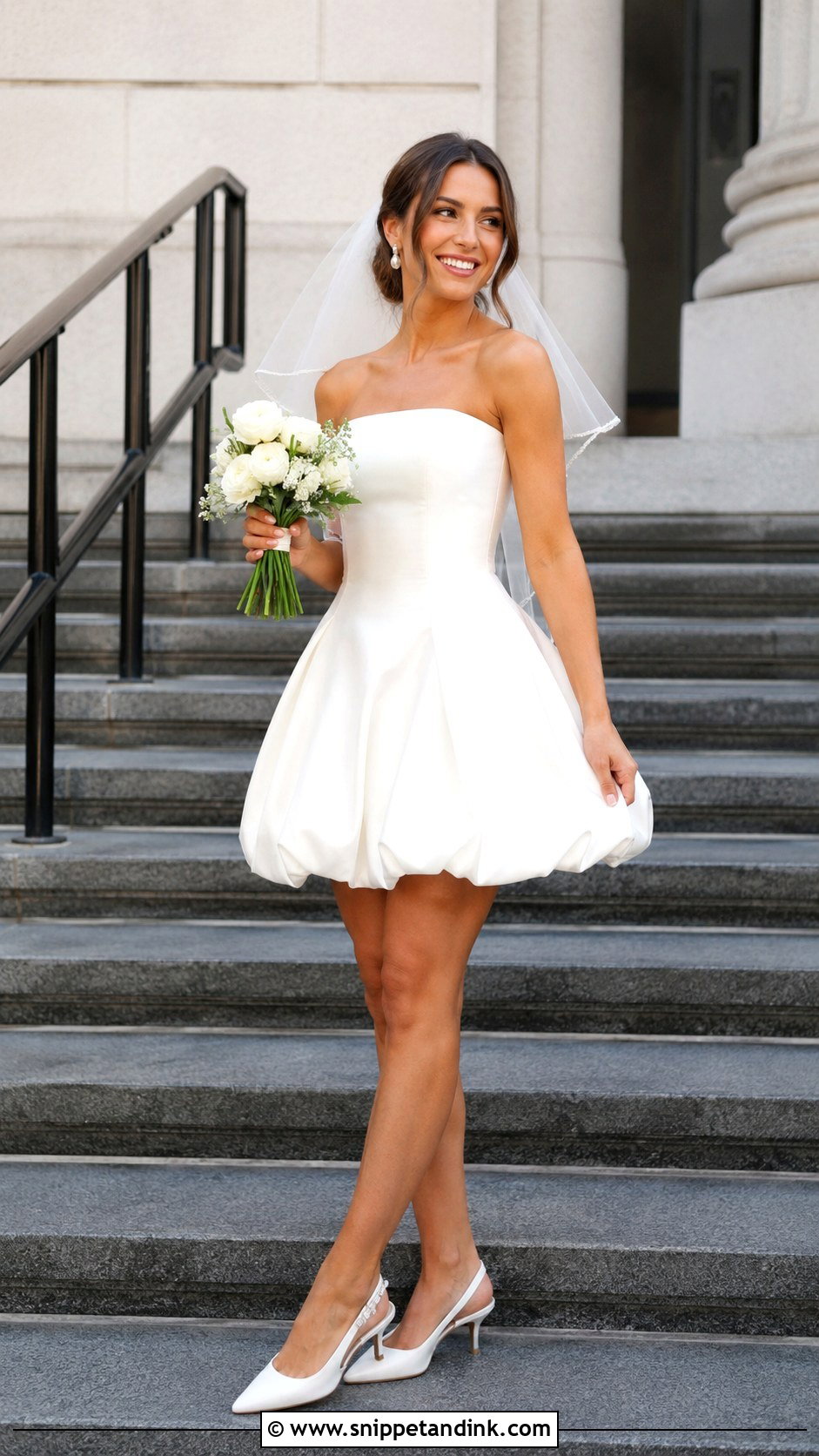
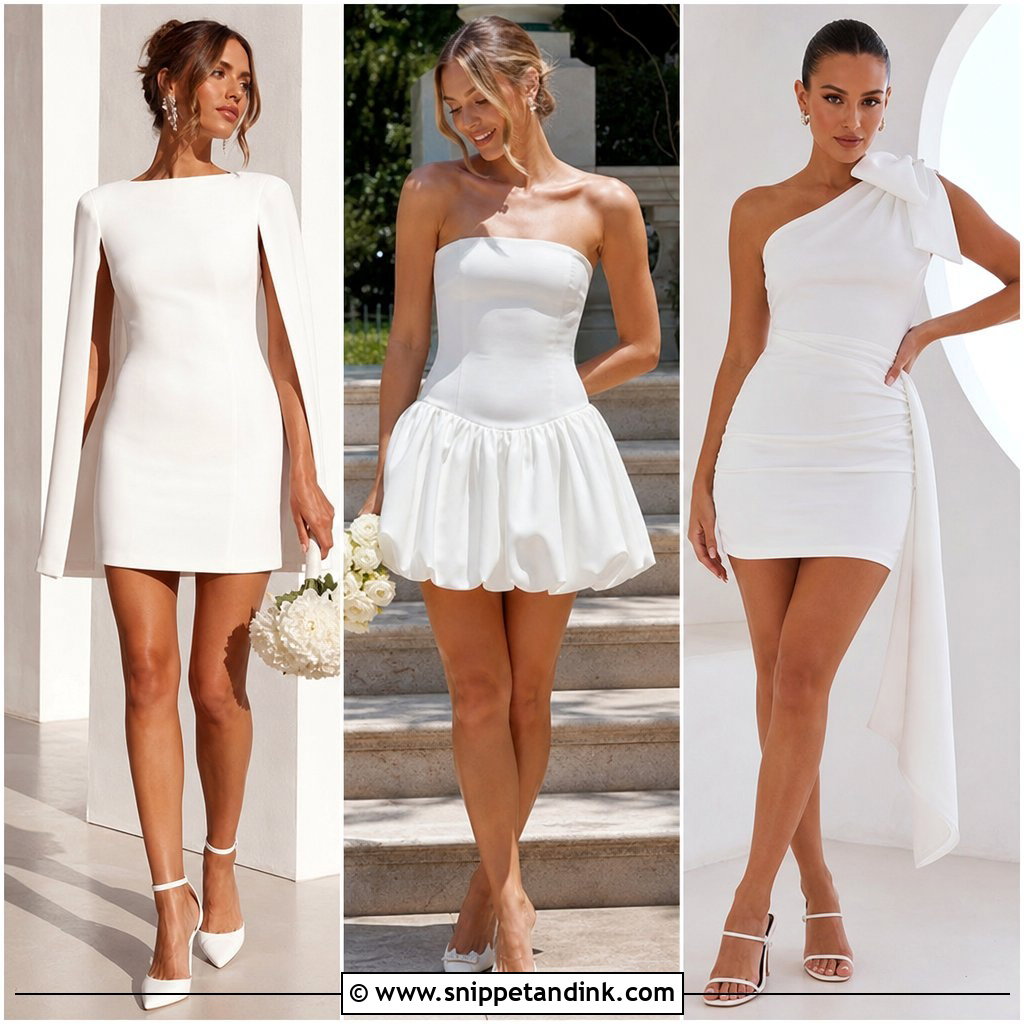
A bubble hem is fabric tucked under at the bottom to form a rounded edge, and it adds a playful volume that is surprisingly bridal. It works as a mini, a tea-length dress or a full gown. The thing I watch for is sitting: a stiff bubble pops up at the front when you sit, so practise in it. Courthouse weddings and reception changes suit it best. Keep the bodice plain, such as strapless or square neck, and add slingbacks, pearl earrings and a short veil.
9. Detachable Overskirt Wedding Gown
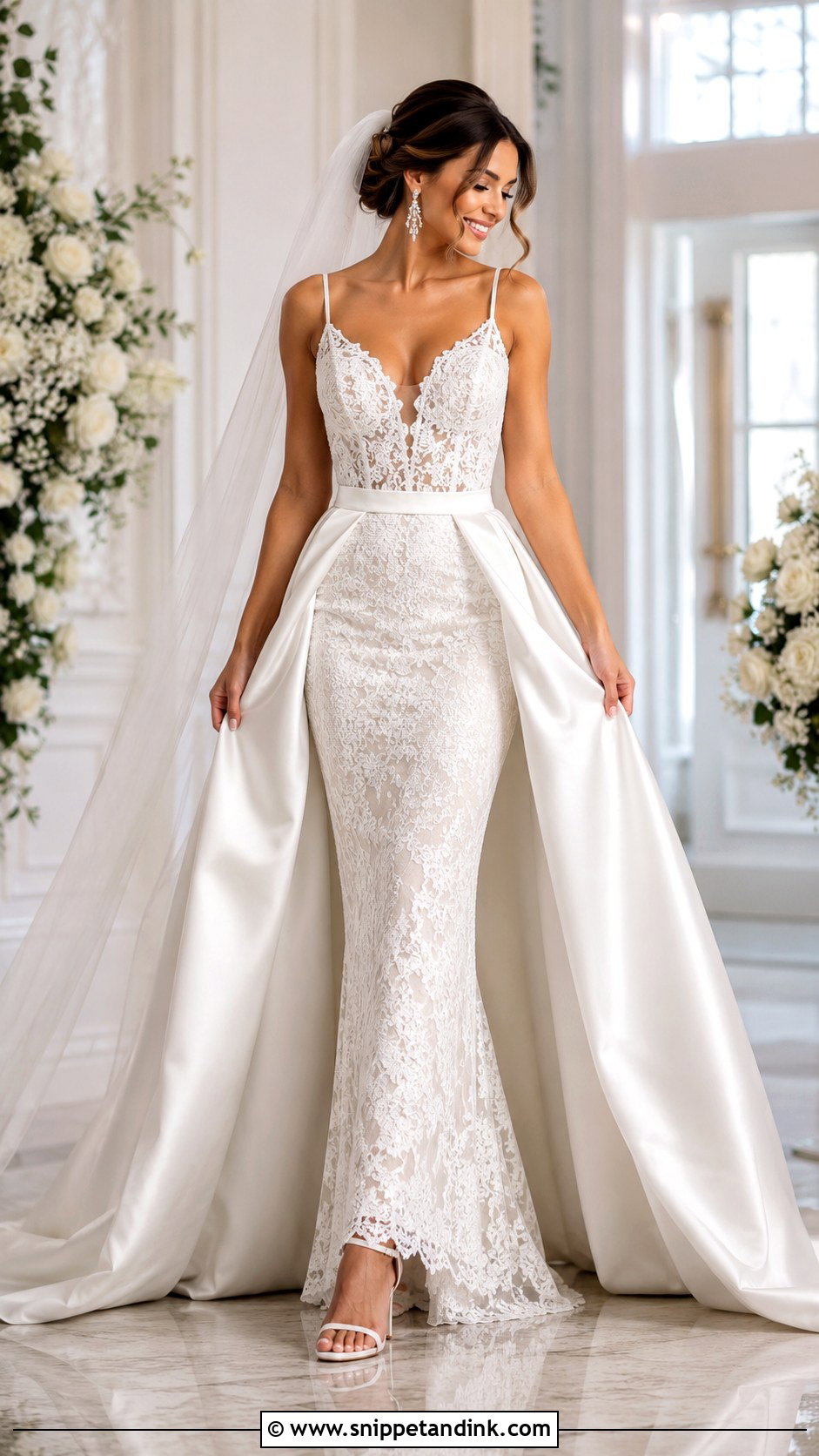
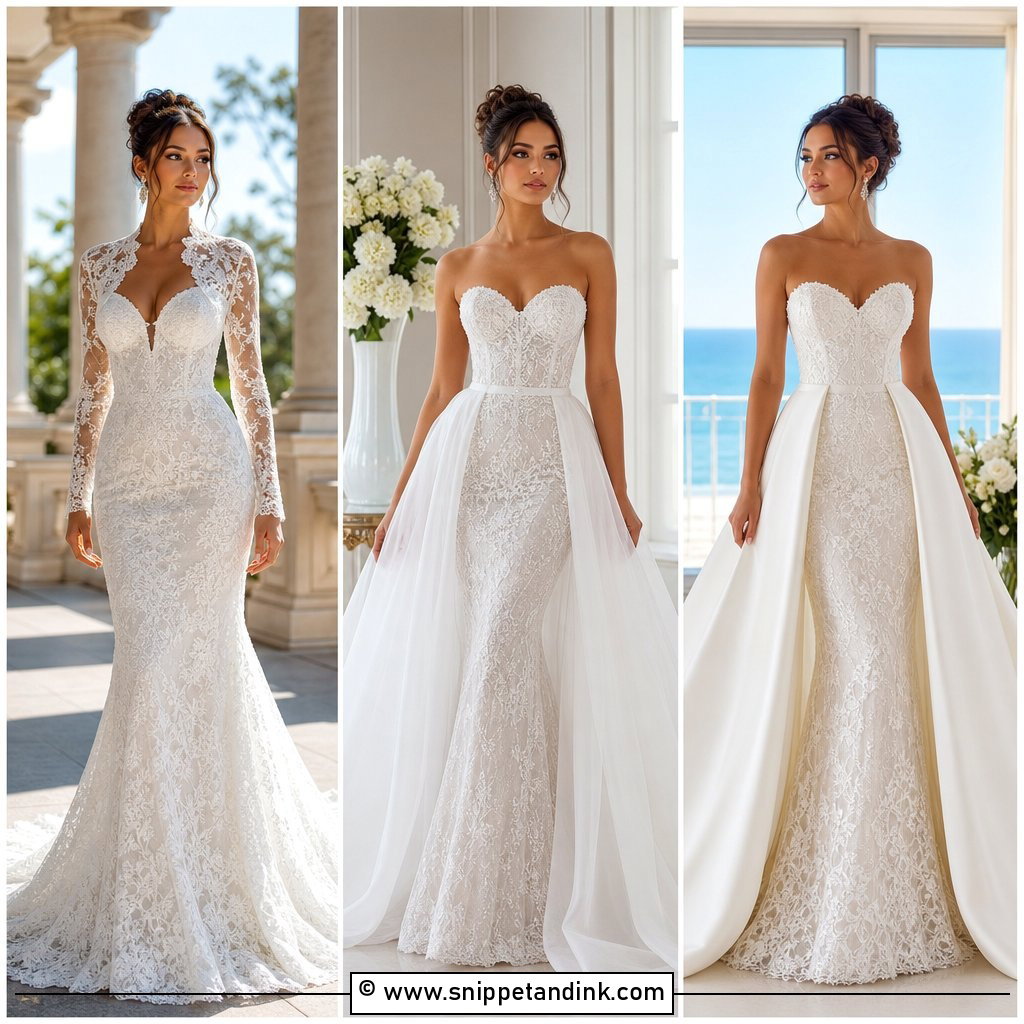
A detachable overskirt wedding gown gives you a full aisle moment and then a fitted column, mini or mermaid underneath for dancing. The overskirt adds the volume and the traditional walk; the reveal later feels like a costume change without leaving the room. Ask how it fastens. Hidden hooks and a waistband that sits under a belt or seam look cleanest; visible snaps show in photos. Practise taking it off with whoever will help you, because doing it for the first time in a corridor is stressful.
10. Bridal Cape Wedding Gown
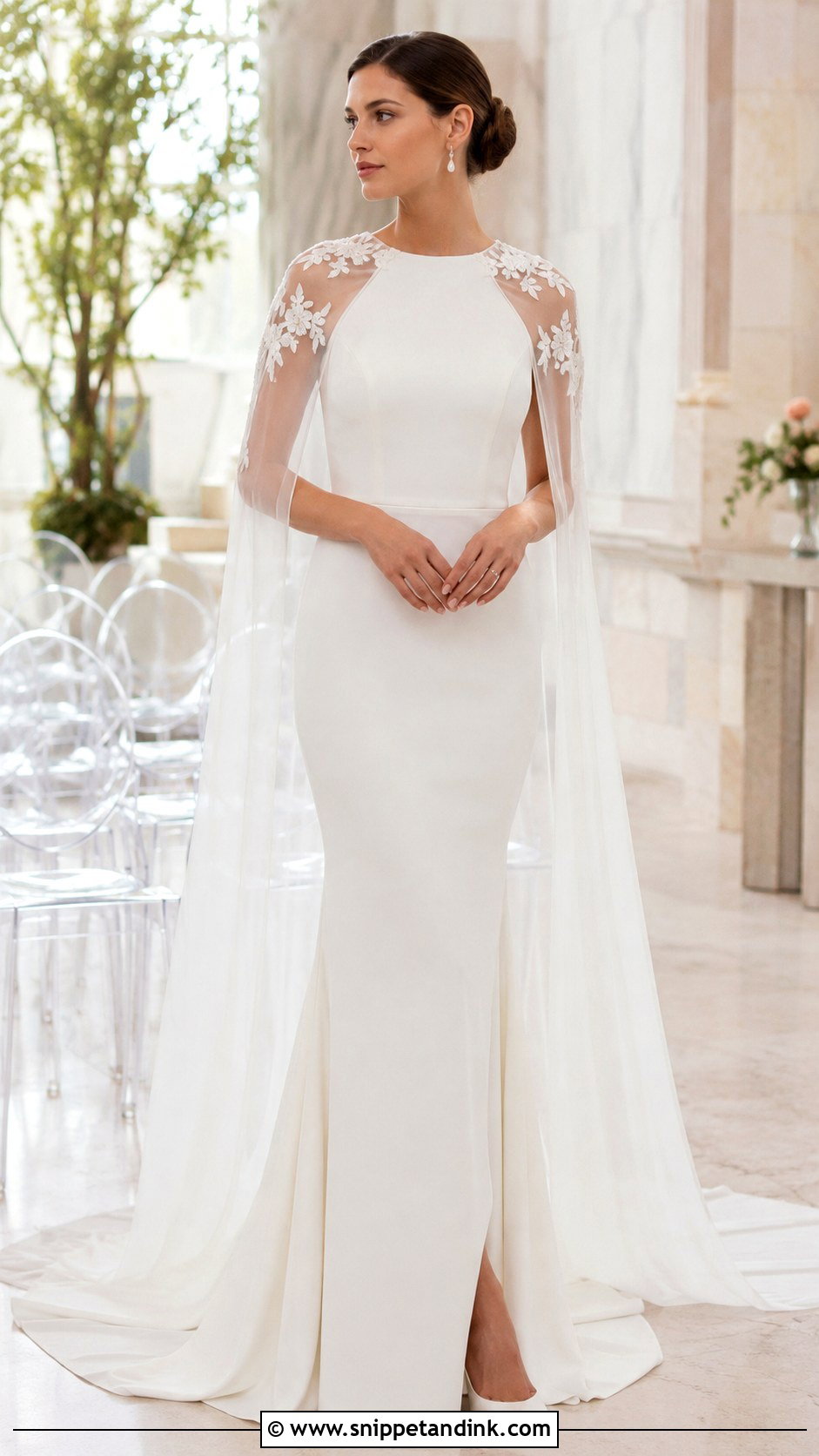
A cape gives movement from the shoulders and works as a veil substitute, which is why I suggest it to brides who find veils fussy. Sheer capes with floral appliqué feel romantic; a clean crepe cape looks modern and strong. It also gives light cover for a religious ceremony without committing to sleeves. Back and side photos are where it earns its place. The gown underneath should be simple, and the hair a low bun so the cape lies flat across the shoulders.
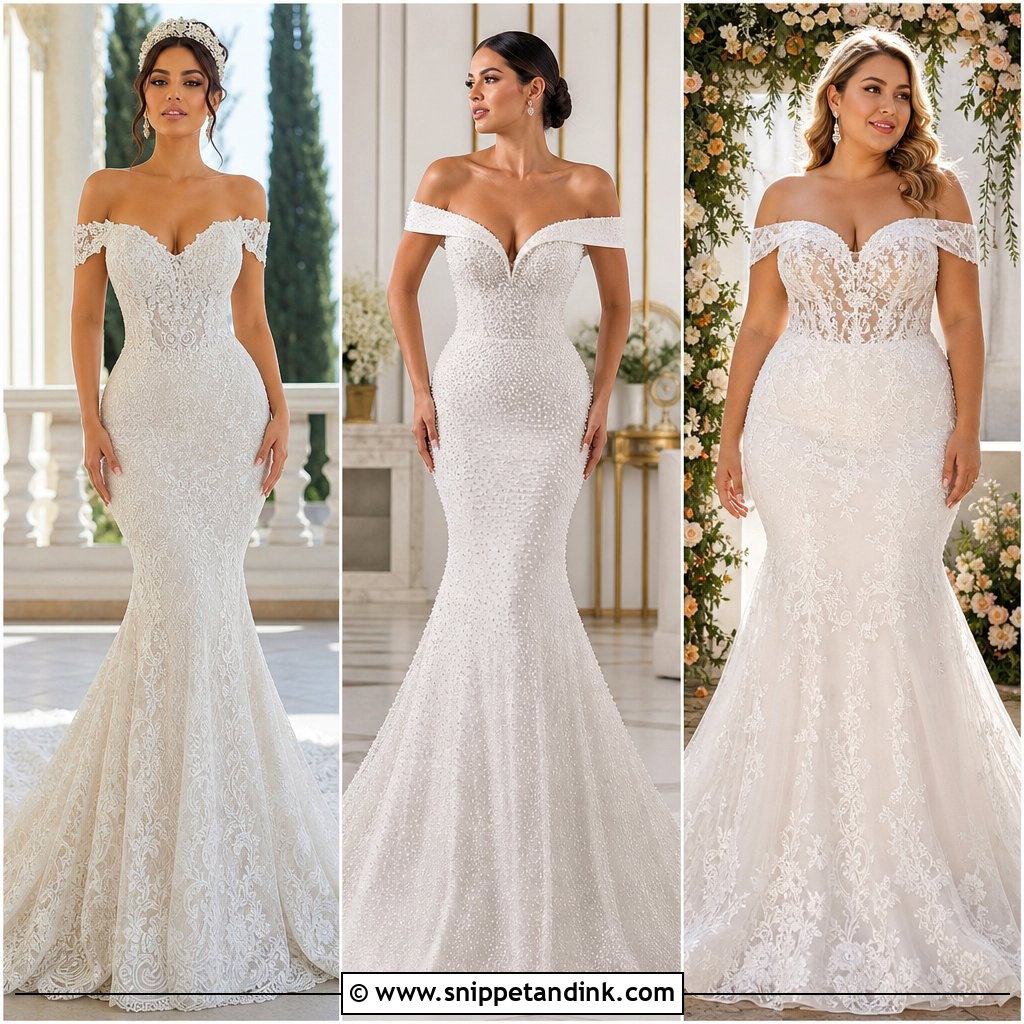
11. Off The Shoulder Wedding Gown
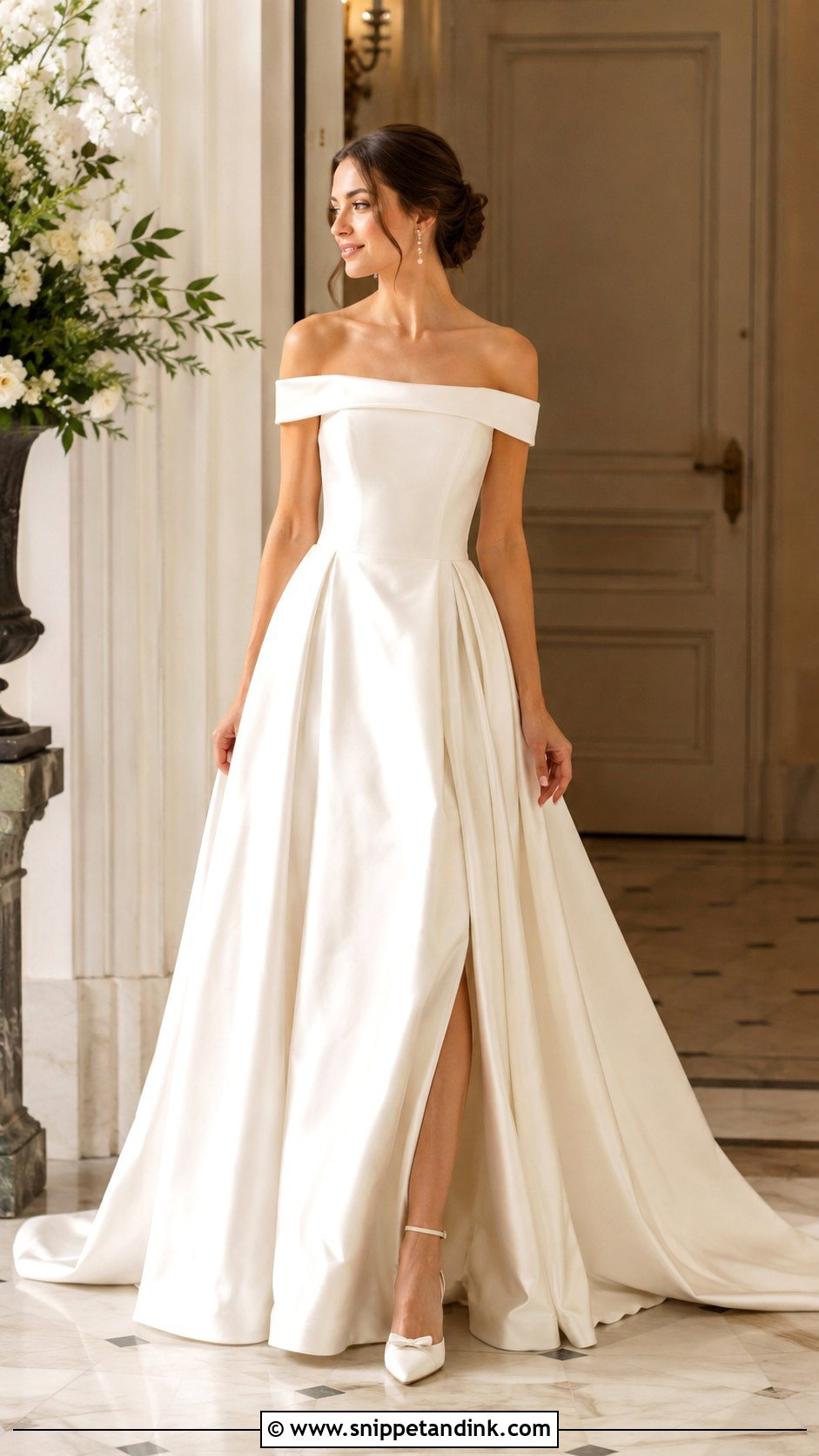
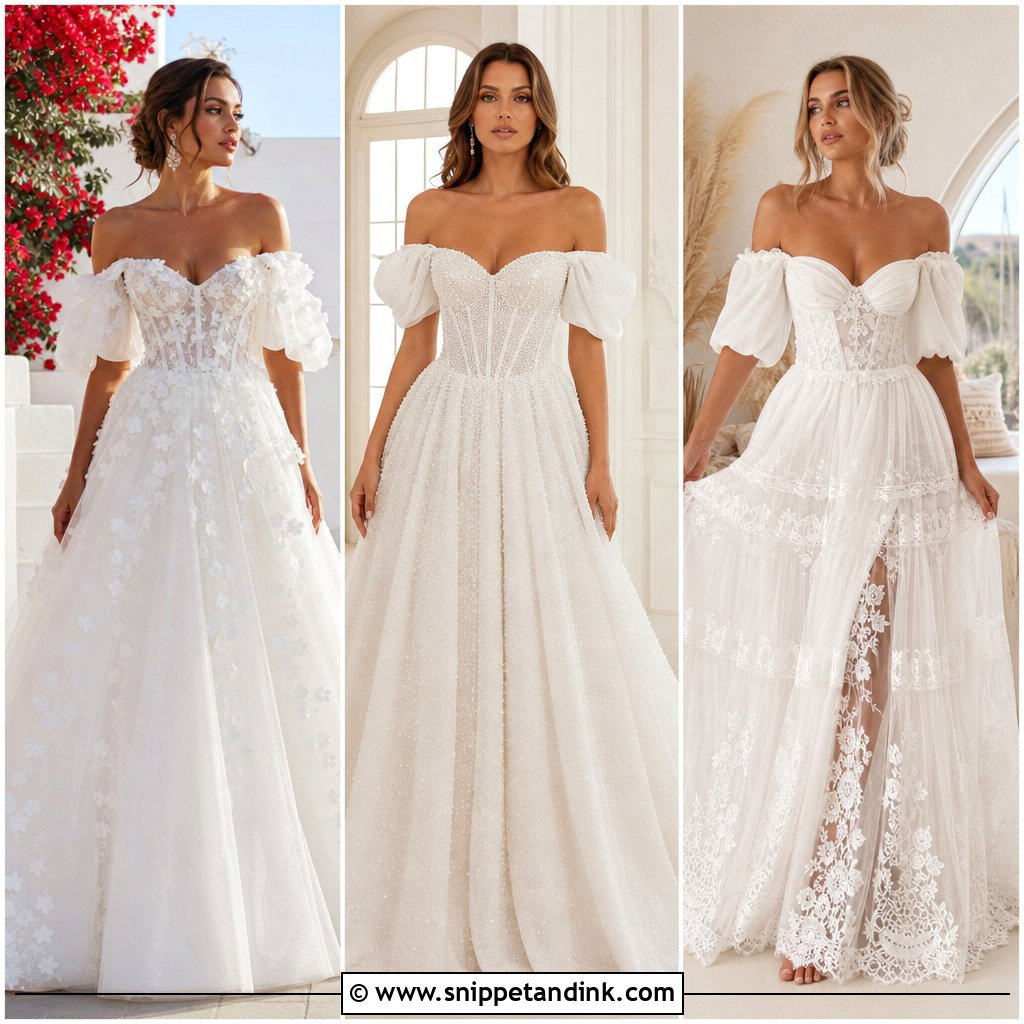
Off-the-shoulder necklines frame the collarbone and soften strong shoulders, and they suit fitted, A-line and ball gown skirts alike. The unique versions use folded satin cuffs, lace sleeves, draped tulle or shoulder pieces you can remove. My fitting warning: this neckline restricts how high you can lift your arms, so test hugging and dancing in it before the hem is finished. Choose either a fine necklace or earrings, not both, and keep the neckline visible whether hair is up or down.
12. Long Sleeve Lace Wedding Gown
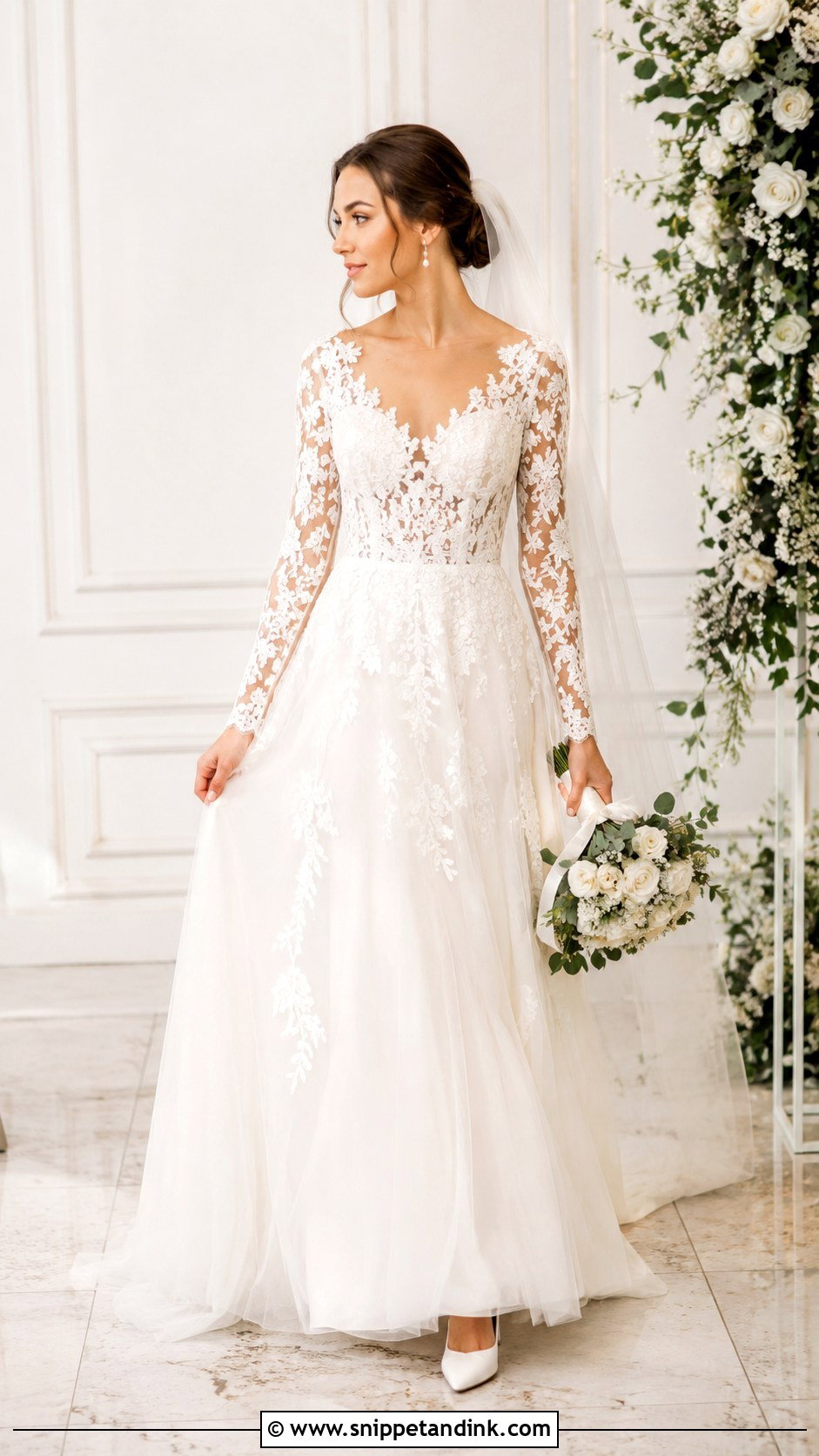
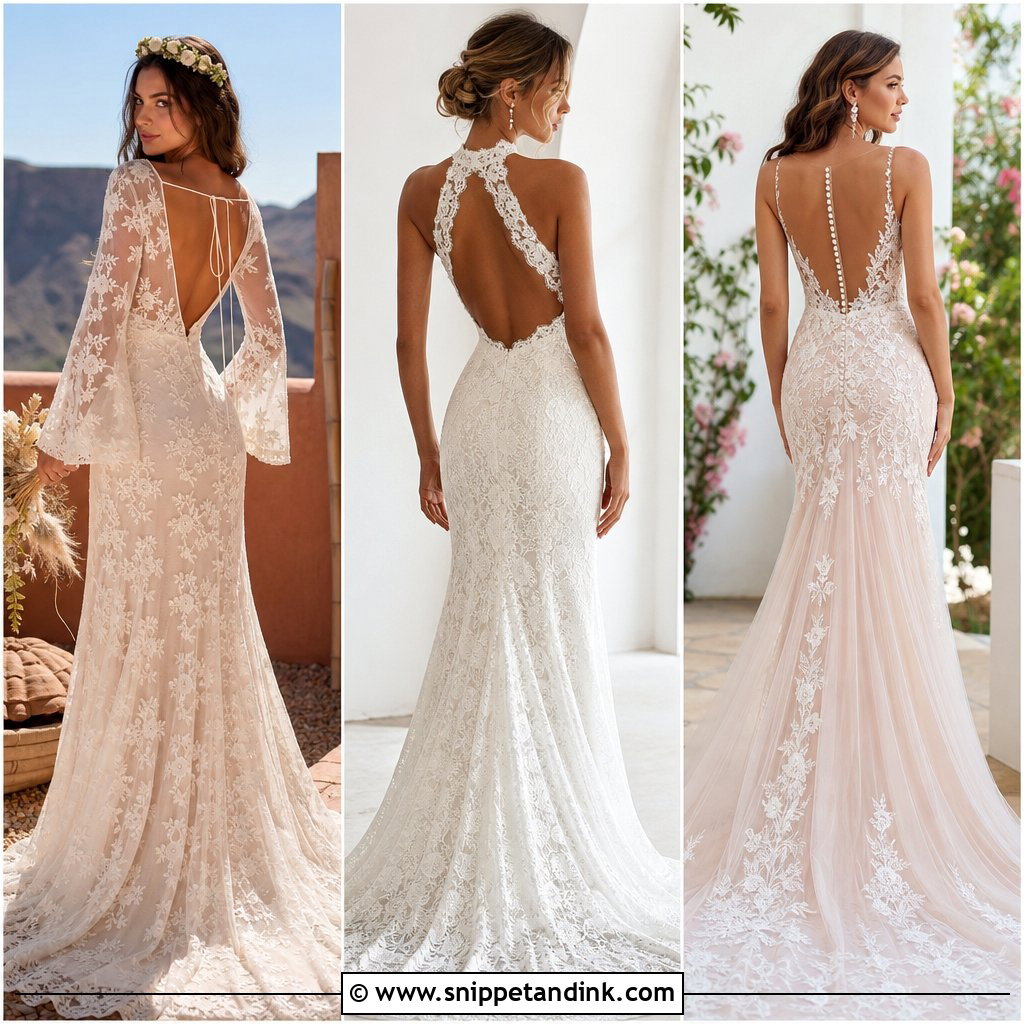
A long sleeve lace wedding gown stops being expected when the lace itself is unusual: oversized florals, botanical embroidery, illusion sleeves or a lace layer floating over a clean underdress. Cooler months and formal ceremonies suit it. Fitted sleeves look graceful; billowy ones are more relaxed. Choose jewellery without prongs that snag the lace, and wear a plain veil, since lace on lace muddies the pattern in photos.
13. Sheer Sleeve Wedding Gown
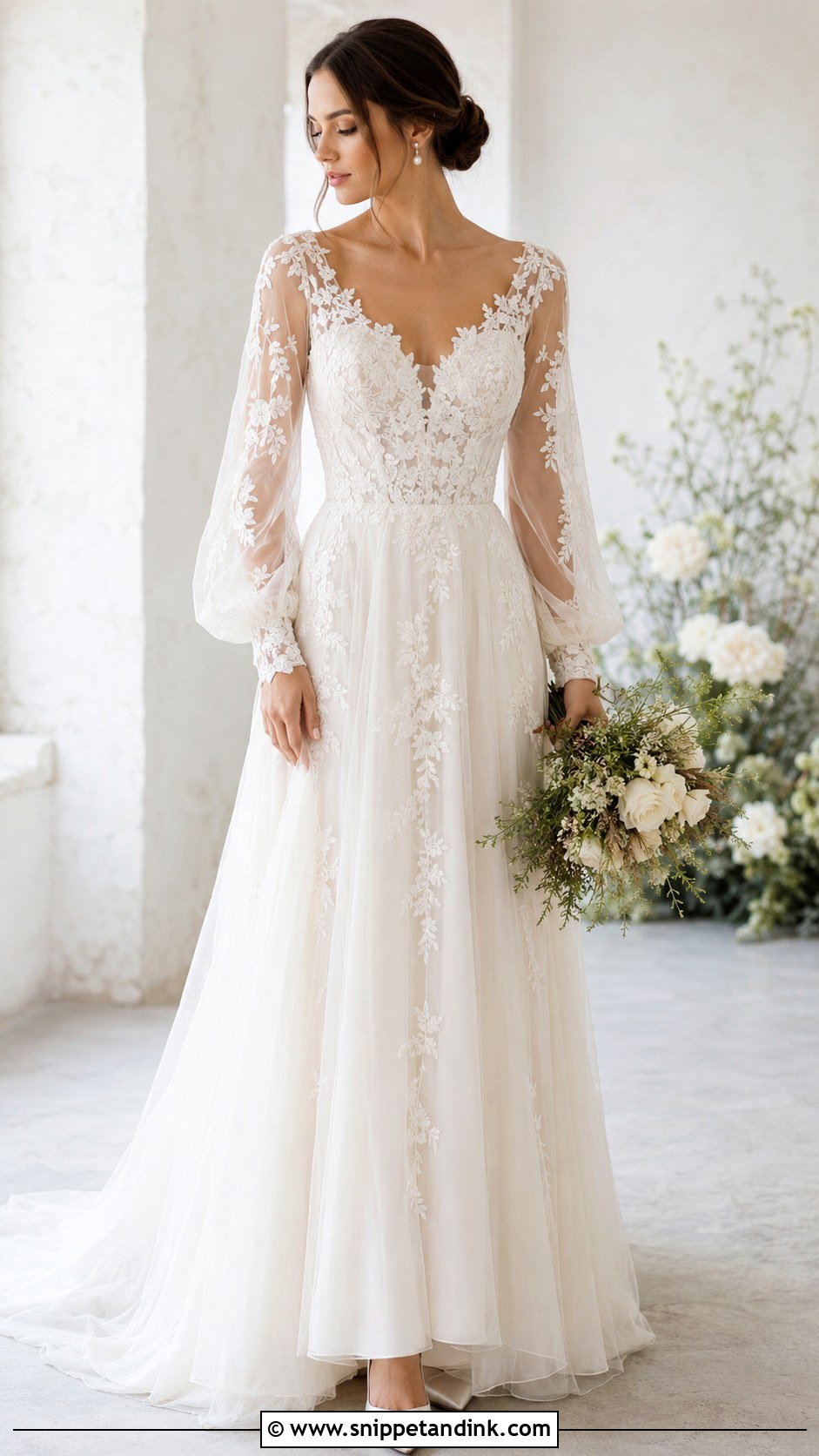
Sheer sleeves in illusion tulle, organza or mesh give the look of a sleeve without the warmth of one. They can carry appliqué, pearls or fine embroidery while staying airy. Bishop sleeves feel romantic; fitted illusion sleeves look polished. I check the armhole closely here, because a sheer sleeve set too low will pull the whole bodice up when you raise your arms. If the sleeves are busy, keep the bodice and veil quiet.
14. Minimalist Slip Wedding Gown
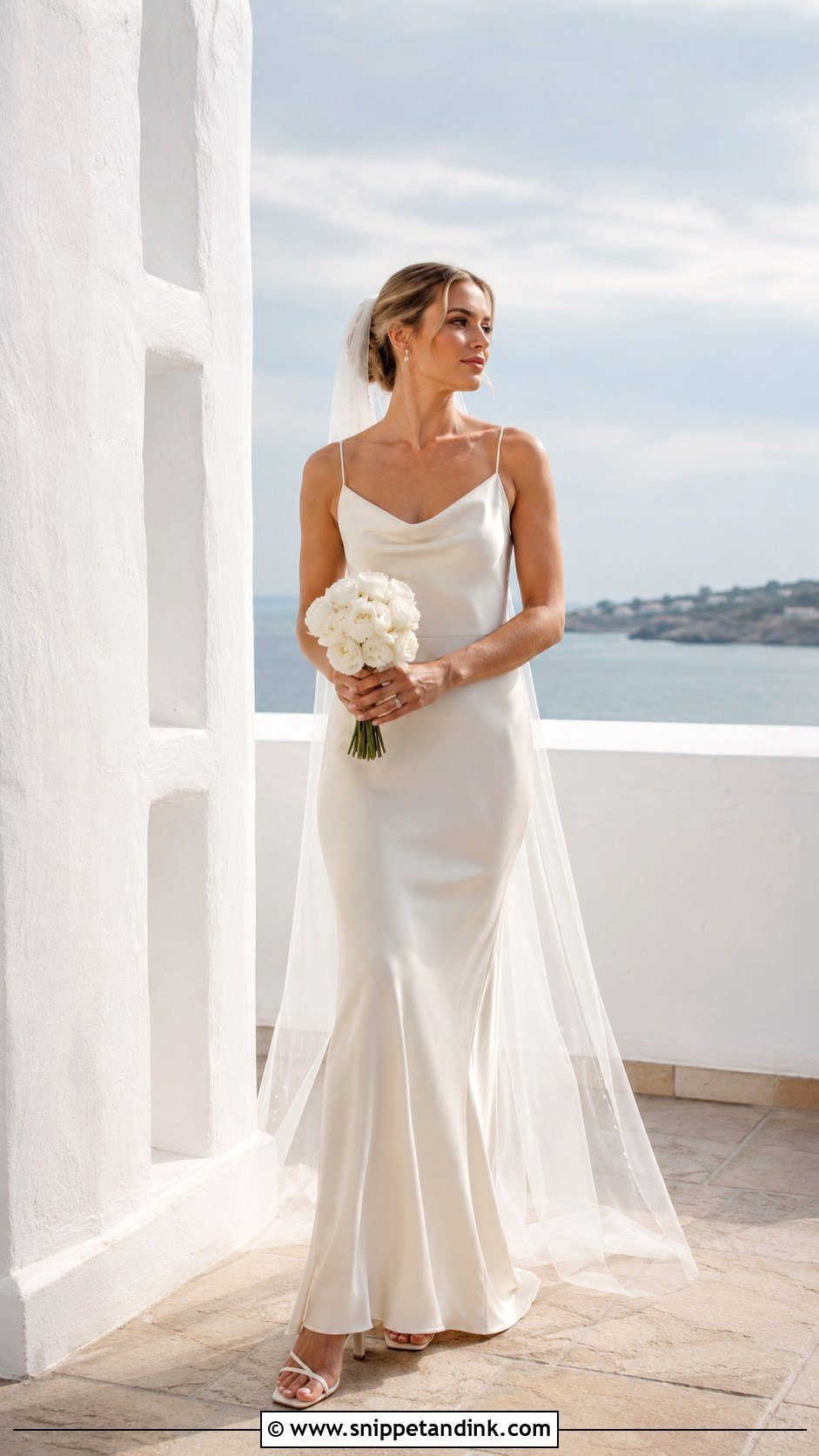
A slip dress looks simple and is anything but simple to get right. Silk, satin or liquid crepe cut on the bias should skim the body, and bias-cut fabric shows every line underneath, so underwear and fit matter more than any decoration. Beach weddings, city hall ceremonies and small gatherings suit it. To make it read bridal, add strappy heels, pearl studs, a soft veil or a small bouquet. Spend the budget you saved on tailoring.
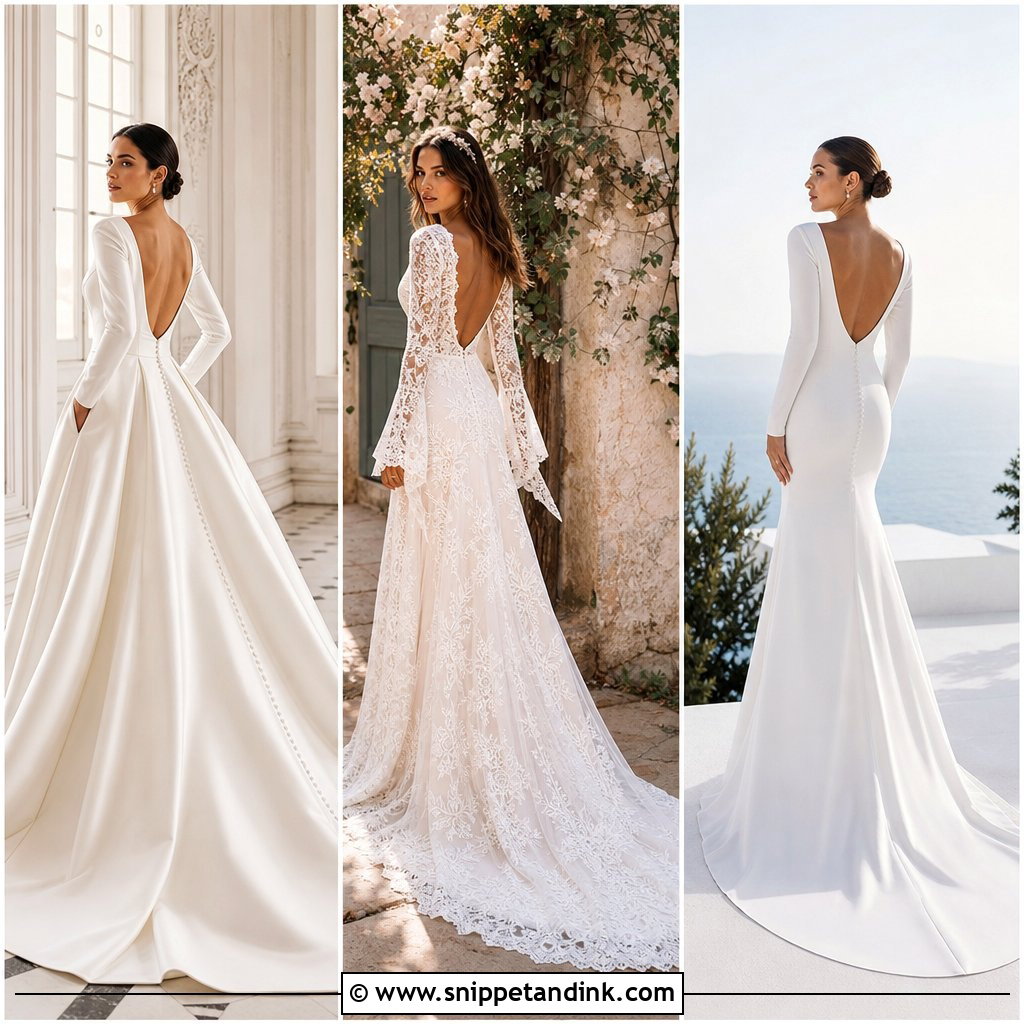
15. Bow Back Wedding Gown
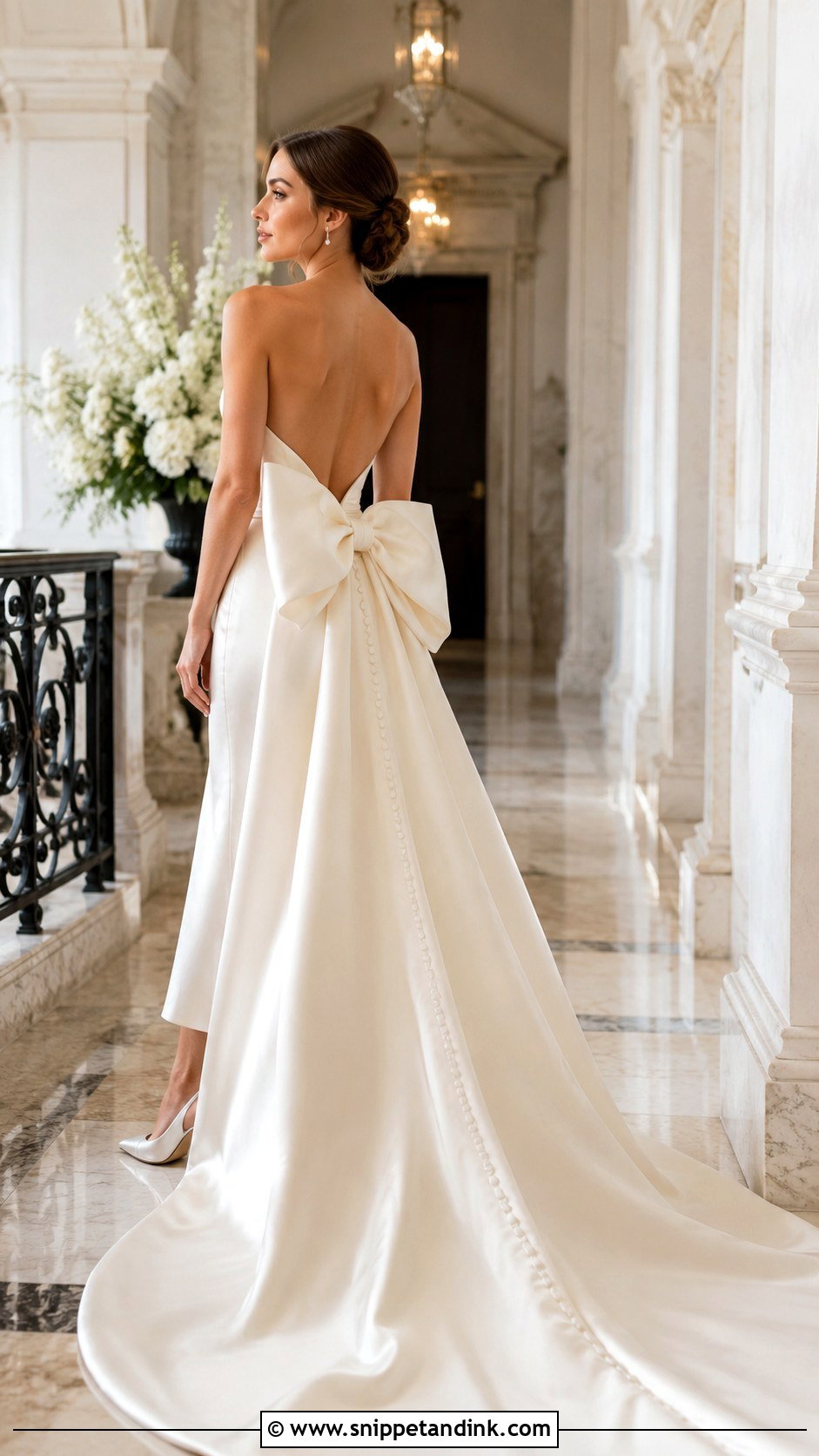
A bow at the back gives the guests something to see during the vows, which is when they are looking at your back most. It can be oversized, slim or detachable. Clean satin, mikado, crepe and taffeta hold a bow’s shape; soft fabrics let it droop by the reception. Wear your hair up or swept to one side so it stays visible, and skip a heavily embellished veil that would sit right on top of it. A plain front with a dramatic back is a balanced way to add some sweetness.
16. Colored Wedding Gown
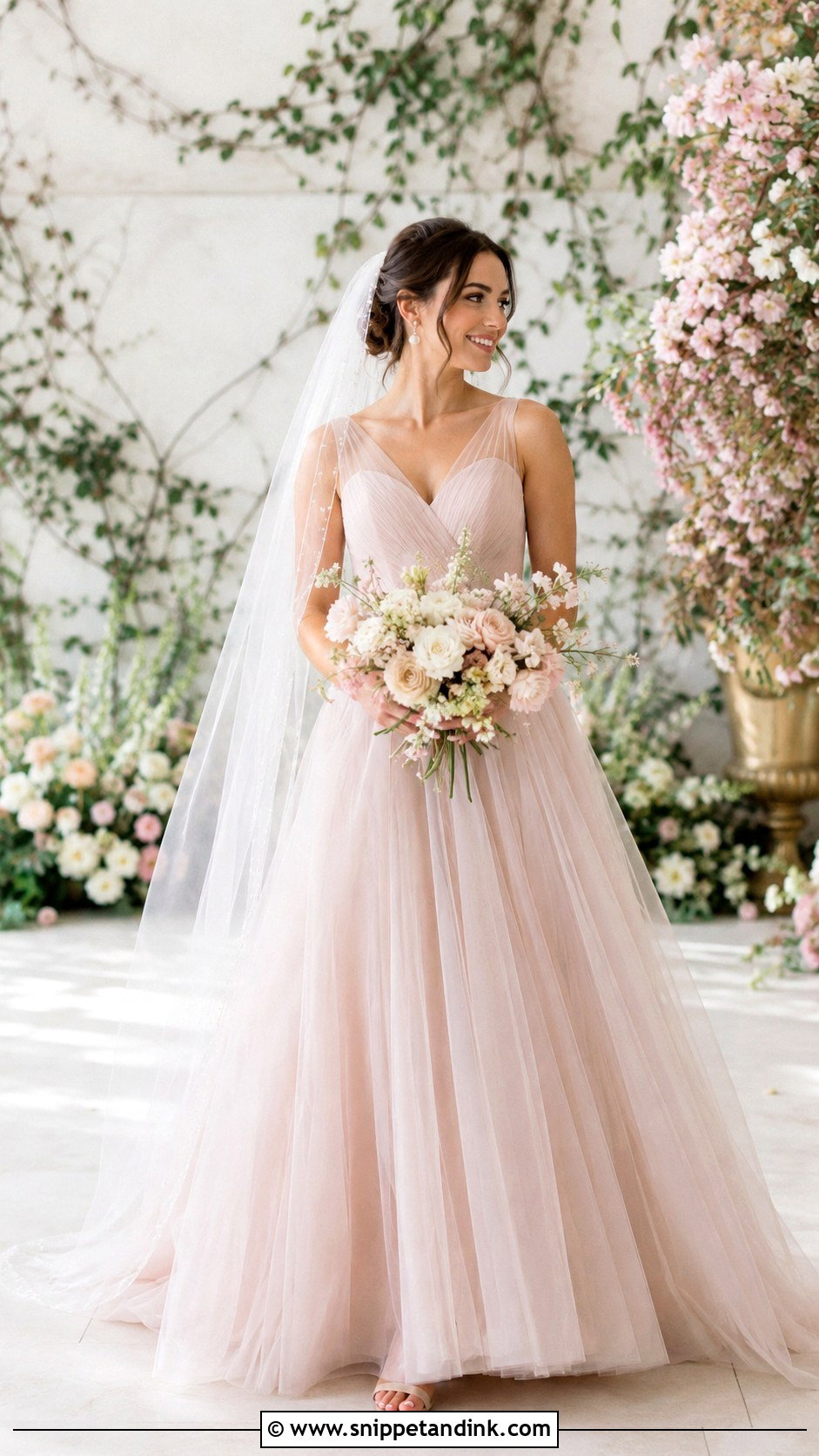
Colour is the most personal choice in this list. Blush, champagne, pale blue, buttercream, silver and lavender still read as bridal; black, deep green and soft gold take you somewhere bolder. I test colour against the bride’s face in daylight, not in the boutique light, because champagne that glows under warm bulbs can make fair skin look sallow outdoors. Keep accessories to one tone, with nude or metallic heels and a bouquet in the same family.
17. Black Wedding Gown
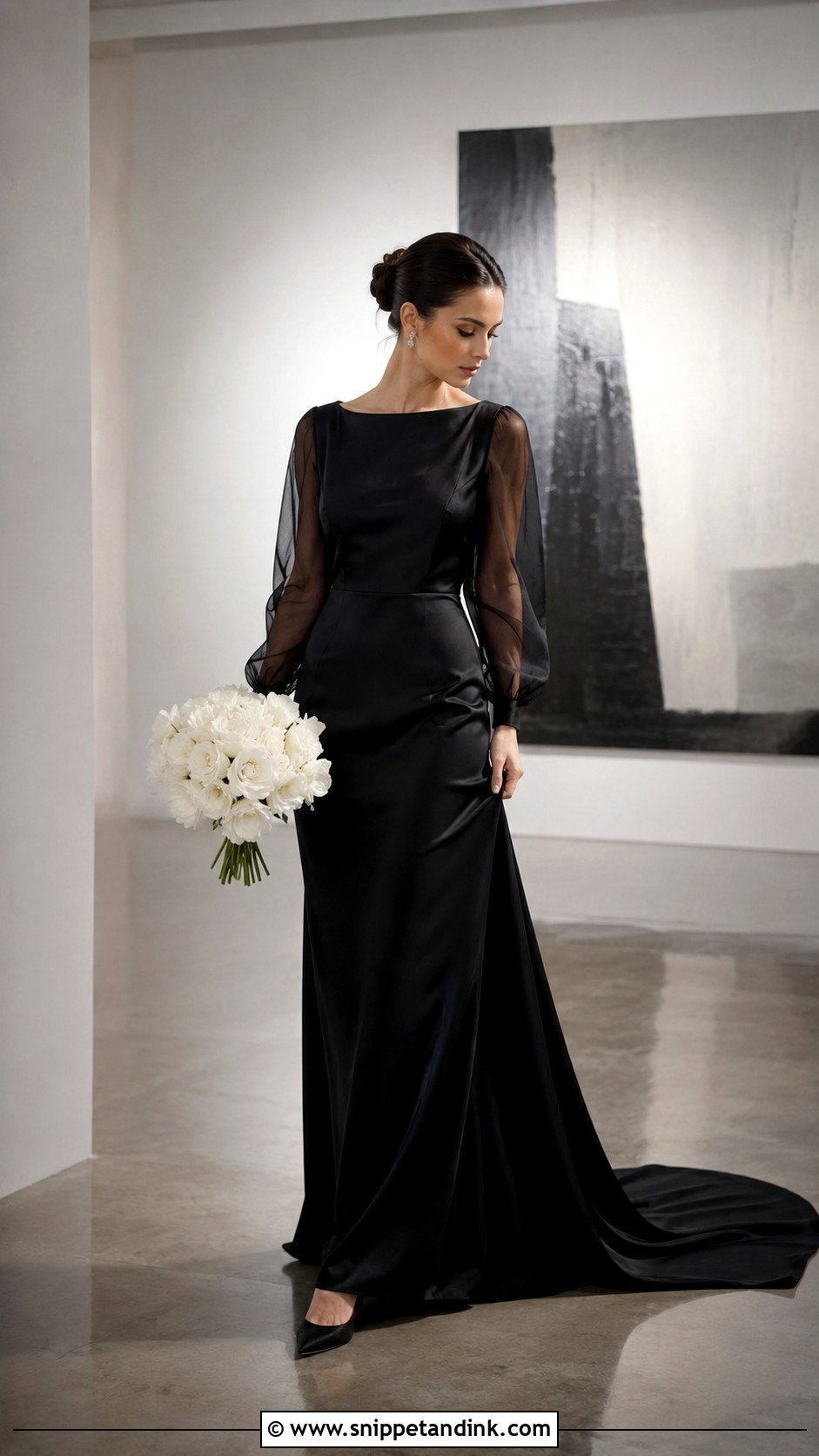
A black gown can be romantic in lace, sleek in a satin column, or softer with sheer sleeves, floral appliqué or a tulle overskirt. It suits evening ceremonies, art venues and brides who have never pictured themselves in white. Polished makeup and refined jewellery keep it from tipping into costume. White flowers make the strongest contrast; deep greenery adds mood. Talk to your photographer before the day, since black fabric loses detail unless it is lit and exposed for it.
18. Short Wedding Gown
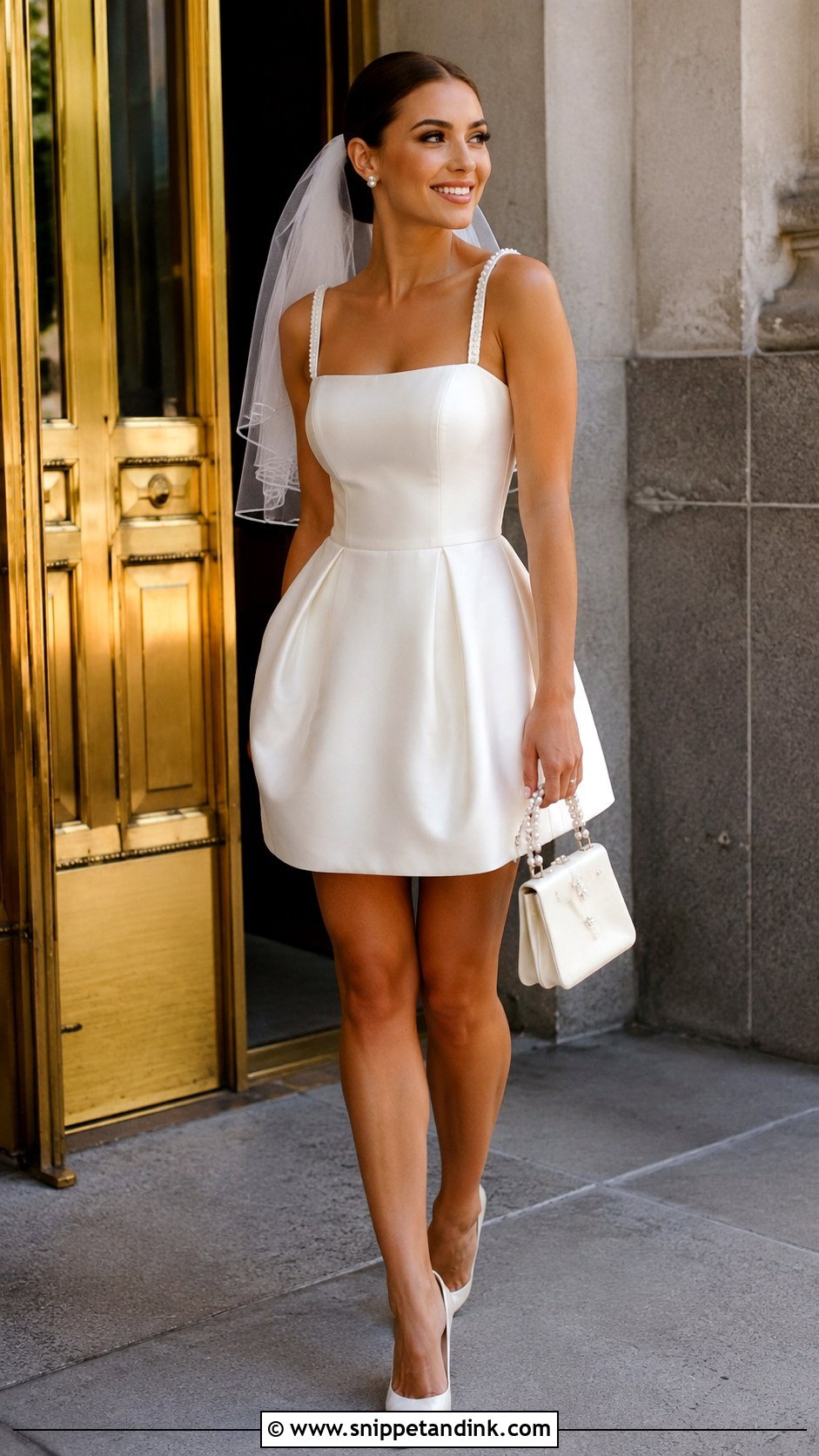
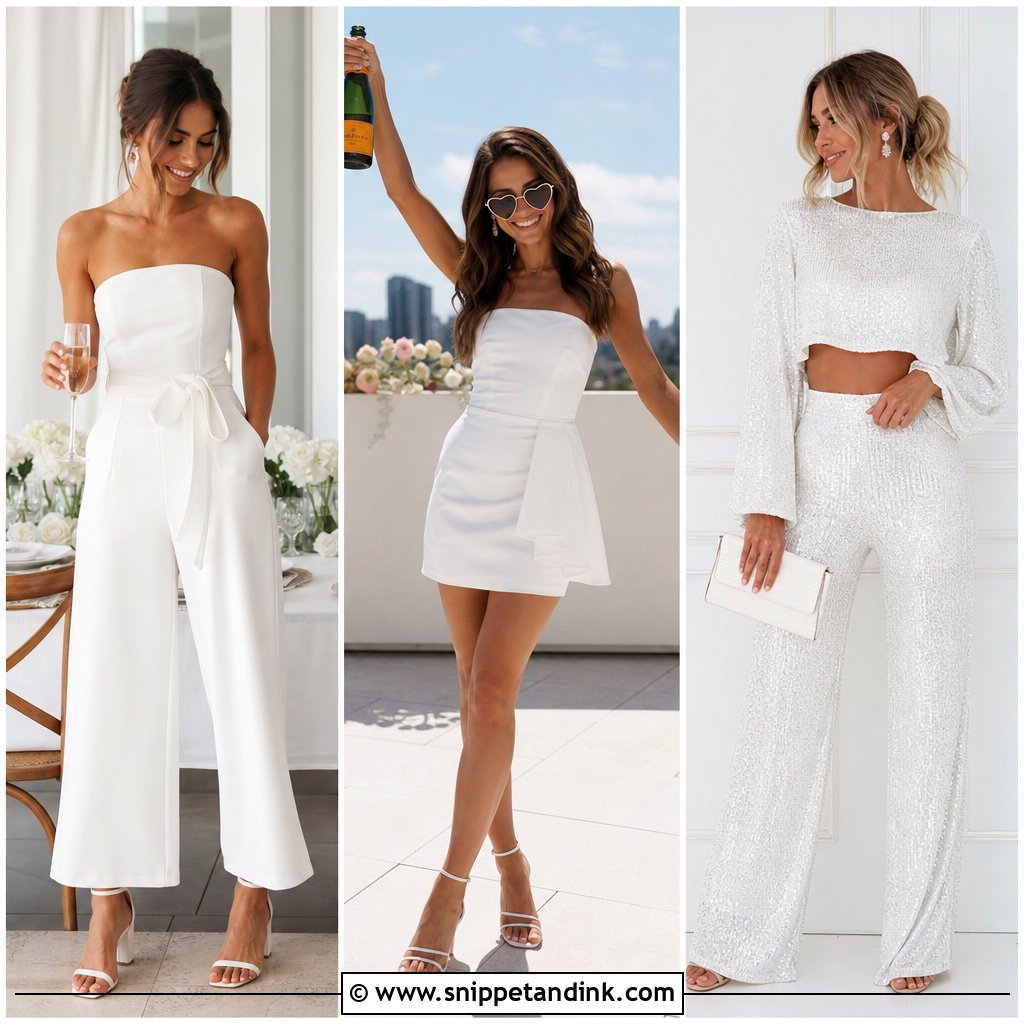
Short dresses suit civil ceremonies, receptions, after-parties and destinations, and they let the shoes finally be seen. A bubble hem, feather trim, pearls, an oversized bow or a structured sleeve can turn a mini dress into something clearly bridal. Polished styling stops it reading like a party dress: pointed heels, a short veil, a small structured bag. If the ceremony is formal, pick mikado, satin or lace over anything clingy, and sit down in the mirror to see where the hem lands.
19. Tea Length Wedding Gown
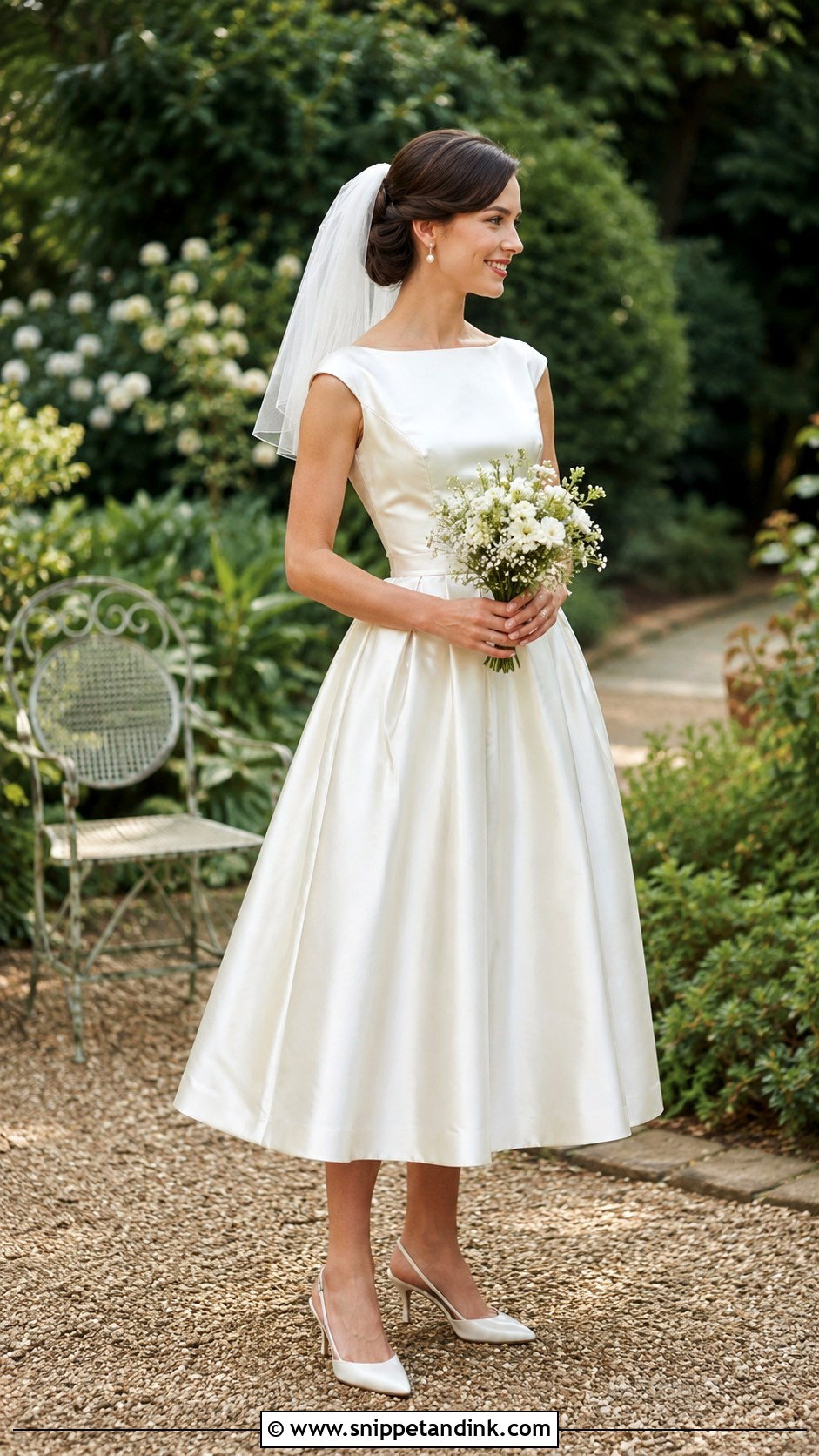
Tea length falls between knee and ankle, which makes it the easiest dress here to dance and walk in, and it shows off a good pair of heels. Satin, tulle, lace and organza all suit it, usually over a fitted bodice and full skirt. Courthouse, garden and brunch weddings are its natural setting. The length is what you have to get exactly right: just below the widest part of the calf flatters most legs, while a hem cutting across the calf shortens them. Slingbacks, pearls and a short veil finish it.




20. Two Piece Wedding Gown
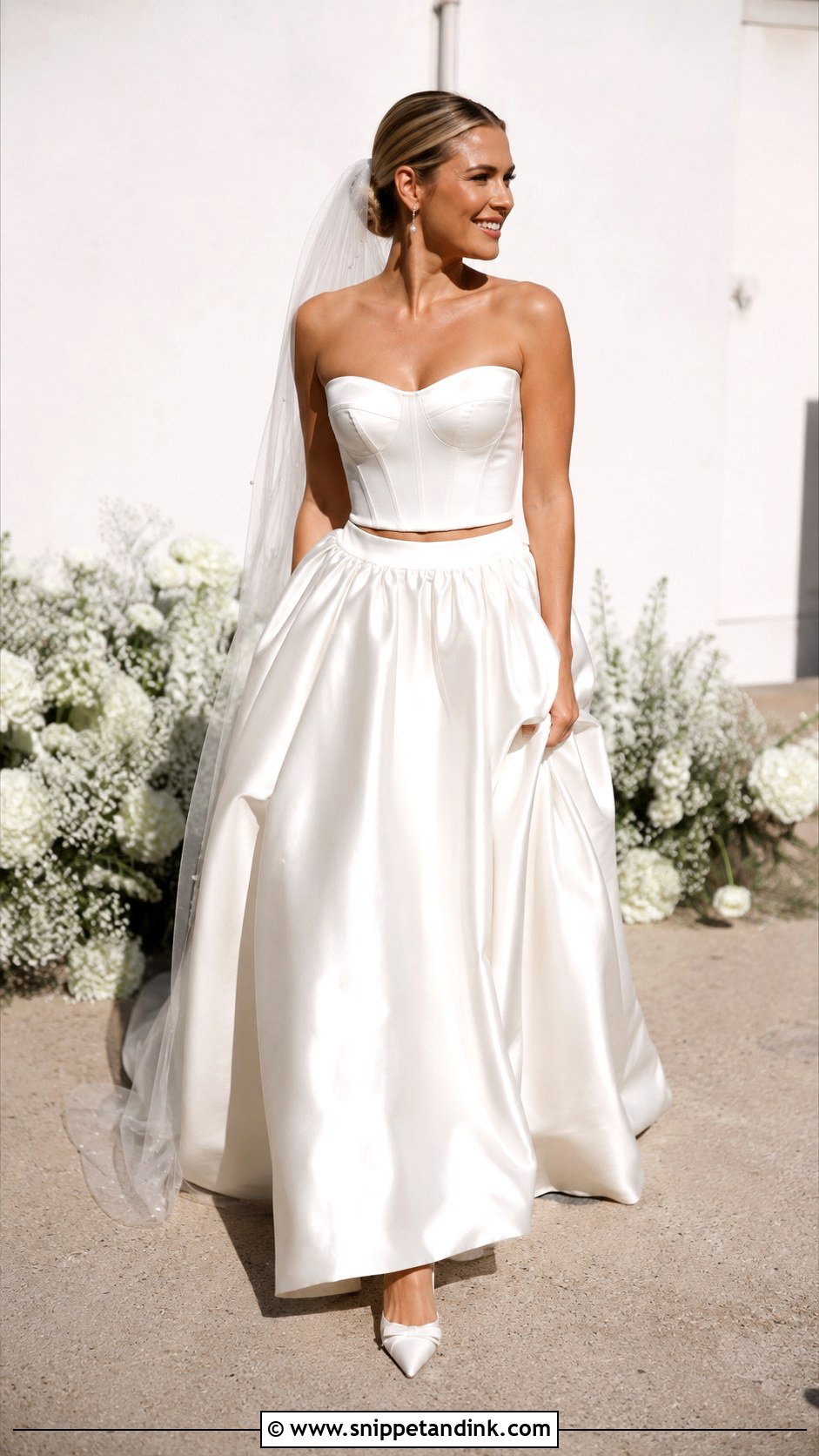
Two-piece bridal looks let you mix shapes: a corset top over a full skirt for drama, a crop top over a column for something clean, or lace over satin for texture. Outdoor and destination weddings suit them, and so do reception changes. Proportion is everything. I want the top and skirt to overlap or meet at a point that stays put when you raise your arms, so a bit of skin flashes only if you mean it to. Add a veil if you want it to stay unmistakably bridal.
21. Bridal Jumpsuit With Overskirt
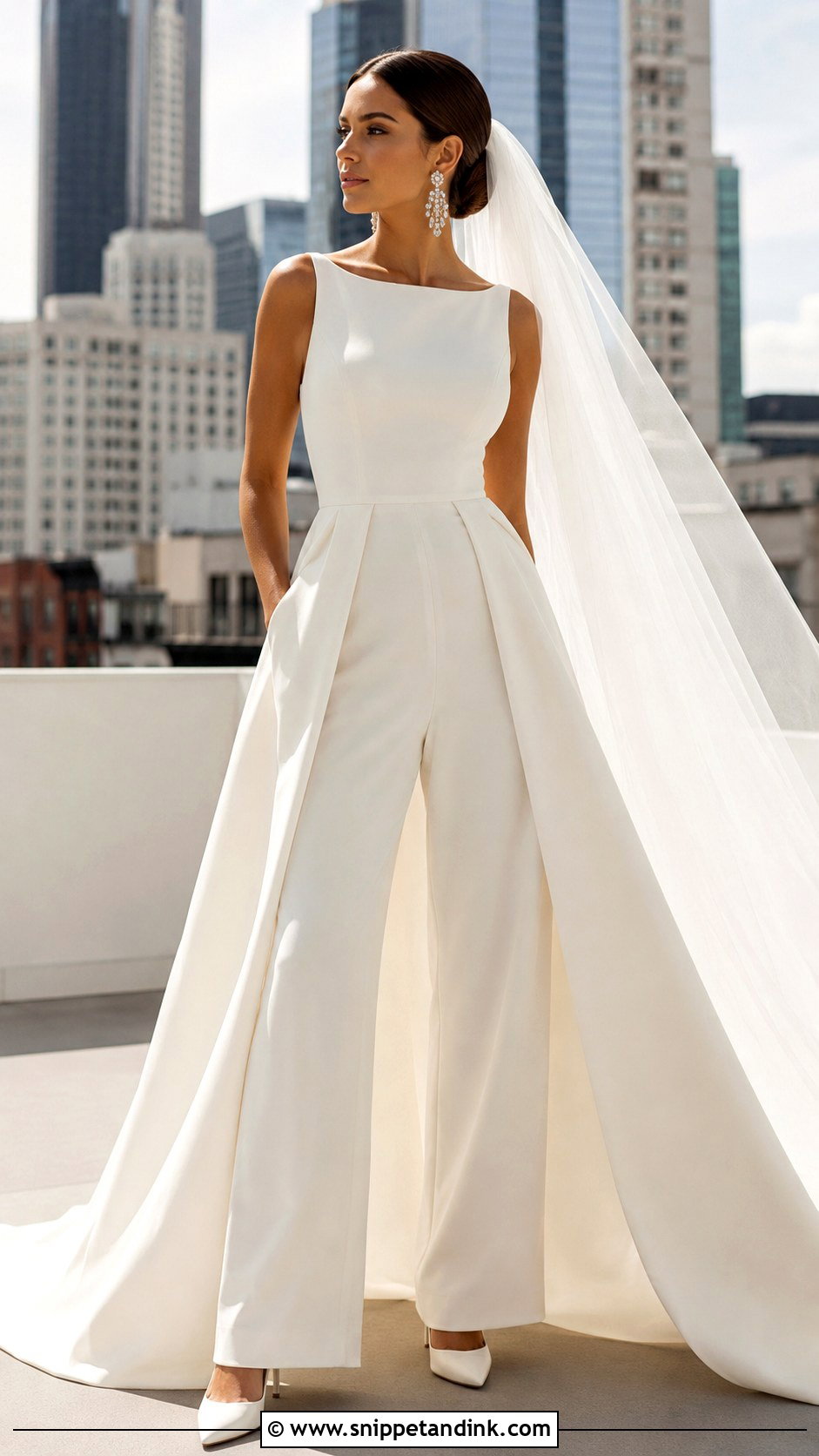
A bridal jumpsuit with an overskirt gives you a gown silhouette for the aisle and trousers for the party. Ask for a tailored bodice, wide legs and a skirt in the same fabric so the two halves match when worn together. City weddings and rooftop venues suit it. My practical note: jumpsuits are awkward in the bathroom, so look for a back zip you can manage with one helper, not a row of buttons. Pointed heels, statement earrings and a clean veil or cape complete it.
22. Feather Trim Wedding Gown
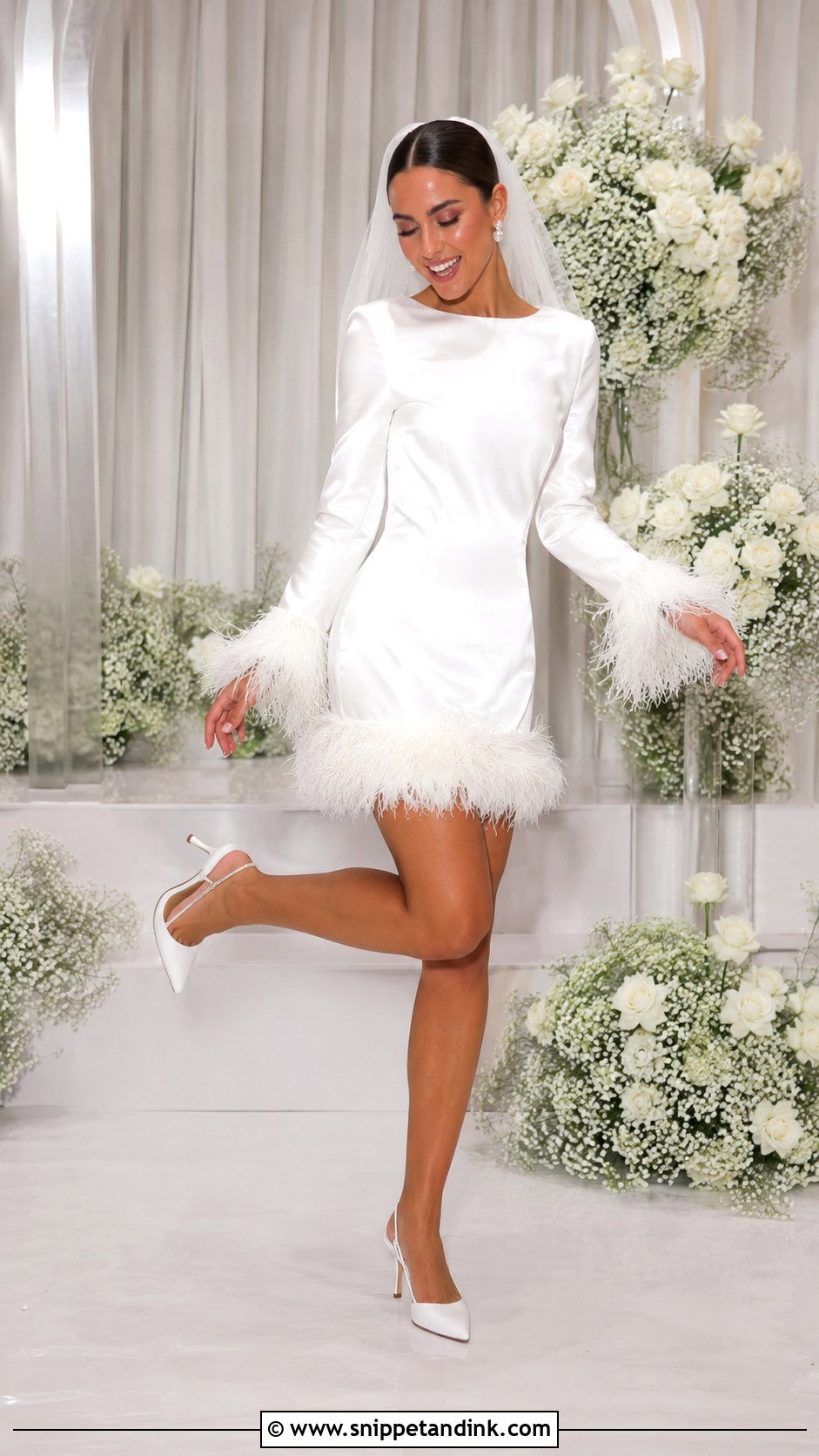
A feather trim wedding gown works when the feathers are used sparingly: a hem, a neckline, cuffs or a detachable capelet. A satin mini with feather cuffs suits a reception; a long column with a feathered hem is glamorous at night. Keep hair smooth and jewellery minimal against the texture. Be aware that feathers hate rain and humidity, which flattens them, so carry a dry cover if the venue involves an outdoor walk.
23. 3D Floral Wedding Gown
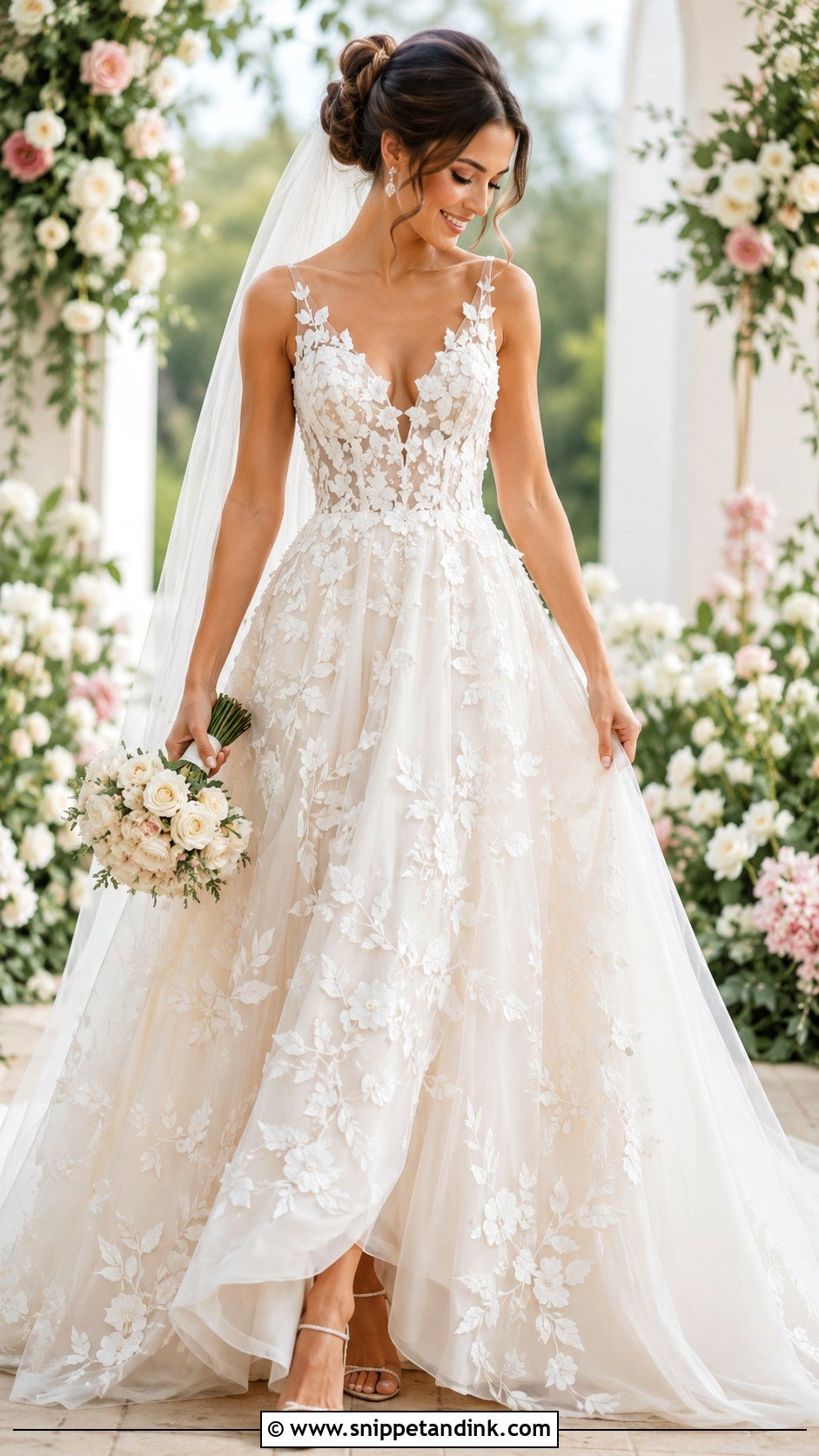
Raised petals and appliqué turn the dress into something you want to touch, and close-up photos catch every shadow they cast. Scattered tiny flowers keep it delicate; large placements across bodice and skirt make it dramatic. Garden and spring weddings are its natural fit. Choose a bouquet that echoes the flowers on the gown rather than fighting them, and keep jewellery small. Expect a few petals to crush during hugs, which a seamstress can usually re-fluff or re-stitch afterwards.
24. Square Neck Wedding Gown
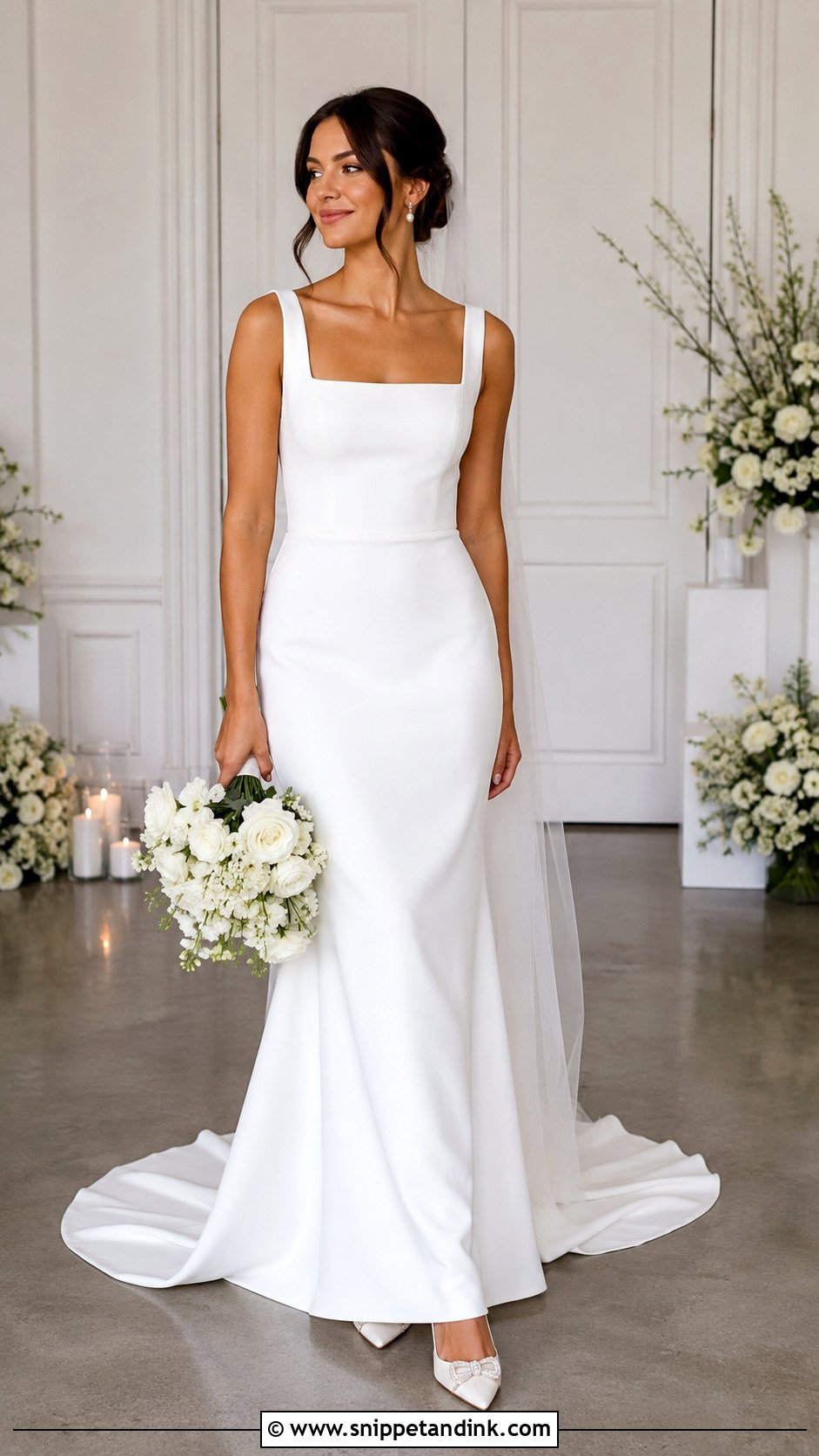
A square neckline frames the shoulders with more structure than a sweetheart and suits both small and full busts. Wide straps, long sleeves or a sleeveless bodice all work with it. For something less expected, look at textured jacquard, satin with a basque waist, or crepe with a long train. It goes with nearly any hairstyle, which makes styling straightforward. Pearl earrings, a smooth veil and classic heels are plenty, and the strong line of the neck keeps it feeling current.


25. Convertible Wedding Gown
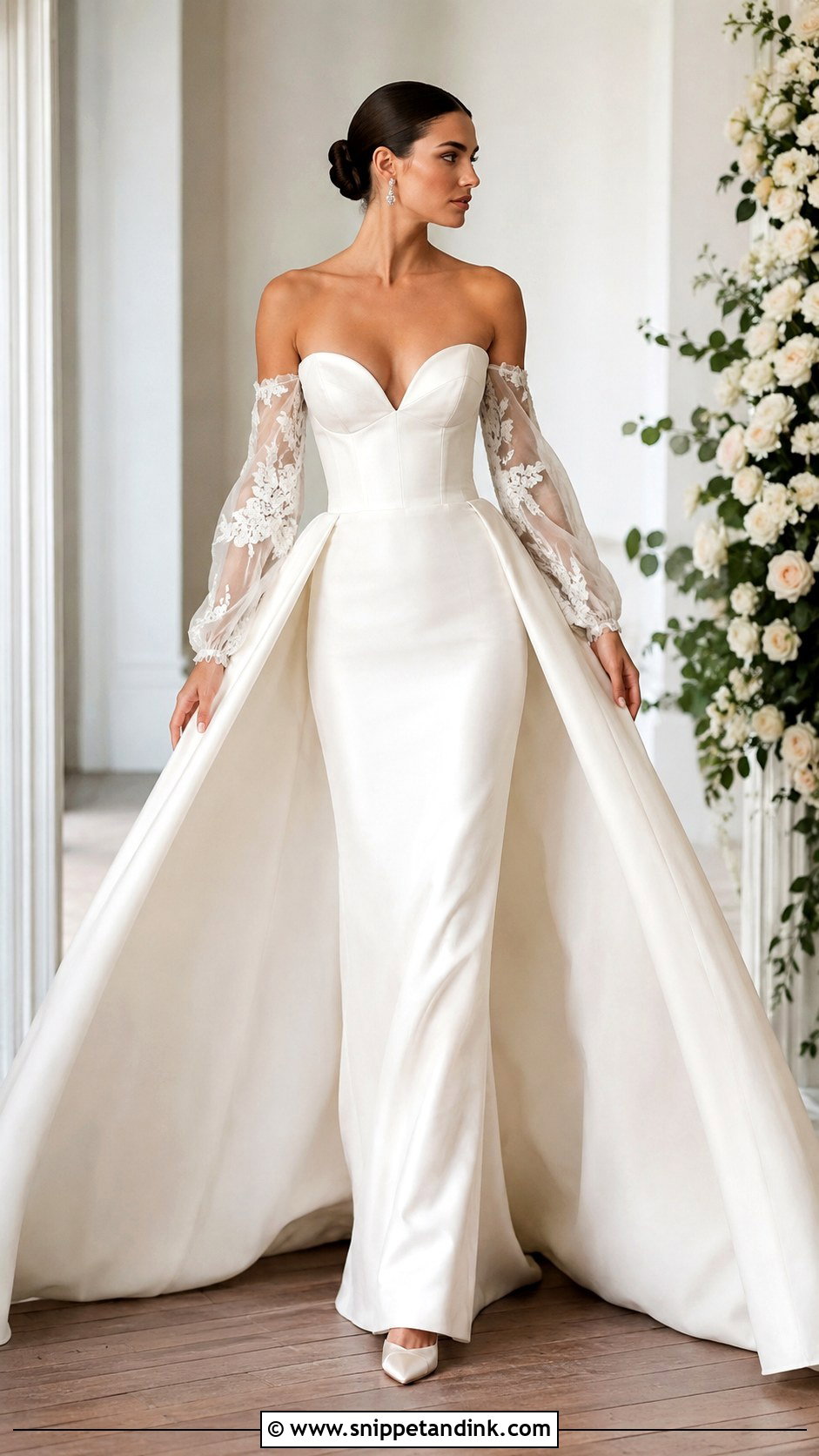
A convertible wedding gown changes through the day using detachable sleeves, straps, overskirts, capes, trains or neck scarves. It suits a bride who wants a formal aisle look and a lighter look for the party, without a second dress. A fitted base gown handles the add-ons best; a full base gets bulky. Every attachment should be invisible when removed, so check the bare gown at the final fitting, not only the full version. Choose shoes and jewellery that work in every combination.
How Feathers, Pearls and Overskirts Behave by Midnight
A dress looks one way on a mannequin and another after photos, dinner, hugs and dancing. These are the questions I want answered before a bride commits to a detail.
Trains and bustles
Any train longer than a sweep needs a bustle so you can dance. Ask your seamstress how many bustle points the gown will need and teach the person responsible, usually a bridesmaid or your mum, at the final fitting rather than on the day.
Hand-applied texture
Pearls, 3D flowers and feathers all lose a little through the evening. Ask the boutique for a small bag of spare beads or petals, and put a needle, matching thread and a few safety pins in your emergency kit.
Anything that detaches
Overskirts, capes and sleeves need somewhere to go once they come off. Assign one person to collect them and a garment bag to put them in, or they end up on a chair under someone’s coat.
The chair test
At your last fitting, sit on an ordinary chair for five minutes, then stand and look in the mirror. Boning that digs in, a bubble hem that flips up or satin that creases badly will all show up now, while there is still time for the seamstress to adjust them.
One Clear Detail Is Enough to Carry a Gown
The gowns people remember usually have one strong idea: a sculpted waist, an unusual neckline, a textured fabric, a cape, or a colour that belongs to you. You don’t need every trend on one dress. Think about your venue, the season, how much you want to move, and how you’ll spend the hours between ceremony and last dance. From embroidered florals to black satin, the right gown is the one you forget you’re wearing by the second hour, while everyone else keeps looking.
You'll Like These Ideas:




Leave a Reply