
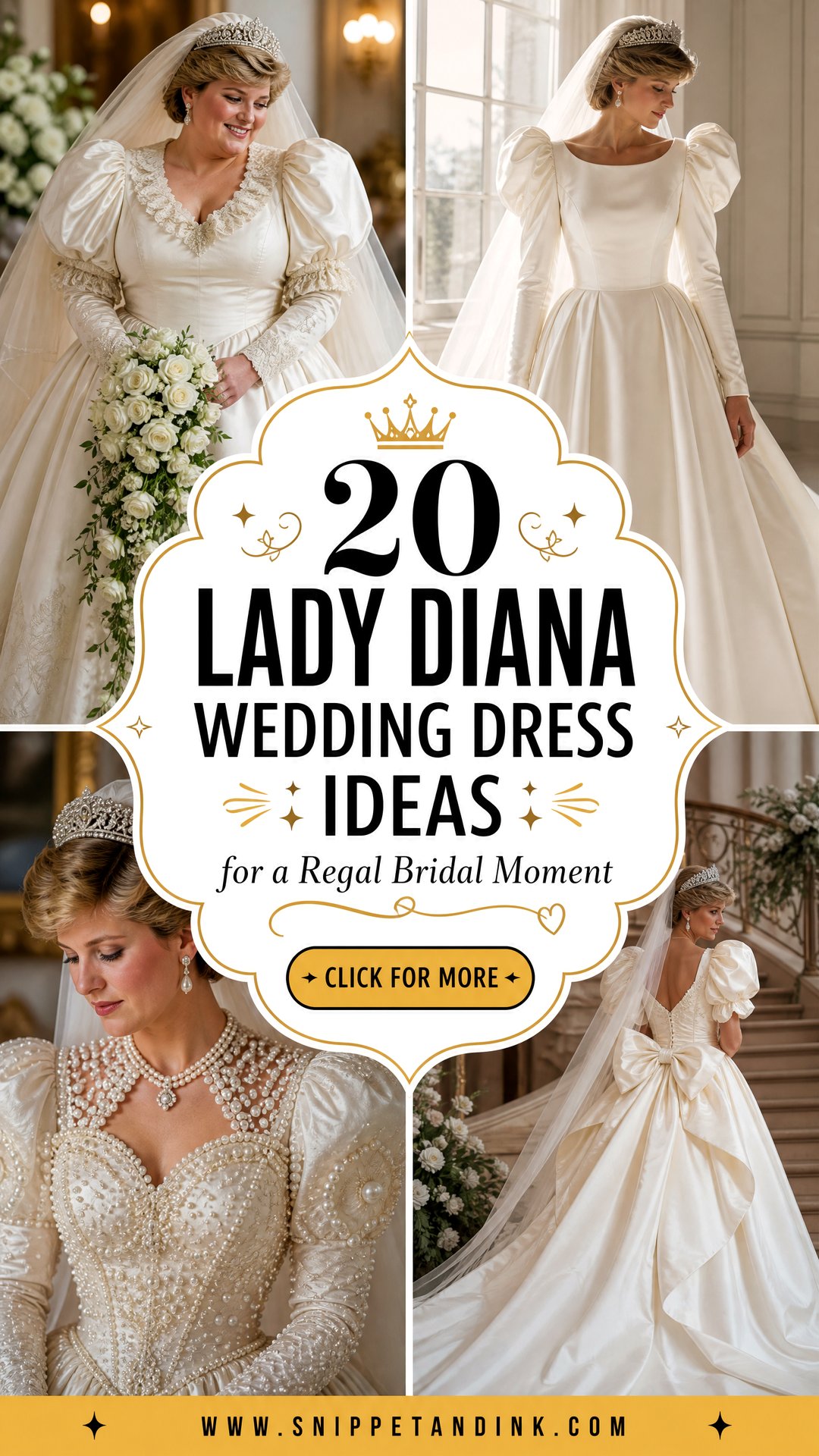
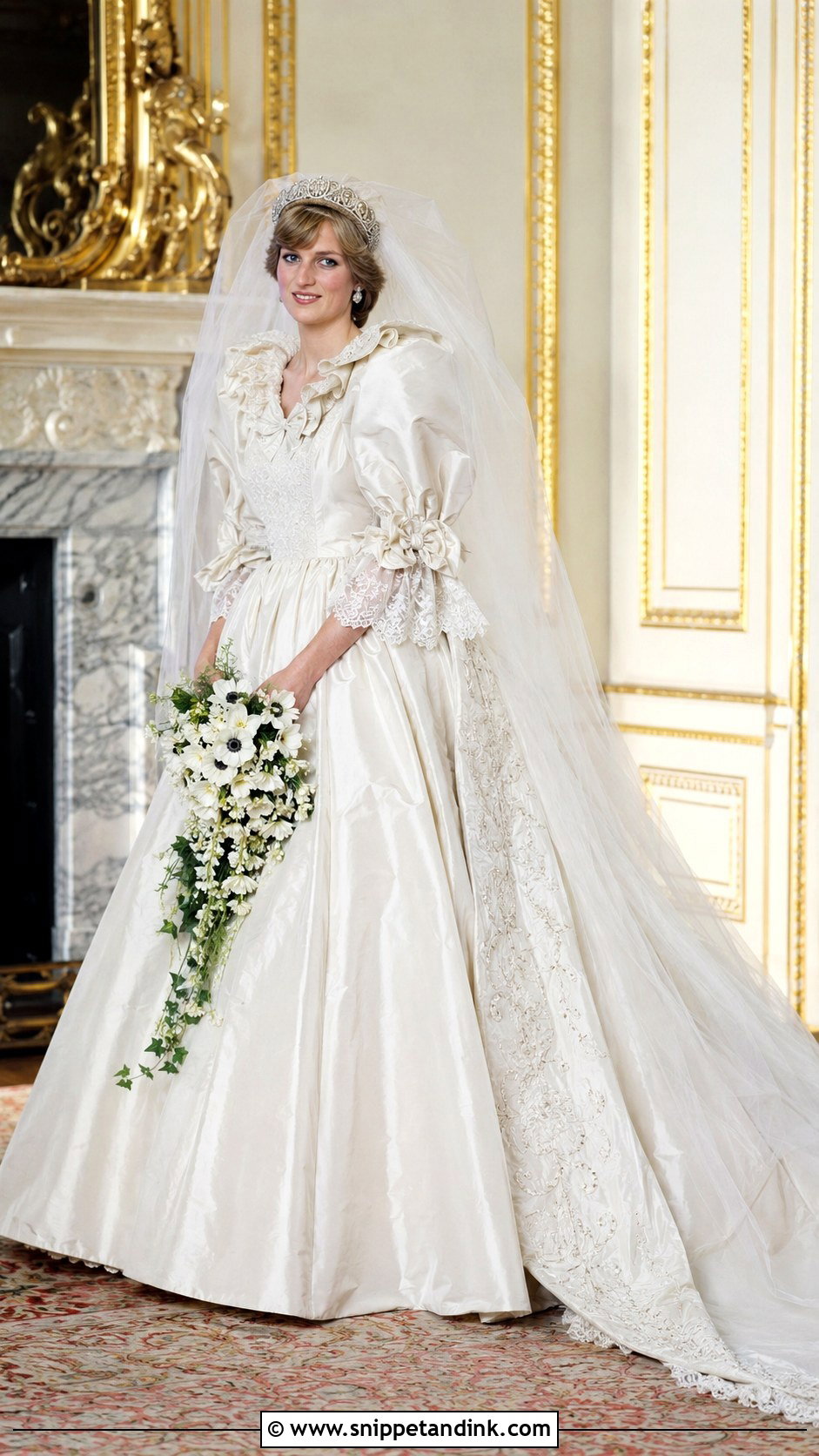
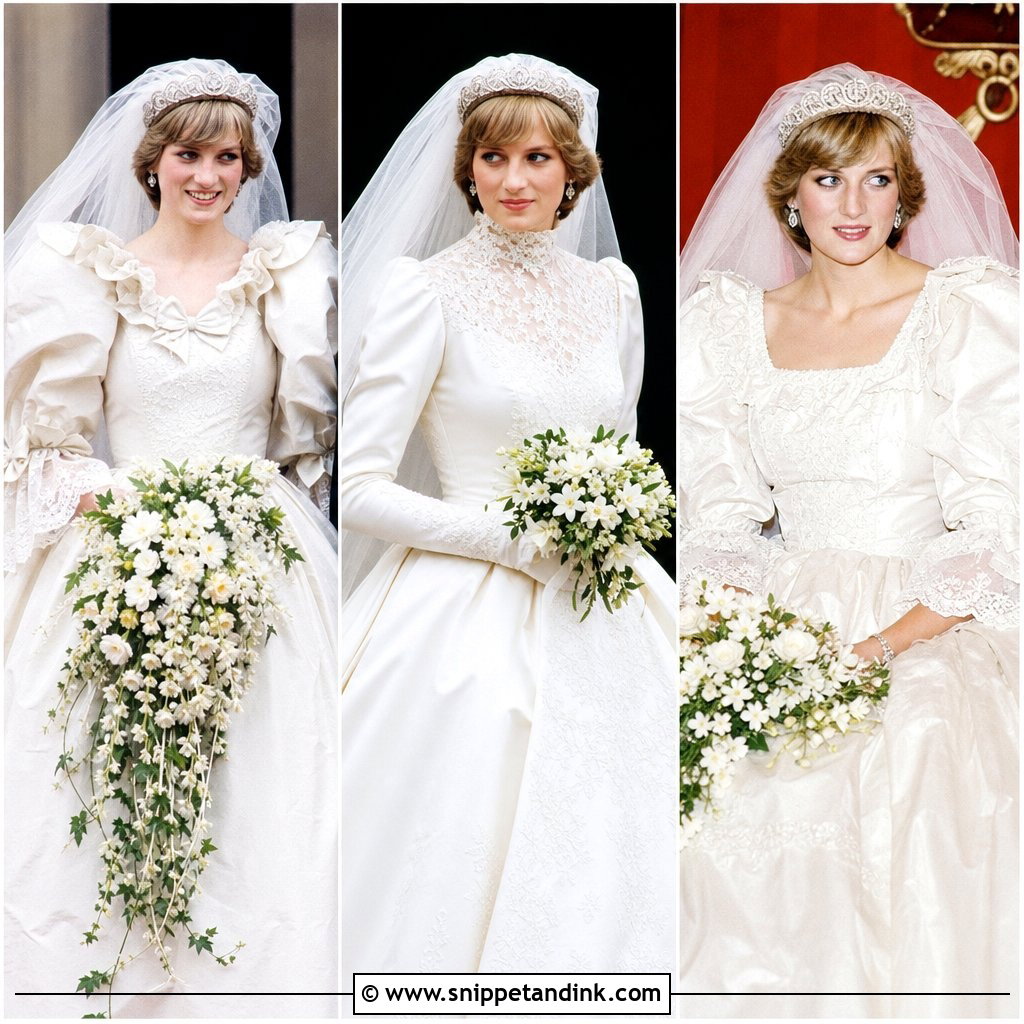
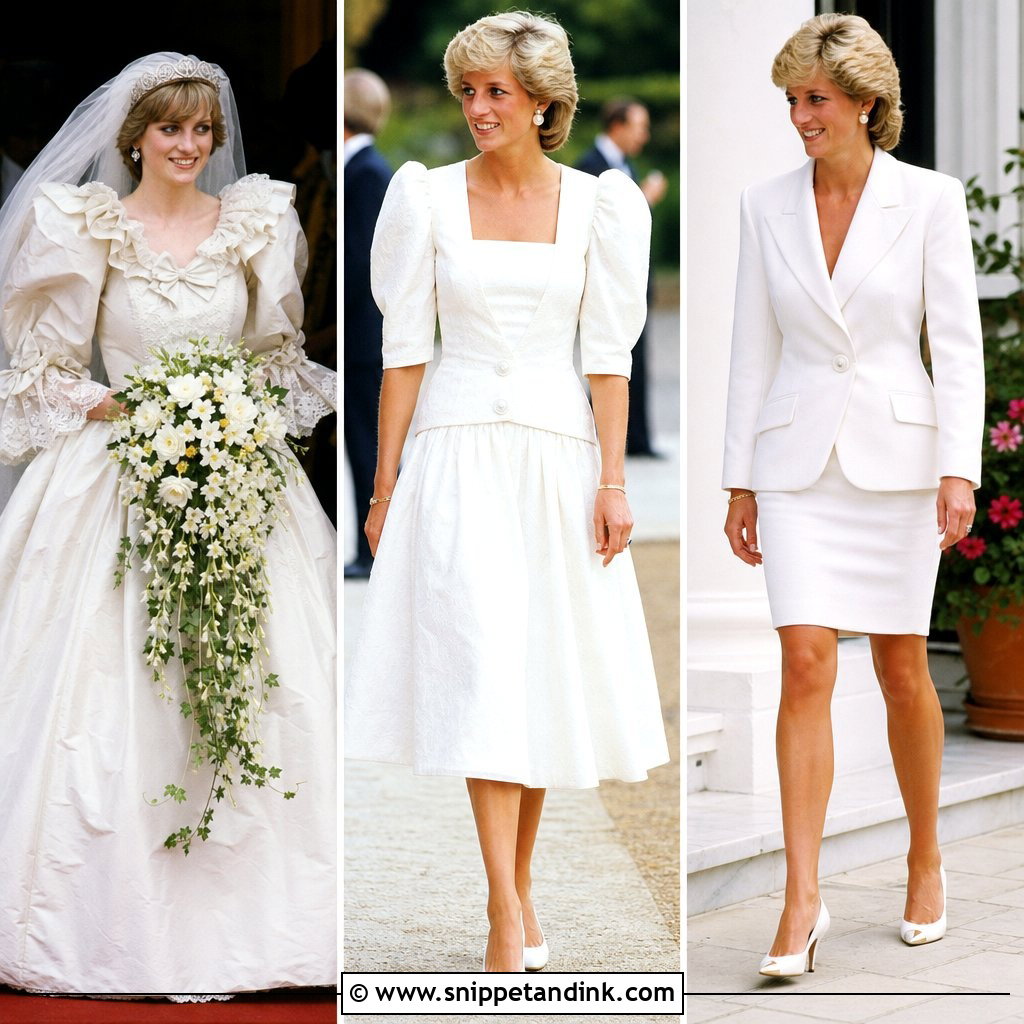
Few wedding gowns are as instantly recognised as the one Lady Diana Spencer wore in 1981, and it still shapes how people picture royal bridal fashion. The original was ivory silk taffeta trimmed with antique lace, with huge puffed sleeves, a fitted bodice, a very full skirt and an exceptionally long train. When a bride brings me a photo of it, the first thing I ask is which part made her stop scrolling. Usually it is one detail, the sleeves or the ruffled neckline or that train, and building around that one feature gives a far better dress than copying all of them. The ideas below range from near-faithful replicas to quiet modern nods, each styled as a complete outfit.
Deciding How Much of Diana’s Dress You Want
When a bride says she wants a Diana dress, I treat it like a dial rather than a yes or no. At one end is a near-replica with every feature. At the other end is a modern gown with one clear reference. Most brides land somewhere in the middle, and where they land depends on three practical questions.
- How big is the room? A full skirt and long train need a wide aisle and space to turn. In a small registry office they look cramped and get stood on.
- How long will you wear it? Taffeta and big sleeves are fine for a two-hour ceremony, but over twelve hours many brides want something lighter by evening.
- What shape are your shoulders? Large puffs widen the top half. They balance narrow shoulders and hips nicely, while broad shoulders often look better with a softer or dropped sleeve.
At your first appointment, try one replica style and one minimal style back to back. Most brides know within a minute which end of the dial feels like them.
1. Ivory Taffeta Lady Diana Wedding Dress
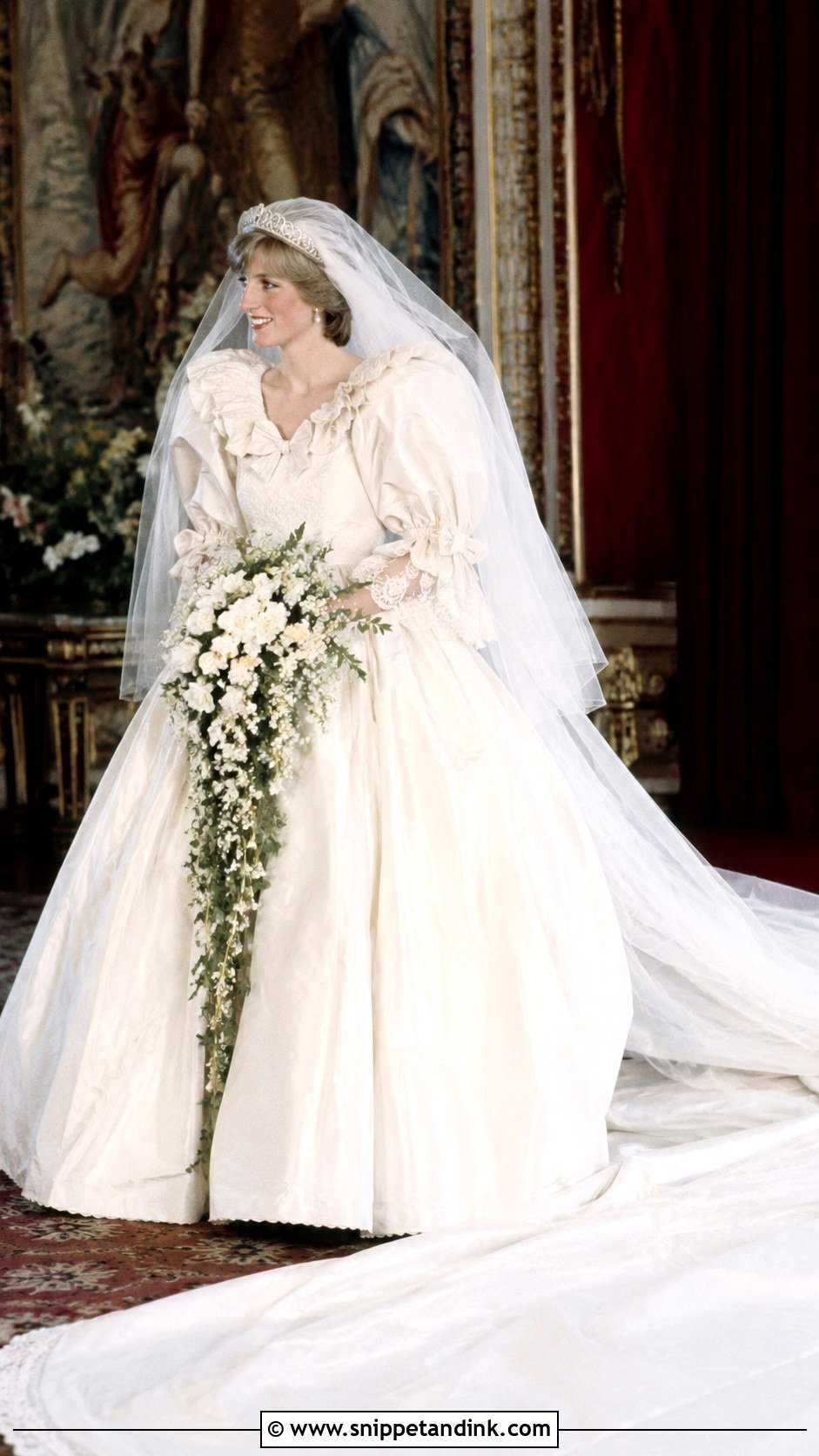
This is the closest to the original: an ivory taffeta ball gown with a boned bodice, a softly curved neckline and a heavily gathered skirt. Full puff sleeves are what make it read as Diana, and I’d ask for them to be lined with net so they hold their height all day instead of collapsing by the speeches. Taffeta has a crisp rustle and a slight sheen, but it also creases wherever you sit, so plan for steaming right before the ceremony. Keep the rest calm: low ivory pumps, pearl drops, a delicate tiara and a tulle veil just past the train. A cathedral, castle venue or formal ballroom gives this much skirt room to move.
2. Puff Sleeve Lady Diana Wedding Dress
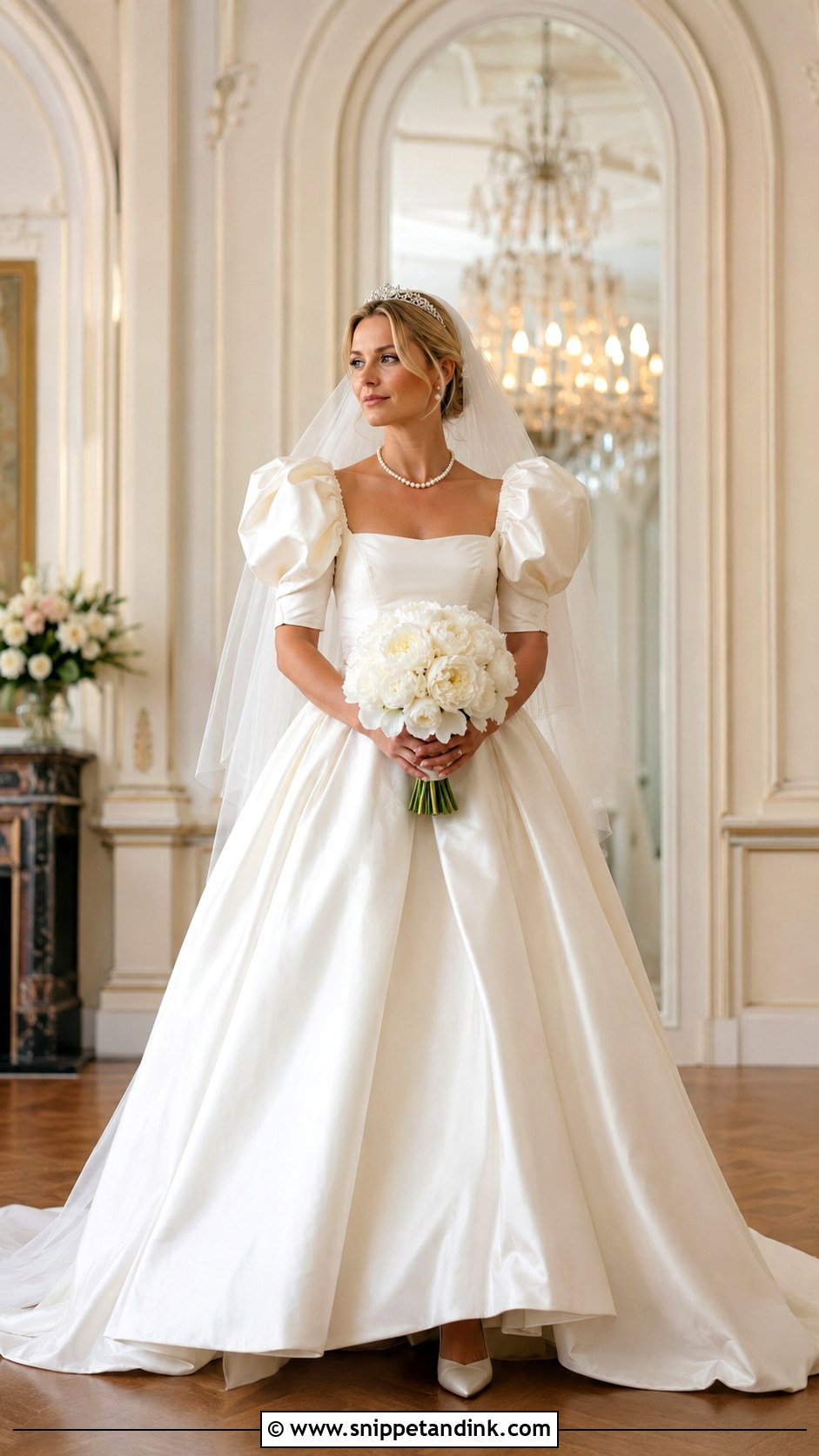
Could the sleeves carry the whole look on their own? With silk gazar or organza they can, because both fabrics hold a shape with very little weight, unlike taffeta. I like sleeves that rise at the shoulder and narrow toward a fitted cuff, which keeps the arm looking long rather than boxy. Pair them with a clean bodice, pointed satin heels, small pearl studs and a fingertip or chapel veil, and let the bouquet stay loose with peonies and sweet peas. One caution from fittings: wide sleeves on a bride with broad shoulders can widen the top half, so a dropped or softer puff may suit her better.
3. Lace Collar Lady Diana Wedding Dress
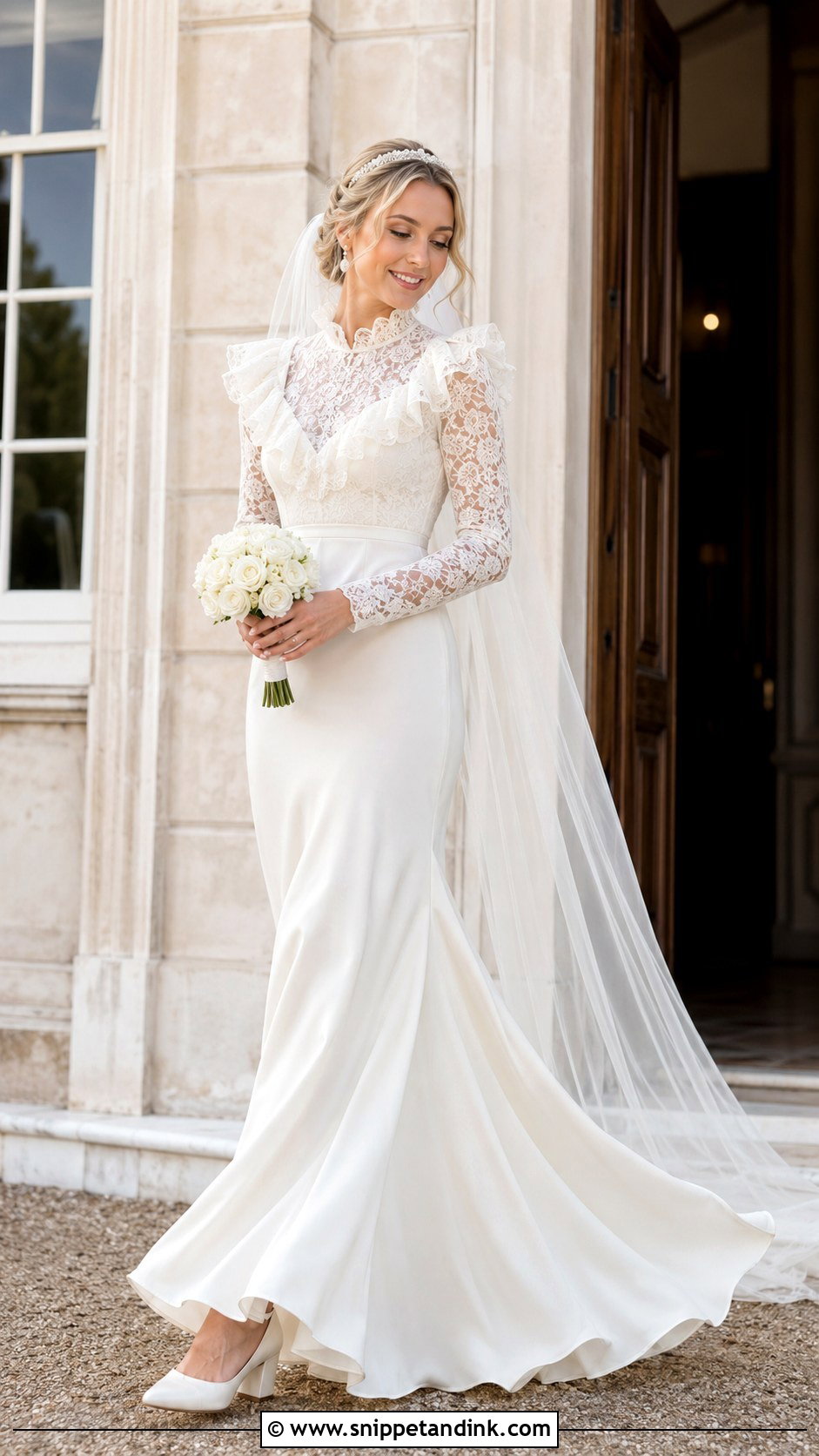
A ruffled lace collar gives you the royal reference with almost no volume, which makes it one of the easiest versions to wear. Look for a fitted ivory bodice, long sleeves and a softly flared skirt, with tiny covered buttons down the back. Those buttons look lovely, though they take a patient helper a good ten minutes to close, so I always put a hidden zip underneath when I can. Swap the tiara for a narrow crystal headband and use a lightly edged cathedral veil so the collar stays visible. It suits a cool-weather or indoor ceremony and anyone who wants coverage without heaviness.
4. Modern Lady Diana Ball Gown
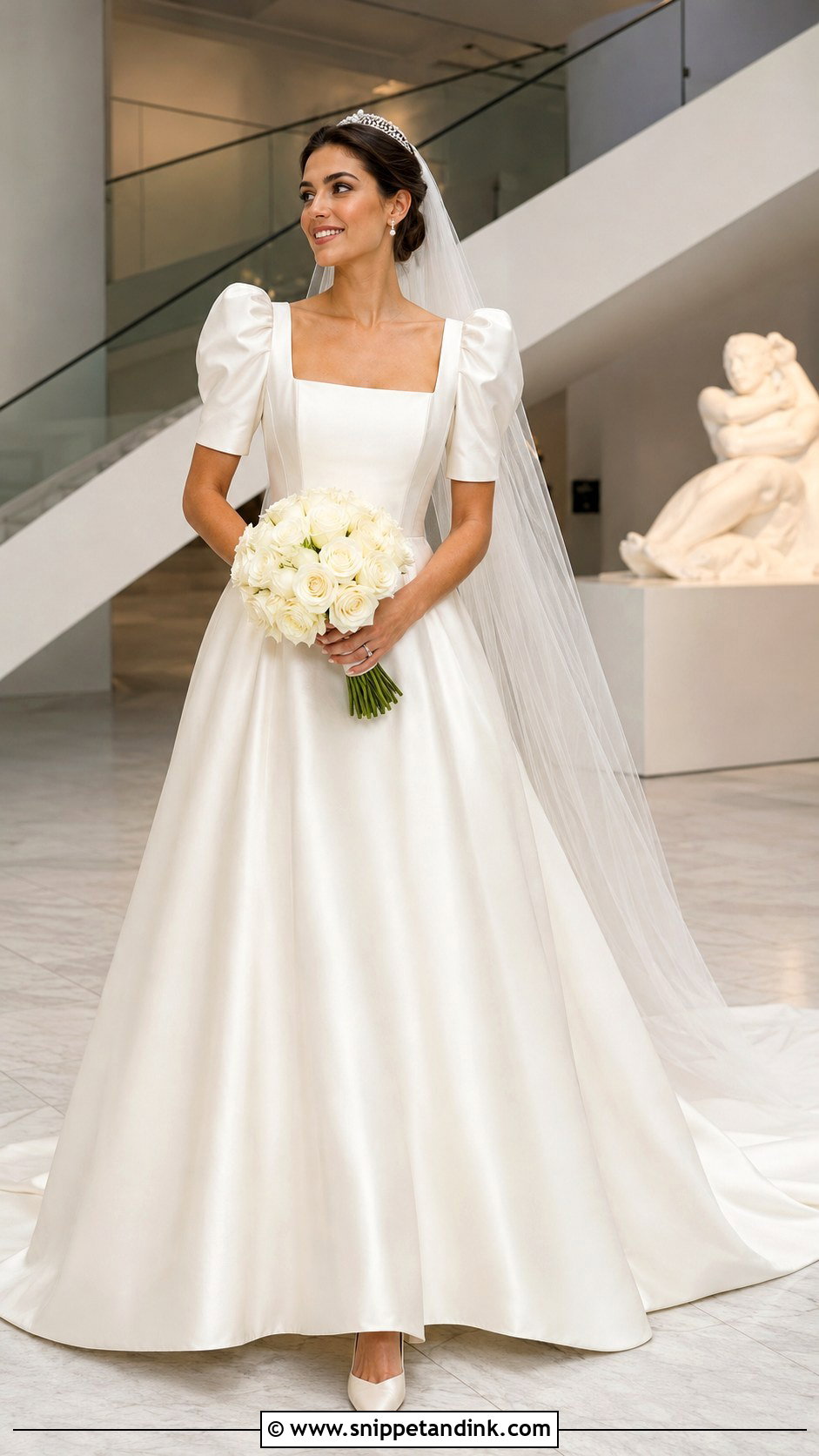
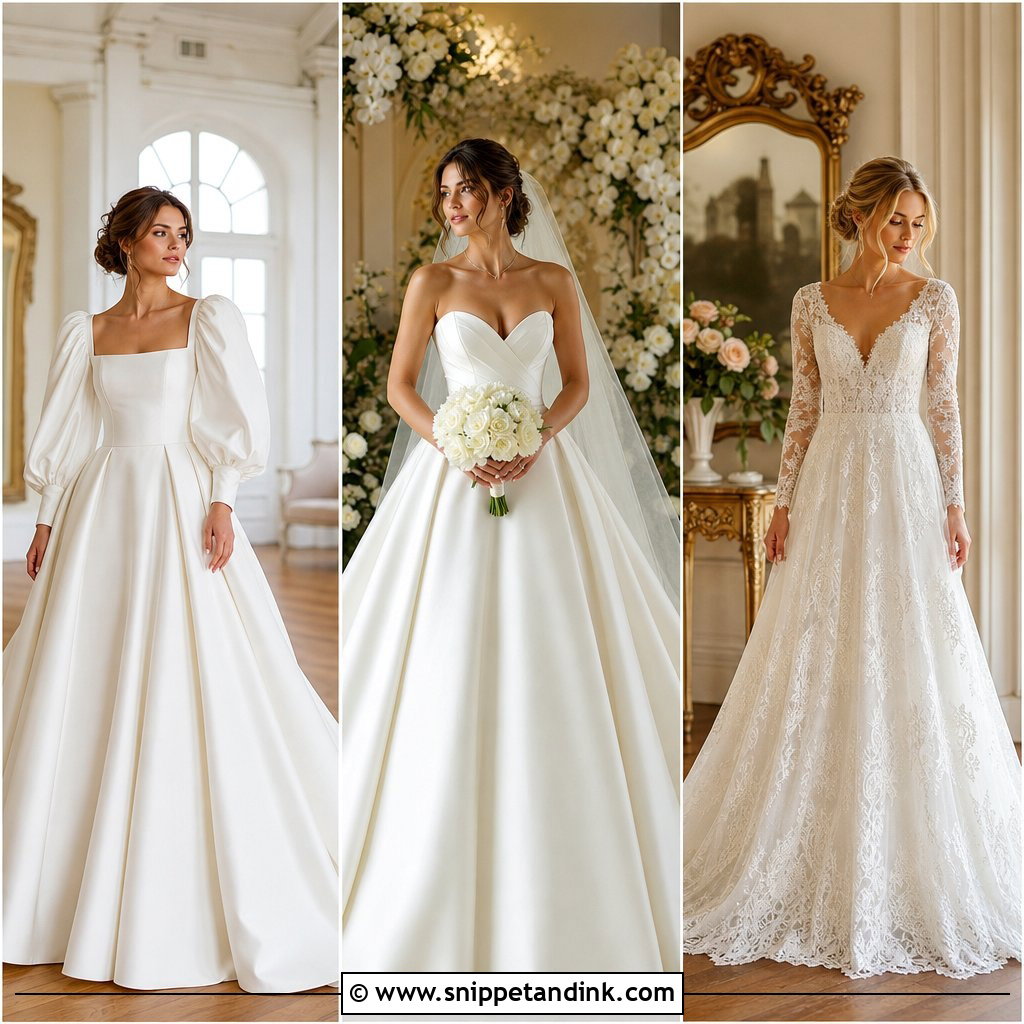
To keep the grand outline and lose the costume feel, strip back the surface. I’d start with a structured ivory ball gown, a square or gently scooped neckline, a small puff at the shoulder and a smooth skirt with controlled volume. Tonal embroidery or scattered pearls give texture without ruffles. Finish with sleek pumps, pearl-and-diamond studs and a minimalist tiara or crystal comb, plus a single-layer veil long enough to frame the skirt. This version sits naturally in a hotel ballroom or museum, where a full replica can feel like fancy dress.
5. Off-Shoulder Lady Diana Wedding Dress
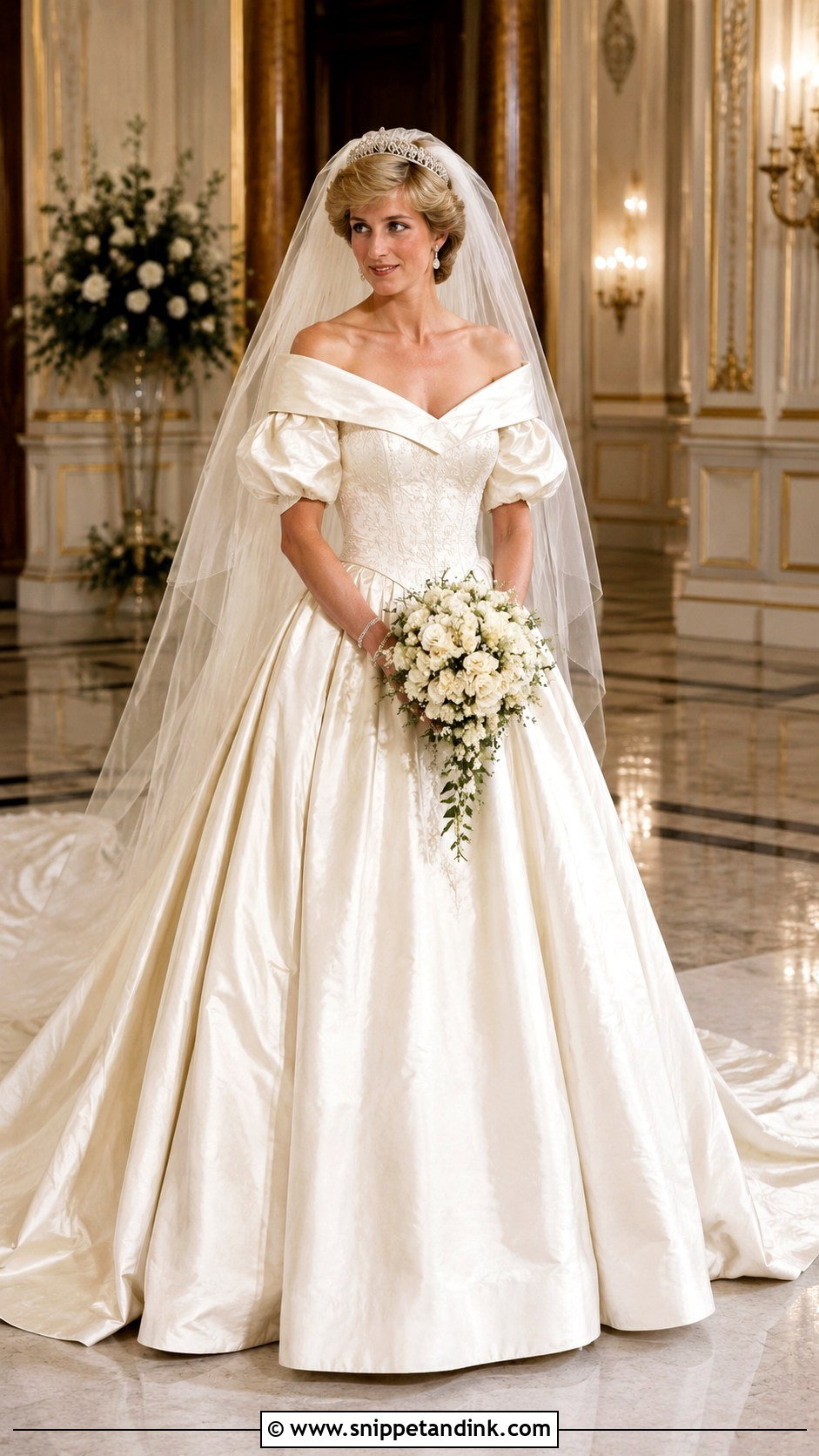
Dropping the sleeves below the shoulder opens up the neckline and modernises the 1980s puff instead of hiding it. The construction matters more than the look here. An off-shoulder bodice needs a firm corset inside and sleeves anchored to it, otherwise the sleeves creep down your arms every time you hug someone, and I test this by asking brides to reach forward at their fitting. Style it with pearl drops, a fine bracelet, low pointed heels and a simple tiara with a long veil. It suits brides who find high necks closing in on them.
6. Long Sleeve Lady Diana Wedding Dress
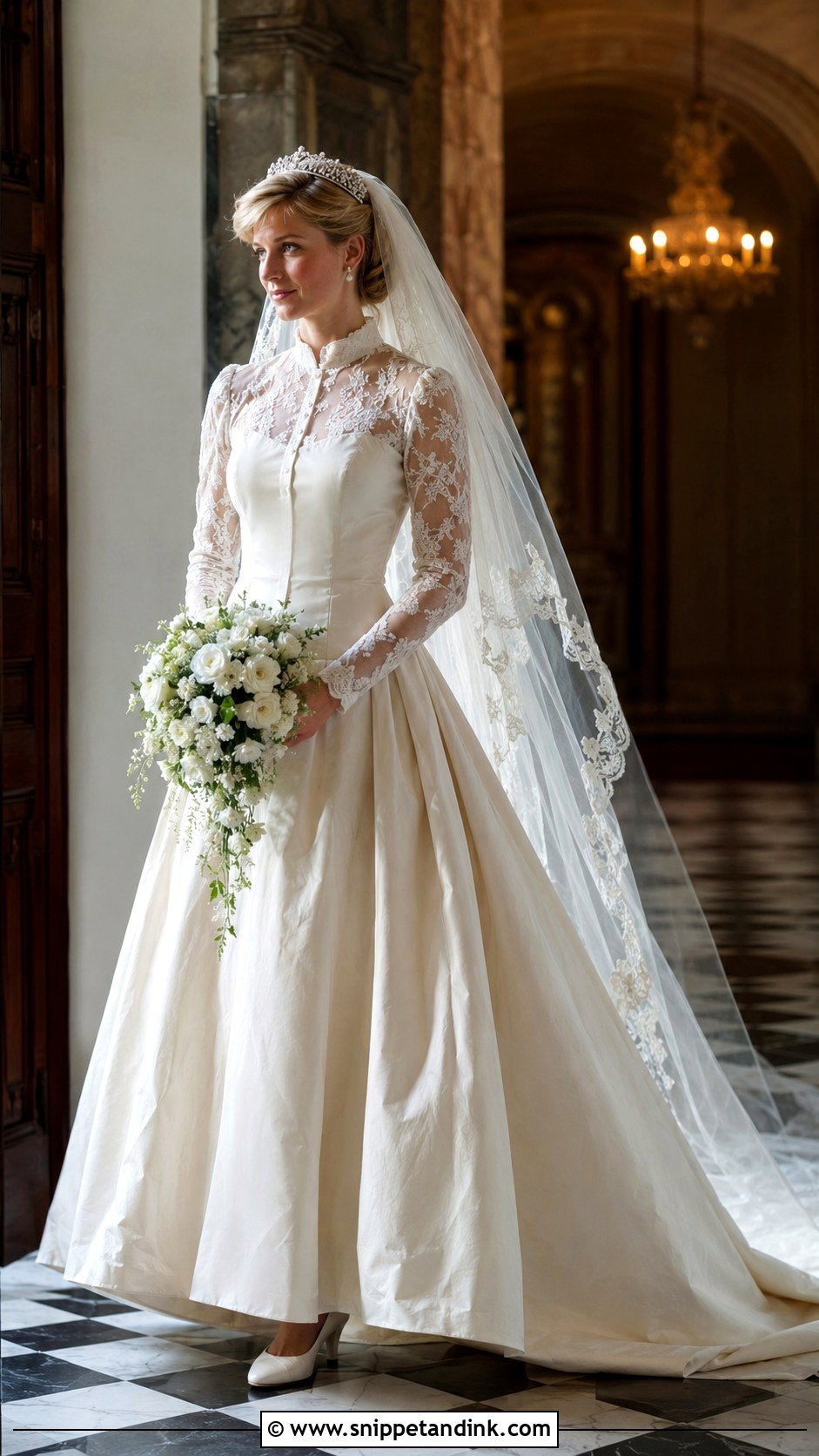
For autumn and winter, sheer lace sleeves on a taffeta ball gown give warmth and coverage while still letting skin show through. Raised shoulders, covered cuffs and small buttons at the wrist echo the original without heavy ornament. My rule is that the veil edging should not repeat the sleeve lace exactly, because two identical laces side by side tend to blur together in photos. Wear closed satin pumps, pearl studs and an understated tiara, and carry roses, anemones and eucalyptus. A fitted ivory cape makes outdoor arrivals bearable on a cold day.
7. Petite Lady Diana Wedding Dress
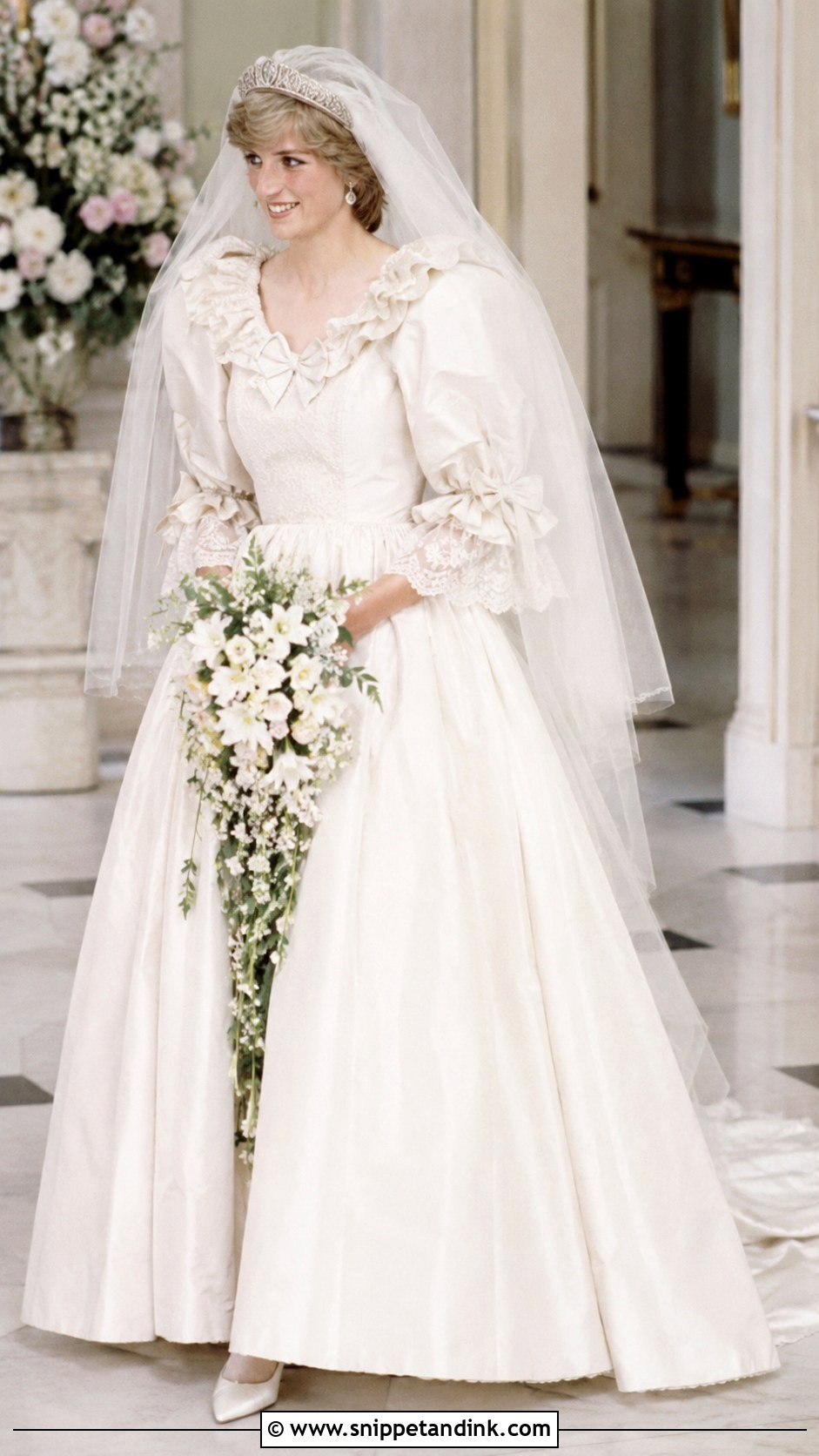
Petite brides do not have to give up volume, just scale it. I take the sleeves down a size, raise the waist slightly, choose a lighter A-line skirt and stop the train at chapel length. Vertical seams and an open neckline keep the frame from disappearing under fabric, and a narrow tiara adds a little height. The thing I watch most closely at fittings is hem length: half an inch too long and a petite bride will trip on the turn back up the aisle. A lightweight underskirt helps her walk and pose without fighting the dress.
8. Plus Size Lady Diana Wedding Dress
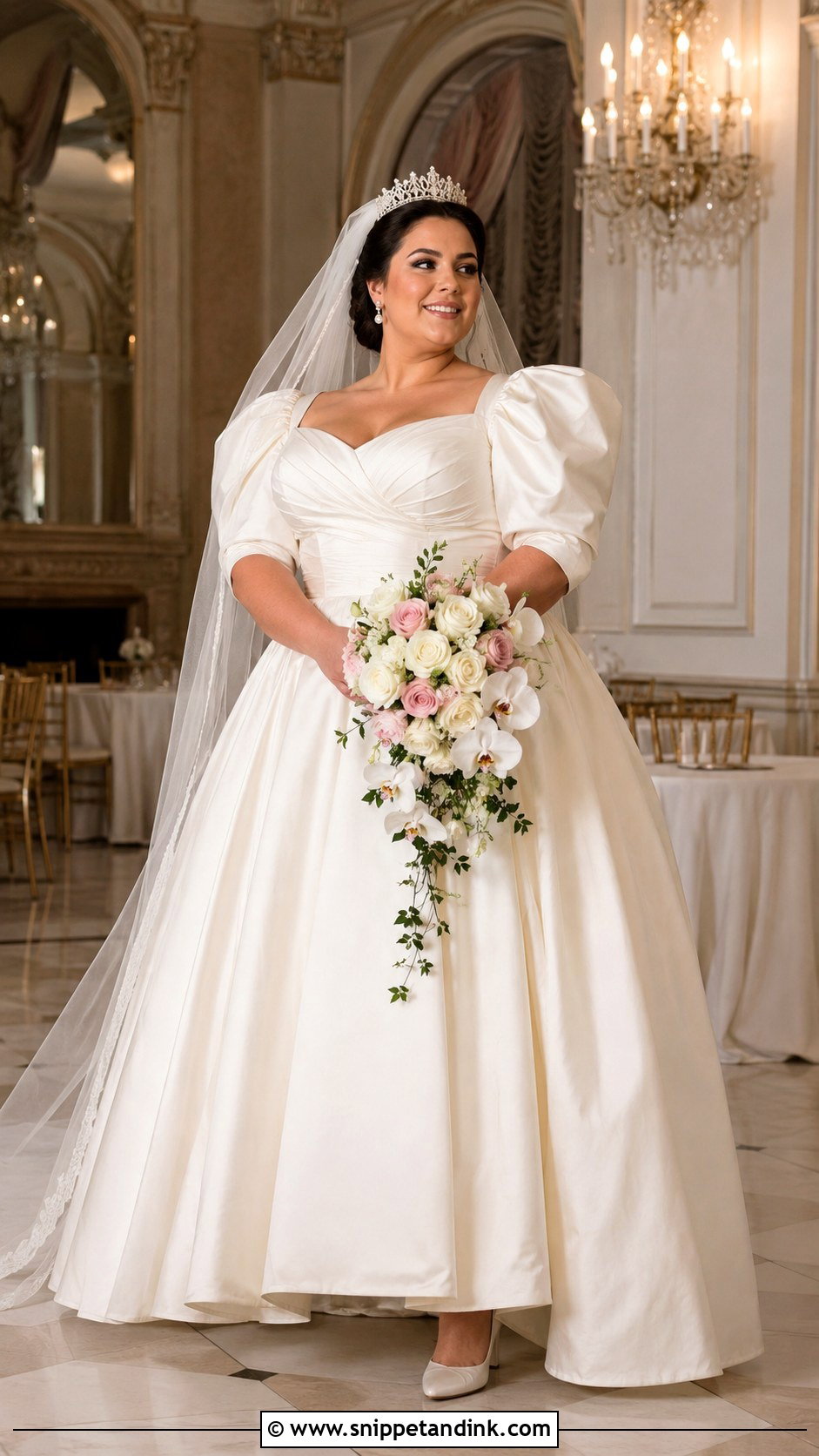
On a curvy figure, the Diana outline works best with real structure inside. Ask for an internal corset or adjustable waist stay rather than relying on delicate back buttons, which take all the strain and can gape. An open portrait neckline, structured puff sleeves and a skirt falling over a supportive petticoat celebrate the waist instead of hiding it. I pay close attention to the upper arm at fittings, because a sleeve cut too narrow pulls when you lift your bouquet. Stable block heels, pearl drops, a medium tiara and a long veil set near the crown finish it.
9. Minimalist Lady Diana Wedding Dress
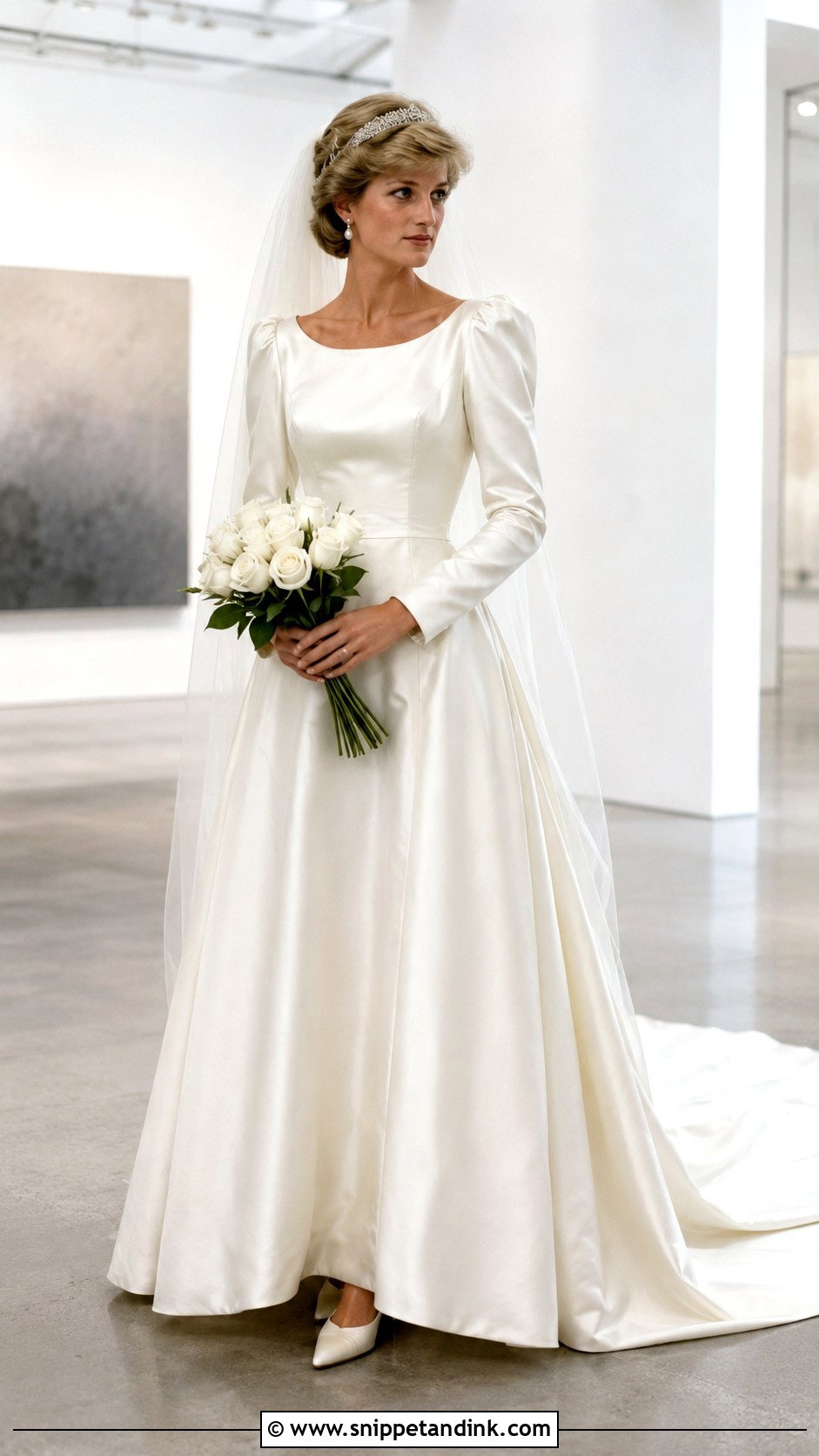
Not every nod to Diana needs lace and ruffles. A smooth ivory satin ball gown with subtle shoulder volume, a natural waist and a clean train keeps the proportions and drops the decoration. The veil does the drama here, so I’d go cathedral length with no embroidery at all. Satin shows every wrinkle and every alteration seam, which means the tailoring has to be excellent. Pointed pumps, single pearls, a slim crystal headband and long-stemmed roses tied with ribbon suit galleries and bright modern spaces.
10. Pearl Lady Diana Wedding Dress
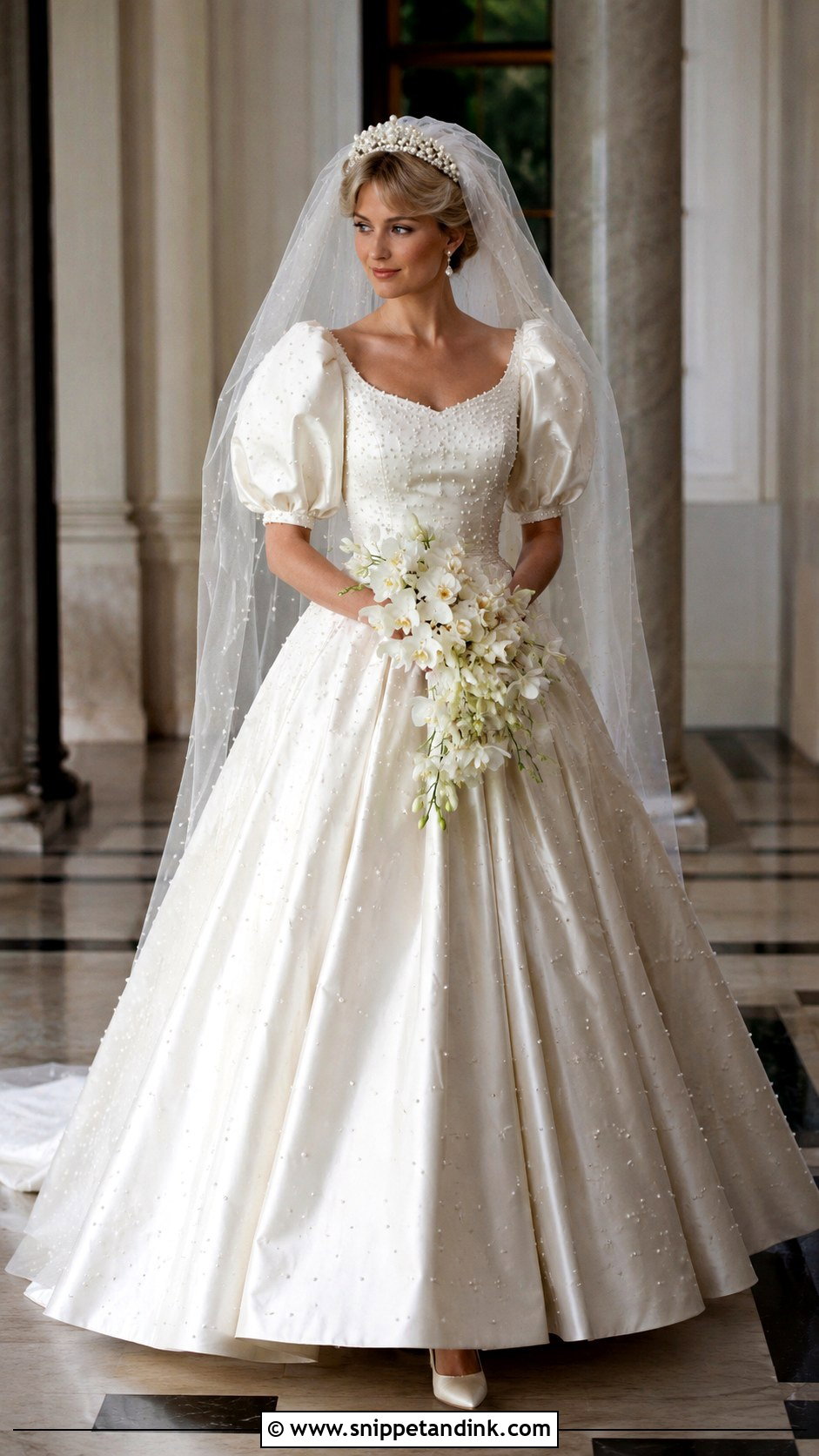
Pearls give a soft glow rather than the hard flash of crystals, which suits ivory silk. I’d place them only at the neckline, cuffs and waist and keep the skirt bare so it moves freely and stays light. Repeat one pearl size throughout, earrings, tiara and a few on the veil, because mixing sizes looks accidental. A word on care: hand-sewn pearls can catch on lace or hooks and pull loose, so check the stitching at your final fitting and keep a few spares with your emergency kit. Roses and creamy orchids keep the palette tonal.
11. Ruffle Neck Lady Diana Wedding Dress
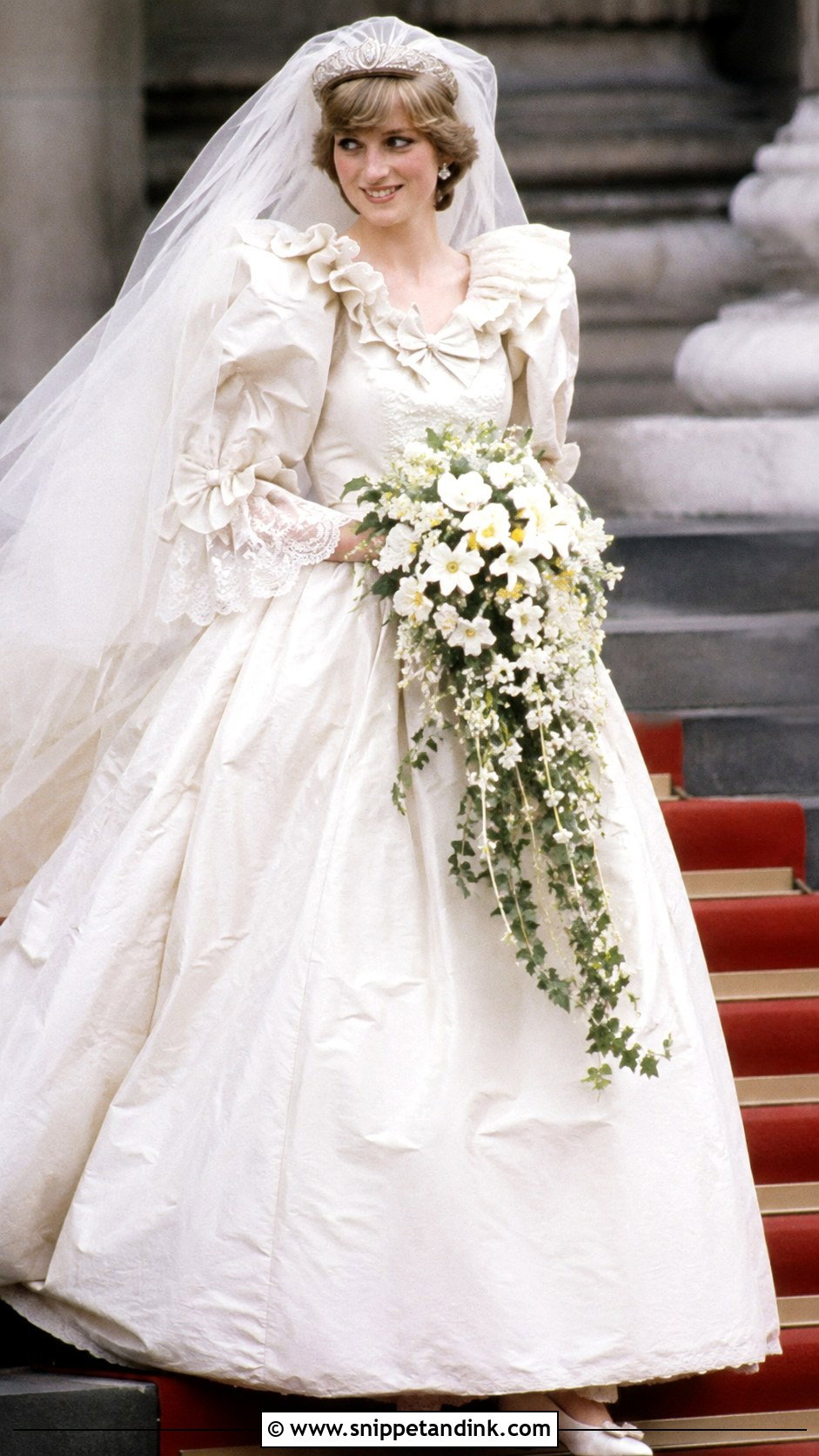
A gathered ruffle at the neck is the most youthful part of the 1981 look. It needs to frame the face, not swallow it, so I check the height against the jaw and stop it lower on a bride with a shorter neck. An ivory taffeta gown with full sleeves, narrow cuffs and a flowing skirt carries it well. Keep the veil set behind the crown so the ruffle stays visible from the side, and choose a soft updo, since loose hair and a ruffled collar crowd each other. Pearl studs, a delicate tiara and a cascade of roses and jasmine finish it.
12. Bow Detail Lady Diana Wedding Dress
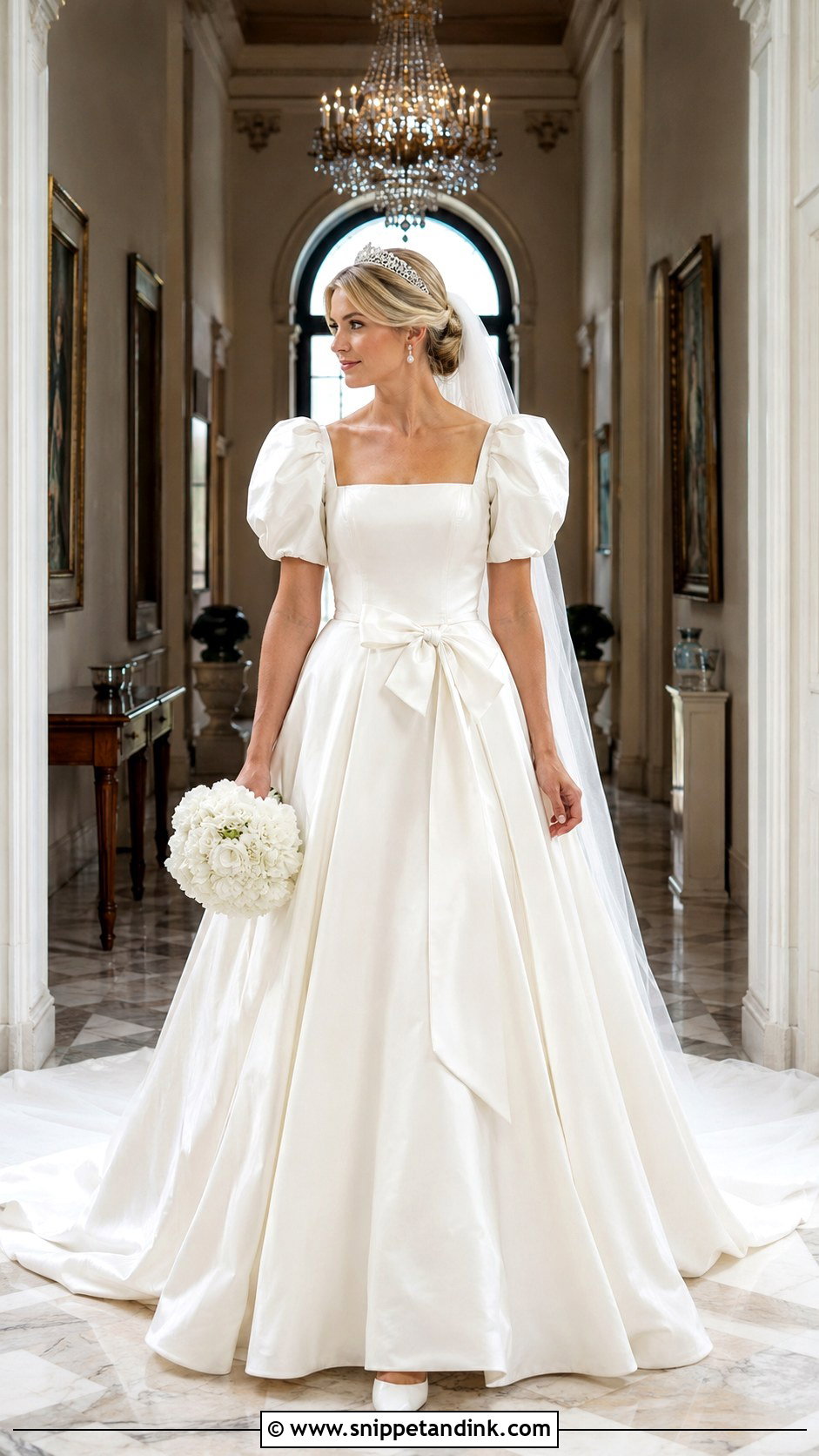
Bows read as charming when there is one of them and as fussy when there are six. One medium bow at the waist or lower back on a structured ball gown with puff sleeves is plenty, with perhaps tiny tonal bows at the cuffs. I usually suggest making the back bow detachable: it looks charming for the processional but gets crushed when you sit for dinner. Pair it with ivory pumps, pearl-and-crystal earrings, a narrow tiara and a plain cathedral veil that does not hide the bow, and a rounded bouquet of roses and hydrangeas.
13. Cathedral Train Lady Diana Wedding Dress
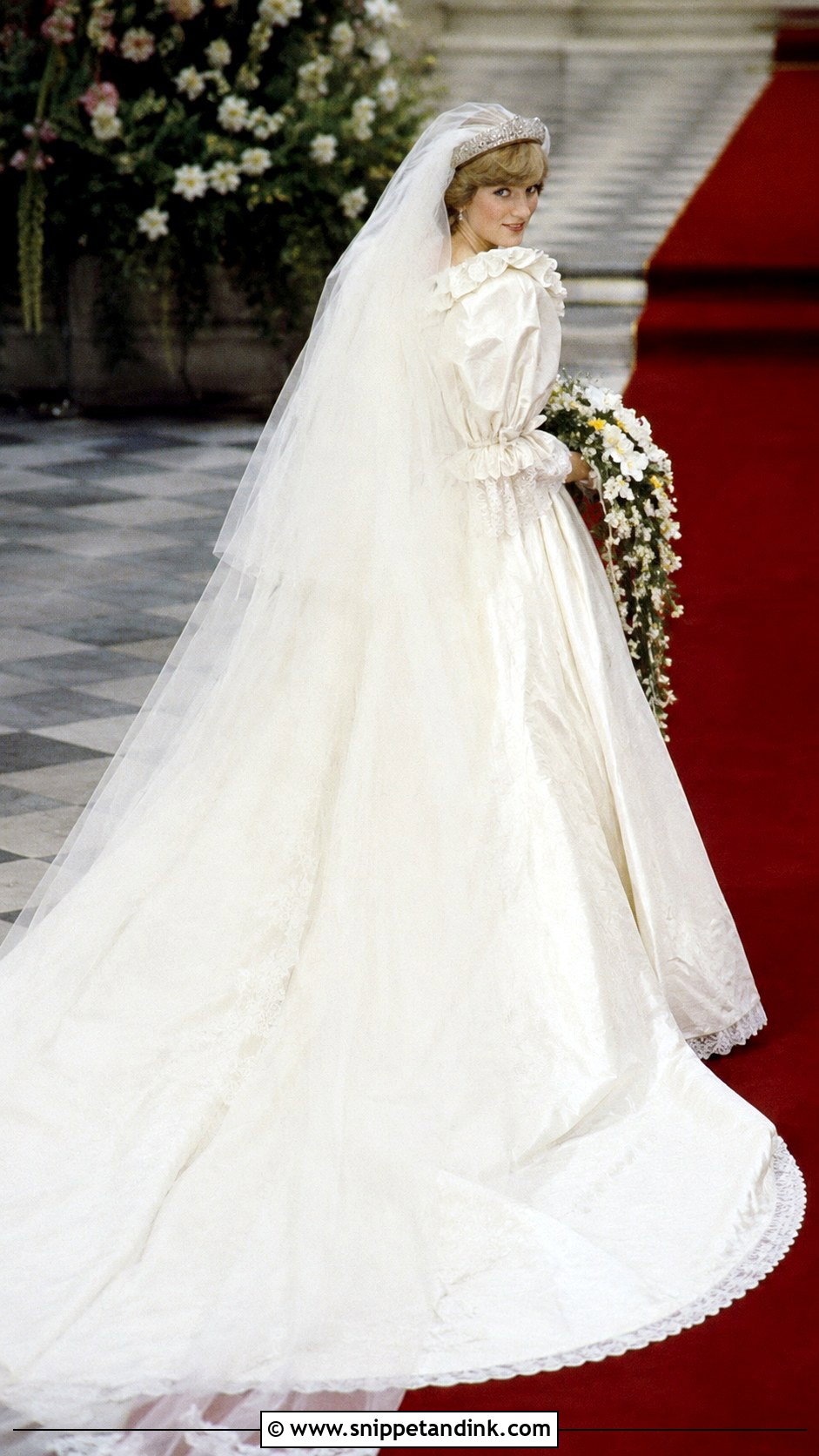
A cathedral train is the most dramatic thing you can borrow from Diana, and the most work. The gown underneath should be an ivory silk ball gown with balanced puff sleeves and a skirt shaped into the train, with any decoration kept near the edges. Before saying yes, I ask two things: is the aisle long enough to show it, and is there someone who will arrange it at every stop. This Lady Diana wedding dress needs a strong hidden bustle so it turns into a dress you can dance in, plus cushioned low heels, pearl earrings and a well-secured tiara.
14. Tea Length Lady Diana Wedding Dress
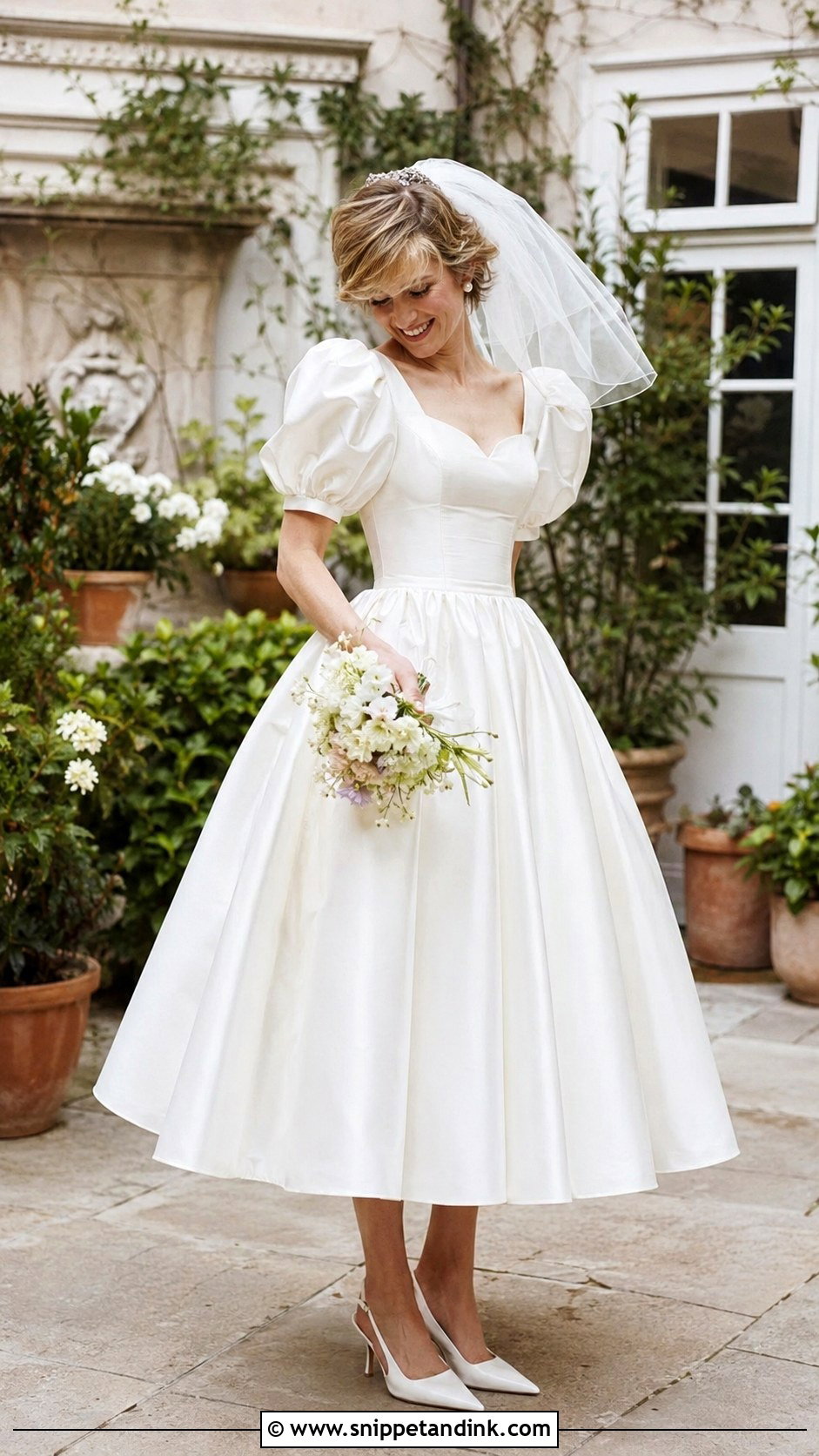
Tea length takes the Diana details and makes them easy to move in. An ivory taffeta dress with puff sleeves, a curved neckline, a defined waist and a full skirt ending between knee and ankle suits courthouse weddings, garden parties and a reception change. Shoes are now on show, so slingbacks or a pretty pump earn their place. With less fabric, quality matters more, and I’d rather see good taffeta in a simple cut than cheap fabric trying to look grand. Keep the petticoat soft enough to sit in, and add a short tulle veil on a small crystal comb.

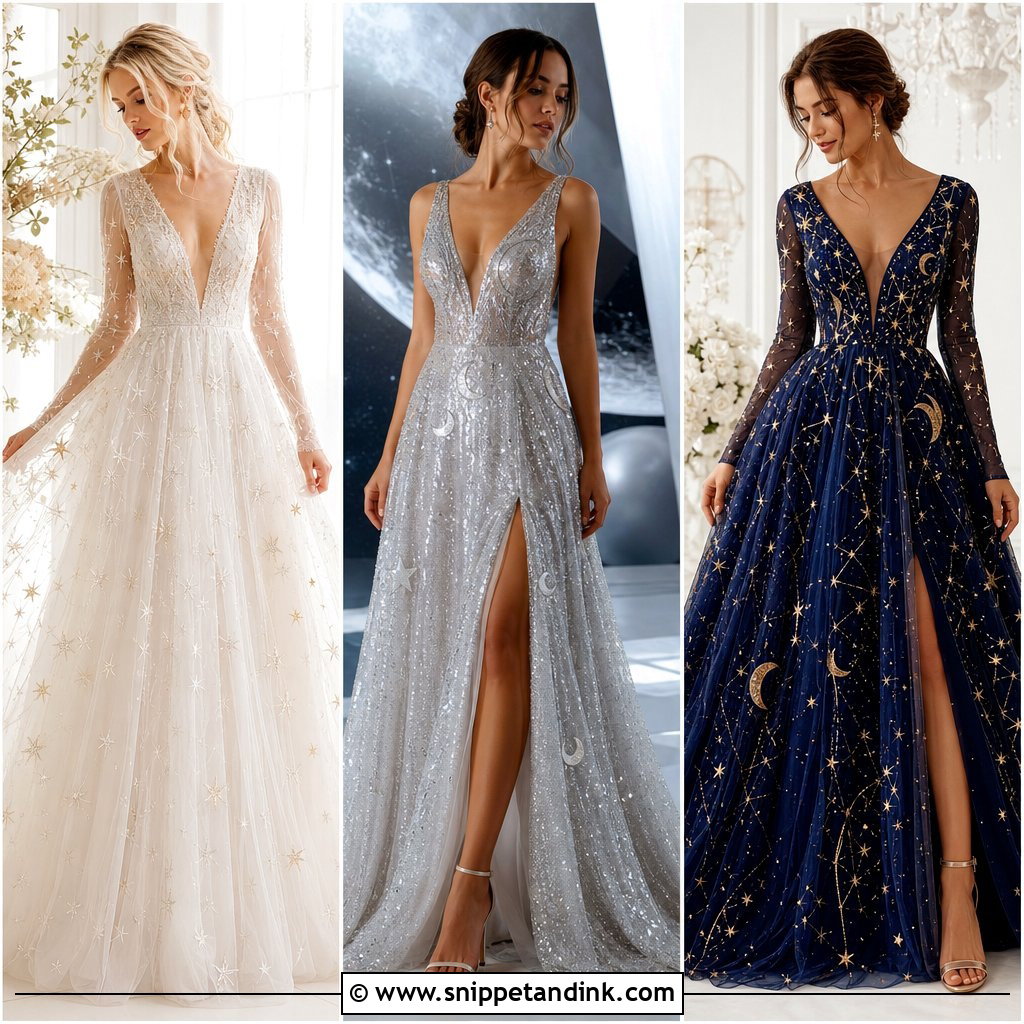
15. Square Neck Lady Diana Wedding Dress
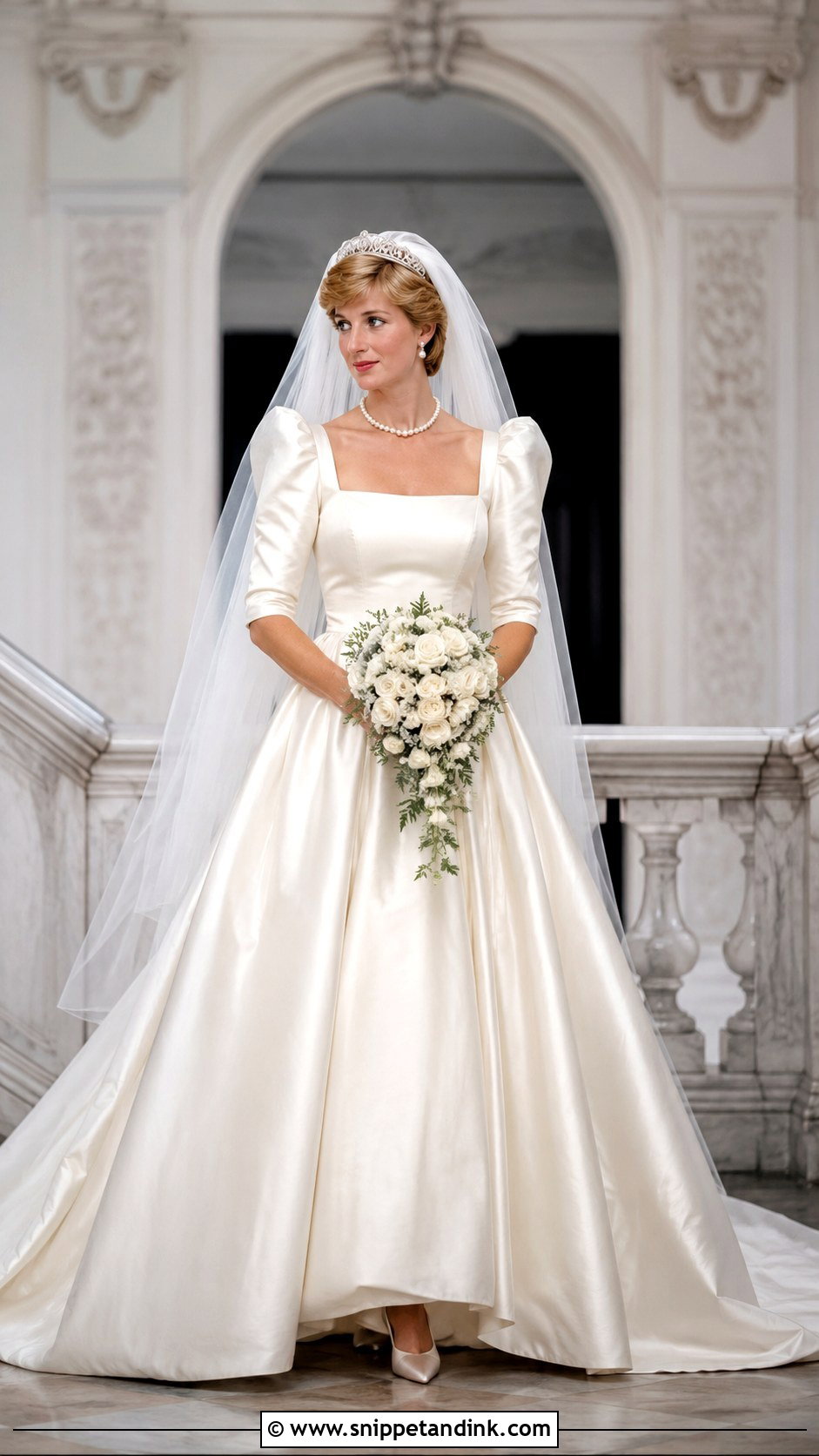
A square neckline adds a straight line to all those curves, and the contrast is what makes it work. I find it suits a wide range of bust sizes once the corners are tailored to sit flat against the chest, which is the fitting point I check first, since gaping corners are the common problem. Pair it with gently puffed sleeves, a full skirt and a medium train, plus a short pearl necklace that sits inside the neckline. A smooth bun or waved updo holds a long sheer veil, and white roses with lily of the valley keep it traditional.
16. Lace Bodice Lady Diana Wedding Dress
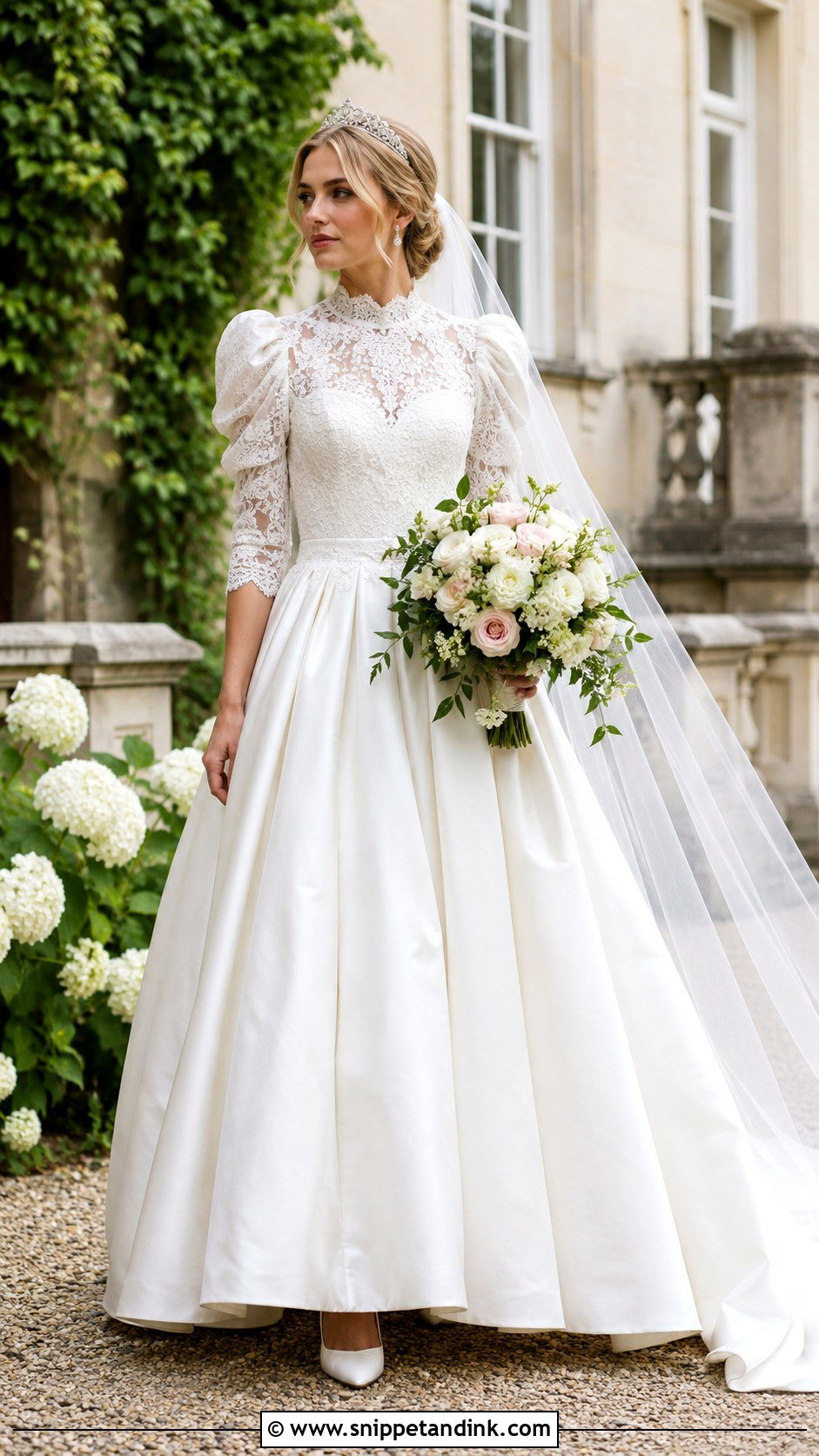
Putting all the lace on the bodice lets the skirt stay smooth, which is often more flattering than lace head to toe. Choose a floral lace with one clear motif rather than several fighting for attention, and line it in matching ivory; a white lining under ivory lace looks grey in daylight. Boning placed along the side seams gives shape without lumps showing through the lace. Puff sleeves, a silk or taffeta skirt and a plain tulle veil complete it, and it moves easily from a traditional church to a garden or country estate.
17. Detachable Sleeve Lady Diana Wedding Dress
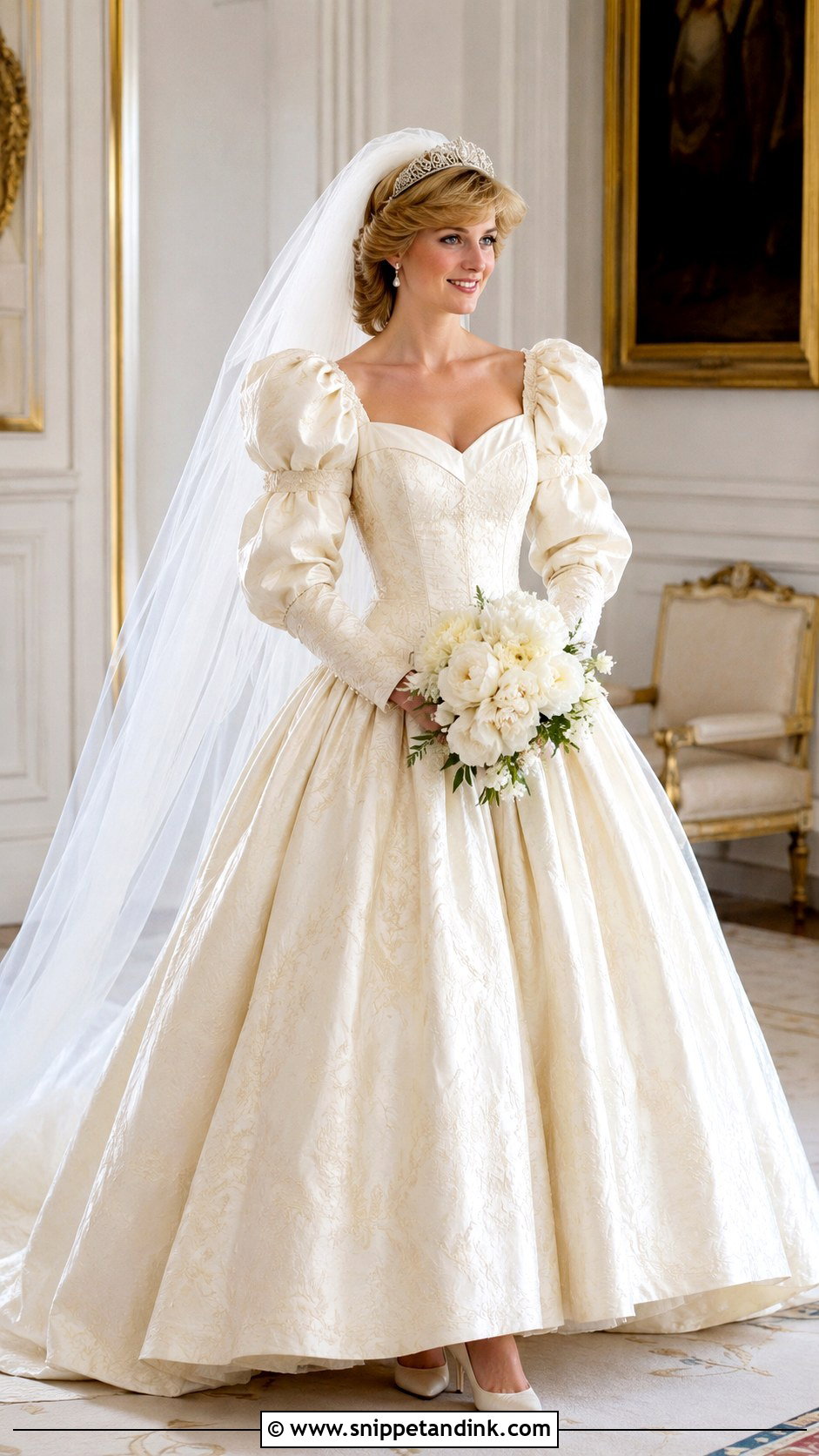
Detachable sleeves give you two outfits for the price of one gown. The base is a strapless or square-neck ball gown with a corseted bodice, and the structured taffeta sleeves fasten to it with hidden loops or snaps. The test I always run is to look at the bodice with the sleeves off: if it seems unfinished, you will feel it at the reception. Wear the sleeves, a slender tiara and a cathedral veil for the ceremony, then swap to a pearl comb for dancing.
18. Garden Lady Diana Wedding Dress
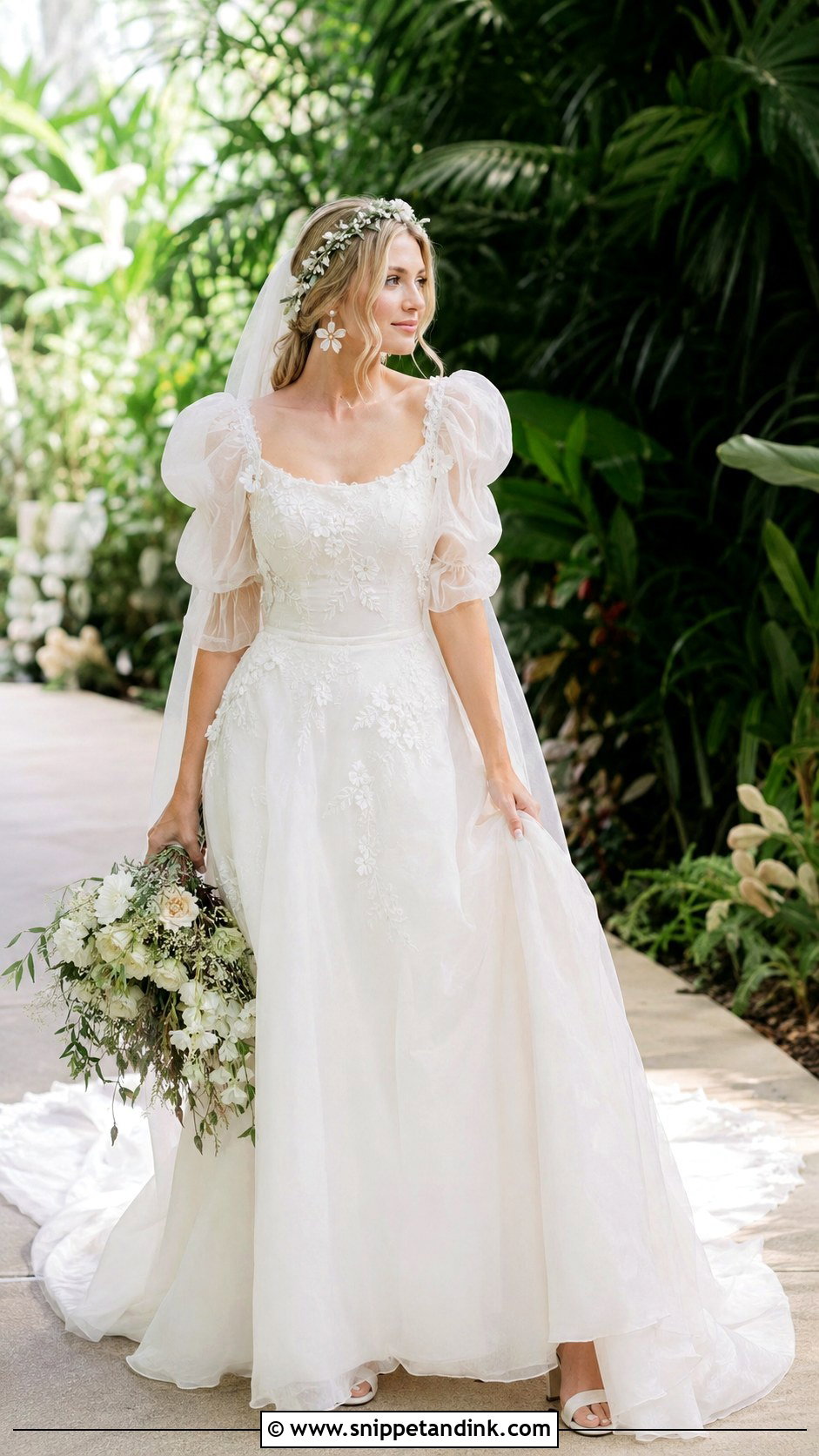
Outdoors, heavy taffeta can feel like dragging a tent across the lawn, so I’d switch to organza. It keeps the volume of the ball gown but weighs far less and lets air move through, which matters on a warm afternoon. Airy puff sleeves, floral lace touches and a chapel train are about right; a longer train collects grass and petals. Add heel protectors for the lawn, a bustle for the reception, block heels and a delicate vine-shaped headpiece with a fingertip veil that moves in the breeze.
19. Winter Lady Diana Wedding Dress
Winter lets you lean into heavier fabric, and duchess satin is the one I reach for, since it has weight and structure and holds its colour in low light. Long puff sleeves, covered cuffs and a cathedral train suit a formal indoor venue. A removable ivory cape with tonal embroidery keeps you warm on arrival without the costume note that fur can add. The catch is the contrast in temperature: heated ballrooms get hot fast, so ask for a breathable lining and make sure the cape comes off without a fight.
20. Reception Lady Diana Wedding Dress
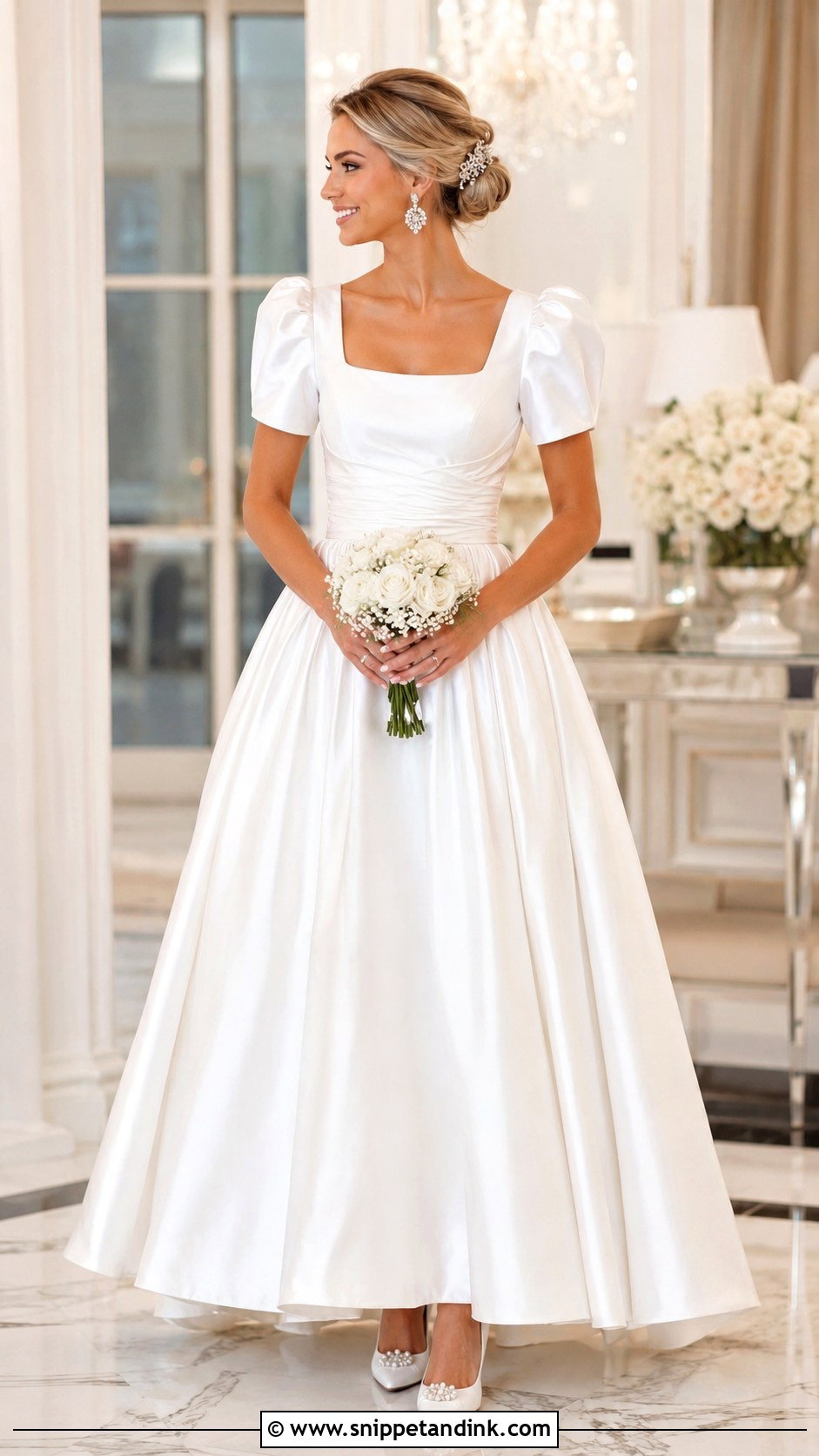
A second dress for the evening can keep the royal theme going while letting you dance. Think lighter ivory taffeta, short puff sleeves, a defined waist and an ankle-length or high-low skirt. Swap the tiara for a small crystal comb, skip the veil and add wrist-length gloves for the entrance photographs only, since they come off for dinner. I like the second dress to repeat one element of the first, the fabric or the pearls or the neckline, so the two read as a pair in the album.
Taffeta Creases, and the Original Did Too
Anyone who watched the 1981 wedding remembers how crumpled the skirt looked as Diana stepped out of the carriage. That was not bad luck. Silk taffeta is woven tightly with a crisp hand, so it holds a fold wherever it is pressed, and sitting on a full skirt in a small space presses it everywhere.
I plan for it rather than hope against it. Here is what I put in place for any bride wearing taffeta:
- Travel in the largest car you can get, sit near the edge of the seat and lift the skirt up and around you rather than sitting on it.
- Have a handheld steamer at the ceremony venue and someone who knows to keep it moving and a few inches away, because silk can water-spot.
- Ask your seamstress whether a little polyester blended into the taffeta is an option. It creases less than pure silk, at the cost of some of that softness.
- For outdoor or very long days, consider mikado or duchess satin instead, both of which recover from sitting better.
Fittings for Puff Sleeves and Full Skirts
Big sleeves and big skirts make fittings slower, so I start them earlier than for a slim gown, usually around three months out with two or three sessions after that. At each one I ask the bride to do the things she will really do: lift both arms as if hugging her mother, sit on a low chair, climb two steps and turn around. Sleeves that look perfect in the mirror can pull across the back the moment the arms move forward.
Bring your actual shoes and petticoat to every fitting. The hem is set by the heel height, and the skirt only falls properly over the underskirt it was made for. If you plan to bustle the train, have the bustle points tested at the final fitting by the person who will do it on the day.
Borrowing One Detail From 1981 Is Usually Enough
Diana’s gown has inspired brides for decades because it had a few strong features: taffeta volume, puff sleeves, a ruffled neck, pearls and that train. You do not need all of them. Pick the one you keep coming back to and build the rest of the dress quietly around it. Petite brides usually do better with scaled-down volume; a grand church can take the full train. Whatever you choose, give the bodice and sleeves the most fitting time, and keep shoes and flowers supporting the gown rather than competing with it.
You'll Like These Ideas:








Leave a Reply