
The moment you say yes to a dress is usually quieter than television makes it look. Often it’s a pause, a deep breath, and a bride who stops asking to try the next one. Plenty of brides now mark it with a boutique sign and joyful photos marking the moment, and those pictures are worth having. But the gown is only the start. What makes it feel finished is the veil, the shoes, the jewelry, the hair and the flowers working with it. Below are twenty silhouettes I see brides choose, each styled head to toe, with the things I check before anyone signs an order form.
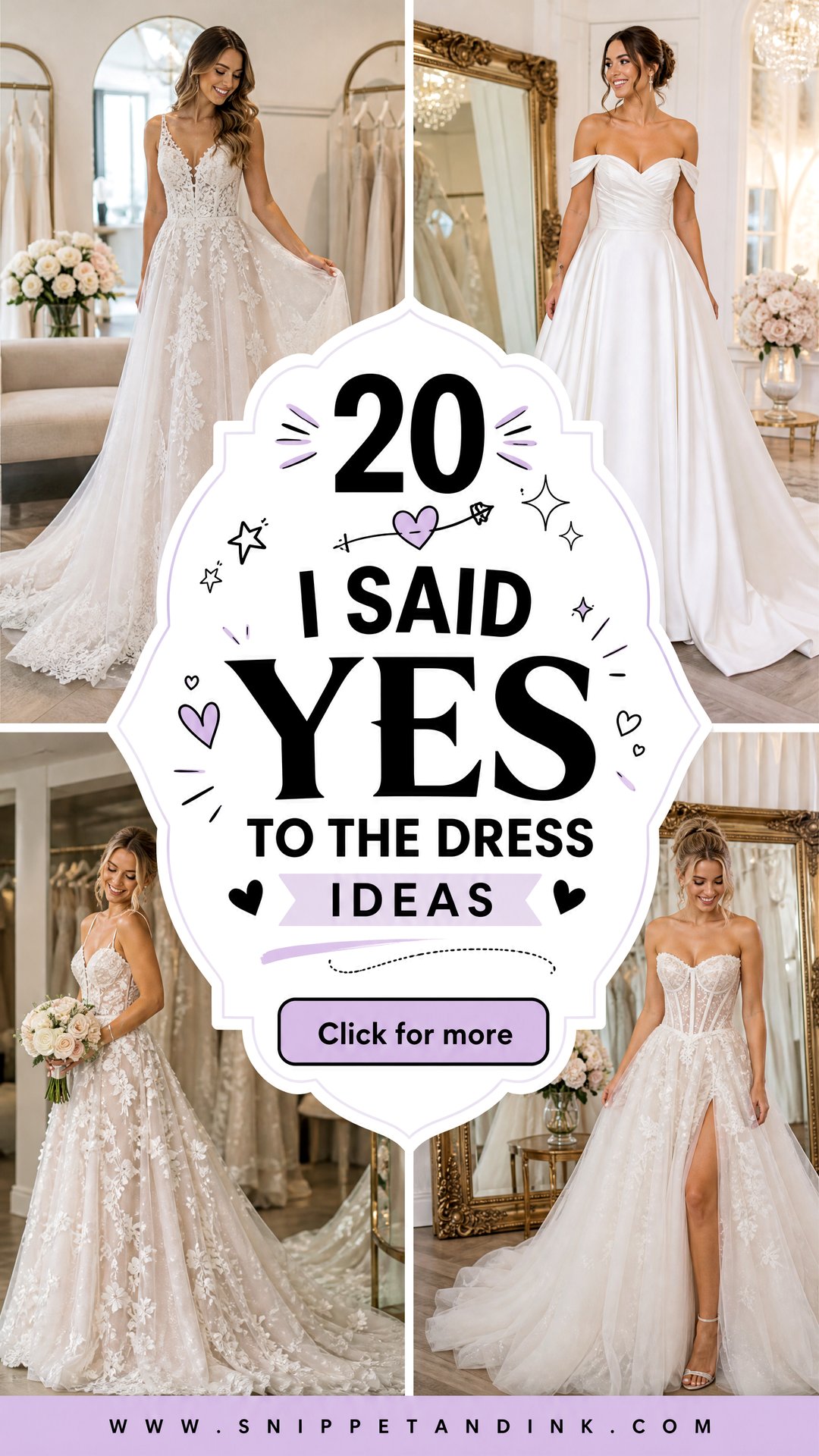
Reading a Clipped Sample Before You Say Yes
The dress you fall for in a salon is almost never the dress you’ll wear. Samples come in one or two sizes, they’ve been tried on many times, and the consultant clips the back to fit you. So I teach brides to look past the clamps and ask what the sample can and can’t tell them.
What a sample shows honestly
Silhouette, neckline, how the fabric moves when you walk, and how heavy it feels after twenty minutes on. If you’re already shifting your weight or tugging the bodice up during the appointment, that won’t improve over a twelve-hour day.
What it hides
The exact color, since shop lighting and an aged sample both shift ivory. The true fit through the waist. And the length, which is set by alterations later. Ask for a fabric swatch of the shade you’re ordering, and try to see it by a window before you sign.
1. A-Line Lace Wedding Dress
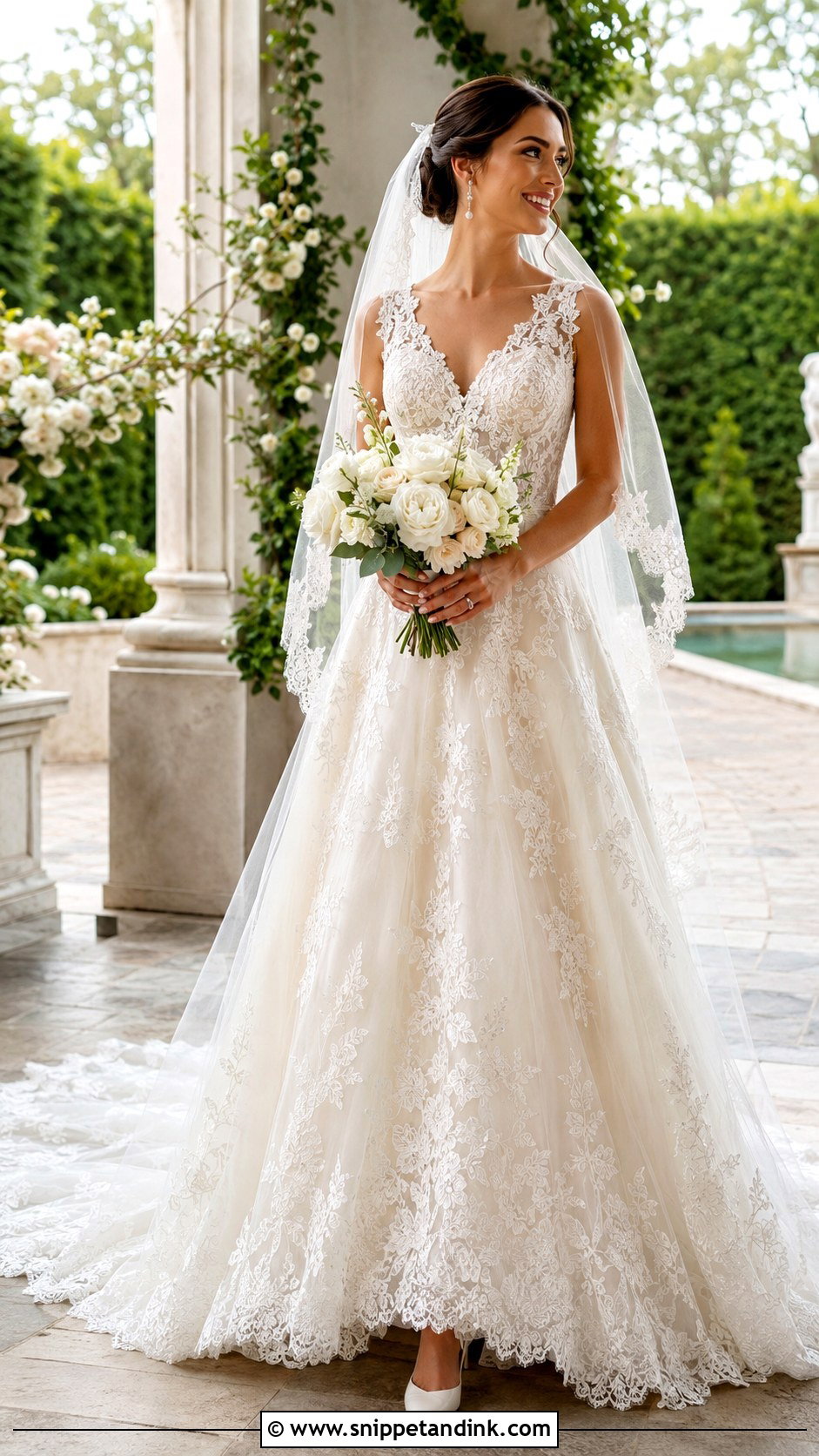
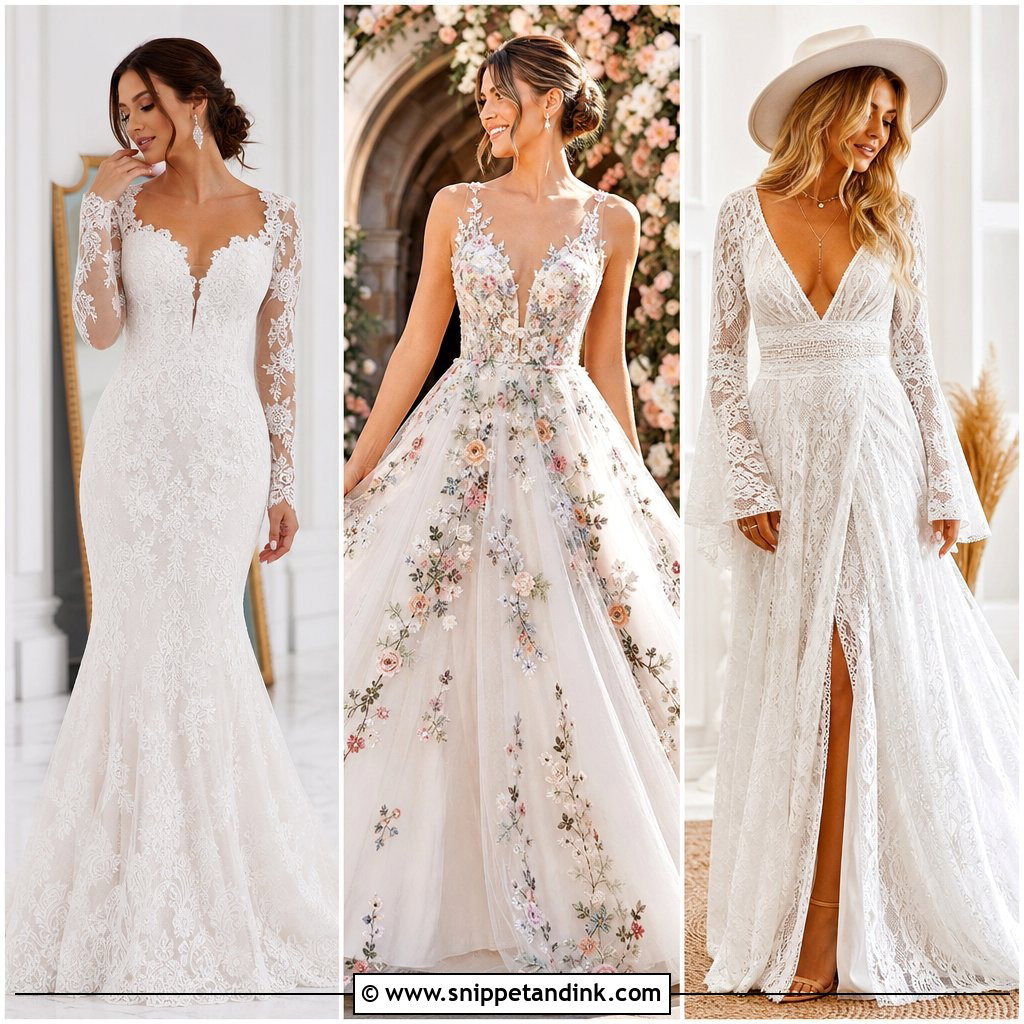
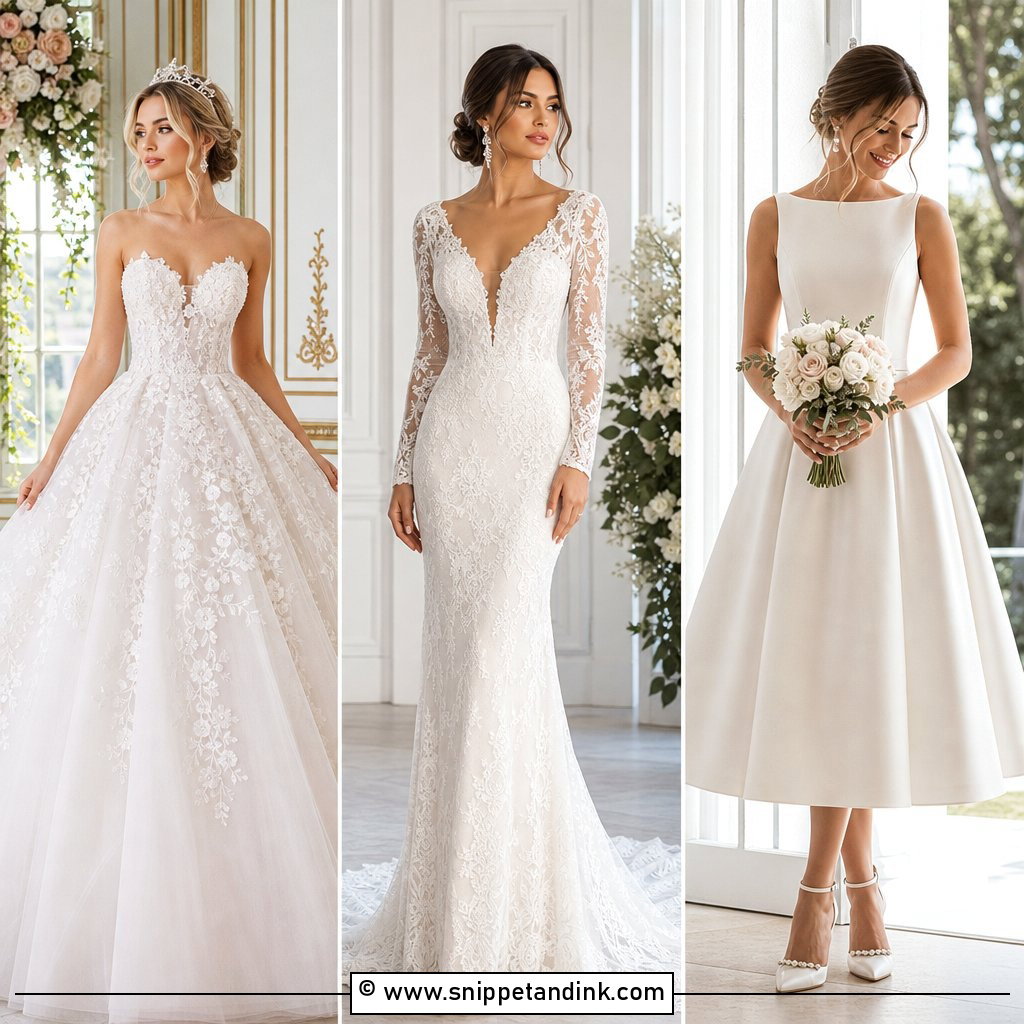
An A-line lace gown is the shape I see brides relax in fastest, because a fitted bodice and a skirt that skims out from the waist let them walk and sit without thinking about the dress. Floral lace softens it; a partly lined bodice, where some motifs float over sheer tulle, looks more current. Watch the lace at the side seams. In a well-made gown the motifs are cut and overlapped by hand so the pattern doesn’t stop dead at the seam. Add a fingertip veil with a narrow lace edge, pearl drops, ivory pointed pumps and a loose low bun with fine pins, plus white garden roses with light greenery.
2. Strapless Satin Ball Gown Wedding Dress
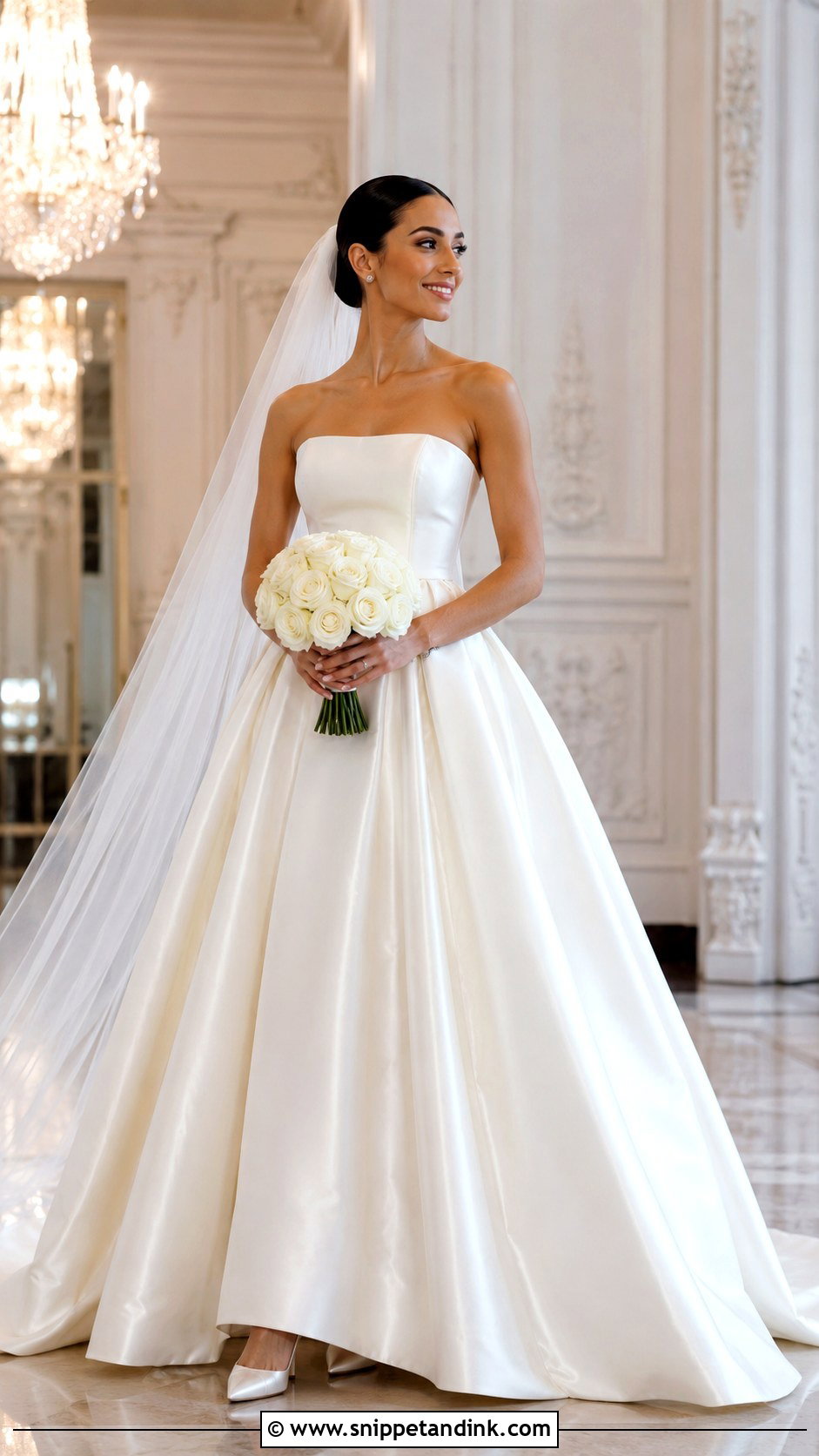
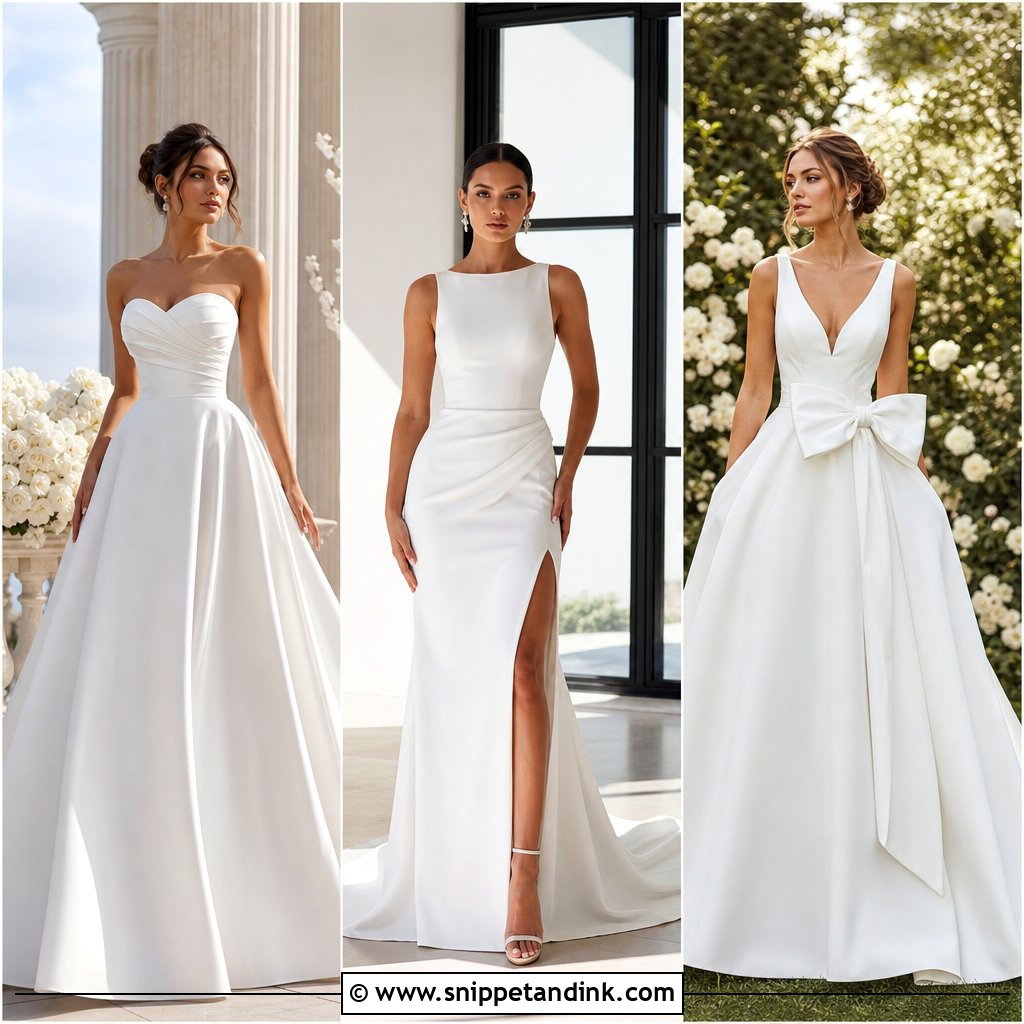
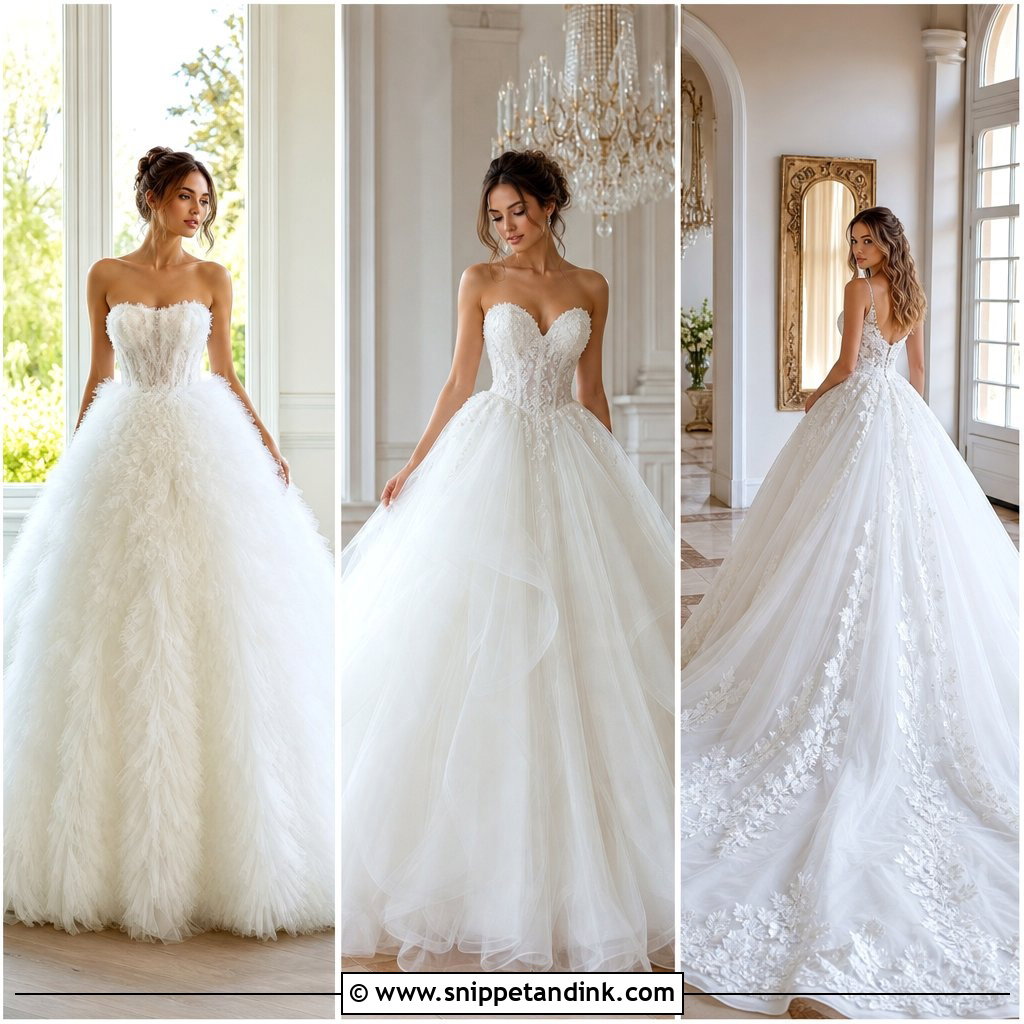
Plain satin and a full skirt hide nothing, which is exactly why the inside of a strapless ball gown matters. I lift the bodice lining in the salon to look for boning and a waist stay, because a strapless dress that relies only on a tight fit will slide down by the first dance. Since the fabric is so clean, accessories set the mood: a cathedral veil, crystal studs and a fine tennis bracelet, with satin pumps or block-heel sandals. A polished chignon shows the shoulders. A compact bouquet of white roses or calla lilies keeps it regal for a ballroom or estate.
3. Minimalist Square Neck Wedding Dress
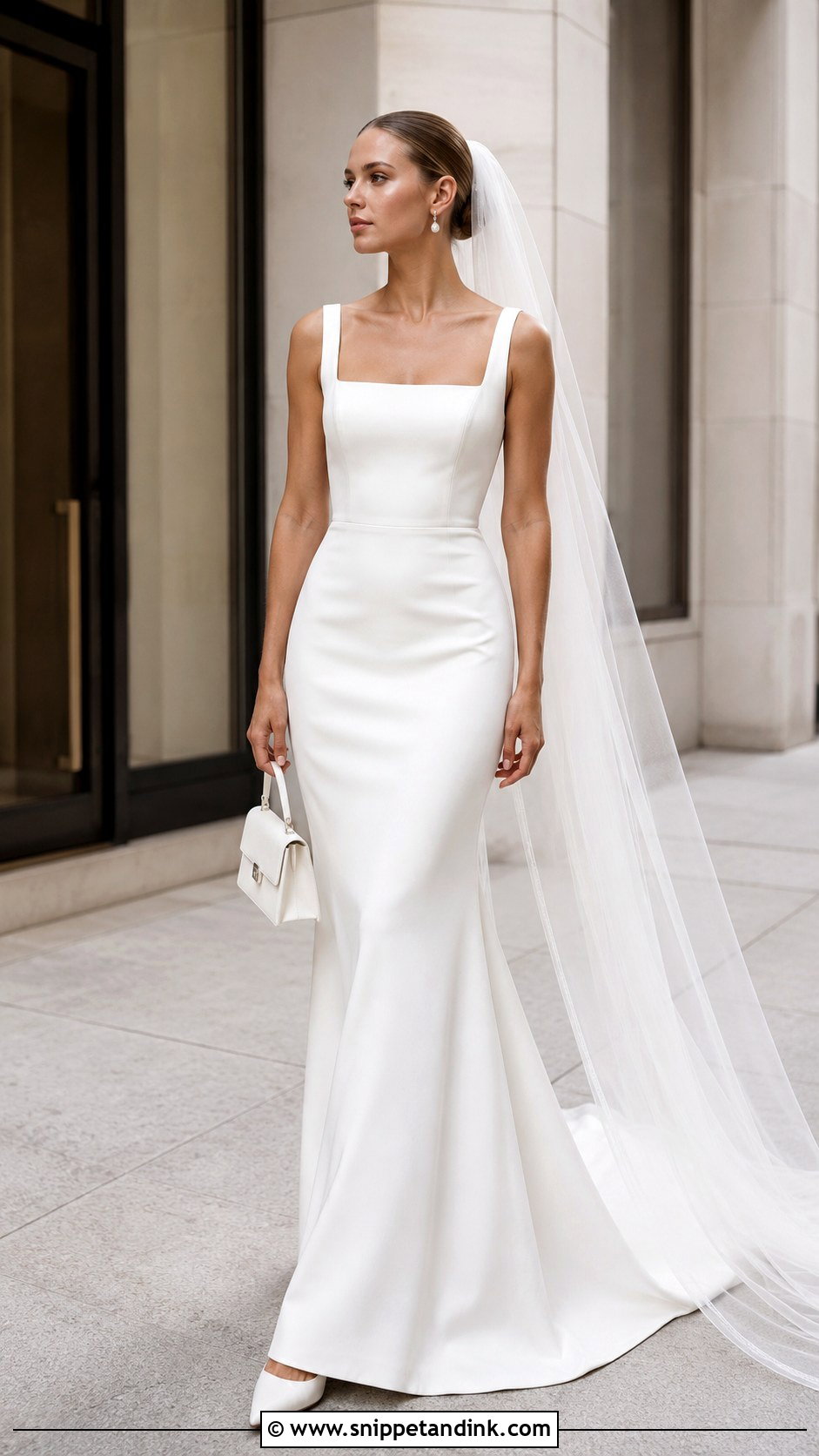
Could a simple gown be the strongest one in the room? With precise tailoring, yes. A square-neck dress in fitted crepe or matte satin, with wide straps and a straight or softly flared skirt, depends entirely on cut, so any wrinkle across the waist or gap at the neckline shows immediately. I always pin those at the first fitting before anything else. Pearl button earrings, a small structured bag for portraits and sleek pointed heels suit it, with a low ponytail and a plain raw-edge chapel veil. White tulips keep the bouquet as clean as the dress for a city or courthouse wedding.
4. Off Shoulder Wedding Dress
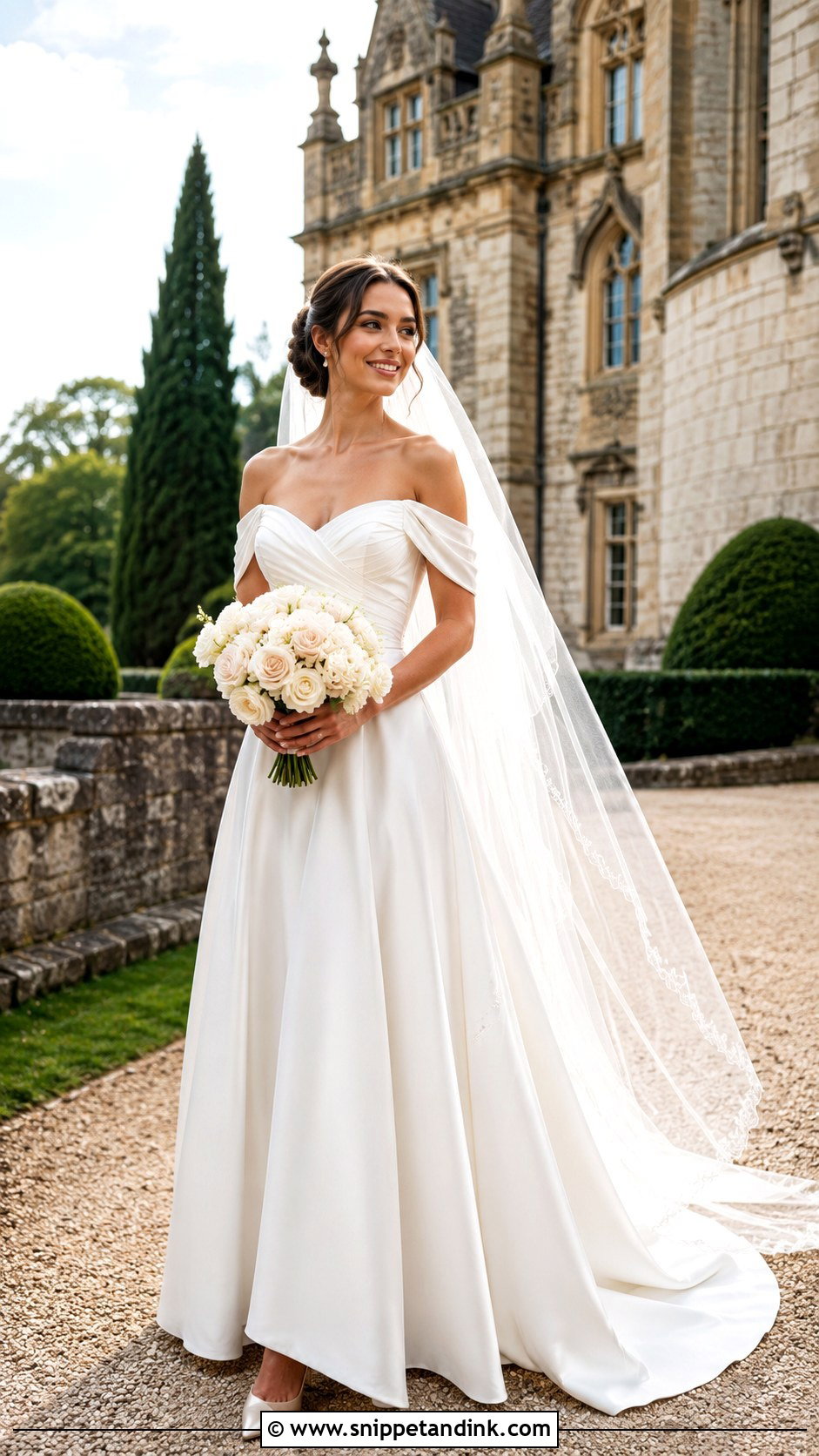
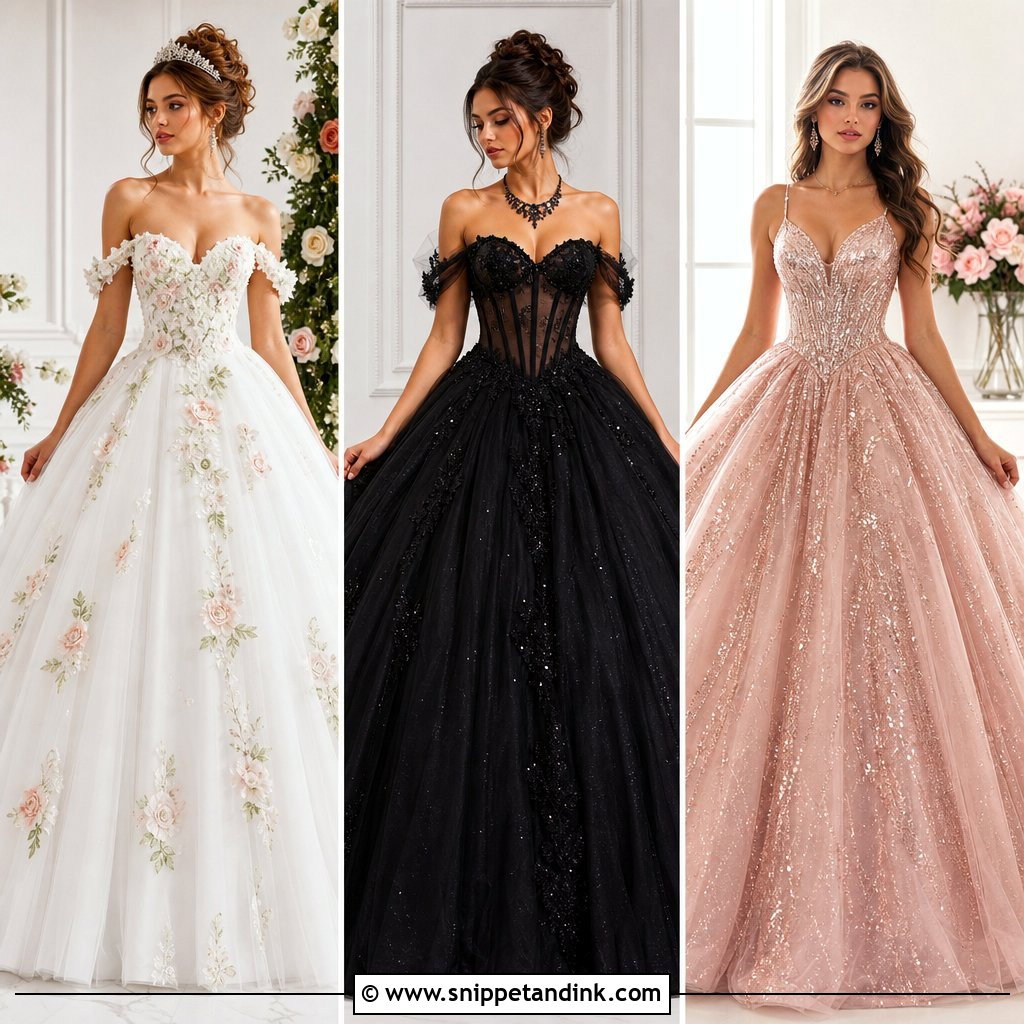
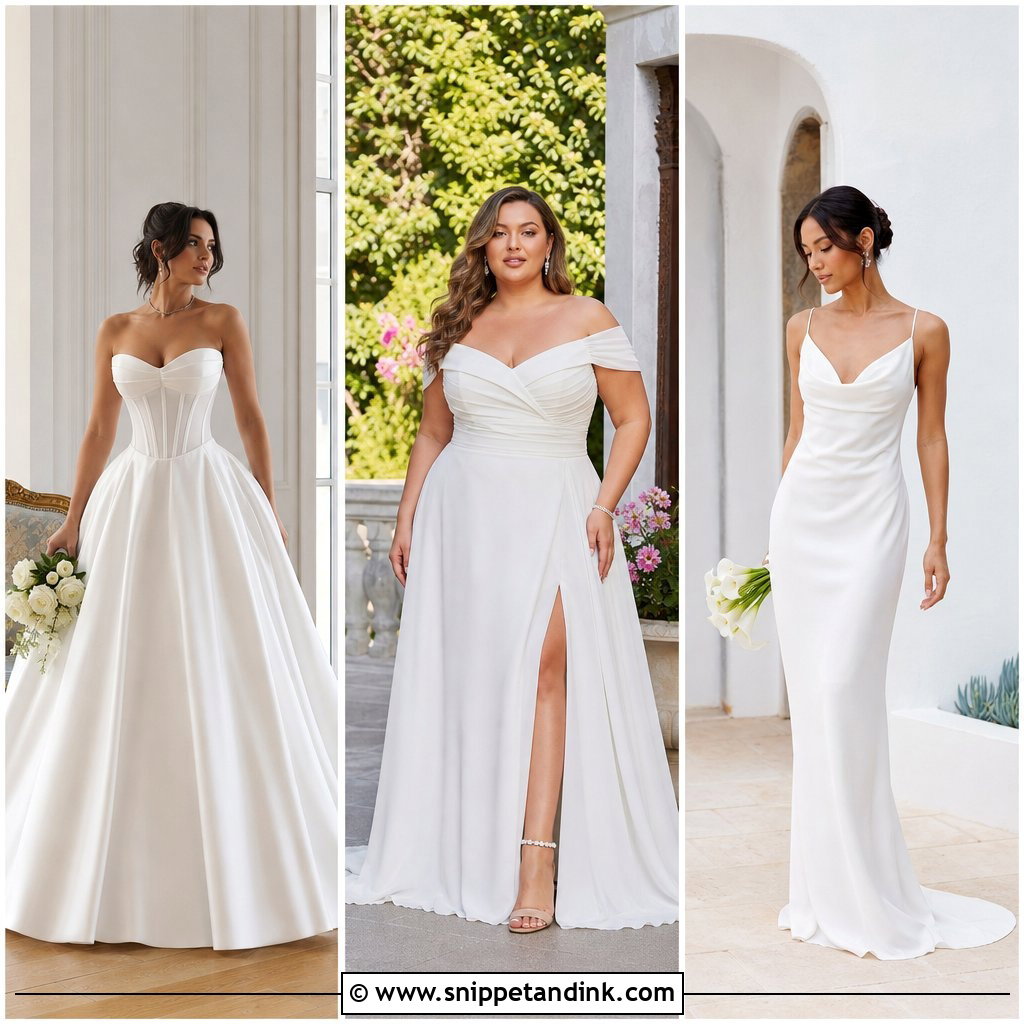
Off-shoulder sleeves sit across the upper arm and frame the collarbone. Softly draped versions on a fitted bodice with an A-line or ball gown skirt feel romantic; satin looks refined and lace leans vintage. Small pearl earrings, no necklace, and comfortable ivory heels. A sheer chapel veil attached beneath a loose updo, with a few soft face-framing pieces, keeps the hair relaxed. The drawback brides only notice later is that a tight band limits how far you can lift your arms, so hug someone at the fitting before the band is finished. A rounded bouquet of cream roses completes it.
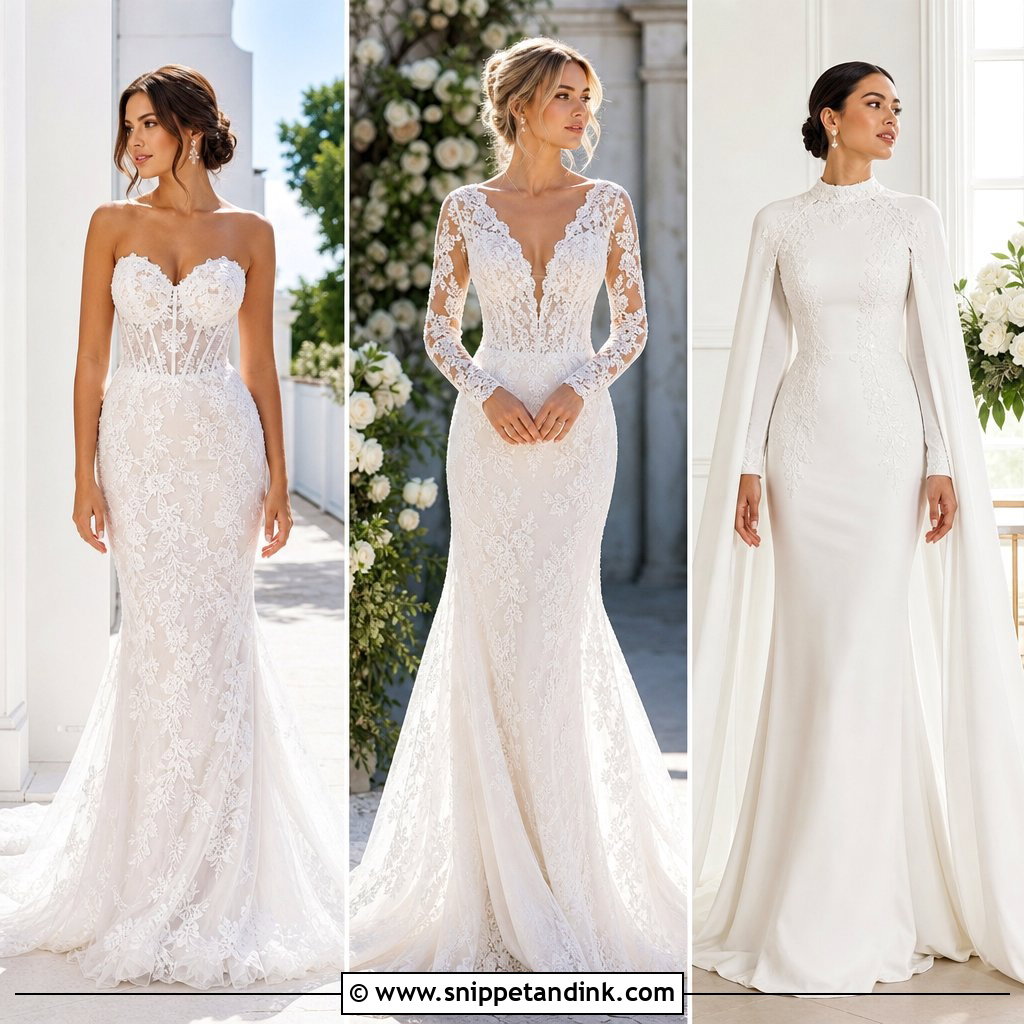
5. Long Sleeve Lace Wedding Dress
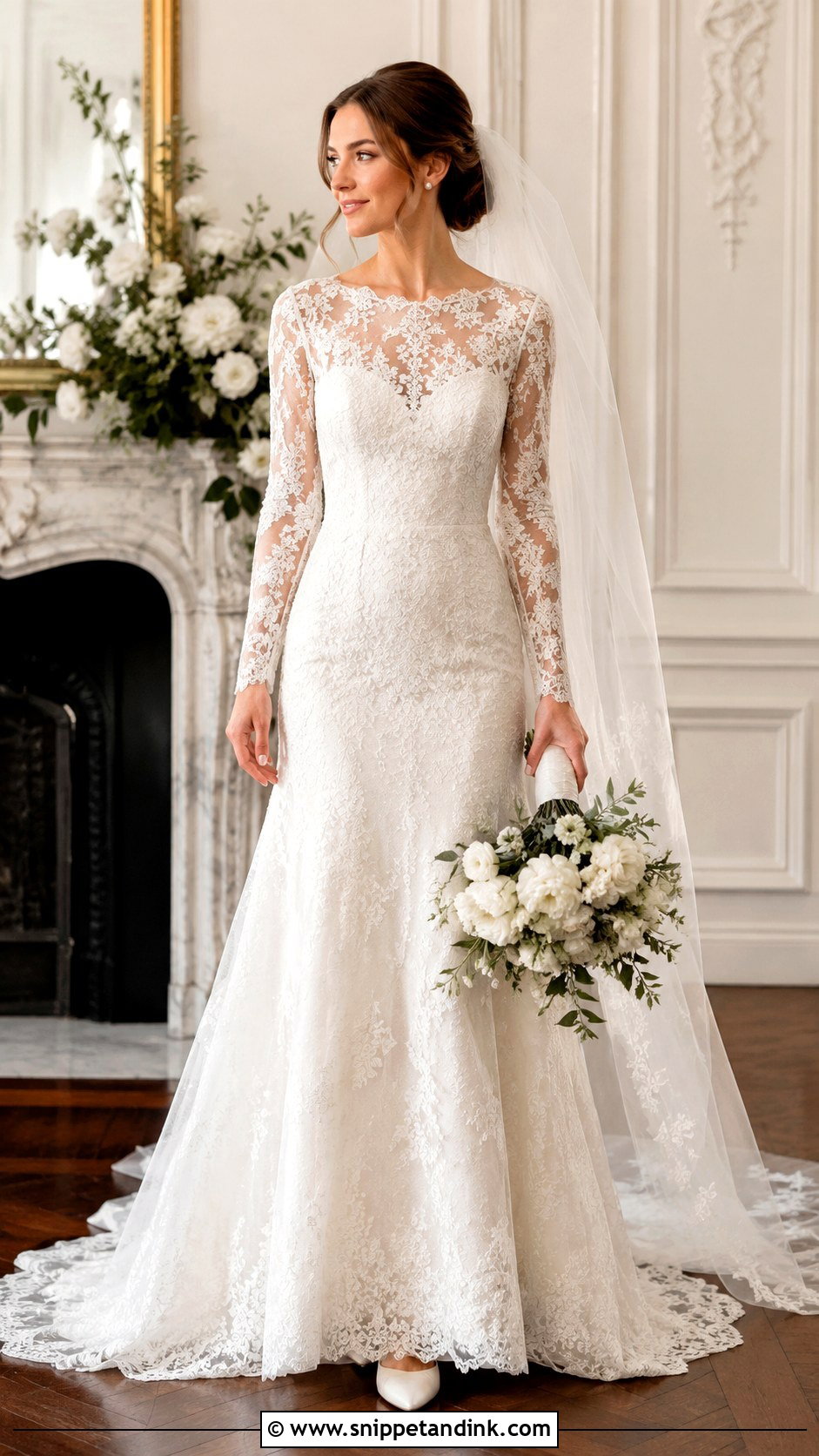
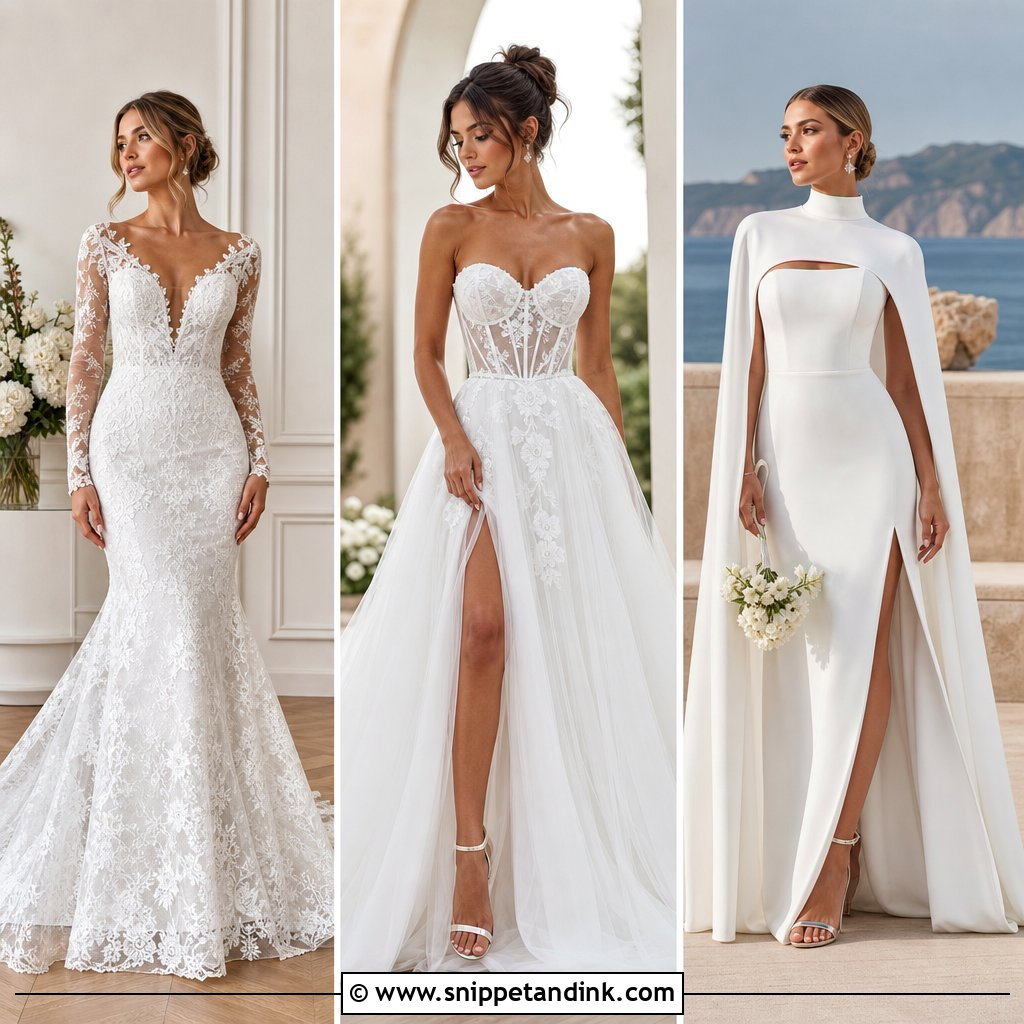
Lace sleeves that continue the bodice’s motifs without a visible break give coverage and romance in one. I look closely at the shoulder, where the sleeve meets the body, because that’s where poorly matched lace jumps from one pattern to another. Fitted illusion sleeves with a lightly flared skirt and a modest open back keep the silhouette balanced. Pearl studs, a thin bracelet, closed-toe ivory pumps and a low textured bun leave the neckline and back on show. Use a sheer chapel veil with a simple edge so the lace isn’t doubled, and a loose bouquet of white roses and eucalyptus for a cooler-season or indoor wedding.
6. Sweetheart Neckline Wedding Dress
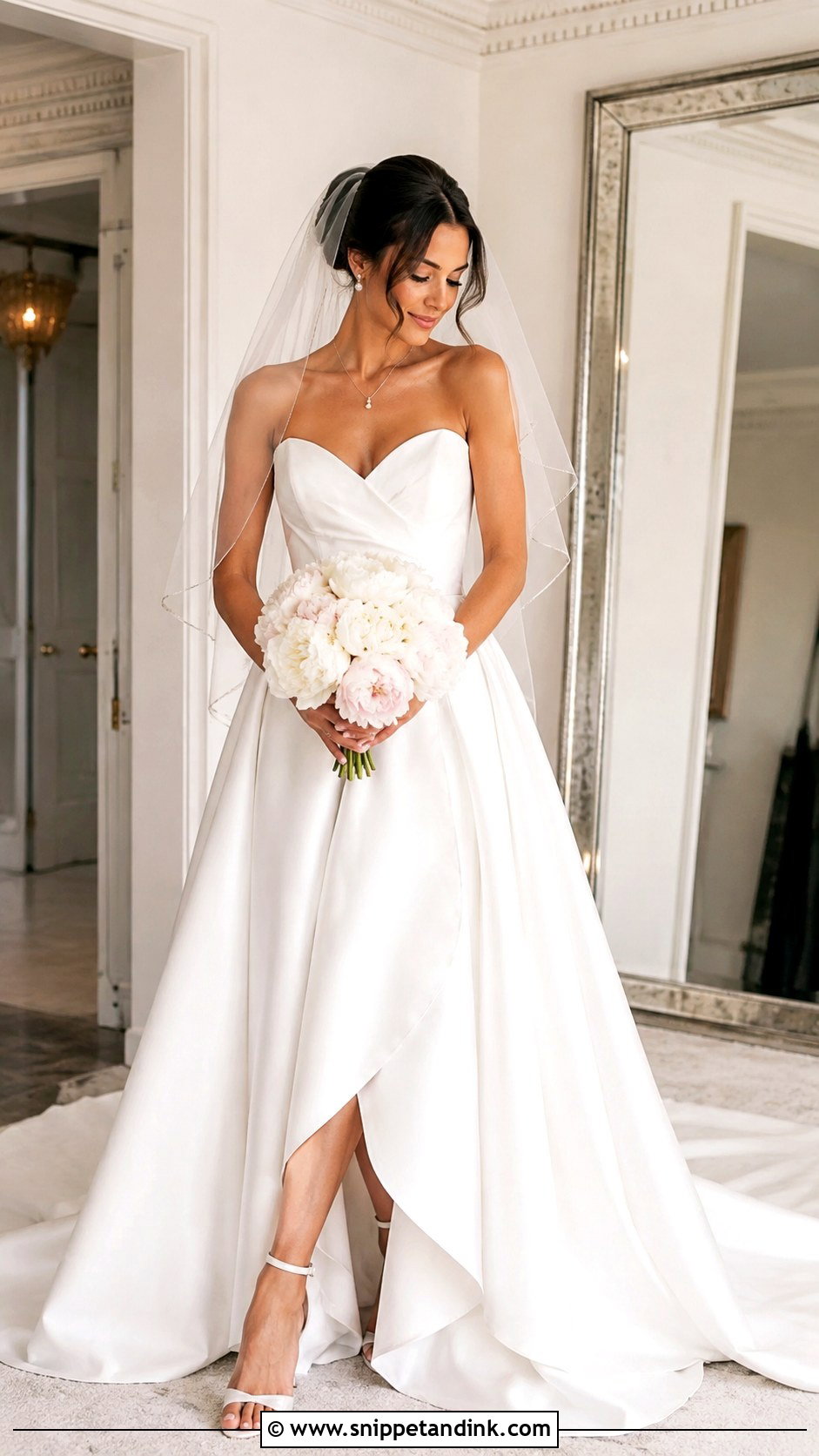
The sweetheart curve is flattering on most figures because it echoes the bust and gives the bodice somewhere to anchor. A structured bodice supports it, and the skirt sets the drama: A-line, fitted or full. Balance matters. If the bodice is detailed, keep the skirt simpler, or run light beadwork through a cleaner gown. A fine pendant, matching earrings and ivory ankle-strap heels suit it, with soft side-swept waves or a relaxed updo. I’d use a mid-length veil to stop the outfit going over the top. White peonies with a touch of pale blush give gentle color without stealing focus.
7. Mermaid Wedding Dress
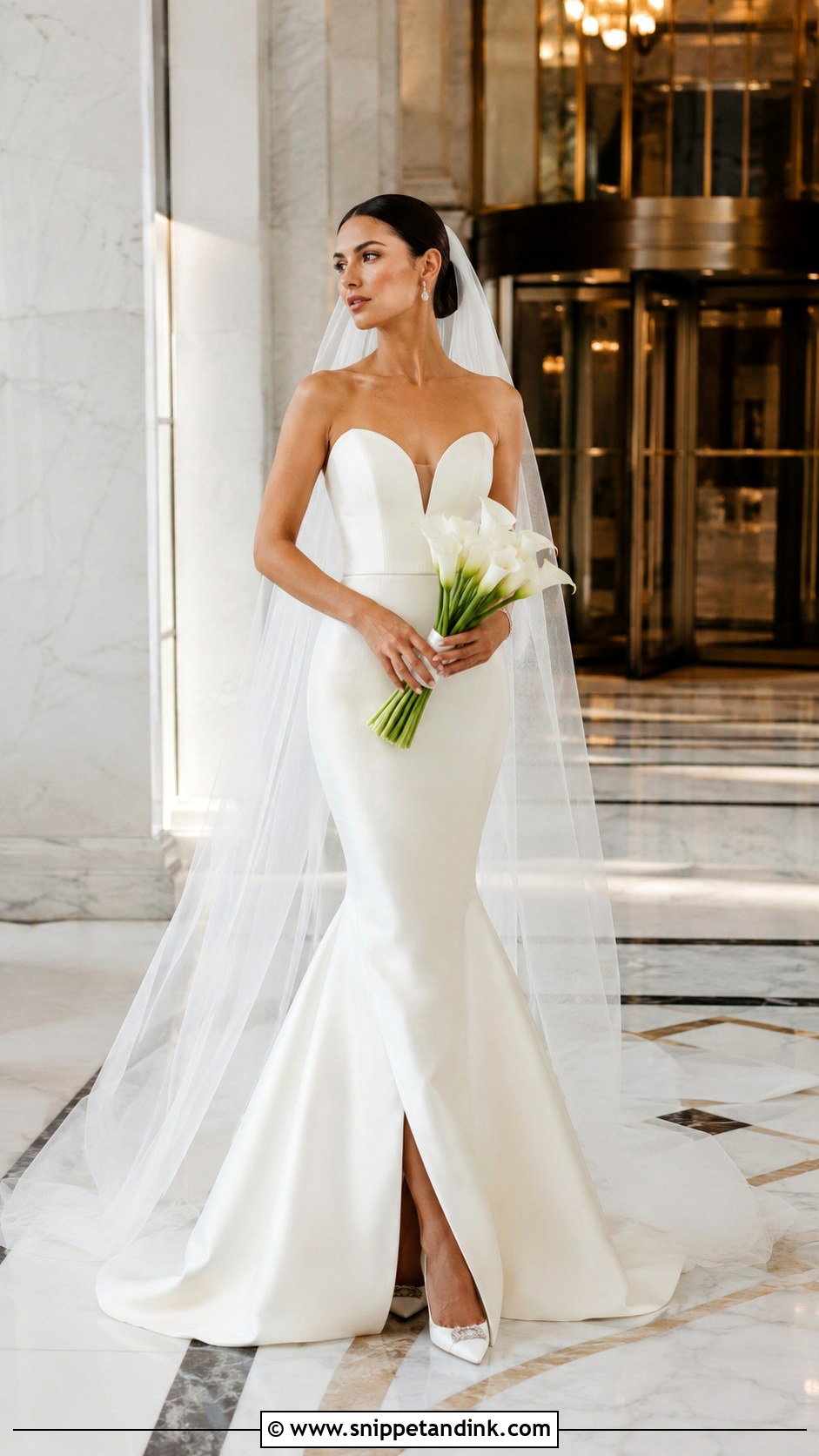
A mermaid hugs the body to the knee and flares from there, and the right one feels secure rather than tight. Stretch crepe gives a clean, modern finish and forgives a little more movement; lace softens the outline. The flare point decides how you’ll walk. I ask the bride to take full strides down the salon, then climb a step, before we talk about anything else. Drop earrings, a slim bracelet and pointed heels, plus a long plain veil that adds drama without hiding the construction. A smooth side part with loose waves and an elongated bouquet of orchids or calla lilies suit evening venues.
8. Tea Length Wedding Dress
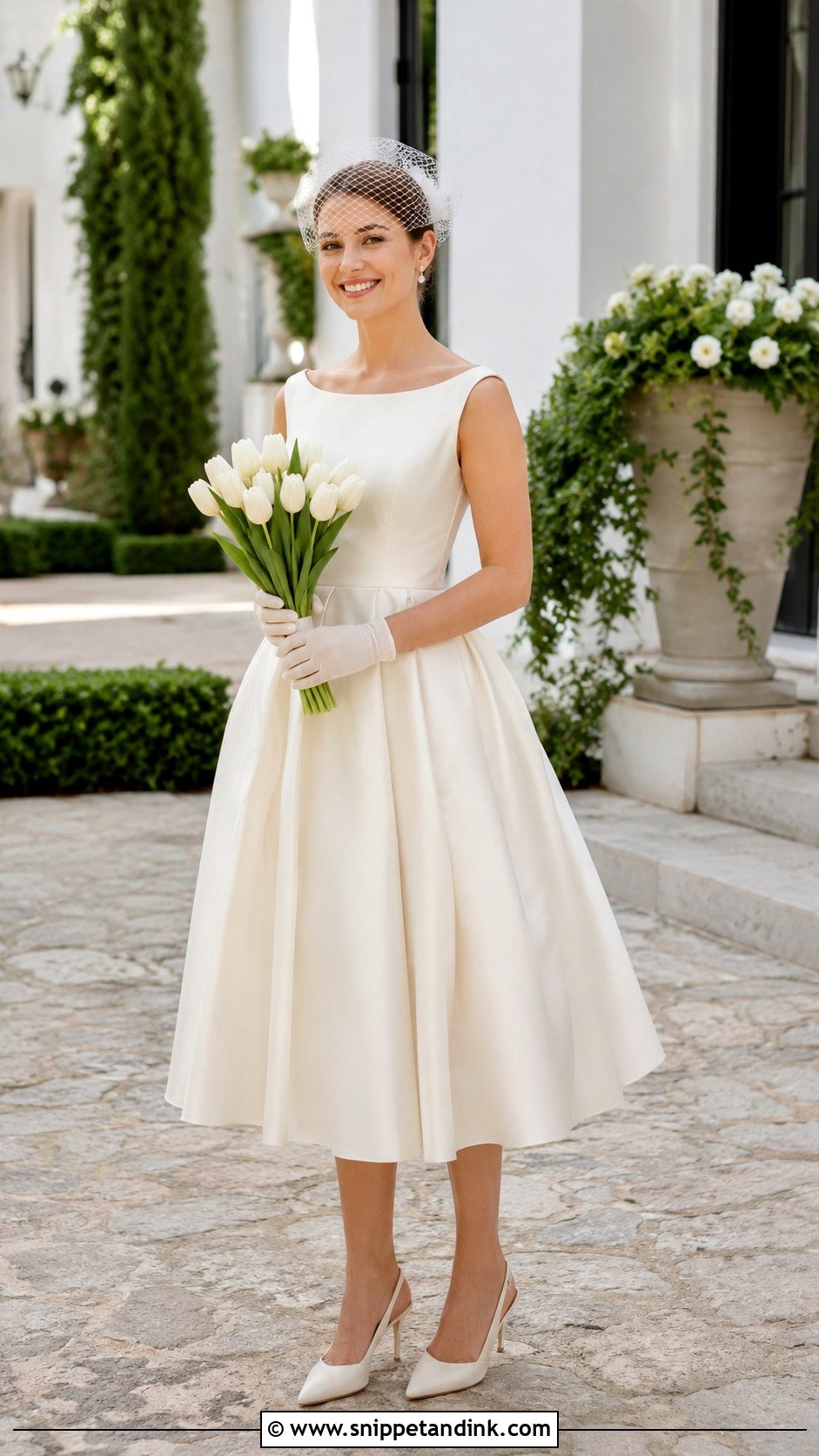
Tea length gives a small ceremony personality and freedom of movement. A fitted bodice and full skirt that ends between knee and ankle put the shoes on show, so pointed slingbacks, embellished pumps or neat block heels become part of the outfit. Short gloves, pearl earrings and a birdcage veil or bow headband give a gentle vintage nod, with a neat bun or curled bob. I check this hem with the bride in her real shoes, since a heel height change alters where the skirt falls. Carry a small bouquet of white roses, daisies or tulips rather than anything oversized, for a courthouse or garden wedding.
9. Floral Applique Wedding Dress
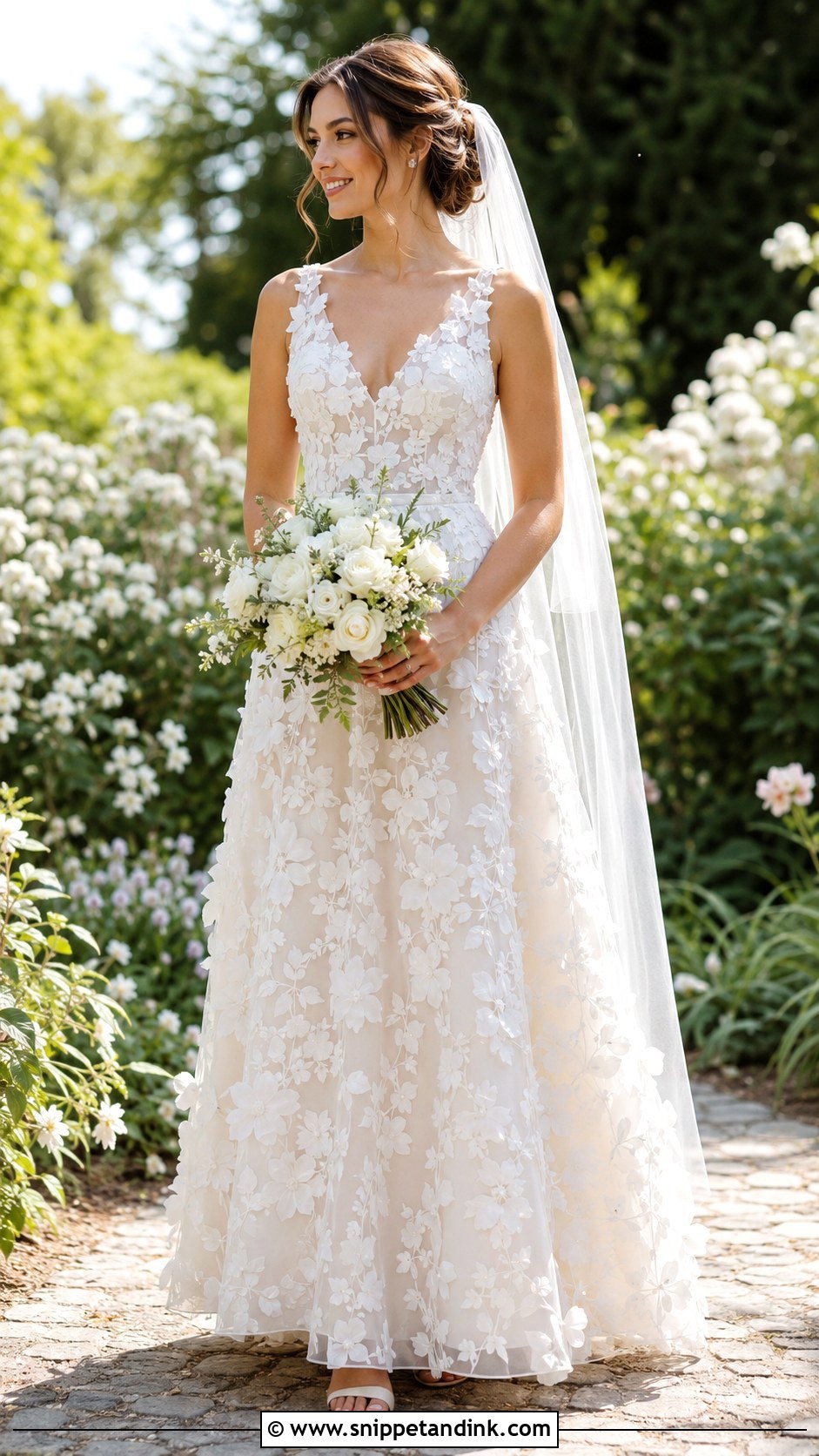
Raised blossoms add texture you can see across a room. A floral applique wedding dress works best with flowers clustered on the bodice that thin out as they travel down the skirt, so the eye moves downward naturally. A soft A-line stops the details looking heavy. Keep accessories delicate: crystal studs, a thin bracelet, plain ivory sandals and a plain tulle veil. I’d keep the bouquet to a few flower varieties with gentle greenery, since a busy bouquet against a busy dress just turns into one texture in photos. Gardens and greenhouses suit it.
10. Pearl Beaded Wedding Dress
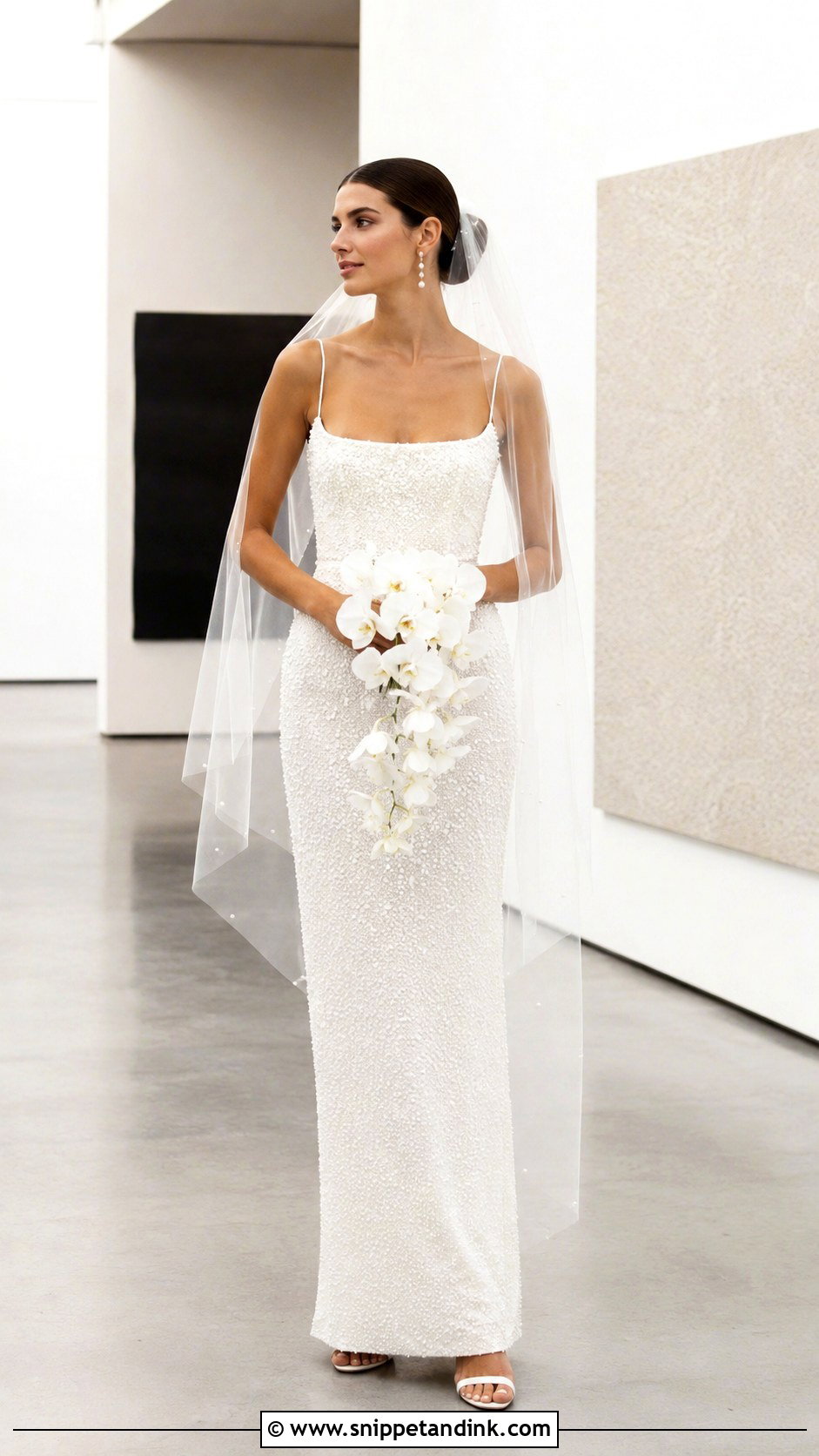
Tiny pearls give texture and a soft sheen rather than sparkle. I prefer them concentrated at the neckline, bodice or sleeves so the gown stays refined, on a fitted column or gently flared skirt. Pearls are heavier than sequins, so on a fully beaded dress I’d check the shoulder straps and inner waistband are strong enough to carry them. Pearl drop earrings, a simple hair comb, smooth satin heels and no heavy necklace if the neckline is already beaded. A sheer fingertip veil, sleek low bun and compact bouquet of roses or orchids suit a hotel or gallery ceremony.
11. Basque Waist Wedding Dress
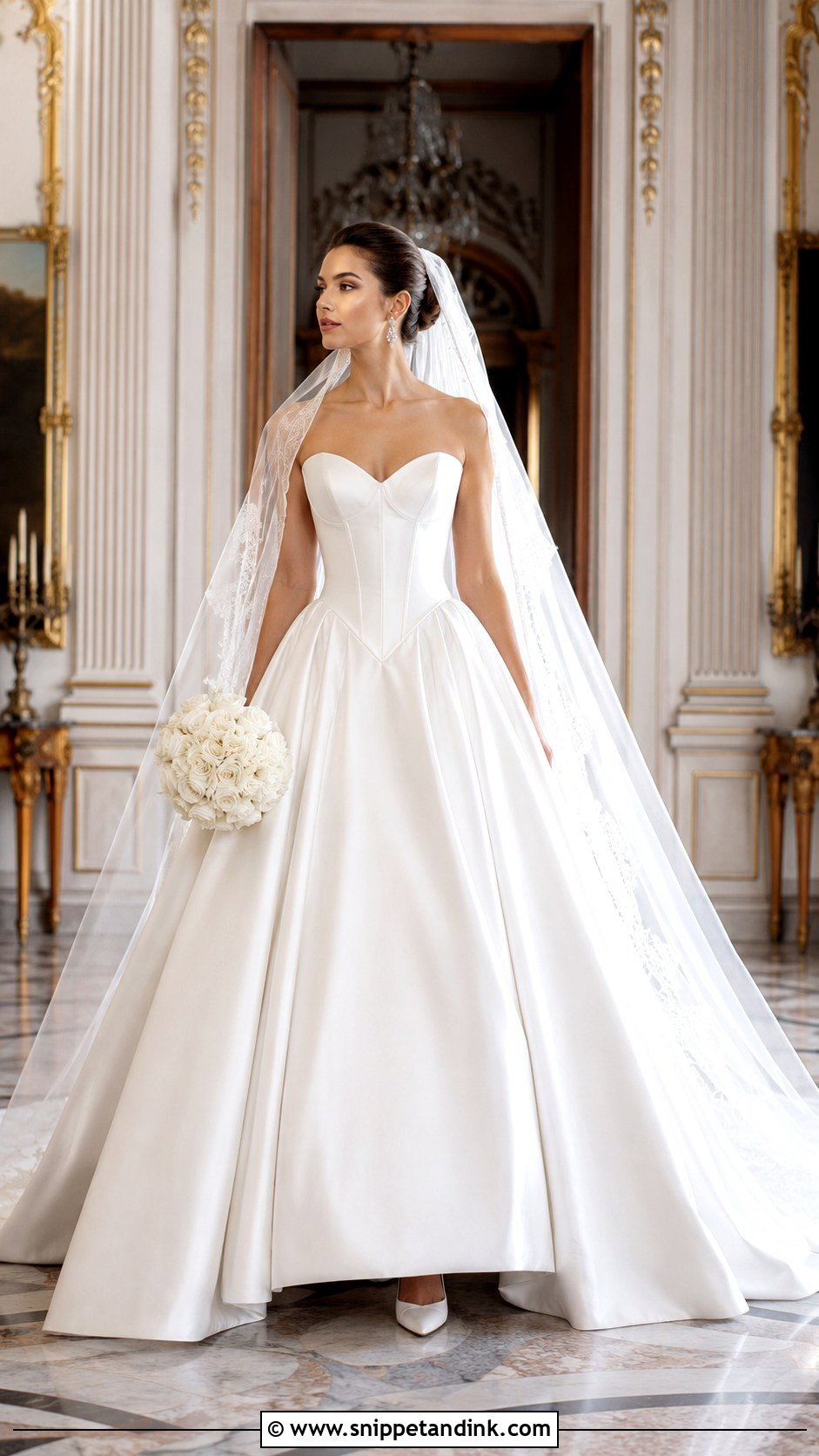
The bodice dips into a point below the natural waist, giving a long, sculpted line before the skirt opens out. It pairs best with structured satin and a full ball gown. Where the point lands is the fitting detail I fuss over most: too low on a short torso and the legs look shorter. Keep the styling controlled with small crystal earrings, a slim bracelet and pointed satin pumps. A cathedral veil echoes the scale of the skirt in a big space, and a smooth bun shows off the bodice. A structured bouquet of white roses suits grand halls and historic estates.
12. High Neck Wedding Dress
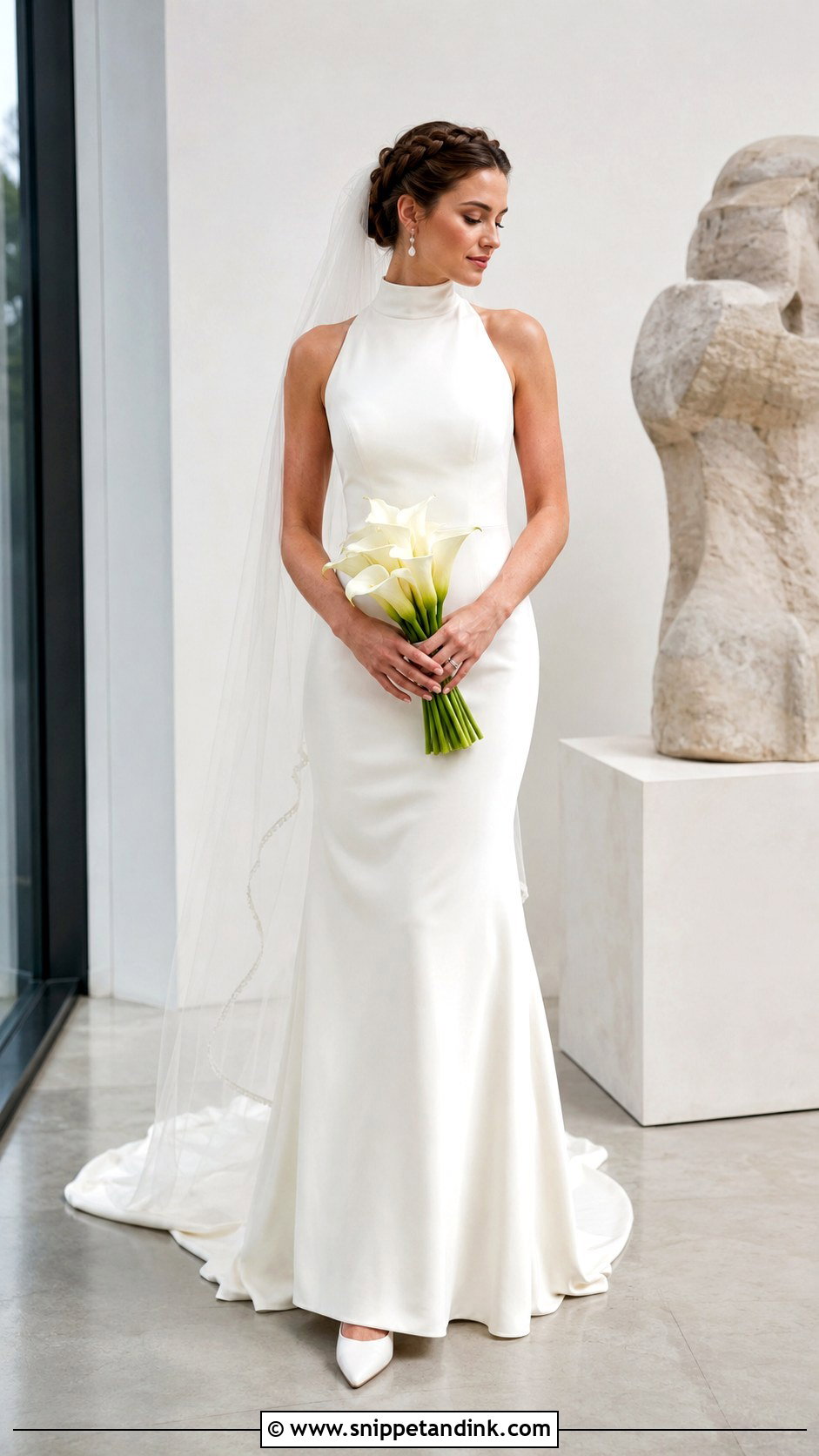
A high neckline gives coverage that looks deliberate rather than modest by default. Sheer lace feels romantic; smooth crepe looks contemporary. Sleeveless versions balance the high neck, and fitted long sleeves look more formal. Skip the necklace and wear statement studs or small drops. The hair needs to go up, in a neat bun, braided updo or high ponytail, or the collar disappears behind it. Turn your head fully at the fitting to make sure the collar doesn’t rub. Pointed ivory pumps, a veil set beneath the hair and a narrow bouquet of calla lilies suit museums and city weddings.
13. Bow Back Wedding Dress
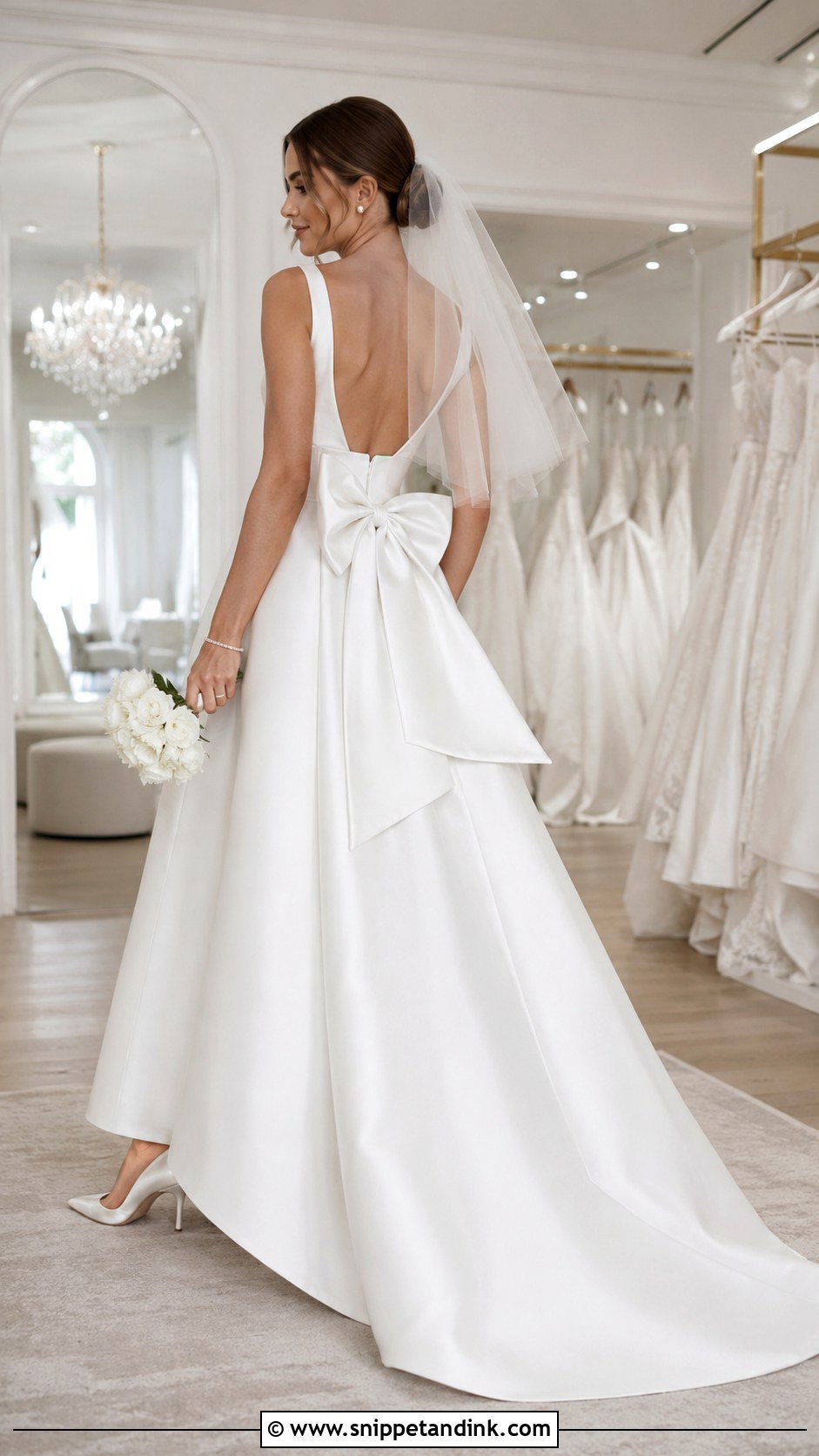
Sometimes the most memorable detail shows up after the bride has walked past. A structured bow at the waist or lower back of a satin column, A-line or ball gown gives a striking rear view while the front stays clean. Jewelry stays small: pearl studs and a fine bracelet. The veil should be sheer enough to show the bow or finish above it, never land on top and crush it. Satin pumps, an updo and a compact white bouquet complete it. Ask your photographer to catch the back during aisle walks, since that’s the shot this dress is built for.
14. Detachable Sleeve Wedding Dress
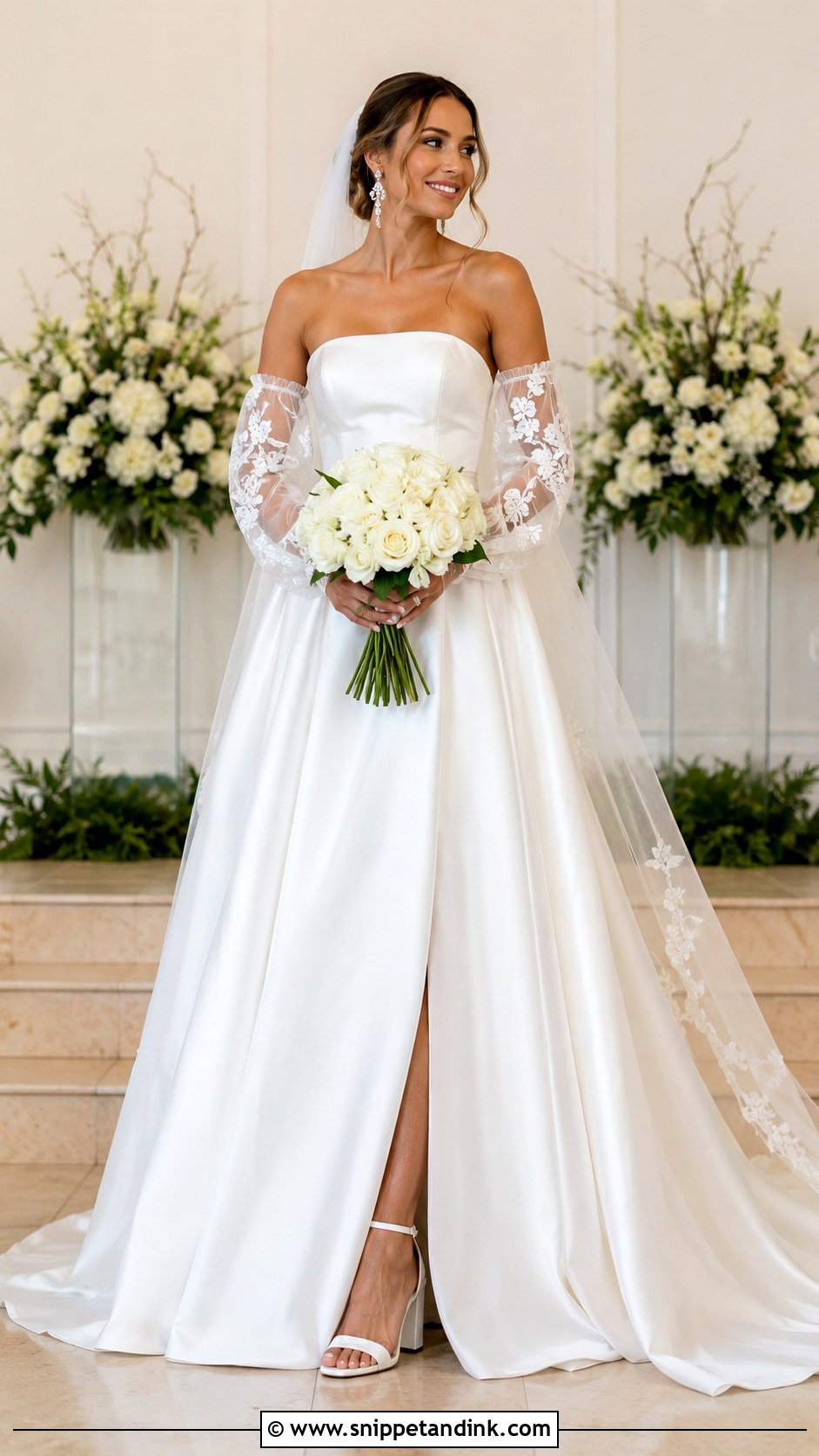
Detachable sleeves give one gown two looks. Fitted lace sleeves, sheer puffs or draped off-shoulder pieces attach to a strapless bodice for the ceremony, then come off after the formal photos. Crystal earrings, an elegant low bun and supportive block-heel sandals suit both versions. A chapel veil works first; a jeweled comb can stay in after the veil comes out. One honest caution: the strapless bodice underneath must be fitted to stay up on its own, since the sleeves can’t be relied on for support. Carry roses and greenery that suit either version.
15. Wedding Dress With Cape Veil
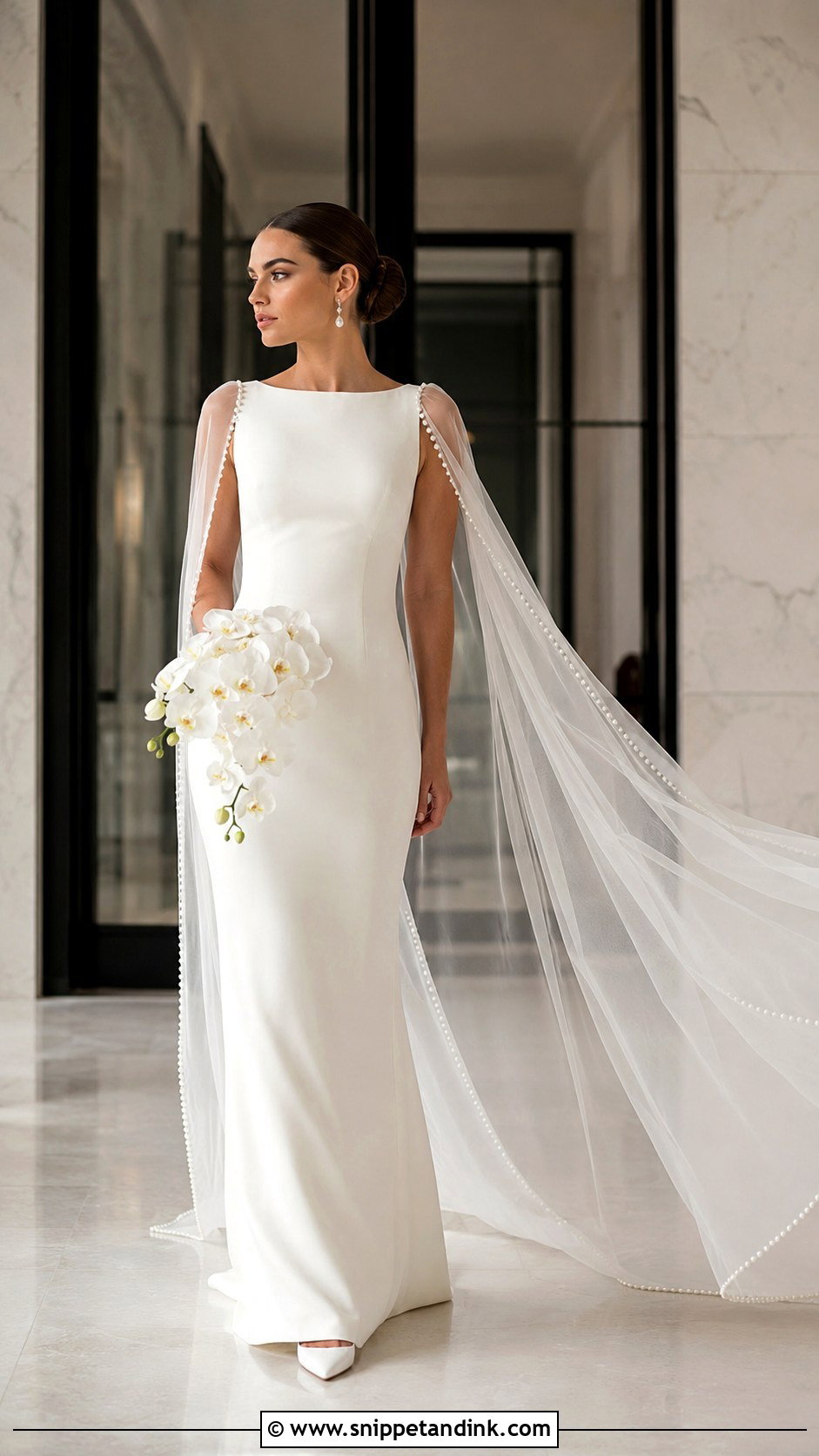
A sheer cape fixed at the shoulders can stand in for a veil and adds movement as you walk. Underneath, a clean column, sheath or A-line works best, because a full skirt plus a cape starts to swallow the bride. Delicate pearl edging or light floral appliqués add detail without weight. Wear a polished low bun so the cape’s neckline sits flat, simple drop earrings, pointed heels and a narrow bouquet that adds no extra bulk. The cape can come off for the reception. Practice sitting in it, since capes slide back and pull at the shoulders when you lean on a chair.
16. Short Wedding Dress
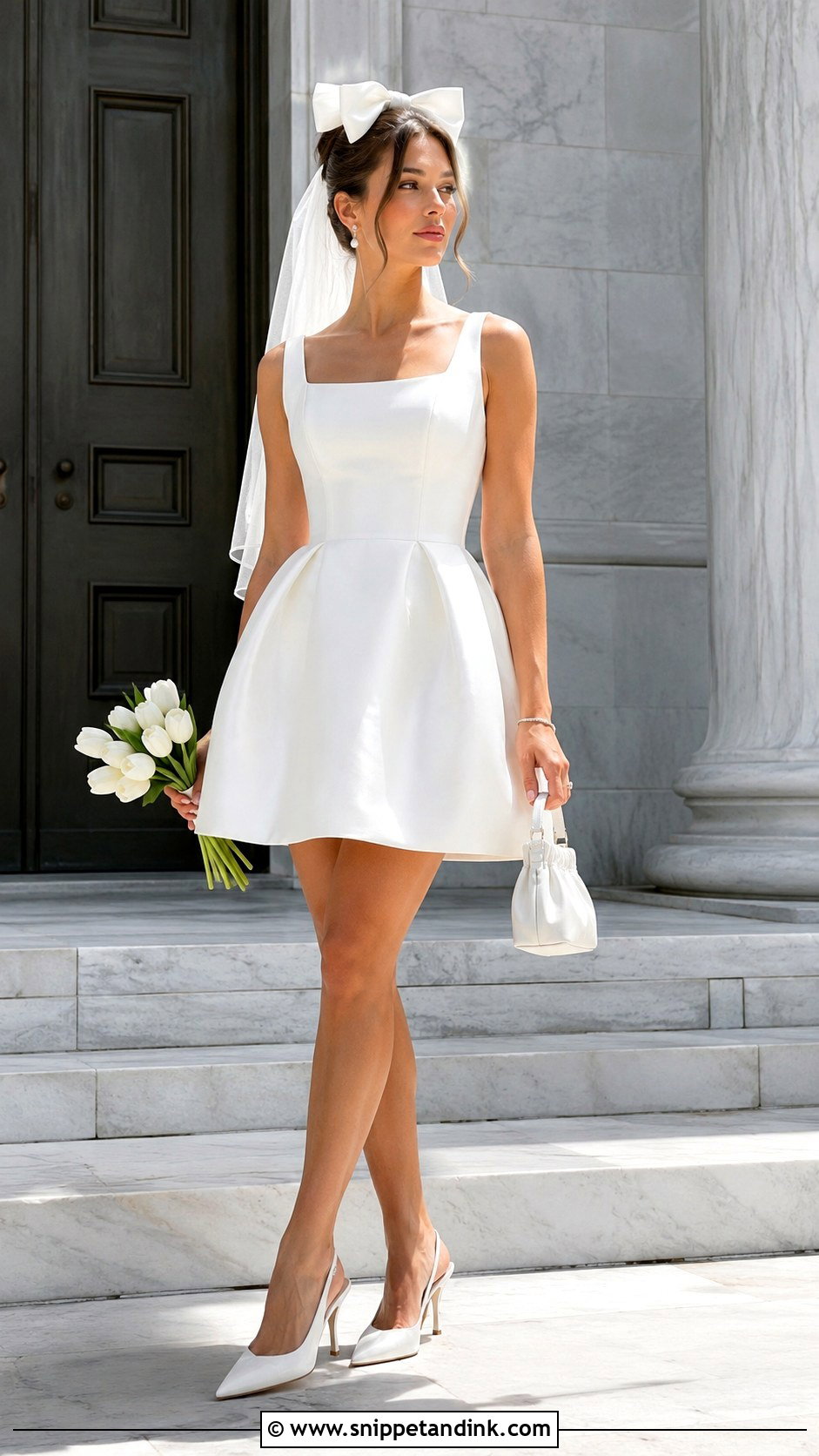
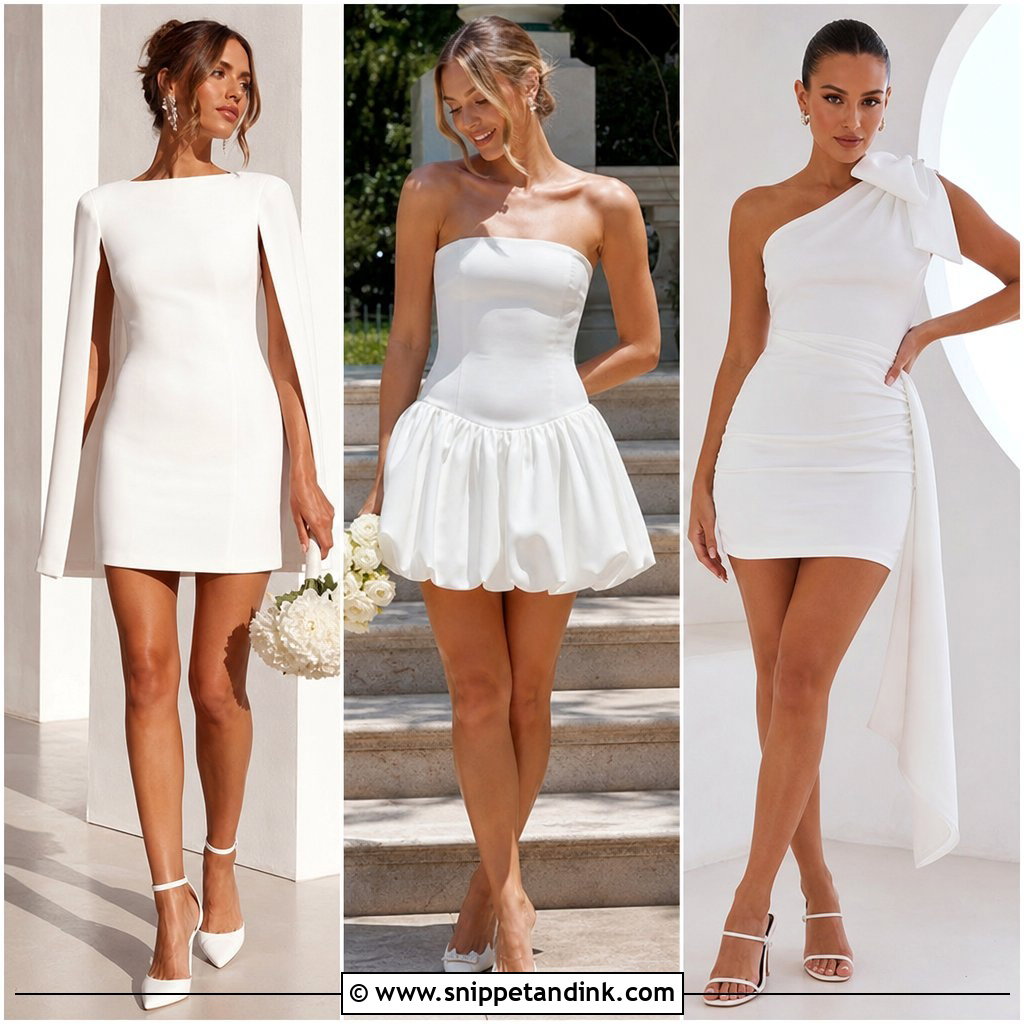
Short wedding dresses suit courthouse ceremonies, reception changes and small weddings, and they’re the easiest thing on this list to dance in. A fitted mini, structured shift or flared knee-length design in satin, crepe or textured fabric all work. With less length, the neckline and tailoring do more of the work, so I’m stricter about fit on short dresses, not less. Pointed pumps, slingbacks or ankle-strap sandals, pearl earrings, a compact handbag and a short veil or big hair bow. Soft waves or a sleek ponytail and a small bouquet of tulips or roses finish it.
17. One Shoulder Wedding Dress
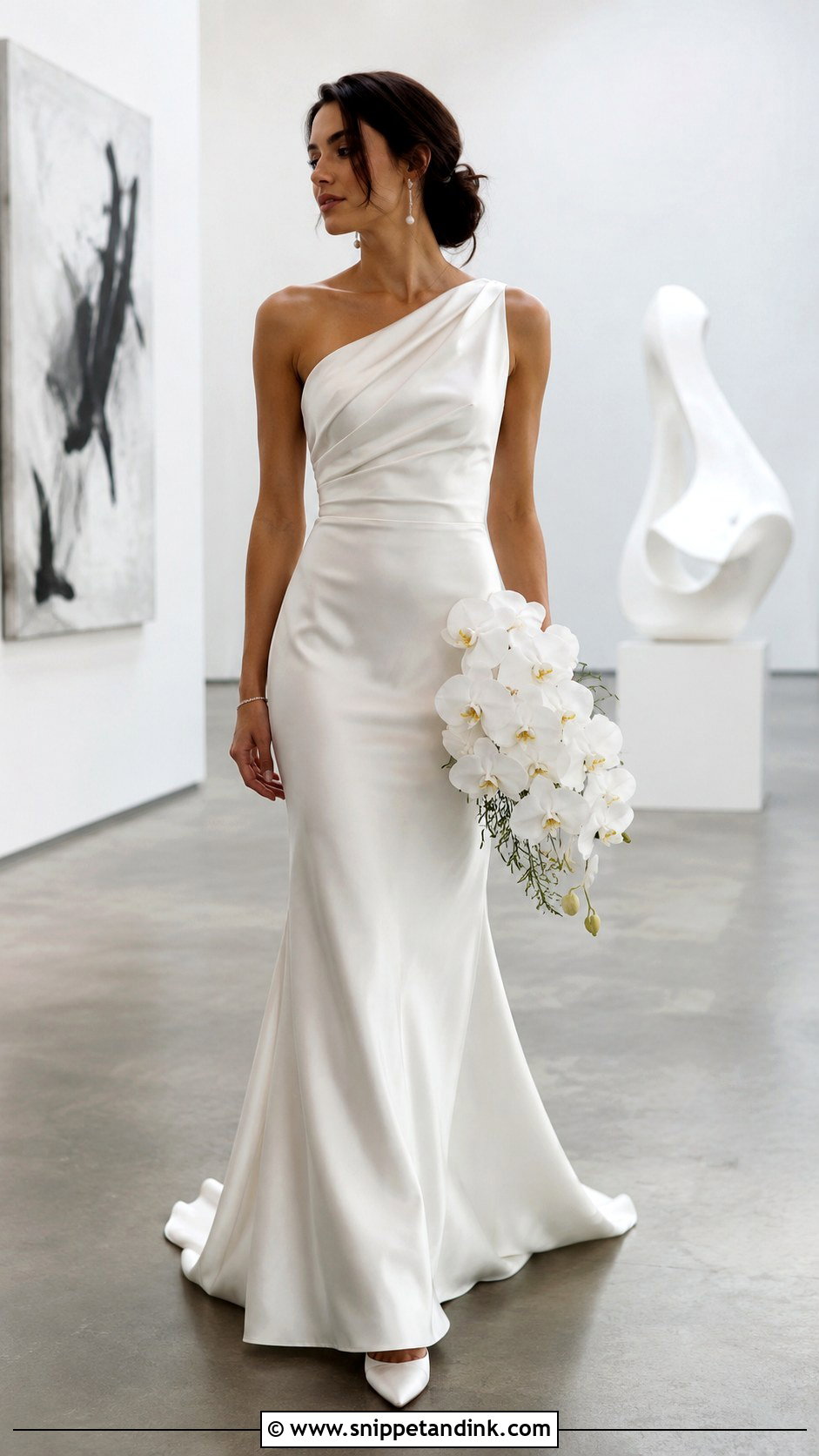
An asymmetrical neckline does the work of jewelry, so I’d leave the necklace off and choose sleek earrings. Smooth crepe or satin with a fitted waist and a column, A-line or softly flared skirt keeps the line modern. Sweep the hair to the side away from the strap, and add a bracelet to the bare arm for balance. Inside, the single shoulder needs a grip strip or anchoring so the dress doesn’t migrate during dancing. A plain veil works, or no veil at all with polished hair. Pointed pumps and an architectural bouquet of orchids or calla lilies suit galleries and rooftops.
18. Corset Bodice Wedding Dress
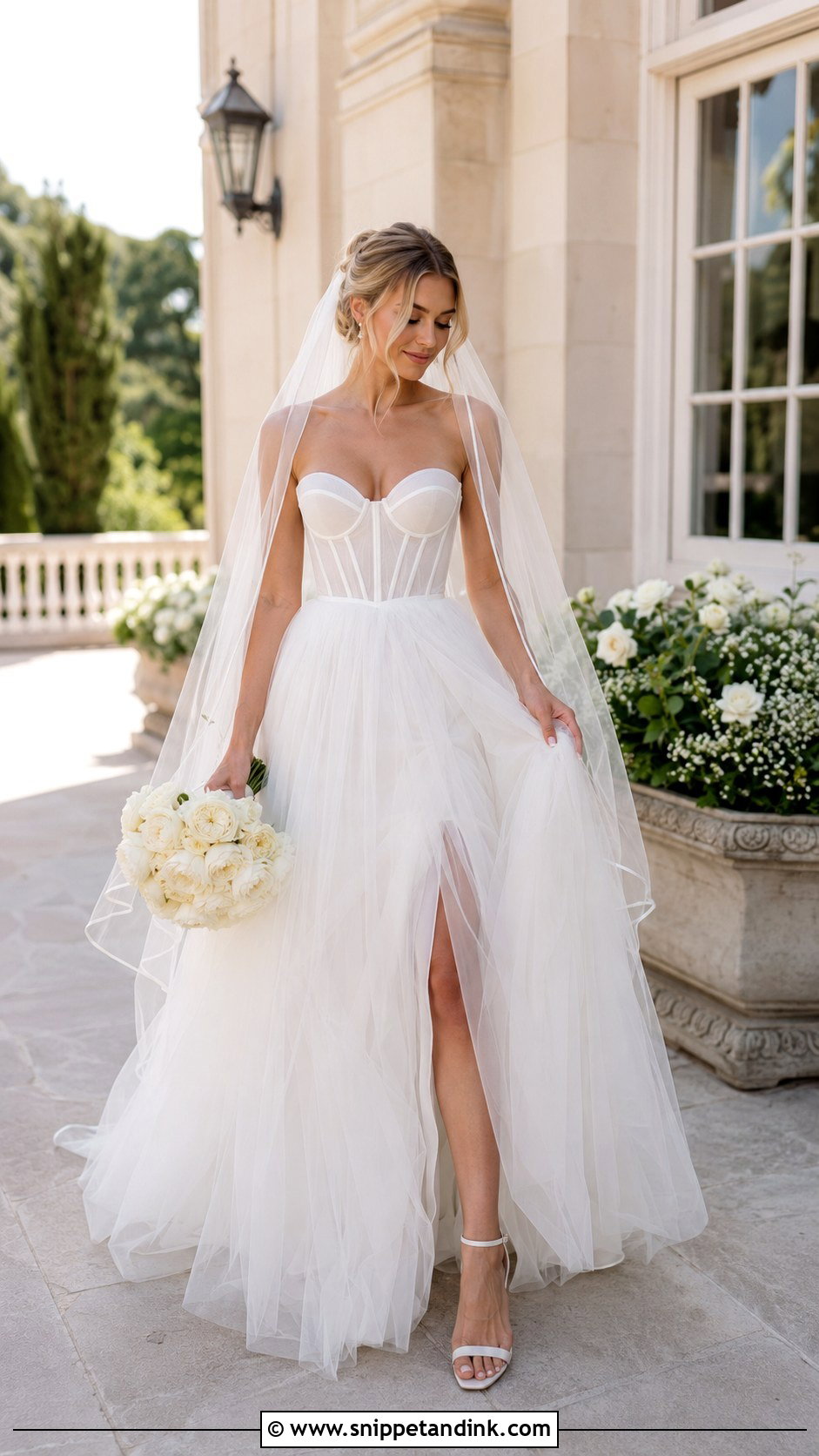
Visible corset structure gives a bridal silhouette definition while still feeling romantic. A well-fitted bodice with supportive seaming should be balanced by its skirt: tulle for softness, satin for formality. When the boning is on show, I keep other embellishment controlled, otherwise the dress looks overworked. Lacing a corset correctly takes practice, so the person dressing you should watch the seamstress do it at the last fitting. Delicate drop earrings, a sheer fingertip veil, ivory ankle-strap heels and loose waves or a soft updo, with garden roses held low so they don’t hide the bodice.
19. Wedding Dress With Overskirt
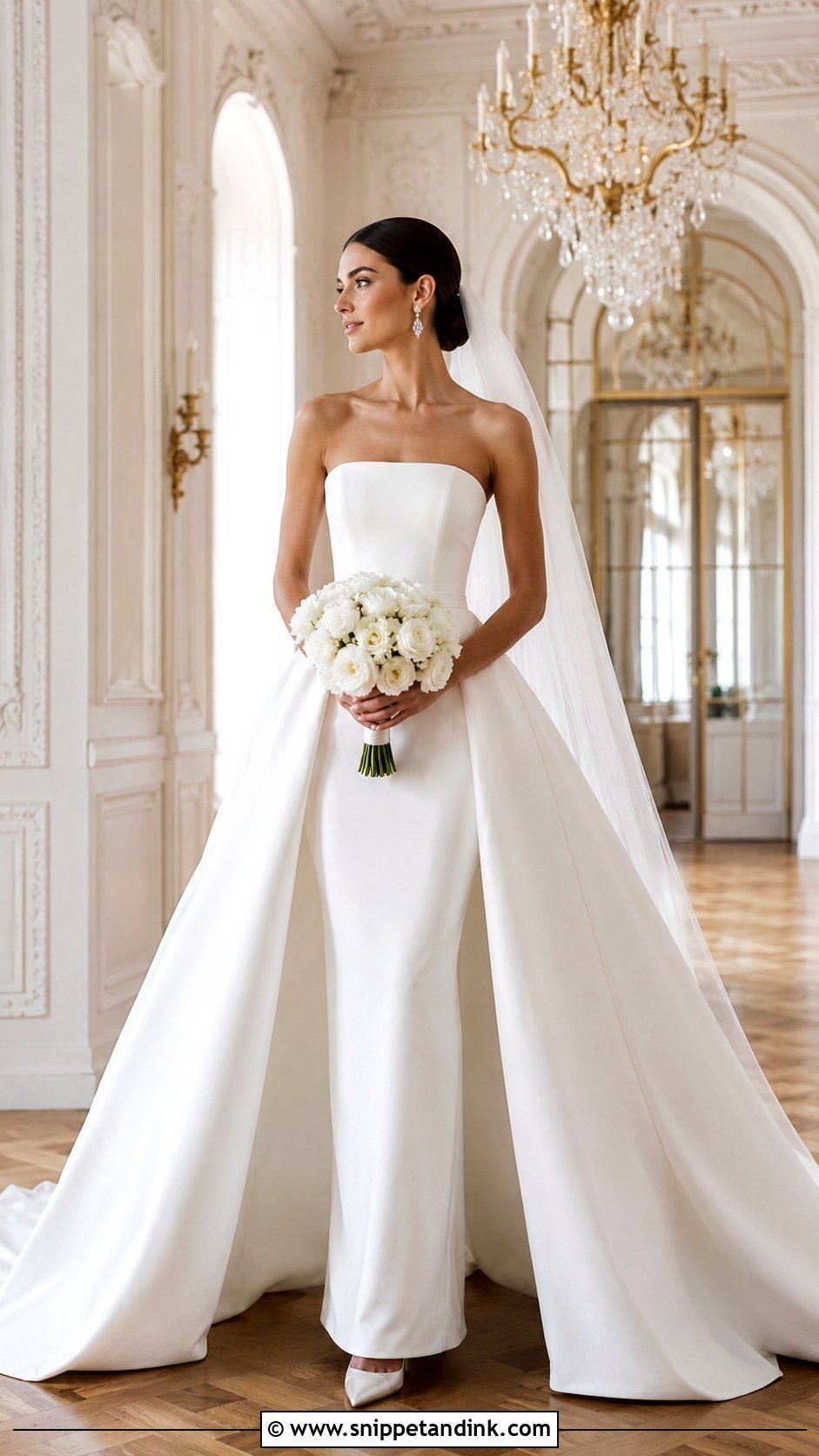
Brides who want ceremony volume and reception ease often end up here. Start with a fitted column or mermaid, then add a detachable satin, organza, or tulle overskirt at the waist. The extra layer gives volume for the aisle and formal portraits; once removed, the base dress is lighter to move in. Crystal earrings, a neat low bun and comfortable pointed heels suit both versions. Pick a long plain veil without trim that competes with the overskirt. The join at the waist must lie flat once the outer layer is gone, so try the base dress alone at every fitting.

20. Bridal Pantsuit With Detachable Train
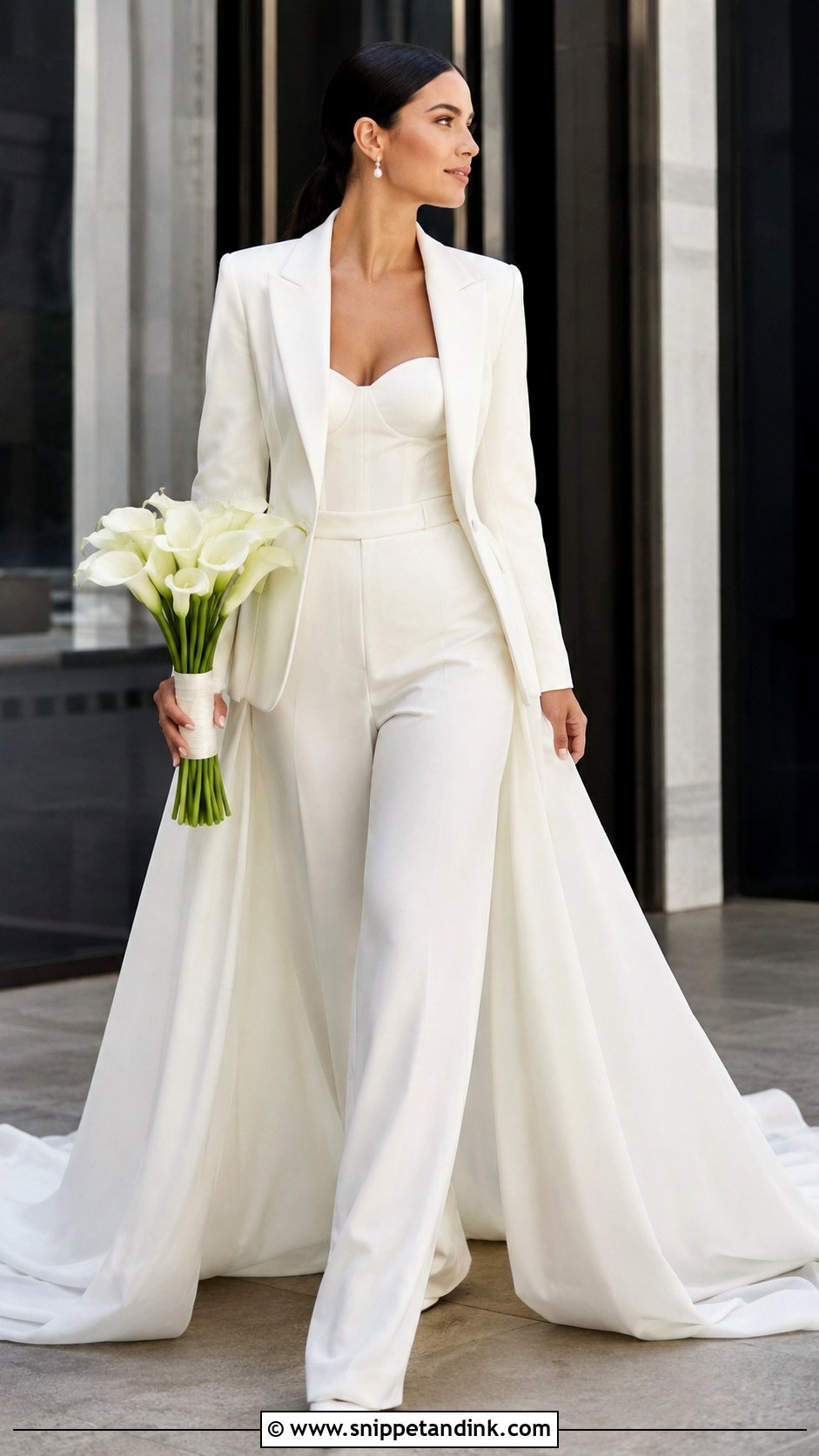
A bridal pantsuit with a detachable train suits brides who have never pictured themselves in a gown. A sharp white blazer, a fitted camisole or corset top and high-waisted wide-leg trousers form the base, with a train or overskirt clipped at the waist for the ceremony. Tailoring is the whole story here. The trouser hem should just graze the top of the shoe, which means bringing the exact pumps to every fitting. Pearl or crystal earrings, a sleek bun or smooth shoulder-length hair, and white calla lilies keep it streamlined for a city or gallery wedding.
Shopping Party Size, Shoes and the Strapless Bra
A small group helps you hear your own opinion. Two or three people you trust is usually enough; a crowd tends to split the room, and the bride ends up choosing for the loudest voice. Set your budget before you arrive and tell the consultant, so you aren’t shown a gown you can’t buy and then compare everything to it.
- Wear a strapless bra and smooth nude underwear so you can judge necklines properly.
- Bring shoes close to the heel height you plan to wear; length and posture both change with heels.
- Skip fresh self-tan and heavy foundation. Both transfer onto samples, and many salons will ask you to avoid them.
- Pull your hair back loosely so you can see necklines with it up and down.
The Paperwork After the Yes Matters as Much as the Dress
Before paying a deposit, read the order form line by line. I check the style number, the exact color name, the size ordered, any changes such as added straps or a longer train, the promised delivery date and the cancellation terms. Bridal sizing often runs smaller than street sizes, so a consultant will usually order from your measurements, not the number on your usual clothes. That’s normal, and alterations take care of the rest. Keep a photo of the signed form; if something arrives wrong, it’s your proof.
Once You Have Said Yes, Build Outward From the Dress
The dress you chose should suit the setting and keep you comfortable from the first portrait to the last dance. Everything on this list, from lace A-lines and ball gowns to short dresses and pantsuits, starts the same way: pick the silhouette you feel most yourself in, then add accessories that support it. Stand back and look at the shoes, veil, jewelry, hair and bouquet together in a full-length mirror, because that’s how most of your photos will see you. And leave room for one personal detail, like a family piece of jewelry or a stitched date inside the hem, that nobody else would have thought of.
You'll Like These Ideas:








Leave a Reply