
Couture is less a style than a way of building a dress. The bodice is shaped on your body, the lace is cut around its motifs and stitched down by hand, and the inside of the gown carries as much engineering as the outside shows. That is why a couture piece can be a full ball gown or a plain crepe column and still feel unmistakably made for one person. When I walk a bride through these options, I start with how she wants to move and where she will stand, then talk fabric and finish. The ideas below are organized by silhouette and detail, with notes on what each one asks of your body, your venue and your fittings.
From Muslin Mock-Up to Final Pressing, Fitting by Fitting
A made-to-measure gown starts as a toile, a rough version sewn in plain cotton so the pattern can be tested on your body before any silk is cut. I tell brides to expect several fittings after that, each one narrowing in on a smaller detail.
- Toile fitting: proportions, neckline height, where the waist sits and how the skirt starts.
- First fabric fitting: the real cloth goes on, and drape, weight and movement get adjusted.
- Detail fittings: lace placement, beading, sleeves and train length.
- Final fitting: hem with your exact shoes, bustle points, and a last check while sitting, walking and dancing.
Bring the shoes and underwear you will actually wear to every fitting from the first fabric fitting onward. Changing either late shifts the hem and the bodice. Timelines vary a lot by atelier, but full custom work commonly needs many months, so start well before you think you need to.
1. Couture Ball Gown Wedding Dress
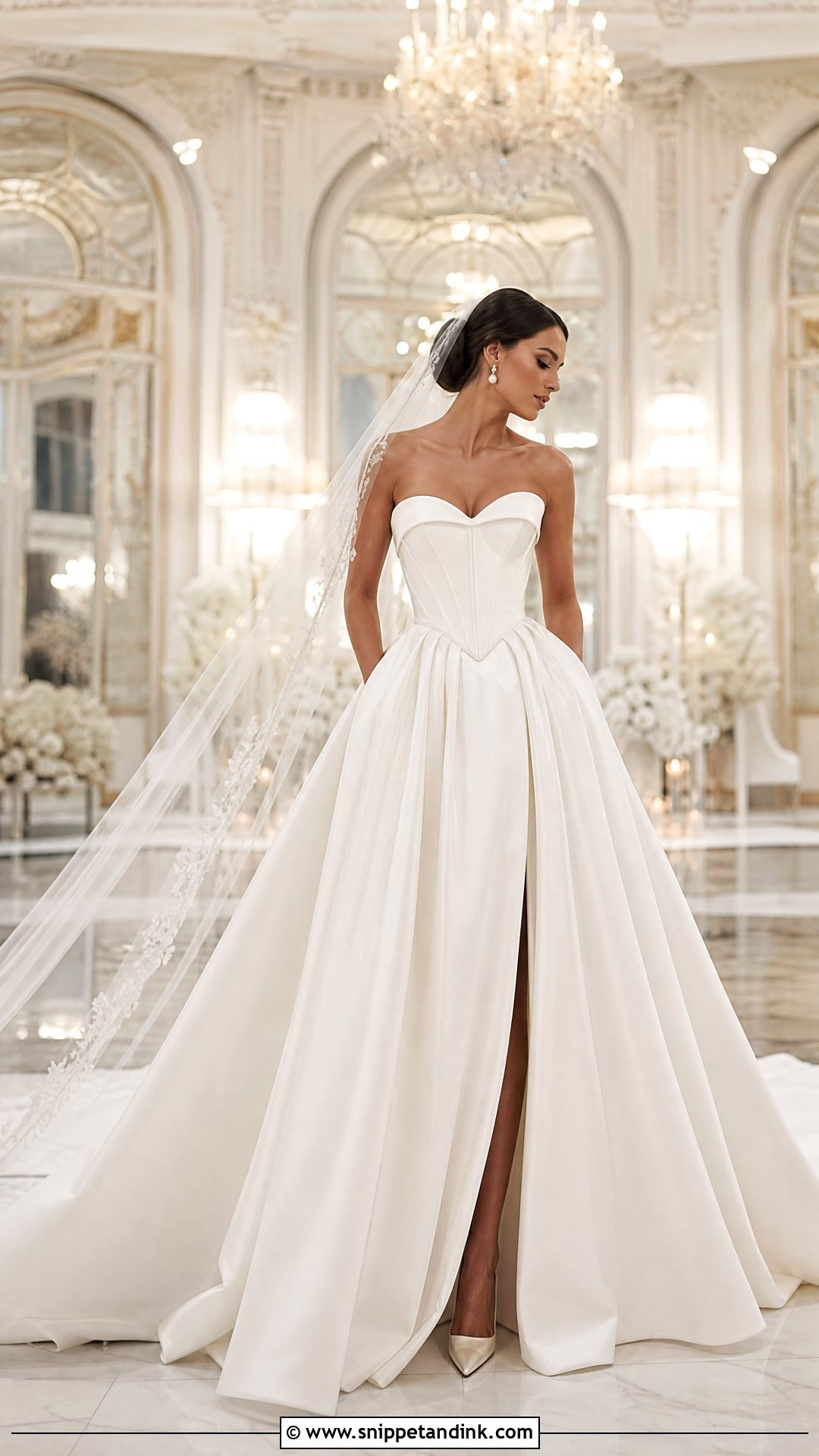
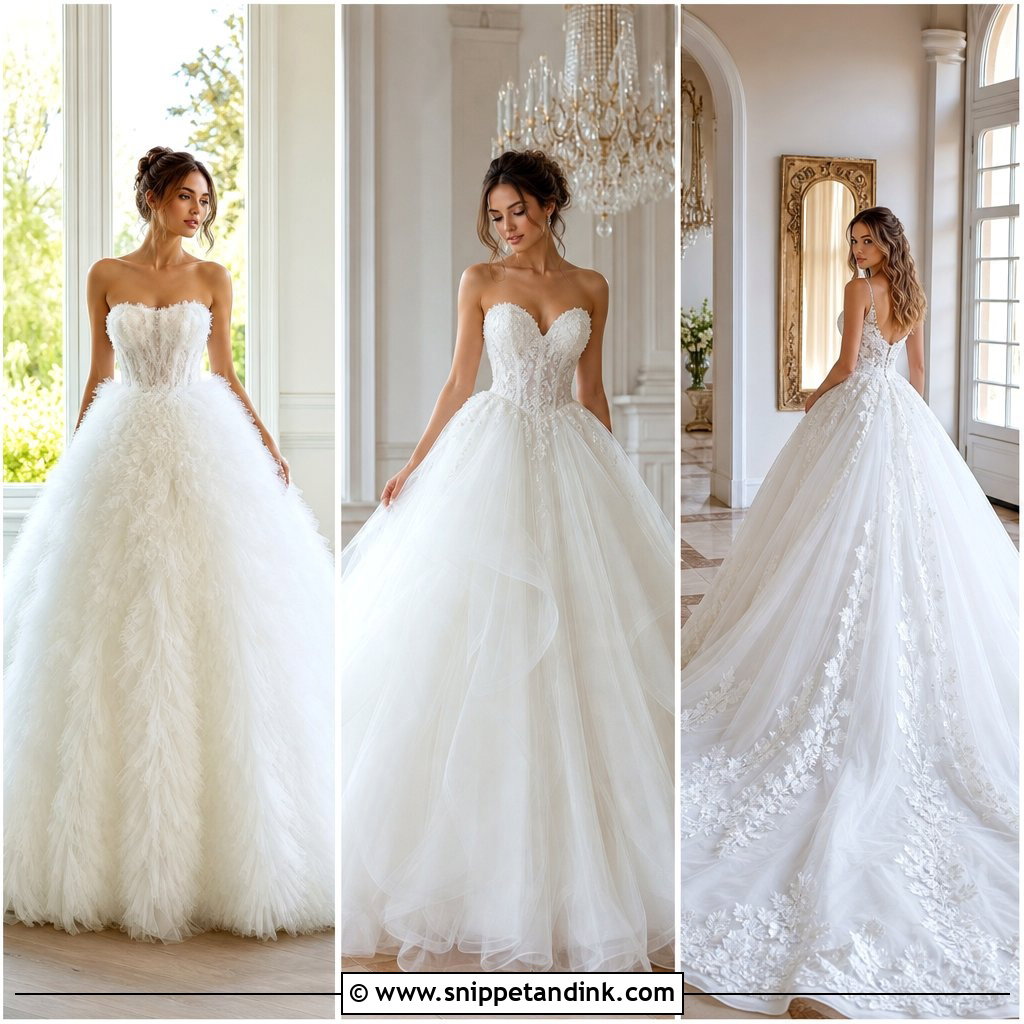
A ball gown is the one silhouette that changes how a room reacts when you walk in. The volume should come from the skirt construction, layers of tulle or a stiffened underskirt, so the outer fabric stays smooth. I love silk mikado here because it holds a crisp fold, though satin, organza and layered tulle all have their place. Internal corsetry carries the weight of that skirt on your waist rather than your shoulders, which is what lets you wear it for hours. Ask how heavy the finished gown will be. A cathedral veil, pearl earrings and a plain neckline are enough; let the shape talk.
2. Couture Lace Wedding Dress
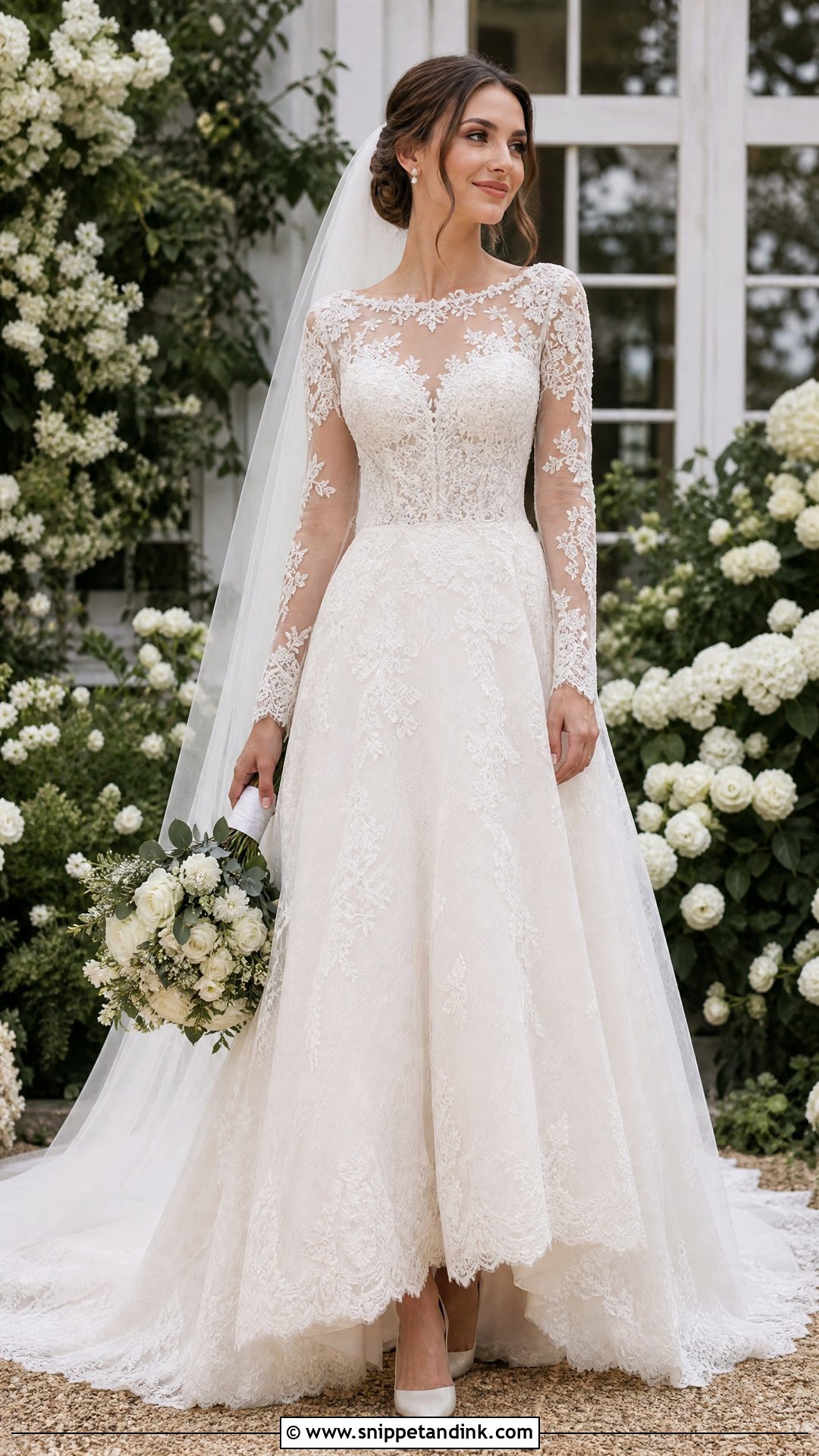
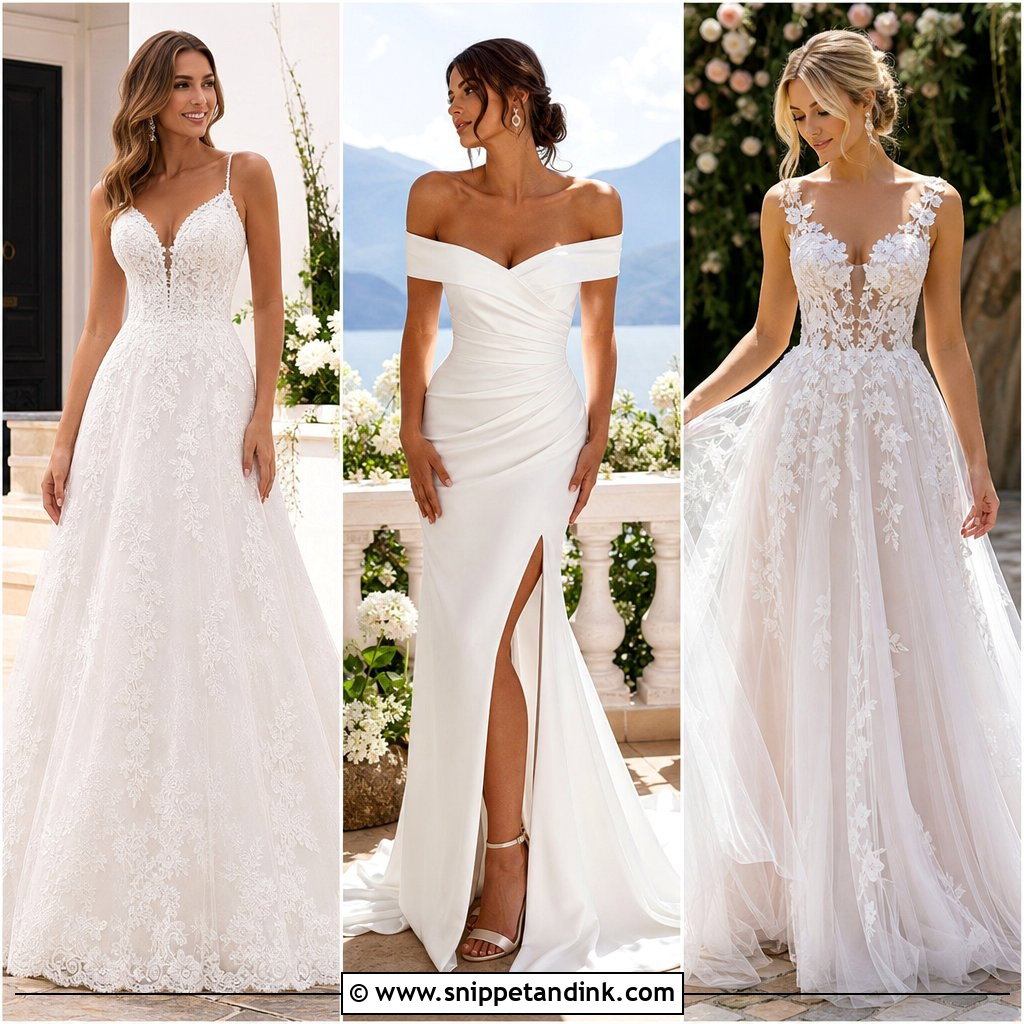
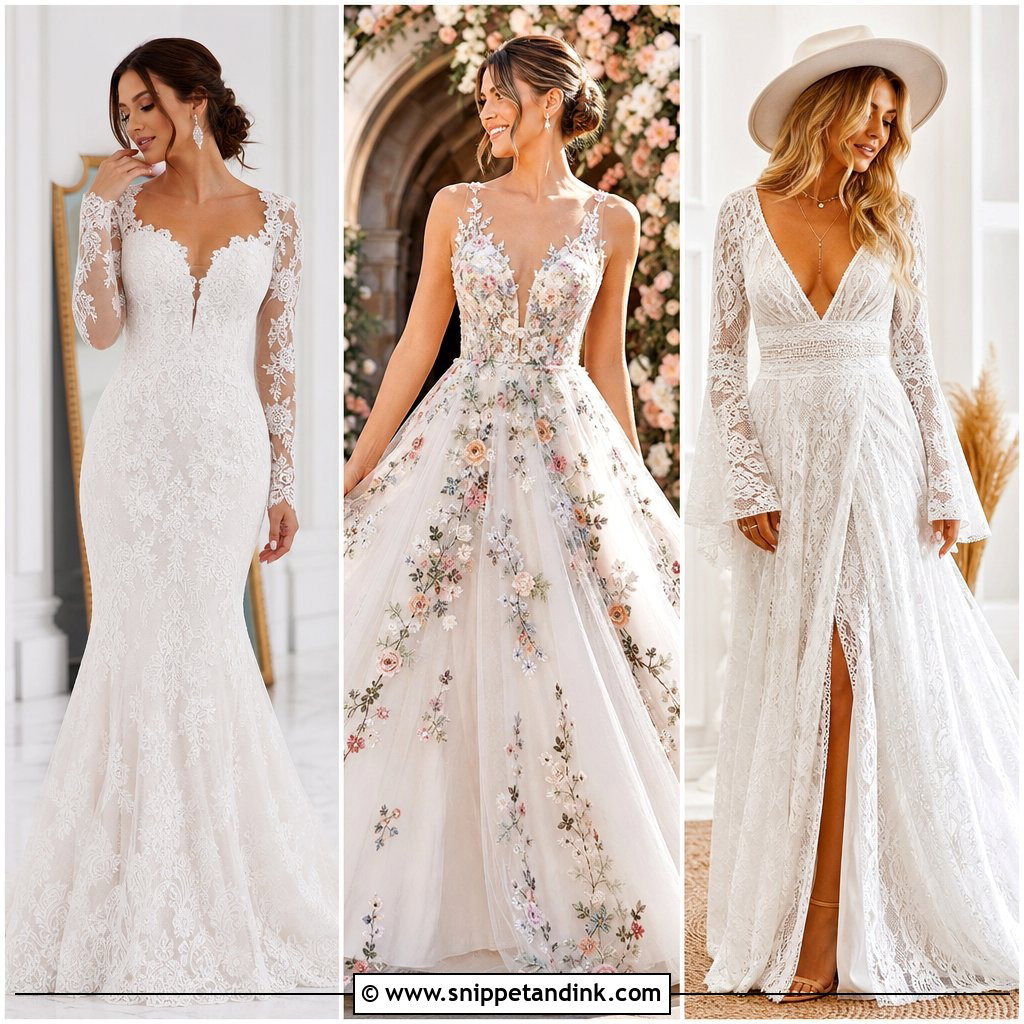
Good couture lace is cut around its motifs, not straight across them, so the pattern seems to grow out of the bodice with no visible seams. That is the first thing I look at on a lace gown. Chantilly is fine and flat; corded lace has a raised outline that reads well from a distance. A fitted bodice into a gentle A-line skirt suits most figures. Lace sleeves lean classic, strapless lace leans modern. Choose a soft veil and studs, and know that heavier corded lace can scratch bare arms if the sleeves are unlined.
3. Couture Satin Wedding Dress
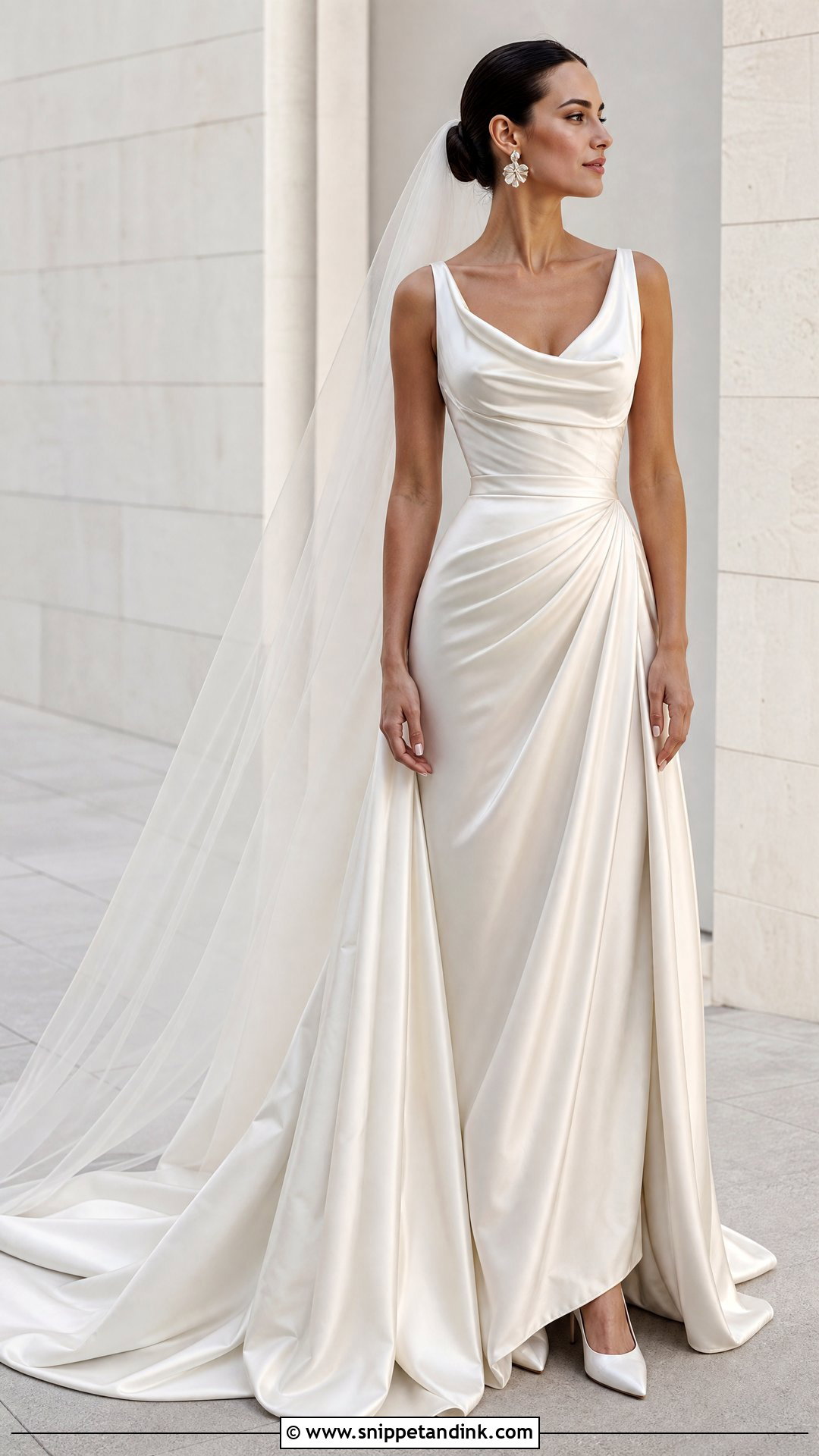
Satin is honest to a fault. It reflects light along every curve and shows every seam, so a satin gown is only as good as its pattern cutting. I check a satin bodice under a single strong light during fittings, because ripples that hide in a showroom show up immediately in flash photography. A draped neckline or a bias-cut skirt suits the fabric well. Keep the rest clean: long veil, sculptural earrings, sleek pumps. City and black-tie weddings suit it best.
4. Couture Mermaid Wedding Dress
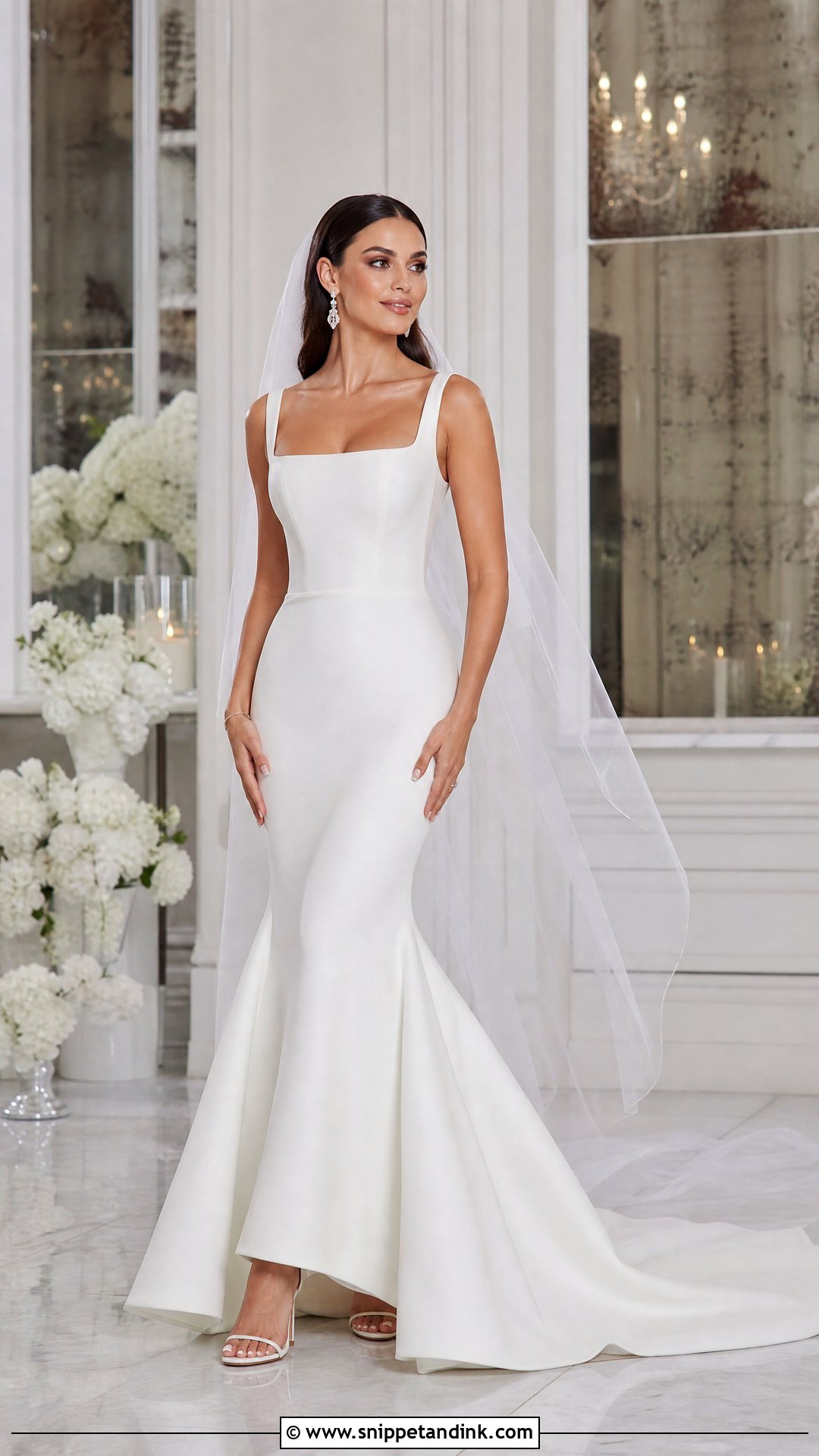
Mermaids are the hardest silhouette to sit, dance and climb stairs in, and I say that up front. A well made couture mermaid wedding dress places the flare at the exact point on your leg that lets you walk normally; too low and you shuffle. Crepe, satin or lace with careful seaming moves better than stiff fabric. Internal structure supports the body without locking it in place. Slim heels, drop earrings and a long veil keep the line uninterrupted. Formal evening venues give it the room it needs.
5. Couture A Line Wedding Dress
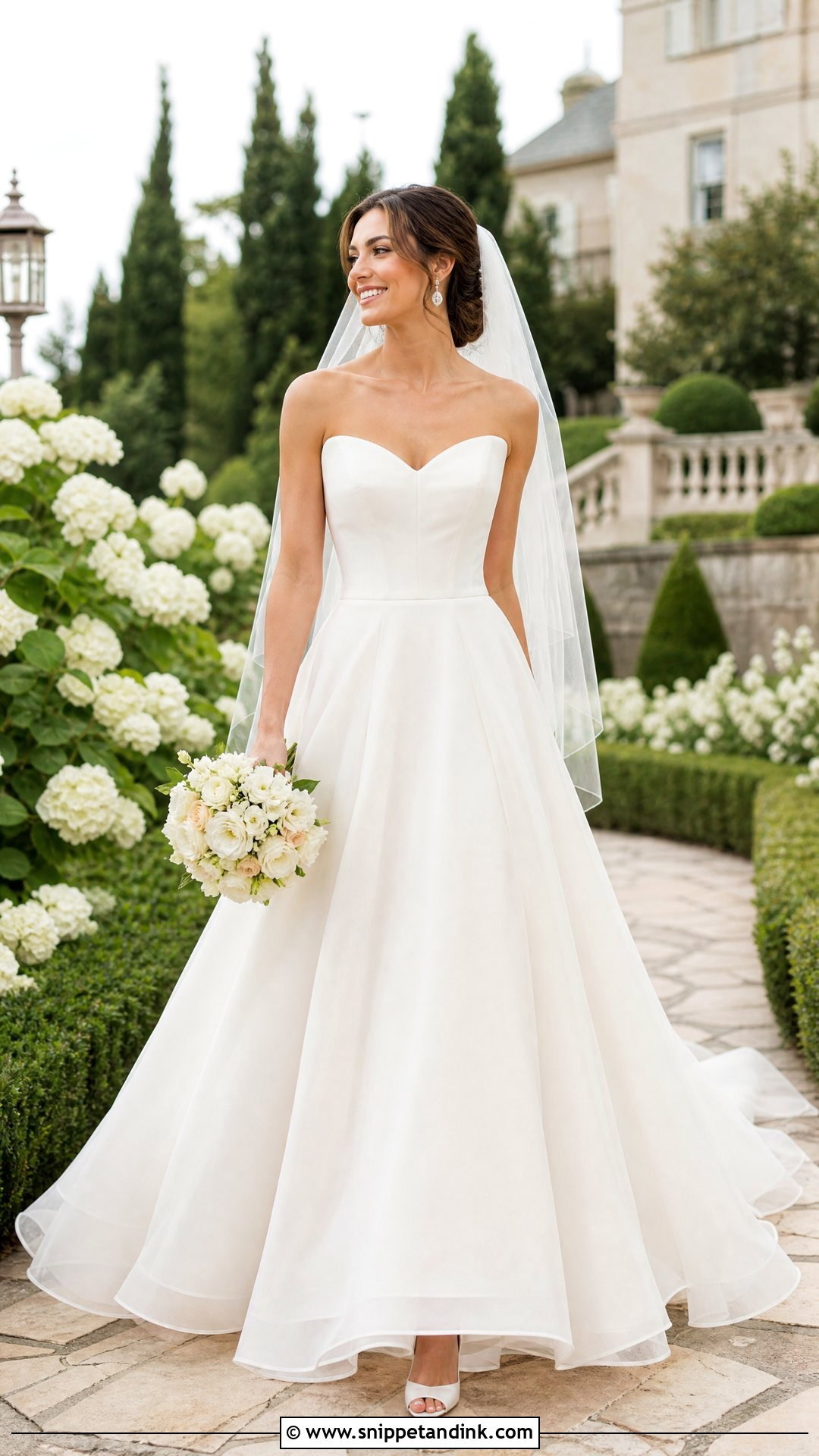
An A-line flatters almost everyone because it defines the waist and then simply stops asking anything of the hips. Couture versions earn their keep in the details: hand-applied lace, a sculpted bodice with hidden boning, a train cut in one piece with the skirt. Organza gives softness, mikado gives structure, satin gives sheen. Pair it with a fingertip veil and pearl drops. It is the silhouette I see brides most comfortable in by the end of the night.
6. Couture Column Wedding Dress
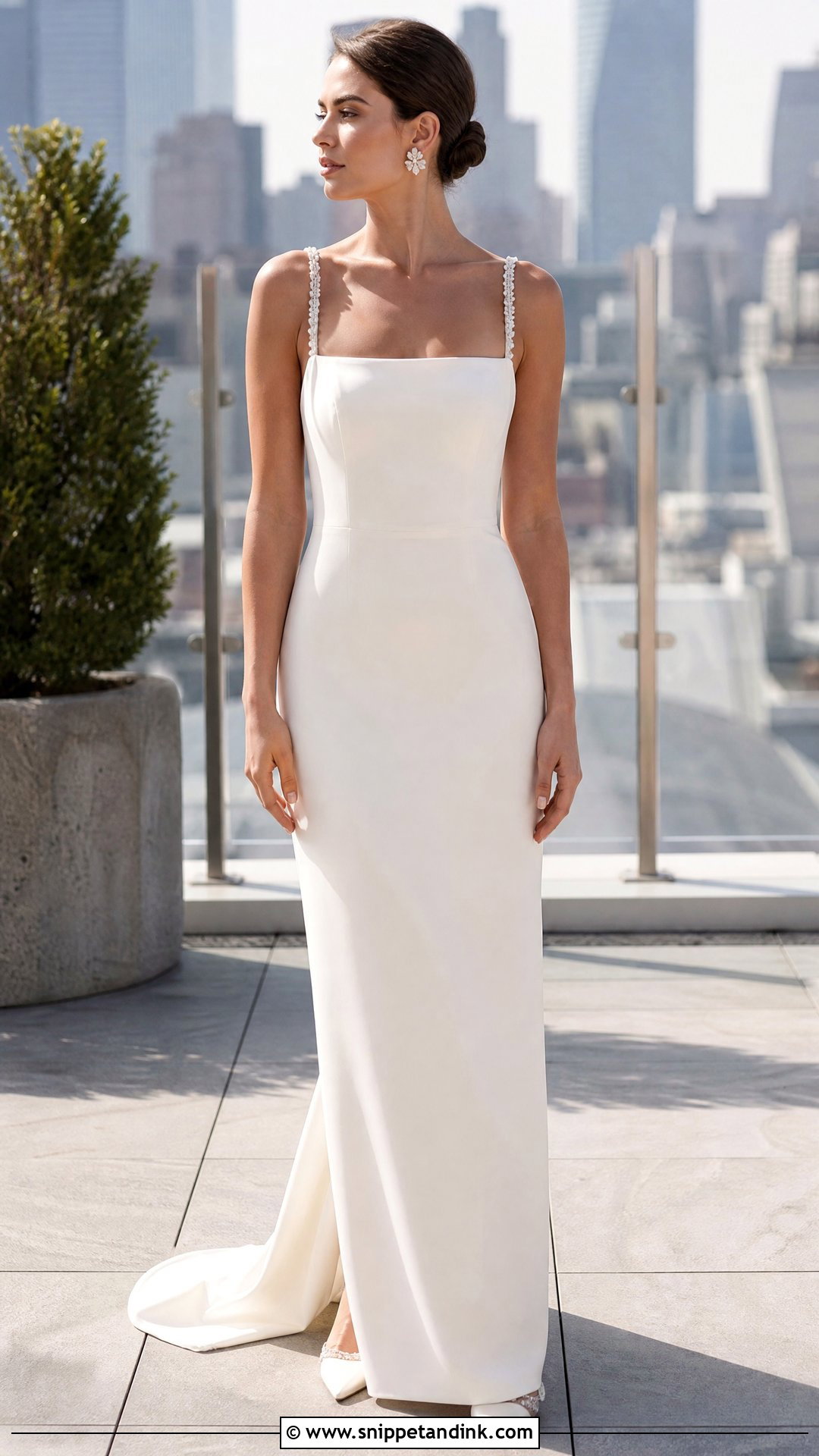
A column has nowhere to hide a poor fit. Because the shape is so simple, I spend most of the fittings on the fall from shoulder to hem, checking that it hangs straight without catching at the hip or pulling across the back. A square neck, light draping or hand-beaded straps are enough detail. If you want ceremony drama, a detachable overskirt can be added. Sleek hair, sculptural earrings and pointed heels suit it. Rooftops, galleries and destination weddings are its natural home.
7. Couture Corset Wedding Dress
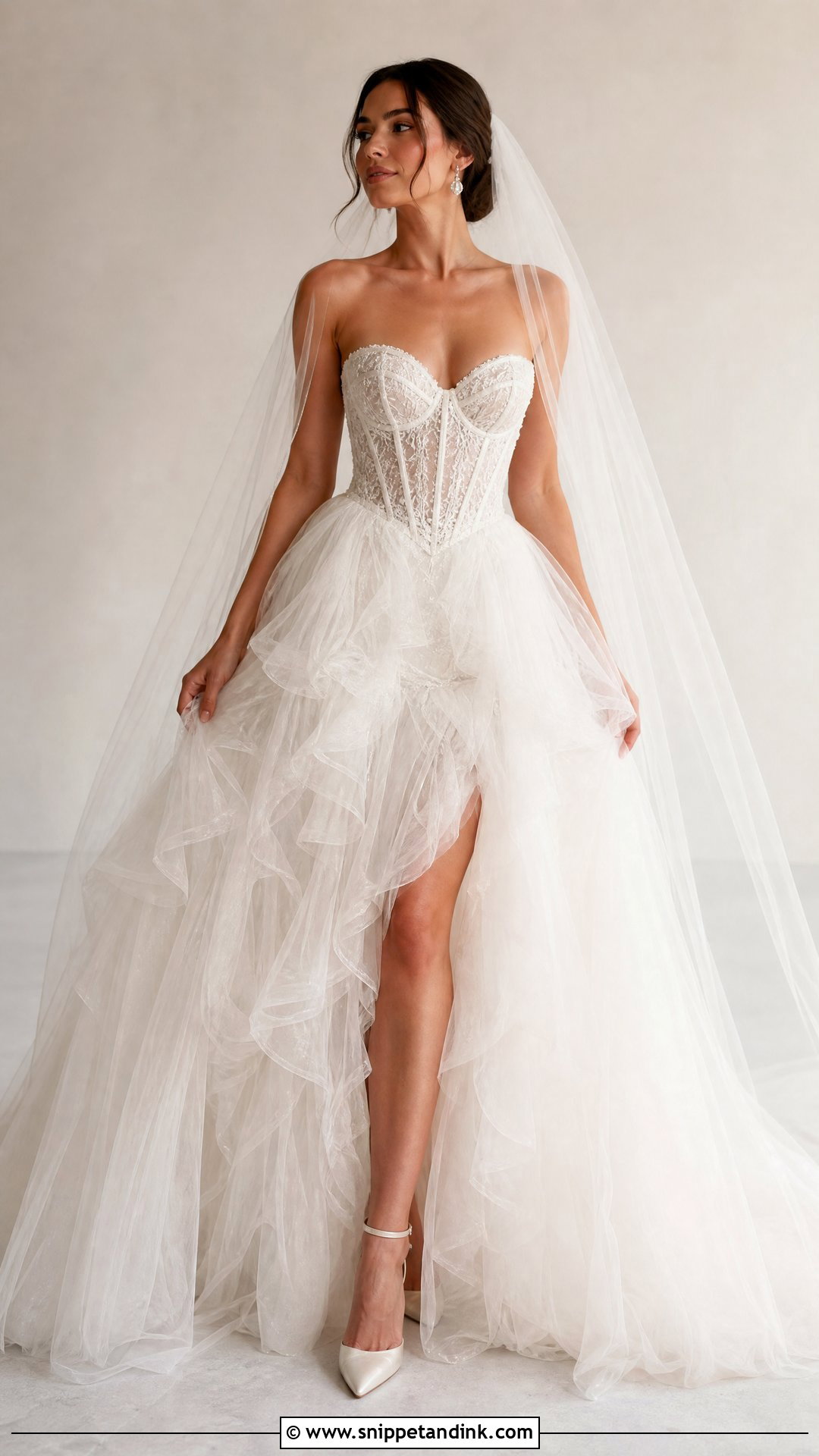
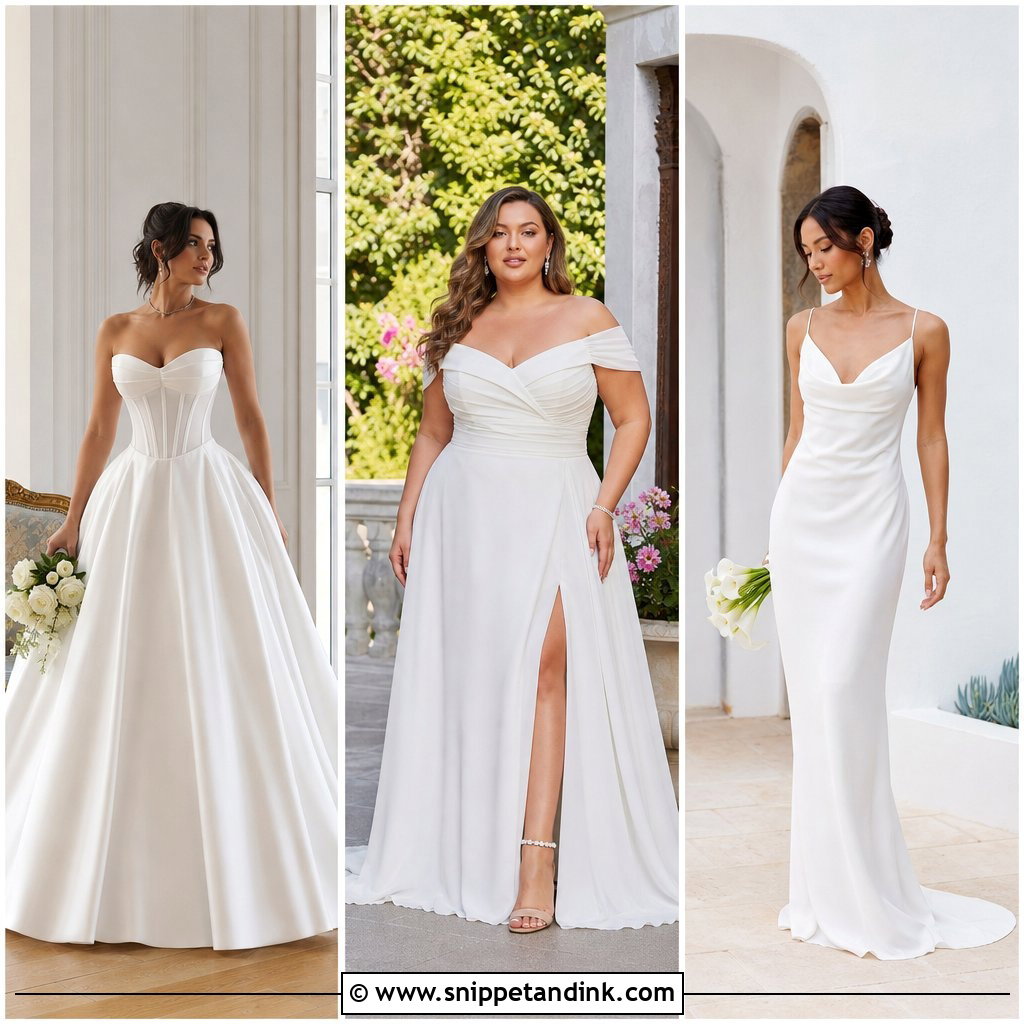
Corset bodices have become very fashionable, and the good ones are a feat of construction. The boning should follow the body’s lines and stop before it digs into the hip when you sit. Exposed boning reads editorial; covered boning reads classic. I always pair the structure with something soft in the skirt, tulle, lace or silk organza, so the gown doesn’t look armored. Plan to eat lightly before the final fitting, since a corset is fitted to the body you bring that day.
8. Couture Off Shoulder Wedding Dress
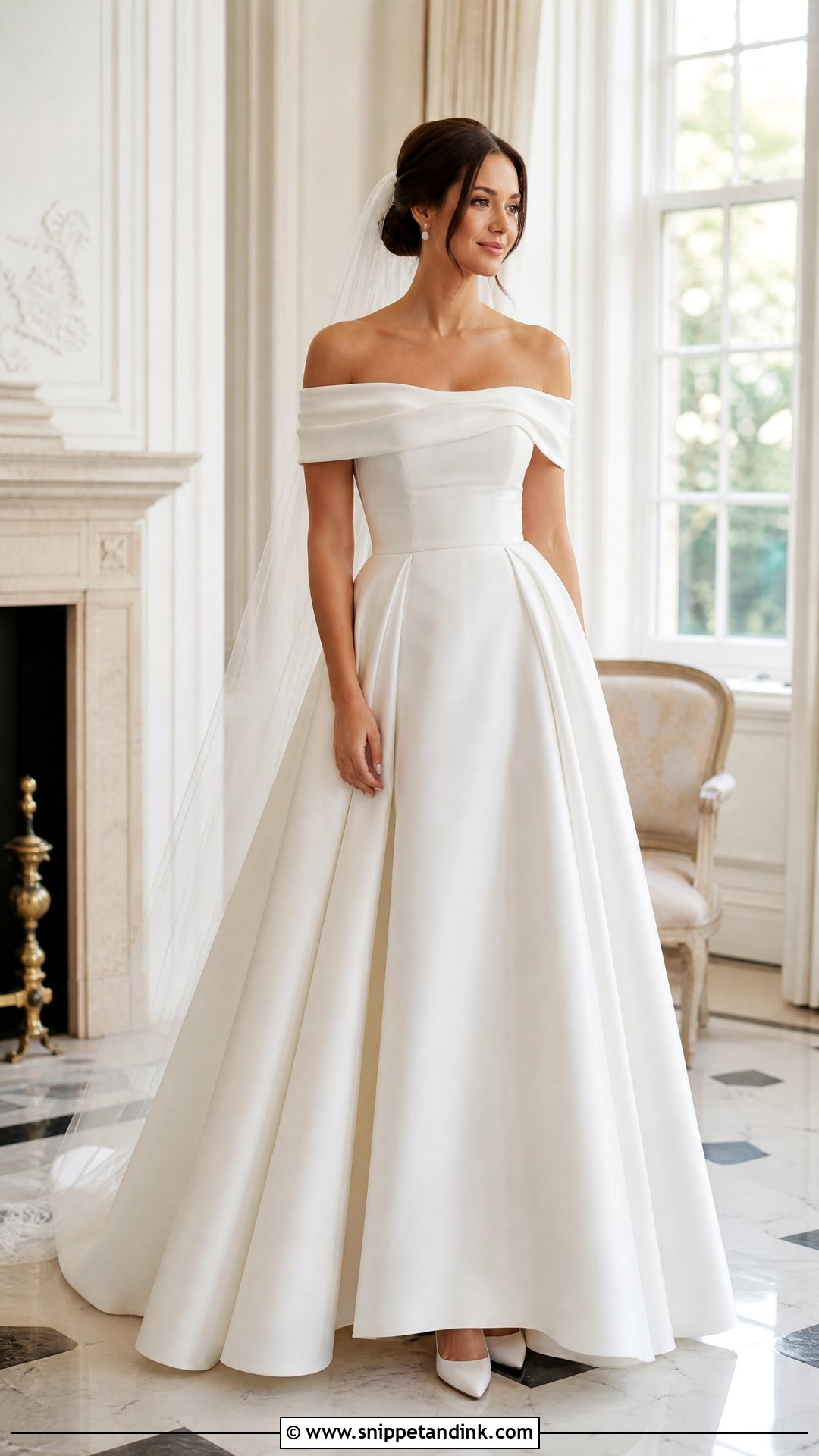
An off-shoulder neckline frames the collarbone, but it needs to be built to stay in place. In structured satin or mikado, the band can hold itself; in chiffon or organza, I ask the atelier for an inner grip band so the sleeves don’t slide every time you lift your arms. A defined waist and a skirt with some volume balance the open neckline. An updo, pearl earrings and a sheer veil keep the shoulders on show. Hug a friend in it at a fitting; that is the movement that exposes a loose neckline.
9. Couture Long Sleeve Wedding Dress
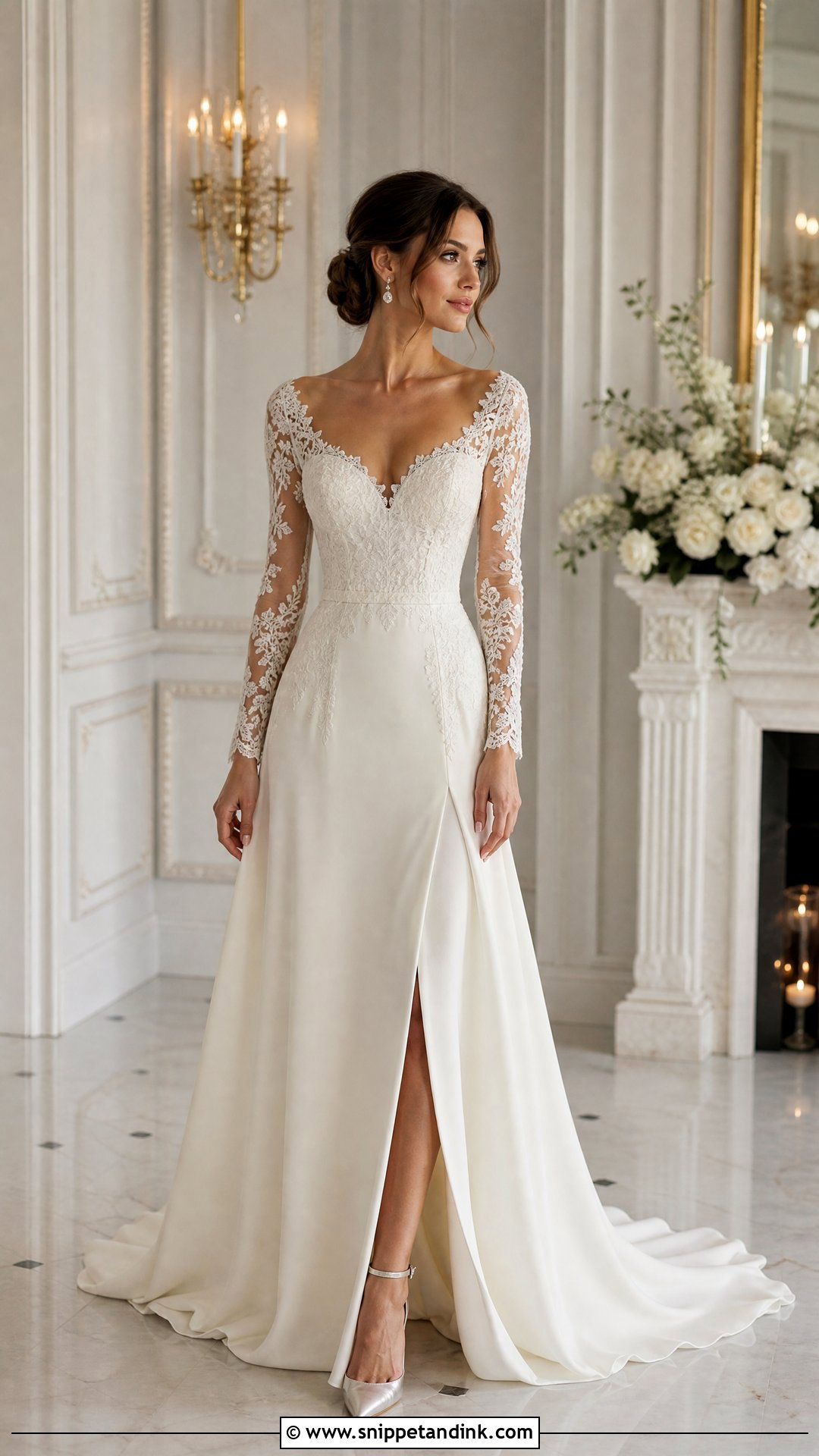
Sleeves set the mood of a gown more than any other detail. Lace reads romantic, satin regal, embellished sheer modern. Fitted sleeves need room at the elbow to bend, and I always test them by having the bride lift a glass to her mouth. Puff and bishop sleeves bring drama, so pair them with a clean skirt and a simple neckline. A low bun and minimal earrings finish it. Fall and winter weddings, and anyone who wants coverage, gravitate here.
10. Couture High Neck Wedding Dress
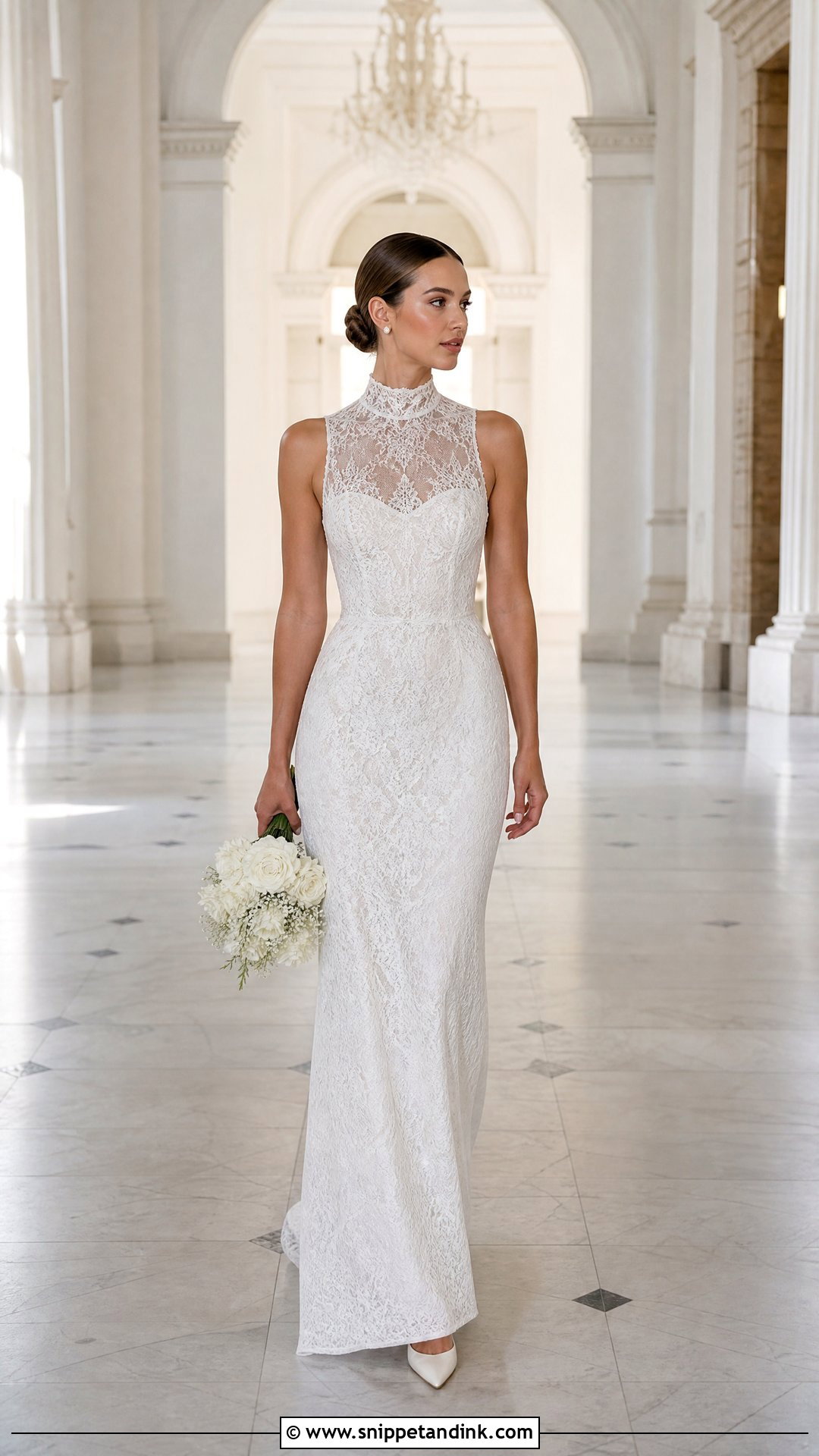
High necklines carry a hint of vintage and a lot of presence. Sheer lace versions look delicate; satin or crepe versions look sculptural. Because the neckline sits close to the jaw, I check it while the bride turns her head fully left and right, as a collar that is a few millimetres too tight rubs makeup off by the evening. Skip the necklace; studs or nothing. A clean bun or waves tucked back let it lead. It suits grand halls and modest dress codes very naturally.
11. Couture Strapless Wedding Dress
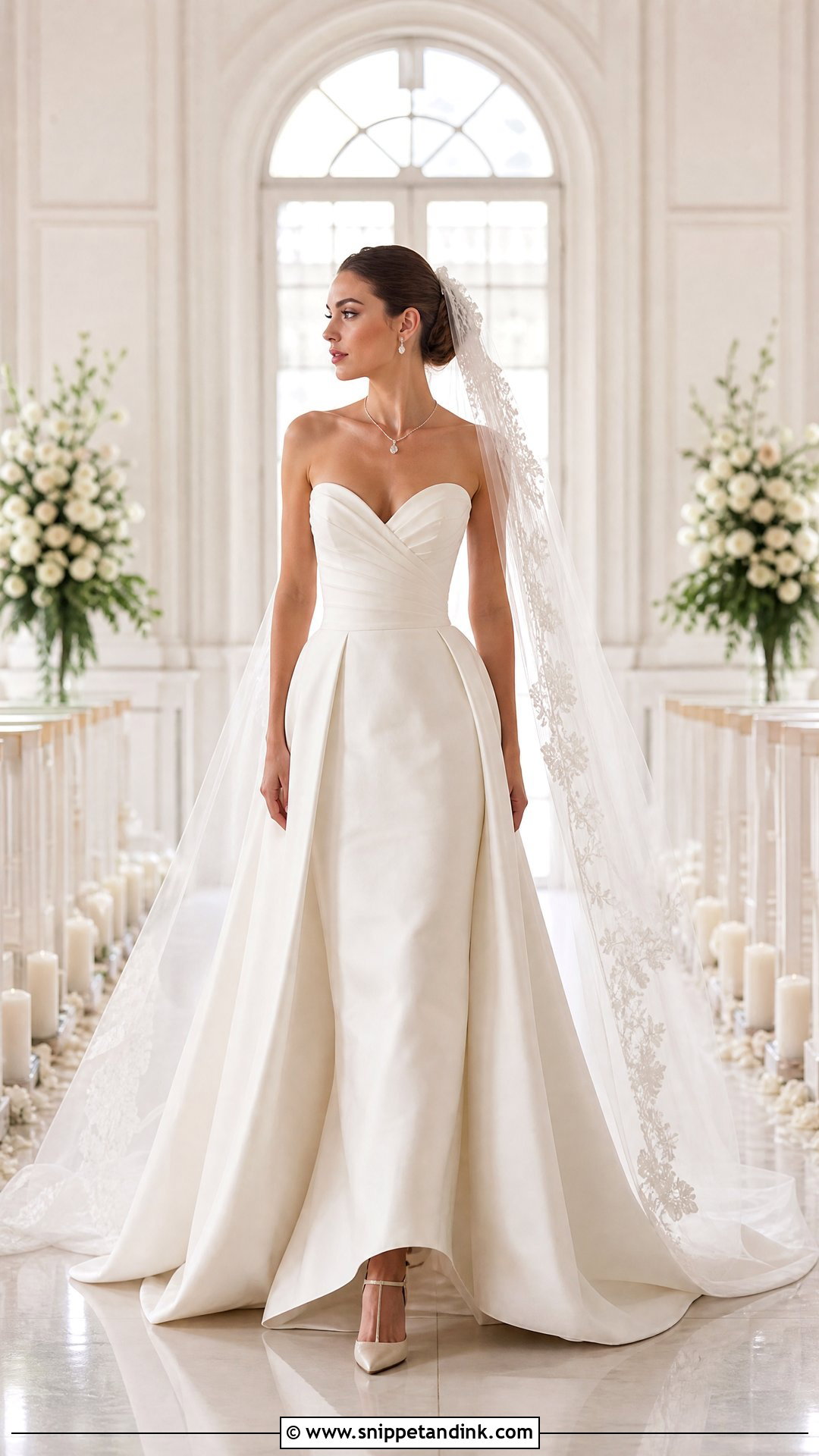
Strapless works when nobody, including you, has to think about it. A good strapless couture wedding dress holds itself up through the bodice structure, not by gripping the bust. I test it by asking the bride to raise both arms overhead; if the neckline drops, the inner structure needs work. Straight necklines feel modern, sweethearts romantic, curved ones softer. Full or fitted skirts both work. Opera gloves or a statement veil give it an editorial note.
12. Couture Pearl Wedding Dress
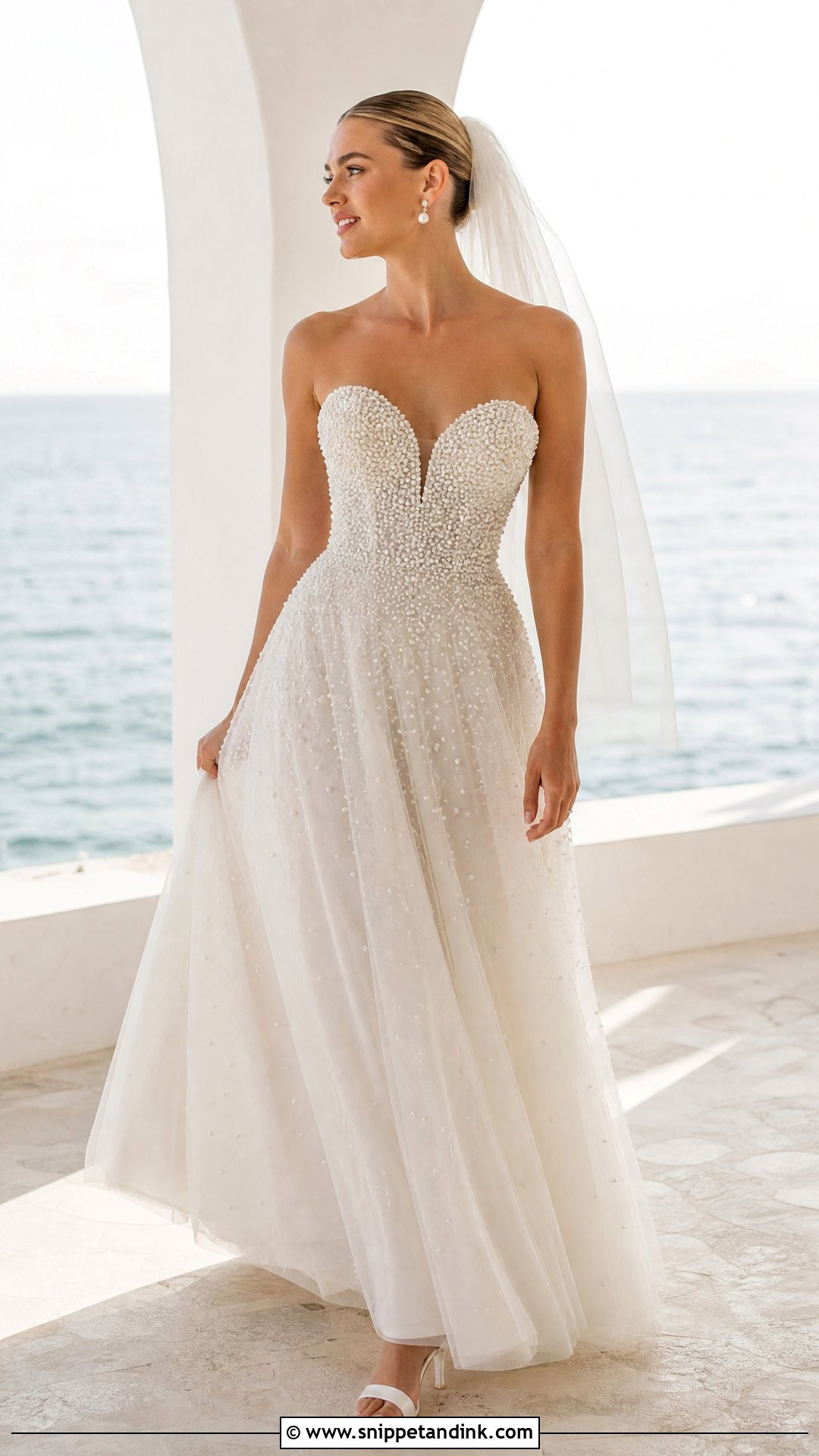
Pearls give off a softer glow than beads or crystals, which is why a pearl gown looks luxurious without looking loud. They can be scattered on tulle, lined along seams or used as a trim on sleeves and veils. Real pearl embellishment adds weight, so ask whether the bodice has been reinforced to carry it. A column, A-line or corset shape keeps it elegant. Simple satin heels and pearl earrings are all the extras it needs. Evening and coastal weddings both suit it.
13. Couture Beaded Wedding Dress
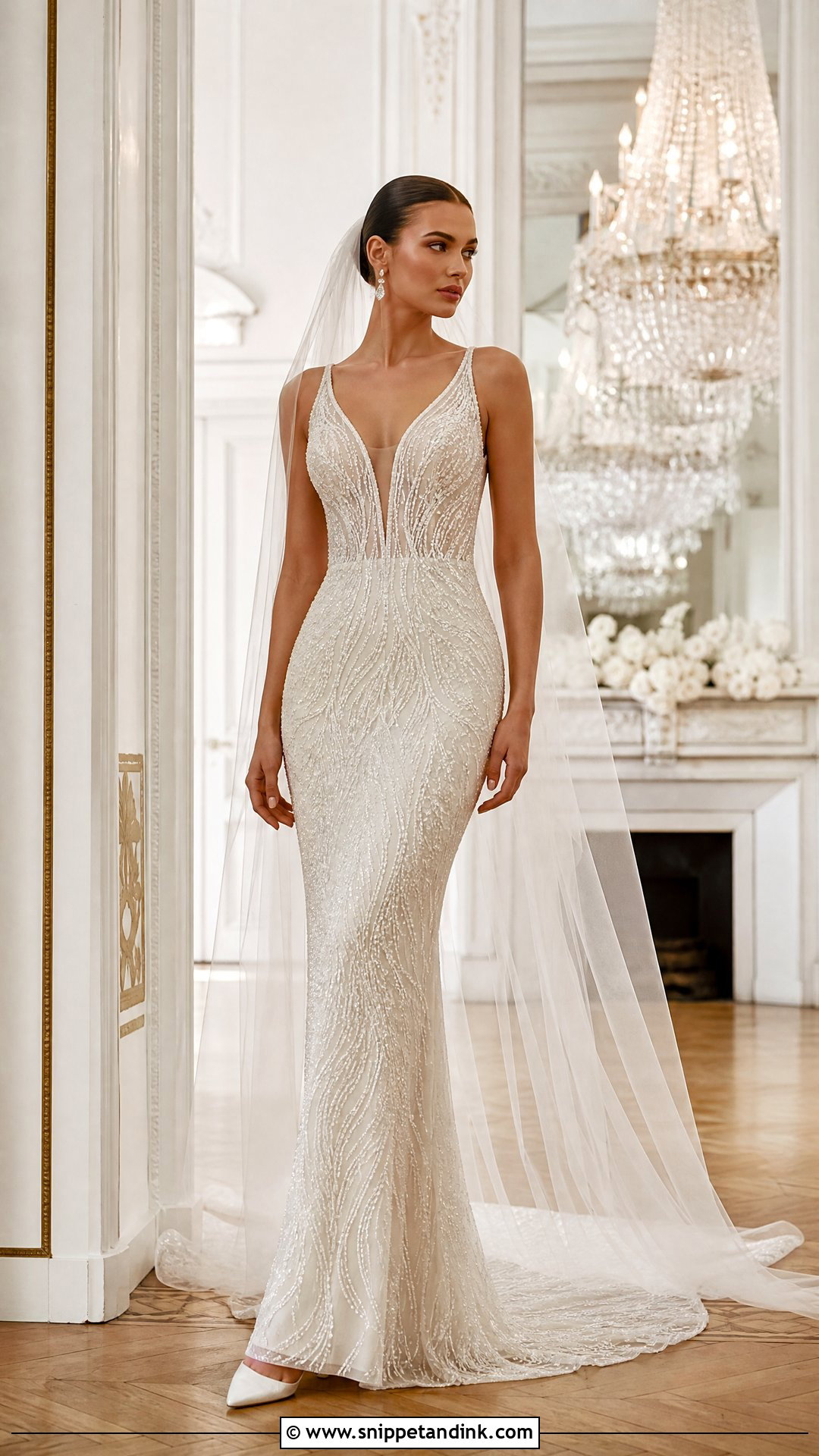
Hand beading catches light in a way machine beading rarely matches, because each bead sits at a slightly different angle. Soft florals, fine geometric lines or scattered work all appear in couture. The trade-off is weight and snagging; heavily beaded sleeves can catch on lace or a veil. Keep accessories quiet, simple earrings and a plain veil, since the dress already shines. It carries from ceremony to reception without a second look.
14. Couture Floral Applique Wedding Dress
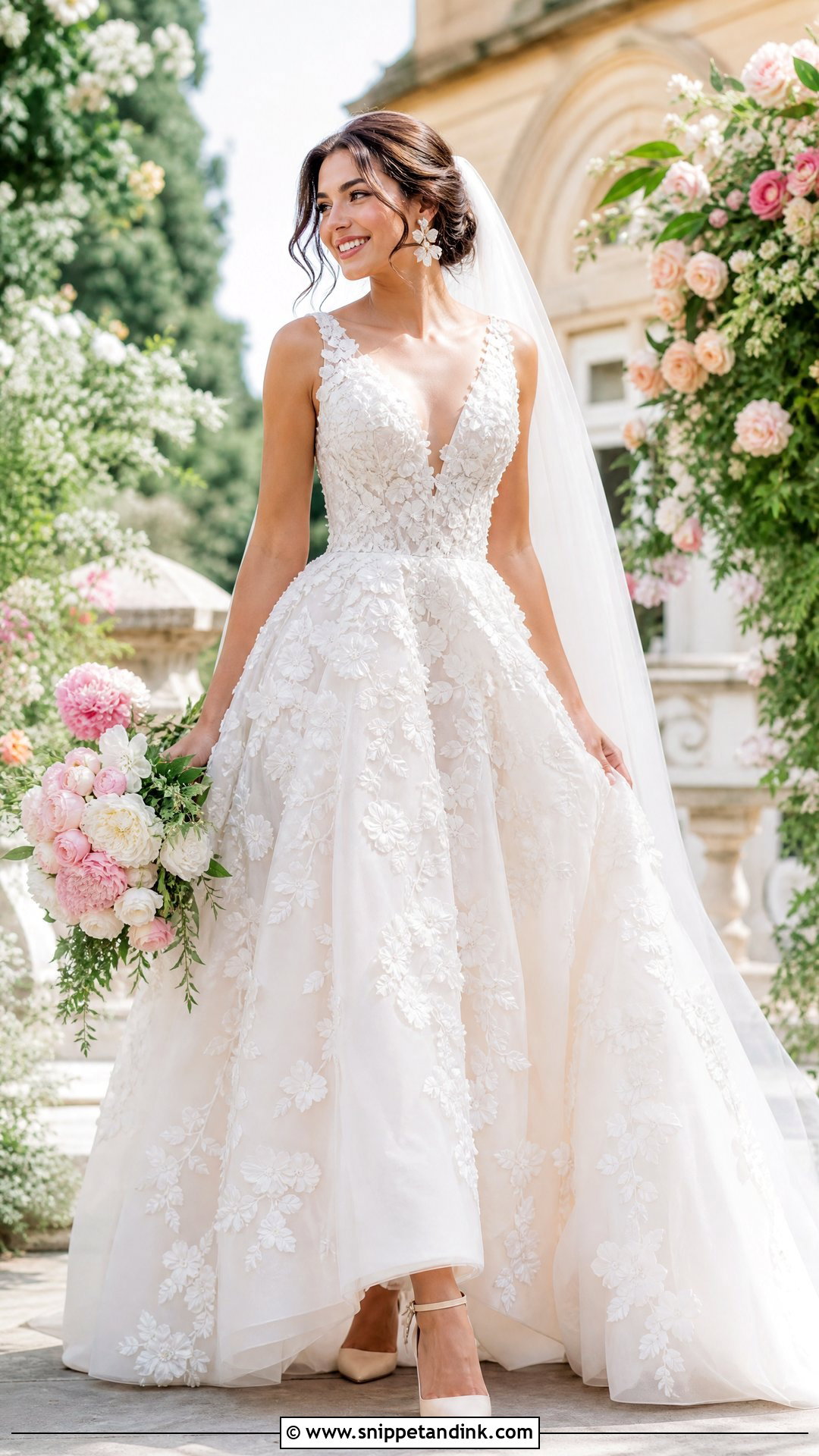
Appliqued flowers sit on the surface of the fabric, so they throw tiny shadows that printed florals never do. On tulle or organza, that dimension is what makes the gown look handmade. Soft white reads classic; ivory or pale blush petals look more like a garden. I check that appliques near the underarm are stitched flat, since a raised edge there rubs over a long day. A fitted bodice with a flowing skirt keeps it wearable, and spring garden weddings suit it best.
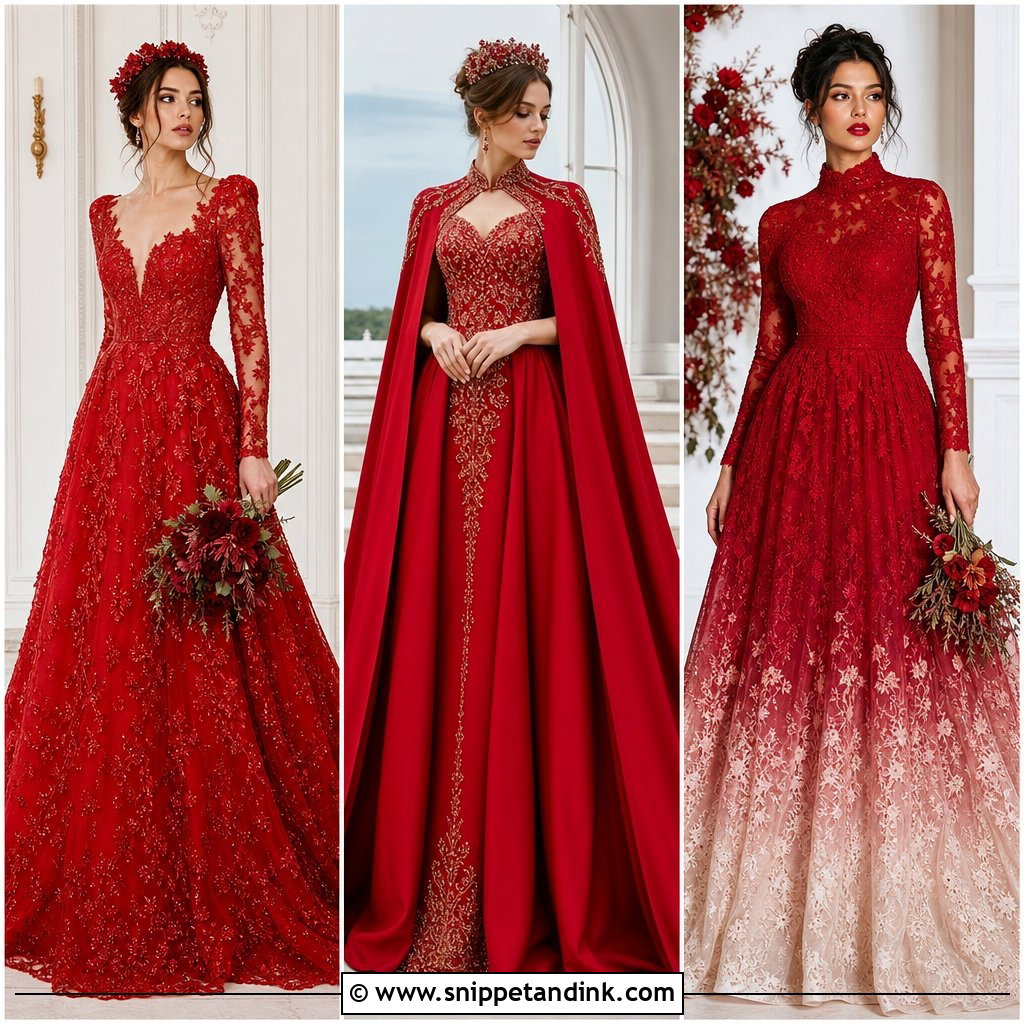
15. Couture Overskirt Wedding Dress
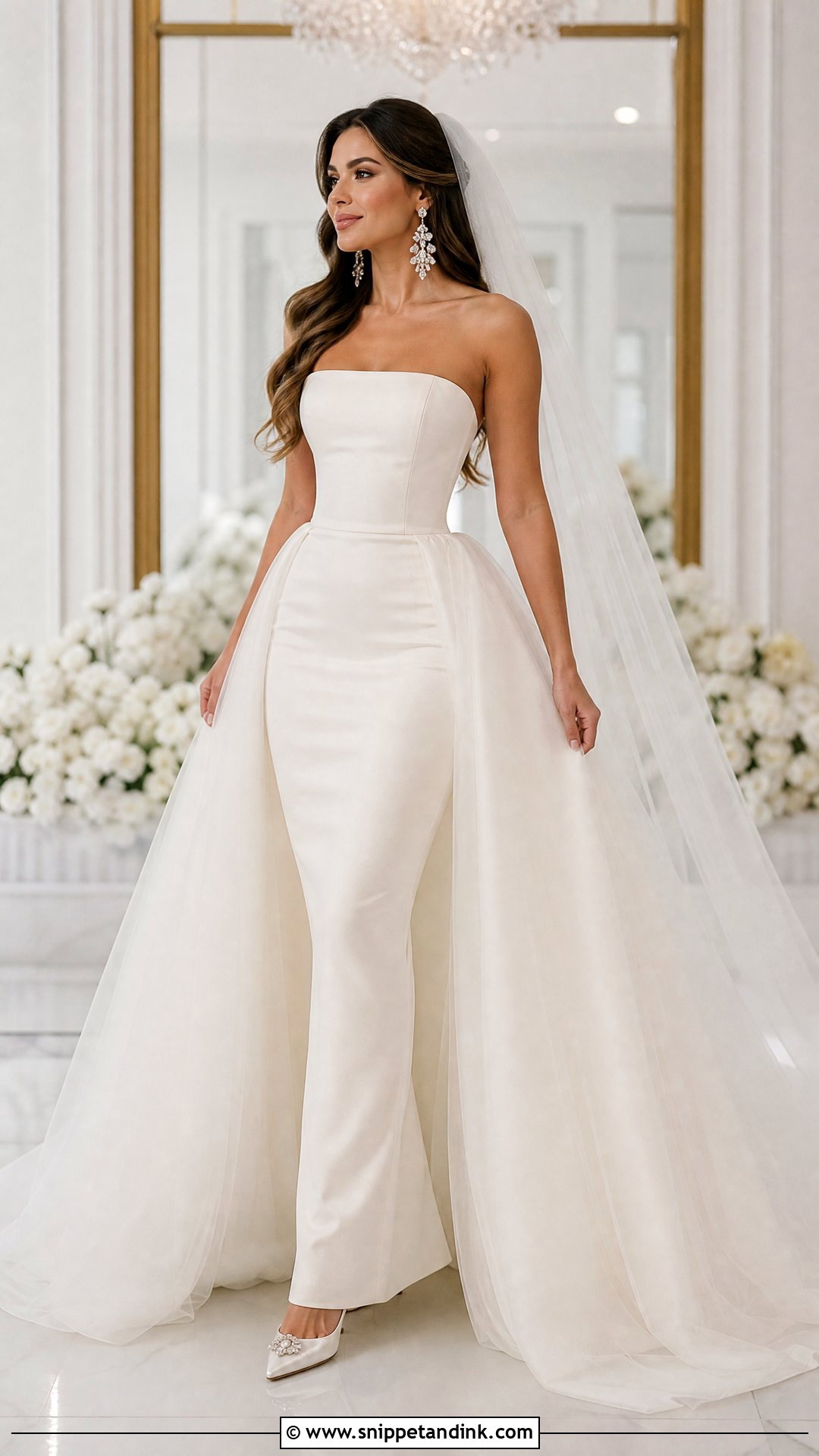
Two looks from one gown is the main draw, and the attachment point makes or breaks it. The overskirt should fasten with hooks or snaps hidden under a waistband so it disappears when worn and leaves no marks when removed. Tulle, satin, organza or mikado over a column, mermaid or mini all work, as long as the colors match exactly in daylight. Practice taking it off with whoever will help you; a rushed reception change in a hallway is where overskirts get torn.
16. Couture Cape Wedding Dress
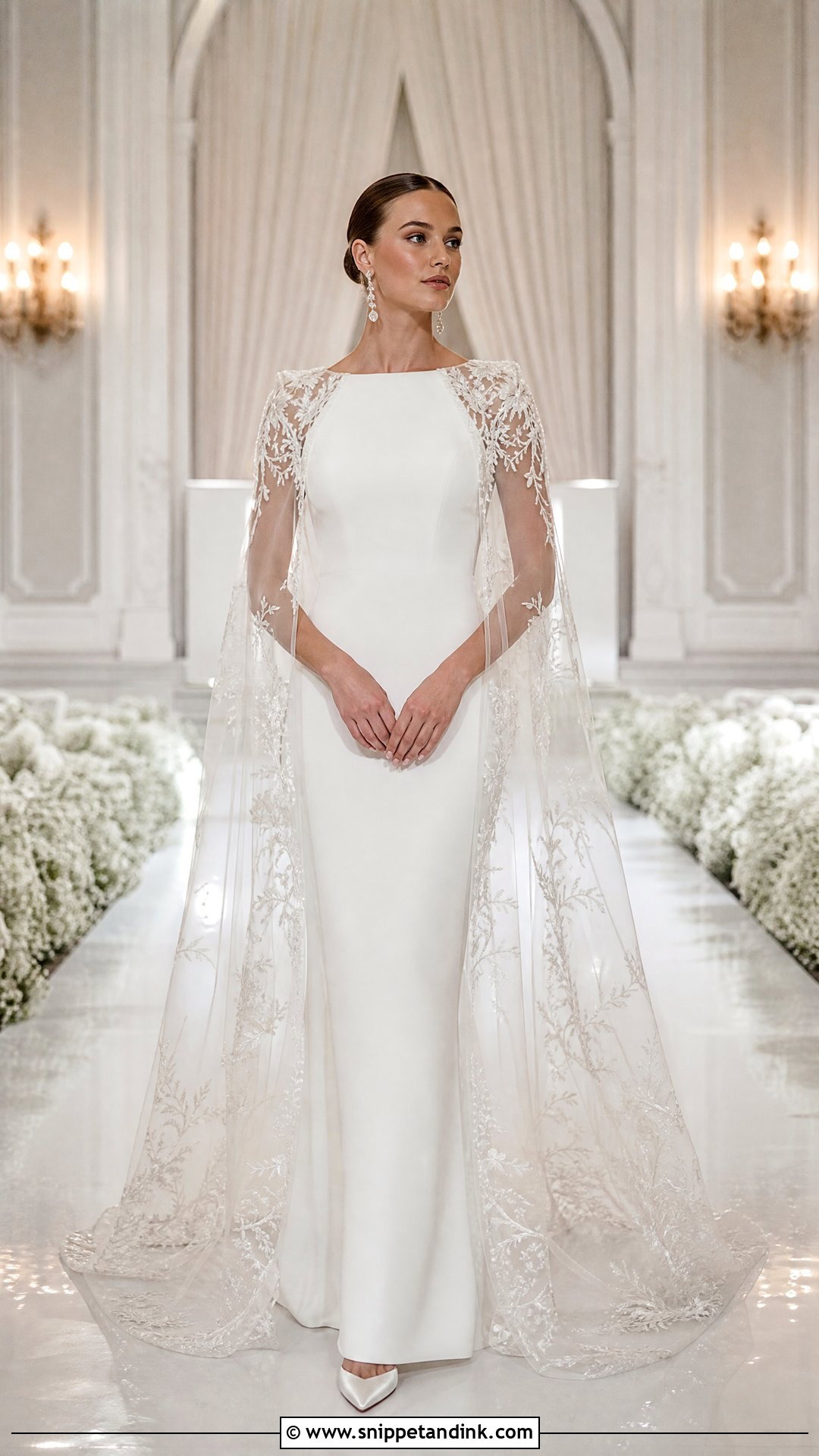
A cape can replace a veil entirely, and on some necklines it looks better than one. A couture cape wedding dress in sheer tulle floats behind you; satin or crepe holds a sharper outline. Embroidered or pearl edging adds detail without touching the gown underneath. Keep the base simple, column, mermaid or A-line, so the cape has room. I make sure capes are anchored at the shoulder seams, not just a neck clasp, otherwise they pull back on your throat as you walk. Sleek hair and refined earrings finish it.
17. Couture Bow Wedding Dress
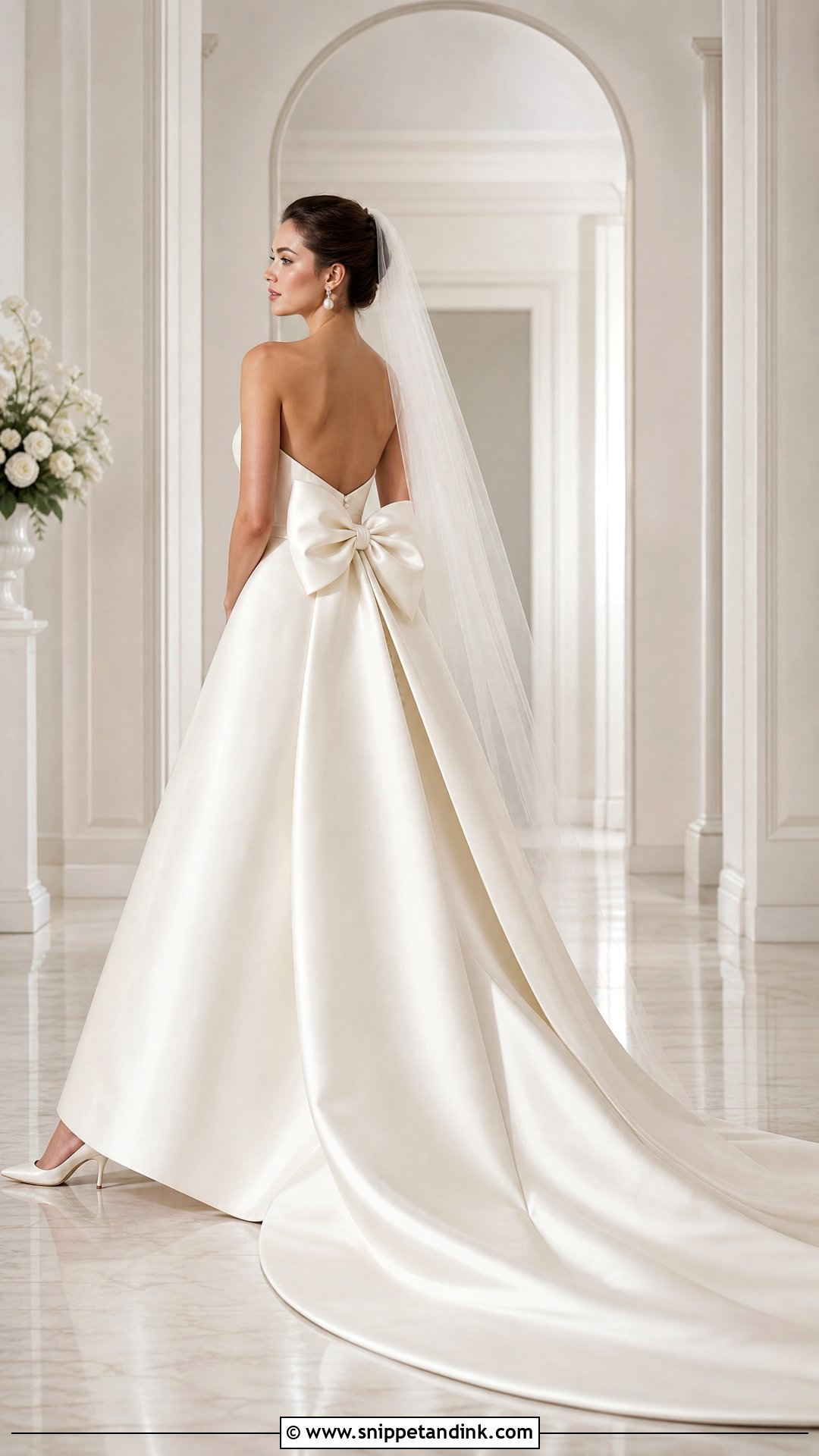
Bows are all about placement. A large back bow gives guests something to look at through the whole ceremony; a waist bow adds shape; small bows on straps or gloves soften. I recommend crisp fabrics such as mikado, satin or faille, because a soft bow droops after an hour. Keep other details minimal so the bow stays the focus. Side and back angles show it best.
18. Couture Drop Waist Wedding Dress
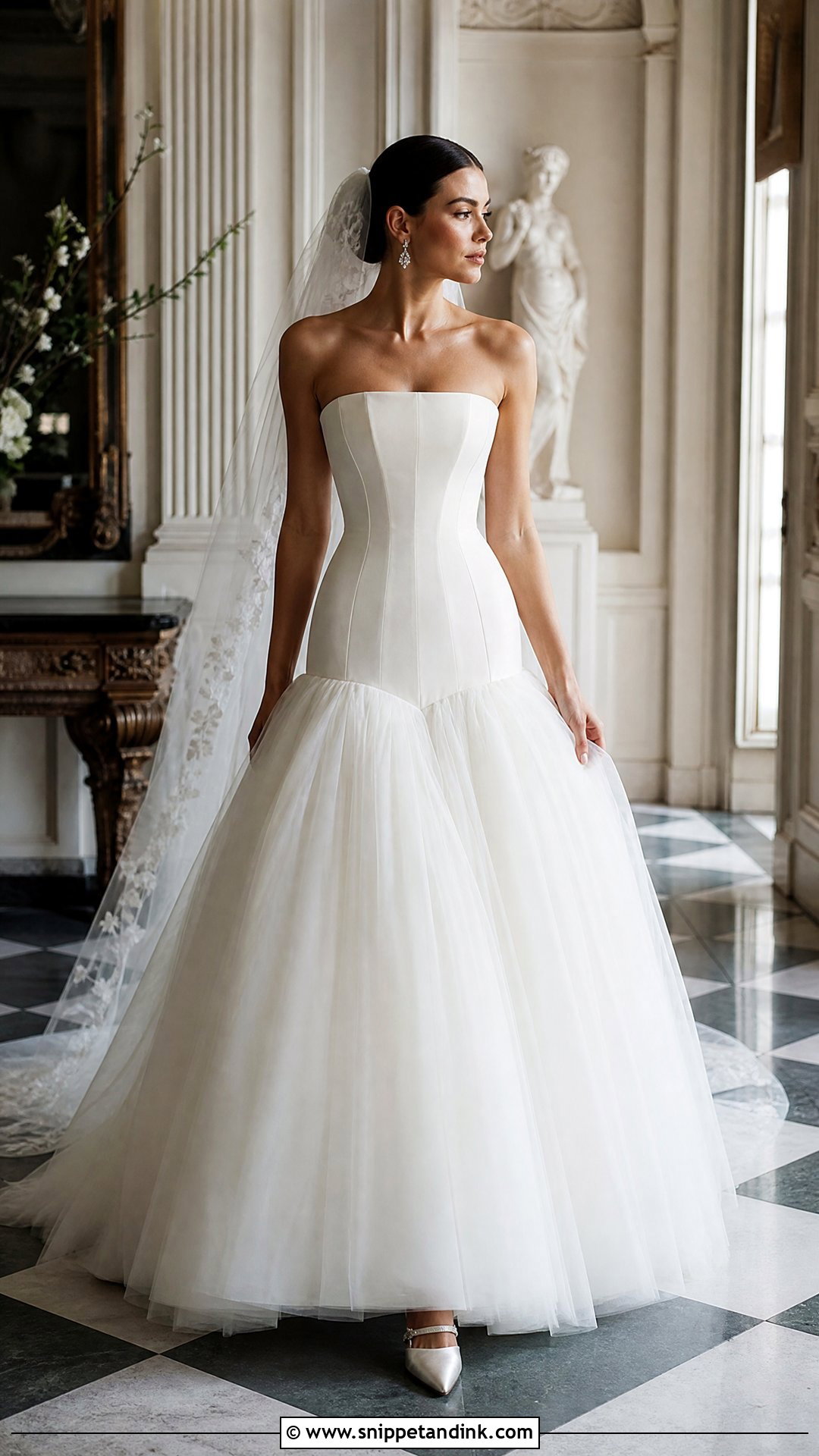
A dropped waist lengthens the torso and gives a strong, sculpted line that feels both vintage and modern. The couture drop waist wedding dress works especially well with corsetry or a basque point, and with a full or softly gathered skirt. I would steer petite brides with a short torso toward a gentler drop, since an extreme one can shorten the legs visually. Satin, tulle or lace all suit it. Keep styling quiet: earrings, a veil, elegant heels.
19. Couture Basque Waist Wedding Dress
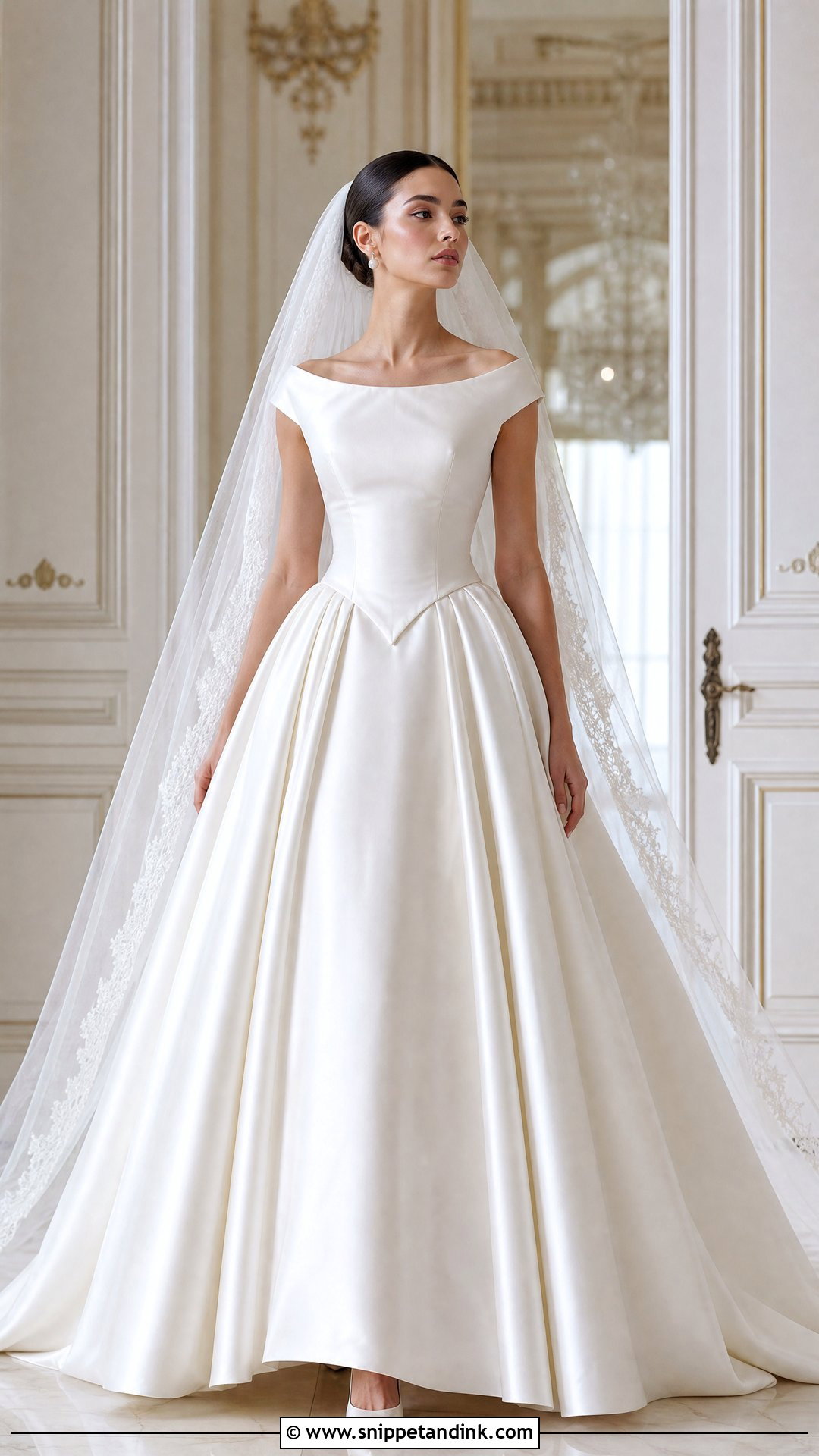
The basque waist dips to a point at the front, which lengthens the bodice and gives the gown an old-world shape. A full skirt, lace overlay or structured satin all suit it. Fit matters intensely here; the point should sit flat against your abdomen when you sit, not poke outward. A cathedral veil, pearl studs and classic pumps finish it. Estates, castles and formal halls are its natural setting.
20. Couture Sheer Sleeve Wedding Dress
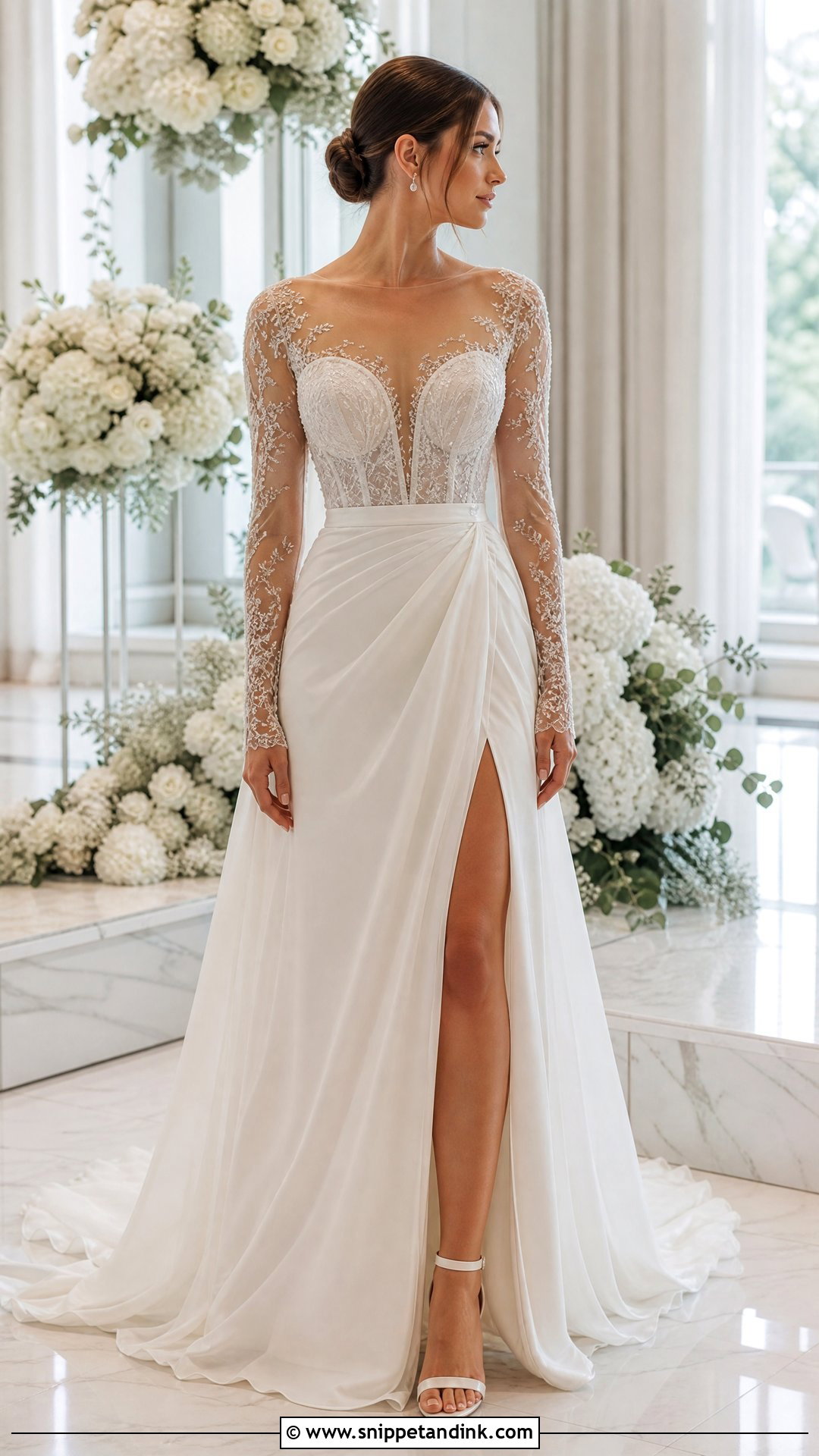
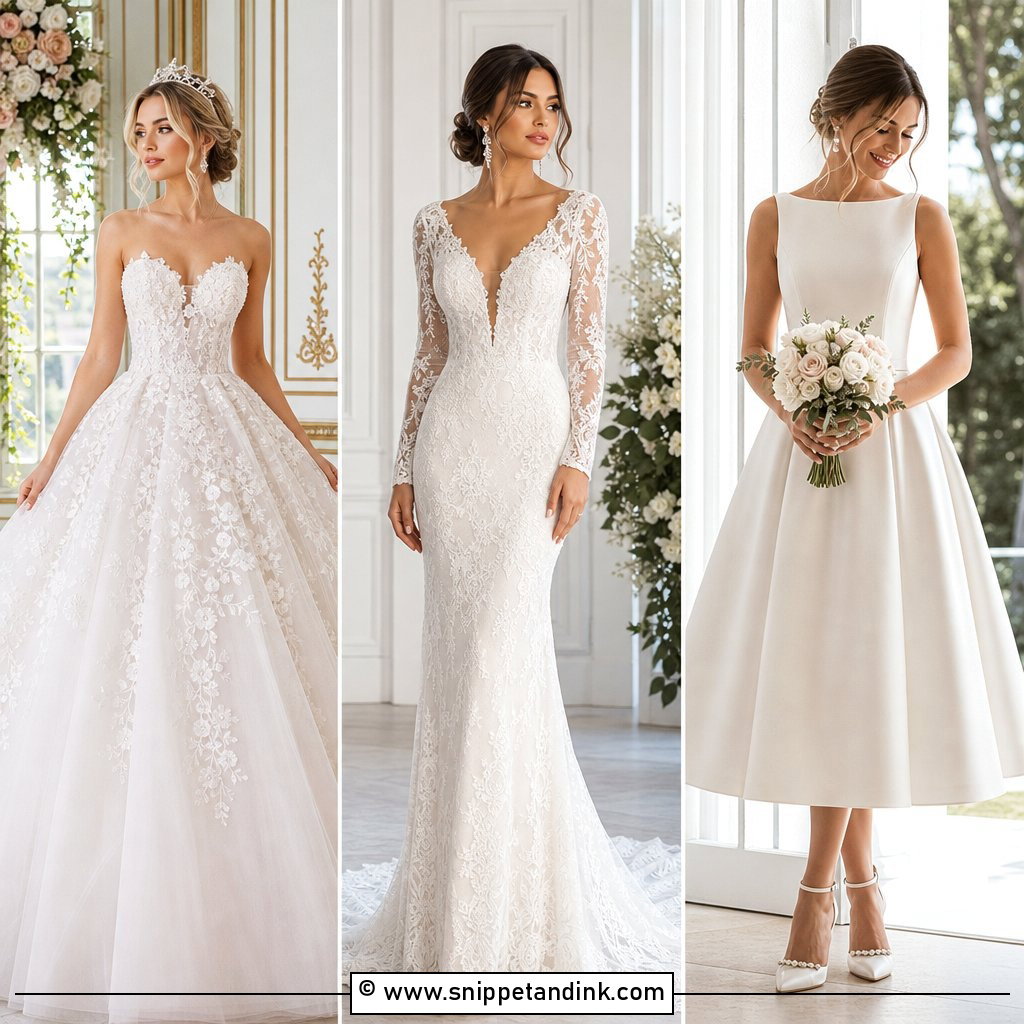
Sheer sleeves give coverage that still looks light. Tulle, organza, lace and embellished mesh all work, with embroidery, pearls or tiny beads bringing detail near the face. I ask brides to try sheer sleeves in daylight, because some tulles show skin texture more than expected. Pair them with a structured bodice and a simple skirt. A low bun and minimal earrings keep the focus on the arms. Spring and autumn weddings suit them well.
21. Couture Minimal Wedding Dress
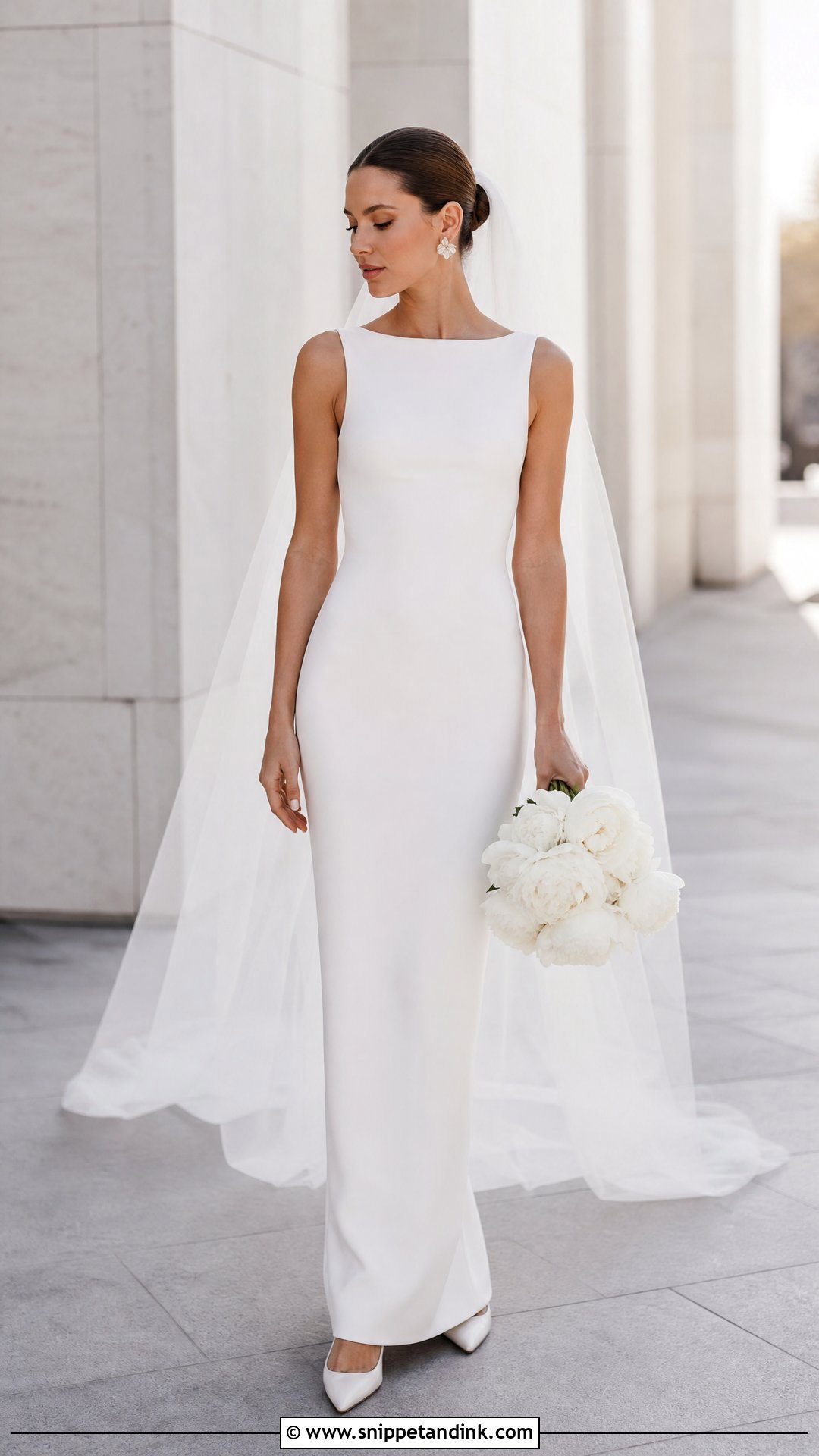
Minimal couture is where the craft is easiest to see, because there is nothing covering it. The value lives in the fabric, the cut and the finish: silk crepe that drapes without clinging, seams that lie perfectly flat, a hem that falls evenly all the way round. A silk crepe column, satin A-line or structured square neck all qualify. Gloves, a cape or a bold bouquet add interest without breaking the line. City halls, beaches and modern venues suit it as well as formal rooms.
22. Couture Tulle Wedding Dress
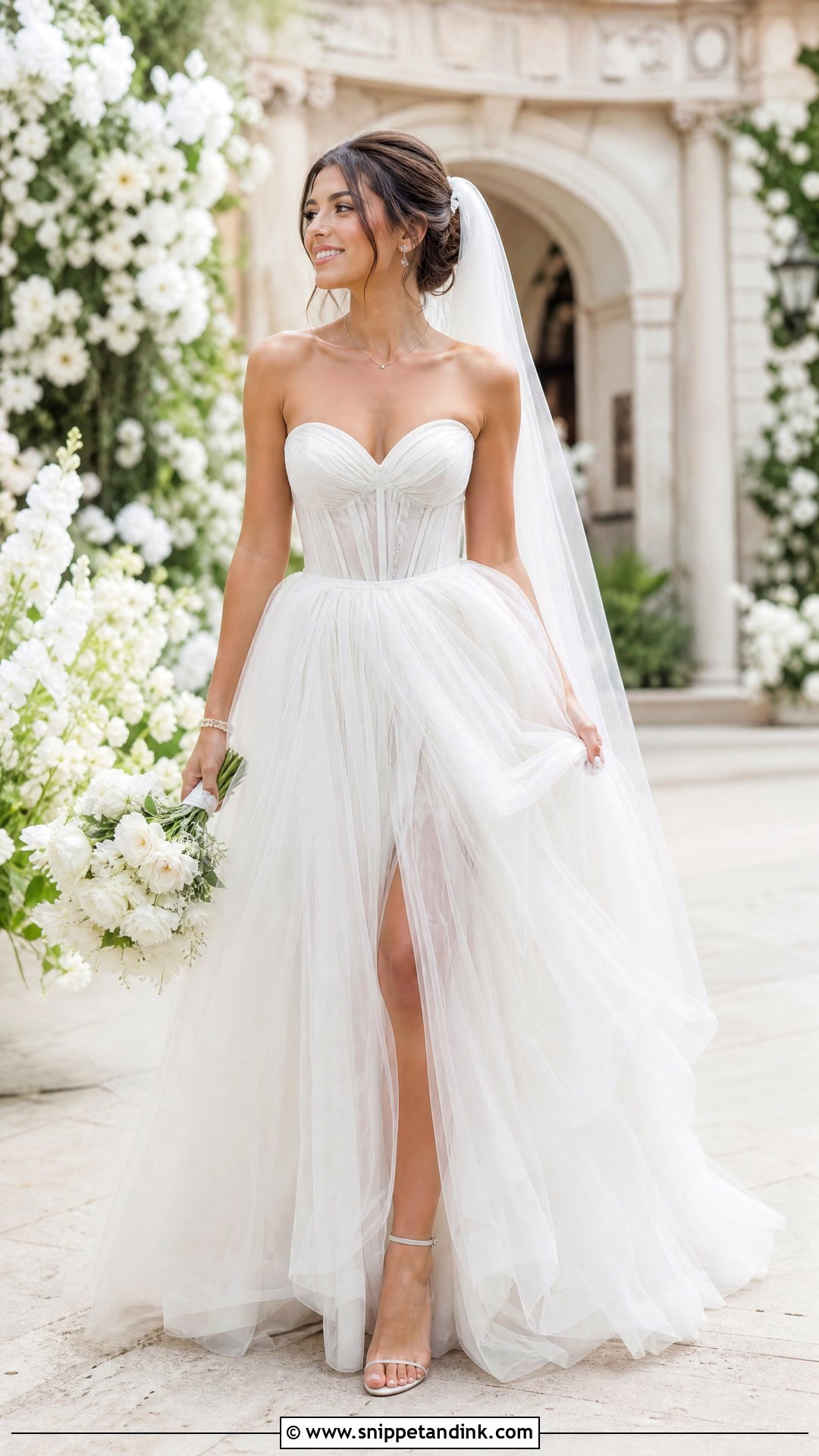
Fine silk tulle floats; cheaper, stiffer net bunches and scratches. That is the first thing I check by touch on a tulle gown. The number of layers decides whether it reads airy or dramatic, and a corset bodice, applique or a little sparkle gives it dimension. Tulle snags on rough surfaces, so I warn brides marrying outdoors about stone paths and wooden benches. A soft veil and delicate jewelry suit it. It gives volume without the weight of satin or mikado.
23. Couture Feather Wedding Dress
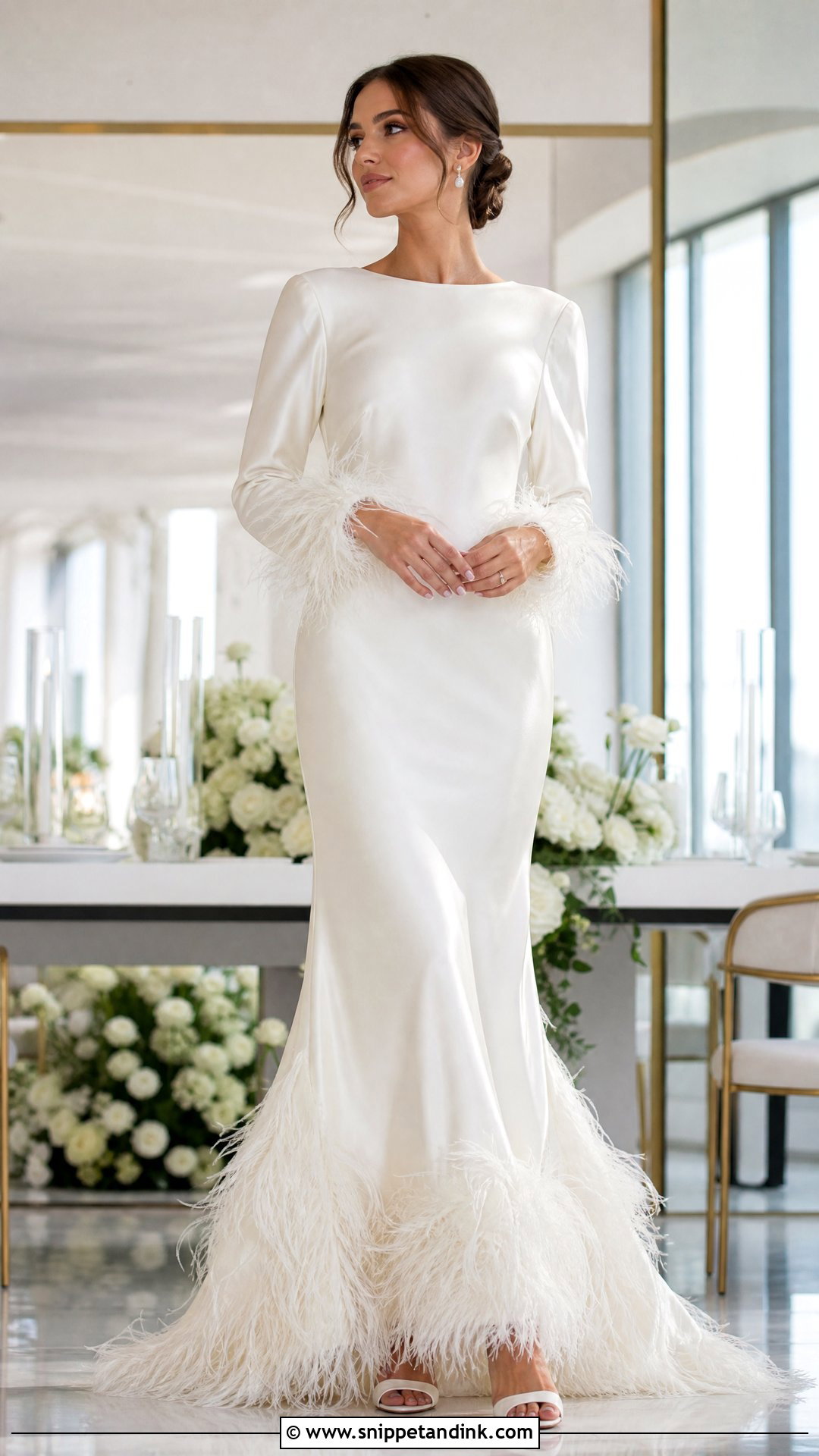
Feathers move with every breath of air, which makes them dramatic and a little unpredictable. In couture, they trim a neckline, edge a hem, accent sleeves or cover a whole skirt. Controlled use reads luxurious; too much reads theatrical. A sleek satin, crepe or silk base lets them stand out. Feathers shed slightly and dislike rain, so I often suggest them for a second look at the reception rather than an outdoor ceremony. Small earrings and polished hair keep it chic.
24. Couture Bridal Mini Dress
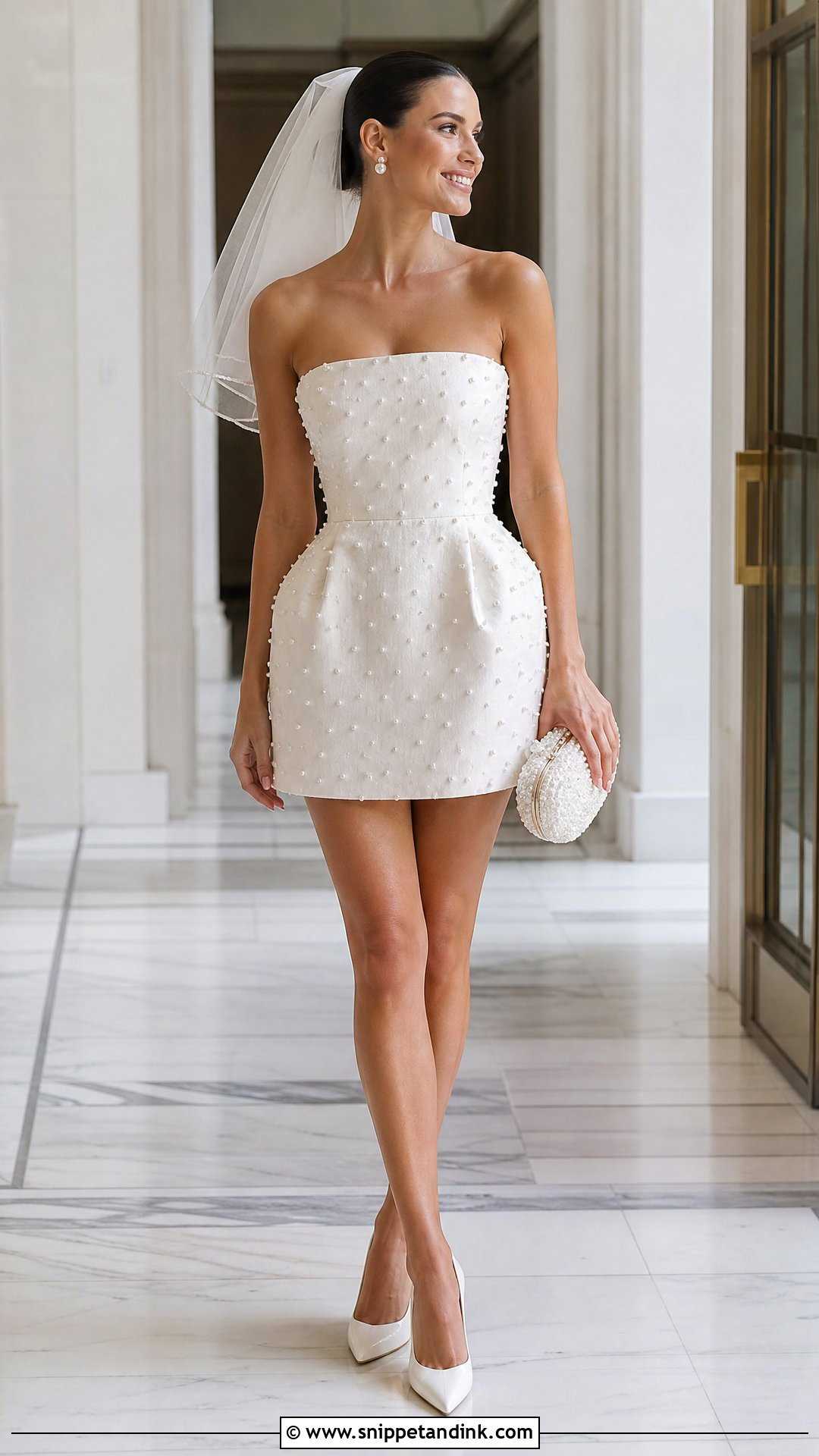
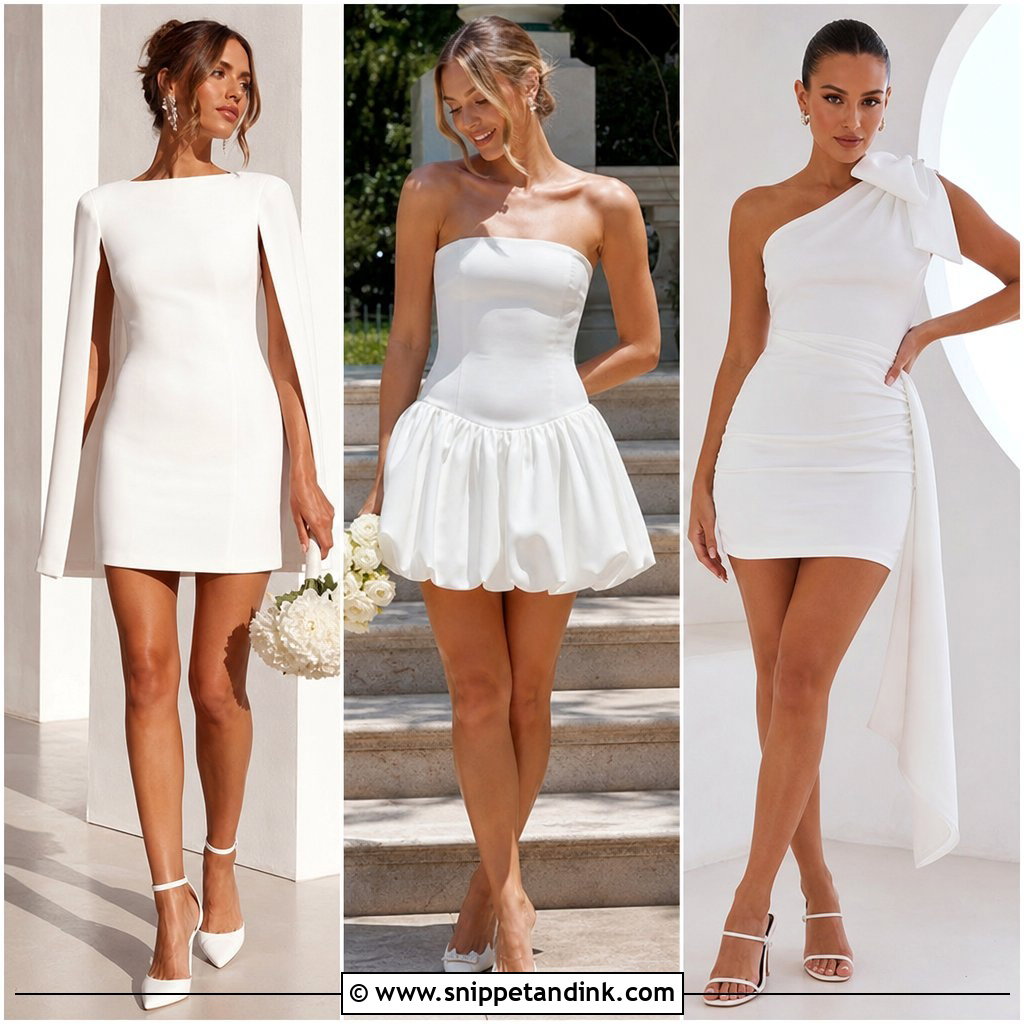
A short couture dress is the most practical way to keep dancing after a formal ceremony. Structured satin, pearl beading, lace, bows, feathers or sculpted sleeves all keep it bridal. Because the legs are on show, the shoes matter: satin pumps, slingbacks or embellished heels. I suggest getting the hem measured with you standing in your exact shoes, since a mini that looks right barefoot can look too short in a high heel. A short veil or hair bow completes it.

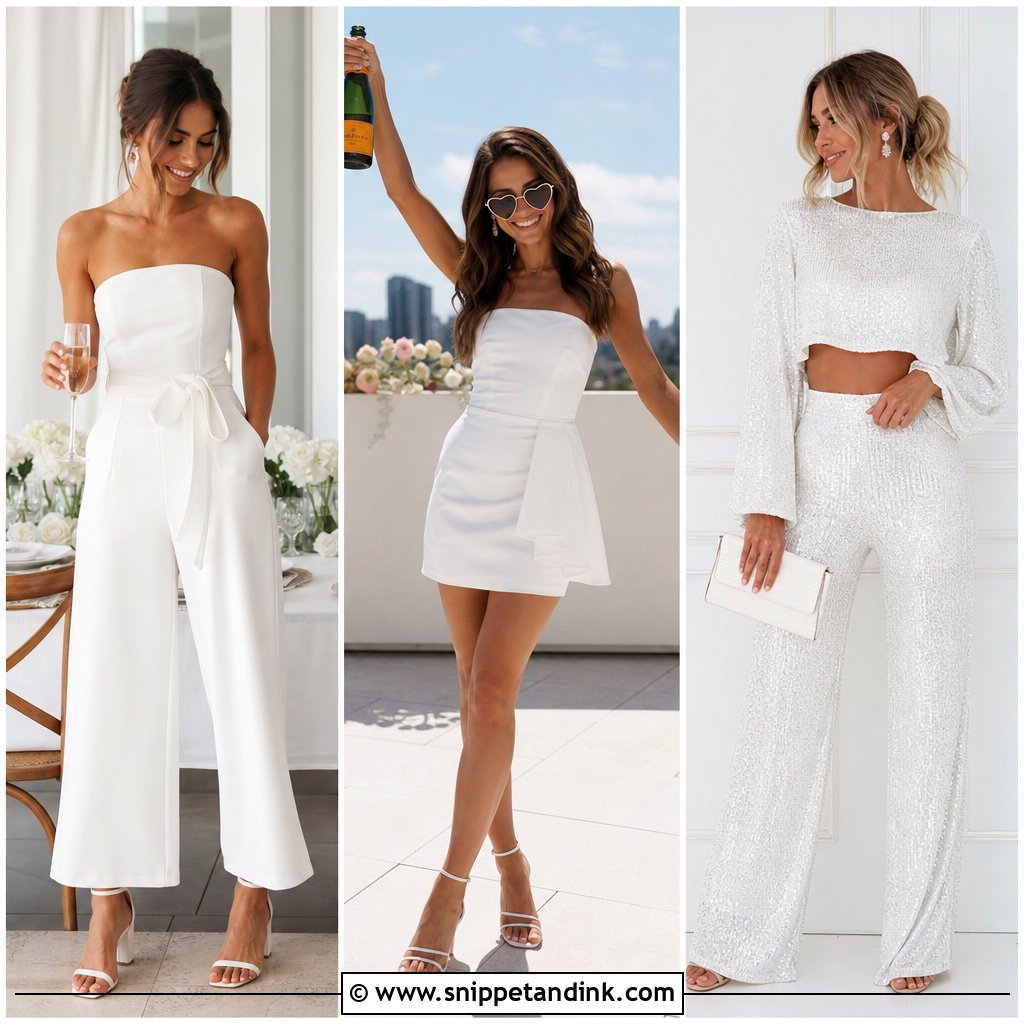


25. Couture Bridal Suit Wedding Dress
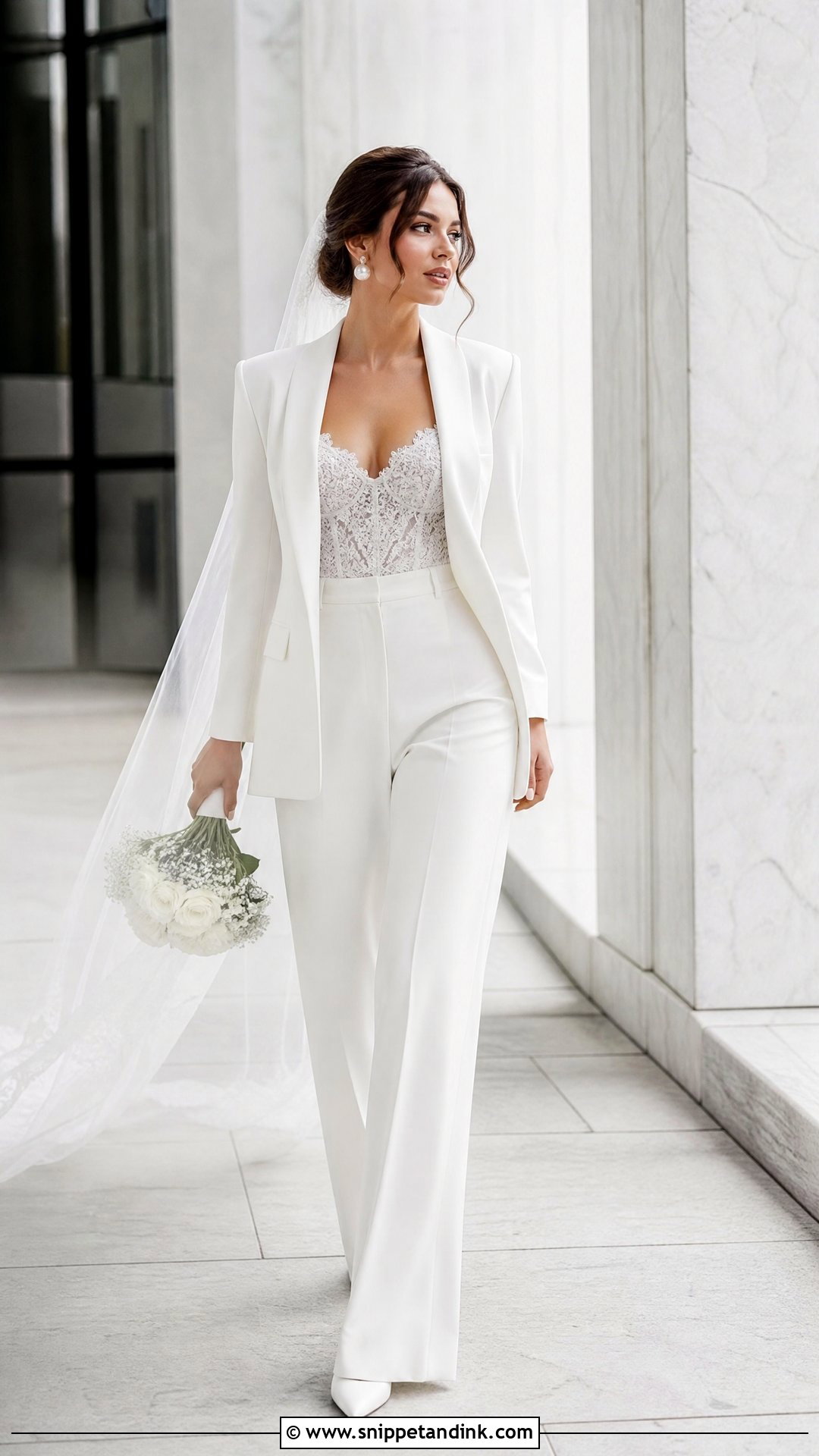
Couture tailoring for a bride is all about the shoulder. A white blazer with sharp shoulders, wide-leg trousers and a lace or satin corset makes a confident outfit, and a longline jacket with a train adds ceremony drama. I spend fittings checking that the jacket closes without pulling across the bust and that the trousers break right on the heel. Pointed heels, pearl earrings and a slim clutch finish it. A veil softens the tailoring. City ceremonies and rehearsal dinners suit it especially.
Trains, Bustles and the Moment the Dancing Starts
Every train needs a plan for the reception. On a couture gown, I like to agree on the bustle at the final fitting, not on the day. French bustles fold the train under in soft poufs and suit full skirts; over bustles lift it up with hooks for a fuller back that shows off lace. Ribbon loops in matching colors are easiest for a bridesmaid to manage at night.
Have the person who will bustle you attend that final fitting and do it twice. Heavy trains in beaded or mikado fabric need more attachment points than you would guess, and a single overloaded hook is usually what snaps mid-dance.
Caring for Hand Finished Work Once the Wedding Is Over
Get the gown to a specialist cleaner within a few weeks. Spilled champagne and sugar dry clear but slowly oxidize to brown marks, often months later. Point out every beaded, pearled or feathered area, since some embellishments do not tolerate standard solvents.
For storage, I avoid plastic garment bags, which trap moisture and can yellow the fabric. An acid-free box with acid-free tissue, or a breathable cotton bag, in a cool dark cupboard is safer. Heavy gowns should never hang from their shoulder seams; use the inner hanging loops, or store them folded with tissue padding every crease.
What Couture Really Pays For
A couture gown can be grand, quiet, romantic or sharp; what makes it couture is the way it was made, not the label inside. Fit, fabric, construction and handwork are what you are really paying for, and they are what you feel when you move. Before deciding, think about the venue, the season, your body and how long you will be wearing it. A ball gown, column, lace gown, cape, mini or bridal suit can all be the right answer. The best one is the dress you forget you are wearing once the music starts.
You'll Like These Ideas:








Leave a Reply